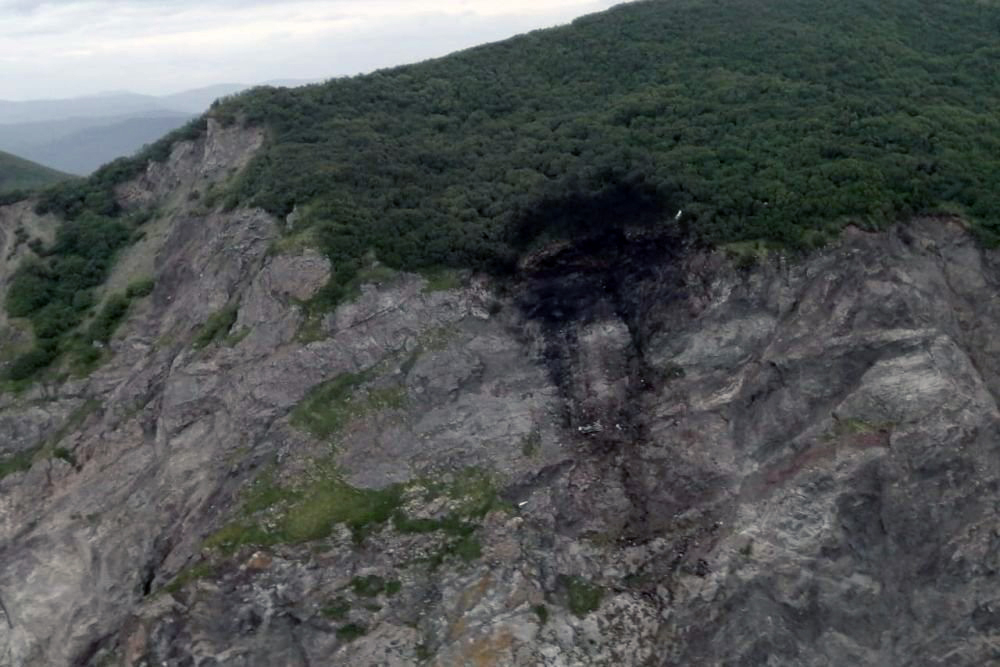
Crash of a PZL-Mielec AN-28 near Kedrovy

Date & Time: Jul 16, 2021 at 1611 LT
Type of aircraft:
Operator:
Registration:
RA-28728
Flight Phase:
Survivors:
Yes
Schedule:
Kedrovy - Tomsk
MSN:
1AJ007-13
YOM:
1989
Flight number:
SL42
Country:
Region:
Crew on board:
4
Crew fatalities:
Pax on board:
15
Pax fatalities:
Other fatalities:
Total fatalities:
0
Captain / Total flying hours:
7906
Captain / Total hours on type:
3970.00
Copilot / Total flying hours:
181
Copilot / Total hours on type:
26
Aircraft flight hours:
8698
Aircraft flight cycles:
5921
Circumstances:
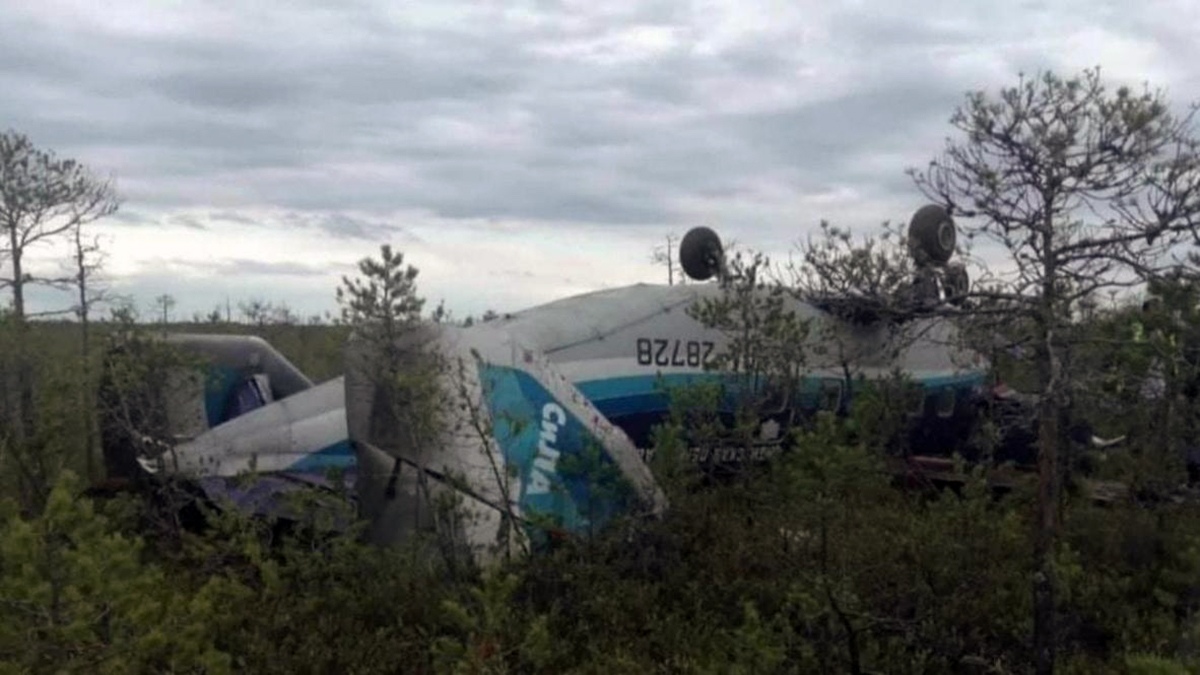
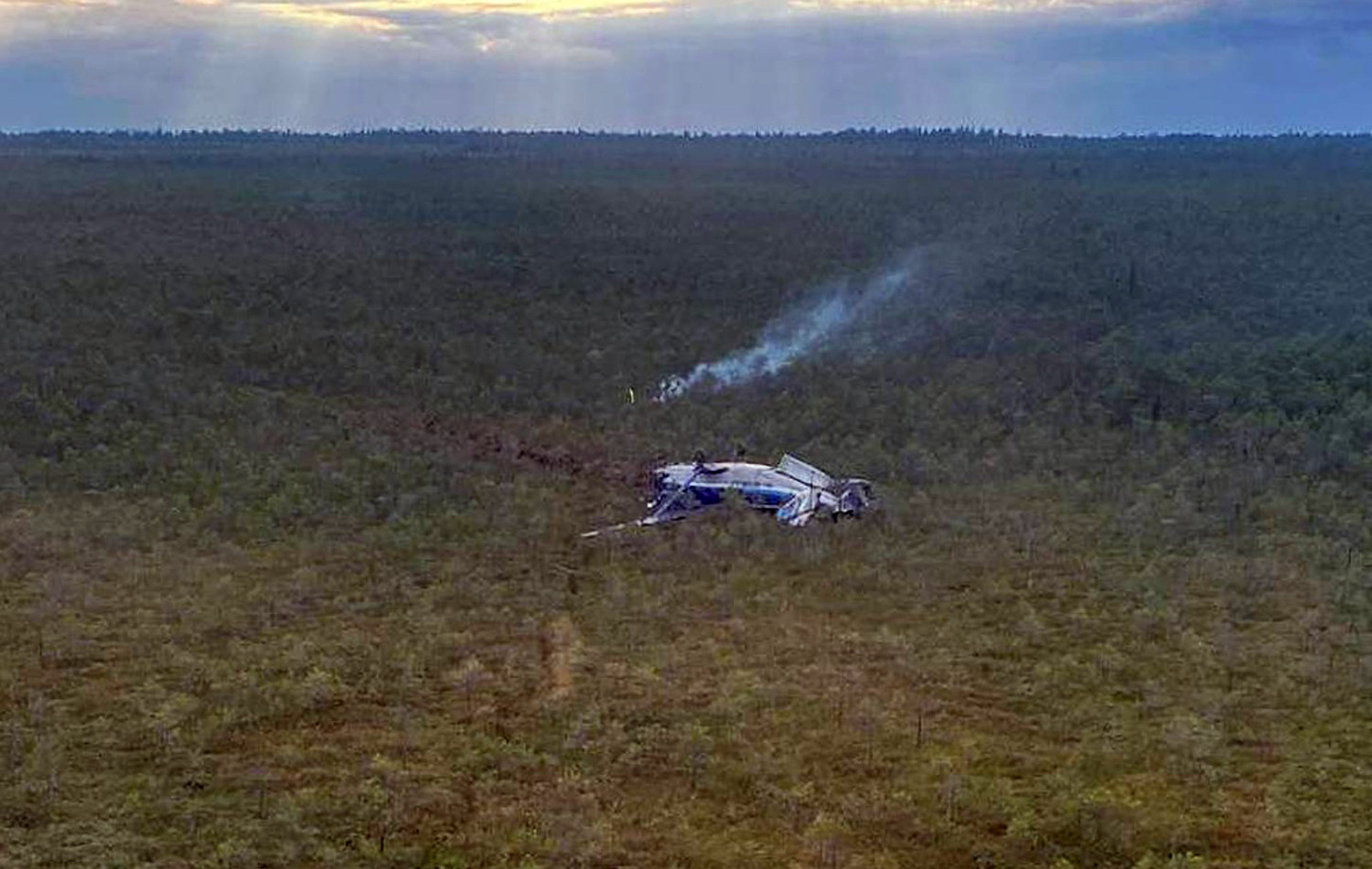
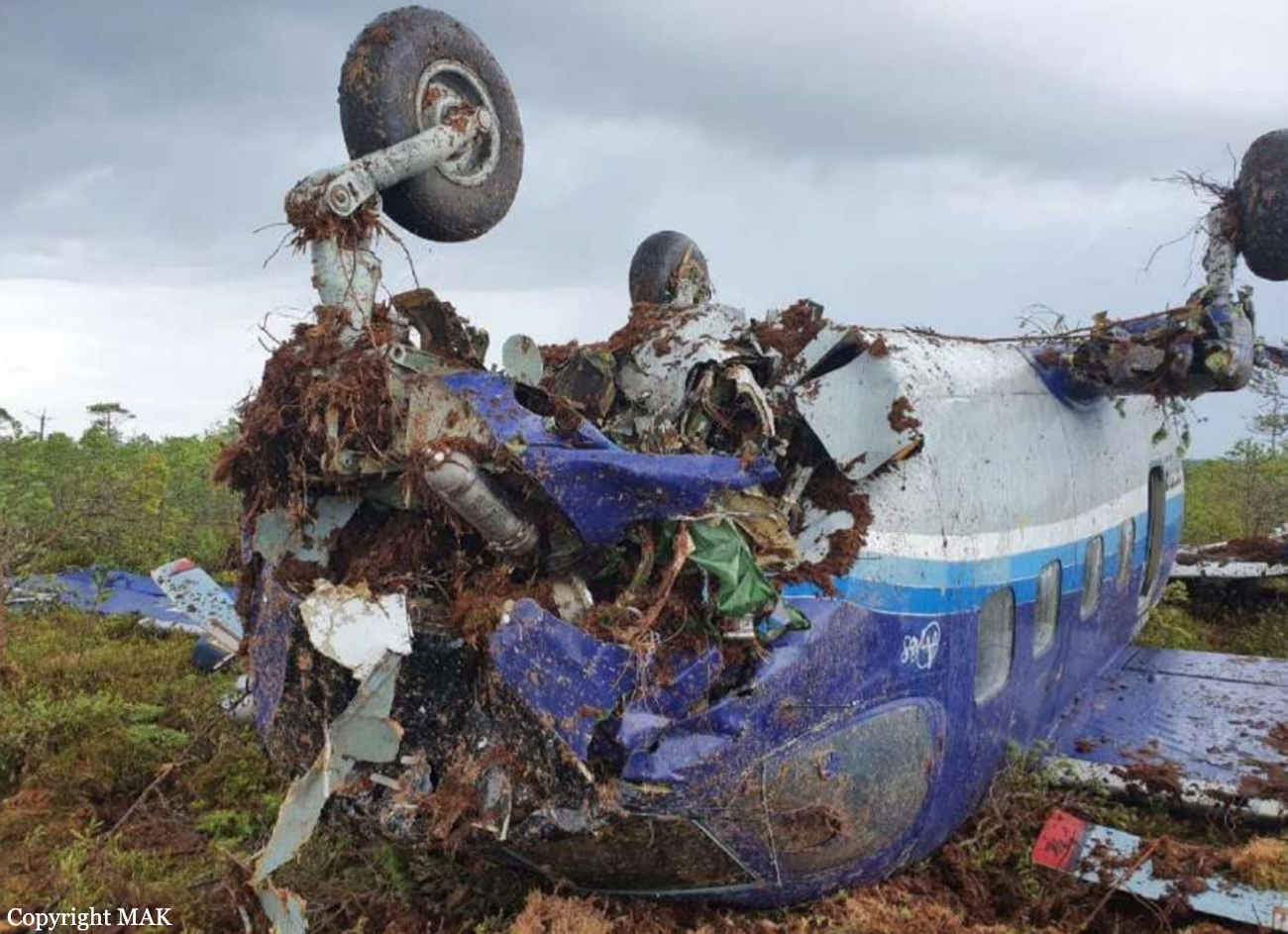
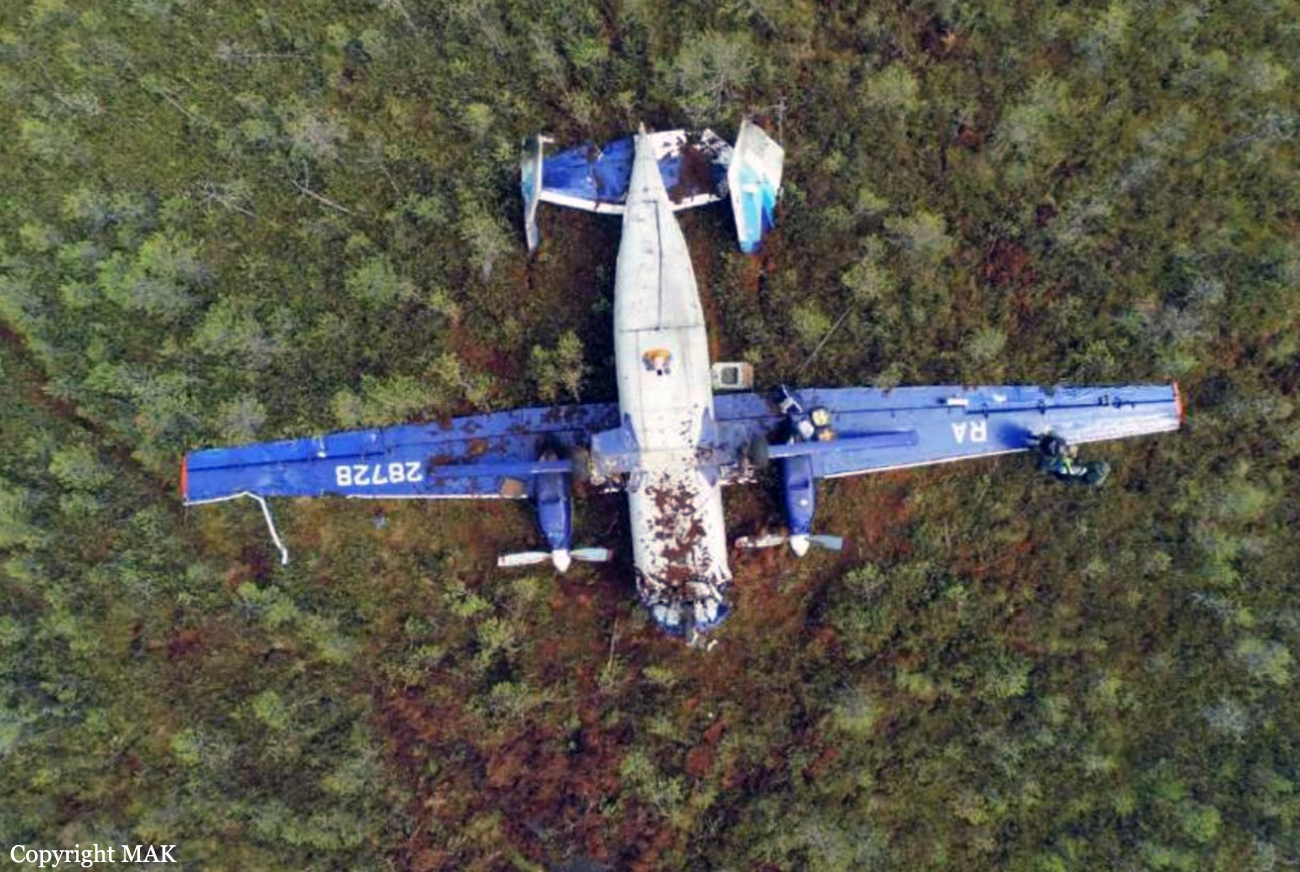
En route from Kedrovy to Tomsk, while cruising at an altitude of 12,000 feet in icing conditions, both engines failed simultaneously. The crew tried to restart both engines, without success. In such conditions, the crew reduced his altitude and attempted an emergency landing in the taiga. Upon impact, the flipped over and came to rest upside down. The wreckage was found around 1430LT some 52 km southeast of Kedrovy. All 17 occupants were found alive, among them few were injured. The captain broke one of his leg. The aircraft was damaged beyond repair.
Probable cause:
The accident of the An-28 aircraft, registration RA-28728, occurred during a forced landing on an improvised landing site due to the simultaneous shutdown of both engines while in flight. The need for this landing was triggered by the engines' spontaneous shutdown. The shutdown occurred while the aircraft was flying in icing conditions with the Pitot-Static System (POSS) turned off due to ice ingestion into its air intake.
The aviation incident was most likely influenced by the following factors:
- The crew's failure to follow the Aircraft Flight Manual (AFM) procedures for manually activating the POSS when meteorological conditions favored icing;
- Violation of the crew's duty and rest time regulations, which could have led to the accumulation of operational fatigue and contributed to missing the operation to activate the POSS;
- The crew's failure to make the decision to cease further performance of their duties due to the accumulation of operational fatigue in the absence of the airline's established procedures for exercising this crew right, which does not comply with the provisions of the Russian Ministry of Transport Order No. 139 dated November 21, 2005, "On Approval of the Regulation on Features of the Work and Rest Time Regime for Crew Members of Civil Aviation Aircraft in the Russian Federation";
- Increased hypoxia stress when flying at altitudes exceeding 3000 meters without the additional use of oxygen, which is a violation of the regulations of FAP-128, AFM, and the airline's internal regulations, and could have exacerbated the negative effects of operational fatigue;
- A malfunction in the ice detection sensor DSL-40T, which prevented the issuance of ice detection alerts and the automatic activation of the POSS.
Final Report:


Crash of a Cessna 421C Golden Eagle III in Monterey: 1 killed

Date & Time: Jul 13, 2021 at 1042 LT
Operator:
Registration:
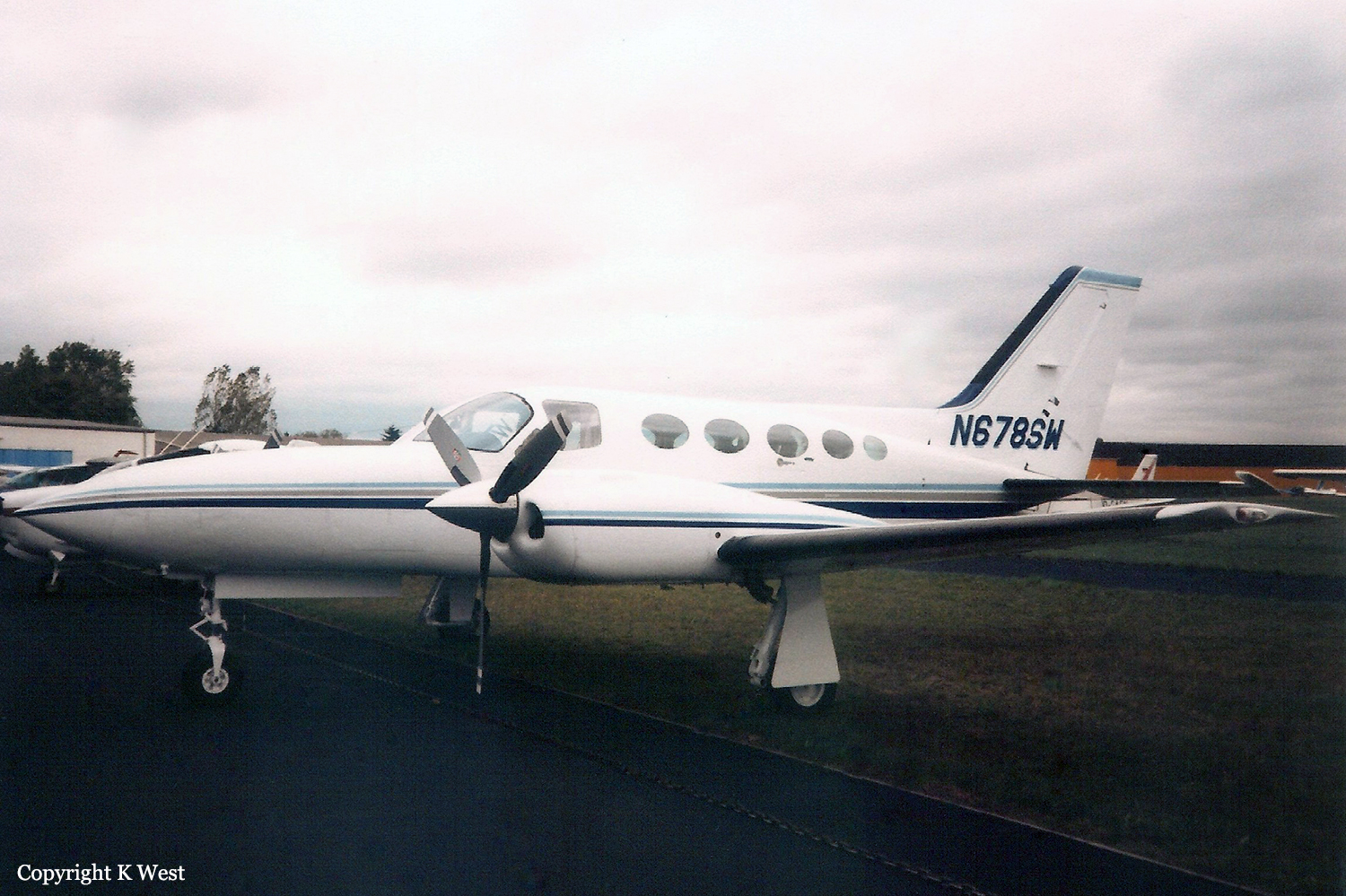
N678SW
Flight Phase:
Flight Type:
Survivors:
No
Site:
Schedule:
Monterey – Salinas
MSN:
421C-1023
YOM:
1981
Crew on board:
1
Crew fatalities:
Pax on board:
0
Pax fatalities:
Other fatalities:
Total fatalities:
1
Captain / Total flying hours:
9337
Aircraft flight hours:
5818
Circumstances:
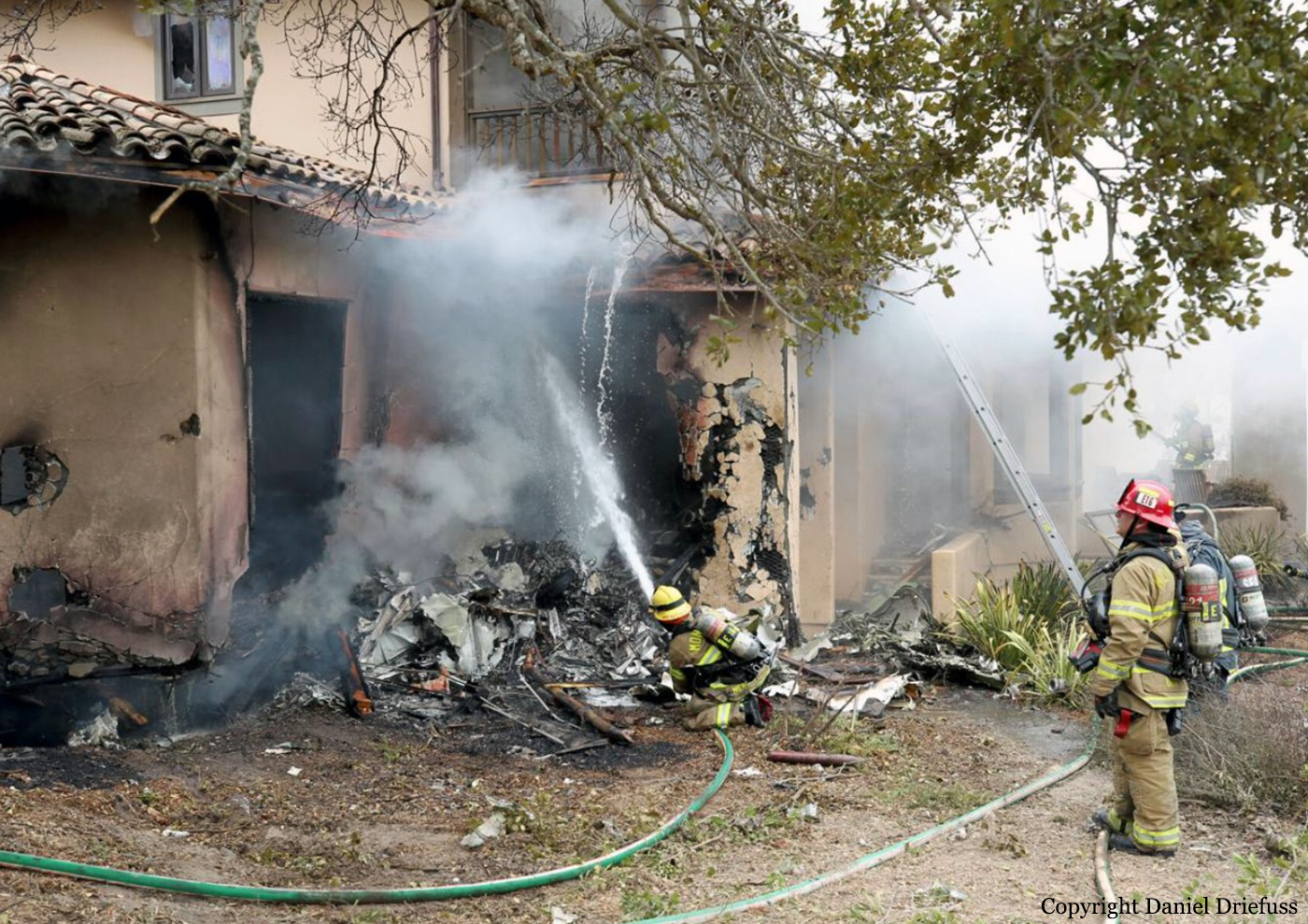
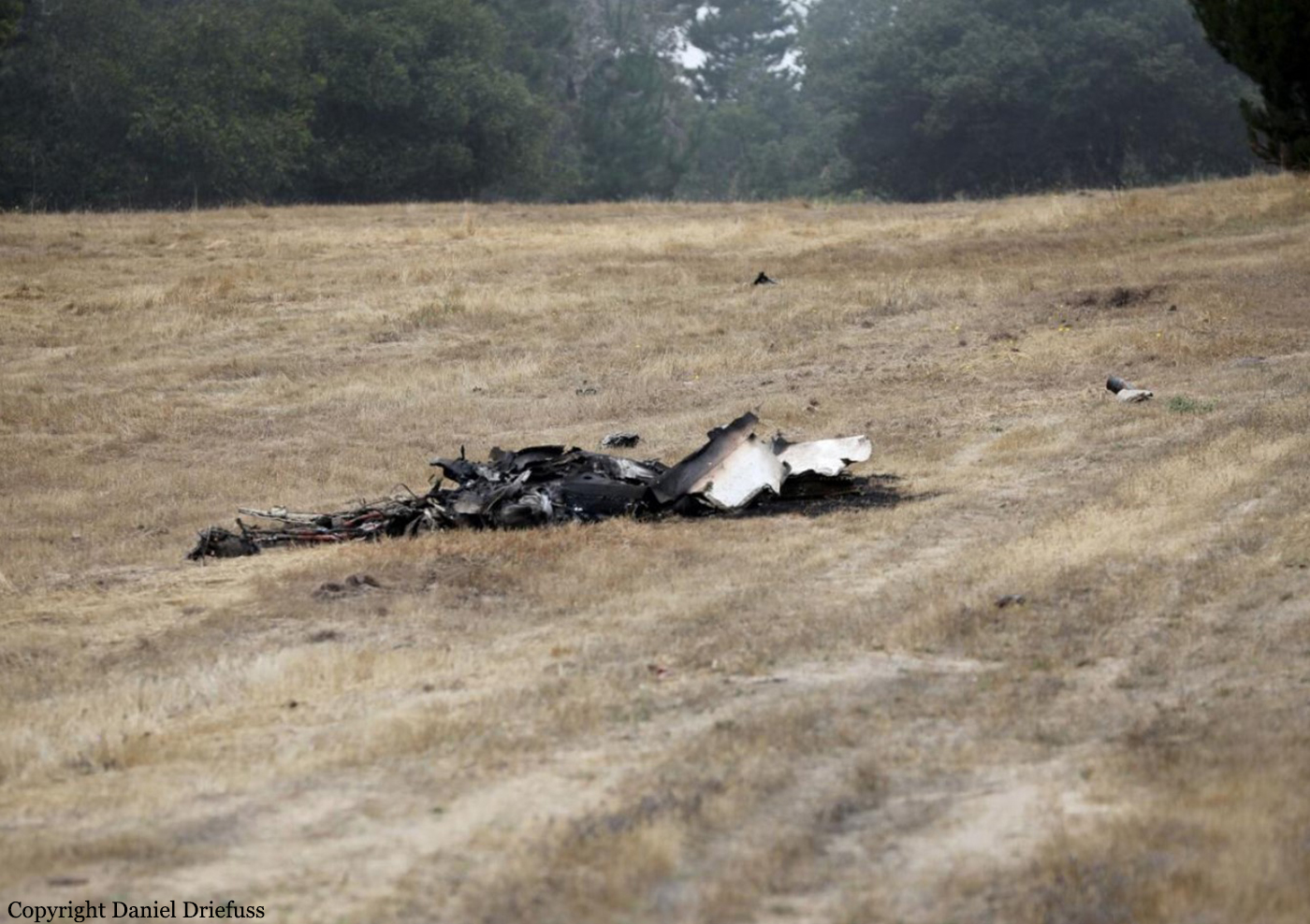
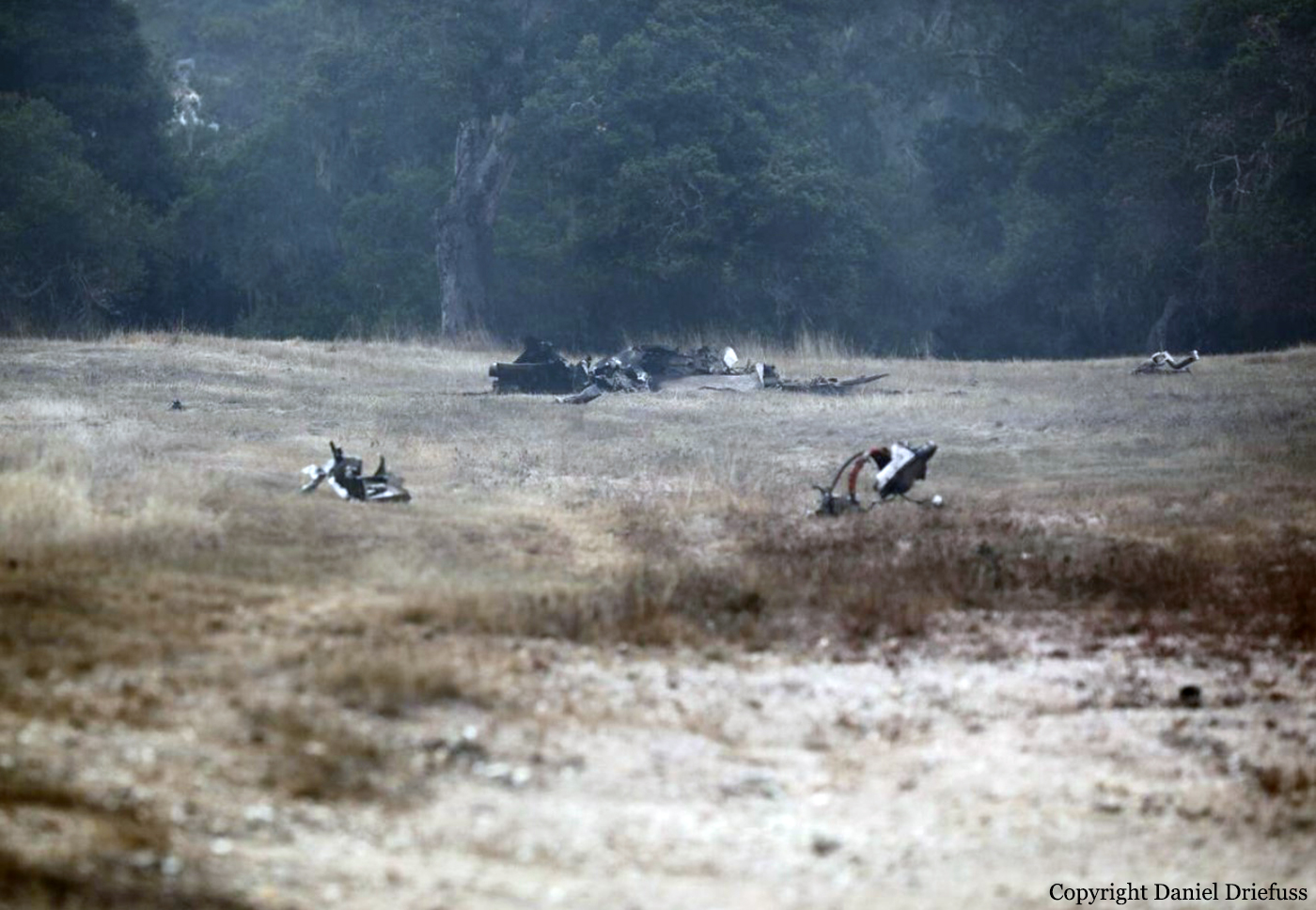
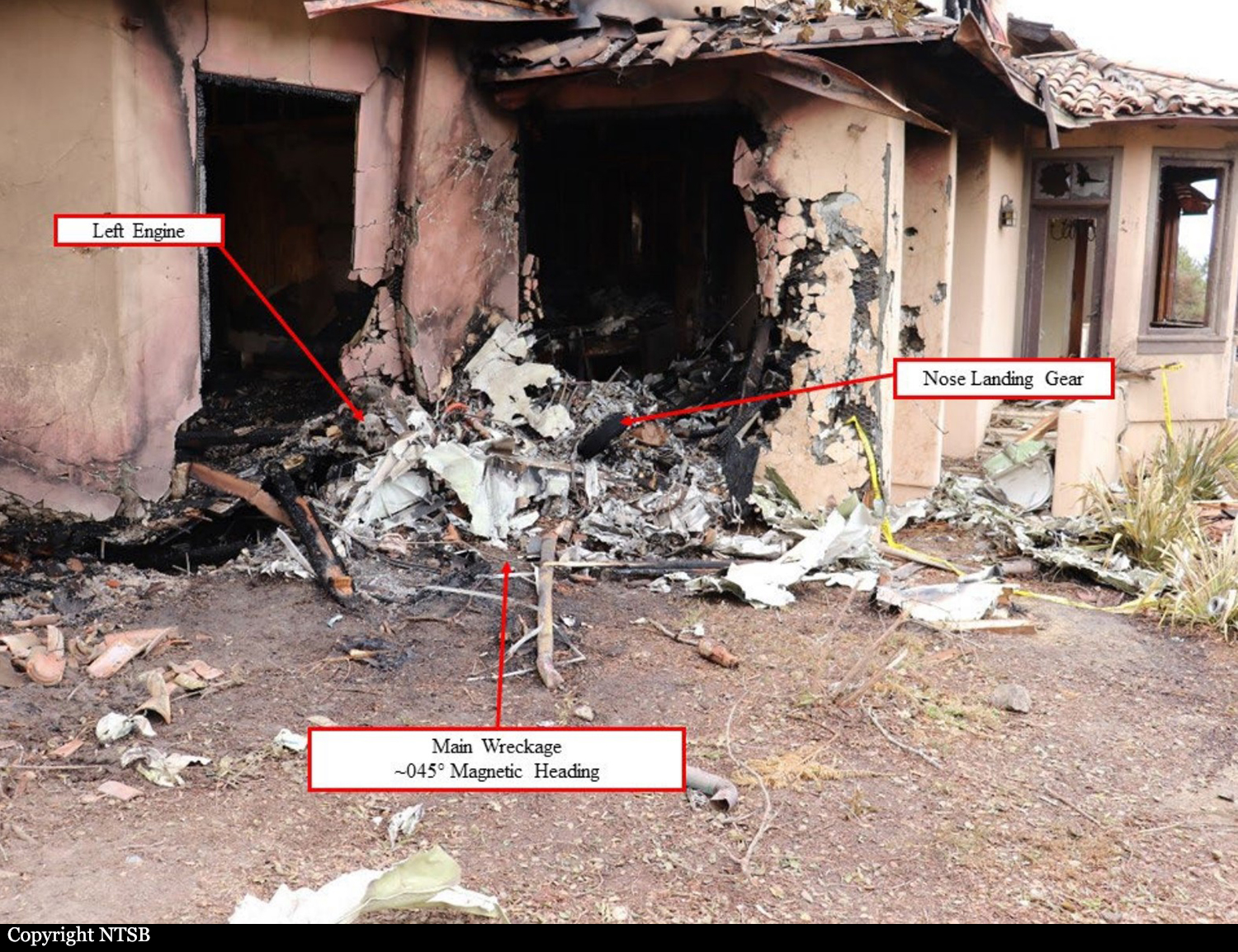
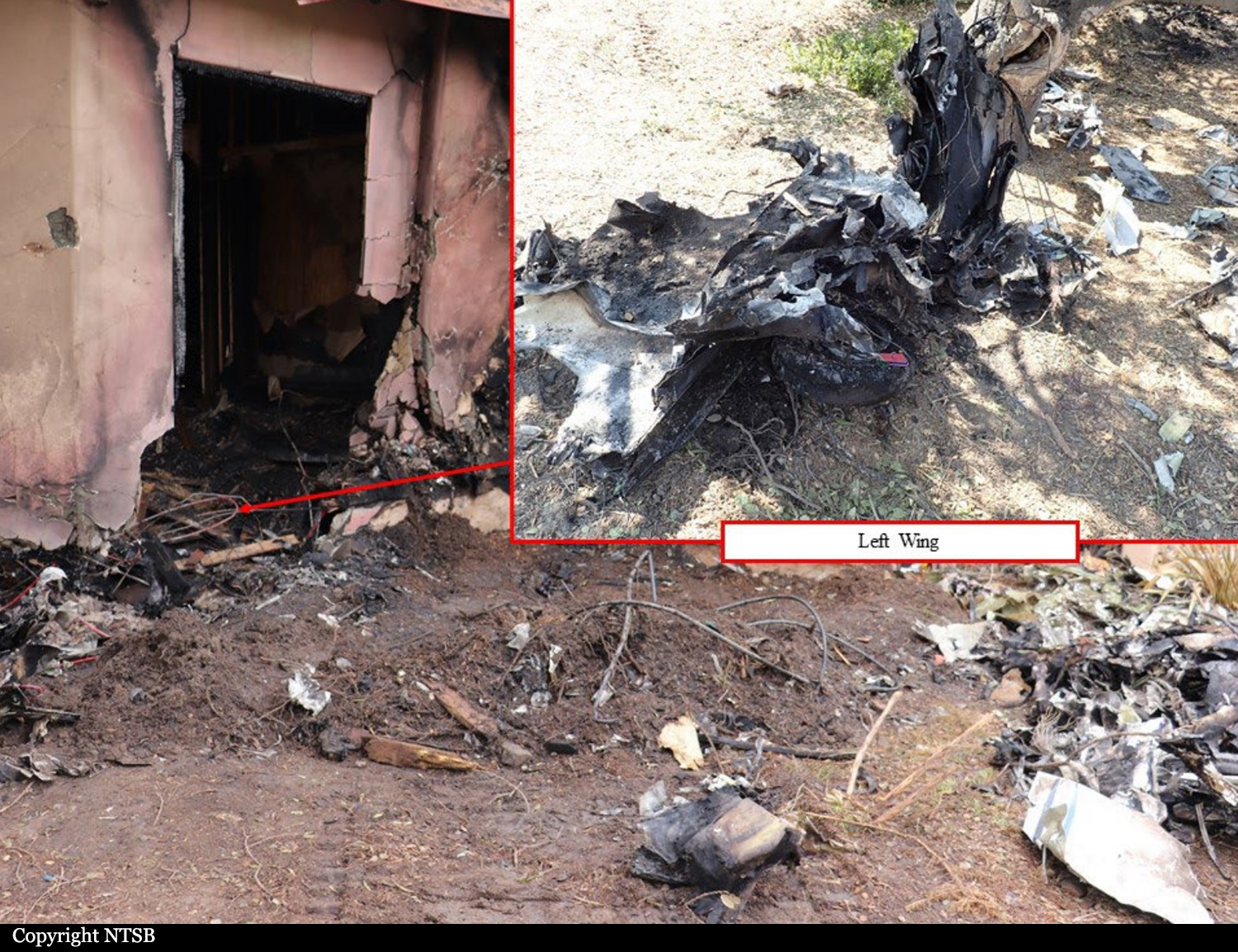
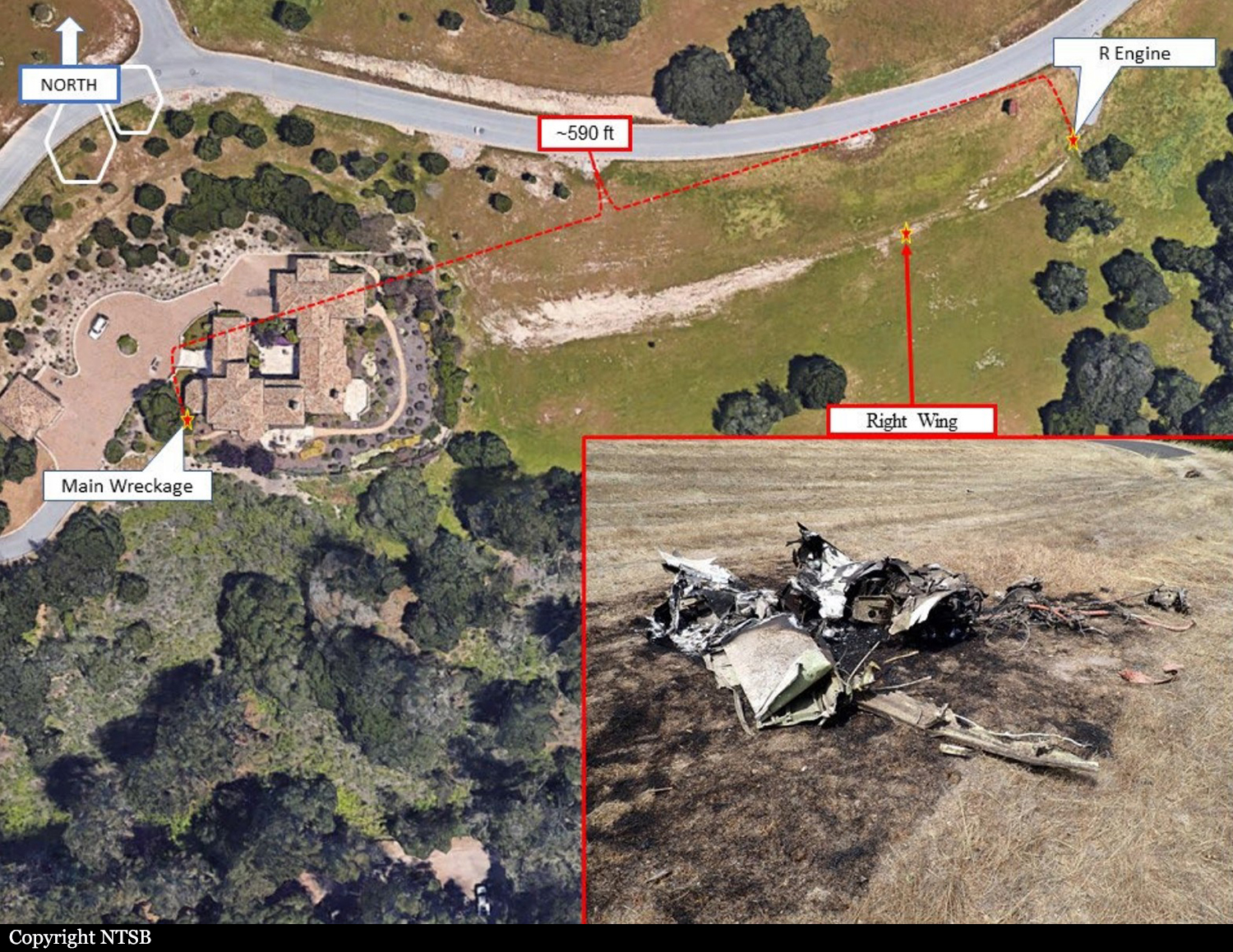
Before taking off, the pilot canceled an instrument flight rules (IFR) flight plan that she had filed and requested a visual flight rules (VFR) on-top clearance, which the controller issued via the Monterey Five departure procedure. The departure procedure included a left turn after takeoff. The pilot took off and climbed to about 818 ft then entered a right turn. The air traffic controller noticed that the airplane was in a right-hand turn rather than a left-hand turn and issued a heading correction to continue a right-hand turn to 030o , which the pilot acknowledged. The airplane continued the climbing turn for another 925 ft then entered a descent. The controller issued two low altitude alerts with no response from the pilot. No further radio communication with the pilot was received. The airplane continued the descent until it contacted trees, terrain, and a residence about 1 mile from the departure airport. Review of weather information indicated prevailing instrument meteorological conditions (IMC) in the area due to a low ceiling, with ceilings near 800 ft above ground level and tops near 2,000 ft msl. Examination of the airframe and engines did not reveal any anomalies that would have precluded normal operation. The airplane’s climbing right turn occurred shortly after the airplane entered IMC while the pilot was acknowledging a frequency change, contacting the next controller, and acknowledging the heading instruction. Track data show that as the right-hand turn continued, the airplane began descending, which was not consistent with its clearance. Review of the pilot’s logbook showed that the pilot had not met the instrument currency requirements and was likely not proficient at controlling the airplane on instruments. The pilot’s lack of recent experience operating in IMC combined with a momentary diversion of attention to manage the radio may have contributed to the development of spatial disorientation, resulting in a loss of airplane control.
Probable cause:
The pilot’s failure to maintain airplane control due to spatial disorientation during an instrument departure procedure in instrument meteorological conditions which resulted in a collision with terrain. Contributing to the accident was the pilot’s lack of recent instrument flying experience.
Final Report:

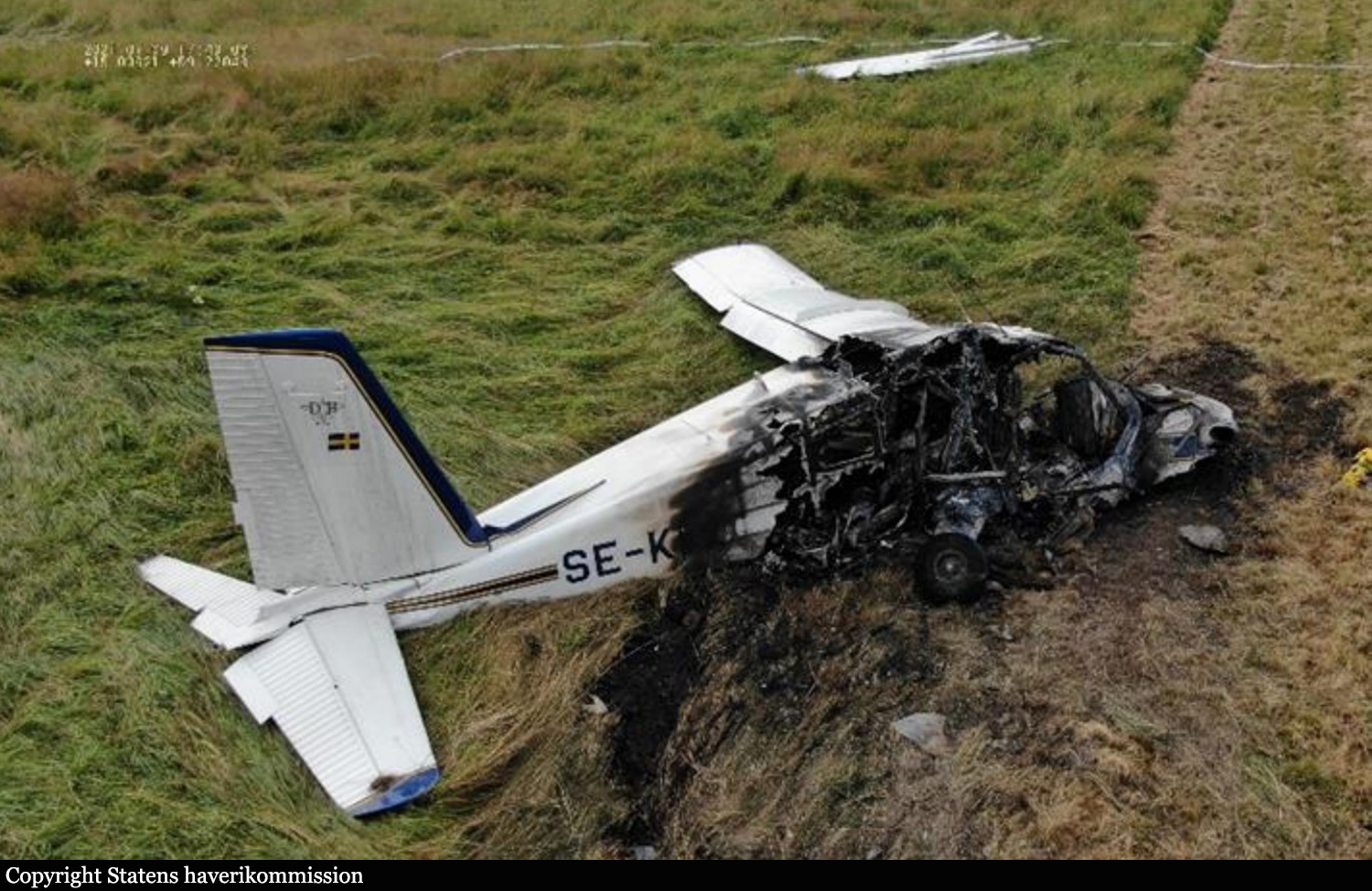
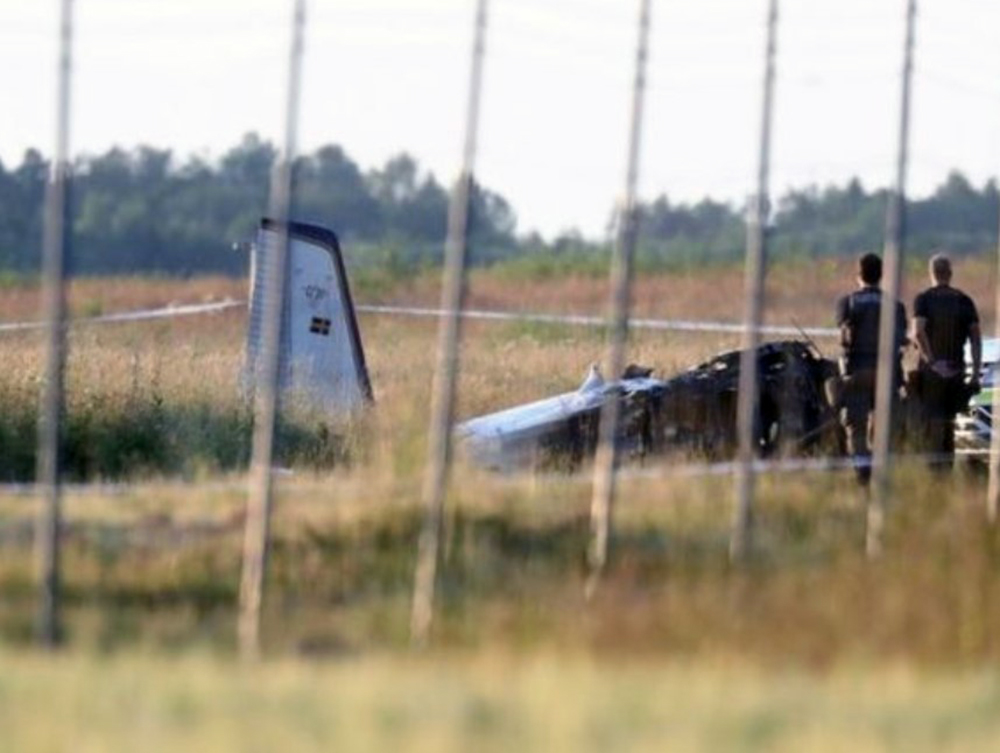
Crash of a De Havilland DHC-2 Beaver in Örebro: 9 killed

Date & Time: Jul 8, 2021 at 1921 LT
Type of aircraft:
Registration:
SE-KKD
Flight Phase:
Survivors:
No
Schedule:
Örebro - Örebro
MSN:
1629RB17
YOM:
1966
Location:
Country:
Region:
Crew on board:
1
Crew fatalities:
Pax on board:
8
Pax fatalities:
Other fatalities:
Total fatalities:
9
Captain / Total flying hours:
1049
Captain / Total hours on type:
556.00
Aircraft flight hours:
14538
Aircraft flight cycles:
25605
Circumstances:
The intention of the flight was to drop eight parachutists from an altitude of 1,500 metres. It was the twelfth and planned to be the last flight of the day. The weather conditions were good. The parachutist bench to the right of the pilot had been replaced with a pilot's seat to distance the parachutists from the pilot as a Covid-19 precautionary measure. The pilot had no ability to perform a mass and balance calculation with the available information. After take-off, the aircraft climbed to an altitude of 400 to 500 feet above ground before changing course 180 degrees to the left. The aircraft turned around quickly in a descending turn with a high bank angle. During the final phase, the aircraft dived steeply and then slightly levelled off before impact. Upon impact, the landing gear was teared off, after which the aircraft skidded on its belly 48 metres straight ahead and caught fire. All nine persons on board sustained fatal injuries.
Probable cause:
Control of the aircraft was likely lost in connection with the wing flaps being retracted in a situation where the stick forces were high due to an abnormal elevator trim position, while the aircraft was unstable due to being tail-heavy and abnormally trimmed. The low altitude was not sufficient to regain control of the aircraft. The cause of the accident was that several safety slips occurred in the operation, which resulted in that the safety margin was too small for a safe flight.
Final Report:
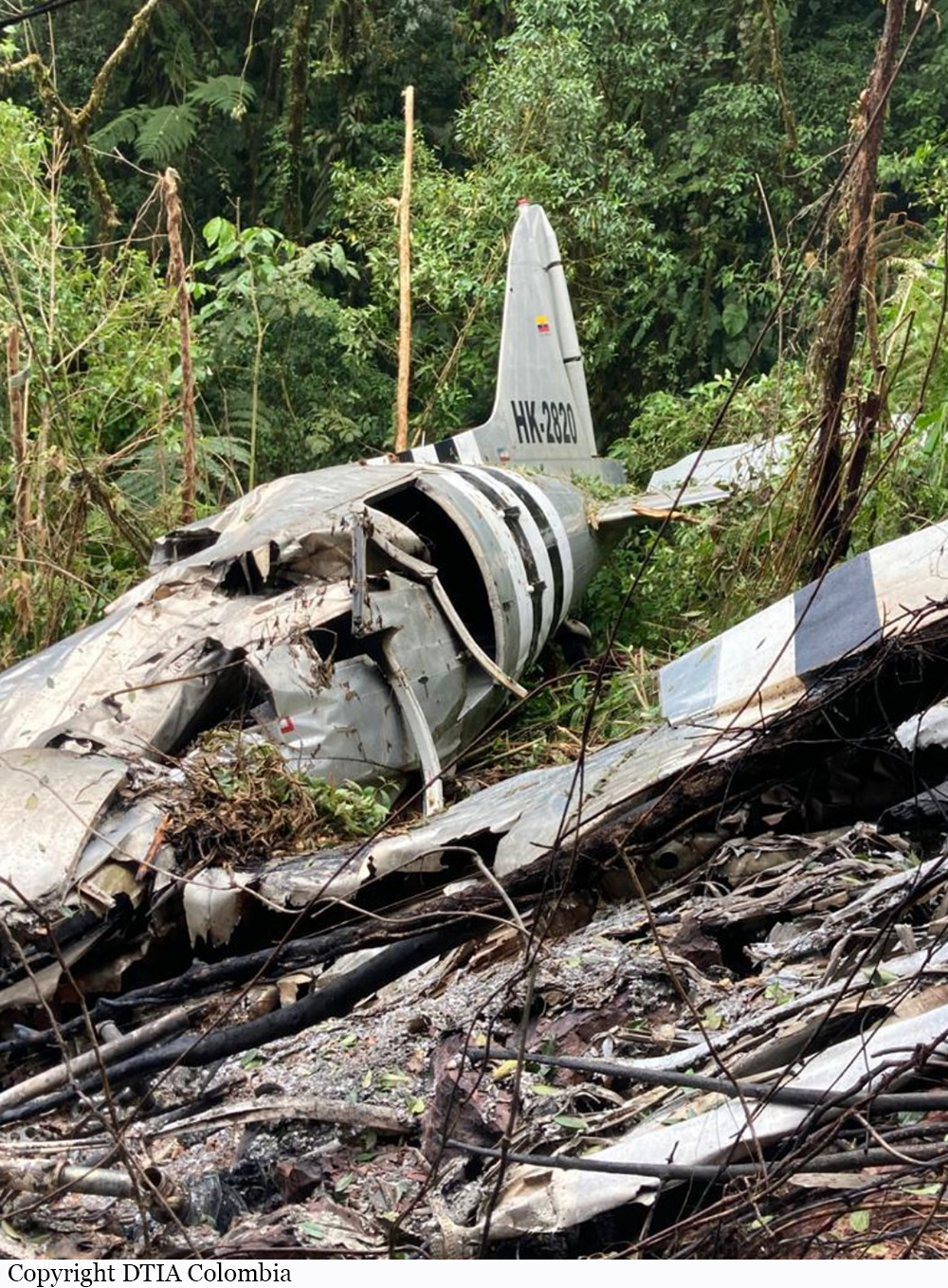
Crash of a Douglas DC-3C near Restrepo: 3 killed

Date & Time: Jul 8, 2021 at 0709 LT
Type of aircraft:
Operator:
Registration:
HK-2820
Flight Phase:
Flight Type:
Survivors:
No
Site:
Schedule:
Villavicencio - Villavicencio
MSN:
20171
YOM:
1944
Location:
Country:
Crew on board:
2
Crew fatalities:
Pax on board:
1
Pax fatalities:
Other fatalities:
Total fatalities:
3
Captain / Total flying hours:
16923
Captain / Total hours on type:
16680.00
Copilot / Total flying hours:
9387
Copilot / Total hours on type:
8170
Aircraft flight hours:
18472
Circumstances:
The twin engine airplane departed Villavicencio-La Vanguardia Airport Runway 05 at 0659LT on a training flight consisting with a proficiency check of the captain. On board were one instructor, one captain and one mechanic. About 10 minutes into the flight, while cruising at an altitude of 6,000 feet over mountainous terrain in Instrument Meteorological Conditions, the airplane impacted trees and crashed on the slope of a hilly terrain located in the region of Restrepo. The wreckage was found three days later. All three crew members were killed.
Probable cause:
Probable causes:
- Controlled flight into terrain during the execution of the IFR departure procedure VVC2A, during which the crew mistakenly turned left, contrary to the procedure, heading towards the mountainous area at the foothills of the eastern range, where the impact occurred.
- Loss of situational awareness by the crew, which, for reasons that could not be determined, apparently made a controlled left turn, contrary to the indications of the VVC2A departure procedure, even though it was an experienced crew familiar with the operating area.

The following contributing factors were identified:
- Lack of operator standards, as there was no detailed, organized, and sequential instructional plan and syllabus for the crew to follow during each maneuver, such as the VVC2A instrument departure.
- Lack of operator standards, as there was no specific syllabus for the planning and execution of the Recurrent Check, taking into account, among other aspects, the composition of the aircraft crew, consisting of two instructor pilots, one of whom was conducting the check on the other.
- Inadequate planning and supervision of the training flight by the operator, as they did not conduct a specific risk analysis of the flight, did not monitor its preparation and execution, did not provide details in a flight order or other document, considering especially the composition of the aircraft crew, consisting of two instructor pilots, one of whom was conducting the check on the other.
- Deficient planning and preparation of the flight by the crew, as they informally changed the VFR Flight Plan to IFR, apparently did not conduct a complete and adequate briefing, were unaware of or did not consider the VVC2A SID for the start of the IFR flight, and omitted several IFR flight procedures.
- Crew's neglect of the following IFR flight procedures:
- Not specifying a route and an IFR departure procedure in the IFR Flight Plan.
- Not requesting complete authorization from ATC to initiate an IFR flight. At no time did they mention the VVC2A departure, which was key to the verbally proposed plan before takeoff.
- Not defining or requesting from ATS which standard departure procedure or other they would use to initiate the IFR flight, in which they would encounter IMC shortly after takeoff.
- Not requiring ATC to assign a transponder code before takeoff or at any other phase of the flight, or selecting code 2000 as they did not receive instructions from ATS to activate the transponder.
- Likely not activating the transponder before takeoff and/or not verifying its correct operation before takeoff or immediately once the aircraft was in the air.
- Inaccurate use of phraseology with non-standard terminology in their transmissions with ATC.
- Insufficient experience and training in IFR flights by the crew, despite their extensive experience with the equipment. Much of this experience had been gained in the eastern region of the country, where the majority of DC3 flights are conducted in VMC and under VFR, with no opportunity for the practical execution of IFR procedures.
- Overconfidence of the crew, influenced by factors such as the high flight experience and DC3 equipment experience of the two pilots in the crew, their status as instructor pilots, the relatively low operational demand of the flight mission, and the knowledge, familiarity, and confidence of both crew members with the aerodrome's characteristics, the surrounding area, and especially the peculiarities and risks of the terrain to the west of the takeoff path.
- Non-observance by air traffic control of the following IFR flight procedures initiated by HK2820:
- Failure to issue complete authorization to the aircraft for the IFR flight before initiating the flight or at any other time.
- Failure to issue a standardized instrument departure, SID, or any other safe departure procedure to the aircraft. At no time did ATC mention the VVC2A departure, which was crucial for carrying out the plan verbally proposed by the crew.
- Failure to provide the aircraft with a transponder code before takeoff or at another appropriate time, or to verify its response. This process started only 03:11 minutes after the aircraft took off, so positive radar contact verification was only achieved 04:58 minutes after takeoff, delaying radar presentation and limiting positive flight control.
- Late transfer of aircraft control from the Control Tower to Approach Control (03:35 minutes after takeoff), not immediately after the aircraft was airborne as it should have been, considering prevailing IMC flight conditions in the vicinity of the aerodrome.
- Operating with an incomplete radar display configuration in Approach Control, with insufficient symbology, depriving control of references and judgment elements for an accurate location of the aircraft and its left turn from the path.
- Failure to observe radar surveillance techniques and procedures.
- Inaccurate use of phraseology with non-standard terminology in their transmissions with the aircraft.
- Lack of situational awareness by both the crew and ATC during a flight that, perhaps because it seemed routine, led both parties to omit elementary IFR flight procedures, disregarding the inherent risks of an operation in IMC conditions, with strict IFR procedures that needed to be followed, considering, among other things, the aerodrome's proximity to a mountainous area.
Final Report:

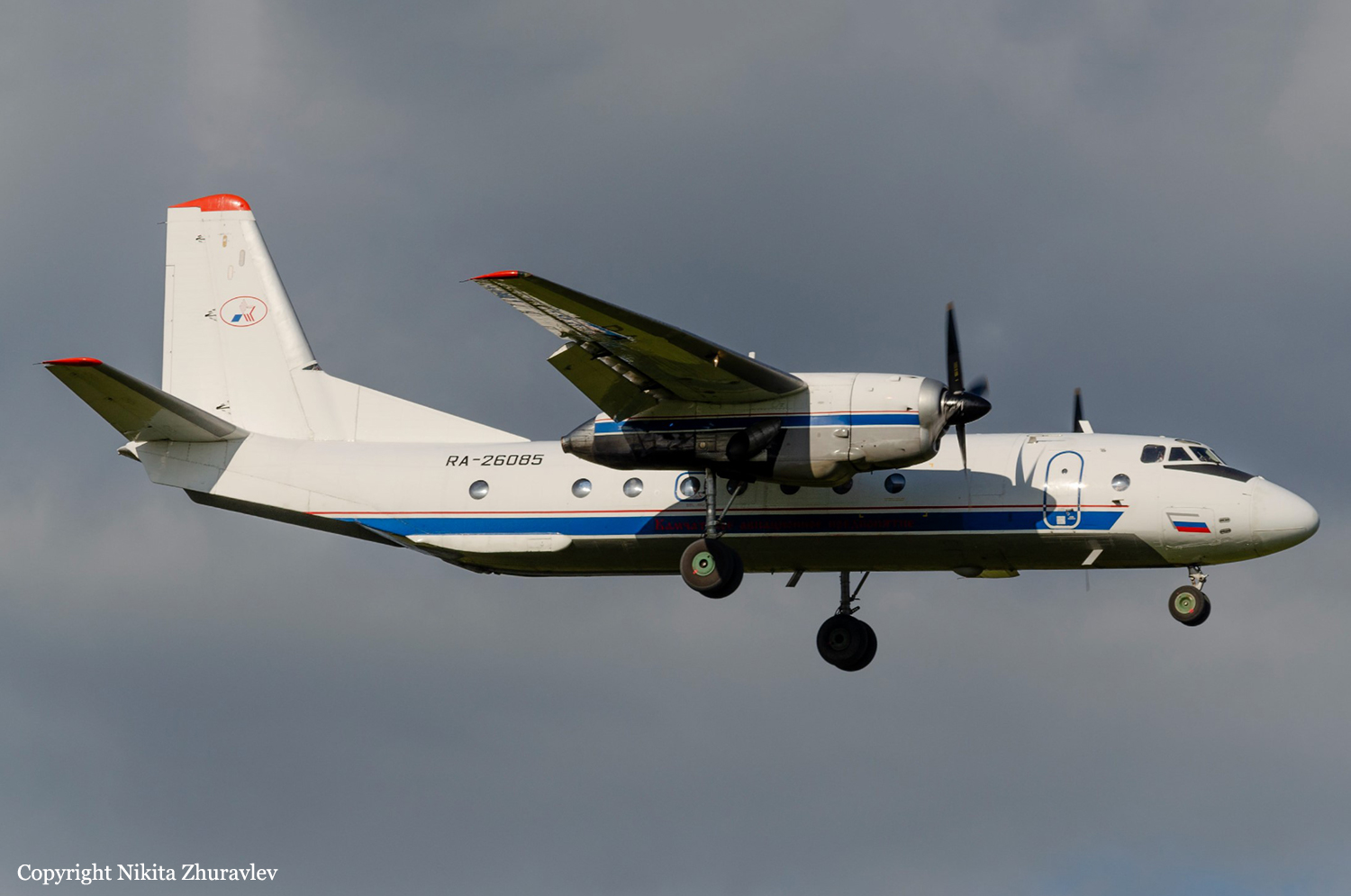
Crash of an Antonov AN-26B-100 in Palana: 28 killed

Date & Time: Jul 6, 2021 at 1450 LT
Type of aircraft:
Operator:
Registration:
RA-26085
Survivors:
No
Schedule:
Petropavlovsk-Kamchatsky – Palana
MSN:
123 10
YOM:
1982
Flight number:
PTK251
Country:
Region:
Crew on board:
6
Crew fatalities:
Pax on board:
22
Pax fatalities:
Other fatalities:
Total fatalities:
28
Captain / Total flying hours:
3340
Captain / Total hours on type:
2885.00
Copilot / Total flying hours:
1253
Copilot / Total hours on type:
1091
Aircraft flight hours:
21492
Aircraft flight cycles:
10498
Circumstances:
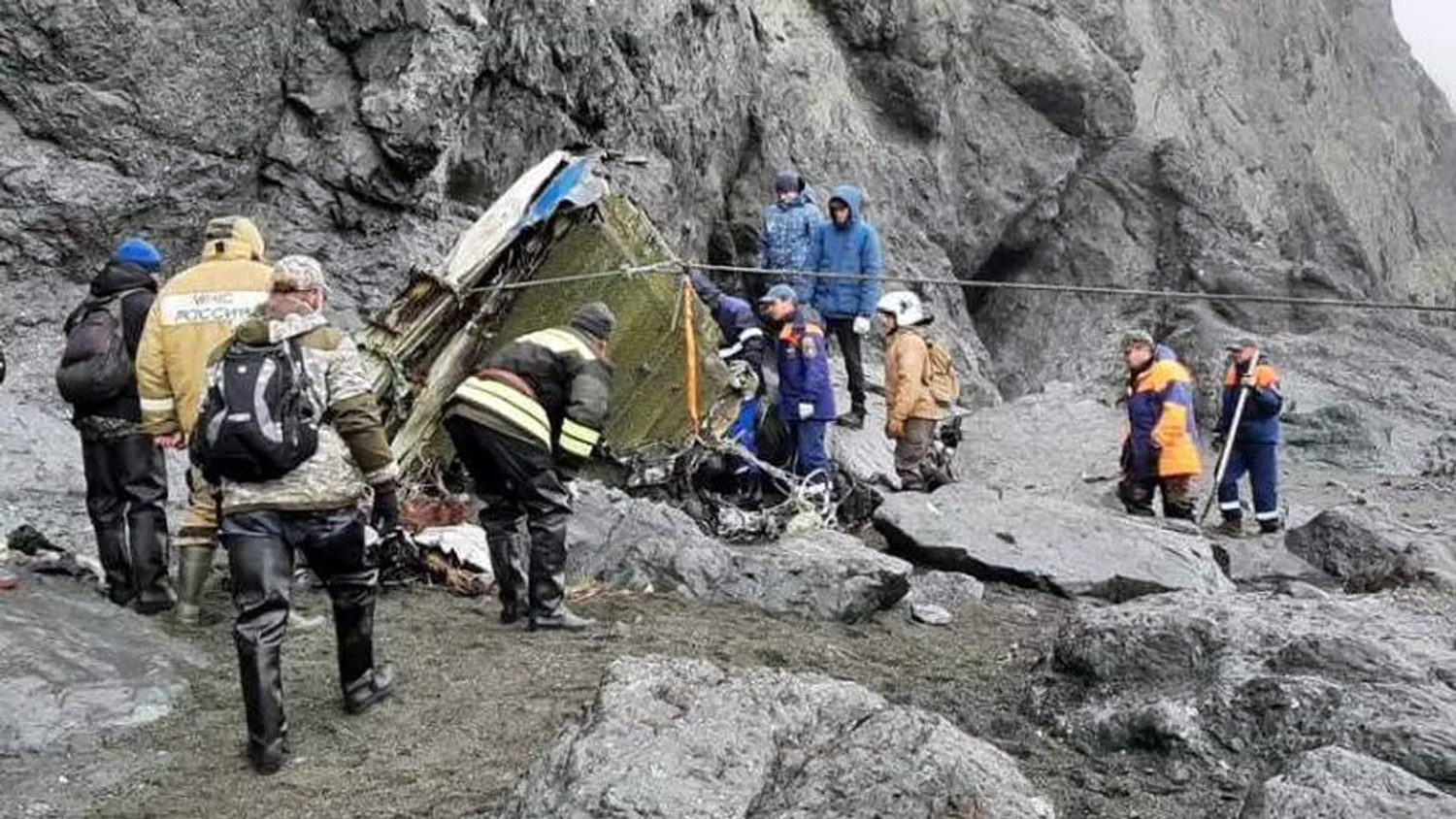
The aircraft departed Petropavlovsk-Kamchatsky Airport at 1257LT on a schedule service (flight PTK251) to Palana, carrying 22 passengers and a crew of six, among them Olga Mokhiriova, chief of the municipality of Palana. At 1439LT, the crew contacted Palana ATC and was cleared to start the descent. While completing an NDB approach to runway 29, the crew encountered marginal weather conditions with fog and ceiling at 300 metres. Too low, the aircraft impacted terrain about 4 km northwest of the airport. The wreckage was found in the evening on the top of a rocky wall. The aircraft disintegrated on impact and debris fall down on the sea bank. All 28 occupants were killed.
Probable cause:
The cause of the An-26B-100 RA-26085 aircraft crash was the crew's violation of the established instrument approach procedure to Palana aerodrome, which was manifested in flying with significant deviation from the set route and descent well below the established minimum descent height (MDH) under weather conditions that excluded stable visual contact with ground landmarks, leading to the collision of the aircraft with a coastal cliff in controlled flight, its destruction, and the death of the crew and passengers.
The following contributing factors were identified:
- The crew's failure to execute a missed approach with the acquisition of the established minimum safety altitude (MSA) when information about the bearing indicated a significant deviation of the aircraft from the established approach procedure;
- The absence in the Palana aerodrome dispatcher's work technology of actions in the presence of information about the bearing indicating a significant deviation of the aircraft from the established approach scheme, as well as the dispatcher's passivity when such information was available;
- The lack of warning signals from the early ground proximity warning system under conditions that should have triggered it. It is not possible to determine the reason for the absence of the warning signals;
- The overestimation of the barometric altimeter readings in the final phase of the flight due to the specific airflow around the steep coastline creating a low-pressure zone and the overestimation of the variometer readings, the cause of which cannot be determined.
Final Report:
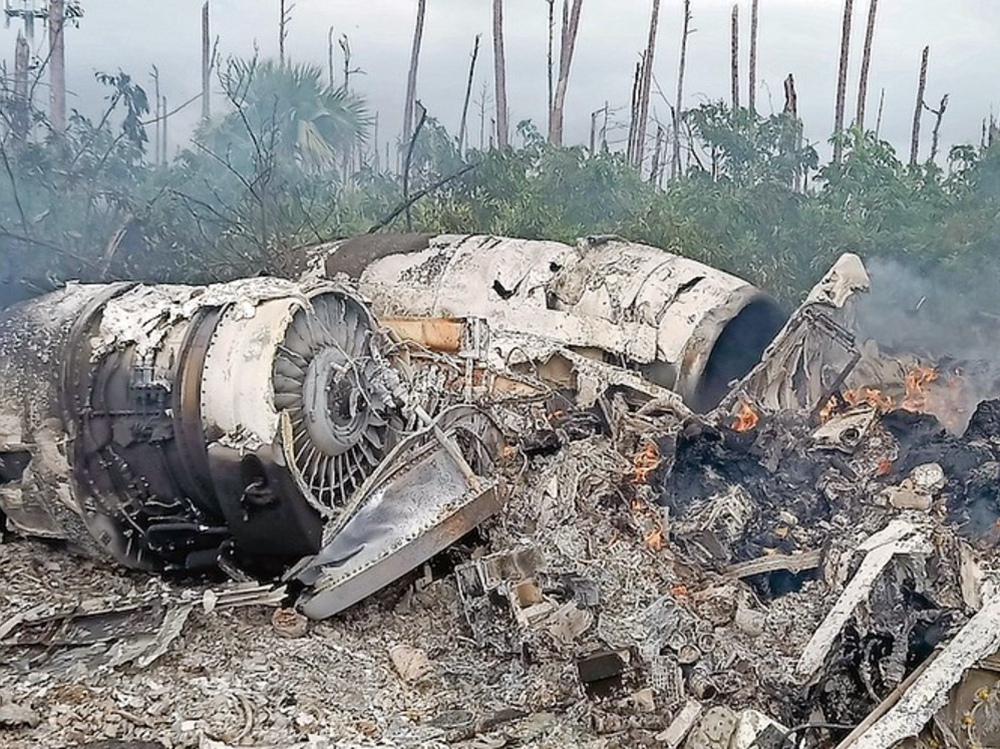
Crash of a IAI 1124A Westwind II in Treasure Cay: 2 killed

Date & Time: Jul 5, 2021 at 1545 LT
Type of aircraft:
Operator:
Registration:
N790JR
Flight Phase:
Flight Type:
Survivors:
No
Schedule:
Treasure Cay – Nassau
MSN:
424
YOM:
1984
Country:
Crew on board:
2
Crew fatalities:
Pax on board:
0
Pax fatalities:
Other fatalities:
Total fatalities:
2
Circumstances:
On the 5th July, 2021 at approximately 3:45PM, EDT (1945UTC), an Israeli Aircraft Industries, (IAI) Westwind 1124A aircraft, United States registration N790JR, crashed a short distance from the end of runway 32 at the Treasure Cay International Airport (MYAT), Treasure Cay, Abaco, Bahamas. The aircraft plowed through airport lighting equipment at the end of the runway, hitting and breaking several trees along its path. A trail of aviation fuel and pieces of the aircraft and avionics equipment from the flight deck, were left behind before the aircraft finally hit a small mound (hill), spinning, hitting several additional trees, breaking apart and bursting into flames. The aircraft came to rest at coordinates 26°45’21.50”N, 77°24’7.26”W, approximately 2,000 feet (.33 miles) from the end of runway 32. As this airport did not have a fire truck or crash and rescue personnel stationed on site, assistance with fire services were requested from the town. Two firetrucks from the township responded, however, due to the location of the crash, and no access road available, the trucks were unable to reach the crash site and assist in extinguishing the blaze. The fire continued unimpeded, dampened only by the intermittent downpour of rain, which did not aid in extinguishing the blaze, but rather, only limited the spread of the fire to surrounding bushes. The raging fire totally destroyed the aircraft and much of the control surfaces and components in the direct area of the blaze. On July 6, a team of investigators from the AAIA and CAA-B were dispatched to the scene. Upon arrival of the investigation team, surrounding brush and trees, as well as some parts and components of the aircraft were still burning. Initial assessments pointed to a possible failure of the aircraft to climb and perform as required. Runway 14/32 is 7,001 x 150 feet with an asphalt surface and based on the distance the aircraft traveled from the end of the runway to its final resting place, the signature marking on trees and airport lighting fixtures struck by the aircraft, in addition to the ground scars, along with pieces of the aircraft beyond the runway, up to the final resting place of the aircraft, it appears the aircraft was approximately 2 to 5 feet about the surface and not developing any lift or climb performance, while developing full power over the ground, striking trees and brush along its path. Investigations uncovered the private flight with a crew of two (2), proposed a flight time departure of 2:10PM EDT from the Treasure Cay International Airport (MYAT), with a planned destination of Nassau, Bahamas (MYNN) and an arrival time of 2:33PM EDT, according to flight plan retrieved from Flightaware.com. The flight plan did not specify whether the flight would be operated under Visual Flight Rules (VFR) or Instrument Flight Rules (IFR). According to witness statements taken at Treasure Cay, witnesses recalled two pilots entering the ramp after 3 pm. Witnesses also stated that one of the persons onboard advised customs that they will be departing for Marsh Harbor for fuel in the aircraft (N790JR).
Probable cause:
The AAIA has classified the accident as a controlled flight into terrain (CFIT) and determined the probable cause of the CFIT accident is due to the failure of the aircraft to climb (perform) as required.
Contributing factors which resulted in the failure of the aircraft to perform as required includes:
- Failure of the crew to configure the aircraft for the proper takeoff segment,
- Crew unfamiliarity with the aircraft systems.
Final Report:
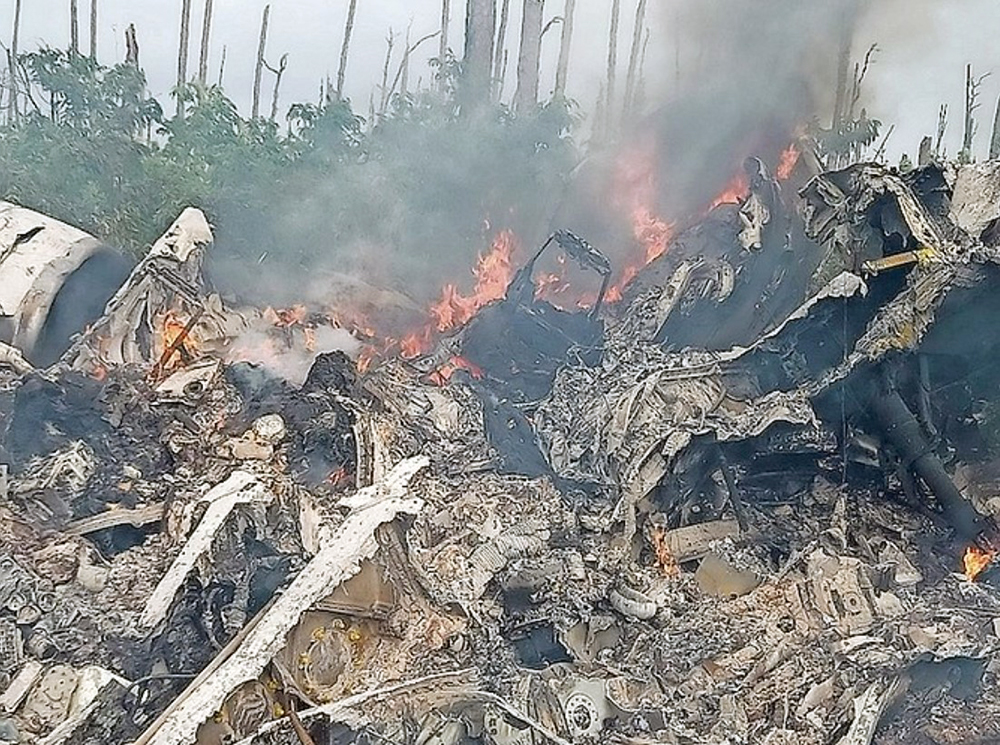
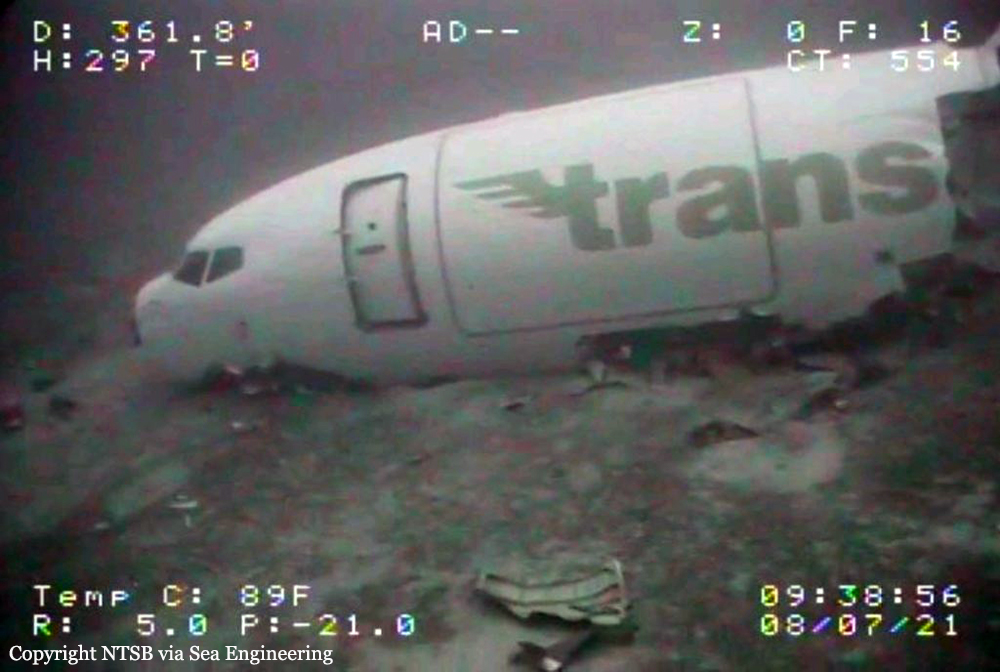
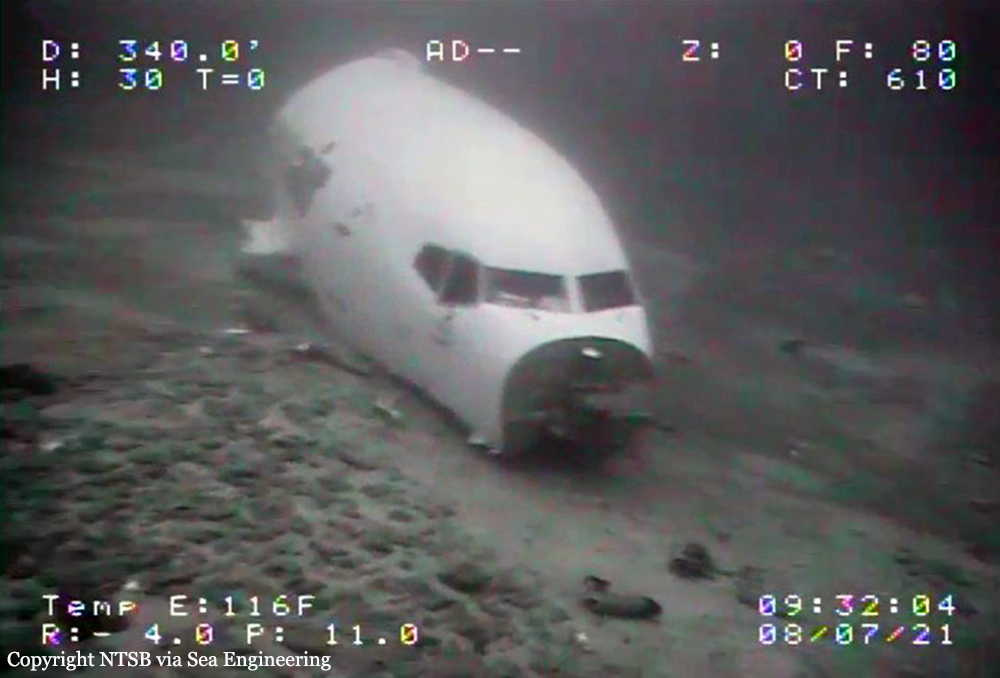
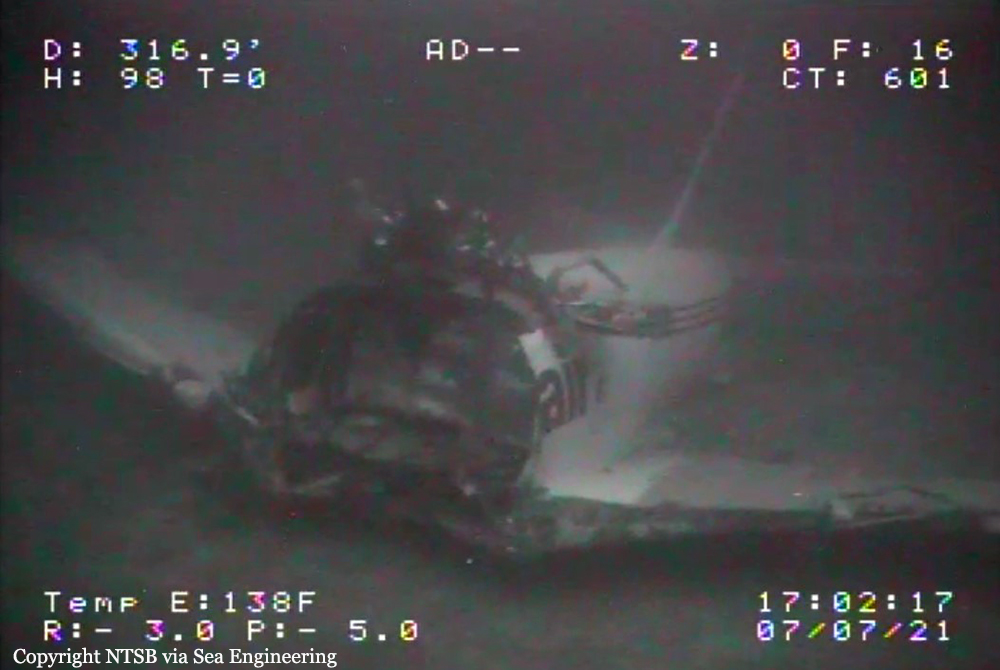
Crash of a Boeing 737-275C off Honolulu

Date & Time: Jul 2, 2021 at 0145 LT
Type of aircraft:
Operator:
Registration:
N810TA
Flight Phase:
Flight Type:
Survivors:
Yes
Schedule:
Honolulu – Kahului
MSN:
21116/427
YOM:
1975
Flight number:
MUI810
Location:
Crew on board:
2
Crew fatalities:
Pax on board:
0
Pax fatalities:
Other fatalities:
Total fatalities:
0
Captain / Total flying hours:
15781
Captain / Total hours on type:
871.00
Copilot / Total flying hours:
5272
Copilot / Total hours on type:
908
Aircraft flight hours:
27788
Circumstances:
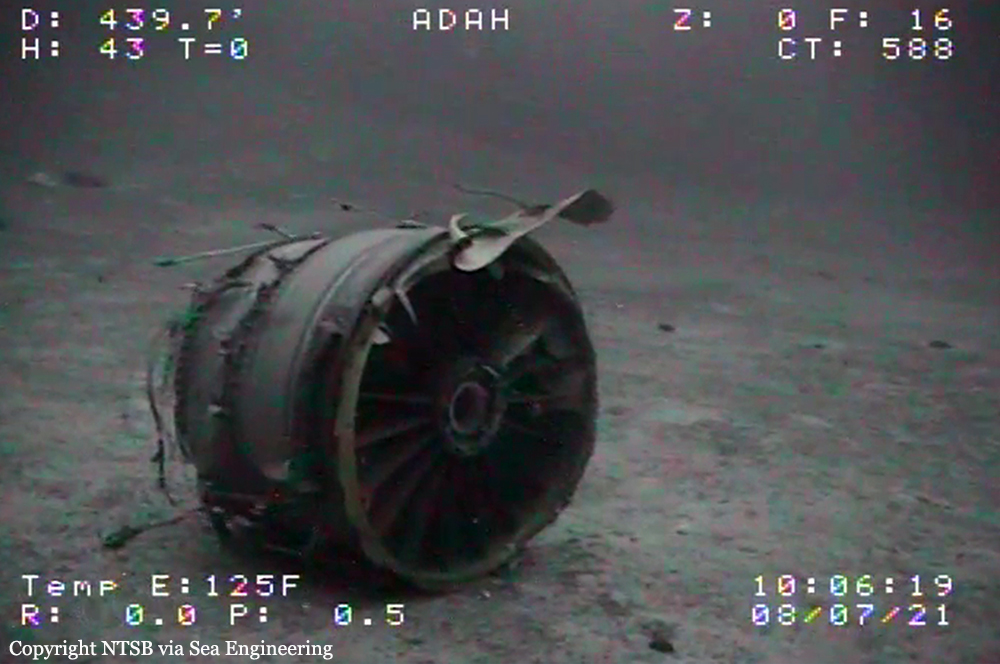
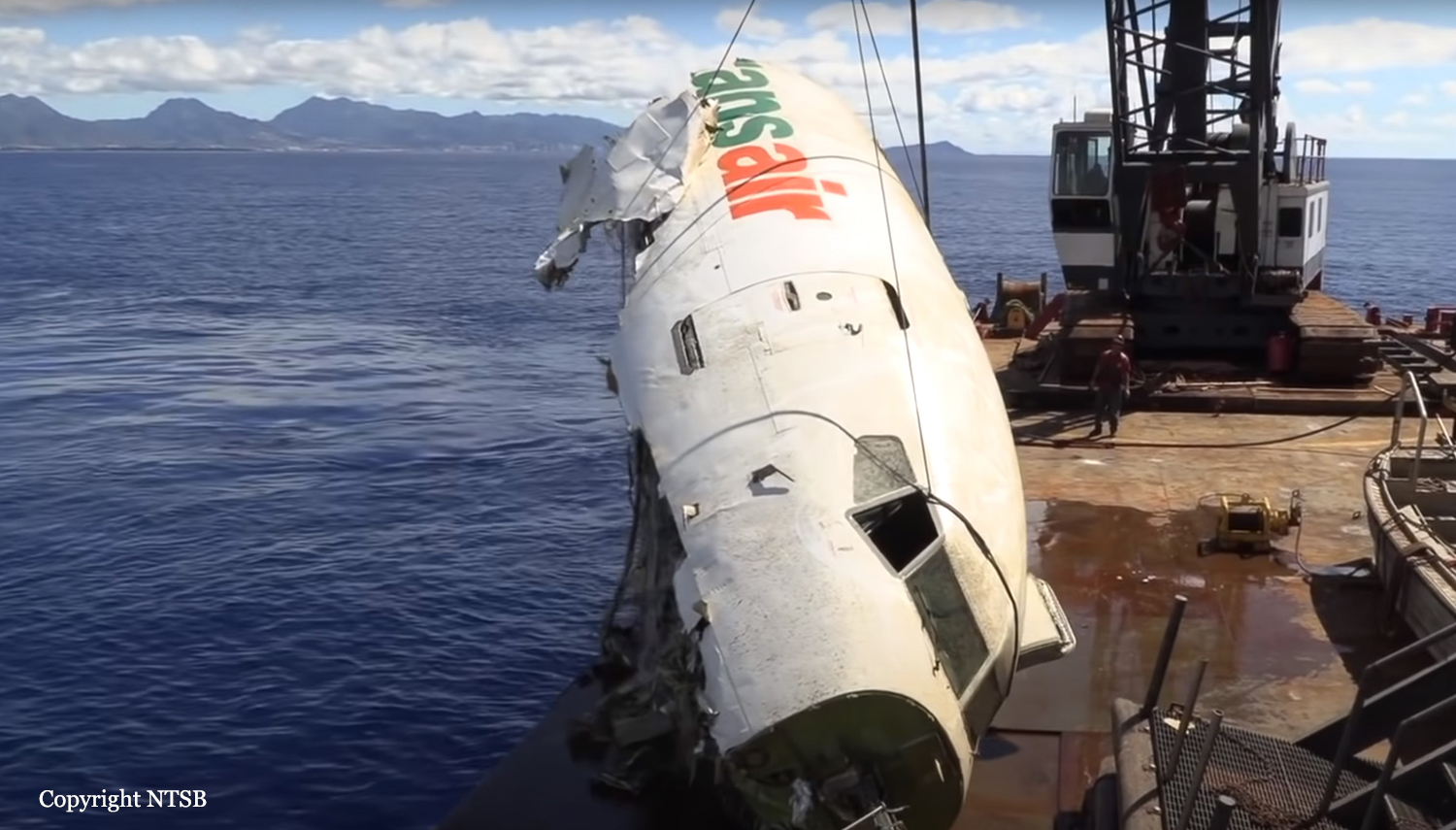
Transair flight 810, a Title 14 Code of Federal Regulations Part 121 cargo flight, experienced a partial loss of power involving the right engine shortly after takeoff and a water ditching in the
Pacific Ocean about 11.5 minutes later. This analysis summarizes the accident and evaluates (1) the right engine partial loss of power, (2) the captain's communications with air traffic control (ATC) and the first officer's left and right engine thrust reductions, (3) the first officer's misidentification of the affected engine and the captain's failure to verify the information, (4) checklist performance, and (5) survival factors. Maintenance was not a factor in this accident. The flight data recorder (FDR) showed that, when the initial thrust was set for takeoff, the engine pressure ratios (EPR) for the left and right engines were 2.00 and 1.97, respectively. Shortly after rotation, the cockpit voice recorder (CVR) recorded a “thud” and the sound of a low-frequency vibration. The captain (the pilot monitoring at the time) and the first officer (the pilot flying) reported that they heard a “whoosh” and a “pop,” respectively, at that time. As the airplane climbed through an altitude of about 390 ft while at an airspeed of 155 knots, the right EPR decreased to 1.43 during a 2-second period. The airplane then yawed to the right; the first officer countered the yaw with appropriate left rudder pedal inputs. The CVR showed that the captain and the first officer correctly determined that the No. 2 (right) engine had lost thrust within 5 seconds of hearing the thud sound. After moving the flaps to the UP position, the captain reduced thrust to maximum continuous thrust, causing the left EPR to decrease from 1.96 to 1.91 while the airplane was in a climb. (The right EPR remained at 1.43). The captain reported that he did not move the thrust levers again until after he became the pilot flying. The first officer stated that, after the airplane leveled off at an altitude of about 2,000 ft, he reduced thrust on both engines. FDR data showed that thrust was incrementally reduced to near flight idle (1.05 EPR on the left engine and then 1.09 EPR on the right engine) and that airspeed decreased from about 250 to 210 knots. (A decrease in airspeed to 210 knots was consistent with the operator’s simulator guide procedures for a single-engine failure after the takeoff decision speed [V1]. The simulator guide, which supplemented information in the company’s flight crew training manual, contained the most recent operator guidance for single-engine failure training at the time of the accident.) The captain was unaware of the first officer’s thrust changes because he was busy contacting the controller about the emergency. The captain told the controller, “we’ve lost an engine,” but he had declared the emergency to the controller twice before this point, as discussed later in this analysis. The captain instructed the first officer to maintain a target speed of 220 knots (which the captain thought would be “easy on the running engine”), a target altitude of 2,000 ft, and a target heading of 240°. (About 52 seconds earlier, the controller had issued the 240° heading instruction to another airplane on the same radio frequency.) About 3 minutes 14 seconds after the right engine loss of thrust occurred, the captain assumed control of the airplane; at that time, the airplane’s airspeed was 224 knots and heading was 242°, but the airplane’s altitude had decreased from about 2,100 ft (the maximum altitude that the airplane reached during the flight) to 1,690 ft. The captain increased the airplane’s pitch to 9°; the airplane’s altitude then increased to 1,878 ft, but the airspeed decreased to 196 knots. The captain subsequently stated, “let’s see what is the problem...which one...what's going on with the gauges,” and “who has the E-G-T [exhaust gas temperature]?” The first officer stated that the left engine was “gone” and “so we have number two” (the right engine), thus misidentifying the affected engine. The captain accepted the first officer’s assessment and did not take action to verify the information. Afterward, the EPR level on the right engine began to increase in response to the captain advancing the right thrust lever so that the airplane could maintain airspeed and altitude. Right EPR increased and decreased several times during the rest of the flight (coinciding with crew comments regarding the EGT on the right engine and low airspeed) while the left EPR remained near flight idle. The first officer asked the captain if they “should head back toward the airport” before the airplane traveled “too far away,” and the captain responded that the airplane would stay within 15 miles of the airport. During a postaccident interview, the captain stated that, because there was no fire and an engine “was running,” he intended to have the airplane climb to 2,000 ft and stay within 15 miles of the airport to avoid traffic and have time to address the engine issue. The captain also stated that he had been criticized by the company chief pilot for returning to the airport without completing the required abnormal checklist for a previous in-flight emergency. Although the captain’s decision resulted in the accident airplane flying farther away from the airport and farther over the ocean at night, the captain’s decision was reasonable for a single-engine failure event. The captain directed the first officer to begin the Engine Failure or Shutdown checklist and stated that he would continue handling the radios. The first officer began to read aloud the conditions for executing the Engine Failure or Shutdown checklist but then stopped to tell the captain that the right EGT was at the “red line” and that thrust should be reduced on the right engine. The captain then decided that the airplane should return to the airport and contacted the controller to request vectors. The flight crew continued to express concern about the right engine. The first officer stated, “just have to watch this though…the number two.” The captain asked the first officer to check the EGT for the right engine, and the first officer responded that it was “beyond max.” Afterward, the captain told the first officer to continue with the Engine Failure or Shutdown checklist and finish as much as possible. The first officer resumed reading aloud the conditions for performing the checklist but then stopped to state, “we have to fly the airplane though,” because the airplane was continuing to lose altitude and airspeed. The captain replied “okay.” As a result, the flight crew did not perform key steps of the checklist, including identifying, confirming, and shutting down the affected (right) engine. The first officer told the captain that the airplane was losing altitude; at that time, the airplane’s altitude was 592 ft, and its airspeed was 160 knots. The captain agreed to select flaps 1 (which the first officer had previously suggested likely because the airplane was slowing). The CVR then recorded the first enhanced ground proximity warning system (EGPWS) annunciation (500 ft above ground level); various EGPWS callouts and alerts continued to be annunciated through the remainder of the flight. The captain then told the controller that “we’ve lost number one [left] engine…there’s a chance we’re gonna lose the other engine too it’s running very hot….we’re pretty low on the speed it doesn't look good out here.” Also, the captain mentioned that the controller should notify the US Coast Guard (USCG) because he was anticipating a water ditching in the Pacific Ocean. Because of the high temperature readings on the right engine, the flight crew thought, at this point in the flight, that a dual-engine failure was imminent. During a postaccident interview, the captain stated that his priority at that time was figuring out how the airplane could stay in the air and return safely to the airport. The captain also stated that he attempted to resolve the airplane’s deteriorating energy state by advancing the right engine thrust lever. However, with the left engine remaining near flight idle, the right engine was not producing sufficient thrust to enable the airplane to maintain altitude or climb. The captain’s communication with the controller continued, and the first officer stated, “fly the airplane please.” The controller asked if the airport was in sight, and the captain then asked the first officer whether he could see the airport. The first officer responded “pull up we’re low” to the captain and “negative” to the controller; the captain was likely unable to respond to the controller because he was trying to control the airplane. The captain asked the first officer about the EGT for the right engine; the first officer replied “hot…way over.” The captain then asked about, and the controller responded by providing, the location of the closest airport. Afterward, the CVR recorded a sound similar to the stick shaker, which continued intermittently through the rest of the flight. The CVR then recorded sounds consistent with water impact. The airplane came down into the Pacific Ocean about two miles offshore and sank. Both crew members were rescued, one was slightly injured and a second was seriously injured. The wreckage was later recovered for investigation purposes.
Probable cause:
The flight crewmembers’ misidentification of the damaged engine (after leveling off the airplane and reducing thrust) and their use of only the damaged engine for thrust during the remainder of the flight, resulting in an unintentional descent and forced ditching in the Pacific Ocean. Contributing to the accident were the flight crew’s ineffective crew resource management, high workload, and stress.
Final Report:

Crash of a Piper PA-60 Aerostar (Ted Smith 600) in Wichita

Date & Time: Jul 1, 2021 at 1908 LT
Operator:
Registration:
N10HK
Flight Type:
Survivors:
Yes
Schedule:
Sioux Falls – Wichita
MSN:
60-0715-8061222
YOM:
1980
Crew on board:
1
Crew fatalities:
Pax on board:
0
Pax fatalities:
Other fatalities:
Total fatalities:
0
Captain / Total flying hours:
420
Captain / Total hours on type:
95.00
Aircraft flight hours:
2744
Circumstances:
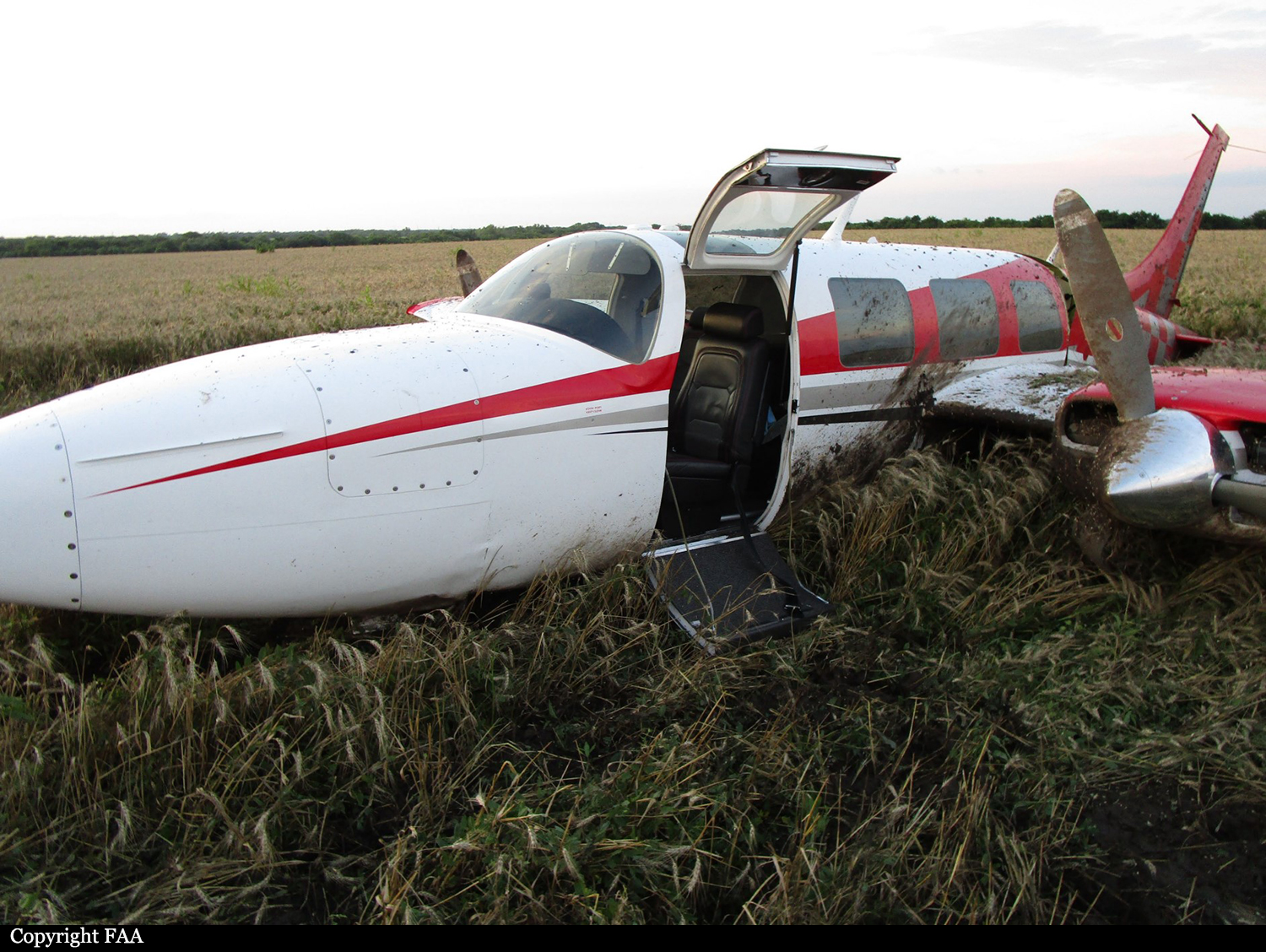
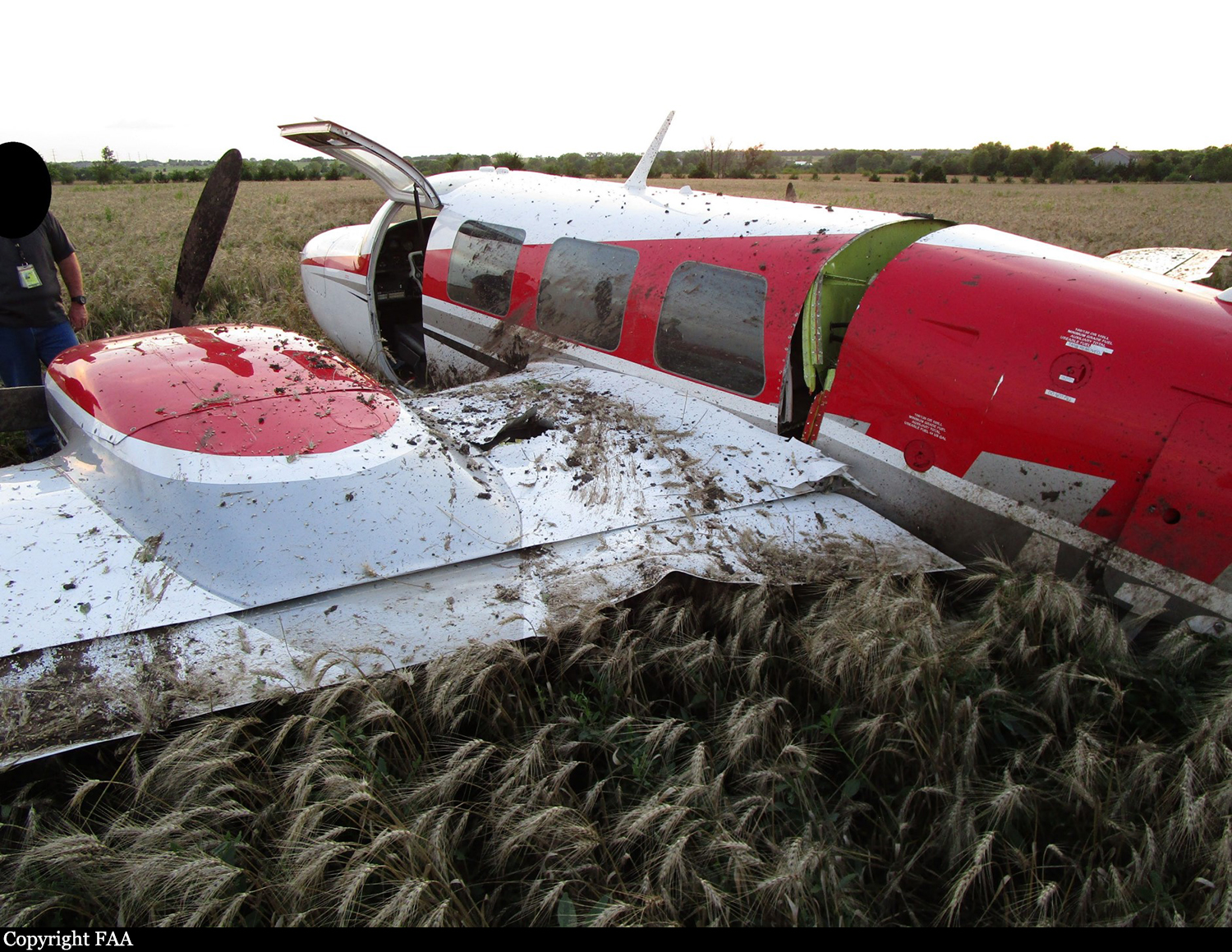
The pilot was conducting a cross-country flight when, about 8 miles north of his intended destination, he reduced engine power, pitched for level flight, and waited for indicated airspeed to drop below 174 kts to add 20° of flaps. As soon as the drag was introduced, the airplane began to “buck back and forward,” and the two engines were “throttling up and down on their own.” He noted that the right engine seemed to be “sputtering and popping” more than the left engine, so he decided to raise the flaps and to shut down and feather the right engine. He declared an emergency to air traffic control. The pilot then noticed that the left engine was “slowly spooling down” and the airplane was not able to maintain airspeed and altitude. The pilot performed a forced landing to a flat, muddy wheat field about 4 nautical miles from the airport. The airplane sustained substantial damage to the fuselage and to both wings. A Federal Aviation Administration inspector traveled to the accident site to examine the airplane. Flight control and engine control continuity were confirmed. The master switch was turned on and the fuel gauges showed a zero indication. There was no evidence of fuel at the accident site or in the airplane. During the recovery of the airplane from the field, no fuel was found in the three intact fuel tanks, nor in any of the engine fuel lines. The pilot later stated that he ran the airplane out of fuel during the accident flight. The pilot reported that, during the preflight checks and twice during the accident flight, he activated the low fuel warning light, and no anomalies were noted. Postaccident testing of the low fuel warning light in an exemplar Piper Aerostar 602P revealed no anomalies.
Probable cause:
The pilot’s improper fuel planning and management, which resulted in a total loss of engine power due to fuel exhaustion.
Final Report:

Crash of a Cessna 501 Citation I/SP in Smyrna: 7 killed

Date & Time: May 29, 2021 at 1055 LT
Type of aircraft:
Registration:
N66BK
Flight Phase:
Flight Type:
Survivors:
No
Schedule:
Smyrna - Palm Beach
MSN:
501-0254
YOM:
1982
Crew on board:
1
Crew fatalities:
Pax on board:
6
Pax fatalities:
Other fatalities:
Total fatalities:
7
Captain / Total flying hours:
1680
Captain / Total hours on type:
83.00
Aircraft flight hours:
4781
Circumstances:
The instrument-rated pilot of the business jet airplane, pilot-rated passenger, and five passengers departed on a cross-country flight and entered the clouds while performing a climbing right turn. The airplane then began to descend, and air traffic control (ATC) asked the pilot to confirm altitude and heading. The pilot did not respond. After a second query from ATC, the pilot acknowledged the instructions. The airplane entered a climbing right turn followed by a left turn. After ATC made several attempts to contact the pilot, the airplane entered a rapid descending left turn and impacted a shallow reservoir at a high rate of speed. Postaccident examination of the recovered wreckage and both engines revealed no evidence of any preimpact mechanical malfunctions or failures that would have precluded normal operation. Flight track data revealed that after takeoff, the airplane entered the clouds and made a series of heading changes, along with several climbs and descents, before it entered a steep, descending left turn. This type of maneuvering was consistent with the onset of a type of spatial disorientation known as somatogravic illusion. According to a National Transportation Safety Board performance study, accelerations associated with the airplane’s increasing airspeed were likely perceived by the pilot as the airplane pitching up although it was in a continuous descent. This occurred because the pilot was experiencing spatial disorientation and he likely did not effectively use his instrumentation during takeoff and climb. As a result of the pilot experiencing spatial disorientation, he likely experienced a high workload managing the flight profile, which would have had a further adverse effect on his performance. As such, the airplane entered a high acceleration, unusual attitude, descending left turn from which the pilot was not able to recover. The pilot and the pilot-rated passenger did not report any medication use or medical conditions to the Federal Aviation Administration on their recent and only medical certification examinations. Postaccident specimens were insufficient to evaluate the presence of any natural disease during autopsy. However, given the circumstances of this accident, it is unlikely that the pilot’s or pilot-rated passenger’s medical condition were factors in this accident. Low levels of ethanol were detected in the pilot’s muscle tissue and the pilot-rated passenger’s muscle and kidney tissue; n-butanol was also detected in the pilot’s muscle tissue. Given the length of time to recover the airplane occupants from the water and the circumstances of this accident, it is reasonable that some or all of the identified ethanol in the pilot and the pilot-rated passenger were from sources other than ingestion. Thus, the identified ethanol in the pilot and the pilot-rated passenger did not contribute to this accident.
Probable cause:
The pilot’s loss of airplane control during climb due to spatial disorientation.
Final Report:
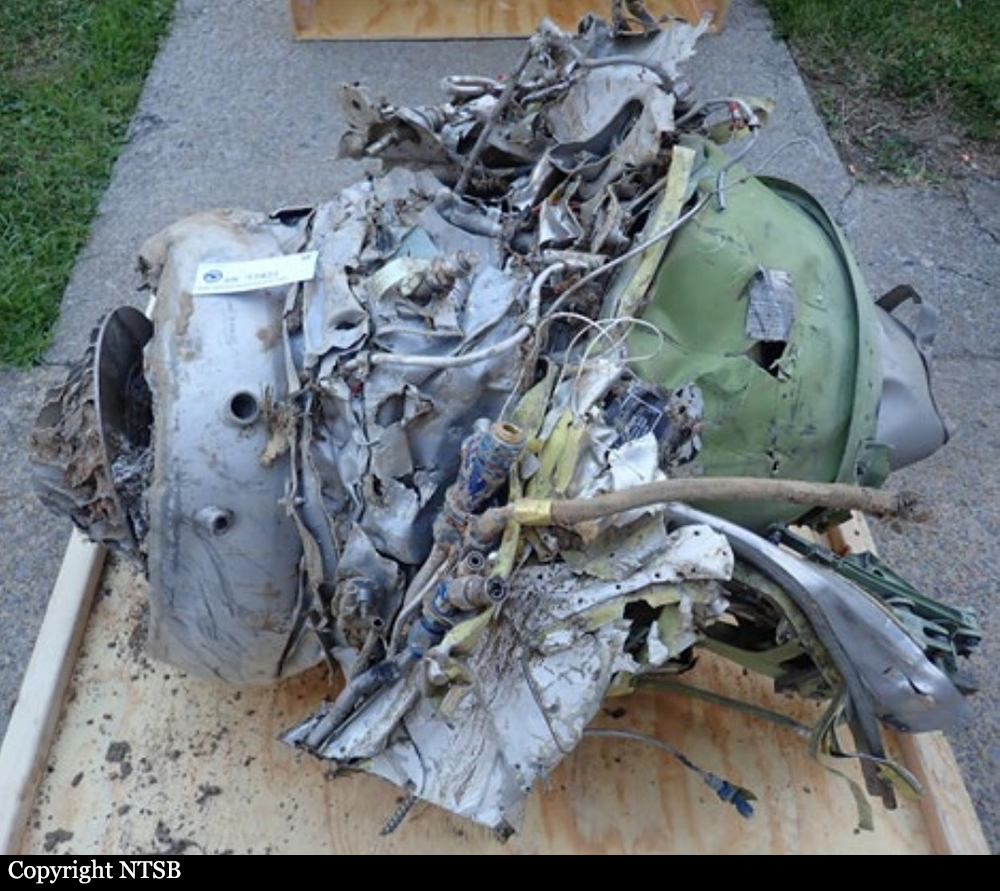
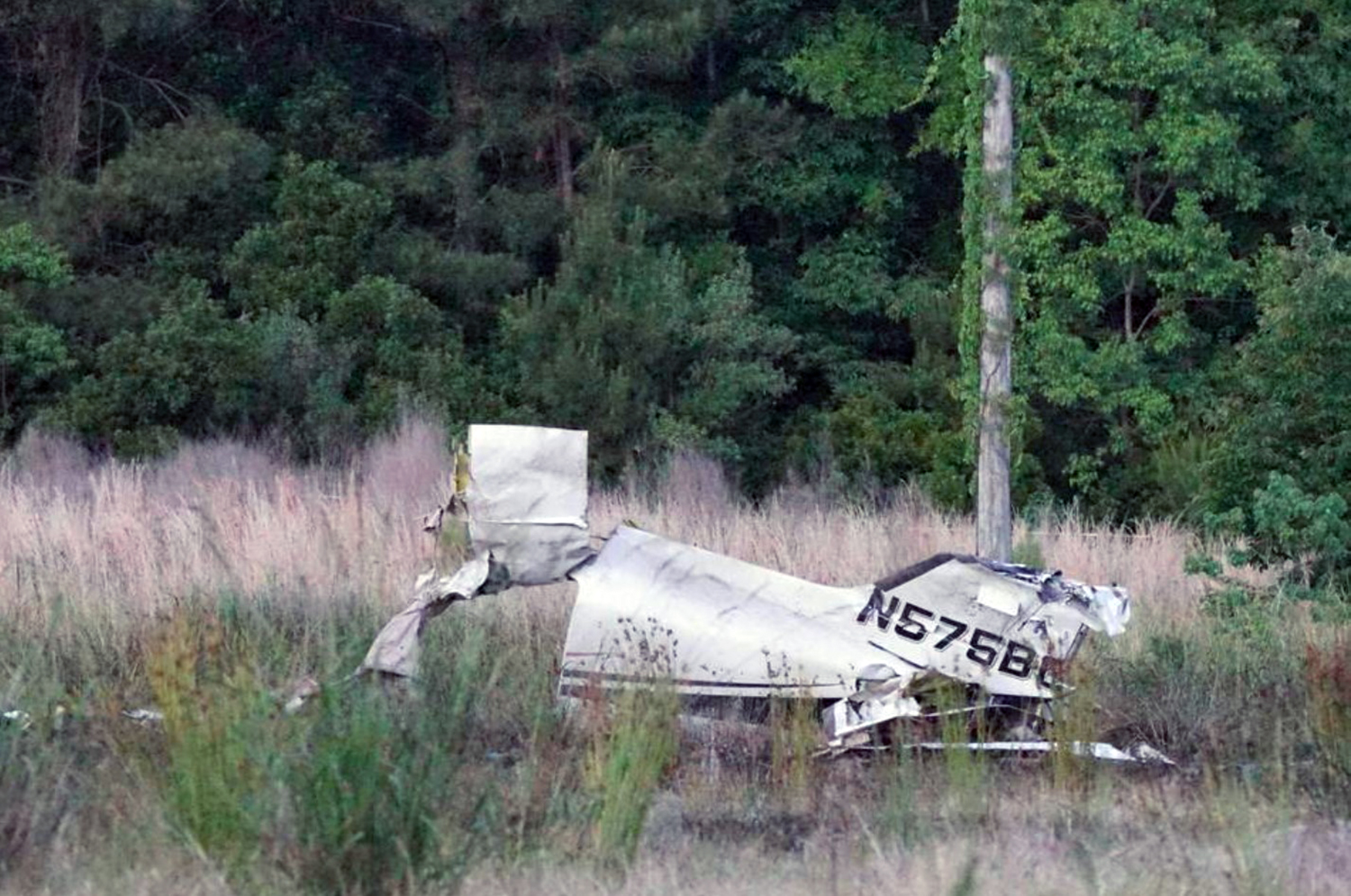
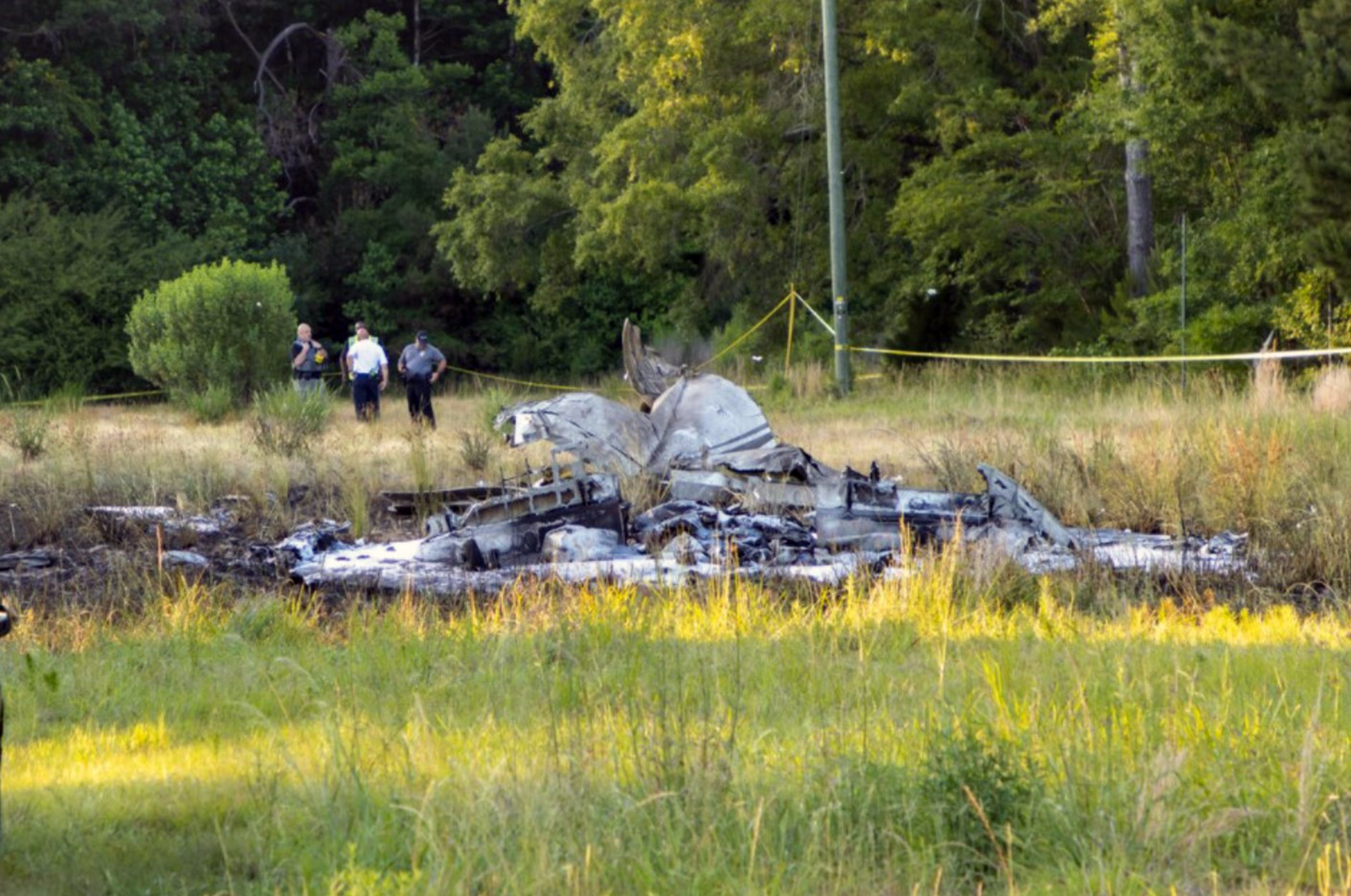
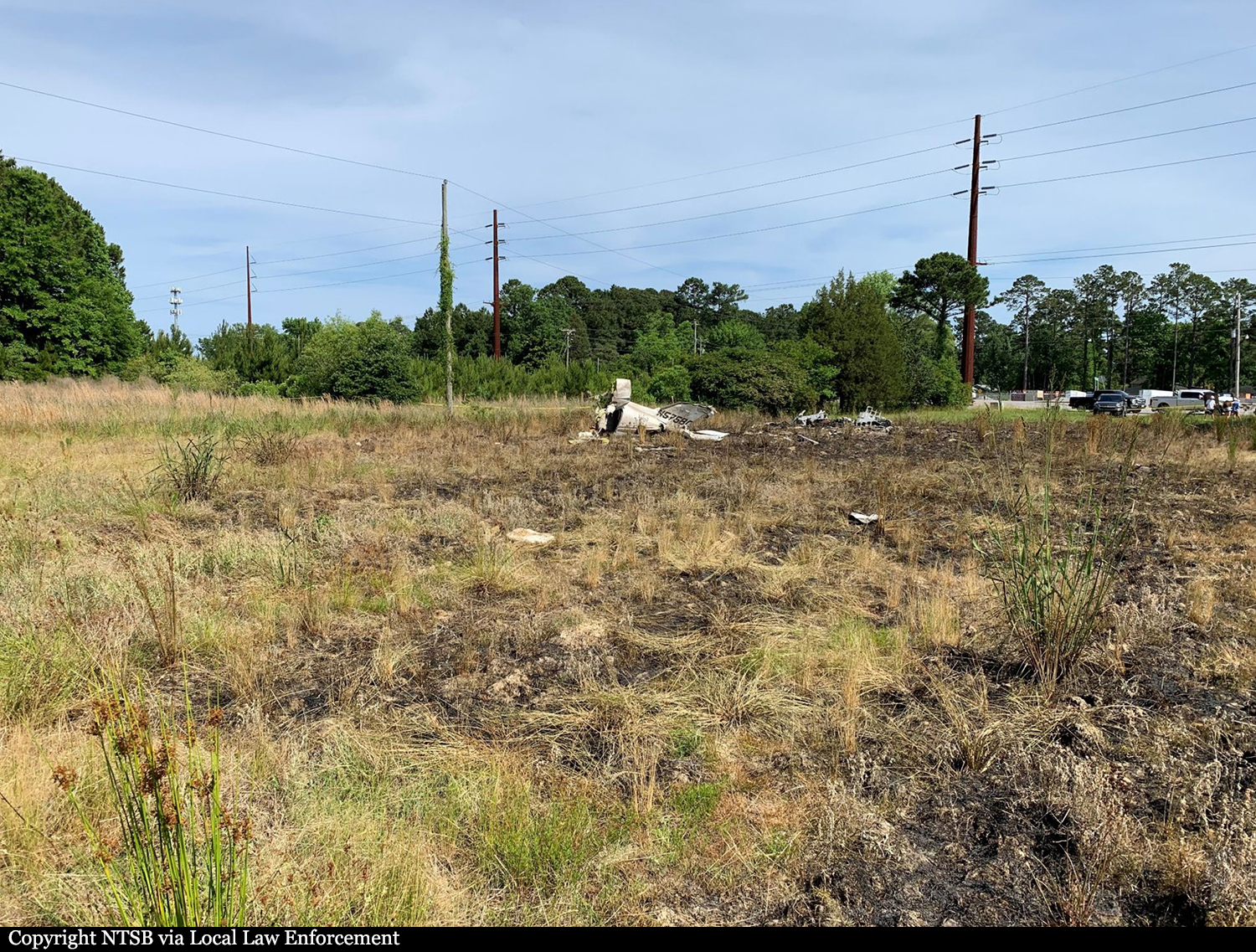
Crash of a Piper PA-31P-425 Pressurized Navajo in Myrtle Beach: 1 killed

Date & Time: May 21, 2021 at 1814 LT
Type of aircraft:

Operator:

Registration:
N575BC
Flight Phase:
Flight Type:
Survivors:
No
Schedule:
Myrtle Beach - North Myrtle Beach
MSN:
31-7730003
YOM:
1977
Crew on board:
1
Crew fatalities:
Pax on board:
0
Pax fatalities:
Other fatalities:
Total fatalities:
1
Captain / Total flying hours:
20000
Aircraft flight hours:
4826
Circumstances:
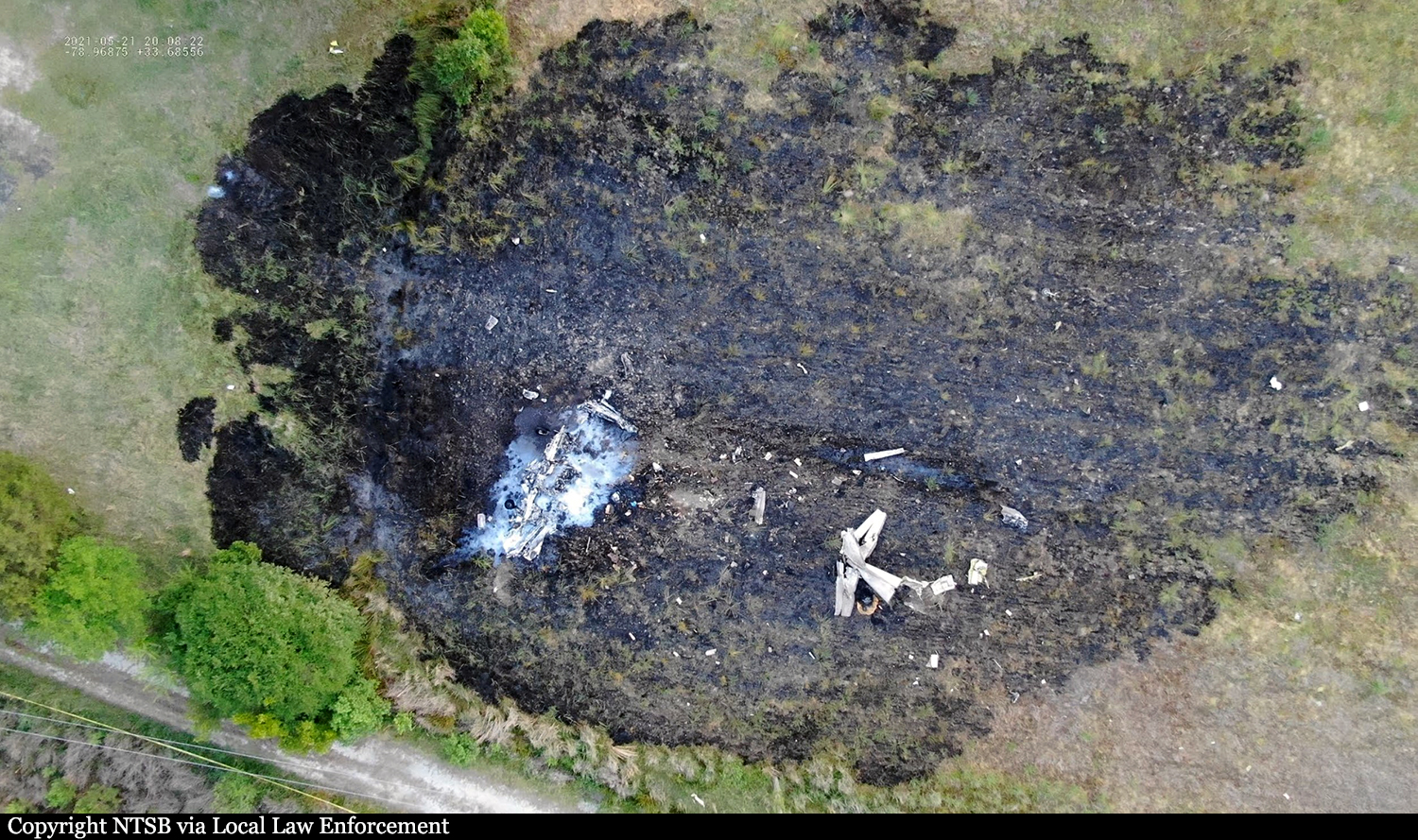
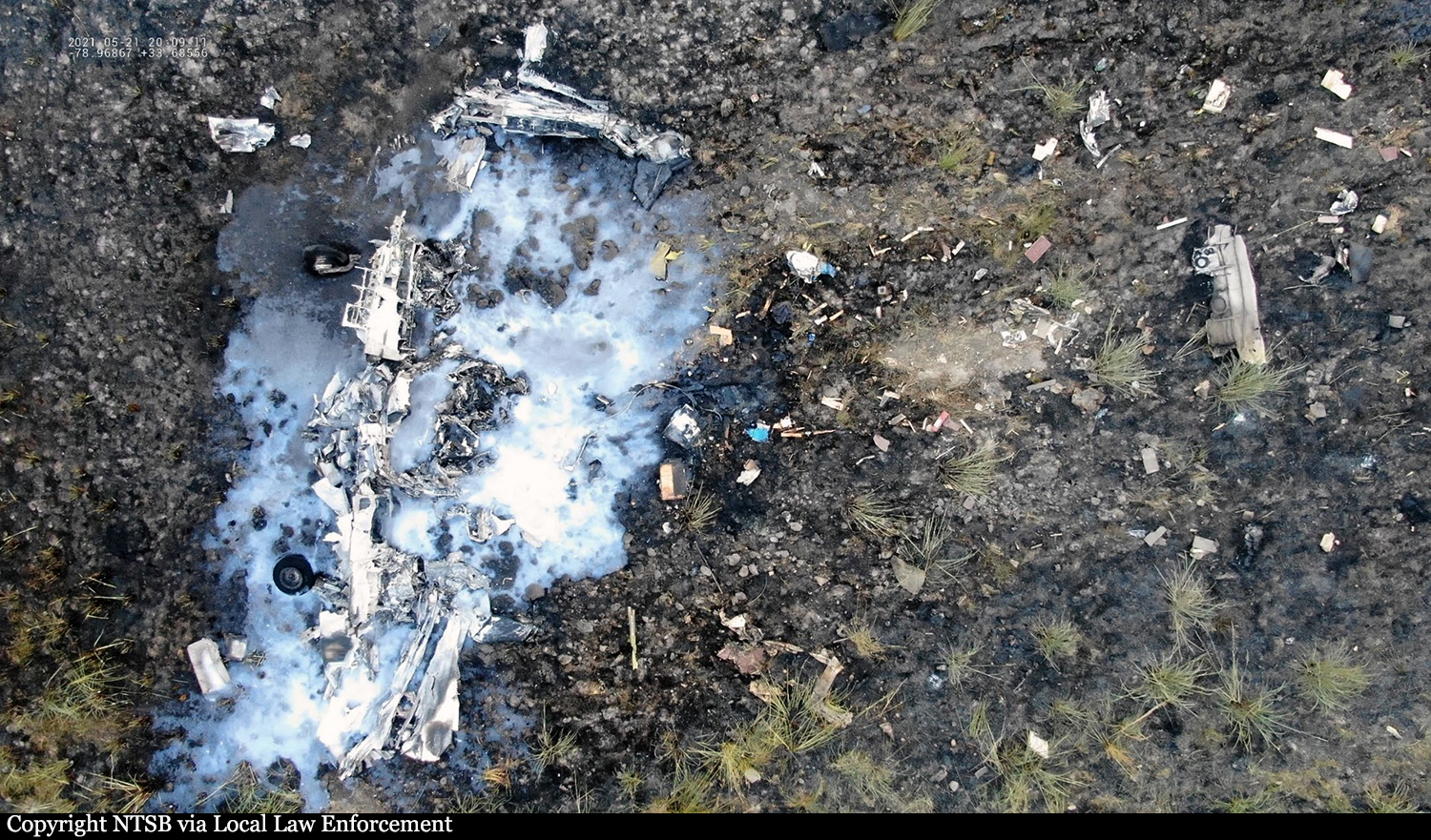
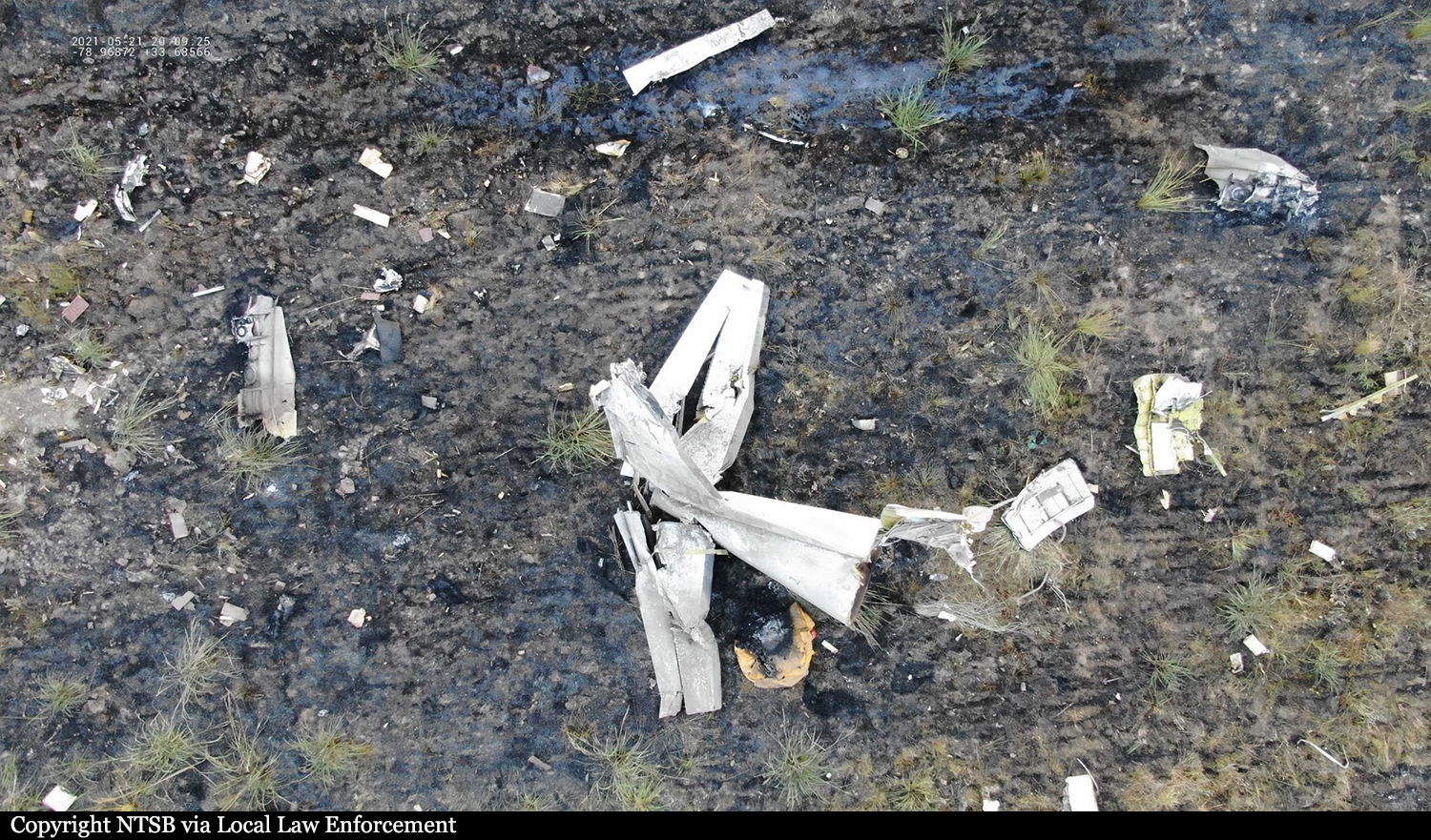
The airplane departed Myrtle Beach International Airport (MYR), Myrtle Beach, South Carolina, at 1812, with the intended destination of Grand Strand Airport (CRE), North Myrtle Beach, South Carolina. According to automatic dependent surveillance-broadcast and air traffic control (ATC) communications information, the pilot established contact with ATC and reported that he was ready for departure from runway 18. He was instructed to fly runway heading, climb to 1,700 ft mean sea level (msl), and was cleared for takeoff. Once airborne, the controller instructed the pilot to turn left; however, the pilot stated that he needed to return to runway 18. The controller instructed the pilot to enter a right closed traffic pattern at 1,500 ft msl. As the airplane continued to turn to the downwind leg of the traffic pattern, it reached an altitude of about 1,000 ft mean sea level (msl). While on the downwind leg of the traffic pattern, the airplane descended to 450 ft msl, climbed to 700 ft msl, and then again descended to 475 ft msl before radar contact was lost. About 1 minute after the pilot requested to return to the runway, the controller asked if any assistance was required, to which the pilot replied, “yes, we’re in trouble.” There were no further radio communications from the pilot. The airplane crashed in a field and was destroyed by impact forces and a post crash fire. The pilot, sole on board, was killed.
Probable cause:
The mechanic’s inadvertent installation of the elevator trim tabs in reverse, which resulted in the pitch trim system operating opposite of the pilot’s input and the pilot’s subsequent loss of control.
Final Report: