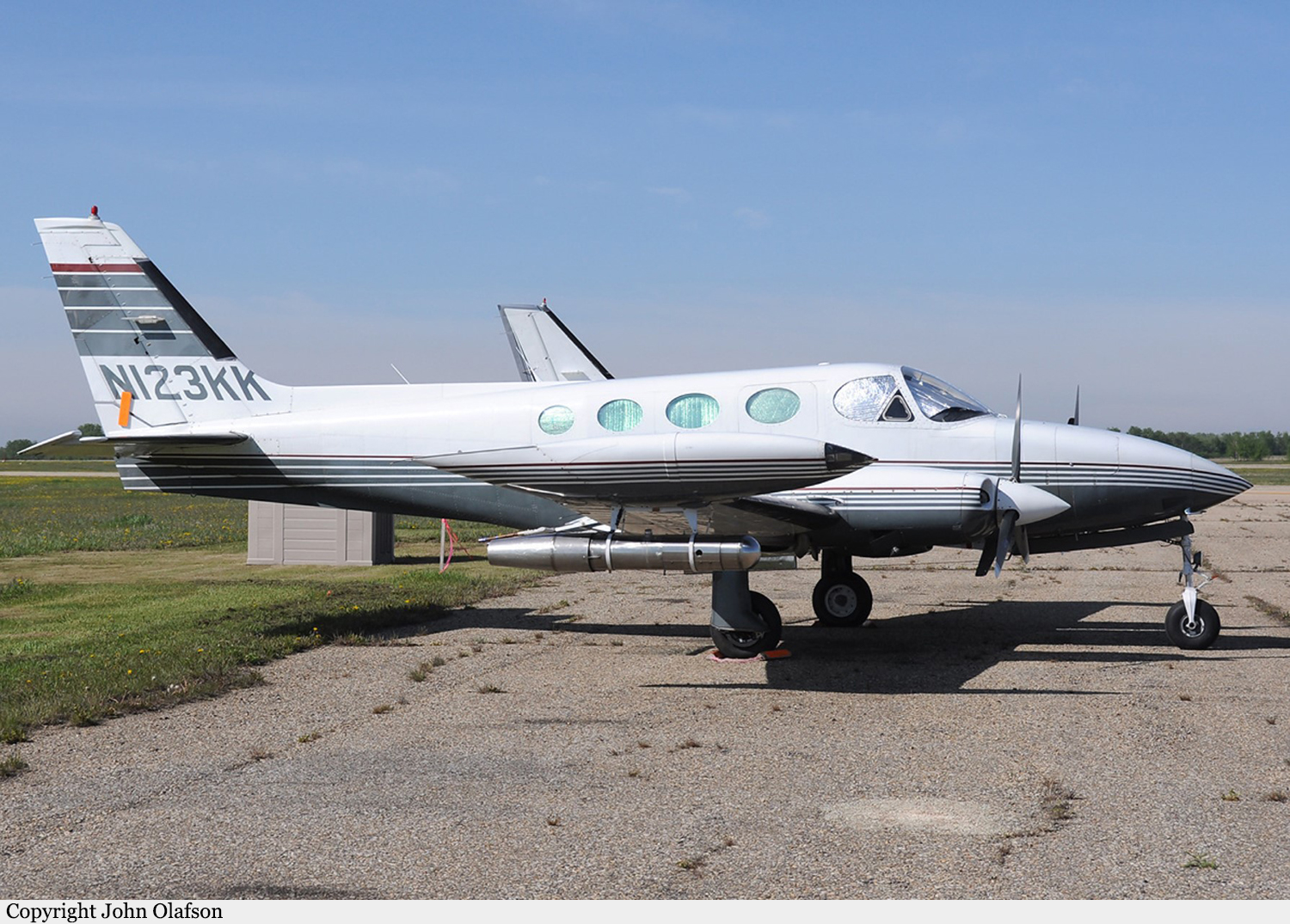
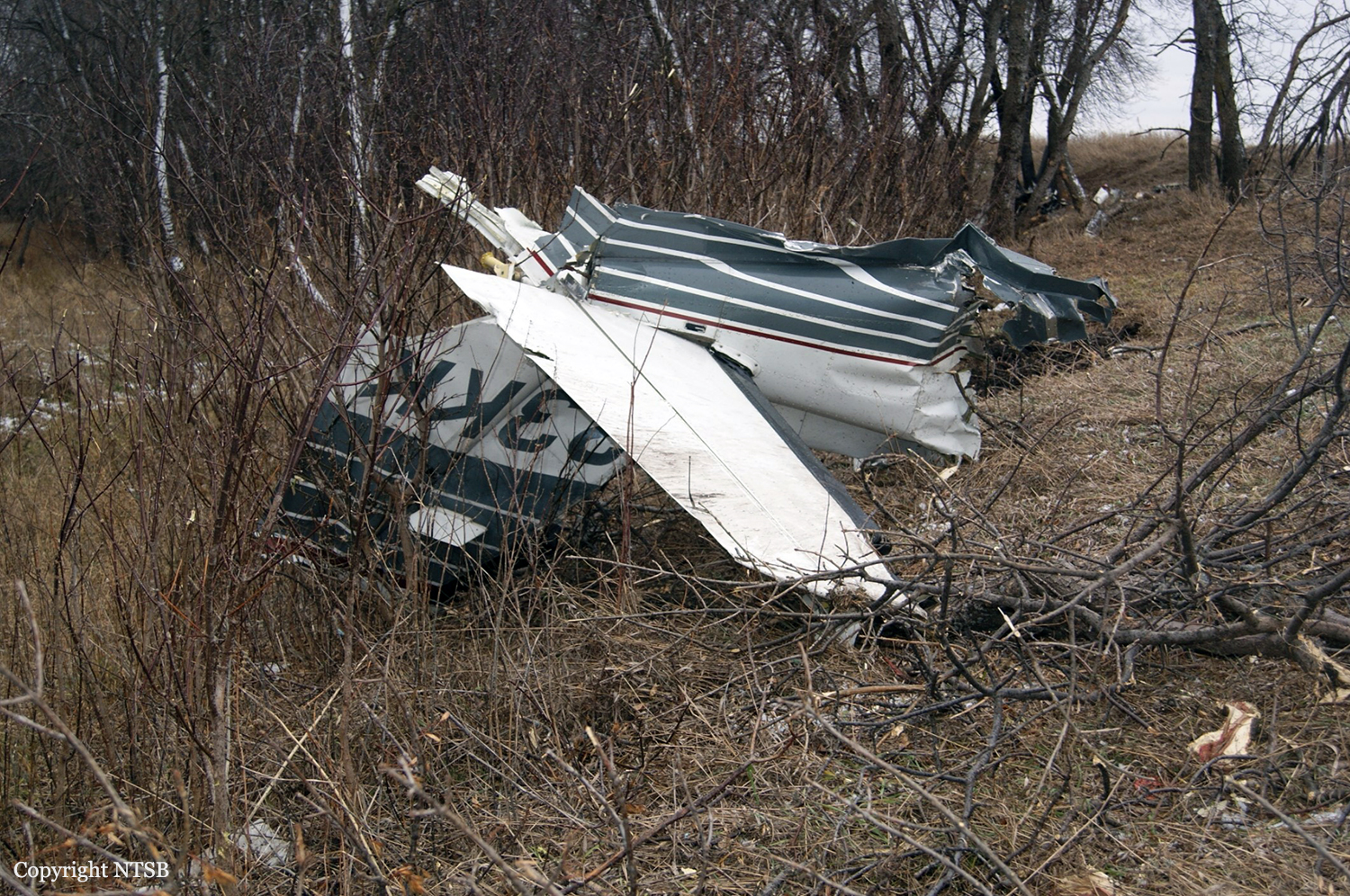
Crash of a Cessna 340 in Fargo: 1 killed

Date & Time: Dec 1, 2016 at 1629 LT
Type of aircraft:
Operator:
Registration:
N123KK
Survivors:
No
Schedule:
Fargo - Fargo
MSN:
340-0251
YOM:
1973
Crew on board:
1
Crew fatalities:
Pax on board:
0
Pax fatalities:
Other fatalities:
Total fatalities:
1
Captain / Total flying hours:
7898
Aircraft flight hours:
7012
Circumstances:
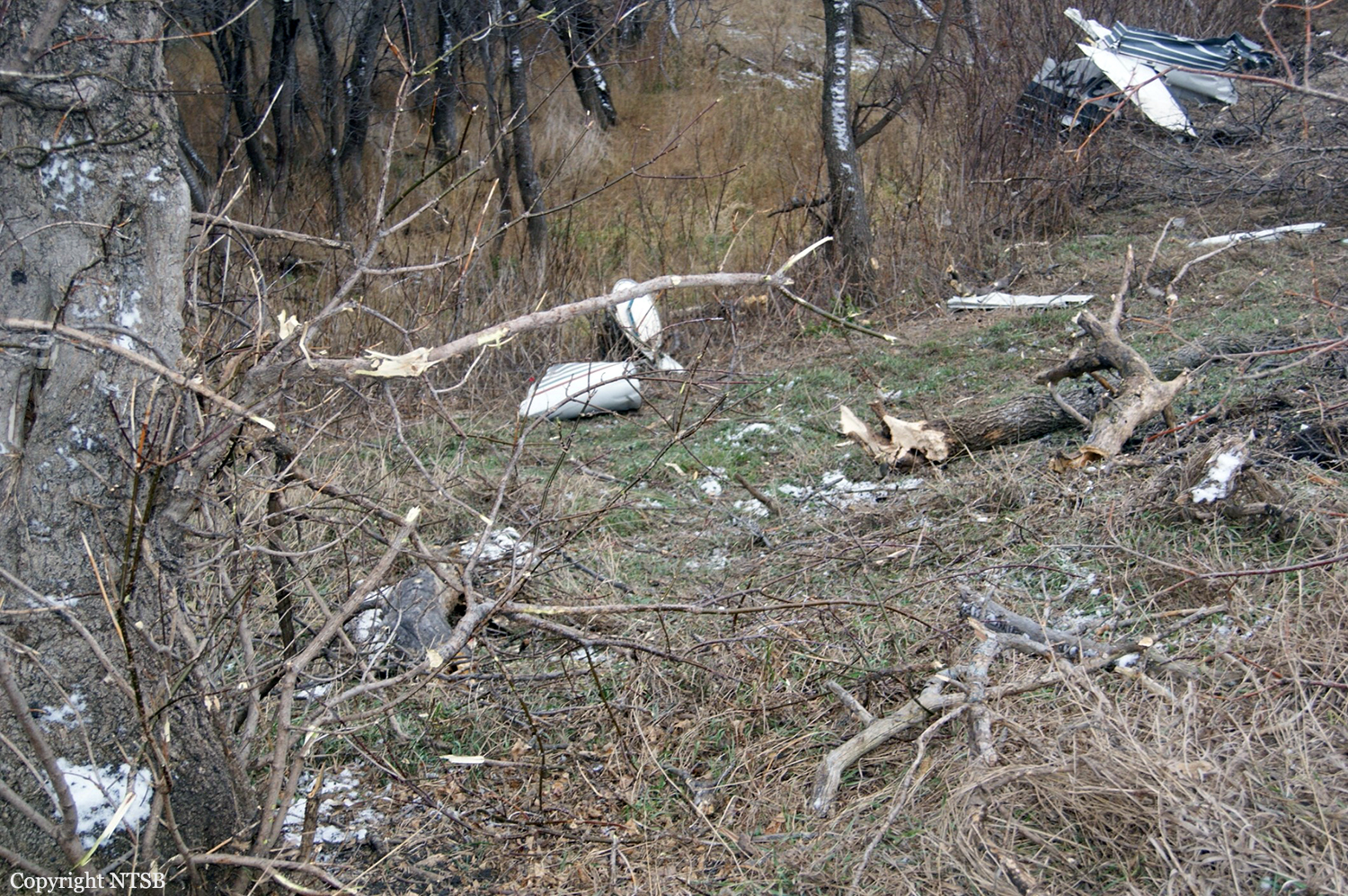
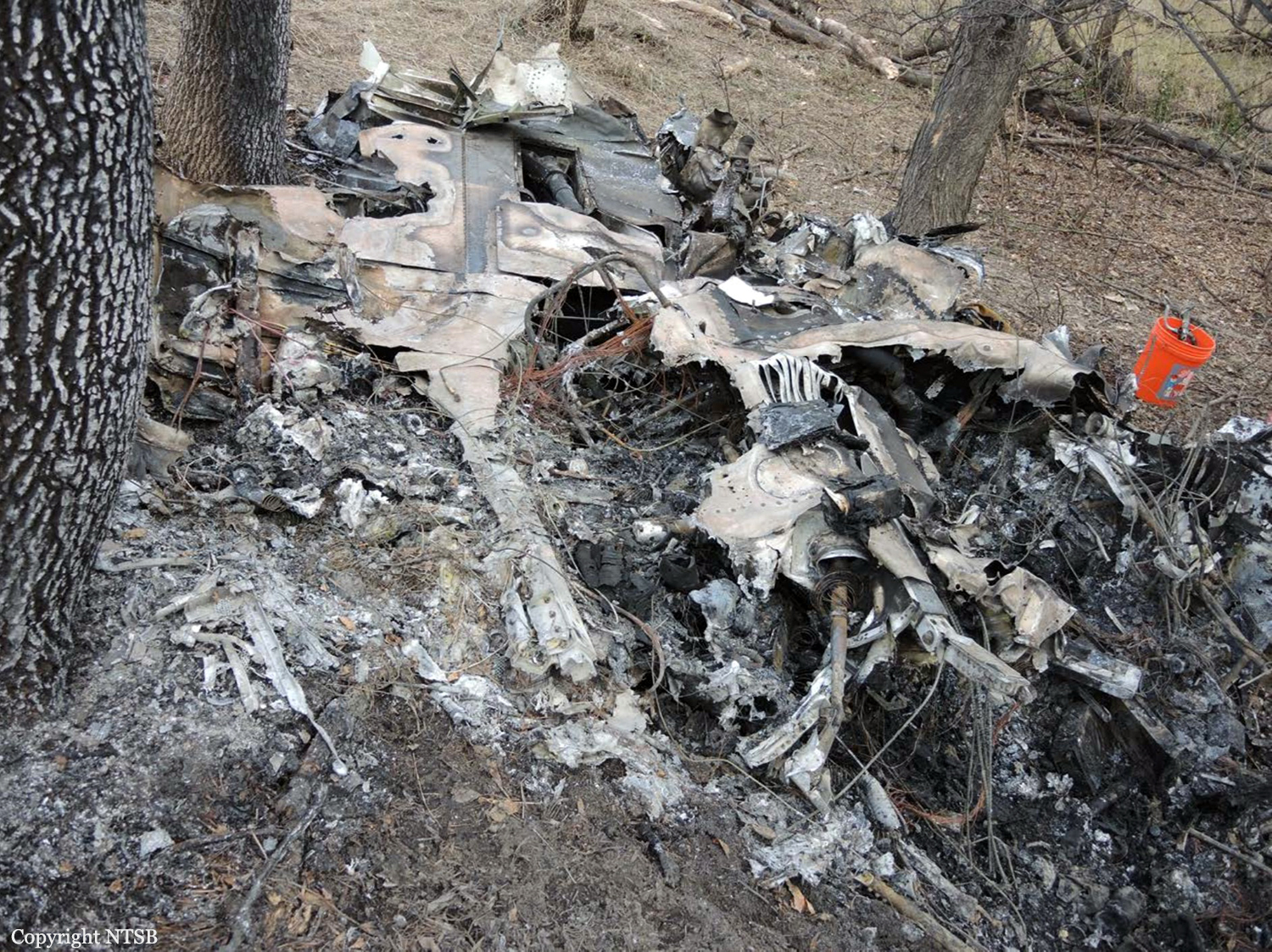
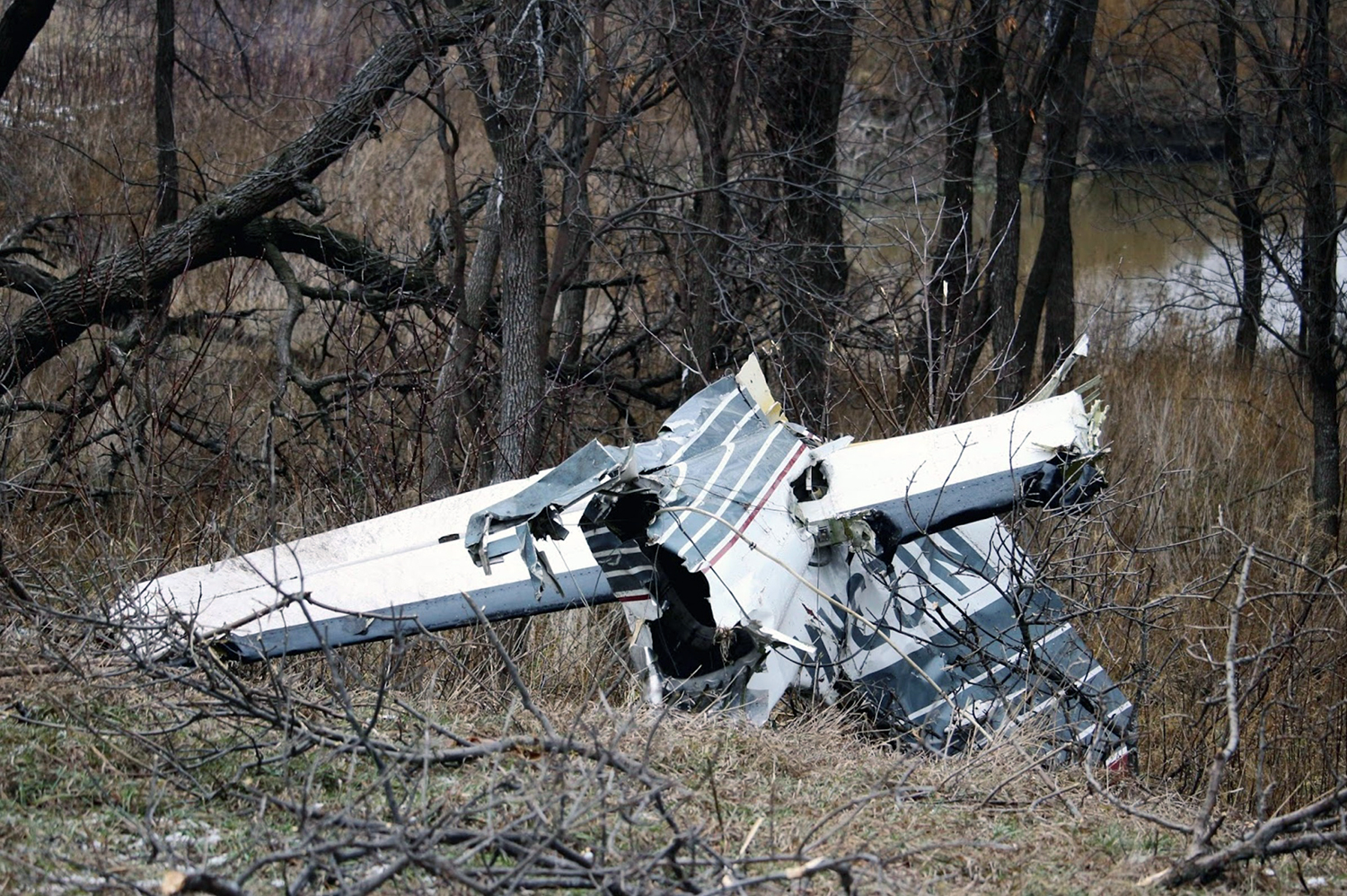
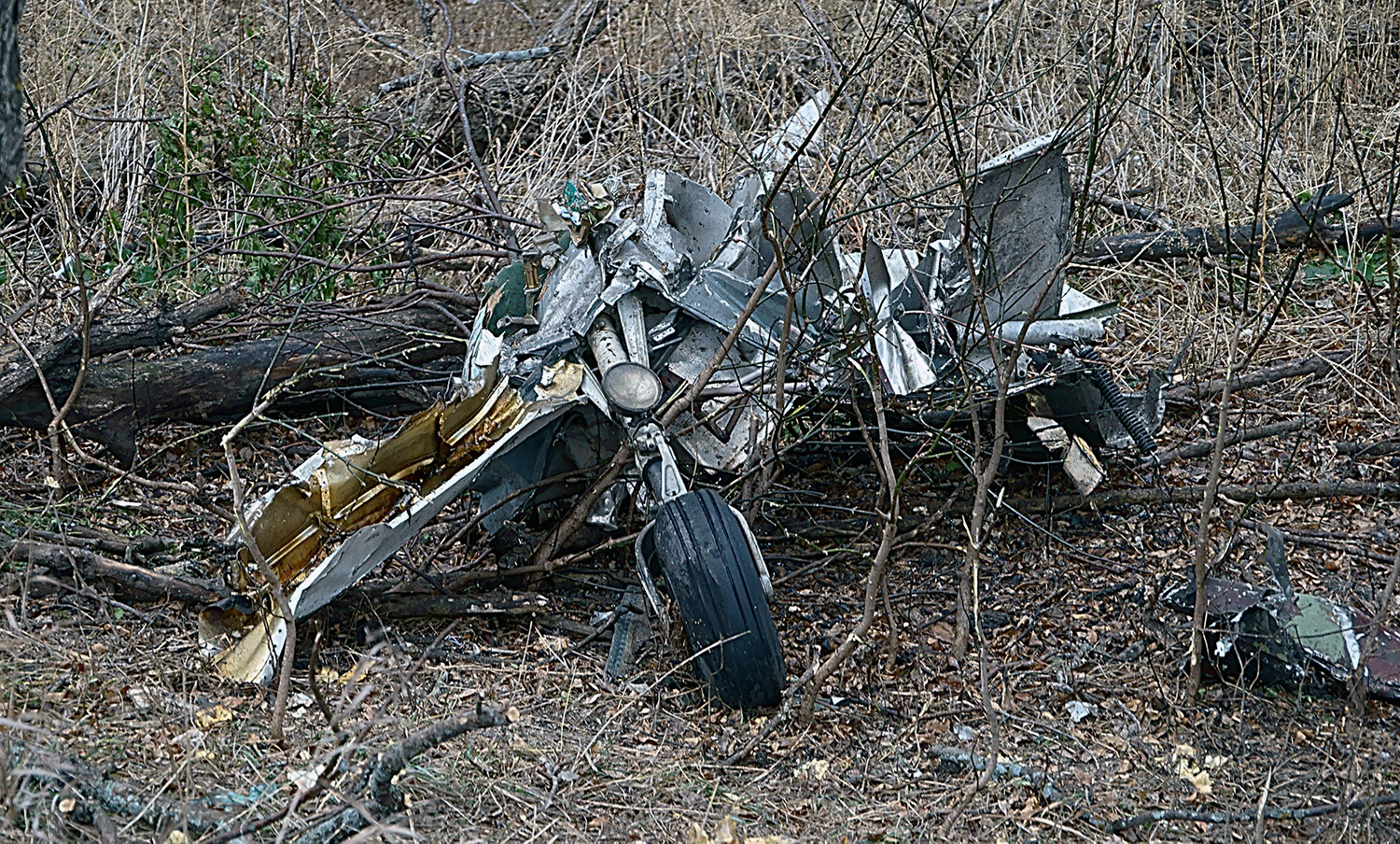
The airplane was equipped with an air sampling system used to collect air samples at various altitudes. The accident occurred when the pilot was returning to the airport after taking air samples at various altitudes over oil fields. As he was being vectored for an instrument approach, the airplane overshot the runway's extended centerline. The pilot then reported that he had a fire on board. The airplane lost altitude rapidly, and radar contact was lost. Examination of the accident site indicated that the airplane struck the ground at high velocity and a low impact angle. One piece of the airplane's shattered Plexiglas windshield exhibited soot streaking on its exterior surface. This soot streaking did not extend onto the piece's fracture surface, indicative of the smoke source being upstream of the windshield and the smoke exposure occurring before windshield breakup at impact. Both nose baggage compartment doors were found about 2 miles south of the main wreckage, which indicative that they came off at nearly the same time and most likely before the pilot's distress call. Although there was no soot deposits, thermal damage, or deformation to the doors consistent with a "high energy explosion," the separation of the luggage compartment doors could have occurred due to an overpressure caused by the ignition of a fuel air mixture within the nose portion of the airplane. The ignition of fuel air mixtures can create overpressure events when they occur in confinement. An overpressure in the nose baggage compartment may have stretched the airframe enough to allow the doors to push open without deforming the latches. If it was a lean fuel air mixture, it would likely leave no soot residue. Post-accident examination revealed no evidence that the air sampling system, which was strapped to the seat tracks behind the copilot's seat, was the cause of the fire. The combustion heater, which was mounted in the right front section of the nose baggage compartment, bore no evidence of fuel leakage, but a fuel fitting was found loose.
Probable cause:
The loose fuel fitting on the combustion heater that leaked a lean fuel-air mixture into the nose baggage compartment. The mixture was most likely ignited by the combustion heater, blowing off the nose baggage compartment doors and starting an in-flight fire.
Final Report:
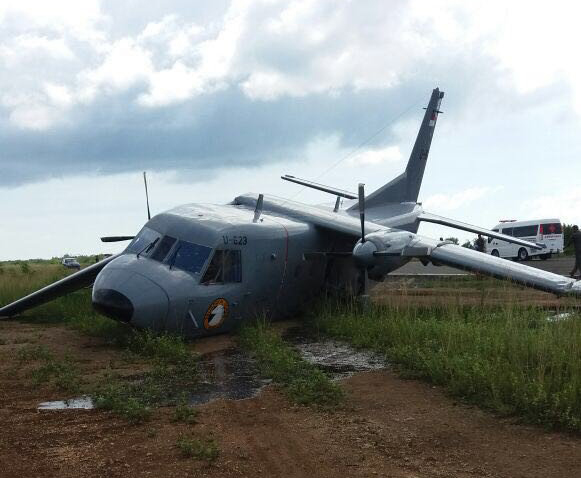
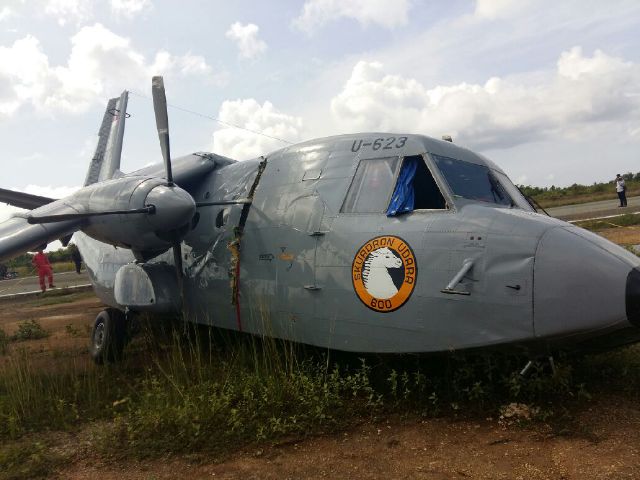
Crash of a Casa NC-212-MP Aviocar 200 in Pitu

Date & Time: Nov 27, 2016 at 1000 LT
Type of aircraft:
Operator:
Registration:
U-623
Flight Type:
Survivors:
Yes
Schedule:
Manado - Pitu
Country:
Region:
Crew on board:
5
Crew fatalities:
Pax on board:
9
Pax fatalities:
Other fatalities:
Total fatalities:
0
Circumstances:
After landing at Pitu-Leo Wattimena Airport, the twin engine aircraft went out of control and veered off runway to the right. The left main landing gear collapsed and the right wing broke at the root. All 14 occupants evacuated safely while the aircraft was damaged beyond repair.

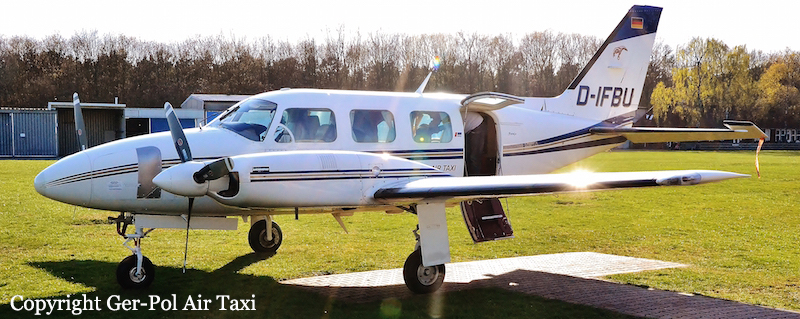
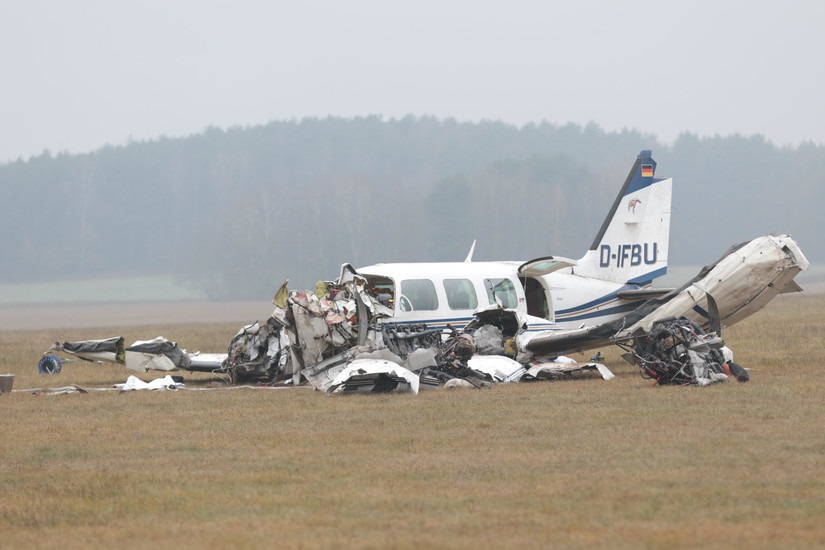
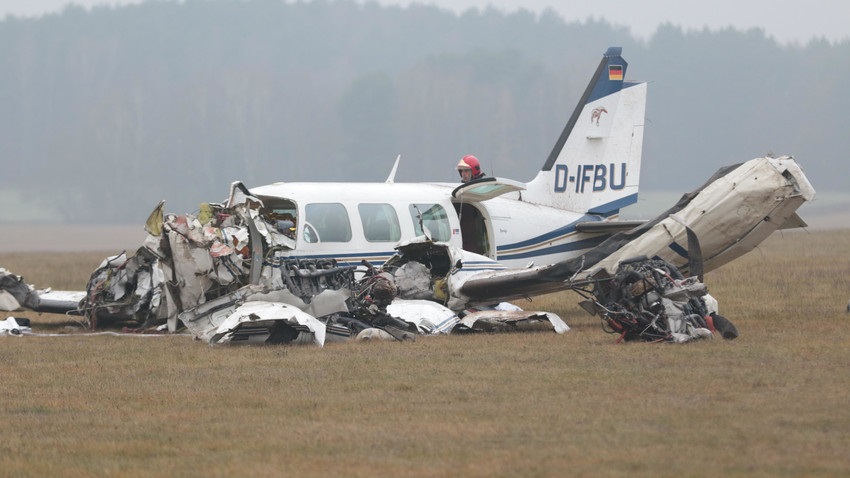
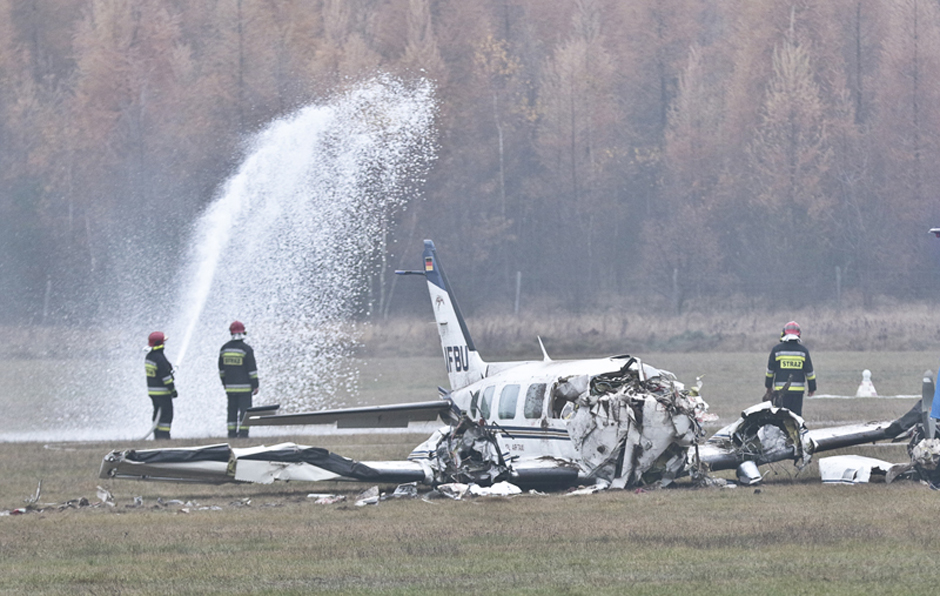
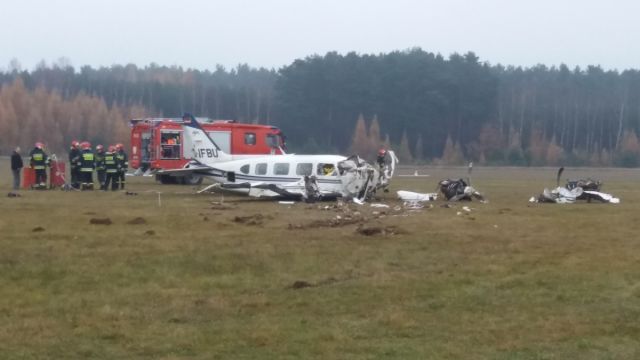
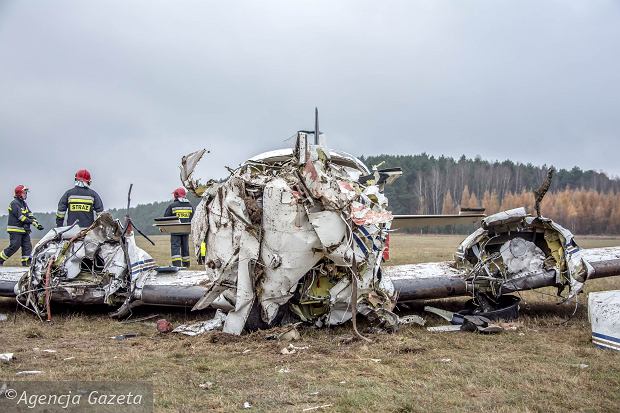
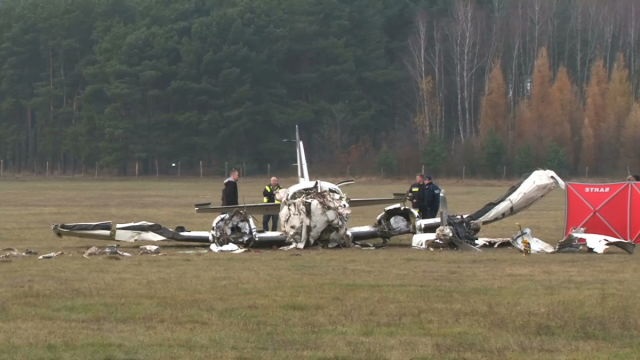
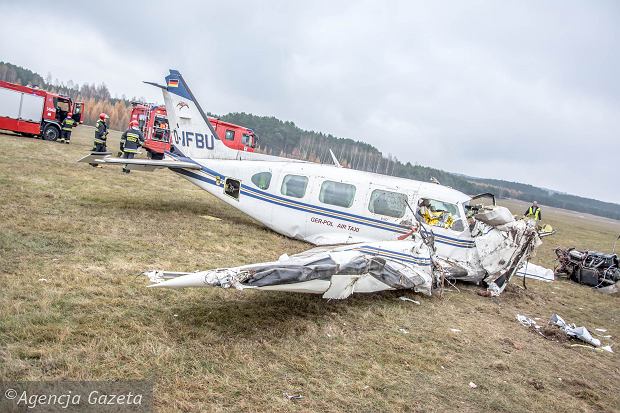
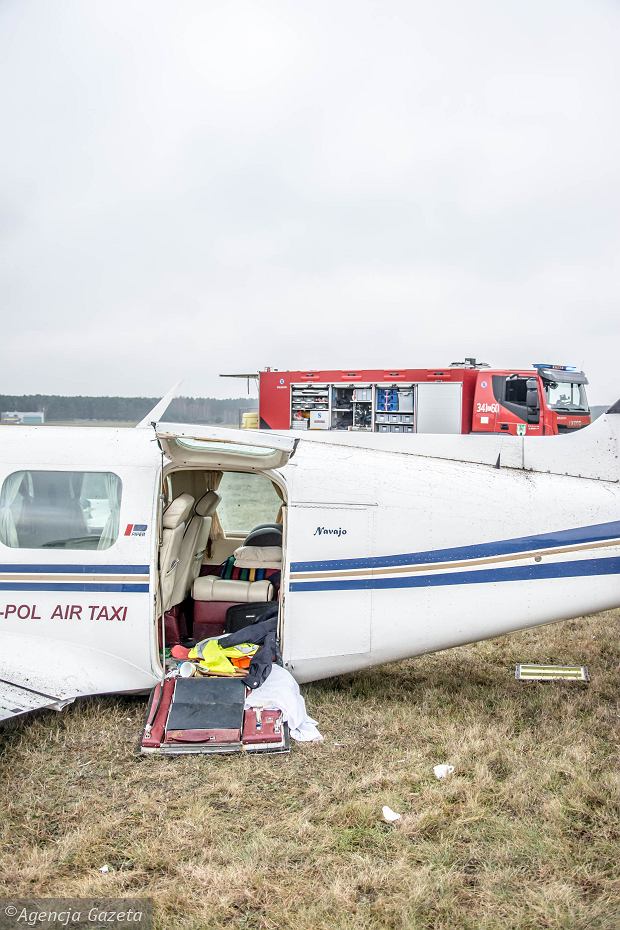
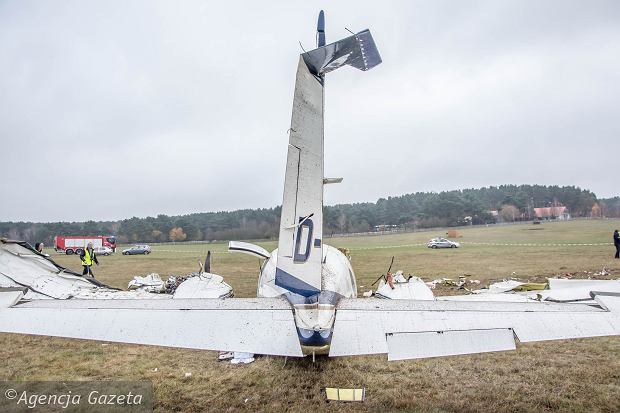
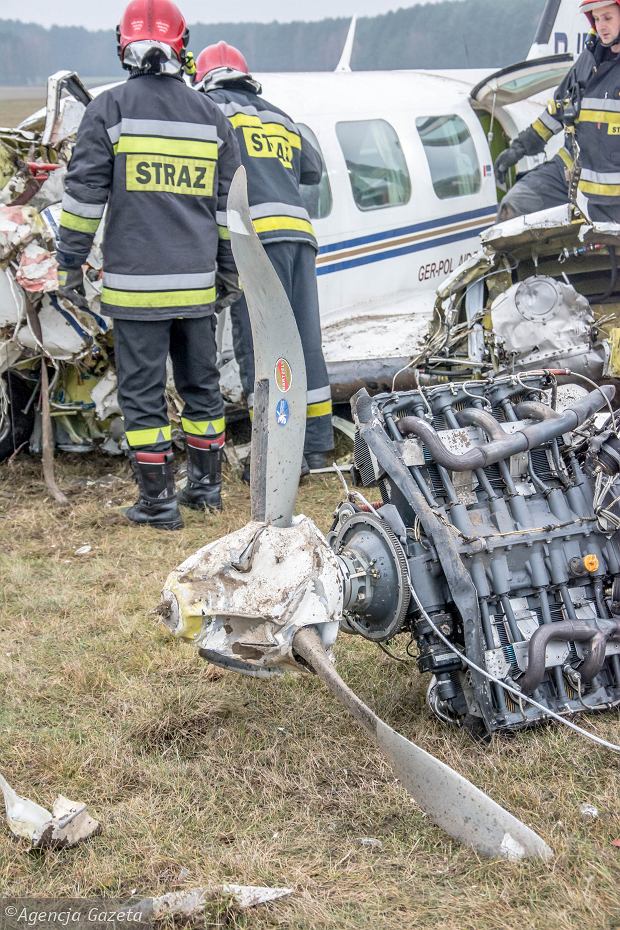
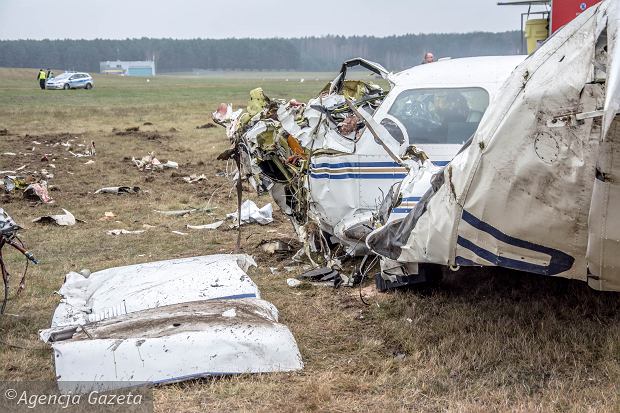
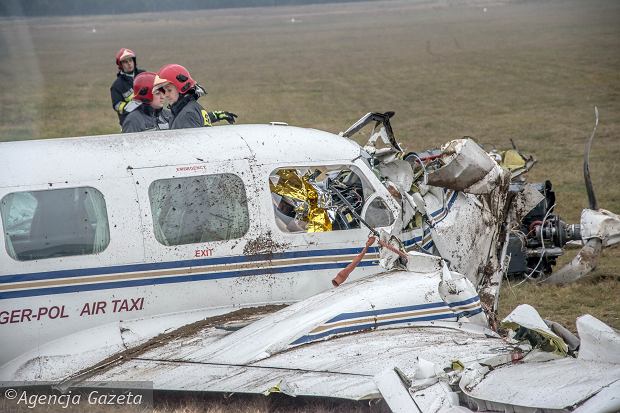
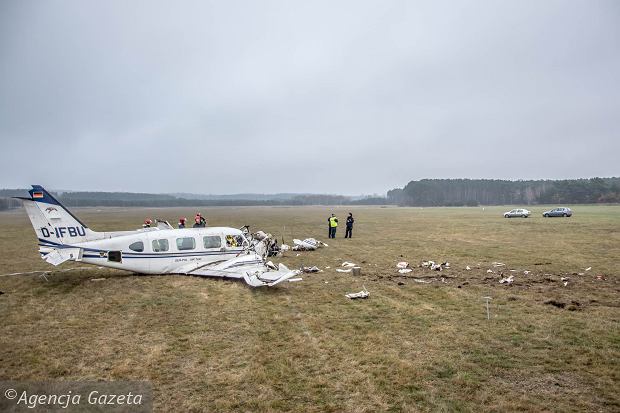
Crash of a Piper PA-31-310 Navajo C in Zielona Góra: 1 killed

Date & Time: Nov 24, 2016 at 1205 LT
Type of aircraft:
Operator:
Registration:
D-IFBU
Flight Phase:
Flight Type:
Survivors:
No
Schedule:
Zielona Góra - Nordhorn
MSN:
31T-8012050
YOM:
1980
Country:
Region:
Crew on board:
1
Crew fatalities:
Pax on board:
0
Pax fatalities:
Other fatalities:
Total fatalities:
1
Captain / Total flying hours:
9418
Captain / Total hours on type:
7371.00
Aircraft flight hours:
6641
Circumstances:
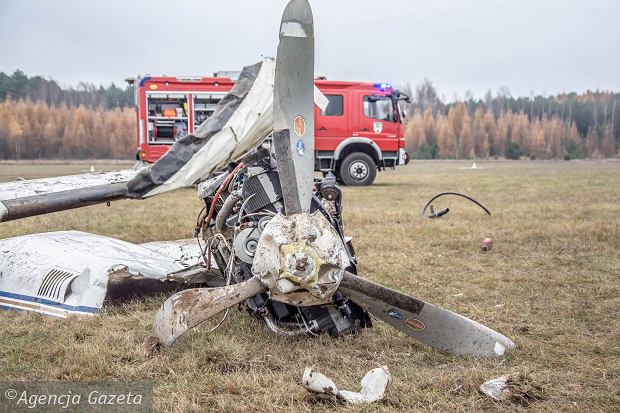
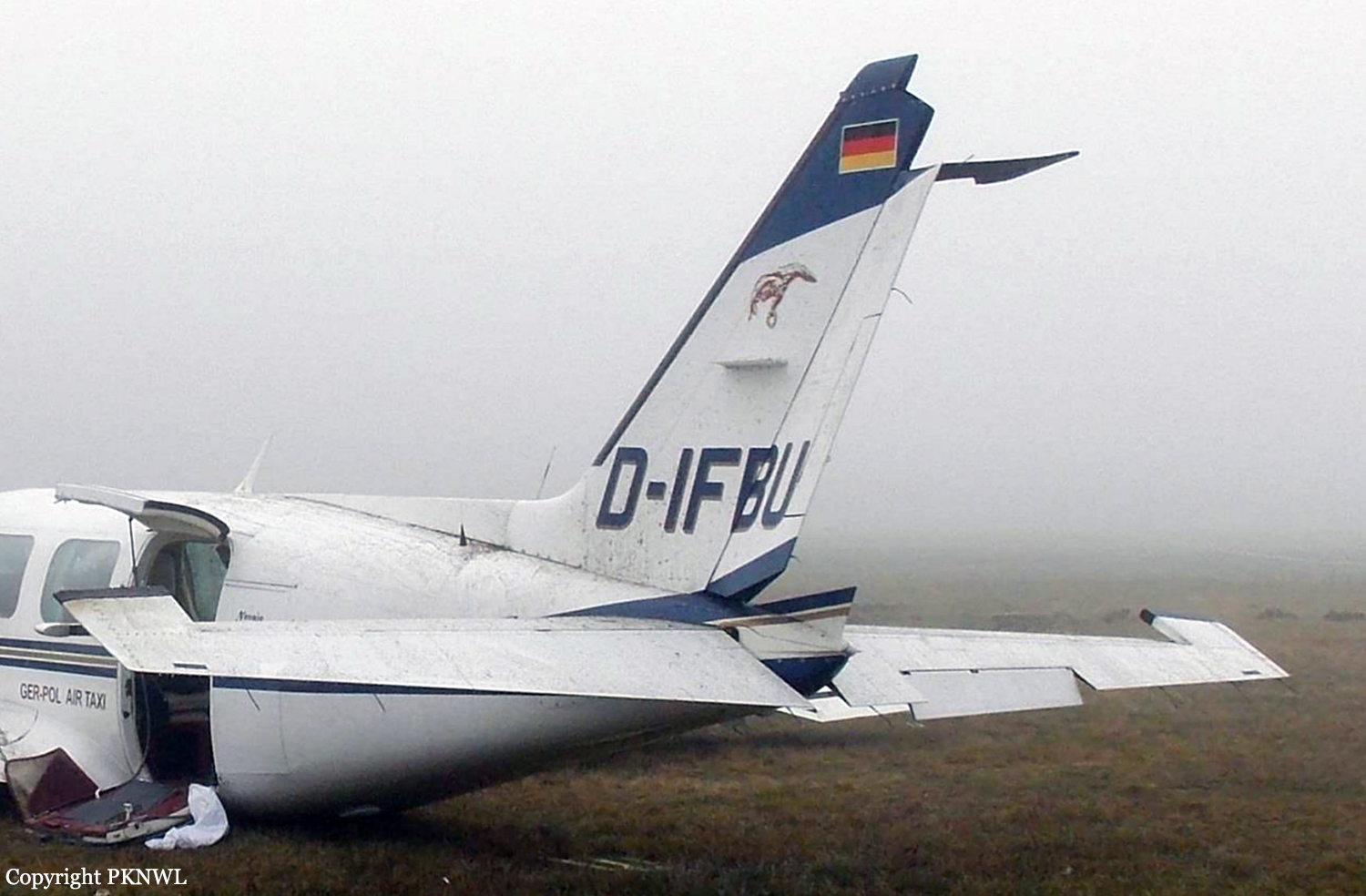
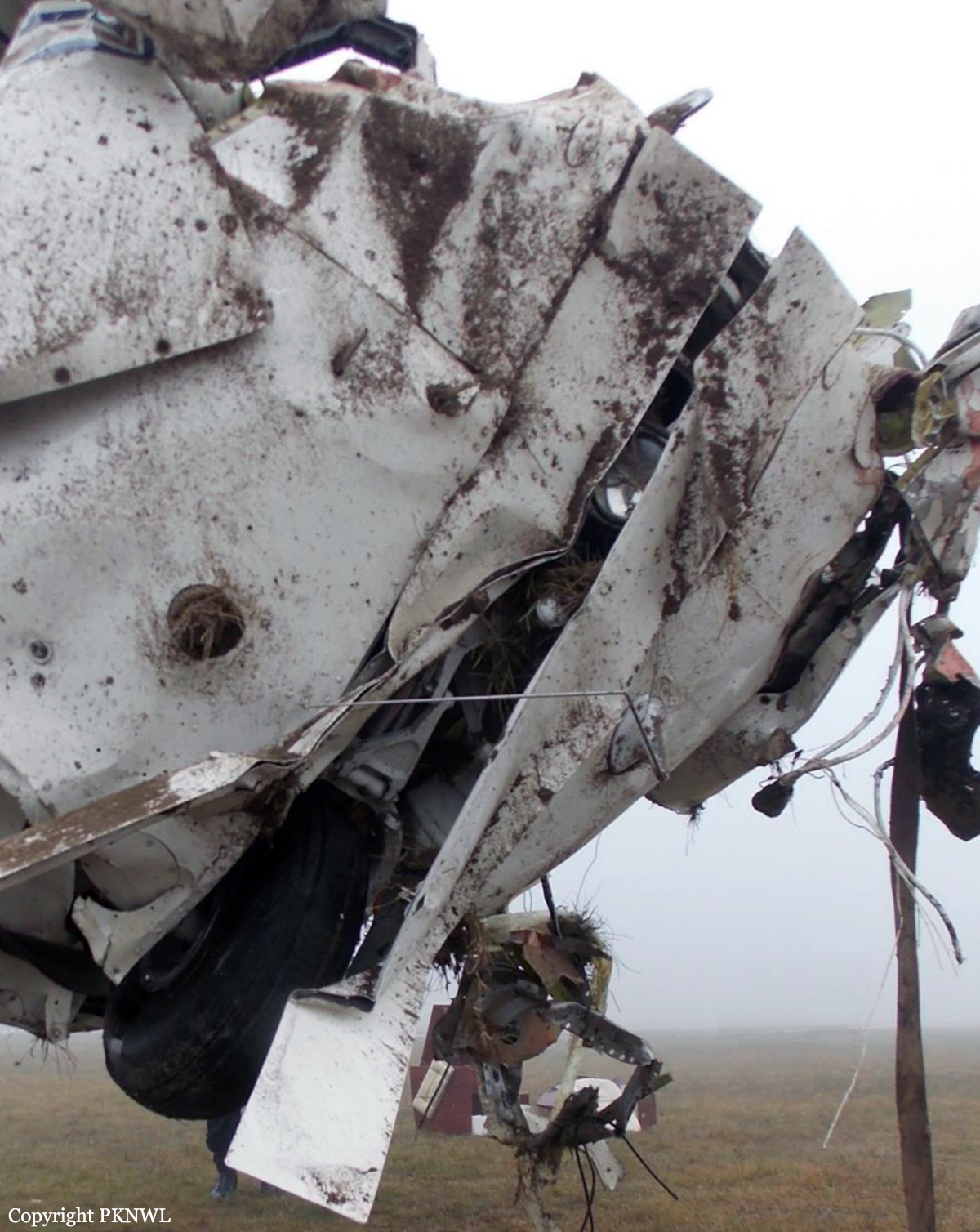
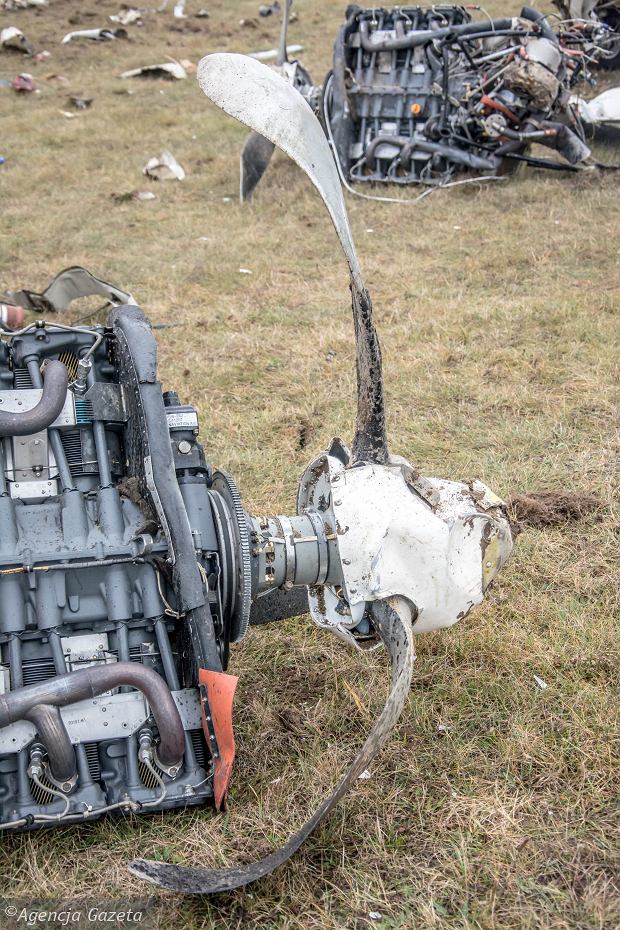
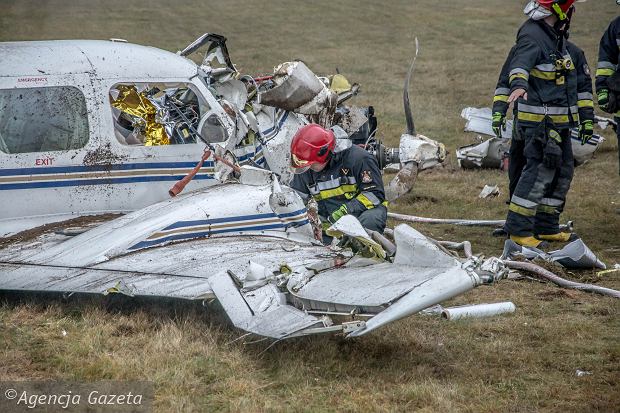
While taking off from a grassy runway at Zielona Góra-Przylep Airport, the airplane nosed down, impacted ground and crashed. Both engines were torn off and the aircraft was destroyed by impact forces. There was no fire. The pilot, sole on board, was killed. He was completing a ferry flight to Nordhorn, Lower Saxony.
Probable cause:
The pilot mistakenly retracted the undercarriage at liftoff. There was no immediate decision of the pilot to abandon the takeoff procedure when both propellers contacted the runway surface.
Final Report:

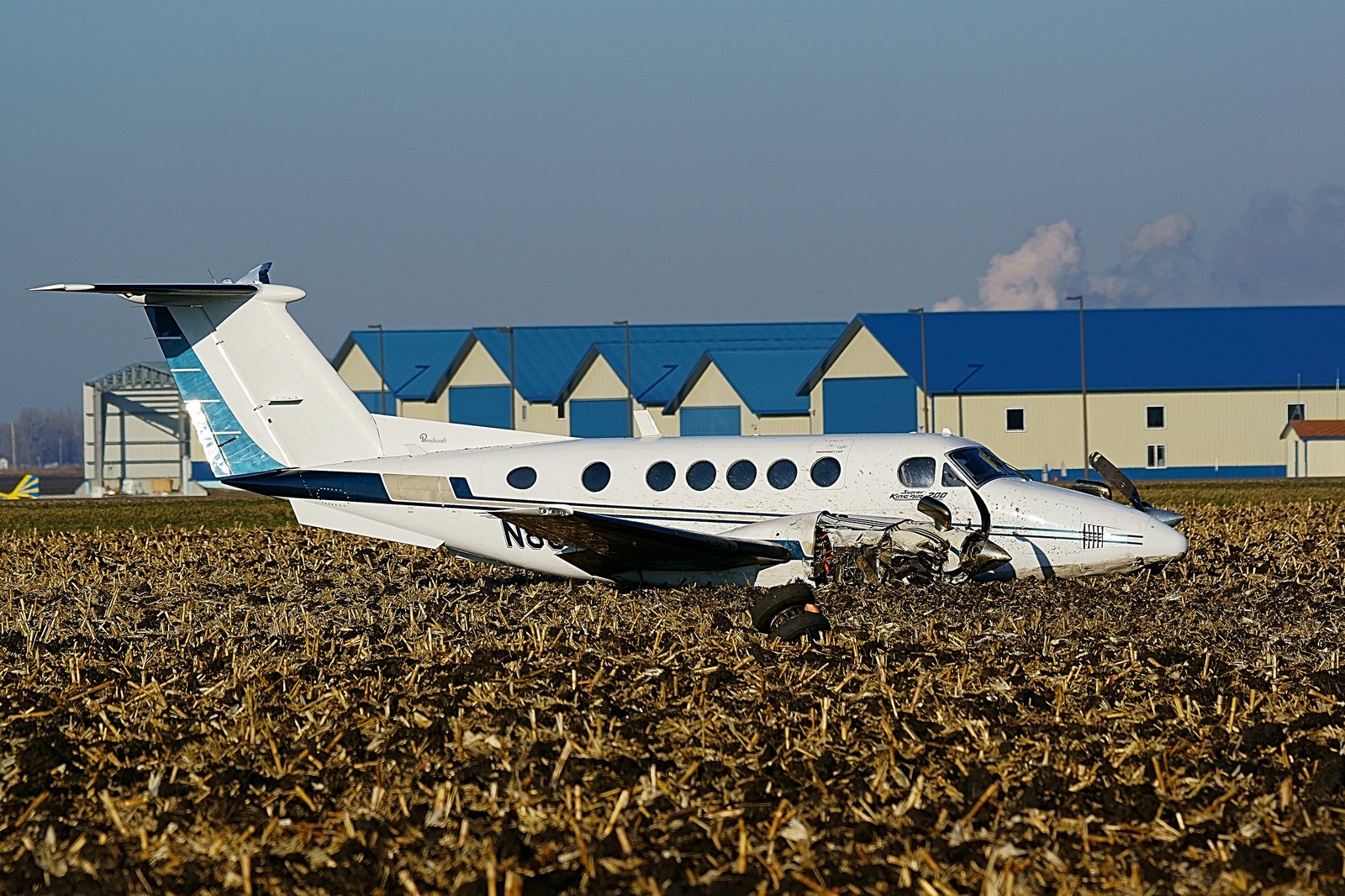
Crash of a Beechcraft 200 Super King Air in Moorhead

Date & Time: Nov 23, 2016 at 1759 LT
Registration:
N80RT
Survivors:
Yes
Schedule:
Baudette - Moorhead
MSN:
BB-370
YOM:
1978
Crew on board:
1
Crew fatalities:
Pax on board:
6
Pax fatalities:
Other fatalities:
Total fatalities:
0
Captain / Total flying hours:
5630
Captain / Total hours on type:
89.00
Circumstances:
The commercial pilot was conducting an on-demand passenger flight at night in instrument meteorological conditions that were at/near straight-in approach minimums for the runway. The pilot flew the approach as a non precision LNAV approach, and he reported that the approach was stabilized and that he did not notice anything unusual. A few seconds after leveling the airplane at the missed approach altitude, he saw the runway end lights, the strobe lights, and the precision approach path indicator. He then disconnected the autopilot and took his hand off the throttles to turn on the landing lights. However, before he could turn on the landing lights, the runway became obscured by clouds. The pilot immediately decided to conduct a missed approach and applied engine power, but the airplane subsequently impacted terrain short of the runway in a nose-up level attitude. The pilot reported that there were no mechanical anomalies with the airplane that would have precluded normal operation. It is likely the pilot lost sight of the runway due to the visibility being at/near the straight-in approach minimums and that the airplane got too low for a missed approach, which resulted in controlled flight into terrain. A passenger stated that he and the pilot were not wearing available shoulder harnesses. The passenger said that he was not informed that the airplane was equipped with shoulder harnesses or told how to adjust the seats. The pilot sustained injuries to his face in the accident.
Probable cause:
The pilot's failure to attain a positive climb rate during an attempted missed approach in night instrument meteorological conditions that were at/near approach minimums, which resulted in controlled flight into terrain.
Final Report:

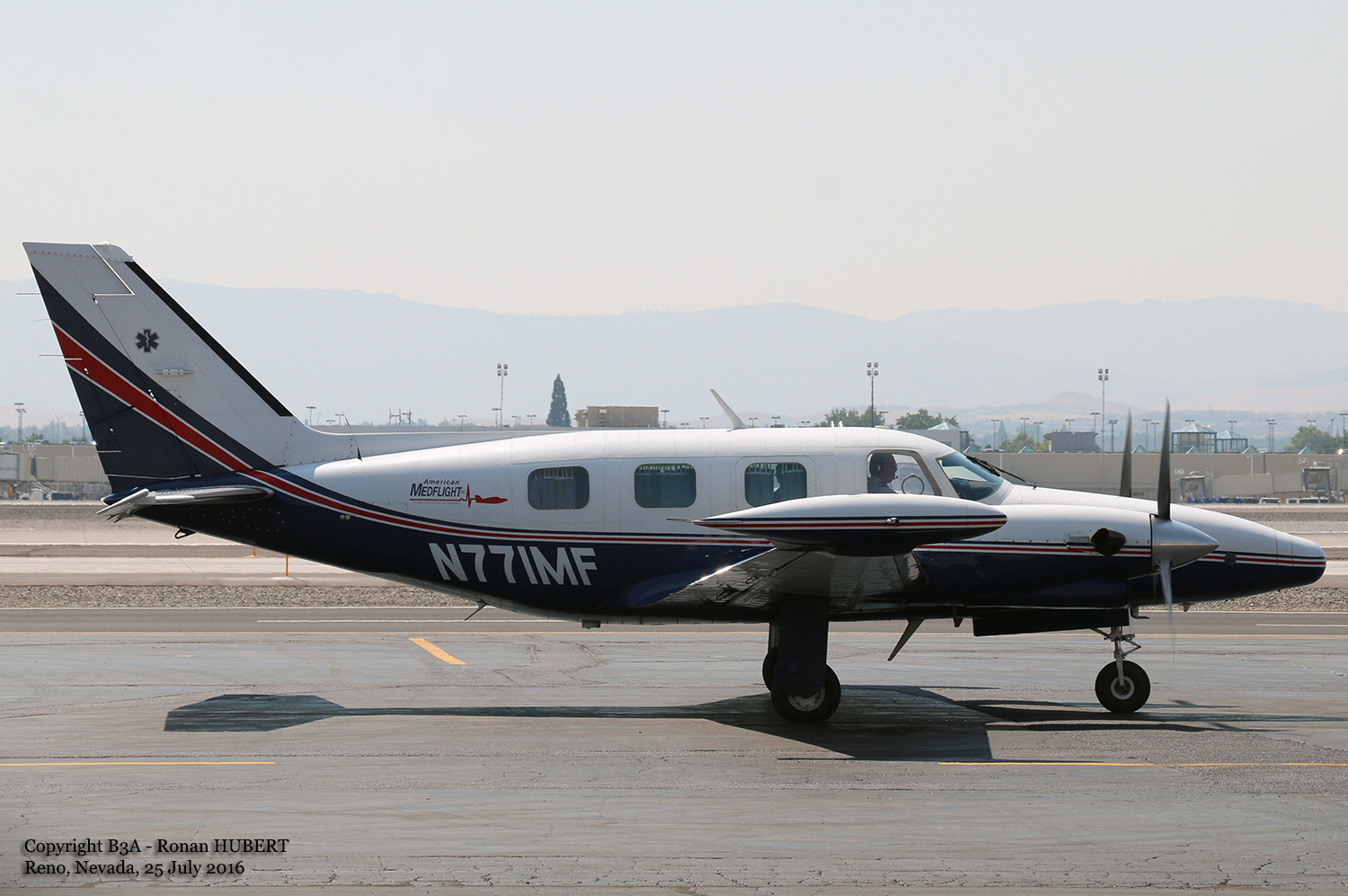
Crash of a Piper PA-31T Cheyenne in Elko: 4 killed

Date & Time: Nov 18, 2016 at 1920 LT
Type of aircraft:
Operator:
Registration:
N779MF
Flight Phase:
Flight Type:
Survivors:
No
Schedule:
Elko - Salt Lake City
MSN:
31-7920093
YOM:
1979
Location:
Crew on board:
1
Crew fatalities:
Pax on board:
3
Pax fatalities:
Other fatalities:
Total fatalities:
4
Captain / Total flying hours:
7050
Aircraft flight hours:
6600
Circumstances:
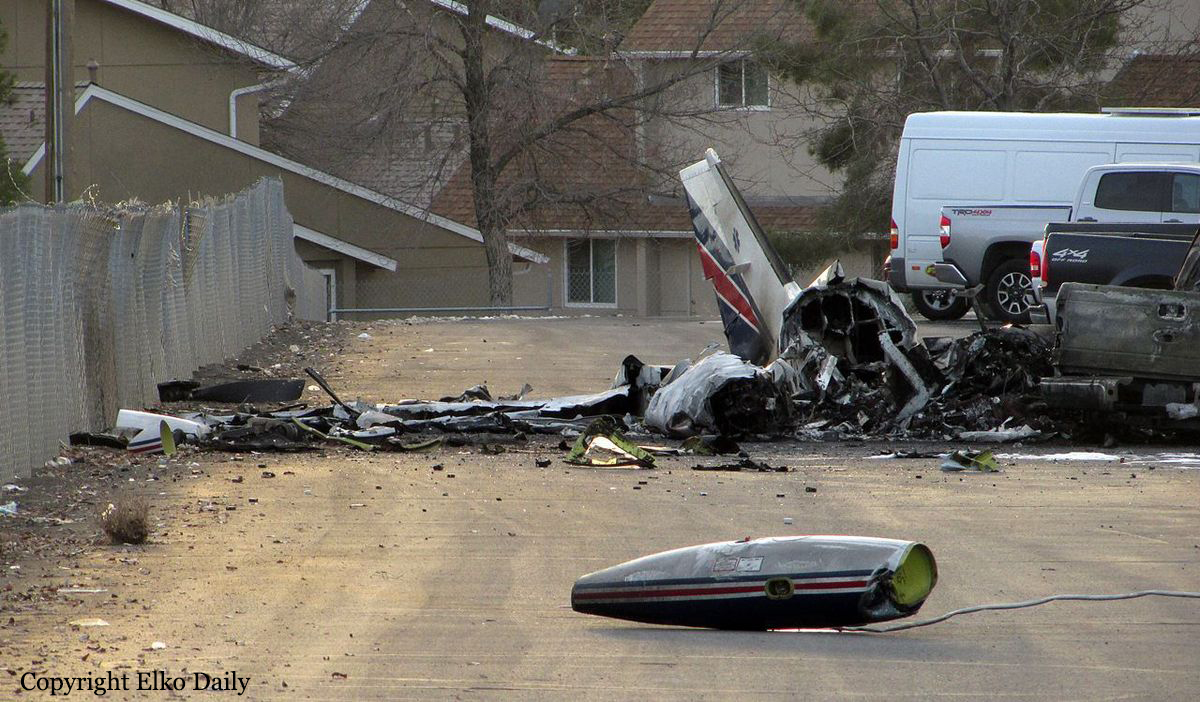
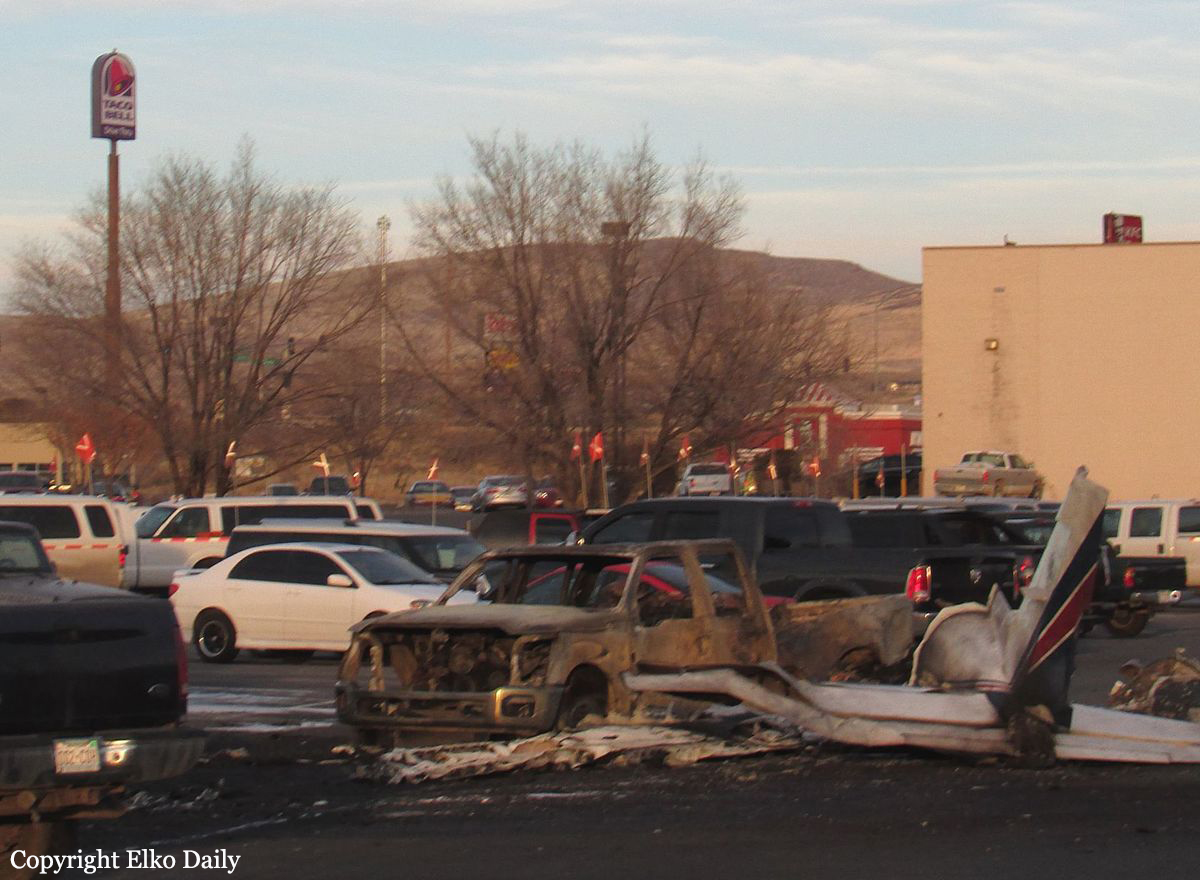
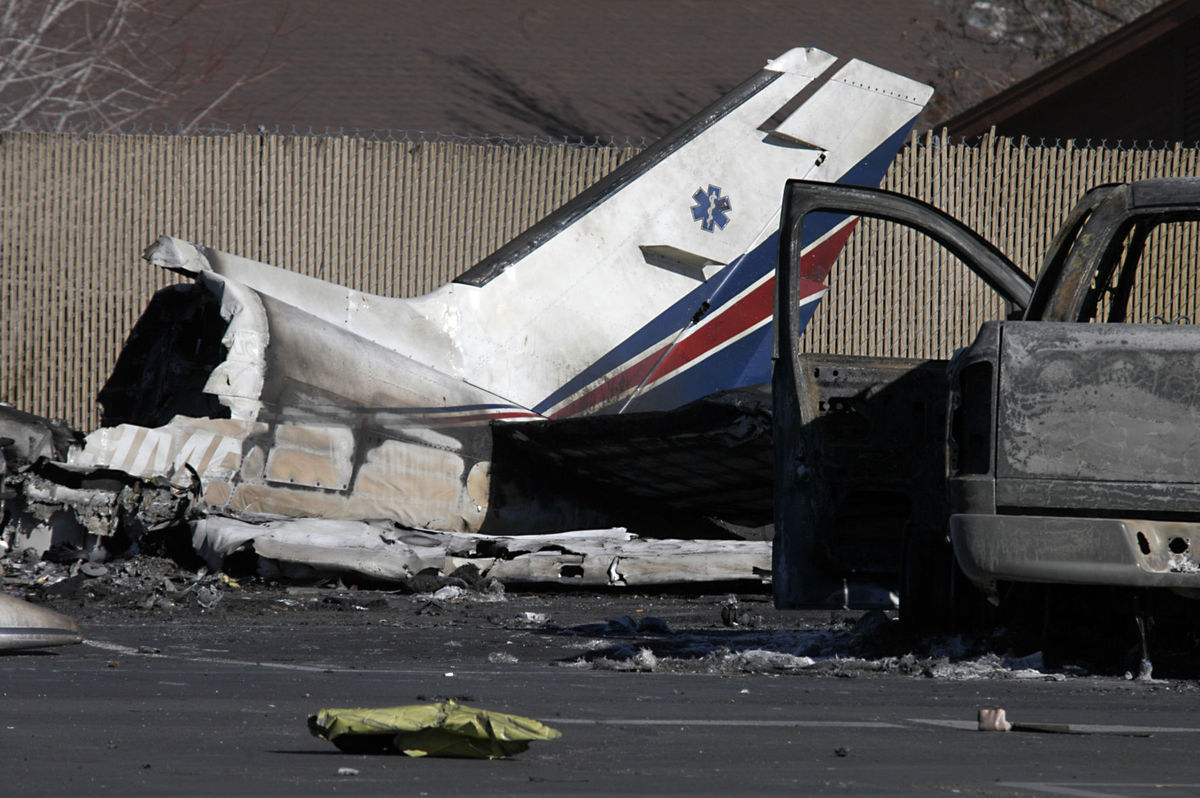
The airline transport pilot departed in the twin-engine, turbine-powered airplane on an air ambulance flight with two medical crew members and a patient on board in night visual meteorological conditions. According to a witness, during the initial climb, the airplane made a left turn of about 30° from the runway heading, then stopped climbing, made an abrupt left bank, and began to descend. The airplane impacted a parking lot and erupted into flames. In the 2 months before the accident, pilots had notified maintenance personnel three times that the left engine was not producing the same power as the right engine. In response, mechanics had replaced the left engine's bleed valve three times with the final replacement taking place three days before the accident. In addition, about 1 month before the accident, the left engine's fuel control unit was replaced during trouble shooting of an oil leak. Post accident examination revealed that the right engine and propeller displayed more pronounced rotational signatures than the left engine and propeller. This is consistent with the left engine not producing power or being at a low power setting at impact. Further, the abrupt left bank and descent observed by the witness are consistent with a loss of left engine power during initial climb. The extensive fire and impact damage to the airplane precluded determination of the reason for the loss of left engine power.
Probable cause:
A loss of engine power to the left engine for reasons that could not be determined due to the extensive fire and impact damage to the airplane.
Final Report:

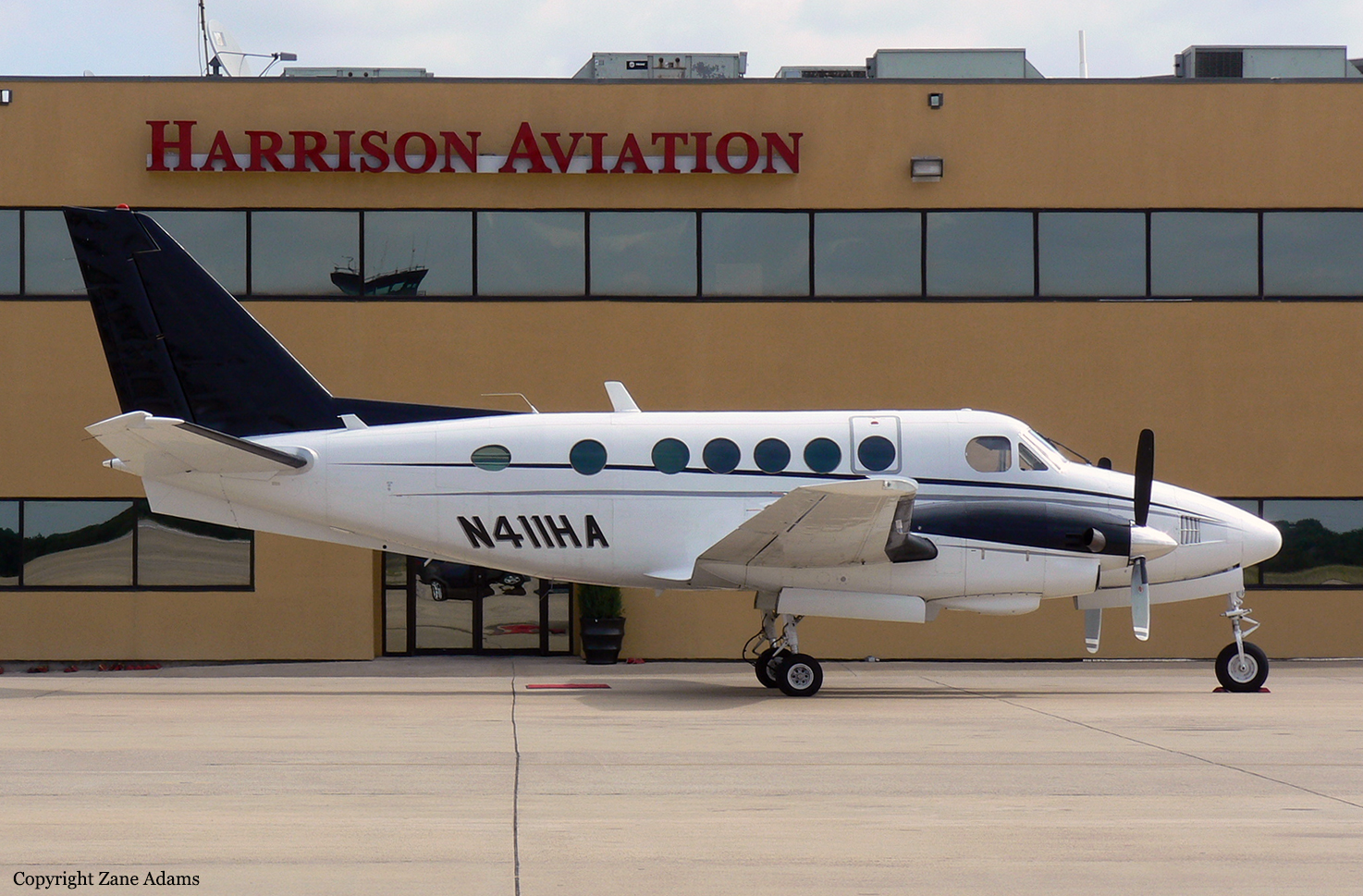
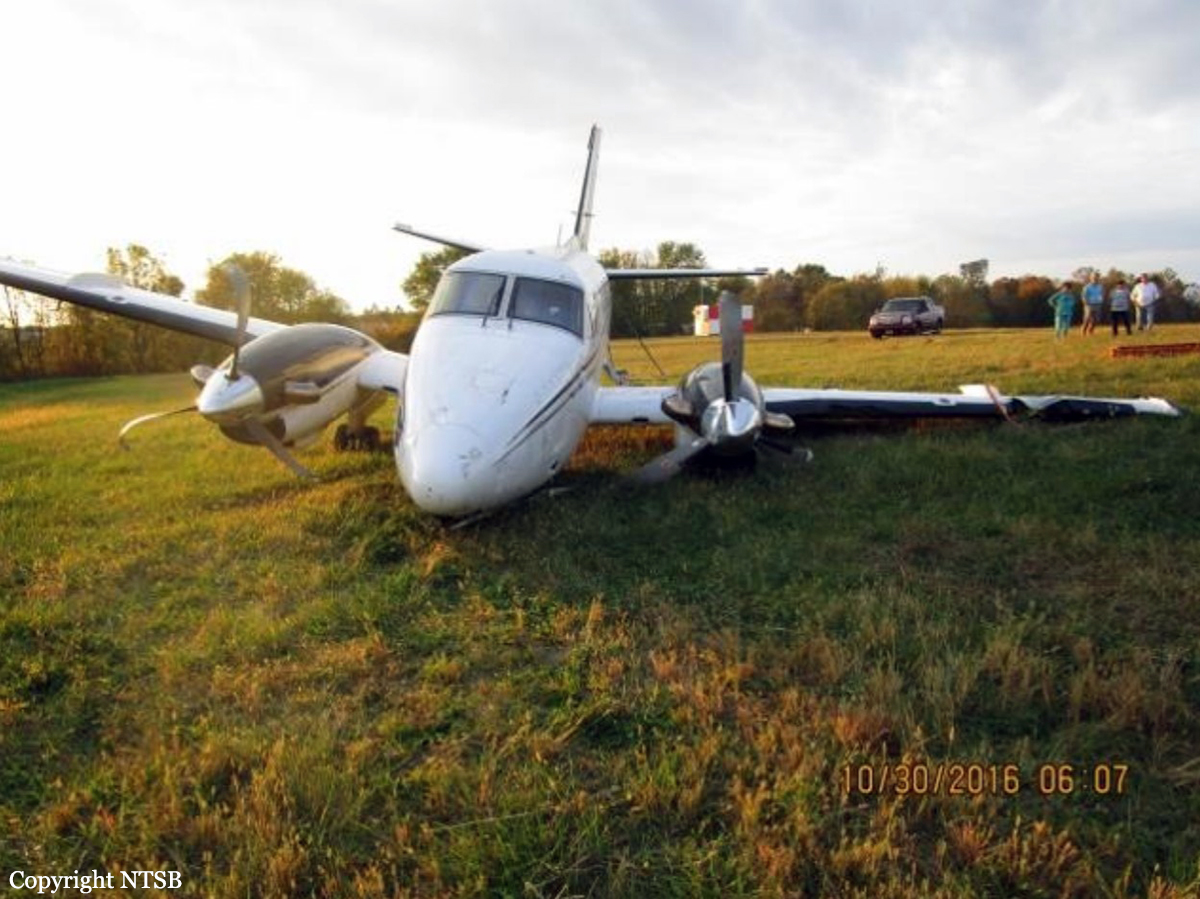
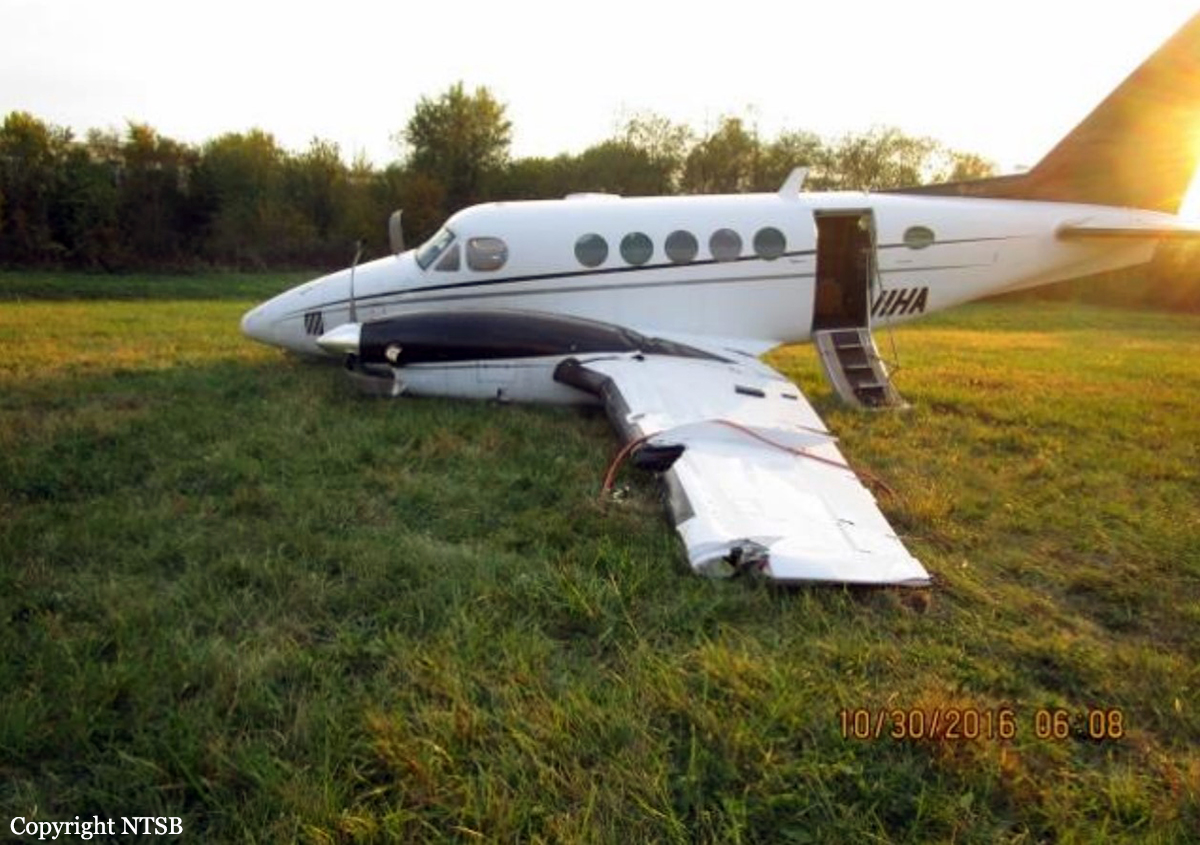
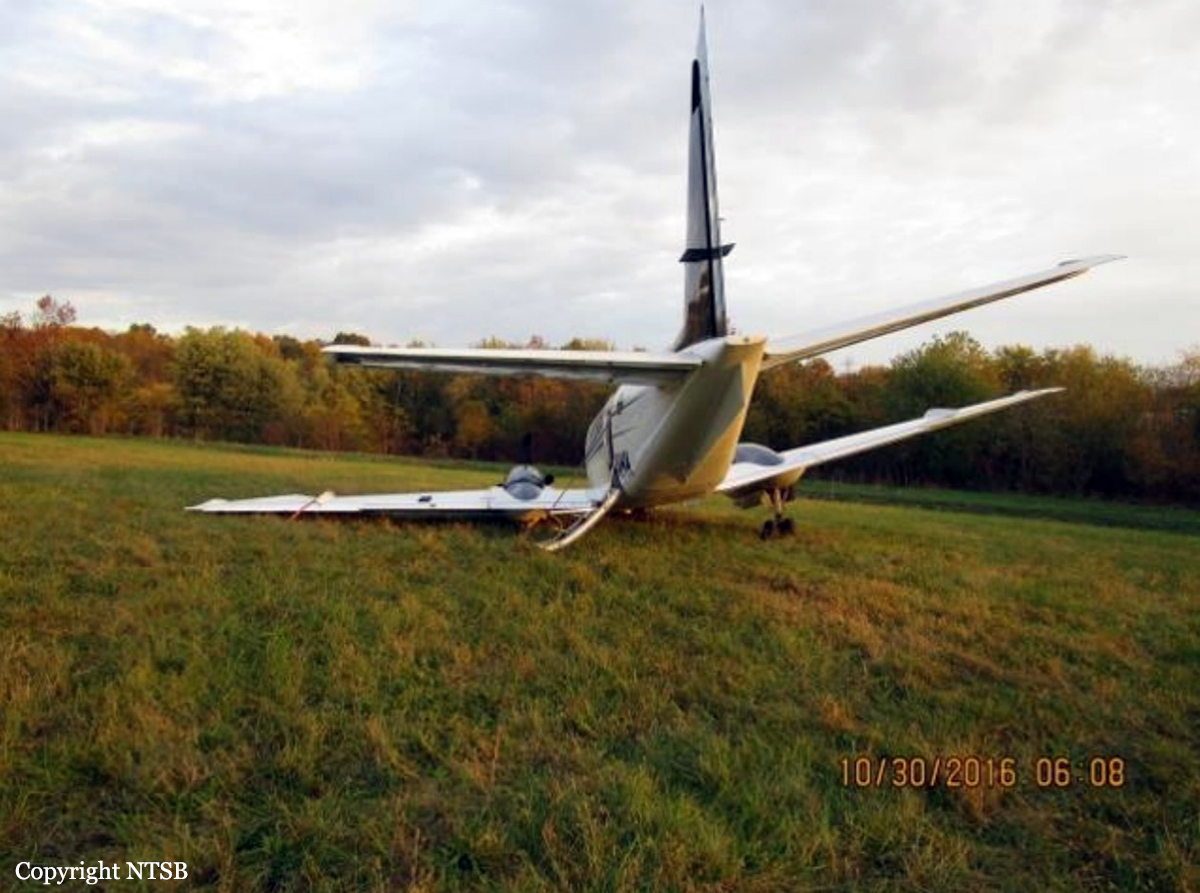
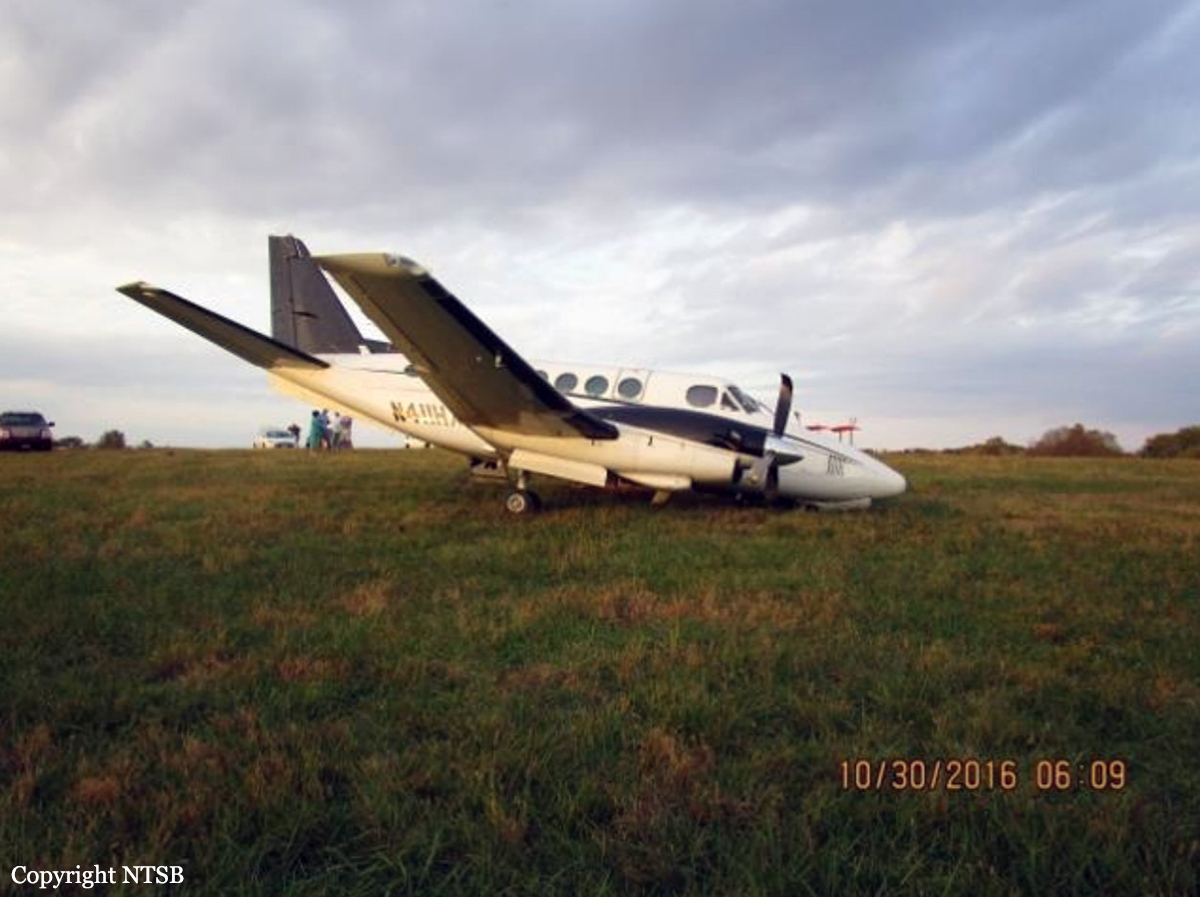
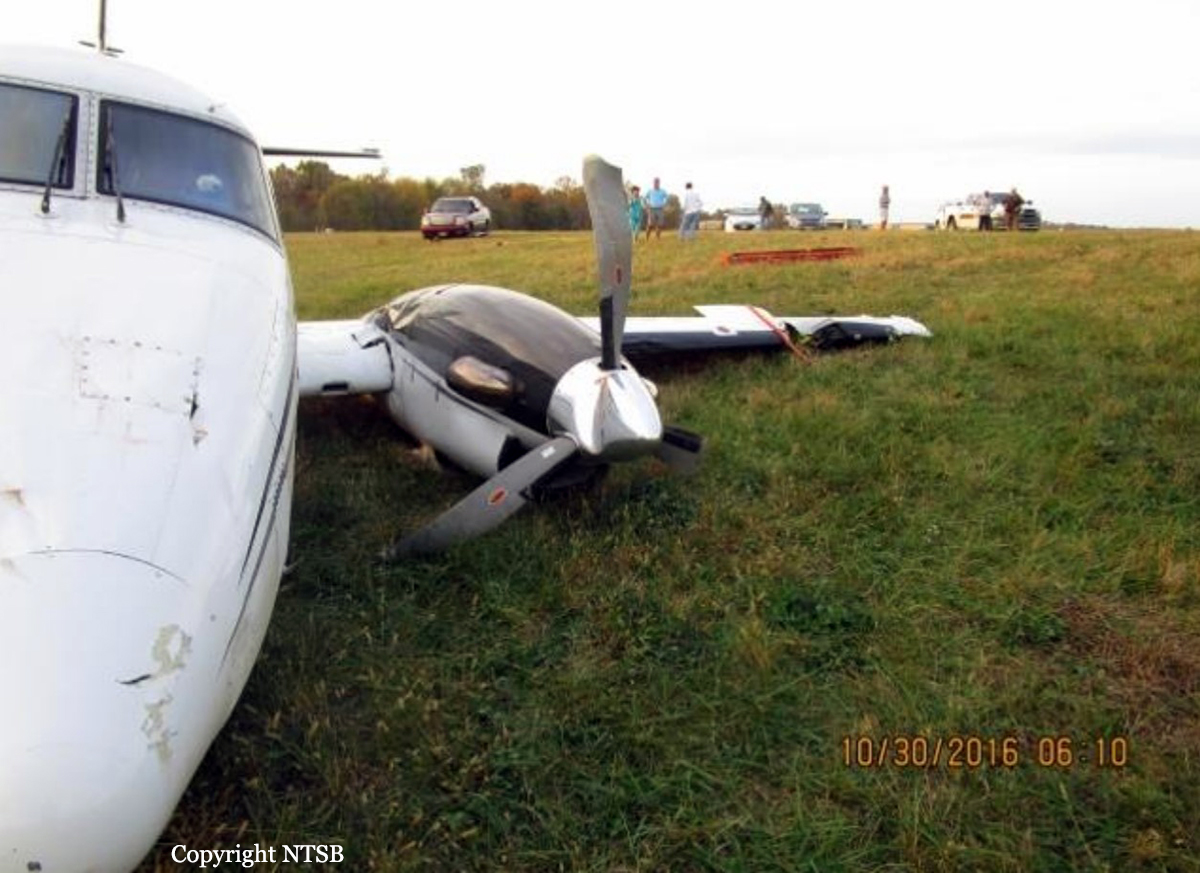
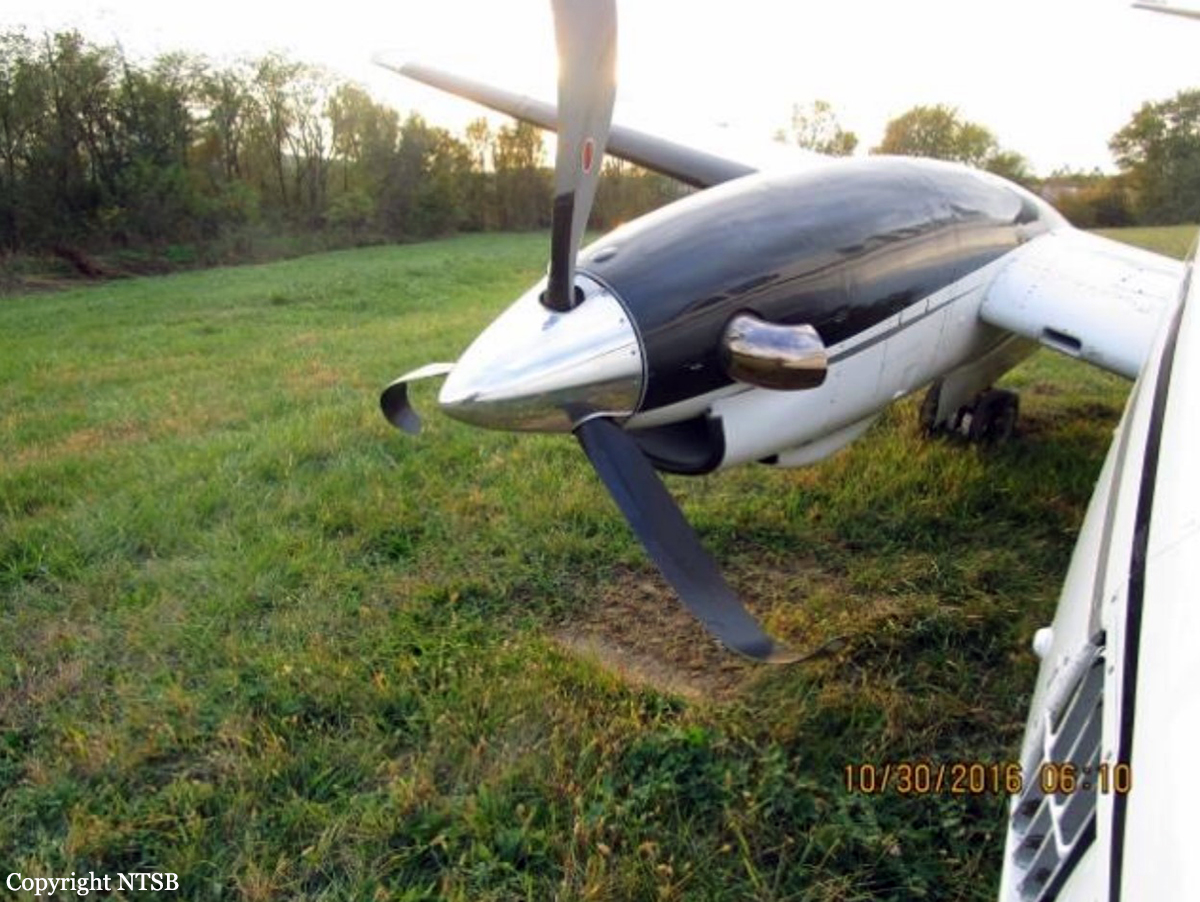
Crash of a Beechcraft 100 King Air in Jeffersonville

Date & Time: Oct 30, 2016 at 1235 LT
Type of aircraft:
Operator:
Registration:
N411HA
Flight Phase:
Flight Type:
Survivors:
Yes
Schedule:
Jeffersonville – Brunswick
MSN:
B-21
YOM:
1970
Crew on board:
2
Crew fatalities:
Pax on board:
8
Pax fatalities:
Other fatalities:
Total fatalities:
0
Captain / Total flying hours:
13142
Captain / Total hours on type:
34.00
Copilot / Total flying hours:
1605
Copilot / Total hours on type:
3
Aircraft flight hours:
12583
Circumstances:
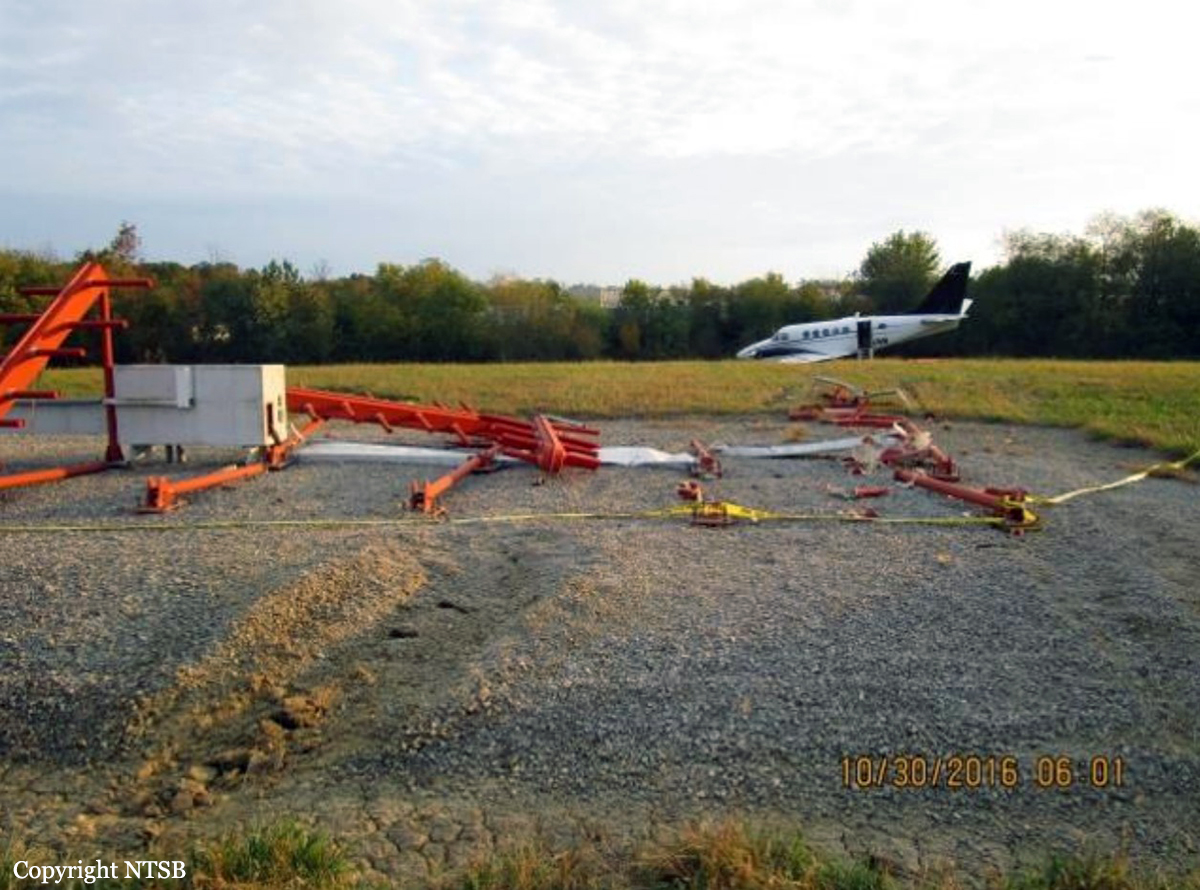
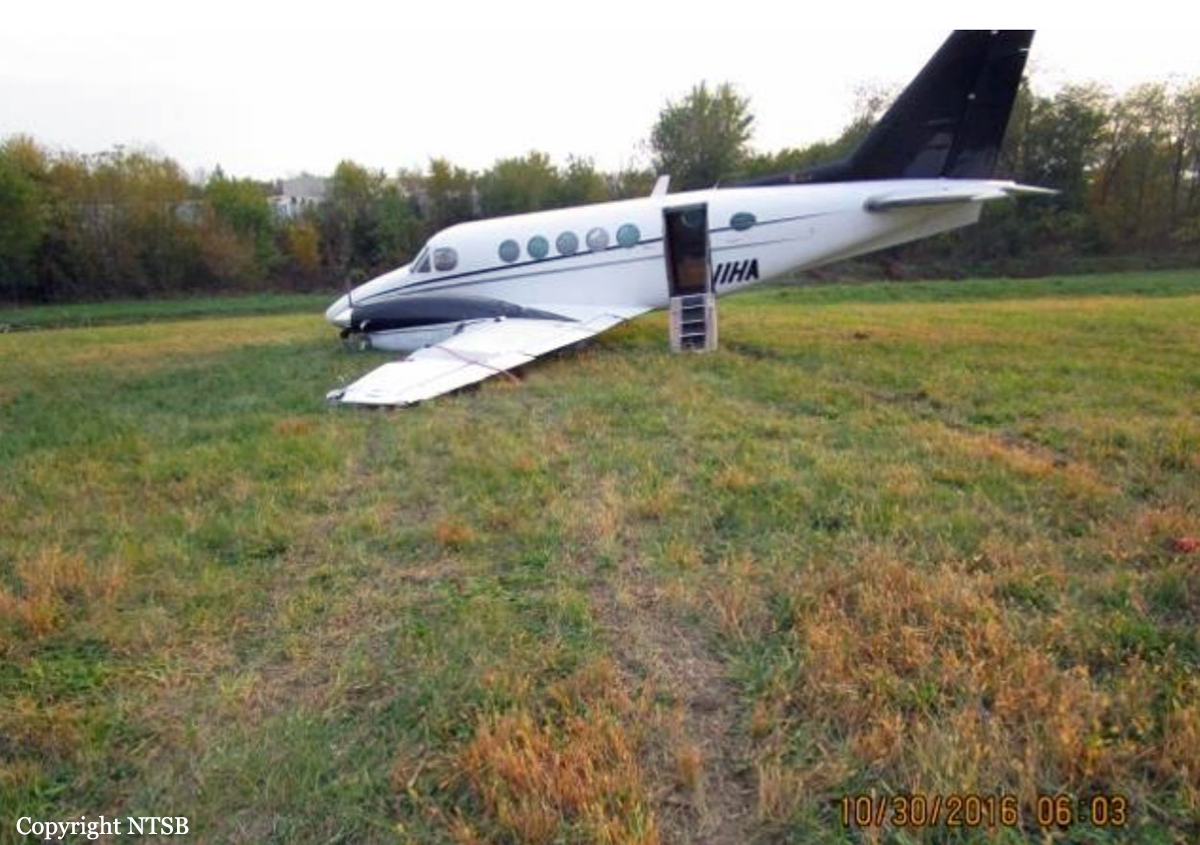
The airline transport pilot, who was the pilot flying, and commercial pilot, who was the pilot not flying and was acting as a safety pilot and was not expected to know the airplane's systems, limitations, or characteristics, were preparing to depart for a personal flight with eight passengers on board. When the pilot arrived at the airport, he determined that the airplane had 900 lbs of fuel onboard. He instructed the lineman to fuel the airplane with 211 gallons of fuel (1,413.7 lbs) for a fuel total of 2,313.7 lbs. The pilot reported that he was aware that the total weight of the eight passengers, their bags, and the fuel caused the airplane to be overweight but that he did not complete a weight and balance form or determine the expected takeoff performance before the flight. He informed the other pilot that the flight would be heavy, but he did not tell him how much the airplane exceeded the airplane's maximum gross takeoff weight. After the accident, the pilot determined that the airplane was 623 lbs over the maximum gross takeoff weight. The pilot reported that the airplane's flight controls and engines were operating normally during the pretakeoff check and that the elevator pitch trim was positioned in the "green" range. The pilot taxied the airplane onto the runway and applied the brakes and increased the throttles to takeoff power before releasing the brakes for the takeoff roll. However, he did not confirm the power settings that he applied when he advanced the throttles. The airplane did not accelerate as quickly as the pilot expected during the takeoff roll. When the airplane was about halfway down the runway, the airspeed was 80 kts, so the pilot continued the takeoff roll, but the airplane was still not accelerating as expected. He stated that he heard the other pilot say "redline," so he decreased the power. At this point, the airplane had reached the last third of the runway, and the pilot pulled back on the control yoke to lift the airplane off the runway, but the stall warning sounded. He lowered the nose, but the airplane was near the end of the runway. He added that he did not get "on" the brakes or put the propellers into reverse pitch and that the airplane then departed the runway. The pilot veered the airplane right to avoid the instrument landing system antenna, which was 500 ft from the end of the 5,500-ft-long runway, but the left wing struck the antenna, the left main landing gear and nose gear collapsed, and both propellers contacted the ground. The airplane then skidded left before stopping about 680 ft from the end of the runway. The pilot reported that the airplane did not have any preaccident mechanical malfunctions or failures. The evidence indicates that the pilot decided to depart knowing that the airplane was over its maximum gross takeoff weight and without determining the expected takeoff performance. During the takeoff roll, he did not check his engine instruments to determine if he had applied full takeoff power, although the acceleration may have been sluggish because of the excess weight onboard. The other pilot was not trained on the airplane and was not able to provide the pilot timely performance information during the takeoff. Neither the pilot nor the other pilot called out for an aborted takeoff, and when they recognized the need to abort the takeoff, it was too late to avoid a runway excursion.
Probable cause:
The pilot's inadequate preflight planning, his decision to take off knowing the airplane was over its gross takeoff weight, and his failure to abort the takeoff after he realized that the airplane was not accelerating as expected, which resulted in a runway excursion.
Final Report:

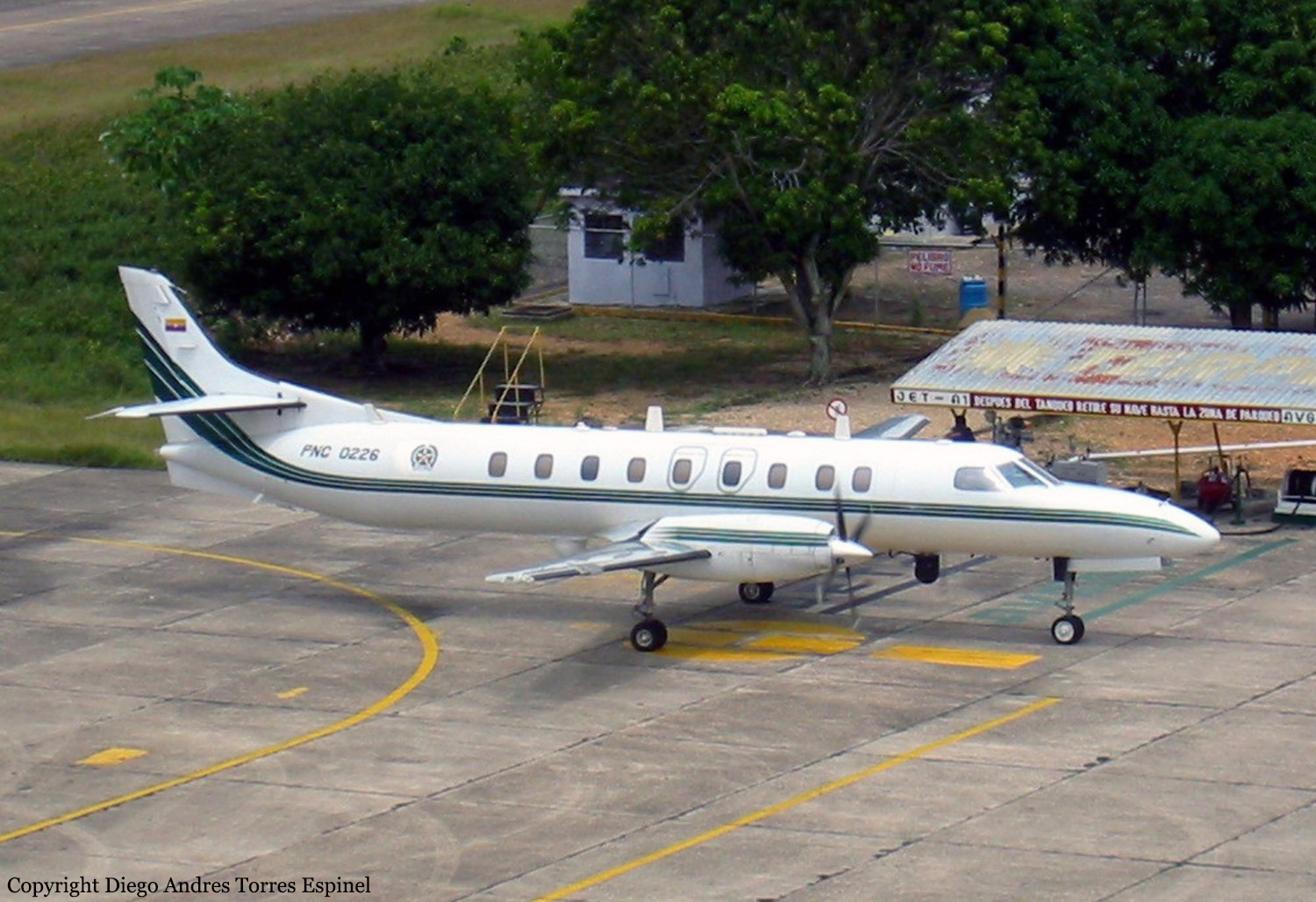
Crash of a Swearingen SA227DC Metro 23 in Bogotá

Date & Time: Oct 28, 2016 at 2007 LT
Type of aircraft:
Operator:
Registration:
PNC-0226
Flight Type:
Survivors:
Yes
Schedule:
Pereira – Bogotá
MSN:
DC-811M
YOM:
1995
Country:
Crew on board:
3
Crew fatalities:
Pax on board:
8
Pax fatalities:
Other fatalities:
Total fatalities:
0
Circumstances:
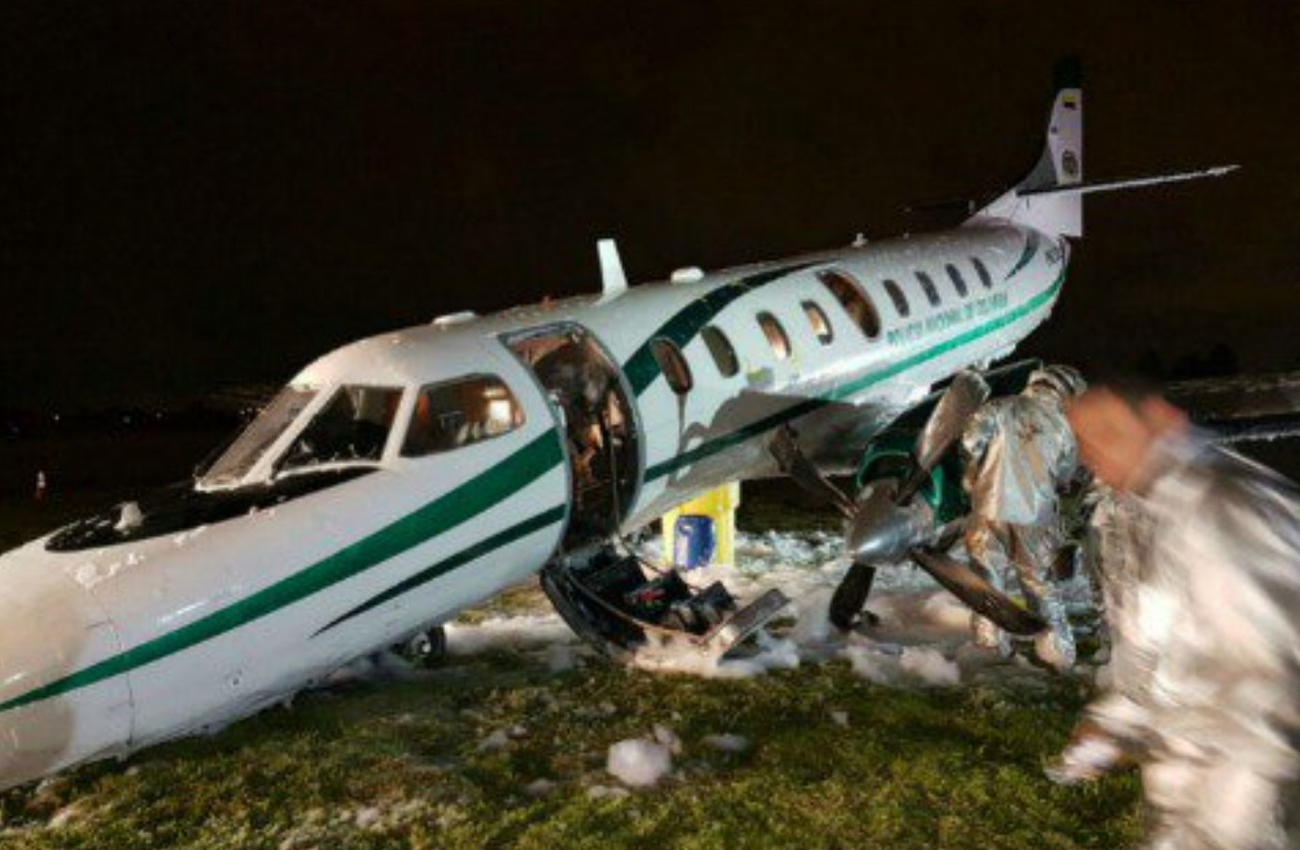
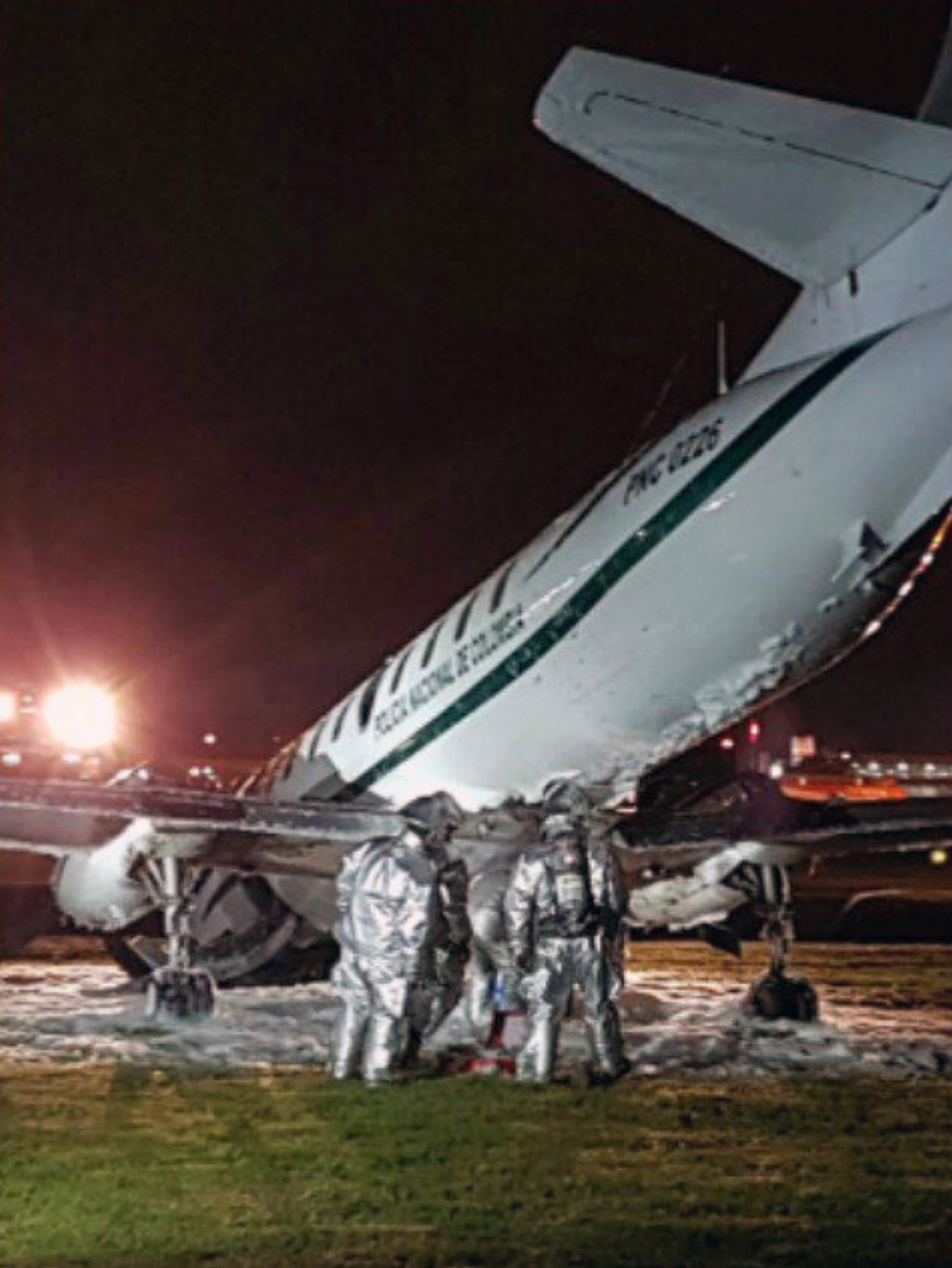
Following an uneventful flight from Pereira, the twin engine airplane was cleared to land on Bogotá-El Dorado Airport Runway 13L. Apparently, the aircraft bounced three times before landing firmly. After touchdown, it went out of control, veered off runway, lost its nose gear and came to rest in a grassy area. All 11 occupants evacuated safely and the aircraft was damaged beyond repair. Among the passengers was Juan Fernando Cristo, Minister for Internal Affairs.

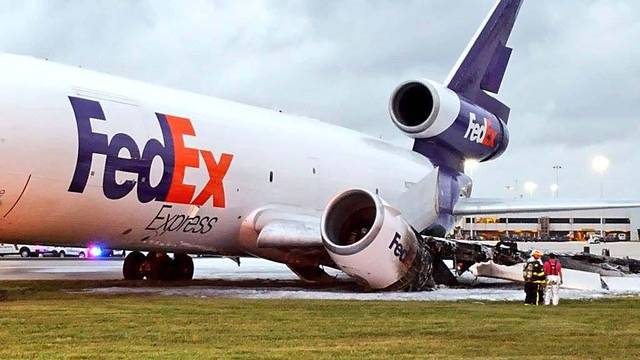
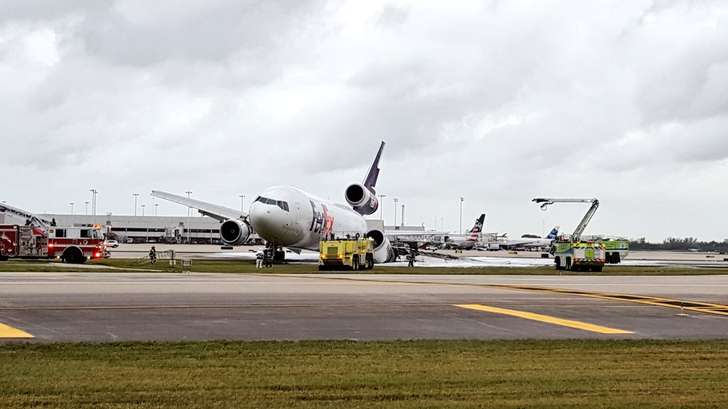
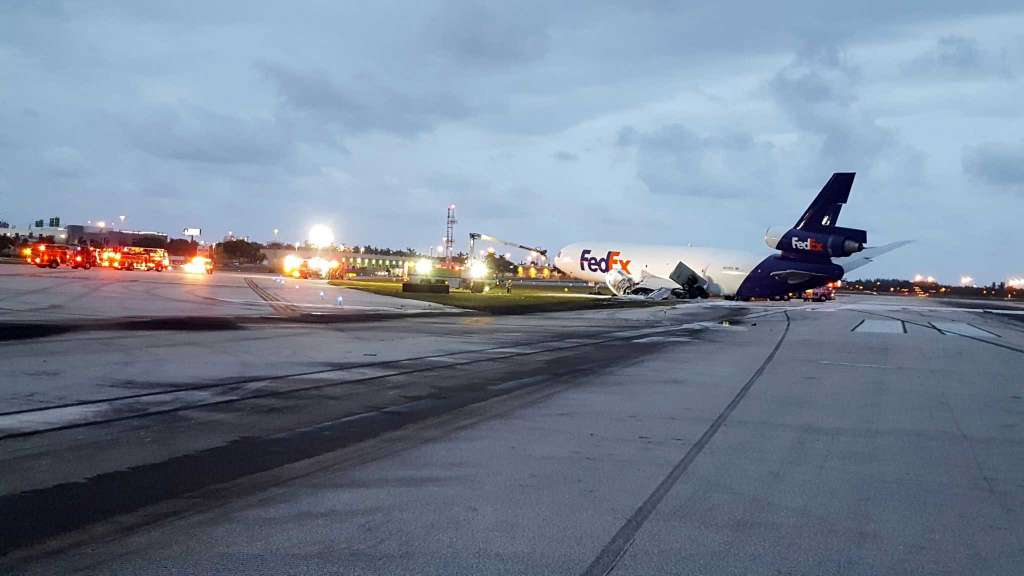
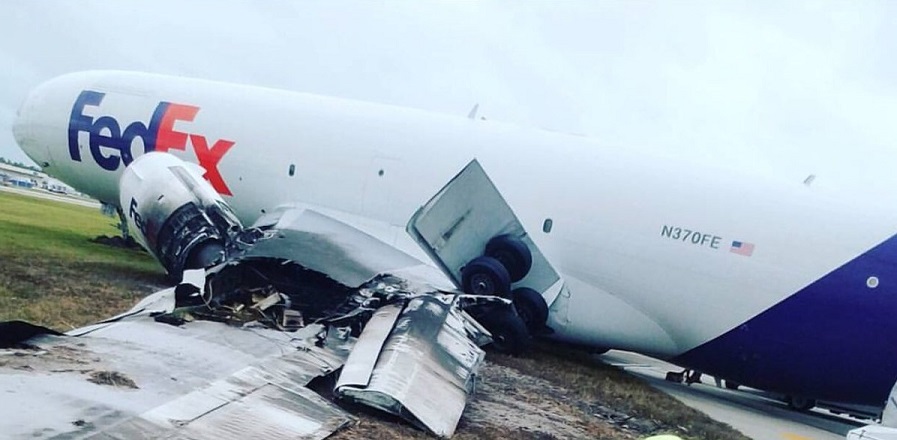
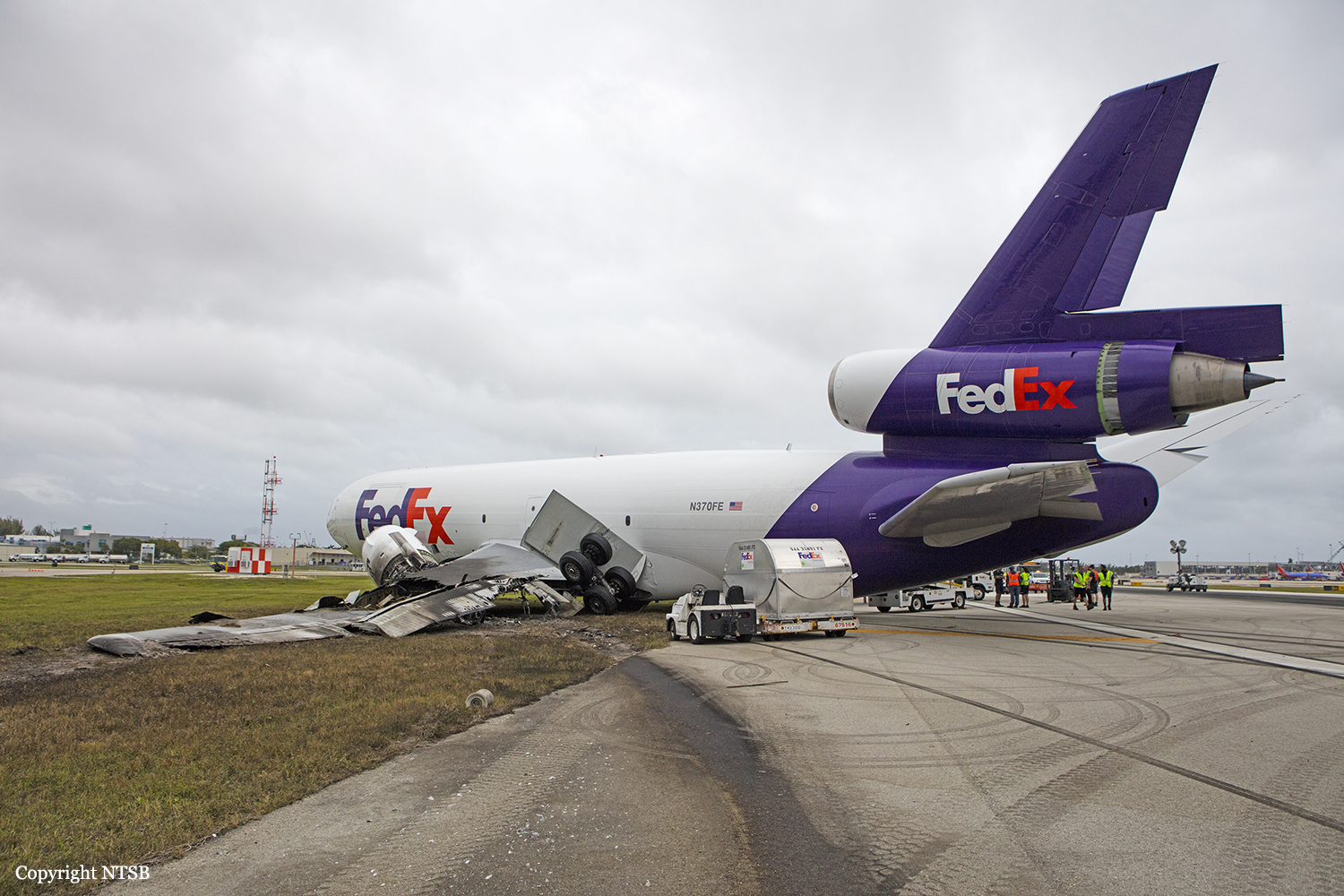
Crash of a Douglas DC-10-10 in Fort Lauderdale

Date & Time: Oct 28, 2016 at 1751 LT
Type of aircraft:
Operator:
Registration:
N370FE
Flight Type:
Survivors:
Yes
Schedule:
Memphis - Fort Lauderdale
MSN:
46608
YOM:
1972
Flight number:
FX910
Crew on board:
2
Crew fatalities:
Pax on board:
0
Pax fatalities:
Other fatalities:
Total fatalities:
0
Captain / Total flying hours:
10000
Captain / Total hours on type:
1443.00
Copilot / Total flying hours:
6300
Copilot / Total hours on type:
1244
Aircraft flight hours:
84589
Aircraft flight cycles:
35606
Circumstances:
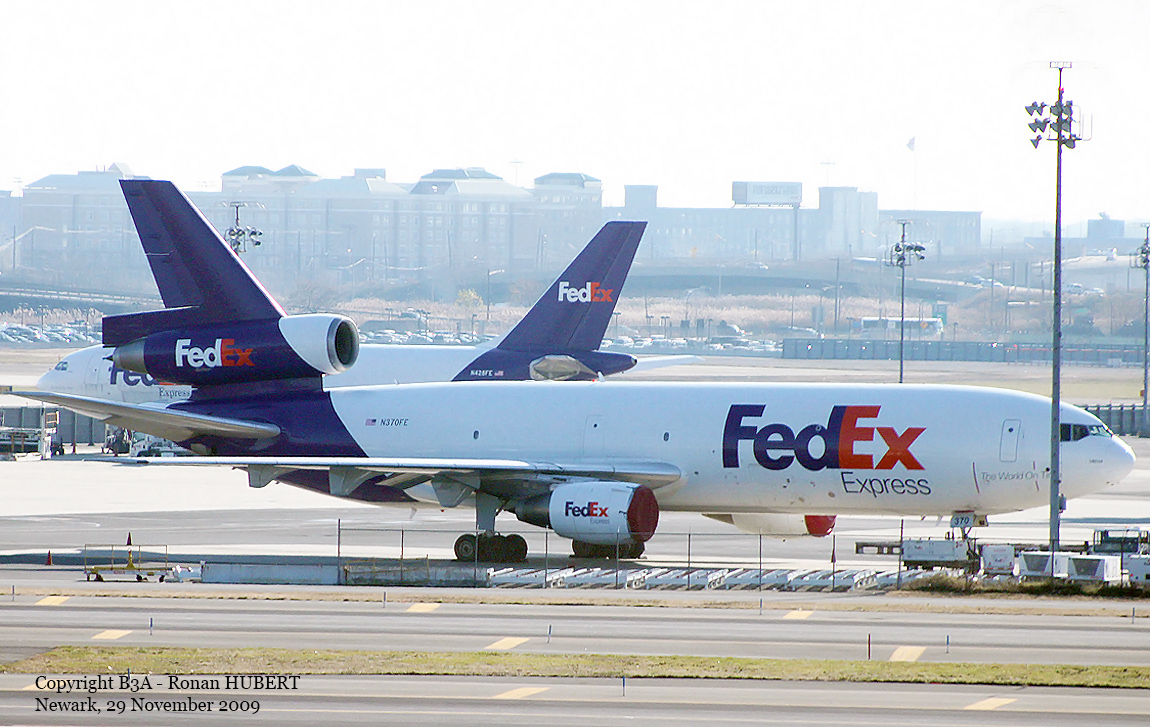
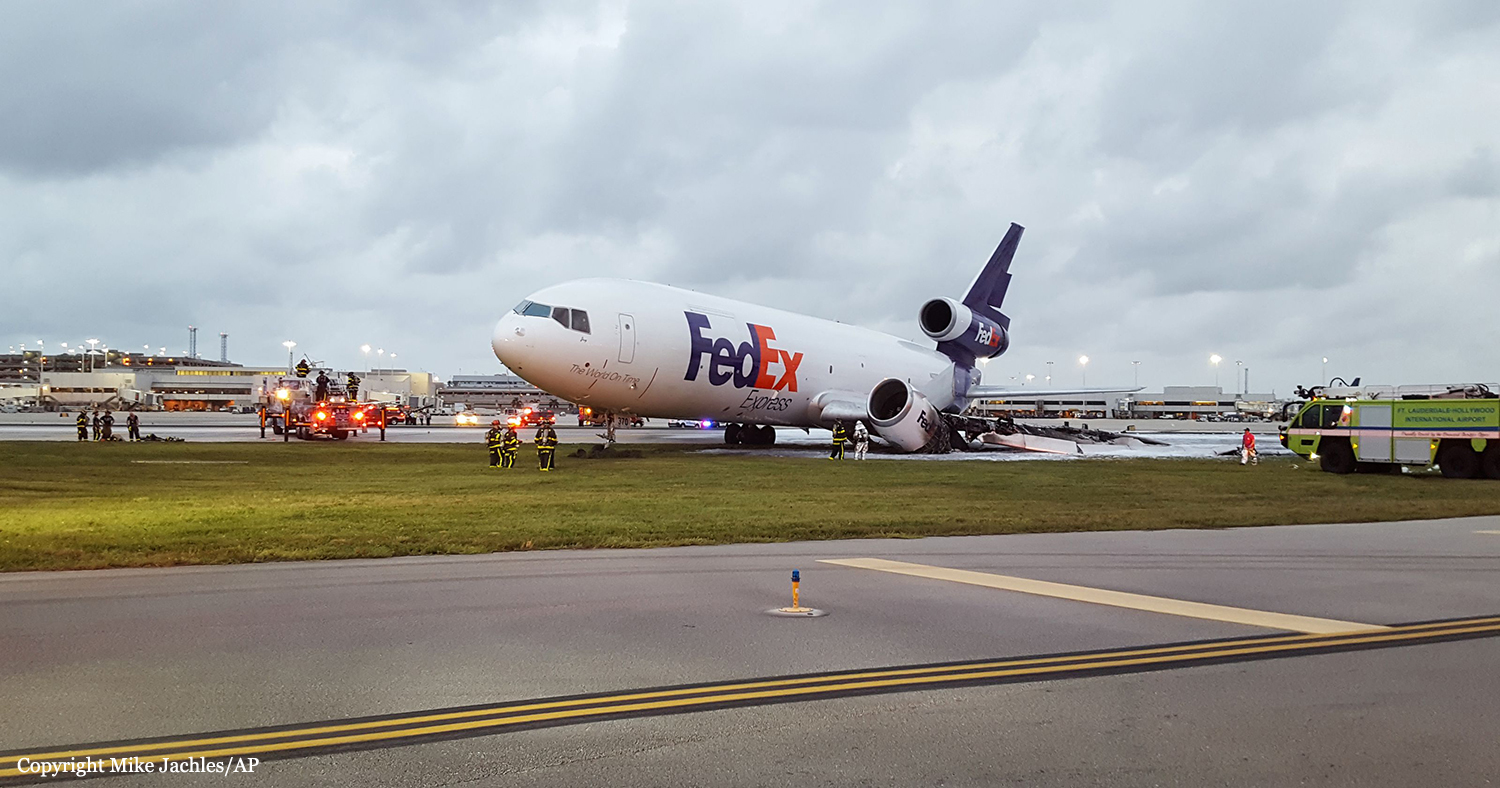
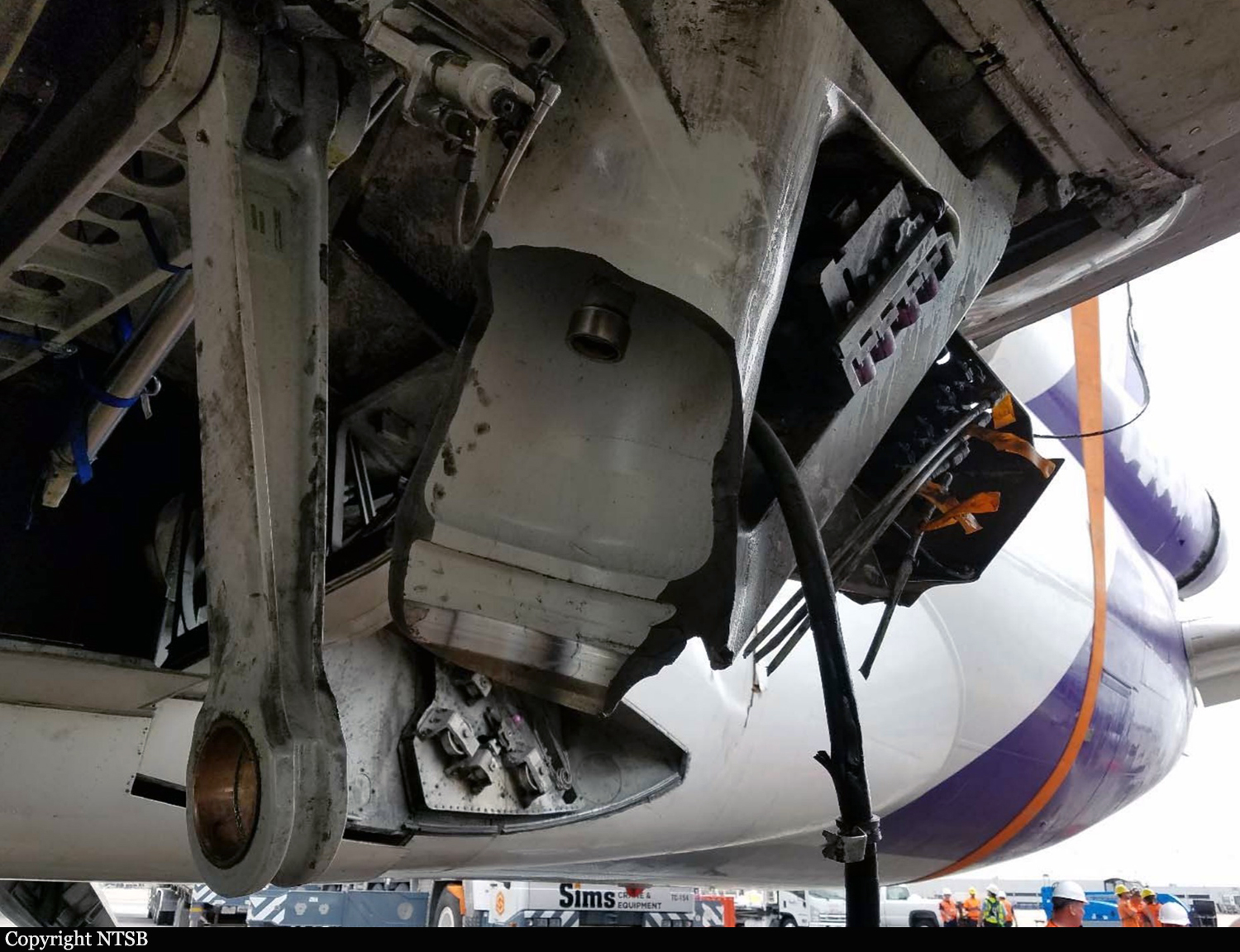
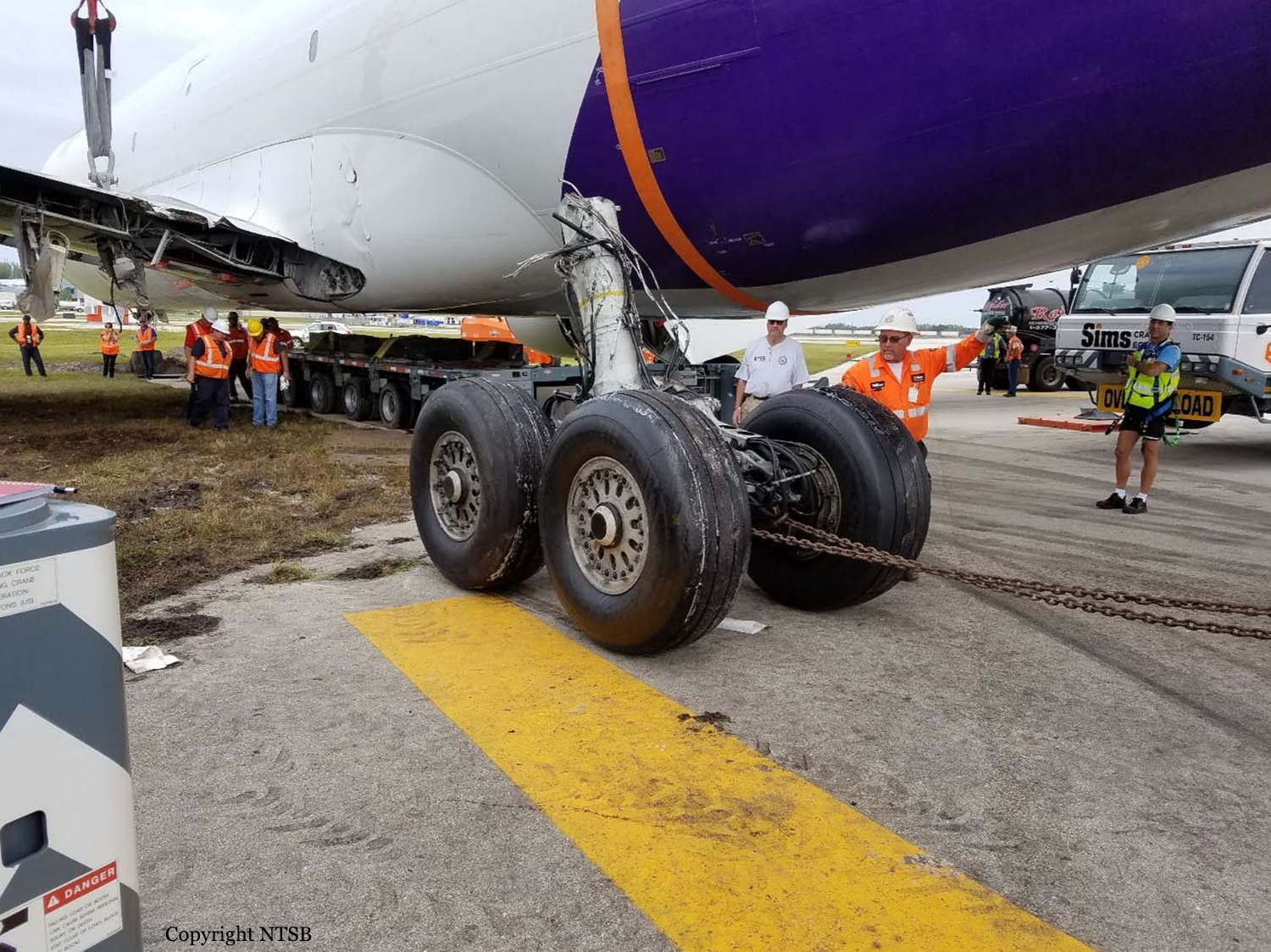
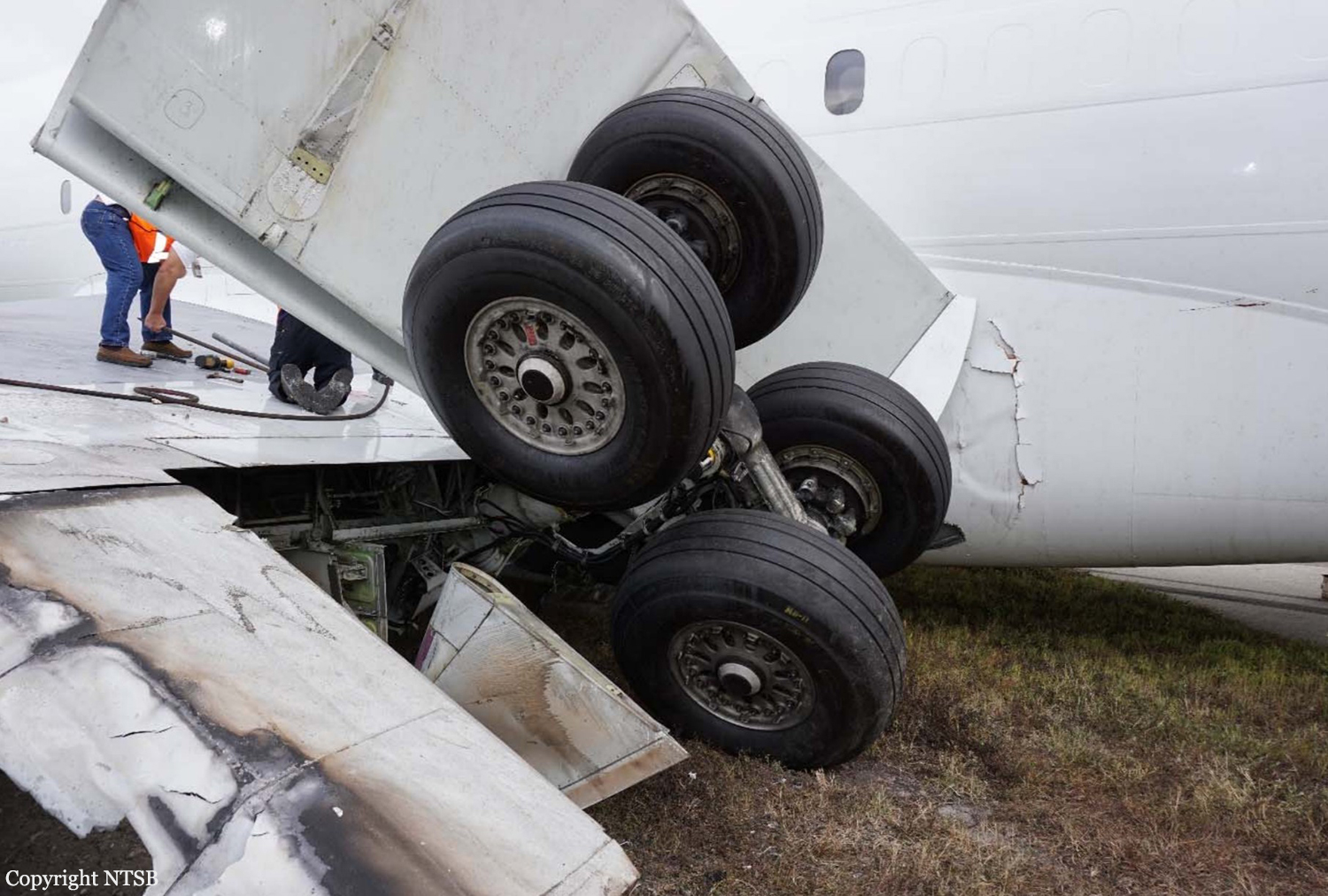
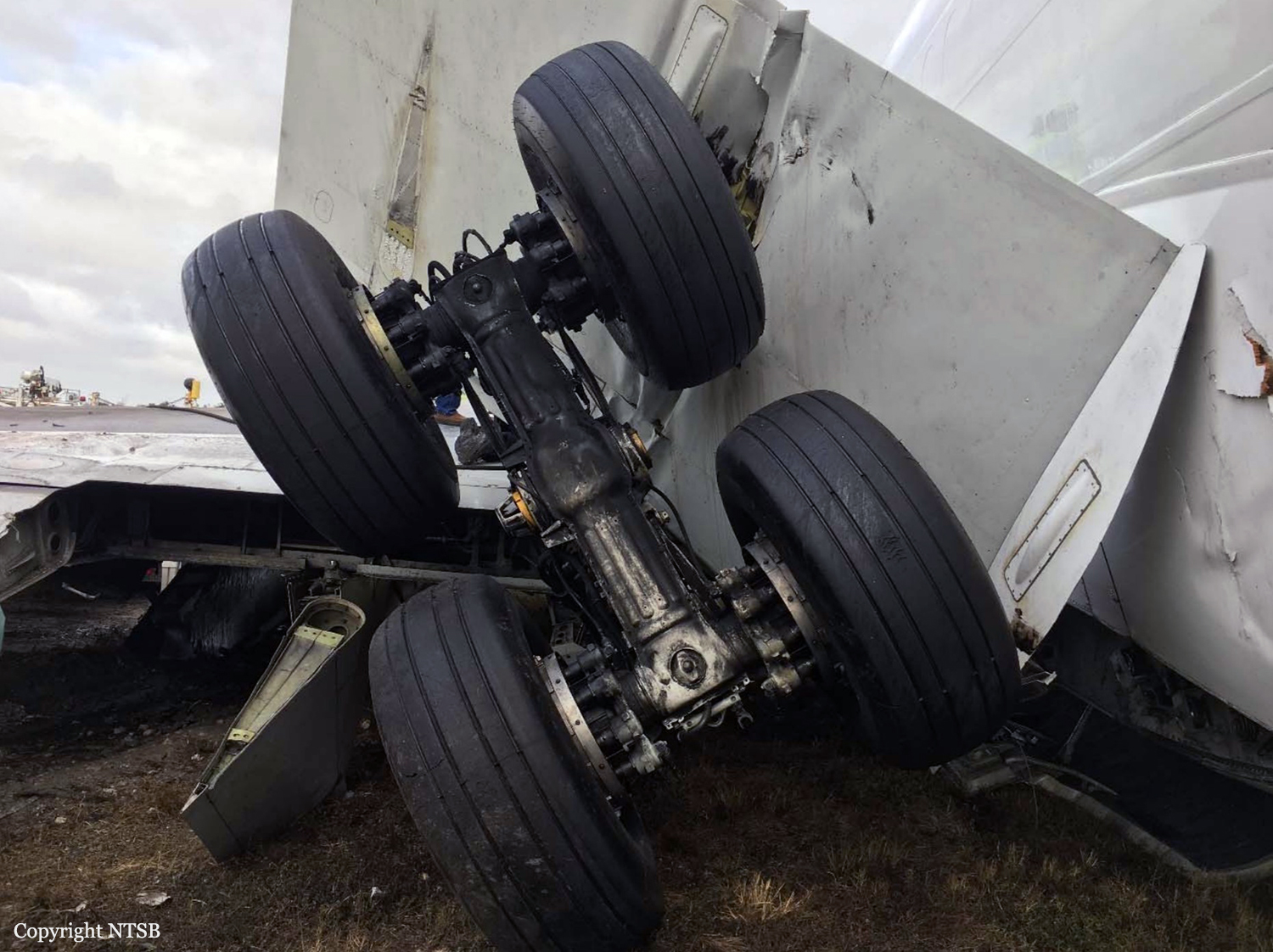
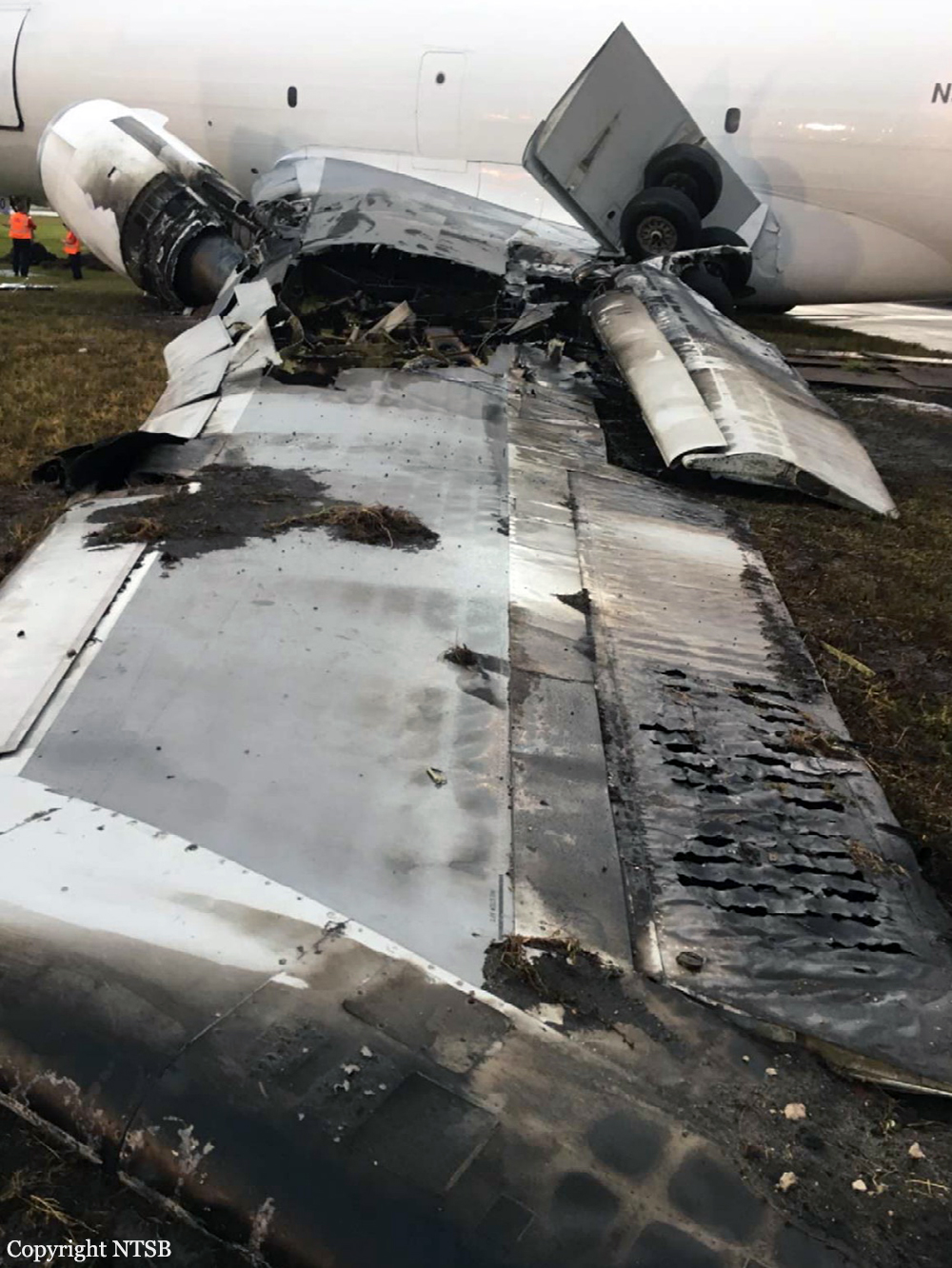
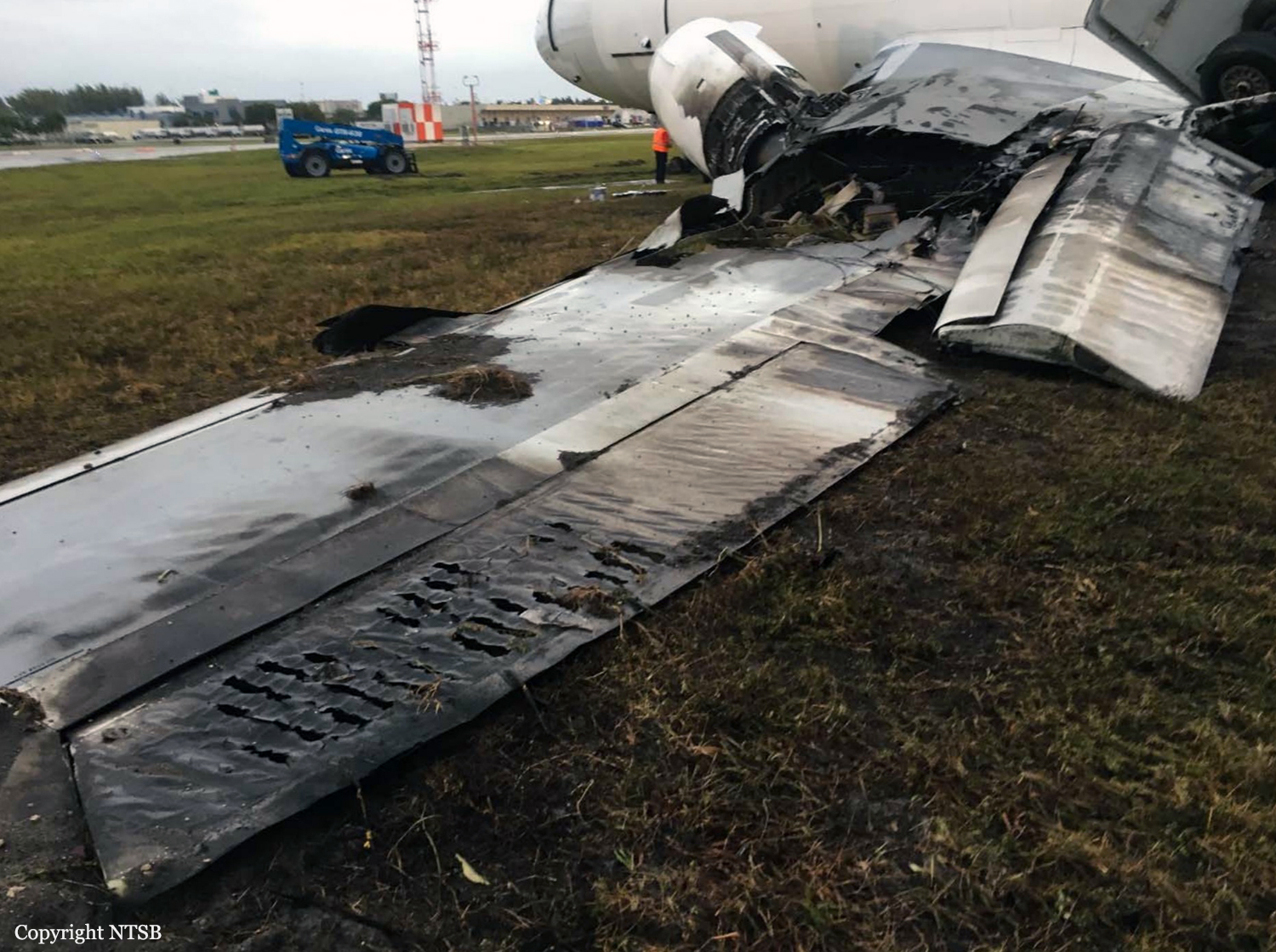
On October 28, 2016, about 1751 eastern daylight time, FedEx Express (FedEx) flight 910, a McDonnell Douglas MD-10-10F, N370FE, experienced a left main landing gear (MLG) collapse after landing on runway 10L at Fort Lauderdale–Hollywood International Airport (KFLL), Fort Lauderdale, Florida, and the left wing subsequently caught fire. The airplane came to rest off the left side of the runway. The two flight crew members evacuated the airplane. The captain reported a minor cut and abrasions from the evacuation, and the first officer was not injured. The airplane sustained substantial damage. The cargo flight was operating on an instrument flight plan under the provisions of Title 14 Code of Federal Regulation (CFR) Part 121 and originated at Memphis International Airport (KMEM), Memphis, Tennessee. The first officer was the pilot flying, and the captain was the pilot monitoring. Both flight crew members stated in post accident interviews that the departure from MEM and the en route portion of the flight were normal. About 1745, air traffic control (ATC) cleared the flight for final approach to the instrument landing system (ILS) approach to runway 10L at KFLL. Recorder data indicate that the first officer set the flaps at 35º about 1746 when the airplane was 3,000 ft above ground level (agl). The first officer disconnected the autopilot about 1749 when the airplane was 1,000 ft agl. Both flight crew members reported that the approach was stable at 500 ft agl. At 200 ft agl, the first officer began making airspeed corrections to compensate for the crosswind. About 1750, the first officer disconnected the autothrottles, as briefed, when the airplane was at 100 ft agl. At 50 ft agl, the first officer initiated the flare. The left MLG touched down about 1750:31 in the touchdown zone and left of the runway centerline. The first officer deployed the spoilers at 1750:34, and the nose gear touched down 3 seconds later. The thrust reversers were deployed at 1750:40. According to cockpit voice recorder (CVR) data, the captain instructed the first officer to begin braking about 1750:39 (the airplane was not equipped with autobrakes). FDR data indicate an increase in brake pedal position angle and increase in longitudinal deceleration (indicating braking) about 1750:41. In post accident interviews, the flight crew members reported hearing a "bang" as the first officer applied the brakes, and the airplane yawed to the left. About this time, the CVR recorded the sound of multiple thuds, consistent with the sound of a gear collapse. About 1750:48, the captain stated, "I have the airplane," and the first officer replied, "you got the airplane." The captain applied full right rudder without effect while the first officer continued braking. About 1750:53, the captain instructed the first officer to call and inform the tower about the emergency. An airport video of the landing showed that the No. 1 engine was initially supporting the airplane after the left MLG collapse when a fire began near the left-wing tip. The airplane eventually stopped off the left side of runway 10L, about 30º to 40º off the runway heading. About 1751, the flight crew began executing the evacuation checklist. The pilots reported that, as they were about to evacuate, they heard an explosion. The airport video showed a fireball erupted at the No. 1 engine. The captain attempted to discharge a fire bottle in the No. 1 engine, but it didn't discharge. They evacuated the airplane through the right cockpit window.
Probable cause:
The failure of the left main landing gear (MLG) due to fatigue cracking that initiated at a corrosion pit. The pit formed in the absence of a required protective cadmium coating the cause of which could not be determined from available evidence. Contributing to the failure of the left MLG was the operator's overhaul limit, which exceeded that recommended by the airplane manufacturer without sufficient data and analysis to ensure crack detection before it progressed to failure.
Final Report:
Crash of a Boeing 767-323ER in Chicago

Date & Time: Oct 28, 2016 at 1435 LT
Type of aircraft:
Operator:
Registration:
N345AN
Flight Phase:
Survivors:
Yes
Schedule:
Chicago – Miami
MSN:
33084
YOM:
2003
Flight number:
AA383
Crew on board:
9
Crew fatalities:
Pax on board:
161
Pax fatalities:
Other fatalities:
Total fatalities:
0
Captain / Total flying hours:
17400
Captain / Total hours on type:
4000.00
Copilot / Total flying hours:
22000
Copilot / Total hours on type:
1846
Aircraft flight hours:
50632
Aircraft flight cycles:
8120
Circumstances:
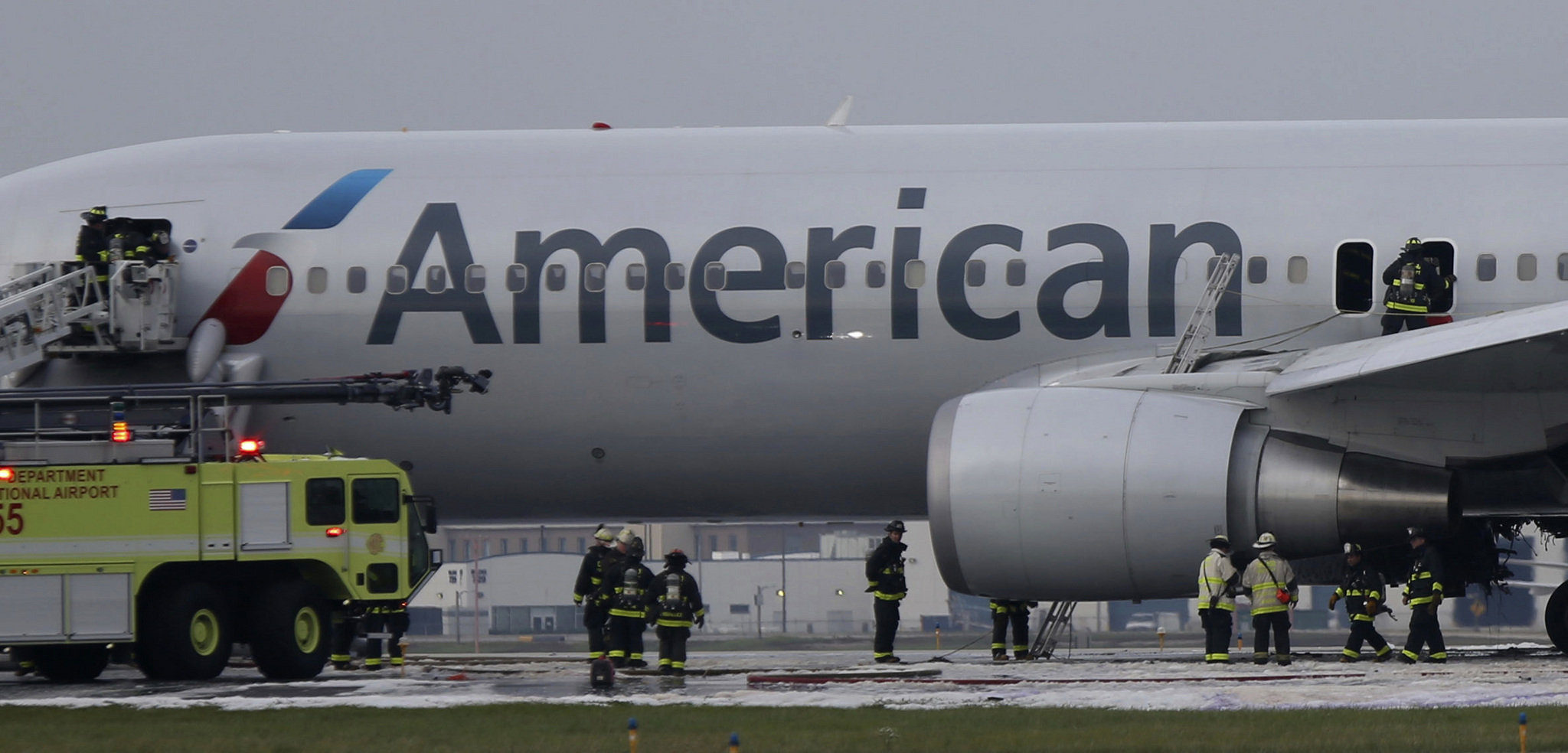
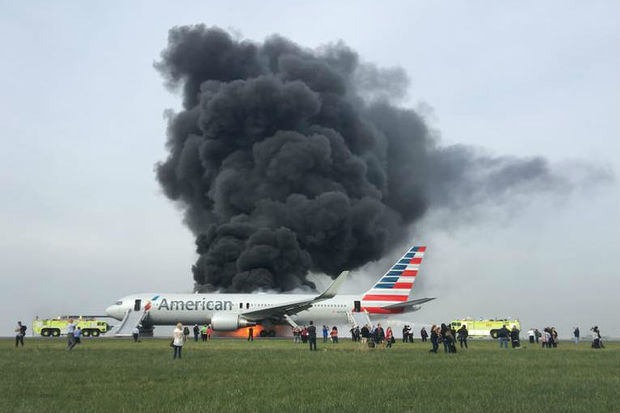
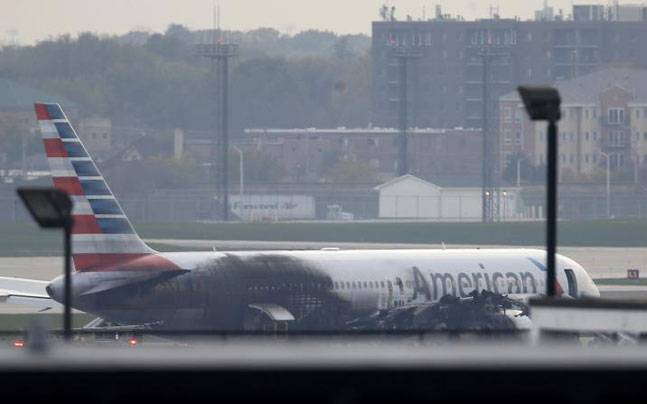
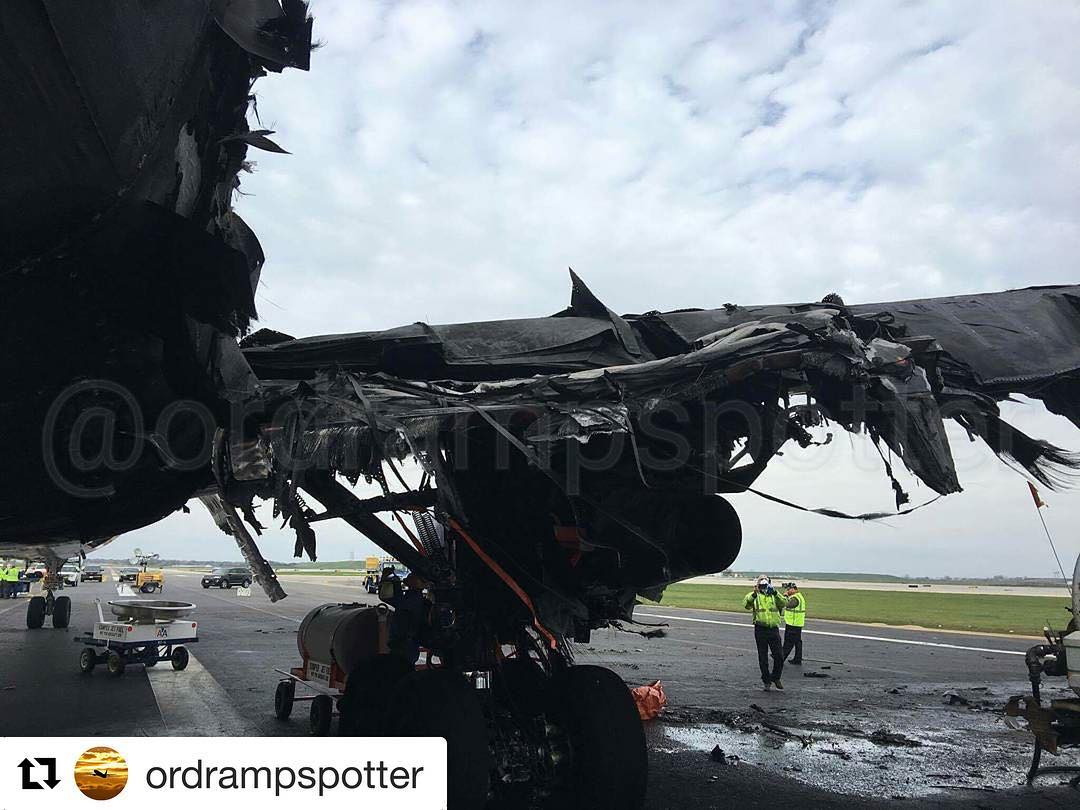
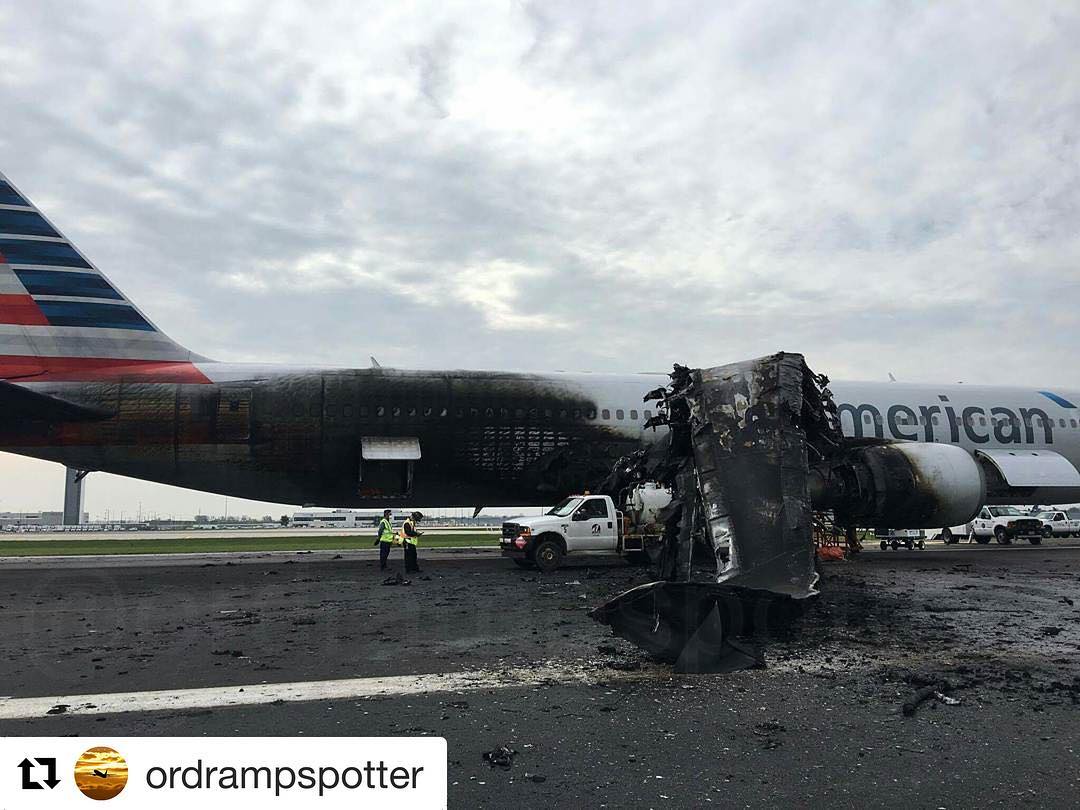
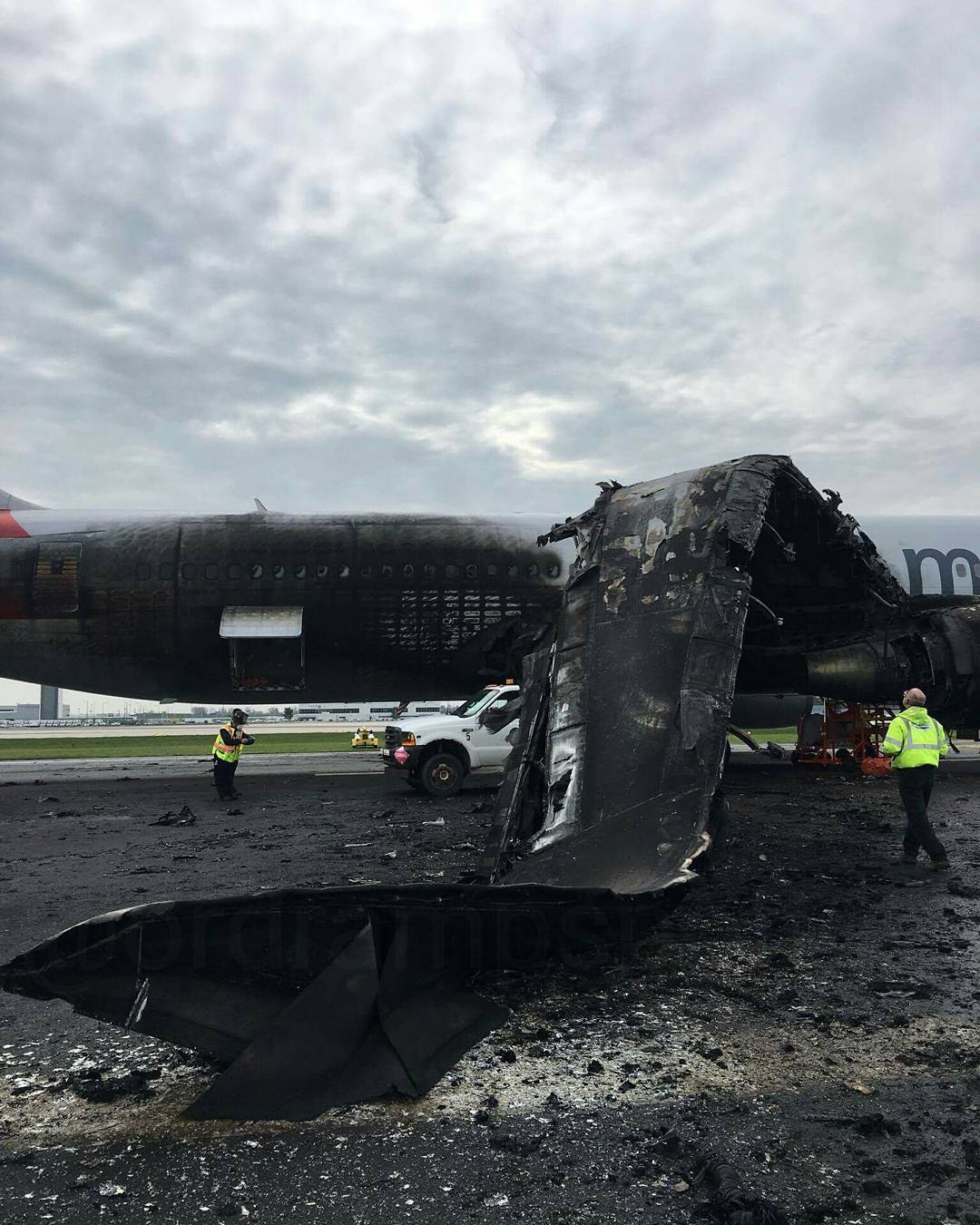
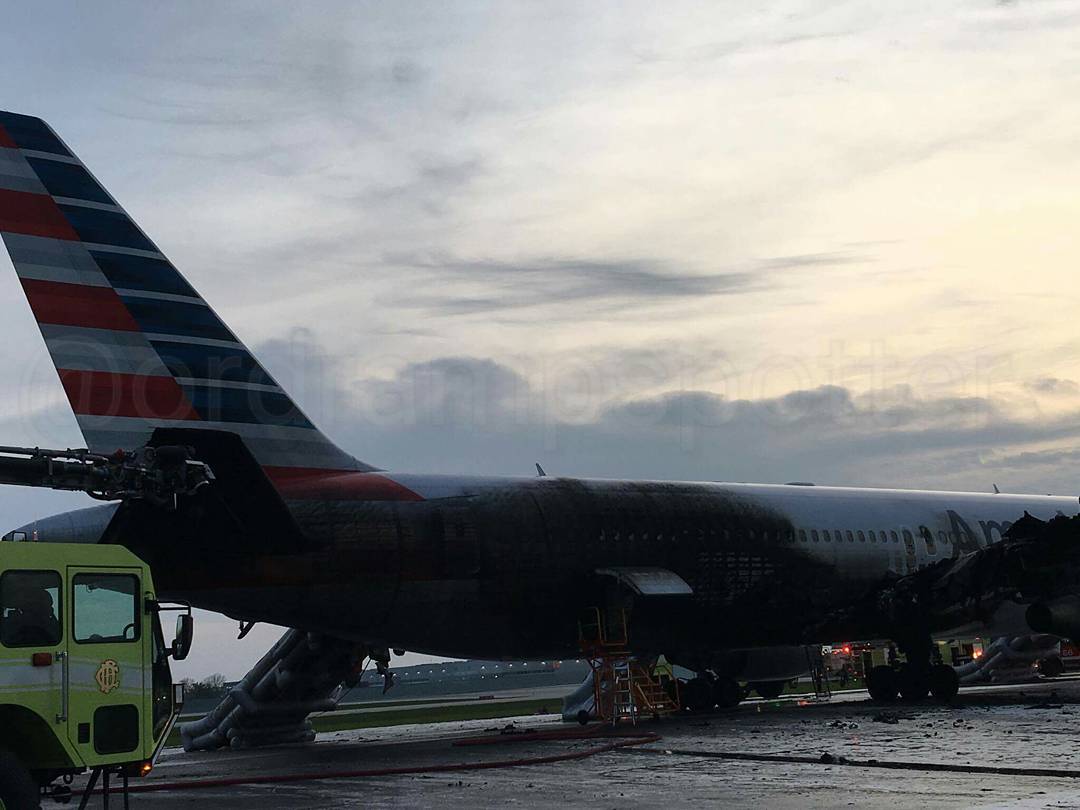
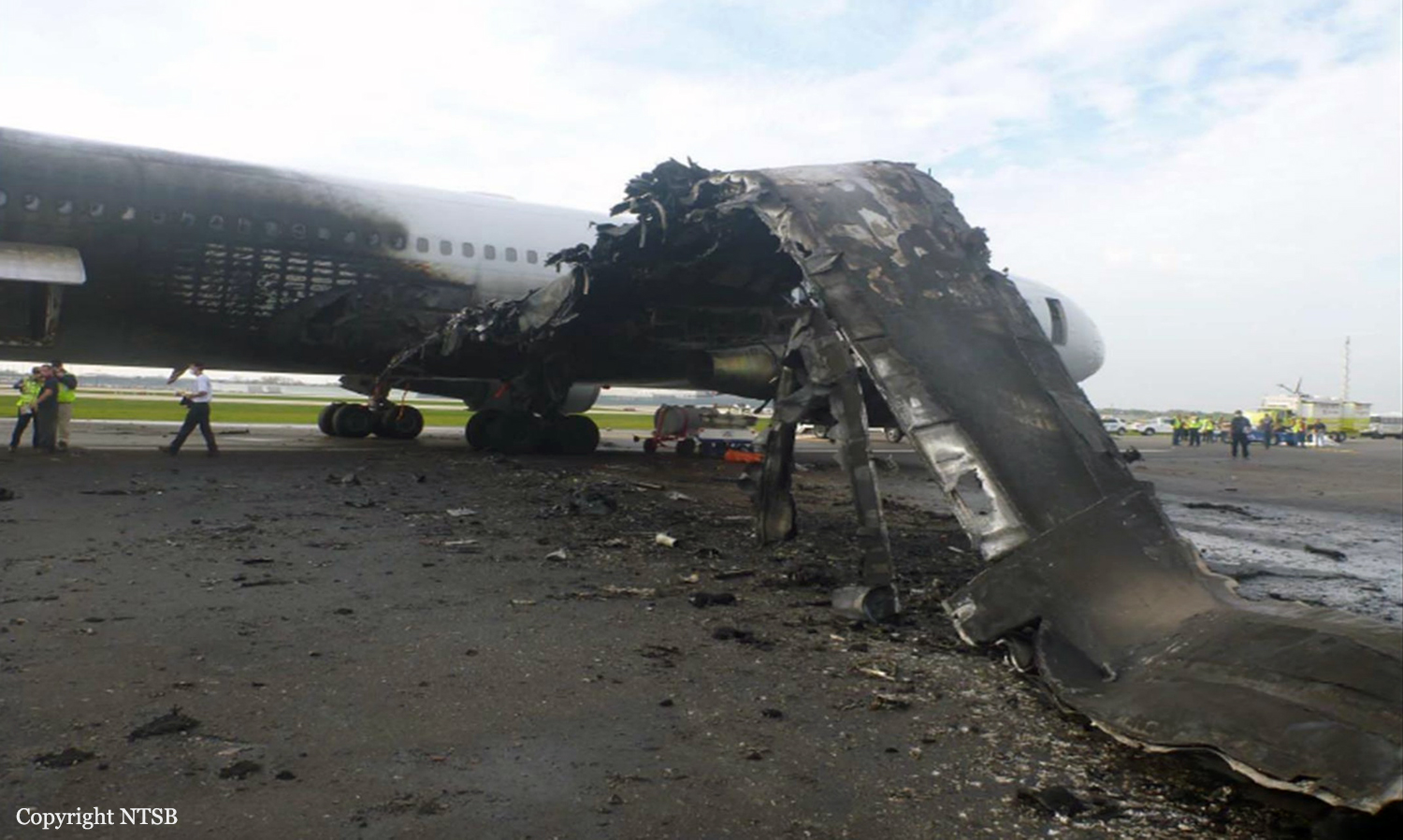
On October 28, 2016, about 1432 central daylight time, American Airlines flight 383, a Boeing 767-323, N345AN, had started its takeoff ground roll at Chicago O’Hare International Airport, Chicago, Illinois, when an uncontained engine failure in the right engine and subsequent fire occurred. The flight crew aborted the takeoff and stopped the airplane on the runway, and the flight attendants initiated an emergency evacuation. Of the 2 flight crewmembers, 7 flight attendants, and 161 passengers on board, 1 passenger received a serious injury and 1 flight attendant and 19 passengers received minor injuries during the evacuation. The airplane was substantially damaged from the fire. The airplane was operating under the provisions of 14 Code of Federal Regulations Part 121. Visual meteorological conditions prevailed at the time of the accident. The uncontained engine failure resulted from a high-pressure turbine (HPT) stage 2 disk rupture. The HPT stage 2 disk initially separated into two fragments. One fragment penetrated through the inboard section of the right wing, severed the main engine fuel feed line, breached the fuel tank, traveled up and over the fuselage, and landed about 2,935 ft away. The other fragment exited outboard of the right engine, impacting the runway and fracturing into three pieces. Examination of the fracture surfaces in the forward bore region of the HPT stage 2 disk revealed the presence of dark gray subsurface material discontinuities with multiple cracks initiating along the edges of the discontinuities. The multiple cracks exhibited characteristics that were consistent with low-cycle fatigue. (In airplane engines, low-cycle fatigue cracks grow in single distinct increments during each flight.) Examination of the material also revealed a discrete region underneath the largest discontinuity that appeared white compared with the surrounding material. Interspersed within this region were stringers (microscopic-sized oxide particles) referred to collectively as a “discrete dirty white spot.” The National Transportation Safety Board’s (NTSB) investigation found that the discrete dirty white spot was most likely not detectable during production inspections and subsequent in-service inspections using the procedures in place. The NTSB’s investigation also found that the evacuation of the airplane occurred initially with one engine still operating. In accordance with company procedures and training, the flight crew performed memory items on the engine fire checklist, one of which instructed the crew to shut down the engine on the affected side (in this case, the right side). The captain did not perform the remaining steps of the engine fire checklist (which applied only to airplanes that were in flight) and instead called for the evacuation checklist. The left engine was shut down as part of that checklist. However, the flight attendants had already initiated the evacuation, in accordance with their authority to do so in a life-threatening situation, due to the severity of the fire on the right side of the airplane.
Probable cause:
The National Transportation Safety Board determines that the probable cause of this accident was the failure of the high-pressure turbine (HPT) stage 2 disk, which severed the main engine fuel feed line and breached the right main wing fuel tank, releasing fuel that resulted in a fire on the right side of the airplane during the takeoff roll. The HPT stage 2 disk failed because of low-cycle fatigue cracks that initiated from an internal subsurface manufacturing anomaly that was most likely not detectable during production inspections and subsequent in-service inspections using the procedures in place. Contributing to the serious passenger injury was (1) the delay in shutting down the left engine and (2) a flight attendant’s deviation from company procedures, which resulted in passengers evacuating from the left overwing exit while the left engine was still operating. Contributing to the delay in shutting down the left engine was (1) the lack of a separate checklist procedure for Boeing 767 airplanes that specifically addressed engine fires on the ground and (2) the lack of communication between the flight and cabin crews after the airplane came to a stop.
Final Report:
Crash of a Dornier DO328Jet-310 in Toluca

Date & Time: Oct 24, 2016 at 2029 LT
Type of aircraft:
Operator:
Registration:
XA-ALA
Flight Type:
Survivors:
Yes
Schedule:
Chetumal - Toluca
MSN:
3167
YOM:
2000
Location:
Country:
Crew on board:
4
Crew fatalities:
Pax on board:
0
Pax fatalities:
Other fatalities:
Total fatalities:
0
Captain / Total flying hours:
14140
Captain / Total hours on type:
1699.00
Copilot / Total flying hours:
3623
Copilot / Total hours on type:
38
Aircraft flight hours:
13058
Aircraft flight cycles:
13493
Circumstances:
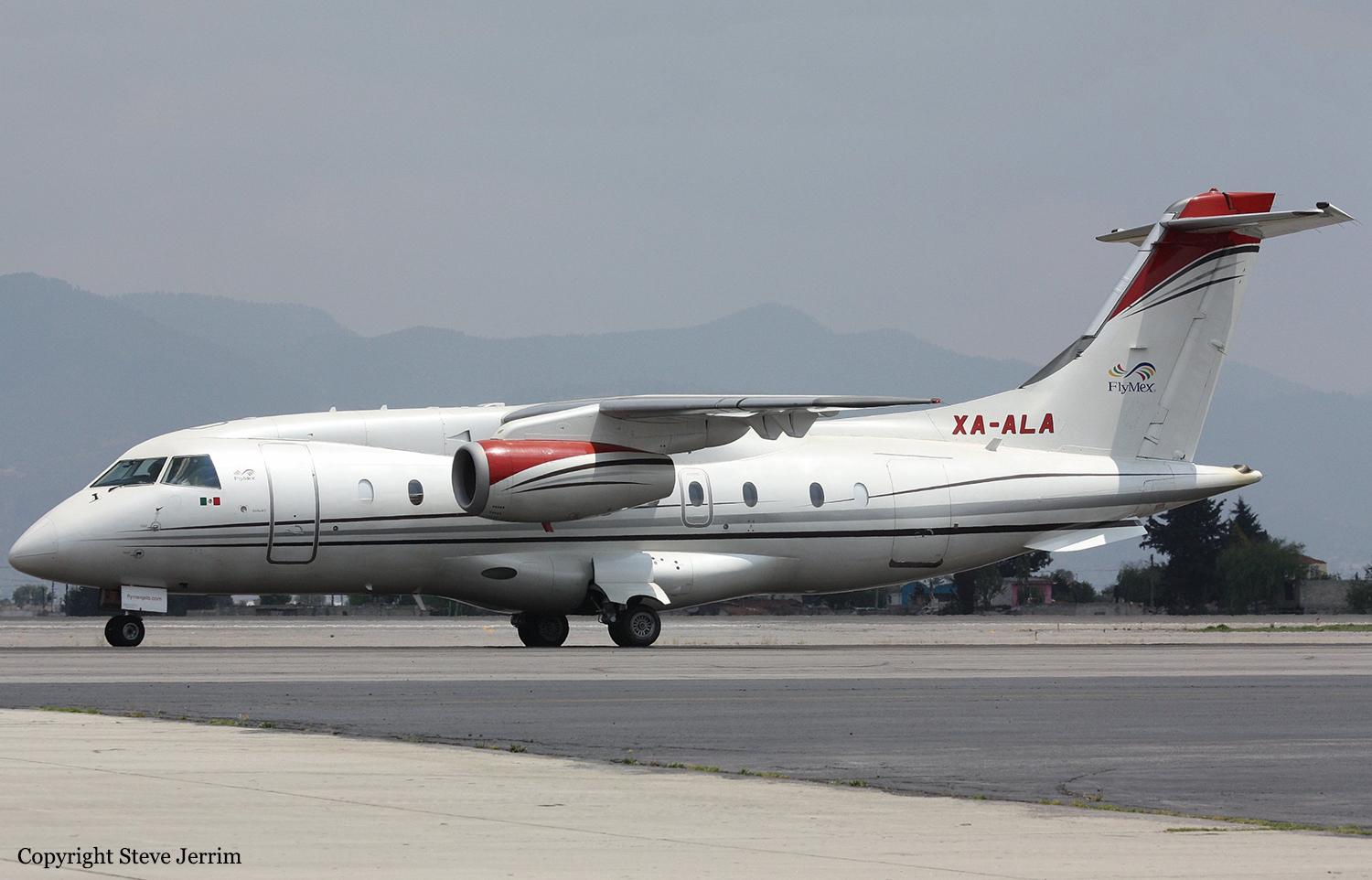
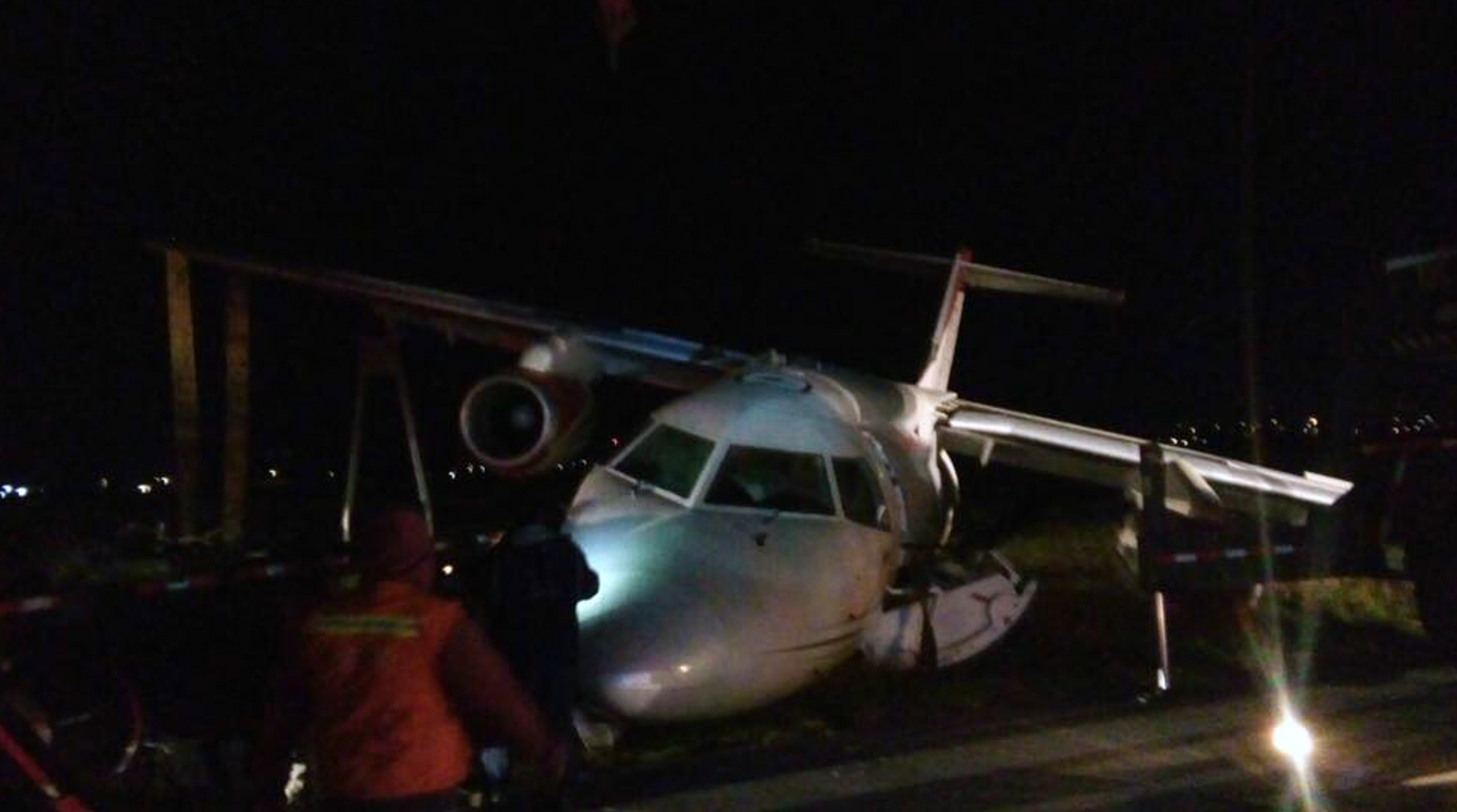
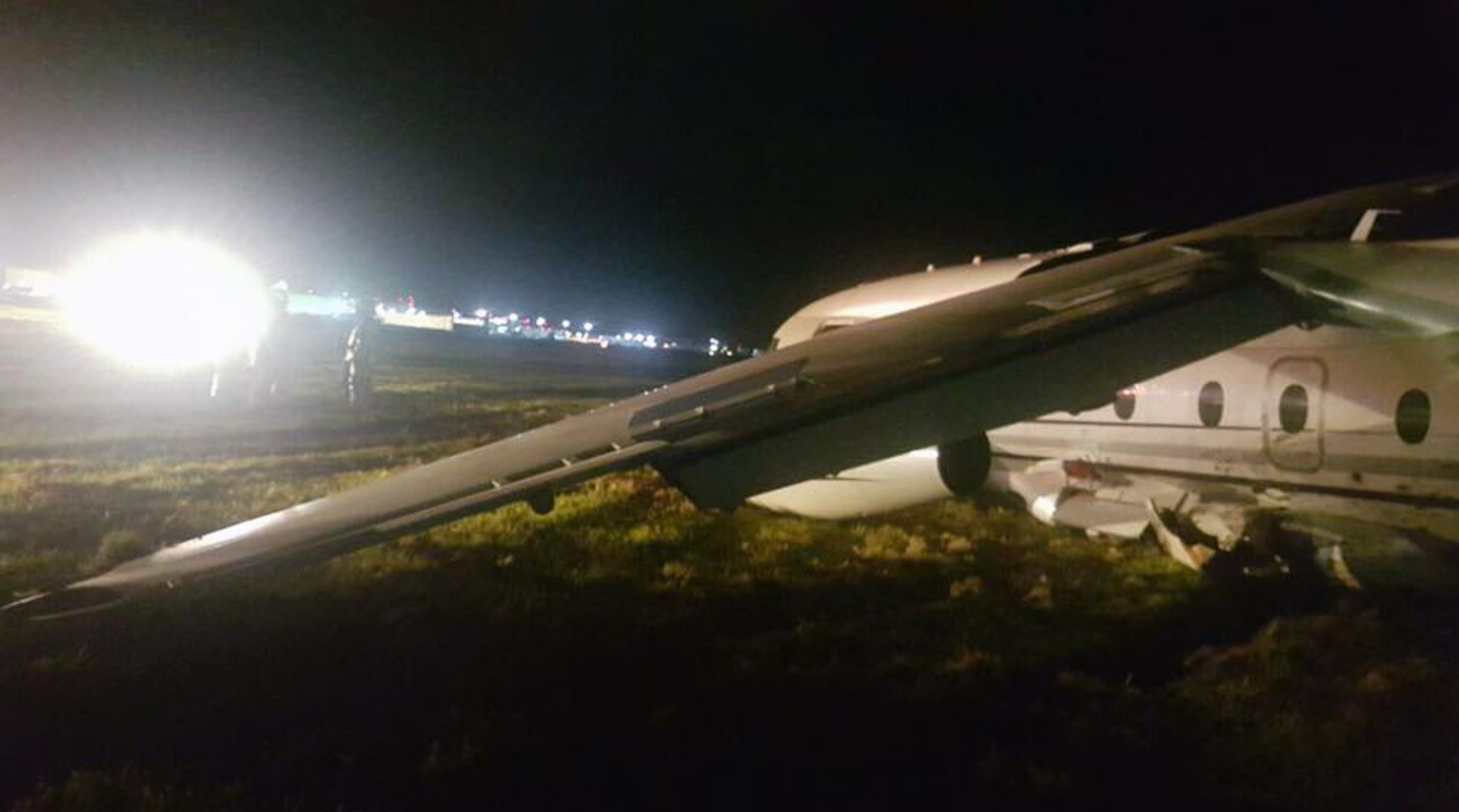
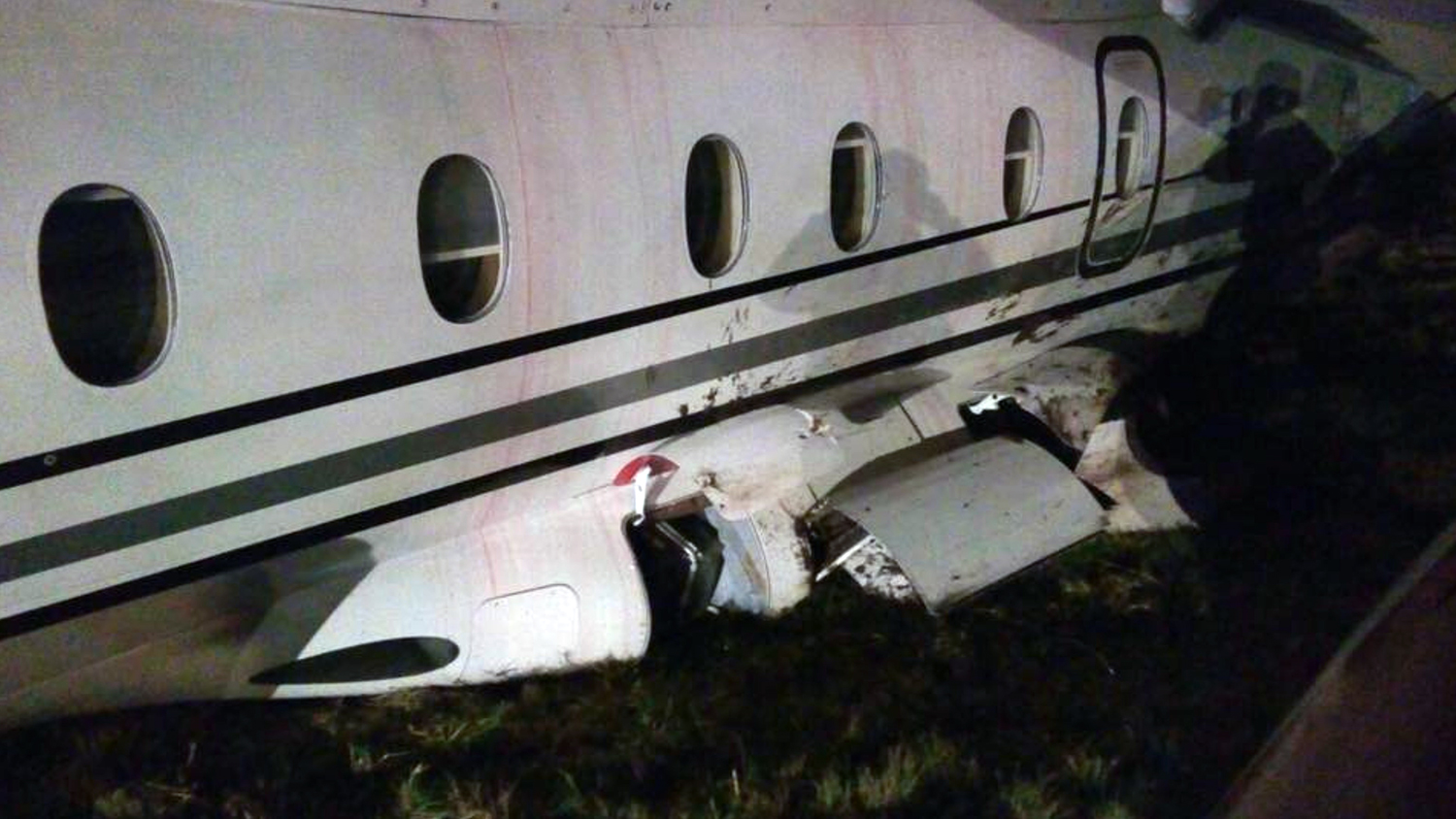
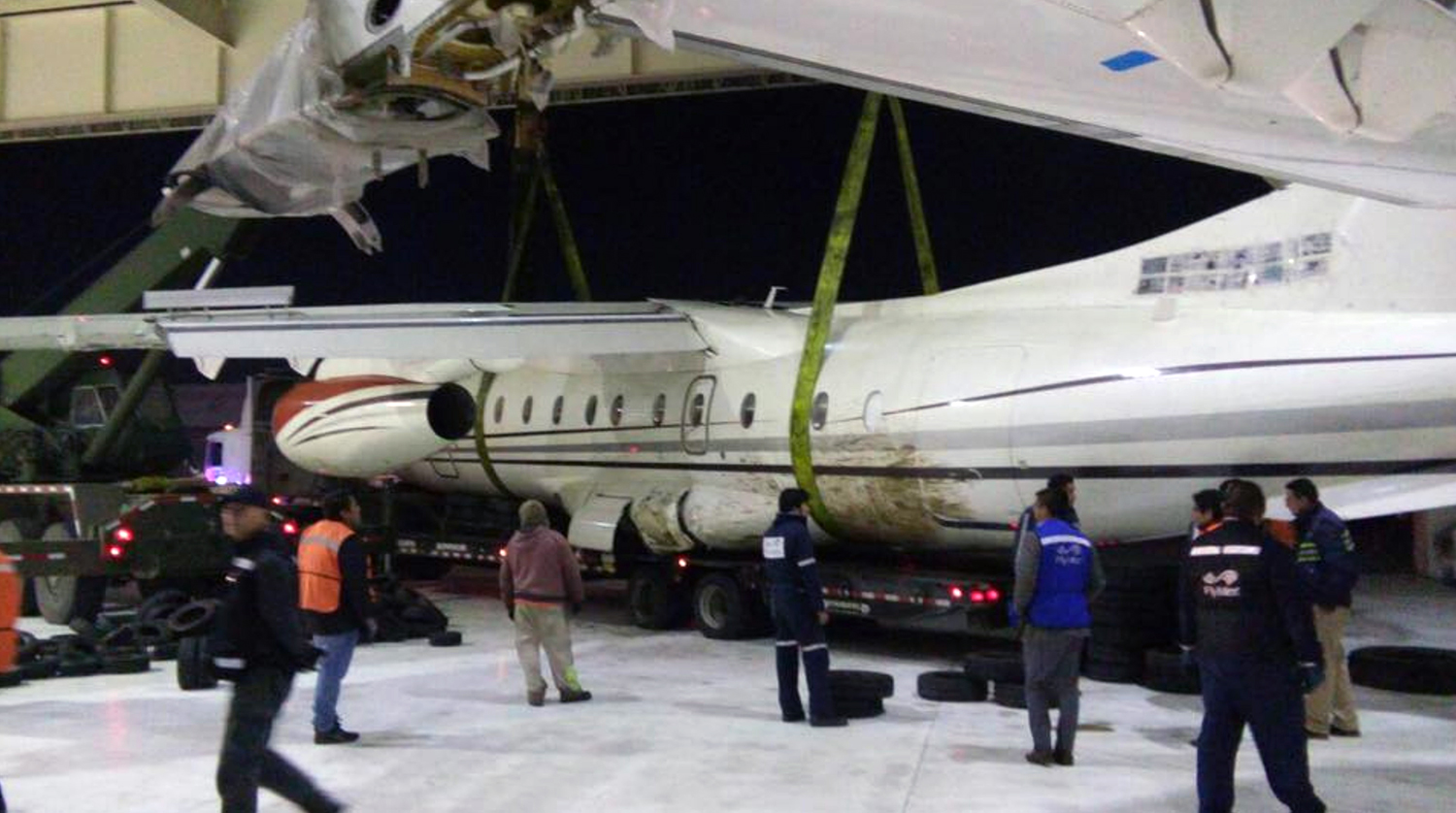
Following an uneventful positioning flight by night from Chetumal, the crew was cleared to land on runway 33 at Toluca Airport. Upon touchdown, the airplane went out of control and veered off runway to the right. While contacting soft grounf, the airplane lost its undercarriage and came to rest in a grassy area. All four occupants evacuated safely and the aircraft was damaged beyond repair.
Probable cause:
Loss of control upon landing due to the exhaust gases of the three turbofan engines and wake turbulences from an heavy category aircraft, causing a runway excursion, and an additional presence of crosswind, resulting in the aircraft rolling over uneven terrain of the safety strip resulting in severe damage.
Contributing factors:
- Safety strip in poor condition,
- Failure to attach times and separation distance between an aircraft taking off and landing on the same runway, to avoid the formation of wake turbulence and the presence of the exhaust gases of turbofan engines.
Final Report: