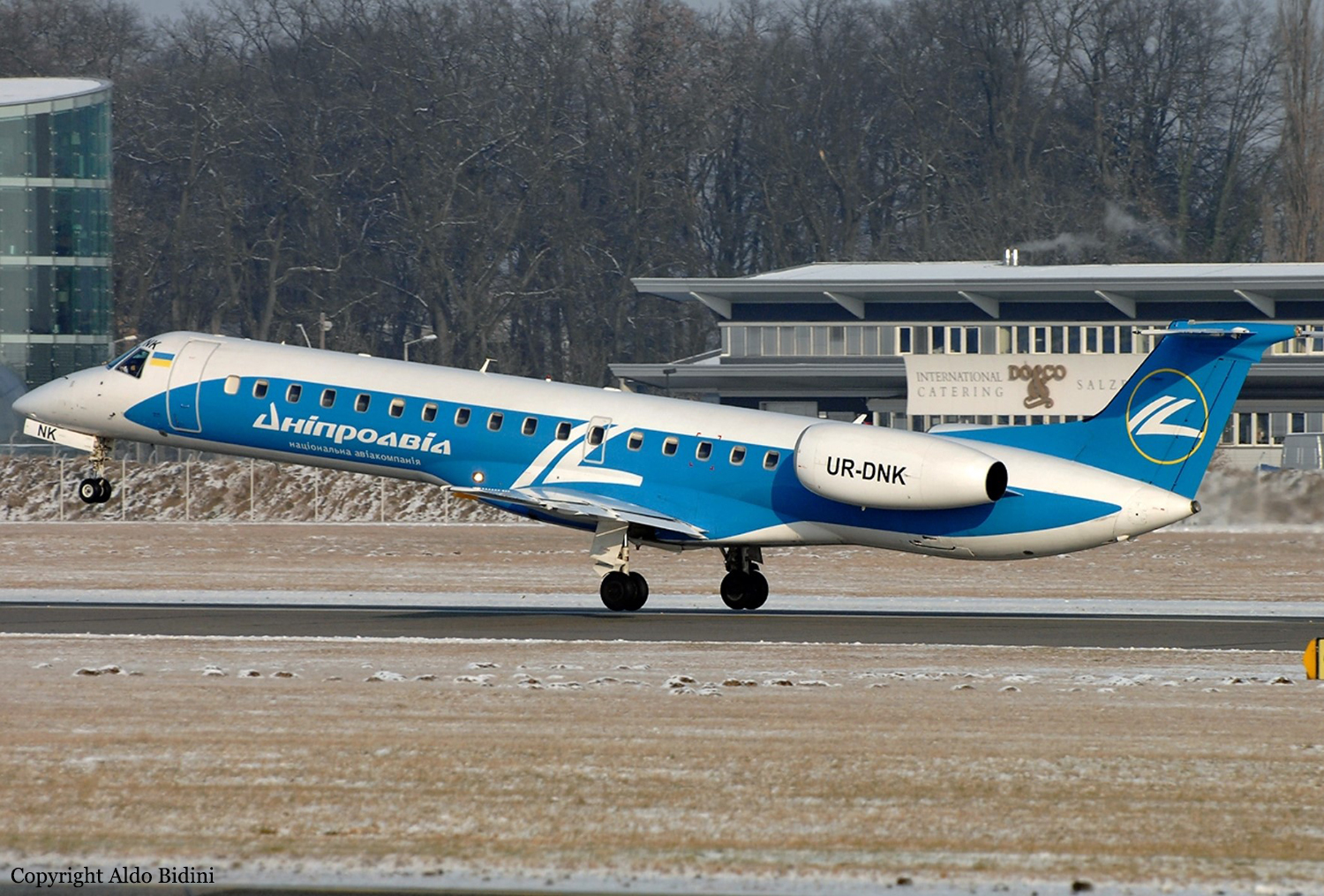
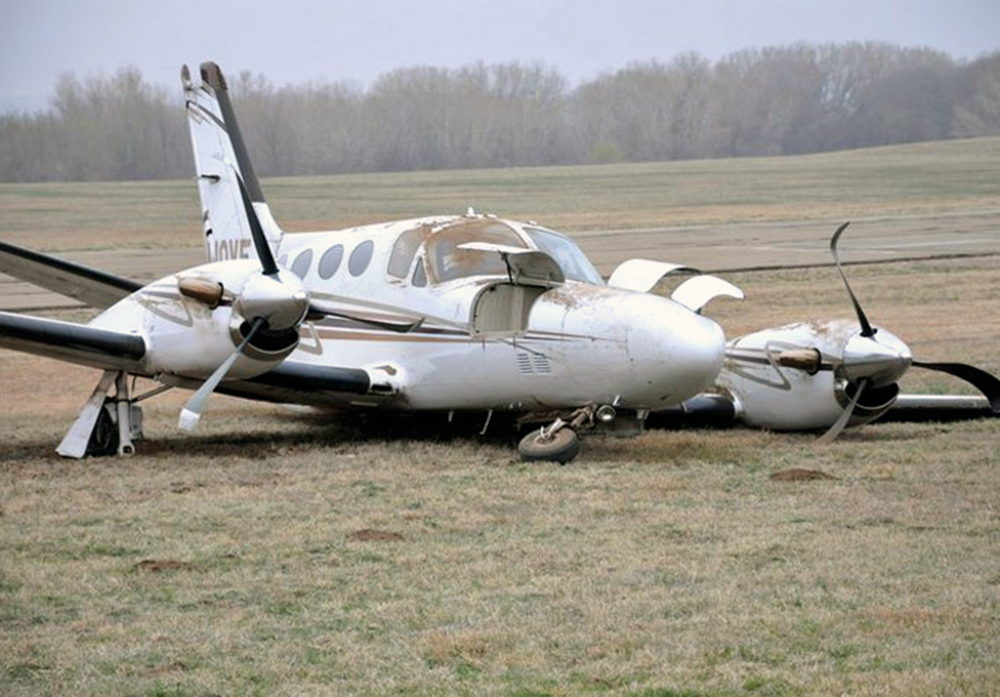
Crash of an Embraer ERJ-145EP in Moscow

Date & Time: Apr 28, 2011 at 1625 LT
Type of aircraft:
Operator:
Registration:
UR-DNK
Survivors:
Yes
Schedule:
Dniepropetrovsk – Moscow
MSN:
145-039
YOM:
1997
Flight number:
UDN505
Country:
Region:
Crew on board:
4
Crew fatalities:
Pax on board:
30
Pax fatalities:
Other fatalities:
Total fatalities:
0
Circumstances:
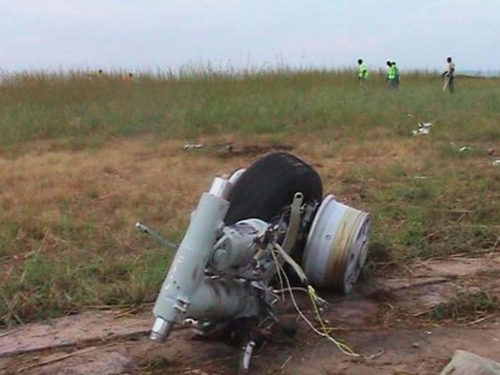
Following an uneventful flight from Dniepropetrovsk, the copilot started the approach to Moscow-Sheremetyevo Airport runway 25R with the flaps down at 22°. After touchdown, he started the braking procedure but the aircraft failed to decelerate as expected. The emergency braking systems were activated without any noticeable effect. Approaching the end of the runway at a speed of 70 knots, the copilot turn to the right in an attempt to veer off runway. The airplane ground looped then contacted a grassy area and lost its undercarriage before coming to rest. All 34 occupants escaped uninjured while the aircraft was damaged beyond repair.
Probable cause:
Failure of the brakes is suspected.

Crash of a Piper PA-31T Cheyenne II in Valparaiso

Date & Time: Apr 15, 2011 at 1200 LT
Type of aircraft:
Registration:
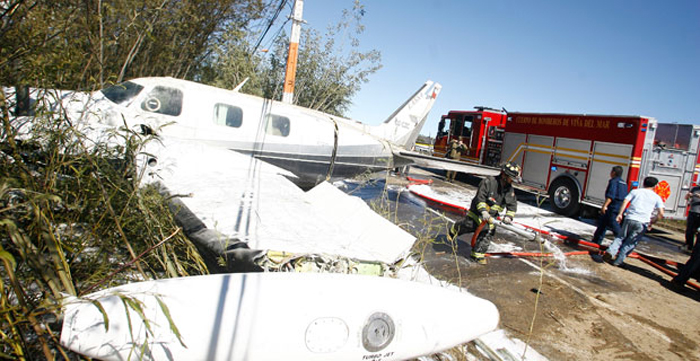
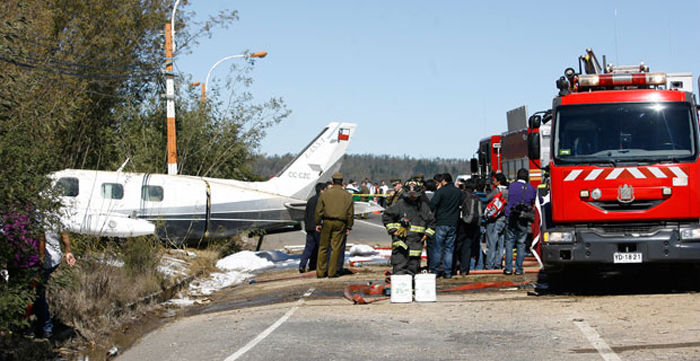
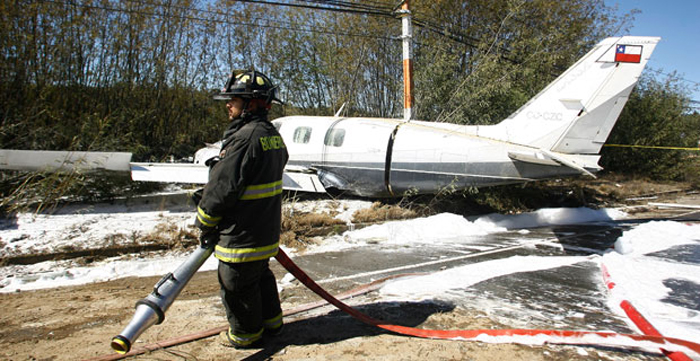
CC-CZC
Flight Type:
Survivors:
Yes
Schedule:
Robinson Crusoe Island - Valparaiso
MSN:
31-7920072
YOM:
1979
Country:
Crew on board:
1
Crew fatalities:
Pax on board:
1
Pax fatalities:
Other fatalities:
Total fatalities:
0
Captain / Total flying hours:
7396
Captain / Total hours on type:
1092.00
Aircraft flight hours:
7168
Circumstances:
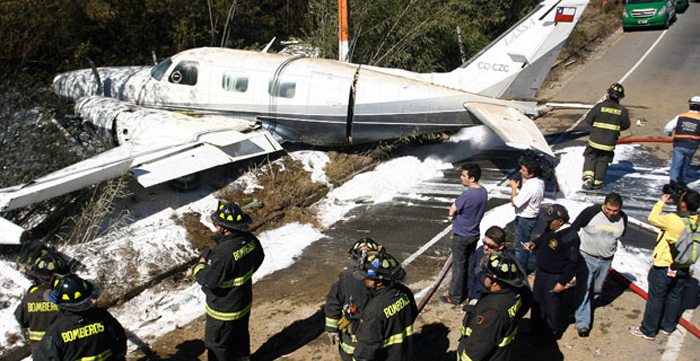
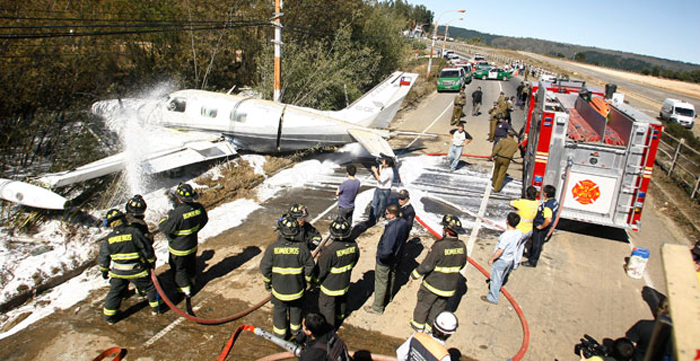
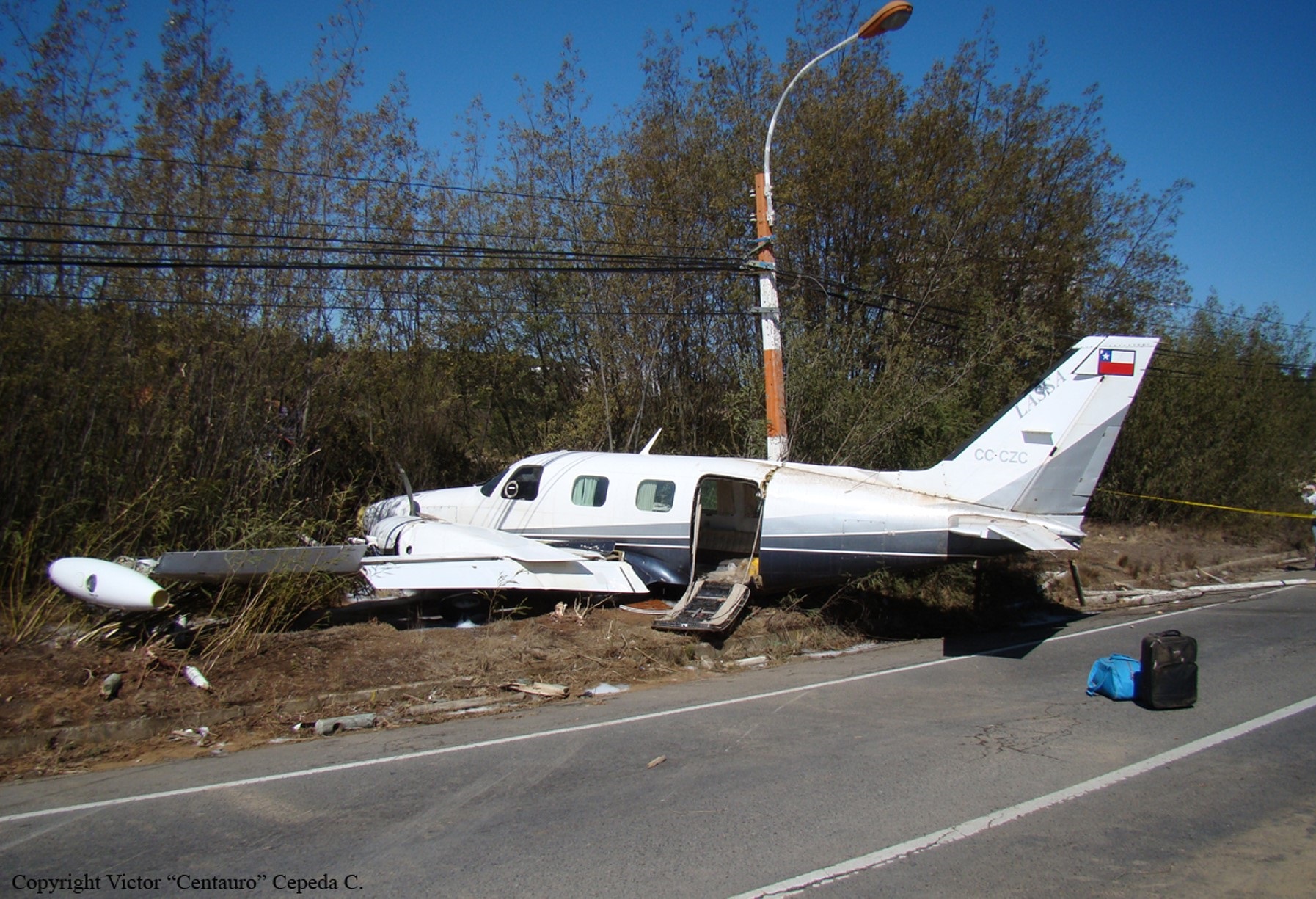
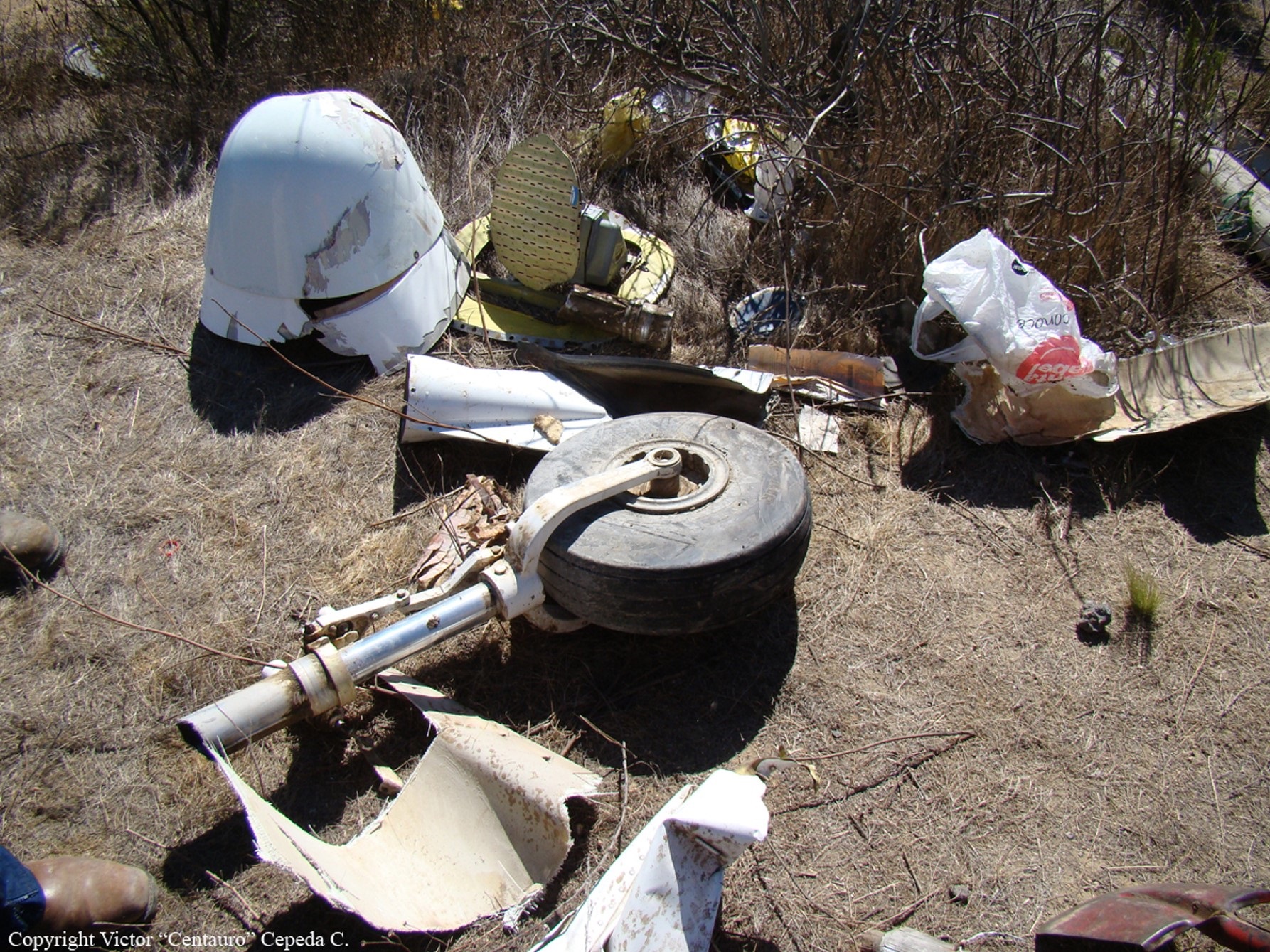
The twin engine aircraft departed Robinson Crusoe Island on a cargo flight to Valparaiso, carrying one passenger, one pilot and a load consisting of 1,000 lbs of lobsters. Upon landing at Valparaiso Airport in good weather conditions, the airplane went out of control, veered off runway, crossed a road and came to rest in a wooded area located along the highway. The aircraft was damaged beyond repair and both occupants escaped with minor injuries.
Probable cause:
The most likely cause of the accident would have been the loss of control of the aircraft when performing the flare, caused by a loss of lift (stall), because the CofG was beyond the rear limit.
The following contributing factors were identified:
- The aircraft was unstable on its longitudinal axis because the CofG was too far aft,
- The cargo was not properly secured in the cabin.
Final Report:

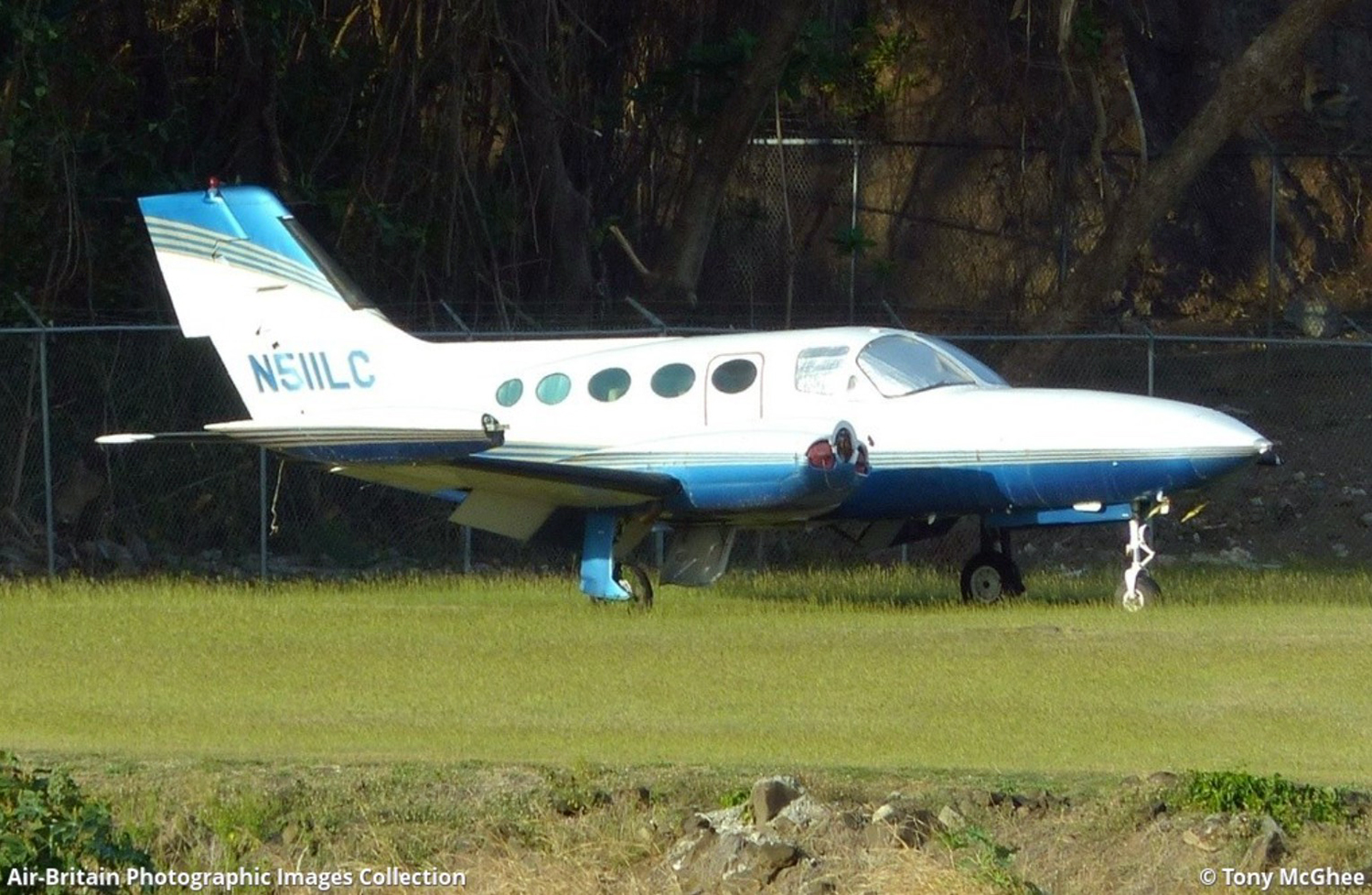
Crash of a Cessna 421B Golden Eagle II in Castries

Date & Time: Apr 13, 2011 at 1140 LT
Operator:
Registration:
N511LC
Flight Type:
Survivors:
Yes
Schedule:
Bridgetown – Castries
MSN:
421B-0423
YOM:
1973
Country:
Crew on board:
1
Crew fatalities:
Pax on board:
0
Pax fatalities:
Other fatalities:
Total fatalities:
0
Circumstances:
Following an uneventful flight from Bridgetown-Grantley Adams Airport, the pilot landed at Castries-George F. L. Charles (Vigie) Airport. Upon touchdown, the left main gear collapsed. The aircraft veered off runway and came to rest against a fence. The pilot was uninjured and the aircraft was damaged beyond repair.

Crash of a Cessna 402B in Biddeford: 1 killed

Date & Time: Apr 10, 2011 at 1805 LT
Type of aircraft:
Operator:
Registration:
N402RC
Flight Type:
Survivors:
No
Site:
Schedule:
White Plains - Portland
MSN:
402B-1218
YOM:
1977
Location:
Crew on board:
1
Crew fatalities:
Pax on board:
0
Pax fatalities:
Other fatalities:
Total fatalities:
1
Captain / Total flying hours:
4735
Captain / Total hours on type:
120.00
Aircraft flight hours:
6624
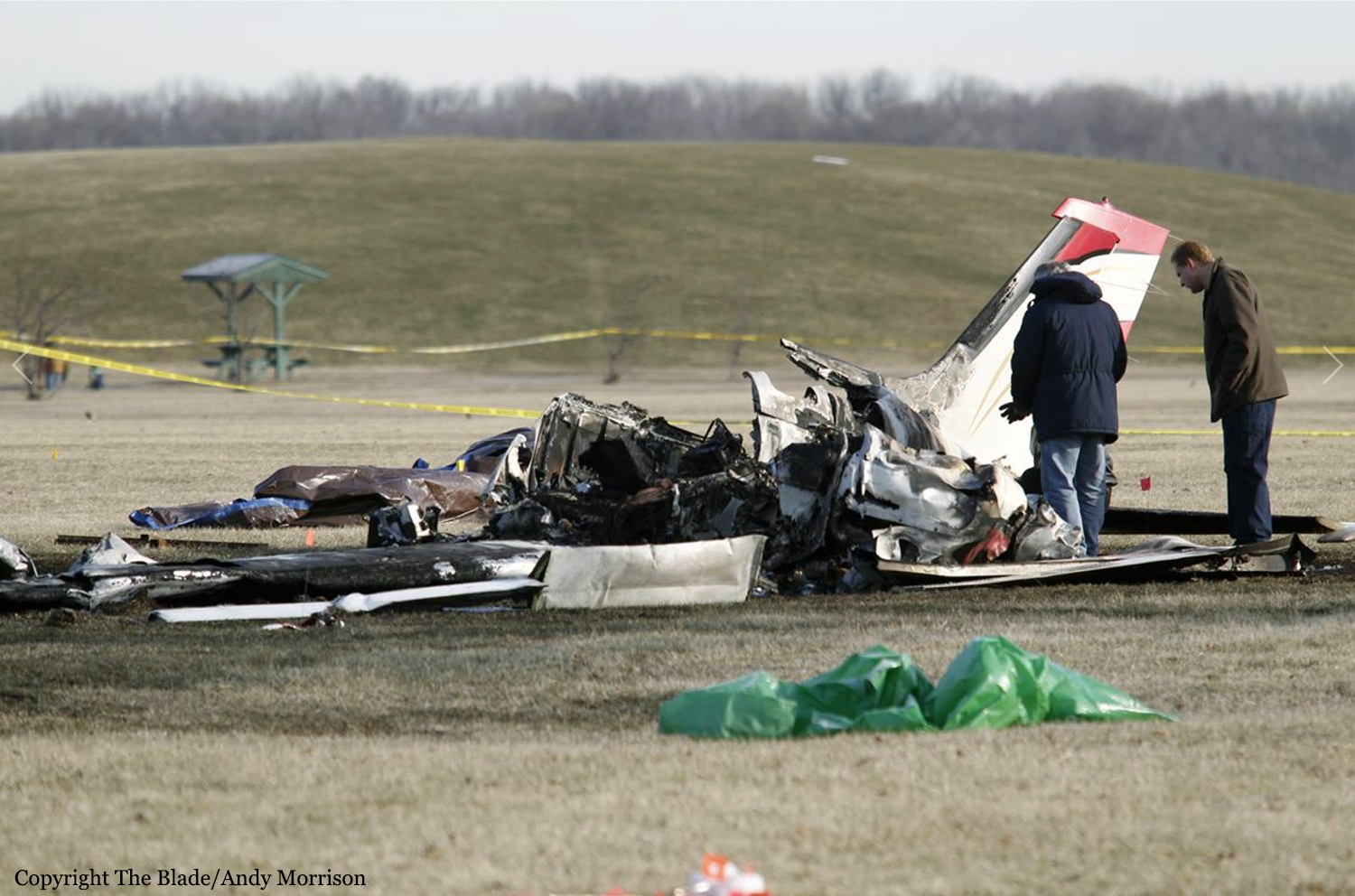
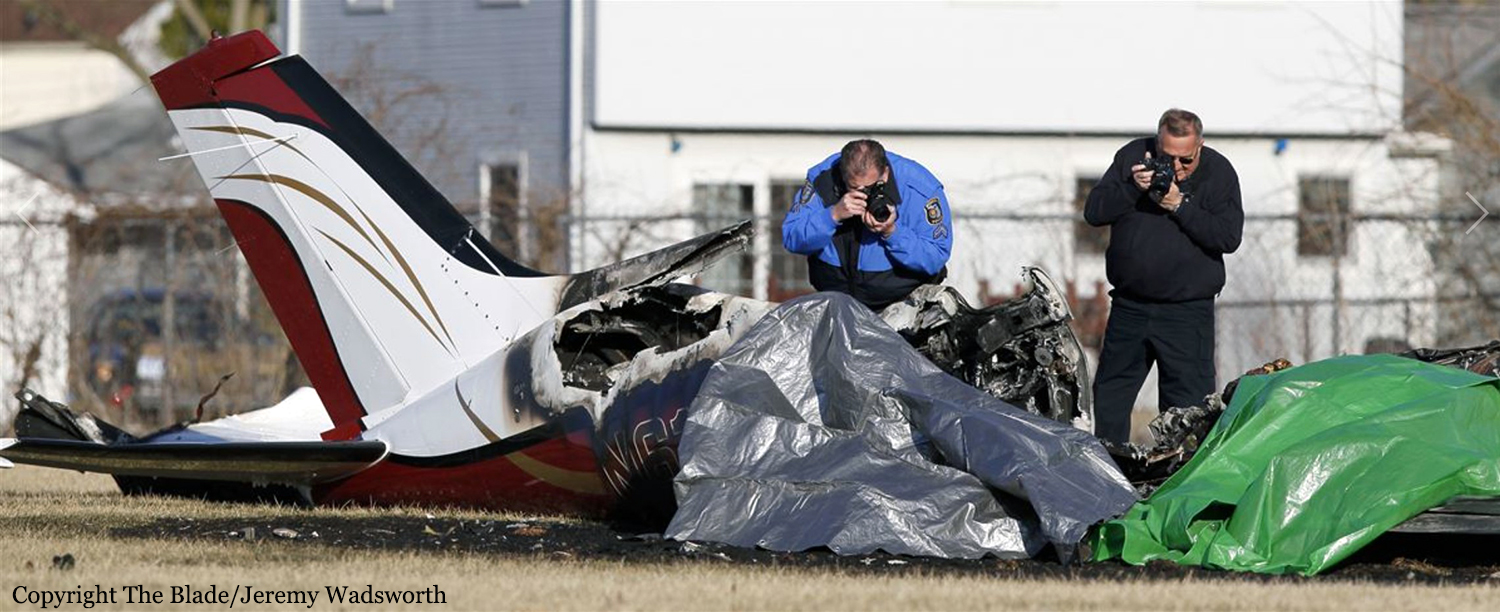
Circumstances:
The multi-engine airplane was being repositioned to its base airport, and the pilot had requested to change the destination, but gave no reason for the destination change. Radar data indicated that the airplane entered the left downwind leg of the traffic pattern, flew at pattern attitude, and then performed a right approximate 250-degree turn to enter the final leg of the approach. During the final leg of the approach, the airplane crashed short of the runway into a house located in a residential neighborhood near the airport. According to the airplane's pilot operating handbook, the minimum multi-engine approach speed was 95 knots indicated airspeed (KIAS), and the minimum controllable airspeed was 82 KIAS. According to radar data, the airplane's ground speed was about 69 knots with the probability of a direct crosswind. Post accident examination of the propellers indicated that both propellers were turning at a low power setting at impact. During a controlled test run of the right engine, a partial power loss was noted. After examination of the throttle and control assembly, two o-rings within the assembly were found to be damaged. The o-rings were replaced with comparable o-rings and the assembly was reinstalled. During the subsequent test run, the engine operated smoothly with no noted anomalies. Examination of the o-rings revealed that the damage was consistent with the o-rings being pinched between the corner of the top o-ring groove and the fuel inlet surface during installation. It is probable that the right engine had a partial loss of engine power while on final approach to the runway due to the damaged o-ring and that the pilot retarded the engine power to prevent the airplane from rolling to the right. The investigation found no mechanical malfunction of the left engine that would have prevented the airplane from maintaining the published airspeed.
Probable cause:
The pilot did not maintain minimum controllable airspeed while on final approach with a partial loss of power in the right engine, which resulted in a loss of control. Contributing to the accident was the partial loss of engine power in the right engine due to the improperly installed o-rings in the engine’s throttle and control assembly.
Final Report:

Crash of a Rockwell Sabreliner 60 in Fort Lauderdale

Date & Time: Apr 9, 2011 at 1357 LT
Type of aircraft:
Operator:
Registration:
N71CC
Flight Type:
Survivors:
Yes
Schedule:
Fort Lauderdale – West Palm Beach
MSN:
306-71
YOM:
1974
Crew on board:
2
Crew fatalities:
Pax on board:
0
Pax fatalities:
Other fatalities:
Total fatalities:
0
Circumstances:
On approach to West Palm Beach Airport, the crew encountered technical problems with the undercarriage that could not be lowered. The crew decided to return to his base in Fort Lauderdale. On final, the crew was again unable to lower the gear so the decision was taken to complete a wheels-up landing. The airplane landed on its belly on runway 08 then slid for few dozen metres before coming to rest. The occupants escaped uninjured and the aircraft was damaged beyond repair.
Probable cause:
No investigation was carried out by the NTSB.

Crash of a Rockwell Shrike Commander 500S in Eden Prairie

Date & Time: Apr 8, 2011 at 1730 LT
Operator:
Registration:
N51RF
Flight Type:
Survivors:
Yes
Schedule:
Eden Prairie - Eden Prairie
MSN:
500-3298
YOM:
1976
Crew on board:
2
Crew fatalities:
Pax on board:
0
Pax fatalities:
Other fatalities:
Total fatalities:
0
Captain / Total flying hours:
473
Captain / Total hours on type:
217.00
Copilot / Total flying hours:
4659
Copilot / Total hours on type:
2480
Aircraft flight hours:
11298
Circumstances:
The pilot reported that he performed a stabilized visual approach with a right crosswind. The airplane touched down on the centerline and subsequently drifted to the right. The pilot overcorrected for the drift and the airplane veered hard to the left. The airplane continued off the left side of the runway and skidded to a complete stop. The right main landing gear collapsed and the right wingtip hit the ground, which resulted in substantial damage to the fuselage and wing. A postaccident inspection of the airplane revealed no preimpact anomalies. The pilot additionally reported that there was no mechanical malfunction or failure.
Probable cause:
The pilot's inadequate compensation for the crosswind while landing, which resulted in a loss of directional control.
Final Report:

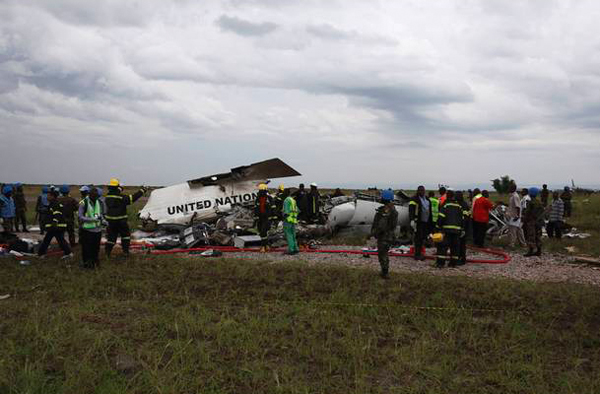
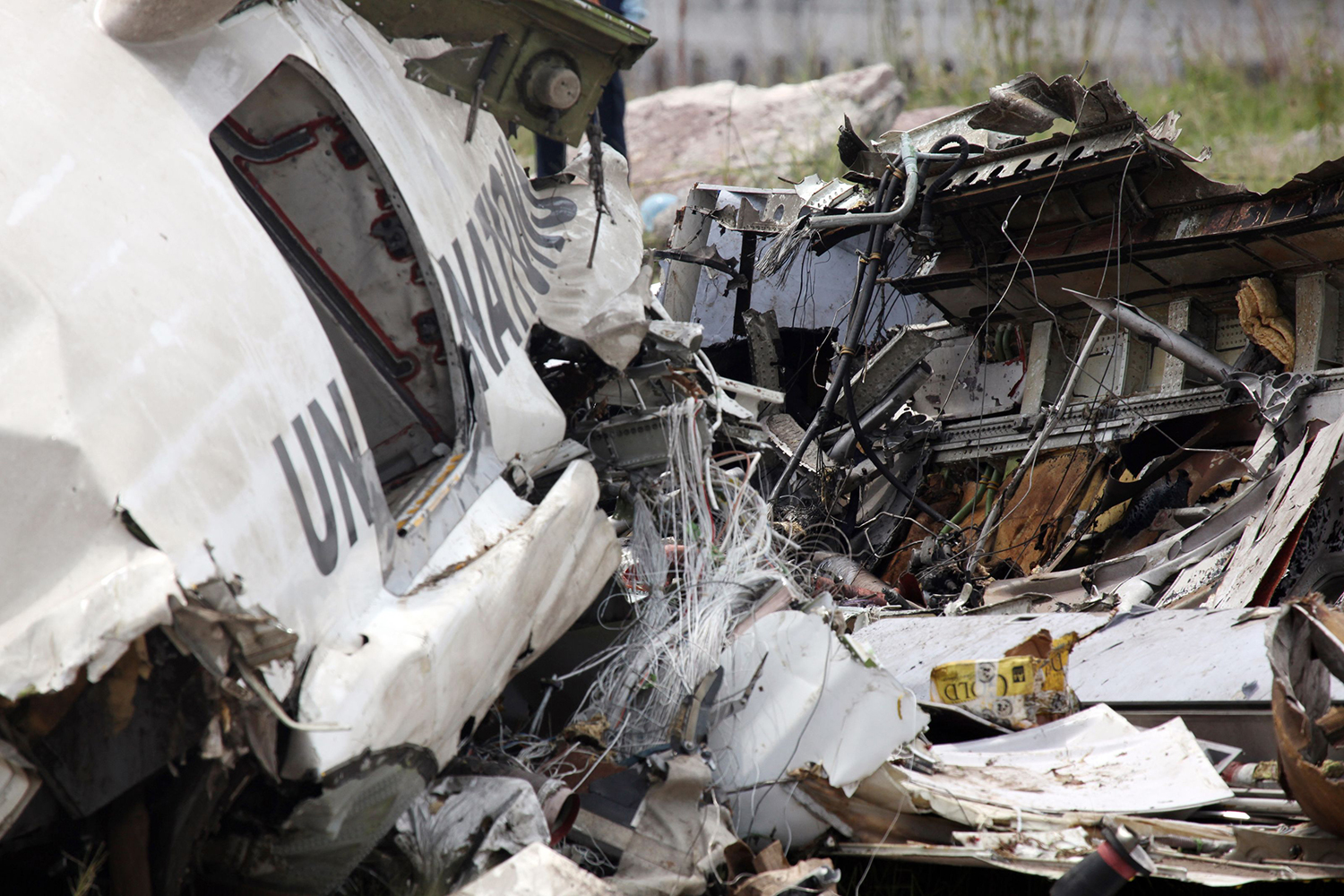
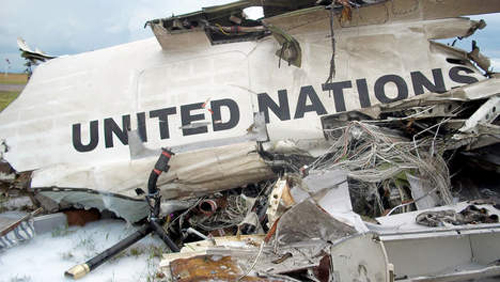
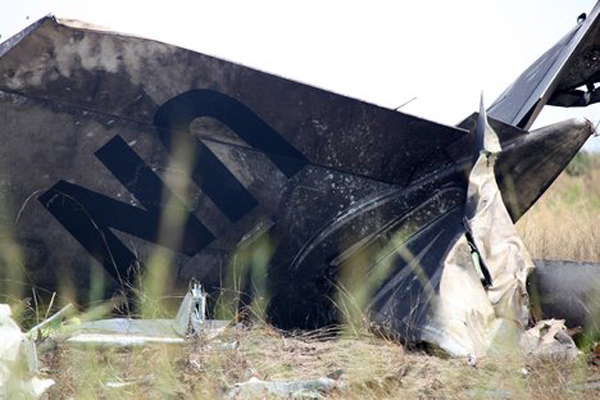
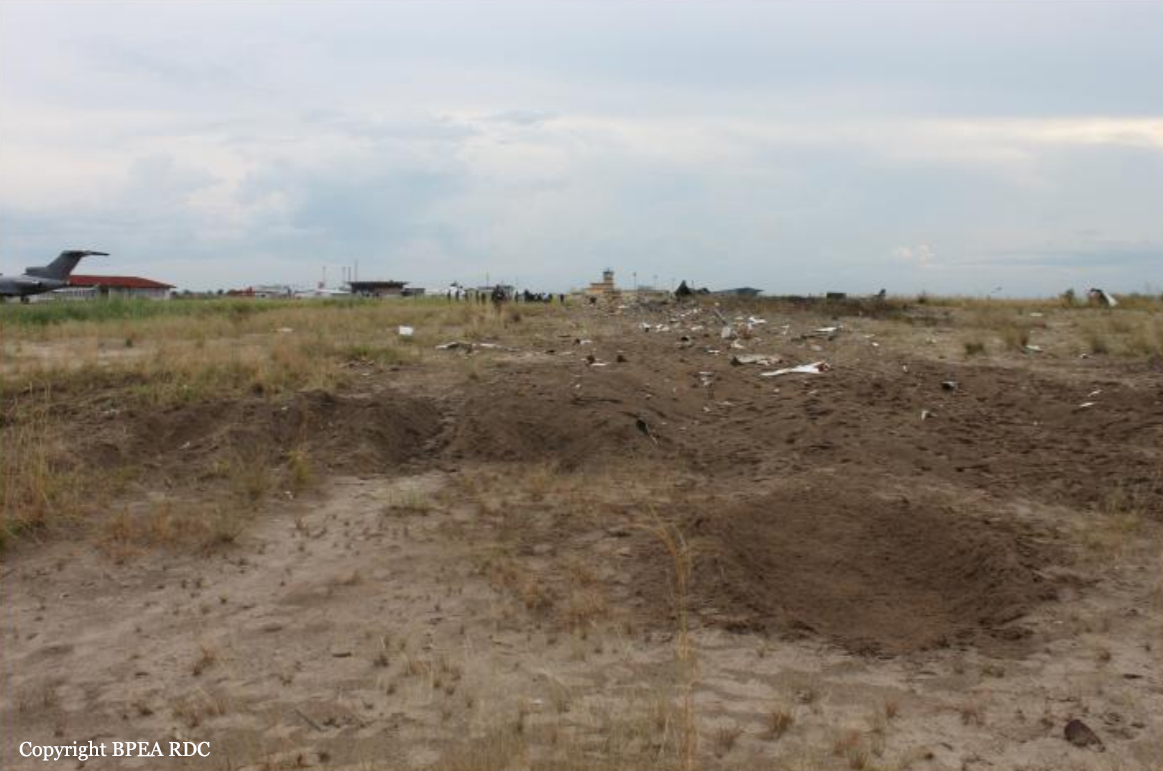
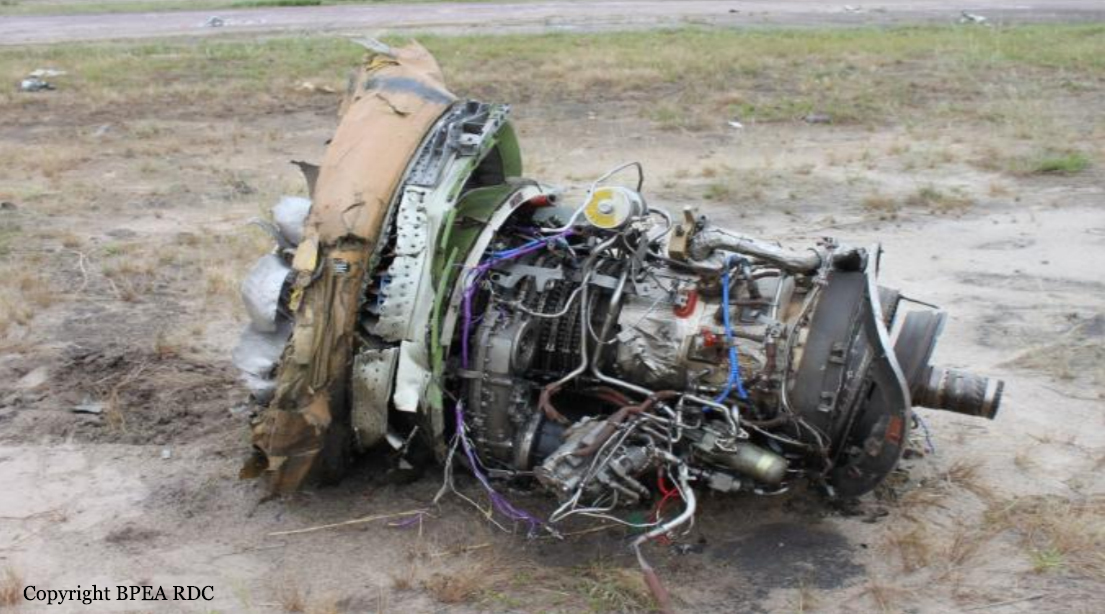
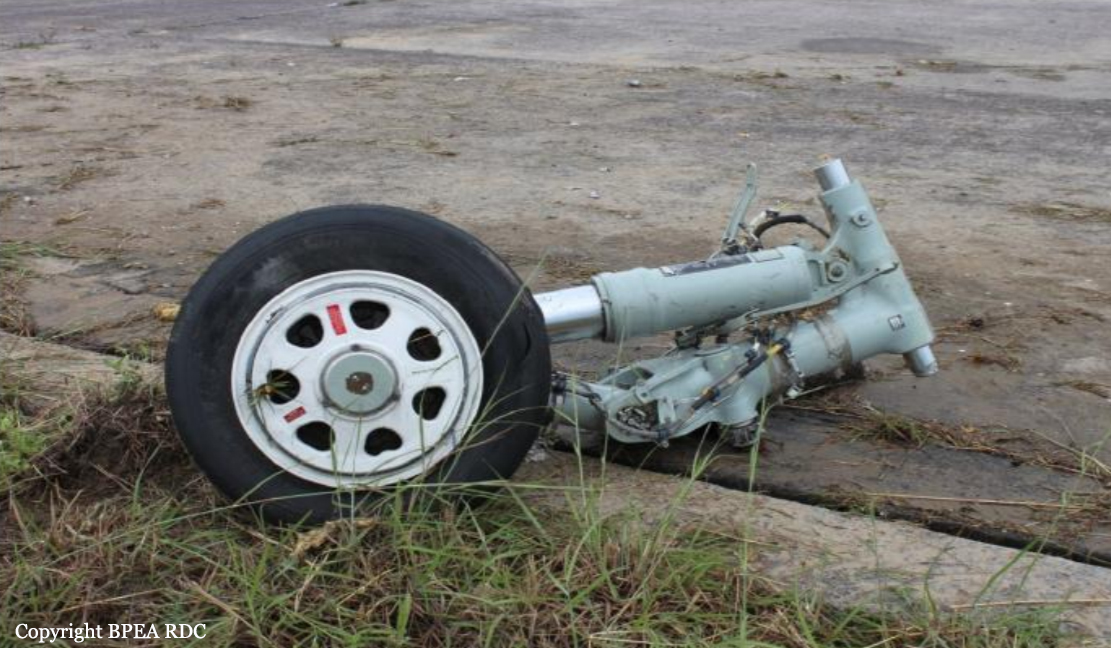
Crash of a Canadair RegionalJet CRJ-100ER in Kinshasa: 32 killed

Date & Time: Apr 4, 2011 at 1356 LT
Operator:
Registration:
4L-GAE
Flight Type:
Survivors:
Yes
Schedule:
Kisangani – Kinshasa
MSN:
7070
YOM:
1995
Flight number:
UNO834
Region:
Crew on board:
4
Crew fatalities:
Pax on board:
29
Pax fatalities:
Other fatalities:
Total fatalities:
32
Captain / Total flying hours:
2811
Captain / Total hours on type:
1622.00
Copilot / Total flying hours:
495
Copilot / Total hours on type:
344
Circumstances:
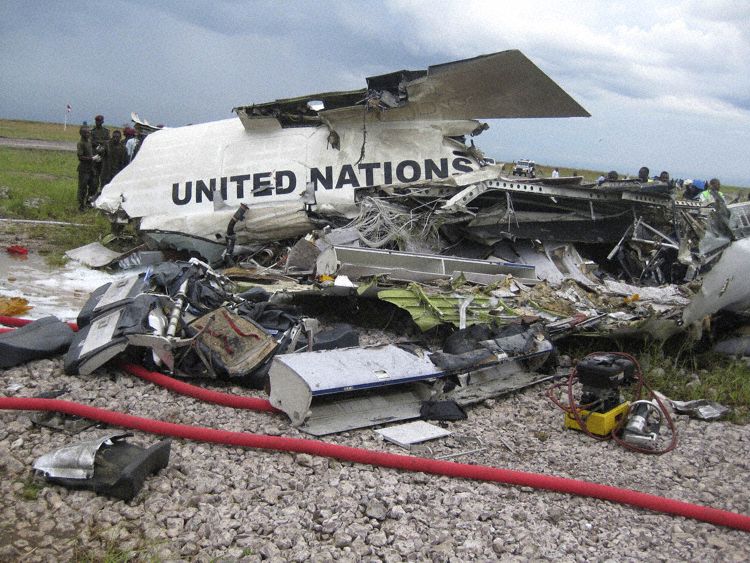
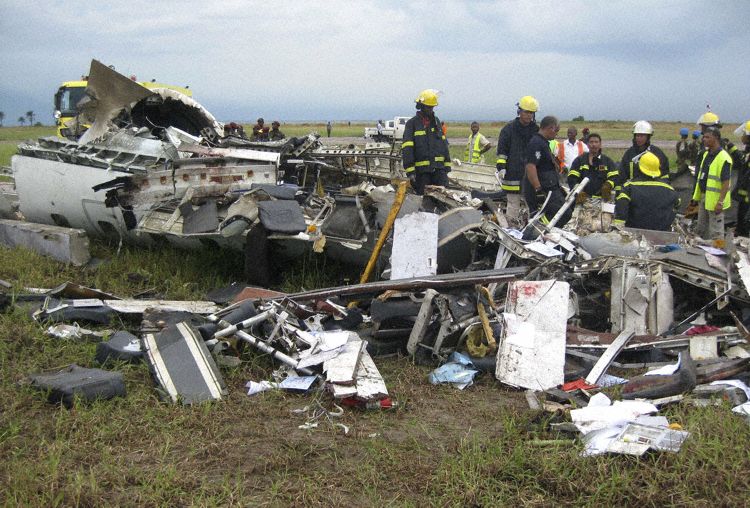
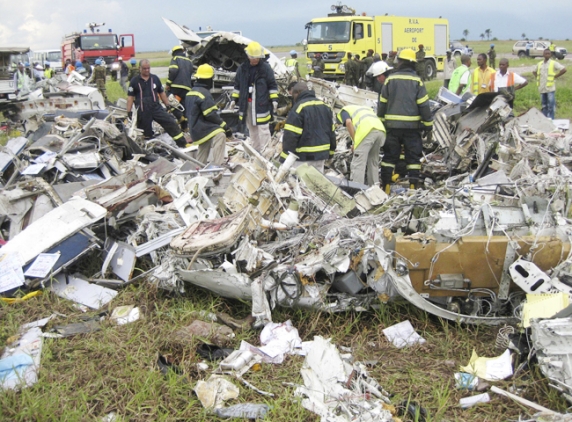
On final approach to Kinshasa-N'Djili Airport, the crew encountered very poor weather conditions and decided to make a go around. After a climb process of 12 seconds, the aircraft nosed down and at a speed of 180 knots, hit the ground 170 meters to the left of the displaced threshold of runway 24. The aircraft slid for 400 meters before coming to rest in flames upside down. Three passengers were seriously injured and evacuated but of them died from their injuries few hours later. Finally, only one passenger survived the accident. Aircraft was performing a special flight from Kisangani to Kinshasa on behalf of the United Nations Organization Stabilization Mission in the Democratic Republic of the Congo (MONUSCO). The only survivor reported that the aircraft suddenly plunged into the earth while on final approach. At the time of the accident, weather conditions were marginal with storm activity, heavy rain showers, scattered at 2,200 feet and cumulonimbus at 1,500 feet.
Probable cause:
Weather in Kinshasa was bad at the time of the accident, ATC failed to inform the crew about the degradation of the weather conditions and the runway in use was not closed to traffic while the visibility was below the minima. Despite this situation, the crew took the decision to continue the approach procedure while the aircraft was unstable and the approach speed was too high (180 knots). It is reported that the following factors contributed to the accident:
- the crew ignored the published approach procedures,
- improper crew resources management during the execution of the flight,
- during the go around process, the crew encountered adverse weather conditions with vertical wind gusts, downdrafts and a 'magenta' effect. This caused the aircraft to adopt nose down attitude while it was in the final stage of the flight, preventing the pilot to take over the control,
- the pilot training program was inadequate and did not include a proportionate number of flight in the simulator,
- the authority for civil aviation of Georgia has probably approved a small training program for upgrading the captain to his position,
- lack of oversight of the operator by the Georgian Civil Aviation Authority.
In conclusion, investigators believe that the most probable cause of the accident is the fact that the plane encountered a very dangerous meteorological phenomena similar to a microburst, to a very low level during the overshoot process. The dangerous vertical downdraft and gust caused a sudden and remarkable change in the attitude of the aircraft and a substantial loss of altitude. Flying at very low altitude, recovery of such disturbance was not possible.
Final Report:

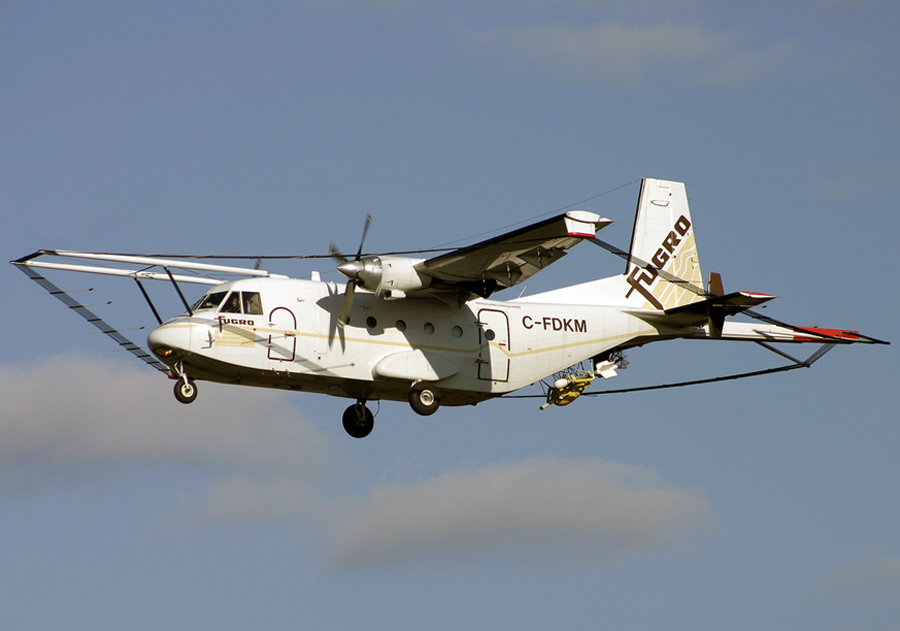
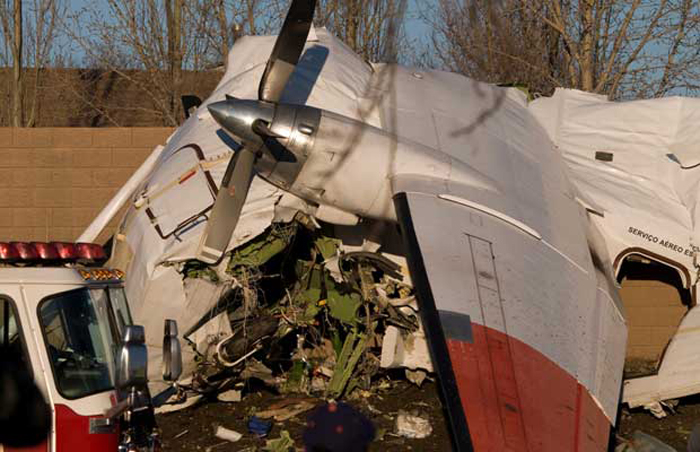
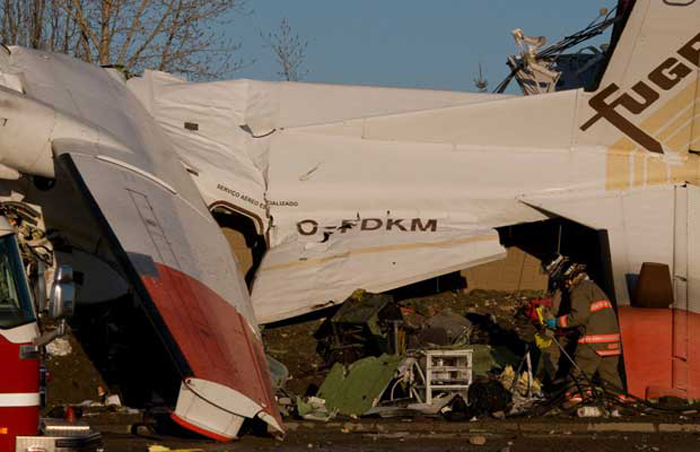
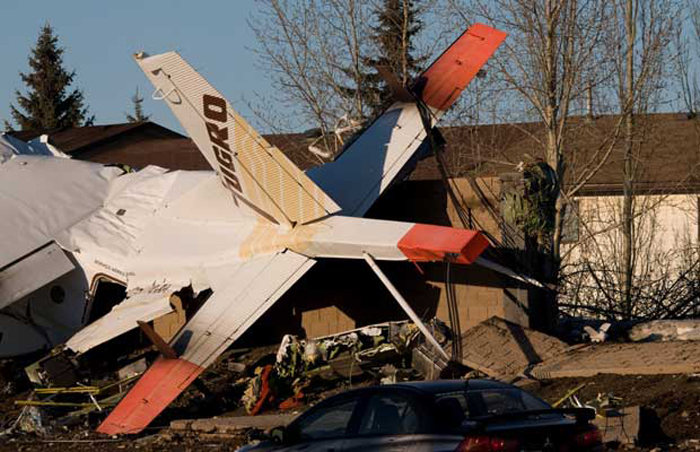
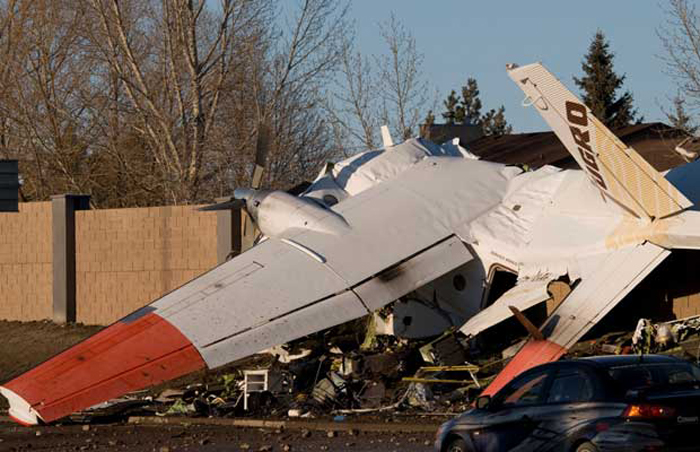
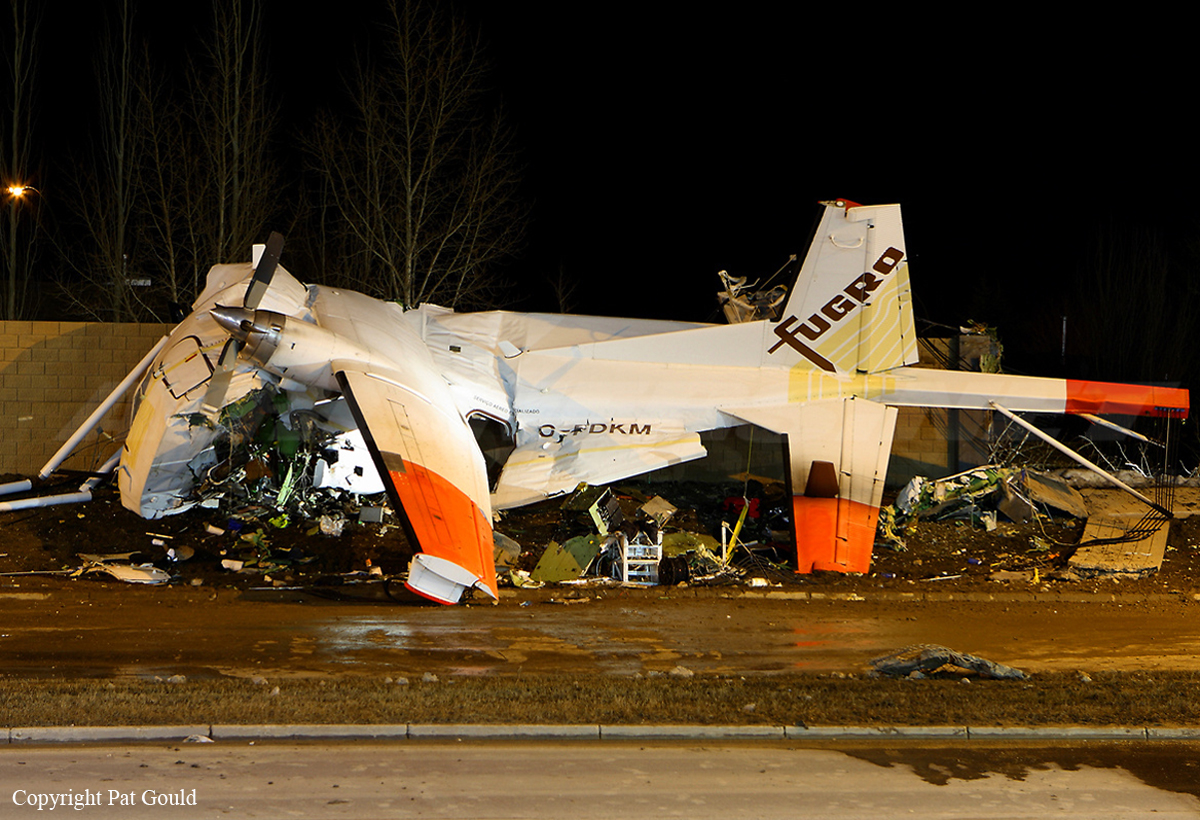
Crash of a Casa 212 Aviocar in Saskatoon: 1 killed

Date & Time: Apr 1, 2011 at 1830 LT
Type of aircraft:
Operator:
Registration:
C-FDKM
Survivors:
Yes
Site:
Schedule:
Saskatoon - Saskatoon
MSN:
196
YOM:
1981
Country:
Crew on board:
3
Crew fatalities:
Pax on board:
0
Pax fatalities:
Other fatalities:
Total fatalities:
1
Captain / Total flying hours:
7400
Captain / Total hours on type:
75.00
Copilot / Total flying hours:
7800
Copilot / Total hours on type:
1800
Aircraft flight hours:
21292
Circumstances:
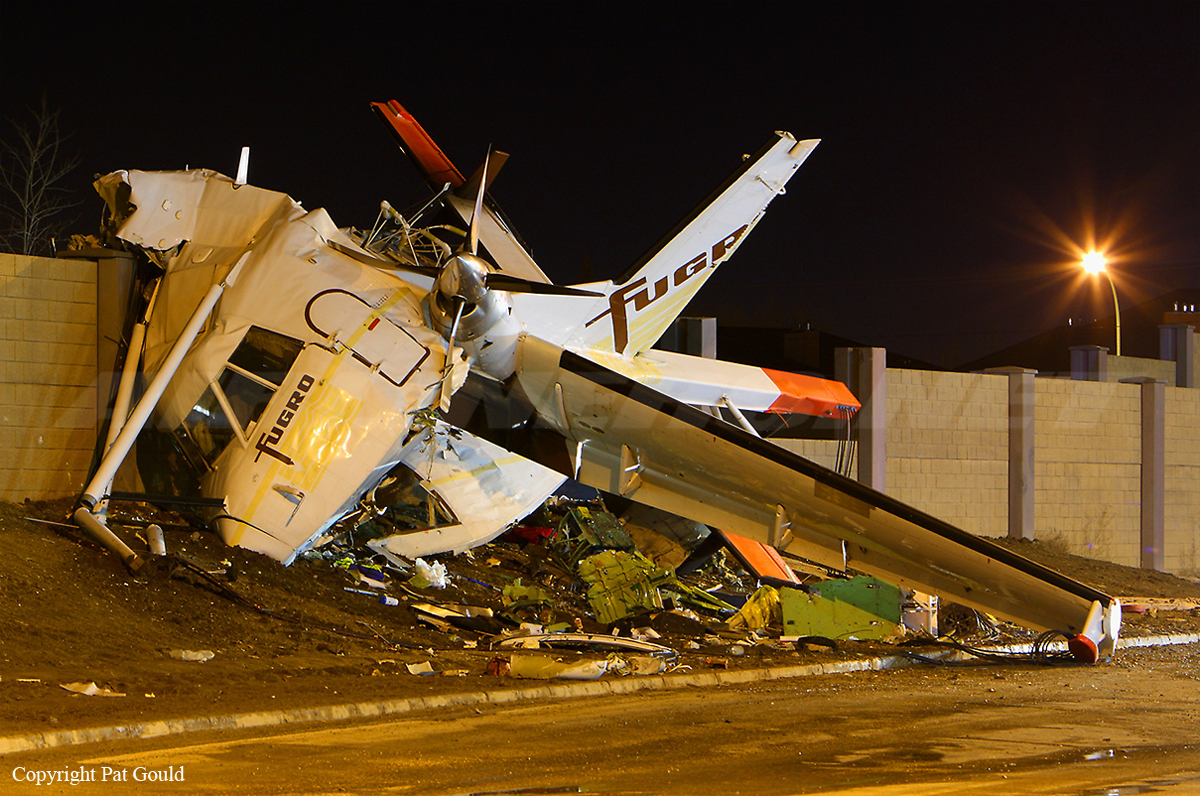
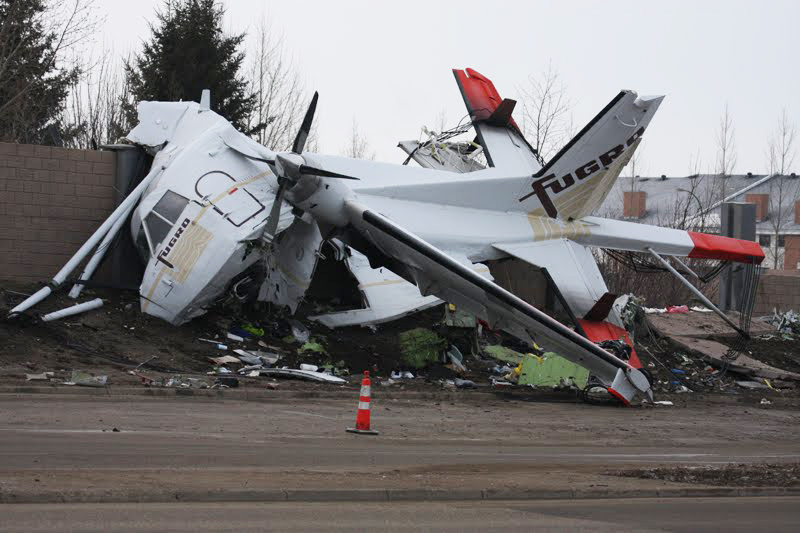
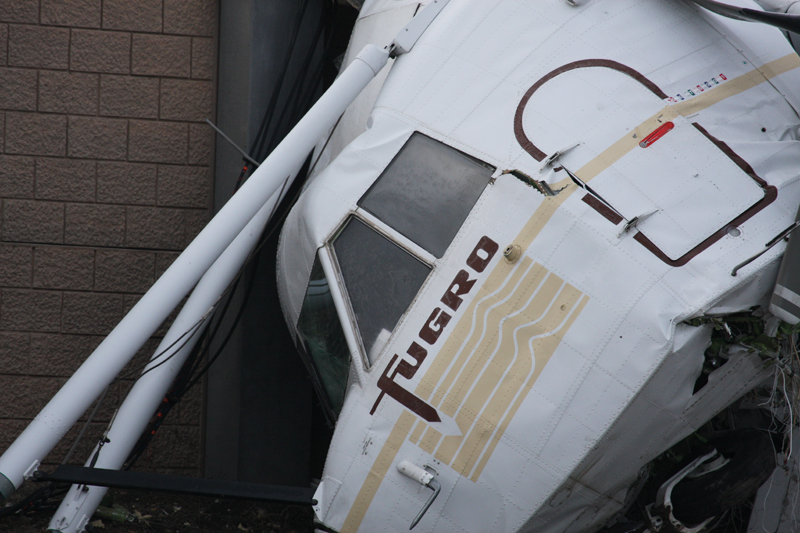
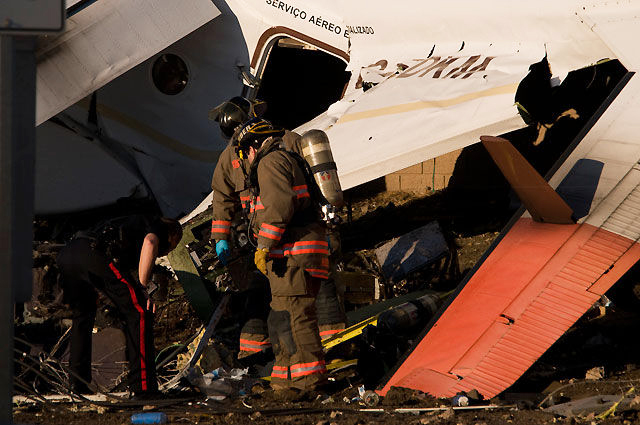
At 1503 Central Standard Time, the Construcciones Aeronauticas SA (CASA) C-212-CC40 (registration C-FDKM, serial number 196) operated by Fugro Aviation Canada Ltd., departed from Saskatoon/Diefenbaker International Airport, Saskatchewan, under visual flight rules for a geophysical survey flight to the east of Saskatoon. On board were 2 pilots and a survey equipment operator. At about 1814, the right engine lost power. The crew shut it down, carried out checklist procedures, and commenced an approach for Runway 27. When the flight was 3.5 nautical miles from the runway on final approach, the left engine lost power. The crew carried out a forced landing adjacent to Wanuskewin Road in Saskatoon. The aircraft impacted a concrete roadway noise abatement wall and was destroyed. The survey equipment operator sustained fatal injuries, the first officer sustained serious injuries, and the captain sustained minor injuries. No ELT signal was received.
Probable cause:
Conclusions
Findings as to Causes and Contributing Factors:
1. The right engine lost power when the intermediate spur gear on the torque sensor shaft failed. This resulted in loss of drive to the high-pressure engine-driven pump, fuel starvation, and immediate engine stoppage.
2. The ability of the left-hand No. 2 ejector pump to deliver fuel to the collector tank was compromised by foreign object debris (FOD) in the ejector pump nozzle.
3. When the fuel level in the left collector tank decreased, the left fuel level warning light likely illuminated but was not noticed by the crew.
4. The pilots did not execute the fuel level warning checklist because they did not perceive the illumination of the fuel level left tank warning light. Consequently, the fuel crossfeed valve remained closed and fuel from only the left wing was being supplied to the left engine.
5. The left engine flamed out as a result of depletion of the collector tank and fuel starvation, and the crew had to make a forced landing resulting in an impact with a concrete noise abatement wall.
Findings as to Risk:
1. Depending on the combination of fuel level and bank angle in single-engine uncoordinated flight, the ejector pump system may not have the delivery capacity, when the No. 1 ejector inlet is exposed, to prevent eventual depletion of the collector tank when the engine is operated at full power. Depletion of the collector tank will result in engine power loss.
2. The master caution annunciator does not flash; this leads to a risk that the the crew may not notice the illumination of an annunciator panel segment, in turn increasing the risk of them not taking action to correct the condition which activated the master caution.
3. When cockpit voice and flight data recordings are not available to an investigation, this may preclude the identification and communication of safety deficiencies to advance transportation safety.
4. Because the inlets of the ejector pumps are unscreened, there is a risk that FOD in the fuel tank may become lodged in an ejector nozzle and result in a decrease in the fuel delivery rate to the collector tank.
Other Findings:
1. The crew’s decision not to recover or jettison the birds immediately resulted in operation for an extended period with minimal climb performance.
2. The composition and origin of the FOD, as well as how or when it had been introduced into the fuel tank, could not be determined.
3. The SkyTrac system provided timely position information that would have assisted search and rescue personnel if position data had been required.
4. Saskatoon police, firefighters, and paramedics responded rapidly to the accident and provided effective assistance to the survivors.
Final Report:


Crash of a Piper PA-46-350P Malibu Mirage in Monroe: 3 killed

Date & Time: Mar 29, 2011 at 1604 LT
Registration:
N619VH
Flight Type:
Survivors:
No
Schedule:
Bedford – Monroe
MSN:
46-36402
YOM:
2006
Crew on board:
1
Crew fatalities:
Pax on board:
2
Pax fatalities:
Other fatalities:
Total fatalities:
3
Captain / Total flying hours:
1600
Aircraft flight hours:
851
Circumstances:
A witness reported and radar data showed the airplane approaching the runway at a higher‐than‐normal speed. As the airplane leveled low over the runway, the propeller began striking the runway surface. The damage from repetitive propeller strikes resulted in a loss of the thrust and airspeed necessary for flight. The airplane impacted the ground and subsequently caught fire. The postaccident examination of the wreckage confirmed that the airplane was configured with the landing gear and flaps retracted. No mechanical anomalies were observed that would have precluded normal operation of the airplane. Weight and balance estimates of the airplane indicated that the pilot was operating the airplane outside of its certified weight and center of gravity limits. Forensic toxicology performed on the pilot showed the presence of Hydrocodone and Dihydrocodeine, indicative of the pilot using disqualifying sedating cough or pain medications. These medications can impair performance in high workload environments. The level of medication found in the pilot’s blood at the time of the accident could not be determined. Additionally, Nortriptyline was detected in the pilot’s tissues. While the medications could have had degrading effects on the pilot’s performance, the investigation was not able to determine what role they may have played in the accident sequence.
Probable cause:
The pilot's demonstration of poor judgment by attempting a high‐speed pass several feet above the runway and his subsequent failure to maintain clearance from the runway.
Final Report:
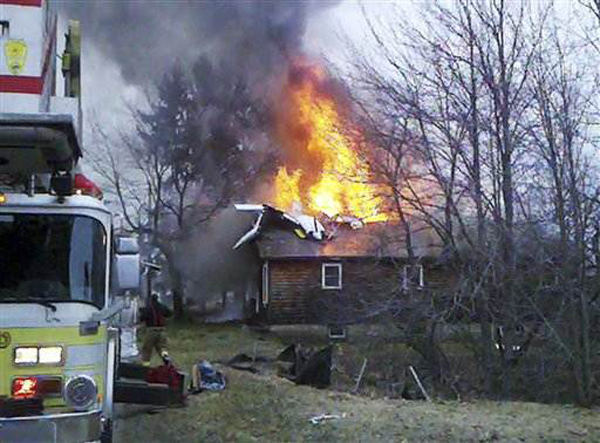
Crash of a Cessna 425 Conquest I in Canadian

Date & Time: Mar 28, 2011 at 0825 LT
Type of aircraft:
Operator:
Registration:
N410VE
Flight Type:
Survivors:
Yes
Schedule:
Grand Junction - Canadian
MSN:
425-0097
YOM:
1981
Location:
Crew on board:
1
Crew fatalities:
Pax on board:
6
Pax fatalities:
Other fatalities:
Total fatalities:
0
Captain / Total flying hours:
22500
Captain / Total hours on type:
1000.00
Aircraft flight hours:
7412
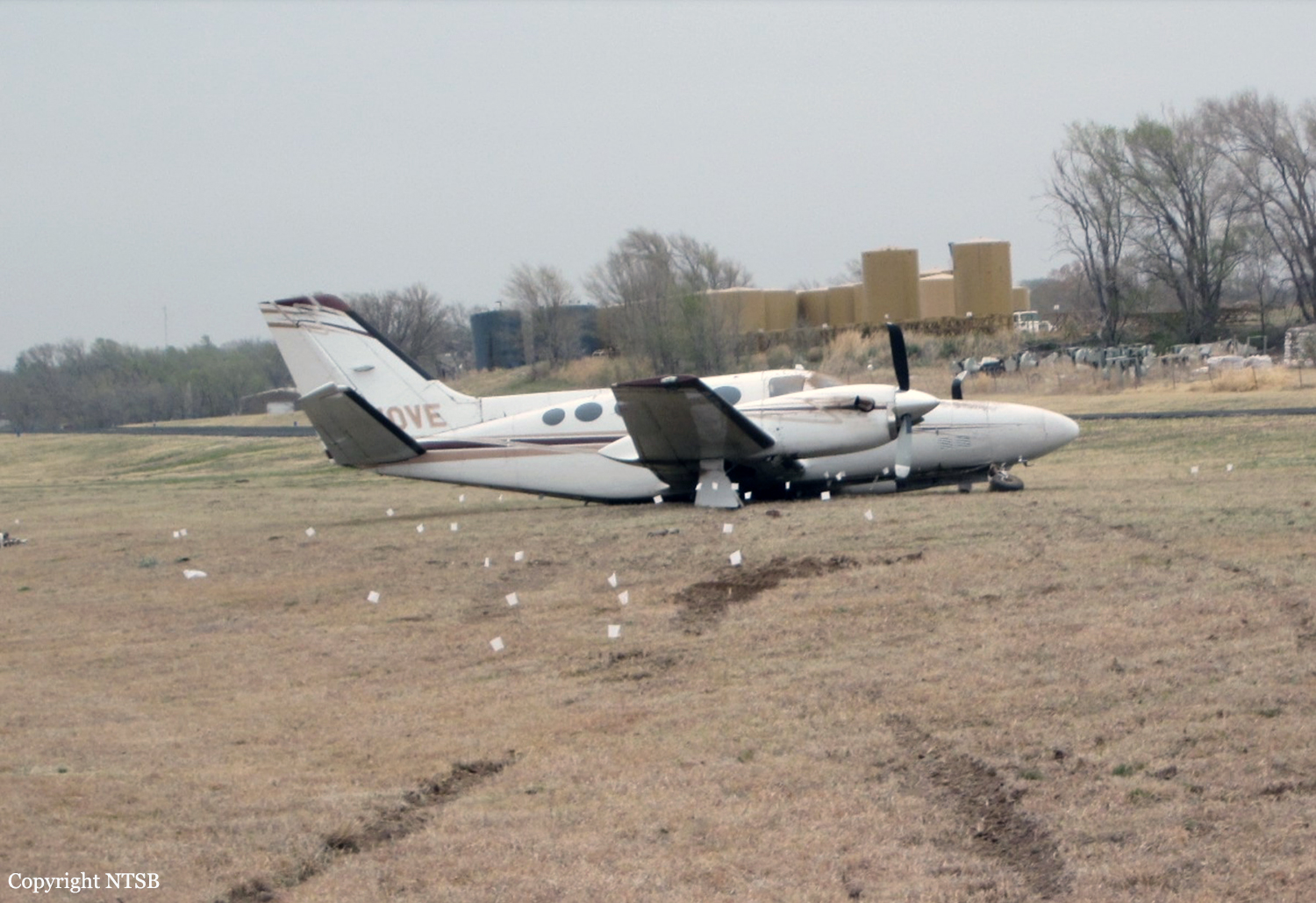
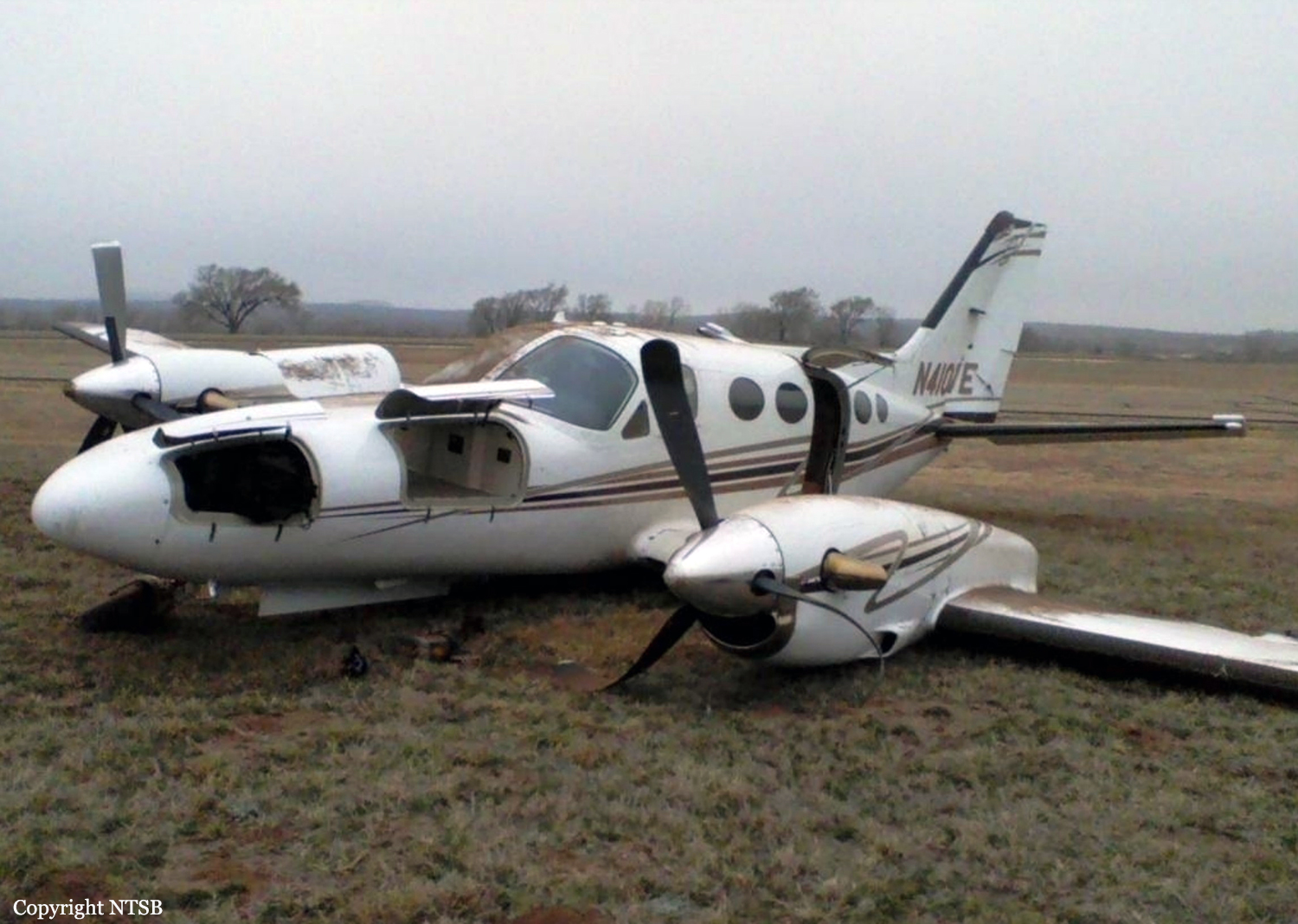
Circumstances:
While on a straight-in global-positioning-system approach, the airplane broke out of the clouds directly over the end of the runway. The pilot then remained clear of the clouds and executed a no-flap circling approach to the opposite direction runway. The pilot said that his airspeed was high when he touched down. The landing was hard, and the right main landing gear tire blew out, the airplane departed the runway to the left, and the left main landing gear collapsed. No preaccident mechanical malfunctions or failures were found that would have precluded normal operation.
Probable cause:
The pilot’s continuation of the approach with excessive airspeed, which resulted in a hard landing and a loss of directional control.
Final Report: