Crash of a Dassault Falcon 10 in Toronto

Date & Time: Jun 17, 2011 at 1506 LT
Type of aircraft:
Operator:
Registration:
C-GRIS
Flight Type:
Survivors:
Yes
Schedule:
Toronto-Lester Bowles Pearson - Toronto-Buttonville
MSN:
02
YOM:
1973
Country:
Crew on board:
2
Crew fatalities:
Pax on board:
0
Pax fatalities:
Other fatalities:
Total fatalities:
0
Captain / Total flying hours:
12000
Captain / Total hours on type:
4000.00
Copilot / Total flying hours:
7100
Copilot / Total hours on type:
475
Aircraft flight hours:
12697
Circumstances:
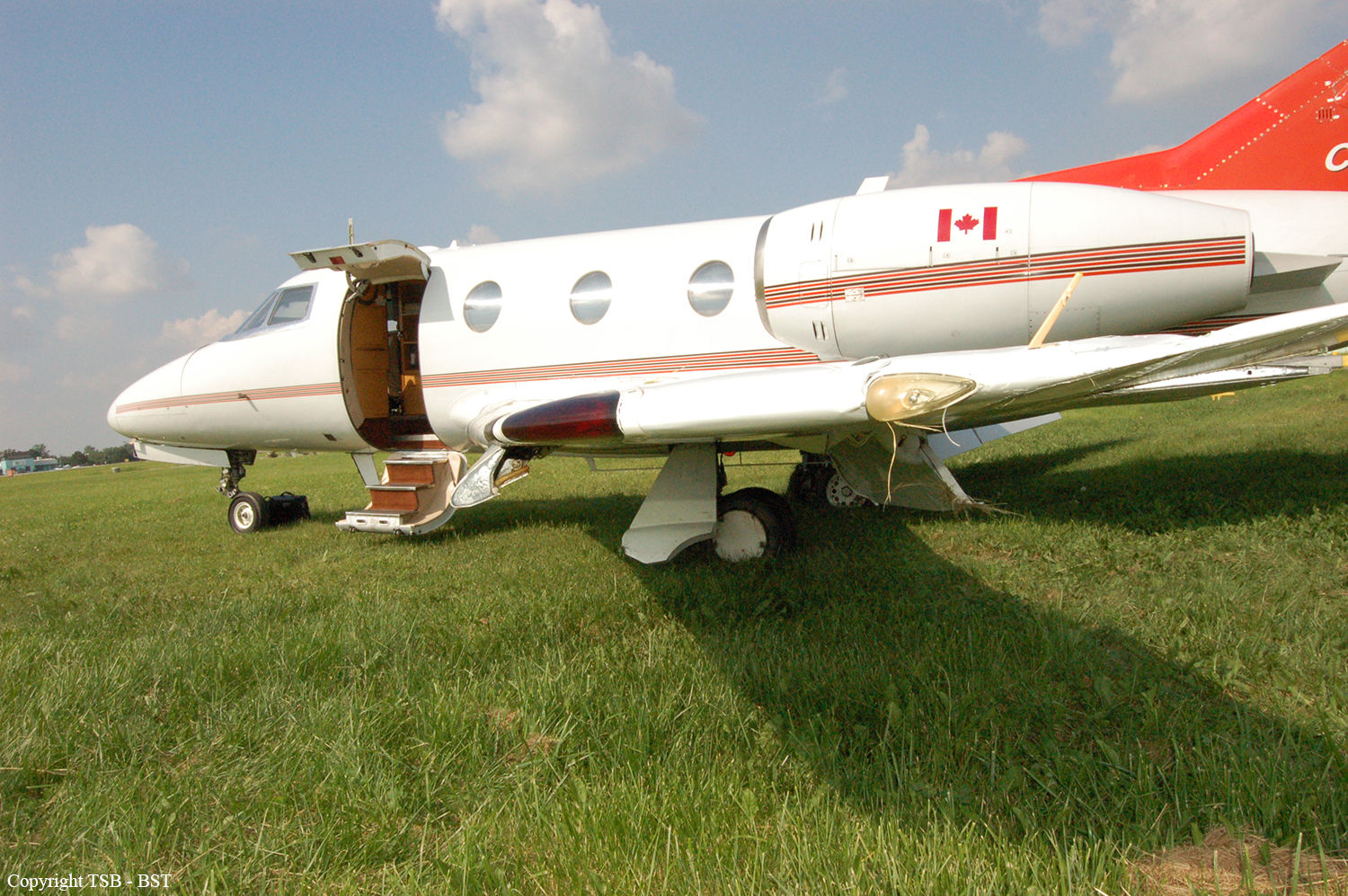
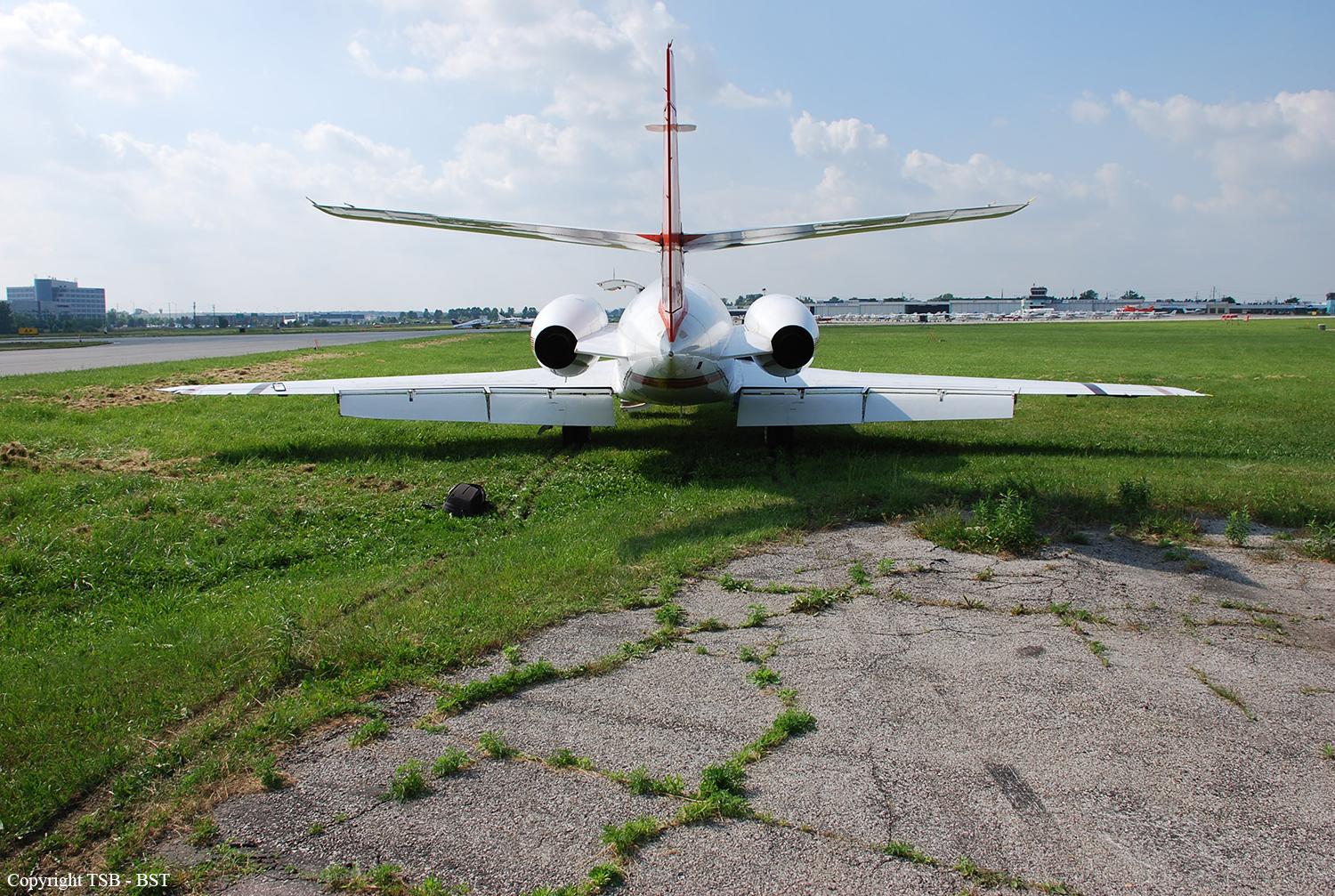
Aircraft was on a flight from Toronto-Lester B. Pearson International Airport to Toronto-Buttonville Municipal Airport, Ontario, with 2 pilots on board. Air traffic control cleared the aircraft for a contact approach to Runway 33. During the left turn on to final, the aircraft overshot the runway centerline. The pilot then compensated with a tight turn to the right to line up with the runway heading and touched down just beyond the threshold markings. Immediately after touchdown, the aircraft exited the runway to the right, and continued through the infield and the adjacent taxiway Bravo, striking a runway/taxiway identification sign, but avoiding aircraft that were parked on the apron. The aircraft came to a stop on the infield before Runway 21/03. The aircraft remained upright, and the landing gear did not collapse. The aircraft sustained substantial damage. There was no fire, and the flight crew was not injured. The Toronto-Buttonville tower controller observed the event as it progressed and immediately called for emergency vehicles from the nearby municipality. The accident occurred at 1506 Eastern Daylight Time.
Probable cause:
Findings as to Causes and Contributing Factors:
1. The crew flew an unstabilized approach with excessive airspeed.
2. The lack of adherence to company standard operating procedures and crew resource management, as well as the non-completion of checklist items by the flight crew contributed to the occurrence.
3. The captain’s commitment to landing or lack of understanding of the degree of instability of the flight path likely influenced the decision not to follow the aural GPWS alerts and the missed approach call from the first officer.
4. The non-standard wording and the tone used by the first officer were insufficient to deter the captain from continuing the approach.
5. At touchdown, directional control was lost, and the aircraft veered off the runway with sufficient speed to prevent any attempts to regain control.
Finding as to Risk
1. Companies which do not have ground proximity warning system procedures in their standard operating procedures may place crews and passengers at risk in the event that a warning is received.
Final Report:

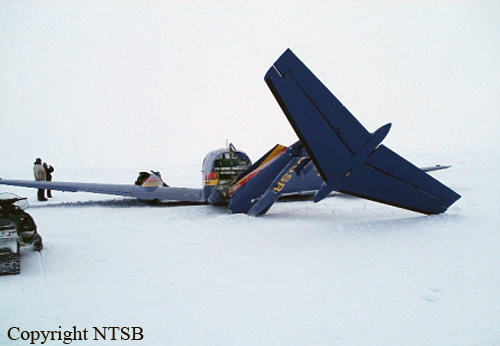
Crash of a Douglas DC-6BF in Cold Bay

Date & Time: Jun 12, 2011 at 1455 LT
Type of aircraft:
Operator:
Registration:
N600UA
Flight Type:
Survivors:
Yes
Schedule:
Togiak - Cold Bay
MSN:
44894/651
YOM:
1956
Crew on board:
4
Crew fatalities:
Pax on board:
0
Pax fatalities:
Other fatalities:
Total fatalities:
0
Captain / Total flying hours:
10000
Captain / Total hours on type:
4000.00
Aircraft flight hours:
37334
Circumstances:
According to the captain, while on approach to land, he distracted the crew by pointing out a boat dock. He said that after touchdown, he realized that the landing gear was not extended, and the airplane slid on its belly, sustaining substantial damage to the underside of the fuselage. He said that the crew did not hear the landing gear retracted warning horn, and the accident could have been prevented if he had not distracted the crew. The captain reported that there were no mechanical malfunctions with the airplane that would have precluded normal operation.
Probable cause:
The flight crew's failure to extend the landing gear, which resulted in an inadvertent wheels up landing. Contributing to the accident was the flight crew's diverted attention.
Final Report:

Crash of an Antonov AN-26 off Libreville

Date & Time: Jun 6, 2011 at 1025 LT
Type of aircraft:
Operator:
Registration:
TR-LII
Flight Type:
Survivors:
Yes
Schedule:
Port Gentil - Libreville
MSN:
75 04
YOM:
1978
Flight number:
SLN122A
Country:
Region:
Crew on board:
3
Crew fatalities:
Pax on board:
1
Pax fatalities:
Other fatalities:
Total fatalities:
0
Circumstances:
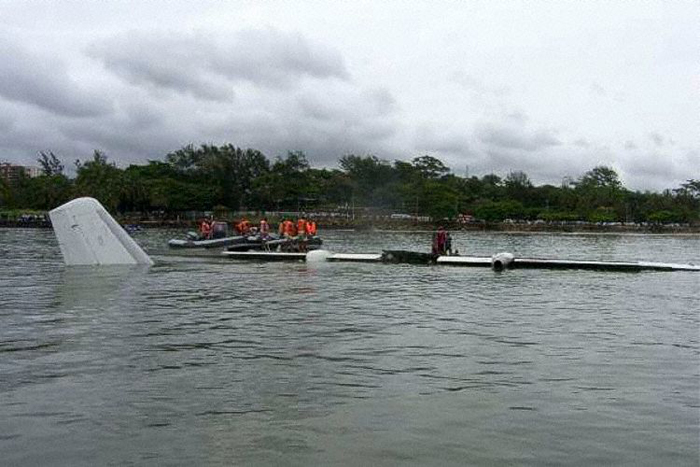
The crew departed Port Gentil on a cargo flight to Libreville on behalf of DHL Airways. On approach to Libreville-Léon Mba Airport, the captain informed ATC about hydraulic problems and initiated a go-around procedure. Shortly later, the aircraft stalled and crashed in the sea some 2,3 km southeast of the airport. All four occupants were rescued while the aircraft was damaged beyond repair. Due to the failure of the hydraulic system, the crew was unable to lower the gear.

Crash of an Eclipse EA500 in Nome

Date & Time: Jun 1, 2011 at 2140 LT
Type of aircraft:
Registration:
N168TT
Flight Type:
Survivors:
Yes
Schedule:
Anadyr – Nome
MSN:
42
YOM:
2007
Location:
Crew on board:
1
Crew fatalities:
Pax on board:
1
Pax fatalities:
Other fatalities:
Total fatalities:
0
Captain / Total flying hours:
2370
Captain / Total hours on type:
205.00
Aircraft flight hours:
343
Circumstances:
The pilot indicated that, prior to the accident flight, the wing flaps had failed, but he decided to proceed with the flight contrary to the Airplane Flight Manual guidance. While conducting a no-flap approach to the airport, he decided that his airspeed was too fast to land, and he initiated a go-around. During the go-around, the airplane continued to descend, and the fuselage struck the runway. The pilot was able to complete the go-around, and realized that he had not extended the landing gear. He lowered the landing gear, and landed the airplane uneventfully. He elected to remain overnight at the airport due to fatigue. The next day, he decided to test fly the airplane. During the takeoff roll, the airplane had a severe vibration, and he aborted the takeoff. During a subsequent inspection, an aviation mechanic discovered that the center wing carry-through cracked when the belly skid pad deflected up into a stringer during the gear-up landing.
Probable cause:
The pilot landed without lowering the landing gear. Contributing to the accident was the pilot's decision to fly the airplane with an inoperative wing flap system.
Final Report:

Crash of an Embraer EMB-500 Phenom 100 in Sedona

Date & Time: May 25, 2011 at 1550 LT
Type of aircraft:
Operator:
Registration:
N224MD
Survivors:
Yes
Schedule:
San Jose - Sedona
MSN:
500-00057
YOM:
2009
Flight number:
RSP240
Location:
Crew on board:
2
Crew fatalities:
Pax on board:
3
Pax fatalities:
Other fatalities:
Total fatalities:
0
Captain / Total flying hours:
23970
Captain / Total hours on type:
570.00
Copilot / Total flying hours:
1886
Copilot / Total hours on type:
74
Aircraft flight hours:
1052
Circumstances:
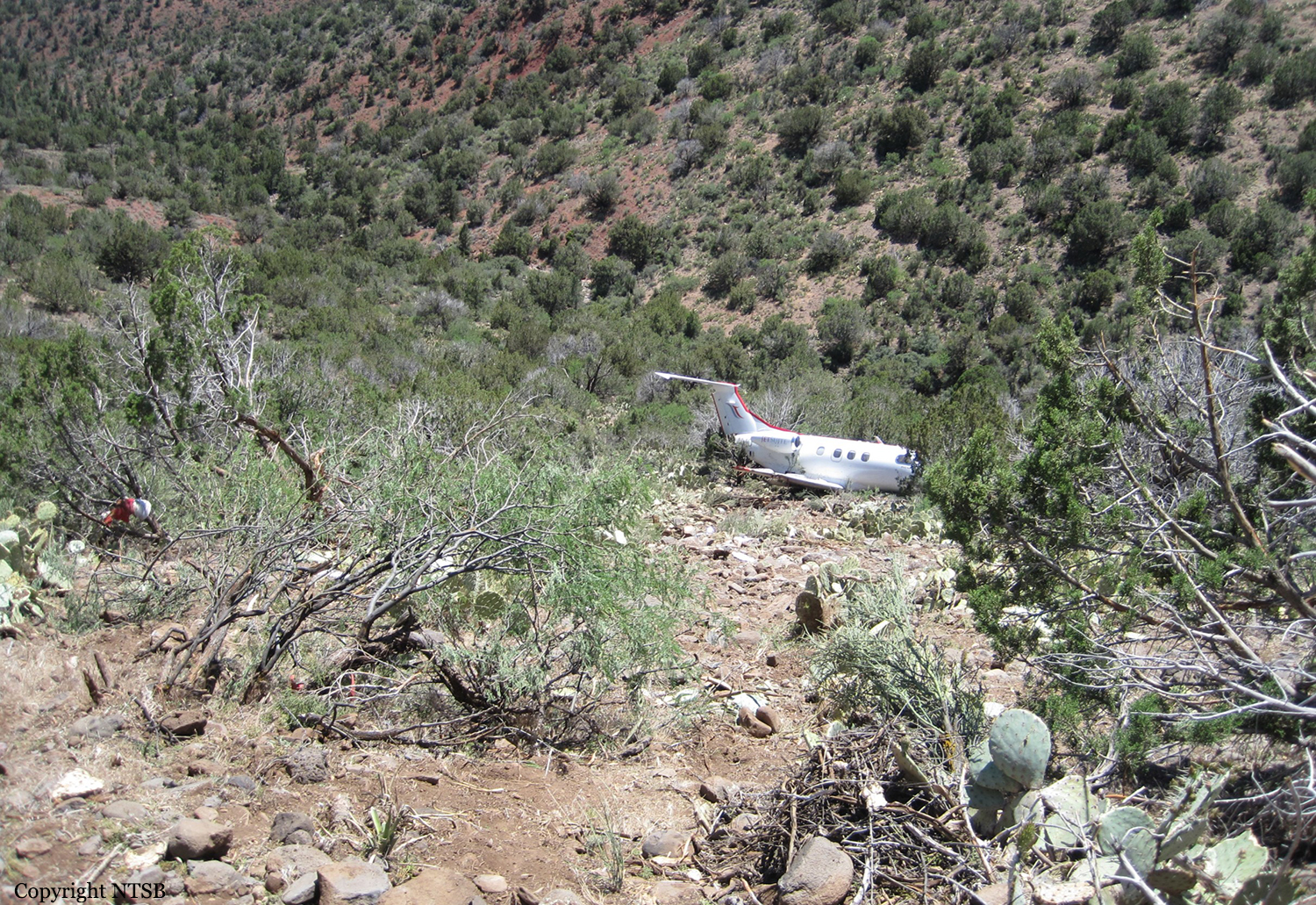
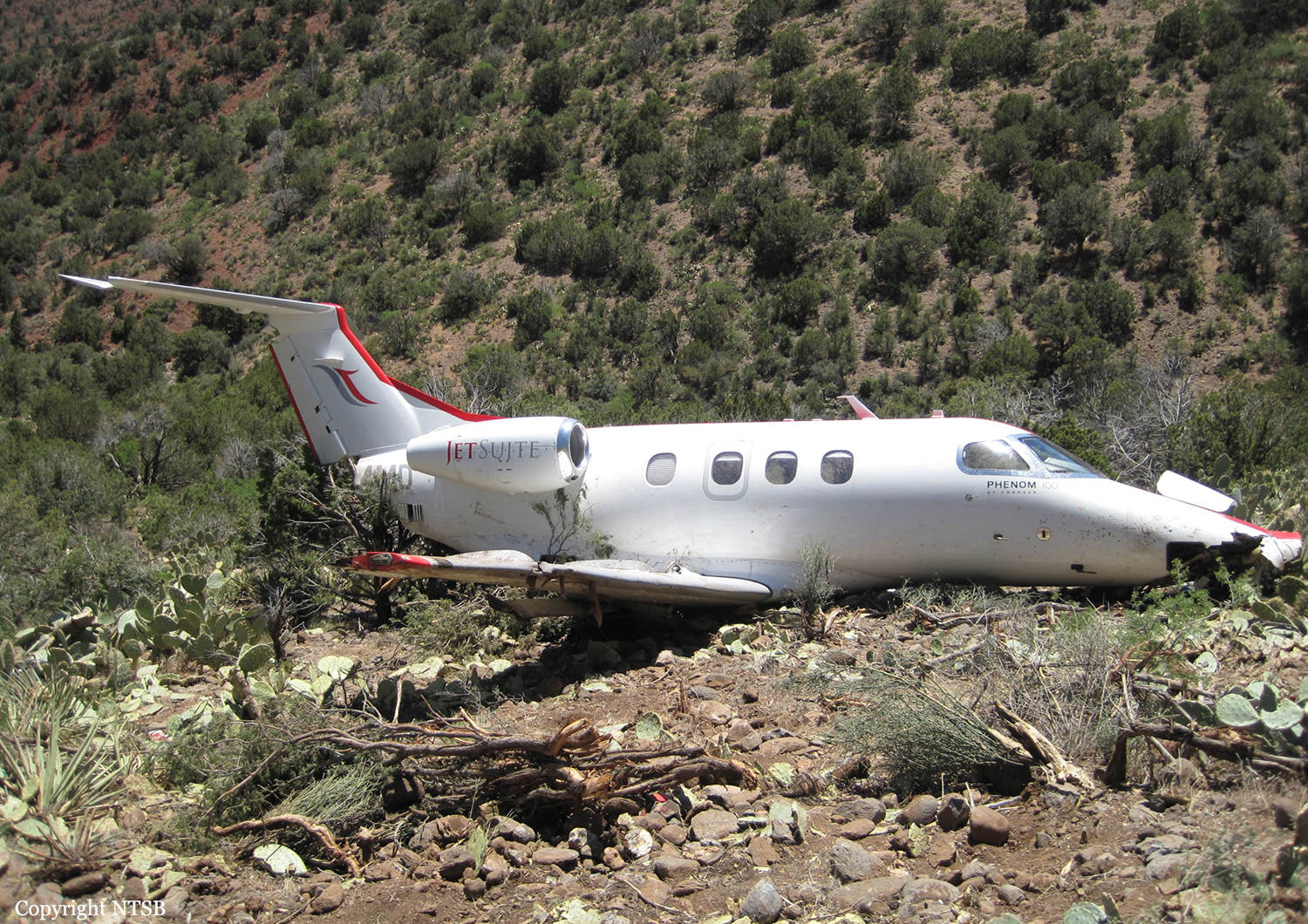
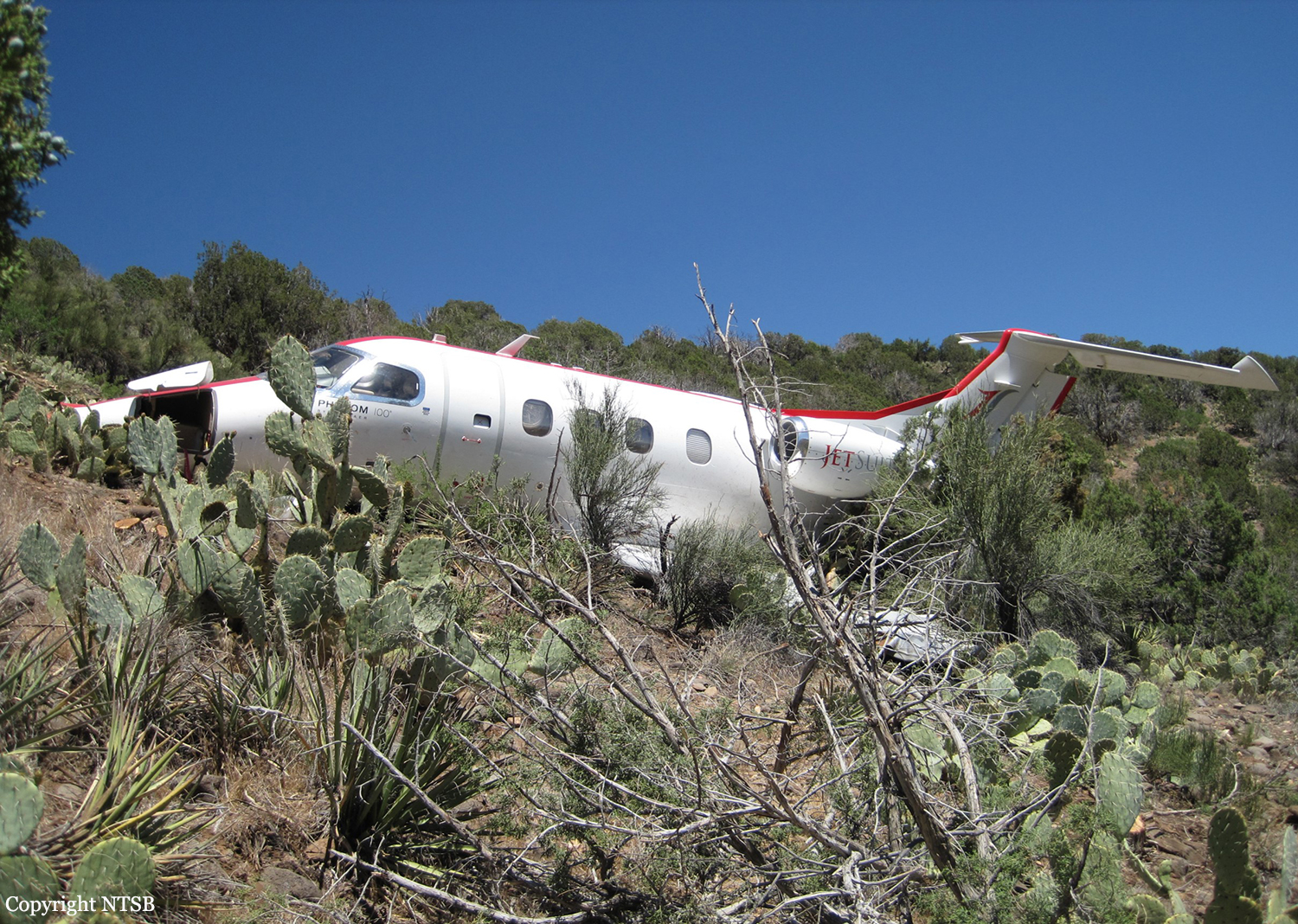
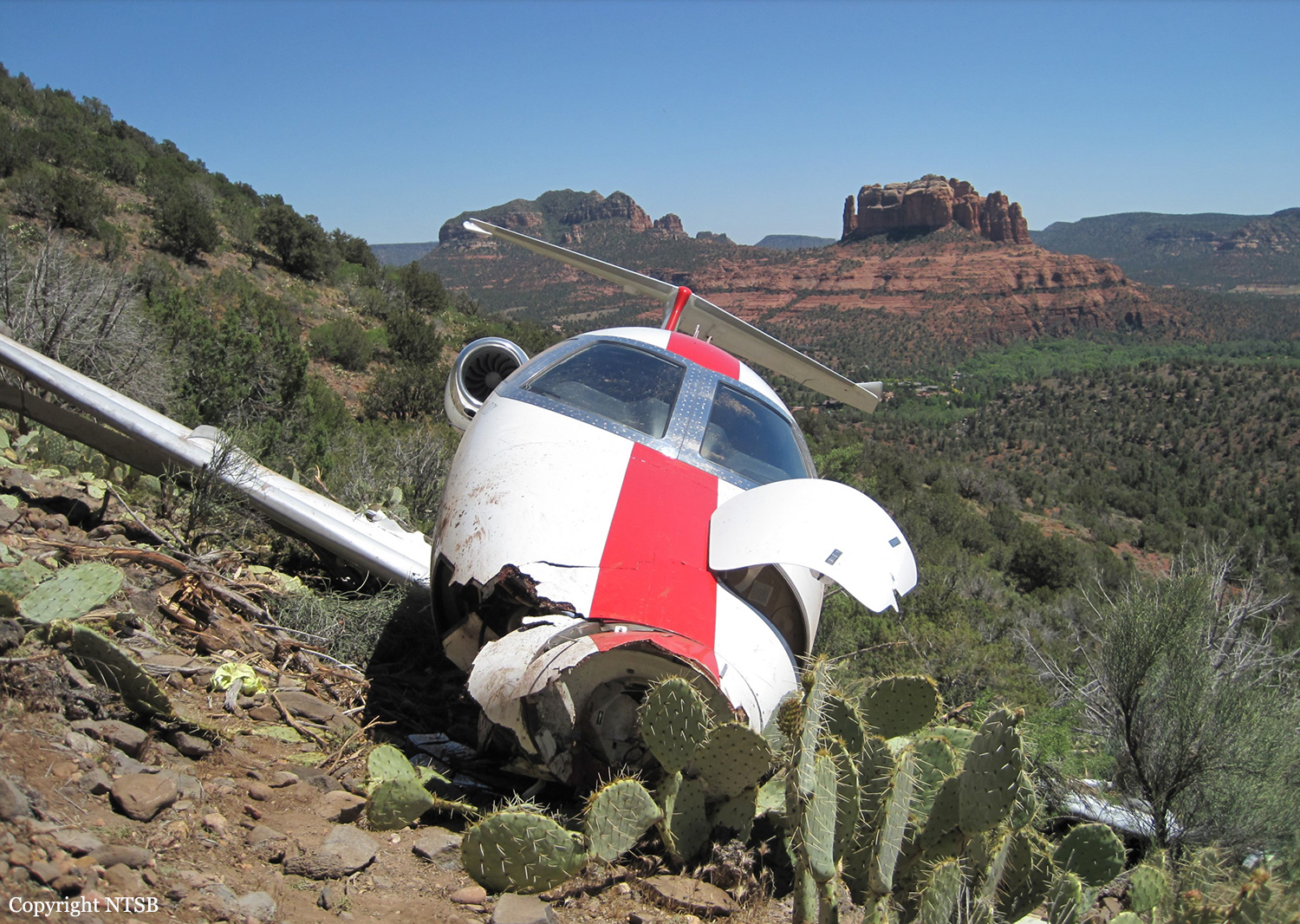
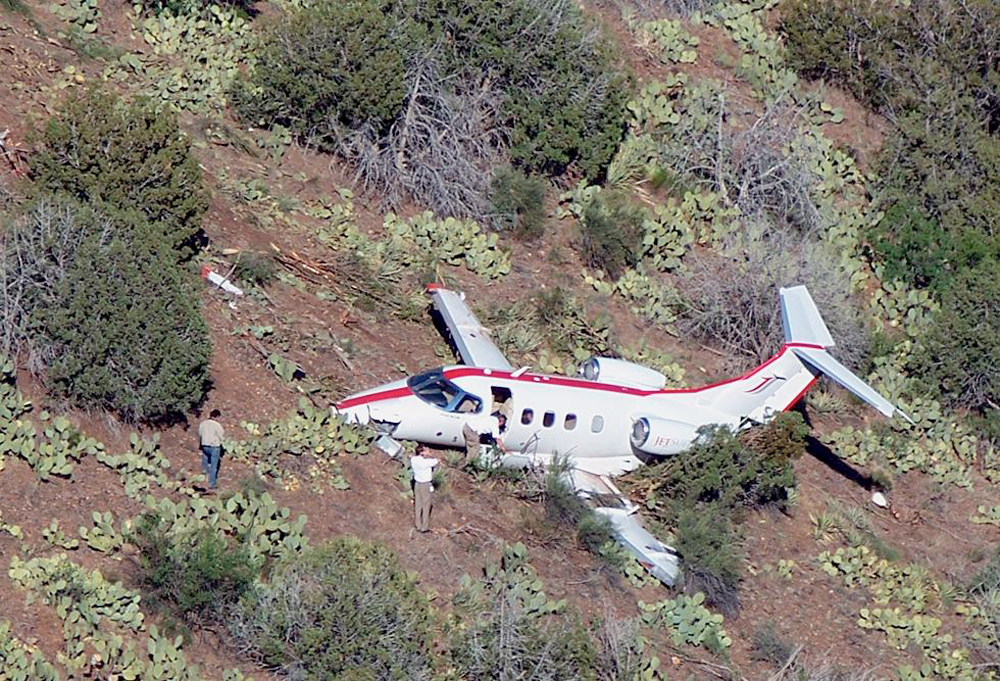
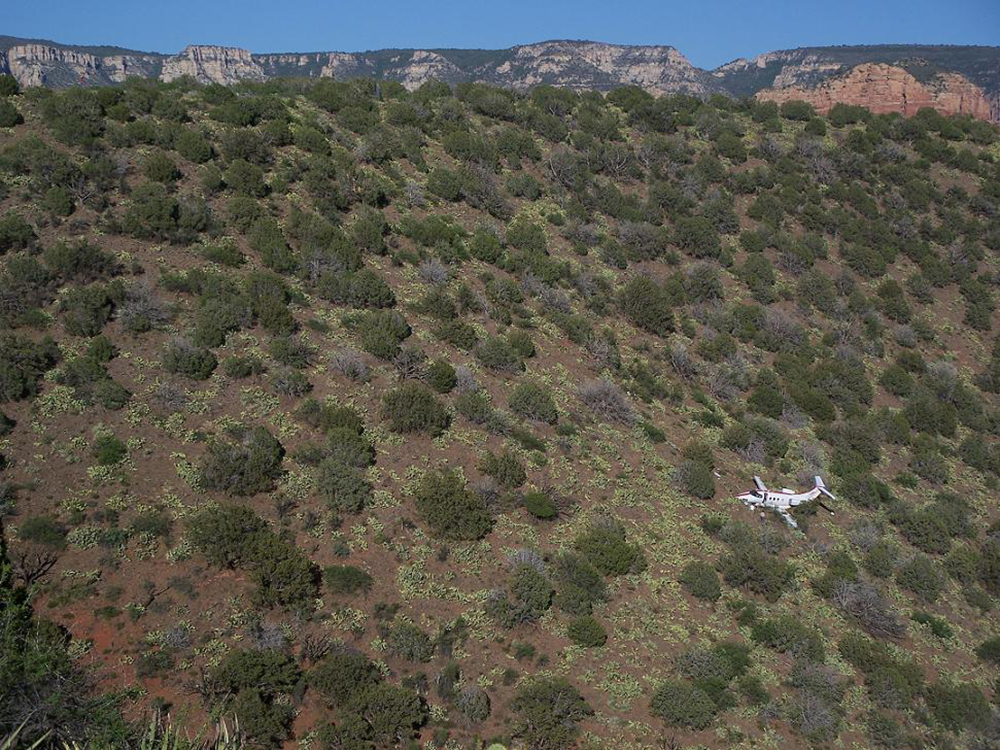
Following an uneventful flight, the flight crew briefed the arrival to the destination airport and set the calculated landing speeds. The captain and the first officer reported that during final approach, it felt like the airplane was “pushed up” as the wind shifted to a tailwind or updraft before landing near the runway number markings. Upon touchdown, the captain applied the brakes and thought that the initial braking was effective; however, he noticed the airplane was not slowing down. The captain applied maximum braking, and the airplane began to veer to the right; he was able to correct back to the runway centerline, but the airplane subsequently exited the departure end of the runway and traveled down a steep embankment. A pilot-rated passenger reported that throughout the approach to landing, he thought the airplane was high and thought that the excessive altitude continued through and into the base-to-final turn. He added that the bank angle of this turn seemed greater than 45 degrees. Recorded communication from the cockpit voice and data recorder (CVDR) revealed that during the approach to landing, the flight crew performed the landing checks, and the captain noted difficulty judging the approach. About 1 minute later, the recording revealed that the ground warning proximity system reported “five hundred” followed by a “sink rate, pull up” alert about 16 seconds later. Data from the CVDR revealed that about 23 seconds before weight-on-wheels was recorded, the airplane was at an indicated airspeed of about 124 knots and descending. The data showed that this approximate airspeed was maintained until about 3 seconds before weight-on-wheels. The recorded data further showed that the approach speed was set to 120 knots, and the landing reference speed (vREF) was set to 97 knots. Using the reported airplane configuration and the 3.5-knot headwind that was reported at the time of the approach and landing, calculations indicate that the vREF speed should have been about 101 knots indicated airspeed, which would have required a landing distance of about 3,112 feet. Utilizing the same airplane configuration and wind condition with the flight’s reported 124 knot indicated airspeed just before touchdown, the landing distance was calculated to be about 5,624 feet. The intended runway for landing was 5,132-feet long with a 1.9 percent downward slope gradient, and a 123-foot long overrun area. A postaccident examination of the airplane, including the braking system, revealed no evidence of mechanical malfunctions or failures that would have precluded normal operation. The pilot misjudged the airplane’s speed during the final approach, which resulted in runway overrun.
Probable cause:
The pilots’ unstabilized approach and excessive airspeed during approach, which resulted in an insufficient landing distance to stop the airplane before overrunning the runway.
Final Report:

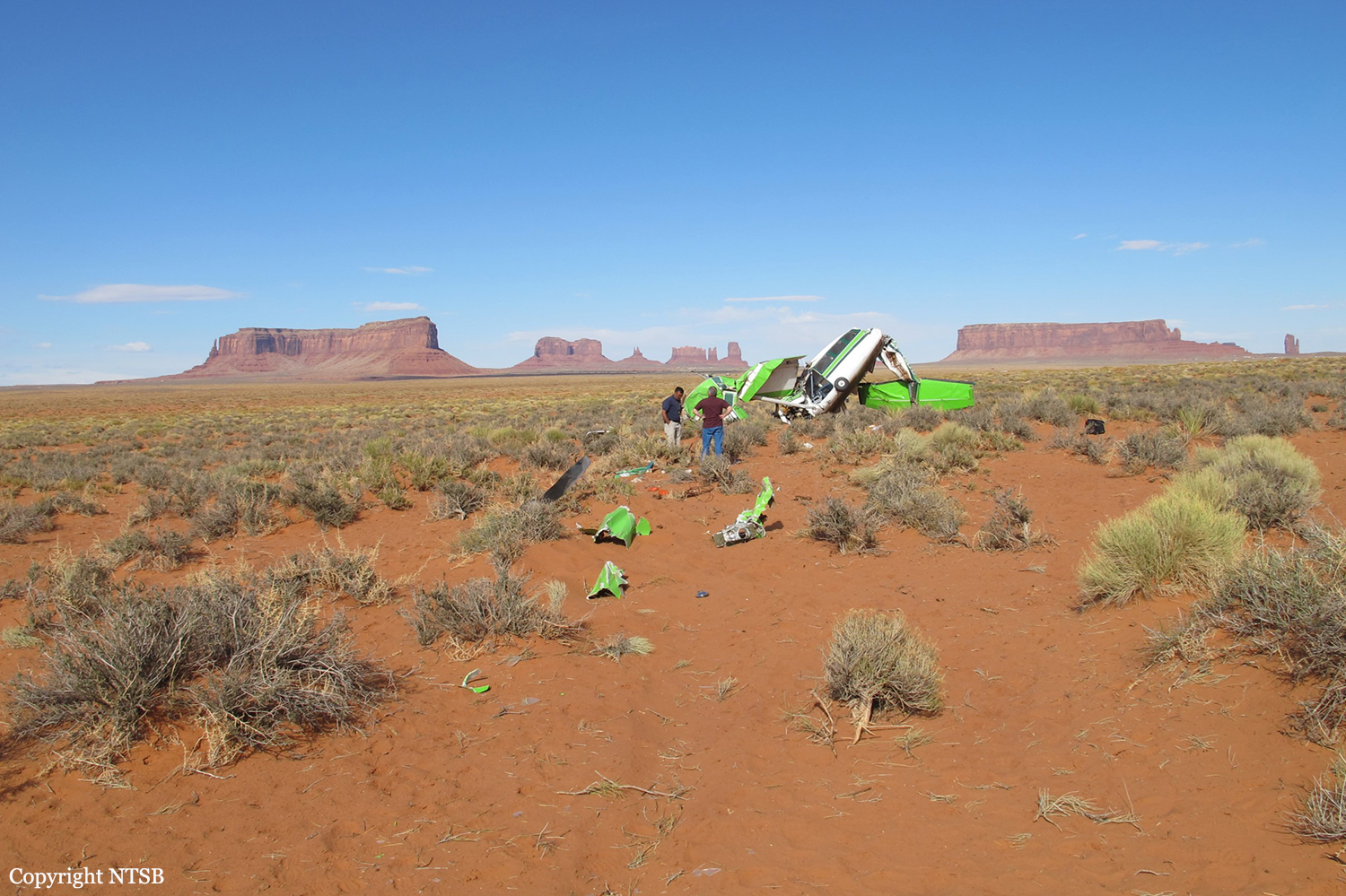
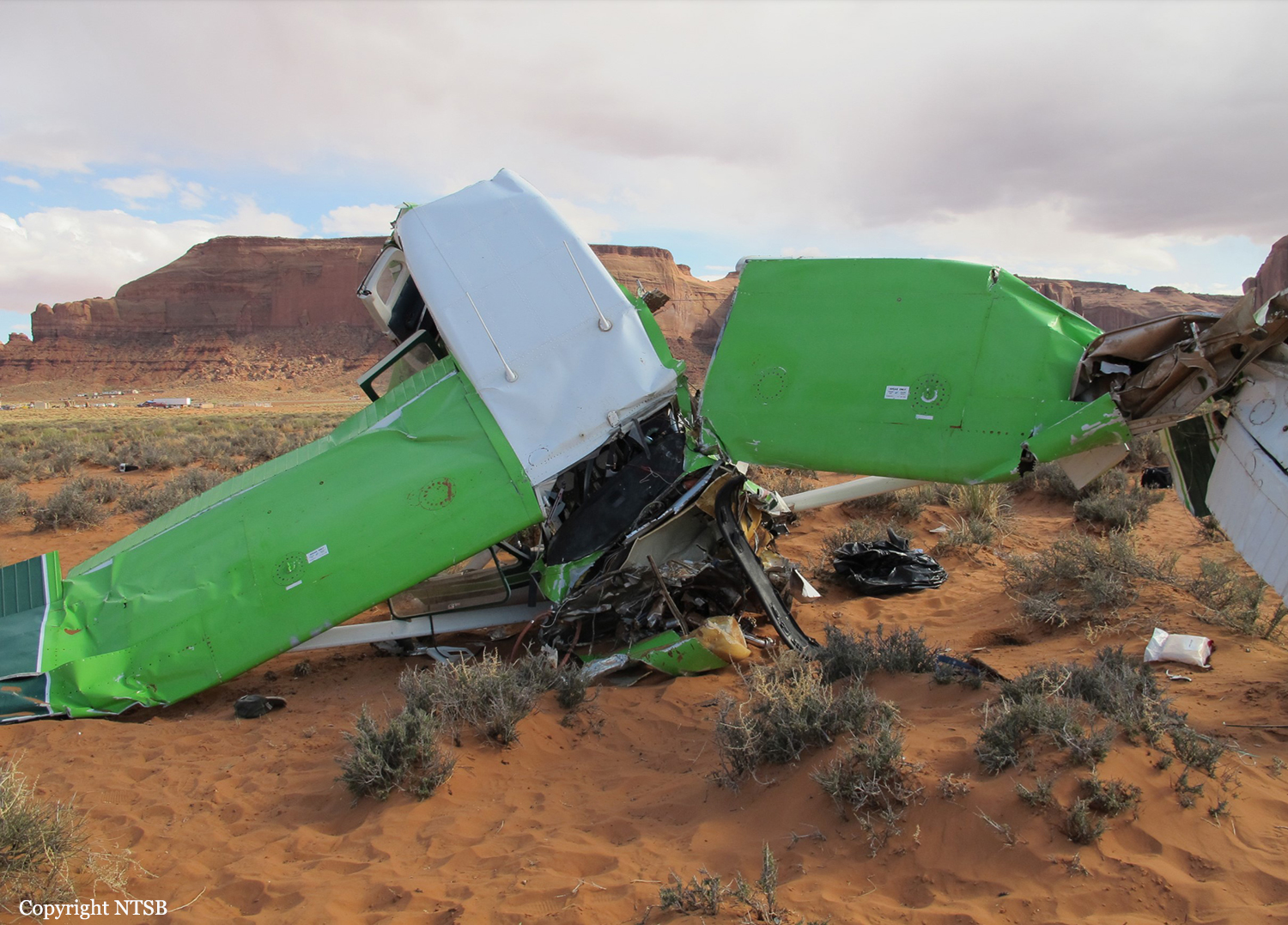
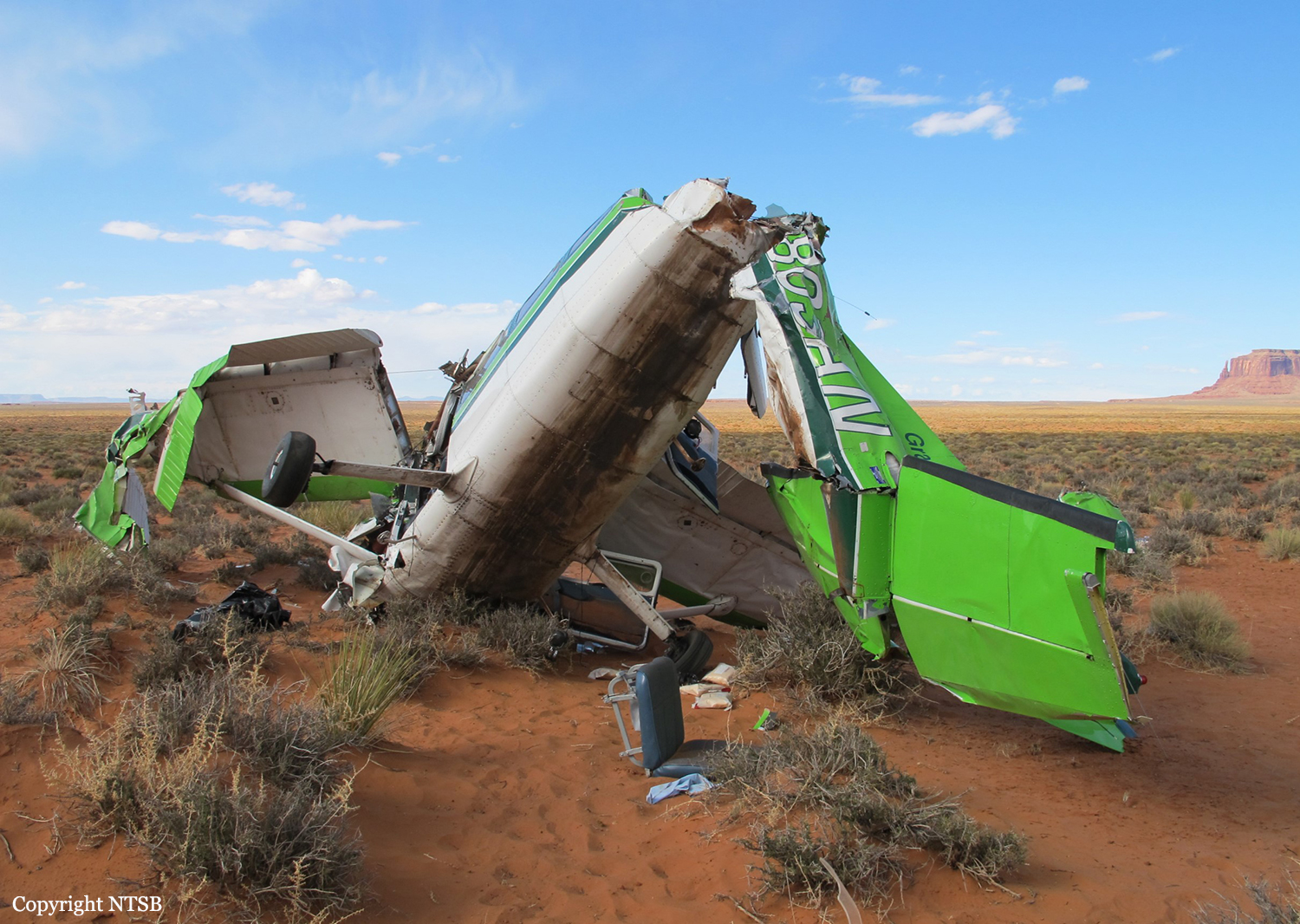
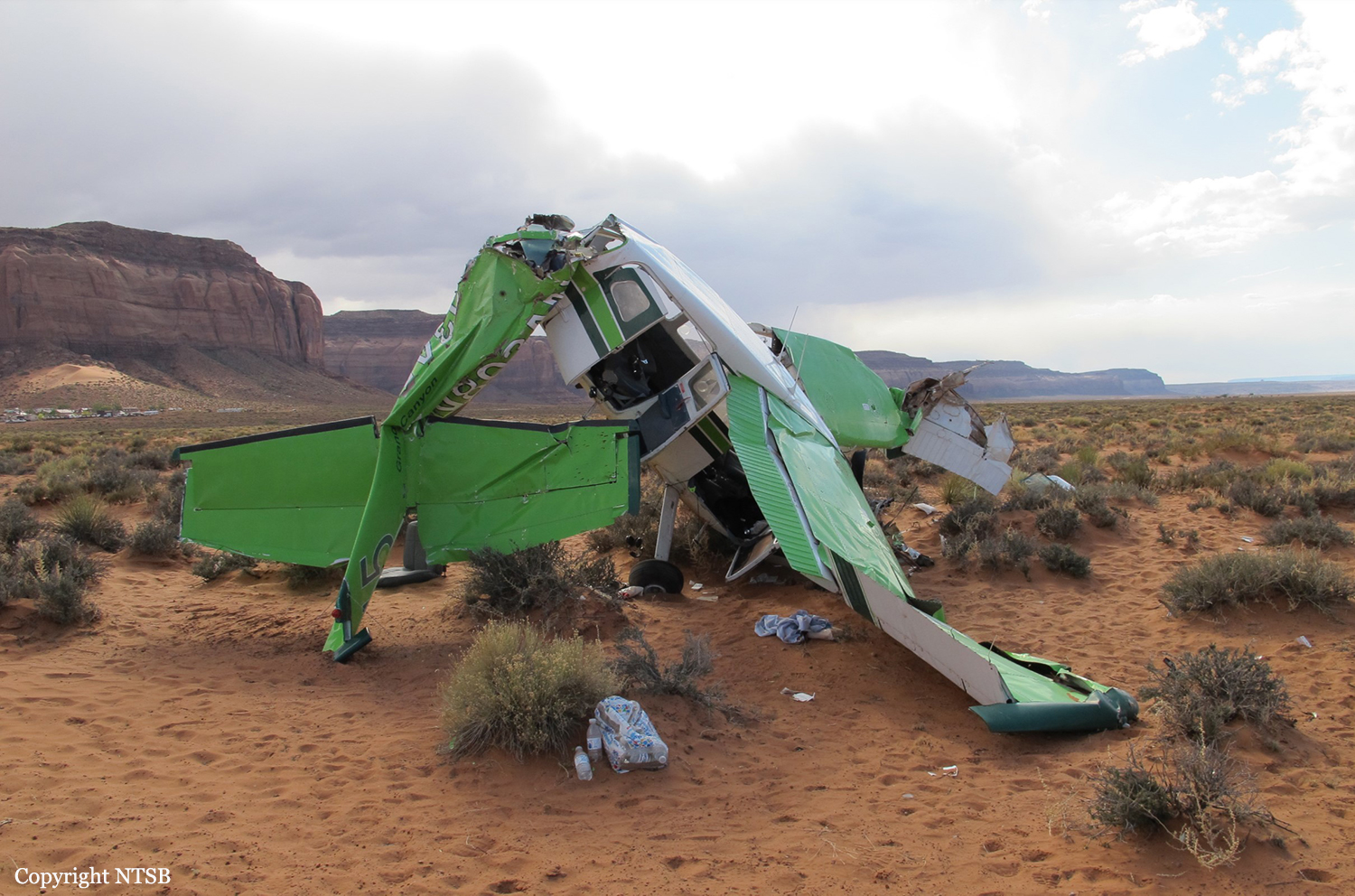
Crash of a Cessna T207A Turbo Stationair 8 in Monument Valley

Date & Time: May 23, 2011 at 1520 LT
Operator:
Registration:
N803AN
Survivors:
Yes
Schedule:
Grand Canyon - Monument Valley
MSN:
207-0570
YOM:
1981
Crew on board:
1
Crew fatalities:
Pax on board:
5
Pax fatalities:
Other fatalities:
Total fatalities:
0
Captain / Total flying hours:
965
Captain / Total hours on type:
140.00
Aircraft flight hours:
13417
Circumstances:
According to the airplane's operator, the airplane was part of a flight of four airplanes that were taking an organized tour group of revenue passengers on a sightseeing tour of southern Utah. While operating in a high density altitude environment, the pilot was flying into an airport that had a 1,000-foot cliff about 400 feet from the end of the runway he was landing on. Because of the presence of the cliff, the Airguide Publications Airport Manual stated that all landings should be made on the runway that was headed toward the cliff and that all takeoffs should be made on the runway that was headed away from the cliff. The manual also stated that a go-around during landing was not possible. During his approach, the pilot encountered a variable wind and downdrafts. During the landing flare, the airplane dropped onto the runway hard and bounced back into the air. The pilot then immediately initiated a go-around and began a turn away from the runway heading. While in the turn, he was most likely unable to maintain sufficient airspeed, and the airplane entered a stall/mush condition and descended into the ground. A postaccident examination of the airframe and engine revealed no evidence of mechanical malfunctions or failures that would have precluded normal operation.
Probable cause:
The pilot's decision to initiate a go-around after a bounced landing at an airport where go-arounds were not advised and his failure to maintain adequate airspeed during the go-around.
Final Report:
Crash of a Socata TBM-850 in Salem

Date & Time: May 19, 2011 at 0843 LT
Type of aircraft:
Operator:
Registration:
N1UL
Flight Type:
Survivors:
Yes
Schedule:
Valparaiso - Salem
MSN:
564
YOM:
2010
Crew on board:
1
Crew fatalities:
Pax on board:
3
Pax fatalities:
Other fatalities:
Total fatalities:
0
Captain / Total flying hours:
932
Captain / Total hours on type:
76.00
Aircraft flight hours:
187
Circumstances:
The pilot reported that he flew an instrument approach and was clear of clouds about 650 feet above ground level when he proceeded visually to the airport. About 1/2 mile from the runway, he thought the airplane was too high, but a few seconds later the airplane felt like it had an excessive rate of descent. His attempts to arrest the rate of descent were unsuccessful, and the left main landing gear struck the ground about 120 feet prior to the runway threshold. The recorded data downloaded from the airplane's non-volatile memory showed that the airplane's airspeed varied from about 71 - 81 knots indicated airspeed (IAS) during the 10 seconds prior to ground impact. The data also indicated that there was about a 3 - 5 knot tailwind during the final landing approach. The airplane's stall speed with the airplane in the landing configuration with landing flaps was 64 knots IAS at maximum gross weight. The pilot reported that there was no mechanical malfunction or system failure of the airplane.
Probable cause:
The pilot's failure to maintain a stabilized glide path which resulted in the airplane touching down short of the runway.
Final Report:
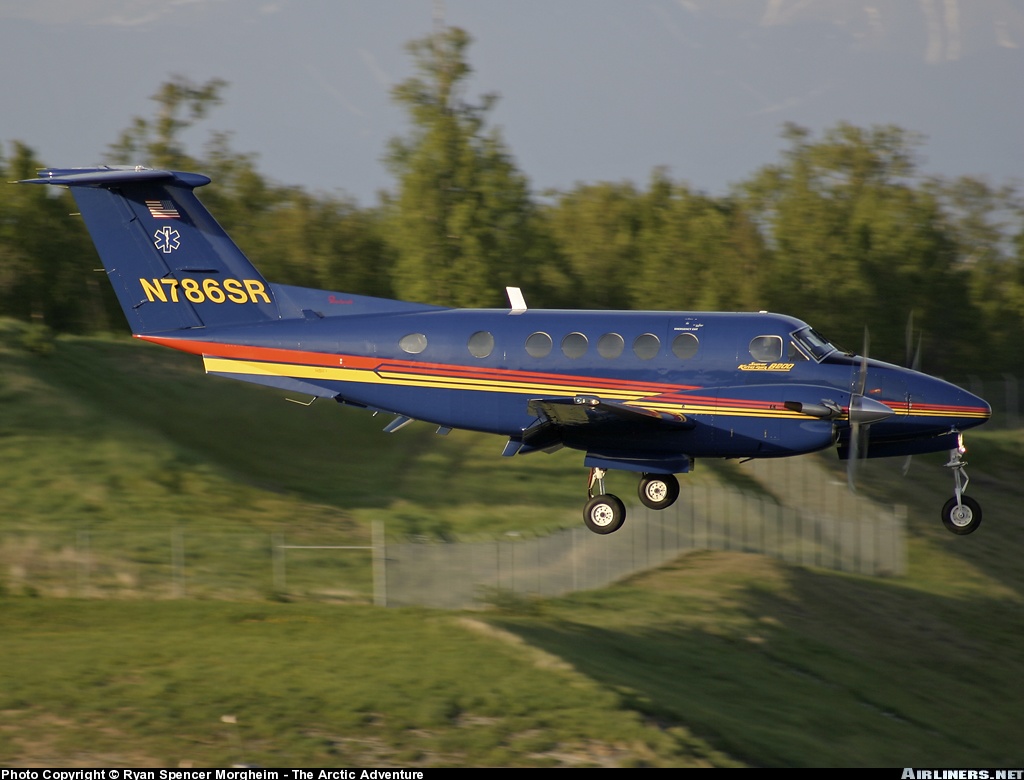
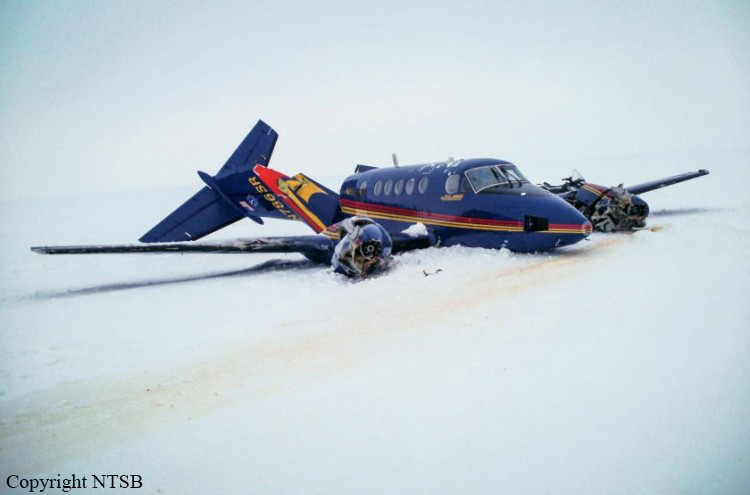
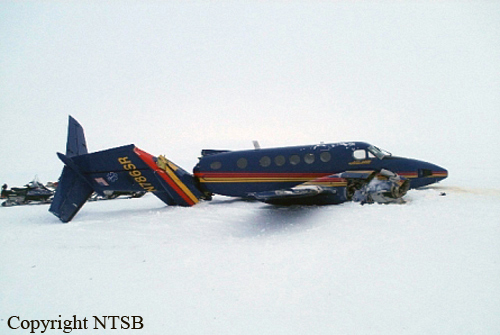
Crash of a Beechcraft B200 Super King Air in Atqasuk

Date & Time: May 16, 2011 at 0218 LT
Operator:
Registration:
N786SR
Flight Type:
Survivors:
Yes
Schedule:
Barrow - Atqasuk - Anchorage
MSN:
BB-1016
YOM:
1982
Location:
Crew on board:
1
Crew fatalities:
Pax on board:
2
Pax fatalities:
Other fatalities:
Total fatalities:
0
Captain / Total flying hours:
9000
Captain / Total hours on type:
500.00
Aircraft flight hours:
9847
Circumstances:
The pilot had worked a 10-hour shift the day of the accident and had been off duty about 2 hours when the chief pilot called him around midnight to transport a patient. The pilot accepted the flight and, about 2 hours later, was on an instrument approach to the airport to pick up the patient. While on the instrument approach, all of the anti-ice and deice systems were turned on. The pilot said that the deice boots seemed to be shedding the ice almost completely. He extended the flaps and lowered the landing gear to descend; he then added power, but the airspeed continued to decrease. The airplane continued to descend, and he raised the flaps and landing gear and applied full climb power. The airplane shuddered as it climbed, and the airspeed continued to decrease. The stall warning horn came on, and the pilot lowered the nose to increase the airspeed. The airplane descended until it impacted level, snow-covered terrain. The airplane was equipped with satellite tracking and engine and flight control monitoring. The minimum safe operating speed for the airplane in continuous icing conditions is 140 knots indicated airspeed. The airplane's IAS dropped below 140 knots 4 minutes prior to impact. During the last 1 minute of flight, the indicated airspeed varied from a high of 124.5 knots to a low of 64.6 knots, and the vertical speed varied from 1,965 feet per minute to -2,464 feet per minute. The last data recorded prior to the impact showed that the airplane was at an indicated airspeed of 68 knots, descending at 1,651 feet per minute, and the nose was pitched up at 20 degrees. The pilot did not indicate that there were any mechanical issues with the airplane. The chief pilot reported that pilots are on call for 14 consecutive 24-hour periods before receiving two weeks off. He said that the accident pilot had worked the previous day but that the pilot stated that he was rested enough to accept the mission. The chief pilot indicated he was aware that sleep cycles and circadian rhythms are disturbed by varied and prolonged activity. An NTSB study found that pilots with more than 12 hours of time since waking made significantly more procedural and tactical decision errors than pilots with less than 12 hours of time since waking. A 2000 FAA study found accidents to be more prevalent among pilots who had been on duty for more than 10 hours, and a study by the U.S. Naval Safety Center found that pilots who were on duty for more than 10 of the last 24 hours were more likely to be involved in pilot-at-fault accidents than pilots who had less duty time. The operator’s management stated that they do not prioritize patient transportation with regard to their medical condition but base their decision to transport on a request from medical staff and availability of a pilot and aircraft, and suitable weather. The morning of the accident, the patient subsequently took a commercial flight to another hospital to receive medical treatment for his non-critical injury/illness. Given the long duty day and the early morning departure time of the flight, it is likely the pilot experienced significant levels of fatigue that substantially degraded his ability to monitor the airplane during a dark night instrument flight in icing conditions. The NTSB has issued numerous recommendations to improve emergency medical services aviation operations. One safety recommendation (A-06-13) addresses the importance of conducting a thorough risk assessment before accepting a flight. The safety recommendation asked the Federal Aviation Administration to "require all emergency medical services (EMS) operators to develop and implement flight risk evaluation programs that include training all employees involved in the operation, procedures that support the systematic evaluation of flight risks, and consultation with others trained in EMS flight operations if the risks reach a predefined level." Had such a thorough risk assessment been performed, the decision to launch a fatigued pilot into icing conditions late at night may have been different or additional precautions may have been taken to alleviate the risk. The NTSB is also concerned that the pressure to conduct EMS operations safely and quickly in various environmental conditions (for example, in inclement weather and at night) increases the risk of accidents when compared to other types of patient transport methods, including ground ambulances or commercial flights. However, guidelines vary greatly for determining the mode of and need for transportation. Thus, the NTSB recommended, in safety recommendation A-09-103, that the Federal Interagency Committee on Emergency Medical Services (FICEMS) "develop national guidelines for the selection of appropriate emergency transportation modes for urgent care." The most recent correspondence from FICEMS indicated that the guidelines are close to being finalized and distributed to members. Such guidance will help hospitals and physicians assess the appropriate mode of transport for patients.
Probable cause:
The pilot did not maintain sufficient airspeed during an instrument approach in icing conditions, which resulted in an aerodynamic stall and loss of control. Contributing to the accident were the pilot’s fatigue, the operator’s decision to initiate the flight without conducting a formal risk assessment that included time of day, weather, and crew rest, and the lack of guidelines for the medical
community to determine the appropriate mode of transportation for patients.
Final Report:
Crash of a Xian MA60 off Kaimana: 25 killed

Date & Time: May 7, 2011 at 1405 LT
Type of aircraft:
Operator:
Registration:
PK-MZK
Survivors:
No
Schedule:
Jayapura - Sorong - Kaimana - Nabire - Biak
MSN:
06 03
YOM:
2008
Flight number:
MZ8968
Country:
Region:
Crew on board:
4
Crew fatalities:
Pax on board:
21
Pax fatalities:
Other fatalities:
Total fatalities:
25
Captain / Total flying hours:
24470
Captain / Total hours on type:
199.00
Copilot / Total flying hours:
370
Copilot / Total hours on type:
234
Aircraft flight hours:
615
Aircraft flight cycles:
764
Circumstances:
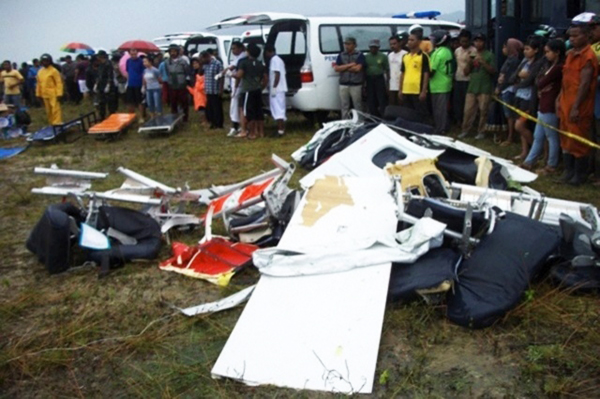
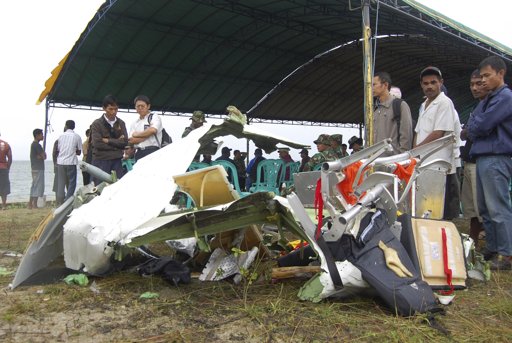
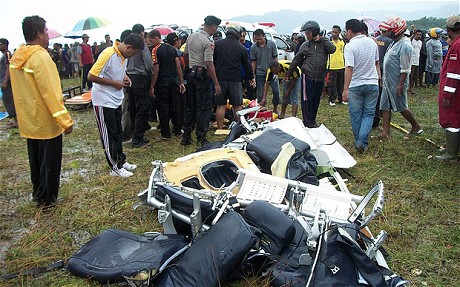
On 7 May 2011, an Xi ’An MA60 aircraft, registered PK-MZK was being operated by PT. Merpati Nusantara Airline as a scheduled passenger flight MZ 8968, from Domine Eduard Osok Airport, Sorong, Papua Barat to Utarom Airport (WASK), Kaimana1, Papua Barat. The accident flight was part of series of flight scheduled for the crew. The aircraft departed from Sorong at 0345 UTC2 and with estimated arrival time in Kaimana at 0454 UTC. In this flight, the Second in Command (SIC) was as Pilot Flying (PF) and the Pilot in Command (PIC) as Pilot Monitoring (PM). On board the flight were 2 pilots, 2 flight attendants, 2 engineers and 19 passengers consisting of 16 adults, 1 child and 2 infants. The flight from Sorong was planned under the Instrument Flight Rules (IFR)3. The destination, Kaimana, had no published instrument approach procedure. Terminal area operations, including approach and landing, were required to be conducted under the Visual Flight Rules (VFR). At about 0425 UTC, after passing waypoint JOLAM the crew of MZ 8968 contacted Kaimana Radio and informed that the weather at Kaimana was raining, horizontal visibility of 3 to 8 kilometers, cloud Cumulonimbus broken at 1500 feet, south westerly wind at a speed of 3 knots, and ground temperature 29°C. The last communication with the crew of MZ 8968 occurred at about 0450 UTC. The flight crew asked whether there were any changes in ground visibility and the AFIS officer informed them that the ground visibility remained at 2 kilometer. The visual flight rules requires a visibility of minimum 5 km and cloud base higher than 1500 feet. The evidence indicates that during the final segment of the flight, both crew member were looking outside the aircraft to sight the runway. During this period the flight path of the aircraft varied between 376 to 585 feet and the bank angle increased from 11 to 38 degree to the left. The rate of descent then increased significantly up to about 3000 feet per minute and finally the aircraft impacted into the sea. The accident site was about 800 meters south west of the beginning of runway 01 or 550 meters from the coastline. Most of the wreckage were submerged in the shallow sea between 7 down to 15 meter deep. All 25 occupants were fatally injured. The aircraft was destroyed and submerged into the sea.
Probable cause:
FINDINGS:
1. The aircraft was airworthy prior the accident. There is no evidence that the aircraft had malfunction during the flight.
2. The crew had valid flight license and medical certificate. There was no evidence of crew incapacitation.
3. In this flight the SIC acted as Pilot Flying until the PIC took control of the aircraft at the last part of the flight.
4. According to company operation manual (COM), in a VMC (Visual Meteorological Condition), a “minimum, minimum” EGPWS alert while the approach was not stabilized should be followed by the action of abandoning the approach.
5. The cockpit crew did not conduct any crew approach briefing and checklist reading.
6. As it was recorded in the CVR during the final segment of the flight, both crews member were looking out-side to look for the runway. It might reduce the situational awareness.
7. At the final segment of the flight, the FDR recorded as follows:
• The approach was discontinued started at 376 feet pressure altitude (250 feet radio altitude) and reached the highest altitude of 585 feet pressure altitude. While climbing the aircraft was banking to the left reaching a roll angle of 38 degree. The torque of both engines was increased reaching 70% and 82% for the left and right engine respectively.
• During the go-around, the flaps were retracted to 5 and subsequently to 0 position, and the landing gears were retracted. The aircraft started to descend, and the pitch angle reached 13 degree nose down.
• The rate of descend increased significantly reaching about 3000 feet per minute, and finally the aircraft crashed into the shallow sea.
8. The rapid descent was mainly a result of a combination of situations such as high bank angle (up to 38 deg to the left) and the flaps retracted to 5 and subsequently to 0 position, and also the combination of other situations: engine torque, airspeed, and nose-down pitch.
9. The ERS button was determined in the CRUISE mode instead of TOGA mode. This had led the torque reached 70% and 82% during discontinuing the approach.
10. The flaps were retracted to 5 and subsequently to 0, while the MA-60 standard go-around procedure is to set the flaps at 15.
11. There was limited communications between the crew along the flight. This type of interaction indicated that there was a steep trans-cockpit authority gradient.
12. The SIC was trained in the first three batches which was conducted by the aircraft manufacturer instructor and syllabus, while the PIC was trained by Merpati instructor using modified syllabus. Inadequacy/ineffectivity in the training program may lead to actions that deviated from the standard procedure and regression to the previous type.
13. The investigation found that the Flight Crew Operation Manual (FCOM) and Aircraft Maintenance Manual (AMM) used non-standard English Aviation Language. This finding was supported by a review performed by the Australian Transport Safety Bureau (ATSB).
OTHER FINDINGS:
1. The DFDR does not have the Lateral and Longitudinal acceleration. These two parameters which were non safety related items were mandatory according to the CASR parts 121.343 and 121.344, and at the time of the MA 60 certification, the CCAR 121 did not require those two parameters.
2. Due to impact forces and immersion in water, the Emergency Locator Transmitter (ELT) did not transmit any signal.
FACTORS:
Factors contributed to the accident are as follows:
1. The flight was conducted in VFR in condition that was not suitable for visual approach when the visibility was 2 km. In such a situation a visual approach should not have been attempted.
2. There was no checklist reading and crew briefing.
3. The flight crew had lack of situation awareness when tried to find the runway, and discontinued the approach.
4. The missed approach was initiated at altitude 376 feet pressure altitude (250 feet radio altitude), the pilot open power to 70% and 82% torque followed by flap retracted to 5 and subsequently to 0. The rapid descent was mainly caused by continuously increase of roll angle up to 38 degree to the left and the retraction of flaps from 15 to 0 position.
5. Both crew had low experience/flying time on type.
6. Inadequacy/ineffectivity in the training program may lead to actions that deviated from the standard procedure and regression to the previous type.
Final Report:
Crash of a BAe 125-700A off Loreto

Date & Time: May 5, 2011 at 1155 LT
Type of aircraft:

Operator:
Registration:
N829SE
Flight Type:
Survivors:
Yes
MSN:
257095
YOM:
1980
Country:
Crew on board:
2
Crew fatalities:
Pax on board:
0
Pax fatalities:
Other fatalities:
Total fatalities:
0
Circumstances:
Shortly after takeoff from Loreto Airport, the crew encountered technical problems and elected to return. On final approach over the Gulf of California, in a gear up configuration, the aircraft struck the water surface and came to rest into the sea close to the shore, few dozen metres short of runway 34 threshold. Both pilots escaped uninjured while the aircraft was damaged beyond repair.