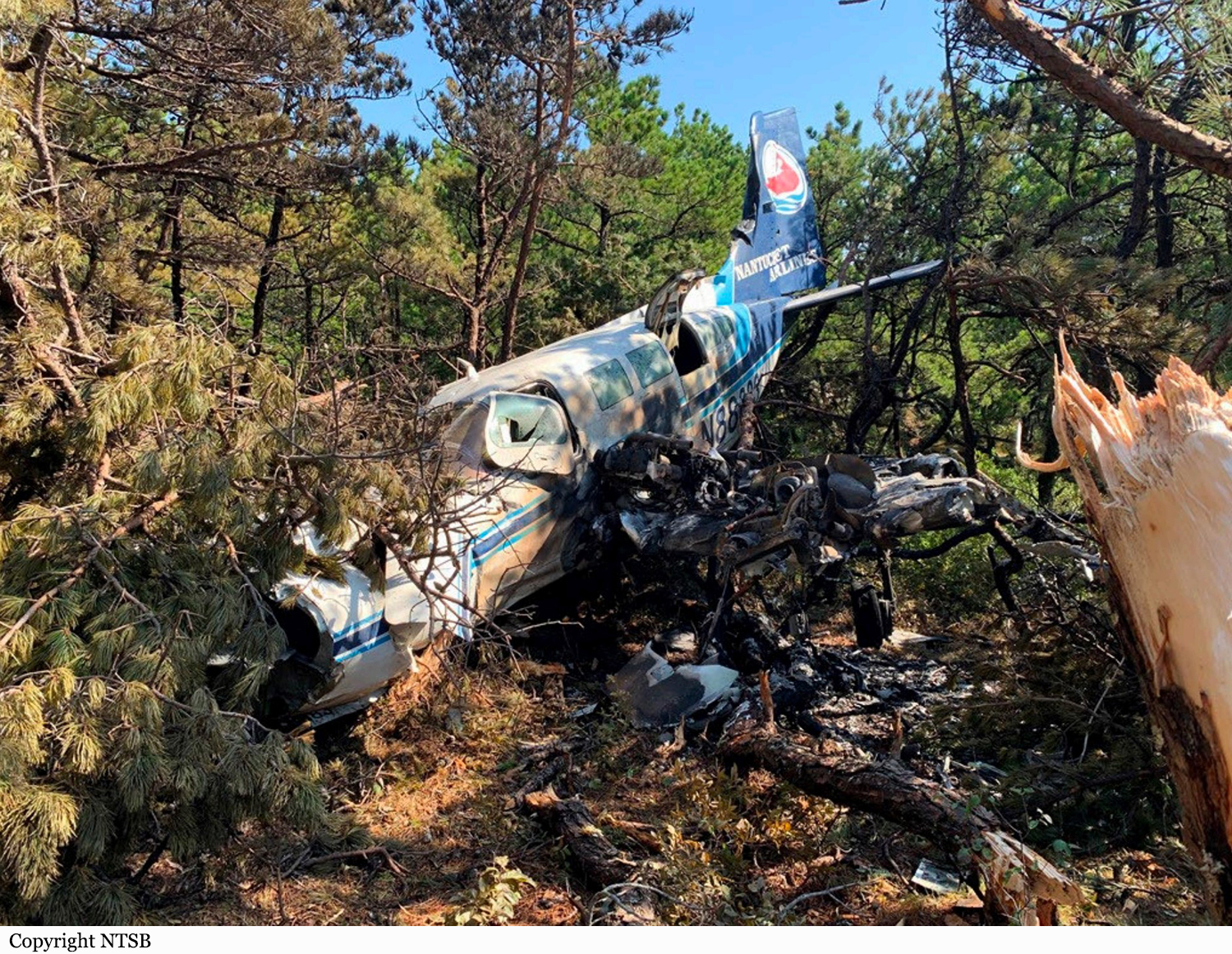
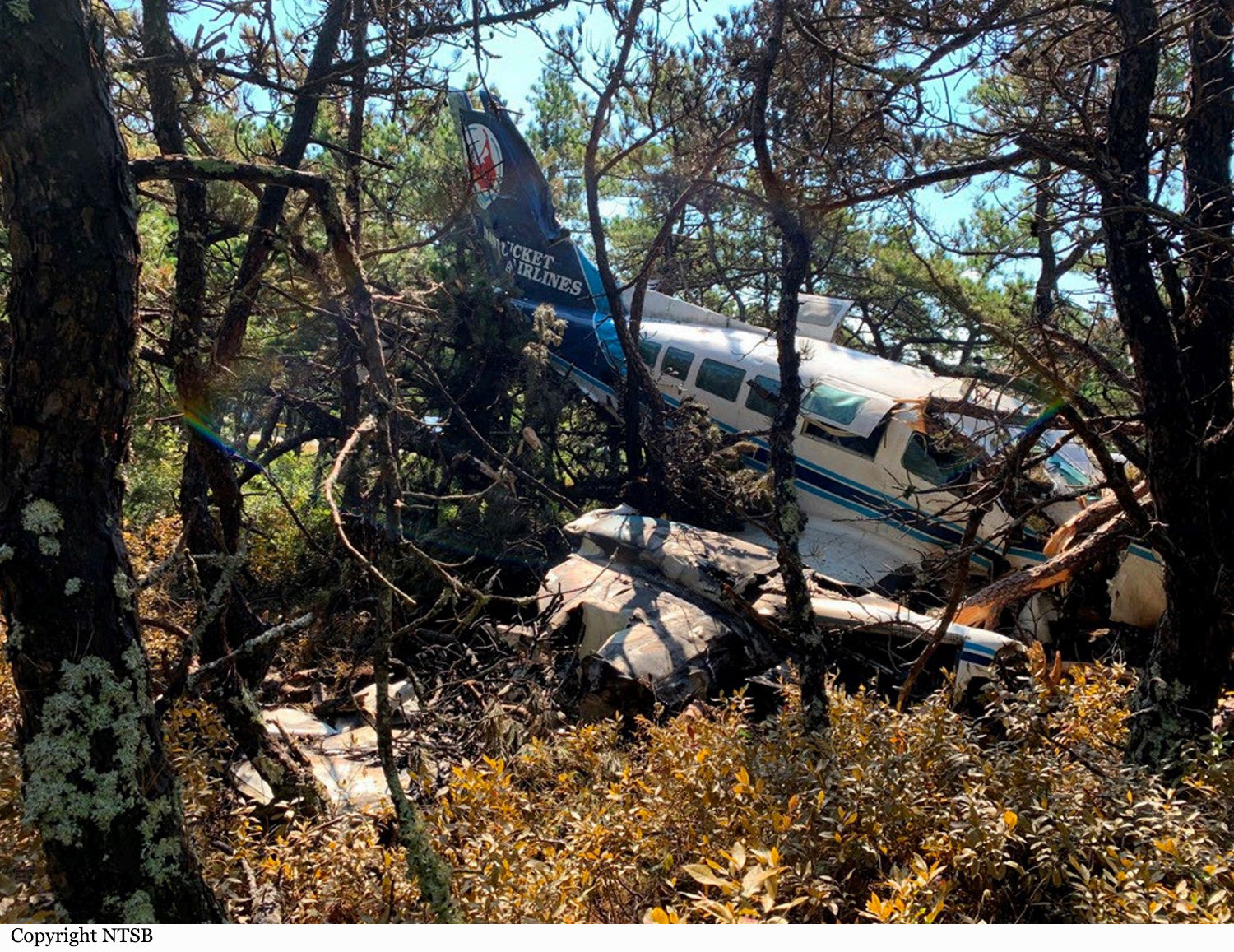
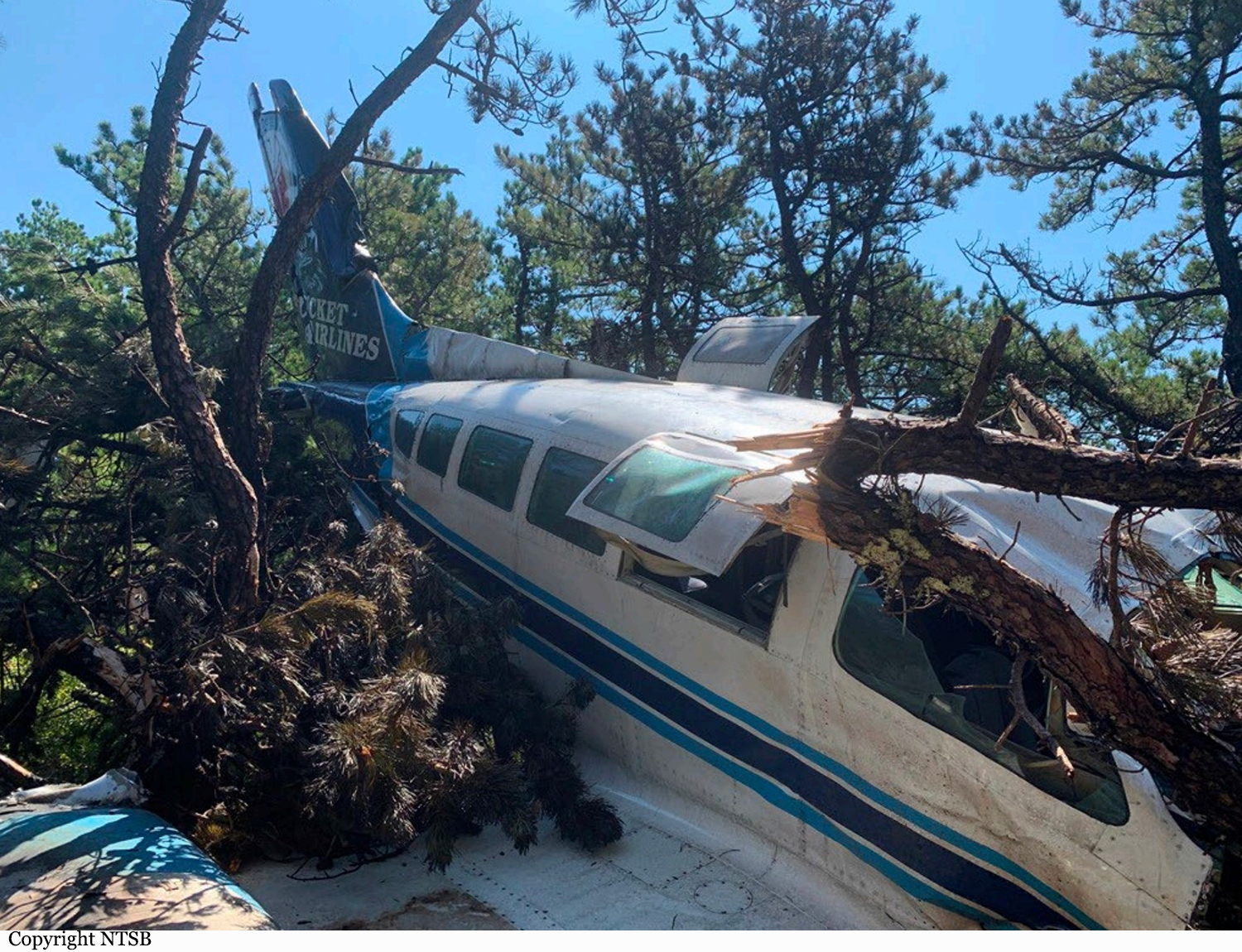
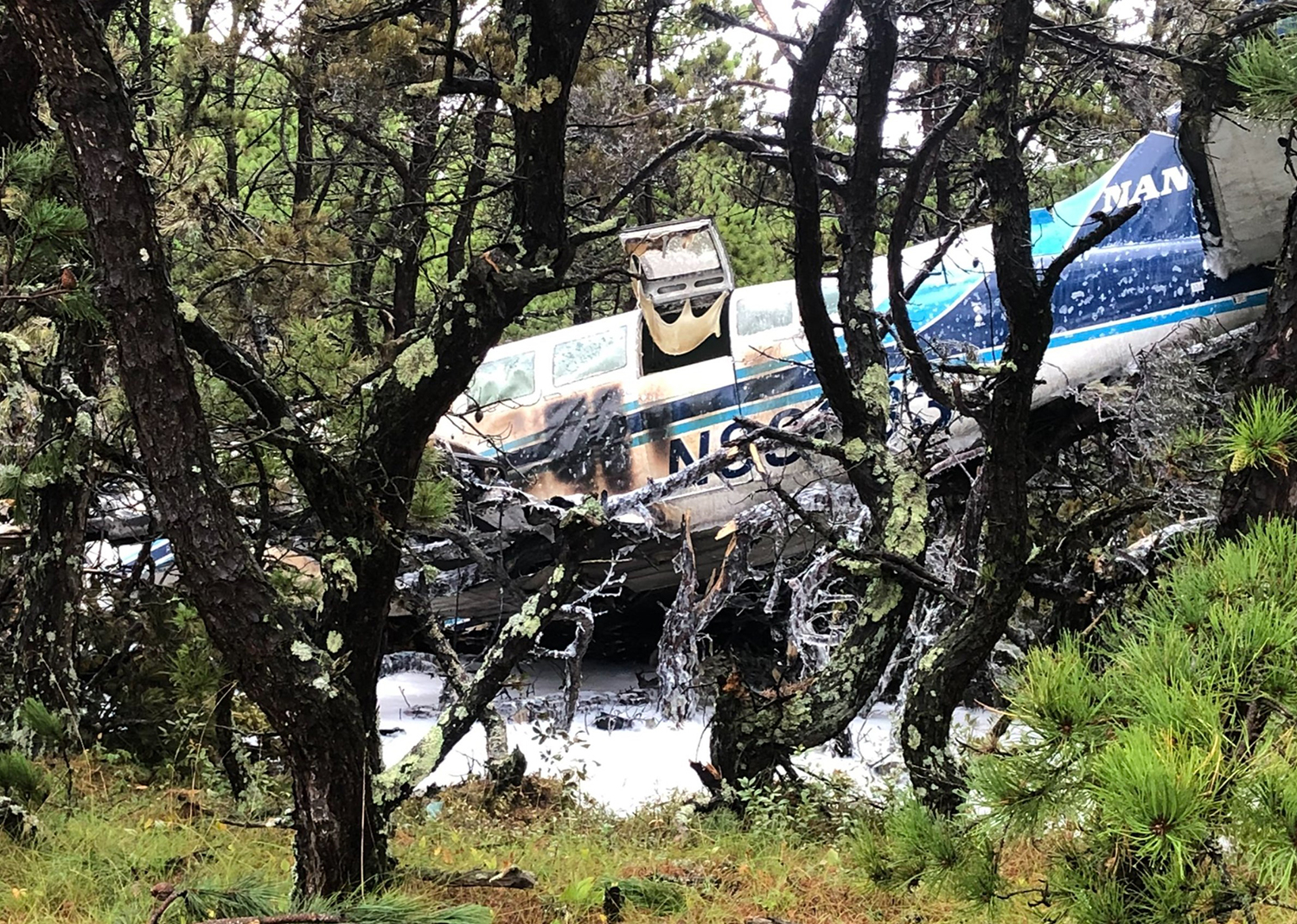
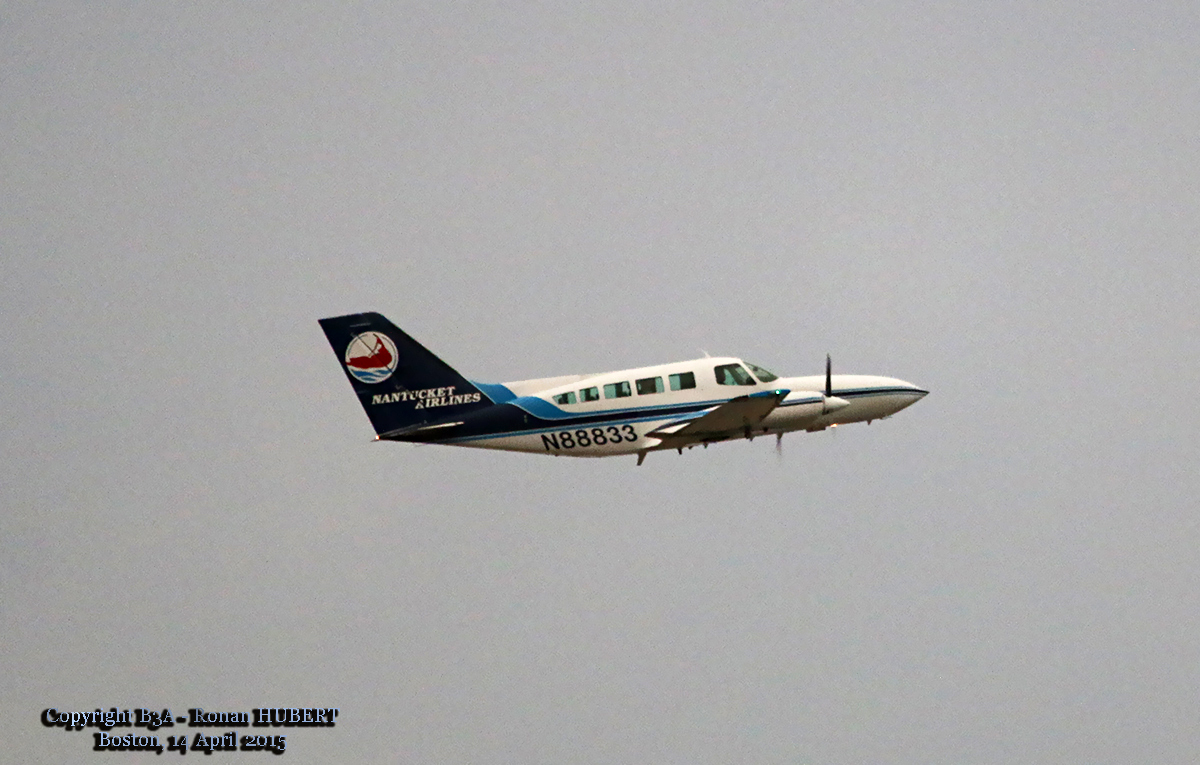
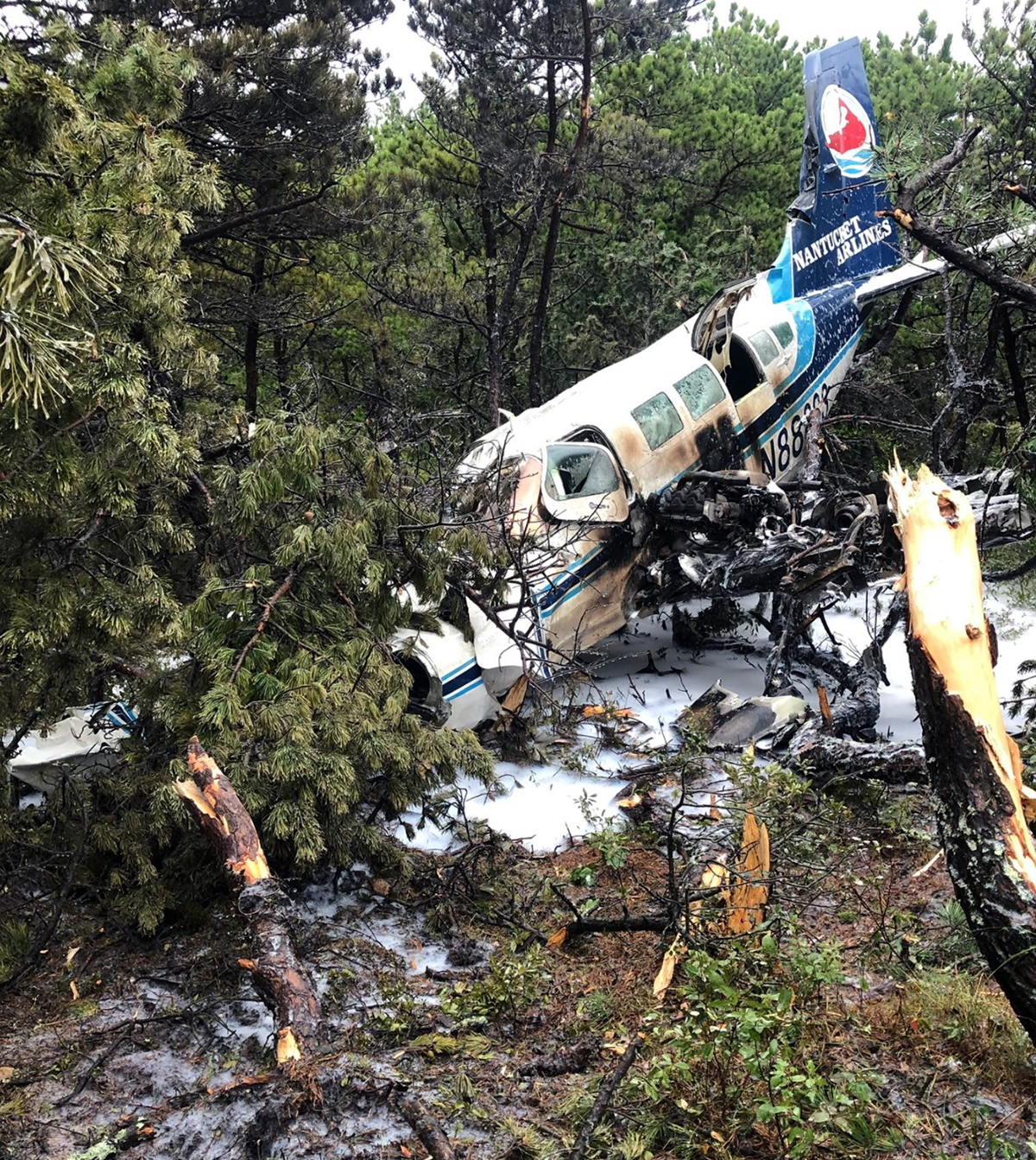
Crash of a Cessna 402C in Provincetown

Date & Time: Sep 9, 2021 at 1600 LT
Type of aircraft:
Operator:
Registration:
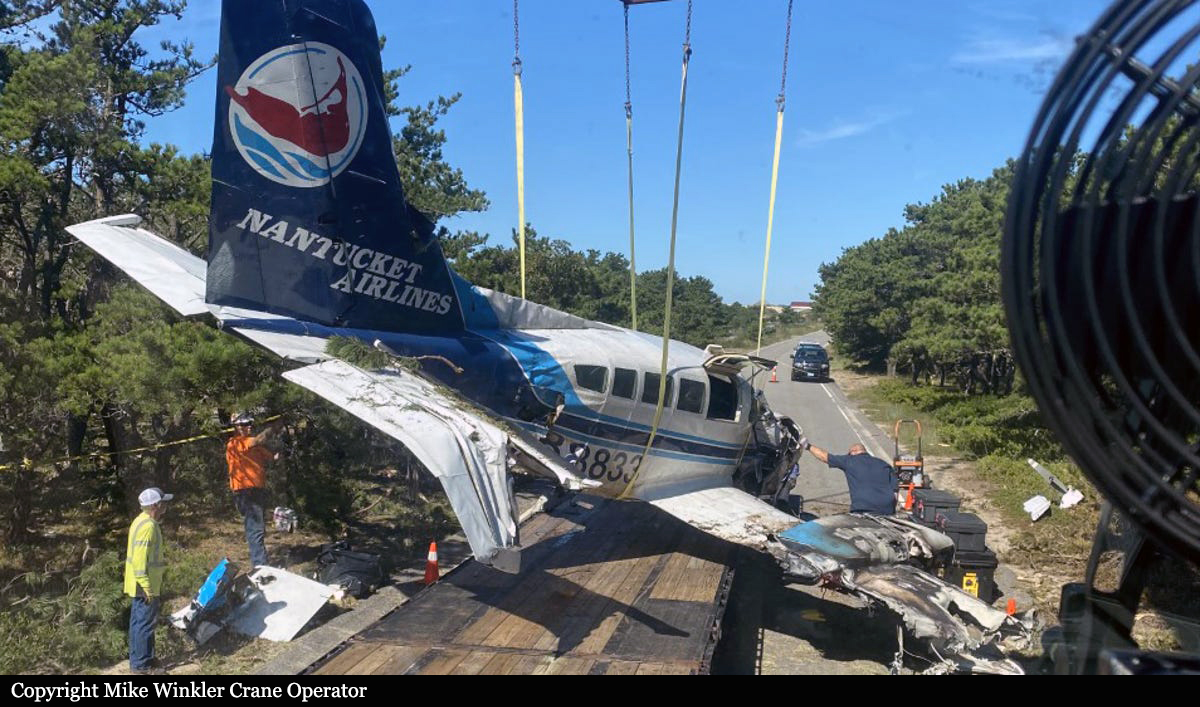
N88833
Survivors:
Yes
Schedule:
Boston – Provincetown
MSN:
402C-0265
YOM:
1979
Flight number:
9K2072
Crew on board:
1
Crew fatalities:
Pax on board:
6
Pax fatalities:
Other fatalities:
Total fatalities:
0
Captain / Total flying hours:
17617
Captain / Total hours on type:
10000.00
Aircraft flight hours:
36722
Circumstances:
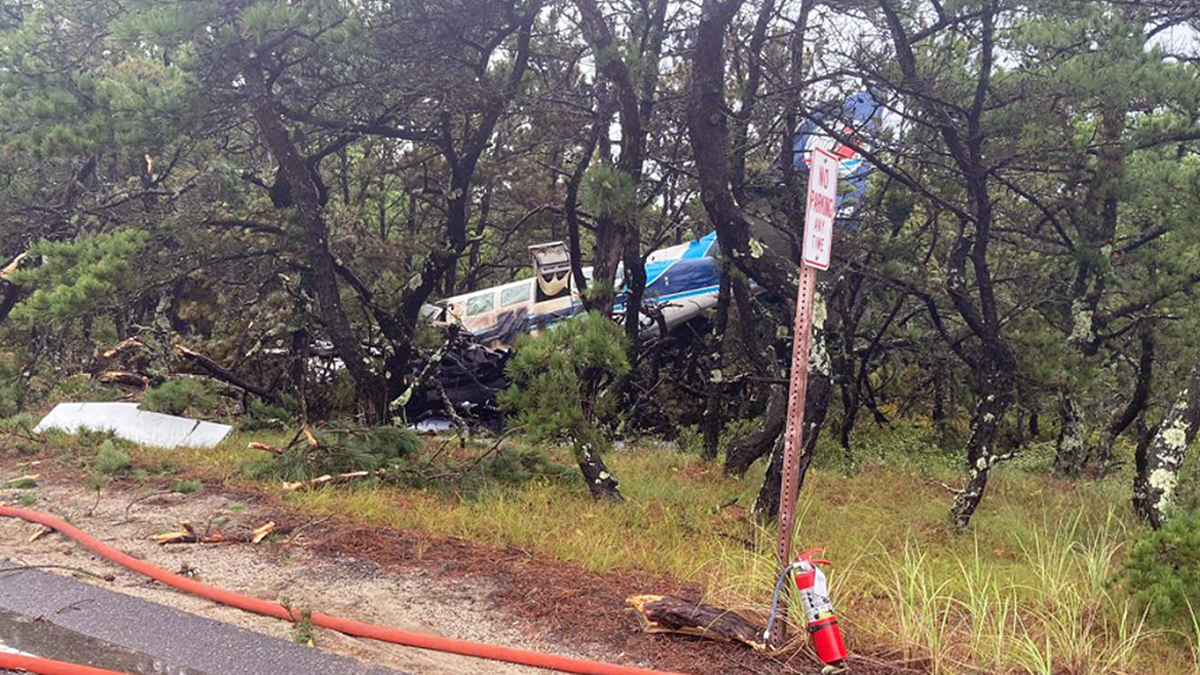
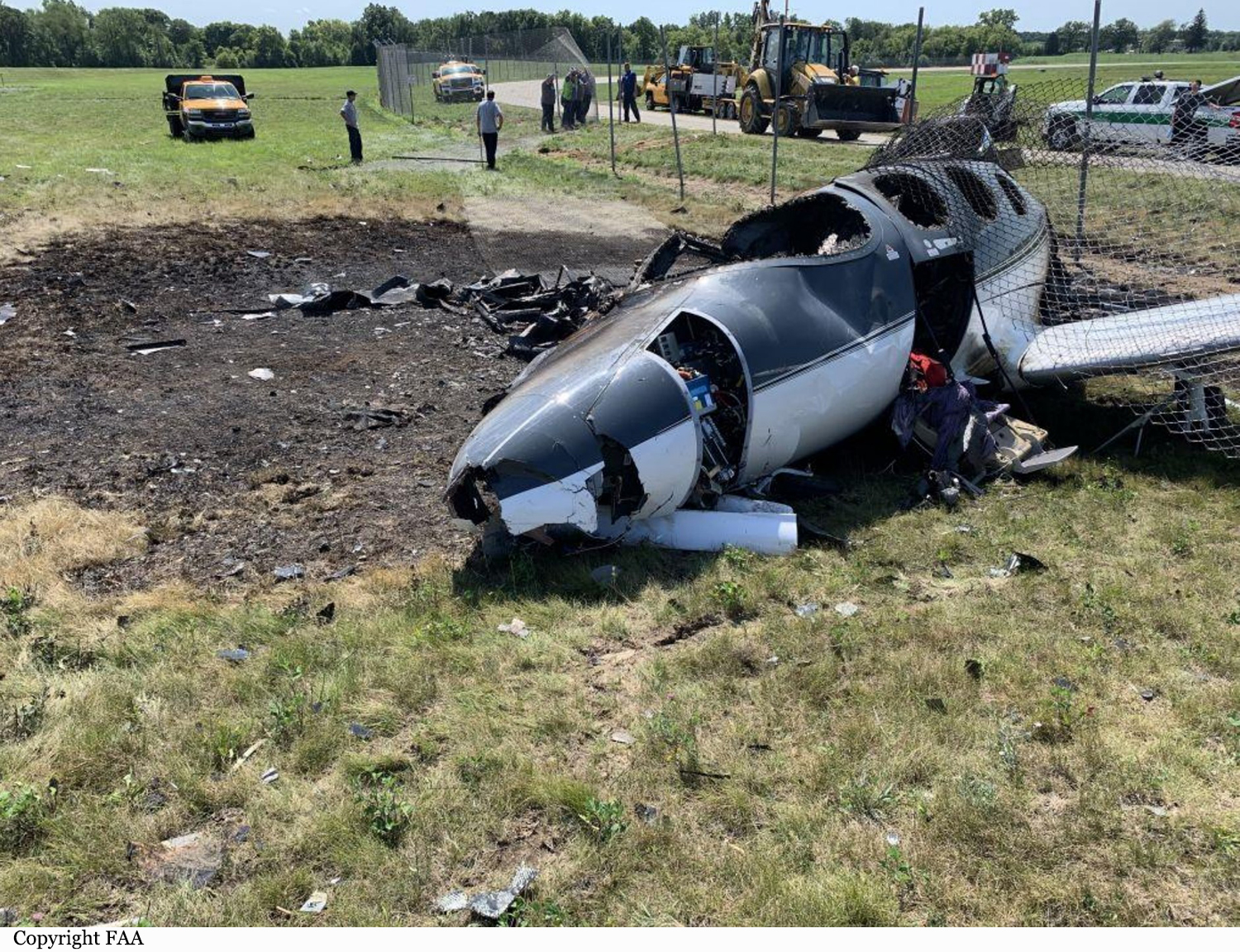
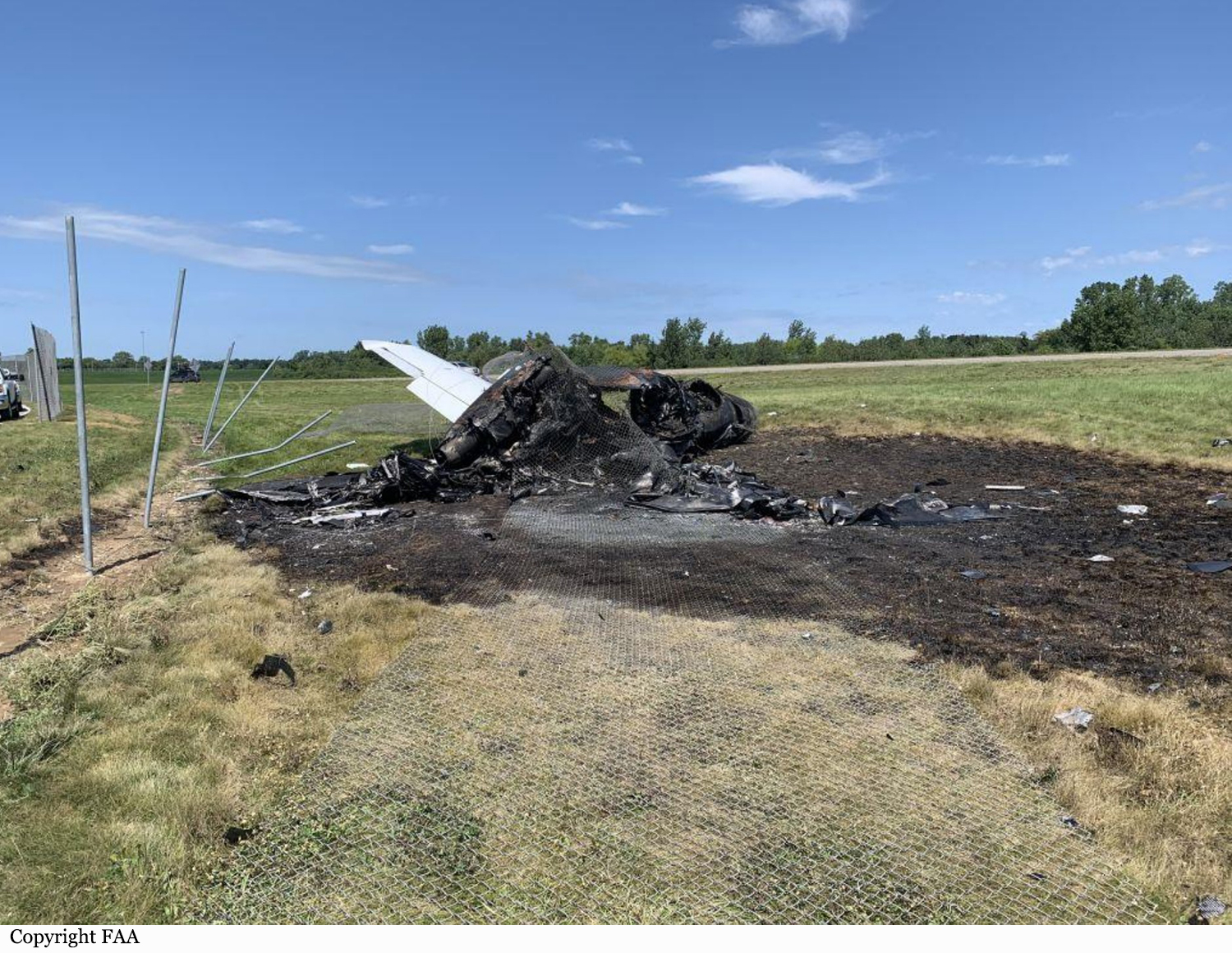
The pilot was transporting six passengers on a scheduled revenue flight in instrument meteorological conditions. The pilot familiarized himself with the weather conditions before departure and surmised that he would be executing the instrument landing system (ILS) instrument approach for the landing runway at the destination airport. The operator prohibited approaches to runways less than 4,000 ft long if the tailwind component was 5 knots or more. The landing runway was 498 ft shorter than the operator-specified length. The pilot said he obtained the automated weather observing system (AWOS) data at least twice during the flight since he was required to obtain it before starting the instrument approach and then once again before he crossed the approach’s final-approach-fix (FAF). Though the pilot could not recall when he checked the AWOS, he said the conditions were within the airplane and company performance limits and he continued with the approach. A review of the wind data at the time he accepted the approach revealed the tailwind component was within limitations. As the airplane approached the FAF, wind speed increased, and the tailwind component ranged between 1 and 7 knots. Since the exact time the pilot checked the AWOS is unknown, it is possible that he obtained an observation when the tailwind component was within operator limits; however, between the time that the airplane crossed over the FAF and the time it landed, the tailwind component increased above 5 knots. The pilot said the approach was normal until he encountered a strong downdraft when the airplane was about 50 to 100 ft above the ground. He said that the approach became unstabilized and that he immediately executed a go-around; the airplane touched down briefly before becoming airborne again. The pilot said he was unable to establish a positive rate of climb and the airplane impacted trees off the end of the runway. The accident was captured on three airport surveillance cameras. A study of the video data revealed the airplane made a normal landing and touched down about 500 ft from the beginning of the runway. It was raining heavily at the time. The airplane rolled down the runway for about 21 seconds, and then took off again. The airplane entered a shallow climb, collided with trees, and caught on fire. All seven occupants were seriously injured and the airplane was destroyed.
Probable cause:
The pilot’s delayed decision to perform an aborted landing late in the landing roll with insufficient runway remaining. Contributing to the accident was the pilot’s failure to execute a go-around once the approach became unstabilized, per the operator’s procedures.
Final Report:
Crash of a Cirrus Vision SF50 in Lansing

Date & Time: Aug 24, 2021 at 1858 LT
Type of aircraft:
Operator:
Registration:
N1GG
Flight Phase:
Flight Type:
Survivors:
Yes
Schedule:
Lansing – Melbourne
MSN:
0202
YOM:
2020
Crew on board:
1
Crew fatalities:
Pax on board:
3
Pax fatalities:
Other fatalities:
Total fatalities:
0
Captain / Total flying hours:
2000
Captain / Total hours on type:
600.00
Aircraft flight hours:
293
Circumstances:
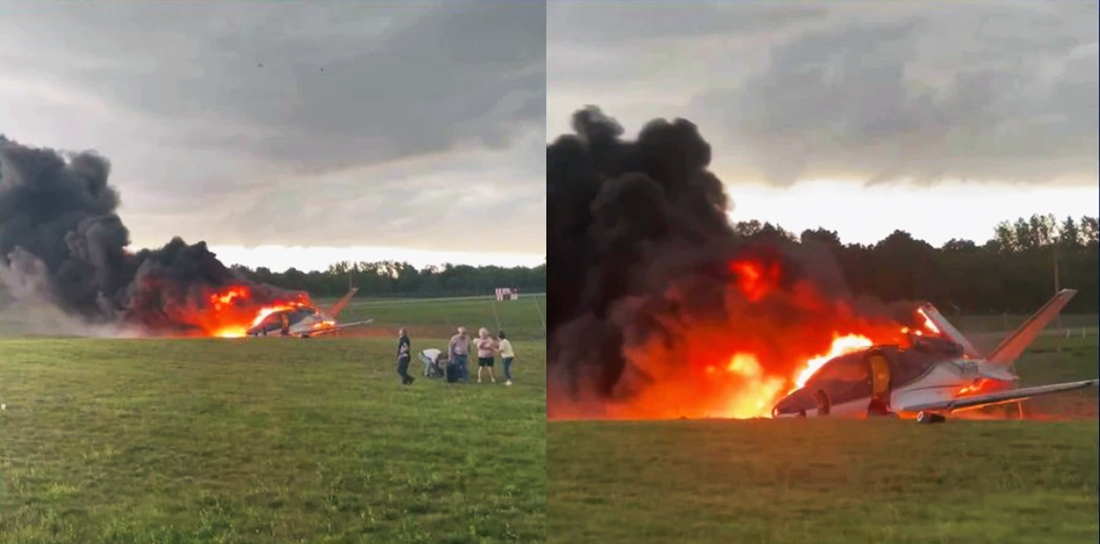
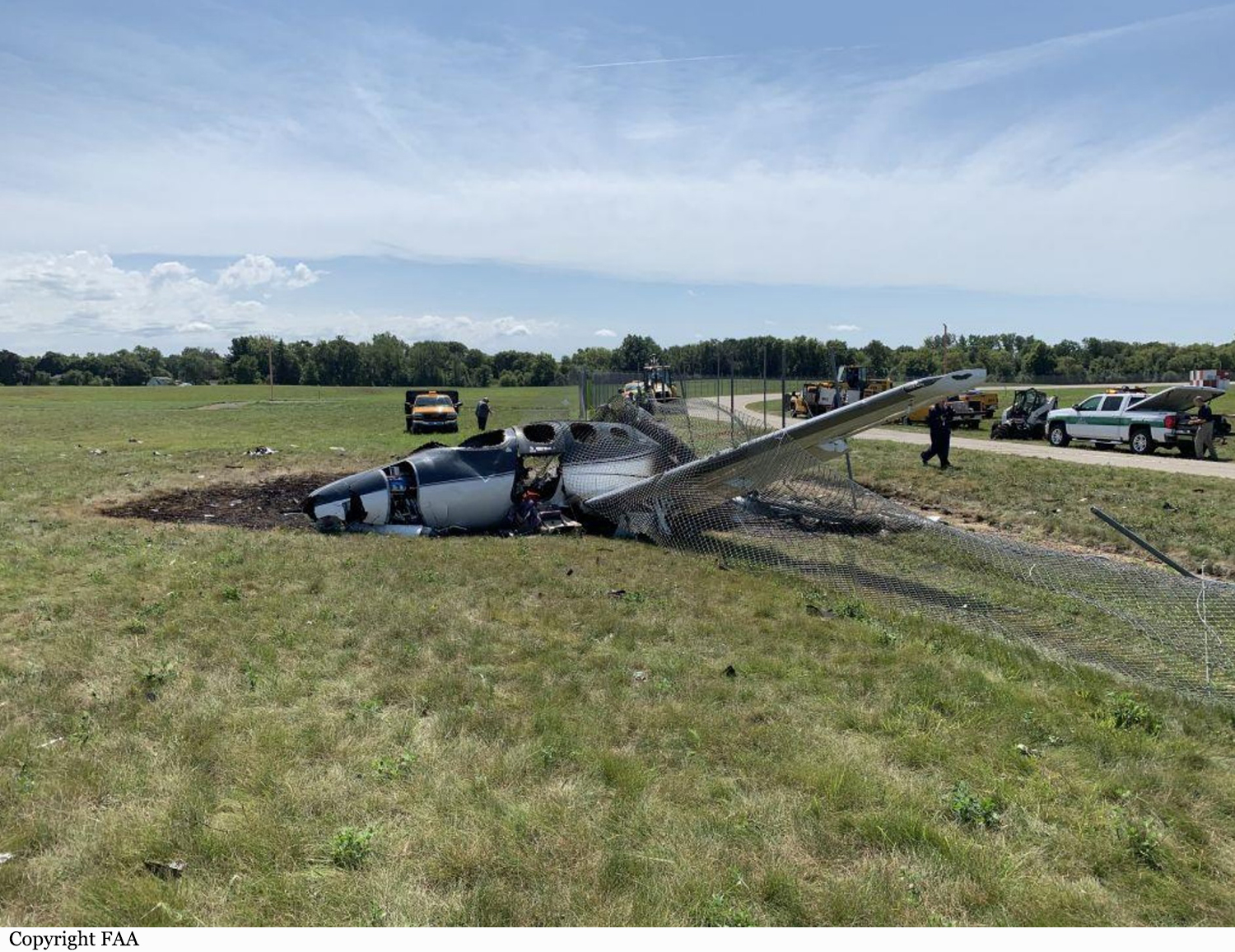
The airport tower controller initially assigned the pilot to take off from runway 28L, which presented a 7-knot headwind. Shortly afterward, the controller informed the pilot of “a storm rolling in . . . from west to east,” and offered runway 10R. The pilot accepted the opposite direction runway for departure and added, “we’re ready to go when we get to the end . . . before the storm comes.” About 4 seconds after the airplane began accelerating during takeoff, the controller advised the pilot of a wind shear alert of plus 20 knots (kts) at a 1-mile final for runway 28L, and the pilot acknowledged the alert. In a postaccident statement, the pilot stated that departing with a 7-kt tailwind was within the operating and performance limitations of the airplane. The pilot reported that after a takeoff ground roll of about 4,000 ft “the left rudder didn’t seem to be functioning properly” and he decided to reject the takeoff. However, when he applied full braking, the airplane tended to turn to the right. He used minimal braking consistent with maintaining directional control of the airplane. The airplane ultimately overran the runway, impacted the airport perimeter fence, and encountered a ditch before it came to a rest. A postimpact fire ensued and consumed a majority of the fuselage. All four occupants evacuated safely.
Probable cause:
The pilot’s decision to depart with a tailwind as a thunderstorm approached, which resulted in a loss of airplane performance due to an encounter with a significant tailwind gust and a subsequent runway excursion.
Final Report:
Crash of a Gulfstream GIV in Fort Lauderdale

Date & Time: Aug 21, 2021 at 1340 LT
Type of aircraft:
Operator:
Registration:
N277GM
Flight Phase:
Survivors:
Yes
Schedule:
Fort Lauderdale – Las Vegas
MSN:
1124
YOM:
1989
Crew on board:
4
Crew fatalities:
Pax on board:
10
Pax fatalities:
Other fatalities:
Total fatalities:
0
Captain / Total flying hours:
20053
Captain / Total hours on type:
3120.00
Copilot / Total flying hours:
1617
Copilot / Total hours on type:
204
Aircraft flight hours:
12990
Circumstances:
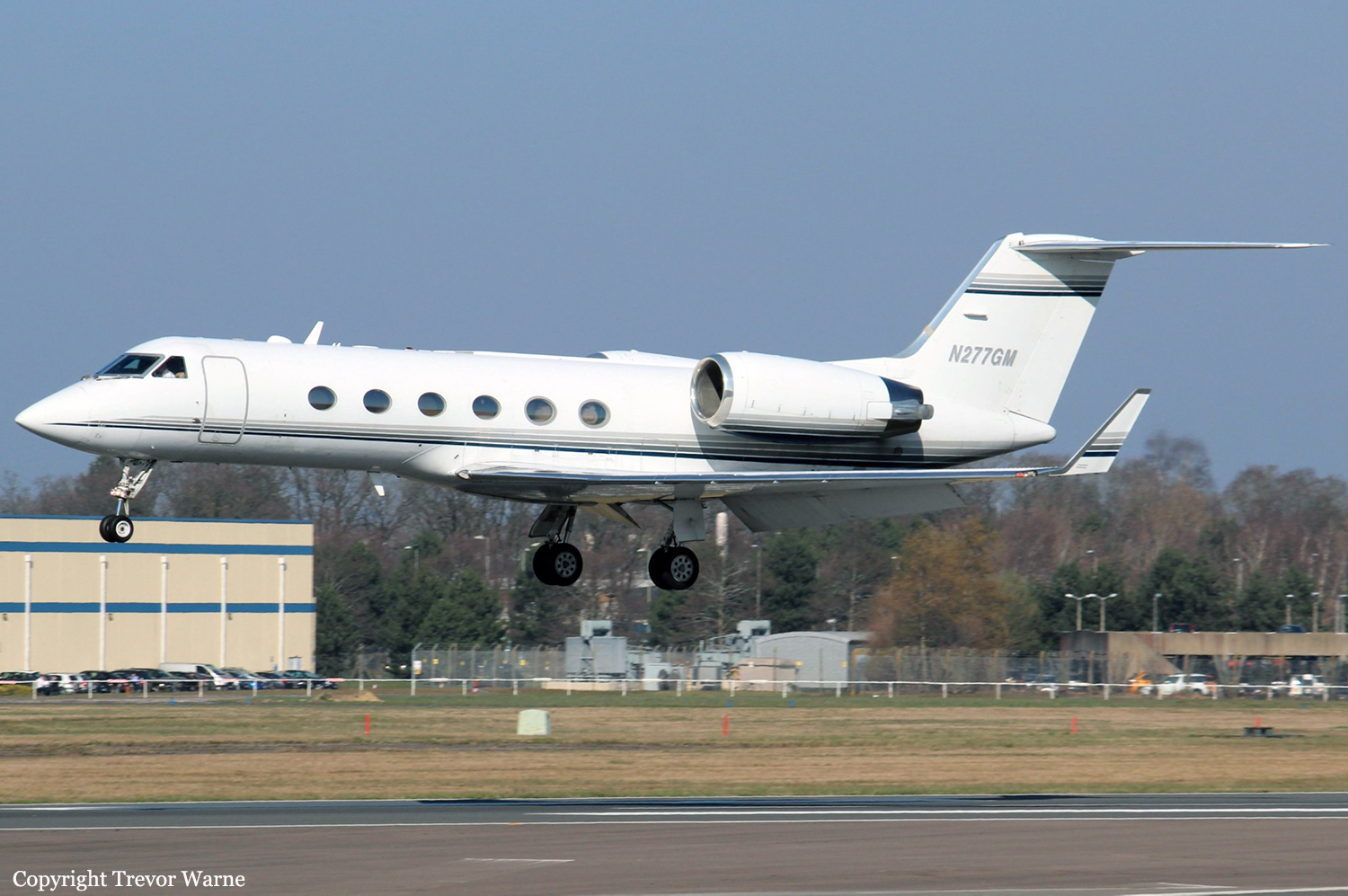
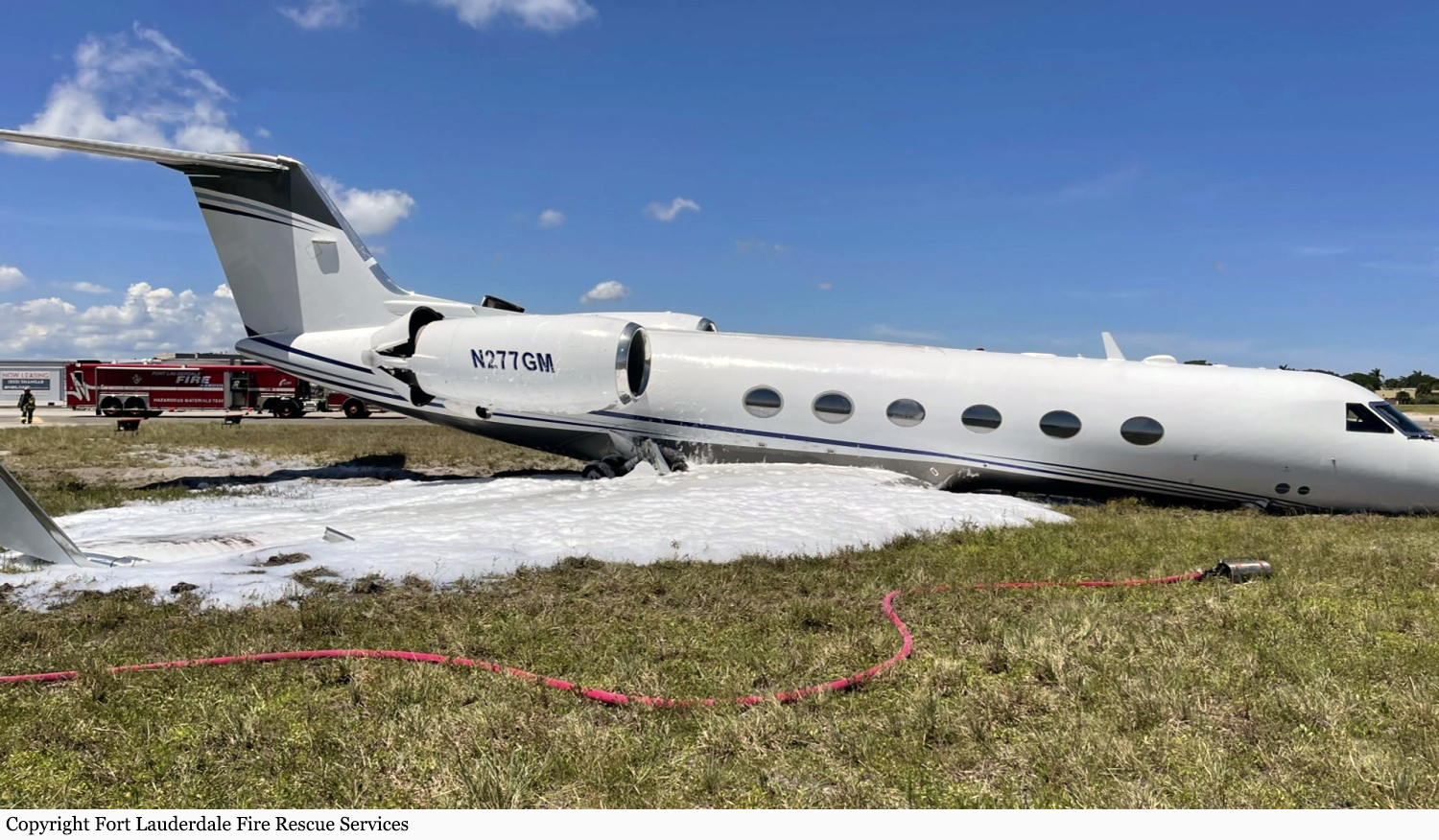
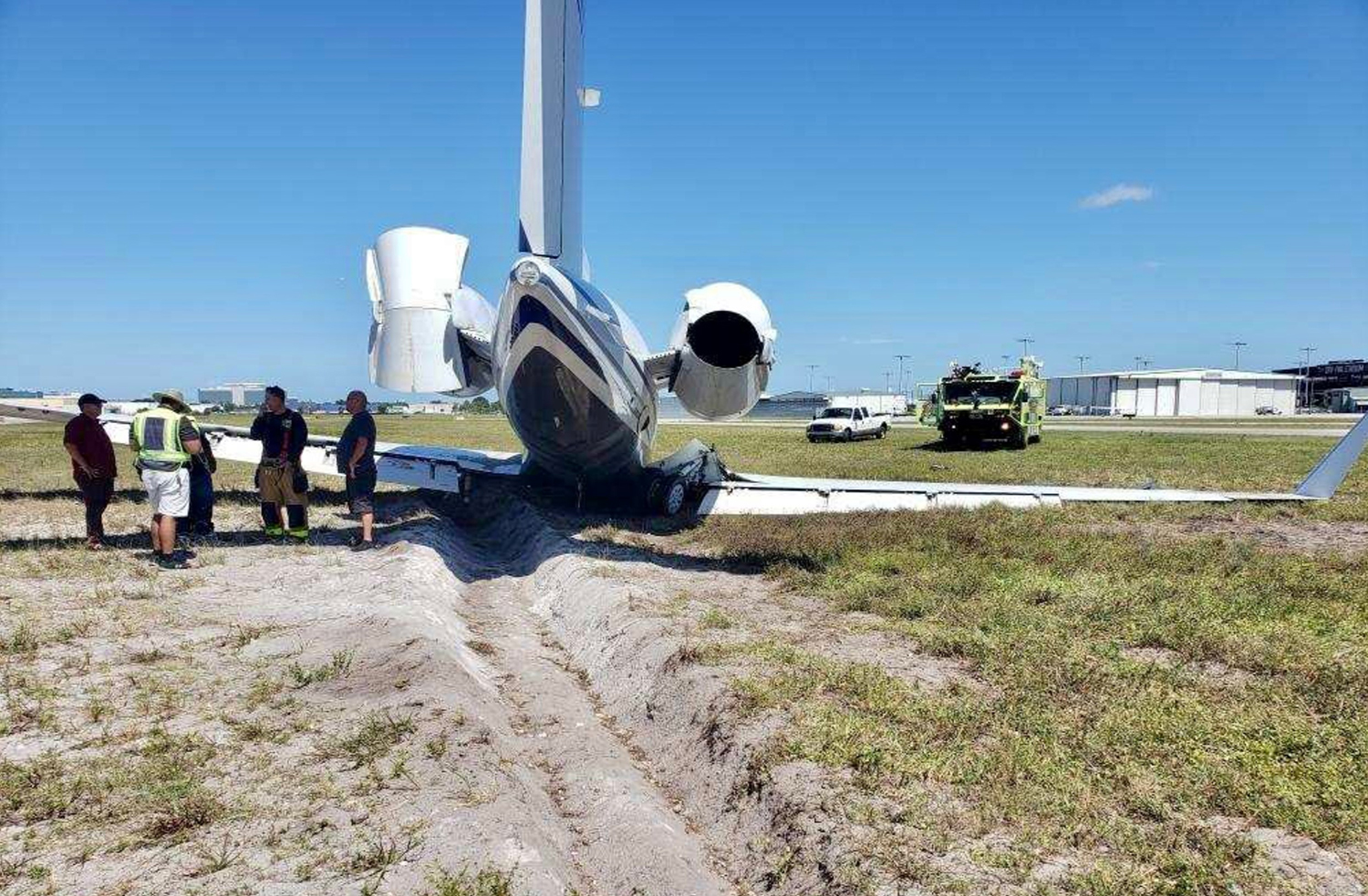
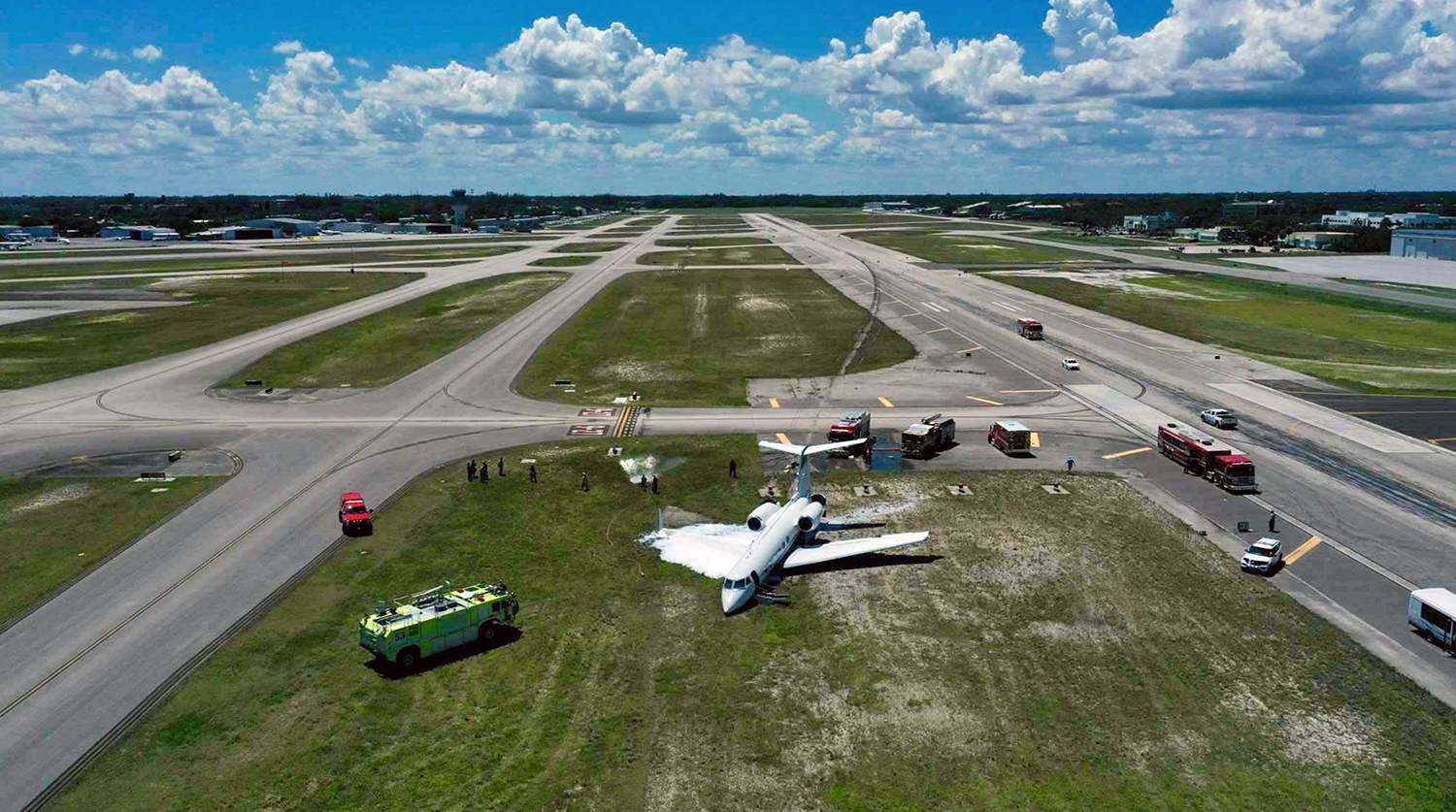
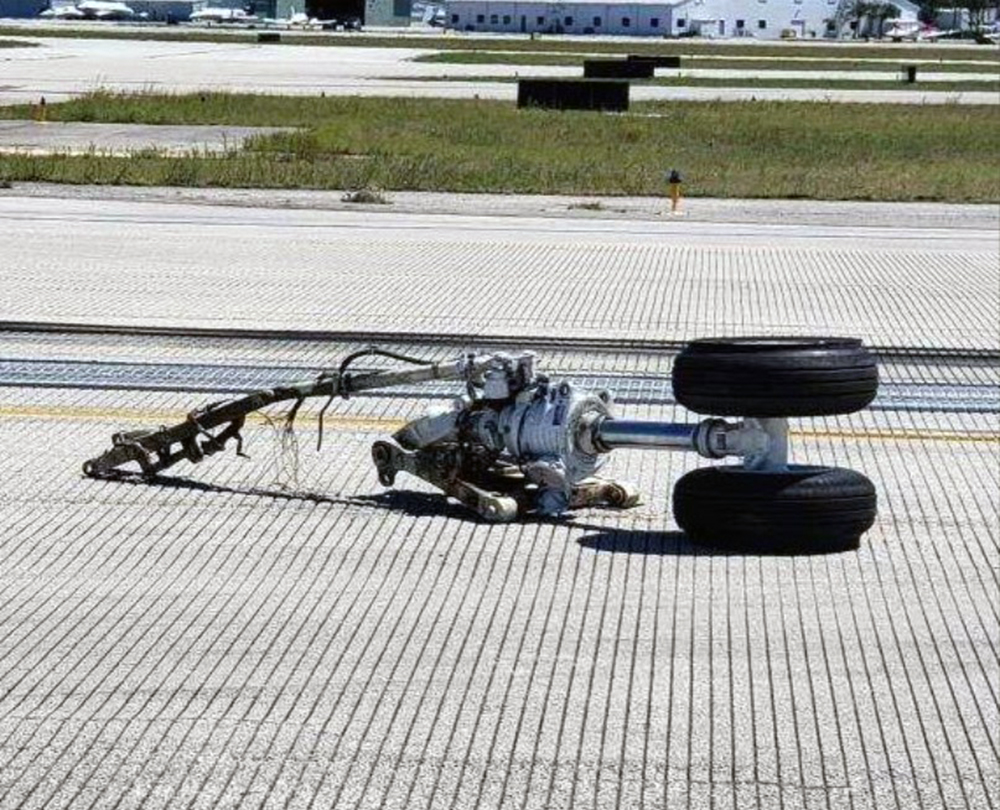
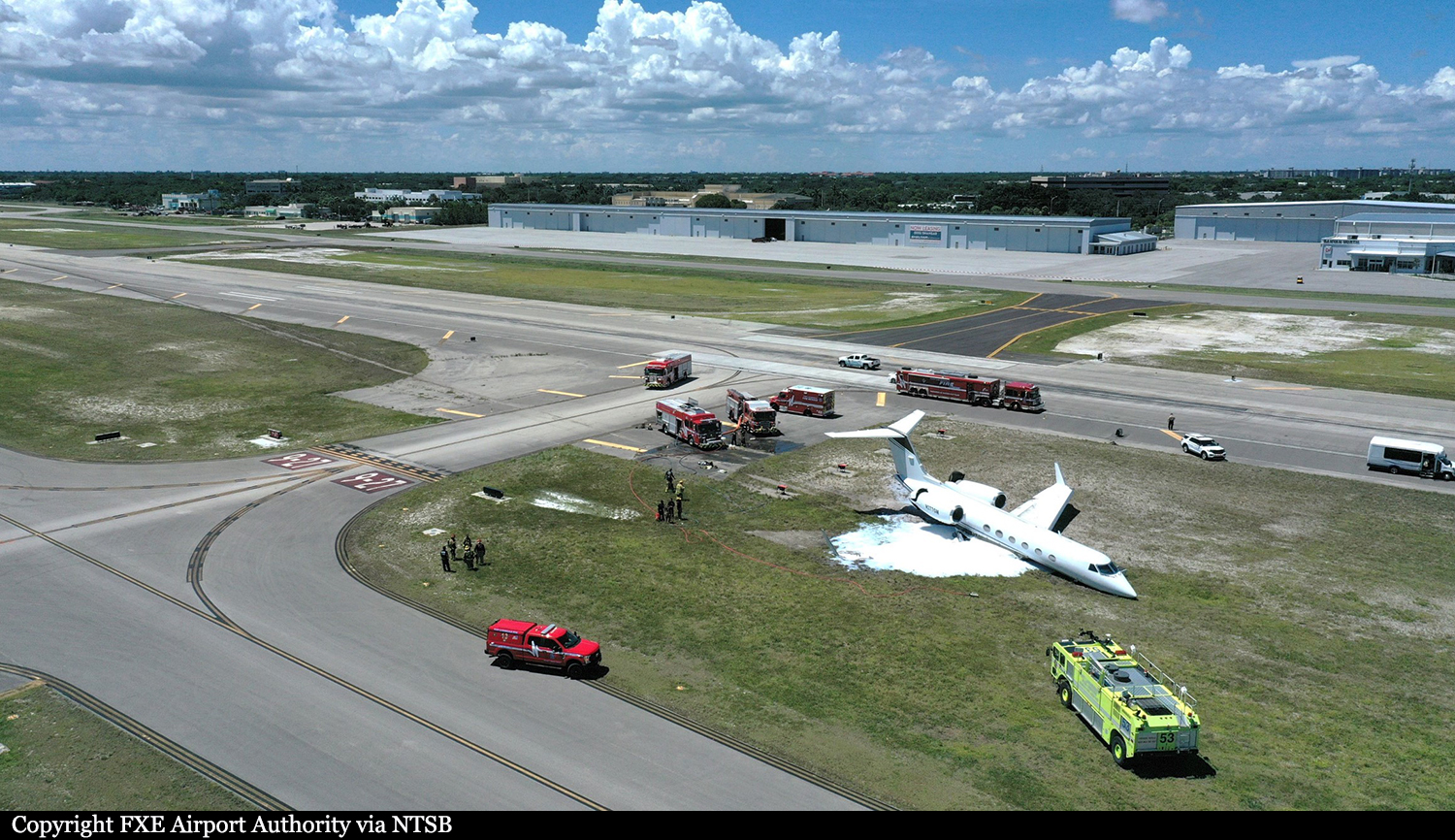
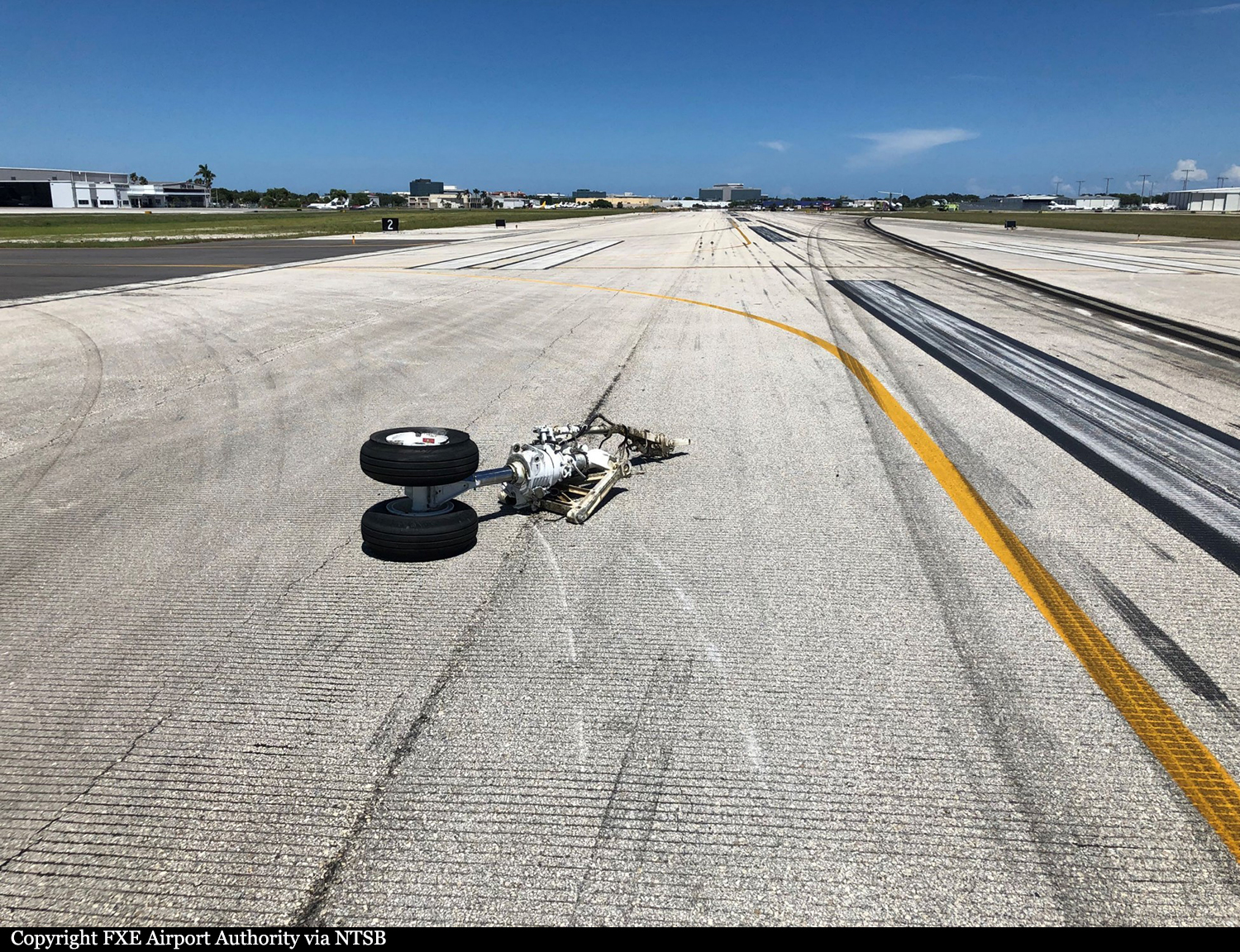
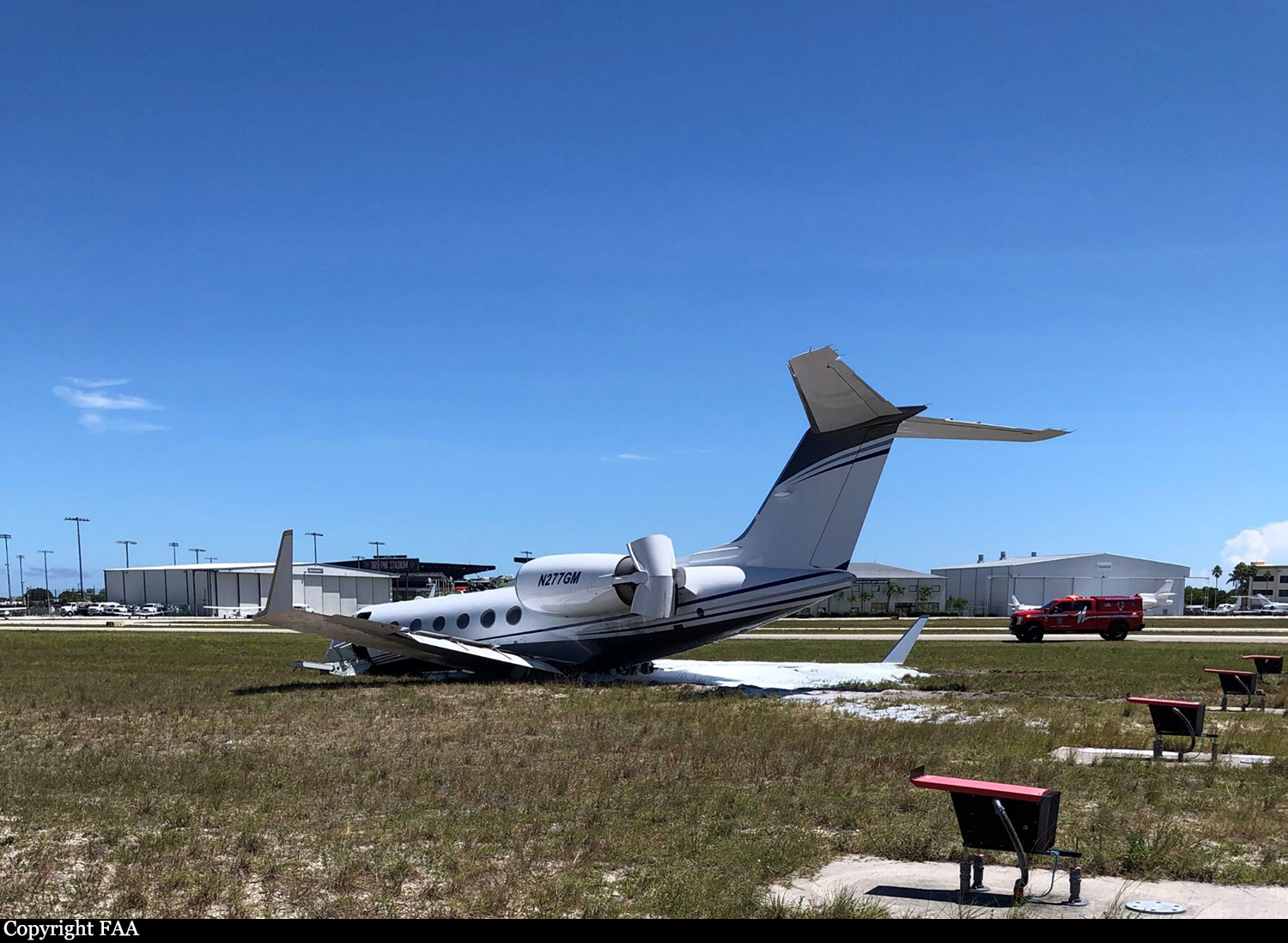
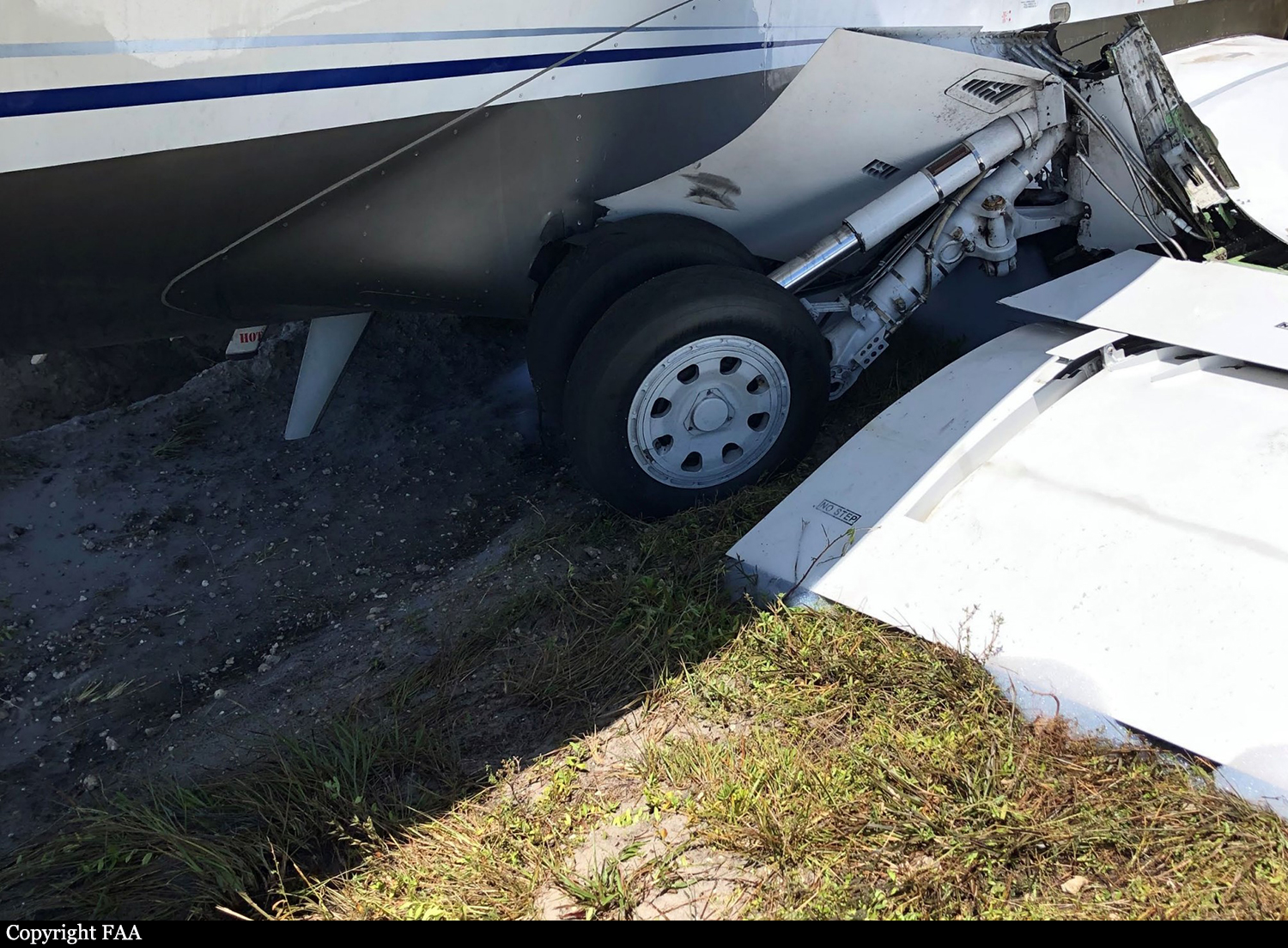
The flight crew, which consisted of the pilot- and second-in-command (PIC and SIC), and a non-type-rated observer pilot, reported that during takeoff near 100 knots a violent shimmy developed at the nose landing gear (NLG). The PIC aborted the takeoff and during the abort procedure, the NLG separated. The airplane veered off the runway, and the right wing and right main landing gear struck approach lights, which resulted in substantial damage to the fuselage and right wing. The passengers and flight crew evacuated the airplane without incident through the main cabin door. Postaccident interviews revealed that following towing operations prior to the flight crew’s arrival, ground personnel were unable to get the plunger button and locking balls of the NLG’s removable pip pin to release normally. Following a brief troubleshooting effort by the ground crew, the pip pin’s plunger button remained stuck fully inward, and the locking balls remained retracted. The ground crew re-installed the pip pin through the steering collar with the upper torque link arm connected. However, with the locking balls in the retracted position, the pin was not secured in position as it should have been. Further, the ground personnel could not install the safety pin through the pip pin because the pin’s design prevented the safety pin from being inserted if the locking balls and plunger were not released. The ground personnel left the safety pin hanging from its lanyard on the right side of the NLG. The ground personnel subsequently informed their ramp supervisor of the anomaly. The supervisor reported that he informed the first arriving crewmember at the airplane (the observer pilot) that the nose pin needed to be checked. However, all three pilots reported that no ground crewmember told them about any issues with the NLG or pins. Examination of the runway environment revealed that the first item of debris located on the runway was the pip pin. Shortly after this location, tire swivel marks were located near the runway centerline, which were followed by large scrape and tire marks, leading to the separated NLG. The safety pin remained attached to the NLG via its lanyard and was undamaged. Postaccident examination and testing of the NLG and its pins revealed no evidence of preimpact mechanical malfunctions or failures. The sticking of the pip pin plunger button that the ground crew reported experiencing could not be duplicated during postaccident testing. When installed on the NLG, the locking ball mechanism worked as intended, and the pip pin could not be removed by hand. Although the airplane’s preflight checklist called for a visual check of the NLG’s torque link to ensure that it was connected to the steering collar by the pip pin and that the safety pin was installed, it is likely that none of the pilots noticed that the pip pin did not have its safety pin installed during preflight. Subsequently, during the takeoff roll, without the locking balls extended, the pip pin likely moved outward and fell from its position holding the upper torque link arm. This allowed the upper torque link arm to move freely, which resulted in the violent shimmy and NLG separation. The location of the debris on the runway, tire marks, and postaccident examination and testing support this likely chain of events. Contributing to the PIC and SIC’s omission during preflight was the ground crew’s failure to directly inform the PIC or SIC that there was a problem with the NLG pip pin. The ground crew also failed to discard the malfunctioning pip pin per the airplane’s ground handling procedures and instead re-installed the pip pin. Although the observer pilot was reportedly informed of an issue with a nose gear pin, he was not qualified to act as a required flight crewmember for the airplane and was on his cell phone when he was reportedly informed of the issue by the ramp supervisor. These factors likely contributed to the miscommunication and the PIC’s and SIC’s subsequent lack of awareness of the NLG issue.
Probable cause:
The pilot-in-command’s (PIC) and second-in-command’s (SIC) failure during preflight inspection to ensure that the nose landing gear’s pip pin was properly installed, which resulted in separation of the pip pin during takeoff. Contributing to the accident was the ground crew supervisor’s failure to inform the PIC or SIC of the anomaly concerning the pip pin following a towing operation.
Final Report:

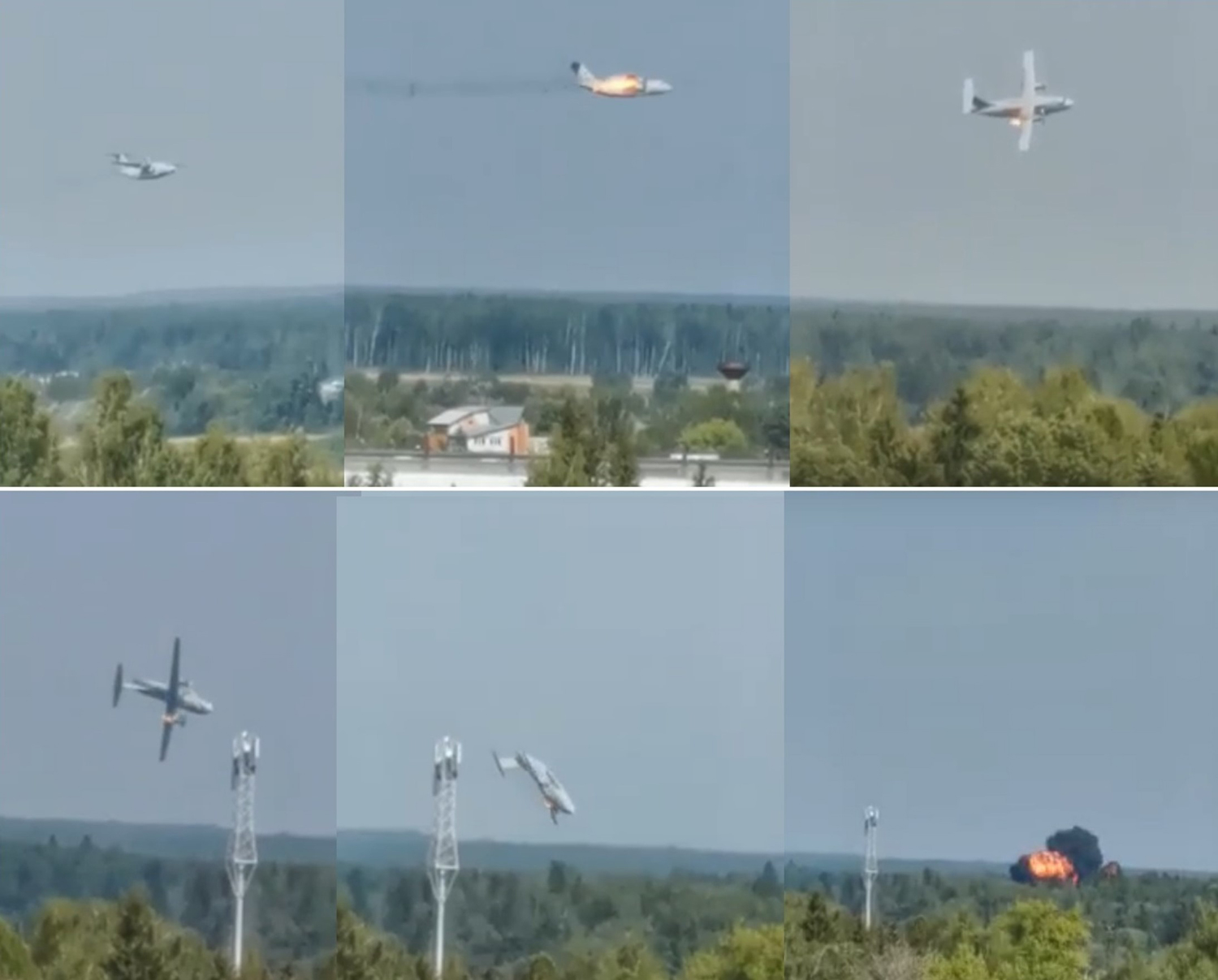
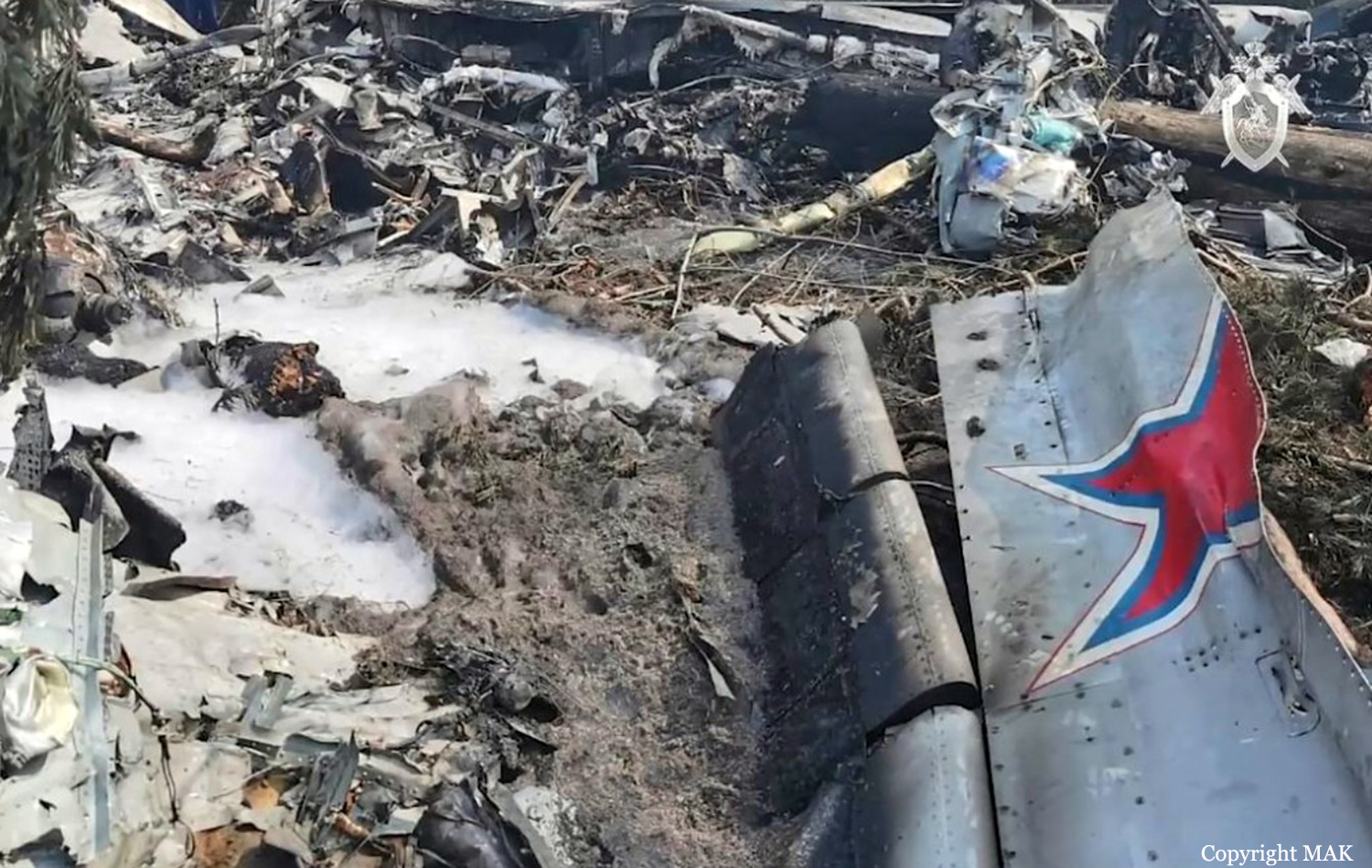
Crash of an Ilyushin II-112V in Kubinka: 3 killed

Date & Time: Aug 17, 2021 at 1118 LT
Type of aircraft:
Operator:
Registration:
RF-41400
Flight Type:
Survivors:
No
Schedule:
Kubinka - Kubinka
MSN:
01-01
YOM:
2008
Country:
Region:
Crew on board:
3
Crew fatalities:
Pax on board:
0
Pax fatalities:
Other fatalities:
Total fatalities:
3
Circumstances:
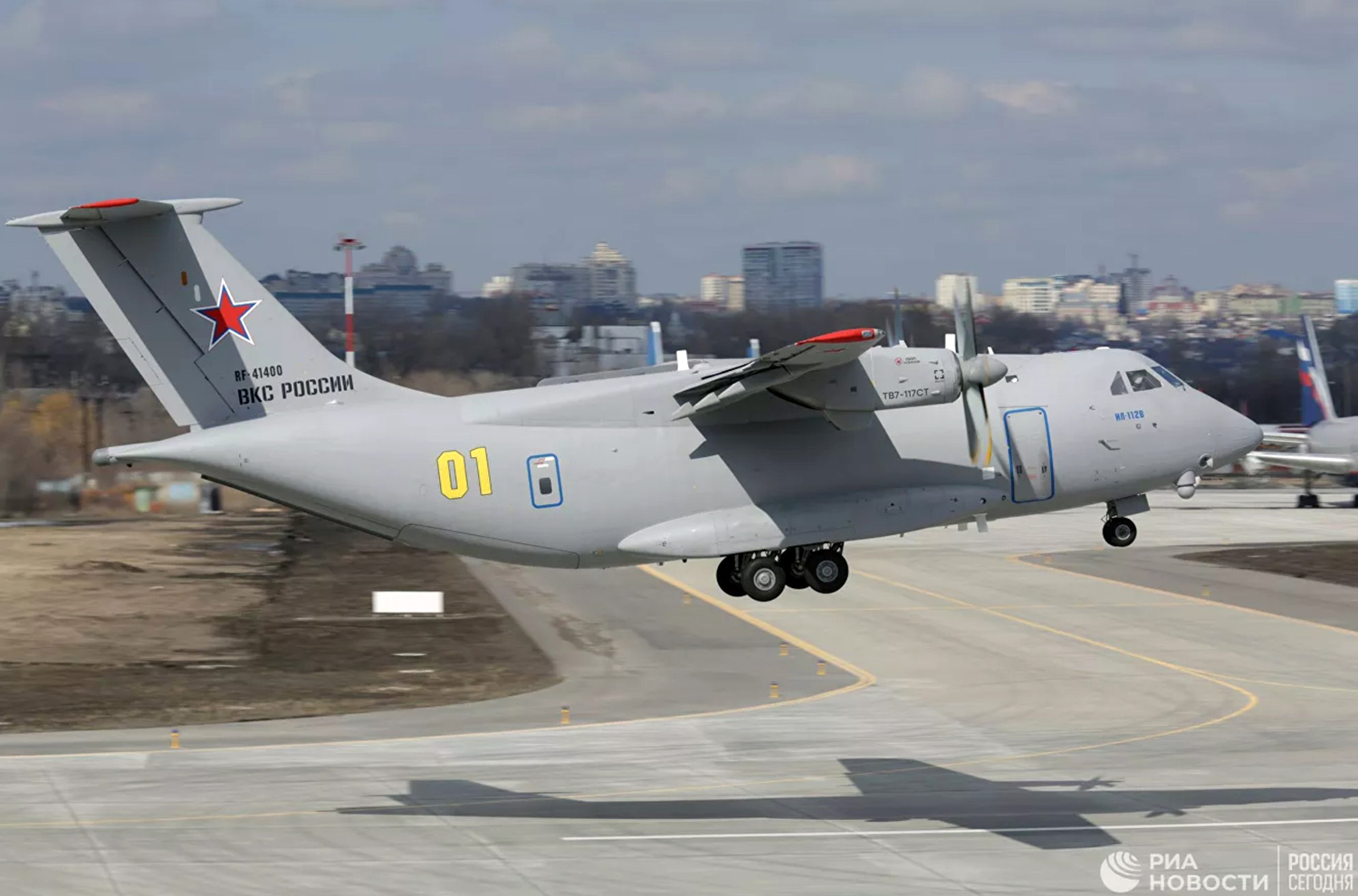
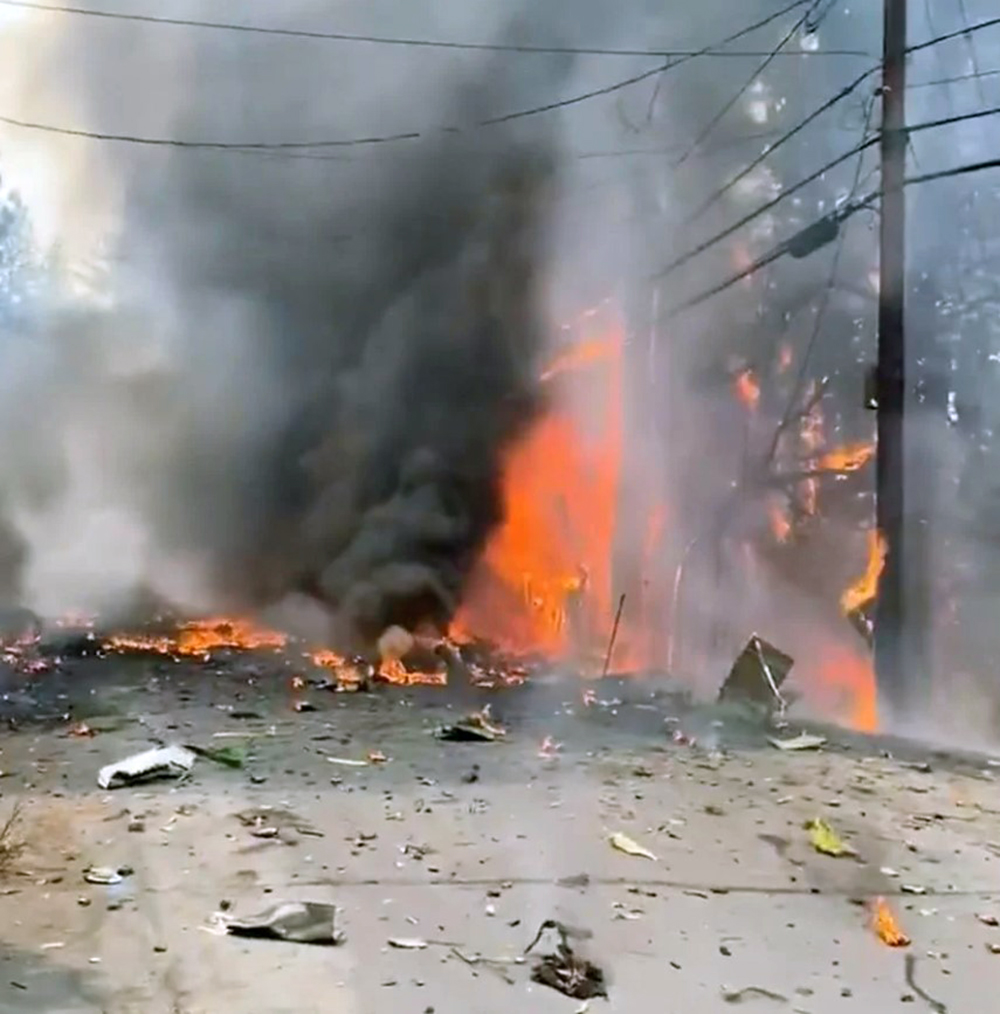
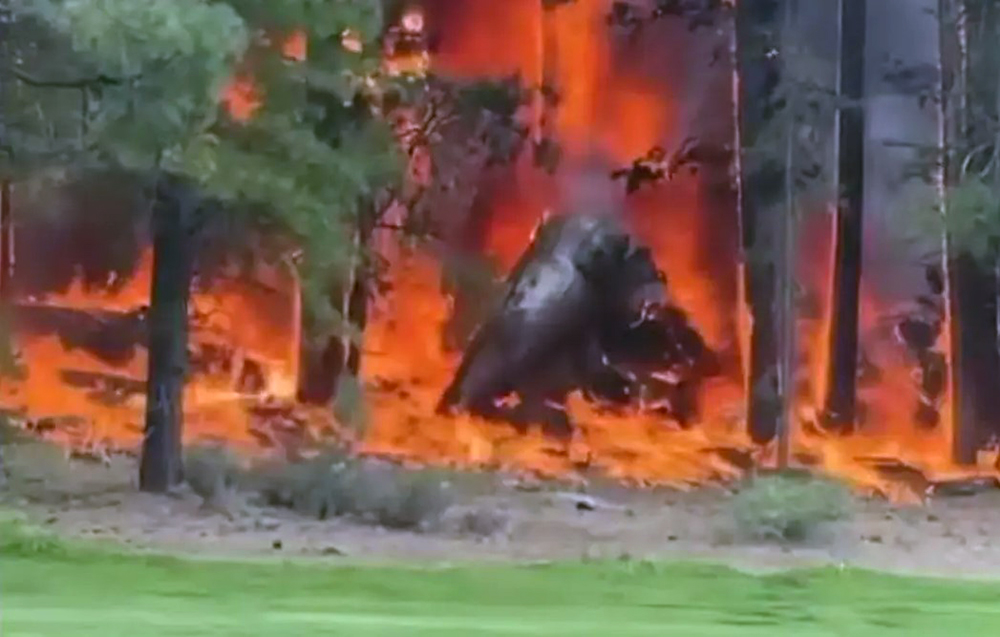
On August 13, the aircraft (first prototype of this new model) departed the aviation plant at Voronezh Airport on a flight to Moscow-Zhukovsky, preparing for a demonstration flight at the 7th Military Technical Forum. On August 17, the crew departed Zhukovsky for a test flight to Kubinka Airport where the aircraft landed at 1109LT. Four minutes after takeoff at 1114LT, while flying at low altitude in a flat attitude, the right engine caught fire. 35 seconds later, while the crew elected to reach the airport, the aircraft rolled to the right, got inverted and crashed in a wooded area located 2,5 km short of runway 22. The aircraft was totally destroyed and all three crew members were killed. This first exemple was dedicated to the Russian Aerospace Forces (Vozdushno-kosmicheskiye sily) and was also registered 01 yellow.
Crew:
Nikolay Dmitrievich Kuimov, test pilot,
Dmitry Komarov, test pilot,
Nikolai Khludeyev, flight engineer.

Crash of a Rockwell Grand Commander 690B in Thunder Bay: 1 killed

Date & Time: Aug 16, 2021 at 2109 LT
Operator:
Registration:
C-GYLD
Flight Phase:
Flight Type:
Survivors:
No
Schedule:
Thunder Bay – Dryden
MSN:
690-11426
YOM:
1977
Flight number:
BD160
Country:
Crew on board:
1
Crew fatalities:
Pax on board:
0
Pax fatalities:
Other fatalities:
Total fatalities:
1
Captain / Total flying hours:
2662
Captain / Total hours on type:
230.00
Aircraft flight hours:
7620
Circumstances:
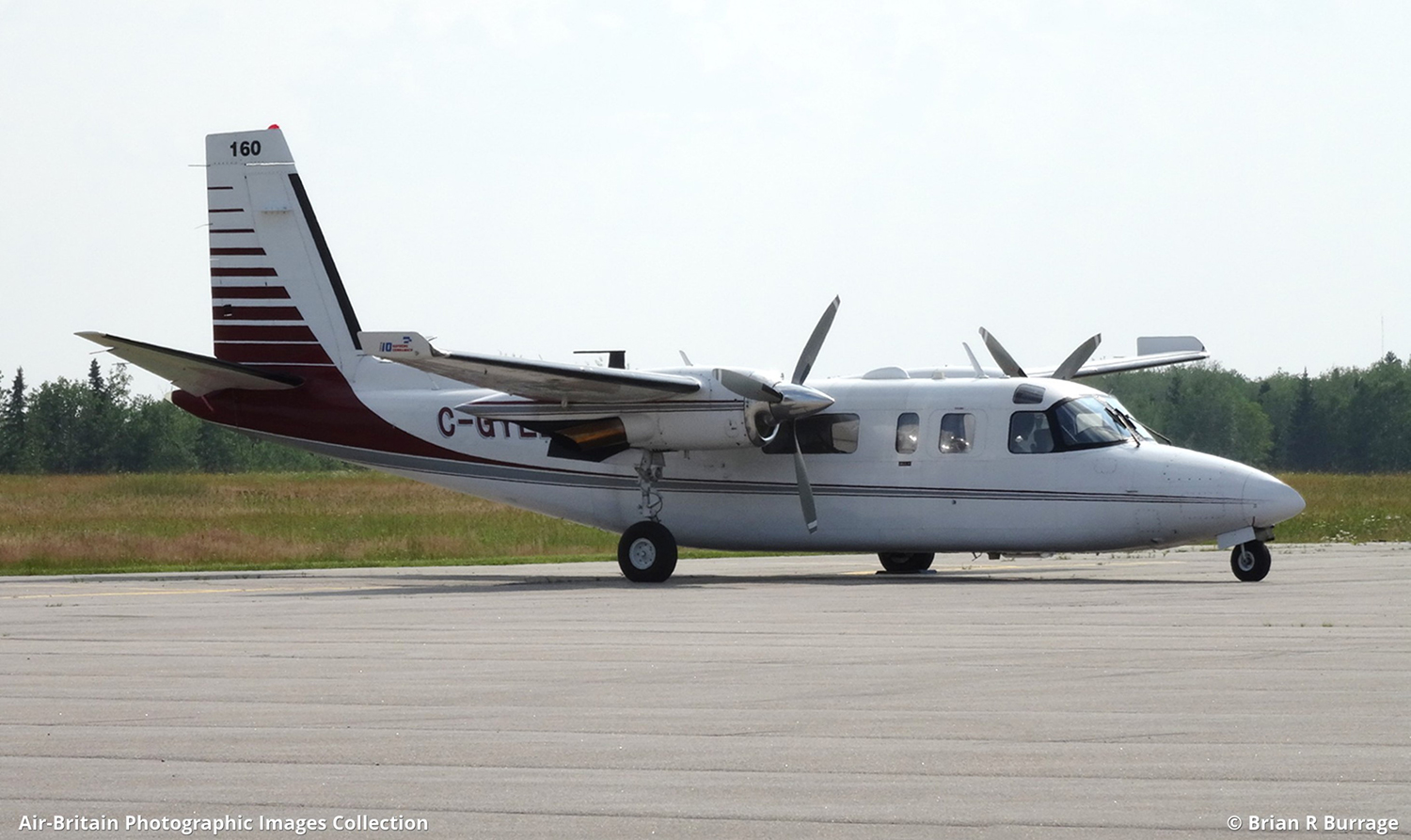
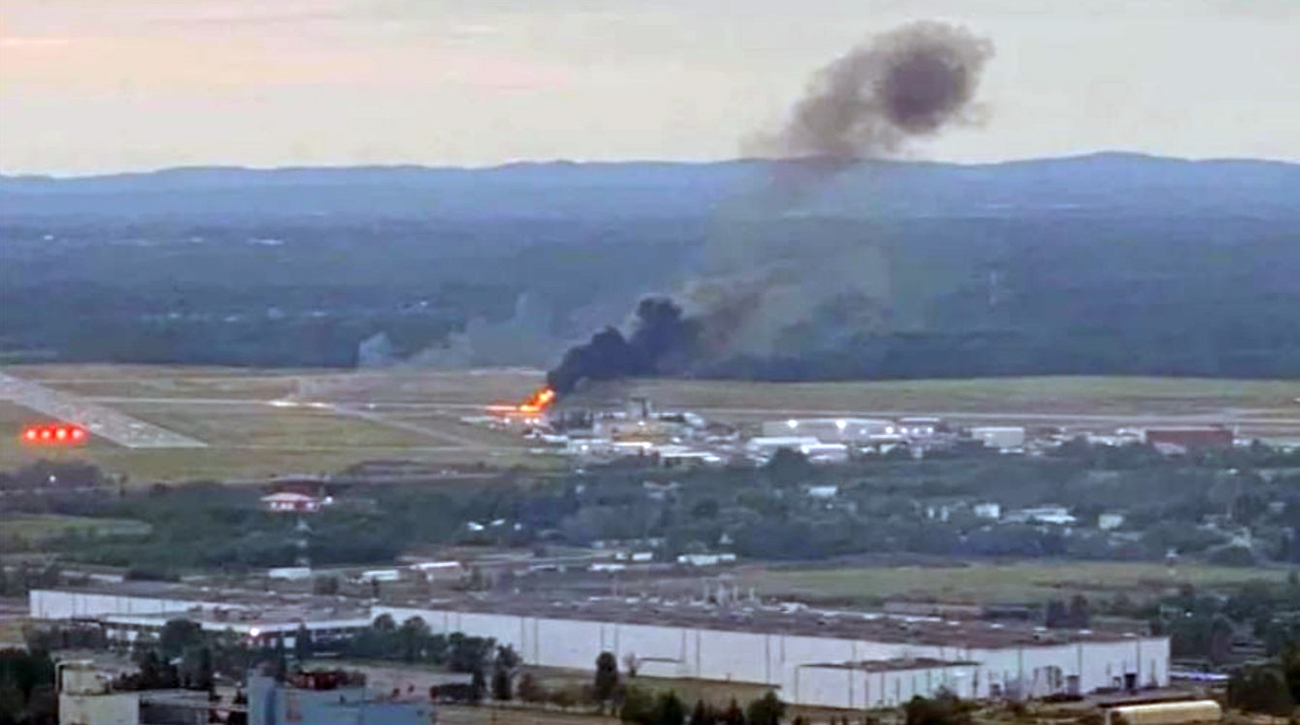
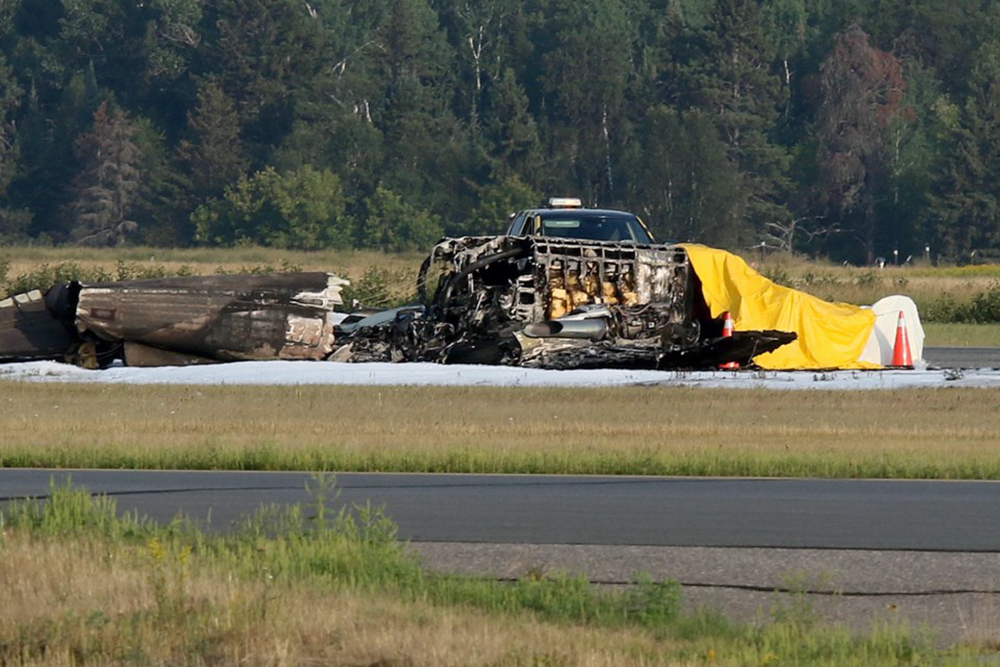
The airplane, operated by MAG Aerospace Canada Corp. as flight BD160, was conducting a visual flight rules flight from Thunder Bay Airport, Ontario, to Dryden Regional Airport, Ontario, with only the pilot on board. At 2109 Eastern Daylight Time, the aircraft began a takeoff on Runway 12. Shortly after rotation, the aircraft entered a left bank, continued to roll, and then struck the surface of Runway 07 in an inverted attitude. The pilot was fatally injured. The aircraft was destroyed by the impact and postimpact fire. The emergency locator transmitter activated on impact.
Probable cause:
Findings as to causes and contributing factors:
1. After takeoff from Runway 12 at Thunder Bay Airport, Ontario, as the pilot conducted a rapid, low-level, climbing steep turn, the aircraft entered an accelerated stall that resulted in a loss of control and subsequent collision with the surface of Runway 07 in an inverted attitude.
2. The decision to conduct the rapid, low-level, climbing steep turn was likely influenced by an altered perception of risk from previous similar takeoffs that did not result in any adverse consequences.

Findings as to risk:
1. If air traffic controllers engage in communications that may be perceived by pilots to encourage unusual flight manoeuvres, pilots may perceive this encouragement as a confirmation that the manoeuvres are acceptable to perform, increasing the risk of an accident.
2. If NAV CANADA’s reporting procedures do not contain specific criteria for situations where air traffic services personnel perceive aircraft to be conducting unsafe flight manoeuvres, there is a risk that these manoeuvres will continue and result in an accident.

Other findings
1. Most of the wires that comprised the elevator trim cable failed before the impact as a result of excessive wear; however, this did not contribute to the occurrence because the trim tab remained in the normal take-off position.
Final Report:
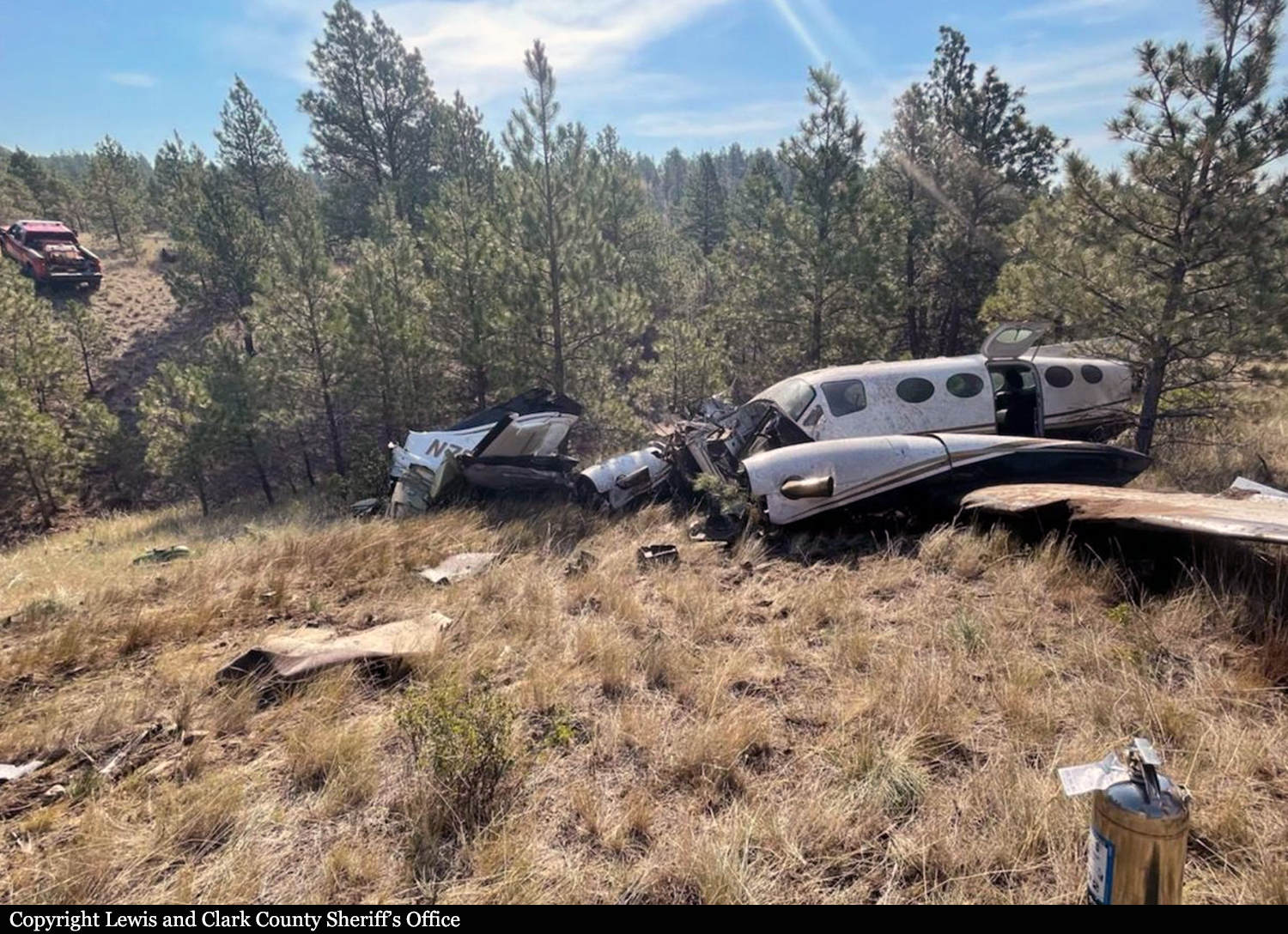
Crash of a Cessna 425 Conquest I in Helena

Date & Time: Aug 11, 2021 at 0900 LT
Type of aircraft:
Operator:
Registration:
N783MB
Flight Type:
Survivors:
Yes
Schedule:
Faribault - Missoula
MSN:
425-0103
YOM:
1982
Location:
Crew on board:
1
Crew fatalities:
Pax on board:
2
Pax fatalities:
Other fatalities:
Total fatalities:
0
Captain / Total flying hours:
6000
Captain / Total hours on type:
800.00
Aircraft flight hours:
9576
Circumstances:
The pilot stated that on the morning of the accident he filled both wing fuel tanks to full. After takeoff, he climbed to his planned cruise altitude of 24,000 ft mean sea level (msl). While en route to his destination, the pilot reported that the left engine experienced a flame-out. The pilot opted to divert from the originally planned destination and descended. When the airplane was about 7,900 ft msl, the pilot reported that the right engine experienced a loss of power and that he was not going to be able to make it to the airport. Shortly thereafter, the airplane collided with trees and the airplane came to rest with the right wing and empennage severed from the fuselage.
Probable cause:
A flameout of both engines due to fuel starvation for reasons that could not be determined due to the airplane’s damage. There was fuel in the wing tanks at the time of the impact. Postaccident examination of the wreckage did not reveal any anomalies. A partial amount of fuel was found in both of the filter bowls, but it is unknown if fuel was able to reach the engines. A complete examination of the fuel system could not be completed due to the damage incurred to the airplane at impact. Both engines flaming out within a short time of one another is likely indicative of a fuel supply or delivery issue; however, the nature of the problem could not be identified during postaccident examination.
Final Report:
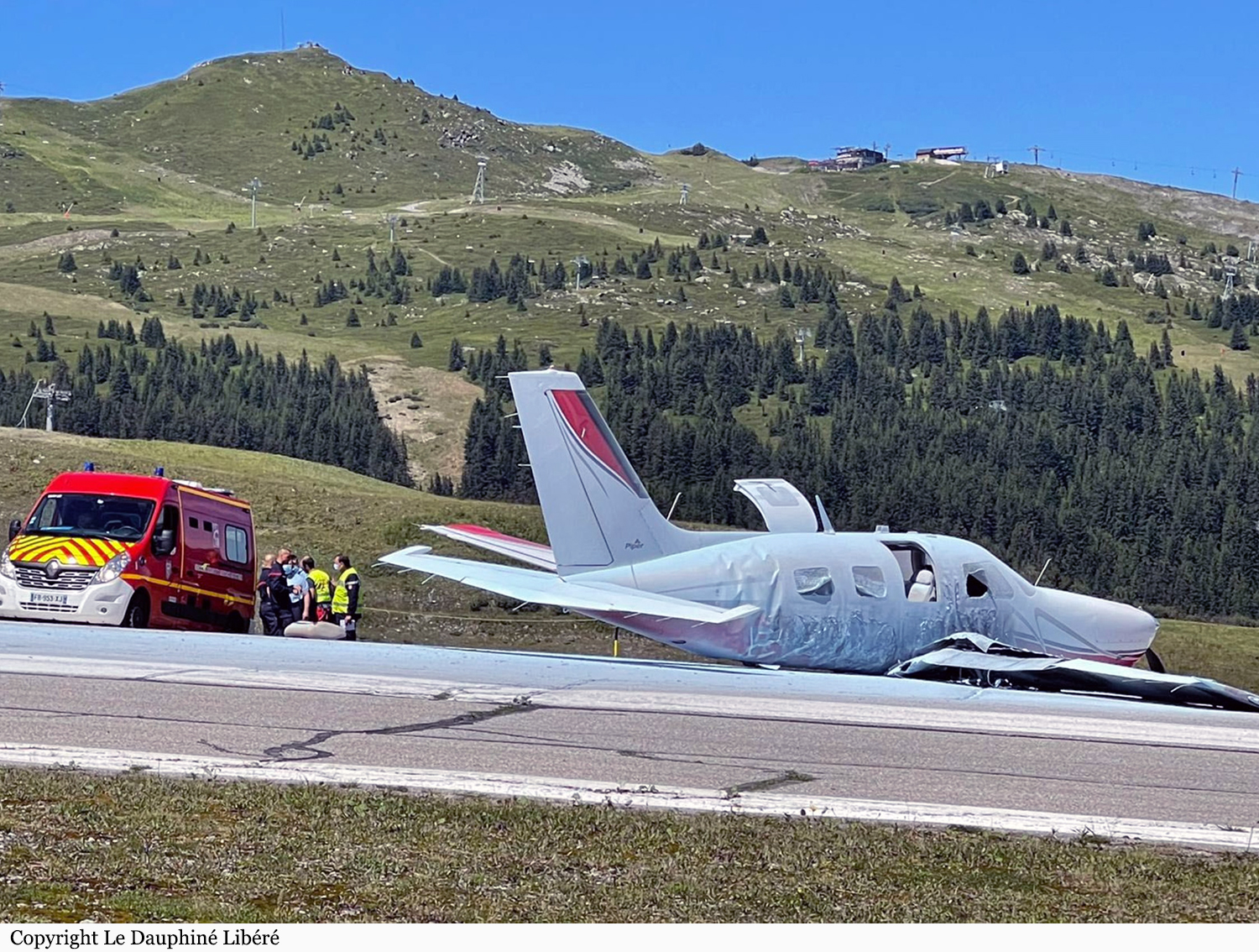
Crash of a Piper PA-46-350P Malibu Mirage in Courchevel: 1 killed

Date & Time: Aug 6, 2021 at 1144 LT
Operator:
Registration:
F-HYGA
Flight Type:
Survivors:
Yes
Schedule:
Cannes - Courchevel
MSN:
46-36483
YOM:
2010
Country:
Region:
Crew on board:
1
Crew fatalities:
Pax on board:
2
Pax fatalities:
Other fatalities:
Total fatalities:
1
Captain / Total flying hours:
345
Captain / Total hours on type:
80.00
Circumstances:
The single engine airplane departed Cannes-Mandelieu Airport on a private flight to Courchevel with two passengers and one pilot on board. The goal of the flight was to maintain the validity of the pilot to access to the Courchevel Altiport. Following a right hand base leg, the pilot configured the airplane to land on runway 22. On final, the altimeter showed an altitude close to the runway threshold, and the aircraft was levelled off to the runway threshold. A few seconds before landing, the stall warning sounded, the engine power was increased and then reduced completely. The undercarriage impacted an embankment above the runway threshold and were torn off. The airplane lifted a bit then fell back onto the runway. It slid for about 100 metres before coming to rest. A fire erupted on the right side of the fuselage. The pilot and the front passenger exited the aircraft through the rear door and managed to extract the rear passenger, who was unconscious and died a few minutes later.
Probable cause:
The accident was the consequence of a premature descent during the approach. The pilot started the descent on the base leg, whereas mountain landing practices call for a descent on final approach after interception of the descent plan, combined with an erroneous assessment of the aircraft's position in relation to the final descent plan. Investigations revealed that the aircraft was flying at an altitude of 6,600 feet during the last turn, about 400 feet below the altitude indicated on the approach chart.
The following factors may have contributed to the accident:
- The period of training received by the pilot was probably insufficient;
- A lack of landing experience at Courchevel;
- A misunderstandings between the pilot and the passenger seated on the right about his role during the flight, himself being an airline pilot and instructor.
Final Report:
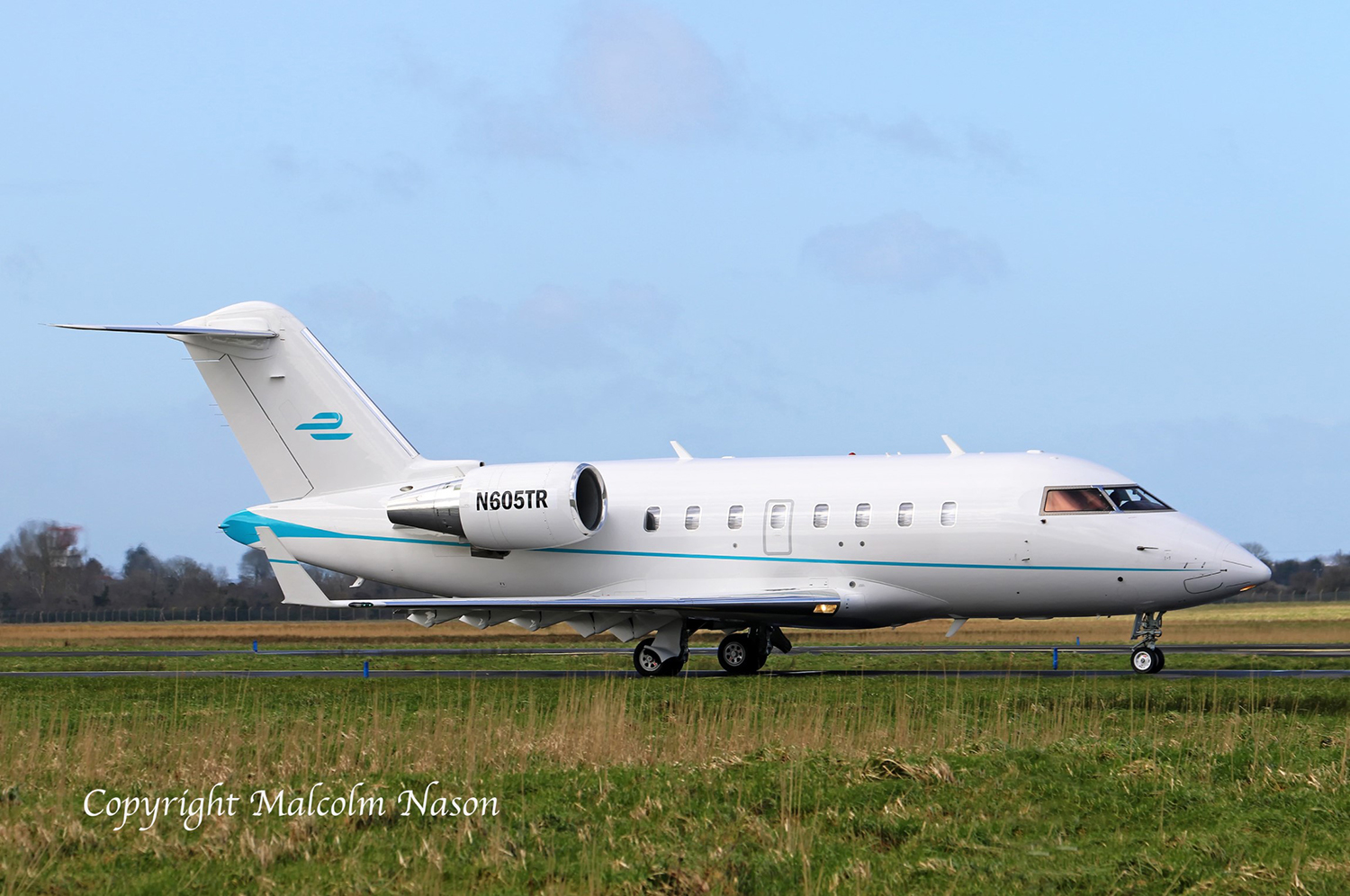
Crash of a Canadair CL-605 Challenger in Truckee: 6 killed

Date & Time: Jul 26, 2021 at 1318 LT
Type of aircraft:
Registration:
N605TR
Flight Type:
Survivors:
No
Schedule:
Coeur d'Alene - Truckee
MSN:
5715
YOM:
2008
Crew on board:
2
Crew fatalities:
Pax on board:
4
Pax fatalities:
Other fatalities:
Total fatalities:
6
Captain / Total flying hours:
5680
Captain / Total hours on type:
235.00
Copilot / Total flying hours:
14308
Copilot / Total hours on type:
4410
Aircraft flight hours:
5220
Circumstances:
The captain and first officer (FO) departed on a non-revenue flight operating under instrument flight rules with four passengers bound for Truckee, California. Most of the flight was uneventful. During the descent, air traffic control (ATC) told the flight crew to expect the area navigation (RNAV [GPS]) approach for runway 20. The captain (pilot flying [PF]) stated and the FO (pilot monitoring [PM]) calculated and confirmed that runway 20 was too short for the landing distance required by the airplane at its expected landing weight. Instead of making a request to ATC for the straight-in approach to runway 11 (the longer runway), the captain told the FO they could take the runway 20 approach and circle to land on runway 11, and the FO relayed this information to ATC. ATC approved, and the flight crew accepted the circle-to-land approach. Although the descent checklist required that the flight crew brief the new circle-to-land approach, and the flight crew’s acceptance of the new approach invalidated the previous straight-in approach brief, they failed to brief the new approach. ATC instructed the flight crew to hold, but the captain was slow in complying with this instruction, so the FO started the turn to enter the holding pattern and then informed ATC once they were established in the hold. About 20 seconds later, ATC cleared them for the approach. Before the FO confirmed the clearance, he asked the captain if he was ready for the approach, and the captain stated that he was. The FO subsequently commented that they had too much airspeed at the beginning of the approach and then suggested a 360° turn to the captain, but the captain never acknowledged the excessive airspeed and refused the 360° turn. After the FO visually identified the airport, he told the captain to make a 90° right turn to put the airplane on an approximate heading of 290°, which was parallel to runway 11 and consistent with the manufacturer’s operating manual procedures for the downwind leg of the circling approach. However, the FO instructed the captain to roll out of the turn prematurely, and the captain stopped the turn on a heading of about 233° magnetic, which placed the airplane at an angle 57° left of the downwind course parallel with runway 11. As a result of the early roll-out, the flight crew established a course that required an unnecessarily tight turning radius. When they started the turn to final, the airplane was still about 1.3 nautical miles (nm) from the maximum circling radius that was established for the airplane’s approach category. The FO also deployed flaps 45° after confirming with the captain (the manufacturer’s operating manual procedures for the downwind leg called for a flaps setting of 30°, but the manufacturer stated that a flight crew is not prohibited from a flaps 45° configuration if the approach remains within the limitations of the airplane’s flight manual). The airplane’s airspeed was 44 kts above the landing reference speed (Vref) of 118 kts that the flight crew had calculated earlier in the flight; the FO told the captain, “I’m gonna get your speed under control for you.” The FO likely reduced the throttles after he made this statement, as the engine fan speeds (N1) began to decrease from about 88% to about 28%, and the airplane began to slow from 162 kts. After the FO repeatedly attempted to point out the airport to the captain, the captain identified the runway; the captain's difficulty in finding the runway might have been the result of reduced visibility in the area due to smoke. The FO continuously reassured and instructed the captain throughout the circle-to-land portion of the approach. On the base leg to the runway and about 25 seconds before impact with the ground, the FO started to repeatedly ask for control of the airplane, but neither flight crewmember verbalized a positive transfer of control as required by the operator’s general operating manual (GOM); we could not determine who had control of the airplane following these requests. As the airplane crossed the runway extended centerline while maneuvering toward the runway, the FO noted that the airplane was too high. One of the pilots (recorded flight data did not indicate which) fully deployed the flight spoilers, likely to increase the airplane's sink rate. (The flight spoilers are deployed using a single control lever accessible to both pilots.) The airspeed at the time was 135 kts, 17 kts above the Vref based on the erroneous basic operating weight (BOW) programmed into the airplane’s flight management system (FMS). About 7 seconds later, the left bank became steeper, and the stall protection system (SPS) stick shaker and stick pusher engaged. The captain asked the FO, “What are you doing,” and the FO again asked the captain multiple times to “let [him] have the airplane.” The stick shaker and stick pusher then briefly disengaged before engaging again. The airplane then entered a rapid left roll, consistent with a left-wing stall, and impacted terrain. A postcrash fire consumed most of the wreckage. All six occupants, four passengers and two pilots, were killed.
Probable cause:
The first officer’s (FO’s) improper decision to attempt to salvage an unstabilized approach by executing a steep left turn to realign the airplane with the runway centerline, and the captain’s failure to intervene after recognizing the FO’s erroneous action, while both ignored stall protection system warnings, which resulted in a left-wing stall and an impact with terrain.
Contributing to the accident was
- The FO's improper deployment of the flight spoilers, which decreased the airplane's stall margin;
- The captain’s improper setup of the circling approach;
- The flight crew’s self-induced pressure to perform and
- Poor crew resource management which degraded their decision-making.
Final Report:
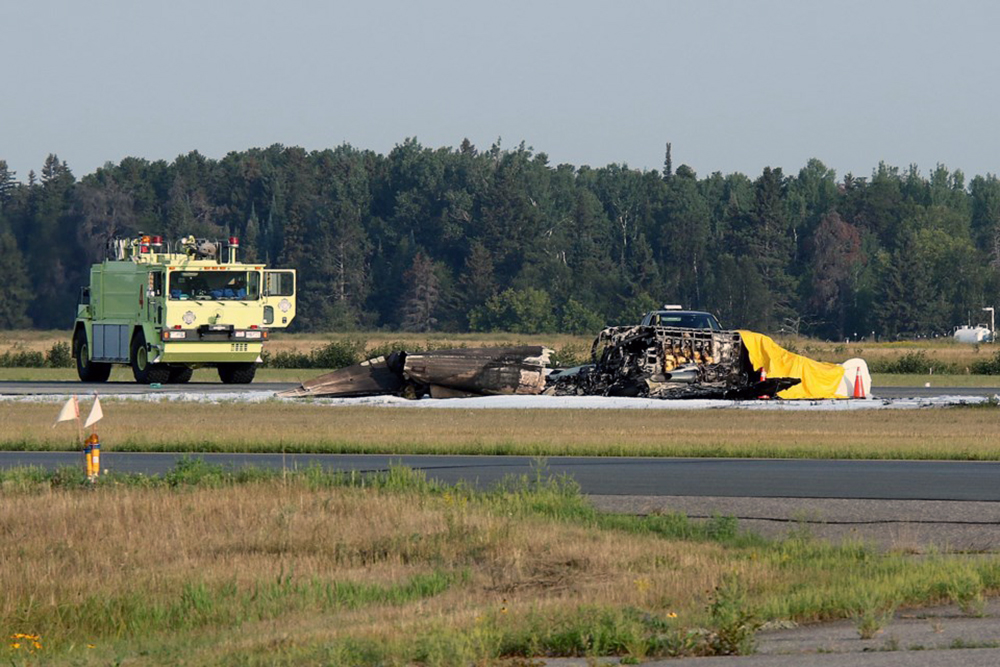
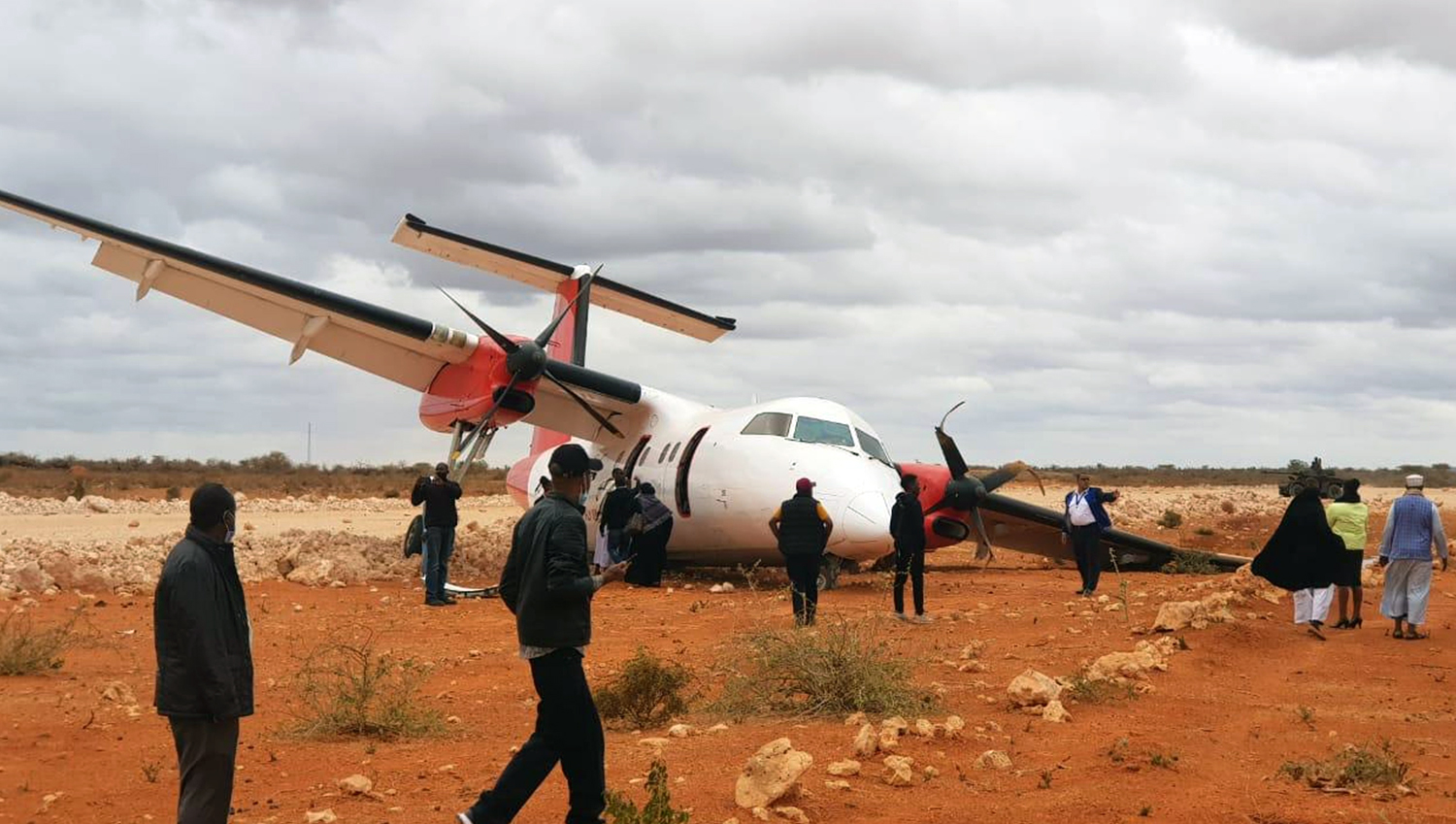
Crash of a De Havilland DHC-8-106 in Bur Ache

Date & Time: Jul 21, 2021
Operator:
Registration:
5Y-GRS
Survivors:
Yes
Schedule:
Nairobi – El Wak
MSN:
355
YOM:
1993
Country:
Region:
Crew on board:
4
Crew fatalities:
Pax on board:
37
Pax fatalities:
Other fatalities:
Total fatalities:
0
Circumstances:
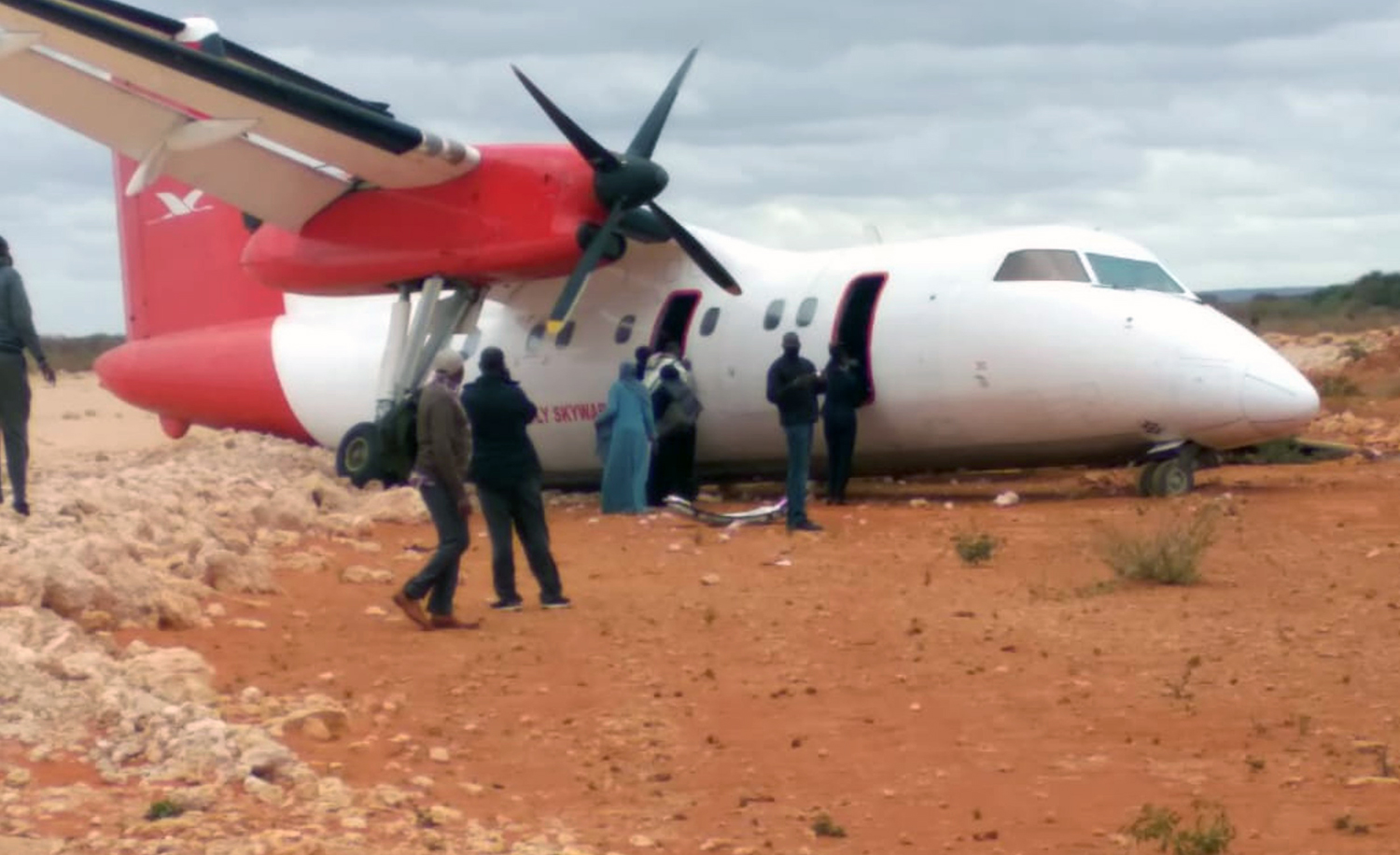
The airplane departed Nairobi-Wilson Airport on a charter flight to El Wak, carrying 37 passengers and 4 crew members. While descending to El Wak Airport, the pilot continued to the east and elected to land on an airfield located 18 km east of El Wak, near Bur Ache, in Somalia. After landing, the airplane veered to the left and impacted a pile of earth and rocks, causing the left main gear to collapse. All 41 occupants evaacuated safely and the aircraft was damaged beyond repair.

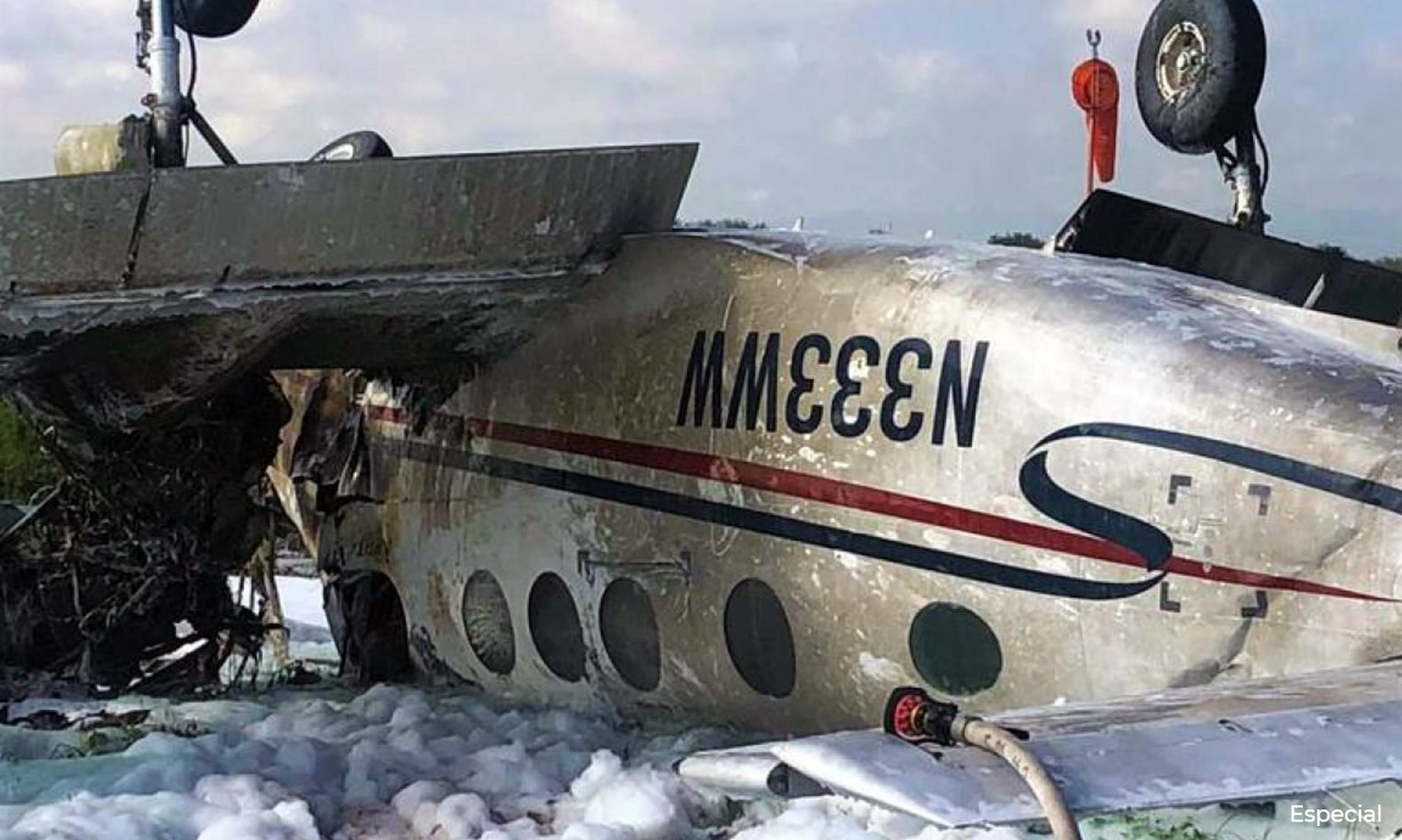
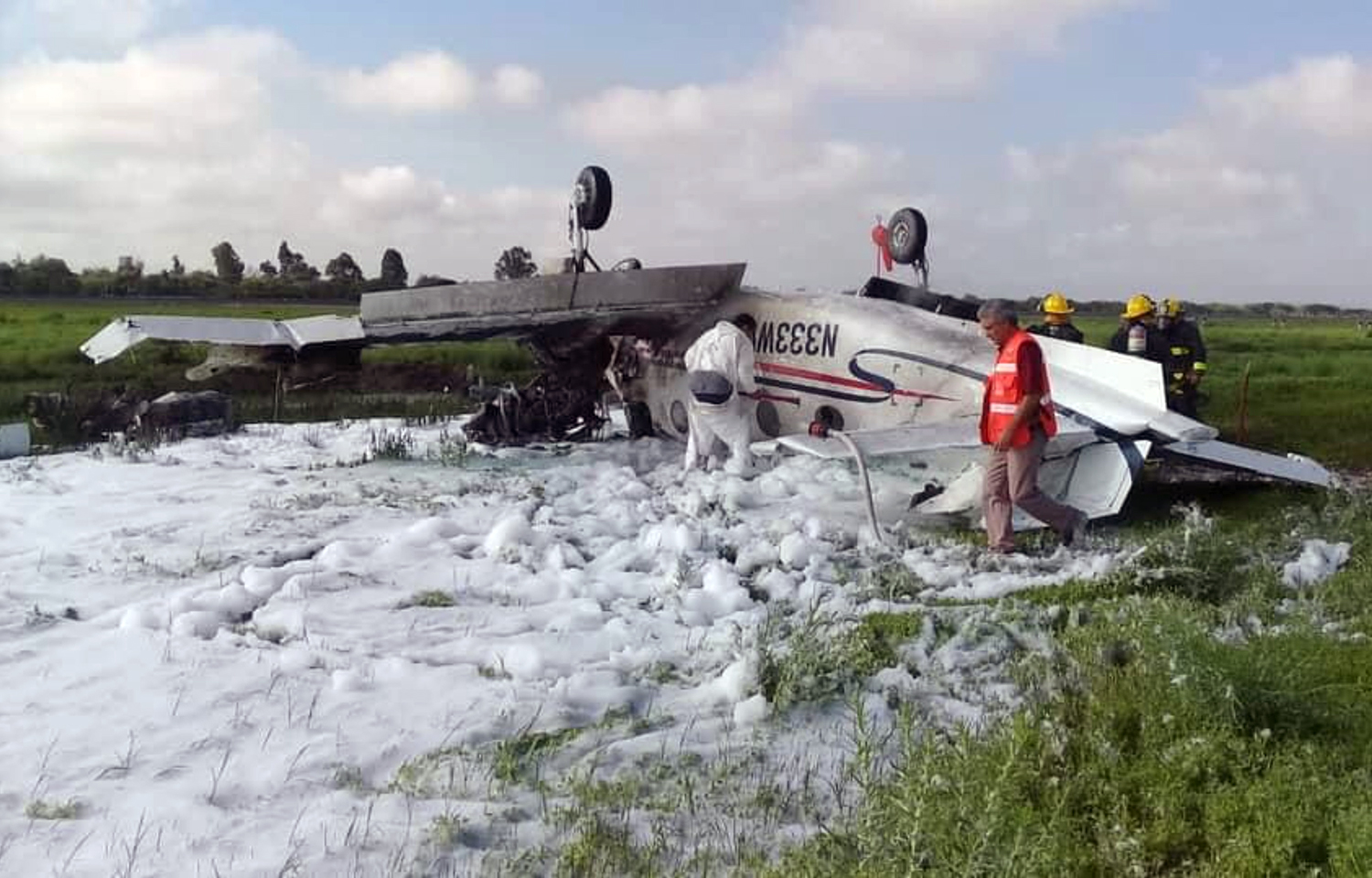
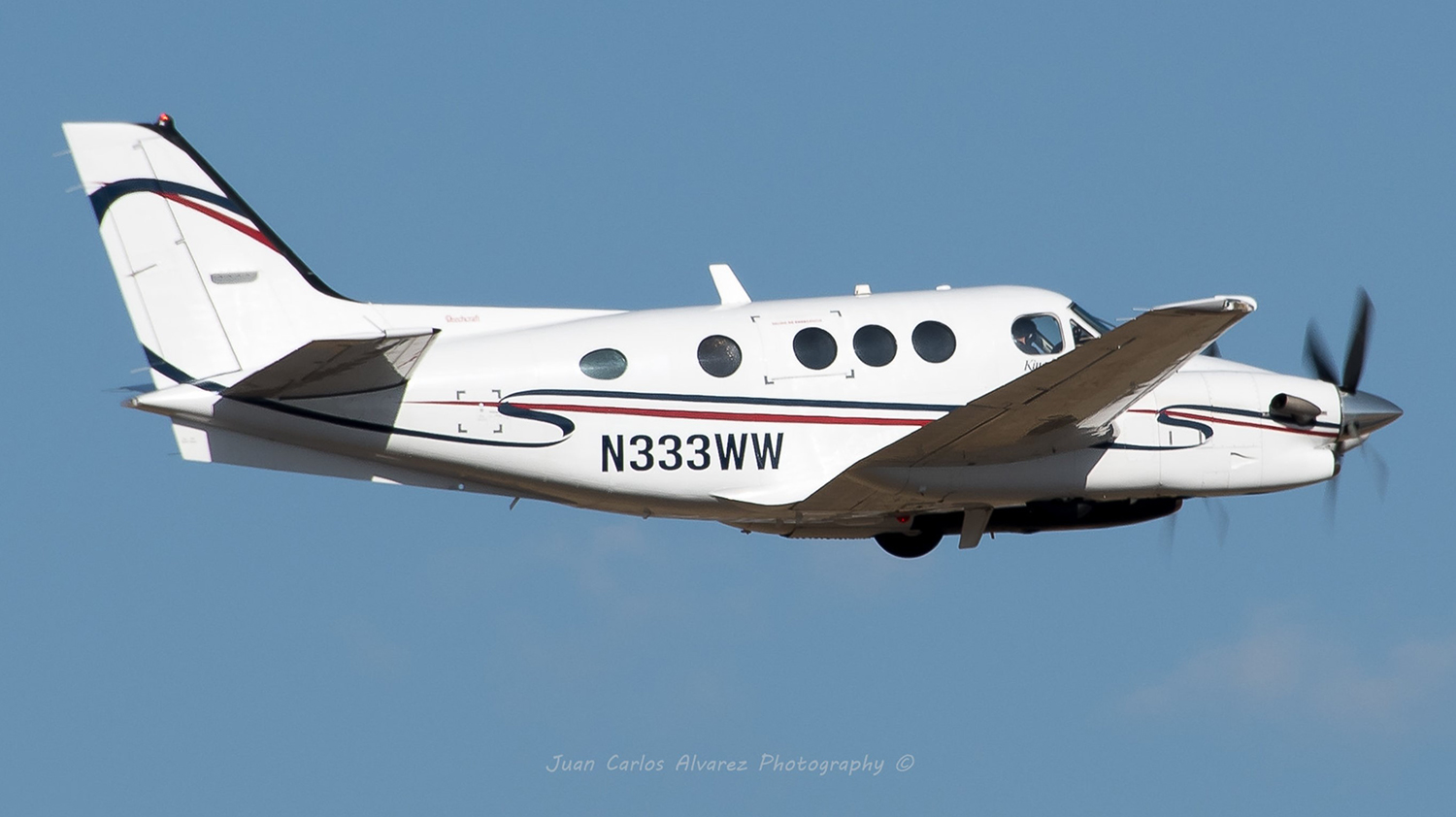
Crash of a Beechcraft C90A King Air in Durango: 1 killed

Date & Time: Jul 18, 2021 at 0935 LT
Type of aircraft:
Operator:
Registration:
N333WW
Flight Type:
Survivors:
Yes
Schedule:
San Luis Potosí – Durango
MSN:
LJ-1741
YOM:
2005
Location:
Country:
Crew on board:
2
Crew fatalities:
Pax on board:
0
Pax fatalities:
Other fatalities:
Total fatalities:
1
Captain / Total flying hours:
4947
Aircraft flight hours:
3099
Circumstances:
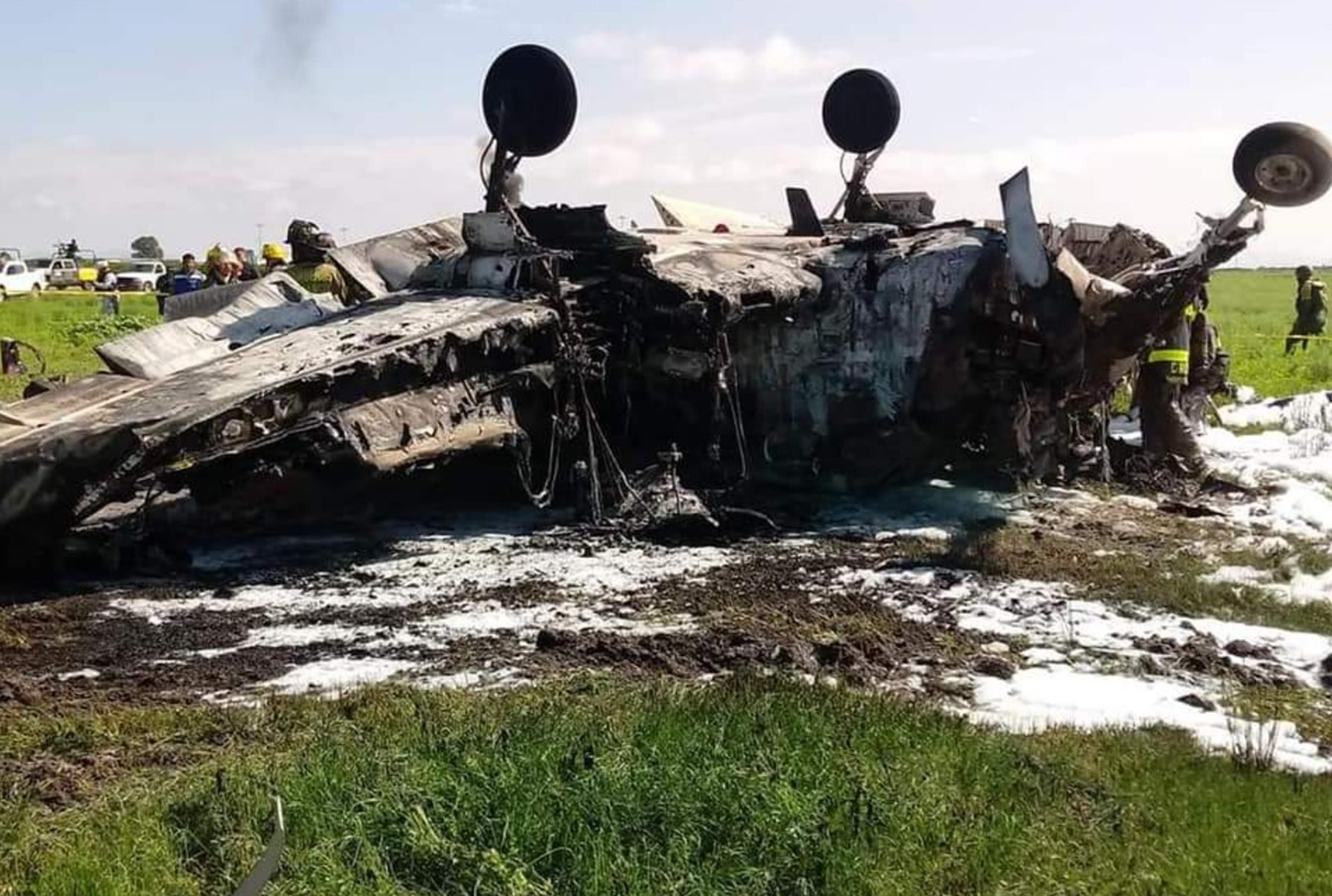
On final approach to Durango-Guadalupe Victoria Airport following an uneventful flight from San Luis Potosí, the twin engine airplane was unstable. The crew decided to make a sudden descent below the minimum descent altitude without visual contact with the runway, resulting in an initial impact with the runway surface and subsequently with an open drainage ditch located between runway 03/21 and taxiway 'A'. The airplane came to rest upside and burst into flames. One pilot was seriously injured and the second occupant was killed.
Probable cause:
Poor management by the flight crew: of the approach and multiple deviations from operational procedures, due to a lack of training, which placed the aircraft in an unsafe situation and resulted in an unstabilised approach. They decided to make a sudden descent below the minimum descent altitude without visual contact with the runway, resulting in an initial impact with the runway surface and subsequently with an open drainage channel between runway 03/21 and taxiway "A," which stopped the movement.
The following contributing factors were identified:
- Lack of training and operational supervision of the flight crew,
- Lack of a formal operational safety program,
- Abrupt changes in the attitude and heading of the aircraft,
- Poor management of cockpit resources,
- Inadequate decision-making by not performing a missed approach,
- Presence of an drainage ditch located between runway 03/21 and taxiway 'A',
- Lack of supervision by the Federal Civil Aviation Agency of the flight operations of aircraft with foreign registration.
Final Report: