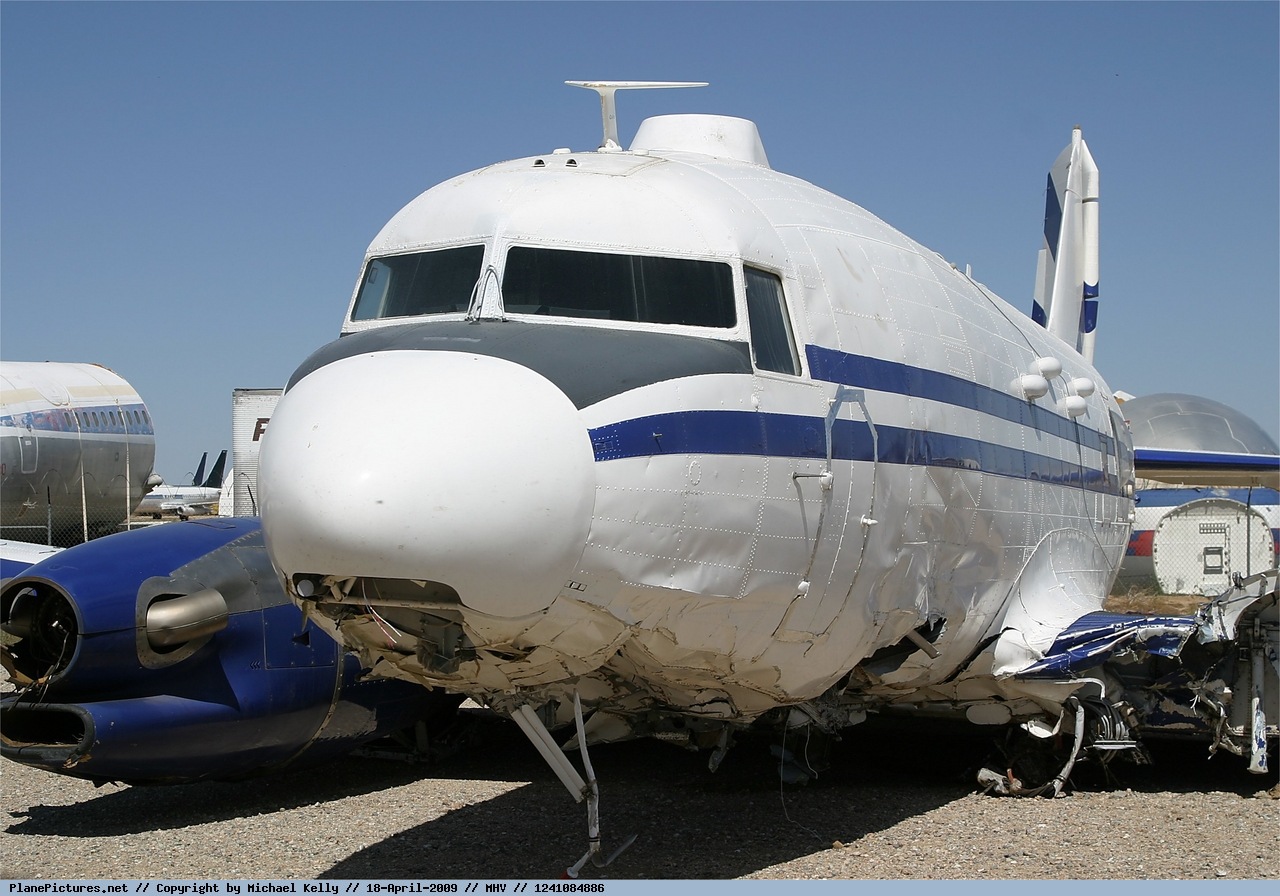
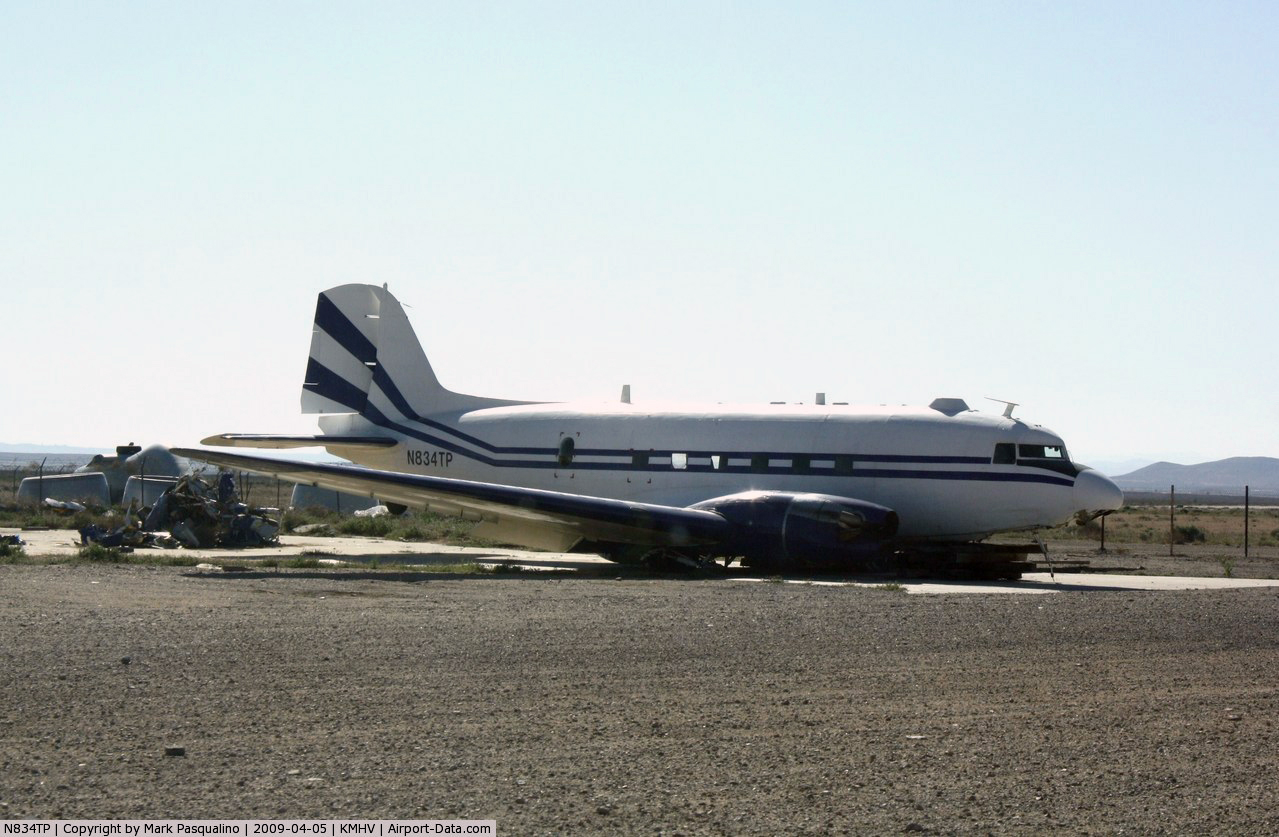
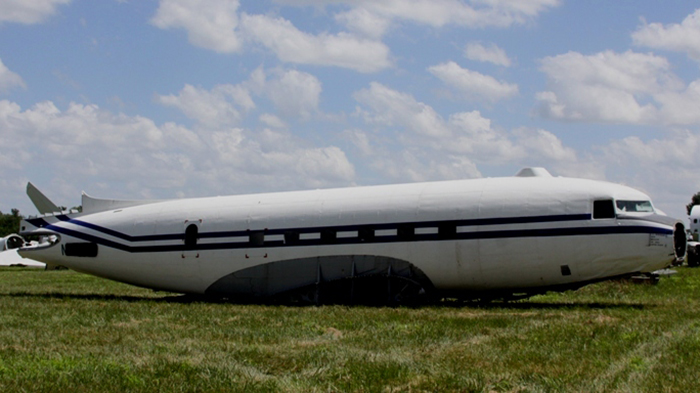
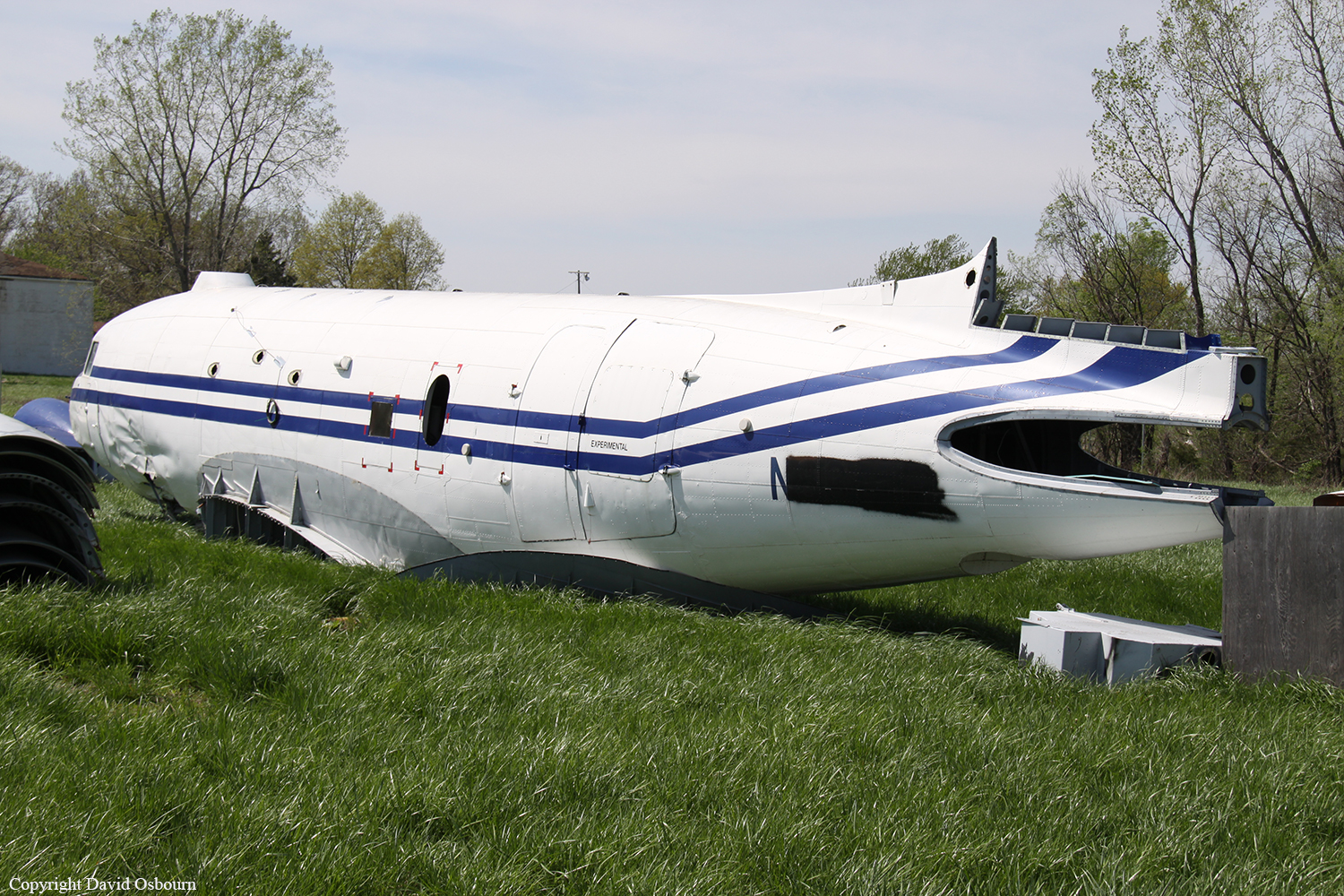
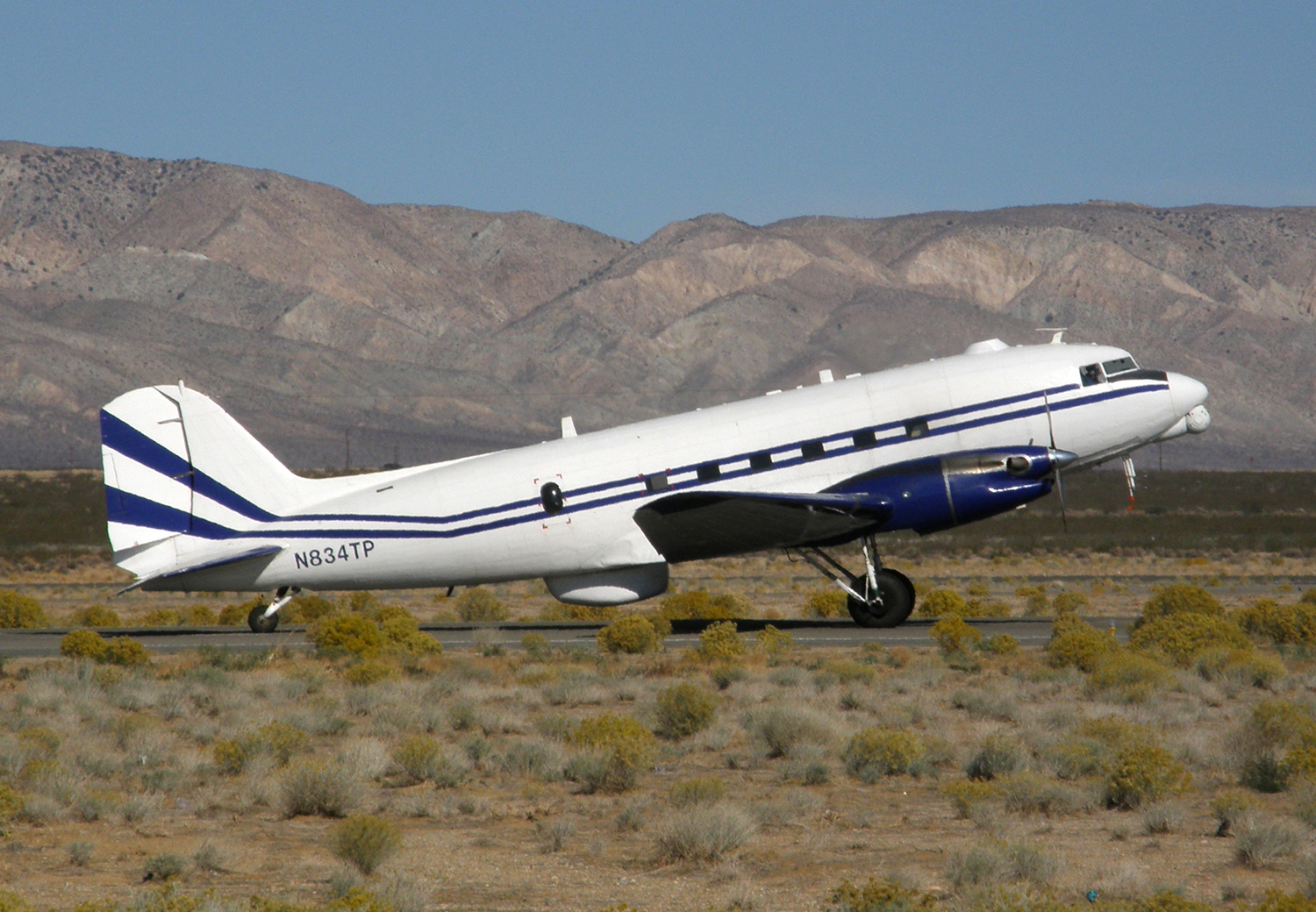
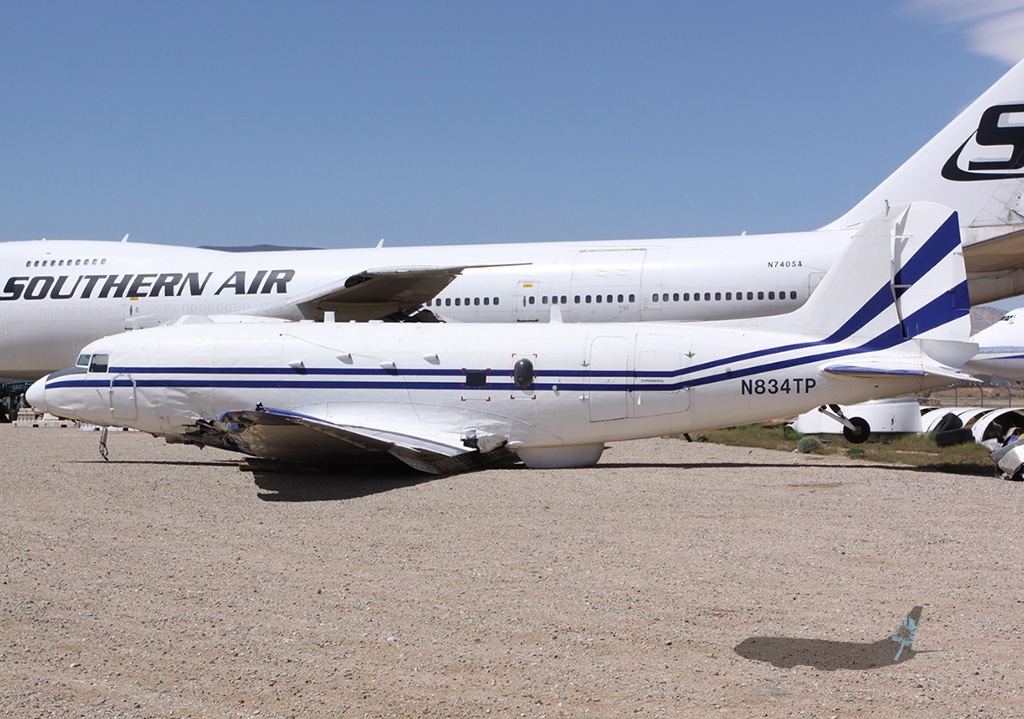
Crash of an AMI Turbo DC-3-65TP in Mojave

Date & Time: Feb 4, 2009 at 0852 LT
Type of aircraft:
Operator:
Registration:
N834TP
Flight Phase:
Flight Type:
Survivors:
Yes
Schedule:
Mojave - Mojave
MSN:
12590
YOM:
1947
Crew on board:
2
Crew fatalities:
Pax on board:
0
Pax fatalities:
Other fatalities:
Total fatalities:
0
Captain / Total flying hours:
18000
Captain / Total hours on type:
1326.00
Aircraft flight hours:
17277
Circumstances:
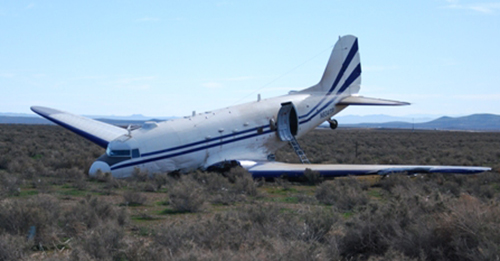
During the takeoff roll, the airplane began to drift to the right. Despite the certified flight instructor's and student's attempts, they were unable to stop the yaw and drift. As the airplane was about to depart the runway, the pilots did not reduce the throttles or apply brakes as they felt that it would be safer to attempt to get airborne. After departing the runway surface, the airplane collided with a series of berms, which sheared off the left landing gear and left engine. The right landing gear collapsed, and the airplane came to rest in a nose down attitude. Post accident e examination revealed that the student pilot had inadvertently set the rudder trim to the full right position when he adjusted the rudder pedals during the prestart checks. The rudder trim was in the full right position for the takeoff, and found in the same position upon post accident inspection.
Probable cause:
The student pilot failed to follow the checklist and set the takeoff trim properly prior to takeoff resulting in a loss of directional control. Contributing to the accident were the certified flight instructor's inadequate supervision and delayed remedial action.
Final Report:
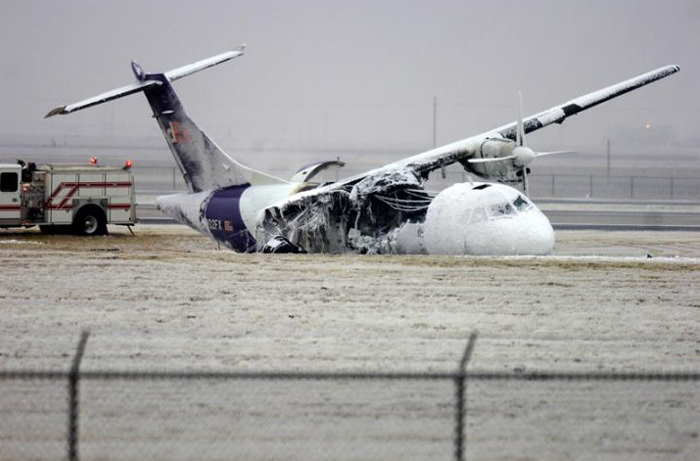
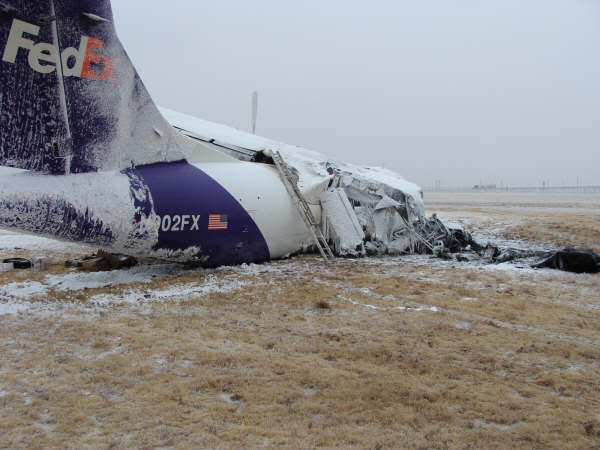
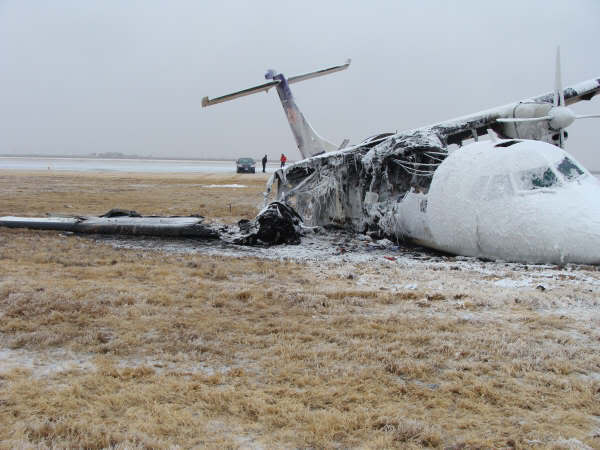
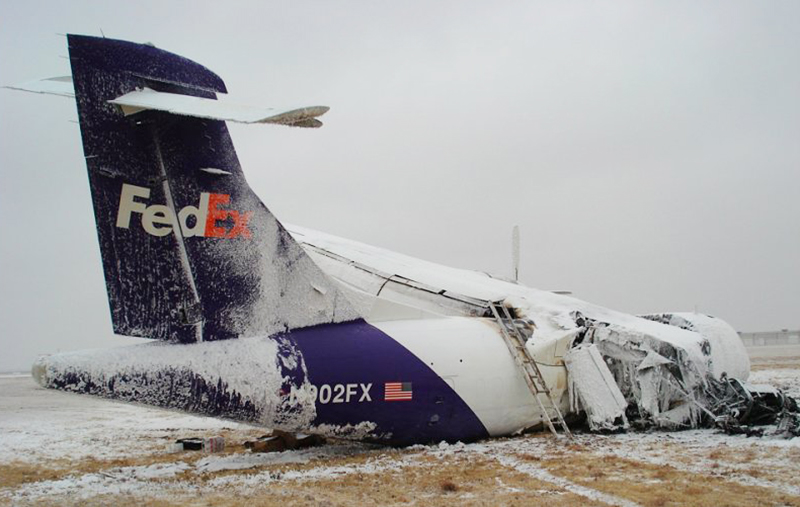
Crash of an ATR42-320 in Lubbock

Date & Time: Jan 27, 2009 at 0437 LT
Type of aircraft:
Operator:
Registration:
N902FX
Flight Type:
Survivors:
Yes
Schedule:
Fort Worth - Lubbock
MSN:
175
YOM:
1990
Flight number:
FX8284
Location:
Crew on board:
2
Crew fatalities:
Pax on board:
0
Pax fatalities:
Other fatalities:
Total fatalities:
0
Captain / Total flying hours:
13935
Captain / Total hours on type:
2052.00
Copilot / Total flying hours:
2109
Copilot / Total hours on type:
130
Aircraft flight hours:
28768
Aircraft flight cycles:
32379
Circumstances:
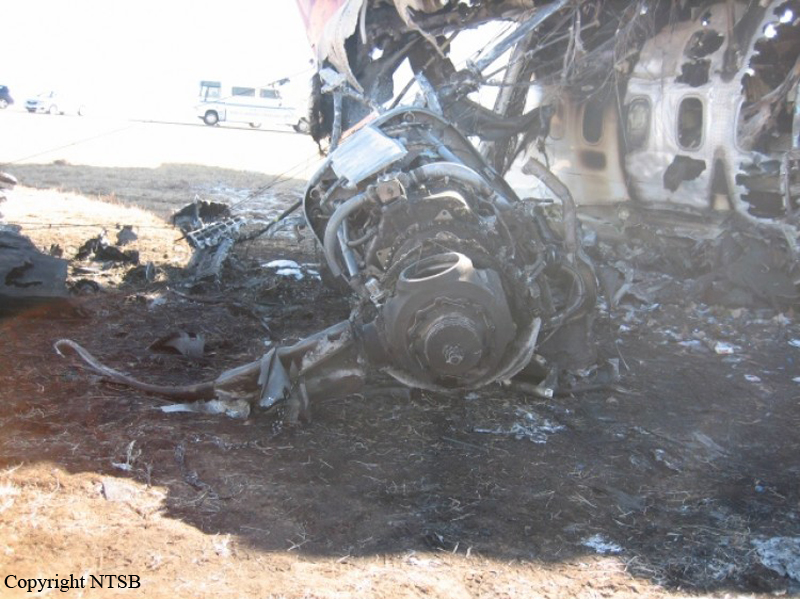
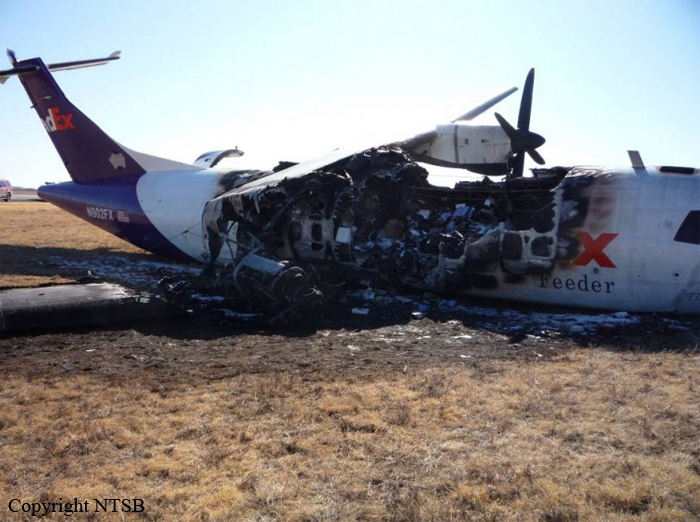
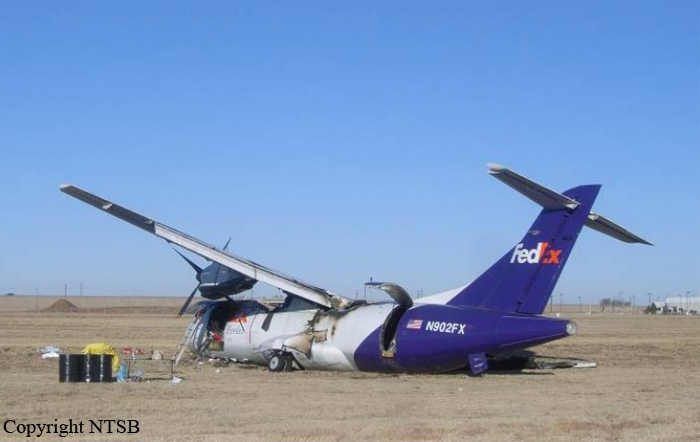
Aircraft was on an instrument approach when it crashed short of the runway at Lubbock Preston Smith International Airport, Lubbock, Texas. The captain sustained serious injuries, and the first officer sustained minor injuries. The airplane was substantially damaged. The airplane was registered to FedEx Corporation and operated by Empire Airlines, Inc., as a 14 Code of Federal Regulations Part 121 supplemental cargo flight. The flight departed from Fort Worth Alliance Airport, Fort Worth, Texas, about 0313. Instrument meteorological conditions prevailed, and an instrument flight rules flight plan was filed.
Probable cause:
The National Transportation Safety Board determines that the probable cause of this accident was the flight crew’s failure to monitor and maintain a minimum safe airspeed while executing an instrument approach in icing conditions, which resulted in an aerodynamic stall at low altitude.
Contributing to the accident were:
-the flight crew’s failure to follow published standard operating procedures in response to a flap anomaly,
-the captain’s decision to continue with the unstabilized approach
-the flight crew’s poor crew resource management,
-fatigue due to the time of day in which the accident occurred and a cumulative sleep debt which likely impaired the captain’s performance.
Final Report:
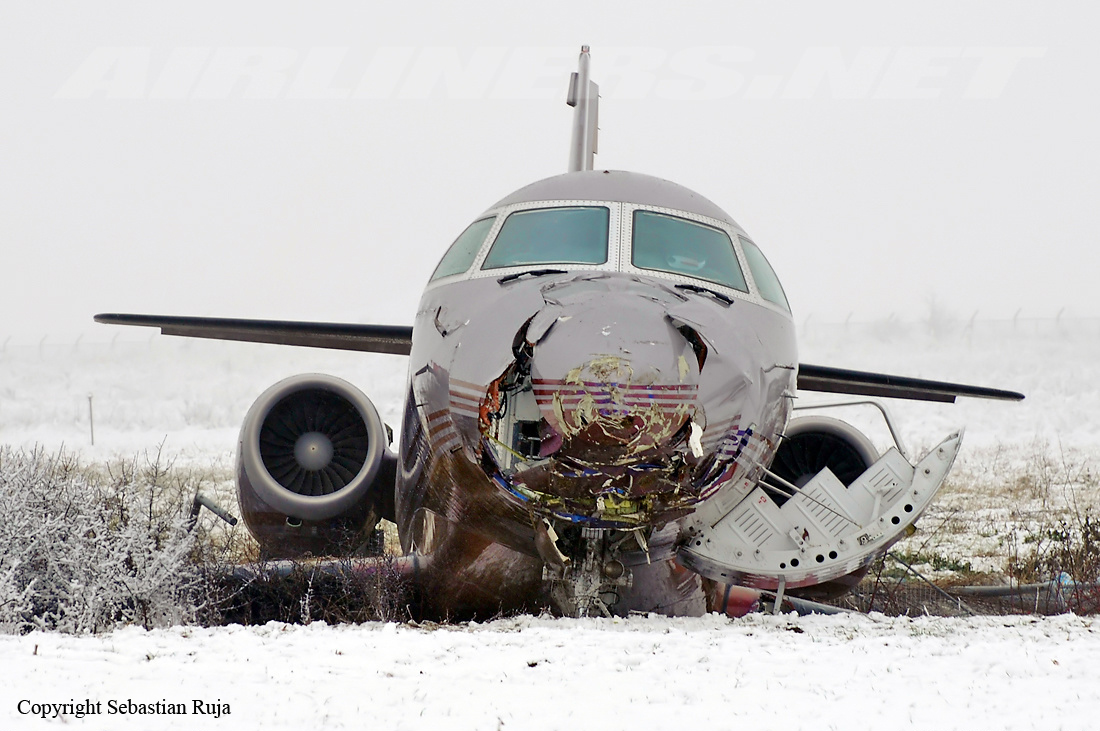
Crash of a Beechcraft F90-1 King Air in Mamuno

Date & Time: Jan 21, 2009
Type of aircraft:
Operator:
Registration:
A2-AHV
Survivors:
Yes
MSN:
LA-212
YOM:
1983
Country:
Region:
Crew on board:
0
Crew fatalities:
Pax on board:
0
Pax fatalities:
Other fatalities:
Total fatalities:
0
Circumstances:
On approach to Mamuno Airstrip, the pilot decided to initiate a go-around procedure. After the undercarriage were raised, the twin engine aircraft continued to descent and hit the runway surface. It slid for few dozen metres then veered off runway to the left and came to rest in a grassy area. The high engine temperature set the grass on fire and the aircraft was destroyed by fire. There were no injuries among the occupants.

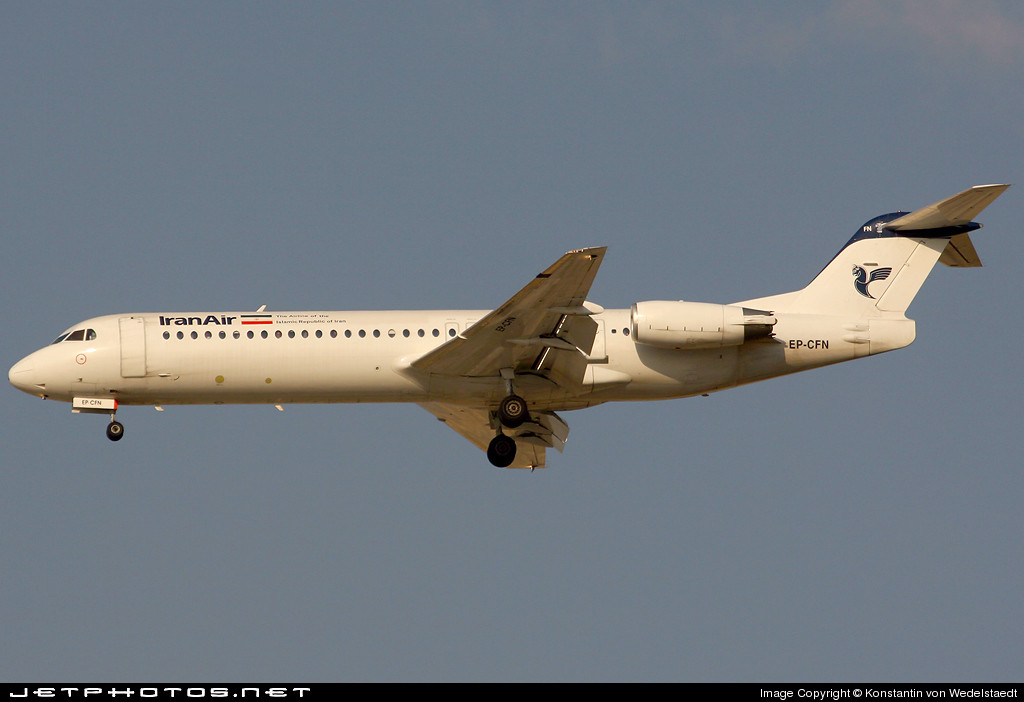
Crash of a Fokker 100 in Tehran

Date & Time: Jan 19, 2009 at 1701 LT
Type of aircraft:
Operator:
Registration:
EP-CFN
Survivors:
Yes
Schedule:
Ardabil - Tehran
MSN:
11423
YOM:
1993
Country:
Region:
Crew on board:
8
Crew fatalities:
Pax on board:
106
Pax fatalities:
Other fatalities:
Total fatalities:
0
Circumstances:
After landing on runway 29L at Tehran-Mehrabad Airport, the right main gear collapsed. The aircraft veered off runway to the right and came to rest. All 114 occupants were uninjured and the aircraft was damaged beyond repair.
Probable cause:
Failure of the right main gear upon landing for unknown reasons.

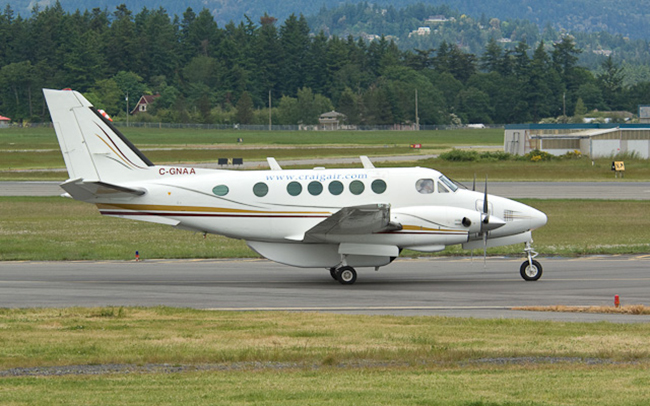
Crash of a Beechcraft 100 King Air in Island Lake

Date & Time: Jan 16, 2009 at 2110 LT
Type of aircraft:
Operator:
Registration:
C-GNAA
Flight Type:
Survivors:
Yes
Schedule:
Thompson - Island Lake
MSN:
B-24
YOM:
1969
Country:
Crew on board:
2
Crew fatalities:
Pax on board:
0
Pax fatalities:
Other fatalities:
Total fatalities:
0
Captain / Total flying hours:
3200
Captain / Total hours on type:
500.00
Copilot / Total flying hours:
1200
Copilot / Total hours on type:
620
Circumstances:
The crew was on a re-positioning flight from Thompson to Island Lake, Manitoba. On arrival in the Island Lake area, the crew commenced an instrument approach to Runway 12. On the final approach segment, the aircraft descended below the minimum descent altitude and the crew initiated a missed approach. During the missed approach, the aircraft struck trees. The crew was able to return for a landing on Runway 12 at Island Lake without further incident. The two crew members were not injured; the aircraft sustained damage to its right wing and landing gear doors. The accident occurred during hours of darkness at approximately 2110 Central Standard Time.
Probable cause:
Findings as to Causes and Contributing Factors:
1. The crew conducted an Area Navigation (RNAV) approach for which they were not trained, with an aircraft that was not properly equipped nor approved for such purpose.
2. The aircraft descended 300 feet below the minimum descent altitude (MDA) as a result of a number of lapses, errors and adaptations which, when combined, resulted in the mismanaged approach.
3. The aural warning on the aircraft’s altitude alerter had been silenced prior to the approach, which precluded it from alerting the crew when the aircraft descended below minimum descent altitude.
4. The SkyNorth standard operating procedures for conducting a non-precision approach were not followed, which resulted in the aircraft descending below the minimum descent altitude. During the ensuing missed approach, the aircraft struck trees.
Findings as to Risk:
1. The lack of a more-structured training environment and the type of supervisory flying provided increased the risk that deviations from standard operating procedures (SOPs) would not be identified.
2. There are several instrument approach procedures in Canada that contain step-down fixes that are not displayed on global positioning system (GPS) units. This may increase the risk of collision with obstacles during step-downs on approaches.
Final Report:
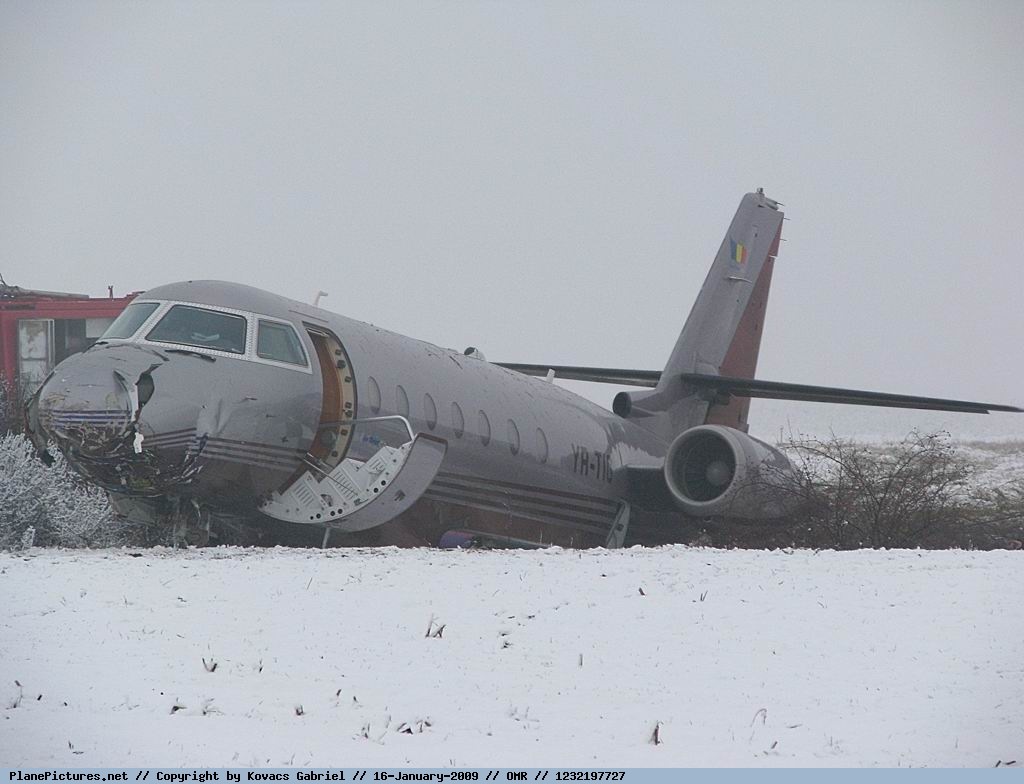
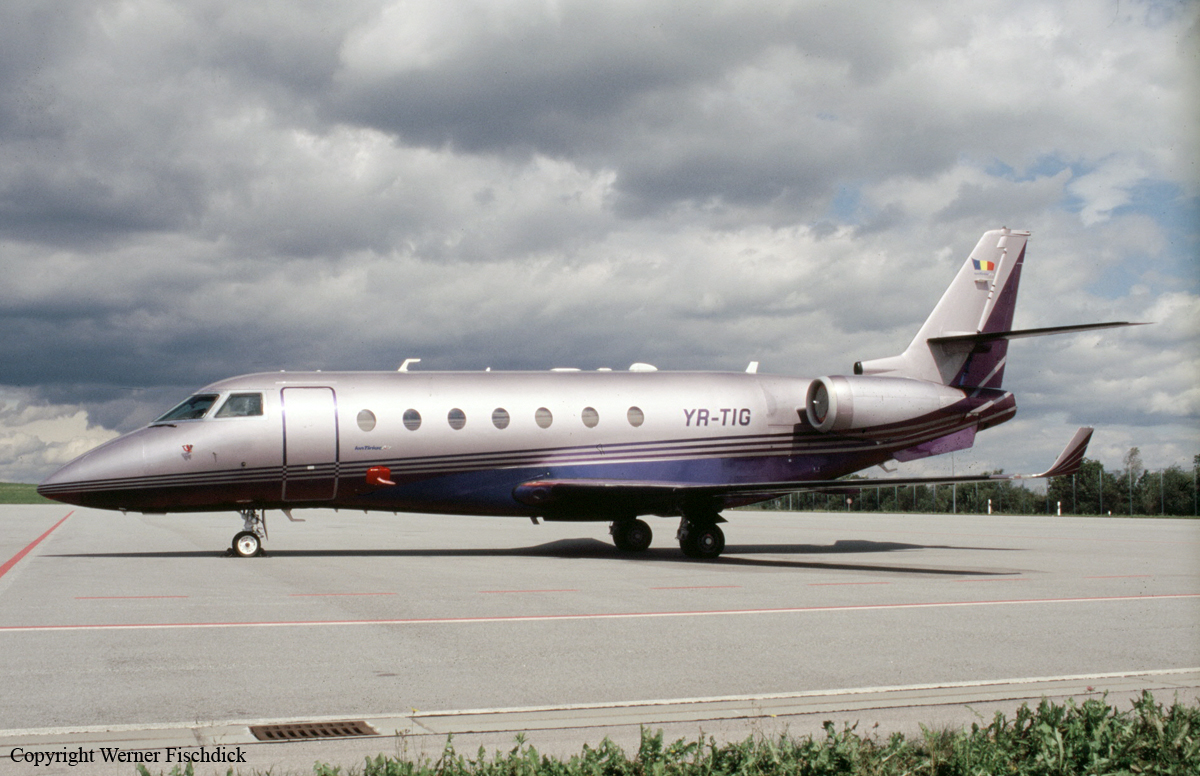
Crash of a Gulfstream G200 in Oradea

Date & Time: Jan 16, 2009 at 1535 LT
Type of aircraft:
Operator:
Registration:
YR-TIG
Survivors:
Yes
Schedule:
Bucharest - Oradea
MSN:
012
YOM:
1999
Flight number:
TIH101
Location:
Country:
Region:
Crew on board:
3
Crew fatalities:
Pax on board:
10
Pax fatalities:
Other fatalities:
Total fatalities:
0
Captain / Total flying hours:
13000
Captain / Total hours on type:
2000.00
Copilot / Total flying hours:
1600
Copilot / Total hours on type:
465
Circumstances:
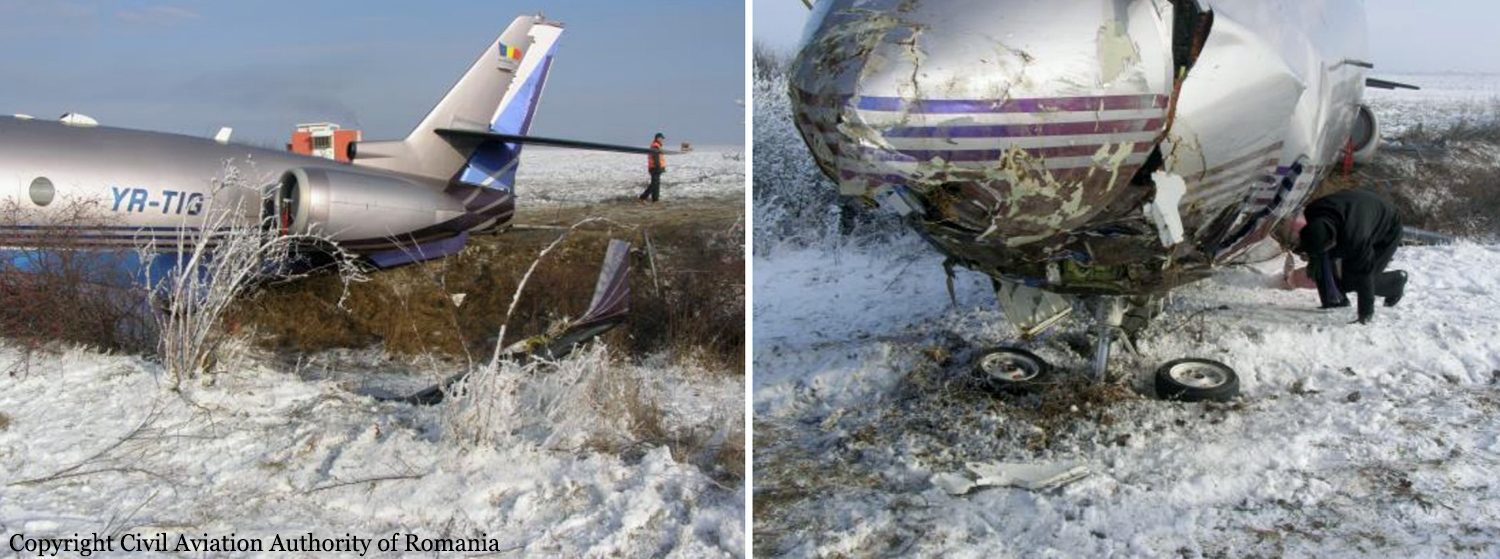
Following an uneventful flight from Bucharest-Otopeni Airport, the crew started the approach to Oradea Airport in marginal weather conditions. On final approach, the pilot-in-command established a visual contact with the runway 19 and continued the descent. The aircraft landed 761 metres past the runway threshold. After touchdown, it was unable to stop within the remaining distance, overran and came to rest in a drainage ditch located 420 metres short of runway 01 threshold. All 13 occupants escaped uninjured while the aircraft was damaged beyond repair.
Probable cause:
The contrast between the area covered with snow and the snow-cleared area (the runway) induced the pilots visual sensation about the runway threshold. This caused the crew to miscalculate the touchdown point, causing the aircraft to land too far down the runway.
Final Report:
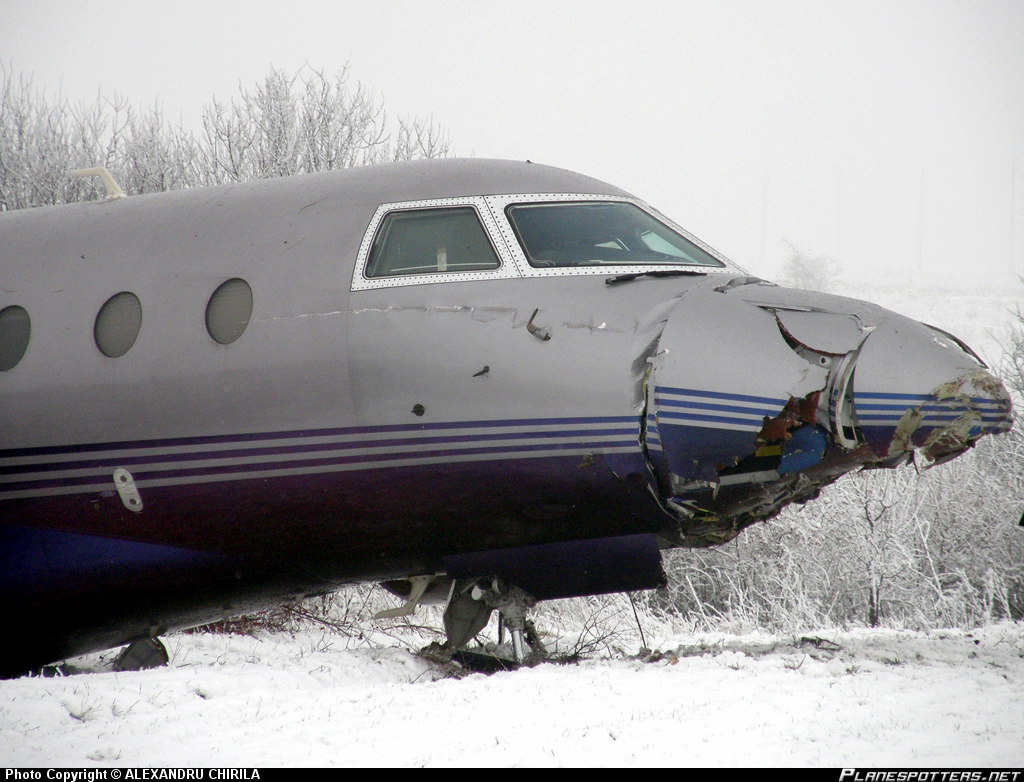
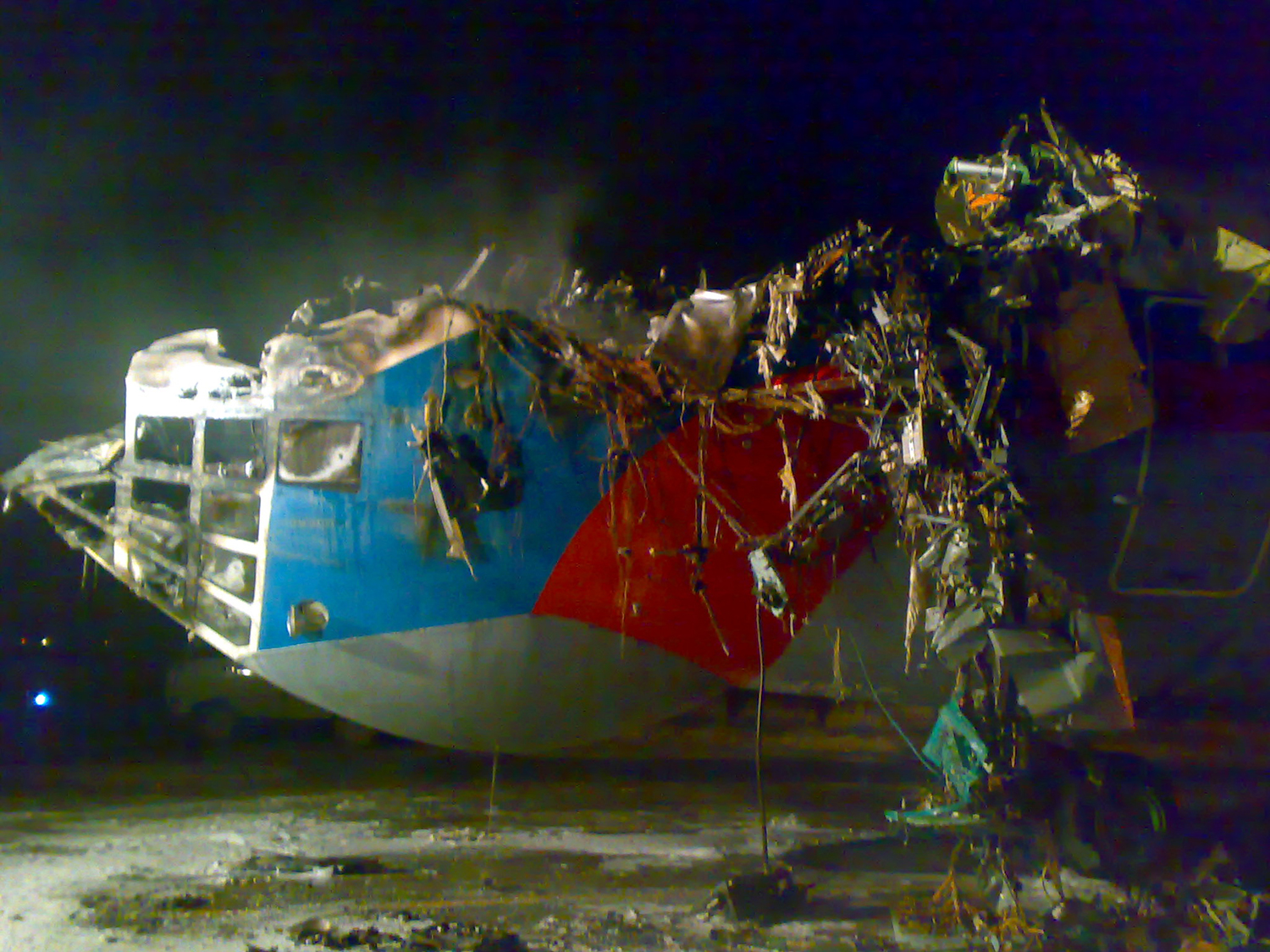
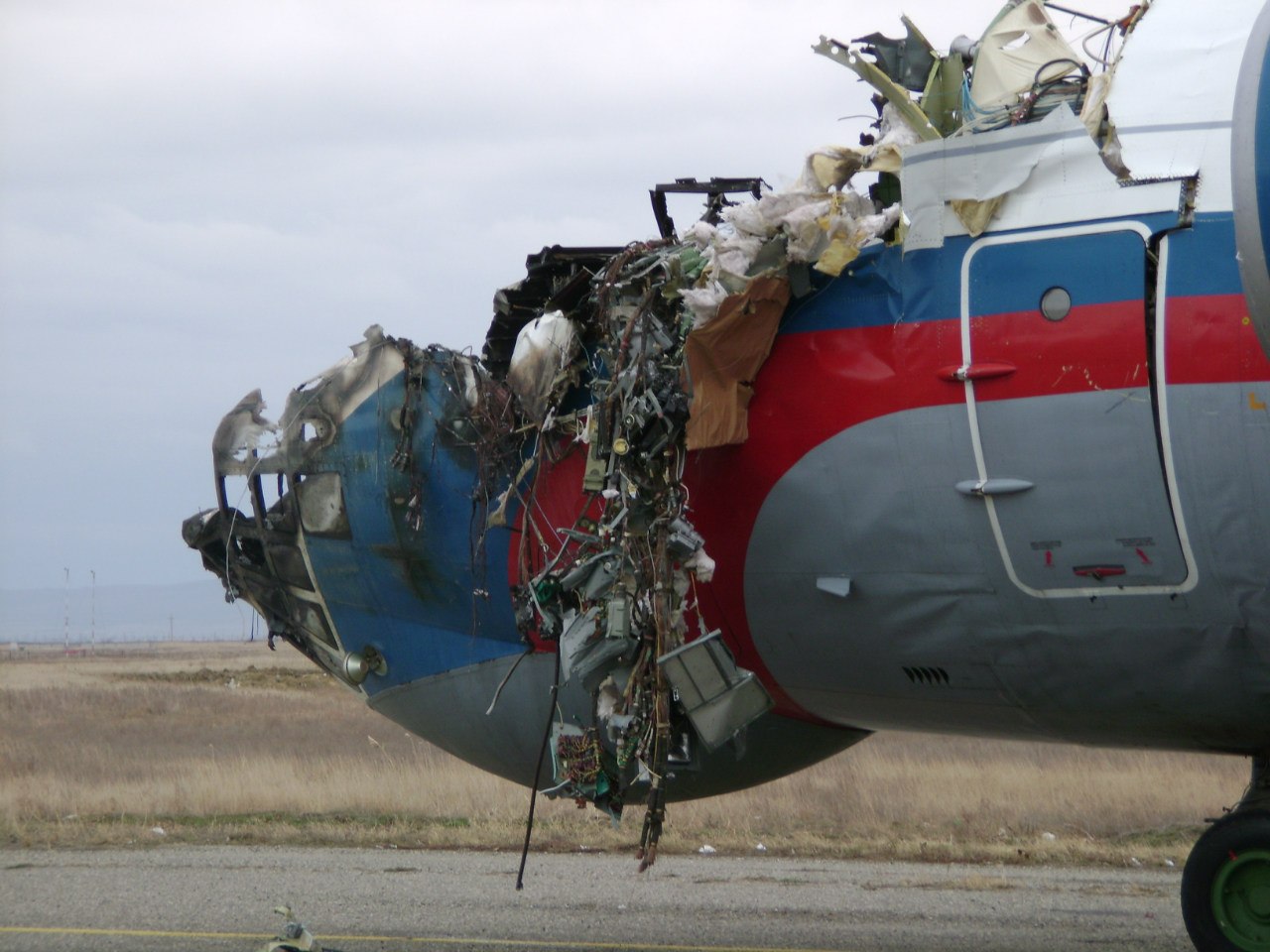
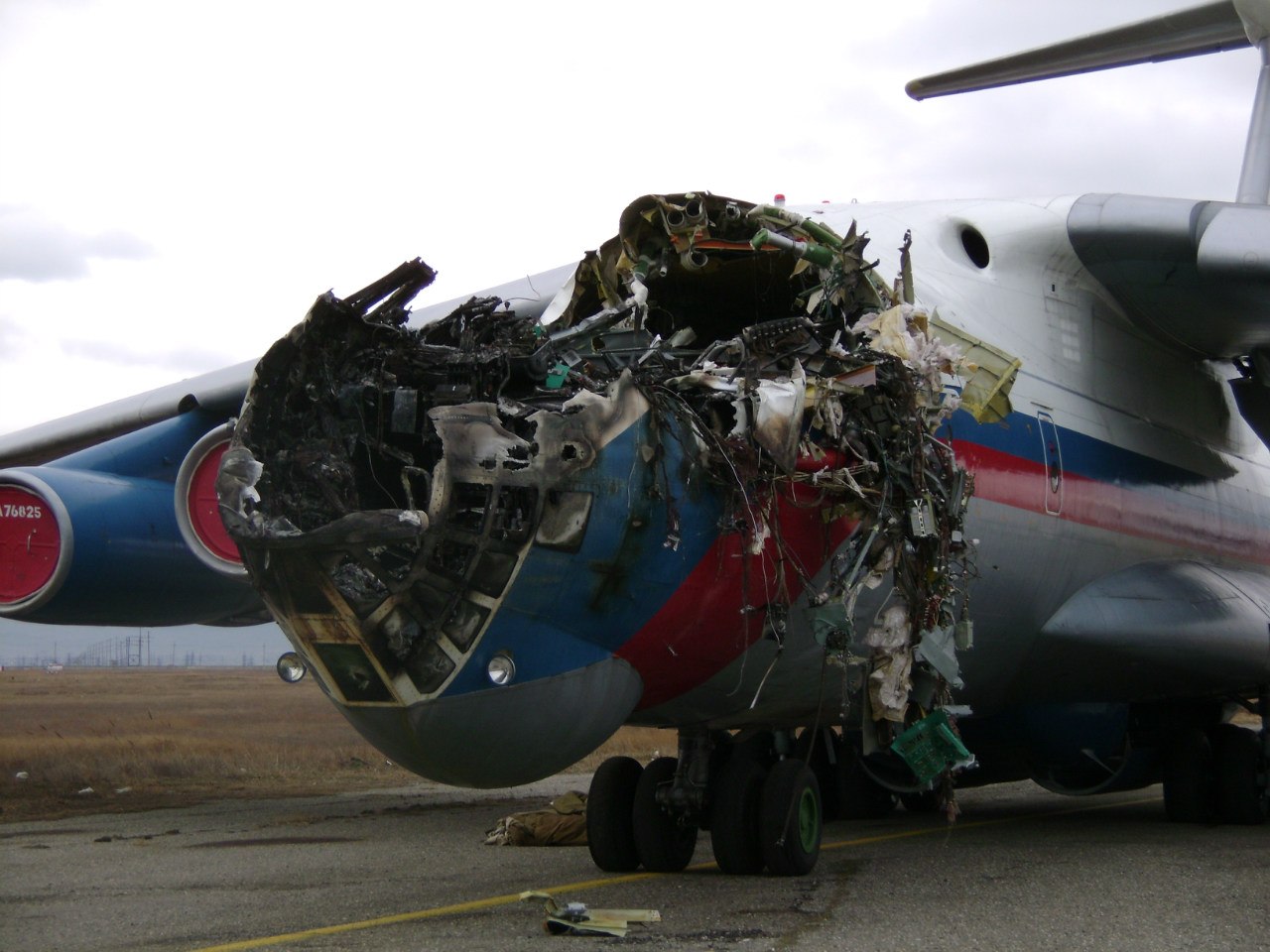
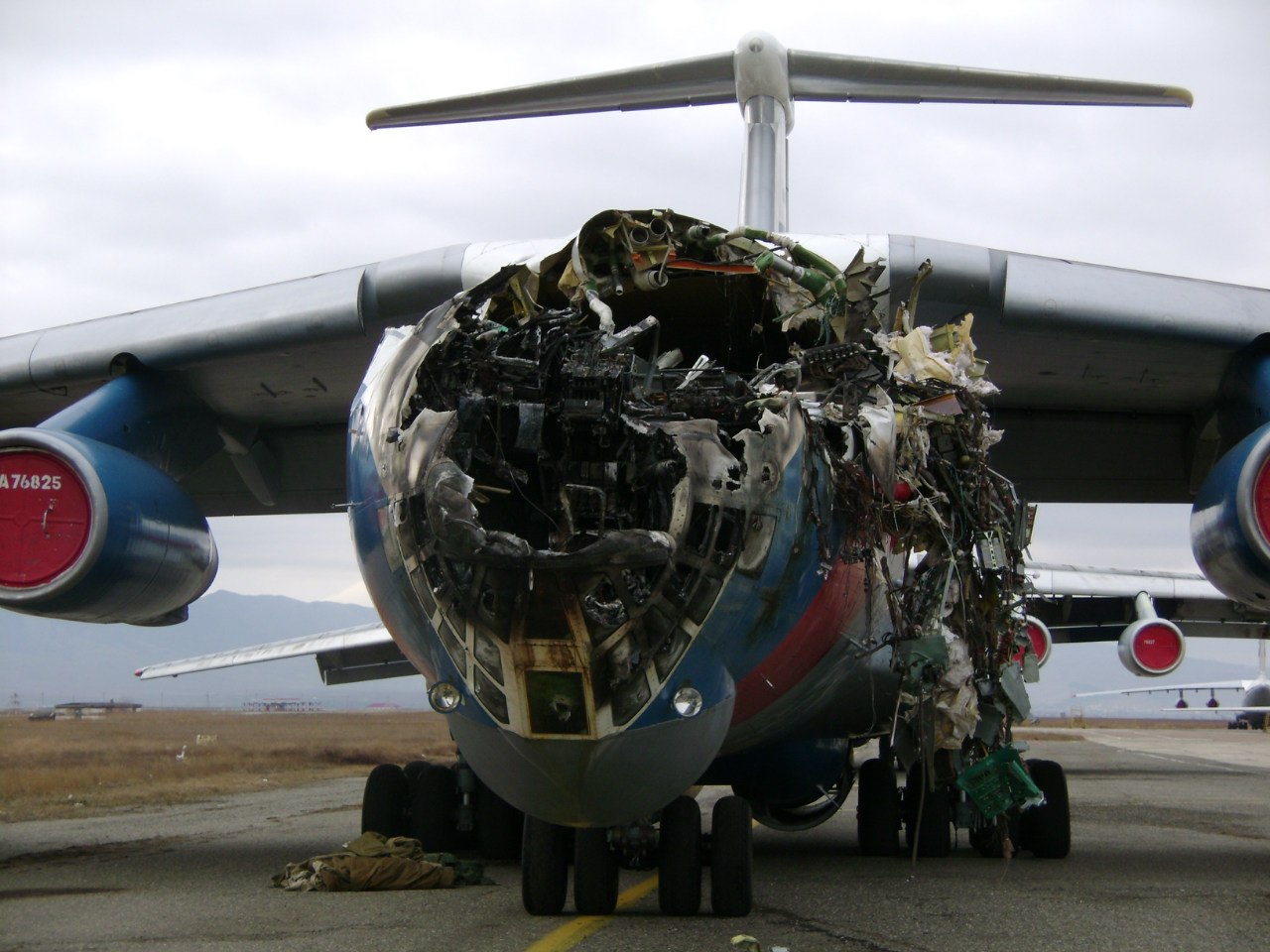
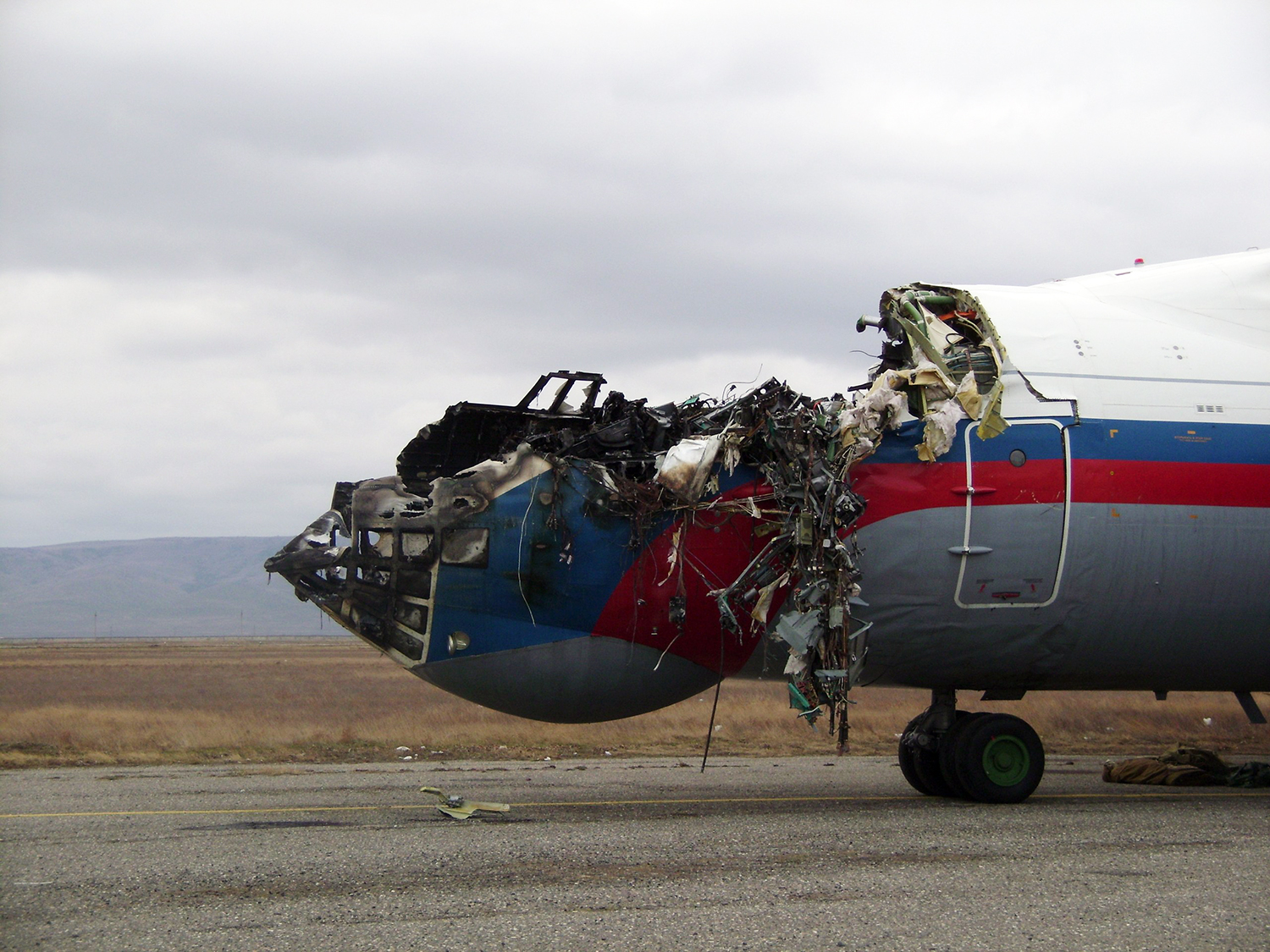
Ground collision of two Ilyushin II-76MD in Makhachkala: 4 killed

Date & Time: Jan 15, 2009 at 2110 LT
Type of aircraft:
Operator:
Registration:
RA-76825
Flight Phase:
Flight Type:
Survivors:
Yes
Schedule:
Makhachkala - Nizhny Novgorod
MSN:
10034 04136
YOM:
1990
Country:
Region:
Crew on board:
7
Crew fatalities:
Pax on board:
0
Pax fatalities:
Other fatalities:
Total fatalities:
4
Circumstances:
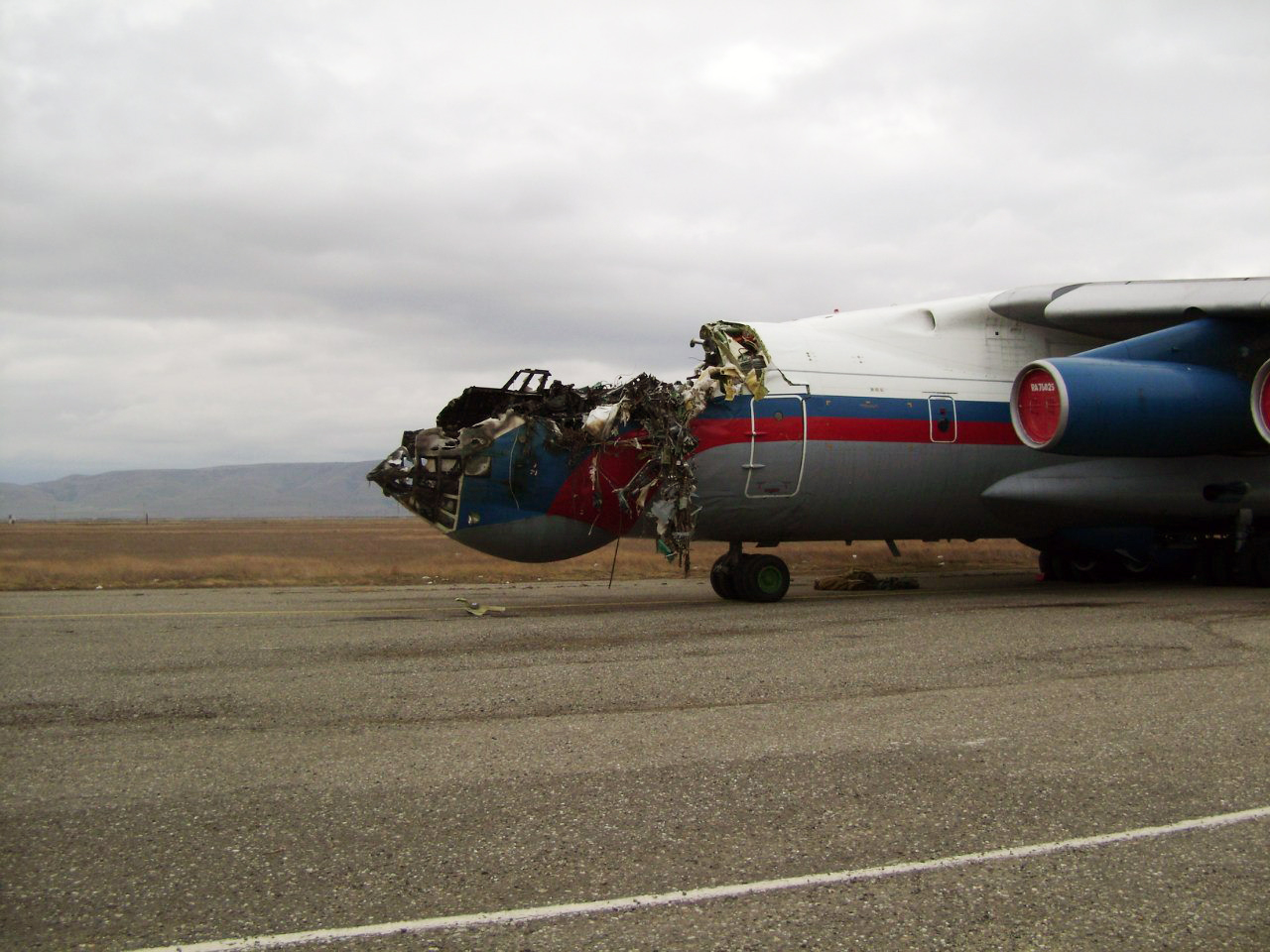
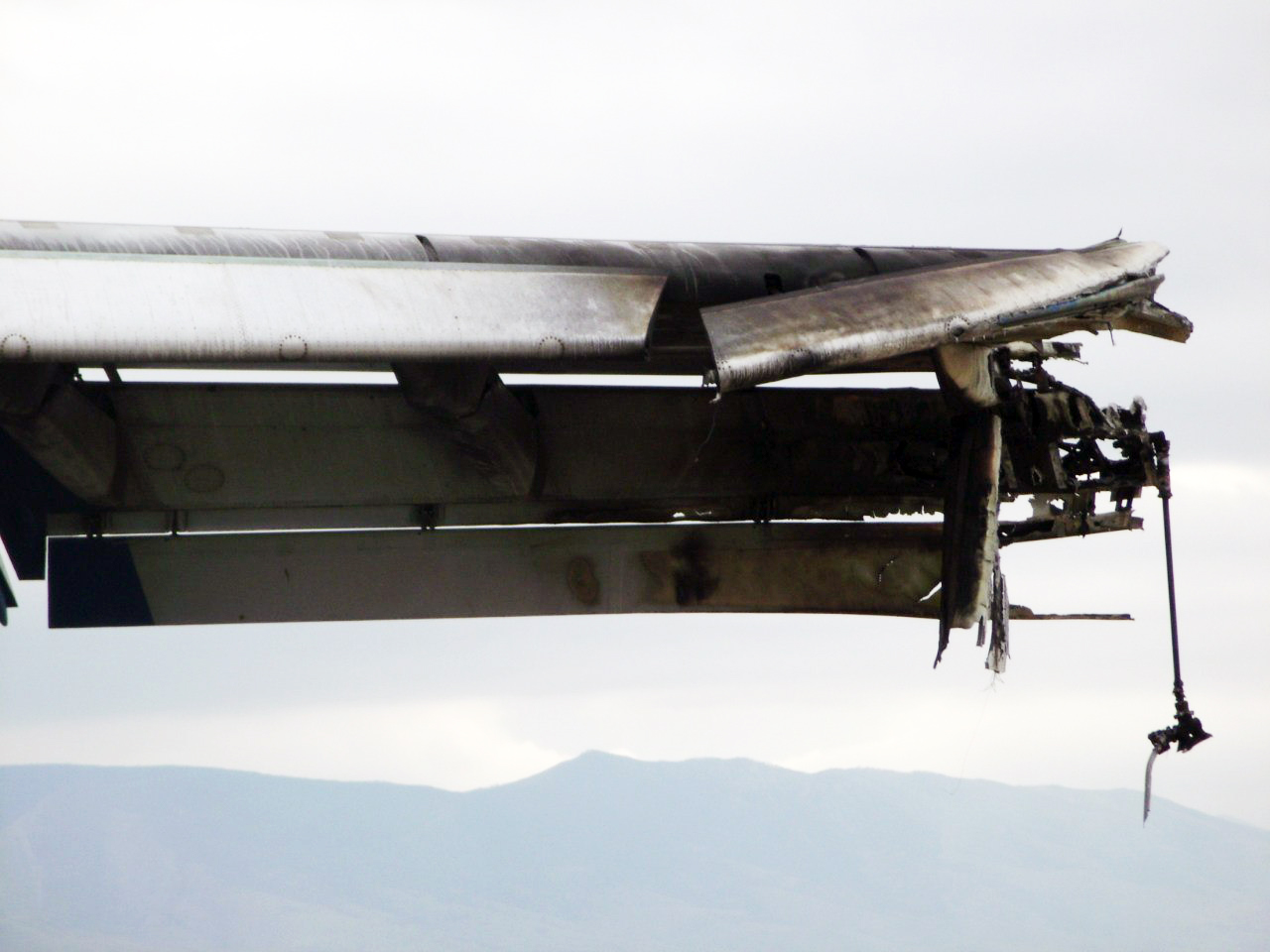
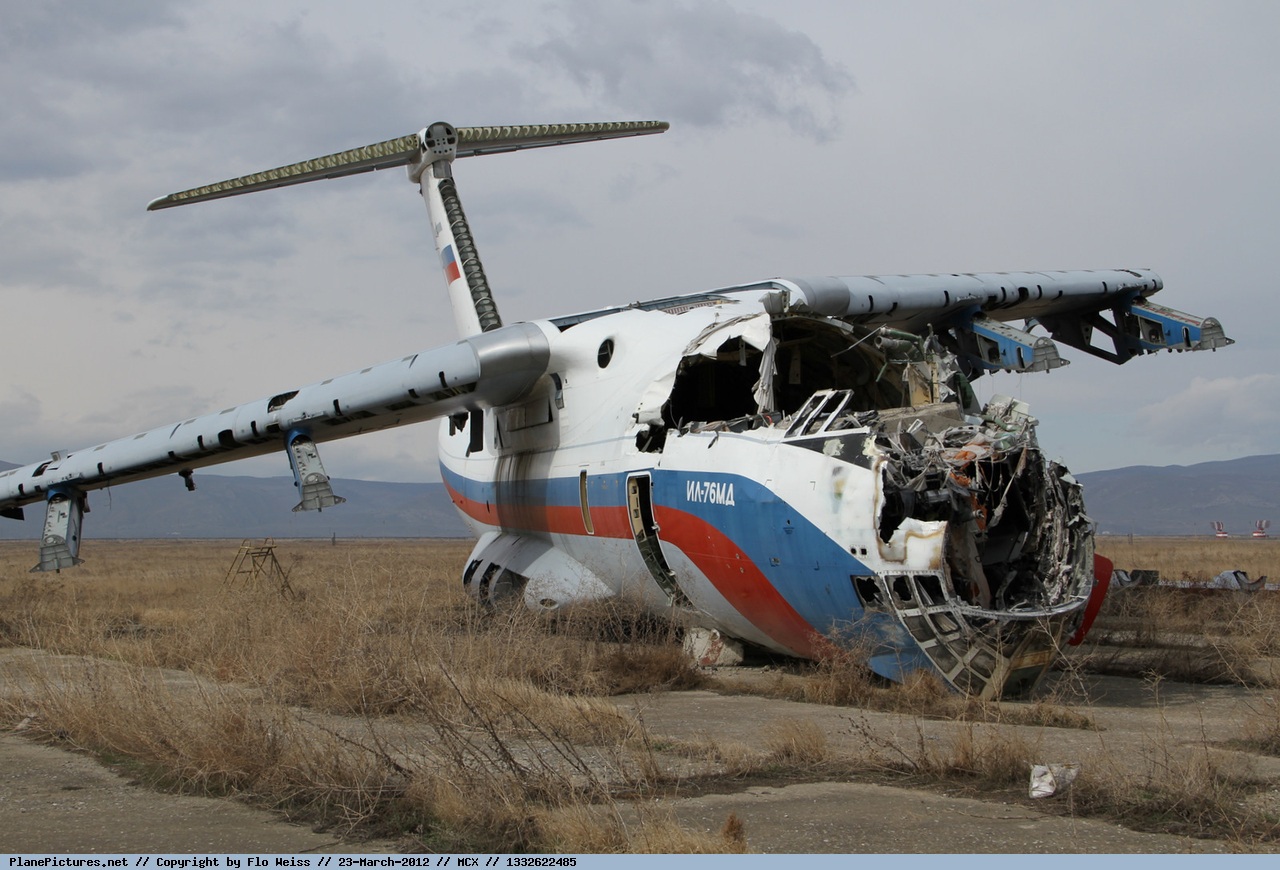
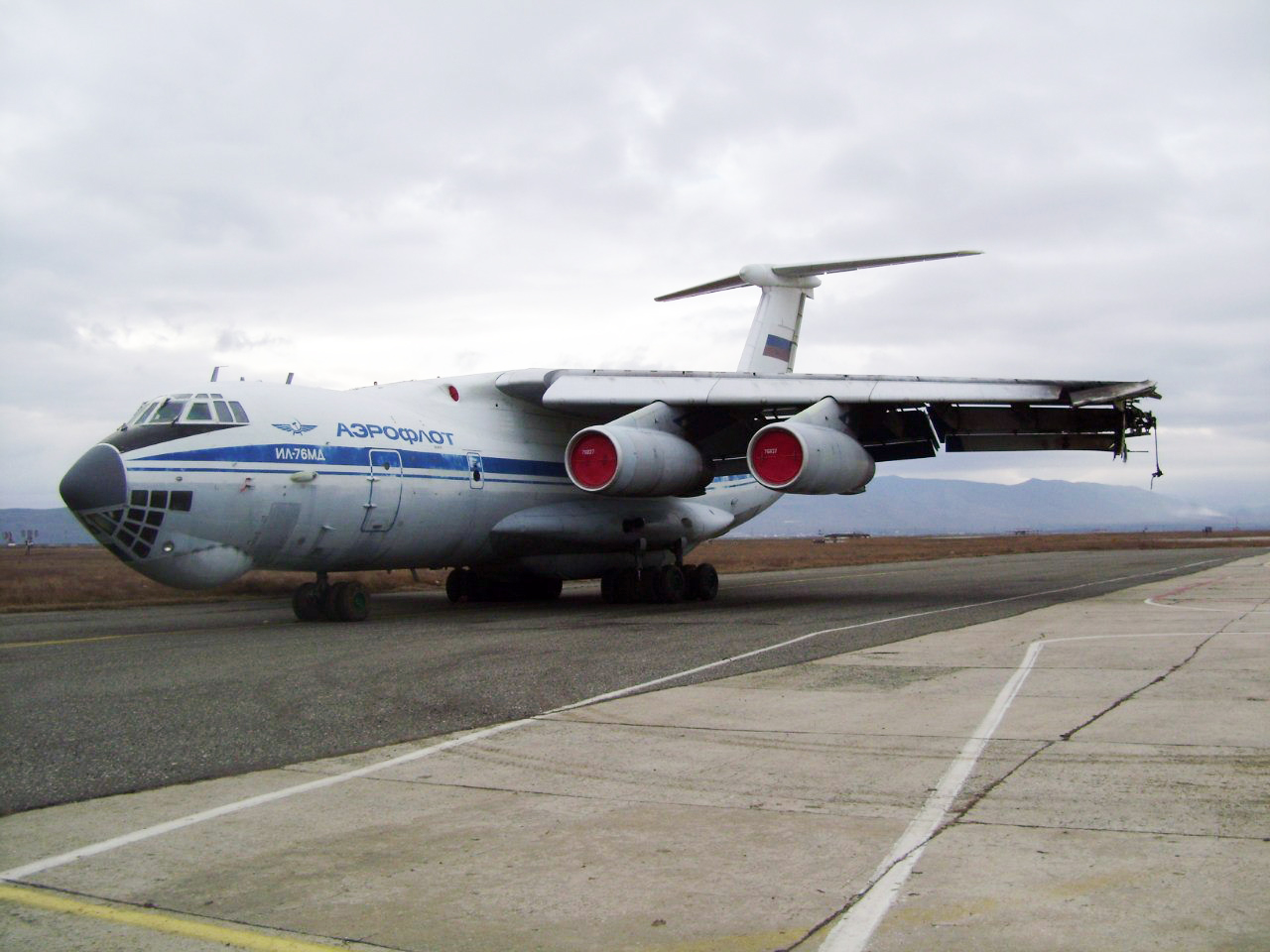
The aircraft was dispatched to Makhachkala to deliver troops, military equipment and cargo with 7 crew members on board. Ready for the next trip to Nizhny Novgorod, the crew was cleared to taxi to the holding point of runway 14. At that time, the visibility was poor due to the night and foggy conditions. A second Ilyushin II-76MD registered RA-76827 was on approach to runway 14 with 25 passengers and a crew of six on board. On final approach, the navigator informed the crew that the headlights should be switched on but no actions was taken. In a visibility lower than 800 metres, the aircraft landed on the left part of the runway, 530 metres past the runway threshold. Almost immediately after touchdown, the airplane veered off runway to the left, rolled for about 512 metres when its left wing collided with the cockpit of the II-76 registered RA-76825 that was waiting at a position located 41 metres past the holding position markings. RA-76827 continued to roll parallel to the runway and eventually stopped 1'876 metres past the runway 14 threshold with only minor damage, and no one on board was injured. The cockpit of RA-76825 was totally destroyed and four crew members were killed while three others were injured.
Probable cause:
The accident was the consequence of the combination of the following factors:
- Poor piloting techniques on part of the landing crew,
- Rules violation on part of the captain of the taxiing aircraft,
- Errors and violations of procedures by air traffic control at Makhachkala Airport,
- Shortcomings in flight technical support at Makhachkala airport,
- After touchdown on the left side of runway 14, 530 metres after threshold, RA-76827 skidded to the left and veered off runway into soft ground. After a course of 512 metres, the left wing tip impacted the cockpit of RA-76825 that was holding at a position located 41 metres beyond the holding position marking. The presence of the aircraft beyond the holding position marking was due to non-compliant ground markings, uncoordinated actions by air traffic controllers and the fact that the captain failed to report his position to ATC,
- Shortcomings and irregularities in the organization of meteorological services at Makhachkala airport, which resulted in unsatisfactory meteorological information transmitted to the crews, leading to a landing in below minima weather conditions,
- Shortcomings in the organization of flight operations at 675 OSAP procedure, which led to a mismatch between the crew's actual level of preparedness and the complexity of the flight mission,
- An overestimation by the captain of his level of preparedness,
- The failure of the captain to divert to the alternate airport,
- A lack of discipline on part of the captain who decided to complete the landing procedure with the headlights off.
Final Report:
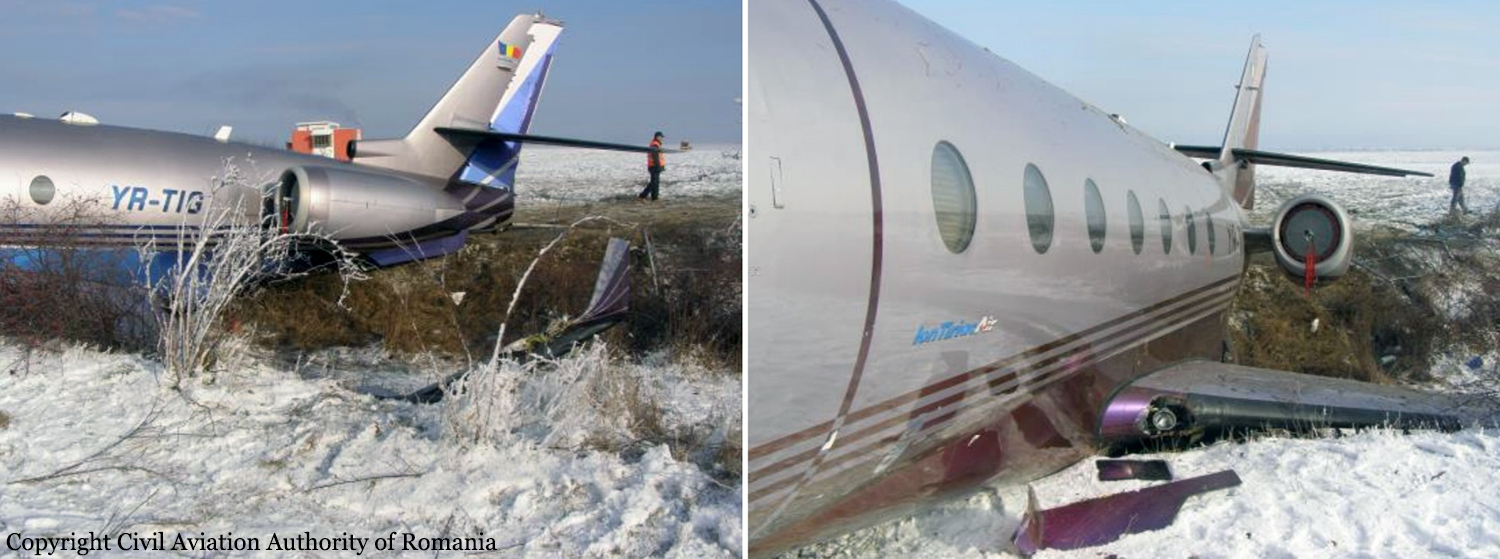
Crash of a Rockwell Gulfstream 690C Jetprop 840 in Wray: 3 killed

Date & Time: Jan 15, 2009 at 0700 LT
Operator:
Registration:
N840NK
Survivors:
No
Schedule:
Denver - Wray
MSN:
690-11734
YOM:
1978
Location:
Crew on board:
2
Crew fatalities:
Pax on board:
1
Pax fatalities:
Other fatalities:
Total fatalities:
3
Captain / Total flying hours:
10221
Copilot / Total flying hours:
2728
Aircraft flight hours:
7215
Circumstances:
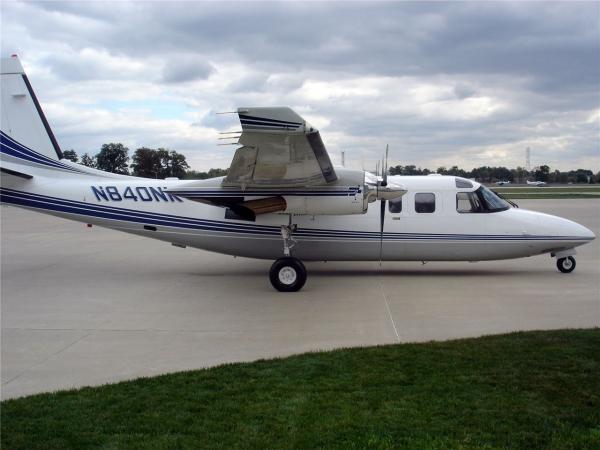
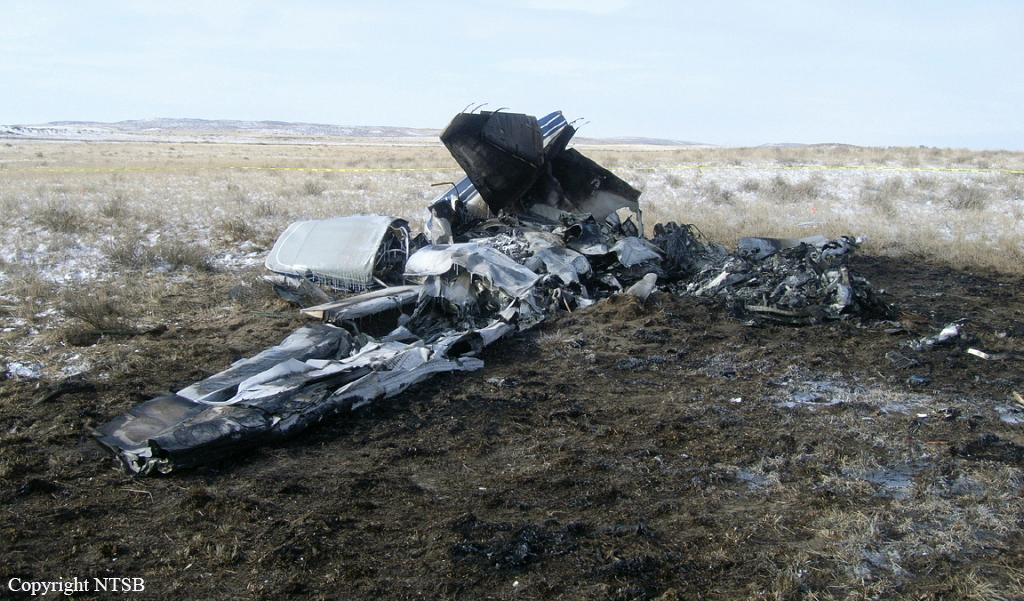
The airplane, a Rockwell Grand Commander 690C Jetprop 840, was "cleared for the approach" and approximately eight minutes later was observed emerging from the clouds, flying from west to east. Witnesses reported that the nose of the airplane dropped and the airplane subsequently impacted terrain in a near vertical attitude. Impact forces and a post impact fire destroyed the airplane. Examination of the airplane's systems revealed no anomalies. Weather at the time of the accident was depicted as overcast with three to six miles visibility. An icing probability chart depicted the probability for icing during the airplane's descent as 76 percent. AIRMETS for moderate icing and instrument meteorological conditions had been issued for the airplane’s route of flight. Another airplane in the vicinity reported light to moderate mixed icing. It could not be confirmed what information the pilot had obtained in a weather briefing, as a briefing was not obtained through a recorded source. A weight and balance calculation revealed that the accident airplane was 1,000 pounds over gross weight at the time of departure and 560 pounds over gross weight at the time of the accident. It was estimated that the center of gravity was at or just forward of design limitations.
Probable cause:
The pilot’s failure to maintain aircraft control during the approach resulting in an aerodynamic stall and subsequent impact with terrain. Contributing to the accident was the pilot’s improper preflight planning and conditions conducive for structural icing.
Final Report:
Crash of an Antonov AN-24RV in Bosaso

Date & Time: Jan 13, 2009
Type of aircraft:
Operator:
Registration:
S9-KAS
Survivors:
Yes
Schedule:
Djibouti City - Bosaso
MSN:
4 73 094 06
YOM:
1974
Country:
Region:
Crew on board:
4
Crew fatalities:
Pax on board:
11
Pax fatalities:
Other fatalities:
Total fatalities:
0
Circumstances:
Following an uneventful flight from Djibouti City, the crew started the approach to Bosaso Airport. When the undercarriage were selected down, the crew realized that the nose gear was stuck in its wheel well. The crew elected to get it down manually but without success. The decision was taken to land in such configuration. Upon touchdown, the aircraft landed on its nose and slid for few dozen metres before coming to rest. All 15 occupants escaped uninjured while the aircraft was damaged beyond repair.

Crash of a Pilatus PC-12/45 in Hayden: 2 killed

Date & Time: Jan 11, 2009 at 0942 LT
Type of aircraft:
Registration:
N604WP
Flight Phase:
Flight Type:
Survivors:
No
Schedule:
Hayden - Chino
MSN:
604
YOM:
2004
Crew on board:
1
Crew fatalities:
Pax on board:
1
Pax fatalities:
Other fatalities:
Total fatalities:
2
Captain / Total flying hours:
867
Captain / Total hours on type:
82.00
Aircraft flight hours:
558
Circumstances:
The pilot had filed an instrument flight rules flight plan with a planned departure time of 0700 in order to arrive at his intended destination in time for a planned engagement. He and his passenger arrived at the airport approximately 0800 and requested that the airplane be fueled. The airplane was pulled from its heated hangar into heavy snowfall and fueled at 0917. As the airplane sat outside in the heavy snowfall, a measurable amount of wet slushy snow accumulated on the airplane. The Fixed Base Operator manager suggested to the pilot that the airplane be deiced, but he declined. The airplane was then pulled out to the taxiway in an effort to prevent it from becoming stuck in the snow. At 0939, approximately 22 minutes after the airplane was pulled out if its hangar, the pilot departed with a visibility of 3/4 of a mile in snow and with a 4-knot direct tailwind. The pilot then made a right turn and announced that he was heading to his first waypoint. The airplane continued into an ever tightening right turn until it impacted the ground while in an inverted position about one mile north-northwest of the runway. An examination of the airplane’s wreckage revealed no anomalies with either the engine or airframe that would have contributed to the loss of control. The airplane’s Pilot Operating Handbook and Airplane Flight Manual contained the following limitation: "The aircraft must be clear of all deposits of snow, ice and frost adhering to the lifting surfaces immediately prior to takeoff."
Probable cause:
The pilot's loss of control due to snow/ice contamination on the airplane's lifting surfaces as a result of his decision not to deice the airplane before departure.
Final Report: