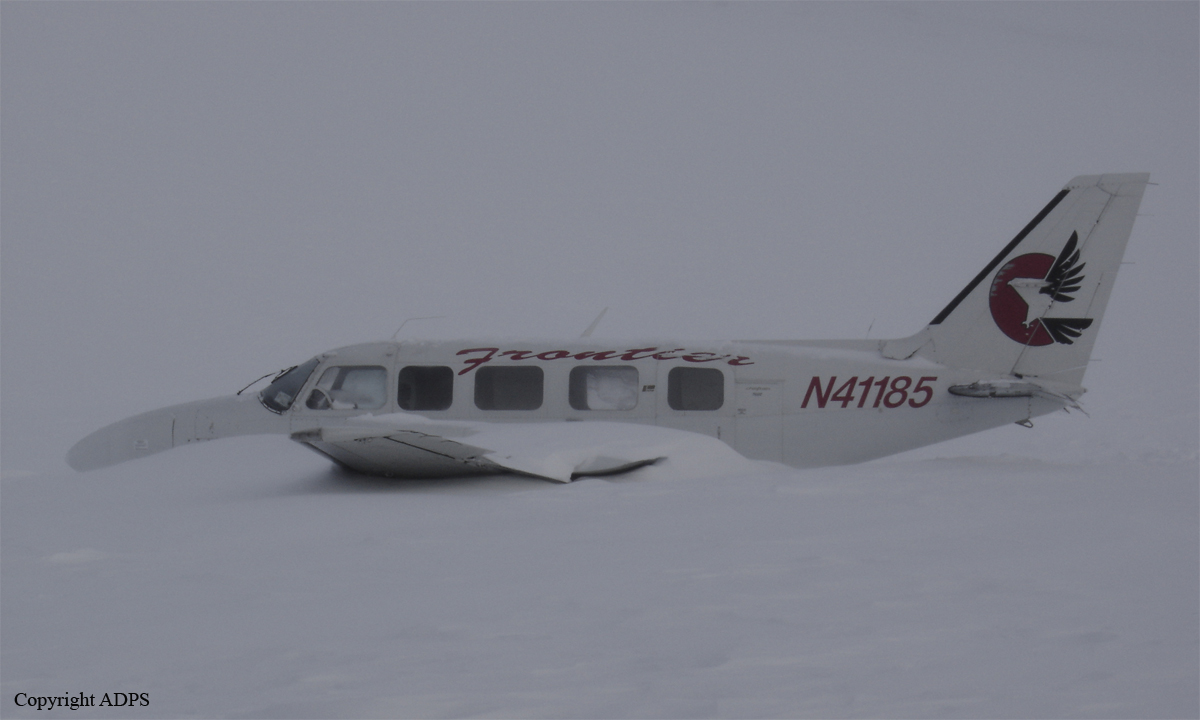
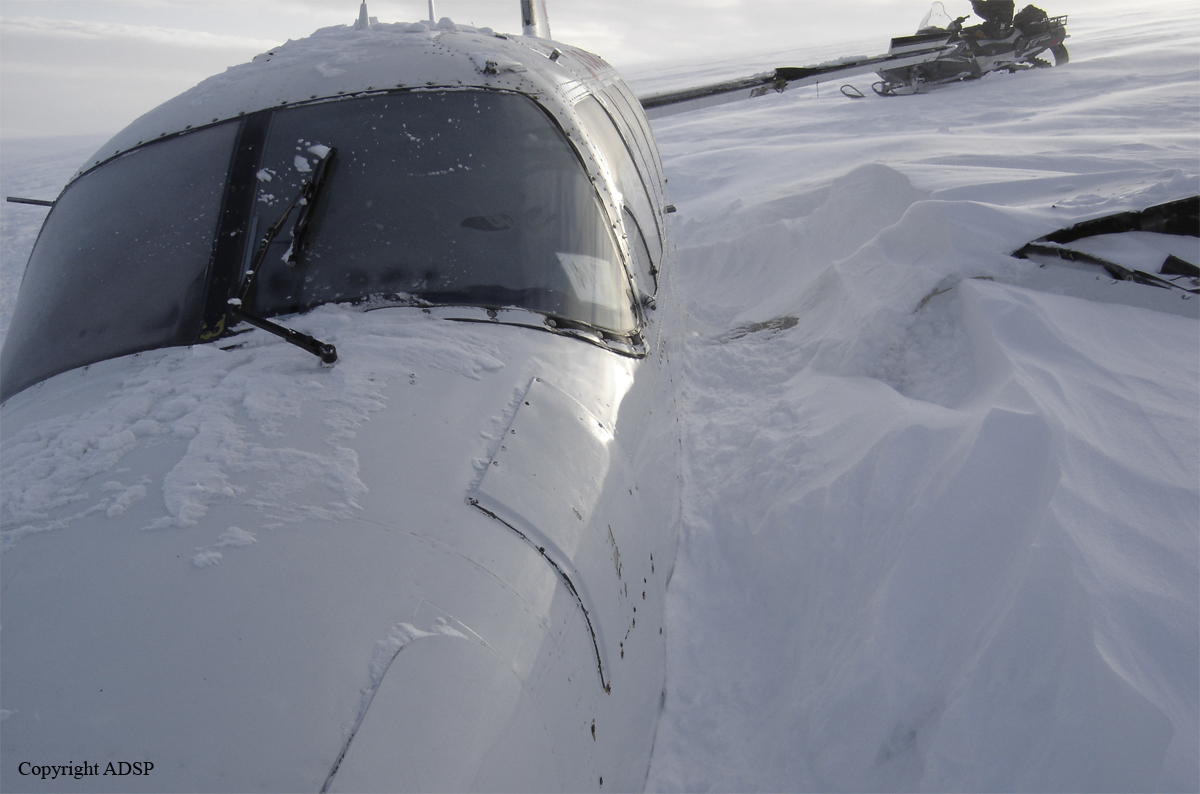
Crash of a Piper PA-31-350 Navajo Chieftain in Nome

Date & Time: Feb 19, 2009 at 1812 LT
Operator:
Registration:
N41185
Survivors:
Yes
Schedule:
Brevig Mission – Nome
MSN:
31-8553001
YOM:
1985
Flight number:
FTA8218
Location:
Crew on board:
1
Crew fatalities:
Pax on board:
5
Pax fatalities:
Other fatalities:
Total fatalities:
0
Captain / Total flying hours:
24850
Captain / Total hours on type:
7500.00
Aircraft flight hours:
10928
Circumstances:
The scheduled commuter flight was about 10 miles north of the destination airport, operating under a special visual-flight-rules clearance, and descending for landing in instrument meteorological conditions. According to the pilot he started a gradual descent over an area of featureless, snow-covered, down-sloping terrain in whiteout and flat light conditions. During the descent a localized snow shower momentarily reduced the pilot’s forward visibility and he was unable to discern any terrain features. The airplane collided with terrain in an all-white snow/ice field and sustained substantial damage. At the time of the accident the destination airport was reporting visibility of 1.5 statute miles in light snow and mist, broken layers at 900 and 1,600 feet, and 3,200 feet overcast, with a temperature and dew point of 25 degrees Fahrenheit. The pilot reported that there were no pre accident mechanical problems with the airplane and that the accident could have been avoided if the flight had been operated under an instrument-flight-rules flight plan.
Probable cause:
The pilot's continued flight into adverse weather and his failure to maintain clearance from terrain while on approach in flat light conditions.
Final Report:

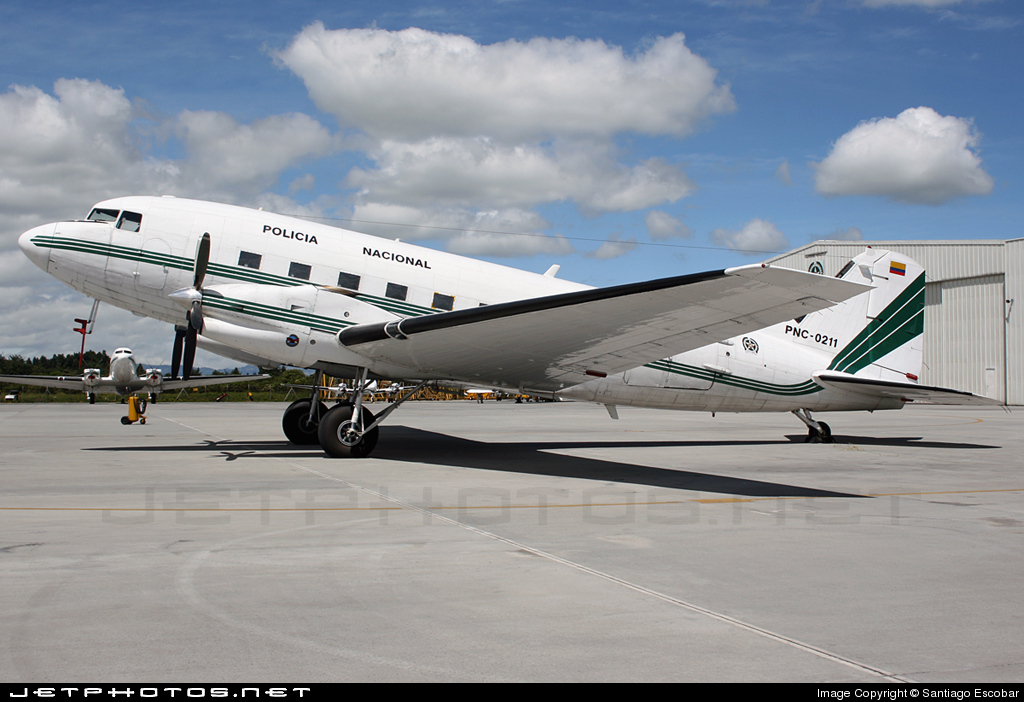
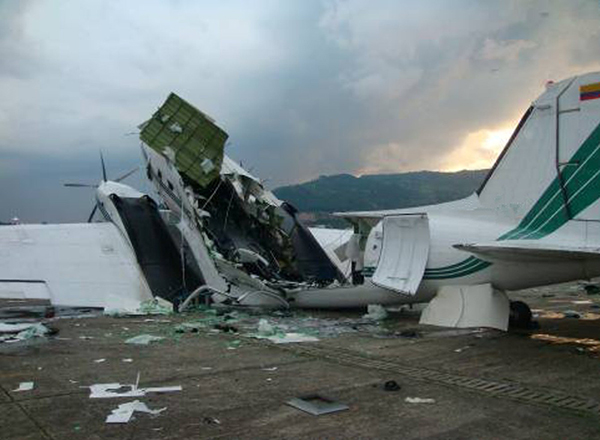
Ground explosion of a Basler BT-67 in Medellín

Date & Time: Feb 18, 2009 at 1510 LT
Type of aircraft:
Operator:
Registration:
PNC-0211
Flight Phase:
Flight Type:
Survivors:
Yes
Schedule:
Medellín – Quibdó
MSN:
25667
YOM:
1944
Country:
Crew on board:
2
Crew fatalities:
Pax on board:
25
Pax fatalities:
Other fatalities:
Total fatalities:
0
Circumstances:
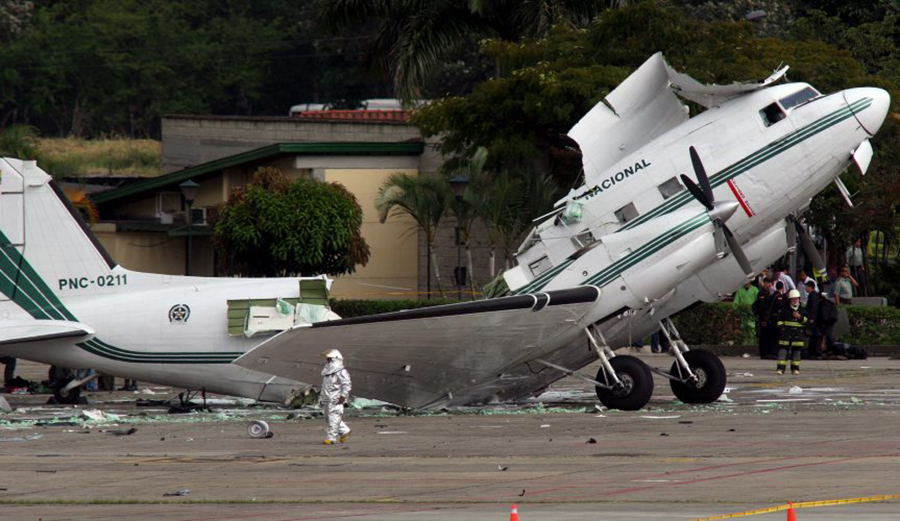
Parked on the apron at Medellín-Enrique Olaya Herrera Airport, the aircraft was prepared for a flight to Quibdó with two pilots and 25 policemen from the Escuadrón Móvil Antidisturbios (ESMAD). While the people were boarding the airplane, an explosion occurred. The aircraft was destroyed but there was no serious injuries among the 27 people. It is believed that the explosion was caused by the inadvertent detonation of a grenade used by one of the policemen.

Crash of a Basler BT-67 in Palanquero: 5 killed

Date & Time: Feb 18, 2009 at 0800 LT
Type of aircraft:
Operator:
Registration:
FAC-1670
Flight Phase:
Flight Type:
Survivors:
No
Schedule:
Palanquero - Palanquero
MSN:
19125
YOM:
1943
Country:
Crew on board:
5
Crew fatalities:
Pax on board:
0
Pax fatalities:
Other fatalities:
Total fatalities:
5
Circumstances:
One instructor and four student pilots were engaged in a training mission from Palanquero-German Olano Airport. In unknown circumstances, the converted turboprop DC-3 crashed 8 km from the airport. All five occupants were killed and the aircraft was destroyed.

Crash of a HESA IrAn-140-100 in Isfahan: 5 killed

Date & Time: Feb 16, 2009
Type of aircraft:
Operator:
Registration:
90-04
Flight Type:
Survivors:
No
Schedule:
Isfahan - Isfahan
MSN:
90-04
YOM:
2007
Country:
Region:
Crew on board:
5
Crew fatalities:
Pax on board:
0
Pax fatalities:
Other fatalities:
Total fatalities:
5
Circumstances:
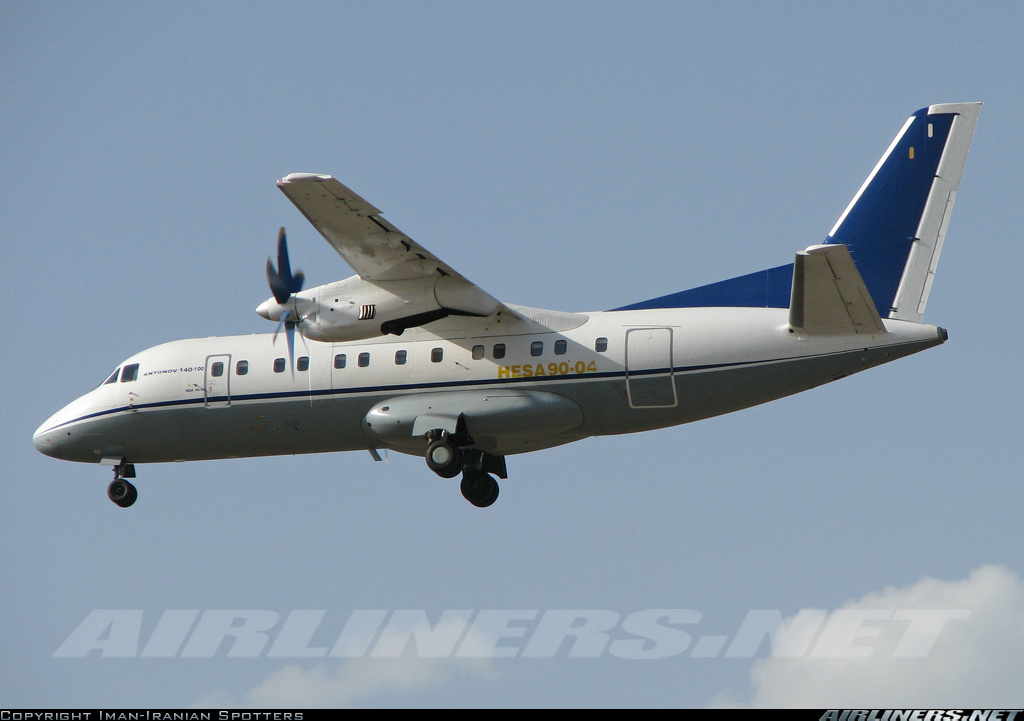
The crew was performing a training flight on behalf of the Iranian constructor HESA (Iran Aircraft Manufacturing Industrial Company) which built the Antonov AN-140 under licence with the name HESA IrAn-140-100. On final approach to Isfahan-Shahin Shahr-HESA Airport, the aircraft crashed in unknown circumstances and was destroyed. All five occupants, one instructor and four pilots under training, were killed.

Crash of an Avro RJ100 in London-City

Date & Time: Feb 13, 2009 at 2040 LT
Type of aircraft:
Operator:
Registration:
G-BXAR
Survivors:
Yes
Schedule:
Amsterdam - London-City
MSN:
E3298
YOM:
1997
Flight number:
BA8456
Region:
Crew on board:
5
Crew fatalities:
Pax on board:
67
Pax fatalities:
Other fatalities:
Total fatalities:
0
Captain / Total flying hours:
4730
Captain / Total hours on type:
2402.00
Circumstances:
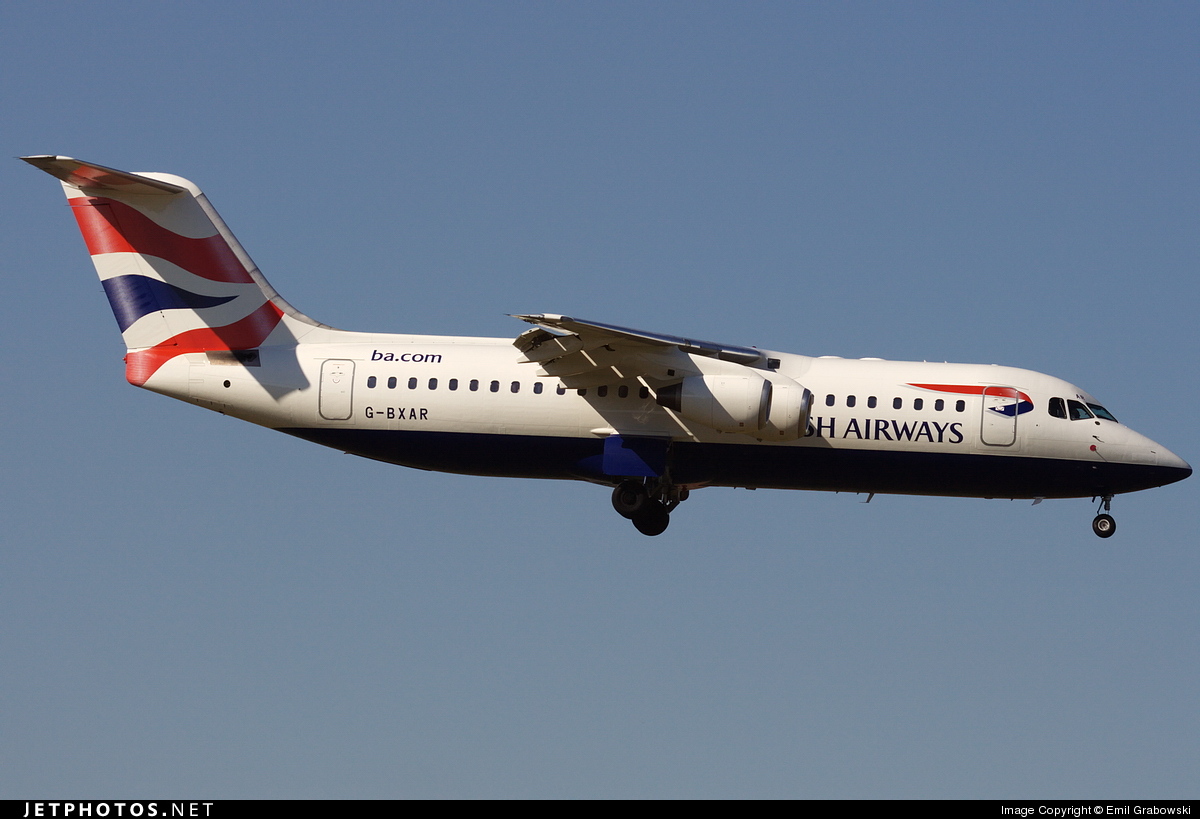
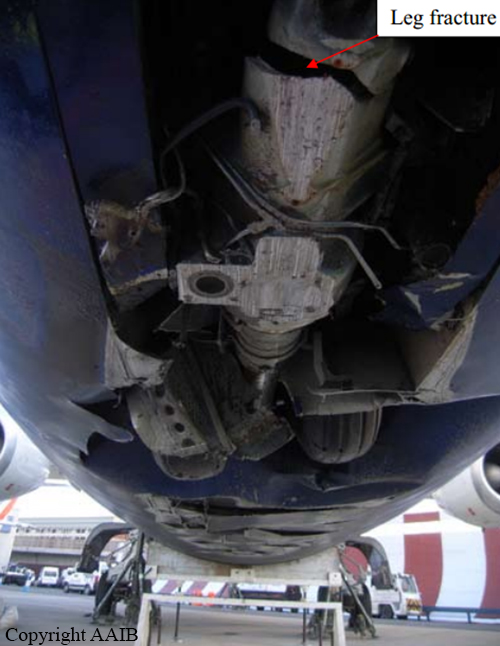
Following a normal touchdown, the fracture of the nose landing gear main fitting allowed the nose gear to collapse rearwards and penetrate the lower fuselage, causing significant damage to the equipment bay and the battery to become disconnected. The penetration of the fuselage allowed smoke and fumes produced by the consequent release of hydraulic fluid to enter the cockpit and passenger cabin. With the battery disconnected and after the engines were shut down, all power to the aircraft PA systems was lost and the remote cockpit door release mechanism became inoperative. No pre-accident defects were identified with the manual cockpit door release mechanism or the PA system.
Probable cause:
The nose landing gear main fitting failed following the formation of multiple fatigue cracks within the upper section of the inner bore, originating at the base of machining grooves in the bore surface. These had formed because the improved surface finish, introduced by SB 146-32-150, had not been properly embodied at previous overhaul by Messier Services Inc, despite their overhaul records showing its incorporation. The operator had been in full compliance with the Service Bulletin relating to regular inspection of the main fitting, and embodiment of SB 146-32-150 at overhaul removed the requirement for these inspections by the operator.
Final Report:

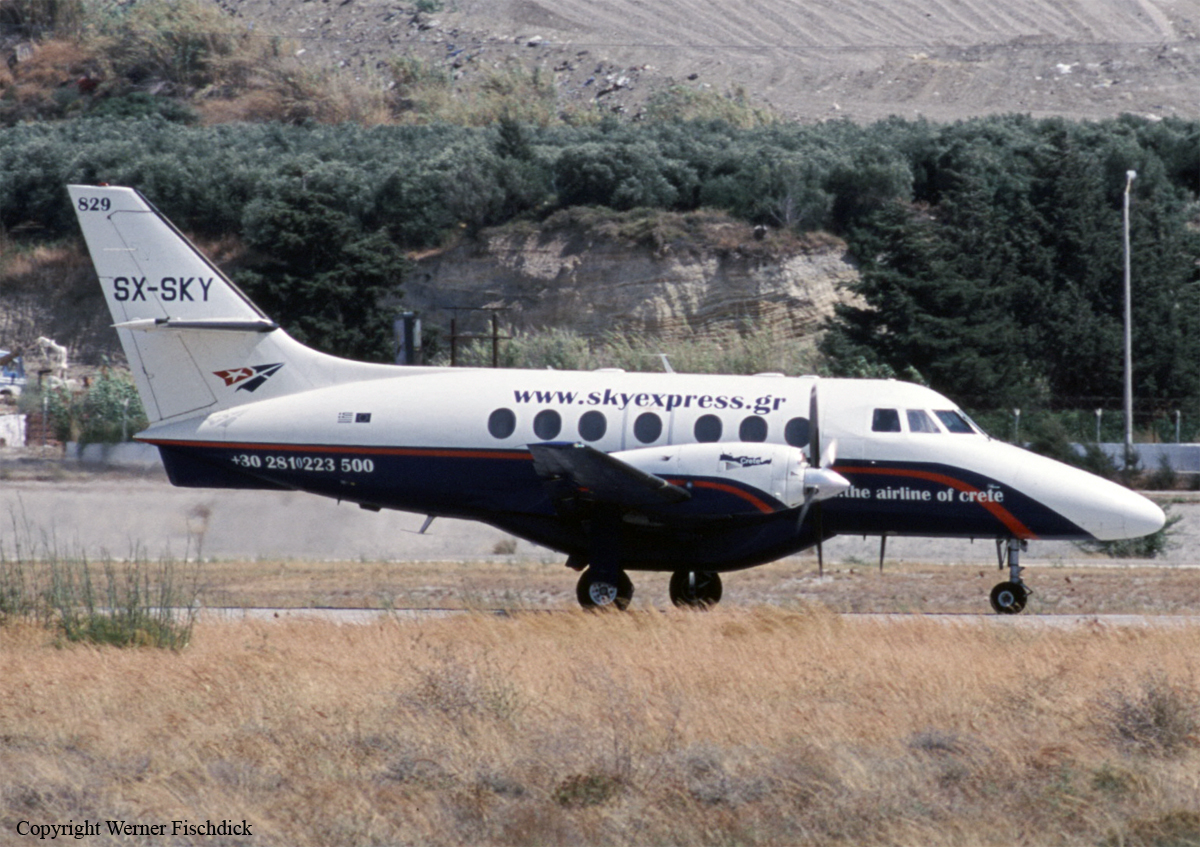
Crash of a BAe 3201 Jetstream 31 in Heraklion

Date & Time: Feb 12, 2009 at 1723 LT
Type of aircraft:
Operator:
Registration:
SX-SKY
Survivors:
Yes
Schedule:
Rhodes – Heraklion
MSN:
829
YOM:
1988
Flight number:
SEH103
Country:
Region:
Crew on board:
3
Crew fatalities:
Pax on board:
15
Pax fatalities:
Other fatalities:
Total fatalities:
0
Captain / Total flying hours:
24000
Captain / Total hours on type:
570.00
Copilot / Total flying hours:
1800
Copilot / Total hours on type:
250
Aircraft flight hours:
13222
Aircraft flight cycles:
15349
Circumstances:
Flight SEH102/103 of 12 February 2009 was a scheduled passenger carrying flight performing the route Heraklion – Rhodes – Heraklion. The crew that was going to perform the flight reported for duty at 16:00 h. The aircraft had earlier on the same day performed, with a different flight crew, four routes (Heraklion – Rhodes – Heraklion and Heraklion – Samos – Heraklion), without any problems being reported. Nothing had been observed during the pre-flight check. The aircraft departed Heraklion at 16:55 h and landed at Rhodes at 17:35 h without incident. At 18:30 h the aircraft departed Rhodes for Heraklion, carrying three crew members and 15 passengers. The pilot flying (PF) this particular sector was the Pilot in Command (PIC). At a distance of 30 nm from Heraklion and at a altitude of 7700 ft on its descent to 3000 ft, the crew informed the Air Traffic Control that it had the runway in sight and requested and was granted clearance to perform a visual approach. The aircraft, fully configured for landing from a distance of 7nm, approached the airport for landing at runway 27. The wind information provided by the Air Traffic Control was 18 kt – 25 kt, from 210°. While approaching the runway, the PF asked the First Officer (FO) to check the angle of descent based on the APAPIs’ of the runway. The FO confirmed the correct angle of descent, saying “one white, one red”. The aircraft crossed the threshold with a speed of 112 kt and after flaring the PF reduced speed to Flight Idle and touched down with a speed of 86 kt. As the speed was being gradually reduced, the PF had difficulty with controlling the aircraft along its longitudinal axis and noticing that the aircraft was leaning somewhat to the right, reported to the FO that “the gear has broken”. Immediately afterwards, the blades of the right propeller of the aircraft struck the runway. As the aircraft continued to move with the left main landing gear wheel operating normally and the collapsed right main landing gear, folded backwards under the wing, being dragged along the runway, the crew stopped the engines, reported to the Airport Control Tower that the right landing gear had broken and requested evacuation. The aircraft stopped in the runway with its nose wheel at 4.6 m to the right of the center line, at a distance of 930 m from the point of the propeller’s first contact with the runway. Immediately afterwards the PF ordered the cabin crew to open the cabin door and evacuated the aircraft, and the FO, who observed some fuel leaking from the right engine, switched off the electrical systems and requested through the Airport Control Tower that the fire trucks, which were on their way, to throw foam on the right wing to prevent any fire being started. The passengers disembarked from the left aft door without any problems with the assistance of the cabin crew, while the fire trucks covered the right wing with foam as a preventive measure. The airport, applying the standing procedures, removed the aircraft and released the runway for operation at 22:30 h. During the period of time that runway 09/27 remained out of operation, two flights approaching the airport for landing were diverted to Chania Airport, and the departures of another three flights were delayed.
Probable cause:
CONCLUSIONS
Findings:
- The flight crew met all the requirements for the performance of the flight.
- The aircraft was airworthy.
- The aircraft’s landing gears have a life of 50,000 cycles (landings) and the interval between two overhauls is six years or 10,000 cycles, whichever comes sooner.
- The fractured landing gear had completed 23,940 cycles since new and had been subjected to an overhaul on 17.09.08. Since then and as of the date of the accident it had completed 148 cycles.
- The aircraft manufacturer had issued an SB, and the UK Civil Aviation Authority an AD, asking for tests and inspection applicable to Region “A” of the main landing gear cylinders.
- Said AD had been carried out without findings in the course of the landing gear overhaul of 17.09.08 by an EASA-Part 145 approved maintenance organization.
- On 02.01.09 a visual inspection of Region “A” of the main landing gear cylinders was carried out by the aircraft operator’s maintenance organization, in accordance with Part B of the SB, again without findings.
- On 07.02.09 and in the morning of 12.02.09 the aircraft made ‘heavy’ landings considering that vertical acceleration values of 2.8 g and 2.5 g, respectively, had been recorded. None of these landings had been recorded in the aircraft’s log in order to trigger the inspection prescribed in the aircraft’s maintenance manual after a ‘heavy’ landing.
- According to the technical examination of the fractured parts, the first crack developed in Region “A” (fracture surface “A2-B2”) increasing the loading upon the cylinder material surrounding the threaded fasteners, sites of stress concentration. The second and third cracks then initiated at the site of stress concentration and propagated within the cylinder to form fracture surfaces “A1” - “B1” in the region surrounding the threaded fasteners. The cracks and the fracture resulted from the ductile overload of the undercarriage cylinder which is likely to have resulted from a ‘heavy’ landing made by the aircraft.
Probable Causes:
Landing gear cylinder failure because of ductile overload resulting from a ‘heavy’ landing made by the aircraft.
Final Report:

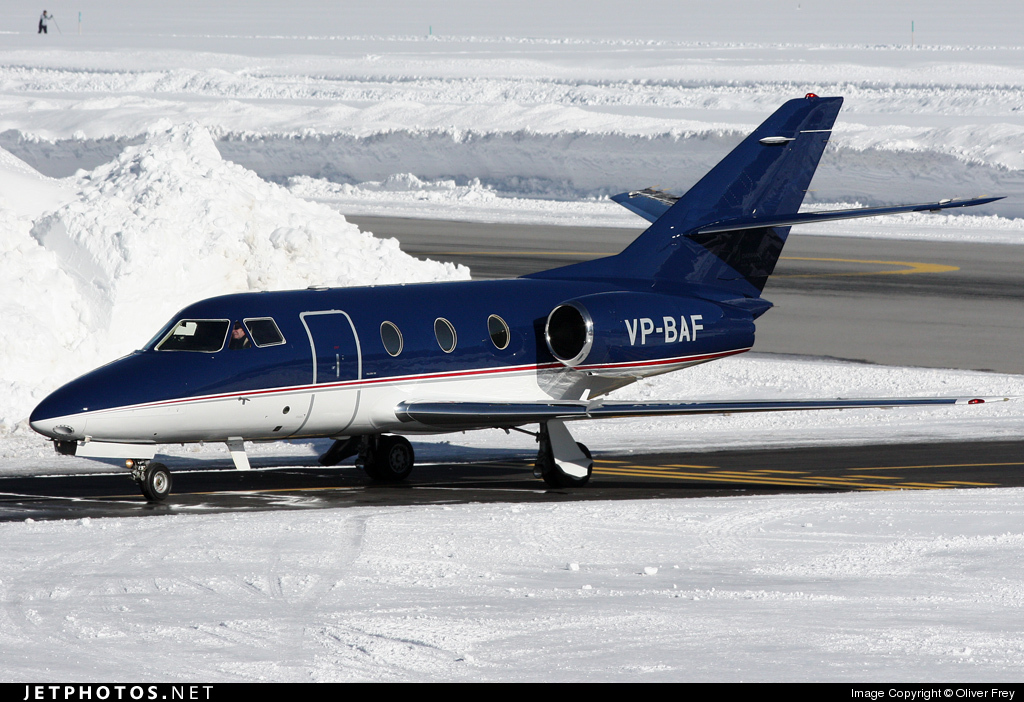
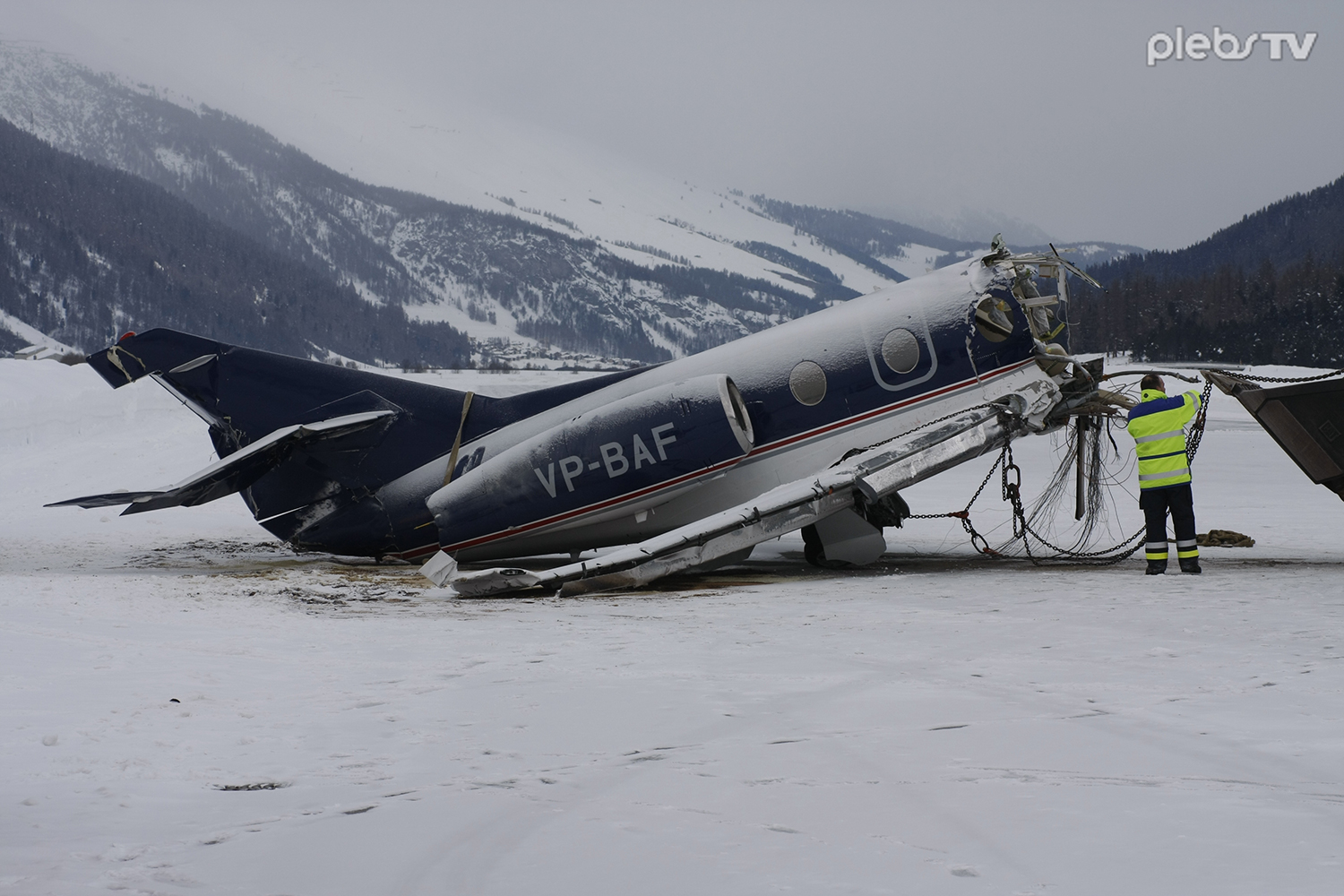
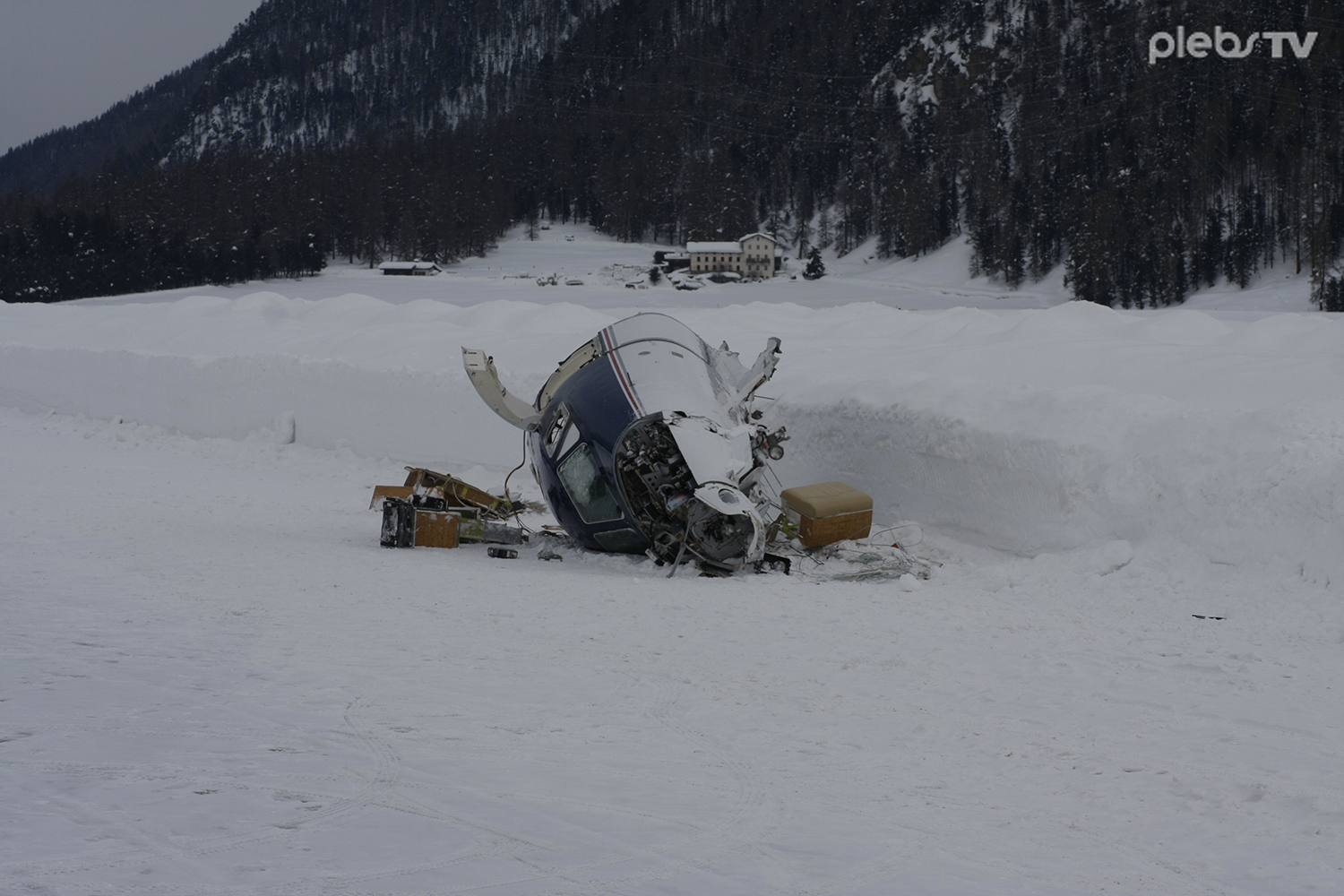
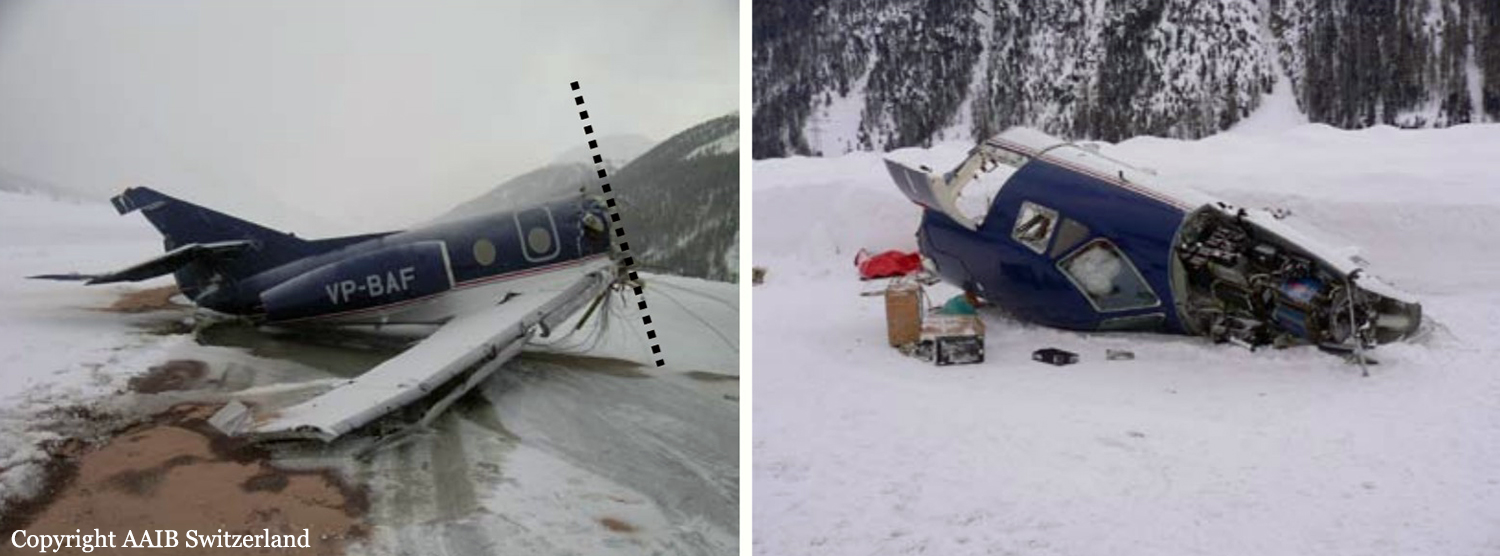
Crash of a Dassault Falcon 100 in Samedan: 2 killed

Date & Time: Feb 12, 2009 at 1612 LT
Type of aircraft:
Operator:
Registration:
VP-BAF
Flight Type:
Survivors:
Yes
Schedule:
Vienna - Samedan
MSN:
210
YOM:
1987
Country:
Region:
Crew on board:
2
Crew fatalities:
Pax on board:
1
Pax fatalities:
Other fatalities:
Total fatalities:
2
Captain / Total flying hours:
17269
Captain / Total hours on type:
739.00
Copilot / Total flying hours:
2591
Copilot / Total hours on type:
119
Aircraft flight hours:
6386
Circumstances:
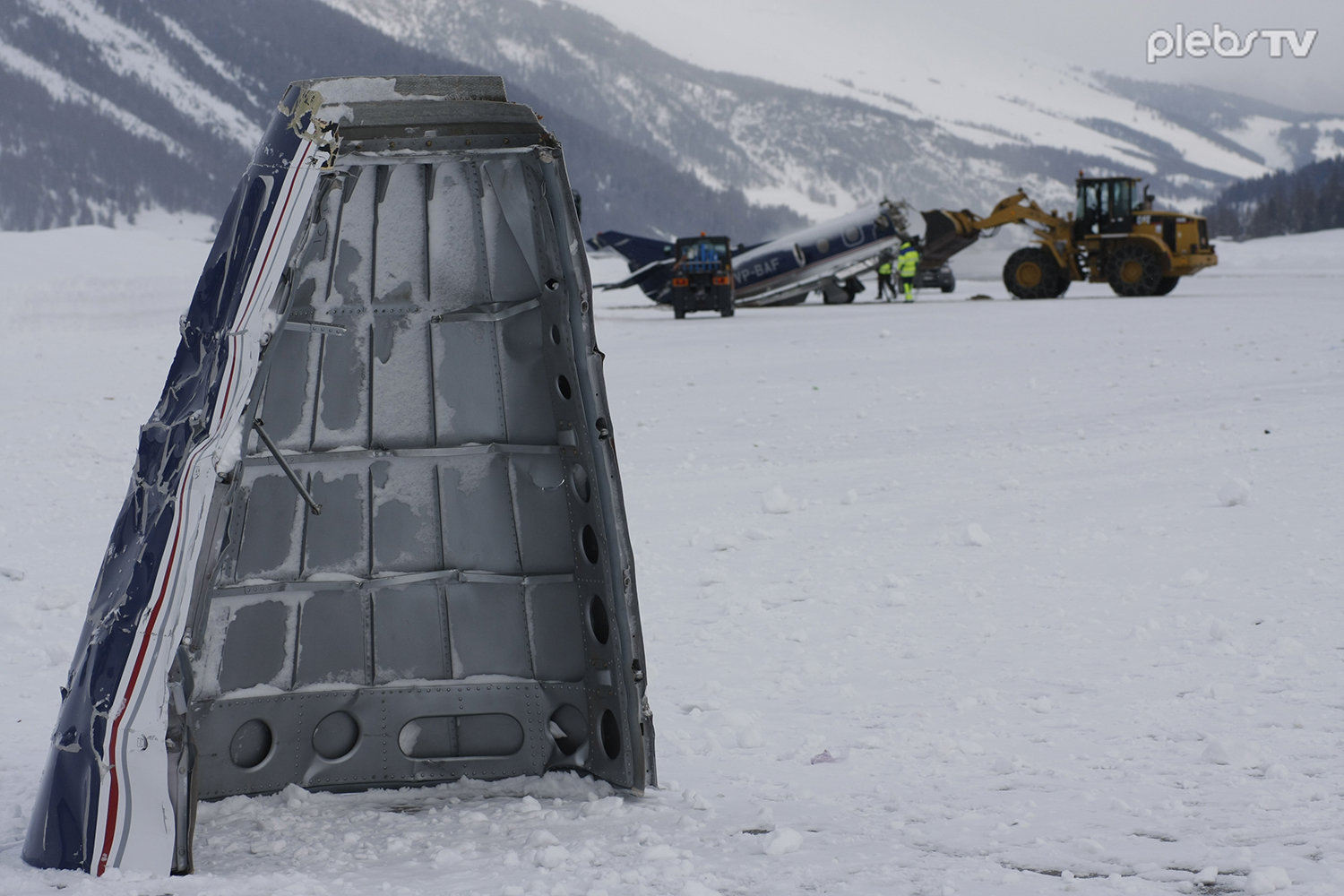
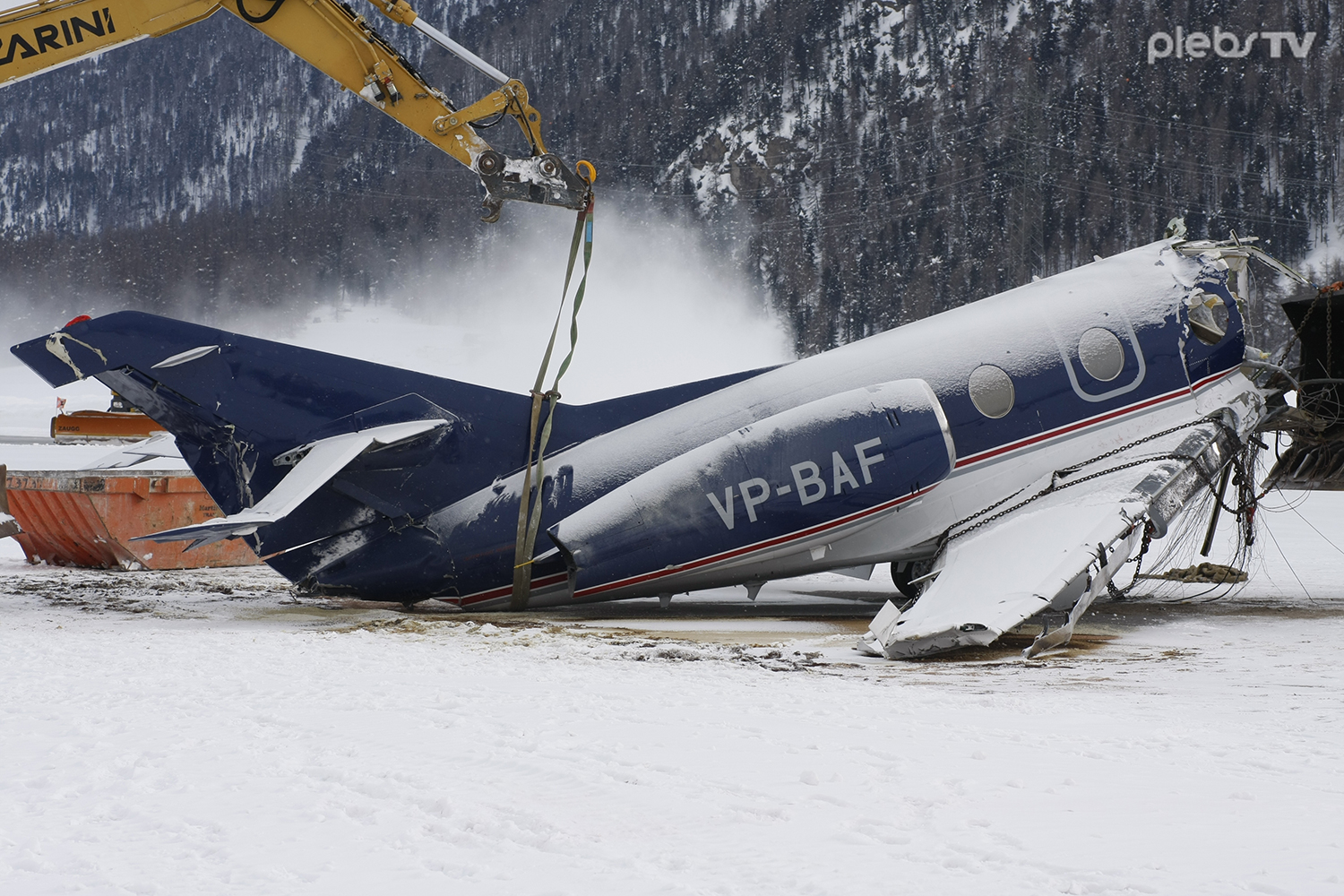
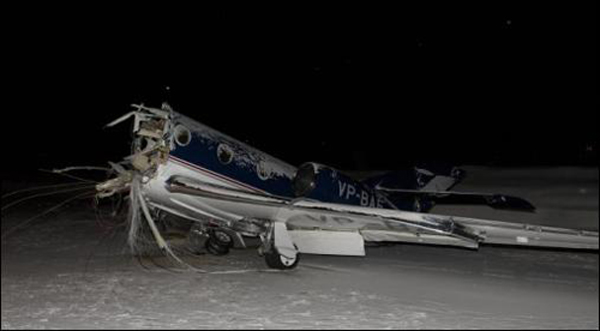
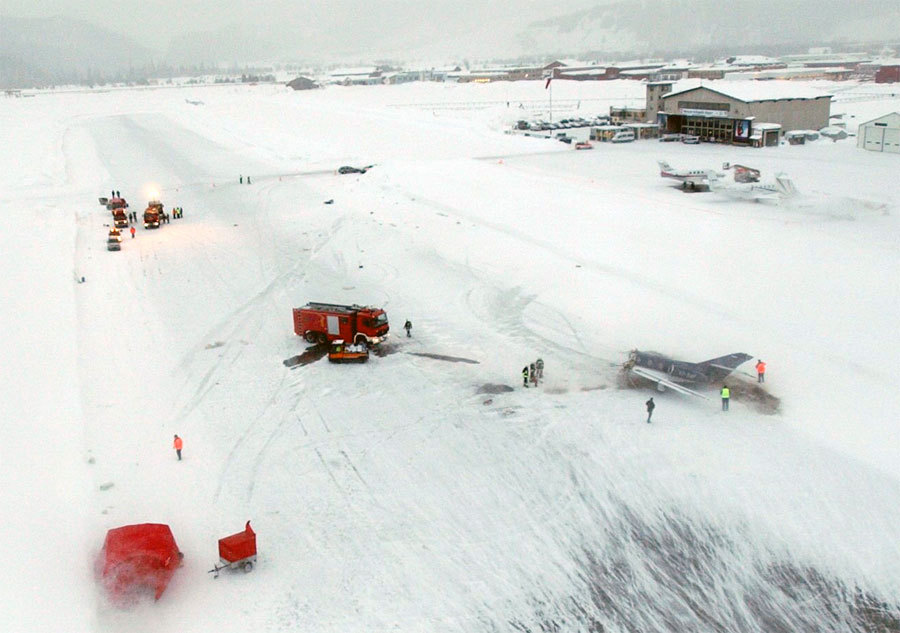
On 12 February 2009, the Marcel Dassault/Bréguet Aviation Falcon 10 aircraft, registration VP-BAF, took off at 14:06 UTC from Vienna (LOWW) on a private flight under instrument flight rules (IFR) and an ATC flight plan Y, to Samedan (LSZS). Two crew members and one passenger were on board. After an uneventful flight, the IFR flight plan was cancelled at 14:56:32 UTC and the flight continued under visual flight rules (VFR). Over Samedan the crew were informed by the Samedan airport flight information service officer (FISO) that snow clearance work would be taking place on the runway and that they should expect a ten-minute delay. After approximately 15 minutes the crew initiated the approach. On landing, the aircraft made first contact with the ground by scraping the right wing on the left half of the runway and subsequently touched down with the right, and then the left main landing gear. It then drifted to the left and the left wing tip scraped a bank of snow running parallel to the runway. As a result it rotated anti-clockwise around its vertical axis and crashed into a frozen bank of snow about four metres high. The aircraft broke into two pieces as a result of the force of the impact. The two pilots suffered fatal injuries on the impact. The passenger was seriously injured. The aircraft was destroyed. Fire did not break out.
Probable cause:
The accident is attributable to the fact that the crew wanted to make a landing with inadequate visual references from an unfavorable initial position and as a result, after touchdown the aircraft collided with a snowbank running along the runway.
The following factors contributed to the accident:
• The rapidly changing weather conditions on the mountain aerodrome of Samedan were misjudged by the crew.
• A coordinated crew working method in terms of crew resource manage-ment was missing.
• The deactivation of the EGPWS, which meant that acoustic messages con-cerning the aircraft’s height above ground and bank angle were no longer available in the final phase of the approach up to the first contact with the runway.
• A snowbank up to four metres high ran along the edge of the runway.
Final Report:

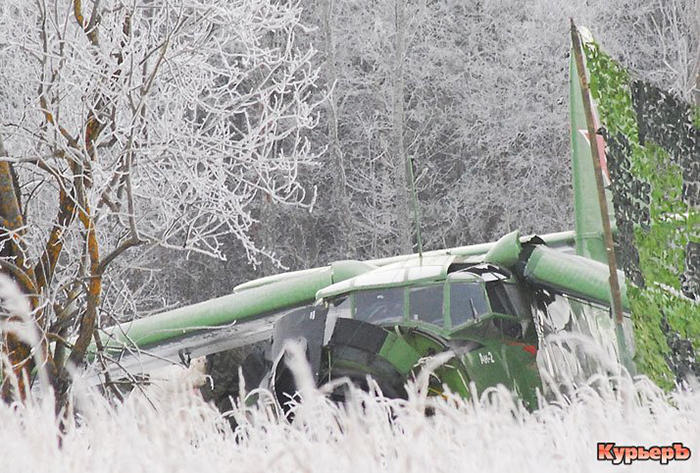
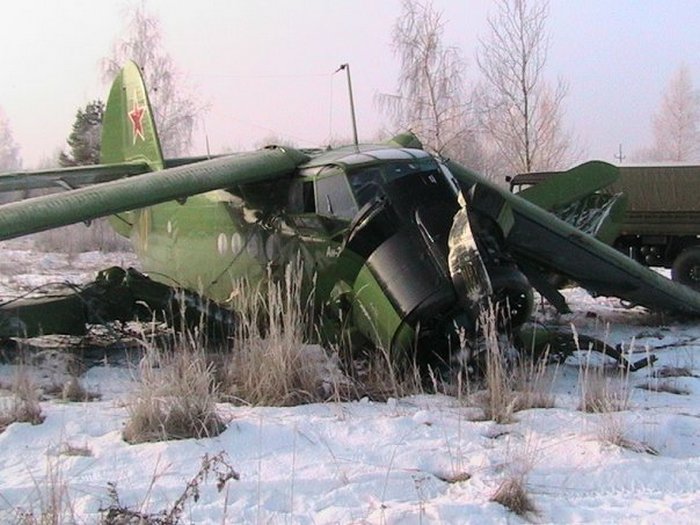
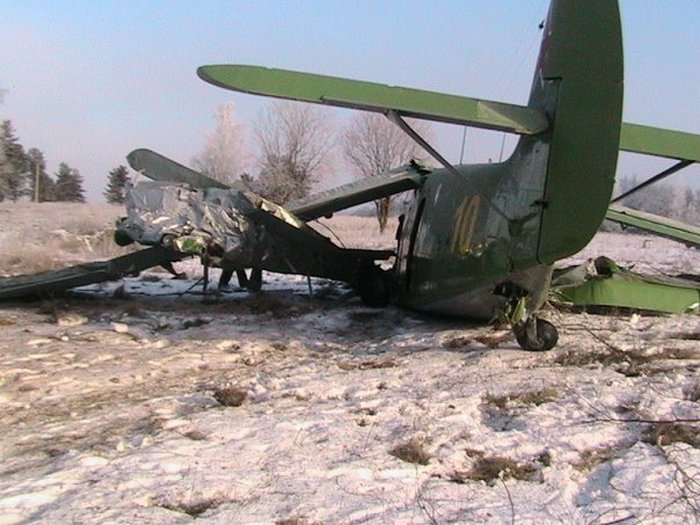
Crash of an Antonov AN-2 in Pskov

Date & Time: Feb 11, 2009 at 1030 LT
Type of aircraft:
Operator:
Registration:
10 yellow
Flight Phase:
Survivors:
Yes
Schedule:
Pskov - Pskov
Country:
Region:
Crew on board:
3
Crew fatalities:
Pax on board:
10
Pax fatalities:
Other fatalities:
Total fatalities:
0
Circumstances:
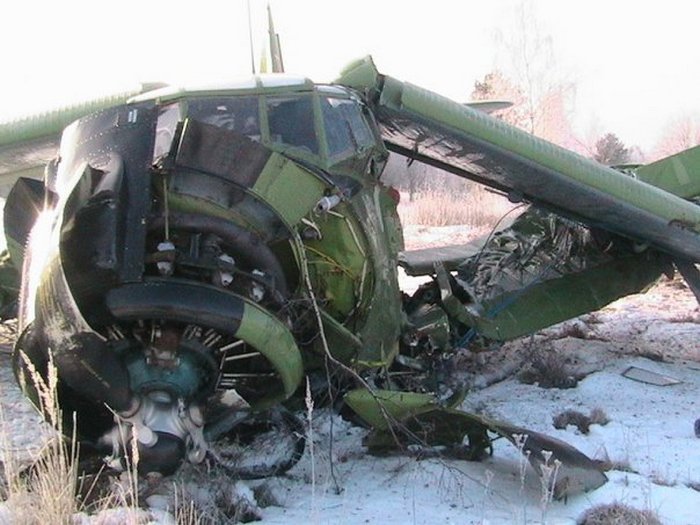
Shortly after take off from Pskov Airport, while climbing to a height of about 50-70 metres, the crew encountered engine problems and elected to make an emergency landing. The aircraft lost height and crashed in a snow covered field located near the airport and came to rest. All 13 occupants escaped uninjured while the aircraft was damaged beyond repair. All passengers were skydivers (paratroopers) from the Marine Corps.
Probable cause:
Engine failure for unknown reasons.

Crash of a Cessna 208B Grand Caravan in Boma

Date & Time: Feb 11, 2009
Type of aircraft:
Operator:
Registration:
5Y-BUQ
Flight Type:
Survivors:
Yes
Schedule:
Juba – Boma
MSN:
208B-0366
YOM:
1993
Country:
Region:
Crew on board:
2
Crew fatalities:
Pax on board:
1
Pax fatalities:
Other fatalities:
Total fatalities:
0
Circumstances:
The single engine aircraft was completing a humanitarian flight from Juba to Boma on behalf of the World Food Program, carrying one passenger and two pilots. Upon landing at Boma Airstrip, one of the landing gear collapsed. The aircraft slid for few dozen metres before coming to rest, bursting into flames. All three occupants escaped uninjured while the aircraft was destroyed by fire.

Crash of a De Havilland DHC-6 Twin Otter 100 in La Ronge

Date & Time: Feb 4, 2009 at 0915 LT
Operator:
Registration:
C-FCCE
Flight Phase:
Survivors:
Yes
Schedule:
La Ronge – Deschambeault Lake
MSN:
8
YOM:
1966
Country:
Crew on board:
2
Crew fatalities:
Pax on board:
5
Pax fatalities:
Other fatalities:
Total fatalities:
0
Captain / Total flying hours:
14000
Captain / Total hours on type:
11000.00
Copilot / Total flying hours:
625
Copilot / Total hours on type:
425
Circumstances:
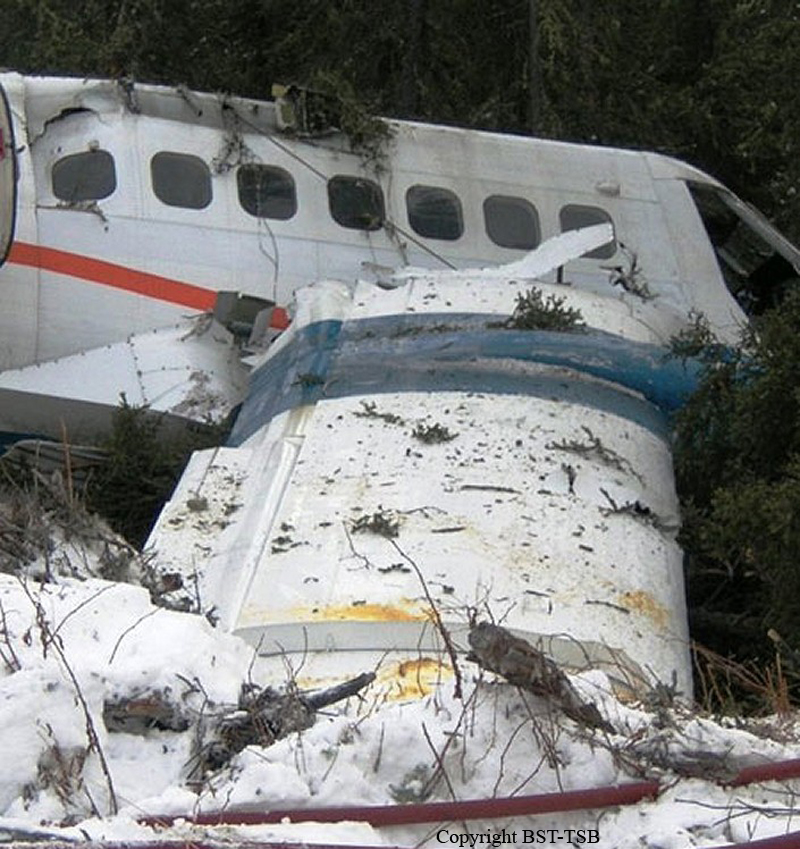
The aircraft was taking off from a ski strip east of and parallel to Runway 36 at La Ronge. After the nose ski cleared the snow, the left wing rose and the aircraft veered to the right and the captain, who was the pilot flying, continued the take-off. The right ski, however, was still in contact with the snow. The aircraft became airborne briefly as it cleared a deep gully to the right of the runway. The aircraft remained in a steep right bank and the right wing contacted the snow-covered ground. The aircraft flew through a chain link fence and crashed into trees surrounding the airport. The five passengers and two crewmembers evacuated the aircraft with minor injuries. There was a small fire near the right engine exhaust that was immediately extinguished by the crew.
Probable cause:
Findings as to Causes and Contributing Factors:
1. Contamination on the wings of the aircraft was not fully removed before take-off. It is likely that asymmetric contamination of the wings created a lift differential and a loss of lateral control.
2. Although the operator was not authorized for short take-off and landing (STOL) take-off on this aircraft, the crew conducted a STOL take-off, which reduced the aircraft’s safety margin relative to its stalling speed and minimum control speed.
3. As a result of the loss of lateral control, the slow STOL take-off speed, and the manipulation of the flaps, the aircraft did not remain airborne and veered right, colliding with obstacles beside the ski strip.
Findings as to Risk:
1. The out of phase task requirements regarding the engine vibration isolator assembly, as listed in the operator’s maintenance schedule approval, results in a less than thorough inspection requirement, increasing the likelihood of fatigue cracks remaining undetected.
2. The right engine inboard and top engine mounts had pre-existing fatigue cracks, increasing the risk of catastrophic failure.
Other Findings:
1. The cockpit voice recorder (CVR) contained audio of a previous flight and was not in operation during the occurrence flight. Minimum equipment list (MEL) procedures for logbook entries and placarding were not followed.
2. The Transwest Air Limited safety management system (SMS) did not identify deviations from standard operating procedures.
Final Report: