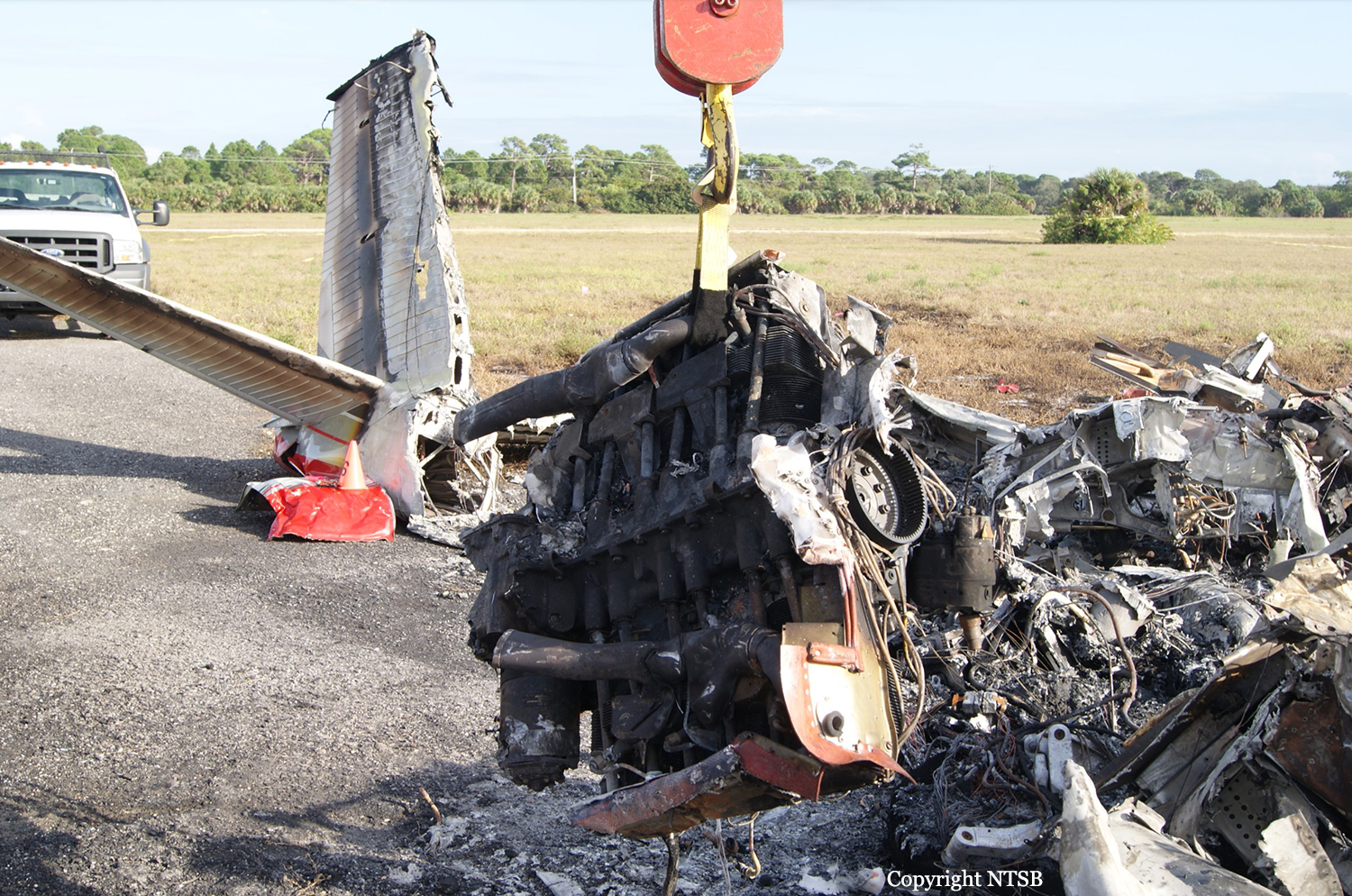
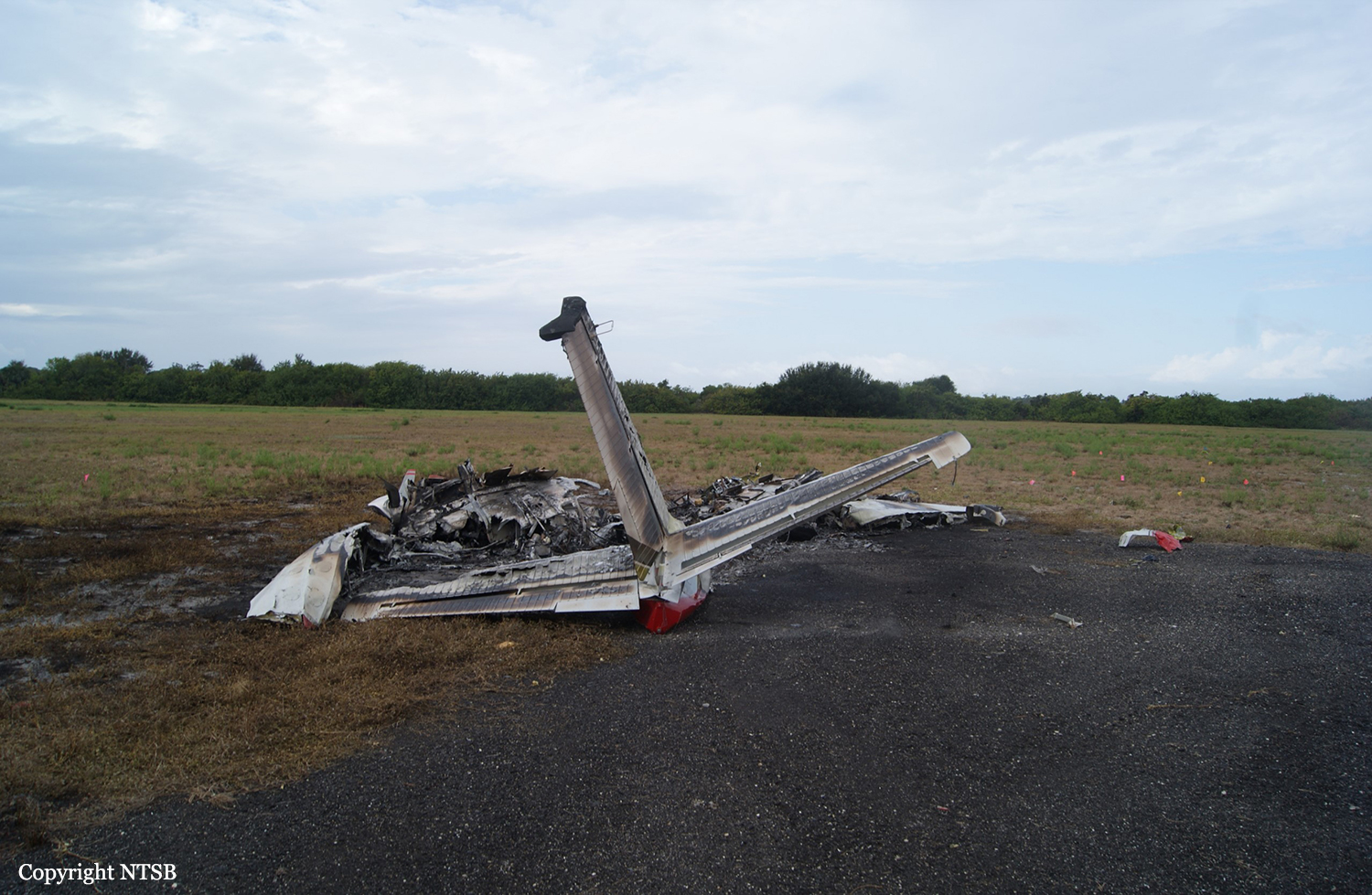
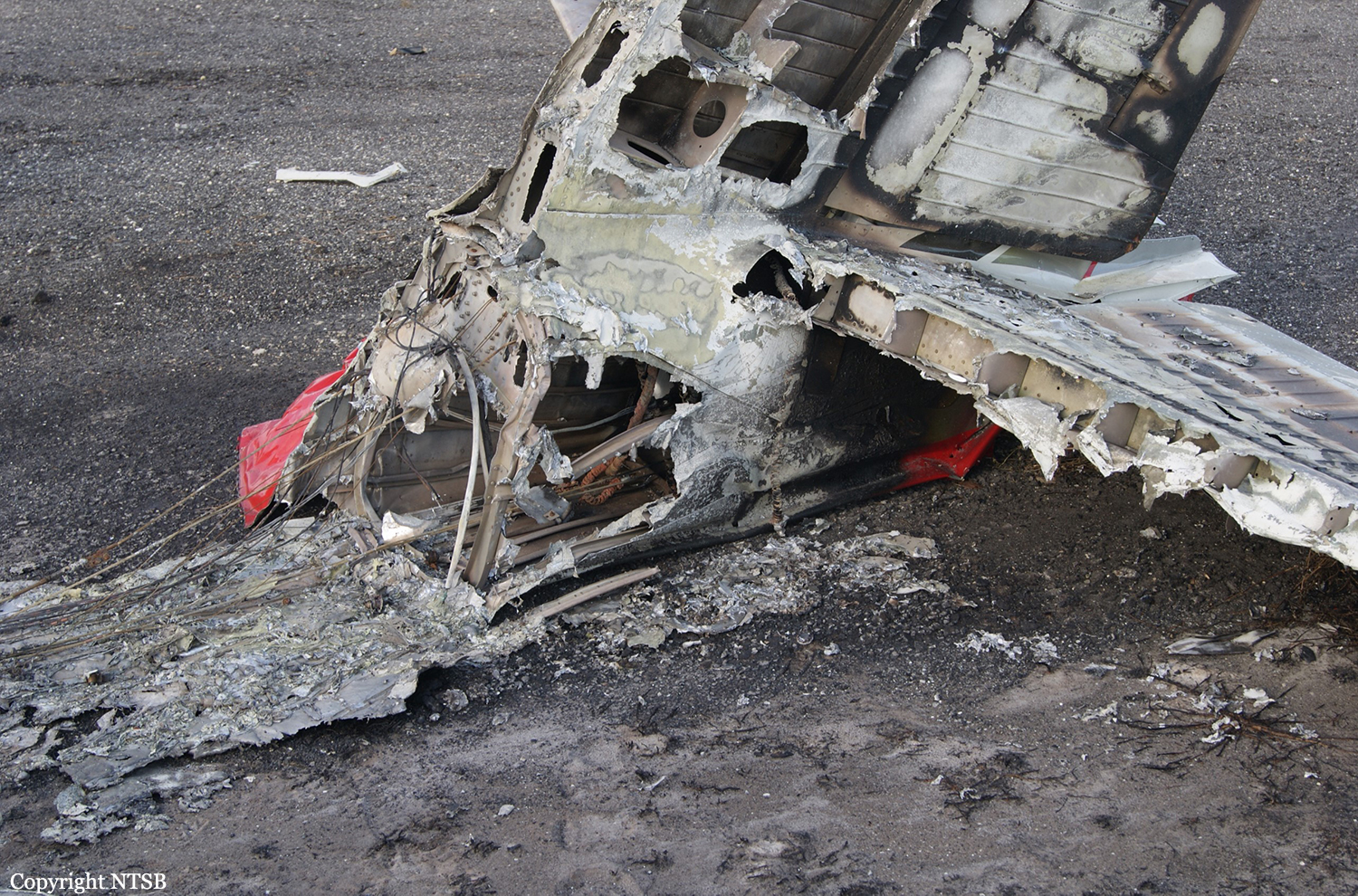
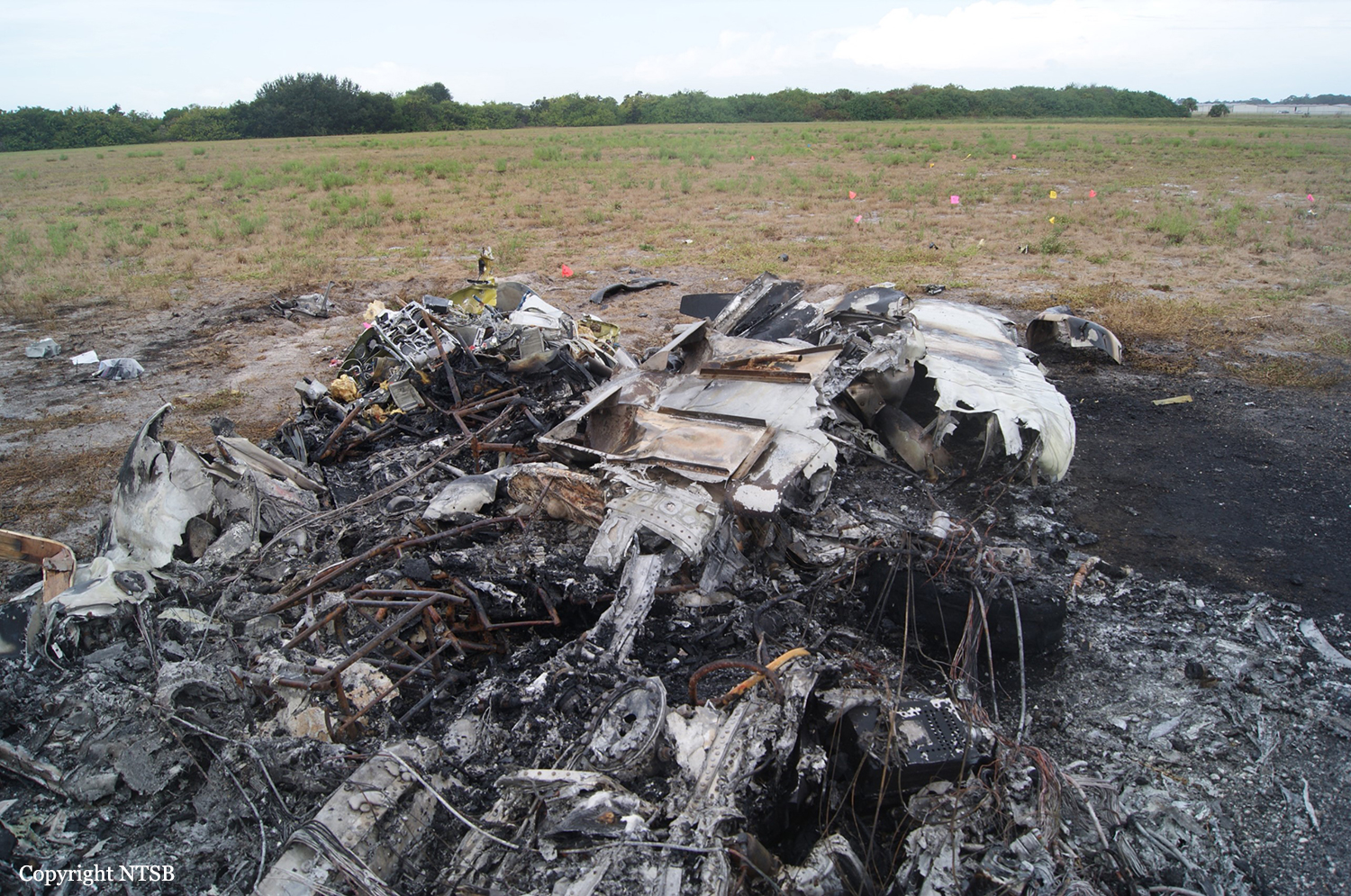
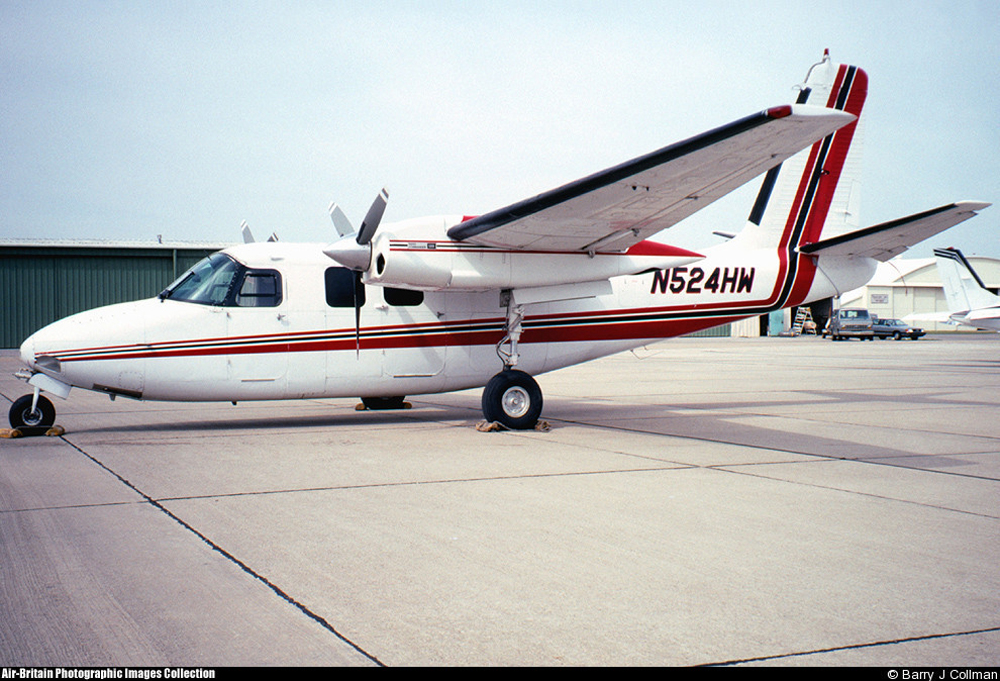
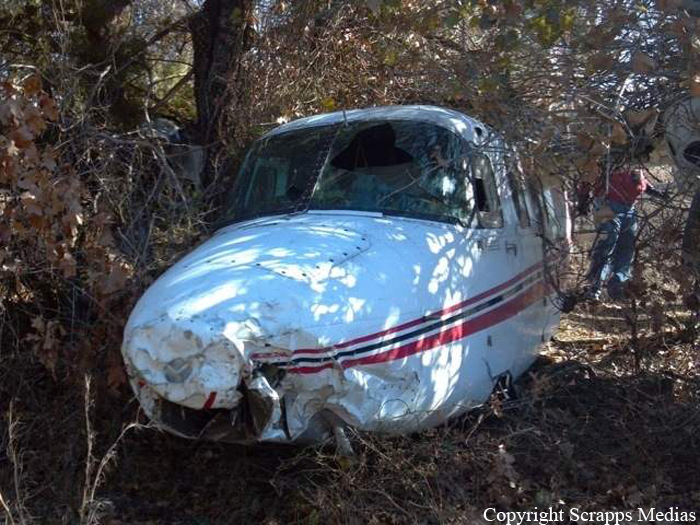
Crash of a Rockwell Aero Commander 500B in Bartlesville

Date & Time: Jan 13, 2012 at 1930 LT
Operator:

Registration:
N524HW
Flight Type:
Survivors:
Yes
Schedule:
Kansas City - Cushing
MSN:
500-1533-191
YOM:
1965
Flight number:
CTL327
Crew on board:
1
Crew fatalities:
Pax on board:
0
Pax fatalities:
Other fatalities:
Total fatalities:
0
Captain / Total flying hours:
8487
Captain / Total hours on type:
3477.00
Circumstances:
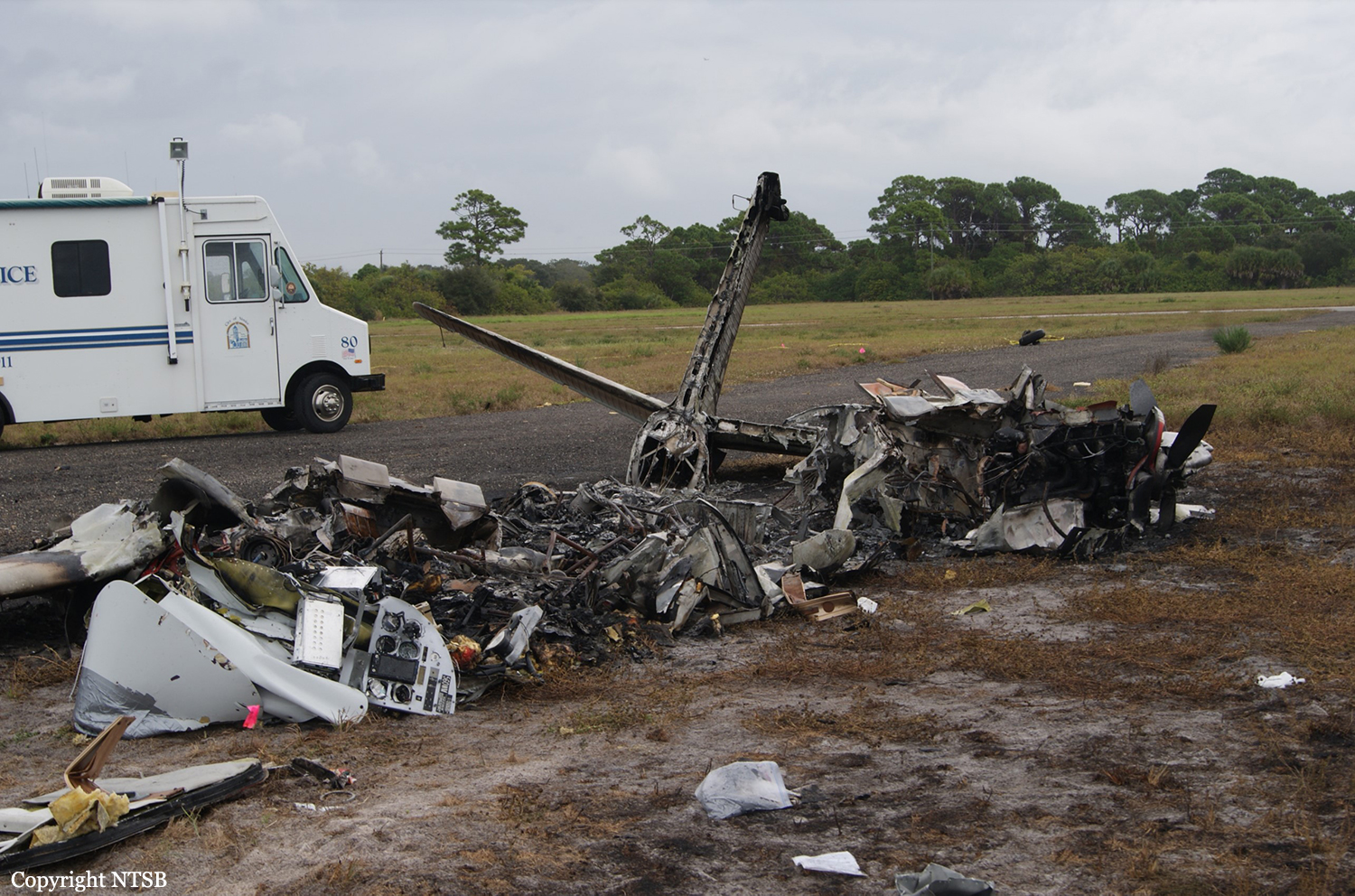
The pilot was en route on a positioning flight when the airplane’s right engine surged and experienced a partial loss of power. He adjusted the power and fuel mixture controls; however, a few seconds later, the engine surged again. The pilot noted that the fuel flow gauge was below 90 pounds, so he turned the right fuel pump on. The pilot then felt a surge on the left engine, so he performed the same actions he as did for the right engine. He believed that he had some sort of fuel starvation problem. The pilot then turned to an alternate airport, at which time both engines lost total power. The airplane impacted trees and terrain about 1.5 miles from the airport. The left side fuel tank was breached during the accident; however, there was no indication of a fuel leak, and about a gallon of fuel was recovered from the airplane during the wreckage retrieval. The company’s route coordinator reported that prior to the accident flight, the pilot checked the fuel gauge and said the airplane had 120 gallons of fuel. A review of the airplane’s flight history revealed that, following the flight immediately before the accident flight, the airplane was left with approximately 50 gallons of fuel on board; there was no record of the airplane having been refueled after that flight. Another company pilot reported the airplane fuel gauge had a unique trait in that, after the airplane’s electrical power has been turned off, the gauge will rise 40 to 60 gallons before returning to zero. When the master switch was turned to the battery position during an examination of another airplane belonging to the operator, the fuel gauge indicated approximately 100 gallons of fuel; however, when the master switch was turned to the off position, the fuel quantity on the gauge rose to 120 gallons, before dropping off scale, past empty. Additionally, the fuel cap was removed and fuel could be seen in the tank, but there was no way to visually verify the quantity of fuel in the tank.
Probable cause:
The total loss of engine power due to fuel exhaustion and the pilot’s inadequate preflight inspection, which did not correctly identify the airplane’s fuel quantity before departure.
Final Report:
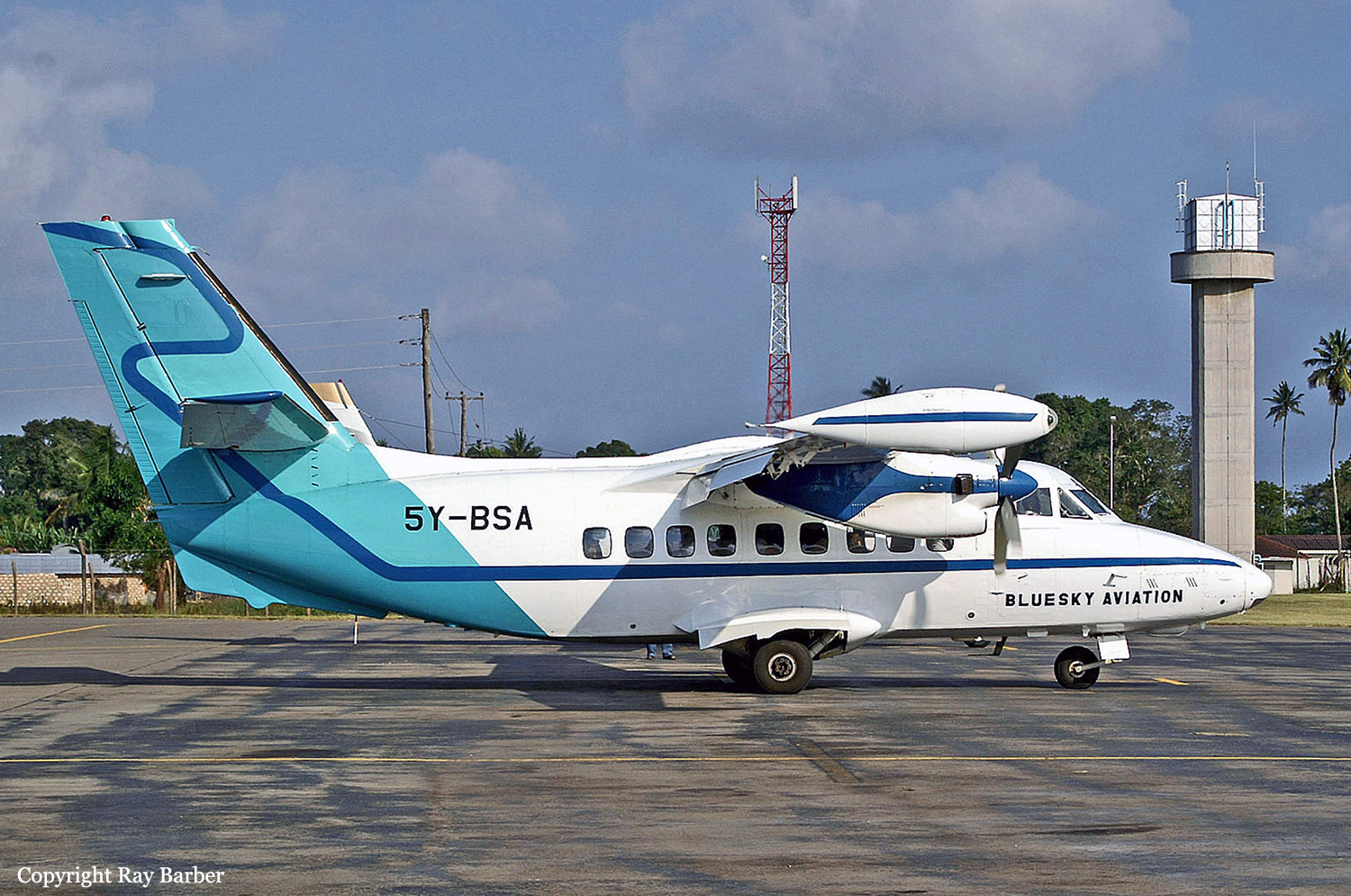
Crash of a Let L-410UVP-E9 in Kichwa Tembo

Date & Time: Jan 12, 2012 at 1955 LT
Type of aircraft:
Operator:
Registration:
5Y-BSA
Flight Phase:
Survivors:
Yes
Schedule:
Kichwa Tembo – Musiara
MSN:
89 23 23
YOM:
1989
Country:
Region:
Crew on board:
2
Crew fatalities:
Pax on board:
4
Pax fatalities:
Other fatalities:
Total fatalities:
0
Circumstances:
The twin engine aircraft was returning to Mombasa with a scheduled stop in Musiara to pickup 15 additional passengers. On departure from Kichwa Tembo, there were four passengers and two pilots on board. During the takeoff roll from runway 08, the aircraft hit a bump half way down the runway and bounced. The aircraft hit a second bump shortly later and as the crew heard the stall alarm, he decided to reject takeoff. Unable to stop within the remaining distance, the aircraft overran, lost its nose gear and came to rest 300 metres further. All six occupants escaped uninjured while the aircraft was damaged beyond repair.

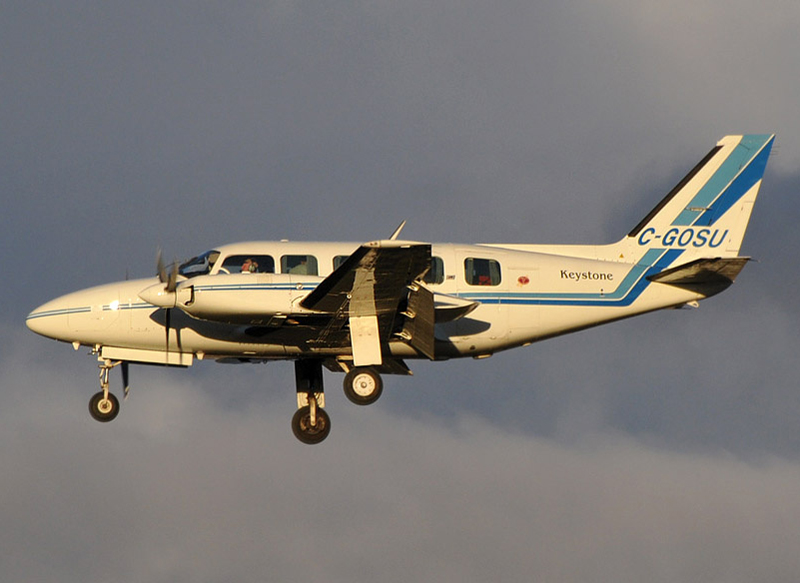
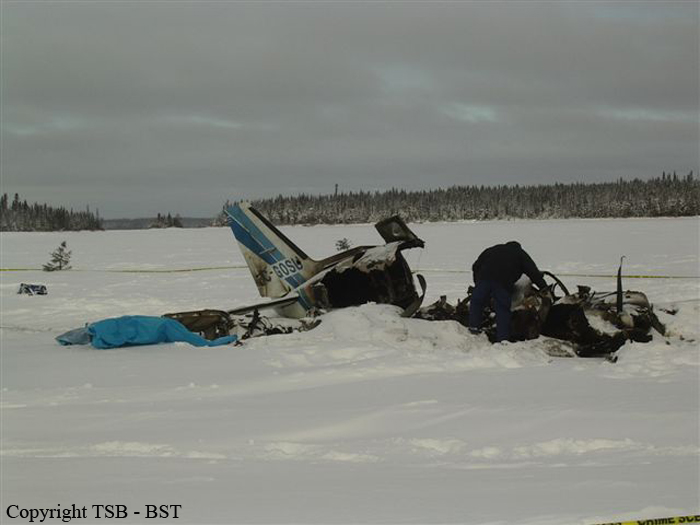
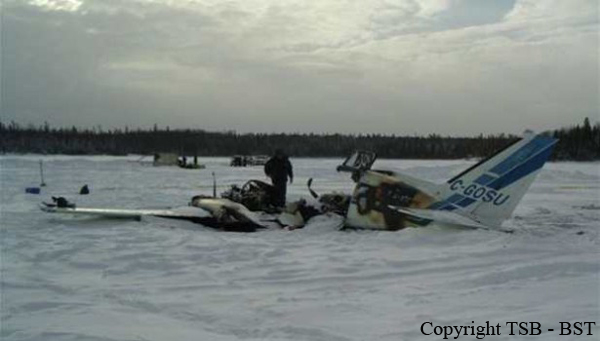
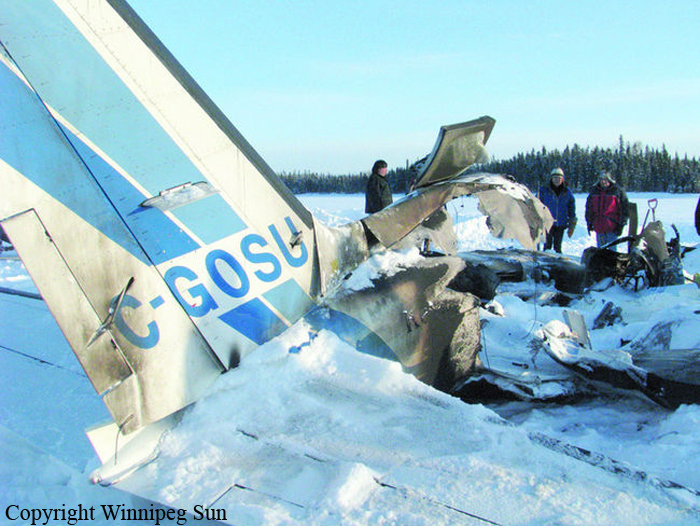
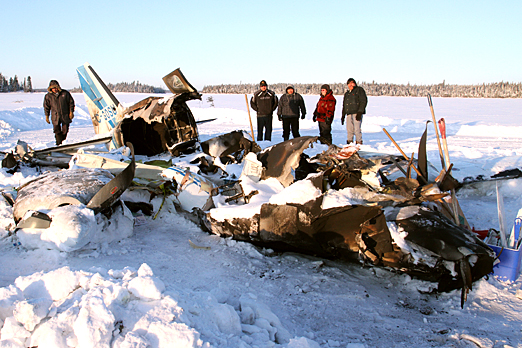
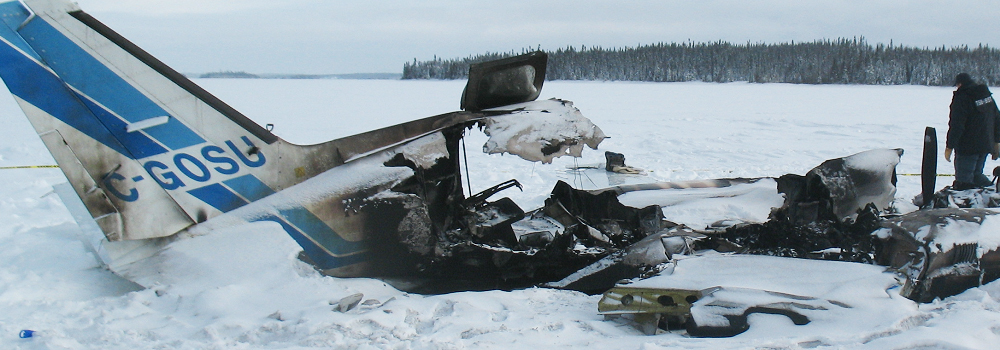
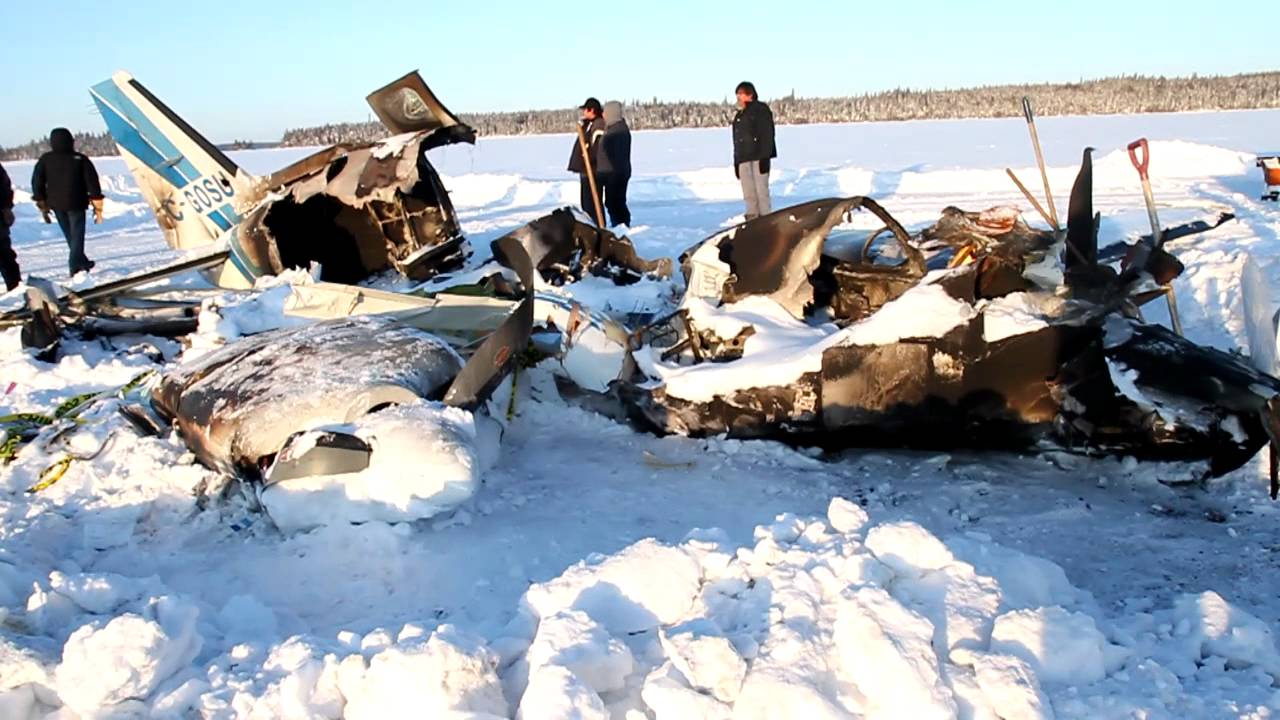
Crash of a Piper PA-31-350 Navajo Chieftain in North Spirit Lake: 4 killed

Date & Time: Jan 10, 2012 at 0957 LT
Operator:
Registration:
C-GOSU
Survivors:
Yes
Schedule:
Winnipeg - North Spirit Lake
MSN:
31-7752148
YOM:
1977
Flight number:
KEE213
Country:
Crew on board:
1
Crew fatalities:
Pax on board:
4
Pax fatalities:
Other fatalities:
Total fatalities:
4
Captain / Total flying hours:
2400
Captain / Total hours on type:
95.00
Circumstances:
The Piper PA31-350 Navajo Chieftain (registration C-GOSU, serial number 31-7752148), operating as Keystone Air Service Limited Flight 213, departed Winnipeg/James Armstrong Richardson International Airport, Manitoba, enroute to North Spirit Lake, Ontario, with 1 pilot and 4 passengers on board. At 0957 Central Standard Time, on approach to Runway 13 at North Spirit Lake, the aircraft struck the frozen lake surface 1.1 nautical miles from the threshold of Runway 13. The pilot and 3 passengers sustained fatal injuries. One passenger sustained serious injuries. The aircraft was destroyed by impact forces and a post-impact fire. After a short period of operation, the emergency locator transmitter stopped transmitting when the antenna wire was consumed by the fire.
Probable cause:
Findings as to causes and contributing factors:
1. The pilot's decision to conduct an approach to an aerodrome not serviced by an instrument flight rules approach in adverse weather conditions was likely the result of the pilot's inexperience, and may have been influenced by the pilot's desire to successfully complete the flight.
2. The pilot's decision to descend into cloud and continue in icing conditions was likely the result of inadequate awareness of the Piper PA31-350 aircraft's performance in icing conditions and of its de-icing capabilities.
3. While waiting for the runway to be cleared of snow, the aircraft held near North Spirit Lake (CKQ3) in icing conditions. The resulting ice accumulation on the aircraft's critical surfaces would have led to an increase in the aircraft's aerodynamic drag and stall speed, causing the aircraft to stall during final approach at an altitude from which recovery was not possible.
Findings as to risk:
1. Terminology contained in aircraft flight manuals and regulatory material regarding “known icing conditions,” “light to moderate icing conditions,” “flight in,” and “flight into” is inconsistent, and this inconsistency increases the risk of confusion as to the aircraft’s certification and capability in icing conditions.
2. If confusion and uncertainty exist as to the aircraft’s certification and capability in icing conditions, then there is increased risk that flights will dispatch into icing conditions that exceed the capability of the aircraft.
3. The lack of procedures and tools to assist pilots in the decision to self-dispatch leaves them at increased risk of dispatching into conditions beyond the capability of the aircraft.
4. When management involvement in the dispatch process results in pilots feeling pressure to complete flights in challenging conditions, there is increased risk that pilots may attempt flights beyond their competence.
5. Under current regulations, Canadian Aviation Regulations (CARs) 703 and 704 operators are not required to provide training in crew resource management / pilot decision-making or threat- and error-management. A breakdown in crew resource management / pilot decision-making may result in an increased risk when pilots are faced with adverse weather conditions.
6. Descending below the area minimum altitude while in instrument meteorological conditions without a published approach procedure increases the risk of collision with terrain.
7. If onboard flight recorders are not available to an investigation, this unavailability may preclude the identification and communication of safety deficiencies to advance transportation safety.
Final Report:

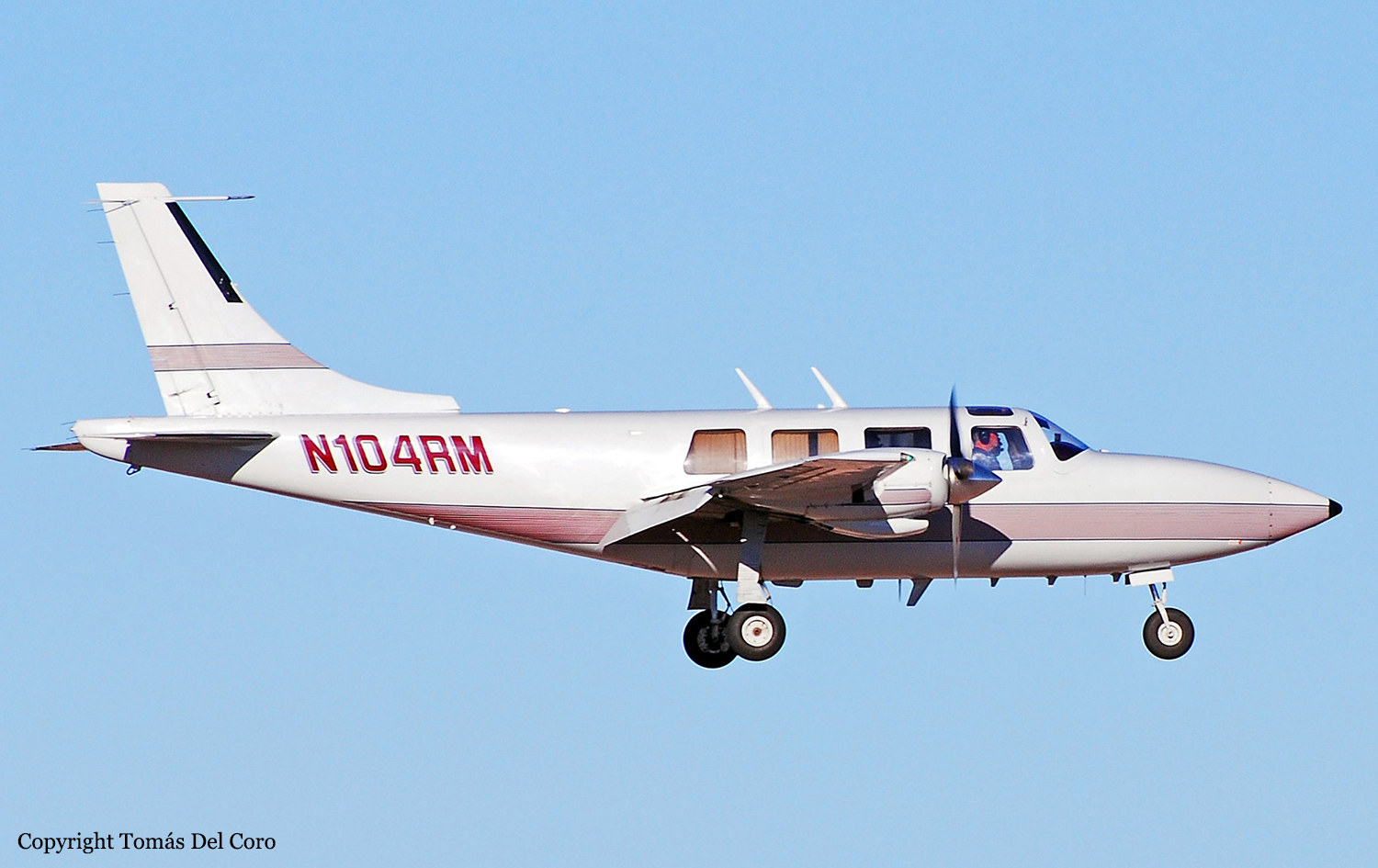
Crash of a Piper PA-61 Aerostar (Ted Smith 601P) in North Las Vegas

Date & Time: Jan 5, 2012 at 1539 LT
Registration:
N104RM
Flight Type:
Survivors:
Yes
Schedule:
North Las Vegas - North Las Vegas
MSN:
61-0756-8063375
YOM:
1980
Crew on board:
1
Crew fatalities:
Pax on board:
0
Pax fatalities:
Other fatalities:
Total fatalities:
0
Captain / Total flying hours:
3900
Captain / Total hours on type:
1700.00
Aircraft flight hours:
4480
Circumstances:
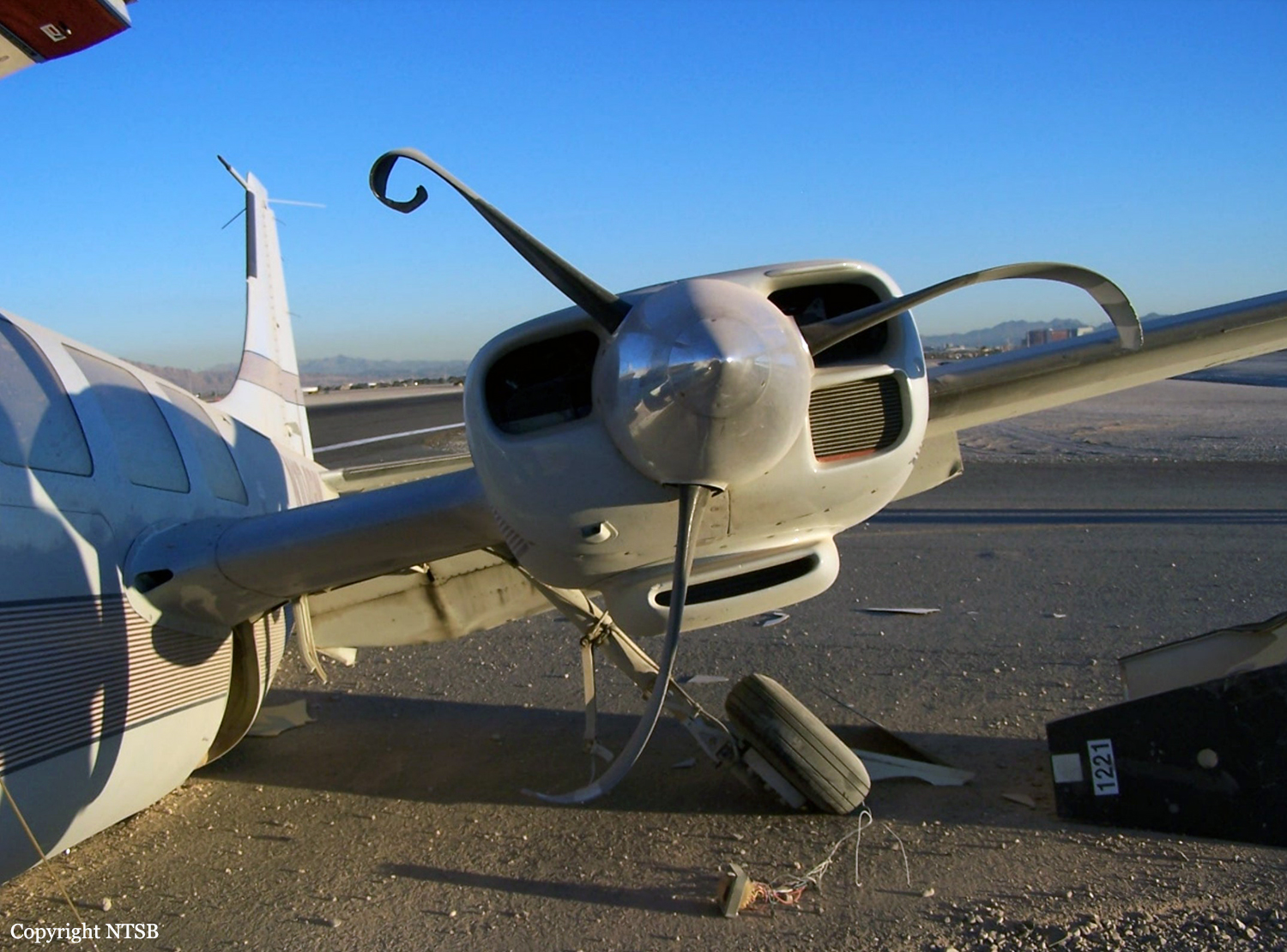
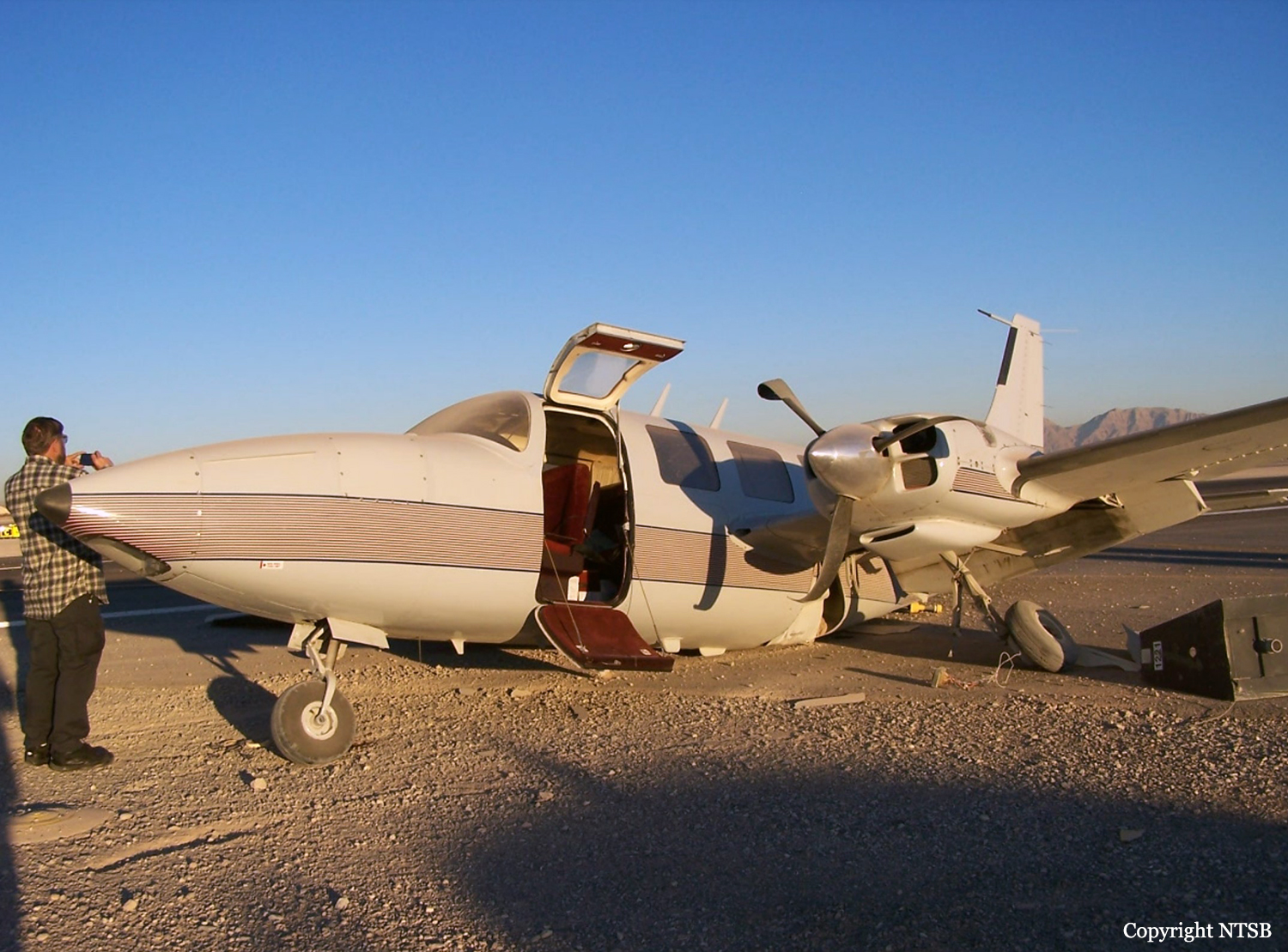
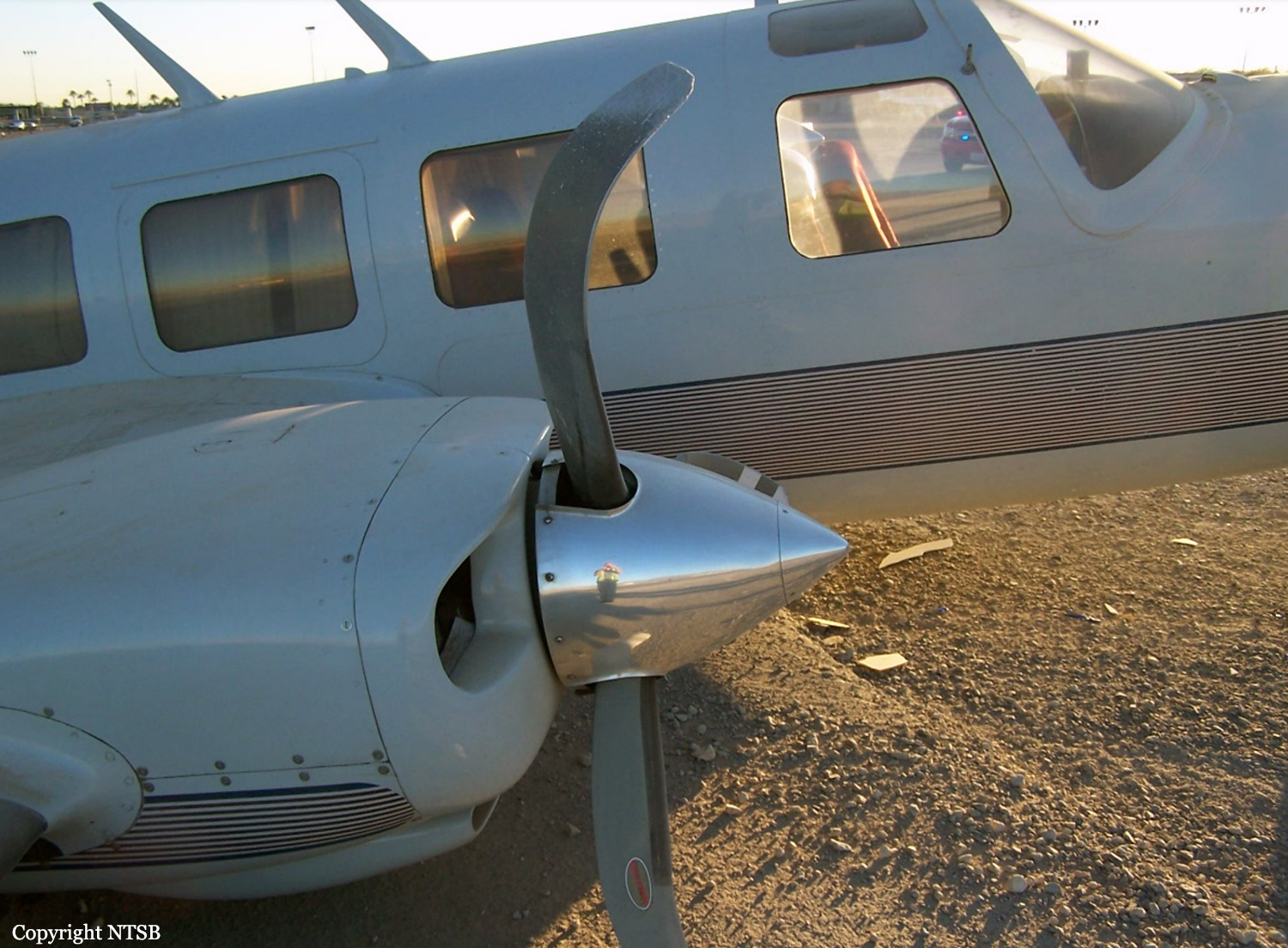
The pilot reported that, immediately after touchdown, the airplane began “wavering” and moments later veered to the left. He attempted to regain directional control with the application of “full right rudder” and the airplane subsequently departed the right side of the runway. A witness reported that the airplane’s touchdown was “firm” but not abnormal. As the airplane approached the left side of the runway, it yawed right and skidded down the runway while facing right. As the airplane began moving to the right side of the runway, the witness heard the right engine increase to near full power. The airplane spun to the left, coming to rest facing the opposite direction from its approach to landing. Another witness reported seeing the propellers contact the ground. The pilot attributed the loss of directional control to a main landing gear malfunction. Post accident examination of the airplane revealed that the left propeller assembly was feathered and that the right propeller blades were bent forward, indicative of the right engine impacting terrain under high power. Both throttle levers were found in the aft/closed position, and both propeller control levers were in the full-forward position. The propeller control levers exhibited little friction and could be moved with pressure from one finger. The evidence suggested that the pilot inadvertently feathered the left propeller assembly during the accident sequence. The pilot did not report any pre accident malfunctions or failures with the airplane’s engines or propeller assemblies that would have precluded normal operation.
Probable cause:
The pilot's failure to maintain directional control of the airplane during the landing roll.
Final Report:

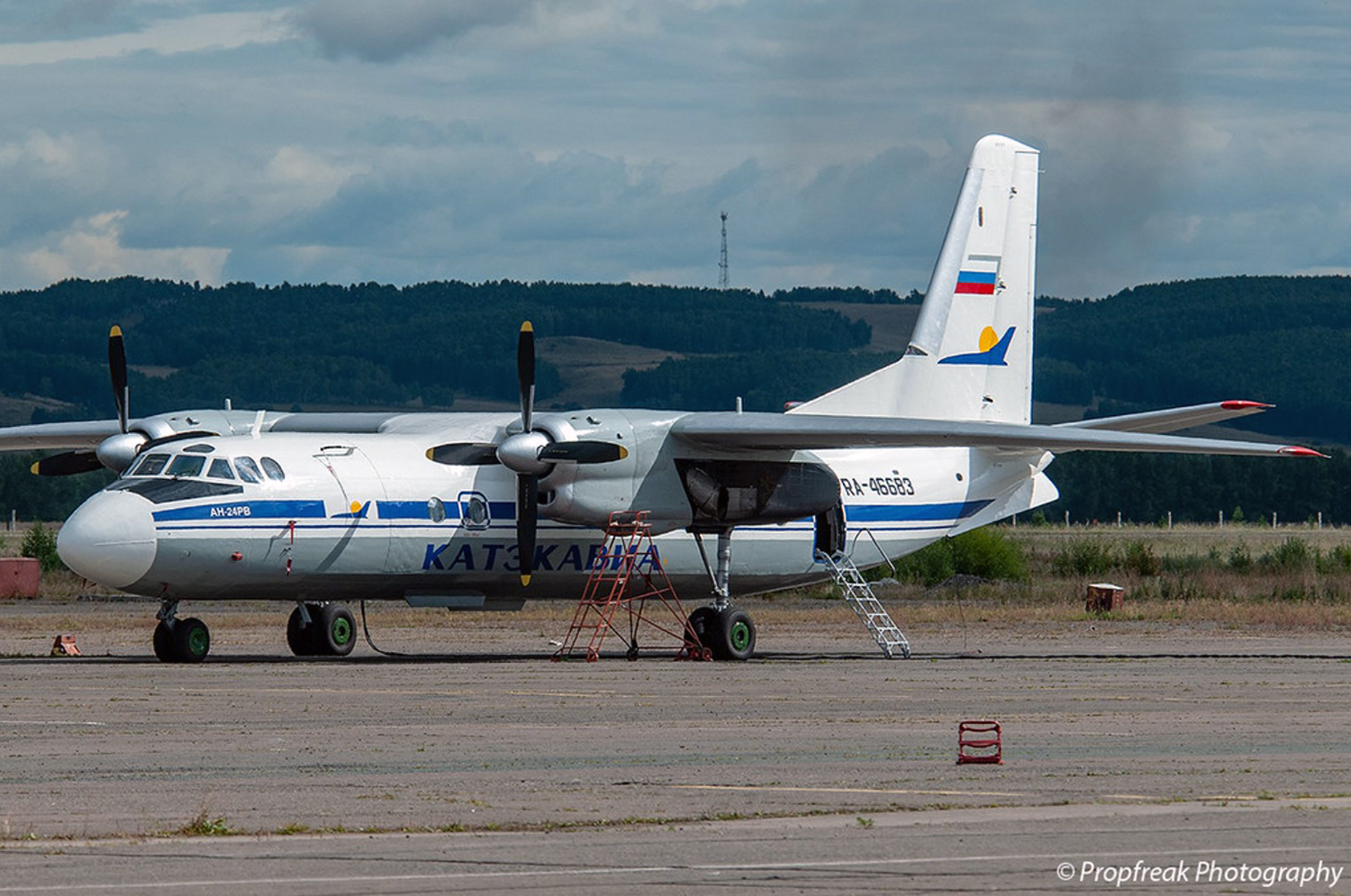
Crash of an Antonov AN-24RV in Chita

Date & Time: Dec 31, 2011
Type of aircraft:
Operator:
Registration:
RA-46683
Survivors:
Yes
MSN:
4 73 097 06
YOM:
1974
Country:
Region:
Crew on board:
0
Crew fatalities:
Pax on board:
0
Pax fatalities:
Other fatalities:
Total fatalities:
0
Circumstances:
The aircraft was damaged beyond repair following a hard landing at Chita Airport. The mishap occurred between 30 March 2011 and 29 December 2011 when it was cancelled from the Russian registry. There were no injuries.

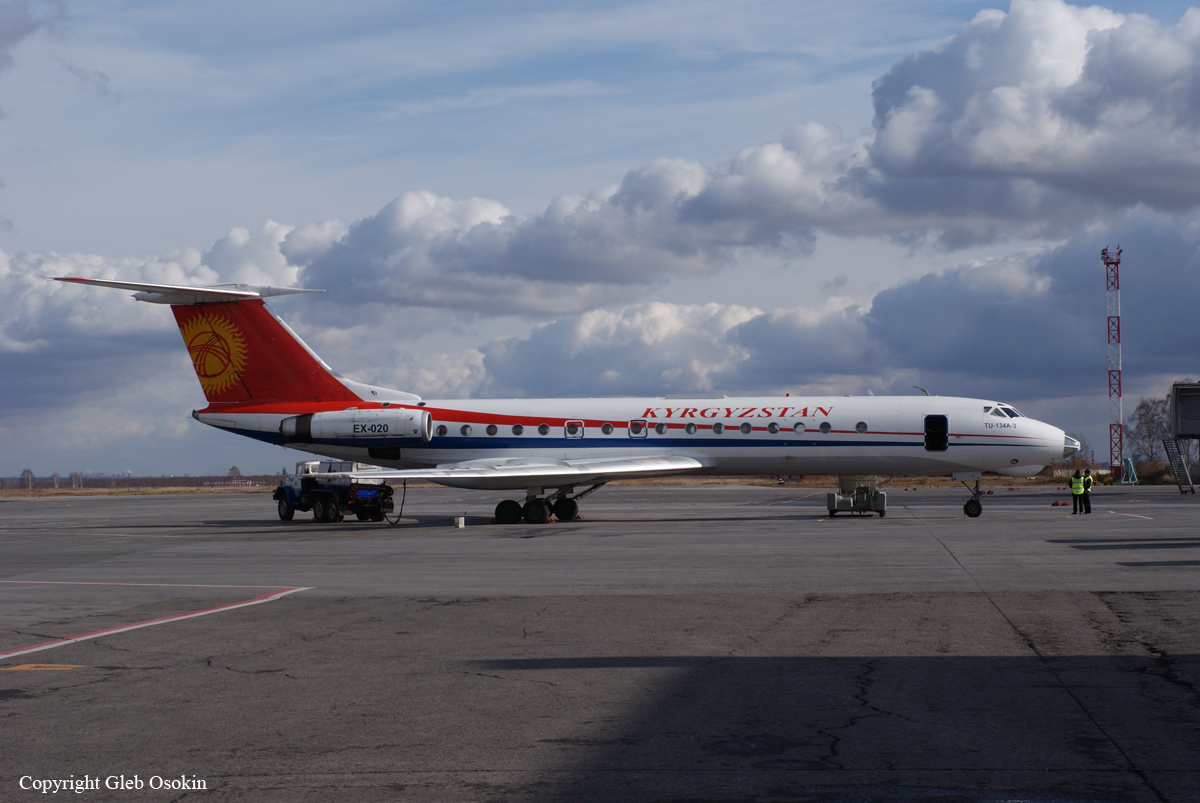
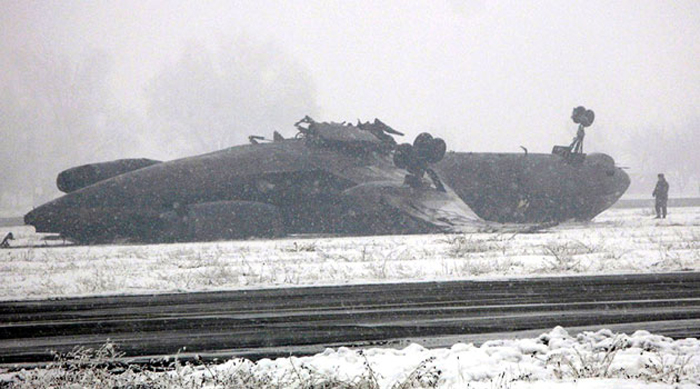
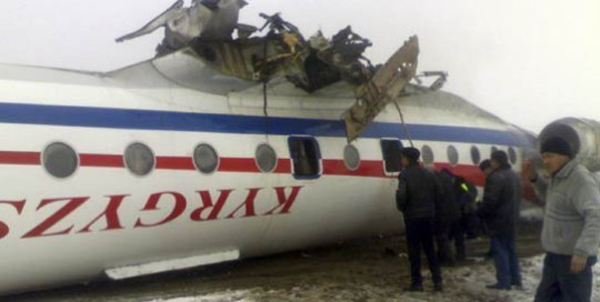
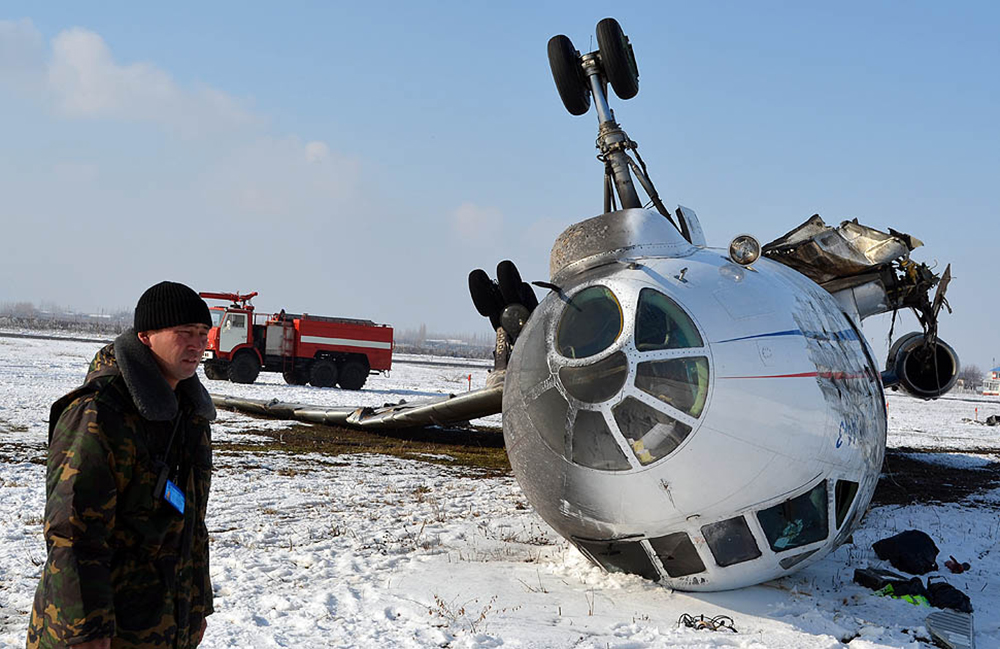
Crash of a Tupolev TU-134A-3 in Osh

Date & Time: Dec 28, 2011 at 1246 LT
Type of aircraft:
Operator:
Registration:
EX-020
Survivors:
Yes
Schedule:
Bichkek - Osh
MSN:
61042
YOM:
1979
Flight number:
QH003
Location:
Country:
Region:
Crew on board:
6
Crew fatalities:
Pax on board:
82
Pax fatalities:
Other fatalities:
Total fatalities:
0
Aircraft flight hours:
41313
Aircraft flight cycles:
25326
Circumstances:
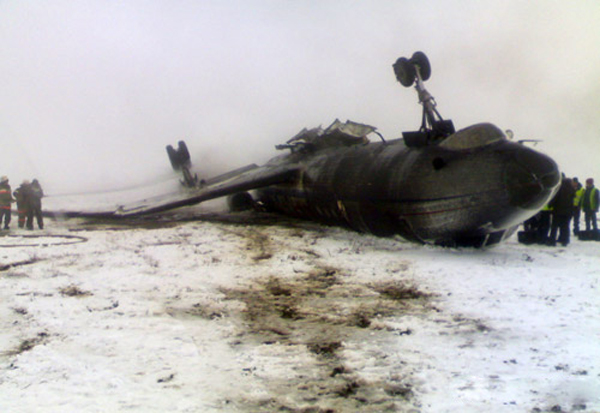
Following an uneventful flight from Bishkek, the crew started the descent to Osh Airport. The approach was completed in reduced visibility due to foggy conditions. Not properly aligned with runway 12, the aircraft landed hard. It did not bounce but lost its right main gear due to excessive aerodynamic forces (2,5 g). Out of control, the aircraft veered off runway and came to rest upside down, bursting into flames. The aircraft was partially destroyed by fire. All 88 occupants were evacuated, among them 31 were injured, some seriously. At the time of the accident, the visibility was reduced to 300 metres horizontal and 200 metres vertical. RVR for runway 12 was 550 metres.
Probable cause:
On Apr 22nd 2013 a letter of Kyrgyzstan's Transport Prosecutor to Kyrgyzstan's Parliament of April 2012 became known indicating that the airport had been approved to operate in Category I weather minima without being properly equipped and should never have been approved to operate in these conditions, as a result of the investigation the aerodrome has been limited to operate according to visual flight rules only. The aircraft was not properly equipped to conduct the flight lacking a GPWS as well as passenger oxygen, the crew was not qualified to conduct the flight and the oversight by the airline's dispatch and chief pilot was insufficient, the Transport Prosecutor mentioned that the responsibles to oversee flight operation could not answer even the most basic questions. Kyrgyzstan's Civil Aviation Authority failed to oversee the operation of the airline as well. While on approach to Osh the crew was informed about weather conditions permitting an approach, the data transmitted however were incorrect and the actual weather did not even permit an approach. Instead of being established on the approach 10.5km/5.6nm before touchdown the aircraft was established on the extended centerline only about 4.02km/2.17nm before touchdown, however was above the glidepath. A steep dive to reach the runway resulted in a touch down at a high rate of descent and vertical forces beyond the design limit of the aircraft (more than 2.5G), as result of the high impact forces the aircraft did not even bounce but just started to disintegrate, reaching 58 degrees of right roll 270 meters past the runway threshold, between 270 and 550 meters past the threshold the tail fin separated, the aircraft was completely upside down 600 meters past the threshold and came to a stop about 1000 meters past the threshold of the runway. The main door was jammed, the occupants escaped through other doors and the overwing exits. No serious injury occurred, 6 people needed hospital treatment with minor injuries.

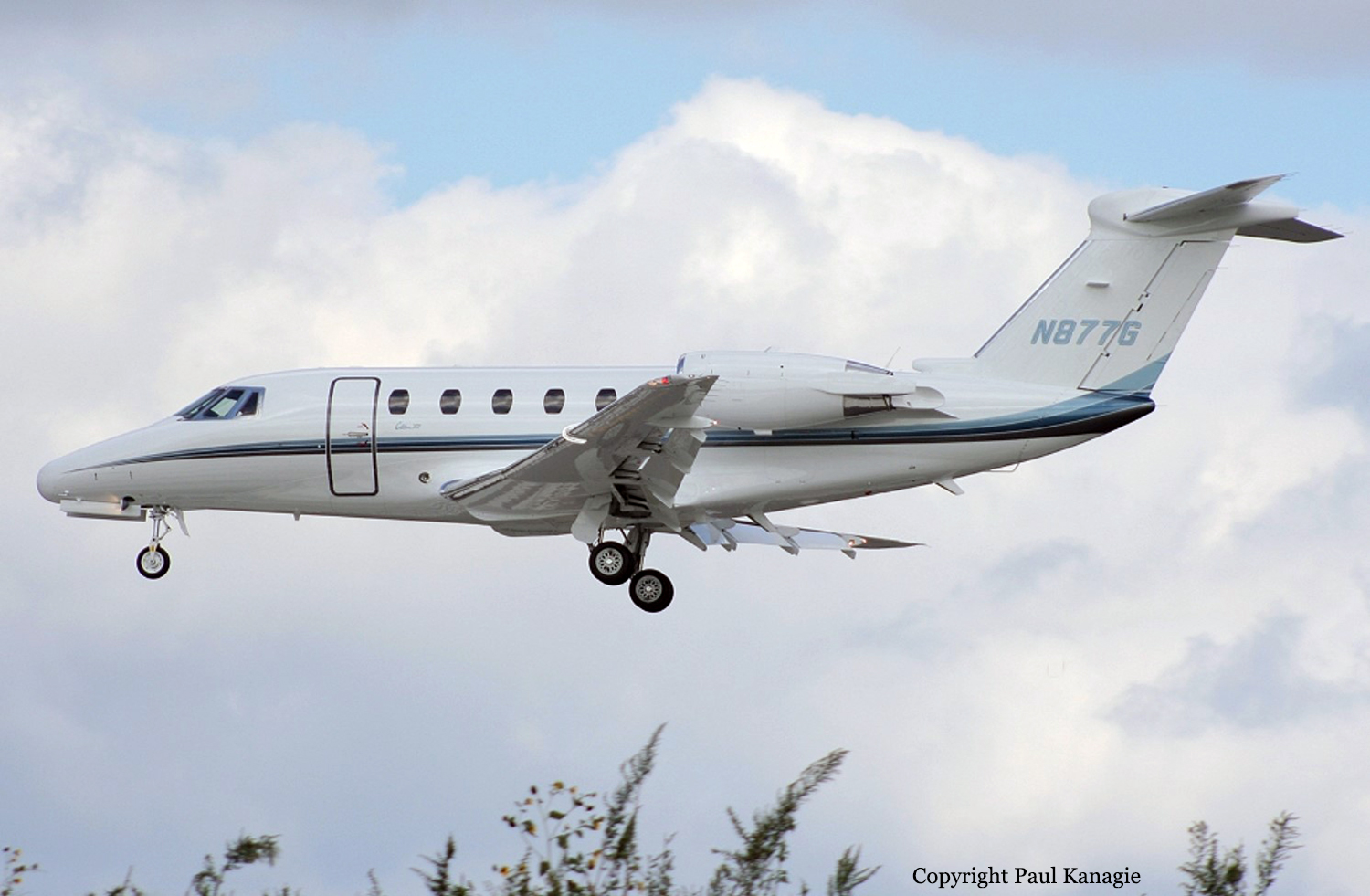
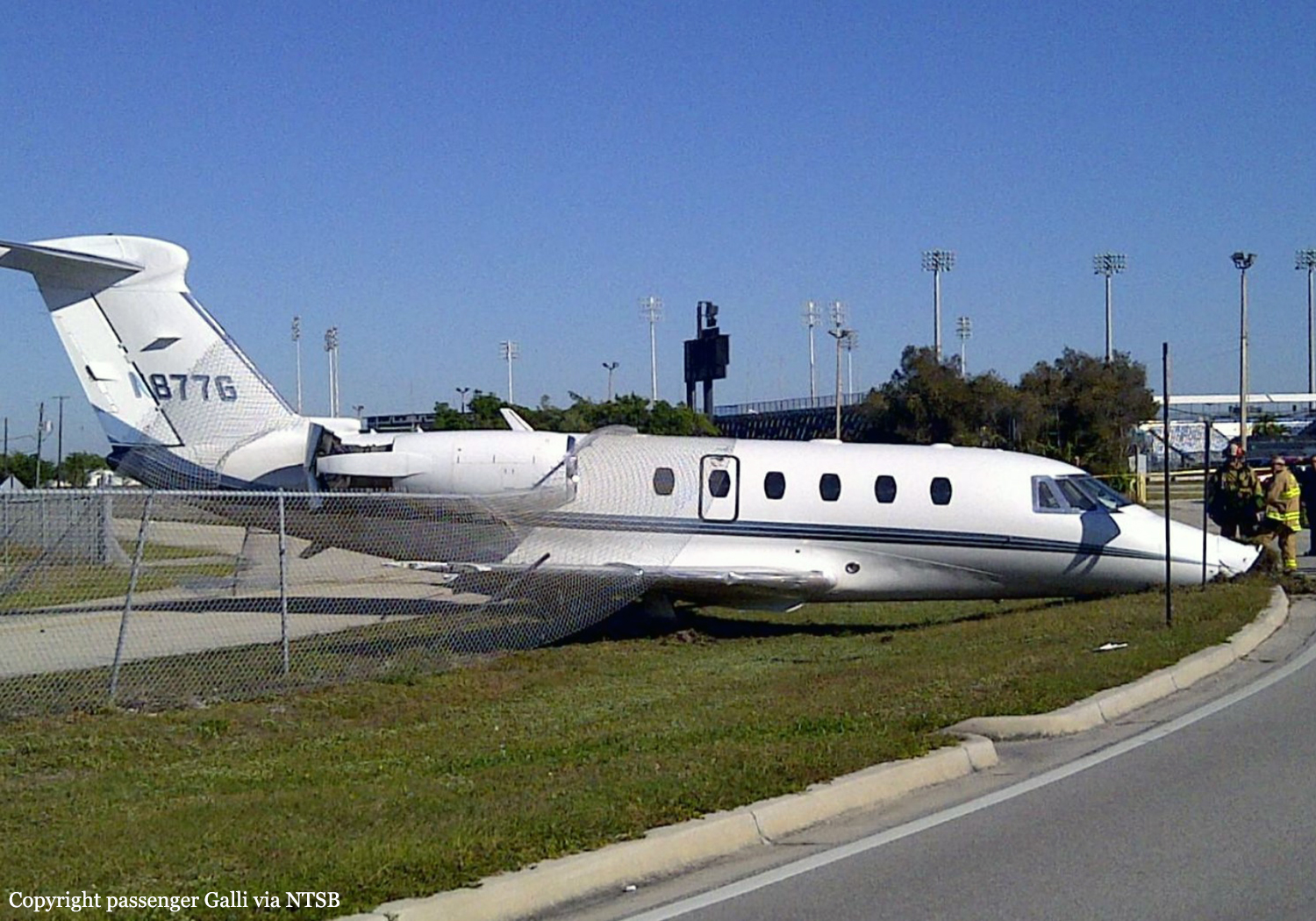
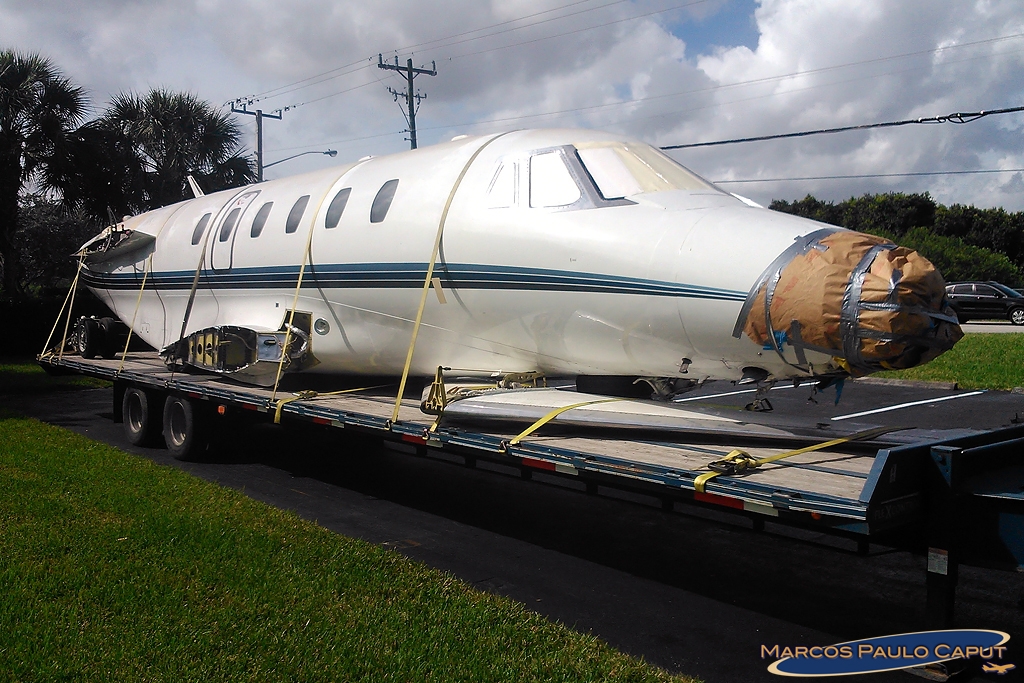
Crash of a Cessna 650 Citation VII in Fort Lauderdale

Date & Time: Dec 28, 2011 at 0951 LT
Type of aircraft:
Registration:
N877G
Flight Phase:
Flight Type:
Survivors:
Yes
Schedule:
Lauderdale – Teterboro
MSN:
650-7063
YOM:
1995
Crew on board:
2
Crew fatalities:
Pax on board:
6
Pax fatalities:
Other fatalities:
Total fatalities:
0
Captain / Total flying hours:
14950
Captain / Total hours on type:
190.00
Copilot / Total flying hours:
19000
Copilot / Total hours on type:
100
Aircraft flight hours:
5616
Aircraft flight cycles:
4490
Circumstances:
The crew stated that the preflight examination, takeoff checks, takeoff roll, and rotation from runway 26 were "normal." However, once airborne, and with the landing gear down and the flaps at 20 degrees, the airplane began a roll to the right. The captain used differential thrust and rudder to keep the airplane from rolling over, and as he kept adjusting both. He noted that as the airspeed increased, the airplane tended to roll more; as the airspeed decreased, the roll would decrease. The captain also recalled thinking that the airplane might have had an asymmetrical flap misconfiguration. Both pilots stated that there were no lights or warnings. As the airplane continued a right turn, runway 13 came into view. The captain completed a landing to the right of that runway, landing long and in the grass with a 9-knot, left quartering tailwind. The airplane then paralleled the runway and ran into an airport perimeter fence beyond the runway's end. The cockpit voice recorder revealed that the crew initially used challenge and reply checklists and that after completing the takeoff checklist, engine power increased. About 7 seconds after the first officer called "V1," the captain stated an expletive, and the first officer announced "positive rate." During the next 50 seconds, the captain repeated numerous expletives, an automated voice issued numerous "bank angle" warnings, and the first officer asked what he could do, to which the captain later told him to declare an emergency. There were no calls by either pilot for an emergency checklist nor were there callouts of any emergency memory items. Each of the airplane's wings incorporated four hydraulically-actuated spoiler segments. The outboard segment, the roll control spoiler, normally extends in conjunction with its wing aileron after the aileron has traveled more than about 3 degrees, and extends up to 50 degrees at full control wheel rotation. When the airplane was subsequently examined in a hangar, hydraulic power was applied to the airplane via a ground hydraulic power unit, and the right roll spoiler elevated to 7.9 degrees above the flush wing level. Multiple left/right midrange turns of the yoke, with the hydraulic ground power unit both on and off, resulted in the roll spoiler being extended normally, but still returning to a resting position of 7.8 to 7.9 degrees above the flush position. When the yoke was turned full right and left, whether the aileron boost was on or off, both wings' roll spoilers extended to their full positions per specifications; however, once the full deflection testing was completed, the right roll spoiler returned to 6.1 degrees above the flush position. A final yoke turn resulted in the roll spoiler being elevated to 5.5 degrees. The right wing roll spoiler actuator was subsequently examined at the airplane manufacturer, and the roll spoiler was found to jam. The roll spoiler actuator was disassembled, but no specific reason(s) for the jamming were found. The roll spoiler parts were also examined and no indications of why the actuator may have jammed were found. According to the flight manual, if any of the spoiler segments should float, moving the spoiler hold down switch to "Spoiler Hold Down" locks all spoiler panels down. The roll control spoilers may then be used in the roll mode by turning on the auxiliary hydraulic pump. Also, an "Aileron/Spoiler Disconnect" T-handle is available to release the tie between the ailerons and the roll control spoilers in the event of a jam in either system. When used, the pilot's yoke controls only the ailerons, and the copilot's yoke controls only the roll control spoilers. Although the jamming of the right spoiler initiated the event, the crew's proper application of emergency procedures should have negated the adverse effects. Memory items for an uncommanded roll include moving the spoiler hold-down switch to the "on" position, which was not done; the spoiler hold-down switch was found in the "off" position. (The captain thought that he may have had an asymmetrical flap configuration; however, if an asymmetry had been the initiating event, the flap system would have been automatically disabled and the flap segments would have been mechanically locked in their positions.) The aileron/spoiler disconnect T-handle was found pulled up, which the crew indicated had occurred when the first officer's shoe hit it as he evacuated the airplane. While pulling the aileron/spoiler disconnect T-handle would have been appropriate for a different emergency procedure to release the tie between the ailerons and the roll control spoilers in the event of a jam in either system, it would have actually hindered the captain's attempts to control the airplane in this case because it would have disconnected the left roll spoiler from the captain's yoke, making it more difficult to counter the effects of the displaced right roll spoiler. Although the crew indicated that the t-handle was pulled during the first officer's exit of the airplane, its position, safety cover, and means of activation make this unlikely. In addition, precertification testing of the airplane showed that even with the right roll spoiler fully deployed, as long as the pilot had the use of the left roll spoiler in conjunction with that aileron, the airplane should have been easily controlled.
Probable cause:
The crew's failure to use proper emergency procedures during an uncommanded right roll after takeoff, which led to a forced landing with a quartering tailwind. Contributing to the accident was a faulty right roll spoiler actuator, which allowed the right roll spoiler to deploy but not close completely.
Final Report:

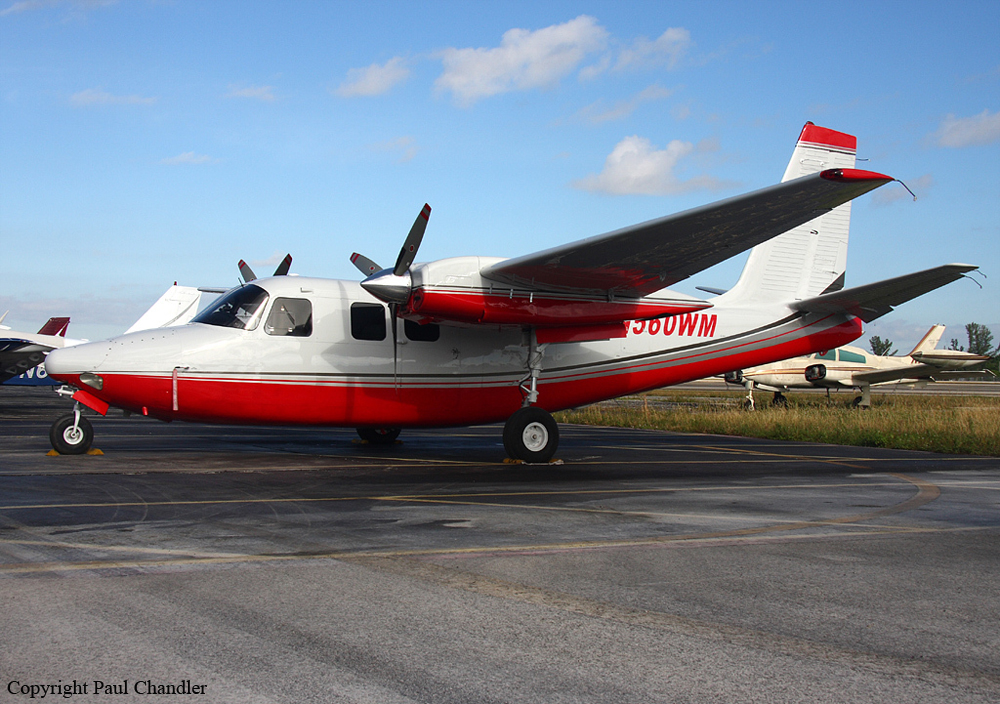
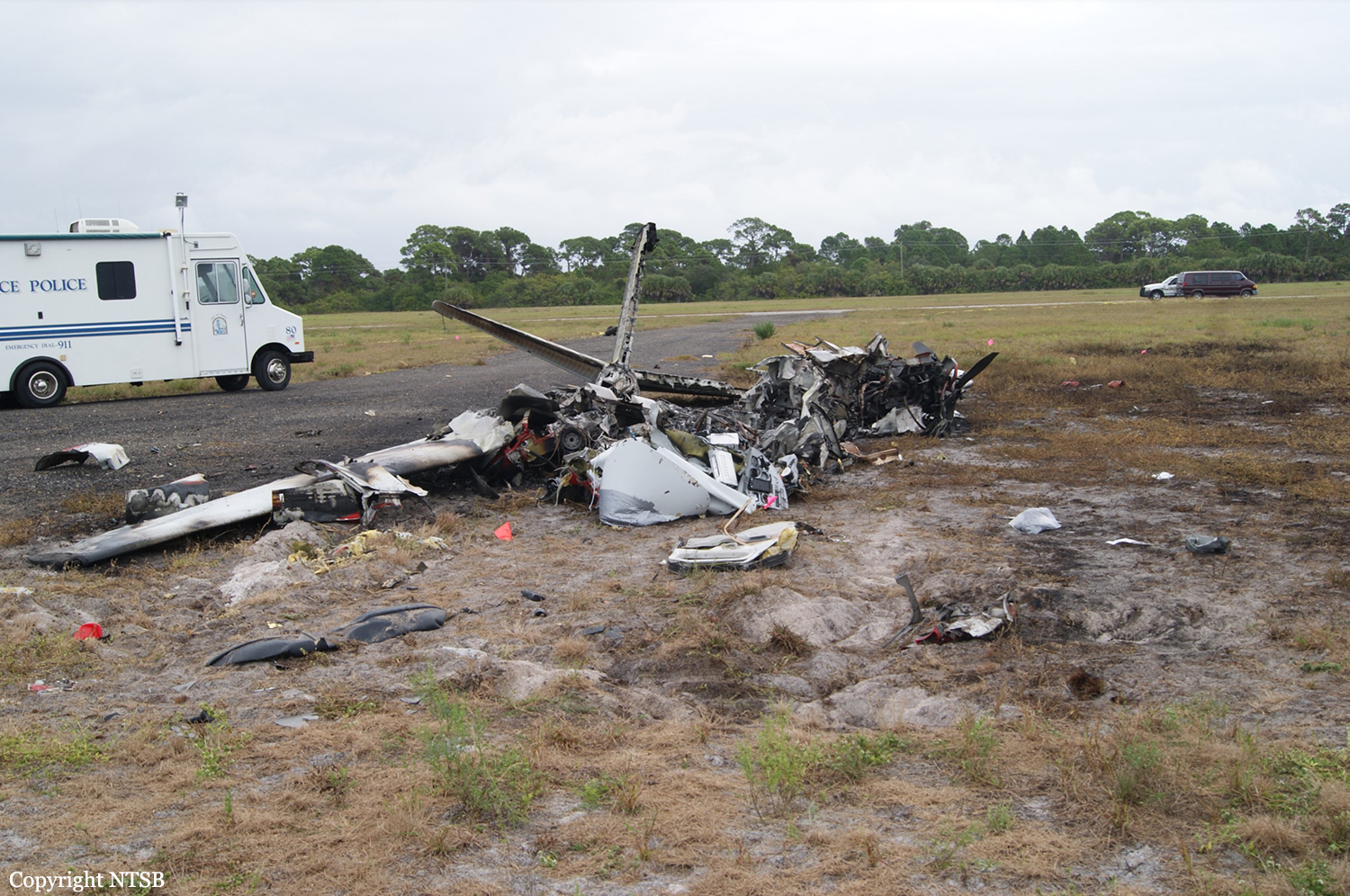
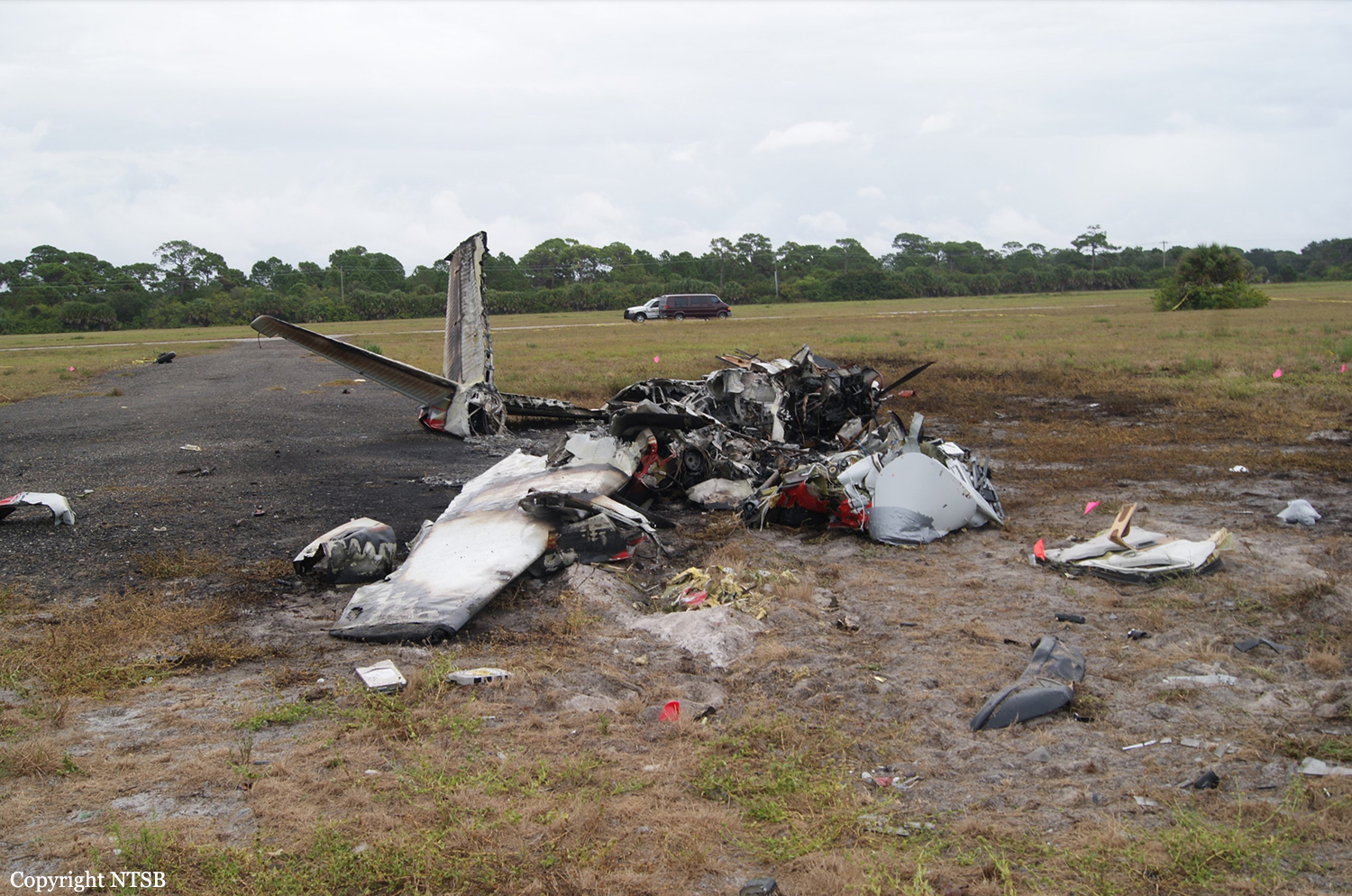
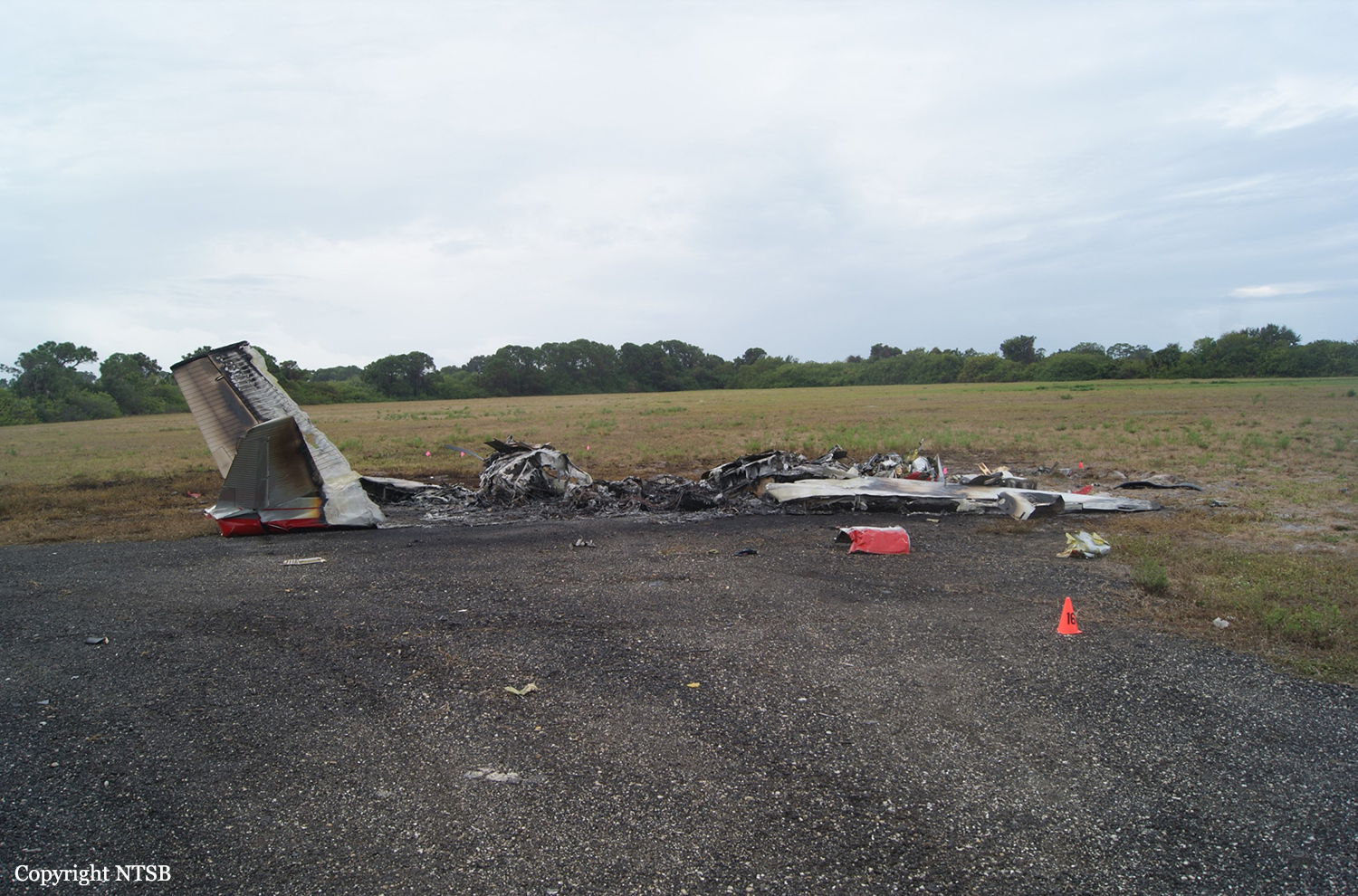
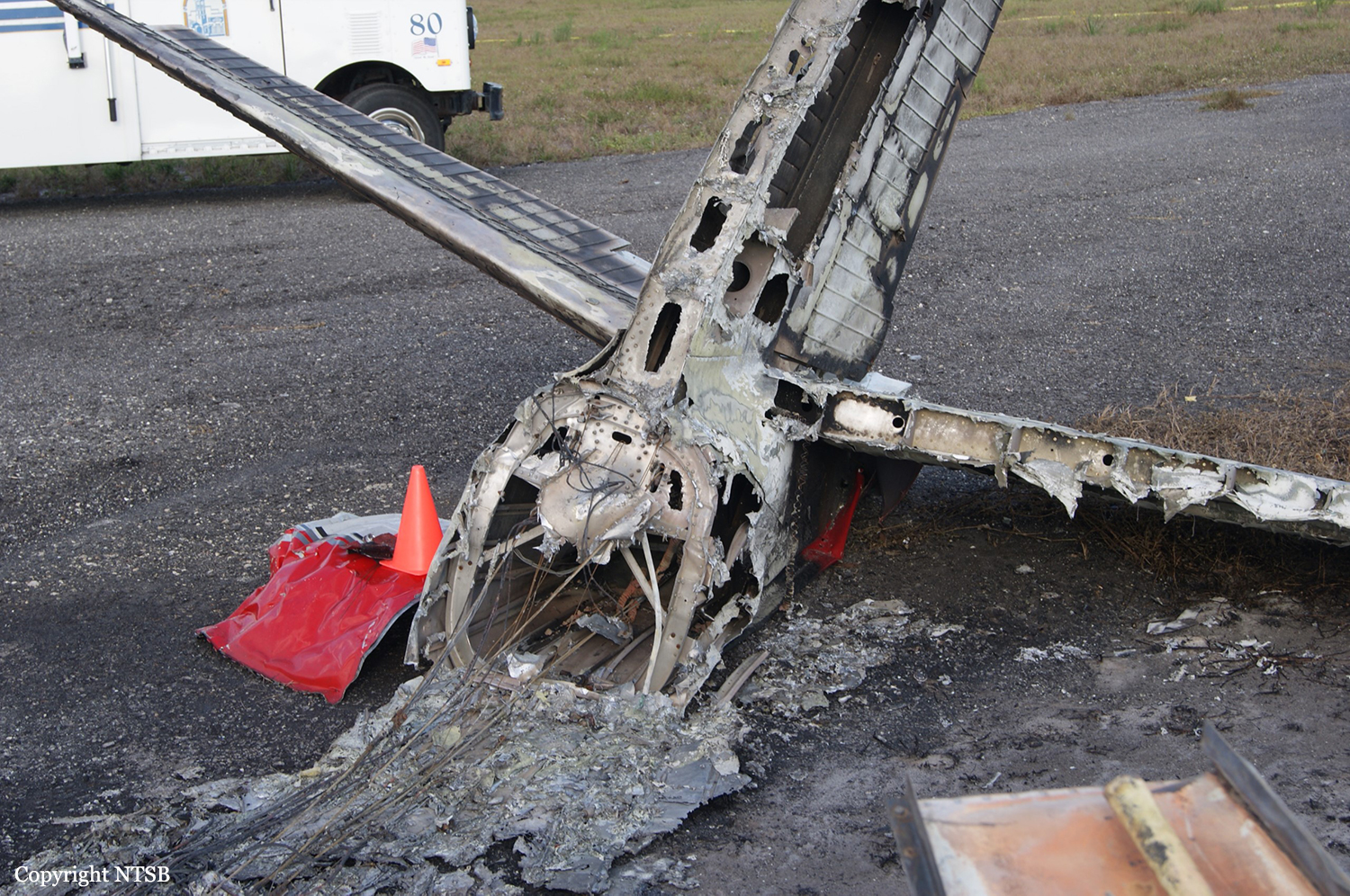
Crash of a Rockwell Aero Commander 560F in Venice: 1 killed

Date & Time: Dec 26, 2011 at 1406 LT
Operator:
Registration:
N560WM
Flight Type:
Survivors:
No
Schedule:
Venice - LaFayette
MSN:
560-1305-58
YOM:
1964
Location:
Crew on board:
1
Crew fatalities:
Pax on board:
0
Pax fatalities:
Other fatalities:
Total fatalities:
1
Captain / Total flying hours:
6000
Captain / Total hours on type:
1500.00
Aircraft flight hours:
5826
Circumstances:
The airplane departed and was climbing to an assigned altitude when the pilot informed an air traffic controller of a loss of engine power on the left engine. The pilot received radar vectors back to the departure airport and reported the airport in sight. There was no further communication with the controller. Review of radar data revealed that the airplane was about 825 feet from and 200 feet above the landing runway threshold. Seventeen seconds later, the airplane was at 100 feet above ground level and left of the intended landing runway. The last radar return was 5 seconds later, and the airplane was at 200 feet above ground level. A witness observed the airplane in the vicinity of landing runway. The airplane pitched straight up, stalled, spun to the left three times before it collided with the ground and caught fire. Postcrash examination of the airframe and flight controls revealed no anomalies. The left engine was disassembled and all connecting rods were intact except for the No.2 connecting rod. Metallugical examination of the connecting rod revealed that the bearing failed, most likely due to a progressive delamination of the bearing. Review of the airplane flight manual revealed a minimum of 300 feet of altitude is required to recover from power-off stalls with 7500 pounds at both forward and aft center of gravity. The stall speed with the landing gear and flaps up with 0 degree angle of bank is 83 miles per hour or 72 knots. The stall speed with the landing gear extended and the flaps down is 73 miles per hours or 63 knots.
Probable cause:
The pilot’s failure to maintain adequate airspeed during a single-engine approach, which resulted in an aerodynamic stall. Contributing to the accident was the total loss of power in the left engine due to a failed No. 2 connecting rod bearing.
Final Report:

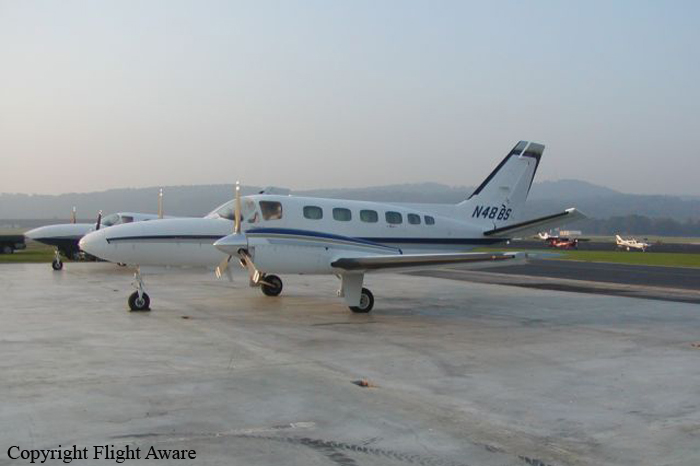
Crash of a Cessna 441 Conquest in York: 1 killed

Date & Time: Dec 22, 2011 at 1725 LT
Type of aircraft:
Operator:
Registration:
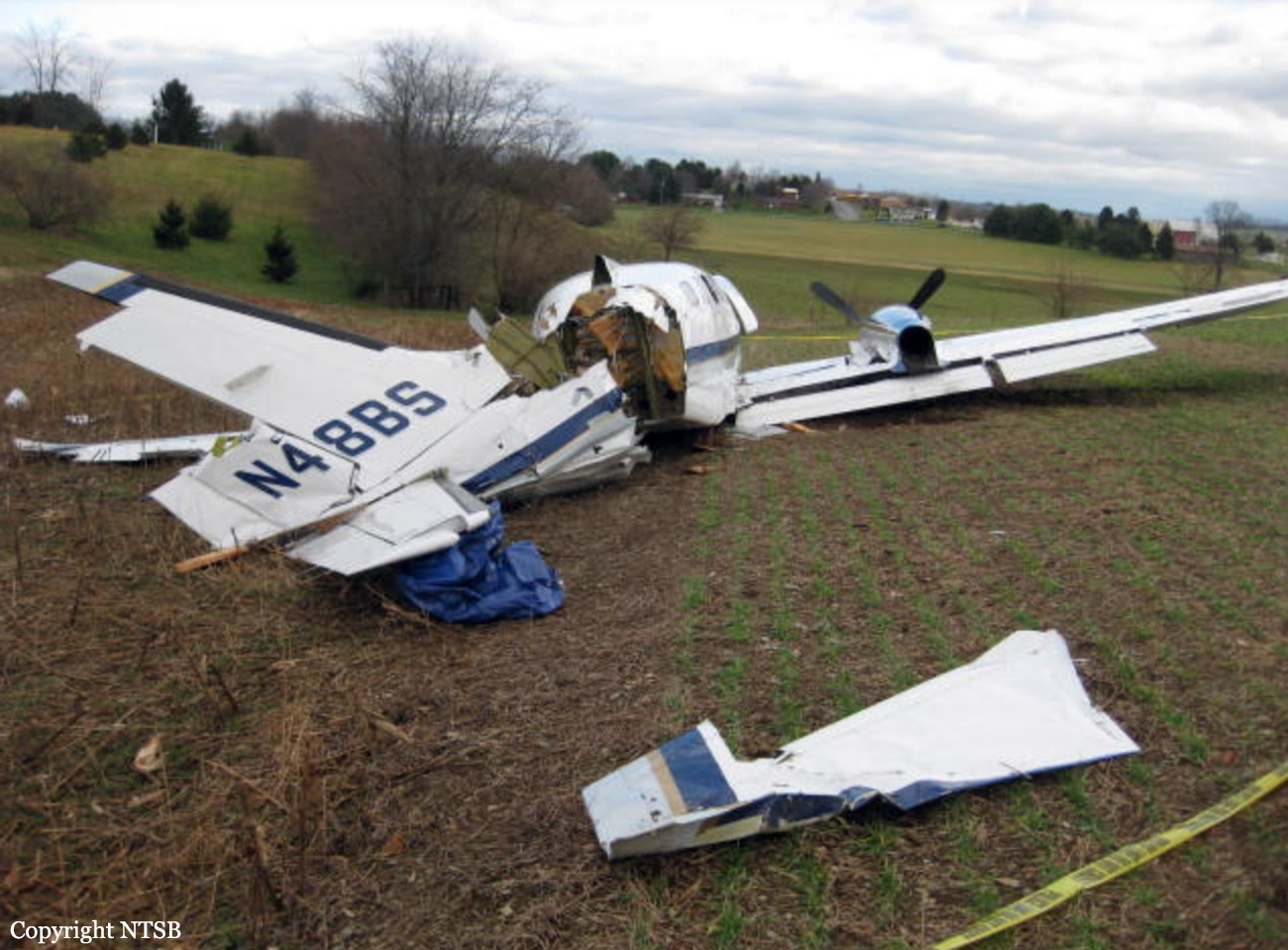
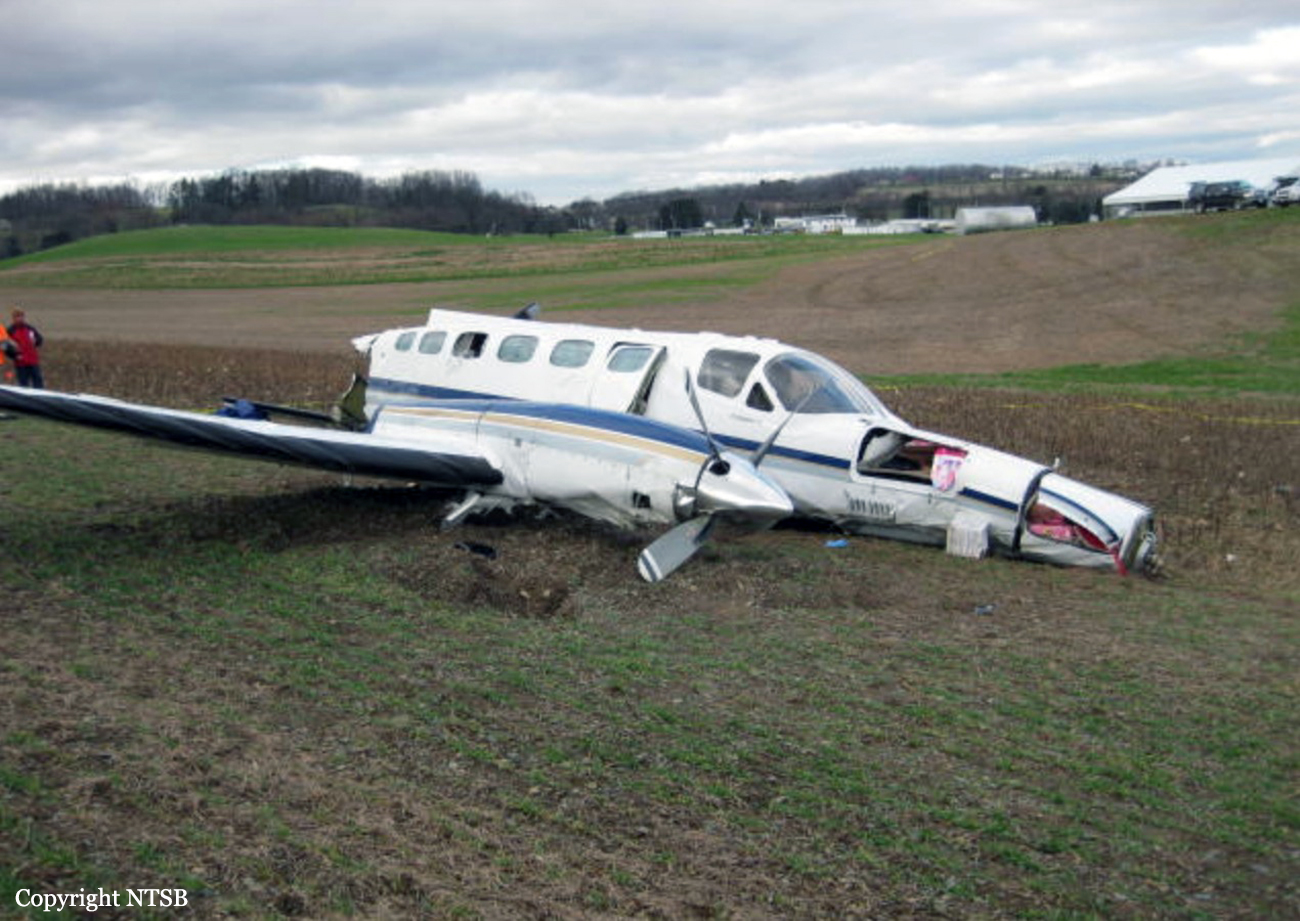
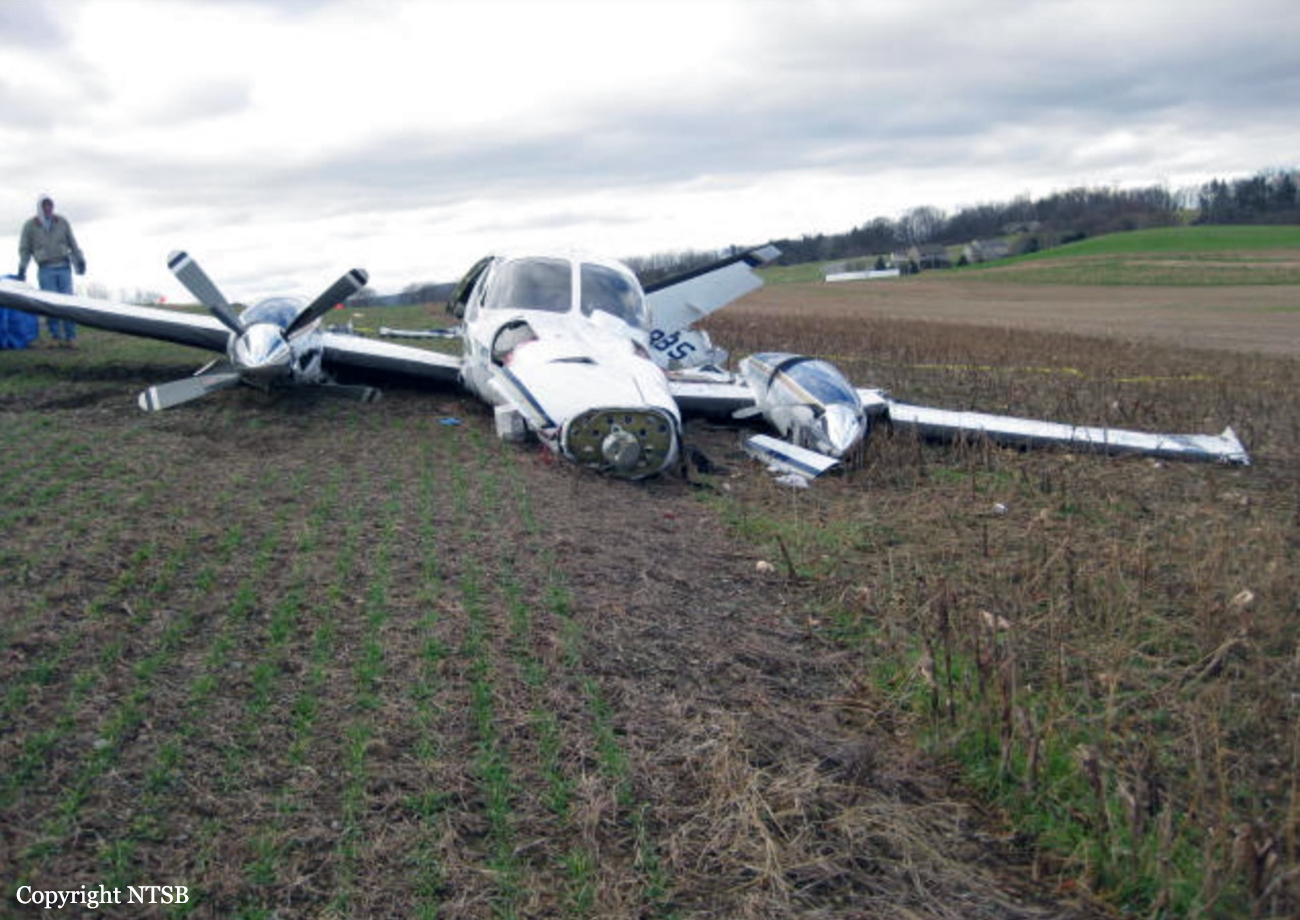
N48BS
Flight Type:
Survivors:
No
Schedule:
Long Beach - York
MSN:
441-0125
YOM:
1980
Crew on board:
1
Crew fatalities:
Pax on board:
0
Pax fatalities:
Other fatalities:
Total fatalities:
1
Captain / Total flying hours:
1409
Captain / Total hours on type:
502.00
Aircraft flight hours:
5995
Circumstances:
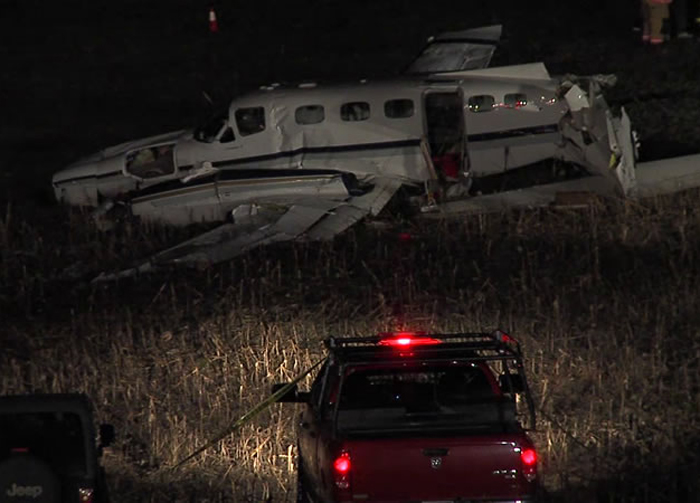
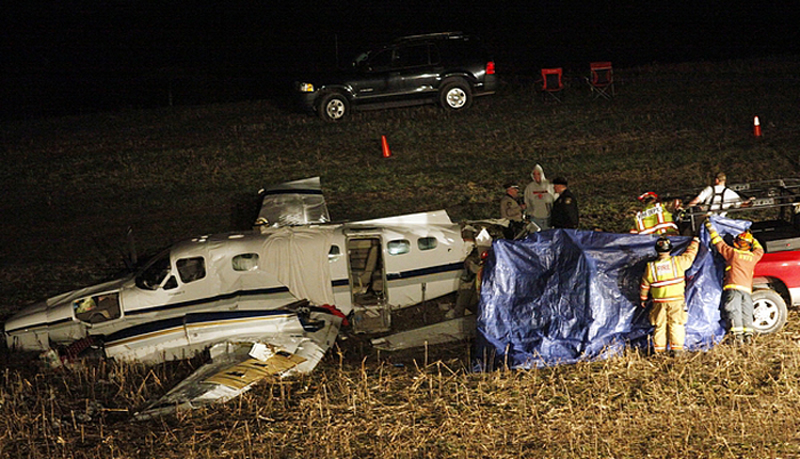
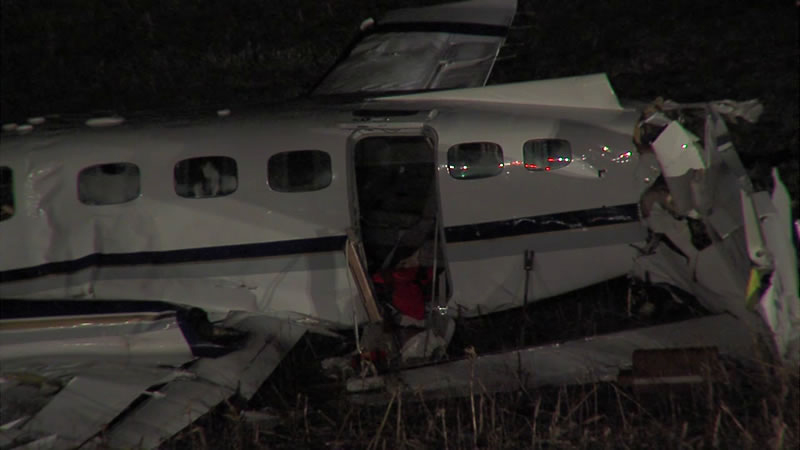
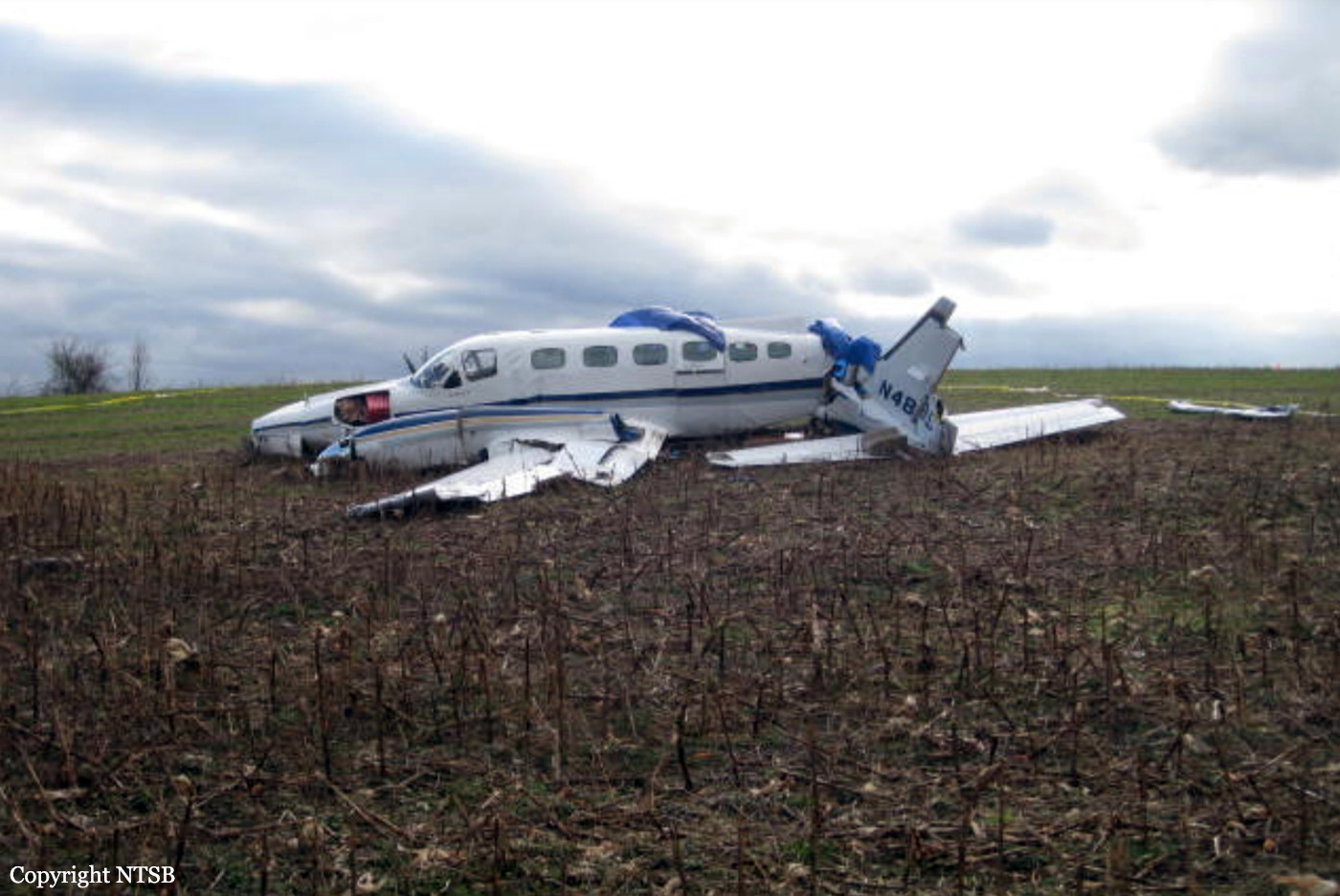
Toward the end of a 6 hour, 20 minute flight, during a night visual approach, the pilot flew the airplane to a left traffic pattern downwind leg. At some point, he lowered the landing gear and set the flaps to 30 degrees. He turned the airplane to a left base leg, and after doing so, was heard on the common traffic frequency stating that he had an "engine out." The airplane then passed through the final leg course, the pilot called "base to final," and the airplane commenced a right turn while maintaining altitude. The angle of bank was then observed to increase to where the airplane's wings became vertical, then inverted, and the airplane rolled into a near-vertical descent, hitting the ground upright in a right spin. Subsequent examination of the airplane and engines revealed that the right engine was not powered at impact, and the propeller from that engine was not in feather. No mechanical anomalies could be found with the engine that could have resulted in its failure. The right fuel tank was breeched; however, fuel calculations, confirmed by some fuel found in the right fuel tank as well as fuel found in the engine fuel filter housing, indicated that fuel exhaustion did not occur. Unknown is why the pilot did not continue through a left turn descent onto the final approach leg toward airport, which would also have been a turn toward the operating engine. The pilot had a communication device capable of voice calls, texting, e-mail and alarms, among other functions. E-mails were sent by the device until 0323, and an alarm sounded at 0920. It is unknown if or how much pilot fatigue might have influenced the outcome.
Probable cause:
The pilot's failure to maintain minimum control airspeed after a loss of power to the right engine, which resulted in an uncontrollable roll into an inadvertent stall/spin. Contributing to the accident was the failure of the airplane's right engine for reasons that could not be determined because no preexisting mechanical anomalies were found, and the pilot's subsequent turn toward that inoperative engine while maintaining altitude.
Final Report:
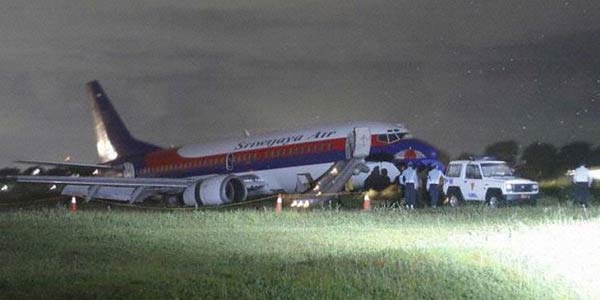
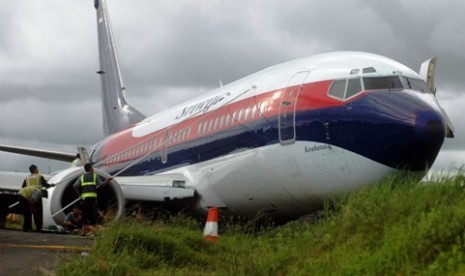
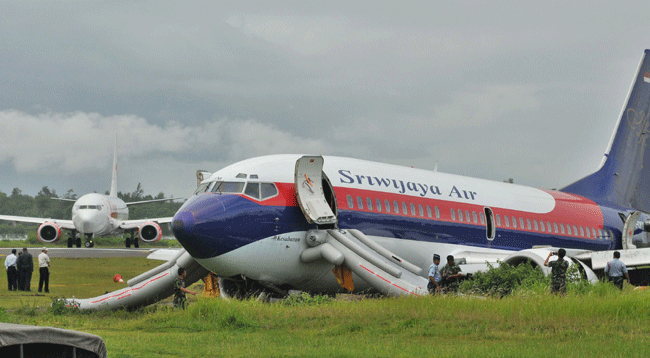
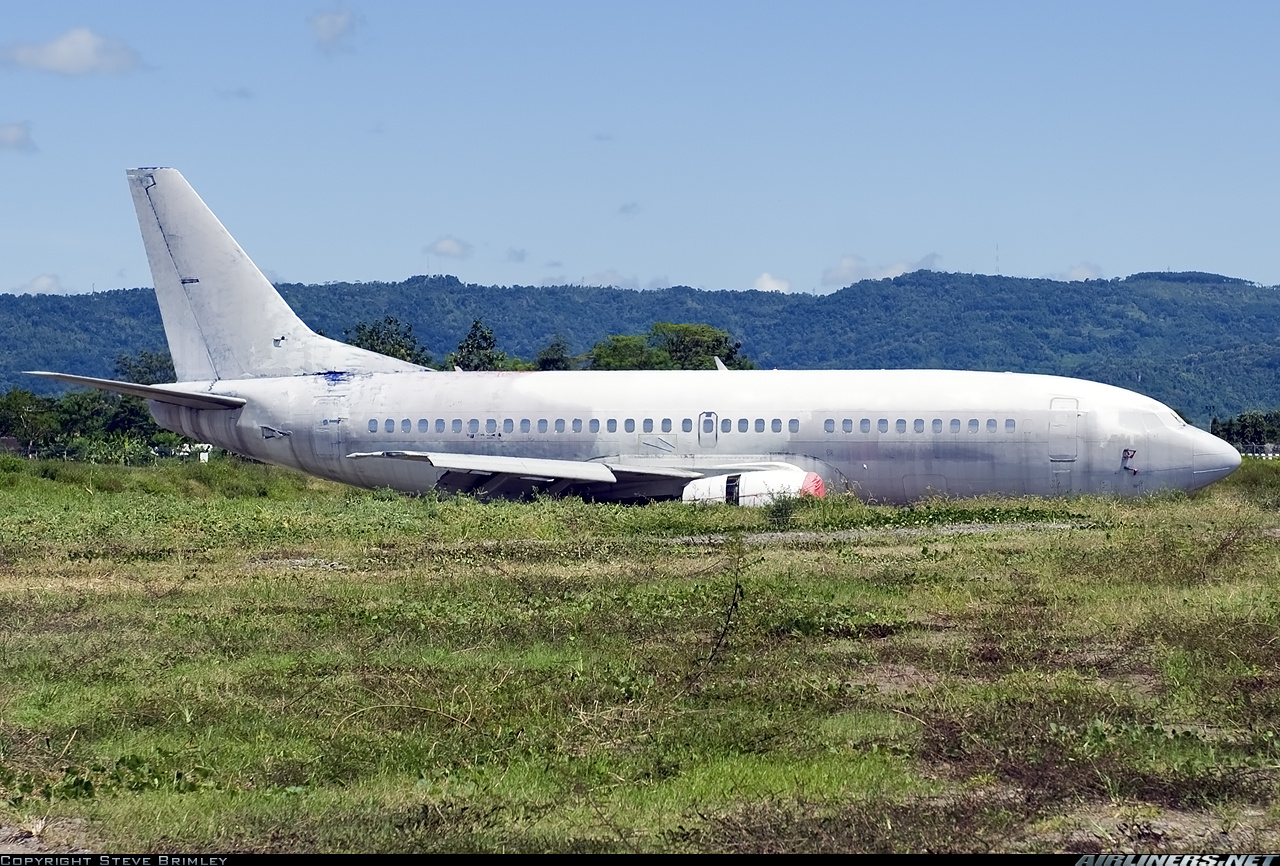
Crash of a Boeing 737-36M in Yogyakarta

Date & Time: Dec 20, 2011 at 1713 LT
Type of aircraft:
Operator:
Registration:
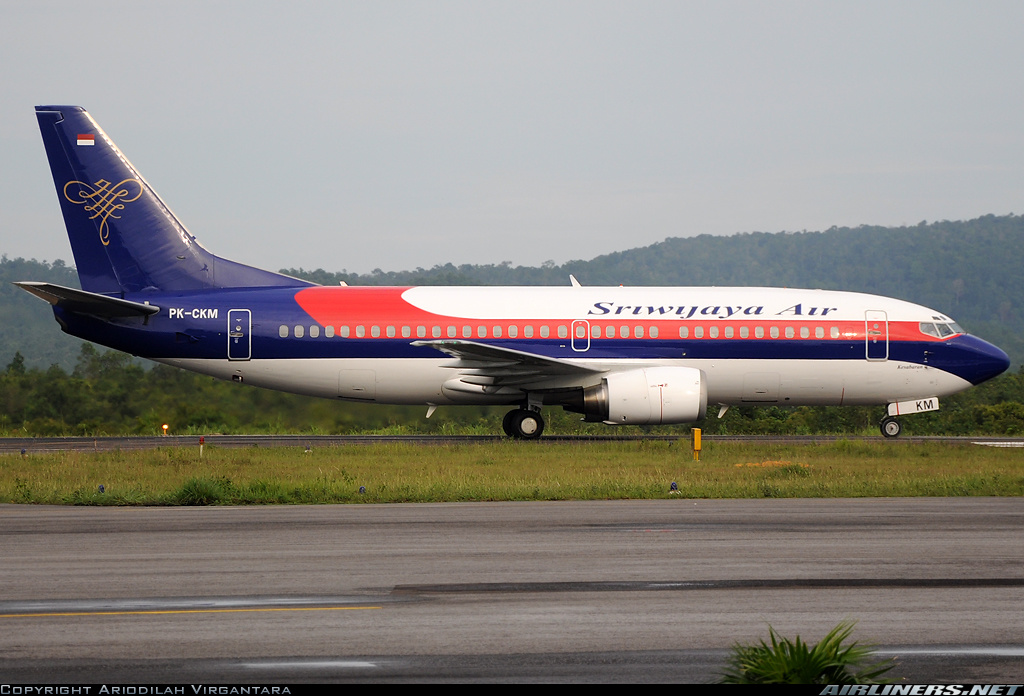
PK-CKM
Survivors:
Yes
Schedule:
Jakarta - Yogyakarta
MSN:
28333/2810
YOM:
1996
Flight number:
SJY230
Country:
Region:
Crew on board:
6
Crew fatalities:
Pax on board:
131
Pax fatalities:
Other fatalities:
Total fatalities:
0
Captain / Total flying hours:
29801
Copilot / Total flying hours:
562
Aircraft flight hours:
31281
Aircraft flight cycles:
21591
Circumstances:
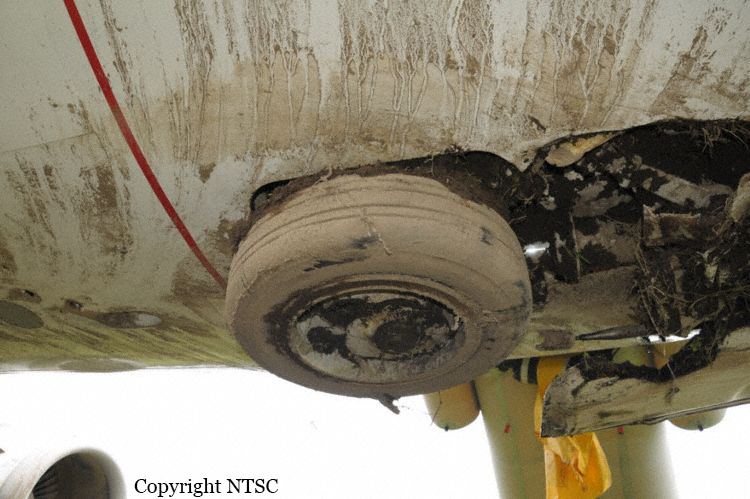
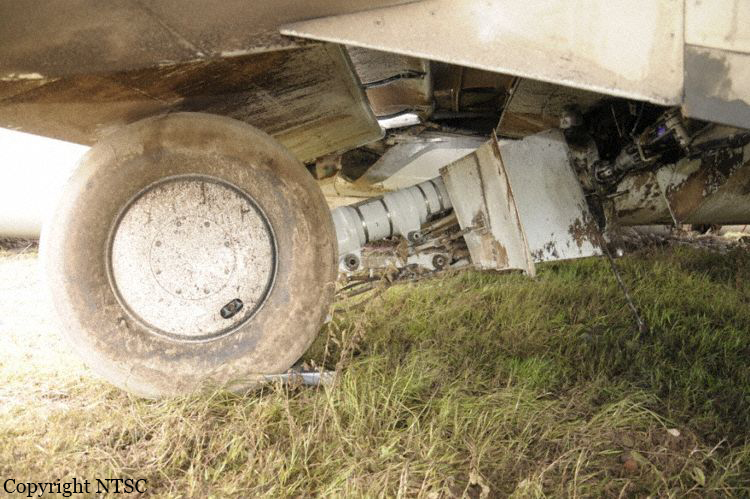
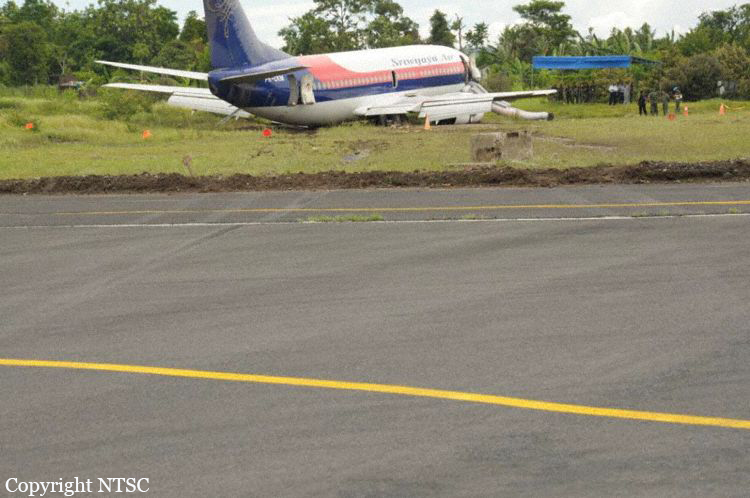
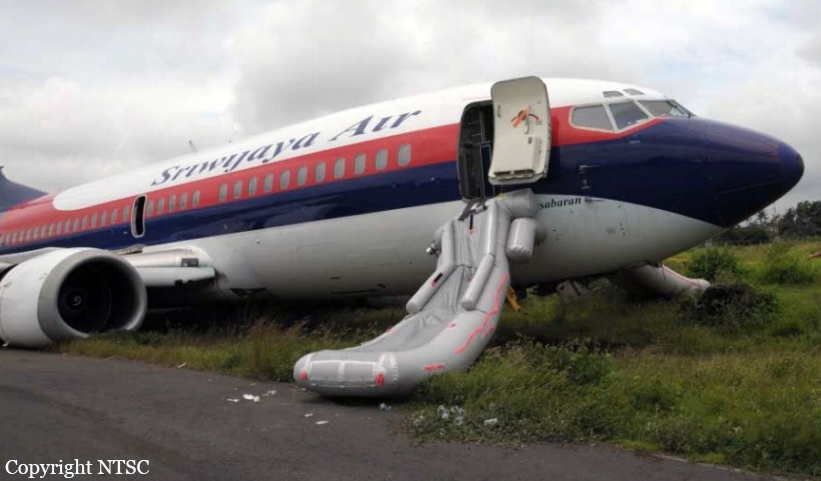
On 20 December 2011, a Boeing 737-300 aircraft, registered PK-CKM, was being operated by PT. Sriwijaya Air on a schedule passenger flight SJ230 from Soekarno Hatta International Airport (WIII) Jakarta to Adisutjipto International Airport (WARJ), Yogyakarta. There were 141 persons on board; two pilots, four cabin crews and 135 passengers consisted124 adult, 7 children and 4 infant. The aircraft departed from Jakarta at 14.00 LT (07.00 UTC), the pilot in command was the pilot flying and the co-pilot was the pilot monitoring. At 08.10 UTC the aircraft made holding at 8 NM from JOG VOR due to bad weather. After the second holding and the weather was deteriorated, the airport authority closed the airport for takeoff and landing. The pilot requested divert to Juanda Airport (WARR), Surabaya and landed at 08.40 UTC. After refuelling and received the information about weather improvement in Yogyakarta then the aircraft departed, at 09.20 UTC, in this sequence of flight the PIC acted as PF, with 137 persons on board consisted of two pilots, four cabin crews and 131 passengers consisted 120 adult, 7 children and 4 infant. The aircraft was on the fifth sequence from seven aircraft approaching Adisucipto airport Yogyakarta. Passing JOG VOR it was seen on radar screen that the aircraft speed was read 203 Kts at 2700 ft. Approach Controller instructed to reduce the speed. At about 1200 ft, the pilot had the runway insight and disengaged the autopilot and auto throttle. The pilot made correction to the approach profile by roll up to 25 degrees and rate of descend up to 2040 ft per minute. The GPWS warning of ‘pull up’ and sink ‘rate were’ activated. Aircraft touched down at speed 156 Kts of 138 Kts target landing speed. During landing roll, the auto-brake and spoiler activated automatically. The thrust reverse were deployed and the N1 were recorded on the FDR increase and decrease to idle before increased to 80% prior to aircraft stop. The PIC noticed that the aircraft would not be able to stop in the runway and decided to turn the aircraft to the left. The aircraft stopped at 75 meter from the end of runway 09 and 54 meter on the left side of the centre line. Most of the passenger evacuated through left and right forward escape slides. All passengers were evacuated safely. The passenger on the stretcher case was evacuated by the airport rescue. 6 passengers reported minor injured while all crew and the remaining passengers were not injured. The aircraft suffered major damage on the right main and nose wheel.
Probable cause:
Findings:
1. The aircraft was airworthy prior the accident. There was no evidence that the aircraft had malfunction during the flight.
2. The crew had valid license and medical certificate. There was no evidence of crew incapacitation.
3. In this flight Pilot in Command acted as Pilot Flying and Second In command acted as Pilot Monitoring.
4. The flight crew did not conduct approach crew briefing.
5. There was no checklist reading.
6. The PIC as Pilot Flying did not have the instrument approach procedure immediately available to review during approach.
7. During the approach, the PIC course indicator was set at 091 and the SIC was at 084.
8. The rate of descend recorded vary and up to 1920 ft per minute and below 500 ft AGL the rate of descend recorded up to 2040 ft per minute.
9. The approach did not meet the stabilize approach criteria as stated in the FCOM.
10. There were several GPWS warning of ‘sink rate’ and ‘pull up’ activated during approach.
11. The aircraft touched down at speed 156 Kt before bounced, instead of 138 Kt target landing speed.
12. The flap extended to 40 after the aircraft touch down.
13. The FDR recorded reduction in N1 during thrust reverser activation after landing.
14. The CRM was not well implemented.
Factors:
Unsuccessful to recognize the two critical elements, namely fixation and complacency affected pilot decision to land the aircraft while the approach was not meet the criteria of stabilized approach.
Final Report: