Crash of a Swearingen SA226TC Metro II in La Vertiente: 10 killed

Date & Time: Dec 12, 1997 at 1705 LT
Type of aircraft:
Registration:
CP-1635
Flight Phase:
Survivors:
Yes
Schedule:
La Vertiente - Santa Cruz
MSN:
TC-359
YOM:
1980
Country:
Crew on board:
2
Crew fatalities:
Pax on board:
17
Pax fatalities:
Other fatalities:
Total fatalities:
10
Circumstances:
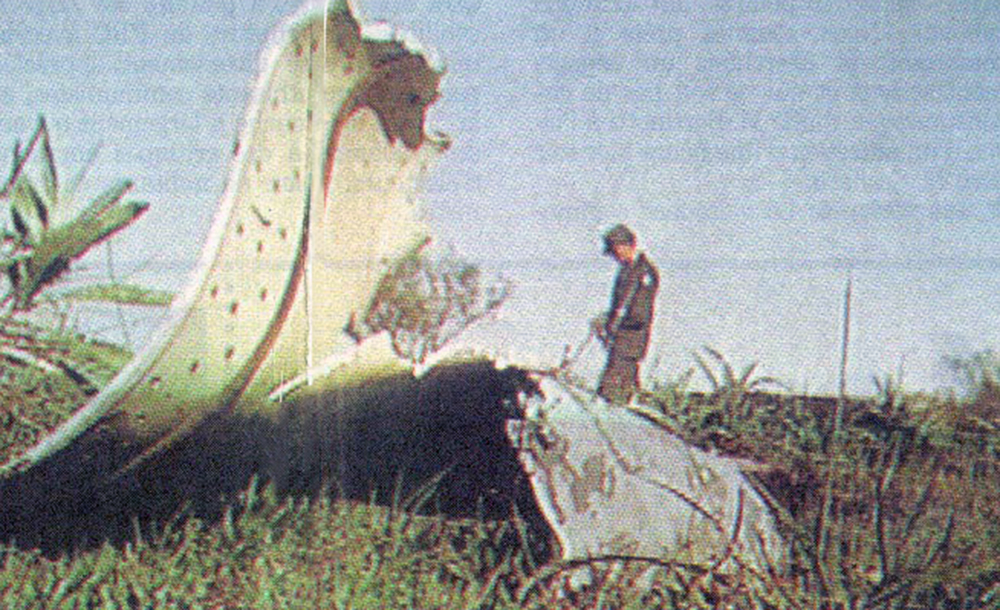
After takeoff from runway 01/19 at La Vertiente Airport, both engines lost power. The aircraft lost height, struck trees and crashed in a field some 300 metres past the runway end. A crew member and nine passengers were killed while nine other occupants were injured. The aircraft was completing a charter flight to Santa Cruz-Viru Viru Airport on behalf of Servicios Aéreos Vargas de España (SAVE), carrying employees of the Tesoro Bolivia Petroleum Company based in San Antonio, Texas.
Probable cause:
Loss of engine power for undetermined reasons.

Crash of a Cessna 500 Citation I in Canela: 3 killed

Date & Time: Oct 31, 1997 at 1650 LT
Type of aircraft:
Operator:
Registration:
PT-LQG
Survivors:
No
Schedule:
Curitiba - Canela
MSN:
500-0271
YOM:
1975
Country:
Crew on board:
2
Crew fatalities:
Pax on board:
1
Pax fatalities:
Other fatalities:
Total fatalities:
3
Circumstances:
The approach to Canela Airport was completed in marginal weather conditions with rain falls and a visibility estimated to be 1,500 - 2,000 metres. The landing was completed with a tail wind component of 15-20 knots and the aircraft landed too far down a wet runway which is 1,250 metres long. Unable to stop within the remaining distance, the aircraft overran, went down an embankment, crossed a road and came to rest against houses, bursting into flames. The aircraft was destroyed and all three occupants were killed.
Probable cause:
The following findings were reported:
- Wrong approach configuration,
- Marginal weather conditions with limited visibility due to rain falls,
- The crew completed the landing with a tailwind component of 15-20 knots,
- The runway surface was wet,
- The runway length was 1,250 metres only,
- The aircraft landed too far down the runway, reducing the landing distance available,
- The braking action was poor because the runway surface was wet,
- The crew failed to initiate a go-around procedure.

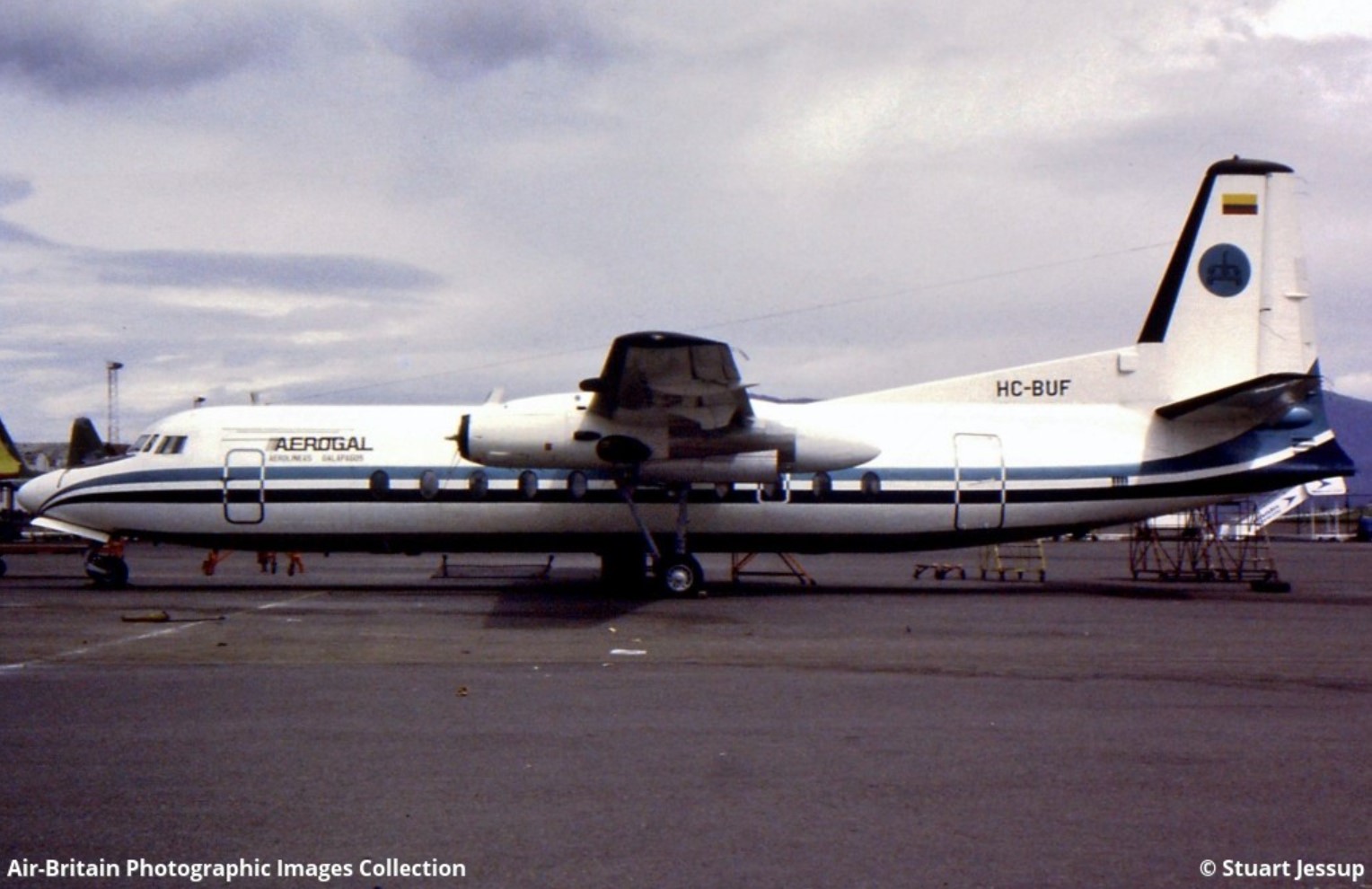
Crash of a Fairchild-Hiller FH-227D in Ambato

Date & Time: Oct 28, 1997 at 1617 LT
Type of aircraft:
Operator:
Registration:
HC-BUF
Flight Type:
Survivors:
Yes
Schedule:
Quito - Ambato
MSN:
573
YOM:
1968
Country:
Crew on board:
2
Crew fatalities:
Pax on board:
5
Pax fatalities:
Other fatalities:
Total fatalities:
0
Circumstances:
Following an uneventful flight from Quito-Mariscal Sucre Airport, the crew started the descent to Ambato Airport in good weather conditions but was stressed by the presence of another aircraft in the approach area. On approach, the aircraft was too high on the glide and its speed was 100 knots, about 12 knots above the reference speed. This caused the aircraft to land too far down the runway 19, about 900 metres past the runway threshold (Ambato's runway 19 is 2,000 metres long). After touchdown, the crew decided to initiate a go-around procedure and increased engine power. The aircraft adopted a high angle of attack, causing the base of the empennage to struck the runway surface. Out of control, the aircraft continued, overran and came to rest in a ravine located 60 metres past the runway end. All seven occupants escaped with minor injuries and the aircraft was damaged beyond repair.
Probable cause:
The following findings were reported:
- Wrong approach configuration as the aircraft was too high on the glide with an excessive speed,
- The aircraft landed too far down the runway, reducing the landing distance available,
- Poor flight planning,
- Poor crew coordination,
- The copilot failed to calculate properly the approach and landing speeds,
- The captain was not aware of the total weight of the aircraft upon landing,
- The operator failed to train the crew according to the specificities related to Ambato Airport,
- The operator failed to prepare documentation required for the operations at Ambato Airport,
- When the crew initiated the go-around procedure, the aircraft' speed was insufficient, and the input on the control column was sudden, causing the base of the empennage to struck the runway surface.

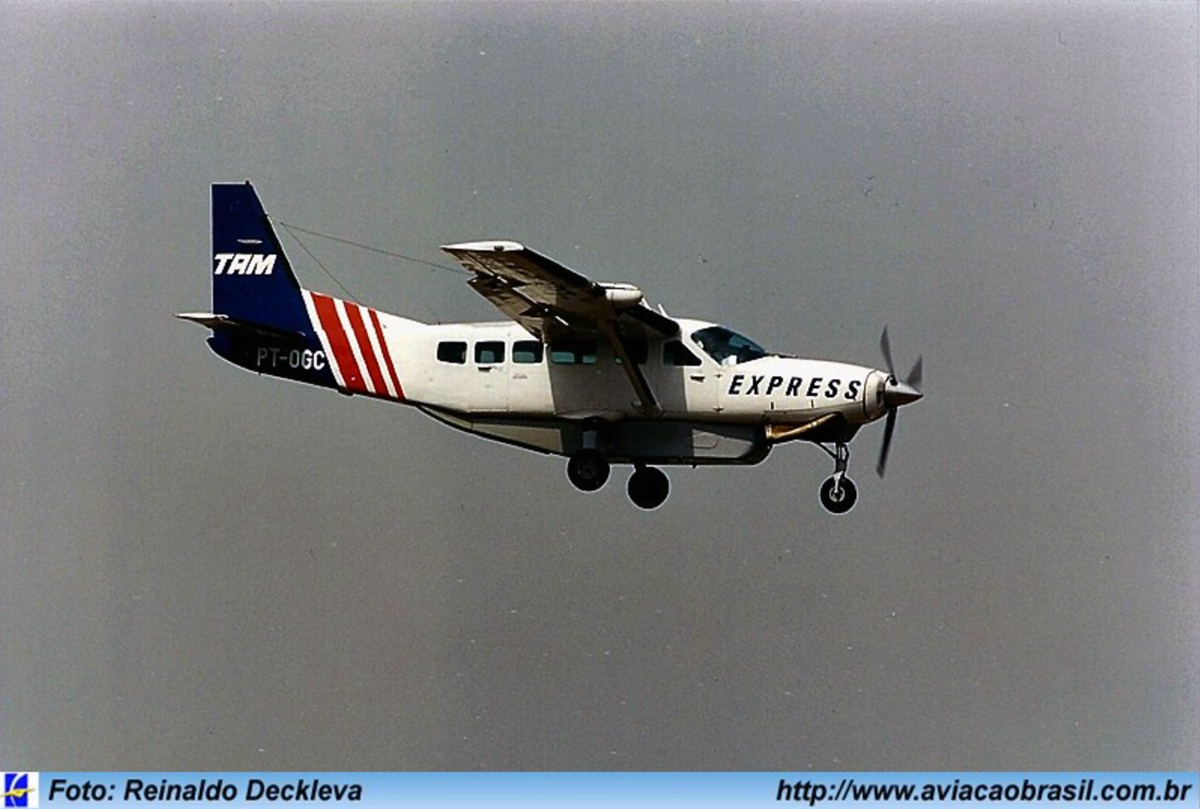
Crash of a Cessna 208A Caravan I in Bairro Guriri

Date & Time: Oct 18, 1997 at 0545 LT
Type of aircraft:
Operator:
Registration:
PT-OGC
Flight Phase:
Flight Type:
Survivors:
Yes
Schedule:
Vitória – São Paulo
MSN:
208A-0064
YOM:
1985
Country:
Crew on board:
2
Crew fatalities:
Pax on board:
0
Pax fatalities:
Other fatalities:
Total fatalities:
0
Captain / Total flying hours:
11000
Captain / Total hours on type:
600.00
Copilot / Total flying hours:
800
Copilot / Total hours on type:
400
Aircraft flight hours:
9633
Circumstances:
The crew was completing a cargo flight from Vitória to São Paulo-Guarulhos Airport. About forty minutes after departure from Vitória, while cruising over the ocean at an altitude of 8,000 feet, the engine failed. The crew heard a metallic noise when oil spread from the engine on the windshield. The crew reduced his altitude and attempted to reach the coast but due to clouds and limited visibility, he eventually decided to attempt an emergency landing on a beach. The aircraft crash landed and came to rest. The copilot escaped uninjured while the captain was slightly injured.
Probable cause:
It was determined that the engine failure was probably caused by the failure of a blade on the high-pressure compressor, possibly as a result of a manufacturing defect. The following contributing factors were identified:
- The crew failed to feather the propeller after the engine failure,
- The flaps were lowered at an angle that caused a speed reduction,
- Lack of crew coordination,
- The crew failed to follow strictly the checklist and missed certain points,
- The fact that the crew was flying under IFR mode at the time the engine failed aggravated the situation, making it difficult to carry out the planned procedures and ruling out an early choice of an emergency landing site,
- The poor visibility due to the night impeded a proper choice and planning of the emergency landing procedure.
Final Report:

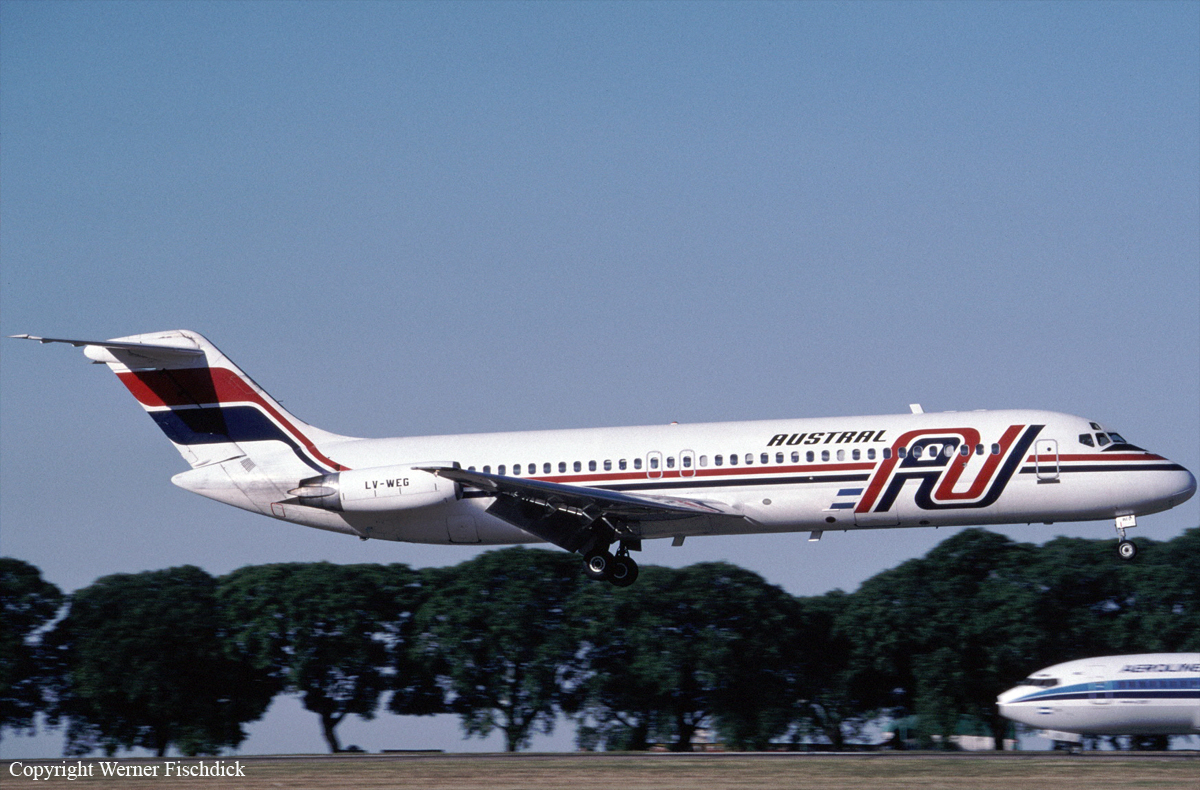
Crash of a Douglas DC-9-32 near Nuevo Berlin: 74 killed

Date & Time: Oct 10, 1997 at 2210 LT
Type of aircraft:
Operator:
Registration:
LV-WEG
Flight Phase:
Survivors:
No
Schedule:
Posadas - Buenos Aires
MSN:
47446
YOM:
1969
Flight number:
AU2553
Country:
Crew on board:
5
Crew fatalities:
Pax on board:
69
Pax fatalities:
Other fatalities:
Total fatalities:
74
Captain / Total flying hours:
9238
Captain / Total hours on type:
177.00
Copilot / Total flying hours:
2910
Copilot / Total hours on type:
1384
Aircraft flight hours:
56854
Aircraft flight cycles:
54800
Circumstances:
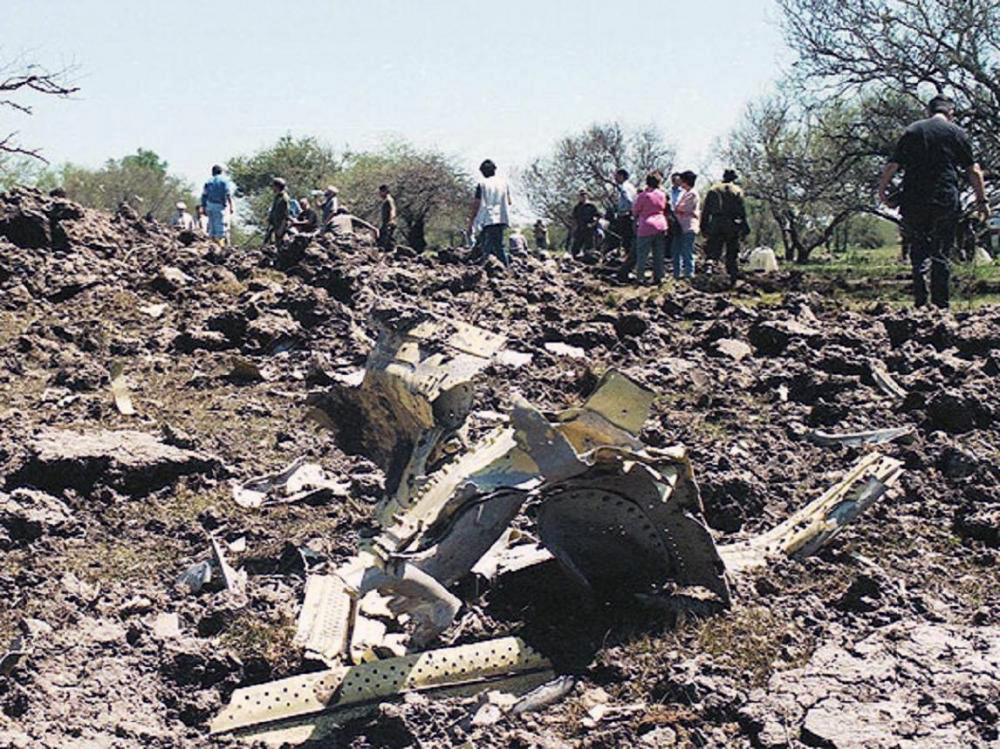
The aircraft departed Posadas-Libertador General José de San Martín Airport at 2118LT on a regular scheduled flight to Buenos Aires, carrying 69 passengers and five crew members. While cruising at an altitude of 35,000 feet, weather conditions deteriorated with cumulonimbus reported till 49,000 feet, stormy weather, icing conditions and severe turbulences with winds up to 80 km/h and an OAT of -59° C. The crew modified his route and entered the Montevideo FIR without contacting Montevideo ATC. At 2204LT, the aircraft entered an area with severe icing conditions and three minutes later, the copilot (pilot-in-command) initiated a descent without prior permission. Meanwhile, the captain contacted Ezeiza Control, requesting permission to descend. Ezeiza Control radioed that the flight was over Uruguay territory and that they needed to contact Montevideo Control for permission. At 2209:17, Montevideo ATC cleared the crew to descend to FL257, an altitude reached at 2210:25. During the descent the first officer complained that his airspeed indicator did not seem to be working correctly. Descending through FL300, the first officer extended the slats. The pilots were trained to extend slats when recovering from approach to stall situations at 10,000 - 12,000 feet. However, the actual airspeed at the time of extension was higher than permitted. This exceeded the design limit, causing an asymmetry. The aircraft entered an uncontrolled descent and crashed in a near vertical attitude in an open field located about 21 km east of Nuevo Berlin. The aircraft disintegrated on impact and all 74 occupants were killed. At the point of impact, a cratere of 10 metres deep by 30 metres wide was found. The accident was not survivable. It was reported that that the airspeed suddenly increased from 200 knots to 450 knots in four seconds, probably after the Pitot tubes got iced.
Probable cause:
The immediate cause of the accident was likely that at an altitude of 30,000 feet, the first officer, who was the pilot-in-command, found himself in flight conditions which induced him to extend the slats. This manoeuvre was completed at a speed much higher than the limit of the structural design of the slats, and their extension caused an asymmetry and a subsequent loss of control from which a recovery was not possible. The copilot's interpretation as to the need to extend the slats would have been a result of erroneous indications of low speed (IAS), caused by blockage of the Pitot tubes which resulted from icing conditions while cruising in clouds with an extreme OAT of -59° C. It was not possible to determine if the obstruction was caused by the crew by not activating the heating system via the selector switch, or failure of that system.
The following contributing factors were identified:
a) No indication of Mach number on the speed indicators installed in the accident aircraft within its flight envelope, with air speeds below 250 KIAS.
b) Lack of crew training in flight instrument failures and upset recovery.
c) Lack of crew training in the recovery of approach to stall in the DC-9 aircraft in "clean configuration" in accordance with the procedures specified in the FCOM, section 5, 10-0-0, code 30.
d) Lack of instruction and pilot training in crew resource management (CRM).
e) Absence of a warning light Pitot/Stall-Heater OFF on the annunciator panel.
f) Deficiency in operational procedures.
Final Report:


Crash of an Embraer EMB-121A Xingu in Chapecó: 7 killed

Date & Time: Oct 1, 1997 at 2145 LT
Type of aircraft:
Operator:
Registration:
PP-EHJ
Flight Type:
Survivors:
No
Schedule:
Porto Alegre – Chapecó
MSN:
121-027
YOM:
1980
Country:
Crew on board:
2
Crew fatalities:
Pax on board:
5
Pax fatalities:
Other fatalities:
Total fatalities:
7
Captain / Total flying hours:
5500
Captain / Total hours on type:
288.00
Copilot / Total flying hours:
4254
Copilot / Total hours on type:
320
Circumstances:
The aircraft was completing an ambulance flight from Porto Alegre to Chapecó, carrying five doctors and two pilots. On approach to Chapecó-Serafim Enoss Bertaso Airport by night, the crew encountered poor weather conditions. On final, the aircraft struck the ground and crashed 2,5 km short of runway 29. A passenger was seriously injured while six other occupants were killed. Few hours later, the only survivor died from his injuries.
Probable cause:
The crew continued the approach at an unsafe altitude for unknown reasons. At the time of the accident, weather conditions were poor, which was considered as a contributing factor as well as the lack of crew training.
Final Report:

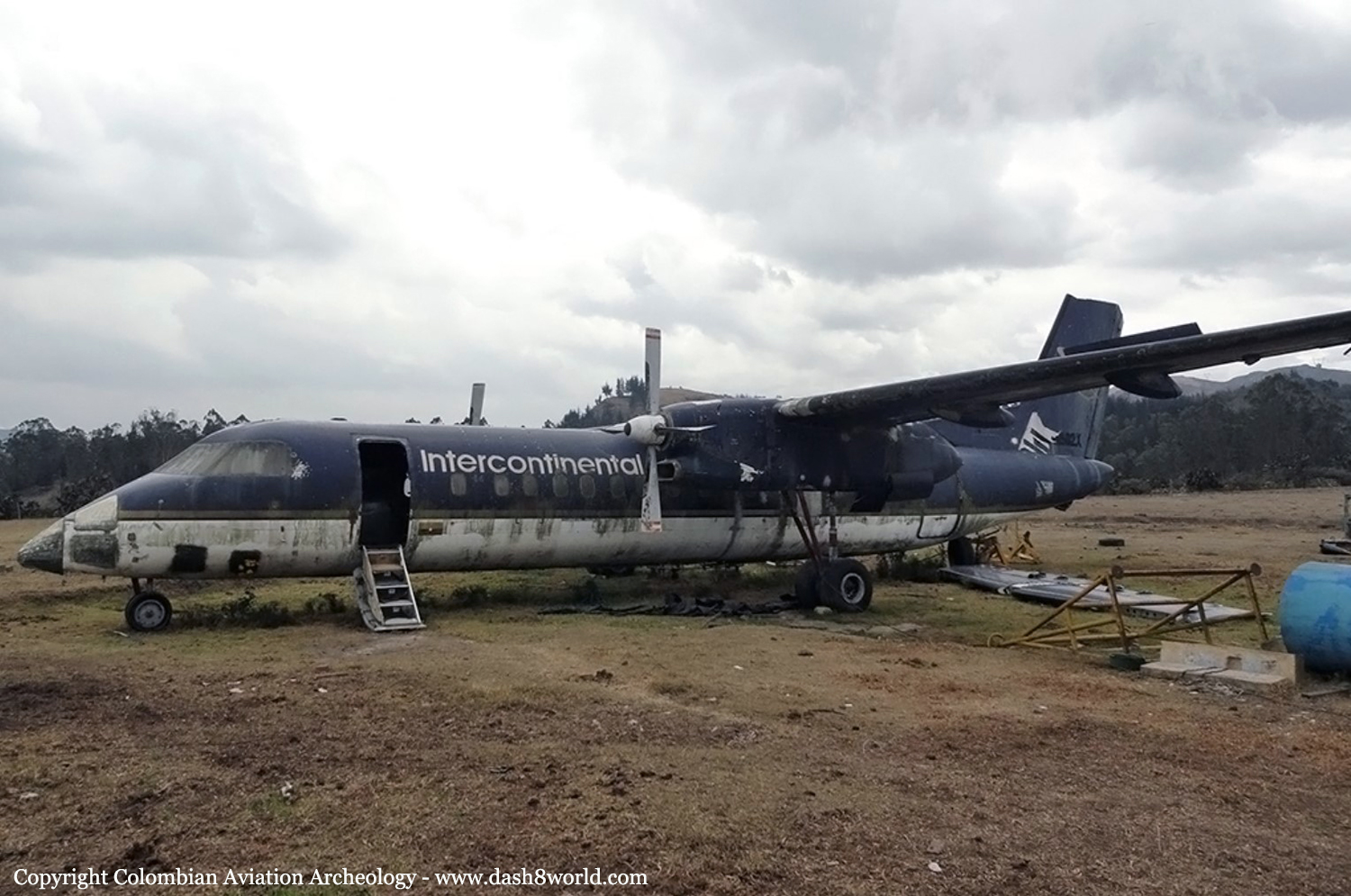
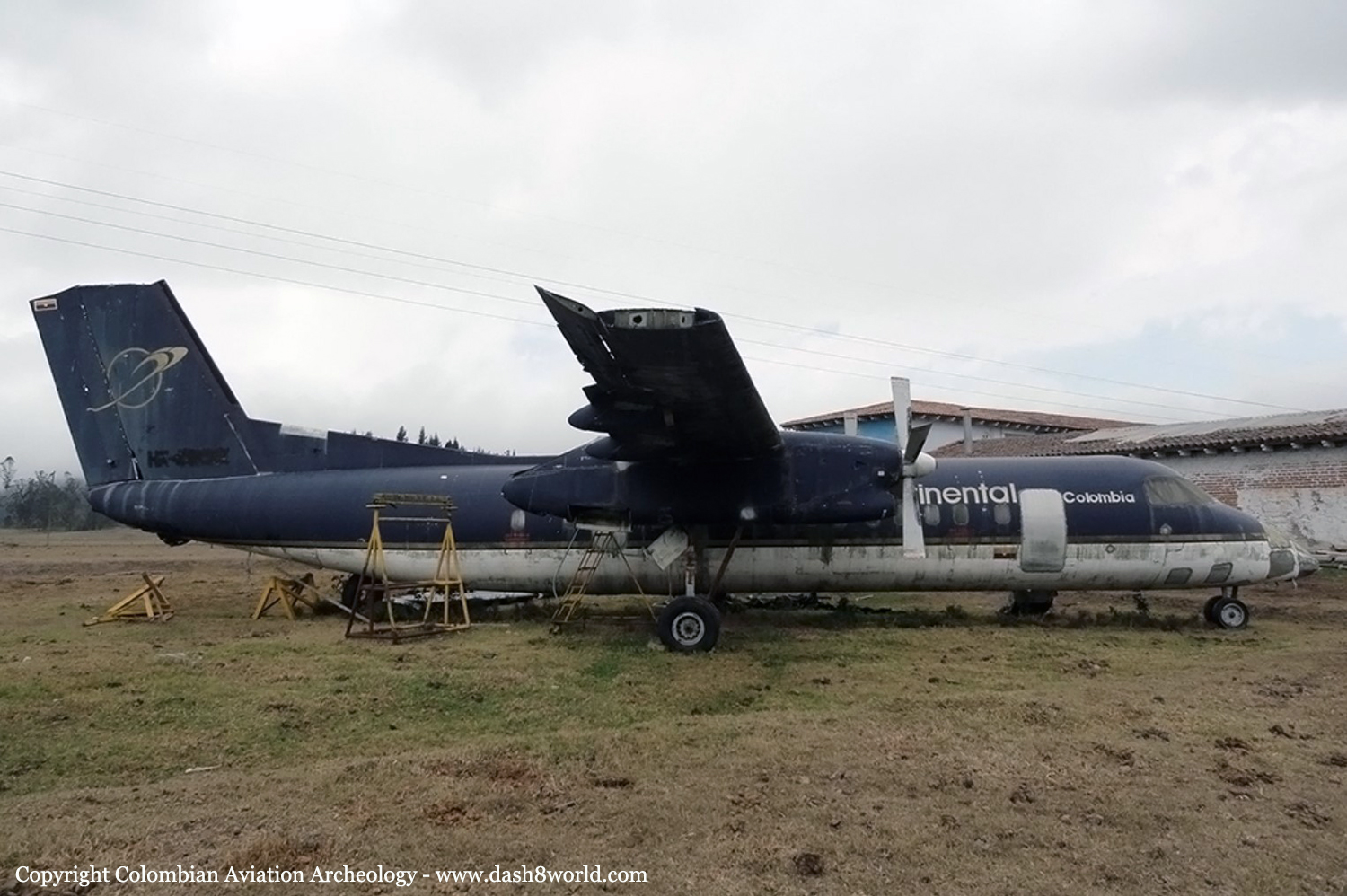
Crash of a De Havilland Dash-8-301 in Pereira

Date & Time: Sep 14, 1997 at 2000 LT
Operator:
Registration:
HK-4062X
Survivors:
Yes
Schedule:
San Andrés – Bogotá – Pereira
MSN:
196
YOM:
1990
Country:
Crew on board:
5
Crew fatalities:
Pax on board:
39
Pax fatalities:
Other fatalities:
Total fatalities:
0
Circumstances:
Following a normal approach and landing, the crew started the braking procedure. After a course of about 700 metres, the undercarriage slowly retracted. The aircraft came to rest on its belly and was damaged beyond repair. All 44 occupants escaped uninjured.

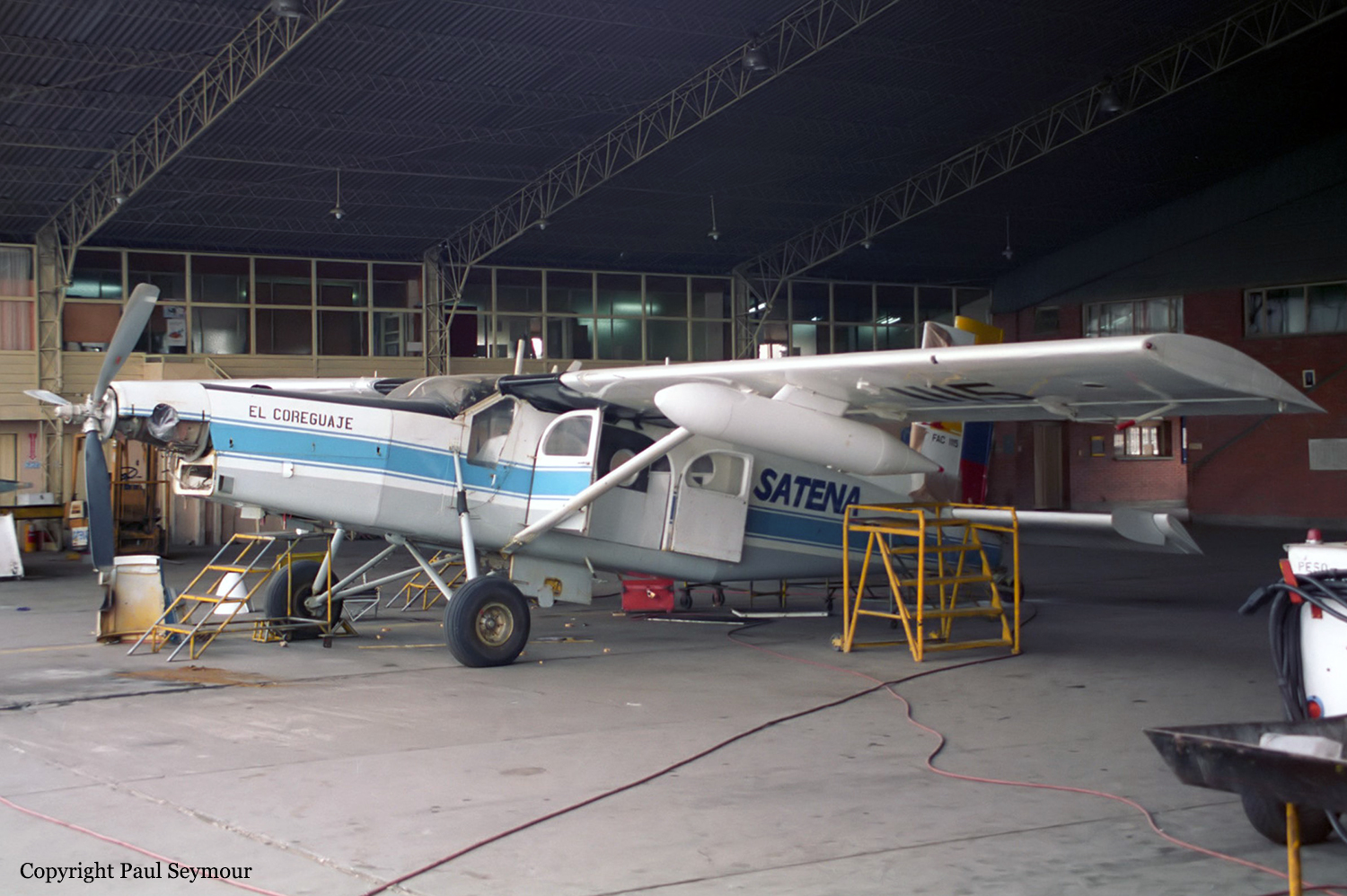
Crash of a Pilatus PC-6/B2-H2 Turbo Porter in Puerto Inírida: 9 killed

Date & Time: Aug 29, 1997 at 1900 LT
Operator:
Registration:
FAC-1115
Flight Type:
Survivors:
No
Schedule:
San Felipe – Puerto Inírida
MSN:
820
YOM:
1983
Country:
Crew on board:
2
Crew fatalities:
Pax on board:
7
Pax fatalities:
Other fatalities:
Total fatalities:
9
Aircraft flight hours:
3300
Circumstances:
On approach to Puerto Inírida Airport, the single engine airplane collided with a private Cessna 206 registered OB-1450 and carrying two passengers and one pilot. Both aircraft dove into the ground and crashed about 5 km from the airport. Both aircraft were destroyed and all 12 occupants were killed.

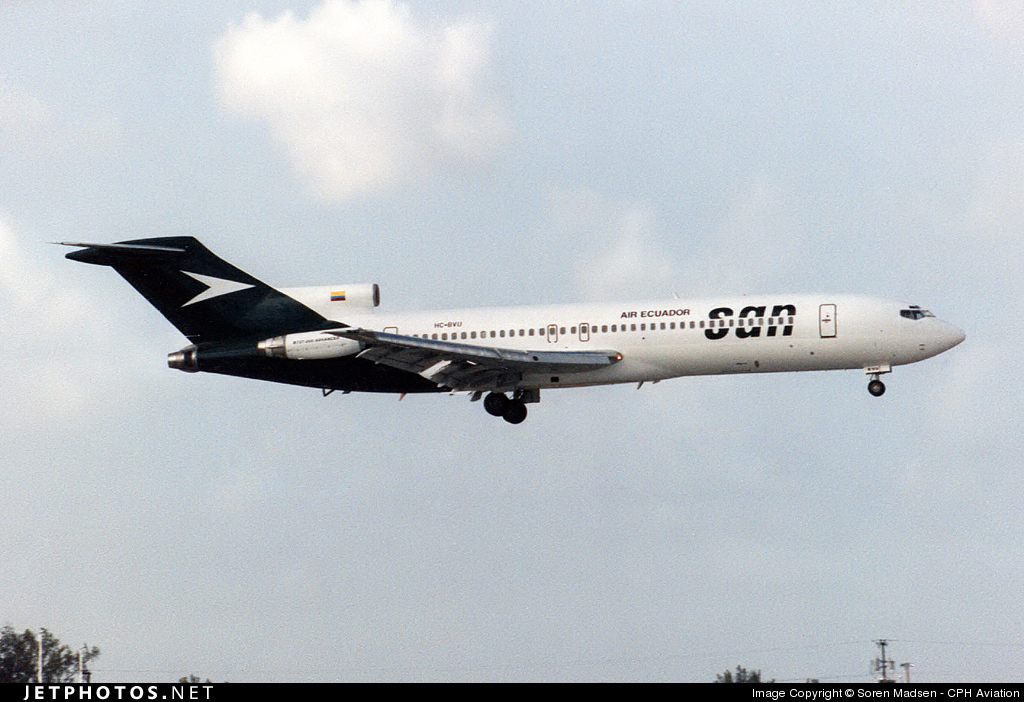
Crash of a Boeing 727-251A in San Cristóbal

Date & Time: Aug 22, 1997 at 1438 LT
Type of aircraft:
Operator:
Registration:
HC-BVU
Survivors:
Yes
Schedule:
Guayaquil – San Cristóbal
MSN:
21322
YOM:
1977
Flight number:
EH800
Country:
Crew on board:
9
Crew fatalities:
Pax on board:
47
Pax fatalities:
Other fatalities:
Total fatalities:
0
Circumstances:
En route from Guayaquil to San Cristóbal, the crew encountered technical problems with the antiskid system. It was decided to perform a low approach to runway 16 to land on the first metres of the runway. On short final, the aircraft was too low, struck approach lights and landed 36 metres short of runway 16 threshold. On impact, the undercarriage were torn off and the aircraft skidded for about 700 metres before coming to rest. All 56 occupants escaped uninjured while the aircraft was damaged beyond repair.

Crash of a Cessna 550 Citation II in Cocal do Sul: 2 killed

Date & Time: Aug 15, 1997 at 1925 LT
Type of aircraft:
Operator:
Registration:
PT-LML
Flight Phase:
Flight Type:
Survivors:
No
Schedule:
Porto Alegre - Rio de Janeiro
MSN:
550-0013
YOM:
1978
Country:
Crew on board:
2
Crew fatalities:
Pax on board:
0
Pax fatalities:
Other fatalities:
Total fatalities:
2
Circumstances:
On a flight from Porto Alegre to Rio de Janeiro, while cruising at an altitude of 33,000 feet, the aircraft entered an uncontrolled descent. The crew did not send any distress call. The aircraft descended with a rate of 20,000 feet per minute. At an altitude of 1,500 feet, it disintegrated in the air and eventually crashed. Both pilots were killed.
Probable cause:
It is believed that the crew failed to prepare the flight according to published procedures, did not follow the pre-departure checklist and failed to verify the position of the pressurization mode selector prior to take off. At an altitude of 33,000 feet, after suffering hypoxia, both pilot lost consciousness and situational awareness. Maybe one of them fell and the control column, causing the aircraft to enter an uncontrolled descent.
Final Report: