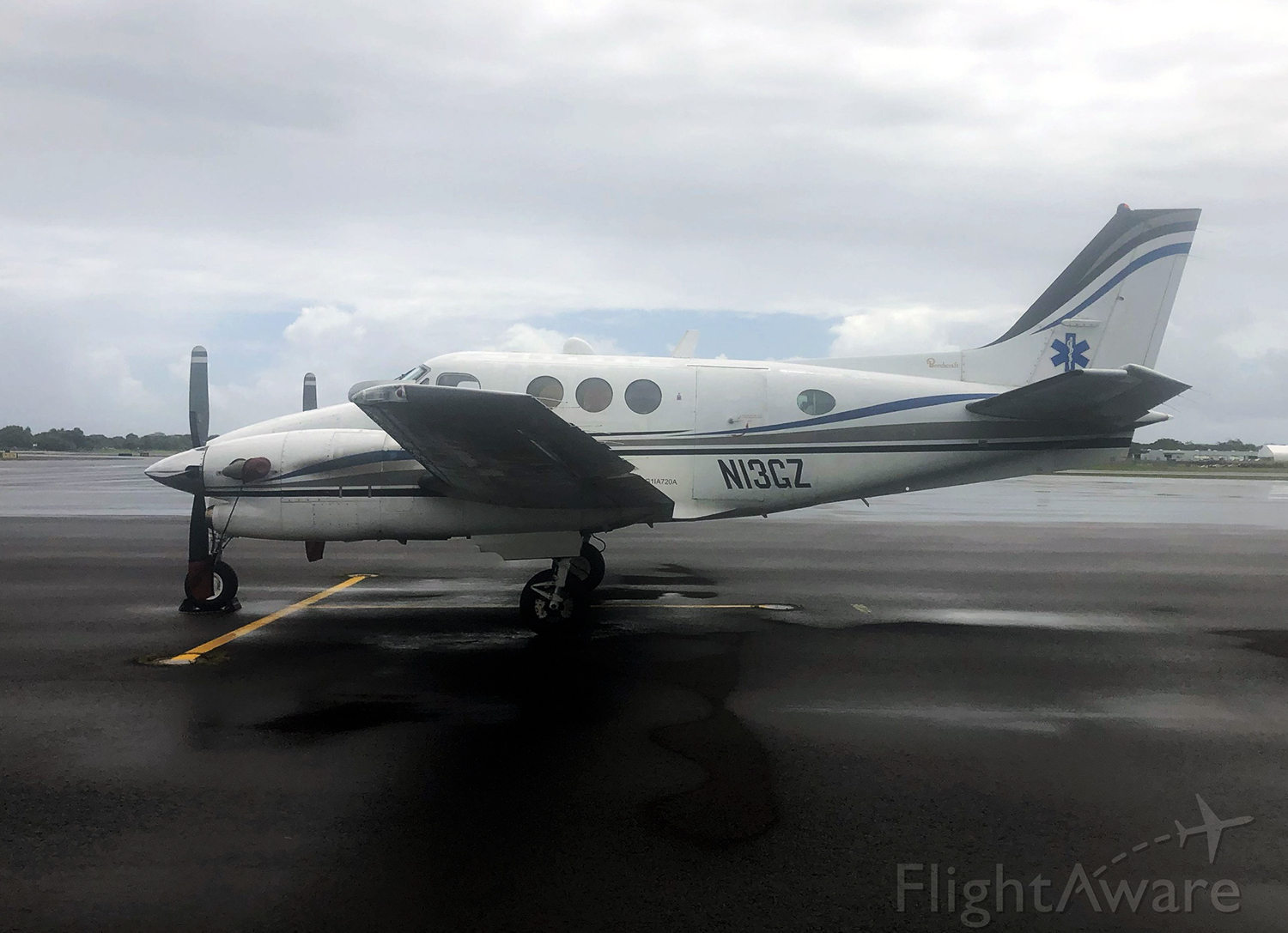
Crash of a Beechcraft C90A King Air off Hana: 3 killed

Date & Time: Dec 15, 2022 at 2114 LT
Type of aircraft:
Operator:
Registration:
N13GZ
Flight Phase:
Flight Type:
Survivors:
No
Schedule:
Kahului – Waimea
MSN:
LJ-1590
YOM:
2000
Location:
Crew on board:
1
Crew fatalities:
Pax on board:
2
Pax fatalities:
Other fatalities:
Total fatalities:
3
Captain / Total flying hours:
7668
Captain / Total hours on type:
615.00
Aircraft flight hours:
10130
Circumstances:
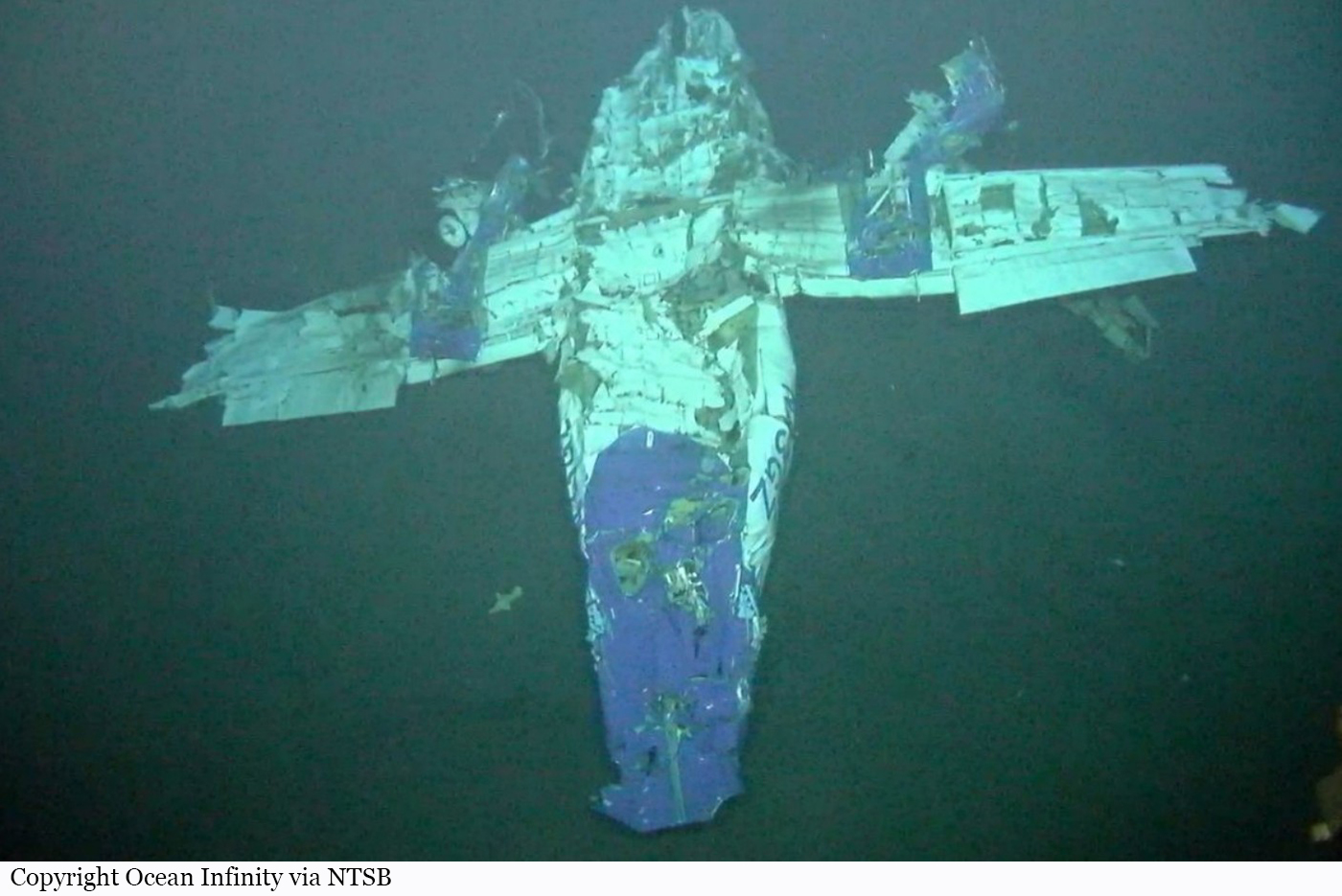
The medical transport flight was en route to pick up a patient on a neighboring island on an instrument flight rules (IFR) flight plan in dark night conditions over the ocean. About 13 minutes after departure, at 13,000 ft mean sea level (msl), the airplane’s vertical gyro failed, which subsequently failed the pilot’s Electric Attitude Director Indicator (EADI), which also caused the autopilot to disconnect. The failure of the EADI and autopilot disconnect required the pilot to manually fly the airplane using the copilot’s attitude gyro for his horizon information (bank angle and pitch attitude) for the duration of the flight. The pilot did not declare an emergency, nor did he inform air traffic control (ATC) that his electric attitude indicator had failed and that his autopilot had disengaged. After the instrumentation failure and autopilot disconnect, the airplane entered a series of right banks before being brought back to level, followed by a left turn, and then subsequent right banks. ATC asked the pilot to change course and the pilot agreed. The copilot attitude indicator indicated that the airplane entered a descending, steep right bank turn. Over the next 5 minutes, ATC issued varying instructions to the pilot. During this time, the airplane entered several right- and left-hand banks and rolls and descended 1,000 ft per minute (fpm), which increased to -3,500 fpm as the airplane’s airspeed increased. About 7 minutes after the instrumentation failure, the airplane was in a 65° bank angle when ATC asked the pilot to verify his heading. As the pilot responded, the airplane bank angle increased to 90° and the airspeed exceeded 260 knots. The bank angle and airspeed continued to increase; a loud metallic bang was recorded that was consistent with an in-flight separation of the empennage from the fuselage before impacting with the water. After an extensive underwater search, the main wreckage was located on the seabed at a depth of about 6,420 ft. The wreckage was recovered and transported to a facility for examination.
Probable cause:
Guardian Flight’s inadequate pilot training and performance tracking, which failed to identify and correct the pilot’s consistent lack of skill, and which resulted in the pilot’s inability to maintain his position inflight using secondary instruments to navigate when the airplane’s electronic attitude direction indicator failed, leading to his spatial disorientation and subsequent loss of control. Contributing to the accident was the lack of a visible horizon during dark night overwater conditions and the pilot’s failure to declare an emergency with air traffic control.
Final Report:
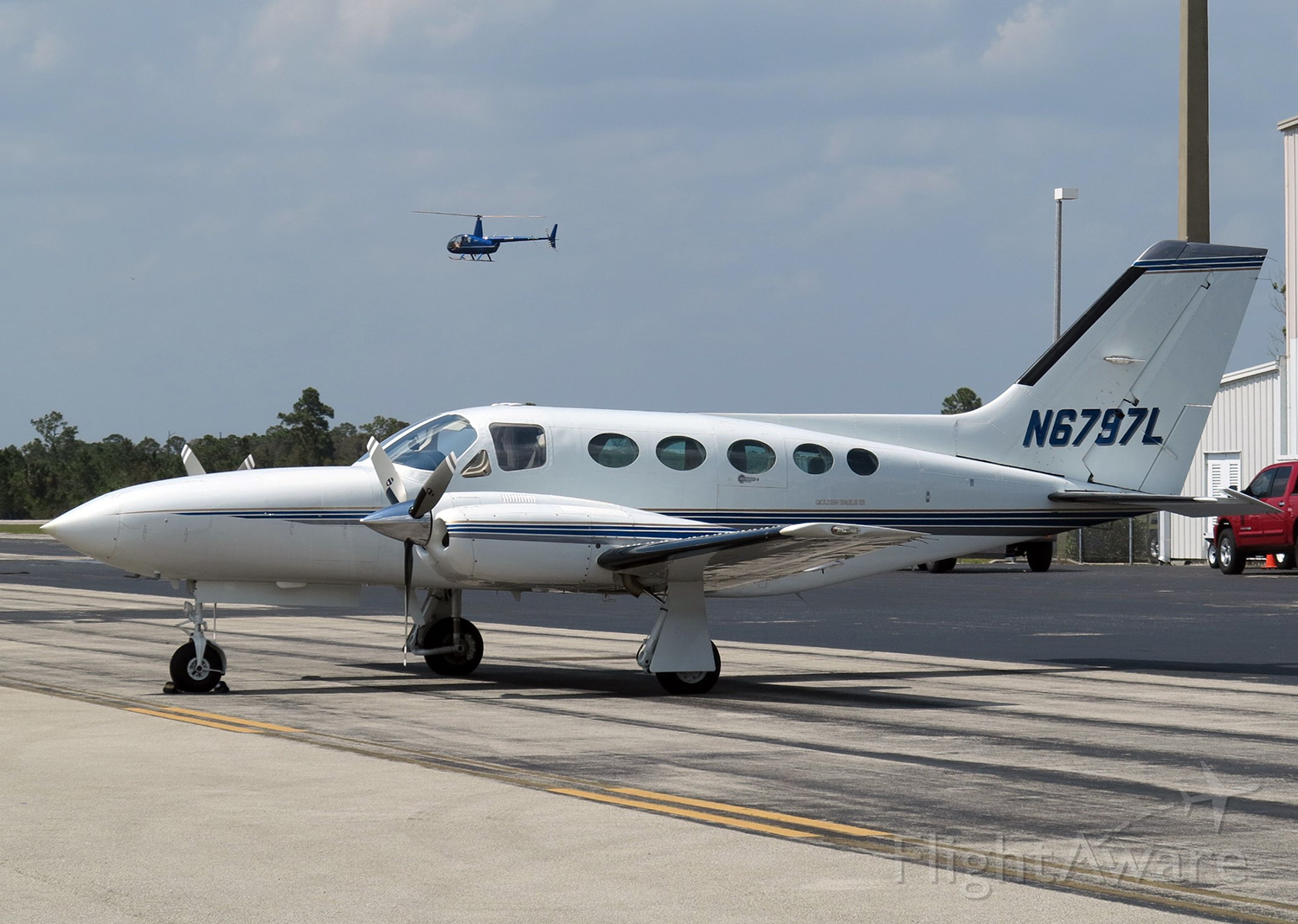
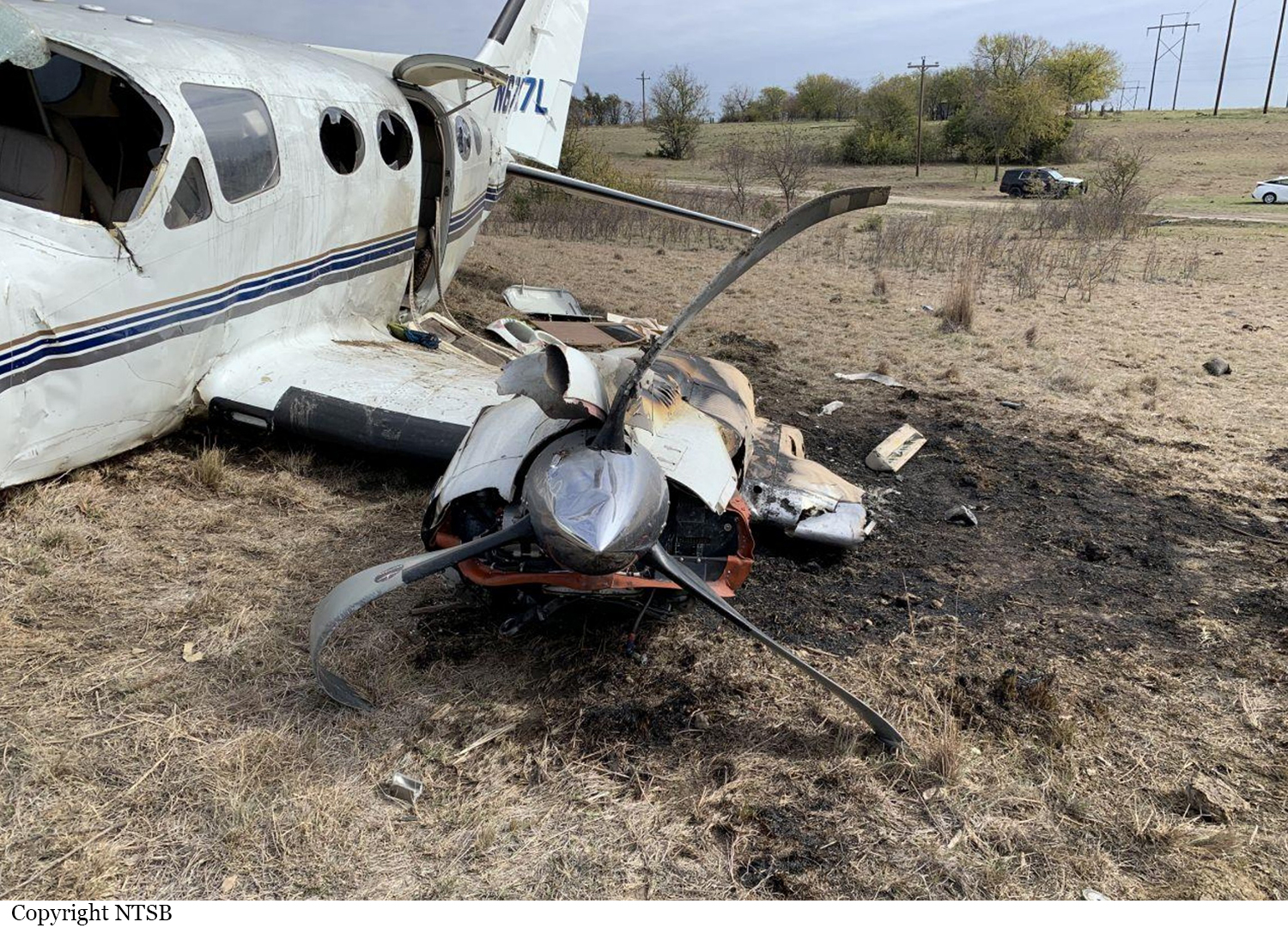
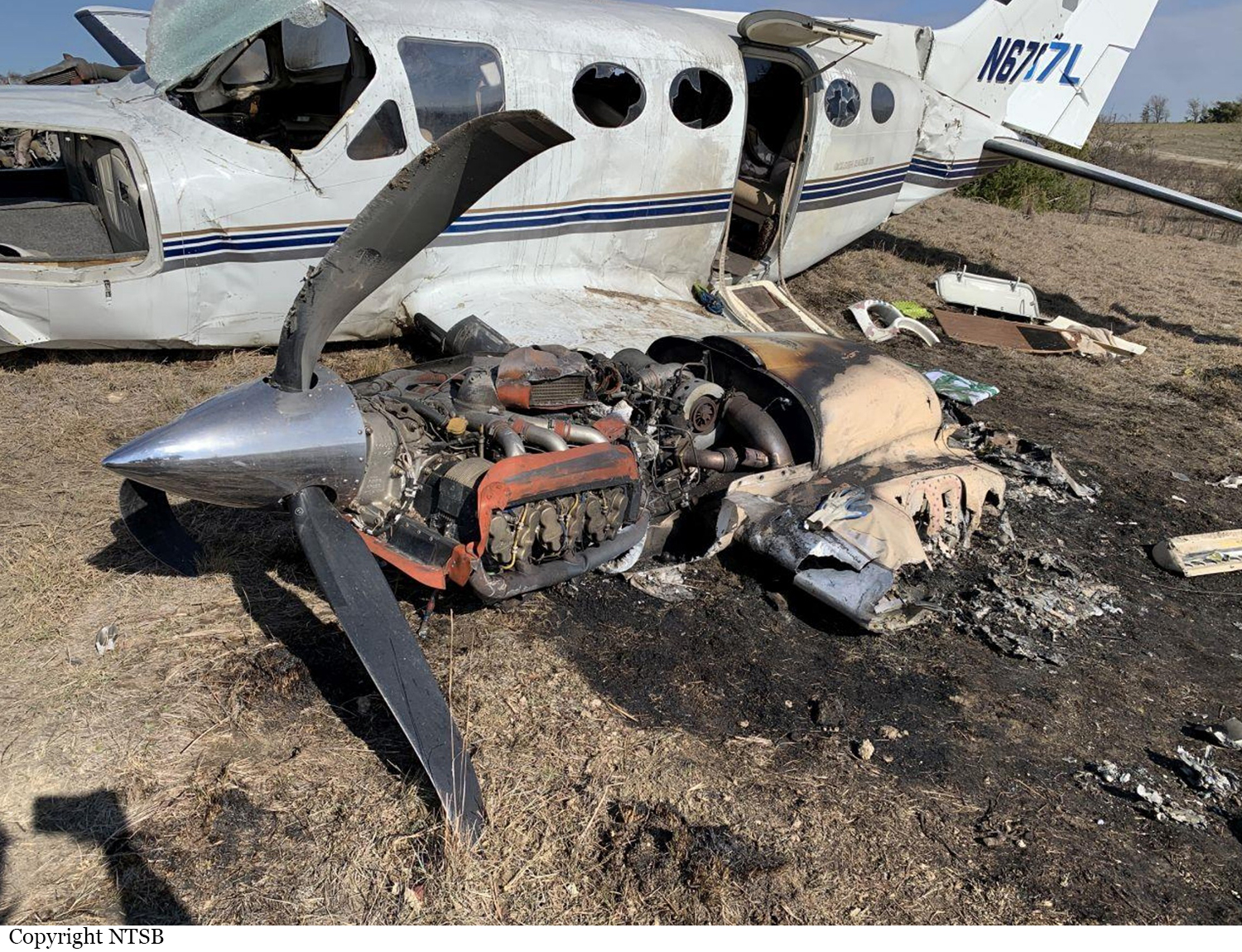
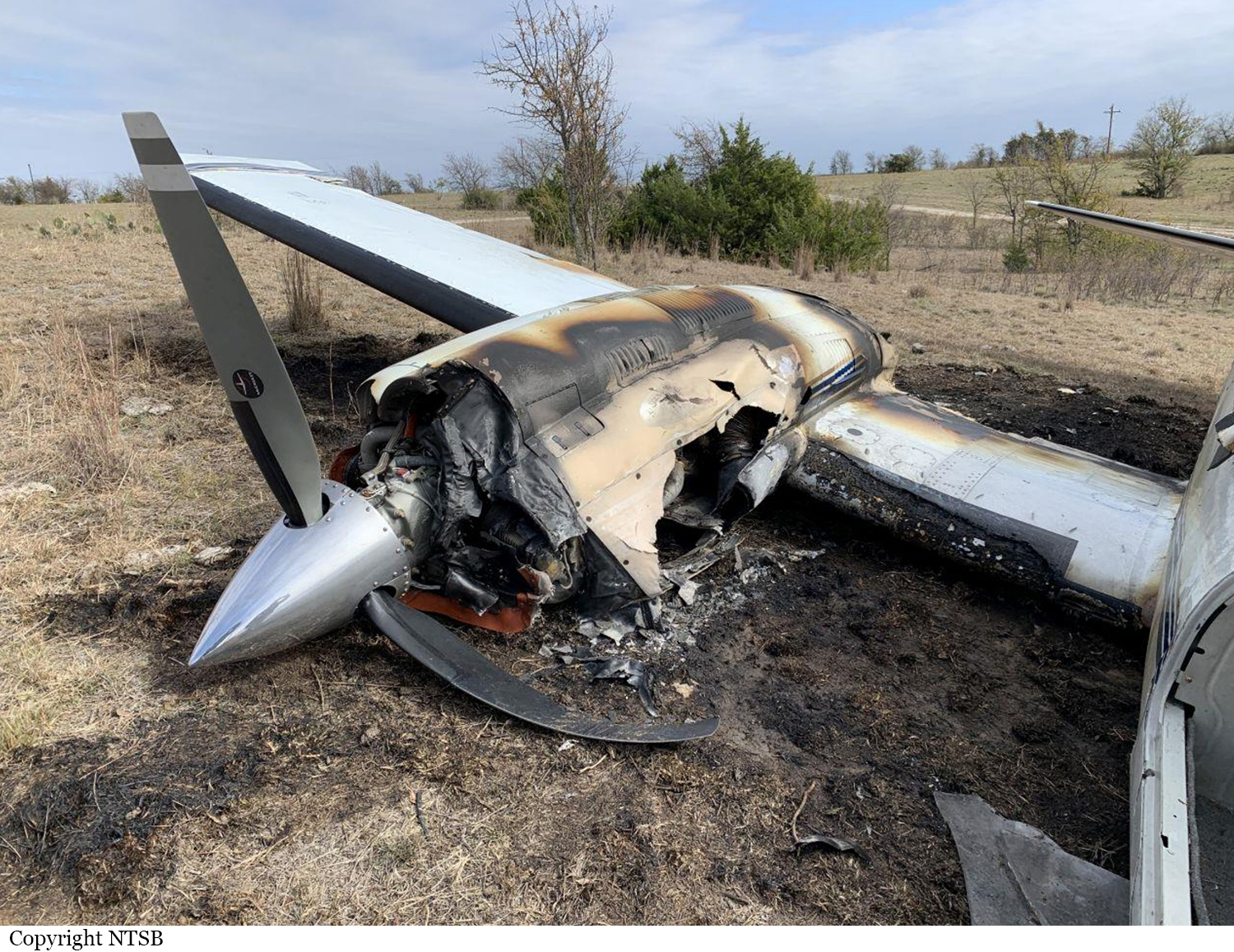
Crash of a Cessna 421C Golden Eagle III near Decatur: 1 killed

Date & Time: Nov 18, 2022 at 1510 LT
Registration:
N6797L
Flight Phase:
Flight Type:
Survivors:
No
Schedule:
Denton – Bridgeport
MSN:
421C-1050
YOM:
1981
Location:
Crew on board:
1
Crew fatalities:
Pax on board:
0
Pax fatalities:
Other fatalities:
Total fatalities:
1
Captain / Total flying hours:
6891
Aircraft flight hours:
4805
Circumstances:
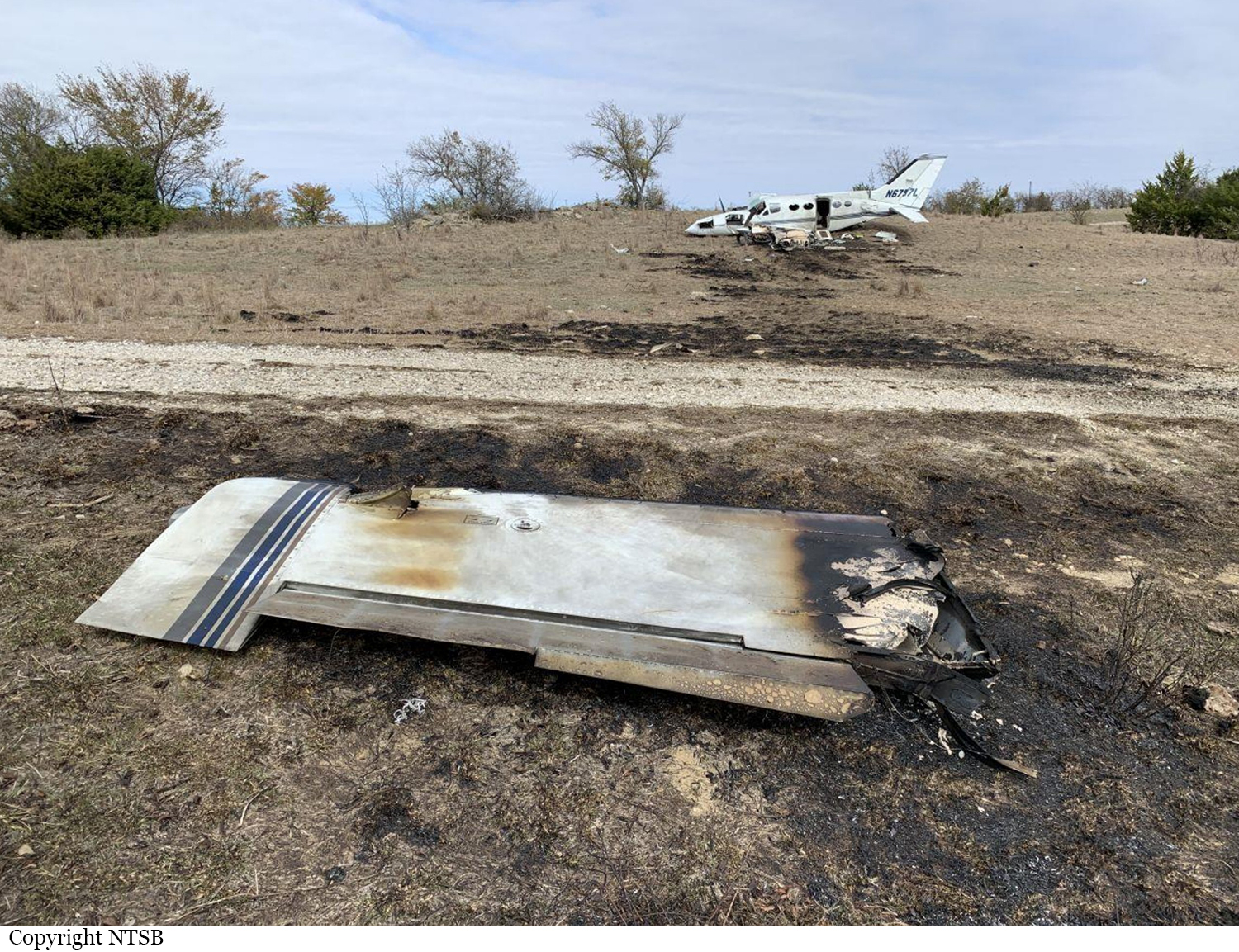
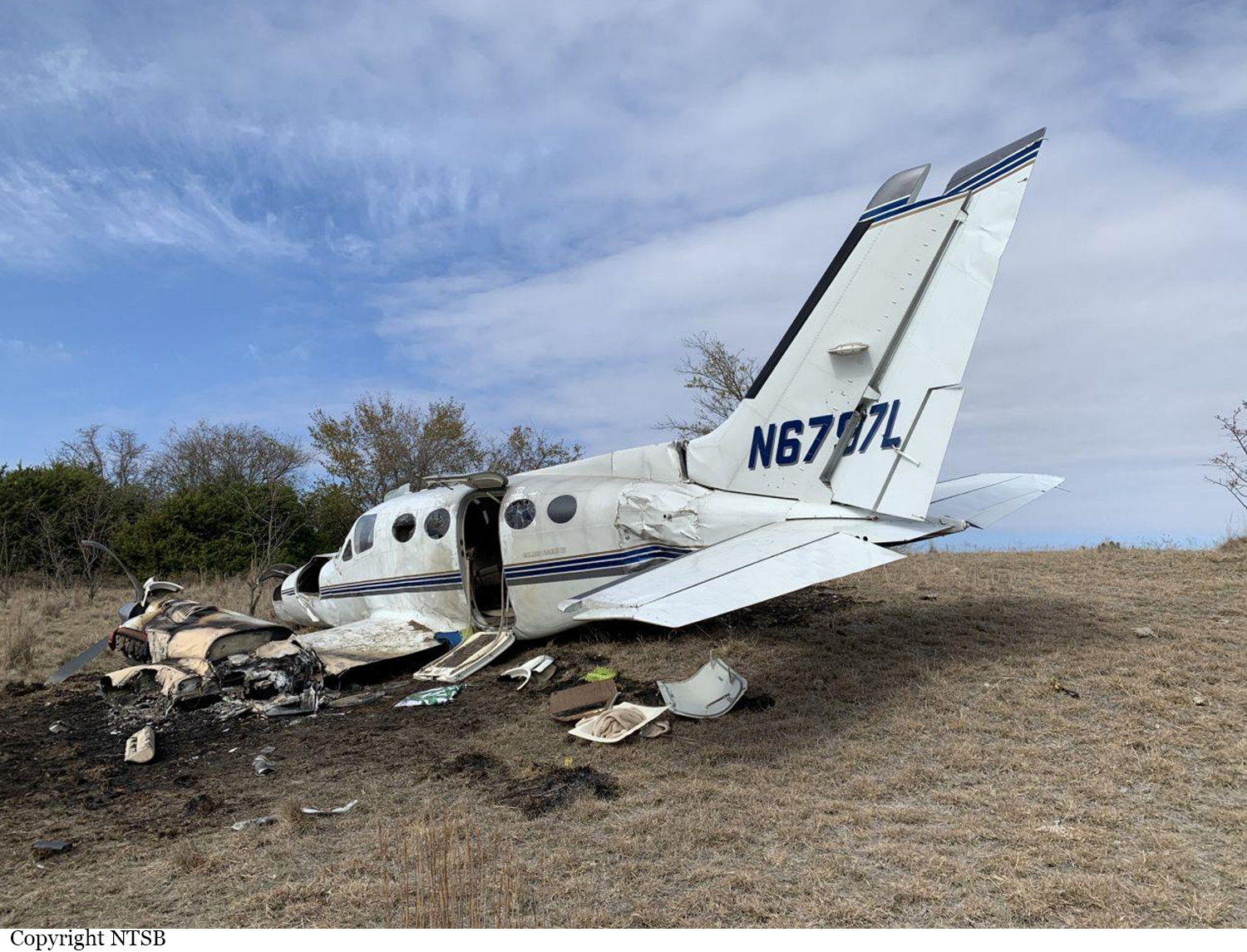
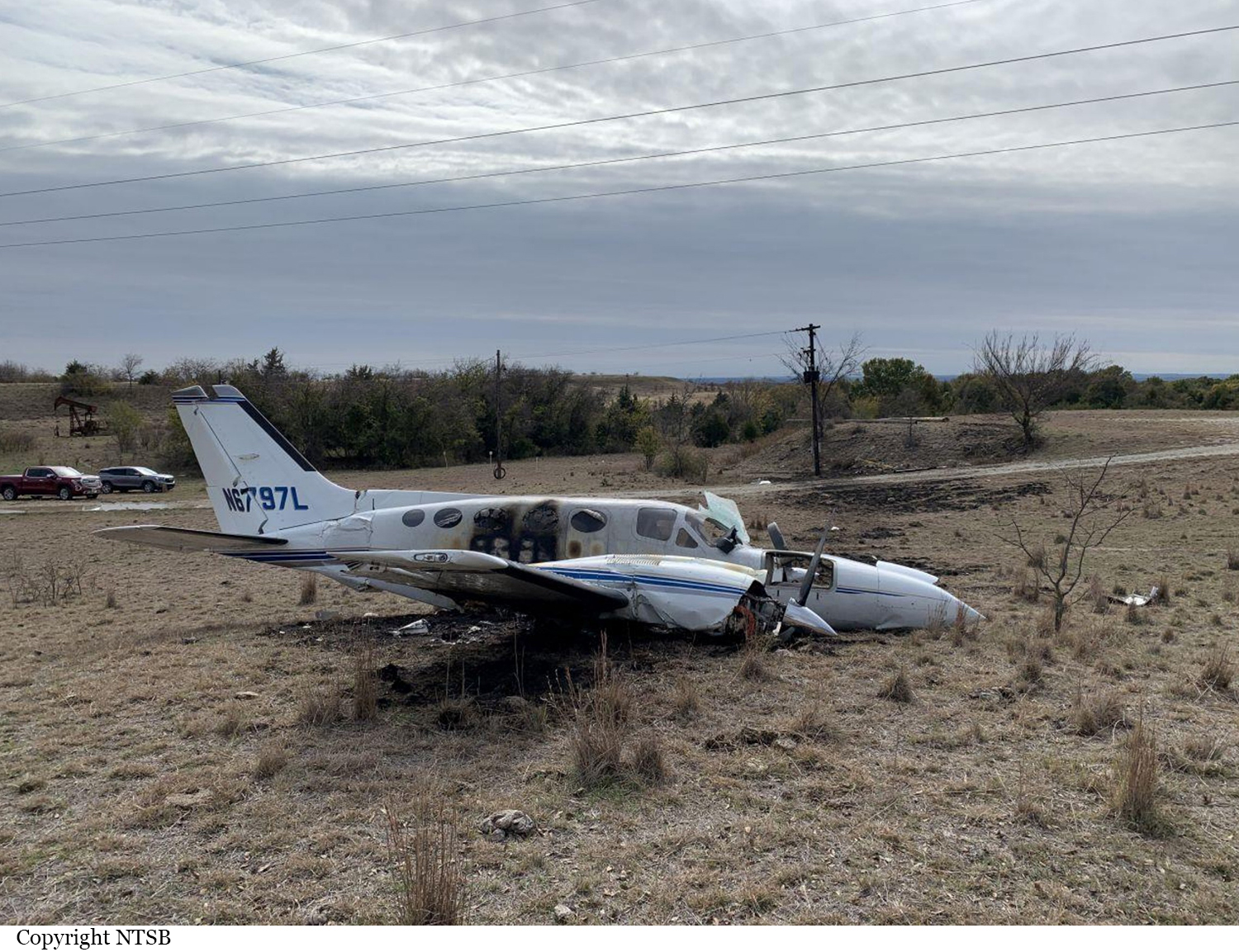
After takeoff, the pilot proceeded about 30 miles and climbed to an altitude of about 2,200 ft mean sea level (msl). About 8 minutes after takeoff, the airplane entered a descending left turn that continued until impact. A witness observed a twin-engine airplane at a low altitude and in a descent. After the airplane descended below the tree line, a fireball emerged followed by some smoke; however, the smoke was thin and dissipated quickly. A second witness observed the airplane at a low altitude and in a slow, descending turn. The flight path was steady and the wings “never dipped.” Shortly after the airplane descended out of sight, he observed an explosion. Both engines were on fire when he arrived at the accident site, and there was a fuel leak from the right engine toward the cockpit area. He used a fire extinguisher to keep the fire off the fuselage until first responders arrived. The airplane impacted a utility pole and terrain. Burned vegetation was present over portions of the accident site. The left wing was separated outboard of the engine and was located near the utility pole. A postaccident examination revealed that the left main fuel tank was partially consumed by the postimpact fire; therefore, the amount of fuel in the tank could not be determined. The left engine nacelle was discolored consistent with the postimpact fire. The left nacelle fuel tank appeared intact, and no fuel was visible in the left nacelle fuel tank. However, the amount of fuel in the left nacelle fuel tank at the time of impact could not be determined. The right main fuel tank appeared intact, and about 1 gallon of fuel was drained from the tank during recovery of the airplane. While the postimpact fire was consistent with fuel present onboard the airplane at the time of the accident, the lack of an extensive and sustained ground fire suggested that a limited amount of fuel was present. The left and right engine cockpit fuel selectors were both positioned to the “RIGHT MAIN” fuel tank. The left fuel selector valve, located in the engine nacelle, was in the “OFF” position at the time of the exam. The right fuel selector was in the “RIGHT” fuel tank position. A teardown examination of the left engine did not reveal any anomalies consistent with a preimpact failure or malfunction. A teardown examination of the right engine revealed damage consistent with oil starvation throughout the engine. A teardown examination of the left propeller assembly revealed indications that the blades were at or near the feather pitch stop position during the impact sequence. A teardown examination of the right propeller assembly revealed indications that the blades were on or near the low pitch stop position during the impact sequence. The fuel flow indicator displayed the total fuel remaining as 8.3 gallons when powered up on a test bench. However, the fuel quantity indications are dependent on the pilot properly configuring the device when the airplane is refueled. The fuel flow indicator does not directly provide fuel quantity information. According to the airplane flight manual, the total unusable fuel for the airplane, with one engine nacelle fuel tank installed, was 7.8 gallons. Engine performance data recovered from the onboard engine monitor revealed a reduction in right engine power to near idle power. About 1 minute later, the airplane entered a descending left turn which continued until impact. About 3 minutes after the reduction in right engine power, the left engine completely lost power. Immediately afterward, right engine power increased to near full (takeoff) power. However, about 30 seconds later the right engine completely lost power. The airplane impacted the pole and the terrain a few seconds later. The pilot likely detected an impending failure of the right engine and intentionally reduced power. However, shortly afterward, the left engine lost power due to fuel starvation. At that time, the pilot likely set the left engine to crossfeed from the right main fuel tank to restore power. Unsuccessful, the pilot then decided to feather the left propeller and attempted to use any available power from the right engine, but the right engine immediately lost power as well. Whether the right engine lost power at that moment due to fuel starvation or oil starvation could not be determined. The pilot was obese and had hypertension, high cholesterol, and an enlarged heart with left ventricular thickening. While these cardiovascular conditions placed him at an increased risk for a sudden incapacitating cardiac event, the autopsy did not show any acute or remote myocardial infarction, and the flight path suggests intentional actions until the crash. Thus, the pilot’s cardiovascular disease was not a factor in this accident. Toxicology testing detected the muscle relaxant cyclobenzaprine and its active metabolite norcyclobenzaprine in the pilot’s femoral blood at low therapeutic levels. The sedative-hypnotic medication zolpidem was detected at subtherapeutic levels. While these substances are associated with side effects such as drowsiness and dizziness, the operational findings of this accident do not suggest performance issues related to fatigue. Thus, it is unlikely that the effects from the pilot’s use of cyclobenzaprine and zolpidem were factors in this accident.
Probable cause:
A loss of power on the left engine due to fuel starvation and the subsequent loss of power on the right engine for undetermined reasons.
Final Report:

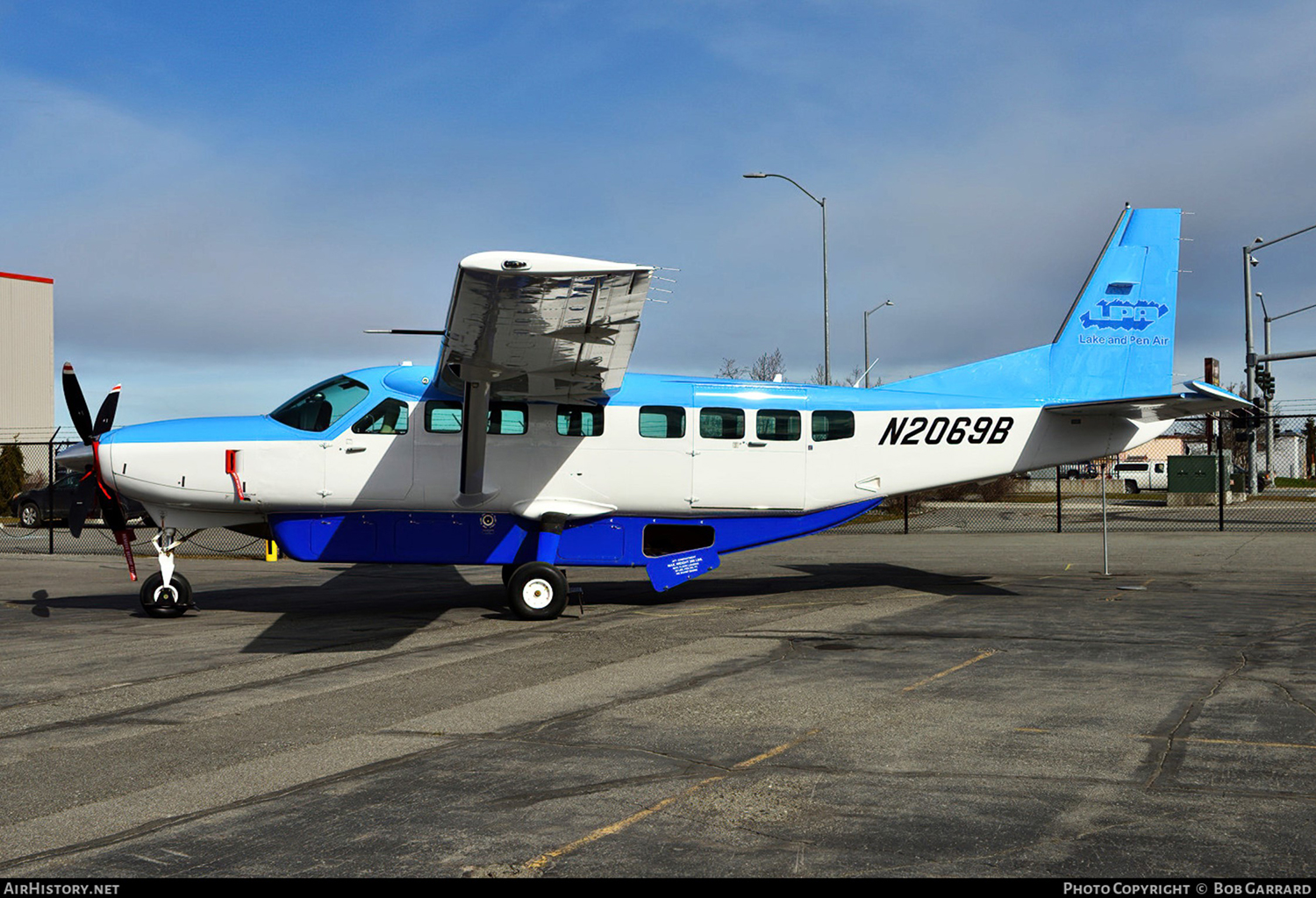
Crash of a Cessna 208B Grand Caravan EX in Snohomish: 4 killed

Date & Time: Nov 18, 2022 at 1019 LT
Type of aircraft:
Registration:
N2069B
Flight Phase:
Flight Type:
Survivors:
No
Schedule:
Renton - Renton
MSN:
208B-5657
YOM:
2021
Crew on board:
4
Crew fatalities:
Pax on board:
0
Pax fatalities:
Other fatalities:
Total fatalities:
4
Circumstances:
The pilot and three other crew members were performing flight testing for a new Supplemental Type Certificate (STC) for the single-engine turboprop-powered airplane. After departure, the pilot performed several maneuvers from the test card, then configured the airplane with the flaps extended for an intentional accelerated stall in a 30° left bank with the engine torque set to 930 ft-lb. Analysis of ADS-B data combined with a simulation matching the recorded trajectory of the accident maneuver revealed that, after the stall, the airplane rapidly rolled to the left, reaching a roll angle of 120° while the pitch angle decreased to 60° nose down. The airspeed rapidly increased, exceeding both the maximum flaps-extended speed (Vfe) and the airplane’s maximum operating speed (Vmo). Recorded engine data indicated that, after the stall, the engine torque increased. ADS-B data was lost at an altitude about 7,000 ft above ground level; the final track data indicated an approximate 8,700 ft/min rate of descent. Witnesses observed the airplane break up in flight and subsequently spiral to the ground. The wreckage was found in a rural field distributed over a distance of about 1,800 ft. Analysis of the aerodynamic loads in an overspeed condition showed that the wing design stress limit loads would be exceeded at high speeds with full flaps. The simulation of the stall maneuver indicated that reducing engine power to idle after the nose dropped could have reduced the rate at which the airspeed and associated aerodynamic loads increased, and would have likely given the pilot more time to recover. The airplane was equipped with an Electronic Stability and Protection (ESP) system, which was designed to deter attitude and airspeed exceedances during hand-flying and maintain stable flight by applying an opposite force to the direction of predetermined travel. It was designed to provide a light force that can be overcome by the pilot. To deactivate the ESP, the pilot needed to navigate to a specific page in the primary function display (PFD). Although the accident pilot was an experienced test pilot and qualified to operate the airplane, his experience with the accident airplane’s avionics system could not be determined. Videos of his previous flights in the airplane suggested that he was unfamiliar with the ESP system, as he did not deactivate it before the flight nor discuss the forces it was applying during the flight. Onboard video recording from a test flight the day before the accident indicated that, while performing a turning stall at idle power and 30° of left bank with the wing flaps extended, the airplane rapidly entered a left roll to a maximum of 83° before the pilot recovered to a wingslevel attitude. After recovery, the pilot pitched the airplane’s nose down about 25° in order to “get some airspeed back,” during which the ESP activated the autopilot to effect recovery to a level attitude. The airplane continued to gain airspeed, exceeding the Vmo of 175 knots and reaching 183 knots indicated airspeed, before pilot arrested the airplane’s acceleration and disconnected the autopilot. These two exceedances illustrated shortcomings in the test execution. First, although the 83° roll exceeded the allowable roll limit during this maneuver, the crew failed to identify this exceedance even though they discussed what angle had been reached and had a data acquisition system on board, which they could have consulted to determine the maximum roll angle reached during the maneuver. Correctly identifying the roll exceedance would have resulted in a “failed” test. In accordance with risk mitigation procedures for the test plan, the test buildup should have been stopped after roll limits were exceeded in order to determine the reasons for the exceedance and to implement corrective actions before proceeding with higher-risk conditions in the test plan. Secondly, after exceeding Vmo, the crew did not remark upon the exceedance, and even though the exceedance met the requirements for an overspeed inspection as described in the airplane’s maintenance manual, there was no indication that this inspection was completed. The accident flight simulation indicated that, during the stall immediately preceding the accident, it is likely that the ESP activated as the airplane pitched in excess of 19° nose-up. This would have required the pilot to apply more aft force on the control column in order to induce the stall. After the stall, the ESP would have activated at 45° bank, then deactivated as the airplane quickly exceeded 75°. The extent to which the control forces from the ESP, or the potential distraction due to the system’s engagement and disengagement, may have contributed to the pilot’s failure to recover from the nose-low attitude following the stall could not be determined. FAA guidance warns of the risks associated with upset events during stall maneuvers and advises against performing accelerated stalls with flaps deployed due to the increased risk of exceeding the airplane’s limitations in this configuration. Following a nose-low departure from controlled flight, reducing the power to idle immediately is crucial to avoid exceeding airspeed limitations and overstressing the airplane. The circumstances of the accident flight are consistent with the pilot’s improper recovery from a nose-low attitude following an intentional aerodynamic stall. Whether the increase in torque following the stall was the result of intentional application of power by the pilot could not be determined; however, the pilot’s failure to reduce engine power to idle following the airplane’s departure from controlled flight was contrary to published guidance as well as test flight hazard mitigation procedures. It is likely that this resulted in the airplane’s rapid exceedance of its airspeed limitations, and subsequently, a structural failure and inflight breakup.
Probable cause:
The pilot’s improper recovery following a departure from controlled flight after an intentional aerodynamic stall, which resulted in an exceedance of airspeed limitations, airframe overstress, and a subsequent inflight breakup.
Final Report:

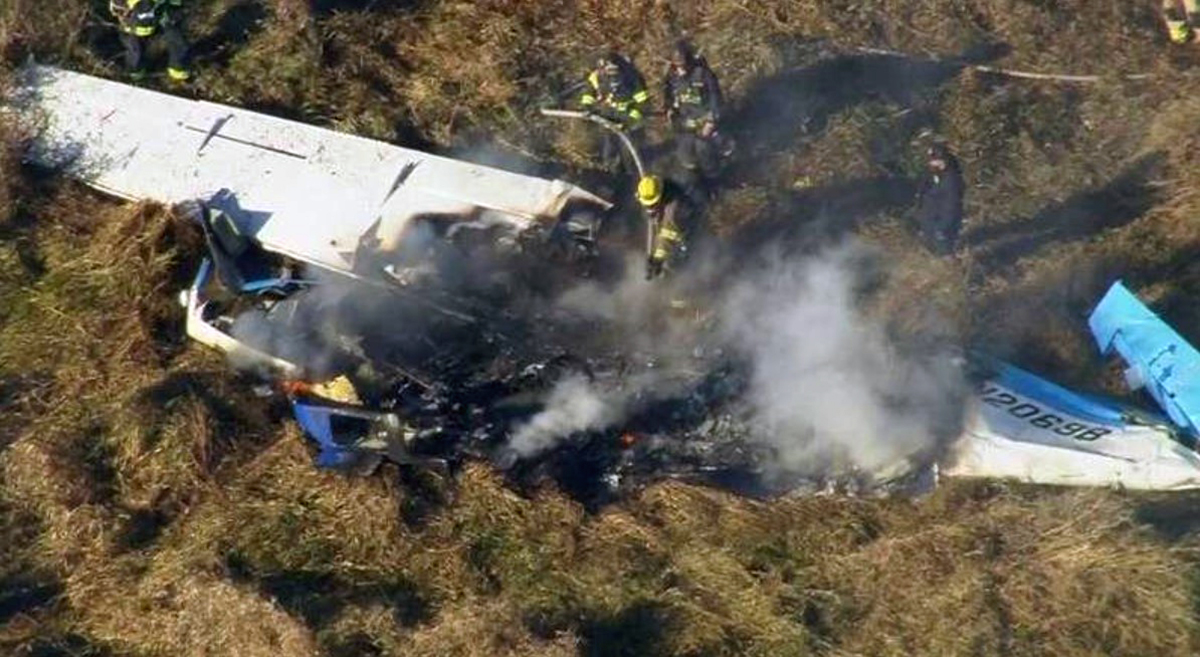
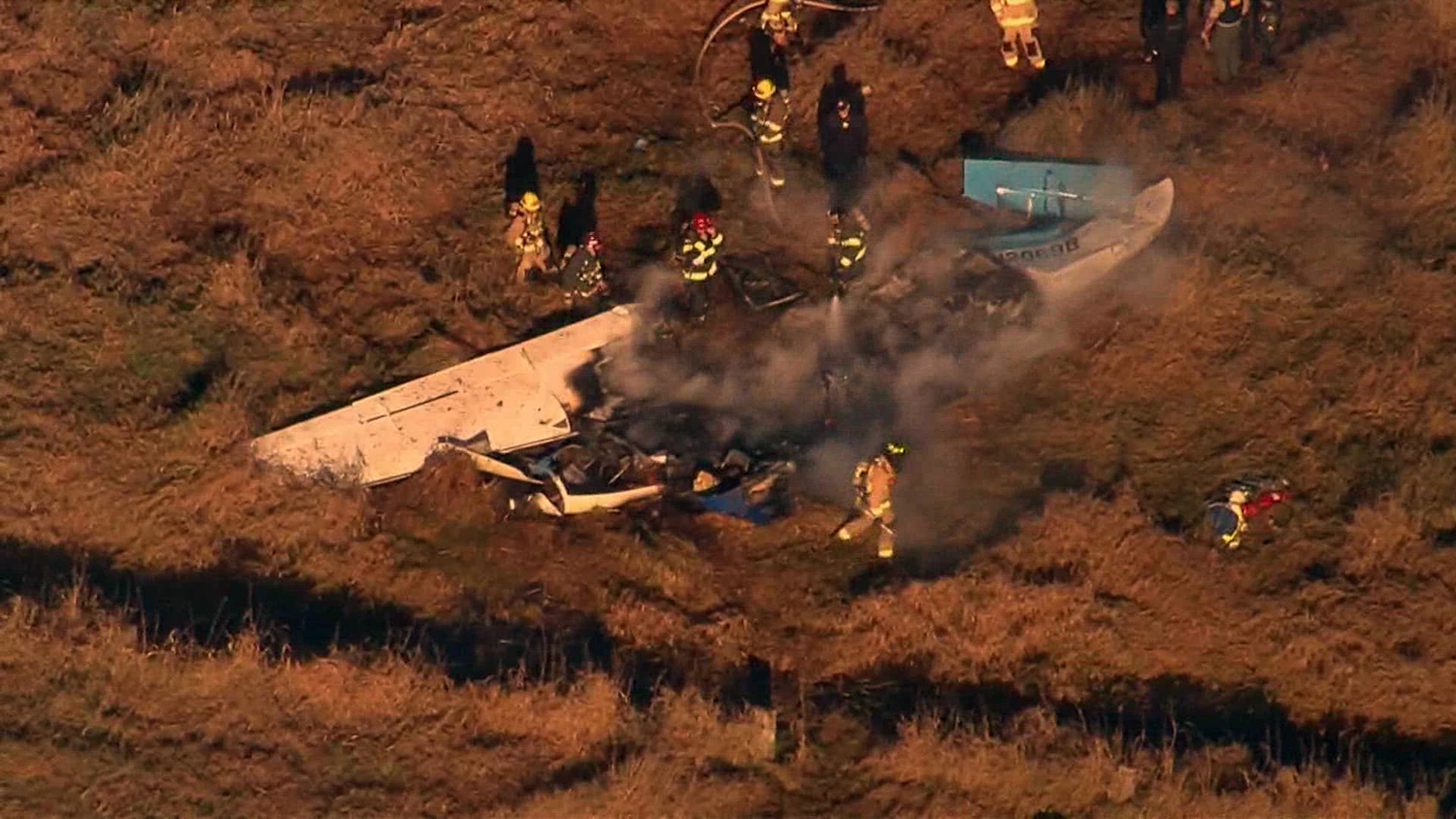
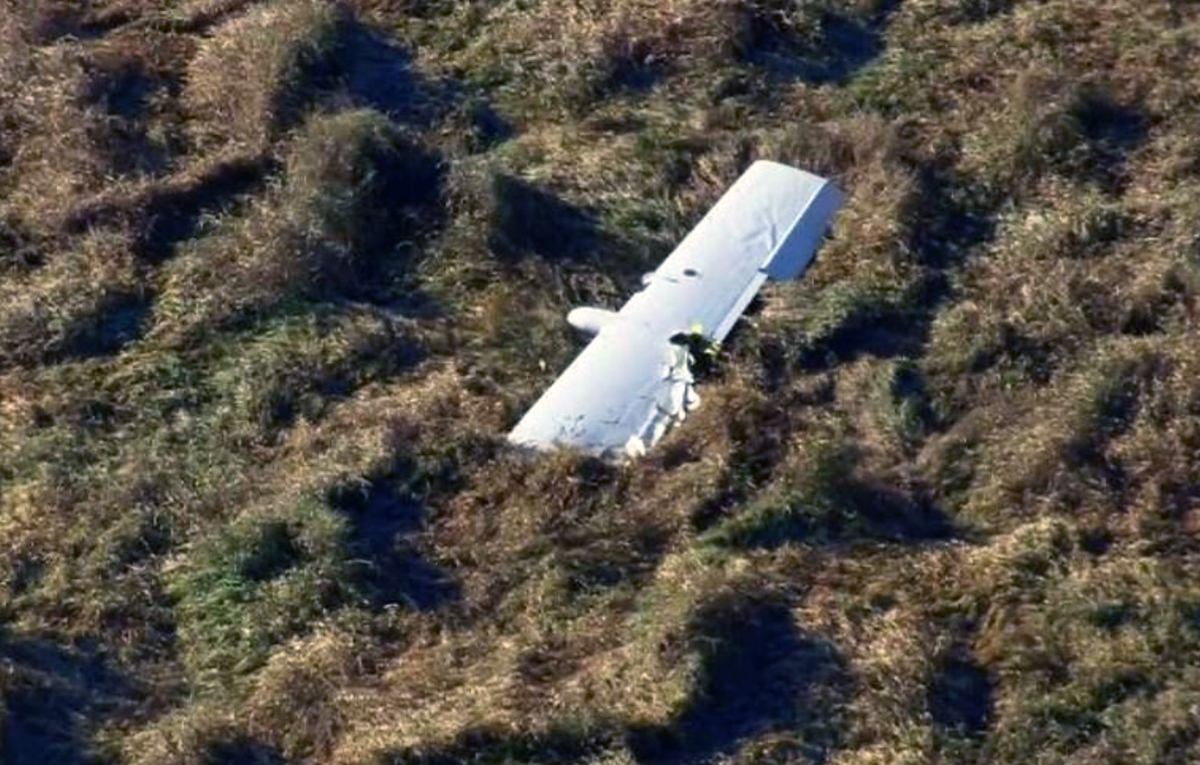
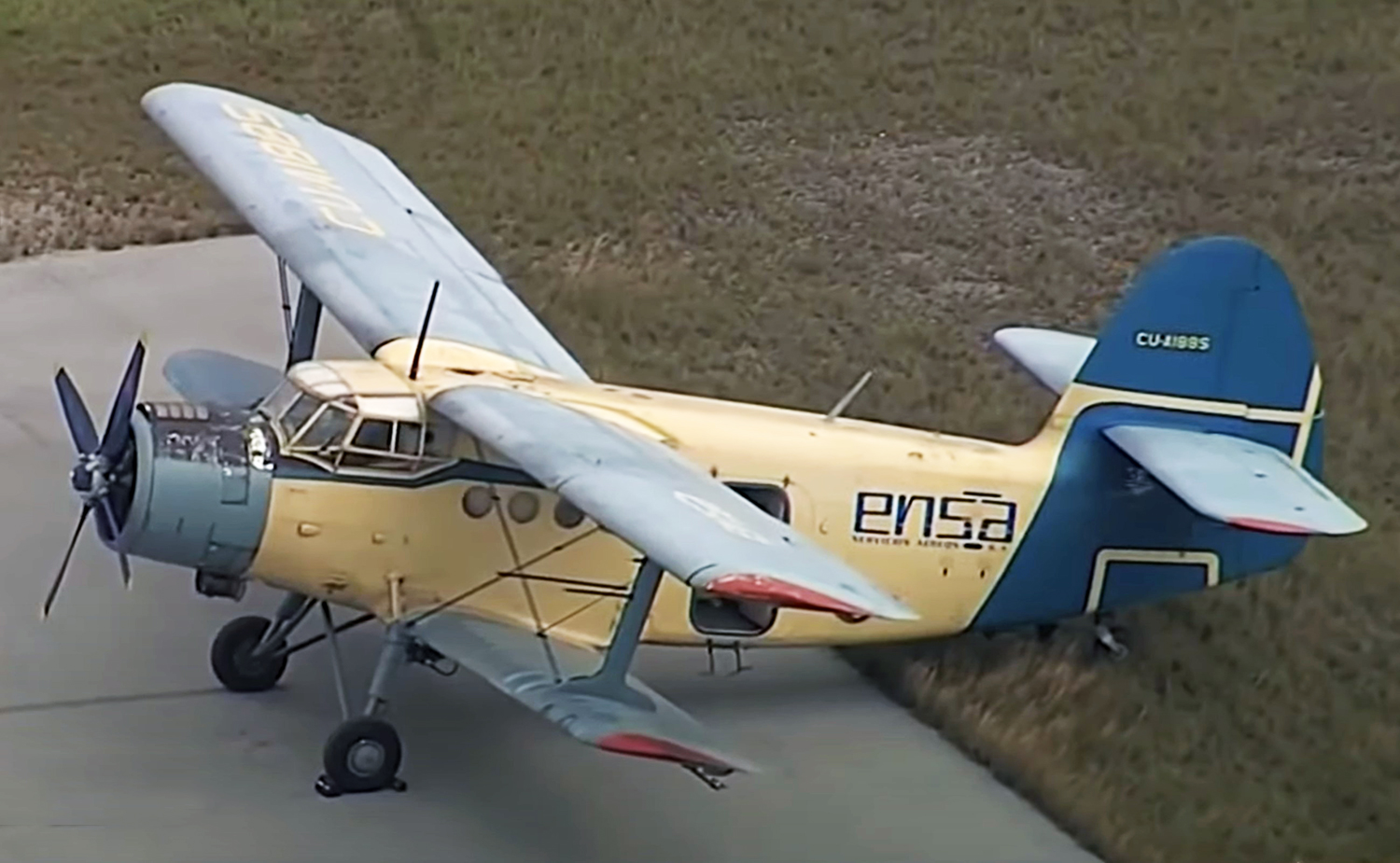
Crash of an Antonov AN-2 in the Everglades National Park

Date & Time: Nov 14, 2022 at 1330 LT
Type of aircraft:
Operator:
Registration:
CU-A1885
Flight Phase:
Flight Type:
Survivors:
Yes
Schedule:
Dade-Collier - Miami-Opa Locka
MSN:
1G200-25
YOM:
1982
Crew on board:
2
Crew fatalities:
Pax on board:
0
Pax fatalities:
Other fatalities:
Total fatalities:
0
Captain / Total flying hours:
16000
Captain / Total hours on type:
0.00
Copilot / Total flying hours:
3000
Copilot / Total hours on type:
0
Aircraft flight hours:
7190
Circumstances:
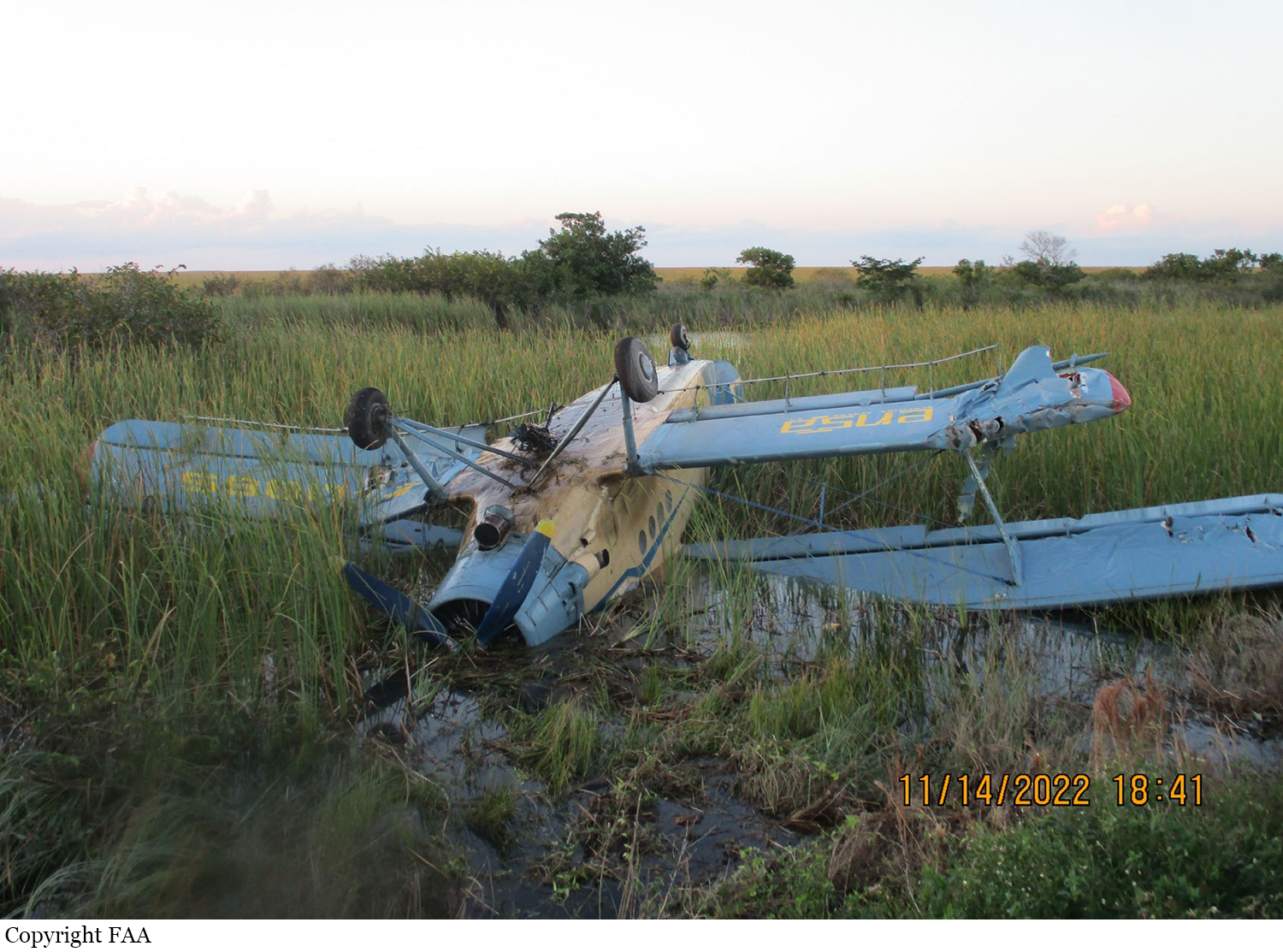
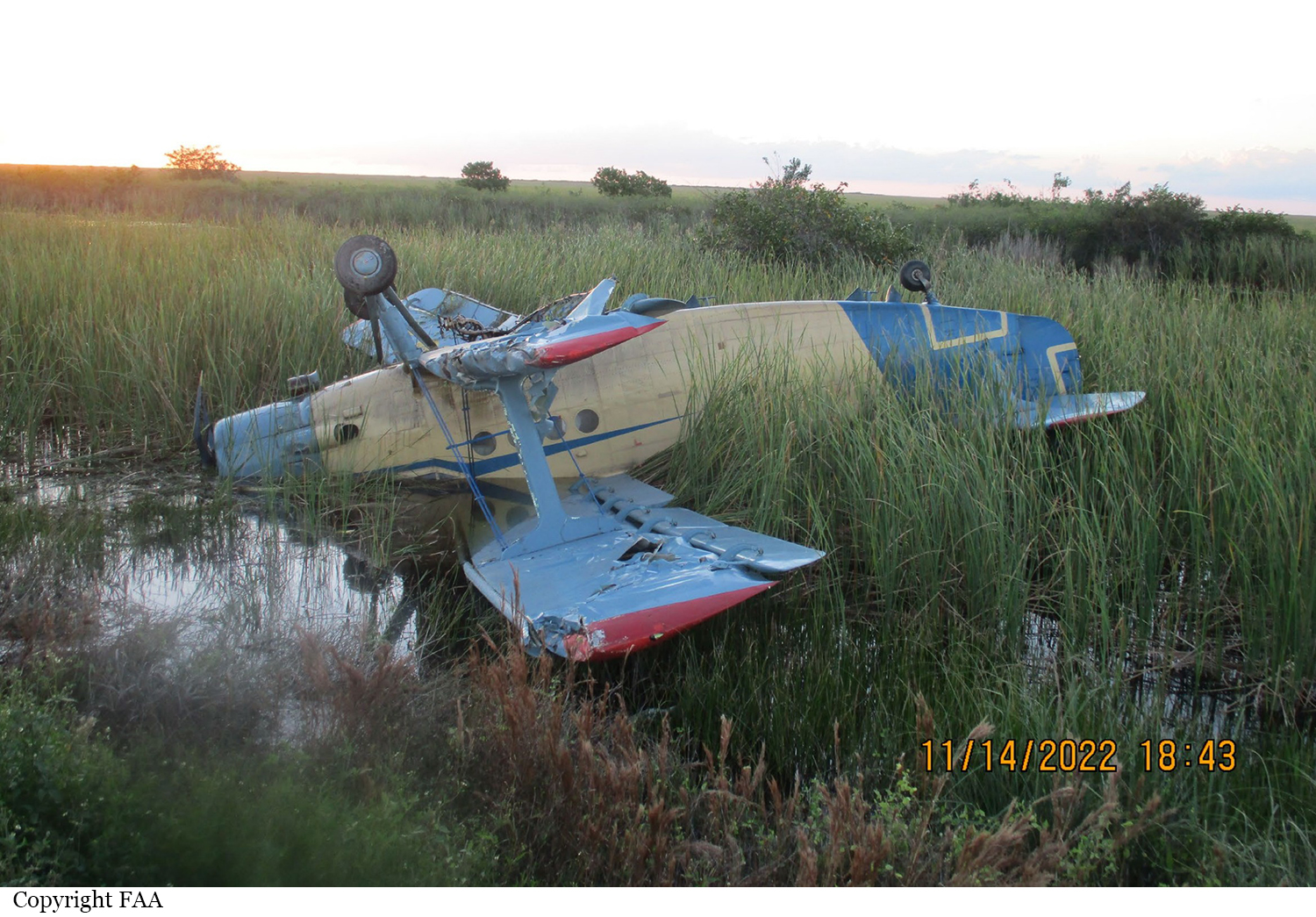
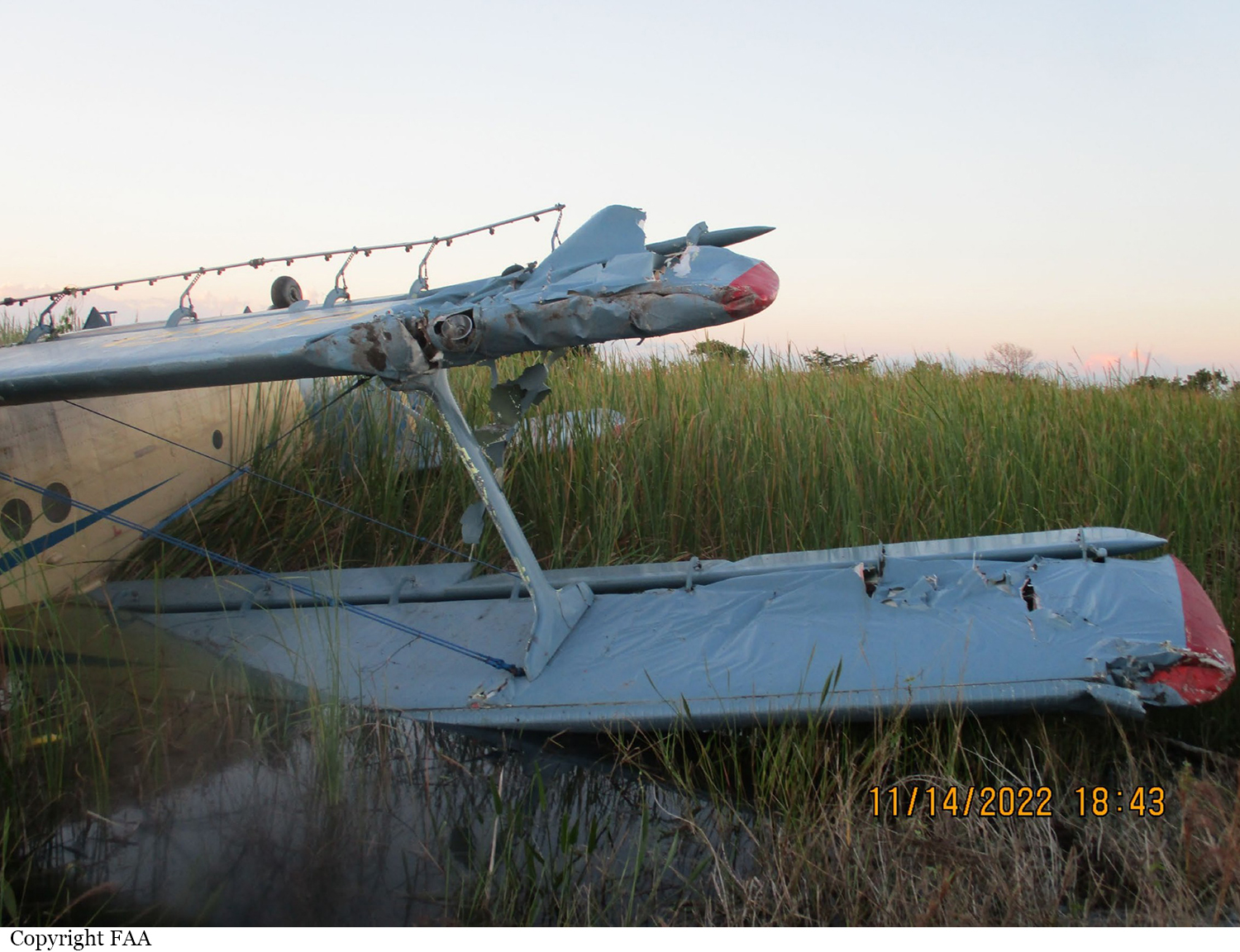
The single engine airplane landed last October at Dade-Collier Airport, in the center of the Everglades National Park, following a flight from Sancti Spíritus, Cuba. The pilot defected Cuba and landed safely in the US. On November 14, the pilot and copilot were hired to relocate the radial engine-equipped biplane as a public flight from Dade-Collier Airport to Miami-Opa Locka. The pilot stated that, while enroute, the airplane began to smoke and the engine lost power. The pilot performed a forced landing to a levee; however, the airplane’s main landing gear were wider than the levee, and after touchdown, the airplane traveled off the left side,
nosed over, and came to rest inverted, resulting in substantial damage. Both crew members were highly experienced but none of them have any flight hours in the accident airplane make and model.
Probable cause:
The pilot's failure to properly configure the cowl flaps and oil cooler shutters, which resulted in a total loss of engine power due to overheating of the engine. Contributing to the accident was the pilot's decision to operate the airplane in with an inoperative cylinder head temperature gauge.
Final Report:
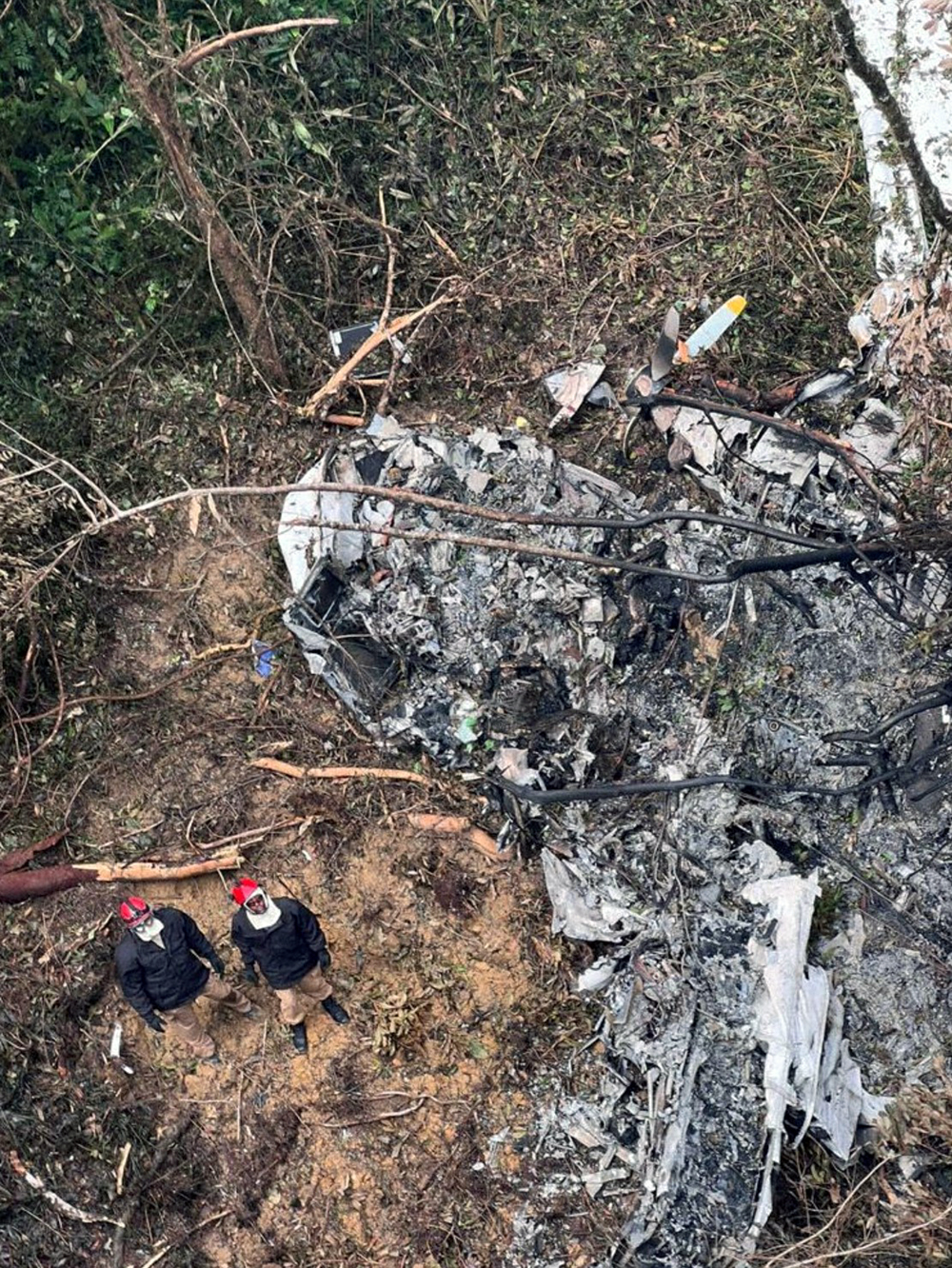
Crash of a Boeing B-17G-95-DL Flying Fortress in Dallas: 5 killed

Date & Time: Nov 12, 2022 at 1322 LT
Operator:
Registration:
N7227C
Flight Phase:
Flight Type:
Survivors:
No
Schedule:
Dallas - Dallas
MSN:
32513
YOM:
1944
Crew on board:
5
Crew fatalities:
Pax on board:
0
Pax fatalities:
Other fatalities:
Total fatalities:
5
Captain / Total flying hours:
28000
Captain / Total hours on type:
500.00
Copilot / Total flying hours:
25300
Copilot / Total hours on type:
90
Aircraft flight hours:
9239
Circumstances:
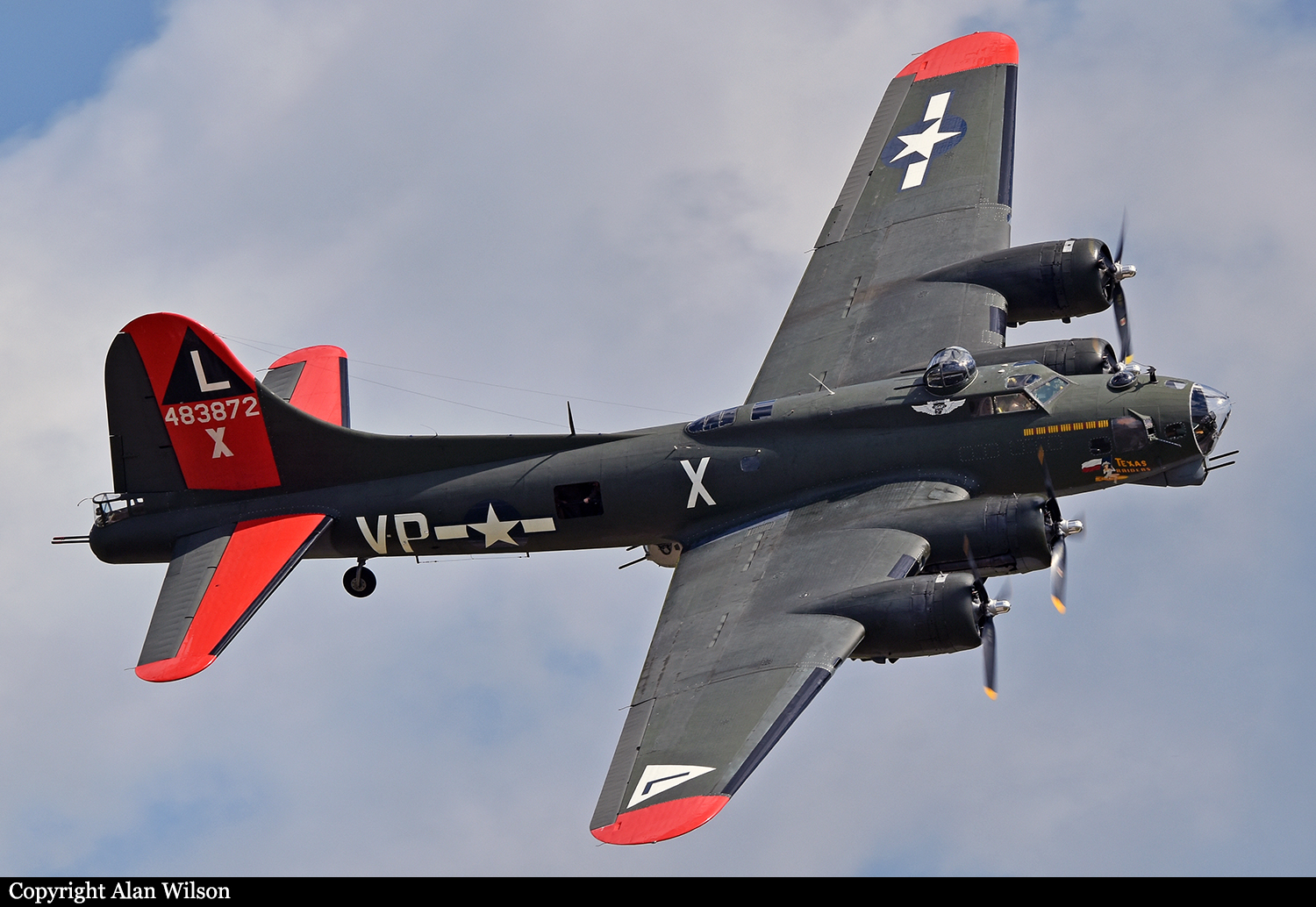
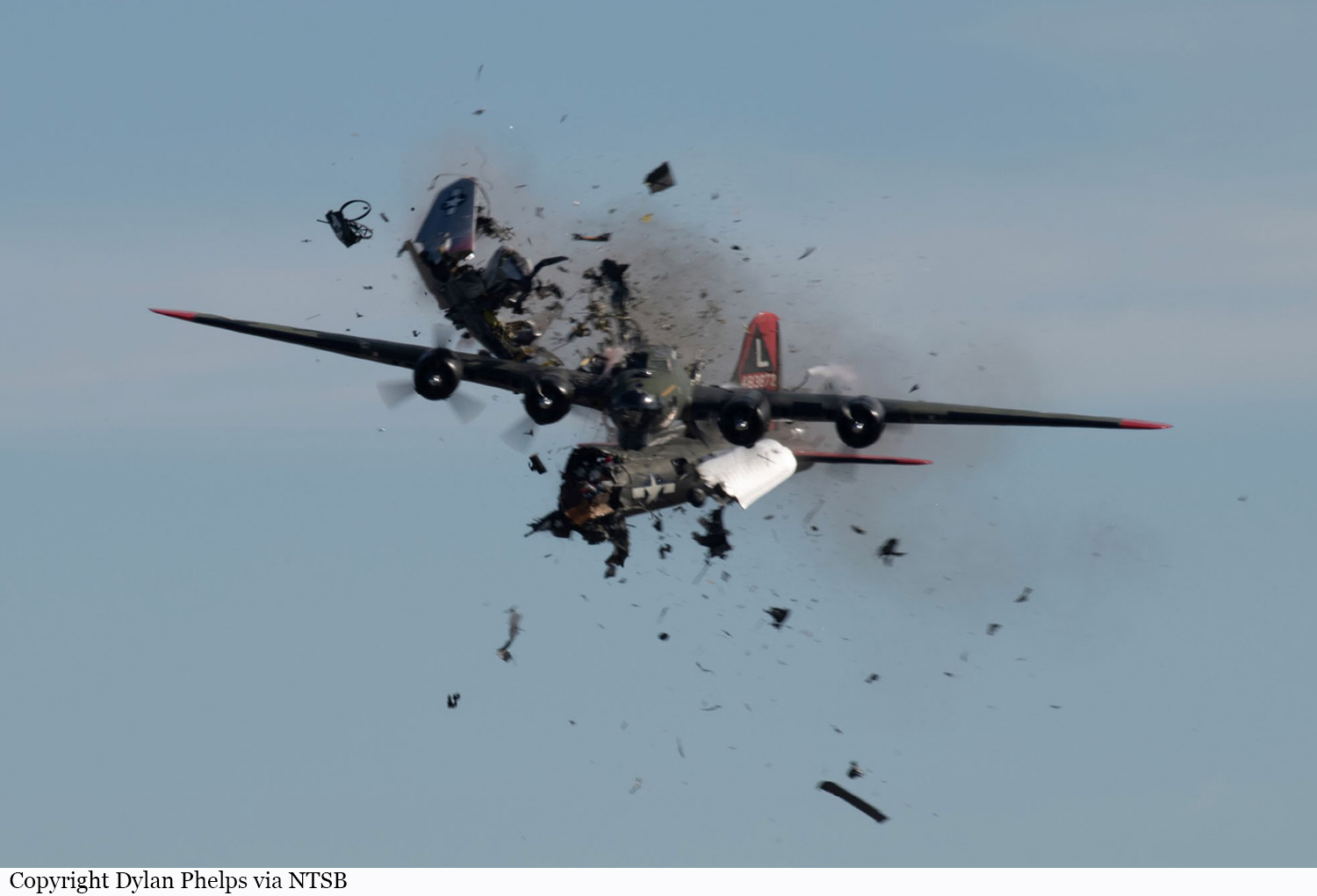
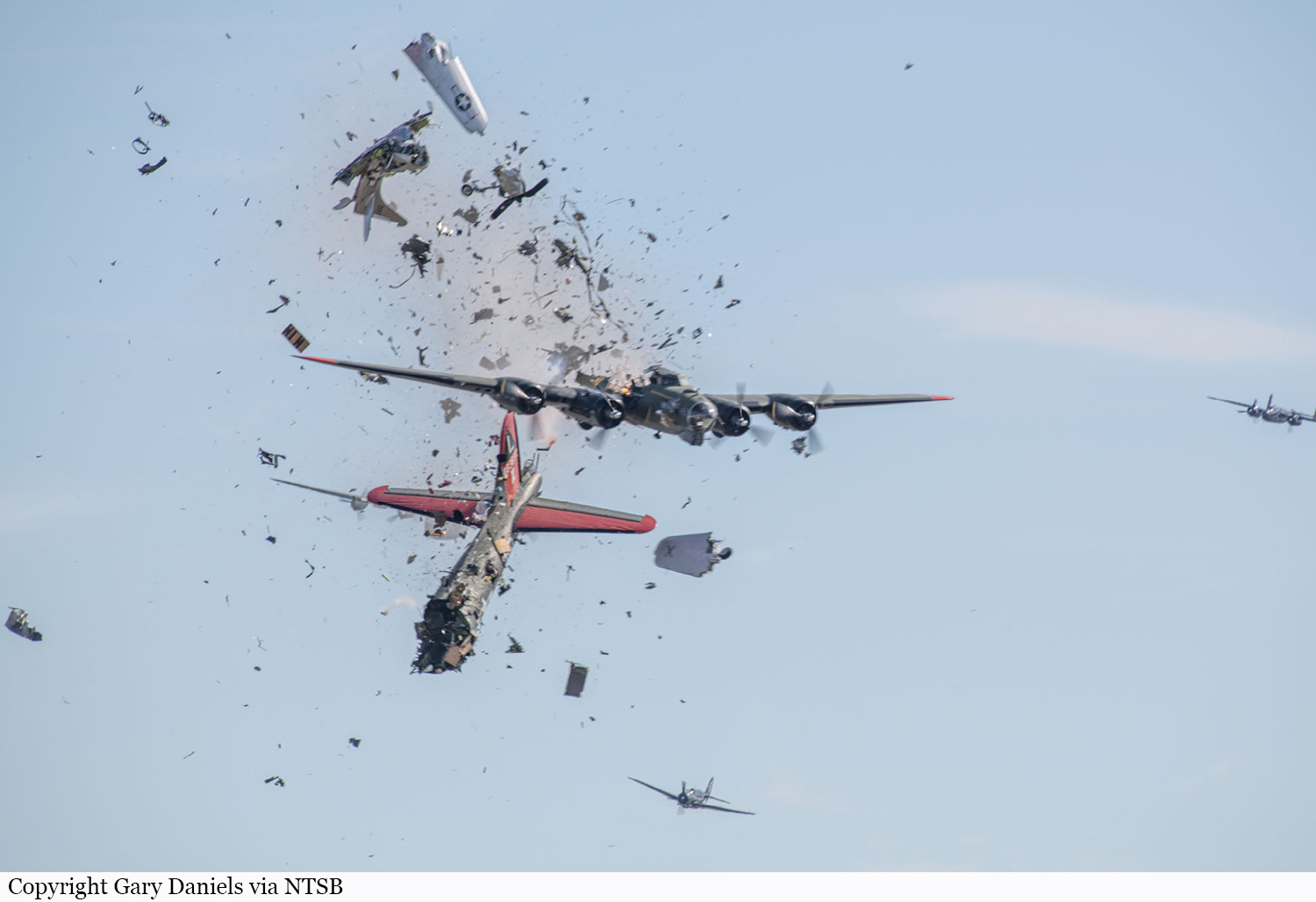
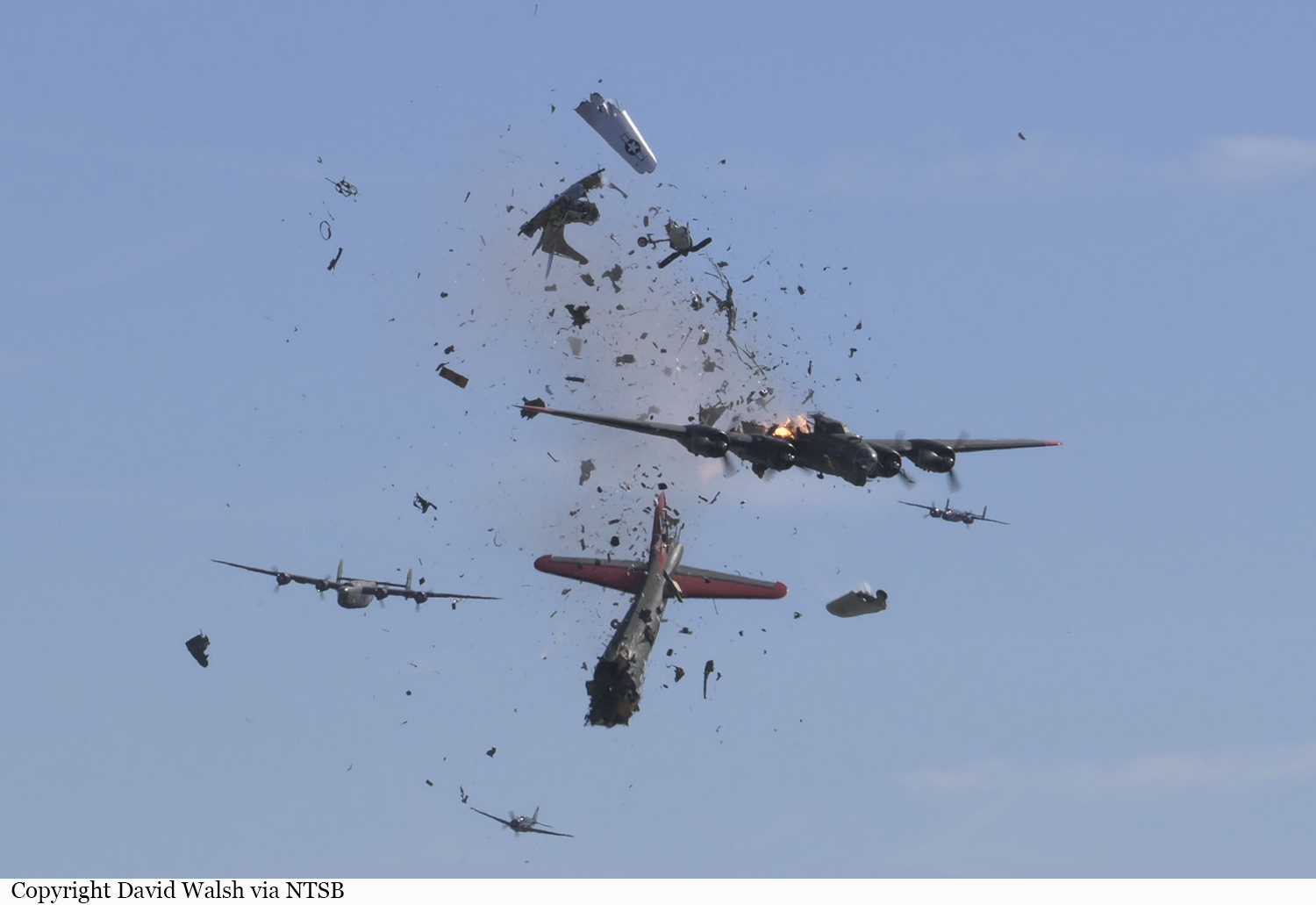
On November 12, 2022, about 1322 central standard time, a Boeing B-17G, N7227C, and a Bell P-63F, N6763, collided in flight during a performance at the Commemorative Air Force’s (CAF) Wings Over Dallas air show at Dallas Executive Airport (KRBD) in Dallas, Texas. The pilot, copilot, flight engineer, and two scanners on board the Boeing B-17G and the pilot of the Bell P-63F were fatally injured, and both airplanes were destroyed. No injuries to persons on the ground were reported. Both accident airplanes (and six other historic, former military airplanes that were airborne as part of the same performance) were operated by the CAF under the provisions of Title 14 Code of Federal Regulations (CFR) Part 91 and a certificate of waiver for the air show. The Boeing B-17G was in the first position of five historic bomber airplanes flying as solo aircraft in trail, and the Bell P-63F was in the last position of three historic fighter airplanes flying in formation. The takeoffs, repositioning turns, and passes of the eight airplanes in the accident performance were directed in real time via radio by the air boss, who had primary responsibility for the control of air show operations. Just before the accident, the bomber group and the fighter formation completed a pass in front of the crowd of spectators from show right to left (that is, right to left from the crowd’s perspective). The airplanes were setting up for the next pass when the accident occurred. This pass was intended to be from show left to right in front of the crowd, and the air boss issued directives for the fighter formation to pass off the left side of the bomber group airplanes and then cross in front of them. The position data showed that the flight path for the fighter lead and position 2 fighter airplanes passed the bomber airplanes off the bombers’ left side before crossing in front of the Boeing B-17G but that the Bell P-63F’s flight path converged with that of the Boeing B-17G. Video and photographic evidence captured by witnesses on the ground showed that the Bell P-63F was in a descending, left-banked turn when it struck the left side of the Boeing B-17G near the trailing edge of the left wing, then both airplanes broke apart in flight.
Probable cause:
The National Transportation Safety Board determines that the probable cause of the accident was the air boss’s and air show event organizer’s lack of an adequate, prebriefed aircraft separation plan for the air show performance, relying instead on the air boss’s real-time deconfliction directives and the see-and-avoid strategy for collision avoidance, which allowed for the loss of separation between the Boeing B-17G and the Bell P-63F airplanes. Also causal was the diminished ability of the accident pilots to see and avoid the other aircraft due to flight path geometry, out-the-window view obscuration by aircraft structures, attention demands associated with the air show performance, and the inherent limitations of human performance that can make it difficult to see another aircraft. Contributing to the accident were the lack of Federal Aviation Administration (FAA) guidance for air bosses and air show event organizers on developing plans and performing risk assessments that ensure the separation of aircraft that are not part of an approved maneuvers package and the lack of FAA requirements and guidance for recurrent evaluations of air bosses and direct surveillance of their performance.
Final Report:

Crash of a Let L-410UVP-E20 in South Kivu: 3 killed

Date & Time: Nov 3, 2022 at 1432 LT
Type of aircraft:
Operator:
Registration:
9S-GPK
Flight Phase:
Flight Type:
Survivors:
No
Schedule:
Kasese – Goma
MSN:
86 17 02
YOM:
1986
Region:
Crew on board:
2
Crew fatalities:
Pax on board:
1
Pax fatalities:
Other fatalities:
Total fatalities:
3
Captain / Total flying hours:
15750
Aircraft flight hours:
9468
Circumstances:
The airplane departed Kasese Airport at 1500LT on a cargo flight to Goma, carrying two pilots, one passenger and a load of various goods for a total weight of one ton. En route, weather conditions deteriorated with low clouds and heavy rain falls. As the airplane failed to arrive at destination, SAR operations were initiated and the wreckage was found two days later in a dense wooded area located in South Kivu, about 139 km southwest of Goma. The airplane was destroyed by a post impact fire and all three occupants were killed.
Crew:
Peter Sabo +1.
Probable cause:
Investigations were unable to determine the exact cause of the accident. Nevertheless, it may be the consequence of an insufficient consideration of weather conditions during flight preparation or during the flight itself, to a system or component failure, or to human error (error of judgment and decision-making).
Final Report:
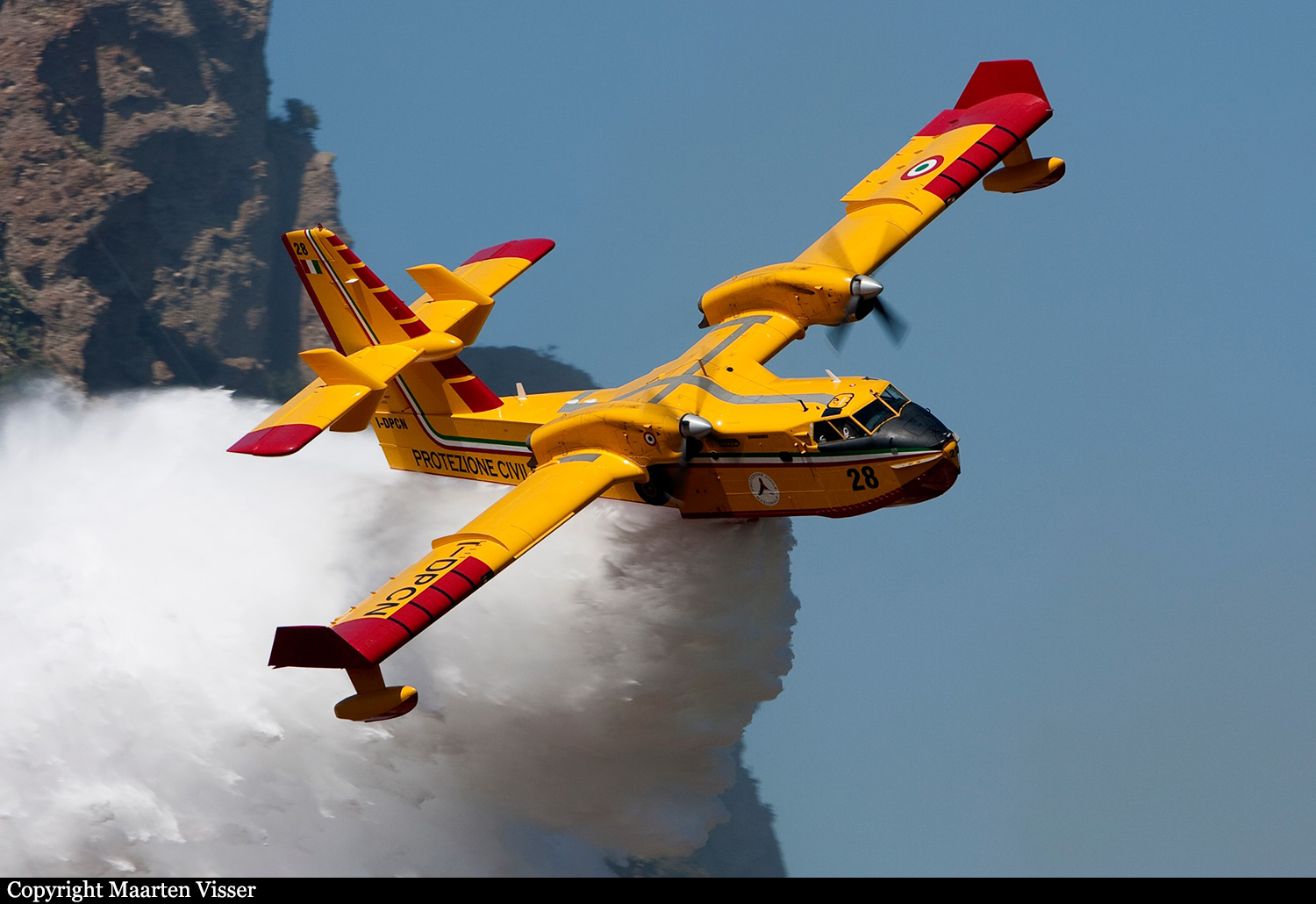
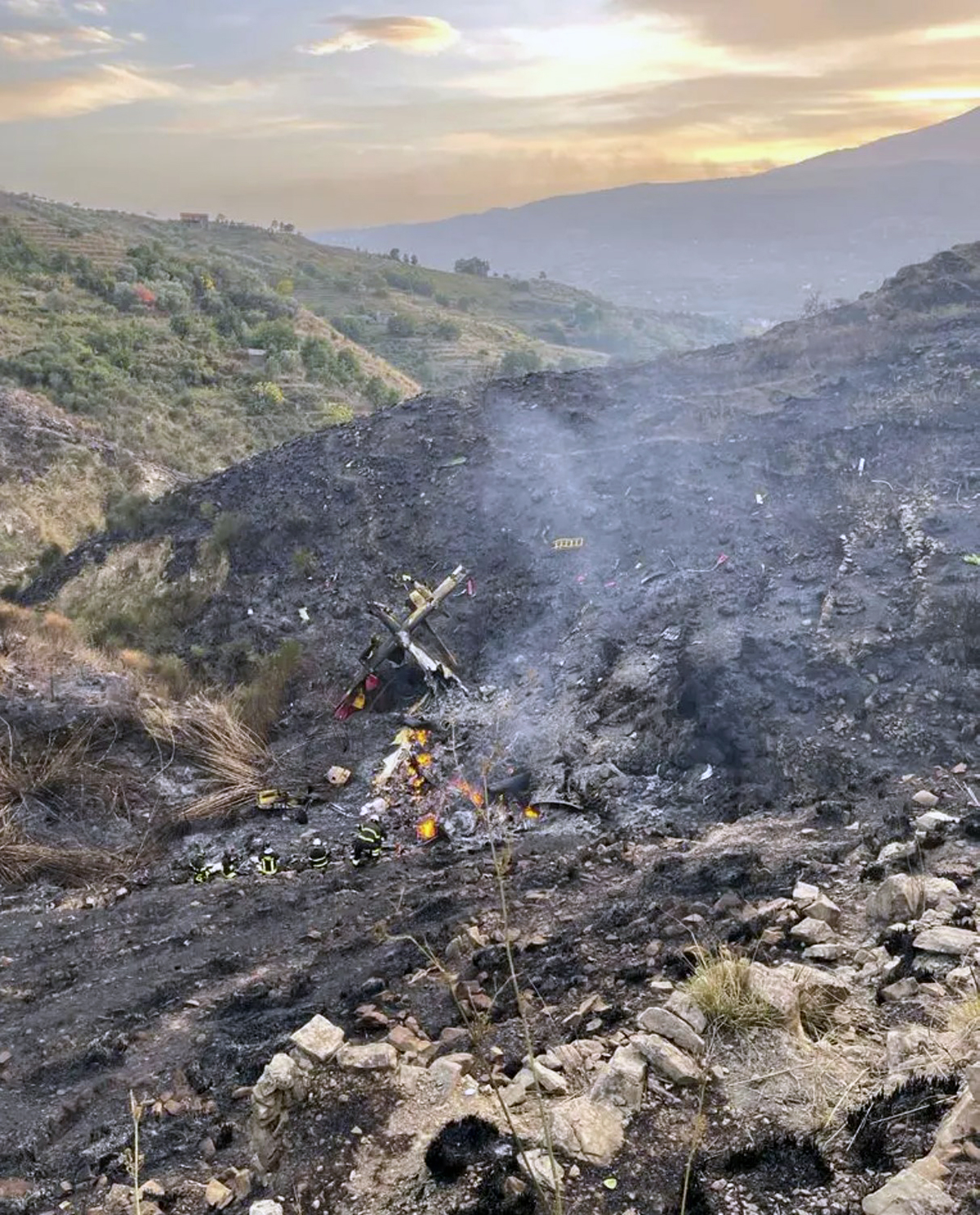
Crash of a Canadair CL-415 near Linguaglossa: 2 killed

Date & Time: Oct 27, 2022
Type of aircraft:
Operator:
Registration:
I-DPCN
Flight Phase:
Flight Type:
Survivors:
No
Site:
Schedule:
Lamezia Terme - Lamezia Terme
MSN:
2070
YOM:
2008
Country:
Region:
Crew on board:
2
Crew fatalities:
Pax on board:
0
Pax fatalities:
Other fatalities:
Total fatalities:
2
Circumstances:
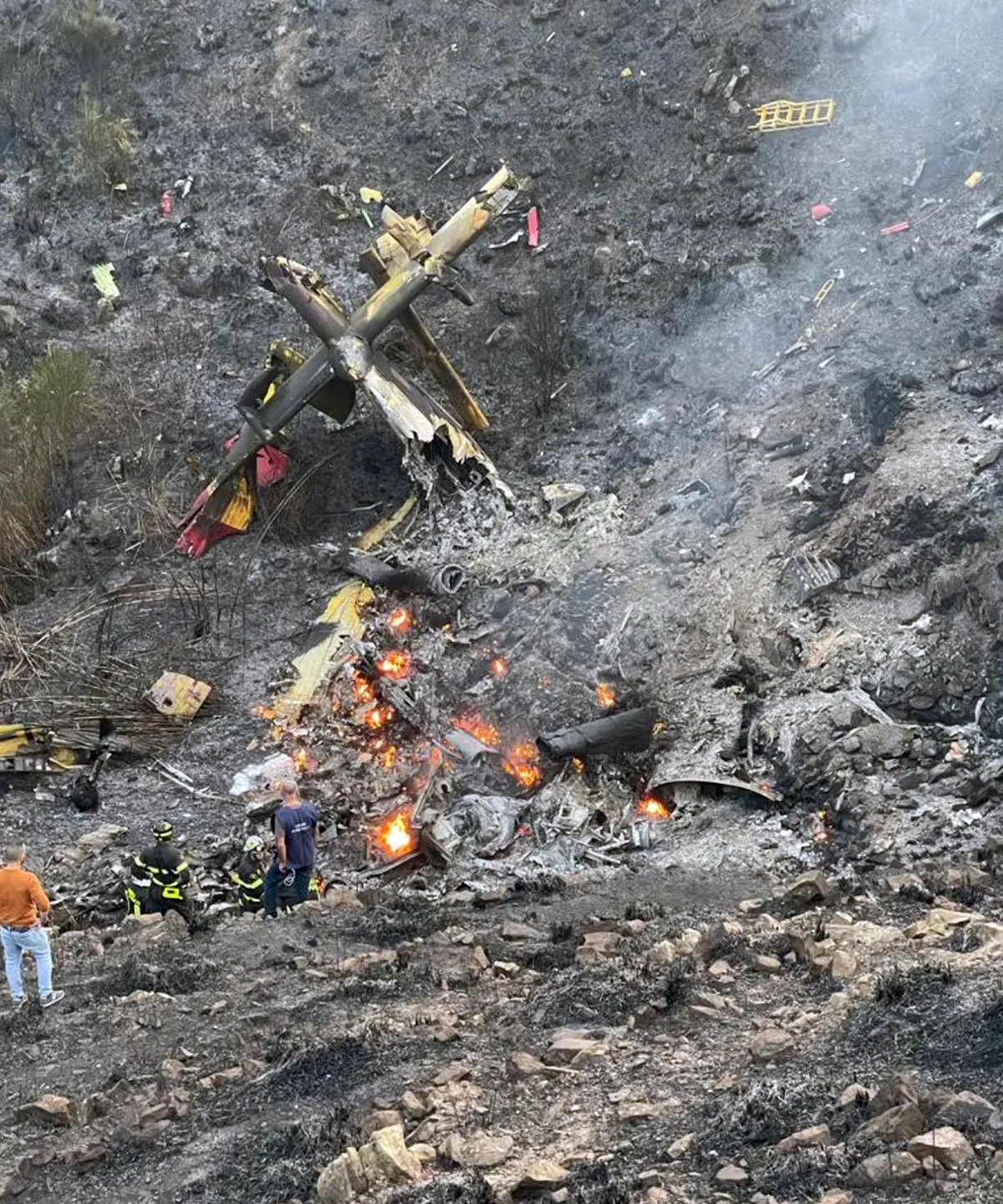
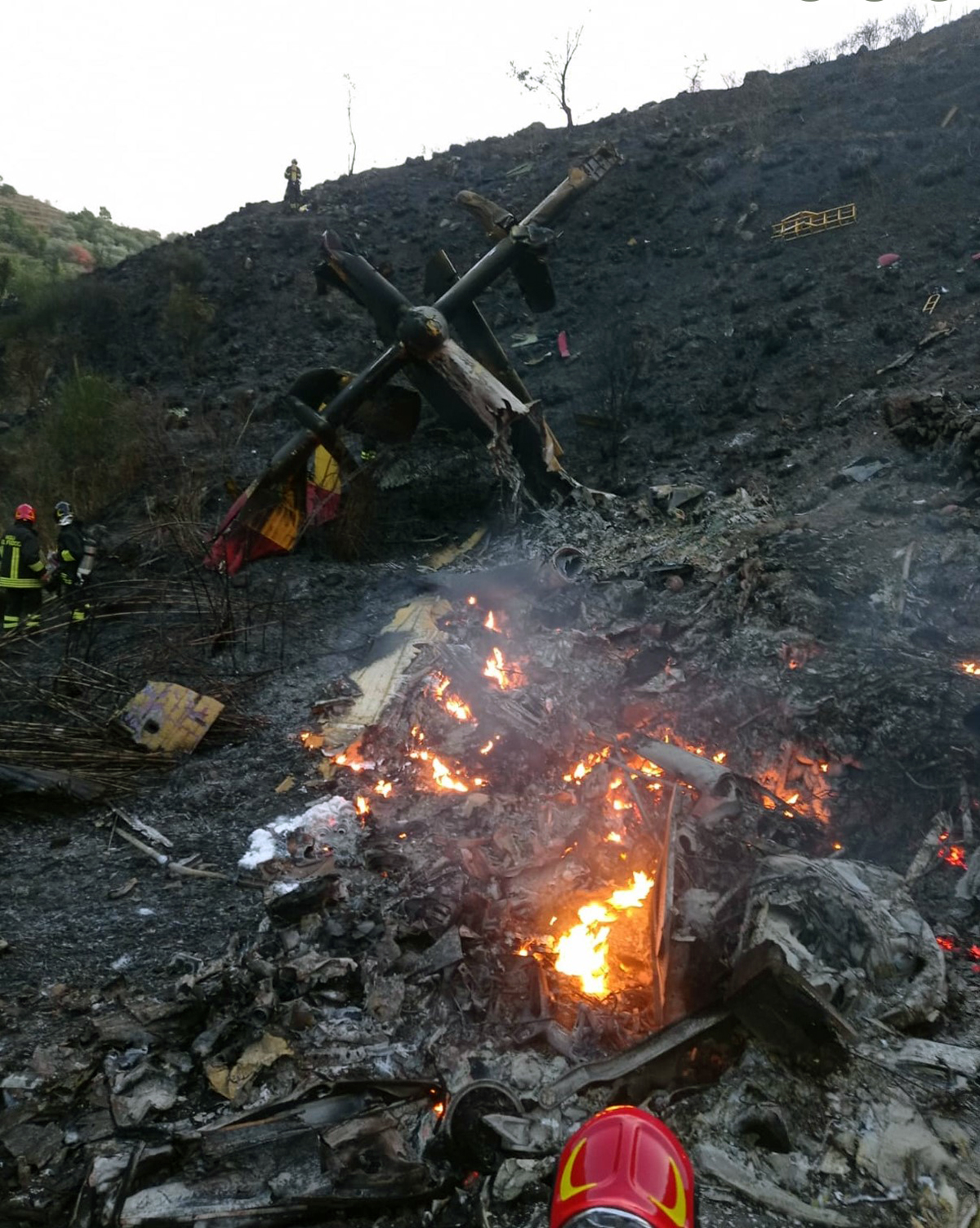
The crew departed Lamezia Terme Airport on a fire fighting mission at the foot of the Etna Volcano, north of Catania. Approaching the area on fire, the crew initiated a right hand turn and while descending to rising terrain, the right wing tip impacted the ground, causing the aircraft to crash, bursting into flames. Both pilots were killed.

Crash of a Cessna 208B Grand Caravan near San Lorenzo

Date & Time: Oct 13, 2022 at 0915 LT
Type of aircraft:
Operator:
Registration:
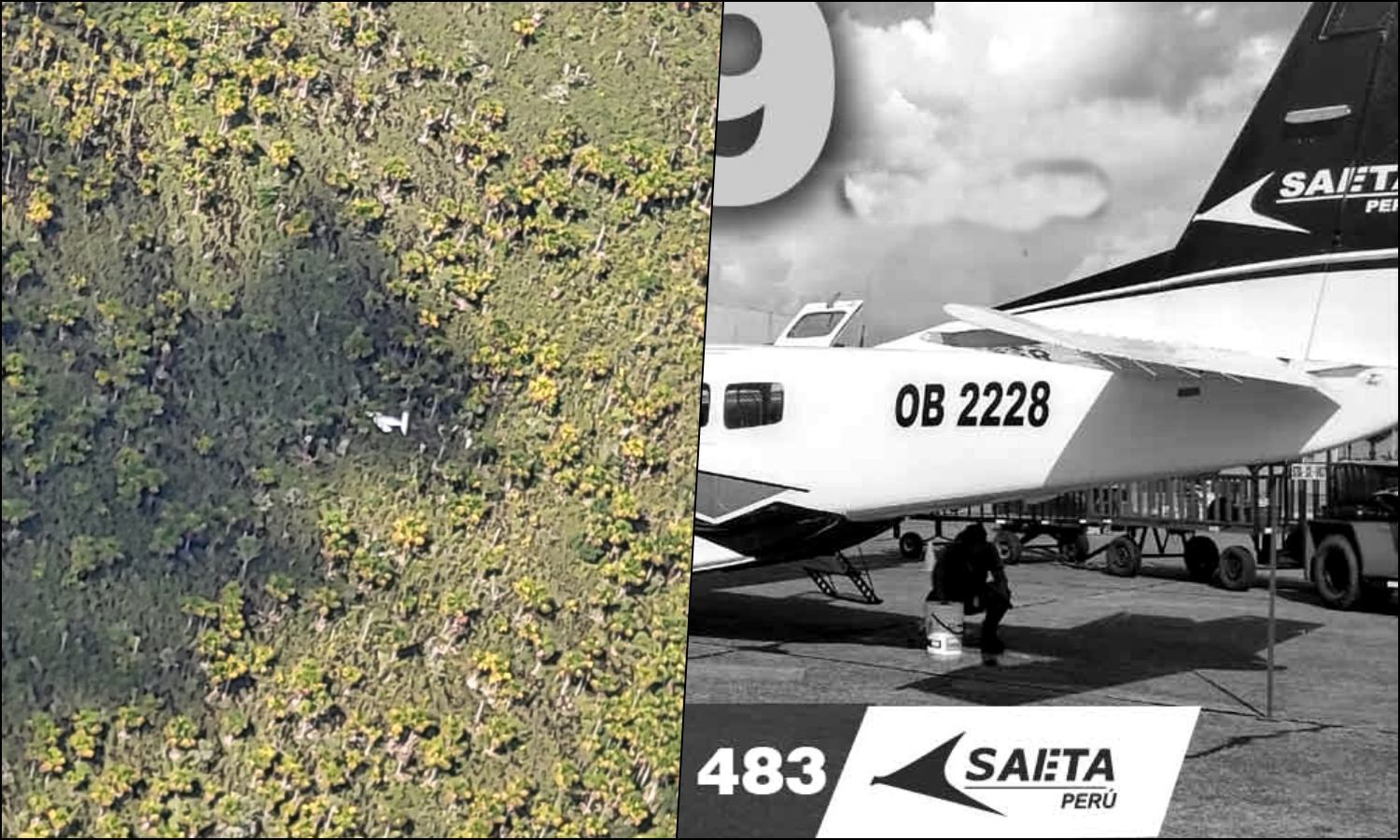
OB-2228
Flight Phase:
Survivors:
Yes
Schedule:
San Lorenzo – Tarapoto
MSN:
208B-0802
YOM:
2000
Country:
Crew on board:
2
Crew fatalities:
Pax on board:
10
Pax fatalities:
Other fatalities:
Total fatalities:
0
Circumstances:
The single engine airplane departed San Lorenzo at 0900LT on a flight to Tarapoto, carrying 10 passengers and two pilots. About 15 minutes into the flight, the crew encountered technical problems with the engine and attempted an emergency landing when the aircraft crash landed in a wooded area located some 15 km southeast of San Lorenzo. All 12 occupants were rescued and the aircraft was damaged beyond repair.

Crash of a Britten-Norman BN-2A-21 Islander on Moa Island

Date & Time: Oct 3, 2022 at 1338 LT
Type of aircraft:
Operator:
Registration:
VH-WQA
Flight Phase:
Survivors:
Yes
Schedule:
Saibai Island - Horn Island
MSN:
494
YOM:
1975
Country:
Region:
Crew on board:
1
Crew fatalities:
Pax on board:
6
Pax fatalities:
Other fatalities:
Total fatalities:
0
Captain / Total flying hours:
2400
Captain / Total hours on type:
250.00
Aircraft flight hours:
14081
Circumstances:
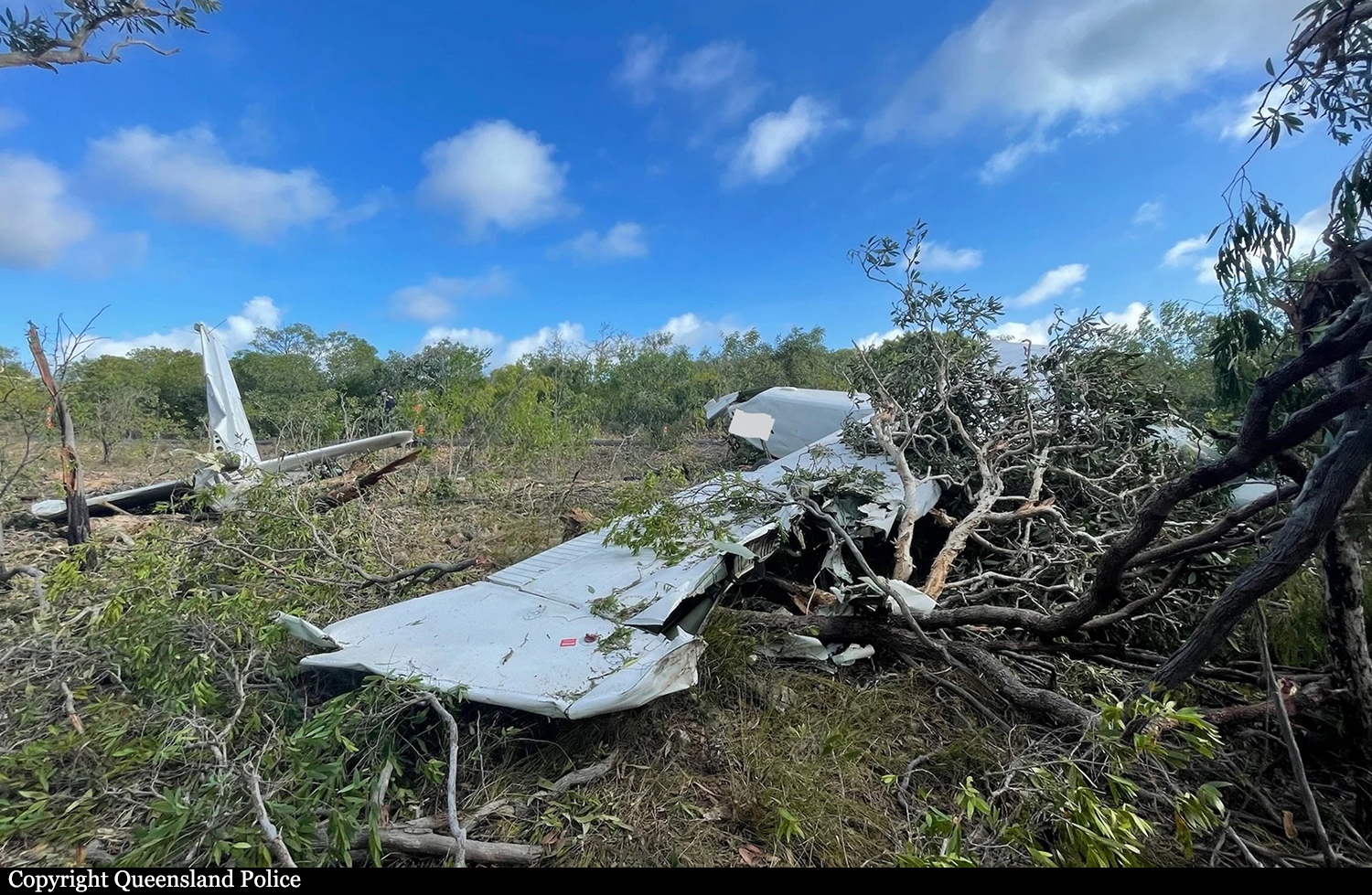
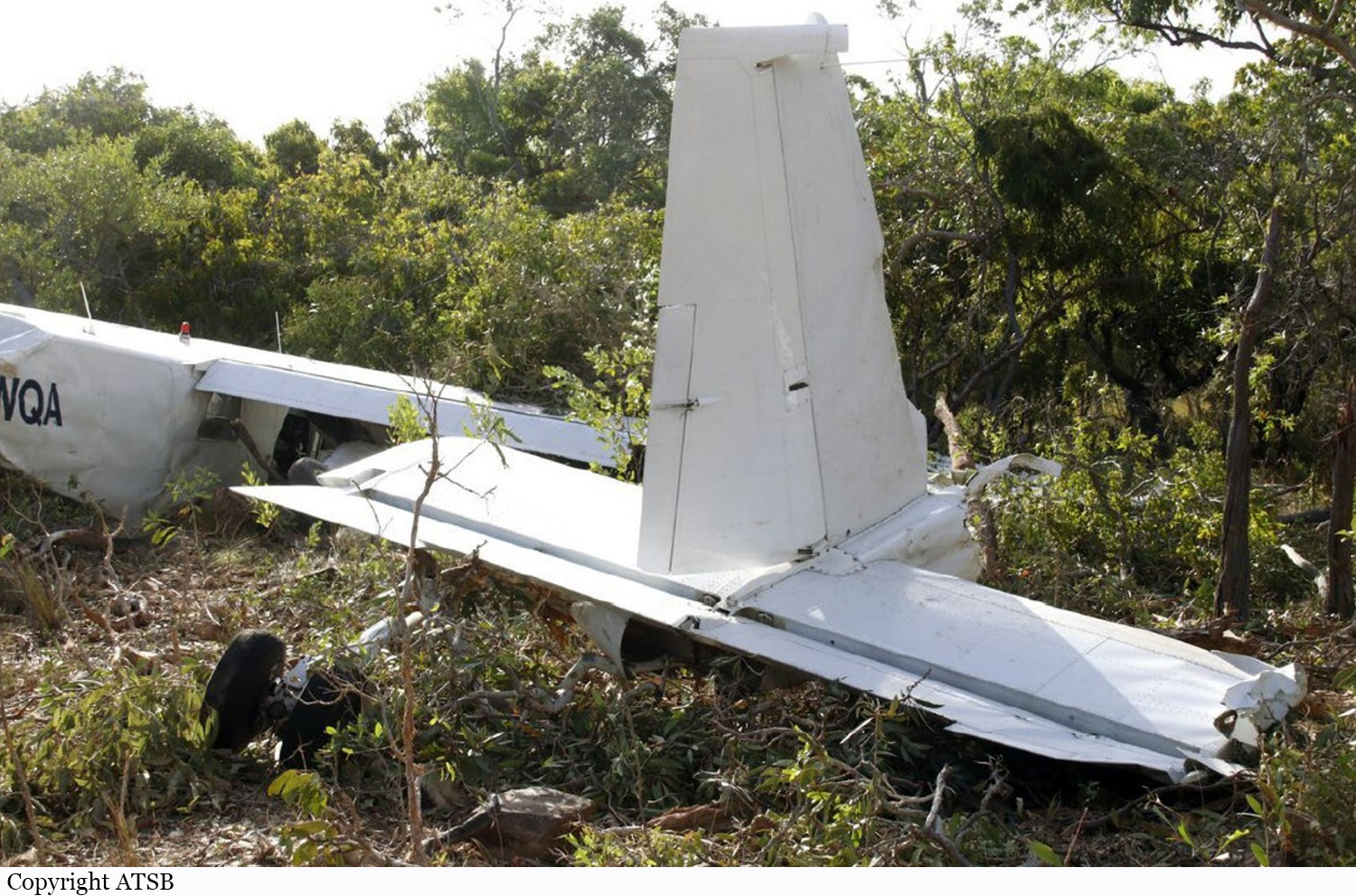
On the afternoon of 3 October 2022, a Pilatus Britten-Norman Islander BN2A-21, registered VHWQA and operated by Torres Strait Air, was conducting a non-scheduled passenger air transport flight from Saibai Island Airport, Queensland (QLD) to Horn Island Airport, QLD. There was 1 pilot and 6 passengers (students) on board. About 19 km NE of Moa Island both engines began to surge. The pilot diverted towards Kubin Airport on Moa Island. As the aircraft passed to the south of the township of Saint Pauls, the pilot determined there was insufficient altitude remaining to reach the airport. As a result, the pilot conducted a forced landing on a road 7 km ENE of Kubin Airport. There were no reported injuries to the pilot or the passengers. The aircraft was substantially damaged.
Probable cause:
The ATSB found that the dual engine speed fluctuations and associated power loss was probably the result of fuel starvation. The mechanism was not conclusively determined, however it was identified that the pilot did not operate the aircraft's fuel system in accordance with the aircraft flight manual, and that the configuration and location of the aircraft’s fuel controls and tank quantity gauges were probably not conducive to rapid and accurate interpretation. The aircraft manufacturer released a service letter in June 2022 that detailed an optional modification to centralize the fuel system controls and gauges, however this modification was not fitted to VH-WQA. The ATSB considered that these factors increased the risk of inadvertent fuel tank selection.
Final Report:
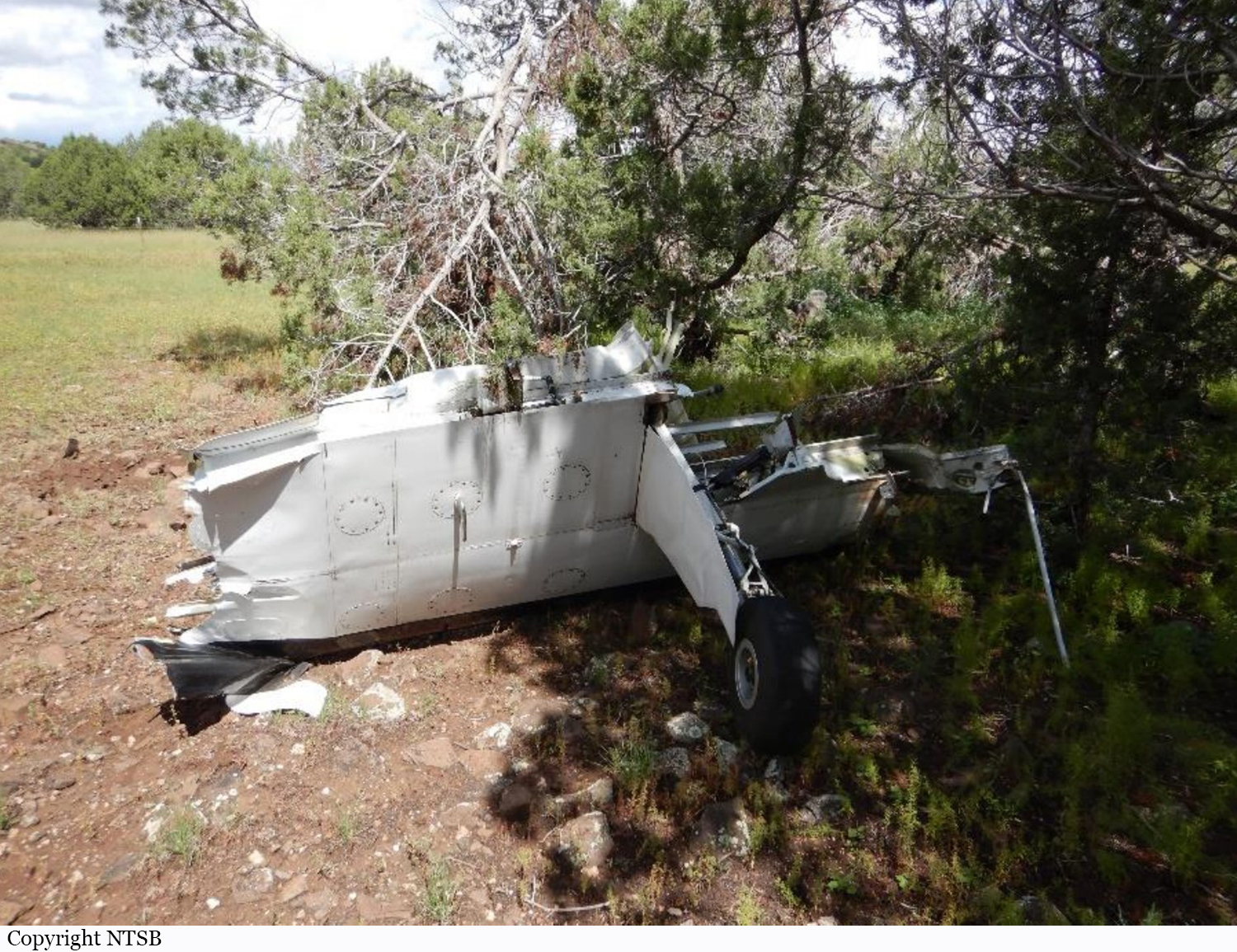
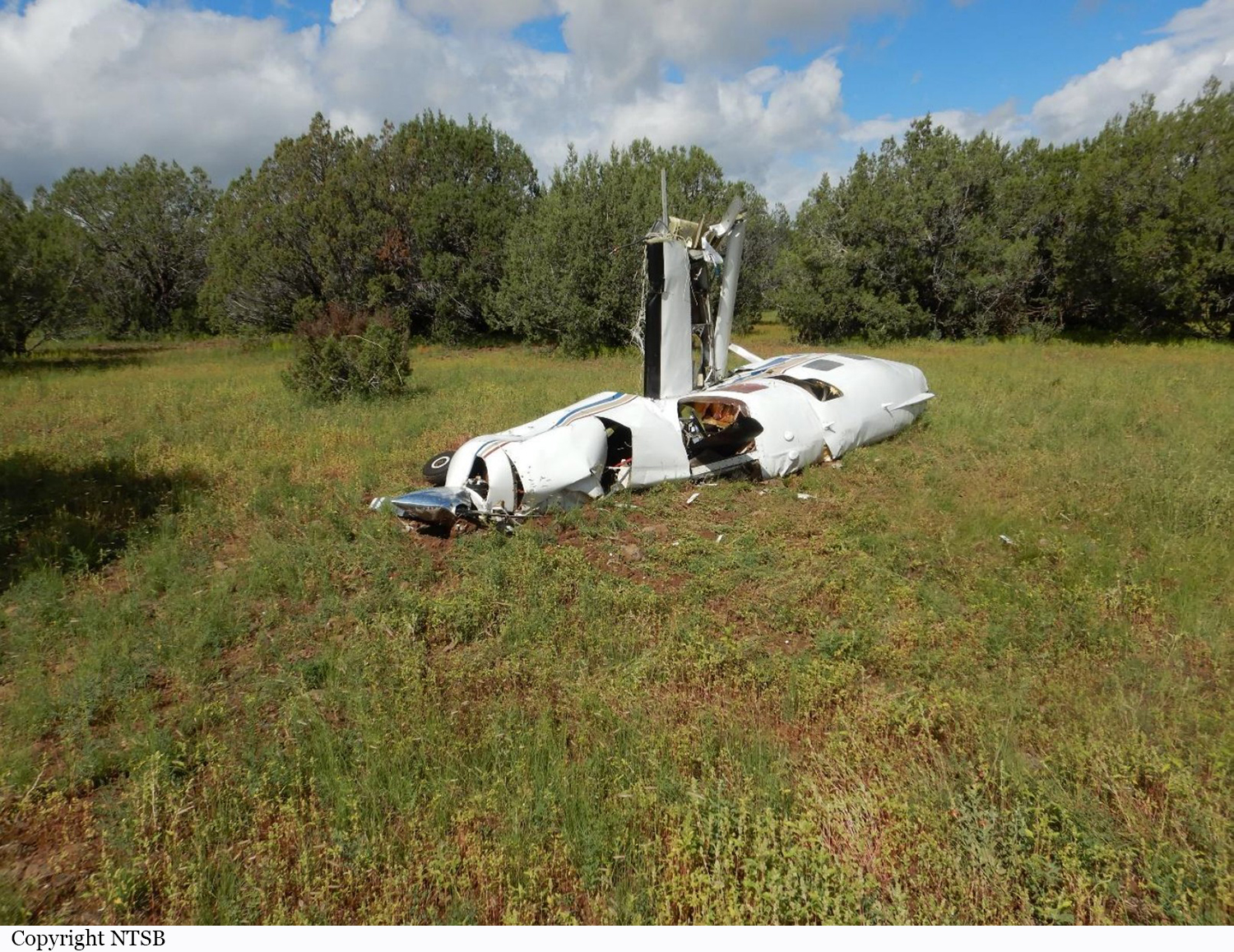
Crash of a Piper PA-46-310P Malibu near Seligman: 2 killed
Date & Time: Sep 13, 2022 at 1100 LT
Registration:
N43605
Flight Phase:
Flight Type:
Survivors:
No
Schedule:
Albuquerque – Henderson
MSN:
46-8408052
YOM:
1984
Crew on board:
1
Crew fatalities:
Pax on board:
1
Pax fatalities:
Other fatalities:
Total fatalities:
2
Captain / Total flying hours:
47
Circumstances:
The student pilot was enroute at an altitude about 17,700 ft mean sea level (msl) on a crosscountry flight with a passenger in his high-performance airplane. The pilot was receiving visual flight rules flight following services from air traffic control, who advised him of an area of moderate to heavy precipitation at the airplane’s 12 o’clock position. The pilot replied that he had been able to “dodge” the areas of precipitation, but that they were getting bigger. There were no further communications from the pilot. Shortly thereafter, the airplane entered a left turn that continued through 180° before the airplane began a descent from its cruise altitude. The flight track ended in an area of moderate to extreme reflectivity as depicted on weather radar and indicated that the airplane was in a rapidly descending right turn at 13,900 ft when tracking information was lost. The wreckage was scattered across a debris field about 2 miles long. Examination of the wreckage revealed lateral crushing along the left side of the fuselage and the separation of both wings and the empennage. Wing spar signatures and empennage and wing impact marks suggested positive wing loading before the wing separation and in-flight breakup. The area of the accident site was included in a Convective SIGMET advisory for thunderstorms, hail, and wind gusts of up to 50 kts. A model atmospheric sounding near the accident site indicated clouds between about 15,000 ft and 27,000 ft, as well as the potential for light rime icing from 15,500 ft to 23,000 ft. Review of the pilot’s logbook revealed that he had about 47 total hours of flight experience, with about 4 hours of instruction in simulated instrument conditions. A previous flight instructor reported that the pilot displayed attitudes of “anti-authority” and “impulsivity.” Ethanol was detected in two postmortem tissue specimens; however, based on the distribution and amount detected, the ethanol may have been from postmortem production, and it is unlikely to have contributed to the crash. Fluoxetine, trazodone, and phentermine were also detected in the pilot’s postmortem toxicology specimens. The pilot had reported his use of fluoxetine for anger and irritability. Anger and irritability are nonspecific symptoms that may or may not be associated with mental health conditions, including depression, certain personality disorders, and bipolar disorder. These conditions may be associated with impulsive behavior, increased risk taking, lack of planning, not appreciating consequences of actions, and substance use disorders. Both trazodone and phentermine have the potential for impairing effects; however, an unimpaired pilot with the pilot’s relative inexperience would have been likely to lose aircraft control during an encounter with instrument meteorological conditions (IMC). It is therefore unlikely that the pilot’s use of trazodone and phentermine affected his handling of the airplane in a way that contributed to the crash. Based on review of the pilot’s Federal Aviation Administration (FAA) medical certification file, no specific conclusion can be drawn regarding any underlying psychiatric condition that may have contributed to his decision to attempt and continue the flight into IMC, as that decision was consistent with his previous pattern of risk-tolerant behavior. The pilot had not formally been diagnosed with a mental health disorder in his personal medical records reviewed other than substance use disorders. The psychological and psychiatric evaluations reviewed were not for diagnostic and treatment purposes, but for evaluation for FAA medical certification, and therefore did not generate diagnoses. There is evidence that the pilot had a pattern of poor decision-making, high-risk tolerance, and impulsive behavior. The circumstances of the accident are consistent with the student pilot’s decision to continue into an area of deteriorating weather conditions, his encounter with instrument meteorological conditions and convective activity, and loss of visual references, which resulted in spatial disorientation and a loss of aircraft control. During the descent, the airplane exceeded its design limitations, resulting in structural failure and an in-flight breakup.
Probable cause:
The student pilot’s continued visual flight into instrument meteorological conditions, which resulted in spatial disorientation, a loss of control, exceedance of the airplane’s design limitations, and in-flight breakup.
Final Report: