Crash of a Beechcraft 65-B80 Queen Air in Belo Horizonte: 3 killed

Date & Time: Apr 12, 2000 at 1328 LT
Type of aircraft:
Registration:
PT-KKI
Flight Phase:
Flight Type:
Survivors:
No
Site:
Schedule:
Belo Horizonte - Sorocaba
MSN:
LD-483
YOM:
1974
Country:
Crew on board:
1
Crew fatalities:
Pax on board:
2
Pax fatalities:
Other fatalities:
Total fatalities:
3
Captain / Total flying hours:
2019
Circumstances:
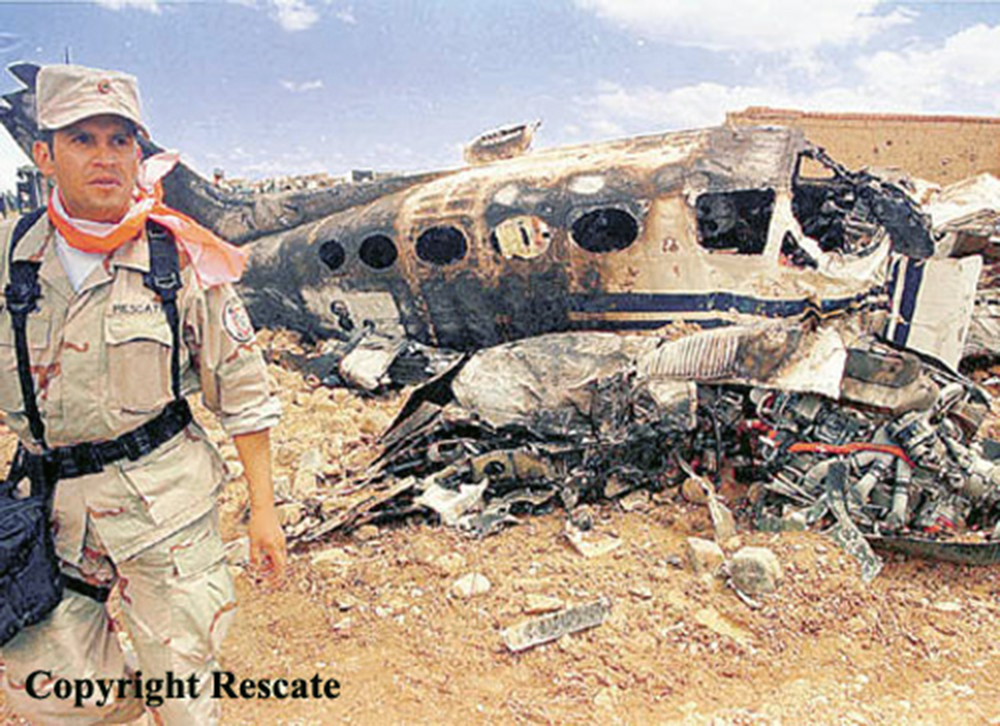
Shortly after takeoff from Belo Horizonte-Pampulha Airport, while in initial climb, the left engine failed. The pilot lost control of the aircraft that rolled to the left, lost height and crashed onto four houses located in the district of São Bernardo near the airport. The aircraft and four houses were destroyed. All three occupants were killed and two other people on the ground were injured.
Probable cause:
Failure of the left engine that was not lubricated according to published procedures. Inappropriate engine maintenance on part of the operator. Also, it was reported that the pilot's experience on this type of aircraft was insufficient.
Final Report:

Crash of a Cessna 421C Golden Eagle III in La Paz: 4 killed

Date & Time: Apr 1, 2000 at 0950 LT
Operator:
Registration:
FAB-014
Flight Type:
Survivors:
No
Schedule:
La Paz - Santa Cruz
Country:
Crew on board:
2
Crew fatalities:
Pax on board:
2
Pax fatalities:
Other fatalities:
Total fatalities:
4
Circumstances:
The twin engine aircraft departed La Paz-El Alto Airport on a flight to Santa Cruz, carrying two pilots and two technicians. After takeoff, the crew declared an emergency after the right engine failed during initial climb and was cleared to return. On final, the aircraft crashed 500 metres short of runway, bursting into flames. All four occupants were killed.
Probable cause:
Failure of the right engine during initial climb for unknown reasons.

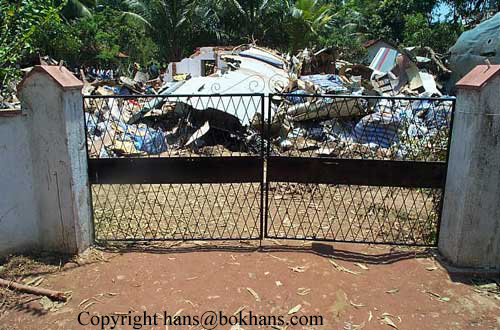
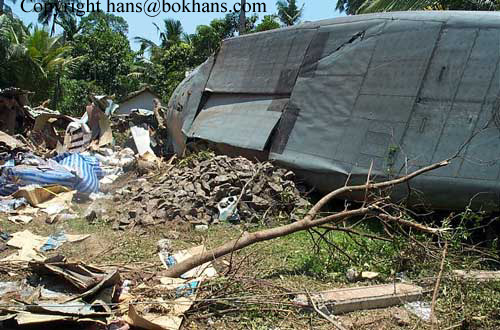
Crash of an Antonov AN-12BP in Colombo: 9 killed

Date & Time: Mar 24, 2000 at 1804 LT
Type of aircraft:
Operator:
Registration:
RA-11302
Flight Type:
Survivors:
Yes
Schedule:
Bangkok - Colombo
MSN:
8 3 460 04
YOM:
1968
Flight number:
SCB702
Country:
Region:
Crew on board:
8
Crew fatalities:
Pax on board:
0
Pax fatalities:
Other fatalities:
Total fatalities:
9
Captain / Total flying hours:
6719
Captain / Total hours on type:
961.00
Copilot / Total flying hours:
10802
Copilot / Total hours on type:
1702
Aircraft flight hours:
7241
Aircraft flight cycles:
4651
Circumstances:
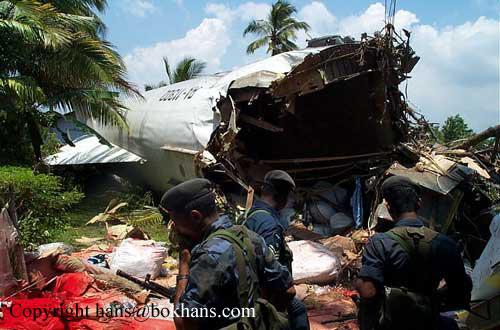
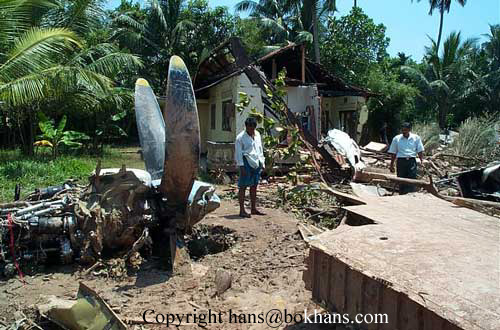
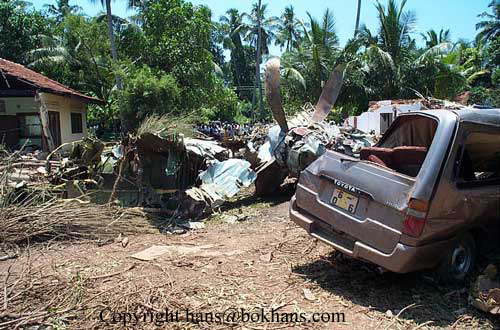
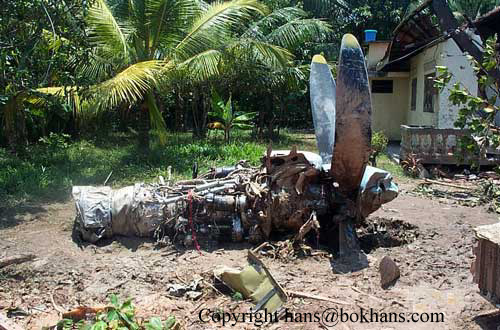
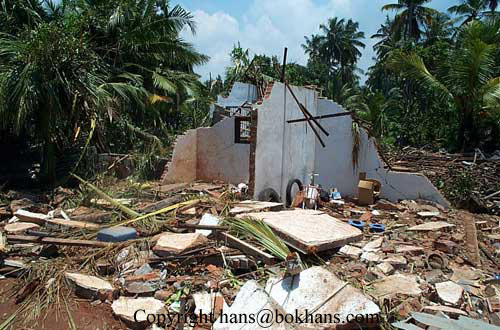
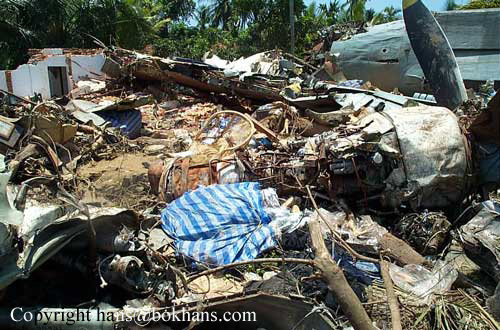
The Sky Cabs flight SCB701 originated in Colombo (Bandaranaike International Airport Colombo - hereinafter known as BIA Colombo), Sri Lanka at 1940 hours on 23rd March 2000. It landed in Bangkok, Thailand at 0120 hours on the following day after an uneventful flight. The alternate airport for Bangkok was Rayong/Ban U-Taphao (VTBU). The crew had recent experience in operating AN 12 flights between BIA Colombo and Bangkok International Airport, Thailand. The same flight crew made the return flight back to BIA Colombo after 4 hours and 20 minutes ground time in Bangkok. The crew had received the weather report from Aero Meteorological Division (AMD), prior to departure. An air traffic control flight plan was filed to BIA Colombo, the filed alternate airport was Male International (VRMM) in the Republic of Maldives. The aircraft was refueled adding 6681 kgs of fuel to the remaining 8300 kgs bringing the total fuel onboard to 14981 kg. Flight SCB702, cargo flight, departed Bangkok at 0540 hours on 24th March 2000 to BIA Colombo. The scheduled flight time for Bangkok – BIA Colombo was five hours and twenty minutes with a scheduled time of arrival of 1100 hours (17:00 hours Sri Lanka time). SCB702 made the first radio contact with Sri Lanka air traffic control at 1016 hours. The area controller passed SCB702 the latest weather report effective for BIA Colombo and later, a Sigmet valid at the time. When the control of the flight was handed to the approach radar controller (Director) by the area controller, at 1042 hours SCB 702 was asked to report his radial and DME from Colombo, (i.e. from “DVOR/DME KAT”). SCB702 reported as saying “074 radial and 55 DME ready for descent”, thus the two-way communication was established. Later, the flight SCB702 made two unsuccessful ILS approaches to runway 04. While on a radar heading to get established on the ILS to Runway 22 for a third attempt to land, the aircraft crashed 1.2 N.M. north-northwest of the threshold of Runway 22 (3.2 N.M. north-northeast of the DVOR/DME 'KAT') at BIA Colombo at 1204 hours (or 1804 hours in the evening, local time) on 24th March 2000. Six crew members and three people on the ground were killed.
Probable cause:
The aircraft accident occurred due to fuel starvation. Contributory factors to the accident are as follows:
i) Violation of Air Navigation Regulations on fuel planning;
ii) Failure of the flight crew to declare an emergency;
iii) Being unable to land due to adverse weather situation;
iv) Lack of communicability of the flight crew in English language;
v) Non-availability of established air traffic control procedures to assist an aircraft in distress;
vi) Failure of Sky Cabs (Pvt.) Ltd. to comply with the Air Navigation Regulations and the Conditions set-forth in Schedules issued with the Airline Lisence; and
vii) Absence of an effective Safety Oversight Program implemented by the Department of Civil Aviation, Sri Lanka.
Final Report:

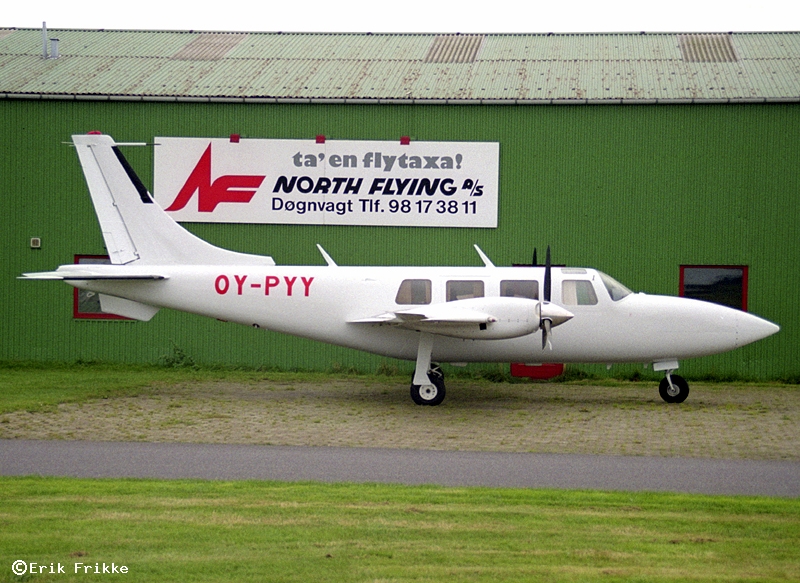
Crash of a Piper PA-61 Aerostar (Ted Smith 601) in Randers

Date & Time: Mar 23, 2000 at 0838 LT
Operator:
Registration:
OY-PYY
Flight Phase:
Flight Type:
Survivors:
Yes
MSN:
61-0768-8063382
YOM:
1980
Country:
Region:
Crew on board:
1
Crew fatalities:
Pax on board:
0
Pax fatalities:
Other fatalities:
Total fatalities:
0
Circumstances:
During the takeoff roll on runway 25 at Randers Airport, the right engine lost power then failed. The pilot continued the takeoff procedure and completed the rotation. Just after liftoff, while in initial climb, smoke spread from the right engine into the cockpit. The pilot attempted an emergency landing when the aircraft crash landed, collided with trees and came to rest about 500 metres past the runway end. The pilot escaped uninjured and the aircraft was damaged beyond repair.

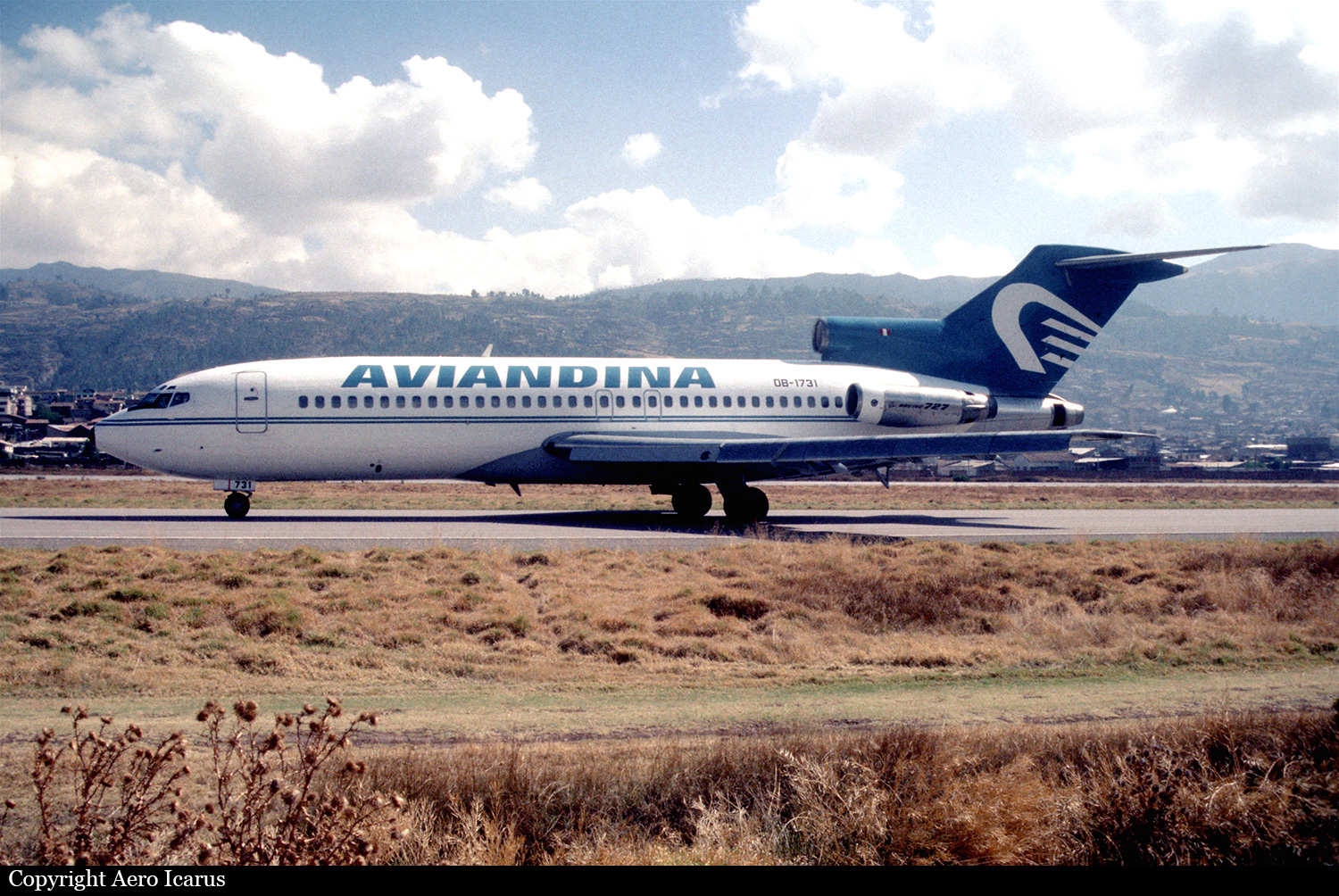
Crash of a Boeing 727-23 in Tacna

Date & Time: Mar 19, 2000 at 1343 LT
Type of aircraft:
Operator:
Registration:
OB-1731
Survivors:
Yes
Schedule:
Arequipa – Juliaca
MSN:
18432/43
YOM:
1964
Location:
Country:
Crew on board:
7
Crew fatalities:
Pax on board:
58
Pax fatalities:
Other fatalities:
Total fatalities:
0
Captain / Total flying hours:
12866
Copilot / Total flying hours:
1140
Aircraft flight hours:
75918
Aircraft flight cycles:
58073
Circumstances:
En route from Arequipa to Juliaca, the crew encountered technical problems with the right main landing gear that was jammed and remained blocked in its main wheel well. The crew attempted to lower the gear manually but as this was impossible, he decided to divert to Tacna for an emergency landing. The airplane landed 280 metres past the runway 20 threshold. After touchdown, the airplane veered to the right and came to rest 600 metres after landing. All 65 occupants evacuated safely. The airplane was not repaired.
Probable cause:
The rupture of the shaft lower assembly, caused by material fatigue, which is located inside the right main landing gear well (MLG, RH) in a very difficult to reach position and hidden within other components, which it passes through. The rupture of this part prevented the landing gear system from completing the secured gear down cycle, it also prevented the emergency manual landing gear lowering system from operating, with no other options the crew made the best decision to perform a forced landing. The part was within its inspection time limits.
Final Report:

Crash of an Embraer EMB-110P1A Bandeirante in Kaduna

Date & Time: Mar 17, 2000 at 1047 LT
Operator:
Registration:
5N-AXM
Survivors:
Yes
Schedule:
Abuja - Jos
MSN:
110-446
YOM:
1984
Country:
Region:
Crew on board:
3
Crew fatalities:
Pax on board:
3
Pax fatalities:
Other fatalities:
Total fatalities:
0
Captain / Total flying hours:
8733
Captain / Total hours on type:
1008.00
Copilot / Total flying hours:
3100
Copilot / Total hours on type:
200
Aircraft flight hours:
10926
Circumstances:
On the day of the accident, the aircraft was engaged in a charter operation for the Central Bank of Nigeria. The first segment of the flight (Lagos - Abuja) was flown by the Commander. The aircraft departed Lagos about 0630 hours UTC and initially at cruise, the crew had a momentary problem setting power on the starboard engine after which the flight continued normally to Abuja. The aircraft which departed Abuja for Jos at 0900 hours UTC had 6 souls on board, 5 hours endurance with the first officer at the controls. At FL 90 and about 30NM from Abuja, the crew again had problems with the cruise power setting on the starboard engine. The torque remained at 1400. The crew retarded the right power lever to the minimum with the aim of achieving a cruise setting of 1300 but the gear warning came on. The Commander at this stage took over the controls from the first officer. At 0923 hours UTC, the aircraft contacted Kaduna Tower that it would be diverting to Kaduna as against its scheduled destination giving its flight level as 90 at a distance of 61 miles and estimating TMA at 24 miles, 'KC' at 41 miles, 6 souls on board and 5 hours endurance at departure. The tower then gave the aircraft an inbound clearance to 'KC' locator maintaining FL 90 and to expect no delay for a locator approach runway 05. Weather report at 0900 hours UTC was also passed to the aircraft as wind 090/05 knots, QNH 1014 and temperature 30°c. At 0928 hours UTC the airplane at about 42 miles, speed between 150-160 kts, requested descent and was cleared to 4,500H, QNH 1014. At about 0935 hours UTC, the pilots contacted tower that they would make a single engine approach because they were having problems controlling power on the starboard engine and it would be shut down. The tower in response, asked whether they would need fire coverage on landing to which the pilots affirmed. The commander then reviewed the single engine approach with the first officer estimating 4,500 ft at 8NM. Approaching 4,500 ft at 11 NM, the crew initiated right engine shut down after which the speed was decayed from 150 to 140 kts. At 0946 hours UTC, the pilot reported 6nm final and field in sight while the tower requested hire to report 4 miles final. Shortly, the controller reported having the aircraft in sight and subsequently cleared it to land on runway 05 giving wind as north easterly 06 knots. Descending at 500ft/min, the commander requested for 25% of flap when the first officer selected full flap. Shortly, the speed started decaying and bleeding faster. When the aircraft was at 2,700 ft high, the speed had already decayed to between 100 - 110 kts. The crew applied full power on the port engine to arrest the speed decay but to no avail . The pilot was trying to correct the descent rate, speed decay and the asymmetry when the stall warning came on. At this juncture, all effort by the controller to establish further contact with the airplane proved abortive. Suddenly, the controller observed a gust of dust in the atmosphere which gave him an indication that the aircraft had crashed. The aircraft crashed into the new VOR/DME site being constructed about 1175m from the threshold of runway 05. Time of accident was 0947 hours UTC.
Probable cause:
The probable cause of this accident was the poor handling by the crew of the one-engine inoperative approach.
The following findings were identified:
- The aircraft was properly registered and certified in accordance with the Civil Aviation Regulations of Nigeria.
- The commander of the aircraft was certified and qualified to take the flight while the first officer did not have a licence on board on the clay of the accident. The licence had expired and yet to he renewed.
- The proficiency check attended by the GWW was Without some critical manoeuvres such as simulated single engine approach and stalls.
- The aircraft on departure from Abuja was to land at Jos but diverted to Kaduna.
- The crew informed Kaduna Control Tower that they were doing to make a single engine (port) approach since they were having problems controlling power of the starboard engine.
- The pilots did not adhere to the laid down procedures for a one-engine inoperative approach.
- Crew coordination was practically lacking in this flight.
- The Control Tower lost contact with the aircraft at about 4NM to the airfield.
- The Landing Configuration of the aircraft was full flaps, gear up with power only on the poet engine.
- The starboard engine propeller was not feathered.
- The aircraft crashed into the new VOR/DME site being constructed about Urn from the threshold of runway 05.
- The final resting position of the aircraft was about 68m from the first point of impact and almost turning 180° from its initial direction (flight path).
- There was power on the port engine as there was severe flexural damage to the propeller blades (tips chip off).
Final Report:

Crash of a Cessna 414 Chancellor near Pandamatenga

Date & Time: Mar 1, 2000 at 1620 LT
Type of aircraft:
Operator:
Registration:
ZS-MDT
Flight Phase:
Flight Type:
Survivors:
Yes
Schedule:
Gaborone - Maun
MSN:
414-0096
YOM:
1970
Country:
Region:
Crew on board:
1
Crew fatalities:
Pax on board:
4
Pax fatalities:
Other fatalities:
Total fatalities:
0
Circumstances:
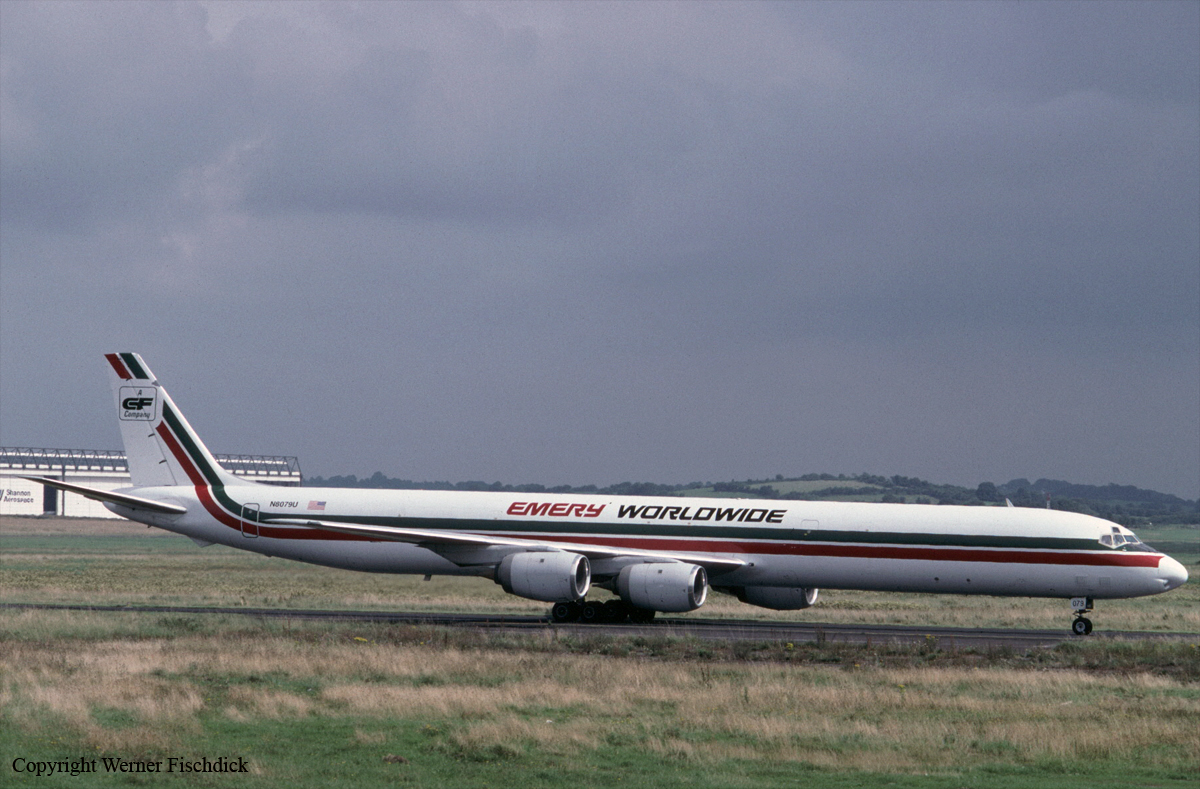
En route from Gaborone to Maun, an oil leak occurred on the left engine. The pilot shut down the left engine and feathered its propeller. Unable to maintain a safe altitude, he elected to make an emergency landing but eventually crash landed in a wooded area located about 128 km southwest of Pandamatenga. All five occupants were injured and the aircraft was destroyed. It was reported that the left engine oil pressure dropped while its temperature increased.

Crash of a Douglas DC-8-71F in Sacramento: 3 killed

Date & Time: Feb 16, 2000 at 1952 LT
Type of aircraft:
Operator:
Registration:
N8079U
Flight Type:
Survivors:
No
Schedule:
Sacramento - Dayton
MSN:
45947
YOM:
1968
Flight number:
EB017
Crew on board:
3
Crew fatalities:
Pax on board:
0
Pax fatalities:
Other fatalities:
Total fatalities:
3
Captain / Total flying hours:
13329
Captain / Total hours on type:
2128.00
Copilot / Total flying hours:
4511
Copilot / Total hours on type:
2080
Aircraft flight hours:
84447
Aircraft flight cycles:
33395
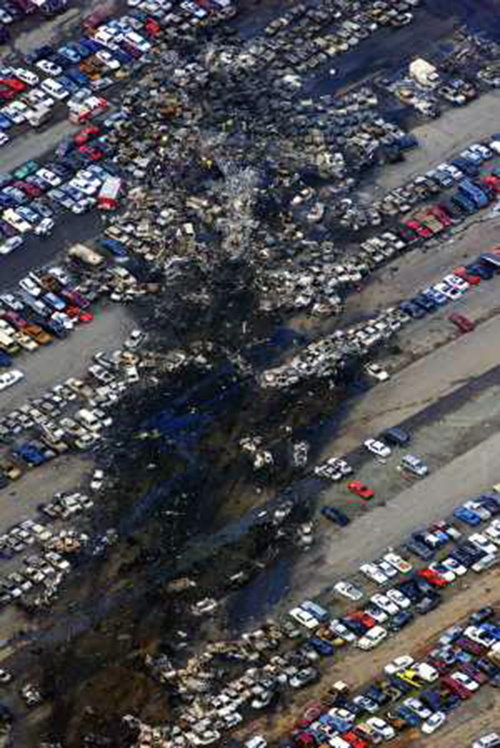
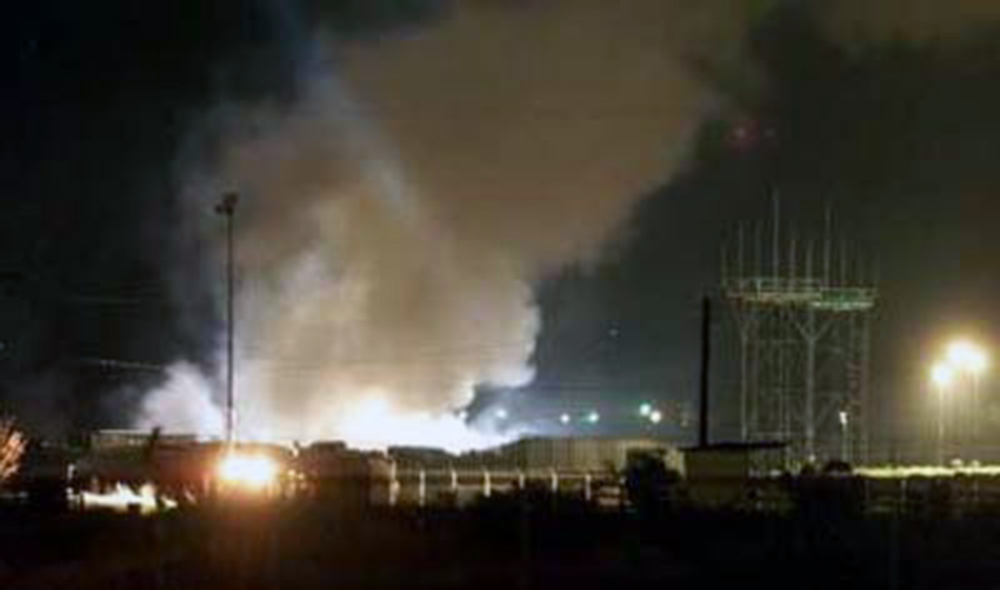
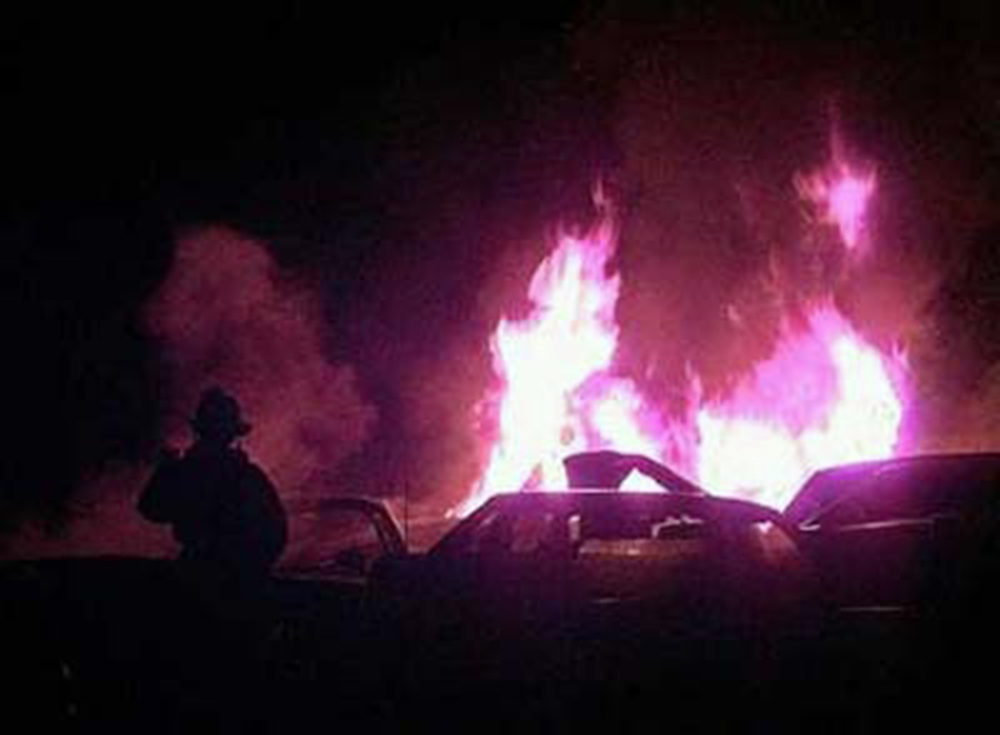
Circumstances:
On February 16, 2000, about 1951 Pacific standard time, Emery Worldwide Airlines, Inc., (Emery) flight 17, a McDonnell Douglas DC-8-71F (DC-8), N8079U, crashed in an automobile salvage yard shortly after takeoff, while attempting to return to Sacramento Mather Airport (MHR), Rancho Cordova, California, for an emergency landing. Emery flight 17 was operating under the provisions of 14 Code of Federal Regulations (CFR) Part 121 as a cargo flight from MHR to James M. Cox Dayton International Airport (DAY), Dayton, Ohio. The flight departed MHR about 1949, with two pilots and a flight engineer on board. The three flight crew members were killed, and the airplane was destroyed. Night visual meteorological conditions prevailed for the flight, which operated on an instrument flight rules (IFR) flight plan.
Probable cause:
A loss of pitch control resulting from the disconnection of the right elevator control tab. The
disconnection was caused by the failure to properly secure and inspect the attachment bolt.
Final Report:

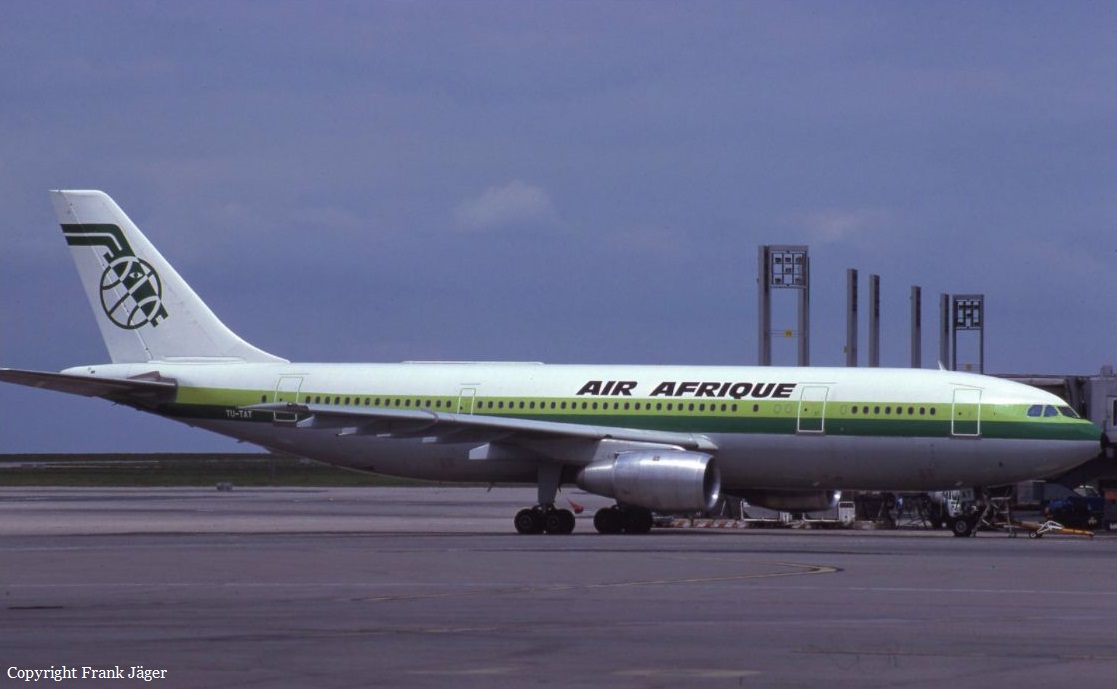
Ground accident of an Airbus A300B4-203 in Dakar

Date & Time: Feb 12, 2000 at 0056 LT
Type of aircraft:
Operator:
Registration:
TU-TAT
Flight Phase:
Survivors:
Yes
Schedule:
Dakar - Paris
MSN:
282
YOM:
1983
Flight number:
RK304
Country:
Region:
Crew on board:
11
Crew fatalities:
Pax on board:
171
Pax fatalities:
Other fatalities:
Total fatalities:
0
Aircraft flight hours:
38400
Aircraft flight cycles:
19600
Circumstances:
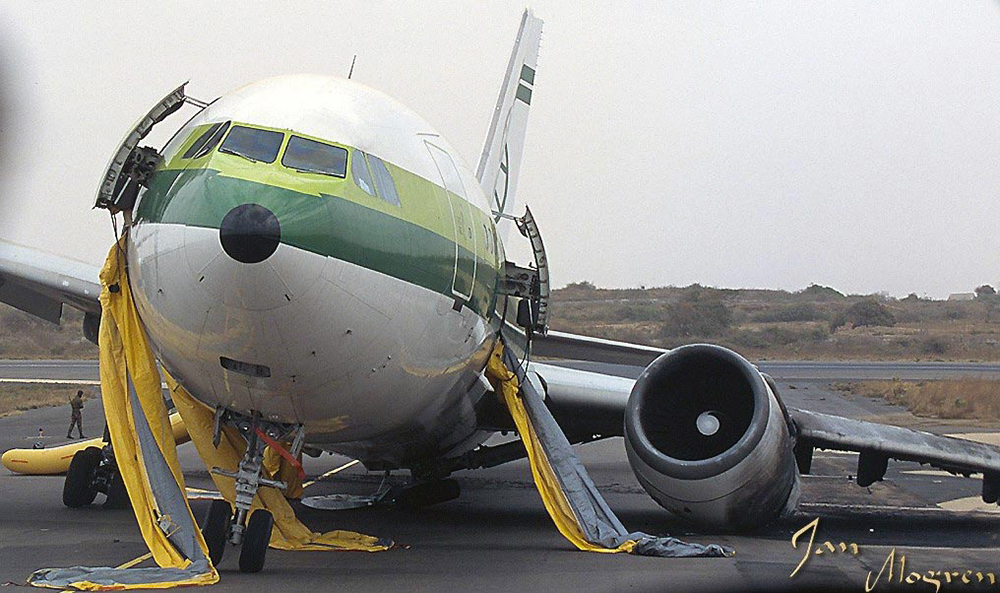
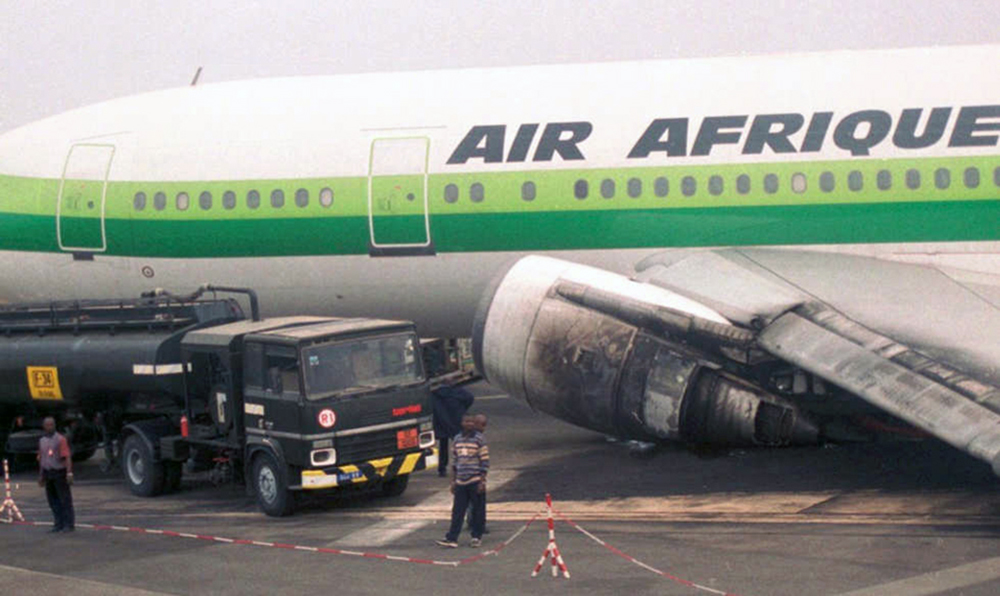
While taxiing for departure at Dakar-Yoff Airport, the left main gear unsafe alarm came on in the cockpit panel. The captain decided to return to the apron to proceed to an inspection when the left main gear collapsed. The engine n°1 struck the ground and partially torn off. A fire erupted and quickly spread to the left wing. All 182 occupants evacuated safely but the aircraft was considered as damaged beyond repair. It just came out from a C Check maintenance program.
Probable cause:
A crossing of the flexible tubing of the hydraulic connection controlling the locking of the left gear failed, causing the left main gear to retract.

Crash of a Douglas C-47B-DK in Mexico City

Date & Time: Feb 3, 2000
Operator:
Flight Phase:
Flight Type:
Survivors:
Yes
Schedule:
Mexico City - Mexico City
Country:
Crew on board:
2
Crew fatalities:
Pax on board:
0
Pax fatalities:
Other fatalities:
Total fatalities:
0
Circumstances:
The crew departed Mexico City-Benito Juarez Airport on a local post maintenance test flight. After takeoff, while in initial climb, both engines lost power simultaneously. The crew attempted an emergency landing on a soccer field when the aircraft crash landed near a motorway. Both pilots escaped uninjured while the aircraft was damaged beyond repair.