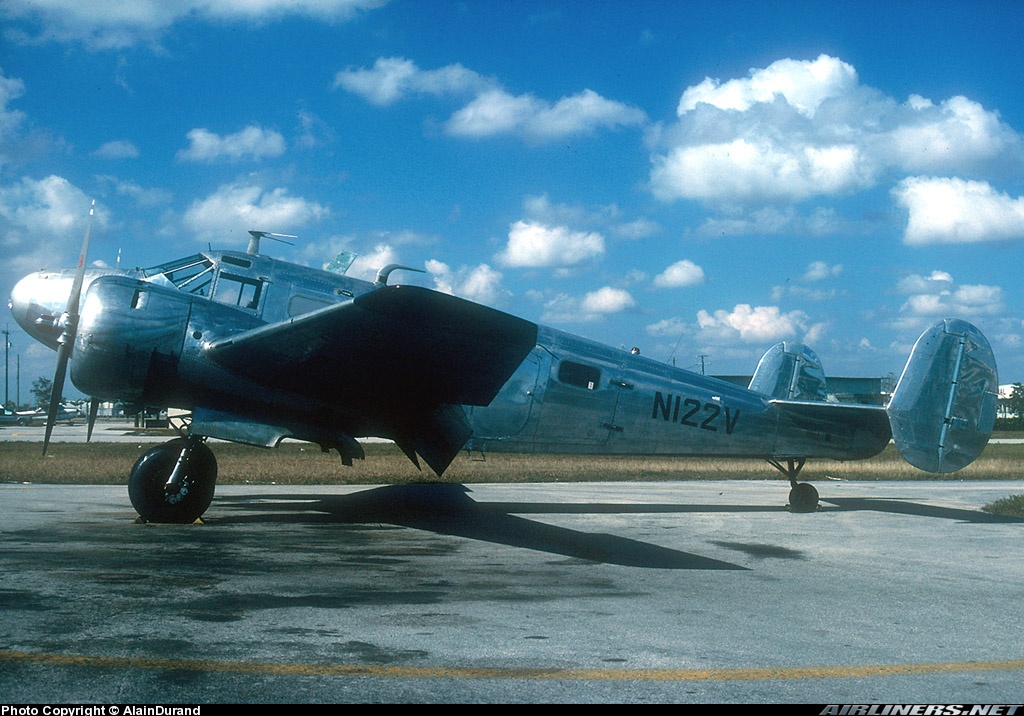
Crash of a Beechcraft D18S off Bimini

Date & Time: Feb 2, 2000 at 1407 LT
Type of aircraft:
Operator:
Registration:
N122V
Flight Phase:
Flight Type:
Survivors:
Yes
Schedule:
Miami - Nassau
MSN:
A-828
YOM:
1952
Location:
Country:
Crew on board:
1
Crew fatalities:
Pax on board:
1
Pax fatalities:
Other fatalities:
Total fatalities:
0
Circumstances:
On February 2, 2000, about 1407 eastern standard time, a Beech D18S, N122V, registered to South Florida Aircraft Leasing, Inc., operated by Florida Air Cargo, Inc., was ditched in the Atlantic Ocean, approximately 47 miles east of Bimini, Bahamas. Visual meteorological conditions prevailed at the time and a visual flight rules (VFR) flight plan was filed for the 14 CFR Part 135 non-scheduled, international, cargo flight. The airplane was substantially damaged and the commercial-rated pilot was not injured, one passenger sustained minor injuries. The flight originated about 1305 from the Opa Locka Airport, Opa Locka, Florida. The pilot stated that the flight departed with all five fuel tanks full of fuel and departed with the left fuel selector positioned to the "main tank" position. The flight continued and approximately 10 minutes after takeoff, he switched the left fuel selector to the auxiliary position and remained on that tank for approximately 35 minutes. When the flight was approximately 20 miles east of Bimini, he switched the left fuel selector to the main tank position where it remained for 5 minutes before he added climb power. While about 45 miles east of Bimini, climbing through 2,300 feet with a good rate of climb, the left manifold pressure dropped to 27 inches and the propeller rpm dropped to 1,300. He turned to fly to Bimini, broadcast a mayday call, and reported no unusual vibration; the fuel pressure and oil pressure gauges indicated normal. He repositioned the fuel selector but the left engine would not restart. He then feathered the left propeller and secured the engine but was unable to maintain altitude with full power applied to the right engine. The airplane was ditched in a slight left wing low attitude and the left engine separated from the airframe. Both occupants exited the airplane, remained in the water for 47 minutes, then were spotted by a U.S. Coast Guard Falcon airplane. They were rescued by a pleasure boat and transported to the east coast of Florida.

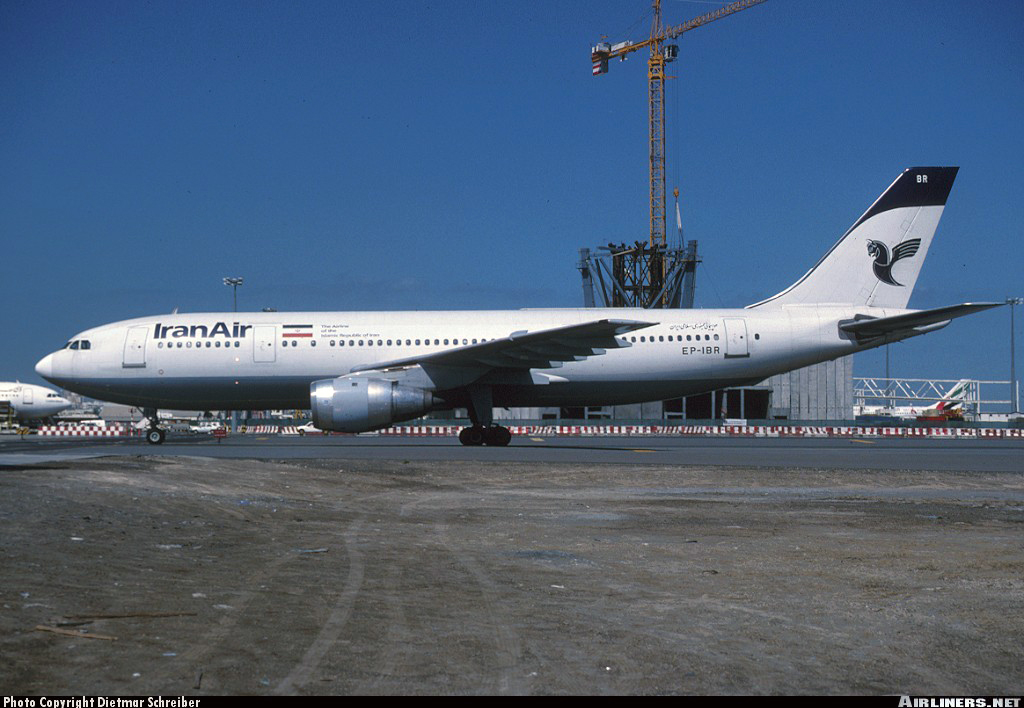
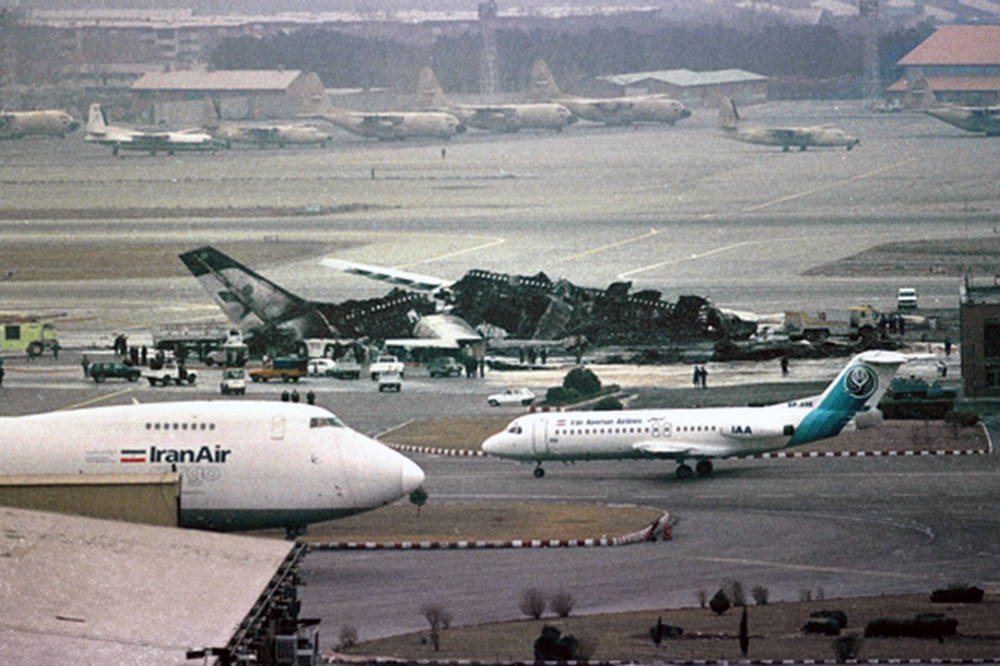
Ground fire of an Airbus A300B2-203 in Tehran

Date & Time: Feb 1, 2000 at 1030 LT
Type of aircraft:
Operator:
Registration:
EP-IBR
Flight Phase:
Survivors:
Yes
MSN:
61
YOM:
1979
Country:
Region:
Crew on board:
3
Crew fatalities:
Pax on board:
0
Pax fatalities:
Other fatalities:
Total fatalities:
3
Aircraft flight hours:
33700
Aircraft flight cycles:
28100
Circumstances:
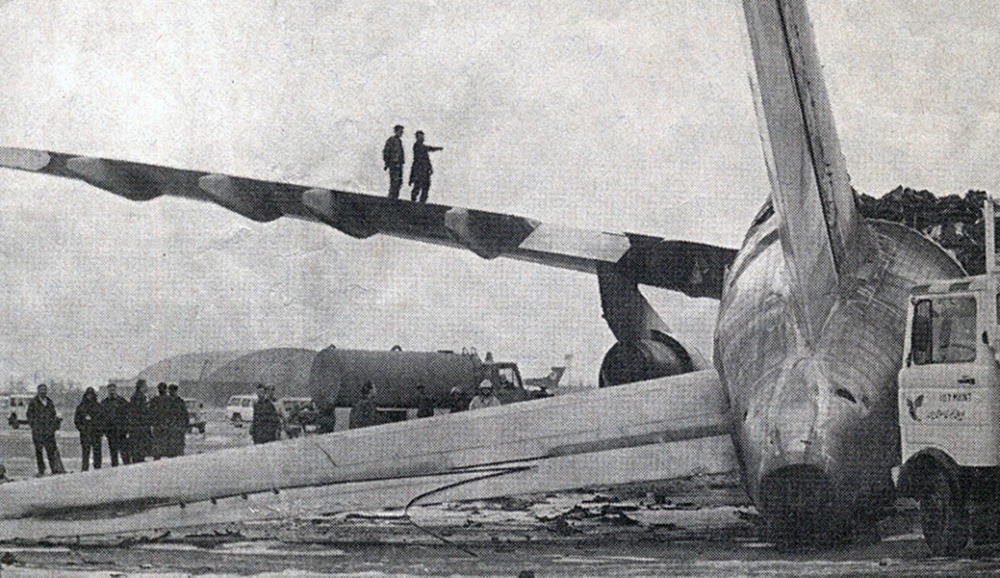
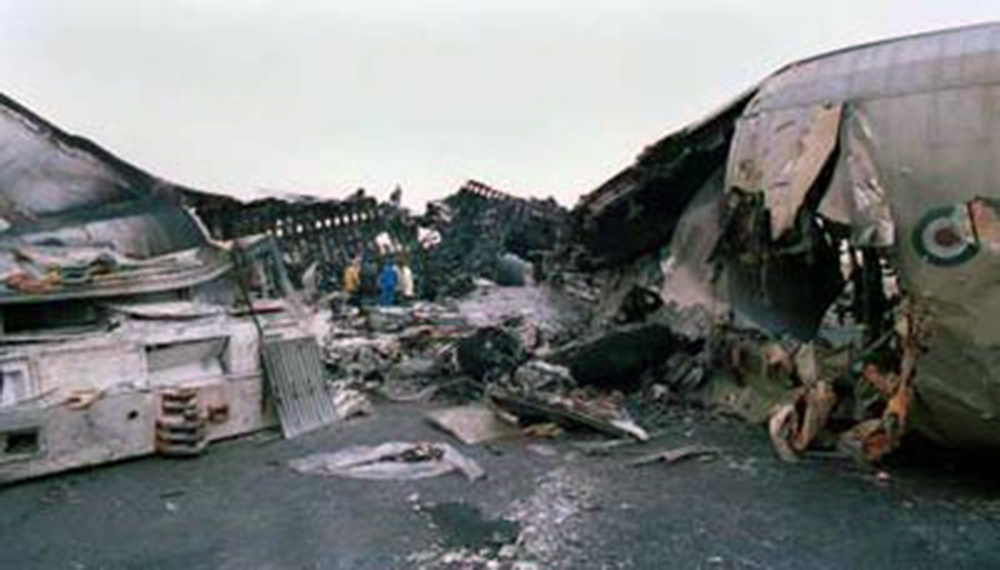
The aircraft was towed at Tehran-Mehrabad Airport when it was struck by a IRIAF Lockheed C-130 Hercules that crashed on takeoff. At impact, both aircraft exploded and were totally destroyed by a post crash fire. All six crew members on board the Hercules were killed as well as three people who were on board the Airbus.
Probable cause:
It is believed that the Hercules went out of control upon takeoff following an engine failure.

Crash of a Lockheed C-130 Hercules in Tehran: 6 killed

Date & Time: Feb 1, 2000 at 1030 LT
Type of aircraft:
Operator:
Flight Phase:
Flight Type:
Survivors:
No
Schedule:
Tehran - Hamadan
Country:
Region:
Crew on board:
6
Crew fatalities:
Pax on board:
0
Pax fatalities:
Other fatalities:
Total fatalities:
6
Circumstances:
The four engine aircraft departed Tehran-Mehrabad Airport on a training flight to Hamadan, carrying six crew members. At liftoff from runway 29R, the aircraft deviated to the right and crashed on an Iran Air Airbus A300B2-203 that was towed. Both aircraft exploded instantly and were totally destroyed by a post crash fire. All six crew members on board the Hercules were killed as well as three people who were on board the Airbus.
Probable cause:
It is believed that the Hercules went out of control upon takeoff following an engine failure.

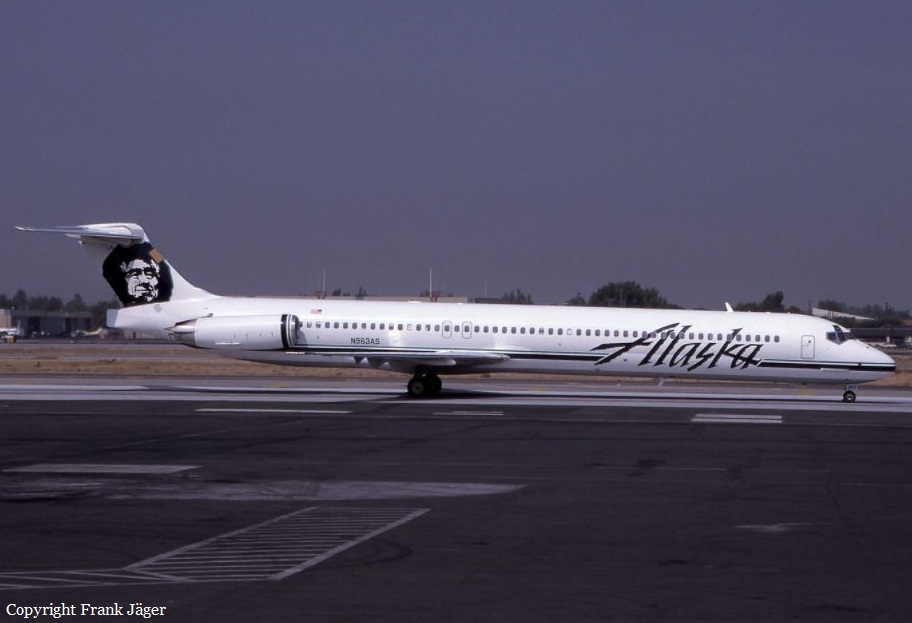
Crash of a McDonnell Douglas MD-83 off Anacapa Island: 88 killed

Date & Time: Jan 31, 2000 at 1620 LT
Type of aircraft:
Operator:
Registration:
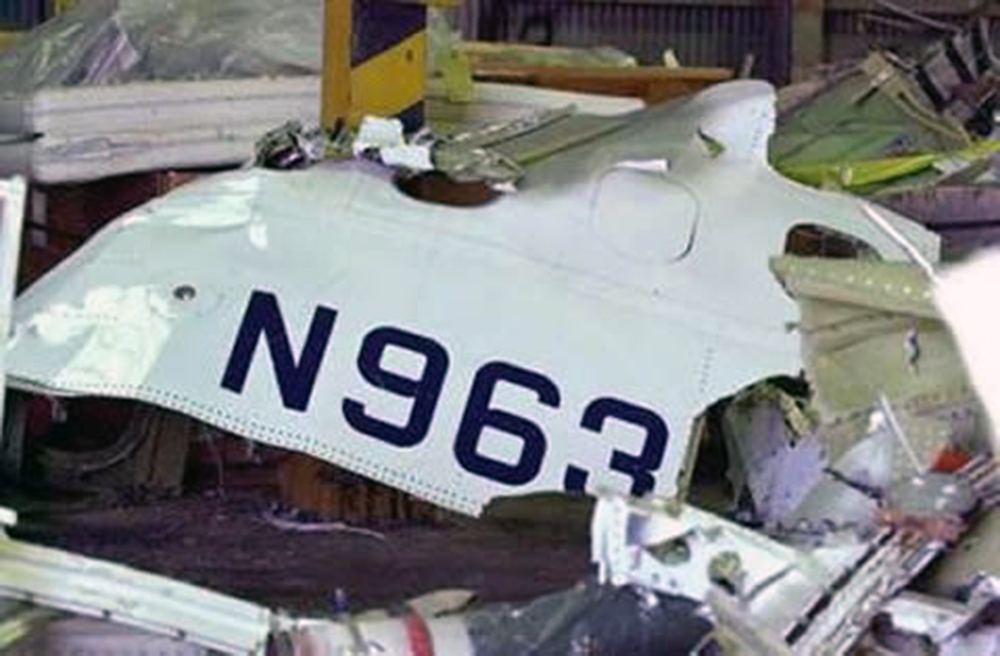
N963AS
Flight Phase:
Survivors:
No
Schedule:
Puerto Vallarta - San Francisco - Seattle - Anchorage
MSN:
53077
YOM:
1992
Flight number:
AS261
Crew on board:
5
Crew fatalities:
Pax on board:
83
Pax fatalities:
Other fatalities:
Total fatalities:
88
Captain / Total flying hours:
10460
Captain / Total hours on type:
4150.00
Copilot / Total flying hours:
8140
Copilot / Total hours on type:
8060
Aircraft flight hours:
26584
Aircraft flight cycles:
14315
Circumstances:
On January 31, 2000, about 1621 Pacific standard time, Alaska Airlines, Inc., flight 261, a McDonnell Douglas MD-83, N963AS, crashed into the Pacific Ocean about 2.7 miles north of Anacapa Island, California. The 2 pilots, 3 cabin crewmembers, and 83 passengers on board were killed, and the airplane was destroyed by impact forces. Flight 261 was operating as a scheduled international passenger flight under the provisions of 14 Code of Federal Regulations Part 121 from Lic Gustavo Diaz Ordaz International Airport, Puerto Vallarta, Mexico, to Seattle-Tacoma International Airport, Seattle, Washington, with an intermediate stop planned at San Francisco International Airport, San Francisco, California. Visual meteorological conditions prevailed for the flight, which operated on an instrument flight rules flight plan.
Probable cause:
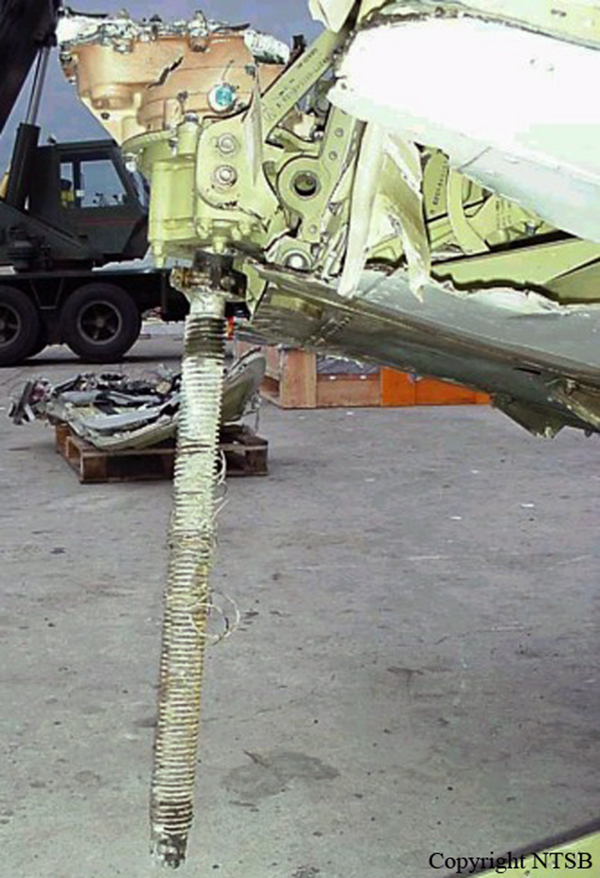
A loss of airplane pitch control resulting from the in-flight failure of the horizontal stabilizer trim system jackscrew assembly's acme nut threads. The thread failure was caused by excessive wear resulting from Alaska Airlines' insufficient lubrication of the jackscrew assembly. Contributing to the accident were Alaska Airlines' extended lubrication interval and the Federal Aviation Administration's (FAA) approval of that extension, which increased the likelihood that a missed or inadequate lubrication would result in excessive wear of the acme nut threads, and Alaska Airlines' extended end play check interval and the FAA's approval of that extension, which allowed the excessive wear of the acme nut threads to progress to failure without the opportunity for detection. Also contributing to the accident was the absence on the McDonnell Douglas MD-80 of a fail-safe mechanism to prevent the catastrophic effects of total acme nut thread loss.
Final Report:

Crash of a Mitsubishi MU-2B-26A Marquise in San Antonio: 2 killed

Date & Time: Jan 22, 2000 at 1433 LT
Type of aircraft:
Operator:
Registration:
N386TM
Flight Phase:
Flight Type:
Survivors:
No
Schedule:
San Antonio - Tucson
MSN:
386
YOM:
1978
Crew on board:
2
Crew fatalities:
Pax on board:
0
Pax fatalities:
Other fatalities:
Total fatalities:
2
Captain / Total flying hours:
2000
Captain / Total hours on type:
21.00
Copilot / Total flying hours:
950
Copilot / Total hours on type:
5
Aircraft flight hours:
3717
Aircraft flight cycles:
3529
Circumstances:
Witnesses reported that during the airplane's takeoff roll they heard a heard a series of repeated sounds, which they described as similar to a "backfire" or "compressor stall." Several witnesses reported seeing the airplane's right propeller "stopped." One witness reported that as the airplane lifted off the ground, he heard "a loud cracking sound followed by an immediate prop wind down into feather." He continued to watch the airplane, as the gear was retracted and the airplane entered a climb and right turn. Subsequently, the airplane pitched up, entered a "Vmc roll-over," followed by a 360-degree turn, and then impacted the ground. Radar data indicated the airplane took off and climbed on runway heading to a maximum altitude of about 200 feet agl. The airplane than entered a right turn and began to lose altitude. A radar study revealed that the airplane's calibrated airspeed was 97 knots when the last radar return was recorded. According to the flight manual, minimum controllable airspeed (Vmc) was 93 knots. Examination of the accident site revealed that the airplane impacted the ground in a near vertical attitude. A post-crash fire erupted, which destroyed all cockpit instruments and switches. Examination of the propellers revealed that neither of the
propellers were in the feathered position at the time of impact. Examination of the left engine revealed signatures consistent with operation at the time of impact. Examination of the right engine revealed that the second stage impeller shroud exhibited static witness marks indicating that the engine was not operating at the time of impact. However, rotational scoring was also observed through the entire circumference of the impeller shroud. The static witness marks were on top of the rotational marks. Examination of the right engine revealed no anomalies that would have precluded normal operation. The left seat pilot had accumulated a total flight time of about 950 hours of which 16.9 hours were in an MU-2 flight simulator and 4.5 hours were in the accident airplane. Although he had started an MU-2 Pilot-Initial training course, he did not complete the course. The right seat pilot had accumulated a total flight time of about 2,000 hours of which 20.0 hours were in an MU-2 flight simulator and 20.6 hours were in the accident airplane. He had successfully completed an MU-2 Pilot-Initial training course one month prior to the accident.
Probable cause:
The pilot's failure to maintain the minimum controllable airspeed following a loss of engine power during the initial takeoff climb. Contributing factors to the accident were both pilot's lack of total experience in the make and model of the accident airplane and the loss of right engine power for an undetermined reason.
Final Report:

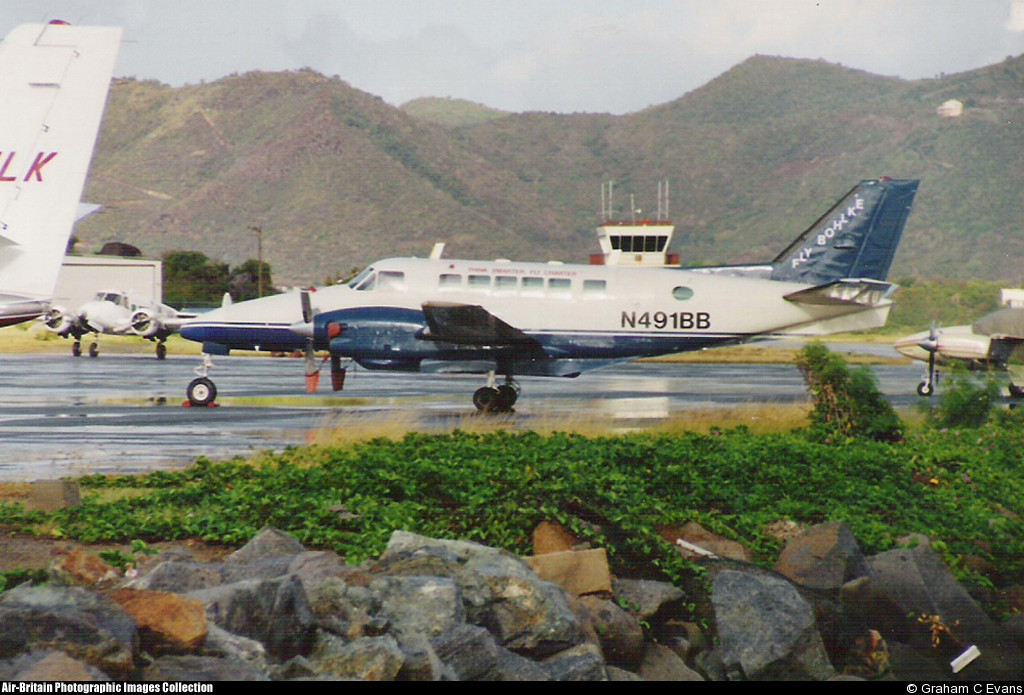
Crash of a Beechcraft 99A Airliner in Saint-Barthélemy

Date & Time: Dec 31, 1999 at 1055 LT
Type of aircraft:
Registration:
N491BB
Survivors:
Yes
Schedule:
Christiansted - Saint-Barthélemy
MSN:
U-97
YOM:
1969
Crew on board:
2
Crew fatalities:
Pax on board:
7
Pax fatalities:
Other fatalities:
Total fatalities:
0
Circumstances:
On December 31, 1999, at about 1055 Atlantic standard time, a Beech 99A, N491BB, registered to Alberta Aircraft Leasing Inc., operated by Bohlke International Airways, as a 14 CFR Part 135 on-demand air taxi, experienced a collapse of the main landing gear on landing at St. Barthelemy, (TFFJ) French Antilles. Visual meteorological conditions prevailed and no flight plan was filed. The airplane sustained substantial damage. The airline transport-rated pilot, copilot, and seven passengers reported no injuries. The flight originated from St. Croix, (STX) Virgin Islands, about 55 minutes before the accident. The accident was initially reported to the NTSB on January 5, 2000, by the FBI. The pilot stated they departed STX at about 1000. They had to make a 360-degree turn upon arrival at TFFJ due to other arriving traffic. They completed the descent arrival checklist and turned an 8- mile final. At a 1 1/2-mile final the flaps were lowered to the full down position, the propellers were set at 2,000 rpm, airspeed 95 knots, and all three landing gear lights were illuminated. On touchdown the airplane yawed to the left. Right rudder and aileron was applied with negative results. Power was increased and the airplane continued to yaw to the left. The airplane went off the left side of the runway and ground looped, separating the right main landing gear. The airplane came to a complete stop on its fuselage with the nose gear extended. They returned to the airplane on January 3, 2000. The airplane was lifted with a forklift and the left main landing gear was observed in the retracted position. A commuter pilot informed them that he observed the landing on the day of the accident. He stated he observed the left main landing gear moving forward and backwards.

Ground fire of an IAI-1124A Westwind II in Milwaukee

Date & Time: Dec 26, 1999 at 0715 LT
Type of aircraft:
Registration:
N422BC
Flight Phase:
Survivors:
Yes
Schedule:
Milwaukee - Waukesha
MSN:
302
YOM:
1980
Crew on board:
2
Crew fatalities:
Pax on board:
4
Pax fatalities:
Other fatalities:
Total fatalities:
0
Captain / Total flying hours:
14363
Captain / Total hours on type:
2024.00
Aircraft flight hours:
7975
Circumstances:
During the activation of the crew oxygen system a fire erupted which consumed the entire pressure vessel. Representatives from the National Aeronautics and Space Administration's (NASA) Johnson Space Center (JSC), White Sands Testing Facility (WSTF), Las Cruces, New Mexico, examined the retained oxygen system components. Examination of these components revealed that the fire's initiation location was the first stage pressure reducer located in the oxygen regulator assembly.
Probable cause:
The failure of the first stage pressure reducer in the oxygen regulator assembly.
Final Report:

Crash of a Cessna 208A Caravan I in João Pessoa

Date & Time: Dec 8, 1999 at 1950 LT
Type of aircraft:
Operator:
Registration:
PT-OHA
Flight Phase:
Flight Type:
Survivors:
Yes
Schedule:
João Pessoa – Recife
MSN:
208-0097
YOM:
1986
Country:
Crew on board:
2
Crew fatalities:
Pax on board:
0
Pax fatalities:
Other fatalities:
Total fatalities:
0
Captain / Total flying hours:
4000
Captain / Total hours on type:
1900.00
Copilot / Total flying hours:
6000
Copilot / Total hours on type:
2100
Circumstances:
Few minutes after takeoff from João Pessoa-Presidente Castro Pinto Airport, while on a cargo flight to Recife, the crew reported engine problems and elected to return. Unable to maintain a safe altitude, the crew attempted an emergency landing when the aircraft struck trees and crashed near a motorway. Both pilots were injured and the aircraft was damaged beyond repair.
Probable cause:
Engine failure due to poor maintenance. The following contributing factors were identified:
- Maintenance procedures not followed by the operator mechanics,
- Poor crew coordination,
- Lack of crew training.
Final Report:

Crash of a Piper PA-31-350 Navajo Chieftain in Johannesburg: 10 killed

Date & Time: Dec 6, 1999 at 0706 LT
Registration:
ZS-OJY
Flight Phase:
Survivors:
No
Schedule:
Johannesburg - Oranjemund
MSN:
31-7405210
YOM:
1974
Flight number:
FC350
Country:
Region:
Crew on board:
1
Crew fatalities:
Pax on board:
9
Pax fatalities:
Other fatalities:
Total fatalities:
10
Captain / Total flying hours:
1444
Captain / Total hours on type:
445.00
Aircraft flight hours:
8422
Circumstances:
The charter operator was involved in a weekly operation to transport computer programmers and training staff, from a Johannesburg company, from Rand Airport to Oranjemund in Namibia. The outward leg of the flights to Oranjemund took place on the Monday morning and the pilot and aircraft stayed at Oranjemund for the week. The return flight to Johannesburg usually took place on the Friday afternoon. On the morning of the accident flight the set time of departure was 0500z. The passengers were assisted through the process of passport control, boarding and settling in by the operator's staff. The baggage was put next to the aircraft. According to a witness the pilot carried out the loading of the baggage. An instrument flight plan was filed and the pilot obtained departure clearance before the aircraft was taxied to the holding point. According to the air traffic controller, the take-off run was normal for this type of aircraft. Shortly after take-off the pilot declared an engine failure and requested to be routed back to land on the runway. Seconds later the pilot communicated they were going to crash. Several witnesses stated that the aircraft was very low when it passed over the highway close to the accident site. One of the witnesses stated that he noticed the right-hand engine stopped and he could see the blades of the propeller. The fire fighting services were alerted. It was apparent by the smoke that the aircraft crashed on an extended line of Runway 29. The accident took place at 0506z in daylight conditions. All 10 occupants were killed.
Probable cause:
The following findings were identified:
- The precipitative cause of this accident was the failure of the exhaust pipe segment, which caused the right–hand engine to lose power/fail.
- The overloaded condition of the aircraft was thus a highly significant contributory factor.
- The pilot operating the aircraft in an overloaded condition is regarded as a significant contributing factor.
- The company’s lack of flight operations management experience, professional flight standards supervision and an operational safety management program are regarded as significant contributing factors.
- The anomalies noted in regulatory oversight of the operator (airworthiness and flight operations surveillance) by the CD:CAA and CAA are regarded as possible contributing factors.
Final Report:

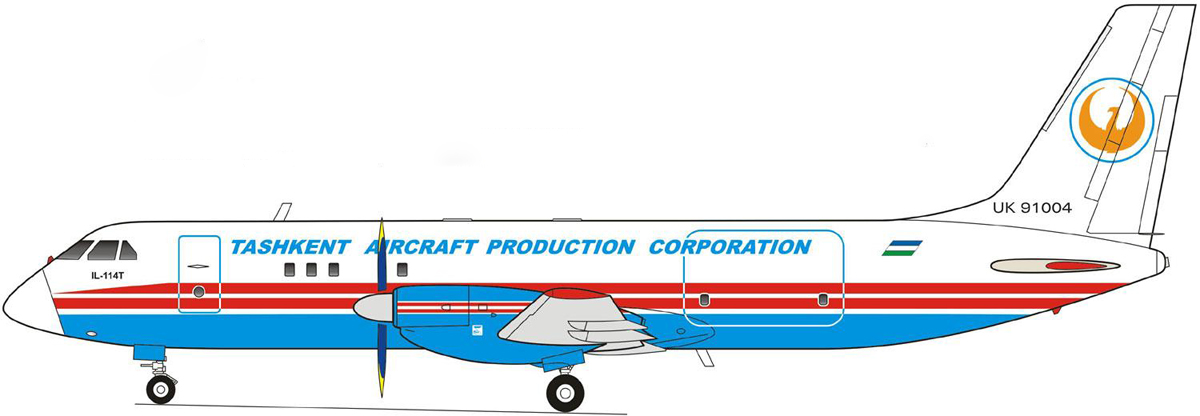
Crash of an Ilyushin II-114T in Moscow: 5 killed

Date & Time: Dec 5, 1999 at 0512 LT
Type of aircraft:
Operator:
Registration:
UK-91004
Flight Phase:
Flight Type:
Survivors:
Yes
Schedule:
Moscow - Tashkent
MSN:
10838 00305
YOM:
1998
Country:
Region:
Crew on board:
3
Crew fatalities:
Pax on board:
4
Pax fatalities:
Other fatalities:
Total fatalities:
5
Aircraft flight hours:
240
Aircraft flight cycles:
123
Circumstances:
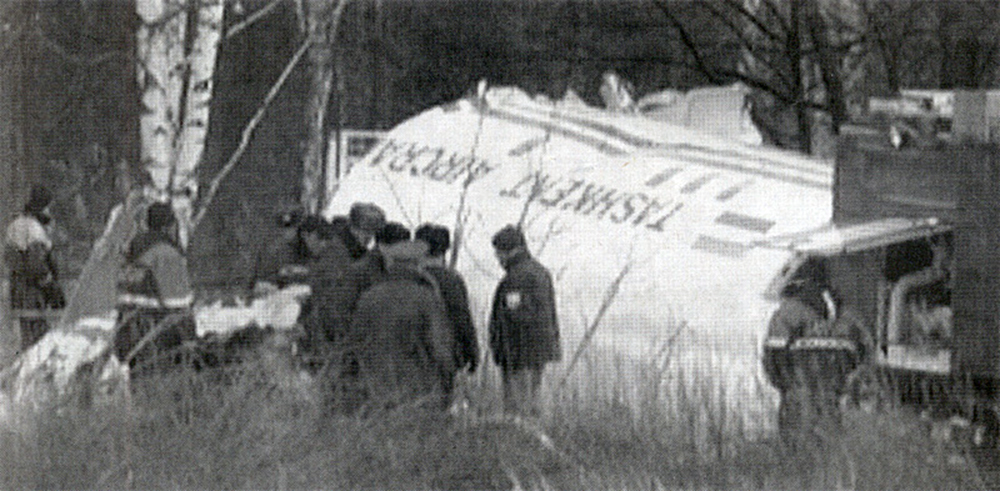
While taxiing at Moscow-Domodedovo Airport, the aircraft encountered strong crosswinds and the rudder got stuck in the full left position. The flight engineer suggested the captain to return to the apron to proceed to an inspection but the pilot prefered to takeoff. After liftoff from runway 32L, while climbing to a height of about 24 metres, the aircraft went out of control and crashed in a wooded area located 365 metres past the runway end. Two occupants were seriously injured and five others were killed.
Probable cause:
It was determined that the rudder was blocked in the full left position prior to takeoff, probably due to the strong crosswinds encountered during the taxi procedure.