Crash of a Mitsubishi MU-2B-35 Marquise in Den Helder

Date & Time: Jul 20, 2000
Type of aircraft:
Operator:
Registration:
N8484T
Flight Type:
Survivors:
Yes
Schedule:
Den Helder - Den Helder
MSN:
617
YOM:
1973
Country:
Region:
Crew on board:
2
Crew fatalities:
Pax on board:
0
Pax fatalities:
Other fatalities:
Total fatalities:
0
Captain / Total flying hours:
5050
Circumstances:
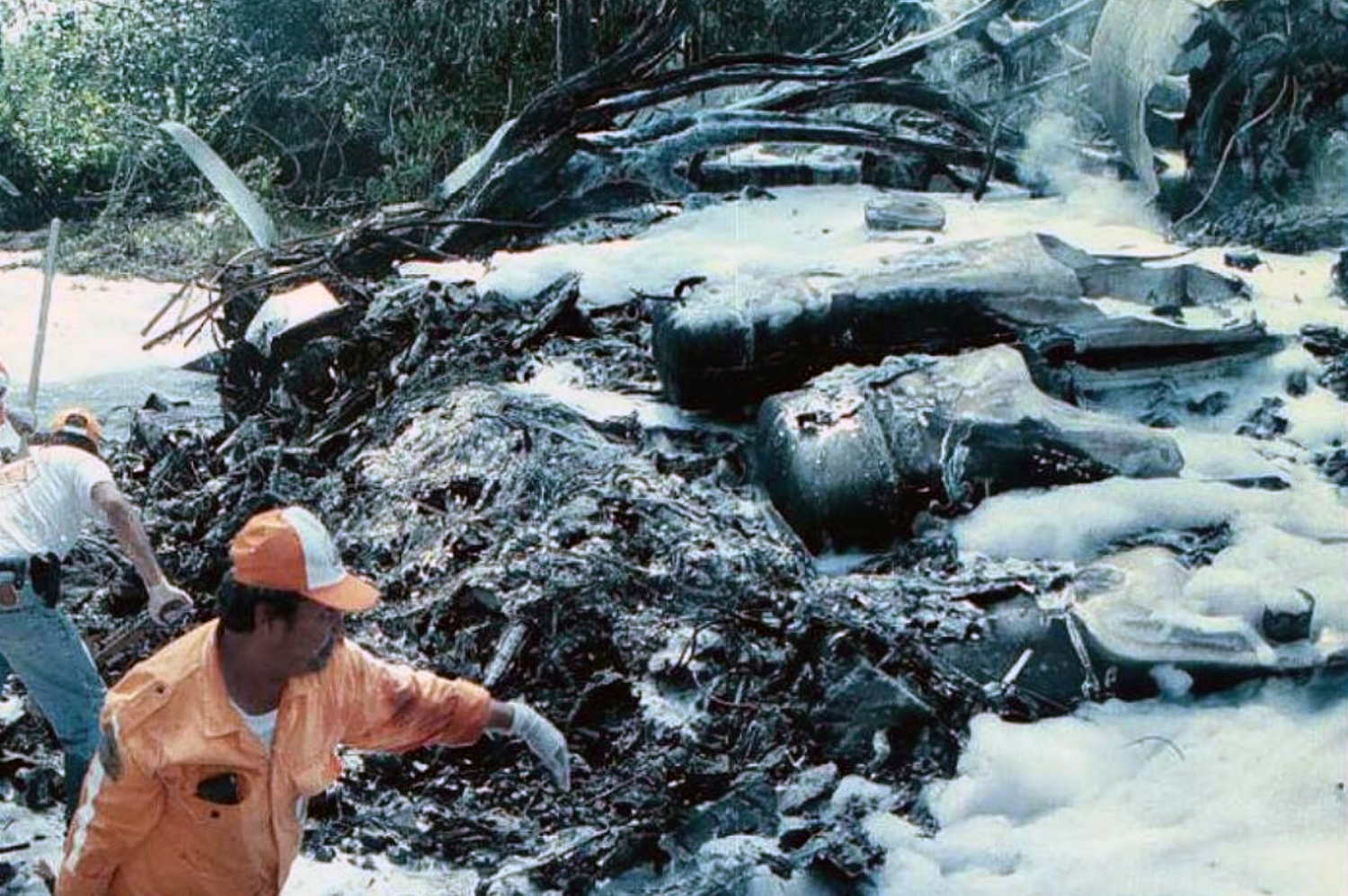
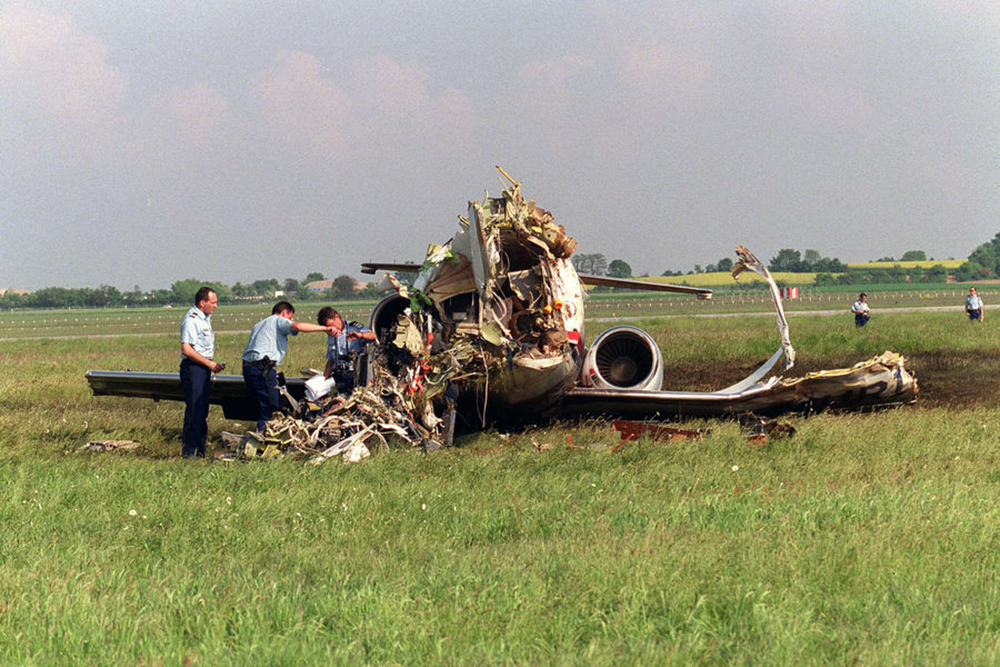
The aircraft departed Den Helder-De Kooy Airport on a radar tracking flight over the North Sea. Following an uneventful mission, the crew was returning to De Kooy Airport. After touchdown on runway 03, the crew activated the thrust reverser systems when the aircraft lost controllability. The pilot attempted to maintain control and selected the left throttle from 'reverse' again to turn to the right. Eventually, he feathered the right propeller and cut off the fuel supply, causing the right engine to stop. The aircraft veered off runway to the left and came to rest in a ditch. Both pilots escaped uninjured and the aircraft was damaged beyond repair.
Probable cause:
The landing speed, the touchdown point, the runway length and runway condition were considered as good. The problem was the consequence of an expired adjustment screw of the speed controller ('prop governor') on the right engine, so that it did not come into 'reverse pitch' but continued to provide forward thrust, causing an asymmetric aerodynamic braking effect. It was also determined that the Beta light indicator burned and could not light on, preventing the pilot from a possible issue on the reverse thrust system.
Final Report:

Crash of a Cessna 208 Caravan I in Nairobi

Date & Time: Jul 12, 2000
Type of aircraft:
Operator:
Registration:
5Y-JAO
Flight Phase:
Survivors:
Yes
MSN:
208-0202
YOM:
1991
Country:
Region:
Crew on board:
0
Crew fatalities:
Pax on board:
0
Pax fatalities:
Other fatalities:
Total fatalities:
0
Circumstances:
At liftoff, the engine failed. The aircraft stalled and crashed along the runway. There were no casualties but the aircraft was damaged beyond repair.
Probable cause:
Engine failure at takeoff for unknown reasons.

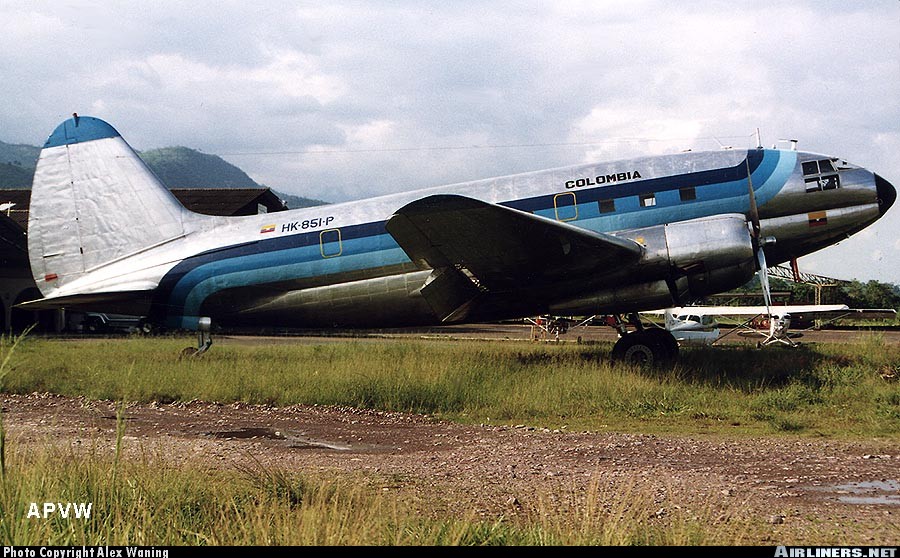
Crash of a Curtiss C-46A-60-CS Commando in Villavicencio: 10 killed

Date & Time: Jul 9, 2000 at 0825 LT
Type of aircraft:
Registration:
HK-851P
Flight Phase:
Survivors:
Yes
Schedule:
Villavicencio – Mitú
MSN:
383
YOM:
1945
Country:
Crew on board:
2
Crew fatalities:
Pax on board:
17
Pax fatalities:
Other fatalities:
Total fatalities:
10
Aircraft flight hours:
38837
Circumstances:
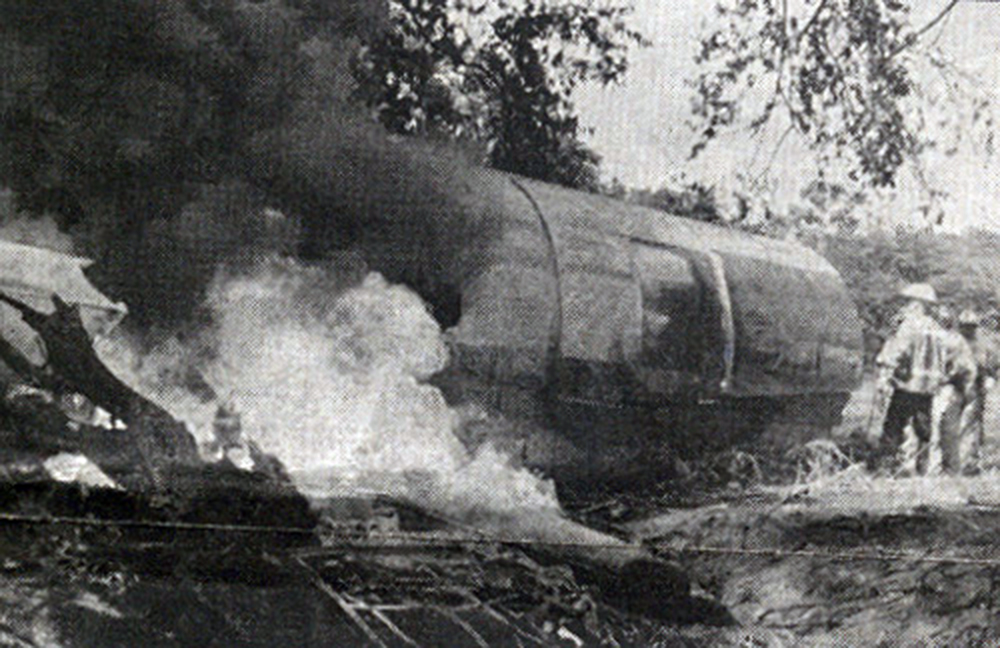
The aircraft, registered to a private individual, departed Villavicencio-La Vanguardia Airport on a charter flight to Mitú, carrying 17 passengers and two pilots while the aircraft was certified to carry 13 passengers maximum. The crew filed an flight plan with only six people on board. Shortly after takeoff, while in initial climb, the right engine caught fire. The crew activated the fire extinguishing system but as both bottles were empty, the fire could not be contained. The captain initiated a right hand turn to return to the airport when the aircraft stalled and crashed, bursting into flames, two minutes after takeoff. Both pilots and eight passengers were killed while nine other people were injured. The aircraft was totally destroyed by impact forces and a post crash fire.
Probable cause:
The decision and inappropriate operation of the pilot to return with a right hand turn with an uncontrolled fire in the n°2 engine leading to a loss of lift on the wing on that side and a loss of control over the aircraft. It was also determined that the aircraft was not airworthy at the time of the accident. The crew flying experience could not be determined as the crew failed to complete their personal logbook. Also, the captain's medical certificate was not valid anymore.

Crash of a GAF Nomad N.22C off Cagayancillo: 14 killed

Date & Time: Jul 2, 2000 at 1050 LT
Type of aircraft:
Operator:
Registration:
86
Flight Type:
Survivors:
Yes
Schedule:
Cagayancillo – Puerto Princesa
MSN:
86
YOM:
1979
Country:
Region:
Crew on board:
4
Crew fatalities:
Pax on board:
11
Pax fatalities:
Other fatalities:
Total fatalities:
14
Circumstances:
Few minutes after takeoff from Cagayancillo Airport, the pilot reported engine problems and was cleared to return for an emergency landing. On final approach, the aircraft was not properly aligned so the captain increased engine power and initiated a go-around. The aircraft lost height and crashed in the sea about 2 km offshore. A passenger was rescued while 14 other occupants were killed, among them General Santiago Madrid, Chief of the southwestern military command.
Probable cause:
Engine failure for unknown reasons.

Crash of a Kawasaki C-1A off Shimano: 8 killed

Date & Time: Jun 27, 2000
Type of aircraft:
Operator:
Registration:
88-1027
Flight Phase:
Flight Type:
Survivors:
No
Schedule:
Yonago AFB - Yonago AFB
MSN:
8027
Location:
Country:
Region:
Crew on board:
8
Crew fatalities:
Pax on board:
0
Pax fatalities:
Other fatalities:
Total fatalities:
8
Circumstances:
The crew (four pilots and four technicians) departed Yonago-Miho AFB on a post maintenance local flight. After several circuits, while in cruising altitude, the aircraft entered an uncontrolled descent and crashed in the sea off Shimano. All eight occupants were killed.

Crash of an Ilyushin II-76MD at Privolzhskiy AFB

Date & Time: Jun 20, 2000 at 1750 LT
Type of aircraft:
Operator:
Registration:
RA-76723
Flight Type:
Survivors:
Yes
Schedule:
Makhatchkala – Privolzhskiy – Vozzhayevka – Khabarovsk
MSN:
00734 75245
YOM:
1987
Country:
Region:
Crew on board:
7
Crew fatalities:
Pax on board:
221
Pax fatalities:
Other fatalities:
Total fatalities:
0
Circumstances:
The aircraft departed Makhachkala on a flight to Khabarovsk with intermediate stops at Privolzhskiy AFB and Vozzhayevka AFB, carrying 221 passengers and a crew of seven on behalf of the Russian Ministry of Defense. Some 23 minutes after takeoff from Privolzhskiy AFB, while cruising at an altitude of 6,100 metres, the crew encountered technical problems with the fuel system and was cleared to return for an emergency landing. While descending to Privolzhskiy AFB, the flaps could not be lowered and a fire erupted in the left wing. After touchdown, the aircraft was unable to stop within the remaining distance, overran, lost its undercarriage and came to rest 200 metres further, bursting into flames. All 232 occupants evacuated safely while the aircraft was destroyed by a post crash fire.
Probable cause:
An in-flight fire occurred in the area between the second and third flap tracks on the left wing, which led to a failure of the fuel lines, hydraulic systems and flap control systems. The most likely cause of the fire was a production flaw, causing electric wires to touch the hydraulic system pipeline, which led to a chafing of the insulation of the wires, their short circuit with subsequent piercing of the pipeline and ignition. The unsuitability of fire extinguishing means and the unpreparedness of the fire brigade of the Privolzhskiy AFB to extinguish fires on aircraft with a flight mass of more than 50 tons led to the destruction by fire of the aircraft on the ground.

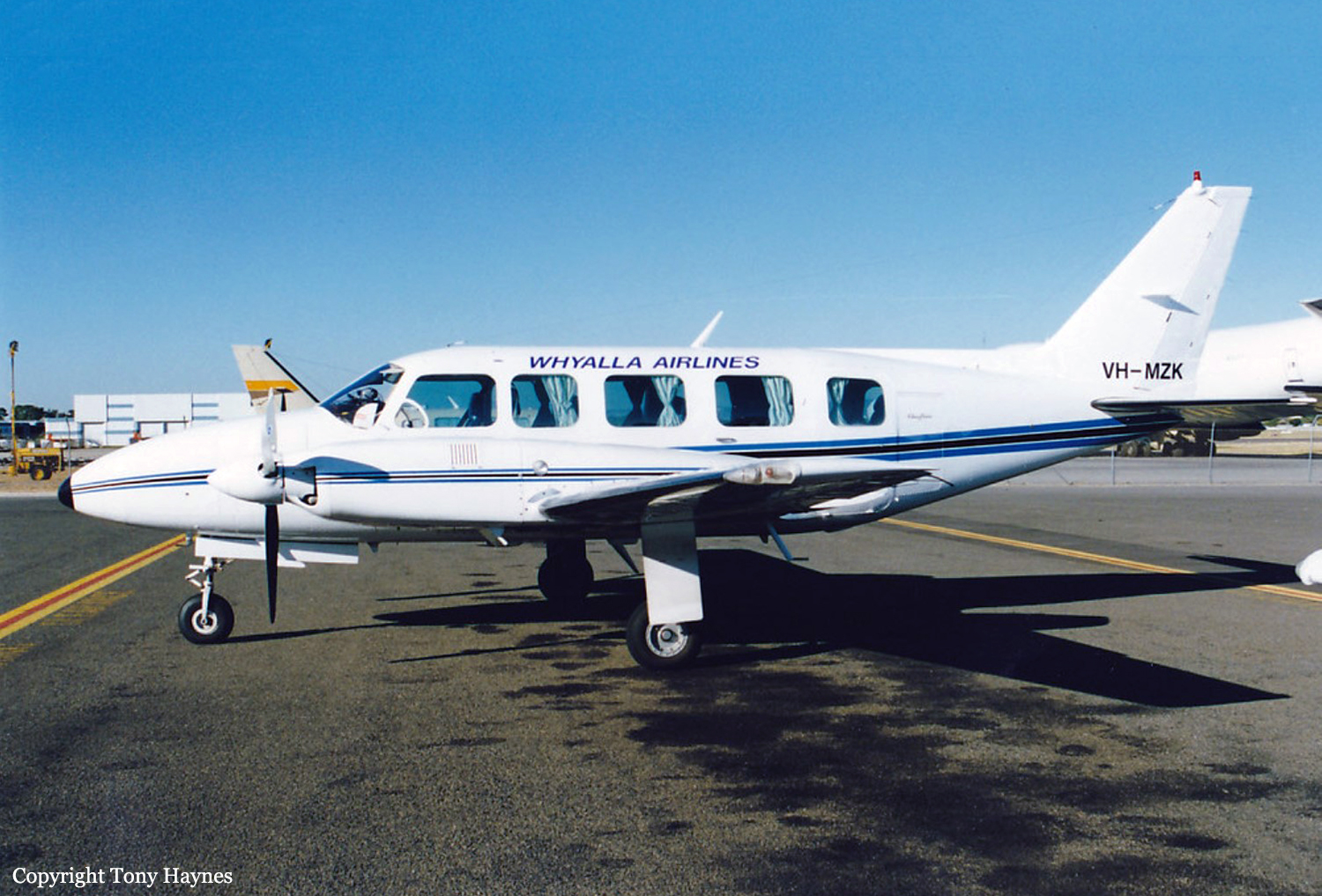
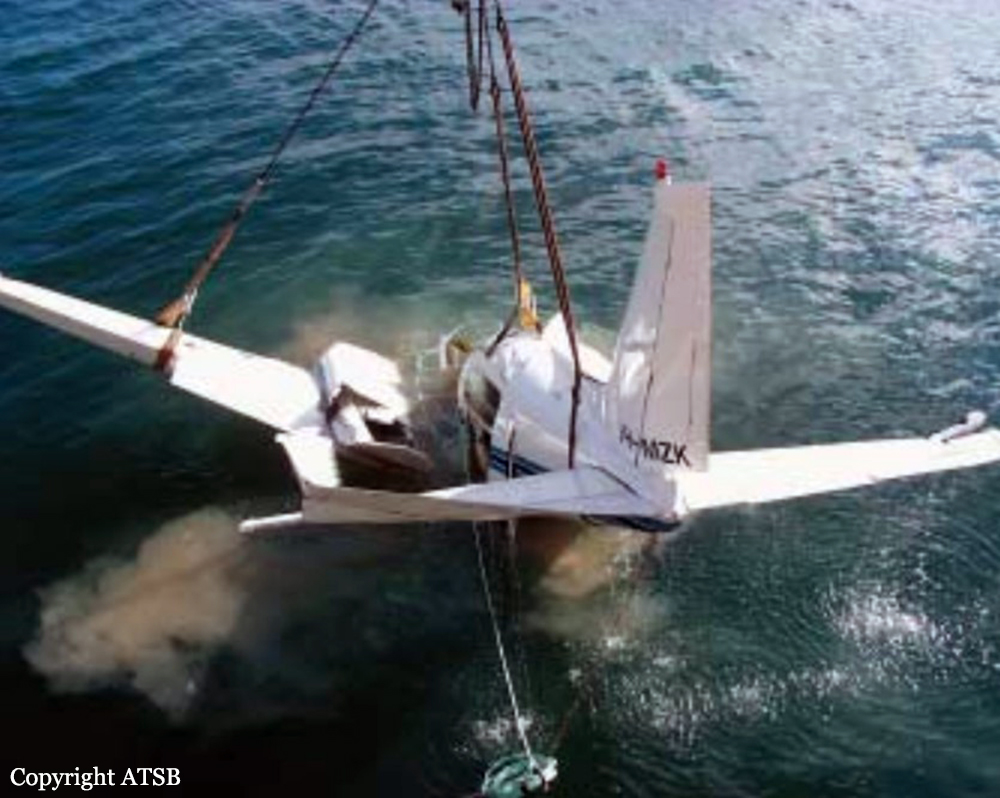
Crash of a Piper PA-31-350 Navajo Chieftain off Whyalla: 8 killed

Date & Time: May 31, 2000 at 1905 LT
Operator:
Registration:
VH-MZK
Survivors:
No
Schedule:
Adelaide - Whyalla
MSN:
31-8152180
YOM:
1981
Flight number:
WW904
Country:
Region:
Crew on board:
1
Crew fatalities:
Pax on board:
7
Pax fatalities:
Other fatalities:
Total fatalities:
8
Captain / Total flying hours:
2211
Captain / Total hours on type:
113.00
Aircraft flight hours:
11837
Circumstances:
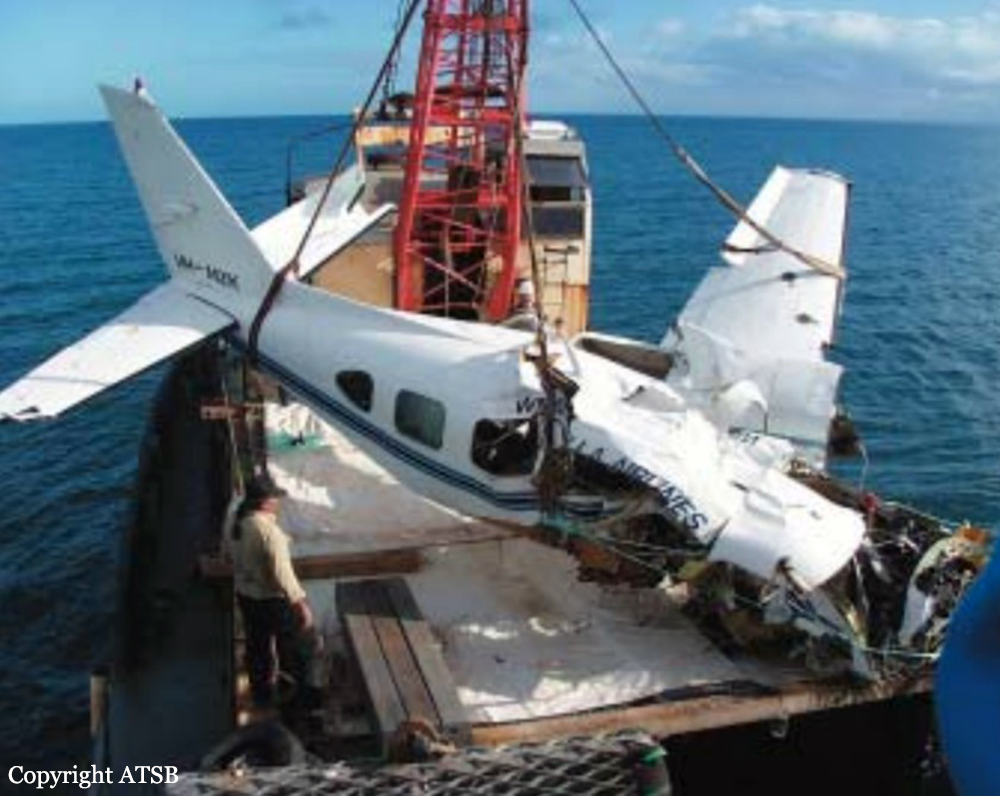
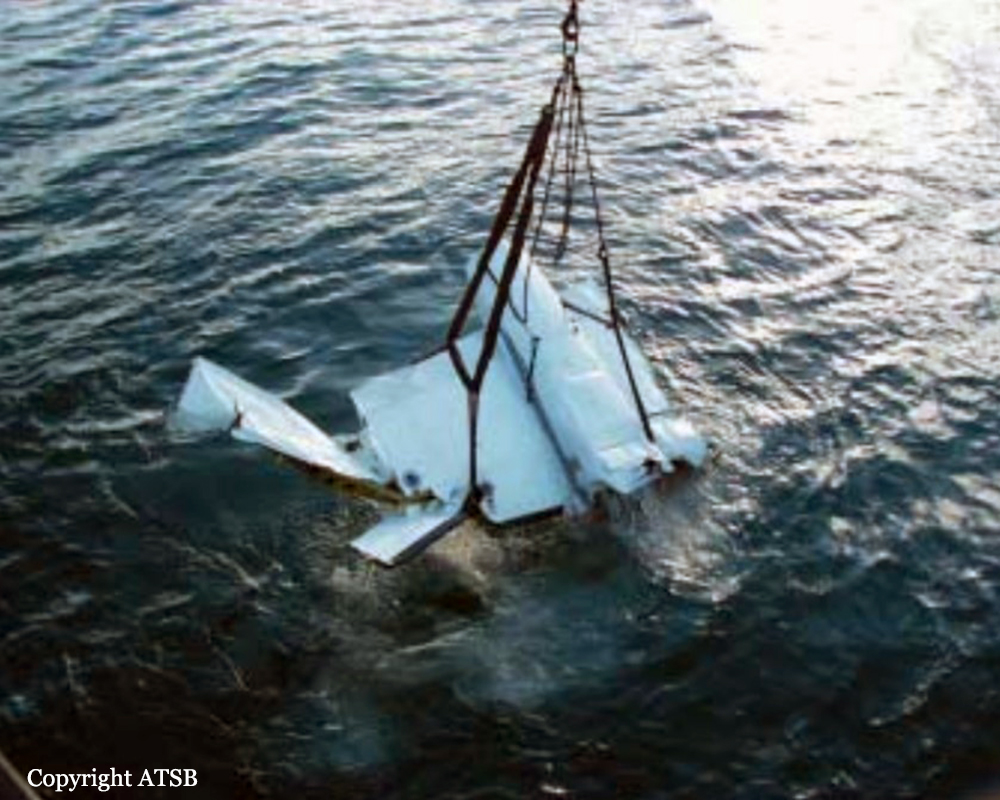
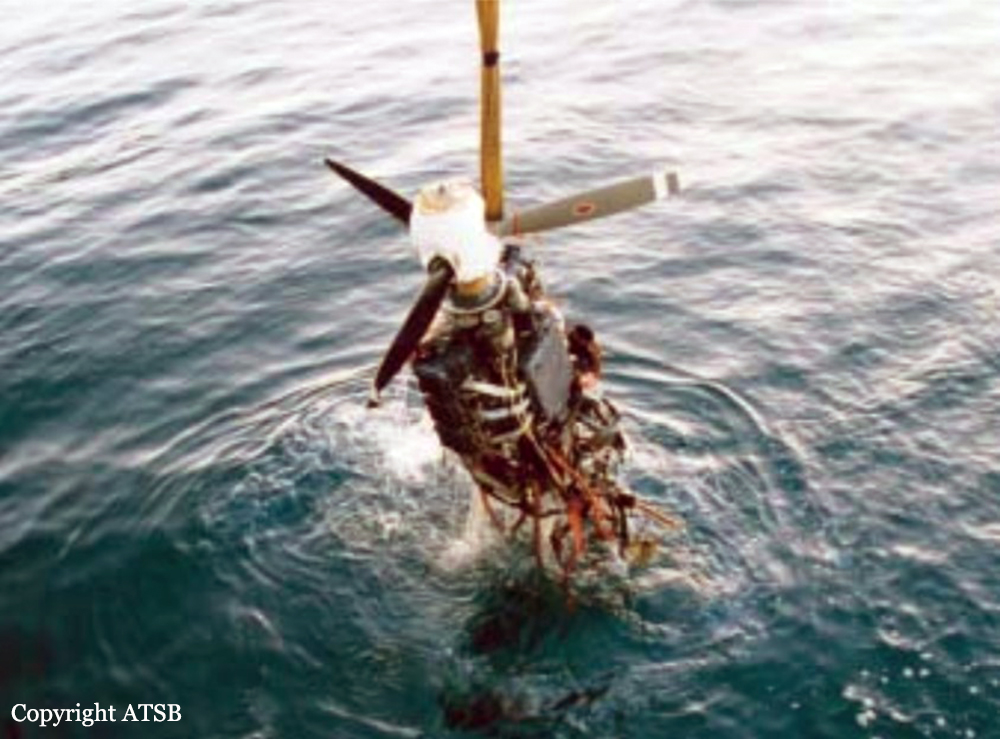
On the evening of 31 May 2000, Piper Chieftain, VH-MZK, was being operated by Whyalla Airlines as Flight WW904 on a regular public transport service from Adelaide to Whyalla, South Australia. One pilot and seven passengers were on board. The aircraft departed at 1823 central Standard Time (CST) and, after being radar vectored a short distance to the west of Adelaide for traffic separation purposes, the pilot was cleared to track direct to Whyalla at 6,000 ft. A significant proportion of the track from Adelaide to Whyalla passed over the waters of Gulf St Vincent and Spencer Gulf. The entire flight was conducted in darkness. The aircraft reached 6,000 ft and proceeded apparently normally at that altitude on the direct track to Whyalla. At 1856 CST, the pilot reported to Adelaide Flight Information Service (FIS) that the aircraft was 35 NM south-south-east of Whyalla, commencing descent from 6,000 ft. Five minutes later the pilot transmitted a MAYDAY report to FIS. He indicated that both engines of the aircraft had failed, that there were eight persons on board and that he was going to have to ditch the aircraft, but was trying to reach Whyalla. He requested that assistance be arranged and that his company be advised of the situation. About three minutes later, the pilot reported his position as about 15 NM off the coast from Whyalla. FIS advised the pilot to communicate through another aircraft that was in the area if he lost contact with FIS. The pilot’s acknowledgment was the last transmission heard from the aircraft. A few minutes later, the crew of another aircraft heard an emergency locater transmitter (ELT) signal for 10–20 seconds. Early the following morning, a search and rescue operation located two deceased persons and a small amount of wreckage in Spencer Gulf, near the last reported position of the aircraft. The aircraft, together with five deceased occupants, was located several days later on the sea–bed. One passenger remained missing.
Probable cause:
Engine operating practices:
• High power piston engine operating practices of leaning at climb power, and leaning to near ‘best economy’ during cruise, may result in the formation of deposits on cylinder and piston surfaces that could cause preignition.
• The engine operating practices of Whyalla Airlines included leaning at climb power and leaning to near ‘best economy’ during cruise.
Left engine:
The factors that resulted in the failure of the left engine were:
• The accumulation of lead oxybromide compounds on the crowns of pistons and cylinder head surfaces.
• Deposit induced preignition resulted in the increase of combustion chamber pressures and increased loading on connecting rod bearings.
• The connecting rod big end bearing insert retention forces were reduced by the inclusion, during engine assembly, of a copper–based anti-galling compound.
• The combination of increased bearing loads and decreased bearing insert retention forces resulted in the movement, deformation and subsequent destruction of the bearing inserts.
• Contact between the edge of the damaged Number 6 connecting rod bearing insert and the Number 6 crankshaft journal fillet resulted in localised heating and consequent cracking of the nitrided surface zone.
• Fatigue cracking in the Number 6 journal initiated at the site of a thermal crack and propagated over a period of approximately 50 flights.
• Disconnection of the two sections of the journal following the completion of fatigue cracking in the journal and the fracture of the Number 6 connecting rod big end housing most likely resulted in the sudden stoppage of the left engine.
Right engine:
The factors that were involved in the damage/malfunction of the right engine following the left engine malfunction/failure were:
• Detonation of combustion end-gas.
• Disruption of the gas boundary layers on the piston crowns and cylinder head surface increasing the rate of heat transfer to these components.
• Increased heat transfer to the Number 6 piston and cylinder head resulted in localised melting.
• The melting of the Number 6 piston allowed combustion gases to bypass the piston rings.
The flight:
The factors that contributed to the flight outcome were:
• The pilot responded to the failed left engine by increasing power to the right engine.
• The resultant change in operating conditions of the right engine led to loss of power from, and erratic operation of, that engine.
• The pilot was forced to ditch the aircraft into a 0.5m to 1m swell in the waters of Spencer Gulf, in dark, moonless conditions.
• The absence of upper body restraints, and life jackets or flotation devices, reduced the chances of survival of the occupants.
• The Emergency Locator Transmitter functioned briefly on impact but ceased operating when the aircraft sank.
Final Report:

Crash of a Piper PA-46-310P Malibu in Hawthorne: 3 killed

Date & Time: May 28, 2000 at 1159 LT
Operator:
Registration:
N567YV
Flight Phase:
Flight Type:
Survivors:
No
Schedule:
Hawthorne – Las Vegas
MSN:
46-8408016
YOM:
1984
Crew on board:
1
Crew fatalities:
Pax on board:
2
Pax fatalities:
Other fatalities:
Total fatalities:
3
Captain / Total flying hours:
2550
Captain / Total hours on type:
1250.00
Circumstances:
The aircraft collided with the ground in a steep nose down descent angle while maneuvering to return to the runway during the takeoff initial climb from the airport. Pilot and mechanic witnesses on the airport described the engine sounds during the takeoff as abnormal. The takeoff ground roll was over 3,000 feet in length, and the airplane's climb out angle was much shallower than usual. Two other witnesses said the engine sounded "like a radial engine," and both believed that the power output was lower than normal. One mechanic witness said the engine was surging and not developing full power; he believed the symptoms could be associated with a fuel feed problem, a turbocharger surge, or an excessively lean running condition. The ground witnesses located near the impact site said the airplane began a steep left turn between 1/4- and 1/2-mile from the runway's end at a lower than normal altitude. The bank angle was estimated by the witnesses as 45 degrees or greater. The turn continued until the nose suddenly dropped and the airplane entered a spiraling descent to ground impact. The majority of these witnesses stated that they heard "sputtering" or "popping" noises coming from the airplane. Engineering personnel from the manufacturer developed a performance profile for a normal takeoff and climb under the ambient conditions of the accident and at gross weight. The profile was compared to the actual aircraft performance derived from recorded radar data and the witness observations. The ground roll was 1,300 feet longer than it should have been, and the speed/acceleration and climb performance were consistently well below the profile's predictions. Based on the radar data and factoring in the winds, the airplane's estimated indicated airspeed during the final turn was 82 knots; the stall speed at 45 degrees of bank is 82 knots and it increases linearly to 96 knots at 60 degrees of bank. No evidence was found that the pilot flew the airplane from December until the date of the accident. The airplane sat outside during the rainy season with only 10 gallons of fuel in each tank. Comparison of the time the fueling began and the communications transcripts disclosed that the pilot had 17 minutes 41 seconds to refuel the airplane with 120 gallons, reboard the airplane, and start the engine for taxi; the maximum nozzle discharge flow rate of the pump he used is 24 gallons per minute. Review of the communications transcripts found that a time interval of 3 minutes 35 seconds elapsed from the time the pilot asked for a taxi clearance from the fuel facility until he reported ready for takeoff following a taxi distance of at least 2,000 feet. During the 8 seconds following the pilot's acknowledgment of his takeoff clearance, he and the local controller carried on a non pertinent personal exchange. The aircraft was almost completely consumed in the post crash fire; however, extensive investigation of the remains failed to identify a preimpact mechanical malfunction or failure in the engine or airframe systems. The pistons, cylinder interiors, and spark plugs from all six cylinders were clean without combustion deposits. The cockpit fuel selector lever, the intermediate linkages, and the valve itself were found in the OFF position; however, an engineering analysis established that insufficient fuel was available in the lines forward of the selector to start, taxi, and perform a takeoff with the selector in the OFF position.
Probable cause:
A partial loss of power due to water contamination in the fuel system and the pilot's inadequate preflight inspection, which failed to detect the water. The pilot's failure to perform an engine run-up before takeoff is also causal. Additional causes are the pilot's failure to maintain an adequate airspeed margin for the bank angle he initiated during the attempted return to runway maneuver and the resultant encounter with a stall/spin. Factors in the accident include the pilot's failure to detect the power deficiency early in the takeoff roll due to his diverted attention by a non pertinent personal conversation with the local controller, and, the lack of suitable forced landing sites in the takeoff flight path.
Final Report:

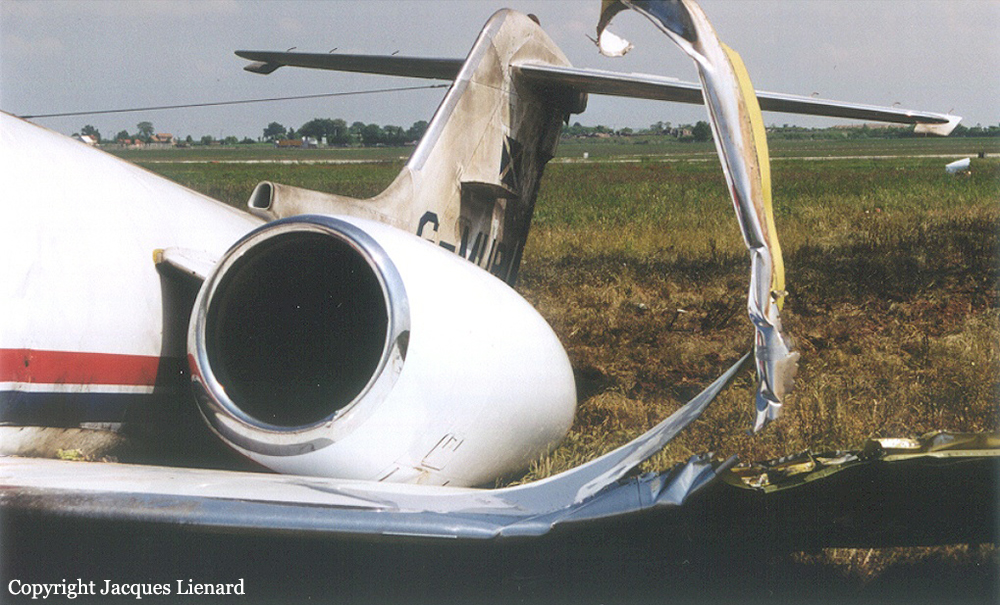
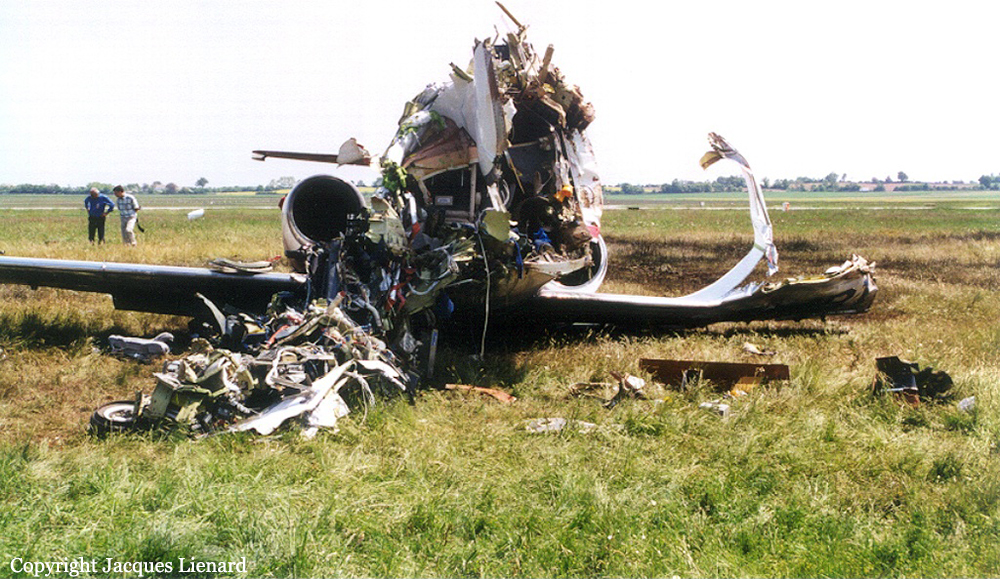
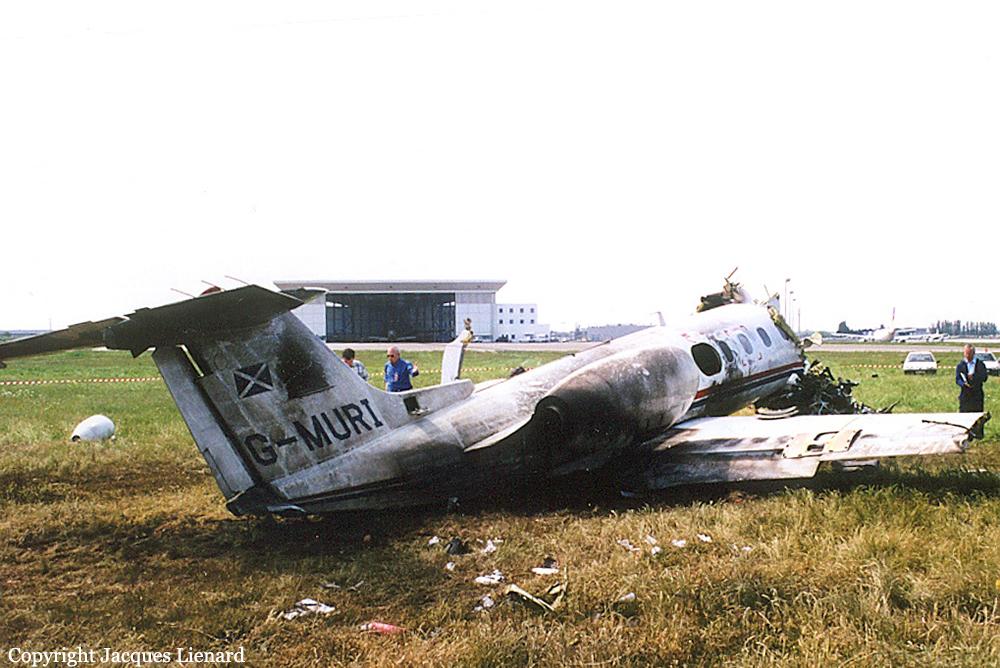
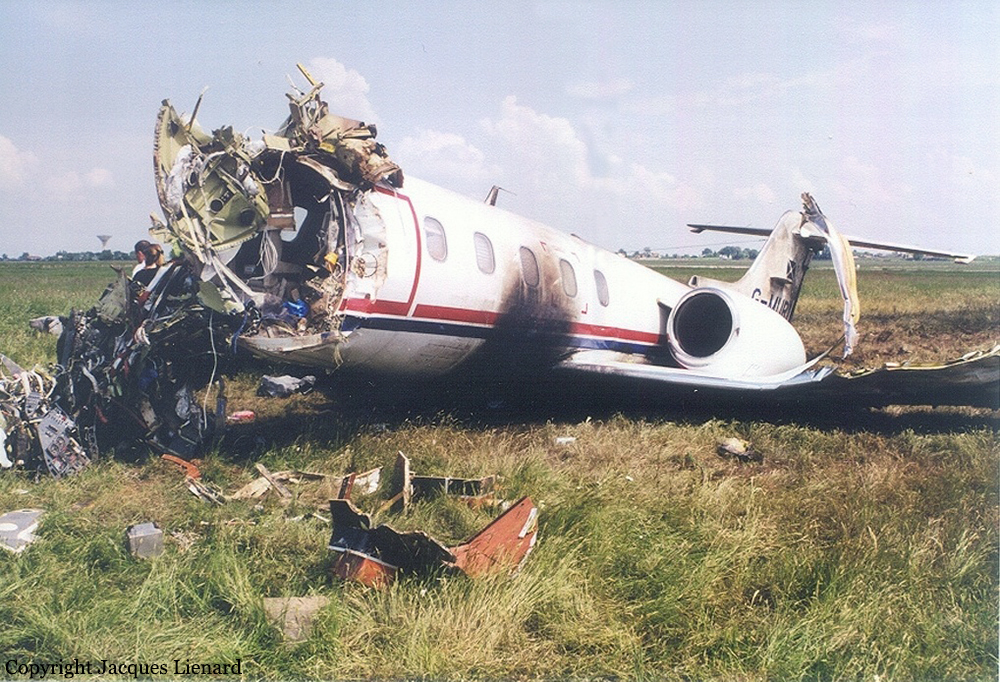
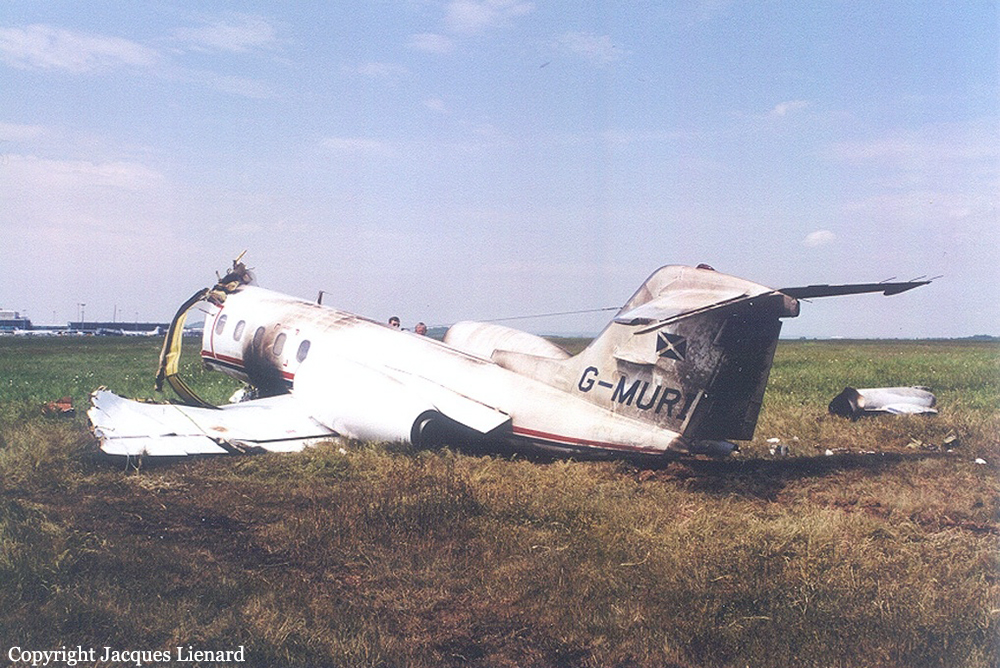
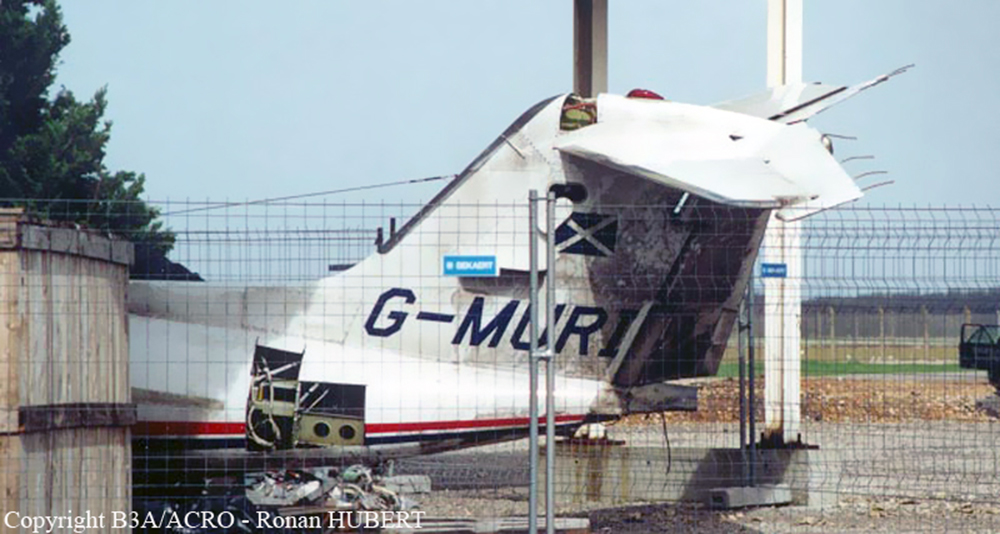
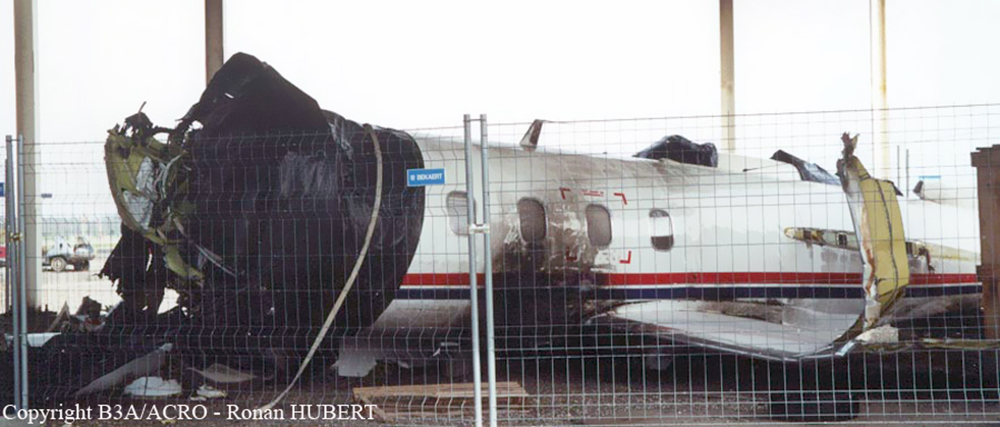
Crash of a Learjet 35A in Lyon: 2 killed

Date & Time: May 2, 2000 at 1439 LT
Type of aircraft:
Registration:
G-MURI
Survivors:
Yes
Schedule:
Farnborough - Nice
MSN:
35-646
YOM:
1988
Flight number:
NEX4B
Country:
Region:
Crew on board:
2
Crew fatalities:
Pax on board:
3
Pax fatalities:
Other fatalities:
Total fatalities:
2
Captain / Total flying hours:
4954
Captain / Total hours on type:
2113.00
Copilot / Total flying hours:
1068
Copilot / Total hours on type:
850
Aircraft flight hours:
4291
Aircraft flight cycles:
3637
Circumstances:
The aircraft departed Farnborough Airport at 11h22 on a charter flight to Nice with two pilots and three passengers on board, among them the F1 driver David Coulthard. At 12h22, cruising at FL390, the left engine of the aircraft suffered a failure. The crew shut down and began to descend. They declared an emergency and asked to fly to the nearest aerodrome with a runway longer than one thousand six hundred metres. Lyon-Satolas Airport, located about 62 NM away left abeam of the aircraft, was proposed. The descent with one engine shut down towards Lyon-Satolas was undertaken under radar guidance, at a high speed and with a high rate of descent. At 12h35, the pilot stabilised the aircraft at 3,000 feet, intercepted the runway 36L ILS and was cleared to land. The final was started at 233 knots according to radar data and the slow down progressive. At 12h36 min 45 s, the flaps were extended to 8°. According to the radar data, the aircraft was then at 2,400 feet, 4,4 NM from the runway threshold and at a speed of 184 knots. At 12h36 min 58 s, the landing gear was extended. At 12h37 in 03 s, the flaps were set to 20°. According to the radar data, the aircraft was then at 2,100 feet, 3,5 NM from the runway threshold at a speed of 180 knots. No malfunctions or additional problems were announced to the ATC by the crew during the final approach. At 12h38 min 08 s, the copilot told the captain that the aircraft was a little low. According to the radar data, the aircraft was then at 1,100 feet, 0,9 NM from the runway threshold at a speed of 155 knots. At 12h38 min 17 s, he repeated his warning and announced a speed 10 knots above the approach reference speed. At 12h38 min 22 s, the copilot again stated that the aircraft was a little low on the approach path and immediately afterwards asked the captain to increase the thrust. According to the radar data, the aircraft was then at 900 feet, 0,1 NM from the runway threshold at a speed of 150 knots. At 12h38 min 24 s, the captain indicated that he was losing control of the aircraft. The aircraft, over the runway threshold, banked sharply to the left, touched the ground with its wing, crashed and caught fire. Both pilots were killed while all three passengers evacuated with minor injuries.
Probable cause:
The accident resulted from a loss of yaw and then roll control which appears to be due to a failure of monitor flight symmetry at the time of the thrust increase on the right engine. The hastiness exhibited by the captain, and his difficulty in coping with the stress following the engine failure, contributed to this situation.
Final Report:

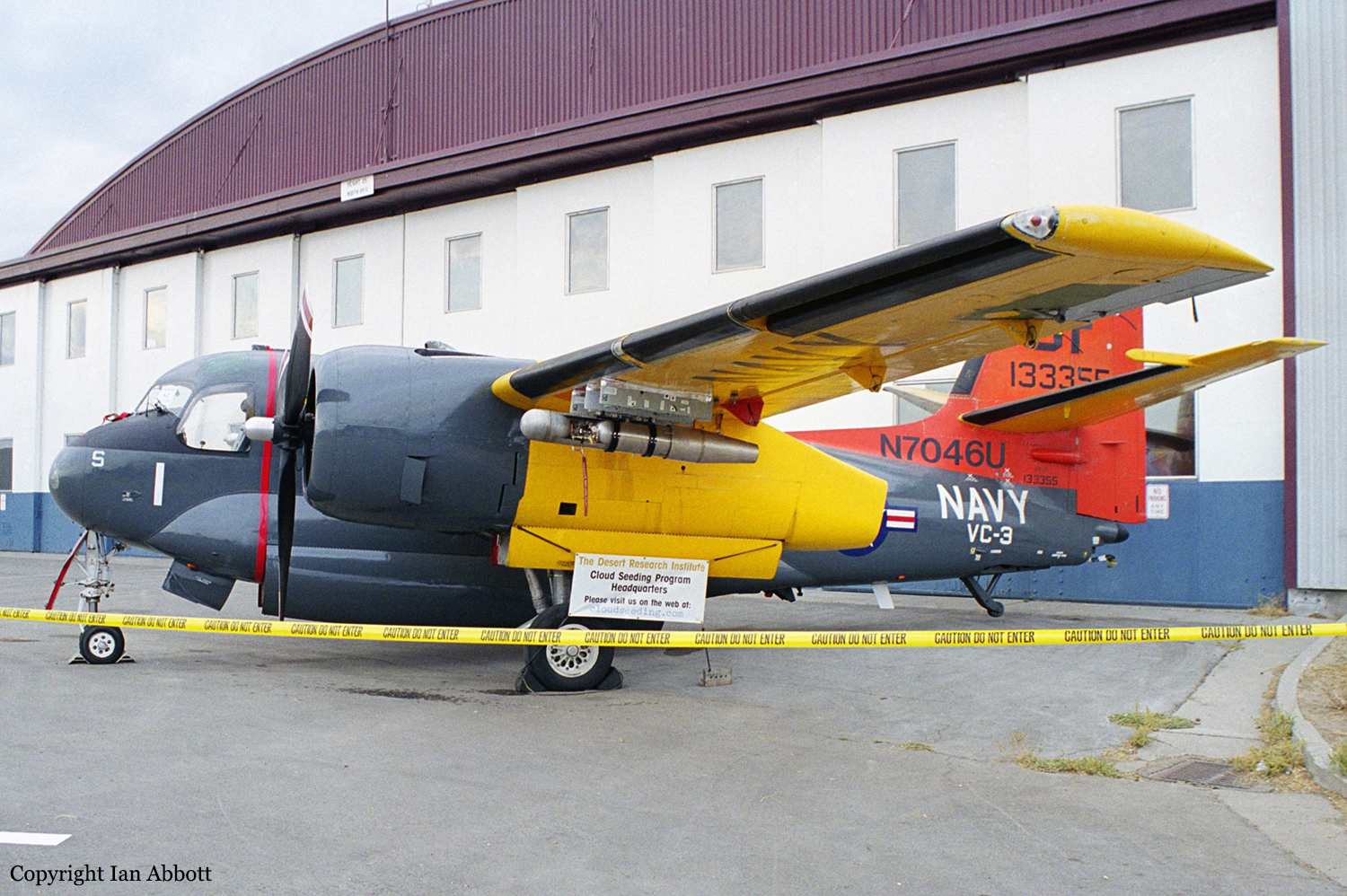
Crash of a Grumman US-2C Tracker in Reno: 3 killed

Date & Time: Apr 17, 2000 at 1035 LT
Type of aircraft:
Operator:
Registration:
N7046U
Flight Phase:
Survivors:
No
Schedule:
Reno - Reno
MSN:
27
YOM:
1957
Crew on board:
3
Crew fatalities:
Pax on board:
0
Pax fatalities:
Other fatalities:
Total fatalities:
3
Captain / Total flying hours:
8170
Copilot / Total flying hours:
3700
Circumstances:
During the takeoff climb, the airplane turned sharply right, went into a steep bank and collided with terrain. The airplane began a right turn immediately after departure and appeared to be going slow. A witness was able to distinguish the individual propeller blades on the right engine, while the left engine propeller blades were indistinguishable. The airplane stopped turning and flew for an estimated 1/4-mile at an altitude of 100 feet. The airplane then continued the right turn at a steep bank angle before disappearing from sight. Then the witness observed a plume of smoke. White and gray matter, along with two ferrous slivers, contaminated the chip detector on the right engine. The airplane had a rudder assist system installed. The rudder assist provided additional directional control in the event of a loss of power on either engine. The NATOPS manual specified that the rudder assist switch should be in the ON position for takeoff, landing, and in the event of single-engine operation. The rudder boost switch was in the off position, and the rudder boost actuator in the empennage was in the retracted (off) position. The owner had experienced a problem with the flight controls the previous year and did not fly with the rudder assist ON. The accident flight had the lowest acceleration rate, and attained the lowest maximum speed, compared to GPS data from the seven previous flights. It was traveling nearly 20 knots slower, about 100 knots, than the bulk of the other flights when it attempted to lift off. The airplane was between the 2,000- and 3,000-foot runway markers (less than halfway down the runway) when it lifted off and began the right turn. Due to the extensive disintegration of the airplane in the impact sequence, the seating positions for the three occupants could not be determined. One of the occupants was the aircraft owner, who held a private certificate with a single-engine land rating, was known to have previously flown the airplane on contract flights from both the left and right seats. A second pilot was the normal copilot for all previous contract flights; his certificates had been revoked by the FAA. The third occupant held an airline transport pilot certificate and had never flown in the airplane before. Prior to the accident flight, the owner had told an associate that the third occupant was going to fly the airplane on the accident flight.
Probable cause:
The flying pilot's failure to maintain directional control following a loss of engine power. Also causal was the failure of the flight crew to follow the published checklist and use the rudder assist system, and the decision not to abort the takeoff.
Final Report: