Crash of an Antonov AN-2 in the Gulf of Mexico: 1 killed

Date & Time: Sep 19, 2000
Type of aircraft:
Operator:
Flight Phase:
Flight Type:
Survivors:
Yes
Country:
Region:
Crew on board:
1
Crew fatalities:
Pax on board:
9
Pax fatalities:
Other fatalities:
Total fatalities:
1
Circumstances:
The pilot Angel Lenin Iglesias Hernández stole the aircraft at Pinar del Río Airport, took off with nine of his family members and elected to reach Florida. En route, the aircraft ran out of fuel and crashed in the Gulf of Mexico about 145 km southwest of Key West. A passenger was killed while nine other occupants were rescued by the crew of the bulk carrier christened 'Chios Dream'.
Probable cause:
Engine failure due to fuel exhaustion.

Crash of a Piper PA-31T Cheyenne in Montpellier: 1 killed

Date & Time: Sep 9, 2000
Type of aircraft:
Operator:
Flight Phase:
Flight Type:
Survivors:
No
Country:
Region:
Crew on board:
1
Crew fatalities:
Pax on board:
0
Pax fatalities:
Other fatalities:
Total fatalities:
1
Circumstances:
Shortly after takeoff from Montpellier-Candillargues Airport, while in initial climb, the aircraft stalled and crashed near the runway end. The pilot, sole on board, was killed.
Probable cause:
It is believed that the pilot lost control of the airplane following a double engine failure caused by a fuel exhaustion.

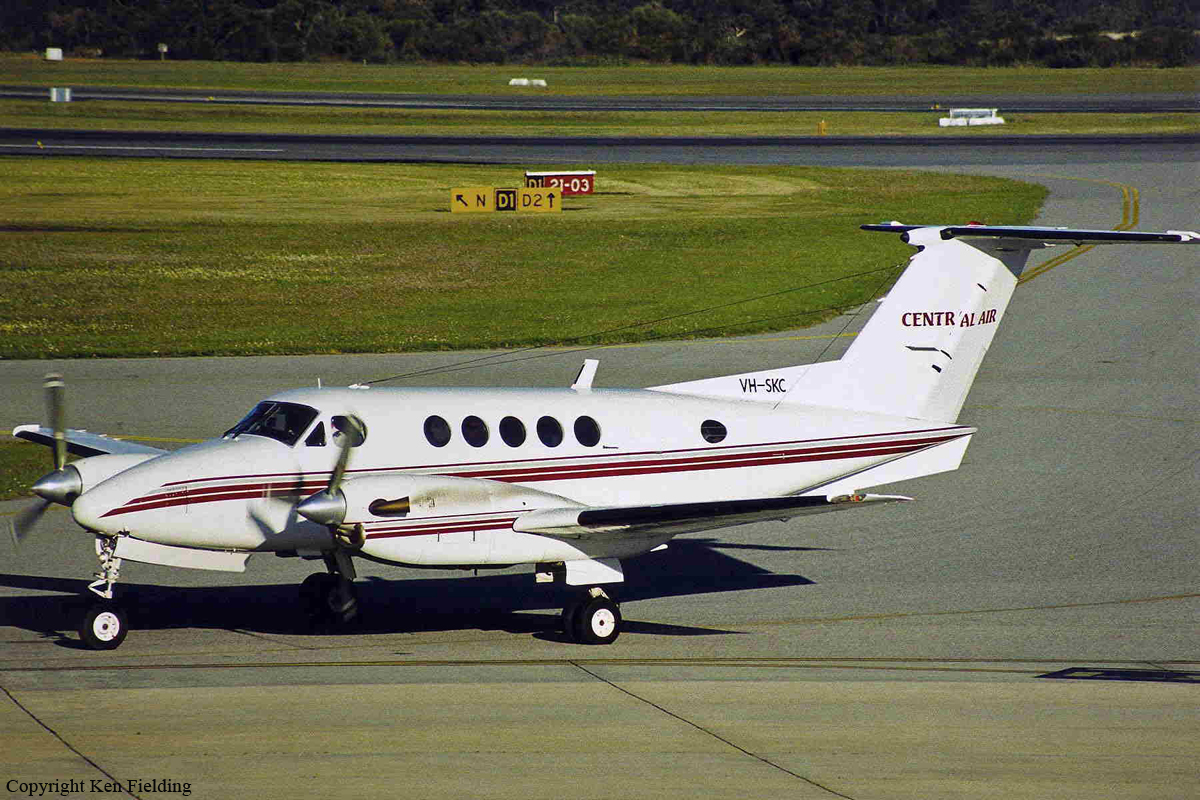
Crash of a Beechcraft 200 Super King Air in Wernadinga Station: 8 killed

Date & Time: Sep 4, 2000 at 1510 LT
Operator:
Registration:
VH-SKC
Flight Phase:
Survivors:
No
Schedule:
Perth - Leonora
MSN:
BB-47
YOM:
1975
Country:
Region:
Crew on board:
1
Crew fatalities:
Pax on board:
7
Pax fatalities:
Other fatalities:
Total fatalities:
8
Captain / Total flying hours:
2053
Captain / Total hours on type:
138.00
Aircraft flight hours:
18771
Circumstances:
On 4 September 2000, a Beech Super King Air 200 aircraft, VH-SKC, departed Perth, Western Australia at 1009 UTC on a charter flight to Leonora with one pilot and seven passengers on board. Until 1032 the operation of the aircraft and the communications with the pilot appeared normal. However, shortly after the aircraft had climbed through its assigned altitude, the pilot’s speech became significantly impaired and he appeared unable to respond to ATS instructions. Open microphone transmissions over the next 8-minutes revealed the progressive deterioration of the pilot towards unconsciousness and the absence of any sounds of passenger activity in the aircraft. No human response of any kind was detected for the remainder of the flight. Five hours after taking off from Perth, the aircraft impacted the ground near Burketown, Queensland, and was destroyed. There were no survivors.
Probable cause:
Due to the limited evidence available, it was not possible to draw definitive conclusions as to the factors leading to the incapacitation of the pilot and occupants of VH-SKC.
The following findings were identified:
1. The pilot was correctly licensed, had received the required training, and there was no evidence to suggest that he was other than medically fit for the flight.
2. The weather conditions on the day presented no hazard to the operation of the aircraft on its planned route.
3. The flightpath flown was consistent with the aircraft being controlled by the autopilot in heading and pitch-hold modes with no human intervention after the aircraft passed position DEBRA.
4. After the aircraft climbed above the assigned altitude of FL250, the speech and breathing patterns of the pilot, evidenced during the radio transmissions, displayed changes consistent with hypoxia.
5. Testing revealed that Carbon Monoxide and Hydrogen Cyanide were highly unlikely to have been factors in the occurrence.
6. The low Carbon Monoxide and Cyanide levels, and the absence of irritation in the airways of the occupants indicated that a fire in the cabin was unlikely.
7. The incapacitation of the pilot and passengers was probably due to hypobaric hypoxia because of the high cabin altitude and their not receiving supplemental oxygen.
8. A rapid or explosive depressurisation was unlikely to have occurred.
9. The reasons for the pilot and passengers not receiving supplemental oxygen could not be determined.
10. Setting the visual alert to operate when the cabin pressure altitude exceeds 10,000 ft and incorporating an aural warning in conjunction with the visual alert, may have prevented the accident.
11. The training and actions of the air traffic controller were not factors in the accident.
Significant factors:
1. The aircraft was probably unpressurised for a significant part of its climb and cruise for undetermined reasons.
2. The pilot and passengers were incapacitated, probably due to hypobaric hypoxia, because of the high cabin altitude and their not receiving supplemental oxygen.
Final Report:

Crash of a Piper PA-31-350 Navajo Chieftain off Hilo: 1 killed

Date & Time: Aug 25, 2000 at 1735 LT
Operator:
Registration:
N923BA
Survivors:
Yes
Schedule:
Kona – Kona
MSN:
31-8252024
YOM:
1982
Flight number:
BIA057
Location:
Crew on board:
1
Crew fatalities:
Pax on board:
8
Pax fatalities:
Other fatalities:
Total fatalities:
1
Captain / Total flying hours:
2067
Captain / Total hours on type:
465.00
Aircraft flight hours:
3492
Circumstances:
The pilot ditched the twin engine airplane in the Pacific ocean after experiencing a loss of engine power and an in-flight engine fire while in cruise flight. The flight was operating at 1,000 feet msl, when the pilot noticed a loss of engine power in the right engine. At the same time the pilot was noticing the power loss, passengers noted a fire coming from the right engine cowling. The pilot secured the right engine and feathered the propeller. He attempted to land the airplane at a nearby airport; however, when he realized that the airplane was unable to maintain altitude he elected to ditch the airplane in the ocean. Prior to executing the forced landing, the pilot instructed the passengers to don their life jackets and assume the crash position. After touchdown, all but one passenger exited the airplane through the main cabin and pilot doors. It was reported that the remaining passenger was frightened, and could not swim. One survivor saw the remaining passenger sitting in the seat with the seat belt still secured and the life vest inflated. The pilot and passengers were then rescued from the ocean via rescue helicopter and boat. Postaccident examination of the airplane revealed that the right engine's oil converter plate gasket had deteriorated and extruded from behind the converter plate, allowing oil to spray in the accessory section and resulting in the subsequent engine fire. The engine manufacturer had previously issued a mandatory service bulletin (MSB) requiring inspection of the gasket every 50 hours for evidence of gasket extrusion around the cover plate or oil leakage. Maintenance records revealed that the inspection had been conducted 18.3 hours prior to the accident. At the time of the accident, the right engine had accumulated 386.8 hours since its last overhaul, and gasket replacement. The MSB was issued one month prior to the accident, after the manufacturer received reports of certain oil filter converter plate gaskets extruding around the oil filter converter plate. The protruding or swelling of the gasket allowed oil to leak and spray from between the plate and the accessory housing. A series of tests were conducted on exemplar gaskets by submerging them in engine oil heated to 245 degrees F; after about 290 hours, the gasket material displayed signs of deterioration similar to that of the accident gasket. A subsequent investigation revealed that the engine manufacturer had recently changed gasket suppliers, which resulted in a shipment of gaskets getting into the supply chain that did not meet specifications. As a result of this accident, the engine manufacturer revised the MSB to require the replacement of the gasket every 50 hours. The FAA followed suit and issued an airworthiness directive to mandate the replacement of the gasket every 50 hours.
Probable cause:
Deterioration and failure of the oil filter converter plate gasket, which resulted in a loss of engine power and a subsequent in-flight fire.
Final Report:

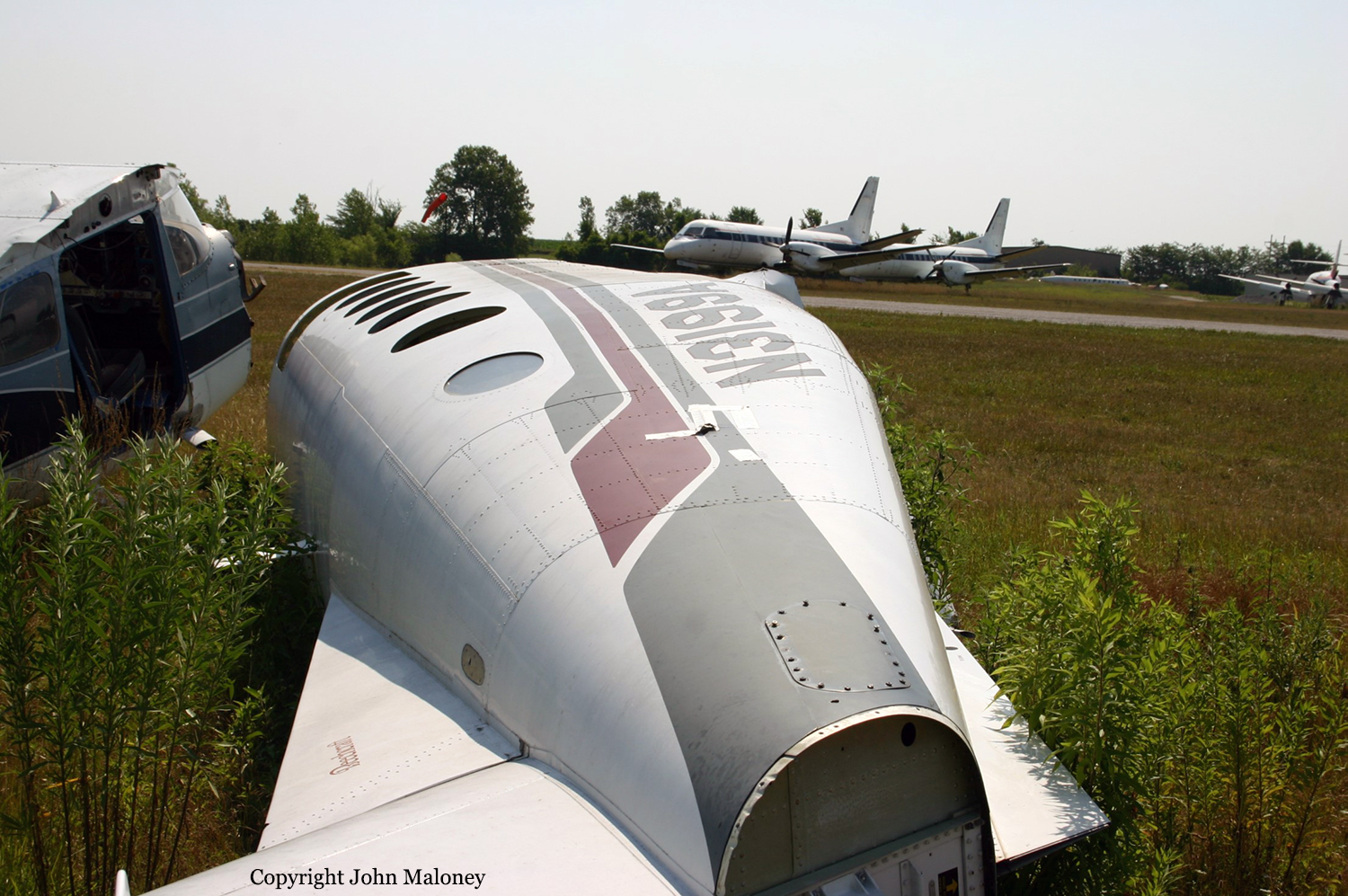
Crash of a Beechcraft B200 Super King Air in Spanish Cay

Date & Time: Aug 12, 2000 at 1115 LT
Registration:
N3199A
Flight Type:
Survivors:
Yes
Schedule:
Fort Lauderdale – Spanish Cay
MSN:
BB-1499
YOM:
1995
Country:
Crew on board:
1
Crew fatalities:
Pax on board:
2
Pax fatalities:
Other fatalities:
Total fatalities:
0
Circumstances:
On August 12, 2000, about 1115 eastern daylight time, a Beechcraft B200, N3199A, registered to and operated by Great Texas Food Inc. as a Title 14 CFR Part 91 personal flight, ran off the side of the runway during landing in Spanish Cay, Bahamas. Visual meteorological conditions prevailed at the time and a visual flight rules flight plan was filed. The private-rated pilot and the two passengers received no injuries. The flight originated from Fort Lauderdale, Florida, the same day, about 1030. The pilot stated that he made an uneventful landing and as he applied the brakes, the left brake did not respond. He stated that he lost control of the aircraft and exited the runway from the right side and impacted a berm. The right landing gear collapsed, the left wing and the front fuselage incurred substantial damage.

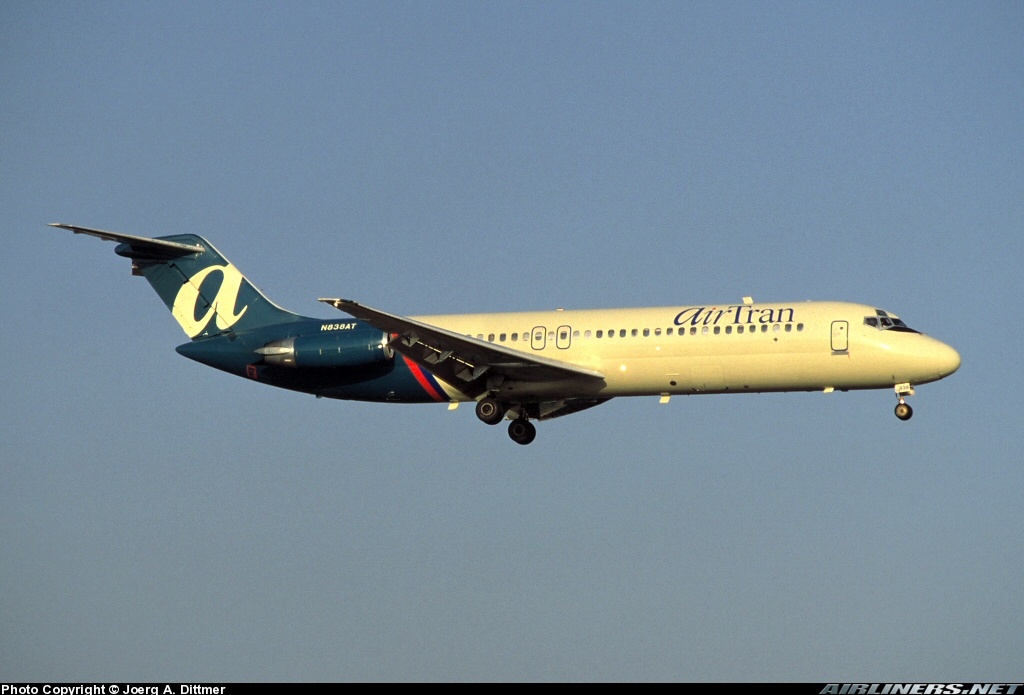
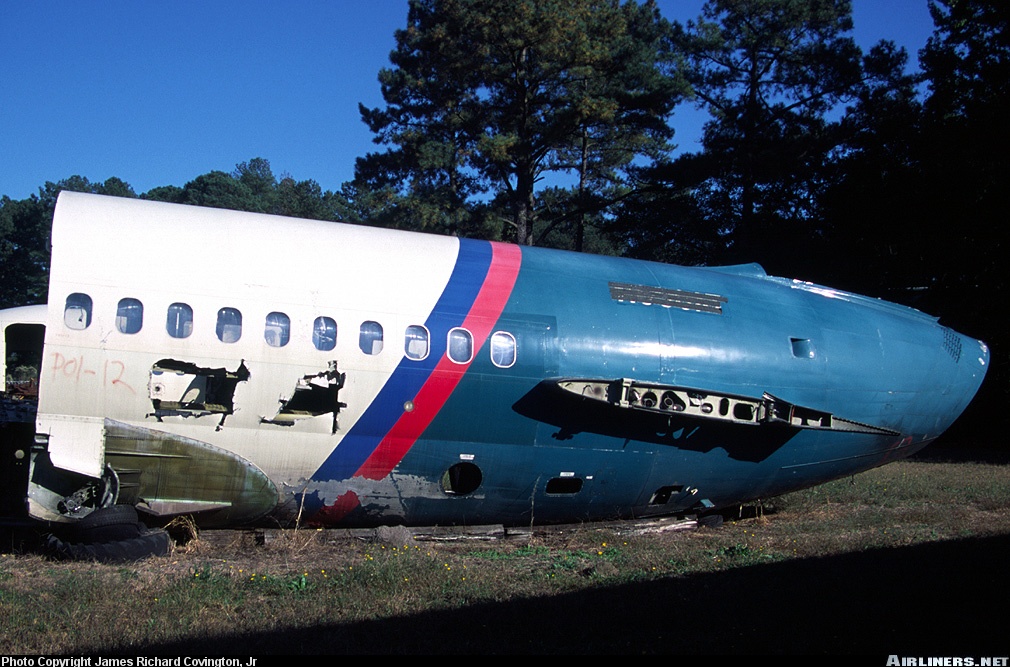
Crash of a Douglas DC-9 in Greensboro

Date & Time: Aug 8, 2000 at 1544 LT
Type of aircraft:
Operator:
Registration:
N838AT
Survivors:
Yes
Schedule:
Greensboro - Atlanta
MSN:
47442/524
YOM:
1970
Flight number:
FL913
Crew on board:
5
Crew fatalities:
Pax on board:
58
Pax fatalities:
Other fatalities:
Total fatalities:
0
Captain / Total flying hours:
22000
Captain / Total hours on type:
15000.00
Copilot / Total flying hours:
8000
Copilot / Total hours on type:
2000
Circumstances:
Examination of the area of the fire origin revealed that relay R2-53, the left heat exchanger cooling fan relay, was severely heat damaged, as were R2-54 and the other relays in this area. However, the R2-53 relay also exhibited loose terminal studs and several holes that had burned through the relay housing that the other relays did not exhibit. The wire bundles that run immediately below the left and right heat exchanger cooling fans and the ground service tie relays exhibited heat damage to the wire insulation, with the greatest damage located just below the R2-53 relay. The unique damage observed on the R2-53 relay and the wire damage directly below it indicates that fire initiation was caused by an internal failure of the R2-53 relay. Disassembly of the relay revealed that the R2-53 relay had been repaired but not to the manufacturer's standards. According to the manufacturer, the damage to the relay housing was consistent with a phase-to-phase arc between terminals A2 and B2 of the relay. During the on-scene portion of the investigation, three of the four circuit breakers in the left heat exchanger cooling fan were found in the tripped position. To determine why only three of the four circuit breakers tripped, all four were submitted to the Materials Integrity Branch at Wright-Patterson Air Force Base, Dayton, Ohio, for further examination. The circuit breakers were visually examined and were subjected to an insulation resistance measurement, a contact resistance test, a voltage drop test, and a calibration test (which measured minimum and maximum ultimate trip times). Testing and examination determined that the circuit breaker that did not trip exhibited no anomalies that would prevent normal operation, met all specifications required for the selected tests, and operated properly during the calibration test. Although this circuit breaker appeared to have functioned properly during testing, the lab report noted that, as a thermal device, the circuit breaker is designed to trip when a sustained current overload exists and that it is possible during the event that intermittent arcing or a resistive short occurred or that the circuit opened before the breaker reached a temperature sufficient to trip the device.
Probable cause:
A phase-to-phase arc in the left heat exchanger cooling fan relay, which ignited the surrounding wire insulation and other combustible materials within the electrical power center panel. Contributing to the left heat exchanger fan relay malfunction was the unauthorized repair that was not to the manufacturer's standards and the circuit breakers' failure to recognize an arc-fault.
Final Report:

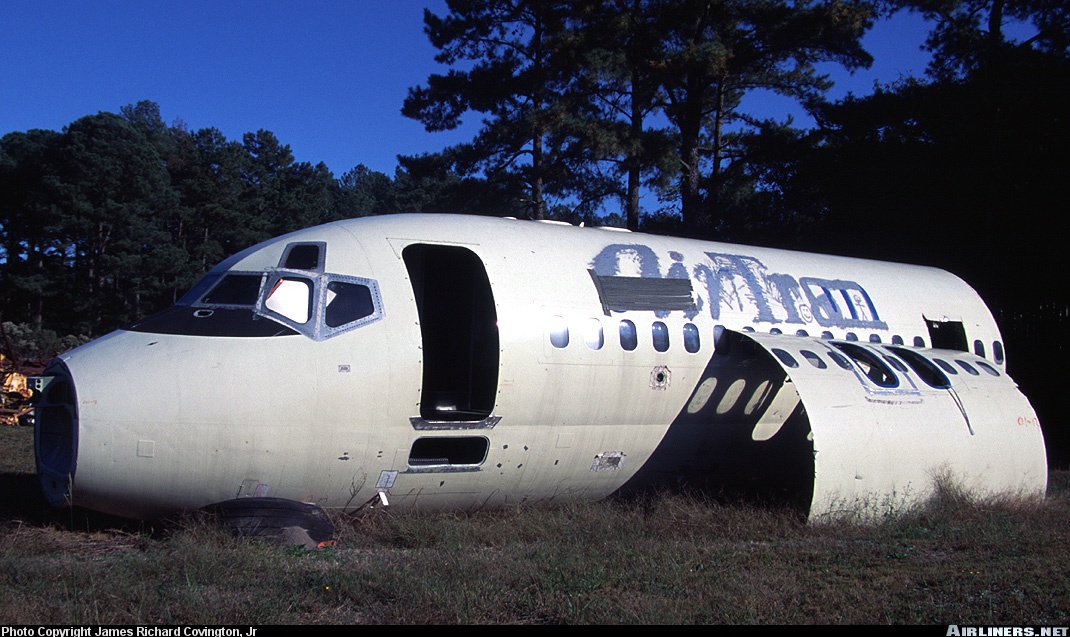
Crash of a De Havilland DHC-3 Otter in Lake Stevens

Date & Time: Aug 2, 2000
Type of aircraft:
Operator:
Registration:
C-FMAJ
Flight Phase:
Survivors:
Yes
MSN:
383
YOM:
1960
Country:
Crew on board:
1
Crew fatalities:
Pax on board:
2
Pax fatalities:
Other fatalities:
Total fatalities:
0
Circumstances:
A DHC-3 and a Cessna 185 (both float equipped aircraft) had been chartered to move equipment from an outpost camp which was being threatened by forest fires in the Tadoule Lake (Lac Brochet, MB) area. Takeoff was conducted in a westerly direction into light winds estimated to be 5 to 8 knots. Besides the pilot there were two passengers (the camp owner and his son), two 45 gallon drums of #2 gas, a propane cylinder, battery chargers plus other sundry items. It was reported that once the aircraft was airborne, a windshift occurred which may have resulted in rollover and a downdraft situation. The aircraft began to descend, despite the application of full engine power, and settled into the trees with little forward speed and the wings in a near level attitude. The aircraft was then consumed by fire, the pilot and his two passengers were able to escape with minor scrapes and bruises. The pilot of the Cessna 185 witnessed the accident while airborne and he then returned and landed and rendered assistance to the three occupants. The local temperature was 27 degrees C, and the aircraft was near its maximum gross weight. It was reported that the aircraft had a headwind in proximity to the forest fire on takeoff, and that it flew into the area of a tailwind during initial climb.

Crash of a Aérospatiale-BAC Concorde in Gonesse: 113 killed

Date & Time: Jul 25, 2000 at 1644 LT
Type of aircraft:
Operator:
Registration:
F-BTSC
Flight Phase:
Survivors:
No
Site:
Schedule:
Paris – New York
MSN:
203
YOM:
1975
Flight number:
AF4590
Country:
Region:
Crew on board:
9
Crew fatalities:
Pax on board:
100
Pax fatalities:
Other fatalities:
Total fatalities:
113
Captain / Total flying hours:
13477
Captain / Total hours on type:
317.00
Copilot / Total flying hours:
10035
Copilot / Total hours on type:
2698
Aircraft flight hours:
11989
Aircraft flight cycles:
4873
Circumstances:
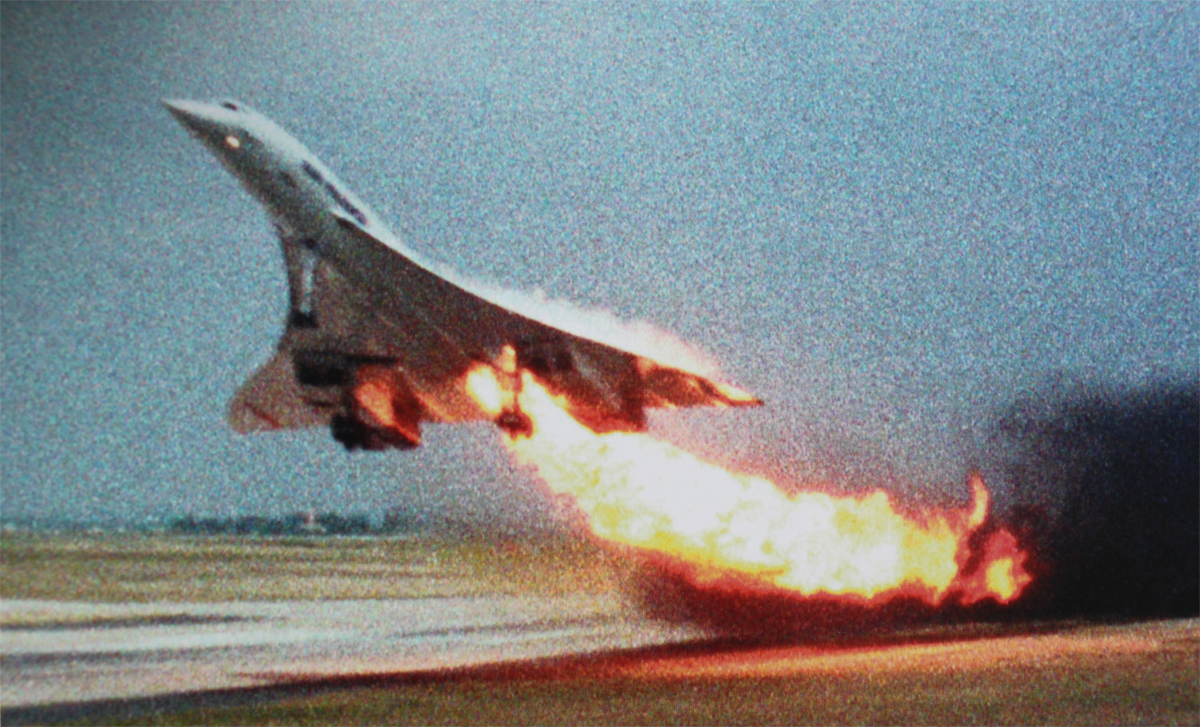
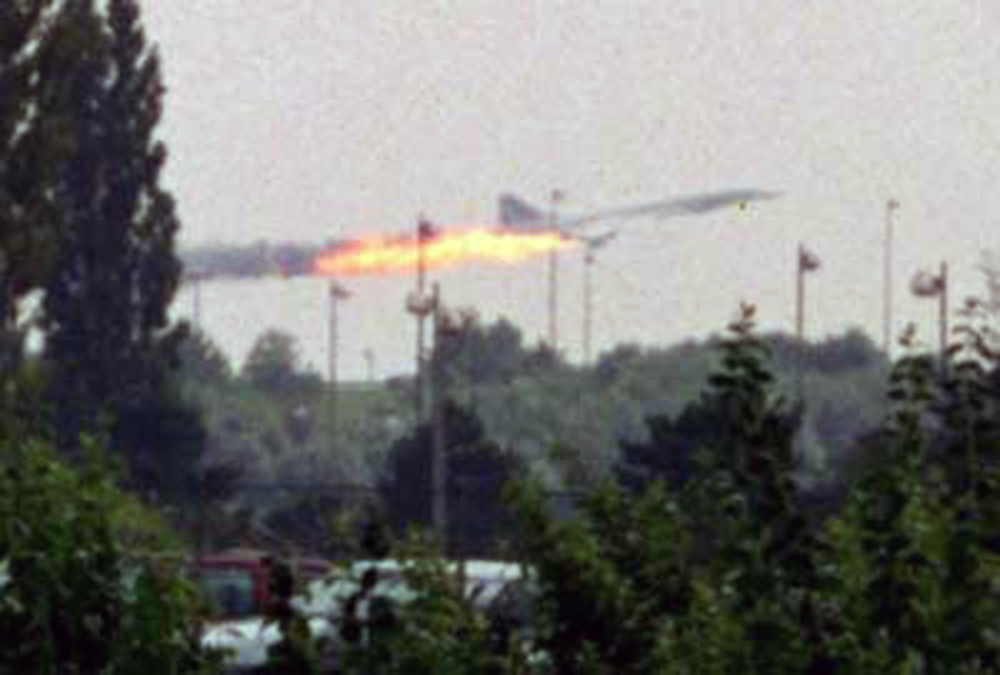
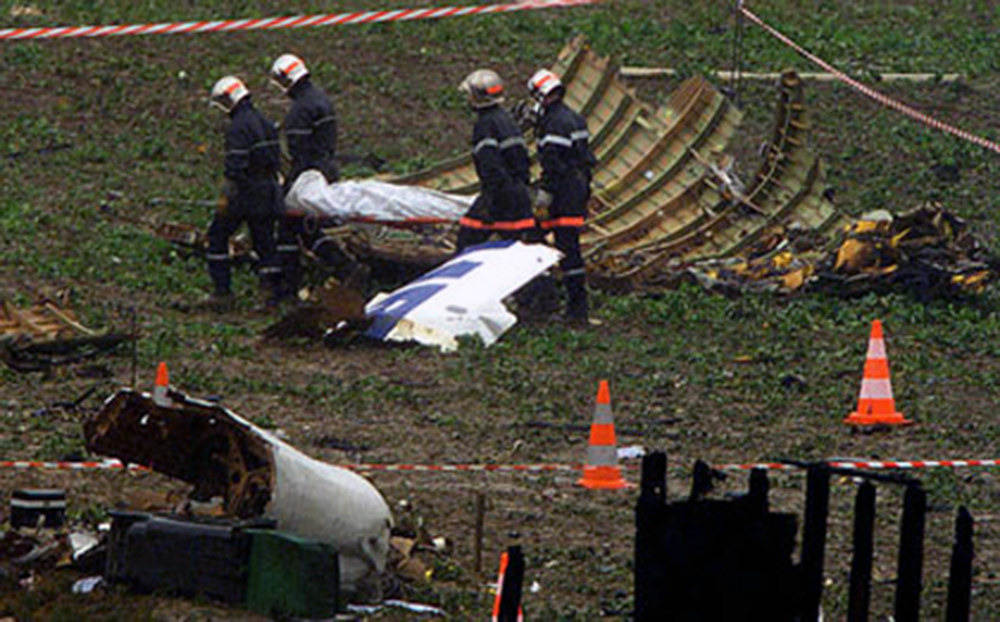
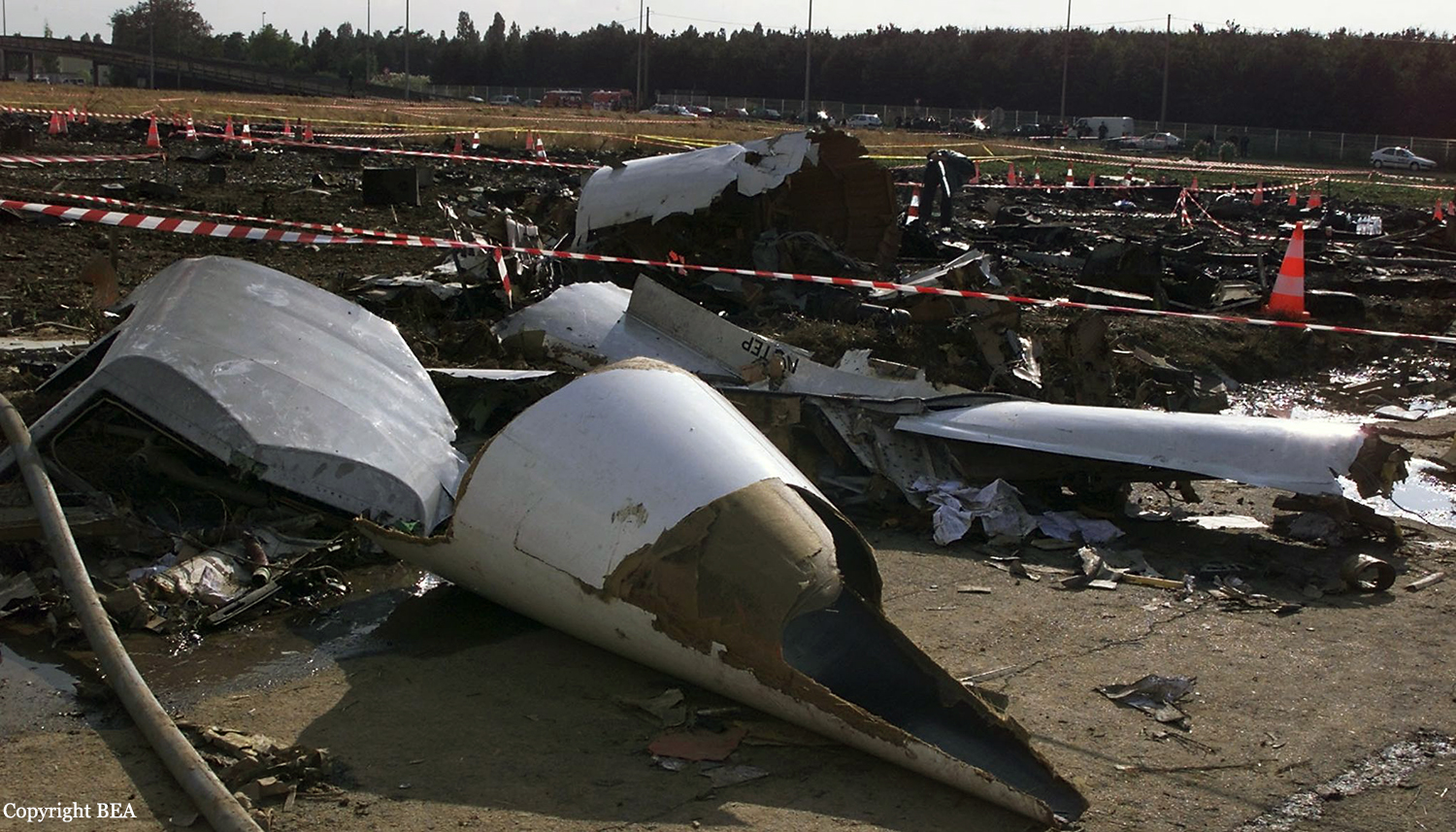
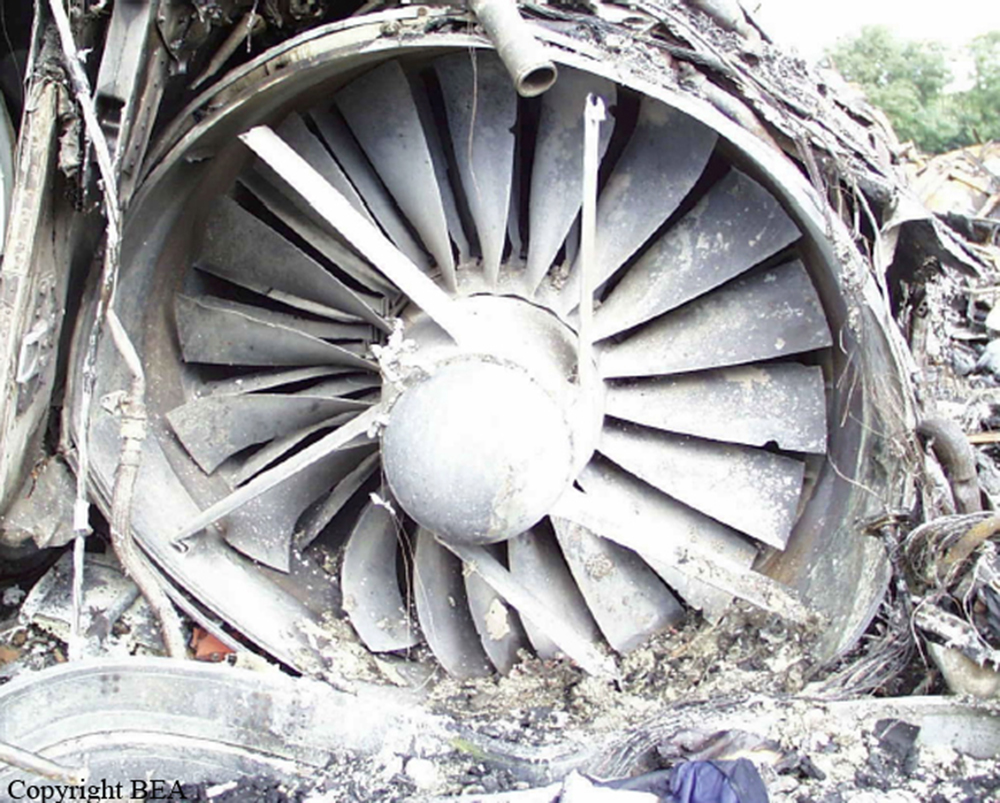
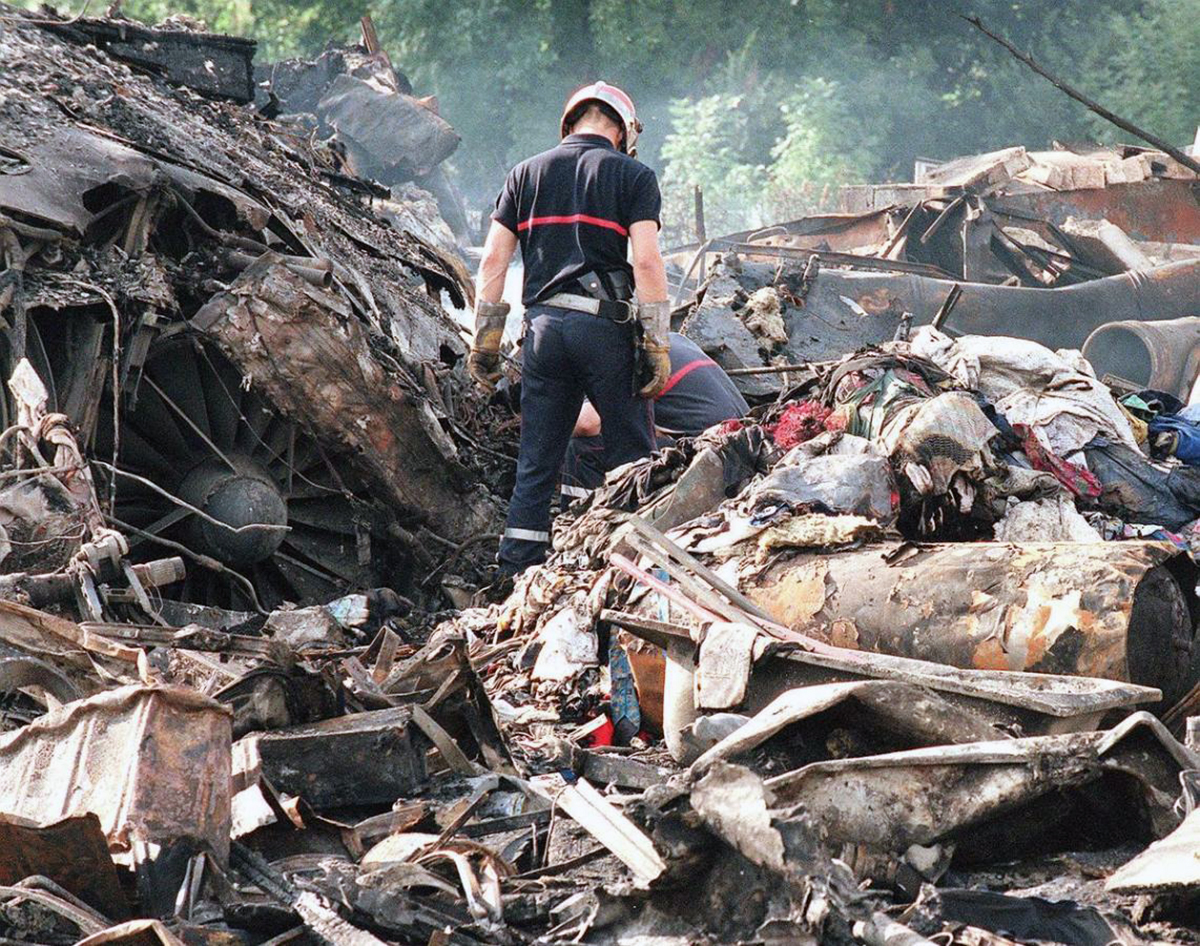
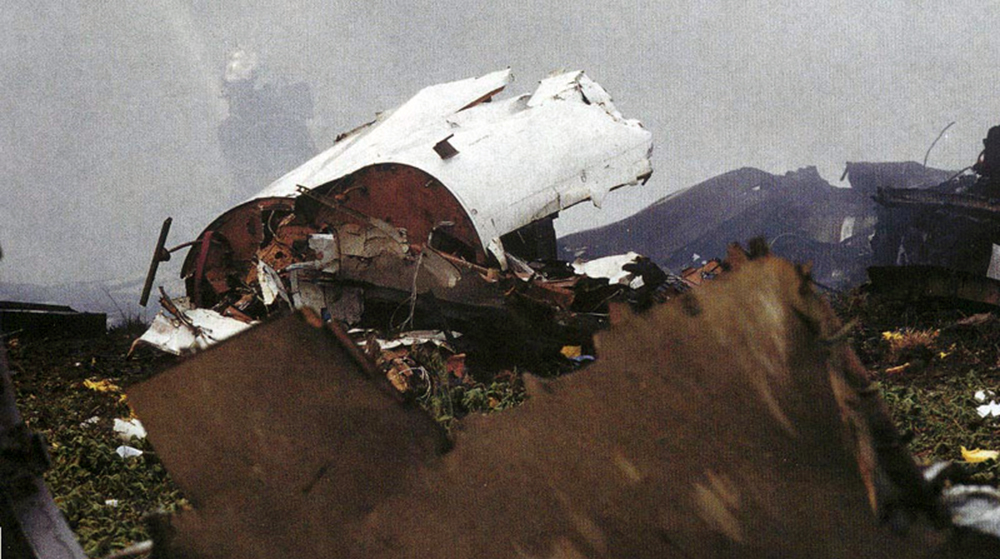
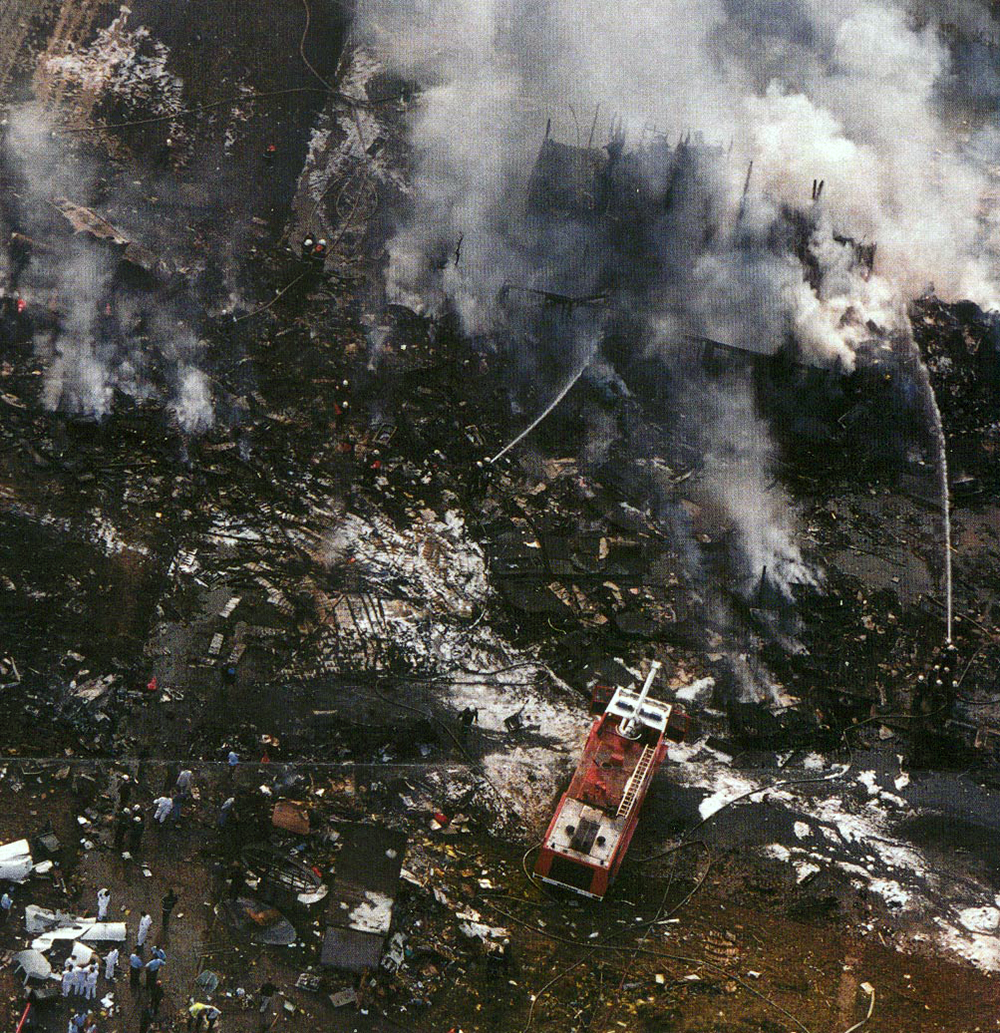
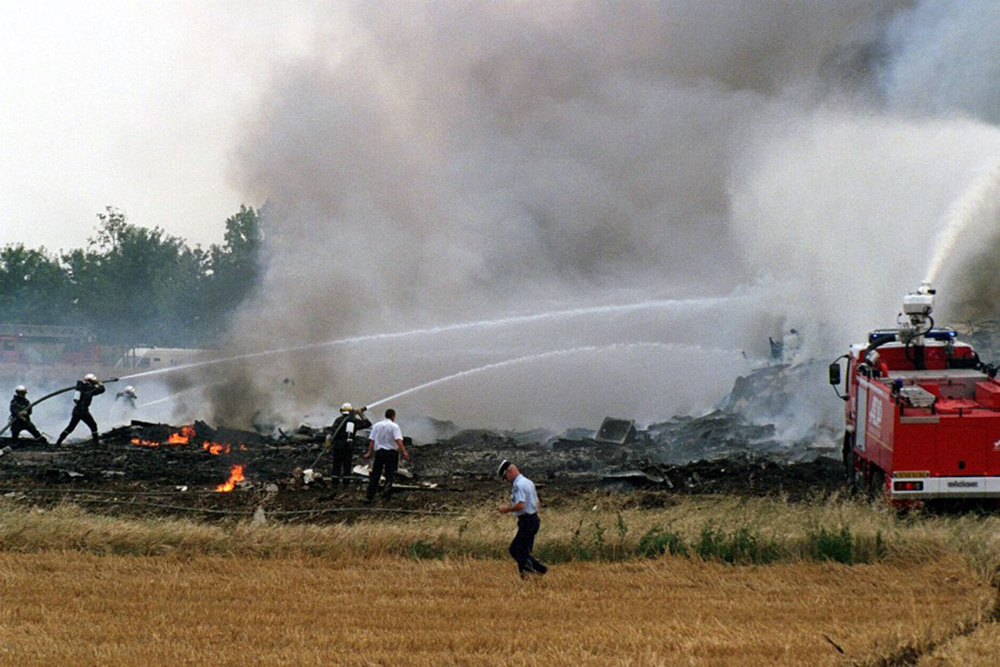
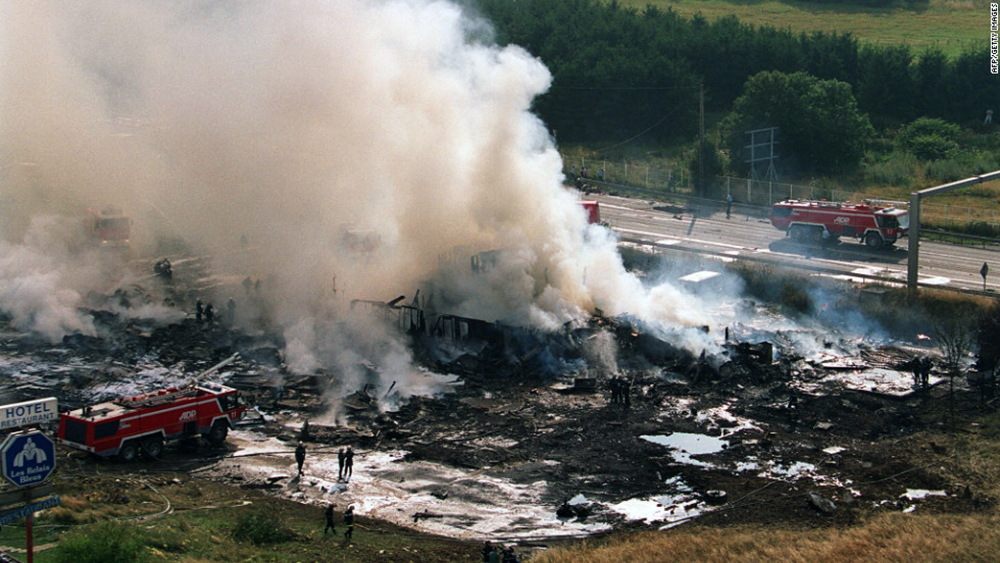
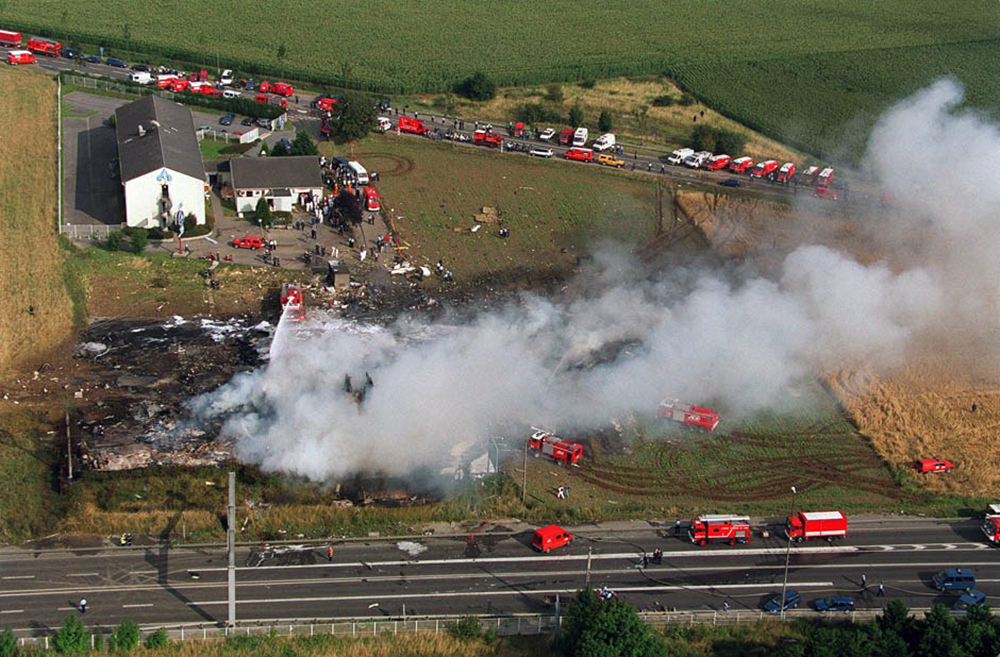
On Tuesday 25 July 2000 the Concorde registered F-BTSC, operated by Air France, took off from Paris Charles de Gaulle to undertake charter flight AF4590 to New York with nine crew members (3 FC, 6 CC) and 100 passengers on board. The Captain was Pilot Flying (PF), the First Officer was Pilot Not Flying (PNF). The total weights of the aircraft and of the fuel on board stated by the Flight Engineer (FE) at the time the aircraft started out were 186.9 t and 95 t respectively. The speeds selected by the crew were V1: 150 kt, VR: 198 kt, V2: 220 kt. At 13 h 58 min 27 s, the crew contacted ATC on the Flight data frequency and requested the whole length of runway 26 right for a takeoff at 14 h 30. At 14 h 07 min 22 s, the controller gave start-up clearance and confirmed runway 26 right for takeoff. At 14 h 34 min 38 s, the Ground controller cleared the aircraft to taxi towards the runway 26 right holding point via the Romeo taxiway. At 14 h 40 min 02 s, the Loc Sud controller cleared 4590 to line up. At 14 h 42 min 17 s, he gave it takeoff clearance, and announced a wind from 090° at 8kt. The crew read back the takeoff clearance. The FE stated that the aircraft had used eight hundred kilos of fuel during taxiing. At 14 h 42 min 31 s, the PF commenced takeoff. At 14 h 42 min 54.6 s, the PNF called one hundred knots, then V1 nine seconds later. A few seconds after that, tyre No 2 (right front) on the left main landing gear was destroyed after having run over a piece of metal lost by an aircraft that had taken off five minutes before. The destruction of the tyre in all probability resulted in large pieces of rubber being thrown against the underside of the left wing and the rupture of a part of tank 5. A severe fire broke out under the left wing and around the same time engines 1 and 2 suffered a loss of thrust, severe for engine 2, slight for engine 1. By 14 h 43 min 13 s, as the PF commenced the rotation, the controller informed the crew the presence of flames behind the aircraft. The PNF acknowledged this transmission and the FE announced the failure of engine 2. The recorded parameters show a transient loss of power on engine 1 that was not mentioned by the crew. At around 14 h 43 min 22 s the engine fire alarm sounded and the FE announced "shut down engine 2" then the Captain called for the "engine fire" procedure. A few seconds later, the engine 2 fire handle was pulled and the fire alarm stopped. The PNF drew the PF’s attention to the airspeed, which was 200 kt. At 14 h 43 min 30 s, the PF called for landing gear retraction. The controller confirmed the presence of large flames behind the aircraft. At 14 h 43 min 42 s the engine fire alarm sounded again for around 12 seconds. It sounded for the third time at about 14 h 43 58 s and continued until the end of the flight. At 14 h 43 min 56 s, the PNF commented that the landing gear had not retracted and made several callouts in relation to the airspeed. At 14 h 43 min 59 s, the GPWS alarm sounded several times. The FO informed ATC that they were trying for Le Bourget aerodrome. The recorded parameters then indicate a loss of power on engine 1. A few seconds later, the aircraft crashed onto a hotel at “La Patte d’Oie” in Gonesse at the intersection of the N17 and D902 roads. The aircraft was totally destroyed by impact forces and a post crash fire and all 109 occupants were killed as well as four people working in the hotel. Five other employees were injured. The aircraft was chartered by the German Operator Deilmann to carry German tourists to New York. On board were nine French citizens (all crew members), 96 Germans, two Danish, one American and one Austrian.
Probable cause:
The following findings were identified:
- High-speed passage of a tyre over a part lost by an aircraft that had taken off five minutes earlier and the destruction of the tyre.
- The ripping out of a large piece of tank in a complex process of transmission of the energy produced by the impact of a piece of tyre at another point on the tank, this transmission associating deformation of the tank skin and the movement of the fuel, with perhaps the contributory effect of other more minor shocks and /or a hydrodynamic pressure surge.
- Ignition of the leaking fuel by an electric arc in the landing gear bay or through contact with the hot parts of the engine with forward propagation of the flame causing a very large fire under the aircraft's wing and severe loss of thrust on engine 2 then engine 1.
- In addition, the impossibility of retracting the landing gear probably contributed to the retention and stabilisation of the flame throughout the flight.
Final Report:

Crash of a Lockheed C-130H Hercules at King Hussein AFB: 13 killed

Date & Time: Jul 25, 2000 at 0600 LT
Type of aircraft:
Operator:
Registration:
348
Flight Phase:
Flight Type:
Survivors:
No
Schedule:
King Hussein AFB - King Hussein AFB
MSN:
4073
YOM:
1965
Country:
Region:
Crew on board:
7
Crew fatalities:
Pax on board:
6
Pax fatalities:
Other fatalities:
Total fatalities:
13
Circumstances:
The four engine aircraft was dispatched at King Hussein AFB for a local training mission on behalf of the Jordan Special Forces. While flying at an altitude of 1,000 feet in the vicinity of the airbase, the crew encountered an unexpected situation when the aircraft that entered an uncontrolled descent. At low height, the crew attempted a last correction manoeuvre to avoid power cables when the aircraft crashed in a huge explosion. All 13 occupants were killed. It was reported that the crew encountered unknown technical problems.

Crash of a Douglas C-47A-10-DK in Nassau: 2 killed

Date & Time: Jul 20, 2000 at 1312 LT
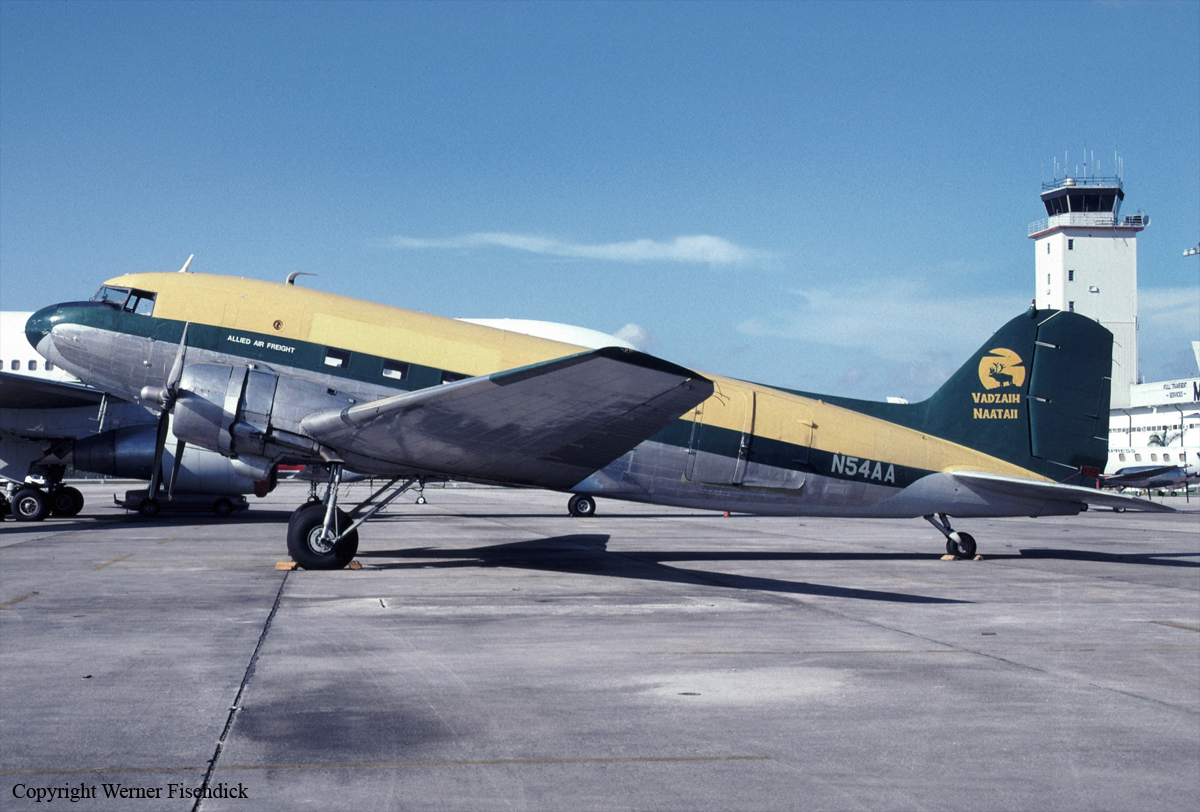
Registration:
N54AA
Flight Phase:
Flight Type:
Survivors:
No
Schedule:
Nassau - Freeport
MSN:
12475
YOM:
1944
Country:
Crew on board:
2
Crew fatalities:
Pax on board:
0
Pax fatalities:
Other fatalities:
Total fatalities:
2
Circumstances:
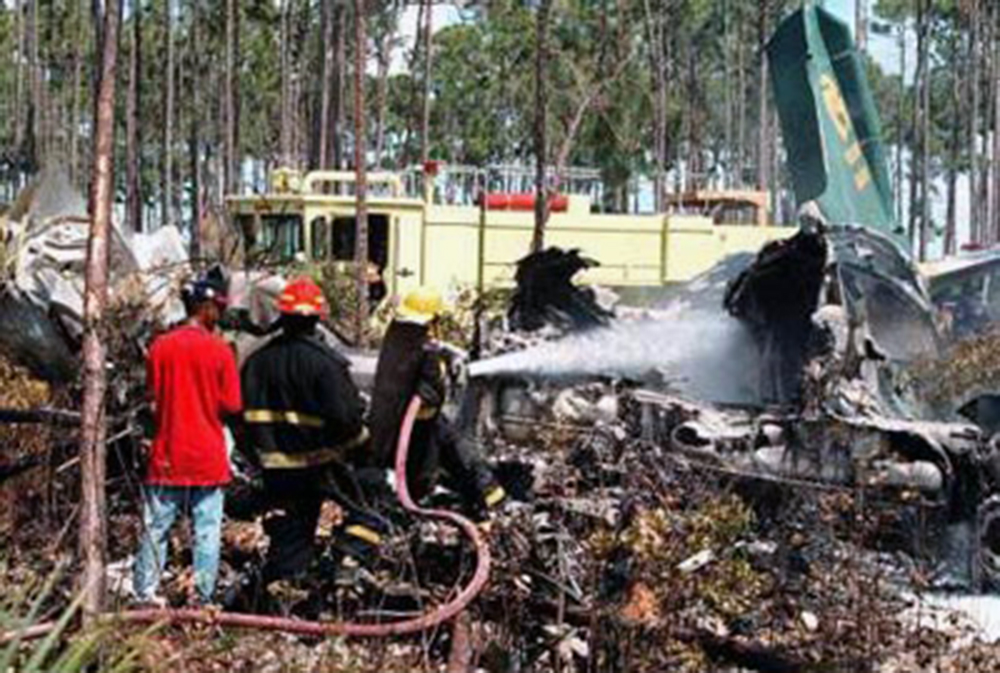
On July 20, 2000, about 1312 eastern daylight time, a Douglas DC-3, N54AA, registered to Allied Air Freight, Inc., operating as a Title 14 CFR Part 135 cargo charter flight, crashed after takeoff from Nassau International Airport, New Providence Island, Bahamas. Visual meteorological conditions prevailed and a VFR flight plan was filed. The airplane was destroyed by post crash fire and the ATP-rated pilot and commercially-rated copilot were fatally injured. The flight originated about 6 minutes before the accident. According to initial reports, after takeoff from runway 14, the pilot advised the tower that he would have to shut down the right engine and return for an emergency landing on runway 14. The airplane was observed to lose altitude and crash about 2 miles from the airport, east of the extended centerline of runway 14.