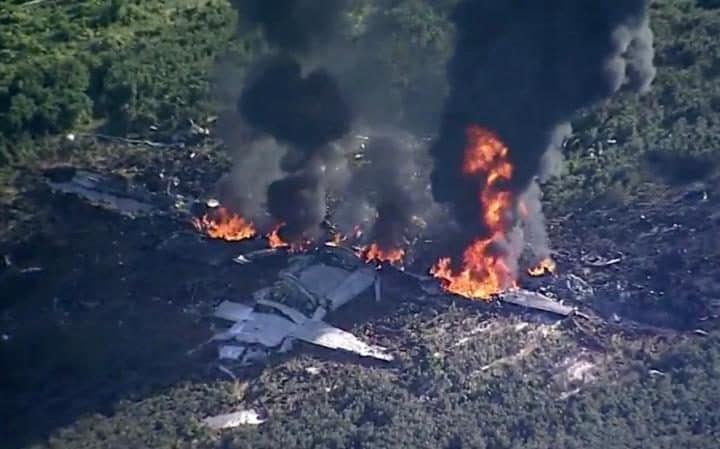
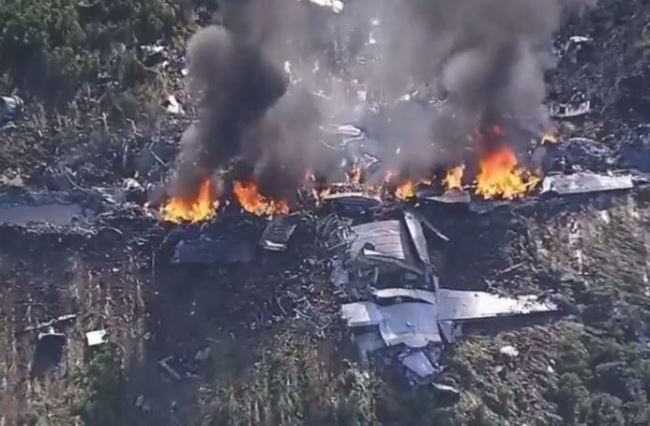
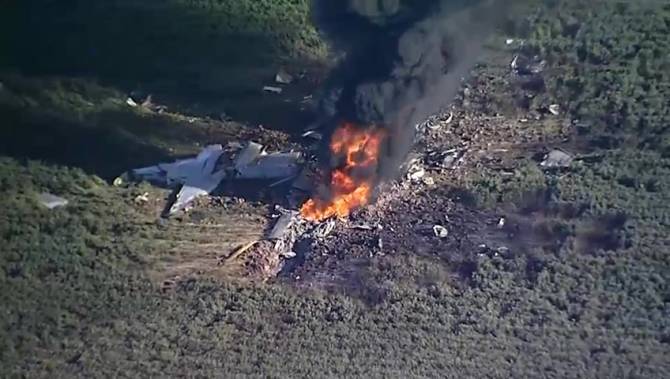
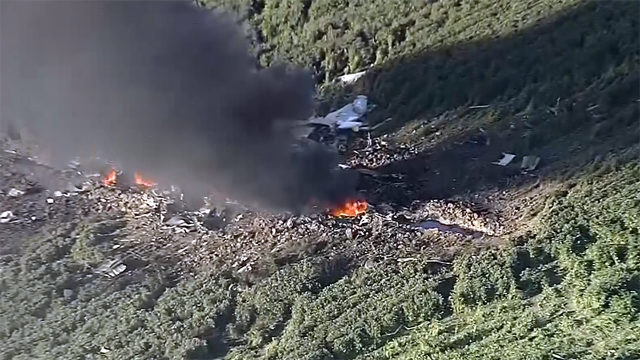
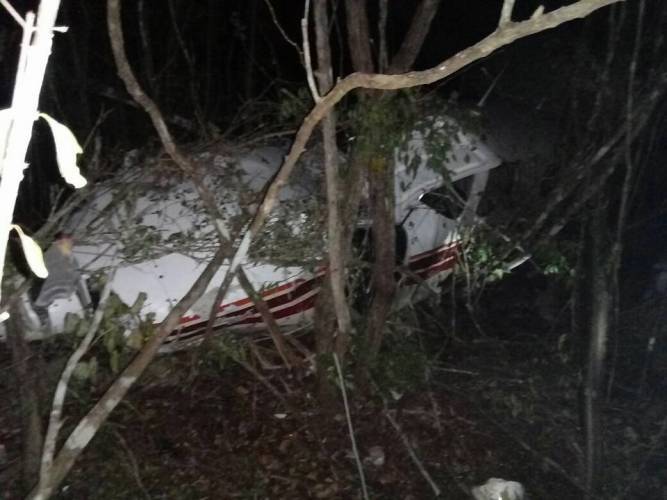
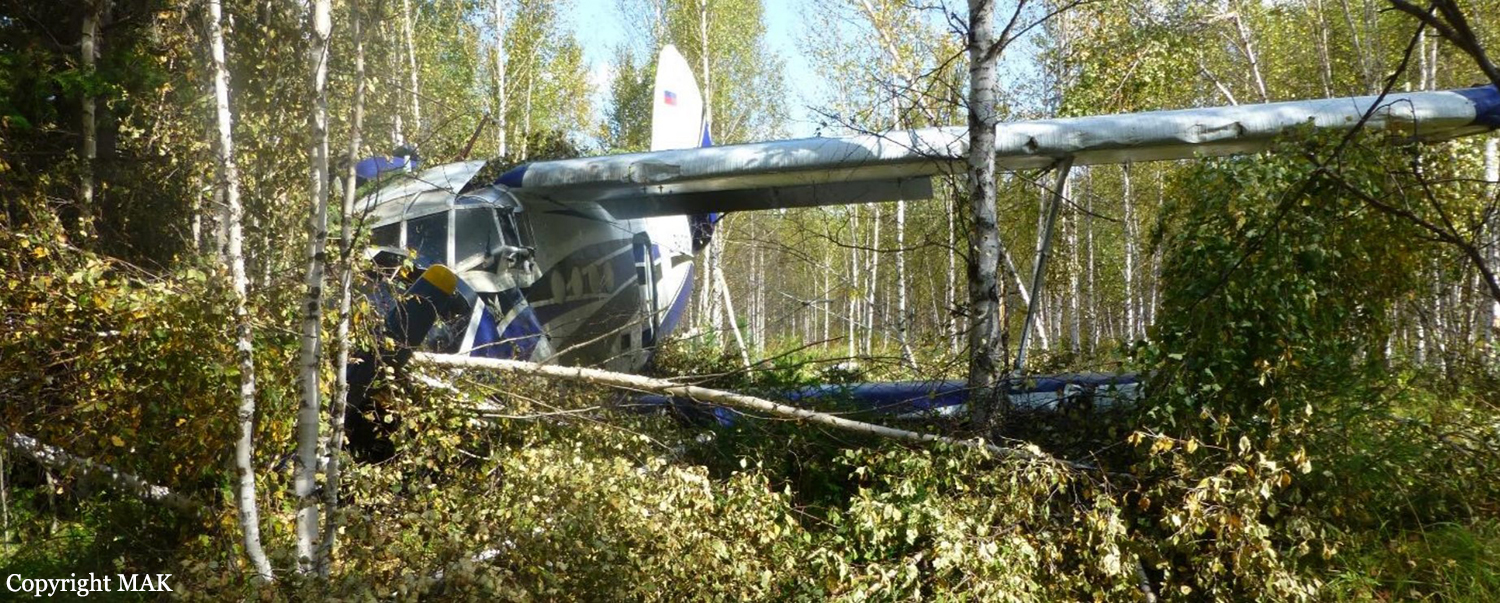
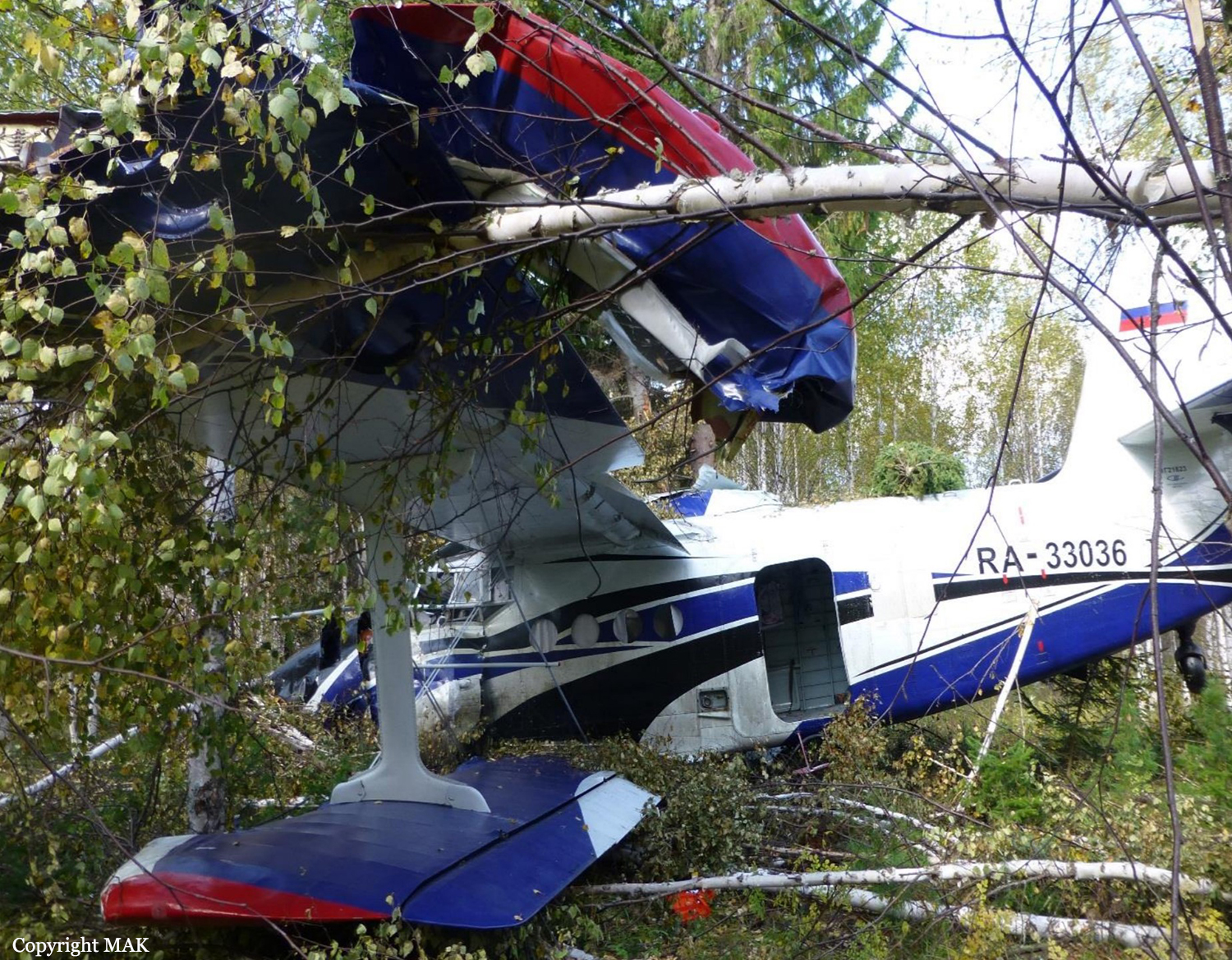
Crash of a PZL-Mielec AN-2R near Yeniseysk

Date & Time: Aug 26, 2017 at 1750 LT
Type of aircraft:
Operator:
Registration:
RA-33036
Flight Phase:
Survivors:
Yes
Schedule:
Yeniseysk - Yeniseysk
MSN:
1G218-23
YOM:
1986
Country:
Region:
Crew on board:
2
Crew fatalities:
Pax on board:
0
Pax fatalities:
Other fatalities:
Total fatalities:
0
Captain / Total flying hours:
5600
Captain / Total hours on type:
894.00
Copilot / Total flying hours:
2160
Copilot / Total hours on type:
49
Aircraft flight hours:
4754
Aircraft flight cycles:
12934
Circumstances:
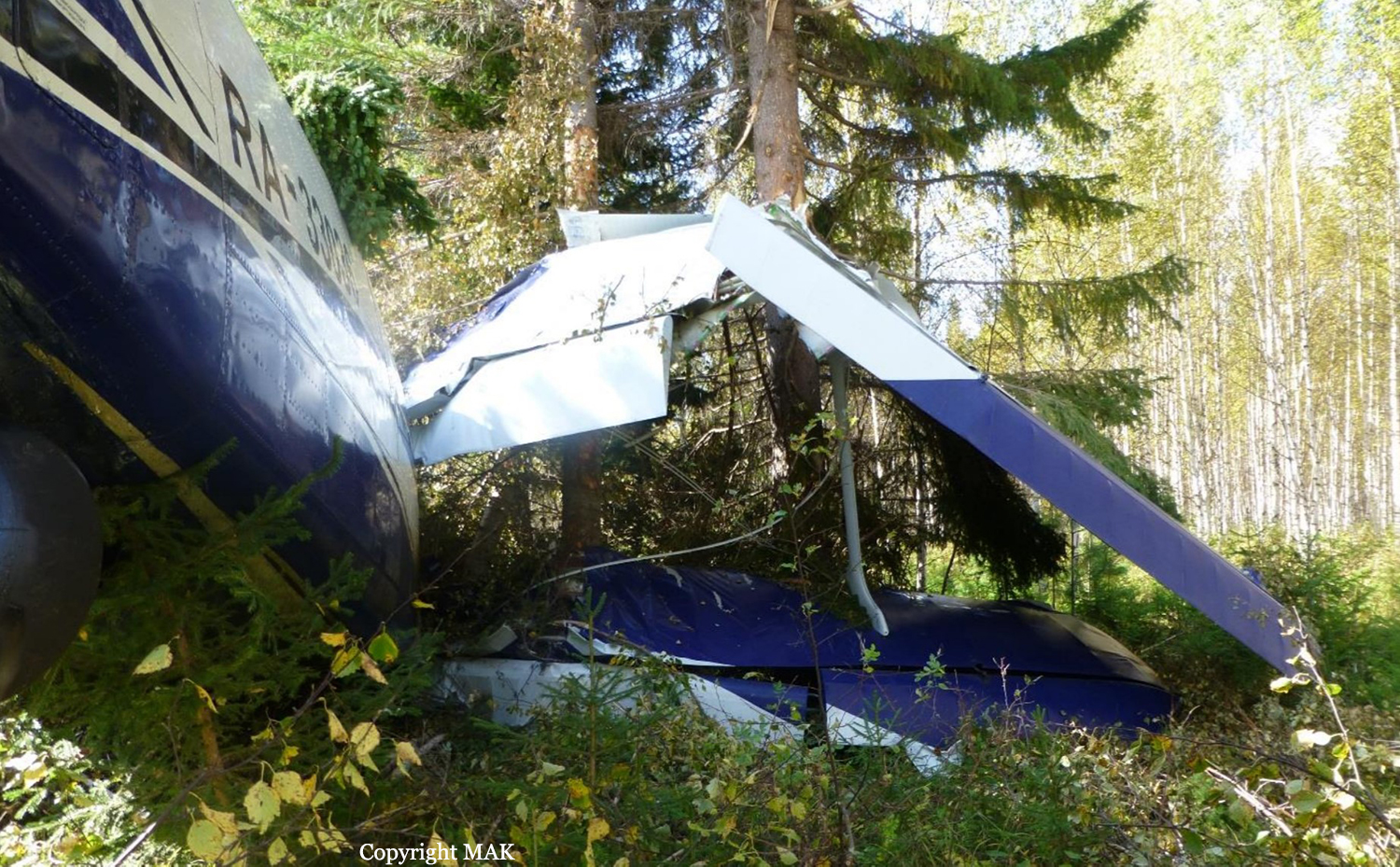
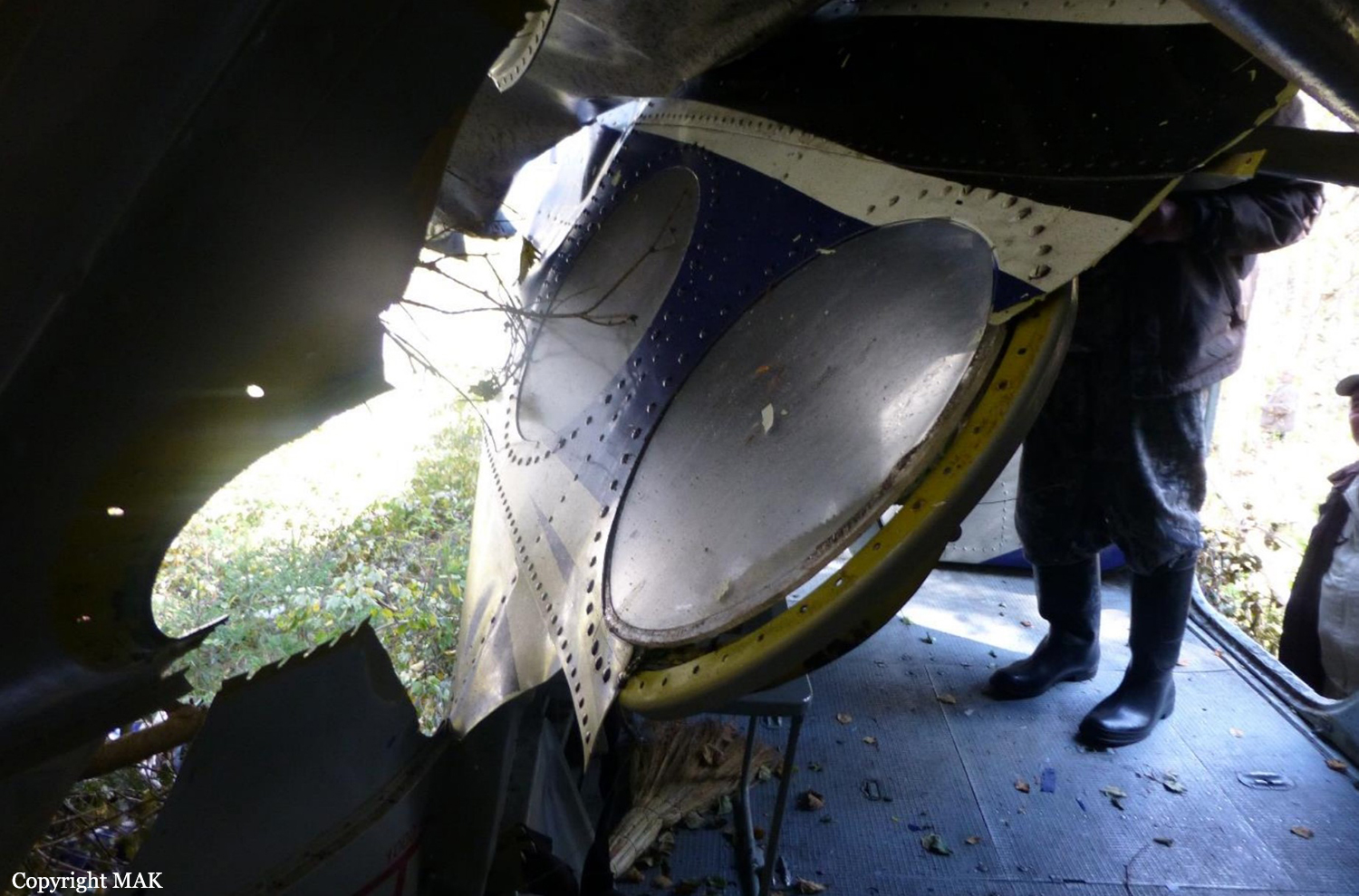
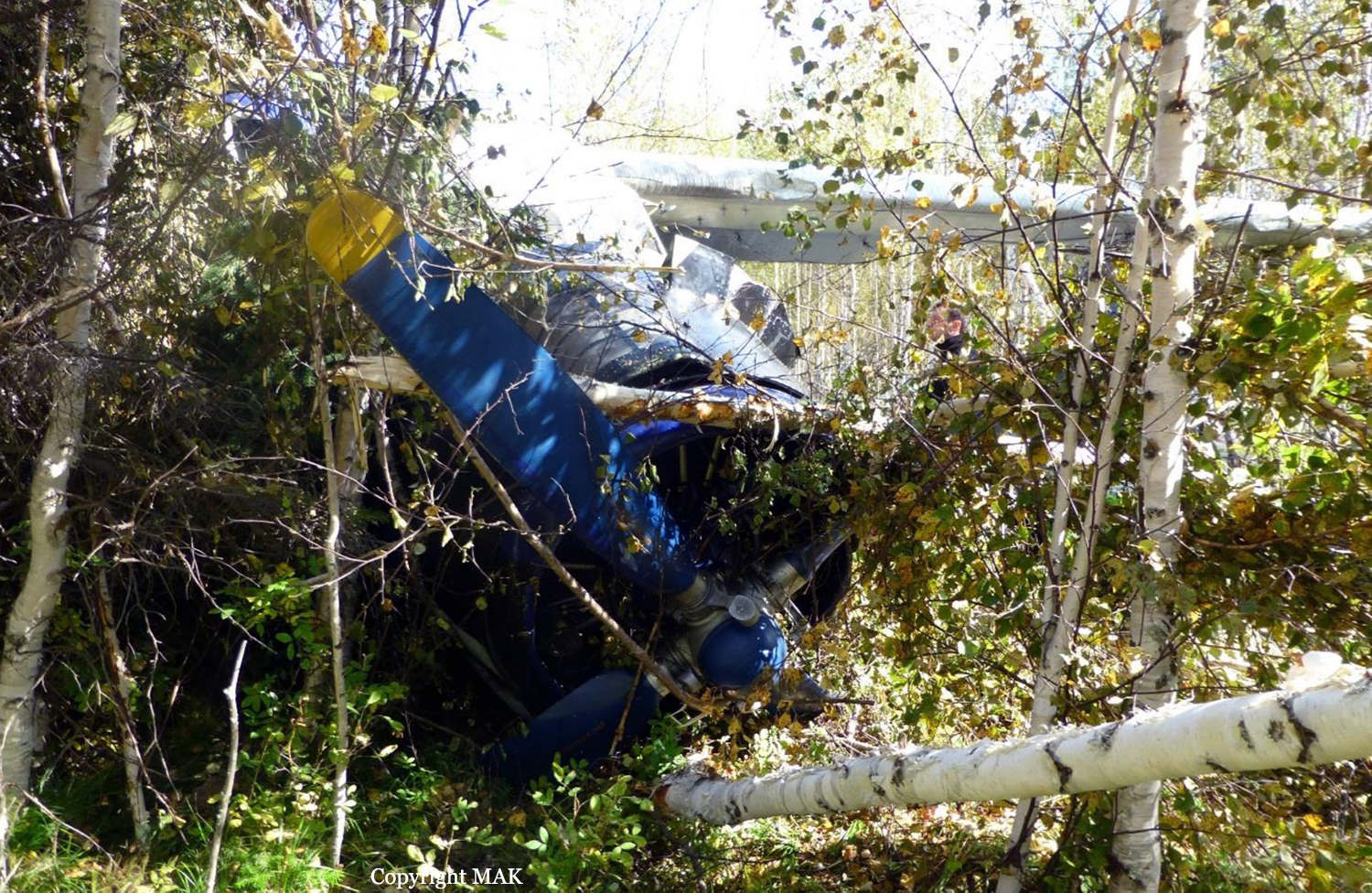
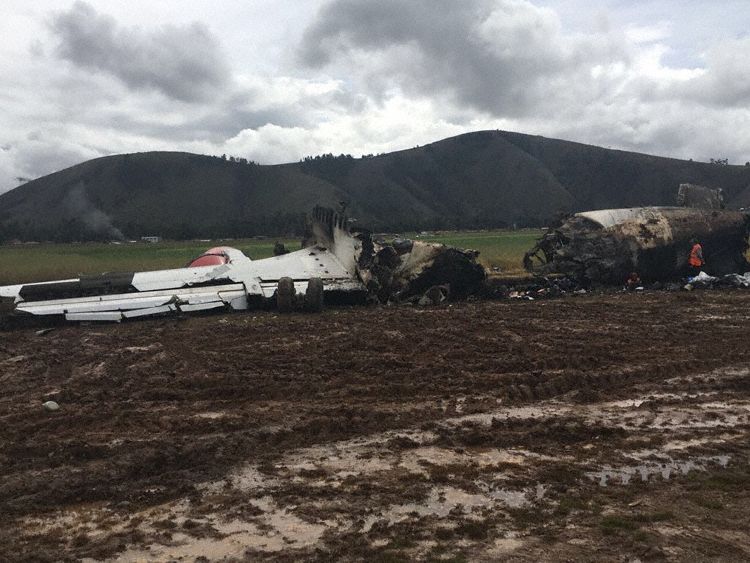
The single engine aircraft departed Yeniseysk in the afternoon on a spraying mission over forest area, carrying two pilots. About 40 minutes into the flight, while completing a third pass at an altitude of about 400 metres, smoke spread in the cockpit. The crew decided to return to Yeniseysk when few minutes later, the engine lost power. Fuel leaked from the engine and spread over the windshield. The crew reduced his altitude to 50 metres and the speed to 85 km/h, preparing for an emergency landing. With the flaps down to 45°, the aircraft collided with trees and crashed in a wooded area located 75 km north of Yeniseysk. Both pilots were slightly injured and the aircraft was damaged beyond repair.
Probable cause:
Loss of engine power due to the failure of the cylinder n°5 caused by a faulty manufacturing.
Final Report:
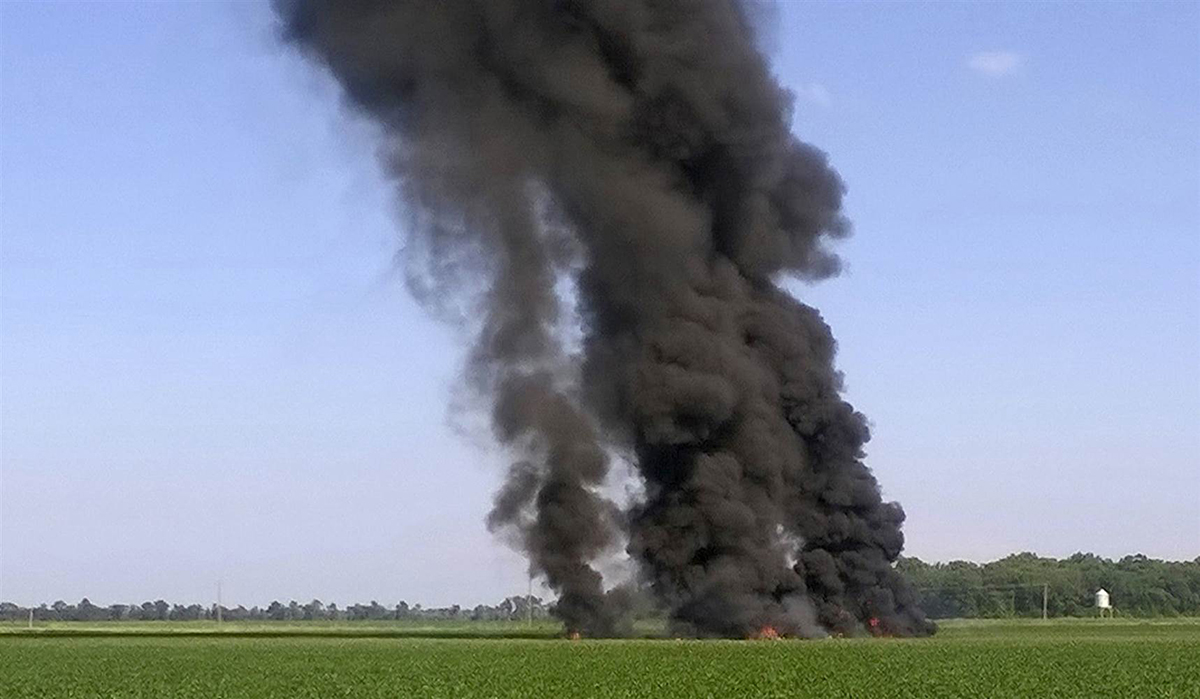
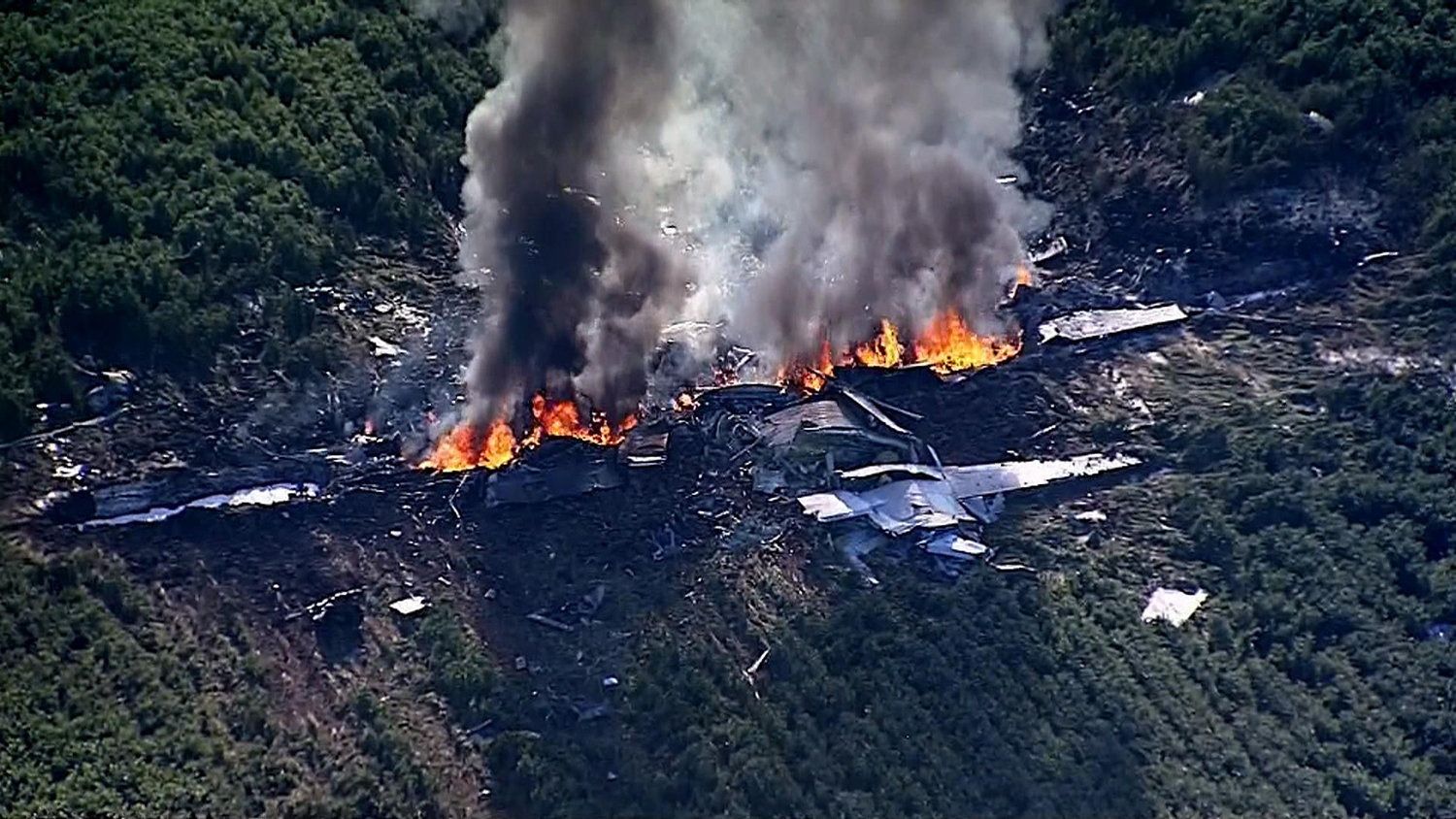
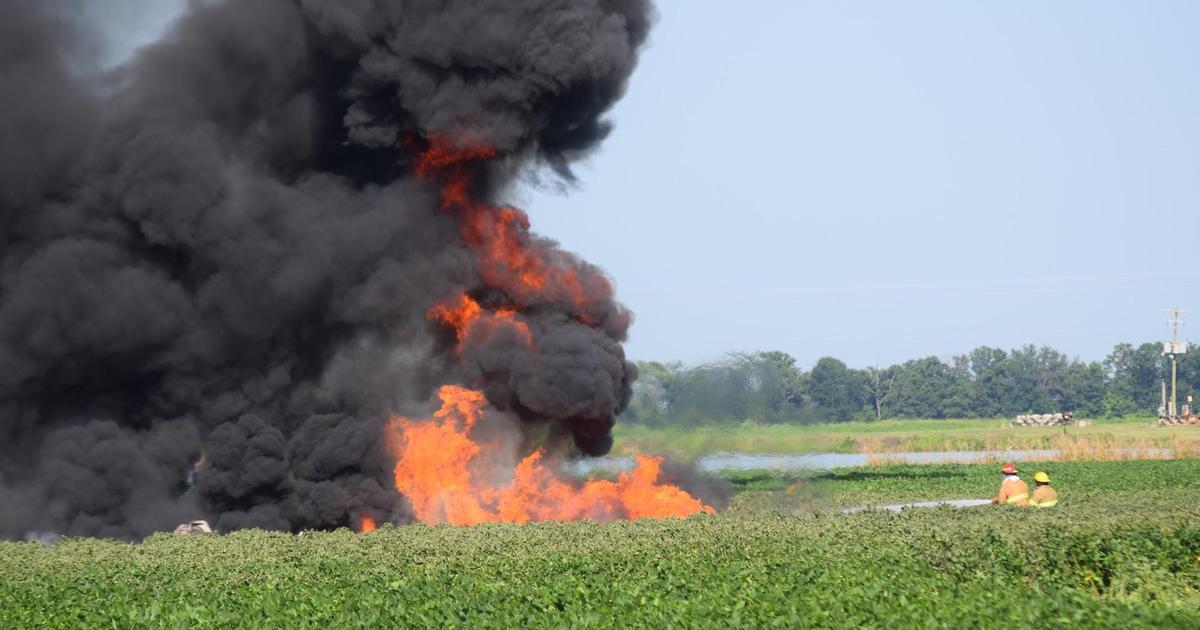
Crash of a Lockheed KC-130T Hercules near Itta Bena: 16 killed

Date & Time: Jul 10, 2017 at 1549 LT
Type of aircraft:
Operator:
Registration:
165000
Flight Phase:
Flight Type:
Survivors:
No
Schedule:
Cherry Point - El Centro
MSN:
5303
YOM:
1992
Flight number:
Yanky 72
Crew on board:
8
Crew fatalities:
Pax on board:
8
Pax fatalities:
Other fatalities:
Total fatalities:
16
Captain / Total flying hours:
2614
Copilot / Total flying hours:
822
Circumstances:
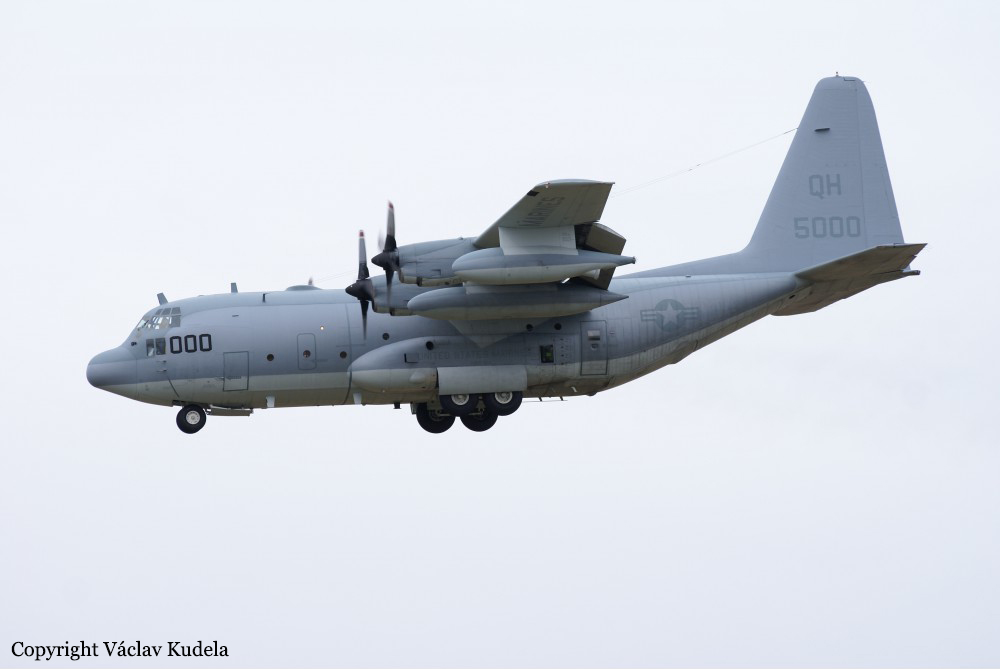
The aircraft departed MCAS Cherry Point-Cunningham Field in the early afternoon on a personnel transfer mission to El Centro NAS, California. En route, while cruising at an altitude of 20,000 feet, the n°4 blade on the engine n°2 detached, struck the left side of the fuselage, penetrated the cabin, then the right side of the fuselage and eventually impacted the right stabilizer that detached. The aircraft suffered a catastrophic structural failure, causing the cockpit to separate and detach. The airplane entered an uncontrolled descent and crashed in a soybean field located 11 km southwest of Itta Bena. The airplane was destroyed by impact forces and a post crash fire and all 16 occupants were killed.
Crew:
Maj Caine M. Goyette, pilot,
Cpt Sean E . Elliott, copilot,
S/Sgt Joshua Snowden, flight engineer,
Sgt Owen J . Lennon, flight engineer.
G/Sgt Mark A. Hopkins, gunnery
G/Sgt Brendan C . Johnson, gunnery
Sgt Julian M. Kevianne, crewmaster,
L/Cpl Daniel I. Baldassare, crewmaster.
Passengers:
Cpl Collin J. Schaaff
S/Sgt William J. Kundrat,
S/Sgt Robert H. Cox,
S/Sgt Talon R. Leach,
Sgt Chad E . Jenson,
Sgt Joseph J . Murray,
Sgt Dietrich A. Schmiernan,
PO Ryan Lohrey.
Probable cause:
The investigation determined the cause of the mishap to be an inflight departure of the number four blade from the number two propeller. This propeller blade (P2B4) liberated while the aircraft was flying at a cruise altitude of 20,000 feet . The liberation of P2B4 initiated the catastrophic sequence of events resulting in the midair breakup of the aircraft and its uncontrollable descent and ultimate destruction. Post- mishap analysis of P2B4 revealed that a circumferential fatigue crack in the blade caused the fracture and liberation. This fatigue crack propagated from a radial crack which originated from intergranular cracking (IGC) and corrosion pitting. The analysis also revealed the presence of anodize coating within the band of corrosion pitting and intergranular cracking on the blade near the origin of the crack. This finding proves that the band of corrosion pitting and intergranular cracking was present and not removed during the last overhaul of P2B4 at Warner Robins Air Logistics Complex (WR-ALC) in the fall of 2011. The investigation concluded that the failure to remediate the corrosion pitting and intergranular cracking was due to deficiencies in the propeller blade overhaul process at WR-ALC which existed in 2011 and continued up until the shutdown of the WR-ALC propeller blade overhaul process in the fall of 2017. The investigation also examined whether any operational or intermediate level maintenance inspections or maintenance actions exist which could have detected the underlying causal conditions prior to the mishap. The investigation concluded that while these inspections exist, it cannot be quantifiably determined that these inspections would have detected the causal condition. The investigation arrived at this conclusion due to the fact that the growth or propagation rate of an IGC radial crack cannot be predicted. Though no evidence exists to determine when the radial crack had grown to a detectable area, beyond the bushing, there exists a distinct possibility that it could have been detected if the radial crack had grown past the bushing and the off wing eddy current inspection was performed.
Final Report:

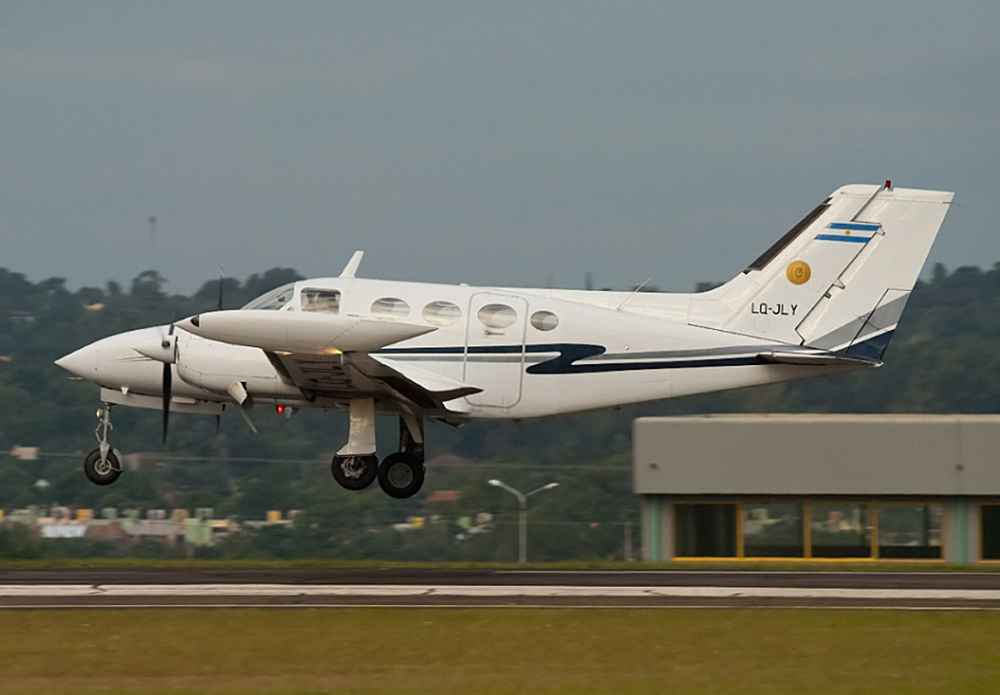
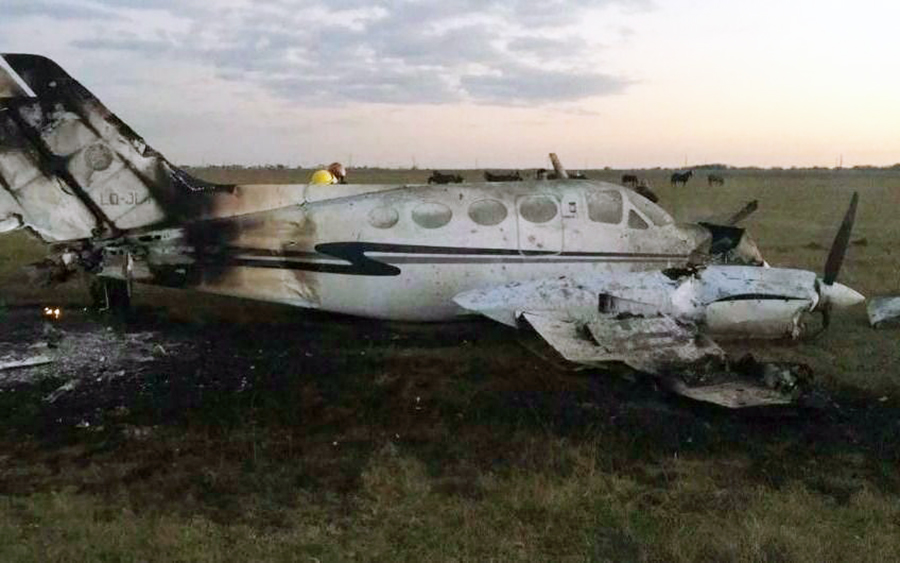
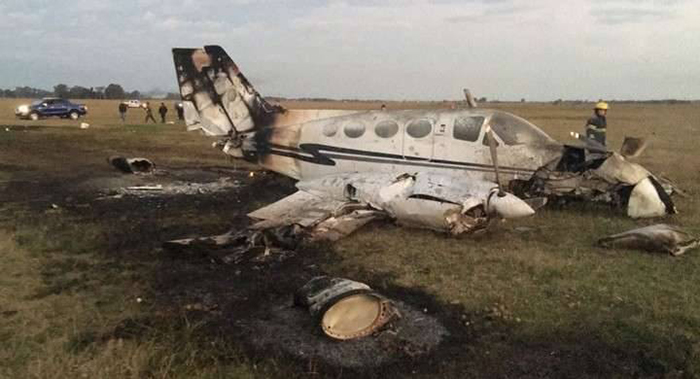
Crash of a Cessna 421A Golden Eagle I near Buenos Aires

Date & Time: May 31, 2017 at 1740 LT
Type of aircraft:
Operator:
Registration:
LQ-JLY
Flight Phase:
Flight Type:
Survivors:
Yes
Schedule:
El Palomar - Buenos Aires
MSN:
421A-0092
YOM:
1968
Country:
Crew on board:
2
Crew fatalities:
Pax on board:
1
Pax fatalities:
Other fatalities:
Total fatalities:
0
Captain / Total flying hours:
563
Captain / Total hours on type:
50.00
Copilot / Total flying hours:
1680
Copilot / Total hours on type:
320
Aircraft flight hours:
5826
Circumstances:
The twin engine airplane departed El Palomar Airport at 1604LT on a training flight, carrying one passenger and two pilots. While descending to Buenos Aires-Ezeiza-Ministro Pistarini Airport, the right engine failed. The crew was unable to restart the engine and to maintain a safe altitude, so he attempted an emergency landing when the aircraft crashed in an open field located 24 km from the airport, bursting into flames. All three occupants were injured and the aircraft was partially destroyed by fire.
Probable cause:
Failure of the right engine in flight due to fuel exhaustion. Lack of proper procedures by the operator was considerd as a contributing factor.
Final Report:

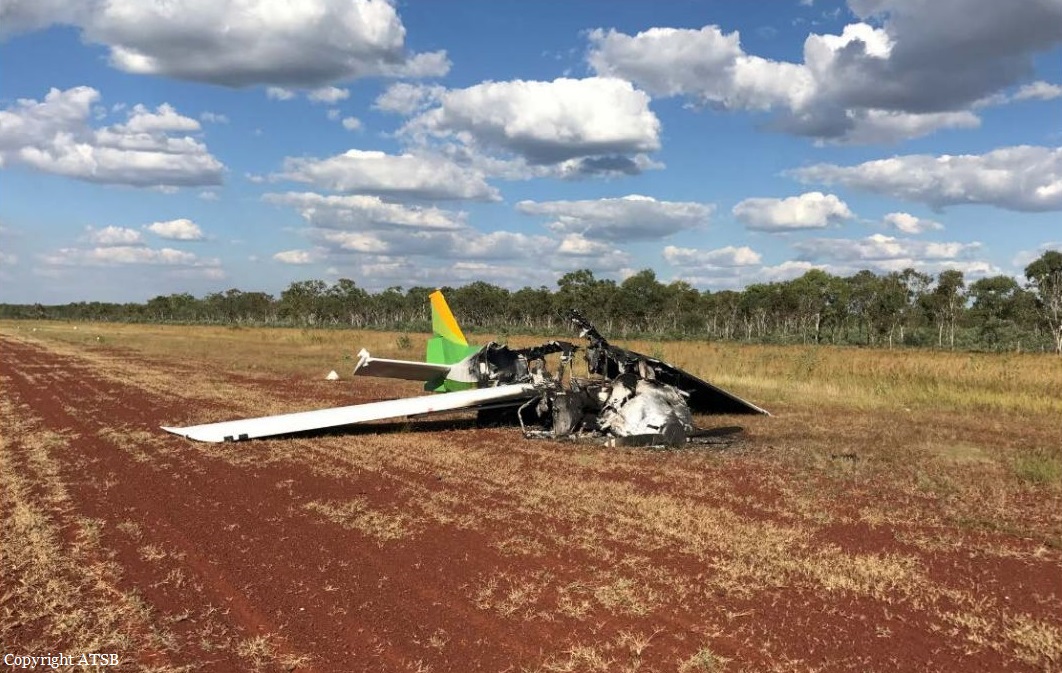
Ground fire of a GippsAero GA8 Airvan in Gibb River

Date & Time: Apr 22, 2017 at 1255 LT
Type of aircraft:
Operator:
Registration:
VH-AJZ
Flight Type:
Survivors:
Yes
Schedule:
Derby - Gibb River
MSN:
GA8-05-96
YOM:
2005
Country:
Region:
Crew on board:
2
Crew fatalities:
Pax on board:
1
Pax fatalities:
Other fatalities:
Total fatalities:
0
Circumstances:
On 22 April 2017, a Gippsland Aeronautics GA-8 aircraft, registered VH-AJZ, was being used to conduct incendiary bombing aerial work operations in the Prince Regent River area of northern Western Australia (WA). On board were a pilot, a navigator seated in the co-pilot seat and a bombardier in the rear of the aircraft cabin. While conducting the incendiary bombing operations, the bombardier advised the pilot that he was suffering from motion sickness. The pilot elected to land at Gibb River aircraft landing area (ALA), WA, to take a lunch break and provide the bombardier with time to recover from the motion sickness. At about 1255 Western Standard Time (WST), the aircraft landed on runway 07 at Gibb River. During the landing roll, the engine failed. The aircraft had sufficient momentum to enable the pilot to turn the aircraft around on the runway and begin to taxi to the parking area at the western end of runway 07. Shortly after turning around, the aircraft came to rest on the runway. The pilot attempted to restart the engine, but the engine did not start. The pilot waited about 10–20 seconds before again attempting to restart the engine. While attempting the second restart of the engine, the pilot heard a loud noise similar to that of a backfire. The navigator then observed flames and smoke coming from around the front of the engine and immediately notified the pilot. After being notified of the fire, the pilot immediately shut down the engine and switched off the aircraft electrical system. As the pilot switched off the aircraft electrical system, the navigator located the aircraft fire extinguisher and evacuated from the aircraft through the co-pilot door. After evacuating from the aircraft, the navigator observed fire on the aircraft nose wheel. The navigator had difficulty preparing the fire extinguisher for use and was unable to discharge the fire extinguisher onto the fire. While the navigator was attempting to extinguish the fire, the pilot exited the aircraft through the pilot door and assisted the bombardier to exit the aircraft. After assisting the bombardier, the pilot moved to the front of the aircraft to assist the navigator with the firefighting. The pilot was able to activate the fire extinguisher and extinguished the fire on the nose wheel. The pilot observed fire continuing to burn within the engine compartment. Due to the heat of the fire, the pilot was unable to access the engine compartment to extinguish this fire. The pilot determined that no more could be done to contain the fire, and therefore, the pilot, navigator and bombardier moved clear of the aircraft to a safe location as the fire continued. The crew members were not injured. As a result of the fire, the aircraft was destroyed.
Probable cause:
These findings should not be read as apportioning blame or liability to any particular organisation or individual.
- The cause of the engine failure and fire could not be determined.
- After the fire was identified, two steps in the emergency procedure were omitted. This included not closing the fuel shutoff valve, which likely resulted in the fire not being extinguished and subsequently intensifying.
Final Report:

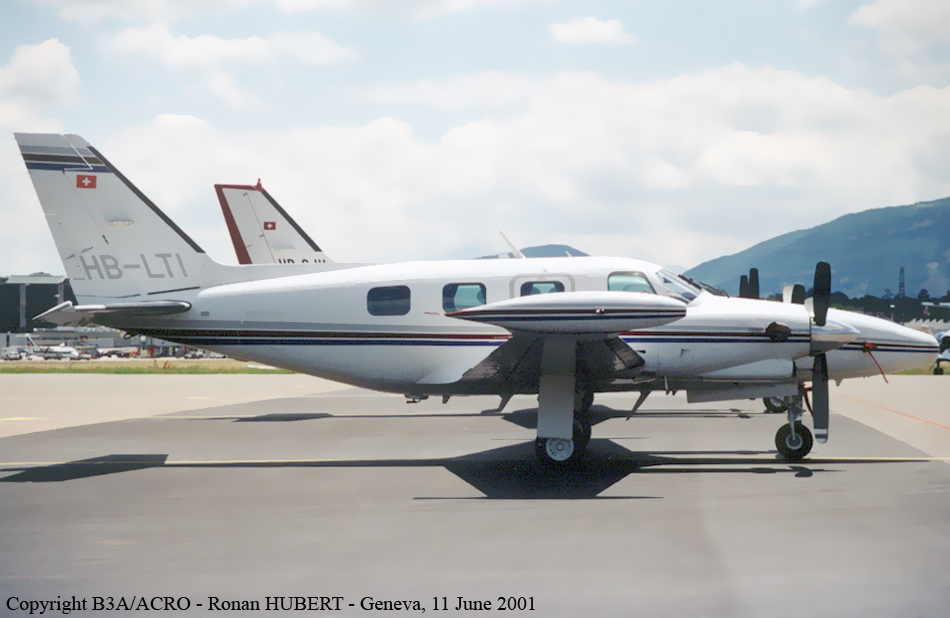
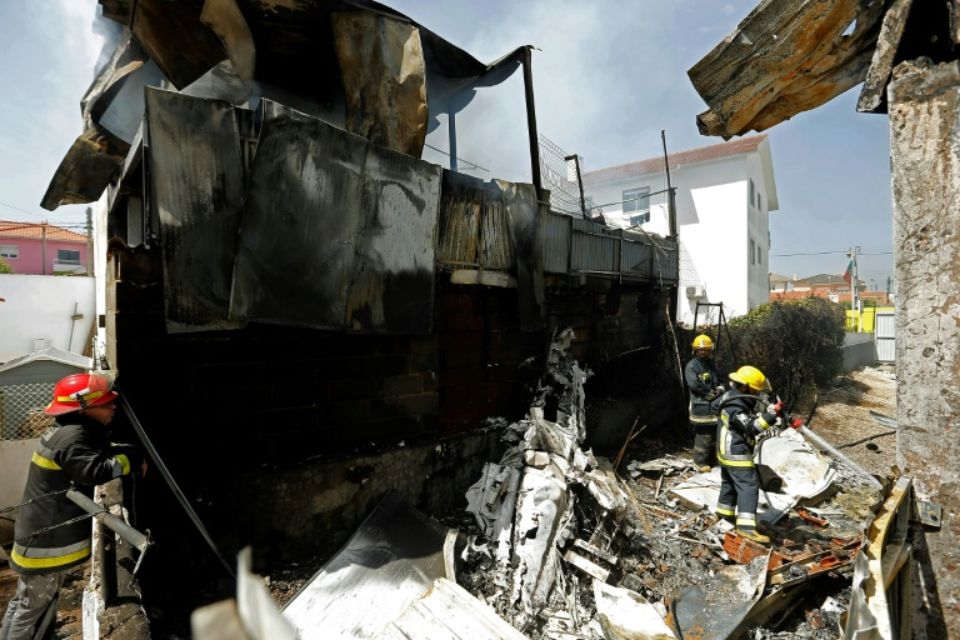
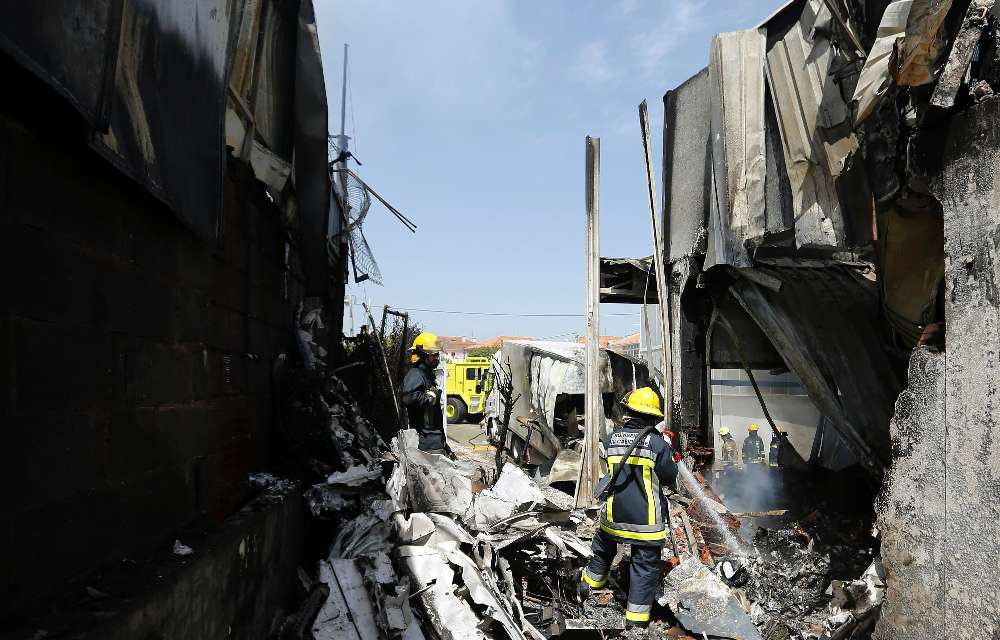
Crash of a Piper PA-31T-620 Cheyenne II in Cascais: 5 killed

Date & Time: Apr 17, 2017 at 1204 LT
Type of aircraft:
Operator:
Registration:
HB-LTI
Flight Phase:
Flight Type:
Survivors:
No
Site:
Schedule:
Cascais – Marseille
MSN:
31T-8020091
YOM:
1980
Country:
Region:
Crew on board:
1
Crew fatalities:
Pax on board:
3
Pax fatalities:
Other fatalities:
Total fatalities:
5
Captain / Total flying hours:
4900
Aircraft flight hours:
8323
Circumstances:
On April 17th, at 11:04 UTC, the aircraft turboprop Piper PA-31 Cheyenne II, registration HBLTI, private property, took off from runway 17 of the Cascais aerodrome (LPCS) bound to Marseille airport (LFML), IFR private flight, with 1 pilot and 3 passengers on board. According to several eyewitness testimonies, after takeoff, the Swiss twin-engine started to put the left wing down and consequently to turn left while climbing slowly to about 300’ feet of altitude. The left bank1 increased and the speed decreased leading the aircraft to stall. The aircraft entered a steep dive and impacted the ground next to a logistics dock of a local supermarket, located southeast of the airfield. The crash occurred 700 m from the end of the departure runway. Following the impact, the aircraft exploded and caught fire affecting a logistic dock, a house and a truck. The aircraft was destroyed by impact force and the post-collision fire, all the four occupants were killed. The driver of the truck affected by the explosion of the plane was also killed. The fuselage, wings, the engines and propellers were severely damaged by the impact force and post-impact fuel-fed fire. The structural damage to the aircraft was consistent with the application of extensive structural loads during the impact sequence, and the effects of the subsequent fire. No pre-crash structural defects were found. All aircraft parts and control surfaces were located at the site. The flaps and the landing gear were found retracted at the time of impact.
Probable cause:
- The pilot’s failure to maintain the airplane control following the power loss in the left critical engine. The root cause for the left engine failure could not be determined due to the extensive impact damages and intensive fire.
Contributing factors:
- Lack of proper pilot training especially concerning the emergency scenario of critical engine failure immediately after takeoff.
Final Report:
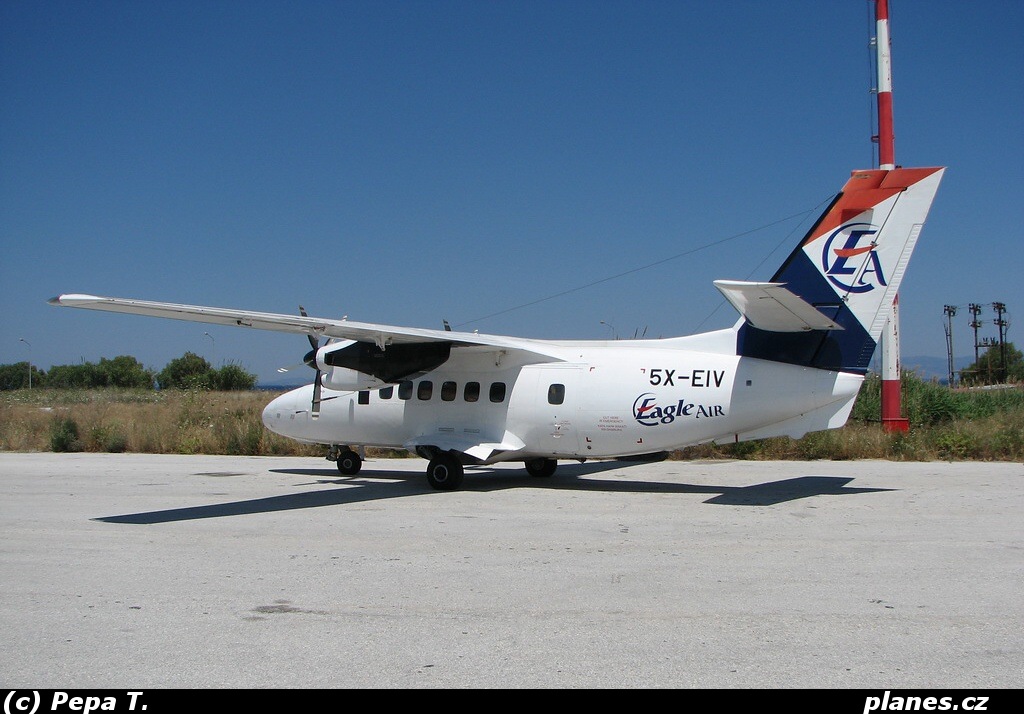
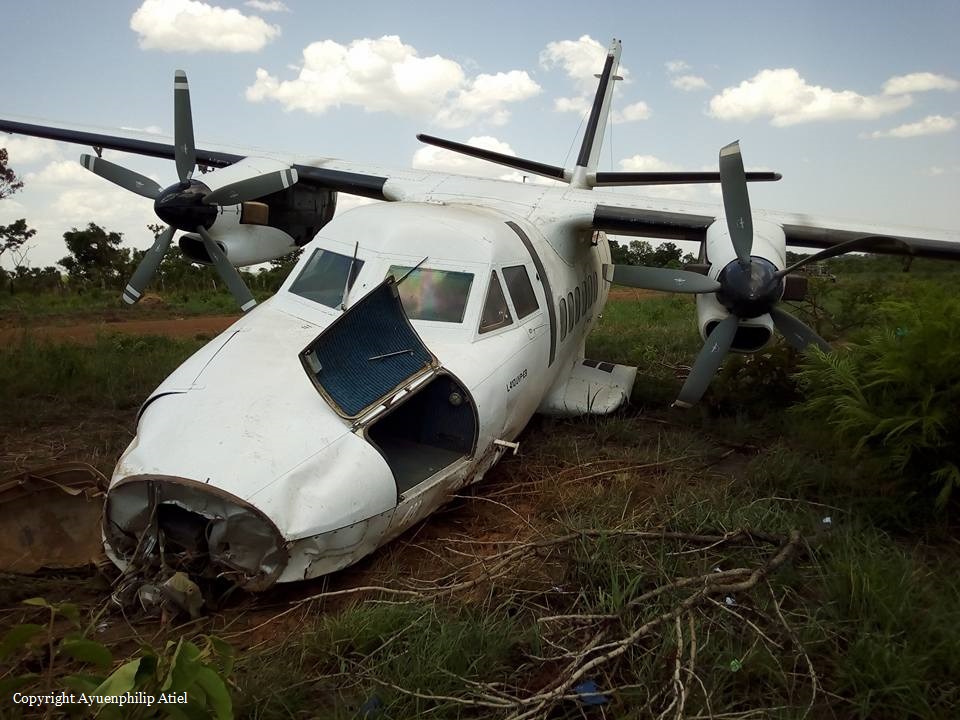
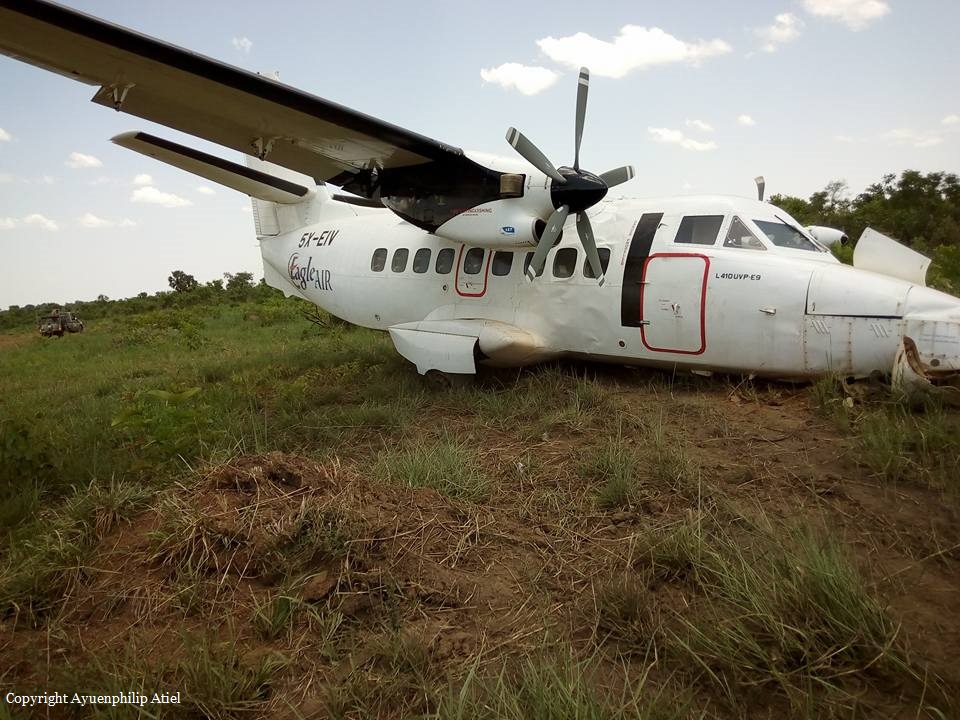
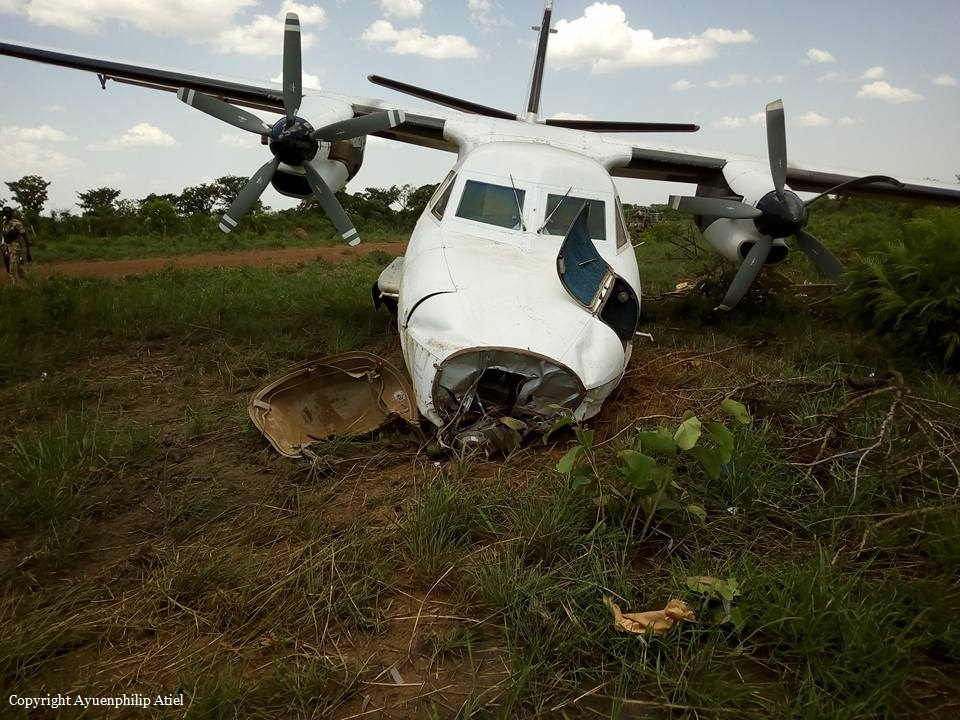
Crash of a Let L-410UVP-E9 in Yei

Date & Time: Apr 1, 2017 at 1030 LT
Type of aircraft:
Operator:
Registration:
5X-EIV
Flight Phase:
Survivors:
Yes
Schedule:
Yei - Arua
MSN:
96 26 32
YOM:
1996
Flight number:
H7360
Country:
Region:
Crew on board:
3
Crew fatalities:
Pax on board:
17
Pax fatalities:
Other fatalities:
Total fatalities:
0
Circumstances:
During the takeoff roll, at a relative high speed, the pilot-in-command rejected takeoff and initiated an emergency braking procedure, apparently following an engine problem. The twin engine aircraft deviated to the left and veered off runway. While contacting soft ground, the nose gear collapsed and the airplane came to rest in the bush. All 20 occupants were rescued, among them both pilots were slightly injured.

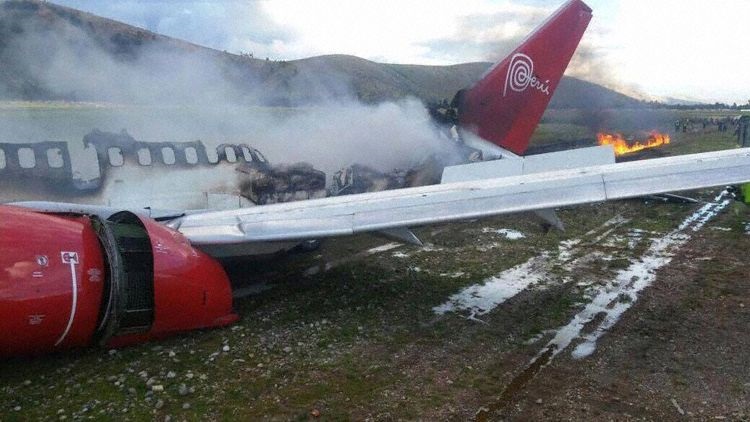
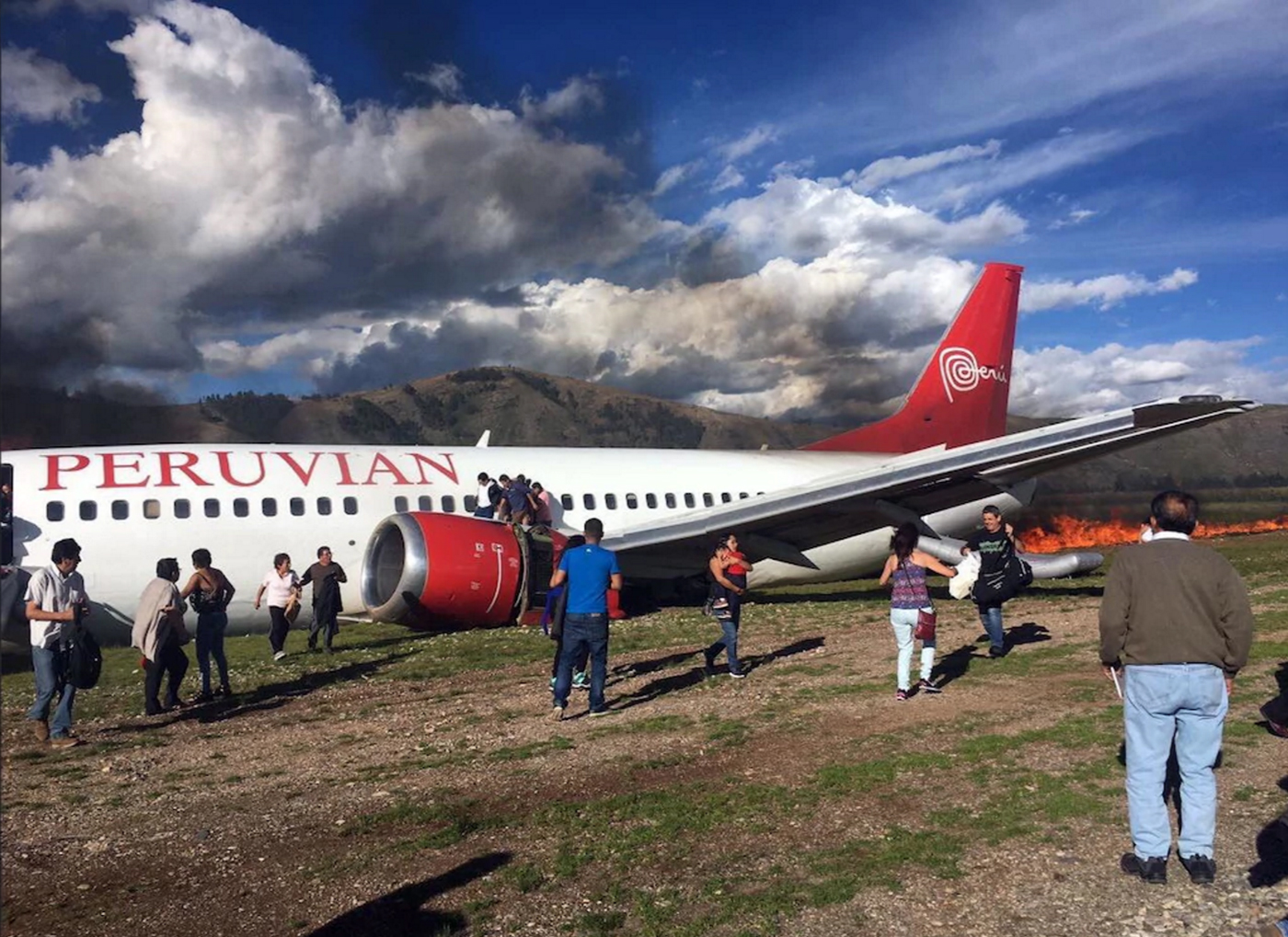
Crash of a Boeing 737-3M8 in Jauja

Date & Time: Mar 28, 2017 at 1628 LT
Type of aircraft:
Operator:
Registration:
OB-2036-P
Survivors:
Yes
Schedule:
Lima - Jauja
MSN:
25071/2039
YOM:
1991
Flight number:
P9112
Location:
Country:
Crew on board:
7
Crew fatalities:
Pax on board:
142
Pax fatalities:
Other fatalities:
Total fatalities:
0
Captain / Total flying hours:
13504
Copilot / Total flying hours:
7604
Aircraft flight hours:
62817
Aircraft flight cycles:
44025
Circumstances:
The aircraft departed Lima-Jorge Chavez Airport on a 20-minute flight to Jauja, carrying 142 passengers and 7 seven crew members. The approach to Jauja-Francisco Carlé was uneventful and completed in good weather conditions. Two seconds after the nose gear touched down on runway 31, the crew activated the reverse systems when he felt strong vibrations and oscillations. The aircraft started to bounce and became uncontrollable. The right main gear collapsed then the aircraft veered off runway to the right, lost its right engine and came to rest in a grassy area, bursting into flames. All 149 occupants evacuated safely and the aircraft was totally destroyed by fire.
Probable cause:
Failure of the mechanical components of the shimmy damper system in each of the main landing gears which, being out of tolerance range, did not allow the correct damping of the vibrations and lateral oscillations of the wheels after touchdown, generating sequential shimmy events in both gears and causing their collapse.
Contributing factors:
- Incorrect and probable absence of measurements on mechanical components of the 'cimmetic chain for shimmy damper operation', as indicated by the operator's PM AMM Task, which would have allowed for the timely detection and replacement of out-of-tolerance components, ensuring their integrity and correct operation.
- The Service Letter 737-SL-32-057-E 'broken torsion link', does not provide for mandatory actions, it only recommends maintenance practices to prevent fractures in mechanical components of the 'cimmetic chain for shimmy damper operation'.
- Service Letter 737-SL-32-057-E 'fractures in lower torsion link', makes a proper interpretation difficult; that could induce errors to choose the corresponding AMM Task and determine its scope.
Final Report:
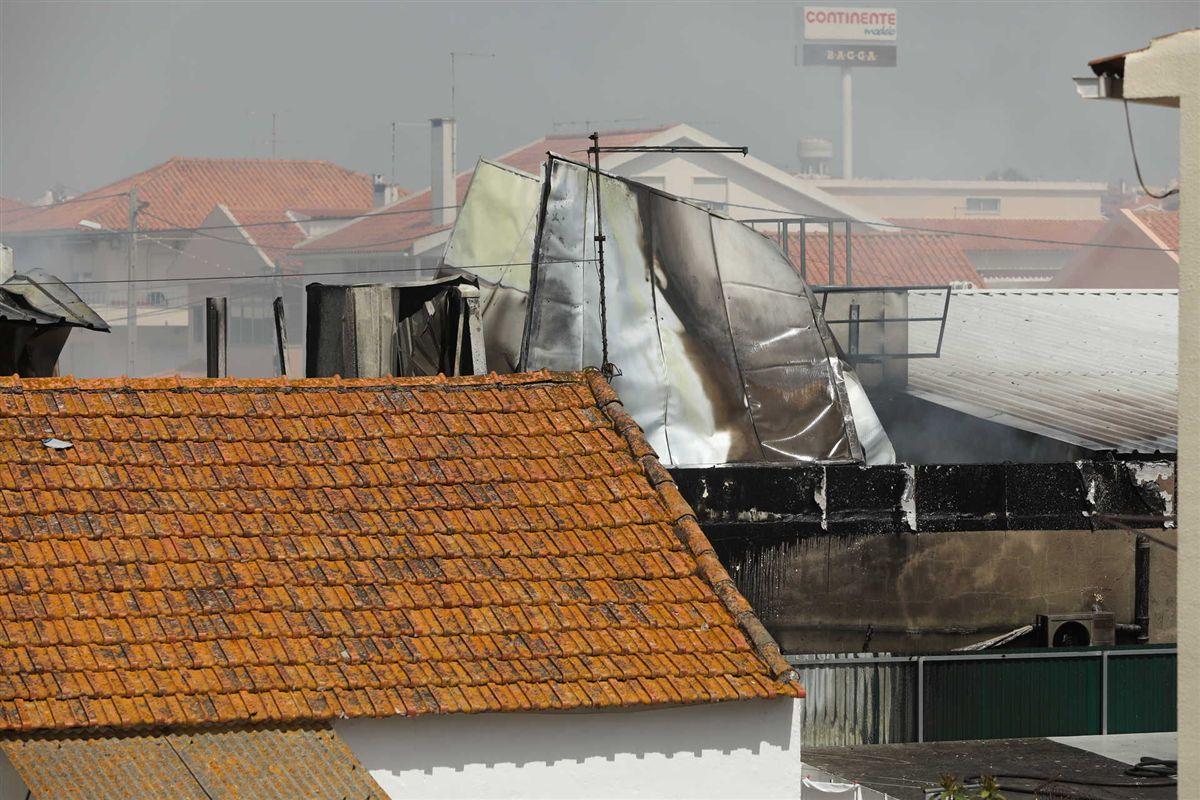
Crash of a McDonnell Douglas MD-83 in Detroit

Date & Time: Mar 8, 2017 at 1452 LT
Type of aircraft:
Operator:
Registration:
N786TW
Flight Phase:
Survivors:
Yes
Schedule:
Detroit - Washington DC
MSN:
53123/1987
YOM:
1992
Flight number:
7Z9363
Crew on board:
6
Crew fatalities:
Pax on board:
110
Pax fatalities:
Other fatalities:
Total fatalities:
0
Captain / Total flying hours:
15518
Captain / Total hours on type:
8495.00
Copilot / Total flying hours:
9660
Copilot / Total hours on type:
2462
Aircraft flight hours:
41008
Aircraft flight cycles:
39472
Circumstances:
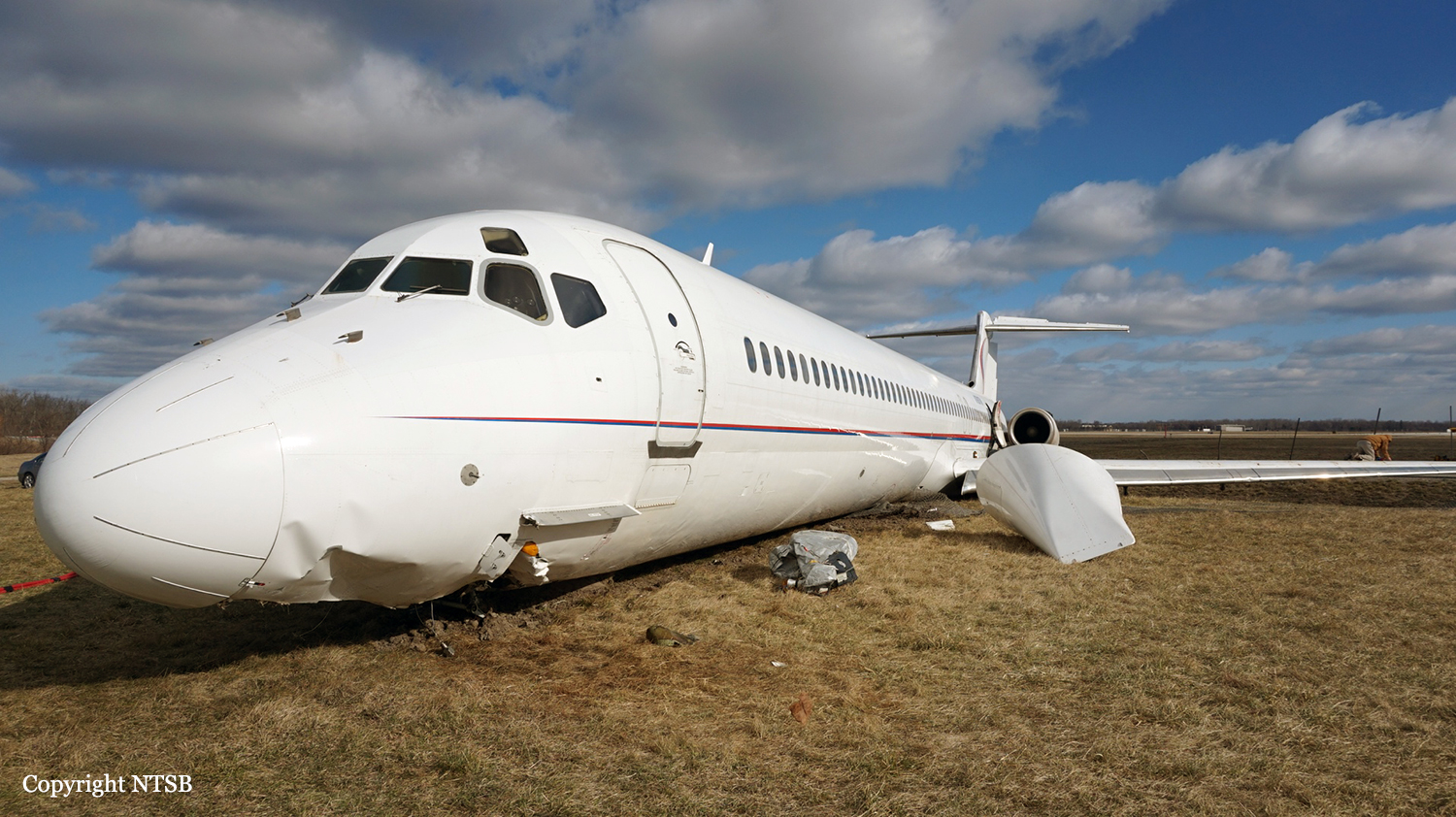
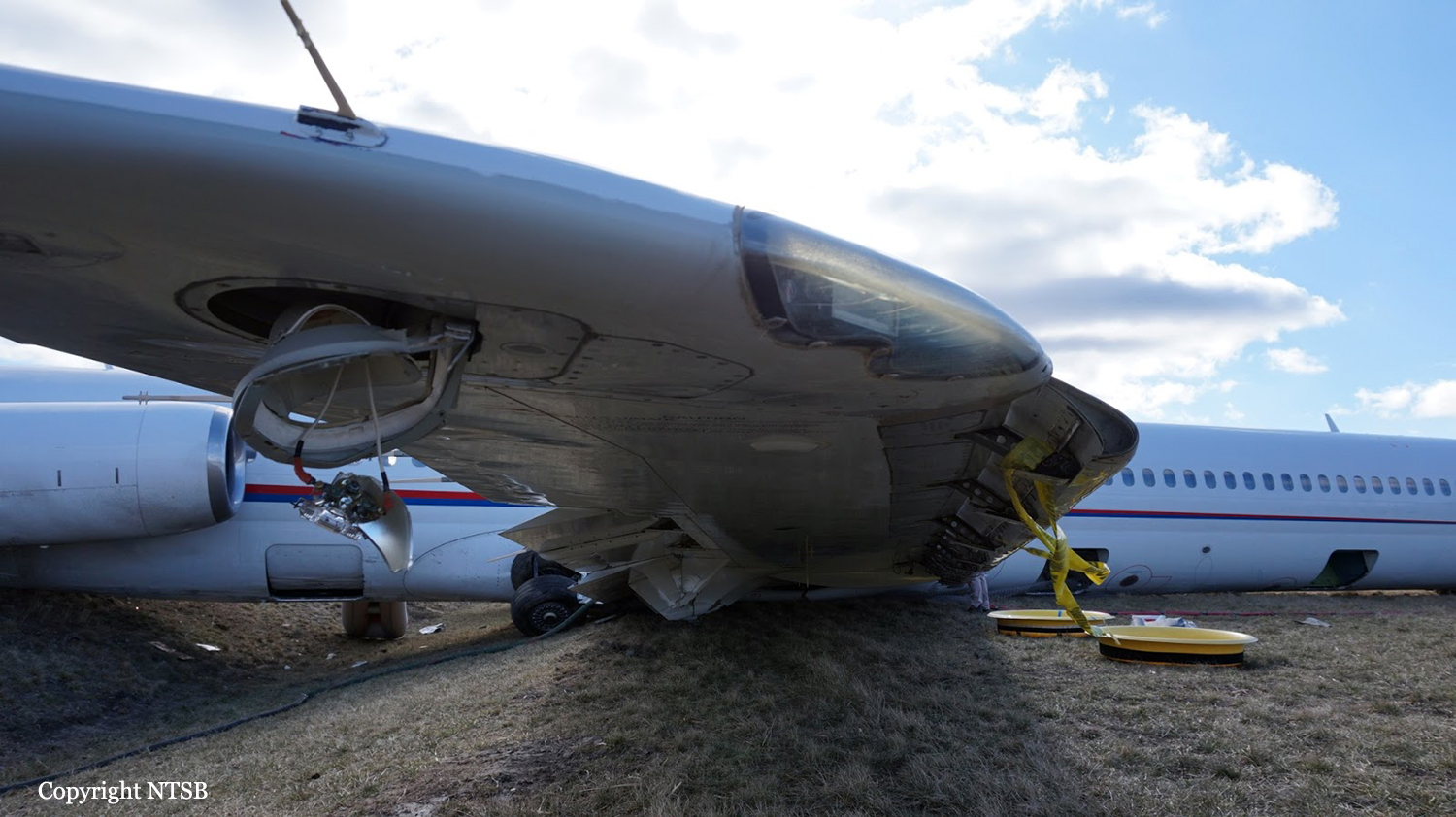
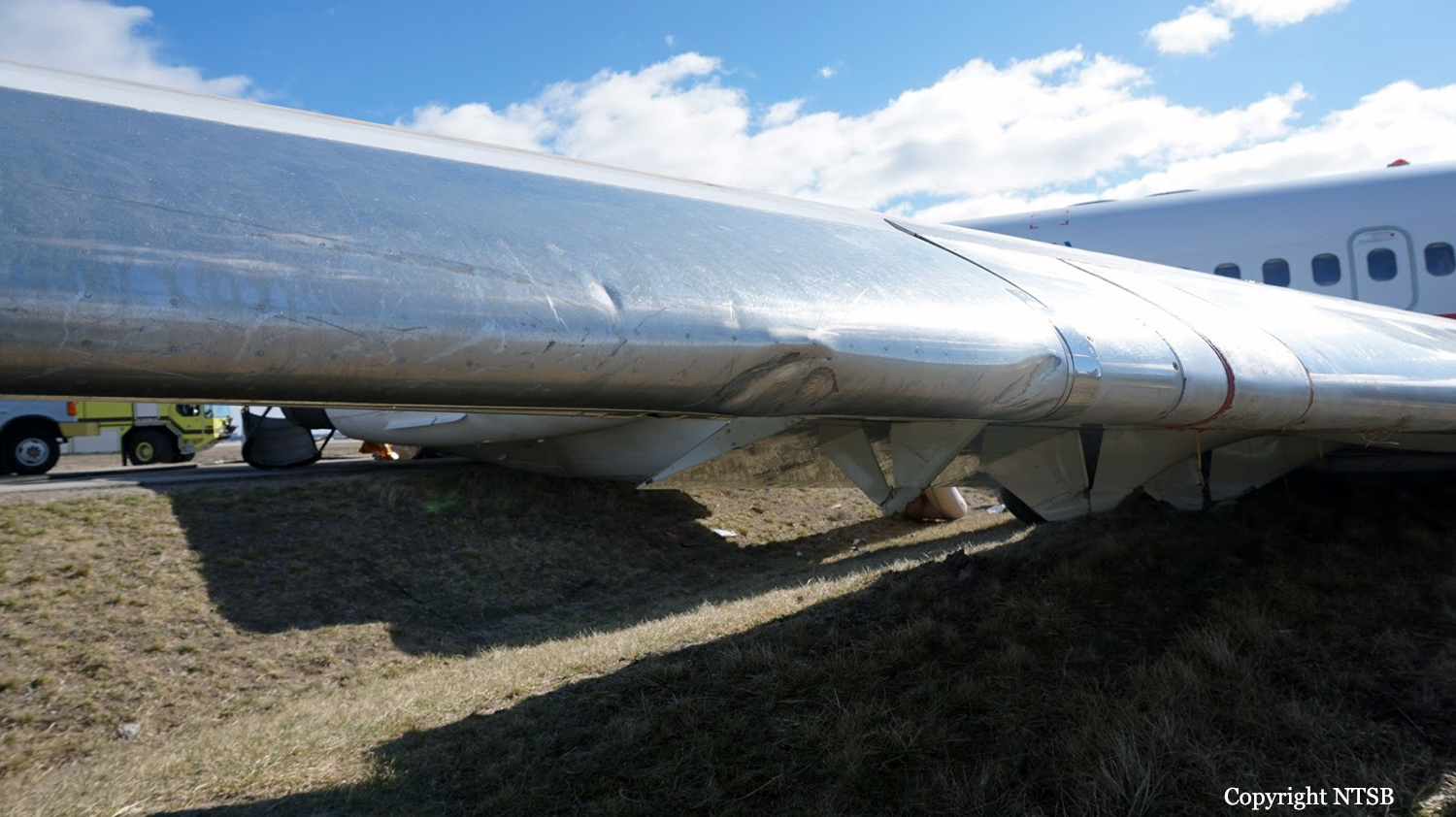
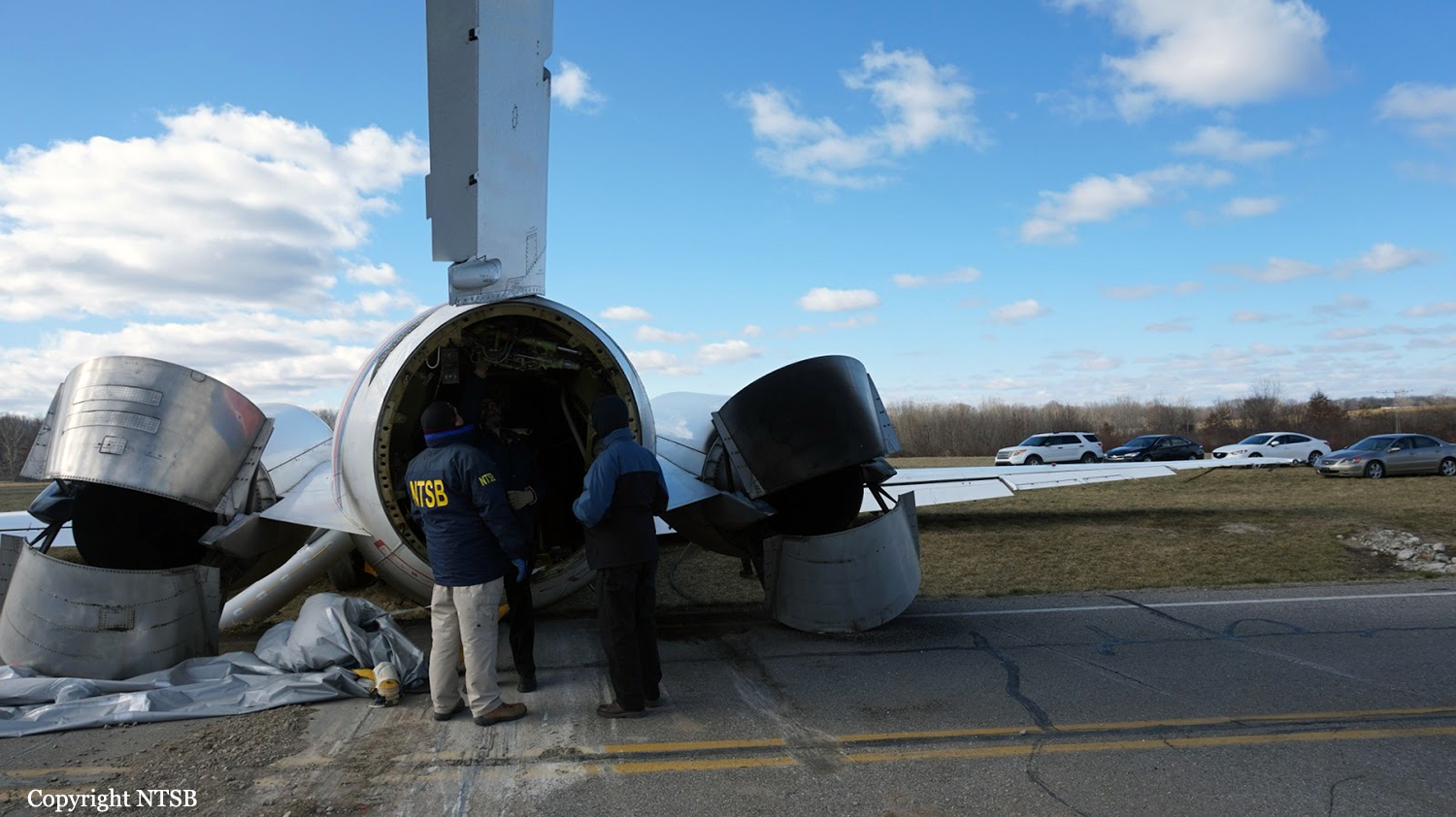
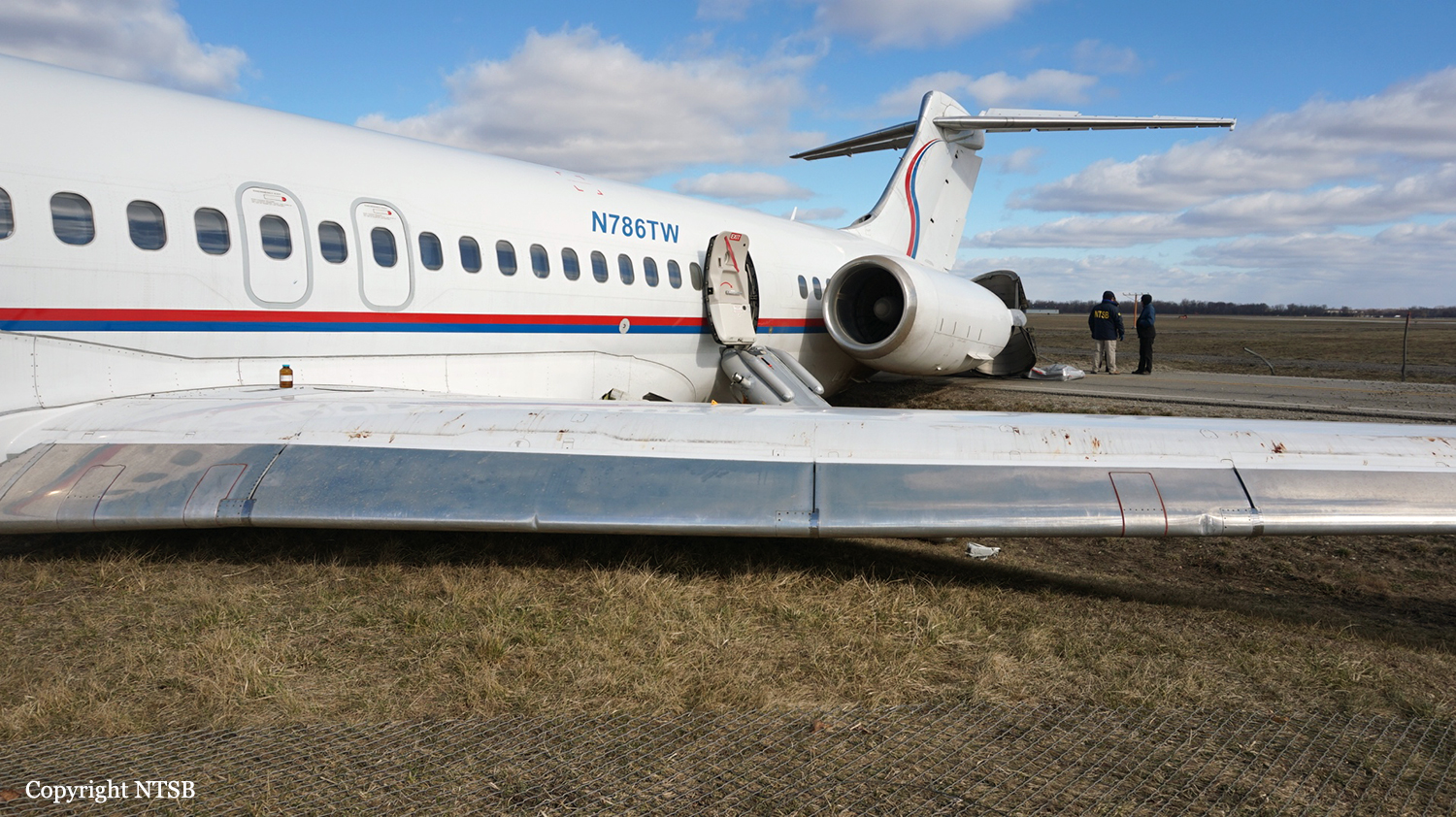
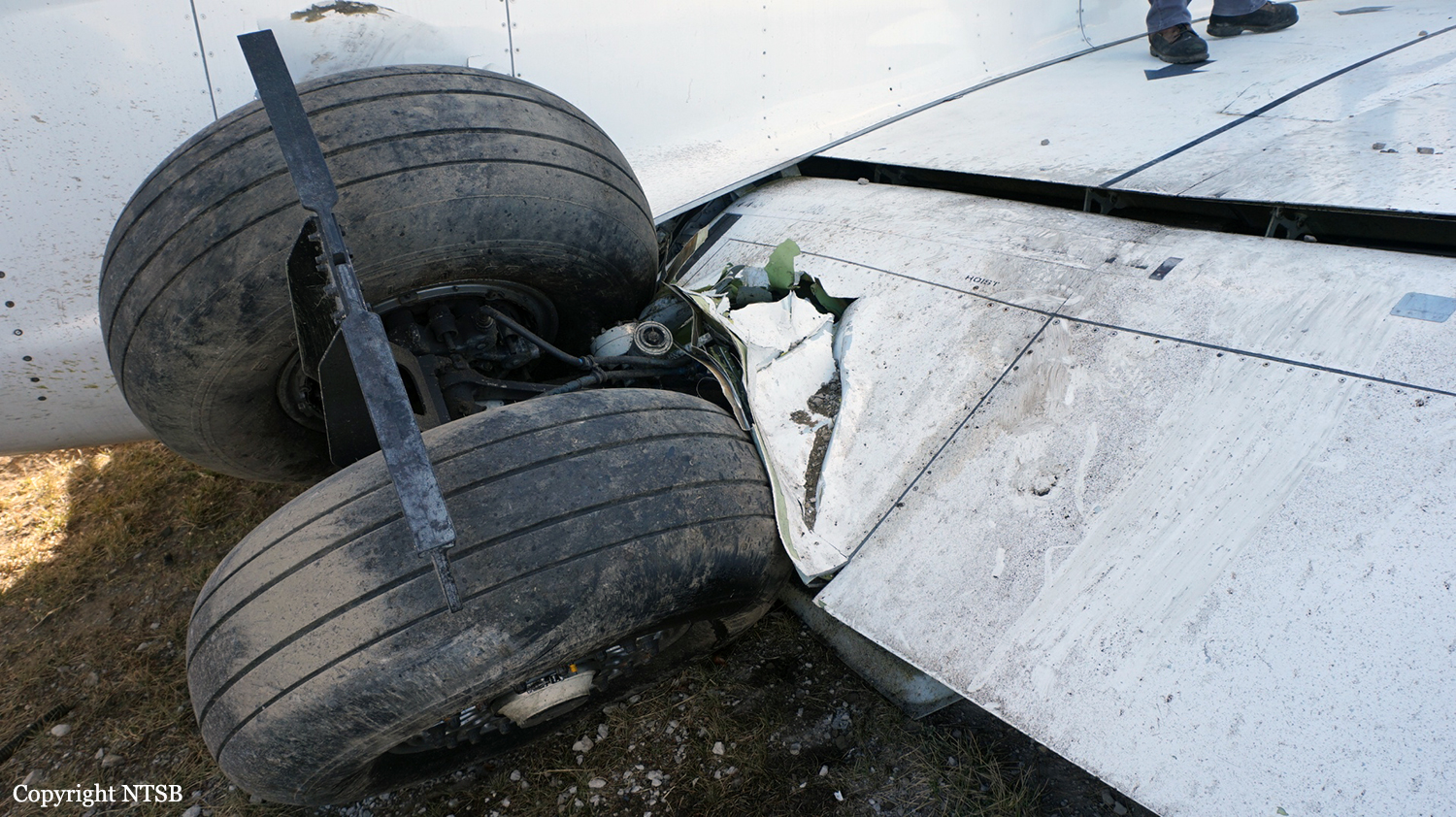
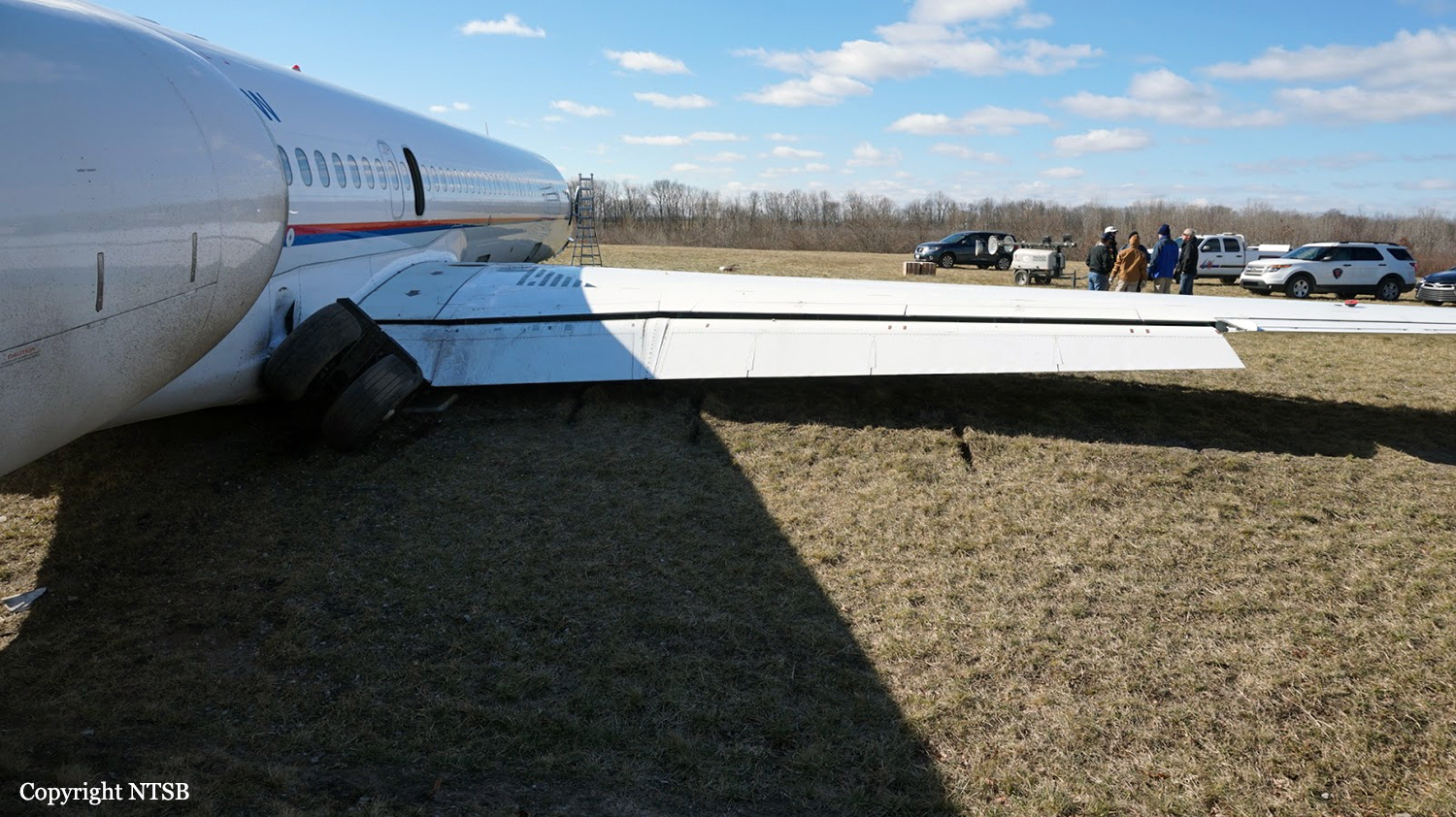
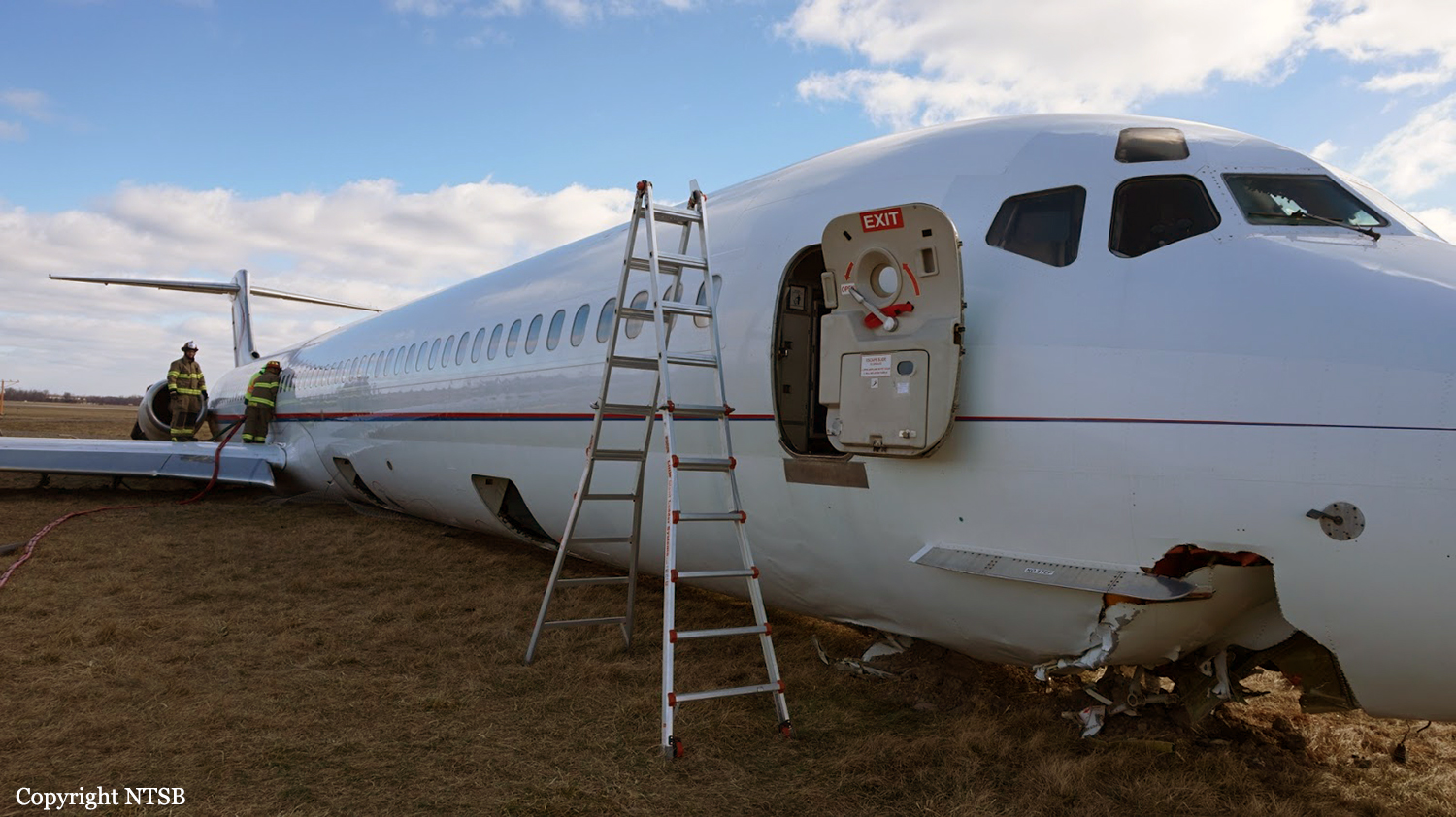
A McDonnell Douglas MD-83, registration N786TW, suffered a runway excursion following an aborted takeoff from runway 23L at Detroit-Willow Run Airport, Michigan, USA. The aircraft had been chartered by the University of Michigan Basketball team for a flight to a game in Washington, DC. The flight crew prepared for take-off and calculated V-speeds (V1, VR, V2) using "Normal Thrust Takeoff", a 10 kts headwind, and a take-off weight of 146,600 lbs. The V-speeds for this configuration were 139 kts, 142 kts, and 150 kts, respectively. However, the flight crew chose to increase VR to 150 kts to allow for more control during take-off in the presence of windshear. During takeoff roll, at 14:51:56 (about 3,000 ft down the runway) and about 138 kts of airspeed, the control column was pulled back slightly from a non-dimensional value of -7 to -5.52. The airplane’s left elevator followed the control input and moved from a position of -15° trailing edge down to -13° trailing edge down. The right elevator did not change and stayed at approximately -16° trailing edge down. At 14:52:01 a large control column input was made (151 kts and 4100 ft down the runway) to a non-dimensional 18.5 and the left elevator moves to a position near 15° trailing edge up. After 14:52:05 the right elevator moves to -13° trailing edge down, but no more. The airplane does not respond in pitch and does not rotate. The captain decided to abort the takeoff. The maximum ground speed was 163 kts (173 kts airspeed) and the airplane began to decelerate as soon as the brakes were applied at 14:52:08. Spoilers were deployed at 14:52:10 and thrust reversers were deployed between 14:52:13 and 14:52:15. The aircraft could not be stopped on the runway. The airplane’s ground speed was 100 kts when it left the paved surface. The aircraft overran the end of the runway, damaged approach lights, went through the perimeter fence and crossed Tyler Road. It came to rest on grassy terrain, 345 meters past the end of the runway, with the rear fuselage across a ditch. The nose landing gear had collapsed. Runway 23L is a 7543 ft long runway.
Probable cause:
The NTSB determines that the probable cause of this accident was the jammed condition of the airplane’s right elevator, which resulted from exposure to localized, dynamic wind while the airplane was parked and rendered the airplane unable to rotate during takeoff. Contributing to the accident were (1) the effect of a large structure on the gusting surface wind at the airplane’s parked location, which led to turbulent gust loads on the right elevator sufficient to jam it, even though the horizontal surface wind speed was below the certification design limit and maintenance inspection criteria for the airplane, and (2) the lack of a means to enable the flight crew to detect a jammed elevator during preflight checks for the Boeing MD-83 airplane. Contributing to the survivability of the accident was the captain’s timely and appropriate decision to reject the takeoff, the check airman’s disciplined adherence to standard operating procedures after the captain called for the rejected takeoff, and the dimensionally compliant runway safety area where the overrun occurred.
Final Report:
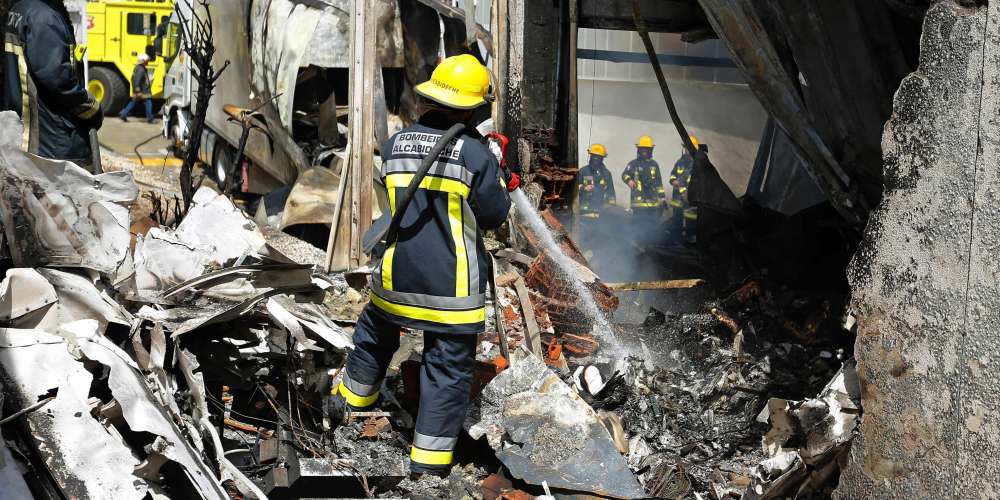
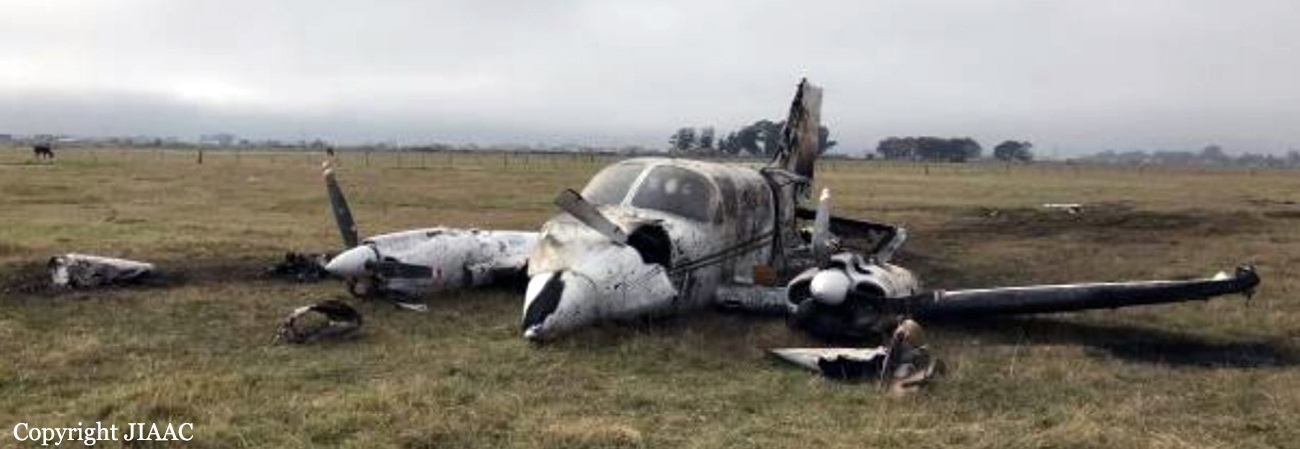
Crash of a Beechcraft G18S off Metlakatla

Date & Time: Mar 3, 2017 at 0815 LT
Type of aircraft:
Operator:
Registration:
N103AF
Flight Type:
Survivors:
Yes
Schedule:
Klawock – Ketchikan
MSN:
BA-526
YOM:
1960
Crew on board:
2
Crew fatalities:
Pax on board:
0
Pax fatalities:
Other fatalities:
Total fatalities:
0
Captain / Total flying hours:
10308
Captain / Total hours on type:
330.00
Aircraft flight hours:
17646
Circumstances:
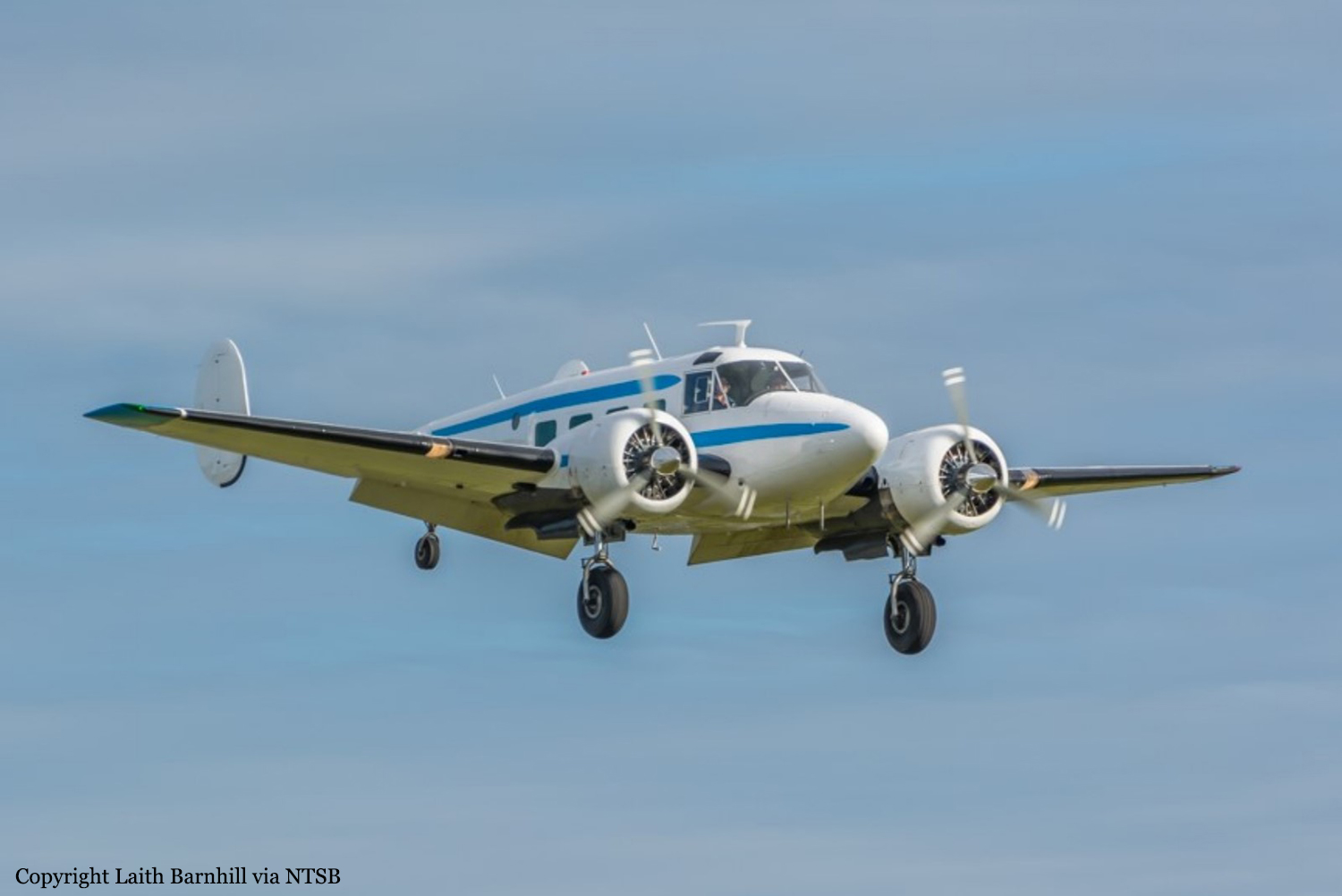
The pilot of the twin-engine airplane and the pilot-rated passenger reported that, during a missed approach in instrument meteorological conditions, at 2,000 ft mean sea level, the right engine seized. The pilot attempted to feather the right engine by pulling the propeller control to the feather position; however, the engine did not feather. The airplane would not maintain level flight, so the pilot navigated to a known airport, and the passenger made emergency communications with air traffic control. The pilot was unable to maintain visual reference with the ground until the airplane descended through about 100 to 200 ft and the visibility was 1 statute mile. The pilot stated that he was forced to ditch the airplane in the water about 5 miles short of the airport. The pilot and passenger egressed the airplane and swam ashore before it sank in about 89 ft of water. Both the pilot and passenger reported that there was postimpact fire on the surface of the water. The airplane was not recovered, which precluded a postaccident examination. Thus, the reason for the loss of engine power could not be determined.
Probable cause:
An engine power loss for reasons that could not be determined because the airplane was not recovered.
Final Report:

Crash of a Piper PA-46-310P Malibu in Chichén Itzá

Date & Time: Feb 15, 2017 at 2000 LT

Operator:
Registration:
N116TH
Flight Type:
Survivors:
Yes
Schedule:
Monterrey – Cancún
MSN:
46-8608005
YOM:
1986
Country:
Crew on board:
1
Crew fatalities:
Pax on board:
4
Pax fatalities:
Other fatalities:
Total fatalities:
0
Circumstances:
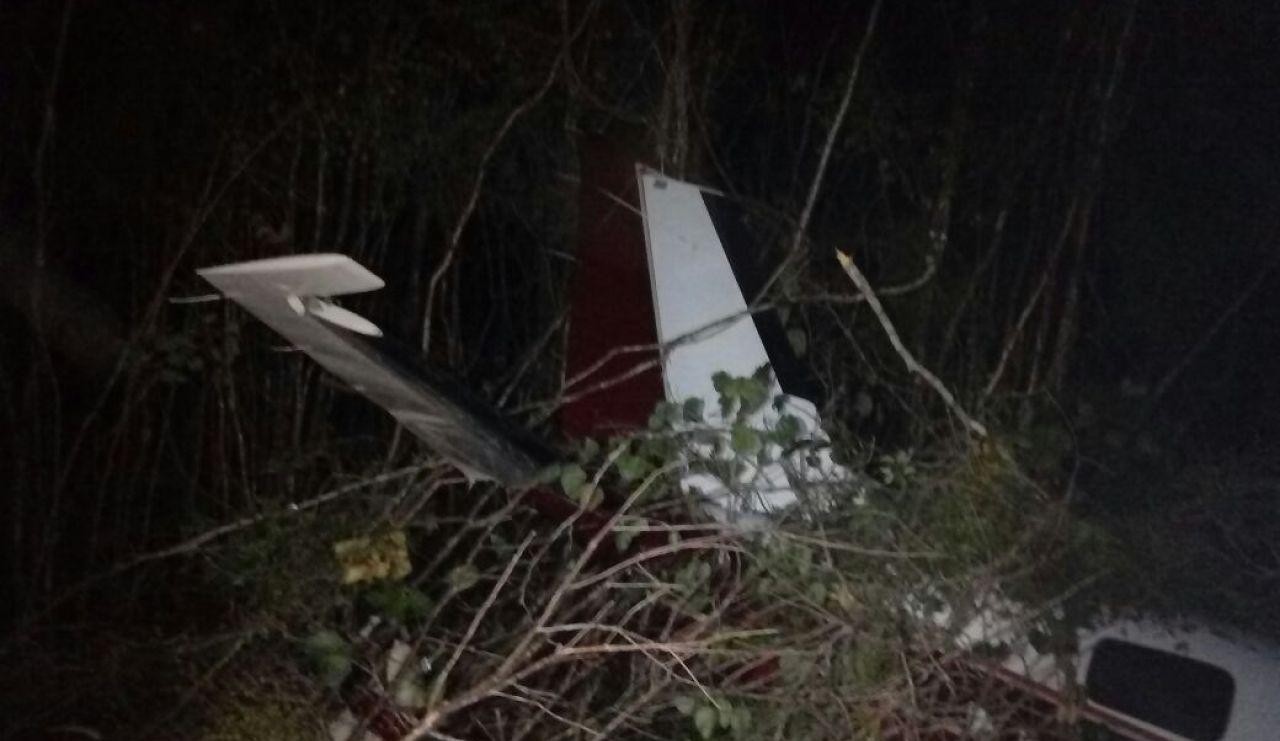
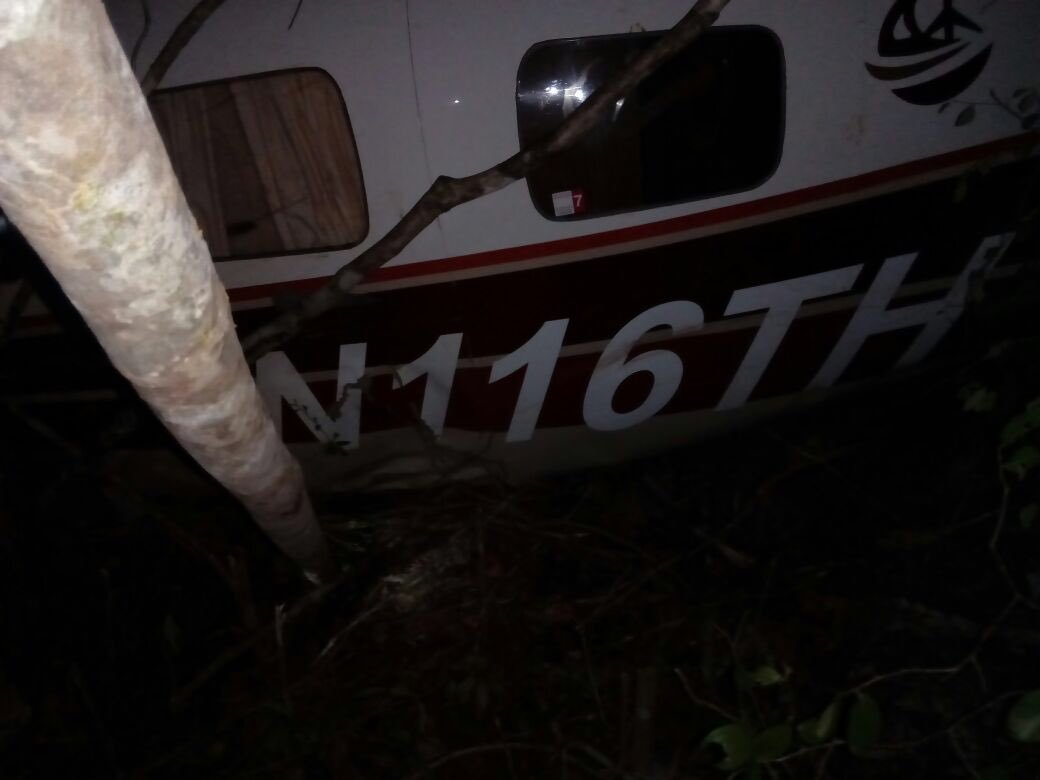
While overflying the Yucatán Province, en route from Monterrey to Cancún, the pilot informed ATC that he was low of fuel and requested the permission to divert to Chichén Itzá Airport for an emergency landing. While approaching the airfield by night, the single engine aircraft descended into trees and crashed few km from the airport. The airplane was destroyed and there was no fire. All five occupants were injured.