Country
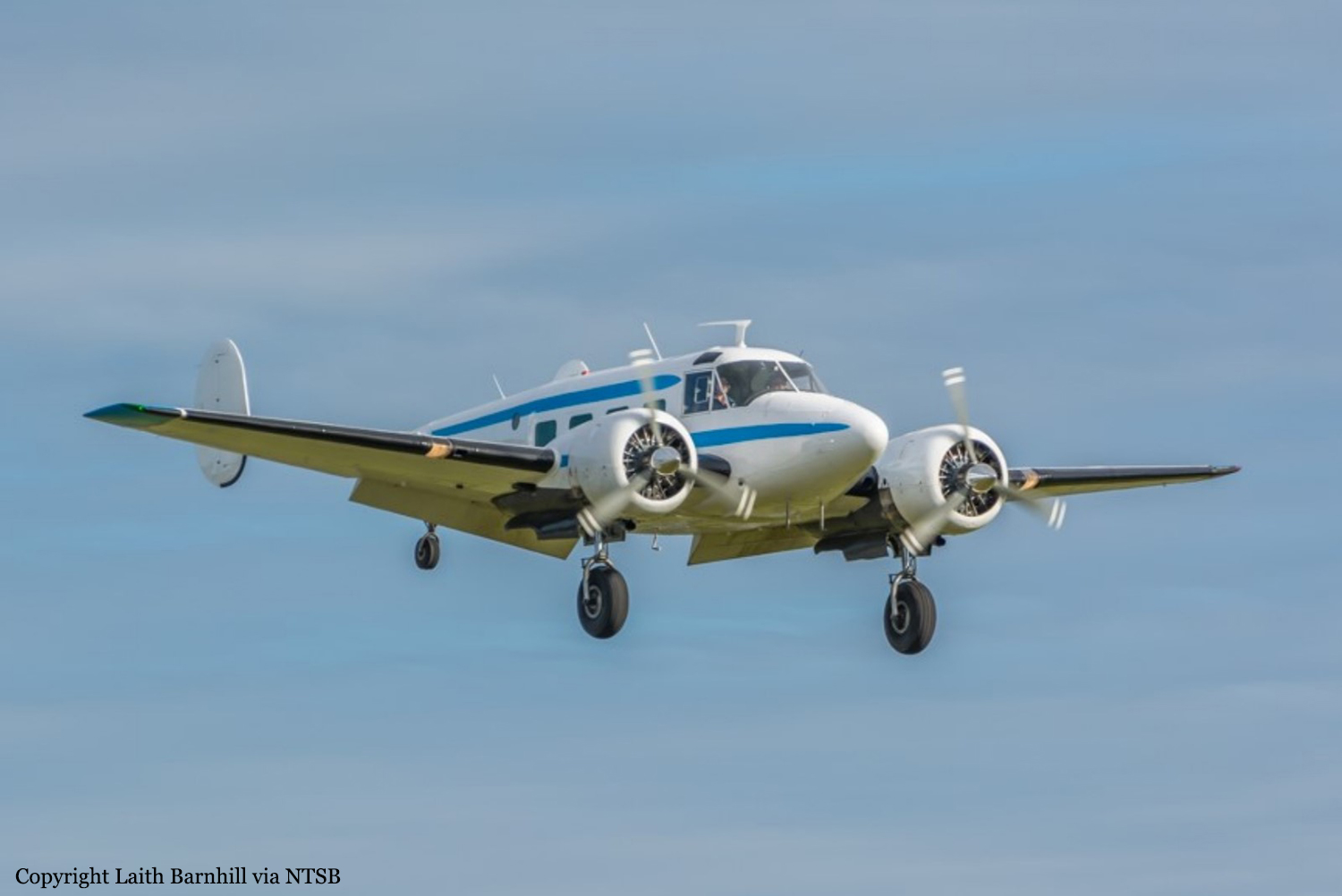
Crash of a Beechcraft G18S off Metlakatla
Date & Time:
Mar 3, 2017 at 0815 LT
Registration:
N103AF
Survivors:
Yes
Schedule:
Klawock – Ketchikan
MSN:
BA-526
YOM:
1960
Crew on board:
2
Crew fatalities:
Pax on board:
0
Pax fatalities:
Other fatalities:
Total fatalities:
0
Captain / Total hours on type:
330.00
Aircraft flight hours:
17646
Circumstances:
The pilot of the twin-engine airplane and the pilot-rated passenger reported that, during a missed approach in instrument meteorological conditions, at 2,000 ft mean sea level, the right engine seized. The pilot attempted to feather the right engine by pulling the propeller control to the feather position; however, the engine did not feather. The airplane would not maintain level flight, so the pilot navigated to a known airport, and the passenger made emergency communications with air traffic control. The pilot was unable to maintain visual reference with the ground until the airplane descended through about 100 to 200 ft and the visibility was 1 statute mile. The pilot stated that he was forced to ditch the airplane in the water about 5 miles short of the airport. The pilot and passenger egressed the airplane and swam ashore before it sank in about 89 ft of water. Both the pilot and passenger reported that there was postimpact fire on the surface of the water. The airplane was not recovered, which precluded a postaccident examination. Thus, the reason for the loss of engine power could not be determined.
Probable cause:
An engine power loss for reasons that could not be determined because the airplane was not recovered.
Final Report:
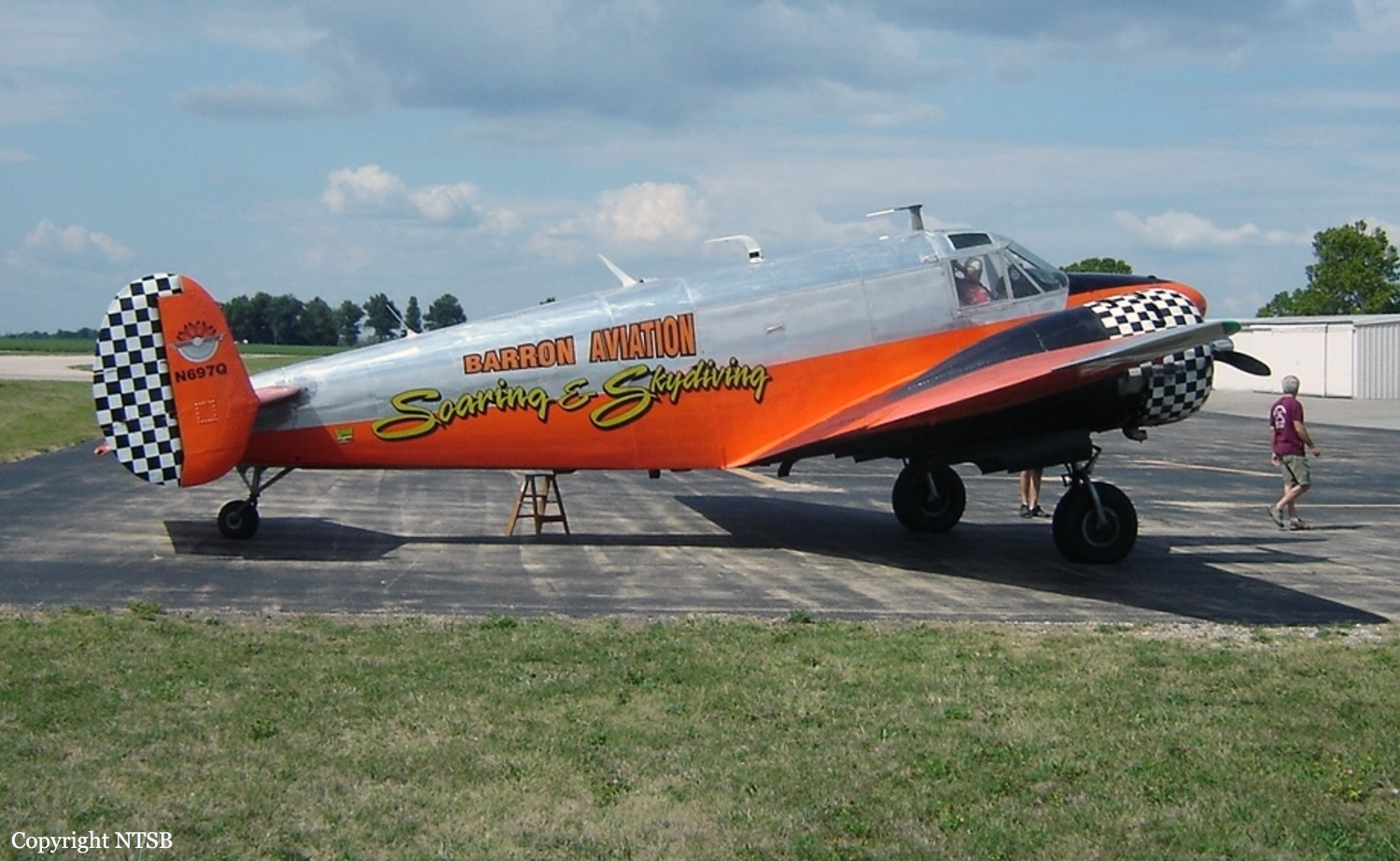
Crash of a Beechcraft G18 in Taylorville: 1 killed
Date & Time:
Aug 11, 2012 at 1124 LT
Operator:

Registration:
N697Q
Survivors:
No
Schedule:
Taylorville - Taylorville
MSN:
BA-468
YOM:
1959
Crew on board:
1
Crew fatalities:
Pax on board:
0
Pax fatalities:
Other fatalities:
Total fatalities:
1
Captain / Total hours on type:
7.00
Aircraft flight hours:
13833
Circumstances:
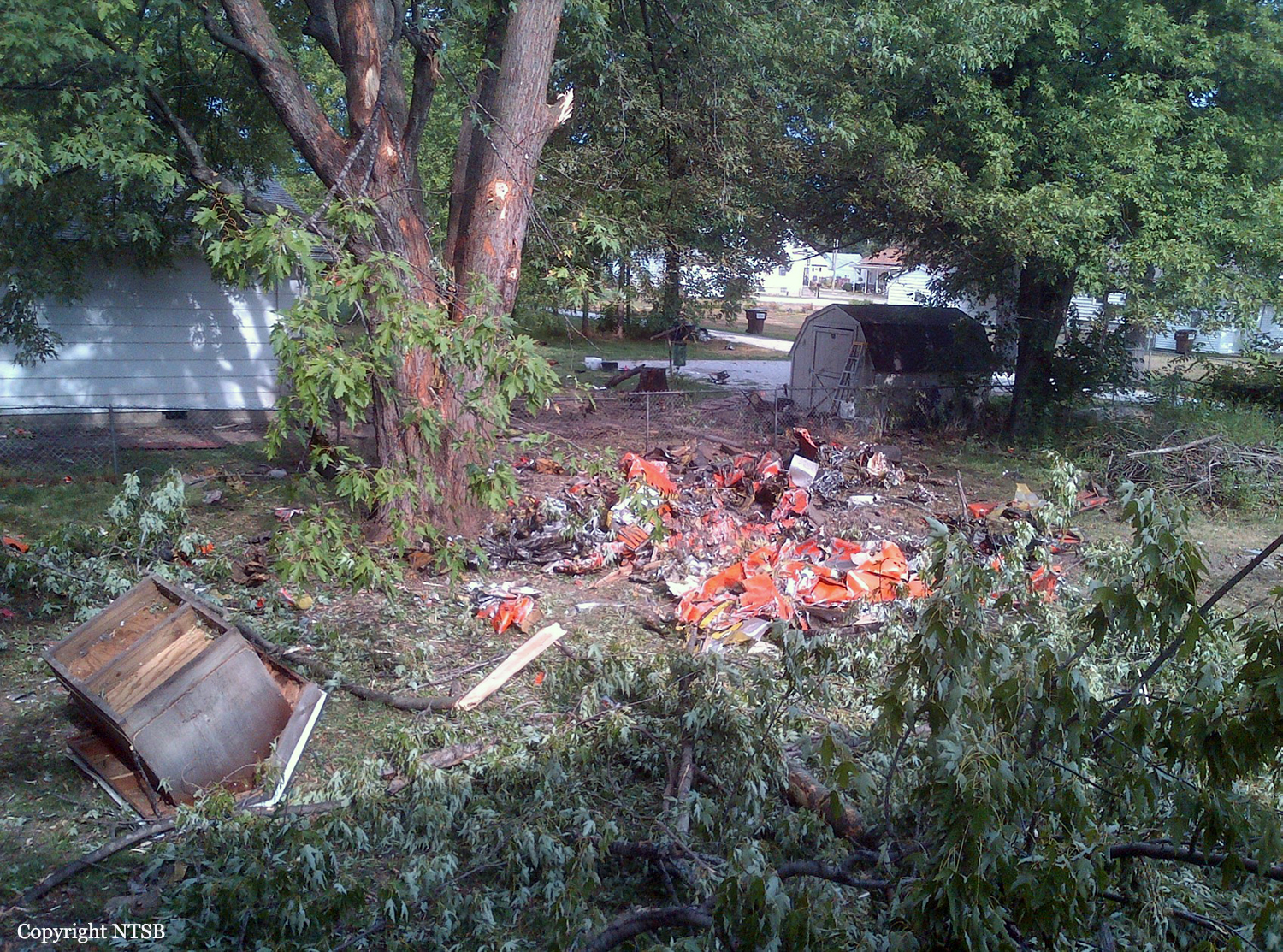
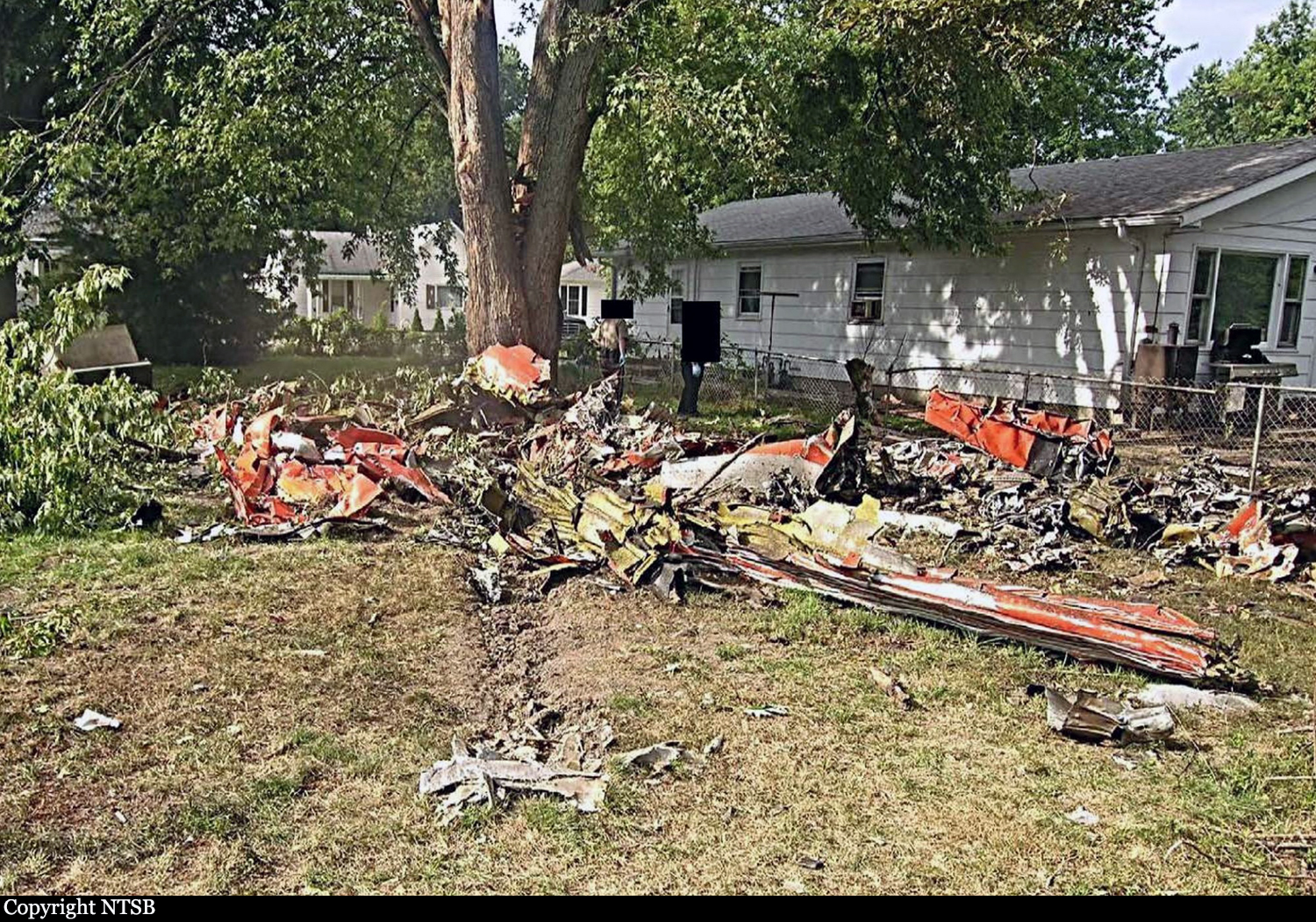
The airplane was substantially damaged when it impacted terrain in a residential neighborhood in Taylorville, Illinois. The commercial pilot sustained fatal injuries. Twelve parachutists on-board the airplane exited and were not injured. No persons on the ground were injured. The airplane was registered to Barron Aviation, LLC; Perry, Missouri, and operated by Barron Aviation Private Flight Services, LLC; Hannibal, Missouri, under the provisions of 14 Code of Federal Regulations Part 91, as a sport parachuting flight. Day visual meteorological conditions prevailed and no flight plan was filed. The local flight originated from Taylorville Municipal Airport (TAZ), Taylorville, Illinois, about 1100. The airplane had climbed to an altitude of about 11,000 feet mean sea level (msl) and the parachutists were seated inside the airplane on two rear facing "straddle benches". As the airplane arrived at the planned drop location, the parachutists stood up, opened the door, and moved further aft in the airplane in preparation for their jump. Five of the parachutists were positioned hanging on to the outside of the airplane with several others standing in the door and the remainder were standing in the cabin forward of the door. Several parachutists reported that they were almost ready to jump when they heard the sounds of the airplane's stall warning system. The airplane then suddenly rolled and all twelve parachutists quickly exited the airplane. Several of those who were last to exit reported that the airplane was inverted or partially inverted as they went out the door. The pilot, seated in the left front cockpit seat, did not exit the airplane. Several witnesses reported seeing the airplane turning and descending in an inverted attitude when the airplane appeared to briefly recover, but then entered a nearly vertical dive. The airplane impacted a tree and terrain in the back yard of an occupied residence. Emergency personnel who first responded to the accident scene reported a strong smell of gasoline and ordered the evacuation of several nearby homes. There was no post impact fire.
Probable cause:
The pilot's failure to maintain adequate airspeed and use the appropriate flaps setting during sport-parachuting operations, which resulted in an aerodynamic stall/spin and a subsequent loss of control. Contributing to the accident was the pilot’s failure to follow company guidance by allowing more than four passengers in the door area during exit, which shifted the airplane’s center of gravity aft.
Final Report:
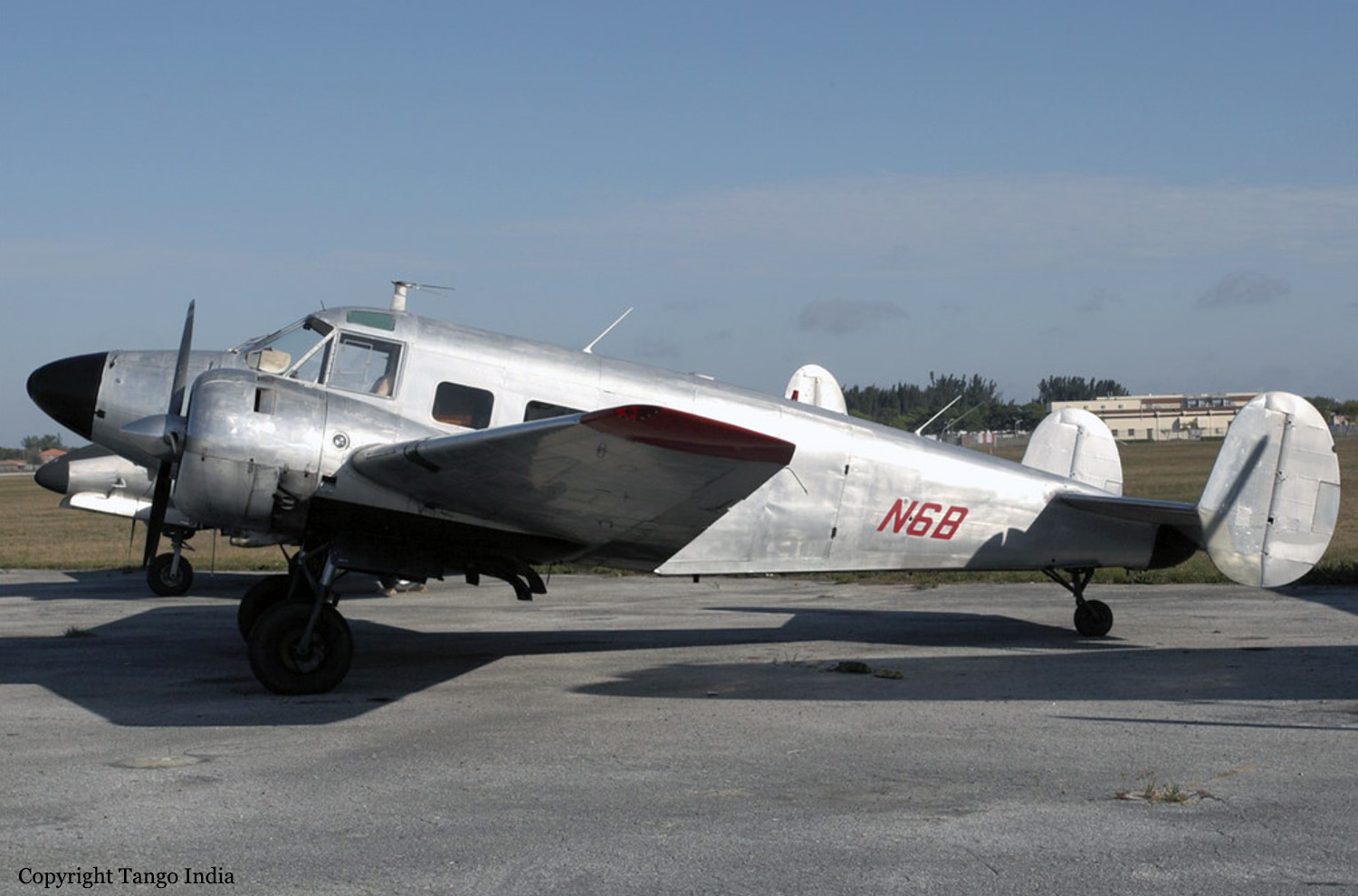
Crash of a Beechcraft G18S in Cornelia
Date & Time:
Apr 21, 2012
Registration:
N6B
Survivors:
Yes
Schedule:
Miami - Dickson
MSN:
BA-573
YOM:
1961
Crew on board:
1
Crew fatalities:
Pax on board:
0
Pax fatalities:
Other fatalities:
Total fatalities:
0
Circumstances:
The twin engine aircraft departed Miami on a flight to Dickson, Tennessee. By night, the pilot decided to land at Cornelia Fort Airpak which is closed to traffic at this time. In unclear circumstances, the aircraft belly landed in a grassy area along the left side of runway 22 and came to rest. The pilot escaped uninjured and the aircraft was damaged beyond repair.
Probable cause:
No investigations were completed by the NTSB.
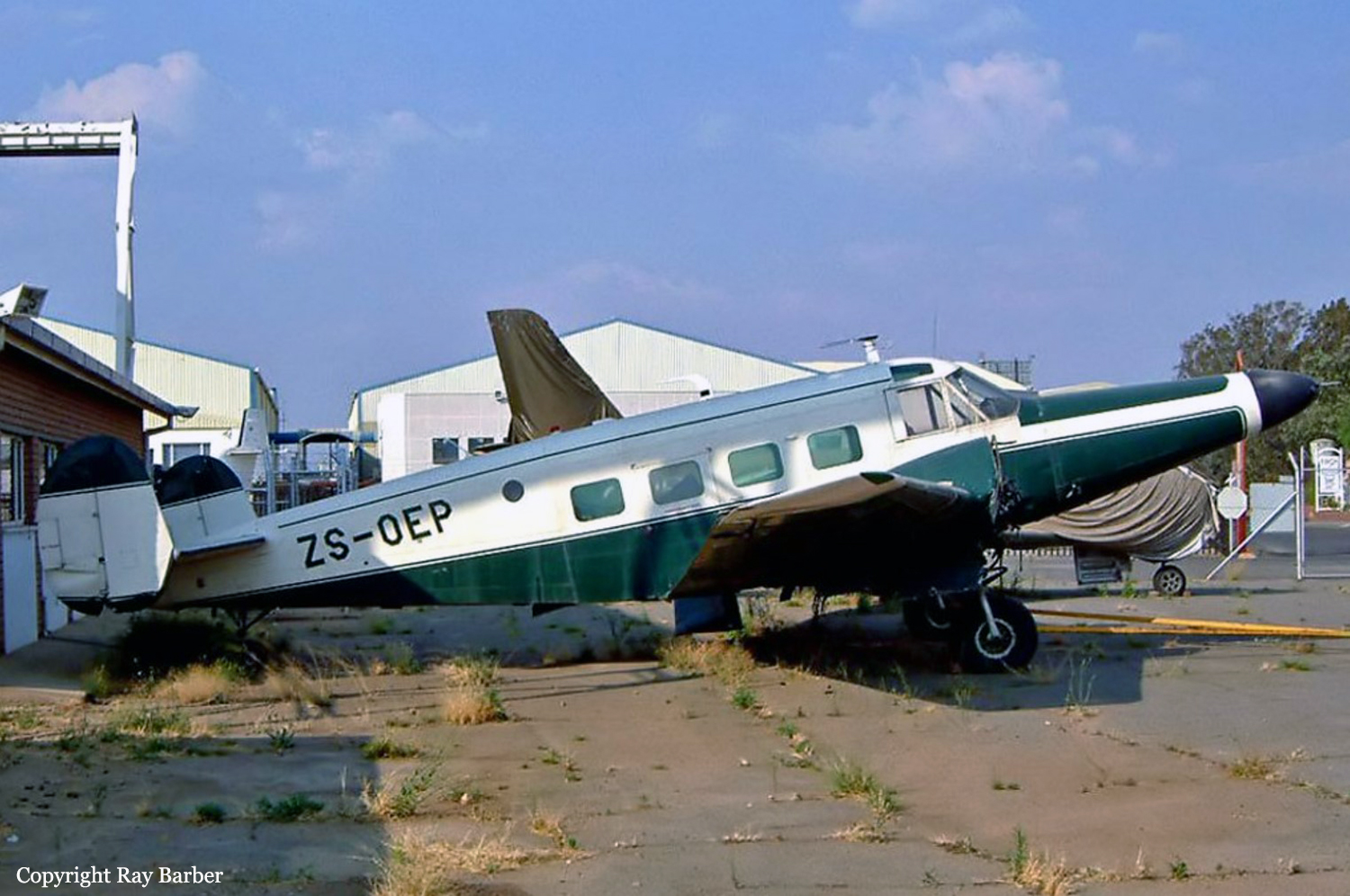
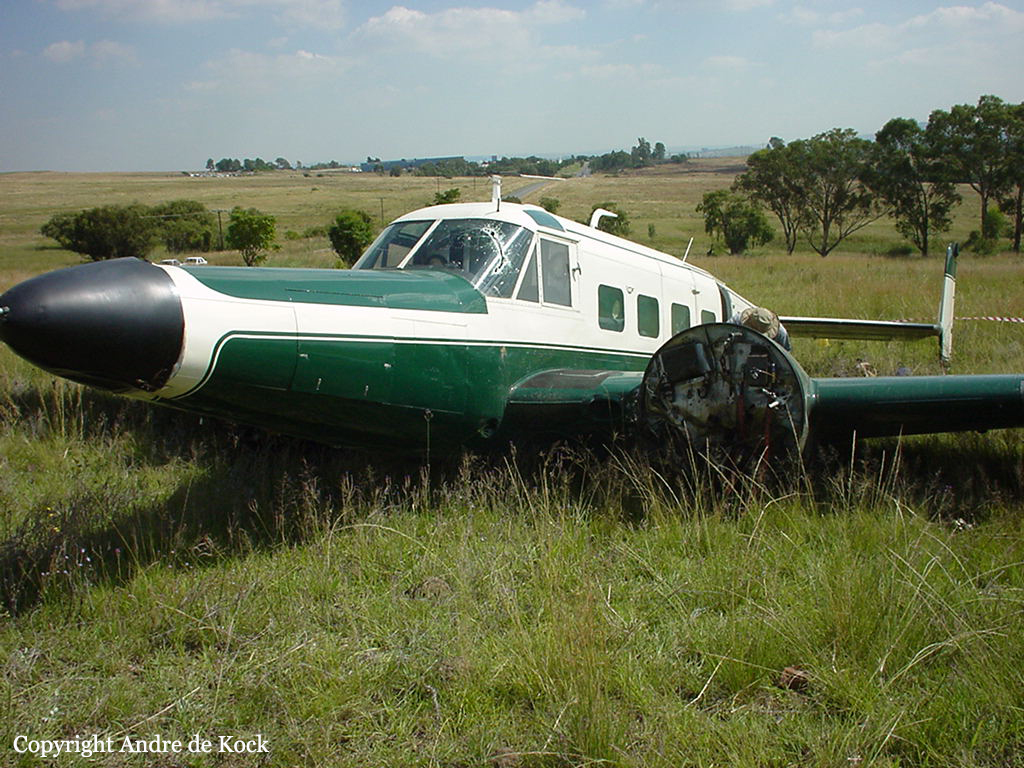
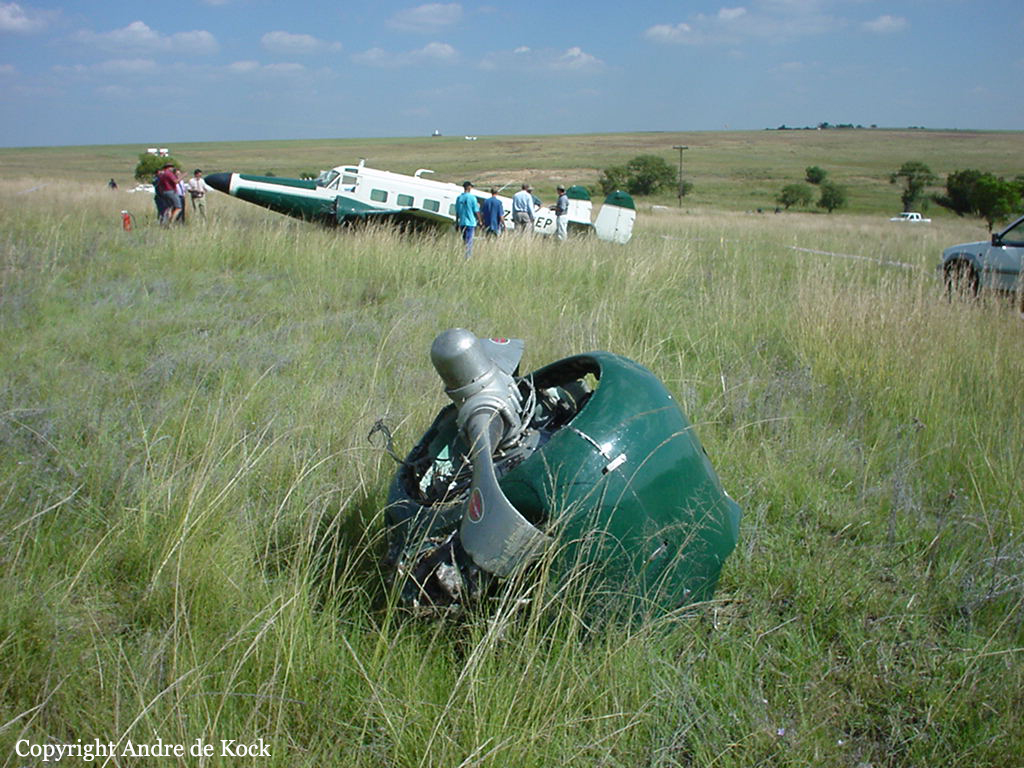
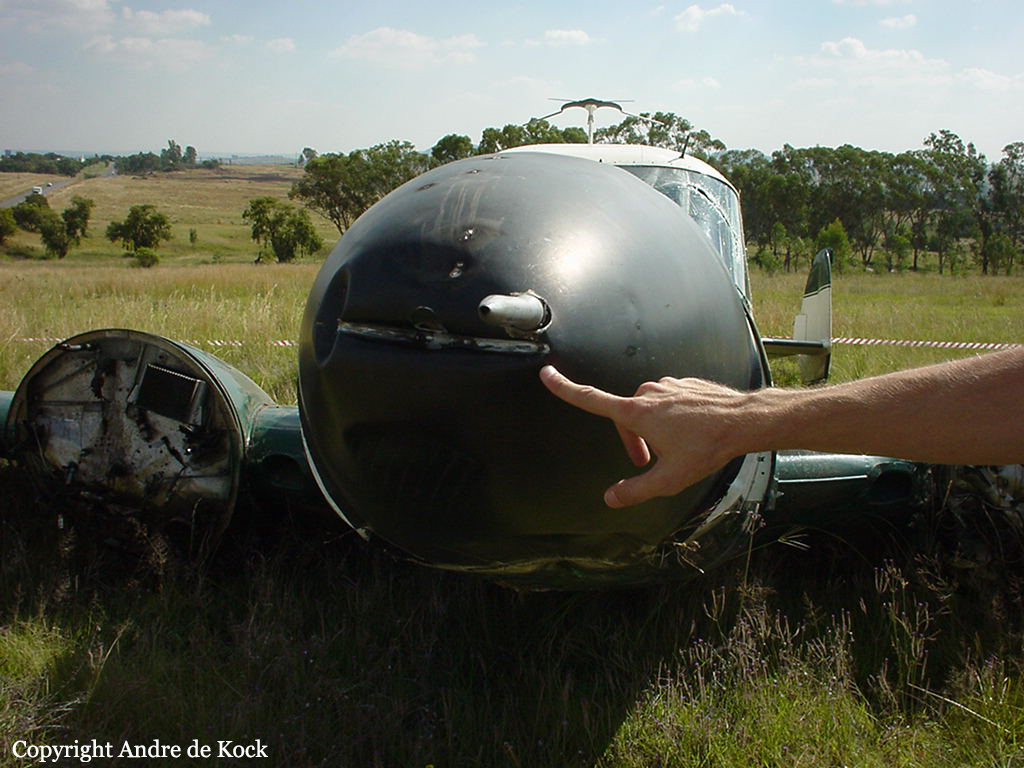
Crash of a Beechcraft G18S in Lanseria
Date & Time:
Mar 14, 2001 at 1240 LT
Registration:
ZS-OEP
Survivors:
Yes
Schedule:
Lanseria - Lanseria
MSN:
BA-474
YOM:
1959
Crew on board:
4
Crew fatalities:
Pax on board:
0
Pax fatalities:
Other fatalities:
Total fatalities:
0
Captain / Total hours on type:
24.00
Aircraft flight hours:
671
Circumstances:
The instructor was accompanied by a trainee pilot and two passengers (also pilots) on a local training flight and was in the process of doing type conversion training when the accident happened. On the third circuit after a touch and go landing on runway 06L, the right-hand engine failed soon after take-off. The aircraft was flown at low altitude in a left-hand circuit in an attempt to land onto runway 17. During this circuit the left-hand engine also failed. The aircraft collided with, and severed, three 11kV electrical conductors and executed a forced landing with the gear retracted to the North of FALA approximately 1 km from threshold of runway 17. The pilot only sustained minor injuries with no one else injured. The initial on-site inspection revealed that both front tanks, which were selected at the fuel tank selector, were empty. The pilot who was undergoing conversion training refueled the aircraft prior to the accident and stated that 70 litres of fuel was uplifted into each "inboard auxiliary" tank and that what he presumed to be the "main" tanks were filled to capacity. The instructor stated that upon his arrival, the pilot who refueled the aircraft told him that he had filled the "mains" and that the "centre aux. tanks" were partially filled. The instructor further stated that the "main" tanks were selected for the duration of the flight. The aircraft is equipped with three fuel tanks in each wing. These tanks are: Front, Rear Auxiliary and Auxiliary tanks. Only one fuel quantity gauge is installed in the aircraft. A seven position selector knob above the fuel quantity gauge determines the tank to which the gauge is connected which then indicates the amount of fuel in that respective tank. The left and right front tanks were selected on the fuel gauge selector knob.
Probable cause:
Poor preflight inspection. Miscommunication between instructor and student pilot resulting in fuel mismanagement and depletion of the front tanks' fuel supply and subsequent engine failure. A contributory factor is that both the instructor and the student were relatively unfamiliar with the aircraft and its systems.