Crash of a Dassault Falcon 20DC in Boise

Date & Time: Nov 27, 1999 at 0134 LT
Type of aircraft:
Operator:
Registration:
N216SA
Flight Type:
Survivors:
Yes
Schedule:
Omaha - Boise
MSN:
16
YOM:
1966
Location:
Crew on board:
2
Crew fatalities:
Pax on board:
0
Pax fatalities:
Other fatalities:
Total fatalities:
0
Captain / Total flying hours:
19519
Captain / Total hours on type:
341.00
Aircraft flight hours:
28855
Circumstances:
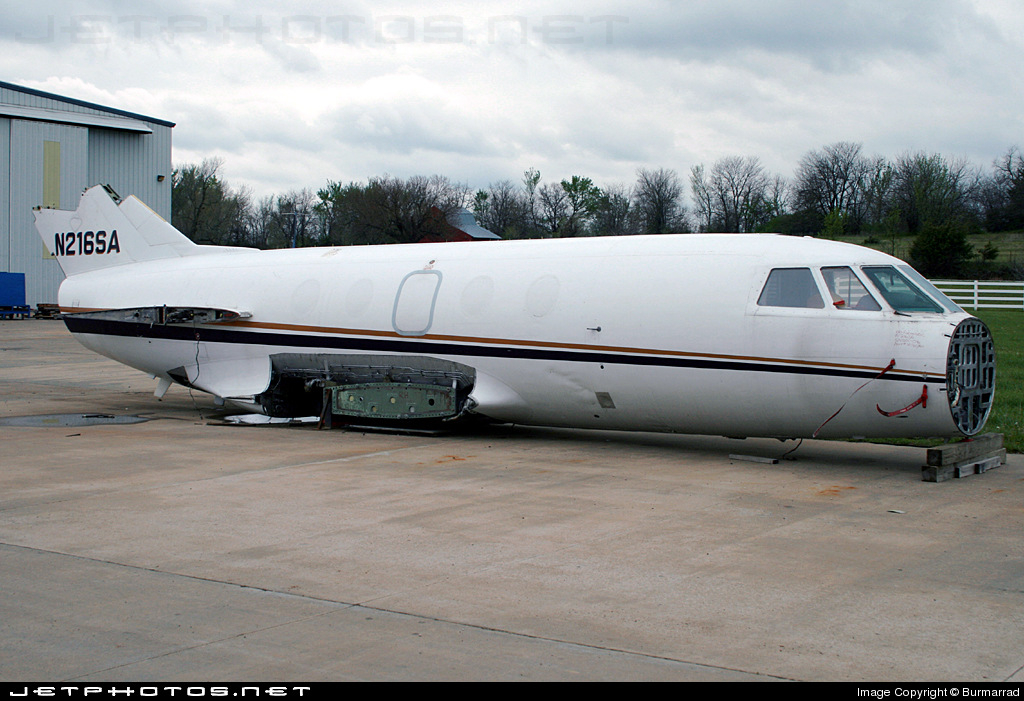
After extending the gear for landing, the down-and-locked indication (green light) for the left main gear was not illuminated. The crew performed the emergency checklist procedures for abnormal gear extension with no success. The aircraft subsequently landed with the left main landing gear retracted. Inspection of the landing gear revealed that the pin (part number MY20248-001), which is part of the forward gear door lock, was corroded and cracked at the point of rotation, preventing proper movement of the gear door uplock.
Probable cause:
Failure of the forward gear door lock pin. An inoperative landing gear door and inadequate maintenance inspection of the aircraft were factors.
Final Report:

Crash of a Shijiazhuang Yunsunji Y-5B in Ningbo

Date & Time: Nov 19, 1999
Type of aircraft:
Registration:
B-8479
Survivors:
Yes
MSN:
0107
YOM:
1990
Location:
Country:
Region:
Crew on board:
2
Crew fatalities:
Pax on board:
5
Pax fatalities:
Other fatalities:
Total fatalities:
0
Circumstances:
Ten minutes after takeoff from Ningbo Airport, the crew informed ATC about engine problems and was cleared to return. After making a 180 turn, the crew started the descent and was eventually forced to attempt an emergency landing. The aircraft crashed in a rice paddy field located near the runway threshold. All seven occupants escaped uninjured while the aircraft was damaged beyond repair after it lost its undercarriage and one wing.
Probable cause:
Engine failure due to oil exhaustion.

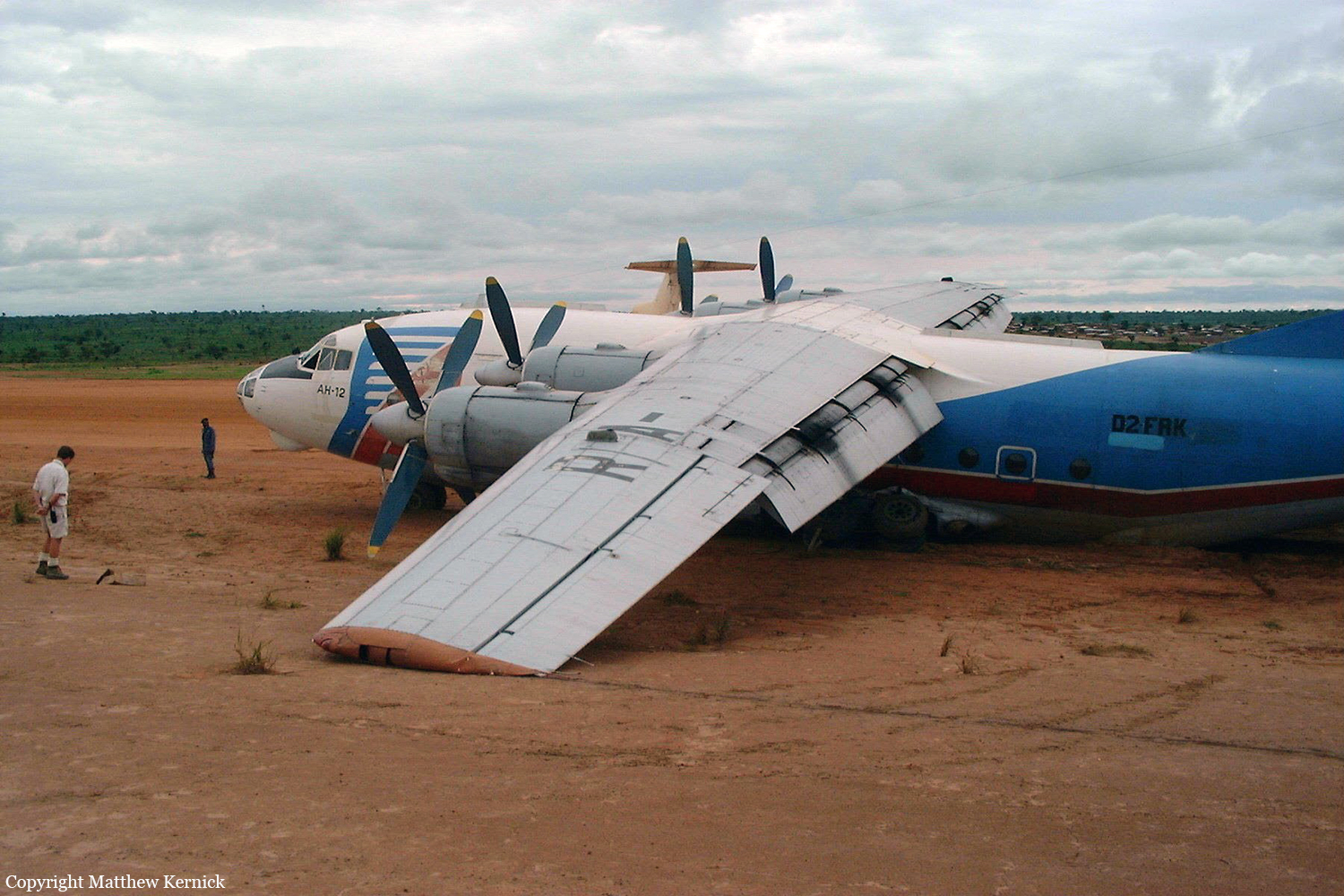
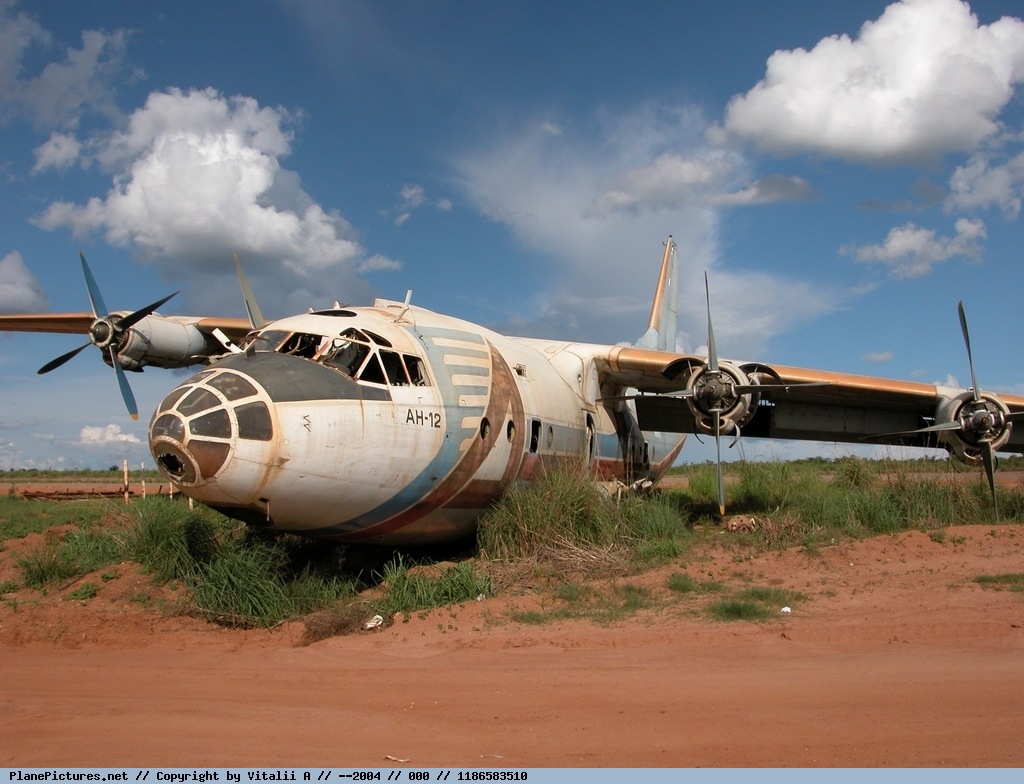
Crash of an Antonov AN-12B in Lucapa

Date & Time: Nov 12, 1999
Type of aircraft:
Operator:
Registration:
D2-FRK
Flight Type:
Survivors:
Yes
Schedule:
Luena – Lukapa
MSN:
6344202
YOM:
1966
Country:
Region:
Crew on board:
6
Crew fatalities:
Pax on board:
0
Pax fatalities:
Other fatalities:
Total fatalities:
0
Circumstances:
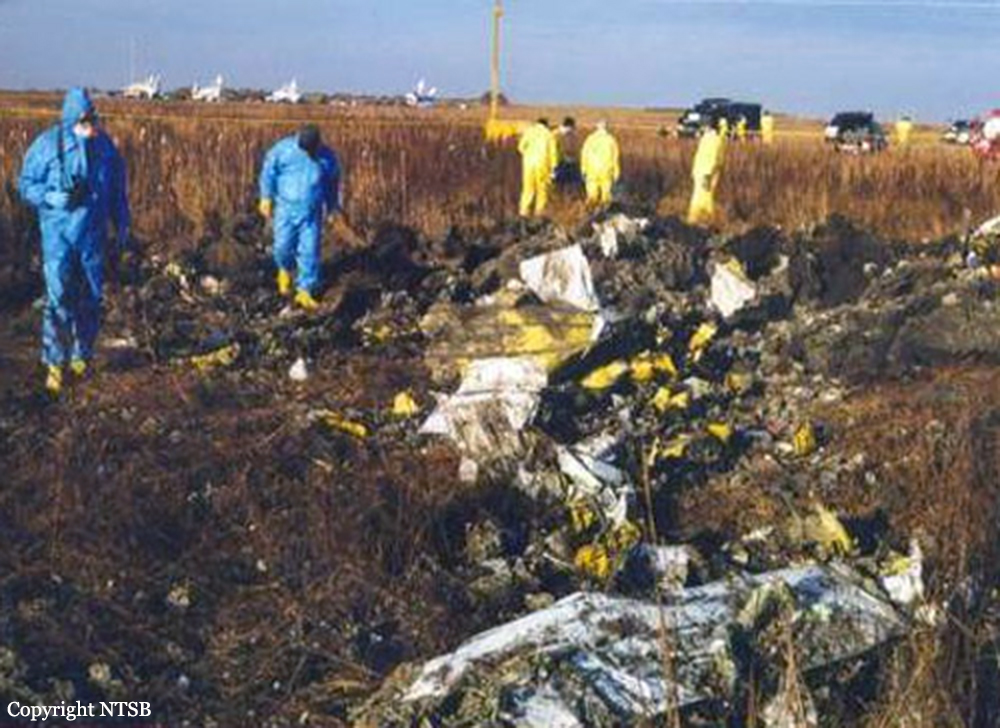
On landing, the left main gear collapsed. The aircraft skidded on runway for few dozen metres before coming to rest on the left side of the runway. While all six crew were unhurt, the aircraft was damaged beyond repair and abandoned at Lucapa Airport.
Probable cause:
Failure of the left main gear upon landing.

Crash of a Beechcraft 200 Super King Air in Chicago: 3 killed

Date & Time: Nov 11, 1999 at 2020 LT
Operator:
Registration:
N869
Flight Phase:
Survivors:
No
Schedule:
Chicago - South Bend
MSN:
BB-174
YOM:
1976
Crew on board:
2
Crew fatalities:
Pax on board:
1
Pax fatalities:
Other fatalities:
Total fatalities:
3
Captain / Total flying hours:
18000
Captain / Total hours on type:
4536.00
Aircraft flight hours:
8636
Circumstances:
Shortly after being cleared for takeoff on runway 18 (3,899 feet by 150 feet, dry concrete) at Merrill C. Meigs Field, Chicago, Illinois, the airplane impacted into Lake Michigan, approximately 300 feet south of the end of the runway. The tower controller said that at the 3/4 field point, the airplane had not rotated. 'All I can see are lights [from the airplane]. At the point where he would have been at the end of the runway, [I] lost the lights.' A witness on the airport said that when the airplane went by, it 'didn't sound like most King Airs do at that point.' There was a pulsating sound, but it was not heavy. The witness said that the airplane was 'bouncing up and down on the [gear] struts, and wasn't coming off the ground.' NTSB Materials examination of the pilot's control yoke showed that there were small distortions in the holes of the column and the rod where the control lock would be inserted. A small crack was observed around 1/4 of the control lock rod hole. The control lock was a substitute for the original airplane equipment. The examination of the control lock showed 'several shiny scratches ... parallel to the length of the pin.' A small deformation was observed near the top of the pin part of the control lock. The company flight department's third pilot said that when they flew the airplane, they always placed the control lock in the pilot's side cockpit wall pocket, along with a car key and a remote hanger door opener. The car key and the door opener were found in the wall pocket during the on-scene investigation. The control lock was
recovered from the lake, 7 days later.
Probable cause:
On ground collision with the lake for undetermined reasons.
Final Report:

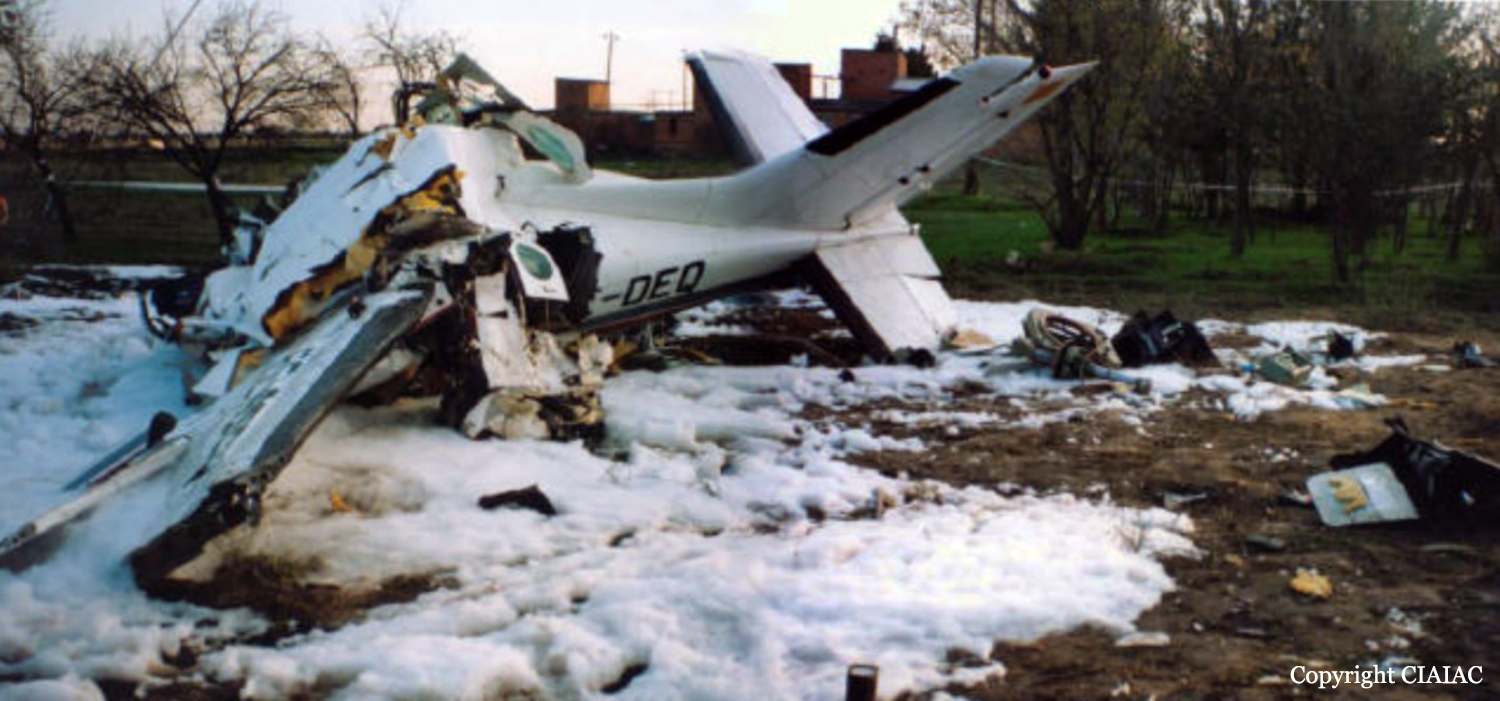
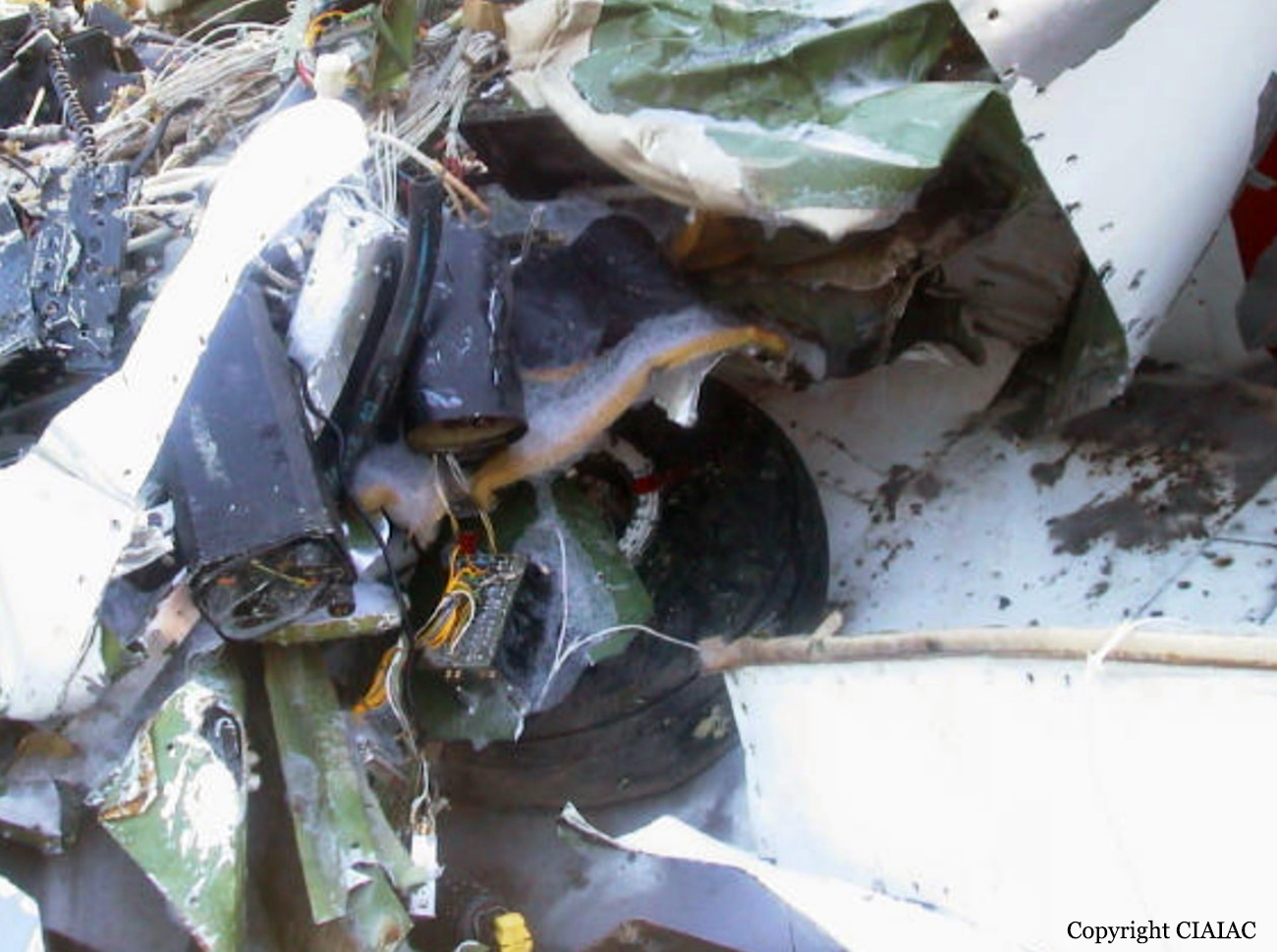
Crash of a Cessna 401B in Madrid: 2 killed

Date & Time: Oct 31, 1999 at 1222 LT
Type of aircraft:
Operator:
Registration:
EC-DEQ
Flight Phase:
Flight Type:
Survivors:
No
Schedule:
Madrid - Alicante
MSN:
401-0115
YOM:
1971
Country:
Region:
Crew on board:
1
Crew fatalities:
Pax on board:
1
Pax fatalities:
Other fatalities:
Total fatalities:
2
Captain / Total flying hours:
1629
Captain / Total hours on type:
100.00
Aircraft flight hours:
4612
Circumstances:
Just after takeoff from Madrid-Cuatro Vientos Airport, while in initial climb, the pilot informed ATC about engine problems and was cleared to return for an emergency landing. He made a turn and elected to establish on the ILS runway 28 when the aircraft entered an uncontrolled descent and crashed in a near vertical attitude in an orchard located 1,400 metres short of runway, some three minutes after takeoff. The aircraft was totally destroyed and both occupants were killed. The departed Madrid on an aerial photography mission to Alicante.
Probable cause:
Loss of control following an engine failure during initial climb. The exact cause of the engine failure could not be determined with certainty. However, the assumption that it may be the consequence of presence of water in the tanks and/or fuel lines was not ruled out.
Final Report:

Crash of a Learjet 35A in Mina: 6 killed

Date & Time: Oct 25, 1999 at 1213 LT
Type of aircraft:
Registration:
N47BA
Flight Phase:
Survivors:
No
Schedule:
Orlando - Dallas
MSN:
35-060
YOM:
1976
Crew on board:
2
Crew fatalities:
Pax on board:
4
Pax fatalities:
Other fatalities:
Total fatalities:
6
Captain / Total flying hours:
4280
Captain / Total hours on type:
60.00
Copilot / Total flying hours:
1700
Copilot / Total hours on type:
200
Aircraft flight hours:
10506
Aircraft flight cycles:
7500
Circumstances:
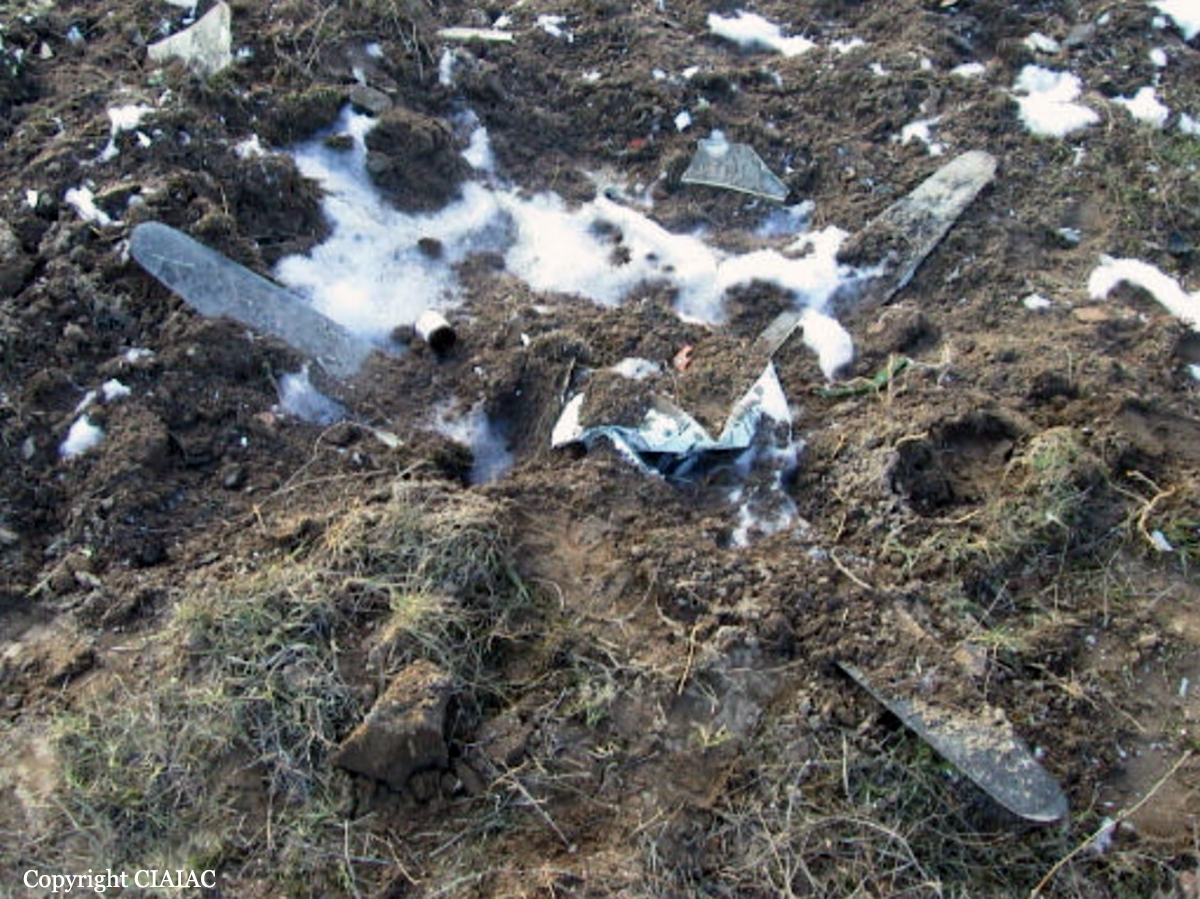
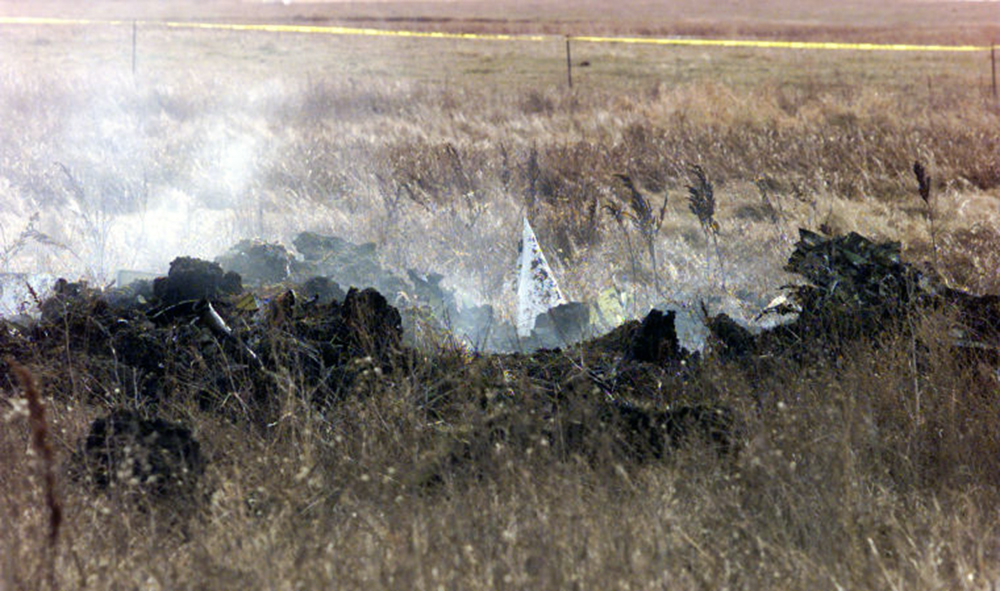
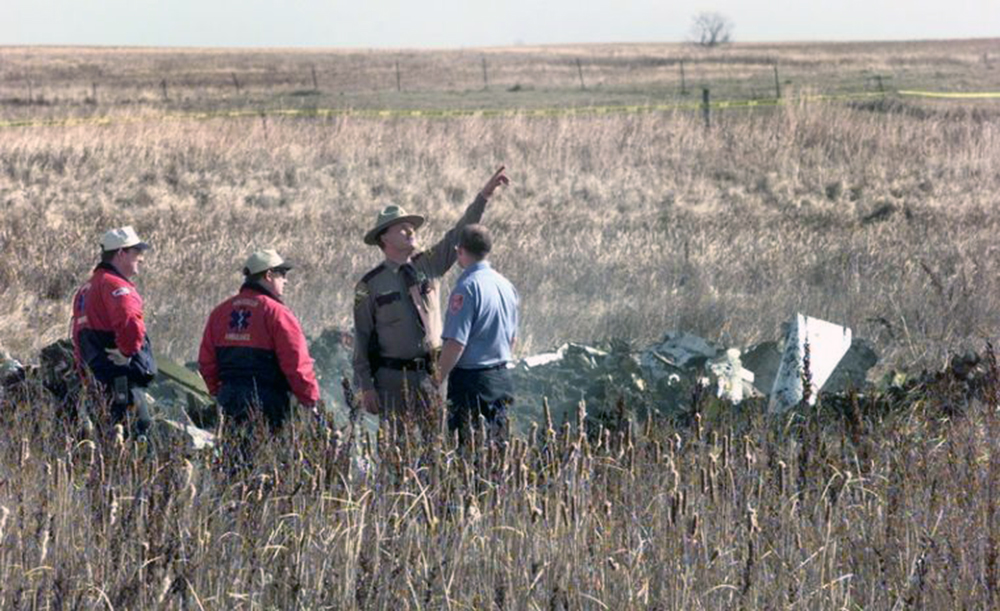
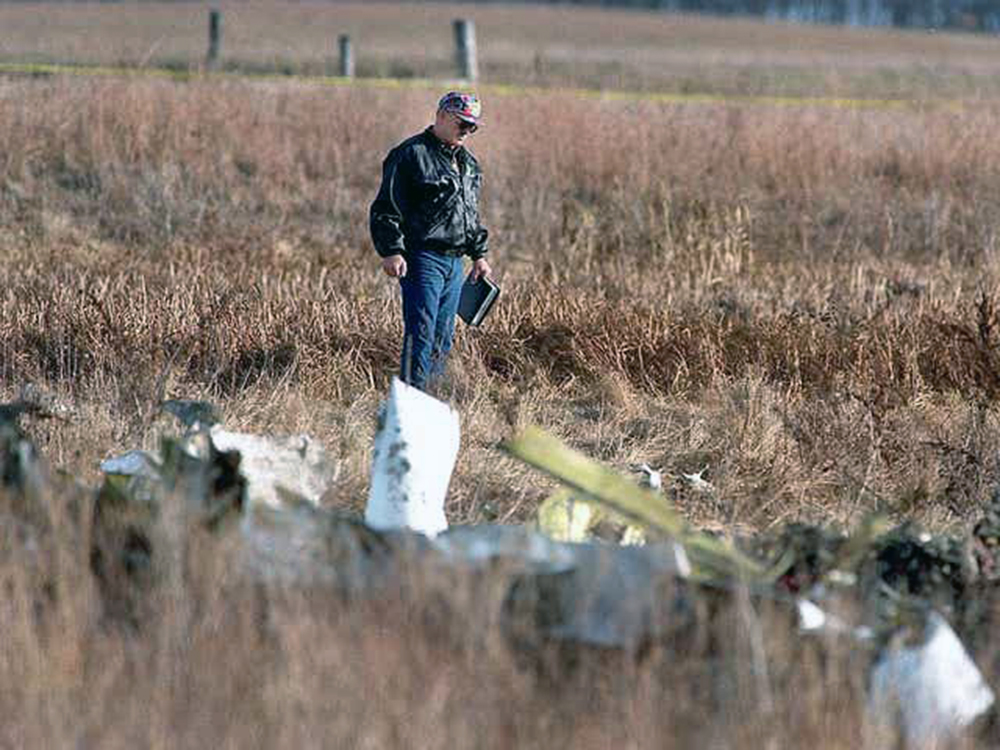
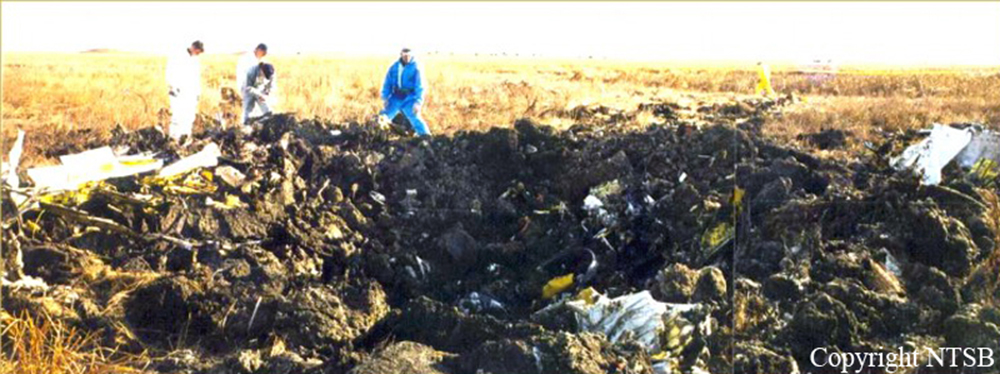
On October 25, 1999, about 1213 central daylight time (CDT), a Learjet Model 35, N47BA, operated by Sunjet Aviation, Inc., of Sanford, Florida, crashed near Aberdeen, South Dakota. The airplane departed Orlando, Florida, for Dallas, Texas, about 0920 eastern daylight time (EDT). Radio contact with the flight was lost north of Gainesville, Florida, after air traffic control (ATC) cleared the airplane to flight level (FL) 390. The airplane was intercepted by several U.S. Air Force (USAF) and Air National Guard (ANG) aircraft as it proceeded northwestbound. The military pilots in a position to observe the accident airplane at close range stated (in interviews or via radio transmissions) that the forward windshields of the Learjet seemed to be frosted or covered with condensation. The military pilots could not see into the cabin. They did not observe any structural anomaly or other unusual condition. The military pilots observed the airplane depart controlled flight and spiral to the ground, impacting an open field. All occupants on board the airplane (the captain, first officer, and four passengers) were killed, and the airplane was destroyed.
Crew:
Michael Kling,
Stephanie Bellegarrigue.
Passengers:
Payne Stewart,
Van Ardan,
Bruce Borland,
Robert Fraley.
Probable cause:
Incapacitation of the flight crewmembers as a result of their failure to receive supplemental oxygen following a loss of cabin pressurization, for undetermined reasons.
Final Report:

Crash of a Cessna 207 Skywagon near Puerto Ayacucho: 5 killed

Date & Time: Oct 12, 1999 at 0830 LT
Registration:
YV-745C
Flight Phase:
Survivors:
Yes
Schedule:
Puerto Ayacucho – San Juan de Manapiare
MSN:
207-0660
YOM:
1981
Country:
Crew on board:
1
Crew fatalities:
Pax on board:
7
Pax fatalities:
Other fatalities:
Total fatalities:
5
Circumstances:
Few minutes after takeoff from Puerto Ayacucho Airport, the pilot reported technical problems. Shortly later, radio and radar contacts were lost. The wreckage was found in the jungle 10 days later. The pilot and three passengers were killed and four other people were found alive. One of the survivor died from his injuries nine days later.

Crash of a De Havilland DHC-2 Beaver near Pickle Lake

Date & Time: Oct 2, 1999 at 1430 LT
Type of aircraft:
Operator:
Registration:
C-GZBQ
Flight Phase:
Survivors:
Yes
Schedule:
Big Trout Lake - Geraldton
MSN:
919
YOM:
1956
Country:
Crew on board:
1
Crew fatalities:
Pax on board:
1
Pax fatalities:
Other fatalities:
Total fatalities:
0
Captain / Total flying hours:
1420
Captain / Total hours on type:
725.00
Aircraft flight hours:
13372
Circumstances:
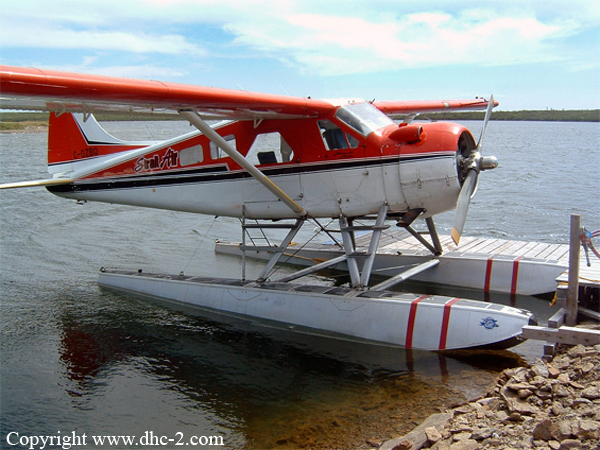
The de Havilland DHC-2 Beaver seaplane departed from Big Trout Lake, Ontario, on a visual flight rules flight for Geraldton, Ontario, with a pilot and an aircraft maintenance engineer on board. After encountering adverse weather conditions en route to Geraldton, the pilot decided to divert to Pickle Lake, Ontario. At about 1430 central daylight time, the engine lost power at an altitude of about 300 feet above ground level while in the descent for Pickle Lake. The pilot turned the aircraft toward a nearby narrow river. In an attempt to restart the engine, the pilot confirmed that the fuel pressure was normal, the fuel selector was on the fullest tank (front), the throttle was at idle, the mixture was rich, and the ignition switch was on both, then he operated the wobble pump. When the engine did not restart, he switched to the centre fuel tank and operated the wobble pump again, but the engine still did not restart. He then switched back to the front tank and tried another restart, without success. He then landed the aircraft on the river at an estimated landing speed of about 40 to 45 mph. After the forced landing, the left wingtip collided with trees on the river bank, and the aircraft yawed to the left about 180 degrees and struck the river bank, breaking off the floats and the float struts. Impact with more trees on the river bank damaged the right wing and elevator. Both occupants were wearing lap belts with shoulder harnesses and were uninjured. The aircraft was substantially damaged. The pilot advised Thunder Bay flight service station by radio of the engine failure and crash and the crew were rescued two hours later.
Probable cause:
Findings as to Causes and Contributing Factors:
- The engine quit operating because the aircraft fuel system was contaminated with a large amount of water.
- The most likely source of the water contamination was the drums from which the aircraft was refuelled.
- A proper filter to prevent water contamination was not used when the aircraft was refuelled.
- The nose-level aircraft attitude when beached and the freezing of water probably prevented the water contamination from being drained from the front tank during the pilot's pre-flight checks.
Other Findings:
- The aircraft's maintenance records indicate that the aircraft was certified, equipped, and maintained in accordance with existing regulations and approved procedures.
- The use of the available shoulder harnesses probably prevented serious injury to the pilot and engineer.
Final Report:

Crash of a Beechcraft 200 Super King Air off Bimini: 2 killed

Date & Time: Sep 19, 1999 at 1115 LT
Registration:
YV-385CP
Flight Phase:
Flight Type:
Survivors:
No
Schedule:
Fort Lauderdale - Caracas
MSN:
BB-740
YOM:
1981
Location:
Country:
Crew on board:
1
Crew fatalities:
Pax on board:
1
Pax fatalities:
Other fatalities:
Total fatalities:
2
Aircraft flight hours:
1841
Circumstances:
A Beechcraft 200 Super King Air, YV-385CP, crashed into the Atlantic Ocean about 9 miles southwest of Bimini, Bahamas, while on personal flight. Visual meteorological conditions prevailed in the area at the time, and an instrument flight rules flight plan was filed. The aircraft was destroyed, and the commercial-rated flight instructor and a pilot-rated passenger were both fatally injured. The flight originated from Fort Lauderdale International Airport, the same day, about 10:53. At 11:14, the pilot of YV-385CP told FAA ARTCC that he was experiencing an emergency, and he asked for immediate directions to Bimini. There were no further communications. According to radar information, at 11:13:33, the altitude was about 23,600 feet, and at 11:14:58 it had descended to 2,800 feet. Sound spectrum analysis of an FAA re-recording of communications between the pilot and ATC, indicated there were electronic signatures present, attributable to propeller noise, at cruise setting, for that type of aircraft. Records obtained from Venezuela indicated that earlier, YV-385CP had been involved in an accident, and had incurred extensive structural damage. The aircraft had been repaired in Venezuela, and was subsequently flown to the Unites States for additional repairs. Records obtained from the U.S. repair station indicated that the airplane incurred an extensive maintenance history, with needed repairs including damaged wiring, and leaks in the fuel system, as well as structural leaks, which had lead to several pressurization difficulties.
Probable cause:
Due to lack of evidences, the exact cause of the accident could not be determined.

Crash of an Embraer EMB-110 Bandeirante in Monte Dourado: 2 killed

Date & Time: Sep 14, 1999 at 2130 LT
Operator:
Registration:
PT-ODK
Flight Type:
Survivors:
No
Schedule:
Belém - Monte Dourado
MSN:
110-002
YOM:
1969
Country:
Crew on board:
2
Crew fatalities:
Pax on board:
0
Pax fatalities:
Other fatalities:
Total fatalities:
2
Captain / Total flying hours:
10000
Captain / Total hours on type:
1200.00
Copilot / Total flying hours:
1600
Copilot / Total hours on type:
1200
Circumstances:
The twin engine aircraft departed Belém-Val de Cans Airport on a cargo flight to Monte Dourado with two pilots on board and a load of 1,636 kilos of limestone grit divided into 36 bags of 45.45 kilos each. After a flight of 1 hour and 18 minutes, the crew was cleared to descend by night to Monte Dourado Airport. On final approach, the crew was able to send a brief message saying the aircraft was crashing. The aircraft was destroyed on impact and both pilots were killed.
Probable cause:
The following findings were identified:
- The total weight of the aircraft upon departure from Belém Airport was 650 kilos above MTOW,
- The cargo was not stowed in the cabin but simply stored on the floor,
- The left engine was not providing power at impact and the aircraft entered a left turn and then an uncontrolled descent until impact with the ground,
- Failure of the left engine due to the presence of an aluminum part obstructing the fuel pipe. Metallographic analyzes confirmed that this aluminum part likely came from a thread of the fuel pump,
- Complacency of the crew who failed to follow the published procedures of the operator.
Final Report: