Crash of a Piper PA-46-350P Malibu Mirage off Destin: 3 killed

Date & Time: Nov 23, 2010 at 1930 LT
Registration:
N548C
Flight Type:
Survivors:
No
Schedule:
New Orleans – Destin
MSN:
46-36322
YOM:
2001
Crew on board:
1
Crew fatalities:
Pax on board:
2
Pax fatalities:
Other fatalities:
Total fatalities:
3
Captain / Total flying hours:
408
Captain / Total hours on type:
34.00
Aircraft flight hours:
761
Circumstances:
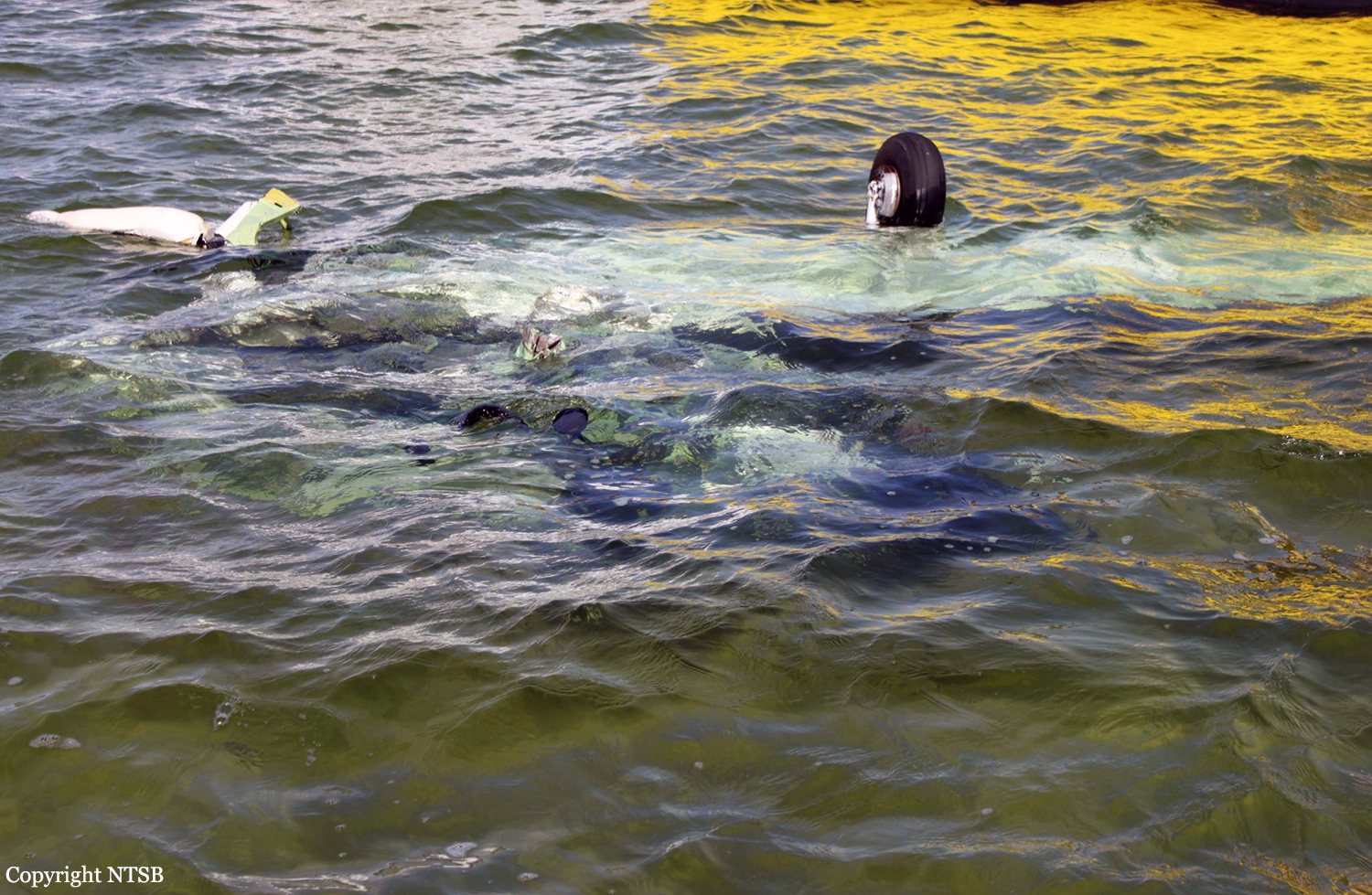
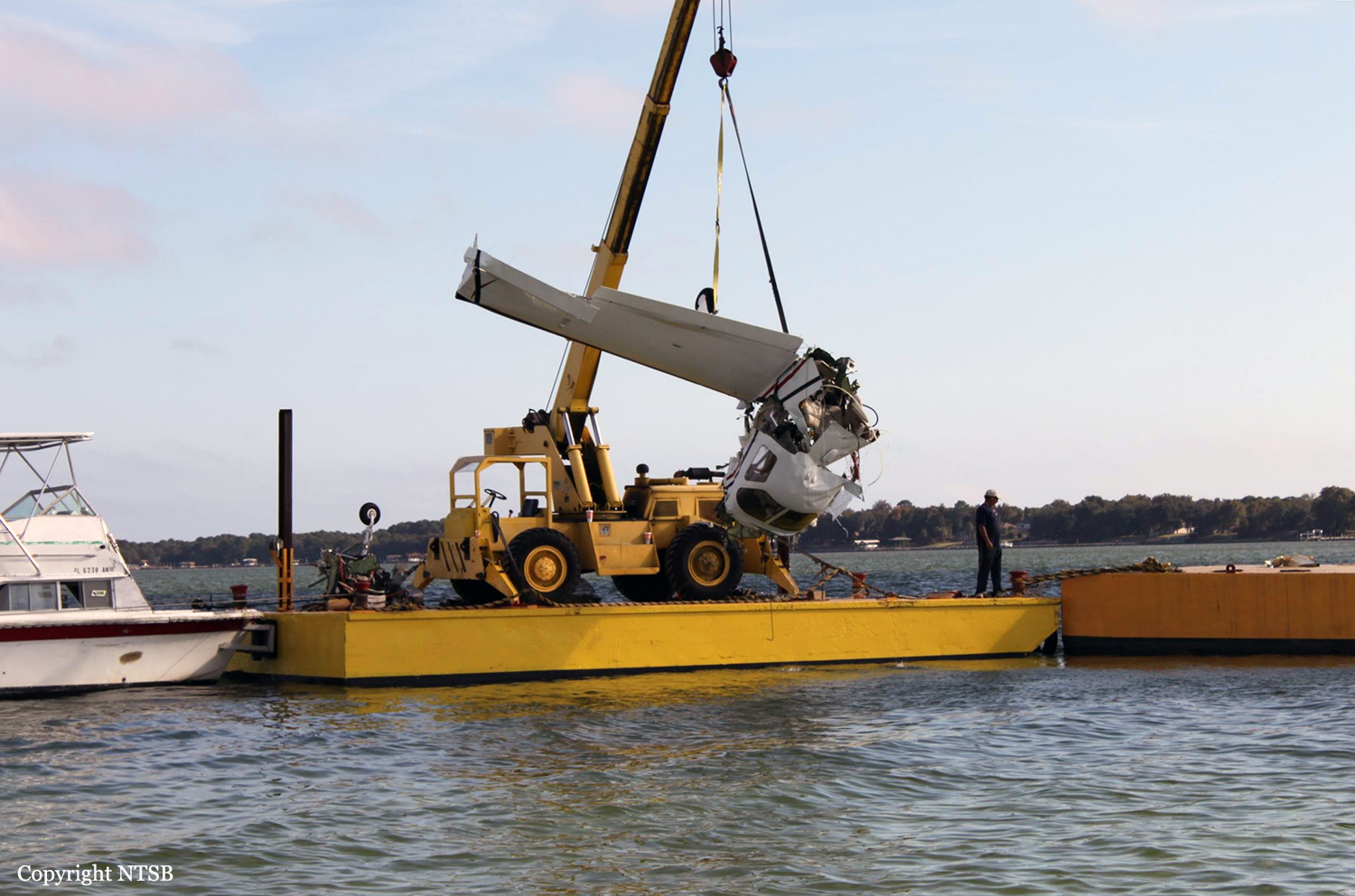
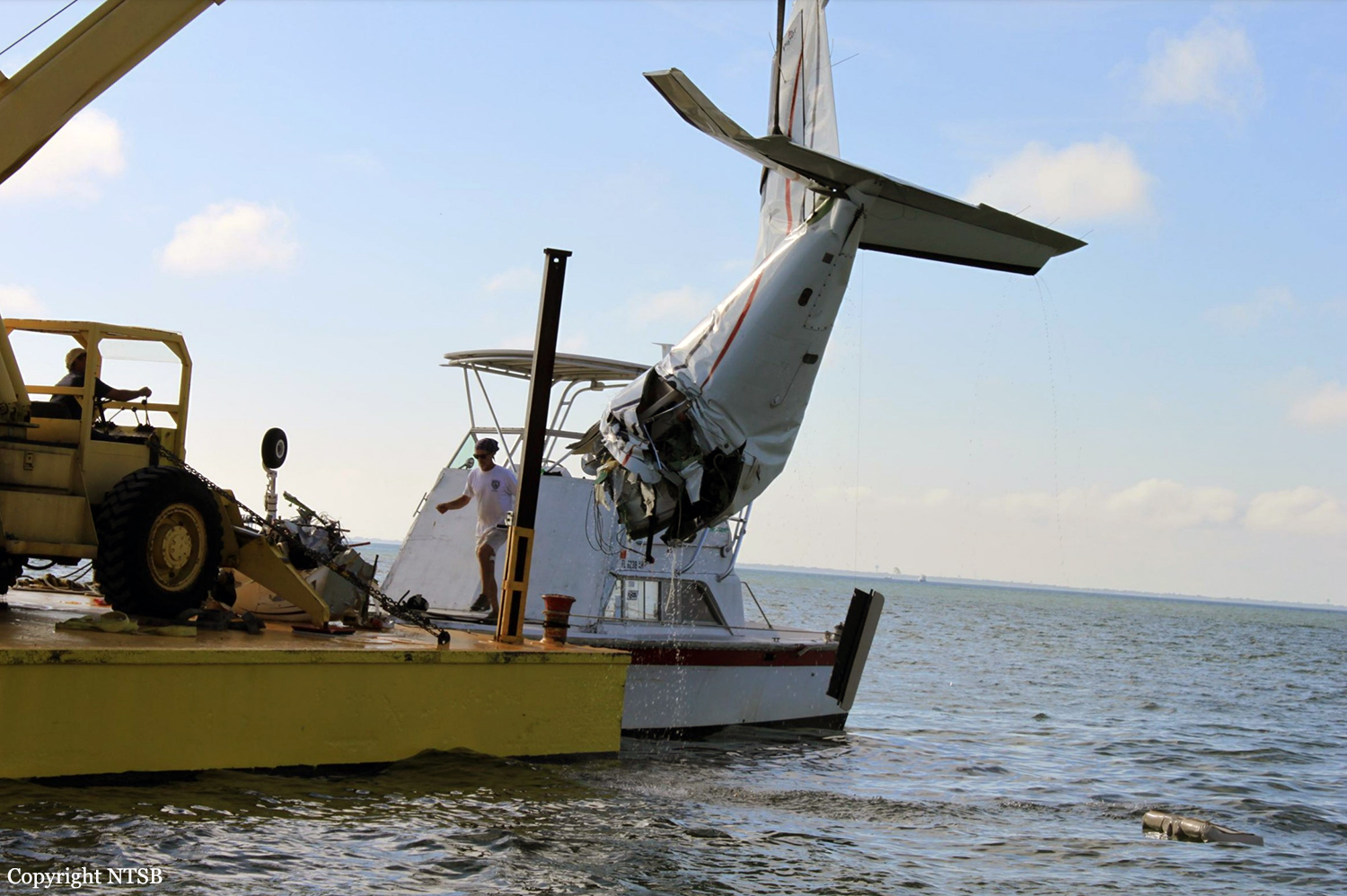
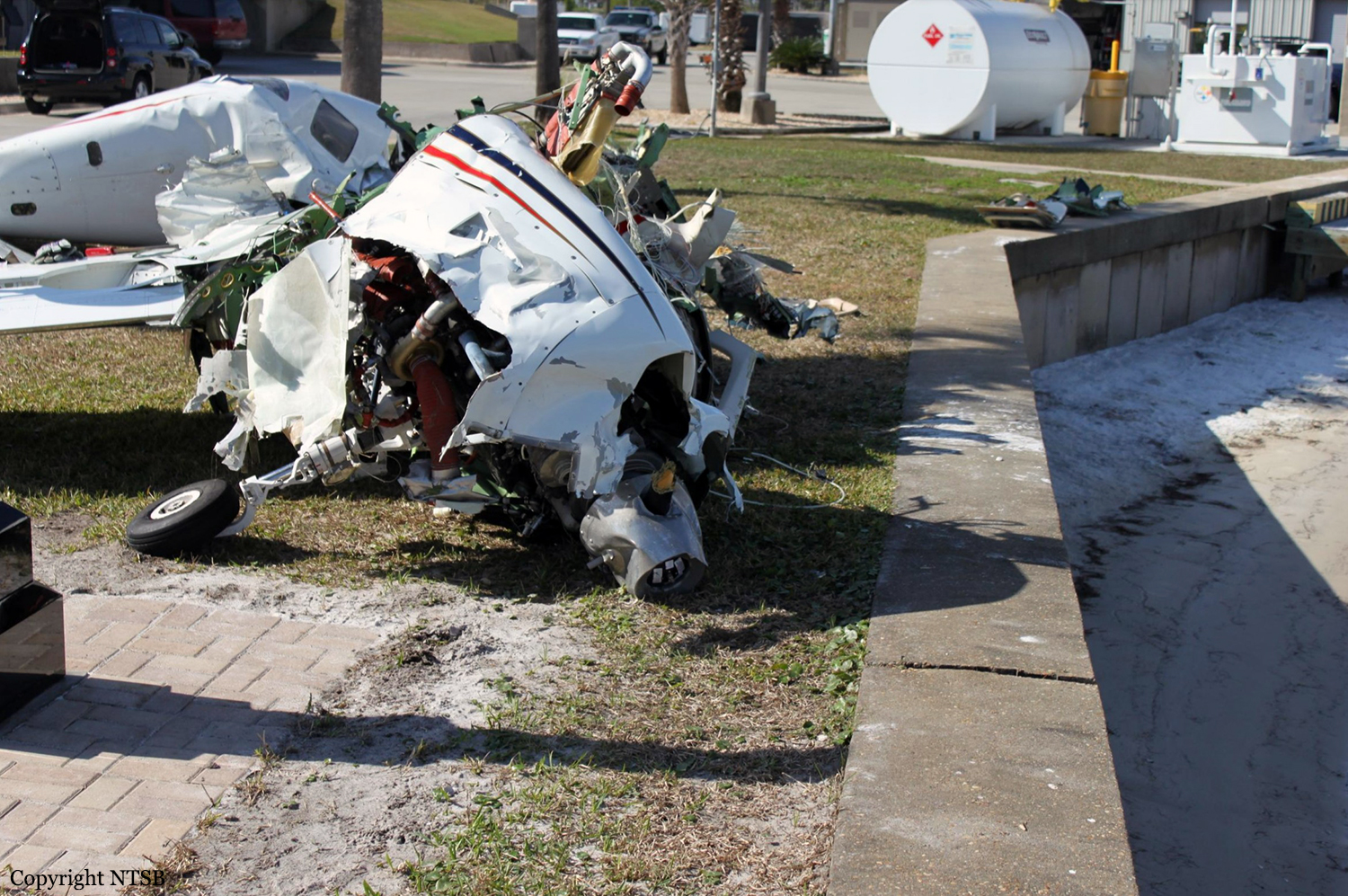
The instrument-rated pilot was executing a night instrument approach when the airplane impacted the water. The published approach minimums for the area navigation/global positioning system approach were 460-foot ceiling and one-mile visibility. Recorded air traffic control voice and radar data indicated that prior to the approach the pilot had turned to an approximately 180-degree heading and appeared to be heading in the direction of another airport. The controller reassigned the pilot a heading in order to intercept the final approach. The airplane was located in the water approximately 5,000 feet from the runway threshold. A postaccident examination of the airplane revealed that the left main landing gear was in the retracted position and the right main and nose landing gear were in the extended position. Examination of the left main landing gear actuator revealed no mechanical anomalies. The pilot had likely just commanded the landing gear to the down position and the landing gear was in transit. It is further possible that, as the gear was in transit, the airplane impacted the water in a left-wing and nose-down attitude and the left gear was forced to a gear-up position.
Probable cause:
Controlled flight into water due to the pilot's improper descent below the published minimum descent altitude.
Final Report:

Crash of a Cessna 501 Citation I in Birmingham

Date & Time: Nov 19, 2010 at 1535 LT
Type of aircraft:
Registration:
G-VUEM
Flight Type:
Survivors:
Yes
Schedule:
Belfast - Birmingham
MSN:
501-0178
YOM:
1981
Region:
Crew on board:
2
Crew fatalities:
Pax on board:
0
Pax fatalities:
Other fatalities:
Total fatalities:
0
Captain / Total flying hours:
7200
Captain / Total hours on type:
3000.00
Copilot / Total flying hours:
1785
Copilot / Total hours on type:
735
Circumstances:
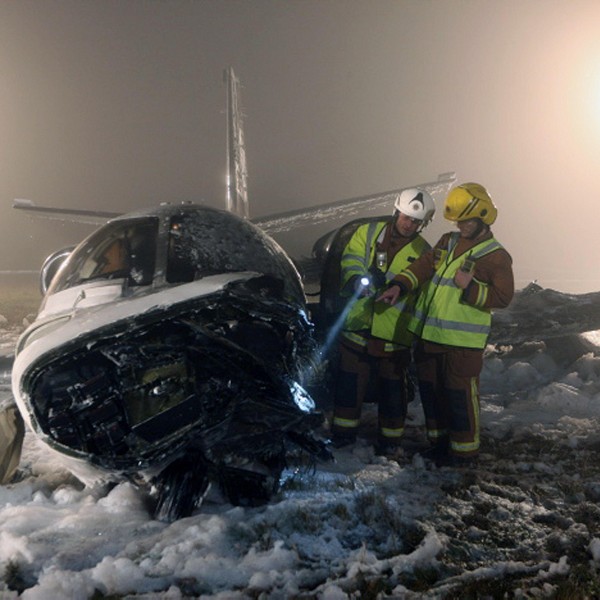
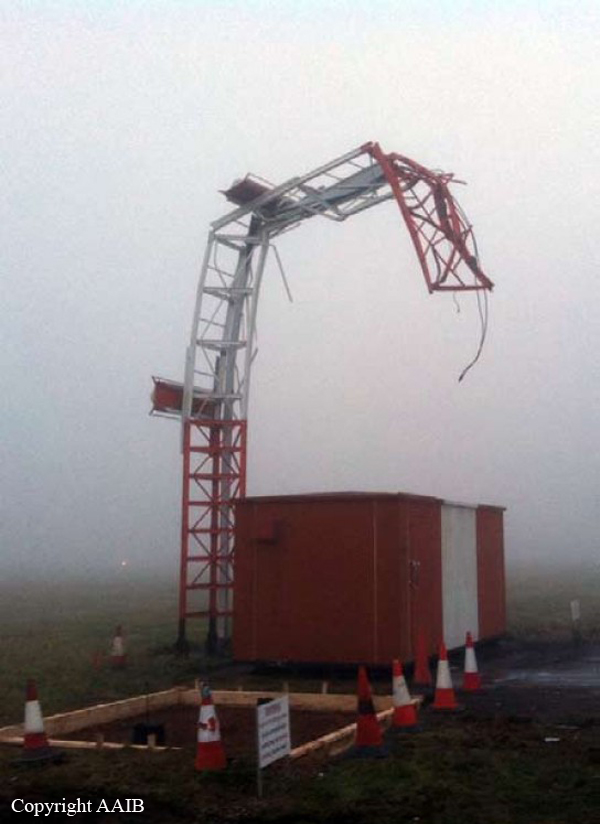
The flight crew reported for duty at Liverpool Airport at 0845 hrs. Their original task was to fly to Belfast City Airport, collect a transplant organ, and take it to Cambridge Airport. However, on their arrival at Belfast the transfer was no longer required, so they were given a new task to fly to Belfast Aldergrove Airport and collect an organ to carry to Birmingham Airport. The aircraft departed Belfast Aldergrove at 1450 hrs with the co-pilot as pilot flying. The flight was uneventful and the aircraft was given a radar vector to intercept the ILS for a straight-in approach to Runway 15 at Birmingham. The Runway 15 ILS course is 149°M. The autopilot was engaged and the aircraft was flying on a track of 135°M, 13 nm from the touchdown zone and at a groundspeed of 254 kt, when it crossed the localiser centreline. The aircraft then turned right onto a corrective track but once again passed through the localiser course. Further corrections were made and the aircraft passed through the localiser once more before becoming established at 5 nm. The co-pilot later reported that, because the autopilot was not capturing the localiser, he had disconnected it and flown the approach manually. When the aircraft was at 10 nm, the radar controller broadcast a message advising of the presence of a fog bank on final approach and giving RVRs of 1,400 m at touchdown and in excess of 1,500 m at both the mid-point and stop end. The airfield was sighted by the commander during the approach but not by the co-pilot. A handover to the tower frequency was made at around 8 nm. When the aircraft was at 6 nm, landing clearance was given and acknowledged. The tower controller then advised the aircraft that there was a fog bank over the airfield boundary, together with the information that the touchdown RVR was 1,400 m. The commander responded, saying: “WE’VE GOT ONE END OF THE RUNWAY”. The aircraft was correctly on the localiser and the glideslope at 4 nm. The Decision Altitude (DA) of 503 feet amsl (200 feet aal) for the approach was written on a bug card mounted centrally above the glare shield. Both pilots recollected that the Standard Operating Procedure (SOP) calls of “500 above” and “100 above” DA were made by the commander. However, neither pilot could recall a call of ‘decision’ or ‘go-around’ being made. At between 1.1 nm and 0.9 nm, and 400 feet to 300 feet aal, the aircraft turned slightly to the right, onto a track of 152°M. This track was maintained until the aircraft struck the glideslope antenna to the right of the runway some 30 seconds later (see Figure 3, page 11). The aircraft came to rest in an upright position on the grass with a fire on the left side. The co-pilot evacuated through the main cabin door, which is located on the left side of the fuselage, and suffered flash burns as he passed through the fire. The commander was trapped in the cockpit for a time.
Probable cause:
The co-pilot’s task of flying the approach would have become increasingly demanding as the aircraft descended and it is probable that his attention was fully absorbed by this. This was confirmed by his erroneous perception that the aircraft was in IMC from below 2,000 feet amsl. The co-pilot reported that during the final stages of the approach, when he noticed he had lost the localiser indication, he had asked the commander whether he should go around. The response he reported he heard of “no, go left” was not what he had expected, and may correspond to the time from which no further control inputs were made. The commander could not recall having given any instructions to the co-pilot after the ‘100 feet above’ call. It is likely that the crew commenced the approach with an expectation that it would be completed visually. However, the weather conditions were unusual and the aircraft entered IMC unexpectedly, late in the approach. As an aircraft gets closer to a runway the localiser and glideslope indications become increasingly sensitive and small corrections have a relatively large effect. The task for the flying pilot becomes more demanding and the role of the monitoring pilot has greater significance. A successful outcome relies on effective crew co-ordination, based on clear SOPs. The monitoring of this approach broke down in the latter stages and the crucial ‘decision’ call was missed, which led to the aircraft’s descent below minima.
Final Report:

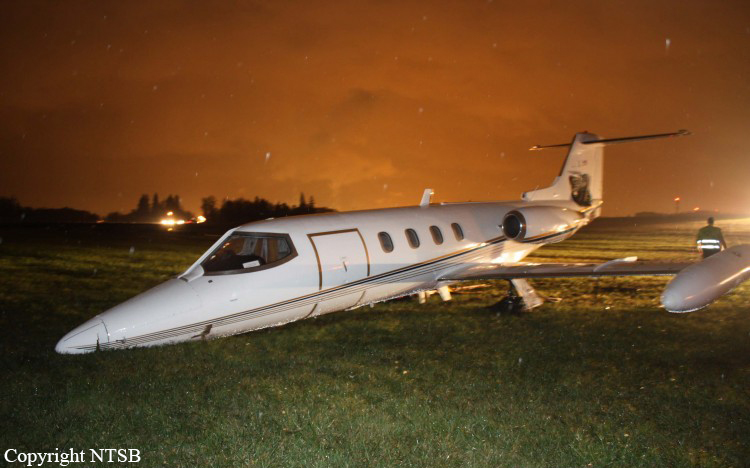
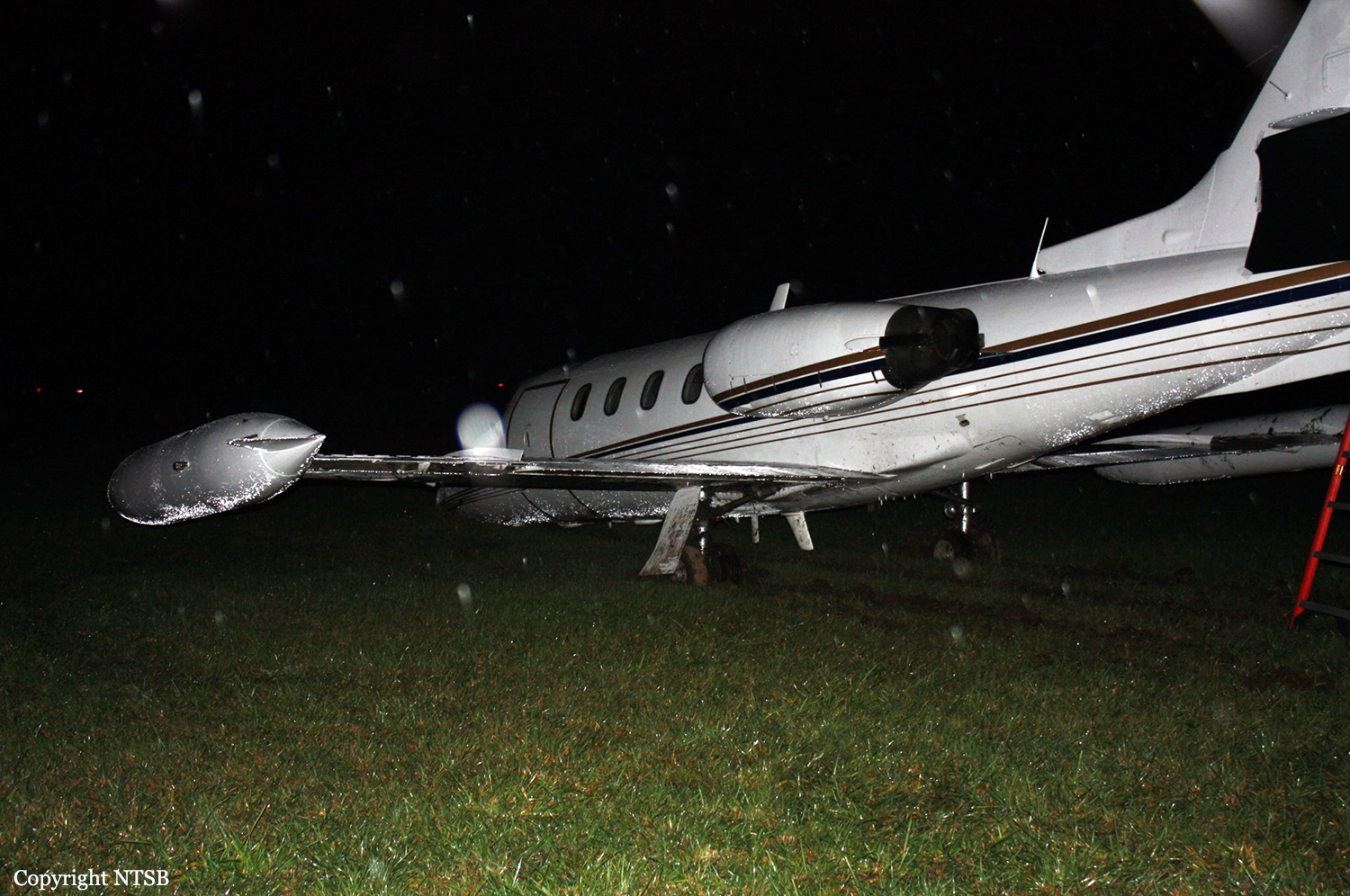
Crash of a Learjet 25B in Portland

Date & Time: Nov 17, 2010 at 1553 LT
Type of aircraft:
Operator:
Registration:
N25PJ
Flight Type:
Survivors:
Yes
Schedule:
Boise - Portland
MSN:
25-111
YOM:
1973
Crew on board:
2
Crew fatalities:
Pax on board:
0
Pax fatalities:
Other fatalities:
Total fatalities:
0
Captain / Total flying hours:
6000
Copilot / Total flying hours:
652
Copilot / Total hours on type:
10
Aircraft flight hours:
8453
Circumstances:
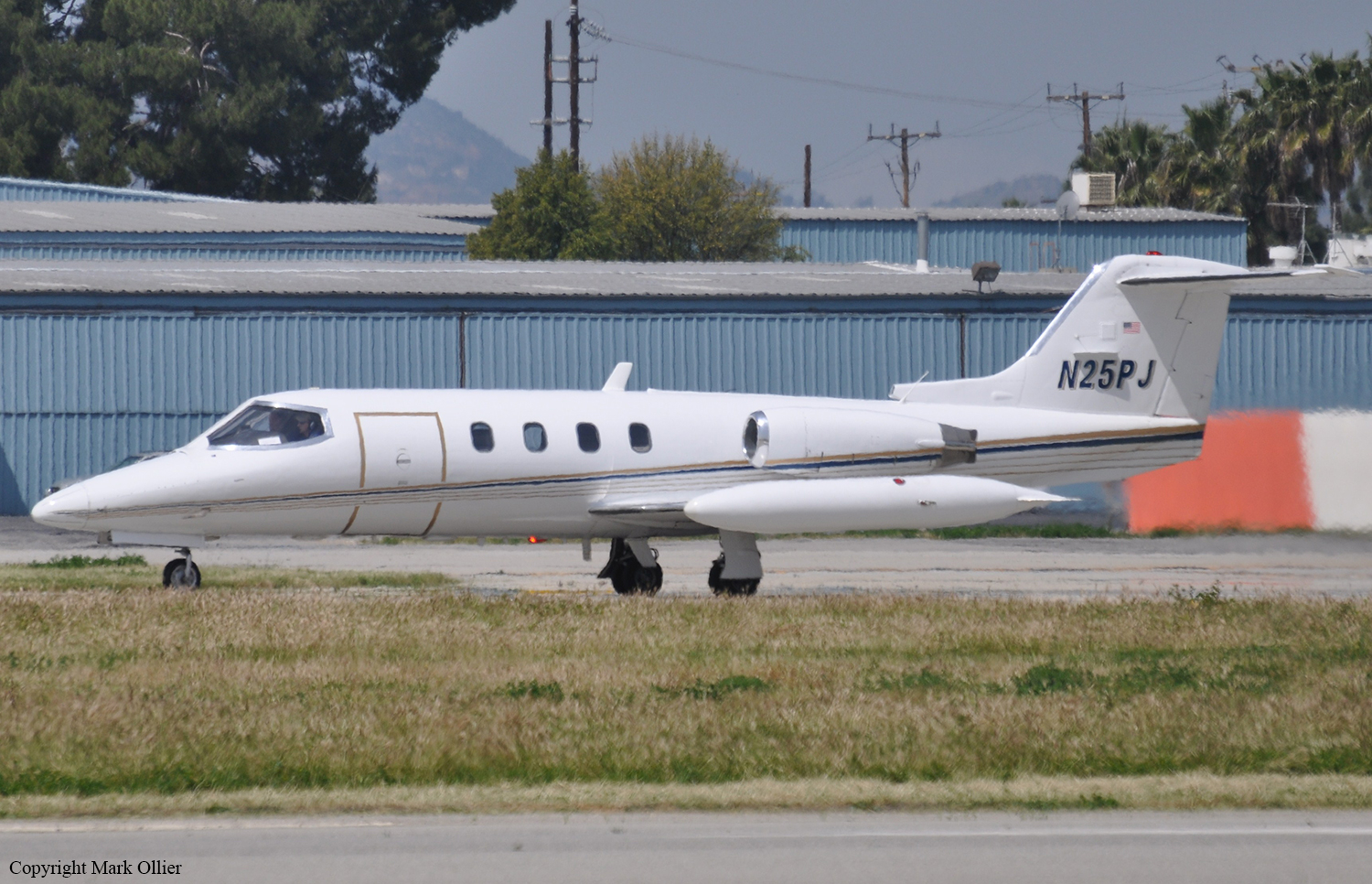
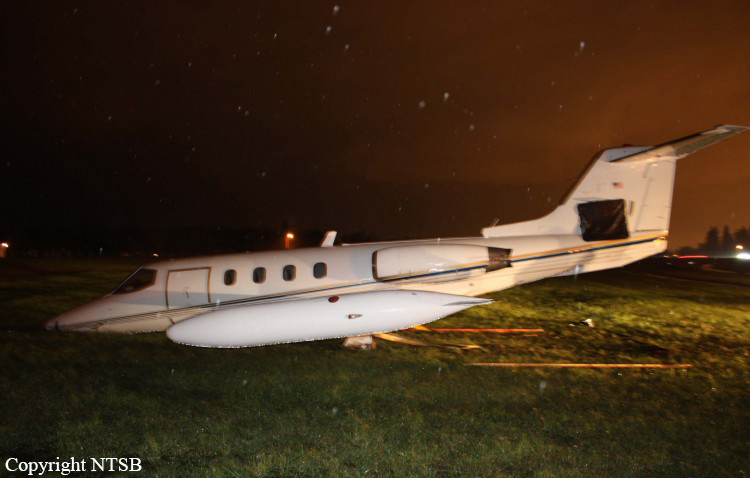
The airplane was flying a VOR/DME-C approach that was on an oblique course about 40 degrees to the runway 30 centerline; the wind conditions produced an 8-knot tailwind for landing on runway 30. Despite the tailwind, the captain elected to land on the 6,600-foot-long runway instead of circling to land with a headwind. Moderate to heavy rain had been falling for the past hour, and the runway was wet. The crew said that the airplane was flown at the prescribed airspeed (Vref) for its weight with the wing flaps fully extended on final approach, and that they touched down just beyond the touchdown zone. The captain said that he extended the wings' spoilers immediately after touchdown. He tested the brakes and noted normal brake pedal pressure. However, during rollout, he noted a lack of deceleration and applied more brake pressure, with no discernible deceleration. The airplane's optional thrust reversers had been previously rendered non-operational by company maintenance personnel and were therefore not functional. The captain stated that he thought about performing a go-around but believed that insufficient runway remained to ensure a safe takeoff. While trying to stop, he did not activate the emergency brakes (which would have bypassed the anti-skid system) because he thought that there was insufficient time, and he was preoccupied with maintaining control of the airplane. He asked the first officer to apply braking with him, and together the crew continued applying brake pedal pressure; however, when the airplane was about 2,000 feet from the runway's end, it was still traveling about 100 knots. As the airplane rolled off the departure end on runway 30, which was wet, both pilots estimated that the airplane was still travelling between 85 and 90 knots. The airplane traveled 618 feet through a rain-soaked grassy runway safety area before encountering a drainage swale that collapsed the nose gear. As the airplane was traversing the soft, wet field, its wheels partially sank into the ground. While decelerating, soil impacted the landing gear wheels and struts where wiring to the antiskid brake system was located. The crew said that there were no indications on any cockpit annunciator light of a system failure or malfunction; however, after the airplane came to a stop they observed that the annunciator light associated with the antiskid system for the No. 2 wheel was illuminated (indicating a system failure). The other three annunciator lights (one for each wheel) were not illuminated. During the approach, the first officer had completed the landing data card by using a company-developed quick reference card. The quick reference card’s chart, which contained some data consistent with the landing charts in the Airplane Flight Manual (AFM), did not have correction factors for tailwind conditions, whereas the charts in the AFM do contain corrective factors for tailwind conditions. The landing data prepared by the first officer indicated that 3,240 feet was required to stop the airplane on a dry runway in zero wind conditions, with a wet correction factor increasing stopping distance to 4,538 feet. The Vref speed was listed as 127 knots for their landing weight of 11,000 pounds, and the first officer’s verbal and written statements noted that they crossed the runway threshold at 125 knots. During the investigation, Bombardier Lear calculated the wet stopping distances with an 8-knot tailwind as 5,110 feet. The touchdown zone for runway 30 is 1,000 feet from the approach end. The crew’s estimate of their touchdown location on the runway is about 1,200 feet from the approach end, yielding a remaining runway of 5,400 feet. On-duty controllers in the tower watched the landing and said that the airplane touched down in front of the tower at a taxiway intersection that is 1,881 feet from the approach end, which would leave about 4,520 feet of runway to stop the airplane. The controllers observed water spraying off the airplane’s main landing gear just after touchdown. Post accident testing indicated that the brake system, including the brake wear, was within limits, with no anomalies found. No evidence of tire failure was noted. The antiskid system was removed from the airplane for functional tests. The control box and the left and right control valves tested within specifications. The four wheel speed sensors met the electrical resistance specification. For units 1, 2 and 3, the output voltages exceeded the minimum specified voltages for each of the listed frequencies. Unit 4 was frozen and could not be rotated and thus could not be tested. Sensors 1 and 2 exceeded the specified 15% maximum to minimum voltage variation limit. Sensor 3 was within the limit and 4 could not be tested. Based on all the evidence, it is likely that the airplane touched down on the water-contaminated runway beyond the touchdown zone, at a point with about 600 feet less remaining runway than the performance charts indicated that the airplane required for the wet conditions. Since a reverted rubber hydroplaning condition typically follows an encounter with dynamic hydroplaning, the reverted rubber signatures on the No. 2 tire indicate that the airplane encountered dynamic hydroplaning shortly after touchdown, and the left main gear wheel speed sensor anomalies allowed the left tires to progress to reverted rubber hydroplaning. This, along with postaccident testing, indicates that the anti-skid system was not performing optimally and, in concert with the hydroplaning conditions, significantly contributed to the lack of deceleration during the braking attempts.
Probable cause:
The failure of the flight crew to stop the airplane on the runway due to the flying pilot’s failure to attain the proper touchdown point. Contributing to the accident was an anti-skid system that was not performing optimally, which allowed the airplane to encounter reverted rubber hydroplaning, and the company-developed quick reference landing distance chart that did not provide correction factors related to tailwind conditions.
Final Report:

Crash of an Antonov AN-24B in Zalingei: 2 killed

Date & Time: Nov 11, 2010 at 1618 LT
Type of aircraft:
Operator:
Registration:
ST-ARQ
Survivors:
Yes
Schedule:
Khartoum - Nyala - Zalingei
MSN:
0 73 059 10
YOM:
1970
Country:
Region:
Crew on board:
6
Crew fatalities:
Pax on board:
38
Pax fatalities:
Other fatalities:
Total fatalities:
2
Captain / Total flying hours:
4400
Captain / Total hours on type:
300.00
Copilot / Total flying hours:
900
Copilot / Total hours on type:
700
Circumstances:
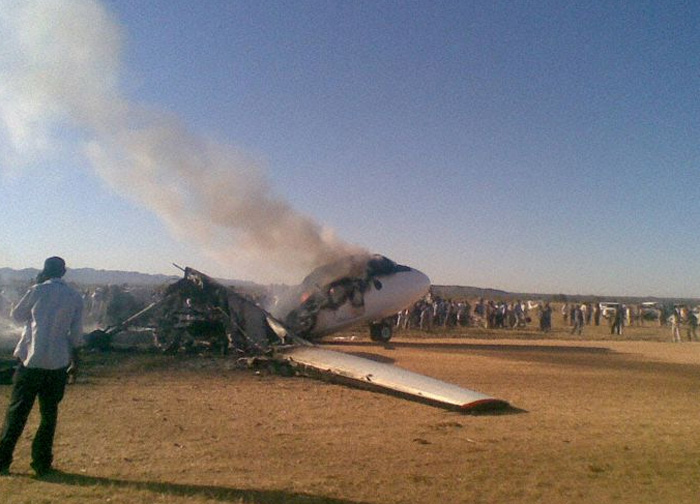
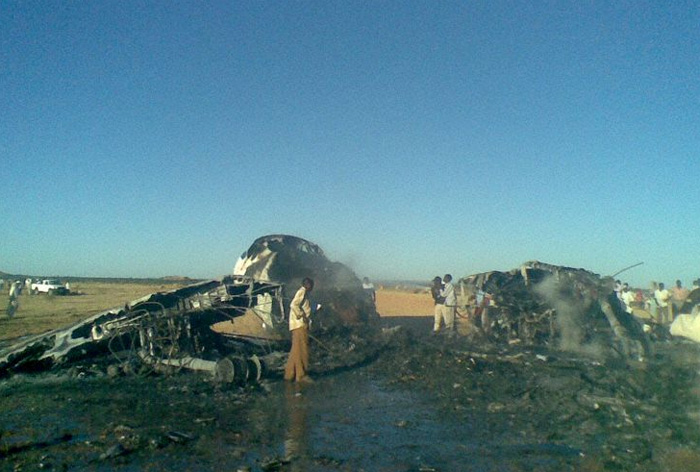
The crew started the approach to Zaligei Airport runway 03 in good weather conditions. The aircraft landed hard 200 metres past the runway threshold, causing both propeller blades to struck the ground on a distance of 33 metres. The aircraft bounced and landed a second time 263 metres further then a third time after 15 metres. Upon impact, both engines were torn off and the aircraft rolled for about 400 metres before coming to rest, bursting into flames. Two passengers were killed while five others were injured. All 37 other occupants escaped unhurt. The aircraft was totally destroyed by a post crash fire.

Probable cause:
Sudan's Central Directorate of Air Accident Investigation concluded the probable causes as follow:
The accident cause is a complex set of reasons. The aircraft impacted the ground on three wheels at high forward speed shearing off both engines and propellers and damaging the left main landing gear which put the aircraft in an uncontrollable condition.
Contributory factors were:
- Absence of crew coordination,
- Absence of cabin procedure and check-lists for different phases of flight,
- Unsatisfactory Periodic and Annual job check being reflected on the inoperative Cockpit Voice and Flight Data Recorders,
- Bad planning of the flight and long period taken to clear the recorded defects before departure is considered to be a contributory factor to this accident.

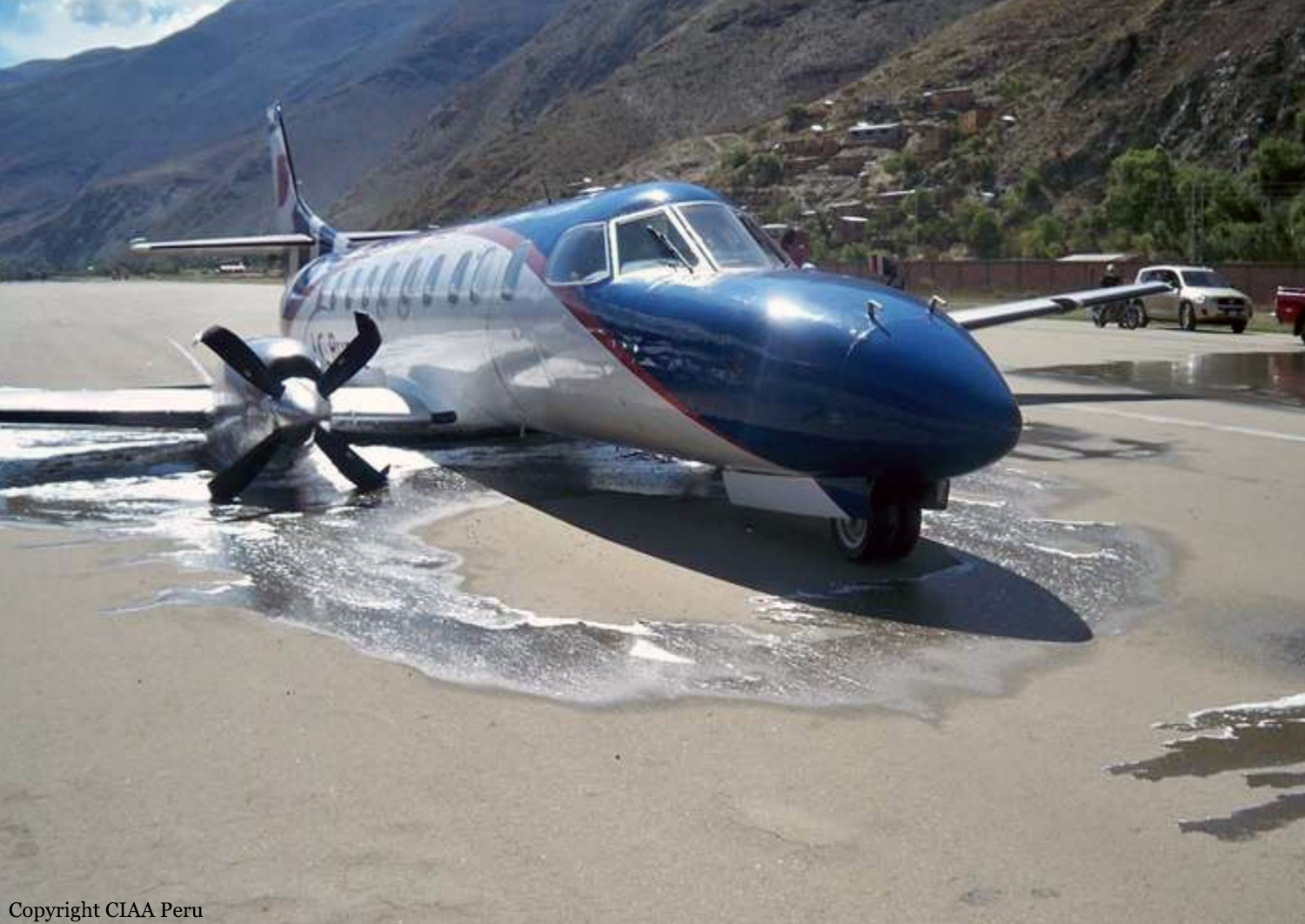
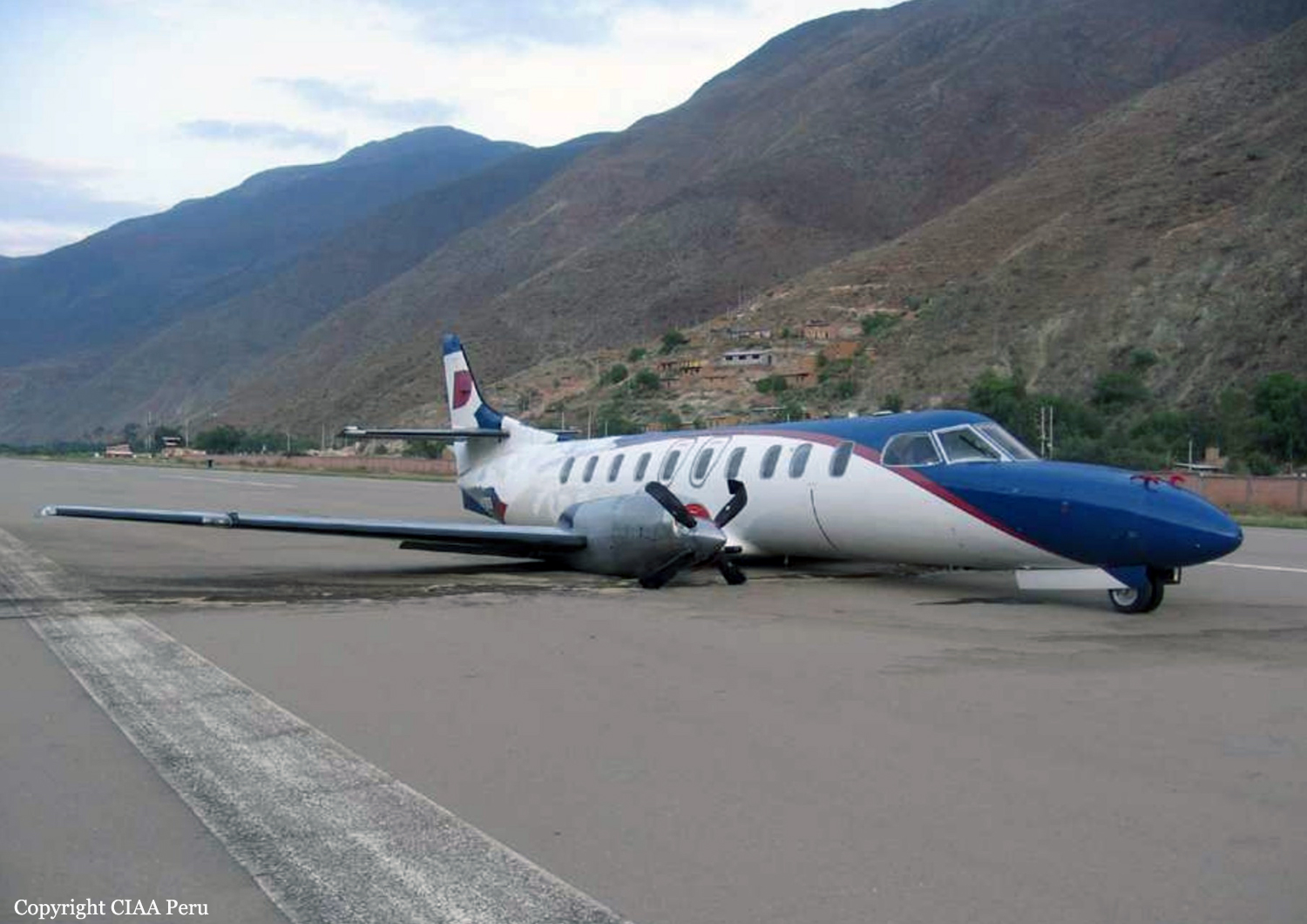
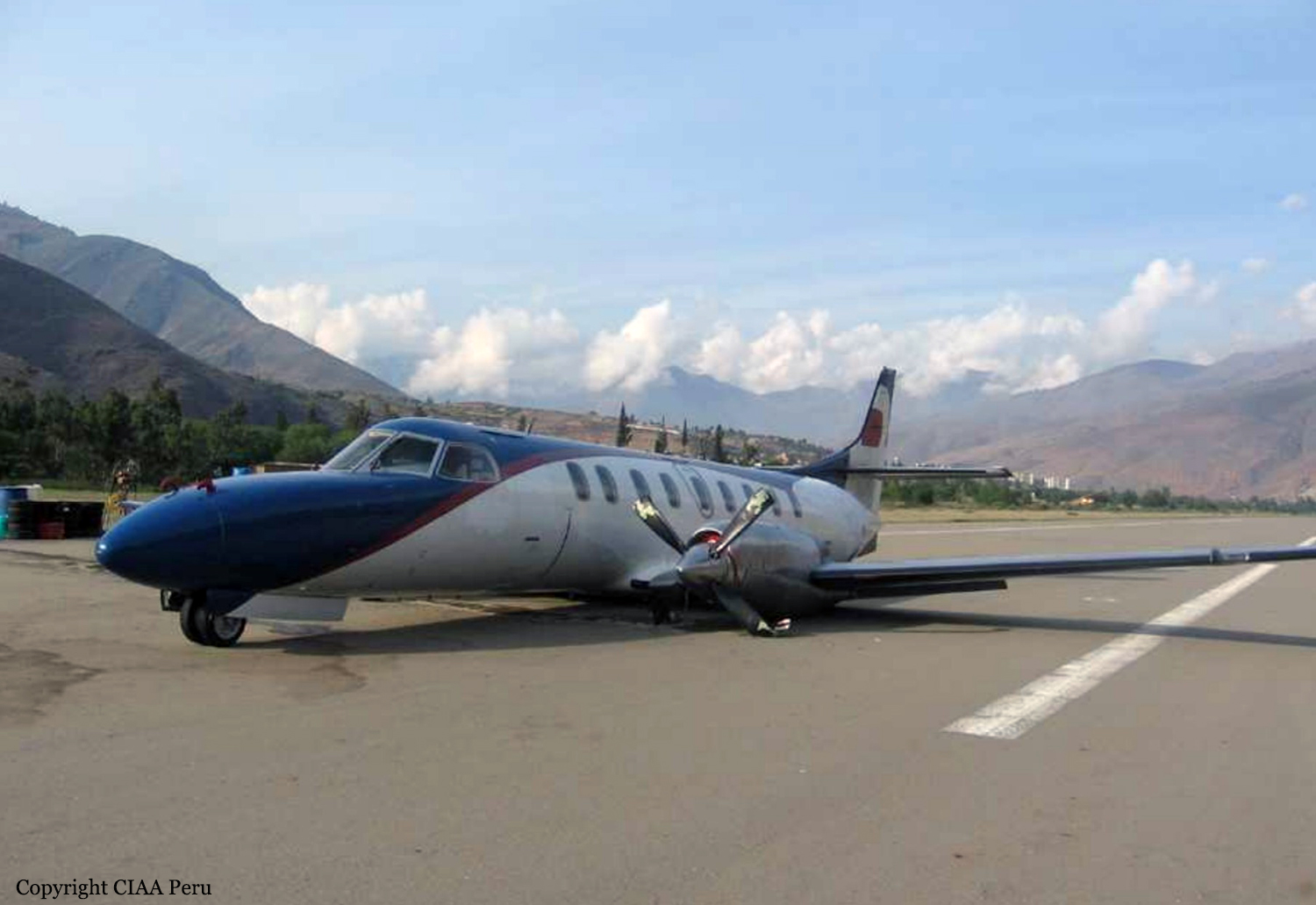
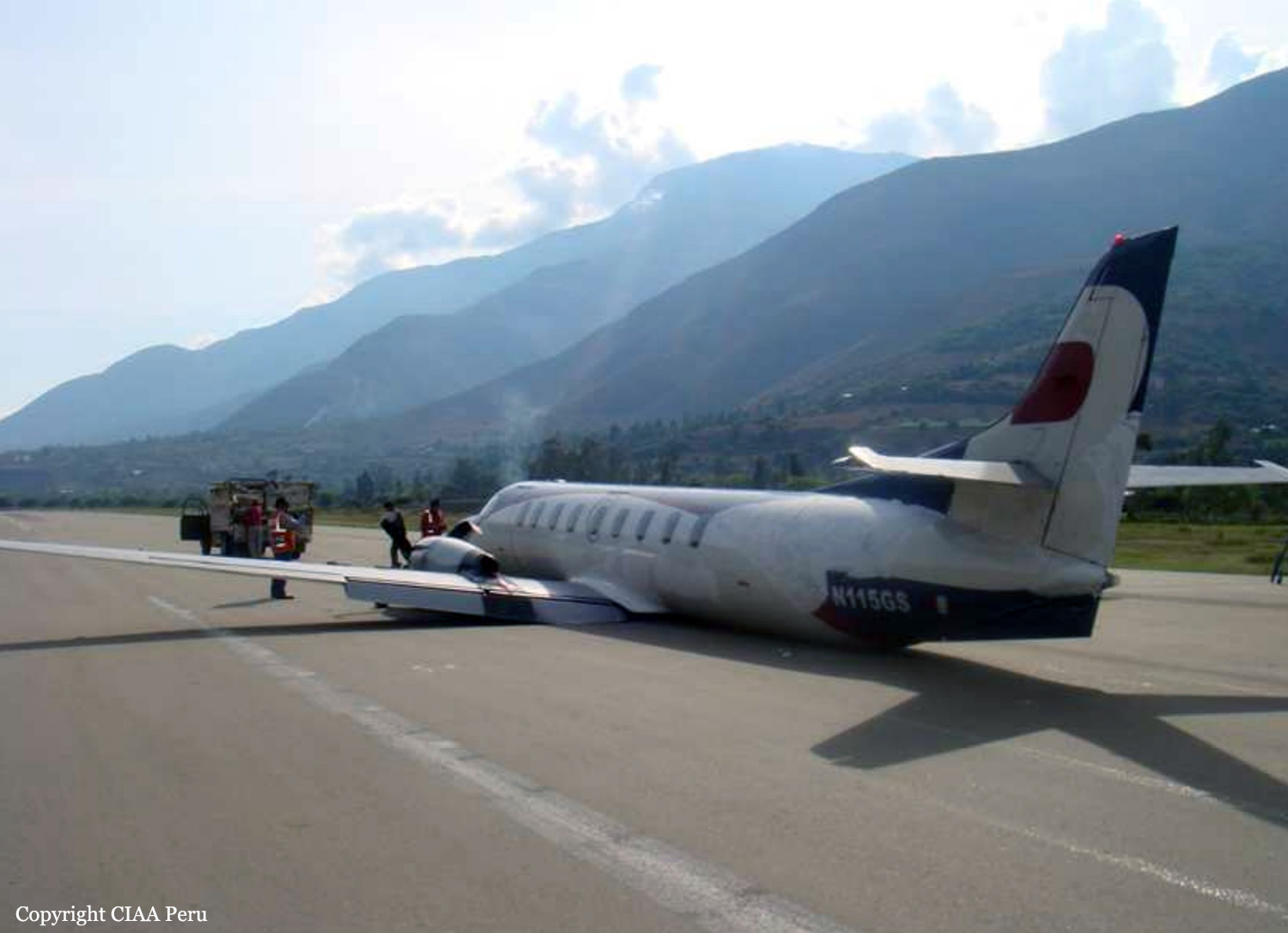
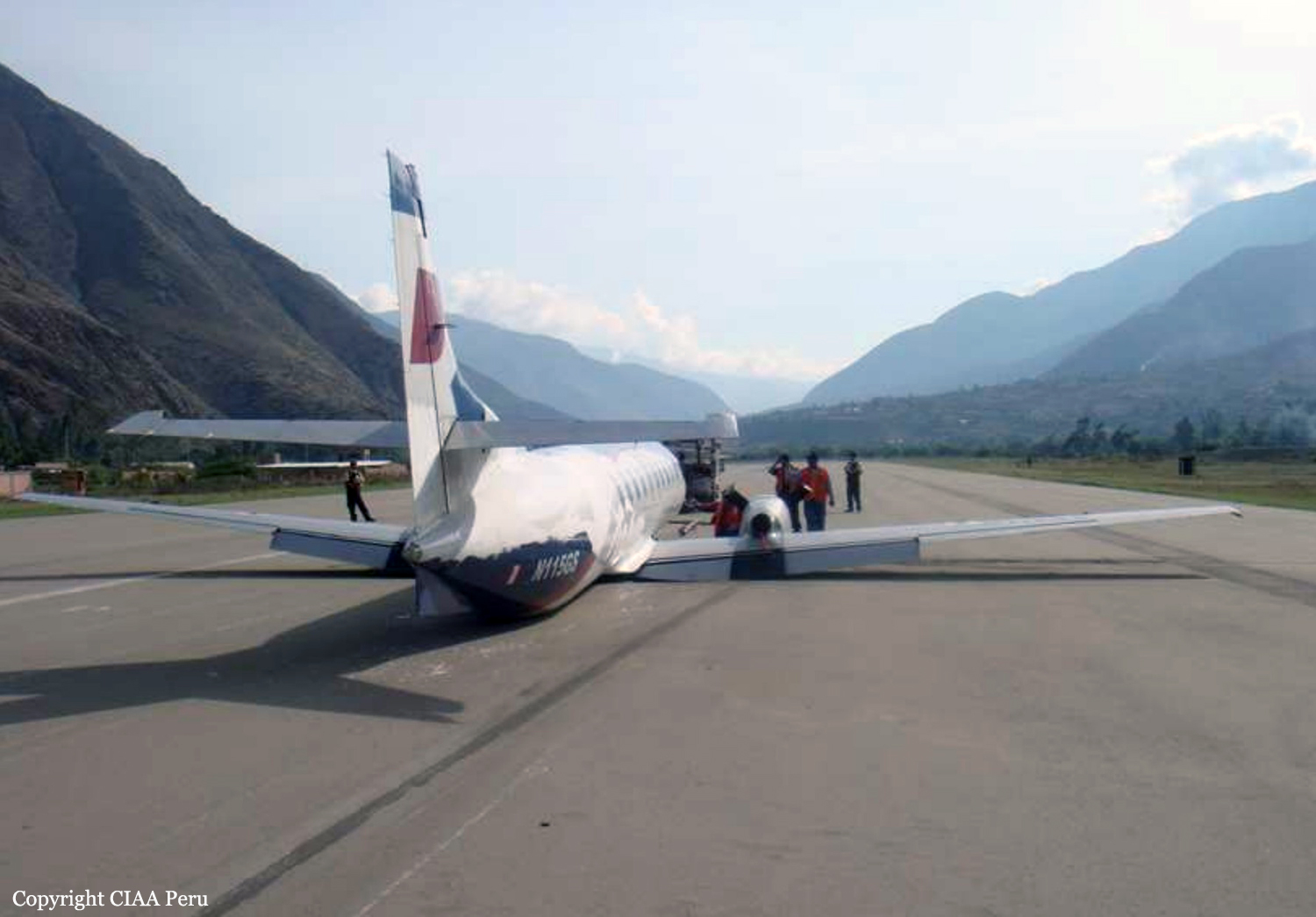
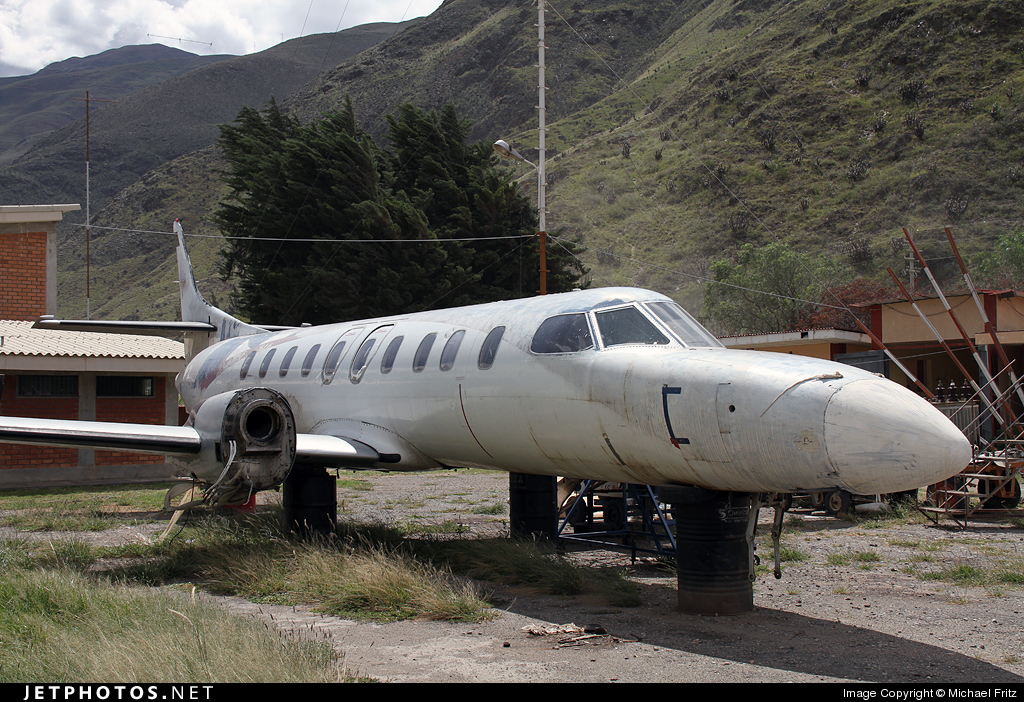
Crash of a Swearingen SA227AC Metro III in Huánuco

Date & Time: Nov 5, 2010 at 1423 LT
Type of aircraft:
Operator:
Registration:
N115GS
Survivors:
Yes
Schedule:
Lima - Huánuco
MSN:
AC-715
YOM:
1988
Flight number:
LCB1331
Country:
Crew on board:
2
Crew fatalities:
Pax on board:
7
Pax fatalities:
Other fatalities:
Total fatalities:
0
Captain / Total flying hours:
7590
Captain / Total hours on type:
553.00
Copilot / Total flying hours:
5348
Copilot / Total hours on type:
2050
Aircraft flight hours:
24342
Aircraft flight cycles:
32730
Circumstances:
Following an uneventful flight from Lima, the crew continued the approached while the aircraft was unstabilized. Upon touchdown on runway 07, the aircraft landed relatively hard then bounced three times when the crew retracted the landing gear. The aircraft slid on its belly for about 600 metres before coming to rest. All nine occupants escaped uninjured while the aircraft was damaged beyond repair.
Probable cause:
Erroneous retraction of the landing gear following three bounces on the runway due to an unstabilized final approach and poor crew resource management.
Contributing factors were:
- Although the descent and landing checklists were followed, the crew did not review stabilized approach criteria or procedures for a possible controlled flight into terrain and did not take into consideration the possibility of any go around procedure
- Several call-outs were non-standard while others were missing
- Descent was continued under visual flight rules, approach was unstabilized and not detected by crew
- Speed was too high on touch down while the power levers were not into idle position
- Lack of corrective action on part of the crew when the aircraft was bouncing
- Loss of situational awareness led to the retraction of the landing gear.
Final Report:

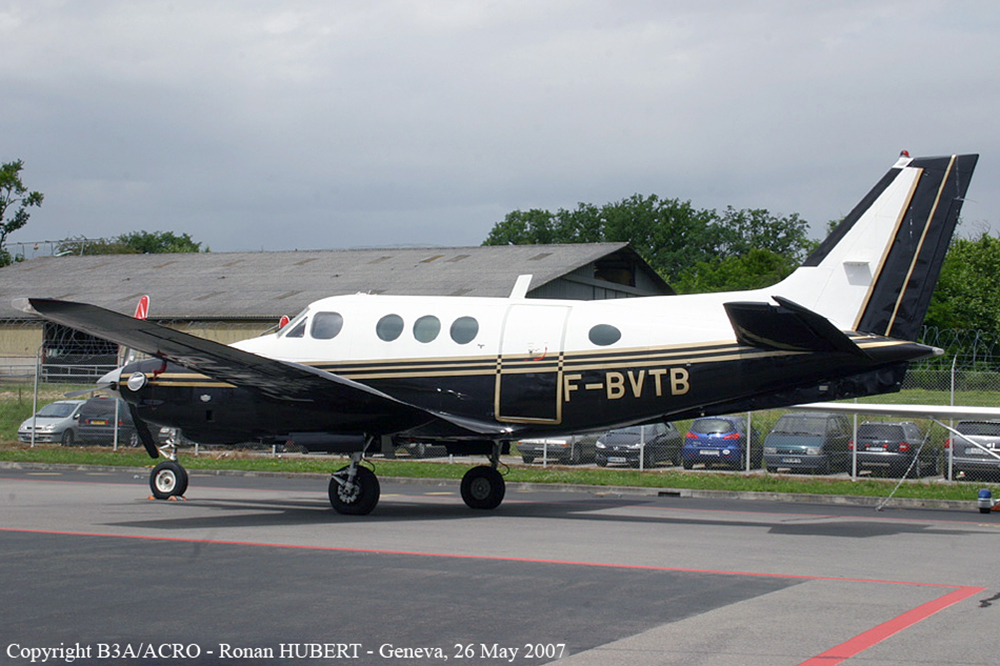
Crash of a Beechcraft C90 King Air in Saint-Antonin-sur-Bayon: 2 killed

Date & Time: Nov 4, 2010 at 1620 LT
Type of aircraft:
Operator:
Registration:
F-BVTB
Flight Phase:
Flight Type:
Survivors:
No
Site:
Schedule:
Aix-les-Milles - Aix-les-Milles
MSN:
LJ-579
YOM:
1973
Country:
Region:
Crew on board:
2
Crew fatalities:
Pax on board:
0
Pax fatalities:
Other fatalities:
Total fatalities:
2
Captain / Total flying hours:
9925
Captain / Total hours on type:
2100.00
Copilot / Total flying hours:
499
Copilot / Total hours on type:
1
Aircraft flight hours:
9716
Circumstances:
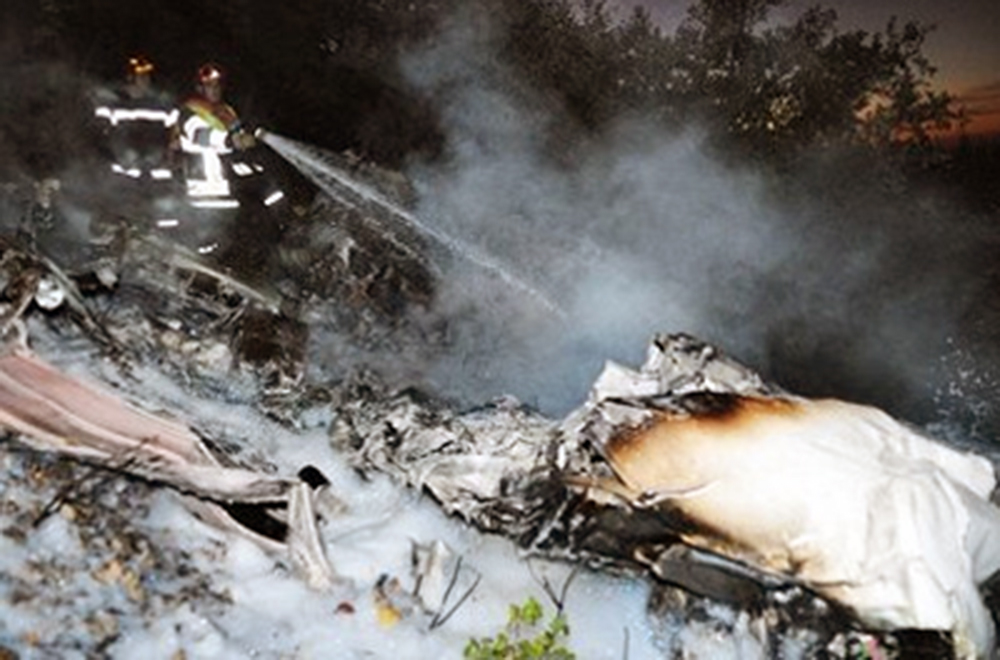
The twin engine aircraft departed Aix-les-Milles Airport at 1520LT on a local training flight. The crew was cleared to fly between 5,000 and 6,000 feet. The aircraft overflew successively Marseille and Toulon then passed over Le Castellet. While cruising at an altitude of 6,000 feet and at a speed of 110 knots, the airplane entered an uncontrolled descent, dove into the ground with a rate of descent of 6,000 feet per minute and crashed in a near vertical position in a rocky zone located in the Sainte-Victoire Mountain Range, near Saint-Antonin-sur-Bayon. The aircraft was destroyed by impact forces and a post crash fire and both occupants were killed, one instructor and one pilot under supervision.
Probable cause:
Loss of control during an exercise at low speed and certainly in a single engine configuration.
Contributory factors:
- No reference methods to conduct the exercise, for instructors on this type of aircraft,
- Exercise conducted in a height which insufficient margin and lower than the one recommended by the manufacturer,
- Insufficient vigilance on part of the instructor (however with unanimous recognized skills) but whose instruction on Beechcraft King Air 90 could not be established.
Final Report:

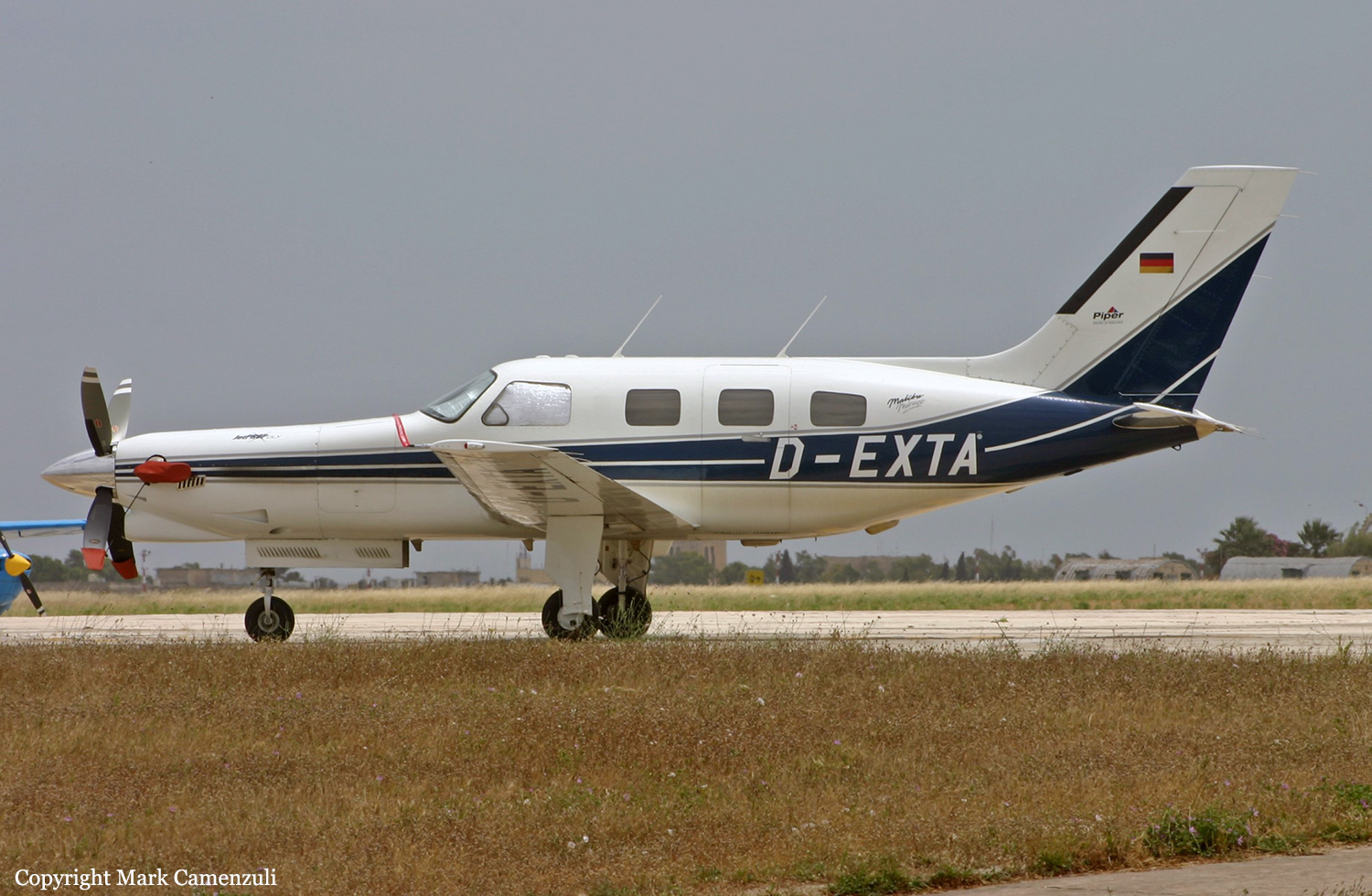
Crash of a Piper PA-46-350P Malibu Mirage in Gubin: 2 killed

Date & Time: Nov 2, 2010 at 1107 LT
Operator:
Registration:
D-EXTA
Flight Type:
Survivors:
No
Schedule:
Karlsruhe – Cottbus
MSN:
46-36168
YOM:
1998
Country:
Region:
Crew on board:
1
Crew fatalities:
Pax on board:
1
Pax fatalities:
Other fatalities:
Total fatalities:
2
Captain / Total flying hours:
1315
Captain / Total hours on type:
645.00
Aircraft flight hours:
1720
Circumstances:
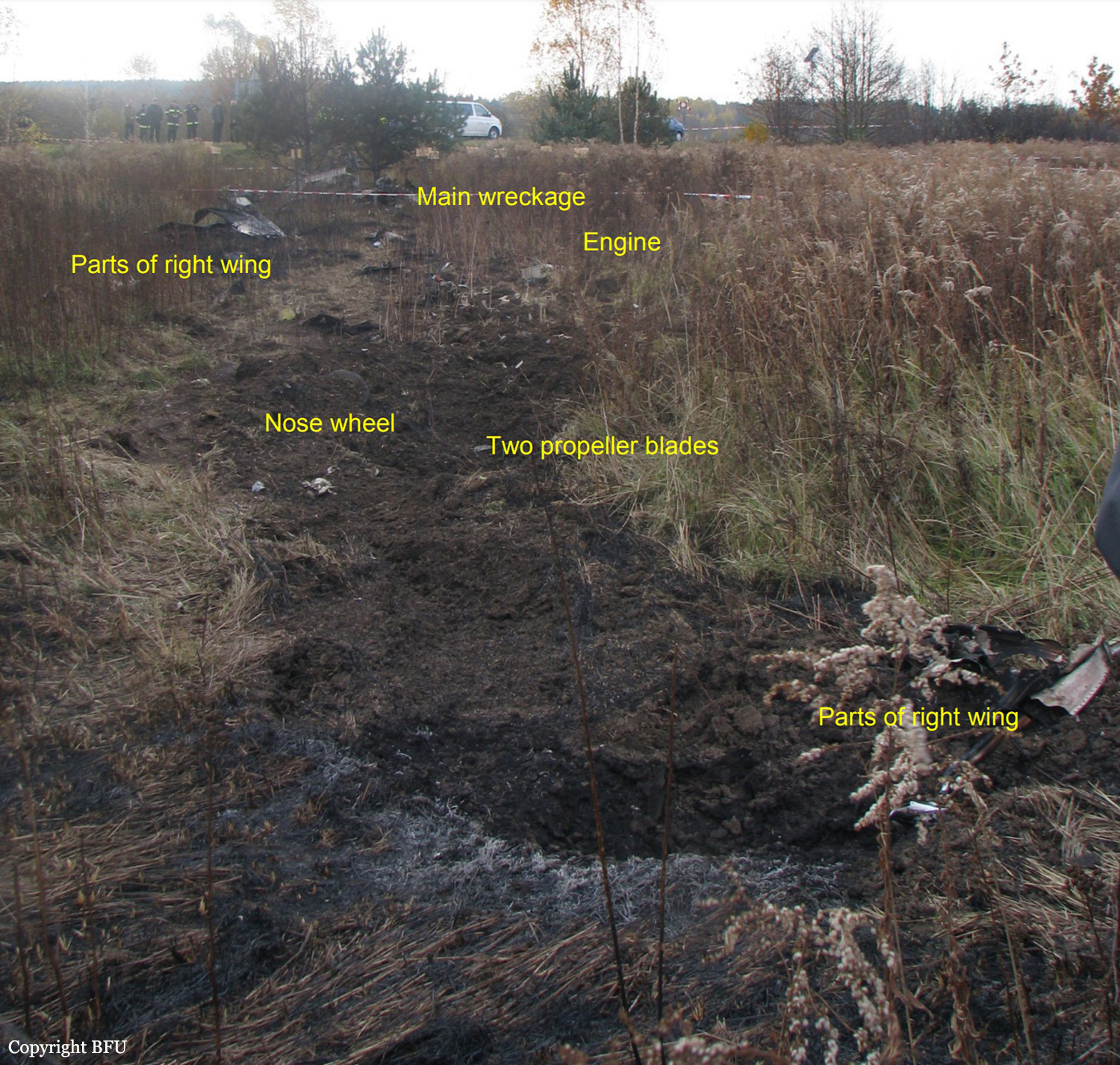
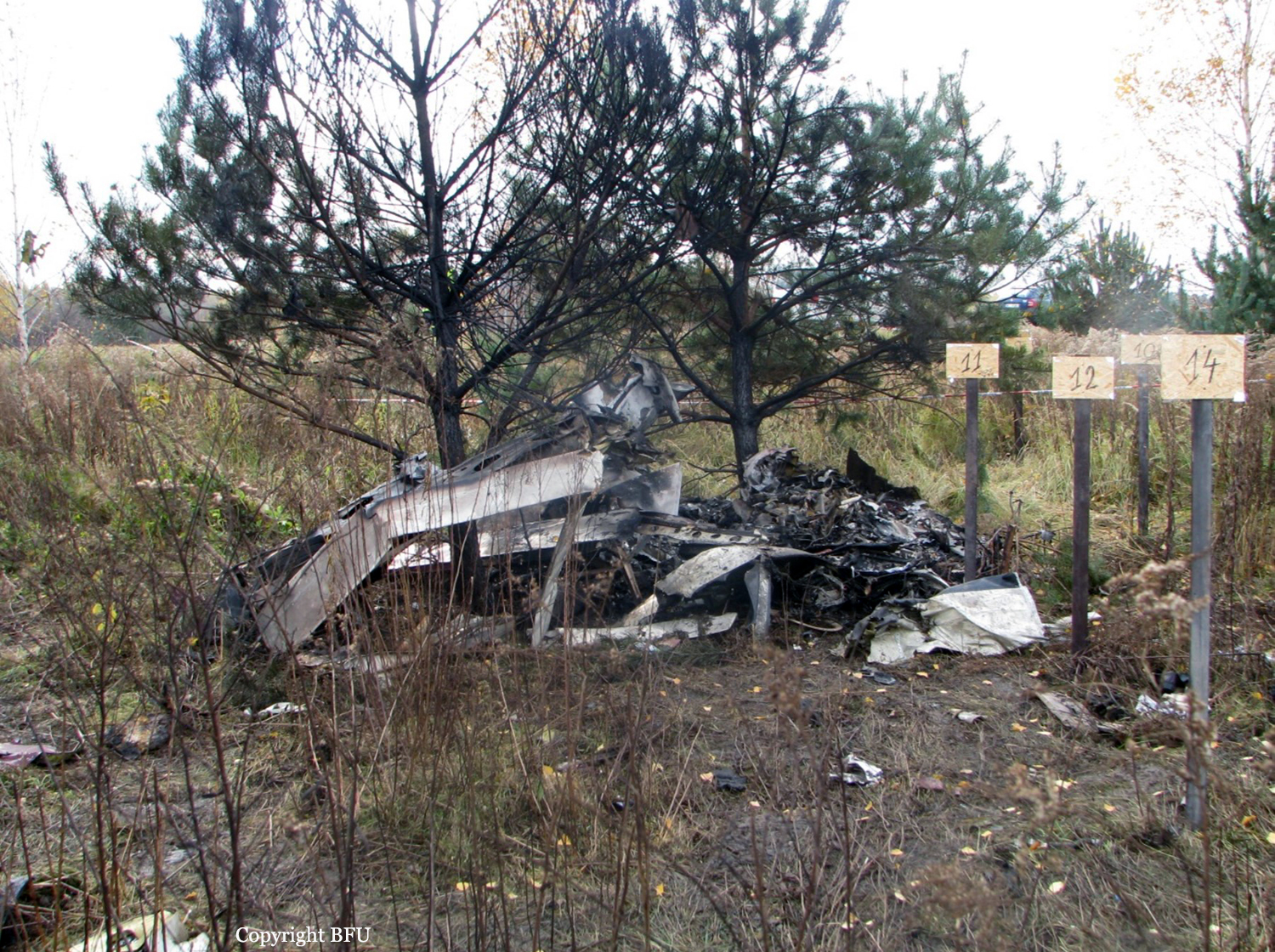
At the day of the accident, the pilot, accompanied by his wife, planned to fly from Karlsruhe/Baden-Baden Airport to the Cottbus-Drewitz Special Airfield under Instrument Flight Rules (IFR) with a Piper PA 46-350P. Prior to the flight he refueled 400 liters and submitted a flight plan. According to the radar recording of the responsible air traffic control center, the airplane started at 0923 hrs1 and flew the planned route at Flight Level (FL) 190 to Cottbus-Drewitz, following the flight plan. The airplane started to descend at approx. 1044 hrs. The Initial Approach Fix (IAF) Cottbus-Drewitz NDB (DRW) was overflown in an altitude of approx. 3,900 ft AMSL with a Ground Speed (GS) of approx. 170 kt, at approx. 1104 hrs, and the descent was continued for the approach NDB-RWY-25. After flying over the intermediate approach fix in approx. 2,800 ft AMSL with a GS of approx. 190 kt, the airplane flew a turn to the left in order to intercept the final approach. The radar recording ended at 1107:34 hrs. At that time the airplane was turning into the final approach in an altitude of 2,400 ft AMSL with a GS of approx. 200 kt. According to radar recordings of the German Federal Armed Forces, the airplane was captured several more times within the turn radius: at 1107:50 hrs in an altitude of 1,200 ft AMSL, at 1108:01 hrs in an altitude of 2,700 ft AMSL, and finally in 1,700 ft AMSL and 1,000 ft AMSL. The recording ended at 1108:21 hrs in an altitude of 600 ft AMSL. The airplane crashed into a field south of the Polish city of Gubin and caught fire. Both occupants lost their lives.
Probable cause:
The accident is caused by a loss of control, when the aircraft changed from visual to instrument flight conditions during landing approach.
The following contributing factors were:
- the loss of visual reference in the turn,
- the change form automatic to manual flight control during a bank attitude,
- the permanently high speed during the landing approach.
Final Report:

Crash of a Piper PA-31-310 Navajo in Wentworth

Date & Time: Oct 26, 2010 at 0708 LT
Type of aircraft:
Operator:
Registration:
G-FILL
Flight Type:
Survivors:
Yes
MSN:
31-7912069
YOM:
1979
Region:
Crew on board:
1
Crew fatalities:
Pax on board:
0
Pax fatalities:
Other fatalities:
Total fatalities:
0
Captain / Total flying hours:
7952
Captain / Total hours on type:
533.00
Circumstances:
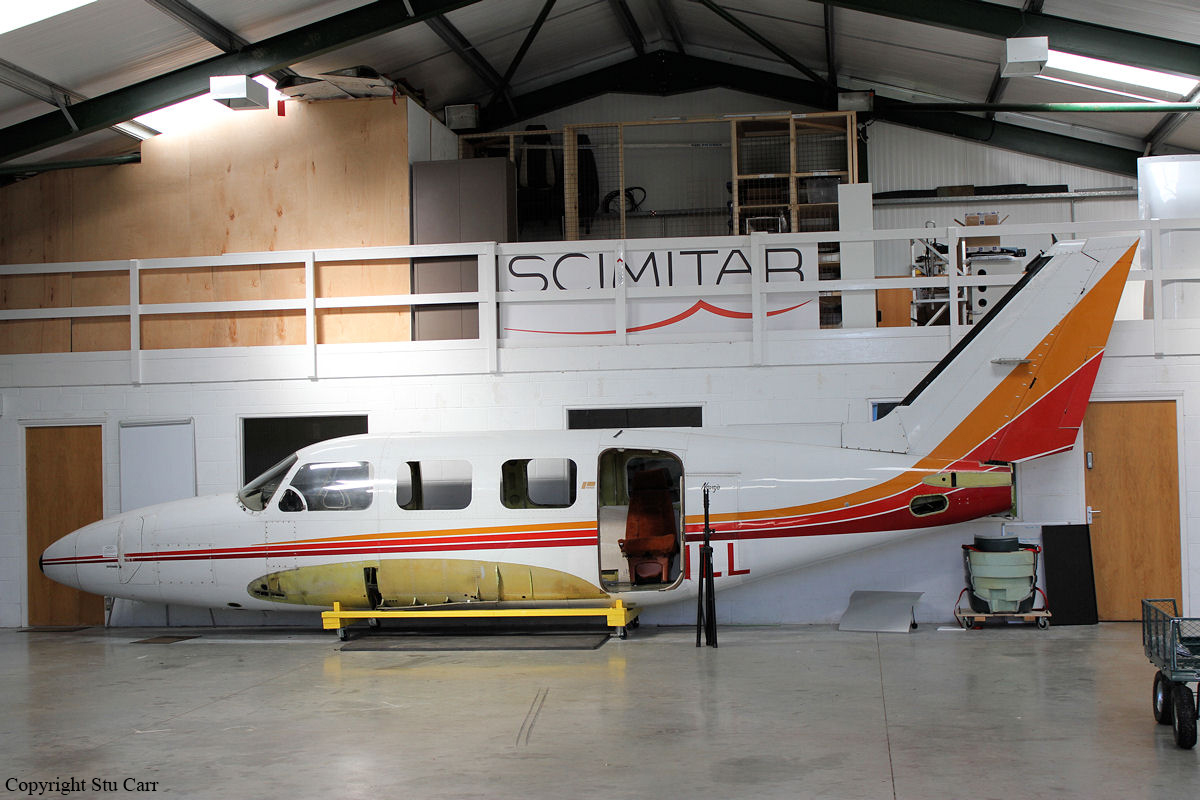
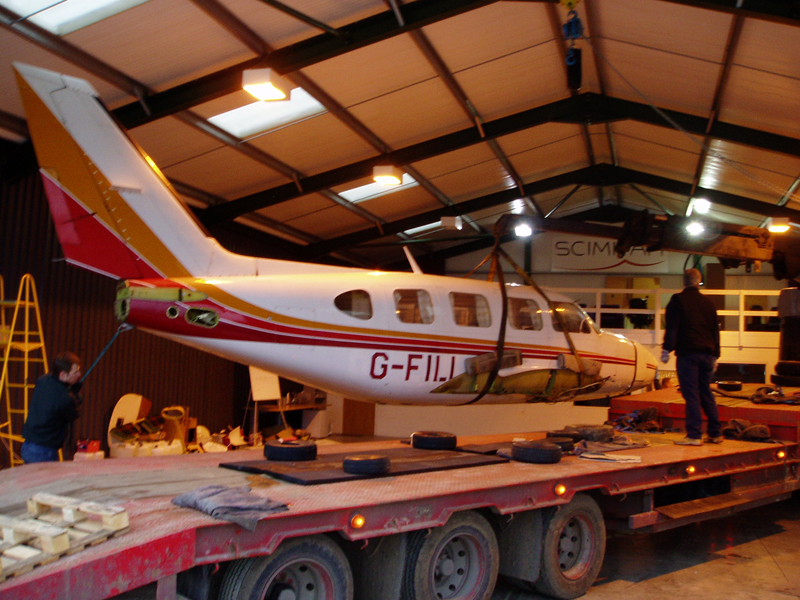
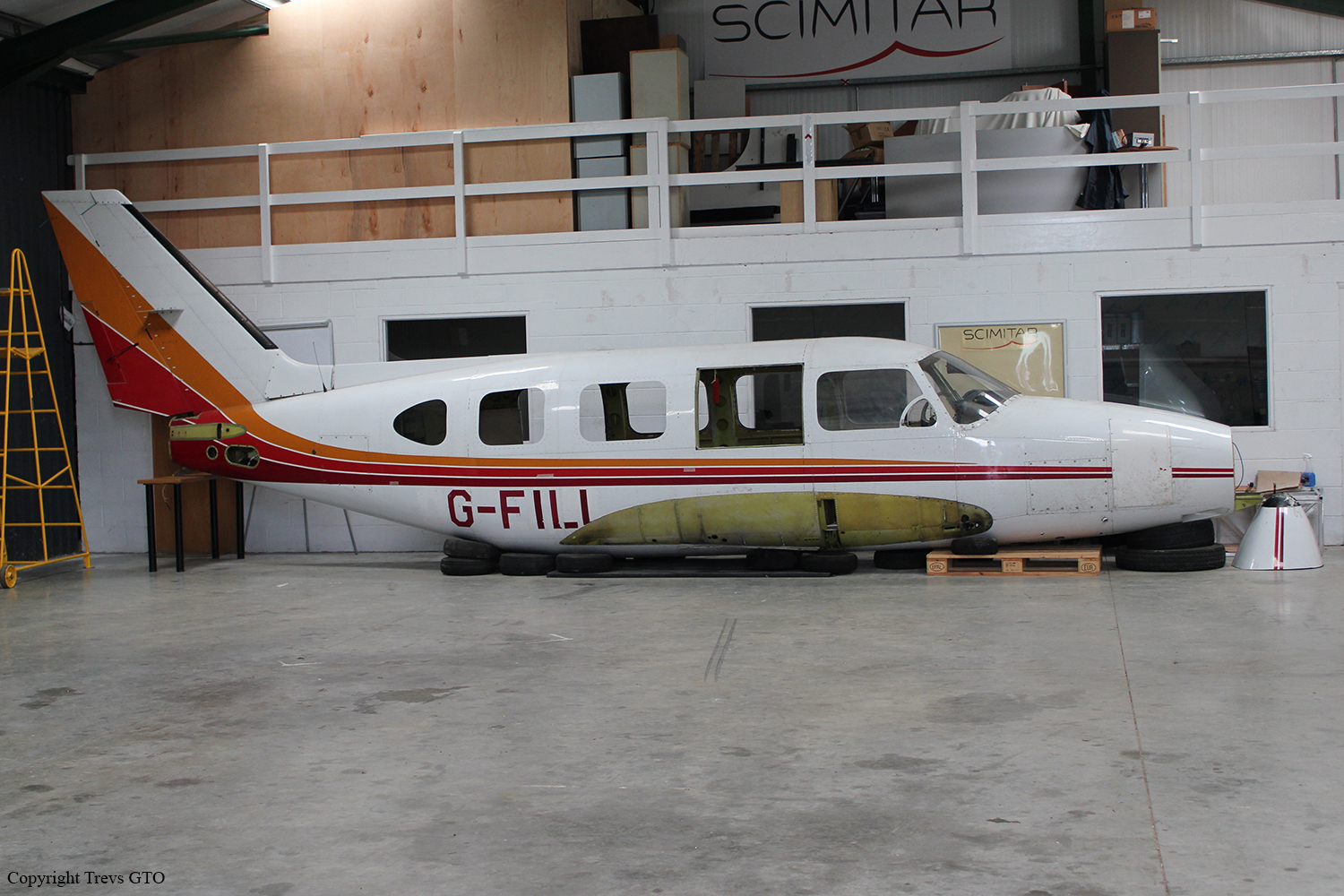
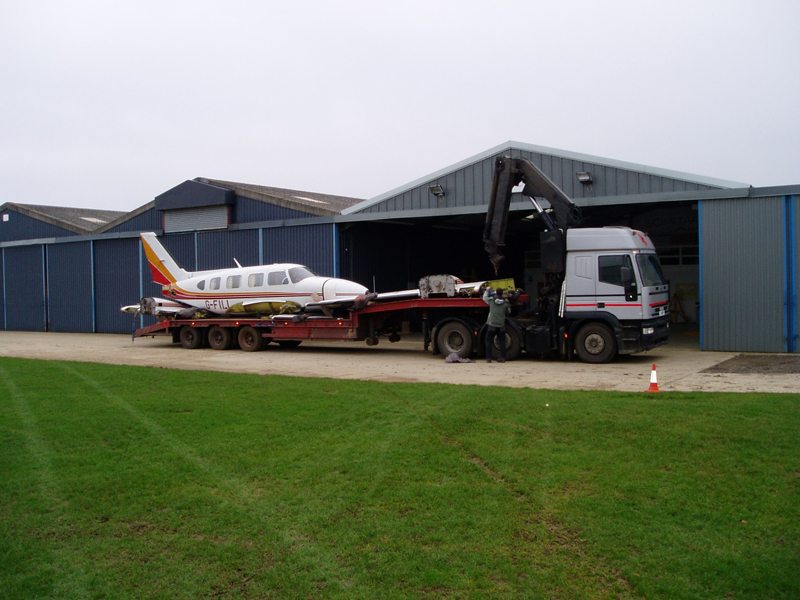
The pilot was landing at a private strip at Wentworth. The runway was oriented 110/290° and had several level changes along its length which required all landings to be made in the 110° direction and all takeoffs in the 290° direction. Touchdown was required to take place on a level portion before the ground rose relatively steeply and levelled out again. The final part of the runway sloped gently down towards the end, which was bordered by a dry stone wall. The surface, from police photographs taken soon after the accident, showed it to be closely mown grass and firm, despite the indications of recent rain. The wind at the time was 220°/10 kt and the pilot reported that the approach was made directly into the setting sun, making it difficult to monitor the airspeed indicator. Touchdown was achieved on the first level portion of the runway and the brakes were applied very soon afterwards; however the pilot stated that there was no discernible braking action, despite applying firmer pressure on the brake pedals. Seeing that the stone wall at the end of the runway was approaching, he steered the aircraft to the right and towards a hedge, however he was unable to prevent the left wing striking the walland causing severe damage outboard of the engine. The pilot was uninjured and evacuated the aircraft normally. The police photographs indicate that the mainwheels were skidding on the wet grass almost throughout the landing roll of about 630 metres. Whilst the pilot acknowledged that his airspeed might have been somewhat high, he did not feel at the time of touchdown that his ground speed was unusual and he attributes the lack of braking action to the slippery runway surface.
Final Report:

Crash of a Beechcraft 100 King Air in Kirby Lake: 1 killed

Date & Time: Oct 25, 2010 at 1120 LT
Type of aircraft:
Operator:
Registration:
C-FAFD
Survivors:
Yes
Schedule:
Calgary - Edmonton - Kirby Lake
MSN:
B-42
YOM:
1970
Flight number:
KBA103
Country:
Crew on board:
2
Crew fatalities:
Pax on board:
8
Pax fatalities:
Other fatalities:
Total fatalities:
1
Circumstances:
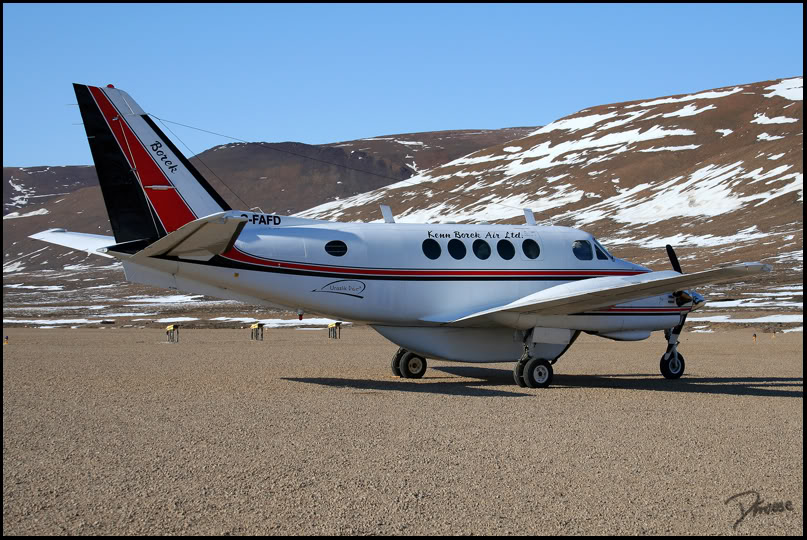
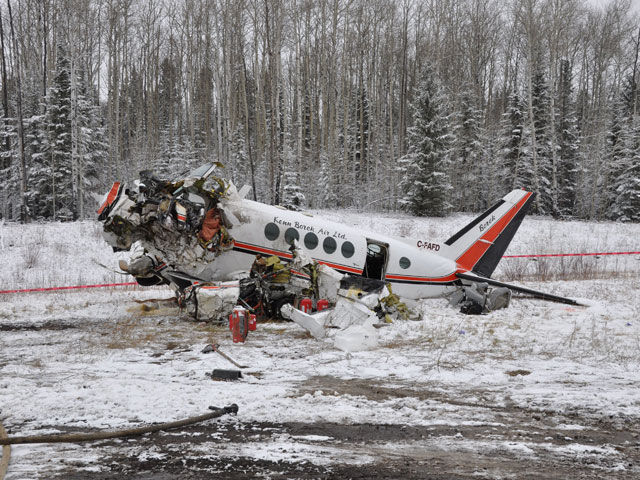
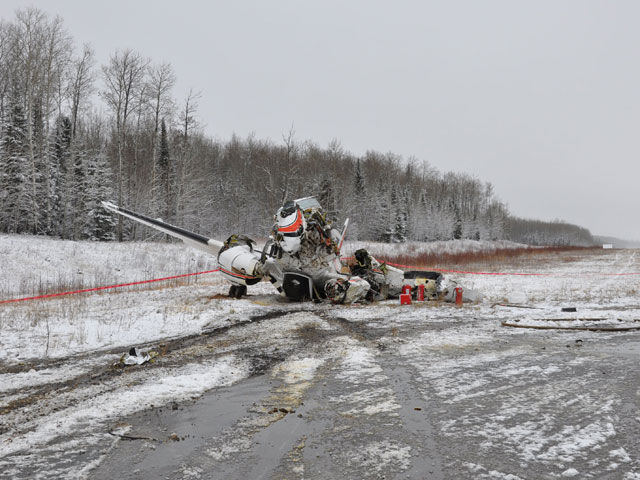
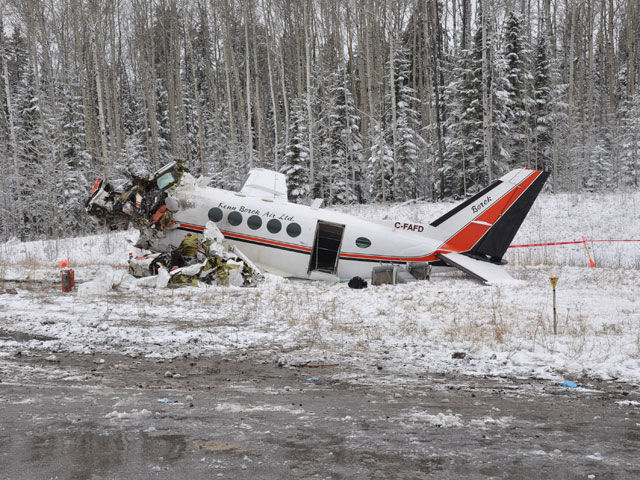
The aircraft was on an instrument flight rules flight from the Edmonton City Centre Airport to Kirby Lake, Alberta. At approximately 1114 Mountain Daylight Time, during the approach to Runway 08 at the Kirby Lake Airport, the aircraft struck the ground, 174 feet short of the threshold. The aircraft bounced and came to rest off the edge of the runway. There were 2 flight crew members and 8 passengers on board. The captain sustained fatal injuries. Four occupants, including the co-pilot, sustained serious injuries. The 5 remaining passengers received minor injuries. The aircraft was substantially damaged. A small, post-impact, electrical fire in the cockpit was extinguished by survivors and first responders. The emergency locator transmitter was activated on impact. All passengers were BP employees.
Probable cause:
Findings as to Causes and Contributing Factors:
1. The conduct of the flight crew members during the instrument approach prevented them from effectively monitoring the performance of the aircraft.
2. During the descent below the minimum descent altitude, the airspeed reduced to a point where the aircraft experienced an aerodynamic stall and loss of control. There was insufficient altitude to effect recovery prior to ground impact.
3. For unknown reasons, the stall warning horn did not activate; this may have provided the crew with an opportunity to avoid the impending stall.
Findings as to Risk:
1. The use of company standard weights and a non-current aircraft weight and balance report resulted in the flight departing at an inaccurate weight. This could result in a performance regime that may not be anticipated by the pilot.
2. Flying an instrument approach using a navigational display that is outside the normal scan of the pilot increases the workload during a critical phase of flight.
3. Flying an abbreviated approach profile without applying the proper transition altitudes increases the risk of controlled flight into obstacles or terrain.
4. Not applying cold temperature correction values to the approach altitudes decreases the built-in obstacle clearance parameters of an instrument approach.
Final Report:

Crash of a Gippsland GA8 Airvan in Lady Barron

Date & Time: Oct 15, 2010 at 1715 LT
Type of aircraft:
Operator:
Registration:
VH-DQP
Survivors:
Yes
Site:
Schedule:
Lady Barron - Bridport
MSN:
GA8-05-075
YOM:
2005
Country:
Region:
Crew on board:
1
Crew fatalities:
Pax on board:
6
Pax fatalities:
Other fatalities:
Total fatalities:
0
Captain / Total flying hours:
2590
Captain / Total hours on type:
1355.00
Circumstances:
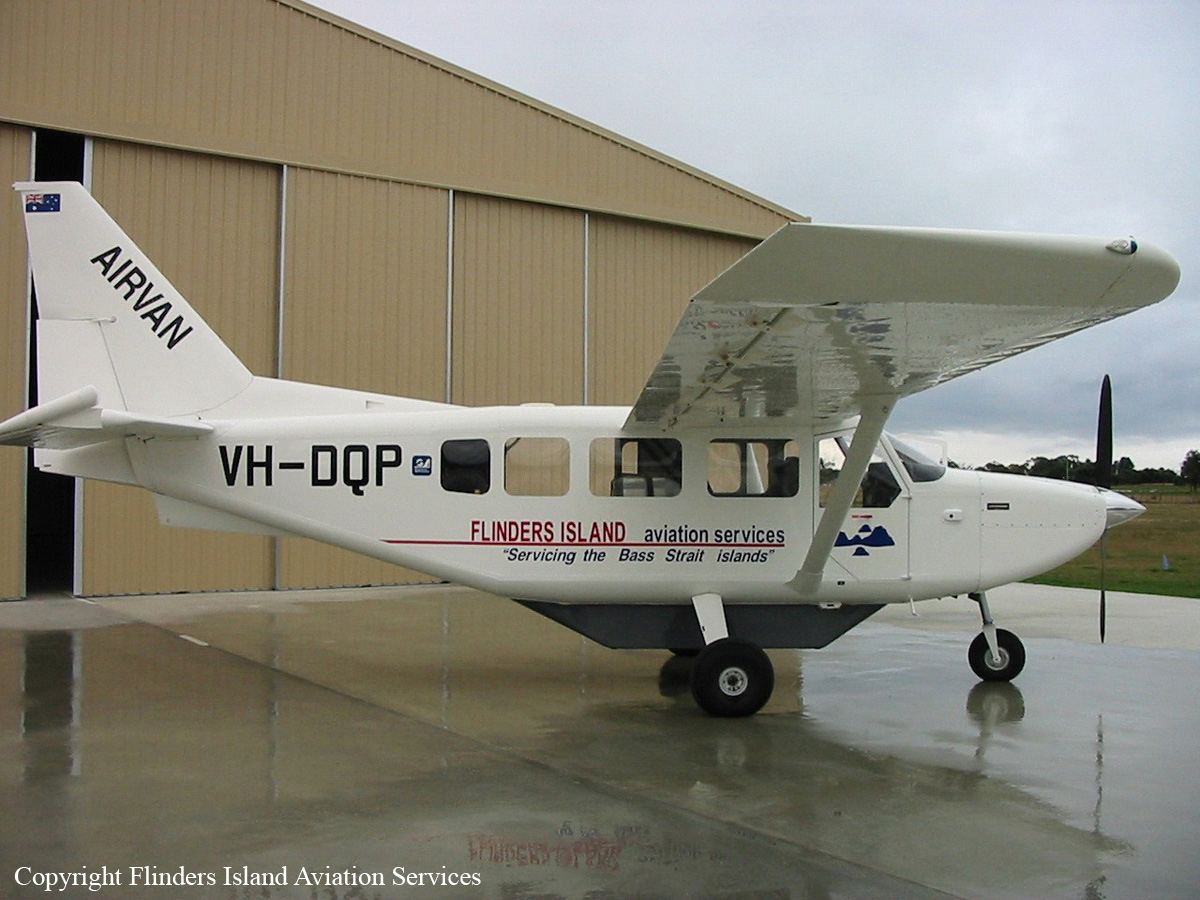
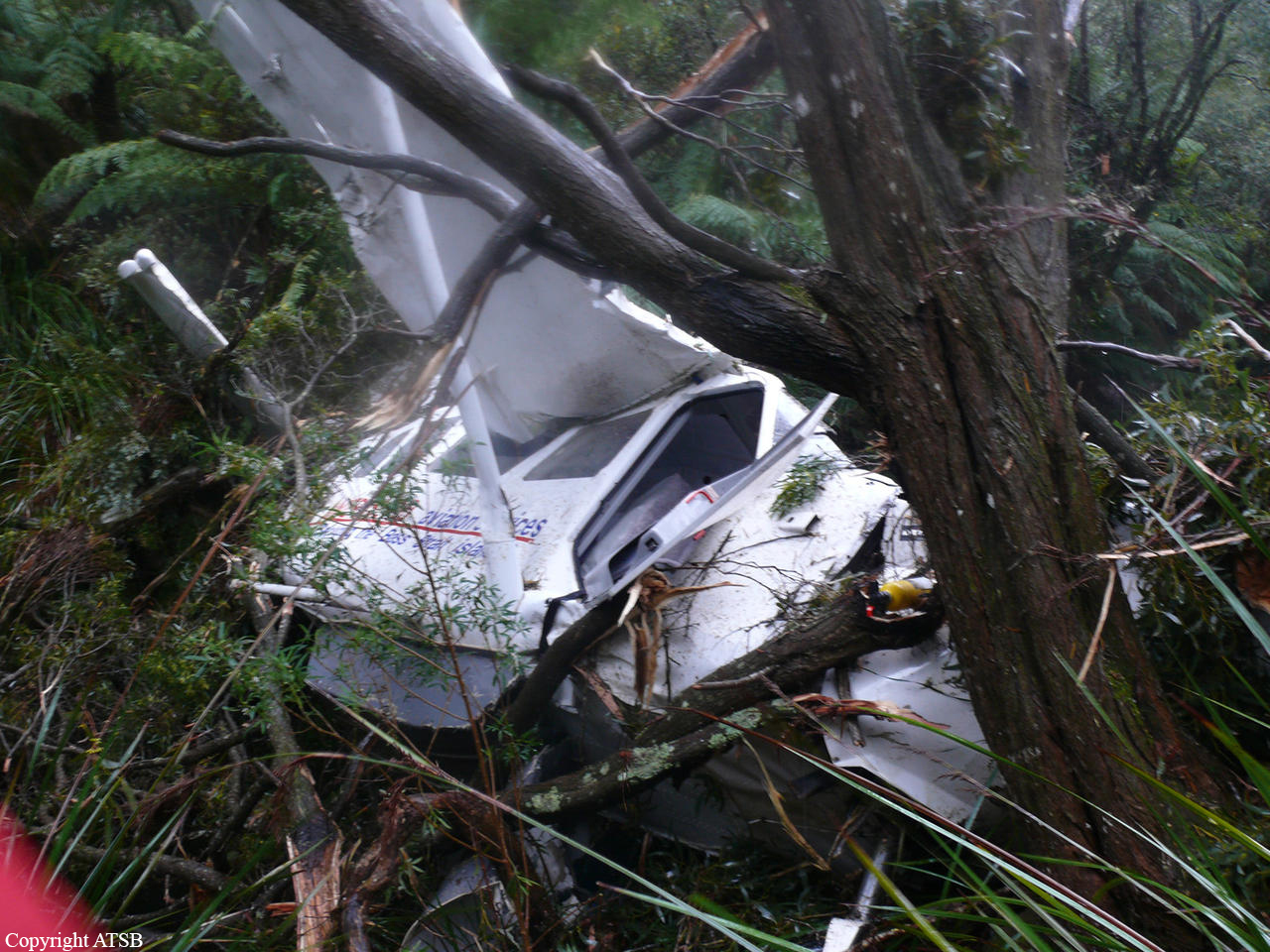
The pilot was conducting a charter flight from Lady Barron, Flinders Island to Bridport, Tasmania with six passengers on board. The aircraft departed Lady Barron Aerodrome at about 1700 Australian Eastern Daylight-saving Time and entered instrument meteorological conditions (IMC) several minutes afterwards while climbing to the intended cruising altitude of about 1,500 ft. The pilot did not hold a command instrument rating and the aircraft was not equipped for flight in IMC. He attempted to turn the aircraft to return to Lady Barron Aerodrome but became lost, steering instead towards high ground in the Strzelecki National Park in the south-east of Flinders Island. At about 1715, the aircraft exited cloud in the Strzelecki National Park, very close to the ground. The pilot turned to the left, entering a small valley in which he could neither turn the aircraft nor out climb the terrain. He elected to slow the aircraft to its stalling speed for a forced landing and, moments later, it impacted the tree tops and then the ground. The first passenger to exit the aircraft used the aircraft fire extinguisher to put out a small fire that had begun beneath the engine. The other passengers and the pilot then exited the aircraft safely. One passenger was slightly injured during the impact; the pilot and other passengers were uninjured. During the night, all of the occupants of the aircraft were rescued by helicopter and taken to the hospital in Whitemark, Flinders Island.
Probable cause:
Contributing safety factors:
• The weather was marginal for flight under the visual flight rules, with broken cloud forecast down to 500 ft above mean sea level in the area.
• The pilot, who did not hold a command instrument rating, entered instrument meteorological conditions because he was adhering to an un-written operator rule not to fly below 1,000 ft above ground level.
• The pilot became lost in cloud and flew the aircraft towards the Mt Strzelecki Range, exiting the cloud in very close proximity to the terrain.
• The aircraft exited the cloud in a small valley, within which the pilot could neither turn round nor out-climb the terrain.
Other key findings:
• The aircraft exited cloud before impacting terrain and with sufficient time for the pilot to execute a forced landing.
• The design of the aircraft’s seats, and the provision to passengers in the GA-8 Airvan of three-point automotive-type restraint harnesses with inertia reel shoulder straps contributed to the passengers’ survival, almost without injury.
Final Report: