Crash of a Beechcraft 300 Super King Air in Porto Seguro

Date & Time: Apr 21, 2016 at 1140 LT
Registration:
PT-MCM
Flight Type:
Survivors:
Yes
Schedule:
Rio de Janeiro – Porto Seguro
MSN:
FA-52
YOM:
1985
Country:
Crew on board:
1
Crew fatalities:
Pax on board:
9
Pax fatalities:
Other fatalities:
Total fatalities:
0
Captain / Total flying hours:
8000
Captain / Total hours on type:
1000.00
Circumstances:
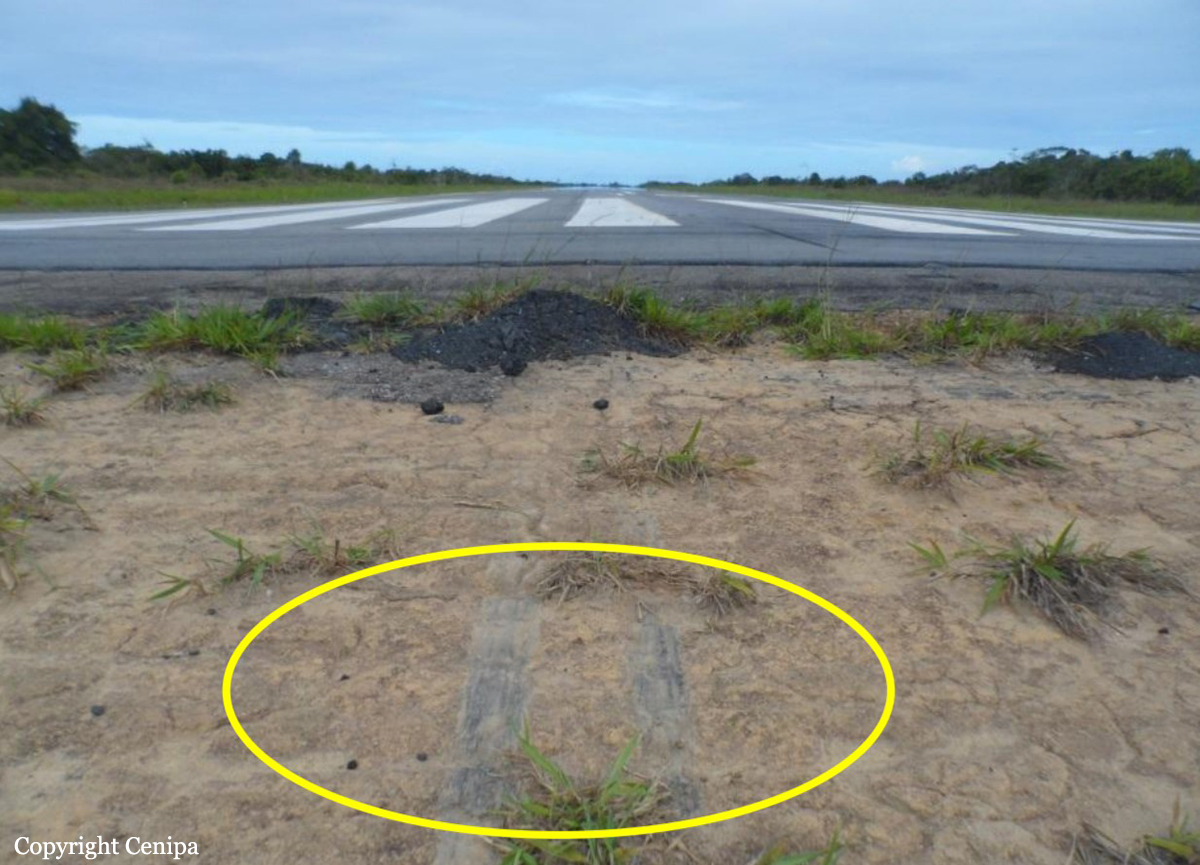
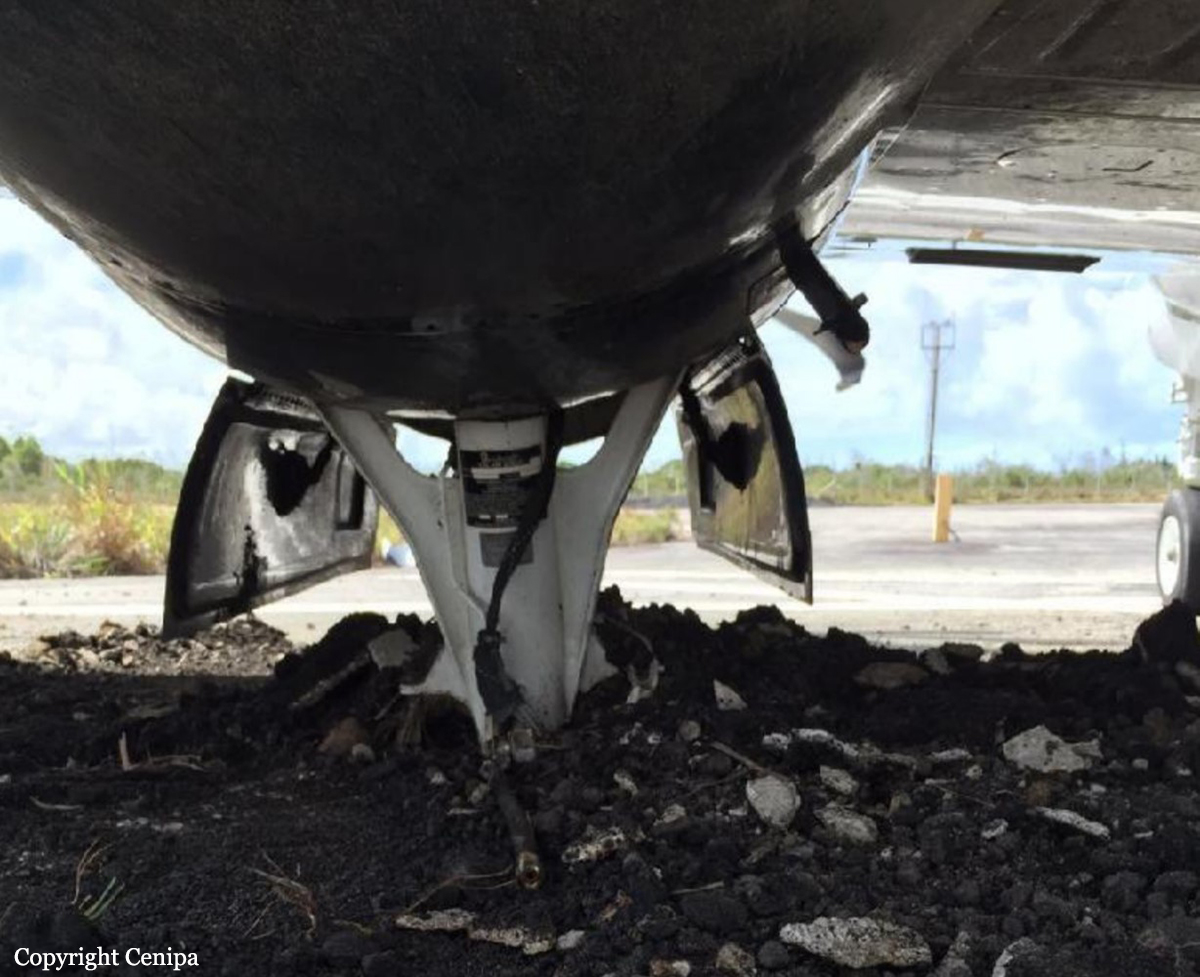
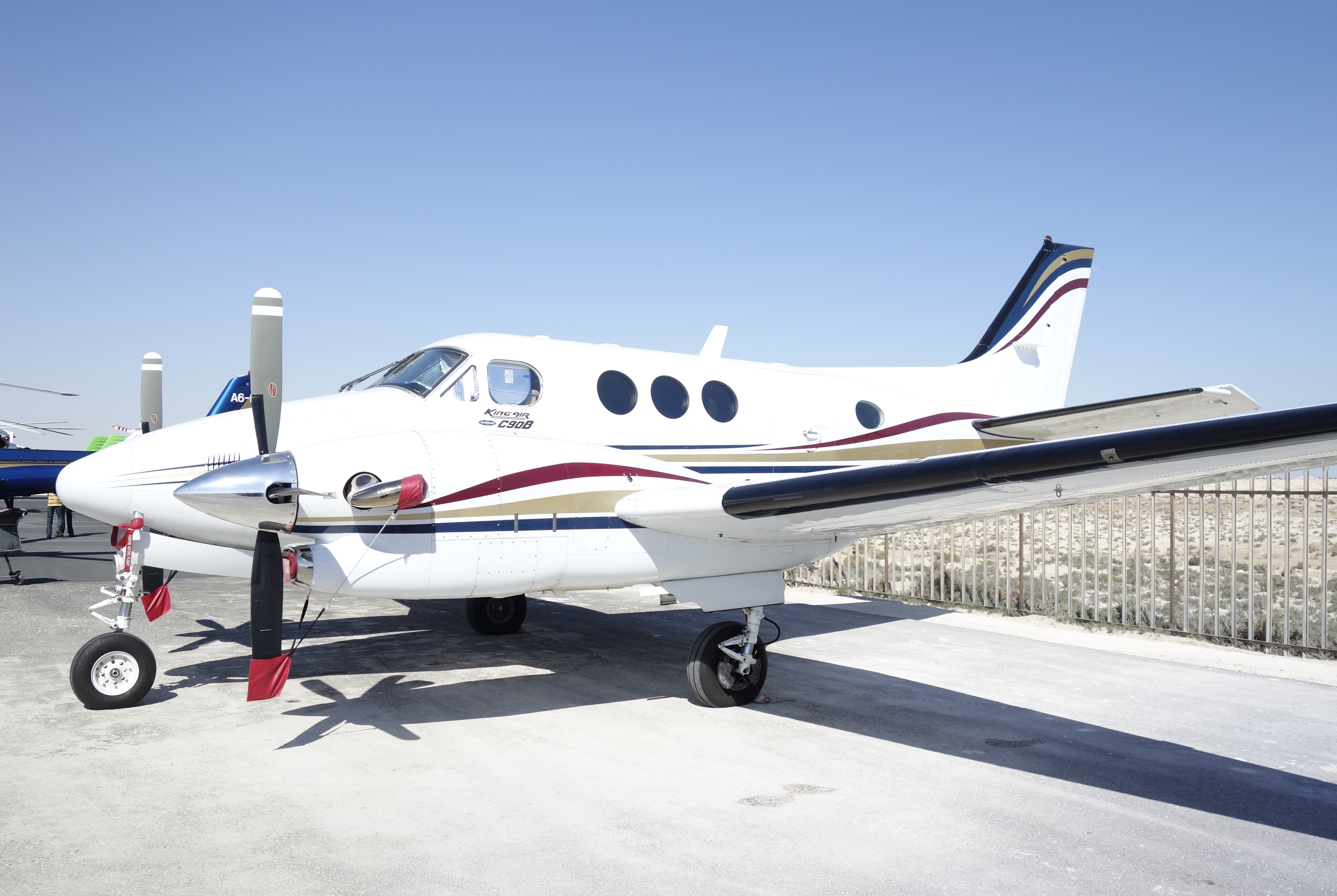
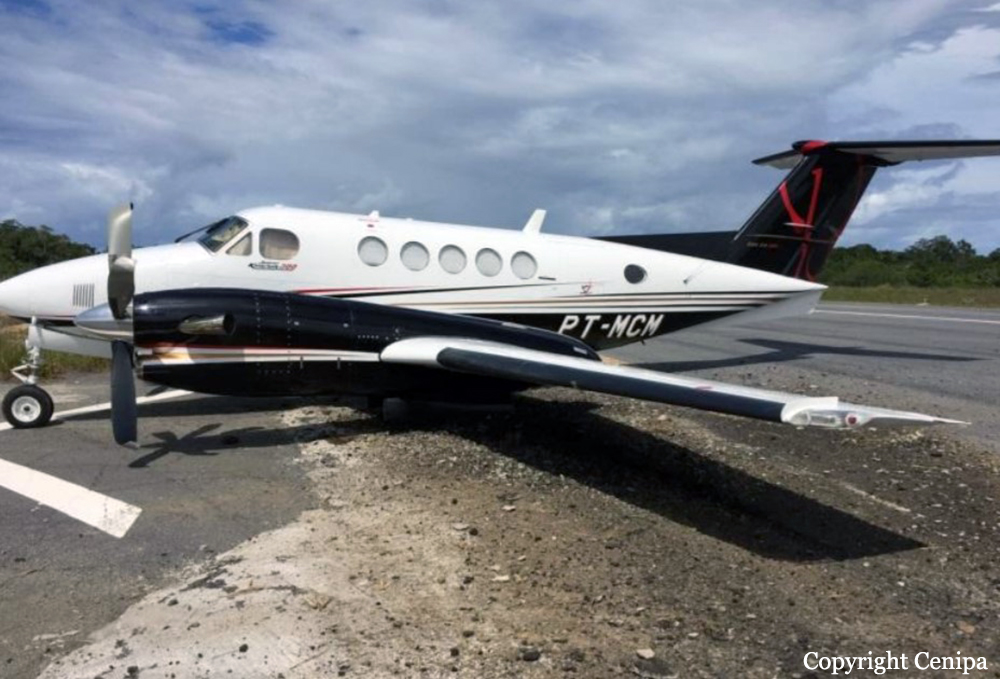
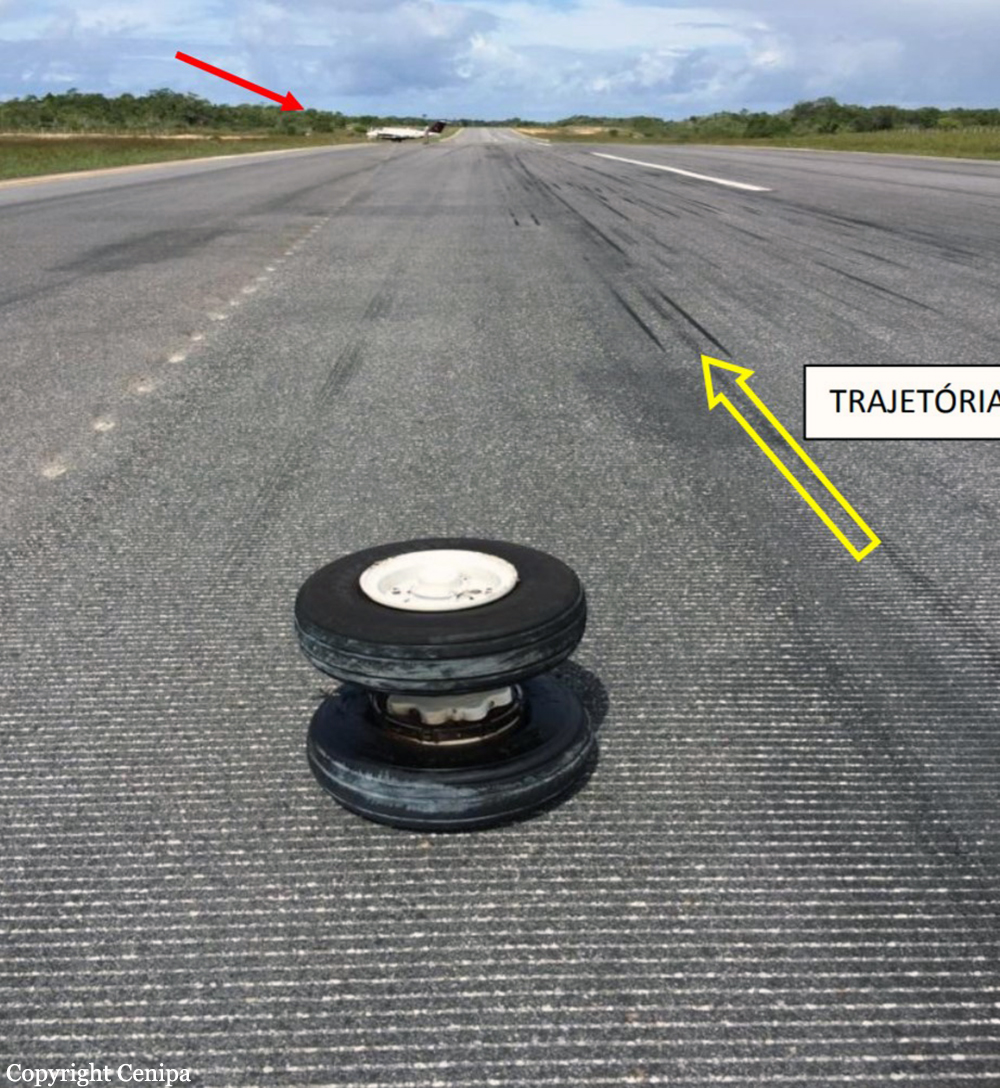
On final approach to Porto Seguro-Terravista Golf Club Airport Runway 15, the twin engine aircraft descended too low, causing the left main gear to impact the ground short of runway threshold. On impact, the left main landing gear was torn off. The aircraft slid on runway for few dozen metres then veered to the left and came to a halt. All 10 occupants evacuated safely and the aircraft was damaged beyond repair.
Probable cause:
The following factors were identified:
- Application of the commands - contributed
There was no effective action on the aircraft controls during the final approach to avoid a brutal impact with the ground prior to the runway threshold.
- Adverse weather conditions - undetermined
It is possible that the aircraft was under the effect of the phenomenon known as windshear, which affected the approach profil and the subsequent impact with the ground short of runway.
- Pilot judgement - contributed
The risks of a possible windshear during the final approach were not adequately considered by the pilot. The decision to proceed for the landing, to the detriment of the alternative recommended by experts to perform a missed approach, proved decisive for the development of the accident.
Final Report:
Crash of a Beechcraft 1900D in Gander

Date & Time: Apr 20, 2016 at 2130 LT
Type of aircraft:
Operator:
Registration:
C-FEVA
Survivors:
Yes
Schedule:
Goose Bay – Gander
MSN:
UE-126
YOM:
1994
Country:
Crew on board:
2
Crew fatalities:
Pax on board:
14
Pax fatalities:
Other fatalities:
Total fatalities:
0
Captain / Total flying hours:
2381
Captain / Total hours on type:
1031.00
Copilot / Total flying hours:
1504
Copilot / Total hours on type:
174
Aircraft flight hours:
32959
Circumstances:
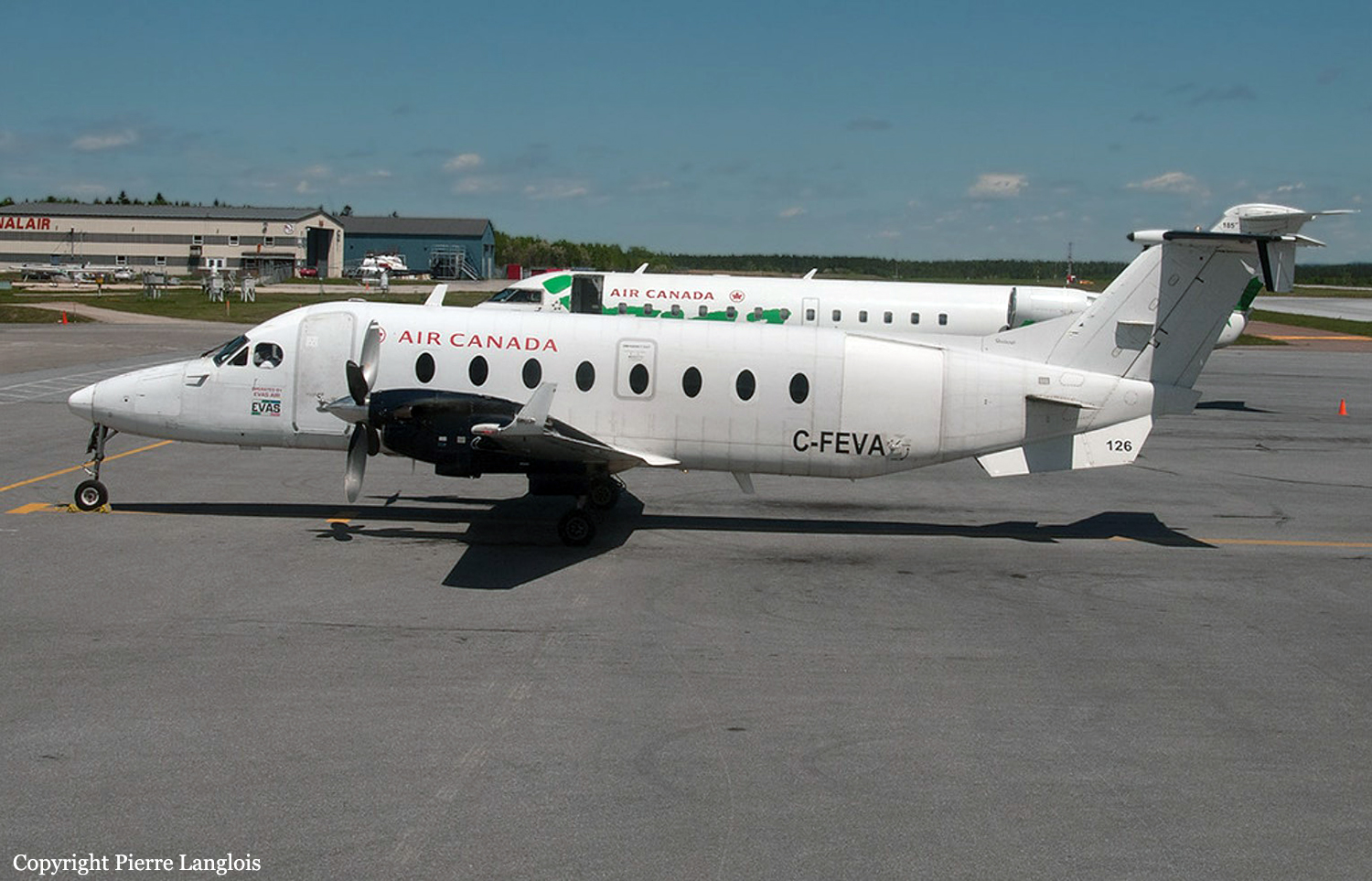
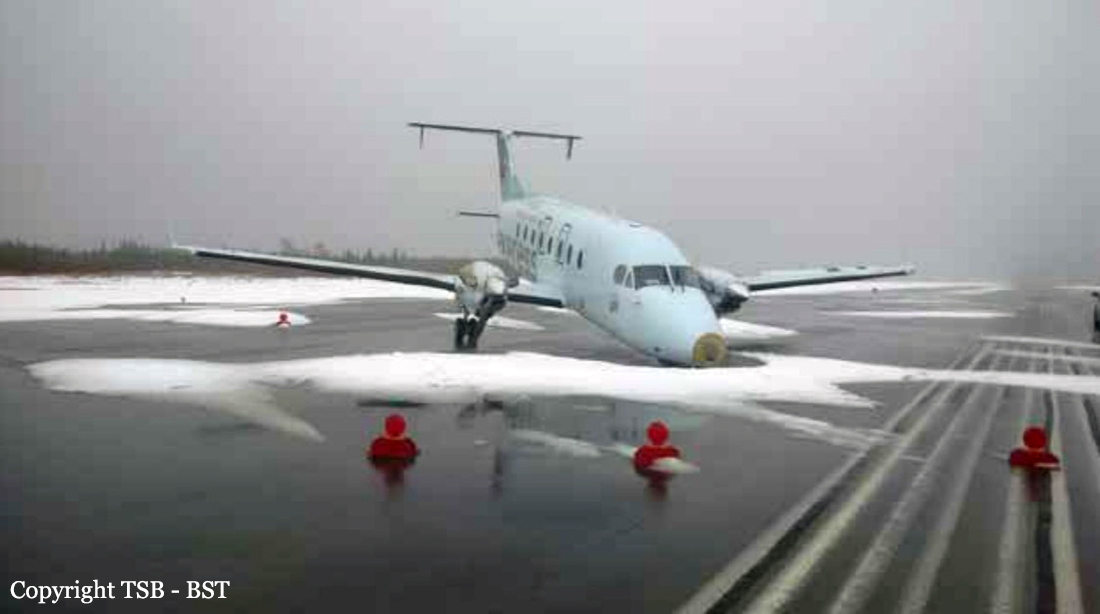
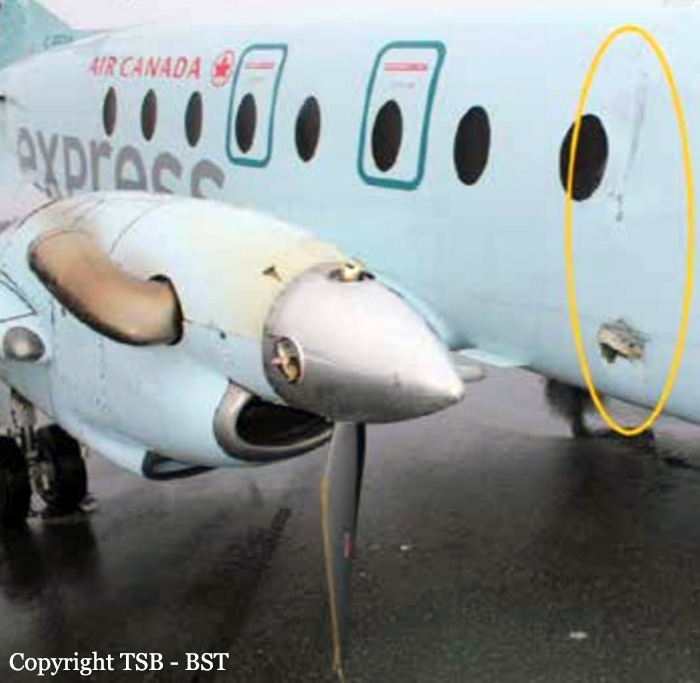
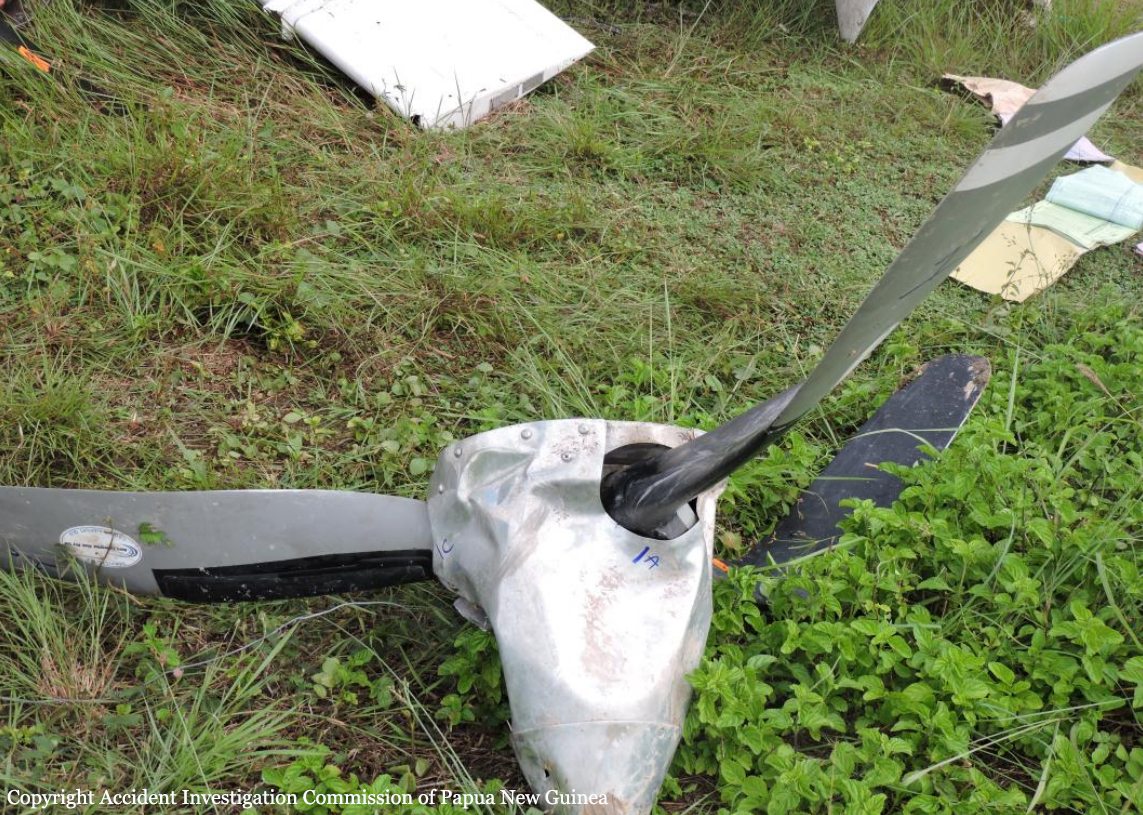
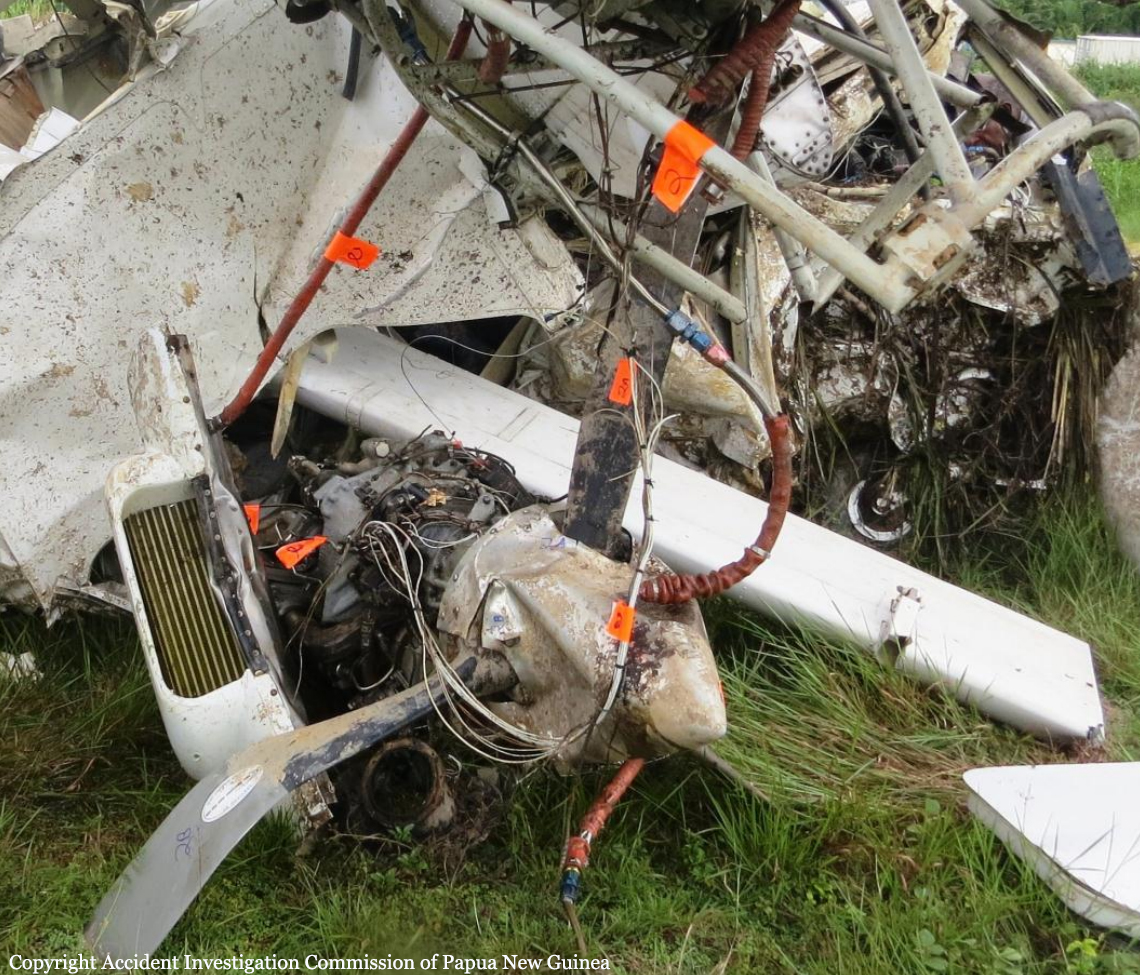
The Exploits Valley Air Services Beechcraft 1900D (registration C-FEVA, serial number UE-126), operating as Air Canada Express flight EV7804, was on a scheduled passenger flight from Goose Bay International Airport, Newfoundland and Labrador, to Gander International Airport, Newfoundland and Labrador. At 2130 Newfoundland Daylight Time, while landing on Runway 03, the aircraft touched down right of the centreline and almost immediately veered to the right. The nosewheel struck a compacted snow windrow on the runway, causing the nose landing gear to collapse. As the aircraft’s nose began to drop, the propeller blades struck the snow and runway surface. All of the left-side propeller blades and 3 of the right-side propeller blades separated at the blade root. A portion of a blade from the right-side propeller penetrated the cabin wall. The aircraft slid to a stop on the runway. All occupants on board — 14 passengers and 2 crew members — were evacuated. Three passengers sustained minor injuries. The aircraft was substantially damaged. There was no post-impact fire. There were insufficient forward impact forces to automatically activate the 121.5 MHz emergency locator transmitter. The accident occurred during the hours of darkness.
Probable cause:
Findings as to causes and contributing factors:
1. Neither pilot had considered that the combination of landing at night, in reduced visibility, with a crosswind and blowing snow, on a runway with no centreline lighting, was a hazard that may create additional risks.
2. The blowing snow made it difficult to identify the runway centreline markings, thereby reducing visual cues available to the captain. This situation was exacerbated by the absence of centreline lighting and a possible visual illusion caused by blowing snow.
3. Due to the gusty crosswind conditions, the aircraft drifted to the right during the landing flare, which was not recognized by the crew.
4. It is likely that the captain had difficulty determining aircraft position during the landing flare.
5. The flight crew’s decision to continue with the landing was consistent with plan continuation bias.
6. During landing, the nosewheel struck the compacted snow windrow on the runway, causing the nose landing gear to collapse.

Findings as to risk:
1. If aircraft are not equipped with a 406 MHz-capable emergency locator transmitter, flight crews and passengers are at increased risk of injury or death following an accident because search-and-rescue assistance may be delayed.
2. If operators do not have defined crosswind limits, there is a risk that pilots may land in crosswinds that exceed their abilities, which could jeopardize the safety of flight.
3. If composite propeller blades contact objects and separate, and then strike or penetrate the cabin, there is a risk of injury or death to occupants seated in the propeller’s plane of rotation.
4. If modern crew resource management training is not a regulatory requirement, then it is less likely to be introduced by operators and, as a result, pilots may not be fully prepared to recognize and mitigate hazards encountered during flight.
5. If organizations do not use modern safety management practices and do not have a robust safety culture, then there is an increased risk that hazards will not be identified and mitigated.
6. When testing an emergency locator transmitter’s (ELT) automatic activation system, a sticking g-switch may go undetected if more than 1 football throw is necessary to activate the ELT. As a result, the ELT might not activate during an accident, and search-and-rescue assistance may be delayed, placing flight crews and passenger at an increased risk for injury or death.
Final Report:

Crash of a Beechcraft 65-A90-1 King Air in Slidell: 2 killed

Date & Time: Apr 19, 2016 at 2115 LT
Type of aircraft:
Operator:
Registration:
N7MC
Survivors:
No
Schedule:
Slidell - Slidell
MSN:
LM-106
YOM:
1968
Crew on board:
2
Crew fatalities:
Pax on board:
0
Pax fatalities:
Other fatalities:
Total fatalities:
2
Captain / Total flying hours:
18163
Captain / Total hours on type:
614.00
Copilot / Total flying hours:
7769
Copilot / Total hours on type:
22
Aircraft flight hours:
15208
Circumstances:
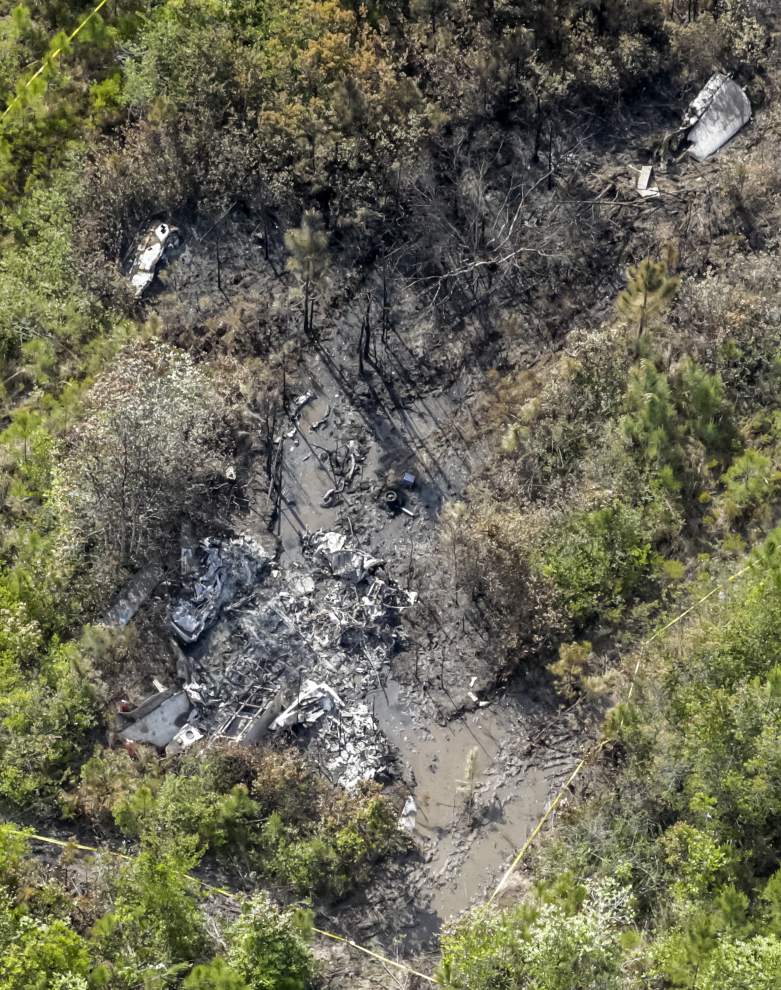
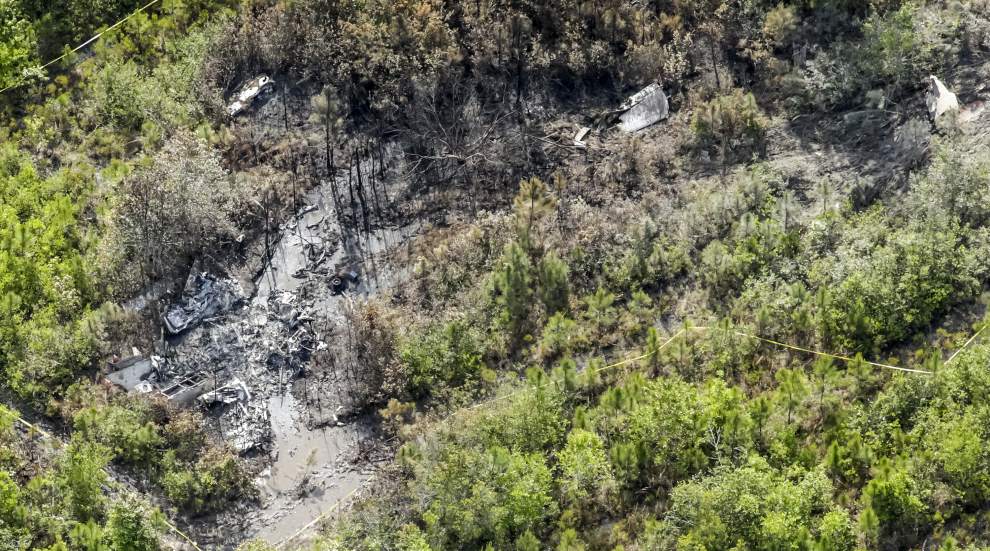
The airline transport pilot and commercial copilot were conducting a mosquito abatement application flight. Although flight controls were installed in both positions, the pilot typically operated the airplane. During a night, visual approach to landing at their home airfield, the airplane was on the left base leg and overshot the runway's extended centerline and collided with 80-ft-tall power transmission towers and then impacted terrain. Examination of the airplane did not reveal any preimpact anomalies that would have precluded normal operation. Both pilots were experienced with night operations, especially at their home airport. The pilot had conducted operations at the airport for 14 years and the copilot for 31 years, which might have led to crew complacency on the approach . Adequate visibility and moon disk illumination were available; however, the area preceding the runway is a marsh and lacks cultural lighting, which can result in black-hole conditions in which pilots may perceive the airplane to be higher than it actually is while conducting an approach visually. The circumstances of the accident are consistent with the pilot experiencing the black hole illusion which contributed to him flying an approach profile that was too low for the distance remaining to the runway. It is likely that the pilot did not maintain adequate crosscheck of his altimeter and radar altimeter during the approach and that the copilot did not monitor the airplane's progress; thus, the flight crew did not recognize that they were not maintaining a safe approach path. Further, it is likely that neither pilot used the visual glidepath indicator at the airport, which is intended to be a countermeasure against premature descent in visual conditions.
Probable cause:
The unstable approach in black-hole conditions, resulting in the airplane overshooting the runway extended centerline and descending well below a safe glidepath for the runway. Contributing to the accident was the lack of monitoring by the copilot allowing the pilot to fly well below a normal glidepath.
Final Report:

Crash of a Britten-Norman BN-2T Islander in Kiunga: 12 killed

Date & Time: Apr 13, 2016 at 1420 LT
Type of aircraft:
Operator:
Registration:
P2-SBC
Survivors:
No
Schedule:
Oksapmin – Kiunga
MSN:
3010
YOM:
1983
Region:
Crew on board:
1
Crew fatalities:
Pax on board:
11
Pax fatalities:
Other fatalities:
Total fatalities:
12
Captain / Total flying hours:
4705
Captain / Total hours on type:
254.00
Aircraft flight hours:
2407
Aircraft flight cycles:
2886
Circumstances:
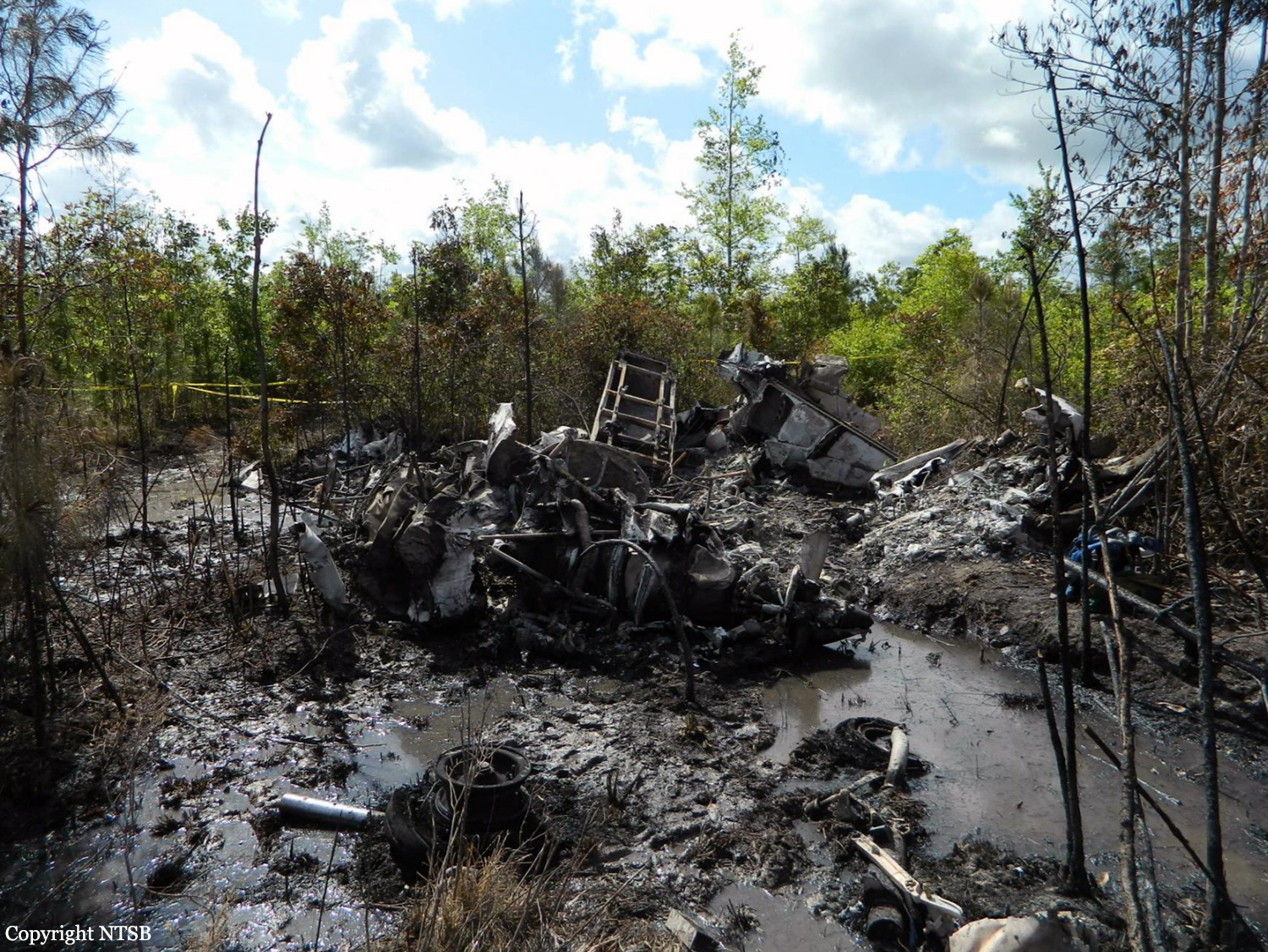
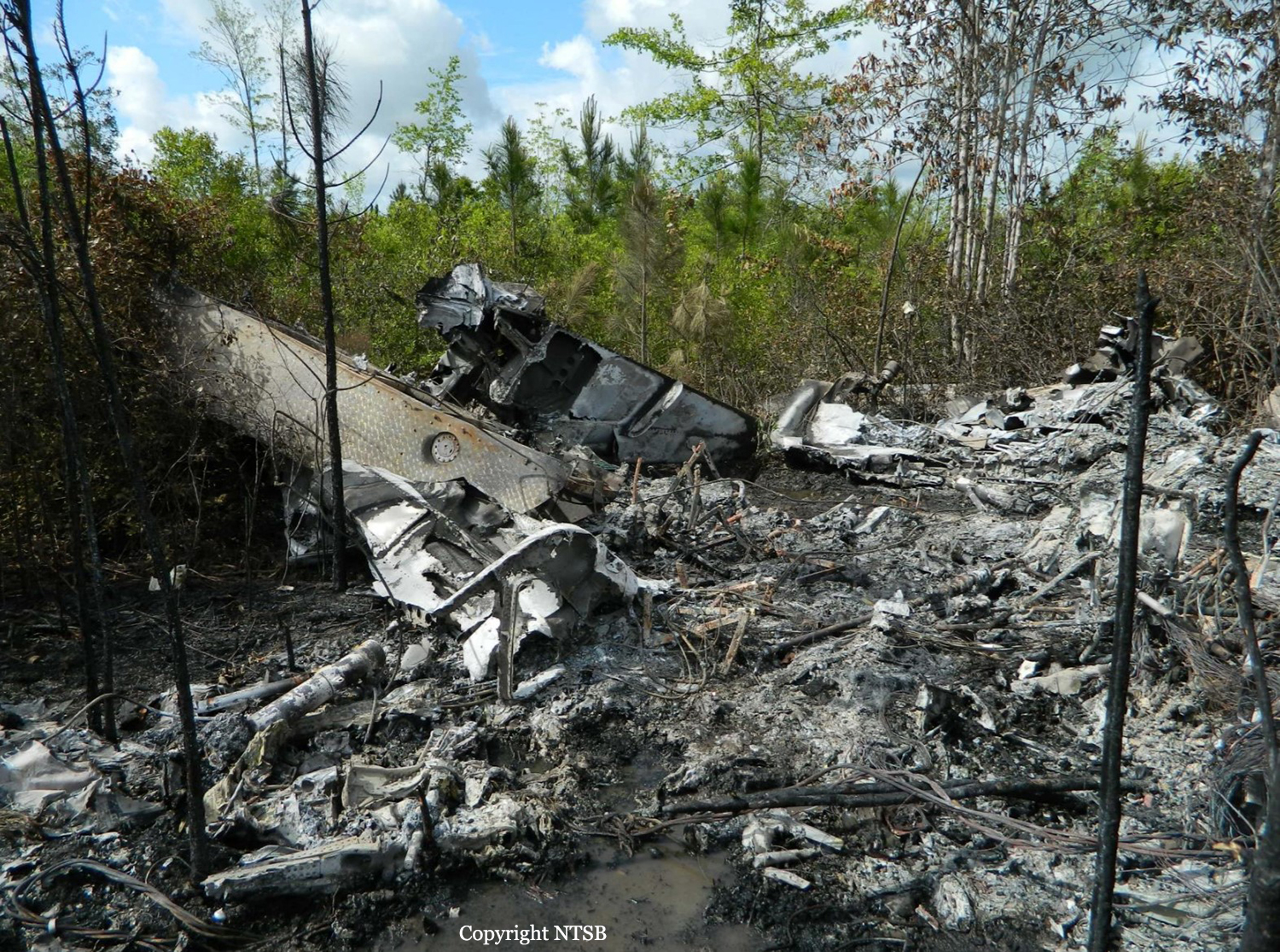
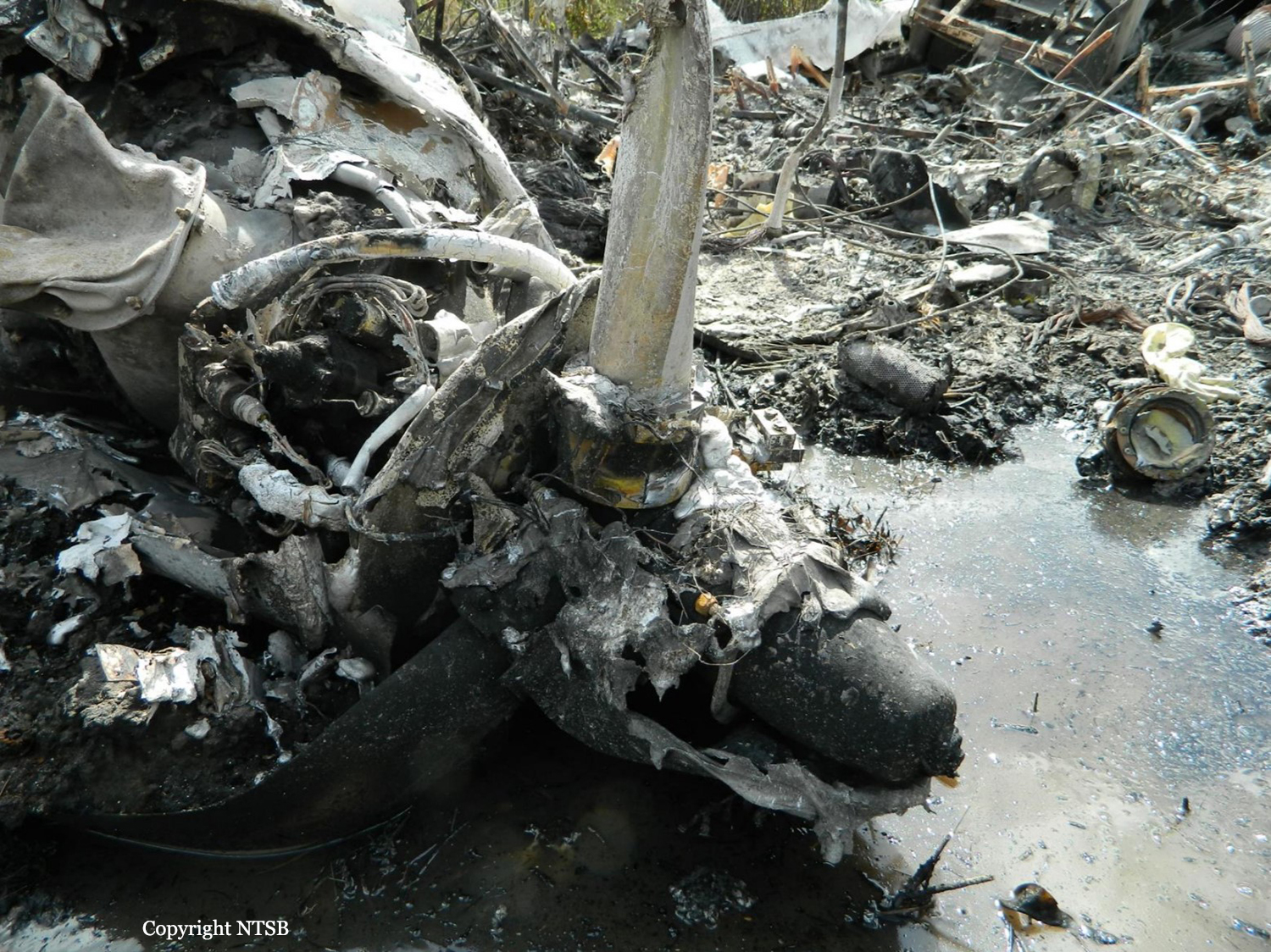
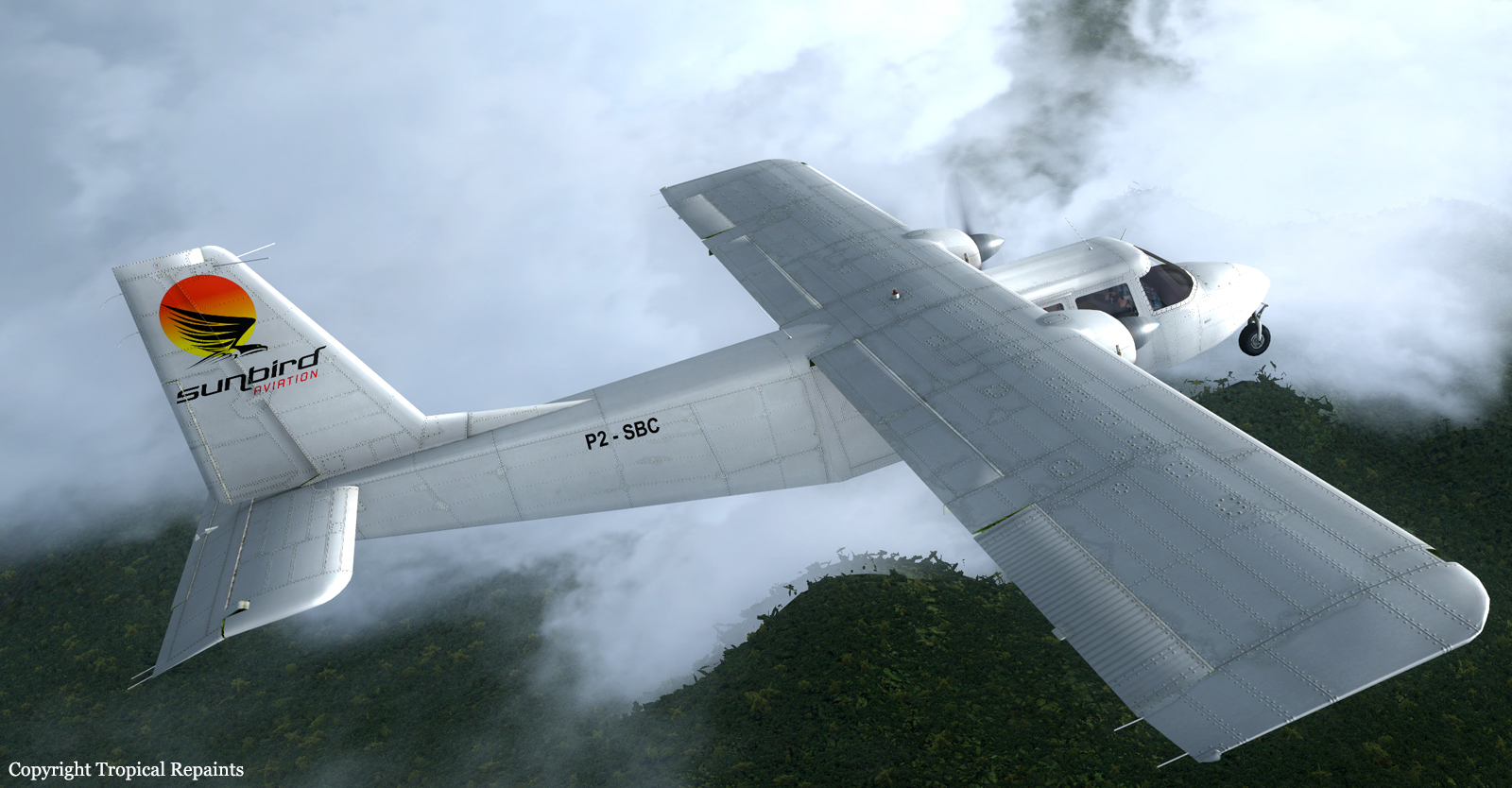
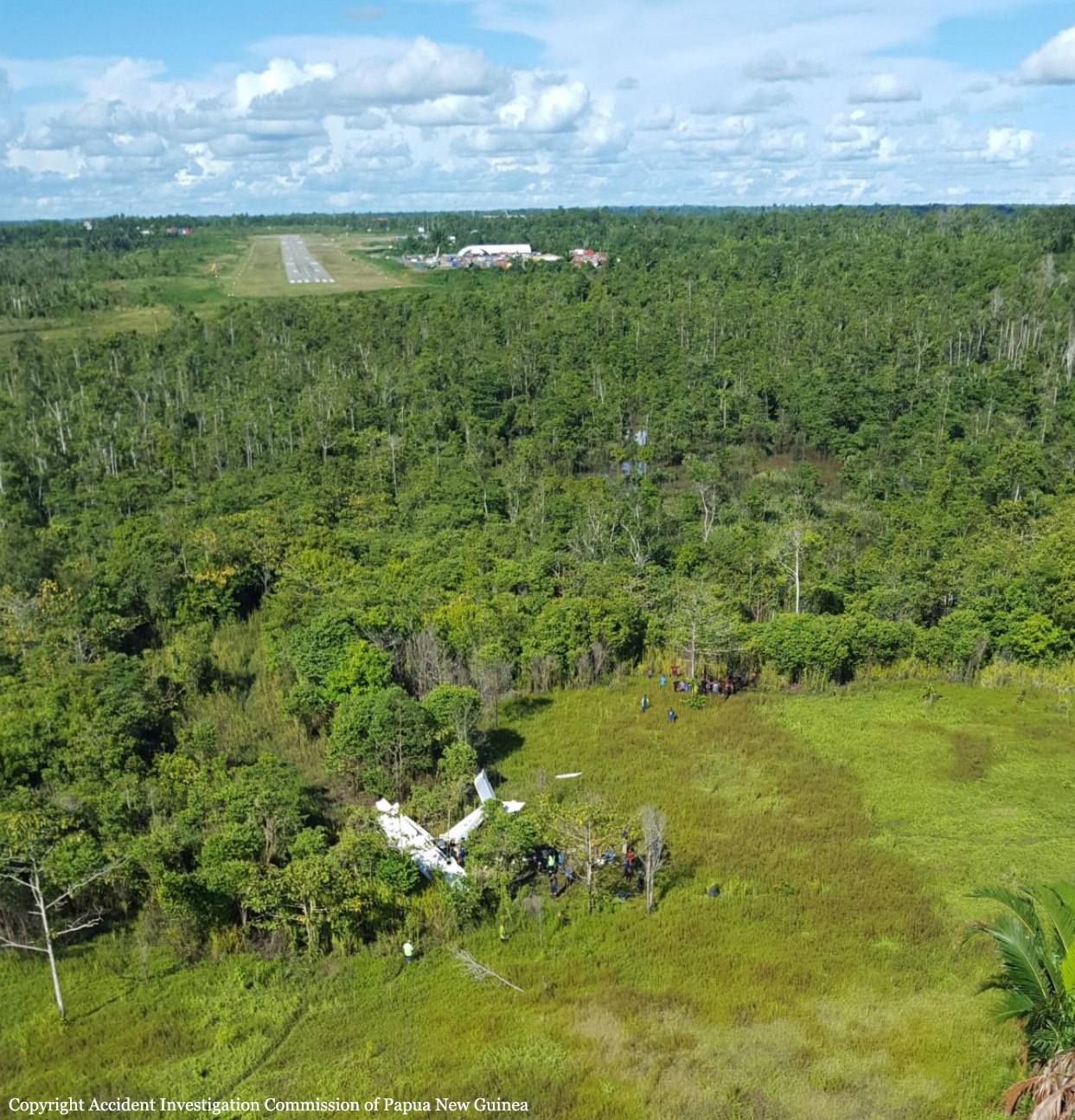
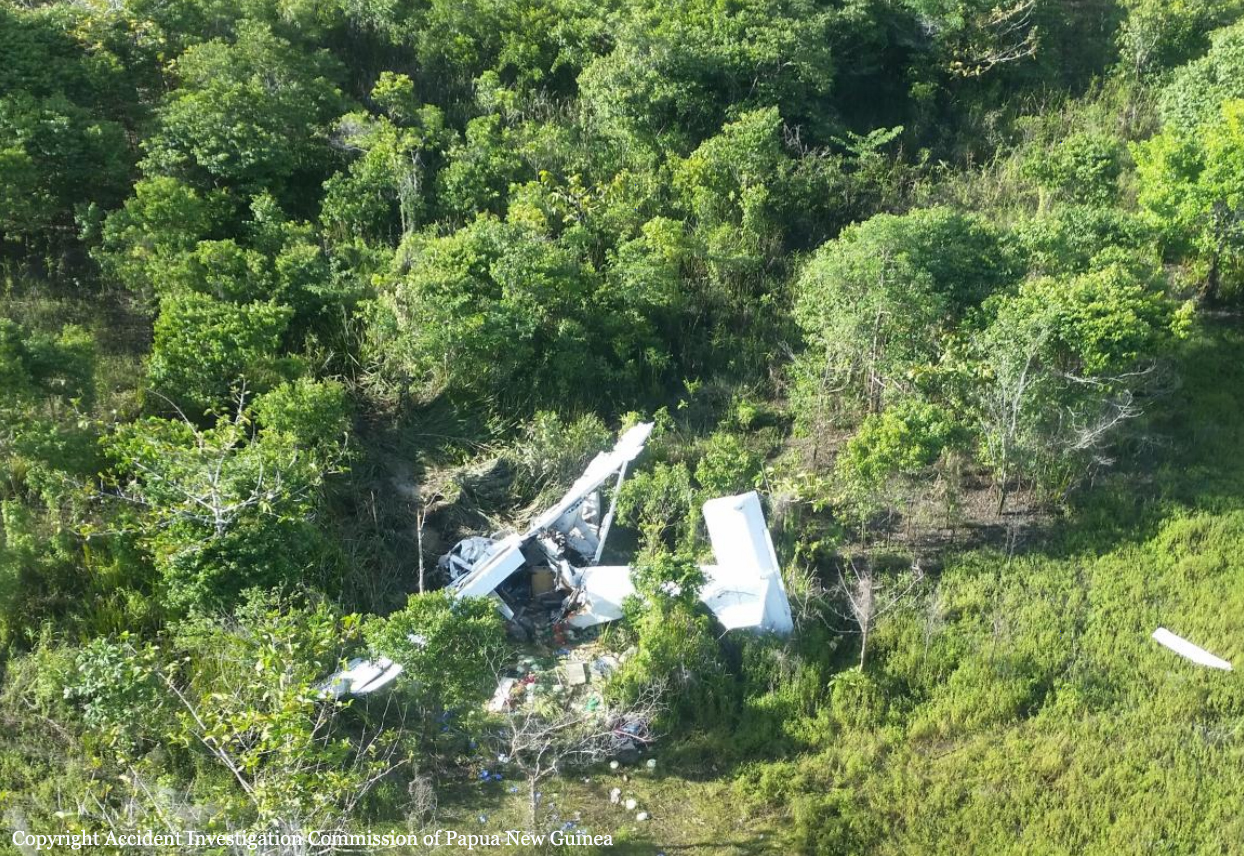
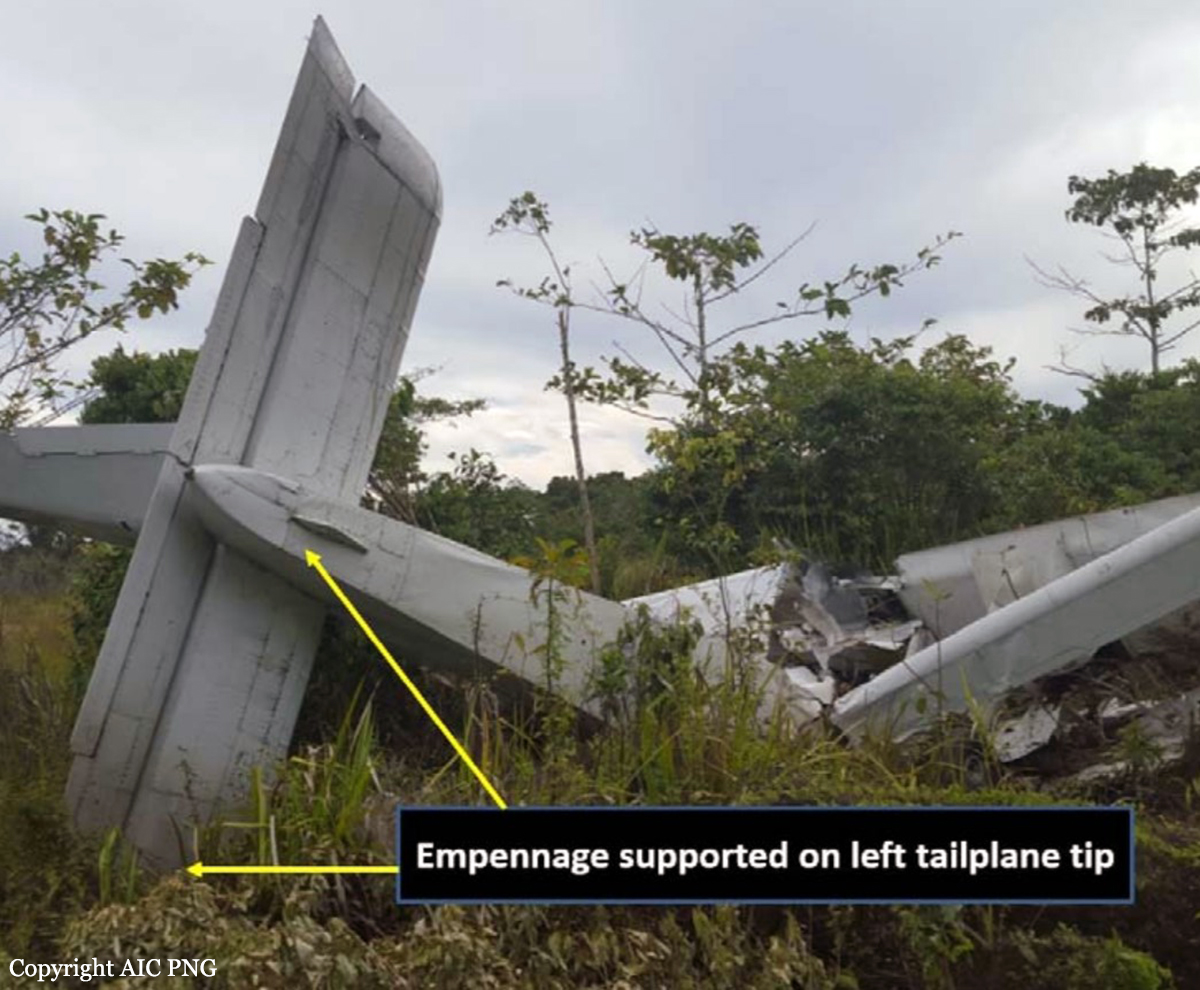
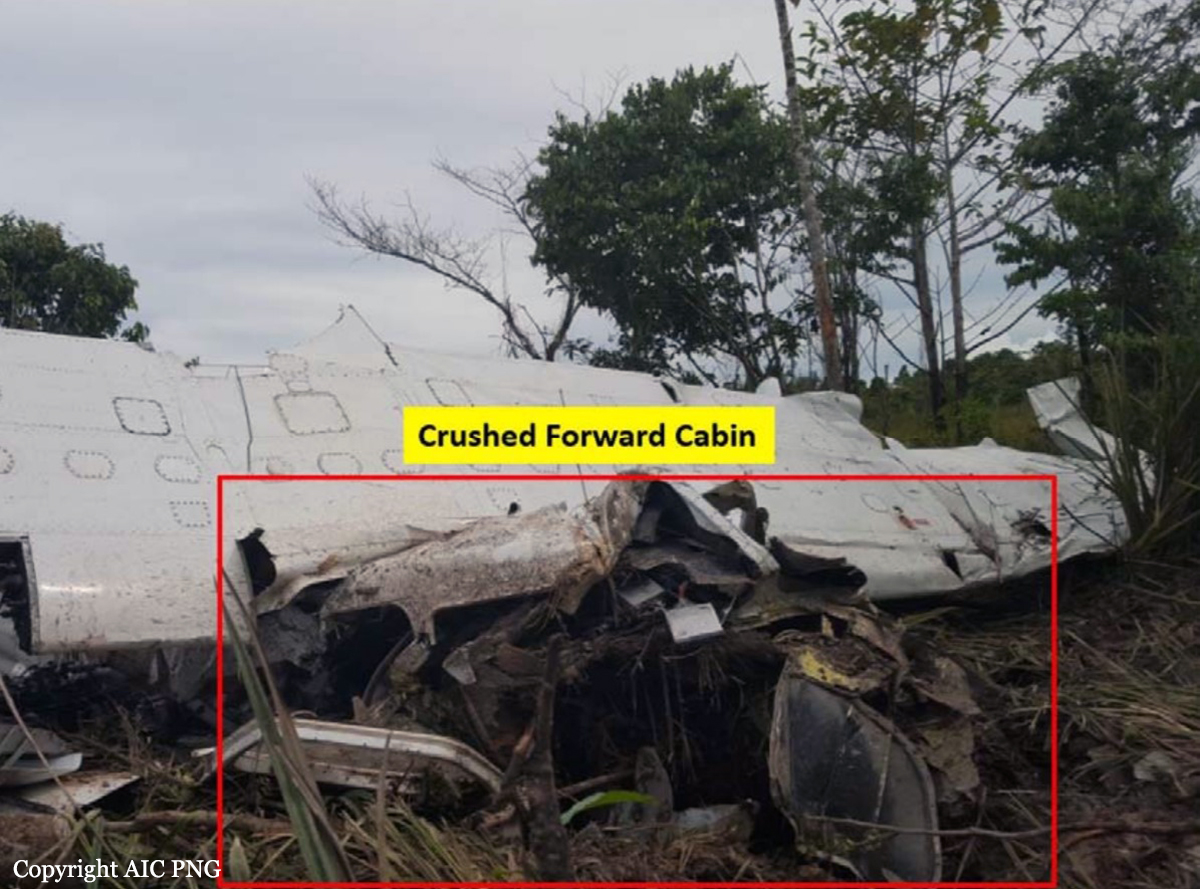
On the afternoon of 13 April 2016, a Pilatus Britten Norman Turbine Islander (BN-2T) aircraft, registered P2-SBC, operated by Sunbird Aviation Ltd, departed from Tekin, West Sepik Province for Kiunga, Western Province, as a charter flight under the visual flight rules. On board were the pilot-in-command (PIC) and 11 passengers (eight adults and three children). The aircraft was also carrying vegetables. The pilot reported departing Oksapmin at 13:56. The pilot had flight planned, Kiunga to Oksapmin to Kiunga. However, the evidence revealed that without advising Air Traffic Services, the pilot flew from Oksapmin to Tekin. On departure from Tekin the pilot transmitted departure details to ATS, stating departure from Oksapmin. The recorded High Frequency radio transmissions were significantly affected by static and hash. The weather at Kiunga was reported to be fine. As the aircraft entered the Kiunga circuit area, the pilot cancelled SARWATCH with Air Traffic Services (ATS). The pilot did not report an emergency to indicate a safety concern. Witnesses reported that during its final approach, the aircraft suddenly pitched up almost to the vertical, the right wing dropped, and the aircraft rolled inverted and rapidly “fell to the ground”. It impacted the terrain about 1,200 metres west of the threshold of runway 07. The impact was vertical, with almost no forward motion. The aircraft was destroyed, and all occupants were fatally injured.
Probable cause:
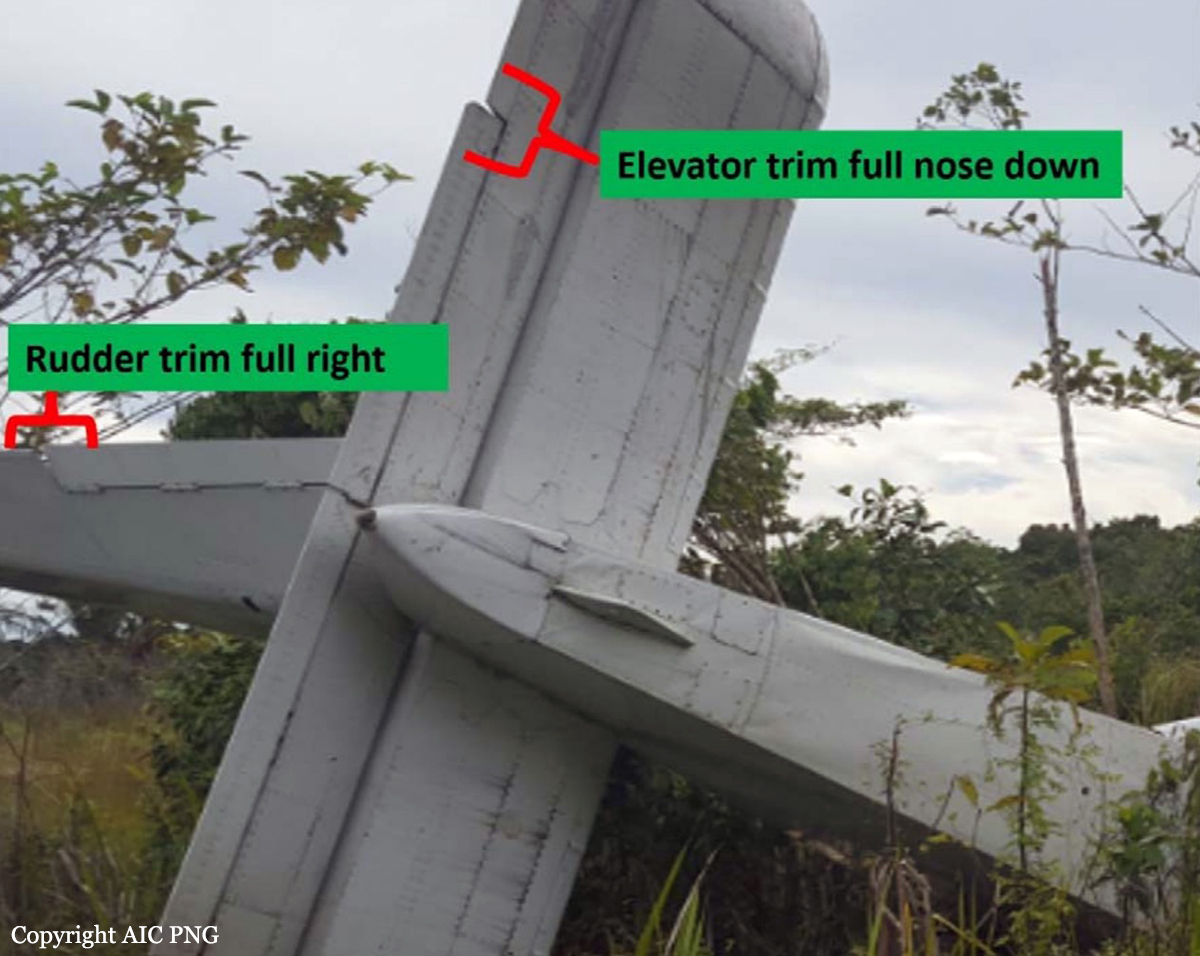
The aircraft’s centre of gravity was significantly aft of the aft limit. When landing flap was set, full nose-down elevator and elevator trim was likely to have had no effect in lowering the nose of the aircraft. Unless the flaps had been retracted immediately, the nose-up pitch may also have resulted in tail plane stall, exacerbating the pitch up. The wings stalled, followed immediately by the right wing dropping. Recovery from the stall at such a low height was not considered possible.
Other factors:
Other factors is used for safety deficiencies or concerns that are identified during the course of the investigation, that while not causal to the accident, nevertheless should be addressed with the
aim of accident and serious incident prevention, and the safety of the travelling public.
a) Following the reweighing of SBC, the operator did not make adjustments to account for the shift of the moment arm as a result of the reweighing. Specifically, a reduction of allowable maximum weight in the baggage compartment.
b) The pilot, although signing the flight manifest on previous flights attesting that the aircraft was loaded within c of g limits, had not computed the c of g. No documentation was available to confirm that the pilot had computed the c of g for the accident flight, or any recent flights.
c) All of the High Frequency radio transmissions between Air Traffic Services and SBC were significantly affected by static interference and a lot of hash, making reception difficult, and many transmissions unclear and unreadable. This is a safety concern to be addressed to ensure that vital operational radio transmissions are not missed for the safety of aircraft operations, and the travelling public.
Final Report:

Crash of a De Havilland DHC-6 Twin Otter 100 in Fentress

Date & Time: Apr 9, 2016 at 1700 LT
Operator:
Registration:
N122PM
Survivors:
Yes
Schedule:
Fentress - Fentress
MSN:
15
YOM:
1966
Location:
Crew on board:
2
Crew fatalities:
Pax on board:
0
Pax fatalities:
Other fatalities:
Total fatalities:
0
Captain / Total flying hours:
6000
Captain / Total hours on type:
1000.00
Aircraft flight hours:
53624
Circumstances:
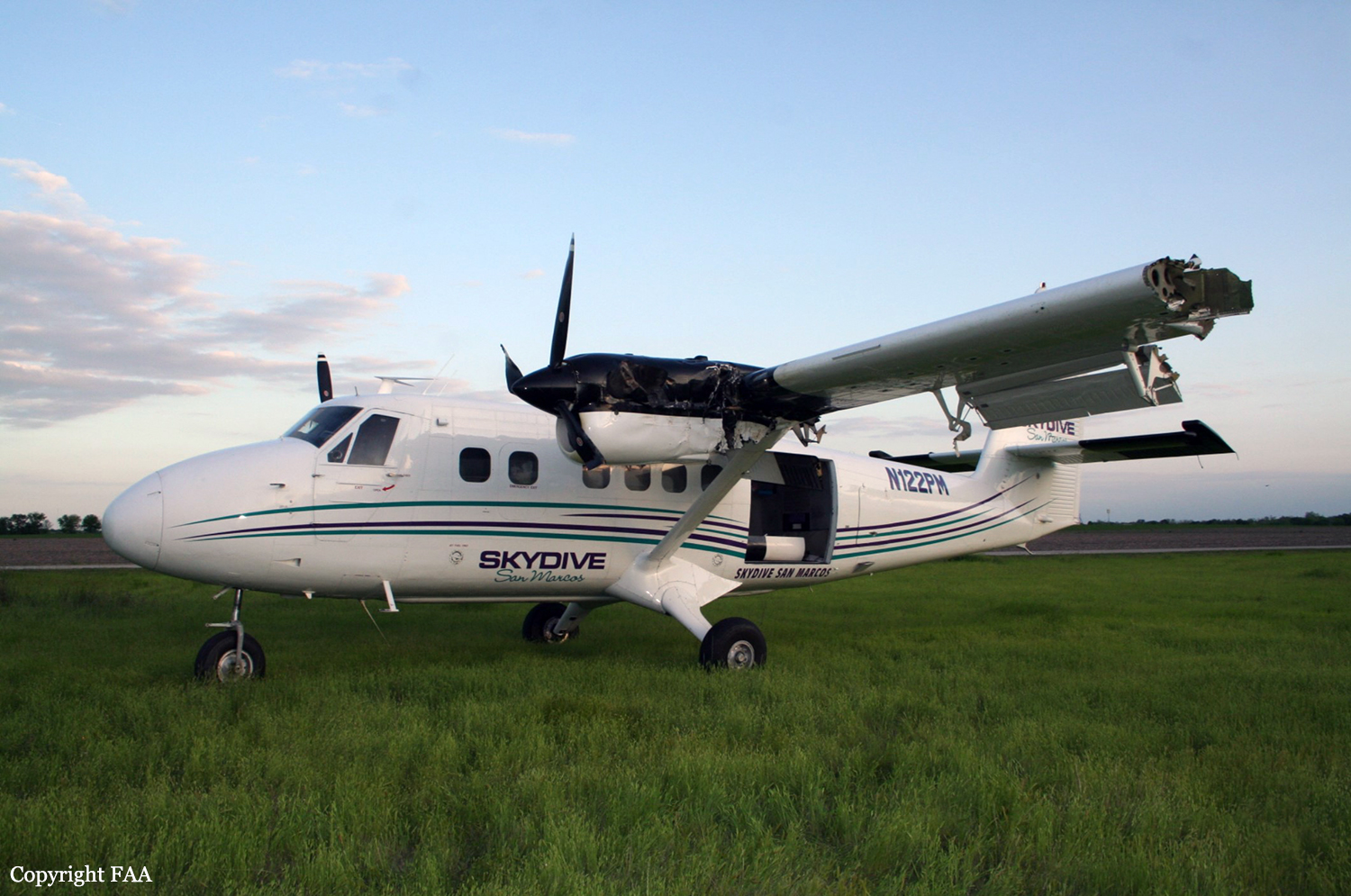
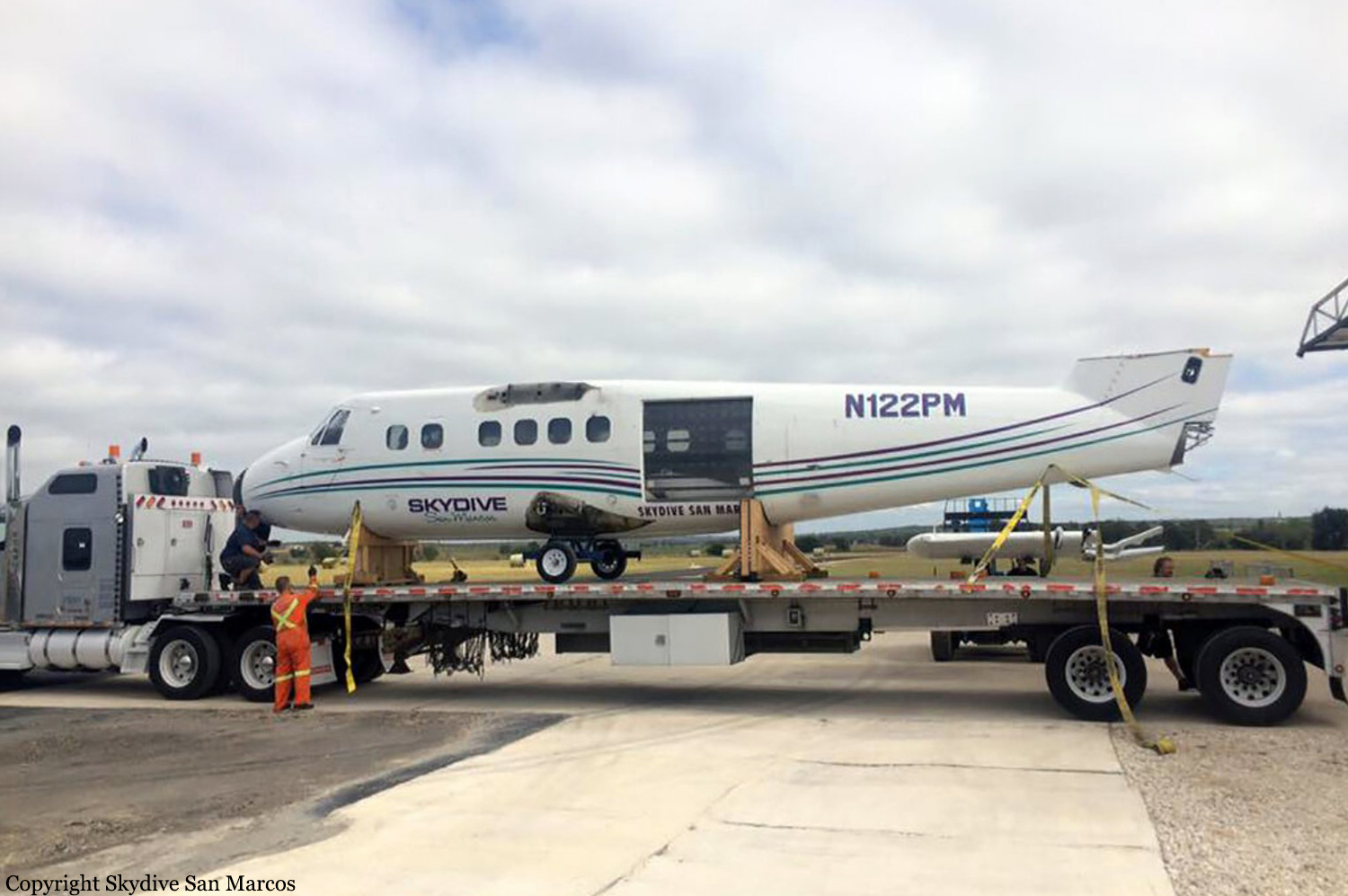
The pilot reported that he was landing in gusty crosswind conditions following a parachute jump flight, and that the gusty conditions had persisted for the previous 10 skydiving flights that day. The pilot further reported that during the landing roll, when the nose wheel touched down, the airplane became "unstable" and veered to the left. He reported that he applied right rudder and added power to abort the landing, but the airplane departed the runway to the left and the left wing impacted a tree. The airplane spun 180 degrees to the left and came to rest after the impact with the tree. The left wing was substantially damaged. The pilot did not report any mechanical malfunctions or failures with the airplane that would have precluded normal operation.
Probable cause:
The pilot's failure to maintain directional control during the aborted landing in gusty crosswind conditions, which resulted in a runway excursion and a collision with a tree.
Final Report:

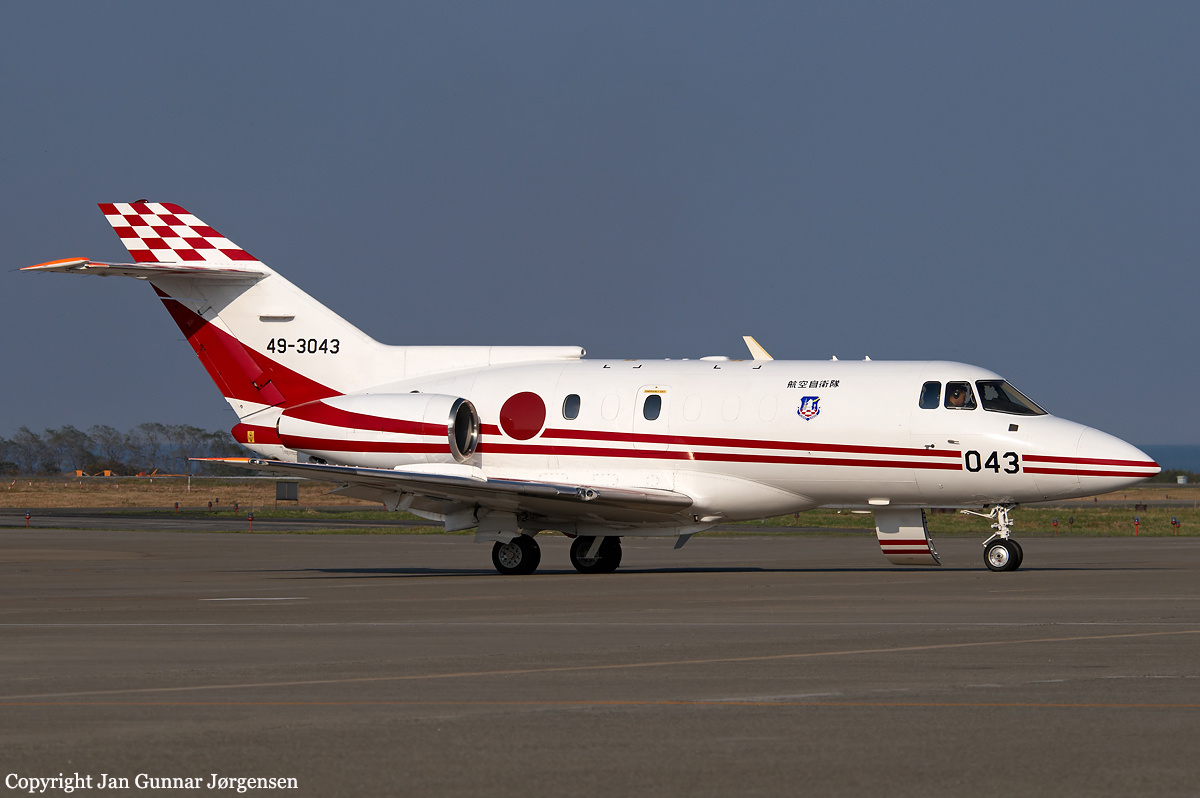
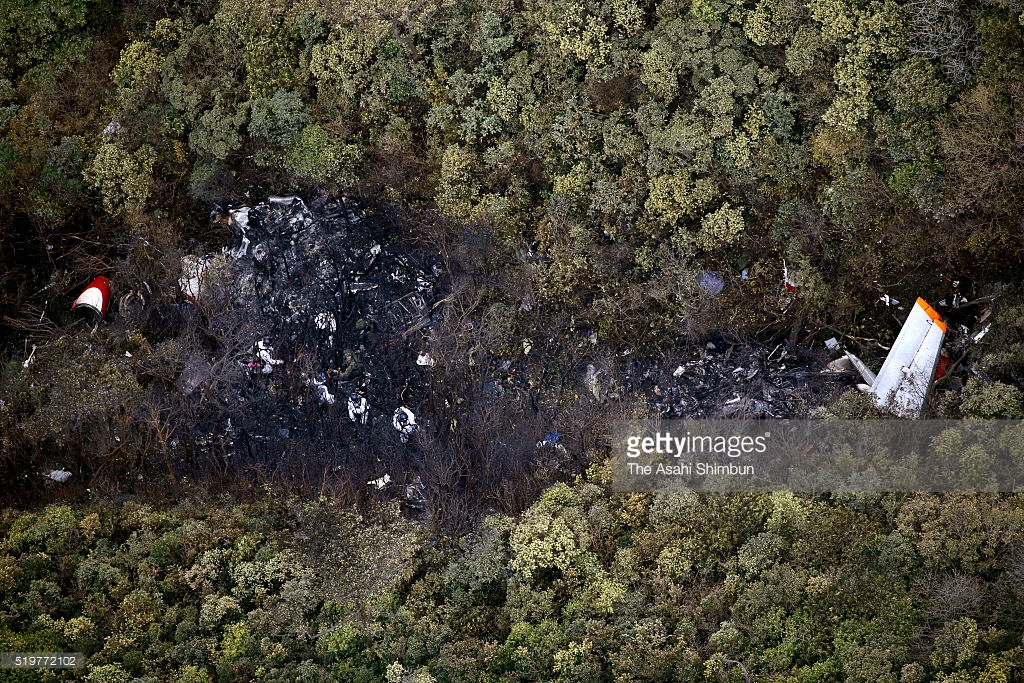
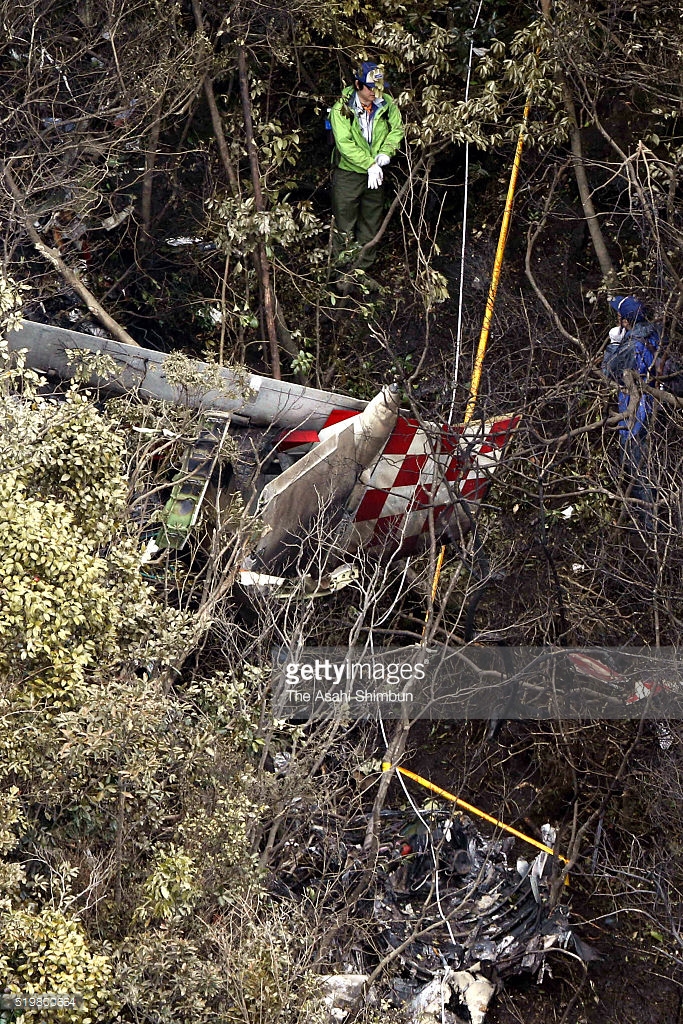
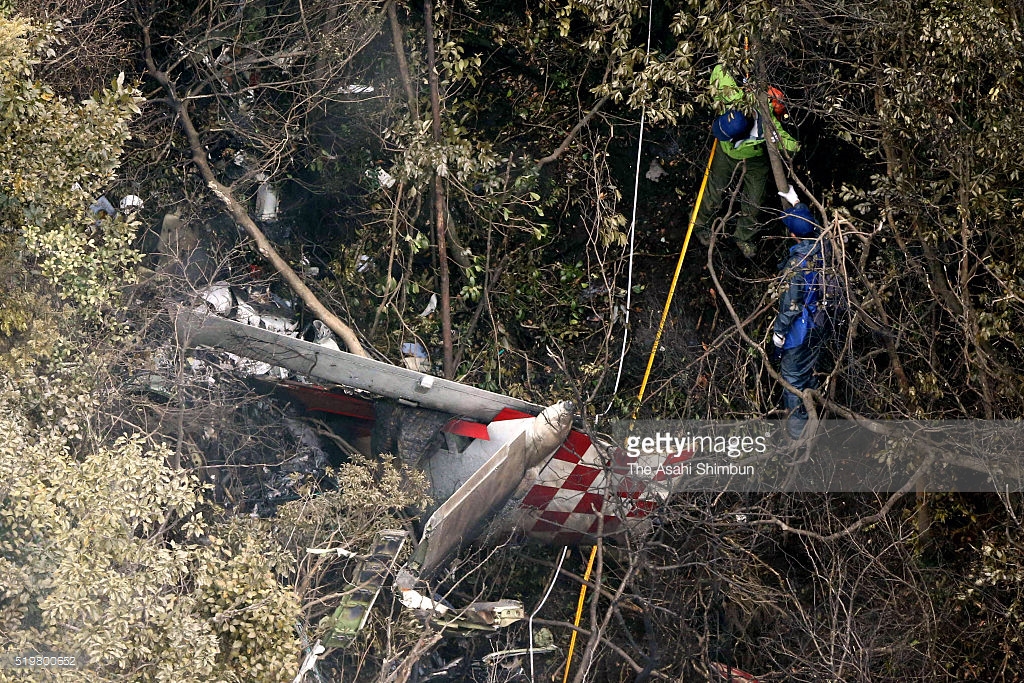
Crash of a BAe U-125 at Kanoya AFB: 6 killed

Date & Time: Apr 6, 2016 at 1435 LT
Type of aircraft:
Operator:
Registration:
49-3043
Flight Type:
Survivors:
No
Site:
Schedule:
Kanoya - Kanoya
MSN:
258242
YOM:
1993
Country:
Region:
Crew on board:
6
Crew fatalities:
Pax on board:
0
Pax fatalities:
Other fatalities:
Total fatalities:
6
Circumstances:
The aircraft departed Kanoya AFB at 1315LT on a calibration flight with six people on board. After he complete a counter clockwise arc, the crew started the descent to Kanoya AFB Runway 08R. The visibility was poor due to low clouds. On approach, at an altitude of 3,000 feet, the aircraft entered clouds when the GPWS alarm sounded. Two second later, the crew deactivated the alarm and continued the approach. Ten seconds later, the aircraft impacted trees and crashed on the slope of Mt Takakuma (1,182 metres high) located 10 km north of the airbase. The wreckage was found a day later and all six crew members were killed.
Probable cause:
Controlled flight into terrain after the crew continued the approach in poor visibility without visual contact with the environment. Misidentification of the environment on part of the crew was a contributing factor, as well as the fact that the crew deactivated the GPWS alarm and failed to initiate corrective maneuver.

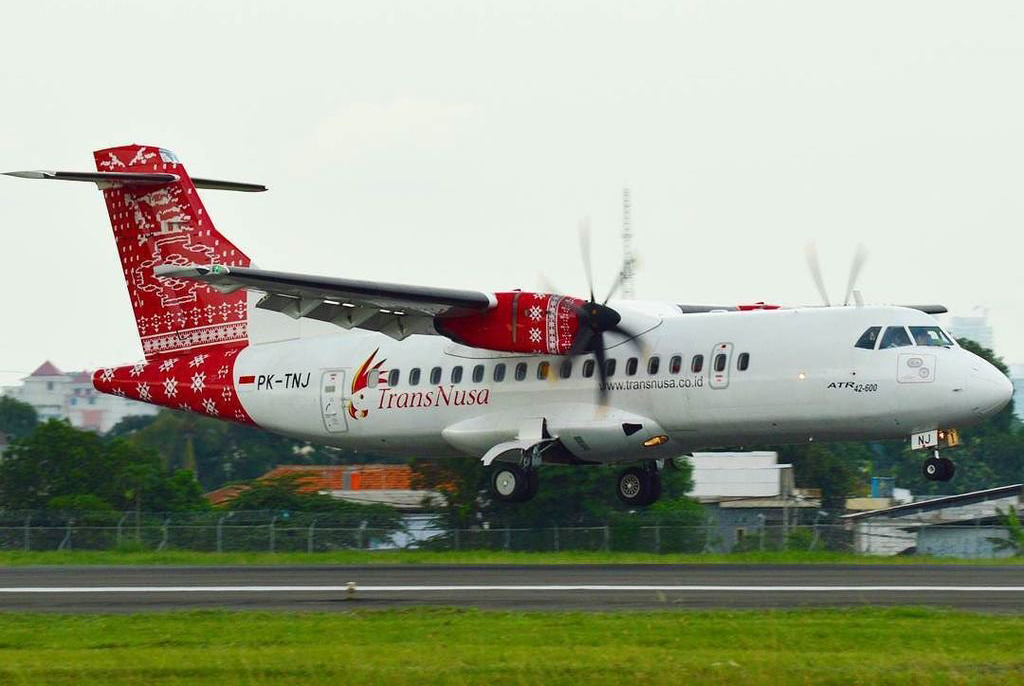
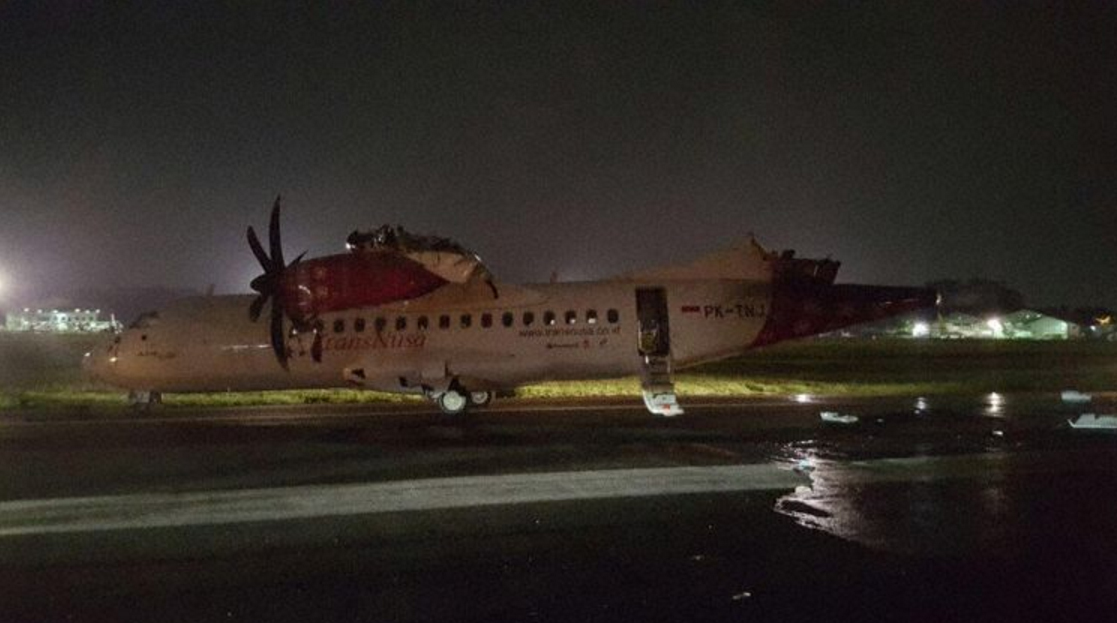
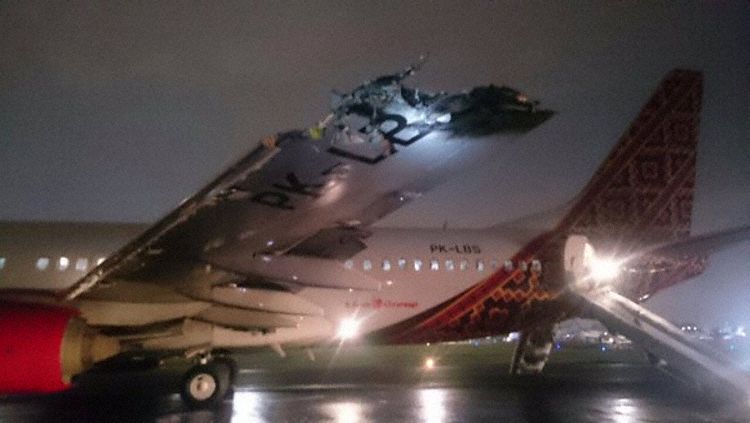
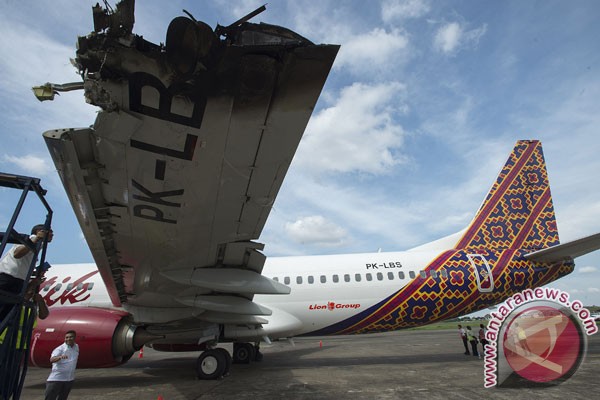
Ground collision with an ATR42-600 in Jakarta

Date & Time: Apr 4, 2016 at 1957 LT
Type of aircraft:
Operator:
Registration:
PK-TNJ
Flight Phase:
Survivors:
Yes
MSN:
1015
YOM:
2014
Country:
Region:
Crew on board:
2
Crew fatalities:
Pax on board:
0
Pax fatalities:
Other fatalities:
Total fatalities:
0
Aircraft flight hours:
2073
Aircraft flight cycles:
1038
Circumstances:
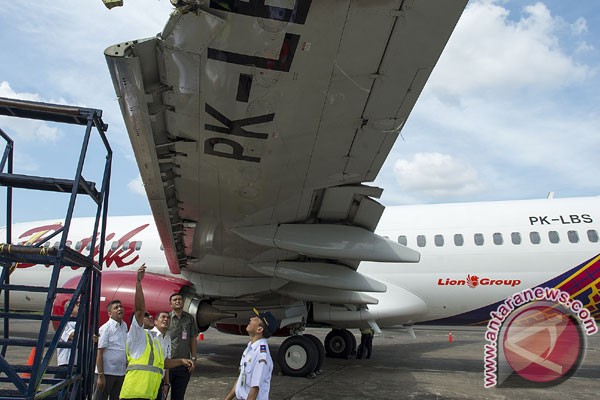
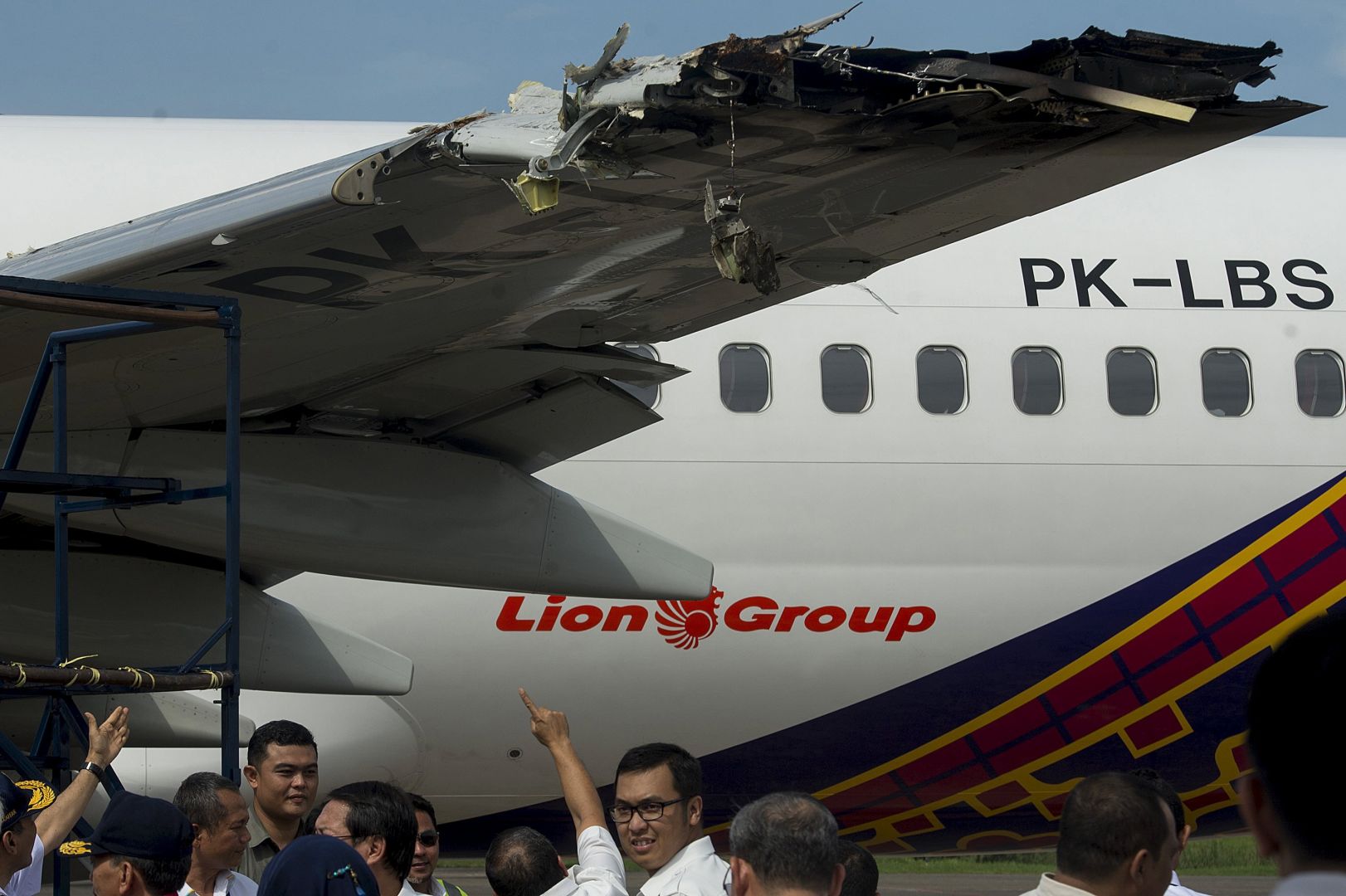
On 4 April 2016, Boeing 737-800 registration PK-LBS was being operated by Batik Air as scheduled passenger flight with flight number ID 7703 from Halim Perdanakusuma Airport with intended destination Sultan Hasanuddin International Airport, Makassar. An ATR 42-600 aircraft, registration PK-TNJ operated by TransNusa Aviation Mandiri was being repositioned from north to south apron of Halim Perdanakusuma Airport by a ground handling agent PT. Jasa Angkasa Semesta (PT. JAS). The aircraft was towed without aircraft electrical power fed to the system including the radio communication and aircraft lighting system. At the time of occurrence, the ID7703 pilot communicated to Halim Tower controller on frequency 118.6 MHz while the towing car driver communicated using handheld radio on frequency 152.73 KHz and was handled by assistant controller. At 1948 LT (1248 UTC), ID7703 pilot received taxi clearance from Halim Tower controller and after the ID7703 taxi, the towing car driver received clearance for towing and to report when on taxiway C. Afterward the towing car driver was instructed to expedite and to follow ID7703. While the ID7703 backtracking runway 24, the towed aircraft entered the runway intended to cross and to enter taxiway G. At 1256 UTC, ID7703 pilot received takeoff clearance and initiated the takeoff while the towed aircraft was still on the runway. The towing car driver and the pilots took action to avoid the collision. The decision of the pilot and the towing car driver to move away from the centerline runway had made the aircraft collision on the centerline runway (head to head) avoided, however the wings collision was unavoidable. At 1257 UTC, the ID7703 collided with the towed aircraft. The ID7703 pilot rejected the takeoff and stopped approximately 400 meters from the collision point while the towed aircraft stopped on the right of the centerline runway 24. No one injured at this occurrence and both aircraft severely damaged.
Probable cause:
The collision was the result of a poor coordination by ATC staff at Jakarta Airport. The following factors were reported:
- Handling of two movements in the same area with different controllers on separate frequencies without proper coordination resulted in the lack of awareness to the controllers, pilots and towing car driver,
- The communication misunderstanding of the instruction to follow ID 7703 most likely contributed the towed aircraft enter the runway,
- The lighting environments in the tower cab and turning pad area of runway 24 might have diminished the capability to the controllers and pilots to recognize the towed aircraft that was installed with insufficient lightings.
Final Report:

Crash of a PZL-Mielec AN-2R in Aksarino

Date & Time: Apr 3, 2016 at 0732 LT
Type of aircraft:
Operator:
Registration:
RA-54828
Flight Phase:
Survivors:
Yes
Schedule:
Aksarino - Aksarino
MSN:
1G184-35
YOM:
16
Country:
Region:
Crew on board:
1
Crew fatalities:
Pax on board:
0
Pax fatalities:
Other fatalities:
Total fatalities:
0
Captain / Total flying hours:
6095
Aircraft flight hours:
6782
Circumstances:
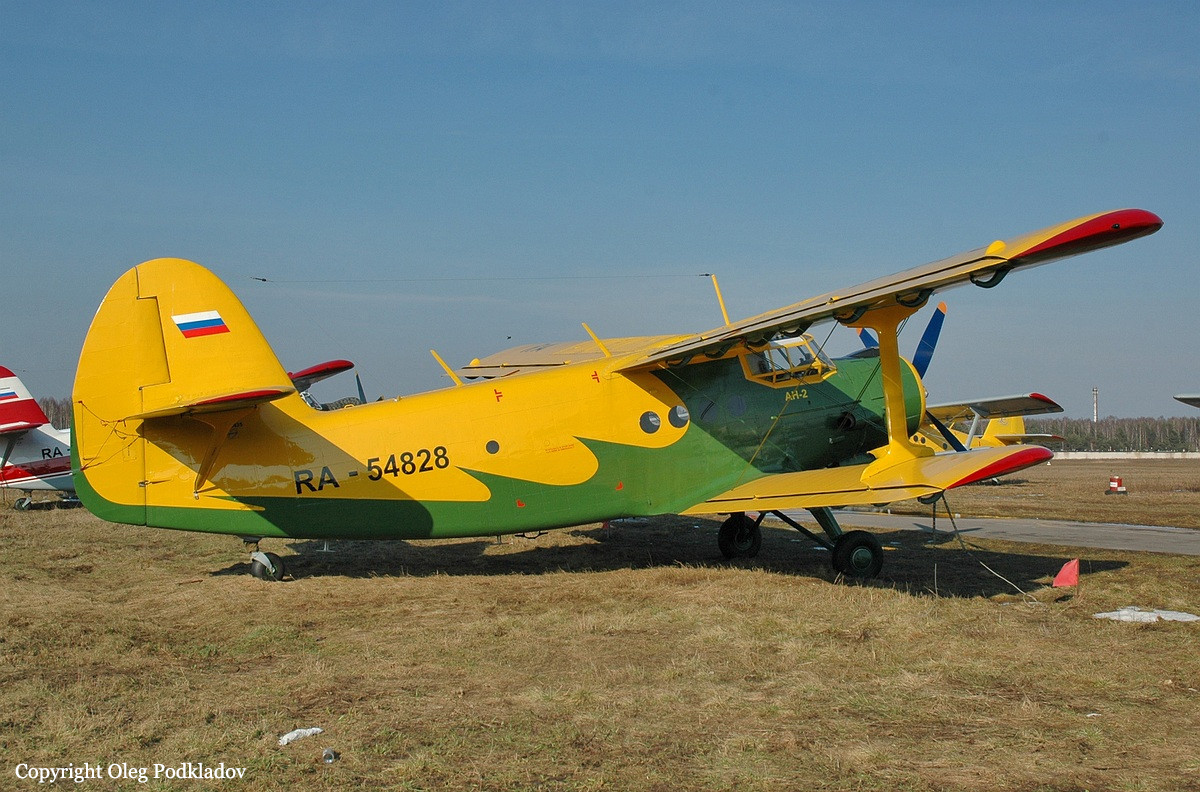
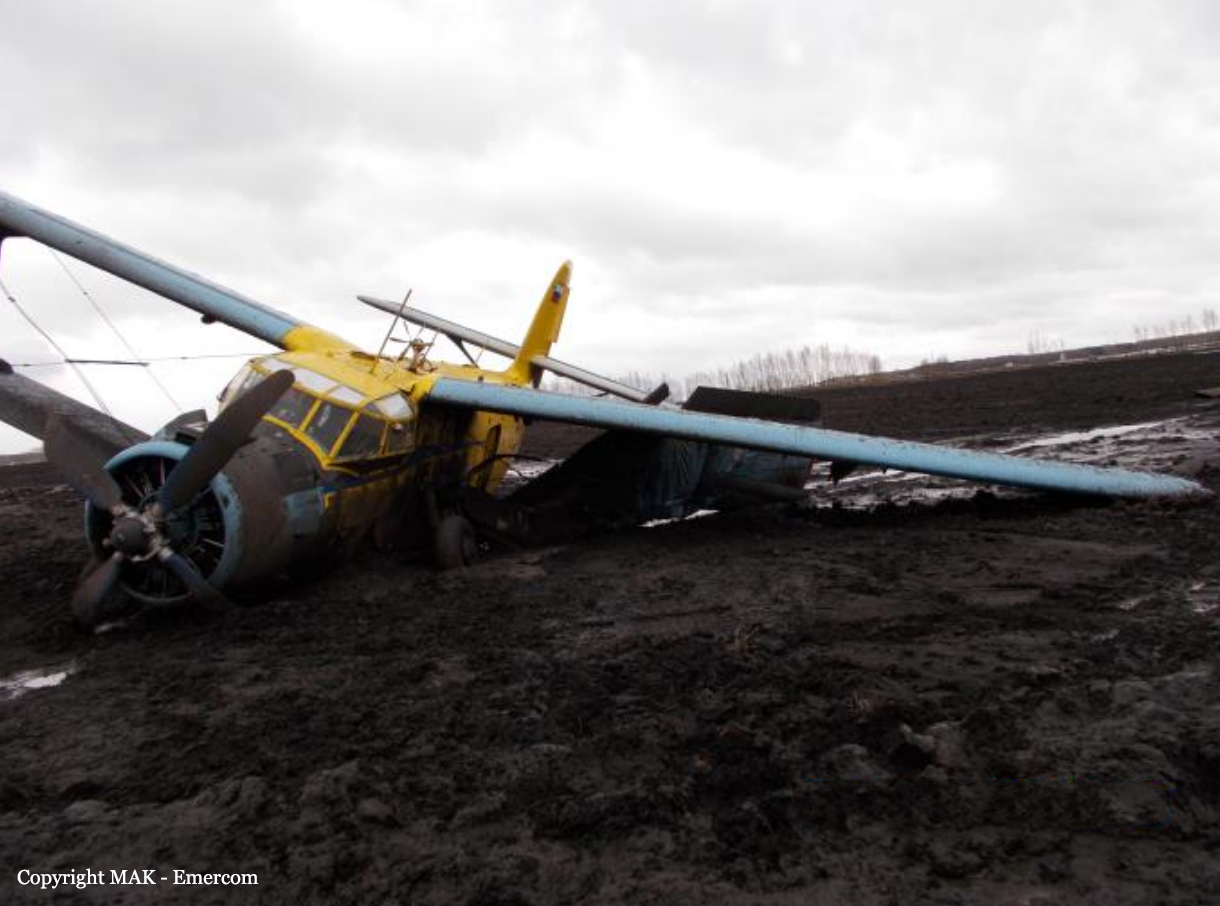
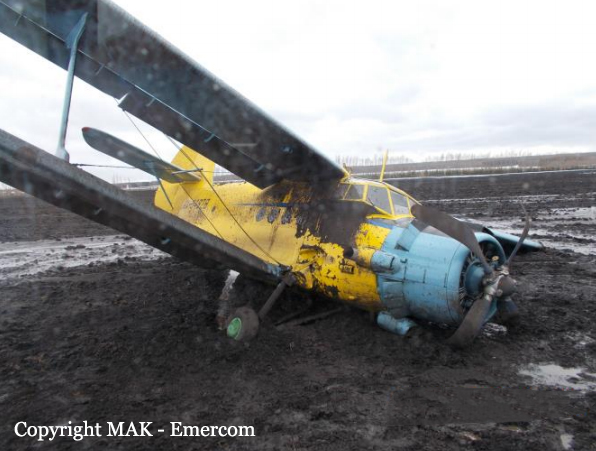
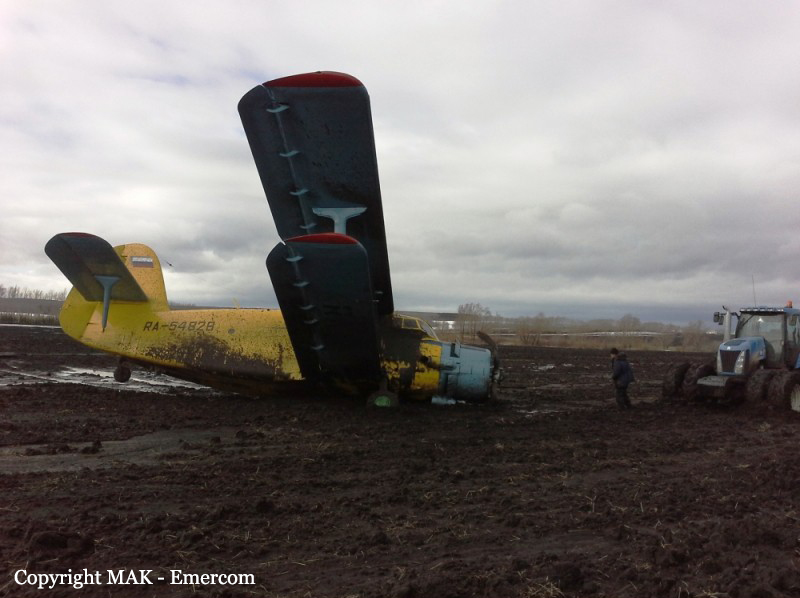
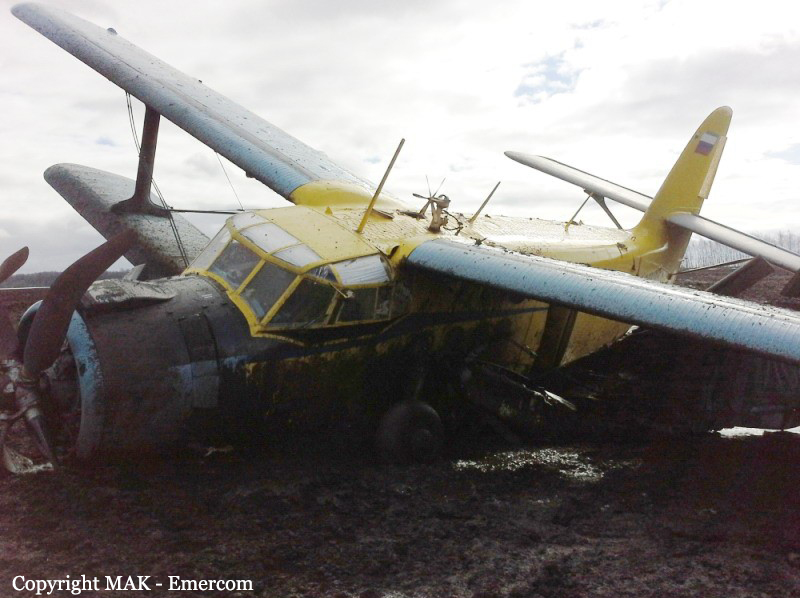
The pilot, sole on board, was engaged in a crop spraying mission over plantation located near Aksarino, Republic of Tatarstan, and the aircraft was carrying a load of 1,200 kilos of fertilizers. Shortly after takeoff, while climbing, the engine encountered technical problems. The pilot elected to make an emergency landing when the aircraft crash landed in a field and came to rest. The aircraft was damaged beyond repair and the pilot was uninjured.
Probable cause:
Most probably the accident with An-2 RA-54828 aircraft after its takeoff in order to perform crop dusting was caused by inadvertent engine cut-off due to water ingestion into fuel flow system. Most probably water ingestion into engine fuel flow system was due to violation of refueling procedure by the crew. The aircraft sustained significant damage during the emergency landing on slush soft surface.
Final Report:

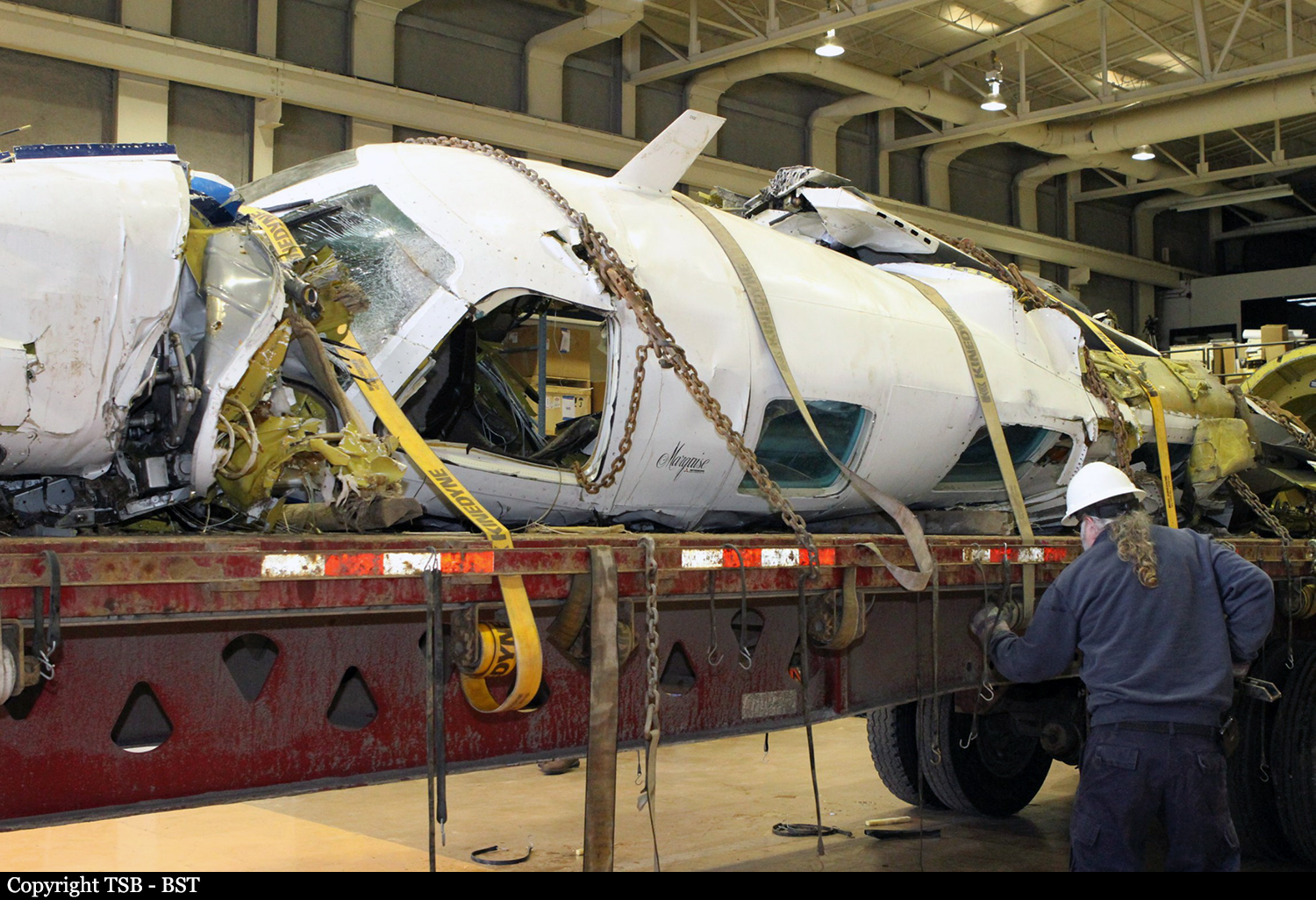
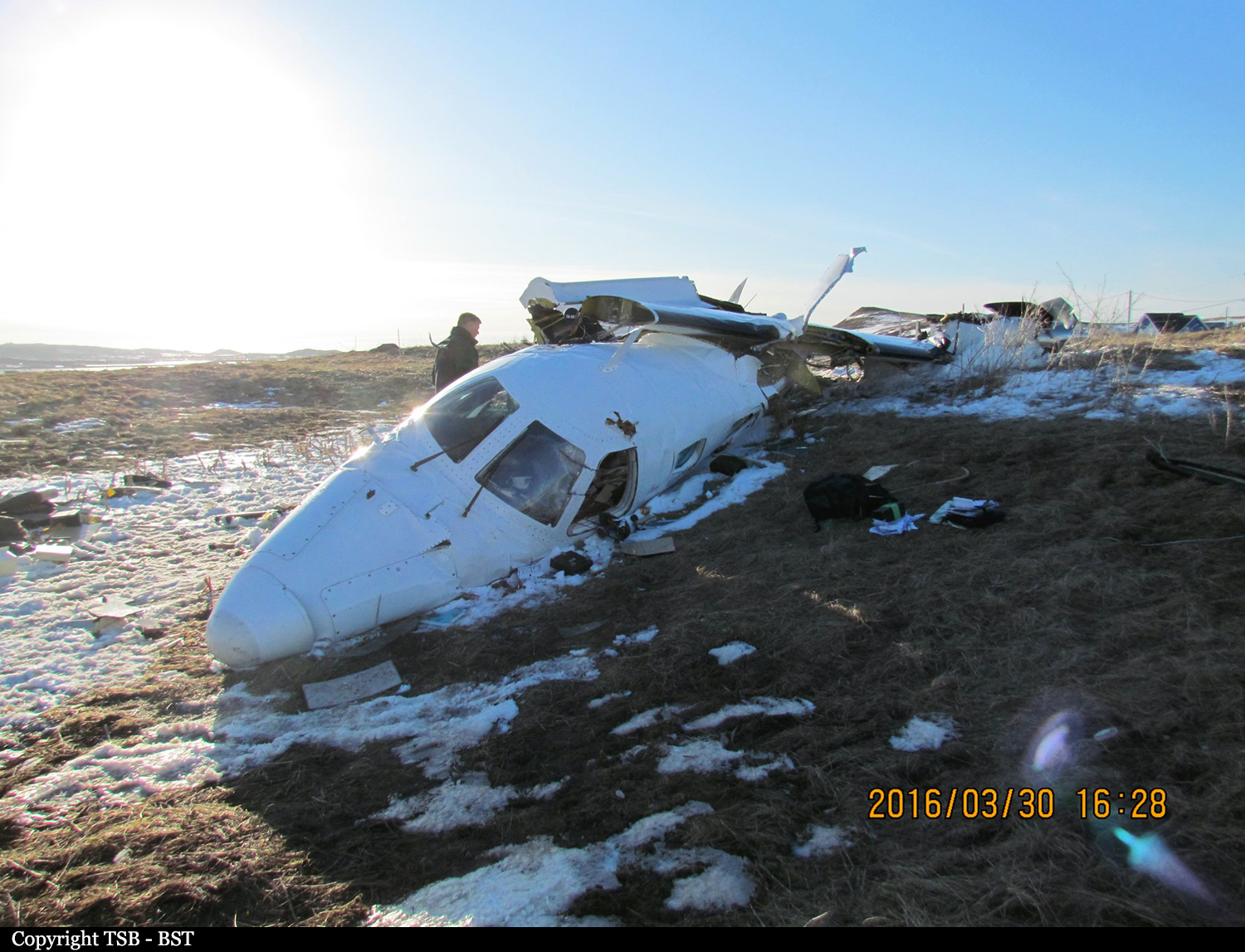
Crash of a Mitsubishi MU-2B-60 Marquise in Le Havre-aux-Maisons: 7 killed

Date & Time: Mar 29, 2016 at 1230 LT
Type of aircraft:
Operator:
Registration:
N246W
Survivors:
No
Schedule:
Montreal - Le Havre-aux-Maisons
MSN:
1552
YOM:
1982
Country:
Crew on board:
1
Crew fatalities:
Pax on board:
6
Pax fatalities:
Other fatalities:
Total fatalities:
7
Captain / Total flying hours:
2500
Captain / Total hours on type:
125.00
Aircraft flight hours:
11758
Circumstances:
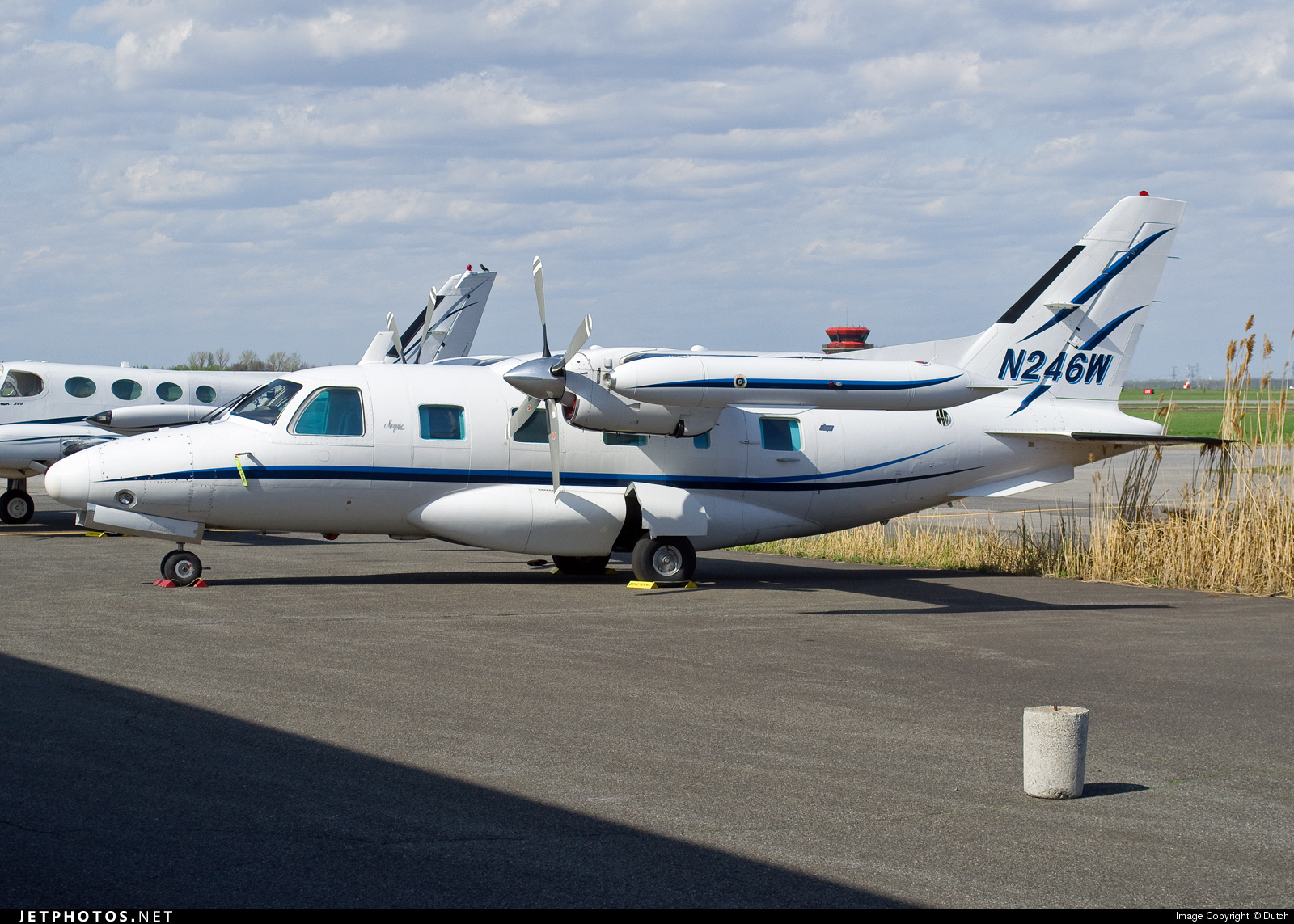
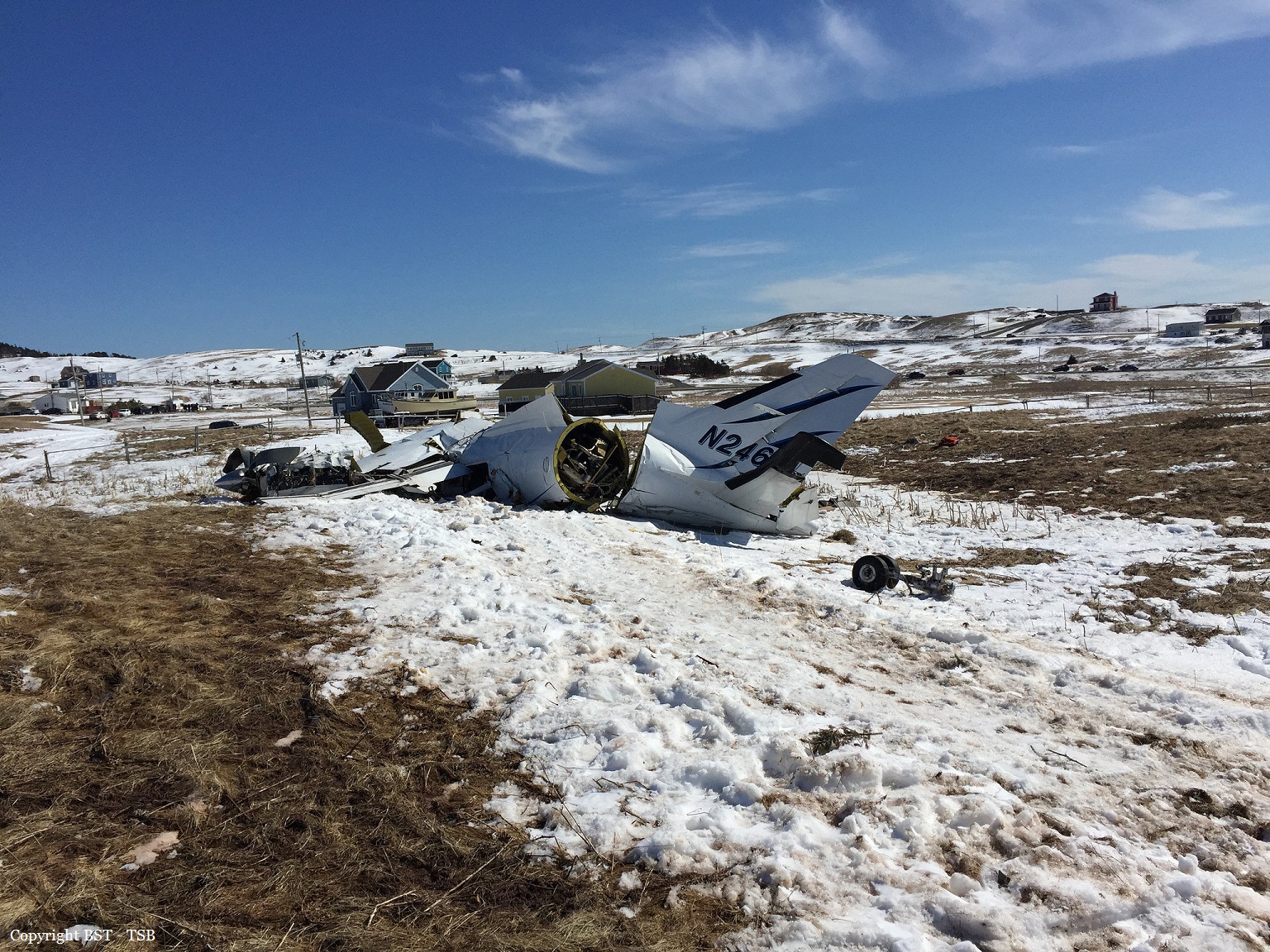
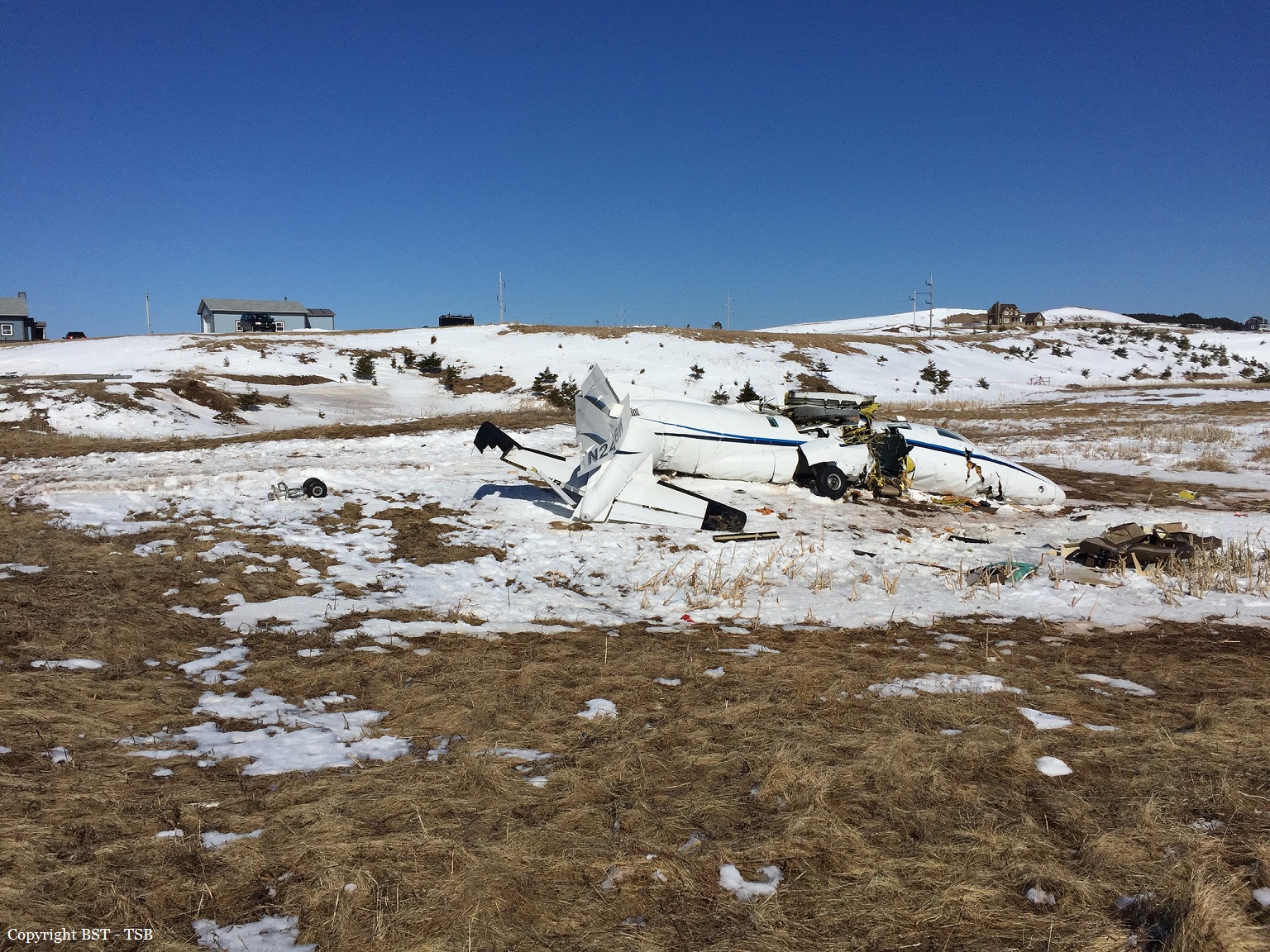
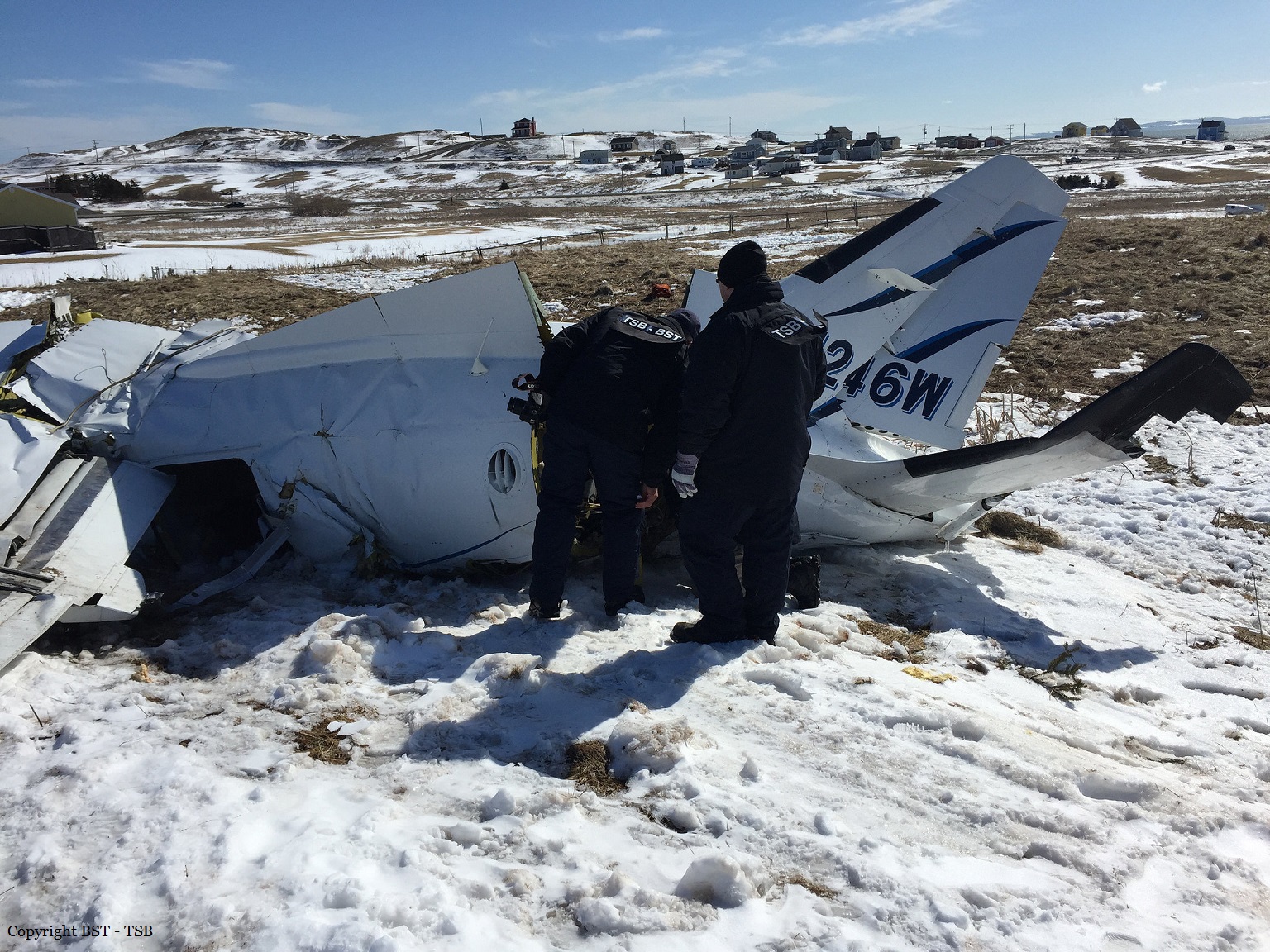
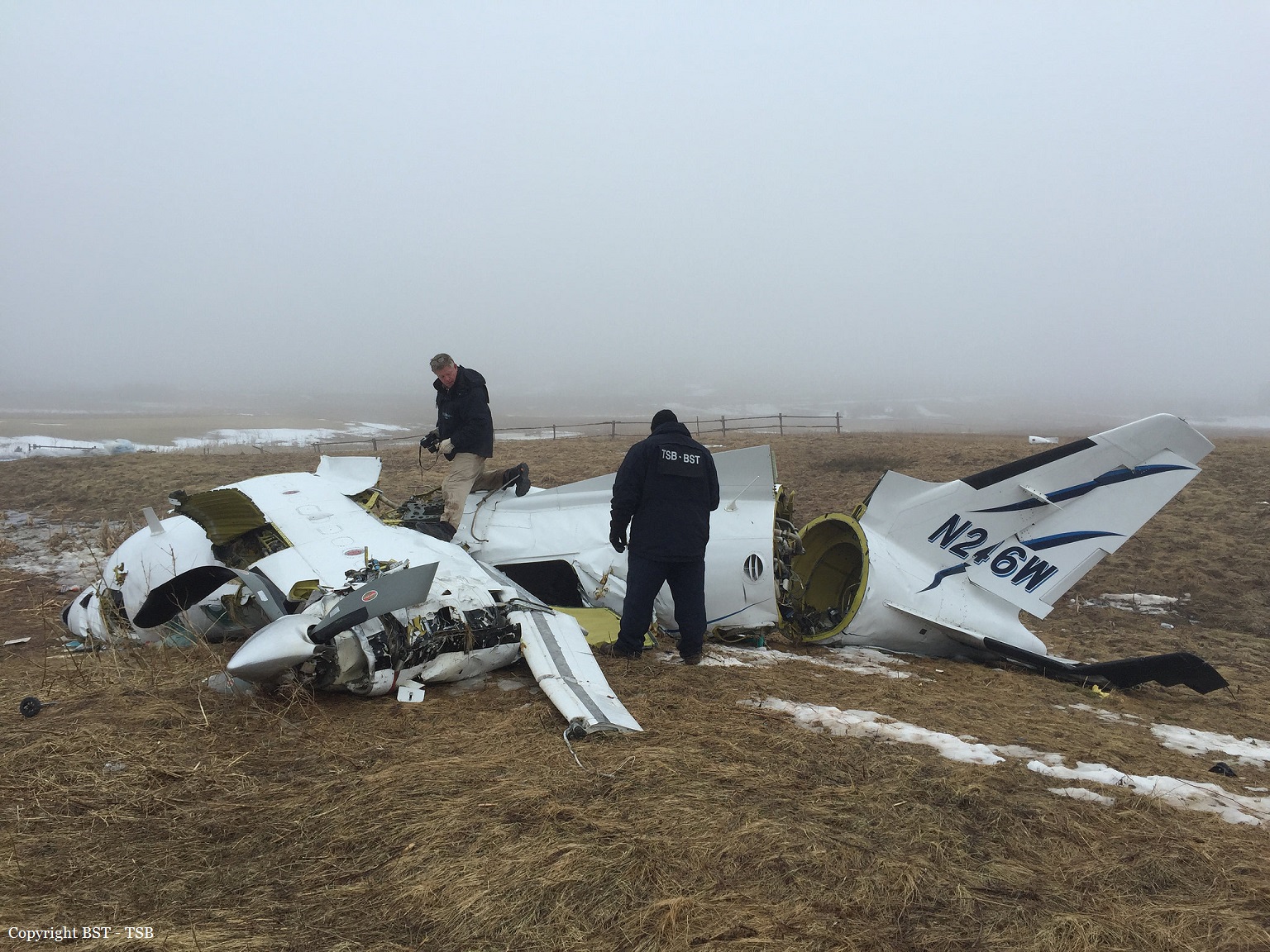
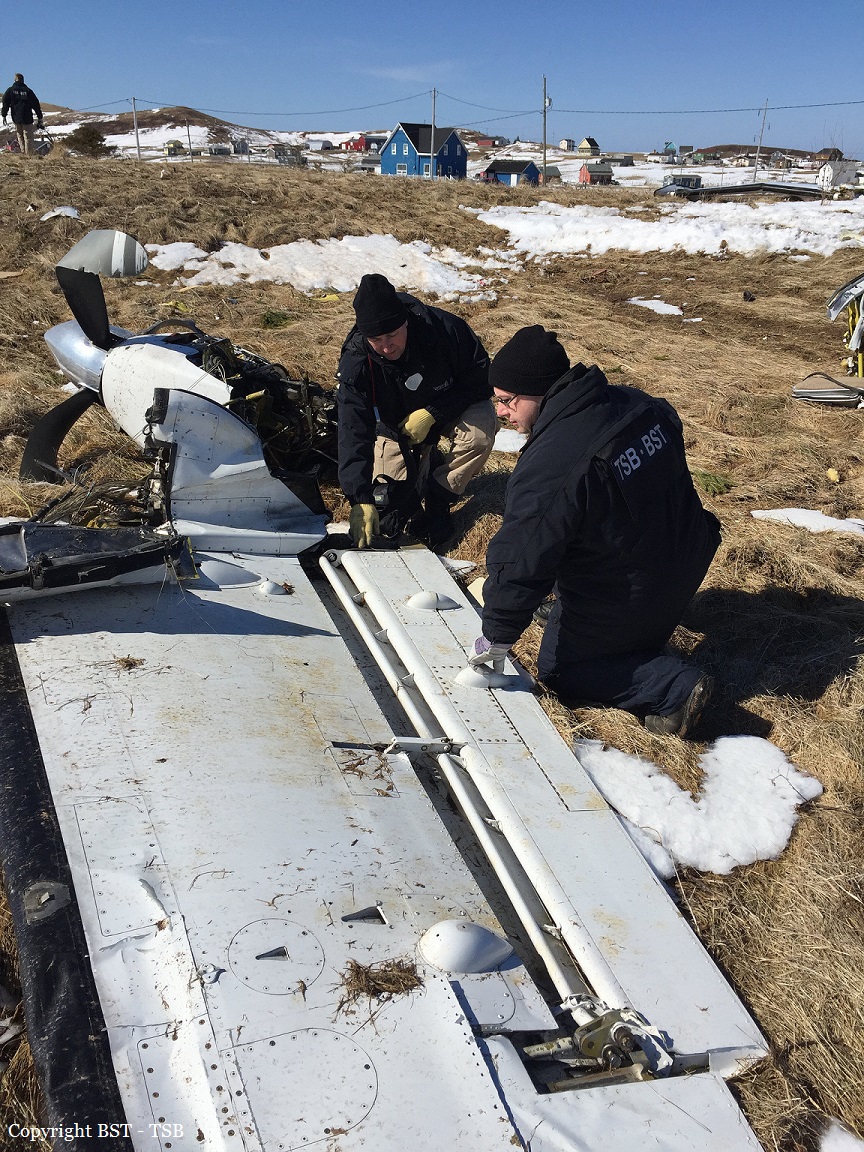
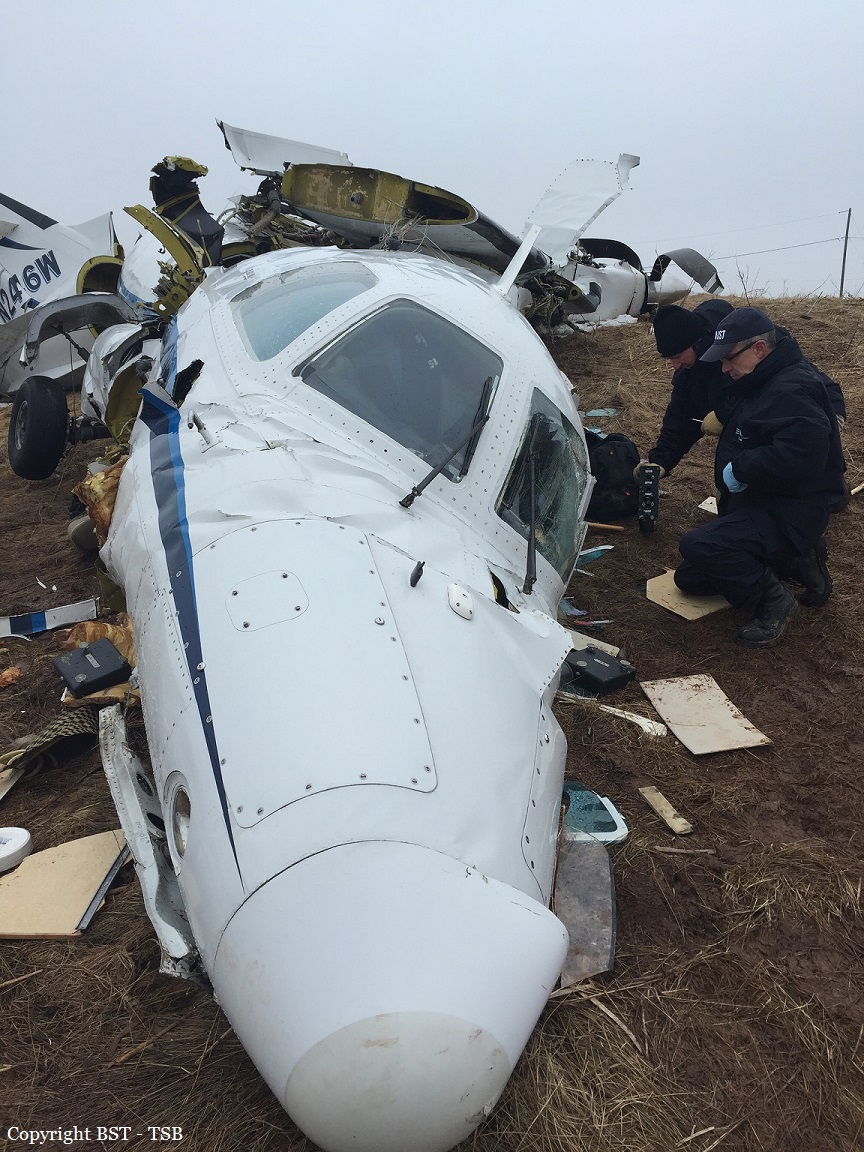
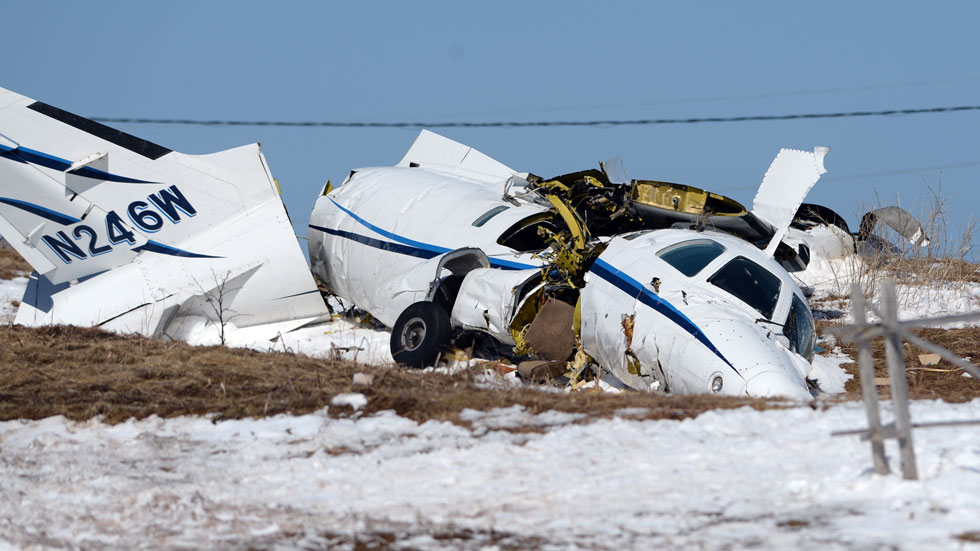
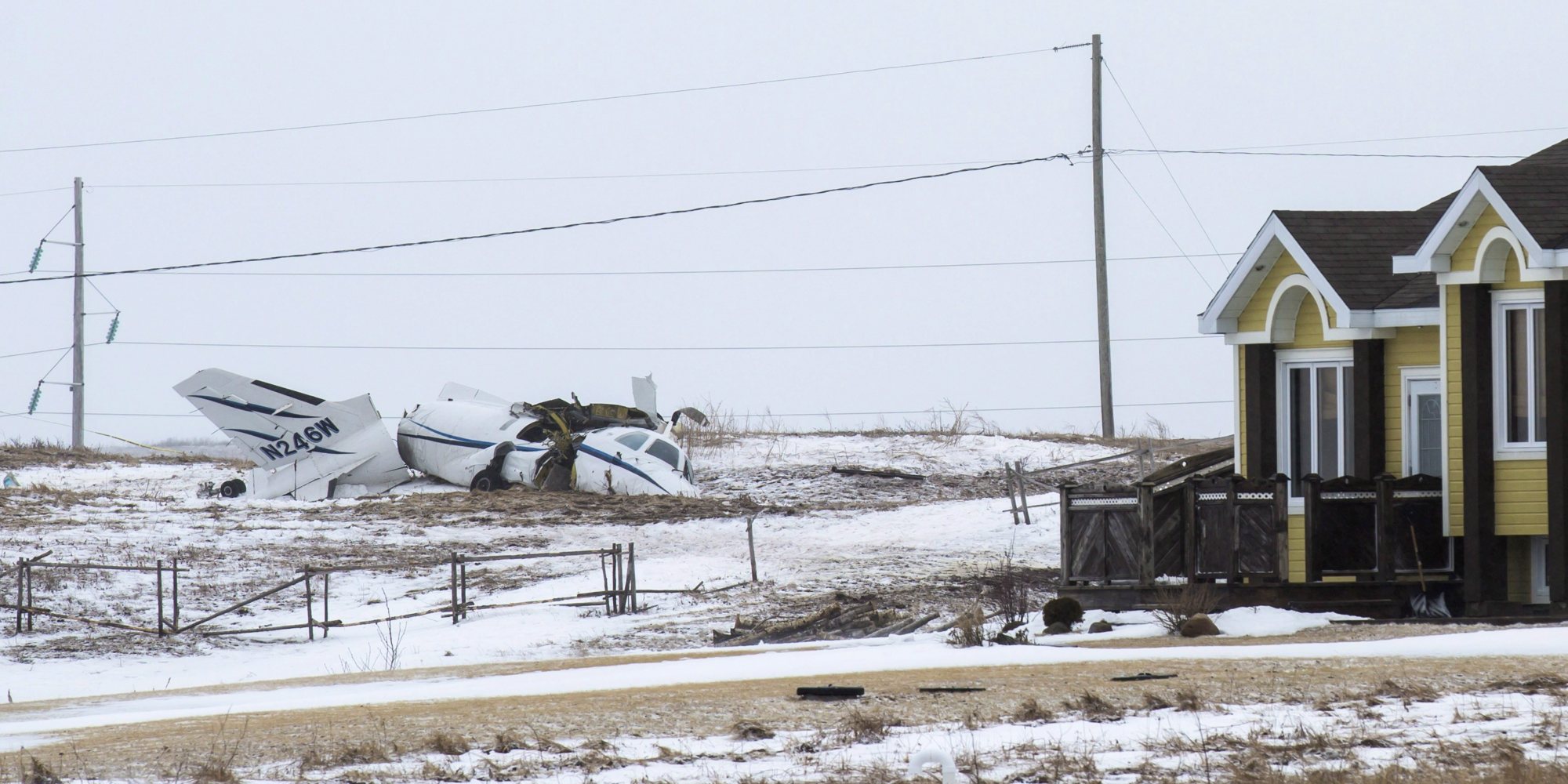
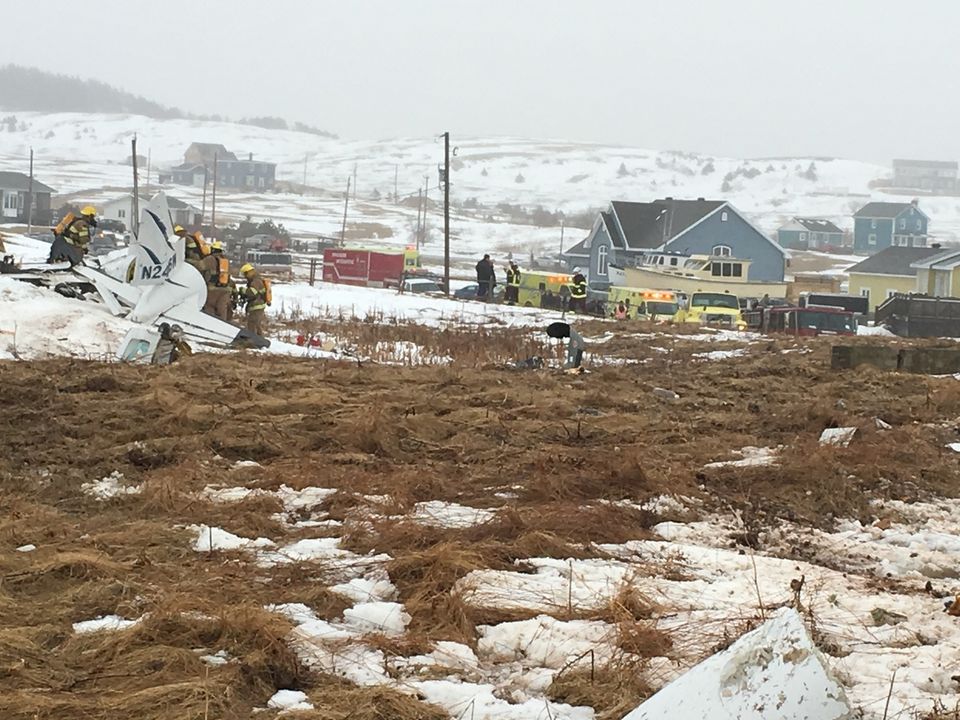
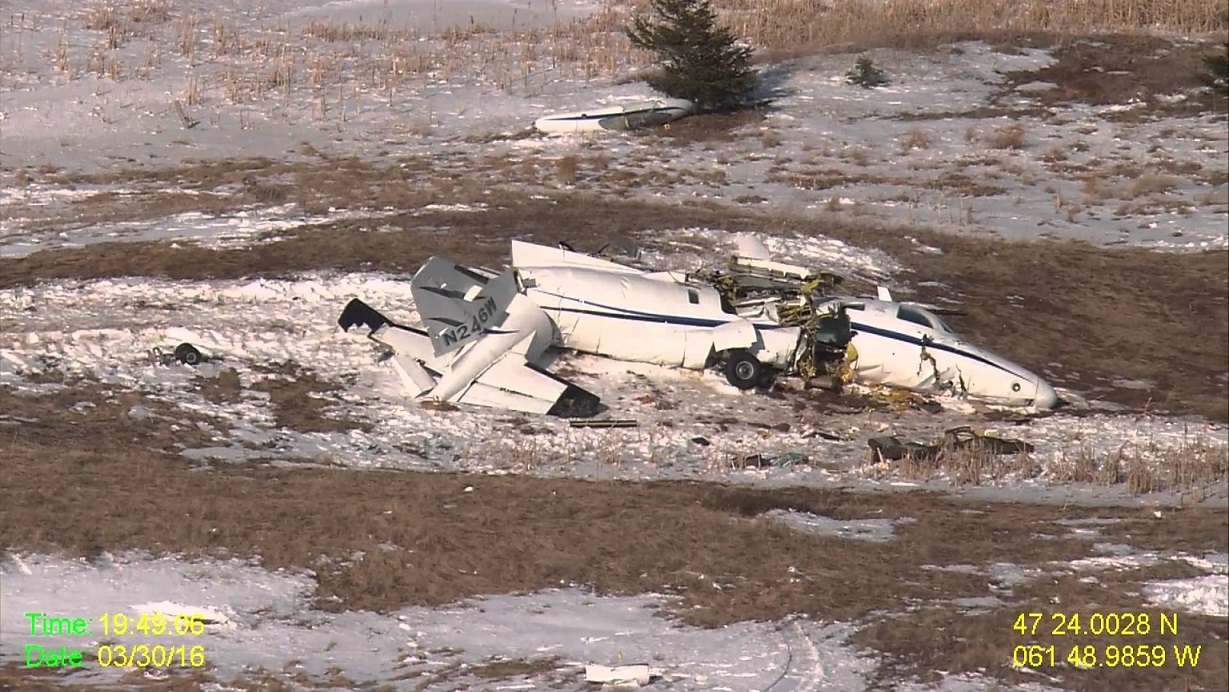
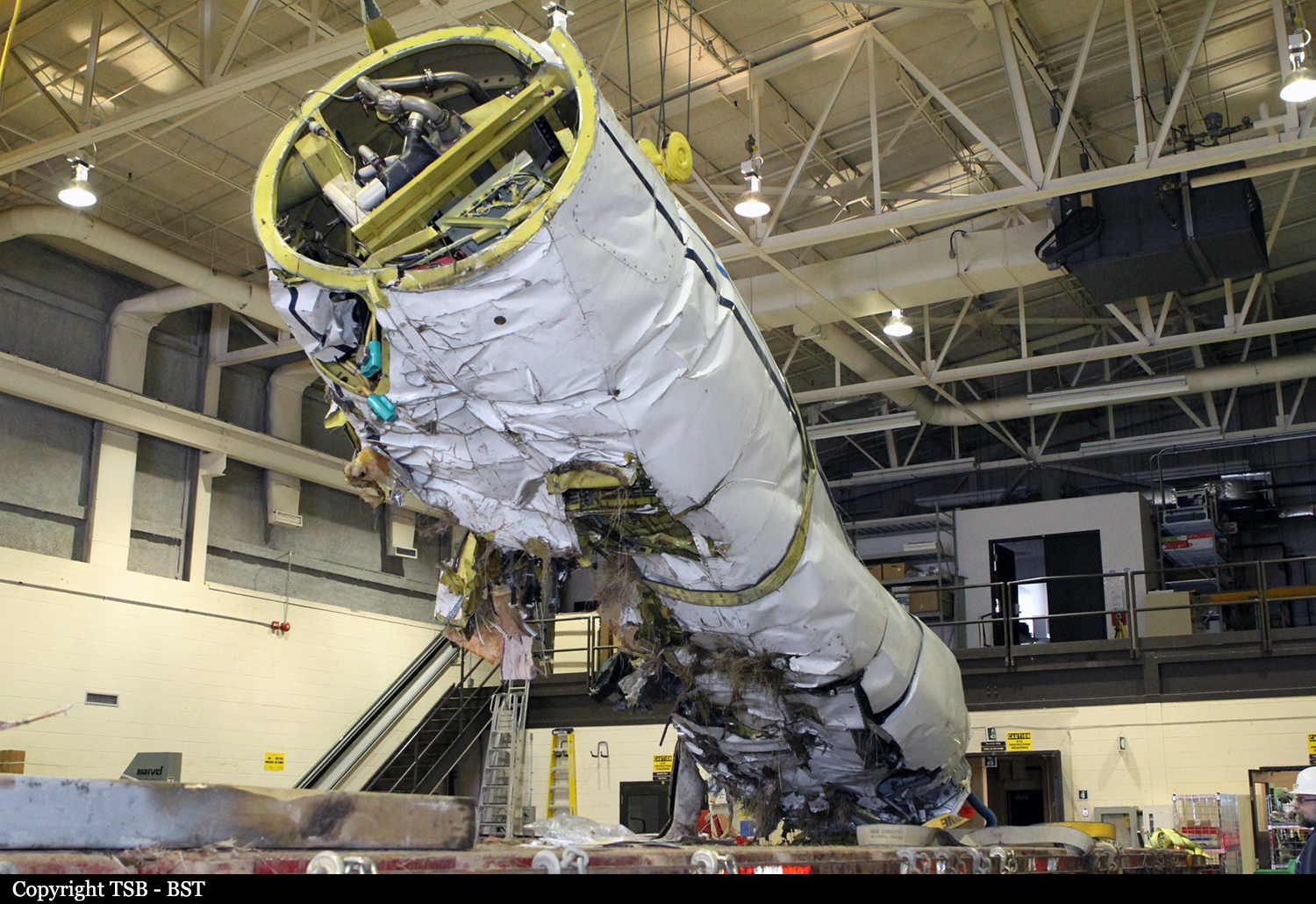
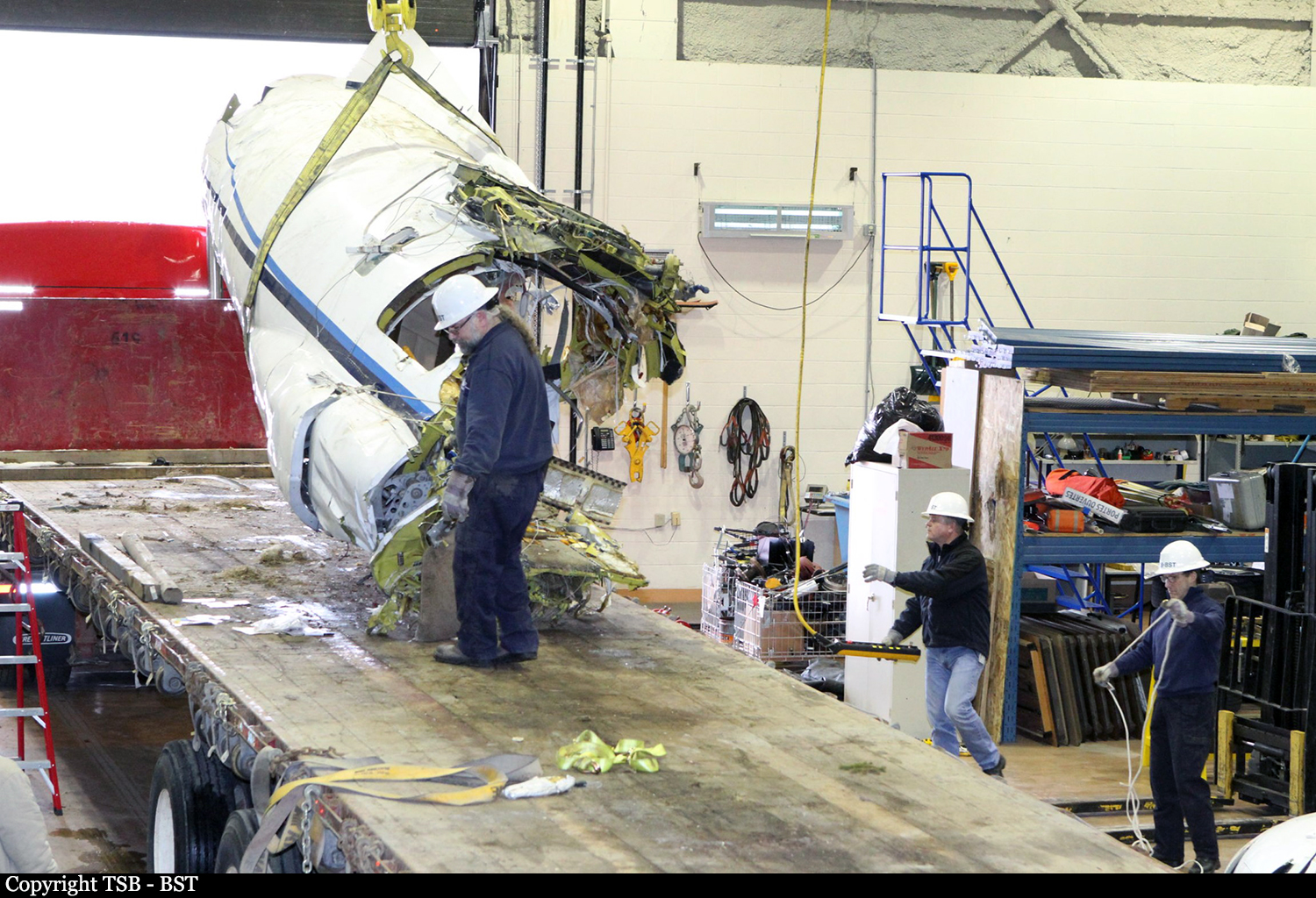
The twin engine aircraft left Montreal-Saint-Hubert Airport at 0930LT for a two hours flight to Le Havre-aux-Maisons, on Magdalen Islands. Upon arrival, weather conditions were marginal with low ceiling, visibility up to two miles, rain and wind gusting to 30 knots. During the final approach to Runway 07, when the aircraft was 1.4 nautical miles west-southwest of the airport, it deviated south of the approach path. At approximately 1230 Atlantic Daylight Time, aircraft control was lost, resulting in the aircraft striking the ground in a near-level attitude. The aircraft was destroyed and all seven occupants were killed, among them Jean Lapierre, political commentator and former Liberal federal cabinet minister of Transport. All passengers were flying to Magdalen Islands to the funeral of Lapierre's father, who died last Friday. The captain, Pascal Gosselin, was the founder and owner of Aéro Teknic.
Crew:
Pascal Gosselin, pilot.
Passengers:
Fabrice Labourel, acting as a copilot,
Jean Lapierre,
Nicole Beaulieu, Jean Lapierre's wife,
Martine Lapierre, Jean Lapierre's sister,
Marc Lapierre, Jean Lapierre's brother,
Louis Lapierre, Jean Lapierre's brother.
Probable cause:
Findings as to causes and contributing factors:
1. The pilot’s inability to effectively manage the aircraft’s energy condition led to an unstable approach.
2. The pilot “got behind” the aircraft by allowing events to control his actions, and cognitive biases led him to continue the unstable approach.
3. A loss of control occurred when the pilot rapidly added full power at low airspeed while at low altitude, which caused a power-induced upset and resulted in the aircraft rolling sharply to the right and descending rapidly.
4. It is likely that the pilot was not prepared for the resulting power-induced upset and, although he managed to level the wings, the aircraft was too low to recover before striking the ground.
5. The pilot’s high workload and reduced time available resulted in a task-saturated condition, which decreased his situational awareness and impaired his decision making.
6. It is unlikely that the pilot’s flight skills and procedures were sufficiently practised to ensure his proficiency as the pilot-in-command for single-pilot operation on the MU2B for the conditions experienced during the occurrence flight.

Findings as to risk:
1. If the weight of an aircraft exceeds the certified maximum take-off weight, there is a risk of aircraft performance being degraded, which may jeopardize the safety of the flight.
2. If pilots engage in non-essential communication during critical phases of flight, there is an increased risk that they will be distracted, which reduces the time available to complete cockpit activities and increases their workload.
3. If flight, cockpit, or image/video data recordings are not available to an investigation, the identification and communication of safety deficiencies to advance transportation safety may be precluded.
4. If pilots do not recognize that changing circumstances require a new plan, then plan continuation bias may lead them to continue with their original plan even though it may not be safe to do so.
5. If pilots do not apply stable-approach criteria, there is a risk that they will continue an unstable approach to a landing, which can lead to an approach-and-landing accident.
6. If pilots are not prepared to conduct a go-around on every approach, they risk not responding appropriately to situations that require one.
7. If a flight plan does not contain search-and-rescue supplementary information, and if that information is not transmitted or readily available, there is a risk that first responders will not have the information they need to respond adequately.

Other findings:
1. Transport Canada does not monitor or track the number of days foreign-registered aircraft are in Canada during a given 12-month period.
2. Turbulence and icing were not considered factors in this occurrence.
3. Transport Canada considers that the discretionary installation of an angle-of-attack system on normal-category, type-certificated, Canadian-registered aircraft is a major modification that requires a supplemental type certificate approval.
4. Although the aircraft was not in compliance with Airworthiness Directive 2006-17-05 at the time of the occurrence, there was no indication that it was operating outside of the directive’s specifications.
5. Although not required by regulation, the installation and use of a lightweight flight recording system during the occurrence flight, as well as the successful retrieval of its data during the investigation, permitted a greater understanding of this accident.
Final Report:

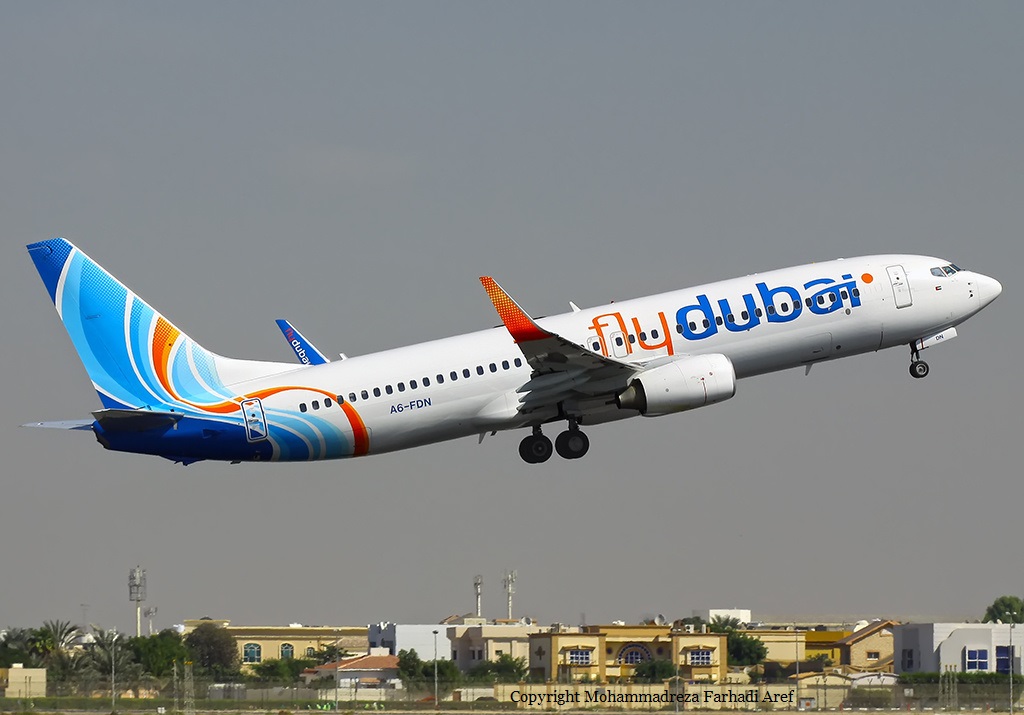
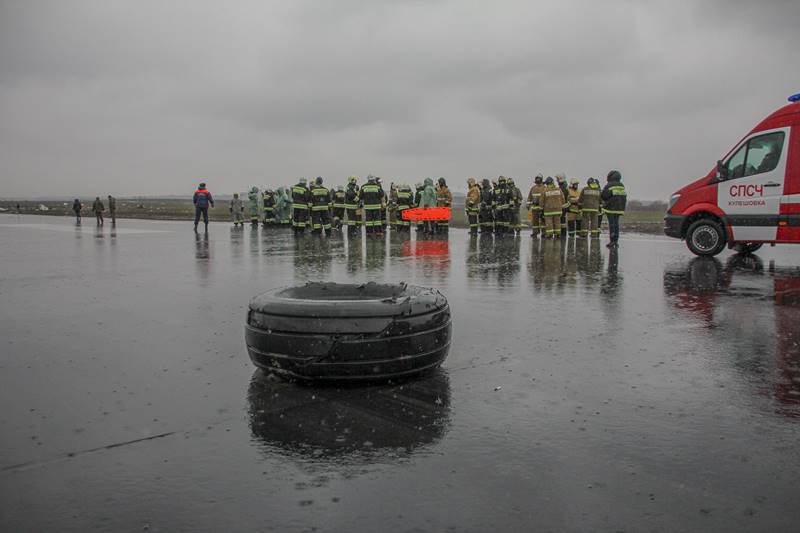
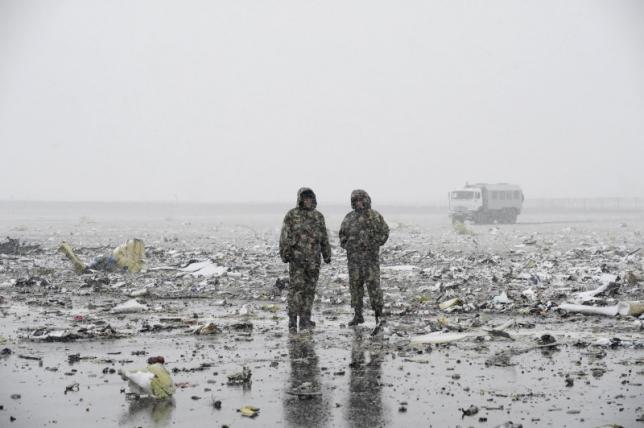
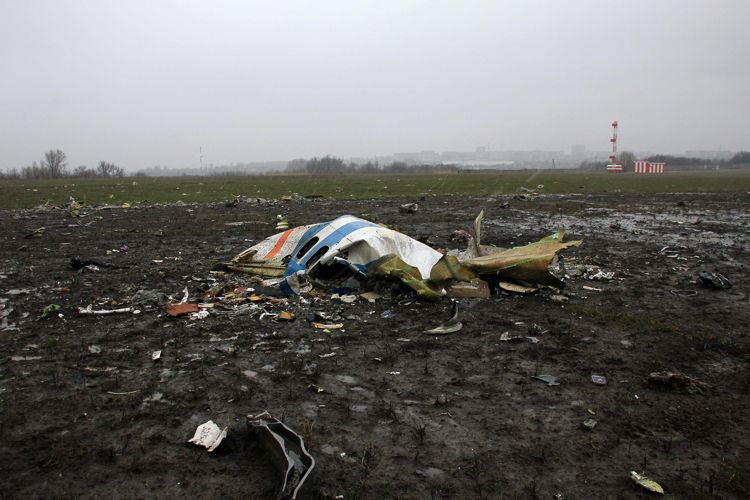
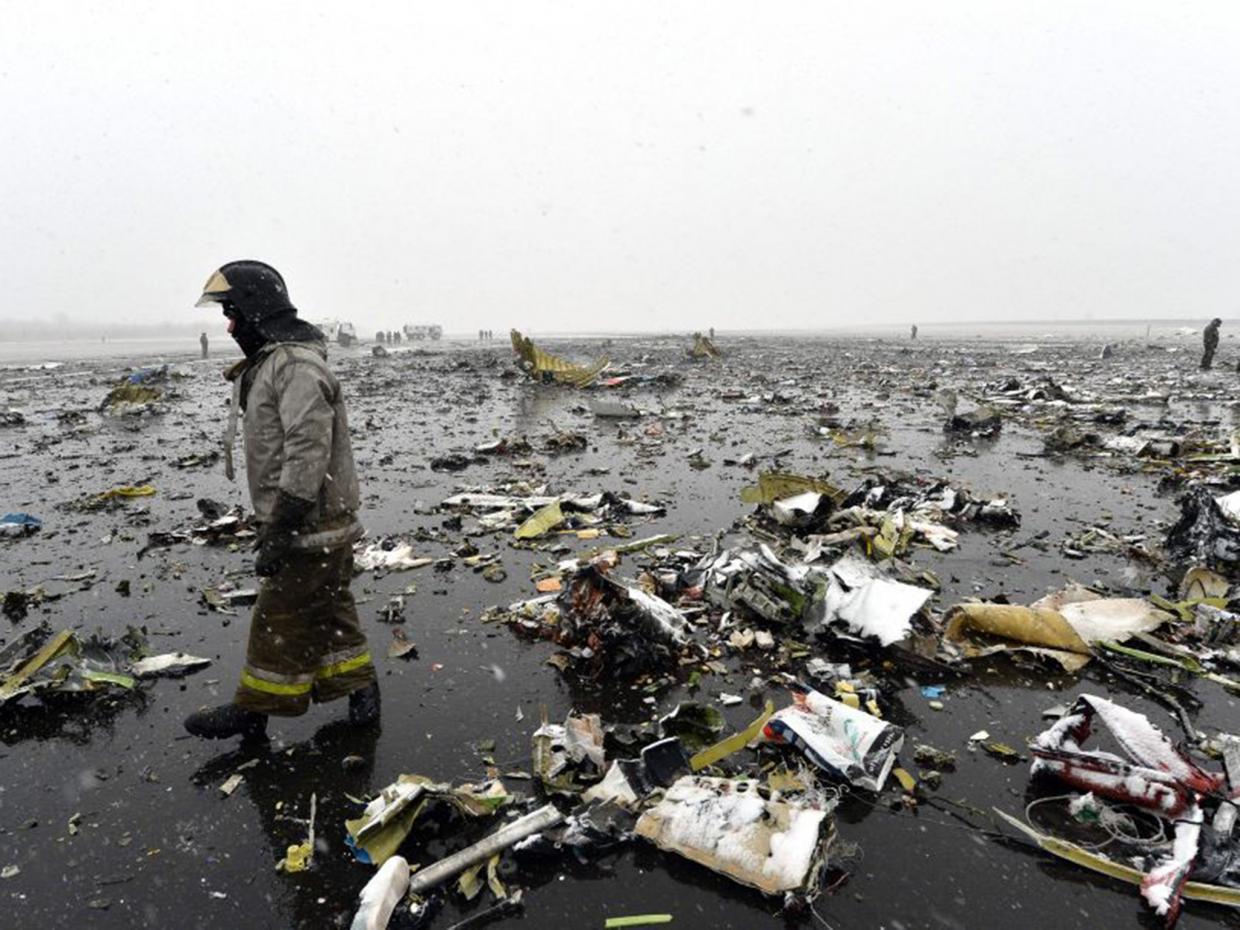
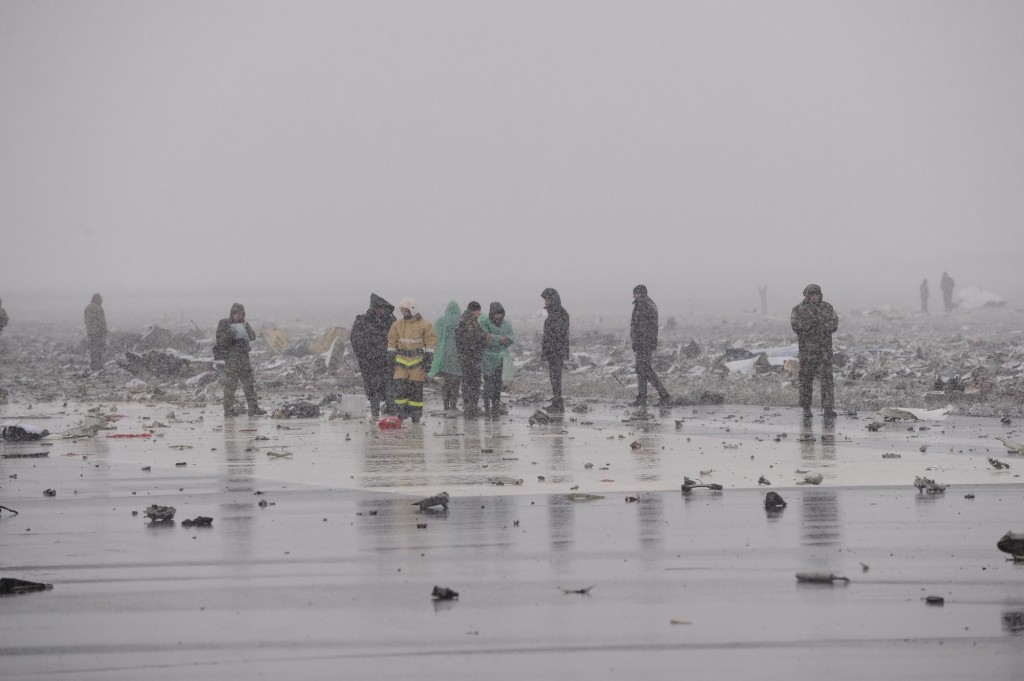
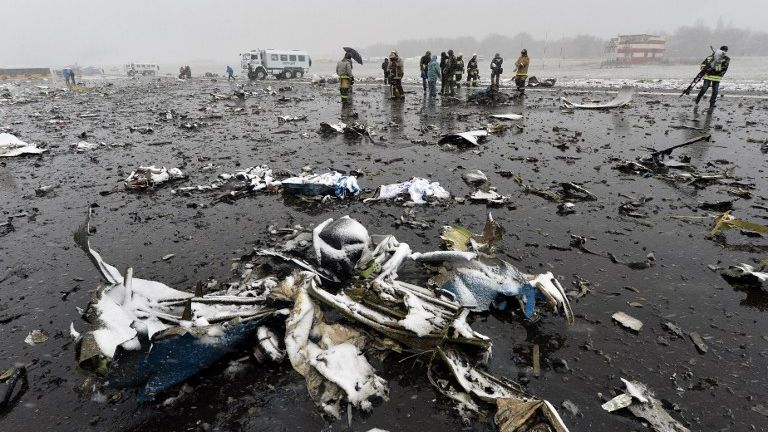
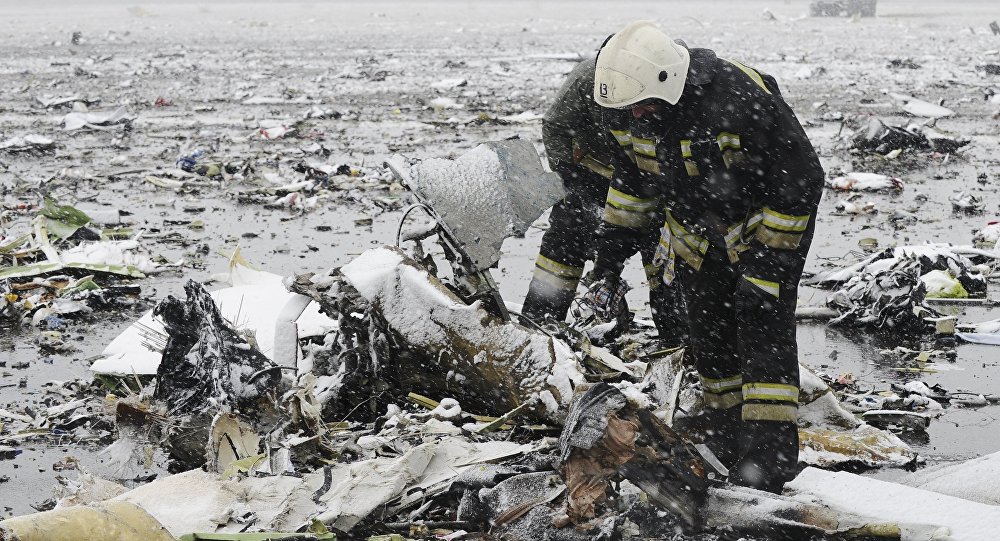
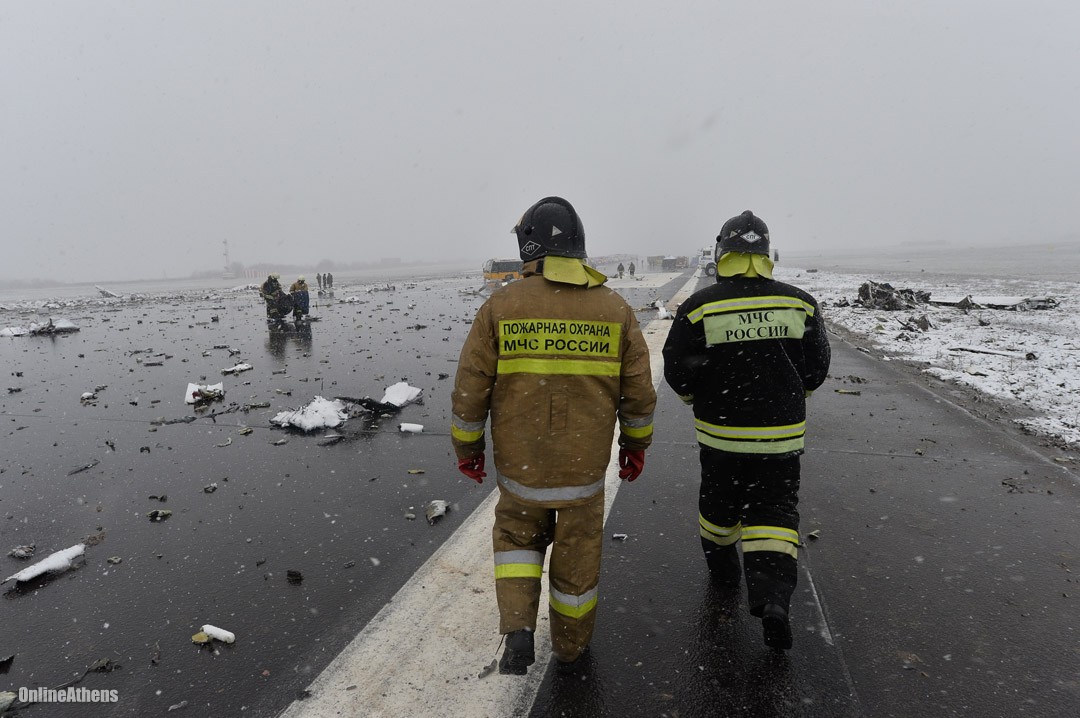
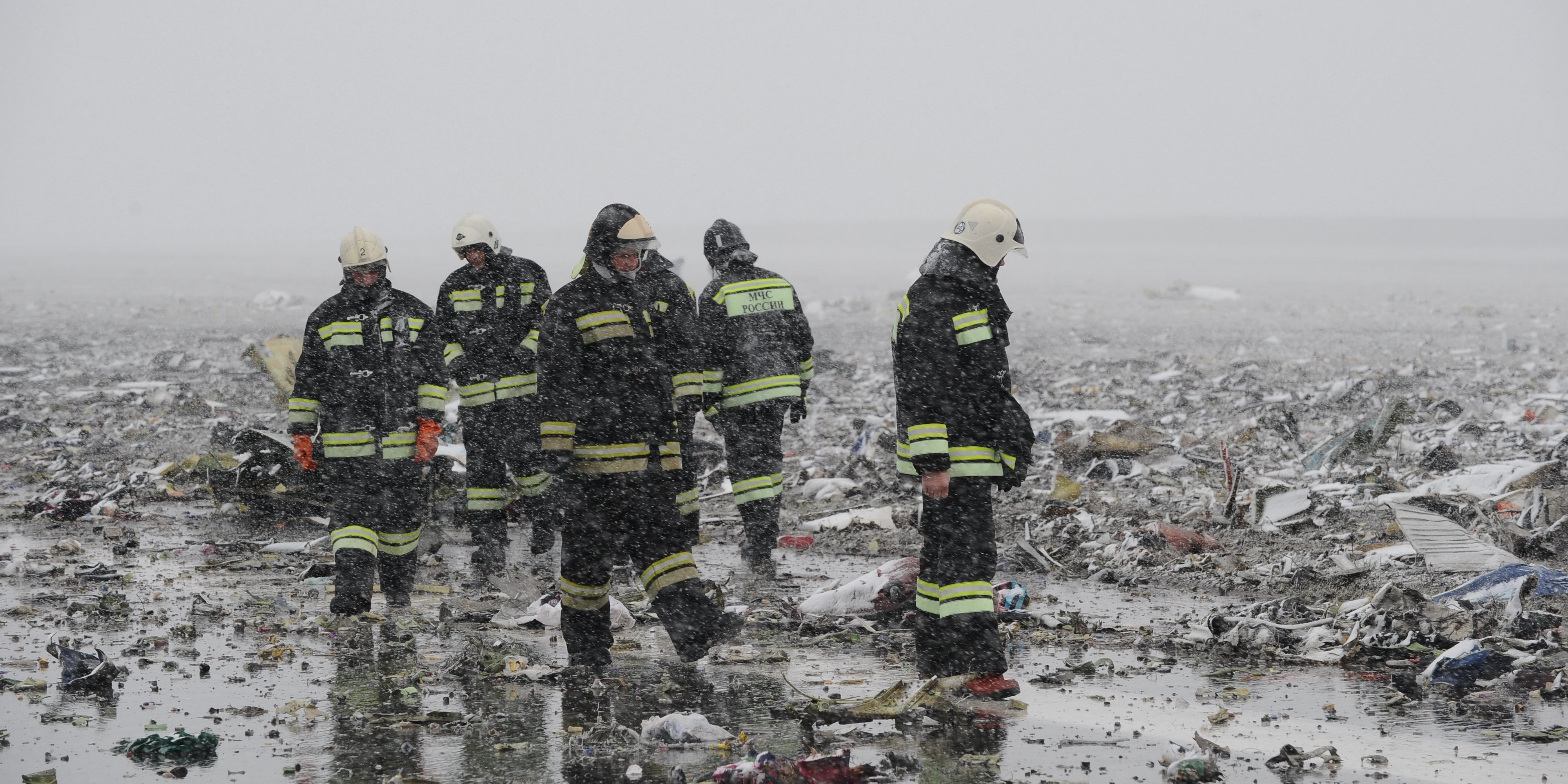
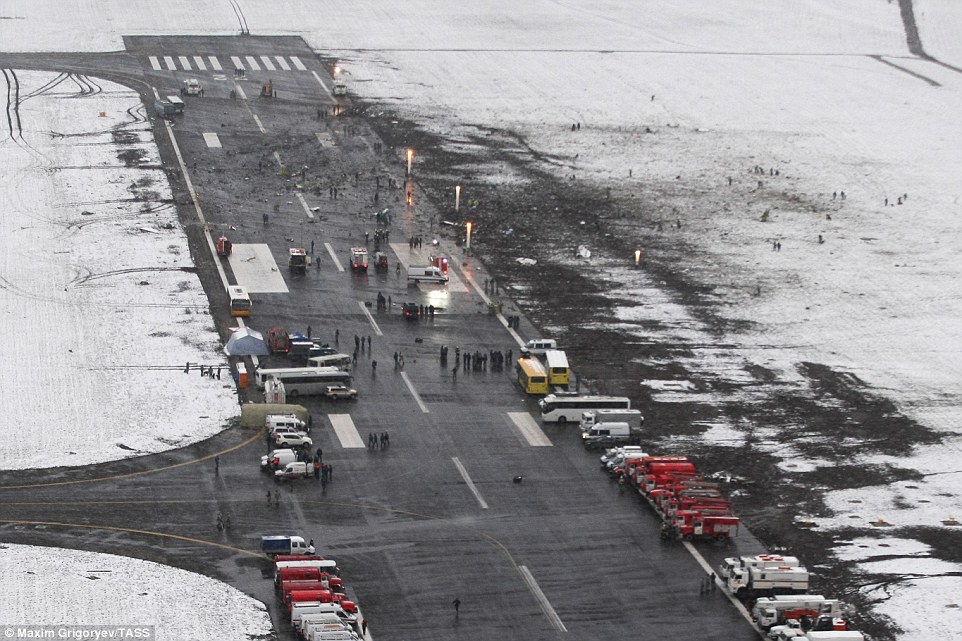
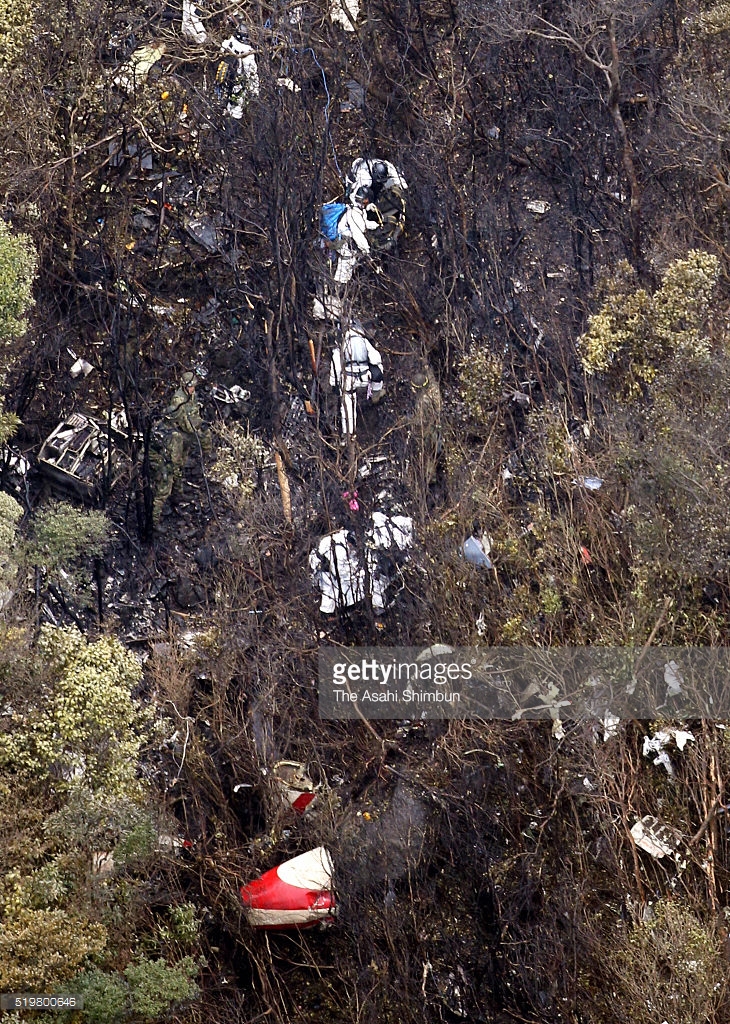
Crash of a Boeing 737-8KN in Rostov-on-Don: 62 killed

Date & Time: Mar 19, 2016 at 0342 LT
Type of aircraft:
Operator:

Registration:
A6-FDN
Survivors:
No
Schedule:
Dubai - Rostov-on-Don
MSN:
40241/3517
YOM:
2010
Flight number:
FZ981
Country:
Region:
Crew on board:
7
Crew fatalities:
Pax on board:
55
Pax fatalities:
Other fatalities:
Total fatalities:
62
Captain / Total flying hours:
5961
Captain / Total hours on type:
4682.00
Copilot / Total flying hours:
5767
Copilot / Total hours on type:
1100
Aircraft flight hours:
21257
Aircraft flight cycles:
9421
Circumstances:
At the overnight into 19.03.2016 the Flydubai airline flight crew, consisting of the PIC and F/O, was performing the round-trip international scheduled passenger flight FDB 981/982 on route
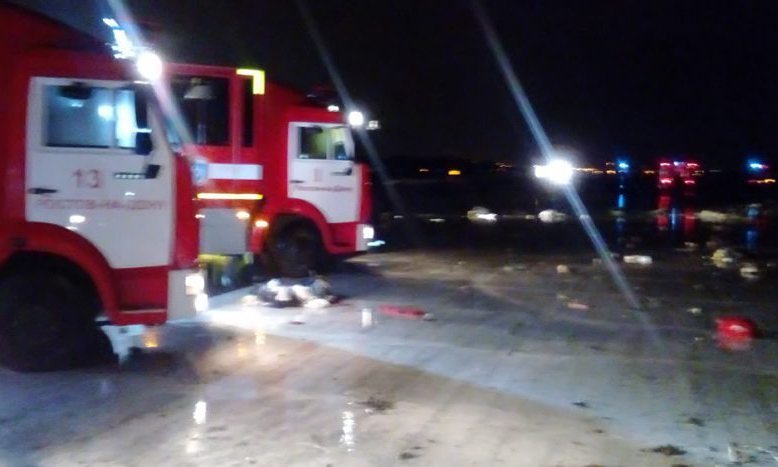
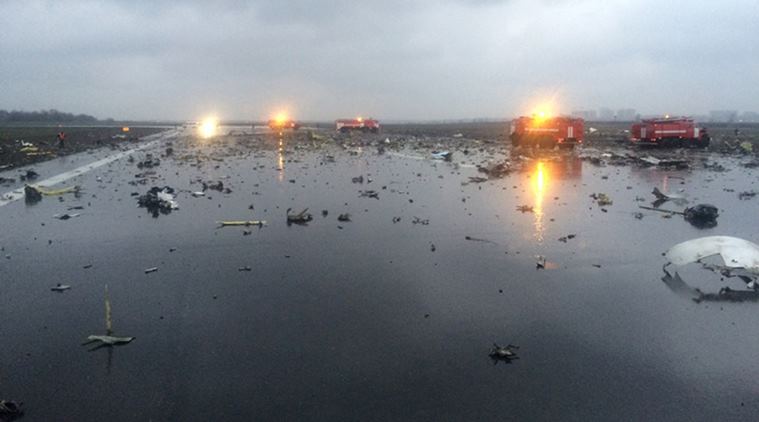
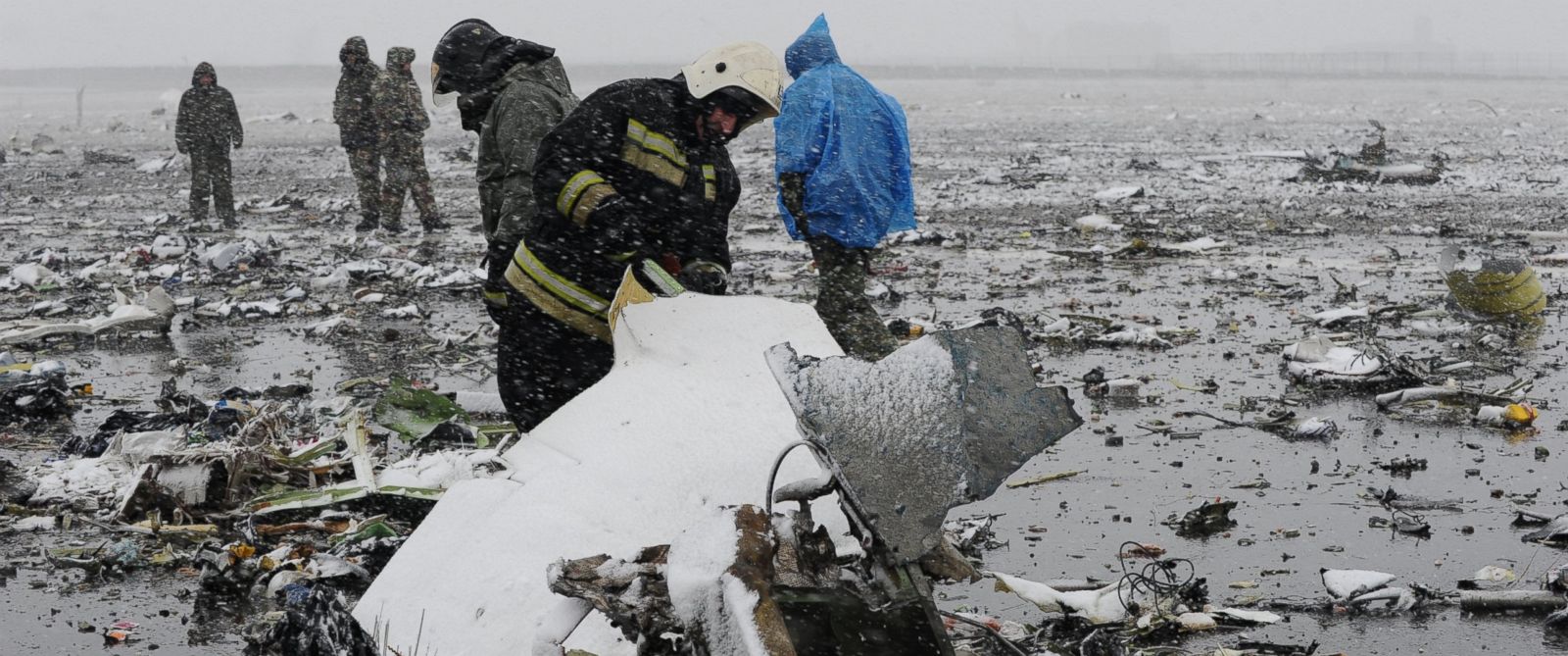
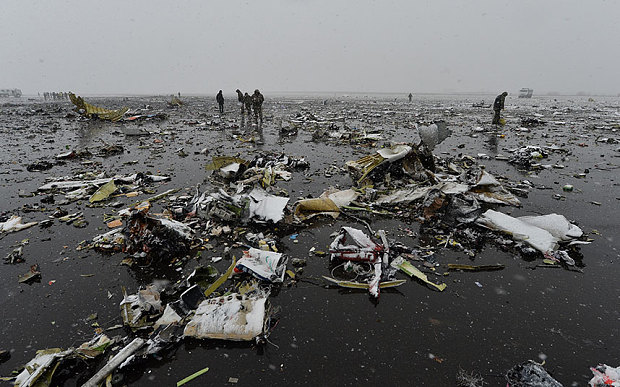
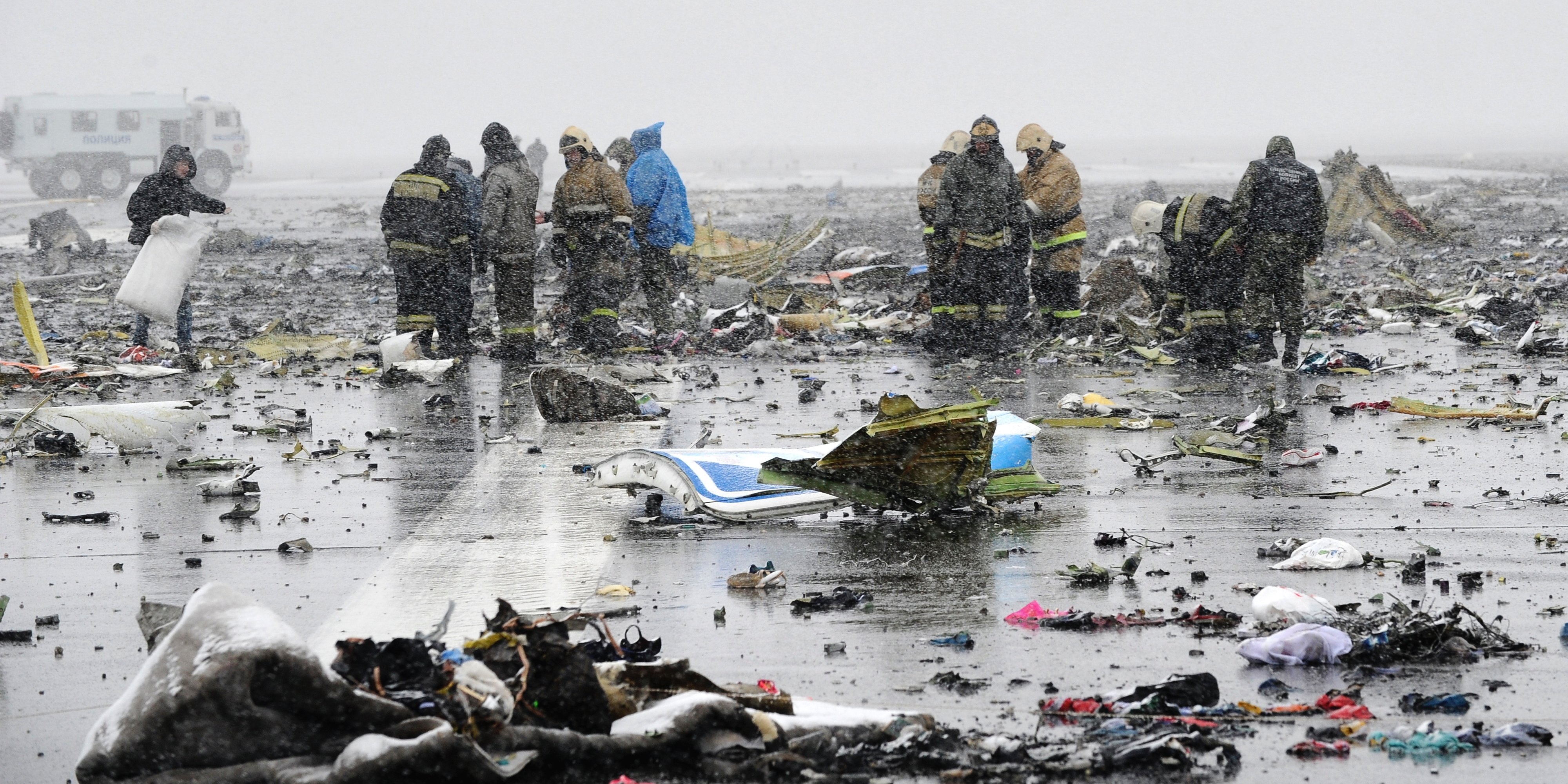
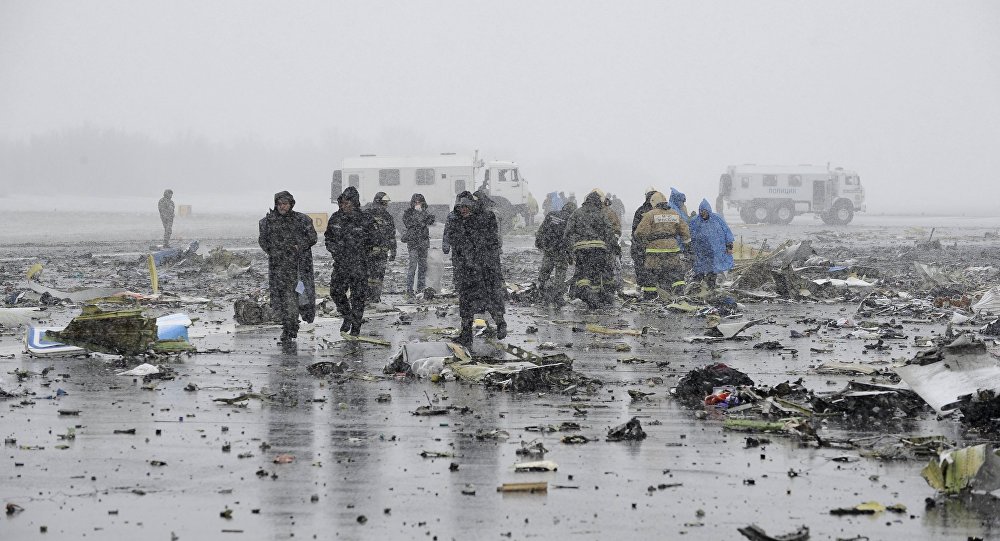
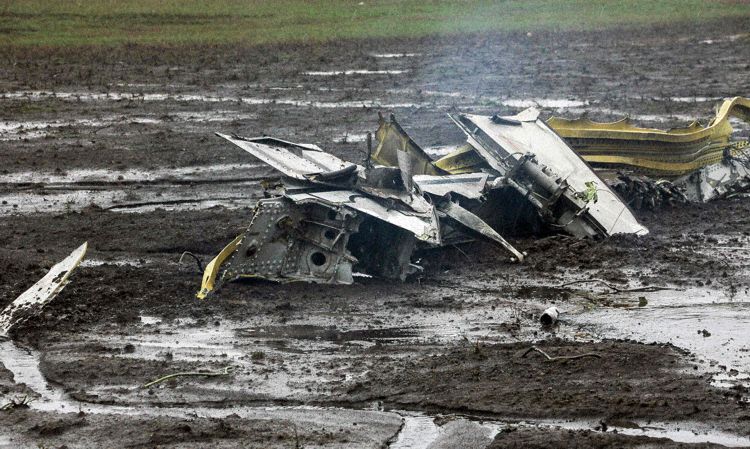
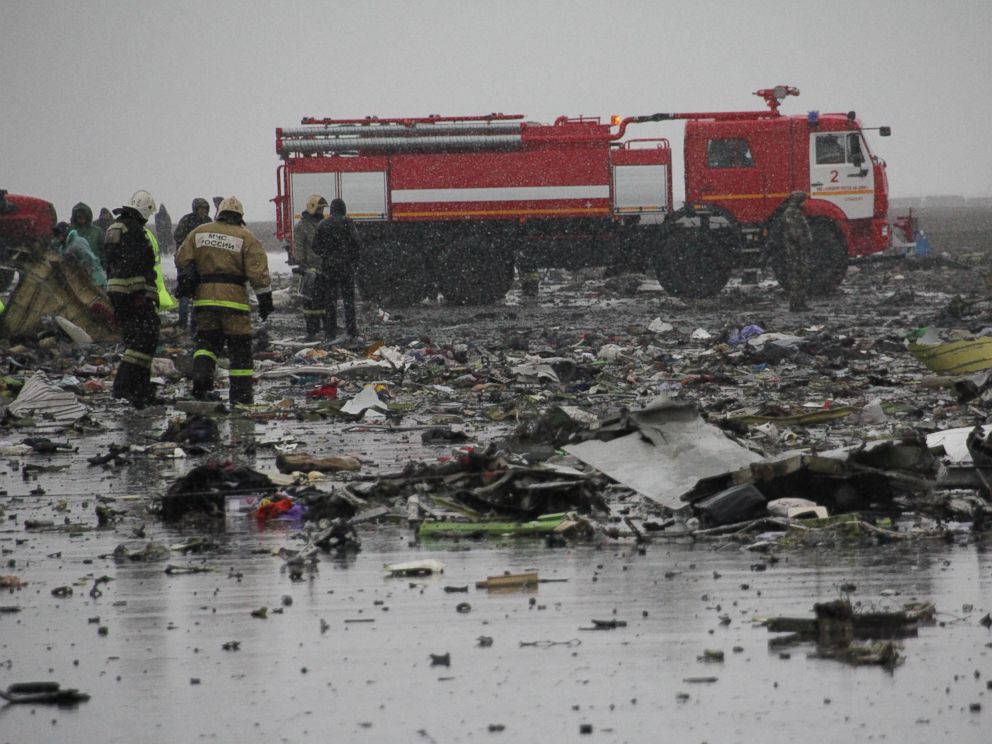
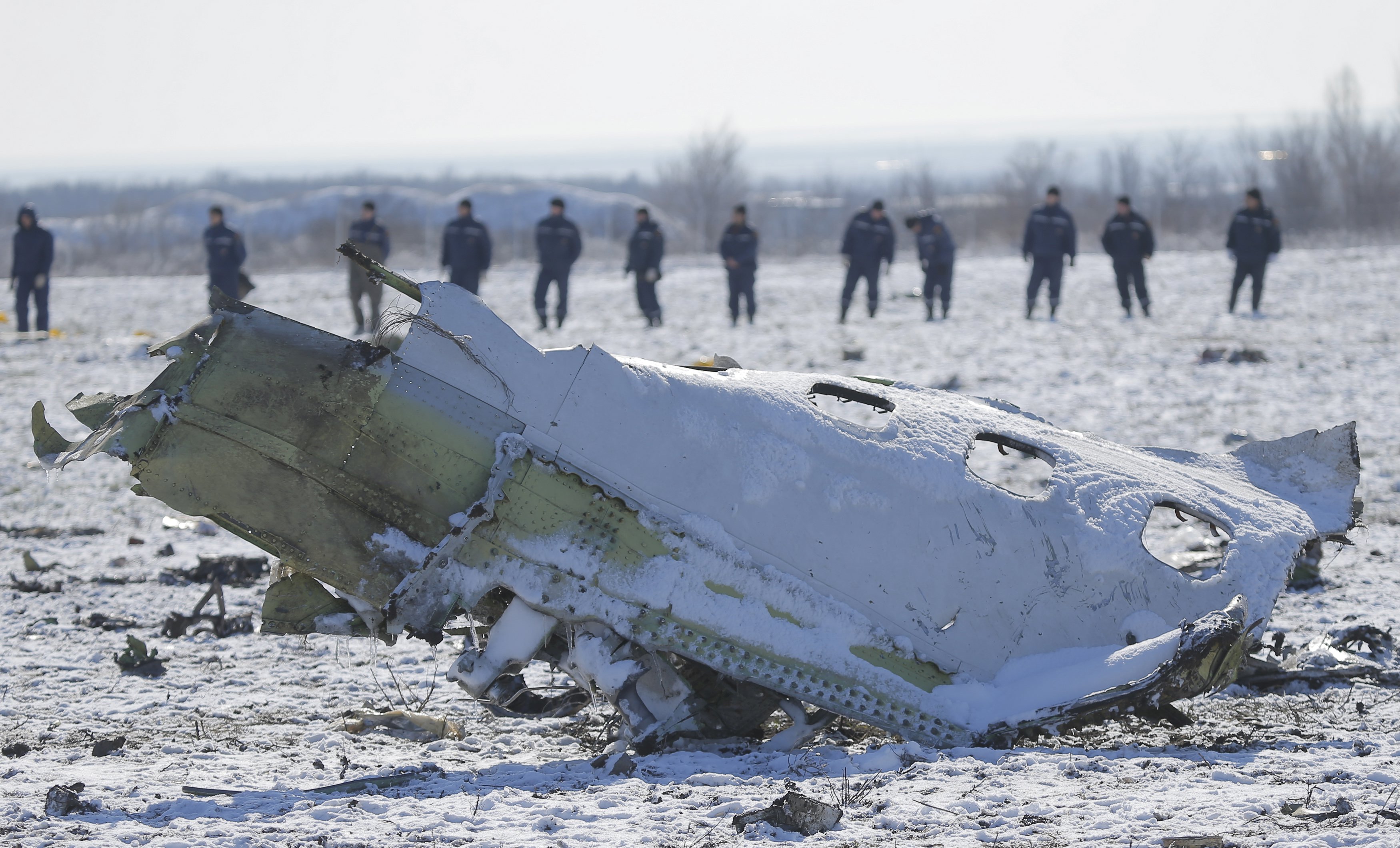
Dubai (OMDB) – Rostov-on-Don (URRR) – Dubai (OMDB) on the B737-8KN A6-FDN aircraft. At 18:37 on 18.03.2016 the aircraft took off from the Dubai airport. The flight had been performed in IFR. At 18:59:30 FL360 was reached. The further flight has been performed on this very FL. The descent from FL has been initiated at 22:17. Before starting the descent, the crew contacted the ATC on the Rostov-on-Don airport actual weather and the active RWY data. In progress of the glide path descent to perform landing with magnetic heading 218° (RWY22) the crew relayed the presence of “windshear” on final to the ATC (as per the aboard windshear warning system activation). At 22:42:05 from the altitude of 1080 ft (330 m) above runway level performed go-around. Further on the flight was proceeded at the holding area, first on FL080, then on FL150. At 00:23 on 19.03.2016, the crew requested descent for another approach. It was an ILS approach. The A/P was disengaged by the crew at the altitude of 2165 ft QNH (575 m QFE), and the A/T at the altitude of 1960 ft QNH (510 m QFE). . In the progress of another approach the crew made the decision to initiate go-around and at 00:40:50, from the altitude of 830 ft (253 m) above the runway level, started the maneuver. After the reach of the altitude of 3350 ft (1020 m) above the runway level the aircraft transitioned to a steep descent and at 00:41:49 impacted the ground (it collided the surface of the artificial runway at the distance of about 120 m off the RWY22 threshold) with the nose-down pitch of about 50⁰ and IAS about 340 kt (630 km/h). The aircraft disintegrated on impact and all 62 occupants were killed.
Probable cause:
The fatal air accident to the Boeing 737-8KN A6-FDN aircraft occurred during the second go around, due to an incorrect aircraft configuration and crew piloting, the subsequent loss of PIC’s situational awareness in nighttime in IMC. This resulted in a loss of control of the aircraft and its impact with the ground. The accident is classified as Loss of Control In-Flight (LOC-I) occurrence.
Most probably, the contributing factors to the accident were:
- The presence of turbulence and gusty wind with the parameters, classified as a moderate to-strong "windshear" that resulted in the need to perform two go-arounds;
- The lack of psychological readiness (not go-around minded) of the PIC to perform the second go-around as he had the dominant mindset on the landing performance exactly at the destination aerodrome, having formed out of the "emotional distress" after the first unsuccessful approach (despite the RWY had been in sight and the aircraft stabilized on the glide path, the PIC had been forced to initiate go-around due to the windshear warning activation), concern on the potential exceedance of the duty time to perform the return flight and the recommendation of the airline on the priority of landing at the destination aerodrome;
- The loss of the PIC’s leadership in the crew after the initiation of go-around and his "confusion" that led to the impossibility of the on-time transition of the flight mental mode from "approach with landing" into "go-around";
- The absence of the instructions of the maneuver type specification at the go-around callout in the aircraft manufacturer documentation and the airline OM;
- The crew’s uncoordinated actions during the second go-around: on the low weight aircraft the crew was performing the standard go-around procedure (with the retraction of landing gear and flaps), but with the maximum available thrust, consistent with the Windshear Escape Maneuver procedure that led to the generation of the substantial excessive nose-up moment and significant (up to 50 lb/23 kg) "pushing" forces on the control column to counteract it;
- The failure of the PIC within a long time to create the pitch, required to perform go around and maintain the required climb profile while piloting aircraft unbalanced in forces;
- The PIC’s insufficient knowledge and skills on the stabilizer manual trim operation, which led to the long-time (for 12 sec) continuous stabilizer nose-down trim with the subsequent substantial imbalance of the aircraft and its upset encounter with the generation of the negative G, which the crew had not been prepared to. The potential impact of the somatogravic "pitch-up illusion" on the PIC might have contributed to the long keeping the stabilizer trim switches pressed;
- The psychological incapacitation of the PIC that resulted in his total spatial disorientation, did not allow him to respond to the correct prompts of the F/O;
- The absence of the criteria of the psychological incapacitation in the airline OM, which prevented the F/O from the in-time recognition of the situation and undertaking more decisive actions;
- The possible operational tiredness of the crew: by the time of the accident the crew had been proceeding the flight for 6 hours, of which 2 hours under intense workload that implied the need to make non-standard decisions; in this context the fatal accident occurred at the worst possible time in terms of the circadian rhythms, when the human performance is severely degraded and is at its lower level along with the increase of the risk of errors.
The lack of the objective information on the HUD operation (there were no flight tests of the unit carried out into the entire range of the operational G, including the negative ones; the impossibility to reproduce the real HUD readings in the progress of the accident flight, that is the image the pilot was watching with the consideration of his posture in the seat trough the stream video or at the FFS) did not allow making conclusion on its possible impact on the flight outcome. At the same time the investigation team is of the opinion that the specific features of the HUD indication and display in conditions existed during final phase of the accident flight (severe turbulence, the aircraft upset encounter with the resulting negative G, the significant difference between the actual and the target flight path) that generally do not occur under conditions of the standard simulator sessions, could have affected the situational awareness of the PIC, having been in the highly stressed state.
Final Report: