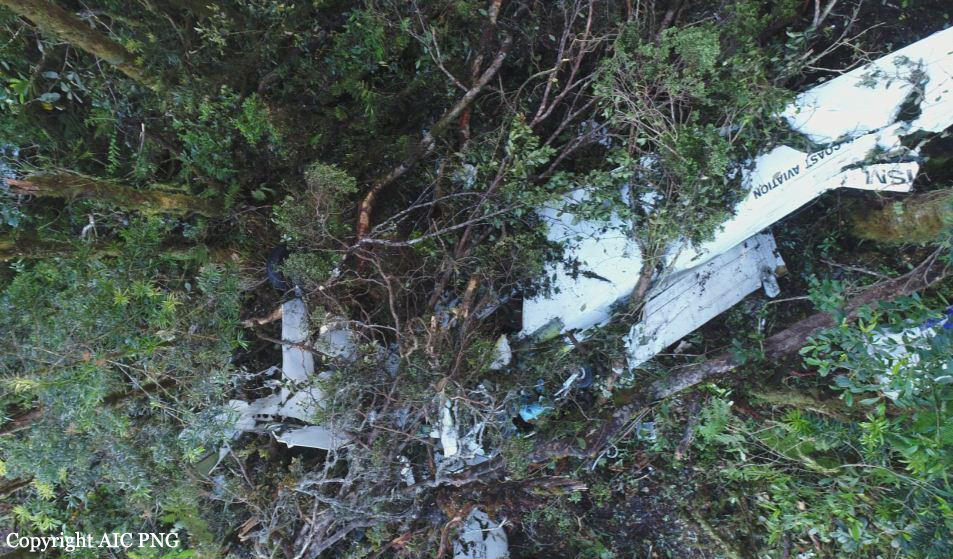
Crash of a Britten-Norman BN-2A Islander in Saidor Gap: 1 killed

Date & Time: Dec 23, 2017 at 1010 LT
Type of aircraft:
Operator:
Registration:
P2-ISM
Flight Phase:
Flight Type:
Survivors:
No
Site:
Schedule:
Derim - Lae
MSN:
227
YOM:
1970
Region:
Crew on board:
1
Crew fatalities:
Pax on board:
0
Pax fatalities:
Other fatalities:
Total fatalities:
1
Captain / Total flying hours:
1982
Captain / Total hours on type:
139.00
Aircraft flight hours:
32232
Circumstances:
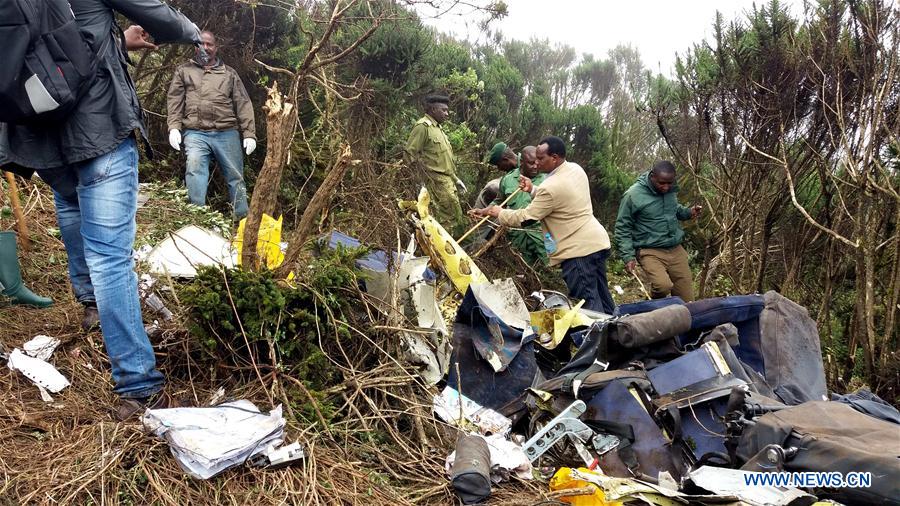
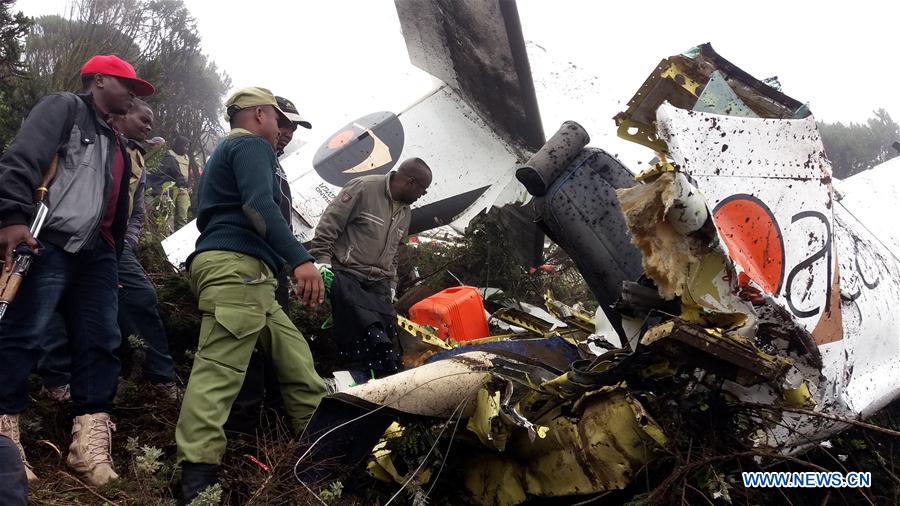
On 23 December 2017, at 00:10 UTC (10:10 local), a Britten Norman BN-2A Islander aircraft, registered P2-ISM (ISM), owned and operated by North Coast Aviation, impacted a ridge, at about 9,500 ft (6°11'29"S, 146°46'11"E) that runs down towards the Sapmanga Valley from the Sarawaget Ranges, Morobe Province. The pilot elected to track across the Sarawaget ranges (See figure 1), from Derim Airstrip to Nadzab Airport, Morobe Province, not above 10,000 ft. The track flown from Derim was to the northwest 6.5 nm (12 km) to a point 0.8 nm (1.5 km) westsouthwest of Yalumet Airstrip where the aircraft turned southwest to track to the Saidor Gap. GPS recorded track data immediately prior to the last GPS fix showed that the aircraft was on a shallow descent towards the ridge. The aircraft impacted the ridge about 150 m beyond the last fix. There were no reports of a transmission of an ELT distress signal. During the search for the aircraft, what appeared to be the right aileron was found hanging from a tree near the top of the heavily-timbered, densely-vegetated ridge. The remainder of the wreckage was found about 130 m from the aileron along the projected track. The aircraft impacted the ground in a steep nose-down, right wing-low attitude. The majority of the aircraft wreckage was contained at the ground impact point. The aircraft was destroyed by impact forces. The pilot, the sole occupant, who initially survived, was reported deceased by the rescue team on 27 December 2017 at 22:10. The pilot had made contact with one of the operator’s pilots at 16:15 on 23 December. The pilot’s time of death, recorded on the Death Certificate, was 10:40 am local on 24 December. Rescuers felled trees on the steep heavily timbered, densely vegetated slope about 20 metres from the wreckage and constructed a helipad.
Probable cause:
Cloud build up along the pilot’s chosen route may have forced him to manoeuvre closer than normal to the ridge, in order to avoid flying into the cloud. The aircraft’s right wing struck a tree protruding from the forest canopy during controlled flight into terrain. It is likely that the right aileron mass balance became snagged on the tree and rapidly dislodged the aileron from the wing. The loss of roll control, and the aerodynamic differential, forced the aircraft to descend steeply through the forest and impacted terrain.
Final Report:

Crash of a Cessna 402C in Bahía Solano

Date & Time: Dec 20, 2017 at 0955 LT
Type of aircraft:
Operator:
Registration:
HK-4417
Flight Phase:
Survivors:
Yes
Schedule:
Bahía Solano – Quibdó
MSN:
402C-0020
YOM:
1979
Country:
Crew on board:
2
Crew fatalities:
Pax on board:
7
Pax fatalities:
Other fatalities:
Total fatalities:
0
Captain / Total flying hours:
2901
Captain / Total hours on type:
1050.00
Copilot / Total flying hours:
675
Copilot / Total hours on type:
430
Aircraft flight hours:
9711
Circumstances:
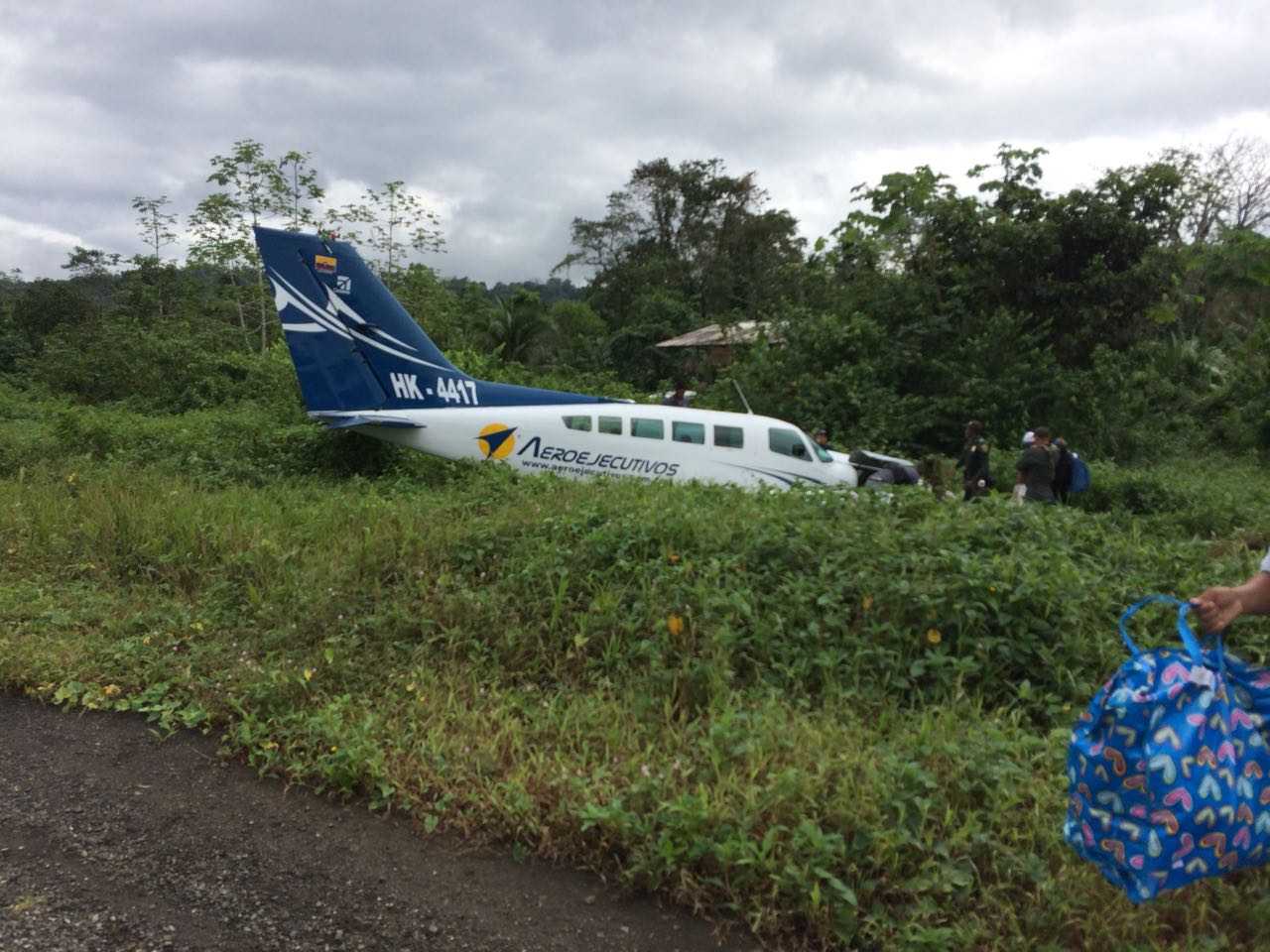
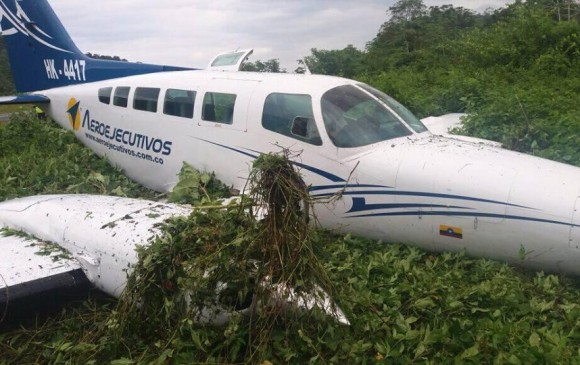
The twin engine aircraft was departing Bahía Solano-José Celestino Mutis Airport on a flight to Quibdó, carrying seven passengers and two pilots. During the takeoff roll on runway 36, the airplane deviated to the right and veered off runway. While contacting soft ground, the right main gear collapsed. The aircraft rotated and came to rest in a grassy area about 5 metres to the right of the runway. All 9 occupants evacuated safely and the aircraft was damaged beyond repair.
Probable cause:
A loss of control during the takeoff roll as a result of inappropriate techniques on the part of the pilot-in-command who suffered a loss of situational awareness by not detecting the deviation in a timely manner.
The following contributing factors were identified:
- Inadequate crew decisions to apply appropriate corrective actions,
- Inadequate crew training program,
- Poor operational supervision on part of the operator.
Final Report:

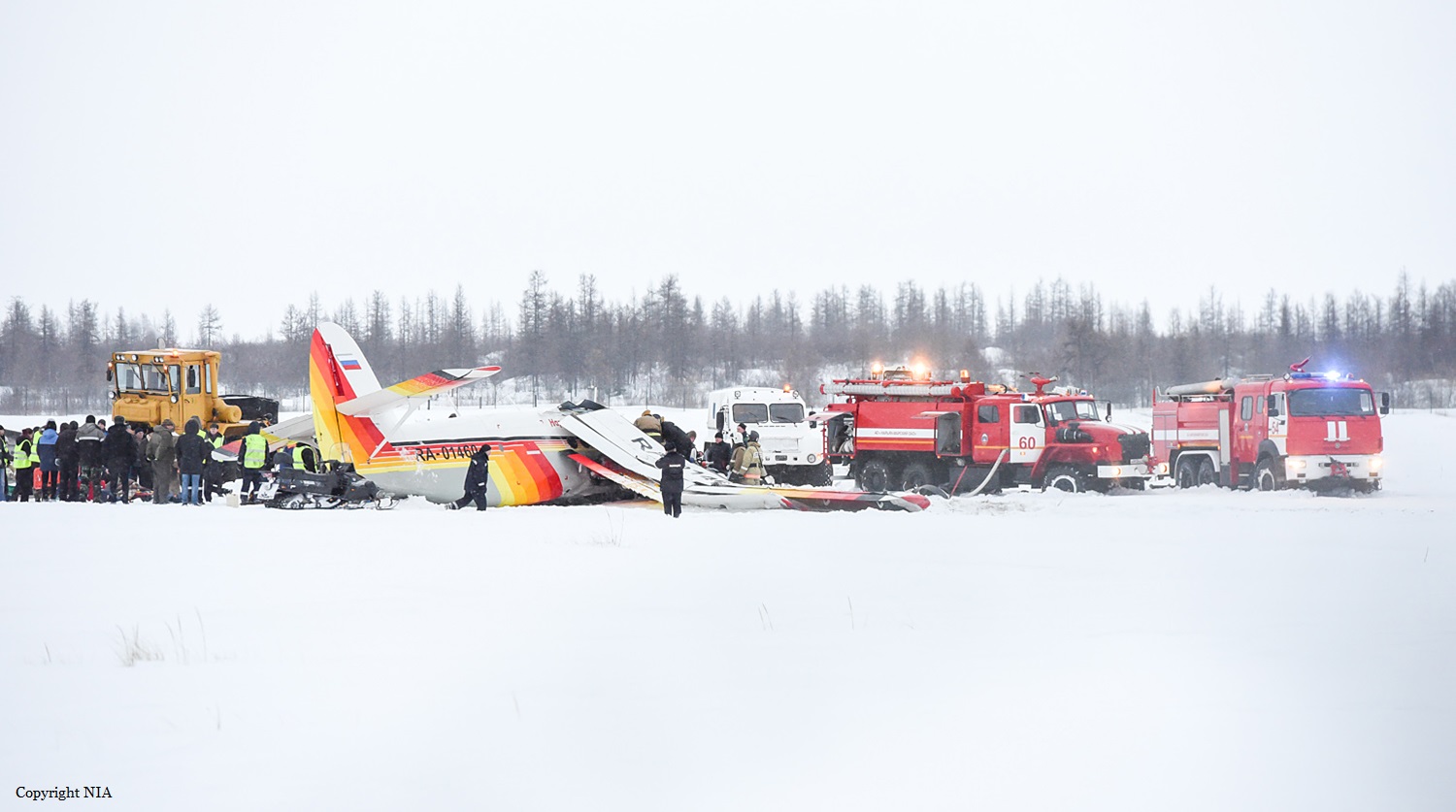
Crash of a PZL-Mielec AN-2MS in Naryan-Mar: 4 killed

Date & Time: Dec 19, 2017 at 1027 LT
Type of aircraft:
Operator:
Registration:
RA-01460
Flight Phase:
Survivors:
Yes
Schedule:
Narian-Mar – Kharuta
MSN:
1G231-51
YOM:
1988
Flight number:
NYA9280
Country:
Region:
Crew on board:
2
Crew fatalities:
Pax on board:
11
Pax fatalities:
Other fatalities:
Total fatalities:
4
Captain / Total flying hours:
2342
Captain / Total hours on type:
25.00
Copilot / Total flying hours:
6146
Copilot / Total hours on type:
434
Aircraft flight hours:
14767
Circumstances:
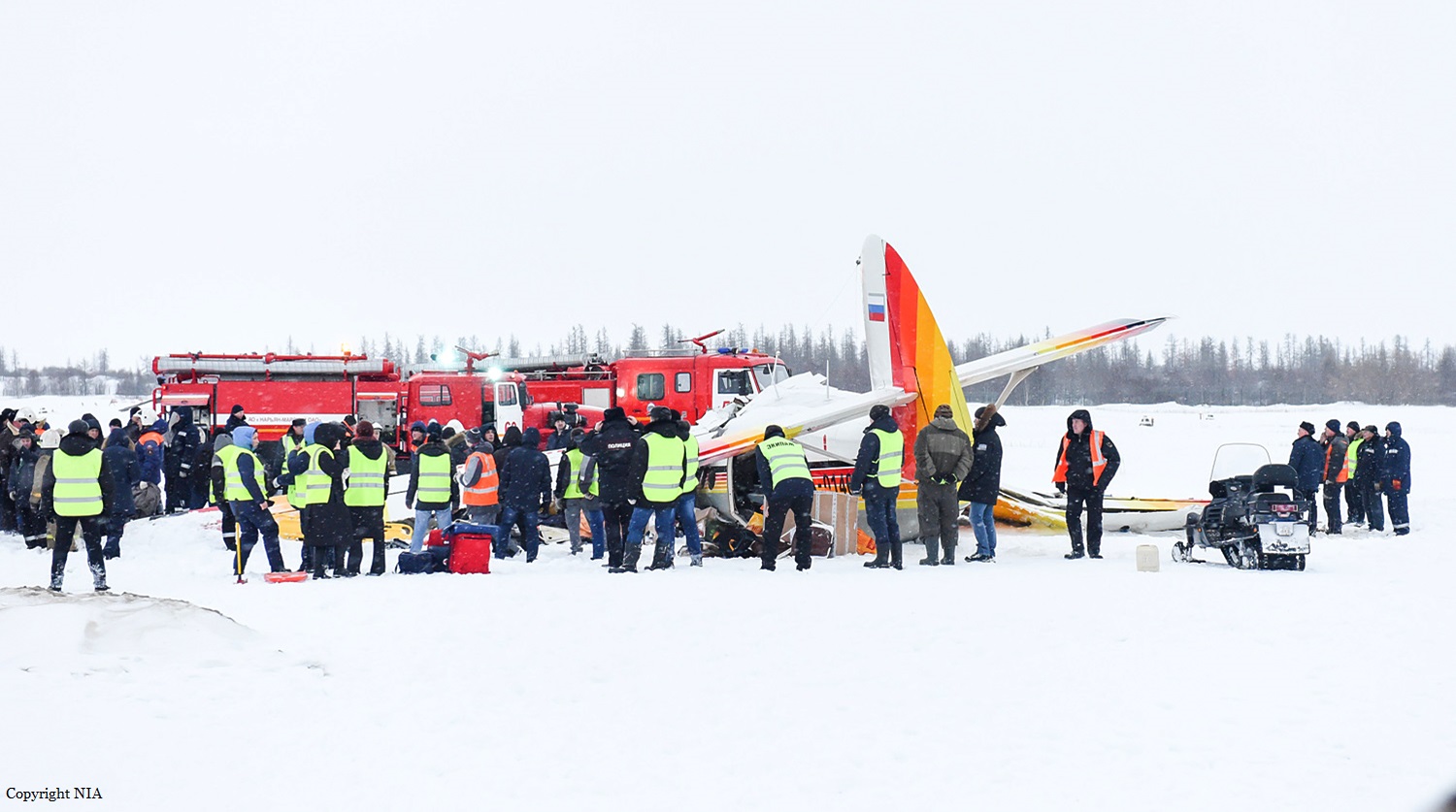
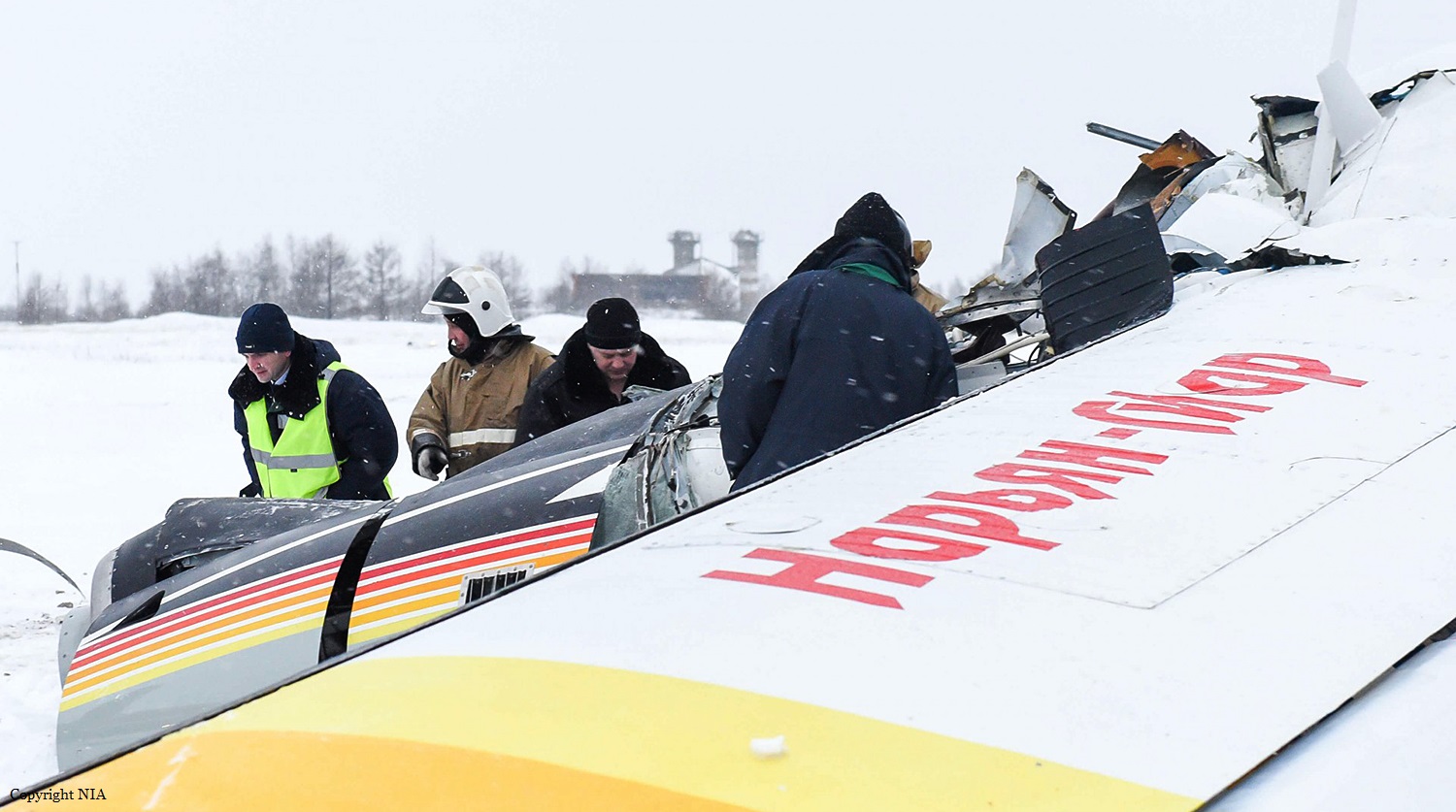
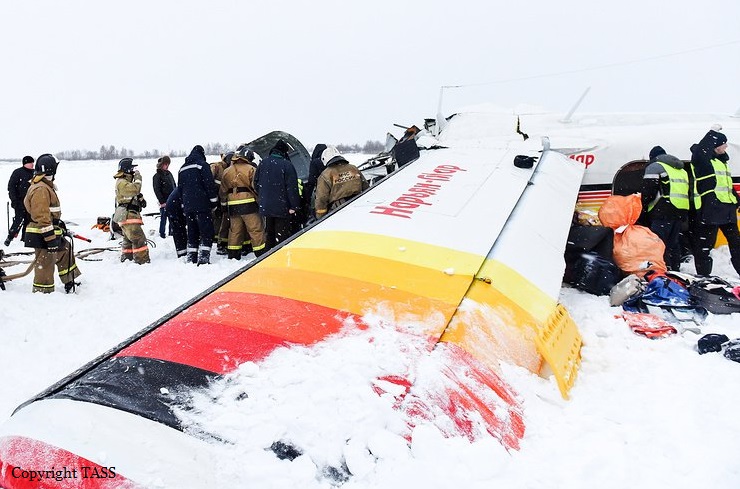
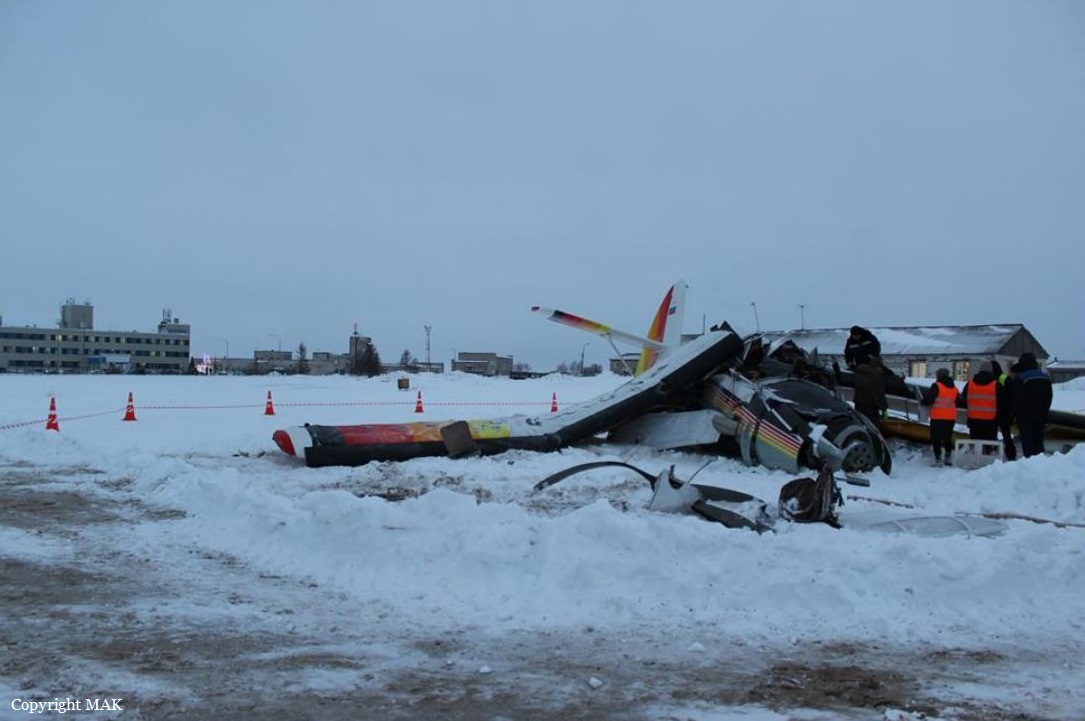
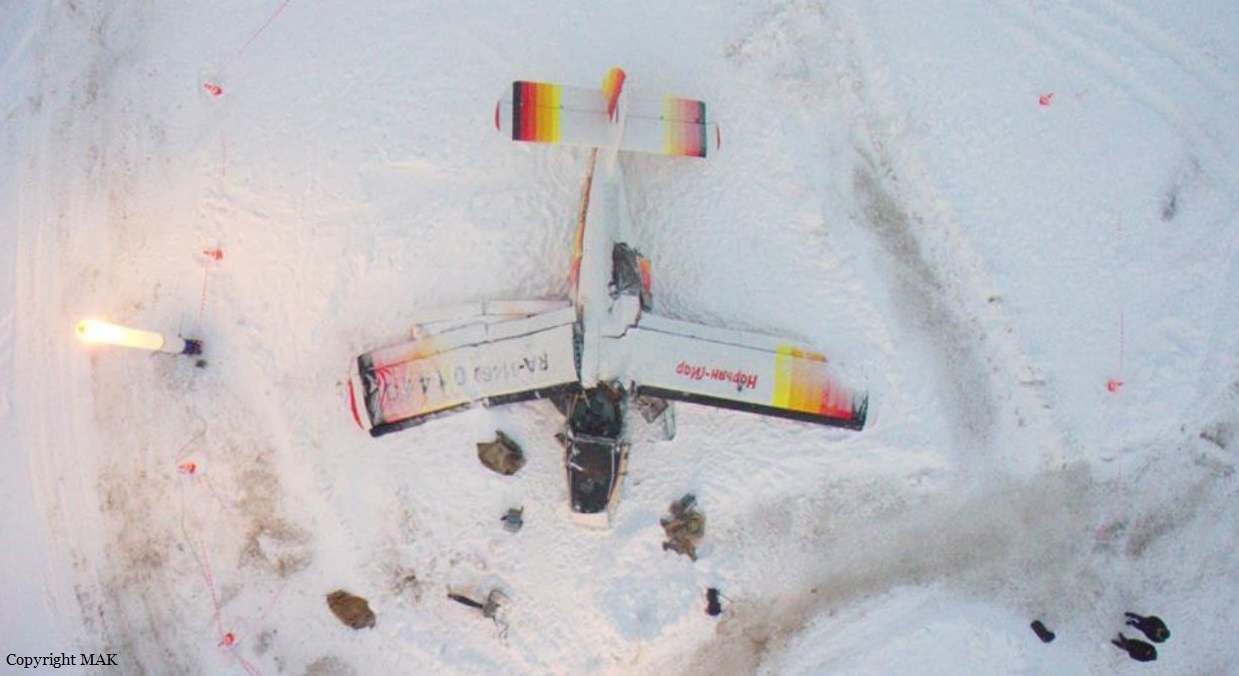
The single engine aircraft (an Antonov An-2TP that was converted in 2014 with a TPE331 turbine engine) departed Naryan-Mar Airport on a schedule service (flight NYA9280) to Kharuta, Republic of Komi, carrying 11 passengers and two pilots. Shortly after takeoff, while climbing to a height of 30-40 metres, the aircraft entered an excessive nose-up attitude then rolled to the right, stalled and crashed in a snow covered field. A passengers was killed and 12 other occupants were injured. In the evening, two other passengers died and a fourth passed away on 10 January 2018.
Probable cause:
Loss of control during initial climb due to the combination of an excessive weight (the total weight of the aircraft was 42 kilos above MTOW) and a CofG that was too far aft, well above the permissible limit (32%). Poor flight preparation.
Final Report:
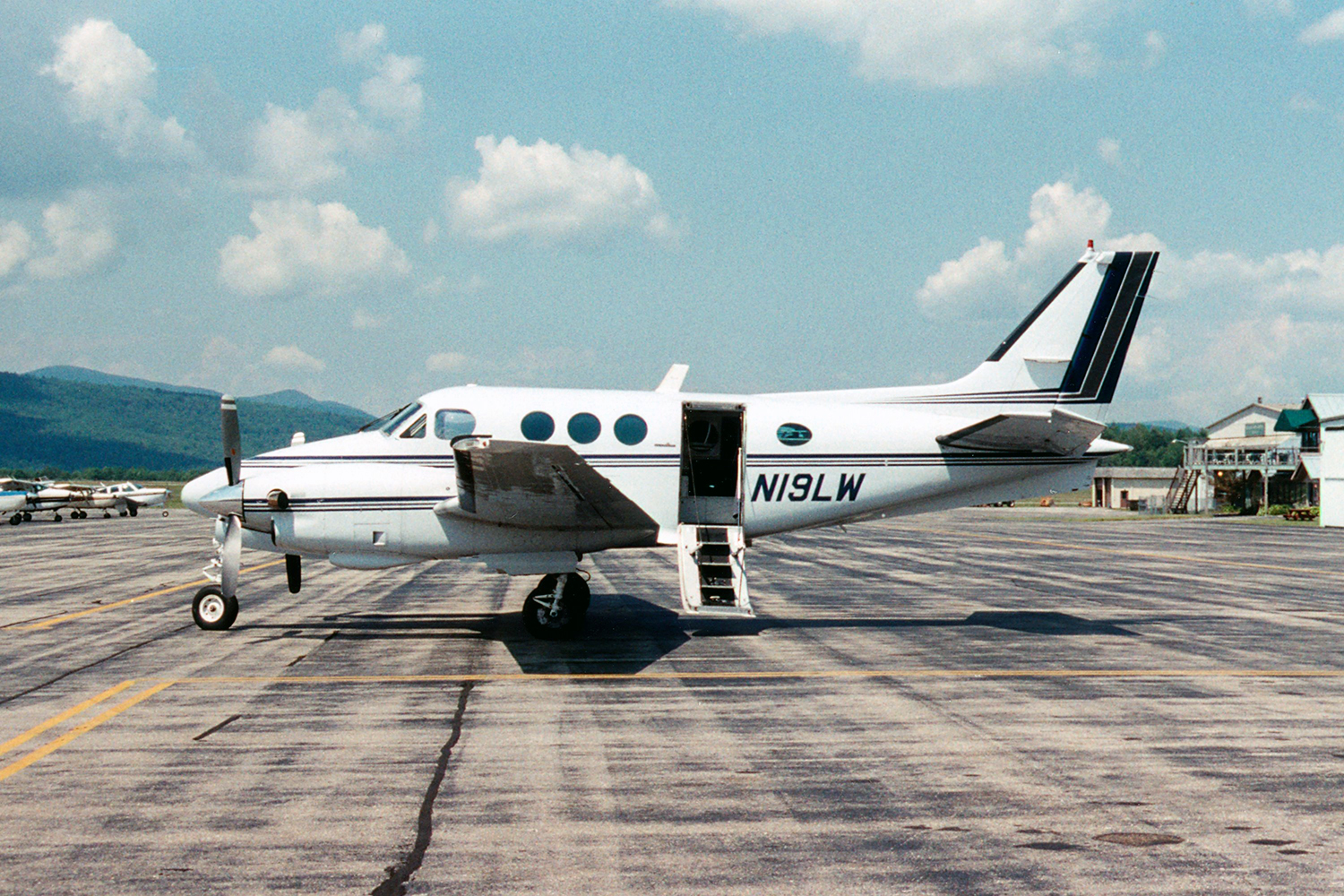
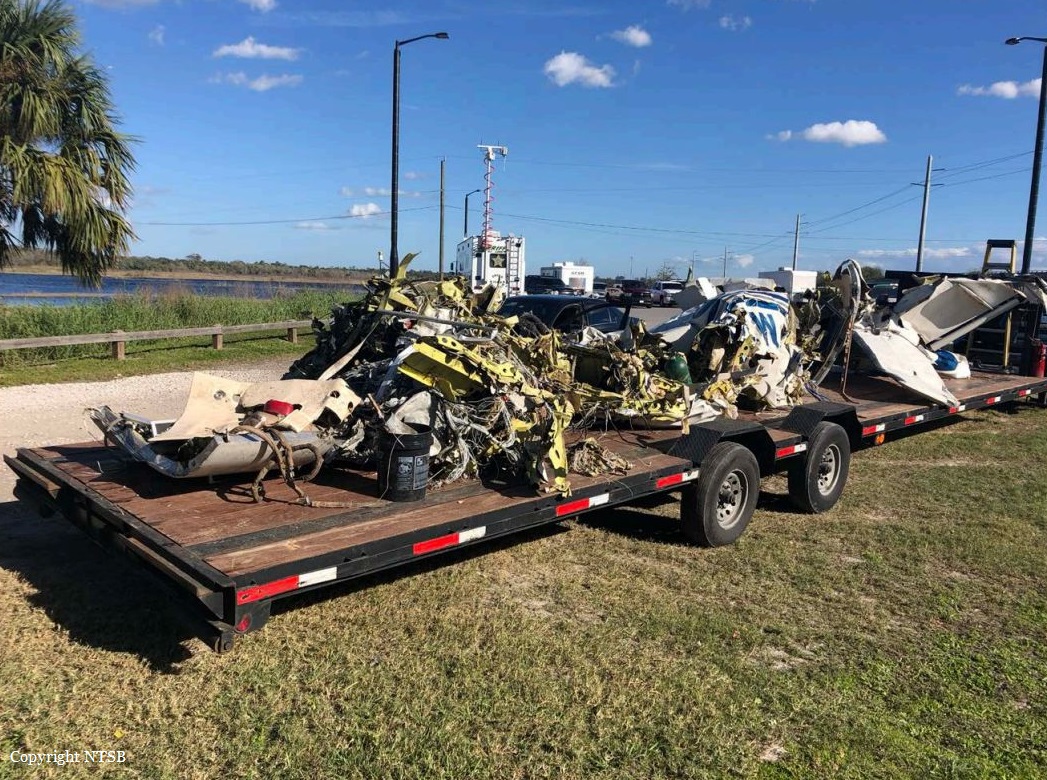
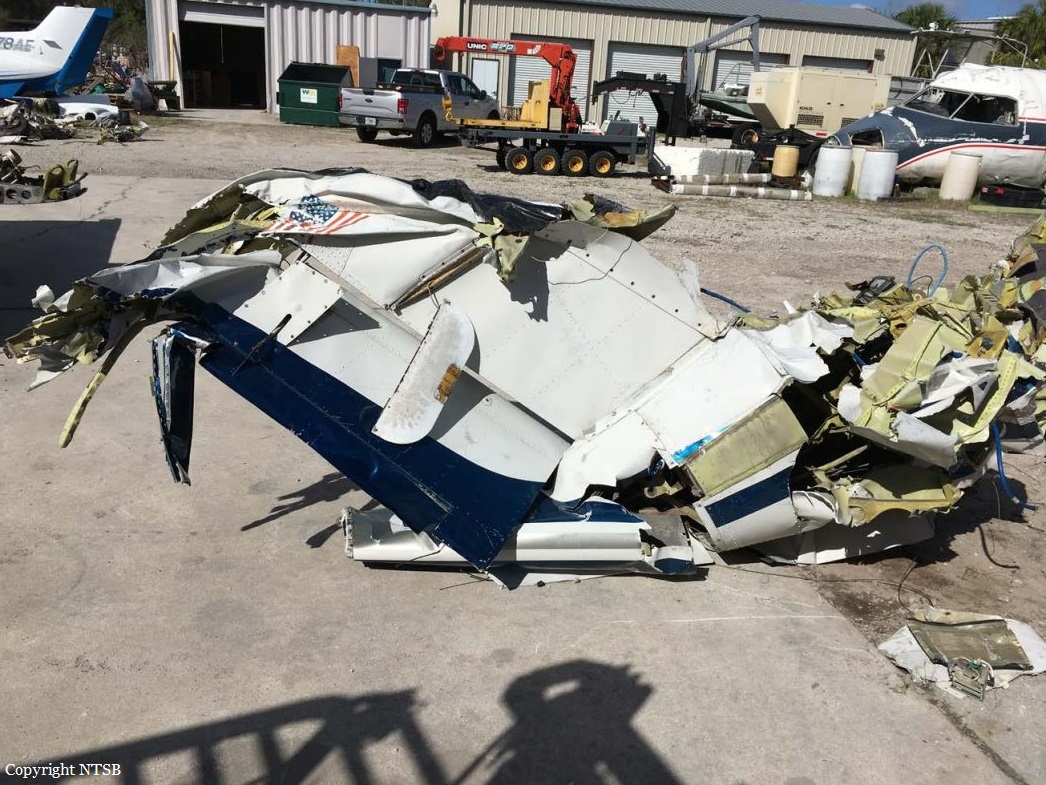
Crash of a Beechcraft C90 King Air in Lake Harney: 3 killed

Date & Time: Dec 8, 2017 at 1115 LT
Type of aircraft:
Operator:
Registration:
N19LW
Flight Type:
Survivors:
No
Schedule:
Sanford - Sanford
MSN:
LJ-991
YOM:
1981
Flight number:
CONN900
Crew on board:
2
Crew fatalities:
Pax on board:
1
Pax fatalities:
Other fatalities:
Total fatalities:
3
Captain / Total flying hours:
243
Captain / Total hours on type:
0.00
Copilot / Total flying hours:
4800
Copilot / Total hours on type:
357
Aircraft flight hours:
10571
Circumstances:
The flight instructor, commercial pilot receiving instruction, and commercial pilot-rated passenger were conducting an instructional flight in the multi-engine airplane during instrument meteorological conditions. After performing a practice instrument approach, the flight was cleared for a second approach; however, the landing runway changed, and the controller vectored the airplane for an approach to the new runway. The pilot was instructed to turn to a southwesterly heading and maintain 1,600 ft until established on the localizer. Radar information revealed that the airplane turned to a southwesterly heading on a course to intercept the localizer and remained at 1,600 ft for about 1 minute 39 seconds before beginning a descending right turn to 1,400 ft. The descent continued to 1,100 ft; at which time the air traffic control controller issued a low altitude alert. Over the following 10 seconds, the airplane continued to descend at a rate in excess of 4,800 ft per minute (fpm). The controller issued a second low altitude alert to the crew with instructions to climb to 1,600 ft immediately. The pilot responded about 5 seconds later, "yeah I am sir, I am, I am." The airplane then climbed 1,400 ft over 13 seconds, resulting in a climb rate in excess of 6,700 fpm, followed by a descent to 1,400 ft over 5 seconds, resulting in a 1,500-fpm descent before radar contact was lost in the vicinity of the accident site. Radar data following the initial instrument approach indicated that the airplane was flying a relatively smooth and consistent flightpath with altitude and heading changes that were indicative of autopilot use until the final turn to intercept the localizer course. Maneuvering the airplane in restricted visibility placed the pilot in conditions conducive to the development of spatial disorientation. The accident circumstances, including altitude and course deviations and the subsequent high-energy impact, are consistent with the known effects of spatial disorientation. Additionally, examination of the airframe, engines, and propellers revealed no evidence of any preexisting anomalies that would have precludednormal operation. Therefore, it is likely that the pilot receiving instruction was experiencing the effects of spatial disorientation when the accident occurred. Toxicology testing of the flight instructor identified significant amounts of oxycodone as well as its active metabolite, oxymorphone, in liver tissue; oxycodone was also found in muscle. Oxycodone is an opioid pain medication available by prescription that may impair mental and/or physical ability required for the performance of potentially hazardous tasks. The flight instructor's tissue levels of oxycodone suggest that his blood level at the time of the accident was high enough to have had psychoactive effects, and his failure to recognize and mitigate the pilot's spatial disorientation and impending loss of control further suggest that the flight instructor was impaired by the effects of oxycodone. Toxicology testing of all three pilots identified ethanol in body tissues; however, given the varying amounts and distribution, it is likely that the identified ethanol was from postmortem production rather than ingestion.
Probable cause:
The pilot's loss of airplane control due to spatial disorientation during an instrument approach in instrument meteorological conditions, and the flight instructor's delayed remedial action. Contributing to the accident was the flight instructor's impairment from the use of prescription pain medication.
Final Report:
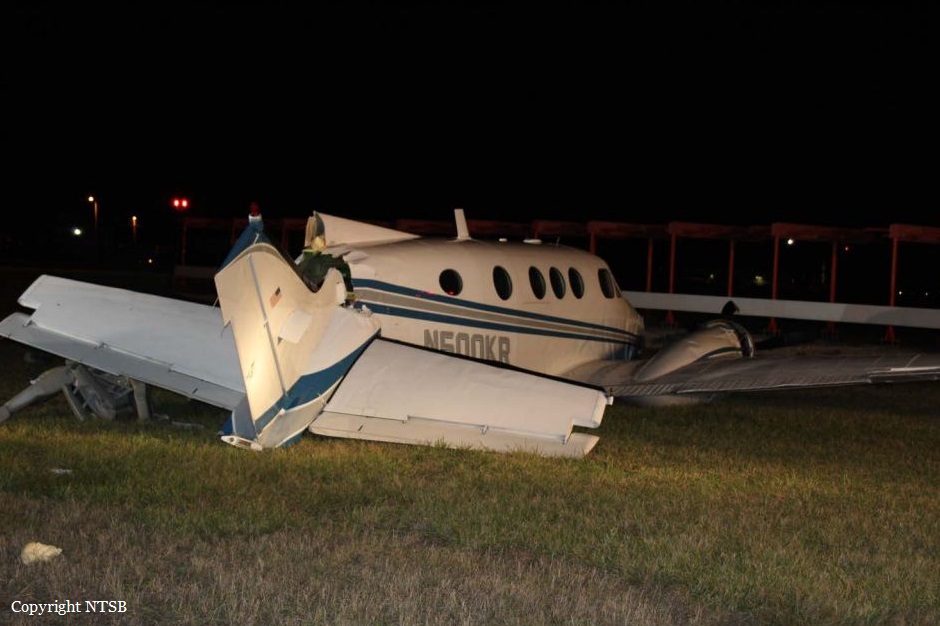
Crash of a Beechcraft C90 King Air in Rockford

Date & Time: Dec 5, 2017 at 1802 LT
Type of aircraft:
Registration:
N500KR
Flight Type:
Survivors:
Yes
Schedule:
Kissimmee - Rockford
MSN:
LJ-708
YOM:
1977
Crew on board:
1
Crew fatalities:
Pax on board:
3
Pax fatalities:
Other fatalities:
Total fatalities:
0
Captain / Total flying hours:
2500
Aircraft flight hours:
9856
Circumstances:
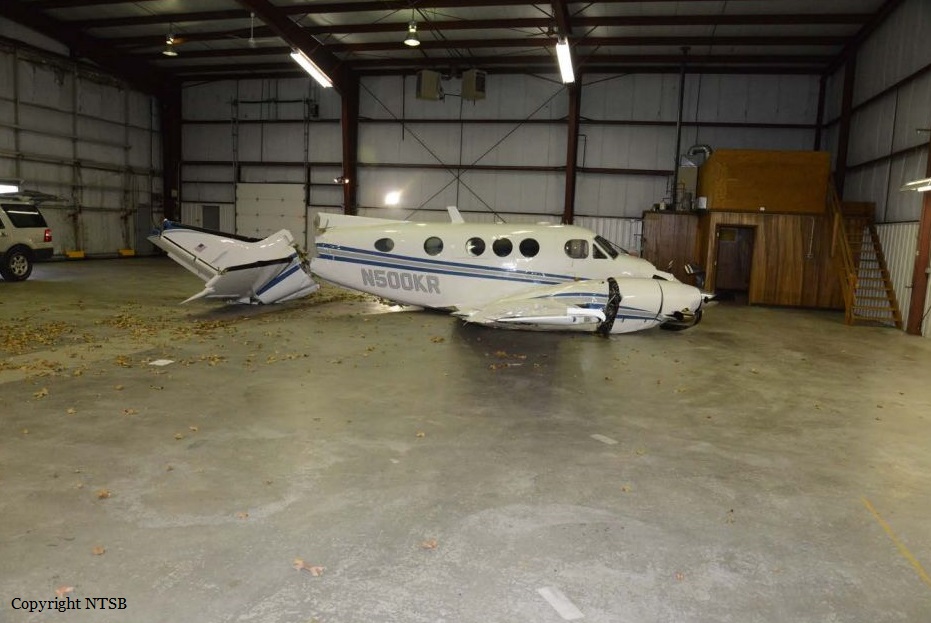
The private pilot departed on a cross-country flight in his high-performance, turbine-powered airplane with full tanks of fuel. He landed and had the airplane serviced with 150 gallons of fuel. He subsequently departed on the return flight. As the airplane approached the destination airport, the pilot asked for priority handling and reported that the airplane "lost a transfer pump and had a little less fuel than he thought," and he did not want to come in with a single engine. When asked if he needed assistance, he replied "negative." The pilot was cleared to perform a visual approach to runway 19 during night conditions. As the airplane approached the airport, the pilot requested the runway lights for runway 25 be turned on and reported that the airplane lost engine power in one engine. The controller advised that the lights on runway 25 were being turned on and issued a landing clearance. The airplane impacted terrain before the threshold for runway 25. During examination of the recovered wreckage, flight control continuity was established. No useable amount of fuel was found in any of the airplane's fuel tanks; however, fuel was observed in the fuel lines. All transfer pumps and boost pumps were operational. The engine-driven fuel pumps on both engines contained fuel in their respective fuel filter bowls. Both pumps were able to rotate when their input shafts were manipulated by hand. Disassembly of both pumps revealed that their inlet filters were free of obstructions. Bearing surfaces in both pumps exhibited pitting consistent with pump operation with inadequate fuel lubrication and fuel not reaching the pump. The examination revealed no evidence of airframe or engine preimpact malfunctions or failures that would have precluded normal operation of the airplane. Performance calculations using a flight planning method described in the airplane flight manual indicated that the airplane could have made the return flight with about 18 gallons (119 lbs) of fuel remaining. However, performance calculations using a fuel burn simulation method developed from the fuel burn and data from the airplane flight manual indicated that the airplane would have run out of fuel on approach. Regulations require that a flight depart with enough fuel to fly to the first point of intended landing and, assuming normal cruising speed, at night, to fly after that for at least 45 minutes. The calculated 45-minute night reserves required about 56 gallons (366 lbs) of fuel using a maximum recommended cruise power setting or about 37.8 gallons (246 lbs) of fuel using a maximum range power setting. Regardless of the flight planning method he could have used, the pilot did not depart on the accident flight with the required fuel reserves and exhausted all useable fuel while on approach to the destination. The airplane was owned by Edward B. Noakes III.
Probable cause:
The pilot's inadequate preflight planning and his decision to depart without the required fuel reserve, which resulted in fuel exhaustion during a night approach and subsequent loss of engine power.
Final Report:
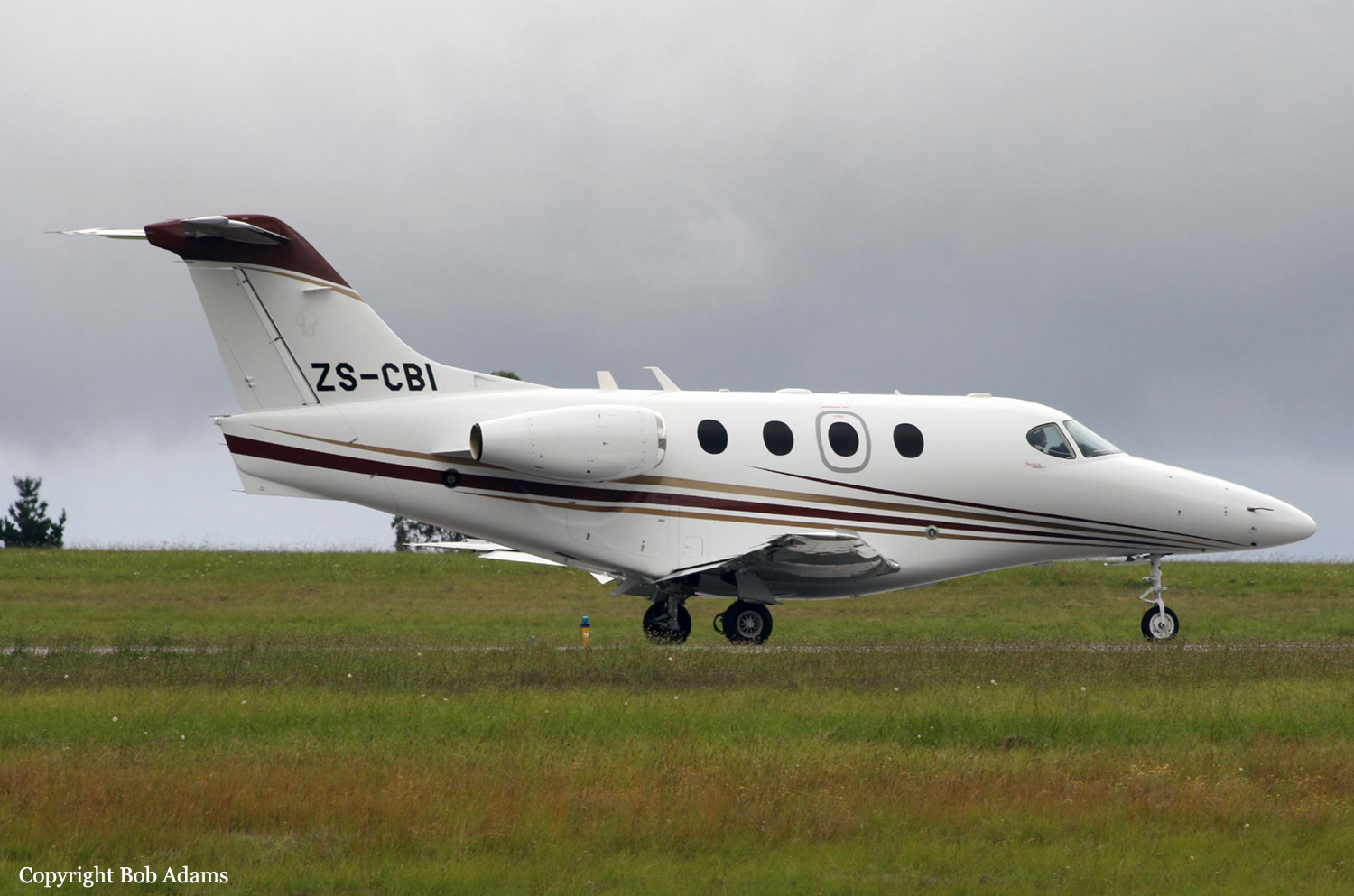
Crash of a Raytheon 390 Premier I in Johannesburg

Date & Time: Nov 22, 2017 at 1623 LT
Type of aircraft:
Registration:
ZS-CBI
Flight Type:
Survivors:
Yes
Schedule:
Cape Town - Johannesburg
MSN:
RB-214
YOM:
2007
Country:
Region:
Crew on board:
2
Crew fatalities:
Pax on board:
0
Pax fatalities:
Other fatalities:
Total fatalities:
0
Captain / Total flying hours:
3048
Captain / Total hours on type:
649.00
Copilot / Total flying hours:
4718
Copilot / Total hours on type:
305
Aircraft flight hours:
963
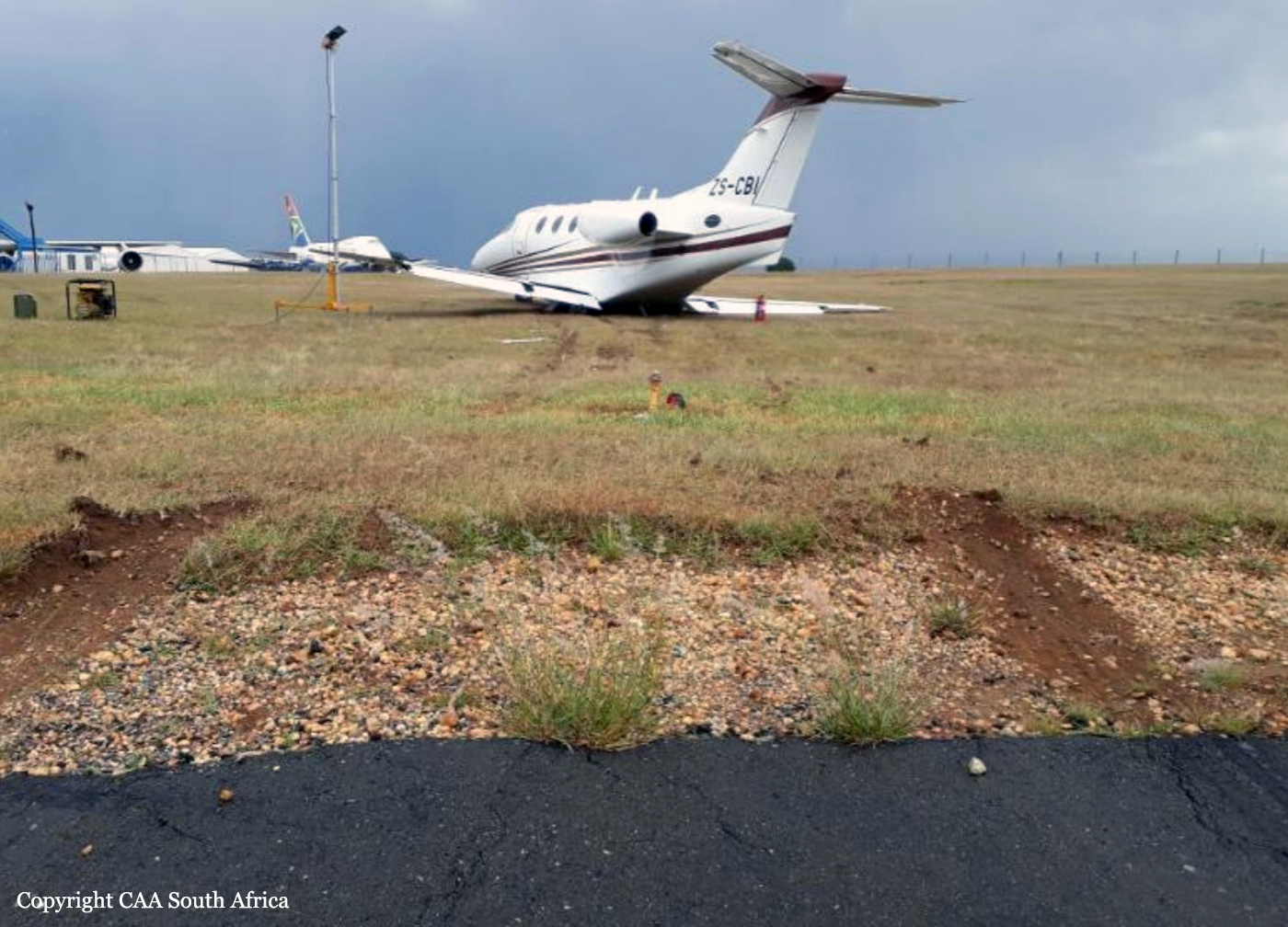
Circumstances:
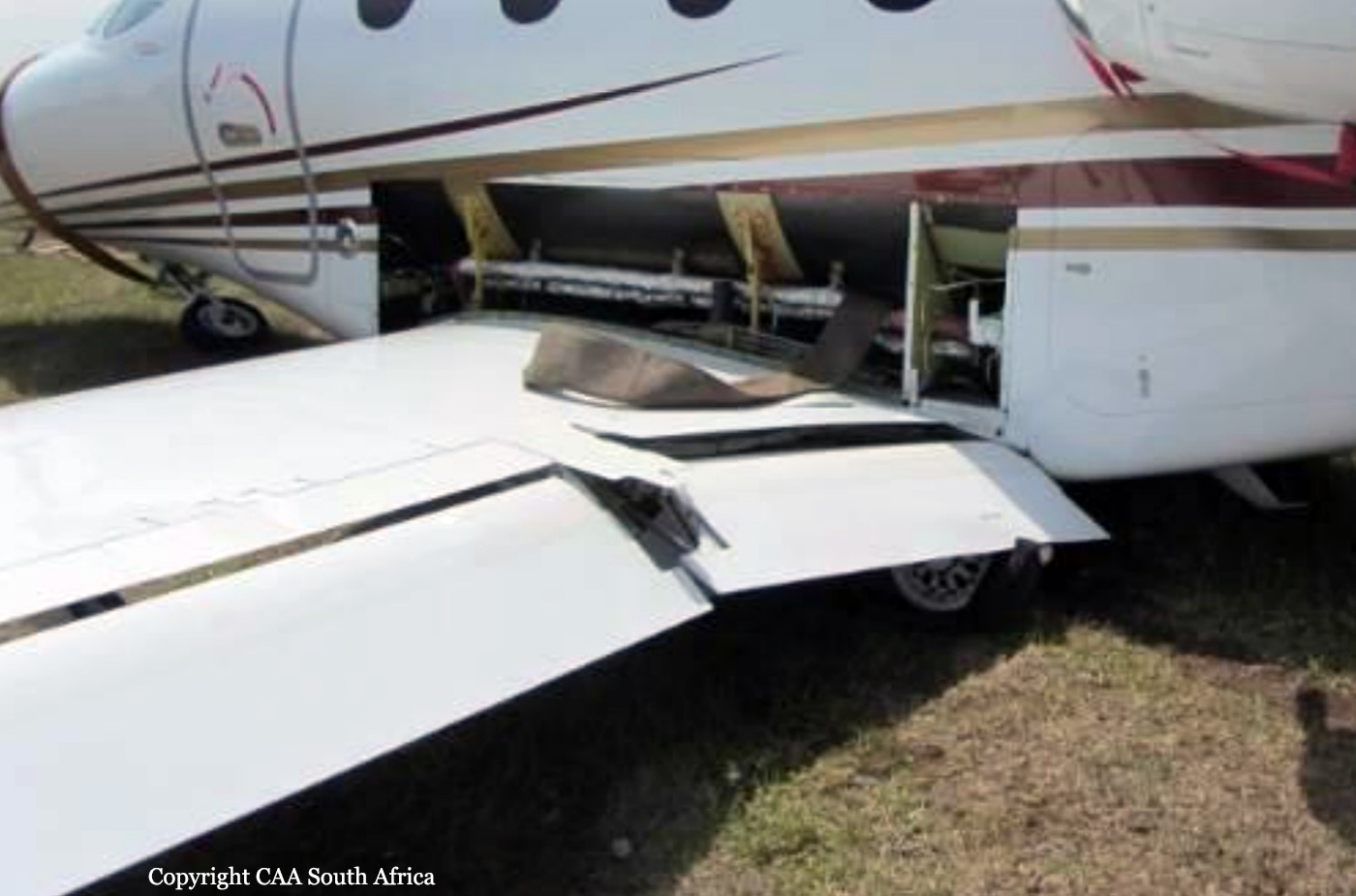
On 22 November 2017, the pilot-in-command (PIC) accompanied by the first officer (FO) took off from the Cape Town International Airport (FACT) on a private flight to the Rand Airport (FAGM). The flight was conducted under instrument flight rules (IFR) by day and the approach was conducted under visual flight rules (VFR). The PIC was the pilot flying (PF) and was seated on the left seat and the FO was occupying the right seat. The air traffic controller (ATC) on duty at FAGM tower stated that the FO reported in-bound for a fullstop landing at FAGM. The last wind direction data for Runway 29 was transmitted to the FO as 230°/11 knots (kts) and Query Nautical Height (QNH): 1021. The FO acknowledged the transmission and the crew elected to land on Runway 11. The PIC stated that the approach for landing was stable and that the touchdown was near the first taxiway exit point. According to the FO, the aircraft floated for a while before touchdown. This was confirmed during the investigation. During the landing rollout, the PIC applied the brakes and the brakes responded for a short while, however, the aircraft continued to roll without slowing down. At approximately 300 metres (m) beyond the intersection of Runway 35 and Runway 11, the PIC requested the FO to apply emergency brakes. The FO applied the emergency brakes gradually and the aircraft continued to roll before the brakes locked and the tyres burst. The aircraft skidded on the main wheels and continued for approximately 180m until it overshot the runway. The undercarriage went over a ditch of approximately 200 millimetres in depth at the end of the runway into the soft ground and the aircraft came to a stop approximately 10m from the threshold facing slightly left off the extended centre line Runway 11. The aircraft was substantially damaged during the impact sequence and none of the occupants sustained injuries. The crash alarm was activated by the tower and the fire services responded to the scene.
Probable cause:
The investigation revealed that the aircraft was unstable on approach (hot and high), resulting in deep landing, probably near the second exit point, leading to a runway excursion. Contributing factors were attributed to the lift dumps not being deployed and the incorrect application of the emergency brakes.
Final Report:

Crash of a Cessna 208B Grand Caravan off Placencia

Date & Time: Nov 17, 2017 at 0846 LT
Type of aircraft:
Operator:
Registration:
V3-HGX
Flight Phase:
Survivors:
Yes
Schedule:
Placencia – Punta Gorda
MSN:
208B-1162
YOM:
2005
Country:
Crew on board:
1
Crew fatalities:
Pax on board:
10
Pax fatalities:
Other fatalities:
Total fatalities:
0
Captain / Total flying hours:
19040
Captain / Total hours on type:
12092.00
Aircraft flight hours:
2106
Circumstances:
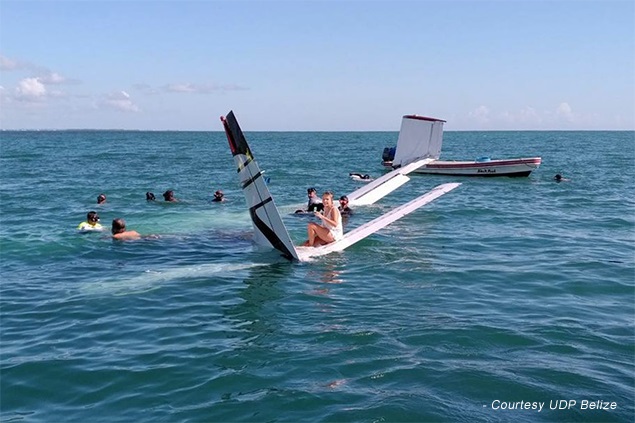
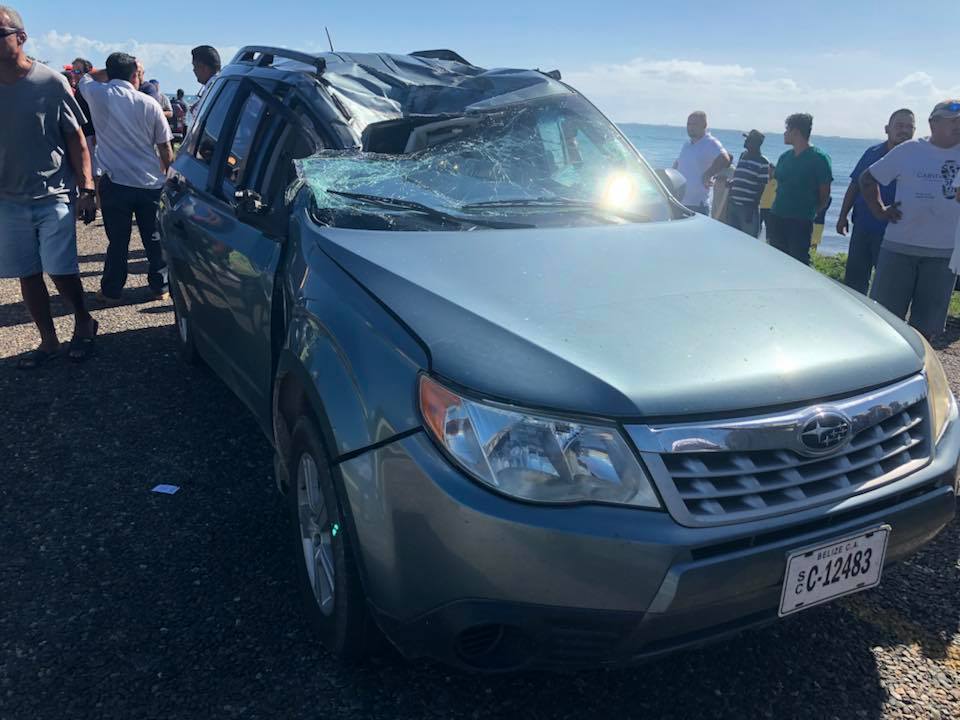
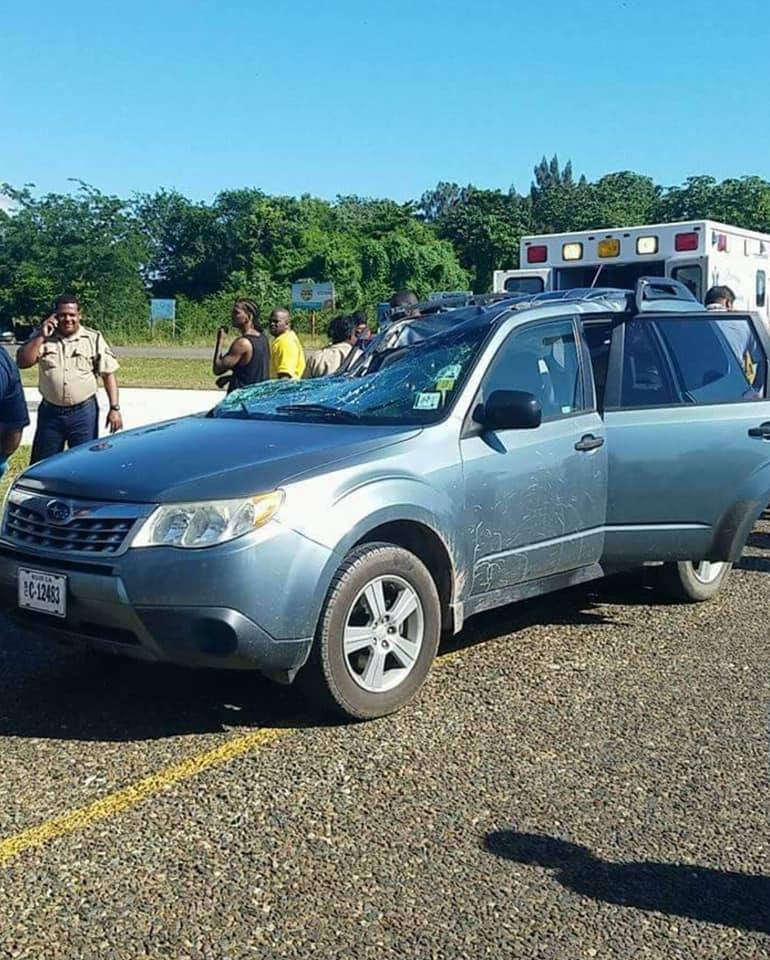
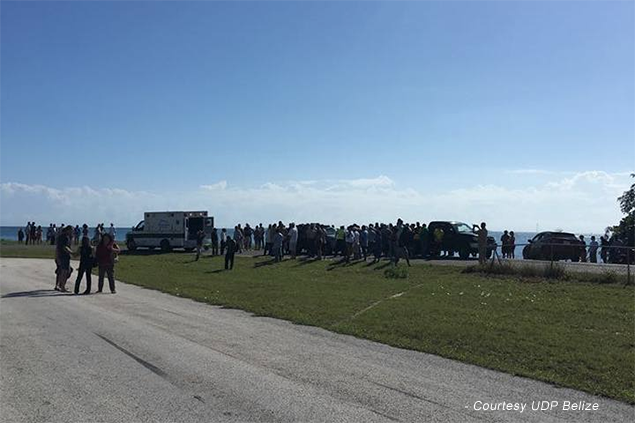
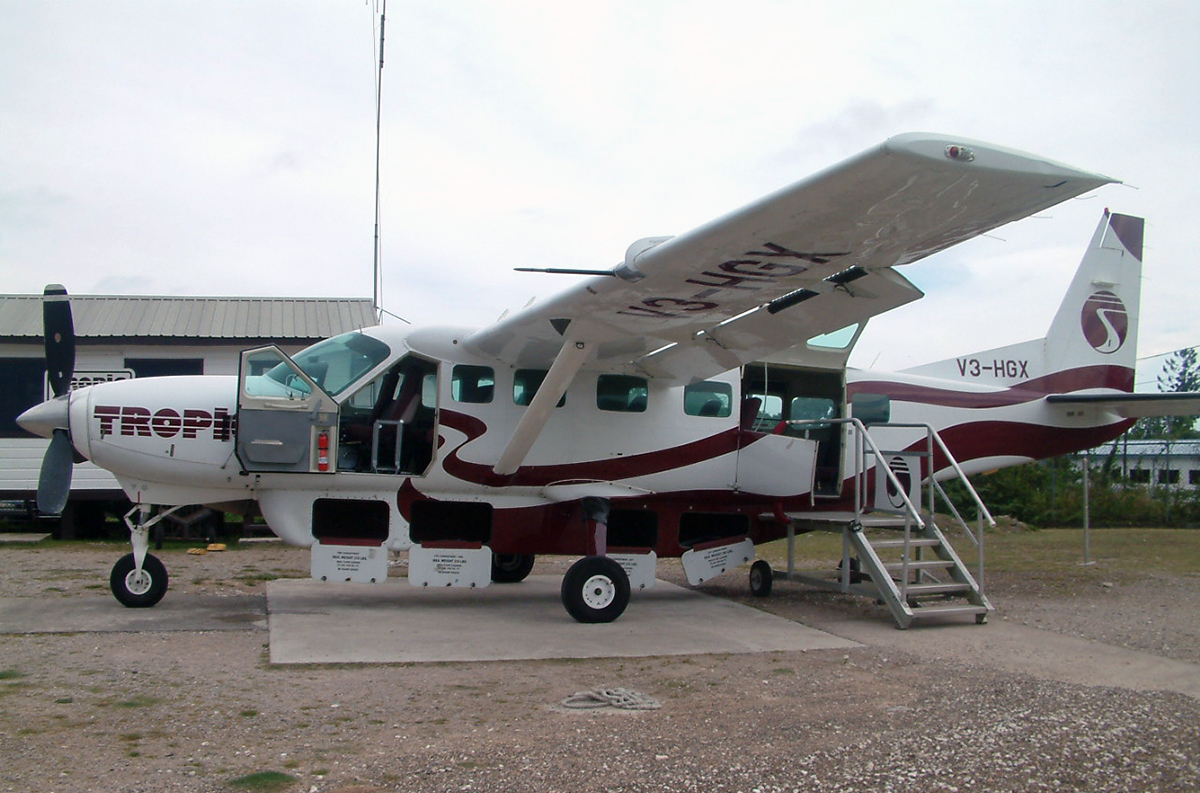
On 17 November, 2017, a Tropic Air Cessna 208B Grand Caravan with registration V3-HGX, departed from the Sir Barry Bowen Municipal Airport at approximately 7:15 a.m. local time with one aircraft captain, 11 passengers and 1 crew on board. The flight was a regular operated commercial passenger flight with scheduled stops in Dangriga, Placencia and with the final destination being Punta Gorda. The pilot reported that the portion of the flight from Belize City to Dangriga was uneventful and normal and so was the landing at Placencia. At approximately 8:40 a.m. local time the airplane taxied from the Tropic Air ramp and taxied towards the west on runway 25. The pilot did a turnaround using all the available runway at normal speed and started his takeoff run to the east on runway 07. The pilot proceeded down the runway in a normal takeoff roll with normal takeoff speed and prior to reaching the end of the runway, he rotated the aircraft and lifted the nose wheel to get airborne. At exactly 28 feet past the end of runway 07 and during the initial climb phase, a part of the aircraft landing gear made contact with the upper part of the front righthand passenger door frame of a vehicle that had breached the area in front of the runway which is normally protected by traffic barriers. The impact caused the aircraft to deviate from its initial climb profile, and the pilot reported that the engine was working for a couple seconds and it abruptly shut down shortly after. The pilot realized that he was unable to return to the airport. The pilot carried out emergency drills for engine loss after take-off over water and decided to ditch the aircraft in the sea, which was approximately 200-300 feet from the main shoreline in front of the Placencia airport. The flight crew and all passengers were safely evacuated from the fuselage with the assistance of witnesses and passing boats which provided an impromptu rescue for the passengers. All passengers received only minor injuries.
Probable cause:
The following are factors that are derived from the failures in the areas mentioned in section 3.00 (conclusions):
a. There is a lack of traffic surveillance to ensure that drivers comply with the warning signs of low flying aircraft and do not breach the barriers when they are down or inoperative. The left barrier at Placencia was reportedly inoperative and the right barrier was said to be working. As a result, this removed a significant level of protection for vehicles which operate on the portion of the road which intersects the departure path of aircraft. The purpose of the barriers is to protect vehicles from coming in close contact with low flying aircraft. The driver of the vehicle failed to adhere to traffic warning signs regarding low flying aircraft and drove his vehicle directly into the departure path of an aircraft (Probable cause).
b. ADAS data calculations showed that the pilot had a period of 13.33 seconds when he achieved take off performance, but he did not rotate the aircraft. Although the aircraft engine performance was normal, the actual take-off weight was within limits and the distance available to the pilot to abort the take-off was 872 feet; the pilot still flew the aircraft at a dangerously low altitude over the road and did not properly assess the risk at hand which was a vehicle advancing into the aircraft’s departure path which could cause a collision. (Probable cause).
c. The angle at which the aircraft made contact with the vehicle was not a direct head on angle, but the contact was made when the vehicle was off to the right-hand side of the extended centerline of runway 07. The aircraft did not follow the direct path of the extended center line of runway 07 prior to making contact, but instead it made a slight right turn shortly after the wheels left the ground. The pilot did not take collision avoidance (evasive) measures in a timely manner (probable cause).
d. The pilot did not demonstrate adequate knowledge of proper ditching procedures which led to an inadequate response to the emergency at hand. The operator did not provide the flight crew with the proper ditching training.

Probable causes:
1. The driver of the vehicle failed to adhere to traffic warning signs regarding low flying aircraft and drove his vehicle directly into the departure path of an aircraft.
2. The pilot flew the aircraft at a dangerously low altitude over the road and did not properly assess the risk at hand which was a vehicle advancing into the aircraft’s departure path which could cause a collision.
3. The pilot did not take collision avoidance (evasive) measures in a timely manner.
Final Report:
Crash of a Cessna 208B Grand Caravan in Empakaai Camp: 11 killed

Date & Time: Nov 15, 2017 at 1113 LT
Type of aircraft:
Operator:
Registration:
5H-EGG
Flight Phase:
Survivors:
No
Site:
MSN:
208B-0476
YOM:
1995
Country:
Region:
Crew on board:
1
Crew fatalities:
Pax on board:
10
Pax fatalities:
Other fatalities:
Total fatalities:
11
Circumstances:
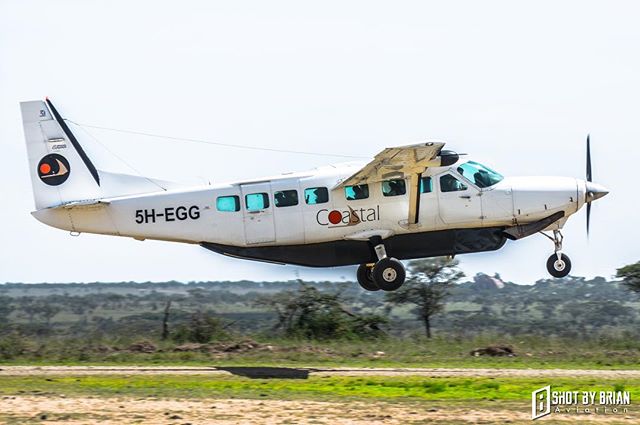
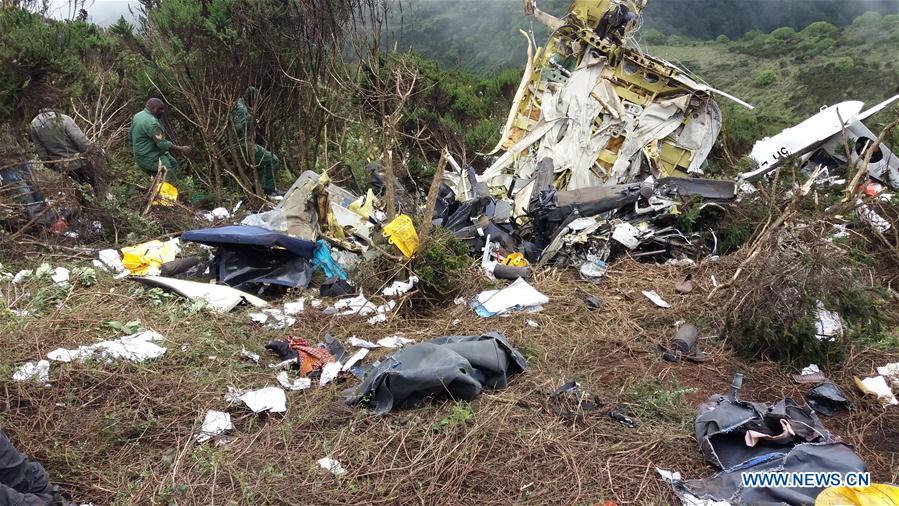
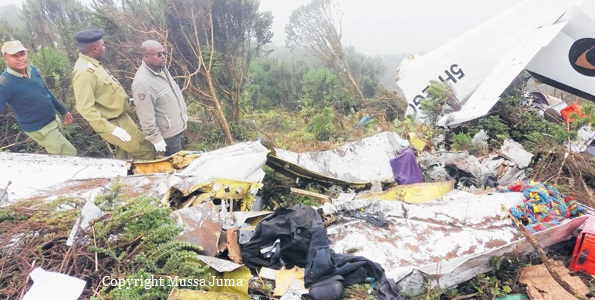
The single engine airplane departed Arusha Airport on a charter flight to the Serengeti National Park, carrying 10 tourists and one pilot. While flying in marginal weather conditions, the aircraft impacted hilly terrain near Empakaai Camp and was destroyed upon impact. All 11 occupants were killed.
Probable cause:
Controlled flight into terrain.

Crash of a Quest Kodiak 100 in Goiás

Date & Time: Nov 10, 2017 at 1327 LT
Type of aircraft:
Operator:
Registration:
N154KQ
Flight Phase:
Flight Type:
Survivors:
Yes
Schedule:
Lucas do Rio Verde – Anápolis
MSN:
100-0154
YOM:
2015
Location:
Country:
Crew on board:
1
Crew fatalities:
Pax on board:
3
Pax fatalities:
Other fatalities:
Total fatalities:
0
Captain / Total flying hours:
3000
Captain / Total hours on type:
8.00
Circumstances:
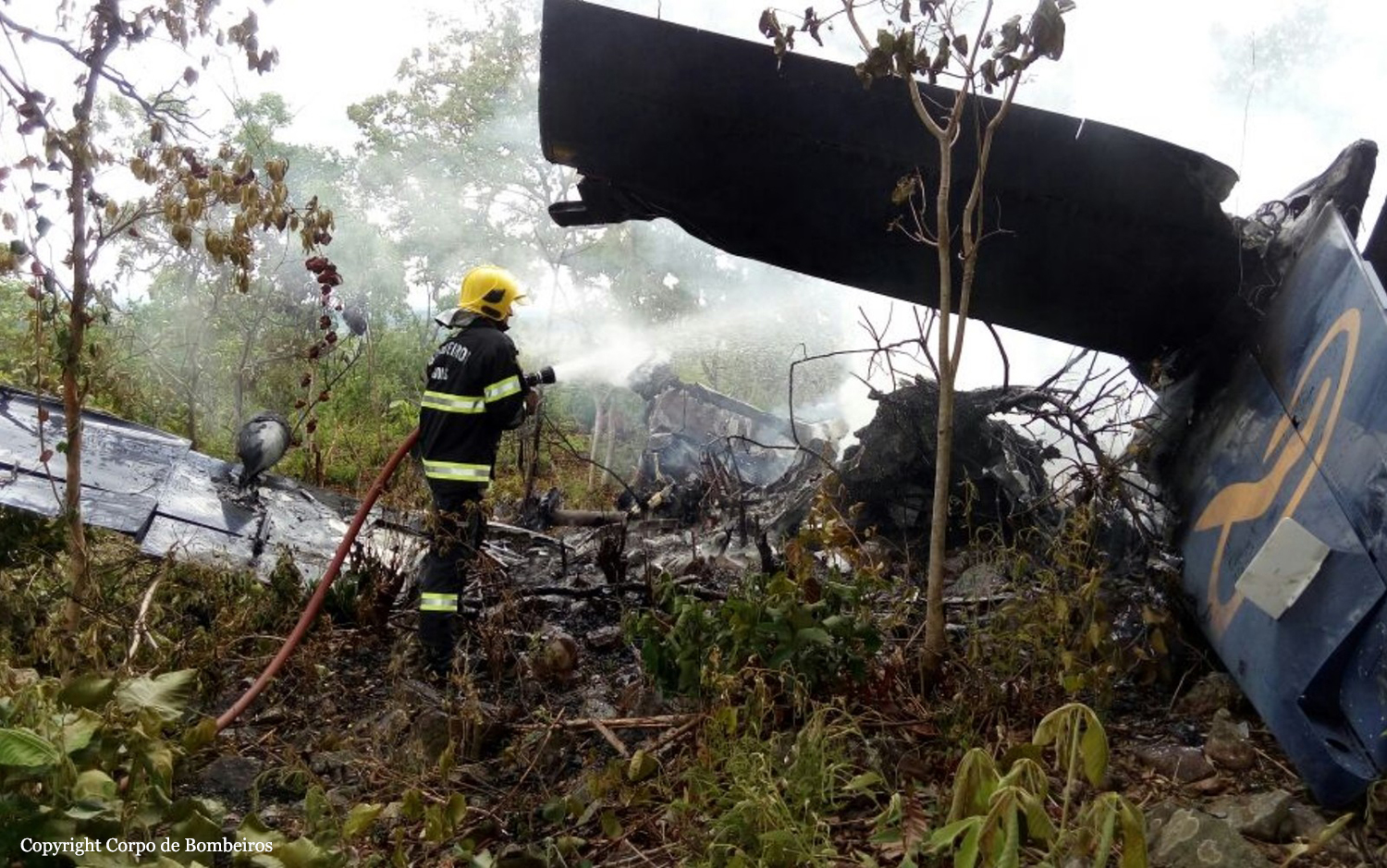
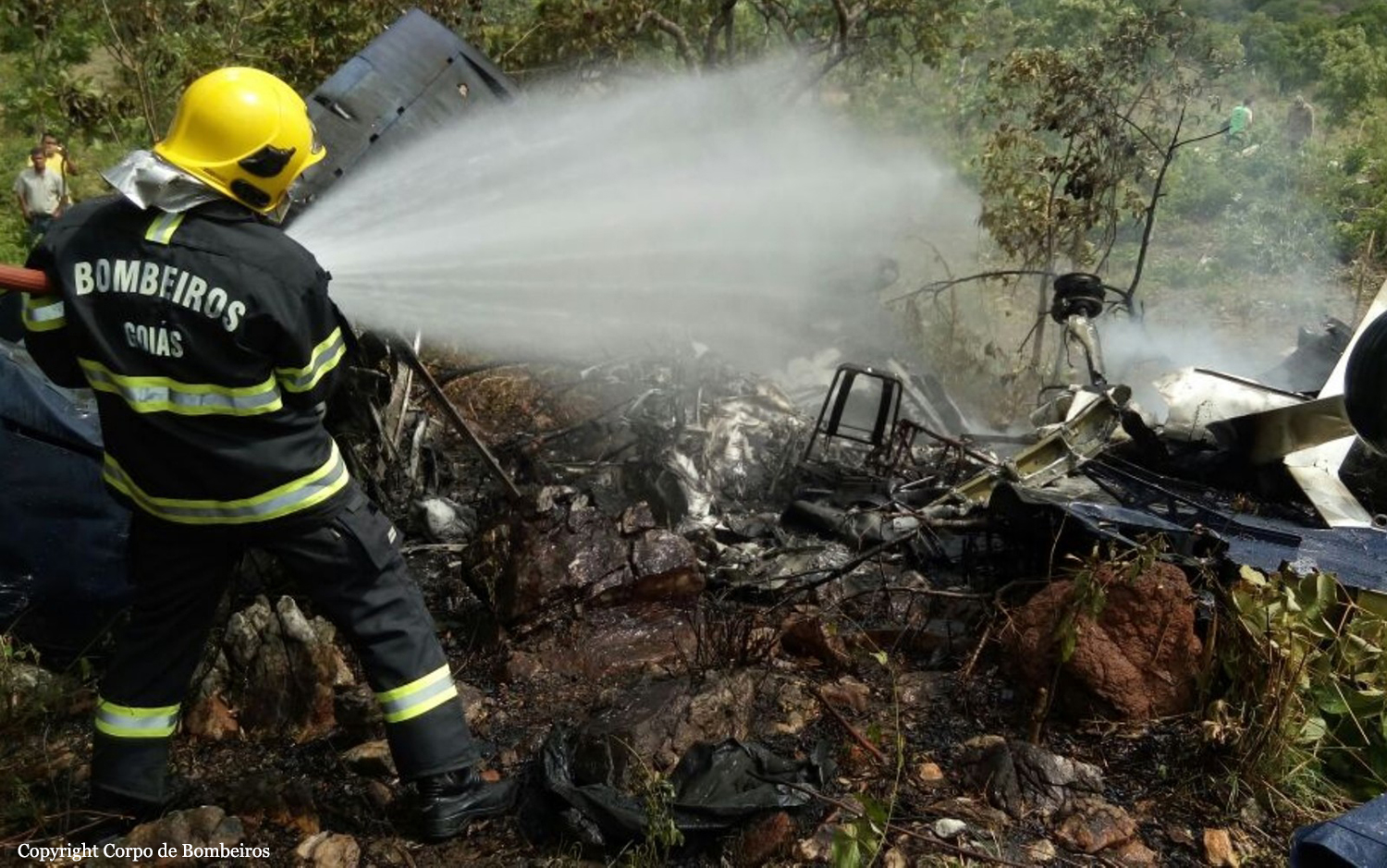
The aircraft took off from the Bom Futuro Municipal Aerodrome (SILC), Lucas do Rio Verde - MT, to the Anápolis Aerodrome (SWNS) - GO, in order to carry out a transfer flight, with a pilot and three passengers on board. During the flight, the pilot identified conflicting information related to the amount of fuel remaining and chose to make an intermediate landing on an unapproved runway, located in the city of Goiás Velho - GO, in order to check the data visually. After the conference, the N154KQ took off from that location and, reaching approximately 300ft height, the aircraft lost power, colliding with vegetation 1.86 km from the runway used for takeoff. The aircraft was destroyed by the fire. The pilot suffered serious injuries and the three passengers suffered minor injuries.
Probable cause:
Contributing factors:
- Attitude – a contributor
The pilot's failure to monitor the fueling showed a complacent attitude regarding the verification of conditions that could affect flight safety. Therefore, the lack of knowledge about the real fuel levels implied the insertion of wrong data and an intermediate landing to check the situation, after its identification.
- Training – undetermined
It is possible that the pilot's little familiarization with the aircraft emergency procedures delayed the identification of the situation and limited his possibilities of action.
- Insufficient pilot’s experience – undetermined
The pilot's little experience on the aircraft may have slowed his ability to recognize the emergency and to perform the actions described in the checklist efficiently.
Final Report:

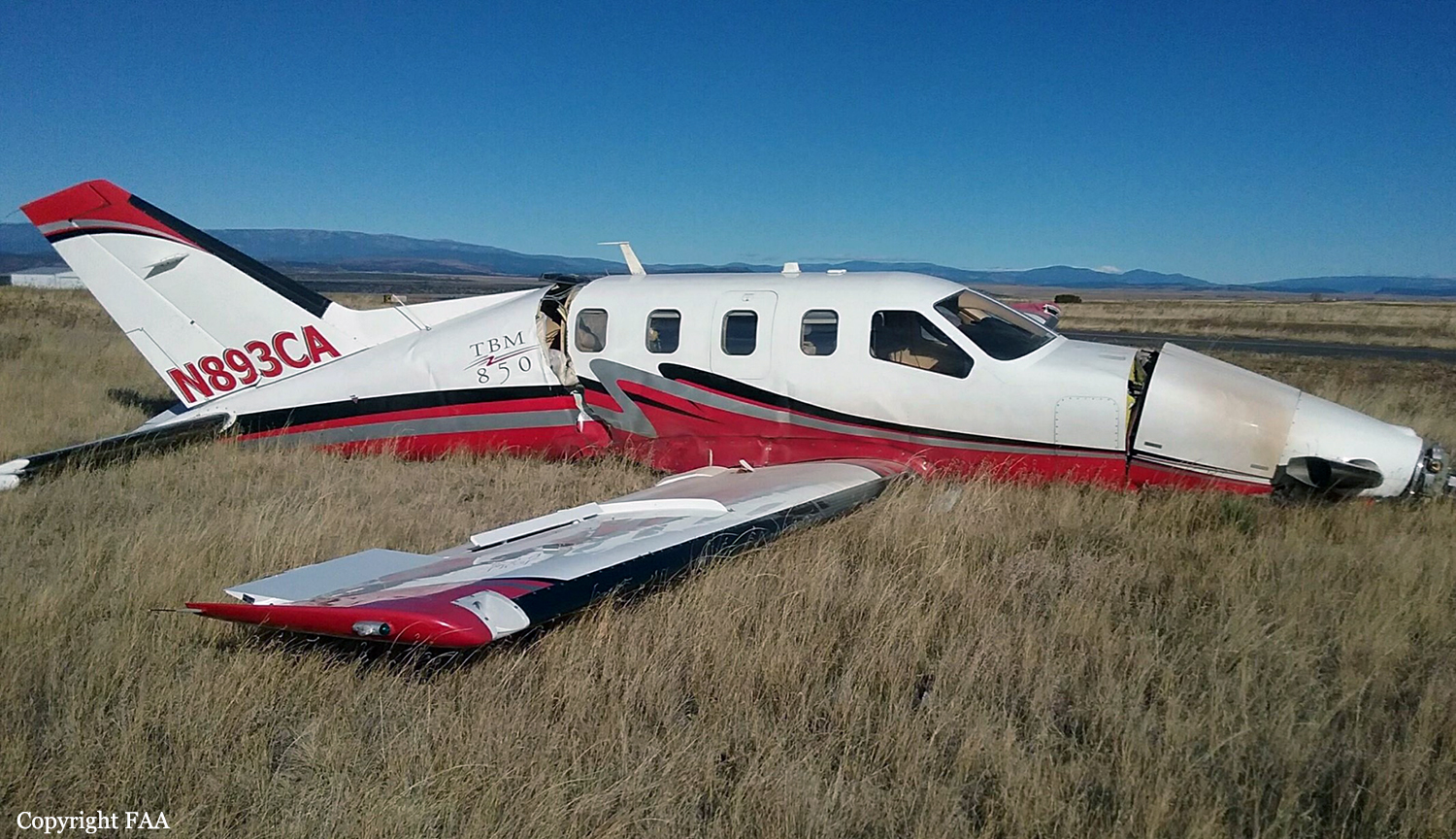
Crash of a Socata TBM-850 in Las Vegas

Date & Time: Nov 5, 2017 at 1145 LT
Type of aircraft:
Operator:
Registration:
N893CA
Flight Type:
Survivors:
Yes
Schedule:
Tomball – Las Vegas
MSN:
393
YOM:
2007
Crew on board:
1
Crew fatalities:
Pax on board:
1
Pax fatalities:
Other fatalities:
Total fatalities:
0
Captain / Total flying hours:
3000
Captain / Total hours on type:
1850.00
Aircraft flight hours:
2304
Circumstances:
The pilot of the turbine-powered airplane reported that, while landing in a gusting crosswind, it was "obvious" the wind had changed directions. He performed a go-around, but "the wind slammed [the airplane] to the ground extremely hard." Subsequently, the airplane veered to the right off the runway and then back to the left before coming to rest. The airplane sustained substantial damage to the fuselage. The pilot reported that there were no preaccident mechanical failures or malfunctions with the airplane that would have precluded normal operation. The automated weather observation system located at the accident airport reported that, about the time of the accident, the wind was from 270° at 19 knots, gusting to 25 knots. The pilot landed on runway 20.
Probable cause:
The pilot's inadequate compensation for gusting crosswind conditions during the go-around.
Final Report: