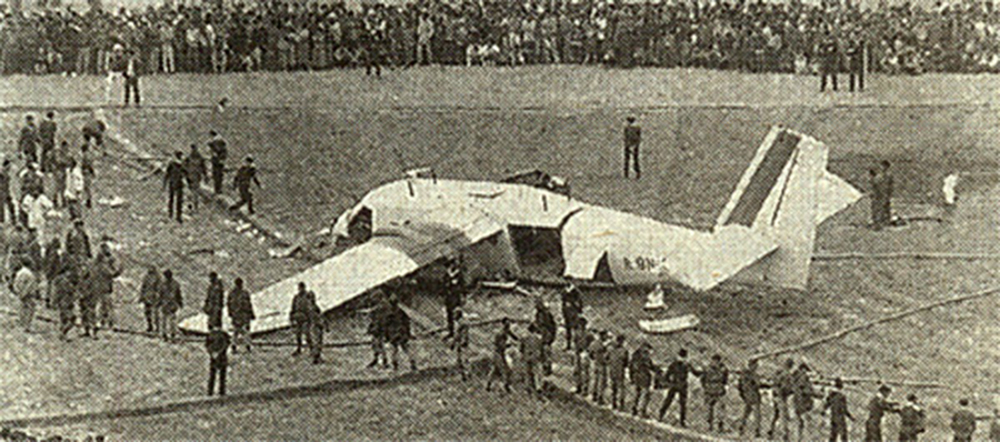
Crash of a De Havilland DHC-6 Twin Otter 200 near Bagua: 3 killed

Date & Time: Mar 9, 1996
Operator:
Registration:
N245GW
Flight Phase:
Survivors:
No
Schedule:
Bagua - Bagua
MSN:
129
YOM:
1968
Location:
Country:
Crew on board:
2
Crew fatalities:
Pax on board:
1
Pax fatalities:
Other fatalities:
Total fatalities:
3
Circumstances:
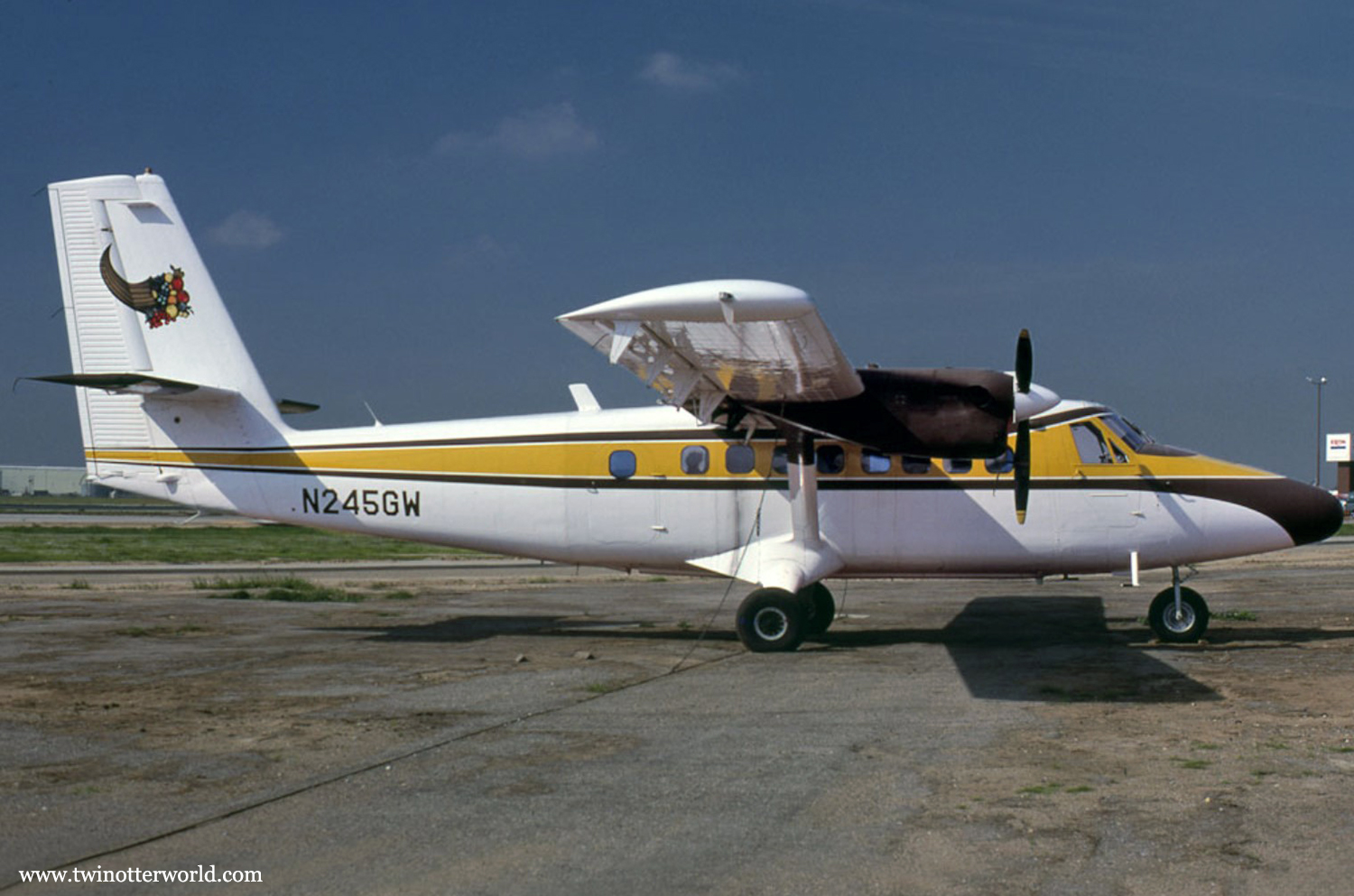
On March 9, 1996, a De Havilland DHC-6-200, N245GW, registered to Air Associates Inc., leased to Carson Services Inc., operating as a 14 CFR part 91 aerial survey flight, crashed at an undetermined time. Visual meteorological conditions prevailed at the departure airport, and no flight plan was filed. The airplane is missing and is presumed destroyed. The American pilot-in-command, American survey operator, and Peruvian Air Force observer are missing, and are presumed to be fatally injured. The flight originated from Bagua, Peru, at about 0617 mountain daylight time. Personnel from the Director General of Civil Aviation stated, the airplane departed from Bagua, Peru, conducting an aerial geological survey near the disputed boarder with Ecuador, in the Cenepa River area over dense Amazon jungle. The airplane did not return to Bagua, and there are no known recorded radio communications with N245GW. Search and rescue operations have been uneventful.

Crash of a De Havilland DHC-6 Twin Otter 300 in Cobán: 2 killed

Date & Time: Feb 16, 1996 at 0656 LT
Registration:
TG-JAK
Flight Type:
Survivors:
No
Schedule:
Guatemala City – Cobán
MSN:
714
YOM:
1980
Country:
Crew on board:
2
Crew fatalities:
Pax on board:
0
Pax fatalities:
Other fatalities:
Total fatalities:
2
Aircraft flight hours:
5644
Circumstances:
The approach to Cobán Airport was initiated in poor weather conditions with limited visibility due to fog. Too low, the aircraft struck trees and crashed in a wooded area located 7,2 km short of runway. Both pilots were killed. They were completing a positioning flight from Guatemala City.
Probable cause:
Controlled flight into terrain after the crew continued the descent below the MDA in IMC conditions.

Crash of a De Havilland DHC-6 Twin Otter 300 in Addis Ababa

Date & Time: Oct 22, 1995 at 0950 LT
Operator:
Registration:
ET-AIO
Survivors:
Yes
Schedule:
Kombolcha-Dessie – Addis Ababa
MSN:
818
YOM:
1985
Flight number:
ET173
Country:
Region:
Crew on board:
3
Crew fatalities:
Pax on board:
17
Pax fatalities:
Other fatalities:
Total fatalities:
0
Circumstances:
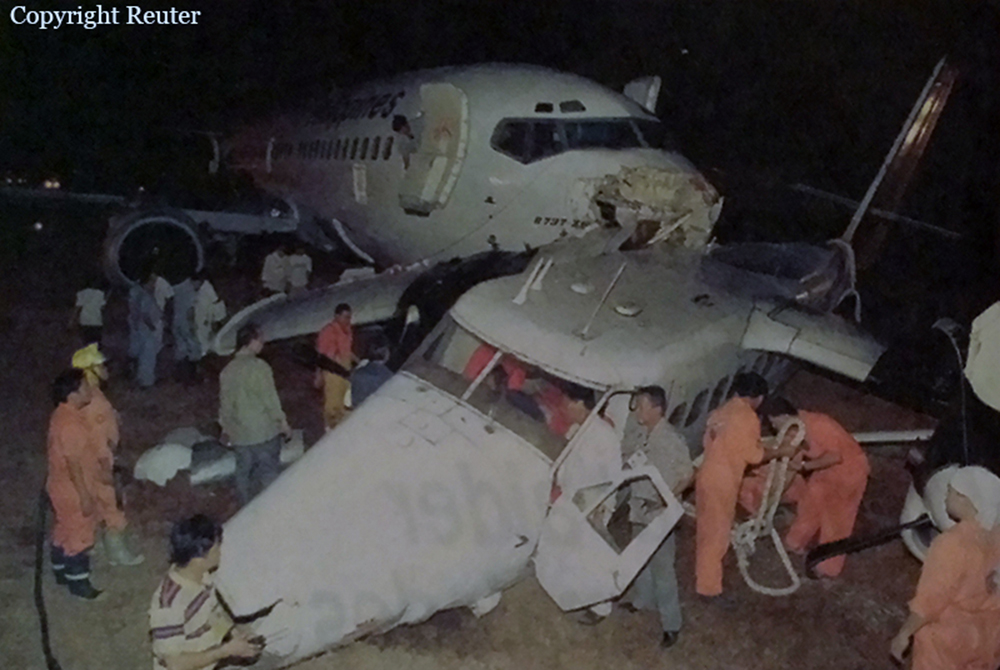
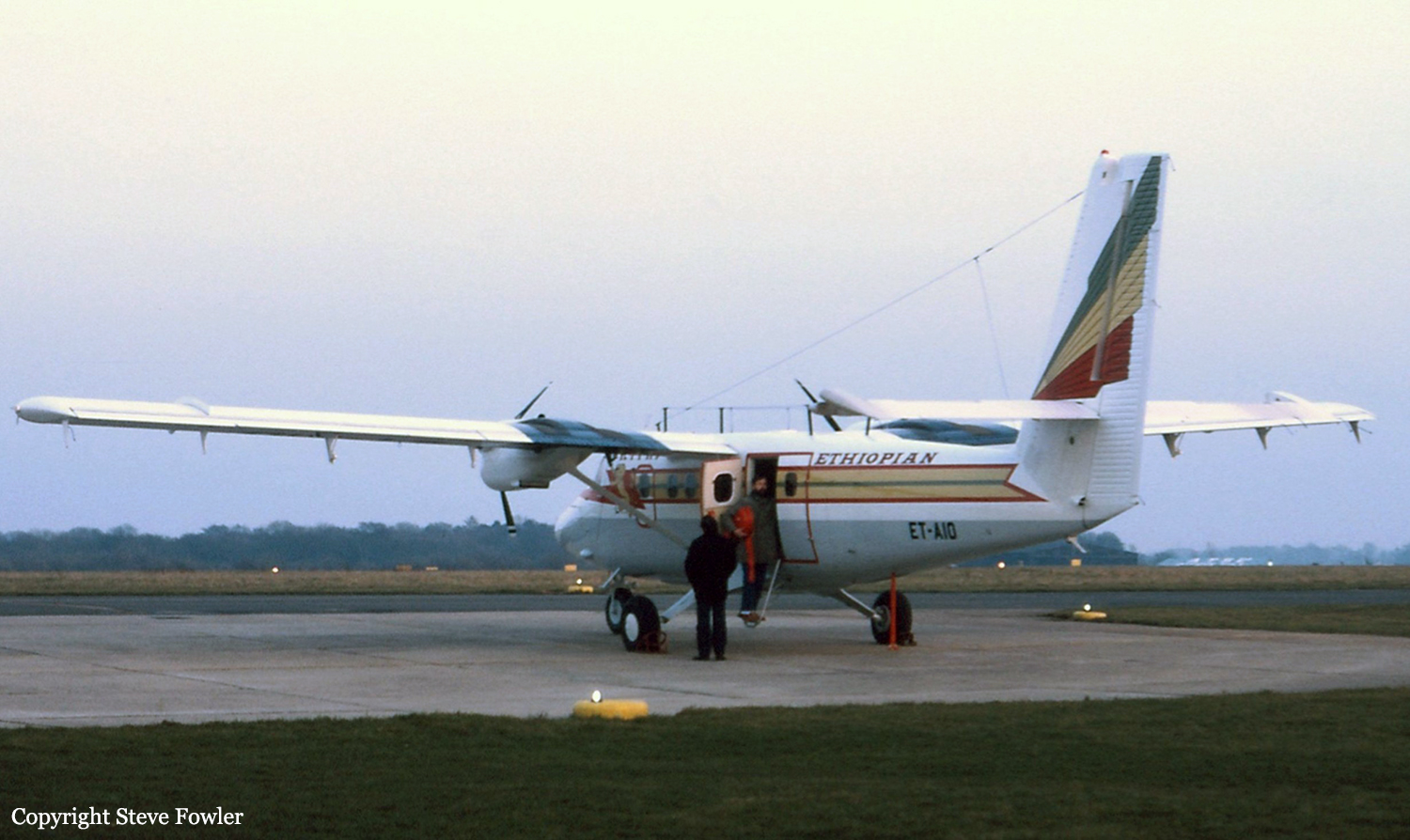
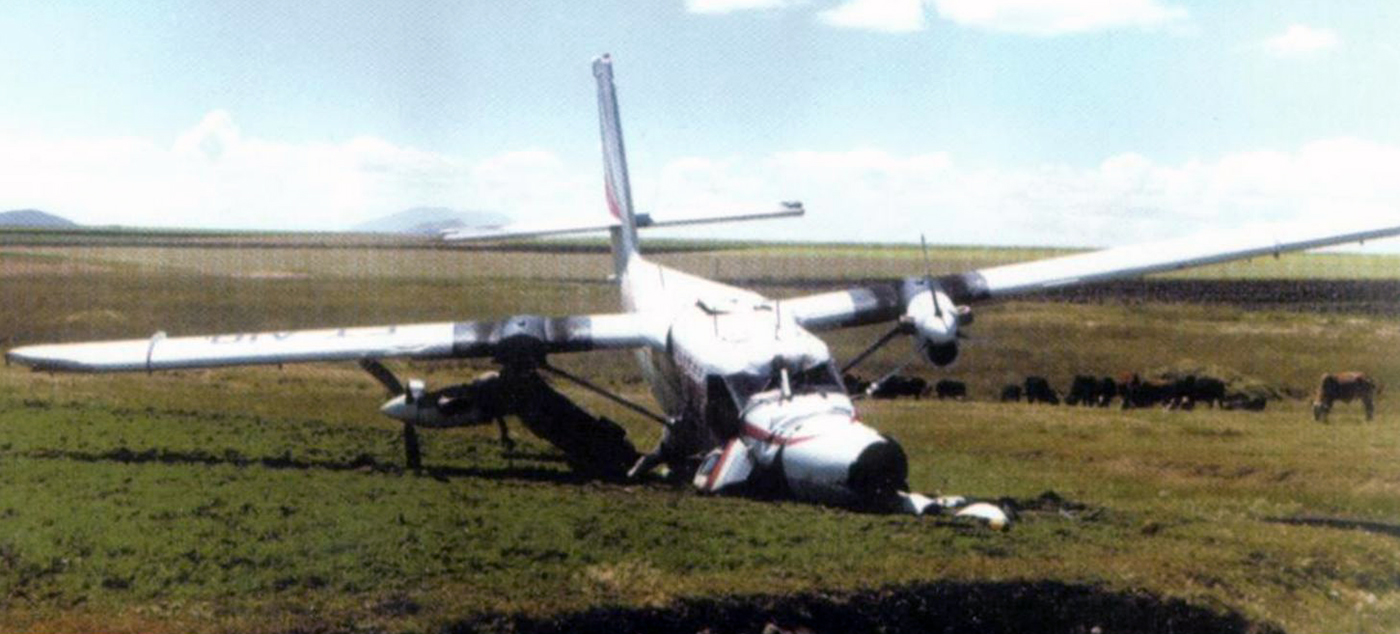
On final approach to Addis Ababa-Bole Airport, the twin engine aircraft collided with a white backed vulture of 5,4 kg. The windshield was broken and both pilots were seriously injured. Nevertheless, they elected to make an emergency landing when the aircraft crashed 300 metres short of runway. All 20 occupants were rescued, among them nine were injured.
Probable cause:
Loss of control on final approach following bird strike.

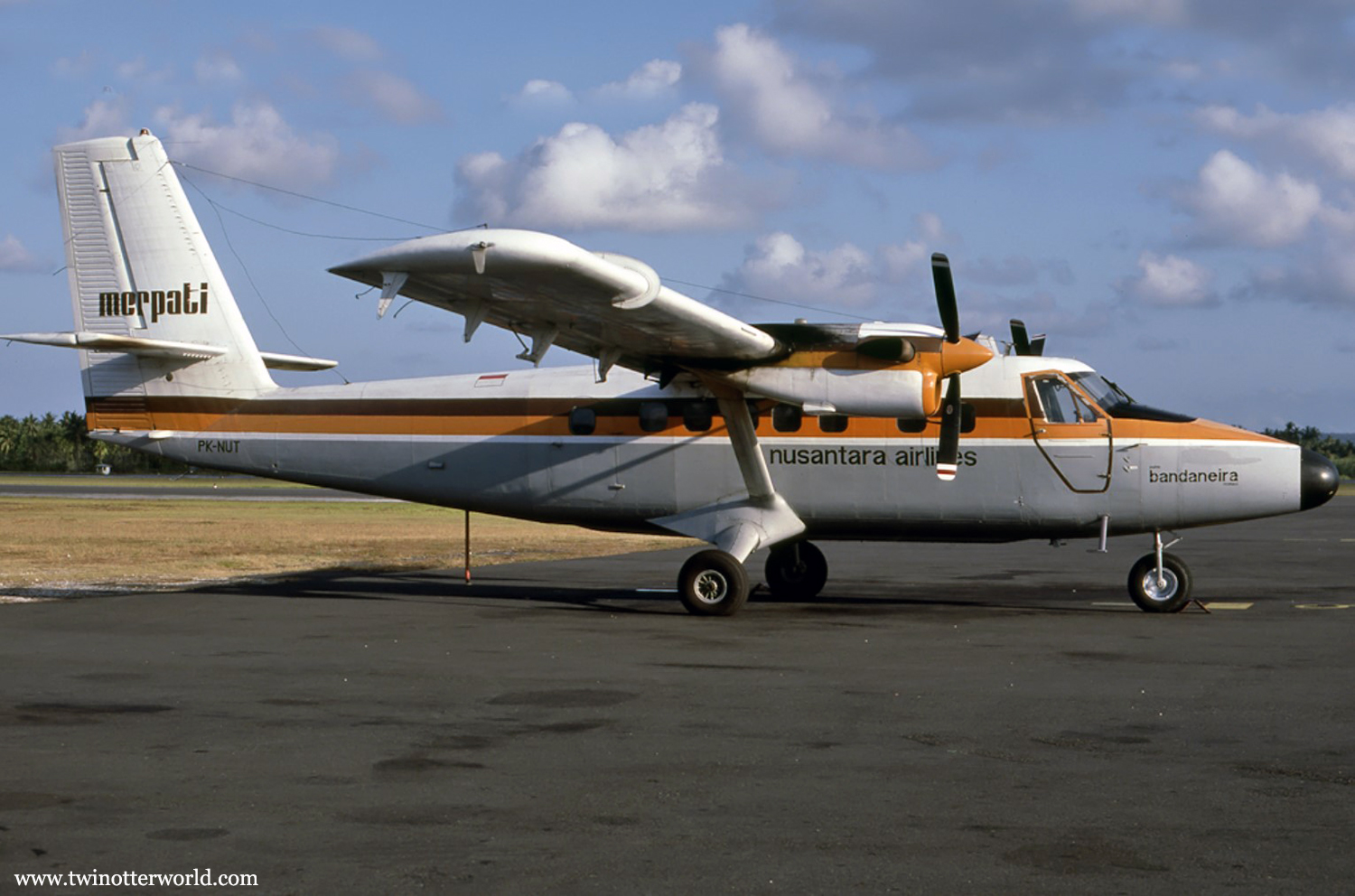
Crash of a De Havilland DHC-6 Twin Otter 300 in Bintuni: 1 killed

Date & Time: Jul 17, 1995
Operator:
Registration:
PK-NUT
Flight Phase:
Survivors:
Yes
Schedule:
Bintuni – Manokwari
MSN:
473
YOM:
1975
Country:
Region:
Crew on board:
2
Crew fatalities:
Pax on board:
16
Pax fatalities:
Other fatalities:
Total fatalities:
1
Circumstances:
During the takeoff roll from runway 13, the twin engine aircraft went out of control, veered off runway and crashed in a banana plantation. One of the pilot was killed while few other occupants were injured, some seriously. The aircraft was written off.
Probable cause:
Loss of control during takeoff after the aircraft suffered aquaplaning

Crash of a De Havilland DHC-6 Twin Otter 300 off Alotau: 15 killed

Date & Time: Jul 12, 1995 at 0800 LT
Operator:
Registration:
P2-MBI
Flight Phase:
Survivors:
No
Schedule:
Alotau - Wedau
MSN:
275
YOM:
1969
Region:
Crew on board:
2
Crew fatalities:
Pax on board:
13
Pax fatalities:
Other fatalities:
Total fatalities:
15
Circumstances:
Shortly after takeoff from Alotau Airport, while in initial climb, the aircraft caught fire and suffered an explosion. It entered an uncontrolled descent and crashed in shallow water about 2 km offshore. The aircraft was totally destroyed by impact forces and all 15 occupants were killed.
Probable cause:
An investigation conducted by the Australian Transport Safety Bureau (ATSB) revealed that an explosion and fire occurred shortly after takeoff, causing the electrical system to fail. The fire's source probably was the terminal board between the inverters and a control relay. Kerosene carried in passenger luggage in the Twin Otter's aft cargo hold possibly began leaking and was possibly ignited by faulty or age-deteriorated electrical wiring.

Crash of a De Havilland DHC-6 Twin Otter 300 in Lagos: 1 killed

Date & Time: Apr 23, 1995 at 1240 LT
Operator:
Registration:
5N-AJQ
Survivors:
Yes
Schedule:
Port Harcourt – Warri – Lagos
MSN:
607
YOM:
1979
Country:
Region:
Crew on board:
2
Crew fatalities:
Pax on board:
7
Pax fatalities:
Other fatalities:
Total fatalities:
1
Circumstances:
On approach to Lagos-Murtala Muhammed Airport, the crew encountered poor weather conditions with heavy rain falls and strong winds. The copilot was in command and the airplane was too high on approach so the captain took over controls and steeped the approach. Nevertheless, the aircraft was still too high over runway 19L threshold when it encountered severe downdraft. It nosed down and struck the runway surface nose gear first. It bounced, veered off runway to the left, rolled to the apron and eventually collided with a parked Fokker F27 Friendship 200MP of the Nigerian Air Force registered NAF908. Both aircraft were destroyed and one of the pilot on board the Twin Otter was killed, all eight other occupants were injured.
Probable cause:
It was determined that the crew lost control of the airplane upon landing after the wind suddenly changed from 270° at 10 knots to 360° at 50 knots. Also, windshear was suspected.

Crash of a De Havilland DHC-6 Twin Otter 200 in the Pacific Ocean

Date & Time: Mar 16, 1995 at 0515 LT
Operator:
Registration:
N37ST
Flight Phase:
Flight Type:
Survivors:
Yes
Schedule:
Oakland – Honolulu – Majuro – Suva – Auckland
MSN:
207
YOM:
1969
Country:
Region:
Crew on board:
3
Crew fatalities:
Pax on board:
0
Pax fatalities:
Other fatalities:
Total fatalities:
0
Captain / Total flying hours:
1100
Captain / Total hours on type:
200.00
Circumstances:
The aircraft departed overweight for a 17-hour ferry flight. Early in the flight the crew experienced some fuel problems and decided to continue when they resolved the problem. The crew indicated the en route winds were close to forecast. The ferry fuel system is a simple 5- tank gravity fuel feed into the fore and aft main tanks. About 6 hours from destination, they realized the ferry tanks were not flowing into the main tanks as planned. They began manually transferring fuel from the rear ferry tank to the forward ferry tank, and shut down the right engine to reduce fuel consumption. This did not stop the negative fuel flow from the main tanks. At the time of ditching, the crew estimated the fuel remaining in the ferry tanks was about 170 gallons, most of which was in the 3 aft ferry tanks. An aero engineer calculated that the aircraft was at least 10 inches behind the maximum aft cg at the time of ditching, and suggested that the ferry fuel system was not managed to maintain the cg within the allowable limits, a task made more difficult with the rear fuselage cargo.
Probable cause:
Intentional ditching due to the flightcrew's failure to properly manage the fuel system, and operation of the airplane in an excessively overweight condition.
Final Report:

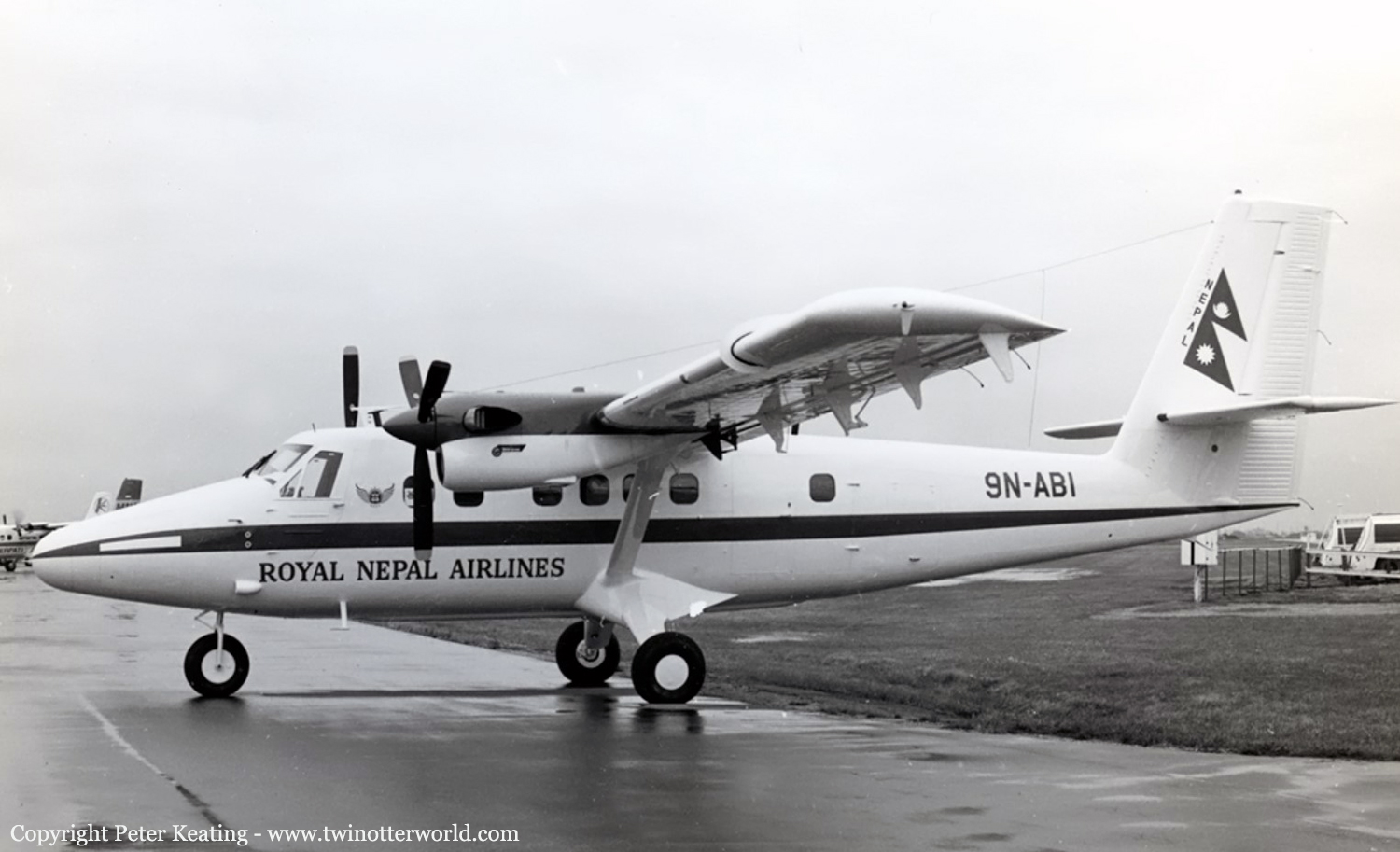
Crash of a De Havilland DHC-6 Twin Otter 300 in Kathmandu: 2 killed

Date & Time: Jan 17, 1995 at 1359 LT
Operator:
Registration:
9N-ABI
Flight Phase:
Survivors:
Yes
Schedule:
Kathmandu - Rumjatar
MSN:
392
YOM:
1973
Flight number:
RA133
Country:
Region:
Crew on board:
3
Crew fatalities:
Pax on board:
21
Pax fatalities:
Other fatalities:
Total fatalities:
2
Circumstances:
During the takeoff roll on runway 20 at Kathmandu-Tribhuvan Airport, the aircraft failed to get airborne, overran, went through a fence and came to rest in a field. A passenger and a pilot were killed while all other occupants were rescued.
Probable cause:
It was determined that the crew was composed by two captains. For unknown reasons, the pilot-in-command decided to abort the takeoff procedure but the crew failed to coordinate this decision. At the time of the accident, the total weight of the aircraft was 60 kilos above MTOW.

Crash of a De Havilland DHC-6 Twin Otter 300 off Rinca Island: 14 killed

Date & Time: Jan 10, 1995
Operator:
Registration:
PK-NUK
Flight Phase:
Survivors:
No
Schedule:
Bima - Ruteng
MSN:
390
YOM:
1973
Flight number:
MZ6715
Country:
Region:
Crew on board:
4
Crew fatalities:
Pax on board:
10
Pax fatalities:
Other fatalities:
Total fatalities:
14
Circumstances:
En route from Bima to Ruteng, the crew encountered poor weather conditions. Control was lost and the aircraft crashed in the Molo Strait off Rinca Island. All 14 occupants were killed.

Crash of a De Havilland DHC-6 Twin Otter 310 in Bili

Date & Time: Jan 3, 1995
Operator:
Registration:
P2-IAA
Flight Phase:
Flight Type:
Survivors:
Yes
Schedule:
Bili - Bili
MSN:
244
YOM:
1969
Region:
Crew on board:
2
Crew fatalities:
Pax on board:
0
Pax fatalities:
Other fatalities:
Total fatalities:
0
Circumstances:
The crew was engaged in a local training flight at Bili Airfield. During the takeoff roll on a grassy airstrip, the crew lost control of the airplane that veered off runway, lost its undercarriage and came to rest. Both pilots escaped uninjured and the aircraft was damaged beyond repair.