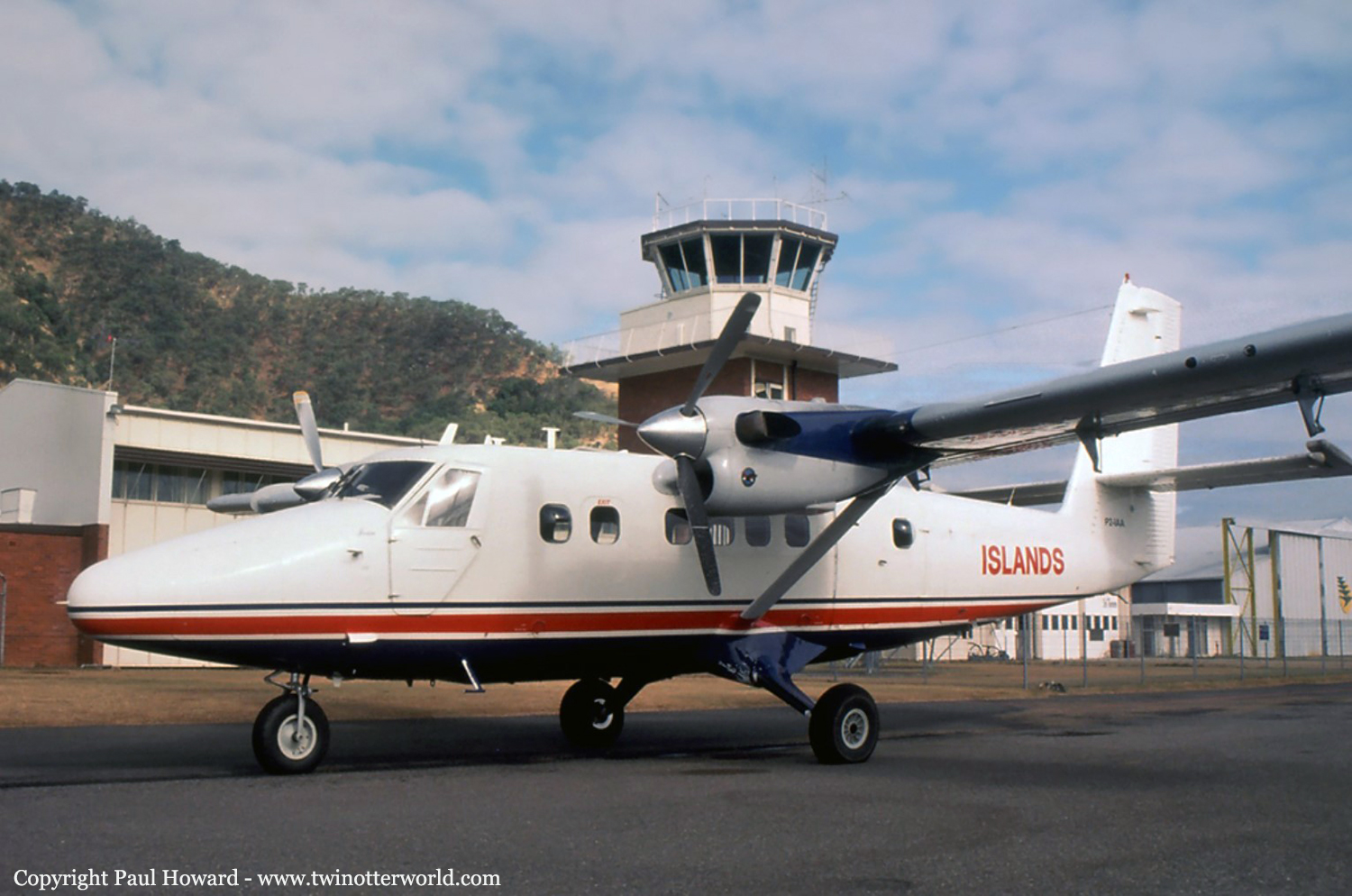
Crash of a De Havilland DHC-6 Twin Otter 310 in Bili

Date & Time: Jan 3, 1995
Operator:
Registration:
P2-IAA
Flight Phase:
Flight Type:
Survivors:
Yes
Schedule:
Bili - Bili
MSN:
244
YOM:
1969
Region:
Crew on board:
2
Crew fatalities:
Pax on board:
0
Pax fatalities:
Other fatalities:
Total fatalities:
0
Circumstances:
The crew was engaged in a local training flight at Bili Airfield. During the takeoff roll on a grassy airstrip, the crew lost control of the airplane that veered off runway, lost its undercarriage and came to rest. Both pilots escaped uninjured and the aircraft was damaged beyond repair.

Crash of a De Havilland DHC-6 Twin Otter 200 near Selbang: 28 killed

Date & Time: Dec 17, 1994 at 1320 LT
Operator:
Registration:
P2-MFS
Flight Phase:
Survivors:
No
Site:
Schedule:
Tabubil - Selbang
MSN:
187
YOM:
1968
Region:
Crew on board:
2
Crew fatalities:
Pax on board:
26
Pax fatalities:
Other fatalities:
Total fatalities:
28
Circumstances:
The twin engine aircraft departed Tabubil and a regular schedule flight to Selbang, carrying 26 passengers and two pilots. After passing over Olsobip, the crew encountered poor visibility due to clouds. While flying at an altitude of 6,400 feet in clouds, the aircraft struck the slope of a mountain located about 9 km south of Selbang. The aircraft was destroyed and all 28 occupants were killed. At the time of the accident, the cloud layer was reported from 4,000 to 10,000 feet.
Probable cause:
Controlled flight into terrain.

Crash of a De Havilland DHC-6 Twin Otter 300 at Rothera Station: 4 killed

Date & Time: Nov 24, 1994 at 0301 LT
Operator:
Registration:
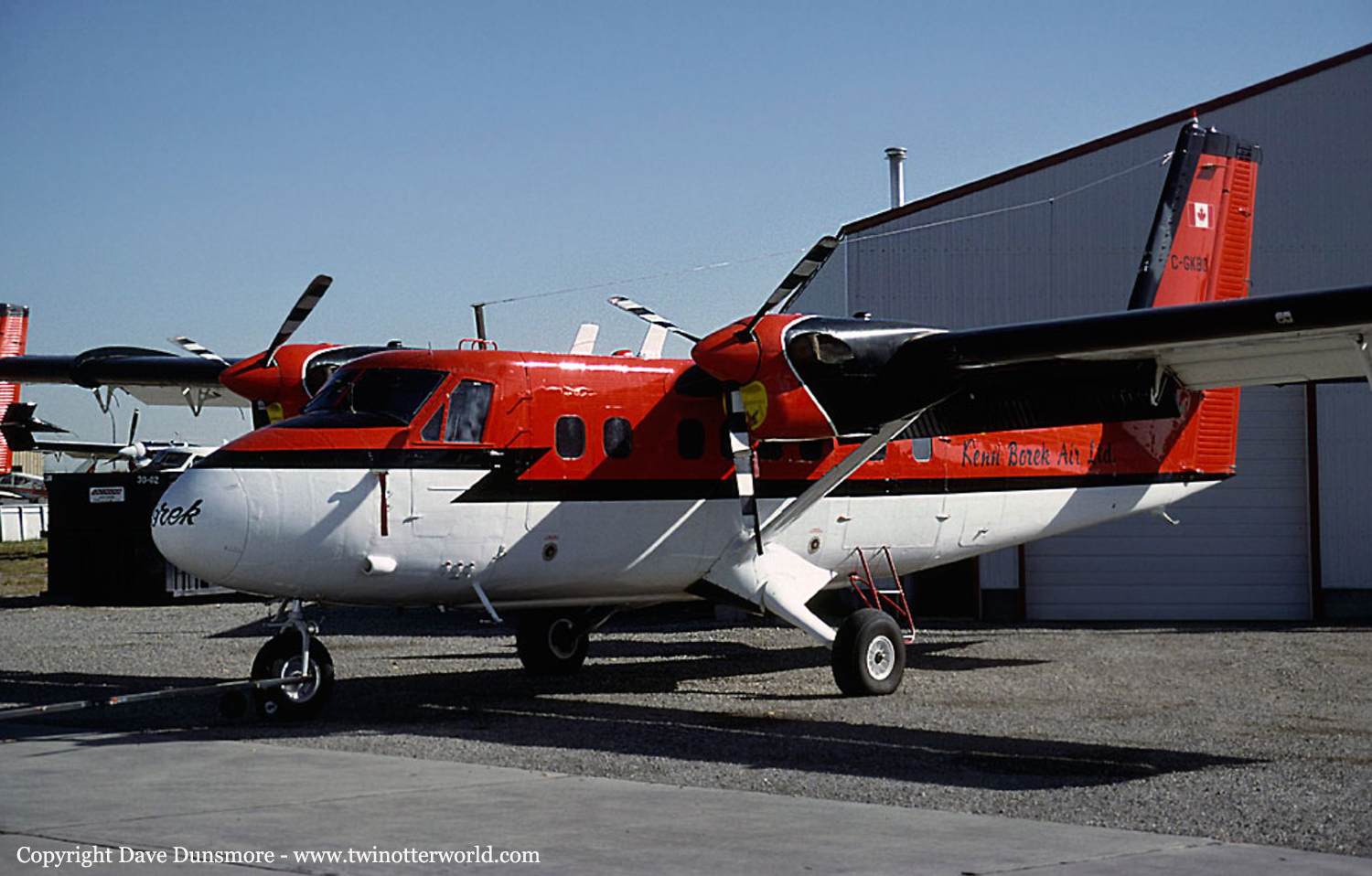
C-GKBD
Flight Phase:
Survivors:
No
Schedule:
Rothera - Terra Nova Bay
MSN:
314
YOM:
1971
Country:
Region:
Crew on board:
2
Crew fatalities:
Pax on board:
2
Pax fatalities:
Other fatalities:
Total fatalities:
4
Captain / Total flying hours:
3984
Captain / Total hours on type:
3414.00
Copilot / Total flying hours:
3180
Copilot / Total hours on type:
448
Circumstances:
The twin engine aircraft departed Rothera Station runway 18 on a charter flight to Terra Nova, carrying two passengers and two pilots. During initial climb, the airplane became unstable and rolled side to side. From a height of about 100 feet, it stalled and crashed on the slope of an iceberg facing the airport, bursting into flames. All four occupants were killed.
Probable cause:
The exact cause of the accident could not be determined with certainty as rescuers and investigators were unable to reach the crash site that was unstable and too dangerous. The stall occurred at a too low altitude to expect recovery.
Final Report:

Crash of a De Havilland DHC-6 Twin Otter 300 on Mt Deyjay: 4 killed

Date & Time: Nov 4, 1994
Operator:
Registration:
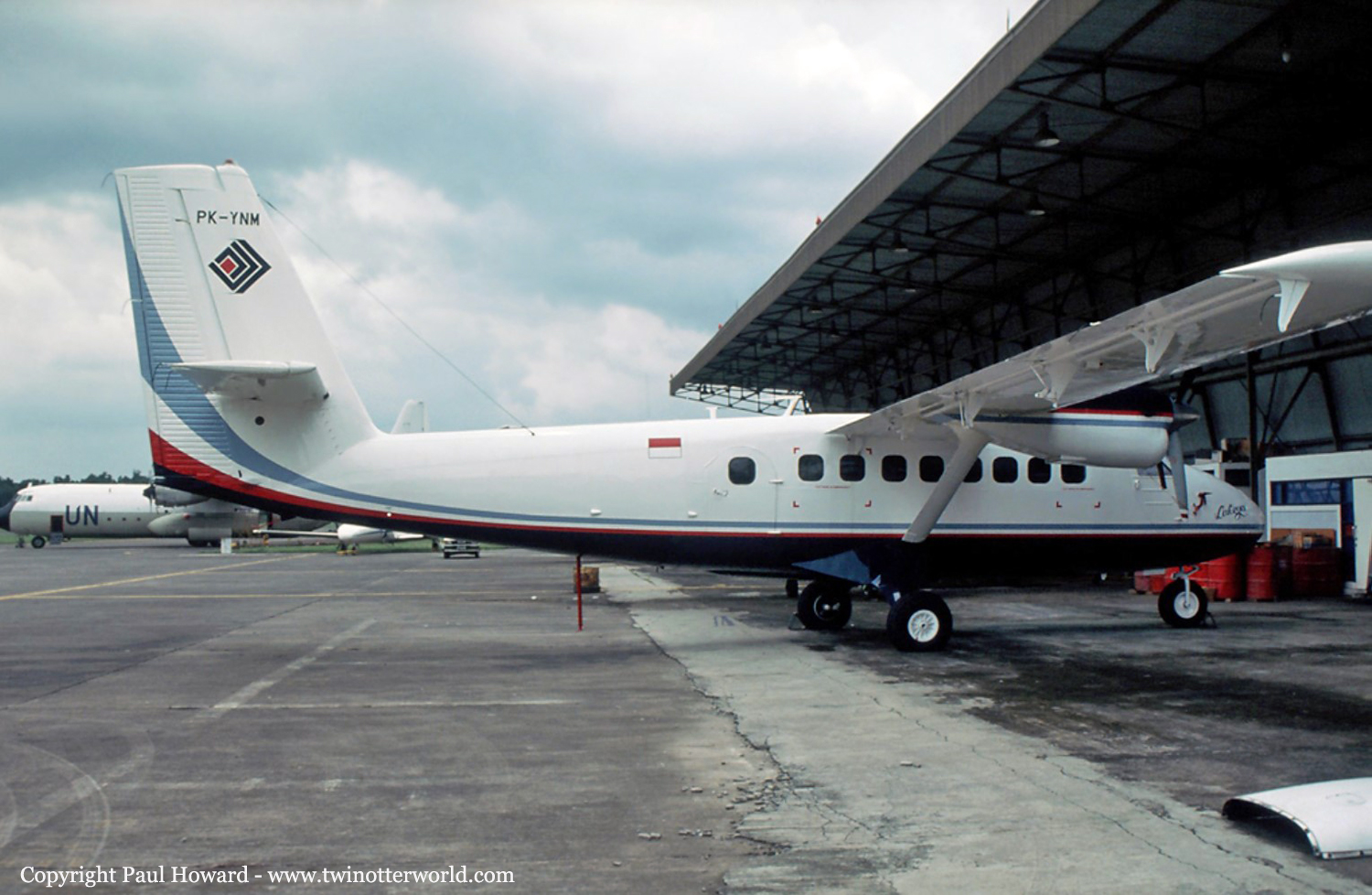
PK-YNM
Flight Phase:
Survivors:
No
Site:
Schedule:
Nabire - Obano
MSN:
55
YOM:
1967
Country:
Region:
Crew on board:
2
Crew fatalities:
Pax on board:
2
Pax fatalities:
Other fatalities:
Total fatalities:
4
Circumstances:
The twin engine aircraft was completing a charter flight from Nabire to Obano, carrying two passengers and two pilots on behalf of the Nabire Bakti Mining Company. While approaching the destination, the crew encountered clouds when the aircraft collided with Mt Deyjay (2,115 metres high) located about 8 km southwest of Obano. All four occupants were killed.
Probable cause:
Controlled flight into terrain.

Crash of a De Havilland DHC-6 Twin Otter 100 in the Fish Egg Inlet: 3 killed

Date & Time: Sep 17, 1994 at 1148 LT
Operator:
Registration:
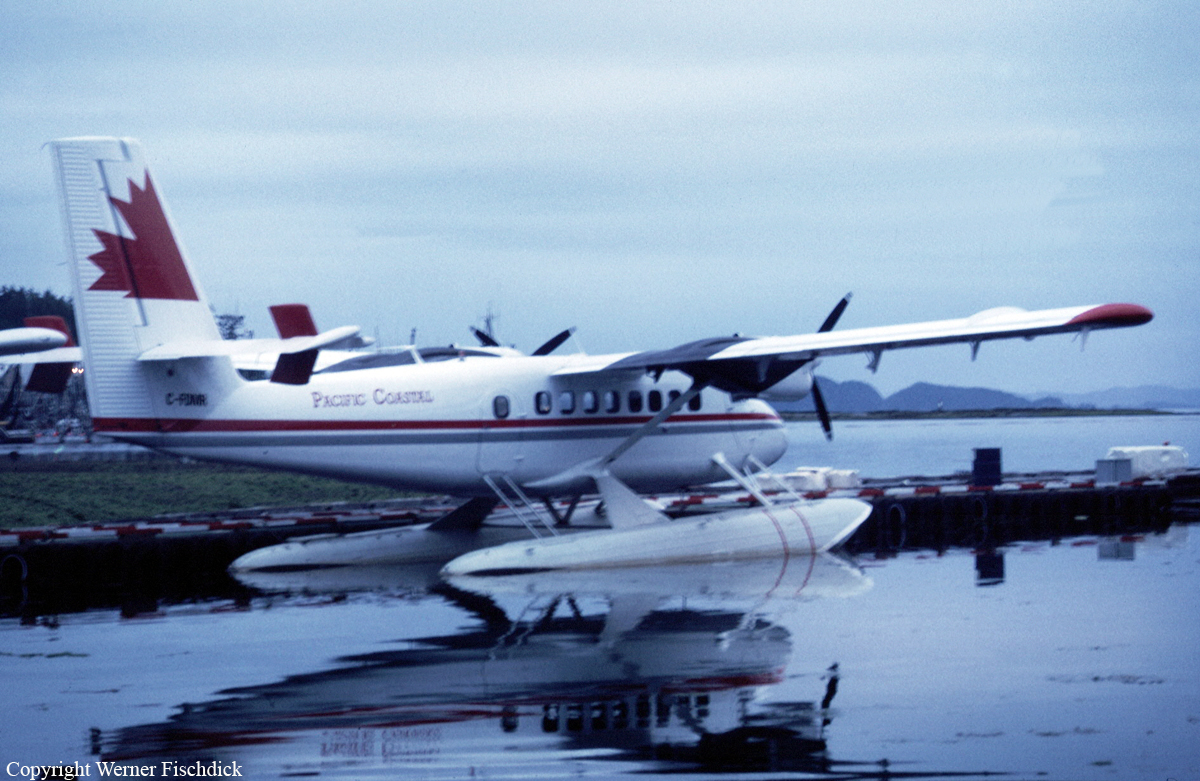
C-FDMR
Flight Phase:
Survivors:
Yes
Schedule:
Fish Egg Inlet - Pruth Bay
MSN:
36
YOM:
1967
Country:
Crew on board:
2
Crew fatalities:
Pax on board:
2
Pax fatalities:
Other fatalities:
Total fatalities:
3
Captain / Total flying hours:
11725
Captain / Total hours on type:
4000.00
Copilot / Total flying hours:
2500
Copilot / Total hours on type:
150
Circumstances:
The captain, first officer, and two passengers departed from the Fish Egg Inlet logging camp, located 56 nautical miles (nm) north of Port Hardy, British Columbia, for a 16 nm visual flight rules (VFR) flight to Pruth Bay. This was the second leg of a flight which had originated at Port Hardy. The first officer, who occupied the left pilot seat and was handling the controls, taxied the aircraft a short distance away from the dock and took off. The captain occupied the right pilot seat. As the aircraft climbed through 100 feet, and just as the flaps were retracting, the aircraft pitched up violently and stalled. The pilots were unable to regain control of the aircraft, and it crashed into the water about 100 feet from the shore and sank immediately. The captain, who sustained serious injuries from the crash, escaped from the wreckage and swam to shore. The first officer and the two passengers remained in the aircraft and drowned. When the aircraft failed to arrive at Pruth Bay, personnel from Pacific Coastal Airlines (the company) notified the Rescue Coordination Centre and started their own search. A search pilot spotted debris in the water near the logging camp at about 1430 Pacific daylight saving time (PDT) that day. He landed to investigate, found the captain on the shore nearby, and transported him to the Port Hardy hospital. The accident occurred during daylight hours at approximately 1148 PDT, at latitude 51°36'N and longitude 127°41'W. There were no witnesses, other than the aircraft captain, to this accident.
Probable cause:
The down elevator control cable failed at station 376 due to corrosion, and, as a result, the pilot lost control of the aircraft. The corrosion was not detected by the maintenance personnel during the aircraft's last cable inspection.
Final Report:

Crash of a De Havilland DHC-6 Twin Otter 300 in Abuja: 3 killed

Date & Time: Sep 13, 1994 at 1155 LT
Operator:
Registration:
5N-ATQ
Survivors:
Yes
Site:
Schedule:
Lagos - Abuja
MSN:
538
YOM:
1977
Country:
Region:
Crew on board:
2
Crew fatalities:
Pax on board:
3
Pax fatalities:
Other fatalities:
Total fatalities:
3
Circumstances:
While descending to Abuja-Nnamdi Azikiwe Airport, the crew encountered poor weather conditions with low clouds, heavy rain falls and moderate to severe turbulences. As the ILS was out of calibration, the crew decided to perform a VOR/DME approach but following a misunderstanding of the VOR location, the crew started the final approach prematurely. Too low, the aircraft struck the slope of a mountain located 12,2 km short of runway 22. Two people survived while three others were killed.
Probable cause:
Wrong approach configuration on part of the crew who initiated the descent prematurely, causing the aircraft to descend too low too early. Poor weather conditions were considered as contributing factors.

Crash of a De Havilland DHC-6 Twin Otter 300 in Ambato: 17 killed

Date & Time: Apr 6, 1994
Operator:
Registration:
FAE450
Flight Phase:
Survivors:
No
Site:
Schedule:
Taura - Latacunga
MSN:
436
YOM:
1974
Country:
Crew on board:
3
Crew fatalities:
Pax on board:
14
Pax fatalities:
Other fatalities:
Total fatalities:
17
Circumstances:
En route from Taura to Latacunga, the crew was cleared to climb to FL155 when, at an altitude of 13,400 feet, the twin engine aircraft stuck the slope of Mt Lozan shrouded in clouds. All 17 occupants were killed. The wreckage was found 100 metres below the summit.
Probable cause:
Controlled flight into terrain.

Crash of a De Havilland DHC-6 Twin Otter 300 in Tripoli: 1 killed

Date & Time: Mar 19, 1994
Registration:
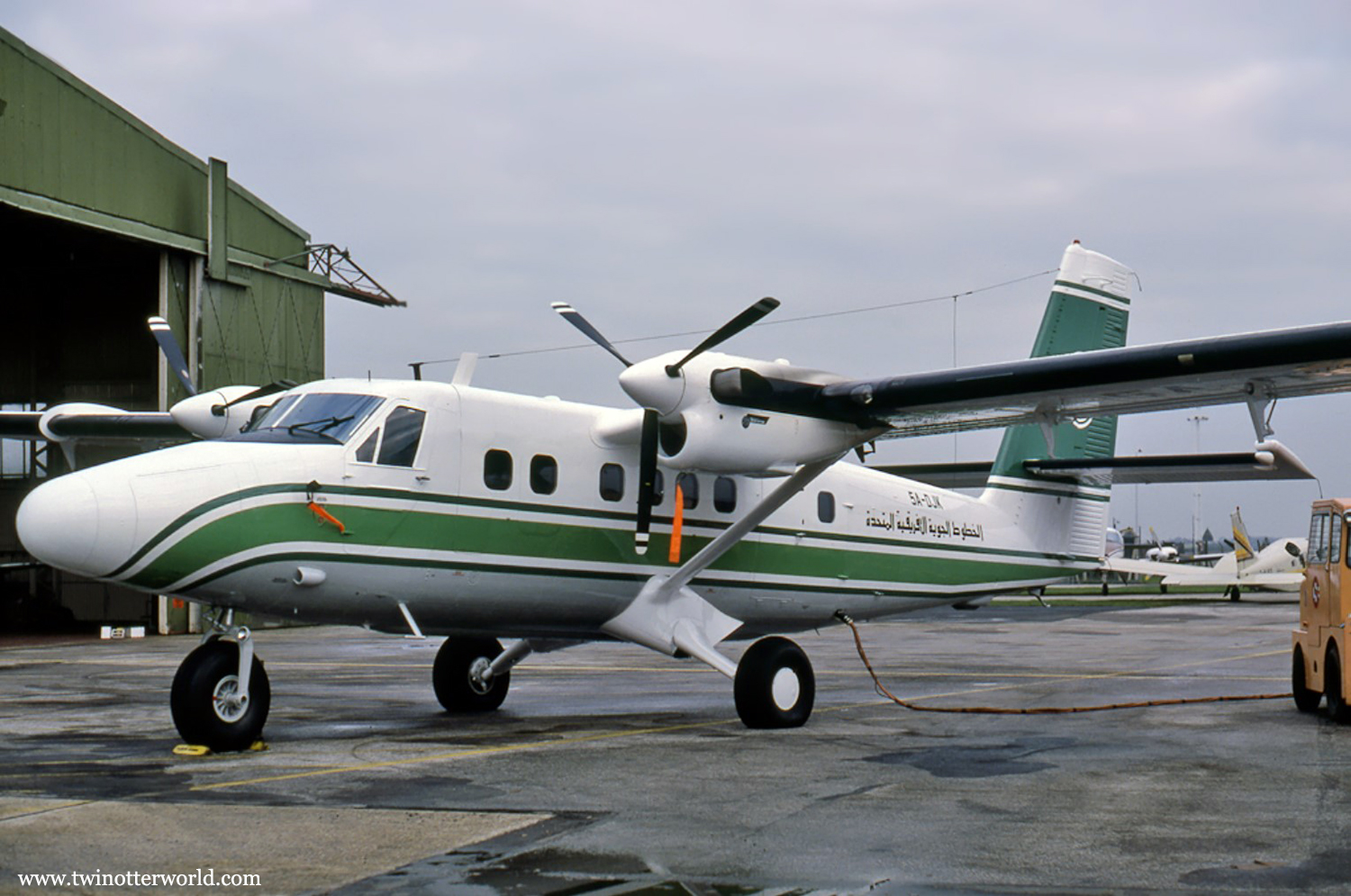
5A-DJK
Flight Phase:
Flight Type:
Survivors:
Yes
Schedule:
Tripoli - Tripoli
MSN:
775
YOM:
1981
Country:
Region:
Crew on board:
2
Crew fatalities:
Pax on board:
0
Pax fatalities:
Other fatalities:
Total fatalities:
1
Circumstances:
The crew was completing a local training flight at Tripoli Airport when the aircraft crashed in unknown circumstances near the airfield. The copilot was seriously injured while the captain/instructor was killed.

Crash of a De Havilland DHC-6 Twin Otter 300 off Dakar: 3 killed

Date & Time: Dec 9, 1993 at 1839 LT
Operator:
Registration:
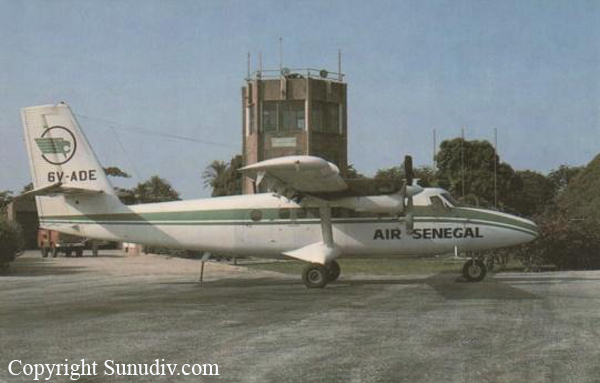
6V-ADE
Survivors:
No
Schedule:
Saint-Louis - Dakar
MSN:
393
YOM:
1973
Country:
Region:
Crew on board:
2
Crew fatalities:
Pax on board:
1
Pax fatalities:
Other fatalities:
Total fatalities:
3
Circumstances:
Following an uneventful flight from Saint Louis, the crew was cleared to descend to Dakar-Yoff Airport and was instructed to maintain 3,000 feet over YF VOR. At the same time, a NAMC YS-11A-117 operated by Gambia Airways departed Dakar-Yoff Airport on a regular schedule flight to Banjul. Registered C5-GAA, the aircraft was carrying 34 passengers and a crew of four. Its pilots were instructed to climb via radial 140 and maintain the altitude of 2,000 feet while over YF VOR. When both aircraft reached the YF VOR, they collided. While the crew of the NAMC was able to return to Dakar and land safely despite the left wing was partially torn off, the Twin Otter entered an uncontrolled descent and crashed in the sea few km offshore. All three occupants were killed.
Probable cause:
It was determined that both crew failed to respect their assigned altitude, causing both aircraft to collide. At the time of the accident, the Twin Otter was about 100-300 feet too low and the NAMC was about 700-900 feet too high.

Crash of a De Havilland DHC-6 Twin Otter 300 in Namsos: 6 killed

Date & Time: Oct 27, 1993 at 1916 LT
Operator:

Registration:
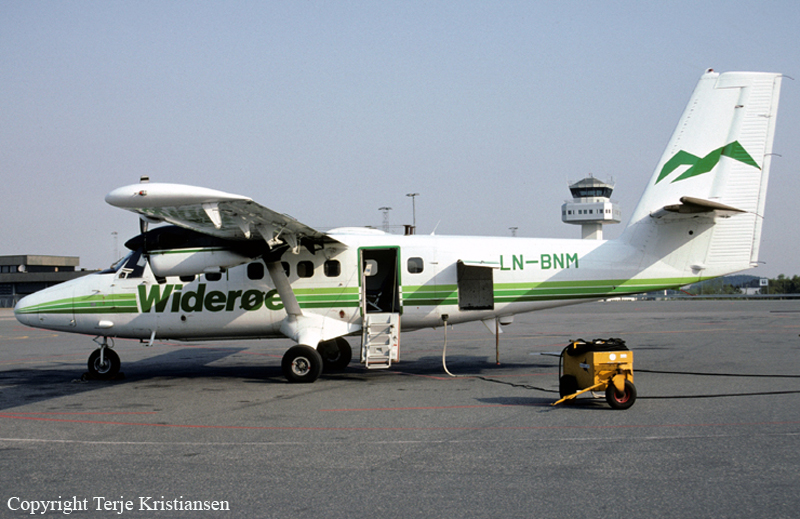
LN-BNM
Survivors:
Yes
Schedule:
Trondheim - Namsos
MSN:
408
YOM:
1974
Flight number:
WF744
Country:
Region:
Crew on board:
2
Crew fatalities:
Pax on board:
17
Pax fatalities:
Other fatalities:
Total fatalities:
6
Captain / Total flying hours:
4835
Captain / Total hours on type:
1998.00
Copilot / Total flying hours:
6354
Copilot / Total hours on type:
1365
Aircraft flight hours:
40453
Circumstances:
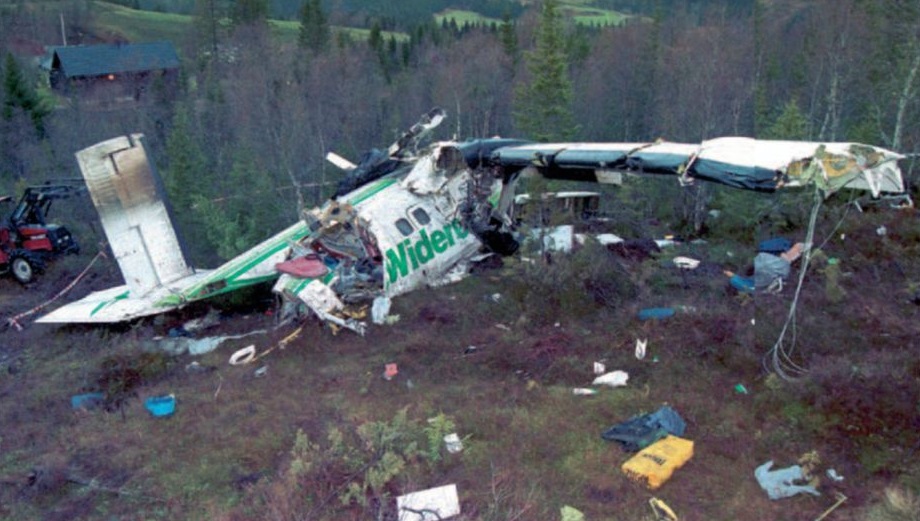
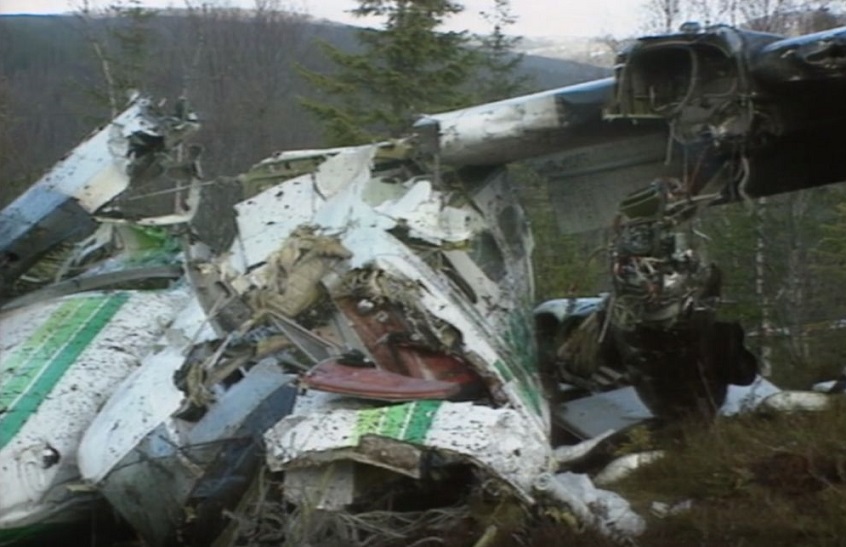
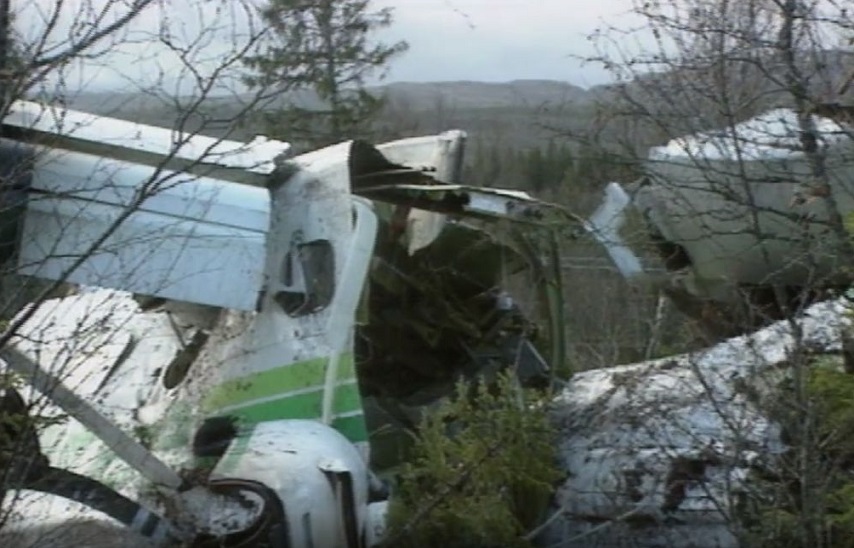
On approach to Namsos Airport by night, the crew encountered poor visibility due to rain falls. In below weather minima, the crew descended below the minimum safe altitude until the aircraft struck the ground and crashed in a swampy area located about 6 km short of runway. The aircraft was destroyed on impact and six occupants including both pilots were killed. All 13 other occupants were injured.
Probable cause:
The accident was the consequence of a controlled flight into terrain. The following findings were reported:
- The company had failed to implement a standardized concept of aircraft operation that the pilots fully respected and lived by;
- The approach briefing was not not fully implemented in accordance with the rules. There were deficiencies in:
- "Call outs" during the approach
- Descent rate (feet/min) during "FAF inbound"
- Timing "outbound" from the IAF and the time from FAF to MAPt;
- The crew did not execute the "base turn" at the scheduled time, with the consequence that the plane ended up about 14 NM from the airport;
- The Pilot Flying ended the approach with reference to aircraft instruments and continued on a visual approach in the dark without visual reference to the underlying terrain. During this part of the approach the aircraft's position was not positively checked using any available navigational aids;
- Both crew members had in all likelihood most of the attention out of the cockpit at the airport after the Pilot Not Flying announced that he had it in sight;
- The crew was never aware of how close they were the underlying terrain;
- The last part of the descent from about 500 feet indicated altitude to 392 feet can be caused by inattention to the fact that the plane may have been a little out of trim after the descent;
- Crew Cooperation during the approach was not in accordance with with the CRM concept and seems to have ceased completely after the Pilot Not Flying called "field in sight";
- Before the accident the company had not succeeded well enough with the introduction of standardization and internal control/quality assurance. This was essentially because the management had not placed enough emphasis on awareness and motivate employees;
- The self-control system described in the airline operations manual and the parts of the quality system, was not incorporated in the organization and served as poor safety governing elements;
- Neither the Norwegian CAA nor the company had defined what visual reference to terrain is, what sufficient visual references are and what the references must be in relation to a moving aircraft.
Final Report: