Crash of an Antonov AN-12BP in Menongue: 4 killed

Date & Time: May 16, 2003
Type of aircraft:
Operator:
Registration:
T-307
Flight Phase:
Flight Type:
Survivors:
No
Schedule:
Menongue - Luanda
MSN:
9 34 66 08
YOM:
1969
Country:
Region:
Crew on board:
4
Crew fatalities:
Pax on board:
0
Pax fatalities:
Other fatalities:
Total fatalities:
4
Circumstances:
The aircraft departed Luanda on a cargo flight to Menongue, carrying four crew members and a load of fuel drums. While in cruising altitude, one of the engine failed but the crew was able to continue and to land normally at Menongue Airport. Later, the crew decided to fly back to Luanda on three engines for maintenance instead of getting a technical crew to the airfield the next day. Shortly after takeoff, while climbing, a second engine failed, causing the aircraft to stall and to crash. All four crew members were killed.
Probable cause:
Engine failure for unknown reasons.

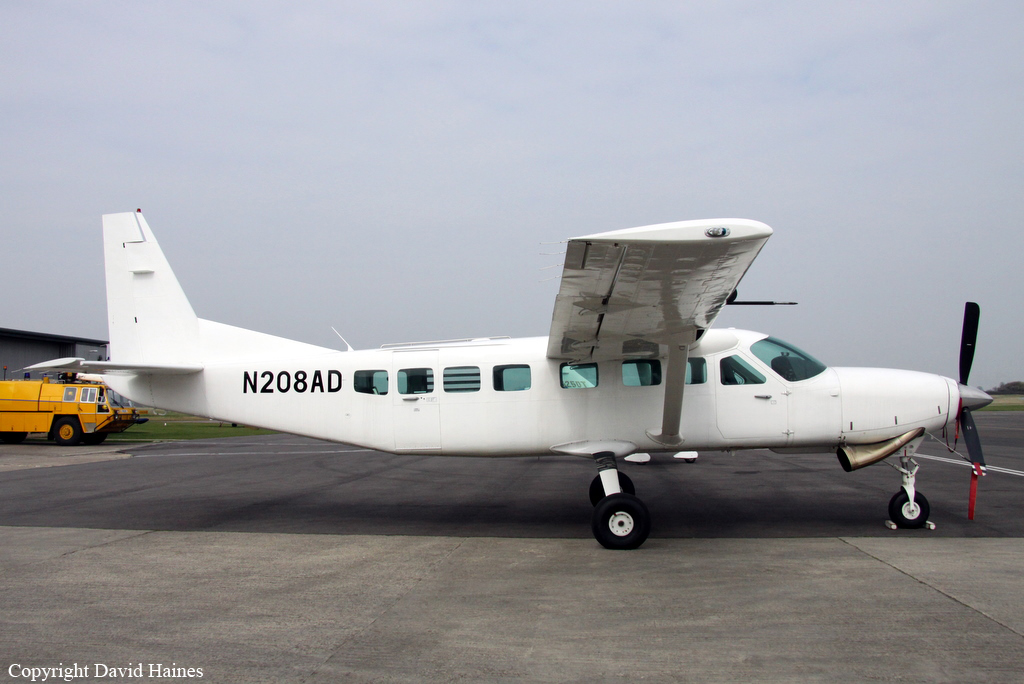
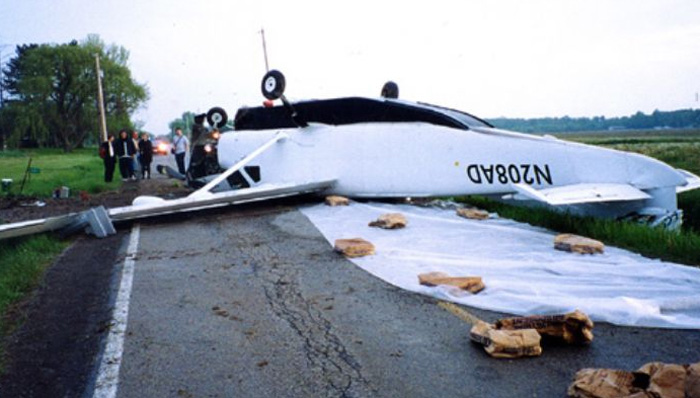
Crash of a Cessna 208B Super Cargomaster in Lorain

Date & Time: May 15, 2003 at 1710 LT
Type of aircraft:
Operator:
Registration:
N208AD
Flight Phase:
Flight Type:
Survivors:
Yes
Schedule:
Lorain - Anderson
MSN:
208B-0063
YOM:
1987
Location:
Crew on board:
1
Crew fatalities:
Pax on board:
0
Pax fatalities:
Other fatalities:
Total fatalities:
0
Captain / Total flying hours:
3500
Captain / Total hours on type:
1500.00
Aircraft flight hours:
12059
Circumstances:
The pilot departed in a Cessna 208B, and shortly after takeoff, he experienced a power loss. He set up for a forced landing and during the ground roll, the nose wheel sunk into the soft terrain and the airplane nosed over. Fuel was found in both wings; however, the fuel line between the fuel selector and the engine contained only trace amounts of fuel. One fuel selector was found in the OFF position, and the other fuel selector was mid-range between the OFF and ON positions. The airplane was equipped with an annunciator warning light and horn to warn if either fuel selector was turned off. The annunciator was popped out and did not make contact with the annunciator panel. The warning horn was checked and found to be inoperative, and the electrical circuitry leading to the horn was checked and found to be operative. The engine was test run with no problems noted. According to the Pilot's Operating Handbook, the position of the fuel selectors are to be checked three times before takeoff: including cabin preflight, before engine start, and before takeoff. The pilot reported that he departed with both fuel selectors on and had not touched them when the power loss occurred. A representative of Cessna Aircraft Company reported that there was sufficient fuel forward of the fuel selector valves to takeoff and fly for a few miles prior to experiencing fuel exhaustion.
Probable cause:
The pilot's failure to verify the position of the fuel selectors prior to takeoff, which resulted in a power loss due to fuel starvation. A factor was the failure of the fuel selector warning horn.
Final Report:

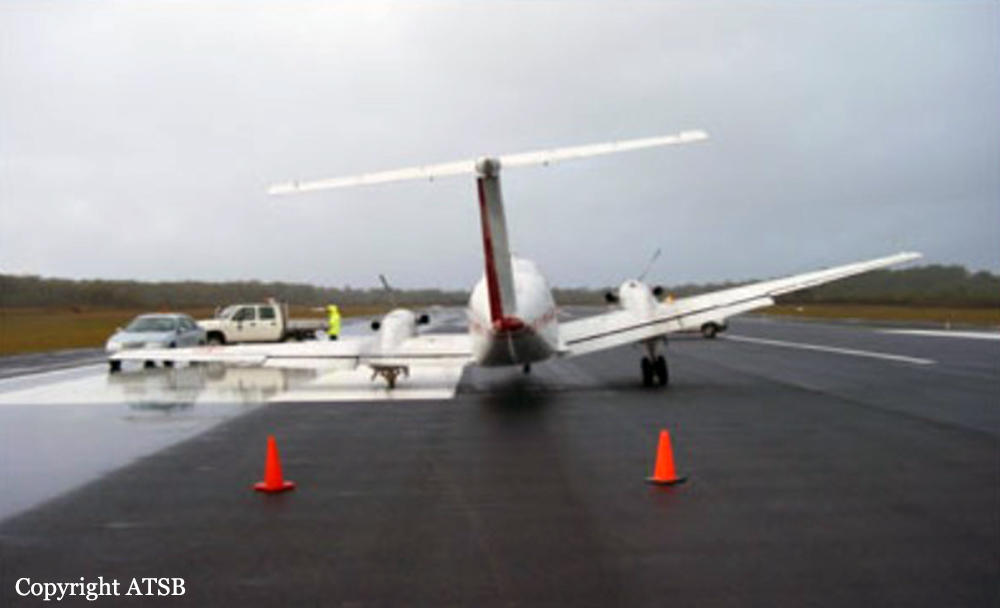
Crash of a Beechcraft B200C Super King Air in Coffs Harbour

Date & Time: May 15, 2003 at 0833 LT
Operator:
Registration:
VH-AMR
Flight Type:
Survivors:
Yes
Schedule:
Sydney – Coffs Harbour
MSN:
BL-126
YOM:
1985
Country:
Region:
Crew on board:
1
Crew fatalities:
Pax on board:
3
Pax fatalities:
Other fatalities:
Total fatalities:
0
Captain / Total flying hours:
18638
Captain / Total hours on type:
460.00
Circumstances:
The aircraft impacted the sea or a reef about 6 km north-east of Coffs Harbour airport. The impact occurred immediately after the pilot initiated a go-around during an instrument approach to runway 21 in Instrument Meteorological Conditions (IMC) that included heavy rain and restricted visibility. Although the aircraft sustained structural damage and the left main gear detached, the aircraft remained airborne. During the initial go-around climb, the aircraft narrowly missed a breakwater and adjacent restaurant at the Coffs Harbour boat harbour. Shortly after, the pilot noticed that the primary attitude indicator had failed, requiring him to refer to the standby instrument to recover from an inadvertent turn. The pilot positioned the aircraft over the sea and held for about 30 minutes before returning to Coffs Harbour and landing the damaged aircraft on runway 21. There were no injuries or any other damage to property and/or the environment because of the accident. The aircraft was on a routine aeromedical flight from Sydney to Coffs Harbour with the pilot, two flight nurses, and a stretcher patient on board. The flight was conducted under instrument flight rules (IFR) in predominantly instrument meteorological conditions (IMC). During the descent, the enroute air traffic controller advised the pilot to expect the runway 21 Global Positioning System (GPS) non-precision approach (NPA). The pilot reported that he reviewed the approach diagram and planned a 3-degree descent profile. He noted the appropriate altitudes, including the correct minimum descent altitude (MDA) of 580 ft, on a reference card. A copy of the approach diagram used by the pilot is at Appendix A. The aerodrome controller advised the pilot of the possibility of a holding pattern due to a preceding IFR aircraft being sequenced for an instrument approach to runway 21. The controller subsequently advised that holding would not be required if the initial approach fix (SCHNC)2 was reached not before 0825. At about 0818, the aerodrome controller advised the pilot of the preceding aircraft that the weather conditions in the area of the final approach were a visibility of 5000 m and an approximate cloud base of 1,000 ft. At 0825 the aerodrome controller cleared the pilot of the King Air to track the aircraft from the initial approach fix to the intermediate fix (SCHNI) and to descend to not below 3,500 ft. The published minimum crossing altitude was 3,600 ft. About one minute later the pilot reported that he was leaving 5,500 ft and was established inbound on the approach. At 0828 the pilot reported approaching the intermediate fix and 3,500 ft. The controller advised that further descent was not available until the preceding aircraft was visible from the tower. At 0829 the controller, having sighted the preceding aircraft, cleared the pilot of the King Air to continue descent to 2,500 ft. The pilot advised the controller that he was 2.2 NM from the final approach fix (SCHNF). At that point an aircraft on a 3-degree approach slope to the threshold would be at about 2,500 ft. The controller then cleared the pilot for the runway 21 GPS approach, effectively a clearance to descend as required. The pilot subsequently explained that he was high on his planned 3-degree descent profile because separation with the preceding aircraft resulted in a late descent clearance. He had hand flown the approach, and although he recalled setting the altitude alerter to the 3,500 ft and 2,500 ft clearance limits, he could not recall setting the 580 ft MDA. He stated that he had not intended to descend below the MDA until he was visual, and that he had started to scan outside the cockpit at about 800 ft altitude in expectation of becoming visual. The pilot recalled levelling the aircraft, but a short time later experienced a 'sinking feeling'. That prompted him to go-around by advancing the propeller and engine power levers, and establishing the aircraft in a nose-up attitude. The passenger in the right front seat reported experiencing a similar 'falling sensation' and observed the pilot's altimeter moving rapidly 'down through 200 ft' before it stopped at about 50 ft. She saw what looked like a beach and exclaimed 'land' about the same time as the pilot applied power. The pilot felt a 'thump' just after he had initiated the go-around. The passenger recalled feeling a 'jolt' as the aircraft began to climb. Witnesses on the northern breakwater of the Coffs Harbour boat harbour observed an aircraft appear out of the heavy rain and mist from the north-east. They reported that it seemed to strike the breakwater wall and then passed over an adjacent restaurant at a very low altitude before it was lost from sight. Wheels from the left landing gear were seen to ricochet into the air and one of the two wheels was seen to fall into the water. The other wheel was found lodged among the rocks of the breakwater.During the go-around the pilot unsuccessfully attempted to raise the landing gear, so he reselected the landing gear selector to the 'down' position. He was unable to retract the wing flaps. It was then that he experienced a strong g-force and realised that he was in a turn. He saw that the primary attitude indicator had 'toppled' and referred to the standby attitude indicator, which showed that the aircraft was in a 70-degree right bank. He rapidly regained control of the aircraft and turned it onto an easterly heading, away from land. The inverter fail light illuminated but the pilot did not recall any associated master warning annunciator. He then selected the number-2 inverter to restore power to the primary attitude indicator, and it commenced to operate normally. The pilot observed that the left main landing gear had separated from the aircraft. He continued to manoeuvre over water while awaiting an improvement in weather conditions that would permit a visual approach. About 4 minutes after the King Air commenced the go-around, the aerodrome controller received a telephone call advising that a person at the Coffs Harbour boat harbour had witnessed an aircraft flying low over the harbour, and that the aircraft had '…hit something and the wheel came off'. The controller contacted the pilot, who confirmed that the aircraft was damaged. The controller declared a distress phase and activated the emergency response services to position for the aircraft's landing. Witnesses reported that the landing was smooth. As the aircraft came to rest on the runway, foam was applied around the aircraft to minimise the likelihood of fire. The occupants exited the aircraft through the main cabin door.
Probable cause:
This occurrence is a CFIT accident resulting from inadvertent descent below the MDA on the final segment of a non-precision approach, fortunately without the catastrophic consequences normally associated with such events. The investigation was unable to conclusively determine why the aircraft descended below the MDA while in IMC, or why the descent continued until CFIT could no longer be avoided. However, the investigation identified a number of factors that influenced, or had the potential to influence, the development of the occurrence.
Final Report:

Crash of an Antonov AN-12B in Asmara

Date & Time: May 11, 2003
Type of aircraft:
Operator:
Registration:
ER-AXD
Flight Type:
Survivors:
Yes
Schedule:
Dubai - Asmara
MSN:
9 3 466 02
YOM:
1969
Location:
Country:
Region:
Crew on board:
5
Crew fatalities:
Pax on board:
2
Pax fatalities:
Other fatalities:
Total fatalities:
0
Circumstances:
After touchdown at Asmara Airport runway 25, the crew encountered brakes problems. Unable to stop within the remaining distance, the aircraft overran, collided with approach lights and came to rest. All seven occupants escaped uninjured while the aircraft was damaged beyond repair. Wind was from 170 at 10 knots at the time of the accident.

Crash of a Cessna 411 in Corona: 1 killed

Date & Time: May 4, 2003 at 1453 LT
Type of aircraft:
Operator:
Registration:
N1133S
Flight Phase:
Flight Type:
Survivors:
No
Schedule:
Corona – Santa Monica
MSN:
411-0202
YOM:
1966
Crew on board:
1
Crew fatalities:
Pax on board:
0
Pax fatalities:
Other fatalities:
Total fatalities:
1
Captain / Total flying hours:
3901
Captain / Total hours on type:
412.00
Aircraft flight hours:
4915
Circumstances:
The pilot lost control of his twin engine airplane and collided with terrain while returning to the departure airport after reporting an engine problem. Shortly after takeoff, about 4,000 feet msl, the pilot reported to ATC that he had an engine problem and would return to the airport. The radar plot reveals a steady descent of the airplane from 4,000 feet msl to the accident site, approximately 2 miles from the designated airport. Ground witnesses reported that they saw the airplane flying very low, about 500 feet agl, seconds prior to the accident apparently heading toward the departure airport. The witnesses reported consistent observations of the airplane "wobbling," then going into a steep knife-edge left bank before it dove into the ground. Witnesses at the airport said that the pilot sought out help in getting his radios operating prior to takeoff, telling the witness, "it's been four and a half months since I've been in an airplane, I can't even figure out how to put the radios back in." No fueling records were found for the airplane at the departure airport. The last documented fueling of the airplane was on October 31, 2002, with the addition of 56.2 gallons. Witnesses reported that the airplane did not take on any fuel immediately prior to the flight on May 4th. The flight was the first flight since the airplane received its annual inspection 2 months prior to the accident, and, it was the pilot's first flight after 4 months of inactivity. It is a common practice for maintenance personnel to pull the landing light circuit breakers during maintenance to prevent the fuel transfer pumps, which are wired through the landing light system, from operating continuously. The fuel transfer pumps move fuel from the forward part of the main fuel tank to the center baffle area where it is picked up and routed to the engine. It is conceivable that these circuit breakers were not reset by the pilot for this flight. Wreckage examination revealed a post accident fire on the right wing of the airplane and no fire on the left wing. Additionally, only a small amount of fuel was identified around the left wing tanks after the accident, and no hydraulic deformation was observed to the left main tank or the internal baffles. The landing gear bellcrank indicates that the landing gear was in the down position. The engine and propeller post impact signatures indicate that the left engine was operating at a low power setting (wind milling), while the right engine and propeller indicate a high power setting. Disassembly and inspection of the internal propeller hub components showed that the left propeller was not feathered. The left engine is the critical engine and loss of power in that engine would make directional control more difficult at slower speeds. The airplane owners manual states that "climb or continued level flight at a moderate altitude is improbable with the landing gear extended or the propeller windmilling." The single engine flight procedure delineated in the manual dictates a higher than normal altitude for a successful single engine landing approach.
Probable cause:
The failure of the pilot to properly configure the airplane for a one engine inoperative condition (including his failure to feather the propeller of the affected engine, retract the landing gear, and maintain minimum single engine speed). Factors related to the accident were fuel starvation of the left engine, due to an inadequate fuel supply in the left tanks, inoperative fuel transfer pumps, and the pilot's decision to take off without fueling.
Final Report:

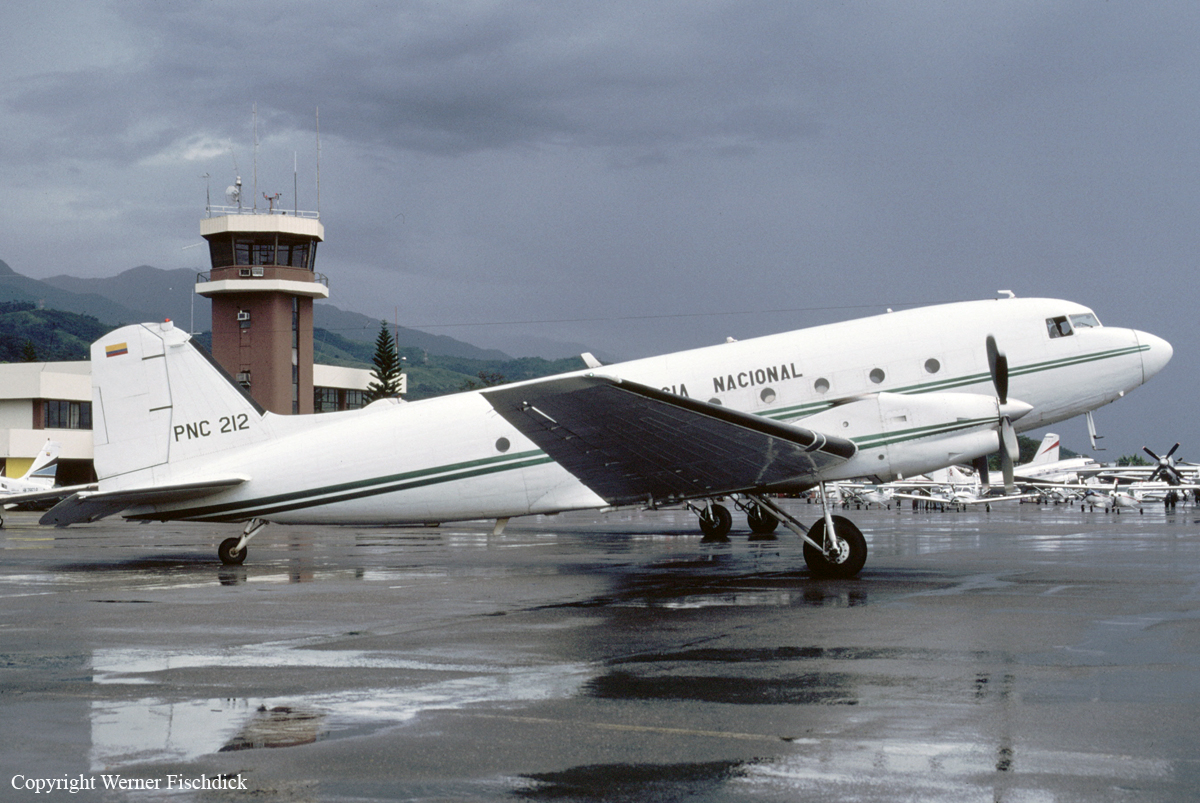
Crash of a Basler BT-67 in Ocaña

Date & Time: Apr 30, 2003
Type of aircraft:
Operator:
Registration:
PNC-212
Survivors:
Yes
MSN:
13110
YOM:
1944
Country:
Crew on board:
0
Crew fatalities:
Pax on board:
0
Pax fatalities:
Other fatalities:
Total fatalities:
0
Circumstances:
After landing at Ocaña-Aguas Claras Airstrip, the aircraft was unable to stop within the remaining distance. It overran and came to rest in a ditch. There were no casualties.

Crash of a Beechcraft 1900C-1 in Kinshasa

Date & Time: Apr 29, 2003 at 1930 LT
Type of aircraft:
Operator:
Registration:
TR-LFQ
Survivors:
Yes
Schedule:
Brazzaville - Kinshasa
MSN:
UC-80
YOM:
1989
Region:
Crew on board:
2
Crew fatalities:
Pax on board:
13
Pax fatalities:
Other fatalities:
Total fatalities:
0
Circumstances:
The twin engine aircraft departed Brazzaville on a charter flight to Kinshasa, carrying 13 passengers (all Air France crew members) and two pilots. On approach to Kinshasa, the crew encountered poor weather conditions with thunderstorm activity, heavy rain falls and strong crosswinds. After touchdown, the aircraft became unstable, deviated to the left and veered off runway. While contacting soft ground, the aircraft lost its undercarriage and slid for few dozen metres before coming to rest beside the runway. All 15 occupants escaped uninjured but the aircraft was damaged beyond repair.
Probable cause:
It is believed that the aircraft became unstable at touchdown due to strong crosswinds. A inappropriate reaction on part of the pilot-in-command, an overcorrection or a wrong configuration may have been a contributing factor.

Crash of a De Havilland DHC-6 Twin Otter 300 in Mulia

Date & Time: Apr 28, 2003 at 0730 LT
Operator:
Registration:
PK-WAR
Survivors:
Yes
Schedule:
Wamena - Mulia
MSN:
313
YOM:
1971
Country:
Region:
Crew on board:
3
Crew fatalities:
Pax on board:
1
Pax fatalities:
Other fatalities:
Total fatalities:
0
Circumstances:
On final approach to Mulia Airport, the twin engine aircraft struck the ground and crashed few km short o runway. All four occupants were injured and the aircraft was damaged beyond repair.

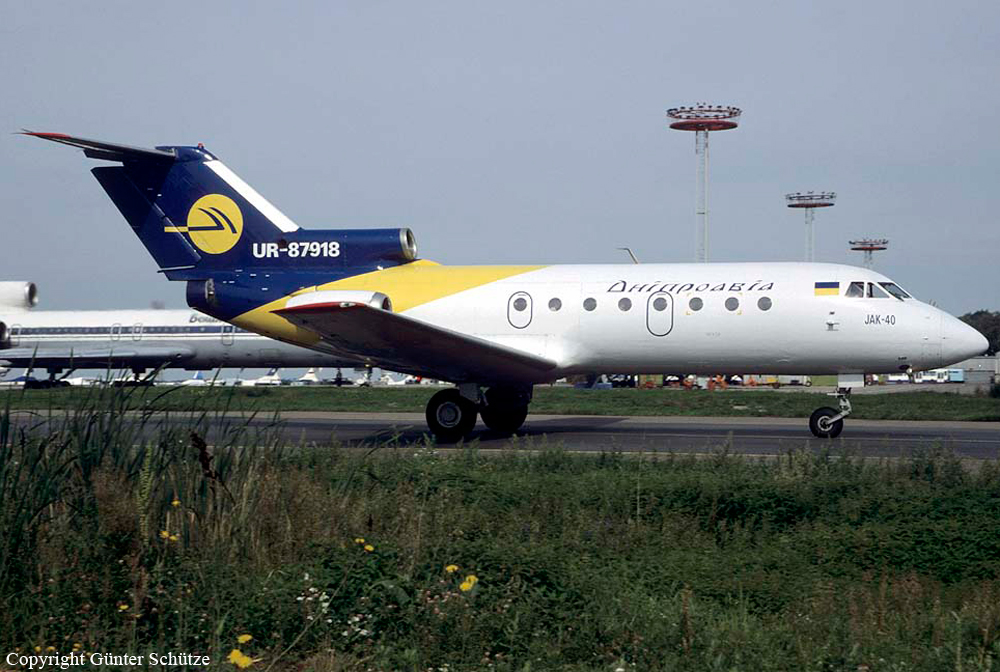
Crash of a Yakovlev Yak-40 in Dnipropetrovsk

Date & Time: Apr 28, 2003
Type of aircraft:
Operator:
Registration:
UR-87918
Survivors:
Yes
MSN:
9 73 08 55
YOM:
1977
Country:
Region:
Crew on board:
4
Crew fatalities:
Pax on board:
13
Pax fatalities:
Other fatalities:
Total fatalities:
0
Circumstances:
On flare, the aircraft was unstable and rolled from right to left. When landing firmly on runway 09/27, the aircraft was not properly aligned and ran off runway to the right at a speed of 115 km/h. It eventually collided with a dike located 100 metres further. All 17 occupants escaped uninjured while the aircraft was damaged beyond repair.

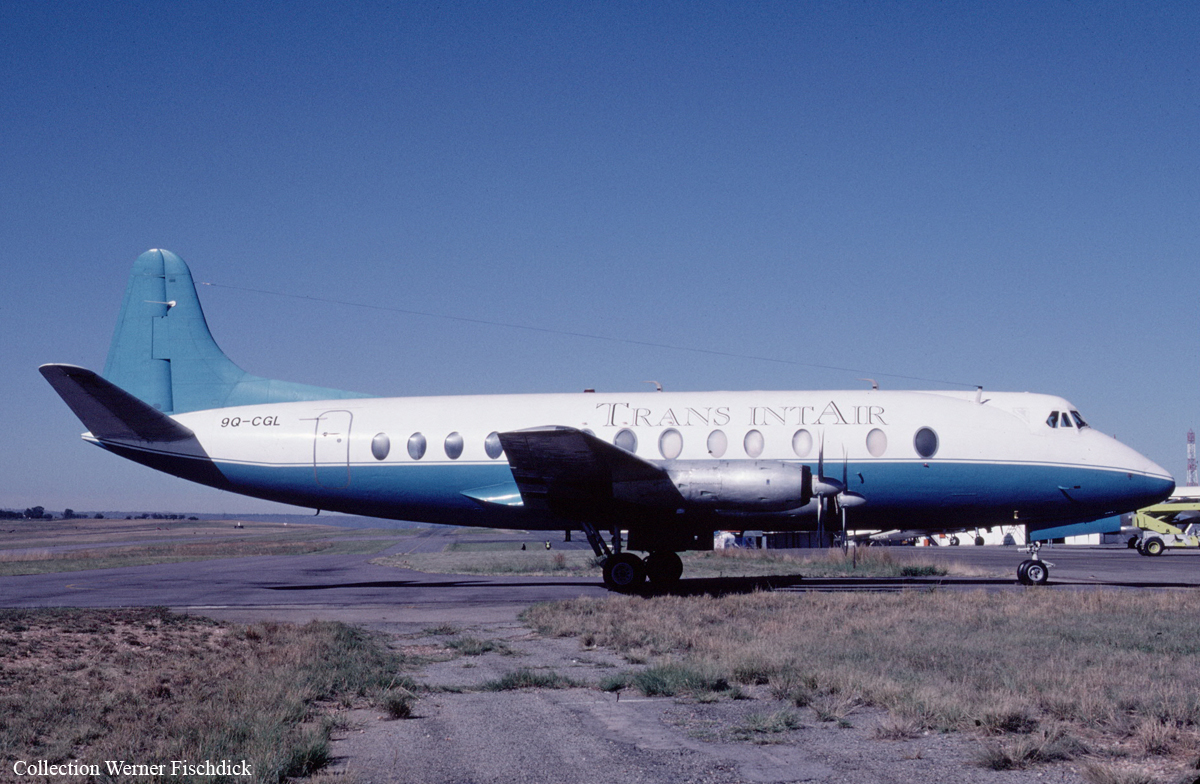
Crash of a Vickers 836 Viscount in Democratic Republic of Congo

Date & Time: Apr 27, 2003
Type of aircraft:
Operator:
Registration:
9Q-CGL
Flight Phase:
Survivors:
Yes
MSN:
435
YOM:
1960
Region:
Crew on board:
0
Crew fatalities:
Pax on board:
0
Pax fatalities:
Other fatalities:
Total fatalities:
0
Circumstances:
The exact circumstances of this accident remains unknown. While landing on a 900 meters long gravel runway somewhere in DRC, one of the four engine was damaged. The crew later decided to takeoff on a three-engine configuration but a second engine failed during takeoff. The aircraft stalled and crashed near the runway end. There were no casualties.
Probable cause: