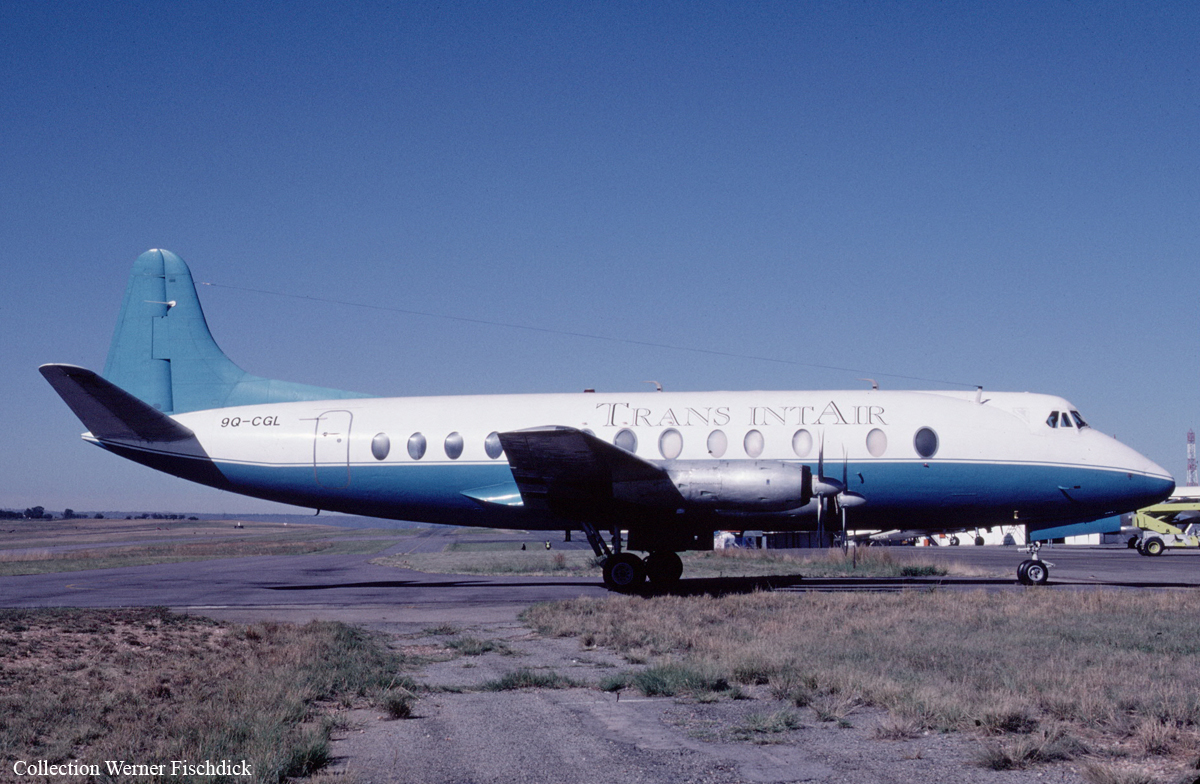
Crash of a Vickers 836 Viscount in Democratic Republic of Congo

Date & Time: Apr 27, 2003
Type of aircraft:
Operator:
Registration:
9Q-CGL
Flight Phase:
Survivors:
Yes
MSN:
435
YOM:
1960
Region:
Crew on board:
0
Crew fatalities:
Pax on board:
0
Pax fatalities:
Other fatalities:
Total fatalities:
0
Circumstances:
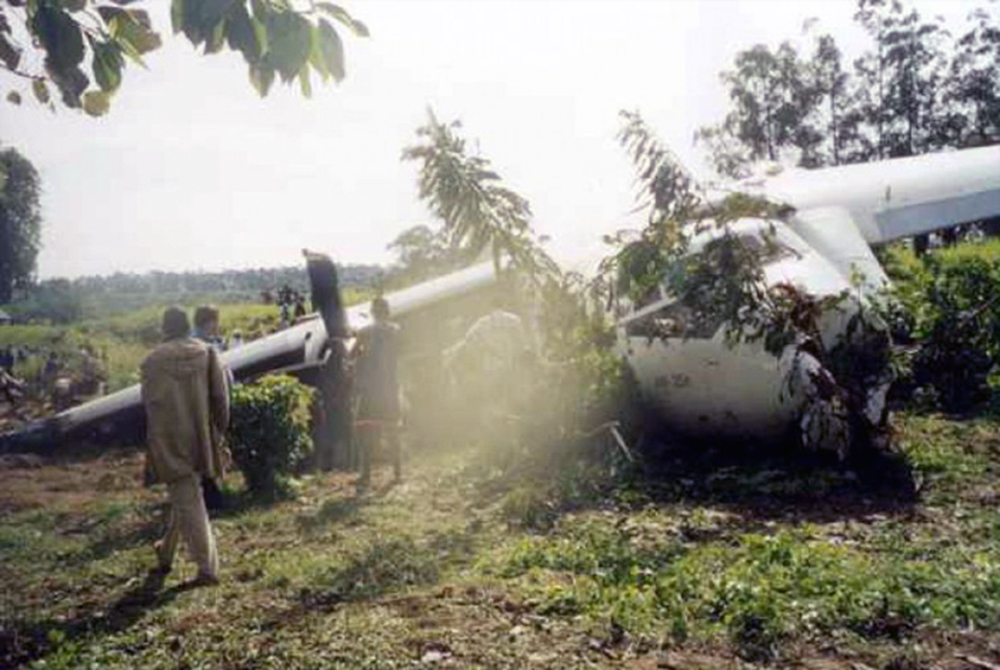
The exact circumstances of this accident remains unknown. While landing on a 900 meters long gravel runway somewhere in DRC, one of the four engine was damaged. The crew later decided to takeoff on a three-engine configuration but a second engine failed during takeoff. The aircraft stalled and crashed near the runway end. There were no casualties.
Probable cause:

Crash of an Antonov AN-26 in Beni

Date & Time: Apr 25, 2003
Type of aircraft:
Operator:
Flight Type:
Survivors:
Yes
Schedule:
Kinshasa - Beni
Region:
Crew on board:
4
Crew fatalities:
Pax on board:
6
Pax fatalities:
Other fatalities:
Total fatalities:
0
Circumstances:
The crew attempted to land by night at Beni Airport which is not equipped for such operations. The aircraft landed too far down the runway, overran and collided with trees. All 10 occupants escaped with various injuries and the aircraft was damaged beyond repair.

Crash of a Socata TBM-700 in Mobile: 1 killed

Date & Time: Apr 24, 2003 at 2012 LT
Type of aircraft:
Operator:
Registration:
N705QD
Survivors:
No
Schedule:
Lawrenceville – Mobile
MSN:
231
YOM:
2002
Flight number:
LBQ850
Location:
Crew on board:
1
Crew fatalities:
Pax on board:
0
Pax fatalities:
Other fatalities:
Total fatalities:
1
Captain / Total flying hours:
10000
Captain / Total hours on type:
408.00
Aircraft flight hours:
1222
Circumstances:
A review of communications between Mobile Downtown Control Tower, and the pilot revealed that while on approach the pilot reported having a problem. The Ground Controller reported that he had the airplane in sight and cleared the flight to land on runway 18. The pilot stated that he had a "run away engine", and elected to shut down the engine and continued the approach. The Controller then cleared the pilot again to runway 18. The pilot then stated that he did not think that he was going to "make it." The airplane collided with a utility pole and the ground and burst into flames short of the runway. The post-accident examination of the engine found that the fuel control unit arm to the fuel control unit interconnect rod end connection was separated from the rod end swivel ball assembly. The swivel ball assembly was found improperly attached to the inboard side of the arm, with the bolt head facing inboard, instead of outboard, and the washer and nut attached to the arm's outboard side instead of the inboard side. The rod separation would resulted in a loss of power lever control. The published emergency procedures for "Power Lever Control Lose," states; If minimum power obtained is excessive: 1) reduce airspeed by setting airplane in nose-up attitude at IAS < 178 KIAS. 2) "inert Sep" switch--On. 3) if ITT >800 C "Inert Sep"--Off. 4) Landing Gear Control--Down. 5) Flaps--Takeoff. 6) Establish a long final or an ILS approach respecting IAS < 178 KIAS. 7) When runway is assured: Condition Lever to --Cut Off. 8) Propeller Governor Lever to-- Feather. 9) Flaps --Landing as required (at IAS <122 KIAS). 10) Land Normally without reverse. 11) Braking as required. The pilot stated to Mobile Downtown Control Tower, Ground Control that he had a "run away engine" and that he "had to shut down the engine". As a result of the pilot not following the published emergency procedures, the airplane was unable to reach the runway during the emergency.
Probable cause:
The improper installation of the power control linkage on the engine fuel control unit by maintenance personnel which resulted in a loss of power lever control, and the pilot's failure to follow emergency procedures and his intentional engine shutdown which resulted in a forced landing and subsequent inflight collision with a light pole.
Final Report:

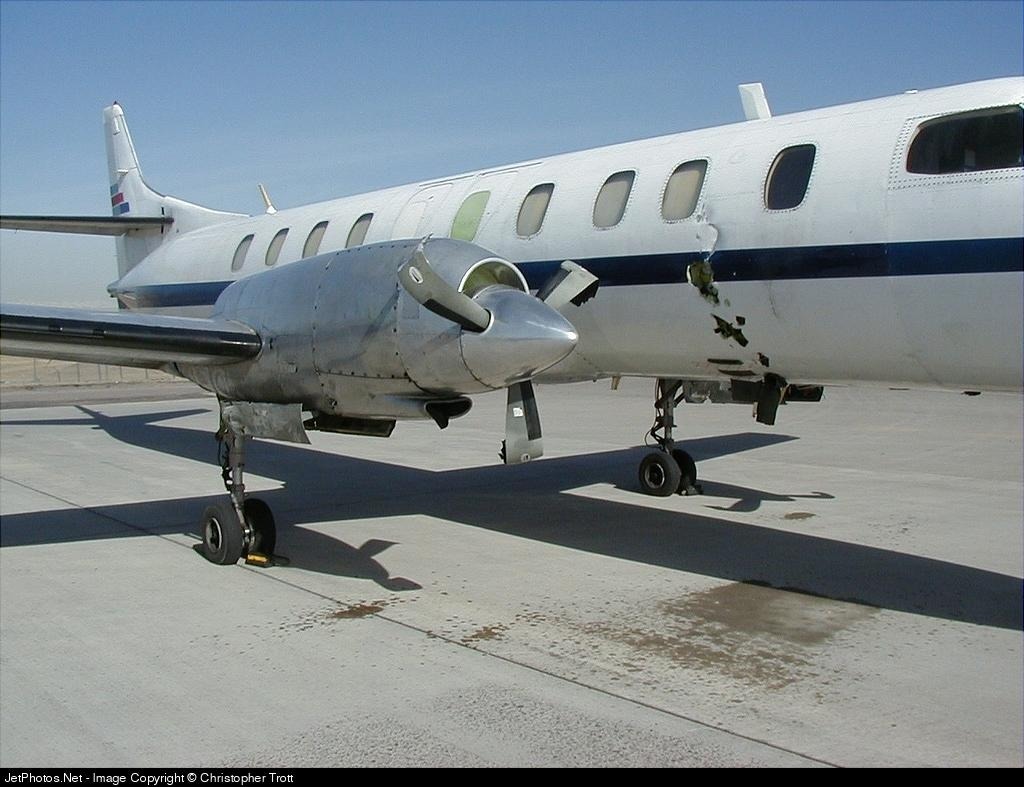
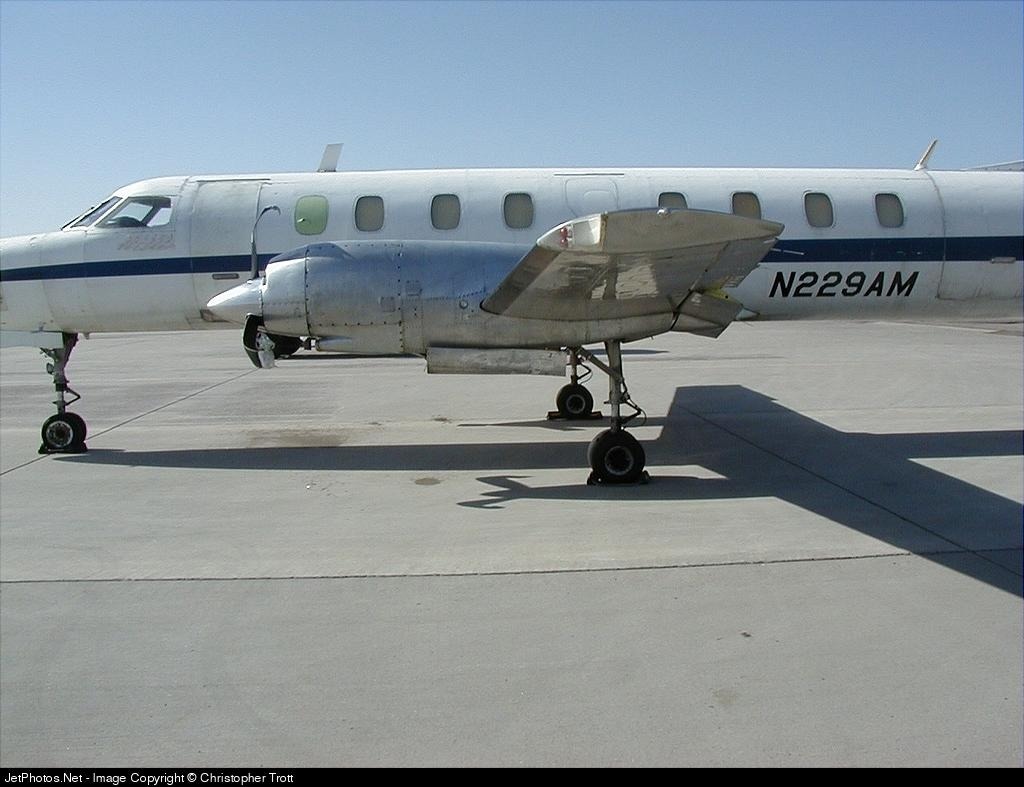
Crash of a Swearingen SA226AC Metro II in Denver

Date & Time: Apr 15, 2003 at 2041 LT
Type of aircraft:
Operator:
Registration:
N229AM
Flight Type:
Survivors:
Yes
Schedule:
Gunnison - Denver
MSN:
TC-305
YOM:
1979
Flight number:
HKA1813
Crew on board:
2
Crew fatalities:
Pax on board:
0
Pax fatalities:
Other fatalities:
Total fatalities:
0
Captain / Total flying hours:
4565
Captain / Total hours on type:
2179.00
Copilot / Total flying hours:
2517
Copilot / Total hours on type:
1400
Aircraft flight hours:
31643
Circumstances:
The flight was following a heavy jet on landing approach. The crew agreed to fly the approach at a slightly higher altitude than normal to avoid any possible wake turbulence. The first officer, who was flying the airplane, called for the landing gear to be lowered. When the captain placed the gear handle in the DOWN position, he noted red IN-TRANSIT lights. He recycled the landing gear, but got the same result. He consulted the emergency checklist and thought he had manually extended the landing gear because he "heard the normal 'clunk feel' and airspeed started to decay." In addition, when power was reduced to FLIGHT IDLE, the GEAR UNSAFE warning horn did not sound. The first officer agreed, noting 2,000 pounds of hydraulic pressure. The airplane landed wheels up. Propeller blade fragments penetrated the fuselage, breaching the pressure vessel. Postaccident examination revealed the nose gear had been partially extended but the main landing gear was retracted. The crew said the GEAR UNSAFE indication had been a recurring problem with the airplane. The problem had previously been attributed to a frozen squat switch in the wheel well.
Probable cause:
The failure of the landing gear system and the flight crew's failure to ascertain that the landing ear was down and locked. A contributing factor was the inadequate maintenance inspections performed by maintenance personnel.
Final Report:

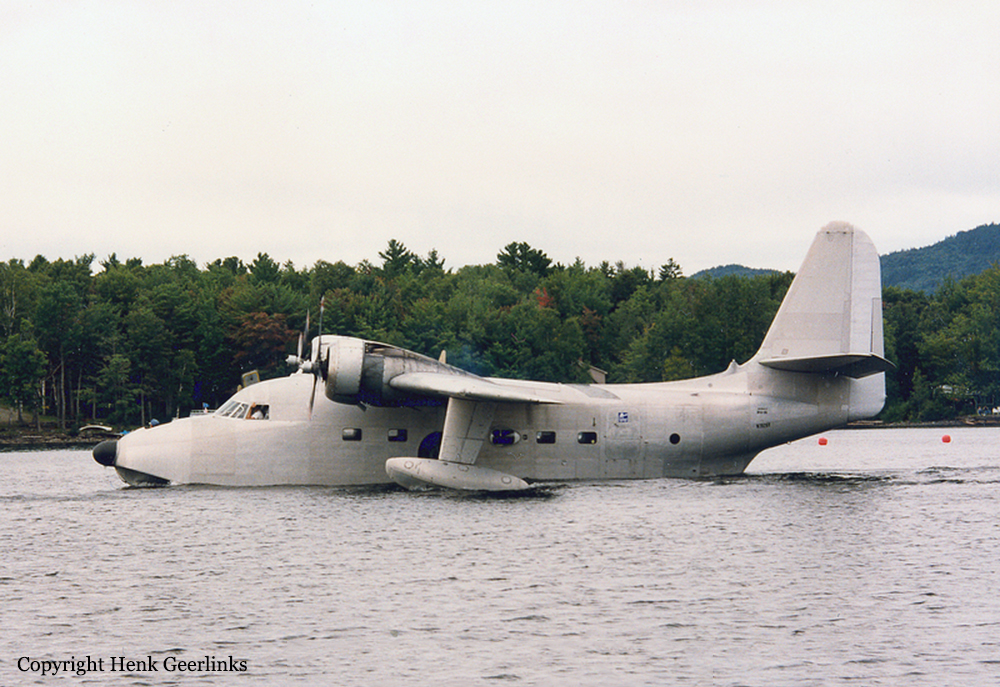
Crash of a Grumman G-64 Albatross in Chetumal: 3 killed

Date & Time: Apr 14, 2003 at 1830 LT
Type of aircraft:
Registration:
N7026Y
Flight Type:
Survivors:
No
Schedule:
Tulum - Chetumal
MSN:
G-394
YOM:
1954
Country:
Crew on board:
1
Crew fatalities:
Pax on board:
2
Pax fatalities:
Other fatalities:
Total fatalities:
3
Circumstances:
The seaplane departed Tulum on a flight to Chetumal with three people on board. On approach to Chetumal Airport in good weather conditions, the pilot was cleared to land on runway 10 and initiated a left turn when control was slot. The aircraft rolled to the left, lost height and crashed 6 km short of the runway, bursting into flames. All three occupants were killed.

Crash of a Rockwell Shrike Commander 500S in Mount Pleasant

Date & Time: Apr 14, 2003 at 1140 LT
Operator:
Registration:
N19WL
Flight Phase:
Survivors:
Yes
Schedule:
Mount Pleasant - Mount Pleasant
MSN:
500-3160
YOM:
1973
Crew on board:
2
Crew fatalities:
Pax on board:
0
Pax fatalities:
Other fatalities:
Total fatalities:
0
Captain / Total flying hours:
4578
Captain / Total hours on type:
280.00
Aircraft flight hours:
11617
Circumstances:
According to the pilot, he requested the refueler to top off his fuel tanks with "100 low lead fuel". After refueling, the pilot performed a preflight including taking fuel samples from under the wings, draining the rear fuel drain, and checking the fuel cap for security. The engine start, run-up, and taxi were uneventful. The airplane departed runway 17 and was in a positive rate of climb. At approximately 200 feet AGL the airplane began to lose power. Shortly after the pilot ensured that the throttle, propeller, and mixture controls were in the full forward position, the airplane lost power in both engines. The pilot executed an emergency off field landing. Examination of the wreckage revealed that the left wing had broken off and the aft cabin area was crushed. According to the refueler, he stated that he mistakenly used the Jet-A fuel truck instead of the AVGAS 100 low lead truck, and pumped 58 gallons of Jet-A into the airplane. Examination of the fuel samples taken from both engines revealed the left and right engine contained 70 percent of jet A fuel.
Probable cause:
The improper refueling of the airplane by airport personnel with the incorrect fuel grade that resulted in a total loss in engine power on both engines during initial climb. A factor was the inadequate preflight inspection by the pilot in command.
Final Report:

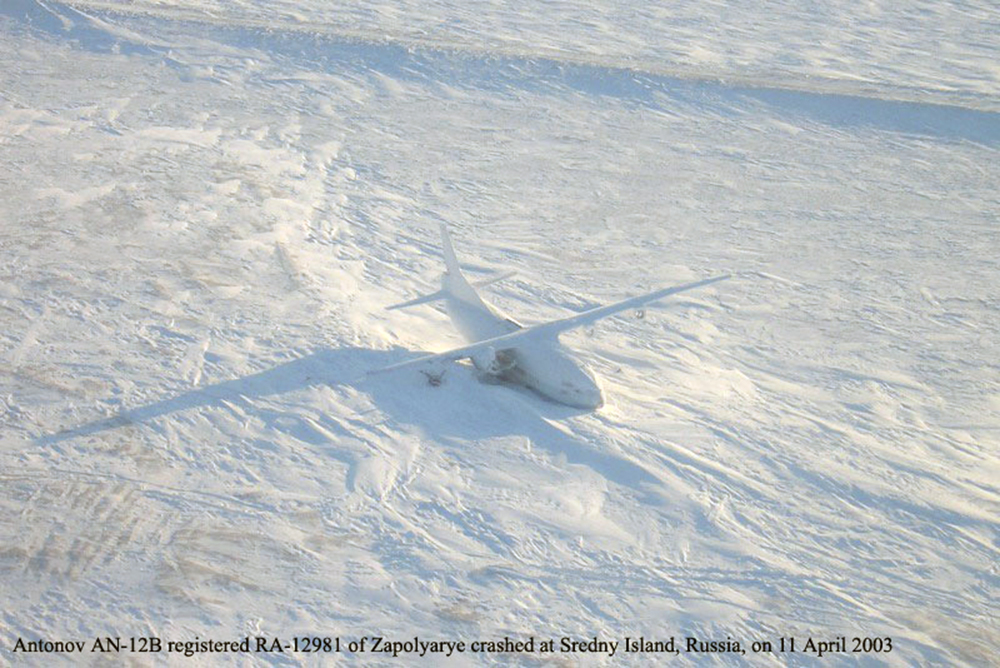
Crash of an Antonov AN-12BP in Sredny Island

Date & Time: Apr 11, 2003 at 2152 LT
Type of aircraft:
Registration:
RA-12981
Flight Type:
Survivors:
Yes
Schedule:
Moscow - Salekhard - Sredny Island
MSN:
00 347 104
YOM:
1970
Country:
Region:
Crew on board:
6
Crew fatalities:
Pax on board:
7
Pax fatalities:
Other fatalities:
Total fatalities:
0
Circumstances:
The four engine aircraft departed Moscow-Vnukovo on a cargo flight to Sredny Island with an intermediate stop in Salekhard, carrying six crew members, seven passengers and a load of 9,6 tons of various goods for the personnel of the drifting Polar Station "Severny Polyus 32" (North Pole 32). On final approach to the Sredny Ostrov Airfield, the crew encountered poor weather conditions and limited visibility. Too low, the aircraft struck the icy ground about 650 metres short of runway. It lost its undercarriage and slid for few dozen metres before coming to rest 165 metres to the right of the extended centerline. All 13 occupants escaped uninjured while the aircraft was damaged beyond repair.
Probable cause:
The following findings were identified:
- Poor flight preparation,
- The crew did not receive a suitable weather briefing for the destination airport,
- Poor weather conditions at destination,
- The visibility was below minimums,
- The crew continued the approach without visual contact with the runway until the aircraft impacted ground,
- The crew failed to initiate a go-around procedure.

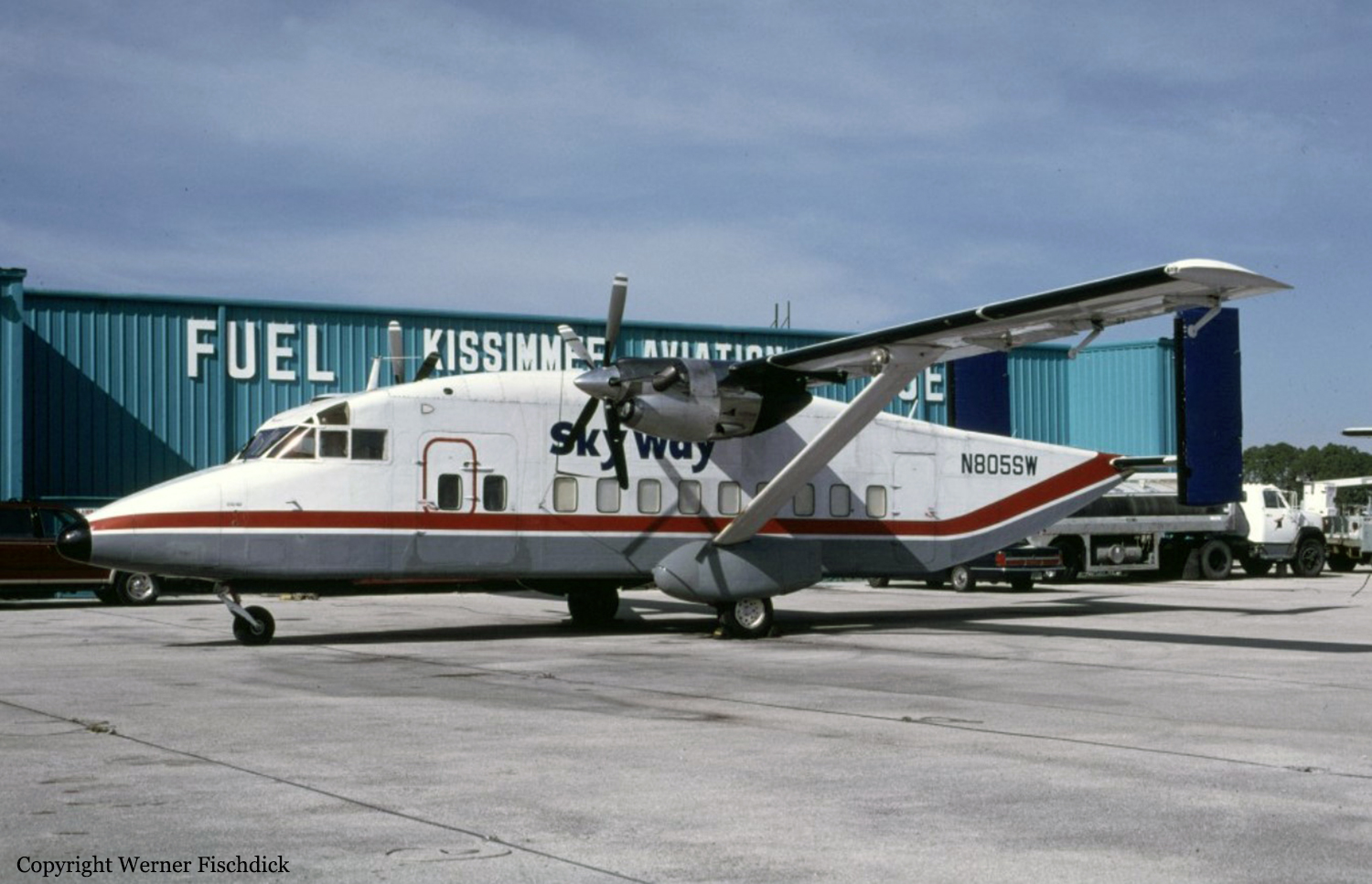
Crash of a Short 330-200 in DuBois

Date & Time: Apr 9, 2003 at 0715 LT
Type of aircraft:
Operator:
Registration:
N805SW
Flight Type:
Survivors:
Yes
Schedule:
Pittsburgh – DuBois
MSN:
3055
YOM:
1980
Flight number:
SKZ1170
Crew on board:
2
Crew fatalities:
Pax on board:
0
Pax fatalities:
Other fatalities:
Total fatalities:
0
Captain / Total flying hours:
3470
Captain / Total hours on type:
2100.00
Copilot / Total flying hours:
1347
Copilot / Total hours on type:
431
Aircraft flight hours:
24401
Circumstances:
The airplane was on an instrument landing system (ILS) approach in instrument meteorological conditions. The captain initially stated that the airplane was on the ILS approach with the engine power set at flight idle. About 300 feet above the ground, and 1/4 to 1/2 mile from the threshold, the captain made visual contact with the runway. The captain stated that the left engine then surged, which caused the airplane to yaw right and drift left. At the time, the airplane was in visual conditions, and on glideslope, with the airspeed decreasing through 106 knots. The captain aligned the airplane with the runway and attempted to go-around, but the throttles were difficult to move. The airplane began to stall and the captain lowered the nose. The airplane subsequently struck terrain about 500 feet prior to the runway. After the captain was informed that the engine power should not be at flight idle during the approach, he amended his statement to include the approach power setting at 1,000 lbs. of torque. The co-pilot initially reported that the engine anomaly occurred while at flight idle. However, the co-pilot later amended his statement and reported that the anomaly occurred as power was being reduced toward flight idle, but not at flight idle. Examination of the left engine did not reveal any pre-impact mechanical malfunctions. Examination of the airplane cockpit did not reveal any anomalies with the throttle levers. Review of a flight manual for the make and model accident airplane revealed that during a normal landing, 1,100 lbs of torque should be set prior to turning base leg. The manual further stated to reduce the power levers about 30 feet agl, and initiate a gentle flare. The reported weather at the airport about 5 minutes before the accident included a visibility 3/4 mile in mist, and an overcast ceiling at 100 feet. The reported weather at the airport about 7 minutes after the accident included visibility 1/4 mile in freezing fog and an overcast ceiling at 100 feet. Review of the terminal procedure for the respective ILS approach revealed that the decision height was 200 feet agl, and the required minimum visibility was 1/2 mile.
Probable cause:
The captain's failure to maintain the proper glidepath during the instrument approach, and his failure to perform a go-around. Factors were a low ceiling and reduced visibility due to mist.
Final Report:

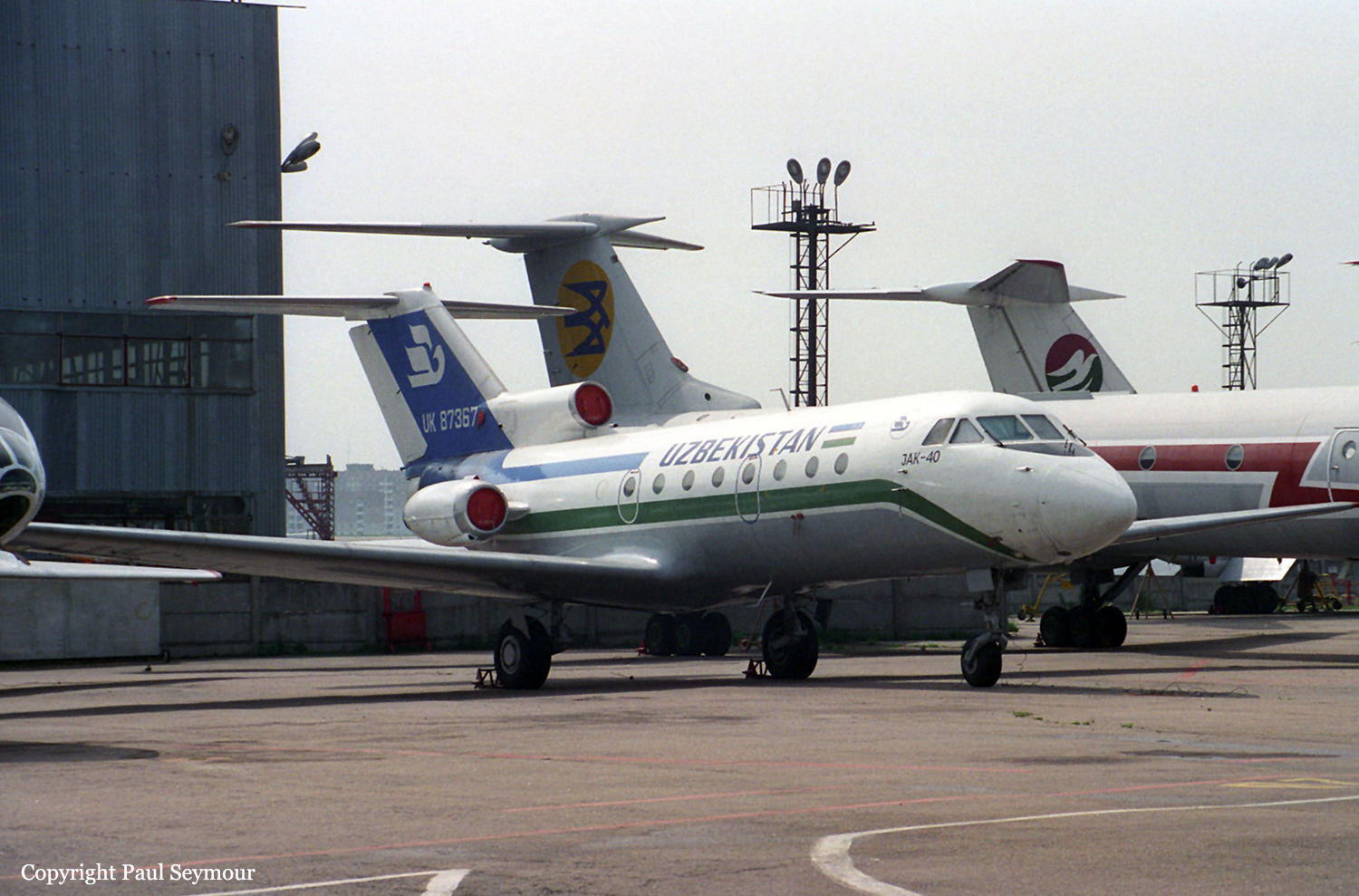
Crash of a Yakovlev Yak-40 in Urganch

Date & Time: Apr 9, 2003
Type of aircraft:
Operator:
Registration:
UK-87367
Flight Phase:
Survivors:
Yes
MSN:
9341731
YOM:
1973
Country:
Region:
Crew on board:
0
Crew fatalities:
Pax on board:
0
Pax fatalities:
Other fatalities:
Total fatalities:
0
Circumstances:
During takeoff roll on runway 13/31, the crew noticed a loss of power on the left engine and decided to abort. The aircraft could not be stopped within the remaining distance and overran. It lost its right main gear and came to rest few dozen metres further. All occupants escaped uninjured while the aircraft was damaged beyond repair.

Crash of a Dassault Falcon 20C in Saint Louis

Date & Time: Apr 8, 2003 at 1850 LT
Type of aircraft:
Operator:
Registration:
N179GA
Flight Type:
Survivors:
Yes
Schedule:
Del Rio – Saint Louis
MSN:
100
YOM:
1967
Flight number:
GAE179
Crew on board:
2
Crew fatalities:
Pax on board:
0
Pax fatalities:
Other fatalities:
Total fatalities:
0
Captain / Total flying hours:
3221
Captain / Total hours on type:
1270.00
Copilot / Total flying hours:
5758
Copilot / Total hours on type:
1532
Aircraft flight hours:
15899
Circumstances:
The twin engine turbofan powered airplane was ditched into a river after a complete loss of power from both engines. The airplane was on a second approach to land on runway 30R after having been instructed by air traffic control (ATC) to climb during the final approach segment of the first approach due to inadequate separation from another airplane. Subsequent to the first approach, the airplane was issued vectors for the second approach by ATC. Communications transcripts show that the flight crew asked ATC how far they would be vectored during the second approach, but the flight crew did not inform ATC of their low fuel state until the airplane was already on a "base turn...to join final." The airplane subsequently lost power from both engines. During interviews, both pilots stated that there were no problems with the airplane. The second-in-command (SIC) stated that the airplane "ran out of fuel" and that the fuel quantity indicators read 0 and 100 pounds when each respective engine stopped producing power. The SIC also stated that after being instructed to climb to 5,000 feet after their first approach, he questioned the pilot-in-command about landing at another airport located about 14 nautical miles west-southwest of the destination airport. The SIC said that the PIC elected to continue with the second approach to the original destination. Research indicated that the flight crew did not obtain a weather briefing prior to the accident flight. Additionally, the Terminal Aerodrome Forecast that was valid at the time the aircraft's flight plan was filed showed a forecast ceiling consisting of overcast clouds at 1,500 feet above ground level at the aircraft's arrival time at the destination. 14 CFR Part 91.169 requires that an alternate airport be listed in the flight plan when forecast ceilings are less than 2,000 feet. No alternate was listed in the flight plan for the accident flight. Additionally, 14 CFR Part 91.167 requires that aircraft operated in instrument meteorological conditions maintain fuel reserves that allow flight to the intended destination and then continued flight to the listed alternate, and an additional 45 minutes at normal cruise speed. In 1993, the FAA/industry advisory committee developed advisory material for fuel planning and management for 14 CFR Part 121 and 135 air carrier flight operations, but the material was never published.
Probable cause:
The pilot in command's improper in-flight decision not to divert to an alternate destination resulting in the exhaustion of the airplane's fuel supply, and his failure to relay his low fuel state to air traffic control in a timely manner.
Final Report: