Crash of a Piper PA-60 Aerostar (Ted Smith 600) in New Bern: 3 killed

Date & Time: Nov 9, 1996 at 1139 LT
Registration:
N8239J
Flight Phase:
Flight Type:
Survivors:
No
Schedule:
New Bern - New Bern
MSN:
60-0643-7961204
YOM:
1979
Crew on board:
2
Crew fatalities:
Pax on board:
1
Pax fatalities:
Other fatalities:
Total fatalities:
3
Captain / Total flying hours:
382
Captain / Total hours on type:
5.00
Aircraft flight hours:
1888
Circumstances:
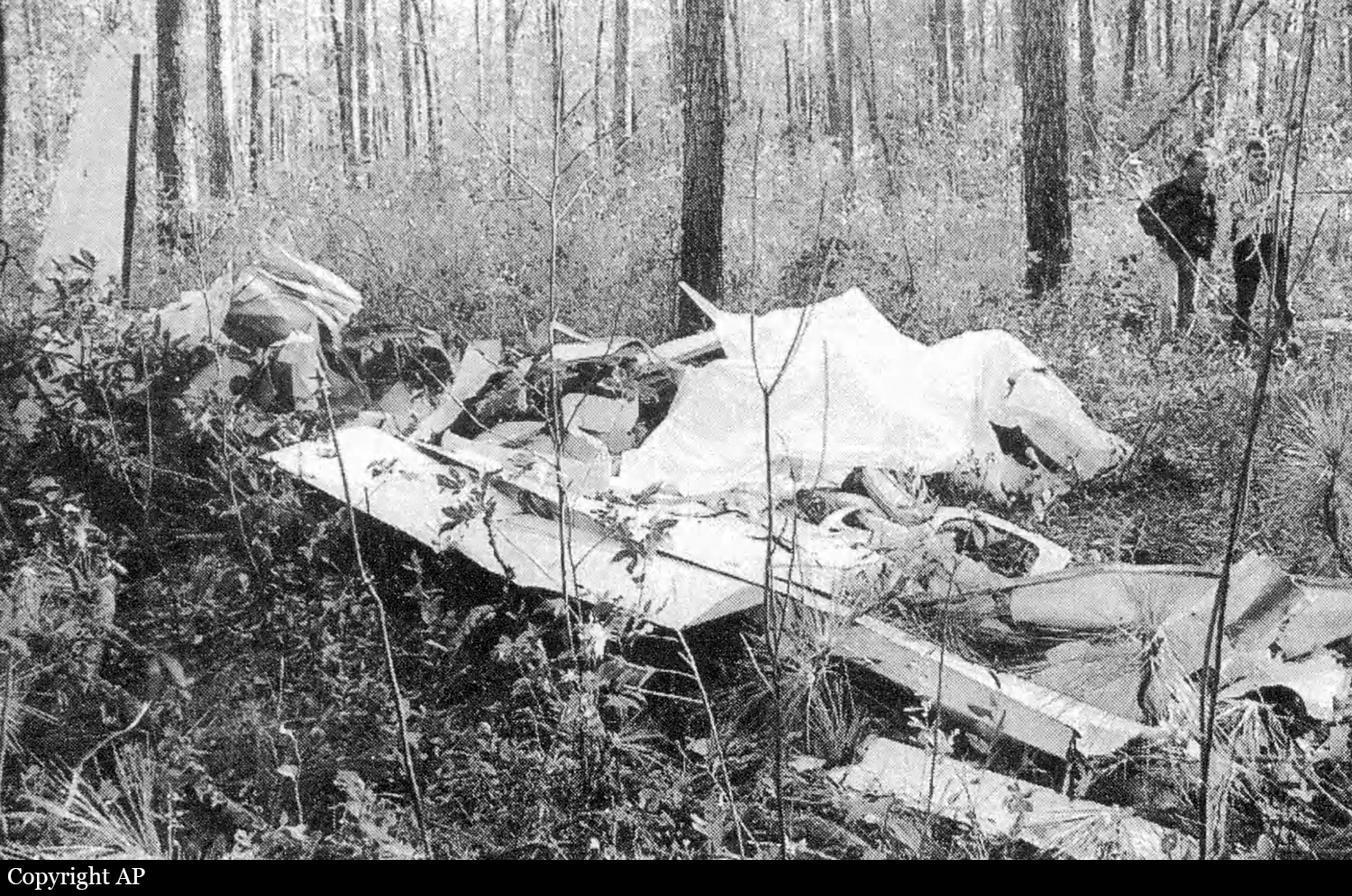
The airplane was over gross weight at takeoff but within Weight and Balance at the time of the accident. Witnesses observed the airplane flying low with the landing gear retracted over a wooded area then observed the airplane bank to the left and pitch down. The airplane then pitched nose up and entered what was described as a flat spin to the left. The airplane descended and impacted the ground upright with the landing gear retracted and the flaps symmetrically extended 6 degrees. Examination of the flight control systems, and engines revealed no evidence of preimpact failure or malfunction. A cabin door ajar indicating light was not illuminated at impact but the gear warning light was illuminated at impact. The pilot recently purchased the aircraft and only accumulated a total of 1 hour 23 minutes during 6 training flights. He accumulated an additional 3 hours 37 minutes after completion of the training flights while flying with other qualified pilots. The accident flight was the first flight in the make and model while flying with no other multiengine-rated pilot aboard.
Probable cause:
The pilot's failure to maintain airspeed (VMC). Contributing to the accident was his lack of total experience in kind of aircraft.
Final Report:

Crash of a Fokker 100 in São Paulo: 99 killed

Date & Time: Oct 31, 1996 at 0827 LT
Type of aircraft:
Operator:
Registration:
PT-MRK
Flight Phase:
Survivors:
No
Site:
Schedule:
São Paulo – Rio de Janeiro
MSN:
11440
YOM:
1993
Flight number:
KK402
Country:
Crew on board:
6
Crew fatalities:
Pax on board:
89
Pax fatalities:
Other fatalities:
Total fatalities:
99
Captain / Total flying hours:
6433
Captain / Total hours on type:
2392.00
Copilot / Total flying hours:
3000
Copilot / Total hours on type:
230
Aircraft flight hours:
8171
Circumstances:
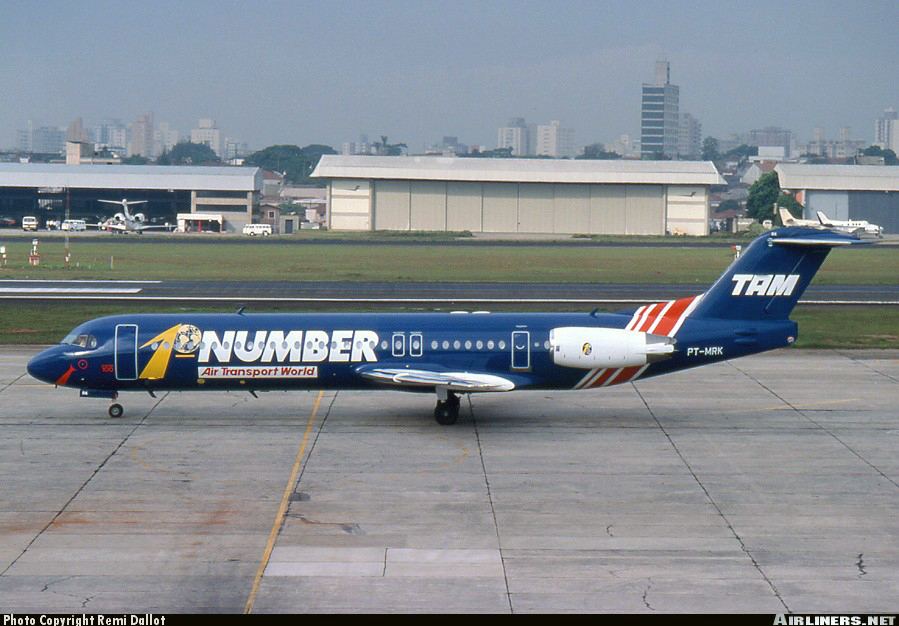
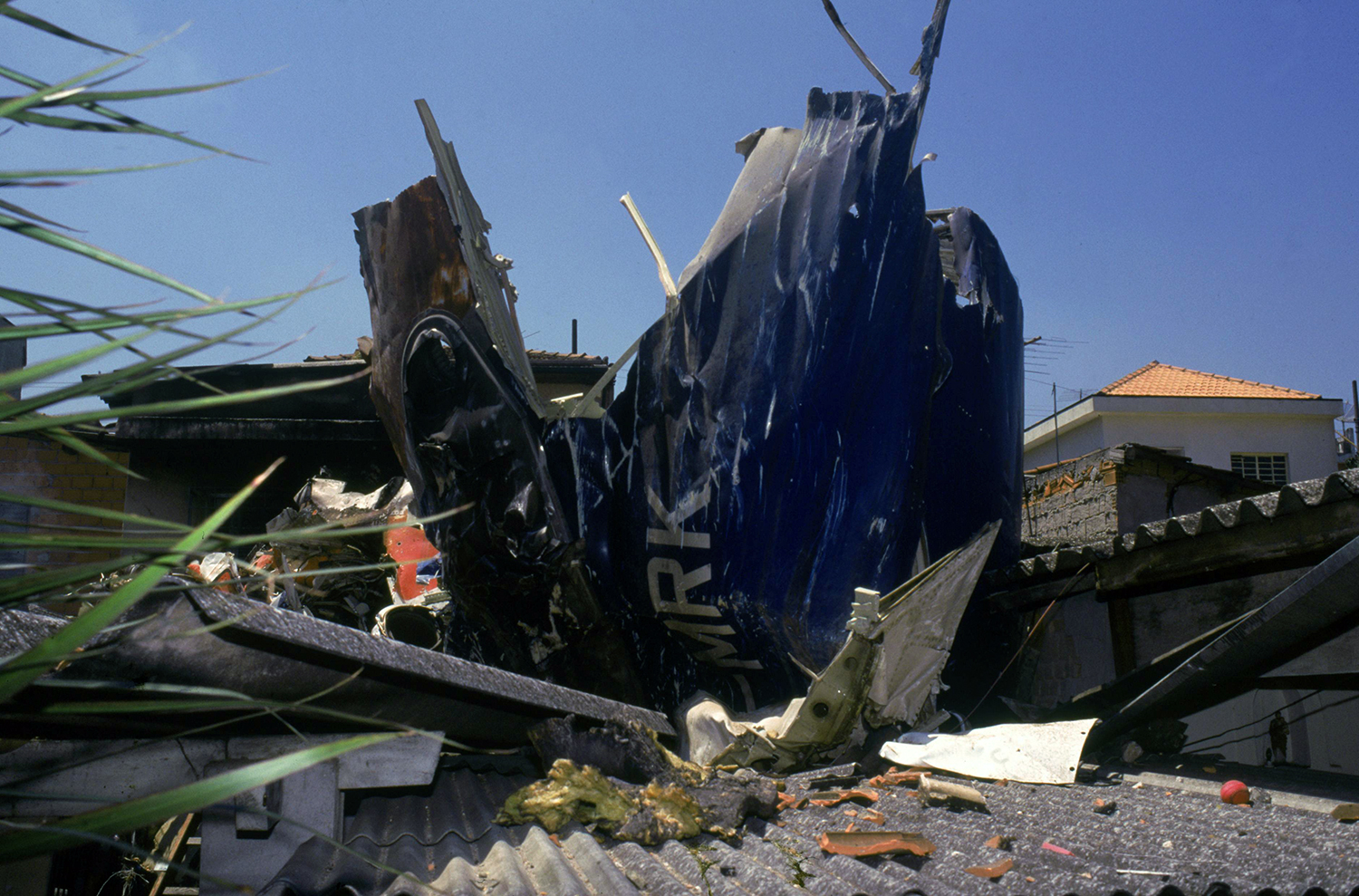
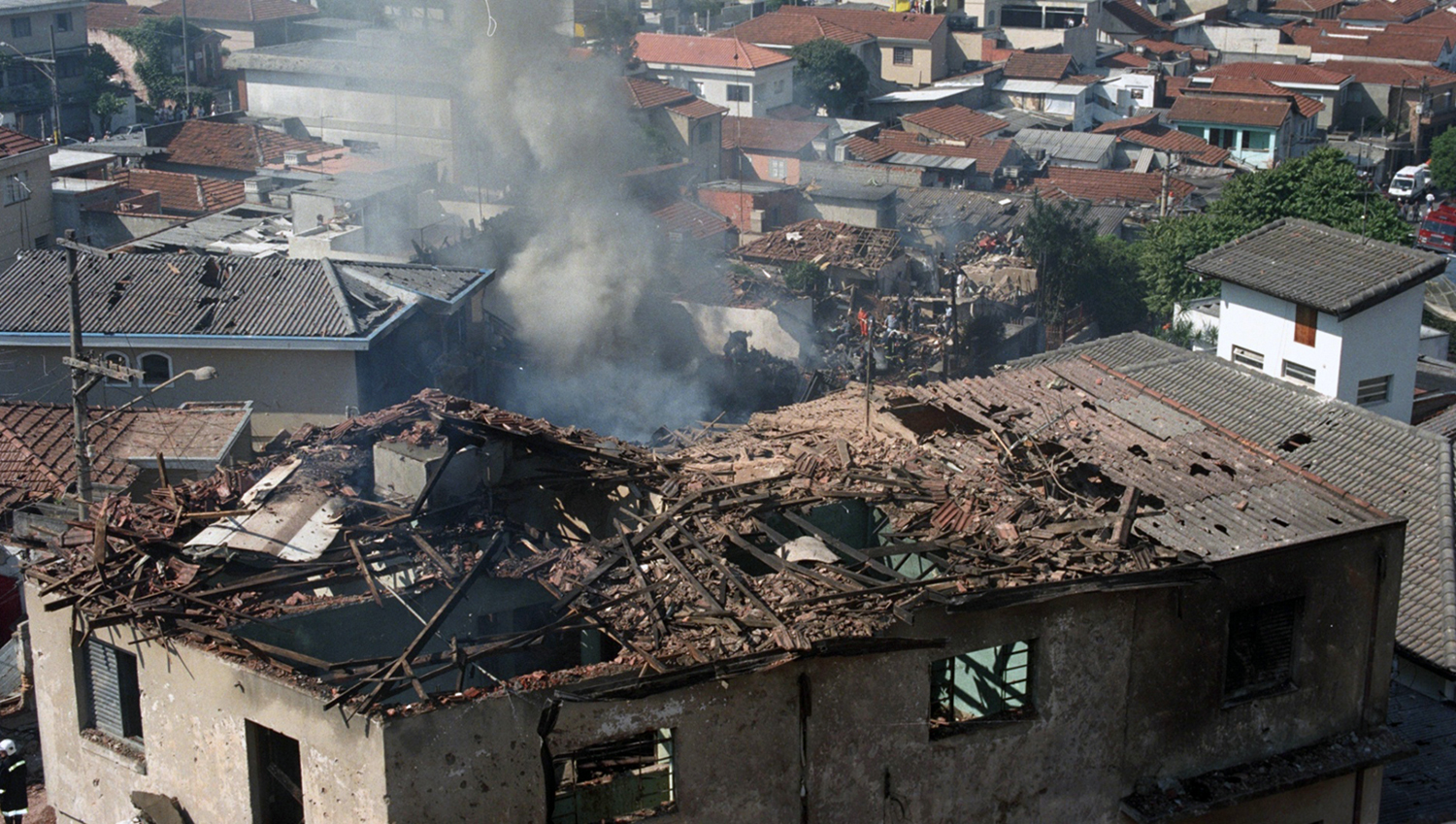
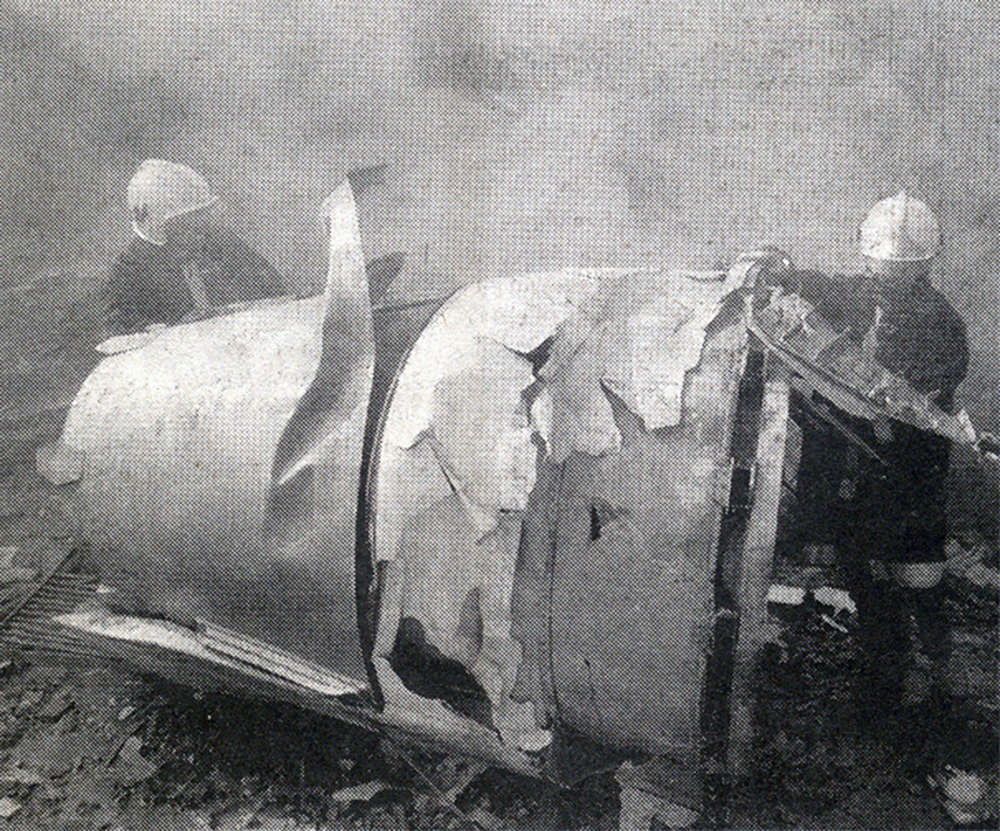
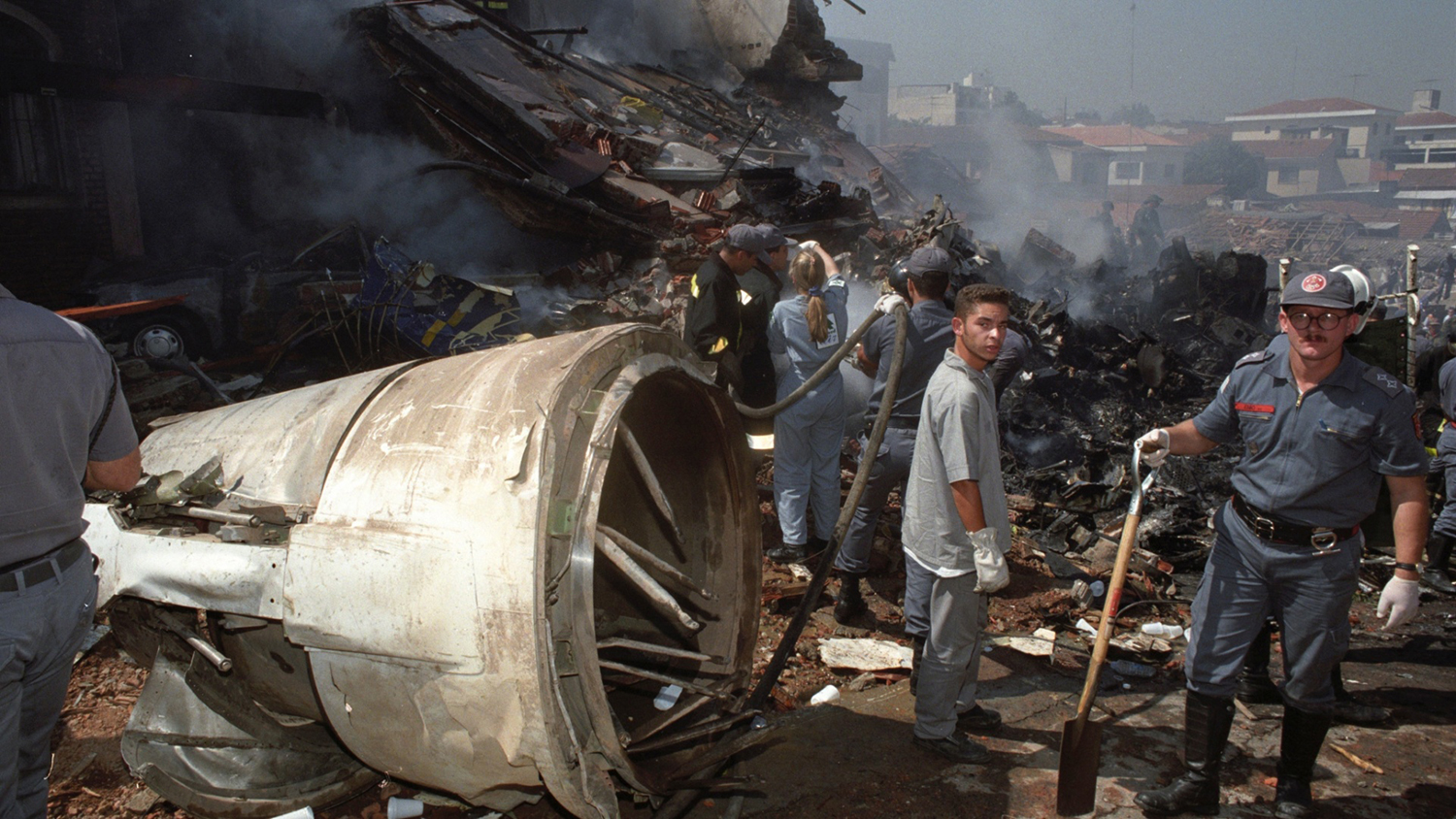
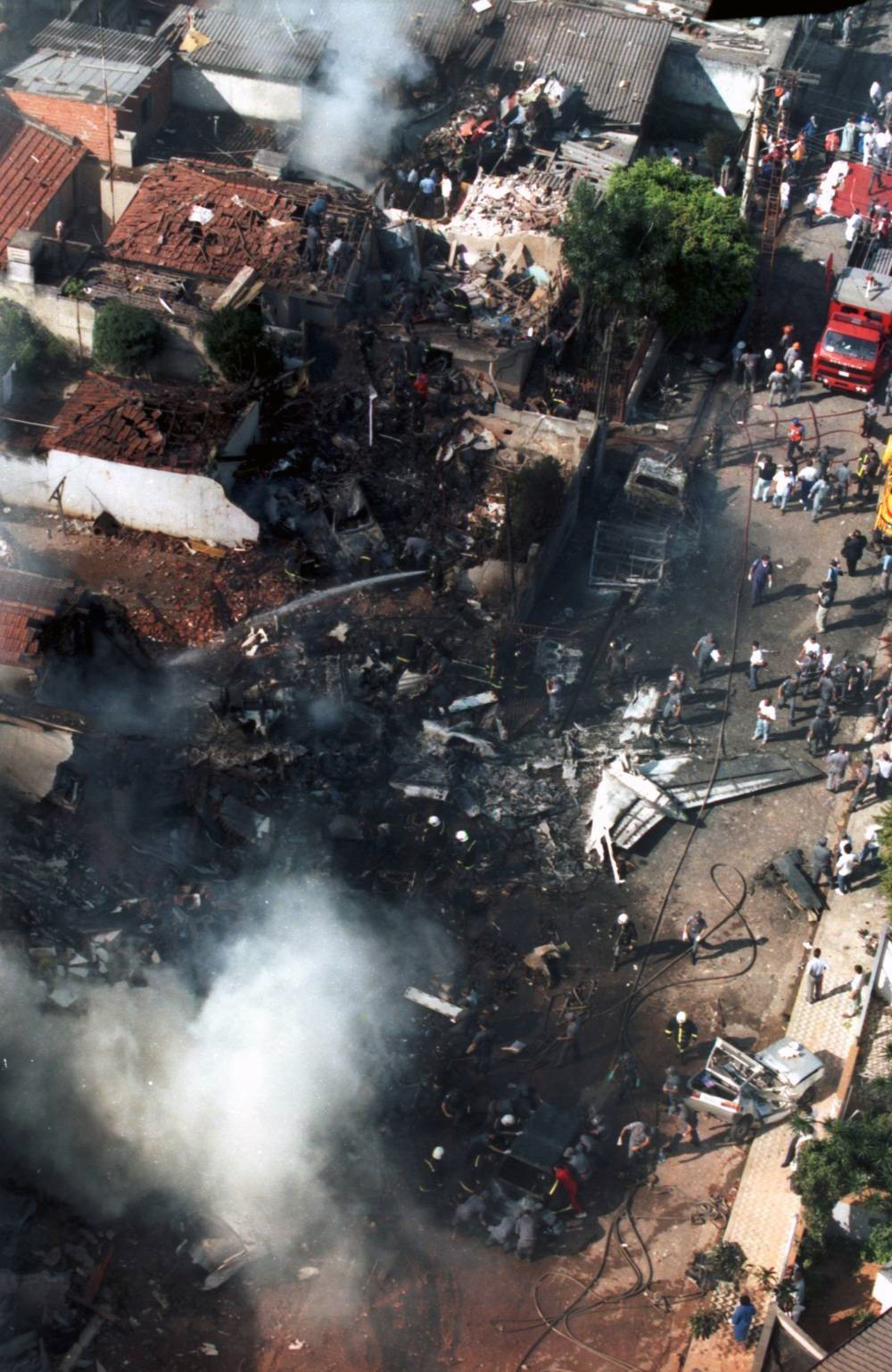
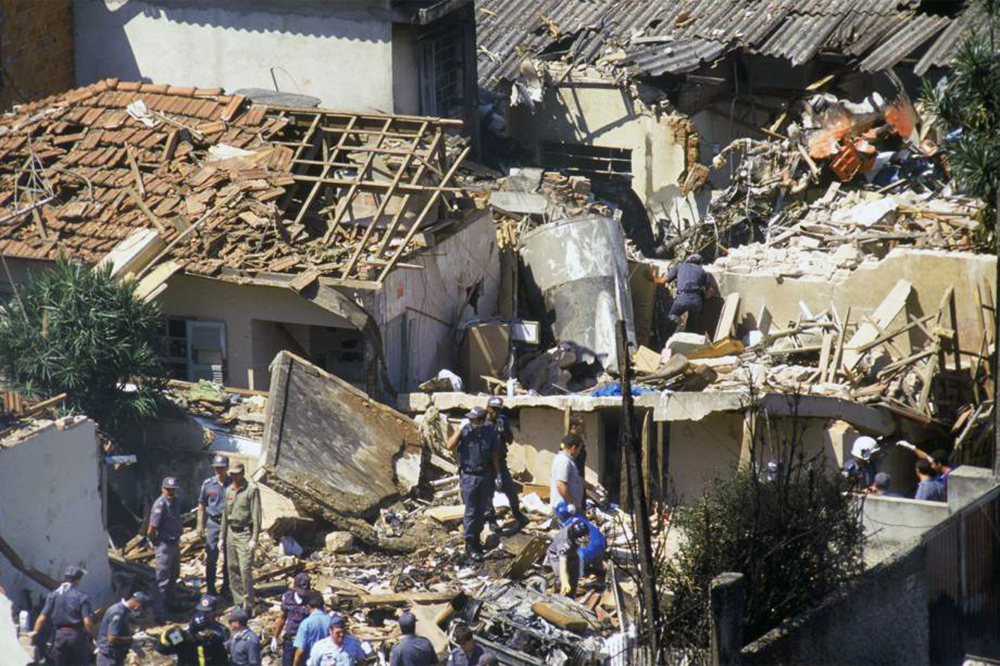
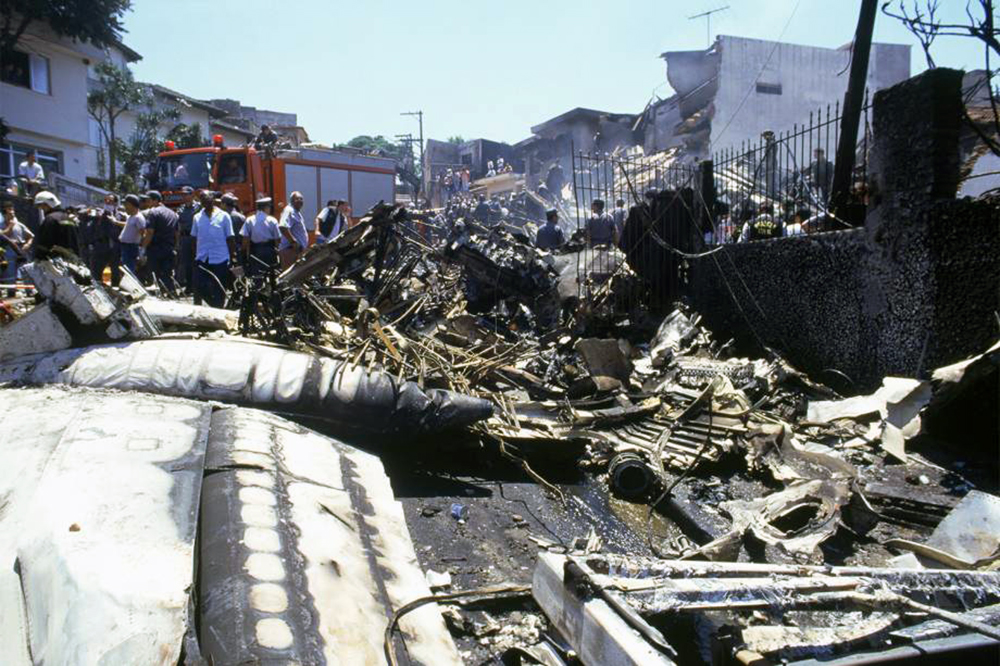
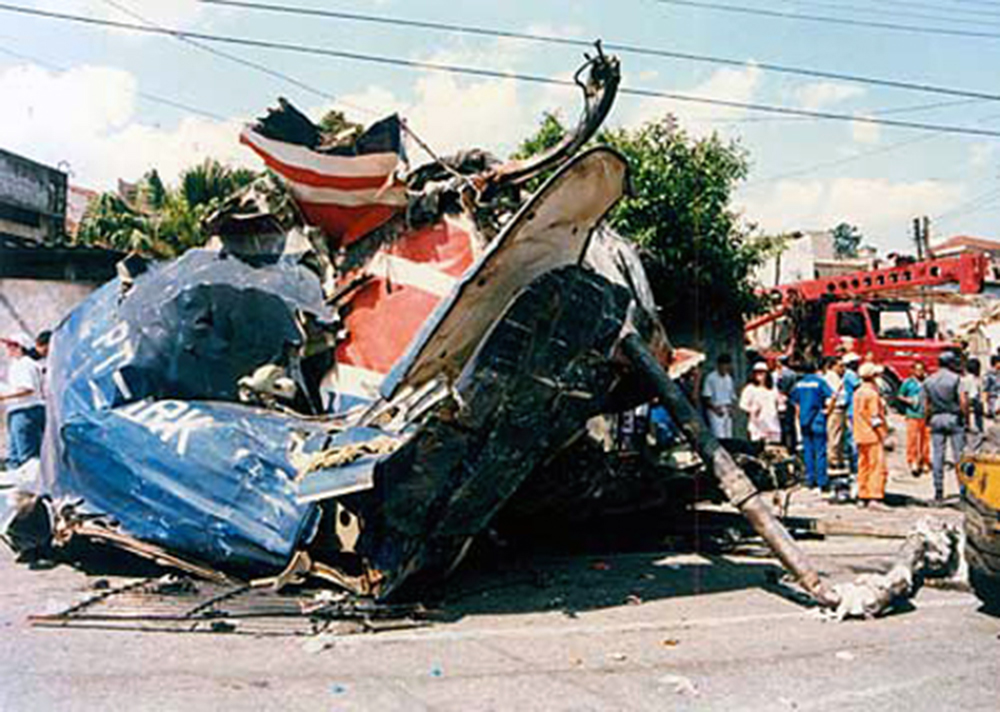
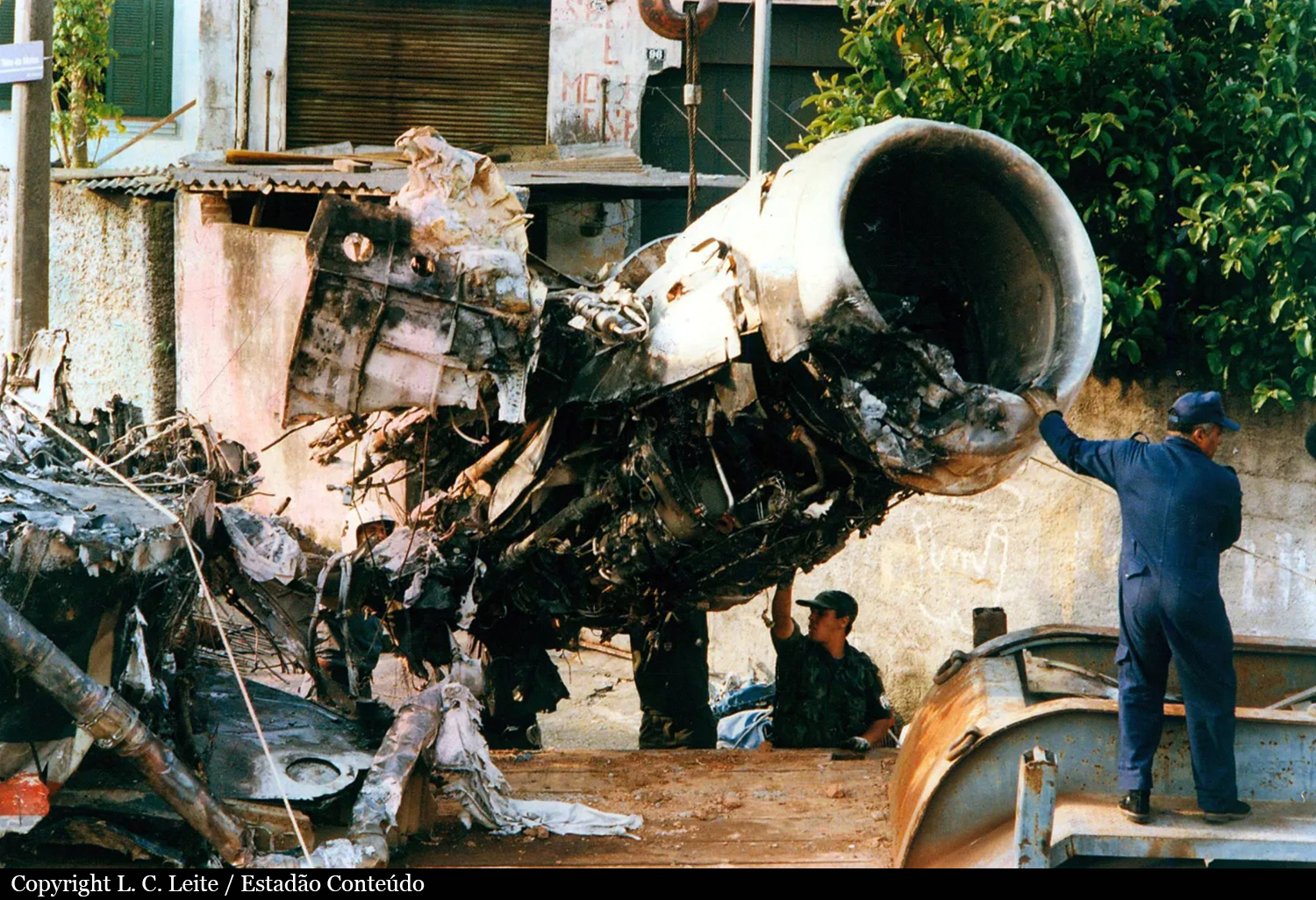
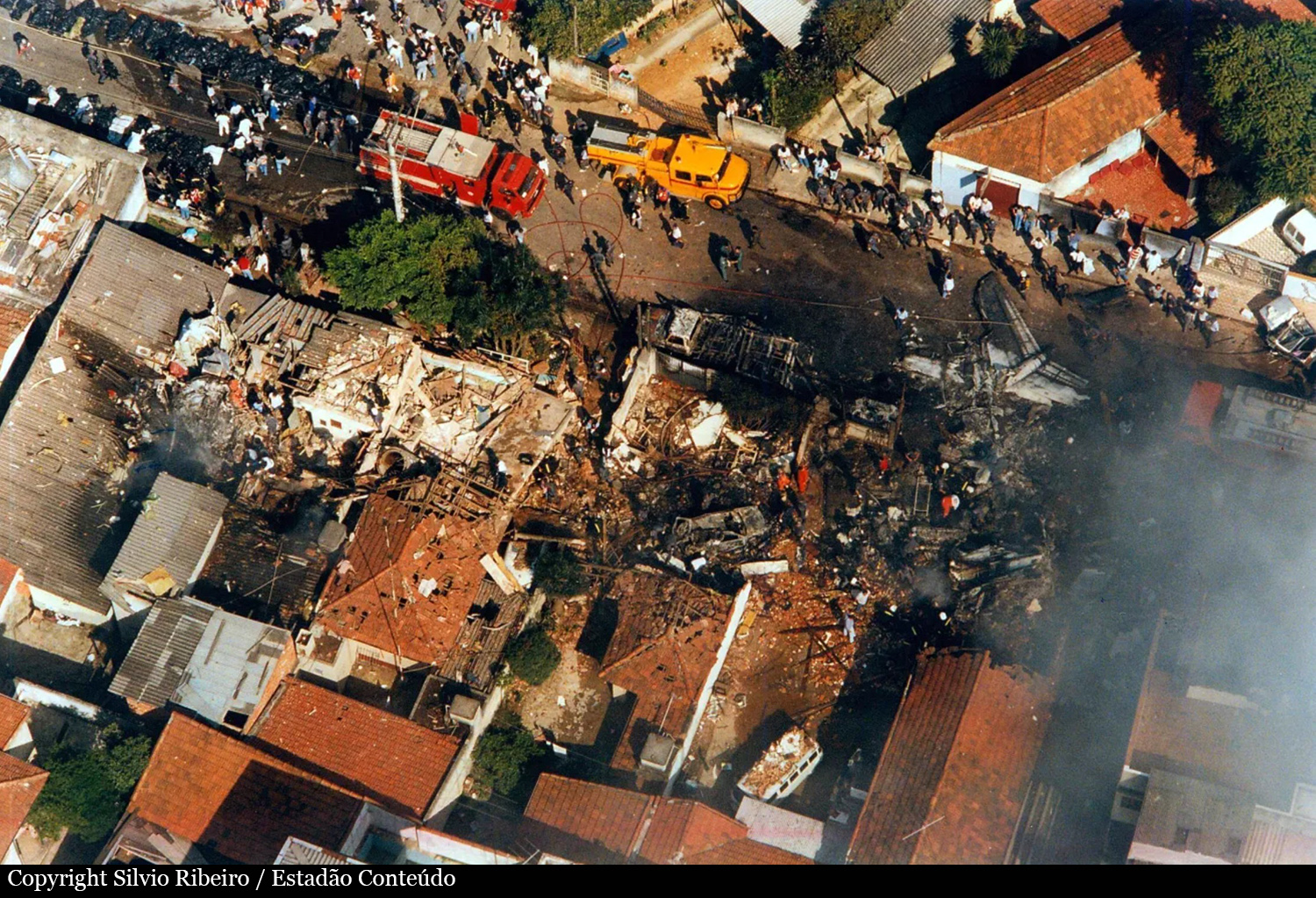
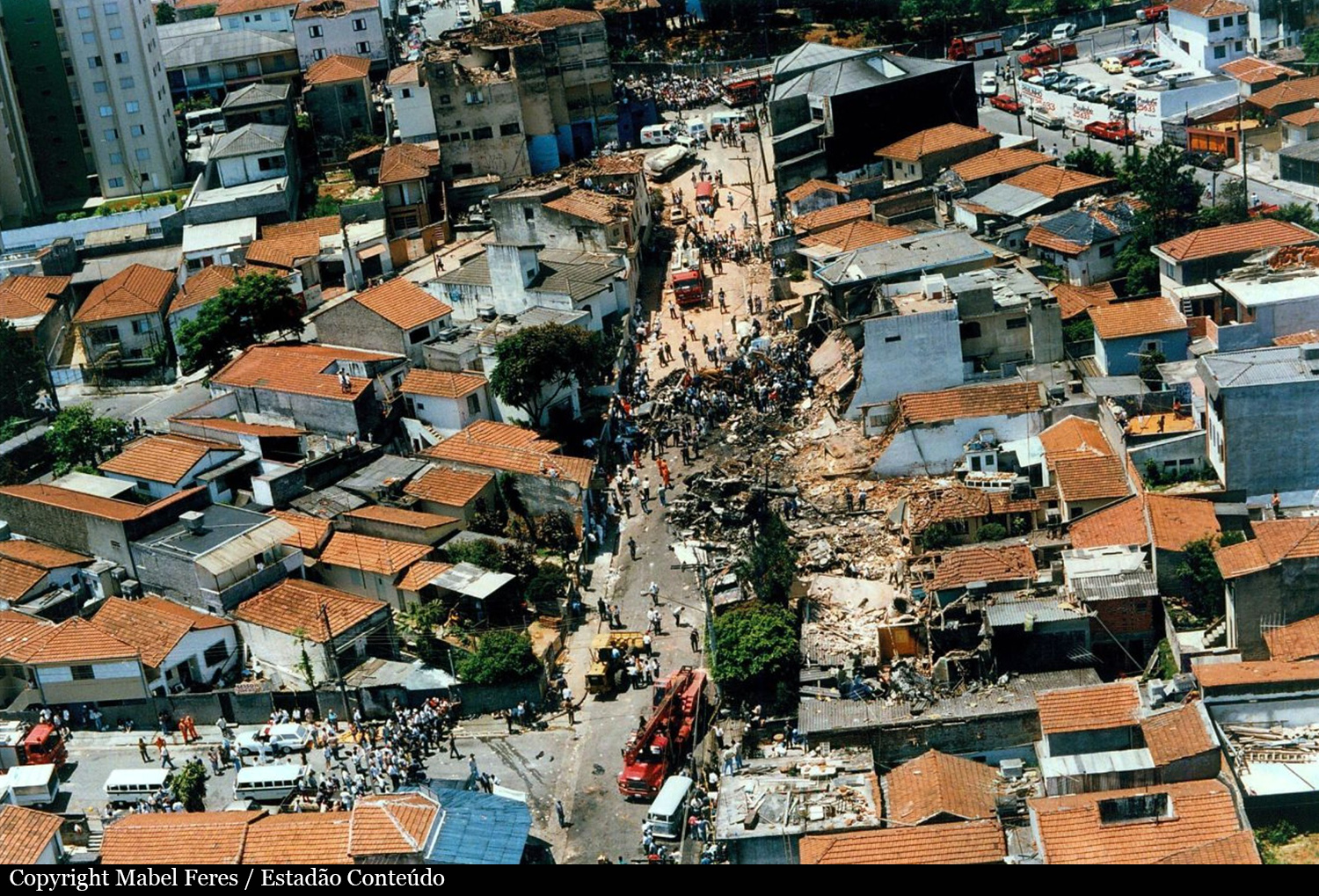
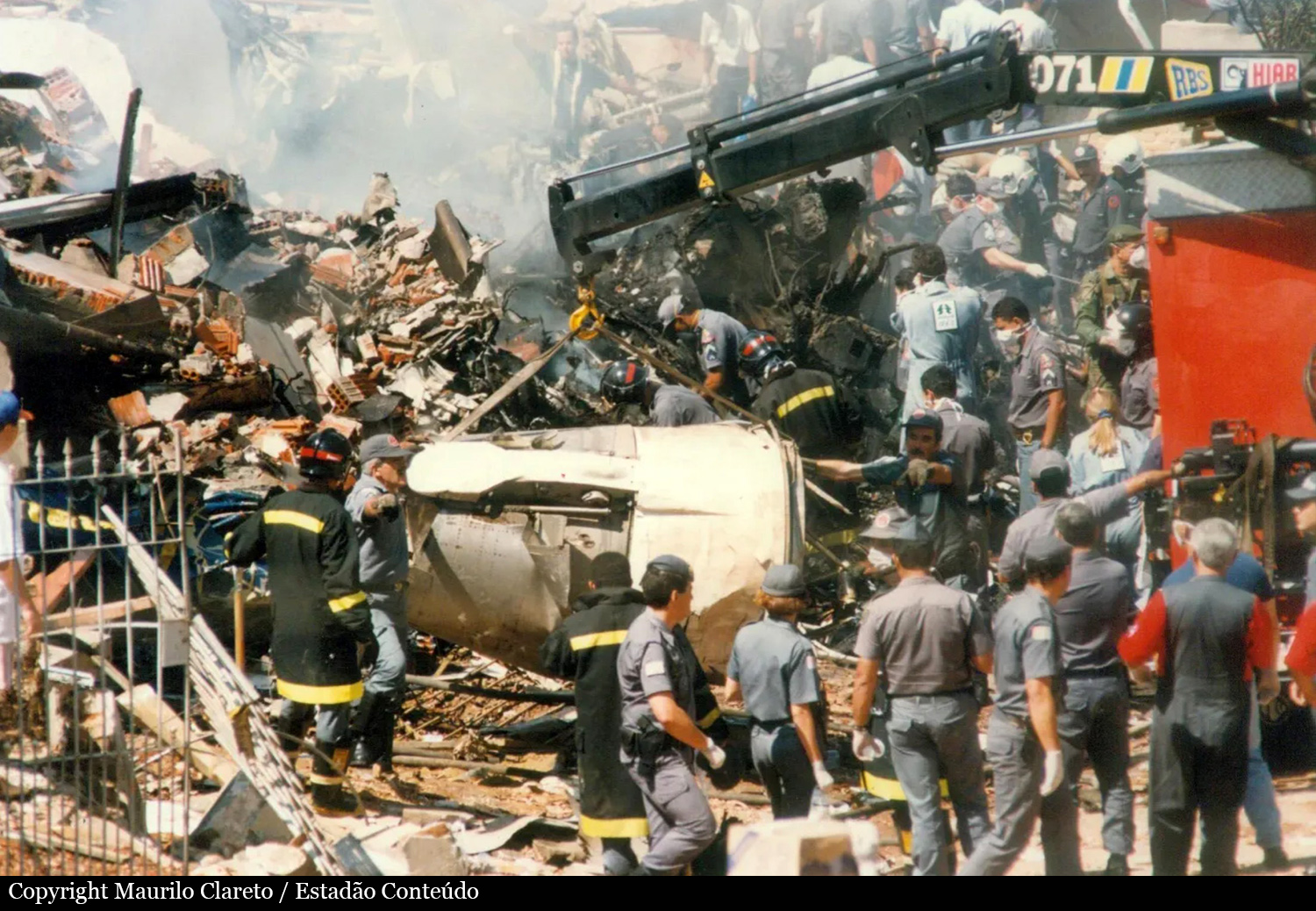
TAM flight 402 was a regular flight between São Paulo (CGH) and Rio de Janeiro (SDU). At 08:25 the flight received clearance for takeoff from runway 17R. Wind was given as 060 degrees. At 08:26:00 the throttles were advanced for takeoff power. Ten seconds later a double beep was heard. The captain said "O auto-throttle tá fora" and the copilot adjusted the throttles manually and informed the captain: "thrust check". With this information he confirmed that the takeoff power had been adjusted and verified. At 08:26:19 the airplane accelerated through 80 kts. At 08:26:32 the copilot indicated "V one". Two seconds later the airplane rotated at a speed of 131 kts. At 08:26:36 the air/ground switch transited from "ground" "to "air". The speed was 136 kts and the airplane was climbing at an angle of 10 degrees. At that same moment a shock was felt and the EPR of engine no. 2 dropped from 1.69 to 1.34, indicating the loss of power. In fact, the no. 2 engine thrust reverser had deployed. An eye witness confirmed to have seen at least two complete cycles of opening and closing of the no. 2 thrust reverser buckets during the flight. The loss of power on the right side caused the plane to roll to the right. The captain applied left rudder and left aileron to counteract the movement of the plane. The copilot advanced both thrust levers, but they retarded again almost immediately, causing the power of the no. 1 engine to drop to 1.328 EPR and engine no. 2 to 1,133 EPR. Both crew members were preoccupied by the movement of the throttles and did not know that the thrust reverser on the no. 2 engine had deployed. The throttles were forced forward again. At 08:26:44 the captain ordered the autothrottle to be disengaged. One second later the no. 2 thrust lever retarded again and remained at idle for two seconds. The airspeed fell to 126 kts. At 08:26:48 the copilot announced that he had disengaged the autothrottles. He then jammed the no. 2 thrust lever fully forward again. Both engines now reached 1,724 EPR. With the thrust reverser deployed, the airspeed declined at 2 kts per second. At 08:26:55 the stick shaker activated, warning of an impeding stall. The airplane rolled to a 39 degree bank angle and the GPWS activated: "Don't sink!". Seven seconds later the airplane impacted a building and crashed into a heavily populated neighborhood.
Probable cause:
The following findings were reported:
a. Contributing Factors
Psychological Aspect - Contributed
a) organizational aspect
The lack of information, instructions in writing and practice, contributed to the non-recognition of the abnormality during its unfolding.
b) Individual aspect
The unusual occurrence of the quick reduction of the lever, on a particularly difficult phase of the operation (transition from take-off run to flight); the nonoccurrence of failure discriminating (sound and visual) warnings, and the lack of cognizance and specific training for such abnormality bring on surprise and distraction of the crew members' attention.
- The release of the restriction of the lever of engine 2 at the idle detent without the occurrence of the abnormality warnings strengthened the tendency (in at least one of the crew members) to try to recover the power on the engine.
- The lack of warnings and the difficulties that are characteristic of such abnormality have diverted the crew members' concentration from the procedures provided for, to concentrate it on the solution of the abnormality, initially imagined as being an auto-throttle failure, and later the recovery of thrust
- The occurrence of auto-throttle failure warnings (before the 80 Kt) and the lack of specific reverse opening warnings (Master Caution and RSVS UNLK) have strengthened, in the crew members, the belief that they were experiencing an autothrottle failure (illusion).
b. Material Factor
(1). Desing Deficiency - Contributed
The reverser fault tree chart made recently by the manufacturer considering the Post-Mod version, even not taking into account a dormant fail, has indicated that the probability of an inadvertent opening of the reversers is of the order of 10"6. The Post-Mod version does not meet the airworthiness requirements of FAR/RBHA 25.1309.
On two phases of the complete reversers cycle, at the beginning of the opening and at the end of the shell closing, it is possible to apply power higher than IDLE with the shells partially open, which does not meet RBHA/FAR 25.933.
The reverser unlocked indication system is inhibited at speeds higher than 80 Kt and up to the height of 1000 feet, exactly at an instant when the pilots would need such information most.
The SECONDARY LOCK ACTUATORS (S/N 874 and S/N 870) that equipped the aircraft that suffered the accident, on the operational tests proposed and carried out, presented a performance much below the minimum acceptable to assure the safety and reliability of the system.
The applicable FAR 25.993(a)(3) requirements determine that each [reverse] system is to be provided with means to prevent the engine from producing power higher than idle power upon a failure on the reverse system [not stipulating the type of failure]. Such requirement has not been complied with, both in relation to the control system, which permitted the shells to open in flight, and in relation to protection, which became non-existent when the separation of the FEEDBACK CABLE occurred due to the unpredicted pilot's action on the lever, with the intention of recovering the power of the affected engine.
The TURNBUCKLE is installed on the side to which the connection moves when the reverser is commanded to open, i.e., the same side towards which the connection moves when the situation occurs in which the lever is forcibly held forward while the reverser is opening (deploying).
The THRUST SELECTOR VALVE may be moved with less than 2% of the normal functioning pressure, when the selector valve is de-energized, which was the condition at the time of the accident.
The inductive loads as those of SEC. LCK. ACTUATOR are detrimental to the contacts that command them, particularly on de-energization, in case there is no protection diode, which is apparently the case of SEC. LCK. ACTUATOR.
The THRUST REVERSER ACTUATOR, in the Post-Mod configuration, incorporated to the assembly line by the manufacturer, remains de-energized during the periods in which there is no commanding by the pilot, and this way it stays in an unstable and dangerous situation.
Design faults, an insufficient assessment of the fault tree diagram as compared to FAR 25.1309 and 25.933, and in the guidance to the operator not to train the abnormality that occurred on that phase, have indirectly contributed to the sequence of events that led to place the crew facing an unprecedented situation, without possibilities of recognizing and responding properly to avoid the loss of control.
c. Operational Factor
(1). Little experience on the aircraft - Indeterminate
Limitation of information and aids to the pilot. He had 230:00 total flight hours on this aircraft model, however the condition under which the unusual abnormality presented itself renders indeterminate the degree of experience that may be expected from a crew member to face such condition.
(2). Deficient Application of Control - Indeterminate
For three times, the thrust lever of engine 2 has been reduced and advanced. Such interventions on that lever have brought on the reduction of the thrust lever of the left hand engine, impairing the aircraft's performance. The non-return of the left hand lever to take-off thrust immediately, and the another four seconds delay in attaining such thrust, have contributed to deteriorate even more the aircraft's climbing capability.
The condition under which the unusual abnormality presented itself to the crew, and the lack of warning signals, has rendered the intentionality of the action indeterminate, and furthermore it was not possible to determine which of the two crew members has actuated the levers.
(3). Deficient Judgement - Indeterminate
The lack of cognizance, on the part of the crew members, for insufficiency of warning signals and information about the abnormality, has been a determinant for them to abandon the normal sequence of procedures, such as retracting the landing gear and actuating the Auto-Pilot, in order to take the initiatives of prioritizing the solution of an unusual situation installed in the cockpit, below safety height and that eventually brought on the loss of control of the aircraft, whereby it has also not been possible to determine which one of them took the initiative. Such facts render such aspect indeterminate.
d. Other Aspects
(1). External Inspection - Contributor
There is no condition of seeing the 'Secondary Lock' open, during the external inspection.
(2). Performing Action Below 400 feet - Contributor
Doctrinally, any action by a crew facing any abnormality in the cockpit environment below 400 feet is NOT RECOMMENDABLE.
The crew tried to manage the 'abnormality' concurrently with the control of the aircraft below 400 feet. Under such risk condition, a power reduction occurred on the other engine, compromising the aircraft's performance. As a consequence, the crew was obligated to prioritize the thrust needs to the detriment of other procedures.
(3). Inadequate Action In Face of an Unpredicted Failure - Contributor.
Based on the data collected on the SSFDR about the FUEL FLOW and EPR parameters, the lever of engine no. 2 was brought to the maximum power position, after the locking of said lever at the IDLE position.
Such locking occurred immediately after the lift-off, when the lever was reduced by itself to the 'IDLE' position, staying locked for about three (3) seconds. However, the system itself released the lever, inducing the copilot to bring it to the full power position, even after having informed the pilot about its locking.
It should be pointed out that the pilot has not requested such action after having been informed about the locking, as well as that the copilot has not asked whether such action should be done or not.
The airplane has not provided means for both pilots to be able to imagine how untimely such attitude would become at that extremely critical moment of the flight. In case the action has not been performed by the copilot, the suspicion falls upon the pilot, induced by the same reasons presented before.
Final Report:

Crash of a Douglas DC-3C in San Juan

Date & Time: Oct 31, 1996 at 0330 LT
Type of aircraft:
Registration:
N37AP
Flight Phase:
Flight Type:
Survivors:
Yes
Schedule:
San Juan - San Juan
MSN:
4430
YOM:
1942
Country:
Crew on board:
3
Crew fatalities:
Pax on board:
0
Pax fatalities:
Other fatalities:
Total fatalities:
0
Captain / Total flying hours:
4242
Captain / Total hours on type:
1256.00
Aircraft flight hours:
16179
Circumstances:
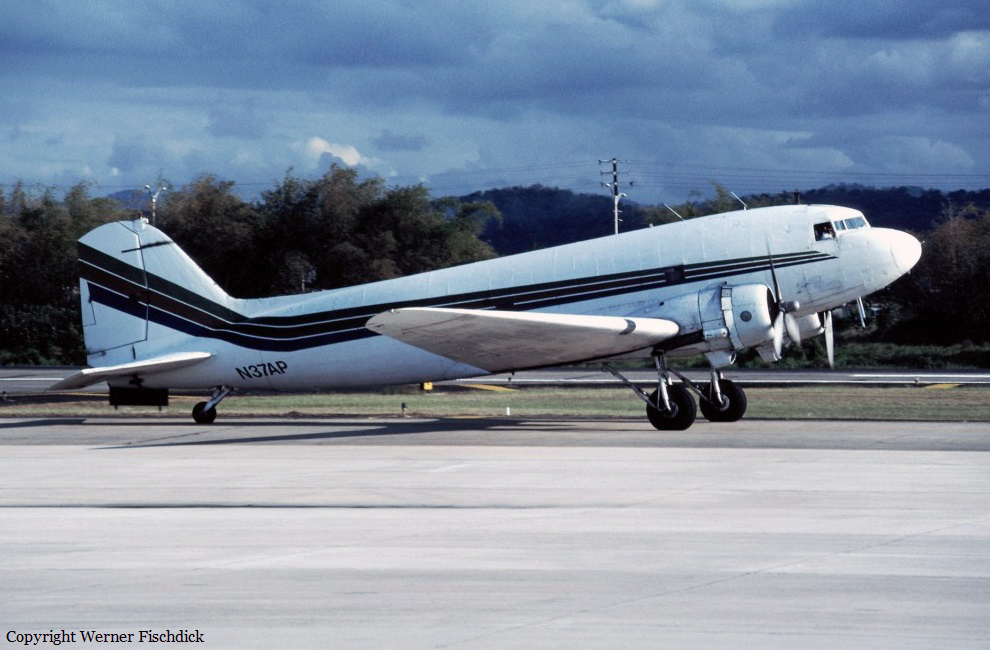
After takeoff from runway 09, a climbing left turn was made. At about 1,000 feet, the #2 (right) engine backfired, emitted flames, and lost power. The captain instructed the copilot to feather the #2 propeller, which the copilot initiated with the feathering button. When the captain requested gear and flap extension, the copilot released the feathering button which did not remain engaged, contrary to system design. The airplane had arrived on a left downwind abeam the landing area at 500 feet and 95 to 100 knots. The captain turned toward the runway, then he ordered the gear and flaps to be retracted and initiated a go-around by increasing the left throttle without increasing propeller speed. A right turn was then made, and the airplane eventually crashed about 3 miles from the runway. During a postaccident examination, the propellers were found unfeathered, and the right engine fuel selector was in the main tank position. The emergency procedure listed the best single engine speed as 85 knots. The procedure for engine fire/failure was to feather the propeller and to move the respective fuel selector to 'OFF.' Examination revealed the number 11 cylinder on the right engine was cracked. There was evidence of fire, adjacent to the cylinder on the cowling, which consisted of scorching, sooting, and a burned through area of the underside of the right engine cowling. The copilot indicated a previous problem with the feathering system, but maintenance records did not contain any previous discrepancies regarding this anomaly.
Probable cause:
failure of the #11 cylinder on the right (#2) engine, which resulted in an in-flight fire and loss of power in that engine; and a malfunction/failure of the #2 feathering system, which led to a subsequent forced landing before the flight crew could return to the airport. A factor related to the accident was failure of the flight crew to increase the left (#1) engine rpm (in accordance with emergency procedures) after loss of power in the #2 engine.
Final Report:

Crash of a Gulfstream GIV in Chicago: 4 killed

Date & Time: Oct 30, 1996 at 1300 LT
Type of aircraft:
Operator:
Registration:
N23AC
Flight Phase:
Survivors:
No
Schedule:
Chicago - Burbank
MSN:
1047
YOM:
1988
Crew on board:
3
Crew fatalities:
Pax on board:
1
Pax fatalities:
Other fatalities:
Total fatalities:
4
Captain / Total flying hours:
17086
Captain / Total hours on type:
496.00
Aircraft flight hours:
2938
Aircraft flight cycles:
1219
Circumstances:
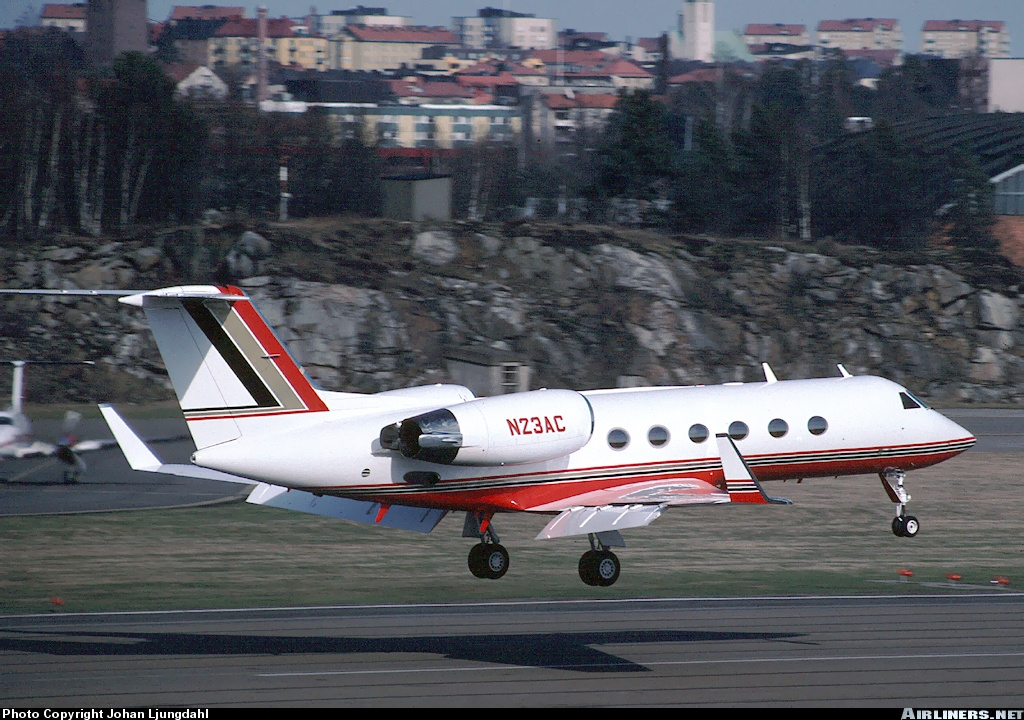
The flightcrew of a Gulfstream G-IV began taking off on Runway 34 with a crosswind from 280° at 24 knots. About 1,340 feet after the takeoff roll began, the airplane veered left 5.14° to a heading of 335°. It departed the runway, and tire marks indicated no braking action was applied. One of the pilots said, "Reverse," then one said, "No, no, no, go, go, go, go, go." The airplane traversed a shallow ditch that paralleled the runway, which resulted in separation of both main landing gear, the left and right flaps, and a piece of left aileron control cable from the airplane. The airplane became airborne after it encountered a small berm at the departure end of the runway. Reportedly, the left wing fuel tank exploded. The main wreckage was located about 6,650 feet from the start of the takeoff roll. Examination of the airplane indicated no preexisting anomalies of the engines, flight controls, or aircraft systems. The Nose Wheel Steering Select Control Switch was found in the "Handwheel Only" position, and not in the "Normal" position. The pilot-in-command (PIC) routinely flew with the switch in the "Normal" position. The PIC and copilot (pilot-not-flying) comprised a mix crew in accordance with an Interchange Agreement between two companies which operated G-IV's. The companies' operation manuals and the Interchange Agreement did not address mixed crews, procedural differences, or aircraft difference training.
Probable cause:
Failure of the pilot-in-command (PIC) to maintain directional control of the airplane during the takeoff roll in a gusty crosswind, his failure to abort the takeoff, and failure of the copilot to adequately monitor and/or take sufficient remedial action to help avoid the occurrence. Factors relating to the accident included the gusty crosswind condition, the drainage ditch, the flight crew's inadequate preflight, the Nose Wheel Steering Control Select Switch in the "Handwheel Only" position, and the lack of standardization of the two companies' operations manuals and Interchange Agreement.
Final Report:

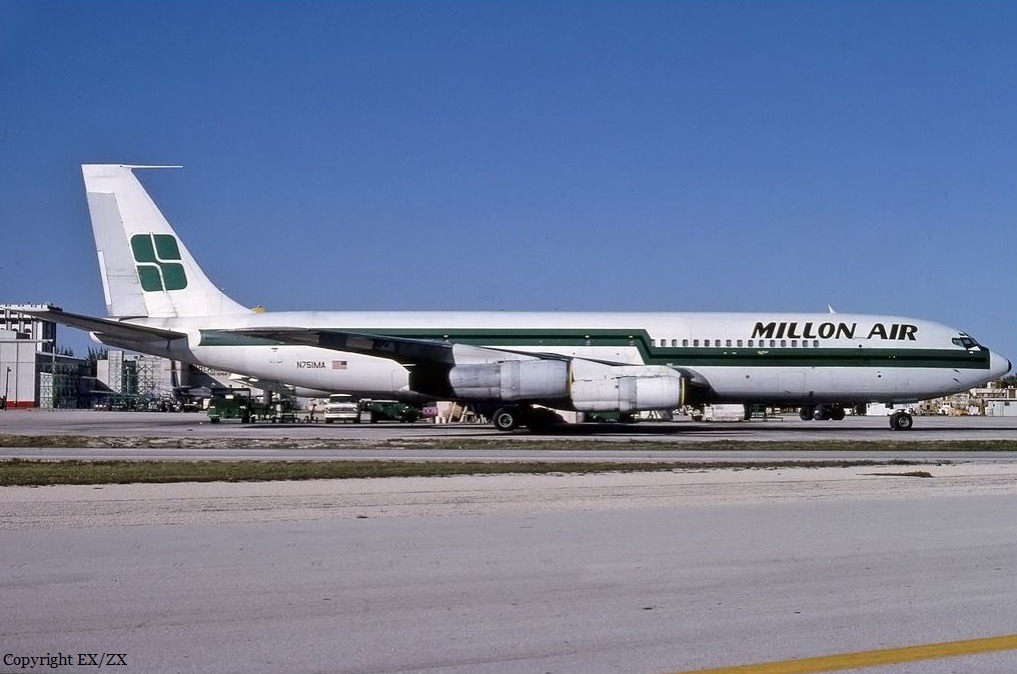
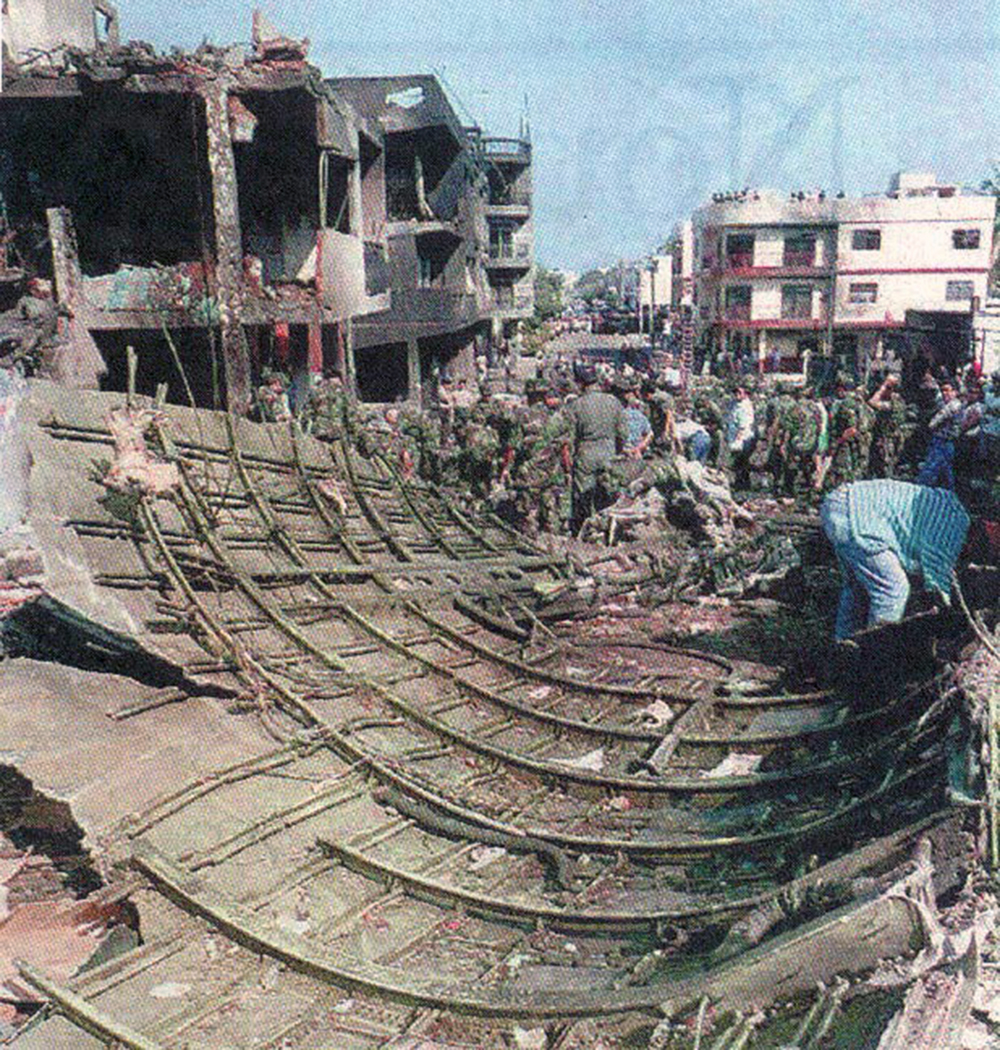
Crash of a Boeing 707-323C in Manta: 34 killed

Date & Time: Oct 22, 1996 at 2244 LT
Type of aircraft:
Operator:
Registration:
N751MA
Flight Phase:
Flight Type:
Survivors:
No
Site:
Schedule:
Manta - Miami
MSN:
19582
YOM:
1967
Flight number:
OX406
Country:
Crew on board:
4
Crew fatalities:
Pax on board:
0
Pax fatalities:
Other fatalities:
Total fatalities:
34
Circumstances:
The aircraft departed Manta-Eloy Alfaro Airport on a cargo flight to Miami, carrying one passenger, three crew members and a load of frozen fish and flowers. Seven seconds after liftoff, while in initial climb, the crew informed ATC that the engine n°3 caught fire. The captain elected to maintain control but the aircraft lost altitude, struck the bell tower of the church La Dolorosa and crashed in a populated area located about 4 km west of the airport. The aircraft disintegrated on impact and several houses and building were destroyed. All four occupants as well as 30 people on the ground were killed. Fifty other people on the ground were seriously injured.
Probable cause:
It was reported that the engine n°3 suffered an uncontained failure during the takeoff roll as debris were found on runway 23.

Crash of a Rockwell Grand Commander 685 in Eden

Date & Time: Oct 19, 1996 at 1700 LT
Registration:
N58RG
Flight Phase:
Flight Type:
Survivors:
No
Schedule:
Eden - Eden
MSN:
685-12047
YOM:
1973
Crew on board:
1
Crew fatalities:
Pax on board:
0
Pax fatalities:
Other fatalities:
Total fatalities:
0
Captain / Total flying hours:
993
Captain / Total hours on type:
5.00
Circumstances:
Prior to takeoff from a private turf airstrip (1400'x 90'), the pilot adjusted the left engine's fuel pump. On takeoff roll the left engine began surging. The pilot continued the takeoff. The pilot lifted off at approximately 1000' and pulled back on the yoke to get over the trees on the left side of the airstrip. The airplane drifted to the left. The pilot said he stalled the airplane and should have pushed the yoke forward to gain airspeed. The Pilot Operating Handbook indicted a takeoff roll of approximately 2,500 feet was needed on a dry paved surface.
Probable cause:
A partial loss of engine power due to improper adjustment of the fuel pump by an unqualified person (pilot-in-command) and the pilot's inadequate preflight planning which resulted in his selection of unsuitable terrain for the attempted takeoff. The pilot's failure to maintain directional control of the airplane and the trees were factors.
Final Report:

Crash of a Beechcraft A90 King Air in Itaguazurenda: 3 killed

Date & Time: Oct 11, 1996 at 0830 LT
Type of aircraft:
Registration:
N3333D
Flight Phase:
Flight Type:
Survivors:
No
Schedule:
Itaguazurenda - Itaguazurenda
MSN:
LJ-259
YOM:
1967
Country:
Crew on board:
1
Crew fatalities:
Pax on board:
2
Pax fatalities:
Other fatalities:
Total fatalities:
3
Circumstances:
The twin engine aircraft was completing a local post maintenance flight with one pilot and two mechanics on board. Shortly after takeoff, while climbing to a height of 210 feet, the aircraft entered an uncontrolled descent and crashed. All three occupants were killed. According to the representatives of the owner of the airplane, recent maintenance had been performed on the engines, propellers, and the nose landing gear.

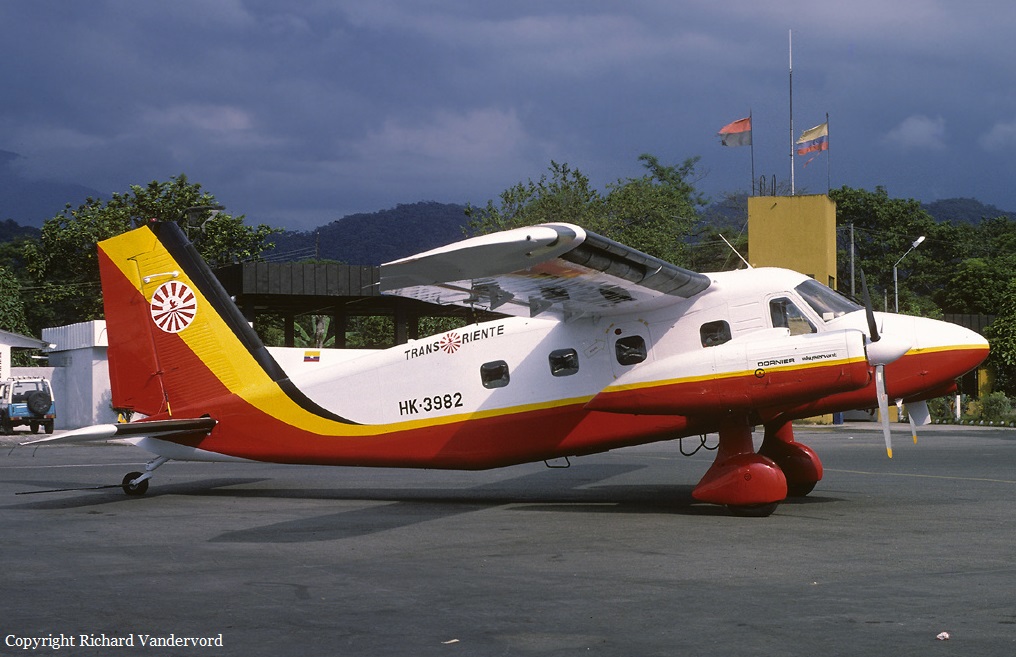
Crash of a Dornier DO.28D-2 Skyservant in Taraira

Date & Time: Oct 9, 1996 at 1605 LT
Type of aircraft:
Operator:
Registration:
HK-3982
Flight Phase:
Flight Type:
Survivors:
Yes
Schedule:
Mitú – La Pedrera
MSN:
4169
YOM:
1973
Location:
Country:
Crew on board:
2
Crew fatalities:
Pax on board:
1
Pax fatalities:
Other fatalities:
Total fatalities:
0
Captain / Total flying hours:
20000
Captain / Total hours on type:
500.00
Copilot / Total flying hours:
4465
Copilot / Total hours on type:
300
Aircraft flight hours:
3217
Circumstances:
En route from Mitú to La Pedrera, weather conditions deteriorated. As the crew was unable to receive a last weather bulletin for the destination airport, he decided to divert to Taraira. Following a waiting period on the ground, the crew decided to takeoff but the soft runway surface was wet. Unable to gain sufficient speed, the crew abandoned the takeoff procedure but the aircraft overran and came to rest. All three occupants escaped uninjured while the aircraft was damaged beyond repair.
Probable cause:
Decision by the crew to abort takeoff from an inappropriate field due to the wet conditions and soft surface which produced higher coefficients of friction and a lower acceleration factor that prevented reaching takeoff speed after which the crew determined to discontinue the takeoff without sufficient stopping distance, which led to the accident.
Final Report:

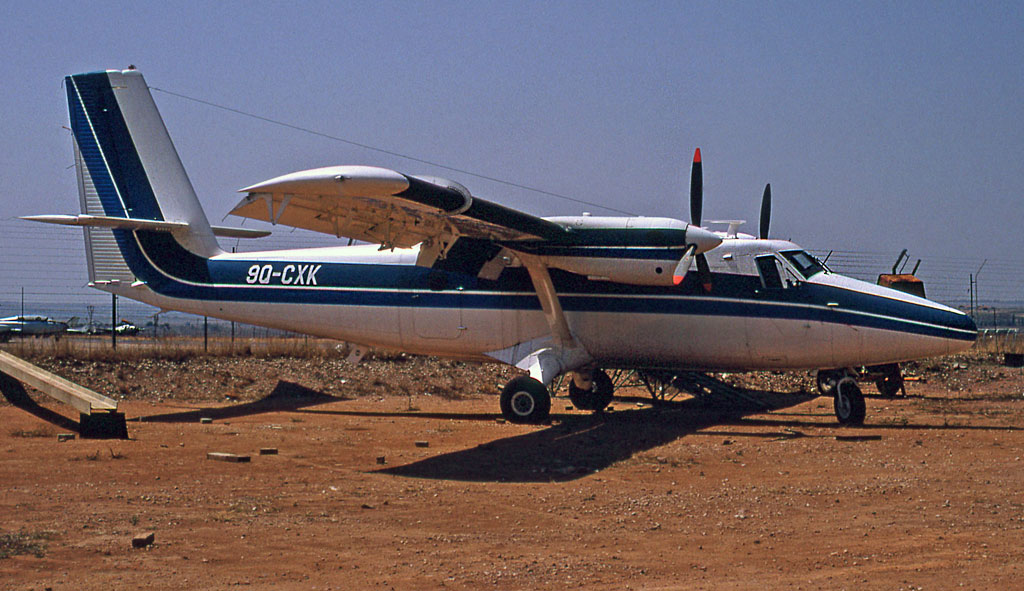
Crash of a De Havilland DHC-6 Twin Otter 100 in Kahemba: 6 killed

Date & Time: Oct 3, 1996
Operator:
Registration:
9Q-CXK
Flight Phase:
Survivors:
Yes
Schedule:
Kahemba - Kikwit
MSN:
74
YOM:
1967
Region:
Crew on board:
2
Crew fatalities:
Pax on board:
19
Pax fatalities:
Other fatalities:
Total fatalities:
6
Circumstances:
Shortly after takeoff, while in initial climb, the aircraft stalled and crashed near the runway end. Both pilots and four passengers were killed while 15 other occupants were injured.

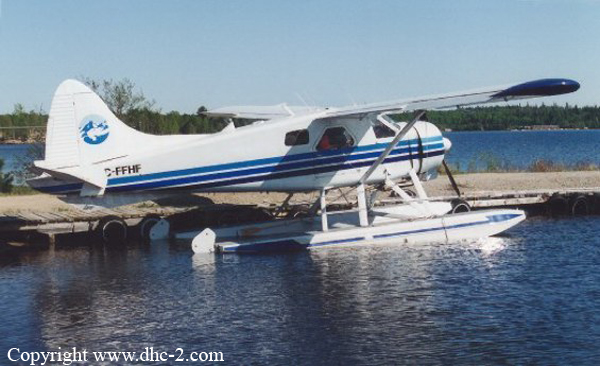
Crash of a De Havilland DHC-2 Beaver in Portage Lake: 2 killed

Date & Time: Sep 30, 1996
Type of aircraft:
Registration:
C-FFHF
Flight Phase:
Survivors:
No
Schedule:
Ugly Lake - Goose Bay
MSN:
19
YOM:
1949
Country:
Crew on board:
1
Crew fatalities:
Pax on board:
1
Pax fatalities:
Other fatalities:
Total fatalities:
2
Captain / Total flying hours:
894
Circumstances:
The pilot of C-FFHF, a float-equipped de Havilland DHC-2 Beaver, departed the company camp at Ugly Lake, Labrador, en route to Goose Bay. Prior to arriving at Goose Bay, the pilot contacted an overflying Air Labrador flight and advised them that he had landed on a pond and that he needed the SAR (search and rescue) time extended on his flight plan. The pilot also said that he would be departing the pond shortly, en route to Goose Bay. When C-FFHF did not arrive at the destination by the SAR time of 2030 Atlantic daylight saving time (ADT), a search was commenced. Seven days later, an oil slick and a paddle with the company name on it were identified on a pond about 66 nautical miles (nm) north of Goose Bay. Divers located the aircraft wreckage in 120 feet of water. The aircraft was destroyed and the bodies of the pilot and passenger were located inside the wreckage.
Probable cause:
It is probable that the pilot was unable to maintain visual reference with the surface sometime after take-off from the pond. The aircraft struck the water either during the pilot's attempt to regain visual reference or because the pilot lost control of the aircraft in reduced visibility.
Final Report: