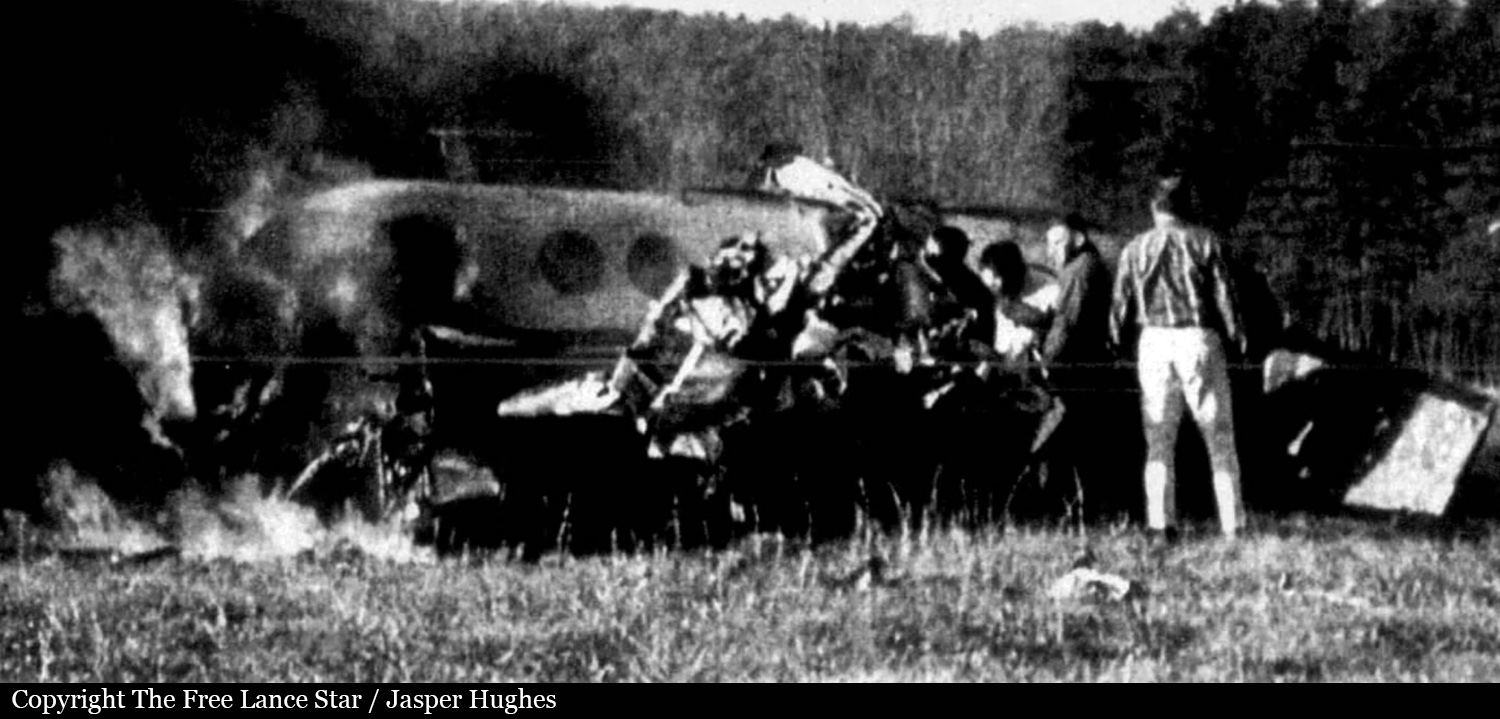
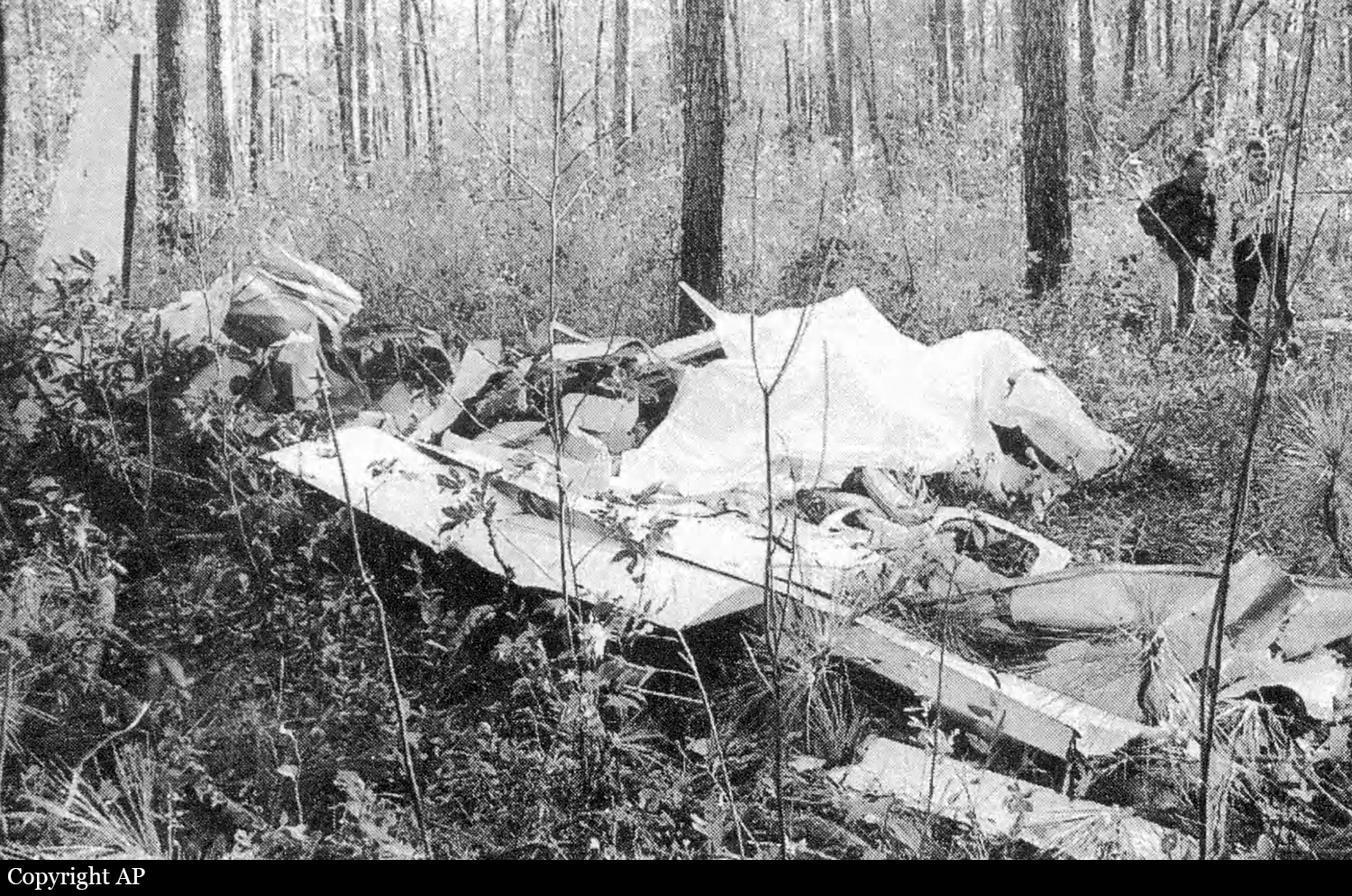
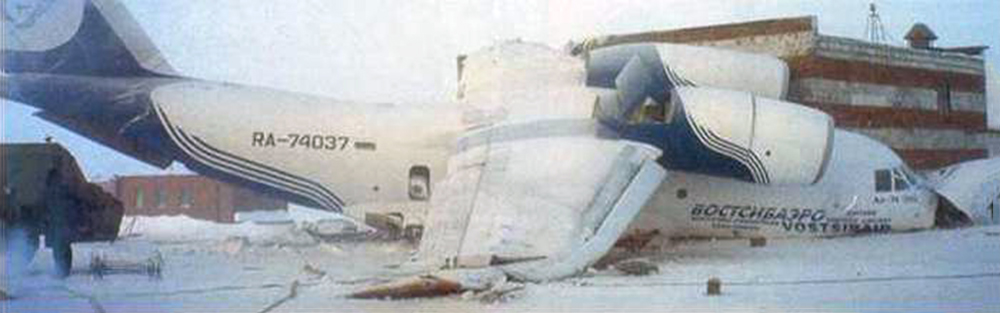
Crash of an Antonov AN-74-200 in Mirny

Date & Time: Dec 10, 1996 at 2357 LT
Type of aircraft:
Registration:
RA-74037
Flight Phase:
Flight Type:
Survivors:
Yes
Schedule:
Mirny - Irkutsk
MSN:
470 98 950
YOM:
1995
Country:
Region:
Crew on board:
9
Crew fatalities:
Pax on board:
3
Pax fatalities:
Other fatalities:
Total fatalities:
0
Aircraft flight hours:
369
Aircraft flight cycles:
176
Circumstances:
Just after liftoff from Mirny Airport, while in initial climb, the reverse thrust system deployed on the right engine. The aircraft banked right, causing the right wing tip to struck the runway surface. Out of control, the aircraft crash landed, veered off runway and came to rest against a building. All 12 occupants escaped with minor injuries while the aircraft was damaged beyond repair.
Probable cause:
It was determined that the reverse thrust system on the right engine accidentally deployed after takeoff due to a mechanical failure of unknown origin. Nevertheless, investigations confirmed that a warning light came on in the cockpit prior to departure but the crew failed to identify this warning because he did not follow the pre-departure checklist.

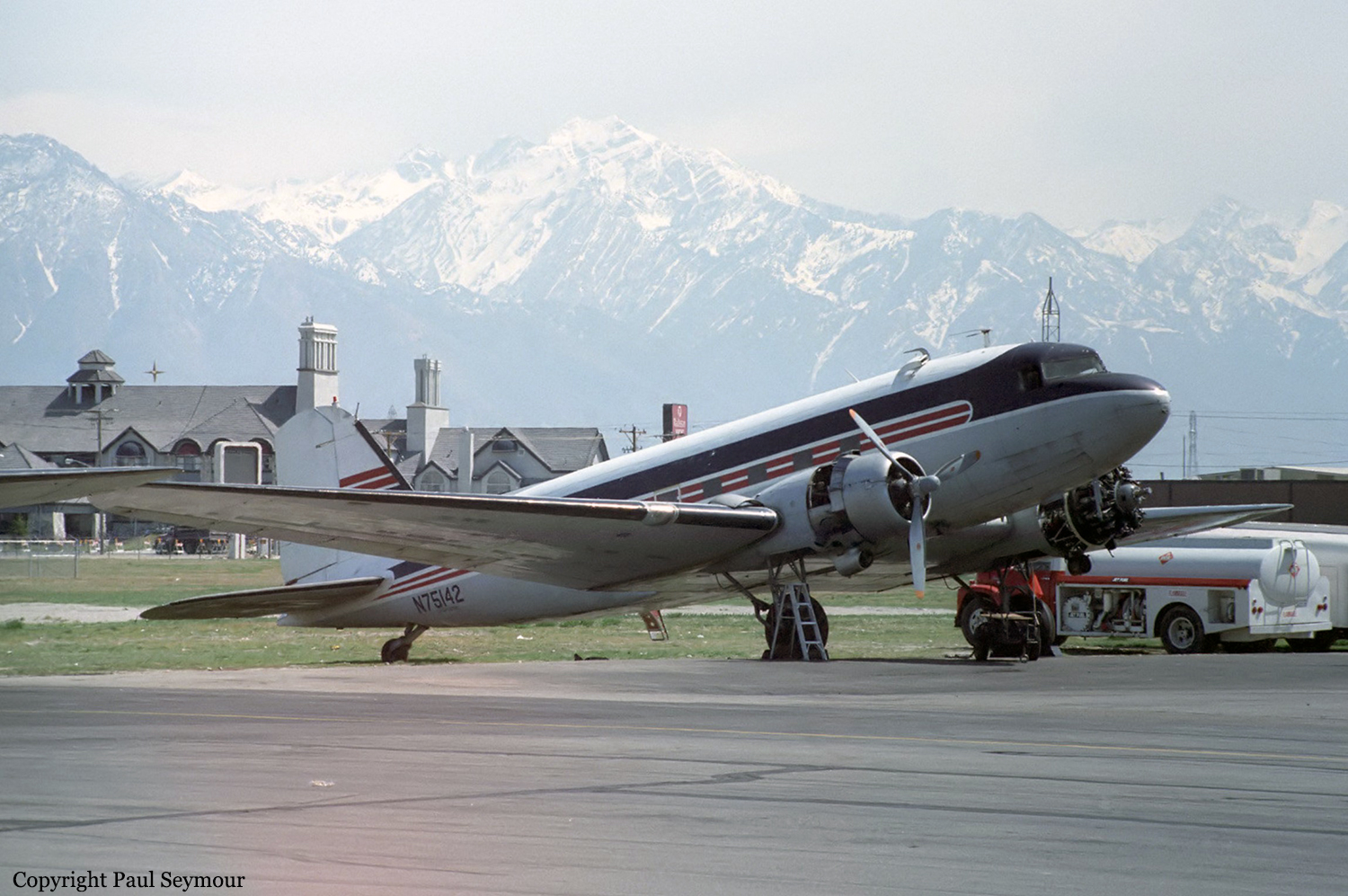
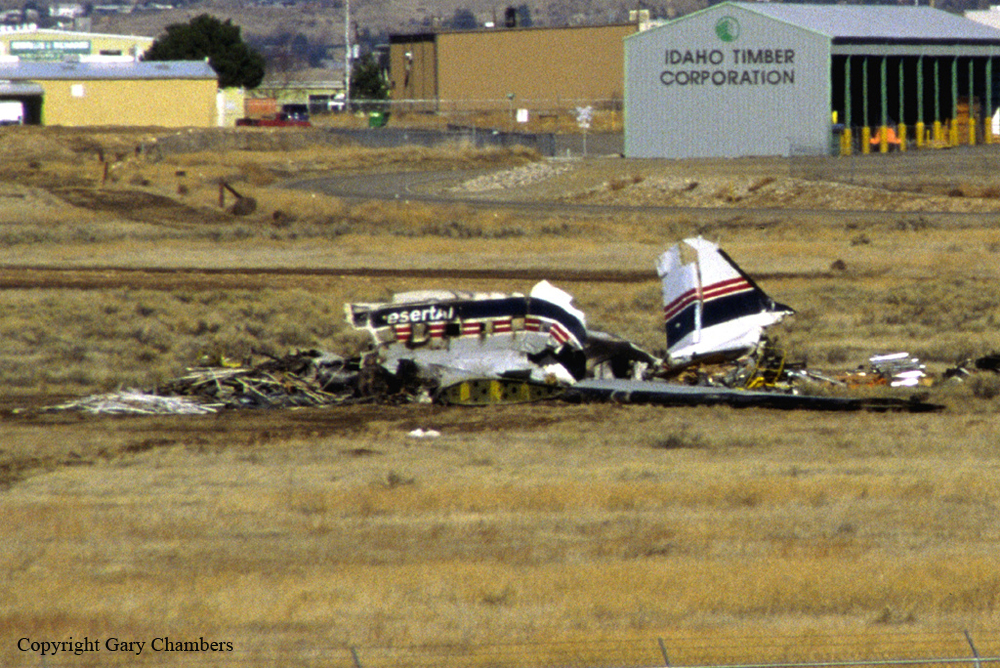
Crash of a Douglas C-47A-1-DL in Boise: 2 killed

Date & Time: Dec 9, 1996 at 1803 LT
Operator:
Registration:
N75142
Flight Phase:
Flight Type:
Survivors:
No
Schedule:
Boise – Salt Lake City
MSN:
9173
YOM:
1943
Location:
Crew on board:
2
Crew fatalities:
Pax on board:
0
Pax fatalities:
Other fatalities:
Total fatalities:
2
Captain / Total flying hours:
15447
Captain / Total hours on type:
5502.00
Aircraft flight hours:
34124
Circumstances:
The DC-3C took off on runway 10L and immediately executed a right turn followed by a left turn back toward the airport declaring a fire aboard. Dark night visual meteorological conditions existed. Witnesses observed 'flames' or an 'orange glow' coming from the right engine. A small number of aluminum fragments identified from the aft edge of the right engine accessory cowling were found along the ground just short of the ground impact site. These fragments displayed signs of heat distress but no significant melting. An examination of the right engine and accessory section revealed no evidence of a preimpact fire, and sooting and metal splatter on the leading edge of the right horizontal stabilizer was minimal. Spectral analysis of radio transmissions revealed no evidence of significant divergence of engine RPM between the two engines. Postcrash propeller examination revealed approximate blade pitch angles of 18-19° and 30-32° for the right and left propellers respectively upon impact. Propeller slash mark dimensions associated with the right propeller resulted in propeller RPM of approximately 1,750 to 2,570 over a range of 68 to 100 knots respectively. The first officer advised the PIC (broadcasting over the tower frequency) 'we're gonna stall' approximately 10 seconds before the impact. The aircraft was in a left turn back toward runways 28 left and right when the right wing struck the ground and the aircraft cartwheeled to a stop. A postcrash fire destroyed the cockpit area and inboard right wing.
Probable cause:
A fire within the right engine compartment of undetermined cause and the pilot-in-command's failure to maintain airspeed above the aircraft's minimum control speed. A factor contributing to the accident was the dark night environmental conditions.
Final Report:

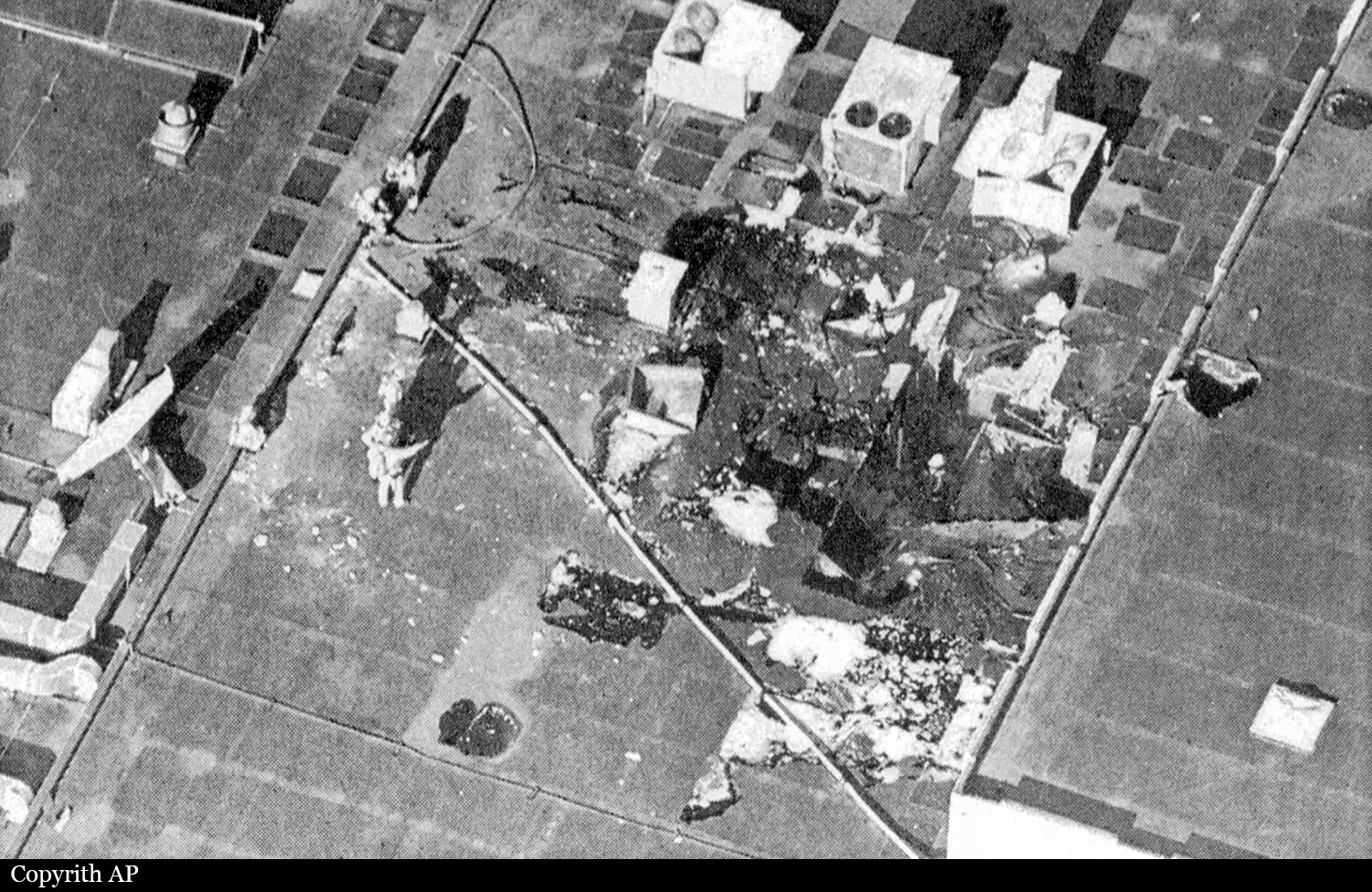
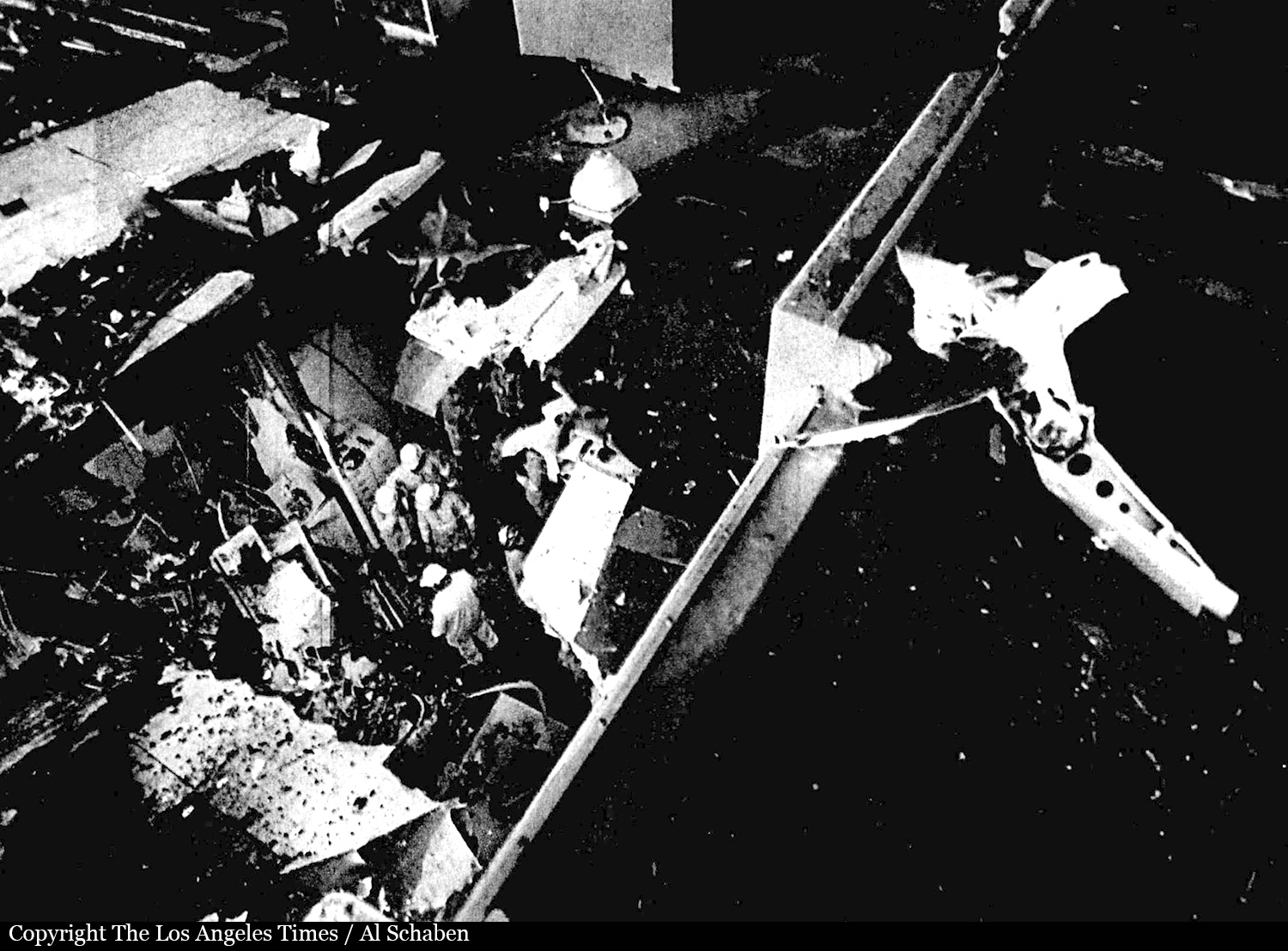
Crash of a Morane-Saulnier M.S.760 Paris II in Santa Ana: 3 killed

Date & Time: Nov 30, 1996 at 1307 LT
Registration:
N2TE
Flight Phase:
Flight Type:
Survivors:
No
MSN:
5
YOM:
1958
Crew on board:
1
Crew fatalities:
Pax on board:
2
Pax fatalities:
Other fatalities:
Total fatalities:
3
Captain / Total flying hours:
2169
Captain / Total hours on type:
201.00
Aircraft flight hours:
3334
Circumstances:
Shortly after takeoff, the pilot radioed the air traffic control tower declaring an emergency and stating his intent to return for landing. He stated that he had taken off with an external boarding ladder attached to the aircraft. Several witnesses reported that the aircraft's downwind leg was too close to the airport causing the aircraft to overshoot the turn to the final approach course, and that the pilot increased the aircraft's bank angle as he tried to align the aircraft with the landing runway. As the aircraft was intercepting the final approach course, it abruptly rolled inverted, the nose dropped, and the aircraft spiraled onto the roof of an industrial building. A Boeing 757 aircraft, landing on the same runway, had passed over the accident site 2 minutes and 17 seconds earlier. The B-757 was cleared to land before the accident aircraft received a takeoff clearance and was on the runway when the pilot declared the emergency and turned downwind. The local controller did not issue a wake turbulence advisory. Experienced MS760 pilots reported that the aircraft will exhibit no adverse performance or safety affects with the boarding ladder attached.
Probable cause:
The pilot's failure to maintain an adequate airspeed margin while maneuvering in a steep banked turn to the landing runway, which resulted in an inadvertent stall/spin. Factors in the accident were: the pilot's inadequate preflight inspection of the aircraft in that he departed with the boarding ladder attached to the aircraft's exterior; the pilot's inadequate in-flight planning in that he flew a traffic pattern so close to the runway that it required excessive bank angles to align the aircraft with the landing runway; and the aircraft's probable encounter with the periphery of a weakened B-757 wake turbulence, which increased the wing's angle of attack beyond the stall point at a critical point during a steep banked turn.
Final Report:

Crash of a De Havilland DHC-6 Twin Otter 300 in Medellín: 14 killed

Date & Time: Nov 30, 1996 at 1032 LT
Operator:
Registration:
HK-2602
Flight Phase:
Survivors:
Yes
Site:
Schedule:
Medellín – Bahía Solano – Quibdo
MSN:
746
YOM:
1981
Flight number:
VX148
Country:
Crew on board:
2
Crew fatalities:
Pax on board:
13
Pax fatalities:
Other fatalities:
Total fatalities:
14
Captain / Total flying hours:
4611
Captain / Total hours on type:
3311.00
Copilot / Total flying hours:
2060
Copilot / Total hours on type:
733
Aircraft flight hours:
35696
Aircraft flight cycles:
48915
Circumstances:
After takeoff from runway 01 at Medellín-Enrique Olaya Herrera Airport, the aircraft encountered difficulties to gain sufficient height. About three minutes after liftoff, the aircraft struck the slope of Mt Padre Amaya located 8 km from the airport. The wreckage was found 30 metres below the summit. A passenger was found alive while 14 other occupants were killed.
Probable cause:
Failure of the crew in the flight technique applied during the take-off phase, by not evaluating the performance of the aircraft, considering the high weight in front of the obstacles to climb over on the ascent trajectory.
The following contributing factors were reported:
- Errors presented in the dispatch, since the weights were not totaled correctly, possibly due to errors in the handling of cargo and unaccompanied luggage.
- Attitude of complacency on the part of the crew, due to excellent meteorological conditions that caused an excess of confidence in the planning of the flight on the part of the crew.
Final Report:

Crash of an Ilyushin II-76MD in Abakan: 23 killed

Date & Time: Nov 27, 1996 at 2354 LT
Type of aircraft:
Operator:
Registration:
CCCP-78804
Flight Phase:
Flight Type:
Survivors:
No
Site:
Schedule:
Moscow – Abakan – Petropavlovsk-Kamchatsky
MSN:
00934 92778
YOM:
1989
Country:
Region:
Crew on board:
10
Crew fatalities:
Pax on board:
13
Pax fatalities:
Other fatalities:
Total fatalities:
23
Circumstances:
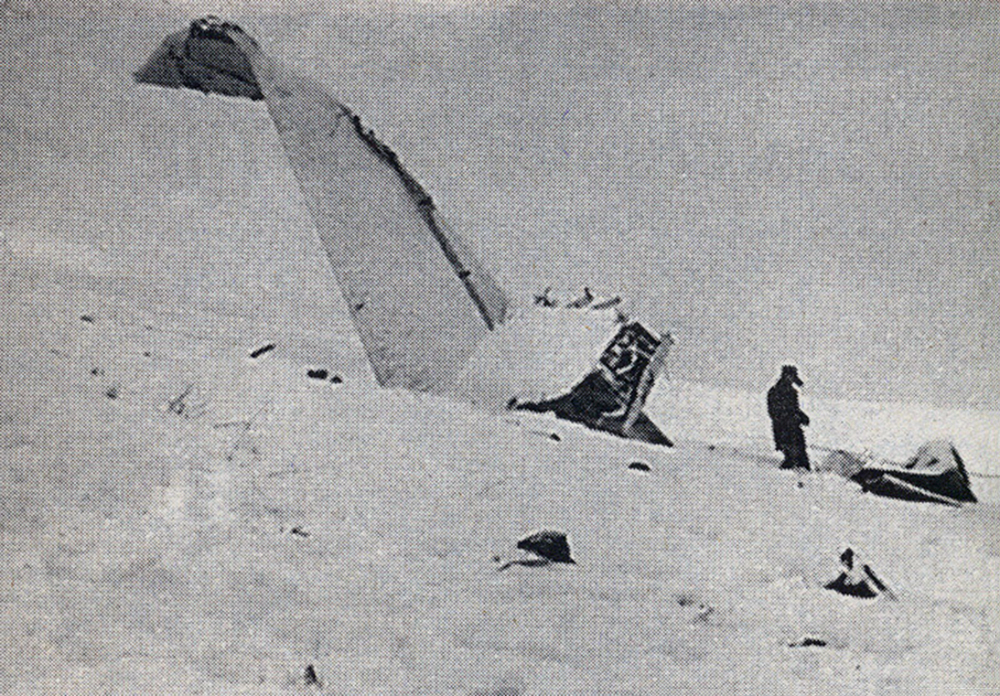
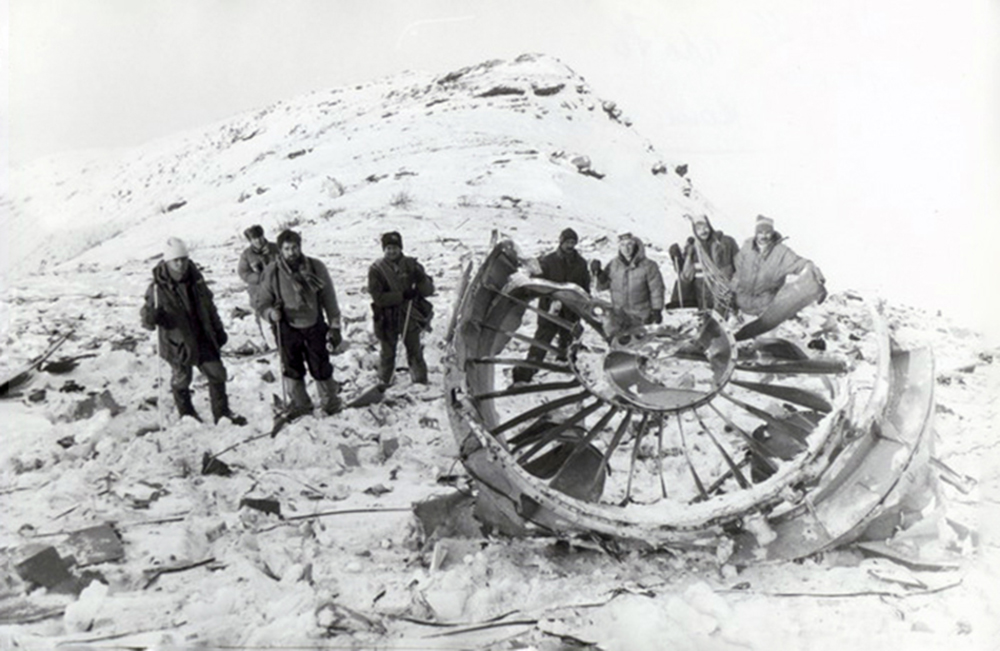
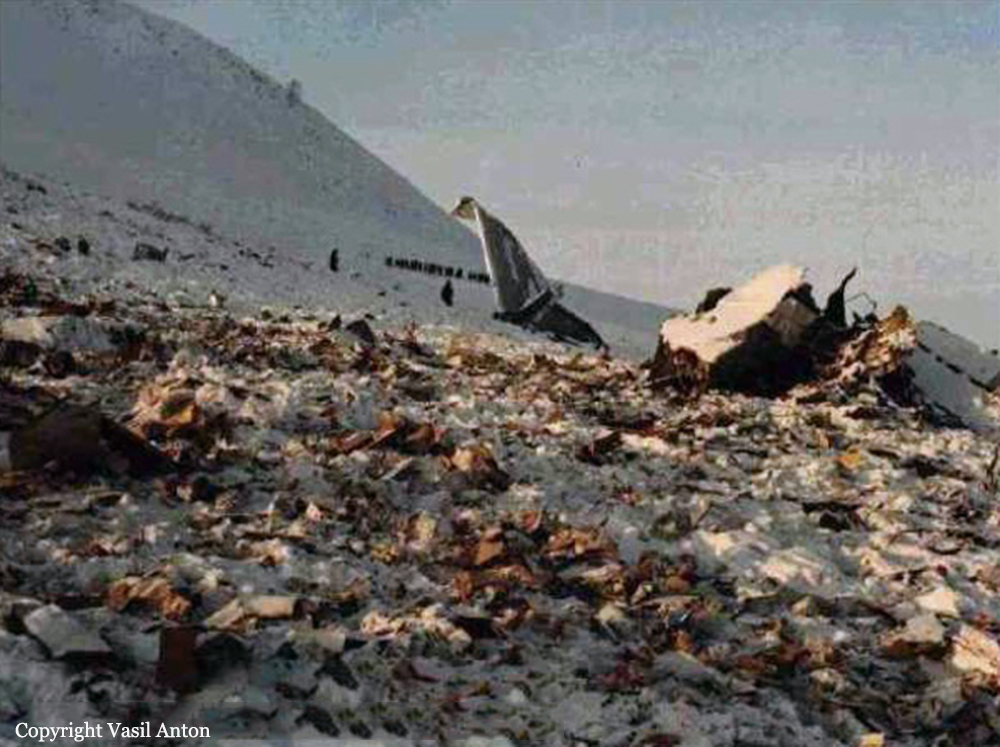
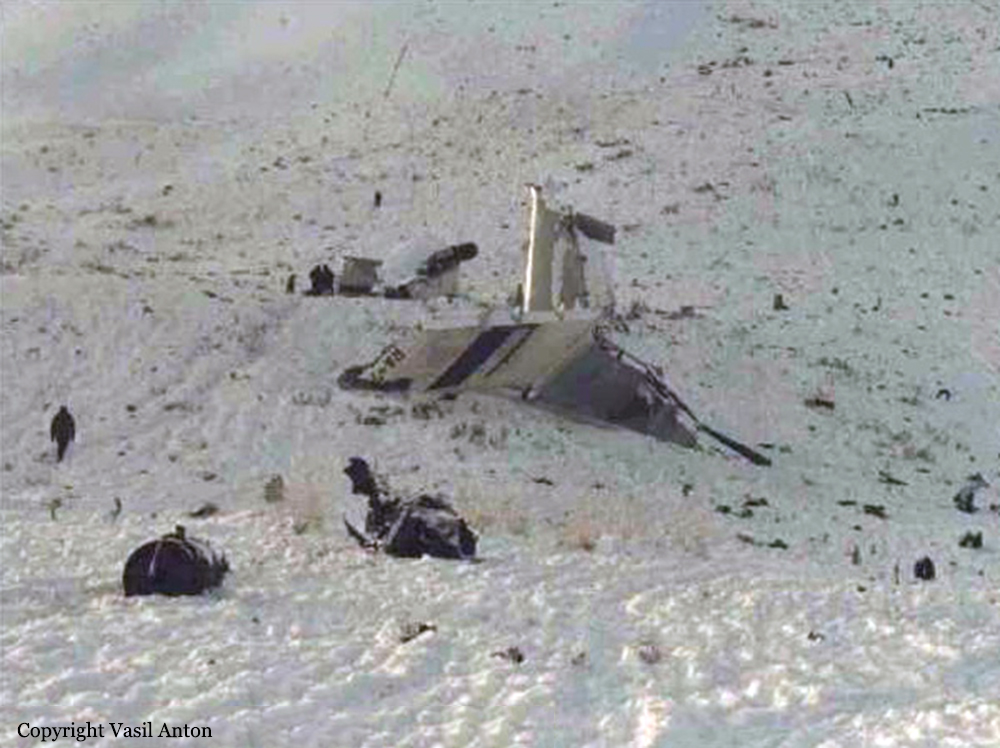
The aircraft was completing a cargo flight from Moscow-Zhukovsky Airport to Petropavlovsk-Kamchatsky with an intermediate stop in Abakan, carrying 13 passengers, 10 crew members and a load of 30 tons of various goods. Following a night takeoff, the aircraft climbed to a height of 200 metres then encountered difficulties to climb anymore. According to published procedures, the pilot-in-command was supposed to initiate a turn after a course of 4 km but he continued a straight-in route until the aircraft struck the slope of a snow covered mountain located 13,4 km from the runway end. The aircraft disintegrated on impact and all 23 occupants were killed.
Probable cause:
It appears that the manifest was not reflecting the truth as it was mentioned a total weight of 30 tons, an incorrect value. Because the total weight was substantially above the MTOW, the climb gradient was insufficient, resulting in a collision with a mountain that the crew was unable to locate due to the low visibility caused by night. It was also reported that the crew failed to follow the published departure procedures.

Crash of a Cessna 208B Grand Caravan in Bethel: 1 killed

Date & Time: Nov 26, 1996 at 1101 LT
Type of aircraft:
Registration:
N4704B
Flight Phase:
Flight Type:
Survivors:
No
Schedule:
Bethel - Kwigillingok
MSN:
208B-0199
YOM:
1989
Flight number:
ATS1604
Location:
Crew on board:
1
Crew fatalities:
Pax on board:
0
Pax fatalities:
Other fatalities:
Total fatalities:
1
Captain / Total flying hours:
3623
Captain / Total hours on type:
474.00
Aircraft flight hours:
3711
Circumstances:
The pilot was departing on a cargo flight. Just after takeoff, a company dispatcher attempted to contact the pilot by radio. The pilot replied, 'stand by.' No further communication was received from the pilot. The airplane was observed by ATC personnel in a left turn back toward the airport at an estimated altitude of 200 feet above the ground. The angle of bank during the turn increased, and the nose of the airplane suddenly dropped toward the ground. The airplane struck the ground in a nose and left wing low attitude about 1 mile west of the airport. The terrain around the airport was relatively flat, snow covered tundra. The airplane was destroyed. A postaccident examination of the engine did not reveal any mechanical malfunction. Power signatures in the engine indicated it was developing power. A postaccident examination of the propeller assembly revealed one of three composite blades had rotated in its blade clamp 17/32 inch; however, the propeller manufacturer indicated blade contact with the ground would try to drive the propeller from a high blade angle toward a low blade angle. Movement toward a low blade angle would compress the propeller feathering springs, while movement toward a high blade angle would result in a hydraulic lock condition as oil in the system is compressed. The propeller manufacturer indicated they had no reports of composite blade slippage in the blade clamps.
Probable cause:
Failure of the pilot to maintain control of the airplane, while maneuvering to reverse direction after takeoff, after encountering an undetermined anomaly. The undetermined anomaly was a related factor.
Final Report:

Crash of a Beechcraft 65-A90 King Air in Quincy: 2 killed

Date & Time: Nov 19, 1996 at 1701 LT
Type of aircraft:
Registration:
N1127D
Flight Phase:
Flight Type:
Survivors:
No
Schedule:
Quincy - Quincy
MSN:
LJ-223
YOM:
1967
Crew on board:
2
Crew fatalities:
Pax on board:
0
Pax fatalities:
Other fatalities:
Total fatalities:
2
Captain / Total flying hours:
25647
Captain / Total hours on type:
22.00
Aircraft flight hours:
11391
Circumstances:
The Beechcraft 1900C, N87GL, was in its landing roll on runway 13, and the Beechcraft A90, N1127D, was in its takeoff roll on runway 04. The collision occurred at the intersection of the two runways. The flight crew of the Beechcraft 1900C had made appropriate efforts to coordinate the approach and landing through radio communications and visual monitoring; however they mistook a Cherokee pilot's transmission (that he was holding for departure on runway 04) as a response from the Beechcraft A90 to their request for the Beechcraft A90's intentions, and therefore mistakenly believed that the Beechcraft A90 was not planning to take off until after the Beechcraft 1900C had cleared the runway. The failure of the Beechcraft A90 pilot to announce over the common traffic advisory frequency his intention to take off created a potential for collision between the two airplanes.
Probable cause:
The failure of the pilots in the King Air A90 to effectively monitor the common traffic advisory frequency or to properly scan for traffic, resulting in their commencing a takeoff roll when the Beechcraft 1900C (United Express flight 5925) was landing on an intersecting runway. Contributing to the cause of the accident was the Cherokee pilot's interrupted radio transmission, which led to the Beechcraft 1900C pilot's misunderstanding of the transmission as an indication from the King Air that it would not take off until after flight 5925 had cleared the runway. Contributing to the severity of the accident and the loss of life were the lack of adequate aircraft rescue and firefighting services and the failure of the air stair door on the Beechcraft 1900C to be opened.
Final Report:

Crash of a Piper PA-61-601P (Ted Smith 601) in Eagle County: 5 killed

Date & Time: Nov 17, 1996 at 1505 LT
Operator:
Registration:
N251B
Flight Phase:
Flight Type:
Survivors:
No
Schedule:
Eagle County – Minneapolis
MSN:
61-0812-8063422
YOM:
1980
Crew on board:
1
Crew fatalities:
Pax on board:
4
Pax fatalities:
Other fatalities:
Total fatalities:
5
Captain / Total flying hours:
752
Captain / Total hours on type:
16.00
Circumstances:
The non instrument-rated pilot filed an IFR flight plan, but did not request nor was given a weather briefing. Shortly after taking off into low instrument meteorological conditions, he reported he was returning to the airport, but did not give a reason why. He never declared an emergency. The last transmission was when the pilot said he had 'the problem resolved,' and was continuing on to his destination. Various witnesses said the engines were 'revvying' and 'unsynchronized,' and that the propellers were being 'cycled.' One witness said brownish-black smoke trailed from the right engine. The airplane struck one ridge, then catapulted approximately 1,000 feet before striking another ridge. There was post impact fire. Both propellers bore high rotational damage. Disassembly of the engines, propellers, turbochargers, and various components failed to disclose what may have prompted the pilot to want to return to the airport. Internal components of the right engine, however, were black and, according to a Textron Lycoming representative, were indicative of 'an excessively rich mixture.' A psychiatrist had recently treated the pilot for depression, attention deficit and bipolar disorders. The pilot also had a history of alcohol and drug abuse. Postmortem toxicology protocol disclose the presence of Fluoxetine (an antidepressant), Norfluoxetine (its metabolite), and Hydrocodone (the most commonly prescribed opiate).
Probable cause:
The pilot initiating flight into known adverse weather conditions without proper certification. Factors were the meteorological conditions that existed --- low ceiling, low visibility, and falling
snow --- and his use of contraindicated drugs.
Final Report:

Crash of a Beechcraft 65-A90 King Air in Orange

Date & Time: Nov 16, 1996 at 1500 LT
Type of aircraft:
Operator:
Registration:
N814SW
Flight Phase:
Survivors:
Yes
Schedule:
Orange - Orange
MSN:
LJ-186
YOM:
1967
Location:
Crew on board:
1
Crew fatalities:
Pax on board:
10
Pax fatalities:
Other fatalities:
Total fatalities:
0
Captain / Total flying hours:
1170
Captain / Total hours on type:
40.00
Circumstances:
The pilot was taking off with 10 jumpers onboard. At the rotation speed of 100 knots, he used elevator trim to rotate the airplane, but it did not lift off the runway. He continued moving the trim wheel violently to pitch the nose up, and attempted to pull back on the yoke, but the airplane collided with rising terrain off the end of the runway. A witness did not see any of the flight controls move during the pilot preflight inspection, and during the takeoff roll, he did not observe a nose up rotation of the airplane. The pilot reported that he removed a single pin control lock from the yoke during preflight. The Beech control lock consisted of two pins, two chains, and a U-shaped engine control lock. The pilot walked away from the wreckage after the accident. No control locks were found in the wreckage. However, the control column shaft exhibited distress signatures on the periphery of the hole where the control lock is installed. No other evidence was found of any other form of mechanical jamming, interference, or discontinuity with the flight controls. Investigators were unable to identify any potential source of interference, other than a control lock, that could have simultaneously jammed both pitch and roll control. According to the airplane's manufacturer, about 3 to 6 degree of trim would have been normal for the airplane's takeoff conditions.
Probable cause:
The pilot's inadequate preflight inspection and his failure to complete the pre-takeoff checklist which resulted in a takeoff roll with the control lock in place.
Final Report:

Crash of a Piper PA-60 Aerostar (Ted Smith 600) in New Bern: 3 killed

Date & Time: Nov 9, 1996 at 1139 LT
Registration:
N8239J
Flight Phase:
Flight Type:
Survivors:
No
Schedule:
New Bern - New Bern
MSN:
60-0643-7961204
YOM:
1979
Crew on board:
2
Crew fatalities:
Pax on board:
1
Pax fatalities:
Other fatalities:
Total fatalities:
3
Captain / Total flying hours:
382
Captain / Total hours on type:
5.00
Aircraft flight hours:
1888
Circumstances:
The airplane was over gross weight at takeoff but within Weight and Balance at the time of the accident. Witnesses observed the airplane flying low with the landing gear retracted over a wooded area then observed the airplane bank to the left and pitch down. The airplane then pitched nose up and entered what was described as a flat spin to the left. The airplane descended and impacted the ground upright with the landing gear retracted and the flaps symmetrically extended 6 degrees. Examination of the flight control systems, and engines revealed no evidence of preimpact failure or malfunction. A cabin door ajar indicating light was not illuminated at impact but the gear warning light was illuminated at impact. The pilot recently purchased the aircraft and only accumulated a total of 1 hour 23 minutes during 6 training flights. He accumulated an additional 3 hours 37 minutes after completion of the training flights while flying with other qualified pilots. The accident flight was the first flight in the make and model while flying with no other multiengine-rated pilot aboard.
Probable cause:
The pilot's failure to maintain airspeed (VMC). Contributing to the accident was his lack of total experience in kind of aircraft.
Final Report: