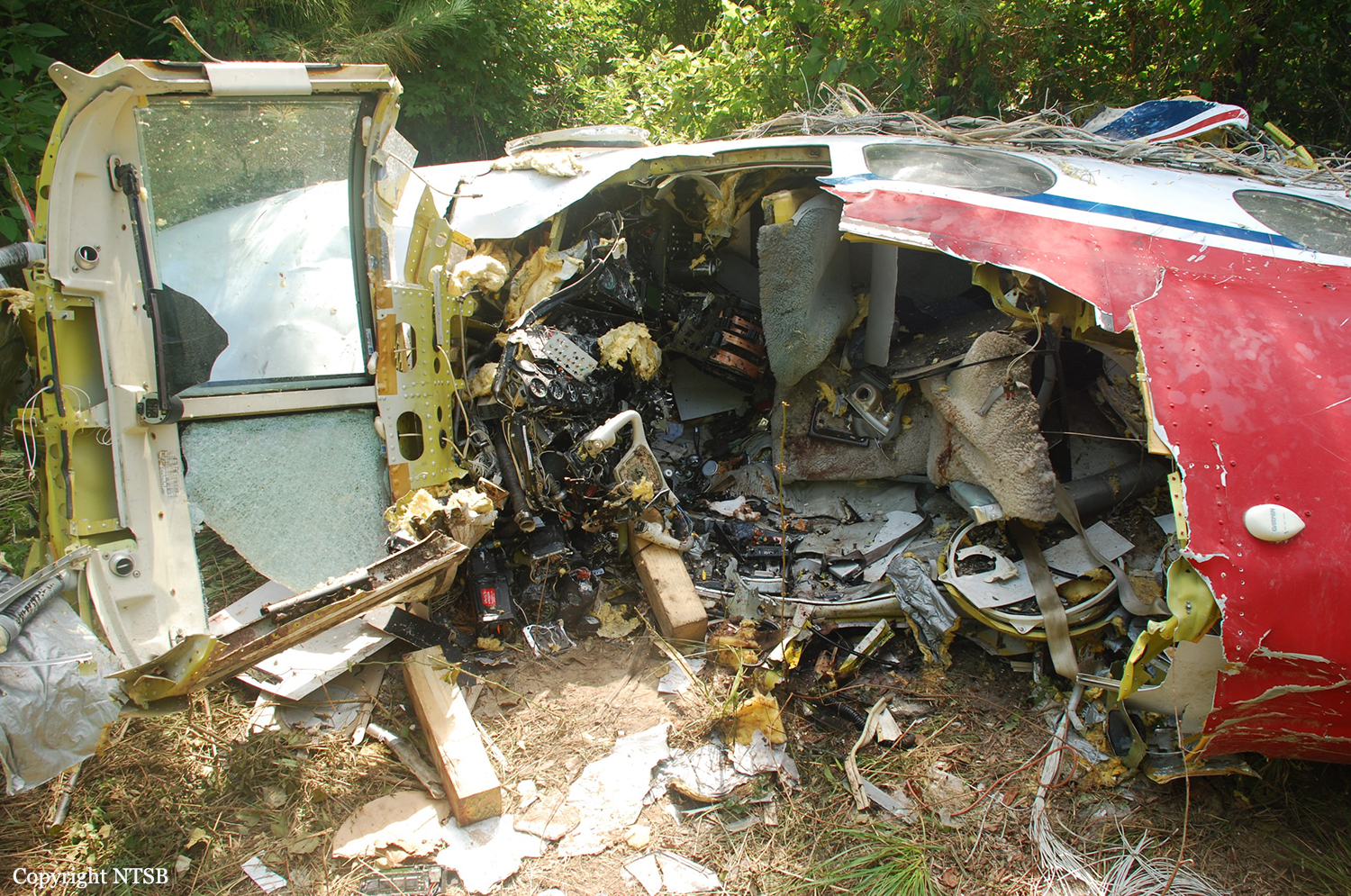
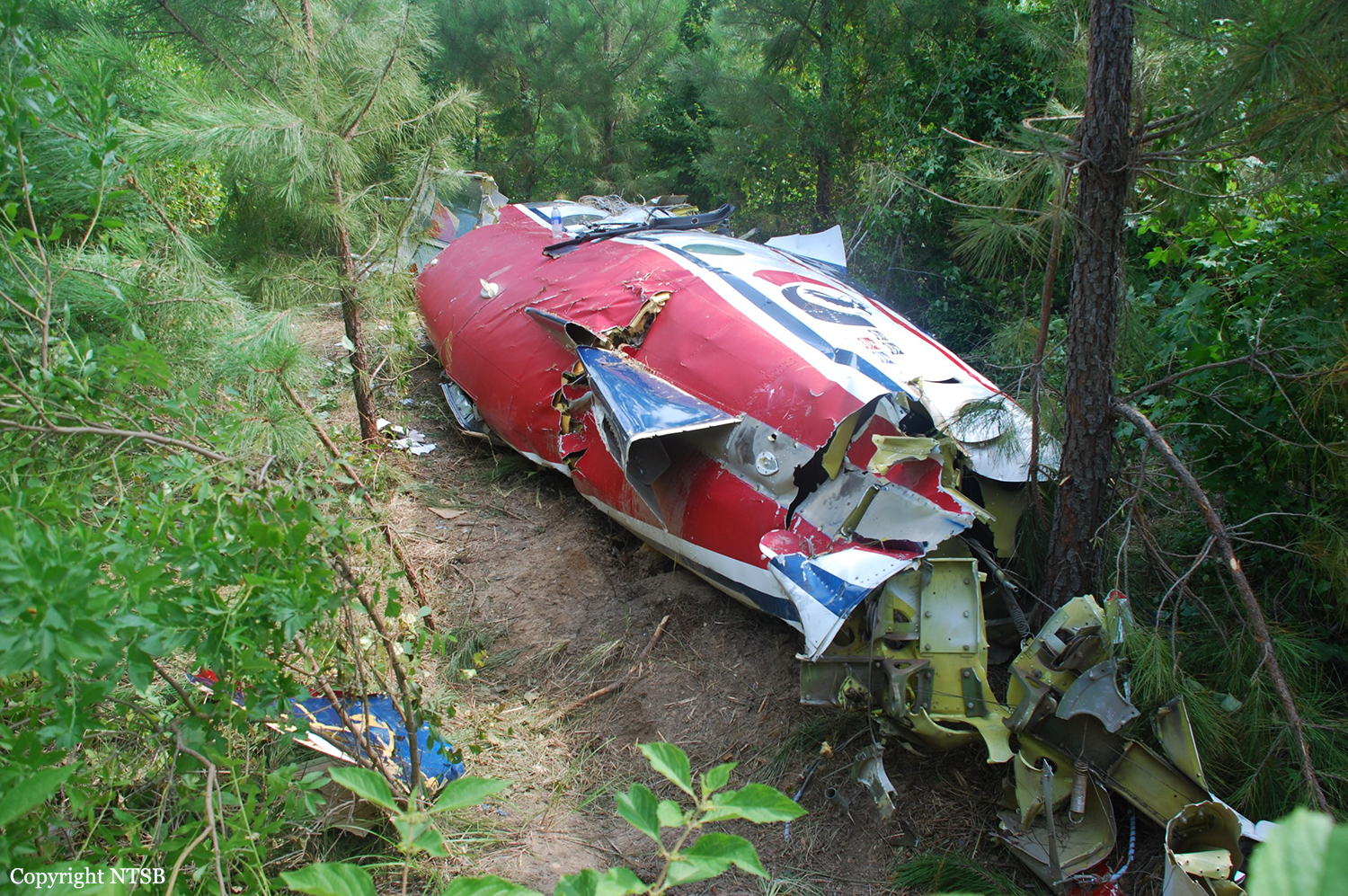
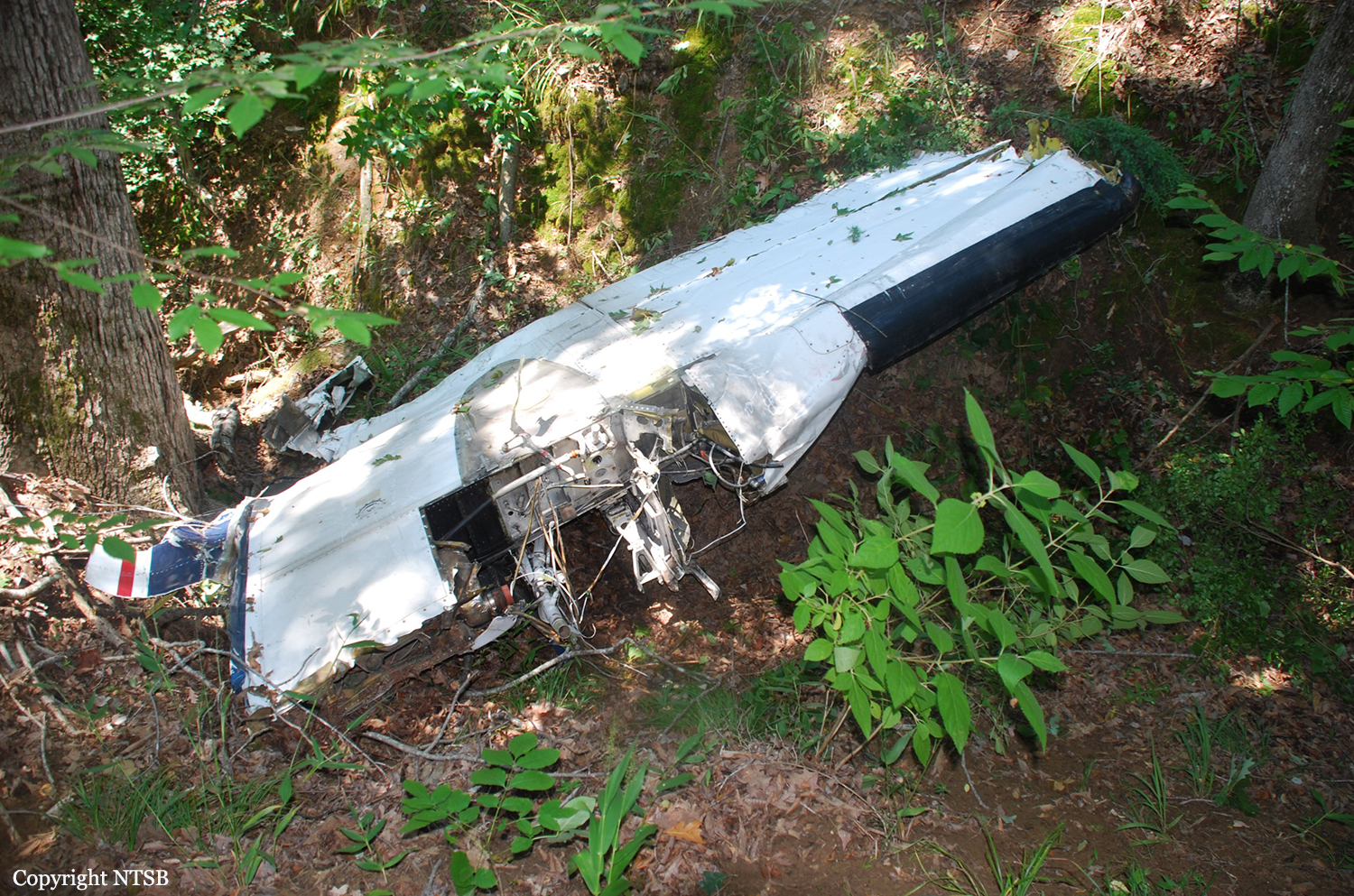
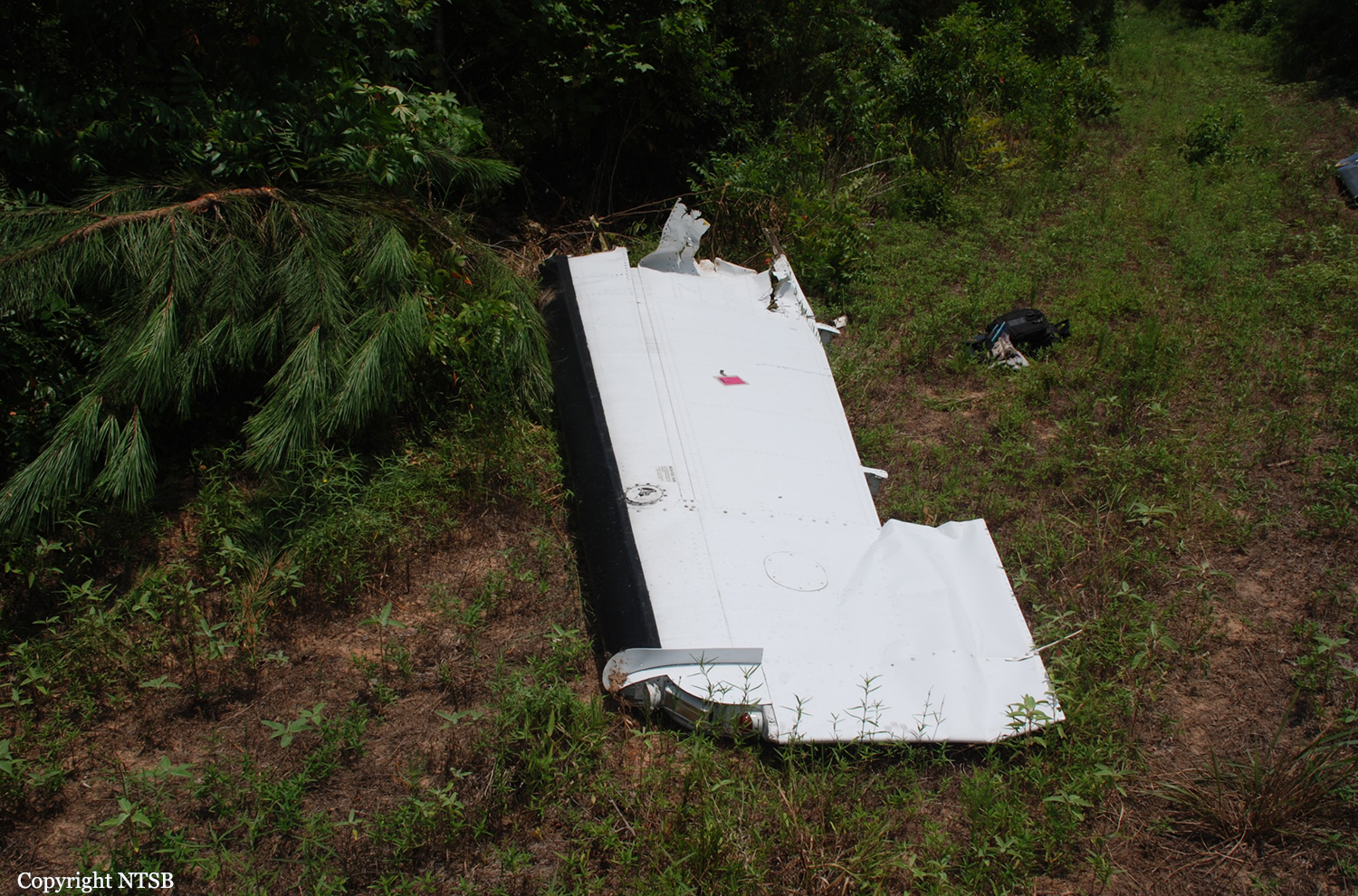
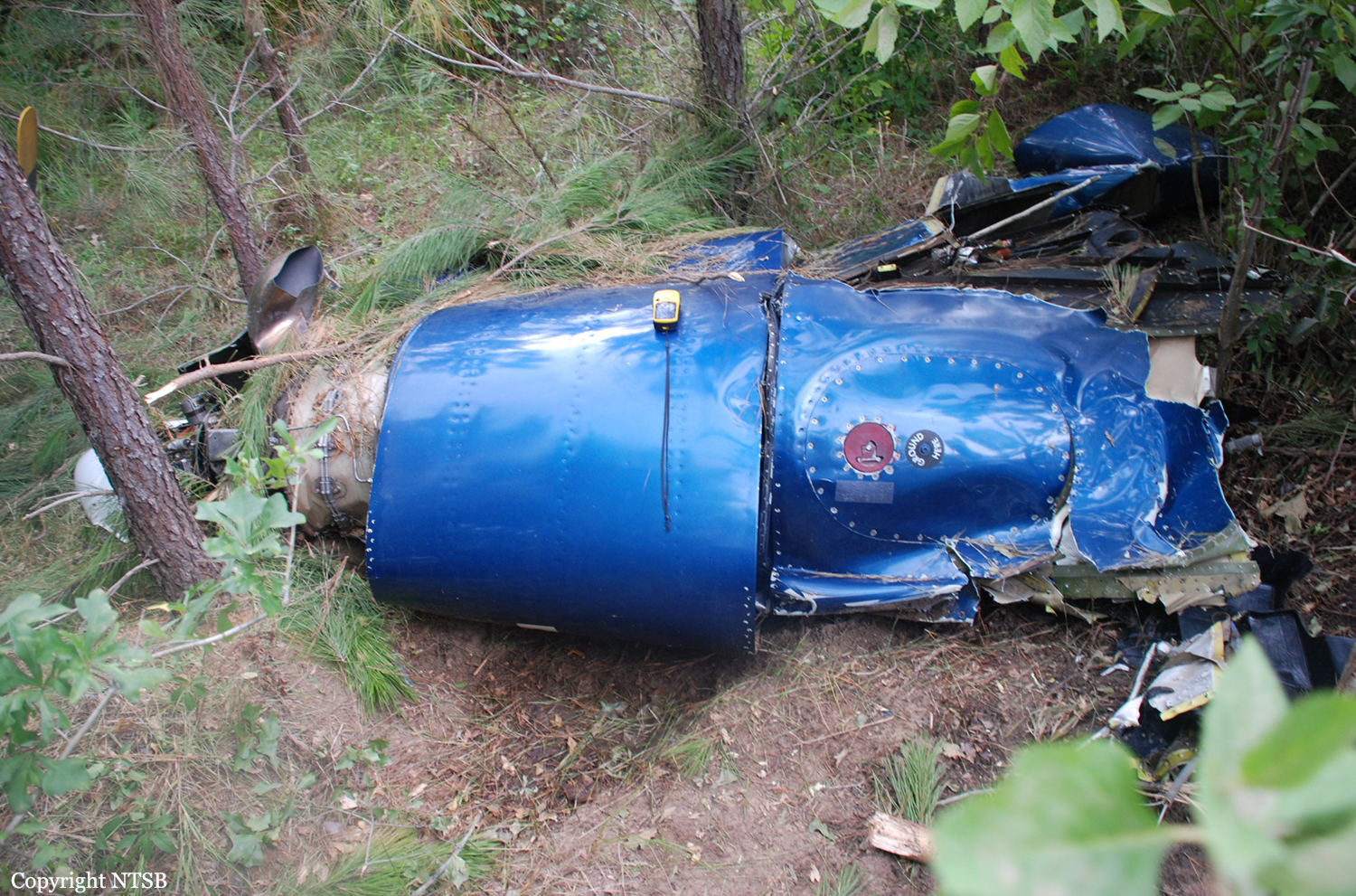
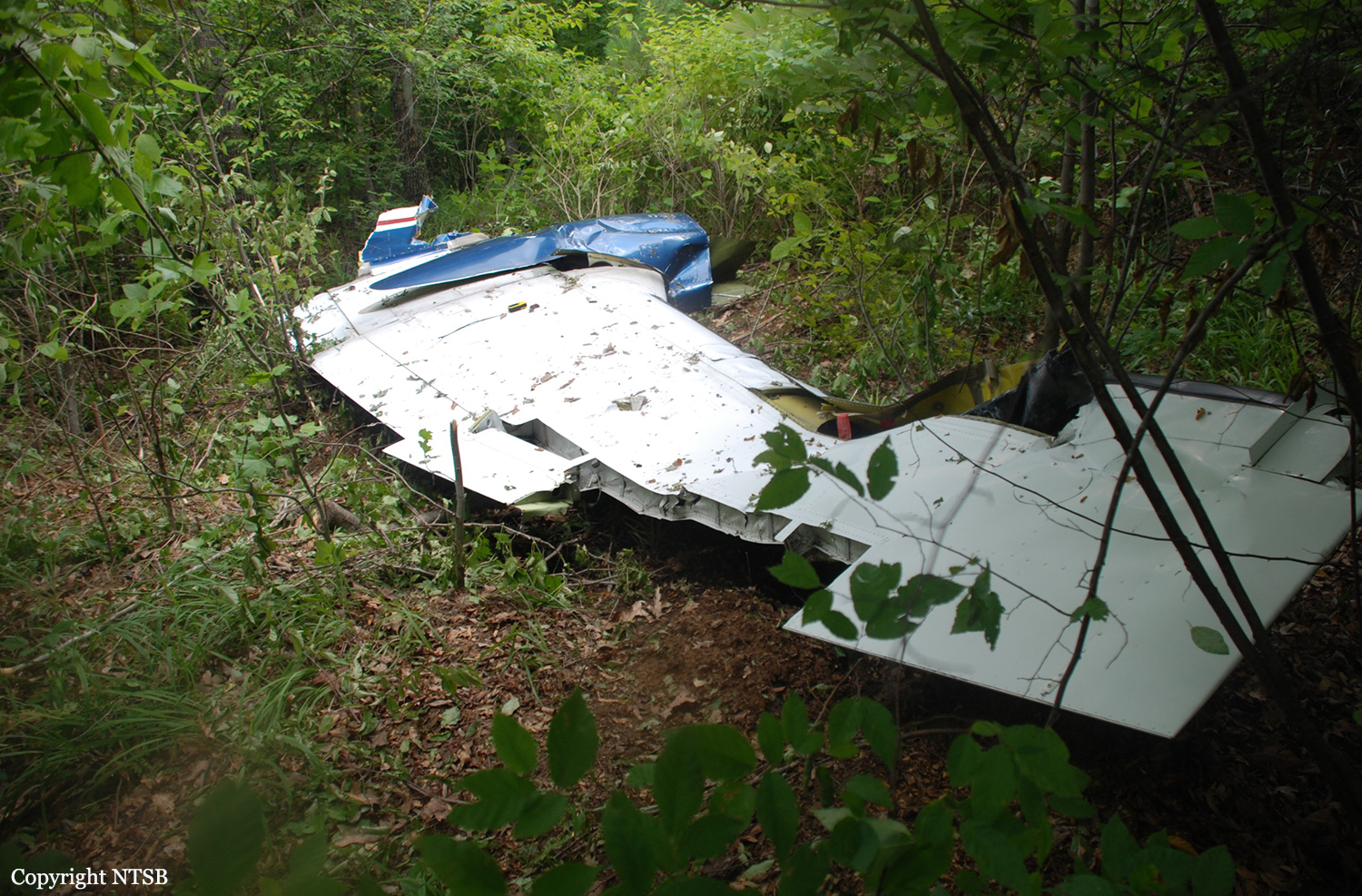
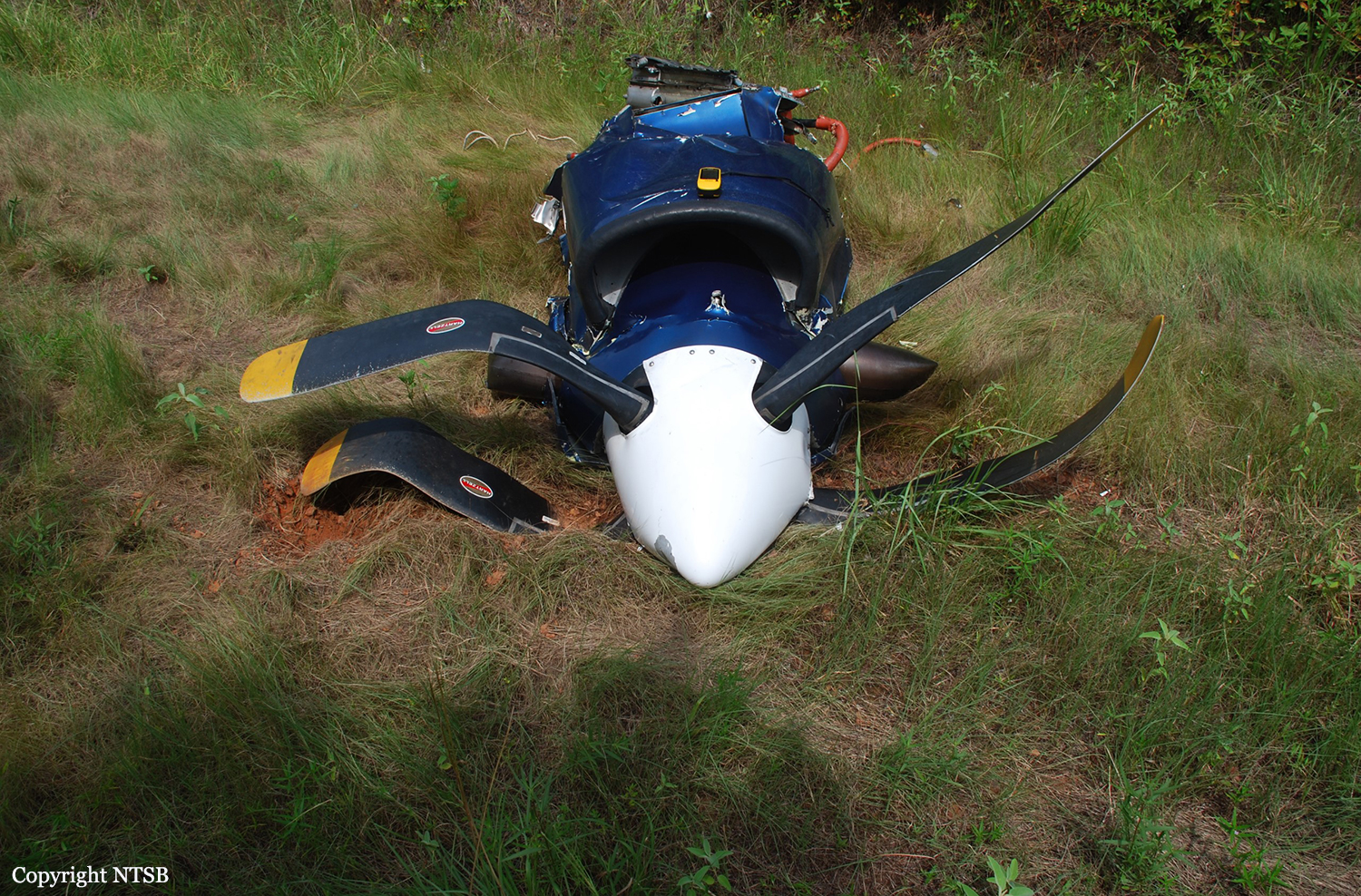
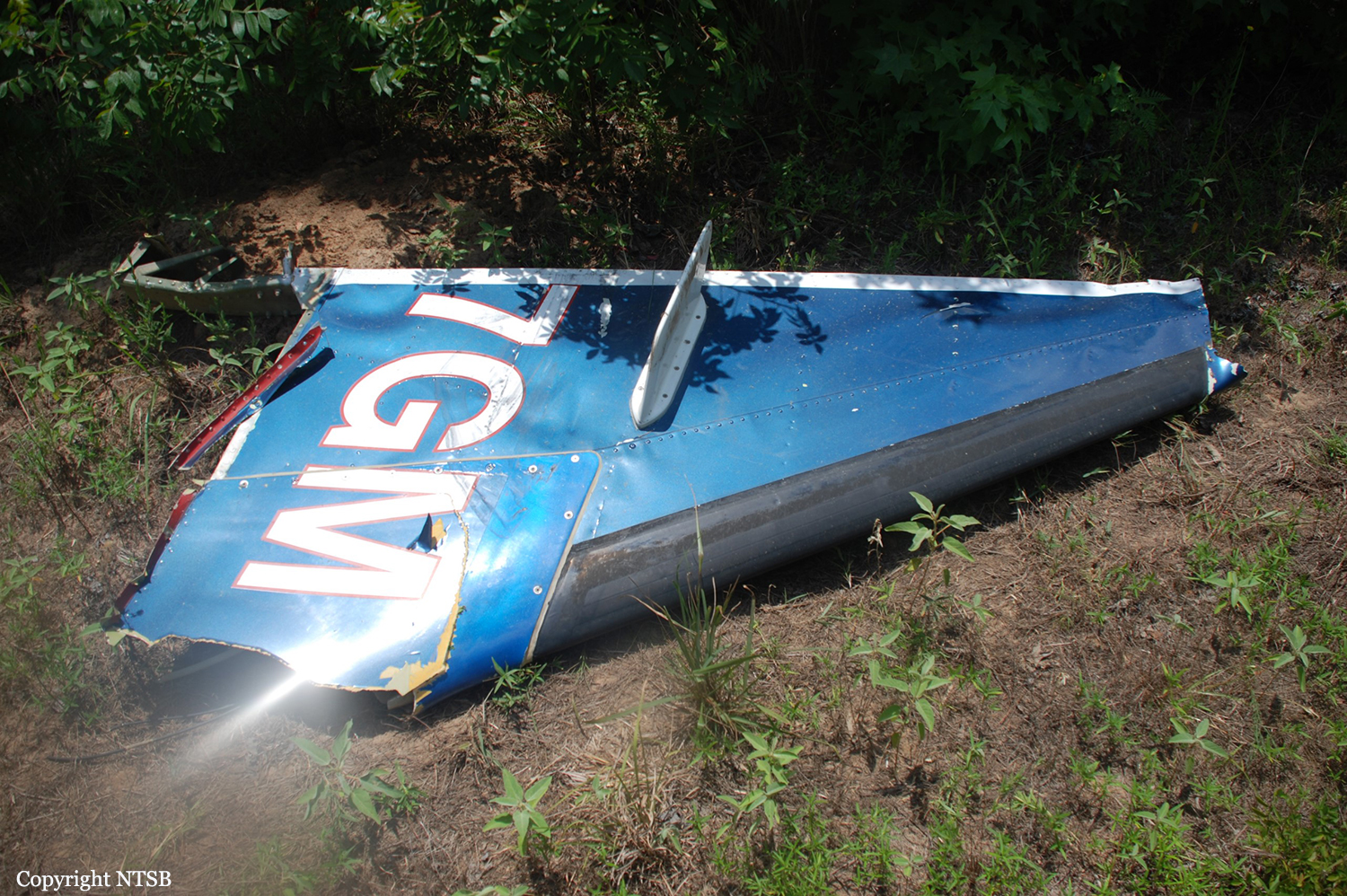
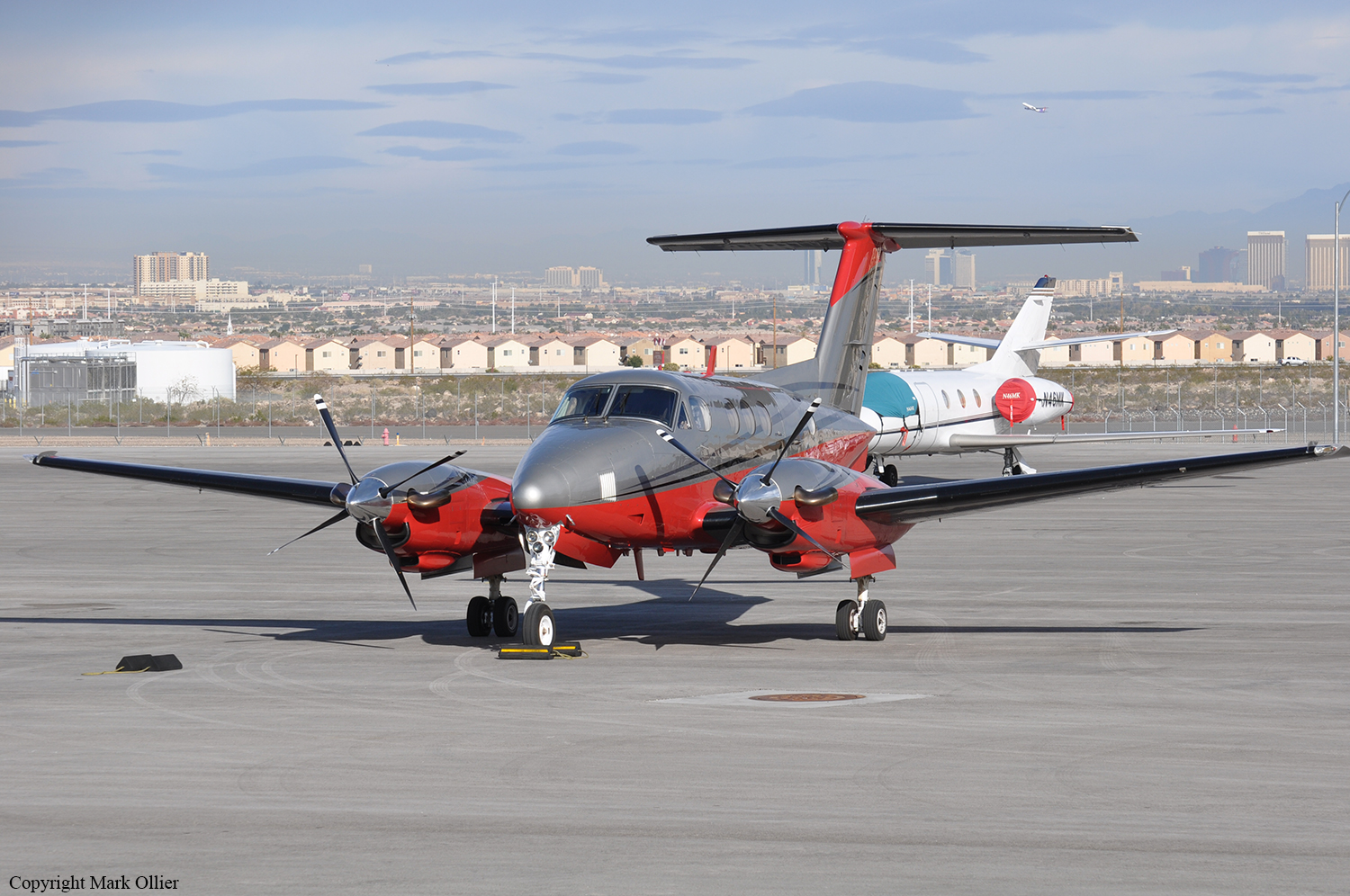
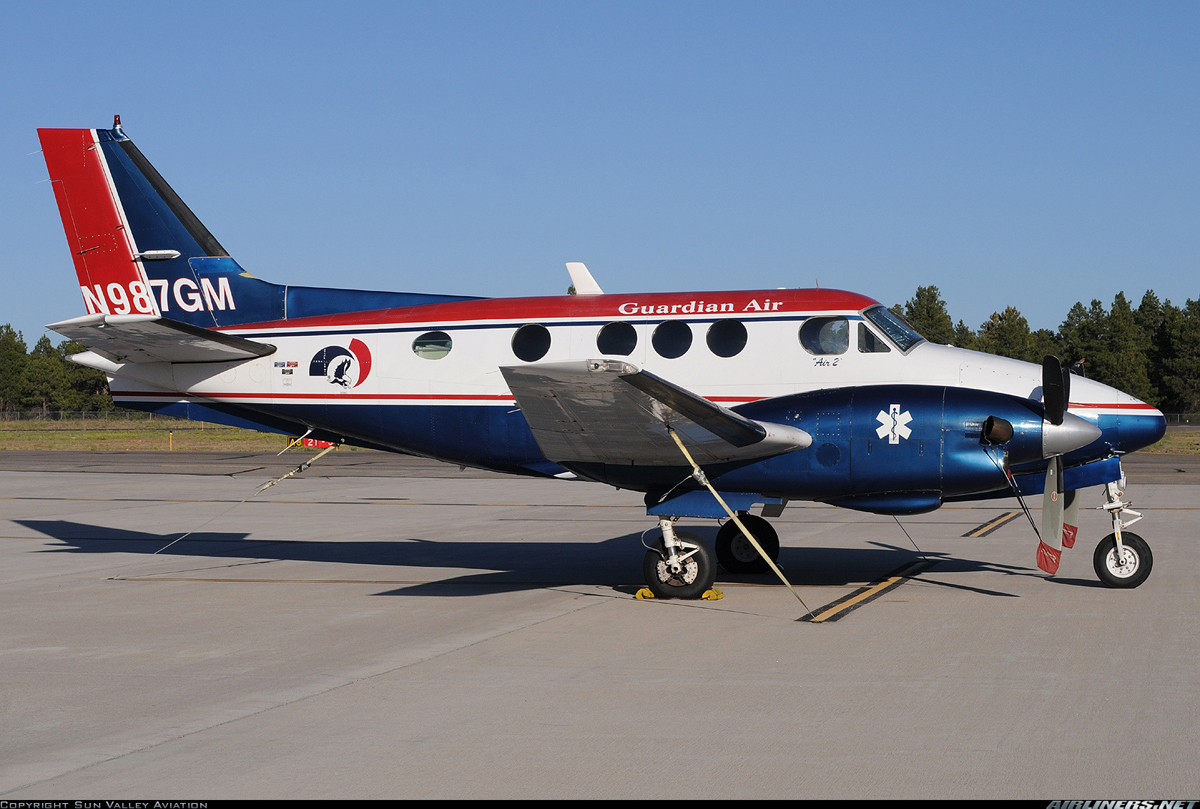
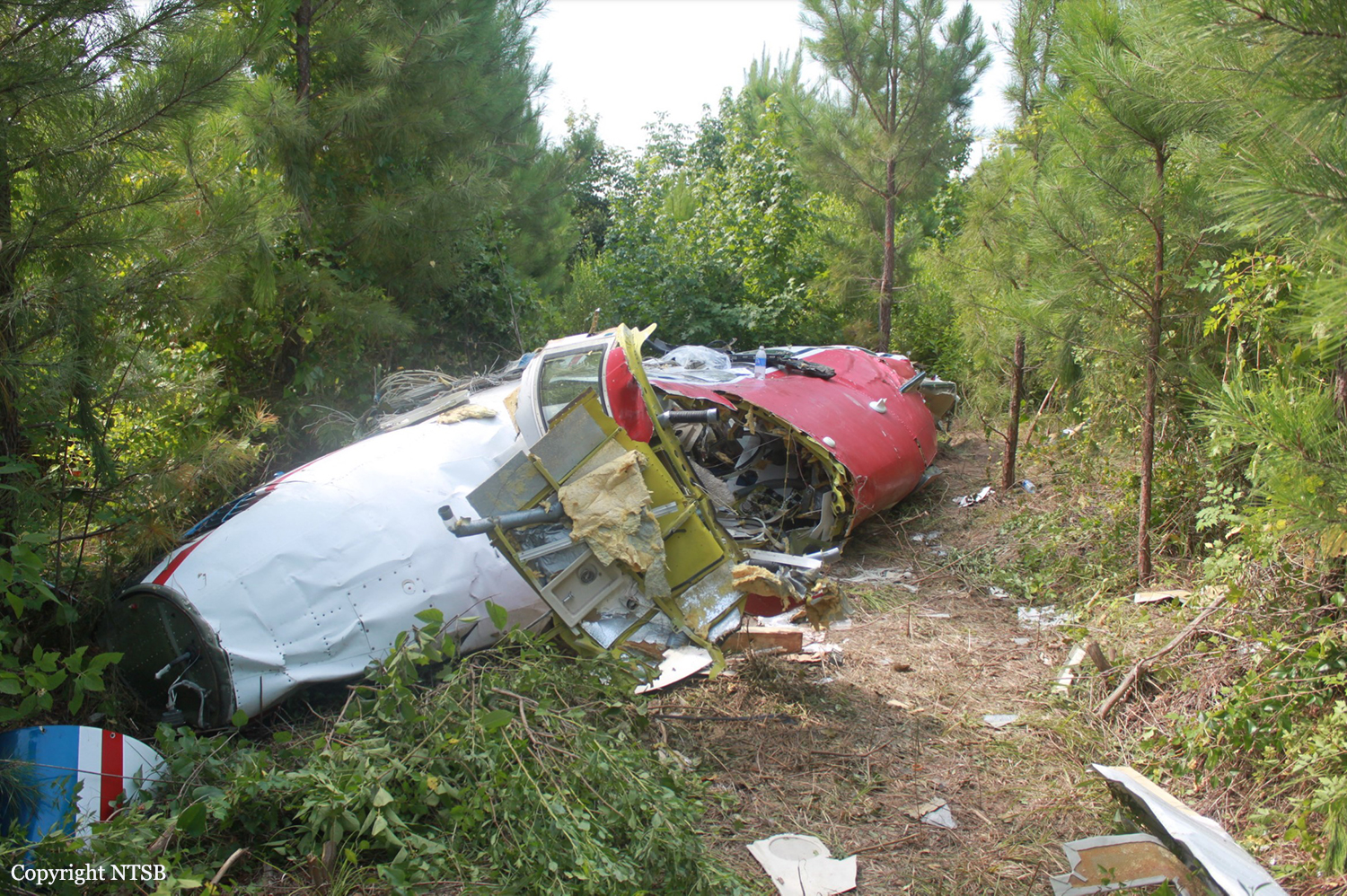
Crash of a Beechcraft E90 King Air in Karnack: 1 killed

Date & Time: Jul 7, 2012 at 0404 LT
Type of aircraft:
Operator:
Registration:
N987GM
Flight Phase:
Flight Type:
Survivors:
No
Schedule:
DeKalb - Brownsville
MSN:
LW-65
YOM:
1973
Location:
Crew on board:
1
Crew fatalities:
Pax on board:
0
Pax fatalities:
Other fatalities:
Total fatalities:
1
Captain / Total flying hours:
5300
Aircraft flight hours:
15082
Circumstances:
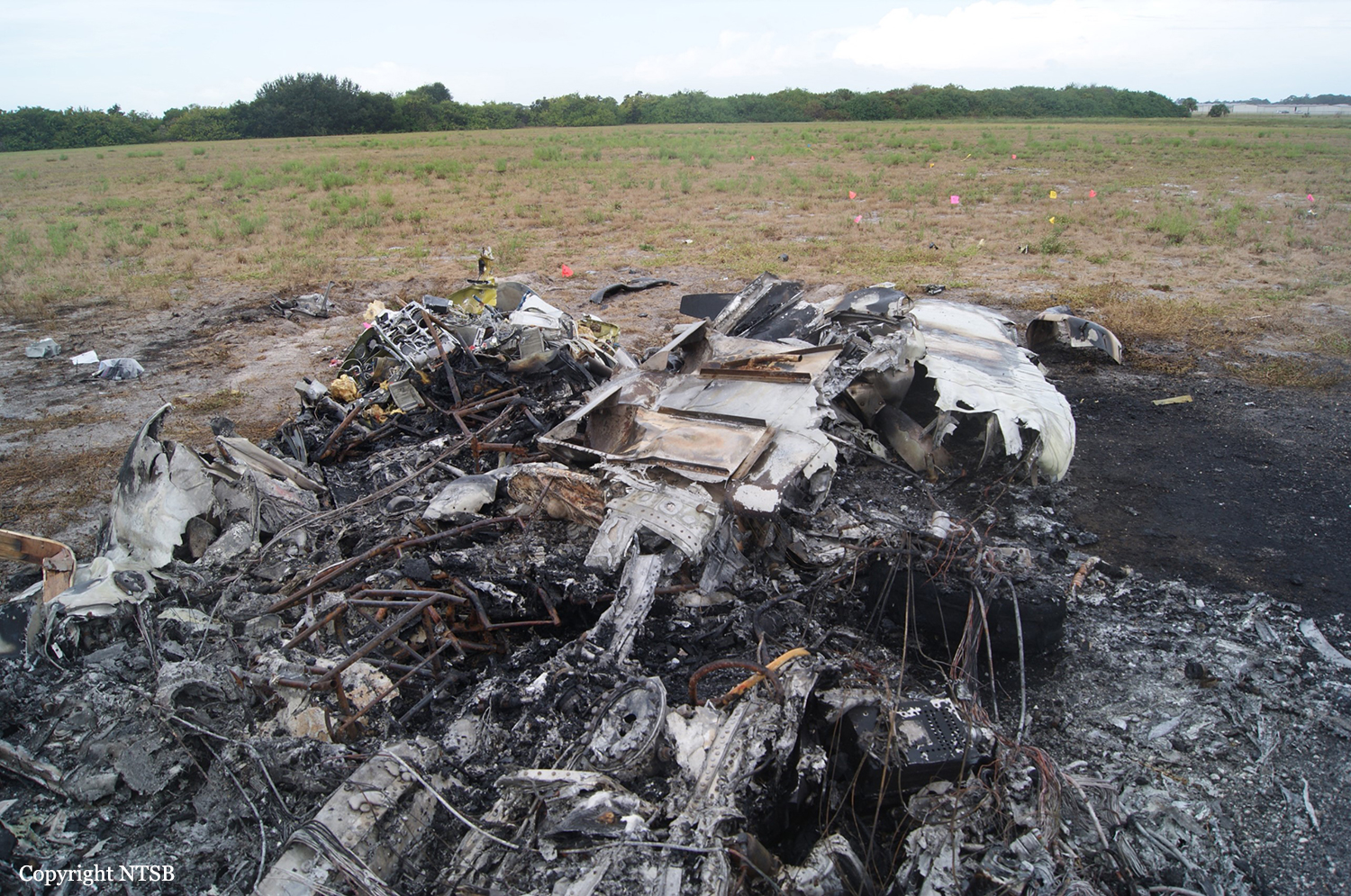
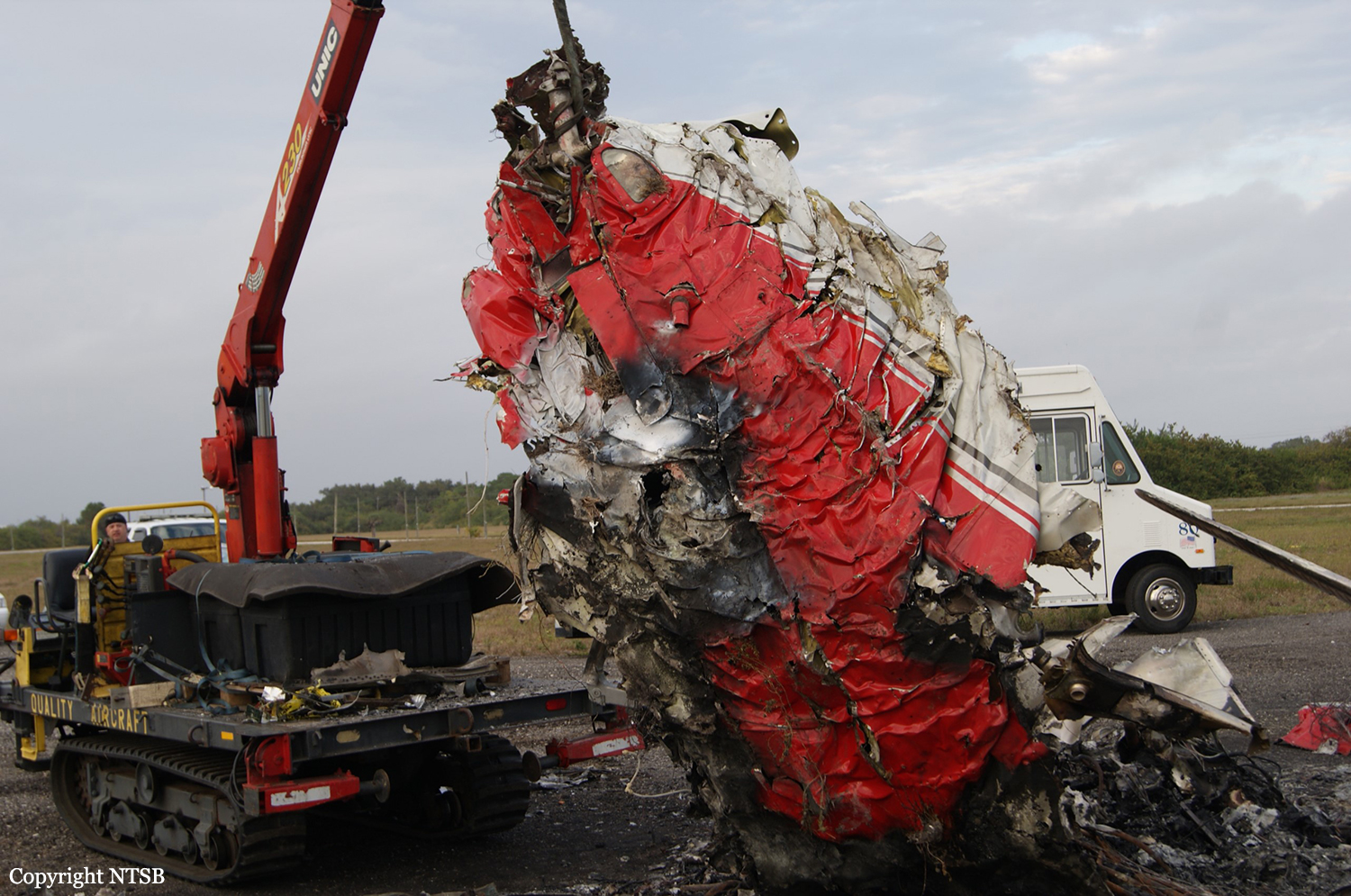
Before the flight, the pilot did not obtain a weather briefing and departed without approval from company personnel. The airplane departed the airport about 0230 and climbed to 14,500 feet mean sea level. The pilot obtained visual flight rules (VFR) flight following services from air traffic control (ATC) personnel during the flight. While the airplane was en route, ATC personnel advised the pilot that an area of moderate precipitation was located about 15 miles ahead along the airplane’s flight path. The pilot acknowledged the transmission and was then directed to contact another controller. About 3 minutes later, the new controller advised the pilot of an area of moderate to extreme precipitation about 2 miles ahead of the airplane. The pilot responded that he could see the weather and asked the controller for a recommendation for a reroute. The controller indicated he didn’t have a recommendation, but finished by saying a turn to the west (a right turn) away from the weather would probably be better. The pilot responded that he would make a right turn. There was no further radio contact with the pilot. Flight track data indicated the airplane was in a right turn when radar contact was lost. A review of the radar data, available weather information, and airplane wreckage indicated the airplane flew through a heavy to extreme weather radar echo containing a thunderstorm and subsequently broke up in flight. Postaccident examination revealed no mechanical malfunctions or anomalies with the airframe and engines that would have precluded normal operation. During the VFR flight, the pilot was responsible for remaining in VFR conditions and staying clear of clouds. However, Federal Aviation Administration directives instruct ATC personnel to issue pertinent weather information to pilots, provide guidance to pilots to avoid weather (when requested), and plan ahead and be prepared to suggest alternate routes or altitudes when there are areas of significant weather. The weather advisories and warnings issued to the pilot by ATC were not in compliance with these directives. The delay in providing information to the pilot about the heavy and extreme weather made avoiding the thunderstorm more difficult and contributed to the accident.
Probable cause:
The pilot's inadvertent flight into thunderstorm activity, which resulted in the loss of airplane control and the subsequent exceedance of the airplane’s design limits and in-flight breakup. Contributing to the accident was the failure of air traffic control personnel to use available radar information to provide the pilot with a timely warning that he was about to encounter extreme precipitation and weather along his route of flight or to provide alternative routing to the pilot.
Final Report:
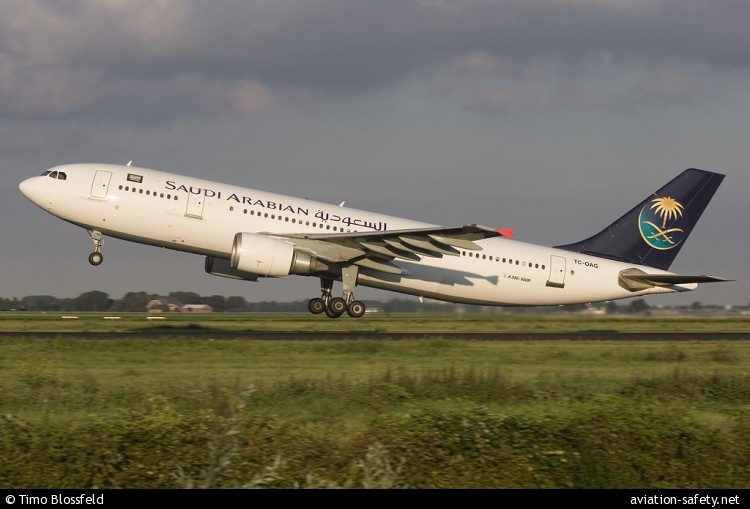
Crash of an Airbus A300B4-605R in Jeddah

Date & Time: May 1, 2012 at 1449 LT
Type of aircraft:
Operator:
Registration:
TC-OAG
Flight Type:
Survivors:
Yes
Schedule:
Madinah - Jeddah
MSN:
747
YOM:
1994
Flight number:
SV2865
Country:
Region:
Crew on board:
10
Crew fatalities:
Pax on board:
0
Pax fatalities:
Other fatalities:
Total fatalities:
0
Captain / Total flying hours:
9200
Copilot / Total flying hours:
15957
Aircraft flight hours:
54832
Aircraft flight cycles:
18308
Circumstances:
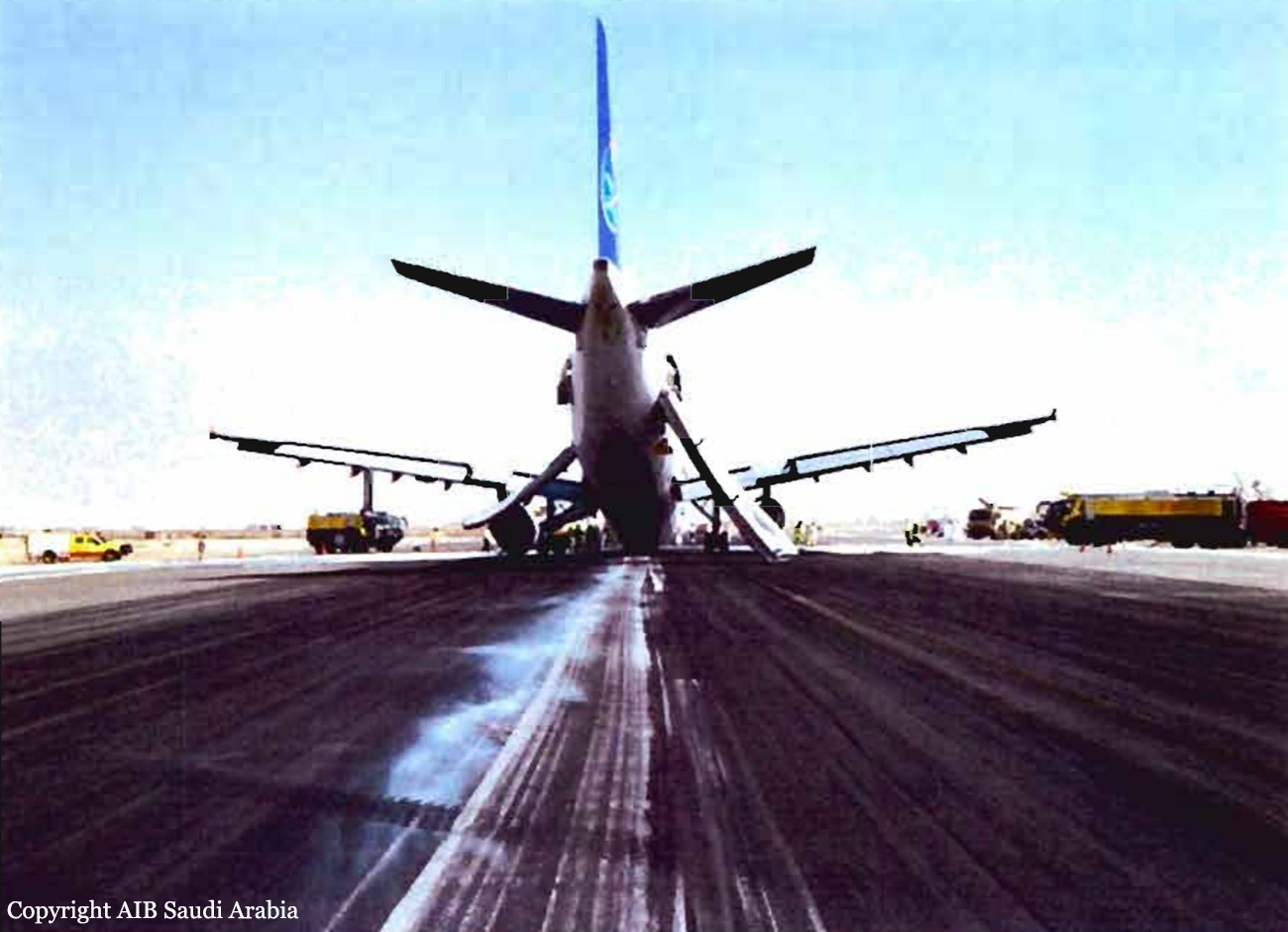
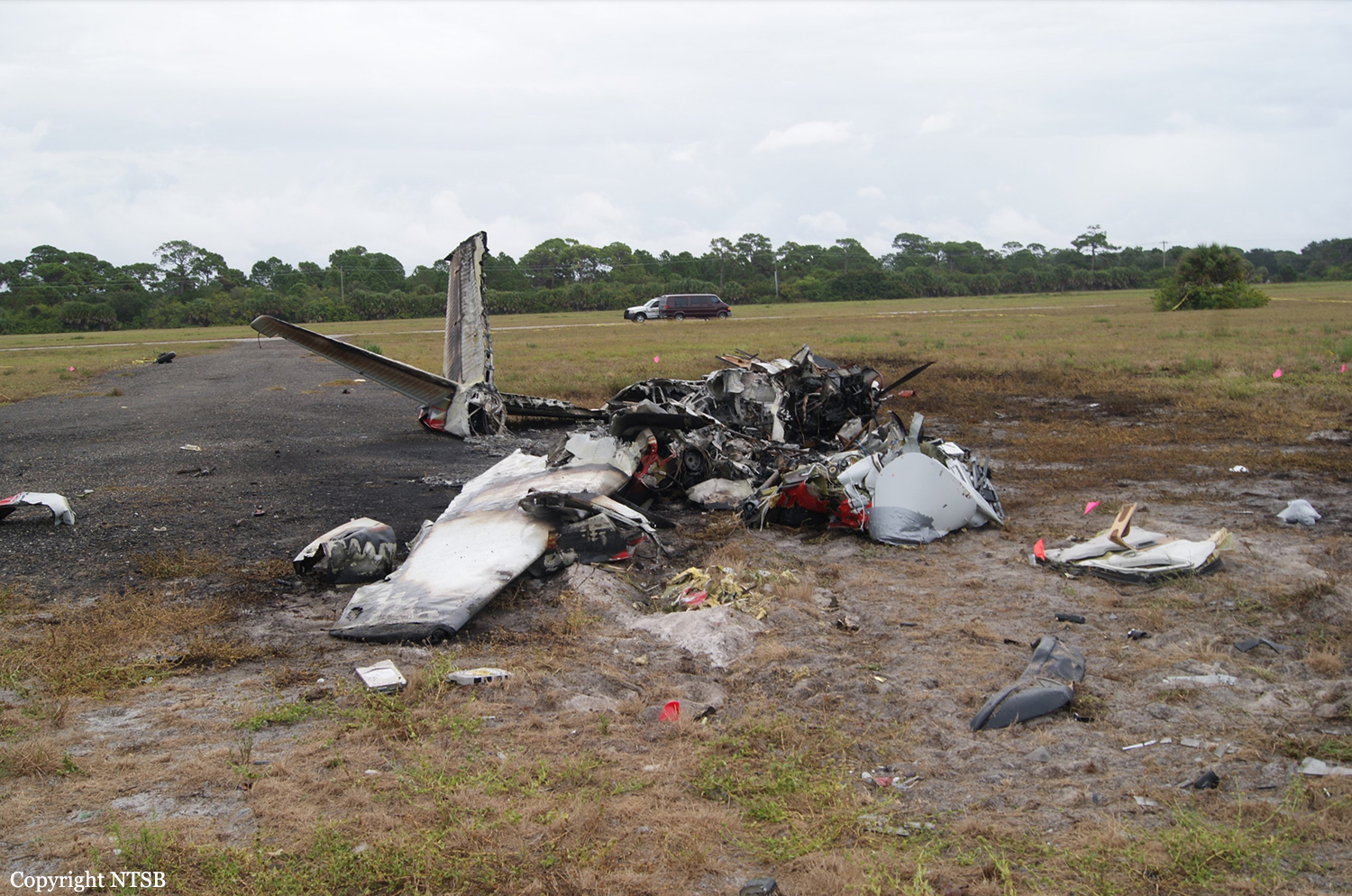
On 1 May 2012, aircraft TC-OAG, an Airbus A300-605R was performing a commercial flight for Saudi Arabian Airlines (SVA) as SVA2865. SVA 2865 departed from Prince Mohammed Bin Abdulaziz International Airport (PMAI) Madinah at 08h50 en-route to the King Abdulaziz International Airport (KAIA) Jeddah, Kingdom of Saudi Arabia. SVA 2865 was on a positioning flight with 10 crew members and no passengers. No discrepancies were noted on this aircraft prior to departure from Madinah. The visibility at Jeddah was good with a few clouds present. During the initial ILS approach to runway 16 Right (16R), while at 8 nautical miles (nm) and 2600 feet (ft), the landing gear handle was lowered. Both main landing gear extended and locked down and, the nose gear doors opened but the nose landing gear did not lower. The Captain who was then the Pilot Monitoring (PM) took over the controls and carried out a missed approach. The First Officer (FO) became the Pilot Monitoring (PM). SVA 2865 was then given an area to the northeast of Jeddah to carry out attempts at lowering the nose gear. The flight crew attempted to manually free fall the nose landing gear at least ten (10) times. The nose landing gear would not lower into the locked position, but the nose gear doors remained open during all those attempts. As a precautionary measure, SVA 2865 performed a fly-by of runway 16R at 500 ft. The air traffic controller confirmed that the nose landing gear (NLG) was not down. SVA 2865 was vectored over the Red Sea to lower the fuel load, thus reducing the landing weight. During this period, the Fire & Rescue Services (FRS) at Jeddah foamed a portion of runway 16 Left (16L) between taxiway Kilo 5 (K5) and K2. The majority of the FRS vehicles were standing by at the junction of taxiways K4 and K3. SVA 2865 was vectored for an instrument approach for Runway 16L. The Auto Pilot and the Auto Throttle Systems were OFF. The surface winds were from 220° at 12 knots (kt), gusting to 19 kt and the temperature was + 37 Celsius (°C). The flight crew used the "Landing with Nose Landing Gear Abnormal" checklist ensuring the aircraft was properly prepared and configured for the approach, the before landing, the flare and the touchdown sequences, including when the aircraft stopped and the necessary procedures to secure the aircraft before evacuation. The aircraft landed on its main landing gear 4000 ft past the threshold of runway 16L. The nose of the aircraft was slowly lowered to the runway with the nose landing gear doors touching the runway within the foamed area 4500 ft from the end of runway 16L. The front of the fuselage then touched the runway within the last portion of foam, 3500 ft from the end of runway 16L. The nose area of the aircraft slid on the runway, where sparks were present until the aircraft came to a full stop 1500 ft prior to the end of runway 16L. As soon as the aircraft passed by the position of the FRS vehicles, the FRS vehicles gave chase to the aircraft and reached it within 30 seconds after it came to a full stop. Although there was no post-crash fire, the FRS personnel applied water and foam to the nose area of the aircraft. All of the crew members were evacuated from the aircraft by ladder provided by the FRS. The crew was taken to the airport clinic as a precautionary measure. All were released the same day. The accident occurred at 14h49 on runway 16L at the KAIA - Jeddah, Kingdom of Saudi Arabia.
Probable cause:
Cause related findings:
- The NLG up-lock contained a spring, Part Number GA71102 that was broken as a result of fatigue initiated at the third coil of the spring.
- The spring had been broken for a prolonged period of time, as noted by the spring linear wear marks on the outside area of the spring coils.
- Damage observed on the NLG up-lock resulted from hard contact with the broken spring during normal NLG operation.
- The fracture process of the spring was initiated at the third coil level. At least 6000 cycles of fatigue (number of striations) have been estimated by fatigue striation measurements. The crack on the spring started on the internal surface of the spring which was not shot peened.
- The normal and free fall extensions of the NLG failed due to a mechanical blockage created by the broken spring jammed against the cam.
Final Report:
Crash of a Cessna 208B Grand Caravan in Manaus: 1 killed

Date & Time: Feb 28, 2012 at 0715 LT
Type of aircraft:
Operator:
Registration:
PT-PTB
Flight Phase:
Flight Type:
Survivors:
No
Schedule:
Manaus - Manaus
MSN:
208B-0766
YOM:
1999
Country:
Crew on board:
1
Crew fatalities:
Pax on board:
0
Pax fatalities:
Other fatalities:
Total fatalities:
1
Captain / Total flying hours:
12000
Captain / Total hours on type:
158.00
Circumstances:
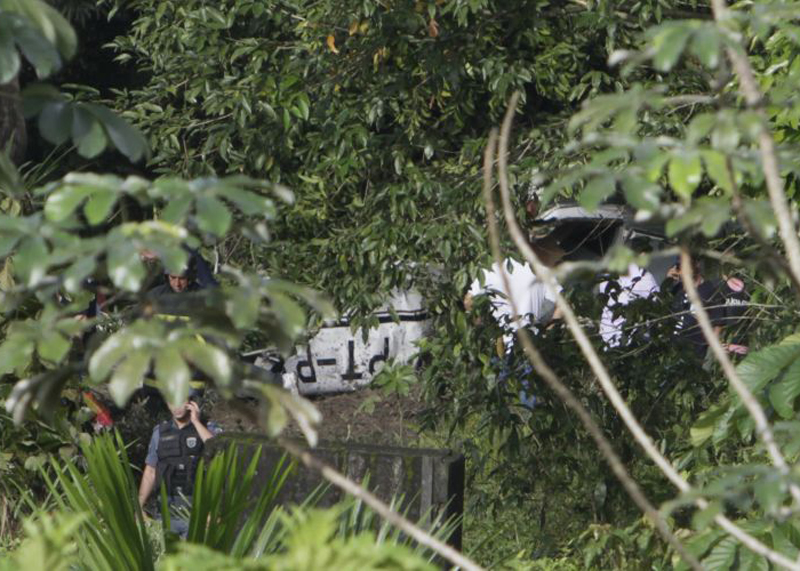
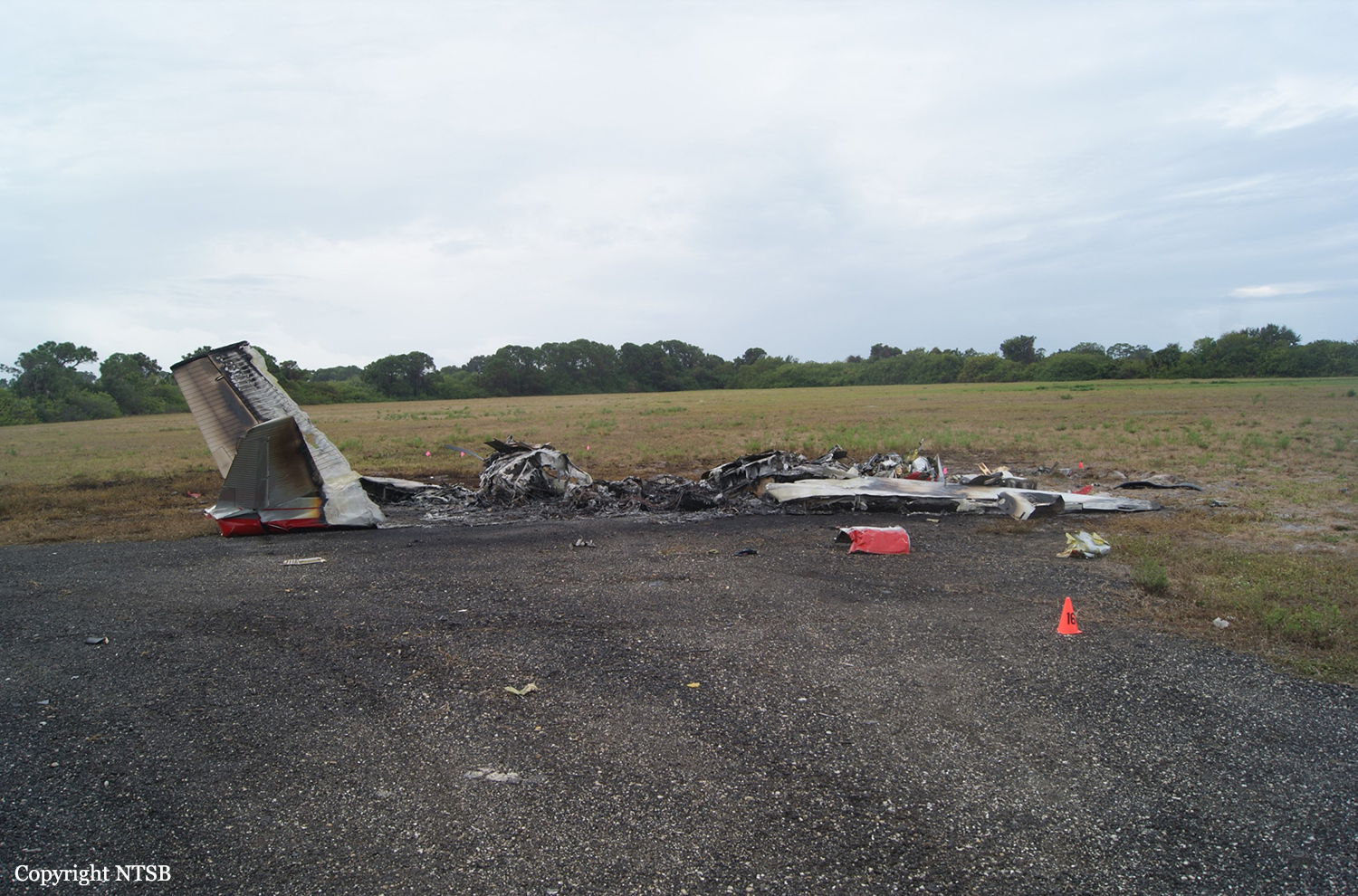
The pilot was performing a positioning flight from Manaus-Aeroclube de Flores Airport to the international Airport of Manaus-Eduardo Gomes. Shortly after takeoff from runway 11 which is 860 metres long, the single engine aircraft failed to gain sufficient altitude. It collided with an electric pole, stalled and crashed in a wooded area. The pilot, sole occupant, was killed.
Probable cause:
It was determined that the loss of control results from the fact that the flight controls were locked. Investigations show that the pilot failed to prepare the flight properly, that he did not follow the pre takeoff checklist and that he rushed the departure. It was reported that the operator was using since two years a control lock that had not been approved by the Civil Aviation Authority, and that no procedure had been put in place place concerning this lock system.
Final Report:
Crash of a Learjet 55 Longhorn in Brooksville

Date & Time: Feb 13, 2012 at 2200 LT
Type of aircraft:
Operator:
Registration:
N75LJ
Flight Phase:
Flight Type:
Survivors:
Yes
Schedule:
Brooksville - Houston
MSN:
55-065
YOM:
1982
Crew on board:
3
Crew fatalities:
Pax on board:
0
Pax fatalities:
Other fatalities:
Total fatalities:
0
Circumstances:
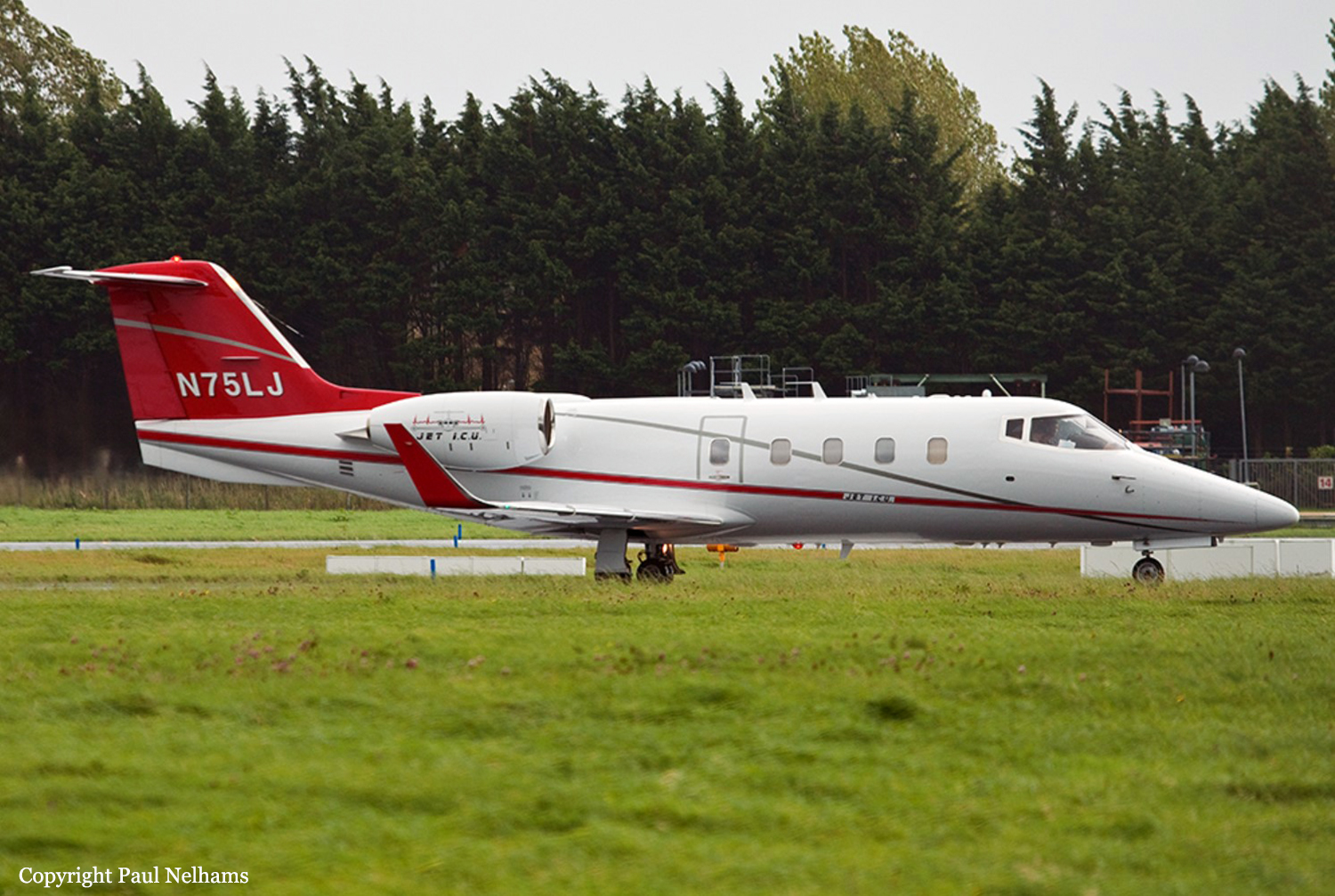
During the takeoff roll from runway 27 at Brooksville-Hernando County Airport, control was lost. The aircraft veered off runway and came to rest. All three crew members escaped uninjured while the aircraft was damaged beyond repair.
Probable cause:
NTSB did not proceed to any investigation regarding this incident.

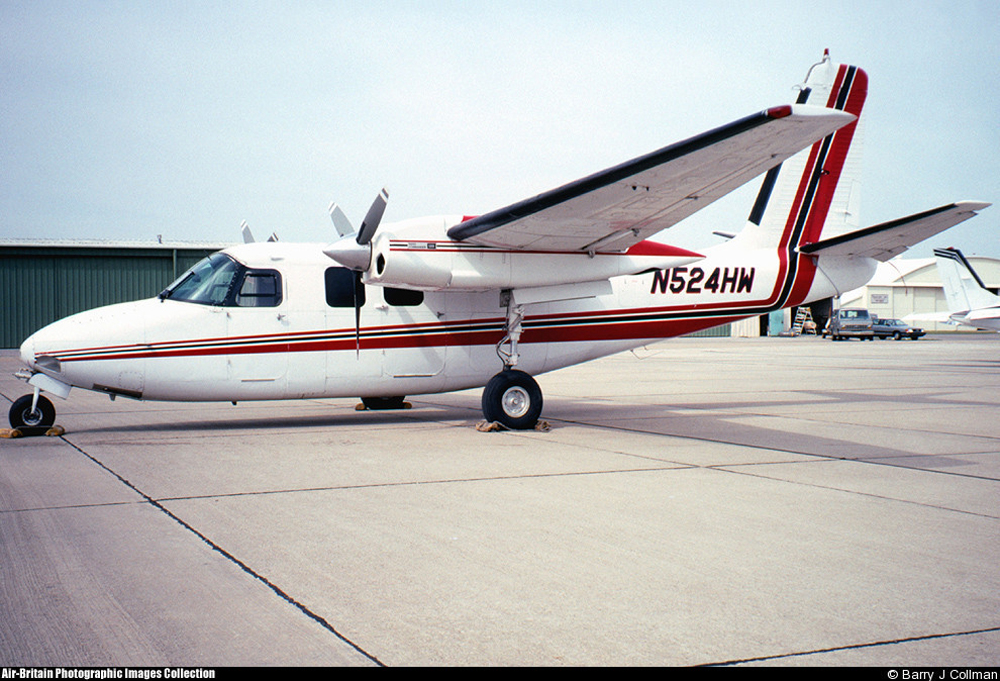
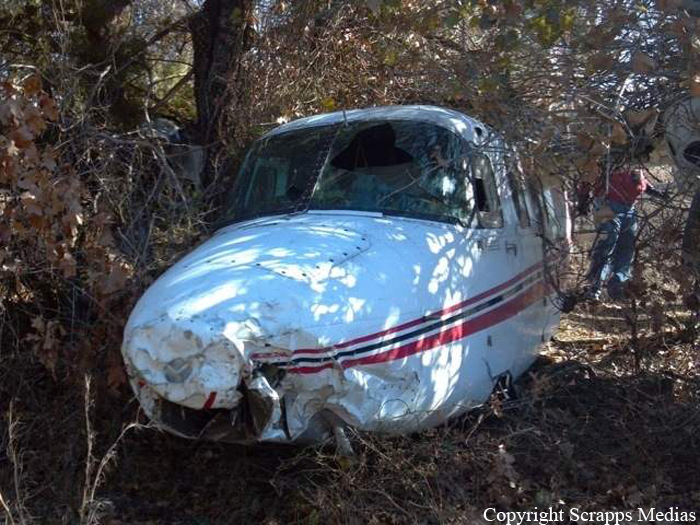
Crash of a Rockwell Aero Commander 500B in Bartlesville

Date & Time: Jan 13, 2012 at 1930 LT
Operator:
Registration:
N524HW
Flight Type:
Survivors:
Yes
Schedule:
Kansas City - Cushing
MSN:
500-1533-191
YOM:
1965
Flight number:
CTL327
Crew on board:
1
Crew fatalities:
Pax on board:
0
Pax fatalities:
Other fatalities:
Total fatalities:
0
Captain / Total flying hours:
8487
Captain / Total hours on type:
3477.00
Circumstances:
The pilot was en route on a positioning flight when the airplane’s right engine surged and experienced a partial loss of power. He adjusted the power and fuel mixture controls; however, a few seconds later, the engine surged again. The pilot noted that the fuel flow gauge was below 90 pounds, so he turned the right fuel pump on. The pilot then felt a surge on the left engine, so he performed the same actions he as did for the right engine. He believed that he had some sort of fuel starvation problem. The pilot then turned to an alternate airport, at which time both engines lost total power. The airplane impacted trees and terrain about 1.5 miles from the airport. The left side fuel tank was breached during the accident; however, there was no indication of a fuel leak, and about a gallon of fuel was recovered from the airplane during the wreckage retrieval. The company’s route coordinator reported that prior to the accident flight, the pilot checked the fuel gauge and said the airplane had 120 gallons of fuel. A review of the airplane’s flight history revealed that, following the flight immediately before the accident flight, the airplane was left with approximately 50 gallons of fuel on board; there was no record of the airplane having been refueled after that flight. Another company pilot reported the airplane fuel gauge had a unique trait in that, after the airplane’s electrical power has been turned off, the gauge will rise 40 to 60 gallons before returning to zero. When the master switch was turned to the battery position during an examination of another airplane belonging to the operator, the fuel gauge indicated approximately 100 gallons of fuel; however, when the master switch was turned to the off position, the fuel quantity on the gauge rose to 120 gallons, before dropping off scale, past empty. Additionally, the fuel cap was removed and fuel could be seen in the tank, but there was no way to visually verify the quantity of fuel in the tank.
Probable cause:
The total loss of engine power due to fuel exhaustion and the pilot’s inadequate preflight inspection, which did not correctly identify the airplane’s fuel quantity before departure.
Final Report:
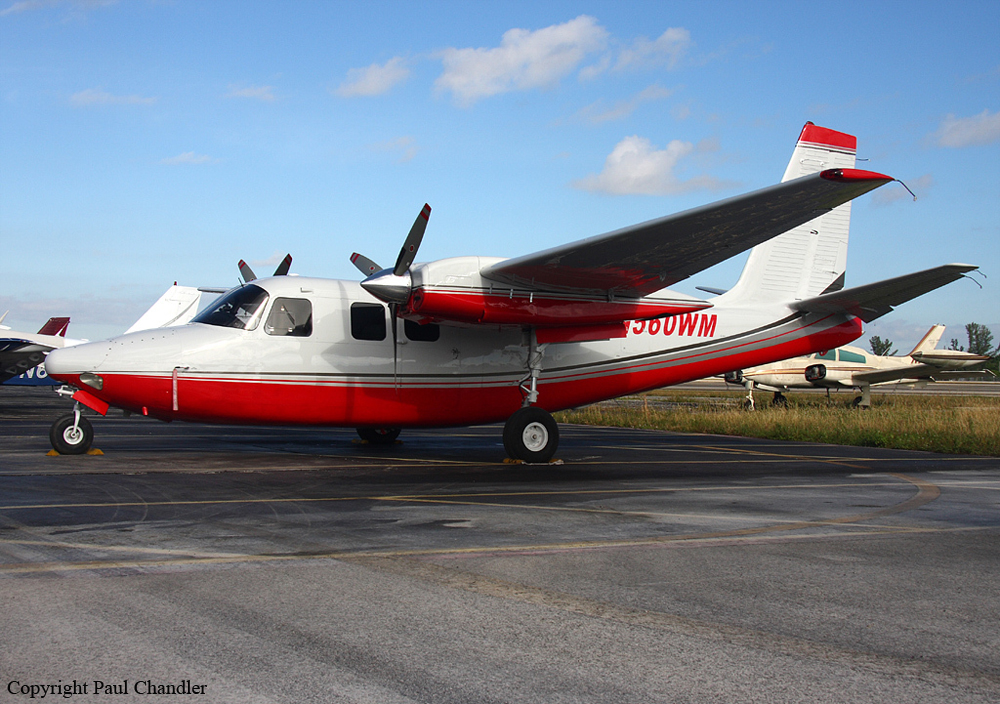
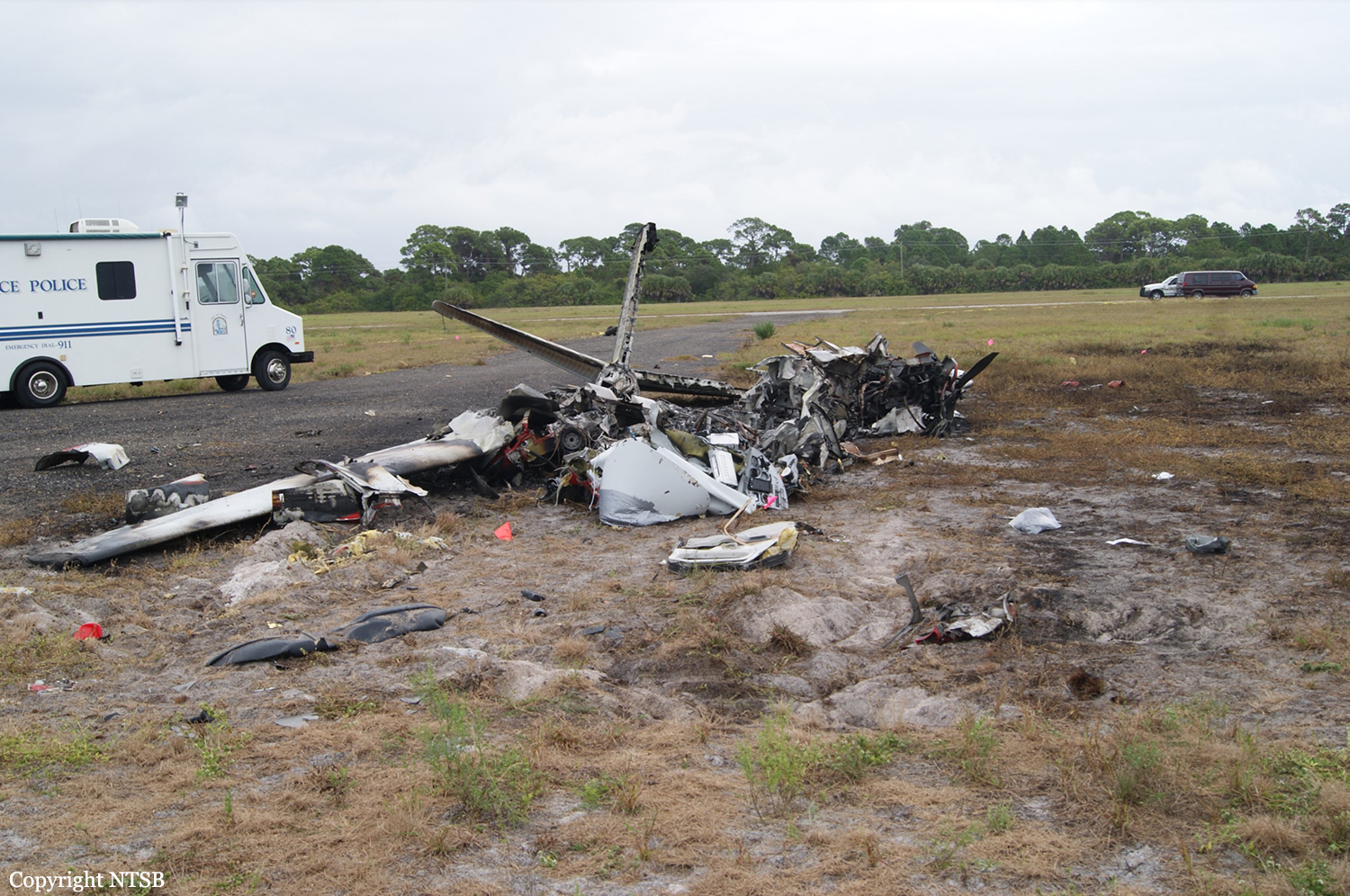
Crash of a Rockwell Aero Commander 560F in Venice: 1 killed

Date & Time: Dec 26, 2011 at 1406 LT
Operator:
Registration:
N560WM
Flight Type:
Survivors:
No
Schedule:
Venice - LaFayette
MSN:
560-1305-58
YOM:
1964
Location:
Crew on board:
1
Crew fatalities:
Pax on board:
0
Pax fatalities:
Other fatalities:
Total fatalities:
1
Captain / Total flying hours:
6000
Captain / Total hours on type:
1500.00
Aircraft flight hours:
5826
Circumstances:
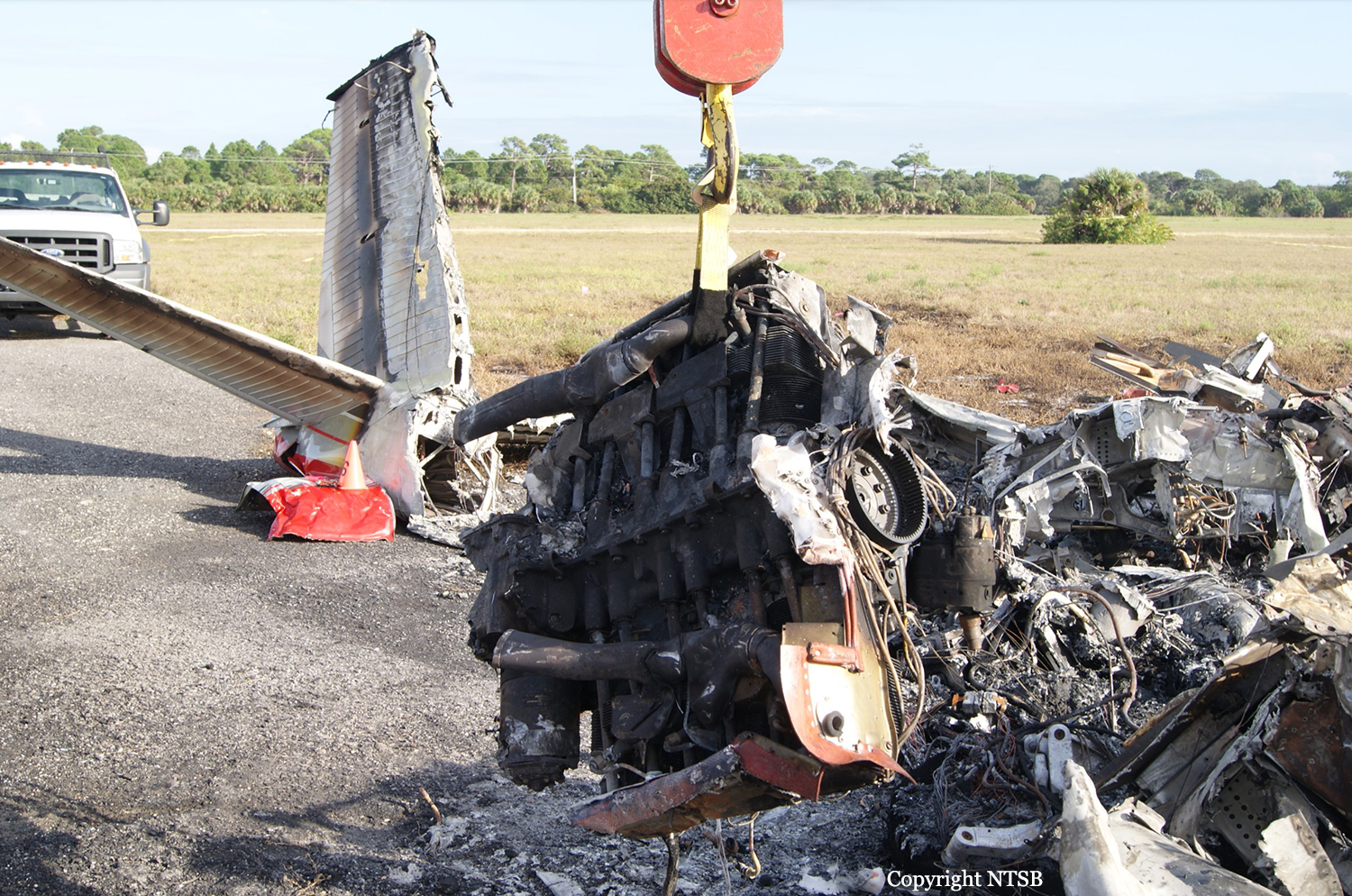
The airplane departed and was climbing to an assigned altitude when the pilot informed an air traffic controller of a loss of engine power on the left engine. The pilot received radar vectors back to the departure airport and reported the airport in sight. There was no further communication with the controller. Review of radar data revealed that the airplane was about 825 feet from and 200 feet above the landing runway threshold. Seventeen seconds later, the airplane was at 100 feet above ground level and left of the intended landing runway. The last radar return was 5 seconds later, and the airplane was at 200 feet above ground level. A witness observed the airplane in the vicinity of landing runway. The airplane pitched straight up, stalled, spun to the left three times before it collided with the ground and caught fire. Postcrash examination of the airframe and flight controls revealed no anomalies. The left engine was disassembled and all connecting rods were intact except for the No.2 connecting rod. Metallugical examination of the connecting rod revealed that the bearing failed, most likely due to a progressive delamination of the bearing. Review of the airplane flight manual revealed a minimum of 300 feet of altitude is required to recover from power-off stalls with 7500 pounds at both forward and aft center of gravity. The stall speed with the landing gear and flaps up with 0 degree angle of bank is 83 miles per hour or 72 knots. The stall speed with the landing gear extended and the flaps down is 73 miles per hours or 63 knots.
Probable cause:
The pilot’s failure to maintain adequate airspeed during a single-engine approach, which resulted in an aerodynamic stall. Contributing to the accident was the total loss of power in the left engine due to a failed No. 2 connecting rod bearing.
Final Report:
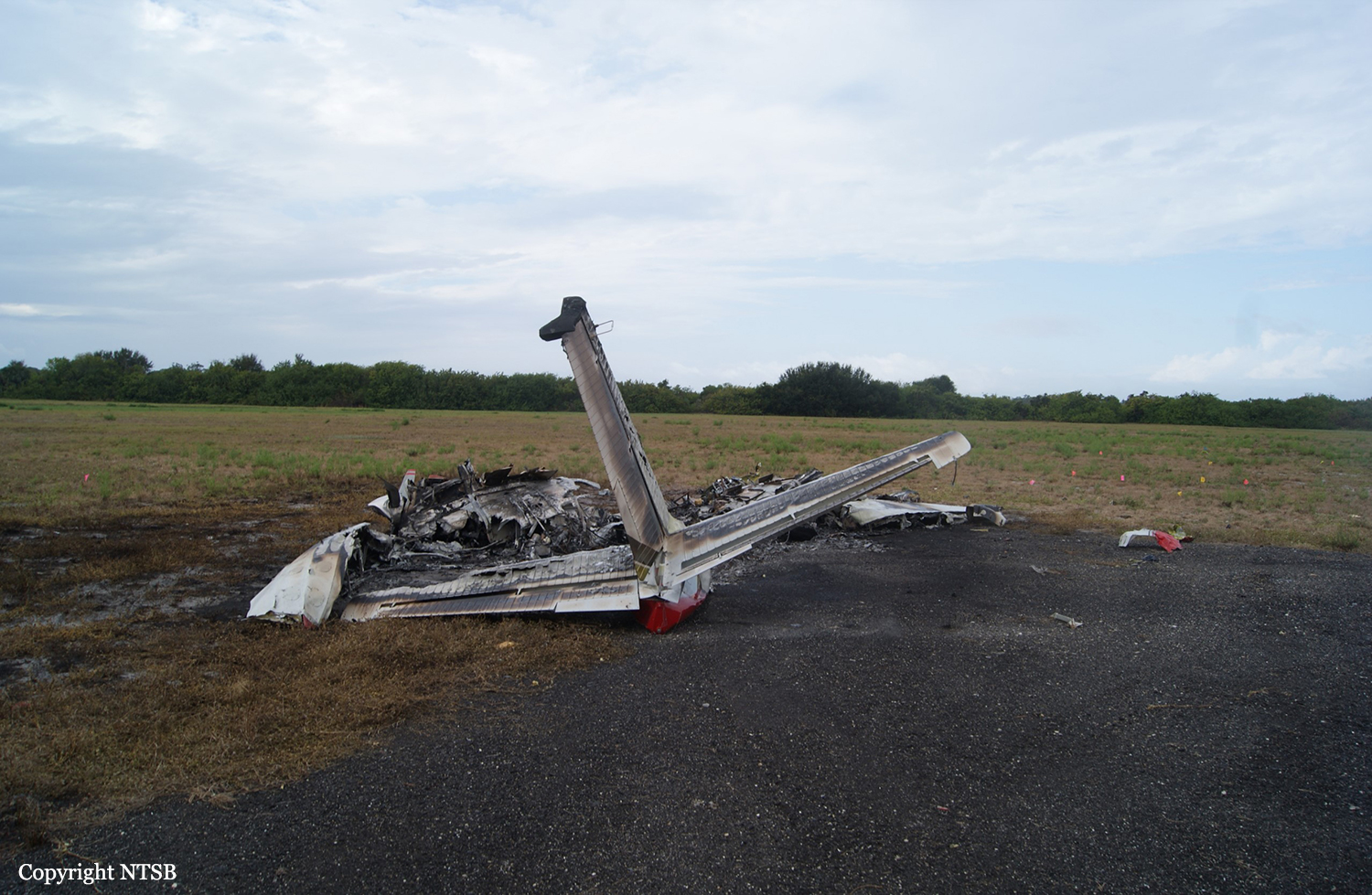
Crash of a Beechcraft F90 King Air in Midland

Date & Time: Dec 2, 2011 at 0810 LT
Type of aircraft:
Registration:
N90QL
Flight Type:
Survivors:
Yes
Site:
Schedule:
Wharton - Midland
MSN:
LA-2
YOM:
1979
Location:
Crew on board:
1
Crew fatalities:
Pax on board:
0
Pax fatalities:
Other fatalities:
Total fatalities:
0
Captain / Total flying hours:
4600
Captain / Total hours on type:
25.00
Aircraft flight hours:
8253
Circumstances:
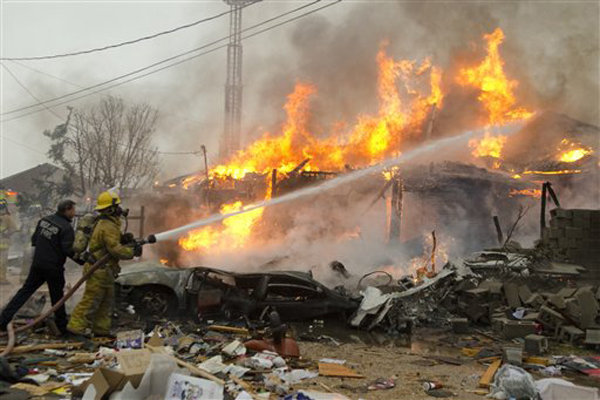
The aircraft collided with terrain while on an instrument approach to the Midland Airpark (MDD), near Midland, Texas. The commercial pilot, who was the sole occupant, sustained serious injuries. The airplane was registered to and operated by Quality Lease Air Services LLC., under the provisions of 14 Code of Federal Regulations Part 91 as a positioning flight. Instrument meteorological conditions prevailed and an instrument flight rules (IFR) flight plan had been filed for the cross-country flight. The flight originated from the Wharton Regional Airport (ARM), Wharton, Texas, about 0626. The pilot obtained a weather briefing for the flight to MDD. The briefing forecasted light freezing drizzle for the proposed time and route of flight. While on approach to MDD, the airplane was experiencing an accumulation of moderate to severe icing and the pilot stated that he had all the deicing equipment on. According to the pilot, the autopilot was flying the airplane to a navigational fix called JIBEM. He switched the autopilot to heading mode and flew to the final approach fix called WAVOK. He deployed the deice boots twice before approaching WAVOK. An Airport Traffic Control Tower (ATCT) controller informed the pilot, that according to radar, he appeared to be flying to JIBEM. The pilot responded that he was correcting back and there was something wrong with the GPS. The controller canceled the airplane's approach clearance and the controller issued the pilot a turning and climbing clearance to fly for another approach. The pilot stated that his copilot's window iced up at that point. The pilot was vectored for and was cleared for another approach attempt. The pilot said that his window was "halfway iced up." About two minutes after being cleared for the second approach, the controller advised the pilot that the airplane appeared to be "about a half mile south of the course." The pilot responded, "Yep ya uh I got it." The pilot was given heading and climb instructions in case of a missed approach and was subsequently cleared to change to an advisory frequency. The pilot responded with, "Good day." The pilot had configured the aircraft with approach flaps and extended the landing gear prior to reaching the final approach fix. The pilot stated the aircraft remained in this configuration and he did not retract the gear and flaps. The pilot stated that he descended to 3,300 feet and was just under the cloud deck where he was looking for the runway. The pilot's accident report, in part, said: Everything was flying smooth until I accelerated throttles from about halfway to about three quarters. At this point I lost roll control and the airplane rolled approximately 90 degrees to the left. I disengaged autopilot and began to turn the yoke to the right and holding steady. It was slow to respond and when I thought that I had it leveled off the airplane continued to roll approximately 90 degrees to the right. At this time I was turning the yoke back to the left and pulling back to level it off, but it continued to roll to the left again. I was turning the yoke to the right again as I continued to pull back and the airplane rolled level, and the stall warning horn came on seconds before impact on the ground. The pilot stated he maintained a target airspeed speed of 120 knots on approach and 100 knots while on final approach. He stated he was close to 80 knots when the aircraft was in the 90° right bank. Witnesses in the area observed the airplane flying. A witness stated that the airplane's wings were "rocking." Other witnesses indicated that the airplane banked to the left and then nosed down. The airplane impacted a residential house, approximately 1 mile from the approach end of runway 25, and a post crash fire ensued. The pilot was able to exit the airplane and there were no reported ground injuries.
Probable cause:
The pilot's failure to maintain the recommended airspeed for icing conditions and his subsequent loss of airplane control while flying the airplane under autopilot control in severe
icing conditions, contrary to the airplane's handbook. Contributing to the accident was the pilot's failure to divert from an area of severe icing. Also contributing to the accident was the lack of an advisory for potential hazardous icing conditions over the destination area.
Final Report:
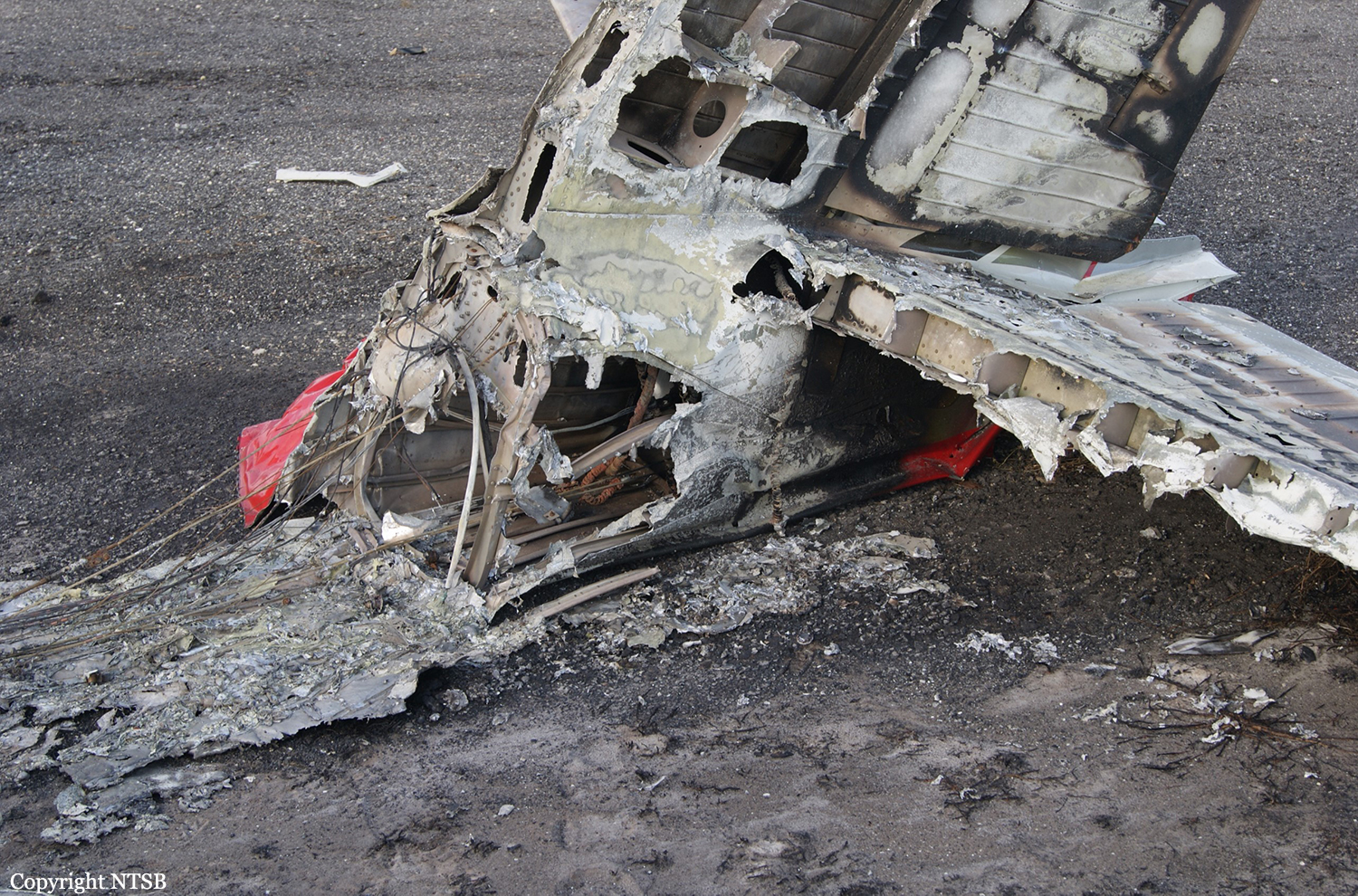
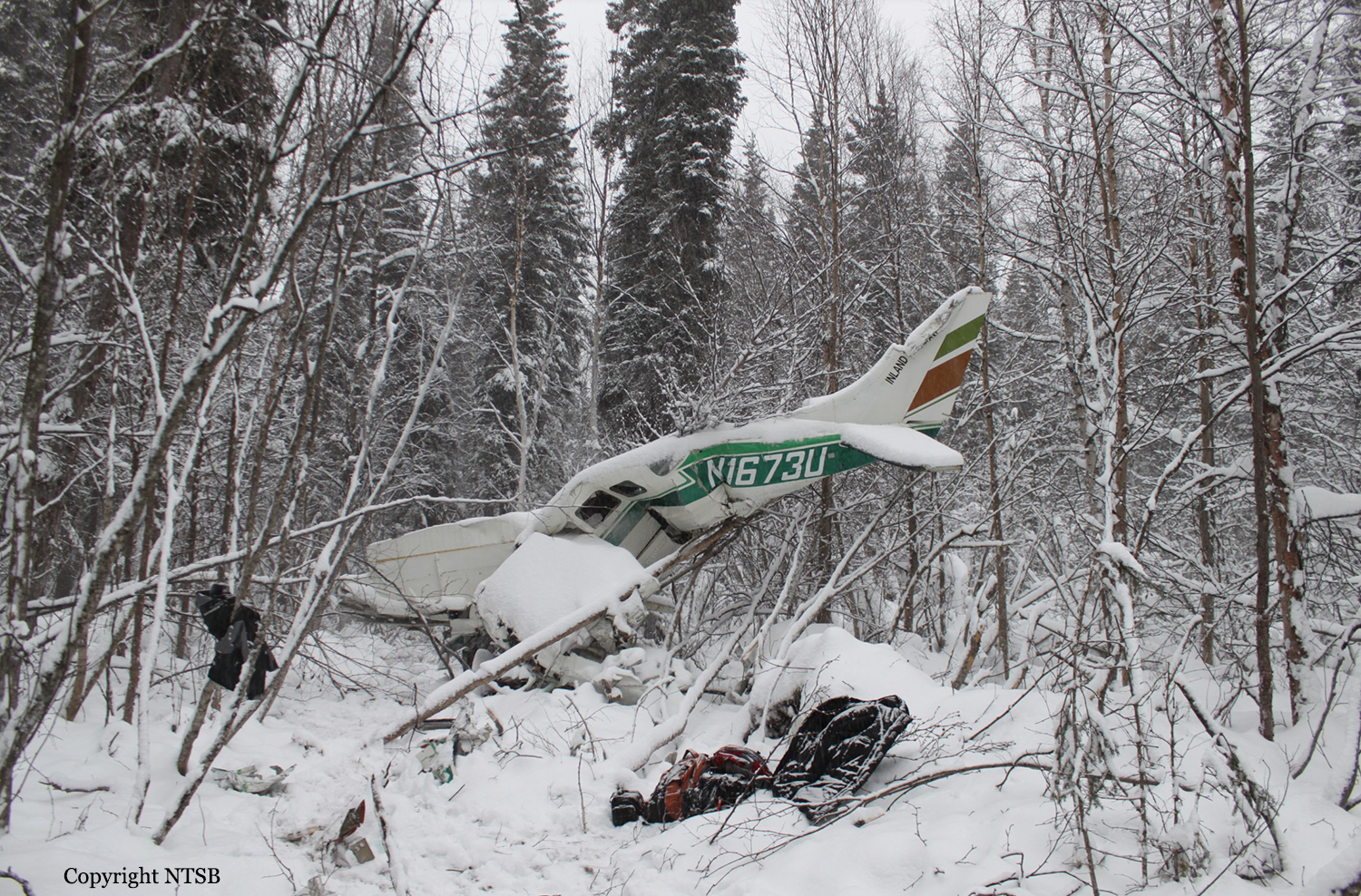
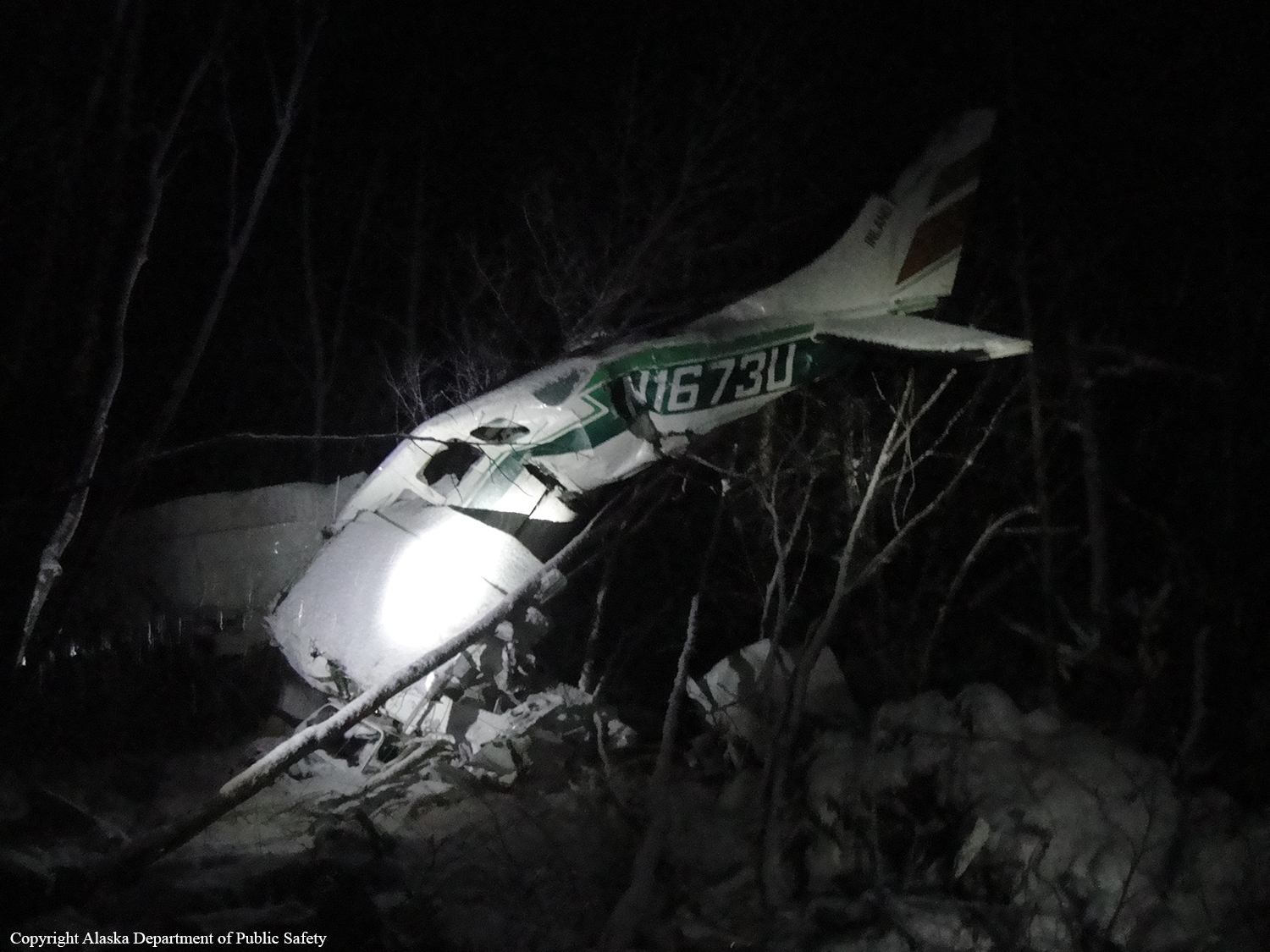
Crash of a Cessna 207 Skywagon in Chuathbaluk: 1 killed

Date & Time: Nov 29, 2011 at 1925 LT
Operator:
Registration:
N1673U
Flight Type:
Survivors:
No
Schedule:
Aniak - Chuathbaluk
MSN:
207-0273
YOM:
1974
Crew on board:
1
Crew fatalities:
Pax on board:
0
Pax fatalities:
Other fatalities:
Total fatalities:
1
Captain / Total flying hours:
10000
Aircraft flight hours:
16889
Circumstances:
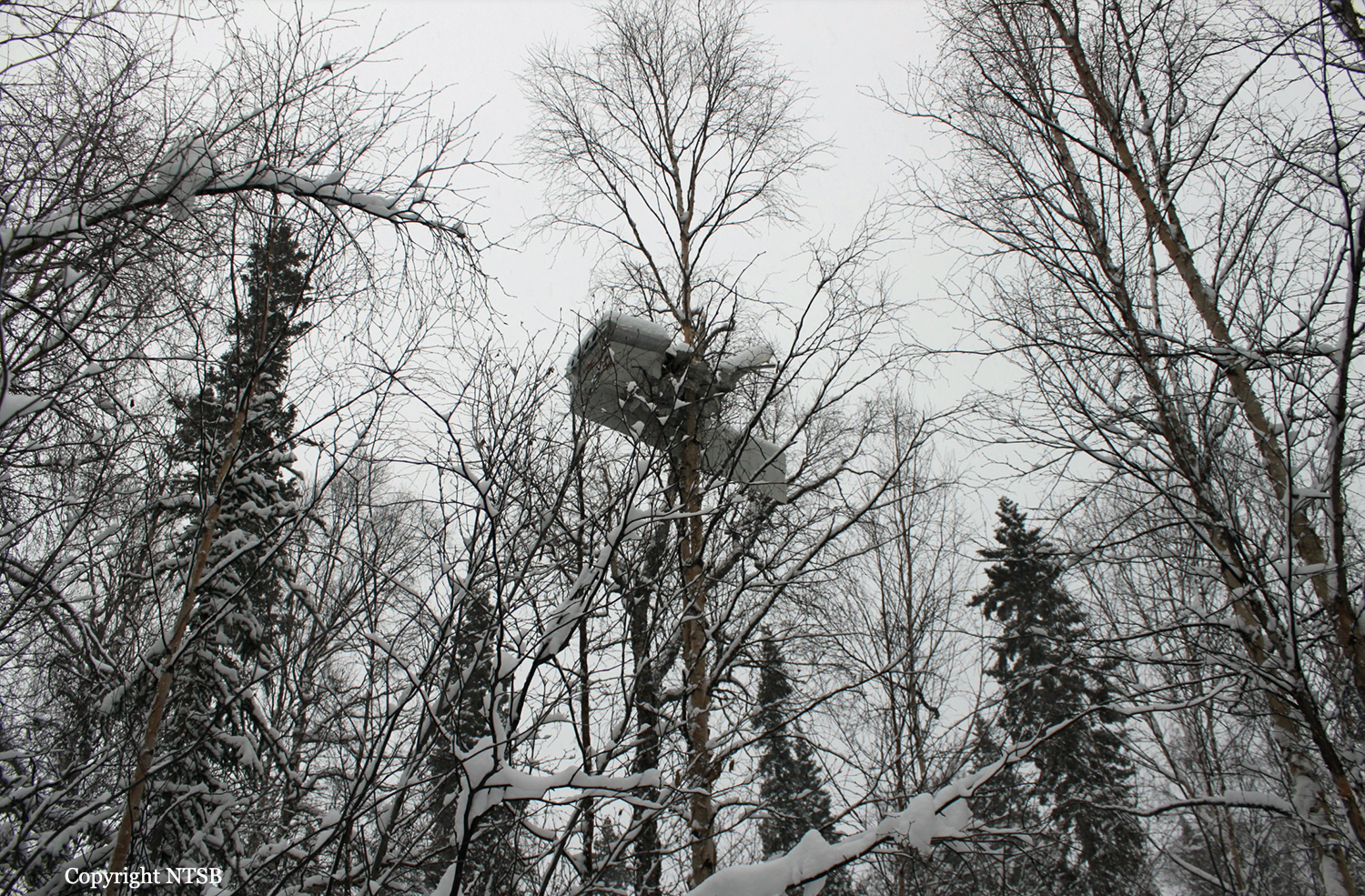
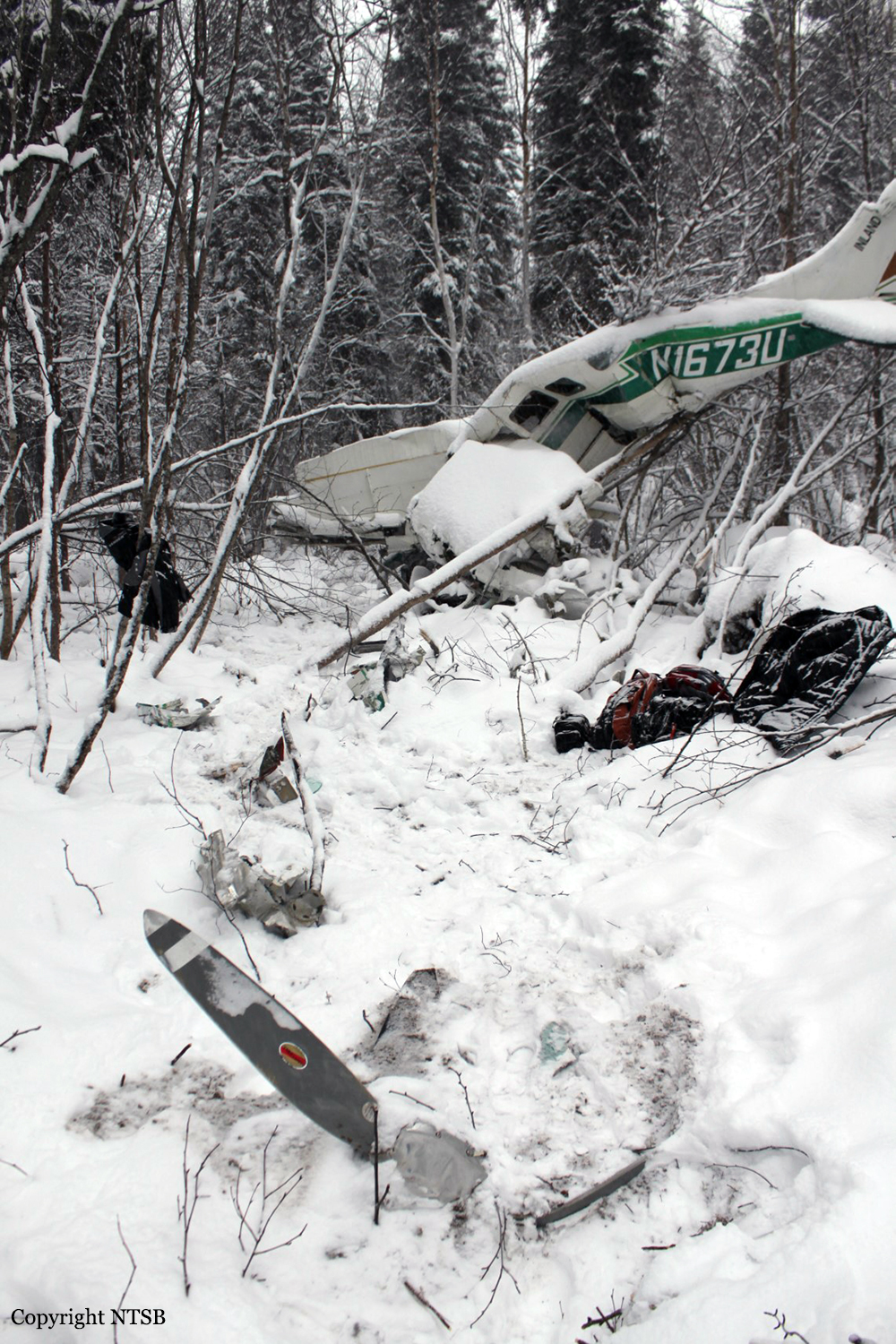
The pilot departed on a positioning flight during dark night, marginal visual meteorological conditions. A witness, who was waiting for the airplane at the destination airport, stated that shortly after the pilot-controlled airport lighting activated, a snow squall passed over the airport, greatly reducing the visibility. The accident airplane never arrived at its destination, and a search was initiated. The airplane’s fragmented wreckage was discovered early the next morning in a wooded area, about 2 miles from its destination. A review of archived automatic dependent surveillance-broadcast (ADS-B) data received from the accident airplane showed that the pilot departed, and the airplane climbed to about 700 feet above ground level. The airplane remained at about 700 feet for about 3 minutes, and then entered a shallow right-hand descending turn, until it impacted terrain. On-site examination of the airplane and engine revealed no preaccident mechanical anomalies that would have precluded normal operation. The cockpit area was extensively fragmented, thus the validity of any postaccident cockpit and instrument findings was unreliable. Likewise, structural damage to the airframe precluded the determination of flight control continuity. A postaccident examination of the engine and recovered components did not disclose any evidence of a mechanical malfunction. Given the witness account of worsening weather conditions at the airport just before the accident and the lack of mechanical anomalies with the airplane, it is likely that the accident pilot encountered heavy snow and instrument meteorological conditions while approaching the airport. It is also likely that the pilot became spatially disoriented during the unexpected weather encounter and subsequently collided with terrain.
Probable cause:
The pilot’s loss of situational awareness after an inadvertent encounter with instrument meteorological conditions, which resulted in an in-flight collision with tree-covered terrain.
Final Report:
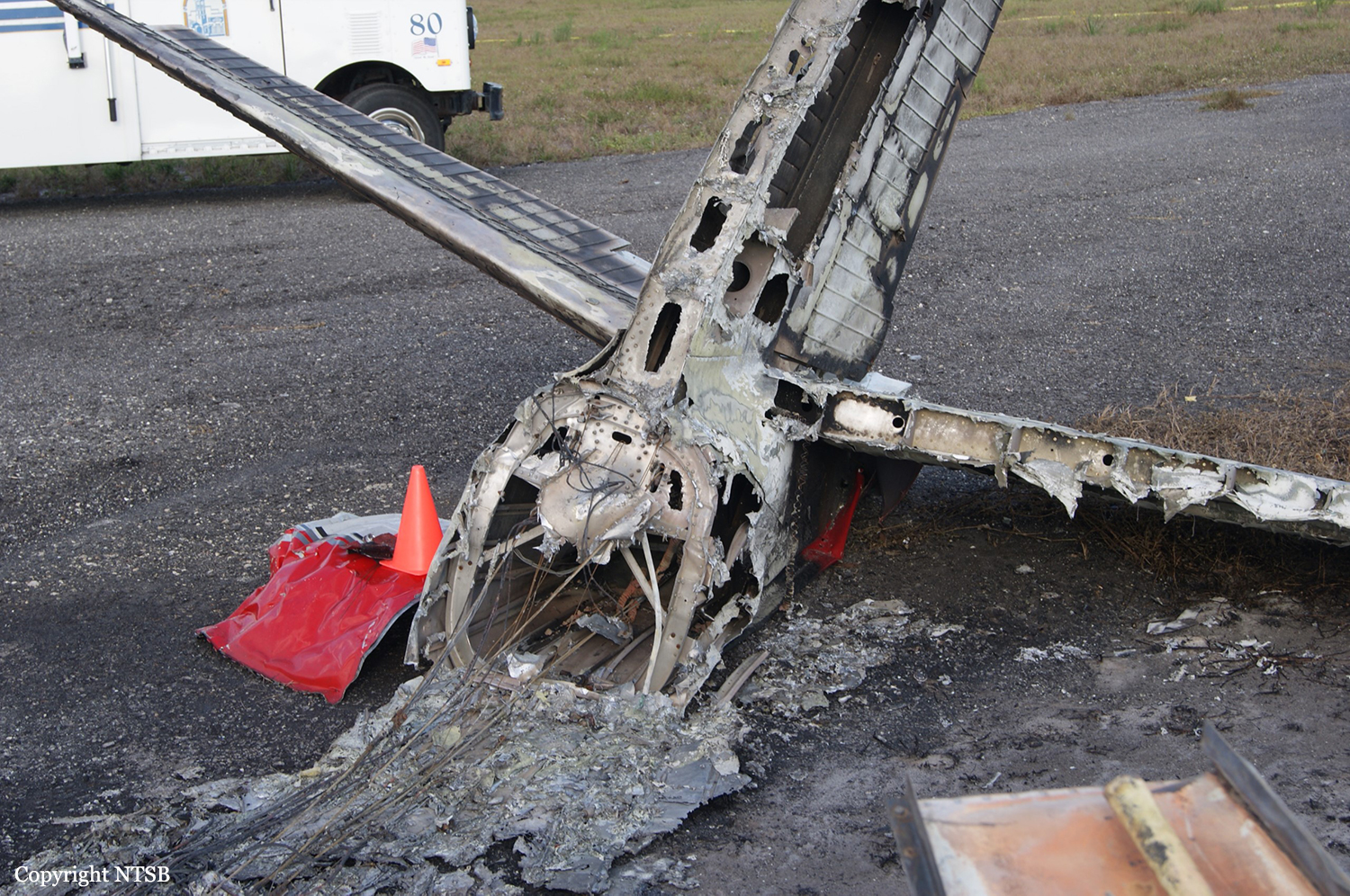
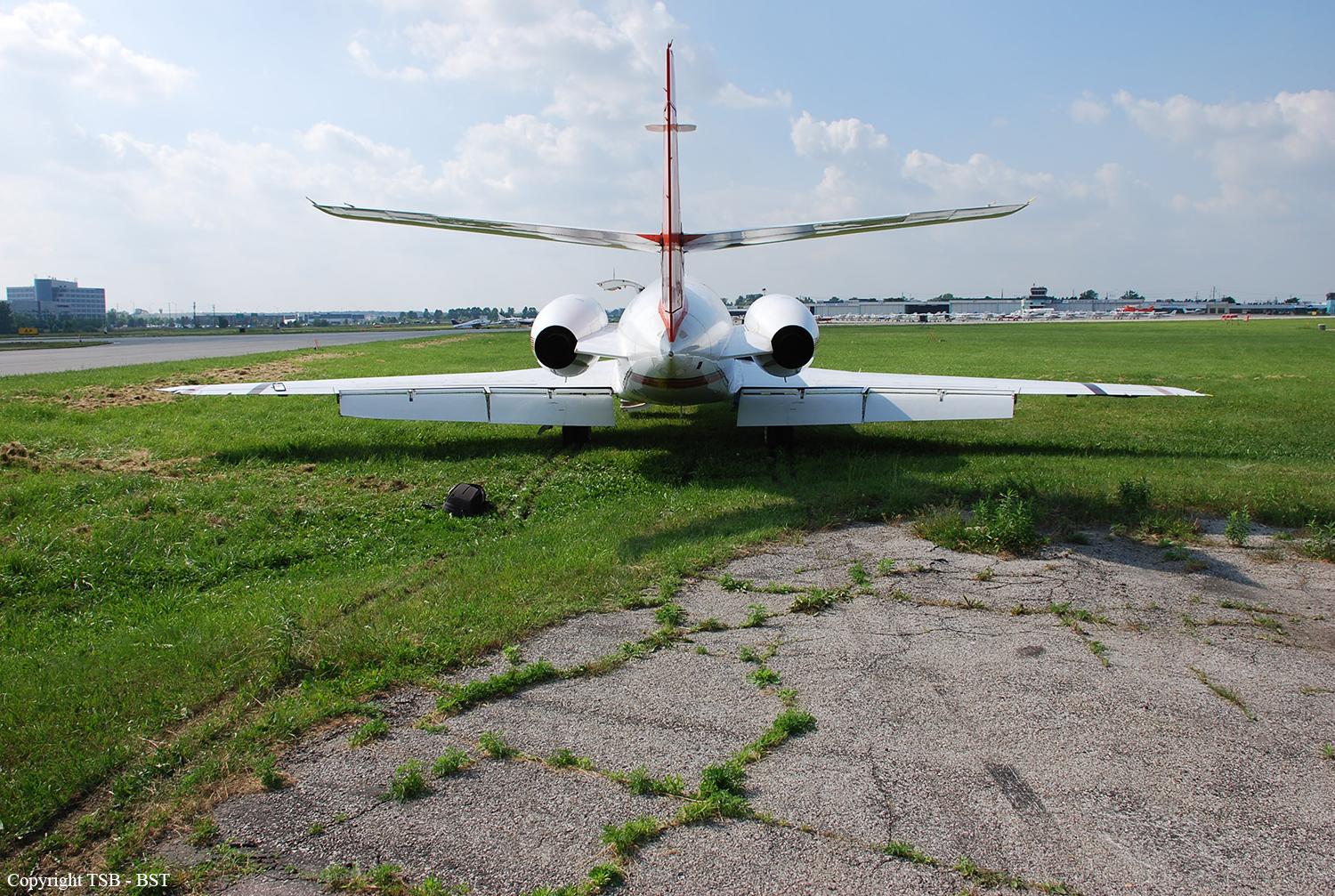
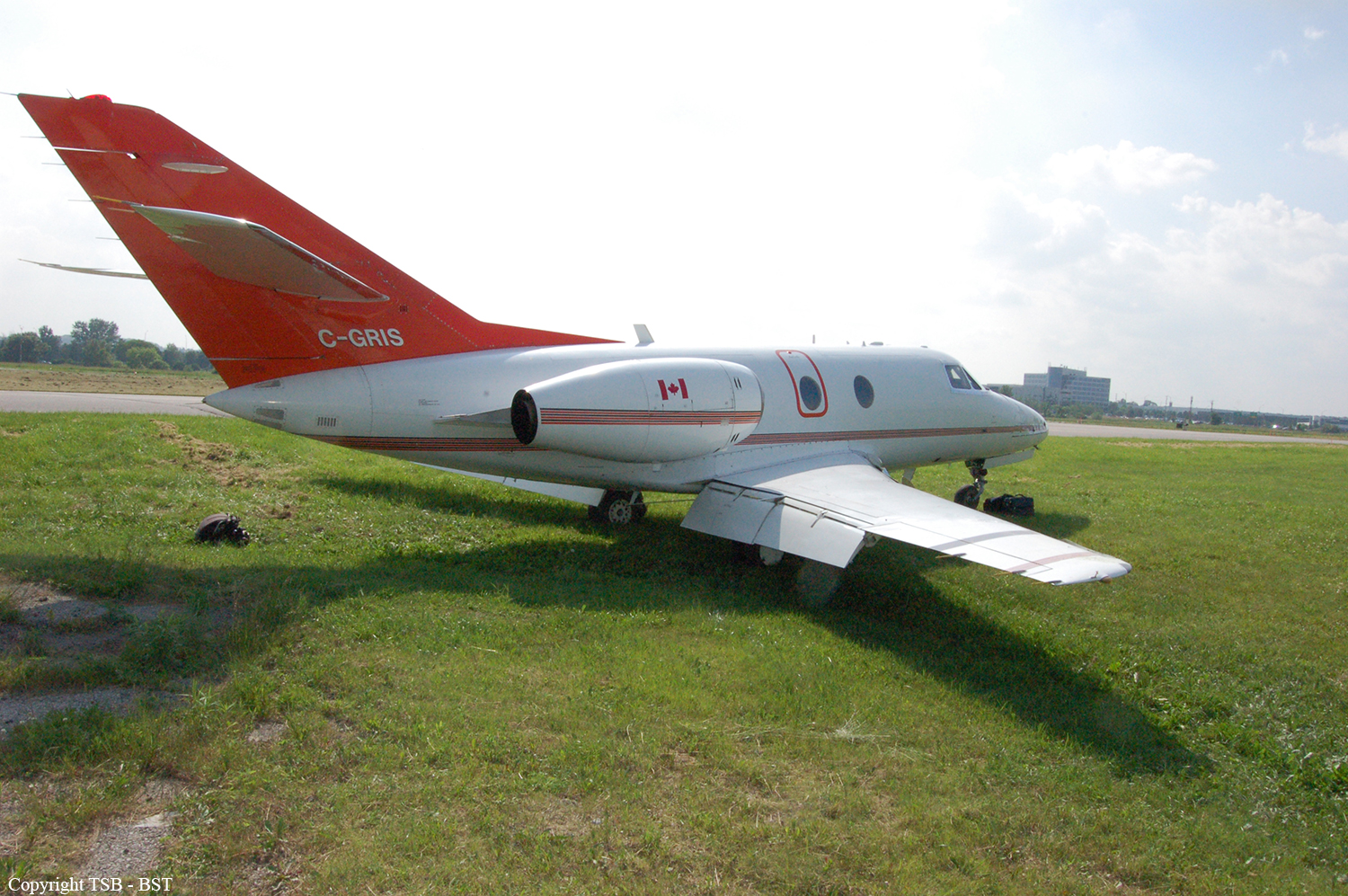
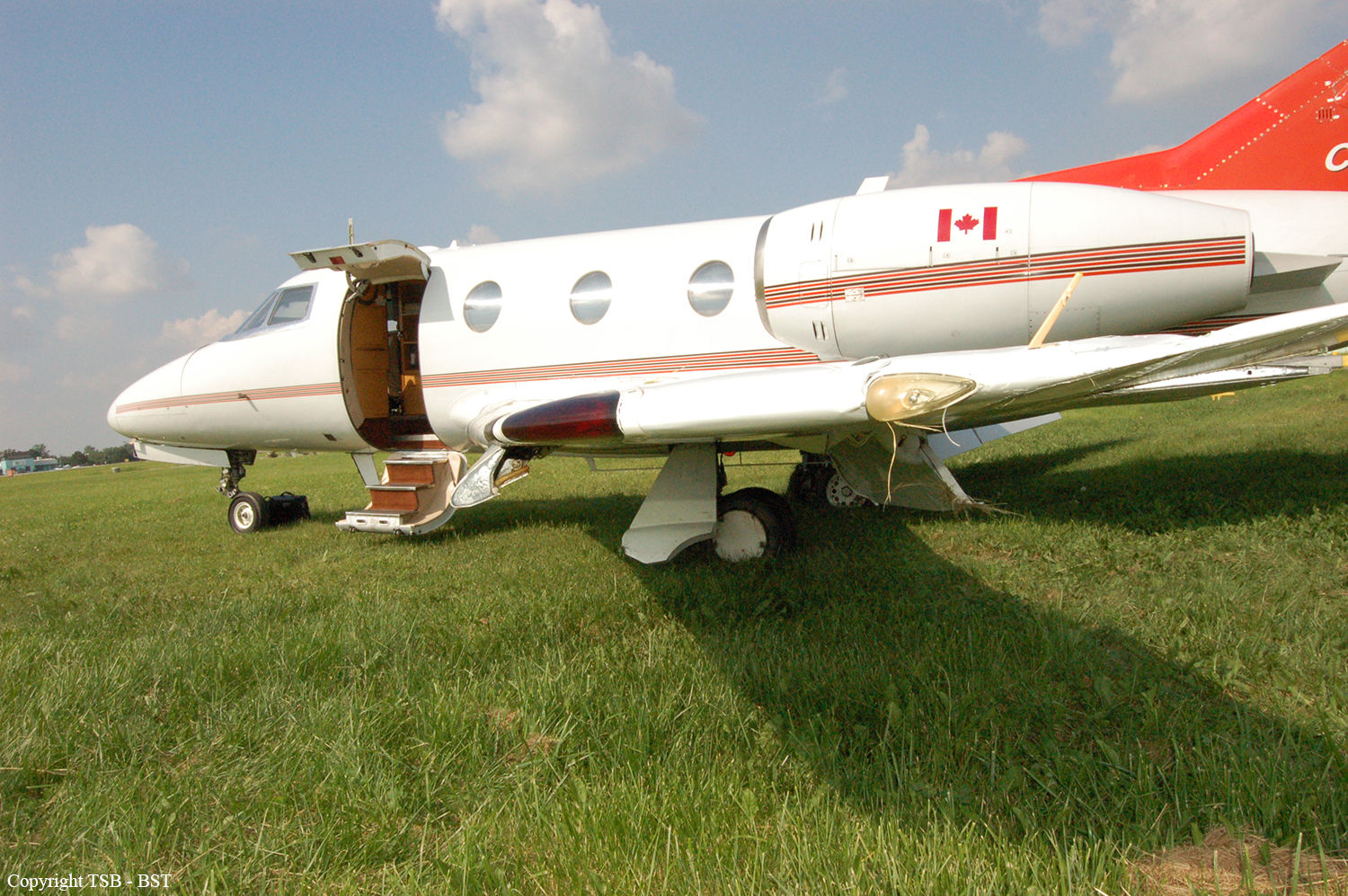
Crash of a Dassault Falcon 10 in Toronto

Date & Time: Jun 17, 2011 at 1506 LT
Type of aircraft:
Operator:
Registration:
C-GRIS
Flight Type:
Survivors:
Yes
Schedule:
Toronto-Lester Bowles Pearson - Toronto-Buttonville
MSN:
02
YOM:
1973
Country:
Crew on board:
2
Crew fatalities:
Pax on board:
0
Pax fatalities:
Other fatalities:
Total fatalities:
0
Captain / Total flying hours:
12000
Captain / Total hours on type:
4000.00
Copilot / Total flying hours:
7100
Copilot / Total hours on type:
475
Aircraft flight hours:
12697
Circumstances:
Aircraft was on a flight from Toronto-Lester B. Pearson International Airport to Toronto-Buttonville Municipal Airport, Ontario, with 2 pilots on board. Air traffic control cleared the aircraft for a contact approach to Runway 33. During the left turn on to final, the aircraft overshot the runway centerline. The pilot then compensated with a tight turn to the right to line up with the runway heading and touched down just beyond the threshold markings. Immediately after touchdown, the aircraft exited the runway to the right, and continued through the infield and the adjacent taxiway Bravo, striking a runway/taxiway identification sign, but avoiding aircraft that were parked on the apron. The aircraft came to a stop on the infield before Runway 21/03. The aircraft remained upright, and the landing gear did not collapse. The aircraft sustained substantial damage. There was no fire, and the flight crew was not injured. The Toronto-Buttonville tower controller observed the event as it progressed and immediately called for emergency vehicles from the nearby municipality. The accident occurred at 1506 Eastern Daylight Time.
Probable cause:
Findings as to Causes and Contributing Factors:
1. The crew flew an unstabilized approach with excessive airspeed.
2. The lack of adherence to company standard operating procedures and crew resource management, as well as the non-completion of checklist items by the flight crew contributed to the occurrence.
3. The captain’s commitment to landing or lack of understanding of the degree of instability of the flight path likely influenced the decision not to follow the aural GPWS alerts and the missed approach call from the first officer.
4. The non-standard wording and the tone used by the first officer were insufficient to deter the captain from continuing the approach.
5. At touchdown, directional control was lost, and the aircraft veered off the runway with sufficient speed to prevent any attempts to regain control.
Finding as to Risk
1. Companies which do not have ground proximity warning system procedures in their standard operating procedures may place crews and passengers at risk in the event that a warning is received.
Final Report:
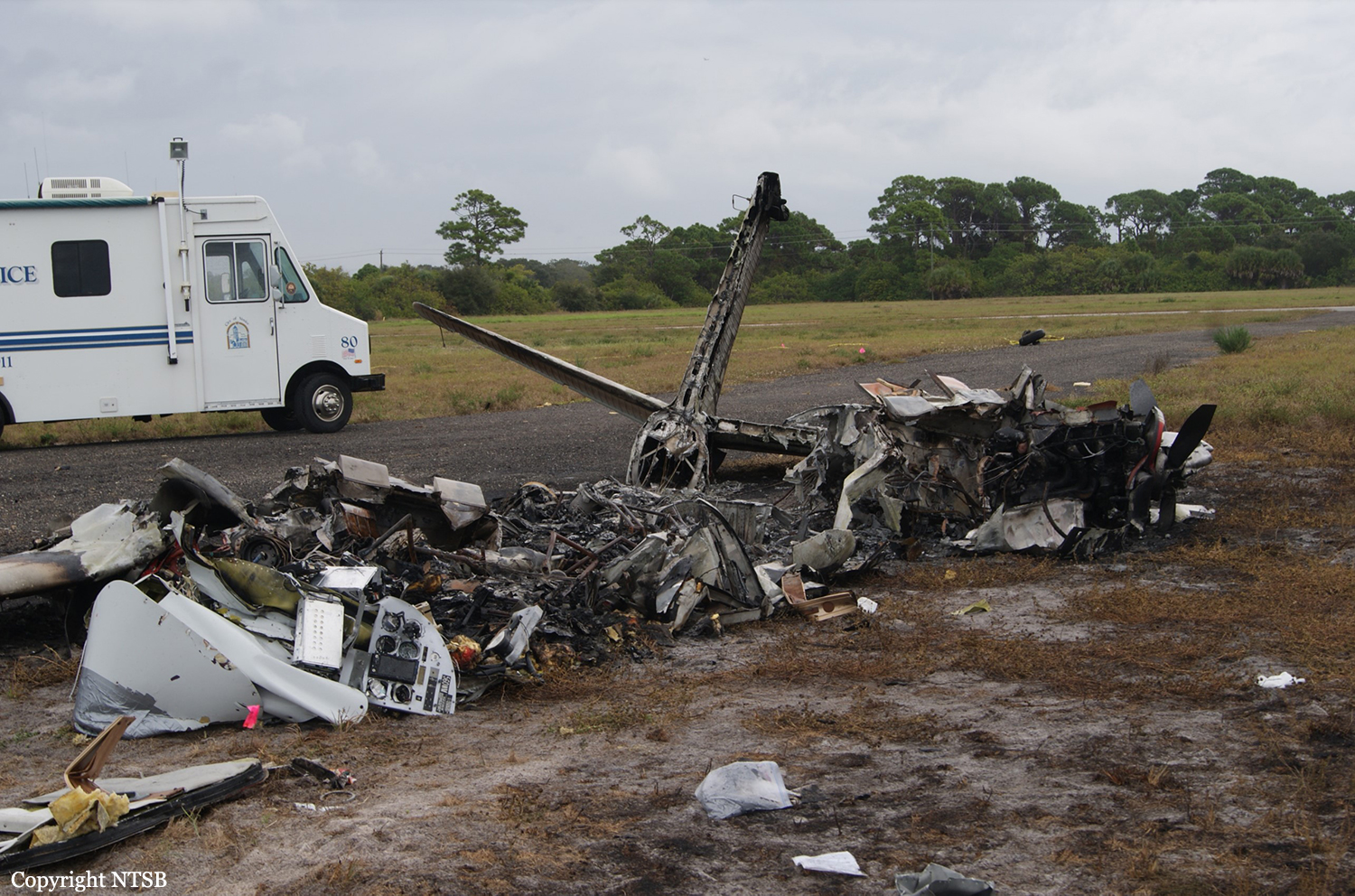
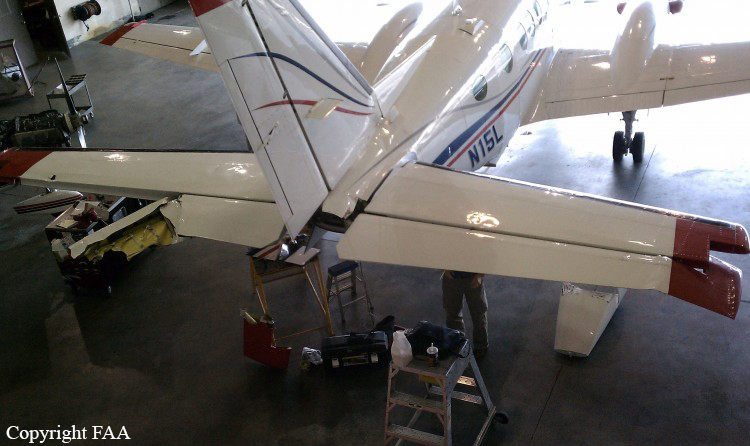
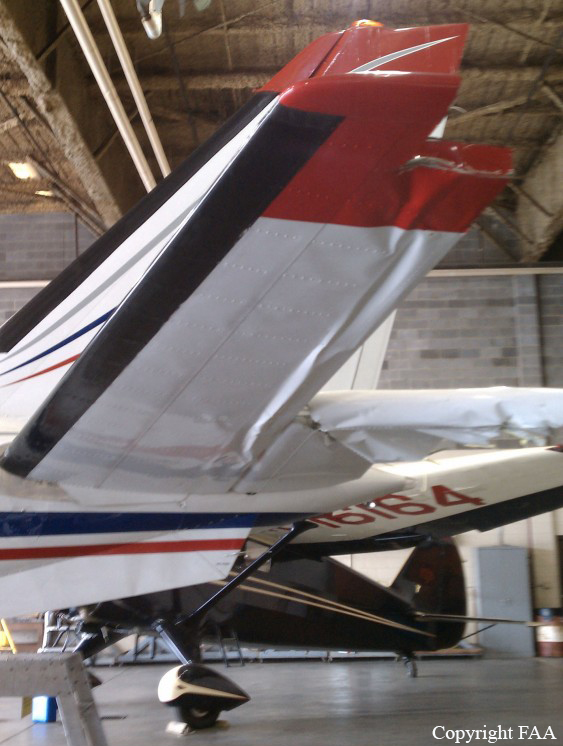
Mishap of a Beechcraft A100 King Air in Blountville

Date & Time: Jun 15, 2011 at 1405 LT
Type of aircraft:
Operator:
Registration:
N15L
Flight Phase:
Flight Type:
Survivors:
Yes
Schedule:
Bridgewater - Wichita
MSN:
B-212
YOM:
1974
Crew on board:
2
Crew fatalities:
Pax on board:
0
Pax fatalities:
Other fatalities:
Total fatalities:
0
Captain / Total flying hours:
4837
Captain / Total hours on type:
87.00
Copilot / Total flying hours:
900
Copilot / Total hours on type:
2
Aircraft flight hours:
16170
Circumstances:
The airplane was flying in instrument meteorological conditions at flight level 200 (about 20,000 feet), and a large area of thunderstorm activity was located to the northwest. About 20 miles from the thunderstorm activity, the airplane began to encounter moderate turbulence and severe icing conditions. The pilot deviated to the south; however, the turbulence increased, and the airplane entered an uncommanded left roll and dive. The autopilot disengaged, and the pilot's attitude indicator dropped. The pilot leveled the airplane at an altitude of 8,000 feet and landed without further incident. Subsequent examination revealed that one-third of the outboard left elevator separated in flight and that the empennage was substantially damaged. Meteorological and radar data revealed the airplane entered an area of rapidly intensifying convective activity, which developed along the airplane's flight path, and likely encountered convectively-induced turbulence with a high probability of significant icing. The effect of icing conditions on the initiation of the upset could not be determined; however, airframe structural icing adversely affects an airplane's performance and can result in a loss of control.
Probable cause:
An encounter with convectively-induced turbulence and icing, which resulted in an in-flight upset and a loss of airplane control.
Final Report: