Crash of a Douglas C-124 Globemaster II near Bridgeport: 15 killed

Date & Time: Mar 27, 1958 at 1615 LT
Operator:

Registration:
52-0981
Flight Phase:
Flight Type:
Survivors:
No
Schedule:
Kelly - Tinker
MSN:
43890
YOM:
1952
Crew on board:
10
Crew fatalities:
Pax on board:
5
Pax fatalities:
Other fatalities:
Total fatalities:
15
Circumstances:
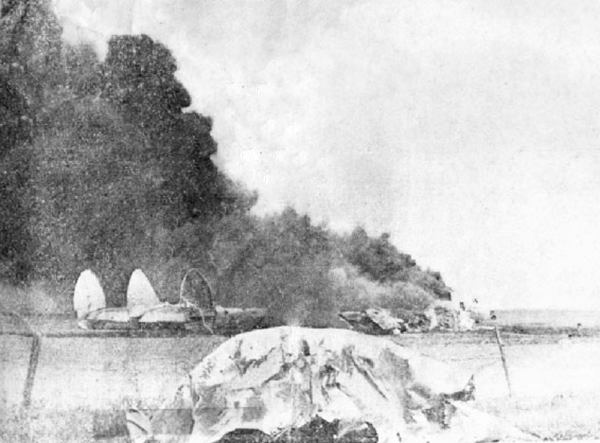
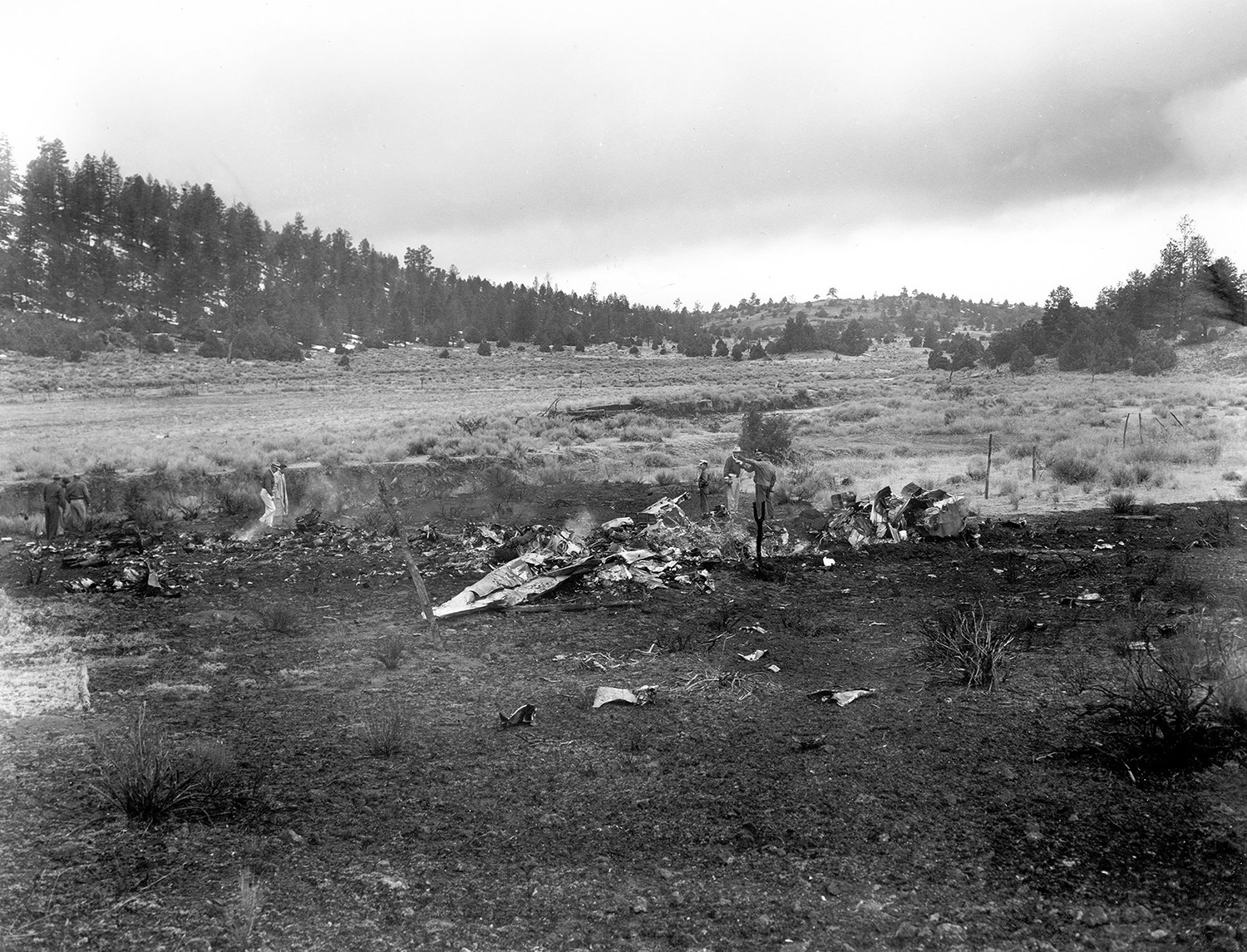
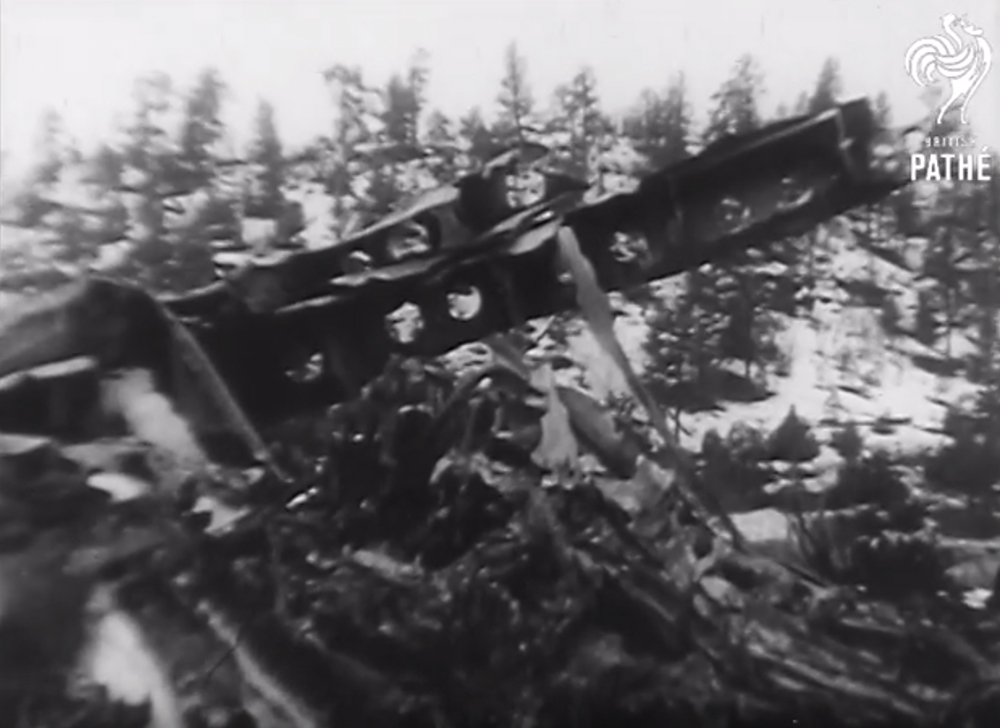
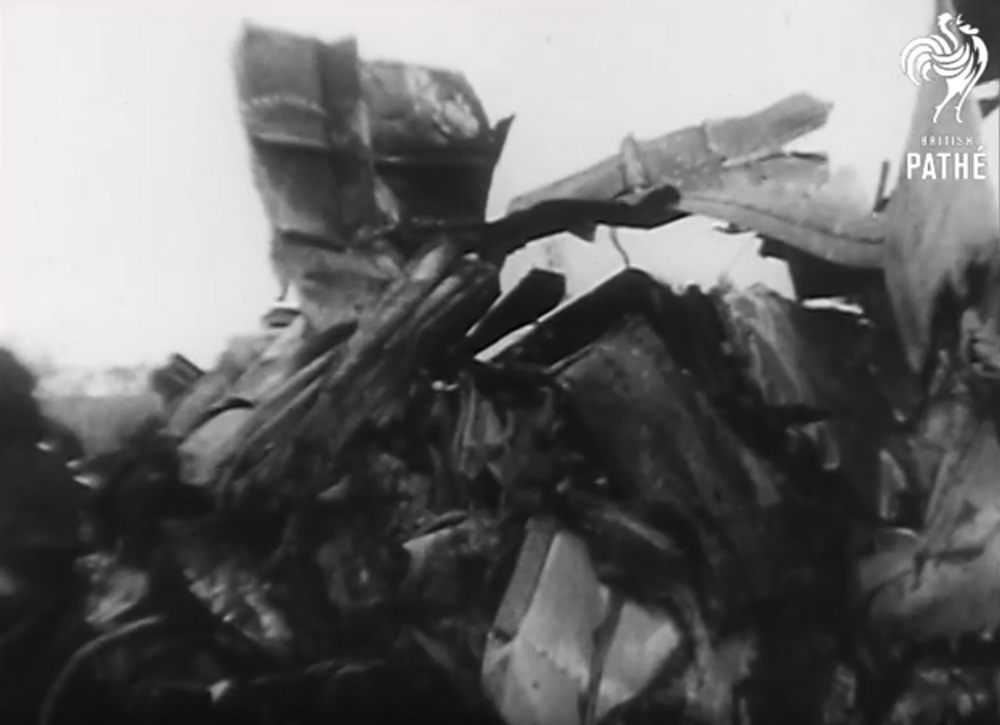
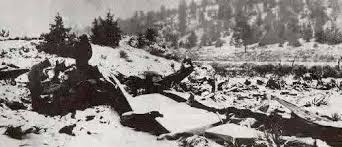
En route from Kelly AFB to Tinker AFB, while cruising at an altitude of 6,000 feet in poor weather conditions, the four engine aircraft collided with a USAF Fairchild C-119C-17-FA Flying Boxcar. Registered 49-0195, the Flying Boxcar was en route from Sheppard AFB to Carswell AFB with a crew of three on board. Following the collision, both aircraft dove into the ground and crashed in a field located near Bridgeport. All 18 occupants on both aircraft were killed.
Probable cause:
It was determined that the collision was the result of an error on part of the C-119's crew who failed to respect the instructions transmitted by ATC, asking them to fly at an altitude of 7,000 feet. For undetermined reason, the crew continue his route at the insufficient altitude of 6,000 feet, crossing the track of the C-124 which was flying at the same level. Low visibility caused by poor weather conditions was considered as a contributing factor.

Crash of a Douglas DC-7C in Miami: 9 killed

Date & Time: Mar 25, 1958 at 0006 LT
Type of aircraft:
Operator:
Registration:
N5904
Flight Phase:
Survivors:
Yes
Schedule:
Dallas – Miami – Panama City – Rio de Janeiro
MSN:
45072
YOM:
1957
Flight number:
BN971
Crew on board:
5
Crew fatalities:
Pax on board:
19
Pax fatalities:
Other fatalities:
Total fatalities:
9
Captain / Total flying hours:
20672
Captain / Total hours on type:
241.00
Copilot / Total flying hours:
13250
Copilot / Total hours on type:
257
Aircraft flight hours:
3306
Circumstances:
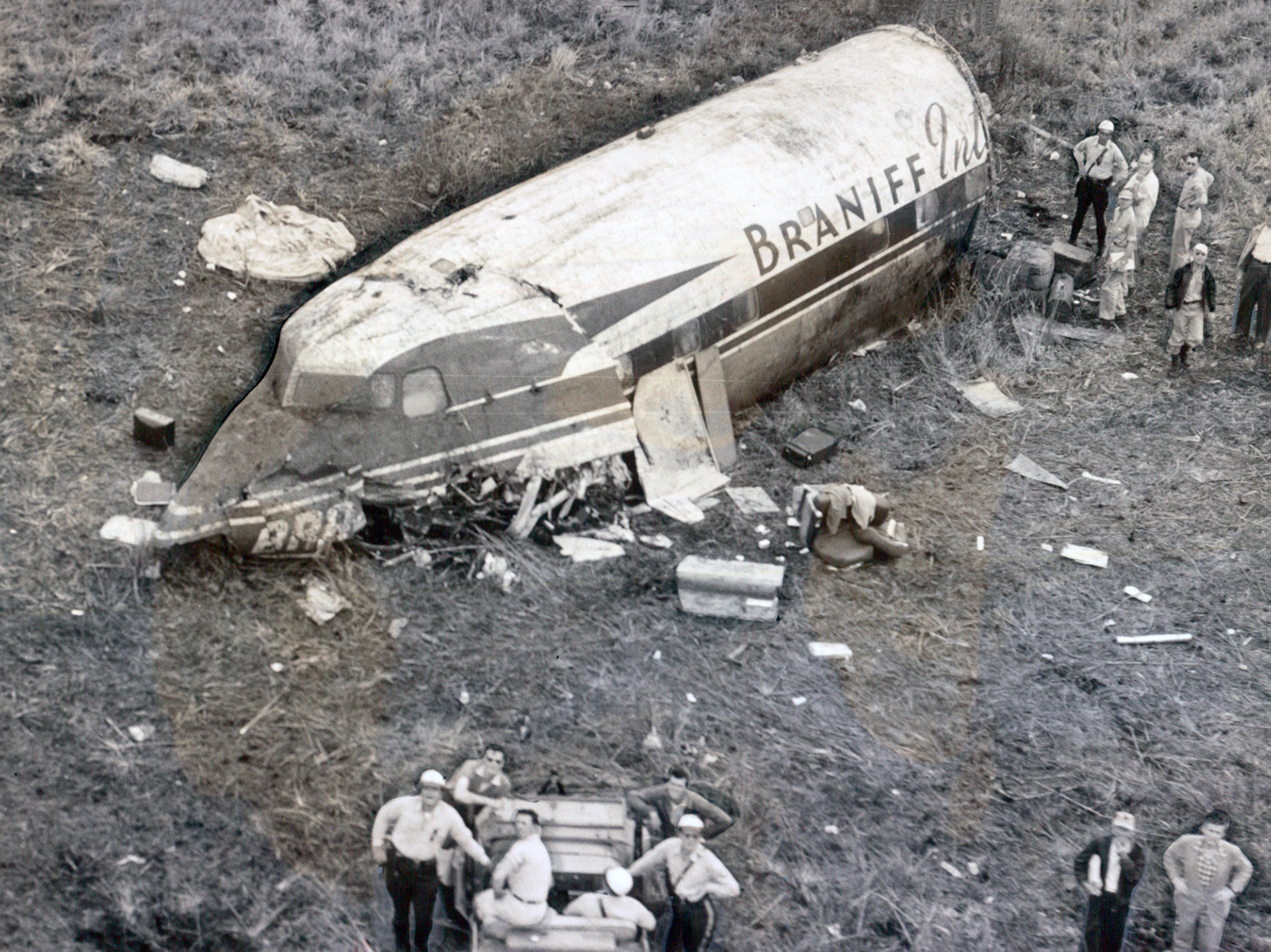
Braniff International Flight 971 was originally scheduled to depart New York, New York, for Miami, Florida, on March 23, 1958, at 2355 but this leg of the flight was not made owing to shortage of equipment and scheduling difficulties on that date. N 5904 was ferried from Dallas, Texas, to Miami, arriving at 1915 on March 24 for use as Flight 971. The aircraft was serviced and made reedy for the trip to Panama City, Panama, the first scheduled stop on the route to Rio de Janeiro, Brazil. The crew consisted of Captain Thomas D. George, First Officer John C. Winthrop, Jr., Second Officer Charles F. Fink, Steward Alberto Zapatero, and Stewardess Madelon Campion. The flight departed the Miami terminal at 2356, taxied to runway 27R where engine runup was made, after which a normal takeoff was accomplished. Shortly after takeoff, and in accordance with tower clearance, a climbing right turn was started. During the turn the No. 3 engine malfunctioned and a fire developed in that area. The airplane, still in a right turn, started to lose altitude rapidly. While traveling in a north-northeasterly direction it struck in an open marsh containing scattered trees and underbrush. Rescue operations were immediately initiated but were seriously hampered by heavy ground traffic of sightseers attracted to the area. Several of the passengers and crew members were airlifted by U. S. Coast Guard helicopters direct to hospital grounds in Miami and the others were removed to nearby ambulances and taken to hospitals.
Probable cause:
The Board determines that the probable cause of this accident was the failure of the captain to maintain altitude during an emergency return to the airport due to his undue preoccupation with an engine fire following takeoff. The following findings were reported:
- Weather was not a factor in the accident,
- The flight was properly planned and dispatched,
- Smoke from No. 3 engine on the prior flight was reported to the ferry crew by the Miami tower and the crew should have written up this item in the aircraft log,
- Shortly after a routine takeoff No. 11 cylinder of the No. 3 engine failed, resulting in a fire in flight,
- Emergency measures (i.e., propeller feathering, extinguisher, fuel shutoff) were promptly taken by the crew,
- Full power was available from the other three engines and there was no impairment of structure or control of the airplane,
- The captain made a decision to return to the airport and, in attempting to do so, altitude was not maintained and the aircraft struck the ground.
Final Report:

Crash of a Lockheed RC-121D Super Constellation at McClellan AFB

Date & Time: Mar 22, 1958 at 1118 LT
Operator:
Registration:
54-2308
Flight Phase:
Flight Type:
Survivors:
Yes
Schedule:
McClellan - McClellan
MSN:
4390
YOM:
1956
Crew on board:
4
Crew fatalities:
Pax on board:
14
Pax fatalities:
Other fatalities:
Total fatalities:
0
Captain / Total flying hours:
5613
Captain / Total hours on type:
3583.00
Copilot / Total flying hours:
1664
Copilot / Total hours on type:
372
Circumstances:
The crew departed McClellan AFB on a topographic and geographical mission off the Californian coast. Shortly after takeoff from runway 16, while climbing to an altitude of 500 feet, the engine number two caught fire. The crew obtained the authorization to return for an emergency landing and the captain completed a 180 turn to intercept the glide. Doing so, the airplane lost 200 feet while flying over a populated area and the speed dropped to 120 knots. On final, the captain told his colleagues he was unable to reach the airport so he attempted an emergency landing in an open field located 1,5 mile short of runway 16. On touchdown, the airplane slid for several yards, lost its right wing and came to rest in flames. All 18 occupants were injured, five of them seriously, and the aircraft was destroyed by fire.
Probable cause:
The cause of the fire on engine number two could not be determined. At the time of the accident, ceiling was broken at 2,000 feet and overcast at 4,000 feet with light rain and a wind from the southeast at 10 knots, gusting 22 knots.

Crash of a Lockheed 18-56 LodeStar near Grants: 4 killed

Date & Time: Mar 22, 1958 at 0240 LT
Type of aircraft:
Operator:
Registration:
N300E
Flight Phase:
Flight Type:
Survivors:
No
Site:
Schedule:
Burbank – Tulsa – New York
MSN:
2312
YOM:
1942
Crew on board:
2
Crew fatalities:
Pax on board:
2
Pax fatalities:
Other fatalities:
Total fatalities:
4
Captain / Total flying hours:
7680
Captain / Total hours on type:
386.00
Copilot / Total flying hours:
4500
Copilot / Total hours on type:
3500
Aircraft flight hours:
3910
Circumstances:
The flight had made routine position reports from its assigned altitude of 11,000 feet until passing over Winslow, Arizona. Shortly after the last routine report at 11,000 feet a higher altitude was requested of Air Traffic Control because of encountering icing conditions. The request was granted and the aircraft reported, five minutes later, being at 13,000 feet between cloud layers. The last report was over Zuni, New Mexico, estimating Grants at 0249, 19 minutes later. Ten minutes after this report a ground explosion at an elevation of 7,200 feet m. s. 1. was observed by another flight and by ground witnesses. The wreckage of N300E was found in the area of the witnessed explosion. The right engine master rod bearing had failed in flight and the right propeller was feathered; however, complete loss of control followed and the aircraft struck the ground in a very steep angle of descent. As far as can be determined, there was no failure of the aircraft structure or controls prior to ground impact. The aircraft had anti-icing equipment installed and the pilots were experienced in Lodestar operation. There is evidence of the aircraft being considerably over its maximum allowable weight at departure and it is believed that the comparatively sudden failure of an engine at 13,000 feet created a situation, made more critical by virtue of the then existing weight, in which the pilot was unable to maintain control of the aircraft. All four occupants were killed, among them the American film producer Mike Todd, husband of Elizabeth Taylor, who was flying with his scenarist Art Cohn. The twin engine airplane was christened 'The Liz'.
Probable cause:
The Board determines that the probable cause of this accident was the loss of control of an overloaded aircraft following the failure of an engine at a cruising altitude which was critical for single-engine operation. The loss of control was aggravated by surface ice accretion.
Final Report:

Crash of a Martin 404 in Melbourne

Date & Time: Mar 17, 1958
Type of aircraft:
Operator:
Registration:
N496A
Survivors:
Yes
Schedule:
Tampa – Melbourne
MSN:
14244
YOM:
1952
Crew on board:
3
Crew fatalities:
Pax on board:
7
Pax fatalities:
Other fatalities:
Total fatalities:
0
Circumstances:
On final approach to Melbourne Airport, the aircraft was too low, causing an undercarriage to struck a gravel pile located short of runway threshold. The crew continued the approach and at touchdown, the undercarriage collapsed. The airplane sank on its belly and slid for several yards before coming to rest in flames. All ten occupants were evacuated safely while the aircraft was destroyed by fire.

Crash of a Douglas DC-7B at Long Beach

Date & Time: Mar 10, 1958
Type of aircraft:
Operator:
Registration:
N846D
Flight Phase:
Flight Type:
Survivors:
Yes
Schedule:
Long Beach - Long Beach
MSN:
45452
YOM:
1958
Crew on board:
0
Crew fatalities:
Pax on board:
0
Pax fatalities:
Other fatalities:
Total fatalities:
0
Circumstances:
Crashed in unknown circumstances at Long Beach Airport while performing a test flight prior to its delivery to Eastern Airlines. There were no casualties.

Crash of a Convair CV-240-0 at New Haven

Date & Time: Mar 1, 1958 at 1024 LT
Type of aircraft:
Operator:
Registration:
N94213
Flight Phase:
Survivors:
Yes
Schedule:
Boston – New Haven – Bridgeport – New York
MSN:
23
YOM:
1948
Flight number:
AA535
Crew on board:
3
Crew fatalities:
Pax on board:
5
Pax fatalities:
Other fatalities:
Total fatalities:
0
Captain / Total flying hours:
7453
Captain / Total hours on type:
4660.00
Copilot / Total flying hours:
5300
Copilot / Total hours on type:
3205
Aircraft flight hours:
20857
Circumstances:
This was scheduled passenger flight 535 of March 1 from Boston, Massachusetts, to New York, New York, with stops planned at New Haven and Bridgeport, Connecticut. The crew, consisting of Captain Edward W. Johnson, First Officer Norman A. Paquette, and Stewardess Marian Sullivan, reported to company operations at Boston well ahead of scheduled departure time. Departure from Boston at 0927 was on time and was in accordance with an TFR clearance to cruise at 6,000 feet via airways to New Haven. The flight was routine and on schedule to New Haven. The aircraft was not refueled during the five-minute stop at New Haven, during which time both engines were stopped. The flight departed the terminal with five passengers and 1460 gallons of fuel. Gross weight of the aircraft was well under the maximum allowable and its center of gravity was located within prescribed limits. The wind was calm and runway 14 (4,116 feet), one of two macadam runways, was selected for takeoff. There is no air traffic control tower at New Haven. After completion of the takeoff checklist, the aircraft moved onto the runway and takeoff was initiated from a tan start without delay. This segment of the flight was being flown by First Officer Paquette who occupied the right seat. Captain Johnson, on the left, maintained directional control during the initial acceleration of the aircraft. Before the aircraft reached the intersection of runways 14 and 19, the landing gear was retracted. The aircraft then skidded clown runway 14 near its center and cane to rest 1,050 feet from the far end. Captain Johnson, Stewardess Sullivan, and three passengers left through the right emergency escape hatch over the wing. First Officer Paquette and the two remaining passengers left through the partially opened front entrance door. Fire, around the left engine and the left outboard wing area, caused considerable damage and was extinguished by the local fire department.
Probable cause:
The Board determines that the probable cause of this accident was the improper technique of the captain resulting in the unintentional retraction of the landing gear prior to V 1 speed, which was made possible by a malfunctioning left gear safety switch. A contributing factor was inadequate inspection by the carrier. The following findings were reported:
- The first officer made the takeoff with the captain performing the duties of copilot from his left seat,
- The aircraft operated normally up to 85 knots in the takeoff roll,
- The captain prematurely applied upward pressure on the landing gear selector handle,
- A defective landing gear safety switch allowed the landing gear selector handle to be unlocked during ground operation of the aircraft, and permitted the landing gear to retract,
- Fire did not develop in the left nacelle and fuel tank area until the aircraft skidded to a stop on the runway,
- The company’s inspection of the safety switch was inadequate.
Final Report:

Crash of a Lockheed 18-56-23 LodeStar off Chicago

Date & Time: Feb 24, 1958
Type of aircraft:
Operator:
Registration:
N9050
Flight Phase:
Survivors:
Yes
Schedule:
Chicago – White Plains
MSN:
2563
YOM:
1943
Crew on board:
2
Crew fatalities:
Pax on board:
5
Pax fatalities:
Other fatalities:
Total fatalities:
0
Circumstances:
Shortly after takeoff from Chicago-Merrill C. Meigs Airport, while in initial climb, the twin engine aircraft stalled and crashed into the Lake Michigan, about 50 feet from the shore. All seven occupants were rescued while the aircraft was lost. Owned by Cluett Peabody & Company, the airplane was on its way to White Plains, New York.

Crash of a Convair CV-240-1 in Palm Springs

Date & Time: Feb 13, 1958 at 1345 LT
Type of aircraft:
Operator:
Registration:
N8405H
Flight Phase:
Survivors:
Yes
Schedule:
Las Vegas – Palm Springs – San Diego
MSN:
22
YOM:
1948
Flight number:
WA019
Crew on board:
3
Crew fatalities:
Pax on board:
18
Pax fatalities:
Other fatalities:
Total fatalities:
0
Captain / Total flying hours:
9845
Captain / Total hours on type:
3547.00
Copilot / Total flying hours:
5240
Copilot / Total hours on type:
785
Aircraft flight hours:
22516
Circumstances:
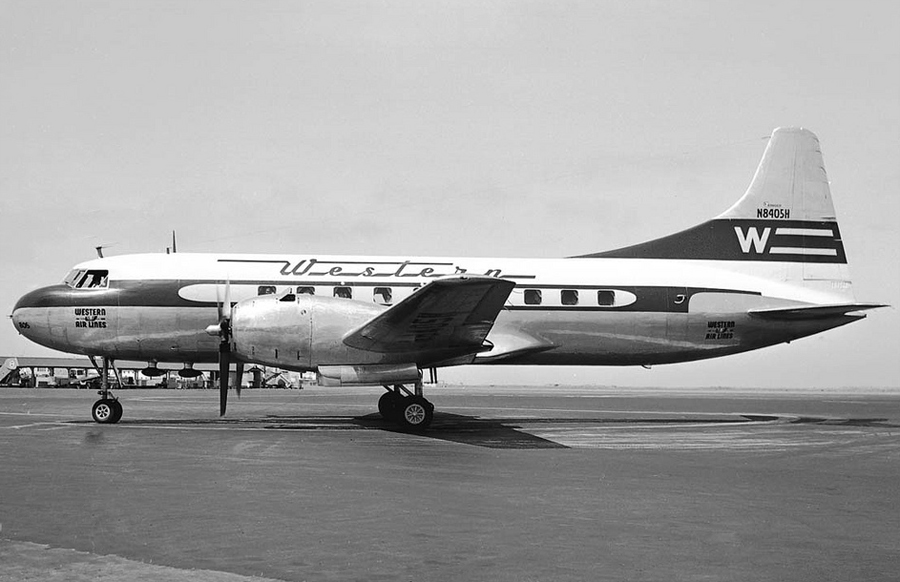
About 1342 Flight 19 took off from runway 31. The takeoff appeared normal, and the aircraft climbed to approximately 500 feet above the ground. At this time several ground witnesses saw two or more silvery pieces separate from the aircraft. Most witnesses said the pieces seemingly separated from the area of the right wing. Almost simultaneously the aircraft was observed to nose down sharply and descend at a steep angle. As it neared the ground it leveled off considerably but continued to descend. It contacted the ground raising a large cloud of dust and then disappeared from the view of the observers behind intervening higher terrain. Seconds later large columns of smoke were seen rising from the accident site. During the ground roll the aircraft struck large boulders in its path and fire occurred which consumed the major portion of the aircraft. There were no fatalities but serious injuries resulted to 5 of the 18 passengers and minor injuries to most of the others. The crew of three received minor or slight injuries.
Probable cause:
The Board determines that the probable cause of this accident was the failure of a mechanic to secure properly the right wing leading edge section as a result of which the unit separated in flight. This improper installation was undetected because of inadequate inspection. The following findings were reported:
- During the departure from Palm Springs the right wing leading edge separated in flight,
- Separation of the component resulted in severe control difficulty and buffeting of the aircraft,
- A gear-down emergency landing was made in the boulder-strewn desert about four miles north-northwest of the airport,
- During the ground roll impacts with the boulders caused severe damage and breakup of the aircraft, and a fire in the left wing spread rapidly and destroyed the aircraft,
- N8405H received a No. 3, areas 1 and 3, heavy maintenance check about two hours of flying time before the accident,
- During the maintenance a mechanic assigned to close and secure the right leading edge forgot to install the retaining screws,
- The gap straps were properly installed,
- An inadequate inspection of the aircraft by the lead mechanic resulted in his failure to detect the omission,
- The gap straps held the leading edge in place until the Palm Springs departure when they failed from loads beyond their design strength.
Final Report:

Crash of a Boeing B-52D-75-DO Stratofortress at Ellsworth AFB: 5 killed

Date & Time: Feb 11, 1958
Type of aircraft:
Operator:
Registration:
56-0610
Flight Type:
Survivors:
Yes
Schedule:
Ellsworth - Ellsworth
MSN:
17293
YOM:
1956
Crew on board:
8
Crew fatalities:
Pax on board:
0
Pax fatalities:
Other fatalities:
Total fatalities:
5
Circumstances:
On final approach to Ellsworth AFB, while completing a local training sortie, all eight engine lost power. The aircraft stalled and crashed onto a building containing the equipment for the instrument landing approach system and located short of runway. Two crew members were killed while six others were injured. Three people working in the building were killed as well.
Crew:
Cpt Melvin J. Rudd, pilot,
Sgt Richard Gilbert, navigator,
Cpt Verle Rusk, navigator,
1st Lt Leonard R. Scotty, electronic countermeasures officer,
T/Sgt Oscar Orrs, gunner, 1,
Cpt John O'Connell Jr., navigator, †
1st Lt Kenneth B. Kaeppler, radar navigator. †
Those killed on ground were:
A1c Ronald R. Mitchell,
A1 James E. Ferrell,
Mr. Glen M. Allen.
Probable cause:
The accident was the result of a fuel pump screen iced over, leading to a total power loss on all engines.