Crash of a Curtiss C-46F-1-CU Commando off Driftwood Bay: 2 killed

Date & Time: May 31, 1958
Type of aircraft:
Operator:
Registration:
N1302N
Flight Phase:
Flight Type:
Survivors:
No
MSN:
22479
YOM:
1945
Crew on board:
2
Crew fatalities:
Pax on board:
0
Pax fatalities:
Other fatalities:
Total fatalities:
2
Circumstances:
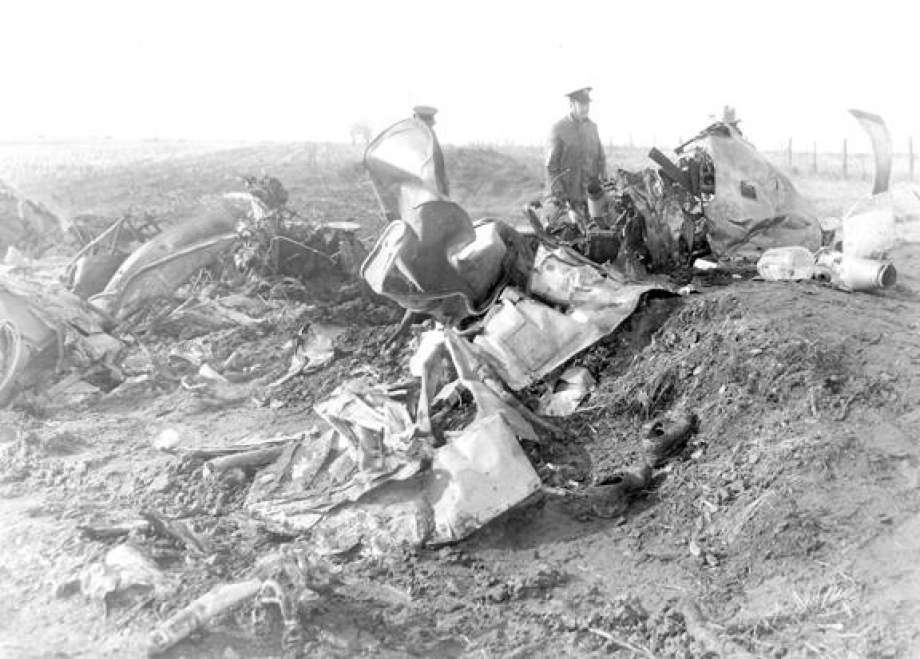
Shortly after takeoff from Driftwood Bay Airport, Umnak Island, while climbing to a height of 800 feet, the aircraft stalled and crashed into the sea. Both crew members were killed.

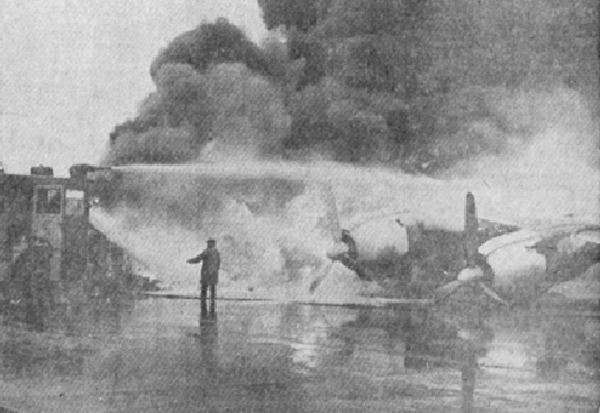
Ground explosion of a Lockheed RC-121D Super Constellation at Otis AFB

Date & Time: May 25, 1958 at 1633 LT
Operator:
Registration:
55-0123
Flight Phase:
Survivors:
Yes
Schedule:
Otis - Otis
MSN:
4396
YOM:
1956
Crew on board:
4
Crew fatalities:
Pax on board:
11
Pax fatalities:
Other fatalities:
Total fatalities:
0
Circumstances:
While parked at Otis AFB and prepared for a survey flight, the aircraft suffered an explosion of its central fuel tank. All fifteen occupants (11 passengers and a crew of four) were able to evacuate before the aircraft would be destroyed by fire. It appeared that the center fuel tank had been filled with fuel, despite the fact that it was not supposed to be filled. Through seepage or overflow from that tank the fuel vapors were ignited by electronic equipment being tested during the pre flight procedure.

Crash of a Vickers 745D Viscount near Brunswick: 11 killed

Date & Time: May 20, 1958 at 1129 LT
Type of aircraft:
Operator:
Registration:
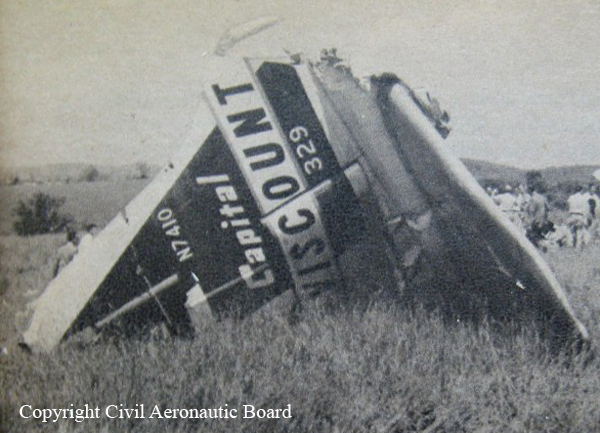
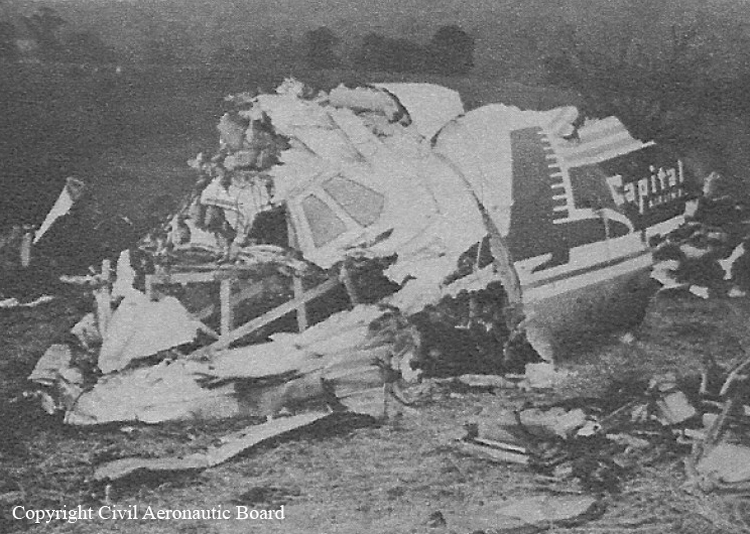
N7410
Flight Phase:
Survivors:
No
Schedule:
Chicago – Pittsburgh – Baltimore
MSN:
108
YOM:
1956
Flight number:
CA300
Crew on board:
4
Crew fatalities:
Pax on board:
7
Pax fatalities:
Other fatalities:
Total fatalities:
11
Captain / Total flying hours:
12719
Captain / Total hours on type:
1432.00
Copilot / Total flying hours:
2467
Copilot / Total hours on type:
1596
Circumstances:
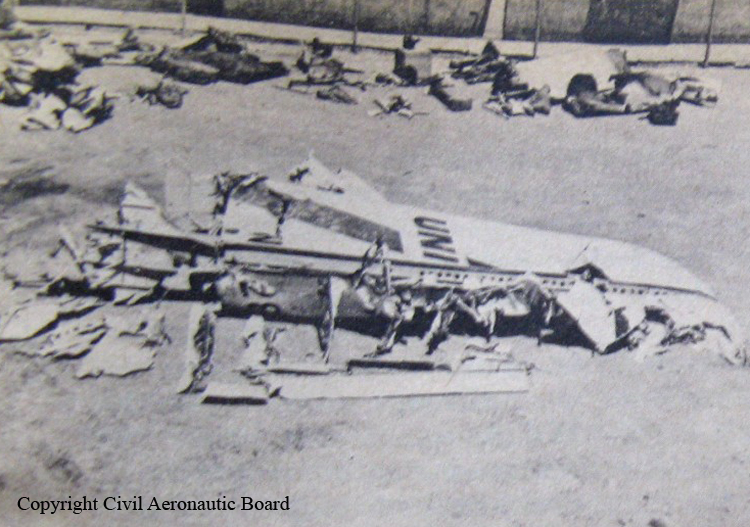
On may 20, 1958, about 1129 e. d. t., a Capital Airlines Viscount, N 7410 and a Maryland Air National. Guard T-33, 35966, collided in the air about four miles east-northeast of Brunswick, Maryland. Seven passengers and the crew of four aboard the Viscount were killed. A passenger in the T-33 was killed but the pilot, although severely burned, parachuted safely. Both aircraft were totally destroyed by in-flight collision, ground impact, and the ensuing fire. The collision occurred at an altitude of about 8,000 feet on Victor Airway lilt while the Viscount was descending en route from Pittsburgh to Baltimore-Friendship Airport. It was operating on an instrument flight rules flight plan but in visual flight rules weather conditions. The T-33 pilot was on a VFR proficiency flight from Martin Airport, Baltimore, Maryland. Just before the collision the aircraft were observed in the area west of Brunswick flying parallel easterly courses with the T-33 some distance behind and to the left of the Viscount. The T-33 quickly overtook the Viscount and made a gentle right turn, during which it struck the forward left side of the fuselage of the Viscount. Both aircraft were being operated in visual flight rules weather conditions and it was therefore the responsibility of each crew to provide separation from other aircraft by visual reference. The right-of-way rules contained in the Civil Air Regulations clearly set out the pilot's responsibility in the overtaking situation. It is the Board's aim to provide for a positive control system of air-craft separation which will not depend upon the "see and be seen" principle to prevent the occurrence of collision accidents. The Board has been actively engaged for some time in the development of such a program. Its full implementation is several years away and will be dependent on additional technical improvements in equipment and on the expansion of the air traffic control facilities to accommodate the ever increasing amount of traffic. Since the accident the USAF and Capital Airlines, along with other carriers, in an effort to reduce collision hazards, have required, in general, that all aircraft on airways above 10,000 feet be operated in accordance with IFR.
Probable cause:
The Board determines the probable cause of this accident was the failure of the T-33 pilot to exercise a proper and adequate vigilance to see and avoid other traffic.
Final Report:

Crash of a Lockheed R7V-1 Super Constellation near Taft: 5 killed

Date & Time: May 14, 1958
Operator:
Registration:
131652
Flight Phase:
Flight Type:
Survivors:
No
Site:
Schedule:
Ontario - Moffett
MSN:
4153
YOM:
1954
Location:
Crew on board:
5
Crew fatalities:
Pax on board:
0
Pax fatalities:
Other fatalities:
Total fatalities:
5
Circumstances:
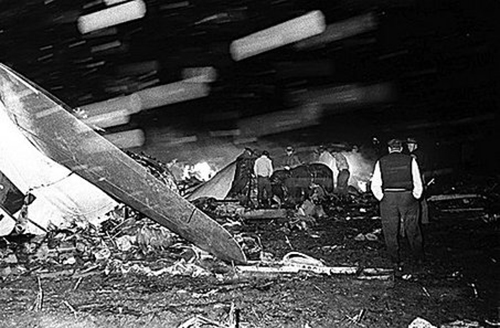
En route from Ontario (California) to Moffett AFB, the crew decided to perform five consecutive stalls. Doing so, the airplane lost 3,000 feet and suffered severe vibrations that caused structural damages to skin, stringers and bulkheads in the aft portions of the fuselage. The pilot requested permission to divert to Taft Airport for an emergency landing but shortly later, the airplane disintegrated in the air and crashed in a mountainous area located 7 miles east of Taft. The aircraft was totally destroyed and all five crew members were killed.
Probable cause:
In-flight structural failure of the airframe.

Crash of a Boeing 307 Stratoliner near Madras

Date & Time: May 10, 1958
Type of aircraft:
Registration:
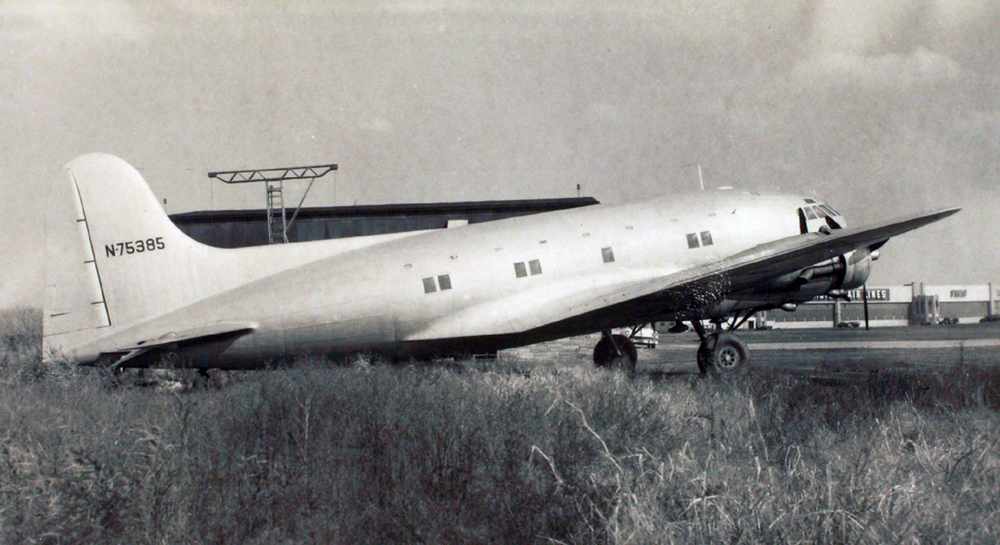
N75385
Flight Phase:
Flight Type:
Survivors:
Yes
MSN:
2002
YOM:
1940
Location:
Crew on board:
2
Crew fatalities:
Pax on board:
0
Pax fatalities:
Other fatalities:
Total fatalities:
0
Circumstances:
Parked since few months on a regional airport, the aircraft was recently purchased by a new owner who wanted to know the exact consumption of oil and fuel. A test flight was scheduled with two test pilots. To be able to perform a longer flight, additional fuel tanks were installed in the cabin. While cruising at a relative low altitude, the crew informed ATC that a fire erupted in the cabin and elected to make an emergency landing. The airplane crash landed in flames in a field located 15 miles from Madras and came to rest. While both pilots were able to evacuate with no injury, the aircraft was destroyed by fire.
Probable cause:
Additional fuel tanks were installed in the cabin to perform the test flight but it was determined that these fuels tanks were not sealed and were leaking. The technicians who installed the fuel tanks on board were aware of the fact that these tanks were leaking, but since they had not been able to find the source of the leaks, they decided to install them despite a major risk of fire. In flight, some fuel leaked from a tank and ignited while in contact with an incandescent element whose nature remains unknown. In such conditions, the crew was unable to continue the test flight and an emergency landing was therefore necessary.

Crash of a Douglas DC-7 near Las Vegas: 47 killed

Date & Time: Apr 21, 1958 at 0830 LT
Type of aircraft:
Operator:
Registration:
N6328C
Flight Phase:
Survivors:
No
Site:
Schedule:
Los Angeles – Denver – New York
MSN:
45142
YOM:
1956
Flight number:
UA736
Crew on board:
5
Crew fatalities:
Pax on board:
42
Pax fatalities:
Other fatalities:
Total fatalities:
47
Circumstances:
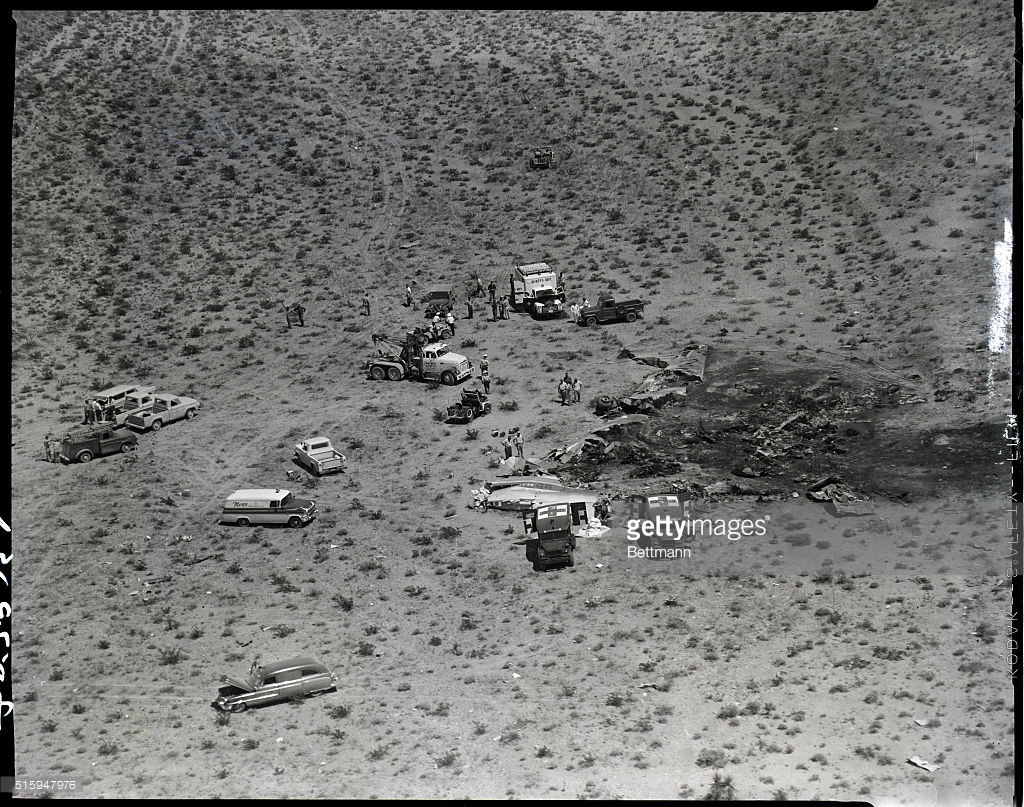
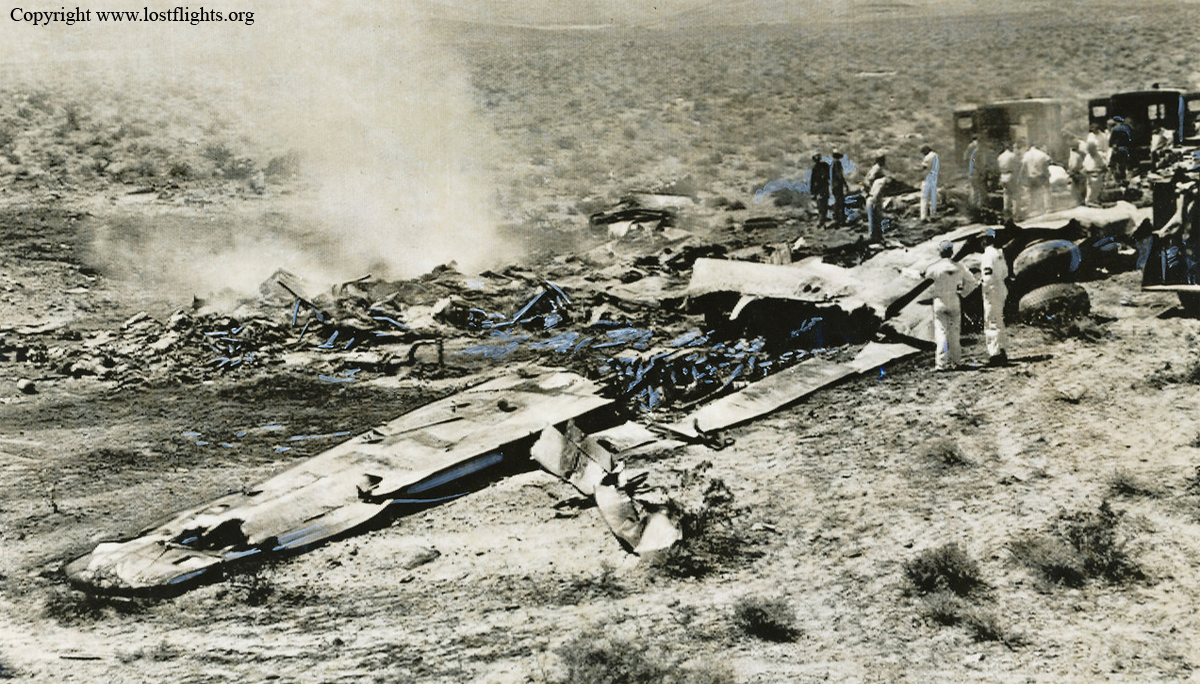
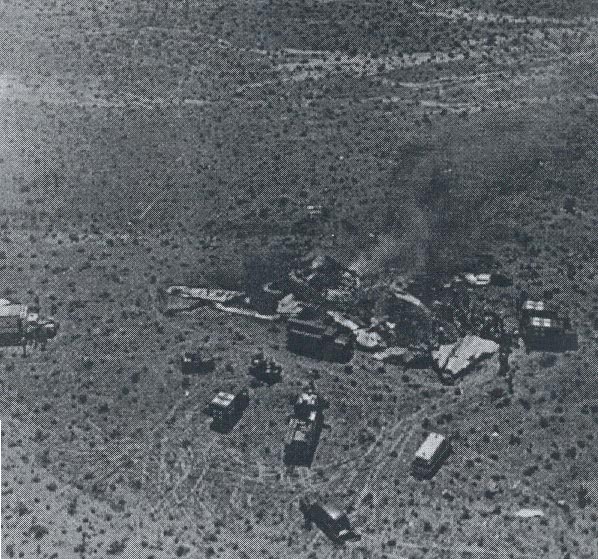
United Airlines Flight 736 departed Los Angeles International Airport at 0737 hours Pacific standard time with 42 passengers and 5 crew aboard. It was a scheduled passenger flight to New York, which was proceeding normally in accordance with an IFR flight plan along Victor Airway 16 to Ontario, California, and Victor Airway 8 to Denver. The aircraft was cleared to a cruising altitude of 21 000 ft msl and advised to climb in VFR weather conditions. At 0735 the flight reported to Aeronautical Radio that it was over Ontario at 12 000 ft and was climbing in VFR conditions. Then at 081 1 it reported over Daggett at its cruising altitude of 21 000 ft and estimated that it would reach Las Vegas (omni range station) at 0831, This was the last position report made by the flight. At approximately 0745 hours that morning F-100F, 56-3755, took off from Nellis Air Force Base, Las Vegas, Nevada on an instrument training flight carrying an instructor and a trainee pilot. The flight was in accordance with a VFR local flight plan filed with Nellis Operations and the local traffic control tower. At approximately 0823, 755 called Nellis VFR Control and reported that it was "inbound on KRAM" ( a local commercial radio broadcast station). The flight requested an altitude assignment from which it would conduct a simulated ADF instrument jet penetration utilizing KRAM. The VFR controller assigned 755, 28 000 ft and advised it to report over the radio station. At approximately 0828, the flight reported that it was over KRAM requesting a penetration. The VFR controller cleared it for an immediate penetration and requested that it report the penetration turn. 755 then reported leaving 28 000 ft. There were no &her reports from the flight in connection with this procedure. At 0830 the offices of Aeronautical Radio at Los Angeles, Denver and Salt Lake City heard an emergency message from the United flight.. . . . " United 736, Mayday, midair collision, over Las Vegas. " At the same time, as nearly as can be determined, there was an unrecorded emergency transmission from the F-1 00F. This message was heard by the VFR controller and by the two pilots of another F-100F. All were agreed that the first portion of the emergency transmission was "Mayday, Mayday, this is 755. " The last part of the message was either, "We've had a flameout" or 'We're bailing out." The aircraft collided at 21 000 ft over a position later determined to be about 9 miles southwest of the Las Vegas VOR station, on Victor Airway 8, approximately 1-3/4 miles to the right (southeast) of the centerline. Both aircraft fell out of control and crashed killing the 47 persons on board the DC-7 and both pilots of the F-100F.
Probable cause:
The probable cause of this collision was a high rate of near head-on closure at high altitude; human and cockpit limitations; and the failure of Nellis Air Force Base and the Civil Aeronautics Administration to take every measure to reduce a known collision exposure.
Final Report:

Crash of a Douglas C-133A-10-DL Cargomaster in Ellendale: 4 killed

Date & Time: Apr 13, 1958 at 0843 LT
Type of aircraft:
Operator:
Registration:
54-0146
Flight Phase:
Flight Type:
Survivors:
No
Schedule:
Dover - Dover
MSN:
44716
YOM:
1954
Crew on board:
4
Crew fatalities:
Pax on board:
0
Pax fatalities:
Other fatalities:
Total fatalities:
4
Captain / Total hours on type:
585.00
Copilot / Total hours on type:
60
Circumstances:
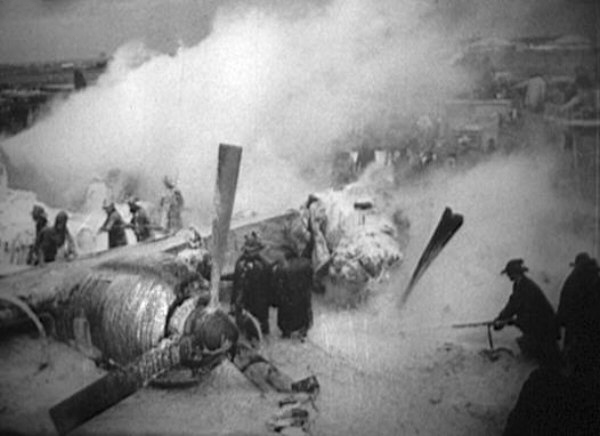
The four engine aircraft left Dover AFB runway 32 at 0828LT on a local training flight. Fifteen minutes later, while cruising at a relative low altitude of 2,000 feet, the airplane went out of control, dove into the ground and crashed in flames in a dense wooded area located near Ellendale. The airplane was destroyed by impact forces and all four crew members were killed.
Crew:
Cpt Raymond R. Bern, pilot,
1st Lt Herbert T. Palisch, copilot,
T/Sgts Marvin A. Aust, flight engineer,
T/Sgt Edward L. McKinley Jr., flight engineer.
Probable cause:
Its is believed the accident was the result of icing conditions encountered at low height (2,000 feet). Tests showed that ice formed in a tube through which the doomed plane’s control cables passed.

Crash of a Douglas SC-47A at McChord AFB: 3 killed

Date & Time: Apr 13, 1958
Operator:
Registration:
42-93183
Flight Type:
Survivors:
No
Schedule:
McChord - McChord
MSN:
13066
YOM:
1944
Crew on board:
3
Crew fatalities:
Pax on board:
0
Pax fatalities:
Other fatalities:
Total fatalities:
3
Circumstances:
Crashed in unknown circumstances at McChord AFB while completing touch-and-go maneuvers. All three crew members were killed, among them T/Sgt Roy Edwin Craft.

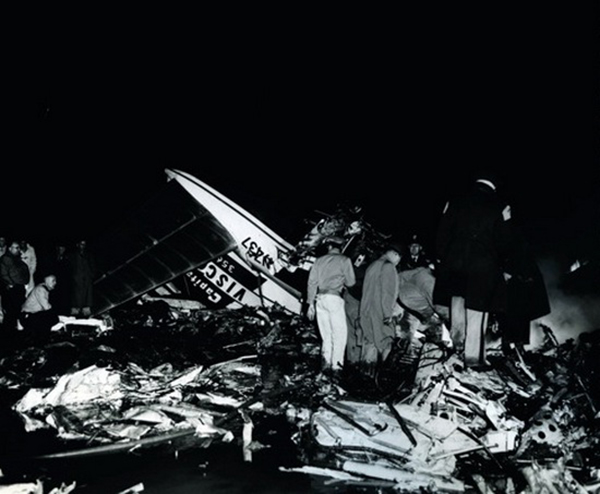
Crash of a Vickers 745D Viscount in Saginaw: 47 killed

Date & Time: Apr 6, 1958 at 2319 LT
Type of aircraft:
Operator:
Registration:
N7437
Survivors:
No
Schedule:
New York – Detroit – Flint – Saginaw – Chicago
MSN:
135
YOM:
1956
Flight number:
CA067
Crew on board:
3
Crew fatalities:
Pax on board:
44
Pax fatalities:
Other fatalities:
Total fatalities:
47
Captain / Total flying hours:
16050
Captain / Total hours on type:
1702.00
Copilot / Total flying hours:
2030
Copilot / Total hours on type:
975
Circumstances:
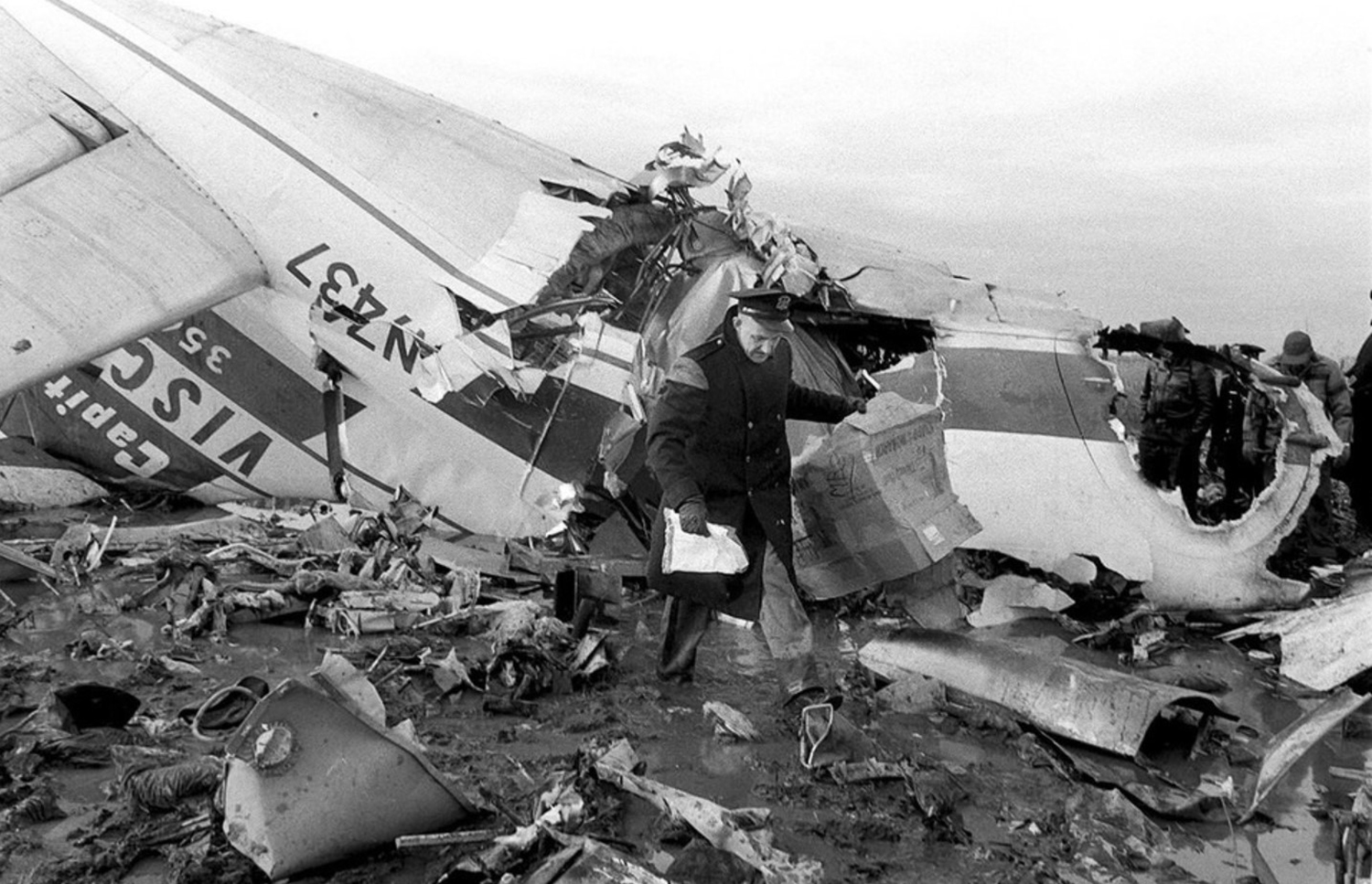
At 2306, four minutes after takeoff, the flight, pursuant to clearance instructions, reported to Flight tower that it was at 3,600 feet and was departing the Flint outer marker. At this time the tower requested the estimated time of arrive at Tri-City and was advised that it was 2315. Flight 67 was then given the following clearance: "ARTC (Air Route Traffic Control) clears Capital 67 to hold north of the Saginaw omni range, one minute pattern, right turn, maintain 3,600 feet. Expect further clearance 2320, change to company frequency for this clearance." This clearance was acknowledged and, as per instructions, the frequency was changed to that of the company at Detroit. At 2310, Capital at Detroit relayed the following clearance to the flight: "ARTC clears Flight 67 for approach at Saginaw (Tri-City) Airport. Report time on the ground to Saginaw radio." These instructions were verified. The flight then called Saginaw ATCS (Air Traffic Communication Station) and was given the local 2300 weather observation and the runway in use, No. 5. The Tri-City Airport does not have a traffic control tower. The 2300 Saginaw weather was reported as: Measured ceiling 900 feet, overcast, visibility 3 miles, light snow showers, temperature 34; dewpoint 33; wind north-northeast 18, peak gusts to 27 knots; altimeter 29.48, comments--drizzle ended and snow showers began at 2225. At 2316 Trip 67 advised Saginaw radio that it was over the airport. A short time later, ground witnesses observed the lights of the aircraft when it was on the downwind leg of the traffic pattern. The aircraft was seen to make a left turn onto base leg and at this time the landing lights of the aircraft were observed to come on. During this portion of the approach the aircraft was flying beneath the overcast, estimated to be 900 feet, and appeared to be descending. When turning on final, Trip 67 flew a short distance beyond the extended centerline of the runway and the turf was seen to steepen for realignment with the runway. Soon after this the aircraft was observed to level off and then to descend steeply and strike the ground. A large fire immediately erupted. The aircraft was totally destroyed and all 47 occupants have been killed.
Probable cause:
The Board determines that the probable cause of this accident was an undetected accretion of ice on the horizontal stabilizer which, in conjunction with a specific airspeed and aircraft configuration, caused a loss of pitch control.
Final Report:

Crash of a Fairchild C-119C-17-FA Flying Boxcar near Bridgeport: 3 killed

Date & Time: Mar 27, 1958 at 1615 LT
Operator:
Registration:
49-0195
Flight Phase:
Flight Type:
Survivors:
No
Schedule:
Sheppard - Carswell
MSN:
10432
YOM:
1949
Crew on board:
3
Crew fatalities:
Pax on board:
0
Pax fatalities:
Other fatalities:
Total fatalities:
3
Circumstances:
En route from Sheppard AFB to Carswell AFB, while cruising at an altitude of 6,000 feet in poor weather conditions, the aircraft collided with a USAF Douglas C-124 Globemaster II. Registered 52-0981, the C-124 was en route from Kelly AFB to Tinker AFB with 15 people on board. Following the collision, both aircraft dove into the ground and crashed in a field located near Bridgeport. All 18 occupants on both aircraft were killed.
Probable cause:
It was determined that the collision was the result of an error on part of the C-119's crew who failed to respect the instructions transmitted by ATC, asking them to fly at an altitude of 7,000 feet. For undetermined reason, the crew continue his route at the insufficient altitude of 6,000 feet, crossing the track of the C-124 which was flying at the same level. Low visibility caused by poor weather conditions was considered as a contributing factor.