Ground fire of a Britten-Norman BN-2A-9 Islander in Porto Velho

Date & Time: Feb 2, 1999 at 1100 LT
Type of aircraft:
Registration:
PT-KNM
Flight Phase:
Flight Type:
Survivors:
Yes
Schedule:
Porto Velho – Lábrea
MSN:
669
YOM:
1972
Country:
Crew on board:
1
Crew fatalities:
Pax on board:
1
Pax fatalities:
Other fatalities:
Total fatalities:
0
Captain / Total flying hours:
260
Captain / Total hours on type:
25.00
Circumstances:
Parked at Porto Velho Airport, the aircraft was prepared for a cargo flight to Lábrea. On board were one passenger, one pilot and a load of foods. When the pilot started the engines, the left engine caught fire. The fire quickly spread to the left wing. Both occupants evacuated the cabin and the aircraft was destroyed by fire.
Probable cause:
The following findings were identified:
- The exact cause of the left engine failure and fire remains unknown,
- The pilot was not qualified to fly such type of aircraft,
- The aircraft was not airworthy at the time of the accident,
- The aircraft maintenance was not performed according to published procedures.
Final Report:

Crash of an Antonov AN-12 in Luanda: 27 killed

Date & Time: Feb 2, 1999 at 0508 LT
Type of aircraft:
Operator:
Registration:
EY-ASS
Flight Type:
Survivors:
No
Site:
Schedule:
Luanda - Lucapa
MSN:
3 3 409 09
YOM:
1963
Country:
Region:
Crew on board:
4
Crew fatalities:
Pax on board:
10
Pax fatalities:
Other fatalities:
Total fatalities:
27
Circumstances:
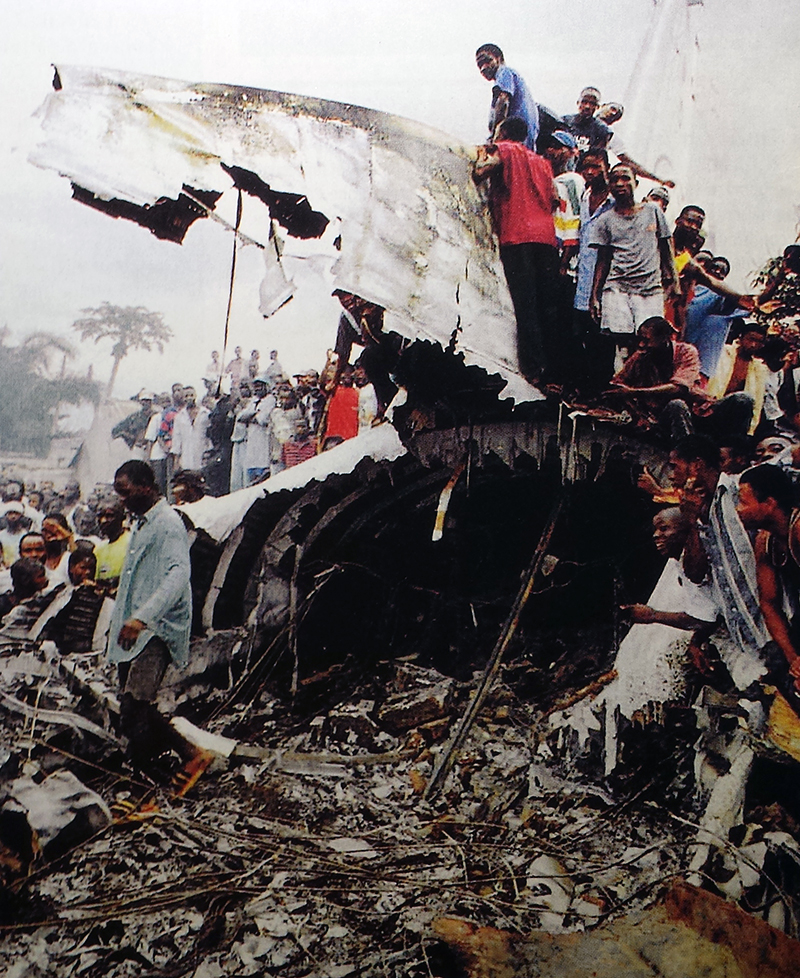
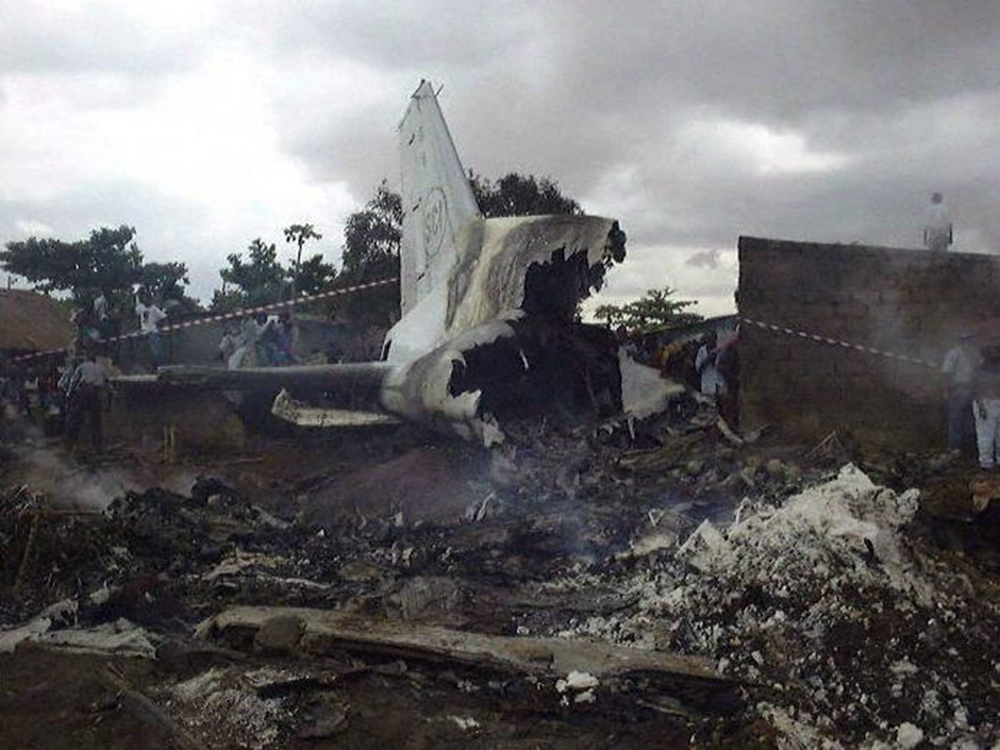
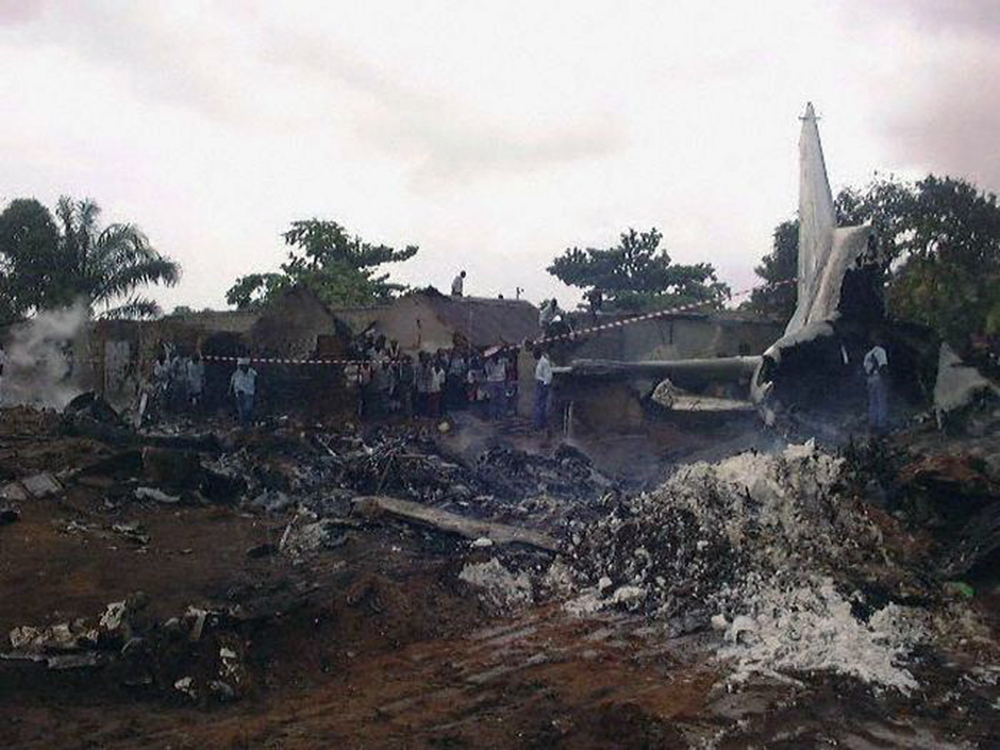
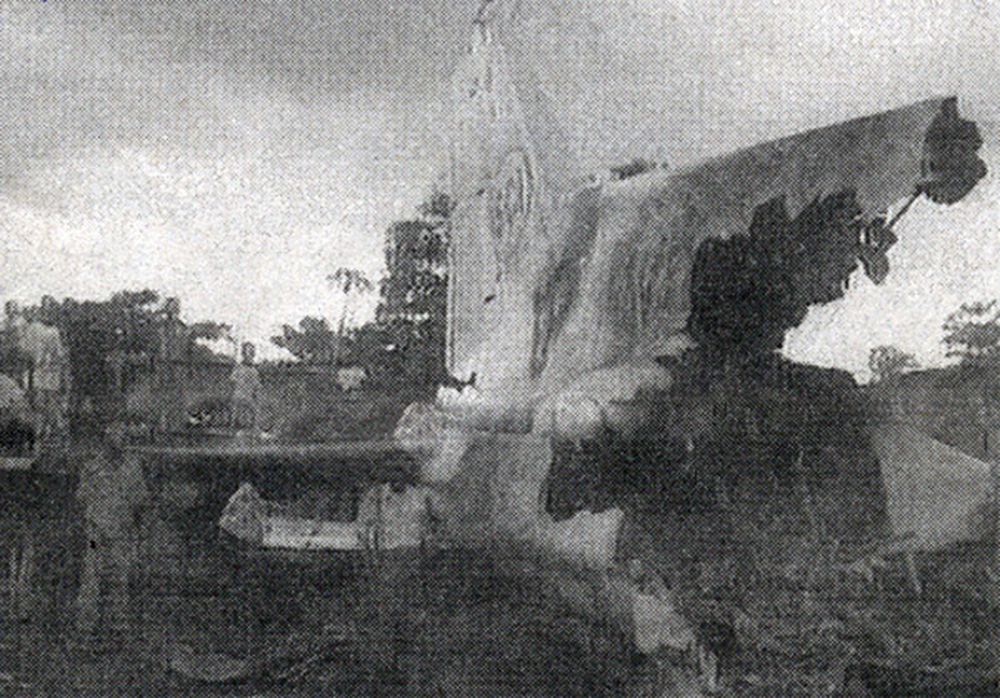
Following a night takeoff from Luanda-4 de Fevereiro Airport, en route on a cargo flight to Lucapa, the captain informed ATC about technical problems with the engine n°1 and was cleared to return for an emergency landing. On final approach, the crew lost control of the airplane that crashed in the district of Bairro Cazenga, less than 5 km short of runway 25 threshold. The aircraft and several houses were destroyed. All 14 occupants as well as 13 people on the ground were killed. Four other people on the ground were seriously injured.
Probable cause:
Failure of the engine n°1 that caught fire during initial climb for unknown reasons.

Crash of a Rockwell Aero Commander 560A in Belleview: 2 killed

Date & Time: Jan 30, 1999 at 1740 LT
Registration:
N919VC
Flight Type:
Survivors:
Yes
Schedule:
Belleview - Belleview
MSN:
560-0290
YOM:
1956
Crew on board:
1
Crew fatalities:
Pax on board:
3
Pax fatalities:
Other fatalities:
Total fatalities:
2
Captain / Total flying hours:
1590
Captain / Total hours on type:
298.00
Aircraft flight hours:
5515
Circumstances:
After takeoff, the flight climbed to 1500 feet and the pilot reduced the engine RPM to 3000. The pilot also reported that within seconds of reducing the engine RPM the left engine sputtered. The pilot turned on the fuel boost pump in an effort to restore full engine power. Immediately afterward, the right engine sputtered and lost power. The pilot turned on the right engine boost pump again in an effort to restore full power. Attempts by the pilot to restore normal engine operation failed. The pilot selected an area for an emergency landing. The pilot recalled that as he prepared for an emergency landing, the airplane would yaw right and left as the engines momentarily gain and lose power. The airplane collided with tops of several trees. The airplanes subsequently collided with a single family home adjacent to the lake. Examination of the airframe and engine assemblies failed to disclose a mechanical malfunction or a component failure. During the examination of the fuel system, approximately 2 1/2 pints of fuel were recovered. The pilot reported that he thought he had about 50 gallons of fuel when he departed.
Probable cause:
The pilot's inadequate preflight planning of the fuel required for the flight that resulted in fuel exhaustion and the subsequent total loss of engine power to both engines.
Final Report:

Crash of a Hindustan Aeronautics HAL-748-219-2 at Arakkoram-Rajali NAS: 8 killed

Date & Time: Jan 11, 1999 at 1545 LT
Operator:
Registration:
H2175
Flight Type:
Survivors:
No
Schedule:
Arakkoram – Tambaram
MSN:
569
YOM:
1978
Country:
Region:
Crew on board:
4
Crew fatalities:
Pax on board:
4
Pax fatalities:
Other fatalities:
Total fatalities:
8
Circumstances:
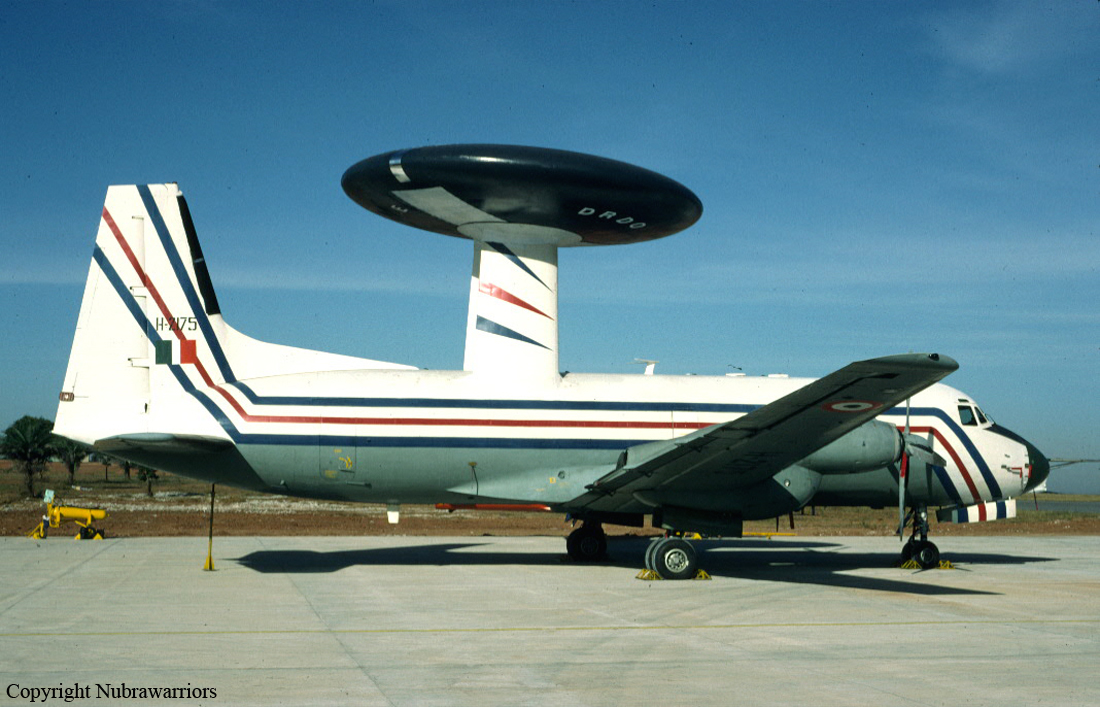
After takeoff from Arakkonam-Rajali NAS, en route to Tambaram AFB, the pilot contacted ATC and declared an emergency and reported major technical problems. He was cleared to return for an emergency landing. On final approach, the aircraft went out of control and crashed in a wooded area located 2,5 km short of runway. The aircraft was destroyed and all eight occupants were killed.
Probable cause:
It is believed that the crew lost control of the aircraft following the separation of the dome located on the top of the fuselage that was recovered about 500 metres from the main wreckage.

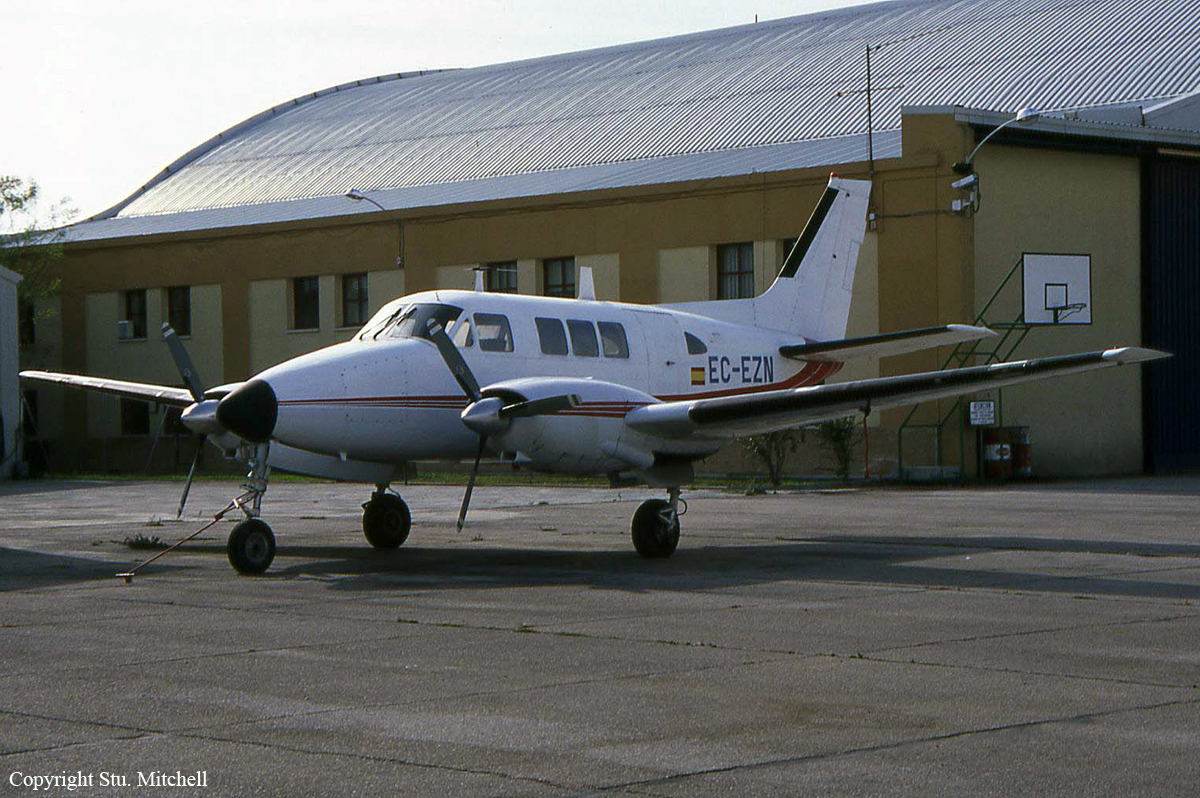
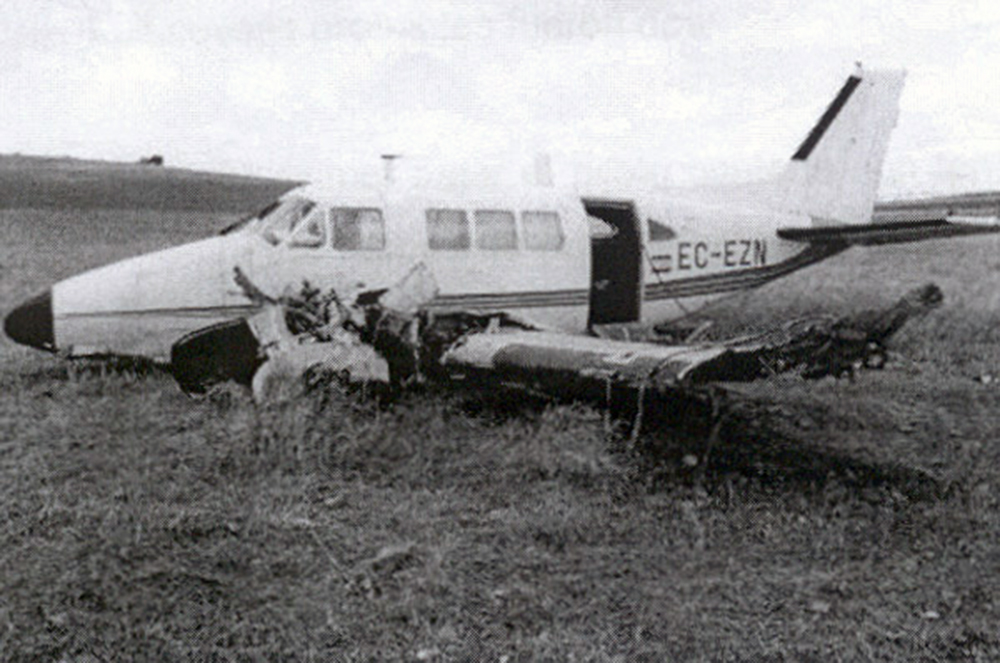
Crash of a Beechcraft 65-A80 Queen Air in Valdepeñas

Date & Time: Jan 9, 1999 at 0920 LT
Type of aircraft:
Operator:
Registration:
EC-EZN
Flight Phase:
Flight Type:
Survivors:
Yes
Schedule:
Valdepeñas – Alicante
MSN:
LD-205
YOM:
1965
Country:
Region:
Crew on board:
1
Crew fatalities:
Pax on board:
1
Pax fatalities:
Other fatalities:
Total fatalities:
0
Captain / Total flying hours:
100
Circumstances:
Shortly after takeoff from Valdepeñas Airport runway 08, while in initial climb, both engines lost power. The pilot elected to make an emergency landing when the aircraft crashed in an open field located 3 km from the airfield. Both occupants escaped uninjured while the aircraft was damaged beyond repair.
Probable cause:
It was determined that both engines stopped simultaneously due to a fuel exhaustion. Investigations revealed that the aircraft remained parked at Valdepeñas Airport for five days without surveillance and it is believed that the fuel was stolen from the tanks. The pilot failed to prepare the flight according to published procedures and failed to realize the tanks were empty before departure. Nevertheless, he reported to the investigators that the fuel gauges were intermittently failing.

Crash of a Beechcraft 200 Super King Air in Libreville: 2 killed

Date & Time: Dec 17, 1998
Operator:
Registration:
F-GHLD
Flight Type:
Survivors:
No
Site:
MSN:
BB-233
YOM:
1977
Country:
Region:
Crew on board:
2
Crew fatalities:
Pax on board:
0
Pax fatalities:
Other fatalities:
Total fatalities:
2
Circumstances:
After takeoff from Libreville-Léon M'Ba Airport, while in initial climb, the crew reported an engine failure and was cleared to return for an emergency landing. On final approach, the aircraft stalled and crashed onto several houses located in a district few km short of runway threshold. The aircraft and several houses were destroyed but there were no casualties on the ground. Nevertheless, both pilots were killed.

Crash of a Beechcraft 350 Super King Air in Istanbul: 2 killed

Date & Time: Dec 5, 1998 at 1210 LT
Operator:
Registration:
TC-DHA
Flight Type:
Survivors:
No
Schedule:
Istanbul - Antalya
MSN:
FL-37
YOM:
1991
Country:
Region:
Crew on board:
2
Crew fatalities:
Pax on board:
0
Pax fatalities:
Other fatalities:
Total fatalities:
2
Circumstances:
After takeoff from Istanbul-Atatürk Airport, on a positioning flight to Antalya, the crew reported technical problems and was cleared to return for an emergency landing. After touchdown, the twin engine aircraft went out of control, veered off runway and eventually collided with containers stored by the apron, bursting into flames. Both pilots were killed.

Crash of a Beechcraft 65-A90 King Air off Port-de-Paix

Date & Time: Nov 29, 1998 at 0815 LT
Type of aircraft:
Operator:
Registration:
N171TE
Flight Phase:
Survivors:
Yes
Schedule:
North Perry – Cap Haïtien
MSN:
LJ-180
YOM:
1966
Country:
Crew on board:
1
Crew fatalities:
Pax on board:
0
Pax fatalities:
Other fatalities:
Total fatalities:
0
Captain / Total flying hours:
4200
Aircraft flight hours:
10119
Circumstances:
According to the pilot, during pre-flight examination of the airplane performed the evening prior to the flight, the fuel gauges read 'around' 3/4 full. Visual examination of the tanks by the pilot revealed the tanks were not full but he believed the quantity was more than adequate to conduct his flight. While at 17000 feet MSL and approximately 60 miles from his destination, both the left engine and right engine suffered fuel exhaustion. After declaring an emergency, the pilot ditched the airplane in the Atlantic Ocean about ten miles off the coast of Isle De La Tortue, Haiti. The pilot received minor injuries and was rescued by the United States Coast Guard at 1730 the same day. Based on data obtained from the Raytheon Aircraft Company and 3/4 full fuel tanks, the total available flight time for this flight was approximately 4.00 hours. The actual flight time for this flight was 3.25 hours.
Probable cause:
Inadequate preflight planning/preparation by the pilot, which resulted in fuel exhaustion due to an inadequate supply of fuel. A factor was the terrain ( water).
Final Report:

Crash of a Lockheed L-1329-25 JetStar II in Austin

Date & Time: Nov 27, 1998 at 1405 LT
Type of aircraft:
Operator:
Registration:
N787WB
Survivors:
Yes
Schedule:
Houston - Austin
MSN:
5210
Crew on board:
2
Crew fatalities:
Pax on board:
1
Pax fatalities:
Other fatalities:
Total fatalities:
0
Captain / Total flying hours:
8350
Captain / Total hours on type:
750.00
Aircraft flight hours:
5938
Circumstances:
During the landing roll, the nose gear settled onto the runway, and the aircraft veered hard to the right. Application of the left brake had no effect. The airplane skidded, exited the runway, struck a runway marker, and collapsed the nose landing gear. The steering actuator had failed, the hydraulic fluid was lost from the steering actuator, and the fuselage received structural damage. The steering actuator assembly, p/n 1501-4, had accumulated 5,938.0 hours since new and had not been repaired or overhauled. Examination of the nose gear steering actuator cylinder by the metallurgist revealed that the cylinder fracture was the result of fatigue cracking initiated by an abrupt machining transition from the 45 degree thread ring chamfer to the straight wall of the cylinder. The engineering drawings appear to depict the radius at the fatigue origin as a continuation of the 0.03 inch to 0.06 inch radius adjacent to the fracture. However, the drawing is not clear on the specific intent of the transition between the nearby radius and the internal threads for the nut.
Probable cause:
The steering actuator fatigue failure resulting from inadequate procedure documentation for the manufacturing process.
Final Report:

Crash of a Cessna 208 Caravan I in Warri

Date & Time: Nov 27, 1998 at 1025 LT
Type of aircraft:
Operator:
Registration:
5N-PAN
Survivors:
Yes
Schedule:
Lagos – Lekki – Warri
MSN:
208-0200
YOM:
1991
Location:
Country:
Region:
Crew on board:
1
Crew fatalities:
Pax on board:
2
Pax fatalities:
Other fatalities:
Total fatalities:
0
Aircraft flight hours:
4613
Circumstances:
A float-equipped Cessna Caravan, 5N-PAN, departed Lagos (LOS) on a chartered flight to Warri with a scheduled stop-over at Lekki. The aircraft was airborne at 07:34 hours UTC and was cleared to 1,000 feet by Lagos Tower and landed at Lekki at 07:42 hours UTC. At 08:20 hours UTC, the aircraft departed Lekki and called Lagos Approach which cleared it to 3,500 feet with further instructions for the aircraft to report at TMA. The aircraft reported at TMA and continued its normal flight at 3,500 feet. On contact with Escravos Tower, it requested for a descent from 3,500 feet to 700 feet in order to overfly the Chevron facility at Opuekaba for an aerial inspection. After the inspection, the aircraft was cleared to 2,500 feet to resume its normal flight to Warri. The pilot made an outbound turn to line up for the final approach to runway 03. At about five nm DME from Warri the pilot chose to reduce speed to 120 knots and he selected gear down with flap 15°. At three nautical miles out, the aircraft was about 900 feet high above the approach path, and cleared to land. The aircraft was now configured for landing with flap at 30° and the pilot reduced the speed to between 85 and 90 knots. At about 1.5 miles out, the aircraft was between 350 - 400 feet high, gliding with 400 lb of torque, the pilot felt a small shudder from the engine which was instantaneously followed by a need for power input, so he advanced the throttle but there was no response from the engine. He quickly retracted the flaps and feathered the propeller. Then the pilot re-selected flap 30° and also unfeathered the propeller which restored the engine to full torque. The pilot decided to abandon the approach mainly because of the a building structure ahead, close to the runway threshold. The pilot chose to veer the airplane to the left of the approach path centerline and ditched into the swampy terrain, cutting through some scattered trees and shrubbery.
Probable cause:
The probable cause of the accident was the little old fractured cotter pin which lodged itself in the orifice and caused the BOV to malfunction at the very critical instance when more power output was demanded from the powerplant. The engine did not completely flameout, because of the position of the BOV valve in partially/fully open position which, could only sustain idle running of the engine.