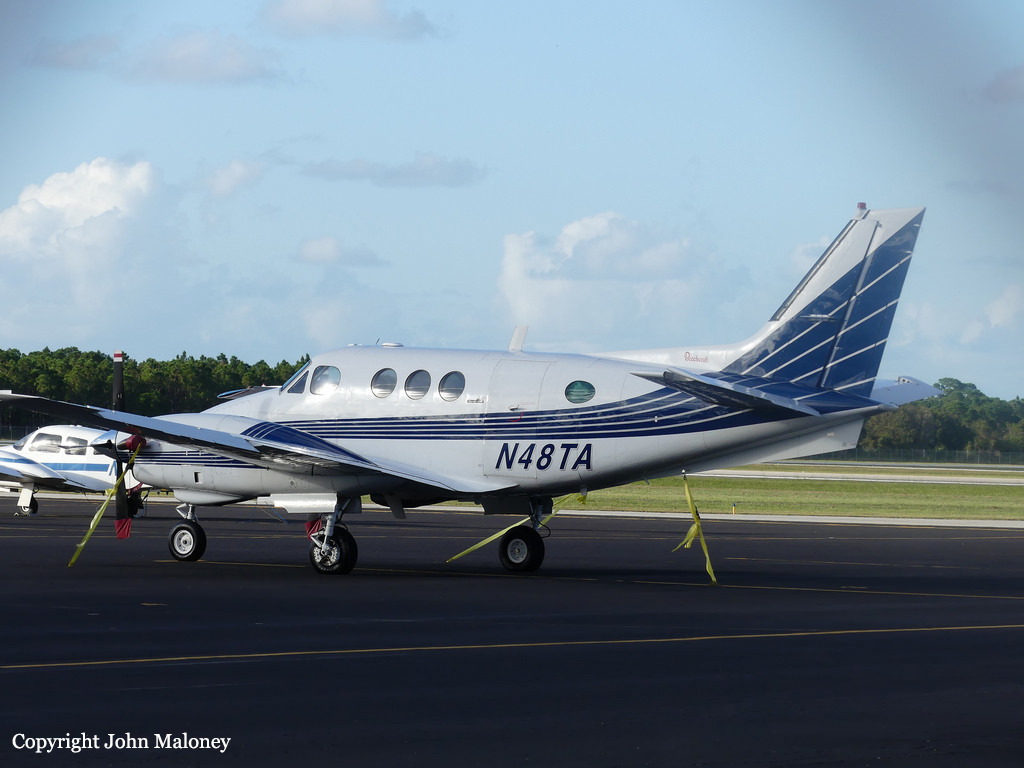
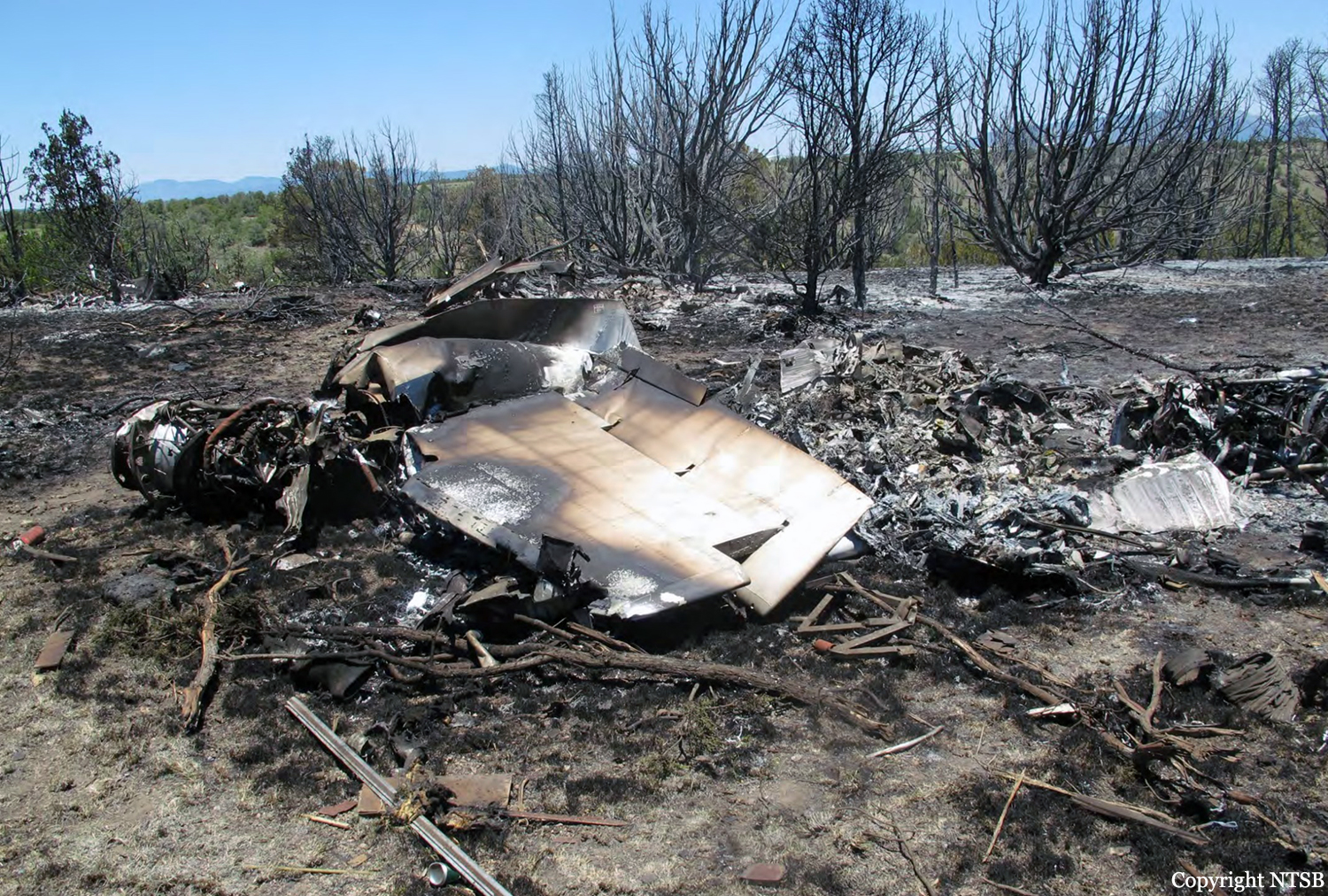
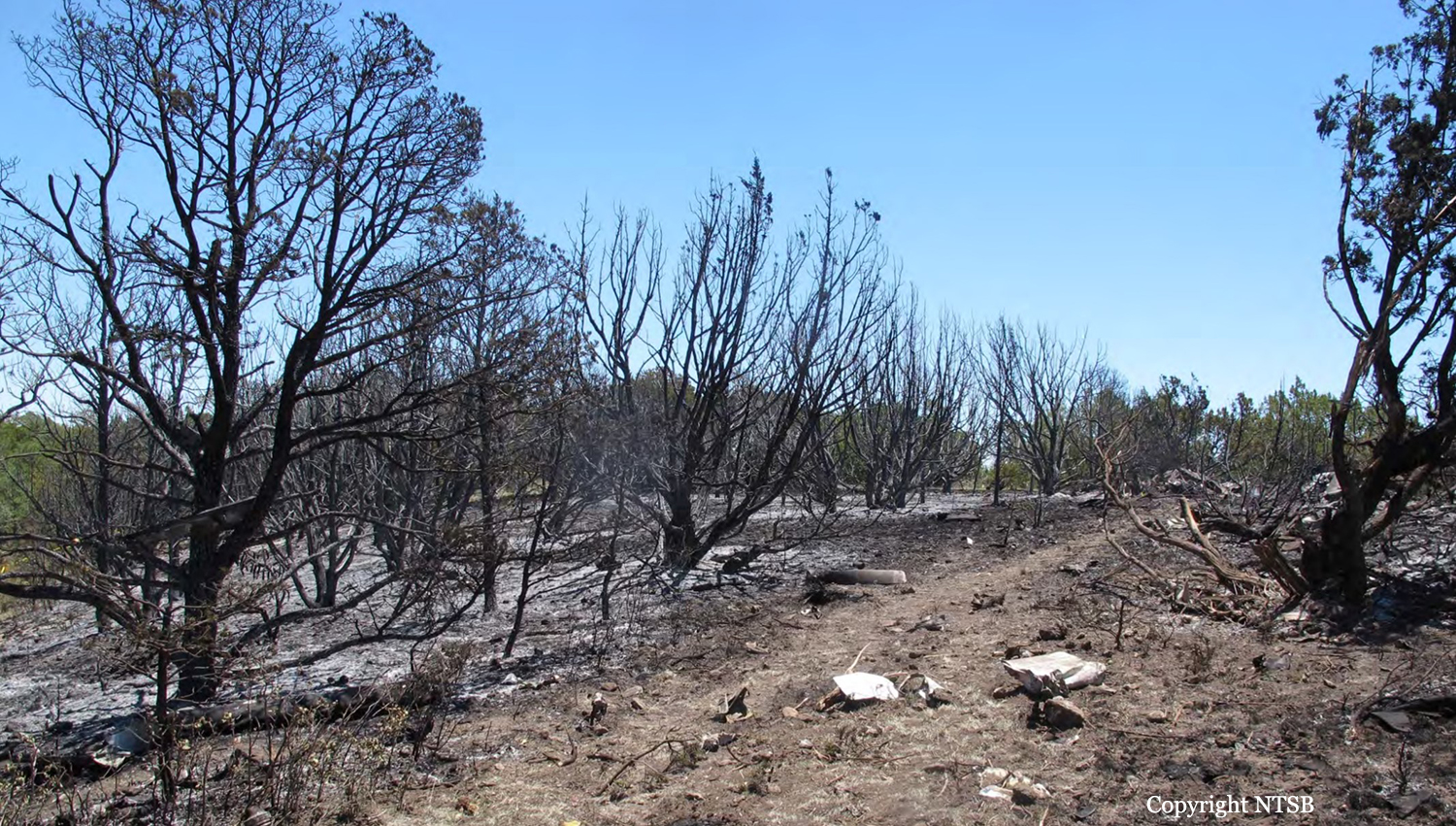
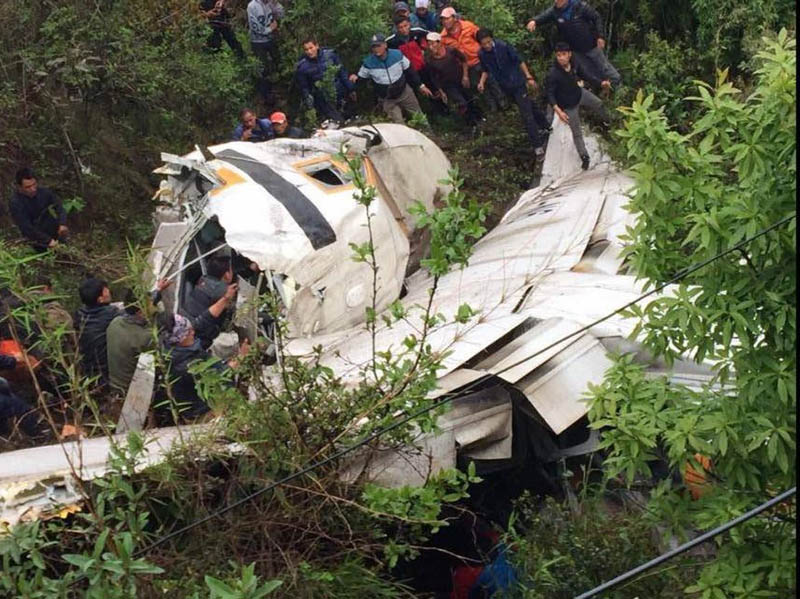
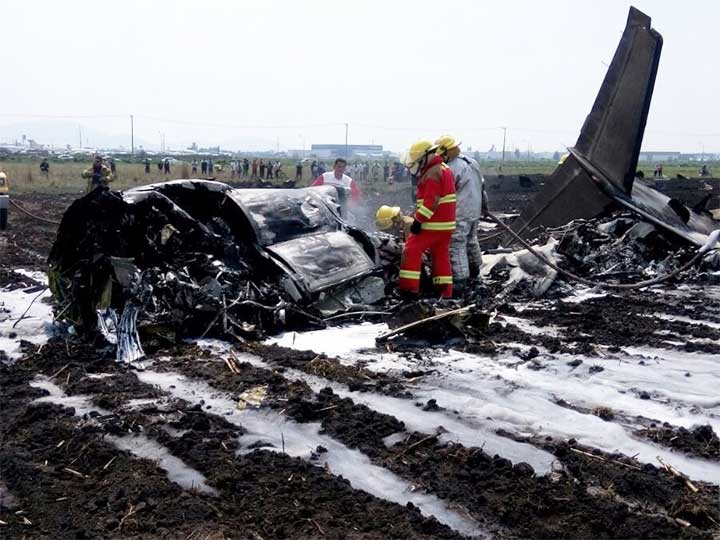
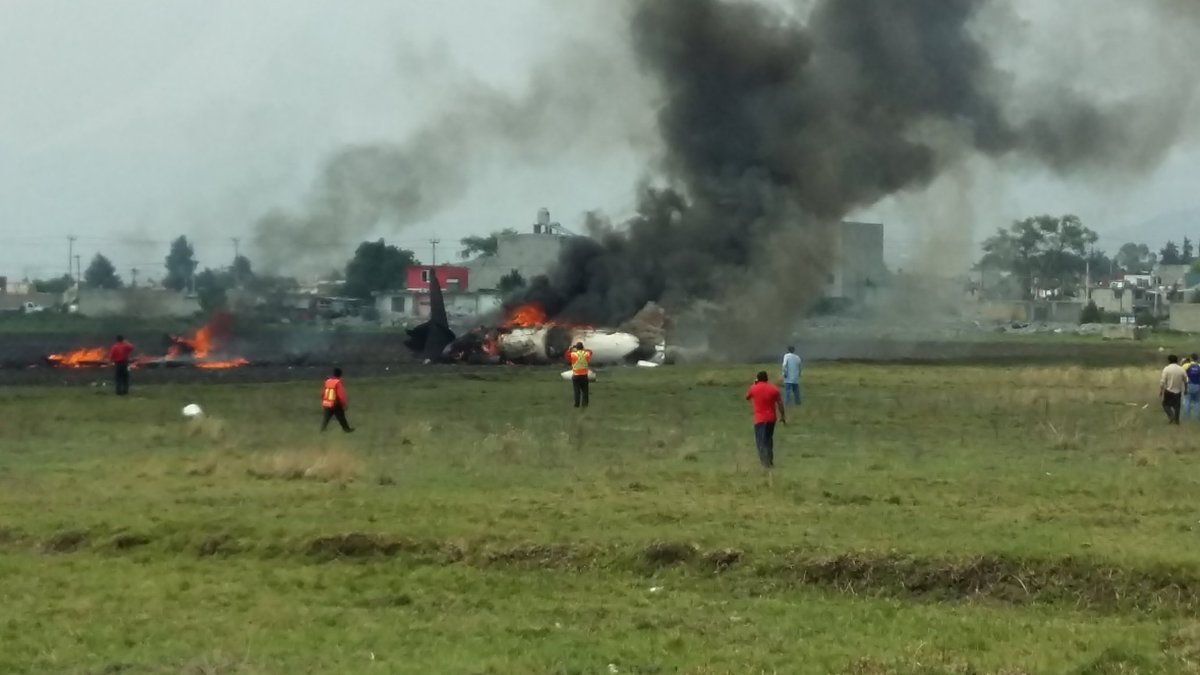
Crash of a Beechcraft E90 King Air in Ruidoso: 2 killed

Date & Time: Jun 13, 2017 at 2210 LT
Type of aircraft:
Operator:
Registration:
N48TA
Flight Phase:
Flight Type:
Survivors:
No
Schedule:
Ruidoso – Abilene
MSN:
LW-283
YOM:
1978
Crew on board:
1
Crew fatalities:
Pax on board:
1
Pax fatalities:
Other fatalities:
Total fatalities:
2
Captain / Total flying hours:
1073
Captain / Total hours on type:
25.00
Aircraft flight hours:
12621
Circumstances:
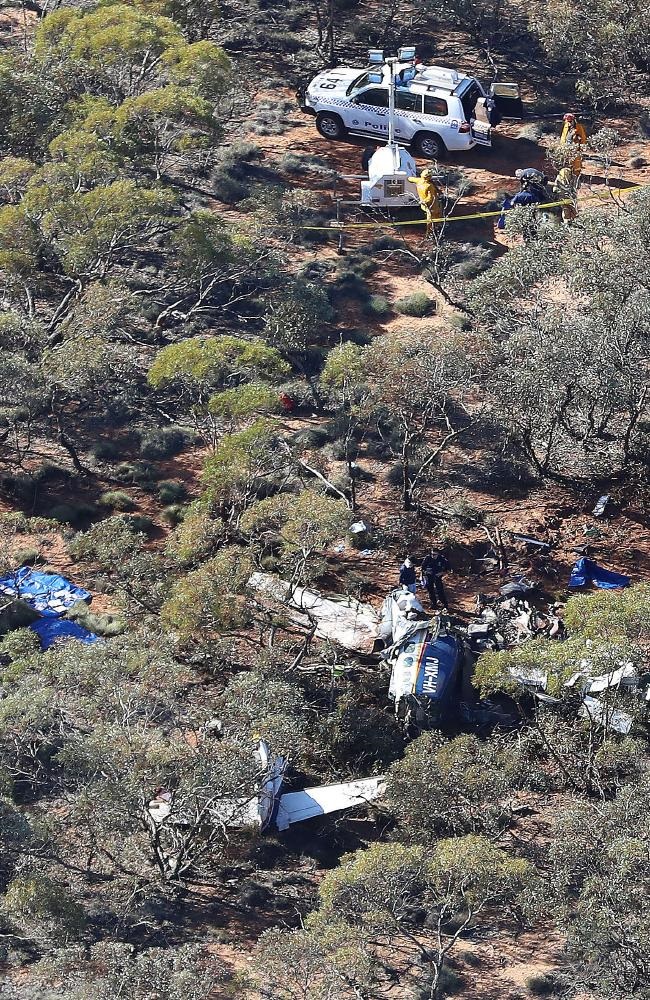
The commercial pilot had filed an instrument flight rules flight plan and was departing in dark night visual meteorological conditions on a cross-country personal flight. A witness at the departure airport stated that during takeoff, the airplane sounded and looked normal. The witness said that the airplane lifted off about halfway down runway 24, and there was "plenty" of runway remaining for the airplane to land. The witness lost sight of the airplane and did not see the accident because the airport hangars blocked her view. The wreckage was located about 2,400 ft southeast of the departure end of runway 24. Examination of the accident site indicated that the airplane impacted in a nose-down attitude with a left bank of about 20°. A left turn during departure was consistent with the airport's published instrument departure procedures for obstacle avoidance, which required an immediate climbing left turn while proceeding to a navigational beacon located about 7 miles east-northeast of the airport. Examination of the wreckage did not reveal any evidence of preimpact mechanical malfunctions that would have precluded normal operation. The pilot had reportedly been awake for about 15 hours and was conducting the departure about the time he normally went to sleep and, therefore, may have been fatigued about the time of the event; however, given the available evidence, it was impossible to determine the role of fatigue in this event. Although the circumstances of the accident are consistent with spatial disorientation, there was insufficient evidence to determine whether it may have played a role in the sequence of events.
Probable cause:
The pilot's failure to maintain clearance from terrain after takeoff during dark night conditions.
Final Report:

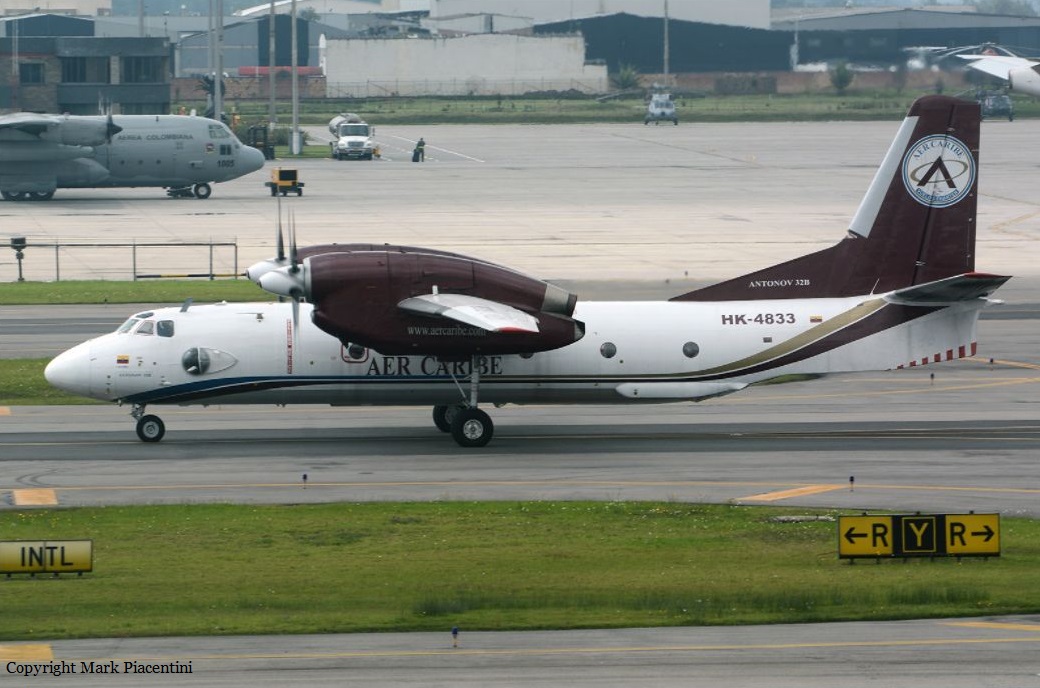
Crash of an Antonov AN-32B in Tarapacá

Date & Time: Jun 11, 2017 at 1712 LT
Type of aircraft:
Operator:
Registration:
HK-4833
Survivors:
Yes
Schedule:
La Pedrera – Tarapacá
MSN:
34 04
YOM:
1993
Country:
Crew on board:
5
Crew fatalities:
Pax on board:
40
Pax fatalities:
Other fatalities:
Total fatalities:
0
Captain / Total flying hours:
8400
Captain / Total hours on type:
1475.00
Copilot / Total flying hours:
1560
Copilot / Total hours on type:
426
Aircraft flight hours:
3409
Aircraft flight cycles:
3182
Circumstances:
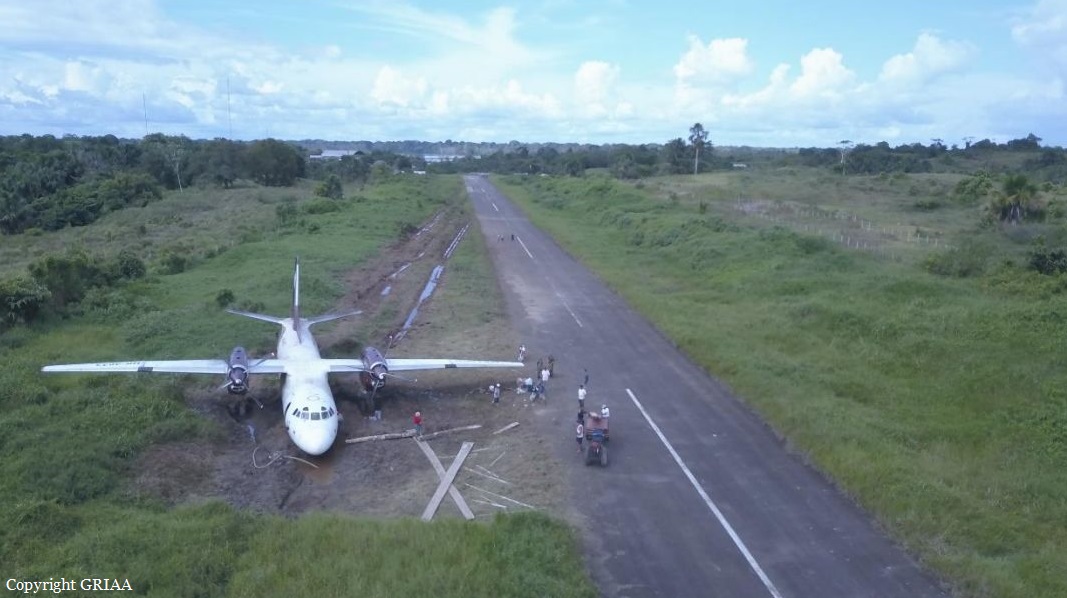
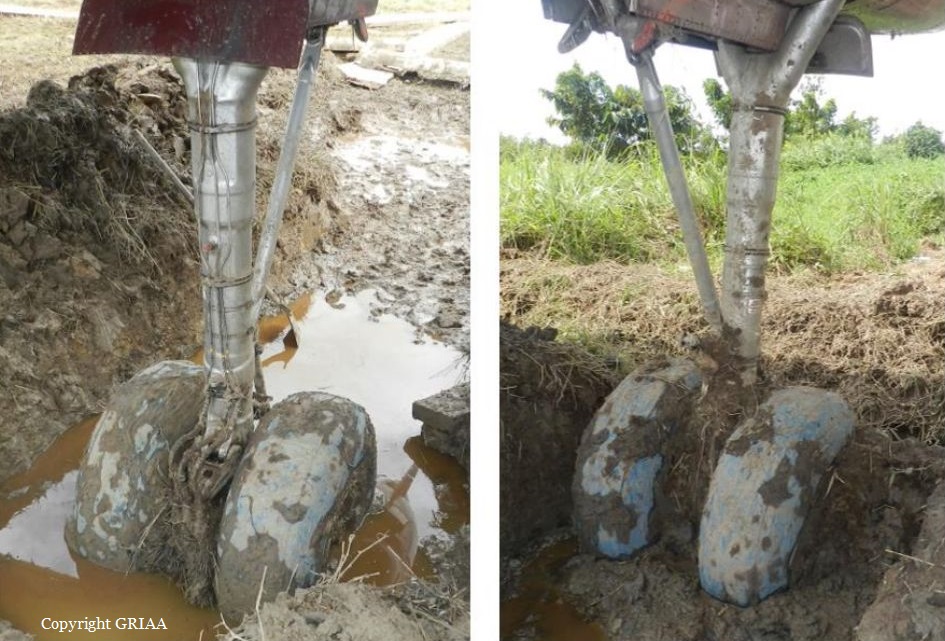
Following an unventful charter flight from La Pedrera, the crew initiated the approach to Tarapacá Airfield. Just after touchdown on runway 25, the aircraft went out of control and veered off runway to the right. While contacting soft ground, the airplane rolled for few dozen metres and became stuck in mud. All 45 occupants evacuated safely and the aircraft was damaged beyond repair.
Probable cause:
The following findings were identified:
- Inappropriate decision by the aircraft operator to rush the aircraft's initial route to an aerodrome unknown to the company, not appropriate to the type of aircraft and not authorised in its Operating Specifications, without at least a proper risk assessment.
- Inadequate crew decision to accept and decide to proceed to an unknown aerodrome, without due knowledge of its characteristics, without prior experience or training in aerodrome operation and without at least a risk assessment.
- A side runway excursion, from 24 metres from the threshold of runway 25, as a result of a probable unstabilised approach resulting in an off-axis landing.
Contributing factors:
- Inefficient planning and supervision of operations by the aircraft operator, by scheduling the operation to an unknown airfield.
- Failure of the company to comply with the contents of the Dispatch Manual and General Operations Manual, in relation to the procedures that must be complied with before operating new routes, new airports or special airports, in aspects such as route analysis, runway analysis, risk management and crew requirements.
- Ignorance of the Tarapacá runway by the crew.
Final Report:

Crash of a Fokker F27 Friendship 600 in Garbaharey

Date & Time: Jun 3, 2017 at 1120 LT
Type of aircraft:
Registration:
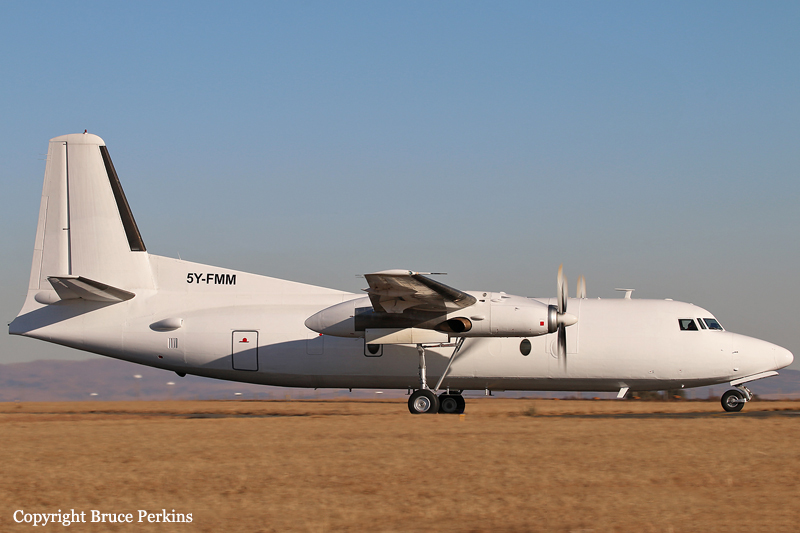
5Y-FMM
Flight Type:
Survivors:
Yes
Schedule:
Mogadishu - Garbaharey
MSN:
10318
YOM:
1967
Country:
Region:
Crew on board:
4
Crew fatalities:
Pax on board:
0
Pax fatalities:
Other fatalities:
Total fatalities:
0
Captain / Total flying hours:
3600
Circumstances:
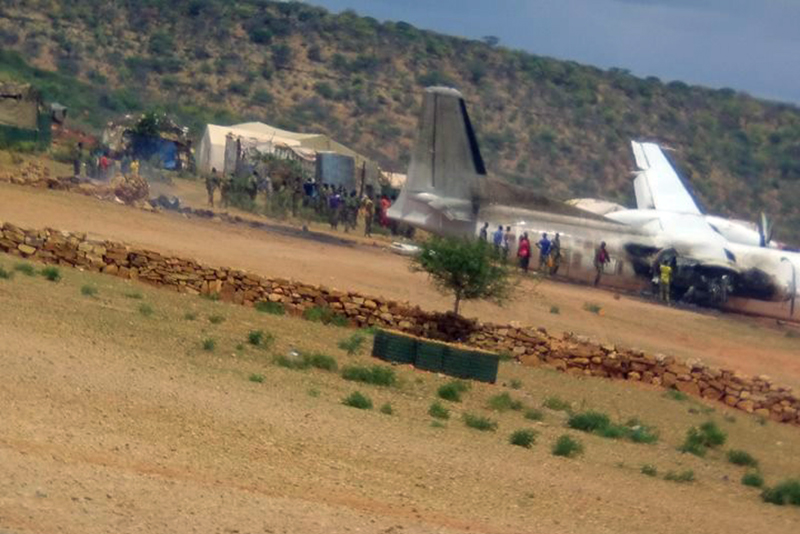
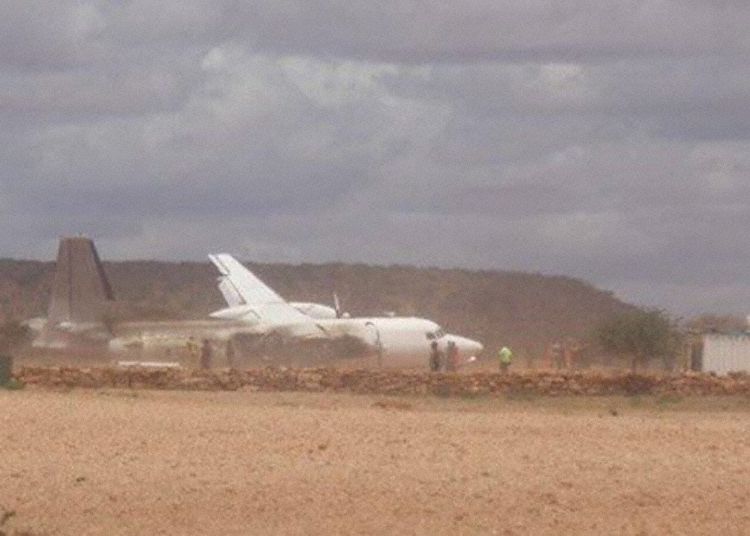
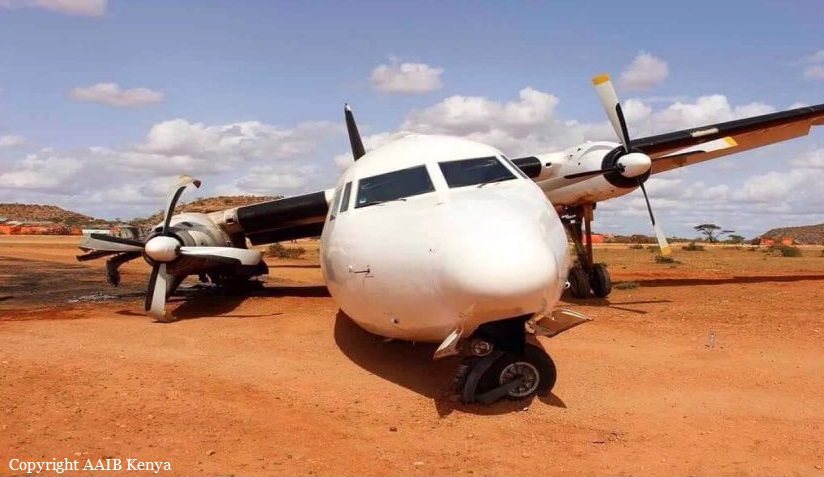
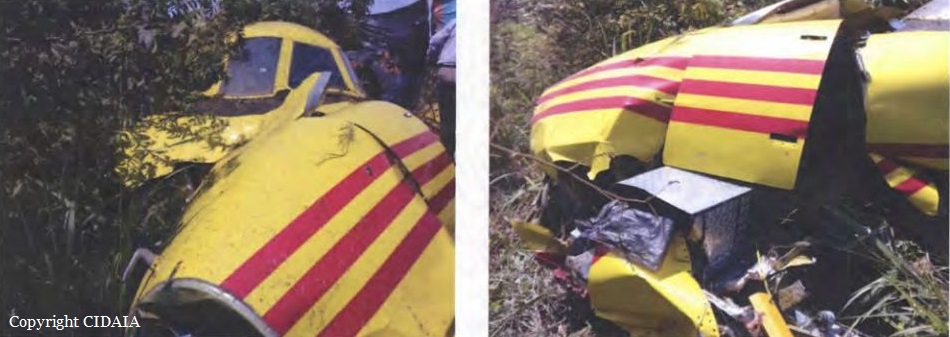
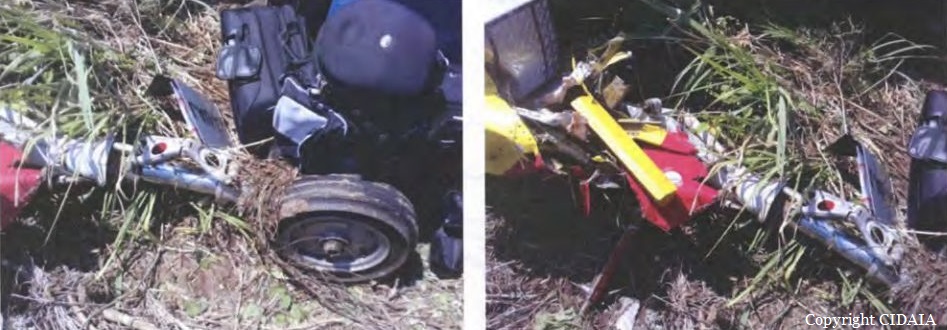
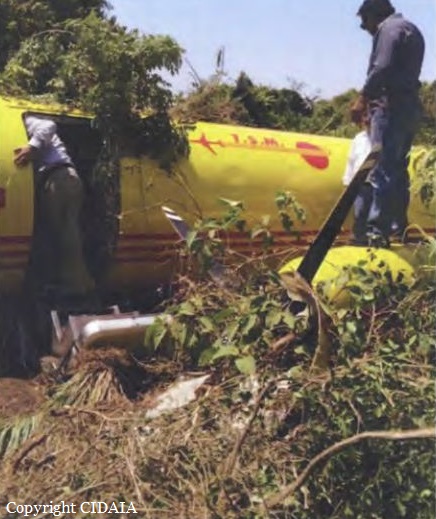
On 3rd June 2016 at 1120 hours, a Fokker 27/Mk600 registration 5Y-FMM operated by Safari Express Cargo Ltd, courtesy of the WFP was ferrying relief supplies from Mogadishu to Garbaharrey Airport was involved in an accident on landing at the destination airport. On touch down, the right hand main landing gear collapsed resulting from a collision with an obstacle of approximately 2 meter high on short final approach. The aircraft subsequently had a runway excursion to the starboard side. A segment of the right hand wing contacted the ground and was severed off from the rest of the wing with ensuing fuel spillage and fire. All the four propeller blades of the starboard engine contacted the ground surface and suffered rearwards bends. The fire was however contained before spreading further. All four crew members were able to evacuate safely while the aircraft was damaged beyond repair.
Final Report:

Crash of a Swearingen SA227AC Metro III in Tampico

Date & Time: Jun 2, 2017 at 2245 LT
Type of aircraft:
Operator:
Registration:
XA-UAJ
Flight Type:
Survivors:
Yes
Schedule:
Saltillo – Puebla
MSN:
AC-586
YOM:
1984
Country:
Crew on board:
2
Crew fatalities:
Pax on board:
0
Pax fatalities:
Other fatalities:
Total fatalities:
0
Captain / Total flying hours:
3280
Copilot / Total flying hours:
1144
Aircraft flight hours:
35318
Aircraft flight cycles:
43028
Circumstances:
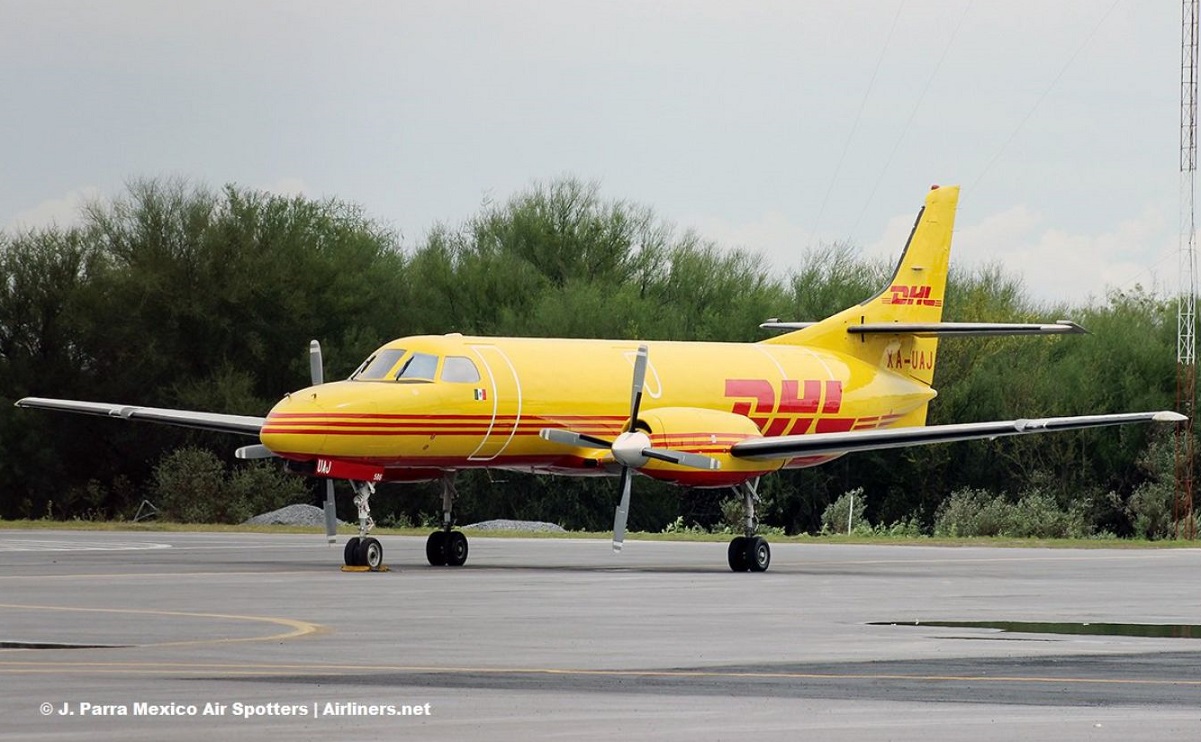
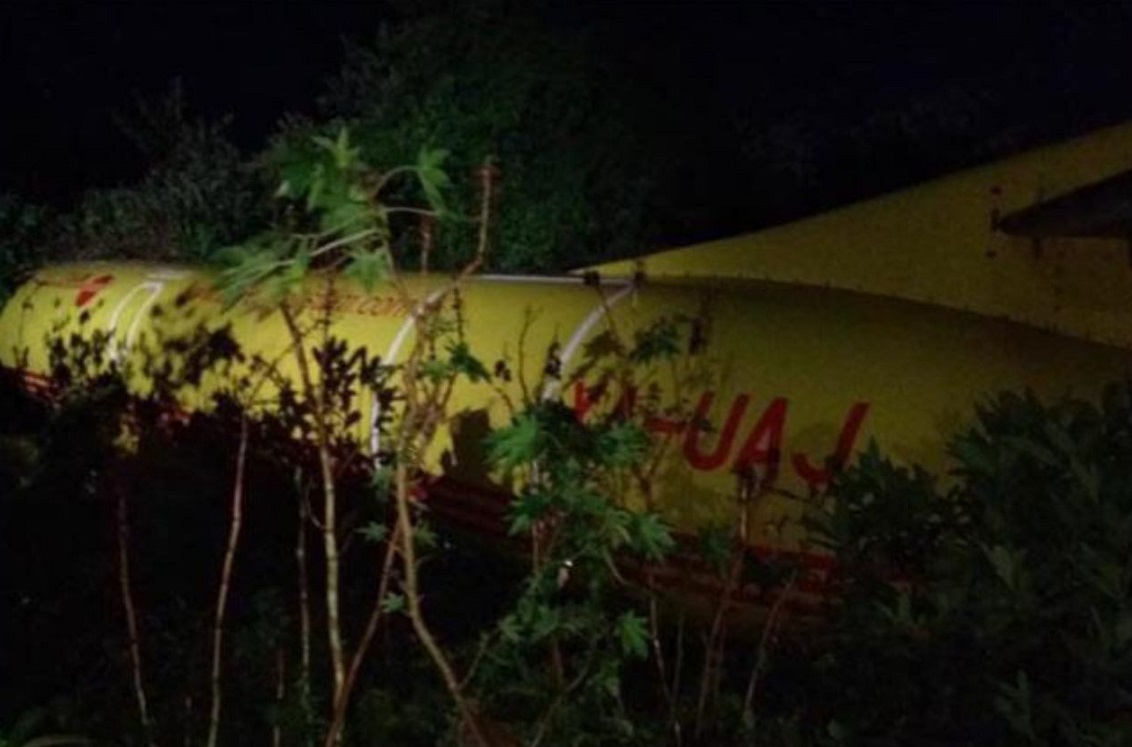
The twin engine aircraft departed Saltillo Airport on a night cargo flight to Puebla, carrying two pilots and a load of 550 kilos of various goods. En route, the crew declared an emergency and reported a low fuel condition before being cleared to divert to Tampico-General Francisco Javier Mina Airport. On final approach, both engines stopped and the aircraft descended into trees and crashed in a wooded area located 850 metres short of runway 31. Both pilots were slightly injured and the aircraft was damaged beyond repair.
Probable cause:
Emergency landing due to an inadequate pre-flight of the aircraft which resulted in the loss of power of both engines during the cruise flight due to exhaustion of fuel on board.
Contributing factors:
- Lack of adherence to flight planning procedures.
- Lack of coordination between captain and operations officer during pre-flight preparation.
- Lack of supervision of dispatcher activities.
Final Report:

Crash of a Cessna 441 Conquest II in Renmark: 3 killed

Date & Time: May 30, 2017 at 1630 LT
Type of aircraft:
Operator:
Registration:
VH-XMJ
Flight Phase:
Flight Type:
Survivors:
No
Schedule:
Renmark - Adelaide
MSN:
441-0113
YOM:
1980
Country:
Region:
Crew on board:
3
Crew fatalities:
Pax on board:
0
Pax fatalities:
Other fatalities:
Total fatalities:
3
Captain / Total flying hours:
14751
Captain / Total hours on type:
987.00
Copilot / Total flying hours:
5000
Copilot / Total hours on type:
1000
Aircraft flight hours:
13845
Circumstances:
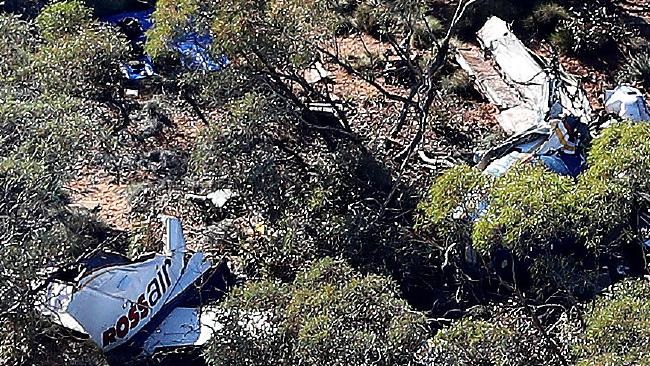
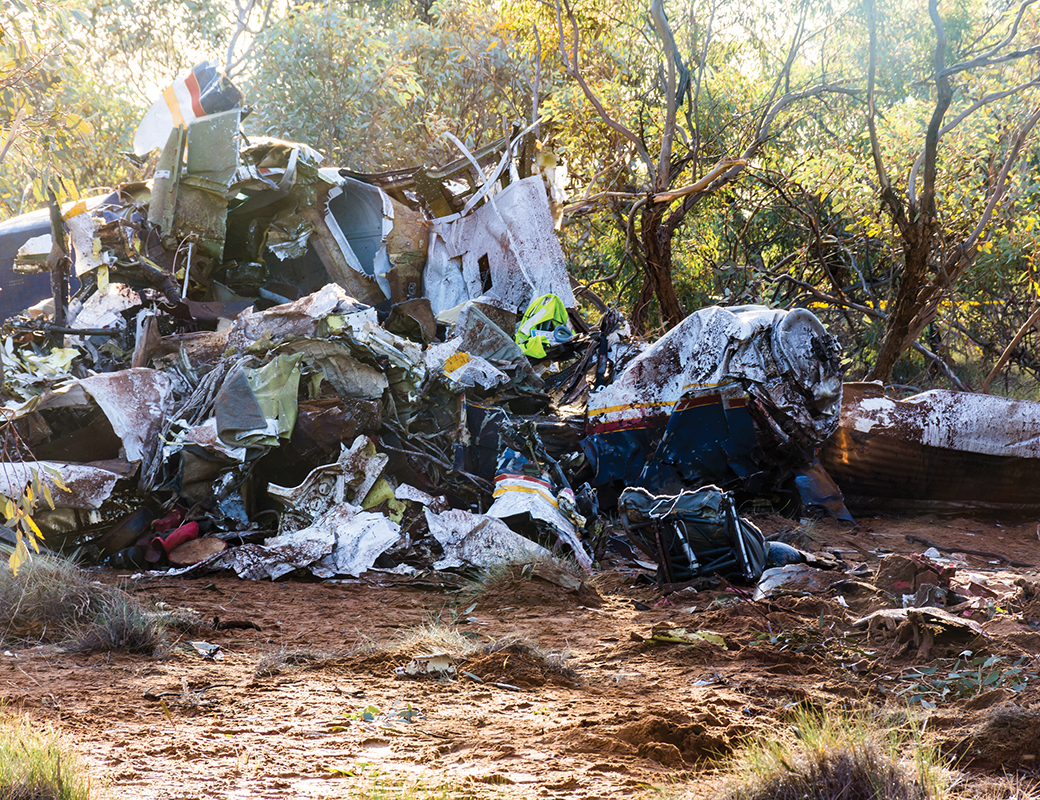
On 30 May 2017, a Cessna 441 Conquest II (Cessna 441), registered VH-XMJ (XMJ) and operated by AE Charter, trading as Rossair, departed Adelaide Airport, South Australia for a return flight via Renmark Airport, South Australia. On board the aircraft were:
• an inductee pilot undergoing a proficiency check, flying from the front left control seat
• the chief pilot conducting the proficiency check, and under assessment for the company training and checking role for Cessna 441 aircraft, seated in the front right control seat
• a Civil Aviation Safety Authority flying operations inspector (FOI), observing and assessing the flight from the first passenger seat directly behind the left hand pilot seat.
Each pilot was qualified to operate the aircraft. There were two purposes for the flight. The primary purpose was for the FOI to observe the chief pilot conducting an operational proficiency check (OPC), for the purposes of issuing him with a check pilot approval on the company’s Cessna 441 aircraft. The second purpose was for the inductee pilot, who had worked for Rossair previously, to complete an OPC as part of his return to line operations for the company. The three pilots reportedly started their pre-flight briefing at around 1300 Central Standard Time. There were two parts of the briefing – the FOI’s briefing to the chief pilot, and the chief pilot’s briefing to the inductee pilot. As the FOI was not occupying a control seat, he was monitoring and assessing the performance of the chief pilot in the conduct of the OPC. There were two distinct exercises listed for the flight (see the section titled Check flight sequences). Flight exercise 1 detailed that the inductee pilot was to conduct an instrument departure from Adelaide Airport, holding pattern and single engine RNAV2 approach, go around and landing at Renmark Airport. Flight exercise 2 included a normal take-off from Renmark Airport, simulated engine failure after take-off, and a two engine instrument approach on return to Adelaide. The aircraft departed from Adelaide at 1524, climbed to an altitude about 17,000 ft above mean sea level, and was cleared by air traffic control (ATC) to track to waypoint RENWB, which was the commencement of the Renmark runway 073 RNAV-Z GNSS approach. The pilot of XMJ was then cleared to descend, and notified ATC that they intended to carry out airwork in the Renmark area. The pilot further advised that they would call ATC again on the completion of the airwork, or at the latest by 1615. No further transmissions from XMJ were recorded on the area frequency and the aircraft left surveillance coverage as it descended towards waypoint RENWB. The common traffic advisory frequency used for air-to-air communications in the vicinity of Renmark Airport recorded several further transmissions from XMJ as the crew conducted practice holding patterns, and a practice runway 07 RNAV GNSS approach. Voice analysis confirmed that the inductee pilot made the radio transmissions, as expected for the check flight. At the completion of the approach, the aircraft circled for the opposite runway and landed on runway 25, before backtracking and lining up for departure. That sequence varied from the planned exercise in that no single-engine go-around was conducted prior to landing at Renmark. At 1614, the common traffic advisory frequency recorded a transmission from the pilot of XMJ stating that they would shortly depart Renmark using runway 25 to conduct further airwork in the circuit area of the runway. A witness at the airport reported that, prior to the take-off roll, the aircraft was briefly held stationary in the lined-up position with the engines operating at significant power. The take-off roll was described as normal however, and the witness looked away before the aircraft became airborne. The aircraft maintained the runway heading until reaching a height of between 300-400 ft above the ground (see the section titled Recorded flight data). At that point the aircraft began veering to the right of the extended runway centreline (Figures 1 and 15). The aircraft continued to climb to about 600 ft above the ground (700 ft altitude), and held this height for about 30 seconds, followed by a descent to about 500 ft (Figures 2 and 13). The information ceased 5 seconds later, which was about 60 seconds after take-off. A distress beacon broadcast was received by the Joint Rescue Coordination Centre and passed on to ATC at 1625. Following an air and ground search the aircraft was located by a ground party at 1856 about 4 km west of Renmark Airport. All on board were fatally injured and the aircraft was destroyed.
Probable cause:
Findings:
From the evidence available, the following findings are made with respect to the collision with terrain involving Cessna 441, registered VH-XMJ, that occurred 4 km west of Renmark Airport,
South Australia on 30 May 2017. These findings should not be read as apportioning blame or liability to any particular organisation or individual.
Contributing factors:
• Following a planned simulated engine failure after take-off, the aircraft did not achieve the expected single engine climb performance, or target airspeed, over the final 30 seconds of the flight.
• The exercise was not discontinued when the aircraft’s single engine performance and airspeed were not attained. That was probably because the degraded aircraft performance, or the
associated risk, were not recognised by the pilots occupying the control seats.
• It is likely that the method of simulating the engine failure and pilot control inputs, together or in isolation, led to reduced single engine aircraft performance and asymmetric loss of control.
• Not following the recommended procedure for simulating an engine failure in the Cessna 441 pilot’s operating handbook meant that there was insufficient height to recover following the loss of control.
Other factors that increased risk:
• The Rossair training and checking manual procedure for a simulated engine failure in a turboprop aircraft was inappropriate and, if followed, increased the risk of asymmetric control loss.
• The flying operations inspector was not in a control seat and did not share a communication systems with the crew. Consequently, he had reduced ability to actively monitor the flight and
communicate any identified performance degradation.
• The inductee pilot had limited recent experience in the Cessna 441, and the chief pilot had an extended time period between being training and being tested as a check pilot on this aircraft. While both pilots performed the same exercise during a practice flight the week before, it is probable that these two factors led to a degradation in the skills required to safely perform and monitor the simulated engine failure exercise.
• The chief pilot and other key operational managers within Rossair were experiencing high levels of workload and pressure during the months leading up to the accident.
• In the 5 years leading up to the accident, the Civil Aviation Safety Authority had conducted numerous regulatory service tasks for the air transport operator and had regular communication with the operator’s chief pilots and other personnel. However, it had not conducted a systemic or detailed audit during that period, and its focus on a largely informal and often undocumented approach to oversight increased the risk that organisational or systemic issues associated with the operator would not be effectively identified and addressed.
Other findings:
• A lack of recorded data from this aircraft reduced the available evidence about handling aspects and cockpit communications. This limited the extent to which potential factors contributing to the accident could be analysed.
Final Report:

Crash of an Antonov AN-26 in Balashov: 1 killed

Date & Time: May 30, 2017 at 0640 LT
Type of aircraft:
Operator:
Registration:
RF-36160
Flight Type:
Survivors:
Yes
Schedule:
Balashov - Balashov
MSN:
80 01
YOM:
1979
Country:
Region:
Crew on board:
6
Crew fatalities:
Pax on board:
0
Pax fatalities:
Other fatalities:
Total fatalities:
1
Circumstances:
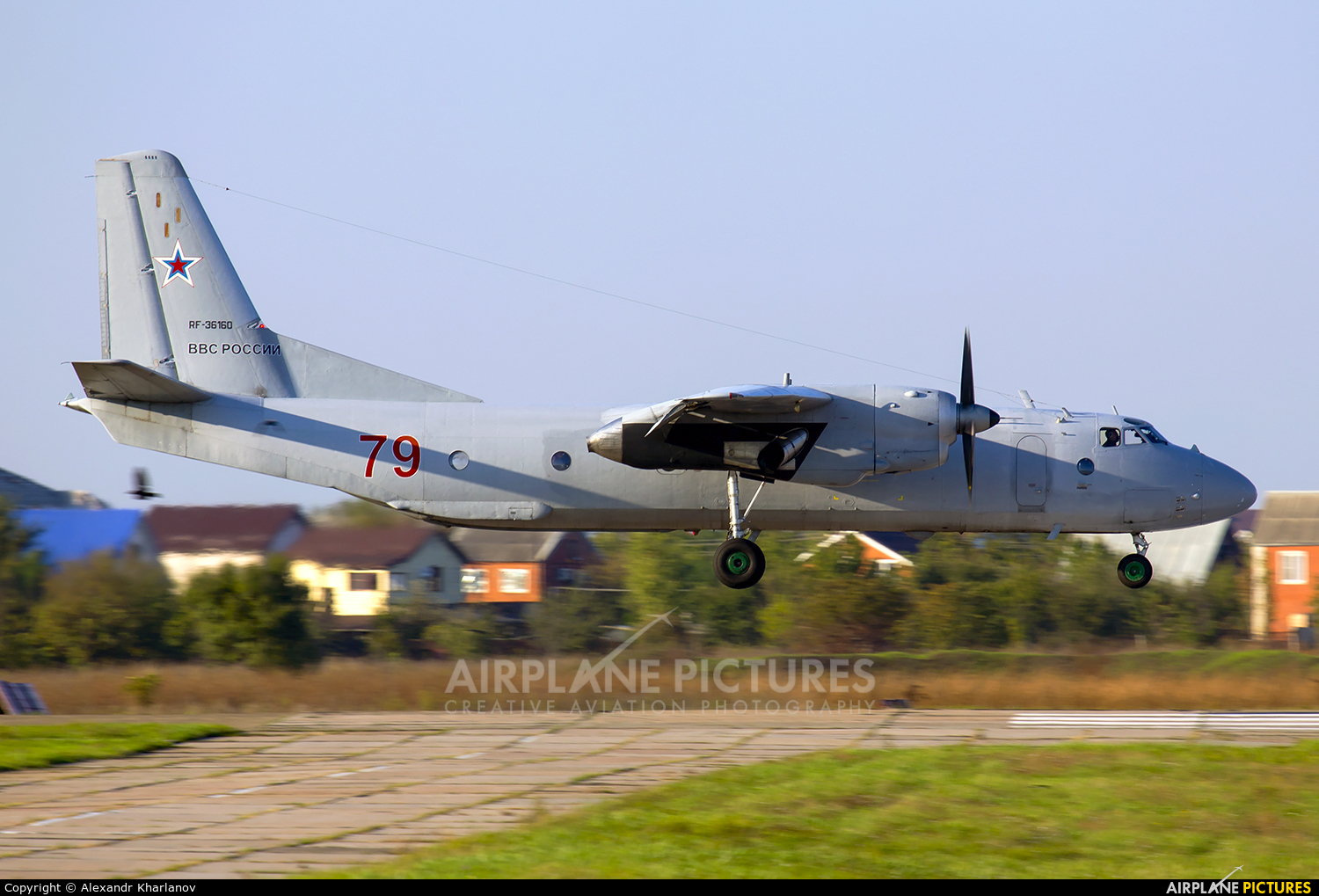
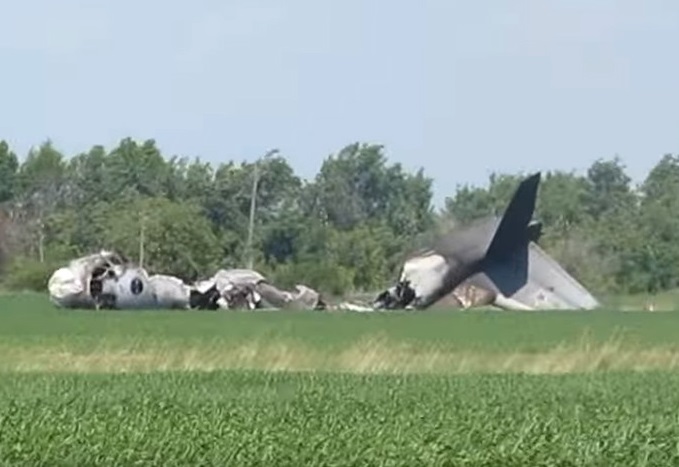
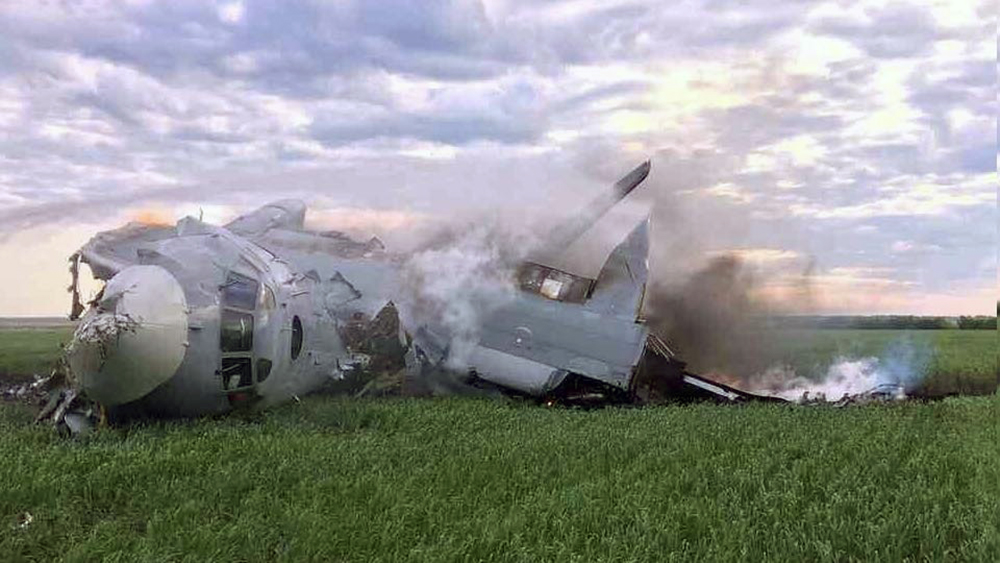
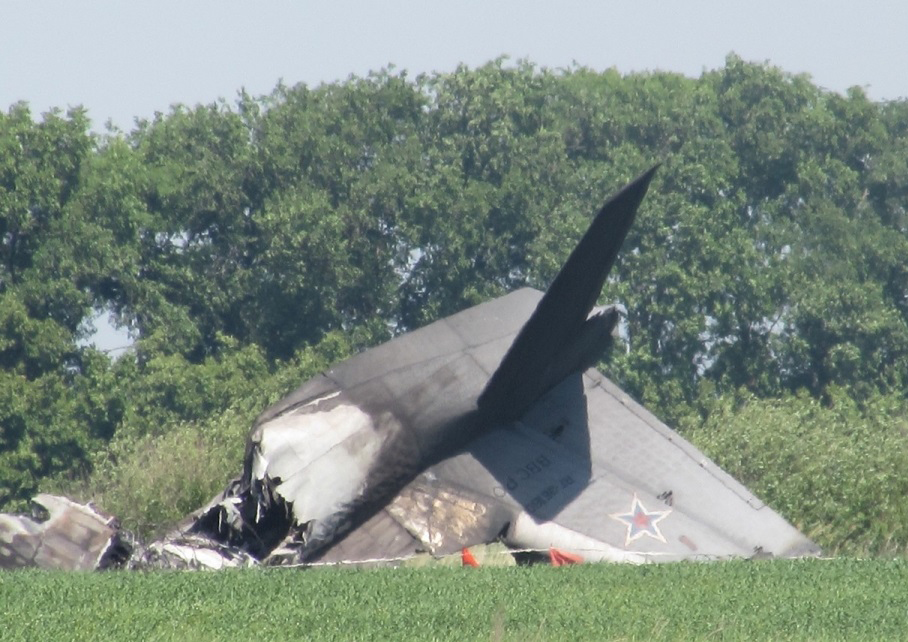
The crew was performing a local training mission at Balashov Airport, in the region of Saratov. Following several touch-and-go manoeuvres, the crew initiated a new approach. On final, the airplane descended below the MDA and, at a speed of 240 km/h, rolled to the right to an angle of 24°, stalled and crashed in a field located 1,100 metres from the airfield, bursting into flames. Five occupants were injures while a pilot under supervision was killed. The airplane had the dual registration RF-36160 and 79 red.
Crew:
Cpt Y. Tereshin,
Maj S. Rodionov,
Ens Frolov,
P. Halaimov,
I. Makhmoudov,
M. Artemiev. †
Probable cause:
It was determined that during the approach, the instructor led the aircraft descending below MDA when he simulated an engine failure and positioned both power levers to idle. As a result of the failure of the propeller feathering system, the right engine stopped. After 14 seconds, the instructor mistakenly shut down the left engine that was running properly, causing the aircraft to lose speed, to stall and to crash.

Crash of a Let L-410UVP-E20 in Lukla: 2 killed

Date & Time: May 27, 2017 at 1404 LT
Type of aircraft:
Operator:
Registration:
9N-AKY
Flight Type:
Survivors:
Yes
Schedule:
Kathmandu – Lukla
MSN:
14 29 17
YOM:
2014
Flight number:
GO409
Country:
Region:
Crew on board:
3
Crew fatalities:
Pax on board:
0
Pax fatalities:
Other fatalities:
Total fatalities:
2
Captain / Total flying hours:
9687
Captain / Total hours on type:
1897.00
Copilot / Total flying hours:
1311
Copilot / Total hours on type:
1028
Aircraft flight hours:
2550
Aircraft flight cycles:
5467
Circumstances:
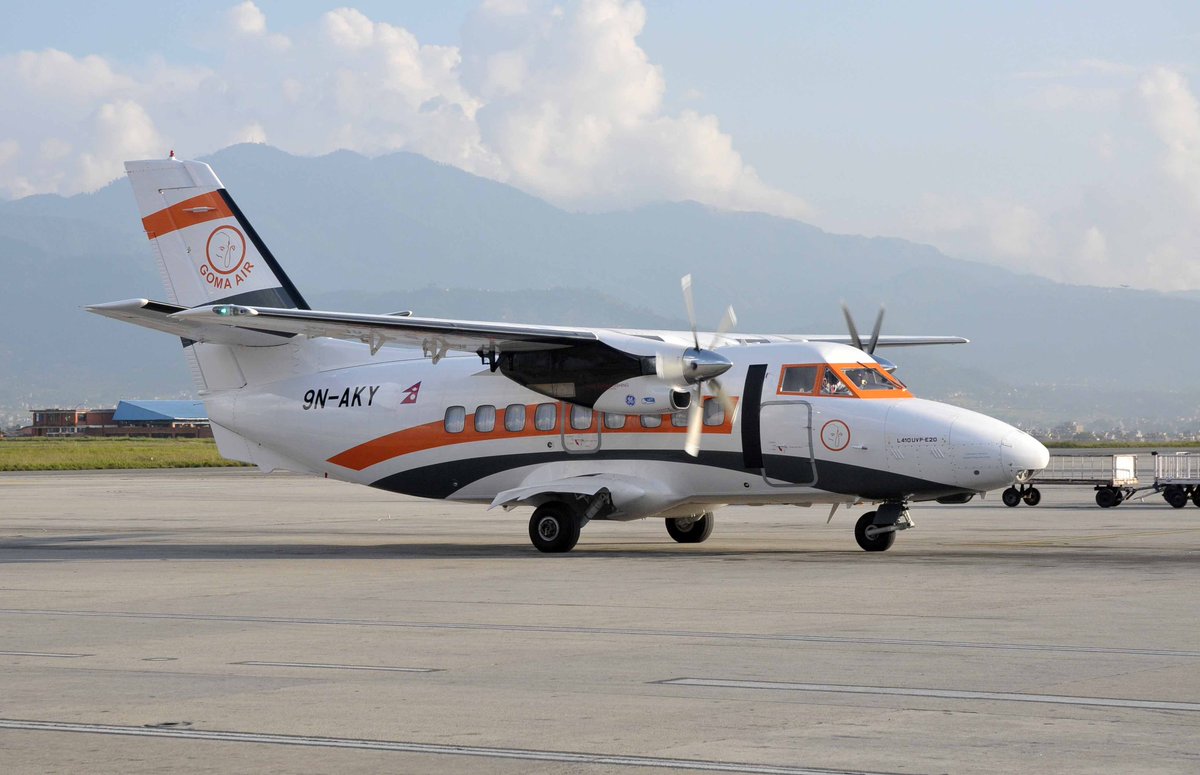
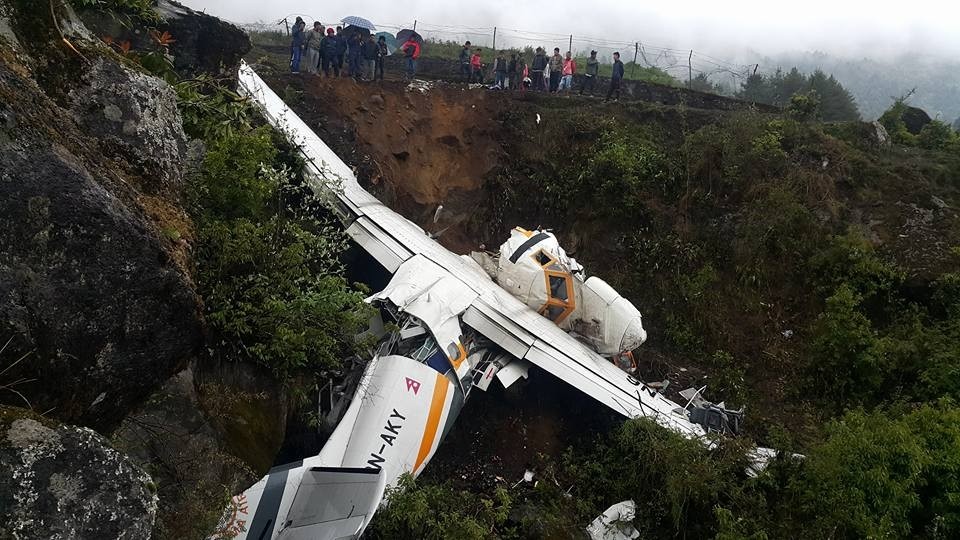
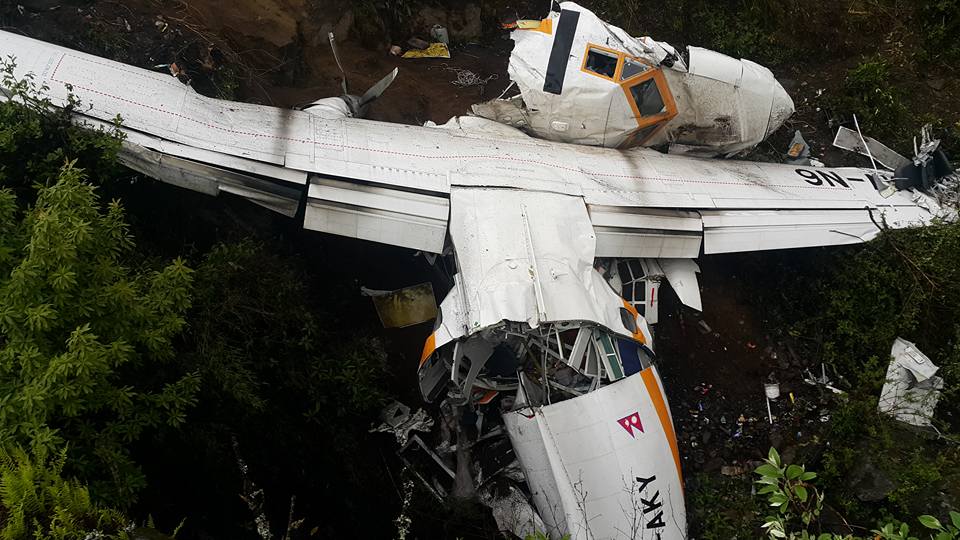
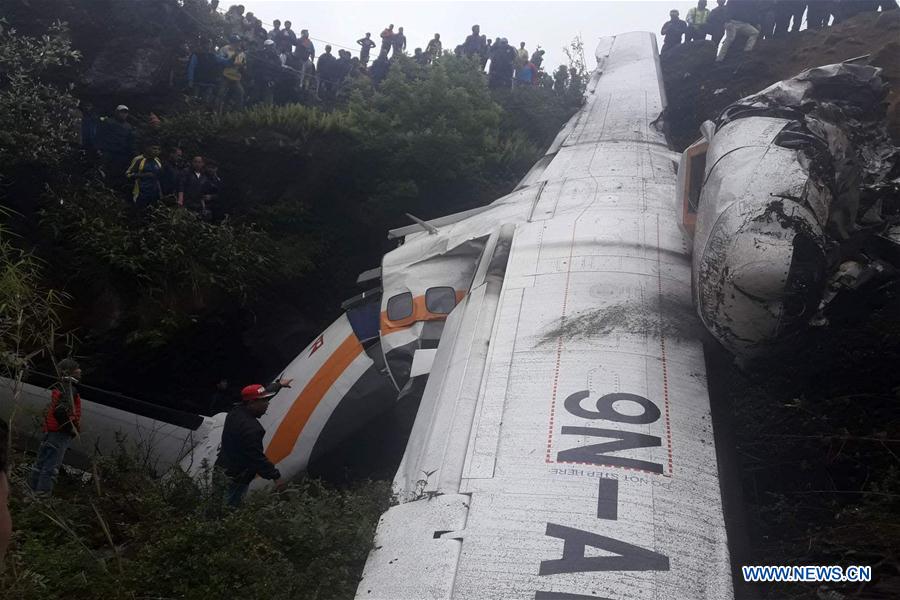
On May 27, 2017 9N-AKY, LET 410 UVP-E20 of Goma Air (now Summit Air), a domestic carrier of Nepal had a published program to operate 5 flights to Lukla from Kathmandu. The first flight departed Kathmandu at 0026 UTC. By the time 0647 UTC they had completed 4 flights. The fifth and the last flight departed Kathmandu at 0744 UTC for Lukla as call sign Goma Air 409. Goma Air 409 was the cargo flight carrying 1680 kg cargo for Lukla. There were two cockpit crews, one cabin crew and no passengers on board the flight. It was pre-monsoon period. Lukla weather on that particular day was cloudy since morning. But ceiling and visibility were reported OK. However, CCTV footage shows rapidly deteriorating weather condition before and after the crash. Automatic VHF recorder of Lukla Tower and CVR recording showed Tower was regularly updating pilots of deteriorating weather. All the pre-and post-departure procedure of the flight was completed in normal manner. Before departure from Kathmandu Pilots were found to have obtained latest weather of Lukla, Phaplu and Rumjatar. PIC decided to remain south of track to avoid the terrain and cloud. When Goma 409 was about 11 miles East from Kathmandu they were informed that Lukla was having heavy rain and airport closed. By that time air traffic congestion in TIA was slowly developing. Traffics were holding in the air and in the ground as well. So Goma 409 continued for Lukla. However, after crossing 26 miles from Kathmandu, they were again informed that the rain had ceased and airport was open. An AS350 helicopter, 9N AGU which departed Lukla at 0803 UTC for Kathmandu had reported unstable wind on final Runway 06. Enroute weather reported by 9N AGU upon request of Lukla Tower was good beyond the Lukla valley. However, it was apprehended that for fixed wing, weather might be difficult to enter valley. Lukla Tower relayed all available information when Goma Air 409 had first established contact at time 0810 UTC. Later, Goma Air and 9N AGY, two reciprocal traffics were also in contact each other. 9N AGY relayed the actual weather status to GOMA AIR. Lukla valley's ceiling and visibility was OK for VFR until 0812UTC ( 6 minutes before crash). Weather started to deteriorate very fast. Mountain Ridges were visible through thin layer of foggy cloud until 0814 UTC. After one minute (approx.) Right Base for Runway 06, was covered up and cloud from left base was moving towards final. Duty ATS Officer of Lukla Tower was regularly up dating pilots about deteriorating weather condition. However, Tower was found to be failed to close the runway as per SOP in spite of rapidly deterioratingweather. Pilots ventured to continue though the weather was marginal. Aircraft reported entering valley at 0816. CVR record showed that First Officer sighted the runway at 0817 (64 seconds before the impact). Instantly PIC acknowledged he had also the runway in sight. Aircraft was at 9100 ft (approx.) when the cockpit crews sighted the runway. It maintained 9000 feet (approx.) for further 21 seconds. At time 0817:12i.e. 48 seconds before the impact Tower gave the latest wind as Westerly 04 knots and runway was clear. PIC was still in doubt and asked whether there was rain. Upon confirmation of having no rain from the Tower the aircraft started to descend further. The PIC, who was also the PF, found to have lost situational awareness deviated to the right with continued descend. At 0817:35 (25 seconds before impact) when the flight was descending through 8650 ft First Officer warned PIC that they were too low. PIC did not respond the F/O's call-out and continued descend. On reaching 8500 ft. F/O again warned PIC in panic. Then PIC asked in panic where the runway was. F/O directed towards the runway. But it was already too low and too late. There was initially two short stall warning sound. Then a continuous stall warning sounded till the impact, which lasted for 13 seconds. The last words in CVR records was "w]/ gtfg " (Do not pull too much). Abrupt change in aircraft attitude in an attempt to climb and reach threshold height at 8900 ft. (on Kathmandu QNH) in a landing configuration, with landing gears down and on full flaps, created excessive drag resulting the aircraft to stall. Subsequently, its left wing first hit a small tree branch 180 ft. short of the threshold. Then impacted the sloppy terrain 100ft. short of the runway. After the crash aircraft engine was reported to be running for about a minute. But there was no postcrash fire. Aircraft was totally damaged by the impact.
Crew:
Paras Kumar Rai, pilot, †
Srijan Manandhar, copilot, †
Pragya Maharjan, cabin crew.
Probable cause:
The Commission concludes that the probable cause of this accident was aircraft stall as a result of excessive drag created by sudden increase in angle of attack of the aircraft supplemented by low speed (below Vref) in an attempt to initiate immediate climb on a landing configuration (full flap and landing gear down) warranted by the critical situation of the final phase of flight.
Contributing factors:
- Critical terrain and rapidly deteriorating weather condition.
- Pilot's loss of situational awareness.
- Improper pilot response to stall warning including failure to advance power lever to maximum at appropriate time.
- Violation of SOP by the ATS and Pilot as well.
Final Report:

Crash of a Swearingen SA226T Merlin IIIB in Arnprior

Date & Time: May 26, 2017
Operator:
Registration:
C-GFPX
Flight Type:
Survivors:
Yes
Schedule:
North Bay - Arnprior
MSN:
T-310
YOM:
1979
Country:
Crew on board:
2
Crew fatalities:
Pax on board:
1
Pax fatalities:
Other fatalities:
Total fatalities:
0
Circumstances:
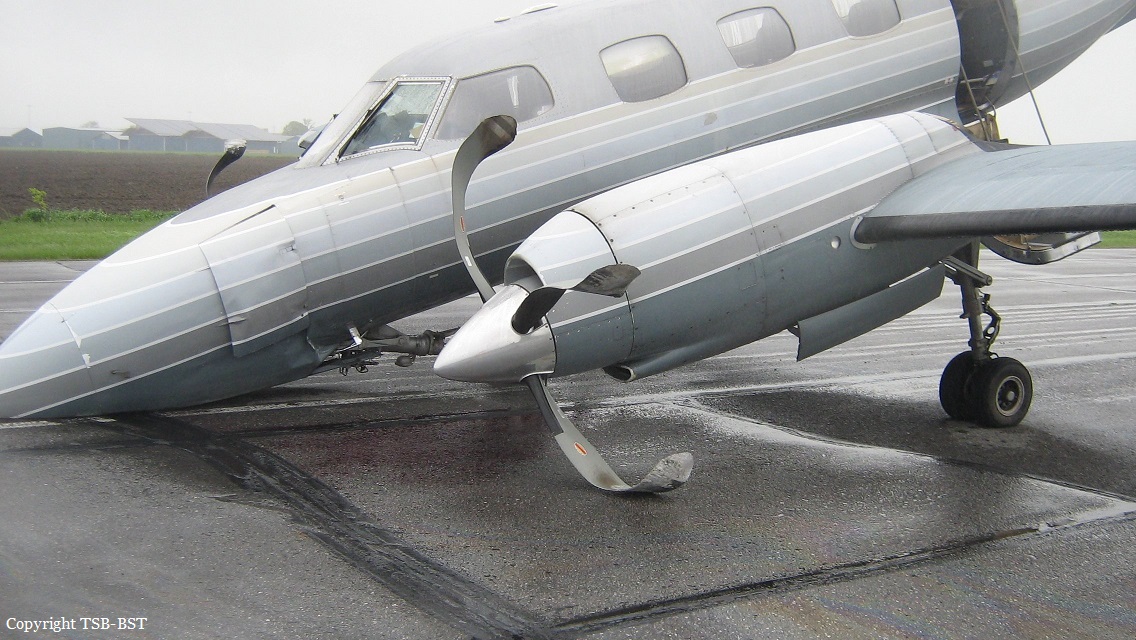
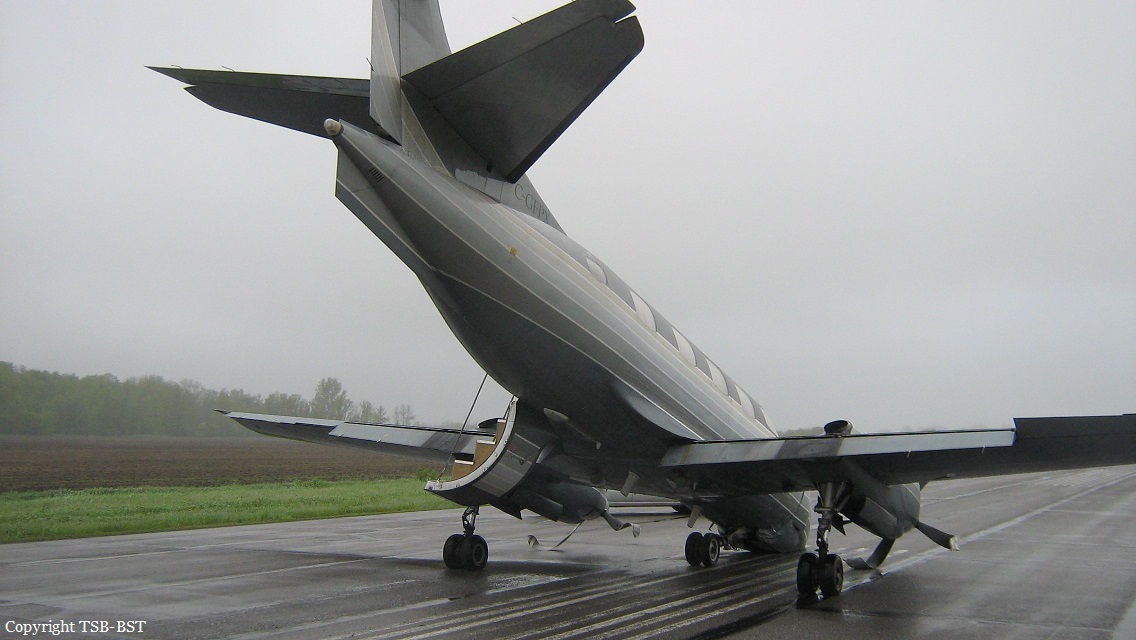
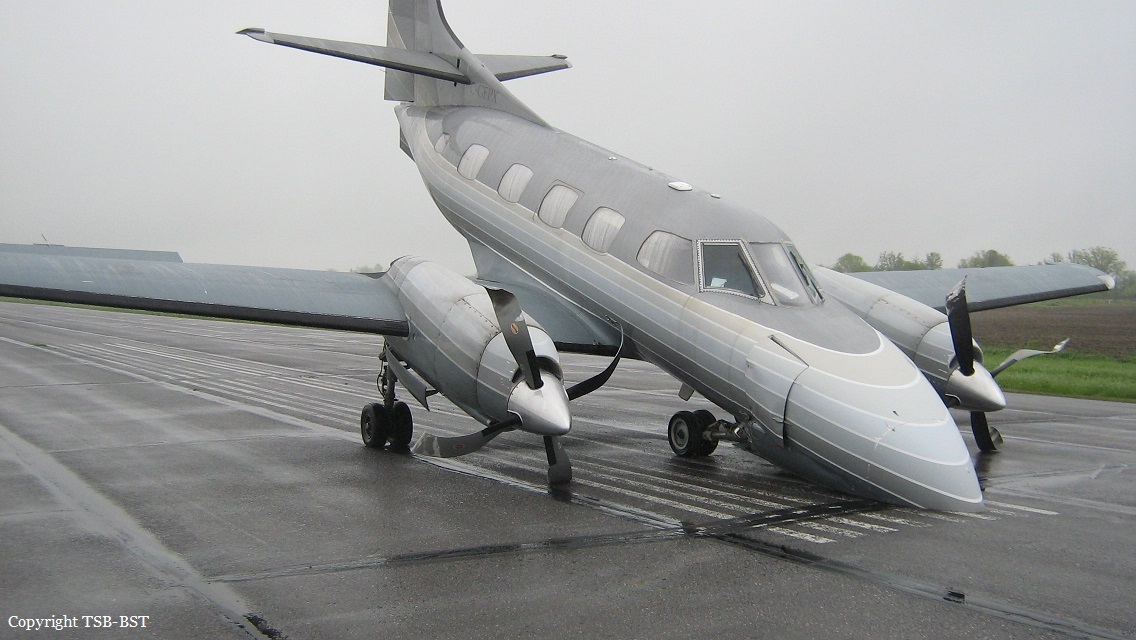
The twin engine airplane departed North Bay on an ambulance flight to Arnprior, carrying two pilots and a doctor. Following an uneventful flight, the crew was cleared for a VOR/DME approach to runway 28 under VFR conditions. On short final, the aircraft descended too low and impacted ground 50 metres short of runway. Upon impact, the nose gear collapsed and the airplane slid for about 600 metres before coming to rest. All three occupants evacuated safely and the aircraft was damaged beyond repair.

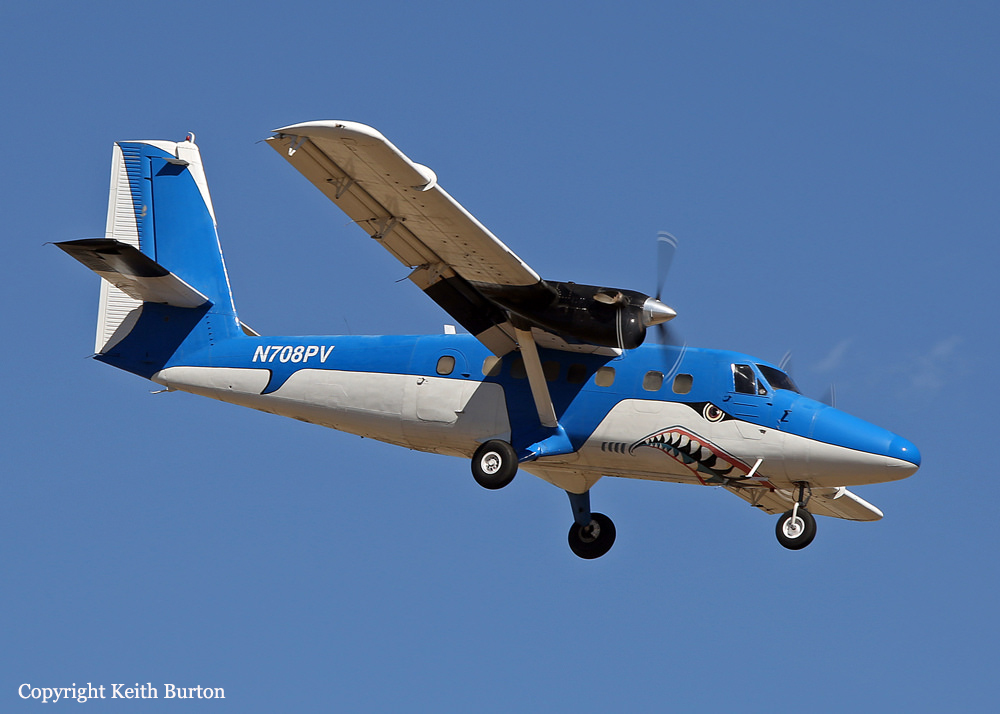
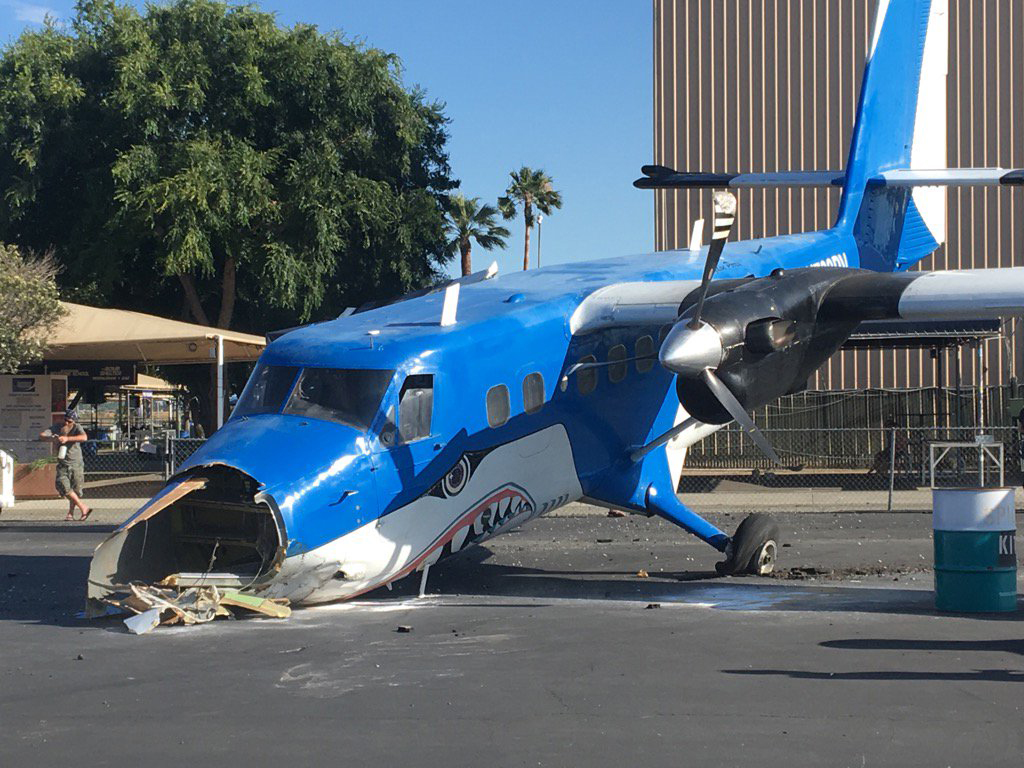
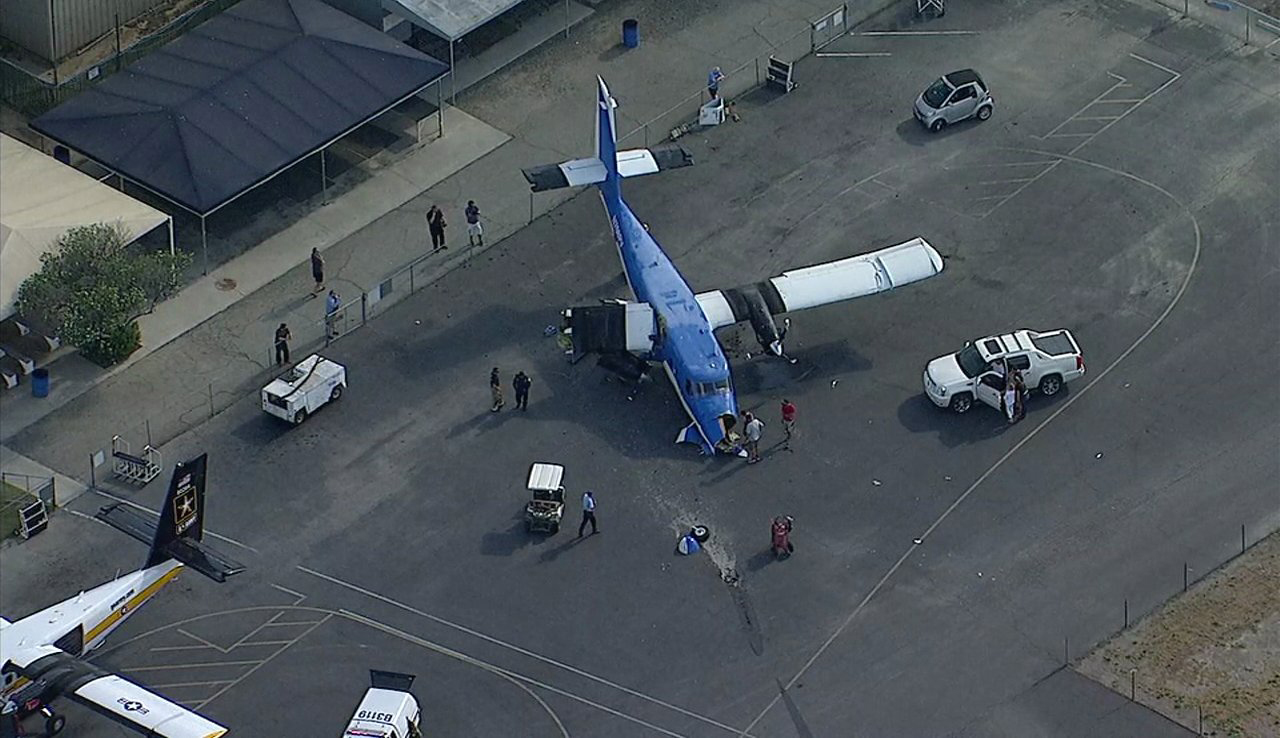
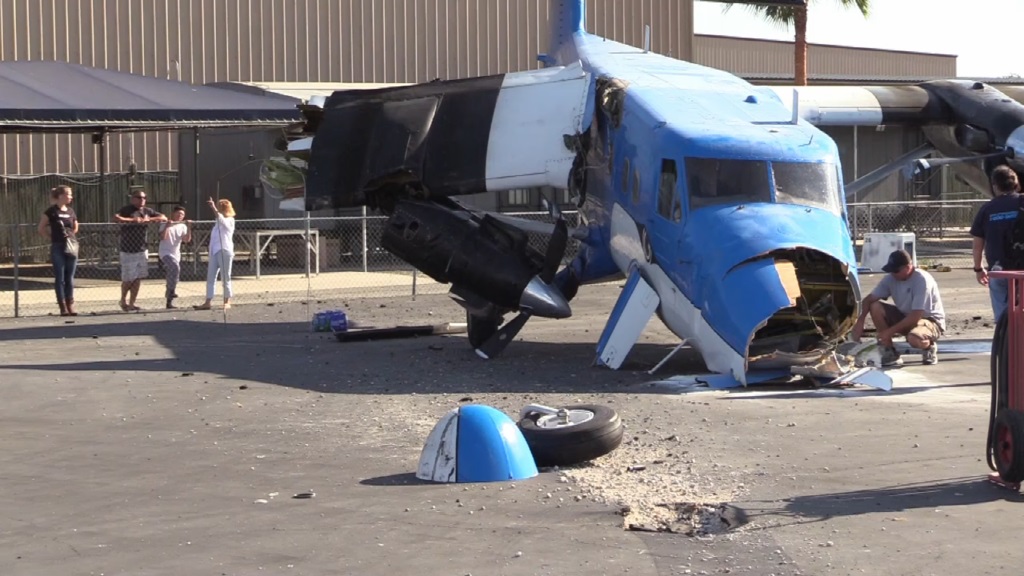
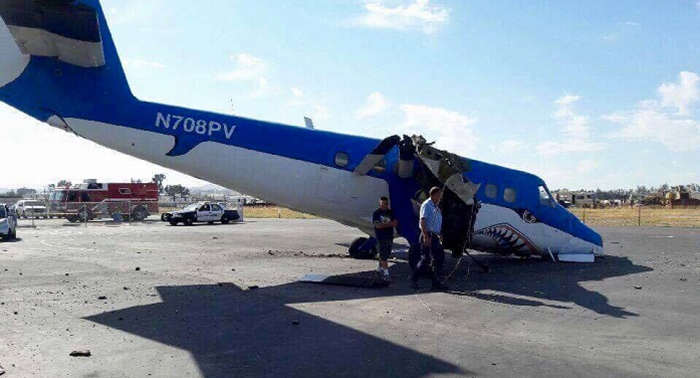
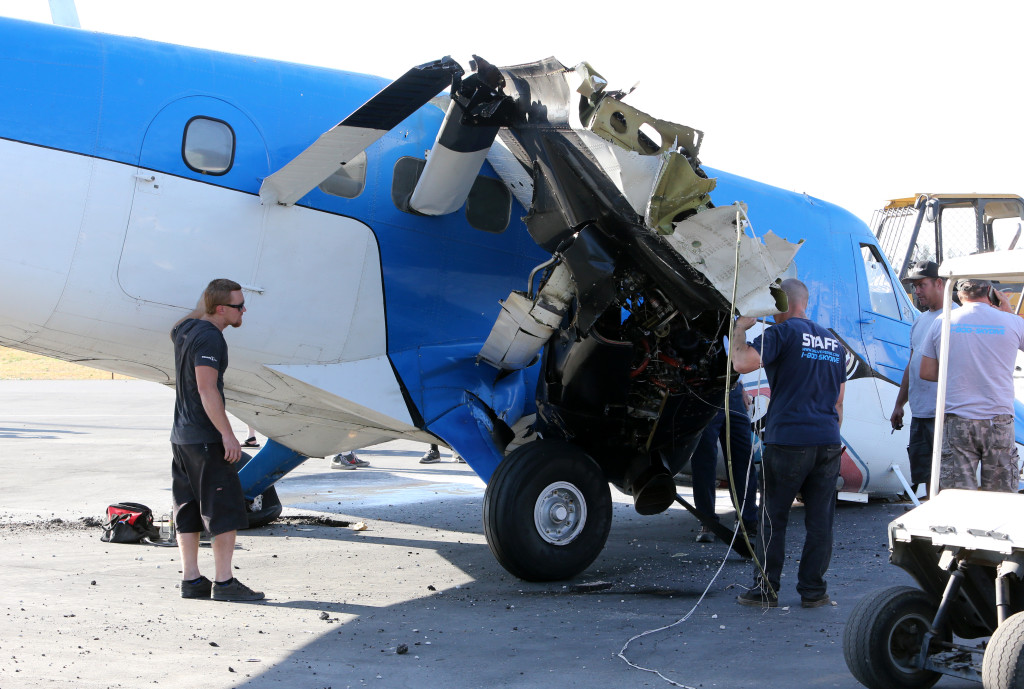
Crash of a De Havilland DHC-6 Twin Otter 300 at Perris Valley

Date & Time: May 24, 2017 at 1515 LT
Operator:
Registration:
N708PV
Survivors:
Yes
Schedule:
Perris Valley - Perris Valley
MSN:
489
YOM:
1976
Crew on board:
2
Crew fatalities:
Pax on board:
0
Pax fatalities:
Other fatalities:
Total fatalities:
0
Captain / Total flying hours:
3358
Captain / Total hours on type:
2131.00
Copilot / Total flying hours:
1893
Copilot / Total hours on type:
12
Aircraft flight hours:
37885
Circumstances:
The pilot of the twin-engine, turbine-powered airplane reported that, while providing flights for skydivers throughout the day, he had a potential new hire pilot flying with him in the right seat. He added that, on the eighth flight of the day, the new pilot was flying during the approach and "approximately 200 feet south from the threshold of [runway] 15 at approximately 15 feet AGL [above ground level] the bottom violently and unexpectedly dropped out. [He] believe[d] some kind of wind shear caused the aircraft [to] slam onto [the] runway and bounce into the air at a 45 to 60-degree bank angle to the right." The prospective pilot then said, "you got it." The pilot took control of the airplane and initiated a go-around by increasing power, which aggravated the "off runway heading." The right wing contacted the ground, the airplane exited the runway to the right and impacted a fuel truck, and the right wing separated from the airplane. The impact caused the pilot to unintentionally add max power, and the airplane, with only the left engine functioning, ground looped to the right, coming to rest nose down.
Probable cause:
The prospective pilot's improper landing flare and the pilot's delayed remedial action to initiate a go-around, which resulted in a runway excursion.
Final Report:

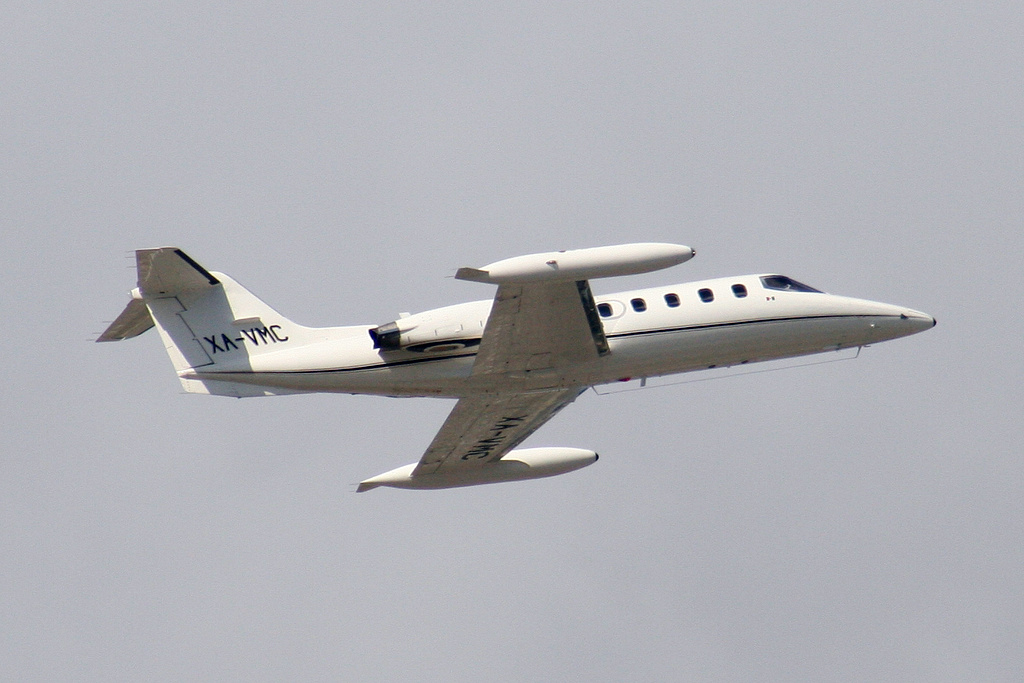
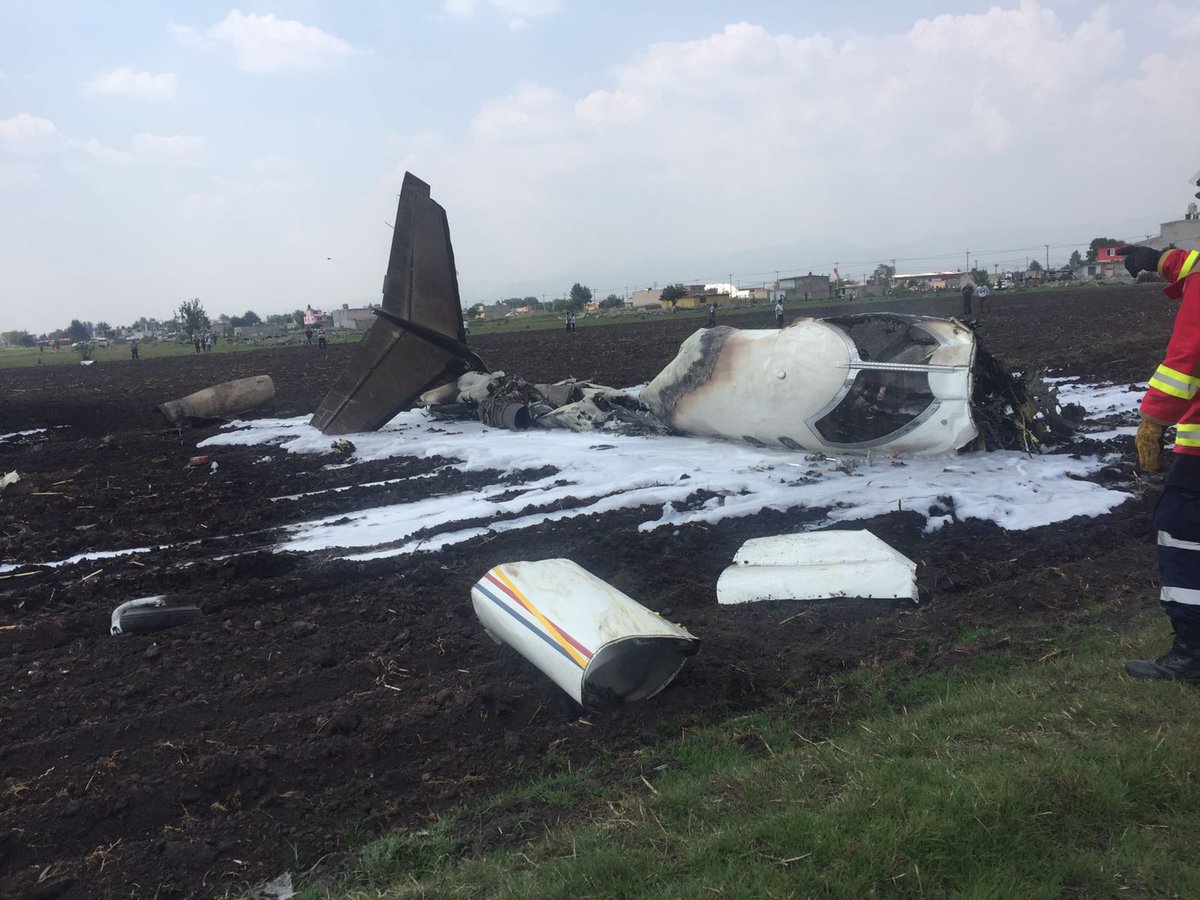
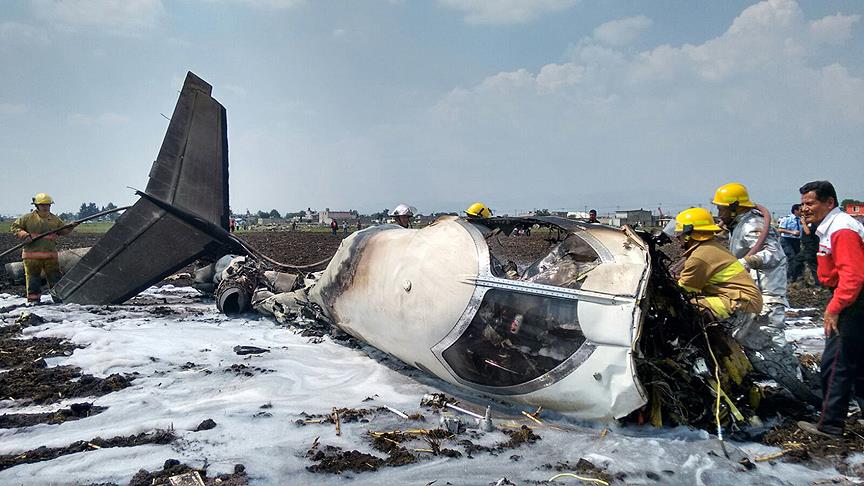
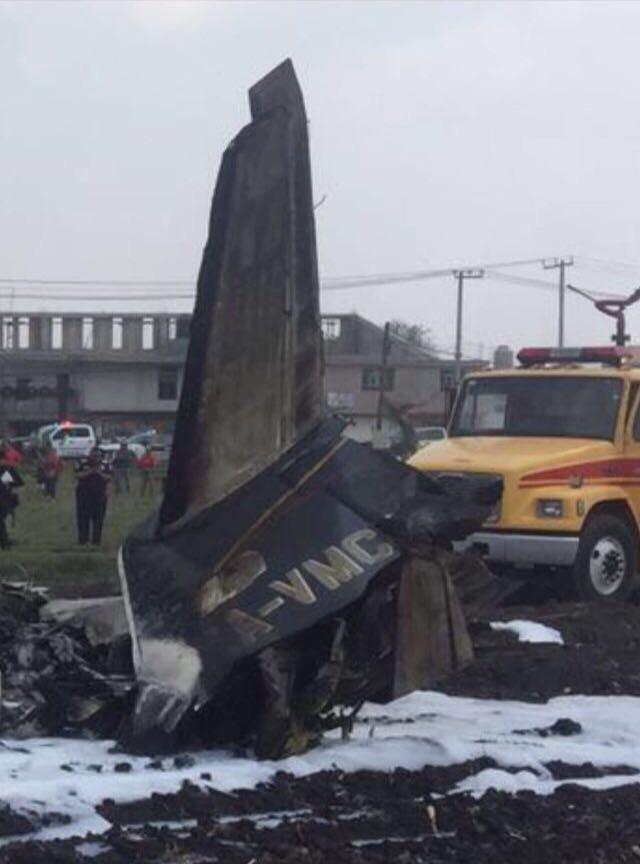
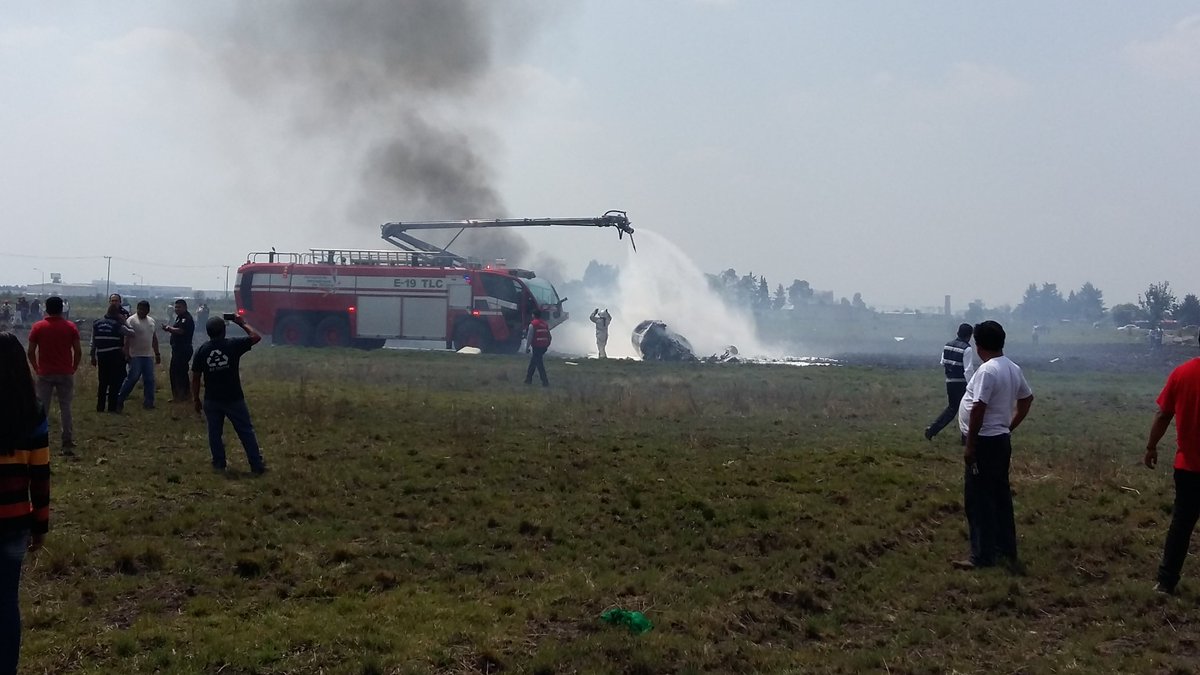
Crash of a Learjet 25B in Toluca: 2 killed

Date & Time: May 17, 2017 at 1525 LT
Type of aircraft:
Operator:
Registration:
XA-VMC
Flight Phase:
Flight Type:
Survivors:
No
Schedule:
Toluca - Durango
MSN:
25-114
YOM:
1973
Location:
Country:
Crew on board:
2
Crew fatalities:
Pax on board:
0
Pax fatalities:
Other fatalities:
Total fatalities:
2
Aircraft flight hours:
14654
Aircraft flight cycles:
13449
Circumstances:
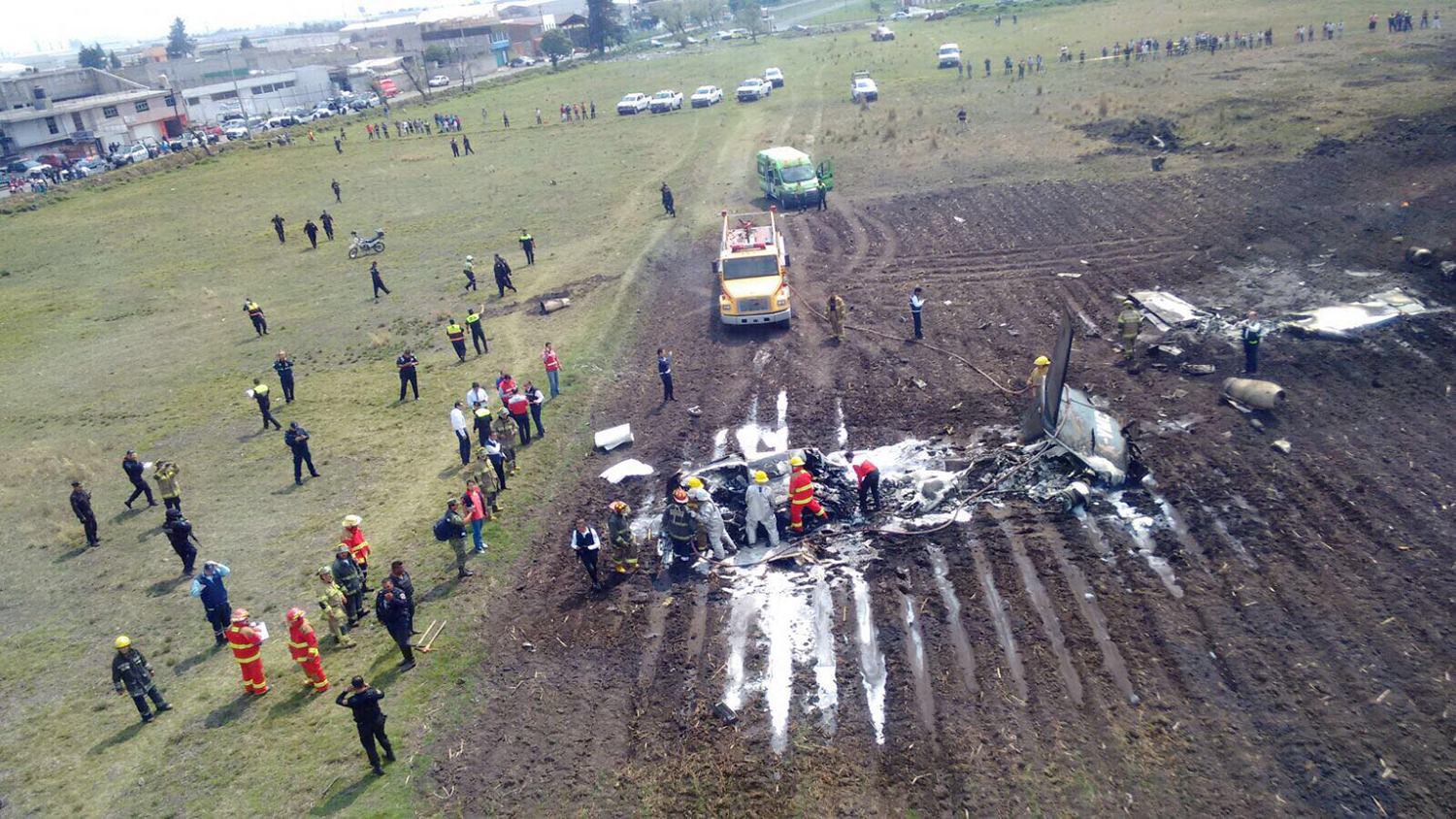
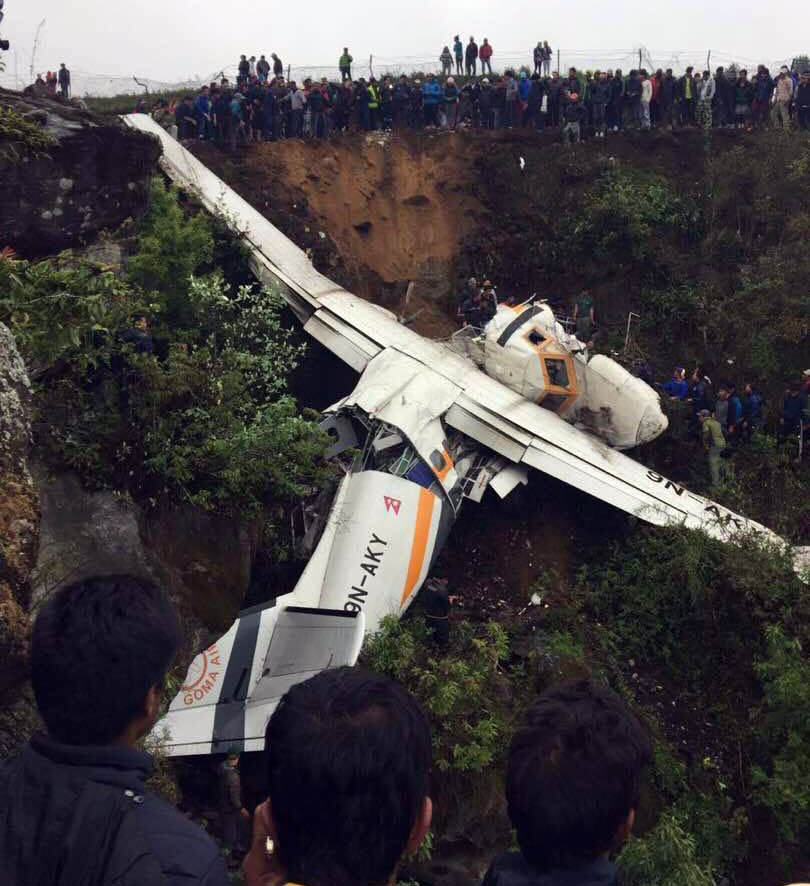
During the takeoff roll on runway 15 at Toluca-Licendiado Adolfo López Mateos, after the airplane passed the V1 speed, the warning light came on in the cockpit panel, informing the crew about the deployment of the reverse on the left engine. According to published procedures, the crew continued the takeoff and shortly after rotation, during initiale climb, the aircraft rolled to the left and crashed in an open field, bursting into flames. The wreckage was found about 200 metres past the runway end. The aircraft was destroyed and both pilots were killed.
Probable cause:
Probable Cause:
Loss of control of the aircraft during the emergency procedure of indication of the deployment of the reverse of the engine number one during the takeoff roll above V1, which was consistent with the training and standard operating procedures that call to continue the takeoff, causing the collapse of the aircraft, by low speed and the operation of abrupt maneuvers and turns towards the engine side in idle position and commanded opening of the Drag Shut due to poor CRM.
Contributing factors:
- False indication of reverse display of dwelling position number one.
- Failure of pilots of previous flights not to refer failures to indicate the deployment of reverses for maintenance actions.
Final Report: