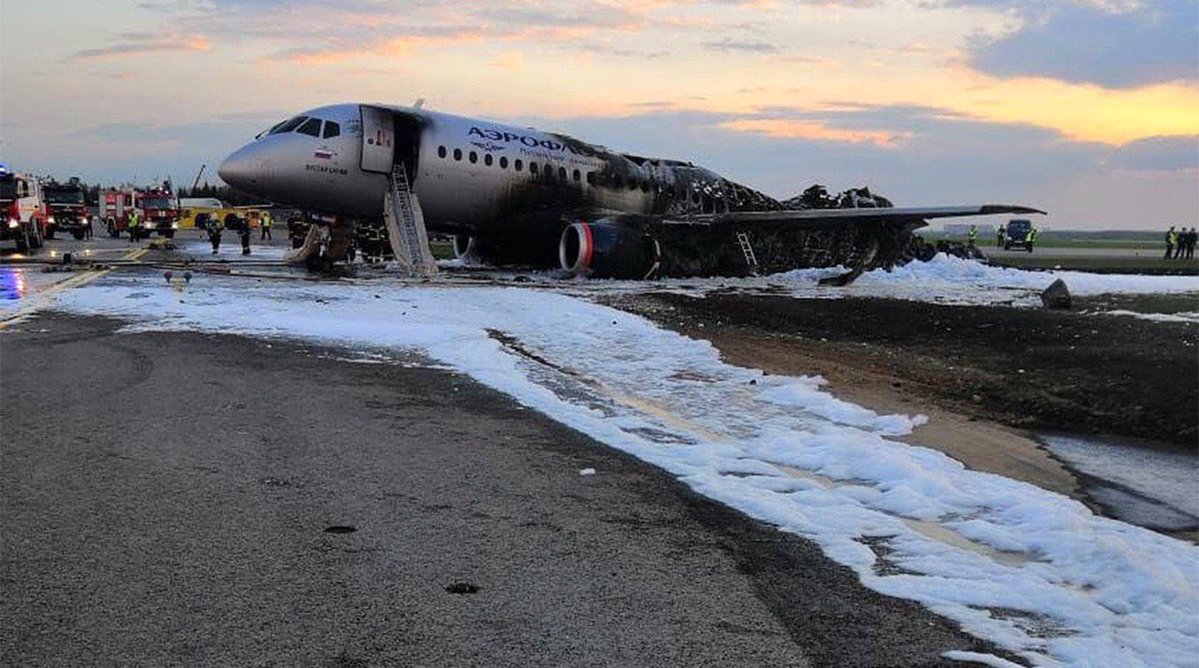
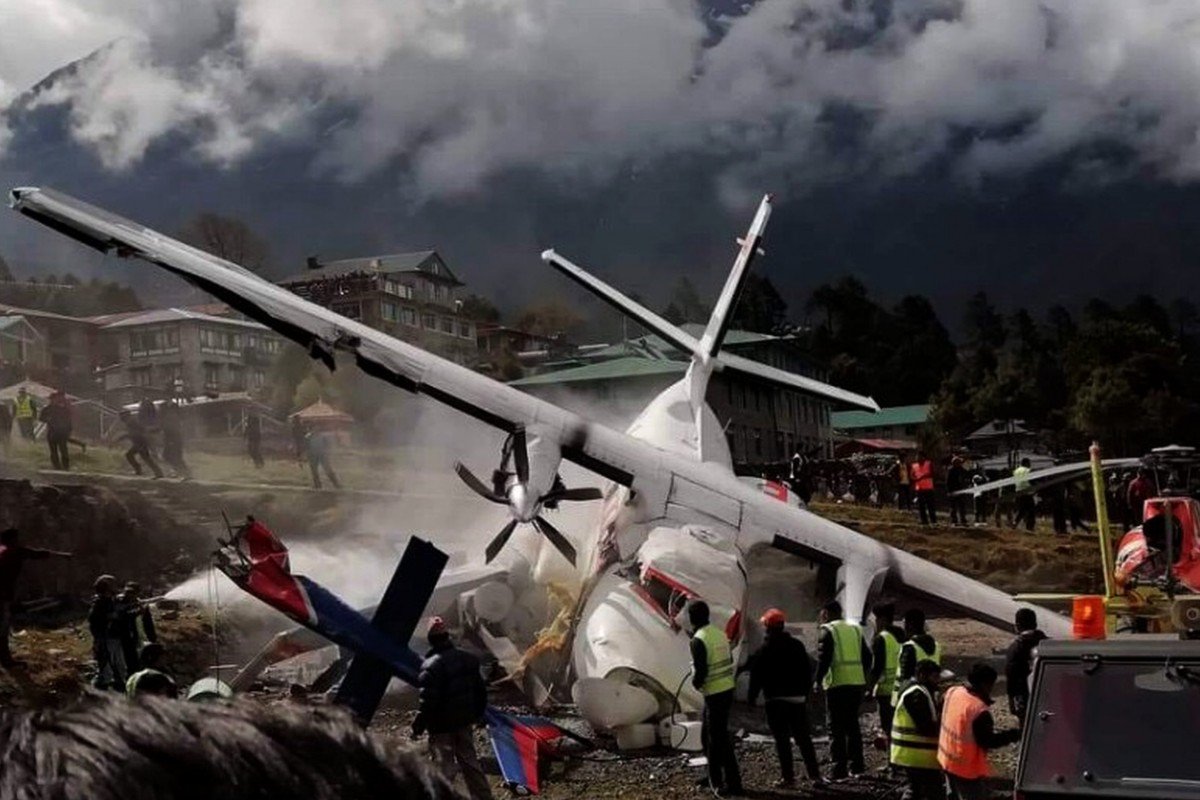
Crash of a Sukhoi Superjet 100-95B in Moscow: 41 killed

Date & Time: May 5, 2019 at 1830 LT
Type of aircraft:
Operator:
Registration:
RA-89098
Survivors:
Yes
Schedule:
Moscow - Murmansk
MSN:
95135
YOM:
2017
Flight number:
SU1492
Country:
Region:
Crew on board:
5
Crew fatalities:
Pax on board:
73
Pax fatalities:
Other fatalities:
Total fatalities:
41
Captain / Total flying hours:
6801
Captain / Total hours on type:
1570.00
Copilot / Total flying hours:
774
Copilot / Total hours on type:
624
Aircraft flight hours:
2710
Aircraft flight cycles:
1658
Circumstances:
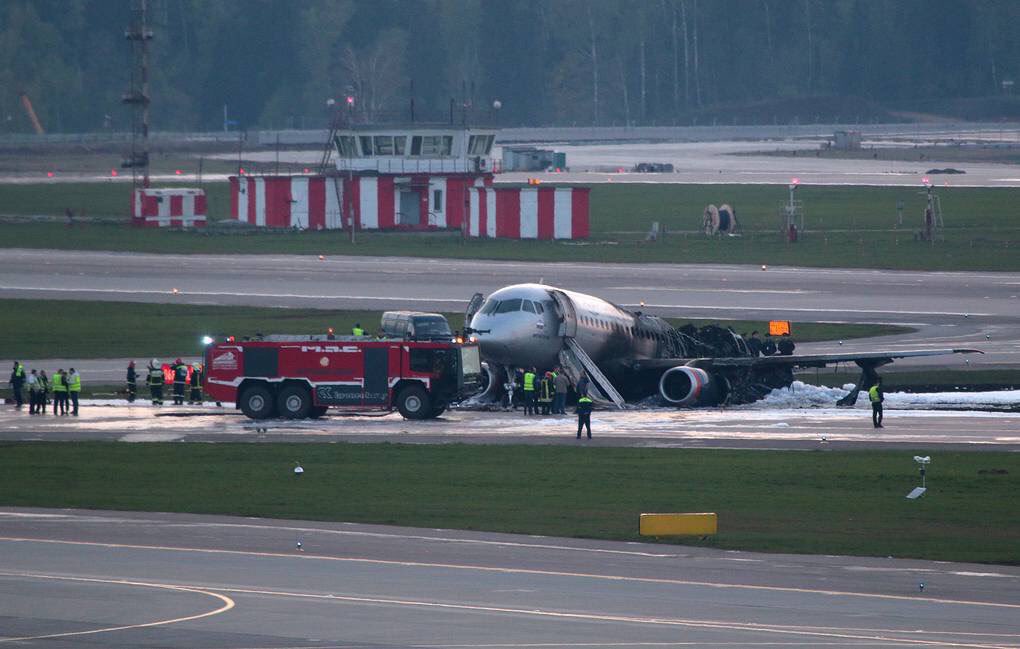
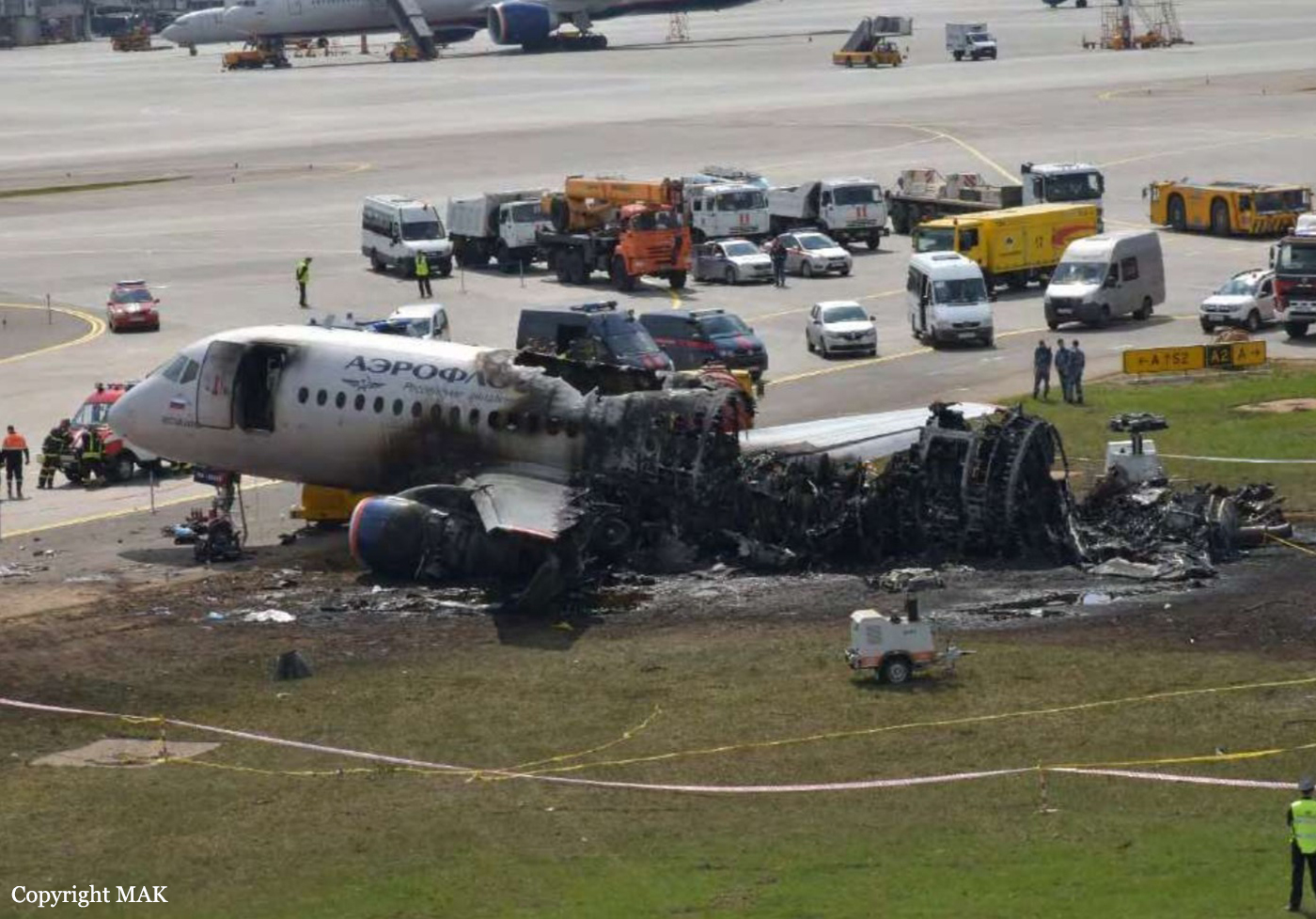
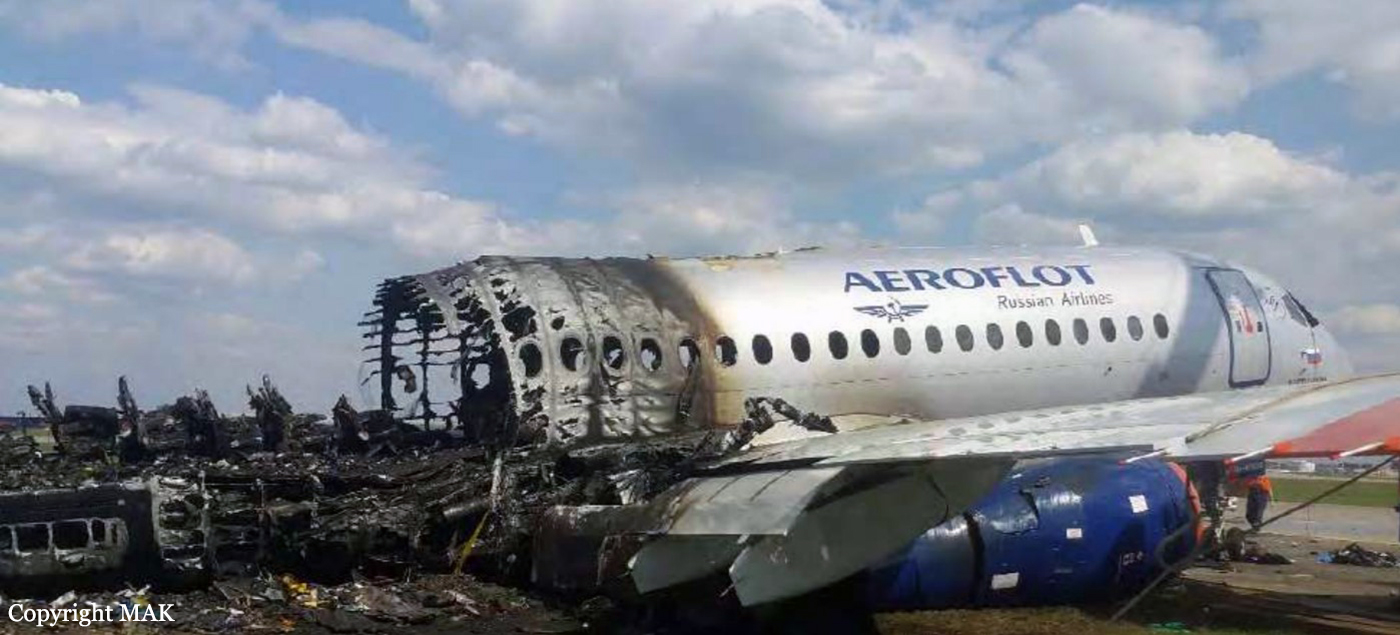
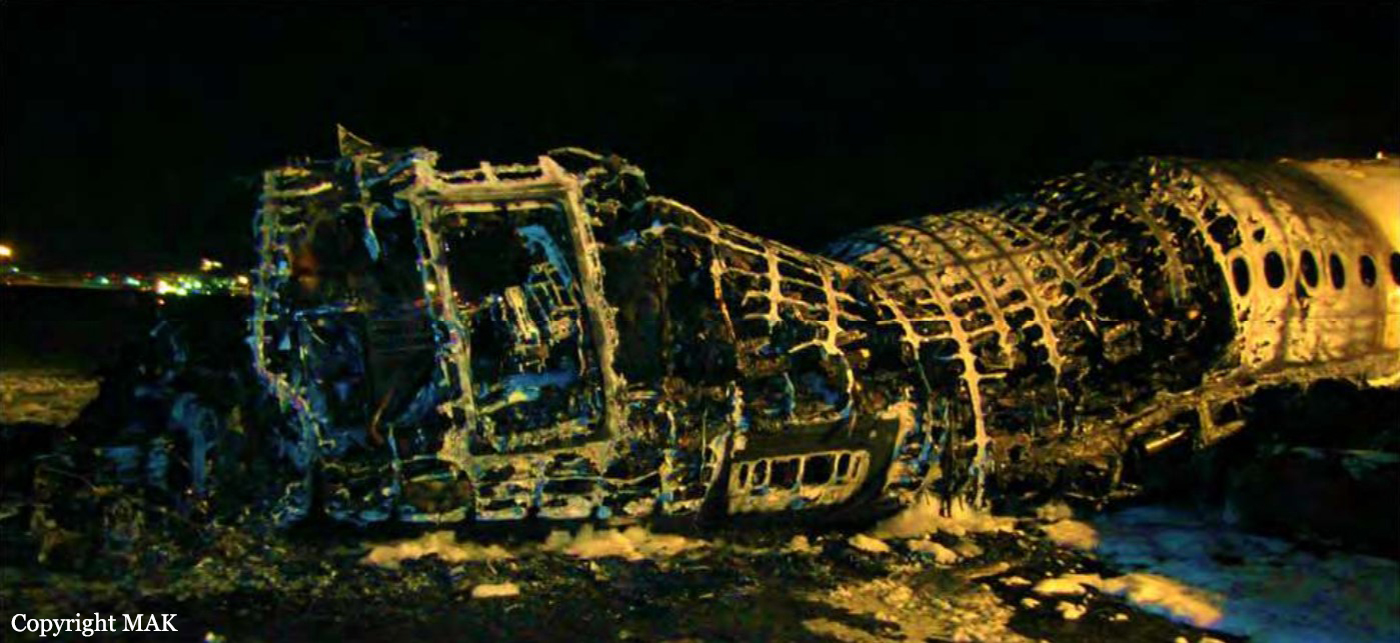
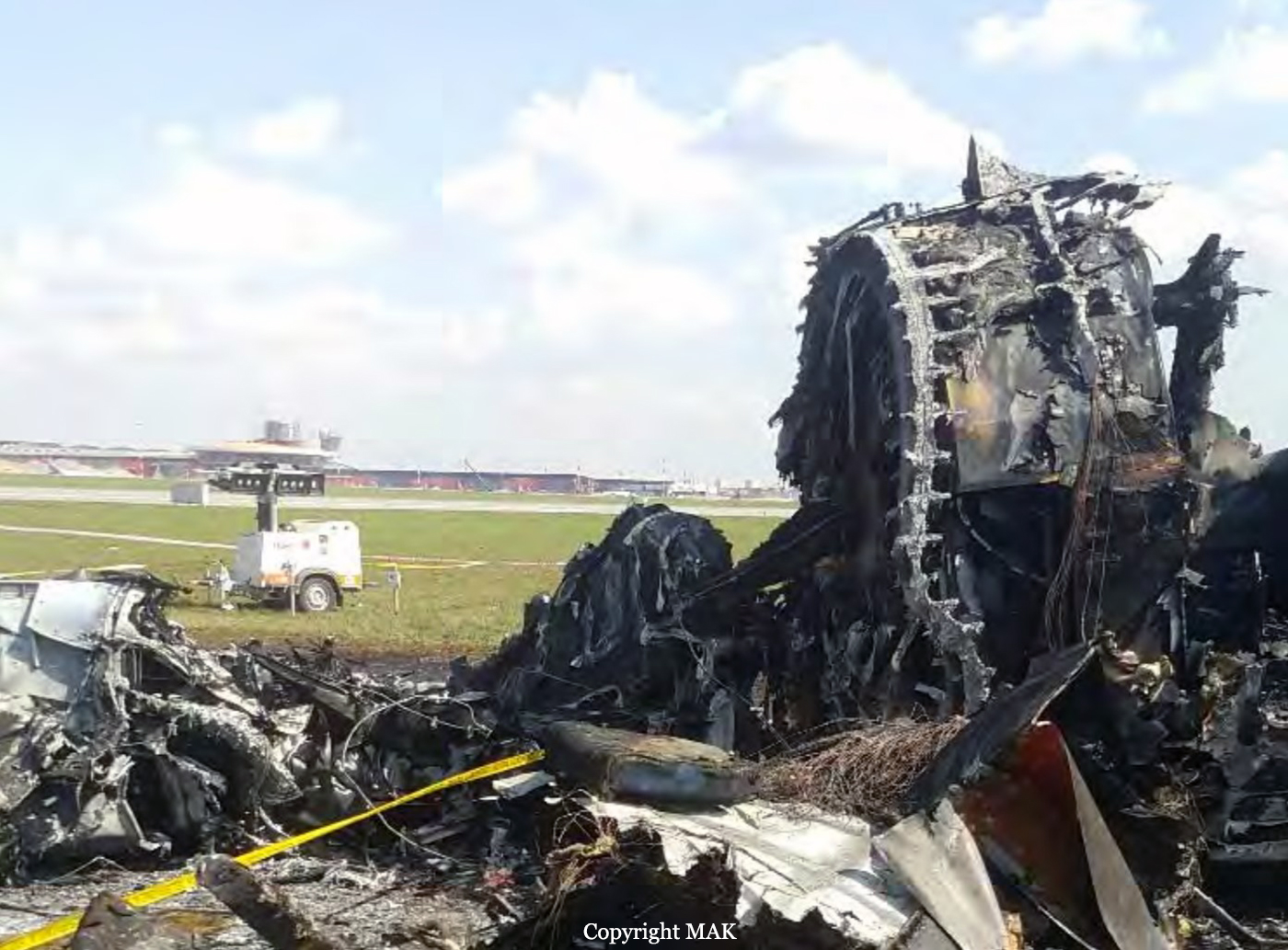
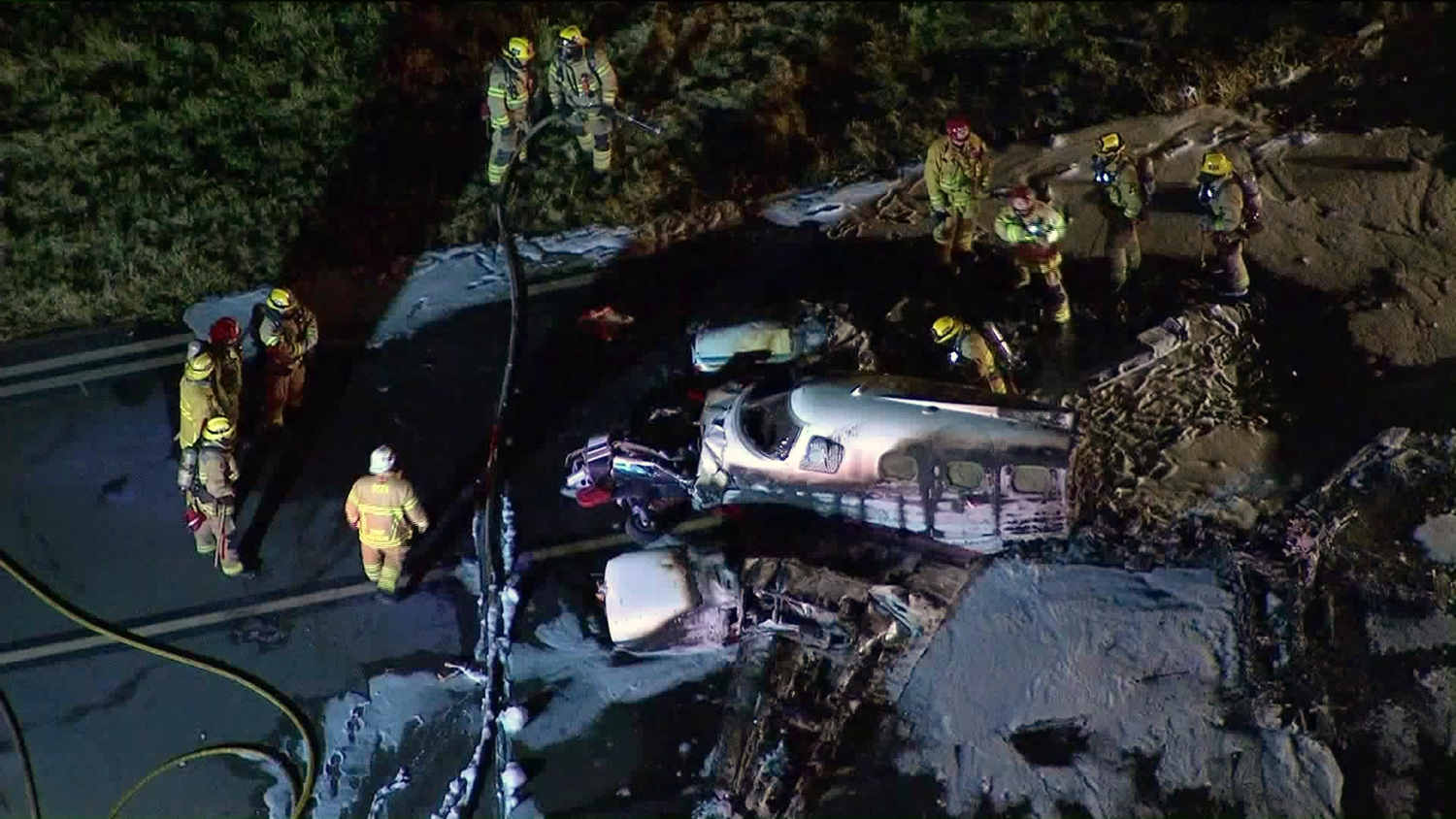
On May 05, 2019 the Aeroflot, PJSC flight crew out of the PIC and F/O was performing the SU-1492 scheduled passenger flight en route from Sheremetyevo airport (UUEE) to Murmansk airport (ULMM) aboard the RRJ-95B RA-89098 aircraft. 3 cabin crew members were also indicated in the flight assignment. The crew arrived to the airport at about 2 hrs prior to departure. After having undergone the mandatory preflight procedures (the medical check, briefing etc) the crew took up their duties at the flight deck. The passengers boarding was proceeded through the left front door. By 14:40 all the passenger and baggage holds doors had been closed. At 14:45:30 the ATC officer approved the engines start up. At 14:50:15 the crew initiated taxiing. At 14:57:20, after having been issued the clearance, the crew lined up at RWY 24C, where held the position for about 5 min. At 15:02:23 the ATC officer issued clearance for takeoff. After takeoff at 15:03:36 at the QNH altitude of 1250 ft. (380 m), the radio altitude of 690 ft. (210 m) and the IAS of 160 kt (296 km/h) the A/P was engaged. At 15:03:56 the Sheremetyevo Radar ATC officer cleared the climb to the QFE 1200 m altitude as per the KN 24E SID. At 15:05:18 the Sheremetyevo Radar ATC officer instructed the crew to climb to FL60. At 15:05:33 the crew set QNE of 760 mm of mercury/1013 hPa. At 15:06:57 the Sheremetyevo Radar ATC officer instructed the crew to climb to FL70 and contact the Approach ATC. After having initiated the contact with the Approach ATC officer the crew was instructed to climb to FL90. Between 15:07:30 and 15:07:33 the dialogue as follows was recorded in the crew: PIC: «It is going to bump now», – F/O: «Crap», – PIC: «That's all right». At 15:07:34 the Approach ATC officer instructed to climb to FL100. At 15:08:03 the Approach ATC officer instructed to climb to FL110. After the F/O confirmed this instruction the CVR recorded the noise effect of 1.5 sec. duration, starting from 15:08:09.7. Most probably at that point the aircraft encountered the atmospheric electricity strike. At 15:08:11.9 the A/P was disconnected, accompanied by the respective sound warning, as well as by the reversion of the FBWCS to DIRECT MODE with the DIRECT MODE. DIRECT MODE synthetic voice triggered. The A/T continued to operate. The aircraft at that moment was proceeding flight in right roll of about 20°, passing FL89 (2700 m) in climb. From 15:08:16 the manual control from the left duty station was initiated. The aircraft was proceeding the right turn as per the KN 24E SID and climb. At 15:08:47 the A/T was disconnected with the «override» (the TLA was changed from ~ 29.5° to ~ 19°). The further flight was continued by a manual control at the FBWCS DIRECT MODE. At 15:09:17 the aircraft was pulled out of the right turn to a heading of about 60°. After a short discussion in the crew the PIC made the decision to return to the departure aerodrome and commanded the F/O to declare PAN–PAN (an urgency signal). After several unsuccessful attempts to establish contact with the ATC officer at the operating frequency with the use of VDR 1 (this radio unit was used for communications from the beginning of the flight), at 15:09:32, after discussion, the 7600 squawk code was set by the crew. At 15:09:35, the radio communication was resumed on the emergency frequency (121.5 MHz) with the use of VDR 2. After radio communication was restored, at 15:09:39, the F/O reported to the Approach ATC officer: «Moscow Approach, and we request return 14 -92, radio contact lost and aircraft in DIRECT MODE». The ATC officer instructed to descend to FL80. The maximum altitude the aircraft reached was 10600 ft. (3230 m) QNE. The crew replied: «Aeroflot 14-92, heading 0-57, descending 8-0». The flight further on until glideslope interception was proceeded by vectoring. At 15:24:38 to the ATC request on the approach type for landing the crew advised that it would be an ILS approach. At 15:26:30 the crew set the 7700 squawk code. The reason for setting was not reported to the ATC. At 15:27:20 the glideslope descent was initiated. At 15:27:51 the ATC officer relayed the weather information to the crew and cleared landing: «Aeroflot 14-92 surface wind 160 7, gusts 10 meters per second, runway 24L, cleared for landing». At 15:30:00 at the distance of ≈ 900 m off the RWY entry threshold and at IAS of 158 kt (293 km/h) there occurred the RWY first touchdown. The touchdown occurred practically on «three points», with the vertical acceleration of not less than 2.55G with a subsequent aircraft separation/bounce off the RWY. Another touchdown occurred in 2.2 sec. after the first one at the IAS of 155 kt (287 km/h). The touchdown occurred with the advancement on the NLG. Vertical acceleration amounted to not less than 5.85G. There occurred another aircraft bounce off the RWY. At 15:30:06 at the IAS of 140 kt (258 km/h) the third touchdown occurred with the vertical acceleration of not less than 5G. As a consequence of hard touchdowns the MLG legs and the airframe structural elements were destroyed with the fuel spillage and the subsequent onset of fire. Into the further movement of the aircraft there occurred its RWY veering off to the left. At 15:30:38 the airplane stopped. The aircraft stop occurred on the soil between TWY2 and TWY3 at the point with the reference position 55°58′06.20″ N, 37°24′07.20″ E, ∆h = 185 m, with true heading ≈ 128°. The distance off the RWY 24L entry threshold amounted to ≈ 2720 m, lateral deviation was about 110 m to the left off the RWY 24L centerline.
Probable cause:
The air accident to the RRJ-95B RA-89098 aircraft was caused by the uncoordinated control inputs by the PIC at the flare, landing and through the several repeated bounces of the aircraft off the RWY (the porpoising), having manifested in the several disproportionate alternating sidestick inputs in pitch with keeping the sidestick retained against each stop. The indicated control inputs had resulted in three hard touchdowns of the aircraft, as a consequence at the second and third touchdowns the absorbed energy significantly exceeded the maximum values, for which the structural integrity had been evaluated at the aircraft type certification, which led to the destruction of the airframe structural elements, the fuel tanks with the fuel spillage and the fire onset.
The contributing factors to the accident were:
- The ineffectiveness of the RRJ-95 flight personnel approved training programs as for the actions into the major failure condition//abnormal situation at the FBWCS reversion to DIRECT MODE and, consequently, the insufficient knowledge and skills at the flight crew members to operate the airplane in this mode. The training programs met the minimum requirements, determined by FAR, but did not account for the specific nature of a particular emergency;
- The ineffectiveness of the airline SMS in terms of the monitoring of the piloting sustainable skills development at the pilots, which prevented the identification and elimination of the PIC’s common systematic errors at the sidestick pitch control at the stage of landing, including these, associated with its forward inputs beyond neutral (to nose down) into the flare;
- The failure to identify the biases (hazards) in the airline flight crews’ piloting technique as far the previous events of the FBWCS reversion to DIRECT MODE are concerned and thus the failure to implement preventive measures;
- The aircraft operational documentation unclear wording in terms of the piloting peculiarities at flare and the correction of the deviations at the landing (counteracting the consecutive aircraft separations off the RWY);
- The failure of the crew to comply to the FAR and OM requirements at the flight preparation and performance at the actual and forecast thunderstorm activity, as well as at the availability to observe these zones on the weather radar display, which had resulted in the aircraft encounter the atmospheric electricity, the EIUs reboot and the FBWCS reversion to DIRECT MODE. As per the certification results the FBWCS reversion to DIRECT MODE had been assessed as «the major failure condition», the in-flight onset of «the major failure condition» at the lightning or static electricity exposure does not contradict the applicable certification requirements;
- The dramatic increase of the psycho emotional stress at the PIC because of the aircraft exposure to atmospheric electricity and the failure within a long time to ensure the acceptable piloting precision at the FBWCS in DIRECT MODE, which led to the psychological dominant mindset formation to perform immediate landing together with the lack of readiness to initiate go around (not go-around minded);
- Psychological personality traits of the flight crew members that determine their behavior in the stress environment, as well as the PIC’s insufficient training in human factor/performance and threat and error management approach, which prevented the objective assessment of his psycho emotional condition and the ability to control the airplane, to choose the optimal strategy to proceed the flight, as well as to establish the required interaction and CRM;
- The failure of the PIC to ensure the aircraft pitch trim under the manual control, including at the glideslope descent;
- The incorrect assessment of the situation by the crew at the Predictive Windshear warning (GO AROUND WINDSHEAR AHEAD) trigger at the flight on glideslope and, consequently, the non-initiation of a go-around maneuver, that resulted in the aircraft encounter the wind microburst at the early flare and affected the aircraft flight path. The documentation by the aircraft designer and the airline allows the crew to ignore the subject warning activation, if it made sure there is «no windshear threat», still the operational documentation and the OM do not integrate the respective clear criteria of «no threat»;
- The purposeful ducking under the glideslope by the PIC at the final approach (after passing DH);
- The difference between the airline OM provisions as for the crew actions at the glideslope warning activation (the excessive deviation off the glideslope equisignal zone) and the similar provisions in the aircraft designer documentation. Subject to the provisions of the aircraft designer documentation the crew should have performed go-around;
- The unjustified extension by the airline of the approach «stabilized condition» criteria as for the acceptable deviations range off the target speed, which at the actual IAS of 15 kt higher against the target one and the FBWCS in DIRECT MODE resulted in the unexpected for the PIC increased aircraft response to the sidestick input in pitch;
- The failure by the crew to carry out the SOP on the manual speed brakes deployment at the aircraft touchdown. The operational documentation unclear wording and the monitoring algorithms of the landing configuration, used at the aircraft that require to arm the speedbrakes for the automatic deployment, including at FBWCS in DIRECT MODE, in which the automatic deployment is disabled, degrade the crew’s situational awareness as for this aspect.
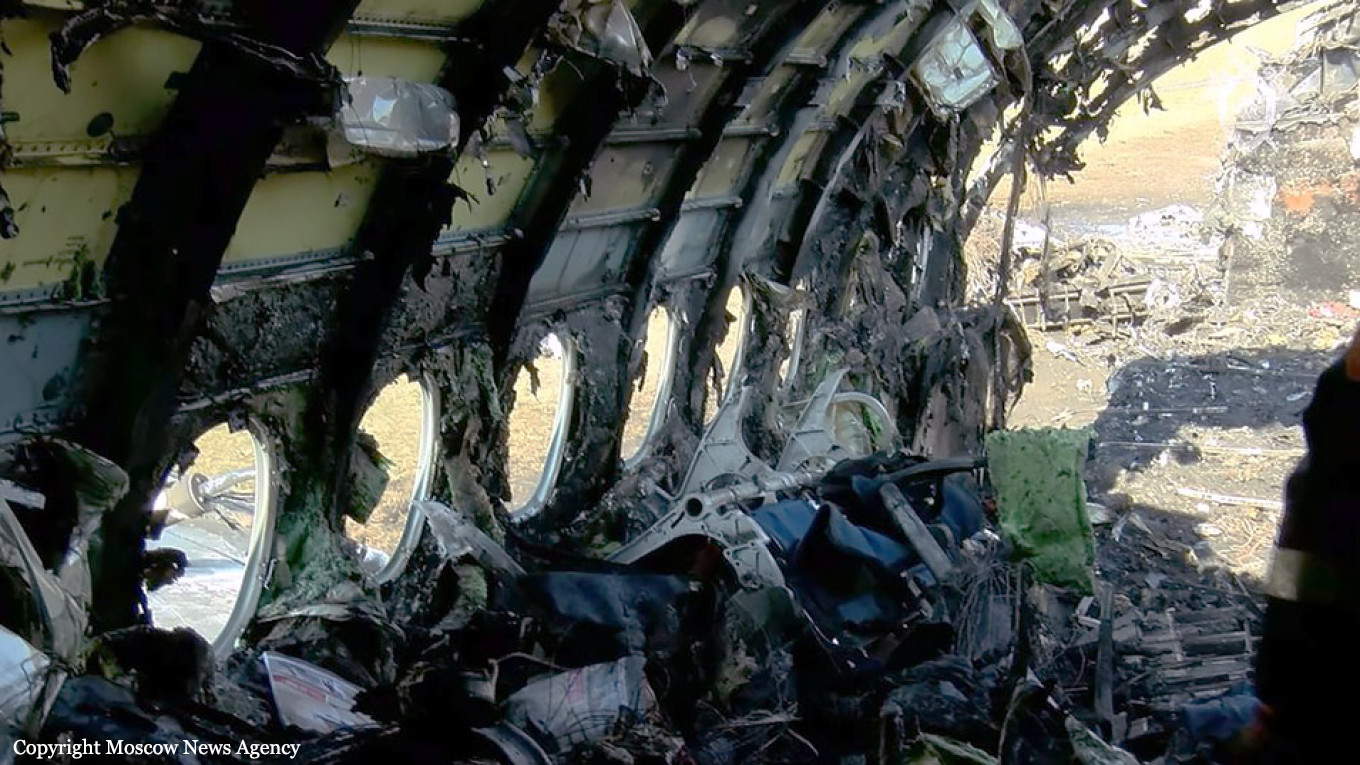
- The TR actuation after the first bounce off the RWY, which had made the subsequent go-around impossible. As per the results of the forensic medical examination the death of 40 out of 41 fatally injured people had been caused by the exposure to open flame, accompanied with the burns of the upper respiratory tract through the inhalation of hot air. The fire erupted after the aircraft third touchdown due to the disintegration of the wing fuel tanks and the fuel spillage. The fuel spillage occurred as due to the destruction at the landing gear retraction/extension actuating cylinders attachment points, as well as due to the destruction of the other wing parts. The landing gear structure had been damaged at the second touchdown that is at the third touchdown functioned beyond the expected operational conditions and had not been able to bear the applied landing loads as designed. The operation (destruction) of the landing gear fuse pins («weak links») at the second touchdown had been consistent with the design integrated logic. With that the loads, actually accomplished, had been less of those in use to demonstrate compliance to AR-25 item 25.721 at the aircraft type certification, which prevented the MLG legs to completely separate off the airplane structure (it is only the Attachment A fuse pins that had been destructed). No correlation between the certification requirements for the structure, including MLG legs structure, and the conditions for demonstrating their safe separation off results in actual significant risks of the fuel tanks disintegration and the fuel spillage even in case of compliance demonstration to every single of these requirements. At its very onset the fire by its nature had been the deflagration flash, which had been accompanied with an intense smoke release with the onset of a steady burning in two seconds. By the point of the evacuation initiation the fire had been propagated inside the cabin through a row of cabin windows at the rear fuselage along the right and left sides, with that the airworthiness standards do not set up the requirements for the cabin windows as to the external fire protection. That situation had been beyond the expected operational conditions as there had been no time margin (90 sec), at which the crew and passengers’ emergency evacuation is demonstrated at the type certification.
Most probably the following factors had contributed to the increase in the severity of the consequences:
- The running engines of the aircraft, having been not timely shut down by the crew;
- Large amount of fuel, spilling out of both wing panels, which penetrated the area of the exhaust-mixing nozzles, exposed directly to their jet streams;
- The inability to evacuate through both of the rear emergency exits;
- The manifestation of the flashover effect at the rear passenger cabin;
- The crush and panic among the passengers;
- The efforts by a number of passengers to pick up their carry-on luggage at the evacuation;
- The CFA’s error in operating the PACIS, and consequently the decline in the passengers’ situational awareness as for the evacuation procedure.
Final Report:

Crash of a Beechcraft A60 Duke in Santa Rosa: 2 killed

Date & Time: May 5, 2019 at 1600 LT
Type of aircraft:
Operator:
Registration:
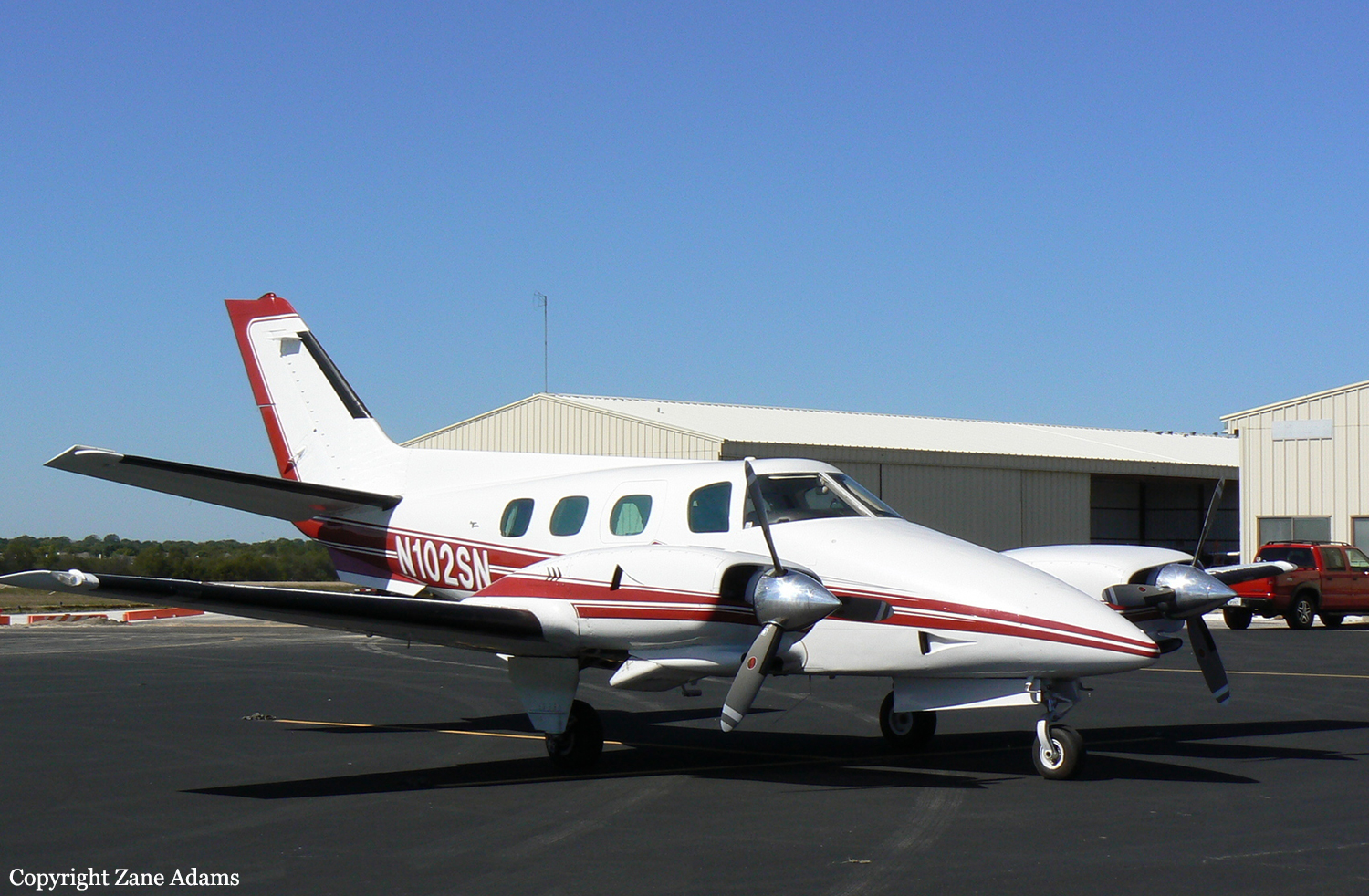
N102SN
Flight Type:
Survivors:
No
Schedule:
Arlington - Santa Fe
MSN:
P-217
YOM:
1973
Crew on board:
1
Crew fatalities:
Pax on board:
1
Pax fatalities:
Other fatalities:
Total fatalities:
2
Captain / Total flying hours:
4100
Circumstances:
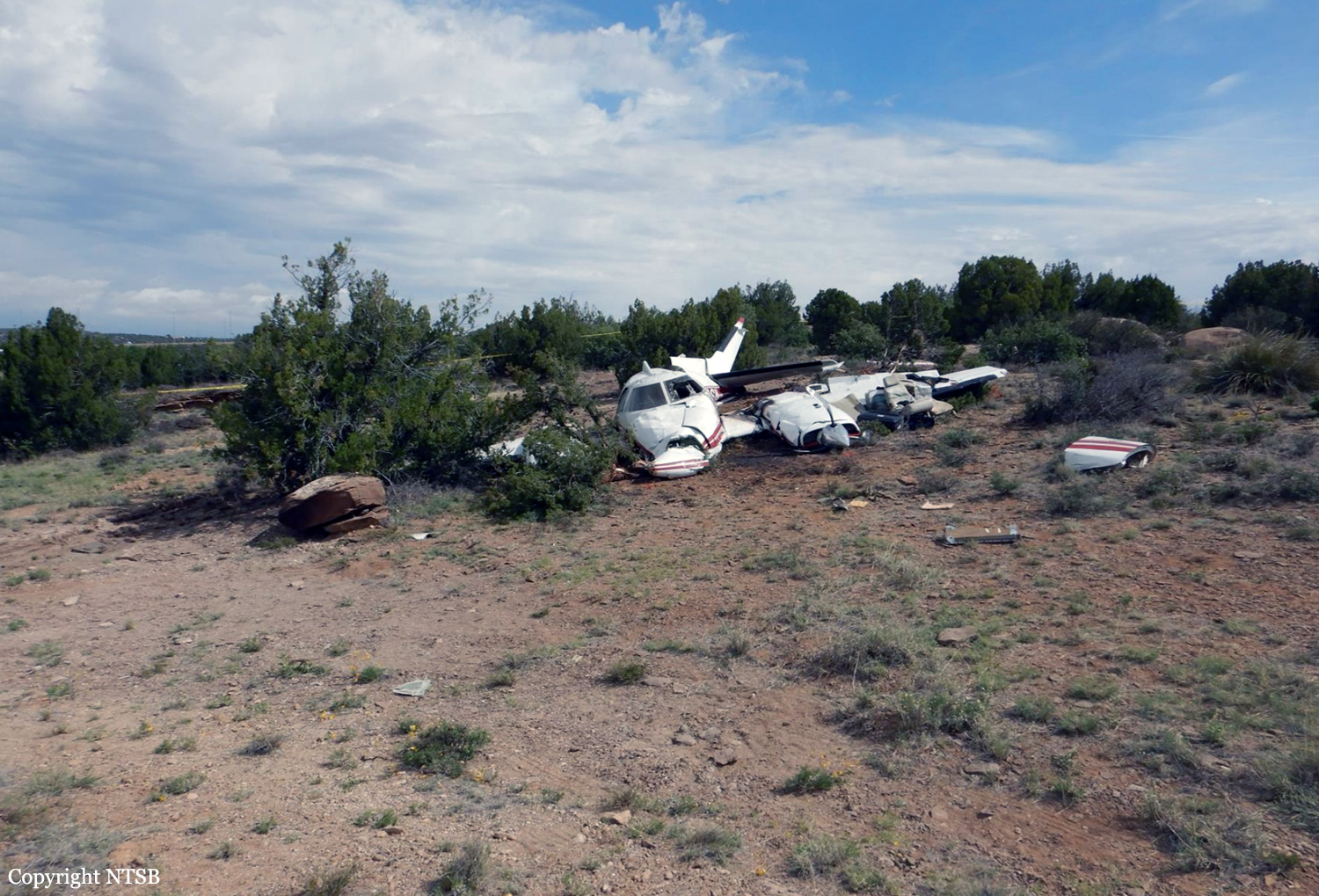
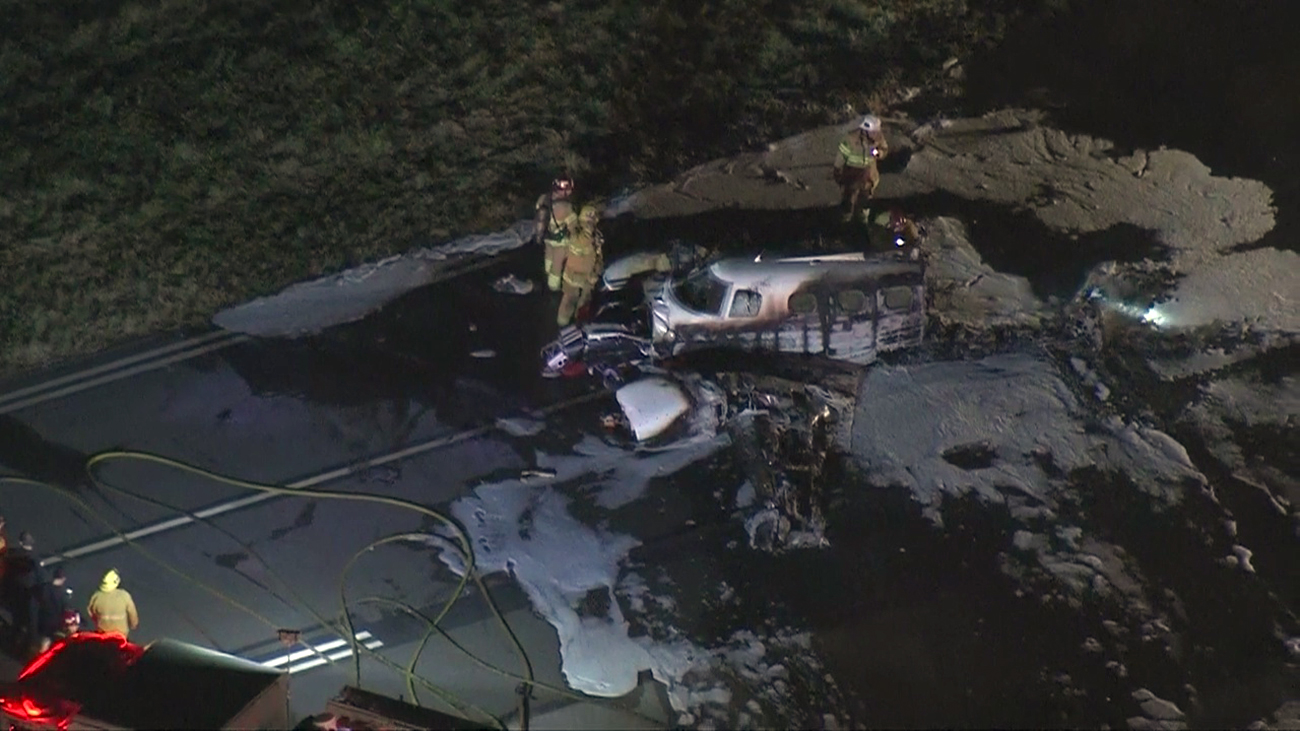
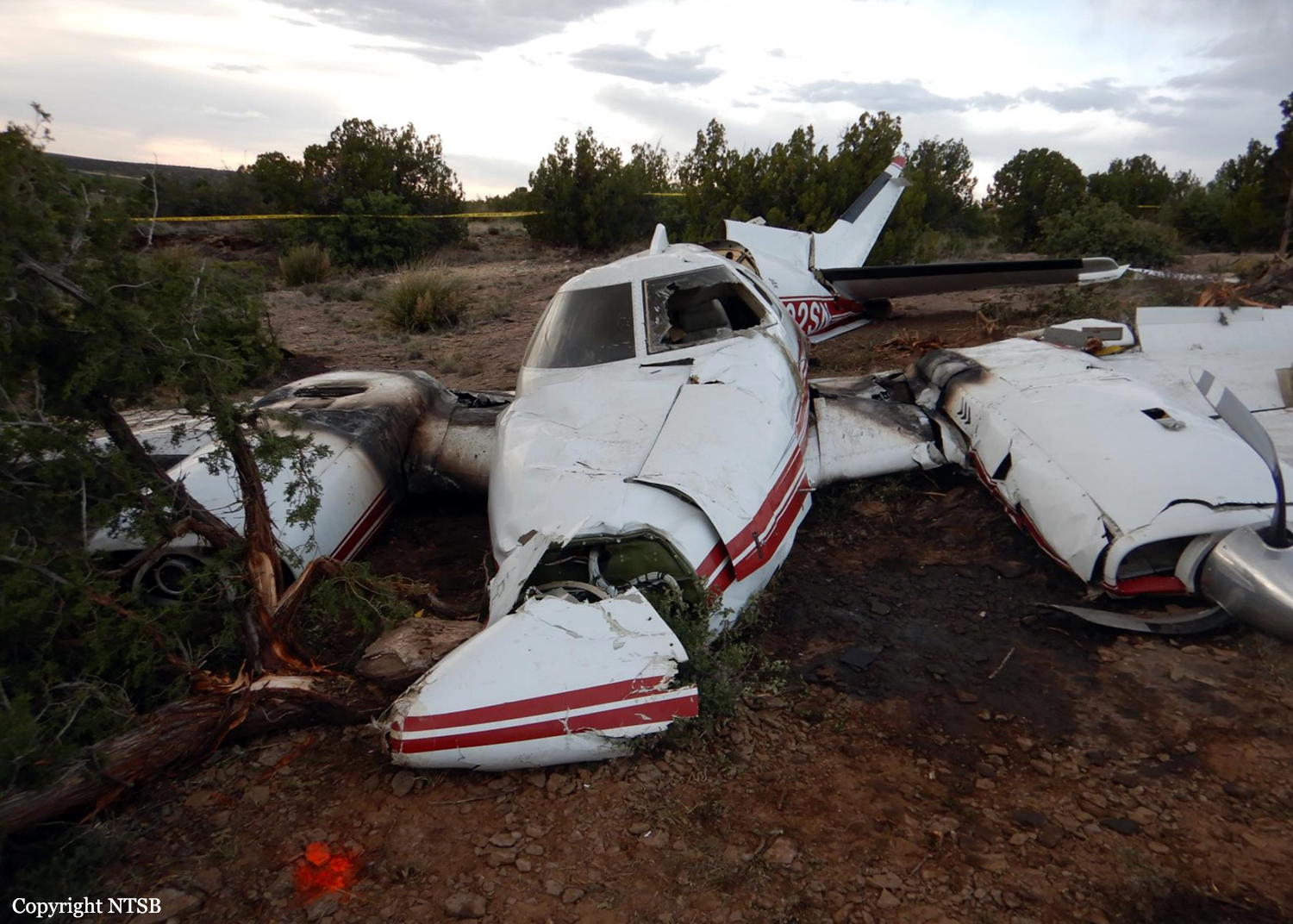
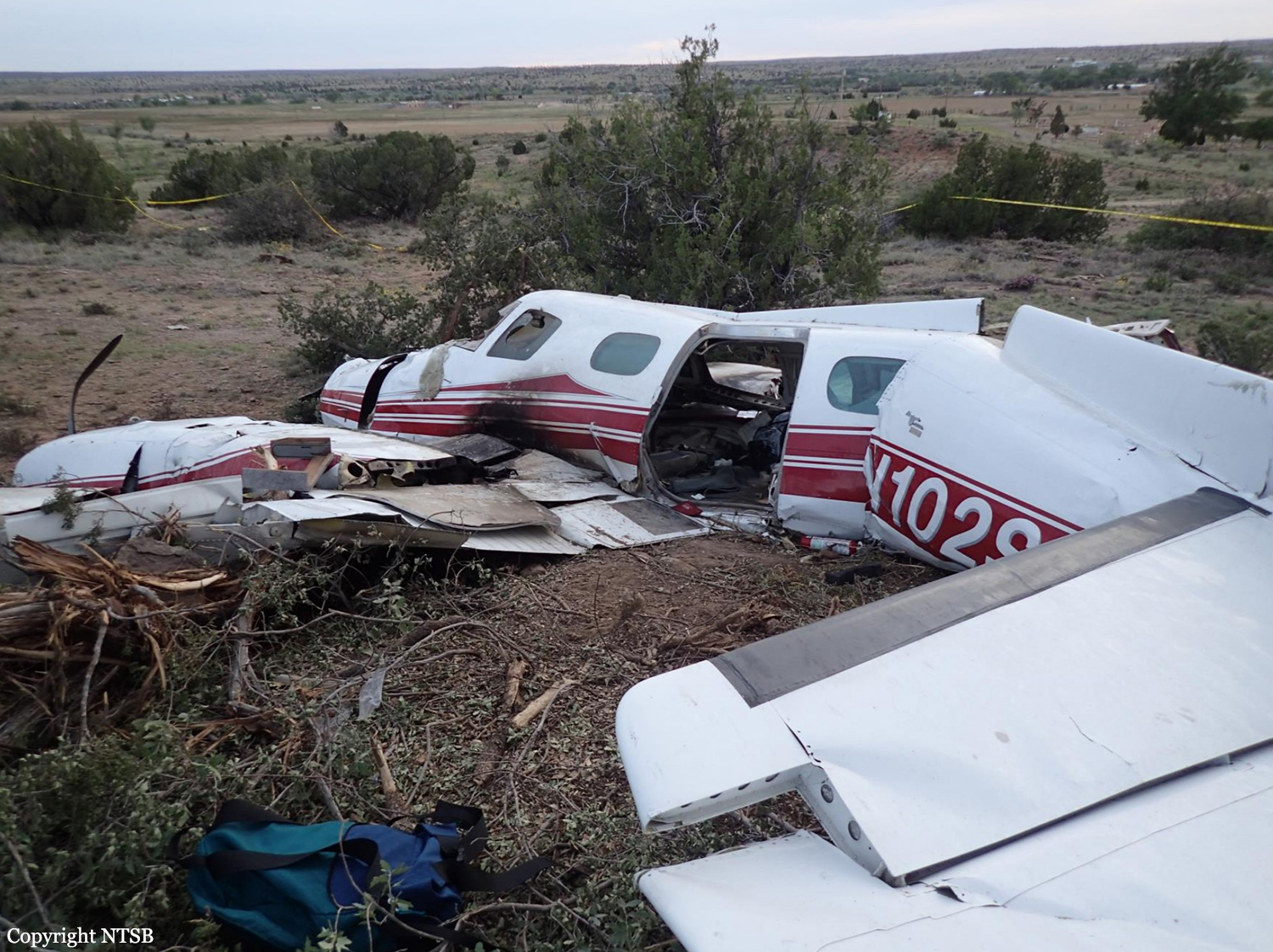
The pilot was performing a personal cross-country flight. While en route to the intended destination, the pilot contacted air traffic control to report that the airplane was having a fuel pump issue and requested to divert to the nearest airport. The pilot stated that the request was only precautionary and did not declare an emergency during the flight; he provided no further information about the fuel pump. As the airplane approached the diversion airport, witnesses observed the airplane flying low and rolling to the left just before impacting terrain, after which a postcrash fire ensued. An examination of the airframe revealed no preimpact mechanical malfunctions or failures that would have precluded normal operation. A postaccident examination and review of recorded data indicated that the left engine was secured and in the feather position, and that the right engine was operating at a high RPM setting. The left engine-driven fuel pump was found fractured. Further examination of the fuel pump revealed fatigue failure of the pressure relief valve. The fatigue failure initiated in upward bending on one side of the valve disk and progressed around both sides of the valve stem. As the cracks grew, the stem separated from the disk on one side and began to tilt in relation to the disk and the valve guide due to the non-symmetric support, which caused the lower end of the stem to rub against the valve guide, creating wear marks. The increasing stem tilt would have impinged against the valve guide, and the valve might have begun to stick in the closed position. If the valve were stuck in the closed position, it would not be able to open, and the outlet fuel pressure could rise above the set point pressure. Because the pump was driven by the engine, there would not be a way for the pilot to shut it off, disconnect it, or bypass it. Instead, the fuel pressure would continue to rise until the valve were to unstick. Thus, the pilot was likely experiencing variable fuel pressure as the valve became stuck and unstuck. Examination of the spring seat and the diaphragm plate, which were in contact with each other in the fuel pump assembly, revealed wear marks on the surface of each component, with one mark on the diaphragm plate and two wear marks on the spring seat. The two wear marks on the spring seat were distinct features separated by material with no wear indications in between. The only way that these wear marks could have occurred were if the spring seat was separated from the diaphragm plate and reinstalled in a different orientation. Thus, it is likely that the pilot had encountered a fuel pump problem before the accident flight and that someone tried to troubleshoot the problem. The last radar data point indicated that the airplane was traveling at a groundspeed of about 98 knots, and had passed north of the airport, traveling to the southwest. The minimum control speed for the airplane with single-engine operation was 88 knots. However, it is likely that if the pilot initiated a left turn back toward the airport, that the right engine torque and the 14 knot wind with gusts to 24 knots would have necessitated a higher speed. Because appropriate control inputs and airspeed were not maintained, the airplane rolled in the direction of the feathered engine (due to the left fuel pump problem), resulting in a loss of control. The pilot's toxicology report was positive for cetirizine, sumatriptan, gabapentin, topiramate, and duloxetine. All of these drugs act in the central nervous system and can be impairing alone or in combination. Although this investigation could not determine the reason(s) for the pilot's use of these drugs, they are commonly used to treat chronic pain syndromes or seizures. It is likely that the pilot was experiencing some impairment because of multiple impairing medications and was unable to successfully respond to the in-flight urgent situation and safely land the airplane.
Probable cause:
The pilot's loss of airplane control due to his failure to maintain appropriate control inputs and airspeed after shutting down an engine because of a progressive failure of the pressure relief valve in the fuel pump, which resulted in variable fuel pressure in the engine. Contributing to the loss of control was the pilot's use of multiple impairing medications.
Final Report:

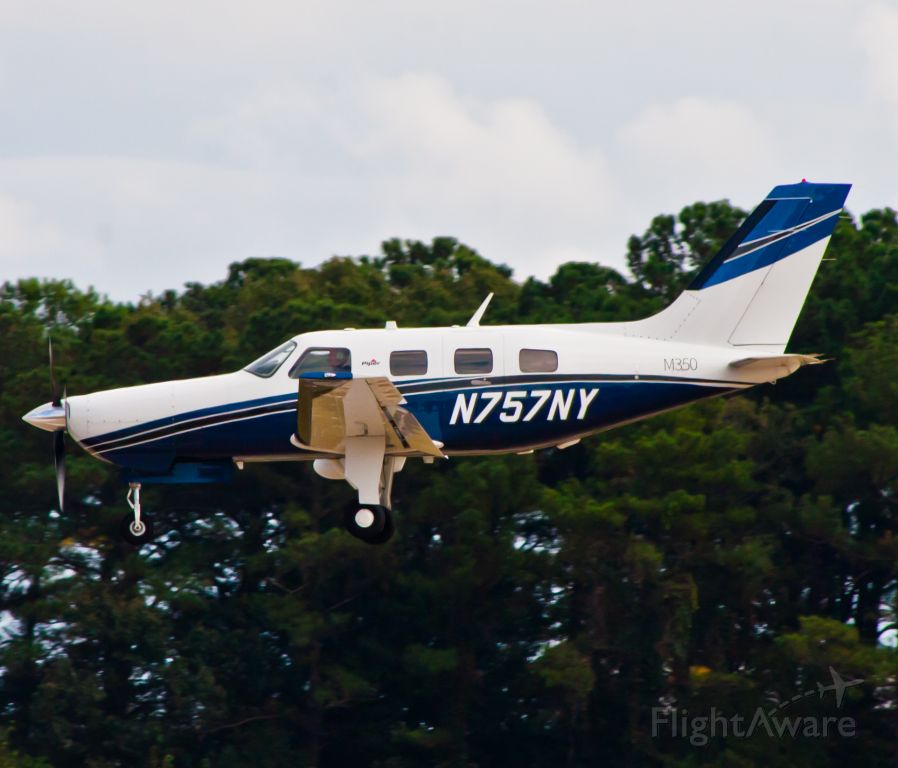
Crash of a Piper PA-46-350P Malibu near Makkovik: 1 killed

Date & Time: May 1, 2019 at 0816 LT
Operator:
Registration:
N757NY
Flight Phase:
Flight Type:
Survivors:
Yes
Site:
Schedule:
Goose Bay - Narsarsuaq
MSN:
46-36657
YOM:
2015
Country:
Crew on board:
2
Crew fatalities:
Pax on board:
0
Pax fatalities:
Other fatalities:
Total fatalities:
1
Captain / Total flying hours:
3500
Captain / Total hours on type:
20.00
Copilot / Total flying hours:
1300
Copilot / Total hours on type:
0
Circumstances:
On 01 May 2019 at 0723, the aircraft departed CYYR on a VFR flight plan direct to BGBW. The ferry pilot, who was the pilot-in-command, occupied the left seat while the co-owner occupied the right seat. The aircraft climbed to 2000 feet ASL and proceeded on a direct track to destination. The altitude and heading did not change significantly along the route, therefore it is likely that the autopilot was engaged. At 0816, the aircraft collided with a snow-covered hill 2250 feet in elevation, located 35 nautical miles (NM) southeast of Makkovik Airport (CYFT), Newfoundland and Labrador. The impact happened approximately 200 feet below the top of the hill. The aircraft came to rest in deep snow on steep sloping terrain. The aircraft sustained significant damage to the propeller, nose gear, both wings, and fuselage. Although the cabin was crush-damaged, occupiable space remained. There was no post-impact fire. The ferry pilot was seriously injured and the co-owner was fatally injured. The Joint Rescue Coordination Centre (JRCC) in Halifax received an emergency locator transmitter (ELT) signal from the aircraft at 0823. The ferry pilot carried a personal satellite tracking device, a personal locator beacon (PLB) and a handheld very high frequency (VHF) radio, which allowed communication with search and rescue (SAR). Air SAR were dispatched to the area; however, by that time, the weather had deteriorated to blizzard conditions and aerial rescue was not possible. Ground SAR then deployed from the coastal community of Makkovik and arrived at the accident site approximately 4 hours later because of poor weather conditions and near zero visibility. The ferry pilot and the body of the co-owner were transported to Makkovik by snowmobile. The following day, they were airlifted to CYYR.
Probable cause:
Controlled flight into terrain.
Final Report:

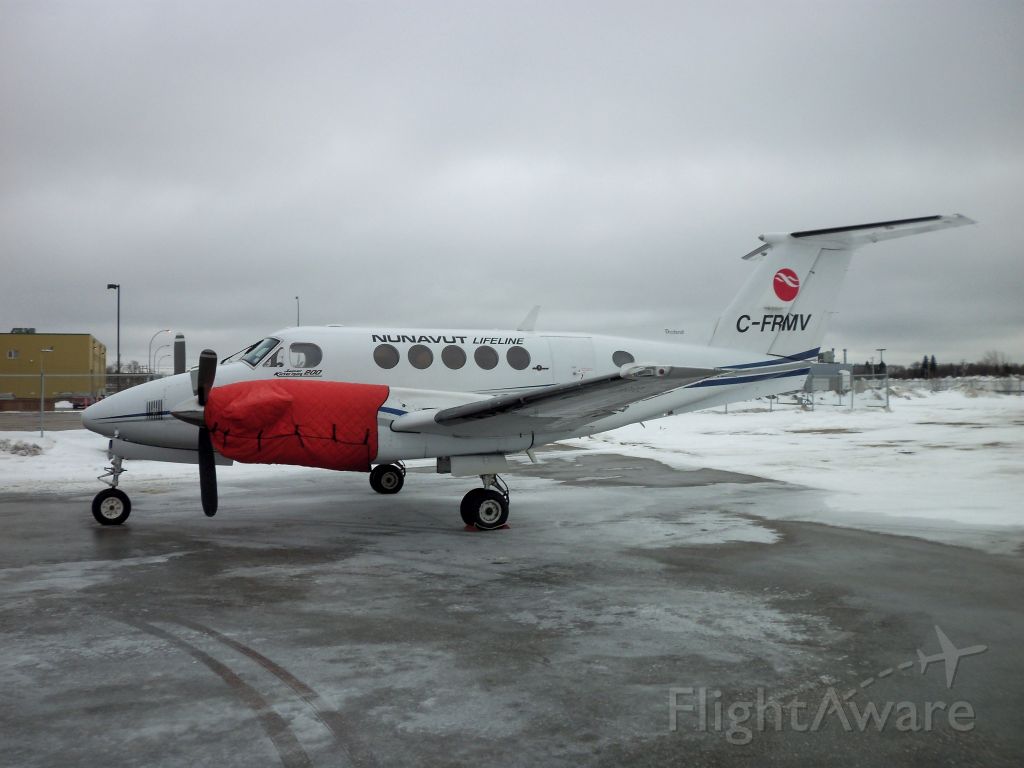
Crash of a Beechcraft B200 Super King Air in Gillam

Date & Time: Apr 24, 2019 at 1823 LT
Operator:
Registration:
C-FRMV
Flight Type:
Survivors:
Yes
Schedule:
Winnipeg – Churchill – Rankin Inlet
MSN:
BB-979
YOM:
1982
Flight number:
KEW202
Location:
Country:
Crew on board:
2
Crew fatalities:
Pax on board:
2
Pax fatalities:
Other fatalities:
Total fatalities:
0
Captain / Total flying hours:
1350
Captain / Total hours on type:
1100.00
Copilot / Total flying hours:
3500
Copilot / Total hours on type:
1350
Circumstances:
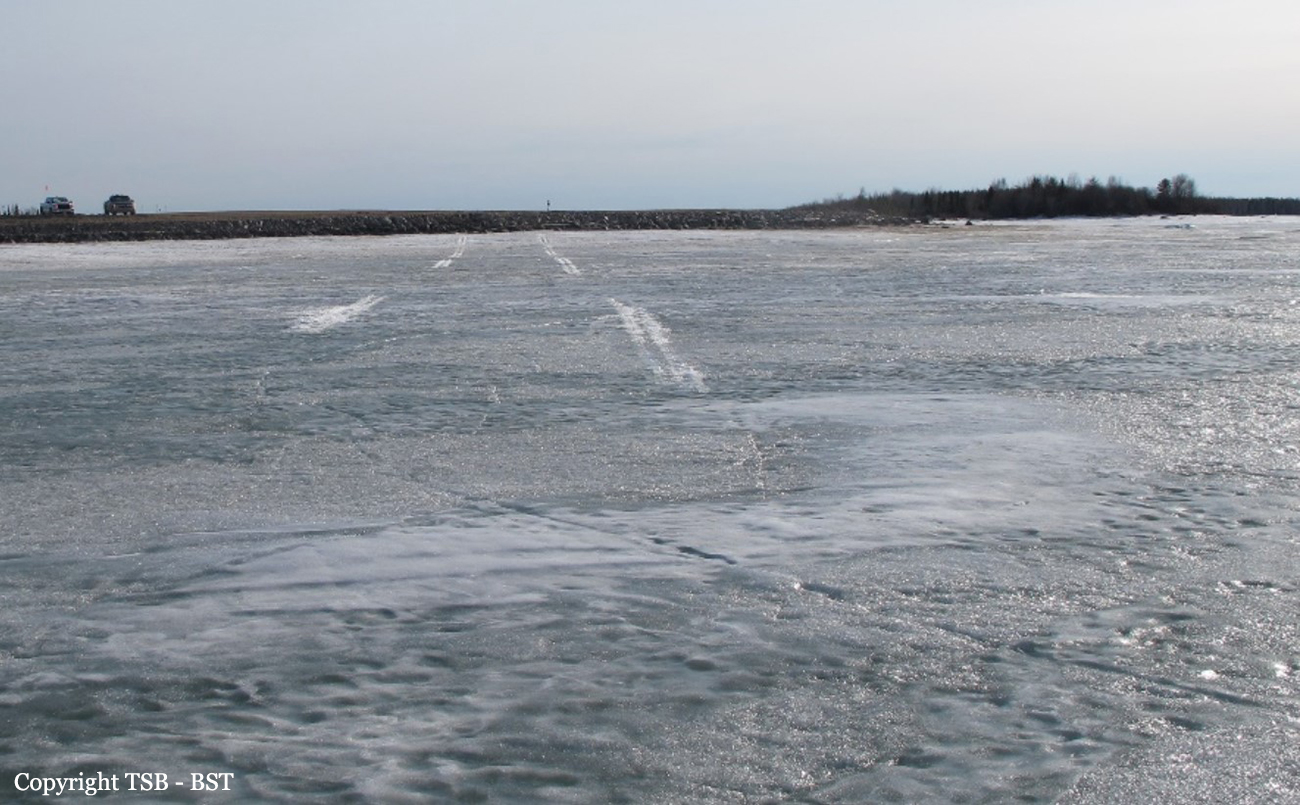
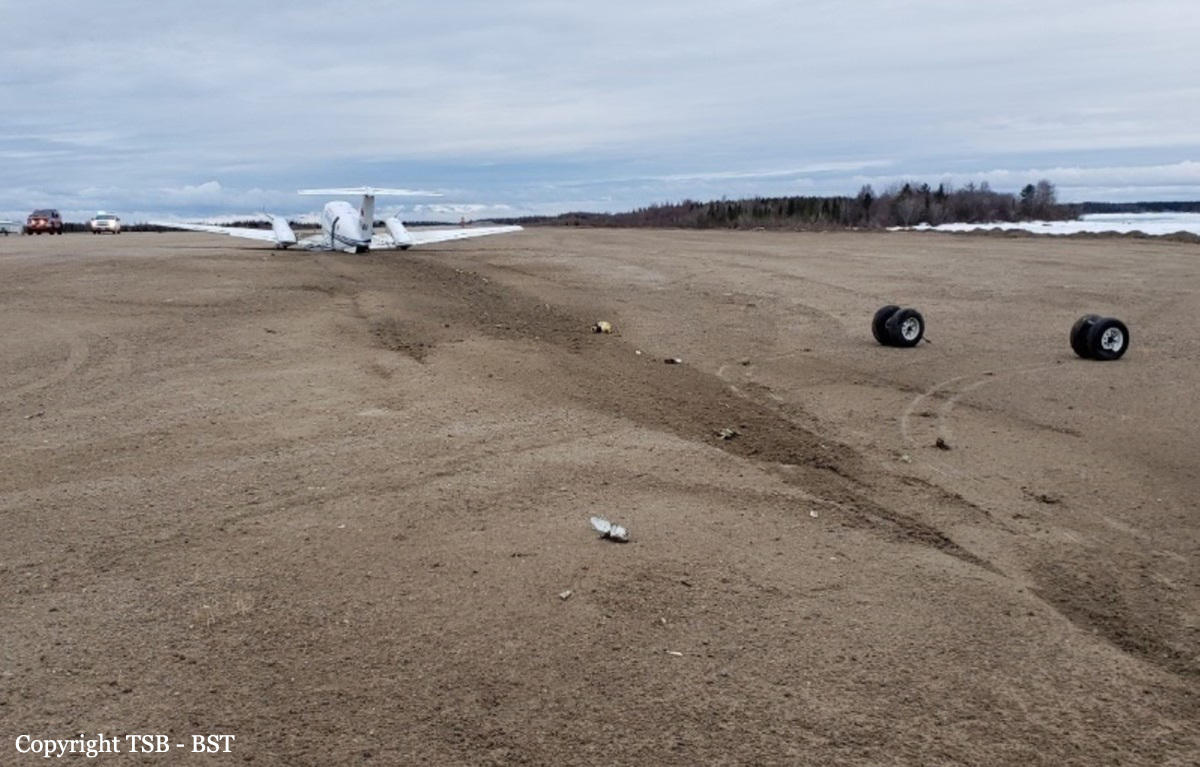
On 24 April 2019, the Keewatin Air LP Beechcraft B200 aircraft (registration C‑FRMV, serial number BB979), equipped to perform medical evacuation flights, was conducting an instrument flight rules positioning flight (flight KEW202), with 2 flight crew members and 2 flight nurses on board, from Winnipeg/James Armstrong Richardson International Airport, Manitoba, to Rankin Inlet Airport, Nunavut, with a stop at Churchill Airport, Manitoba. At 1814 Central Daylight Time, when the aircraft was cruising at flight level 250, the flight crew declared an emergency due to a fuel issue. The flight crew diverted to Gillam Airport, Manitoba, and initiated an emergency descent. During the descent, both engines flamed out. The flight crew attempted a forced landing on Runway 23, but the aircraft touched down on the frozen surface of Stephens Lake, 750 feet before the threshold of Runway 23. The landing gear was fully extended. The aircraft struck the rocky lake shore and travelled up the bank toward the runway area. It came to rest 190 feet before the threshold of Runway 23 at 1823:45 Central Daylight Time. None of the occupants was injured. The aircraft sustained substantial damage. The 406 MHz emergency locator transmitter activated. Emergency services responded. There was no fire.
Probable cause:
Findings as to causes and contributing factors:
These are conditions, acts or safety deficiencies that were found to have caused or contributed to this occurrence.
1. When the captain asked if the aircraft was ready for the flight, the first officer replied that it was, not recalling that the aircraft required fuel.
2. While performing the FUEL QUANTITY item on the AFTER START checklist, the captain responded to the first officer’s prompt with the rote response that the fuel was sufficient, without looking at the fuel gauges.
3. The aircraft departed Winnipeg/James Armstrong Richardson International Airport with insufficient fuel on board to complete the planned flight.
4. The flight crew did not detect that there was insufficient fuel because the gauges had not been included in the periodic cockpit scans.
5. When the flight crew performed the progressive fuel calculation, they did not confirm the results against the fuel gauges, and therefore their attention was not drawn to the low-fuel state at a point that would have allowed for a safe landing.
6. Still feeling the effect of the startle response to the fuel emergency, the captain quickly became task saturated, which led to an uncoordinated response by the flight crew, delaying the turn toward Gillam Airport, and extending the approach.
7. The right engine lost power due to fuel exhaustion when the aircraft was 1 nautical mile from Runway 23. From that position, a successful forced landing on the intended runway was no longer possible and, as a result, the aircraft touched down on the ice surface of Stephens Lake, short of the runway.

Findings as to risk:
These are conditions, unsafe acts or safety deficiencies that were found not to be a factor in this occurrence but could have adverse consequences in future occurrences.
1. If procedures are not developed to instruct pilots on their roles and responsibilities during line indoctrination flights, there is a risk that flight crew members may not participate when expected, or may work independently towards different goals.

Other findings:
These items could enhance safety, resolve an issue of controversy, or provide a data point for future safety studies.
1. Because emergency medical services and the fire department were not notified immediately about the declared emergency, they were not on site before the aircraft arrived at Gillam Airport.
Final Report:

Crash of a Cessna 551 Citation II/SP in Siegerland

Date & Time: Apr 24, 2019 at 1442 LT
Type of aircraft:
Operator:
Registration:
D-IADV
Flight Type:
Survivors:
Yes
Schedule:
Siegerland - Siegerland
MSN:
551-0552
YOM:
1987
Country:
Region:
Crew on board:
2
Crew fatalities:
Pax on board:
0
Pax fatalities:
Other fatalities:
Total fatalities:
0
Captain / Total flying hours:
6800
Captain / Total hours on type:
170.00
Copilot / Total flying hours:
1300
Copilot / Total hours on type:
0
Aircraft flight hours:
8479
Aircraft flight cycles:
7661
Circumstances:
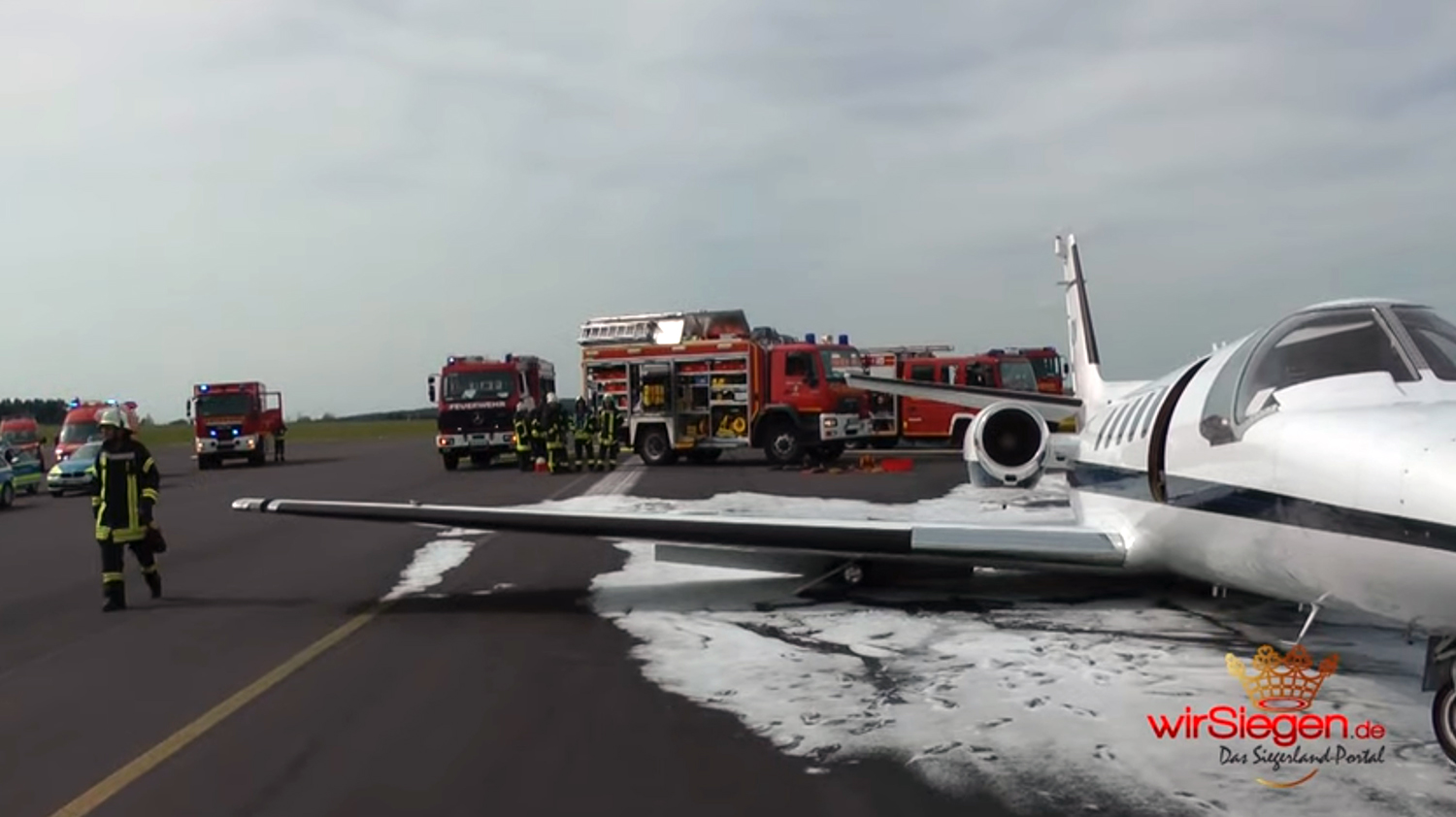
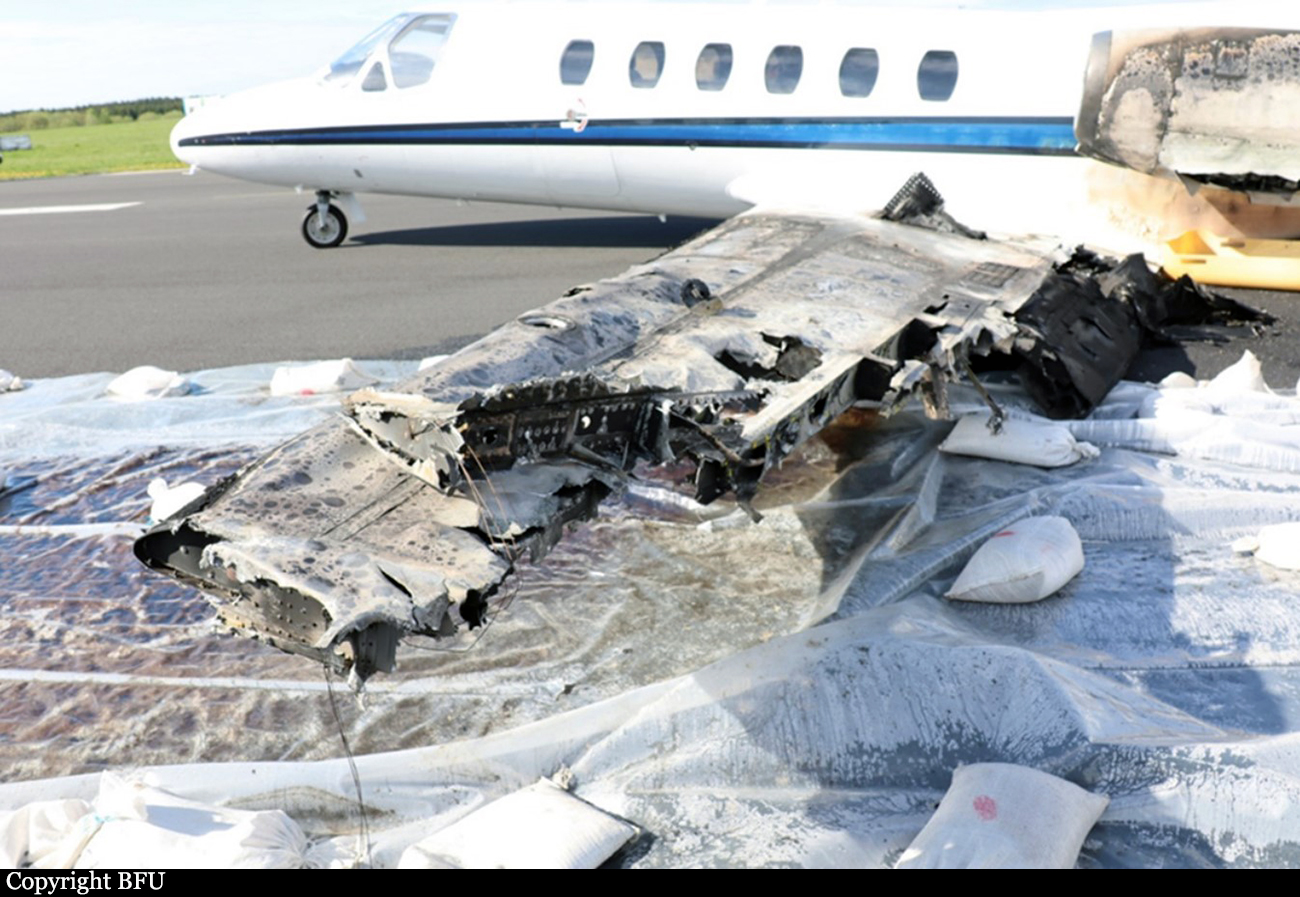
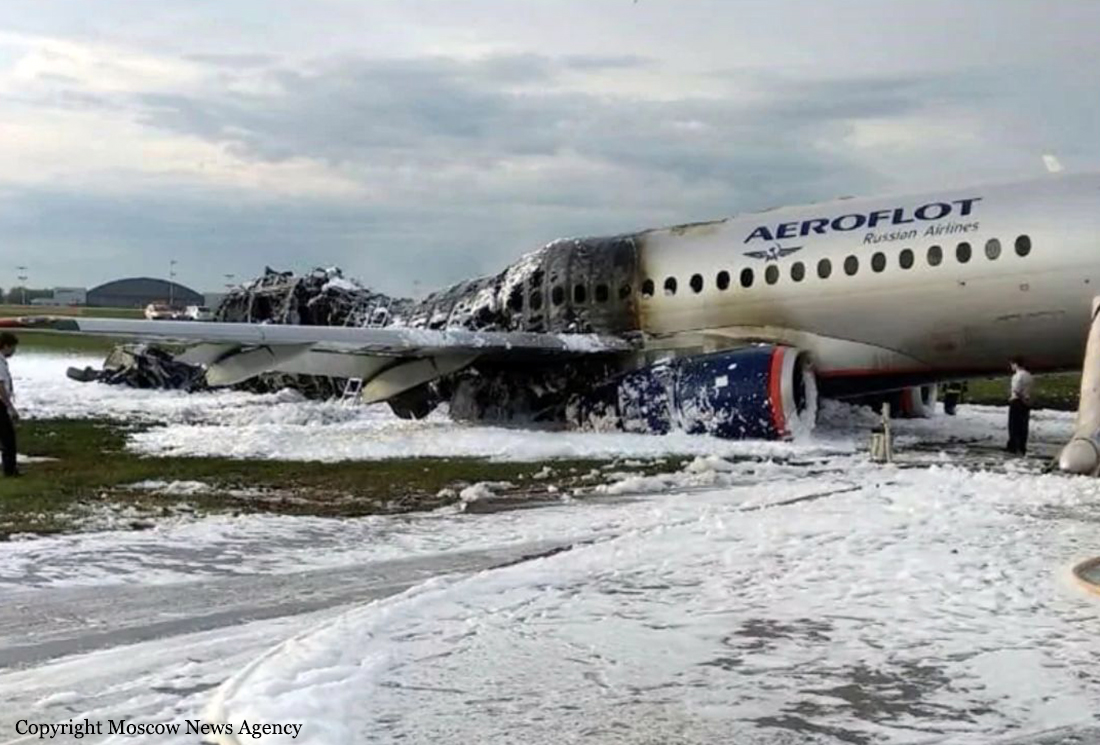
The Cessna 551 Citation II/SP corporate jet took off at 13:30 local time from Reichelsheim Airfield, Germany, for a training flight at Siegerland Airport. It was a training flight to acquire the type rating for the aircraft. The right pilot's seat was occupied by the pilot in command, who was deployed on this flight as a flight instructor. The student pilot, as co-pilot, sat on the left pilot seat and was the pilot flying. For the co-pilot it was the second flight day of his practical training program on the Cessna 551 Citation II/SP. The day before, he had already completed about three flying hours on the plane. At Siegerland Airport, three precision approaches to runway 31 were carried out with the help of the Instrument Landing System (ILS). After the third landing, the tower, due to the changed wind, turned the landing direction to runway 13. The cockpit crew therefore rolled the aircraft to the end of the runway, turned and took off at 14:34 from runway 13. This was followed by a left-hand circuit at an altitude of 3,500 ft AMSL. The approach to runway 13 took place under visual flight conditions. According to both pilots, the checklists were processed during the circuit and the aircraft was prepared for landing on runway 13. In the final approach, the landing configuration was then established and the landing checklist performed. The copilot reported that shortly before the landing the speed decreased, the aircraft flew too low and the approach angle had to be corrected. He pushed the engine thrust levers forward to the stop. The pilot in command supported this action by also pushing the engine thrust levers forward with his hand. However, according to the pilot in command, the remaining time to touch down on the runway was no longer sufficient for the engines to accelerate to maximum speed in order to deliver the corresponding thrust. He also described that the aircraft had been in the stall area at that time. However, he had not noticed a stall warning. At 14:42, with the landing gear extended, the aircraft touched down in the grass in front of the asphalt area of runway 13. The left main landing gear buckled and damaged the tank of the left wing. The right main landing gear also buckled, the tank on the right side remained undamaged. The kerosene escaping from the left wing ignited and a fire broke out. The aircraft burned and slipped along runway 13 on the folded landing gear, the underside of the airframe and the extended landing flaps until it came to a standstill after a distance of approx. 730 m from runway threshold 13. After the plane had come to a standstill on the runway, the copilot noticed flames on the left side of the plane. The pilot switched off both engines. Then both pilots left the plane via the emergency exit door on the right side. The pilots were not injured.
Probable cause:
The accident, during which the airplane touched down ahead of the runway, was caused by an unstabilized approach and the non-initiation of a go-around procedure.
The following factors contributed to the accident:
- The organisation of the traffic pattern was performed too close to the airport.
- The final approach was flown too short and conducted in a way that it resulted in an unstabilized approach.
- During the final approach the approach angle was not correctly maintained until the runway threshold.
- During the final approach speed was too low.
- Both pilots did not recognize the decrease in speed early enough and had not increased engine performance in time.
- The flight instructor intervened too late and thus control of the flight attitude of the aircraft was not regained soon enough.
- The ascending terrain ahead of the runway threshold was also a contributory factor. It is highly likely that the student pilot had the impression of being too high and deliberately maintained a shallow approach angle.
Final Report:

Crash of a Cessna 208 Caravan I in the Dry Tortugas National Park

Date & Time: Apr 23, 2019 at 1200 LT
Type of aircraft:
Operator:
Registration:
N366TA
Flight Phase:
Flight Type:
Survivors:
Yes
Schedule:
Dry Tortugas - Key West
MSN:
208-0249
YOM:
1996
Crew on board:
1
Crew fatalities:
Pax on board:
4
Pax fatalities:
Other fatalities:
Total fatalities:
0
Captain / Total flying hours:
2407
Captain / Total hours on type:
27.00
Aircraft flight hours:
9506
Circumstances:
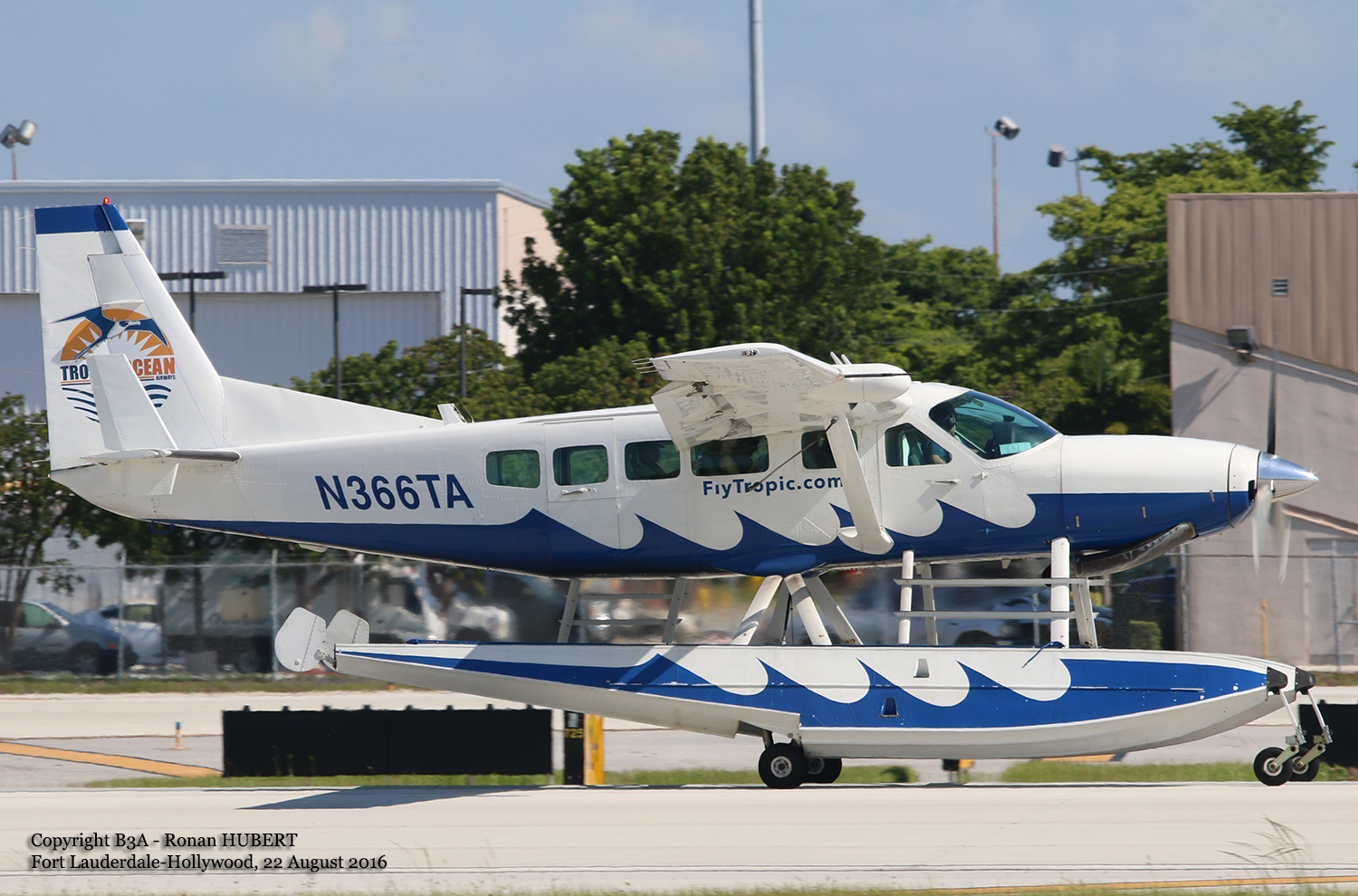
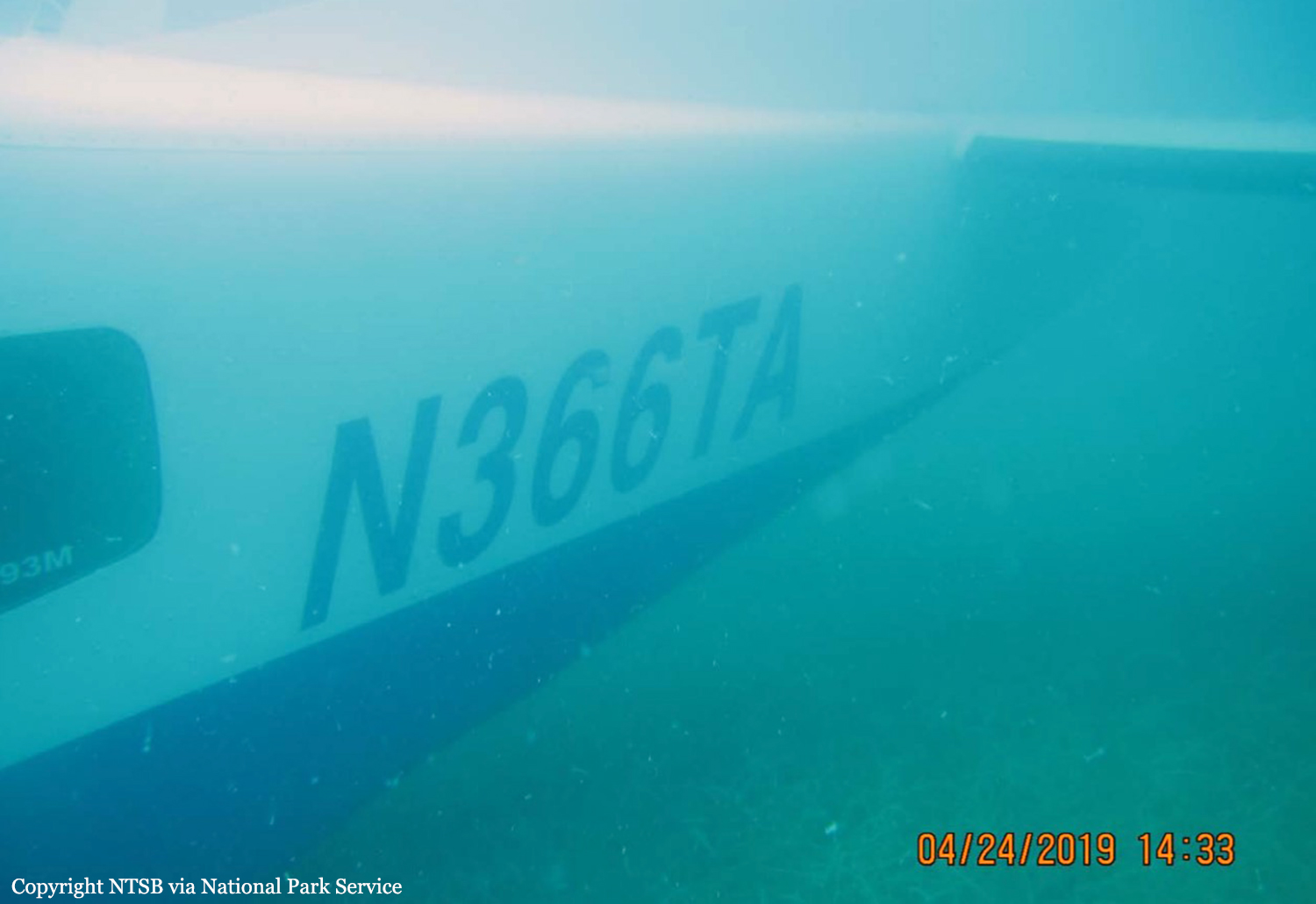
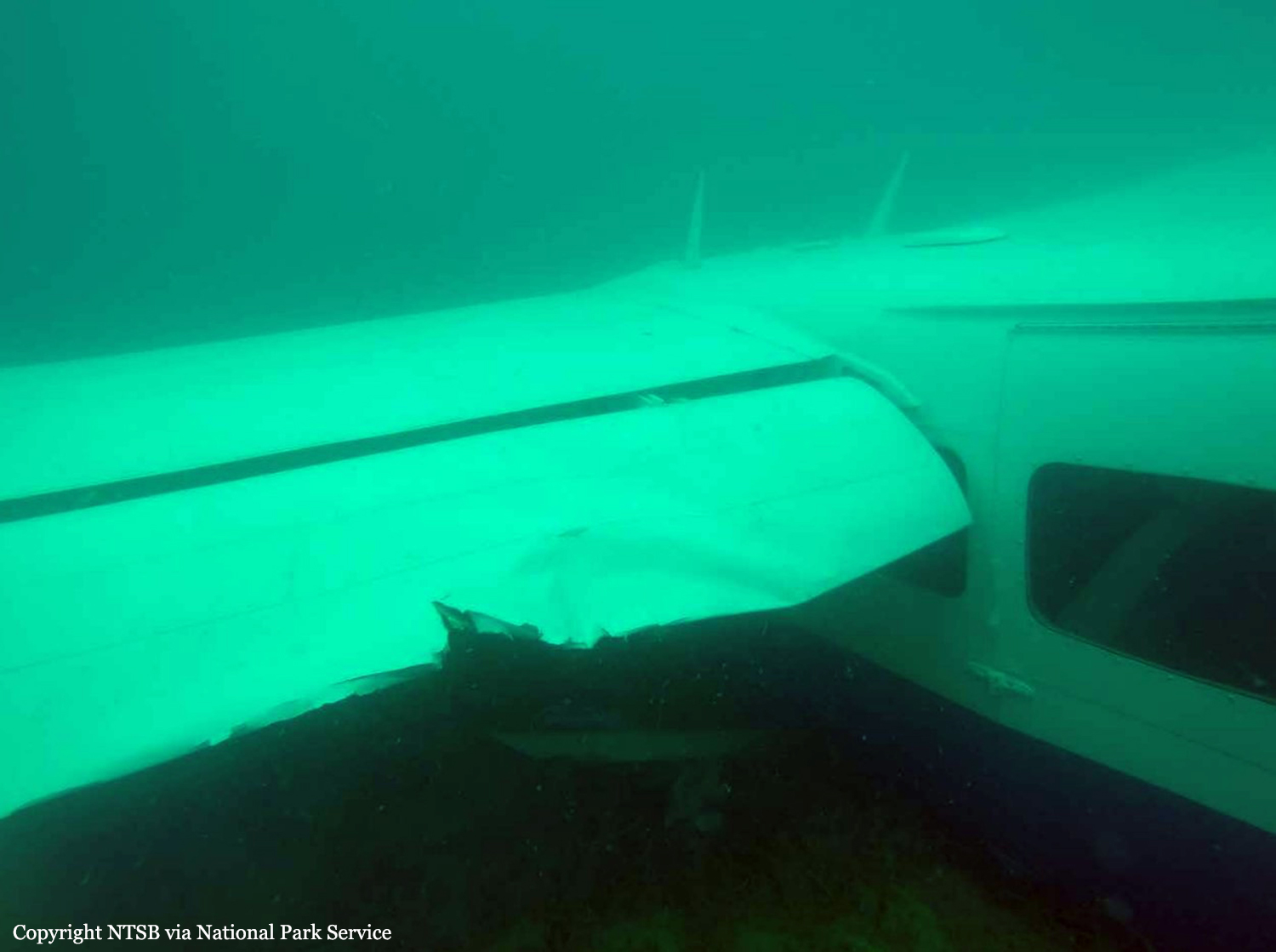
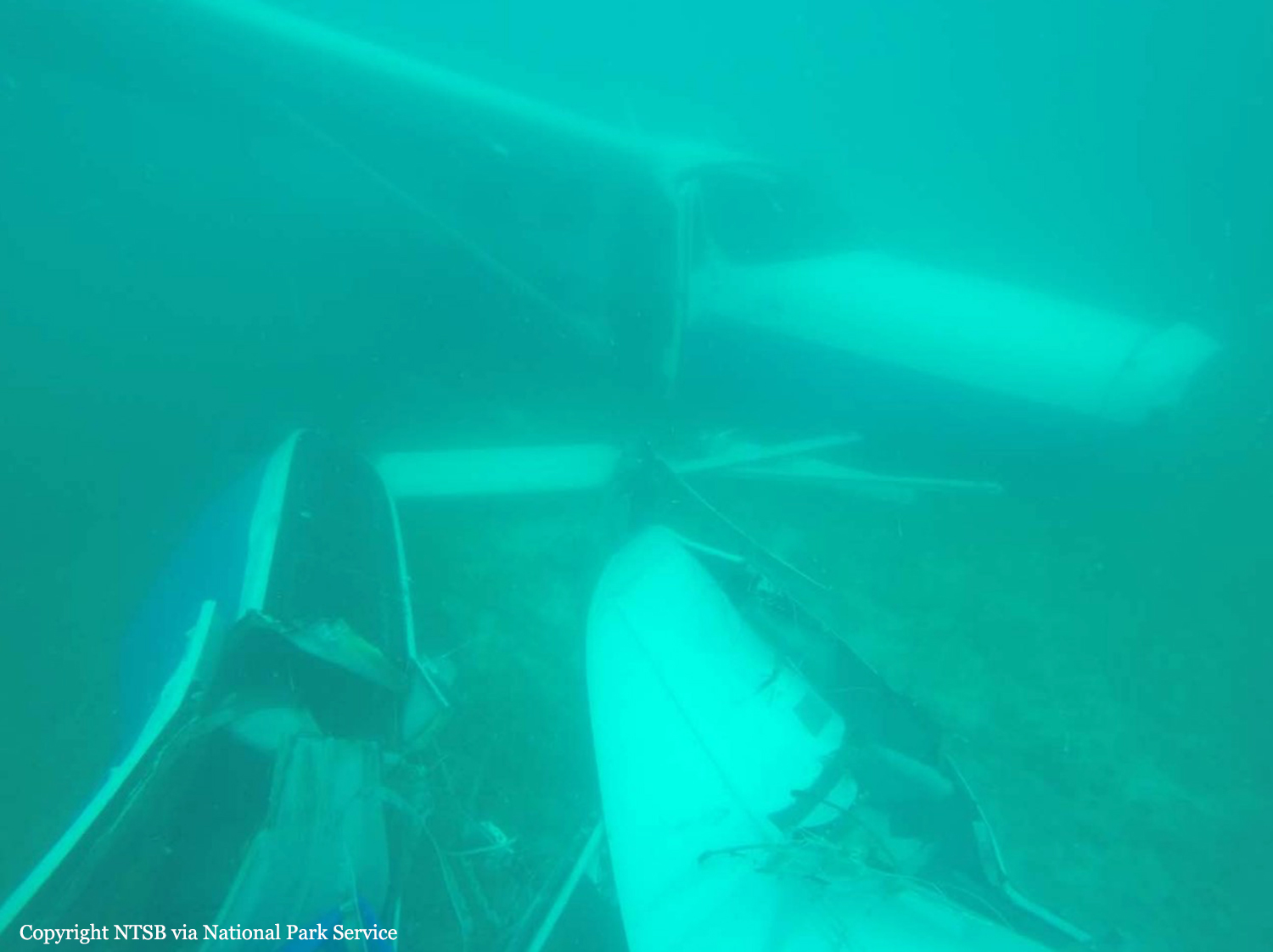
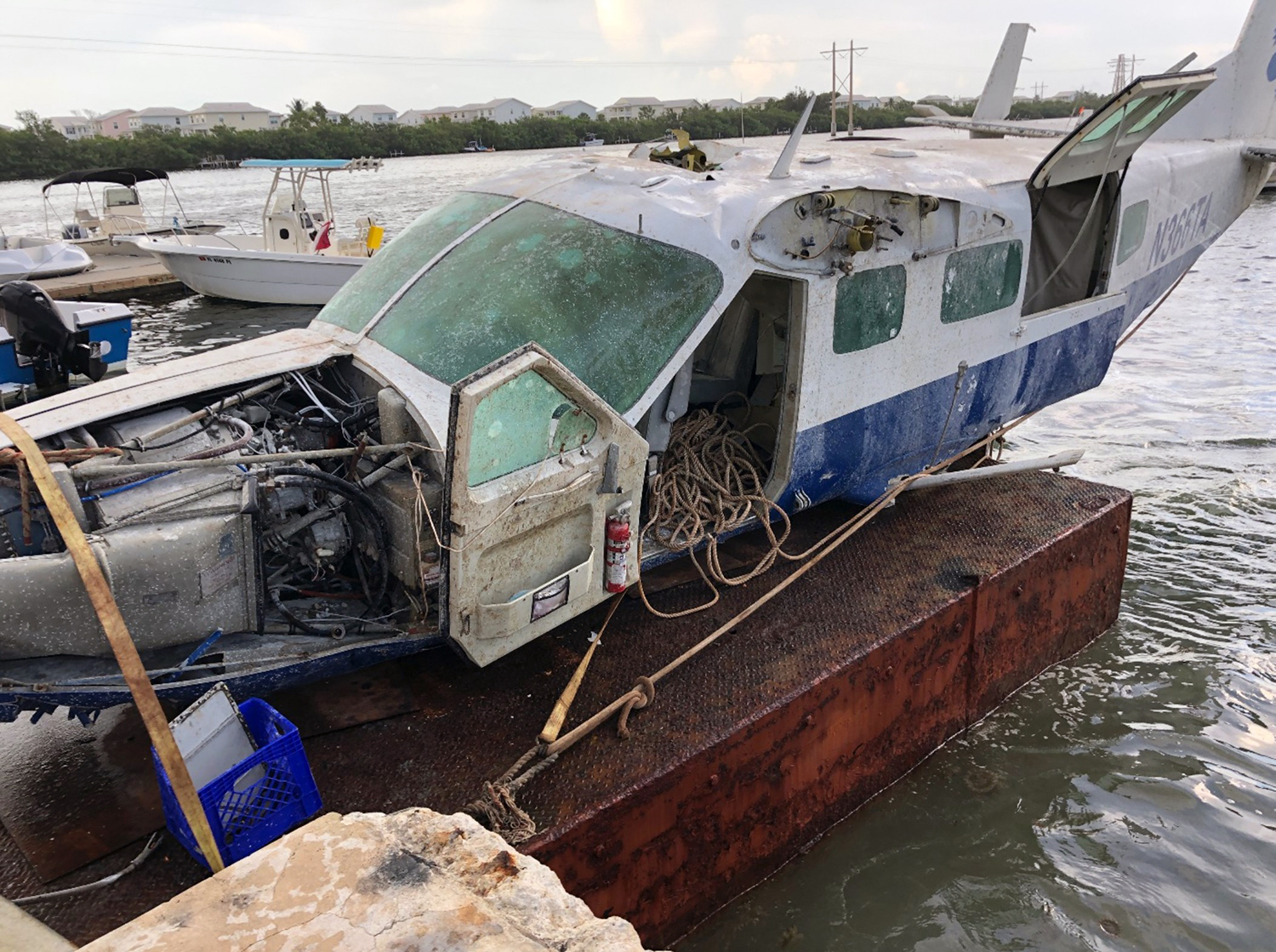
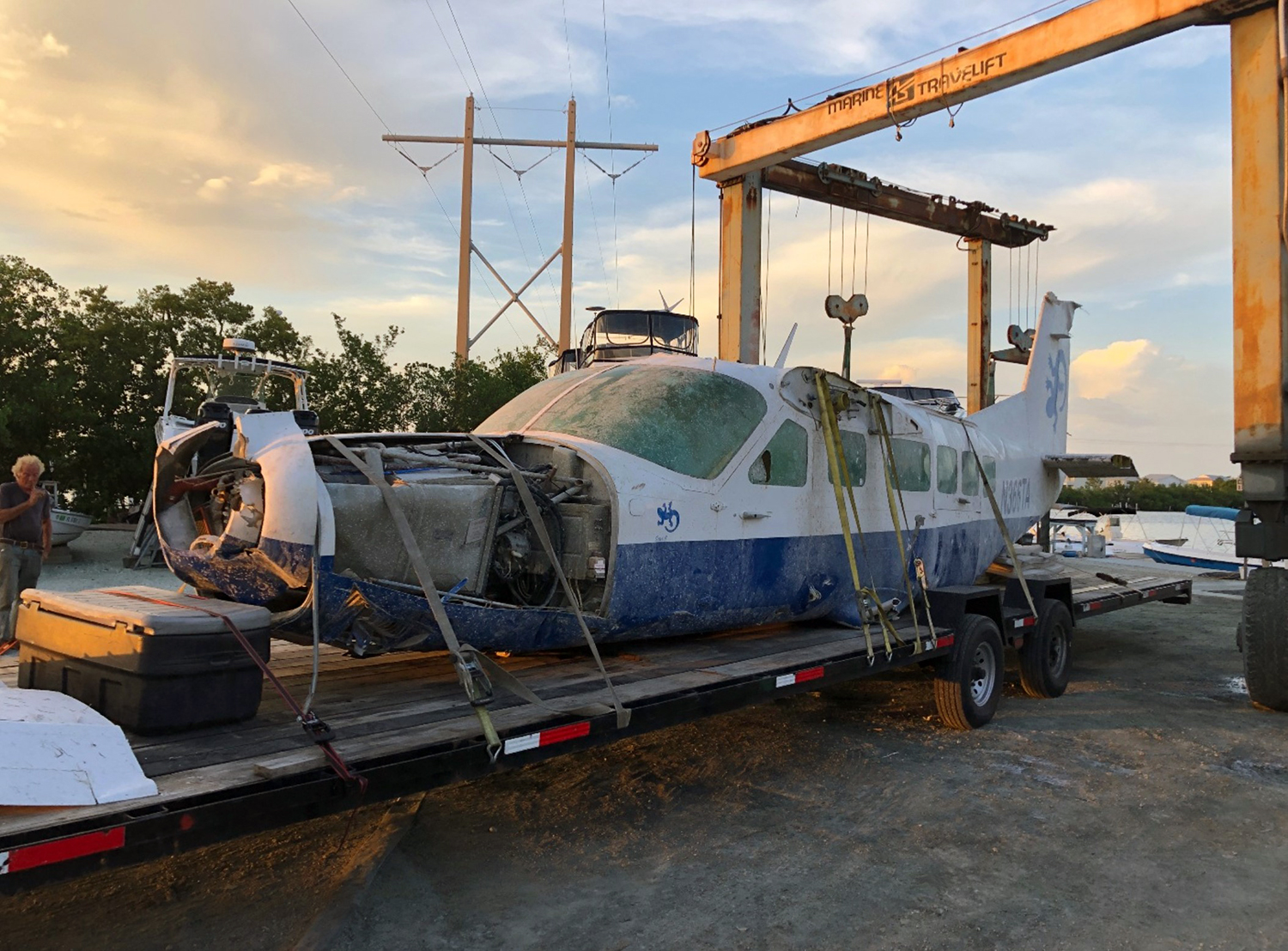
The pilot landed the seaplane into an easterly wind, then noticed that the surface wind was greater than forecast. Unable to taxi to the beaching location, he elected to return to his destination. He maneuvered the airplane into the wind and applied takeoff power. He described the takeoff run as "bumpy" and the water conditions as "rough." The pilot reported that the left float departed the airplane at rotation speed, and the airplane subsequently nosed into the water. The pilot and passengers were assisted by a nearby vessel and the airplane subsequently sank into 50 ft of water. Inclement sea and wind conditions prevented recovery of the wreckage for 52 days, and the wreckage was stored outside for an additional 13 days before recovery by the salvage company. Extensive saltwater corrosion prevented metallurgical examination of the landing gear components; however, no indication of a preexisting mechanical malfunction or failure was found.
Probable cause:
The pilot's decision to attempt a takeoff in rough sea conditions, resulting in damage to the floats and the sinking of the seaplane.
Final Report:

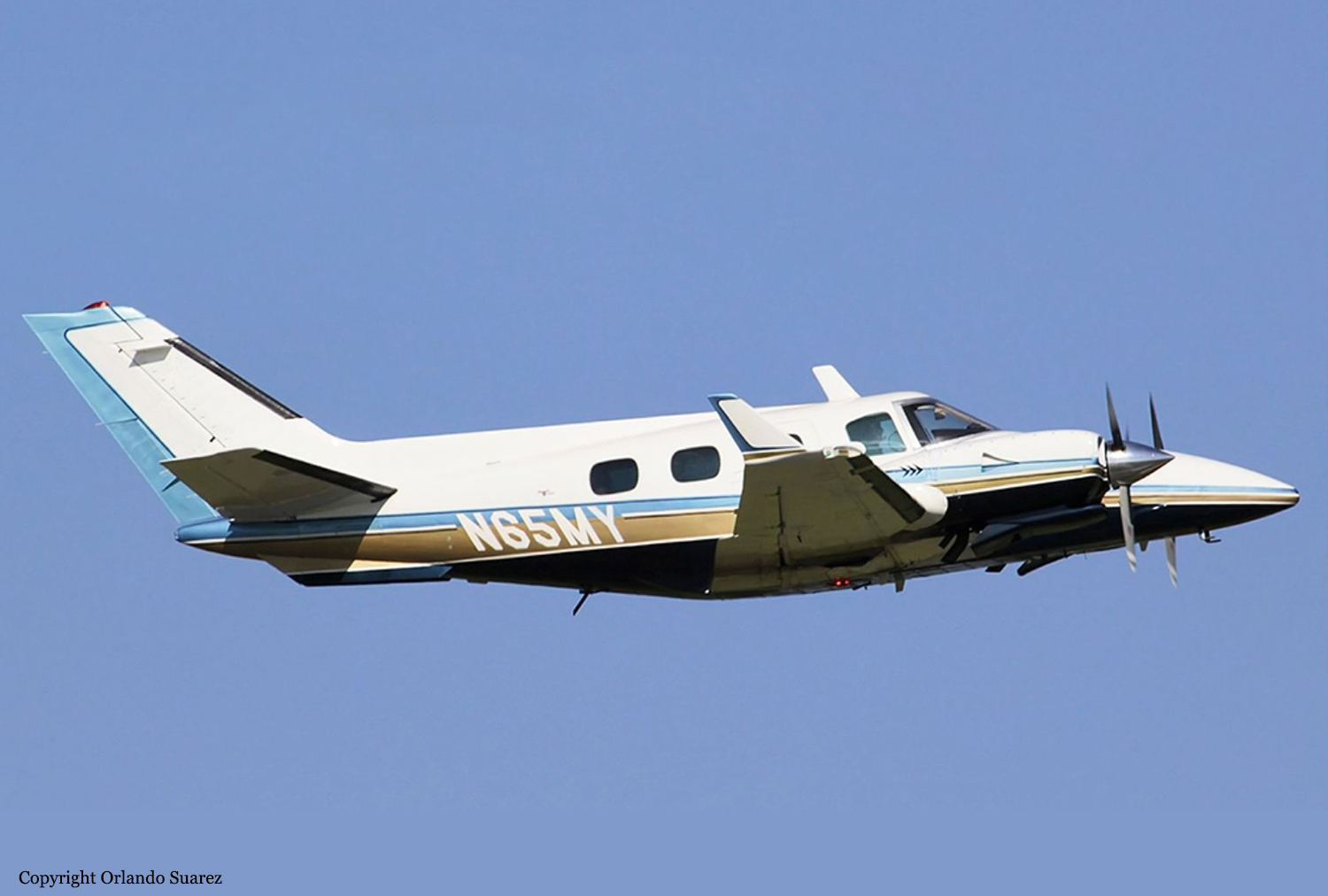
Crash of a Beechcraft B60 Duke in Fullerton: 1 killed

Date & Time: Apr 18, 2019 at 1951 LT
Type of aircraft:
Registration:
N65MY
Flight Phase:
Flight Type:
Survivors:
No
Schedule:
Fullerton - Heber City
MSN:
P-314
YOM:
1975
Crew on board:
1
Crew fatalities:
Pax on board:
0
Pax fatalities:
Other fatalities:
Total fatalities:
1
Captain / Total flying hours:
380
Captain / Total hours on type:
87.00
Aircraft flight hours:
5419
Circumstances:
The pilot began the takeoff roll in visual meteorological conditions. The airplane was airborne about 1,300 ft down the runway, which was about 75% of the normal ground roll distance for the airplane’s weight and the takeoff environment. About 2 seconds after rotation, the airplane rolled left. Three seconds later, the airplane had reached an altitude of about 80 ft above ground level and was in a 90° left bank. The nose then dropped as the airplane rolled inverted and struck the ground in a right-wing-low, nose-down attitude. The airplane was destroyed. Postaccident examination did not reveal any anomalies with the airframe or engines that would have precluded normal operation. The landing gear, flap, and trim positions were appropriate for takeoff and flight control continuity was confirmed. The symmetry of damage between both propeller assemblies indicated that both engines were producing equal and high amounts of power at impact. The autopsy revealed no natural disease was present that could pose a significant hazard to flight safety. Review of surveillance video footage from before the accident revealed that the elevator was in the almost full nose-up (or trailing edge up) position during the taxi and the beginning of the takeoff roll. Surveillance footage also showed that the pilot did not perform a preflight inspection of the airplane or control check before the accident flight. According to the pilot’s friend who was also in the hangar, as the accident pilot was pushing the airplane back into his hangar on the night before the accident, he manipulated and locked the elevator in the trailing edge up position to clear an obstacle in the hangar. However, no evidence of an installed elevator control lock was found in the cabin after the accident. The loss of control during takeoff was likely due to the pilot’s use of an unapproved elevator control lock device. Despite video evidence of the elevator locked in the trailing edge up position before the accident, an examination revealed no evidence of an installed control lock in the cabin. Therefore, during the night before the accident, the pilot likely placed an unapproved object between the elevator balance weight and the trailing edge of the horizontal stabilizer to lock the elevator in the trailing edge up position. The loss of control was also due to the pilot’s failure to correctly position the elevator before takeoff. The pilot’s friend at the hangar also reported that the pilot was running about one hour late; the night before, he was trying to troubleshoot an electrical issue in the airplane that caused a circuit breaker to keep tripping, which may have become a distraction to the pilot. The pilot had the opportunity to detect his error in not freeing the elevator both before boarding the airplane and again while in the airplane, either via a control check or detecting an anomalous aft position of the yoke. The pilot directed his attention to the arrival of a motorbike in the hangar alley shortly after he pulled the airplane out of the hangar, which likely distracted the pilot and further delayed his departure. He did not conduct a preflight inspection of the airplane or control check before the accident flight, due either to distraction or time pressure.
Probable cause:
The pilot’s use of an unapproved elevator control lock device, and his failure to remove that device and correctly position the elevator before flight, which resulted in a loss of control during takeoff. Contributing to the accident was his failure to perform a preflight inspection and control check, likely in part because of distractions before boarding and his late departure time.

Final Report:

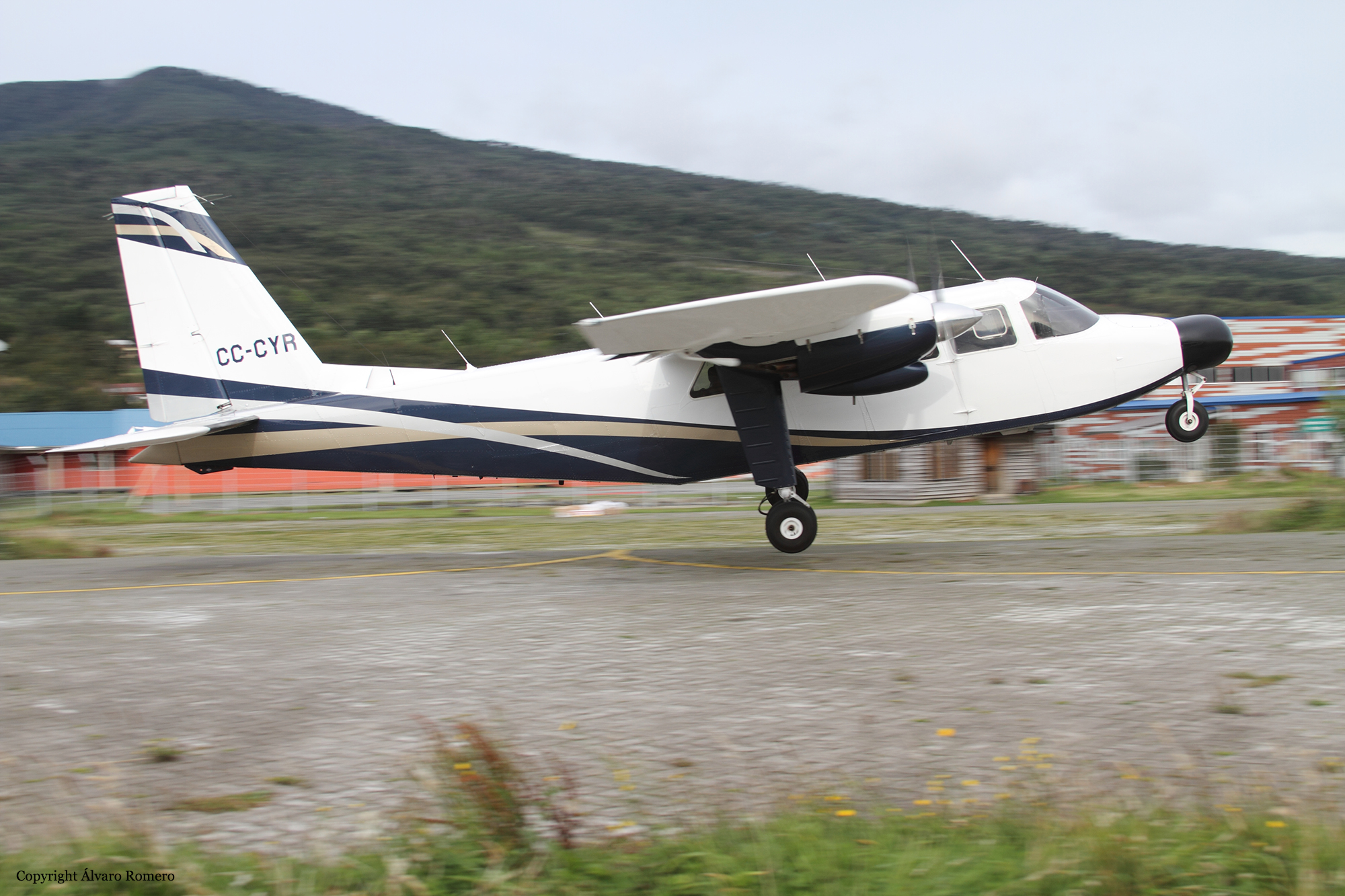
Crash of a Britten Norman BN-2B-27 Islander in Puerto Montt: 6 killed

Date & Time: Apr 16, 2019 at 1050 LT
Type of aircraft:
Registration:
CC-CYR
Flight Phase:
Survivors:
No
Site:
Schedule:
Puerto Montt - Ayacara
MSN:
2169
YOM:
1983
Country:
Crew on board:
1
Crew fatalities:
Pax on board:
5
Pax fatalities:
Other fatalities:
Total fatalities:
6
Captain / Total flying hours:
1414
Captain / Total hours on type:
437.00
Aircraft flight hours:
22330
Circumstances:
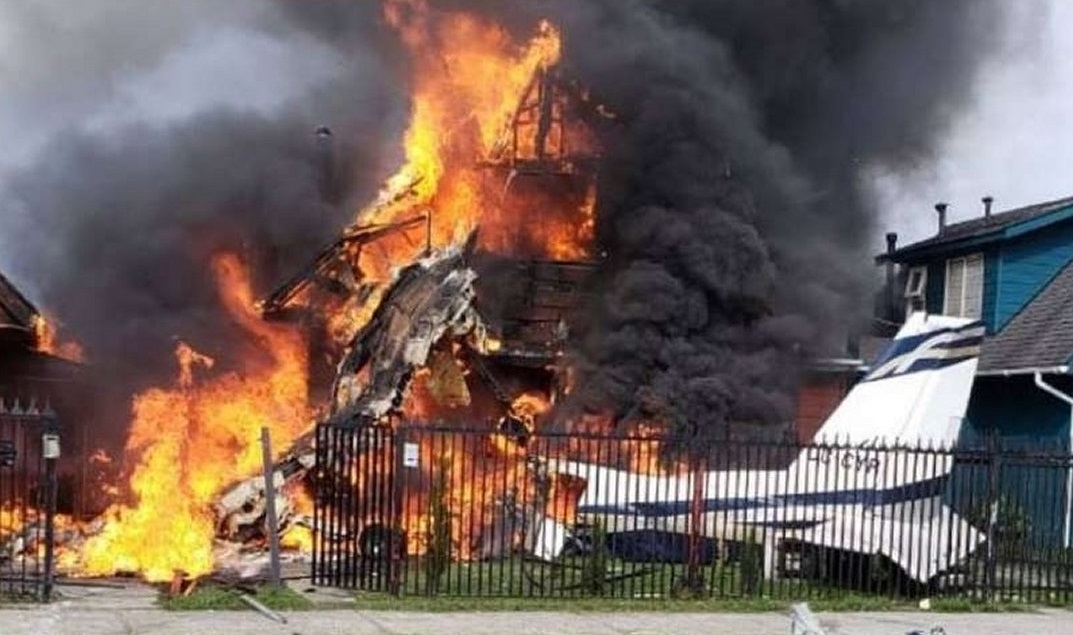
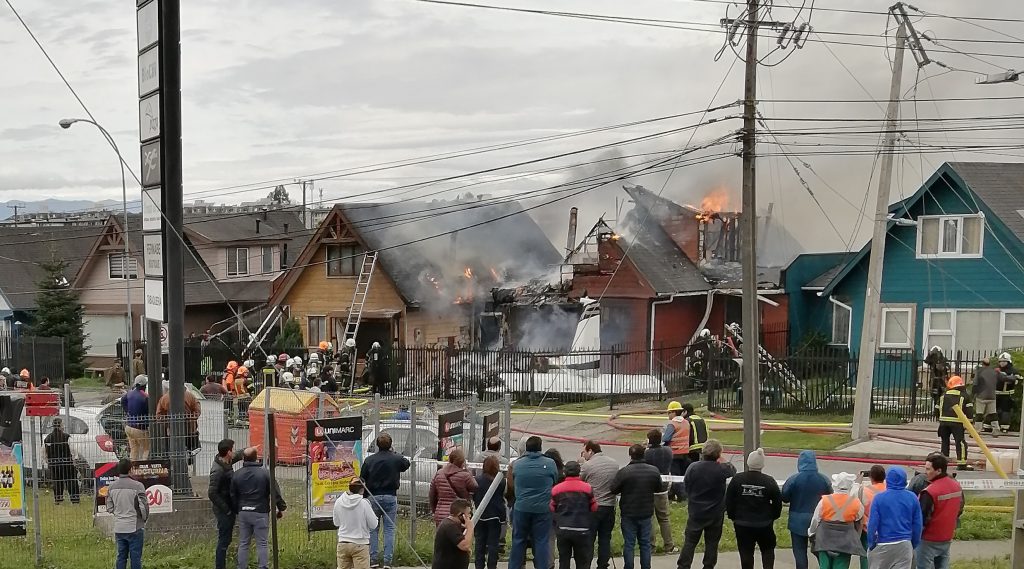
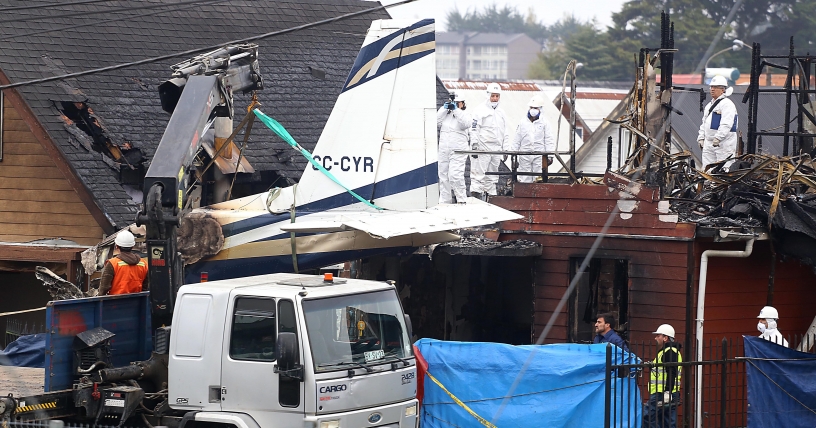
The twin engine airplane departed Puerto Montt-Marcel Marchant (La Paloma) Airport Runway 01 at 1050LT on a charter flight to Ayacara, carrying five passengers and one pilot. About 36 seconds after takeoff, while climbing, the pilot declared an emergency. The airplane entered a left turn then stalled and crashed onto a house located in a residential area, about 450 metres from the runway end, bursting into flames. The houses and the airplane were destroyed by a post crash fire and all six occupants were killed. One person in the house was injured.
Probable cause:
Loss of control of the airplane in flight, during a left turn, due to the failure of the right engine (n°2) during takeoff, caused by a fuel exhaustion.
The following contributing factors were identified:
- Failure of the pilot to comply with the pre takeoff checklist,
- Failure of the pilot to check the fuel selector switch and the fuel quantity prior to start the engines,
- Failure of the pilot to feather the propeller of the right engine (n°2) during an emergency situation,
- Failure of the pilot to bring the flaps to the neutral position during an emergency situation,
- Decrease of the speed and altitude of the airplane,
- Increase bank of the wing during a left turn.
Final Report:

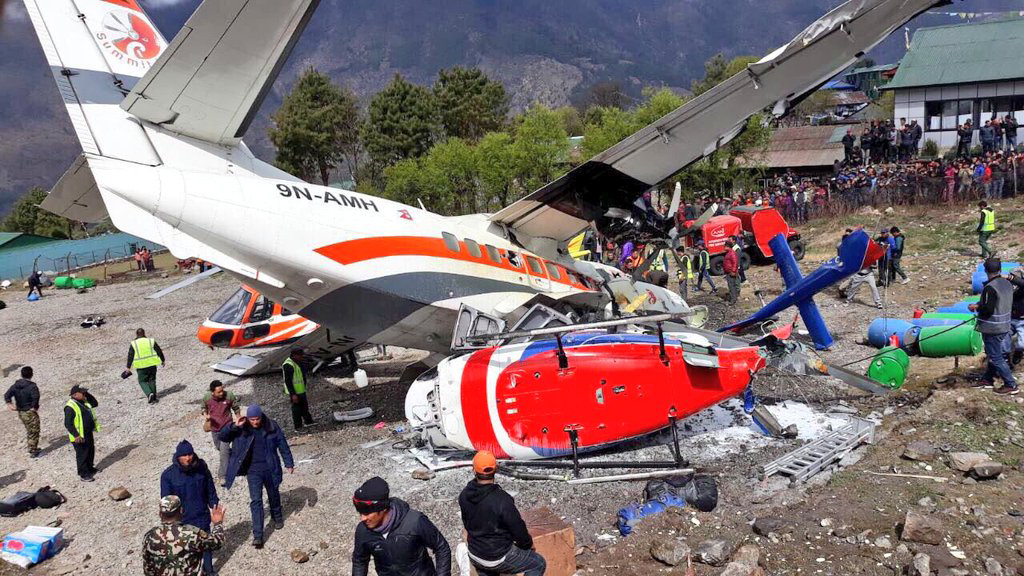
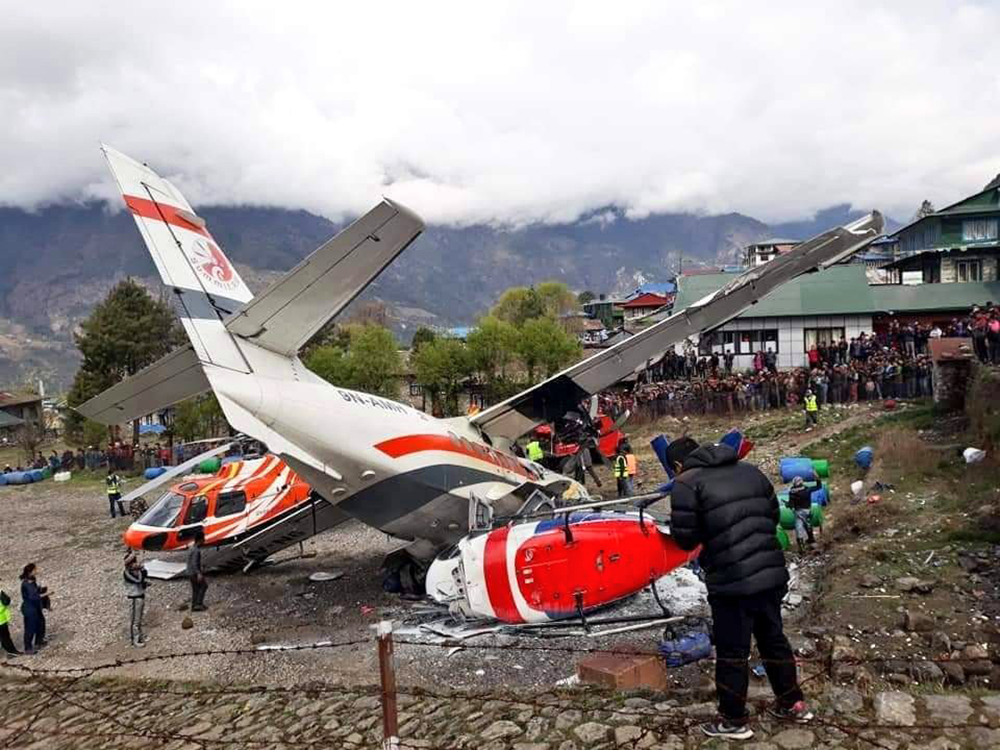
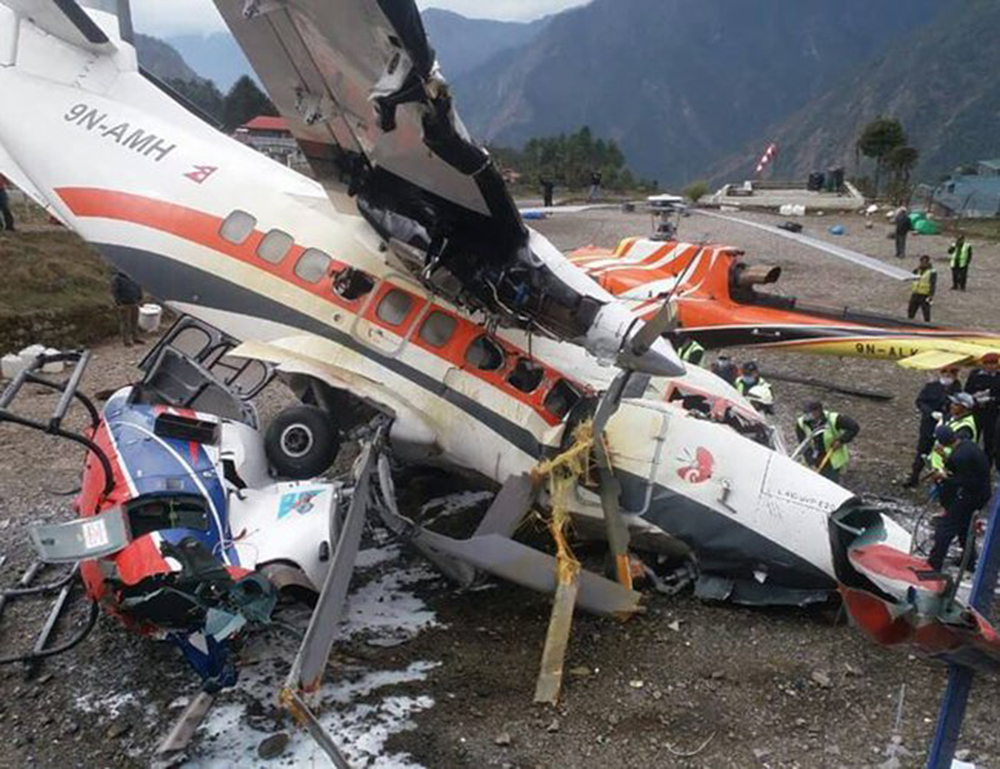
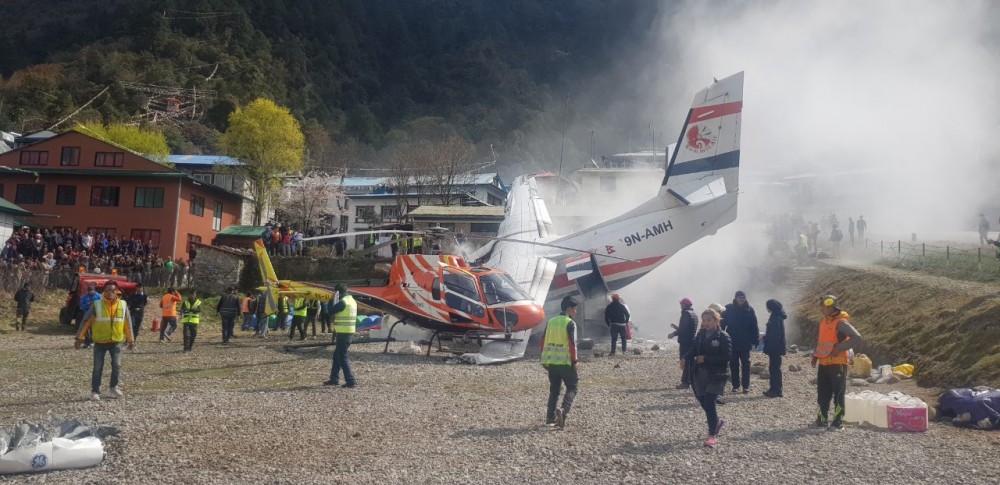
Crash of a Let L-410UVP-E20 in Lukla: 3 killed

Date & Time: Apr 14, 2019 at 0907 LT
Type of aircraft:
Operator:
Registration:
9N-AMH
Flight Phase:
Flight Type:
Survivors:
Yes
Schedule:
Lukla - Manthali
MSN:
13 29 14
YOM:
2013
Flight number:
GO802D
Country:
Region:
Crew on board:
3
Crew fatalities:
Pax on board:
0
Pax fatalities:
Other fatalities:
Total fatalities:
3
Captain / Total flying hours:
15652
Captain / Total hours on type:
3558.00
Copilot / Total flying hours:
865
Copilot / Total hours on type:
636
Aircraft flight hours:
4426
Aircraft flight cycles:
5464
Circumstances:
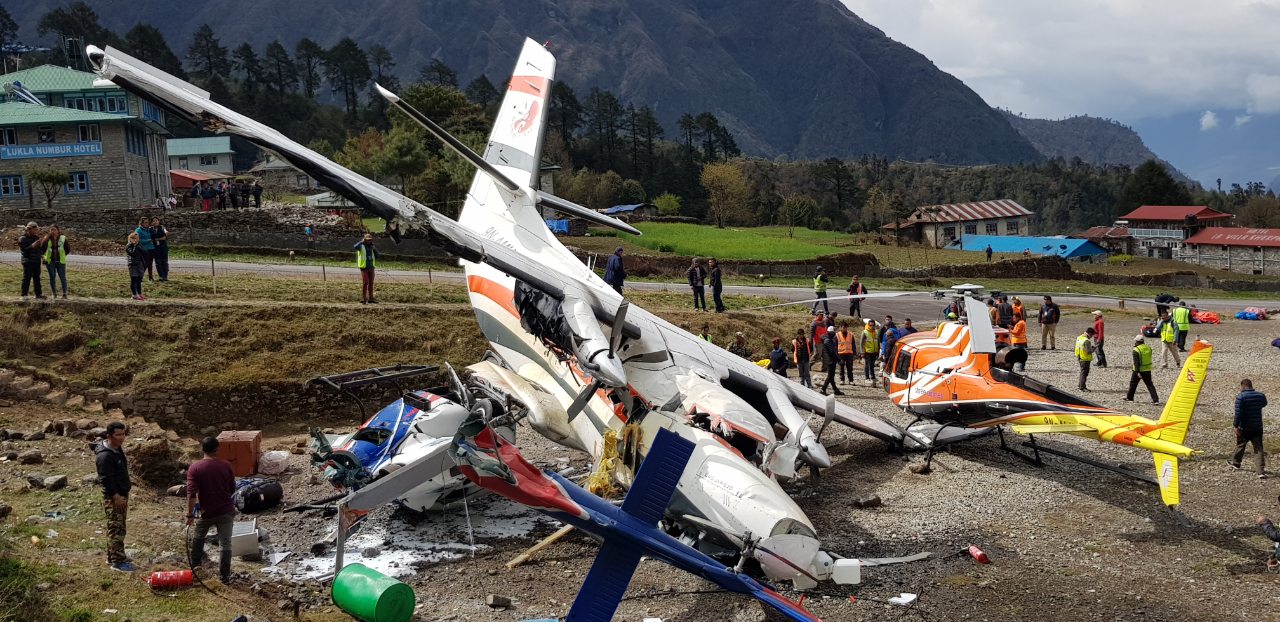
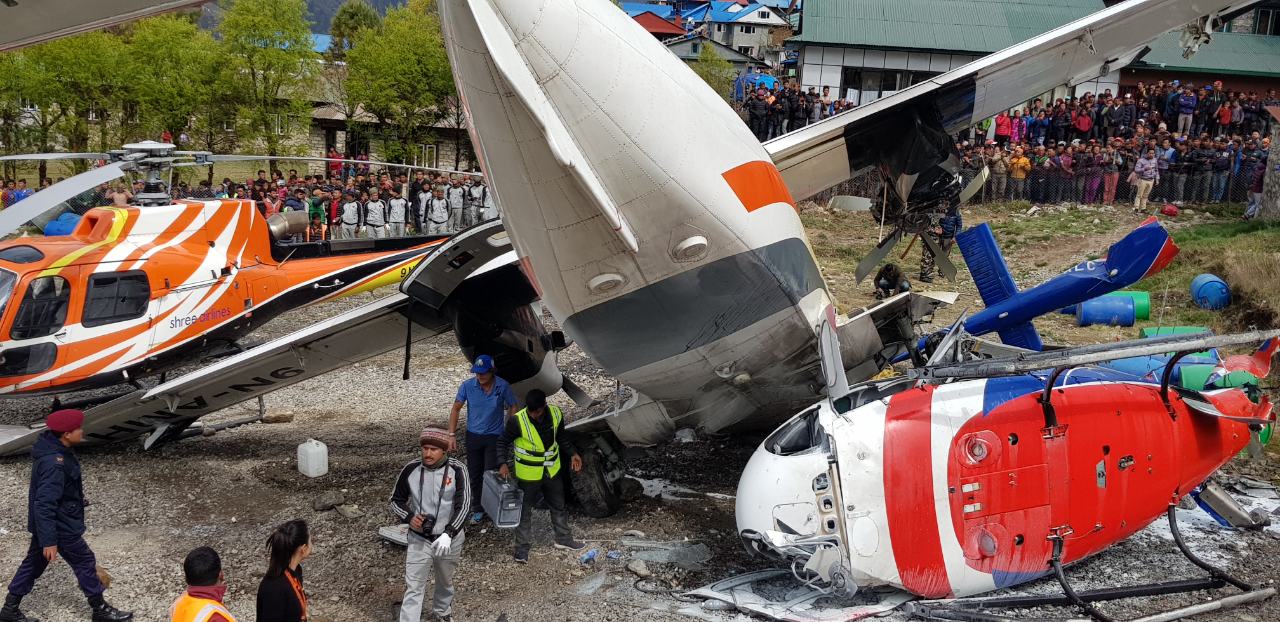
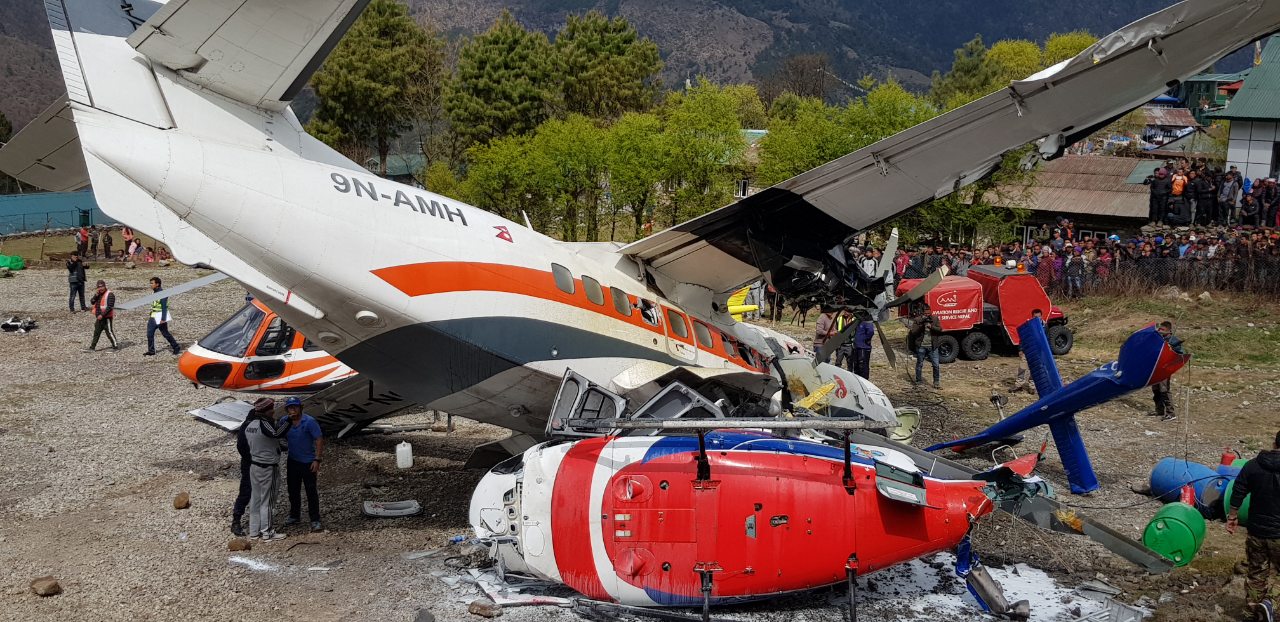
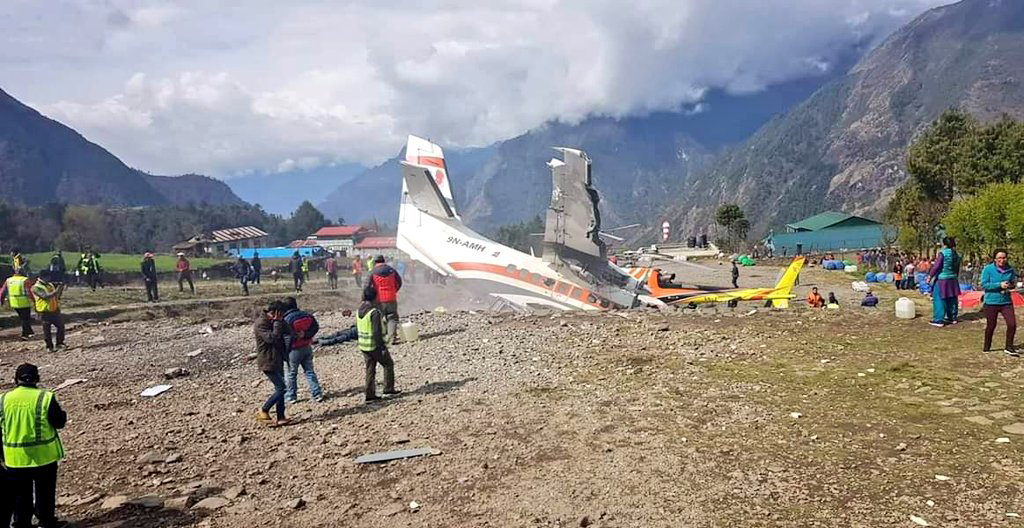
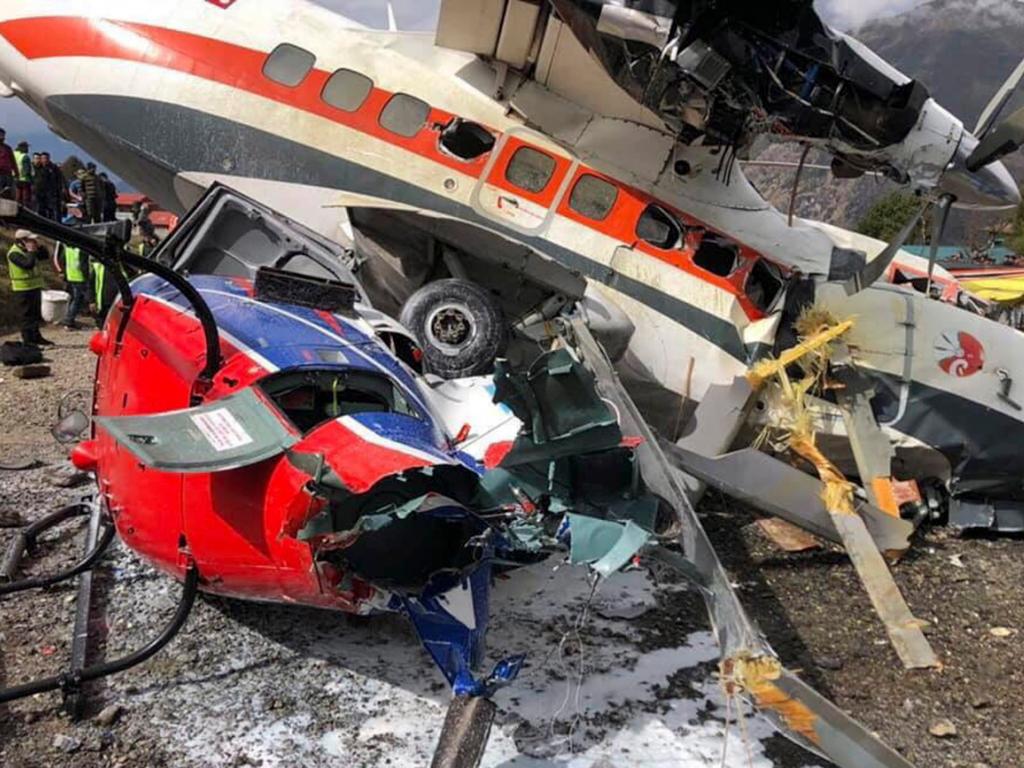
On 14 April 2019, around 0322Hrs, Aircraft Industries' L410UPV-E20, registration 9NAMH, owned and operated by Summit Air Pvt. Ltd. met with an accident at Tenzing-Hillary Airport, Lukla when it veered right and excurred the runway during take-off roll from runway 24. The aircraft first collided with Manang Air's helicopter, AS350B3e, registration 9N-ALC, with its rotor blade running on idle power and then with Shree Airlines' helicopter, AS350B3e, registration 9N-ALK just outside the inner perimeter fence of the aerodrome into the helipad before coming to a stop. The PIC and Cabin Crew of 9N-AMH survived the accident, whereas the Co-pilot and one security personnel on ground were killed on the spot. One more security personnel succumbed to injury later in hospital during the course of treatment. 9N-AMH and 9N-ALC both were substantially damaged by impact forces. There was no post-crash fire. Prior to the accident the aircraft had completed 3 flights on Ramechhap-Lukla-Ramechhap sector. According to PIC, he was in the left seat as the pilot monitoring (PM) and the co-pilot, in the right seat was the pilot flying (PF). According to CCTV footages, the aircraft arrived at the apron from VNRC to VNLK at 0315Hrs and shut its LH engine. The PIC started the LH engine at about 0318 Hrs after unloading cargo and passengers. At 0322:30 Hrs, the PIC aligned the aircraft with the runway at the runway threshold 24 and then handed over the controls to the co-pilot for the take-off roll. The take-off roll commenced at 0322:50 Hrs. CCTV footage captured that within 3 seconds the aircraft veered right and made an excursion. The aircraft exited the runway and travelled about 42.8 ft across the grassy part on right side of runway 24, before striking the airport inner perimeter fence. It then continued to skid for about 43 ft, into the upper helipad, crashing into 9N-ALC. Eye witnesses statements, CCTV footages and initial examination of the wreckage showed that rotor blades of helicopter 9N-ALC were on idle when RH wing of the aircraft swept two security personnel (on ground) before slashing its rotor shaft. The moving rotors cut through the cockpit on the right side slaying the Co-pilot immediately. The helicopter toppled onto the lower helipad 6 ft below. The LH wing of the aircraft broke the skid of helicopter 9NALK and came to a halt with toppled 9N-ALC beneath its RH main wheel assembly. Due to 2impact, 9N-ALK shifted about 8 ft laterally and suffered minor damages. There was no post-crash fire. The PIC switched off the battery and came out of the aircraft through emergency exit along with the cabin crew. The captain of the helicopter 9N-ALC was rescued immediately. 9N-ALC's crew sustained a broken tail-bone whereas 9N-ALK's crew escaped without sustaining major injuries. All three deceased were Nepalese citizens. Aircraft 9N-AMH and helicopter 9N-ALC were substantially damaged while the helicopter 9N-ALK endured partial damages.
Probable cause:
The commission concluded that the probable cause of the accident was aircraft's veering towards right during initial take-off roll as a result of asymmetric power due to abrupt shifting of right power lever rearwards and failure to abort the takeoff by crew. There were not enough evidences to determine the exact reason for abrupt shifting of the power lever.
Contributing Factors:
1. Failure of the PF(being a less experienced co-pilot) to immediately assess and act upon the abrupt shifting of the right power lever resulted in aircraft veering to the right causing certain time lapse for PIC to take controls in order to initiate correction.
2. PIC's attempted corrections of adding power could not correct the veering. Subsequently, application of brakes resulted in asymmetric braking due to the position of the pedals, and further contributed veering towards right.
Final Report:

Crash of a Piper PA-31-350 Navajo Chieftain in Sayaxché: 2 killed

Date & Time: Apr 13, 2019
Operator:
Registration:
N2613
Flight Phase:
Flight Type:
Survivors:
No
Country:
Crew on board:
2
Crew fatalities:
Pax on board:
0
Pax fatalities:
Other fatalities:
Total fatalities:
2
Circumstances:
In the morning, the Guatemala Army Forces were informed by ATC that a PA-31 entered the Guatemala Airspace without prior permission. The twin engine airplane crashed in a wooded area located near the farm of Sepens located in the region of Sayaxché, Petén. The aircraft was partially destroyed by impact forces and both occupants were killed. A sticker was set on the fuselage with the registration N2613 which is wrong.