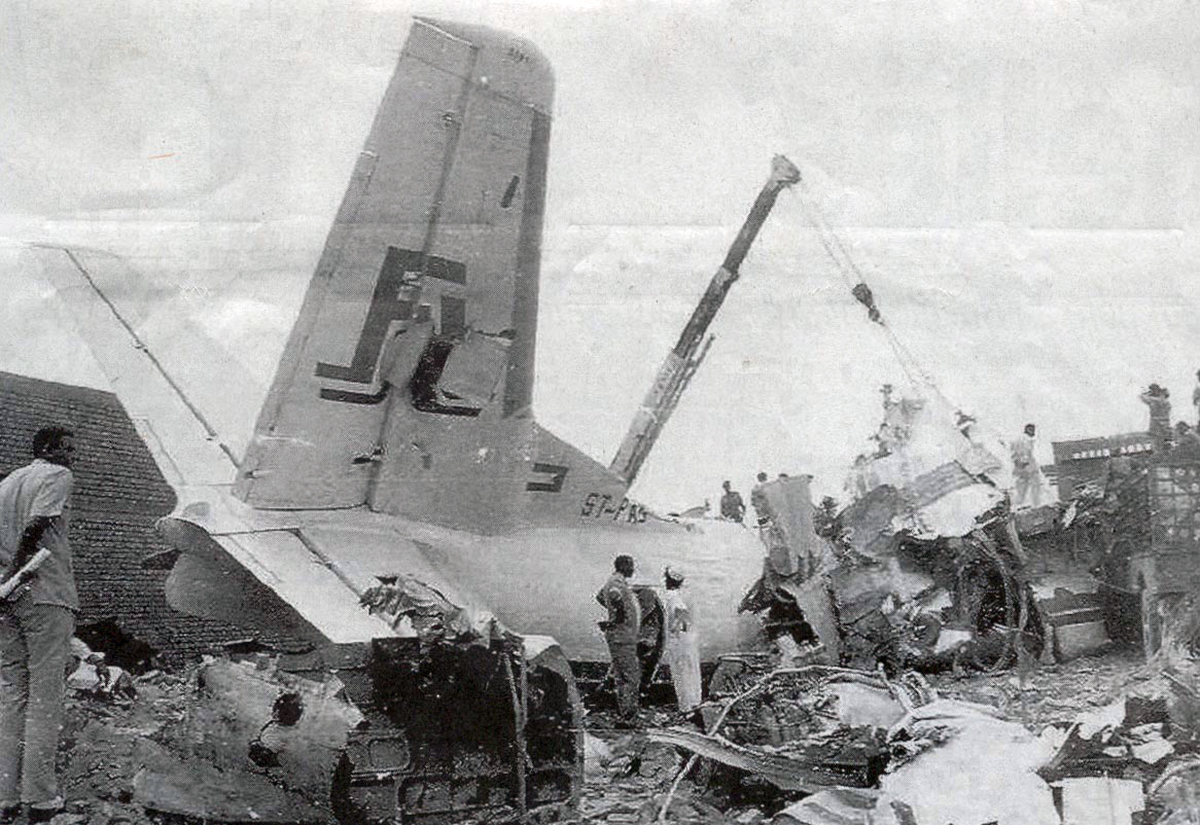
Crash of a Let L-410UVP-E9D in Kanpur

Date & Time: May 18, 1996 at 0738 LT
Type of aircraft:
Operator:
Registration:
VT-ETB
Survivors:
Yes
Schedule:
New Delhi - Kanpur
MSN:
92 27 02
YOM:
1992
Country:
Region:
Crew on board:
3
Crew fatalities:
Pax on board:
16
Pax fatalities:
Other fatalities:
Total fatalities:
0
Captain / Total flying hours:
8237
Circumstances:
Archana Airways L-410 aircraft VT-ETB was operating a scheduled flight from Delhi to Kanpur civil aerodrome on 18.05.96. The flight from Delhi to Kanpur was uneventful. The aircraft took-off from Delhi with 19 persons including three flight crew. During landing, the aircraft touched down late and could not be stopped within the available runway length and went beyond the runway. The aircraft hit the boundary wall of the airport and came to halt. The aircraft sustained major damages. There was no fire and no injury to persons on board the aircraft.
Probable cause:
The accident was caused due to late touchdown at higher aircraft touchdown speed as a result of which the aircraft overshot the runway and suffered damage by impact with boundary wall.
The following contributing factors were reported:
- Wrong selection of runway,
- Overloading of aircraft,
- Non-deployment of spoilers,
- Lower visibility conditions than the required,
- Disregard of procedures, regulations and instructions on part of the pilot.
Final Report:


Crash of a Beechcraft B200 Super King Air in Treasure Cay: 2 killed

Date & Time: May 15, 1996 at 0130 LT
Operator:
Registration:
N1865D
Flight Phase:
Flight Type:
Survivors:
No
MSN:
BB-1119
YOM:
1983
Country:
Crew on board:
2
Crew fatalities:
Pax on board:
0
Pax fatalities:
Other fatalities:
Total fatalities:
2
Circumstances:
On May 15, 1996, about 0130 eastern daylight time, a Beech 200, N1865D, registered to R&B Leasing INC., crashed shortly after takeoff from the Treasure Cay International Airport, Treasure Cay, Bahamas. Weather conditions at the time of the accident are not available and no flight plan was filed for the 14 CFR Part 91 flight. The airplane was destroyed and the pilot and co-pilot were fatally injured. It was reported that at the time of the accident the airplane was being stolen from the Treasure Cay International Airport, Treasure Cay, Bahamas.

Crash of a Douglas DC-9-15 in Tampico

Date & Time: May 14, 1996
Type of aircraft:
Operator:
Registration:
XA-SNR
Survivors:
Yes
Schedule:
Orlando – Cancún
MSN:
45699
YOM:
1965
Flight number:
LL401
Country:
Crew on board:
4
Crew fatalities:
Pax on board:
43
Pax fatalities:
Other fatalities:
Total fatalities:
0
Circumstances:
En route from Orlando to Cancún, the crew got lost and was unable to follow the prescribed route, causing the aircraft to deviate from the flight plan to the west. Eventually, the crew was vectored to the Tampico-General Francisco Javier Mina Airport located about 1,144 km northwest of the destination airport. On final approach, both engines failed simultaneously due to fuel exhaustion. The aircraft lost speed, stalled and collided with ILS equipment located about 300 metres short of runway 31. Upon impact, the undercarriage were sheared off and the aircraft crash landed on the runway and came to rest 220 metres further. All 47 occupants evacuated safely while the aircraft was damaged beyond repair.

Crash of a Beechcraft 300LW Super King Air near Linz: 4 killed

Date & Time: May 12, 1996 at 1630 LT
Operator:
Registration:
OE-FEM
Flight Phase:
Survivors:
No
Site:
Schedule:
Salzburg - Krems
MSN:
FA-210
YOM:
1990
Country:
Region:
Crew on board:
2
Crew fatalities:
Pax on board:
2
Pax fatalities:
Other fatalities:
Total fatalities:
4
Circumstances:
En route from Salzburg to Krems, while cruising in IMC conditions, the crew cancelled the IFR flight plan and continued under VFR mode. Shortly later, the twin engine aircraft struck the slope of a mountain shrouded by clouds and crashed about 35 km northeast of Linz. All four occupants were killed.

Crash of a Britten-Norman BN-2A-20 Islander in Oumba: 1 killed

Date & Time: May 11, 1996 at 1315 LT
Type of aircraft:
Operator:
Registration:
P2-ISD
Flight Phase:
Survivors:
Yes
Site:
Schedule:
Menyamya – Marawaka
MSN:
582
YOM:
1977
Region:
Crew on board:
1
Crew fatalities:
Pax on board:
9
Pax fatalities:
Other fatalities:
Total fatalities:
1
Circumstances:
En route from Menyamya to Marawaka, weather conditions deteriorated while the pilot was flying in a deep valley. He elected to find a hole in the clouds to leave the area when, at a speed of 80 knots, the aircraft stalled, collided with trees and crashed on hilly terrain. A passenger was killed while nine other occupants were injured.
Probable cause:
The pilot failed to monitor his speed indicator and failed to realize the speed dropped while trying to get out of a deep valley.

Crash of a De Havilland DHC-3 Otter near Terrace: 2 killed

Date & Time: May 9, 1996 at 1430 LT
Type of aircraft:
Registration:
C-GDOB
Flight Phase:
Flight Type:
Survivors:
No
Site:
Schedule:
Ketchikan – Prince Rupert – Dawson Creek – Buffalo Narrows
MSN:
194
YOM:
1957
Country:
Crew on board:
2
Crew fatalities:
Pax on board:
0
Pax fatalities:
Other fatalities:
Total fatalities:
2
Captain / Total flying hours:
10000
Copilot / Total flying hours:
5000
Circumstances:
The single-engine, float-equipped DHC-3 Otter departed Ketchikan, Alaska, at 0905 Pacific daylight time (PDT) on 09 May 1996 with a pilot and co-pilot on board. They were on a visual flight rules (VFR) ferry flight to Dawson Creek, British Columbia, en route to Buffalo Narrows, Saskatchewan. After a refuelling stop and weather briefing at Prince Rupert, British Columbia, the aircraft departed eastbound along the published Telkwa Pass VFR route. When the aircraft did not arrive at Dawson Creek, it was reported overdue. The next day, an extensive search for the missing Otter was commenced and wreckage was located by search and rescue aircraft at 1930 PDT, 30 miles east of Terrace, in the Telkwa Pass. The aircraft had struck mountainous terrain and was destroyed. Both occupants were fatally injured.
Probable cause:
The absence of aircraft wreckage and documentation precludes an analysis of the technical aspects of this accident. This analysis, therefore, concentrates solely on the operational aspects. The high impact speed is indicative of either a loss of control followed by a rapid descent into terrain or controlled flight into unseen terrain. Given that the pilot reported encountering snow showers within 15 miles of the accident site, it is possible that the weather continued to deteriorate and may have adversely affected the pilot's ability to maintain visual contact with the terrain.
Findings:
1. The weight and centre of gravity of the aircraft at the last take-off were estimated to have been within the prescribed limits.
2. The pilot was certified, trained, and qualified for the flight in accordance with existing regulations.
3. Marginal visual weather conditions existed in the vicinity of the accident site.
4. It is possible that deteriorating weather affected the pilot's ability to maintain visual contact with the terrain.
Causes and Contributing Factors:
It was not determined why the aircraft struck terrain; however, it is likely that the contact occurred during conditions of reduced visibility.
Final Report:

Crash of an Antonov AN-24RV in Khartoum: 53 killed

Date & Time: May 3, 1996 at 2200 LT
Type of aircraft:
Operator:
Registration:
ST-FAG
Survivors:
No
Site:
Schedule:
Wau - Khartoum
MSN:
27307909
YOM:
1966
Country:
Region:
Crew on board:
5
Crew fatalities:
Pax on board:
48
Pax fatalities:
Other fatalities:
Total fatalities:
53
Circumstances:
The aircraft was completing a charter flight from Wau to Khartoum, carrying 48 students from the Bahr al-Ghazalm University and five crew members. On approach to Khartoum-Haj Yusuf Airport, the crew encountered poor weather conditions and limited visibility due to a sandstorm and night. Unable to establish a visual contact with the runway, the crew abandoned the approach and initiated a go-around procedure. The crew then attempted several times to approach the airport of Khartoum and all attempts were abandoned, some sources are talking about nine attempts to land. On approach by night, the captain informed ATC he was short of fuel when the aircraft struck a building under construction and crashed about 15 km from the airport. The aircraft was totally destroyed and all 53 occupants were killed.
Probable cause:
The crew attempted several approaches in poor weather conditions and descended until the aircraft collided with obstacles and crashed.

Crash of a Swearingen SA227AC Metro III in Saint George

Date & Time: May 3, 1996 at 1630 LT
Type of aircraft:
Operator:
Registration:
N670PA
Survivors:
Yes
Schedule:
Saint Paul - Saint George
MSN:
AC-613
YOM:
1985
Flight number:
KS661
Crew on board:
2
Crew fatalities:
Pax on board:
11
Pax fatalities:
Other fatalities:
Total fatalities:
0
Captain / Total flying hours:
19100
Captain / Total hours on type:
5500.00
Aircraft flight hours:
17167
Circumstances:
According to passenger's accounts, the airplane was flying low and approached the runway at an angle. The airplane made a right turn and dragged the right wing on the runway's surface. The airplane landed hard and sheared off the right main landing gear and the nose gear. The weather reported by AWOS was 300 foot overcast with a visibility of 2.5 miles with fog. The Captain stated the airplane drifted to the left side of the runway due to the crosswind, and he executed a right turn to realign with the runway. The cockpit voice recorder indicated that the stall warning horn sounded as the First Officer called for the application of power.
Probable cause:
Failure of the captain to maintain proper altitude and wingtip clearance, while aligning the airplane with the runway before landing. His delay in aligning the aircraft with the runway was a related factor.
Final Report:

Crash of a Socata TBM-700 in Kushiro: 6 killed

Date & Time: Apr 26, 1996 at 1108 LT
Type of aircraft:
Operator:
Registration:
JA8896
Survivors:
No
Schedule:
Sapporo - Kushiro
MSN:
68
YOM:
1993
Country:
Region:
Crew on board:
1
Crew fatalities:
Pax on board:
5
Pax fatalities:
Other fatalities:
Total fatalities:
6
Circumstances:
The pilot encountered poor visibility on approach to Kushiro Airport due to foggy conditions. Too low on final, the single engine aircraft collided with elements of the ILS systems and crashed 200 metres short of runway 17, bursting into flames. The aircraft was destroyed by a post crash fire and all six occupants were killed.

Crash of an Avro 748-352-2B in Meghauli

Date & Time: Apr 25, 1996 at 1158 LT
Type of aircraft:
Operator:
Registration:
9N-ABR
Survivors:
Yes
Schedule:
Kathmandu - Meghauli
MSN:
1771
YOM:
1979
Flight number:
RA155
Country:
Region:
Crew on board:
4
Crew fatalities:
Pax on board:
27
Pax fatalities:
Other fatalities:
Total fatalities:
0
Circumstances:
Following an uneventful flight from Kathmandu, the crew started the descent to Meghauli Airfield. On final, the aircraft was too high and landed too far down the runway, about 1,148 feet past the runway threshold (Meghauli Airstrip is 3,500 feet). Unable to stop on a wet grassy runway, the aircraft overran and came to rest in a ravine. All 31 occupants escaped uninjured while the aircraft was damaged beyond repair.
Probable cause:
Wrong approach configuration on part of the crew who landed the aircraft too far down the runway, reducing the landing distance available. Also, it was reported that the braking action was poor as the grassy runway was wet.