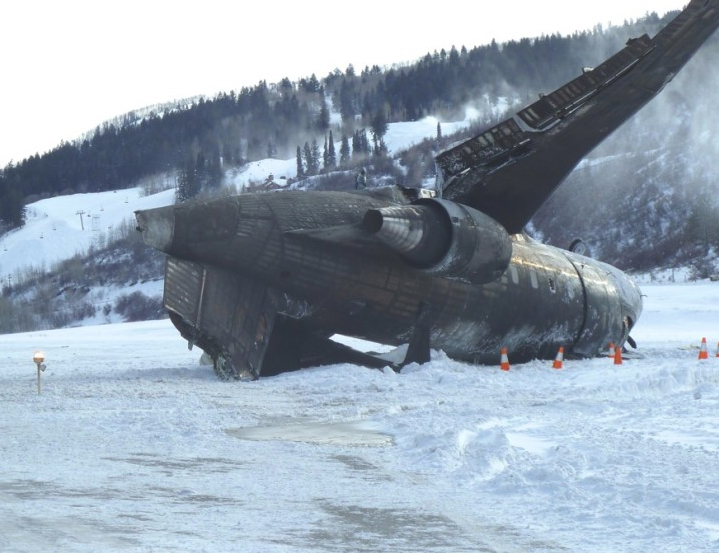
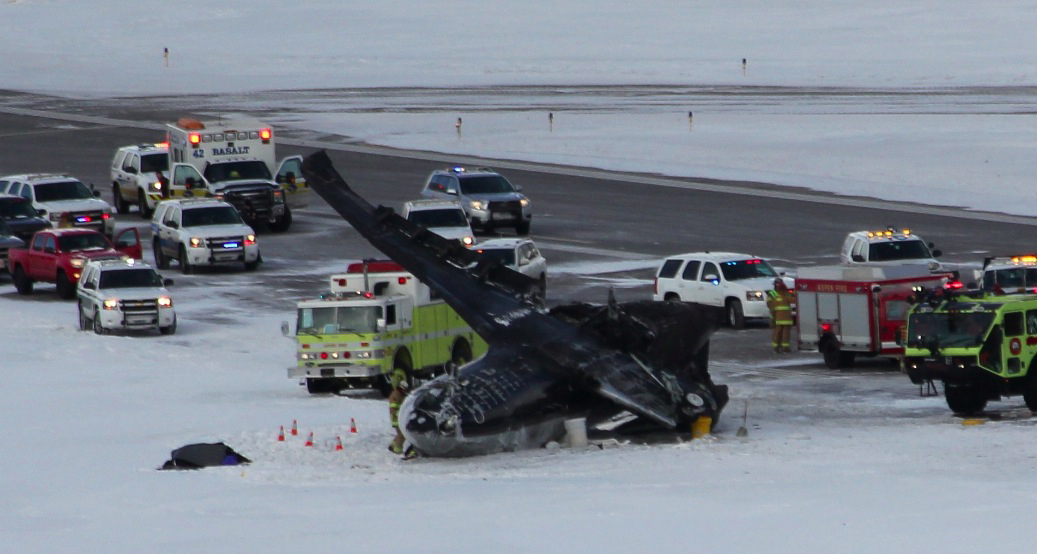
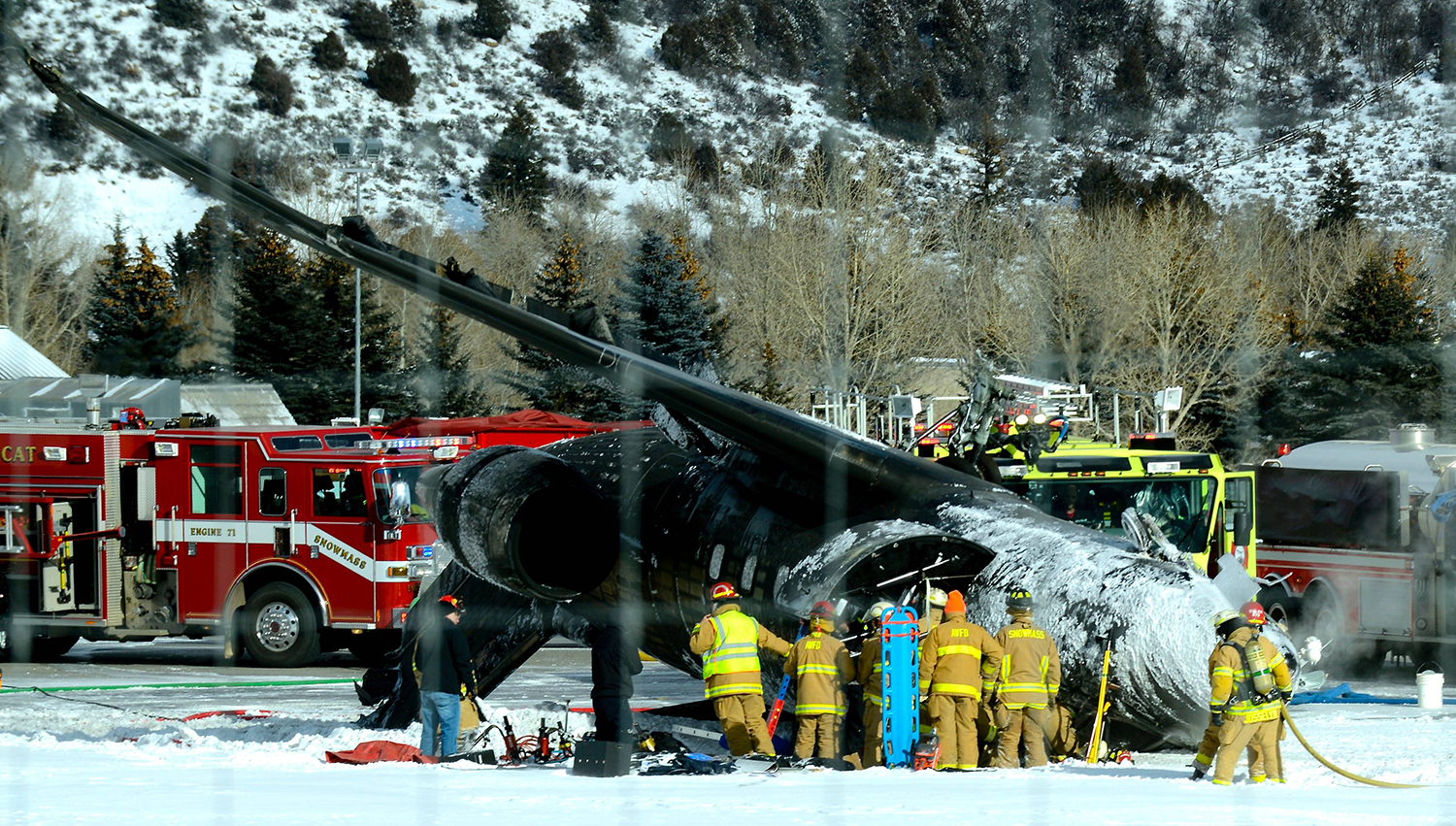
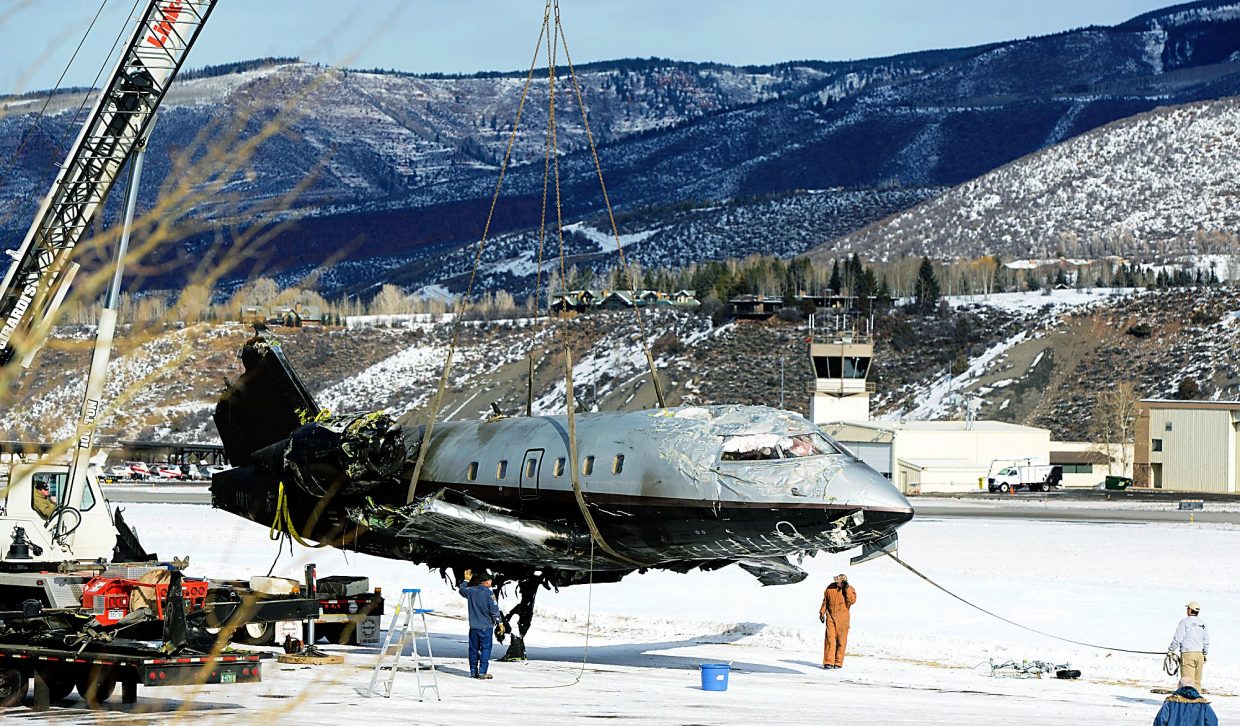
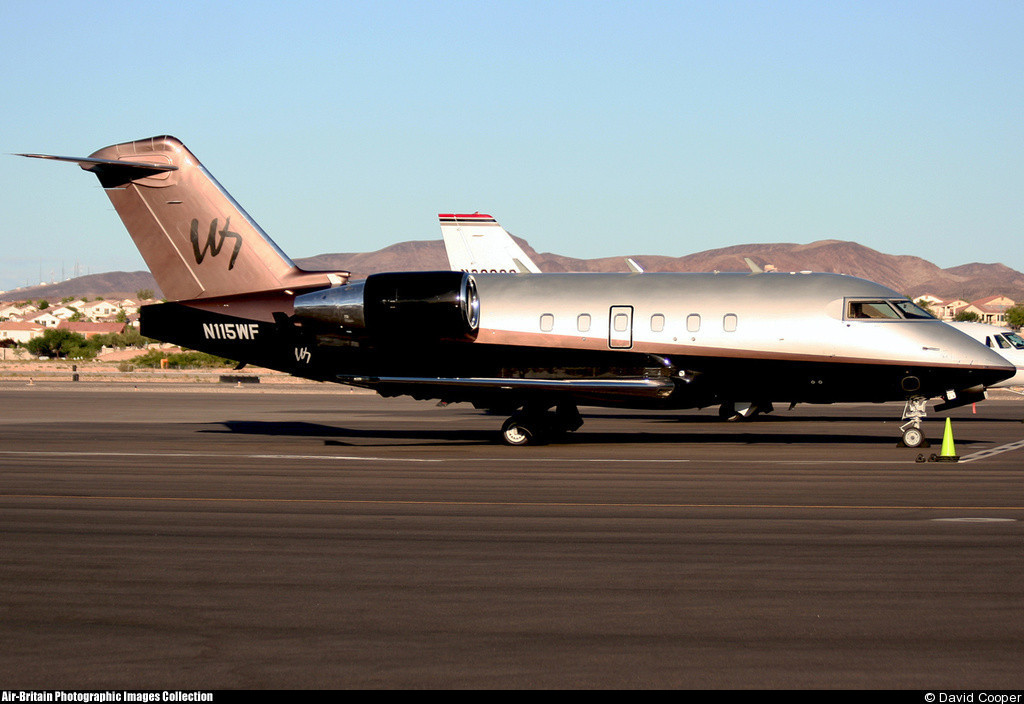
Crash of a Canadair CL-601-3R Challenger in Aspen: 1 killed

Date & Time: Jan 5, 2014 at 1222 LT
Type of aircraft:
Registration:
N115WF
Flight Type:
Survivors:
Yes
Schedule:
Tucson - Aspen
MSN:
5153
YOM:
1994
Crew on board:
3
Crew fatalities:
Pax on board:
0
Pax fatalities:
Other fatalities:
Total fatalities:
1
Captain / Total flying hours:
17250
Captain / Total hours on type:
14.00
Copilot / Total flying hours:
20355
Copilot / Total hours on type:
14
Aircraft flight hours:
6750
Circumstances:
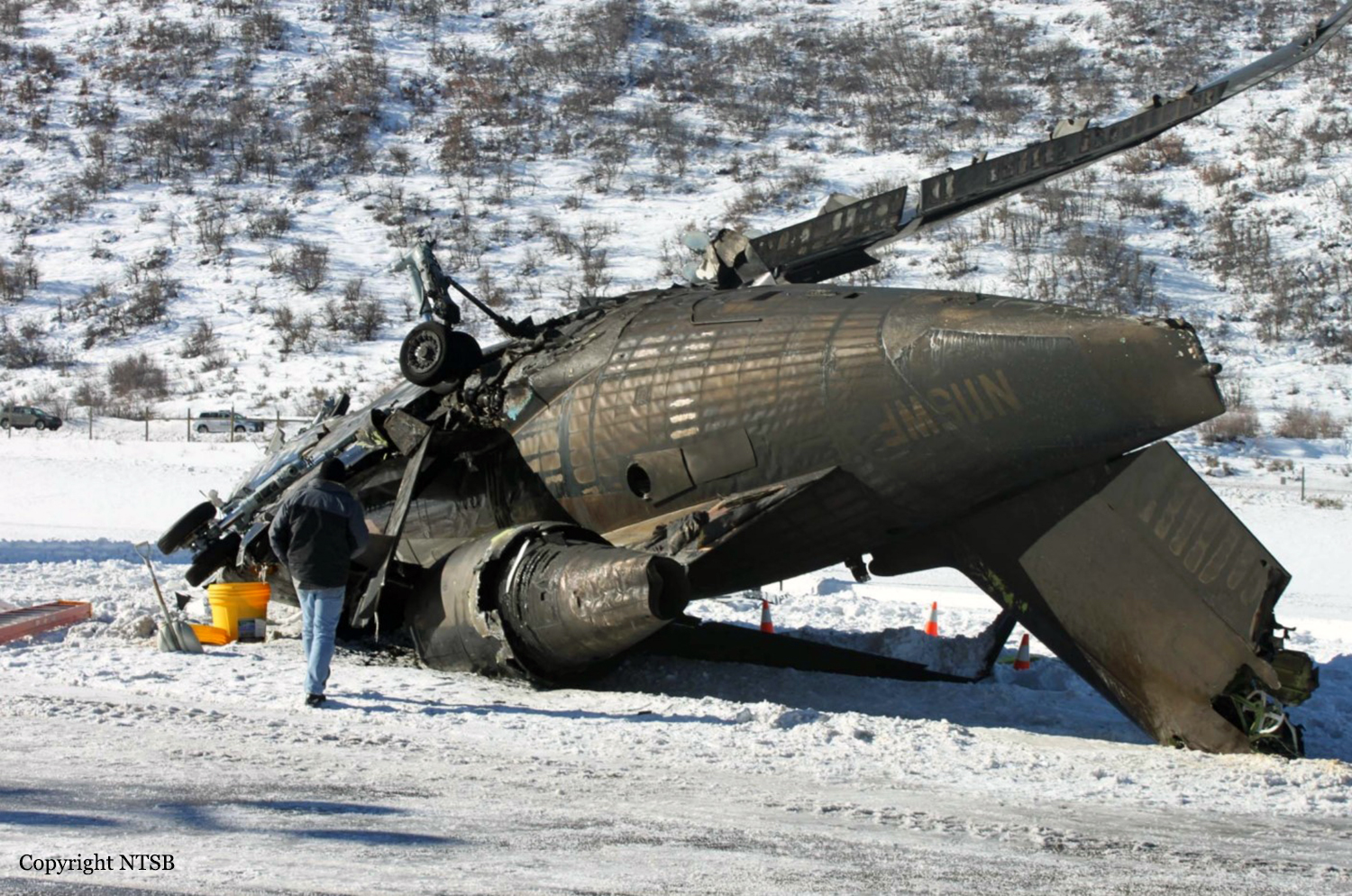
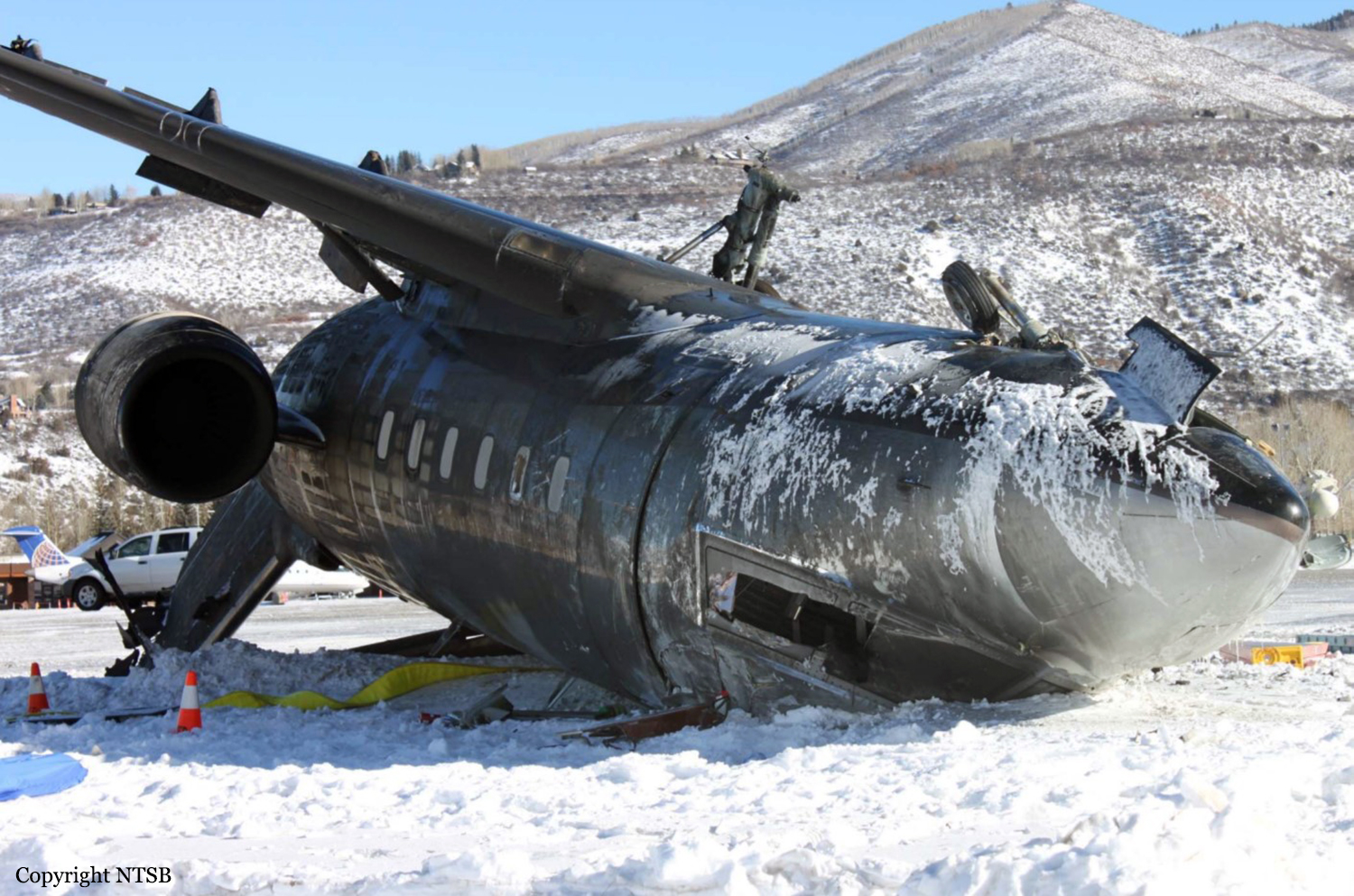
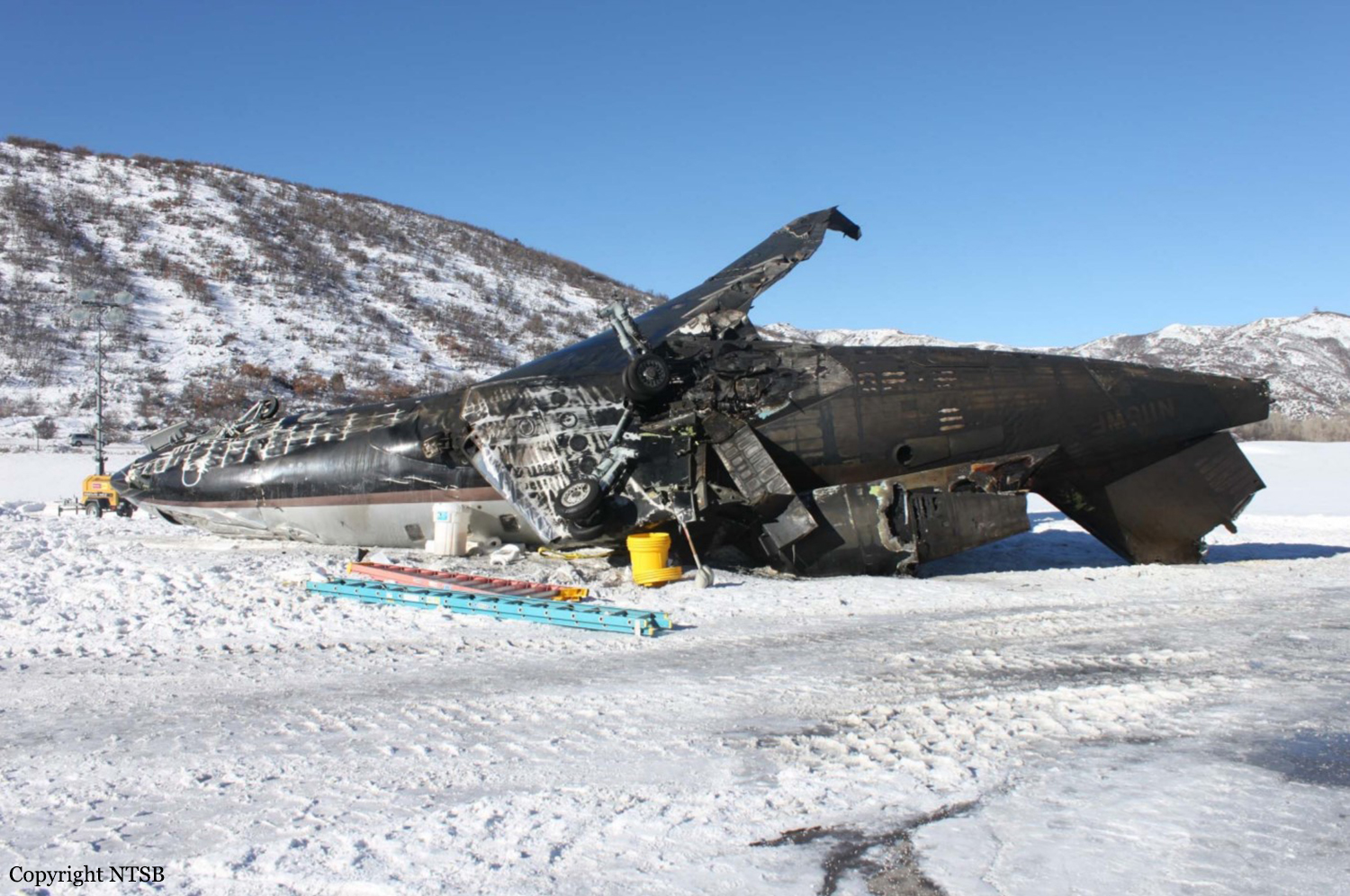
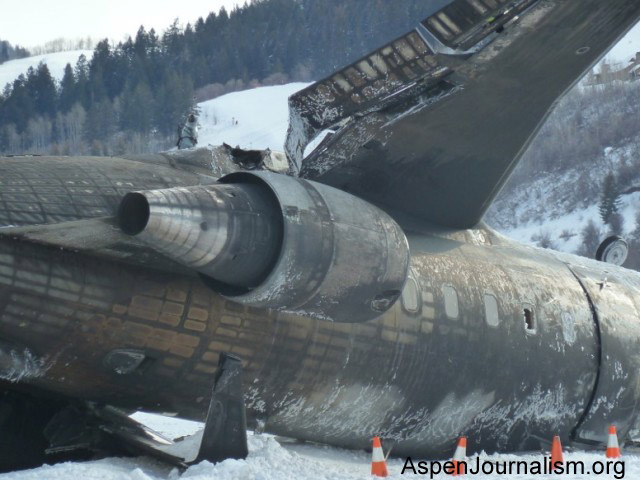
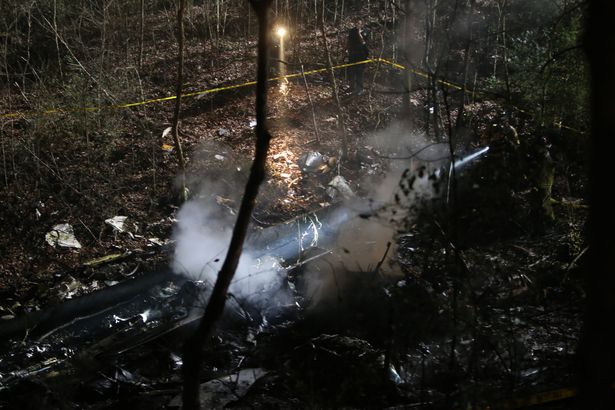
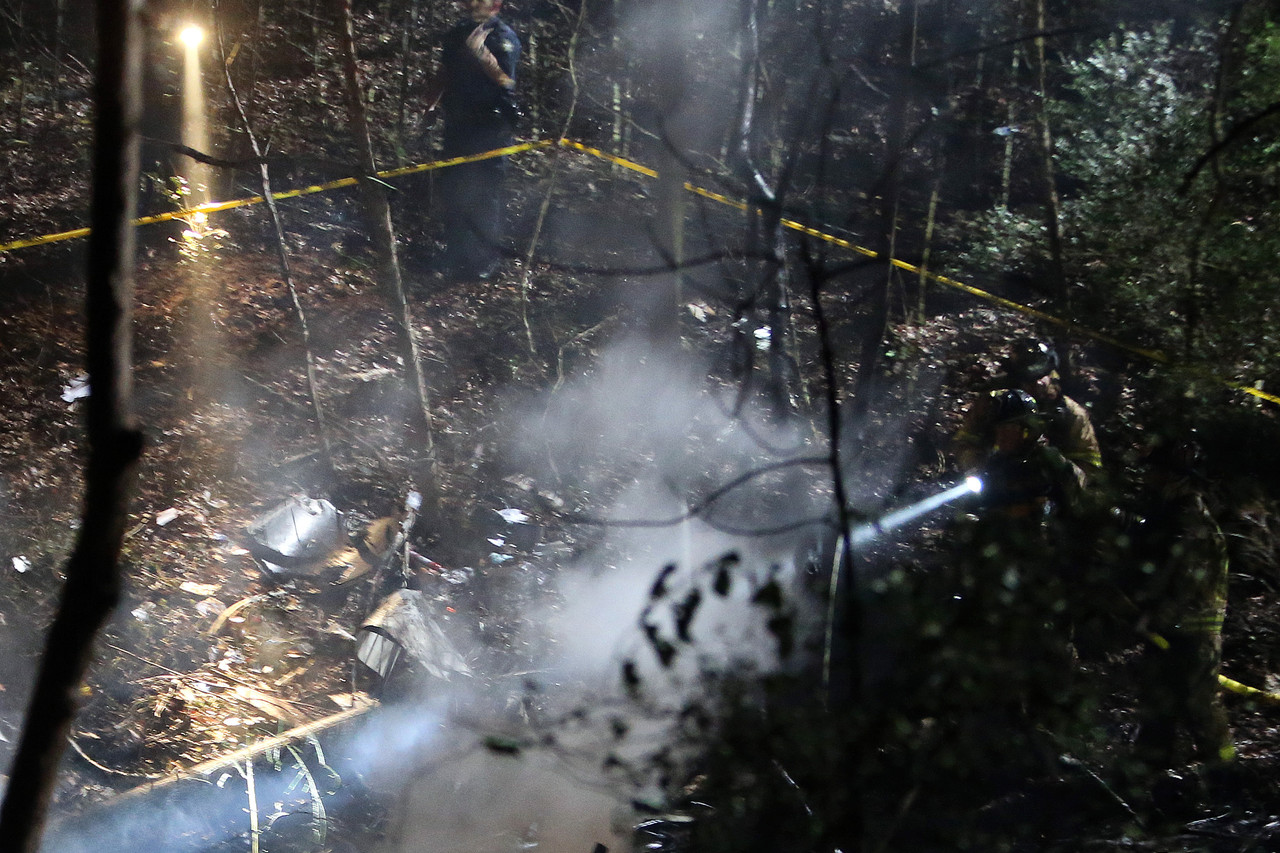
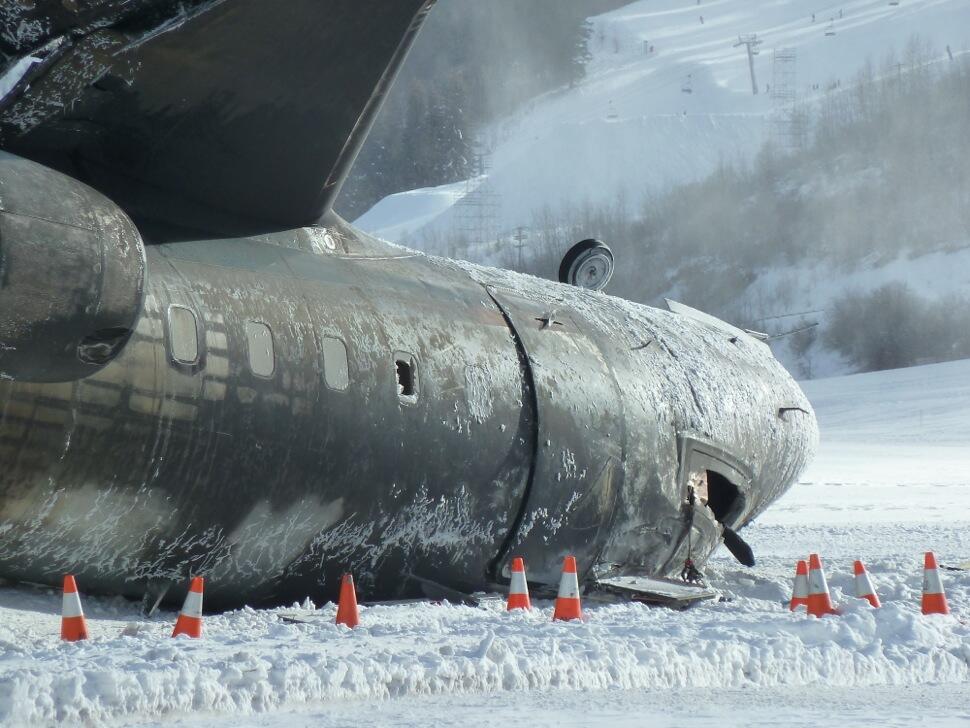
The airplane, with two flight crewmembers and a pilot-rated passenger on board, was on a cross-country flight. The departure and en route portions of the flight were uneventful. As the flight neared its destination, a high-altitude, terrain-limited airport, air traffic control (ATC) provided vectors to the localizer/distance measuring equipment (LOC/DME)-E approach to runway 15. About 1210, the local controller informed the flight crew that the wind was from 290º at 19 knots (kts) with gusts to 25 kts. About 1211, the flight crew reported that they were executing a missed approach and then requested vectors for a second approach. ATC vectored the airplane for a second LOC/DME-E approach to runway 15. About 1221, the local controller informed the flight crew that the wind was from 330° at 16 kts and the 1-minute average wind was from 320° at 14 kts gusting to 25 kts. The initial part of the airplane's second approach was as-expected for descent angle, flap setting, and spoilers. During the final minute of flight, the engines were advanced and retarded five times, and the airplane's airspeed varied between 135 kts and 150 kts. The final portion of the approach to the runway was not consistent with a stabilized approach. The airplane stayed nose down during its final descent and initial contact with the runway. The vertical acceleration and pitch parameters were consistent with the airplane pitch oscillating above the runway for a number of seconds before a hard runway contact, a gain in altitude, and a final impact into the runway at about 6 g. The weather at the time of the accident was near or in exceedance of the airplane's maximum tailwind and crosswind components for landing, as published in the airplane flight manual. Given the location of the airplane over the runway when the approach became unstabilized and terrain limitations of ASE, performance calculations were completed to determine if the airplane could successfully perform a go-around. Assuming the crew had control of the airplane, and that the engines were advanced to the appropriate climb setting, anti-ice was off, and tailwinds were less than a sustained 25 kts, the airplane had the capability to complete a go-around, clearing the local obstacles along that path.Both flight crewmembers had recently completed simulator training for a type rating in the CL600 airplane. The captain reported that he had a total of 12 to 14 hours of total flight time in the airplane type, including the time he trained in the simulator. The copilot would have had close to the same hours as the captain given that they attended flight training together. Neither flight crew member would have met the minimum flight time requirement of 25 hours to act as pilot-in-command under Part 135. The accident flight was conducted under Part 91, and therefore, the 25 hours requirement did not apply to this portion of their trip. Nevertheless, the additional flight time would have increased the crew's familiarity with the airplane and its limitation and likely improved their decision-making during the unstabilized approach. Further, the captain stated that he asked the passenger, an experienced CL-600-rated pilot. to accompany them on the trip to provide guidance during the approach to the destination airport. However, because the CL-600-rated pilot was in the jumpseat position and unable to reach the aircraft controls, he was unable to act as a qualified pilot-in-command.
Probable cause:
The flight crew's failure to maintain airplane control during landing following an unstabilized approach. Contributing to the accident were the flight crew's decision to land with a tailwind above the airplane's operating limitations and their failure not to conduct a go-around when the approach became unstabilized.
Final Report:
Crash of a Piper PA-31-310 Navajo in Port Raúl Marín Balmaceda

Date & Time: Dec 28, 2013 at 1000 LT
Type of aircraft:
Operator:
Registration:
CC-CMM
Flight Type:
Survivors:
Yes
Schedule:
Puerto Montt - Port Raúl Marín Balmaceda
MSN:
31-315
YOM:
1968
Country:
Crew on board:
1
Crew fatalities:
Pax on board:
0
Pax fatalities:
Other fatalities:
Total fatalities:
0
Captain / Total flying hours:
7480
Captain / Total hours on type:
3100.00
Circumstances:
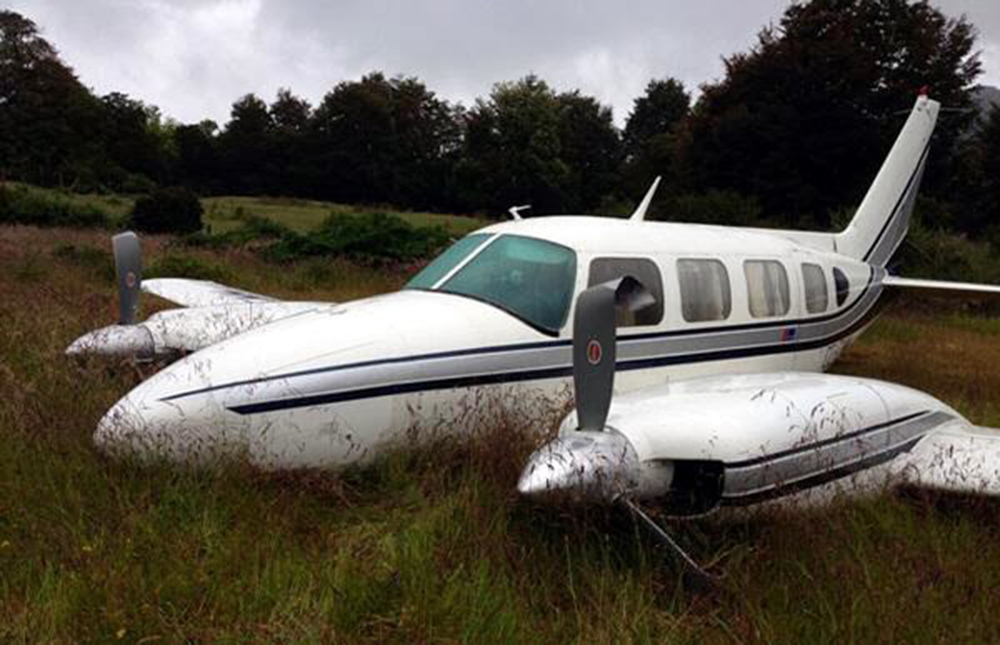
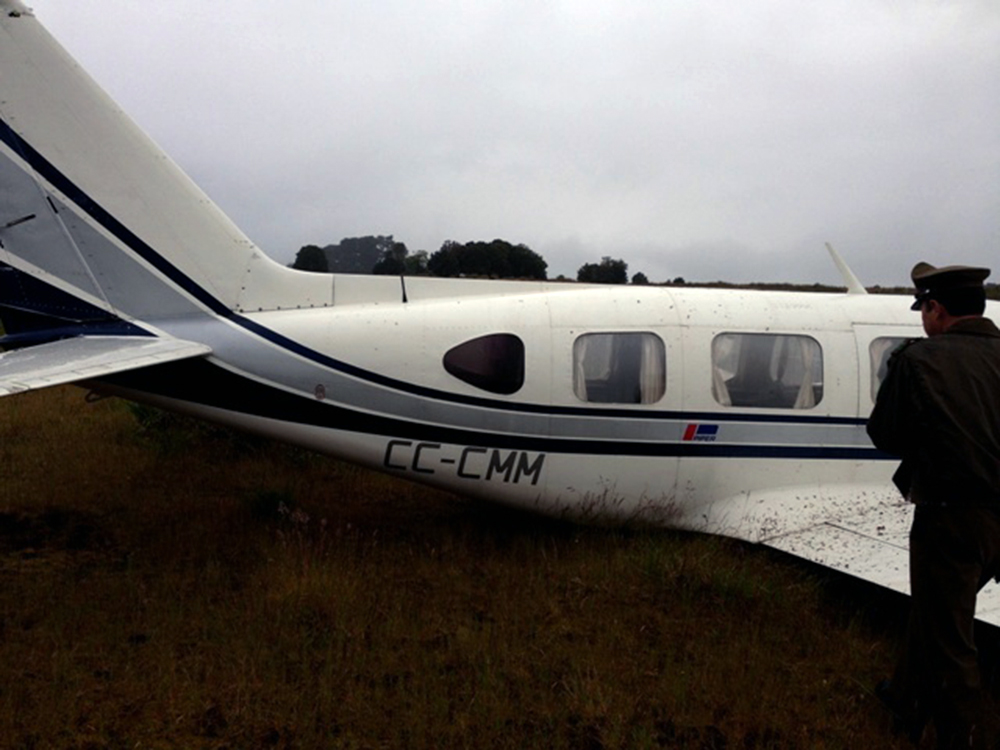
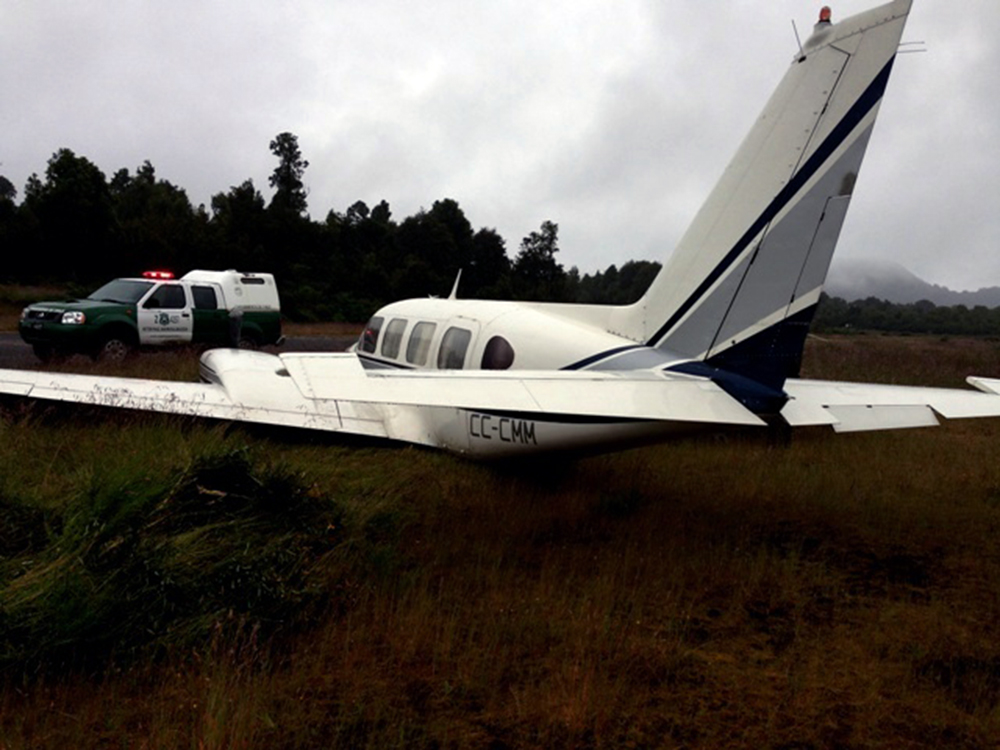
The pilot departed Puerto Montt at 0900LT on a positioning flight to Port Raúl Marín Balmaceda to pick up five passengers. On approach, the pilot decided to complete a loss pass to evaluate the landing conditions and the wind component. Shortly later, the aircraft landed on its belly and slid for few dozen metres before coming to rest in a grassy area. The pilot was uninjured and the aircraft was damaged beyond repair.
Probable cause:
The pilot forgot to lower the landing gear prior to landing.
Final Report:

Crash of an Antonov AN-12B in Irkutsk: 9 killed

Date & Time: Dec 26, 2013 at 2101 LT
Type of aircraft:
Operator:
Registration:
12162
Flight Type:
Survivors:
No
Schedule:
Novosibirsk - Irkutsk
MSN:
3 3 415 09
YOM:
1963
Country:
Region:
Crew on board:
6
Crew fatalities:
Pax on board:
3
Pax fatalities:
Other fatalities:
Total fatalities:
9
Circumstances:
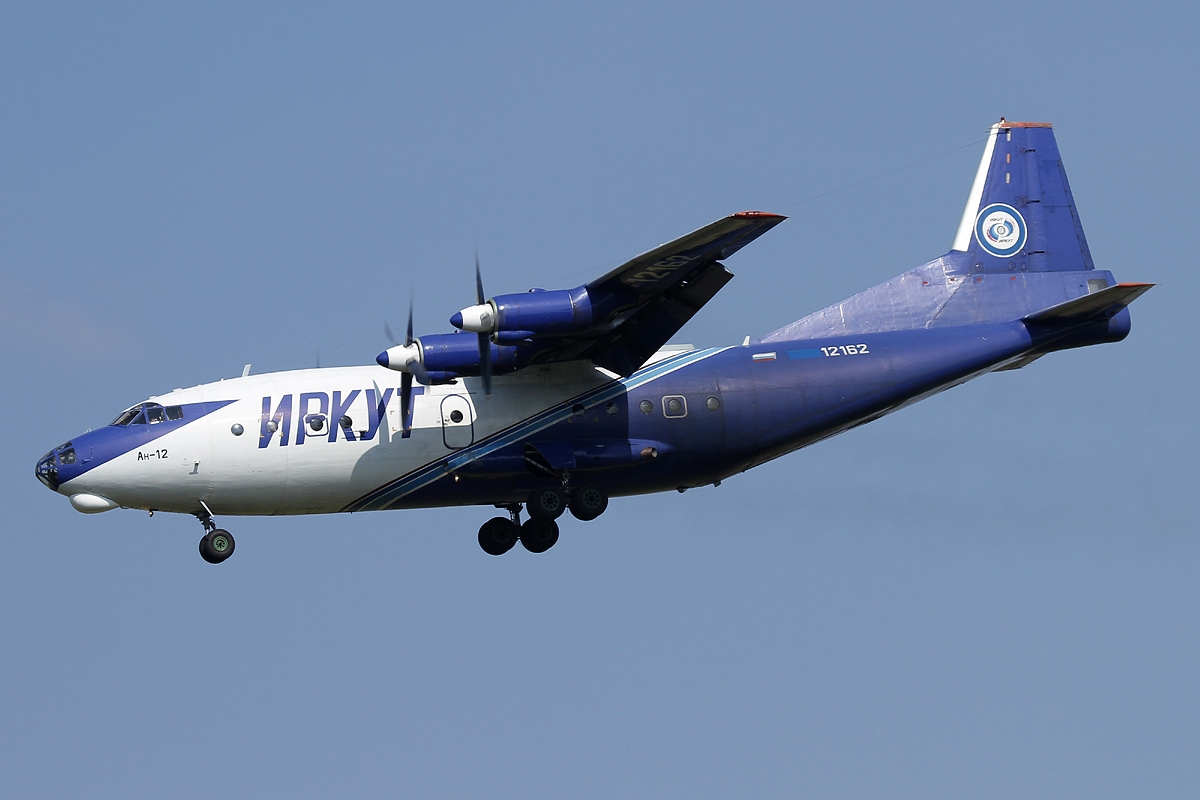
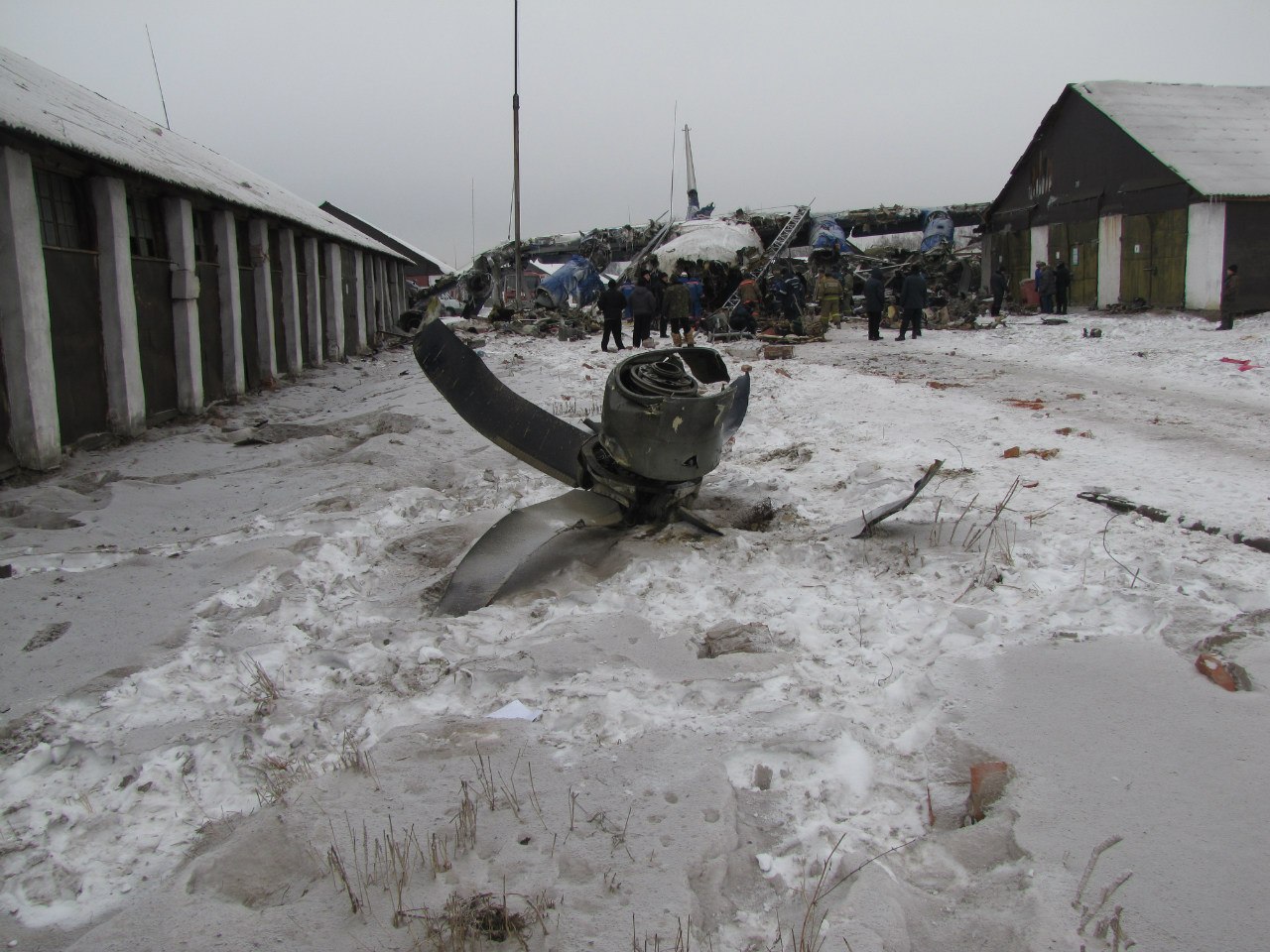
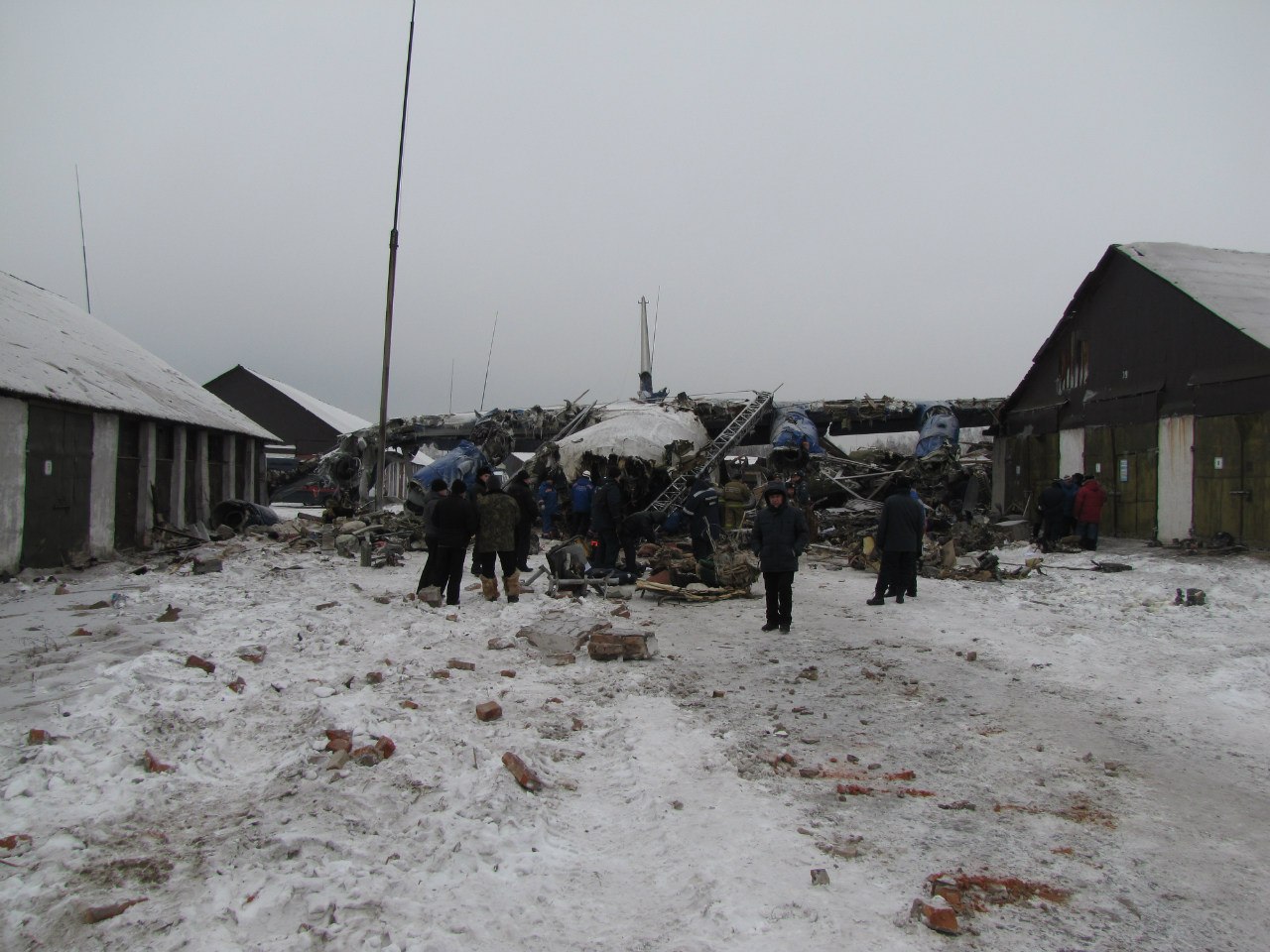
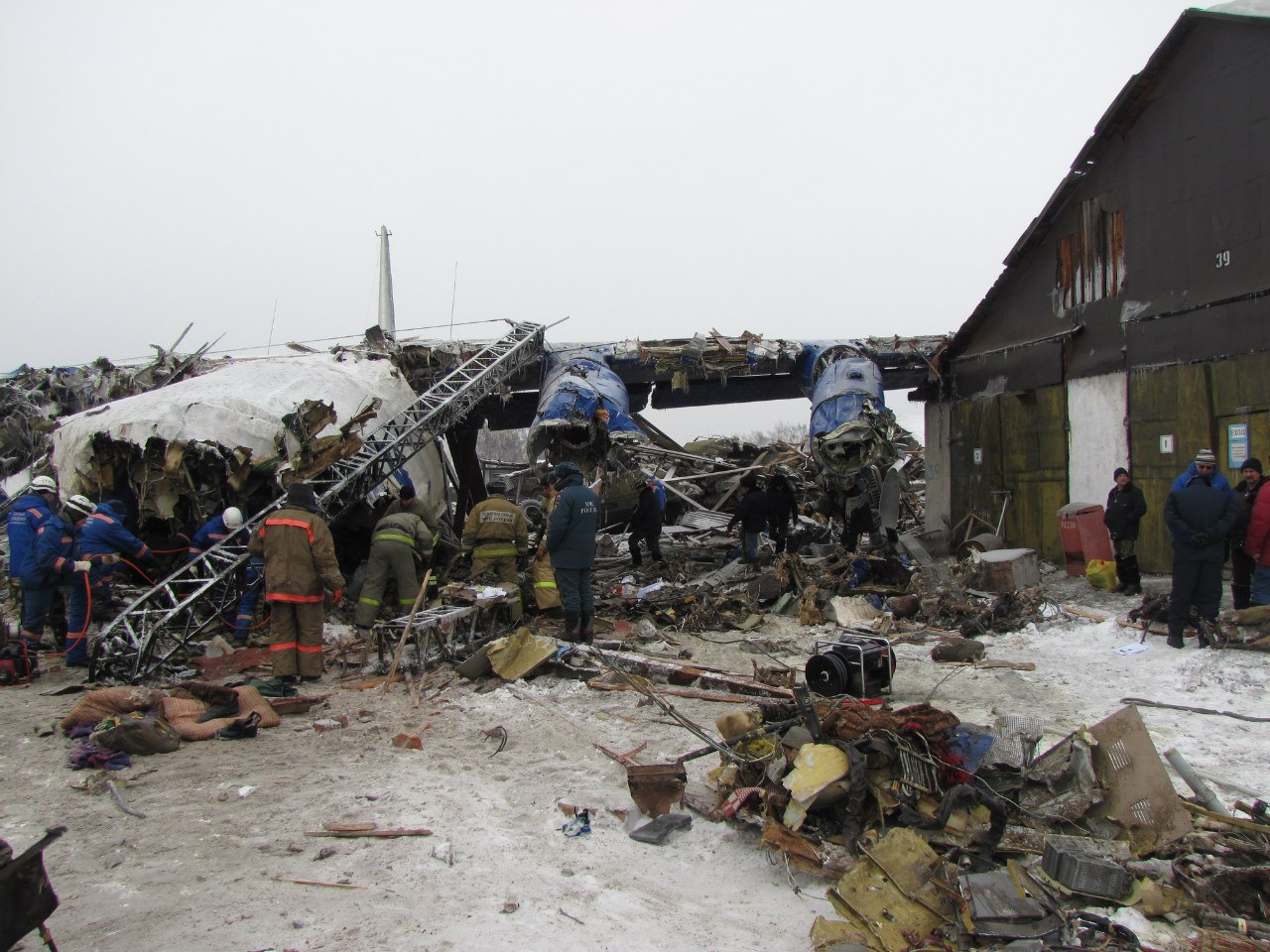
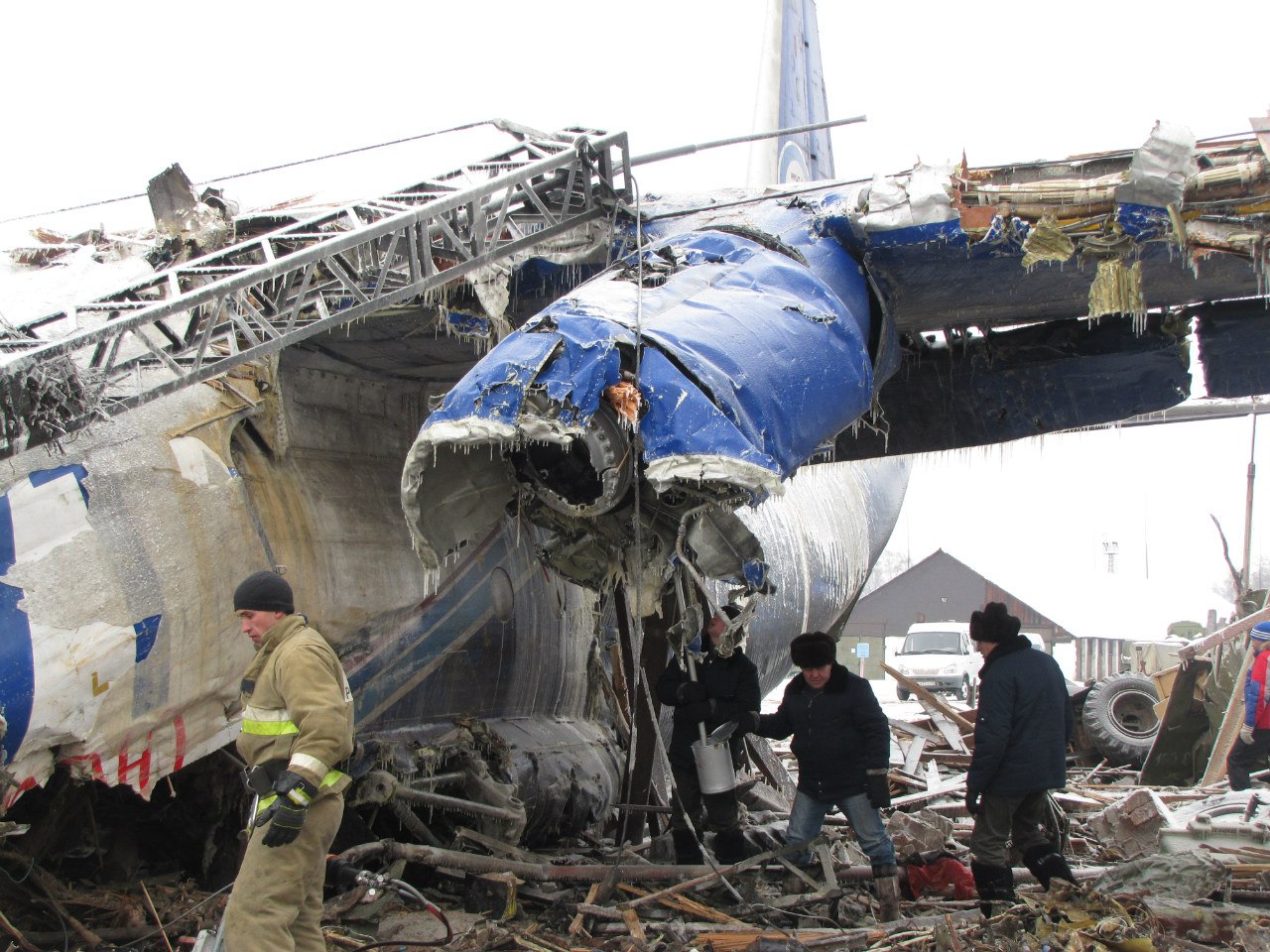
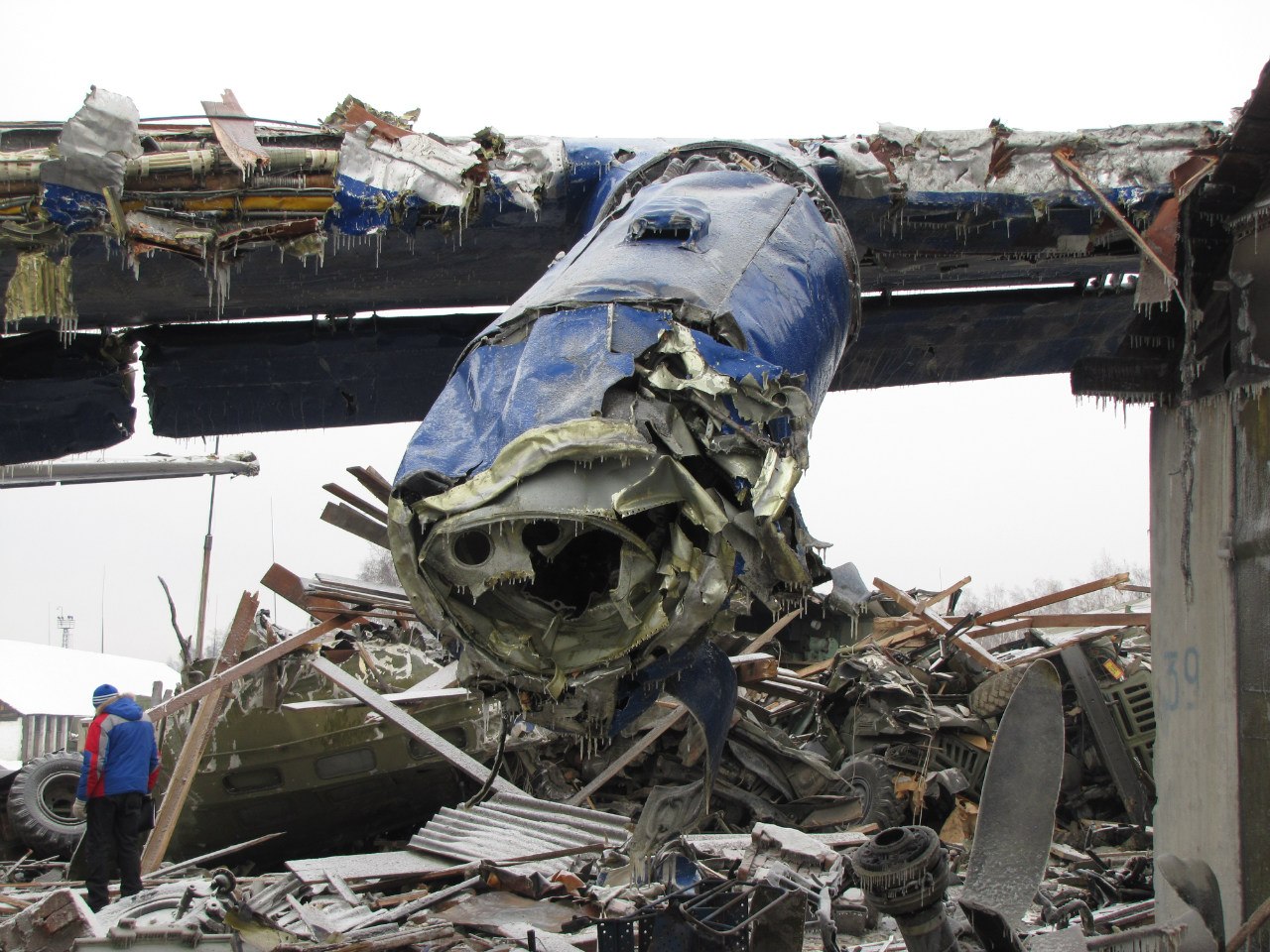
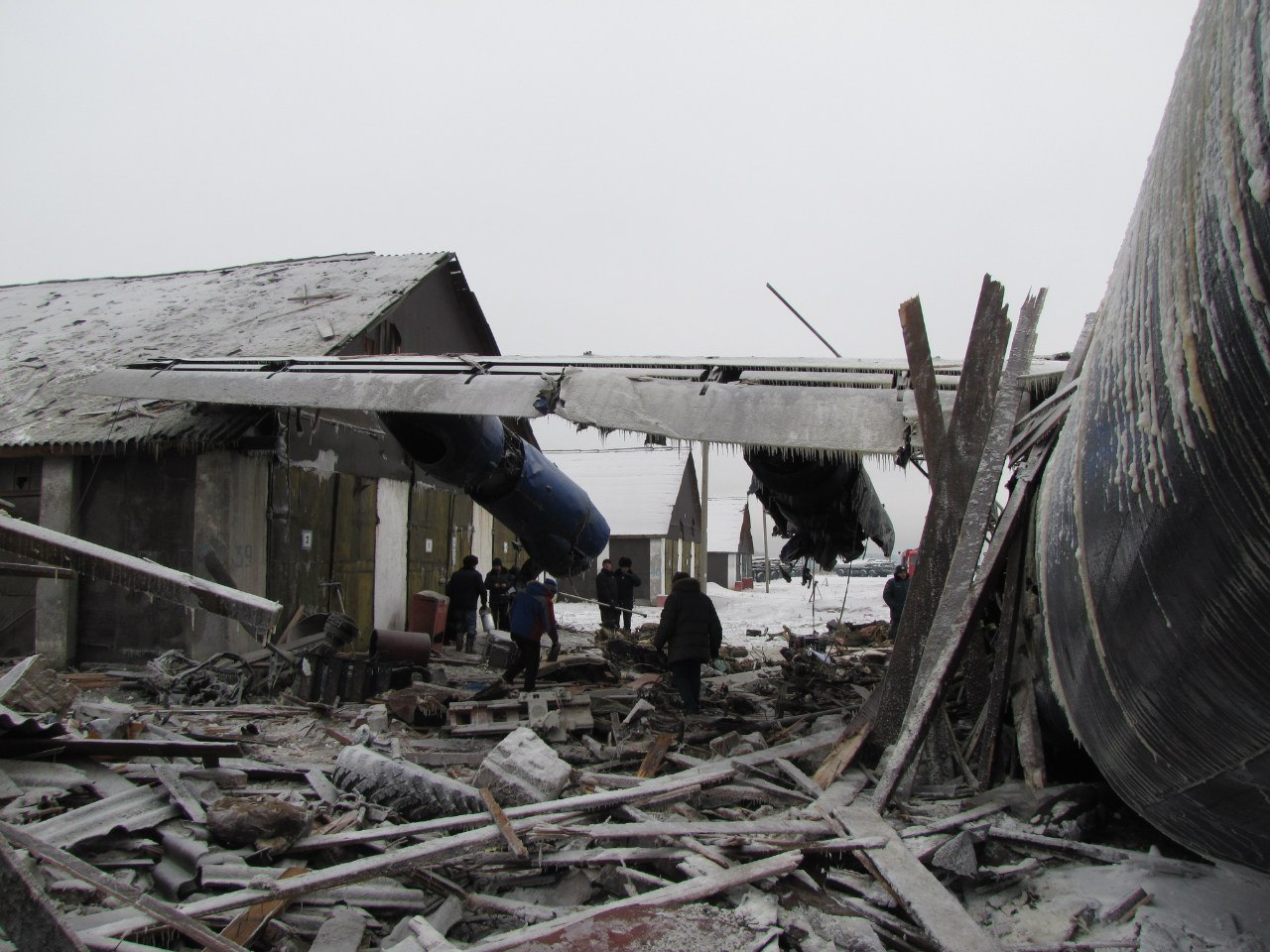
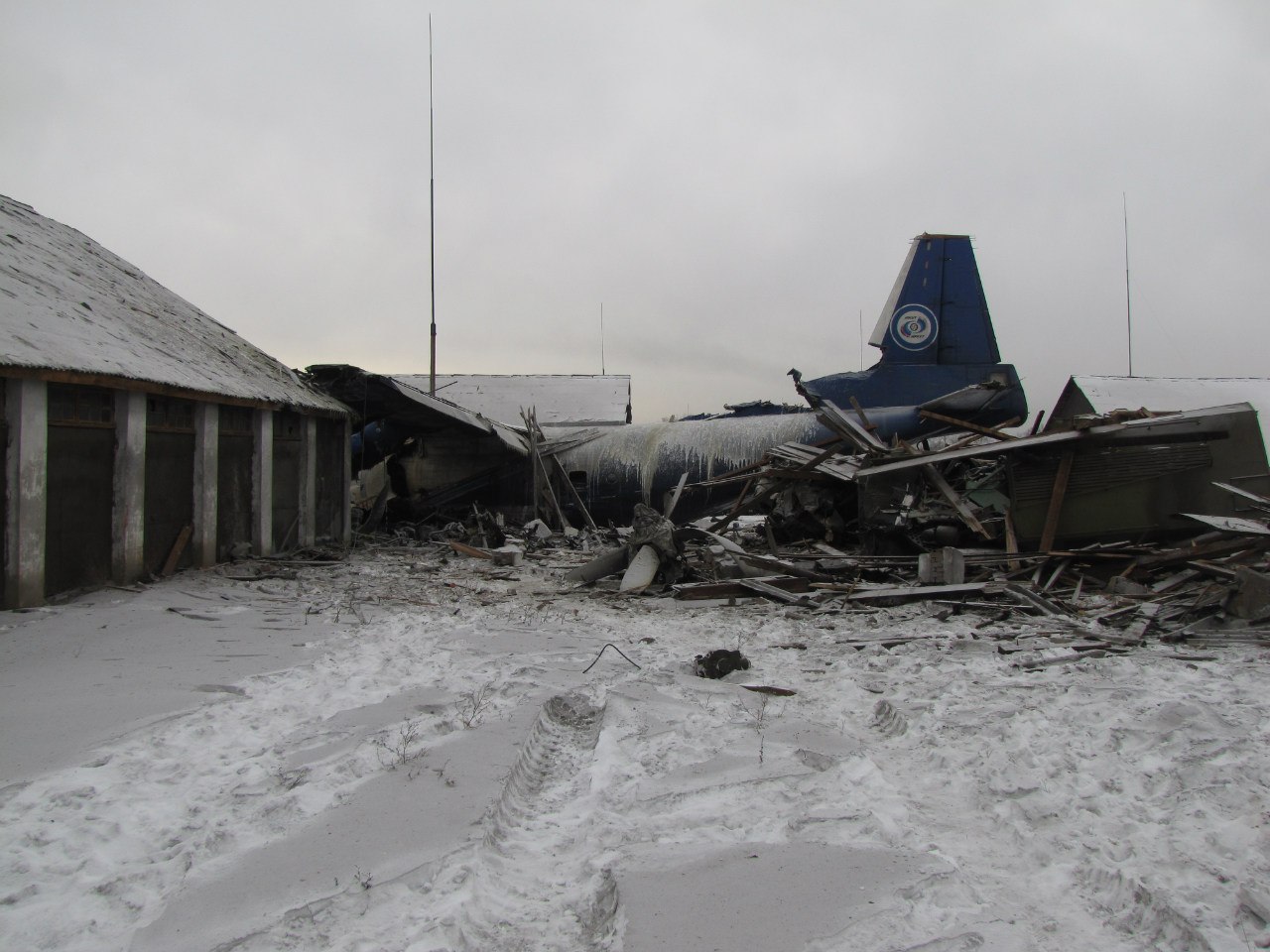
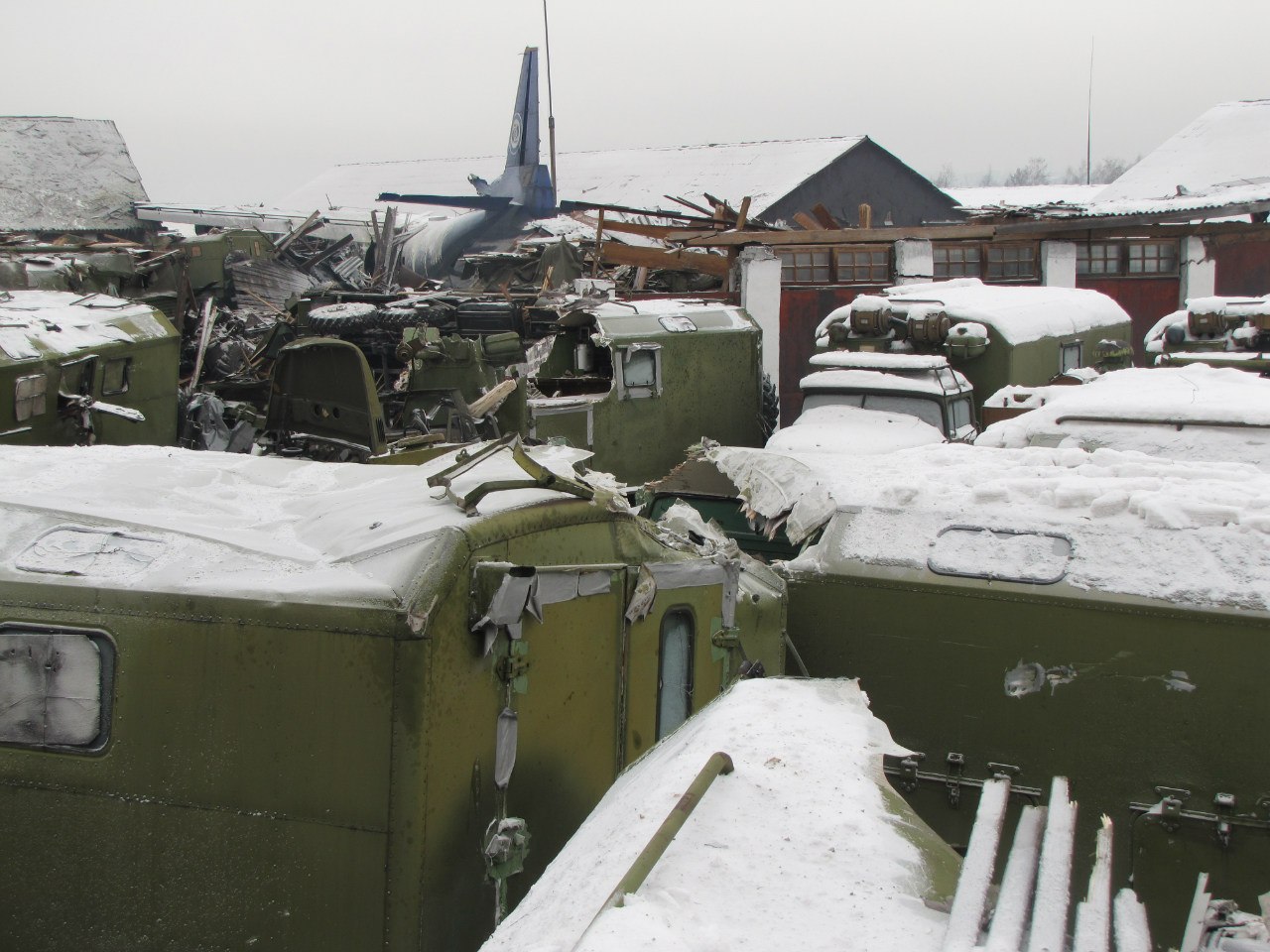
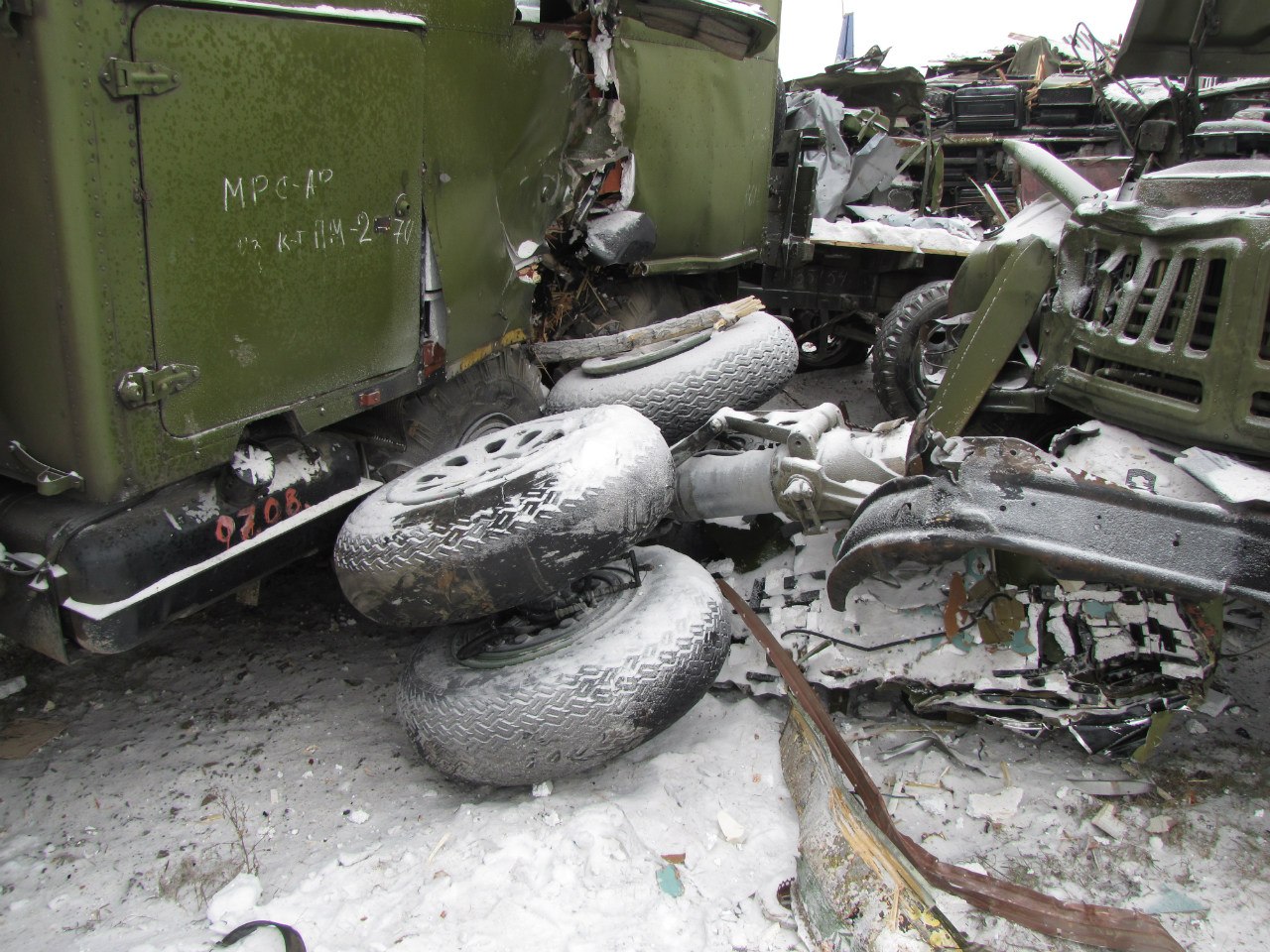
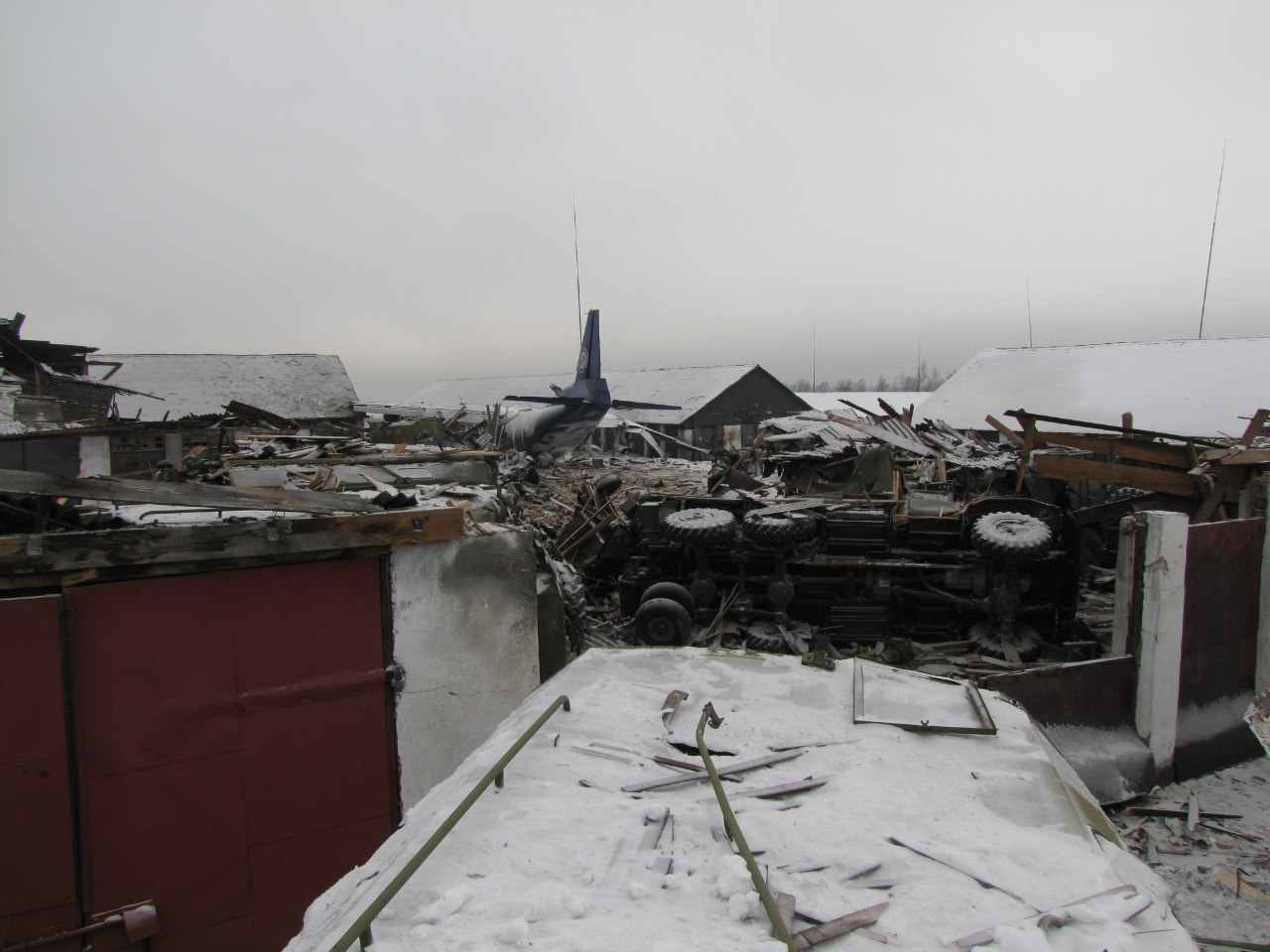
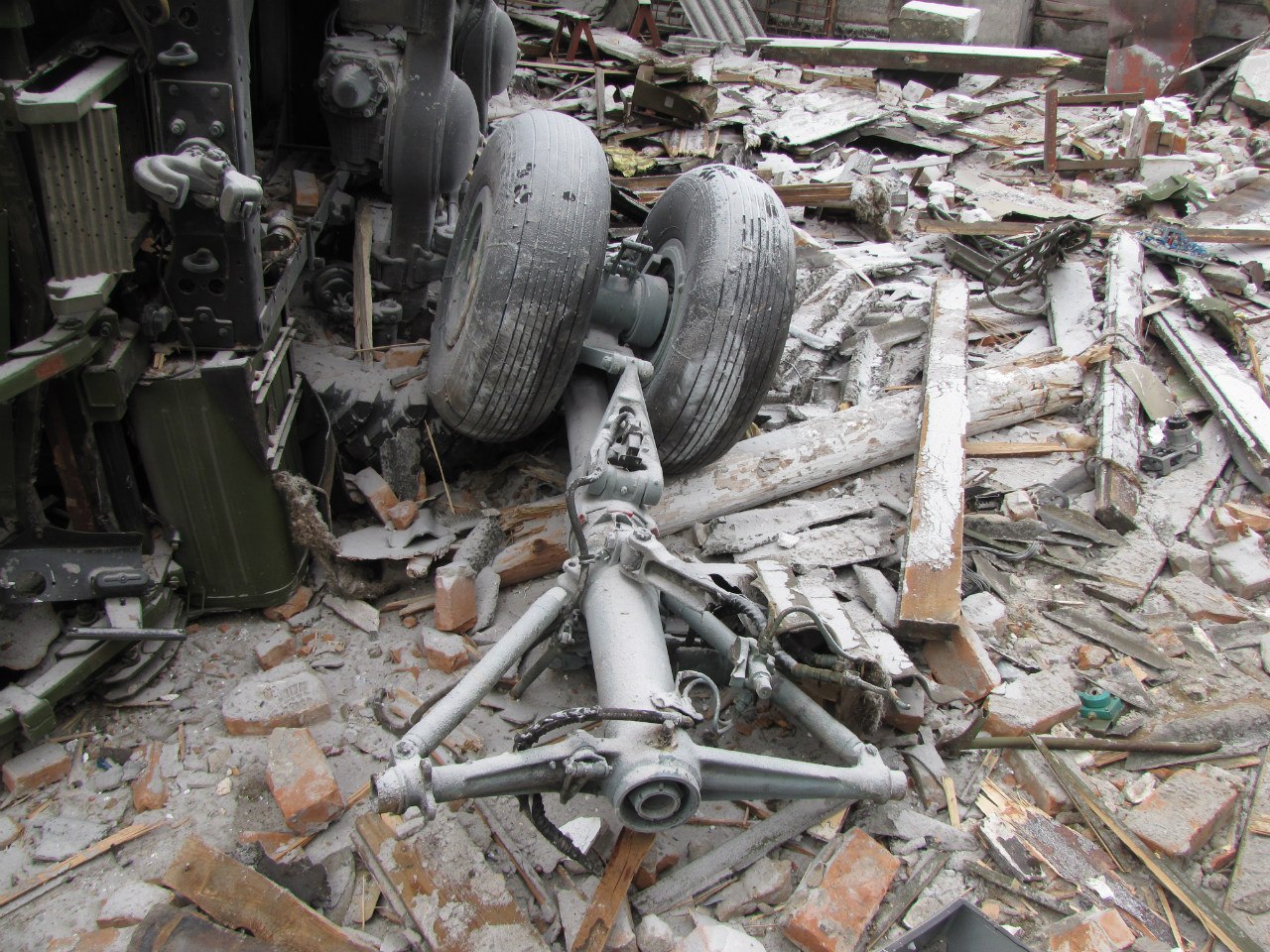
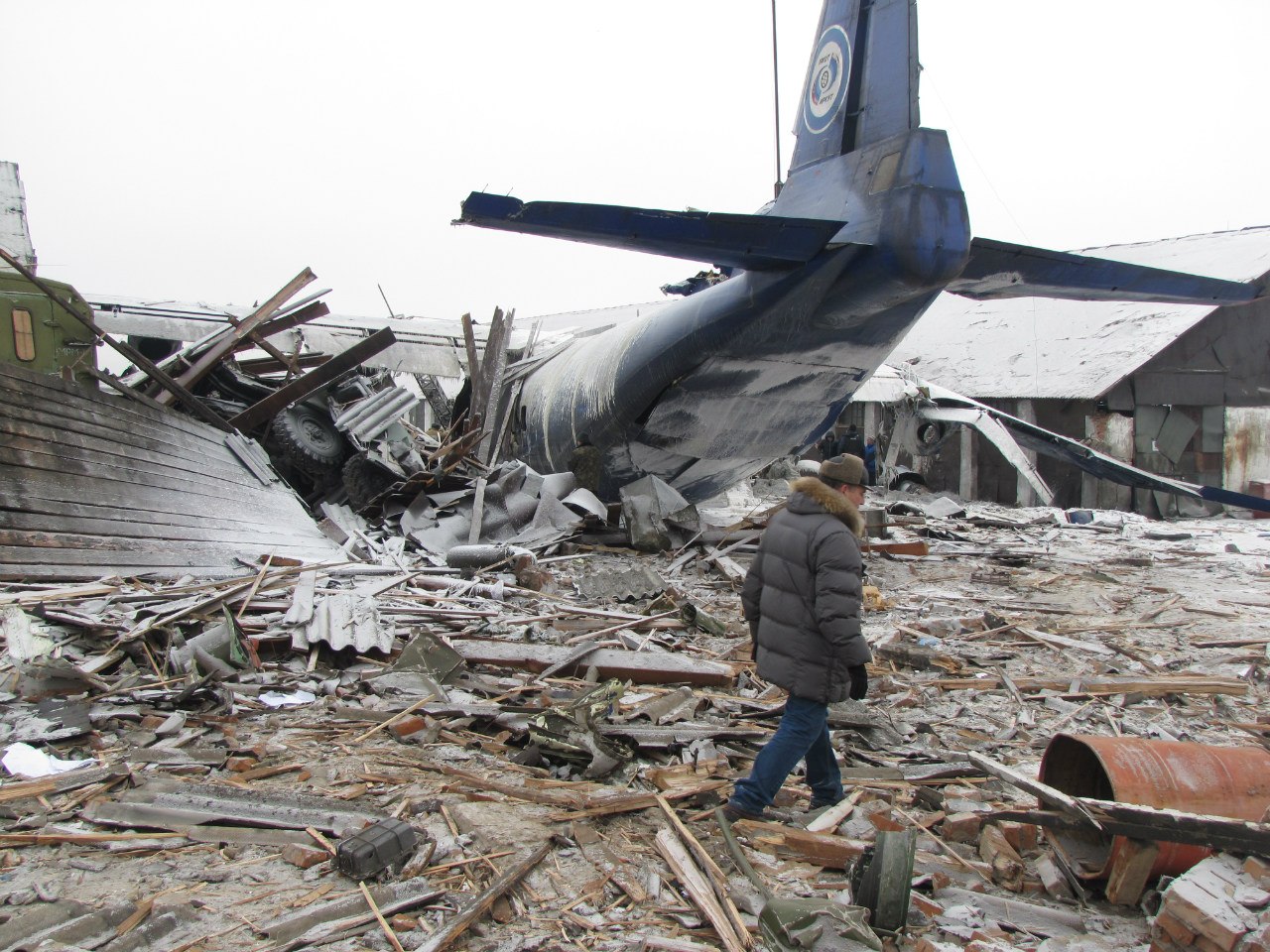
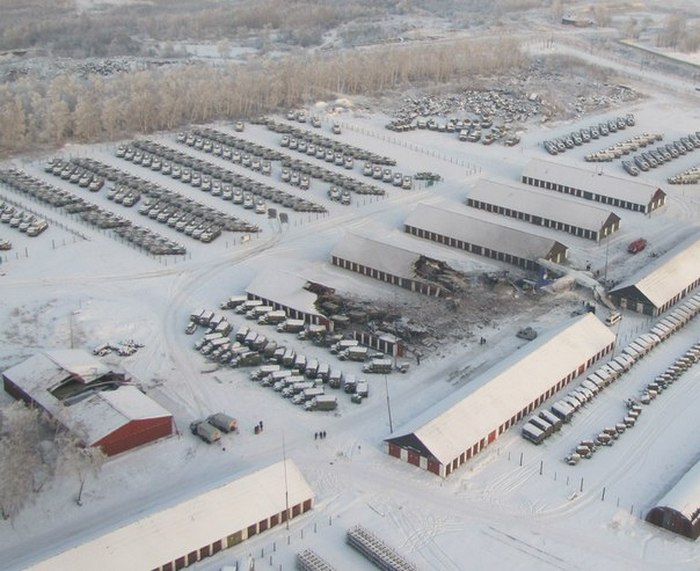
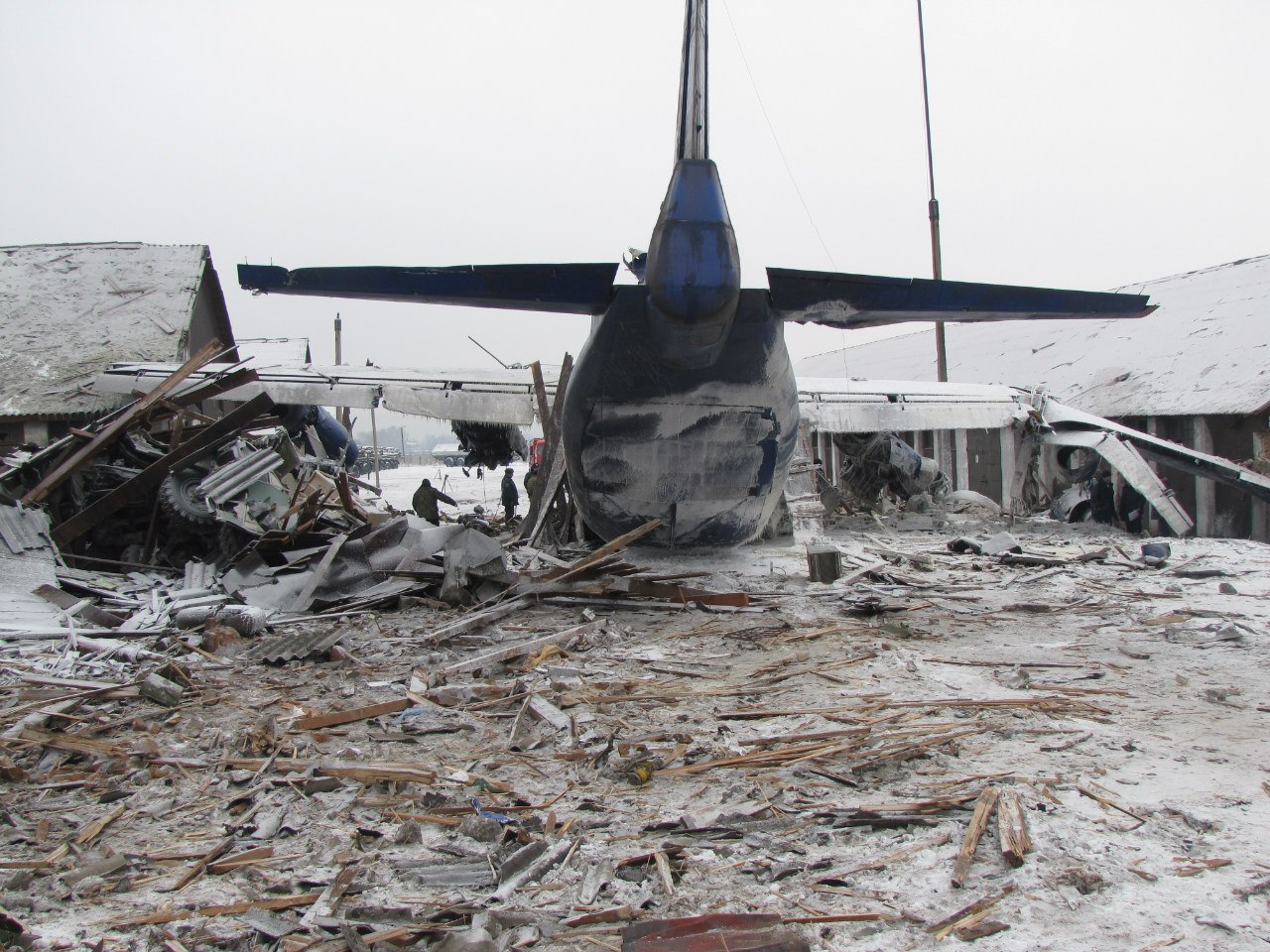
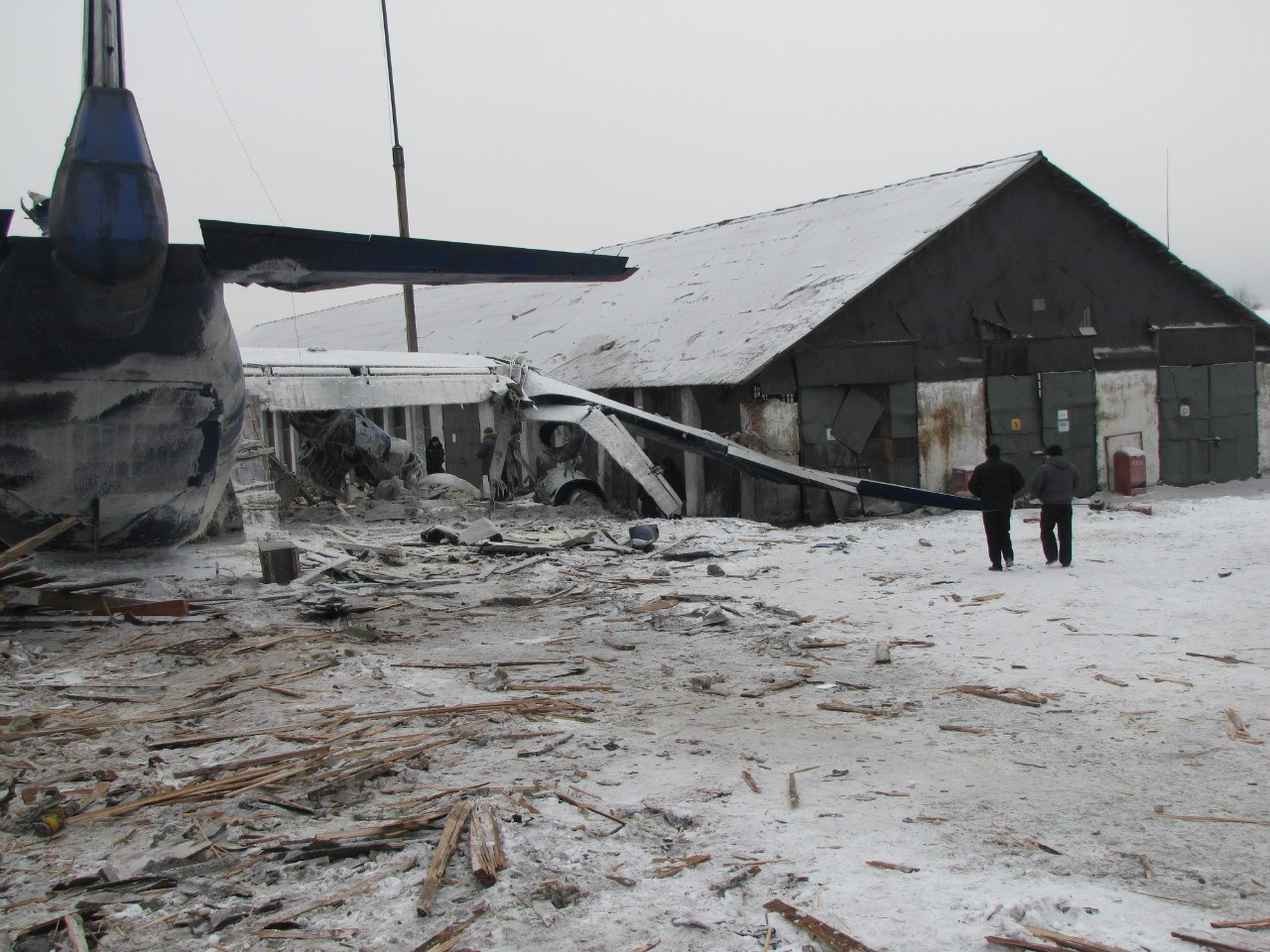
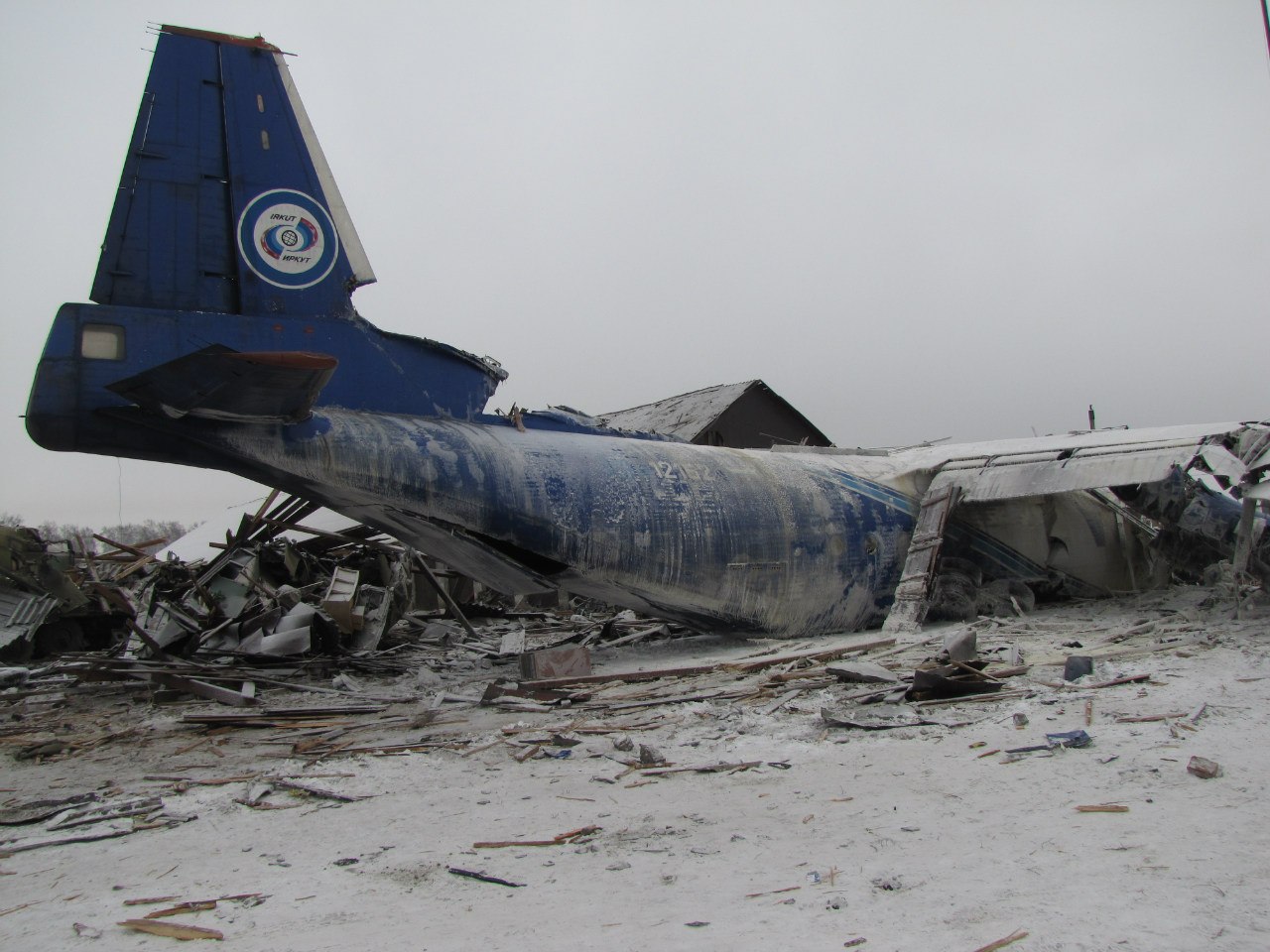
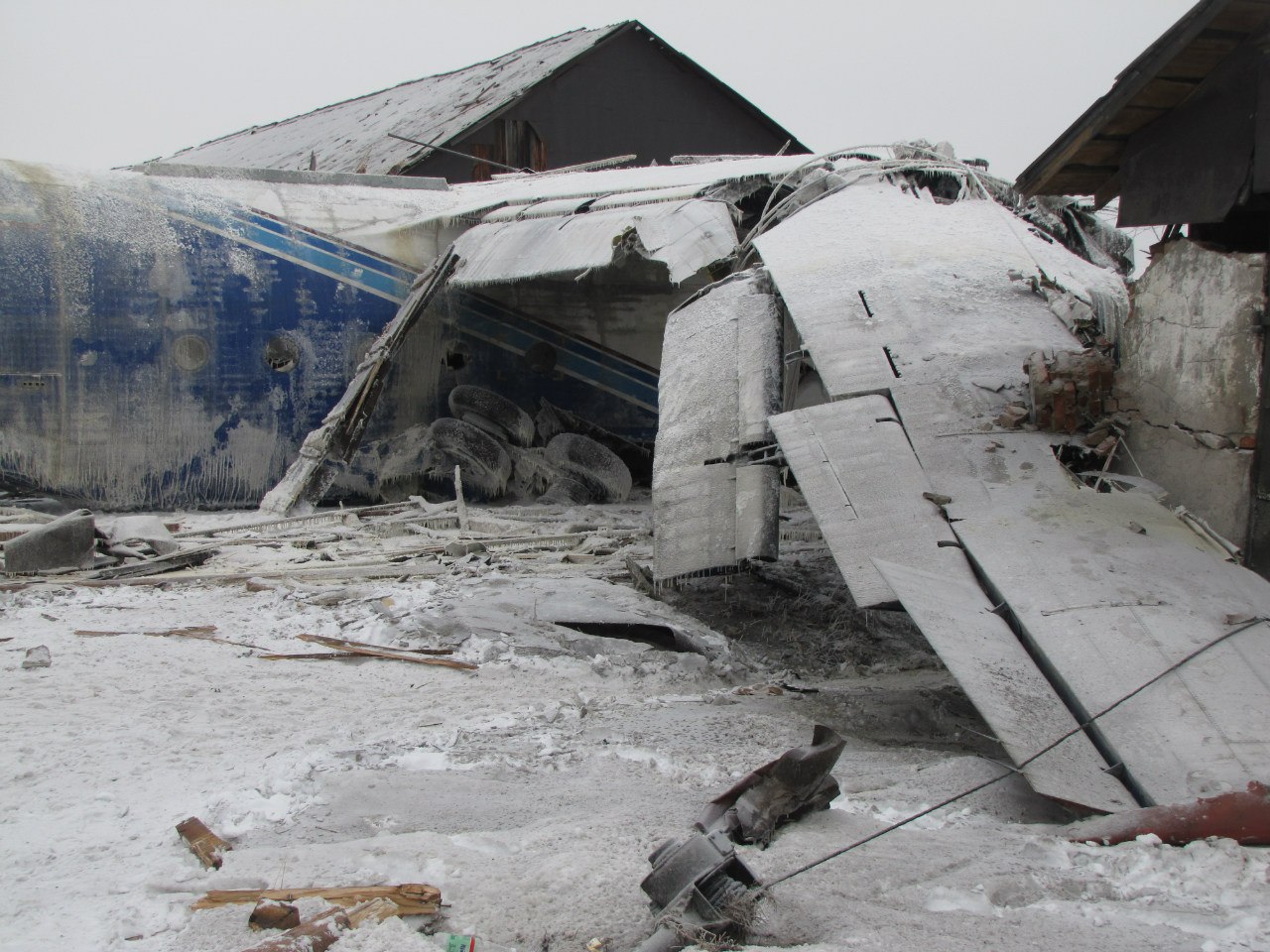
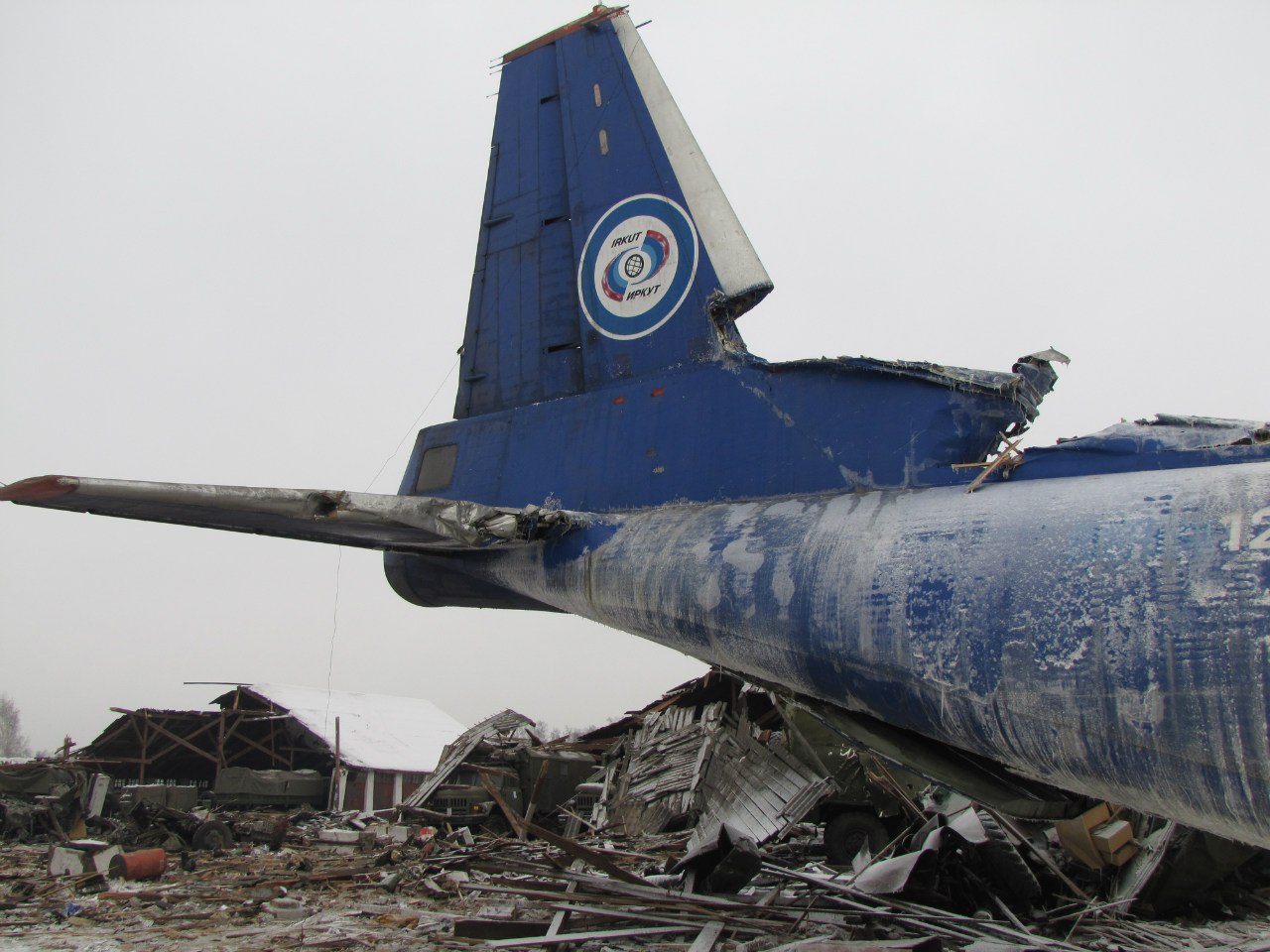
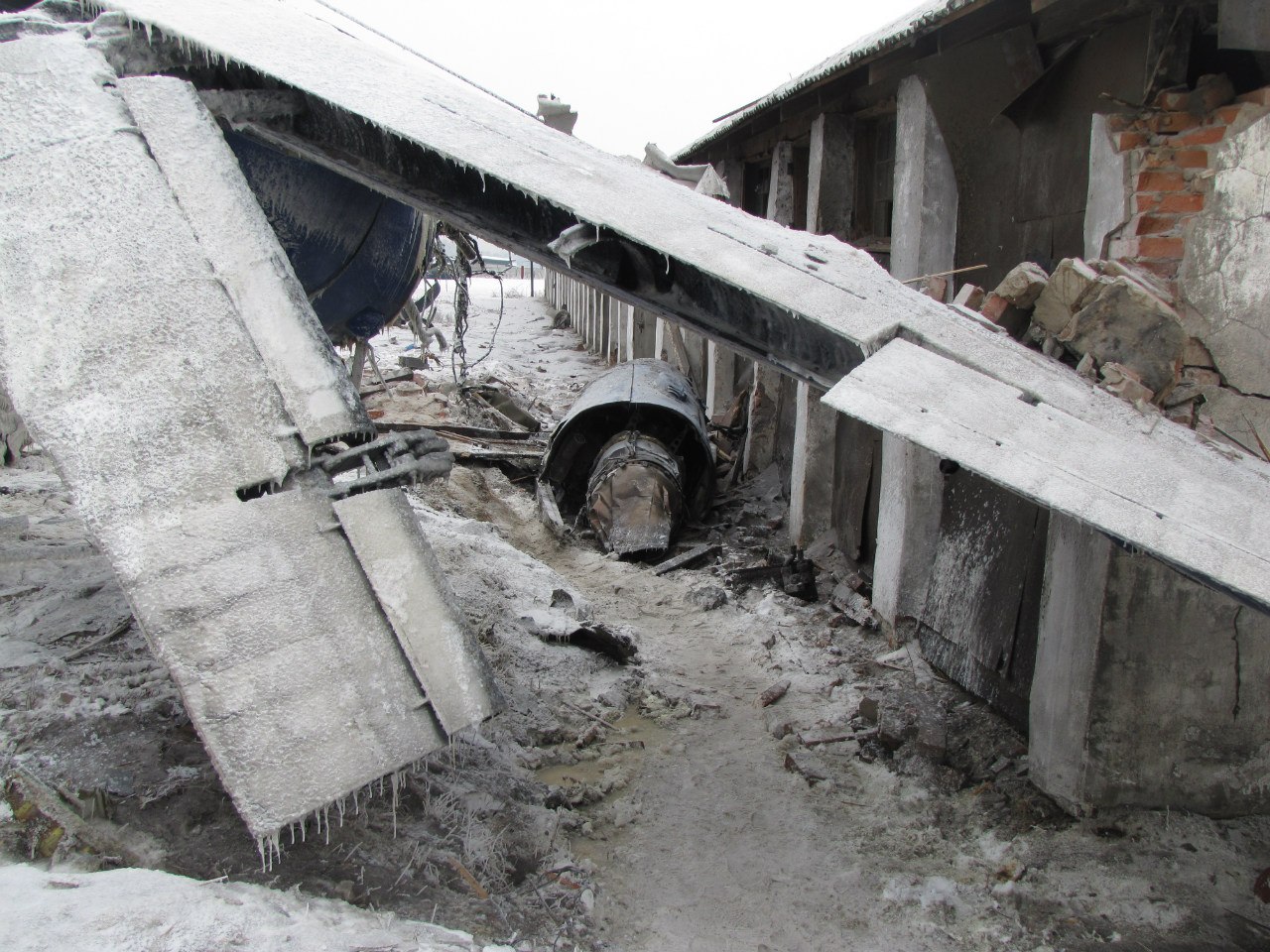
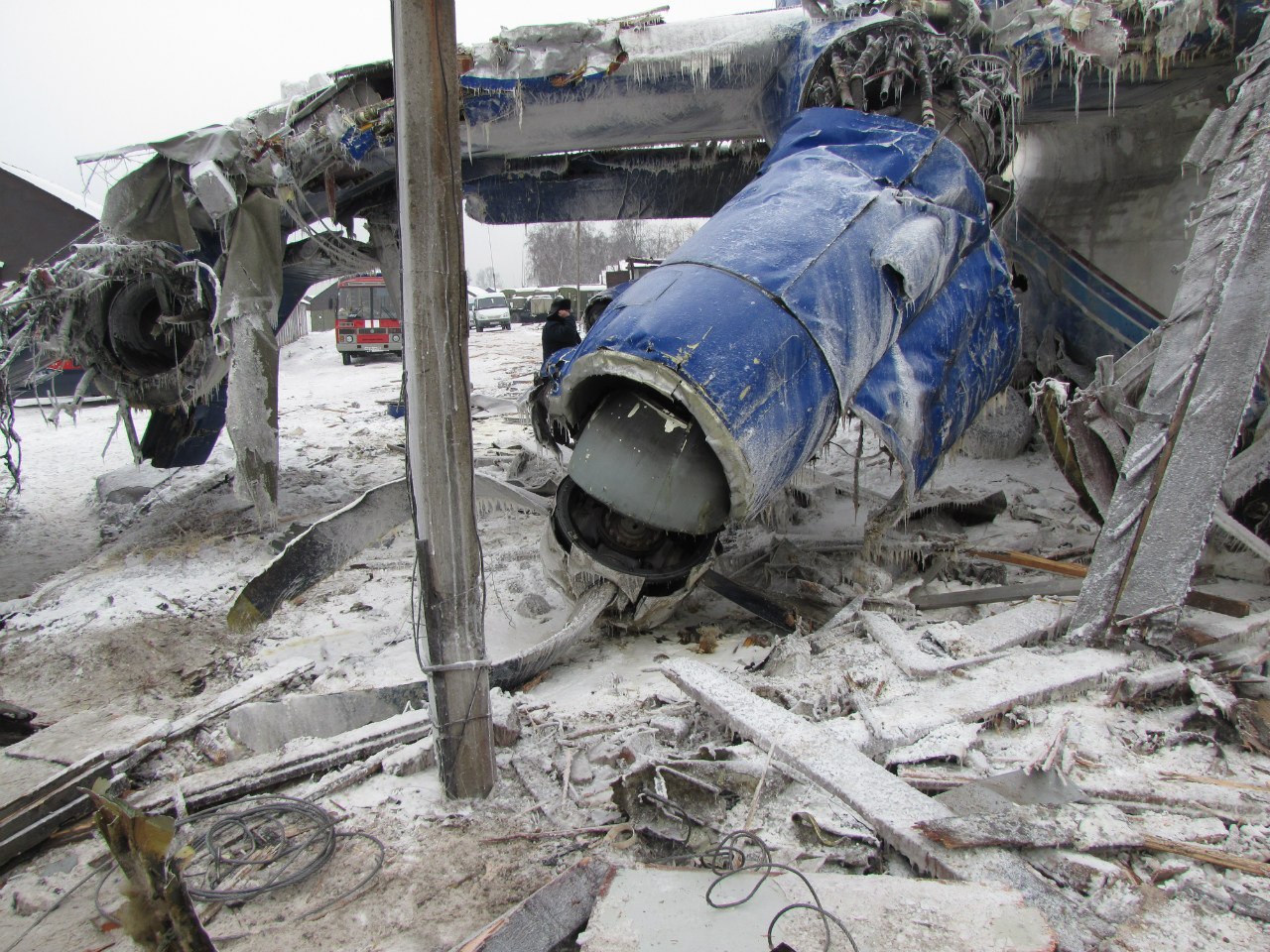
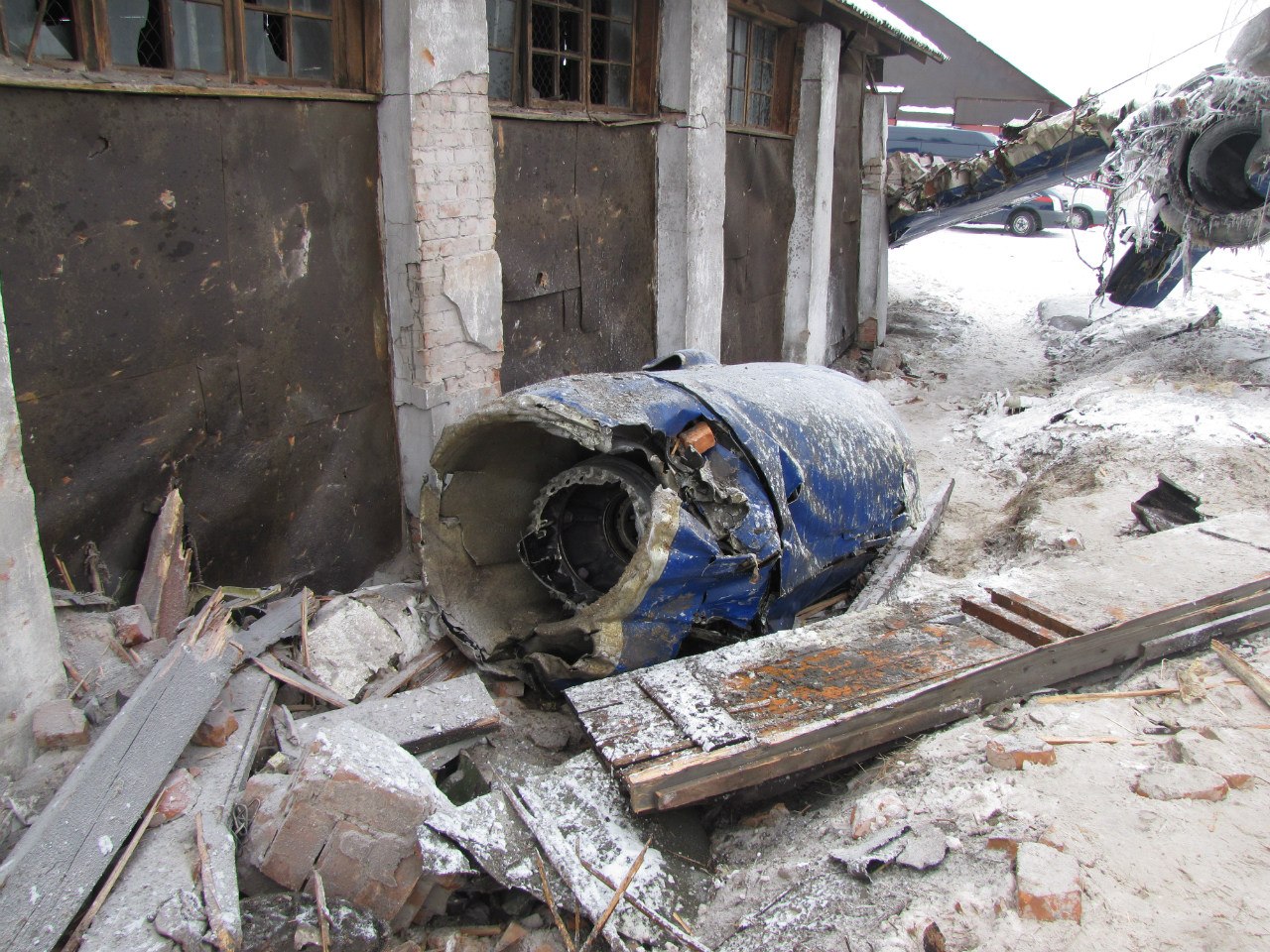
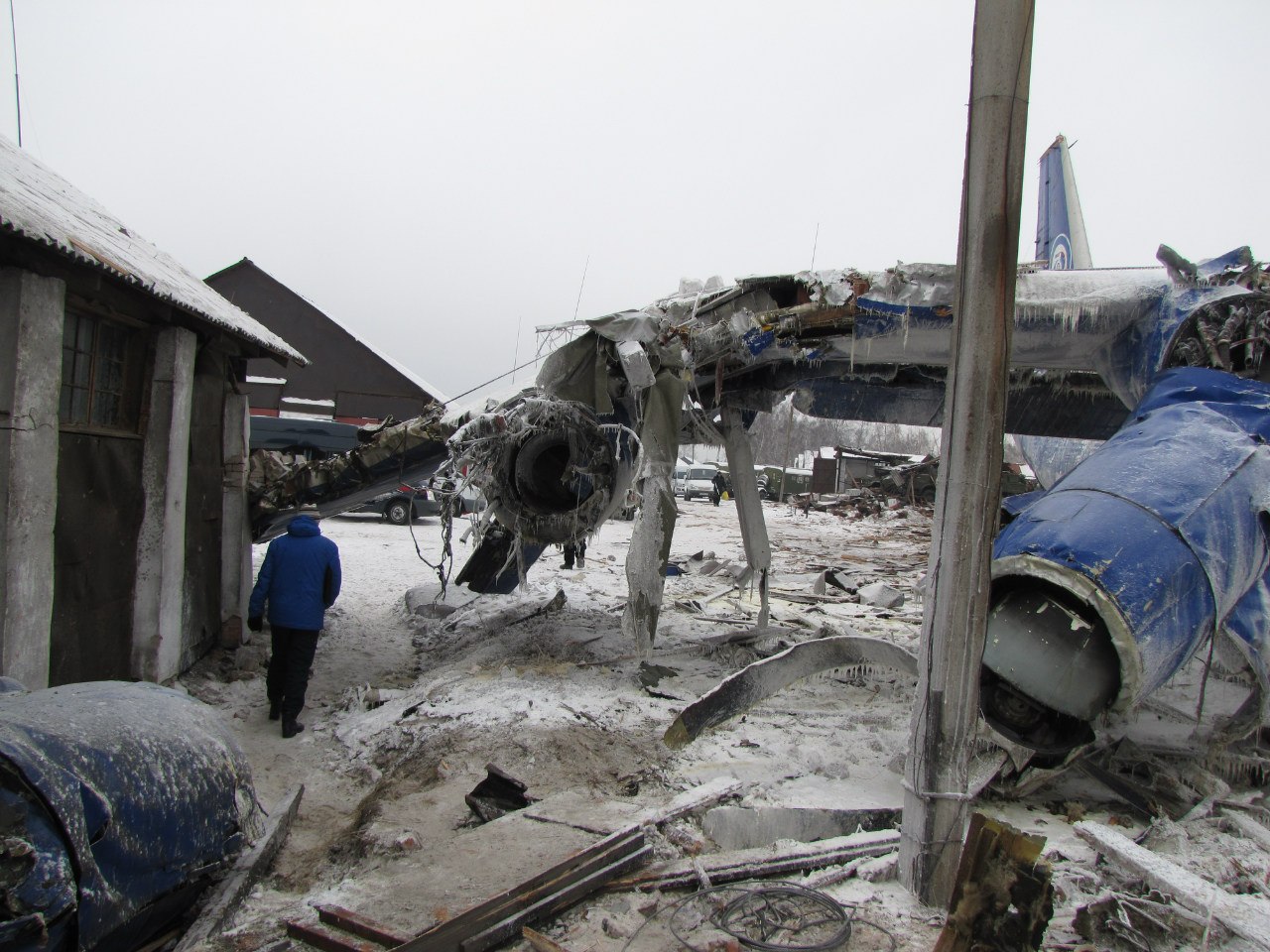
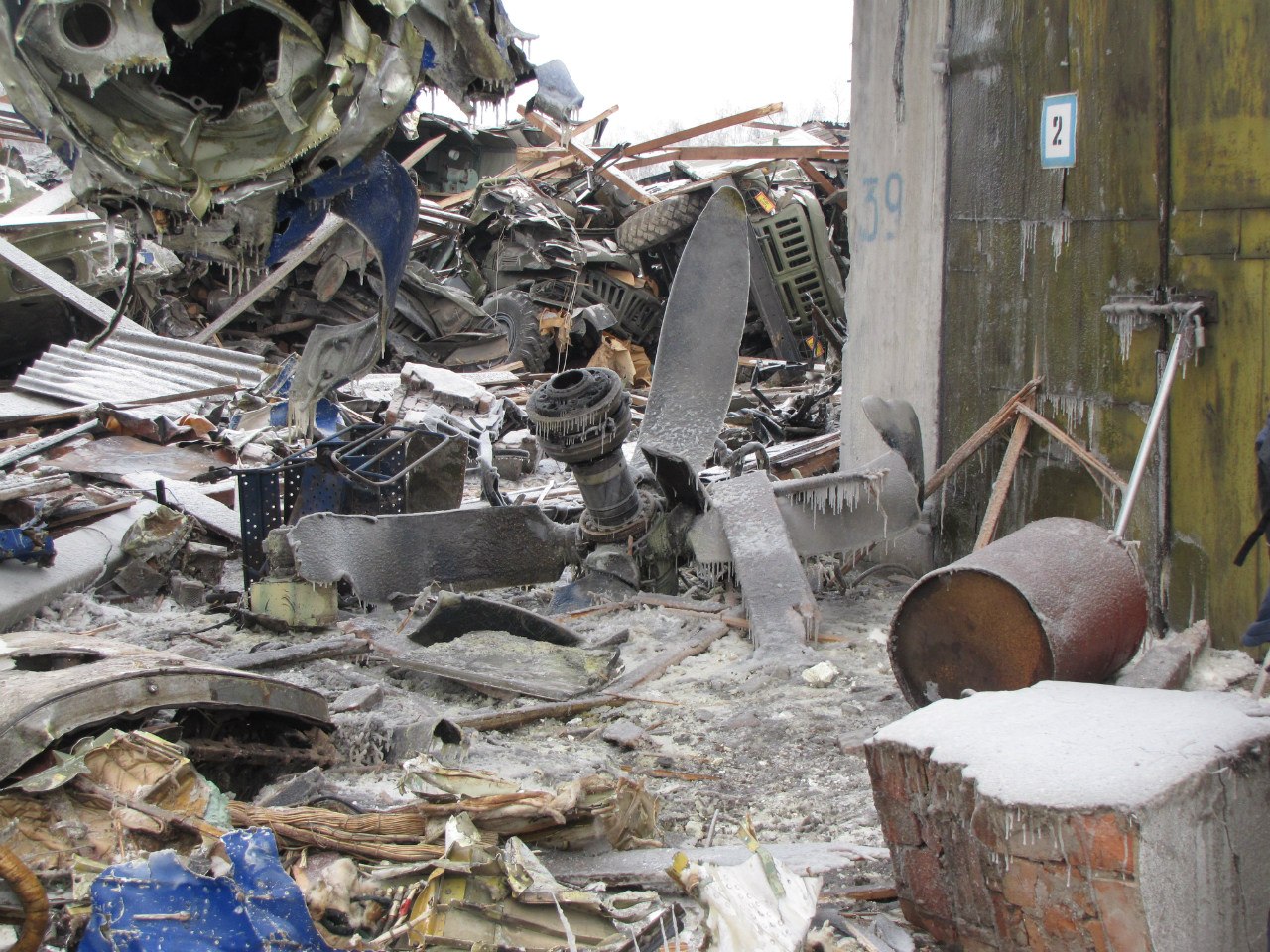
The four engine aircraft departed Novosibirsk-Yeltsovka Airport on a cargo flight to Irkutsk, carrying three mechanics, six crew members and a load consisting of 1,5 tons of spare parts for the Irkut Group (Sukhoi, Beriev) based in Irkutsk. On approach to Irkust-2 Airport, the crew encountered marginal weather conditions with mist and limited visibility due to the night. On short final, the aircraft deviated to the right and descended too low until it impacted military vehicles and crashed onto several barracks of the 109th Arsenal of the Russian Army, coming to rest 770 metres short of runway 14 and about 90 metres to the right of its extended centerline. The aircraft was destroyed and all nine occupants were killed. There were no victims on the ground.
Probable cause:
The following findings were identified:
- The crew continued the descent below MDA without any visual contact with the ground, until the aircraft impacted obstacles and crashed,
- The flight manager was aware of the deterioration of the weather conditions at destination with a visibility that was below minimums, but failed to inform the crew accordingly,
- ATC at Irkutsk-2 Airport failed to inform the crew that he was deviating from the approach path on short final.

Ground accident of a Boeing 747-436 in Johannesburg

Date & Time: Dec 22, 2013 at 2243 LT
Type of aircraft:
Operator:
Registration:
G-BNLL
Flight Phase:
Survivors:
Yes
Schedule:
Johannesburg – London
MSN:
24054/794
YOM:
1990
Flight number:
BA034
Country:
Region:
Crew on board:
17
Crew fatalities:
Pax on board:
185
Pax fatalities:
Other fatalities:
Total fatalities:
0
Captain / Total flying hours:
20050
Captain / Total hours on type:
12500.00
Copilot / Total flying hours:
5700
Copilot / Total hours on type:
1400
Aircraft flight hours:
110578
Aircraft flight cycles:
12832
Circumstances:
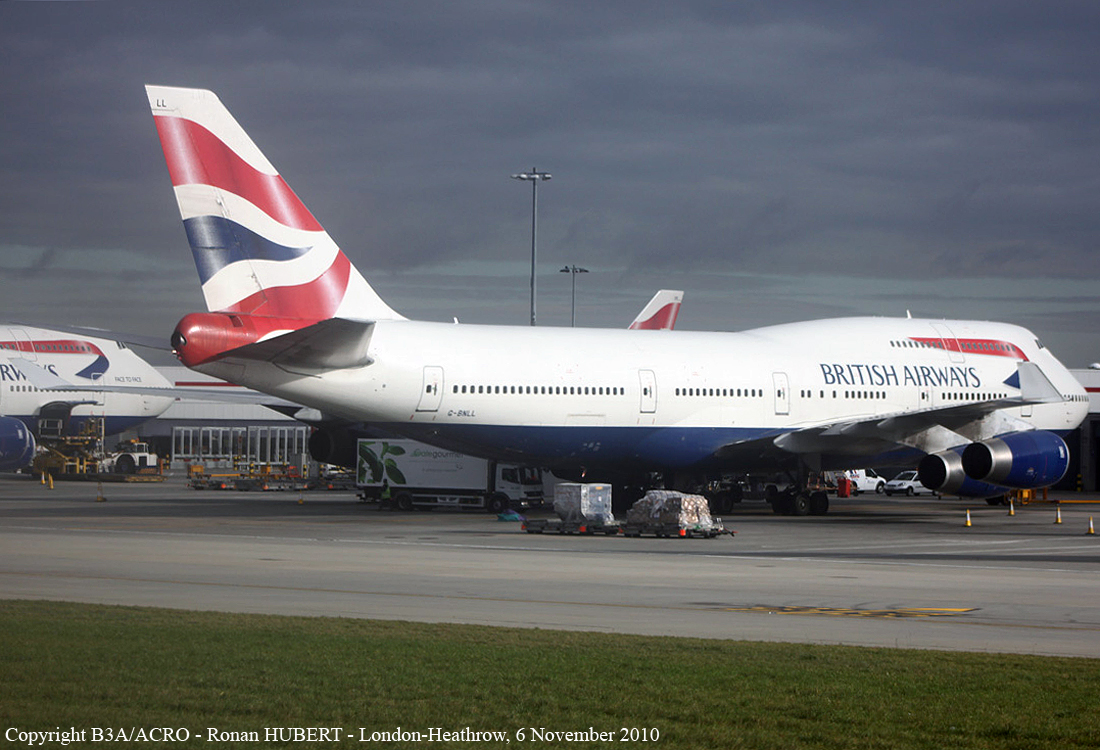
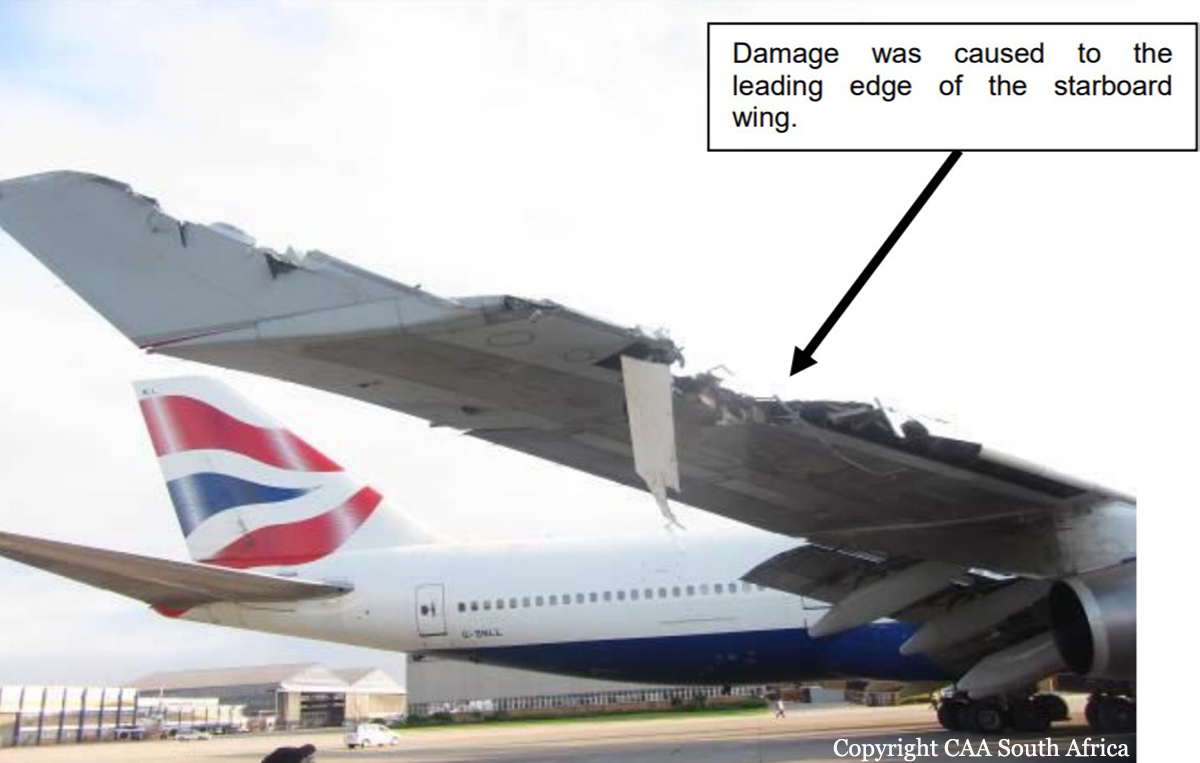
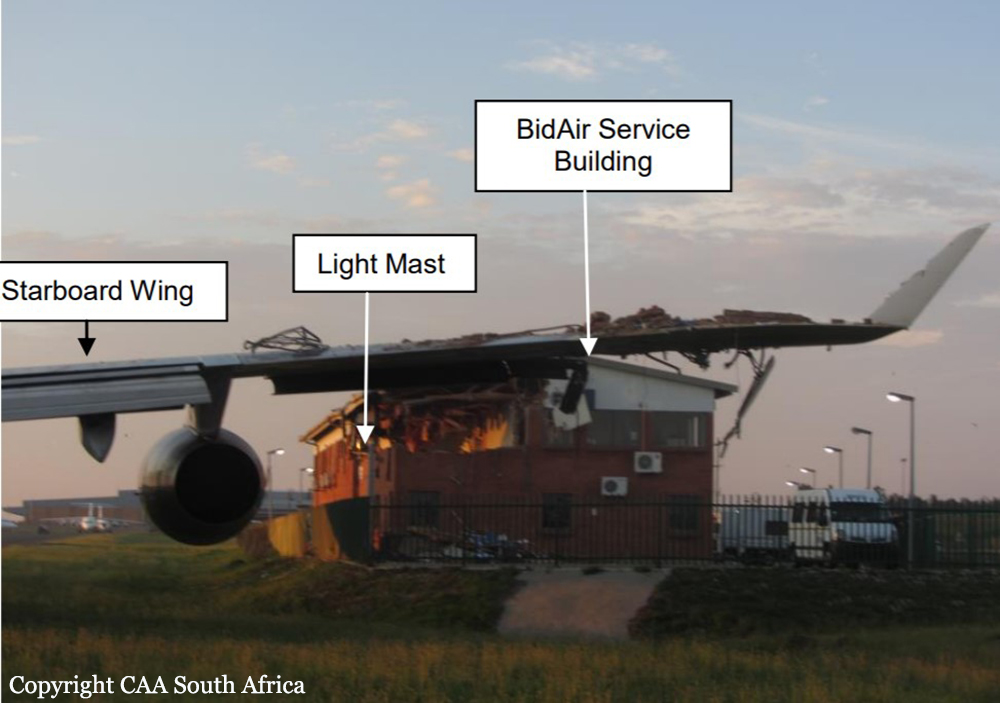
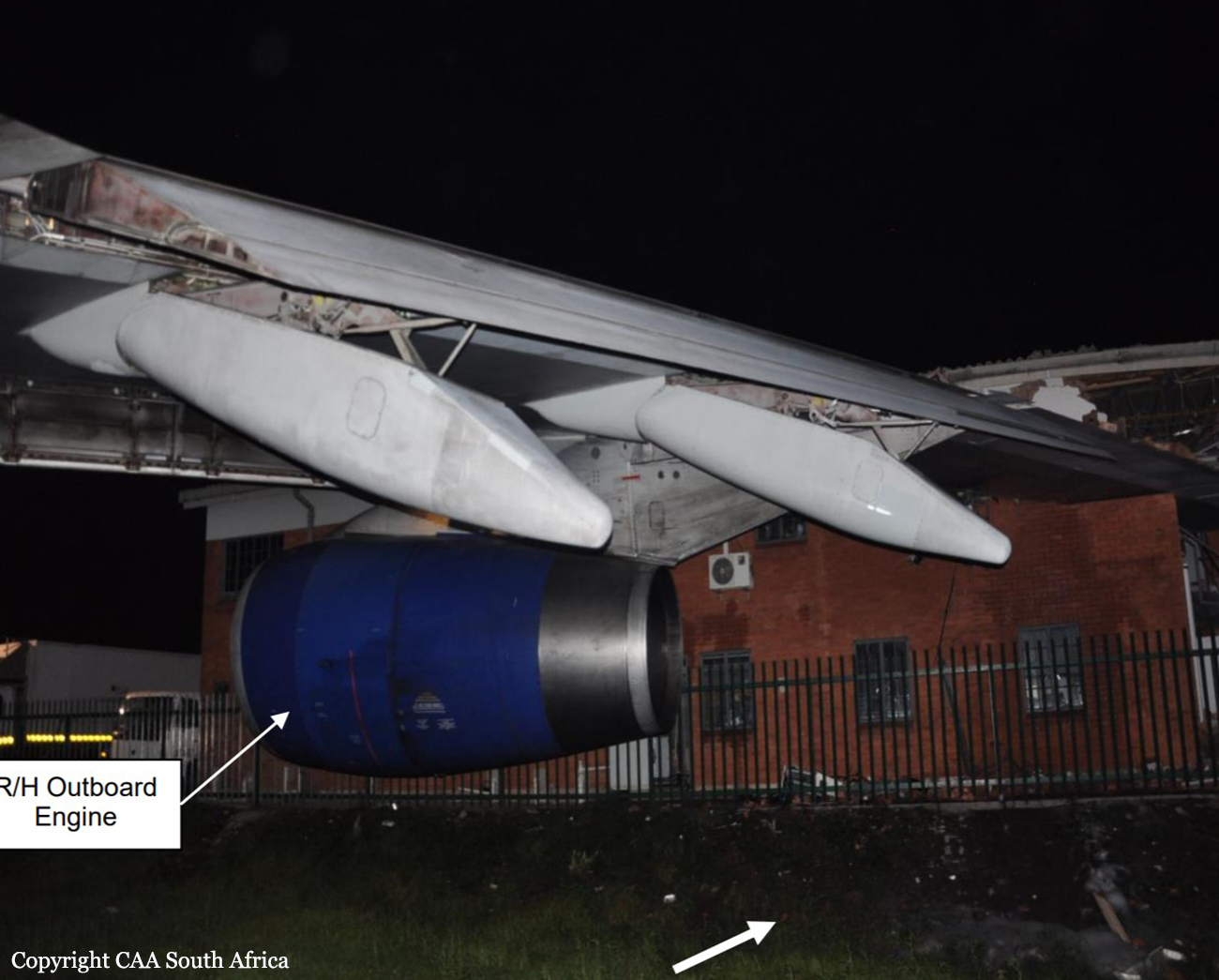
The British Airways aircraft B747-400, flight number BA034 with registration G-BNLL, was going to embark on a commercial international air transportation long haul flight from FAOR to EGLL. The ATC gave the crew instructions to push back, start and face south, then taxi using taxiway Bravo to the Category 2 holding point for Runway 03L. During the taxi, instead of turning to the left to follow Bravo, the crew continued straight ahead, crossing the intersection of taxiway Bravo and aircraft stand taxilane Mike. After crossing the intersection, still being on Mike, the aircraft collided with a building. An investigation was conducted and several causal factors were determined. Amongst others, it was determined that the crew erred in thinking they were still taxiing on Bravo while in fact they were taxiing on Mike. This mistake, coupled with other contributory factors such as the briefing information, taxi information, ground movement visual aids, confusion and loss of situational awareness led to the collision. All 202 occupants evacuated safely while four people in the building were injured. The aircraft was damaged beyond repair.
Probable cause:
The loss of situational awareness caused the crew to taxi straight ahead on the wrong path, crossing the intersection/junction of Bravo and Mike instead of following Bravo where it turns off to the right and leads to the Category 2 holding point. Following aircraft stand taxilane Mike; they collided with a building on the right-hand side of Mike.
Contributory Factors:
- Failure of the crew to carry out a briefing after they had received instruction from ATC that the taxi route would be taxiway Bravo.
- The lack of appropriate knowledge about the taxiway Bravo layout and relevant information (caution notes) on threats or risks to look out for while taxiing on taxiway Bravo en route to the Cat 2 holding point.
- The aerodrome infrastructure problems (i.e. ground movement navigation aids anomalies), which created a sense of confusion during the taxi.
- Loss of situation awareness inside the cockpit causing the crew not to detect critical cues of events as they were gradually unfolding in front of them.
- Failure of the other crew members to respond adequately when the Co-pilot was commenting on the cues (i.e. narrowness and proximity to the building).
- The intersection/junction of Bravo and Mike not being identified as a hotspot area on the charts.
Final Report:

Crash of a Beechcraft B90 King Air in Viña del Mar

Date & Time: Dec 19, 2013 at 2100 LT
Type of aircraft:
Operator:
Registration:
CC-CVZ
Flight Type:
Survivors:
Yes
Schedule:
Viña del Mar - Santiago de Chile
MSN:
LJ-441
YOM:
1969
Country:
Crew on board:
2
Crew fatalities:
Pax on board:
0
Pax fatalities:
Other fatalities:
Total fatalities:
0
Captain / Total flying hours:
15844
Captain / Total hours on type:
4000.00
Copilot / Total flying hours:
10367
Copilot / Total hours on type:
17
Aircraft flight hours:
8870
Circumstances:
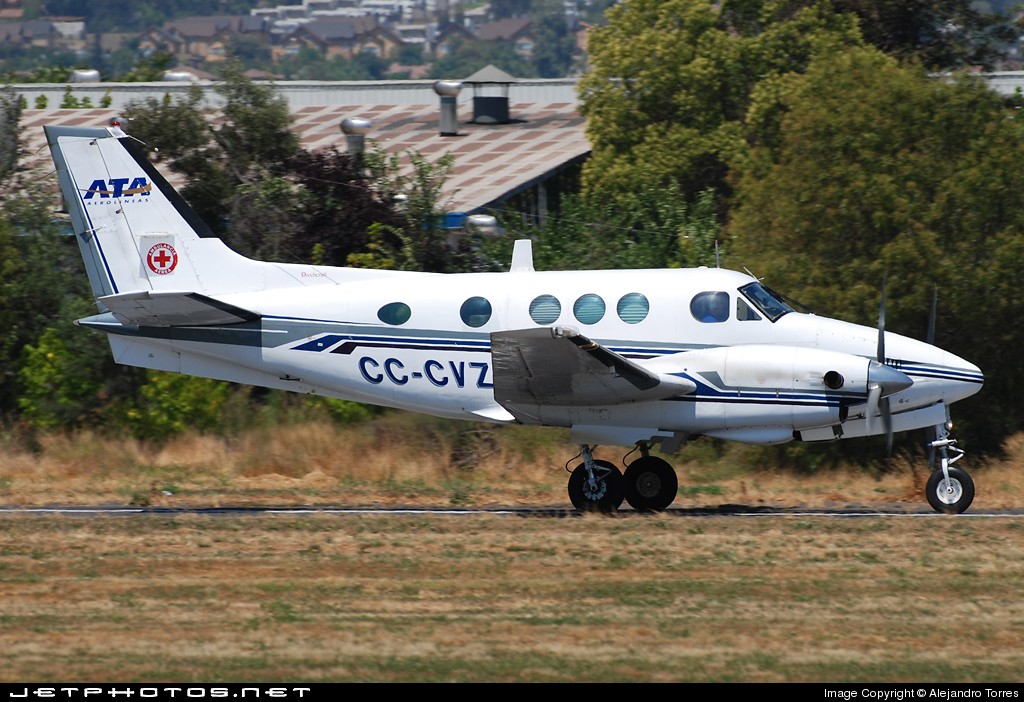
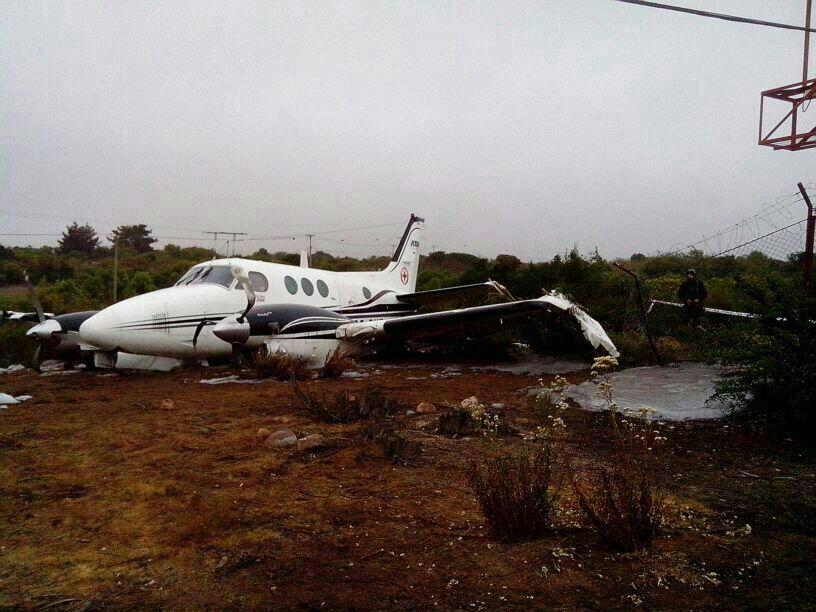
The crew departed Viña del Mar-Torquemada Airport on a positioning flight to Santiago de Chile. Shortly after takeoff, the crew encountered technical problems and elected to return. On approach, both engines failed and on short final by night, the aircraft stalled and crashed 450 metres short of runway 05. Both pilots escaped uninjured and the aircraft was damaged beyond repair.
Probable cause:
Both engines stopped during flight due to fuel exhaustion as the main fuel tanks were empty. It was not possible for the crew to transfer fuel from the auxiliary tanks (wing tips) due to the intermittent function of the fuel pump.
Final Report:

Crash of a Raytheon 390 Premier I in Atlanta: 2 killed

Date & Time: Dec 17, 2013 at 1924 LT
Type of aircraft:
Operator:
Registration:
N50PM
Flight Phase:
Flight Type:
Survivors:
No
Schedule:
Atlanta - New Orleans
MSN:
RB-80
YOM:
2003
Crew on board:
1
Crew fatalities:
Pax on board:
1
Pax fatalities:
Other fatalities:
Total fatalities:
2
Captain / Total flying hours:
7200
Captain / Total hours on type:
1030.00
Aircraft flight hours:
713
Circumstances:
The pilot and passenger departed on a night personal flight. A review of the cockpit voice recorder (CVR) transcript revealed that, immediately after departure, the passenger asked the pilot if he had turned on the heat. The pilot subsequently informed the tower air traffic controller that he needed to return to the airport. The controller then cleared the airplane to land and asked the pilot if he needed assistance. The pilot replied "negative" and did not declare an emergency. The pilot acknowledged to the passenger that it was hot in the cabin. The CVR recorded the enhanced ground proximity warning system (EGPWS) issue 11 warnings, including obstacle, terrain, and stall warnings; these warnings occurred while the airplane was on the downwind leg for the airport. The airplane subsequently impacted trees and terrain and was consumed by postimpact fire. Postaccident examination of the airplane revealed no malfunctions or anomalies that would have precluded normal operation. During the attempted return to the airport, possibly to resolve a cabin heat problem, the pilot was operating in a high workload environment due to, in part, his maneuvering visually at low altitude in the traffic pattern at night, acquiring inbound traffic, and being distracted by the reported high cabin temperature and multiple EGPWS alerts. The passenger was seated in the right front seat and in the immediate vicinity of the flight controls, but no evidence was found indicating that she was operating the flight controls during the flight. Although the pilot had a history of coronary artery disease, the autopsy found no evidence of a recent cardiac event, and an analysis of the CVR data revealed that the pilot was awake, speaking, and not complaining of chest pain or shortness of breath; therefore, it is unlikely that the pilot's cardiac condition contributed to the accident. Toxicological testing detected several prescription medications in the pilot's blood, lung, and liver, including one to treat his heart disease; however, it is unlikely that any of these medications resulted in impairment. Although the testing revealed that the pilot had used marijuana at some time before the accident, insufficient evidence existed to determine whether the pilot was impaired by its use at the time of the accident. Toxicology testing also detected methylone in the pilot's blood. Methylone is a stimulant similar to cocaine and Ecstasy, and its effects can include relaxation, euphoria, and excited calm, and it can cause acute changes in cognitive performance and impair information processing. Given the level of methylone (0.34 ug/ml) detected in the pilot's blood, it is likely that the pilot was impaired at the time of the accident. The pilot's drug impairment likely contributed to his failure to maintain control of the airplane.
Probable cause:
The pilot's failure to maintain airplane control while maneuvering the airplane in the traffic pattern at night. Contributing to the accident was the pilot's impairment from the use of illicit drugs.
Final Report:

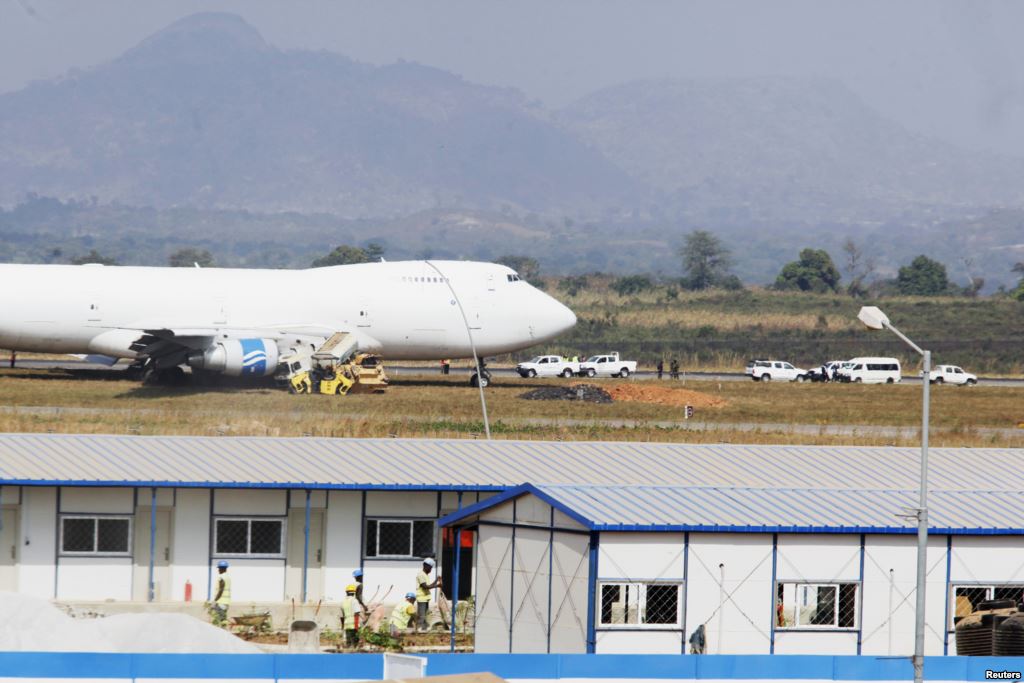
Crash of a Boeing 747-281BSF in Abuja

Date & Time: Dec 4, 2013 at 2119 LT
Type of aircraft:
Operator:
Registration:
EK-74798
Flight Type:
Survivors:
Yes
Schedule:
Jeddah - Abuja
MSN:
23698/667
YOM:
1986
Flight number:
SV6814
Country:
Region:
Crew on board:
6
Crew fatalities:
Pax on board:
0
Pax fatalities:
Other fatalities:
Total fatalities:
0
Captain / Total flying hours:
23000
Captain / Total hours on type:
13000.00
Copilot / Total flying hours:
5731
Copilot / Total hours on type:
1296
Aircraft flight hours:
94330
Aircraft flight cycles:
15255
Circumstances:
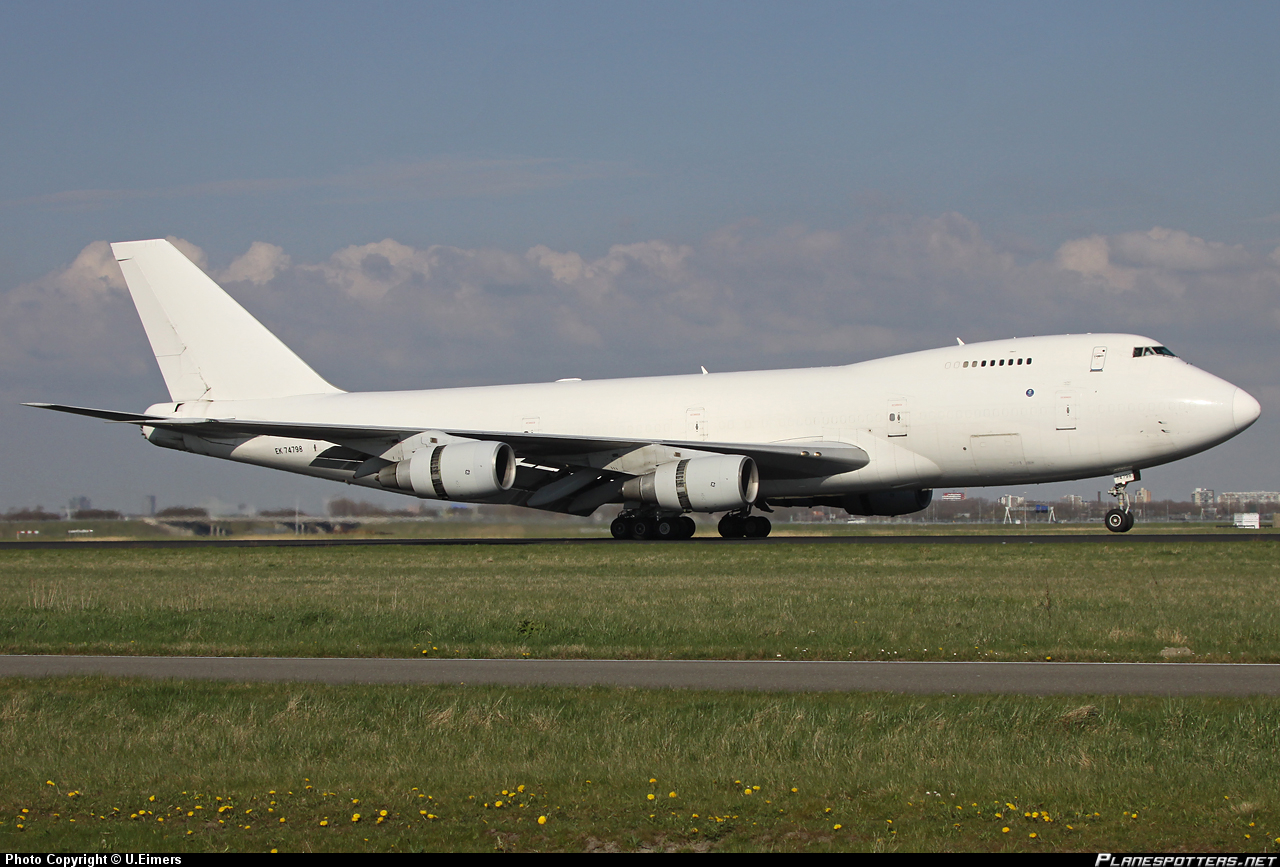
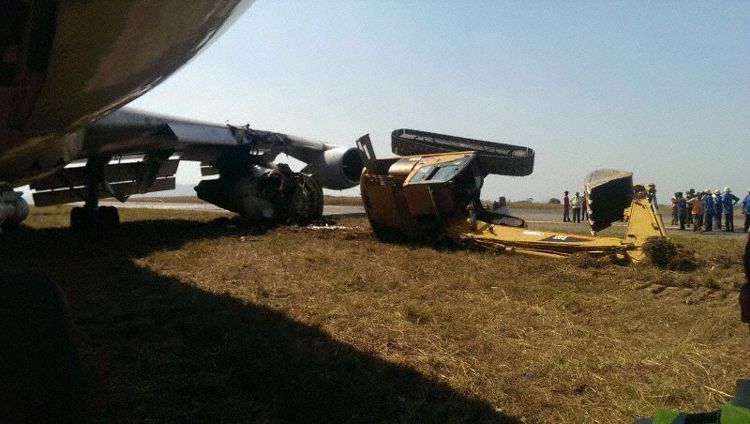
Following an uneventful cargo flight from Jeddah, the crew completed the approach and landing procedures on runway 04 at Abuja-Nnamdi Azikiwe Airport. During the landing roll, the aircraft overran the displaced threshold then veered to the right and veered off runway. While contacting a grassy area, the aircraft collided with several parked excavator equipment and trucks. The aircraft came to a halt and was severely damaged to both wings and engines. All six occupants escaped uninjured while the aircraft was damaged beyond repair.
Probable cause:
The accident resulted as the crew was not updated on the information available on the reduced runway length.
The following contributing factors were identified:
1. Lack of briefing by Saudia dispatcher during pre-flight.
2. Runway status was missing from Abuja ATIS information.
3. Ineffective communication between crew and ATC on short finals.
4. The runway markings and lighting not depicting the displaced threshold.
5. The entire runway lighting was ON beyond the displaced threshold.
Final Report:
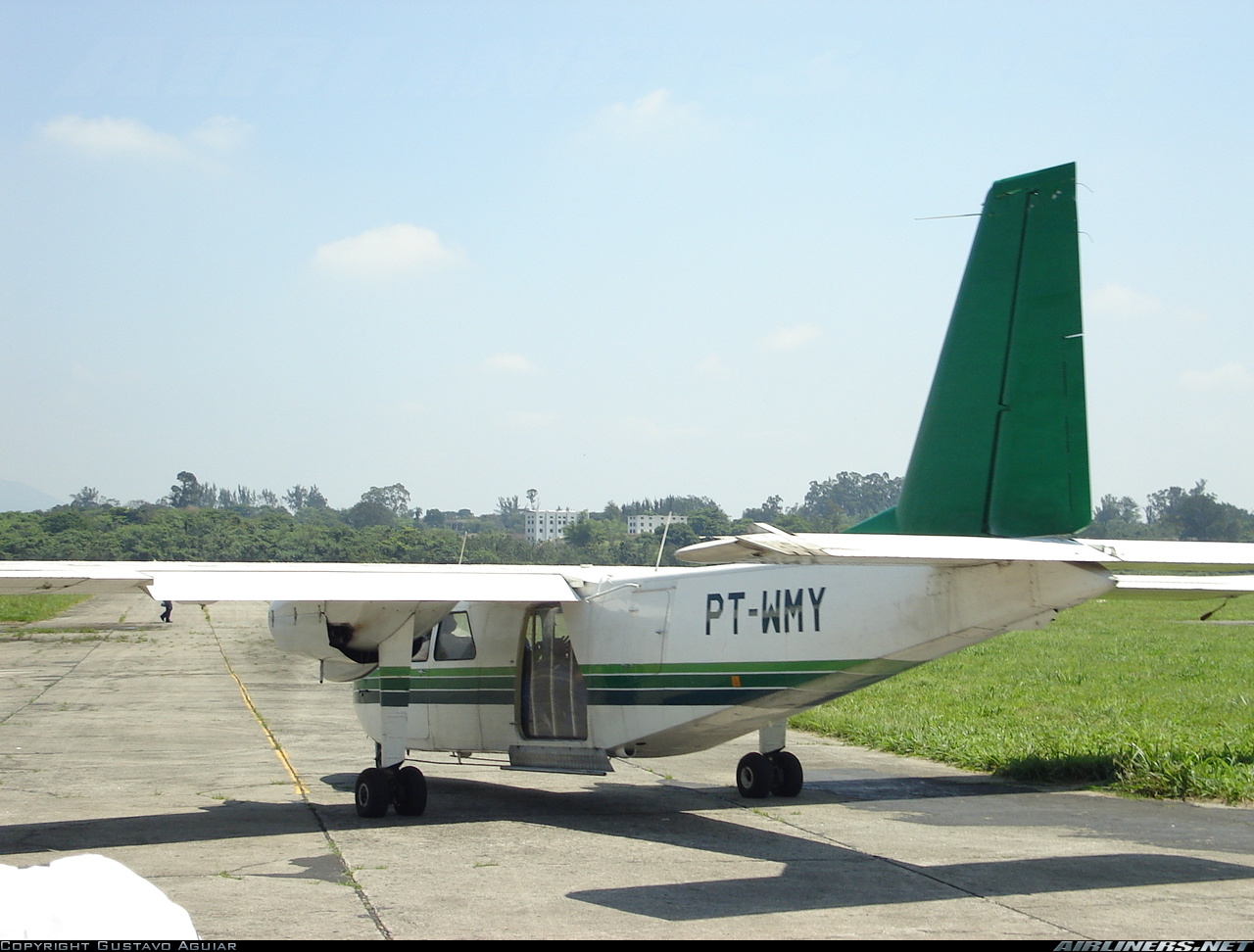
Crash of a Britten Norman BN-2A-3 Islander in Aldeia Pikany: 5 killed

Date & Time: Dec 4, 2013 at 1130 LT
Type of aircraft:
Operator:
Registration:
PT-WMY
Flight Phase:
Flight Type:
Survivors:
No
Schedule:
Aldeia Pikany – Novo Progresso
MSN:
314
YOM:
1974
Country:
Crew on board:
1
Crew fatalities:
Pax on board:
4
Pax fatalities:
Other fatalities:
Total fatalities:
5
Captain / Total flying hours:
530
Captain / Total hours on type:
58.00
Circumstances:
Shortly after takeoff from The Pikany Indian Reserve Airfield, while in initial climb, the twin engine aircraft lost height, collided with trees and crashed in a wooded area located on km from the airstrip. The aircraft was destroyed and all five occupants were killed, among them Indian Kayapo who were flying to Novo Progresso to have urgent care.
Probable cause:
The following factors were identified:
- The utilization of an aircraft not included in the Operating Specifications and of a runway neither registered nor approved, with a pilot who did not have the amount of hours necessary nor specific training, disclose a culture based on informal practices, which led to operation below the minimum safety requirements.
- It is possible that the pilot forgot to verify the quantity of fuel in the tanks of the aircraft before takeoff.
- The lack of specific training for the pilot and for the coordinator who, possibly, assumed the function of instructor may have compromised their operational performance during the preparation and conduction of the flight, since they were not effectively prepared for the activity.
- It is possible that the pilot failed to comply with the prescriptions of the legislation relatively to the minimum amount of fuel required for the flight leg. The operation of the aircraft by a pilot with expired qualifications and without the required training goes against the prescriptions at the time, but it was not determined whether this pilot (coordinator) was in the aircraft controls at the moment of the accident. The transport of a cylinder onboard the aircraft also configures flight indiscipline, since it goes against the legislation which prohibits the transport of such material.
- The lack of training of the differences may have contributed to the forgetting to verify the fuel tanks, a procedure that is prescribed in the aircraft manual. Likewise, lack of training may have deprived the pilots from acquiring proficiency for the operation of the aircraft in a single engine condition.
- The fact of conducting a flight to provide assistance in an emergency situation may have contributed to the pilot having forgotten to check safety parameters, such as the amount of fuel necessary.
- The pilot’s intention to earn his operational promotion may have stimulated him excessively, to the point of disregarding the minimum safety requirements for the operation. In addition, the emergency nature of the flight request possibly added to the motivation of the pilot and the coordinator.
- It is possible that, due to having little total experience either both of flight and in the aircraft, the pilot lost control of the aircraft when faced with the situation of in-flight engine failure after the takeoff.
- It is possible that the pilot and the coordinator prioritized the emergency requirement of the situation, failing to evaluate other aspects relevant for the safety of the flight, such as planning, for example.
- The lack of control on the part of the company’s management in relation to the flights operating outside of the main base allowed the pilot and the base manager to conduct a flight without the operating sector authorization. The lack of supervision of the air transport service provision by the contracting organizations allowed the company to provide services without the minimum conditions required by the legislation. Such conditions exposed the passengers to the risks of an irregular operation.
Final Report:
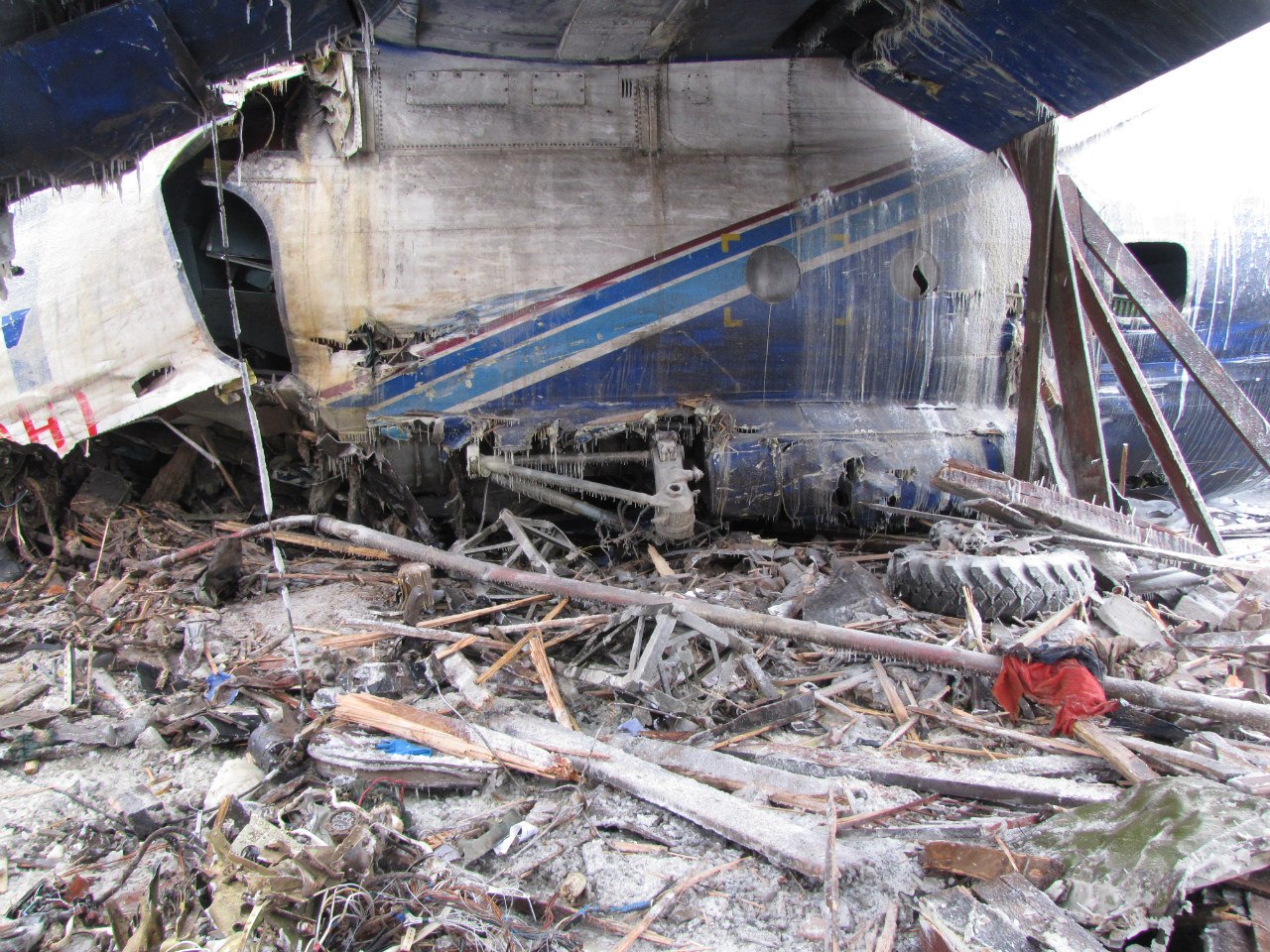
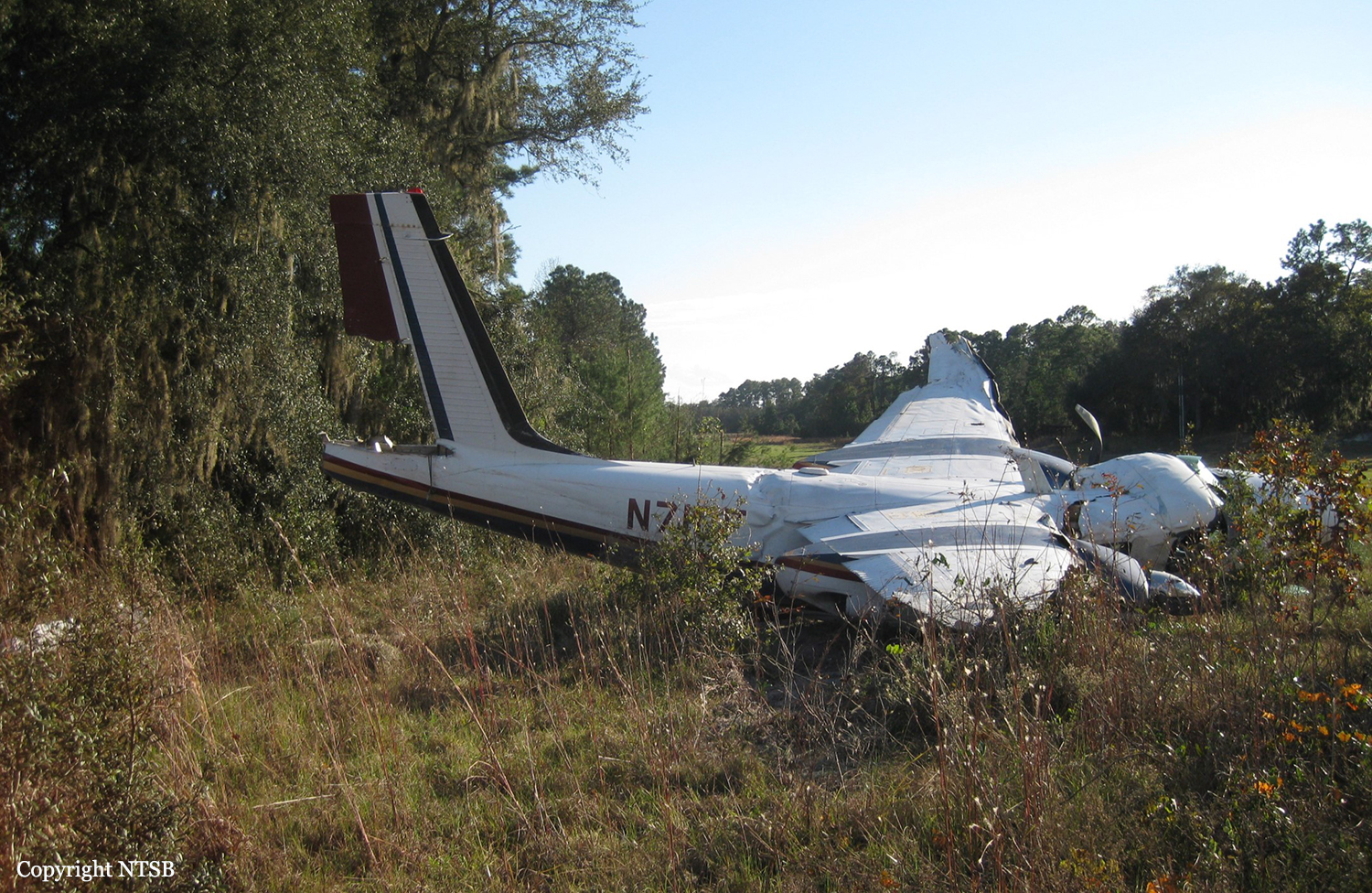
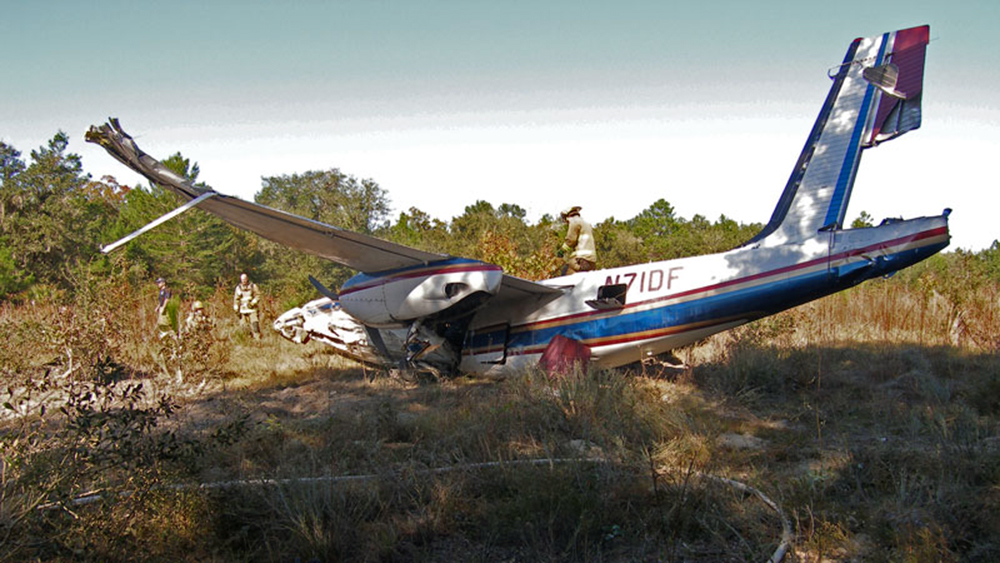
Crash of a Rockwell Grand Commander 680E in Crescent City

Date & Time: Dec 3, 2013 at 0937 LT
Registration:
N71DF
Flight Phase:
Flight Type:
Survivors:
Yes
Schedule:
Crescent City - Palatka
MSN:
680E-672-12
YOM:
1958
Crew on board:
1
Crew fatalities:
Pax on board:
3
Pax fatalities:
Other fatalities:
Total fatalities:
0
Captain / Total flying hours:
15000
Captain / Total hours on type:
100.00
Aircraft flight hours:
8400
Circumstances:
The pilot reported that the airplane "hesitated" during the takeoff roll due to the added weight of the passengers on board and the grass surface of the departure airstrip (Jim Finlay Farm Airstrip). He said he then added "extra" engine power at rotation, and that the left engine accelerated more quickly than the right, which resulted in an adverse yaw to the right and collision with trees along the right side of the runway. The subsequent collision with trees and terrain resulted in substantial damage to the airframe. According to the pilot, there were no mechanical deficiencies with the airplane that would have prevented normal operation.
Probable cause:
The pilot's failure to maintain directional control during takeoff.
Final Report:
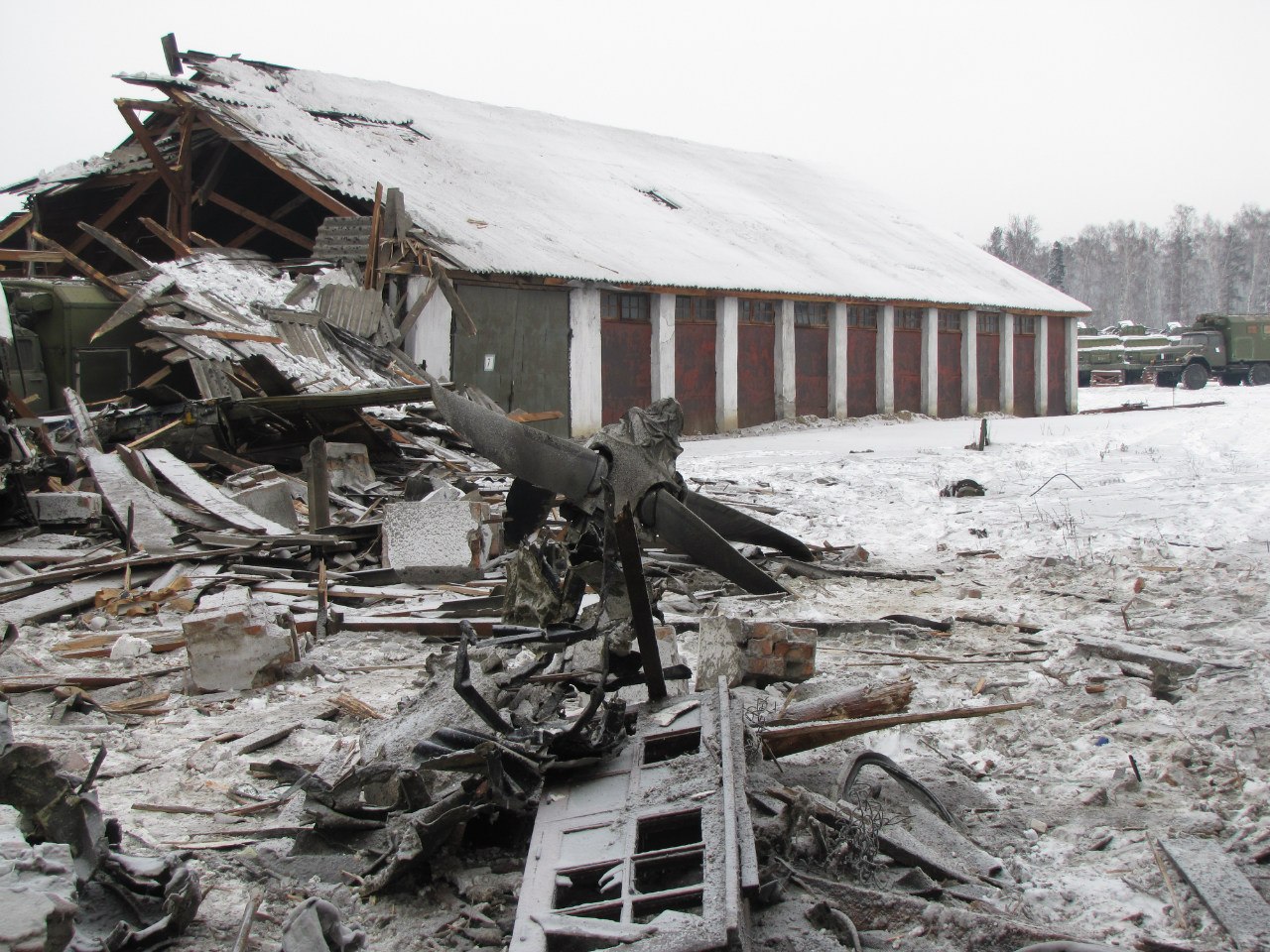
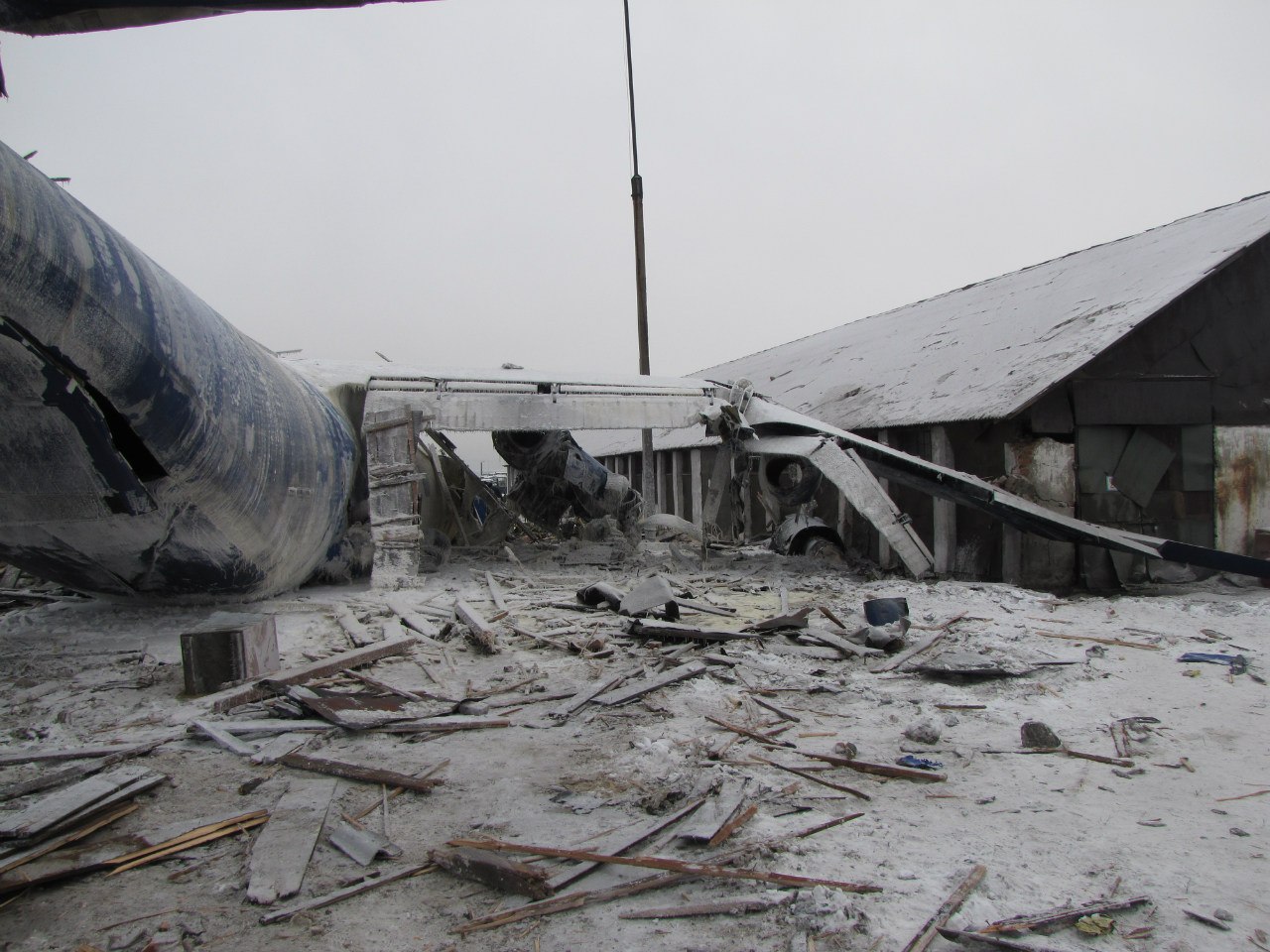
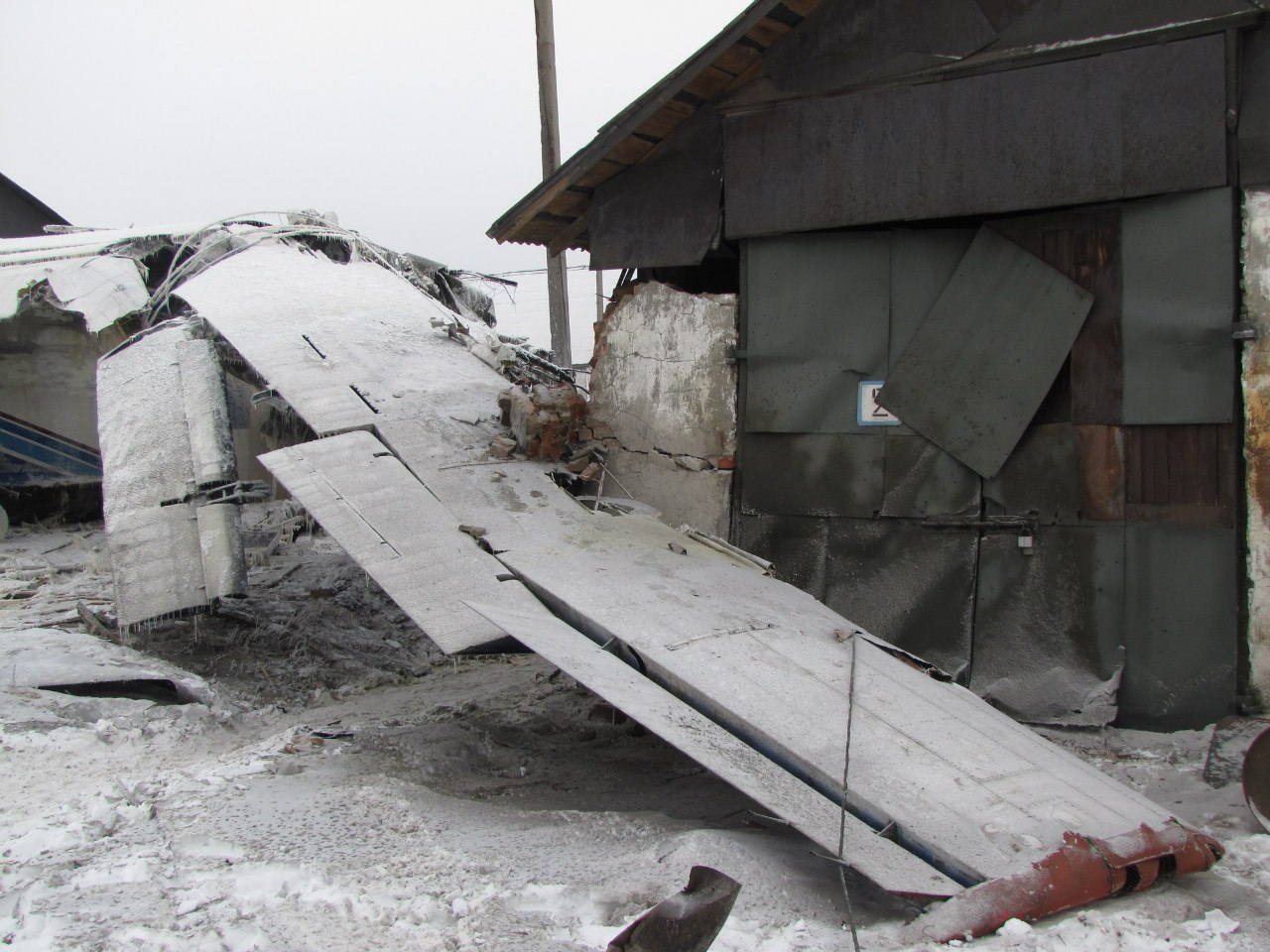
Crash of an Antonov AN-26B in Omega

Date & Time: Nov 30, 2013
Type of aircraft:
Registration:
NAF-3-642
Flight Type:
Survivors:
Yes
Schedule:
Windhoek - Omega AFB
MSN:
144 01
YOM:
1985
Country:
Region:
Crew on board:
6
Crew fatalities:
Pax on board:
0
Pax fatalities:
Other fatalities:
Total fatalities:
0
Circumstances:
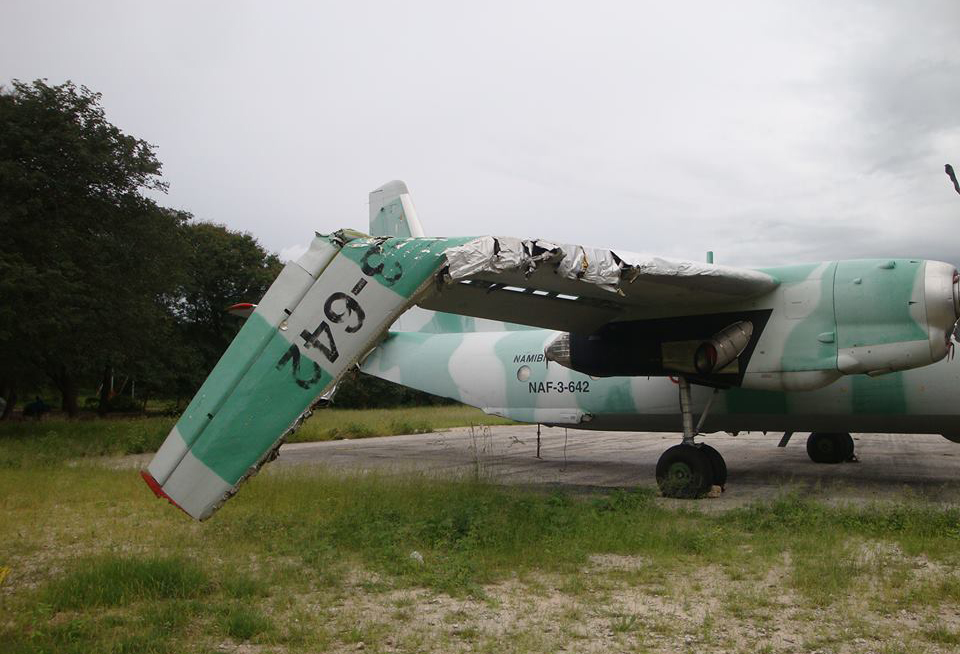
The aircraft departed Windhoek on a special flight to the disused Airfield of Omega (ex airbase), carrying six crew members and various equipment in order to collect the bodies of all 33 people who have been killed in the crash of the LAM Embraer ERJ-190AR C9-EMC that occurred in the Bwabwata National Park the previous day. The aircraft landed too far down the airstrip that was overgrown by grass and bushes. Unable to stop within the remaining distance, the aircraft overran and collided with trees, causing severe damages to the wings (the right wing was partially torn off). All six occupants escaped unhurt while the aircraft was damaged beyond repair. Hulk still in situ in FEB2014 and may be disassembled and trucked back to Windhoek.
Probable cause:
Wrong landing configuration. Disused airport and runway in poor condition.