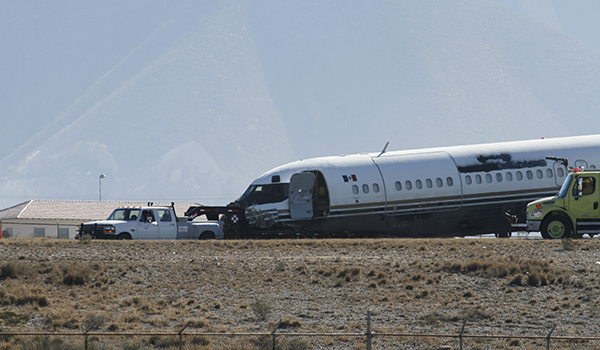
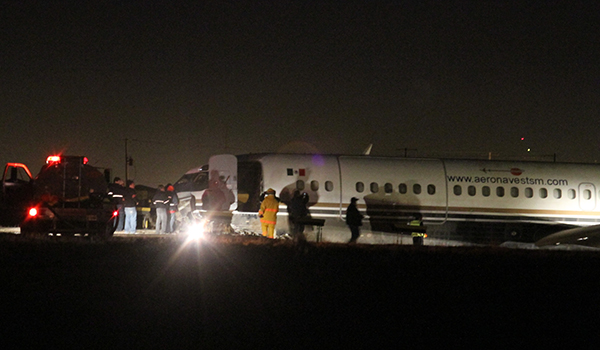
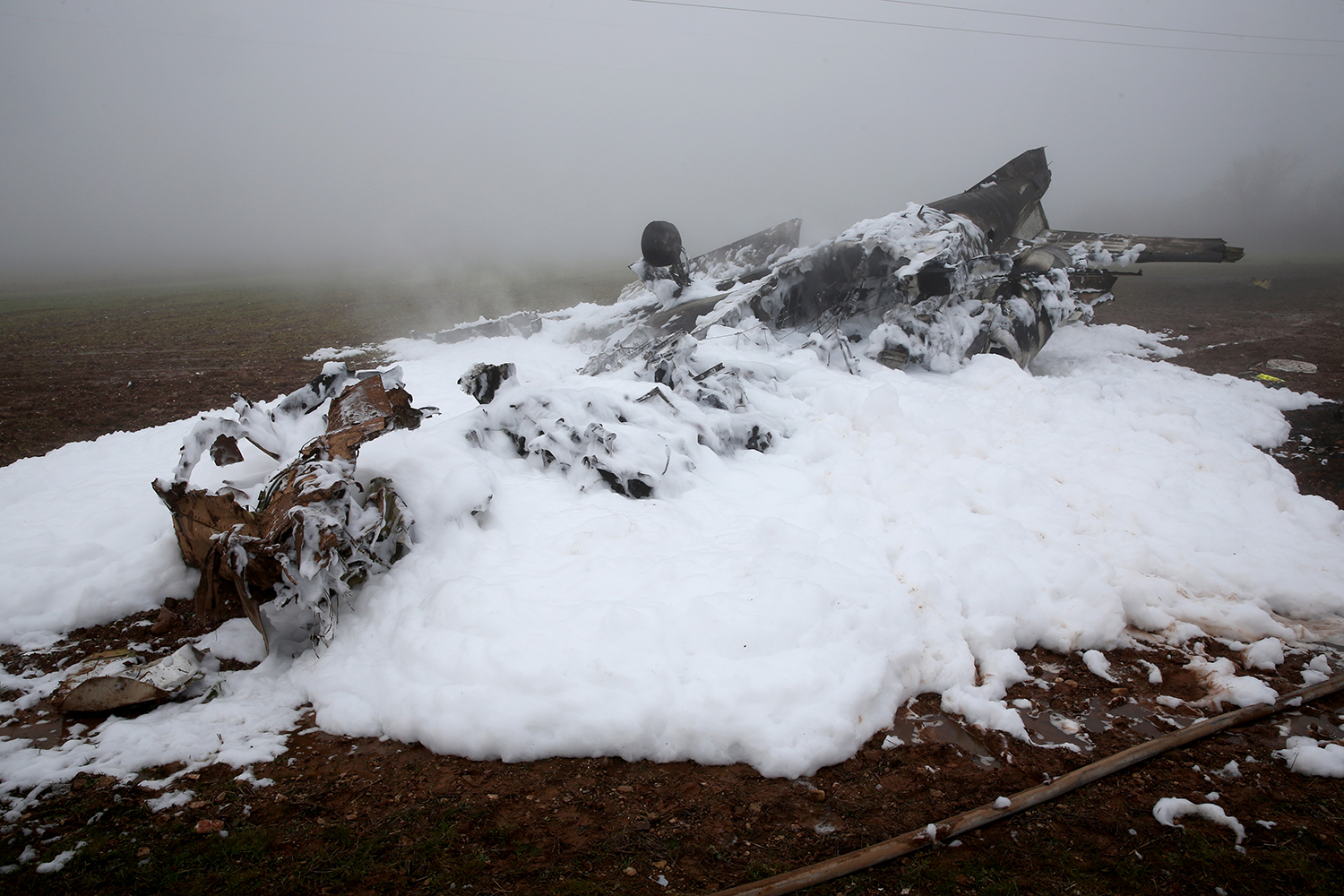
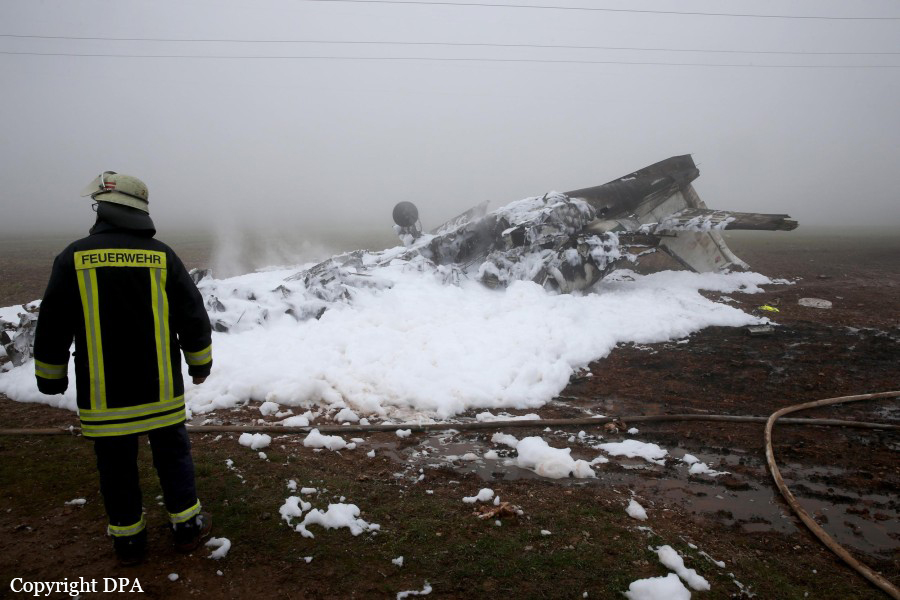
Crash of a Saab 2000 in Paris-Roissy-CDG

Date & Time: Jan 28, 2014 at 0731 LT
Type of aircraft:
Operator:
Registration:
HB-IZG
Survivors:
Yes
Schedule:
Leipzig – Paris
MSN:
010
YOM:
1994
Flight number:
DWT250
Country:
Region:
Crew on board:
3
Crew fatalities:
Pax on board:
16
Pax fatalities:
Other fatalities:
Total fatalities:
0
Captain / Total flying hours:
6640
Captain / Total hours on type:
2260.00
Copilot / Total flying hours:
630
Copilot / Total hours on type:
80
Circumstances:
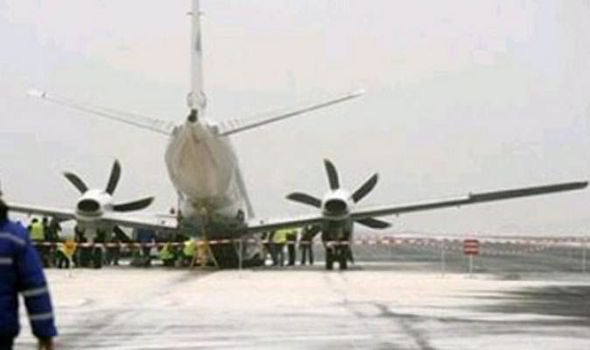
Following an uneventful flight from Leipzig, the crew started the descent to Paris-Roissy-CDG Airport runway 27R. At an altitude of 400 feet on approach, the automatic pilot system was deactivated. At an altitude of 200 feet, the decision height, the crew decided to continue the approach as the runway was in sight and the aircraft was stable. During the last segment, at a height of 50 feet, power levers were reduced to flight idle and the aircraft went into a nose up attitude (maximum value of 11°). Both main gears touched down at a speed of 120 knots but the aircraft bounced twice and went into a pitch down attitude, causing the nose gear to land first during the third touchdown. On impact, the nose gear collapsed and the aircraft slid for dozen yards before coming to rest. All 19 occupants were evacuated safely and the aircraft was later considered as damaged beyond repair.
Probable cause:
During the flare the captain detected that the landing would be hard and in an emergency action, he quickly pulled the nose up without announcing his intention to the first officer who was the pilot flying. This lack of coordination within the flight crew caused a double controls and successive and opposite actions on the flight controls during the bouncing management.
Final Report:

Crash of a Beechcraft C90 King Air in Columbia

Date & Time: Jan 27, 2014 at 0530 LT
Type of aircraft:
Operator:
Registration:
N350WA
Flight Type:
Survivors:
Yes
Schedule:
Sacramento - Columbia
MSN:
LJ-762
YOM:
1978
Crew on board:
2
Crew fatalities:
Pax on board:
0
Pax fatalities:
Other fatalities:
Total fatalities:
0
Captain / Total flying hours:
2939
Captain / Total hours on type:
1784.00
Copilot / Total flying hours:
6658
Copilot / Total hours on type:
2237
Aircraft flight hours:
9501
Circumstances:
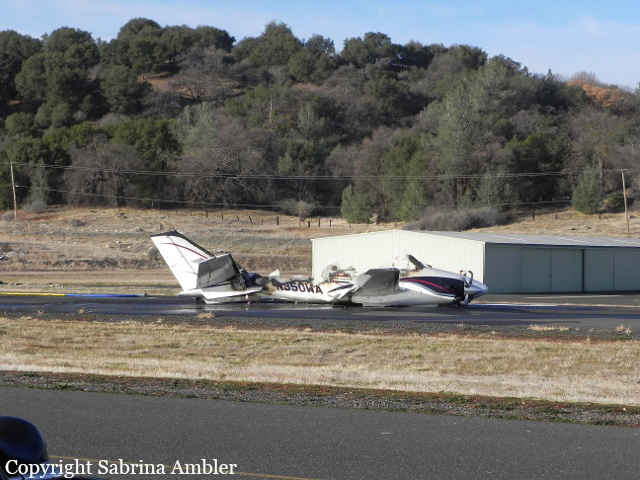
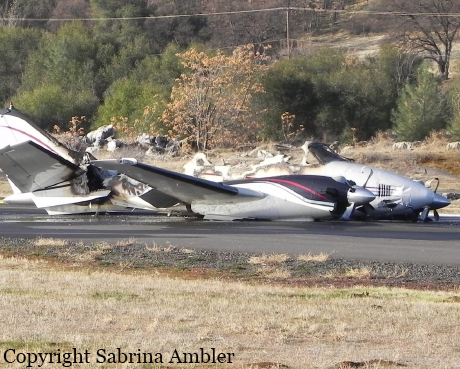
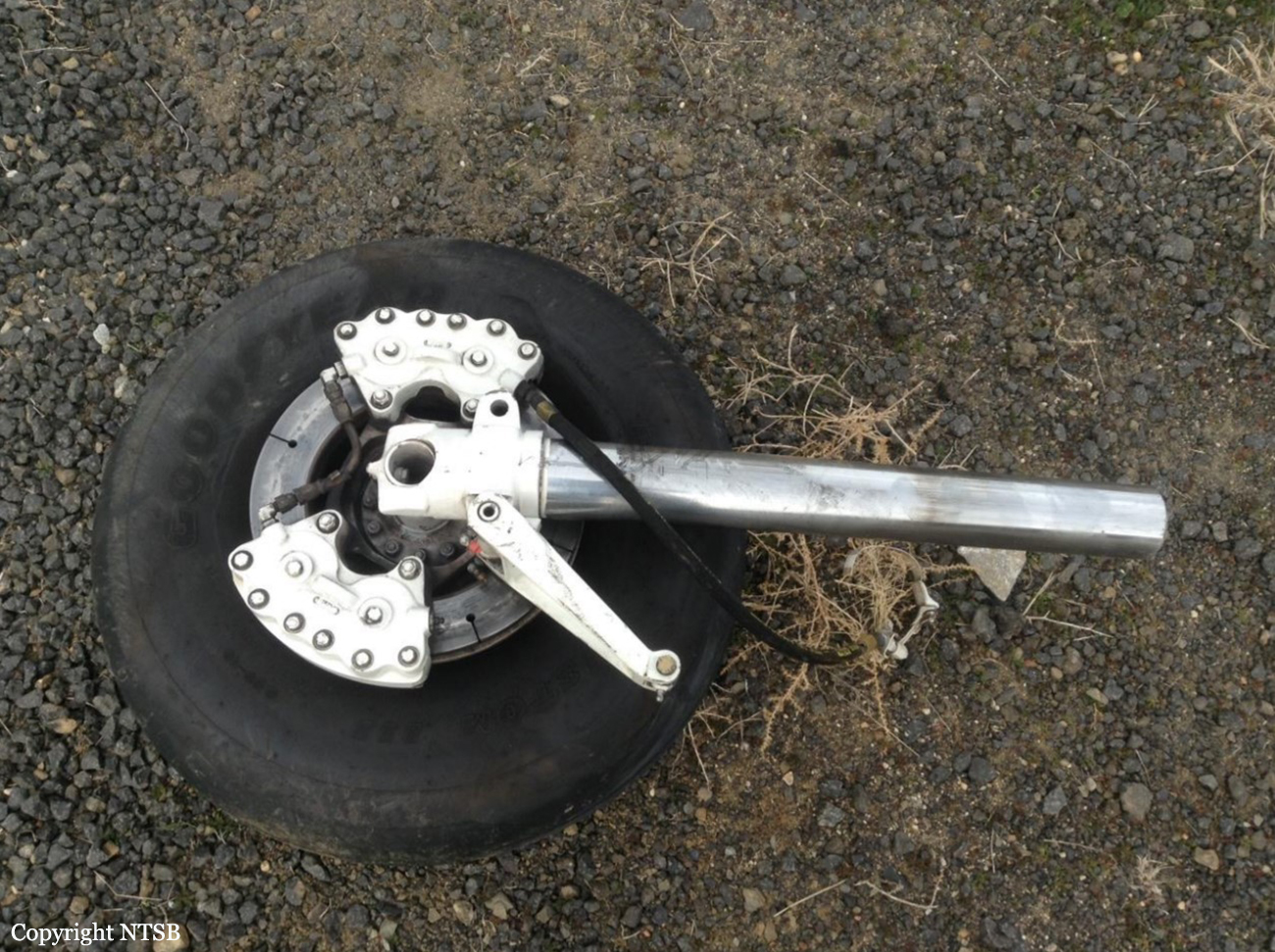
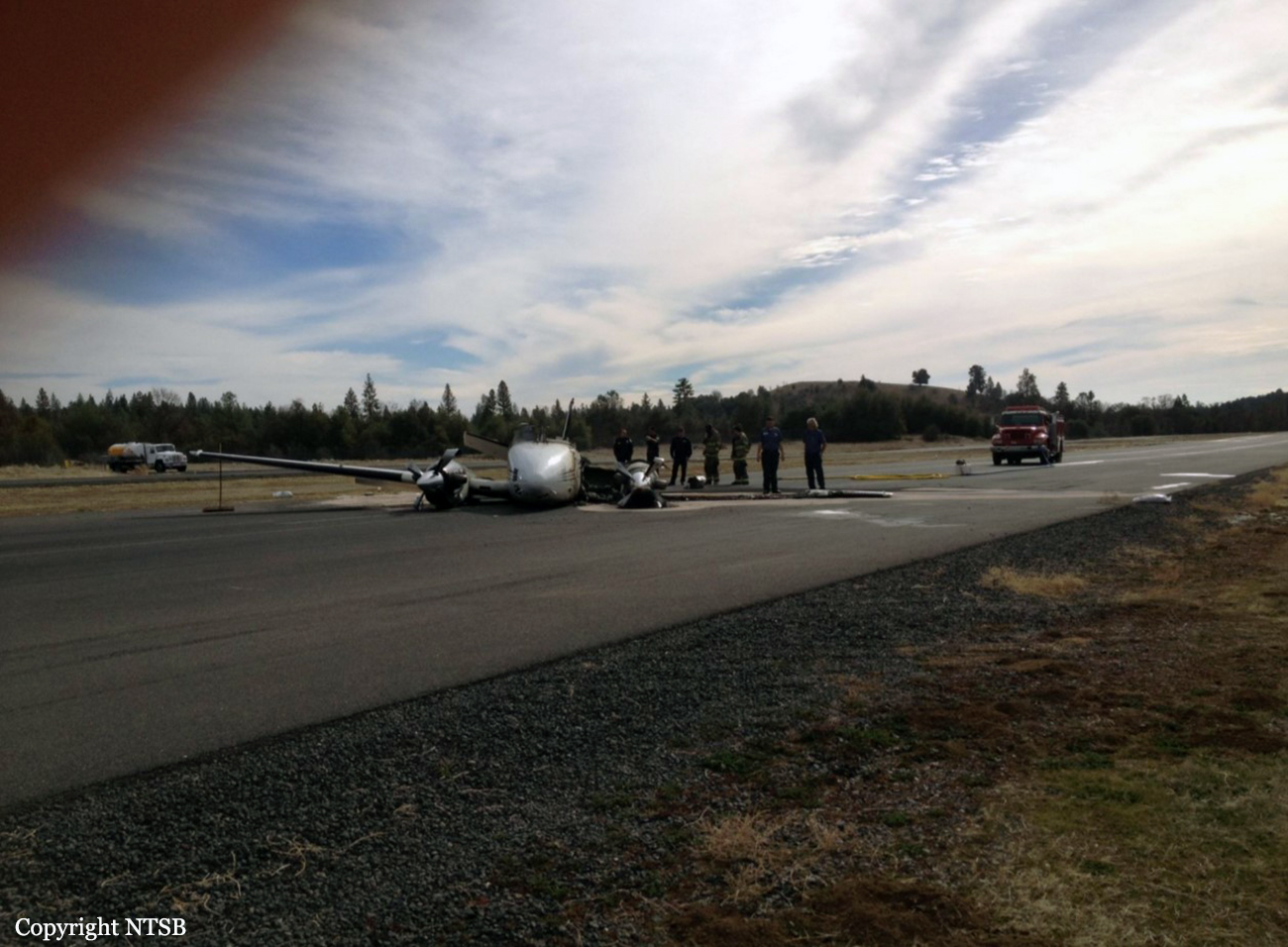
The commercial pilot, who was the pilot flying (PF), and the airplane transport pilot, who was the pilot not flying (PNF), were conducting an aeromedical positioning flight. The pilots reported that, during a night approach, they visually identified the airport, activated the runway lighting system, and then canceled the instrument flight plan for a visual approach. The PNF reported that, after turning onto the final approach, the flaps were fully lowered and that the airplane was in a “wings level, stabilized approach.” The PF reported that he was initially using the vertical approach slope indicator (VASI) for guidance but that the airplane drifted below the glidepath during the approach, and he did not correct back to the glidepath. On short final, the pilots verified that the landing gear were in the down-and-locked position by noting the illumination of the three green landing gear indicator lights, and the airspeed indicator indicated 110 knots. Both pilots reported that the landing was “firm” and that it was followed by a loud bang and the subsequent failure of all three landing gear. The airplane slid on its belly for about 825 ft down the runway before coming to rest. Both pilots evacuated the airplane, which was subsequently consumed by a postaccident fire. Both pilots reported that the airplane was operating normally with no discrepancies noted. Postaccident examination of the wreckage at the accident site revealed that the airplane impacted the runway about 100 ft short of its displaced threshold. Broken components of the landing gear were located along the debris field, which extended about 565 ft beyond the initial impact point. It is likely that the PF's failure to correct and maintain the VASI glidepath after allowing the airplane to descend below the glidepath and the touchdown at a high descent rate resulted in a hard landing and the subsequent failure of all three landing gear.
Probable cause:
The pilot’s unstabilized night visual approach, which resulted in a hard landing and the collapse of all three landing gear.
Final Report:

Crash of a Boeing 737-3B7(SF) in Honiara

Date & Time: Jan 26, 2014 at 1259 LT
Type of aircraft:
Operator:
Registration:
ZK-TLC
Flight Type:
Survivors:
Yes
Schedule:
Brisbane – Honiara
MSN:
23705/1497
YOM:
1988
Flight number:
PAQ523
Region:
Crew on board:
3
Crew fatalities:
Pax on board:
0
Pax fatalities:
Other fatalities:
Total fatalities:
0
Circumstances:
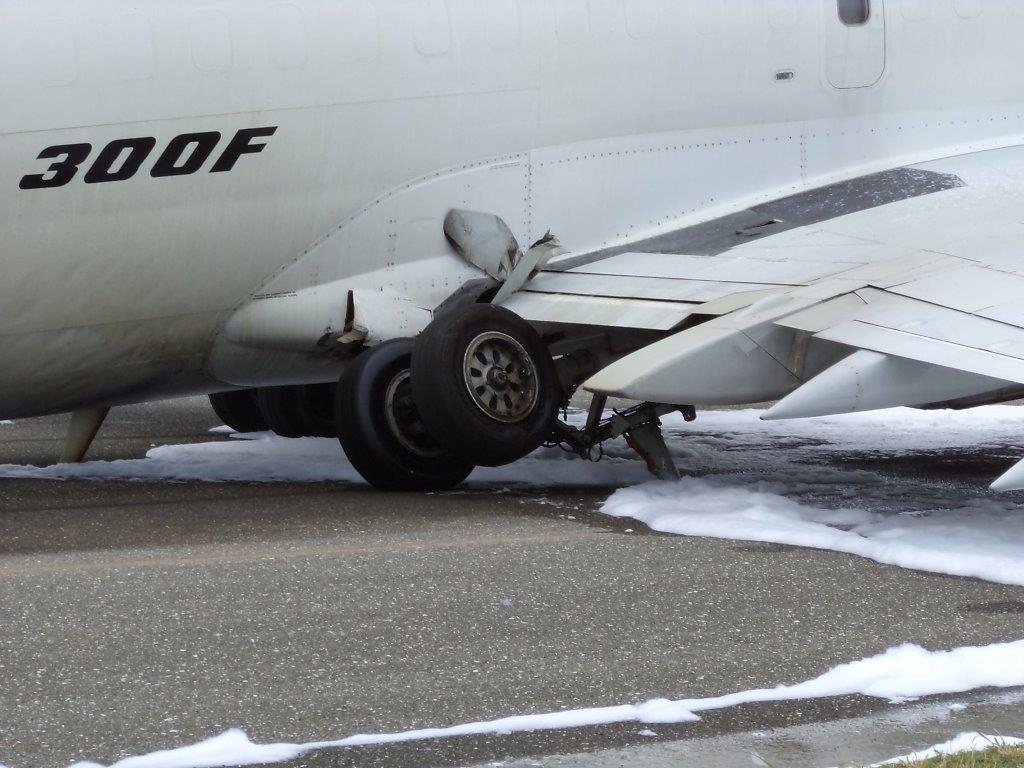
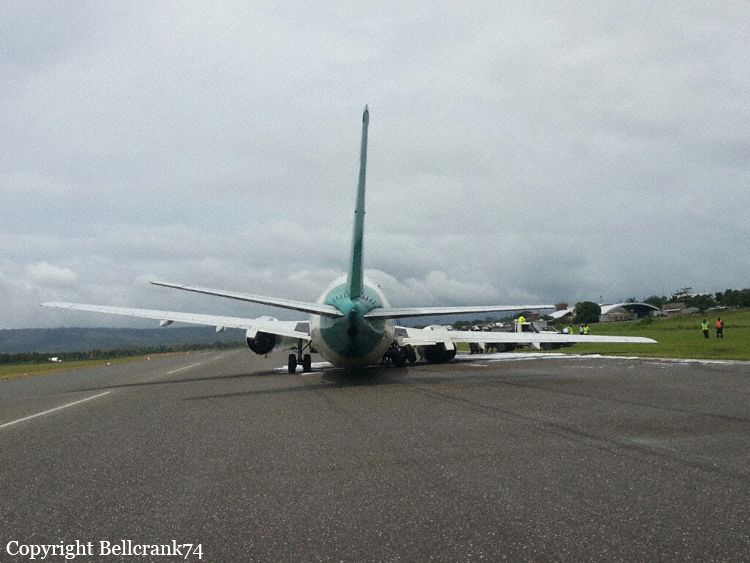
Following an uneventful flight from Brisbane, the crew completed the approach and landing at Honiara-Henderson Airport. After touchdown on runway 24, the right main gear collapsed and punctured the right wing. The aircraft veered slightly to the right and came to a halt on the runway. All three occupants evacuated safely and the aircraft was damaged beyond repair.
Probable cause:
The failure of the right main gear was the consequence of an inappropriate rework (ie, machining and re-threading) of the tee-bolt fitting and the associated installation of a reduced size nut and washer, during the last overhaul in 2004.

Crash of an Antonov AN-24RV in Moscow

Date & Time: Jan 22, 2014 at 0819 LT
Type of aircraft:
Operator:
Registration:
RA-46473
Survivors:
Yes
Schedule:
Pskov - Moscow
MSN:
2 73 081 01
YOM:
1972
Country:
Region:
Crew on board:
4
Crew fatalities:
Pax on board:
24
Pax fatalities:
Other fatalities:
Total fatalities:
0
Circumstances:
On approach to Moscow-Domodedovo Airport, the crew encountered poor visibility due to marginal weather conditions. Rather than initiating a go-around procedure, the crew continued the descent when the aircraft crash landed to the right of runway 14R, in an area between the runway and the boundary fence. All 28 occupants escaped uninjured while the aircraft was damaged beyond repair.

Crash of a Piper PA-31-350 Navajo Chieftain in Langgur: 4 killed

Date & Time: Jan 19, 2014 at 1225 LT
Operator:
Registration:
PK-IWT
Flight Type:
Survivors:
No
Schedule:
Jayapura – Langgur – Kendari – Surabaya
MSN:
31-7752090
YOM:
1977
Country:
Region:
Crew on board:
1
Crew fatalities:
Pax on board:
3
Pax fatalities:
Other fatalities:
Total fatalities:
4
Captain / Total flying hours:
2860
Captain / Total hours on type:
1045.00
Aircraft flight hours:
5859
Circumstances:
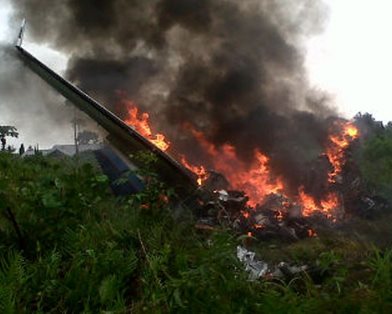
On 19 January 2014, a PA-31-350 Piper Chieftain, registered PK-IWT, was being operated by PT. Intan Angkasa Air Service, on positioning flight from Sentani Airport, Jayapura with intended destination of Juanda Airport, Surabaya for aircraft maintenance. The positioning flight was planned to transit at Dumatubun Airport Langgur of Tual, Maluku and Haluoleo Airport, Kendari at South East Sulawesi for refuelling. On the first sector, the aircraft departed Sentani Airport at 2351 UTC (0851 WIT) and estimated arrival at Langgur was 0320 UTC. On board on this flight was one pilot, two company engineers and one ground staff. At 0240 UTC the pilot contacted to the Langgur FISO, reported that the aircraft position was 85 Nm to Langgur Airport at altitude 10,000 feet and requested weather information. Langgur FISO acknowledged and informed that the weather was rain and thunderstorm and the runway in used was 09. When the aircraft passing 5,000 feet, the pilot contacted the Langgur FISO and reported that the aircraft position was 50 Nm from langgur and informed the estimated time of arrival was 0320 UTC. The Langgur FISO acknowledged and advised the pilot to contact when the aircraft was at long final runway 09. At 0318 UTC, the pilot contacted Langgur FISO, reported the position was 25 Nm to Langgur at altitude of 2,500 feet and requested to use runway 27. The Langgur FISO advised the pilot to contact on final runway 27. At 0325 UTC, Langgur FISO contacted the pilot with no reply. At 0340 UTC, Langgur FISO received information from local people that the aircraft had crashed. The aircraft was found at approximately 1.6 Nm north east of Langgur Airport at coordinate 5° 38’ 30.40” S; 132° 45’ 21.57” E. All occupants fatally injured and the aircraft destroyed by impact force and post impact fire. The aircraft was destroyed by impact forces and post impact fire, several parts of the remaining wreckage such as cockpit could not be examined due to the level of damage. The aircraft was not equipped with flight recorders and the communication between ATC and the pilot was not recorded. No eye witness saw the aircraft prior to impact. Information available for the investigation was limited. The analysis utilizes available information mainly on the wreckage information including the information of the wings, engines and propellers.
Probable cause:
The investigation concluded that the left engine most likely failed during approach and the propeller did not set to feather resulted in significant asymmetric forces. The asymmetric forces created yaw and roll tendency and the aircraft became uncontrolled, subsequently led the aircraft to impact to the terrain.
Final Report:

Crash of a Cessna 208B Grand Caravan in Olive Creek: 2 killed

Date & Time: Jan 18, 2014 at 1057 LT
Type of aircraft:
Operator:
Registration:
8R-GHS
Flight Phase:
Flight Type:
Survivors:
No
Schedule:
Olive Creek - Imbaimadai
MSN:
208B-0830
YOM:
2000
Flight number:
TGY700
Country:
Crew on board:
1
Crew fatalities:
Pax on board:
1
Pax fatalities:
Other fatalities:
Total fatalities:
2
Captain / Total flying hours:
3108
Captain / Total hours on type:
2555.00
Aircraft flight hours:
17998
Circumstances:
On 17th January, 2014, the day before the accident, the pilot departed from his company base, Ogle International Airport (SYGO) with another aircraft, a Cessna 208B, Registration – 8R-GHT. He was tasked to do two days of shuttling; the first day between Olive Creek and Ekereku Bottom Airstrips, and the second day between Olive Creek and Imbaimadai Airstrips. The pilot was accompanied by a third crew/loader, whose duty was to ensure that the aircraft was properly loaded for each trip, and an aircraft engineer who was assigned to carry out minor maintenance duties and refuel the aircraft as required for the duration of the shuttle operations. It was reported that on the first day, during a landing at Ekereku Bottom, the aircraft encountered severe wind conditions that resulted in a hard landing. The pilot was very concerned about the hard landing and expressed this to several individuals. He was concerned enough to log the hard landing in the Aircraft Technical Log. After the hard landing the aircraft was visually inspected by the engineer who declared the aircraft fit for flight. However while taxying prior to takeoff the aircraft suffered a right brake seizure. The engineer freed and bled the brake line. Tests were done on the brakes and the aircraft was flown to Olive Creek. The hard landing and the brake failure were reported to base and an instruction was passed that this aircraft should be brought back to Ogle by another pilot. Another Cessna 208B aircraft, 8R-GHS, the accident aircraft, was left with the pilot for him to complete his shuttle schedule the next day. On the afternoon of the first day, the pilot flew this aircraft, 8R-GHS to Kamarang Airstrip, where he overnighted. On the second day, 18th January, 2014, he departed Kamarang at 10:30hrs UTC for Olive Creek with the engineer and the loader. The engineer was left at Olive Creek. The pilot, with the loader, did one shuttle from Olive Creek to Imbaimadai. He returned to Olive Creek where the aircraft was refueled and then did three shuttles between Olive Creek and Imbaimadai. After these three shuttles the aircraft was again refueled. He completed one shuttle, Olive Creek/Imbaimadai/Olive Creek and had just taken off on the second in this series of shuttles when the accident occurred during midmorning. Both the pilot and the third crew were killed in the crash.
Probable cause:
The investigation revealed that the probable cause of the accident was due to a power loss suffered by the engine. The power loss was associated with the fracture of one of the 1st stage compressor stator vanes by fatigue. The fatigue crack originated from a lack of brazing adhesion extending over approximately 0.280 inches along the chord length and 0.050 inches in the direction of the shroud thickness and was located between the leading edge and mid-chord of the vane.
The following findings were identified:
1. The flight was one of a series of cargo shuttles that had originated the day before the accident, with another aircraft that was fitted with the Blackhawk modification.
2. The hard landing followed by the brake failure that occurred on the originating day had upset the pilot and caused him much concern.
3. A decision was taken to replace the original aircraft being used by the accident pilot with another one, which was also fitted with the Blackhawk modification.
4. The pilot had completed five shuttles on the day of the accident. The sixth shuttle was the accident flight.
5. The weather was satisfactory for VFR operations.
6. There was no fire.
7. Both the pilot and the third crew/loader were killed in this accident.
8. This accident occurred 2½ minutes after take-off.
9. The wreckage site was difficult to access, this along with unavailability of suitable equipment, contributed to the delay in extraction of the bodies.
Final Report:

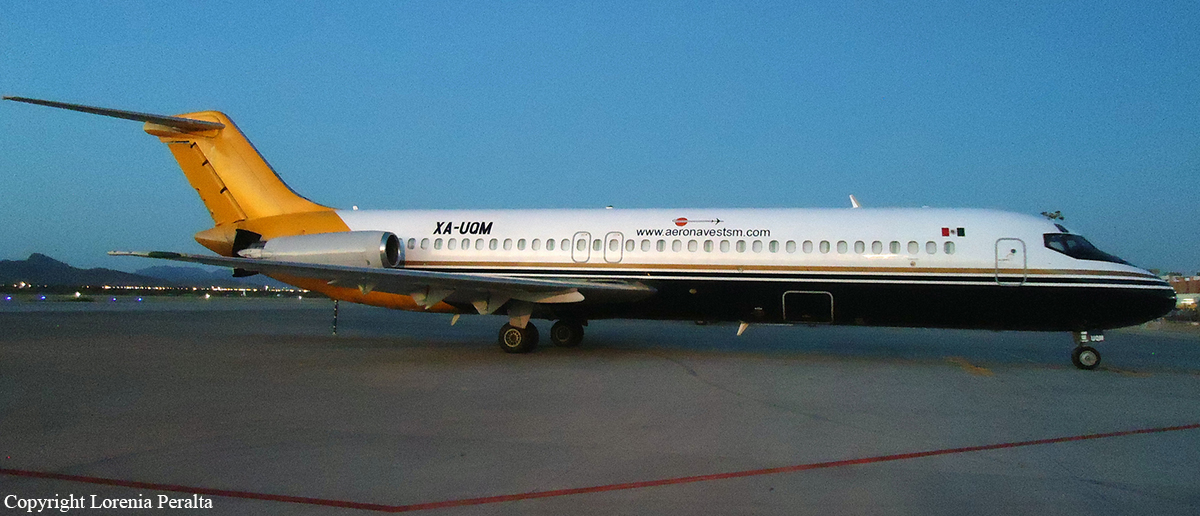
Crash of a Douglas DC-9-33CF in Saltillo

Date & Time: Jan 18, 2014 at 0423 LT
Type of aircraft:
Operator:
Registration:
XA-UQM
Flight Type:
Survivors:
Yes
Schedule:
Managua – Tapachula – Saltillo
MSN:
47191/280
YOM:
1968
Country:
Crew on board:
2
Crew fatalities:
Pax on board:
2
Pax fatalities:
Other fatalities:
Total fatalities:
0
Captain / Total flying hours:
13447
Captain / Total hours on type:
9235.00
Copilot / Total flying hours:
10736
Copilot / Total hours on type:
525
Aircraft flight hours:
57319
Aircraft flight cycles:
53457
Circumstances:
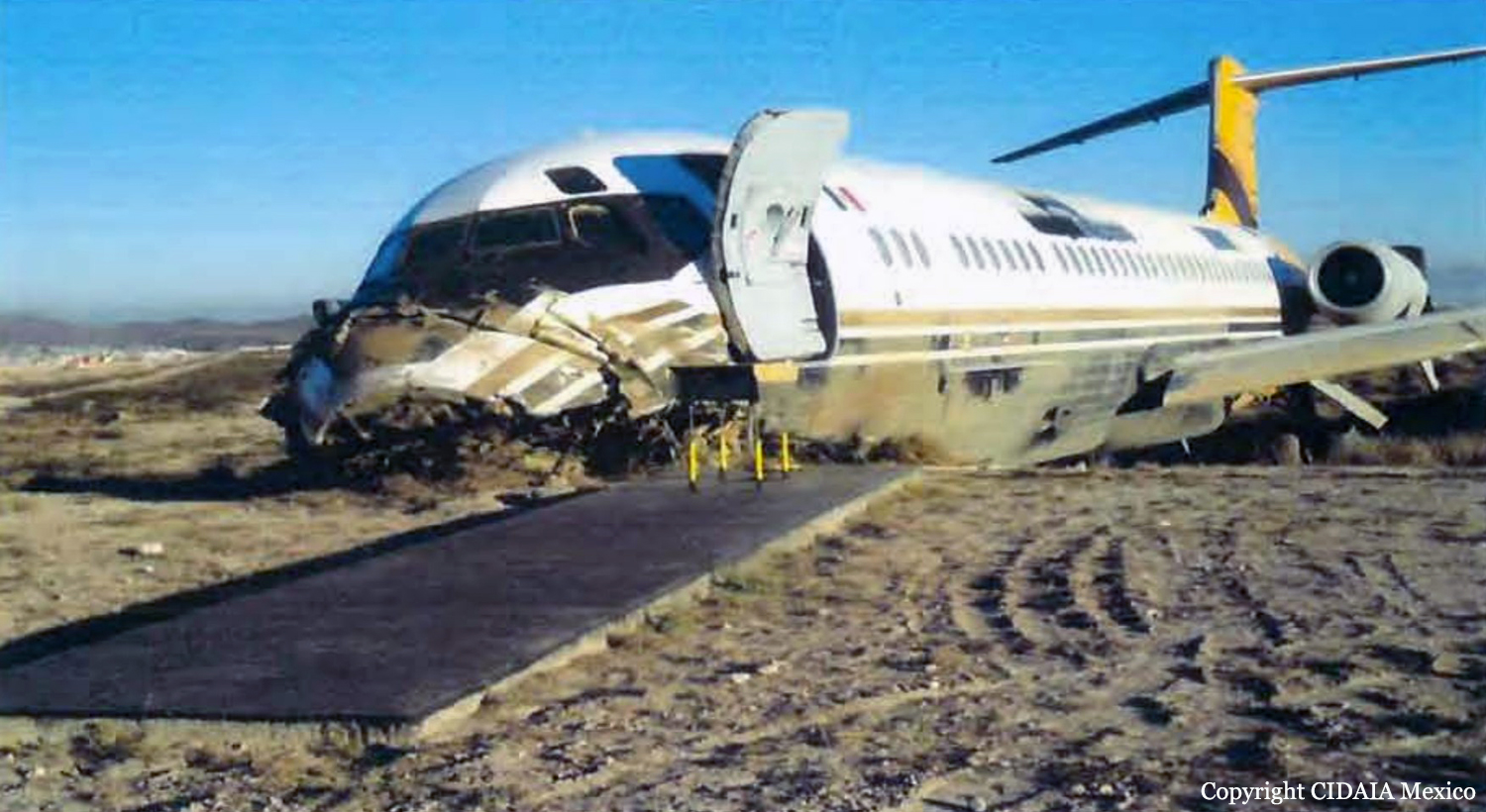
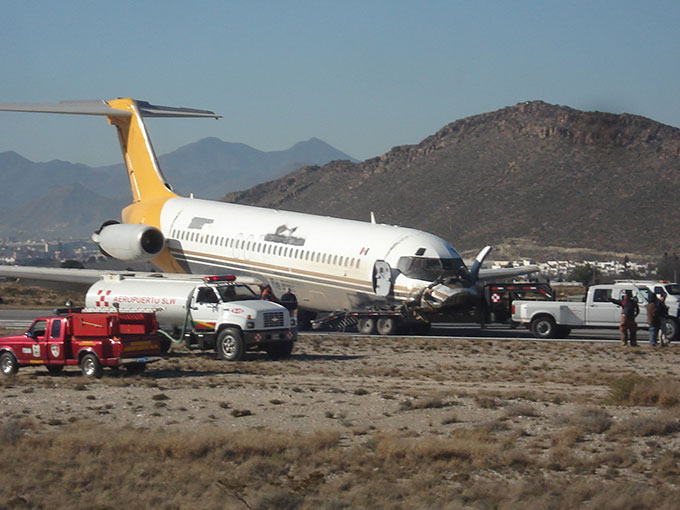
The aircraft departed Managua on a cargo flight to Saltillo with an intermediate stop in Tapachula, carrying two passengers and two pilots on behalf of DHL. During a night approach to Saltillo Airport, the crew was cleared to land on runway 17. One minute later, he initiated a go-around and decided to divert to Monterrey Airport which was the alternate. Due to a poor flight preparation, the crew was unaware that Monterrey Airport was closed to traffic that night. So few minutes later, the crew returned to Saltillo and was again cleared to land on runway 17. At that time, weather conditions were marginal with a limited visibility due to fog. Following an ILS CAT I approach, the pilot-in-command descended below the MDA and continued the approach despite he did not establish any visual contact with the runway and its equipment. The aircraft landed hard to the right of the runway and on the last third of the runway. After landing, the aircraft rolled for few dozen metres, lost its nose gear and came to rest against an embankment. All four occupants were injured and the aircraft was damaged beyond repair.
Probable cause:
Continuing the precision approach (ILS CAT 1) in conditions of reduced visibility by fog (no visual contact with the runway at an airport below minimums), which resulted in an abrupt landing and misaligned to the right on the last third of the runway, during a second landing attempt. The continuation of the landing was the lack of fuel to fly to a second alternate airport not contemplated in the operation.
Contributing factors:
1. Lack of analysis of pre-flight operational information (current NOTAMs, METAR, forecasts, fuel to second alternate airport and flight tracking).
2. Unstabilized approach.
3. Lack of application of CRM concepts.
4. Lack of adherence to procedure - operations, of providing METAR and NOTAM to the crew for the dispatch of the aircraft.
5. Lack of adherence to the procedure for flight control and tracking.
6. Lack of procedures to establish two alternate airports when the destination airport is below minimums.
7. Lack of Company supervision, operation and maintenance surveillance of aircraft flight recorders.
Final Report:

Crash of a Cessna 501 Citation I/SP in Trier: 4 killed

Date & Time: Jan 12, 2014 at 1152 LT
Type of aircraft:
Operator:
Registration:
N452TS
Flight Type:
Survivors:
No
Schedule:
Shoreham - Trier
MSN:
501-0231
YOM:
1981
Country:
Region:
Crew on board:
2
Crew fatalities:
Pax on board:
2
Pax fatalities:
Other fatalities:
Total fatalities:
4
Captain / Total flying hours:
4800
Captain / Total hours on type:
32.00
Copilot / Total flying hours:
1350
Copilot / Total hours on type:
550
Aircraft flight hours:
4282
Aircraft flight cycles:
4413
Circumstances:
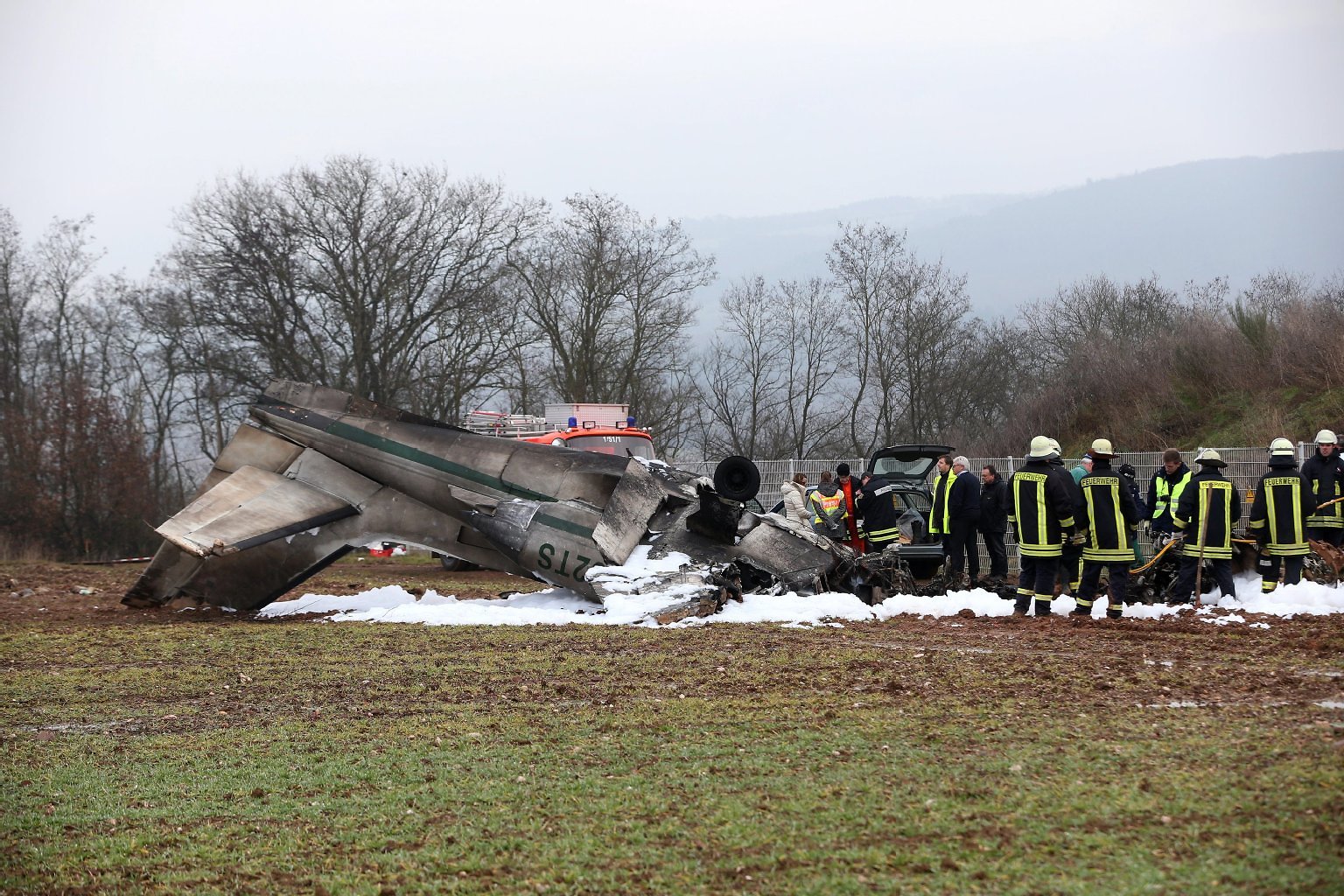
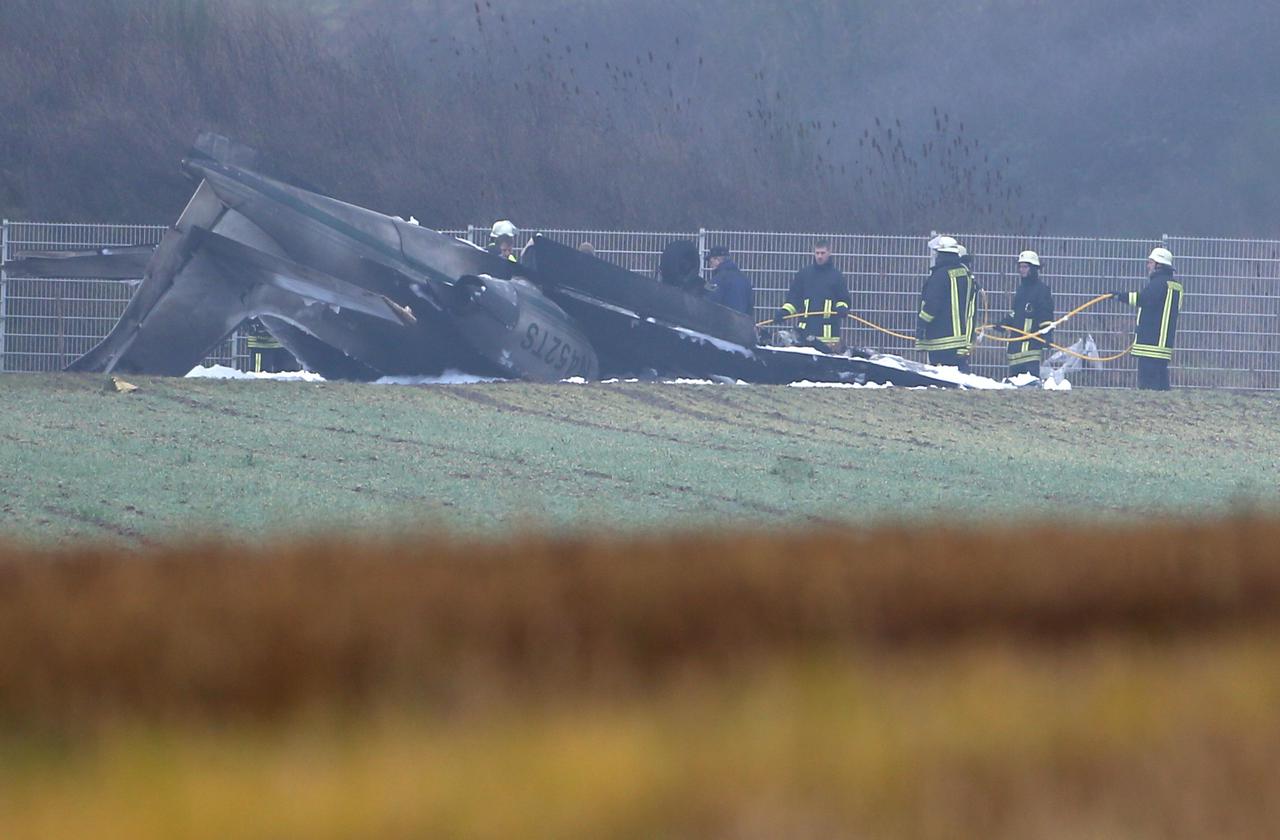
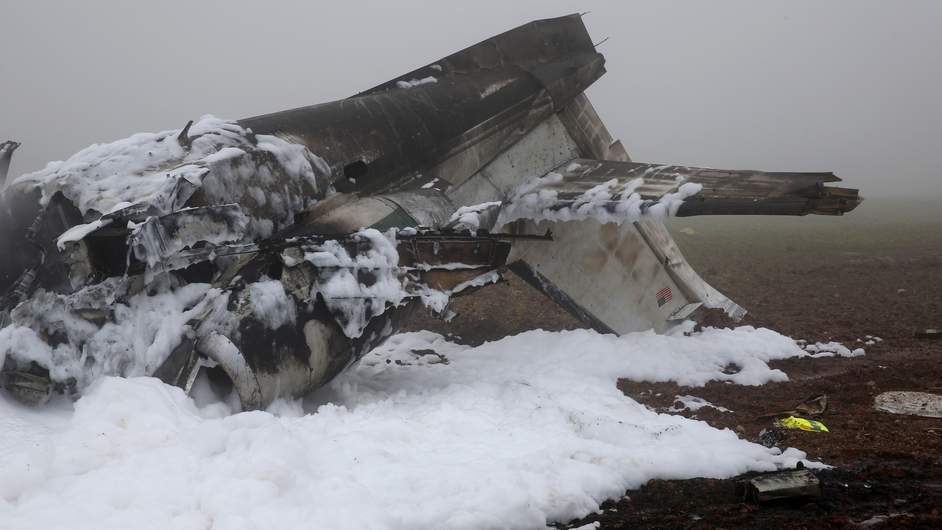
On Friday, 10 January 2014, the airplane had flown from Trier to Shoreham, where it landed at 1456 UTC. Two pilots and two passengers were on board the aircraft. Over the weekend, the passengers wanted to participate in a hunt. On the afternoon of 11 January 2014 the PIC told the service provider, tasked by the aircraft owner with the flight planning, to prepone the scheduled return flight on Sunday, 12 January 2014, from 1400 UTC to 1015 UTC. In the ATC flight plan Trier-Föhren Airfield was the destination aerodrome and Luxembourg Airport the alternate aerodrome. According to the flight plan the change of flight rules from IFR to VFR was to occur at reporting point PITES. The handling agent at Shoreham Airport stated that the PIC and the co-pilot had arrived on Sunday at 0850 UTC. The airport made the recordings of a video camera for apron surveillance available to the BFU. These recordings show that the airplane was refuelled in the presence of the pilots. The two passengers arrived at 0936 UTC and about 11 minutes later the aircraft taxied from the apron. At 1000 UTC, the airplane took off from runway 20. At 1138:25 hrs, the co-pilot established contact with Langen Radar. At that time the airplane was in Flight Level (FL) 170. At 1142:51 hrs, after the airplane had descended to FL140, the controller issued the descent clearance to FL70. Approximately one minute later the controller said: "… proceed direct destination again and descend altitude five thousand feet … Spangdahlem QNH one zero two five." The pilot in command acknowledged the clearance. At 1145:23 hrs the PIC said: "… standing by for cancelling IFR." The controller answered: "... roger, IFR is cancelled at one zero two five, your position is one five miles northwest of your destination airfield, squawk VFR, approved to leave." According to radar data, the airplane was approximately in FL90 and continued to fly with a southern heading. At 1147:26 hrs, about 5 NM east of the omnidirectional radio beacon Nattenheim (VOR NTM), the altitude was 4,900 ft AMSL. According to the radar data at 1148:10 hrs the airplane had reached 3,500 ft AMSL. The flight path continued east until 1149 hrs when, in the area of the city of Wittlich in an altitude of 3,500 ft AMSL, the airplane turned right. The ground speed was approximately 180 kt. In the course of the right turn until 1150:30 hrs, the altitude decreased further to about 2,800 ft AMSL and the ground speed to about 160 kt. At 1151:10 hrs the aircraft turned left maintaining altitude until it had reached a southern heading. From 1151:30 hrs on it continued to descend. At the time the airplane was approximately 6.7 NM from the runway threshold and about 0.5 NM north of the extended runway centre line. Approximately 15 seconds later it reached the extended runway centre line of runway 22 while it turned right into the final approach direction. It was in about 2,300 ft AMSL and approximately 5.7 NM from the runway. From 1152:20 hrs on, at approximately 4.6 NM from the threshold, the aircraft began to leave the extended runway centre line to the south. At that time, altitude was approximately 1,600 ft AMSL and ground speed about 160 kt. The last radar target was recorded at 1152:40 hrs with an altitude indication of approximately 1,300 ft AMSL and a ground speed of about 140 kt. The attention of several witnesses, located about 600 m north-east and south-east, respectively, of the accident site in the valley of the river Salm, was drawn to the airplane by engine noise. They congruently stated that the aircraft had come from the direction of the town Esch and flown in low altitude, below the fog or cloud cover, toward the south-west. One of the witnesses estimated the altitude was 15 to 20 m above the trees bordering the river Salm, approximately the same height as the open wire located in the area. According to congruent witnesses’ statements, the engine thrust was increased and the airplane pulled up shortly before reaching a wooded escarpment rising by about 60 m, banked left and disappeared in the fog. Immediately afterwards fire had become visible and impact noises had been heard. The airplane impacted the ground in an inverted position. The occupants suffered fatal injuries and the aircraft was destroyed. The Flugleiter (A person required by German regulation at uncontrolled aerodromes to provide aerodrome information service to pilots) at Trier-Fohren Airfield stated, that on the morning of the accident day, at about 1010 hrs, he had received a phone call from the PIC. During the call the arrival of the airplane had been announced for 1230 hrs. The Flugleiter had informed the PIC about the severe fog prevailing at the airfield. He had also told him that, if at all, he expected visibility would increase after 1330 or 1400 hrs. After the phone conversation the Flugleiter assumed, that the airplane would fly to another airport. According to statements by the PIC’s wife, she had talked with her husband on the landline and then witnessed the PIC’s phone conversation on his mobile phone with the passenger, where he was asked to prepone the return flight to late morning. An unexpected appointment of the passengers was named as reason for the wish. During a phone conversation prior to departure her husband had explained that he had talked with Trier Airfield and learned that fog was prevailing there and one would fly either to Hahn or Luxembourg. The son of the passengers stated at the police that on the morning of the day of the accident his father had called him. He had told him that the airplane would probably land at Frankfurt-Hahn Airport. He stated that for his parents there was no deadline pressure. He said, that for him it is “völlig unvorstellbar (entirely inconceivable)” that his father would pressure the pilot to fly to Trier. In the past deviation to another airport had often been the case. It had never been a problem.
Probable cause:
The accident was due to the following:
- The Pilot in Command (PIC) decided to conduct the VFR approach even though he was aware of the prevailing instrument weather conditions at the airport,
- It is likely that a wrong vertical profile was flown due to an erroneous selection on the navigation system,
- Due to an insufficient situational awareness of the pilots the descent was not aborted in time.
The following factors contributed to the accident:
- Insufficient Crew Resource Management (CRM).
Final Report:

Crash of a Gippsland GA-8 Airvan in Cayenne

Date & Time: Jan 6, 2014 at 1508 LT
Type of aircraft:
Registration:
F-ORPH
Flight Phase:
Flight Type:
Survivors:
Yes
Schedule:
Cayenne – Maripasoula
MSN:
GA8-04-050
YOM:
2004
Crew on board:
1
Crew fatalities:
Pax on board:
1
Pax fatalities:
Other fatalities:
Total fatalities:
0
Captain / Total flying hours:
1100
Captain / Total hours on type:
41.00
Circumstances:
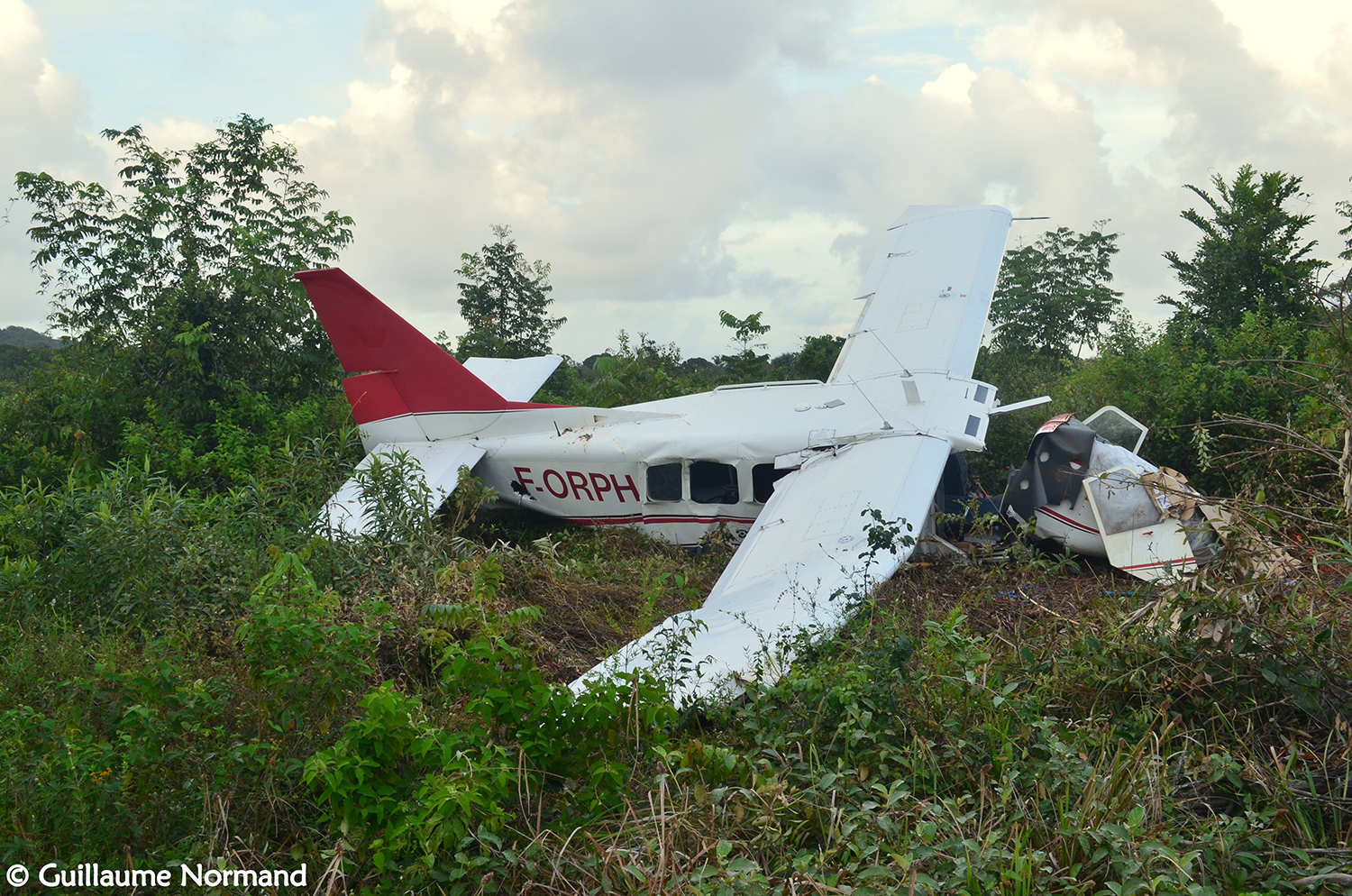
The single engine aircraft departed Cayenne-Rochambeau-Félix Éboué Airport runway 08 at 1448LT on a cargo flight to Maripasoula, carrying one female passenger and one pilot. About three minutes into the flight, while cruising at an altitude of 1,500 feet, the plot encountered engine problems, declared an emergency and was cleared for an immediate return. The aircraft landed back at 1452LT. Some controls were performed on the engine and the aircraft took off again at 1507LT. Less than a minute later, the engine lost power. The pilot again declared an emergency and returned to the airport. On short final, the aircraft lost height and crashed in bushes some 800 metres short of runway 26. The passenger was seriously injured and the pilot was slightly injured. The aircraft was destroyed.
Probable cause:
Loss of engine power during initial climb due to an abnormal wear of the cam lobes and tappets, for reasons that investigations were unable to determine. It is possible that pitting corrosion initiated this degradation which was not identified during the last periodic engine inspection.
Final Report:

Crash of an Airbus A320-231 in Jaipur

Date & Time: Jan 5, 2014 at 2110 LT
Type of aircraft:
Operator:
Registration:
VT-ESH
Survivors:
Yes
Schedule:
Imphal – Guwahati – New Delhi
MSN:
469
YOM:
1994
Flight number:
AI890
Country:
Region:
Crew on board:
6
Crew fatalities:
Pax on board:
173
Pax fatalities:
Other fatalities:
Total fatalities:
0
Captain / Total flying hours:
8322
Captain / Total hours on type:
5502.00
Copilot / Total flying hours:
2798
Copilot / Total hours on type:
2610
Aircraft flight hours:
55705
Circumstances:
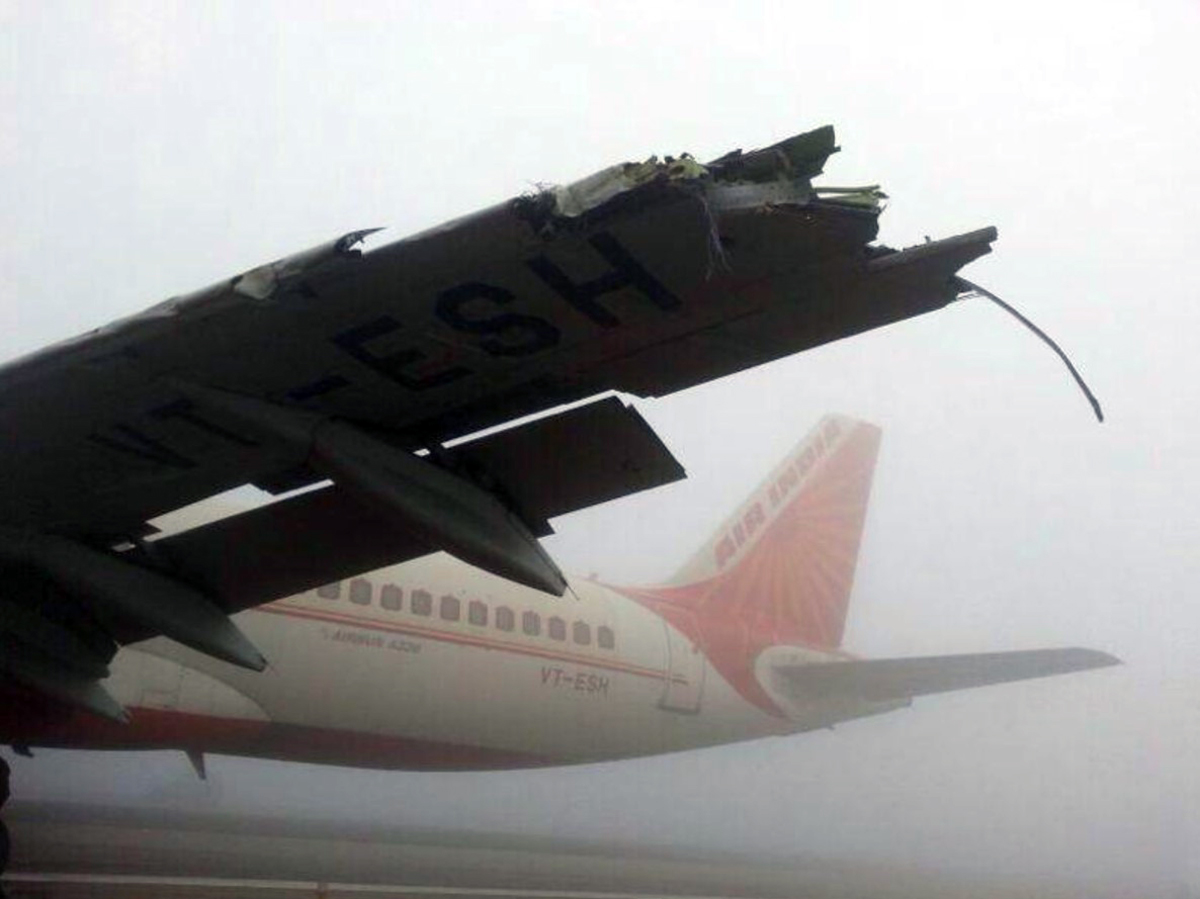
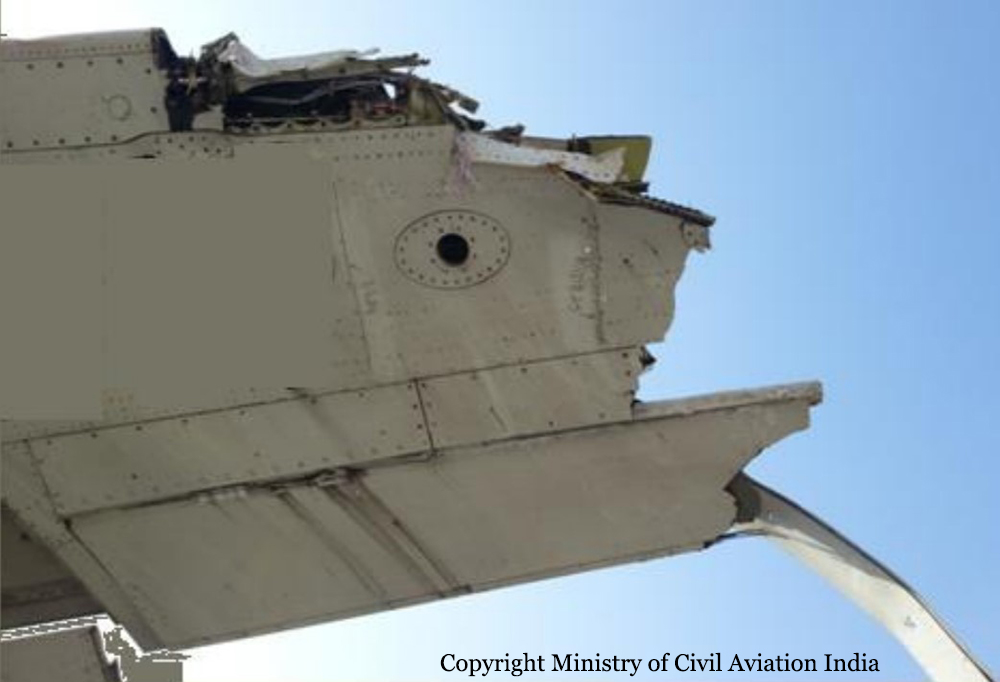
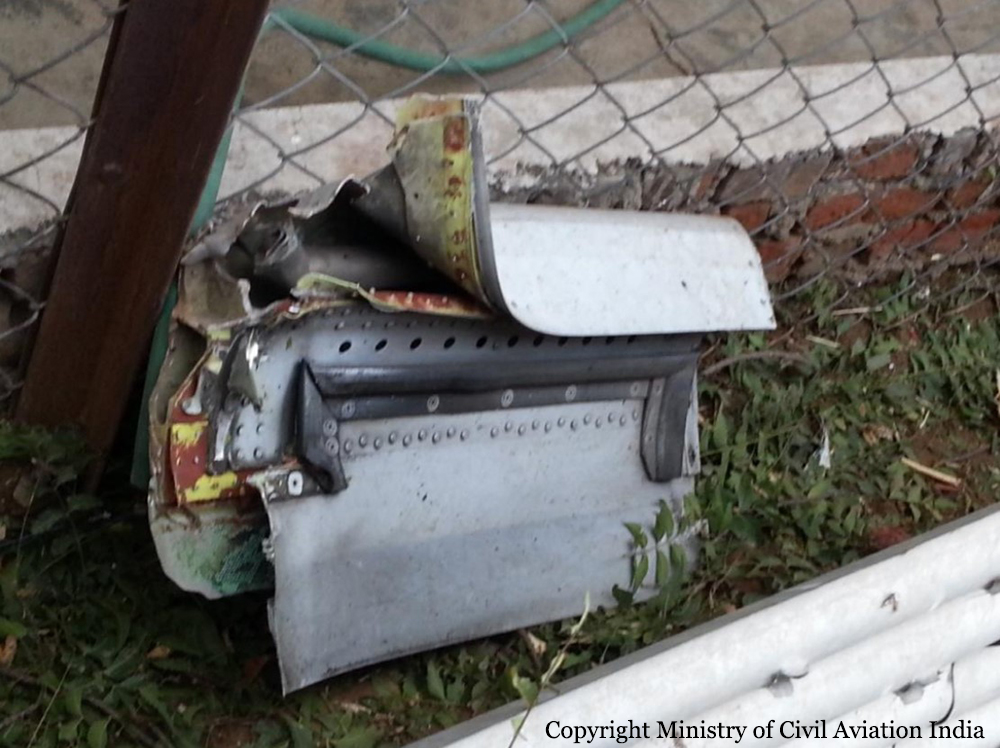
On 05.01.2014, Air India Ltd. Airbus A-320-231 aircraft was scheduled to operate flight AI-889 (Delhi – Guwahati – Imphal) and return flight, AI-890 (Imphal – Guwahati – Delhi). Air India dispatch section at Delhi, which has received the roster of flight crew for the flights, had prepared the operational and ATC flight plans by using FWz flight planning software and taking into account the weight & weather (forecast winds). Same set of flight crew and cabin crew was rostered to operate the four sectors mentioned above. The flight was under Command of an ATPL holder with another ATPL holder as First Officer (FO) and 04 Cabin Crew members. The Commander was CAT III qualified and the FO was CAT I qualified. The FWz plan was prepared for VT-ESL, but later on the aircraft was changed to VT-ESH. As per the pilot in command as both the aircraft have bogie gear type of landing gear and the performance factor is also same for these aircraft, he had accepted the FWz plan of VT-ESL. As per the manager flight dispatch on duty, only first leg i.e. Delhi Guwahati was dispatched. Required fuel figures were informed to the engineering & commercial departments. Pilots were briefed with folders which in addition to flight plans contained current NOTAMs and meteorological information. The relevant information in these documents was highlighted for briefing to the flight crew. For the remaining sectors which were self briefing sectors flight plan and NOTAMs were given to the flight crew. As per the pre flight briefing register, both the crew members have visited the flight dispatch section for briefing and at around 10:40 hrs. IST have signed the dispatch register. The sectors Delhi – Guwahati – Imphal – Guwahati were as per schedule and were uneventful. As per the flight sector report, the transit time at Guwahati prior to Guwahati-Delhi sector was 50 minutes. The aircraft landed at Guwahati from Imphal at 11:15 hrs. UTC and 12.7 tons of fuel was uplifted. The filed alternates for the sector were Lucknow and Jaipur in that order. METARs of Delhi, Lucknow and Jaipur were provided at Guwahati. There was no specific briefing. Flight crew has taken the weather updates of destination and alternates before departure from Guwahati. Lucknow visibility at that time was 2000 meters with temperature and dew point of 18°C & 13°C respectively. The weather at Delhi (11:05 UTC) was RVR as 500 meters for runway 29, general visibility of 150 meters, with both temperature and dew point of 12°C. A speci was issued at 1130 UTC for Jaipur with winds 04 kts. visibility 3000m and haze. There was no significant clouding (NSC), temperature (T) 18°C & dew point (Dp) 13°C, QNH 1013. Pre flight walk around inspection was carried out by the crew at Guwahati and the aircraft was released by an Aircraft Maintenance Engineer which was accepted by the Pilot-in-command. There was no snag or technical problem with the aircraft. There was no component or system released under Minimum Equipment List (MEL). For its last leg, the aircraft departed Guwahati for Delhi at 1205 UTC with 173 passengers on board. The fuel requirement from Guwahati to Delhi with 179 persons on board was 12.2 tonnes. As per the commander of flight, additional 500 kgs of fuel was taken (total on board was 12.7 tonnes) considering the time of arrival in Delhi was that of traffic congestion and because of weather in Delhi. As per the Operational Flight Plan (OFP), there was 10 minutes of arrival delay at the destination. The aircraft was flown on managed speeds. Initially the flight was cleared by ATC for a lower level and was later on cleared to fly at cruising level of 340. The fuel was checked visually on the Flight Management System (FMS) and Fuel Page which was further cross checked with the OFP planned figures by the crew on way points but was not recorded on the Operational Flight Plan. As per the crew, the fuel consumed was marginally higher than planned. The time taken to reach the way points was also noted, which was almost the same as planned figures were. Enroute, there was no briefing about traffic congestion over Delhi by any of the ground stations of AAI. The crew, on reaching overhead Lucknow, has taken Lucknow weather and when the aircraft was in range of ATIS Delhi, Delhi ATIS weather was also copied. The aircraft was not equipped with Aircraft Communications Addressing and Reporting System (ACARS) but was provided with HF/VHF system. As per the flight crew no flight following was provided either by flight dispatch or the IOCC of Air India. Weather updates were not seeked by the crew from the flight dispatch nor were any updates provided by Flight dispatch to the aircraft during the flight except when crew had asked Delhi dispatch about Jaipur visibility before finally making the decision to divert to Jaipur. Flight crew did not seek any update of Delhi or Jaipur weather till the time the aircraft came in contact with Delhi ATC. While in contact with Delhi ATC, the flight was advised to join hold as Delhi visibility Runway 28 RVR had dropped to the lower end of CAT I operations at this point runway 29 was below minima. AI 890 was number 12 in sequence and continued to remain in the holding pattern for the next 20-25 minutes. During this period there was no attempt on the part of flight crew to seek Lucknow weather. Air India Flight dispatch has also not given any advice to the flight about Jaipur or Lucknow weather. The weather (visibility / RVR) reported on Runway 29 was below CAT I conditions so runway was not available for this flight at that moment as the First Officer was only Cat I qualified. As per commander of the flight, they did 03 holds each of 1.5 minutes leg and flew headings 360° and 180° before intercepting the localizer Runway 28 at 35 miles. RVR runway 28 also dropped below Cat. I minimas, therefore the crew discontinued approach and climbed to 8000 feet on runway heading before going on heading 180. As per the Commander, though the 1st planned diversion alternate was Lucknow which had visibility of 2000 m i.e. above minima, but change of diversion to Jaipur was made as after missed approach they were closer to Jaipur and they had inquired about the visibility from Dispatch for Jaipur, which was provided as 2000 m. At this stage the crew did not check complete weather of Jaipur. Minimum diversion fuel to Jaipur was 2.9 tonnes as per FWz CFP. AI-890 commenced diversion to Jaipur with ―Fuel on Board‖ of 3.1 tonnes. As per the Station Manager of Air India at Jaipur Airport, he received a call from their Executive Director, Northern Region at around 2040 hrs. IST on 05.01.2014 that due to Delhi weather, AI 890 had diverted to Jaipur. He then conveyed the same to the airport office and the concerned engineer. The aircraft came in contact with Jaipur for the first time when it was at 68 DME from Jaipur. At that time the crew came to know of the complete weather of Jaipur from ATIS as visibility of 900 m, Dew Point as 13°C, temperature as 13°C, and RVR of 1000m. At 60 miles and passing flight level 138, the crew intimated Jaipur that the aircraft is descending for flight level 100 as cleared by Delhi control, which was acknowledged by Jaipur ATC. The aircraft again informed Jaipur ATC its position at 55 miles, 50 miles and 42 miles from Jaipur which were also acknowledged by Jaipur ATC. During these contacts, weather of Jaipur was neither asked by the crew nor provided by the ATC. When the aircraft was at flight level 83, the crew asked ATC Jaipur to confirm that they can carry out ILS approach for runway 27 via 10 DME arc. While confirming the requested approach, Jaipur ATC has informed all the stations about the weather at that moment as visibility 400 m and RVR 1000 m. When the aircraft was at 30 miles from Jaipur, Jaipur ATC passed weather as visibility 400 m, RVR 1000 m and trend visibility becoming 350 m. The crew was asked to come overhead by Jaipur ATC. At 28 DME from Jaipur, the aircraft was maintaining 6000 feet and on request was cleared by Jaipur ATC to descend to 5000 feet. When the aircraft was at 25 DME, from Jaipur, ATC advised that the weather was deteriorating rapidly and visibility was 400 meters. The crew however intimated the ATC that they were committed to land at Jaipur due fuel. As per the crew the fuel on board at that point of time was 2.6 tonnes (approx.) and approach was commenced for Jaipur with a visibility of 500 m with trend reducing. The aircraft was no. 2 in approach at Jaipur and was cleared for VORDME arc ILS approach runway 27 at 25 nm. Crew had, as per them, checked Ahmedabad distance as 291 nm, with a fuel calculation of 2.7 tonnes and as sufficient fuel was not available for Ahmedabad so did not consider diverting to Ahmedabad at that moment. Crew has also stated that Udaipur watch hours were not available with them, Jodhpur is an Air Force field with restrictions and Delhi was packed so they continued approach to Jaipur knowing that visibility / RVR was rapidly deteriorating. Due to reducing visibility, Jaipur ATC asked all the aircraft inbound for Jaipur to come over head and join JJP hold. The crew of the subject flight asked for the weather which was provided as visibility 400 m & RVR 1000 m though RVR deteriorating to 550 m. The flight from the ―Arrival Route‖ flew the VORDME arc for ILS runway 27. The ATC had transmitted the RVR as 200 m and visibility as 50 m with trend reducing. Another scheduled flight ahead of AI-890 carried out a missed approach and diverted to Ahmedabad. When the aircraft was above MDA (1480 feet AGL), ATC reported RVR 50 m and cleared the aircraft to land subject to minima. Both the flight crew maintained that they had seen the runway lights. ILS approach was performed with dual AP until 200ft RALT. After descending below MDA on auto pilot, the commander disconnected the auto pilot. Captain performed the final approach manually. The aircraft deviated to the left of the runway centre line and touched down on soft ground (in kutcha) on the LH side of the runway. During touchdown and landing roll, the visibility was zero and crew were unable to see any of the reference cues. The crew had heard rumbling sound during landing roll. As per the commander, he did the manual landing as he was not sure if he could do auto-land on a ground facility which is CAT I certified airfield in actual zero visibility. The aircraft continued to roll/ skid on the unpaved surface and during this period the left wing impacted trees causing damage to the left wing. Thereafter aircraft turned right and entered the runway finally coming to a halt on the LH side of runway. There was no fire. ATC Jaipur informed the Airport Manager of the Airline at Jaipur that their flight AI-890 had blocked the runway and also requested them to send equipments / manpower to attend the aircraft and get the aircraft removed. The Station AME of the airline alongwith the Asst Officer (Comm.), who was at the tarmac were instructed by the Station Manager to move to the aircraft. As per the AME, the visibility was almost nil and they could not move without the help of ‗Follow Me‘ Jeep. The ATC was informed to arrange the jeep to escort the personnel upto the aircraft. The AME after reaching the aircraft observed that the no. 1 main wheel of the aircraft had decapped/ damaged and the port side wing was damaged. The fuel remaining on board was 2400 kgs. The disembarkation of passengers was carried out on the runway itself and passengers were sent to the terminal building. Since the aircraft was not in a position to be either taxied or towed to the parking bay, the baggage of passengers was offloaded at the runway itself and sent to the terminal. One passenger suffered minor bruise on the knuckle of his right hand middle finger. He was attended to by the cabin crew in the aircraft and also by the doctor at the airport. Medical check-up of all the crew members including breathanalyser (BA) test was done by the medical officer, M.I. room Jaipur airport. The BA test was negative for all the crew members with a reading of 00.00. Since the aircraft was obstructing the runway, the airport was shut down for any further flight operations till the runway could be cleared. A NOTAM was issued to this effect. The aircraft was towed the next day to parking bay no.5 at terminal-1 by 1200 hrs and was later repositioned on a non-operational remote bay.
Probable cause:
The cause below has been given considering events as a combination of organizational factors and human error.
- The flight crew made an erroneous decision of diverting & continuing to an airfield with reducing visibility.
- The flight crew attempted a manual landing in below minima conditions.
- Lack of operational supervision and desired ground support to flight.
- Internal quality assurance not capturing the hazards which slipped through due complacency.
- Lack of oversight of the flight operations.
Final Report: