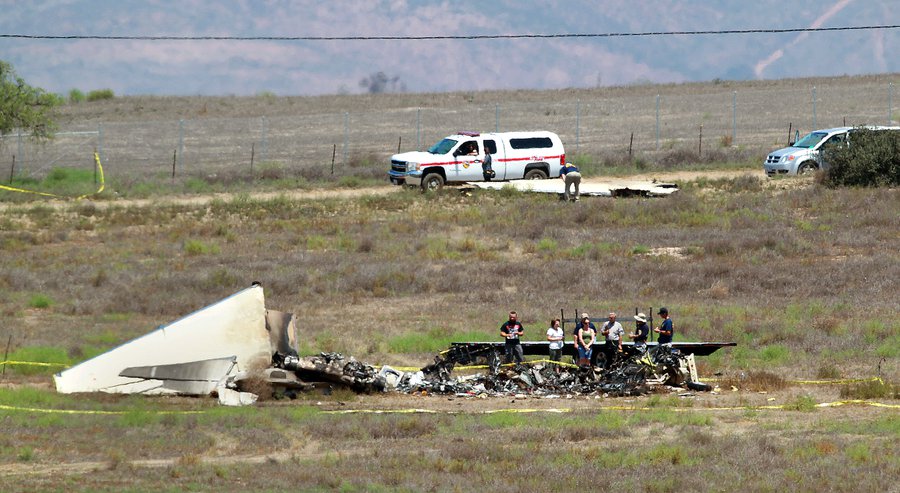
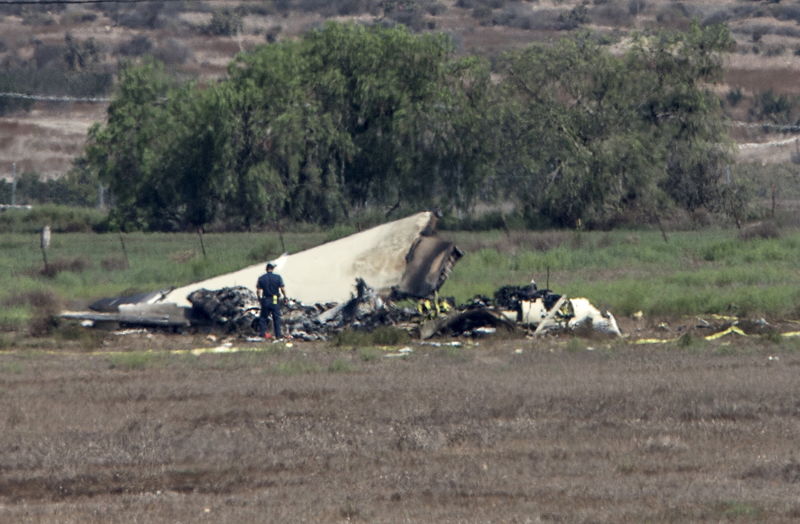
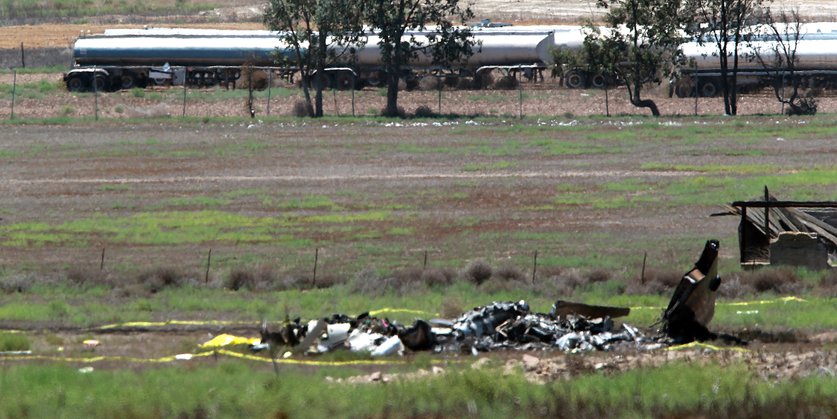
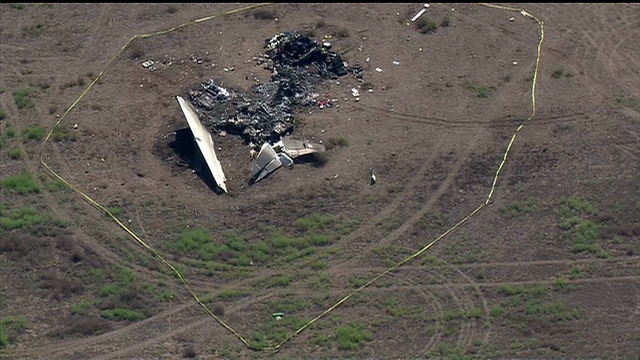
Crash of an Eclipse EA500 in Danbury

Date & Time: Aug 21, 2015 at 1420 LT
Type of aircraft:
Operator:
Registration:
N120EA
Flight Type:
Survivors:
Yes
Schedule:
Oshkosh – Danbury
MSN:
199
YOM:
2008
Crew on board:
1
Crew fatalities:
Pax on board:
2
Pax fatalities:
Other fatalities:
Total fatalities:
0
Captain / Total flying hours:
7846
Captain / Total hours on type:
1111.00
Aircraft flight hours:
858
Circumstances:
**This report was modified on April 2, 2020. Please see the public docket for this accident to view the original report.**
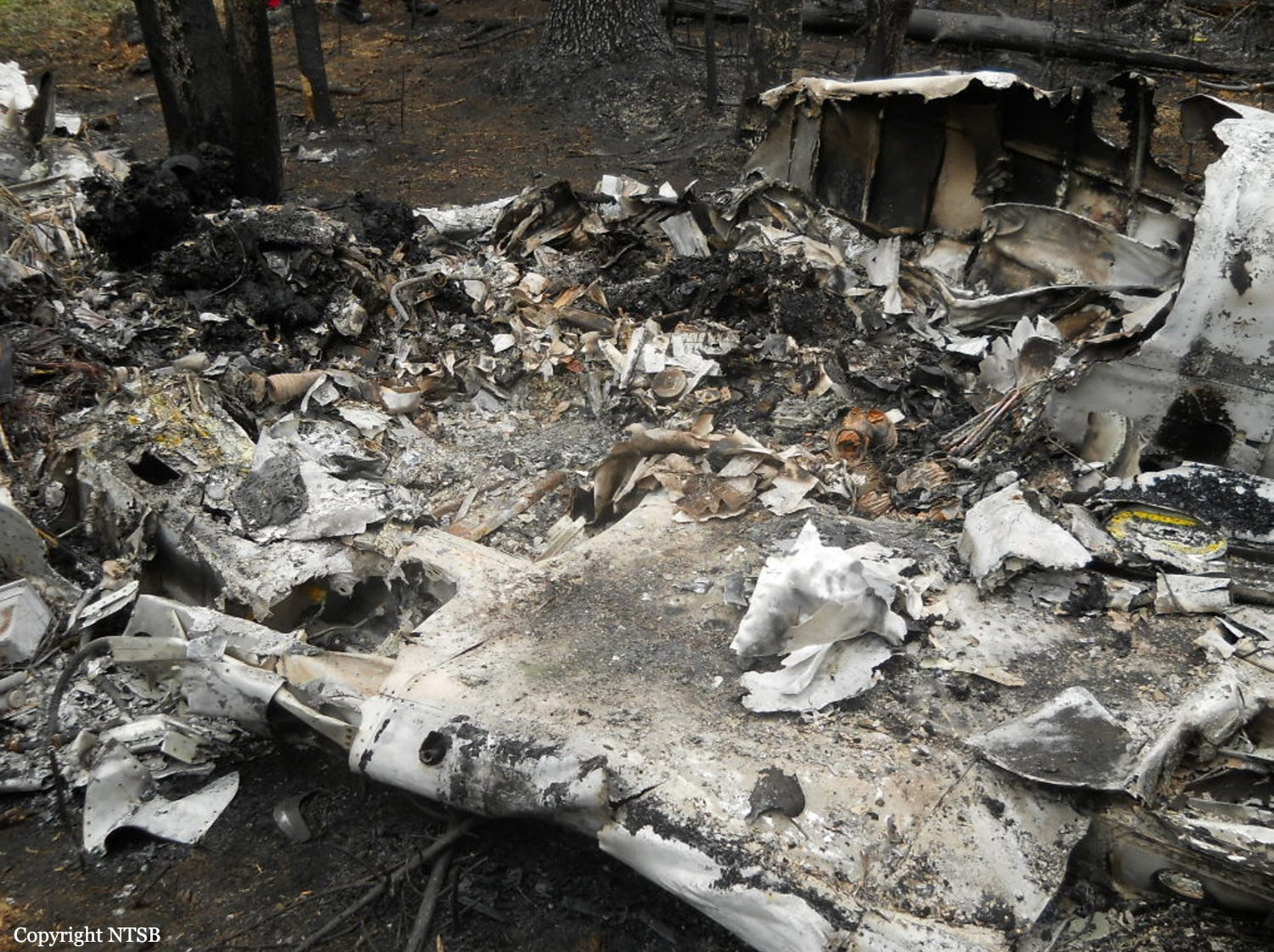
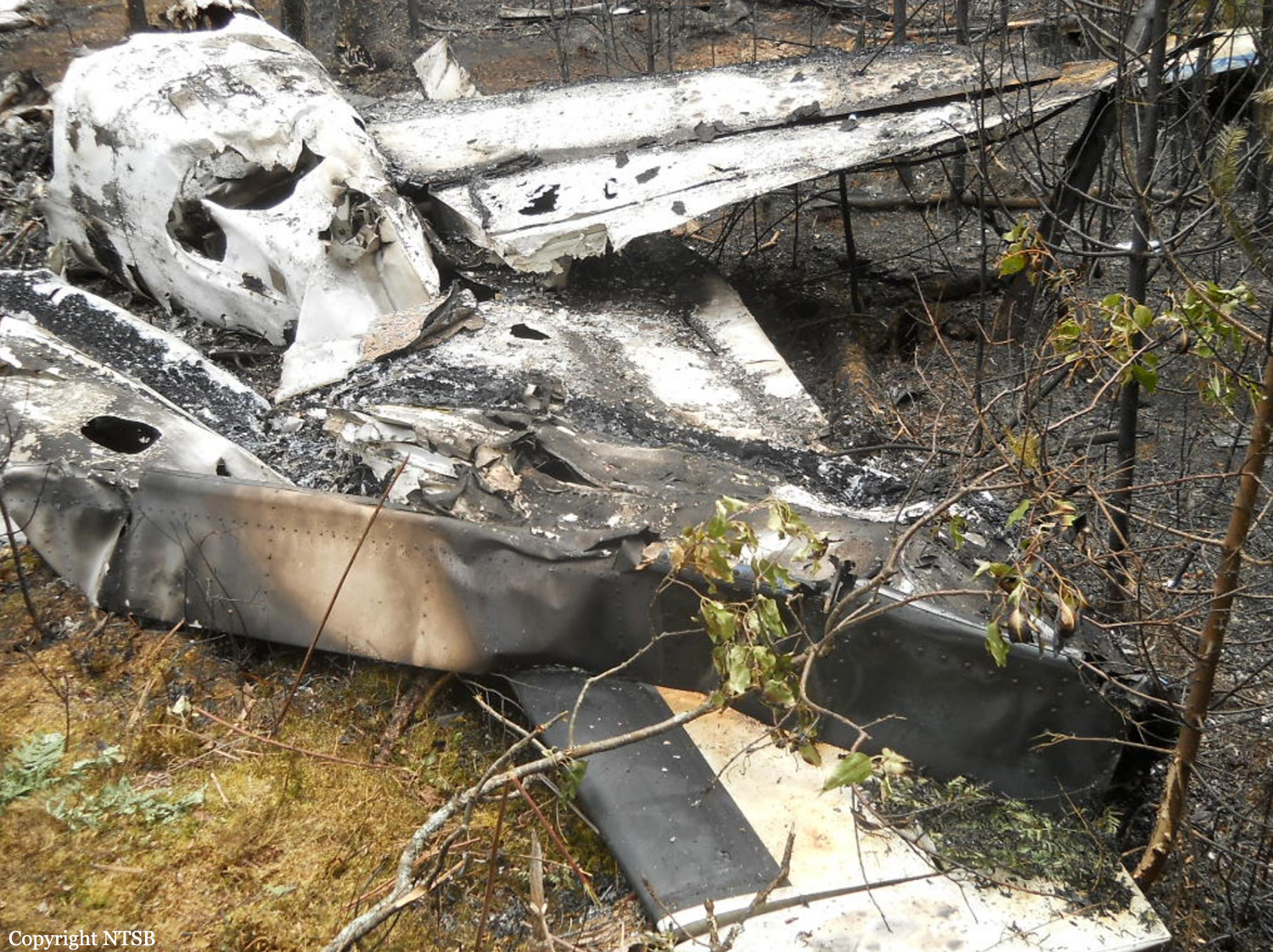
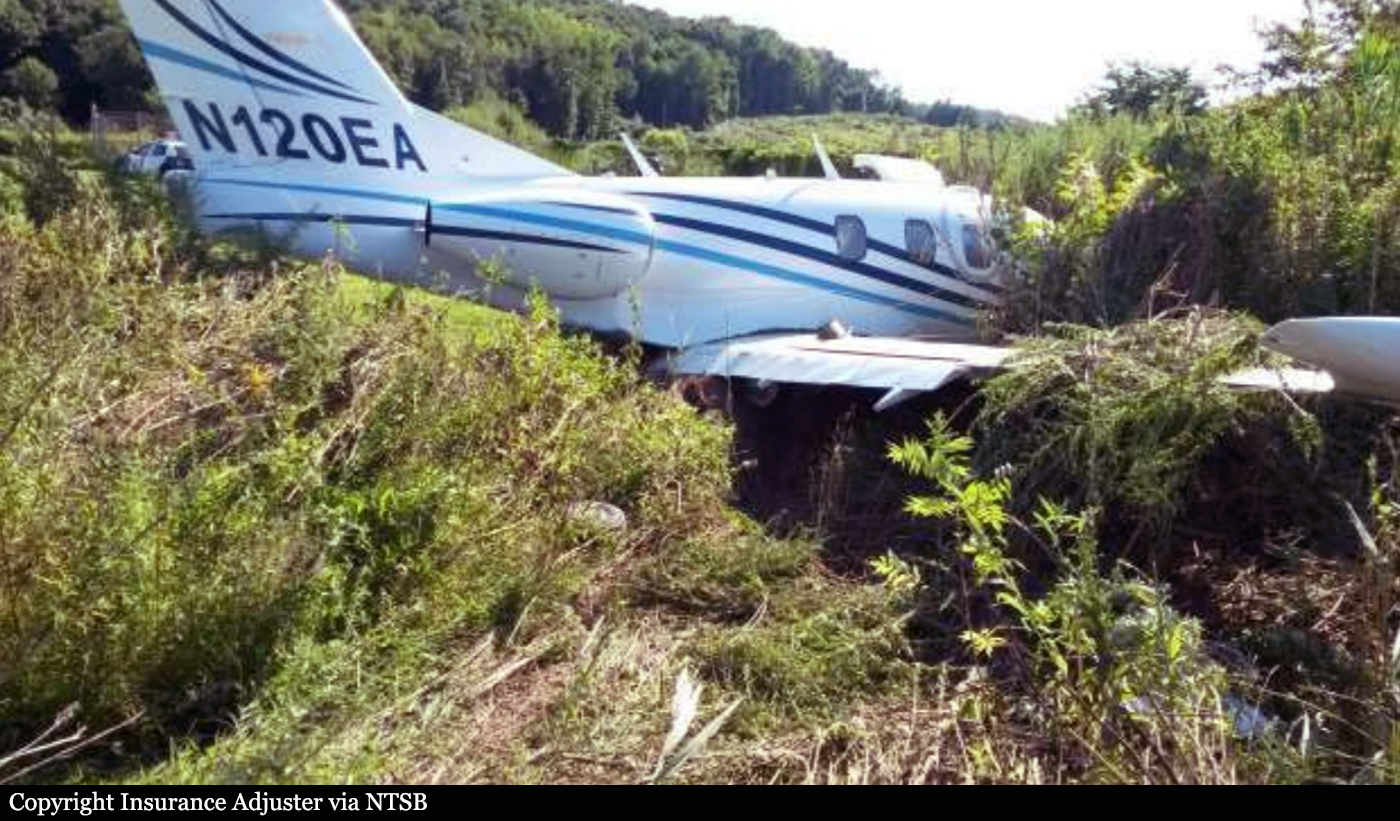
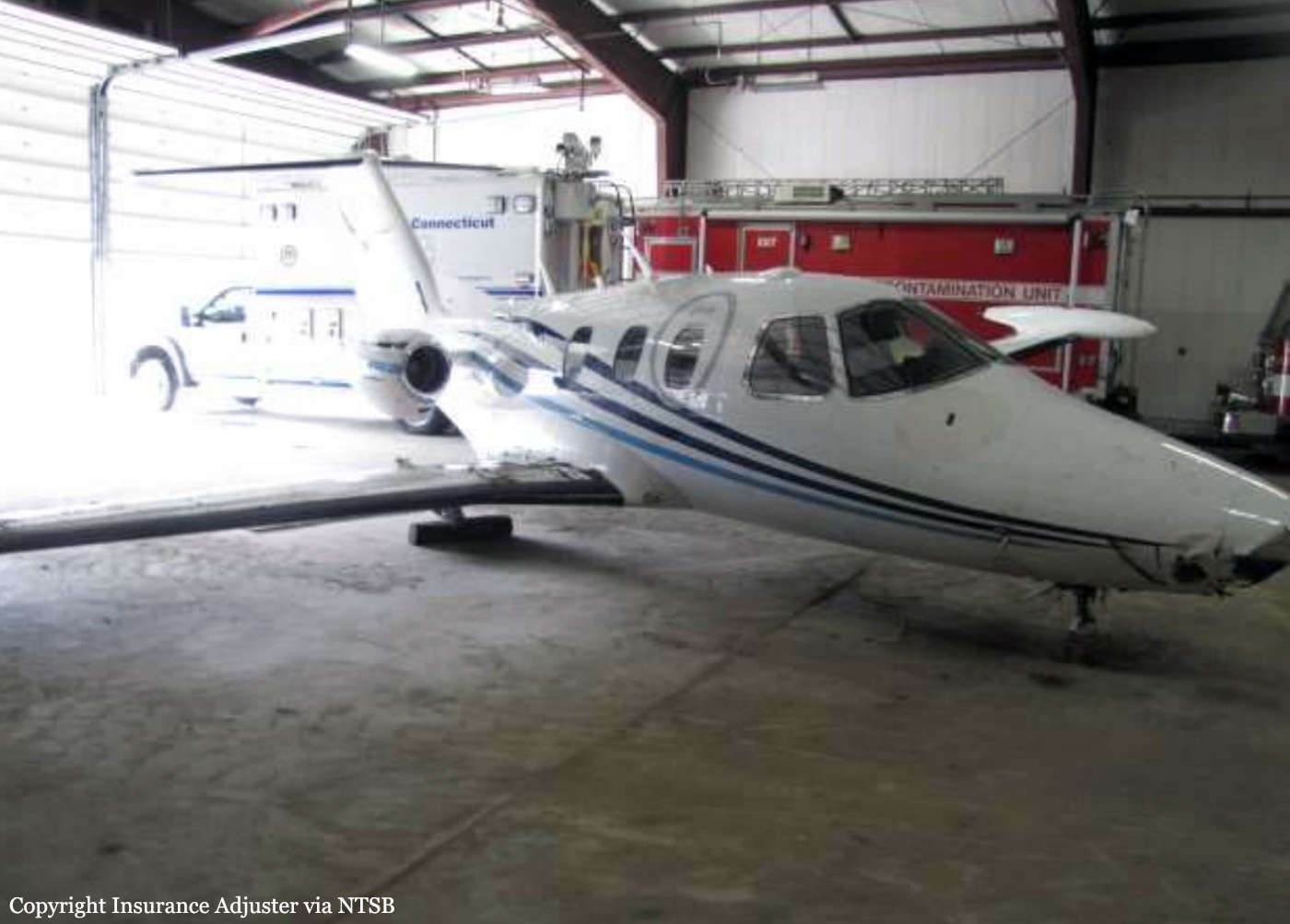
After the airplane touched down on the 4,422-ft-long runway, the airline transport pilot applied the brakes to decelerate; however, he did not think that the brakes were operating. He continued "pumping the brakes" and considered conducting a go-around; however, there was insufficient remaining runway to do so. The airplane subsequently continued off the end of the runway, impacted a berm, and came to rest upright, which resulted in substantial damage to the right wing. During postaccident examination of the airplane, brake pressure was obtained on both sets of brake pedals when they were depressed, and there was no bleed down or reduction in pedal firmness when the brakes were pumped several times. Examination revealed no evidence off any preimpact anomalies with the brake system that would have precluded normal operation. In addition, the pilot indicated that he was not aware of and was not trained on the use of the ALL INTERRUPT button, which is listed as a step in the Emergency Procedures section of the airplane flight manual and is used to disable the anti-skid brake system functions and restore normal braking when the brakes are ineffective; thus, the pilot did not follow proper checklist procedures. According to data downloaded from the airplane's diagnostic storage unit (DSU), the airplane touched down 1,280 ft beyond the runway threshold, which resulted in 2,408 ft of runway remaining (the runway had a displaced threshold of 734 ft) and that it traveled 2,600 ft before coming to rest about 200 ft past the runway. The airplane's touchdown speed was about 91 knots. Comparing DSU data from previous downloaded flights revealed that the airplane's calculated deceleration rate during the accident landing was indicative of braking performance as well as or better than the previous landings. Estimated landing distance calculations revealed that the airplane required about 3,063 ft when crossing the threshold at 50 ft above ground level. The target touchdown speed was 76 knots. However, the airplane touched down with only 2,408 ft of remaining runway faster than the target touchdown speed, which resulted in the runway overrun.
Probable cause:
The pilot's failure to attain the proper touchdown point and exceedance of the target touchdown speed, which resulted in a runway overrun.
Final Report:
Crash of a Beechcraft A100 King Air in Margaree

Date & Time: Aug 16, 2015 at 1616 LT
Type of aircraft:
Operator:
Registration:
C-FDOR
Survivors:
Yes
Schedule:
Halifax – Margaree
MSN:
B-103
YOM:
1972
Country:
Crew on board:
2
Crew fatalities:
Pax on board:
2
Pax fatalities:
Other fatalities:
Total fatalities:
0
Captain / Total flying hours:
1723
Captain / Total hours on type:
298.00
Copilot / Total flying hours:
532
Copilot / Total hours on type:
70
Aircraft flight hours:
14345
Circumstances:
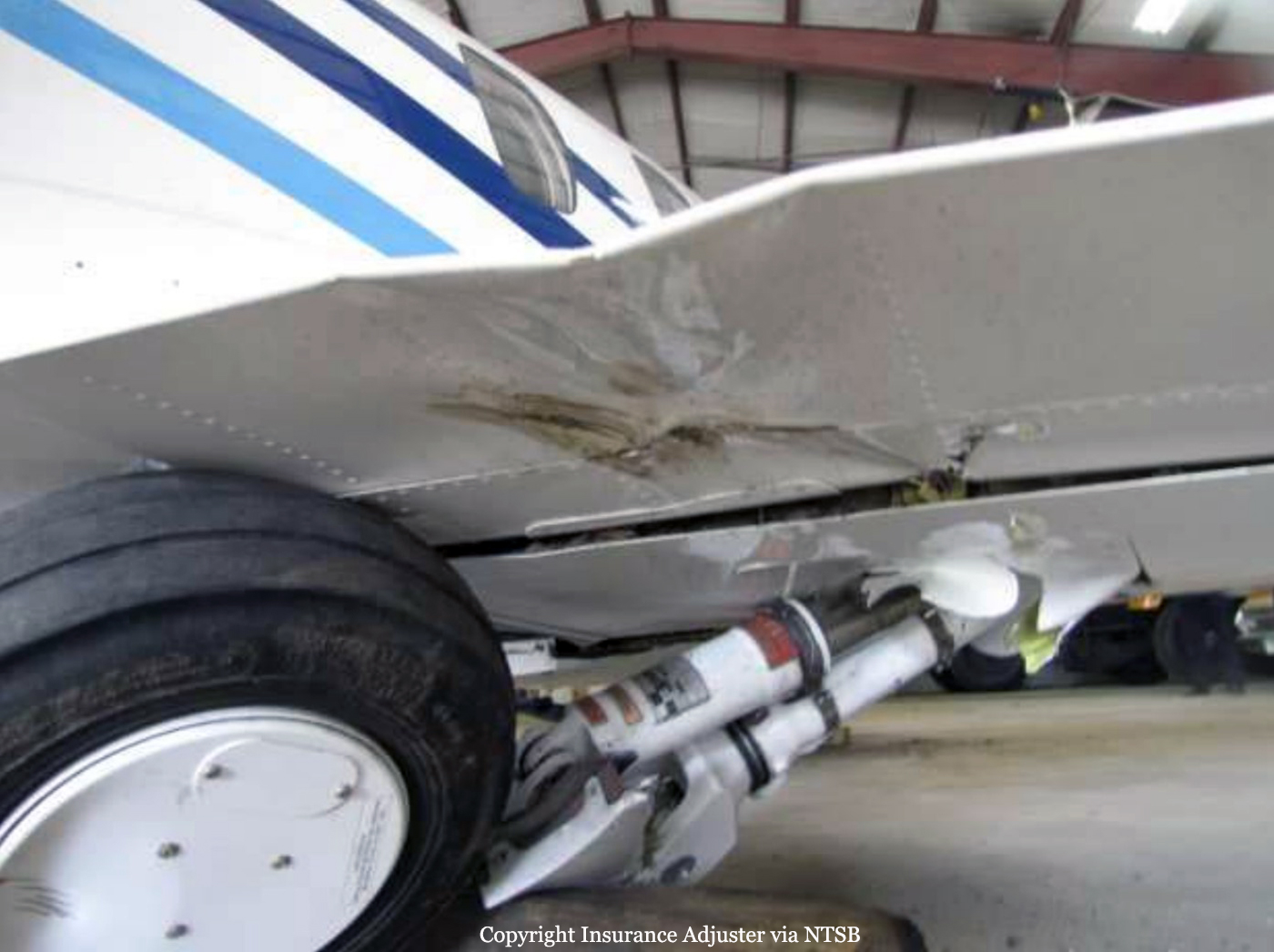
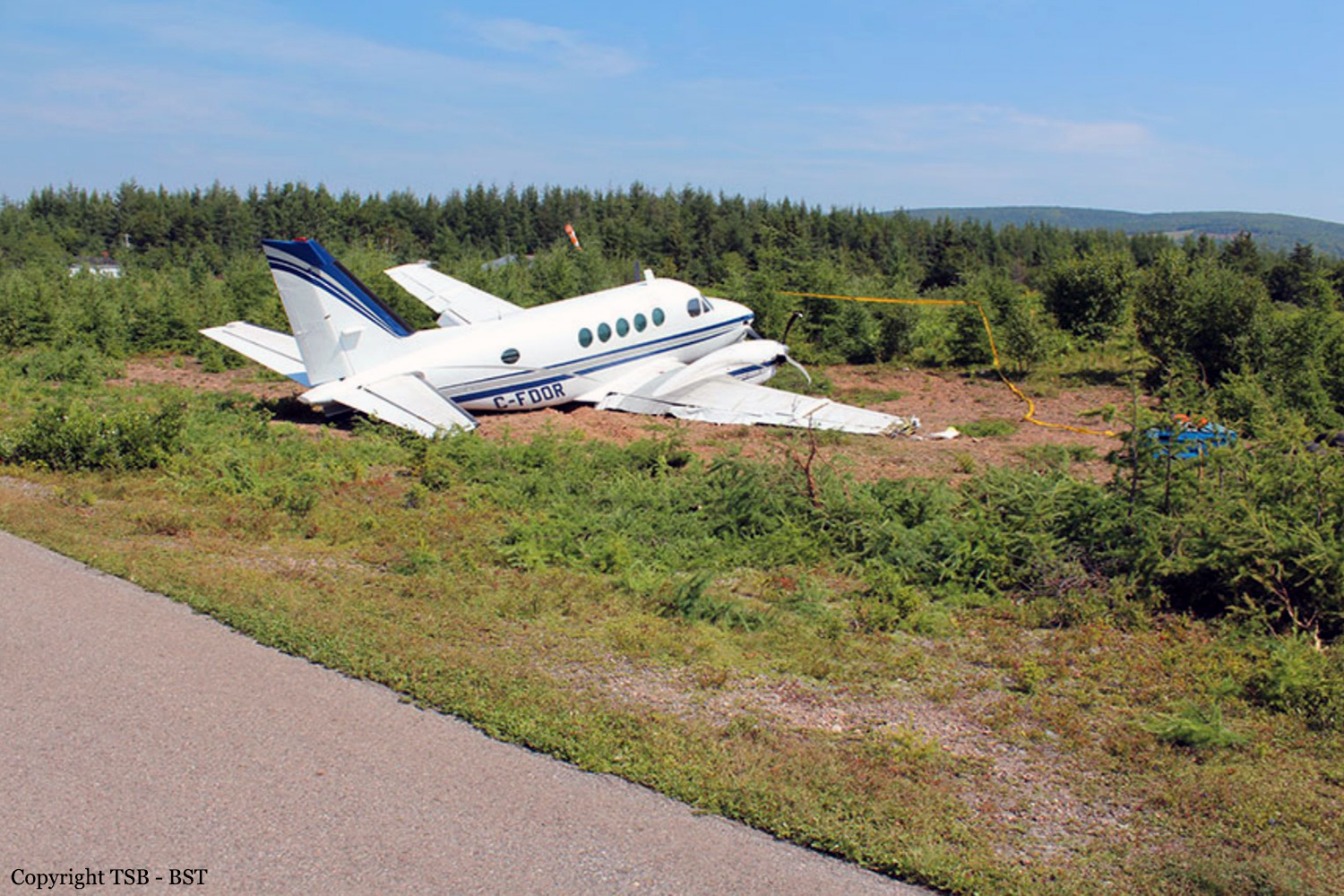
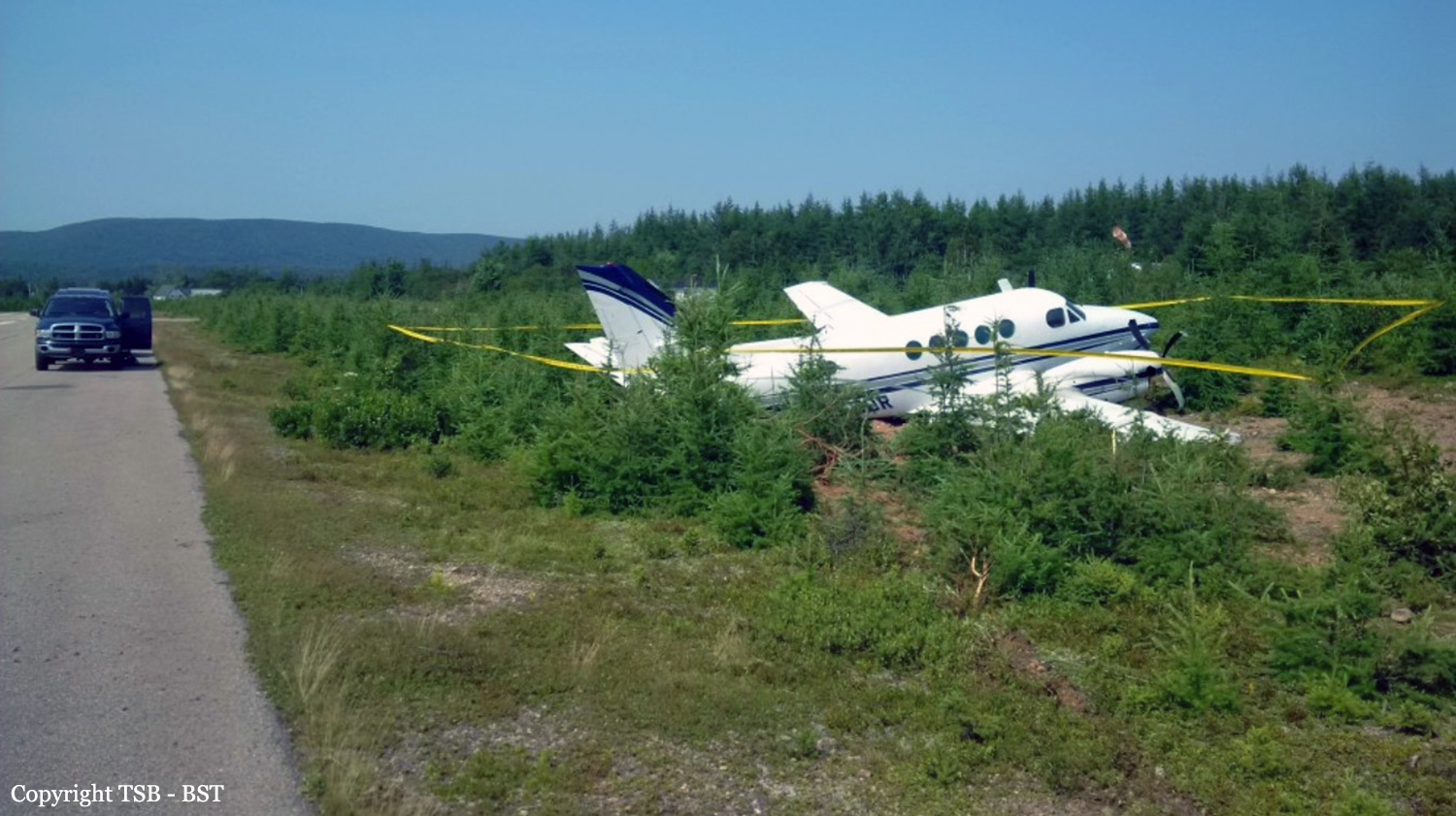
On 16 August 2015, a Maritime Air Charter Limited Beechcraft King Air A100 (registration C-FDOR, serial number B-103) was on a charter flight from Halifax Stanfield International Airport, Nova Scotia, to Margaree Aerodrome, Nova Scotia, with 2 pilots and 2 passengers on board. At approximately 1616 Atlantic Daylight Time, while conducting a visual approach to Runway 01, the aircraft touched down hard about 263 feet beyond the threshold. Almost immediately, the right main landing gear collapsed, then the right propeller and wing contacted the runway. The aircraft slid along the runway for about 1350 feet, then veered right and departed off the side of the runway. It came to rest about 1850 feet beyond the threshold and 22 feet from the runway edge. There were no injuries and there was no post-impact fire. The aircraft was substantially damaged. The occurrence took place during daylight hours. The 406-megahertz emergency locator transmitter did not activate.
Probable cause:
Findings:
Findings as to causes and contributing factors:
1. Neither pilot had considered that landing on a short runway at an unfamiliar aerodrome with known high terrain nearby and joining the circuit directly on a left base were hazards that may create additional risks, all of which would increase the crew’s workload.
2. The presence of the tower resulted in the pilot not flying focusing his attention on monitoring the aircraft’s location, rather than on monitoring the flight or the actions of the pilot flying.
3. The crew’s increased workload, together with the unexpected distraction of the presence of the tower, led to a reduced situational awareness that caused them to omit the Landing Checks checklist.
4. At no time during the final descent was the engine power increased above about 400 foot-pounds of torque.
5. Using only pitch to control the rate of descent prevented the pilot flying from precisely controlling the approach, which would have ensured that the flare occurred at the right point and at the right speed.
6. Neither pilot recognized that the steep rate of descent was indicative of an unstable approach.
7. Advancing the propellers to full would have increased the drag and further increased the rate of descent, exacerbating the already unstable approach.
8. The aircraft crossed the runway threshold with insufficient energy to arrest the rate of descent in the landing flare, resulting in a hard landing that caused the right main landing gear to collapse.
Findings as to risk:
1. If data recordings are not available to an investigation, then the identification and communication of safety deficiencies to advance transportation safety may be precluded.
2. If organizations do not use modern safety management practices, then there is an increased risk that hazards will not be identified and risks will not be mitigated.
3. If passenger seats installed in light aircraft are not equipped with shoulder harnesses, then there is an increased risk of passenger injury or death in the event of an accident.
4. If the experience and proficiency of pilots are not factored into crew selection, then there is a risk of suboptimal crew pairing, resulting in a reduction of safety margins.
5. If pilots do not carry out checklists in accordance with the company’s and manufacturer’s instructions, then there is a risk that a critical item may be missed, which could jeopardize the safety of the flight.
6. If crew resource management is not used and continuously fostered, then there is a risk that pilots will be unprepared to avoid or mitigate crew errors encountered during flight.
7. If organizations do not have a clearly defined go-around policy, then there is a risk that flight crews will continue an unstable approach, increasing the risk of an approach-and-landing accident.
8. If pilots are not prepared to conduct a go-around on every approach, then there is a risk that they may not respond to situations that require a go-around.
9. If operators do not have a stable approach policy, then there is a risk that an unstable approach will be continued to a landing, increasing the risk of an approach-andlanding accident.
10. If an organization’s safety culture does not fully promote the goals of a safety management system, then it is unlikely that it will be effective in reducing risk.
Other findings:
1. There were insufficient forward impact forces to automatically activate the emergency locator transmitter.
Final Report:

Crash of a Rockwell Sabreliner 60SC in San Diego: 4 killed

Date & Time: Aug 16, 2015 at 1103 LT
Type of aircraft:
Operator:
Registration:
N442RM
Flight Type:
Survivors:
No
Schedule:
San Diego - San Diego
MSN:
306-073
YOM:
1974
Flight number:
Eagle 1
Crew on board:
2
Crew fatalities:
Pax on board:
2
Pax fatalities:
Other fatalities:
Total fatalities:
4
Captain / Total flying hours:
4485
Captain / Total hours on type:
347.00
Copilot / Total flying hours:
6400
Aircraft flight hours:
13418
Circumstances:
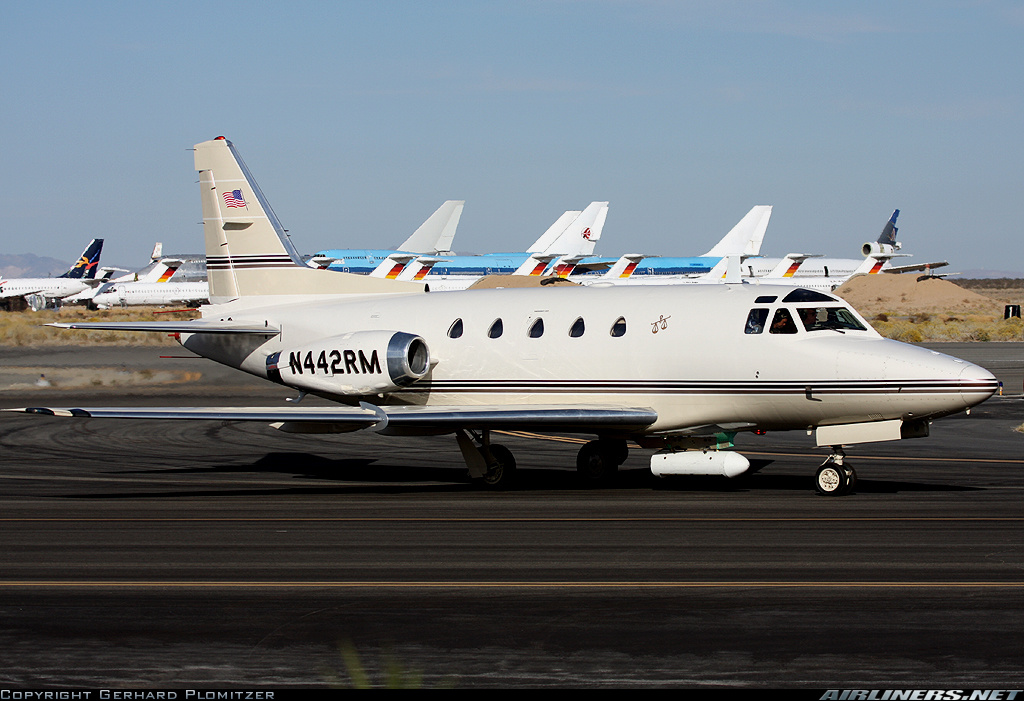
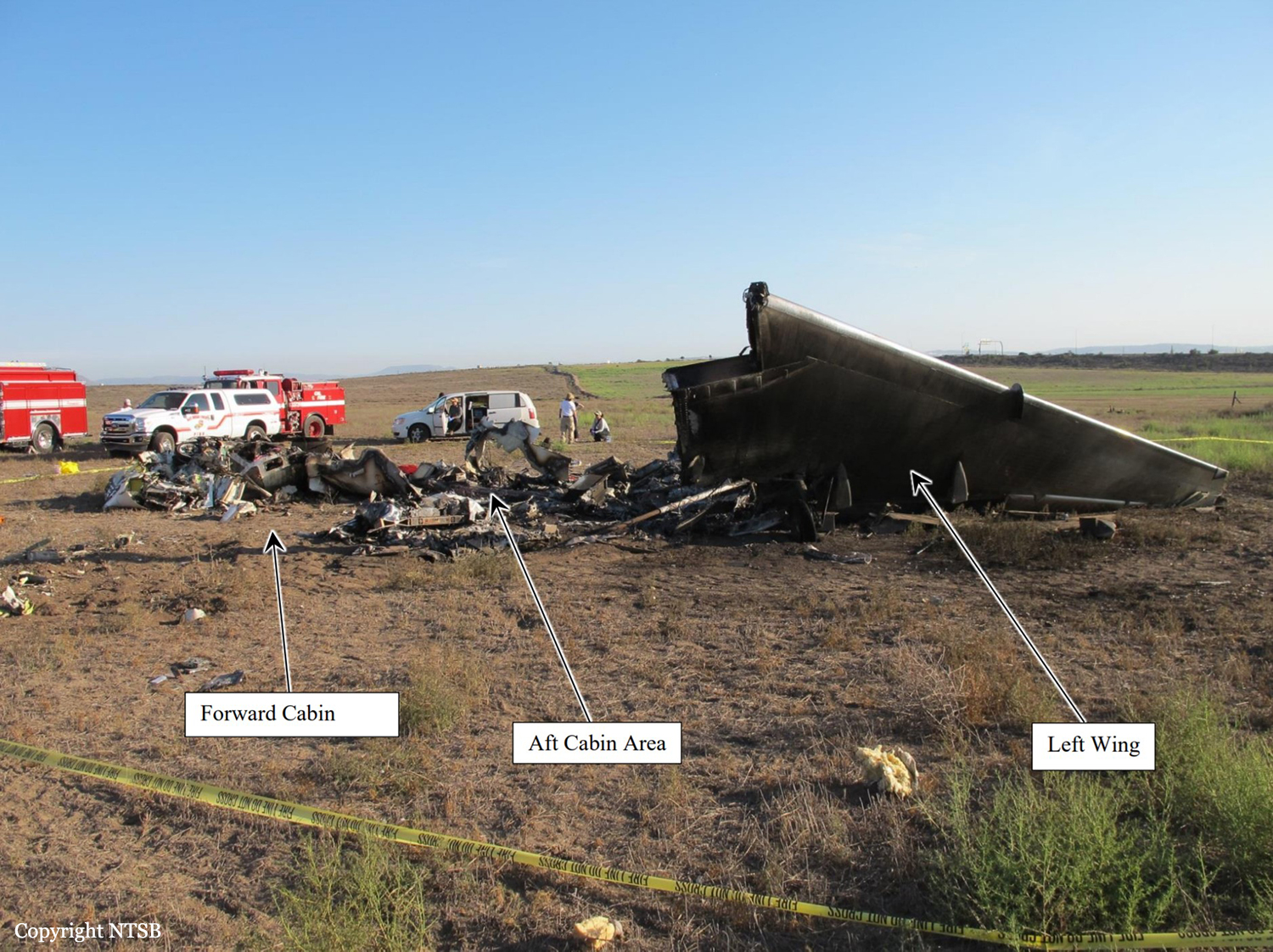
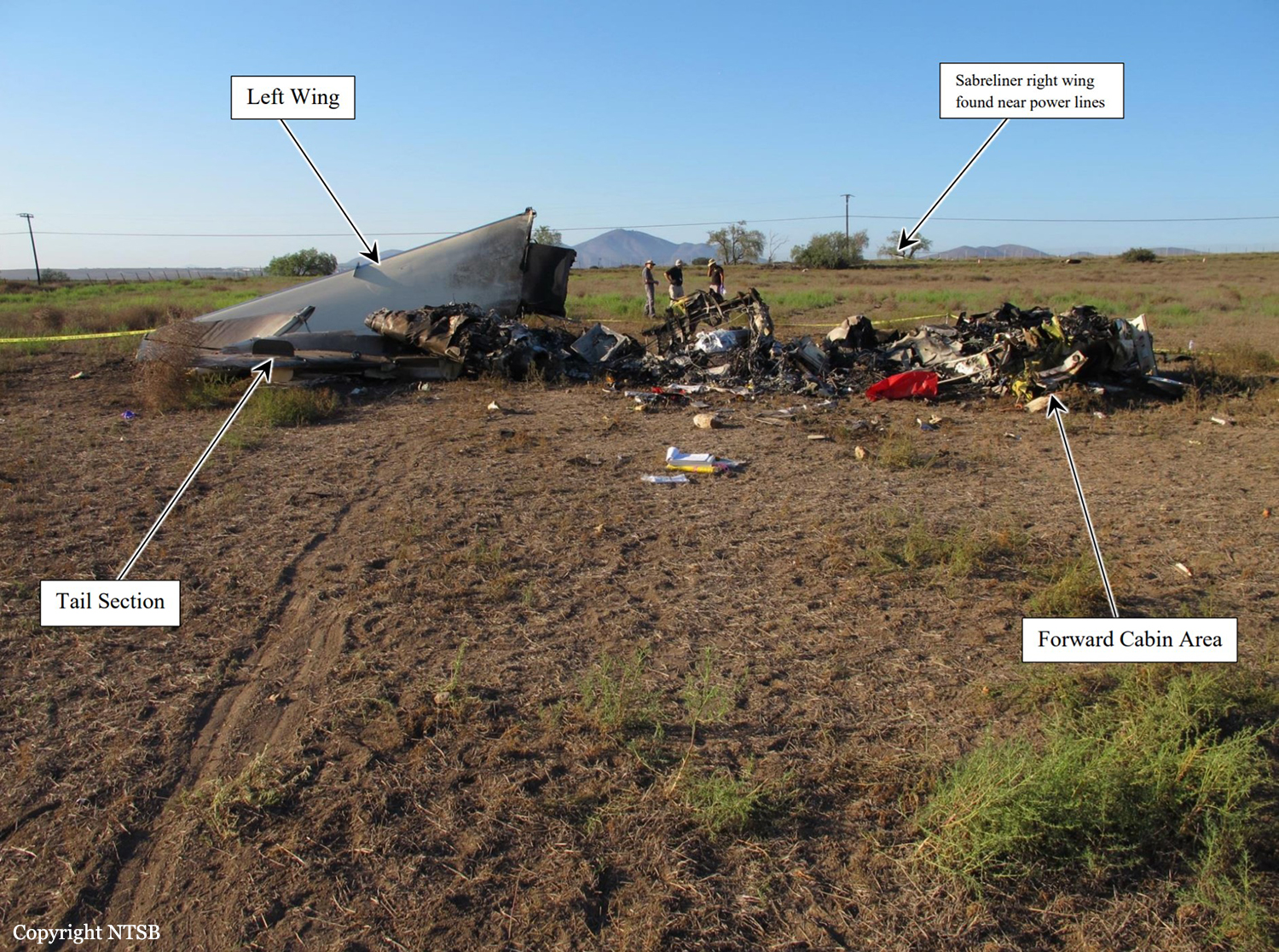
The Cessna 172 (N1285U) was conducting touch-and-go landings at Brown Field Municipal Airport (SDM), San Diego, California, and the experimental North American Rockwell NA265-60SC Sabreliner (N442RM, call sign Eagle1) was returning to SDM from a mission flight. SDM has two parallel runways, 8R/26L and 8L/26R; it is common in west operations for controllers to use a right traffic pattern for both runways 26R and 26L due to the proximity of Tijuana Airport, Tijuana, Mexico, to the south of SDM. On the morning of the accident, the air traffic control tower (ATCT) at SDM had both control positions (local and ground control) in the tower combined at the local control position, which was staffed by a local controller (LC)/controller-in-charge, who was conducting on-the-job training with a developmental controller (LC trainee). The LC trainee was transmitting control instructions for all operations; however, the LC was monitoring the LC trainee's actions and was responsible for all activity at that position. About 13 minutes before the accident, the N1285U pilot contacted the ATCT and requested touch-andgo landings in the visual flight rules (VFR) traffic pattern. About that time, another Cessna 172 (N6ZP) and a helicopter (N8360R) were conducting operations in the VFR traffic pattern, and a Cessna 206 Stationair (N5058U) was inbound for landing. Over the next 5 minutes, traffic increased, with two additional aircraft inbound for landing. (Figure 1 in the factual report for this accident shows the aircraft in the SDM traffic pattern about 8 minutes before the accident.) The LC trainee cleared the N1285U pilot for a touch-and-go on runway 26R; the pilot acknowledged the clearance and then advised the LC trainee that he was going to go around. The LC trainee advised the N1285U pilot to expect runway 26L on the next approach. At that time, three aircraft were using runway 26R (Global Express [N18WZ] was inbound for landing, N6ZP was on a right base for a touch-and-go, and a Cessna Citation [XALVV] was on short final) and three aircraft were using runway 26L (N1285U was turning right downwind for the touch-and-go, a Skybolt [N81962] was on a left downwind for landing, and N8360R was conducting a touch-and-go landing). After N1285U completed the touch-andgo on runway 26L, the pilot entered a right downwind for runway 26R. Meanwhile, Eagle1 was 9 miles west of the airport and requested a full-stop landing; the LC trainee instructed the Eagle1 flight crew to enter a right downwind for runway 26R at or above an altitude of 2,000 ft mean sea level. At this time, about 3 minutes before the accident, the qualified LC terminated the LC trainee's training and took over control of radio communications. From this time until the collision occurred, the LC was controlling nine aircraft. (Figure 2 and Figure 4 in the factual report for this accident show the total number of aircraft under ATCT control shortly before the accident.) During the next 2 minutes, the LC made several errors. For example, after N6ZP completed a touch-andgo on runway 26R, the pilot requested a right downwind departure from the area, which the LC initially failed to acknowledge. The LC also instructed the N5058U pilot, who had been holding short of runway 26L, that he was cleared for takeoff from runway 26R. Both errors were corrected. In addition, the LC instructed the helicopter pilot to "listen up. turn crosswind" before correcting the instruction 4 seconds later to "turn base." (Figure 2 in the factual report for this accident shows the aircraft in the traffic pattern about 2 minutes before the accident.) About 1 minute before the collision, the Eagle1 flight crew reported on downwind midfield and stated that they had traffic to the left and right in sight. At that time, N1285U was to Eagle1's right, between Eagle1 and the tower, and established on a right downwind about 500 ft below Eagle1's position. N6ZP was about 1 mile forward and to the left of Eagle1, heading northeast and departing the area. Mistakenly identifying the Cessna to the right of Eagle1 as N6ZP, the LC instructed the N6ZP pilot to make a right 360° turn to rejoin the downwind when, in fact, N1285U was the airplane to the right of Eagle1. (The LC stated in a postaccident interview that he thought the turn would resolve the conflict with Eagle1 and would help the Cessna avoid Eagle1's wake turbulence.) The N6ZP pilot acknowledged the LC's instruction and began turning; N1285U continued its approach to runway 26R. However, the LC never visually confirmed that the Cessna to Eagle1's right (N1285U) was making the 360° turn. Ten seconds later, the LC instructed the Eagle1 flight crew to turn base and land on runway 26R, which put the accident airplanes on a collision course. The LC looked to ensure that Eagle1 was turning as instructed and noticed that the Cessna on the right downwind (which he still mistakenly identified as N6ZP) had not begun the 360° turn that he had issued. The LC called the N6ZP pilot, and the pilot responded that he was turning. In the first communication between the LC and the N1285U pilot (and the first between the controllers in the ATCT and that airplane's pilot in almost 6 minutes), the LC transmitted the call sign of N1285U, which the pilot acknowledged. N1285U and Eagle1 collided as the LC tried to verify N1285U's position. A postaccident examination of both airplanes did not reveal any mechanical anomalies that would have prevented the airplanes from maneuvering to avoid an impact.
Probable cause:
The local controller's (LC) failure to properly identify the aircraft in the pattern and to ensure control instructions provided to the intended Cessna on downwind were being performed before turning Eagle1 into its path for landing. Contributing to the LC's actions was his incomplete situational awareness when he took over communications from the LC trainee due to the high workload at the time of the accident. Contributing to the accident were the inherent limitations of the see-and-avoid concept, resulting in the inability of the pilots involved to take evasive action in time to avert the collision.
Final Report:
Crash of a Pacific Aerospace PAC750XL in Ninia: 1 killed

Date & Time: Aug 12, 2015 at 0748 LT
Operator:
Registration:
PK-KIG
Survivors:
Yes
Schedule:
Wamena – Ninia
MSN:
170
YOM:
2010
Country:
Region:
Crew on board:
1
Crew fatalities:
Pax on board:
5
Pax fatalities:
Other fatalities:
Total fatalities:
1
Captain / Total flying hours:
1537
Captain / Total hours on type:
395.00
Aircraft flight hours:
757
Aircraft flight cycles:
1315
Circumstances:
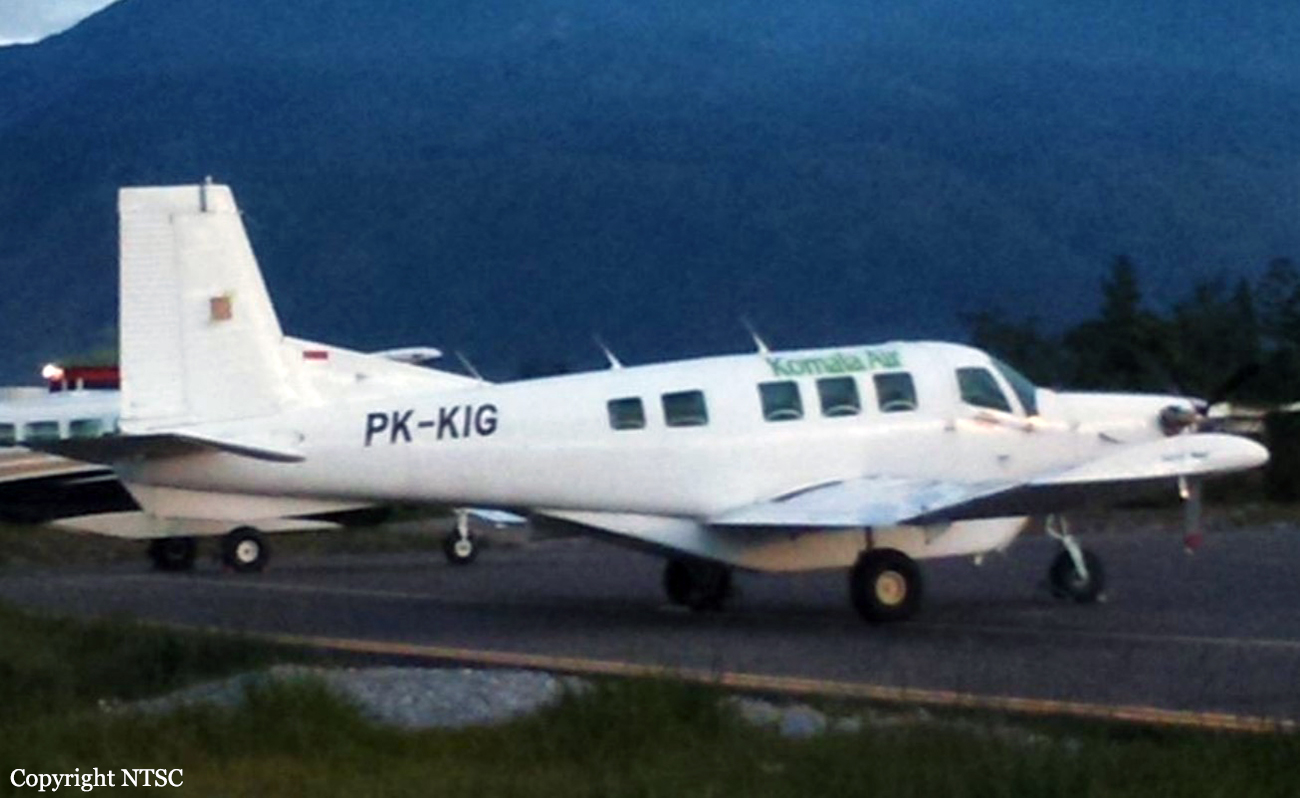
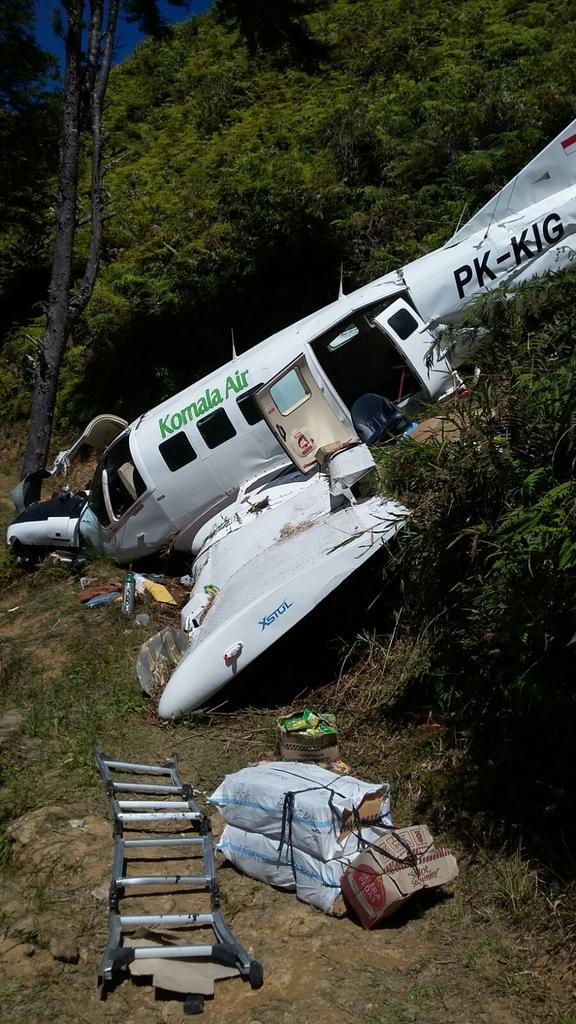
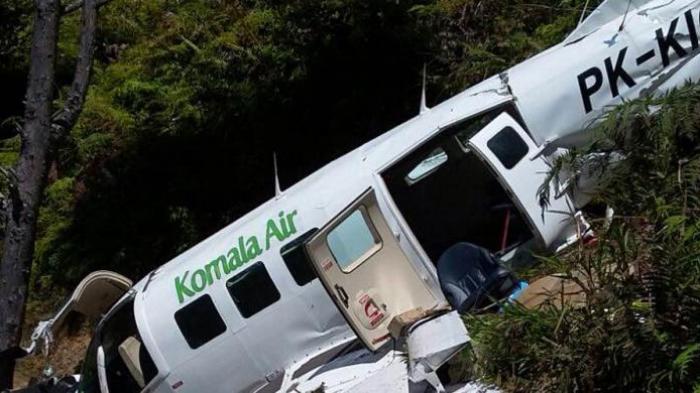
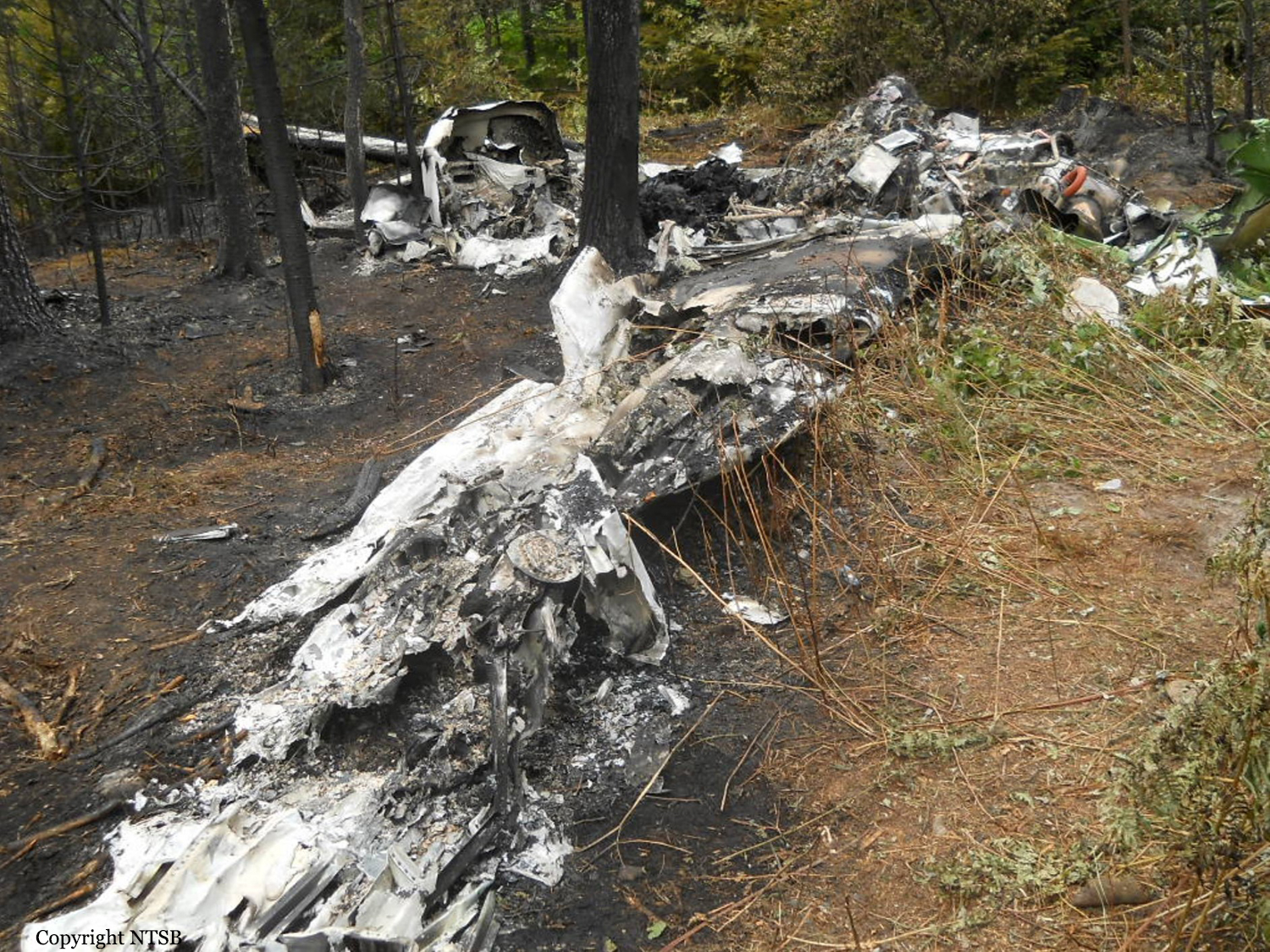
On 12 August 2015, a PAC-750XL aircraft, registered PK-KIG, was being operated by PT. Komala Indonesia on an unscheduled passenger flight from Wamena Airport (WAJW) Papua to Ninia Airstrip , Yahukimo, Papua that was located on radial 127° from Wamena with a distance of approximately 26 Nm. At 0733 LT (2233 UTC), the aircraft departed from Wamena Airport with an estimated time of arrival at Ninia of 2248 UTC. The flight was uneventful until approaching Ninia. On board the aircraft were one pilot, one engineer and 4 passengers. According to the pilot statement, an airspeed indicator malfunction occurred during flight. Video footage taken by a passenger showed that, during the approach at an altitude of approximately 6,500 feet, the airspeed indicators indicated zero and the aural stall warning activated. The aircraft then flew on the left side and parallel to the runway. Thereafter the aircraft climbed, turned left and impacted the ground about 200 meters south-west of the runway. The engineer on board was fatally injured, one passenger had minor injuries and the other occupants, including the pilot, were seriously injured. Two occupants were evacuated to a hospital in Jayapura Airport and four others, including the fatally injured, were evacuated to a hospital in Wamena.
Probable cause:
The following findings were identified:
1. Continuing the flight with both airspeed indicators unserviceable increased the complexity of the flight combined with high-risk aerodrome increased the pilot workload.
2. The improper corrective action at the time of the aural stall warning activating on the final approach, and the aircraft flew to insufficient area for a safe maneuver.
3. The unfamiliarity to the airstrip resulted in inappropriate subsequent escape maneuver and resulted in the aircraft stalling.
4. The pilot was not provided with appropriate training and familiarization to fly into a high-risk airstrip
Final Report:

Crash of a Cessna 421B Golden Eagle II in Clovis

Date & Time: Aug 9, 2015 at 0925 LT
Registration:
N726JB
Flight Type:
Survivors:
Yes
Schedule:
Melrose – Clovis
MSN:
421B-0020
YOM:
1970
Crew on board:
1
Crew fatalities:
Pax on board:
0
Pax fatalities:
Other fatalities:
Total fatalities:
0
Captain / Total flying hours:
3700
Captain / Total hours on type:
300.00
Circumstances:
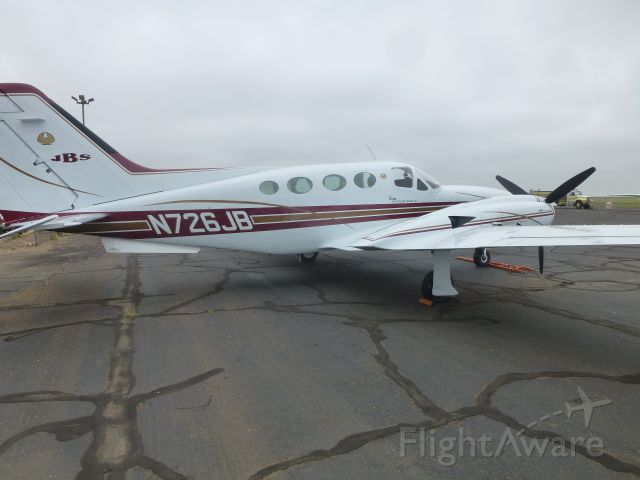
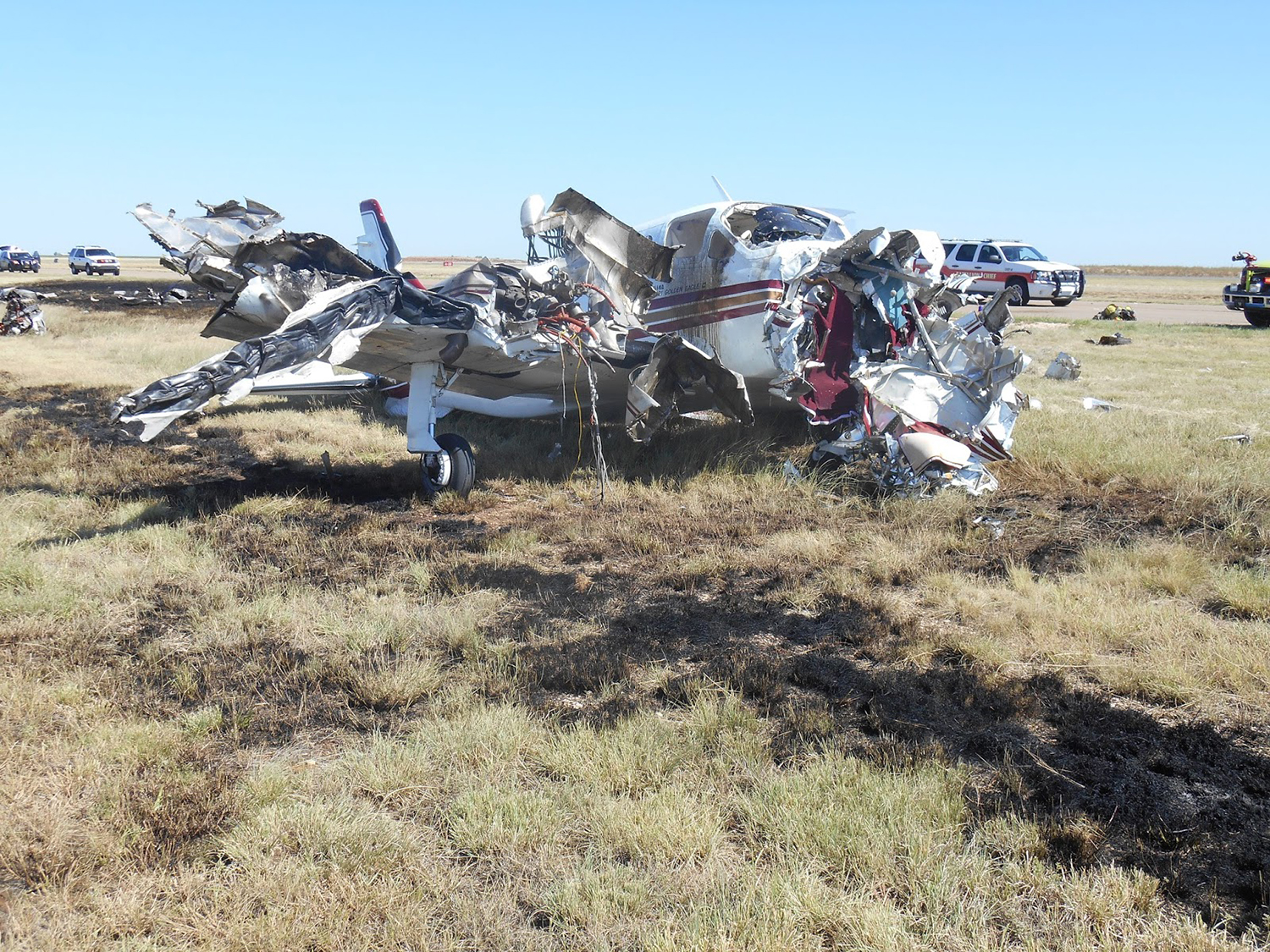
The private pilot reported that he was approaching the airport for landing in the multi-engine airplane when both engines began to surge. The pilot attempted to switch to the auxiliary fuel tanks, but inadvertently switched the left engine fuel selector to the off position. The left engine subsequently experienced a total loss of engine power. On final approach for landing, the airplane impacted terrain and was subsequently consumed by a postimpact fire; the fuel onboard the airplane at the time of the accident could not be determined. An examination of the airplane's engines and systems revealed no mechanical anomalies that would have precluded normal operation.
Probable cause:
The pilot's improper management of fuel to the left engine during approach for landing, which resulted in a total loss of left engine power due to fuel starvation, and his subsequent failure to maintain control during the final landing approach, which resulted in collision with terrain.
Final Report:
Crash of a Piper PA-46-500TP Malibu Meridian in Saranac Lake: 4 killed

Date & Time: Aug 7, 2015 at 1750 LT
Operator:
Registration:
N819TB
Flight Phase:
Flight Type:
Survivors:
No
Schedule:
Saranac Lake – Rochester
MSN:
46-97117
YOM:
2001
Crew on board:
1
Crew fatalities:
Pax on board:
3
Pax fatalities:
Other fatalities:
Total fatalities:
4
Captain / Total flying hours:
4620
Captain / Total hours on type:
230.00
Circumstances:
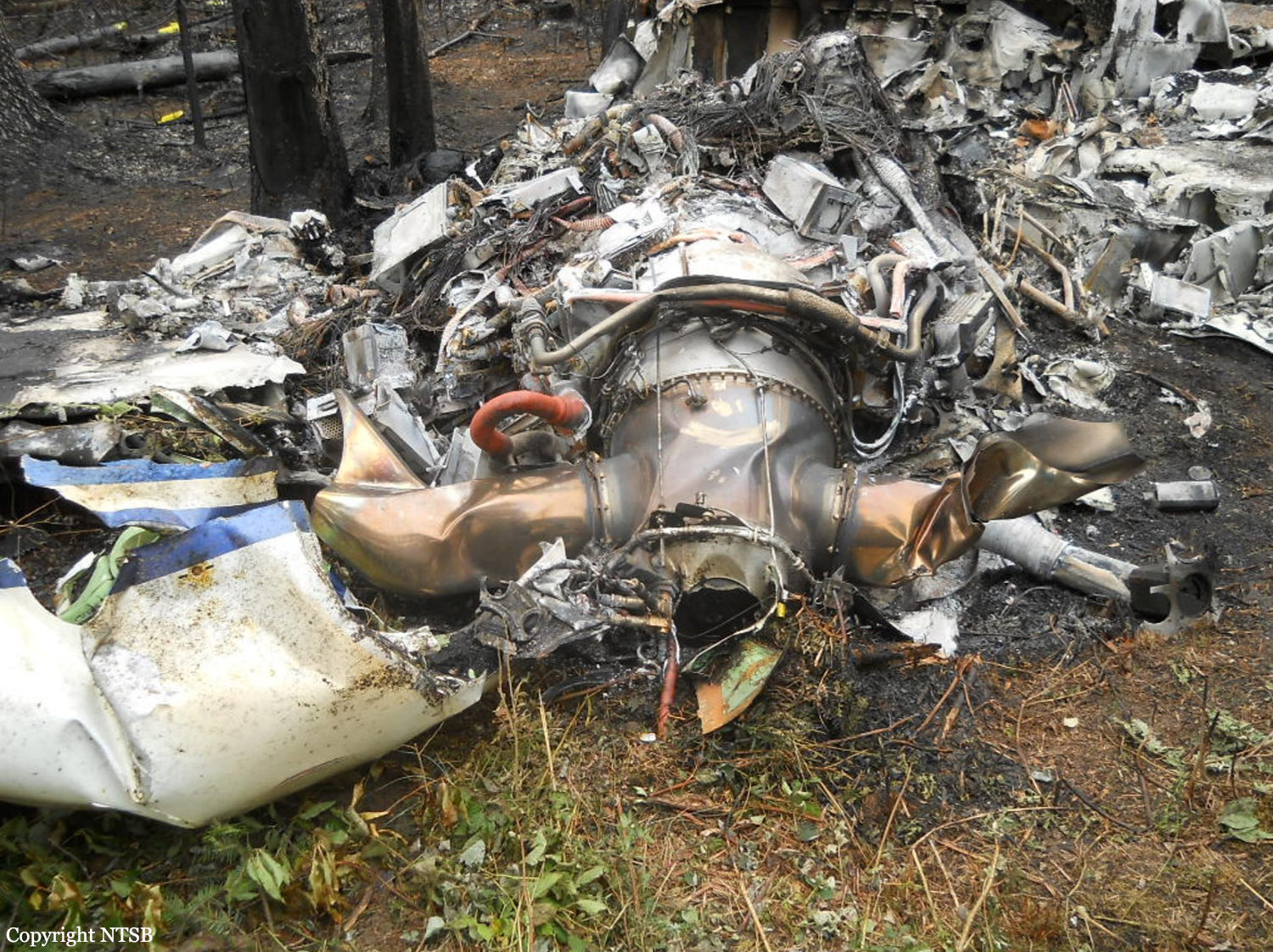
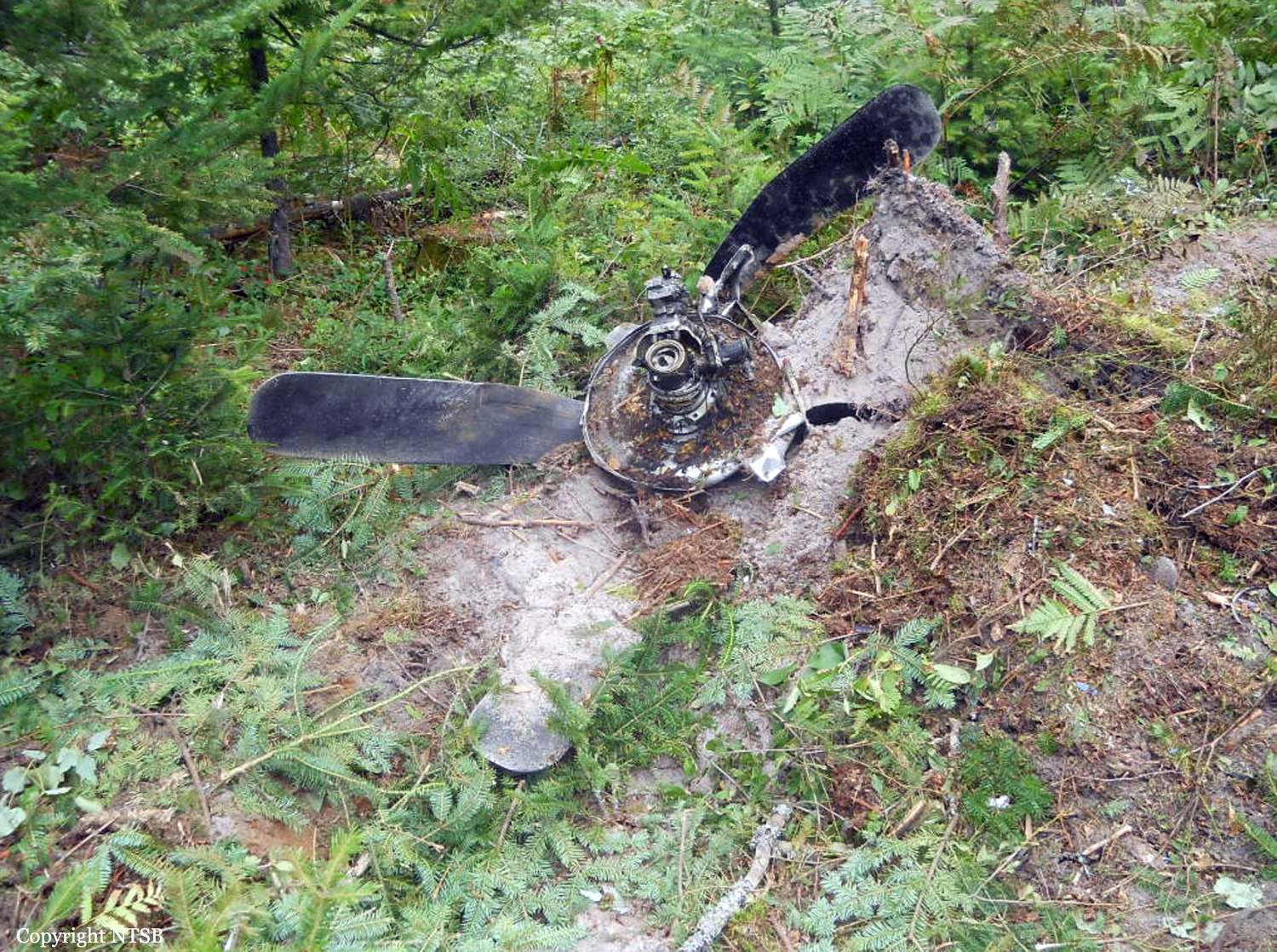
The private pilot, who was experienced flying the accident airplane, was conducting a personal flight with three passengers on board the single-engine turboprop airplane. Earlier that day, the pilot flew uneventfully from his home airport to an airport about 1 hour away. During takeoff for the return flight, the airplane impacted wooded terrain about 0.5 mile northwest of the departure end of the runway. There were no witnesses to the accident, but the pilot's radio communications with flight service and on the common traffic advisory frequency were routine, and no distress calls were received. A postcrash fire consumed a majority of the wreckage, but no preimpact mechanical malfunctions were observed in the remaining wreckage. Examination of the propeller revealed that the propeller reversing lever guide pin had been installed backward. Without the guide pin installed correctly, the reversing lever and carbon block could dislodge from the beta ring and result in the propeller blades traveling to an uncommanded feathered position. However, examination of the propeller components indicated that the carbon block was in place and that the propeller was in the normal operating range at the time of impact. Additionally, the airplane had been operated for about 9 months and 100 flight hours since the most recent annual inspection had been completed, which was the last time the propeller was removed from and reinstalled on the engine. Therefore, the improper installation of the propeller reversing lever guide pin likely did not cause the accident. Review of the pilot's autopsy report revealed that he had severe coronary artery disease with 70 to 80 percent stenosis of the right coronary artery, 80 percent stenosis of the left anterior descending artery, and mitral annular calcification. The severe coronary artery disease combined with the mitral annular calcification placed the pilot at high risk for an acute cardiac event such as angina, a heart attack, or an arrhythmia. Such an event would have caused sudden symptoms such as chest pain, shortness of breath, palpitations, or fainting/loss of consciousness and would not have left any specific evidence to be found during the autopsy. It is likely that the pilot was acutely impaired or incapacitated at the time of the accident due to an acute cardiac event, which resulted in his loss of airplane control.
Probable cause:
The pilot's loss of airplane control during takeoff, which resulted from his impairment or incapacitation due to an acute cardiac event.
Final Report:
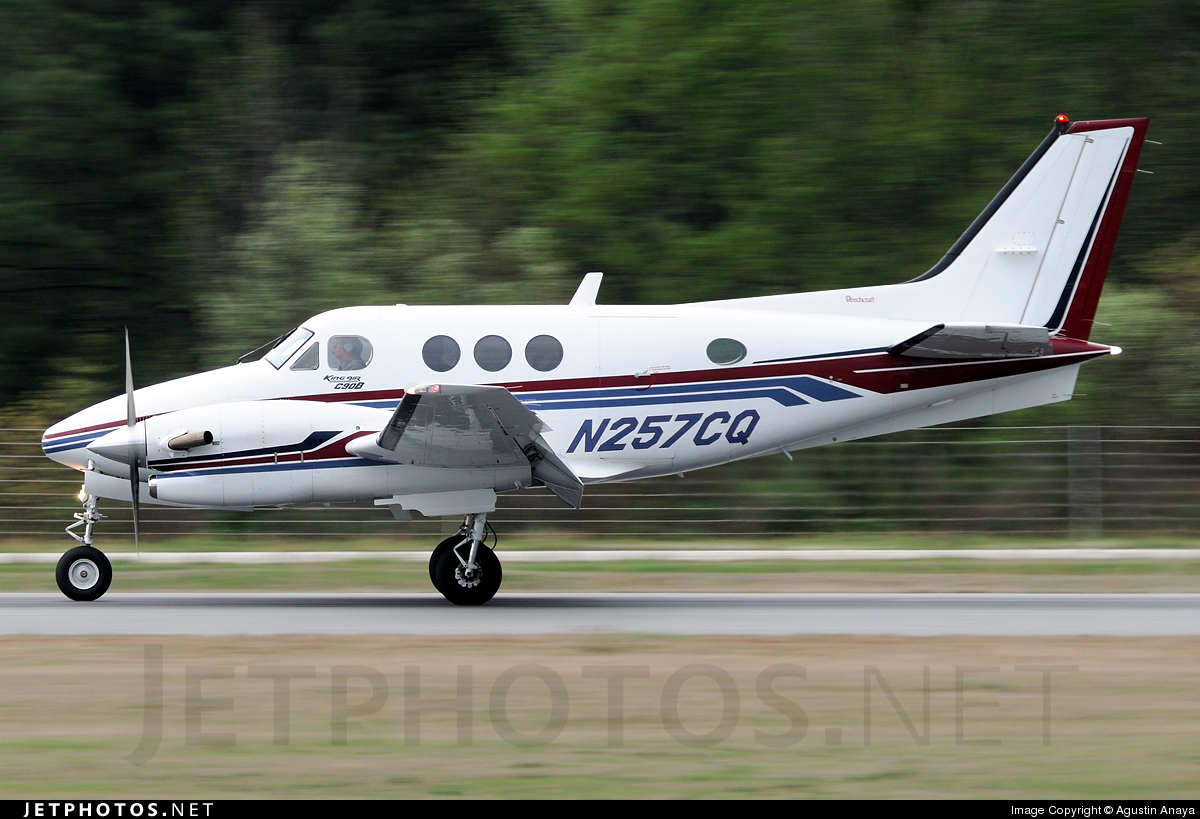
Crash of a Beechcraft C90B King Air in Georgetown

Date & Time: Aug 1, 2015 at 2100 LT
Type of aircraft:
Operator:
Registration:
N257CQ
Flight Type:
Survivors:
Yes
Schedule:
Dayton – Somerset
MSN:
LJ-1419
YOM:
1995
Crew on board:
1
Crew fatalities:
Pax on board:
3
Pax fatalities:
Other fatalities:
Total fatalities:
0
Captain / Total flying hours:
3182
Captain / Total hours on type:
1122.00
Aircraft flight hours:
2324
Circumstances:
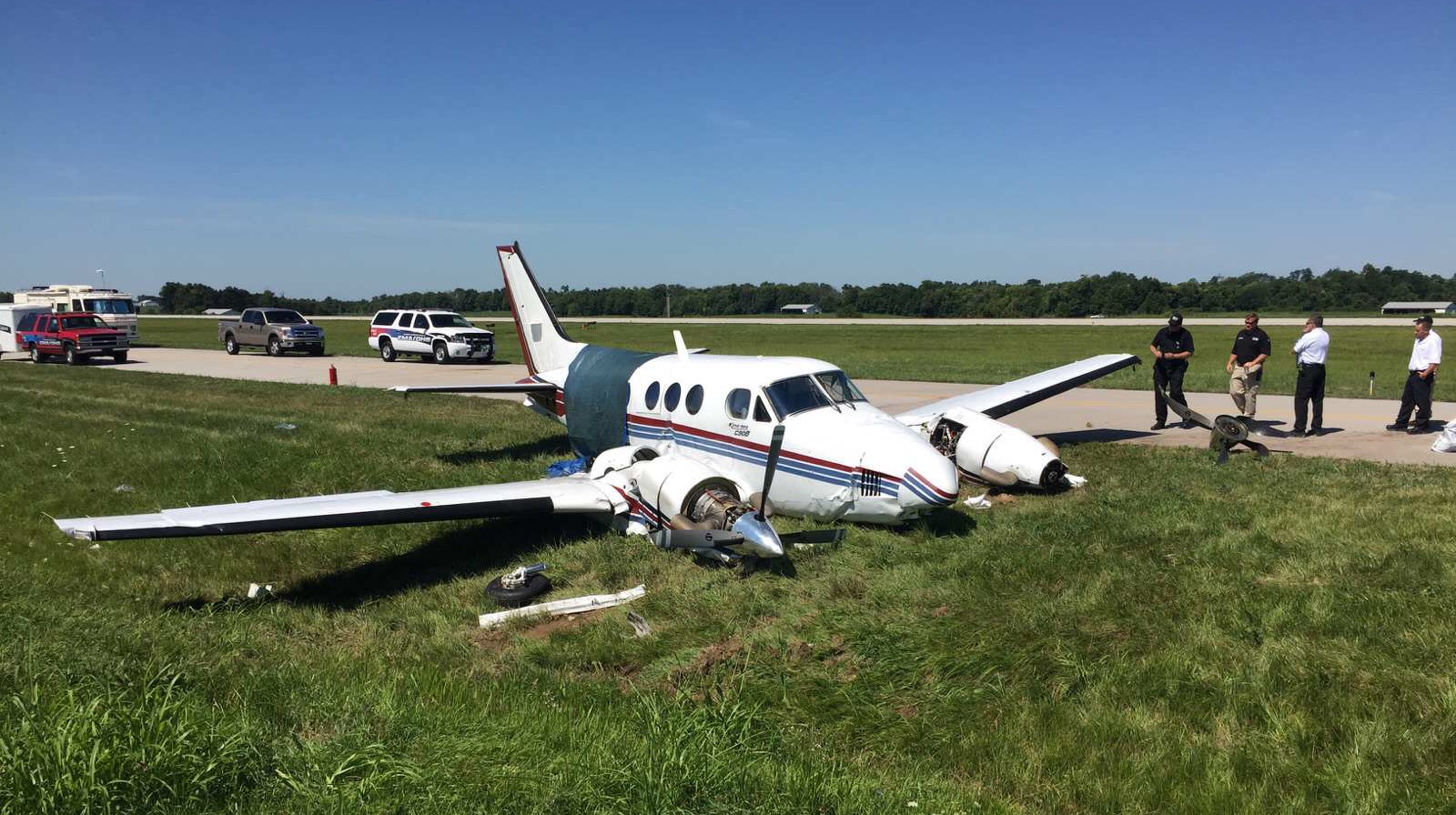
The airplane was fueled with 140 gallons of fuel before the second of three flight segments. The pilot reported that, while en route on the third segment, a fuel crossfeed light illuminated. He reset the indicator and decided to land the airplane to troubleshoot. He requested to divert to the nearest airport, which was directly beneath the airplane. Subsequently, the right engine lost power, and the autofeather system feathered the right engine propeller. He reduced power on the left engine, lowered the nose, and extended the landing gear while entering the traffic pattern. The pilot indicated that, after the landing gear was extended, the electrical system "failed," and shortly after, the left engine would not respond to power lever inputs. As the flight was on a base leg approach, the airplane was below the intended flightpath to reach the runway. The pilot stated that he pulled "gently on the control wheel"; however, the airplane impacted an embankment and came to rest on airport property, which resulted in substantial damage to both wings and the fuselage. Postaccident examination of the engines and airframe revealed no evidence of mechanical malfunctions or abnormalities that would have precluded normal operation. Signatures on the left propeller indicated that the engine was likely producing power at the time of impact; however, actual power settings could not be conclusively determined. Signatures on the right propeller indicated that little or no power was being produced. The quantity of fuel in the airplane's fuel system, as well as the configuration of the fuel system at the time of the accident, could not be determined based on the available evidence. Although the position of the master switch (which includes the battery, generator 1, and generator 2) was found in the OFF position, the airplane had been operating for about 30 minutes when the electrical power was lost; thus, it is likely that the airplane had been operating on battery power throughout the flight. This could have been the result of the pilot's failure to activate, or his inadvertent deactivation of, the generator 1 and 2 switch. If the flight were operating on battery power, it would explain what the pilot described as an electrical system failure after the landing gear extension due to the exhaustion of the airplane's battery. The postaccident examination of the left engine and propeller revealed that the engine was likely producing some power at the time of impact, and an explanation for why the engine reportedly did not respond to the pilot's throttle movements could not be determined. Additionally, given the available evidence, the reason for the loss of power to the right engine could not be determined.
Probable cause:
Undetermined based on the available evidence.
Final Report:
Crash of an Embraer EMB-120 Brasilía in Moscow

Date & Time: Jul 31, 2015 at 1810 LT
Type of aircraft:
Operator:
Registration:
VQ-BBX
Survivors:
Yes
Schedule:
Ulyanovsk - Moscow
MSN:
120-205
YOM:
1990
Flight number:
7R226
Country:
Region:
Crew on board:
3
Crew fatalities:
Pax on board:
28
Pax fatalities:
Other fatalities:
Total fatalities:
0
Circumstances:
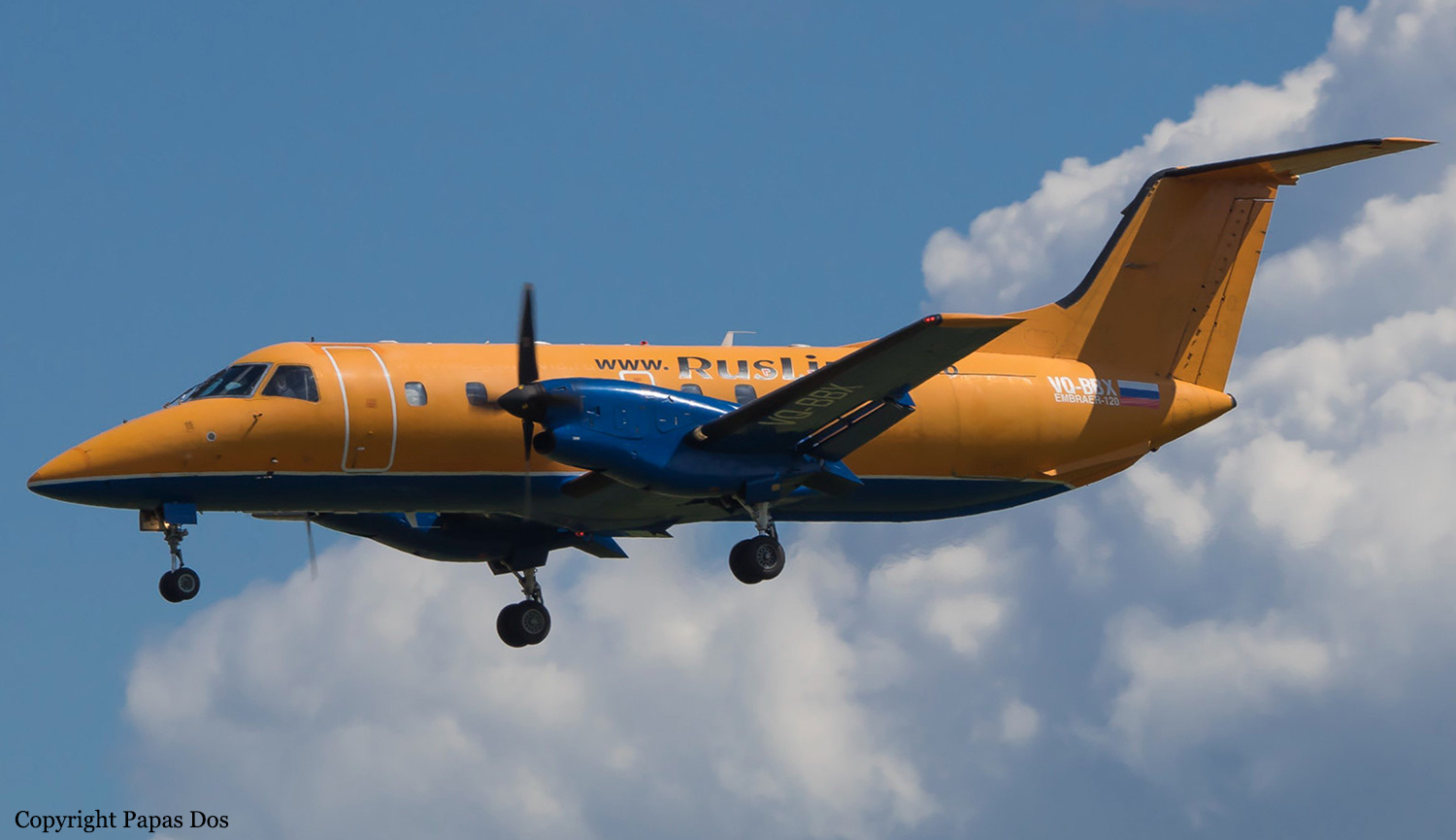
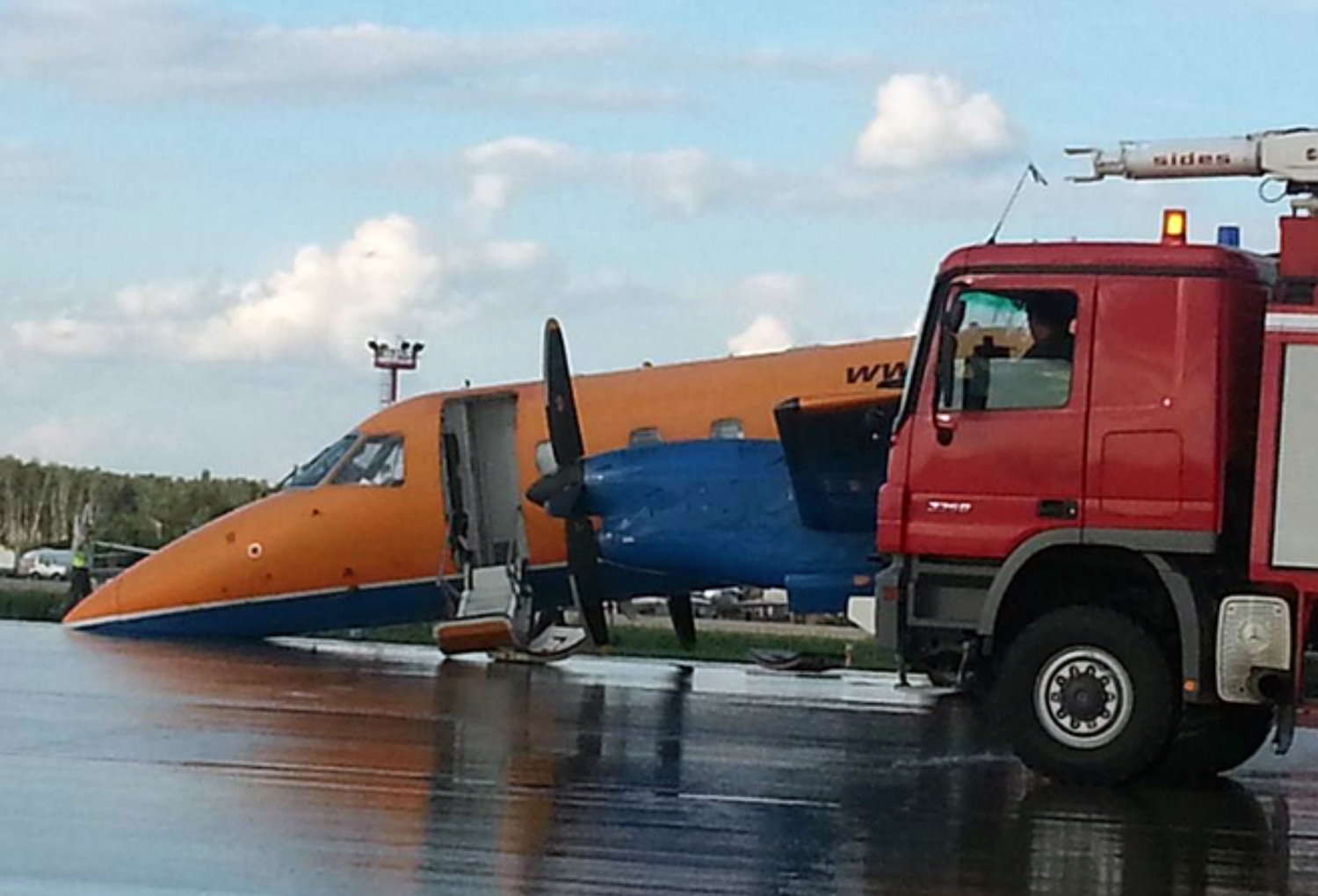
Following an uneventful flight from Ulyanovsk, the crew started the descent to Moscow-Domodedovo Airport. While following the approach checklist, the crew realized that the nose gear failed to deploy and remained stuck in its wheel well. Several attempts to lower the gear manually failed and the crew eventually decided to carry out a nose gear-up landing on runway 32L. After a holding circuit of about 45 minutes, the aircraft landed then slid on its nose for few dozen metres before coming to rest. All 31 occupants evacuated safely and the aircraft was damaged beyond repair.

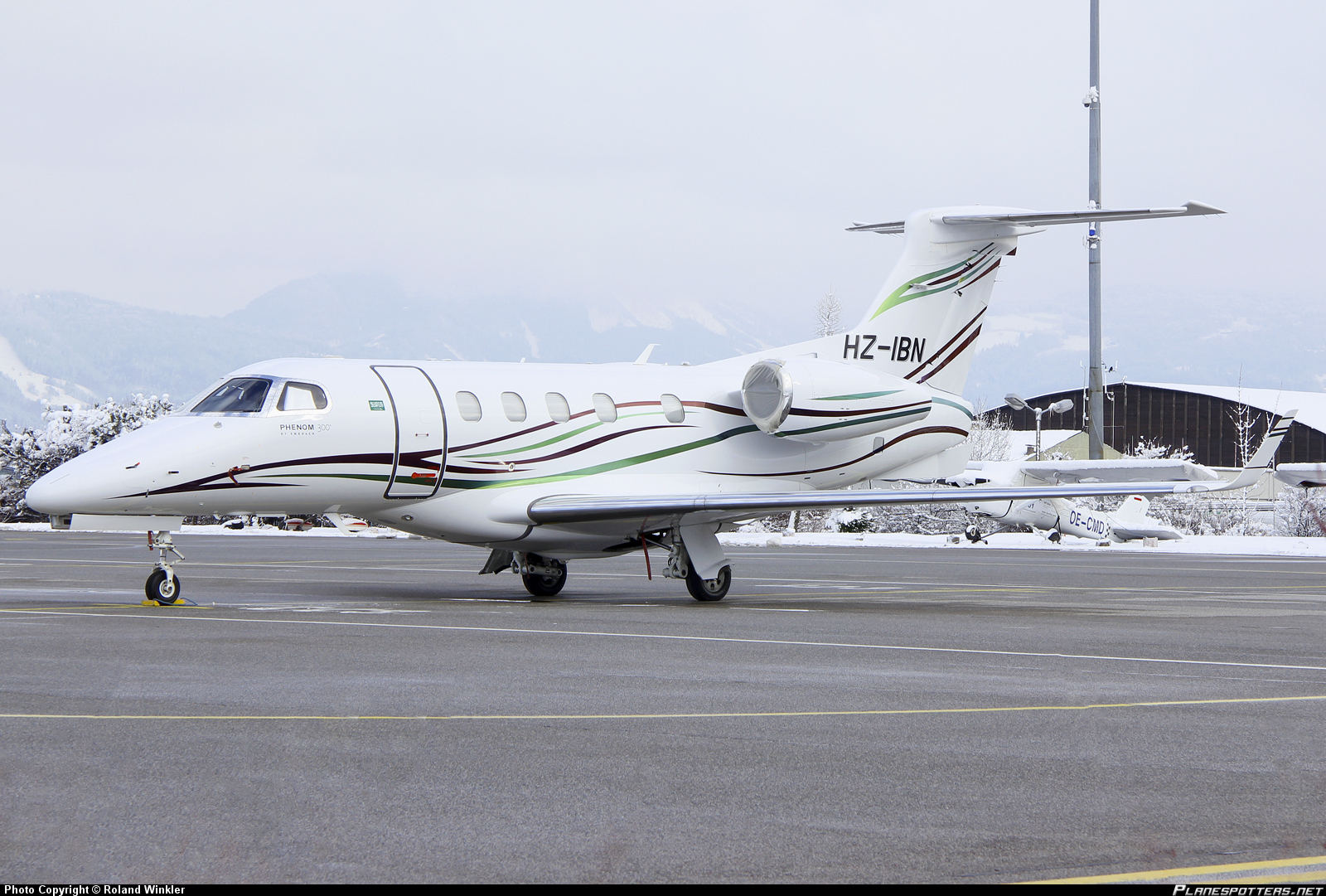
Crash of an Embraer EMB-505 Phenom 300 in Blackbushe: 4 killed

Date & Time: Jul 31, 2015 at 1508 LT
Type of aircraft:
Registration:
HZ-IBN
Flight Type:
Survivors:
No
Schedule:
Milan - Blackbushe
MSN:
505-00040
YOM:
2010
Region:
Crew on board:
1
Crew fatalities:
Pax on board:
3
Pax fatalities:
Other fatalities:
Total fatalities:
4
Captain / Total flying hours:
11000
Captain / Total hours on type:
1180.00
Aircraft flight hours:
2409
Aircraft flight cycles:
1377
Circumstances:
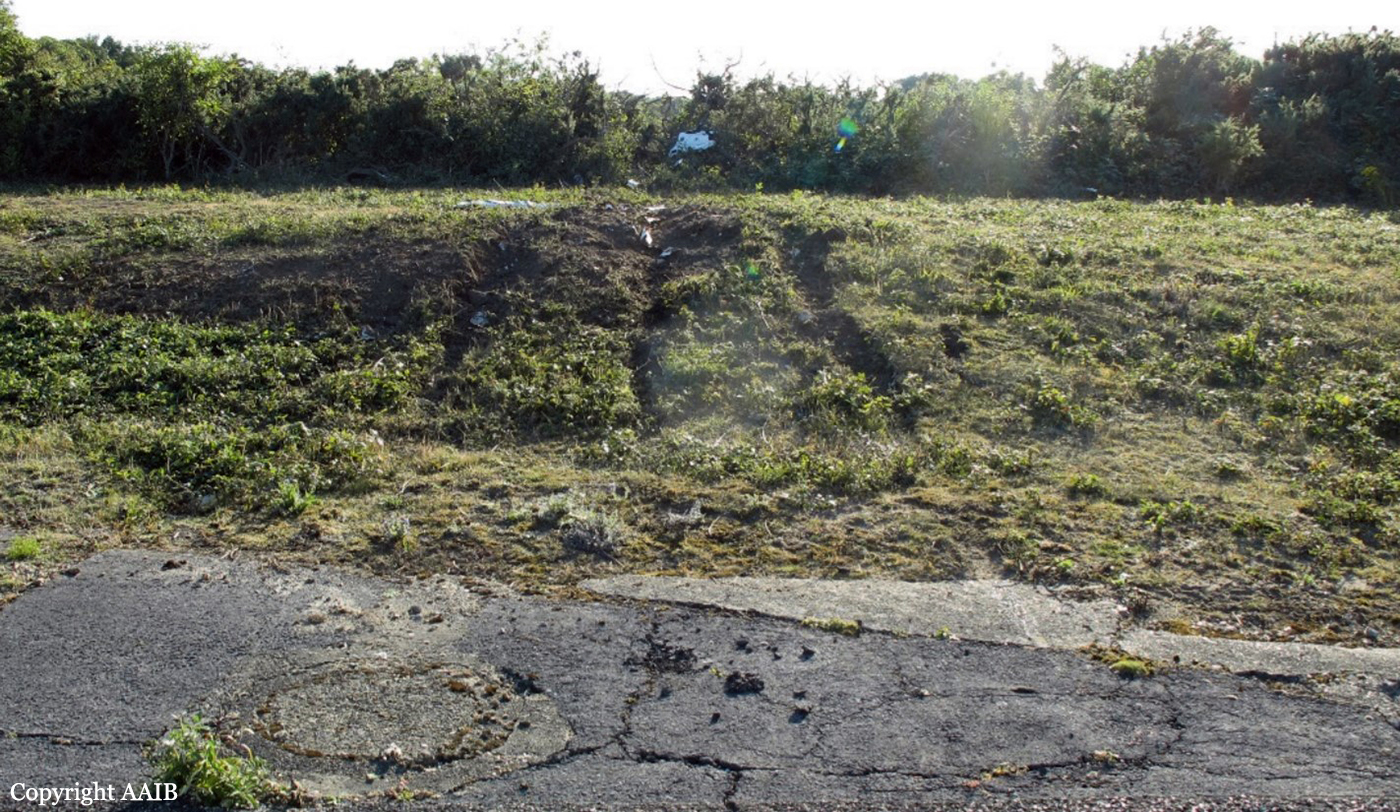
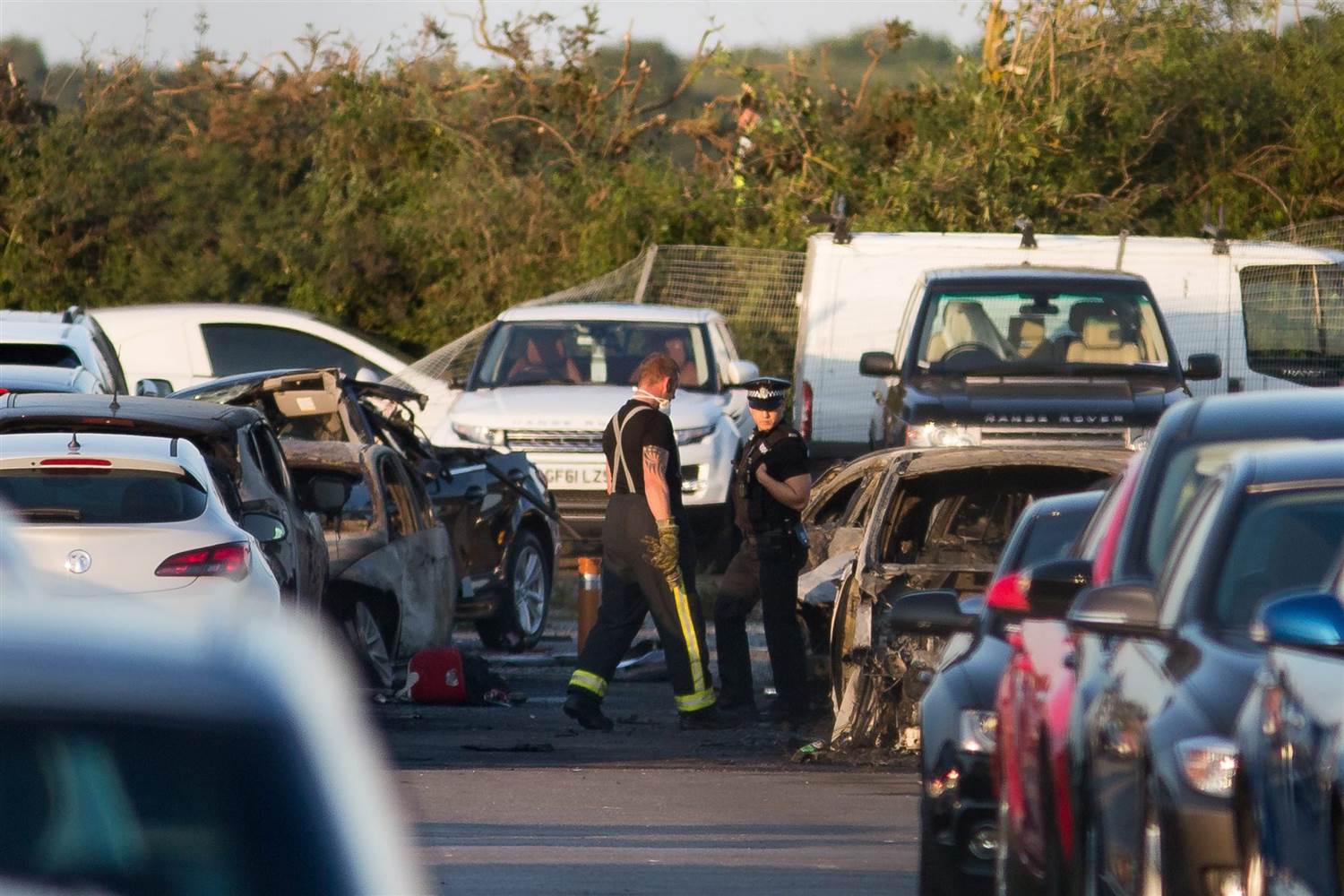
The aircraft had positioned to Milan earlier in the day, flown by the same pilot, and was returning to Blackbushe with the pilot and three passengers on board. After descending through the London Terminal Manoeuvring Area (TMA) it was handed over from London Control to Farnborough Approach. Its descent continued towards Blackbushe and, having reported that he had the airfield in sight, the pilot was instructed to descend at his own discretion. When the aircraft was approximately four miles south of its destination, he was instructed to contact Blackbushe Information. The weather at Blackbushe was fine with light and variable winds, visibility in excess of ten kilometres, and no low cloud. HZ-IBN entered the left-hand circuit for Runway 25 via the crosswind leg. Towards the end of the downwind leg, it overtook an Ikarus C42 microlight aircraft, climbing to pass ahead of and above that aircraft. As the climb began, at approximately 1,000 ft aal, the TCAS of HZ-IBN generated a ‘descend’ RA alert to resolve a conflict with the microlight. The TCAS RA changed to ‘maintain vertical speed’ and then ‘adjust vertical speed’, possibly to resolve a second conflict with a light aircraft which was above HZ-IBN and to the east of the aerodrome. Neither the microlight nor the light aircraft was equipped with TCAS. Following this climb, HZ-IBN then flew a curving base leg, descending at up to 3,000 feet per minute towards the threshold of Runway 25. The aircraft’s TCAS annunciated ‘clear of conflict’ when HZ-IBN was 1.1 nm from the runway threshold, at 1,200 ft aal, and at a speed of 146 KIAS, with the landing gear down and flap 3 selected. The aircraft continued its approach at approximately 150 KIAS. Between 1,200 and 500 ft aal the rate of descent averaged approximately 3,000 fpm, and at 500 ft aal the descent rate was 2,500 fpm. The aircraft’s TAWS generated six ‘pull up’ warnings on final approach. The aircraft crossed the Runway 25 threshold at approximately 50 ft aal at 151 KIAS. The aircraft manufacturer calculated that the appropriate target threshold speed for the aircraft’s mass and configuration was 108 KIAS. The AFISO initiated a full emergency as the aircraft touched down, because “it was clear at this time that the aircraft was not going to stop”. Tyre marks made by the aircraft at touchdown indicated that it landed 710 m beyond the Runway 25 threshold. The Runway 25 declared Landing Distance Available (LDA) was 1,059 m; therefore the aircraft touched down 349 m before the end of the declared LDA. The paved runway surface extended 89 m beyond the end of the LDA. The aircraft continued along the runway, decelerating, but departed the end of the paved surface at a groundspeed of 83 kt (84 KIAS airspeed) and struck an earth bank, which caused the aircraft to become airborne again. It then struck cars in a car park, part of a large commercial site adjacent to the aerodrome. The wing separated from the fuselage, and the fuselage rolled left through 350° before coming to rest on top of the detached wing, on a heading of 064°(M), 30° right side down and in an approximately level pitch attitude. A fire broke out in the underside of the aft fuselage and burned with increasing intensity. The aerodrome’s RFFS responded to the crash alarm but their path to the accident site was blocked by a locked gate between the aerodrome and commercial site. The first two RFFS vehicles arrived at the gate 1 minute and 34 seconds after the aircraft left the runway end. The third RFFS vehicle, which carried a key for the gate, arrived approximately one minute later, and the three RFFS vehicles proceeded through the gate 2 minutes and 46 seconds after the aircraft left the runway. As the aircraft was located in an area of the car park surrounded by a 2.4 m tall wire mesh fence, the RFFS vehicles had to drive approximately 400 m to gain access to the accident site. Despite applying all their available media, the RFFS was unable to bring the fire under control. The intensity of the fire meant that it was not possible to approach the aircraft to save life. All four occupants of the aircraft survived the impact and subsequently died from the effects of fire. Subsequently, local authority fire appliances arrived and the fire was extinguished.
Probable cause:
The pilot was appropriately licensed and experienced, and had operated into Blackbushe Aerodrome on 15 previous occasions. He was reported to be physically and mentally well. The aircraft was certified for single-pilot operations and the pilot was qualified to conduct them. The engineering investigation of the accident aircraft did not find evidence of any pre‑existing technical defect that caused or contributed to the accident. The meteorological conditions were suitable for the approach and landing and, at the actual landing weight and appropriate speed, a successful landing at Blackbushe was possible. HZ-IBN joined the circuit at a speed and height which would have been consistent with the pilot’s stated plan to extend downwind in order that the microlight could land first. The subsequent positioning of HZ-IBN and the microlight involved HZ-IBN manoeuvring across the microlight’s path, in the course of which the first of several TCAS warnings was generated. After manoeuvring to cross the microlight’s path, HZ-IBN arrived on the final approach significantly above the normal profile but appropriately configured for landing. In the ensuing steep descent, the pilot selected the speed brakes out but they remained stowed because they are inhibited when the flaps are deployed. The aircraft’s speed increased and it crossed the threshold at the appropriate height, but 43 KIAS above the applicable target threshold speed. The excessive speed contributed to a touchdown 710 m beyond the threshold, with only 438 m of paved surface remaining. From touchdown, at 134 KIAS, it was no longer possible for the aircraft to stop within the remaining runway length. The brakes were applied almost immediately after touchdown and the aircraft’s subsequent deceleration slightly exceeded the value used in the aircraft manufacturer’s landing performance model. The aircraft departed the paved surface at the end of Runway 25 at a groundspeed of 83 kt. The aircraft collided with an earth bank and cars in a car park beyond it, causing the wing to separate and a fire to start. Although the aircraft occupants survived these impacts, they died from the effects of fire. Towards the end of the flight, a number of factors came together to create a very high workload situation for the pilot, to the extent that his mental capacity could have become saturated. His ability to take on new and critical information, and adapt his situational awareness, would have been impeded. In conjunction with audio overload and the mental stressors this can invoke, this may have lead him to become fixated on continuing the approach towards a short runway.
Final Report:

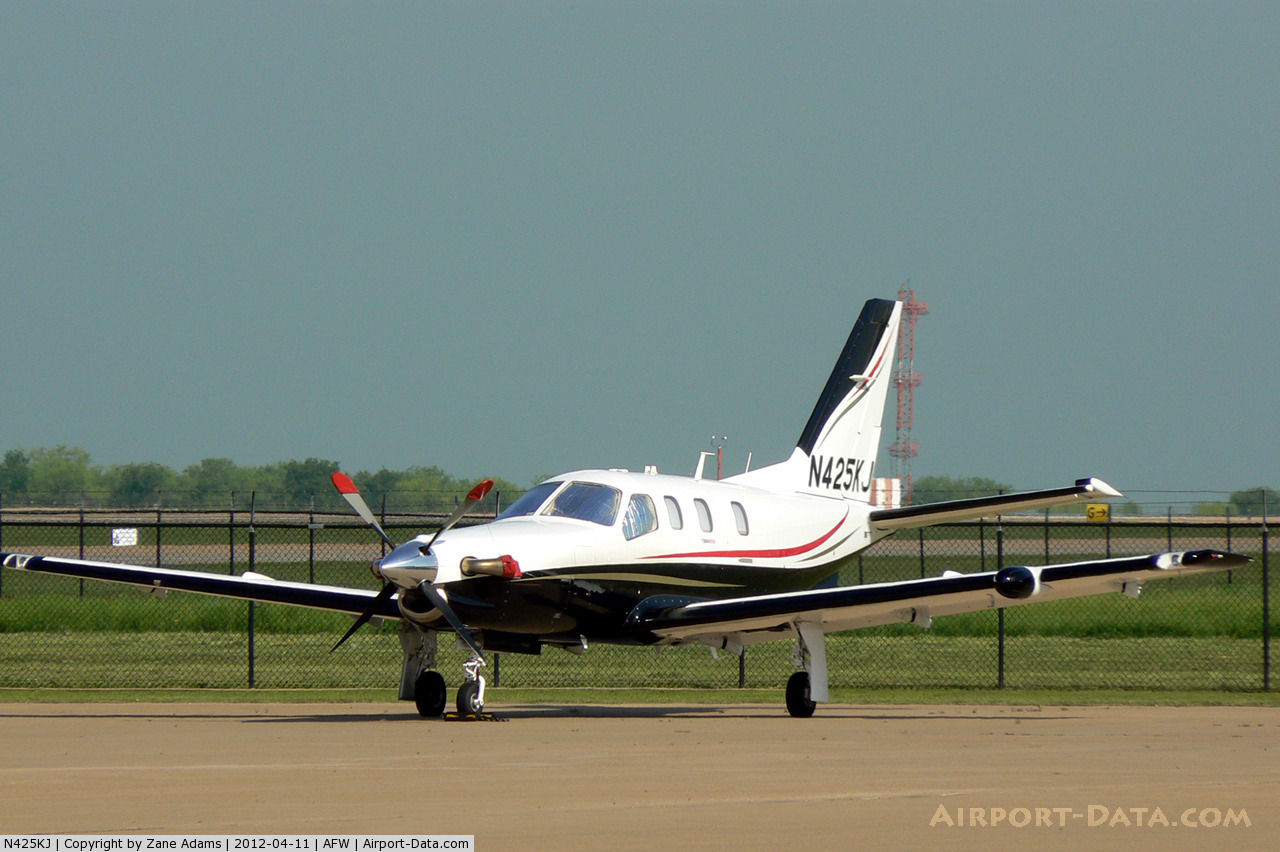
Crash of a Socata TBM-700 in Milwaukee: 2 killed

Date & Time: Jul 29, 2015 at 1810 LT
Type of aircraft:
Registration:
N425KJ
Flight Type:
Survivors:
No
Schedule:
Beverly - Milwaukee
MSN:
518
YOM:
2009
Crew on board:
1
Crew fatalities:
Pax on board:
1
Pax fatalities:
Other fatalities:
Total fatalities:
2
Captain / Total flying hours:
1875
Captain / Total hours on type:
721.00
Aircraft flight hours:
656
Circumstances:
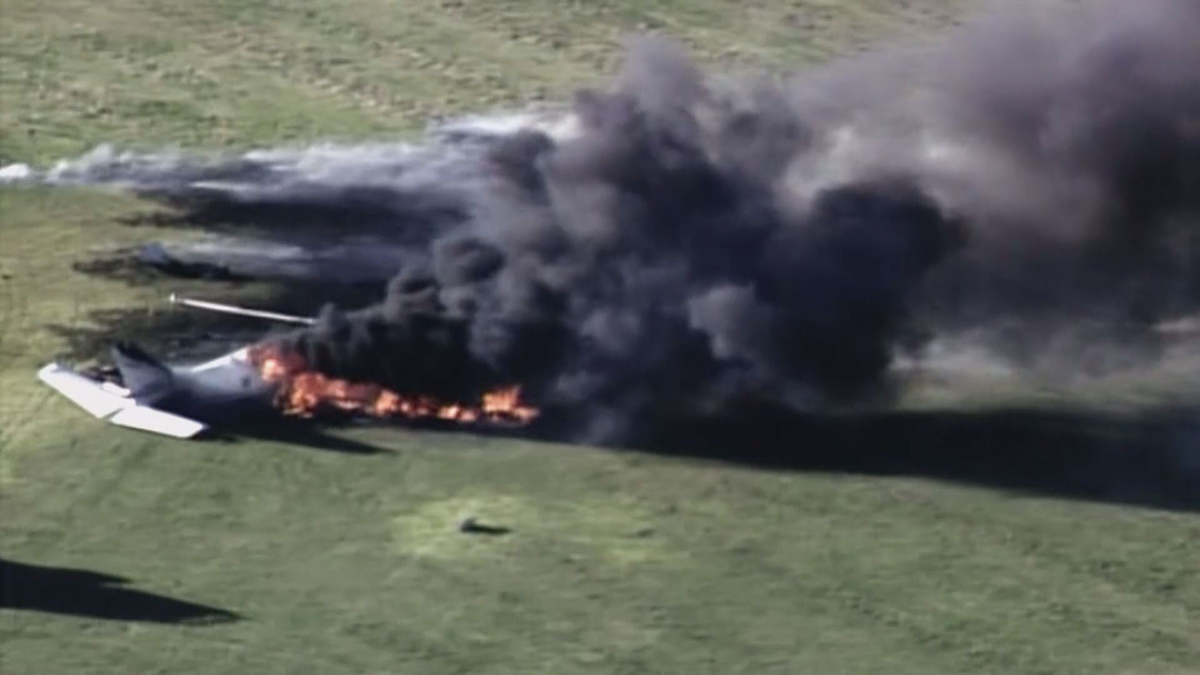
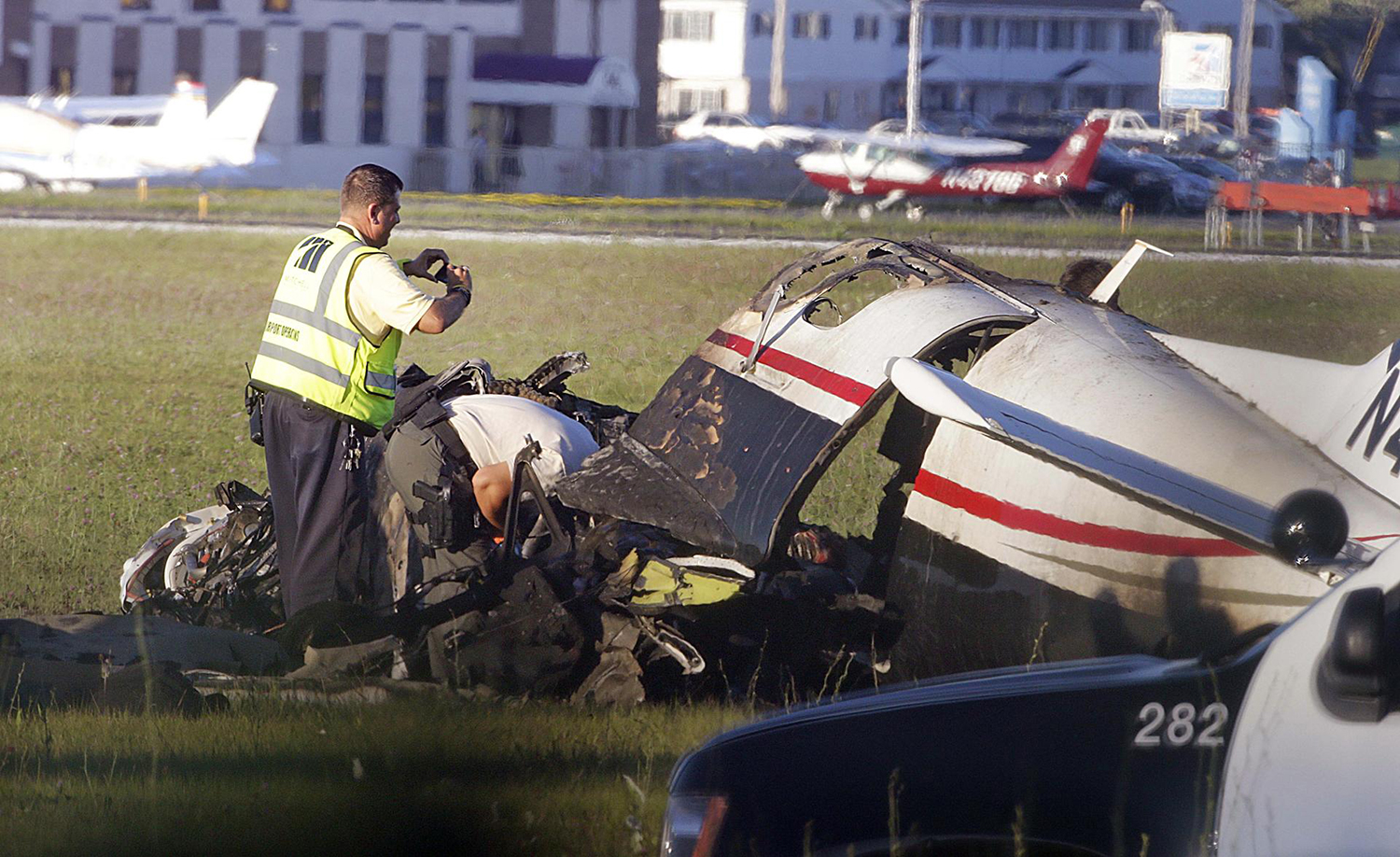
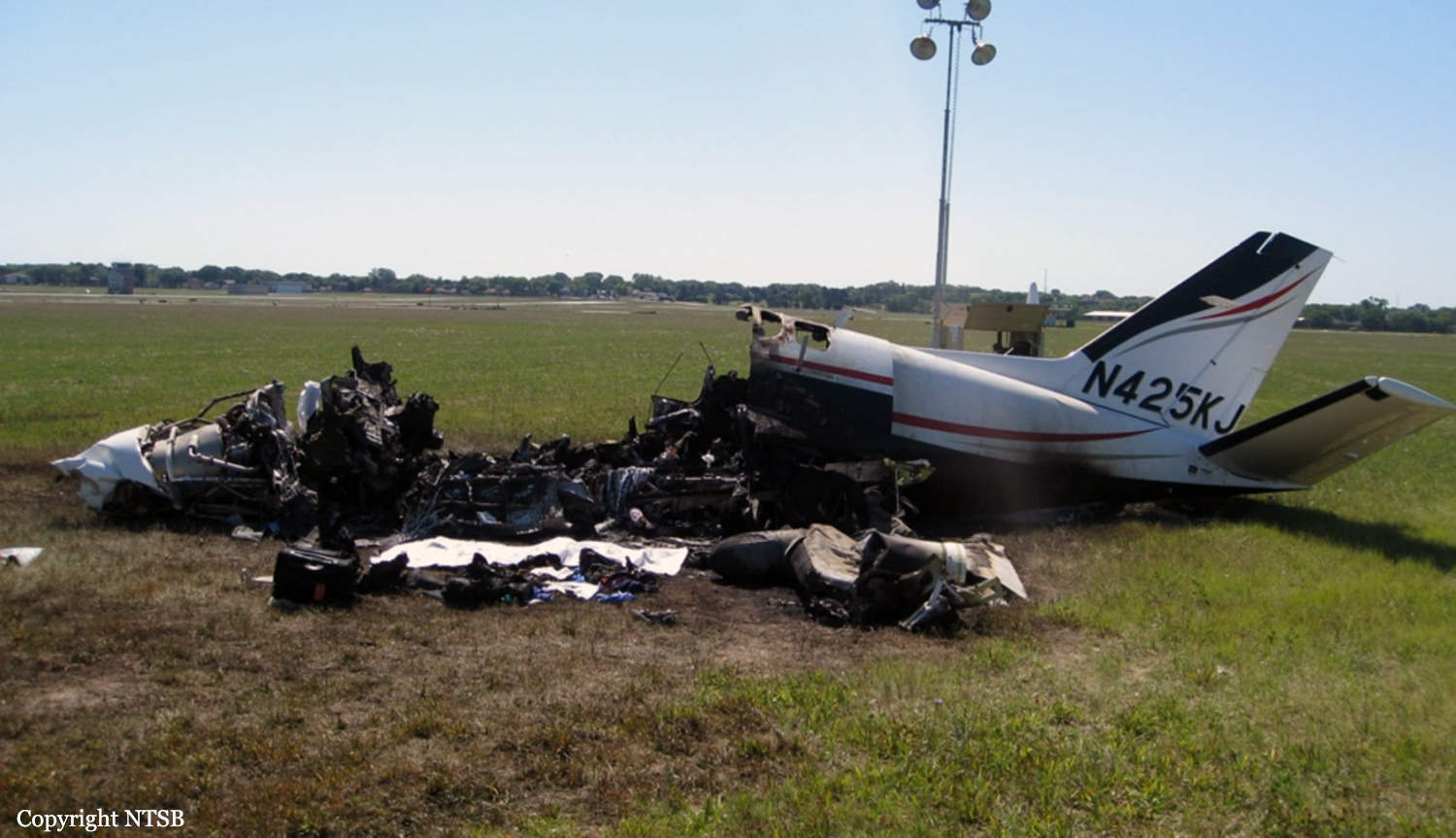
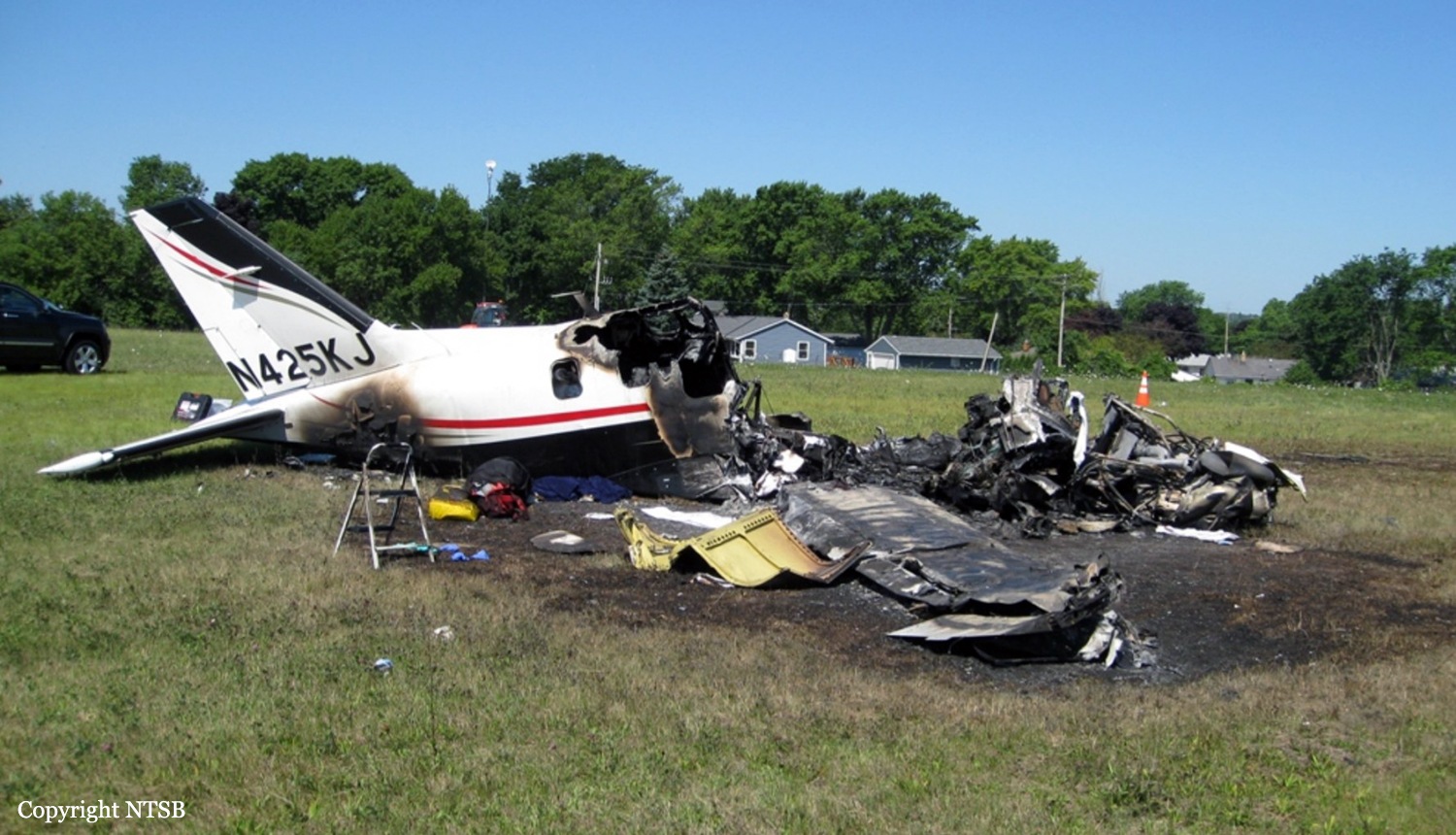
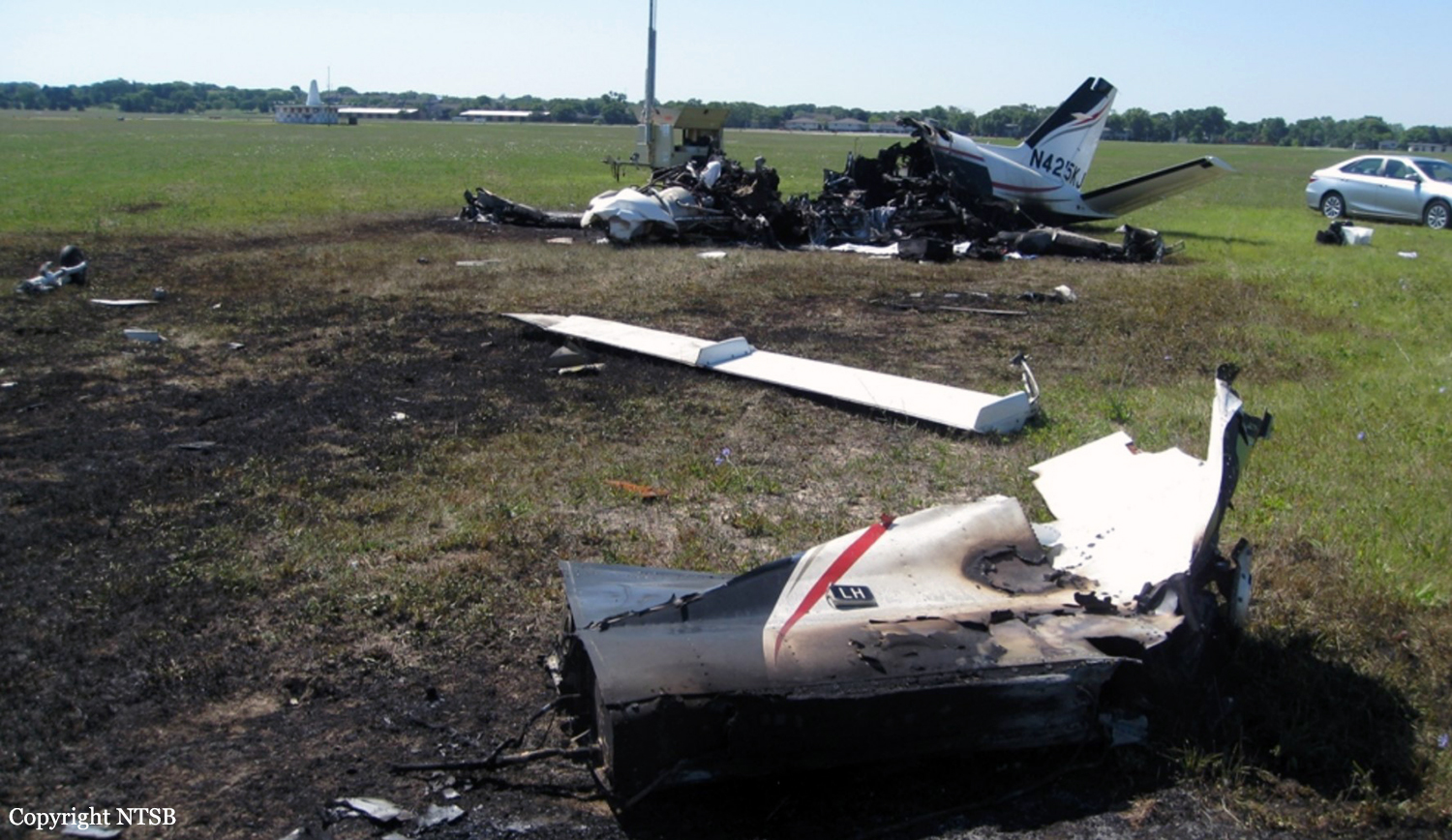
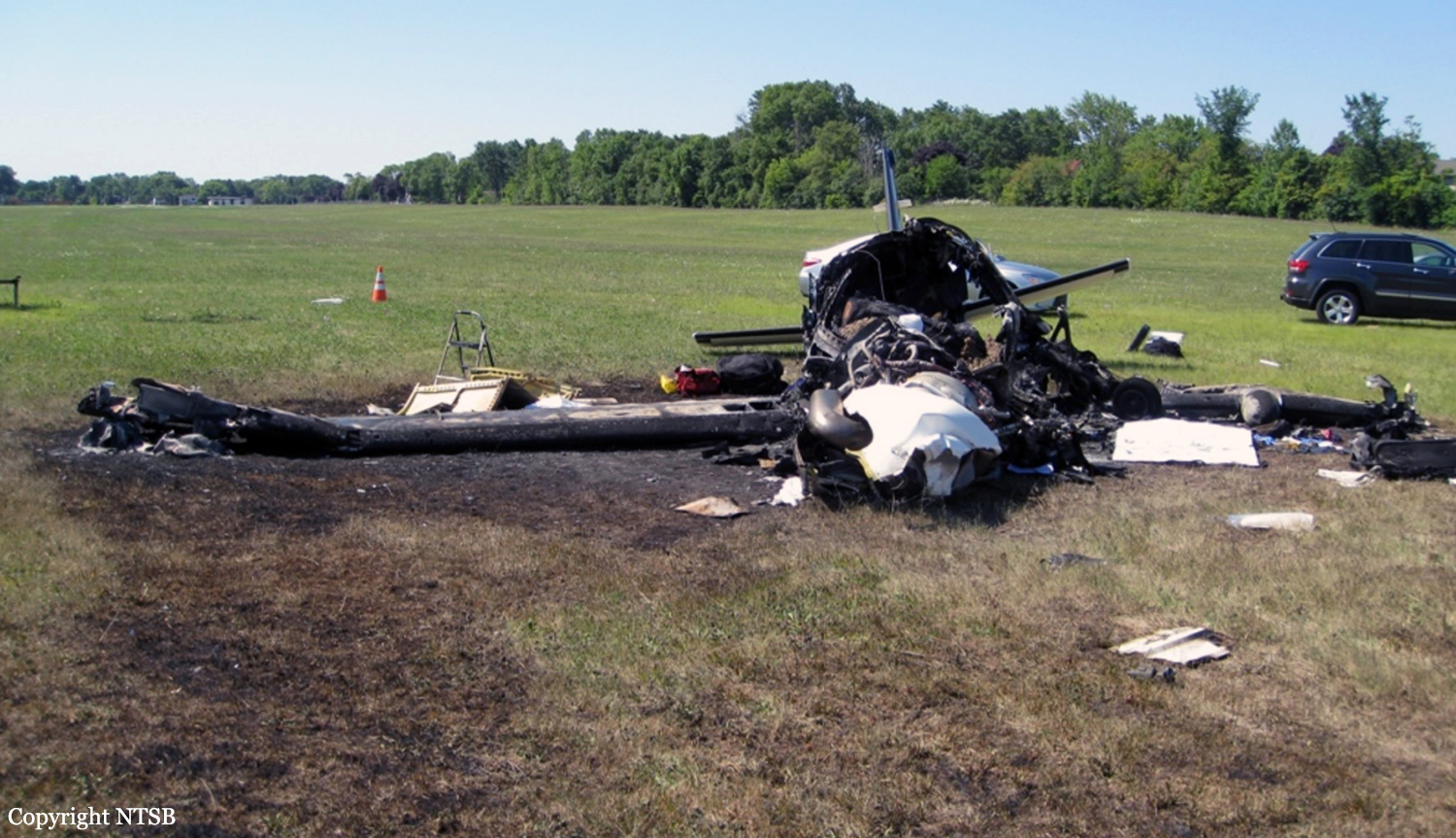
The airline transport pilot was landing at the destination airport after a cross-country flight in visual meteorological conditions. The tower controller stated that the airplane's landing gear appeared to be extended during final approach and that the airplane landed within the runway's touchdown zone. The tower controller stated that, although the airplane made a normal landing, he heard a squealing noise that continued longer than what he believed was typical. The pilot subsequently transmitted "go-around." The tower controller acknowledged the go-around and cleared the pilot to enter a left traffic pattern. The tower controller stated that he heard the engine speed accelerate while the airplane maintained a level attitude over the runway until it passed midfield. He then saw the airplane pitch up and enter a climbing left turn. The tower controller stated that the airplane appeared to enter an aerodynamic stall before it descended into terrain in a left-wing-down attitude. Another witness reported that he saw the airplane, with its landing gear extended, in a steep left turn before it descended rapidly into terrain. A postaccident examination did not reveal any evidence of flight control, landing gear, or engine malfunction. An examination of the runway revealed numerous propeller slash marks that began about 215 ft past the runway's touchdown zone; however, there was no evidence that any portion of the airframe had impacted the runway during the landing. Additionally, measurement of the landing gear actuators confirmed that all three landing gear were fully extended at the accident site. Therefore, the pilot likely did not adequately control the airplane's pitch during the landing, which allowed the propeller to contact the runway. Due to the propeller strikes, the propeller was likely damaged and unable to provide adequate thrust during the go-around. Further, based on the witness accounts, the pilot likely did not maintain adequate airspeed during the climbing left turn, which resulted in the airplane exceeding its critical angle of attack and experiencing an aerodynamic stall at a low altitude.
Probable cause:
The pilot's improper pitch control during the landing, which resulted in the propeller striking the runway, and his failure to maintain adequate airspeed during the subsequent go-around, which resulted in the airplane exceeding its critical angle of attack and experiencing an aerodynamic stall at a low altitude.
Final Report: