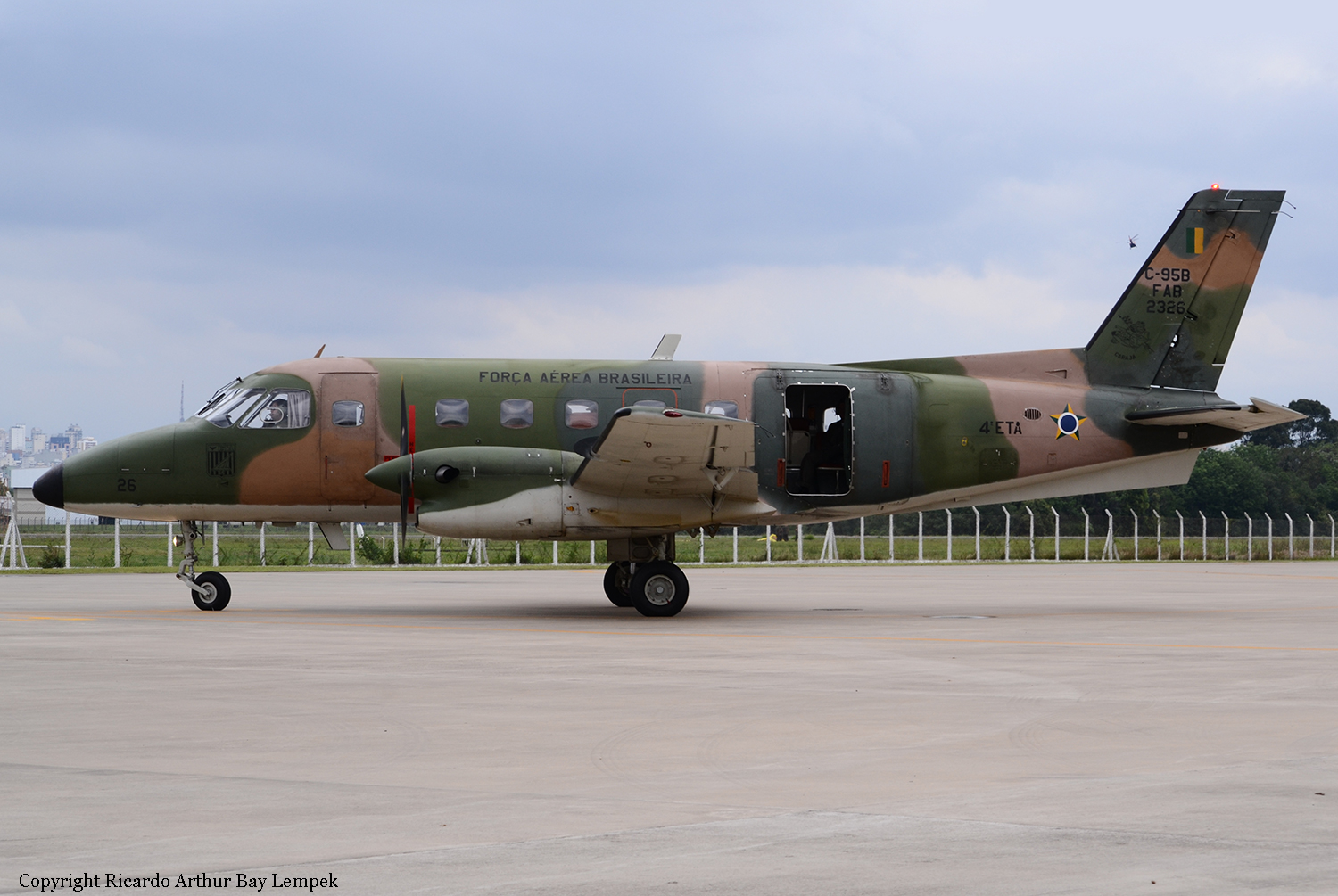
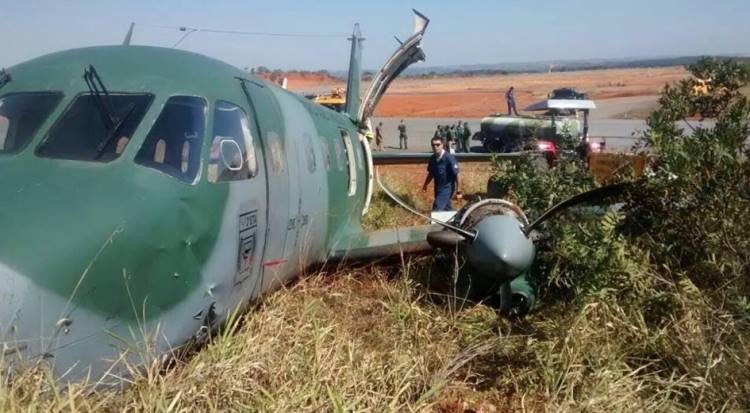
Crash of an Embraer C-95BM Bandeirante in Lagoa Santa

Date & Time: Jul 27, 2015
Type of aircraft:
Operator:
Registration:
2326
Flight Phase:
Flight Type:
Survivors:
Yes
Schedule:
Lagoa Santa - Lagoa Santa
MSN:
110443
YOM:
1984
Country:
Crew on board:
3
Crew fatalities:
Pax on board:
0
Pax fatalities:
Other fatalities:
Total fatalities:
0
Circumstances:
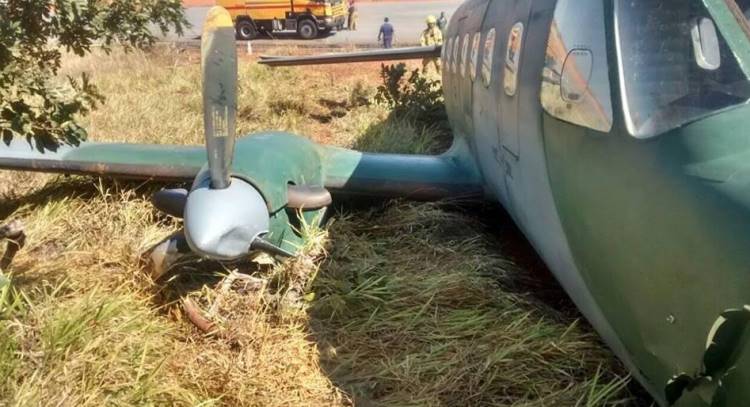
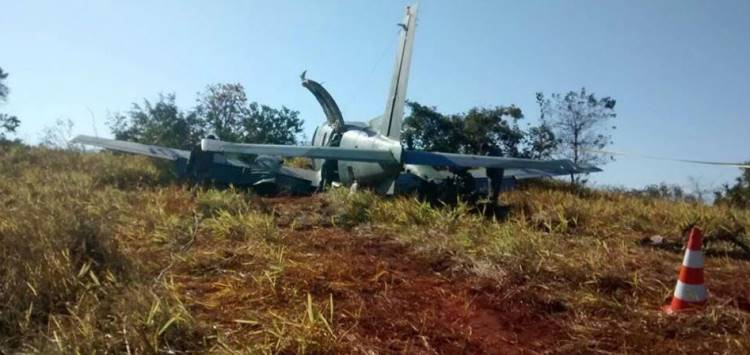
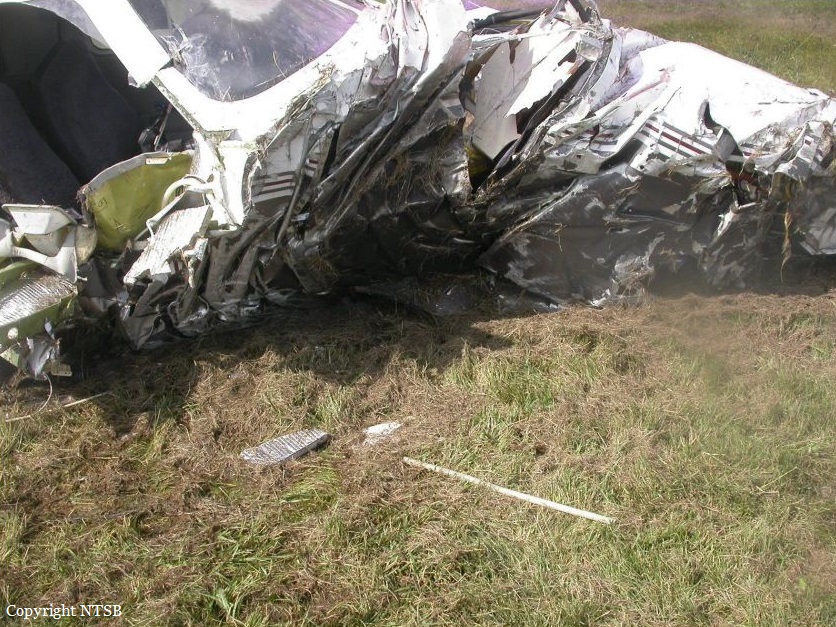
The crew was conducting a training mission at Lagoa Santa AFB, consisting of touch-and-go maneuvers. During the takeoff roll, the pilot-in-command pulled on the control column to initiate the rotation but the aircraft did not respond. It went out of control, veered off runway to the right, struck an embankment, lost its undercarriage and slid for few dozen metres before coming to rest in a grassy area. All three occupants escaped uninjured and the aircraft was damaged beyond repair.
Probable cause:
It is believed that the accident was a consequence of a wrong takeoff configuration as the crew did not set the flaps properly.
Crash of an ATR72-212 in Yangon

Date & Time: Jul 24, 2015 at 1854 LT
Type of aircraft:
Operator:
Registration:
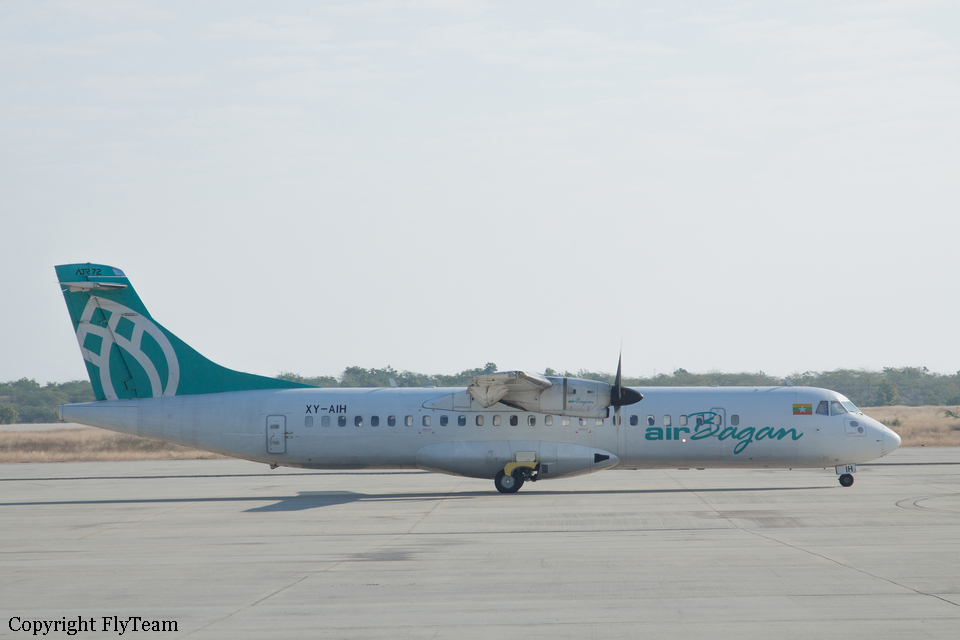
XY-AIH
Survivors:
Yes
Schedule:
Mandalay – Yangon
MSN:
469
YOM:
1995
Flight number:
JAB424
Country:
Region:
Crew on board:
5
Crew fatalities:
Pax on board:
49
Pax fatalities:
Other fatalities:
Total fatalities:
0
Captain / Total flying hours:
6603
Captain / Total hours on type:
513.00
Copilot / Total flying hours:
2650
Copilot / Total hours on type:
2650
Aircraft flight hours:
40827
Circumstances:
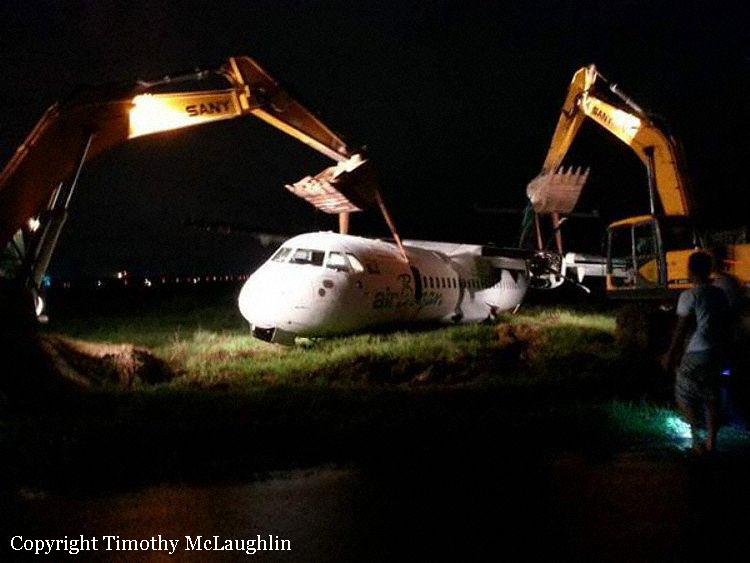
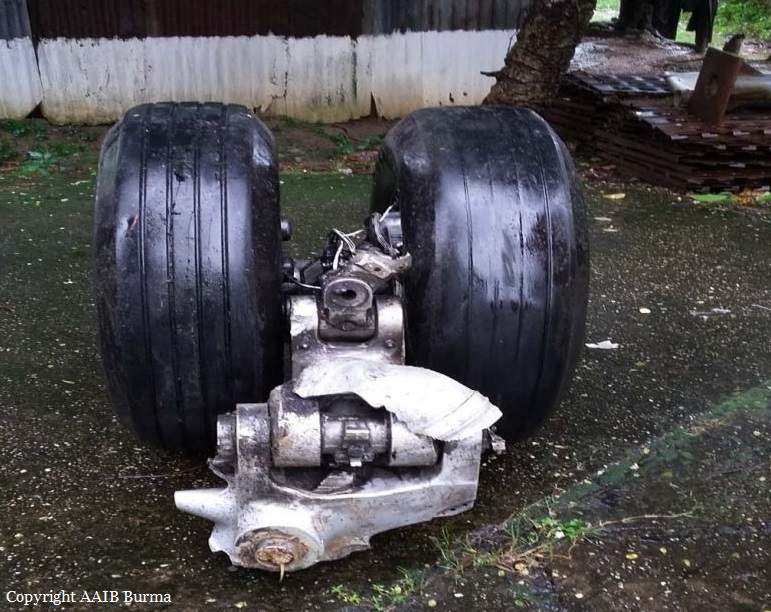
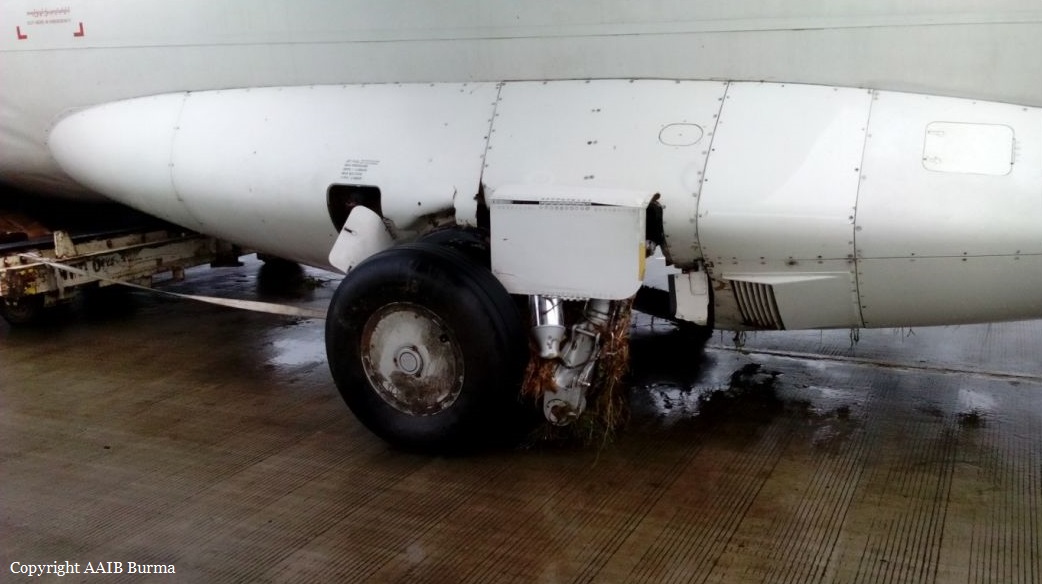
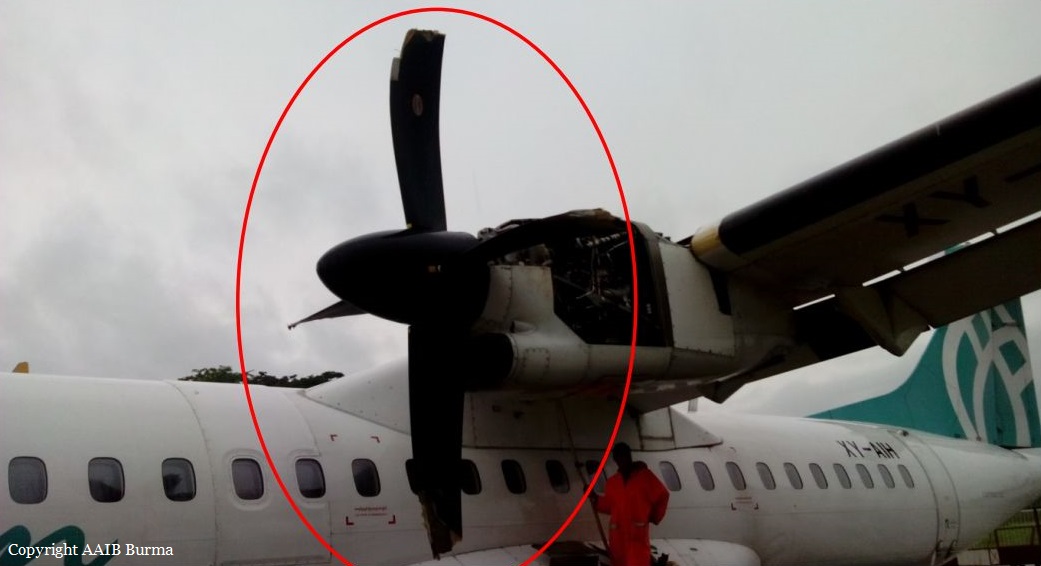
The route of the aircraft on that day was MDL- MYT- PBU- MYT- MDL- RGN. From Mandalay (MDL) on the way back to Yangon International Airport, the plane took off at 17:20.On the way the weather was not significant. For weather reason, seat belt sign was turned on the way to Yangon International Airport only one time. From Mandalay Airport up to landing phase to Yangon International Airport, first officer took control of the aircraft. At 1730 visibility was 6Km as per ATC verbal information. About 4 Km to Mingaladon Tower, clearance was obtained "Air Bagan 424 ,wind calm ,runway 21,clear to land, caution landing Runway wet, after landed vacate via Charlie" At decision height (250ft), runway was insight, runway lightings were able to be seen so the aircraft continued though there was light rain. At about 50 ft, more rain was falling suddenly consequently visibility became poor. So the pilot took over control of the aircraft. A few seconds later the aircraft made hard landing and skidded and veered off the left side of the runway to the muddy strip, came to rest about 2800ft from the threshold and 75ft from the runway edge.
Probable cause:
Primary cause:
During the final landing phase, the pilot was reluctant to perform a go-around while the plane was unstable and of bounce landing in low visibility condition.
Contributing factors:
a) The visibility was very low and the runway centerline lightings were not able to be seen intermittently.
b) The runway was wet and it was raining heavily.
c) The pilot in command took over the control of the plane from the copilot (14) seconds just before the first impact.

Final Report:

Crash of a Piper PA-46-310P Malibu in Oshkosh

Date & Time: Jul 22, 2015 at 0744 LT
Registration:
N4BP
Flight Type:
Survivors:
Yes
Schedule:
Benton Harbor – Oshkosh
MSN:
46-8408065
YOM:
1984
Crew on board:
1
Crew fatalities:
Pax on board:
4
Pax fatalities:
Other fatalities:
Total fatalities:
0
Captain / Total flying hours:
934
Captain / Total hours on type:
130.00
Aircraft flight hours:
5792
Circumstances:
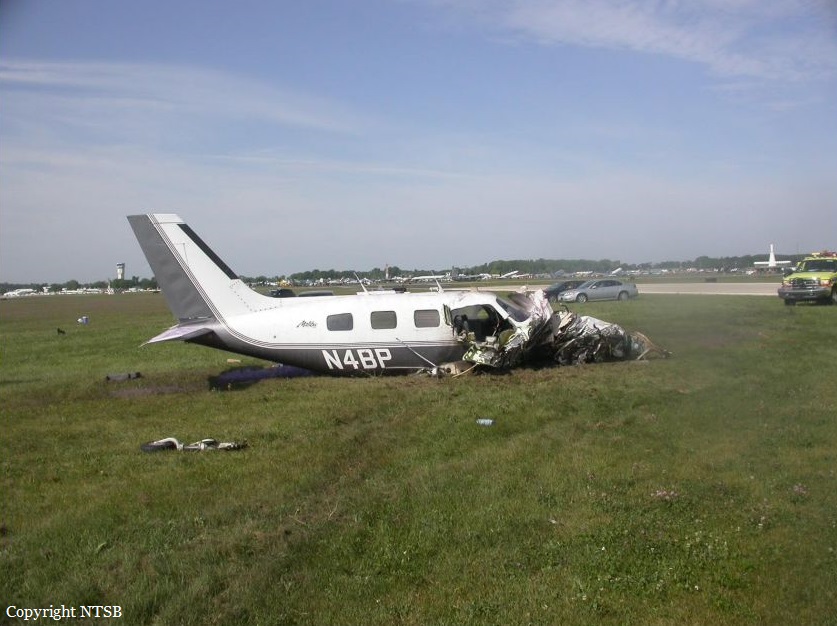
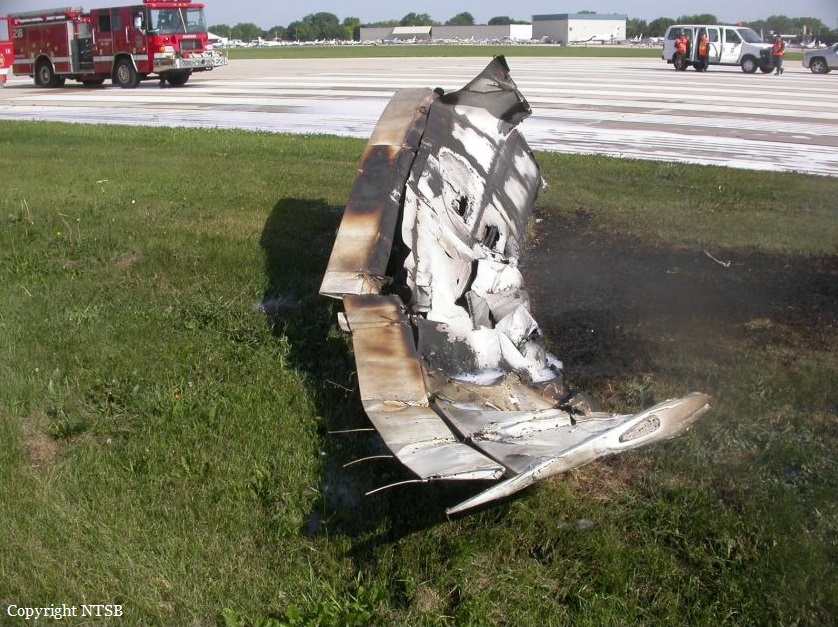
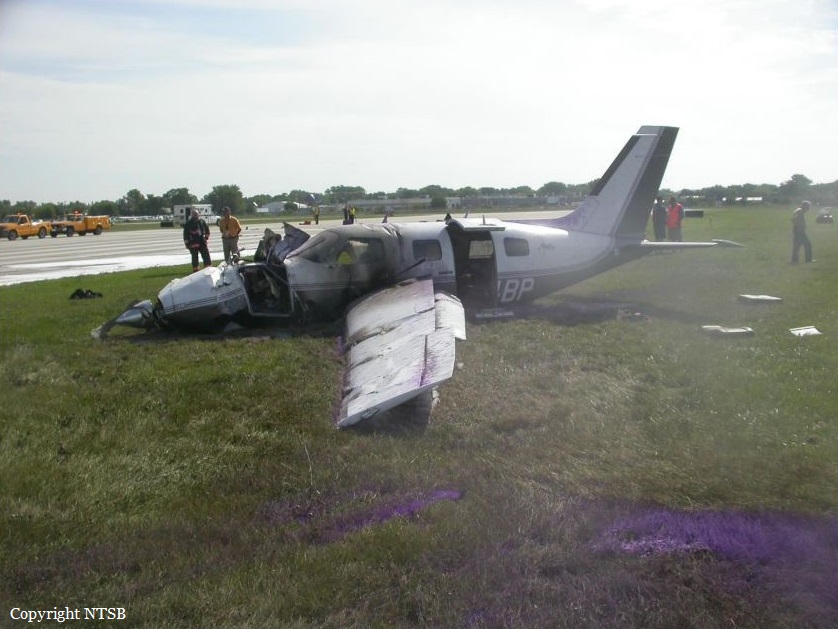
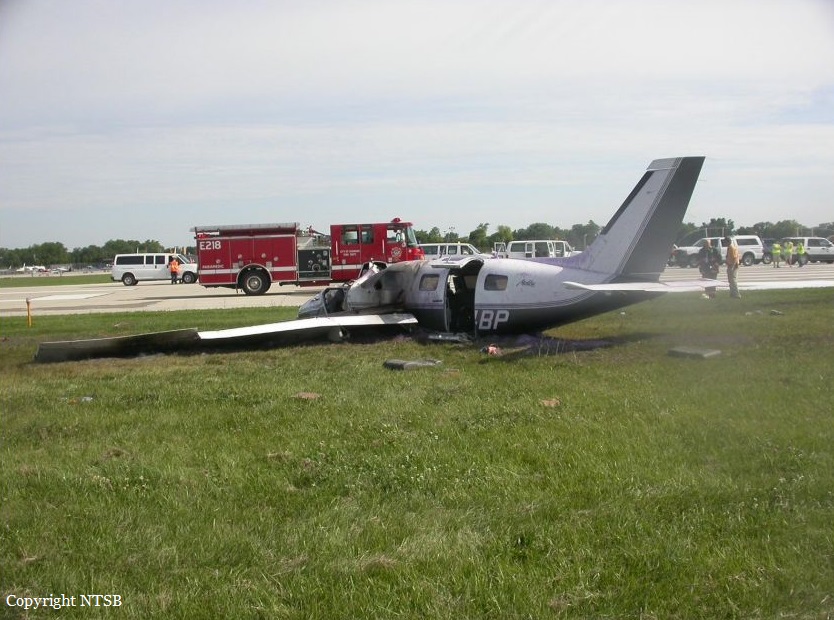
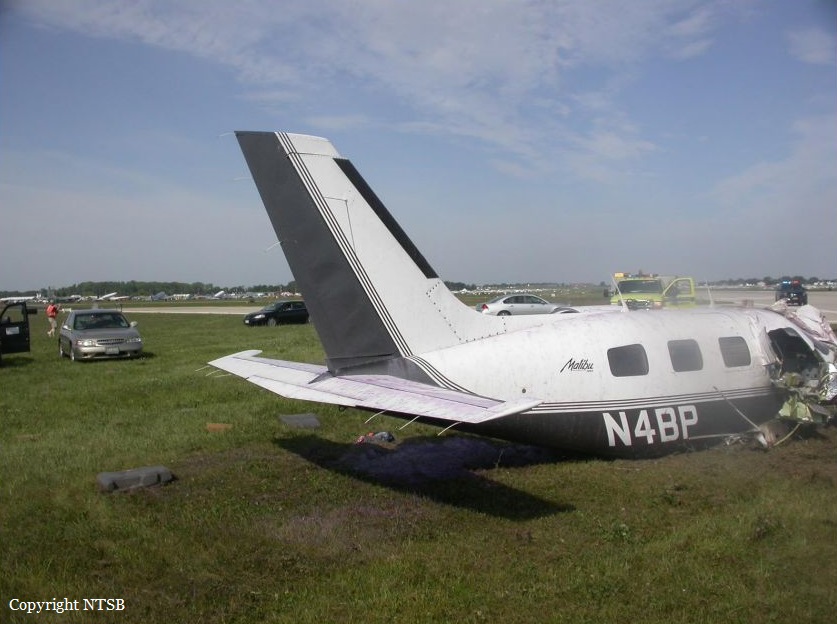
The pilot was landing at a large fly-in/airshow and following the airshow arrival procedures that were in use. While descending on the downwind leg for runway 27, the pilot was cleared by a controller to turn right onto the base leg abeam the runway numbers and to land on the green dot (located about 2,500 ft from the runway's displaced threshold). About the time the pilot turned onto the base leg, he observed an airplane taxi onto the runway and start its takeoff roll. The controller instructed the pilot to continue the approach and land on the orange dot (located about 1,000 ft from the runway's displaced threshold) instead of the green dot. The pilot reported that he considered performing a go-around but decided to continue the approach. As the pilot reduced power, the airplane entered a stall and impacted the runway in a right-wing-low, nose-down attitude. Witnesses estimated that the bank angle before impact was greater than 60 degrees. A postaccident examination of the airframe and engine revealed no evidence of mechanical malfunctions or failures that would have precluded normal operation.
Analysis of a video recording of the accident showed that the airplane was about 180 ft above ground level (agl) when the turn onto the base leg began, and it descended to about 140 ft agl during the turn. The airplane's total inertial speed (the calculated vector sums of the airplane's ground speeds and vertical speeds) decreased from 98 knots (kts) to 80 kts during the turn. During the last 8 seconds of flight, the speed decreased below 70 kts, and the airplane descended from about 130 ft agl to ground impact. The wings-level stall speed of the airplane at maximum gross weight with landing gear and flaps down was 59 kts. In the same configuration at 60 degrees of bank, the stall speed was 86 kts and would have been higher at a bank angle greater than 60 degrees. Reduced runway separation standards for airplanes were in effect due to the airshow. When the accident airplane reached the runway threshold, the minimum distance required by the standards between the arriving accident airplane and the departing airplane was 1,500 ft. The video analysis indicated that it was likely that a minimum of 1,500 ft of separation was maintained during the accident sequence. Although the pilot was familiar with the procedures for flying into the airshow, the departing airplane
and the modified landing clearance during a period of typically high workload likely interfered with the pilot's ability to adequately monitor his airspeed and altitude. As a result, the airplane entered an accelerated stall when the pilot turned the airplane at a steep bank angle and a low airspeed in an attempt to make the landing spot, which resulted in the airplane exceeding its critical angle of attack. At such a low altitude, recovery from the stall was not possible. Although the airshow arrival procedures stated that pilots have the option to go around if necessary, and the pilot considered going around, he instead continued the unstable landing approach and lost control of the airplane.
Probable cause:
The pilot's failure to perform a go-around after receiving a modified landing clearance and his failure to maintain adequate airspeed while maneuvering to land, which resulted in the airplane exceeding its critical angle of attack in a steep bank and entering an accelerated stall at a low altitude.
Final Report:

Crash of a Learjet 35A in Panama City

Date & Time: Jul 19, 2015 at 1135 LT
Type of aircraft:
Operator:
Registration:
YV543T
Flight Type:
Survivors:
Yes
Schedule:
Caracas – Panama City
MSN:
35-246
YOM:
1979
Country:
Crew on board:
2
Crew fatalities:
Pax on board:
0
Pax fatalities:
Other fatalities:
Total fatalities:
0
Captain / Total flying hours:
7589
Circumstances:
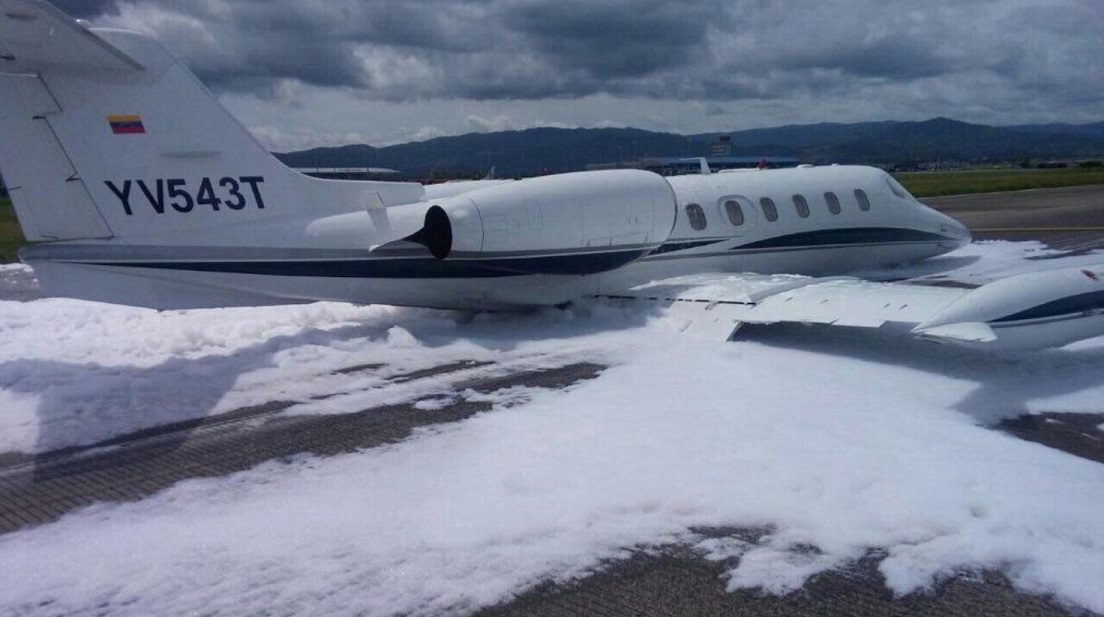
Following an uneventful flight from Caracas-Maiquetia-Simon Bolivar Airport, the crew initiated the descent to Panama City-Tocumen Airport. After a normal approach, the airplane landed with the landing gear still retracted and slid on a distance of 987 metres before coming to rest on the main runway. Both pilots escaped uninjured and the airplane was damaged beyond repair.
Probable cause:
The reason the aircraft landed without the landing gear deployed is attributed to human error for not having activated the deployment lever, and for failing to observe the frequency and transit lights of the deployment and confirm their locking.
Final Report:

Crash of a Cessna 208B Grand Caravan in Dubai

Date & Time: Jul 7, 2015 at 0800 LT
Type of aircraft:
Operator:
Registration:
DU-SD1
Flight Phase:
Survivors:
Yes
Schedule:
Dubai - Dubai
MSN:
208B-1141
YOM:
2005
Region:
Crew on board:
1
Crew fatalities:
Pax on board:
14
Pax fatalities:
Other fatalities:
Total fatalities:
0
Circumstances:
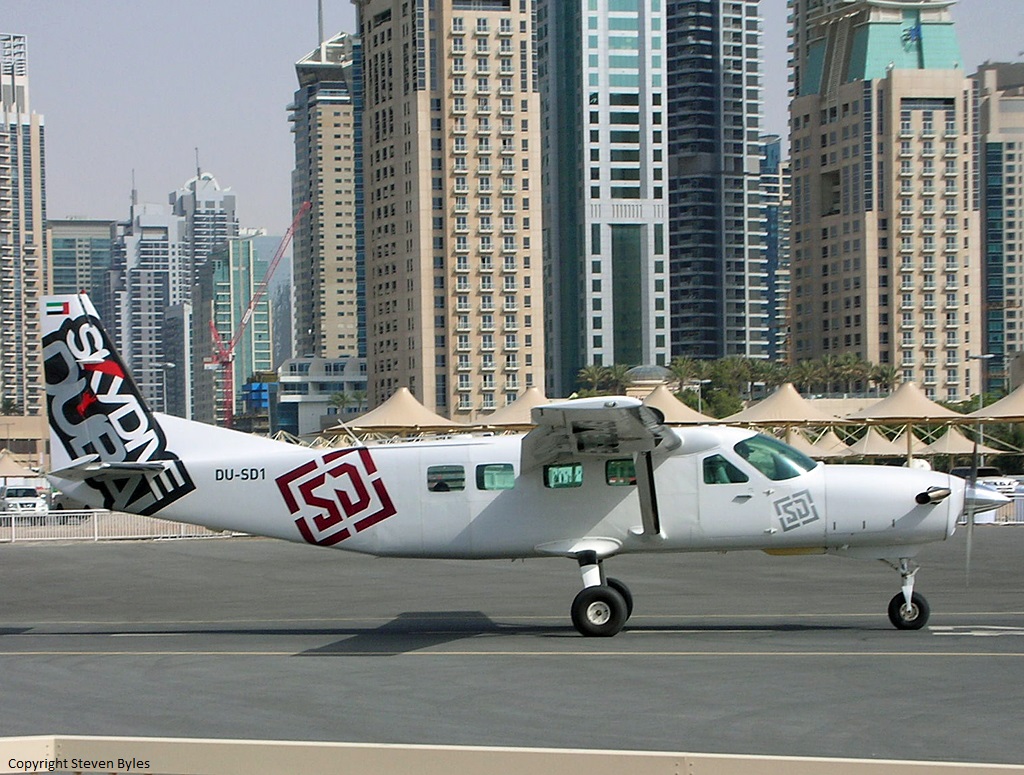
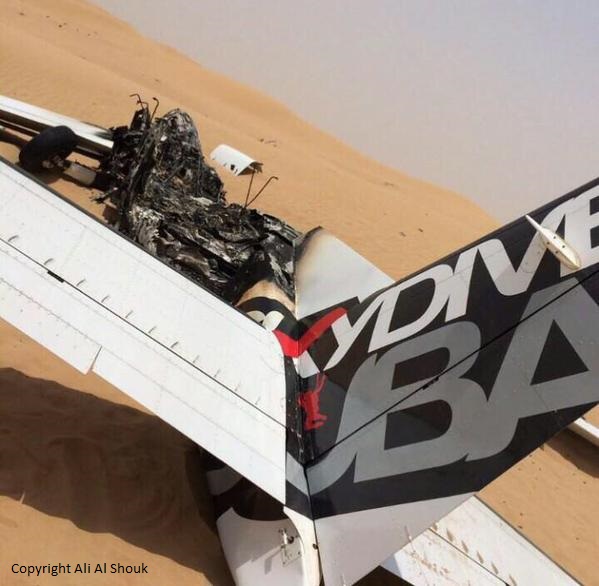
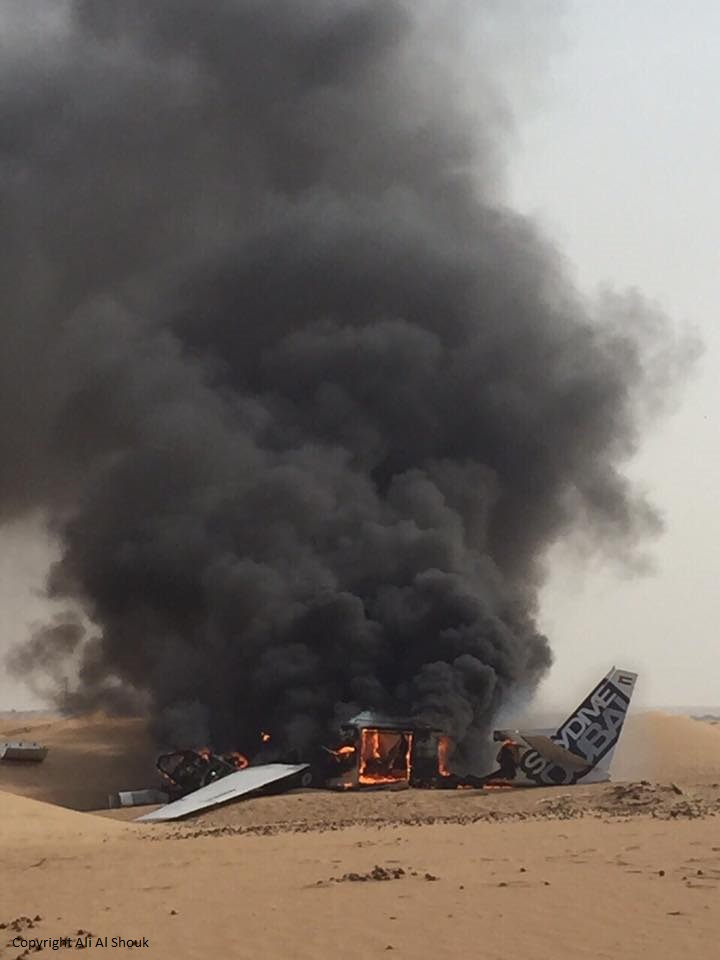
After takeoff from Dubai-Skydive Campus Airfield, while climbing to a height of 2,500 feet, the pilot encountered engine problems. He elected to return to the airport but eventually attempted an emergency landing in a desert area close to the airport. The aircraft crash landed and came to rest, bursting into flames. All 15 occupants escaped uninjured and the aircraft was destroyed by a post crash fire.

Crash of a Quest Kodiak 100 in Pskov

Date & Time: Jul 6, 2015 at 1618 LT
Type of aircraft:
Operator:
Registration:
N642RM
Flight Phase:
Flight Type:
Survivors:
Yes
Schedule:
Riga – Pskov – Krutitsy
MSN:
100-0104
YOM:
2013
Country:
Region:
Crew on board:
2
Crew fatalities:
Pax on board:
0
Pax fatalities:
Other fatalities:
Total fatalities:
0
Captain / Total flying hours:
470
Captain / Total hours on type:
52.00
Copilot / Total flying hours:
1041
Copilot / Total hours on type:
10
Aircraft flight hours:
391
Circumstances:
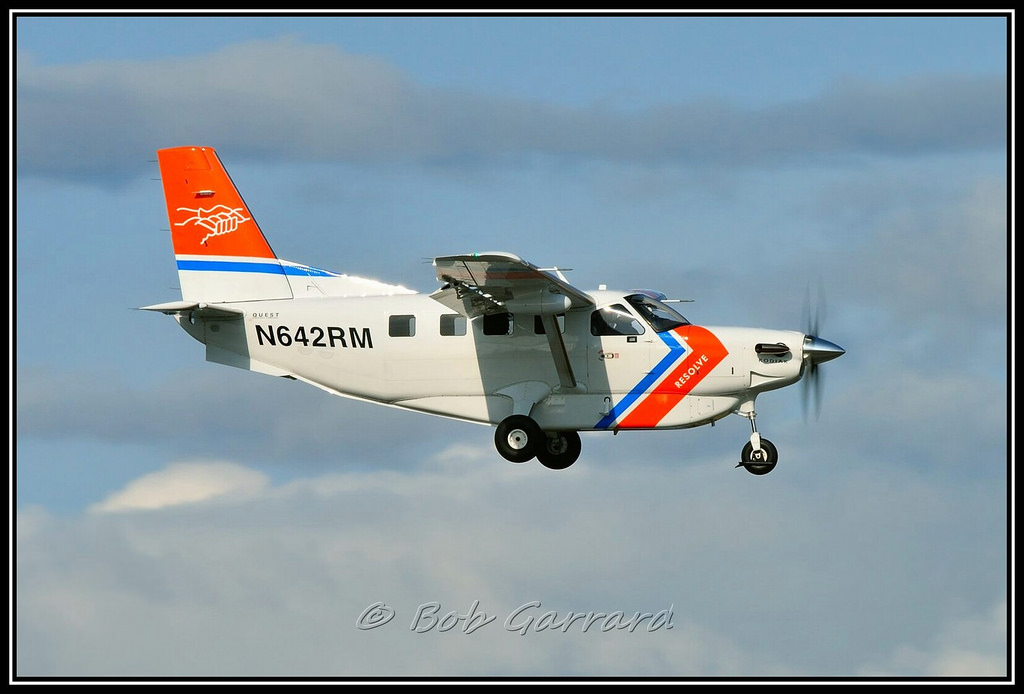
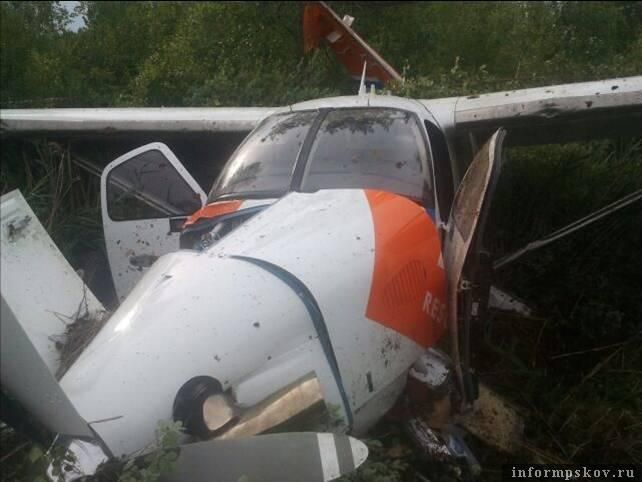
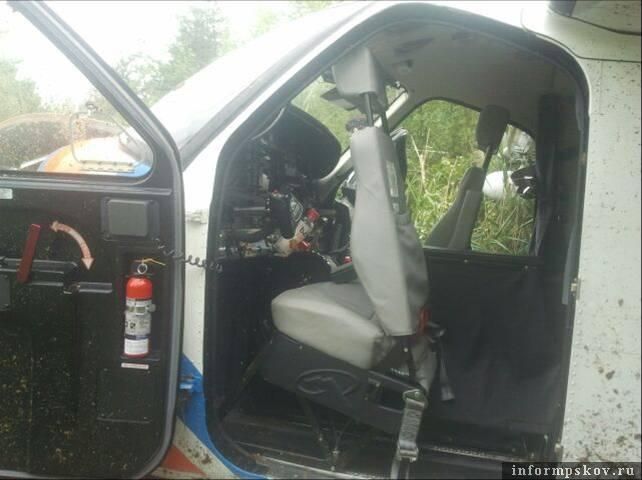
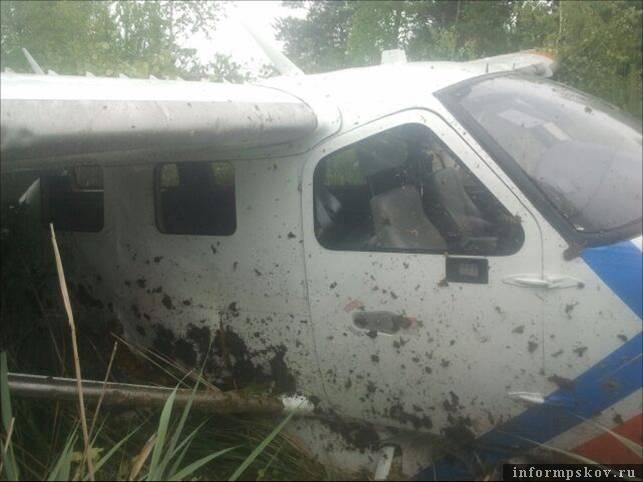
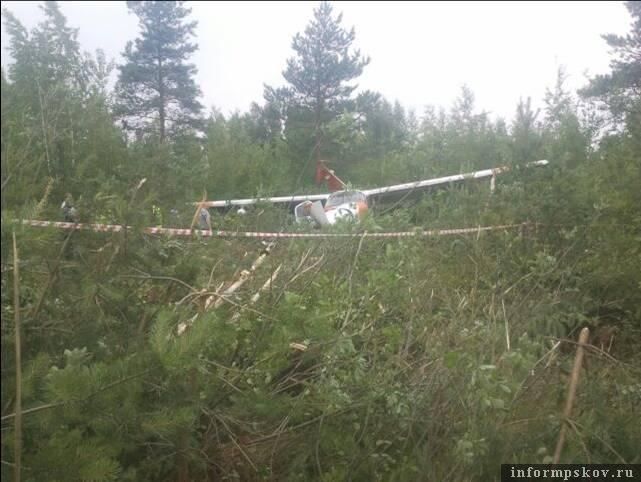
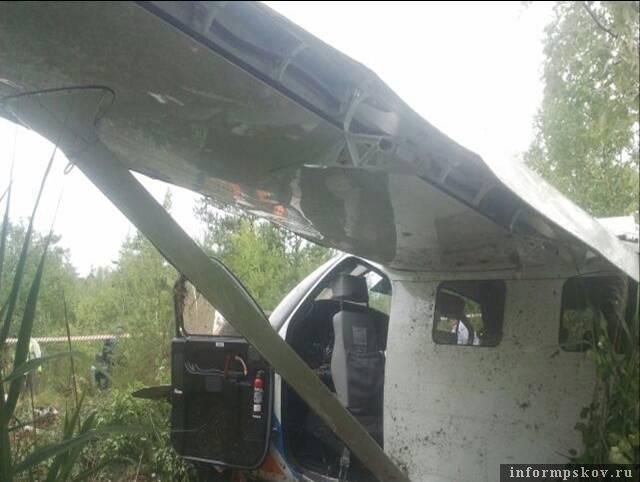
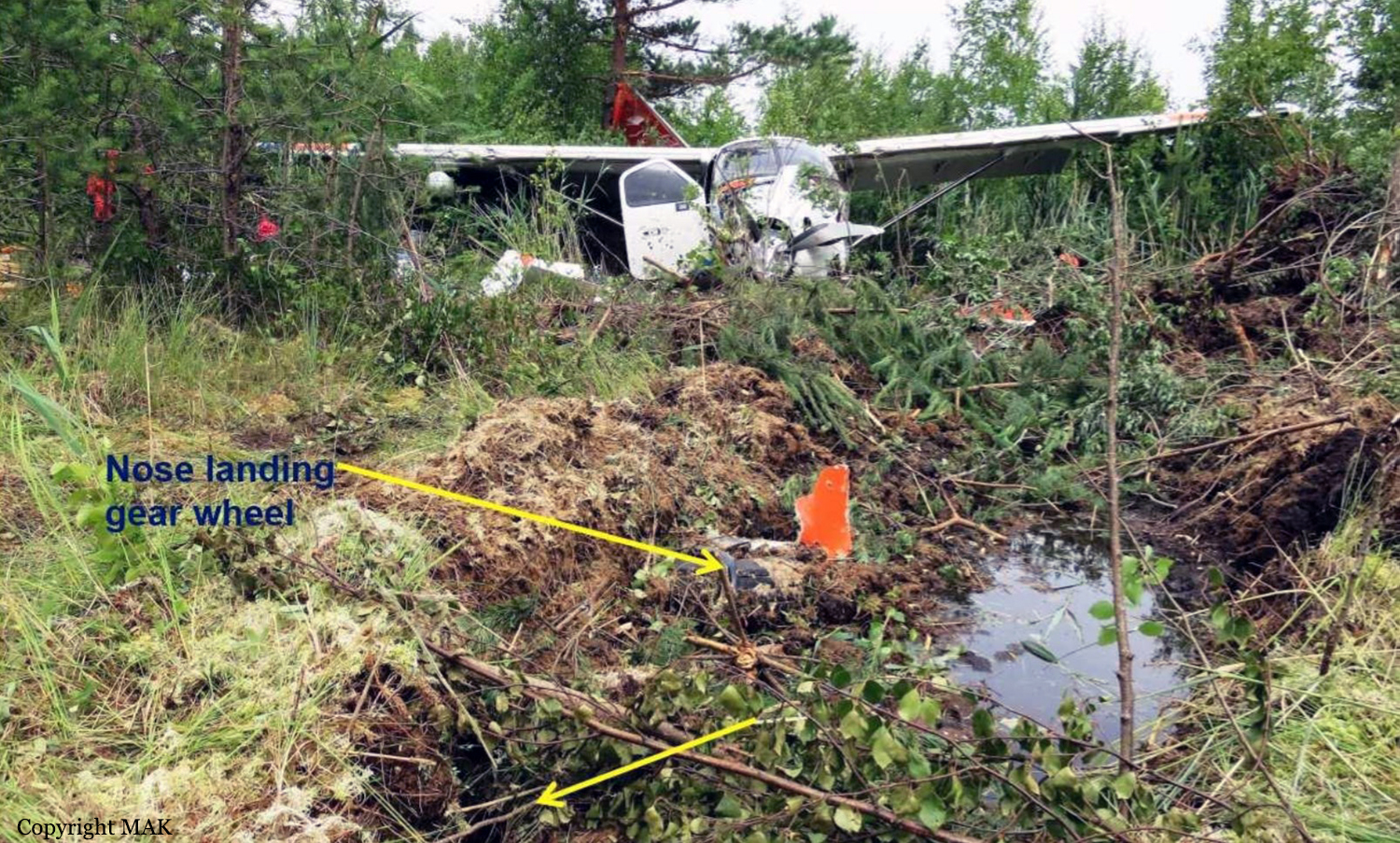
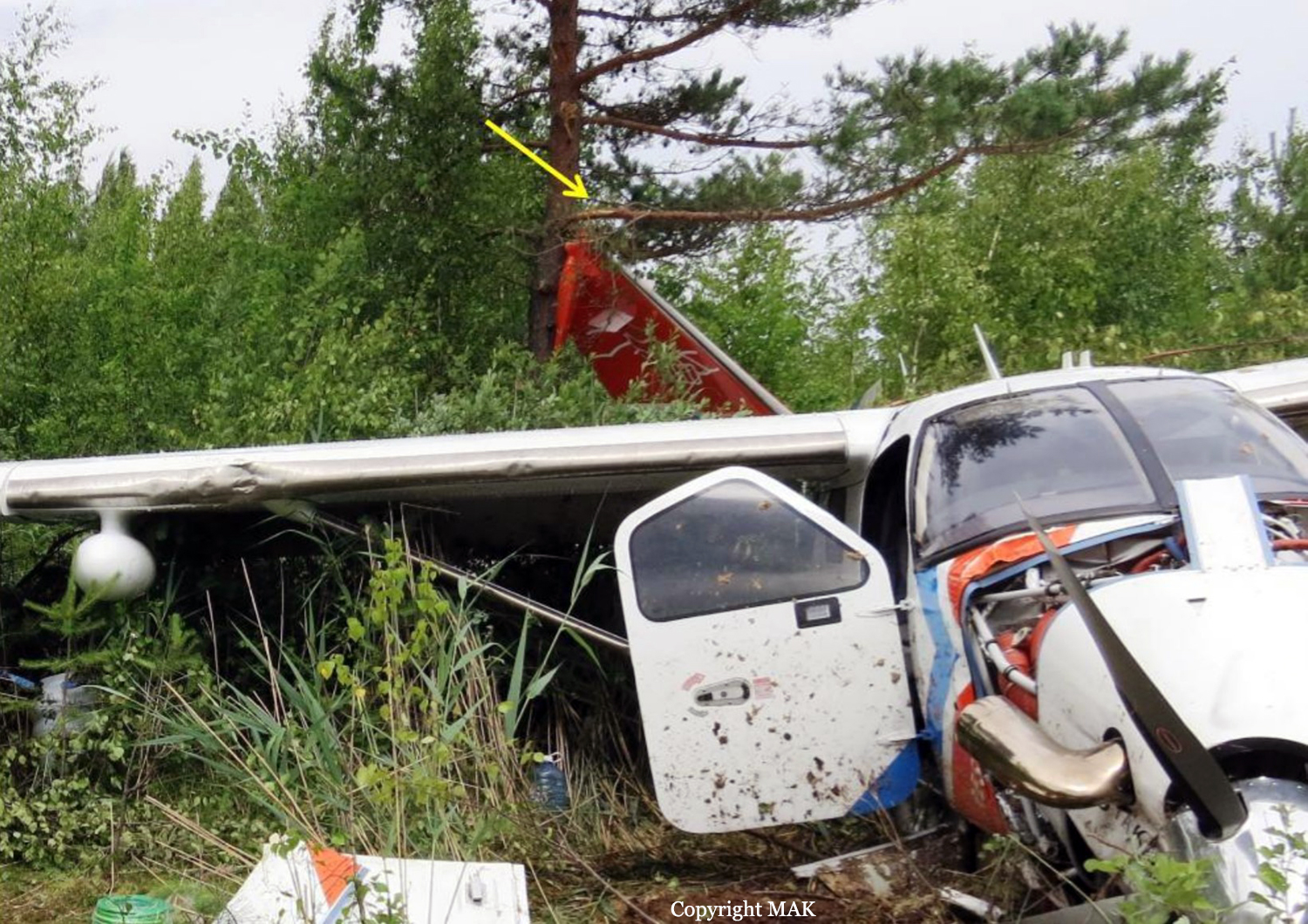
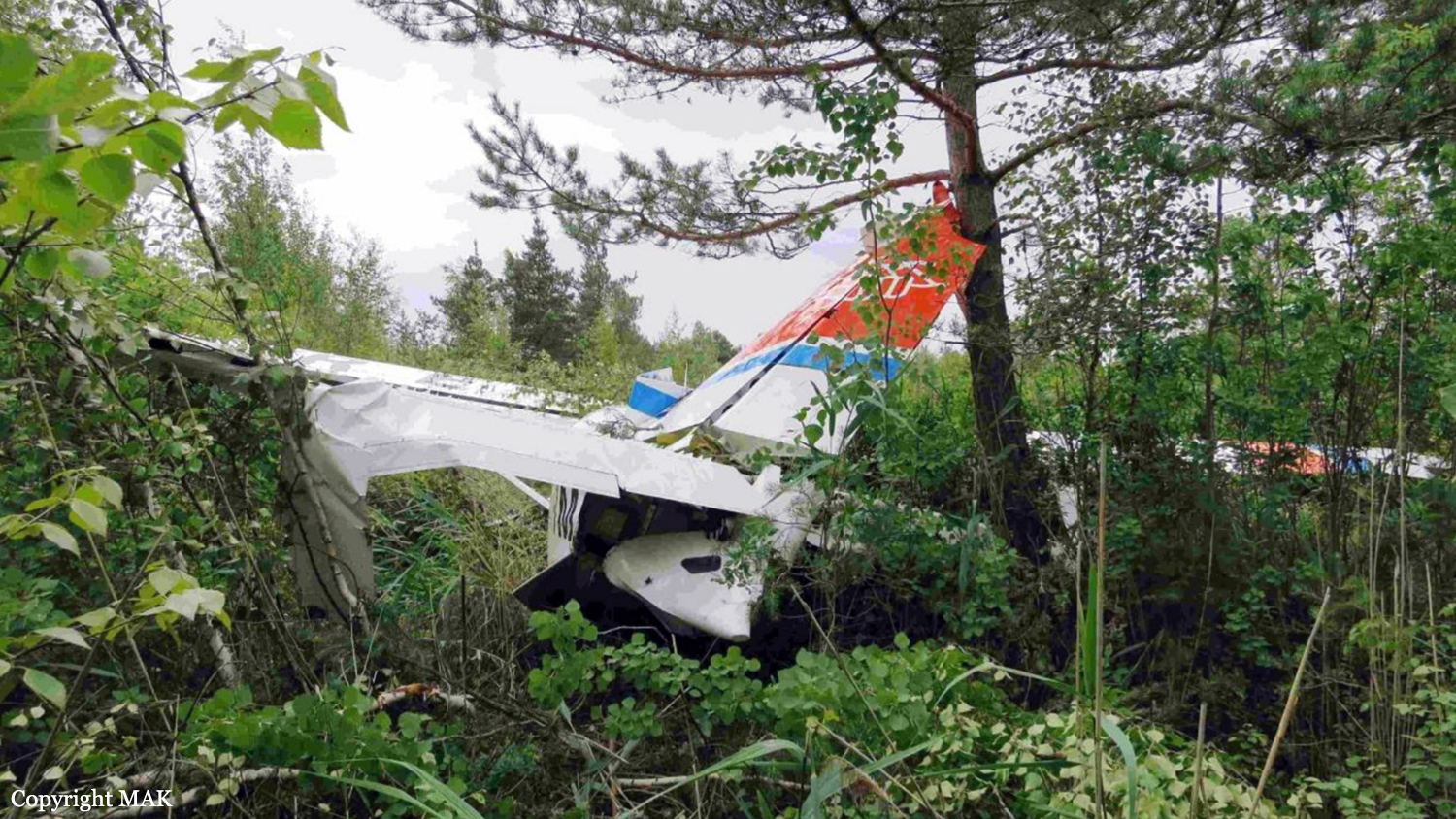
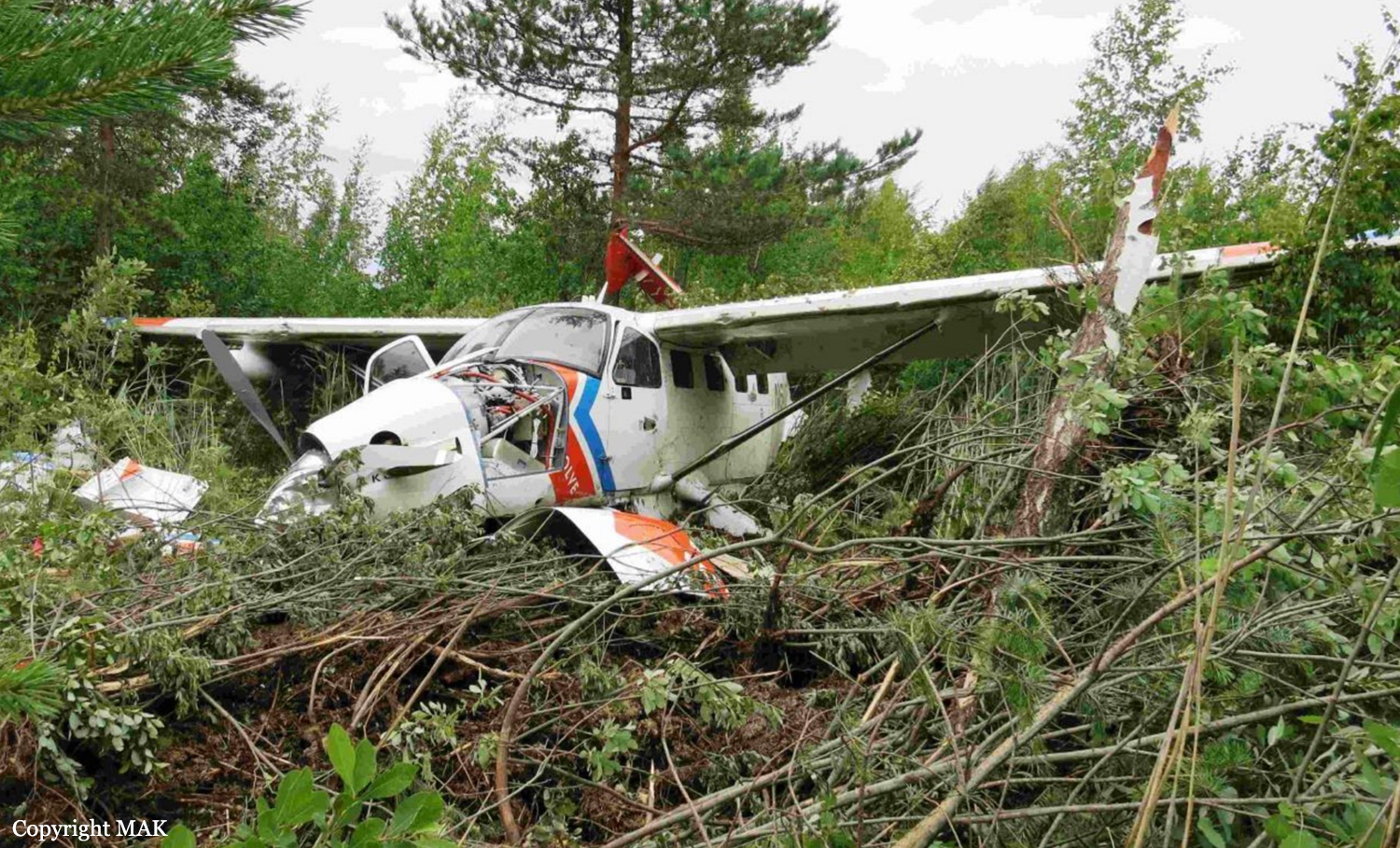
On 03.07.2015 at 15:05, Kodiak-100 N642RM airplane, which had left Riga AP (Latvia), performed a landing at Pskov AD (RF). The airplane was performing a ferry flight from USA (where it was bought) to Krutitsy landing site, which is 80 km to the Southeast from Ryazan (RF). After the landing, flight crewmembers and passengers passed a border and customs control successfully. The aircraft was kept at Pskov AD from July 3 till July 6 under custody of AASS of Pskovavia (JSC). On 06.07.2015 at 08:00, the flight crew – PIC and FO – arrived to Pskov AD with a view to the ferry flight resumption. PIC was planning to fly the aircraft from Pskov AD to Krutitsy landing site on 06.07.2015. In violation of FAP MA CA and FAP-128 requirements, PIC and FO didn't pass a preflight medical check in spite of the fact that Pskovavia medical service was available at the aerodrome. Before the takeoff, two flight crewmembers were in the cockpit: PIC occupying a left seat, and FO occupying a right seat. Both were secured with safety belts. At 13:15:30, PIC performed a takeoff from Pskov AD with MH=190°. According to the flight crew explanatory reports, during the climbing with left turn, they had the engine troubles. Therefore, the flight crew put the airplane into gliding. They failed to re-start the engine in flight. Before the emergency landing, they cut the fuel off and de-energized the aircraft. The landing was performed at 13:18 to a marshy area with some bushes and individual trees around. The aircraft received significant damage during the landing. There was no fire: neither in flight nor on the ground. At 13:21:21, FO reported the forced landing to ATC controller, using the aircraft radio station. Pskov First-Aid Station suggested the help, but the flight crewmembers refused because they did not have any injuries.
Probable cause:
The accident with Kodiak 100 N642RM aircraft occurred when performing a forced landing to the forest. According to the flight crewmembers explanations, the need of this forced landing was caused by the engine power loss in flight. Conducted examinations of engine, rotor and fuel system did not reveal any issue that can cause the power plant loss of power. Because FDIS SD data card from the central display, which storages all recorded power plant flight parameters was lost, it was not possible to access the engine operability and the flight crewmembers' actions in full.
Final Report:

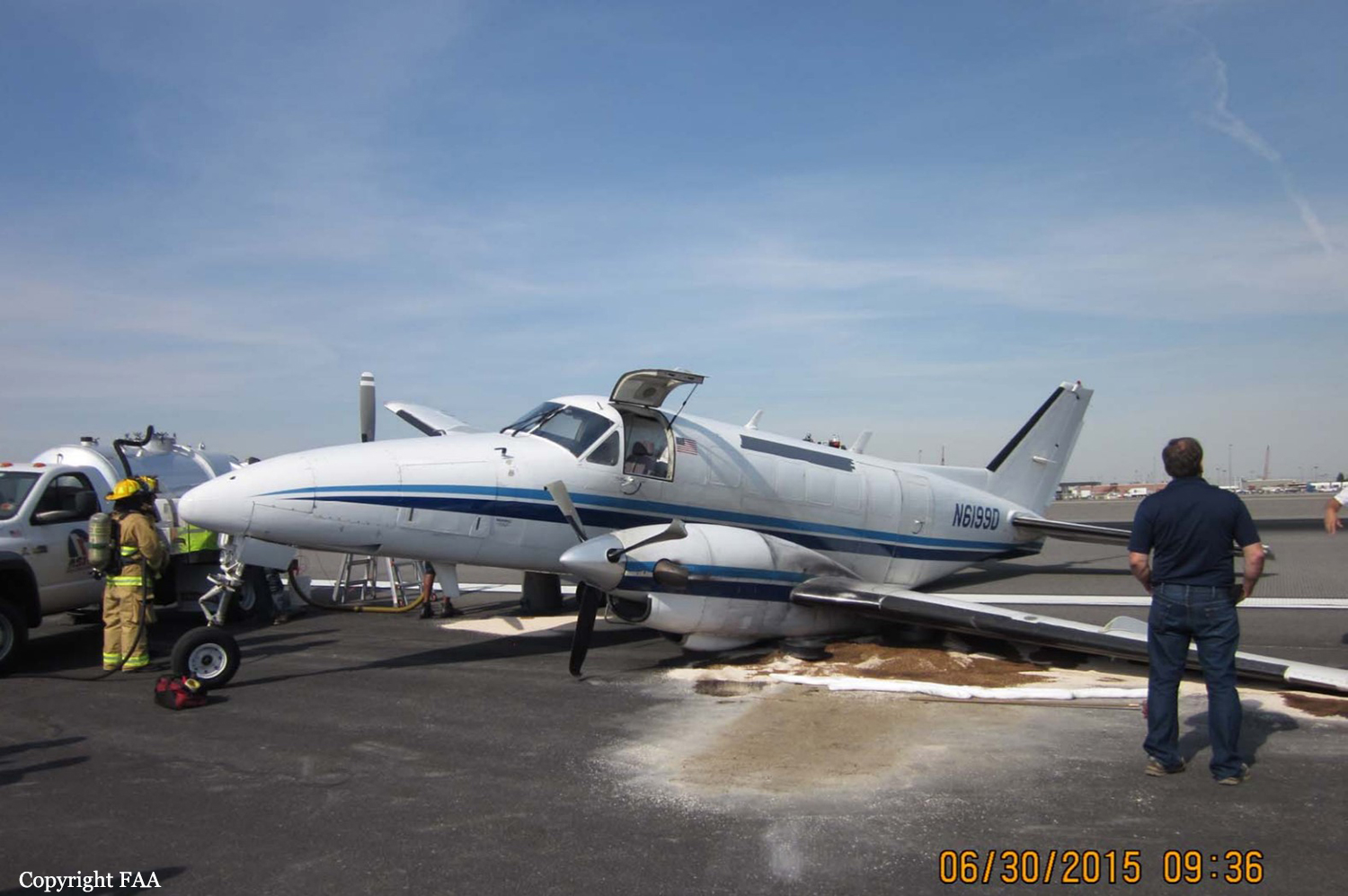
Crash of a Beechcraft C99 Airliner in Salt Lake City

Date & Time: Jun 30, 2015 at 0800 LT
Type of aircraft:
Operator:
Registration:
N6199D
Flight Phase:
Flight Type:
Survivors:
Yes
Schedule:
Salt Lake City – Ely
MSN:
U-169
YOM:
1981
Crew on board:
2
Crew fatalities:
Pax on board:
0
Pax fatalities:
Other fatalities:
Total fatalities:
0
Captain / Total flying hours:
1458
Captain / Total hours on type:
151.00
Copilot / Total flying hours:
953
Copilot / Total hours on type:
718
Aircraft flight hours:
31957
Circumstances:
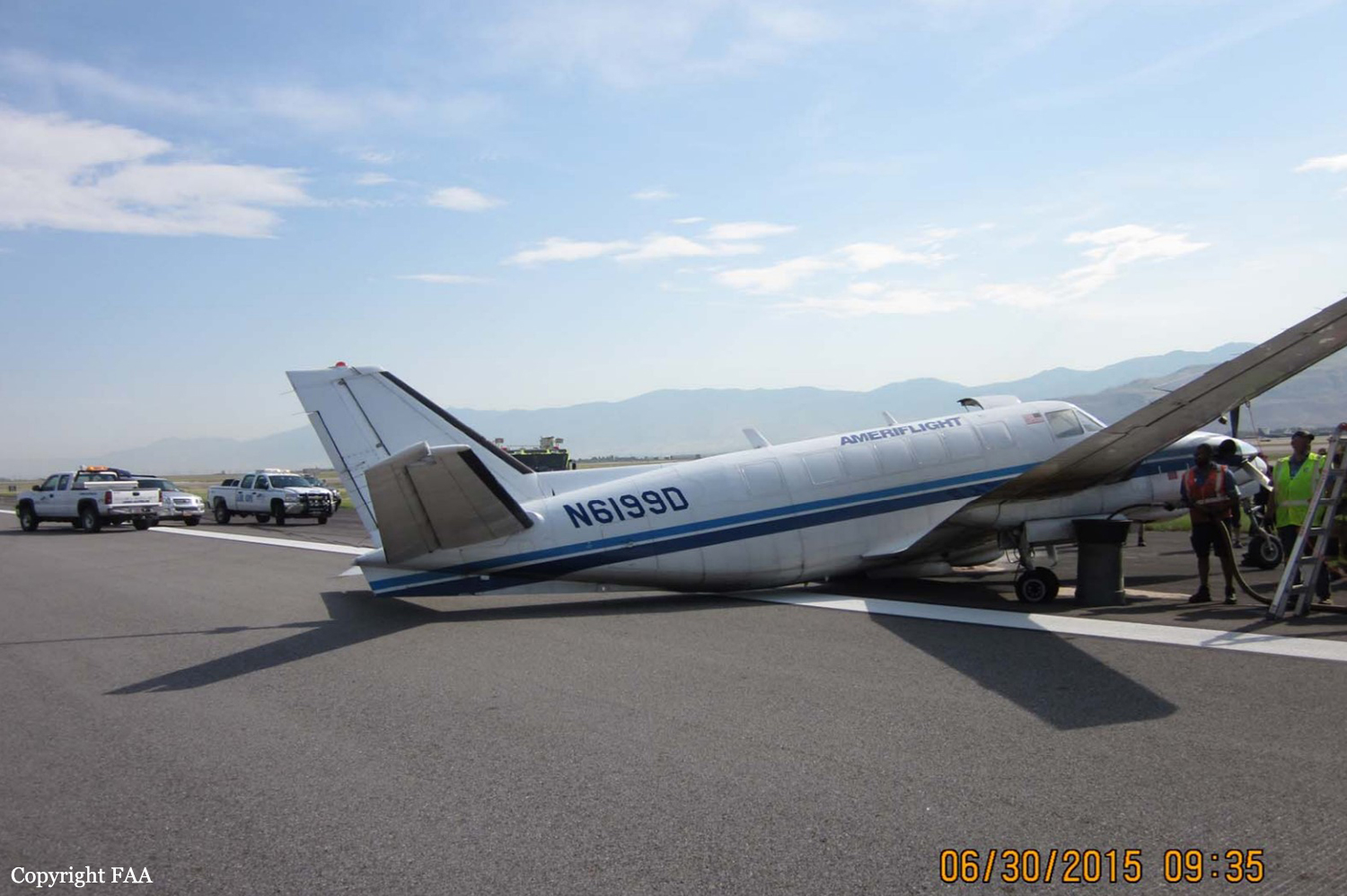
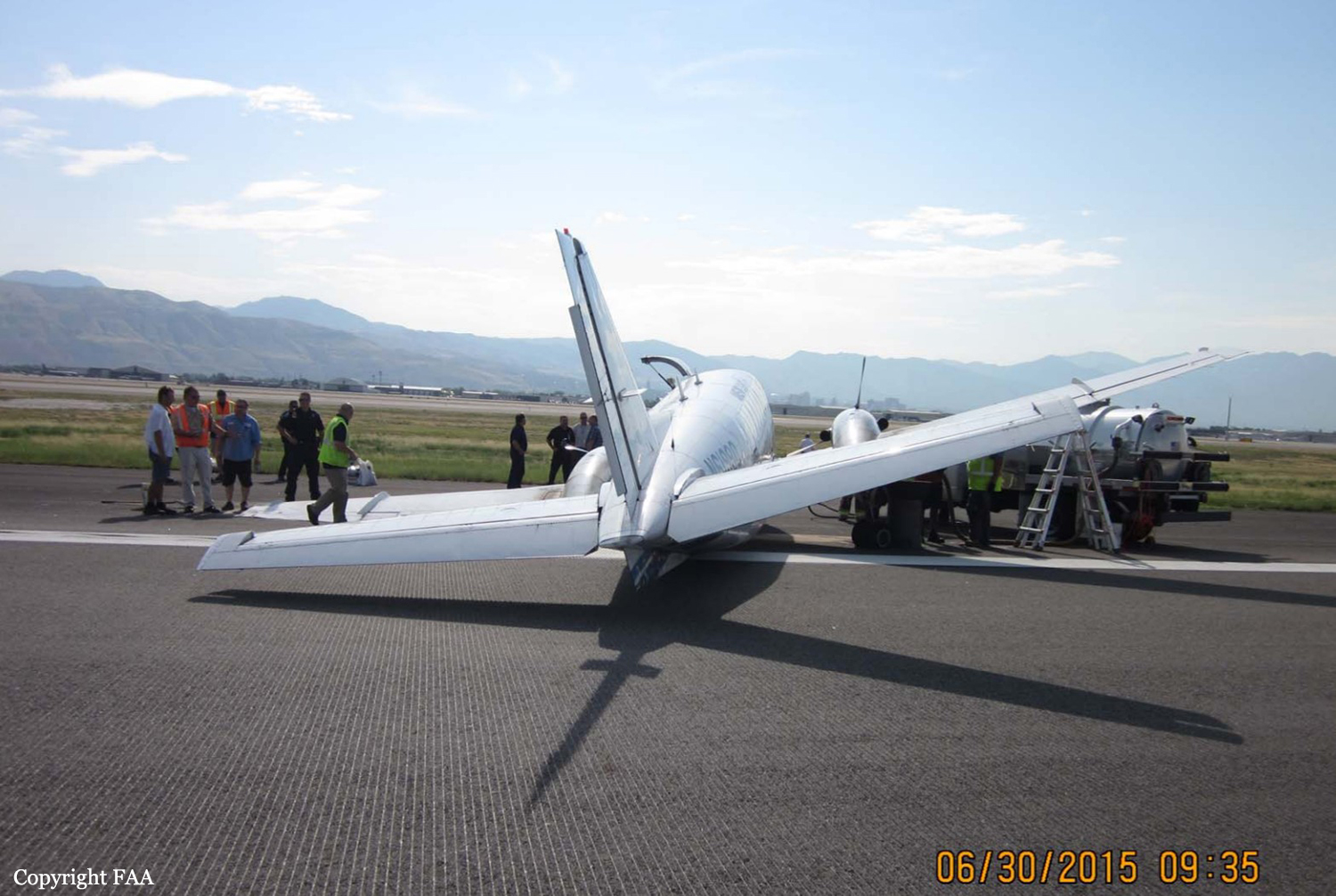
The commercial pilot and copilot reported that, after a normal start and taxi, the airplane was cleared for takeoff. The pilot reported that he began the takeoff roll and, once the airplane reached 100 knots, he rotated the airplane. He added that the airplane immediately experienced an uncommanded right yaw and that the right rudder pedal was "at the floor." Both pilots applied pressure to the left rudder pedal; however, the pedal barely moved. The pilot then tried to manipulate the rudder trim; however, the airplane continued to yaw right. He then manipulated the throttle controls and landed the airplane on the left side of the runway. The airplane remained difficult to control, and subsequently, the left landing gear collapsed, and the airplane slid to a stop on its left side. Postaccident examination of the cockpit revealed that the rudder trim was fully trimmed to the nose right position. Examination of the rudder and rudder trim assembly revealed no anomalies that would have precluded normal operation. The reason for the unmanageable right yaw could not be determined.
Probable cause:
The airplane's unmanageable right yaw during takeoff for reasons that could not be determined because postaccident examination of the rudder and rudder assembly did not reveal any anomalies that would have precluded normal operation.
Final Report:

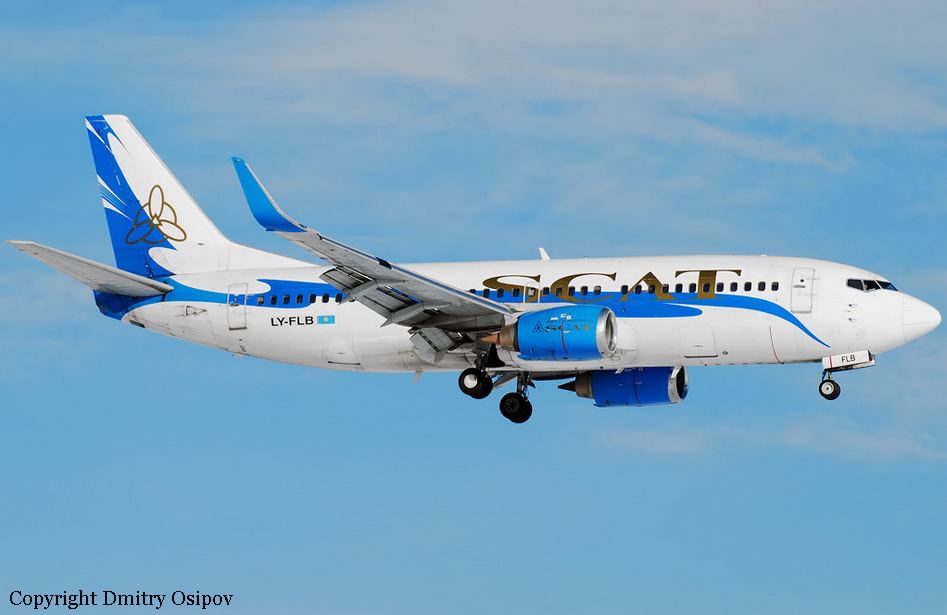
Ground fire of a Boeing 737-322 in Aktau

Date & Time: Jun 16, 2015 at 1900 LT
Type of aircraft:
Operator:
Registration:
LY-FLB
Flight Phase:
Survivors:
Yes
Schedule:
Aktau - Mineralnye Vody
MSN:
24667/1893
YOM:
1990
Flight number:
DV831
Location:
Country:
Region:
Crew on board:
0
Crew fatalities:
Pax on board:
0
Pax fatalities:
Other fatalities:
Total fatalities:
0
Circumstances:
After completing flight DV742 from Astana, the aircraft was parked at a gate, waiting for its passengers to complete the flight DV831 to Mineralnye Vody. The aircraft landed at 1818LT and was scheduled to depart around 1915LT when an explosion occurred in the forward baggage compartment (between STA 380 and STA 440). A fire spread into the cabin and partially destroyed the fuselage. Nobody was hurt in this incident but the aircraft was damaged beyond repair.
Probable cause:
The cause of the fire and the fire on board the aircraft, was the spontaneous destruction of the oxygen hose with compressed oxygen, used for filling the aircraft using a ground source with pressurized oxygen.
Contributing causes of fire and the fire were:
Instant spontaneous combustion of dynamically disturbed and oxygen-enriched air-flow in a fine dust environment in the front luggage compartment in the area of the aircraft oxygen bottle due to constant pressure of oxygen coming from an open oxygen cylinder.

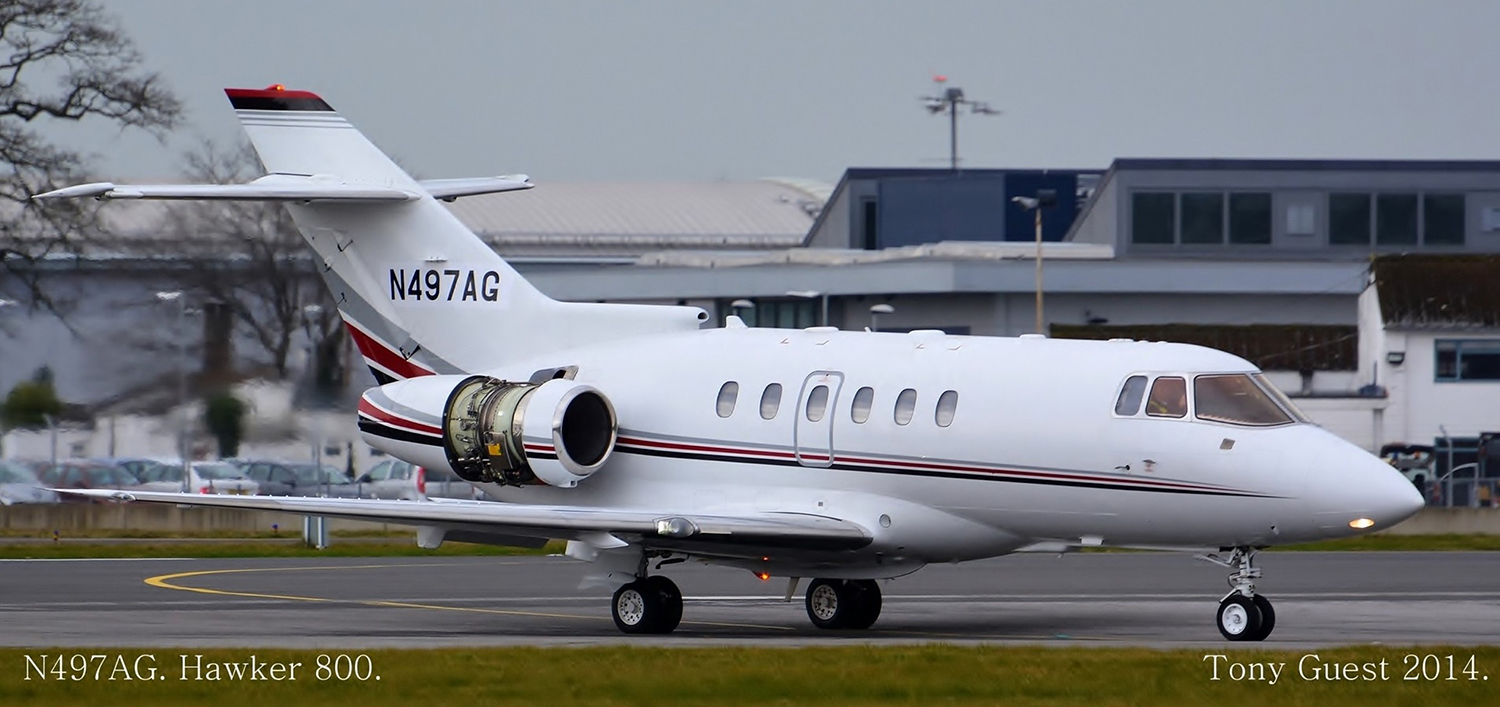
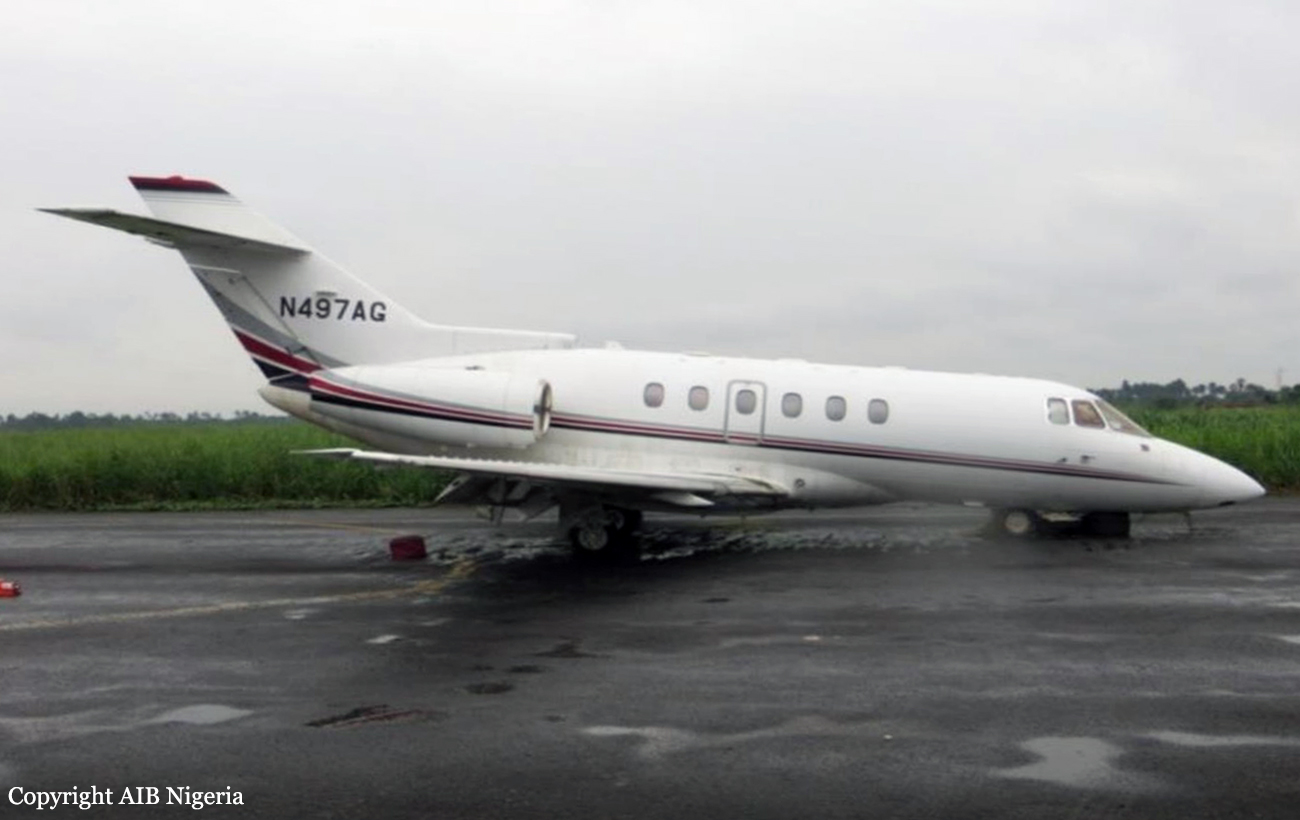
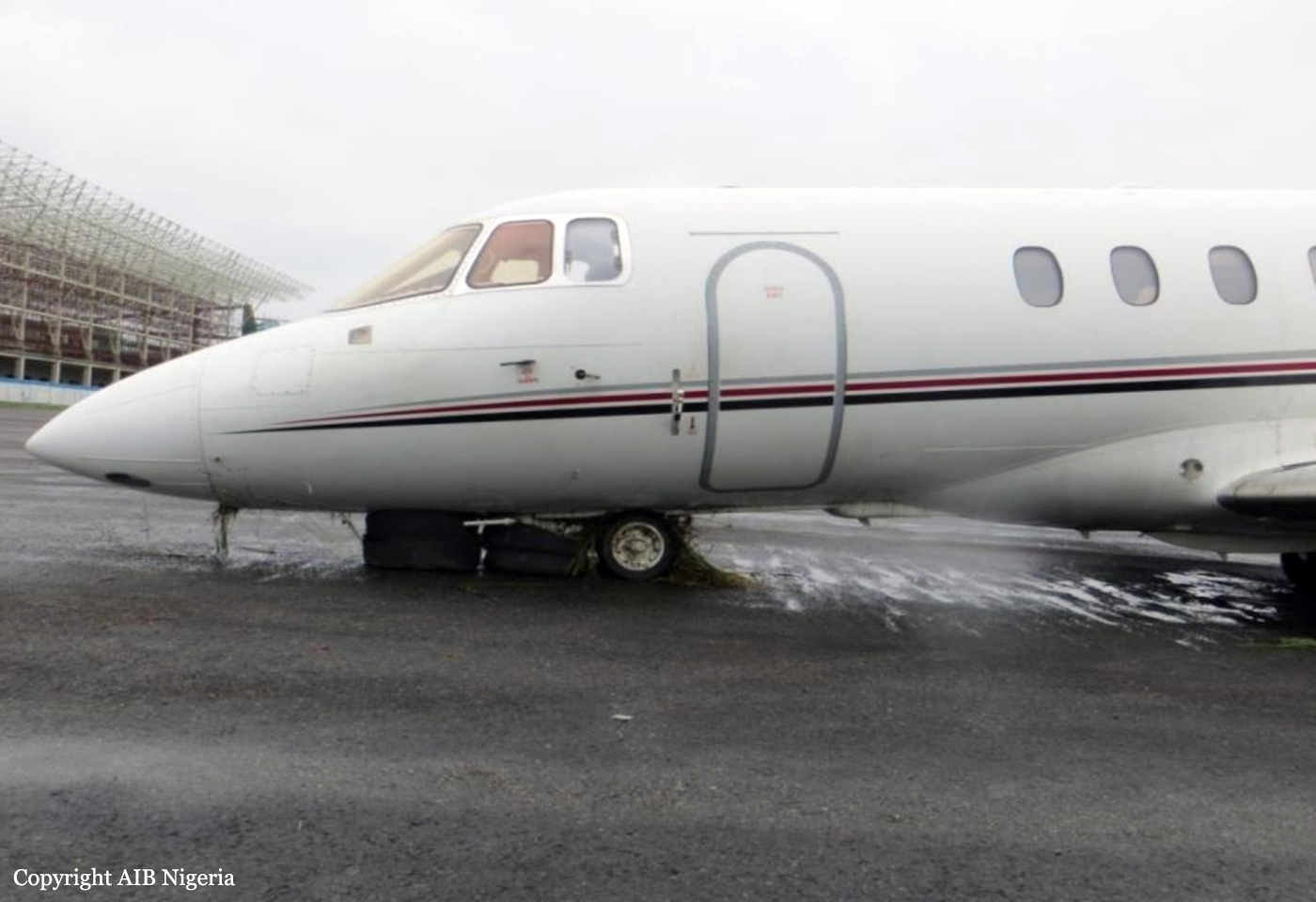
Crash of a Hawker 800XP in Port Harcourt

Date & Time: Jun 8, 2015 at 1916 LT
Type of aircraft:
Registration:
N497AG
Survivors:
Yes
Schedule:
Abuja – Port Harcourt
MSN:
258439
YOM:
1999
Country:
Region:
Crew on board:
3
Crew fatalities:
Pax on board:
2
Pax fatalities:
Other fatalities:
Total fatalities:
0
Captain / Total flying hours:
4180
Captain / Total hours on type:
2752.00
Copilot / Total flying hours:
16744
Copilot / Total hours on type:
147
Aircraft flight hours:
8447
Aircraft flight cycles:
6831
Circumstances:
On 11th June, 2015, at about 18:25 h, an HS-125-800XP aircraft with nationality and registration marks N497AG, operated by SWAT Technology Limited departed Nnamdi Azikiwe International Airport, Abuja (DNAA) for Port Harcourt International Airport (DNPO) as a charter flight on an Instrument Flight Rule (IFR) flight plan. There were five persons on board inclusive of three flight crew and two passengers. The Captain was the Pilot Flying while the Co-pilot was the Pilot Monitoring. At 18:48 h, N497AG established contact with Lagos and Port Harcourt Air Traffic Control (ATC) units cruising at Flight Level (FL) 280. At 18:55 h, the aircraft was released by Lagos to continue with Port Harcourt. Port Harcourt cleared N497AG for descent to FL210. At 19:13 h, the crew reported field in sight at 6 nautical miles to touch down to the Tower Controller (TC). TC then cleared the aircraft to land with caution “runway surface wet”. The crew experienced light rain at about 1.3 nautical miles to touch down with runway lights ON for the ILS approach. At about 1,000 ft after the extension of landing gears, the PM remarked ‘Okay...I got a little rain on the windshield’ and the PF responded, ‘We don’t have wipers sir... (Laugh) Na wa o (Na wa o – local parlance, - pidgin, for expression of surprise). From the CVR, at Decision Height, the PM called out ‘minimums’ while the PF called back ‘landing’ as his intention. The PM reported that the runway edge lights were visible on the left side. On the right side, it was missing to a large extent and only appeared for about a quarter of the way from the runway 03 end. The PM observed that the aircraft was slightly to the left of the “centreline” and pointed out “right, right, more right.” The PM further stated that at 50 ft, the PF retarded power and turned to the left. At 40 ft, the PM cautioned the PF to ‘keep light in sight don’t go to the left’. At 20 ft, the PM again said, ‘keep on the right’. PF replied, ‘Are you sure that’s not the centre line?’. At 19:16 h, the aircraft touched down with left main wheel in the grass and the right main wheel on the runway but was steered back onto the runway. The PF stated, “...but just on touchdown the right-hand lights were out, and in a bid to line up with the lights we veered off the runway to the left”. The nose wheel landing gear collapsed, and the aircraft stopped on the runway. The engines were shut down and all persons on board disembarked without any injury. From the CVR recordings, the PF told the PM that he mistook the brightly illuminated left runway edge lights for the runway centreline and apologized for the error of judgement for which the PM responded ‘I told you’. The aircraft was towed out of the runway and parked at GAT Apron at 21:50 h. The accident occurred at night in light rain.
Probable cause:
The accident was the consequence of a black hole effect disorientation causing low-level manoeuvre into grass verge.
The following contributing factors were identified:
- Most of the runway 21 right edge lights were unserviceable at landing time.
- Inadequate Crew Resource Management during approach.
Final Report:

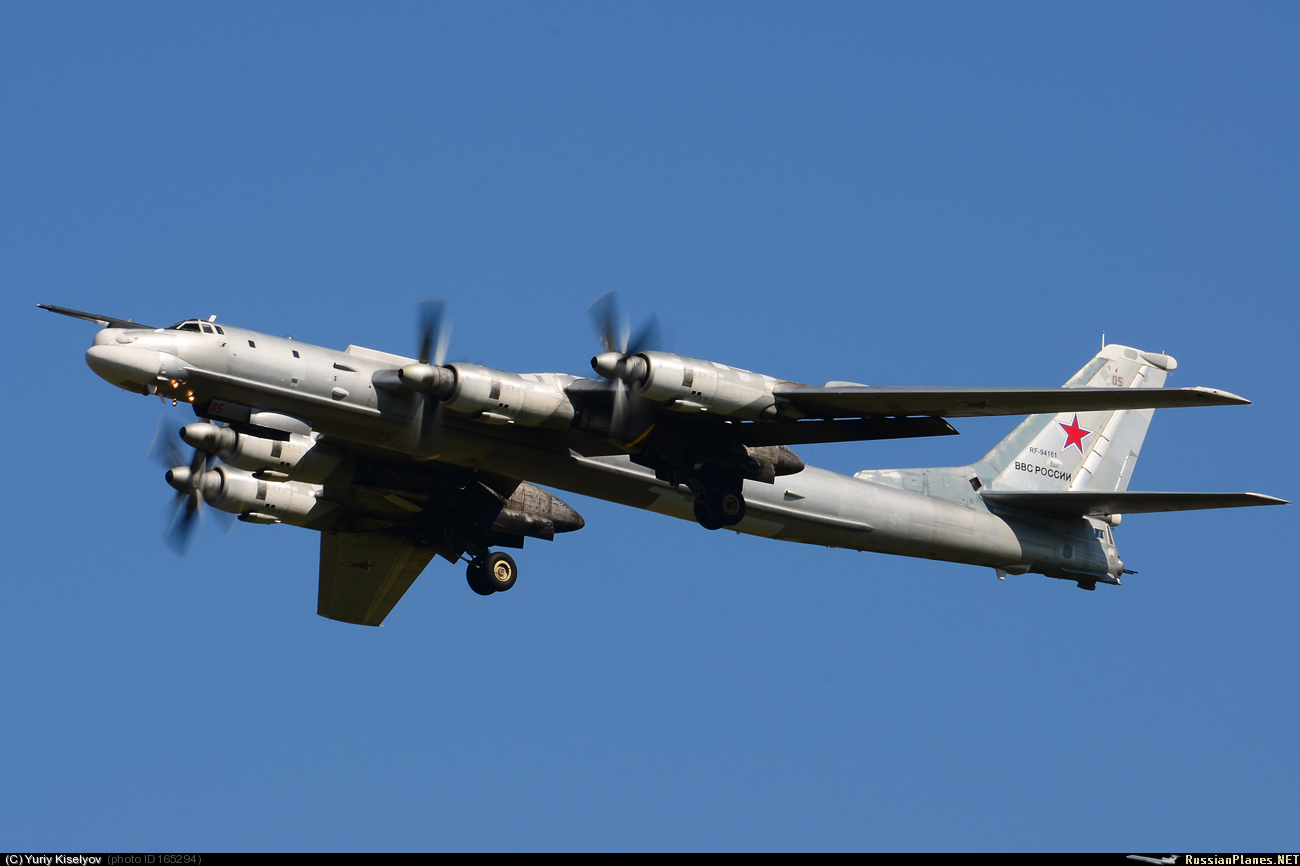
Crash of a Tupolev TU-95MS at Ukrainka AFB: 2 killed

Date & Time: Jun 8, 2015 at 1700 LT
Type of aircraft:
Operator:
Registration:
RF-94181
Flight Phase:
Flight Type:
Survivors:
Yes
Schedule:
Ukrainka - Ukrainka
Country:
Region:
Crew on board:
9
Crew fatalities:
Pax on board:
0
Pax fatalities:
Other fatalities:
Total fatalities:
2
Circumstances:
The aircraft was engaged in a training mission out from Ukrainka AFB, carrying nine crew members. During the takeoff roll, one of both left engines caught fire and exploded. The captain (Lt Col Sergei Gorshnev) initiated an emergency braking procedure when the aircraft went out of control, veered off runway and completed a 180 turn before coming to rest, bursting into flames. All nine crew members were injured, the captain seriously. The aircraft was partially destroyed by fire. Few hours later, two of the survivors died from their injuries. The aircraft had the dual registration RF-94181 and 05 red.
Probable cause:
Explosion of an engine for unknown reasons.