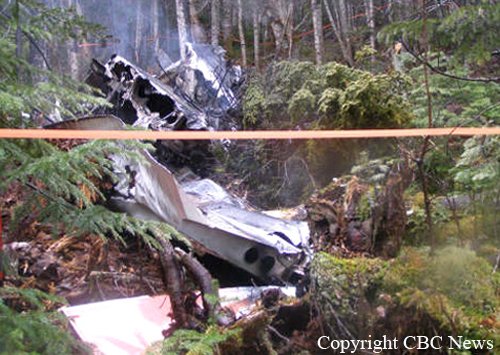
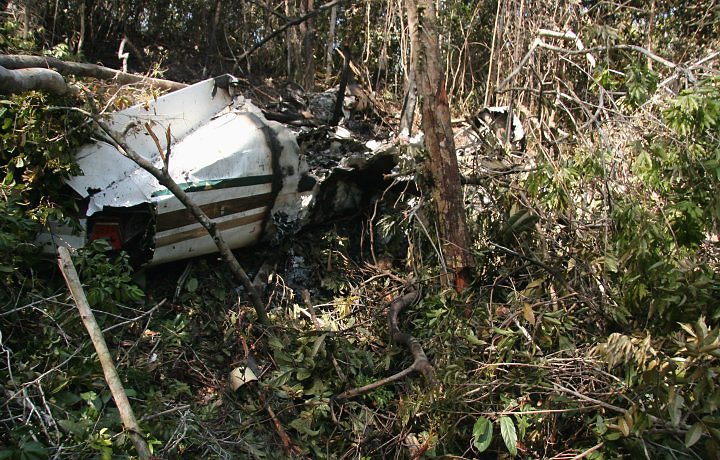
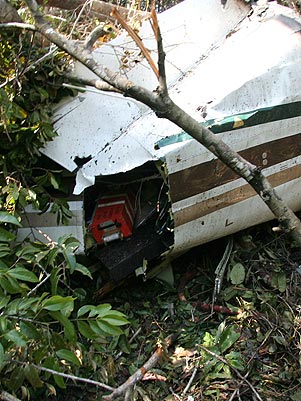
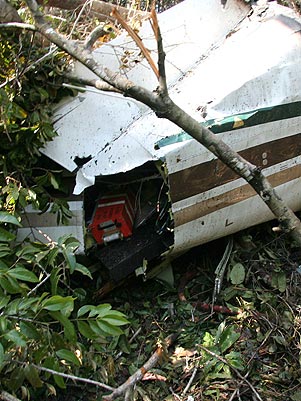
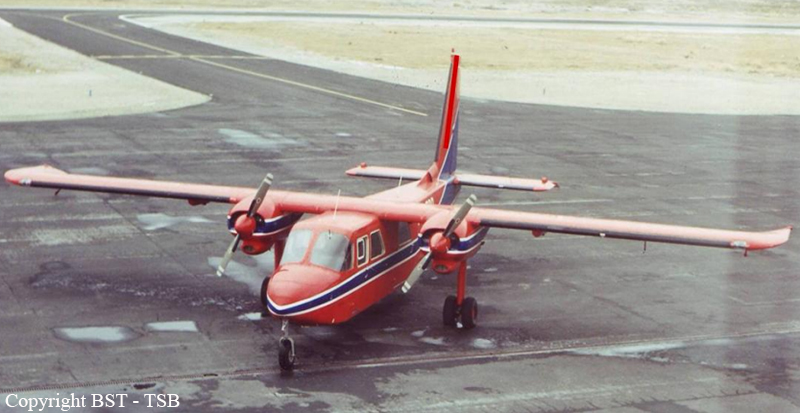
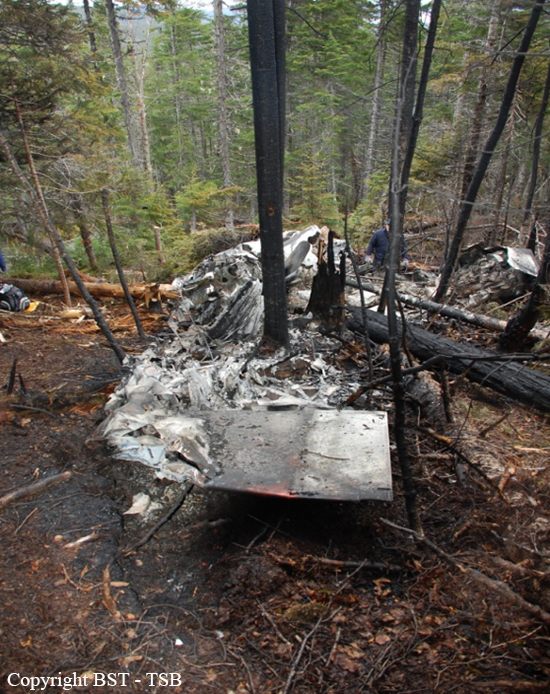
Crash of a Britten-Norman BN-2A-27 Islander in Port Hope Simpson: 1 killed

Date & Time: Jun 7, 2009 at 0830 LT
Type of aircraft:
Operator:
Registration:
C-FJJR
Flight Type:
Survivors:
No
Schedule:
Lourdes-de-Blanc-Sablon - Port Hope Simpson
MSN:
424
YOM:
1975
Country:
Crew on board:
1
Crew fatalities:
Pax on board:
0
Pax fatalities:
Other fatalities:
Total fatalities:
1
Captain / Total flying hours:
13500
Captain / Total hours on type:
600.00
Circumstances:
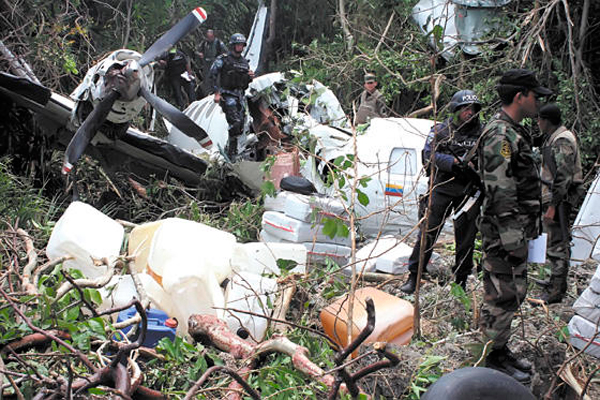
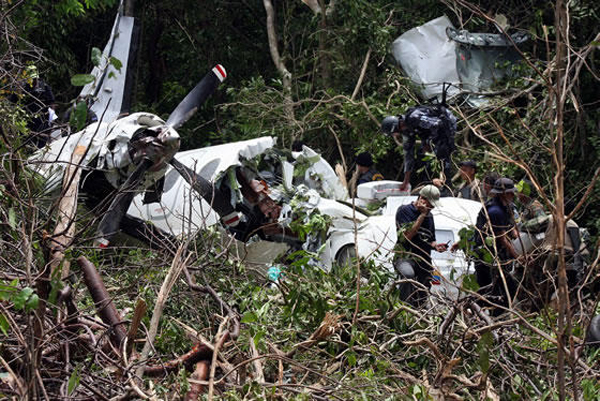
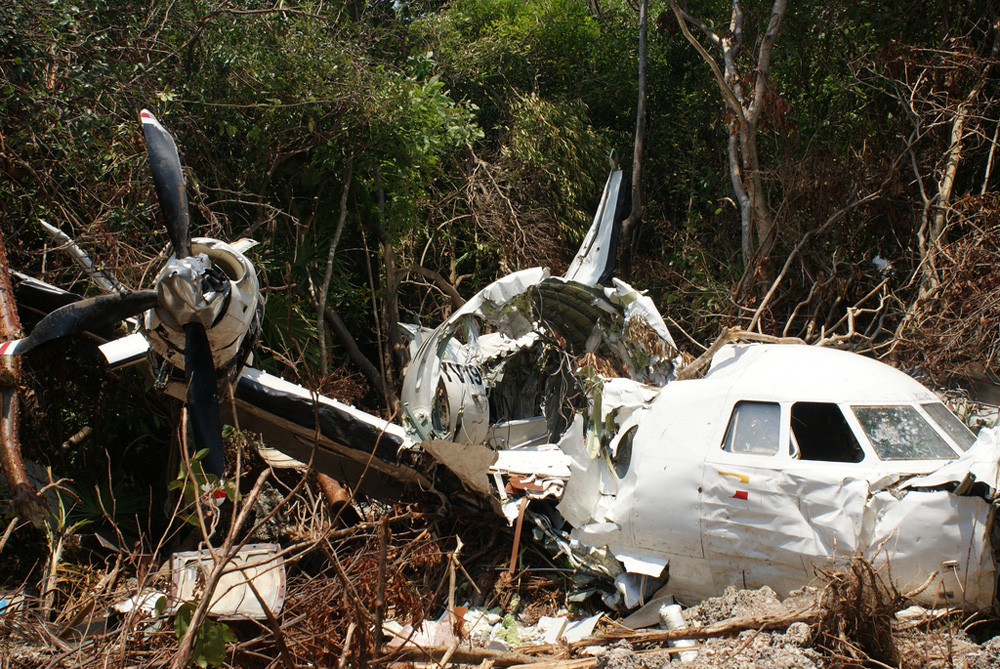
The pilot was tasked with a medical evacuation flight to take a patient from Port Hope Simpson to St. Anthony, Newfoundland and Labrador. The aircraft departed the company’s base of operations at Forteau, Newfoundland and Labrador, at approximately 0620 Newfoundland and Labrador daylight time. At approximately 0650, he made radio contact with the airfield attendant at the Port Hope Simpson Airport, advising that he was four nautical miles from the airport for landing. The weather in Port Hope Simpson was reported to be foggy. There were no further transmissions from the aircraft. Although the aircraft could not be seen, it could be heard west of the field. An application of power was heard, followed shortly thereafter by the sound of an impact. Once the fog cleared about 30 minutes later, smoke was visible in the hills approximately four nautical miles to the west of the Port Hope Simpson Airport. A ground search team was dispatched from Port Hope Simpson and the wreckage was found at approximately 1100. The sole occupant of the aircraft was fatally injured. The aircraft was destroyed by impact forces and a severe post-crash fire. There was no emergency locator transmitter signal.
Probable cause:
Finding as to Causes and Contributing Factors:
1. The aircraft departed controlled flight, likely in an aerodynamic stall, and impacted terrain for undetermined reasons.
Other Finding:
1. The lack of onboard recording devices prevented the investigation from determining the reasons why the aircraft departed controlled flight.
Final Report:
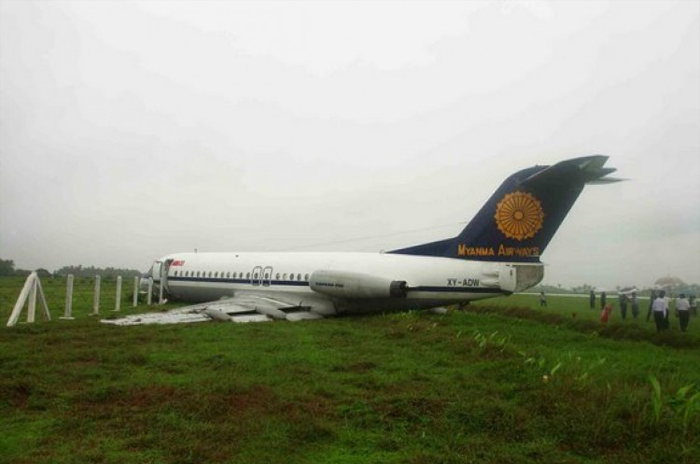
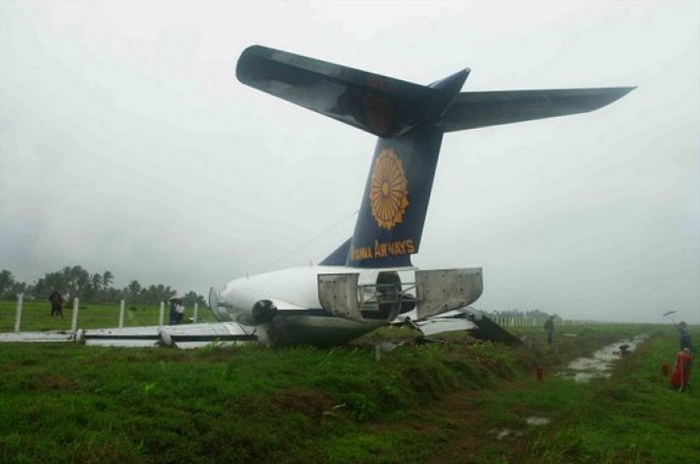
Crash of a Fokker F28 Fellowship 4000 in Sittwe

Date & Time: Jun 6, 2009 at 0820 LT
Type of aircraft:
Operator:
Registration:
XY-ADW
Survivors:
Yes
Schedule:
Yangon - Sittwe
MSN:
11114
YOM:
1977
Flight number:
UB409
Country:
Region:
Crew on board:
6
Crew fatalities:
Pax on board:
62
Pax fatalities:
Other fatalities:
Total fatalities:
0
Circumstances:
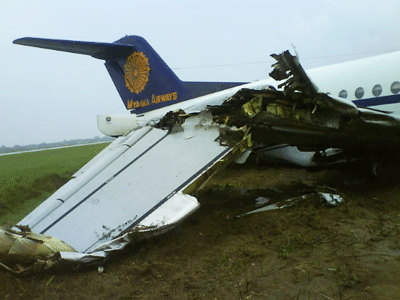
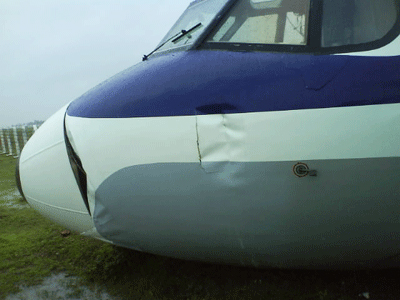
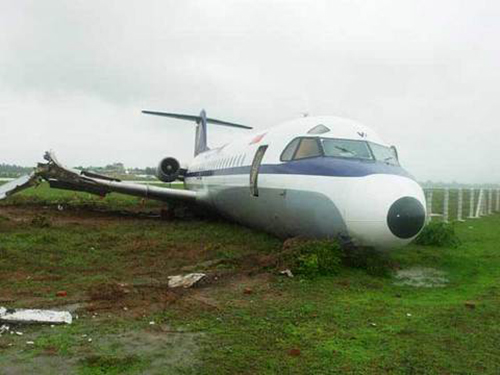
Following an uneventful flight from Yangon, the crew completed the approach to Sittwe Airport in poor weather conditions. The aircraft landed hard on runway 11, causing the right main gear to collapse. The right wing struck the ground and was partially sheared off. The aircraft went out of control, veered off runway to the left and came to rest against a fence. Three occupants, among them the captain, were slightly injured and the aircraft was damaged beyond repair. At the time of the accident, the runway threshold and edge lights as well as the VASIS were unserviceable.

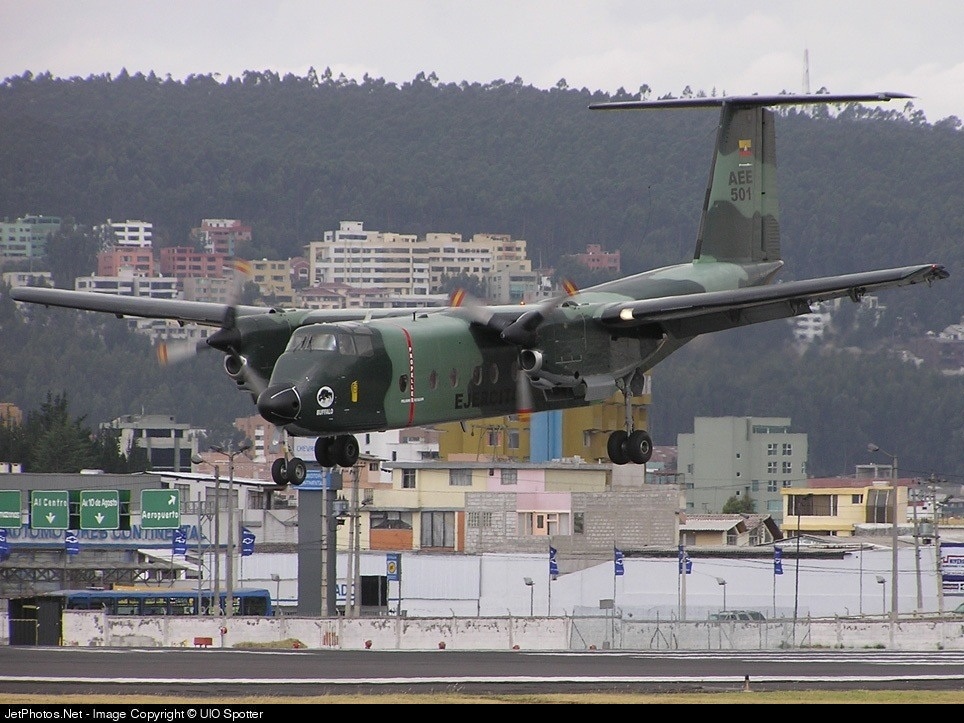
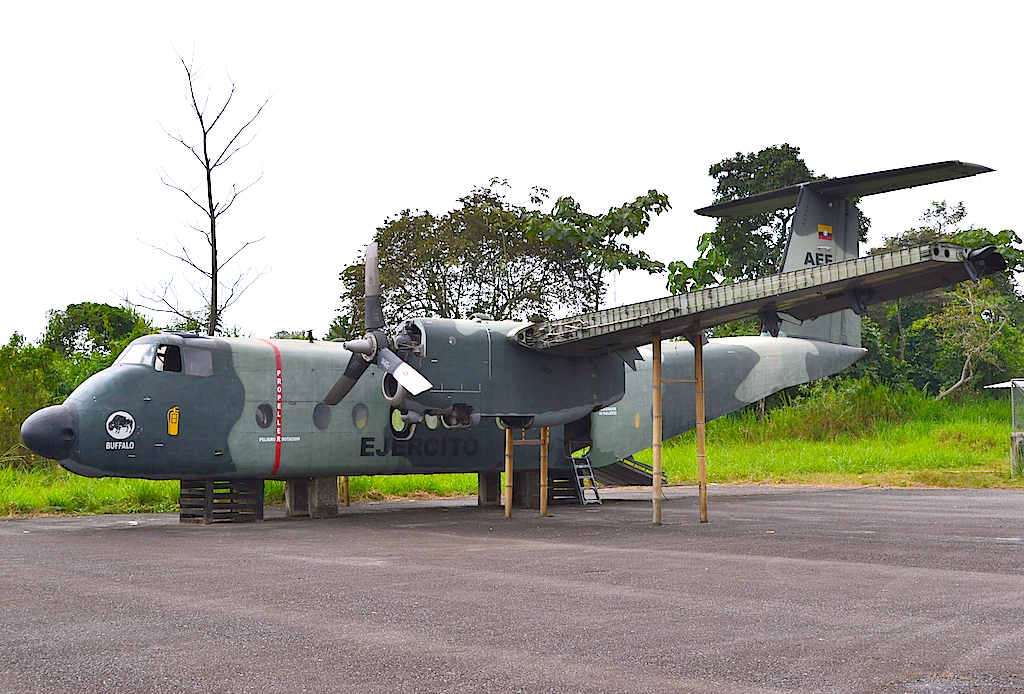
Crash of a De Havilland DHC-5D Buffalo in Quevedo

Date & Time: May 28, 2009 at 1055 LT
Type of aircraft:
Operator:
Registration:
AEE-501
Flight Type:
Survivors:
Yes
MSN:
104
YOM:
1980
Country:
Crew on board:
8
Crew fatalities:
Pax on board:
0
Pax fatalities:
Other fatalities:
Total fatalities:
0
Circumstances:
For unknown reasons, the aircraft made a wheels up landing at Quevedo Airport. While all 8 occupants escaped uninjured, the aircraft was damaged beyond repair.

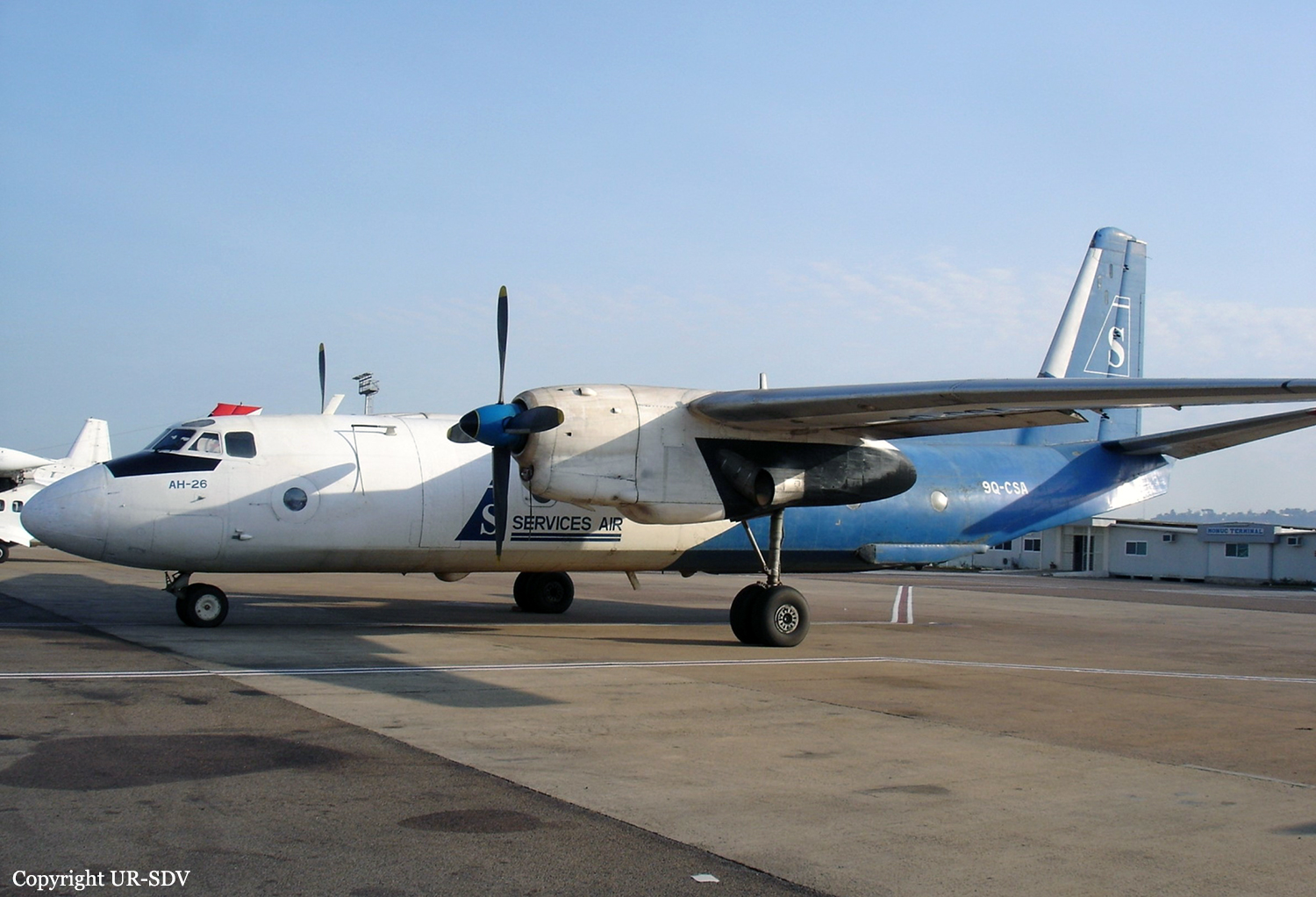
Crash of an Antonov AN-26 in Isiro: 3 killed

Date & Time: May 26, 2009 at 1616 LT
Type of aircraft:
Operator:
Registration:
9Q-CSA
Flight Type:
Survivors:
Yes
Schedule:
Goma – Isiro
MSN:
50 05
YOM:
1977
Location:
Region:
Crew on board:
4
Crew fatalities:
Pax on board:
0
Pax fatalities:
Other fatalities:
Total fatalities:
3
Circumstances:
The aircraft departed Goma on a cargo flight to Isiro, carrying one loadmaster, three crew members and a load of 7 tons of cigarettes. On approach to Isiro-Matari Airport, the aircraft crashed 3 km short of runway. The loadmaster was seriously injured while three others occupants were killed.

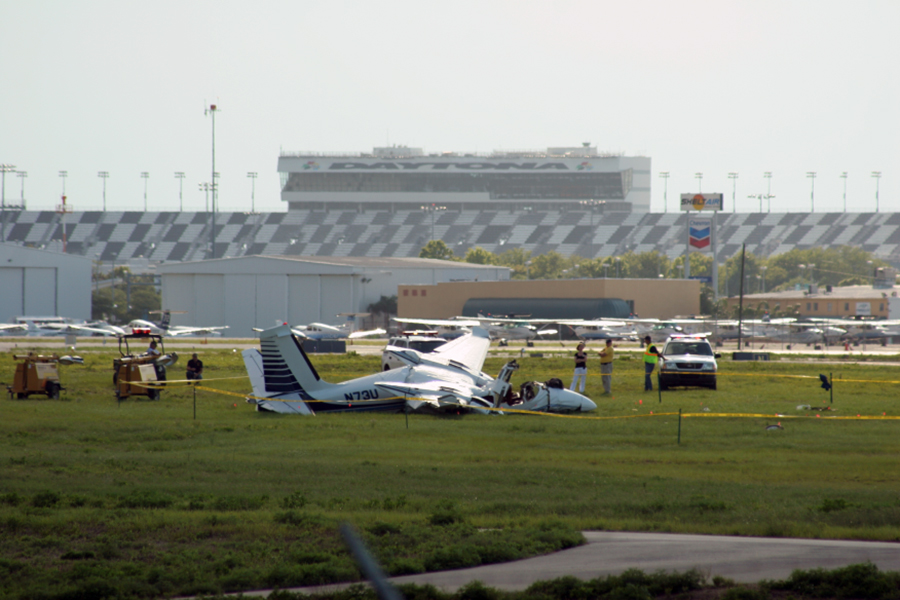
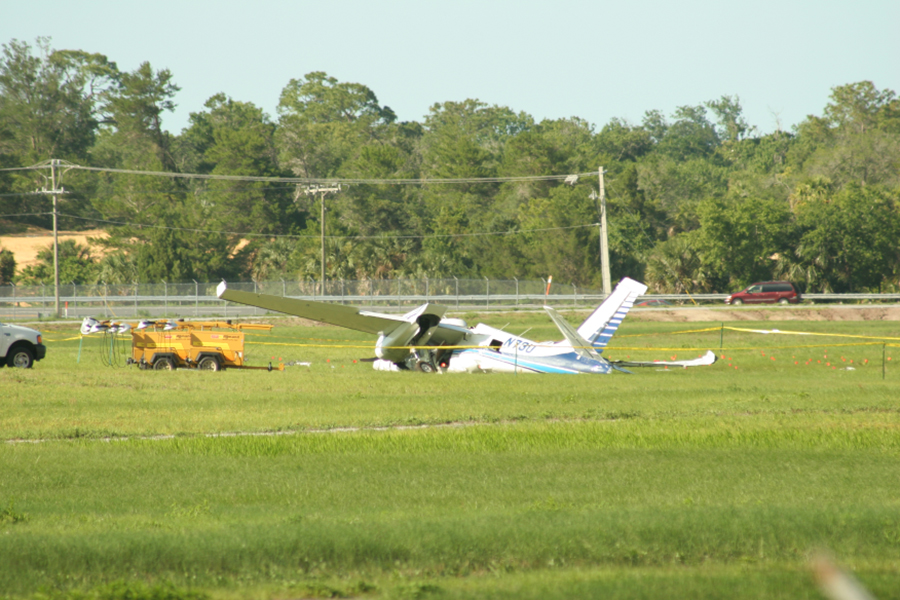
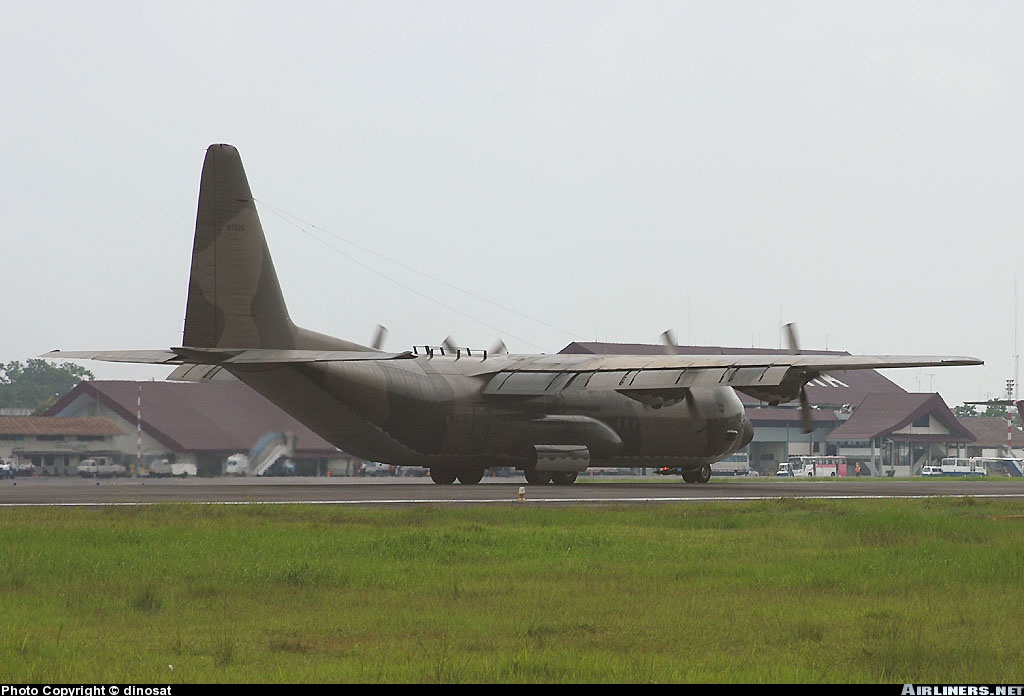
Crash of a Rockwell Shrike Commander 500S in Daytona Beach: 1 killed

Date & Time: May 25, 2009 at 0846 LT
Registration:
N73U
Flight Type:
Survivors:
Yes
Schedule:
Daytona Beach - New Smyrna Beach
MSN:
500-3162
YOM:
1963
Crew on board:
1
Crew fatalities:
Pax on board:
1
Pax fatalities:
Other fatalities:
Total fatalities:
1
Captain / Total flying hours:
1470
Captain / Total hours on type:
574.00
Aircraft flight hours:
3360
Circumstances:
The pilot departed in the twin-engine airplane with an unknown quantity of fuel and a fuel quantity indicating system that was known to be inaccurate. Immediately after takeoff, approximately 1/2 mile beyond the departure end of the runway, witnesses reported the engine noise from the accident airplane as "surging" as the airplane passed overhead, and one witness described a "radical" turn back to the airport. Two witnesses stated that only one engine was running, and added that it was "revving," and would then stop before revving up again. During the descent to the airport, radar data showed the airplane at 93 knots 700 feet and 1 mile from the runway, and at 90 knots at 500 feet and 1/2 mile from the runway, but the airplane crashed prior to the approach end of the runway. Post accident examination of the wreckage revealed no evidence of a pre accident mechanical malfunction. The fuel system had a capacity of 226 gallons, was serviced through a single port on top of the left wing, and the tanks were interconnected to a center fuel sump that fed both engines. The fuel cells were opened through access panels and each was intact and contained only trace amounts of fuel. The airplane was leveled, the drain petcock was opened at the center fuel cell sump, and 1 quart of fuel was drained.
Probable cause:
A total loss of engine power due to fuel exhaustion as a result of the pilot’s inadequate preflight inspection.
Final Report:
Crash of a Beechcraft 350 Super King Air in Porto Seguro: 14 killed

Date & Time: May 22, 2009 at 2053 LT
Registration:
PR-MOZ
Flight Type:
Survivors:
No
Schedule:
São Paulo – Porto Seguro
MSN:
FL-237
YOM:
1999
Country:
Crew on board:
2
Crew fatalities:
Pax on board:
12
Pax fatalities:
Other fatalities:
Total fatalities:
14
Captain / Total flying hours:
20000
Captain / Total hours on type:
5000.00
Copilot / Total flying hours:
357
Copilot / Total hours on type:
107
Circumstances:
The twin engine aircraft departed São Paulo-Congonhas Airport at 1831LT on a private flight to Porto Seguro, carrying 12 passengers and two pilots, among them the Brazilian Businessman Roger Wright, his wife, children and grandchildren. On approach to Porto Seguro-Terravista Golf Club Airport, the crew encountered poor weather conditions and the visibility was low due to the night. On final approach to runway 15, the aircraft impacted trees located 900 metres from the runway threshold. The aircraft continued for about 700 metres then struck others trees and crashed 200 metres short of runway, bursting into flames. The aircraft was totally destroyed and all 14 occupants were killed.
Probable cause:
The crew's decision to continue the approach in poor weather conditions following a high motivation to land at destination.
The following contributing factors were identified:
- The crew failed to follow the published procedures,
- The crew did not take the bad weather conditions into consideration and took the decision to land,
- Limited visibility due to rain falls and night,
- Weather conditions affected the perception of the pilots who suffered a loss of situational awareness,
- Poor judgment of the situation and flight conditions on part of the crew,
- The crew continued the approach under VFR mode in IMC conditions,
- The crew carried out an improvised VFR approach via a GPS system,
- Excessive approach speed,
- Poor crew coordination,
- Lack of crew discipline.
Final Report:
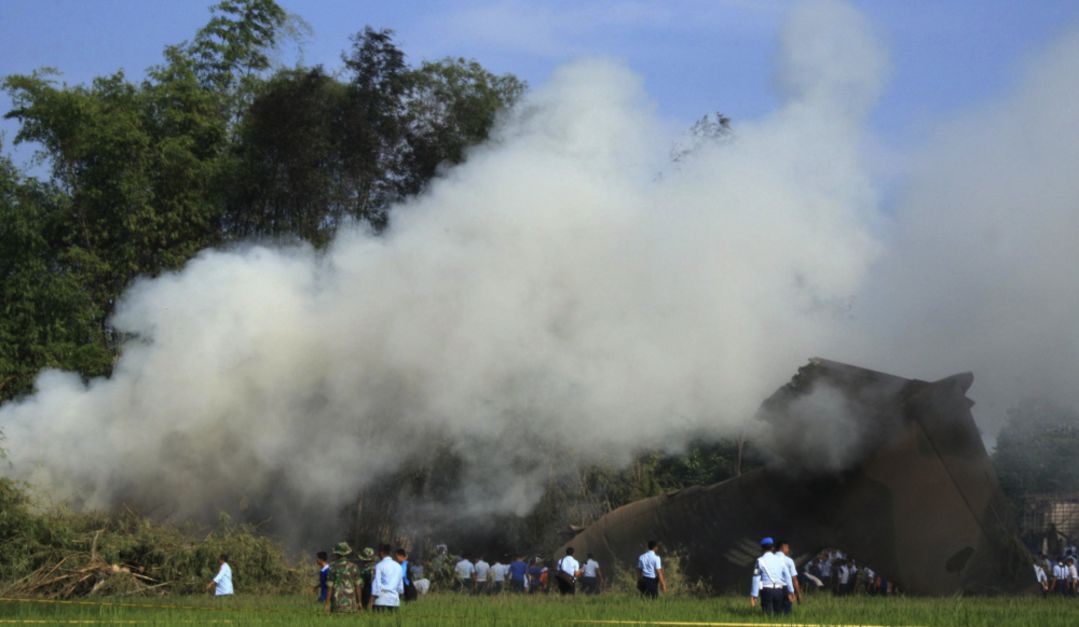
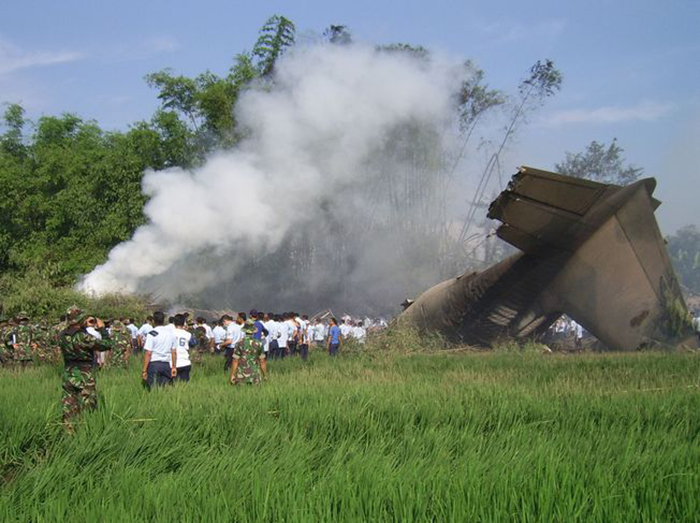
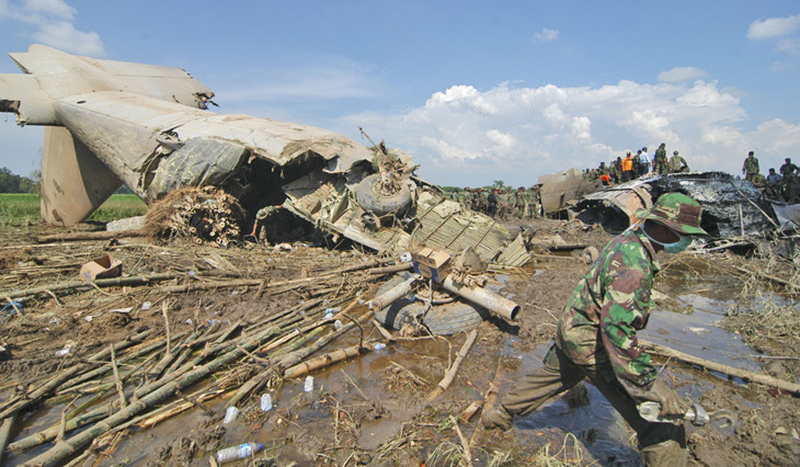
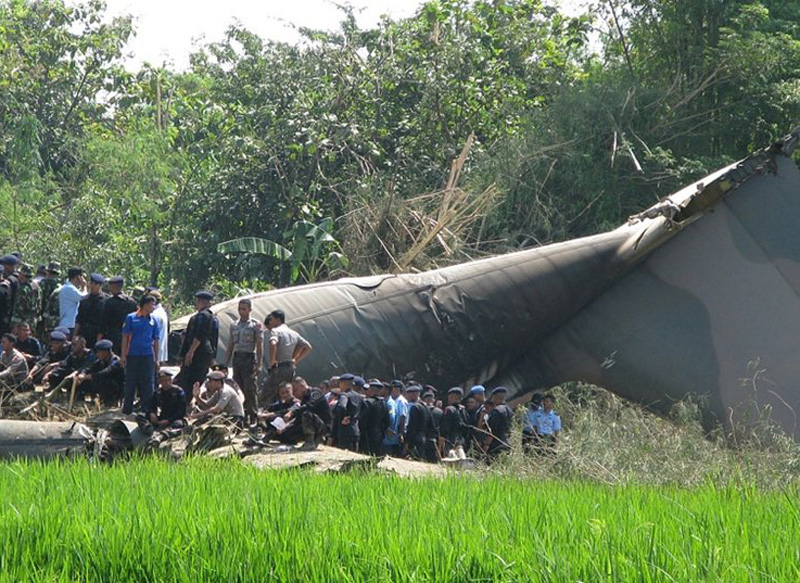
Crash of a Lockheed C-130H Hercules in Madiun: 100 killed

Date & Time: May 20, 2009 at 0630 LT
Type of aircraft:
Operator:
Registration:
A-1325
Flight Type:
Survivors:
Yes
Schedule:
Jakarta – Madiun
MSN:
4917
YOM:
1982
Country:
Region:
Crew on board:
14
Crew fatalities:
Pax on board:
98
Pax fatalities:
Other fatalities:
Total fatalities:
100
Circumstances:
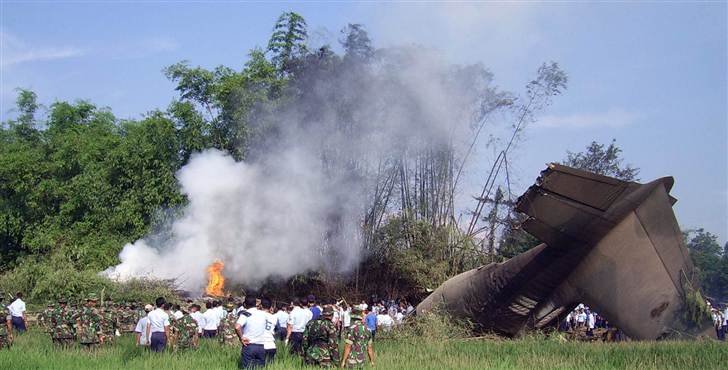
The four engine aircraft departed Jakarta-Halim Perdana Kusuma Airport on a flight to Madiun, carrying Indonesian soldiers/officers and family members. On final approach to Madiun-Iswahyudi Airport, the crew failed to realize his altitude was too low when the aircraft collided with four houses and eventually crashed in a rice paddy field. 98 occupants as well as two people on the ground were killed while 14 other occupants were seriously injured.

Crash of an Antonov AN-24T in Dire Dawa

Date & Time: May 18, 2009
Type of aircraft:
Registration:
EK-46839
Flight Phase:
Flight Type:
Survivors:
Yes
Schedule:
Dire Dawa - Bosaso
MSN:
7910201
YOM:
1967
Country:
Region:
Crew on board:
4
Crew fatalities:
Pax on board:
0
Pax fatalities:
Other fatalities:
Total fatalities:
0
Circumstances:
During the takeoff roll at Dire Dawa-Aba Tenna Dejazmach Yilma Airport in foggy conditions, control was lost. The aircraft veered off runway and came to rest. All four crew members escaped with minor injuries and the aircraft was damaged beyond repair.

Crash of a BAe 3212 Jetstream 32 in Útila: 1 killed

Date & Time: May 10, 2009 at 0200 LT
Type of aircraft:
Operator:
Registration:
YV1467
Flight Type:
Survivors:
Yes
MSN:
927
YOM:
1991
Country:
Crew on board:
2
Crew fatalities:
Pax on board:
1
Pax fatalities:
Other fatalities:
Total fatalities:
1
Circumstances:
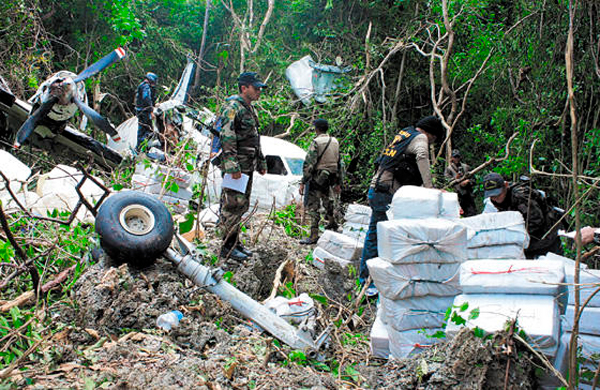
While cruising in bad weather conditions, the crew apparently lost his orientation and decided to divert to Útila Airport. On approach, both engines failed due to fuel exhaustion. The aircraft stalled and crashed in a dense wooded area. A pilot was killed while both other occupants were injured. The aircraft was destroyed. A load of 1,500 kilos of cocaine was found in the cabine.
Probable cause:
Double engine failure on final approach due to fuel exhaustion. Illegal flight.

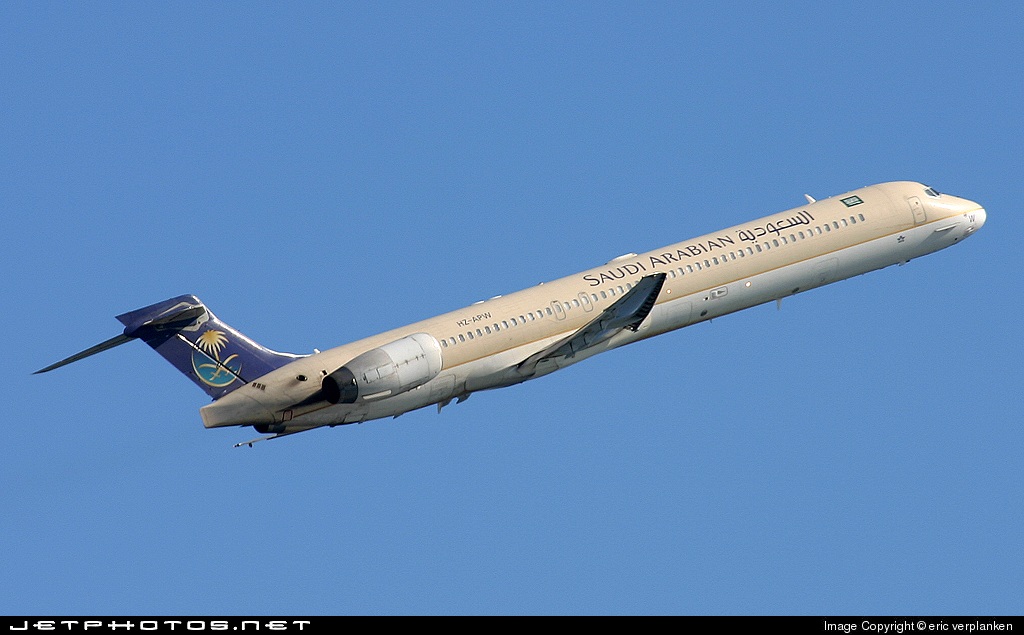
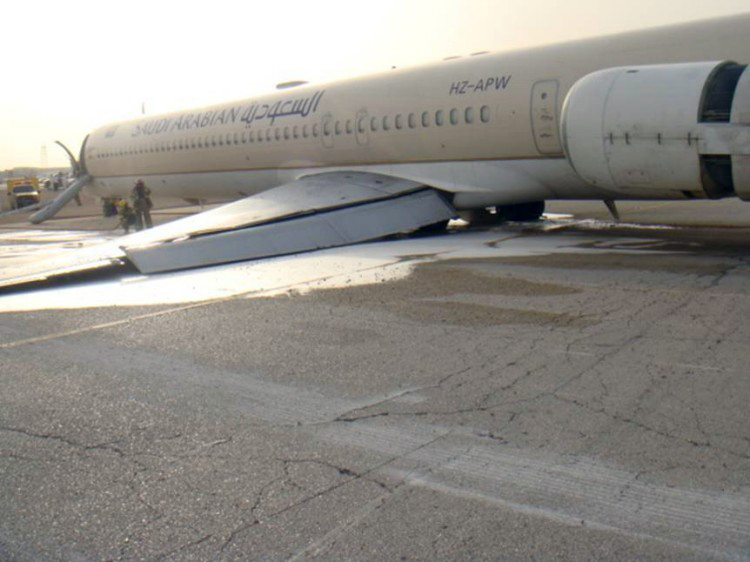
Crash of a McDonnell Douglas MD-90-30 in Riyadh

Date & Time: May 8, 2009 at 1558 LT
Type of aircraft:
Operator:
Registration:
HZ-APW
Flight Type:
Survivors:
Yes
Schedule:
Jeddah - Riyadh
MSN:
53513/2257
YOM:
1999
Flight number:
SVA9061
Country:
Region:
Crew on board:
7
Crew fatalities:
Pax on board:
0
Pax fatalities:
Other fatalities:
Total fatalities:
0
Circumstances:
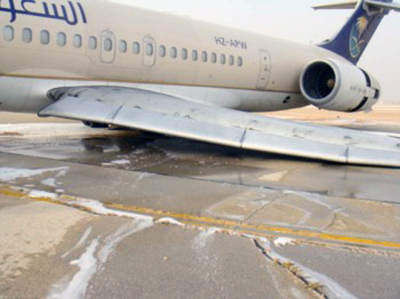
A Saudi Arabian Airlines MD-90 was substantially damaged during a runway excursion accident Riyadh (RUH). The seven crew members escaped unhurt. The airplane operated on a repositioning flight from Jeddah. During the flight, the captain discussed the use of manual spoilers during landing with the first officer. He further stated that; as he "had only around 400 hours in the aircraft" as a captain, he wanted to "see the effect' of landing with manual spoilers. He further explained that the flight provided an opportunity to "do it manually" (use manual spoilers) as it was a repositioning flight and, the weather and dry runway conditions were ideal. As such, he discussed the procedure with the first officer and elected to land with the auto ground spoiler system unarmed. The flight was uneventful. During the approach to Riyadh the Landing Checklist was completed, which included the arming of the auto ground spoiler system for landing. After the Landing Checklist was completed, the captain disarmed the auto ground spoiler system with the intention of applying manual ground spoilers after landing. The auto braking system was also not armed prior to landing. The final approach and touchdown to runway 15 Left at Riyadh were uneventful. The touchdown airspeed was 135 knots calibrated air speed (CAS). On touchdown, the captain manually extended the spoiler/speed brake lever, but did not latch it in the fully extended (EXT) position (fully aft and latched upwards). The captain then removed his right hand from the speed brake lever in order to deploy the thrust reversers. The first officer noted the movement of the spoiler/speed brake lever and called "Spoilers Deployed". Since the spoiler/speed brake lever was not fully pulled aft and latched upwards, the lever automatically returned to the forward retracted (RET) position. This movement of the spoiler/speed brake lever was not noticed by the captain and the first officer. In response, the ground spoilers re-stowed before being fully deployed and, a speed brake/flap configuration (SPD BRK/FLP CONFIG) Level 1 Amber Alert occurred. This alert occurred as the aircraft was not yet fully weight on wheels (WOW) and the aircraft still sensed a flight condition with speed brakes deployed and flaps extended beyond six degrees. Six seconds after touchdown on the right main landing gear, the nose gear touched down and the aircraft transferred to a ground condition (WOW on nose gear and main wheel spin up). The SPD BRK/FLP CONFIG alert extinguished when the nose gear oleo actuated ground shift on landing. After touchdown, the aircraft banked to the right and began to drift right of the runway centerline. In response, he applied left rudder, deployed the thrust reversers and applied left aileron. But this did not have any noticeable effect. The captain saw the approaching G4 taxiway exit and in an attempt to keep the aircraft from leaving the runway surface beyond the G4 taxiway exit, he decided to direct the aircraft towards the taxiway. He then applied a right rudder input which caused the aircraft to commence a rapid sweeping turn to the right towards the G4 taxiway exit. The aircraft left the runway at high speed, traversed the full width of the G4 taxiway, and exited the surface at its southern edge. The aircraft then entered a sand section and travelled the distance infield between the edge of the G4 taxiway and the adjacent section of taxiway GOLF. The left main landing gear collapsed during this time. The aircraft came to rest on taxiway GOLF. There was no post impact fire.
Probable cause:
Cause Related Findings
1. The Captain decided to land with manual ground spoilers when the auto ground spoiler system was fully operational.
2. The initiative by the Captain to conduct this improvised exercise contravened the Standard Operating Procedures (SOPs) and the Flight Operations Policy Manual (FOPM).
3. The auto ground spoiler system was disarmed prior to landing.
4. The spoiler/speed brake lever was partially applied manually after landing.
5. The spoiler/speed brake lever was released before it was fully extended and latched.
6. The spoiler/speed brake lever automatically retracted as per design.
7. The ground spoilers never fully deployed.
8. The loss of lift and aircraft deceleration were greatly reduced by the lack of ground spoiler deployment.
9. Brakes were not used in an attempt to control or slowdown the aircraft.
10. The Captain applied a large right rudder input with the intention of directing the aircraft onto the G4 taxiway exit.
11. The aircraft exited the runway at high speed and was travelling too fast to successfully negotiate the right turn onto the G4 taxiway.