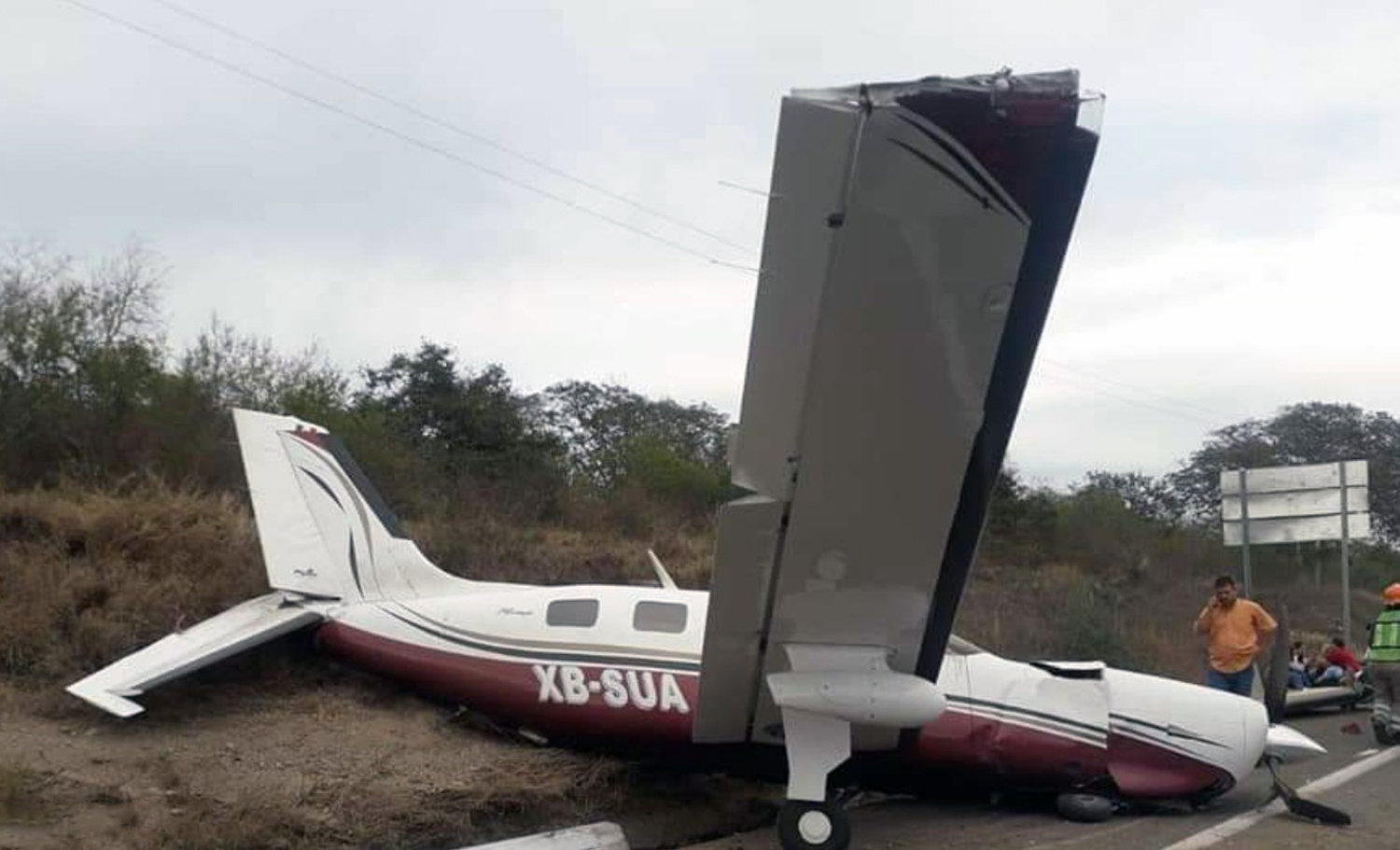
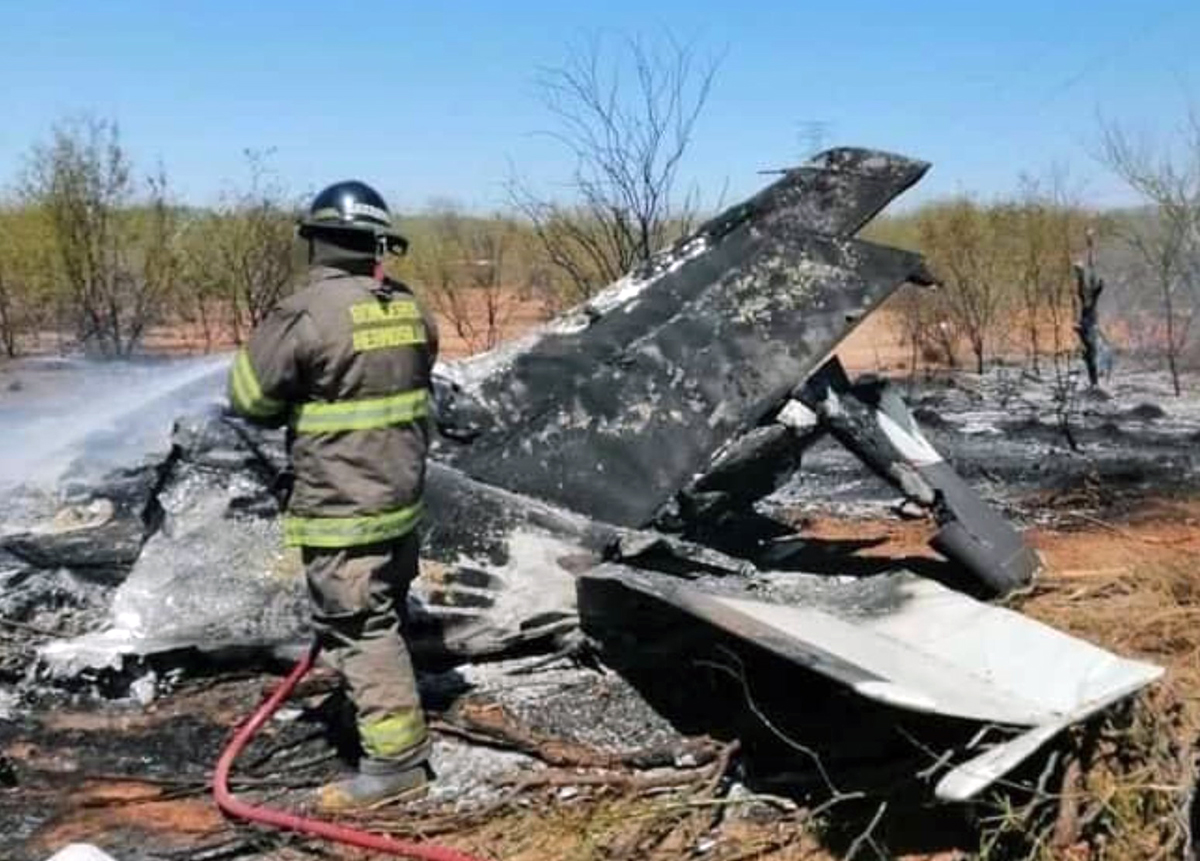
Crash of a Piper PA-46-350P Malibu Mirage in Mazatlán

Date & Time: Feb 13, 2022
Operator:
Registration:
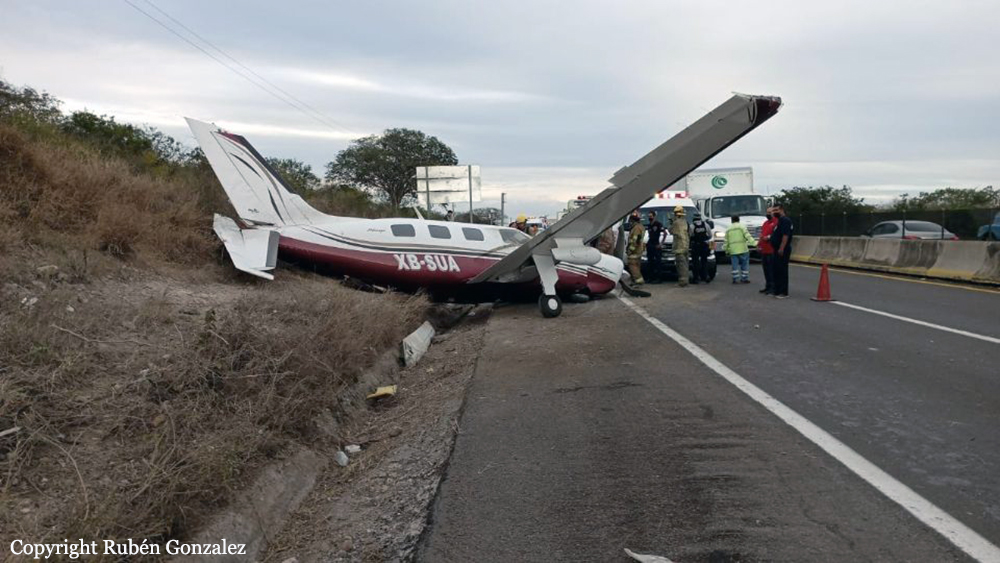
XB-SUA
Flight Phase:
Flight Type:
Survivors:
Yes
MSN:
46-36378
YOM:
2006
Country:
Crew on board:
1
Crew fatalities:
Pax on board:
5
Pax fatalities:
Other fatalities:
Total fatalities:
0
Circumstances:
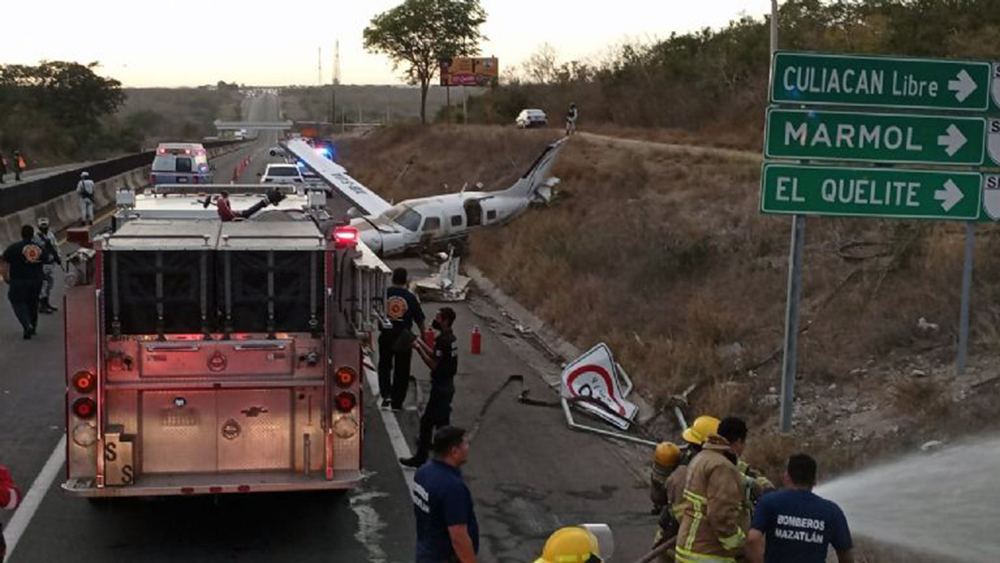
En route, the pilot encountered engine problems and elected to make an emergency landing on a motorway. Upon landing, the aircraft impacted the road bank, lost its left wing and came to rest. All six occupants evacuated with minor injuries and the aircraft was damaged beyond repair.

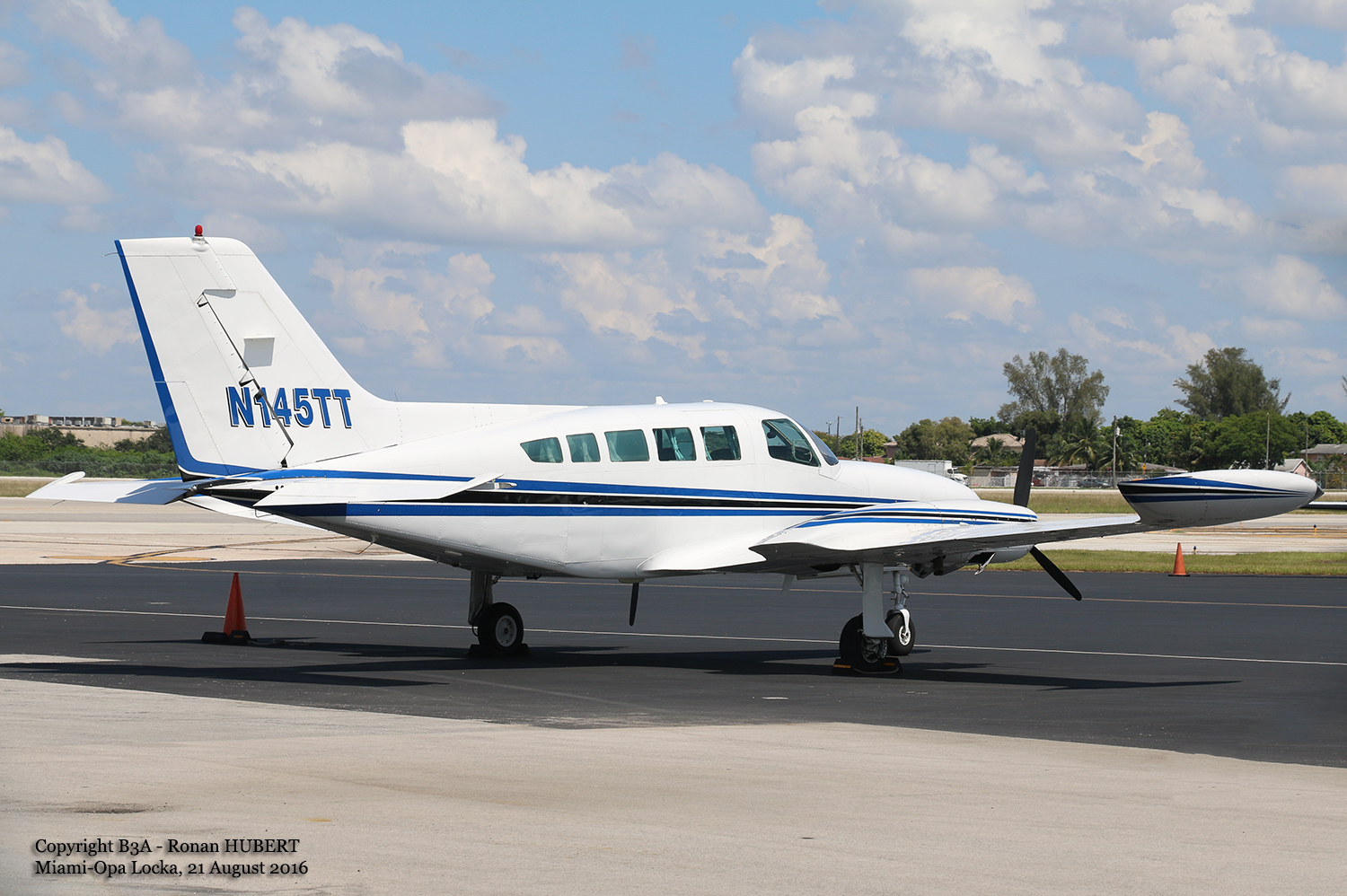
Crash of a Cessna 402B off Chub Cay

Date & Time: Jan 5, 2022 at 0832 LT
Type of aircraft:
Registration:
N145TT
Survivors:
Yes
Schedule:
Miami - Chub Cay
MSN:
402B-1333
YOM:
1978
Country:
Crew on board:
1
Crew fatalities:
Pax on board:
1
Pax fatalities:
Other fatalities:
Total fatalities:
0
Captain / Total flying hours:
3000
Captain / Total hours on type:
350.00
Circumstances:
The aircraft departed the Opa Locka Executive Airport (KOPF), Opa Locka, Florida, USA at 7:52 AM EST (1252 UTC) with 2 persons on board enroute to the Chub Cay Int’l Airport. The aircraft was operated by Airway Air Charter INC (Venture Air Solutions INC), a Part 135 certificate holder under Title 14 US Code of Federal Regulations (CFR), Investigations revealed that the pilot in command arrived at the Opa Locka Airport at approximately 6:30 AM EST and conducted a pre-flight check of the aircraft, subsequently adding 66.5 gallons of 100LL avgas fuel to the main fuel tanks of the aircraft. No fuel was added to the auxiliary tanks. After completion of all pre-flight checks, and gaining clearance from Air Traffic Control, the aircraft departed at approximately 7:52 AM EST. Investigations revealed that the flight was uneventful, until descending into Chub Cay, at about 2,500 feet, when the left engine began to “sputter”. At this point the pilot executed the engine failure checklist, but shortly thereafter, the right engine began to “sputter” also. The pilot then contacted Miami air traffic center and advised of loss of power to both engines, which resulted in the aircraft crashing into waters. The United States Coast Guard along with the Royal Bahamas Defense Force (RBDF) and Police Force (RBPF) were alerted. Joint aerial and marine assets were dispatched and additional assistance was provided by local mariners and pilots flying in the area to conduct search and rescue. Both occupants were located and rescued. They were later airlifted to the United States to receive further medical attention for minor injuries. Image from Google Earth of accident site and distance from Chub Cay Airport The location where the aircraft crashed was identified at coordinates 25° 24.884’ N and 077° 58.030’ W, approximately 4.48 NM west of the Chub Cay International Airport (MYBC), Berry Islands, Bahamas.
Probable cause:
The AAIA has determined the probable cause of this accident to be dual system component failure – powerplant. A contributing factor was a loss of engine power as a result of mismanagement of available fuel.
Final Report:

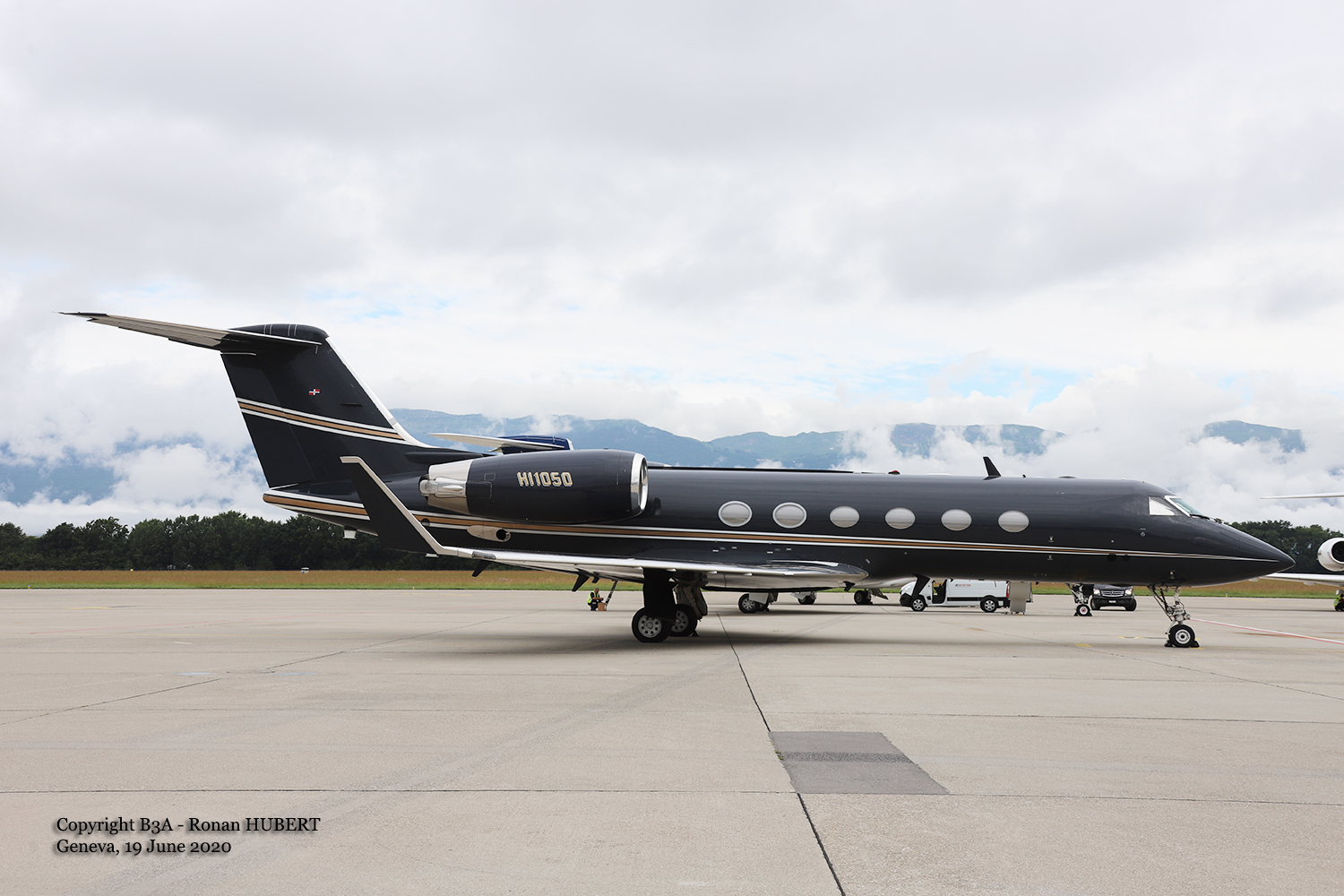
Crash of a Gulfstream GIV SP in Santo Domingo: 9 killed

Date & Time: Dec 15, 2021 at 1722 LT
Type of aircraft:
Operator:
Registration:
HI1050
Survivors:
No
Schedule:
La Isabela - Orlando
MSN:
1482
YOM:
2002
Crew on board:
3
Crew fatalities:
Pax on board:
6
Pax fatalities:
Other fatalities:
Total fatalities:
9
Circumstances:
The aircraft departed La Isabela-Dr. Joaquín Balaguer Airport on a charter flight to Orlando, carrying six passengers and three crew members. Shortly after takeoff, the crew informed ATC about technical problems and was cleared to divert to Santo Domingo-Las Américas Airport for an emergency landing. On approach, the aircraft went out of control and crashed, bursting into flames. The aircraft disintegrated on impact and all nine occupants were killed, among them the Portorican music artist José Angel Hernández aka Flow La Movie. According to a preliminary report, the crew encountered technical problems with the spoilers and maintenance was performed to change the ground spoiler actuators. After maintenance, the crew completed a ground check and while all spoilers properly deployed on both wings, only the spoilers on the left wing retracted as the spoilers on the right wing remained deployed. The crew failed to notice this asymetry. Immediately after takeoff, the crew reported controllability problems and elected to return but finally decided to divert to Las Américas Airport. The aircraft eventually went out of control and crashed 16 minutes after takeoff.

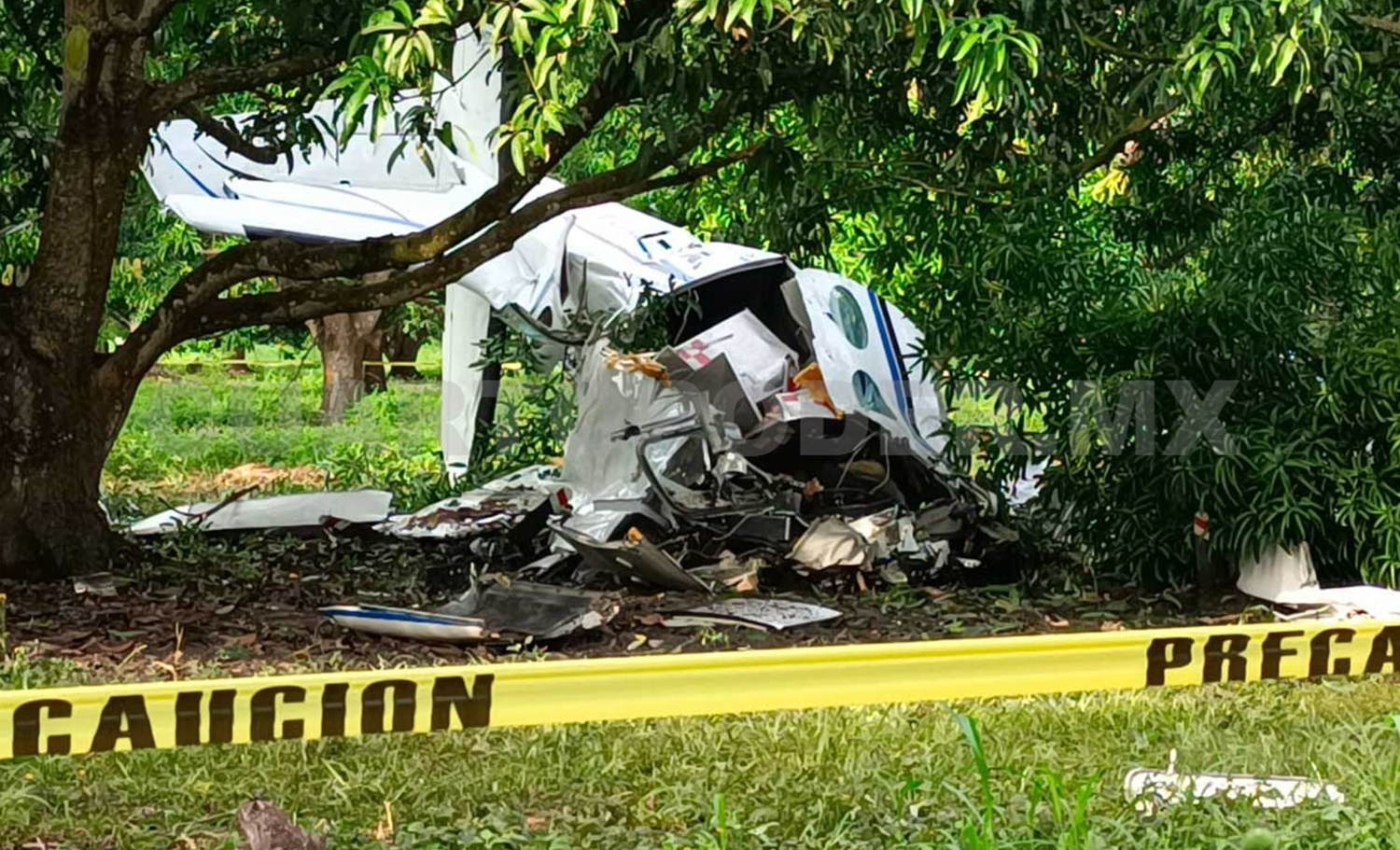
Crash of a Cessna 401 in Tapachula: 1 killed

Date & Time: Oct 19, 2021 at 0716 LT
Type of aircraft:
Operator:
Registration:
XB-RQE
Flight Phase:
Survivors:
No
Schedule:
Tapachula – Tapachula
MSN:
401-0268
YOM:
1969
Country:
Crew on board:
1
Crew fatalities:
Pax on board:
0
Pax fatalities:
Other fatalities:
Total fatalities:
1
Captain / Total flying hours:
1647
Captain / Total hours on type:
1397.00
Aircraft flight hours:
5237
Circumstances:
The pilot, sole on board, departed Tapachula Airport on a local flight to release Mediterranean flies. A flight plan of four hours was filed, with an altitude of 9,500 feet. The flies should be released in an area corresponding to 60 - 100 NM around the Tapachula VOR. Shortly after takeoff from Tapachula Airport Runway 05, while climbing to an altitude of 1,000 feet, the pilot reported engine problems. The aircraft turned to the right then entered an uncontrolled descent until it crashed in a mango plantation. The airplane was destroyed and the pilot was killed.
Probable cause:
Impact of the aircraft against the ground during a tight turn towards the side of the right engine, which showed inadequate performance.
The following contributing factors were identified:
- Continuing the flight despite intermittent failures in the fuel flow of engine number 2,
- Failure to adhere to the abnormal engine failure procedure during takeoff,
- Fatigue fracture of the fuel pump shaft of engine number 2.
Final Report:

Crash of a Britten Norman BN-2B-26 Islander in Montserrat

Date & Time: Sep 29, 2021 at 1733 LT
Type of aircraft:
Operator:
Registration:
J8-VBI
Survivors:
Yes
Schedule:
Saint John’s – Montserrat
MSN:
2025
YOM:
1981
Flight number:
SVD207
Country:
Crew on board:
1
Crew fatalities:
Pax on board:
6
Pax fatalities:
Other fatalities:
Total fatalities:
0
Captain / Total flying hours:
2650
Captain / Total hours on type:
712.00
Circumstances:
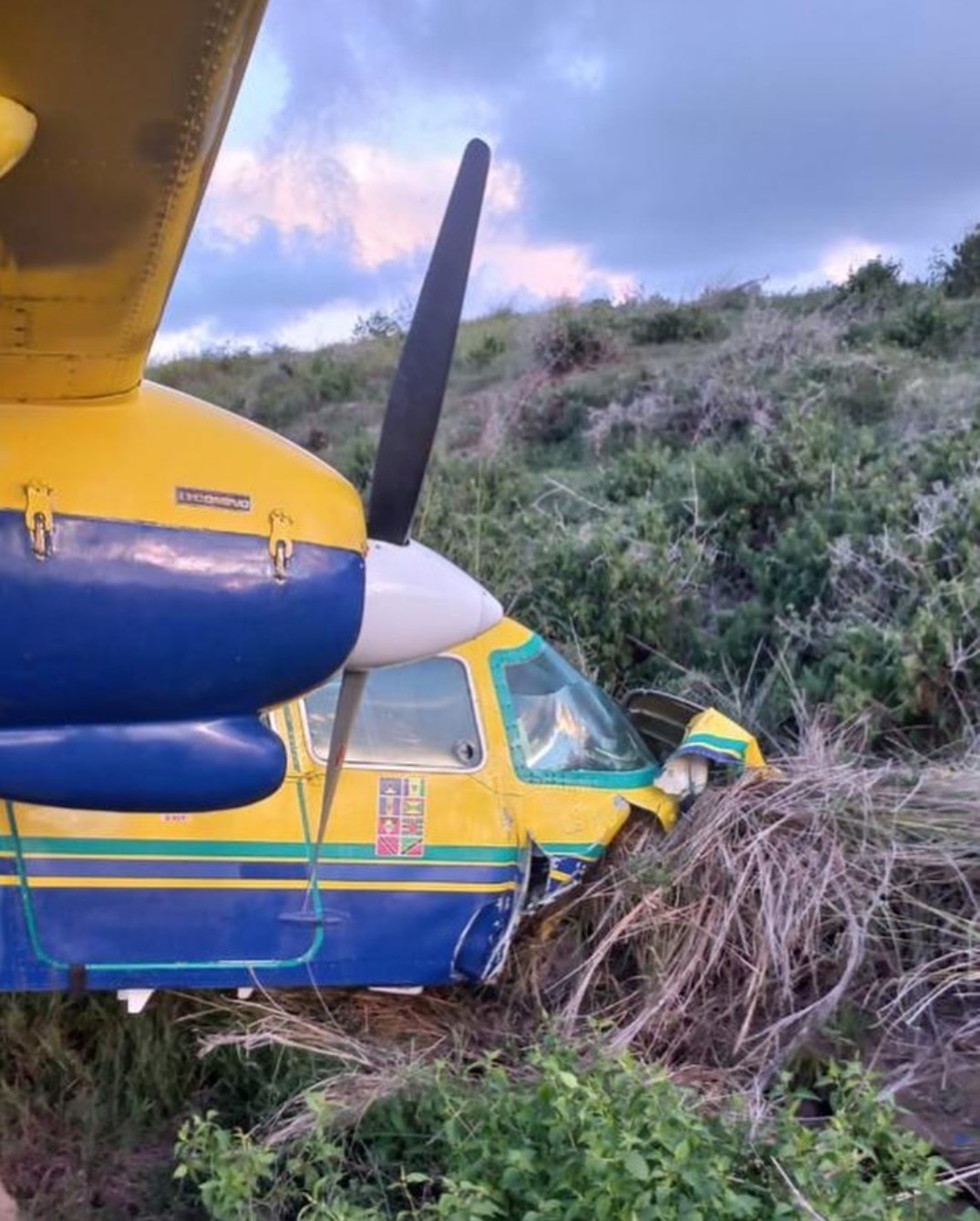
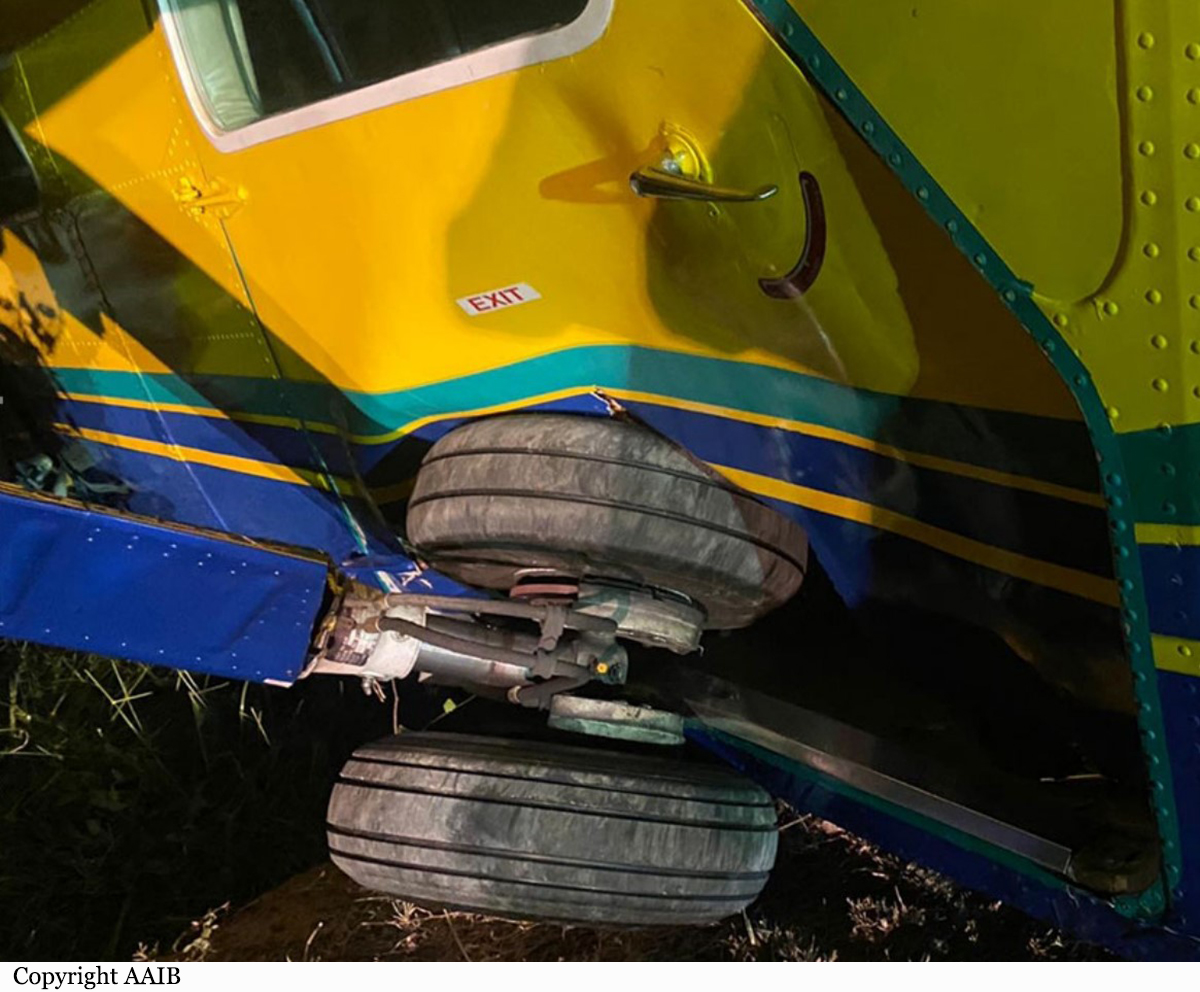
After an uneventful return flight to Barbuda, the aircraft departed Antigua at 2114 hrs (1714 hrs local) for John A Osborne Airport, Montserrat, with the pilot and six passengers on board. The aircraft cruised at 2,000 ft enroute and the pilot recalled there were good visual meteorological conditions throughout the 19 minute flight. On arriving at Montserrat there were no other aircraft operating in the vicinity of the airport and the pilot positioned the aircraft visually on a downwind leg for Runway 10. The pilot reported he commenced the approach, flying an approach speed of 65 kt, reducing to 60 kt as the aircraft touched down. The runway surface was dry and the pilot described the landing as “smooth”. After the main landing gear touched down, but prior to the nosewheel contacting the runway, the pilot applied the brakes. He reported that the left brake felt “spongy” and did not seem to act, but that the right brake felt normal. The pilot was unable to maintain directional control of the aircraft which veered to the right two seconds after touchdown, departing the runway a further three seconds later. The aircraft continued across the adjacent grassed area before impacting an embankment close to the runway. After the aircraft had come to a stop, the pilot shut down the engines using the normal shut down procedure. The left main gear had collapsed and rendered the left cabin exit unusable. The pilot evacuated through the flight deck door which was on the left of the aircraft. The six passengers were able to evacuate through the right cabin exit. The airport fire service then arrived at the aircraft, less than one minute after the accident.
Probable cause:
On landing at John A. Osborne Airport, Montserrat, the pilot was unable to maintain directional control of the aircraft, later reporting the left brake felt “spongy”. The aircraft veered off the right side of the runway and came to rest in an adjacent drainage ditch. An inspection of the aircraft’s braking system revealed a slight brake fluid leak from one of the pistons in the left outboard brake calliper. This would have prevented full brake pressure being achieved on the left brakes, resulting in an asymmetric braking effect. Difficulty in maintaining directional control was compounded by the use of an incorrect braking technique on landing. The investigation identified shortcomings with the operator’s manuals, procedures and regulatory oversight.
Final Report:

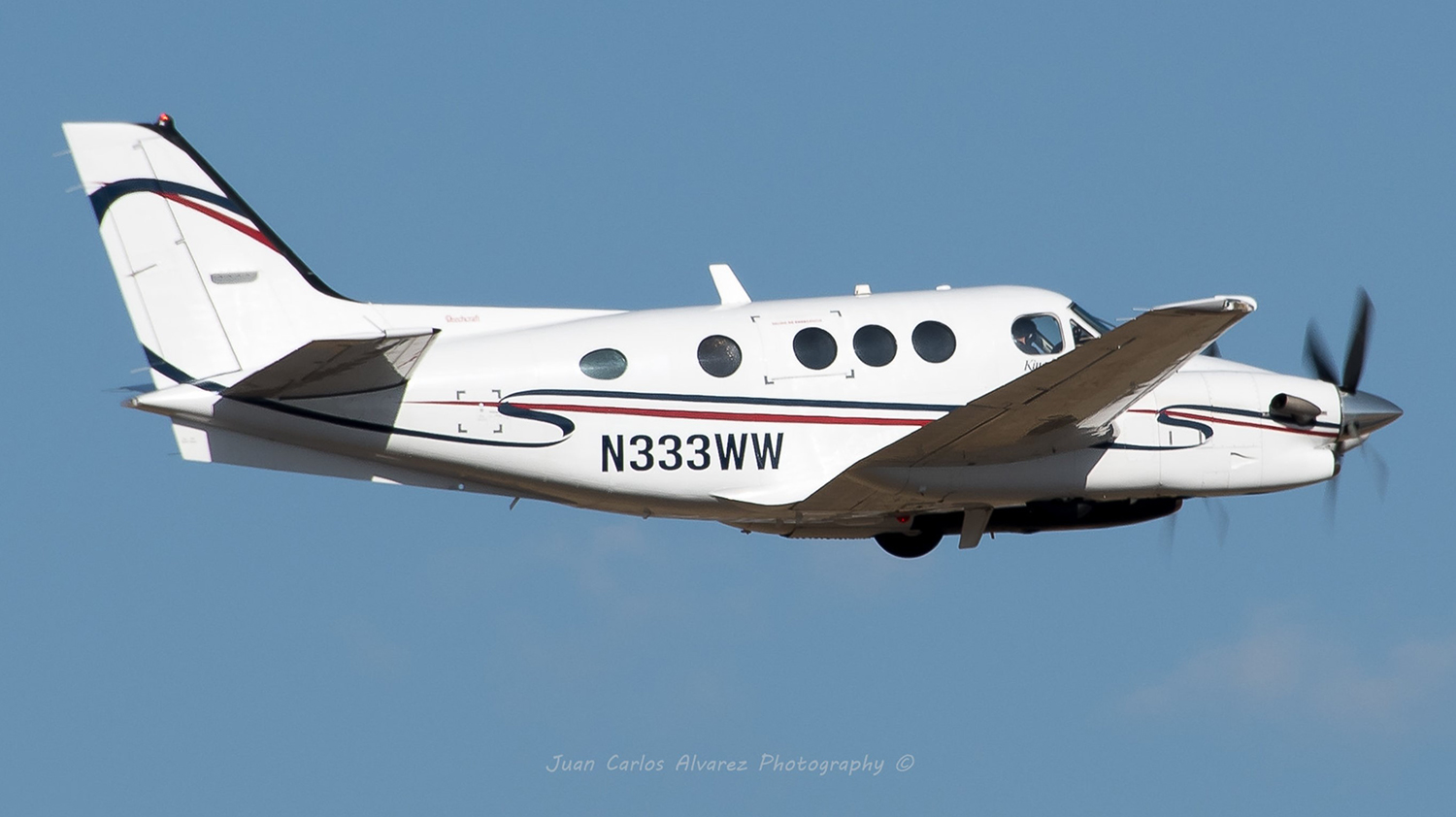
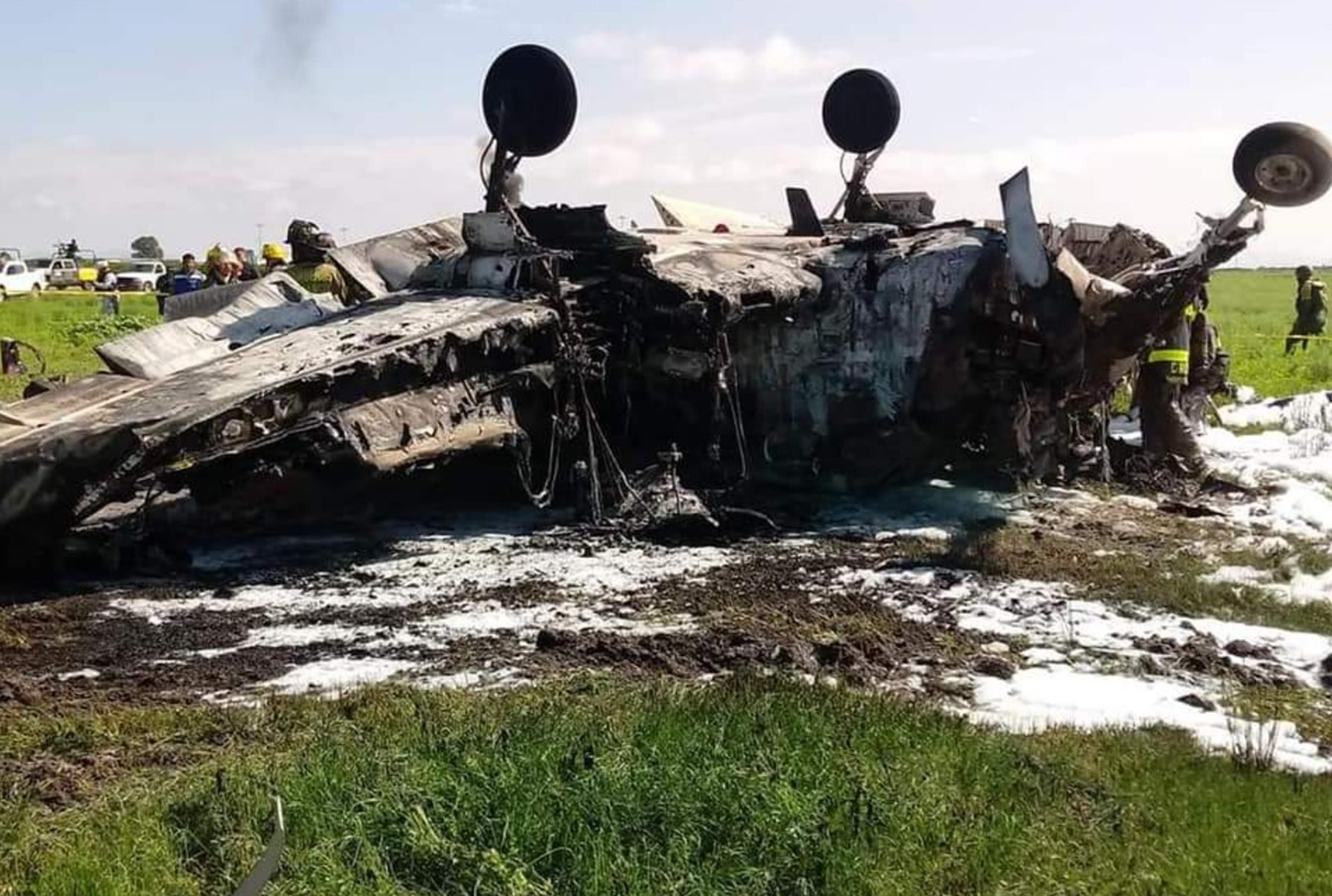
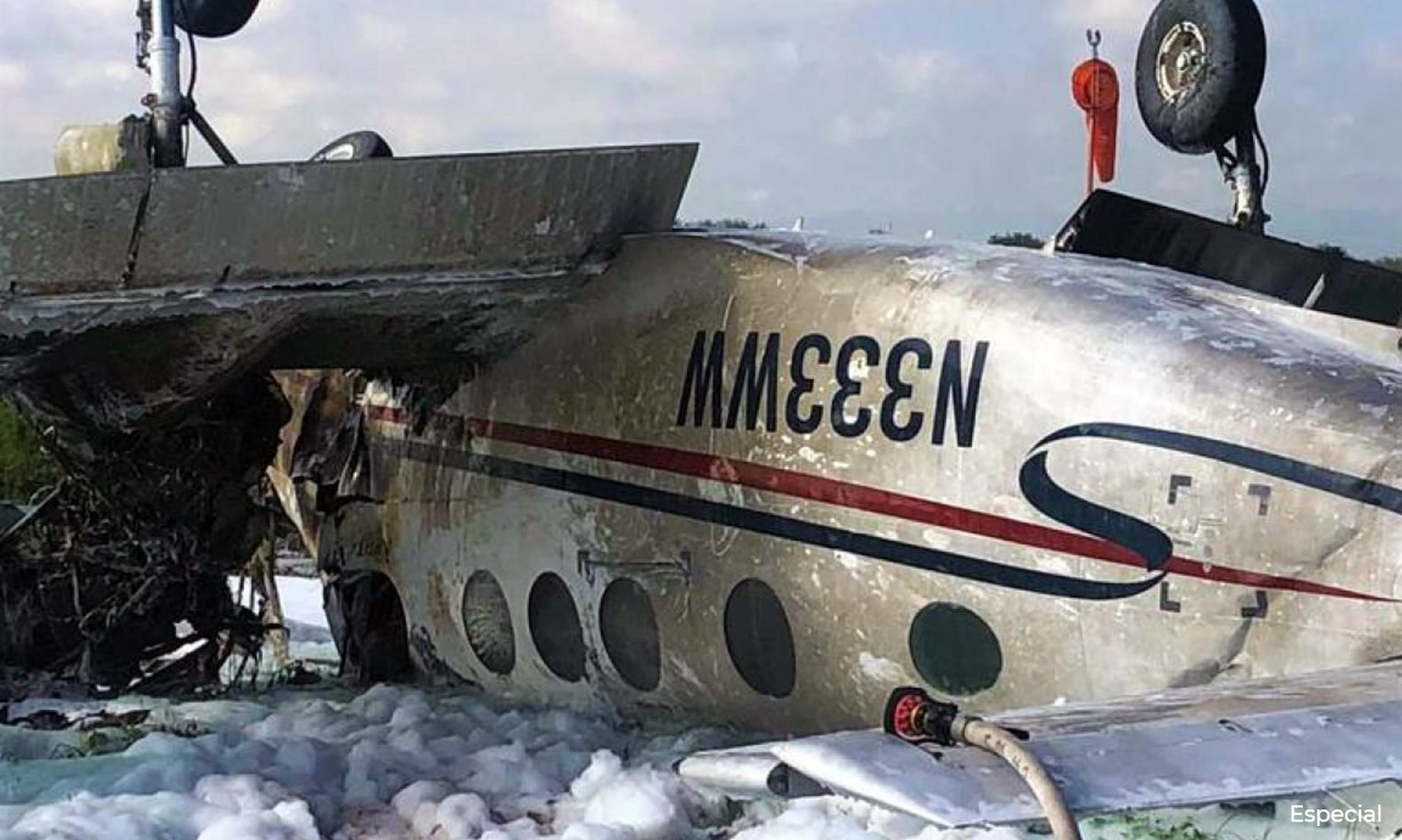
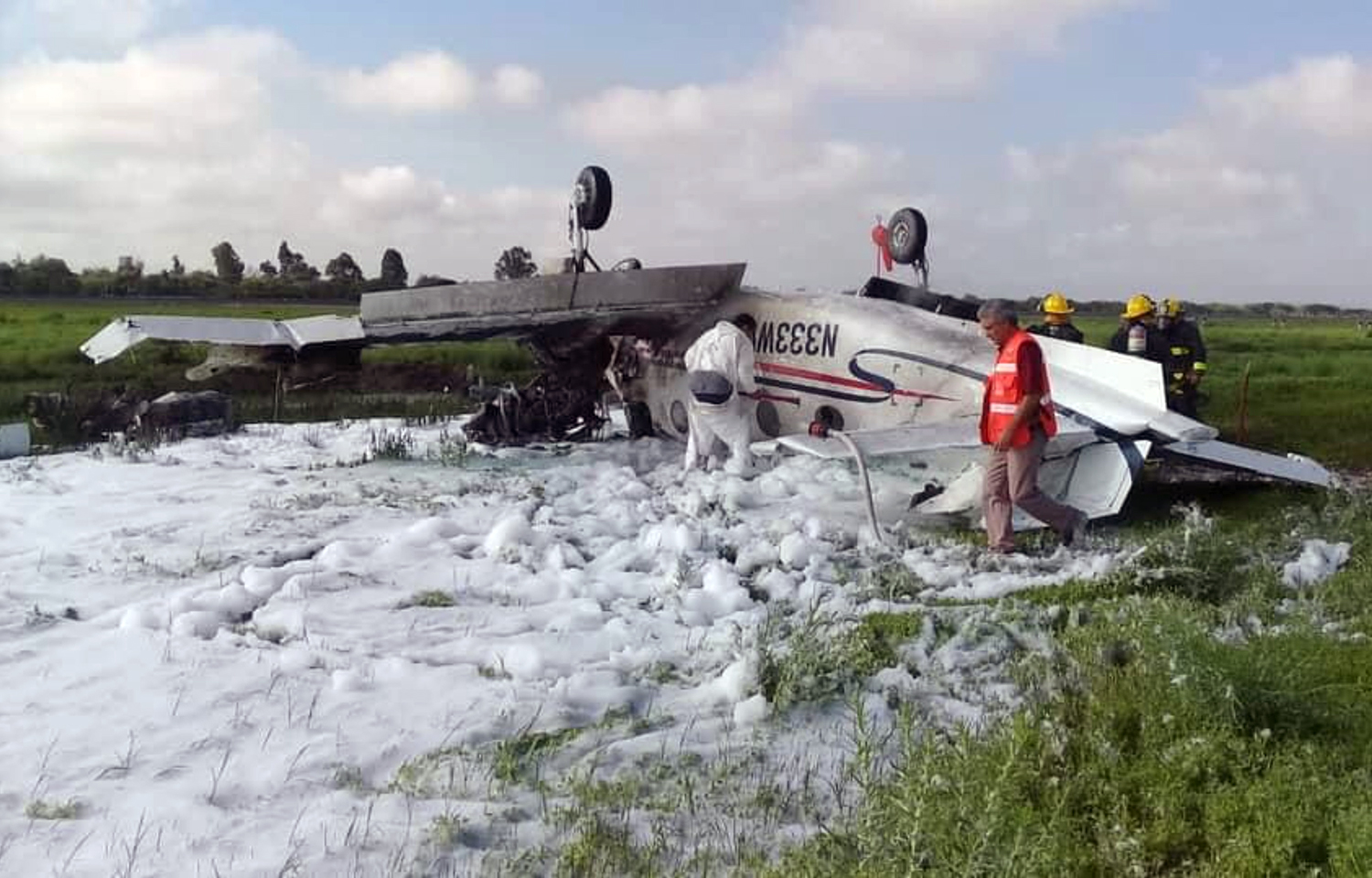
Crash of a Beechcraft C90A King Air in Durango: 1 killed

Date & Time: Jul 18, 2021 at 0935 LT
Type of aircraft:
Operator:
Registration:
N333WW
Flight Type:
Survivors:
Yes
Schedule:
San Luis Potosí – Durango
MSN:
LJ-1741
YOM:
2005
Location:
Country:
Crew on board:
2
Crew fatalities:
Pax on board:
0
Pax fatalities:
Other fatalities:
Total fatalities:
1
Captain / Total flying hours:
4947
Aircraft flight hours:
3099
Circumstances:
On final approach to Durango-Guadalupe Victoria Airport following an uneventful flight from San Luis Potosí, the twin engine airplane was unstable. The crew decided to make a sudden descent below the minimum descent altitude without visual contact with the runway, resulting in an initial impact with the runway surface and subsequently with an open drainage ditch located between runway 03/21 and taxiway 'A'. The airplane came to rest upside and burst into flames. One pilot was seriously injured and the second occupant was killed.
Probable cause:
Poor management by the flight crew: of the approach and multiple deviations from operational procedures, due to a lack of training, which placed the aircraft in an unsafe situation and resulted in an unstabilised approach. They decided to make a sudden descent below the minimum descent altitude without visual contact with the runway, resulting in an initial impact with the runway surface and subsequently with an open drainage channel between runway 03/21 and taxiway "A," which stopped the movement.
The following contributing factors were identified:
- Lack of training and operational supervision of the flight crew,
- Lack of a formal operational safety program,
- Abrupt changes in the attitude and heading of the aircraft,
- Poor management of cockpit resources,
- Inadequate decision-making by not performing a missed approach,
- Presence of an drainage ditch located between runway 03/21 and taxiway 'A',
- Lack of supervision by the Federal Civil Aviation Agency of the flight operations of aircraft with foreign registration.
Final Report:

Crash of a IAI 1124A Westwind II in Treasure Cay: 2 killed

Date & Time: Jul 5, 2021 at 1545 LT
Type of aircraft:
Operator:
Registration:
N790JR
Flight Phase:
Flight Type:
Survivors:
No
Schedule:
Treasure Cay – Nassau
MSN:
424
YOM:
1984
Country:
Crew on board:
2
Crew fatalities:
Pax on board:
0
Pax fatalities:
Other fatalities:
Total fatalities:
2
Circumstances:
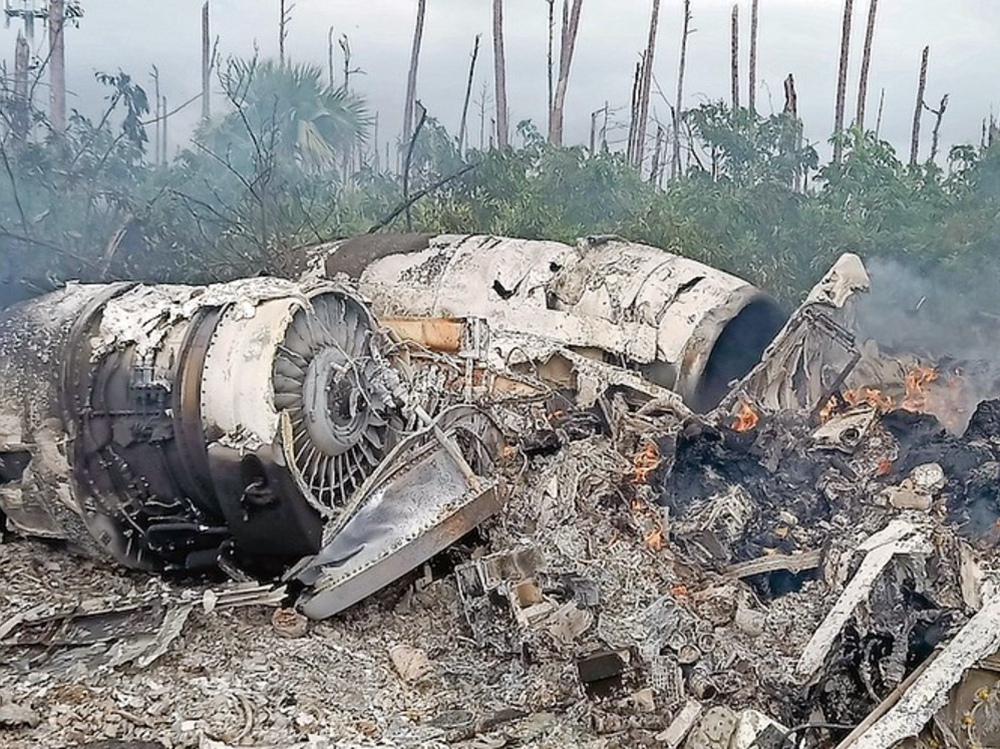
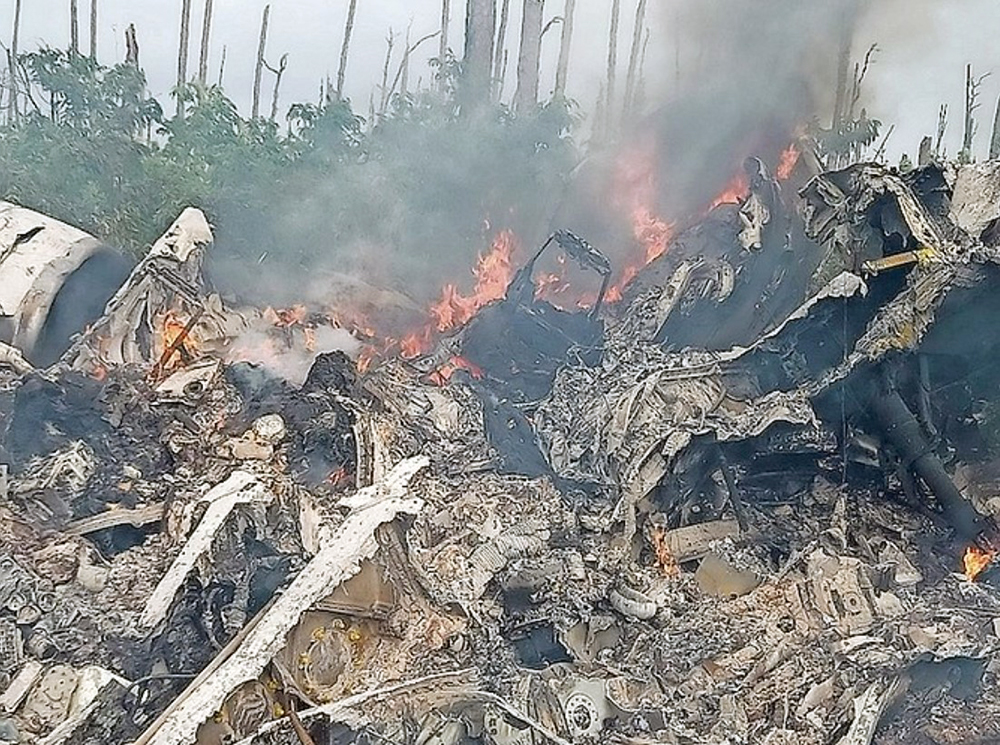
On the 5th July, 2021 at approximately 3:45PM, EDT (1945UTC), an Israeli Aircraft Industries, (IAI) Westwind 1124A aircraft, United States registration N790JR, crashed a short distance from the end of runway 32 at the Treasure Cay International Airport (MYAT), Treasure Cay, Abaco, Bahamas. The aircraft plowed through airport lighting equipment at the end of the runway, hitting and breaking several trees along its path. A trail of aviation fuel and pieces of the aircraft and avionics equipment from the flight deck, were left behind before the aircraft finally hit a small mound (hill), spinning, hitting several additional trees, breaking apart and bursting into flames. The aircraft came to rest at coordinates 26°45’21.50”N, 77°24’7.26”W, approximately 2,000 feet (.33 miles) from the end of runway 32. As this airport did not have a fire truck or crash and rescue personnel stationed on site, assistance with fire services were requested from the town. Two firetrucks from the township responded, however, due to the location of the crash, and no access road available, the trucks were unable to reach the crash site and assist in extinguishing the blaze. The fire continued unimpeded, dampened only by the intermittent downpour of rain, which did not aid in extinguishing the blaze, but rather, only limited the spread of the fire to surrounding bushes. The raging fire totally destroyed the aircraft and much of the control surfaces and components in the direct area of the blaze. On July 6, a team of investigators from the AAIA and CAA-B were dispatched to the scene. Upon arrival of the investigation team, surrounding brush and trees, as well as some parts and components of the aircraft were still burning. Initial assessments pointed to a possible failure of the aircraft to climb and perform as required. Runway 14/32 is 7,001 x 150 feet with an asphalt surface and based on the distance the aircraft traveled from the end of the runway to its final resting place, the signature marking on trees and airport lighting fixtures struck by the aircraft, in addition to the ground scars, along with pieces of the aircraft beyond the runway, up to the final resting place of the aircraft, it appears the aircraft was approximately 2 to 5 feet about the surface and not developing any lift or climb performance, while developing full power over the ground, striking trees and brush along its path. Investigations uncovered the private flight with a crew of two (2), proposed a flight time departure of 2:10PM EDT from the Treasure Cay International Airport (MYAT), with a planned destination of Nassau, Bahamas (MYNN) and an arrival time of 2:33PM EDT, according to flight plan retrieved from Flightaware.com. The flight plan did not specify whether the flight would be operated under Visual Flight Rules (VFR) or Instrument Flight Rules (IFR). According to witness statements taken at Treasure Cay, witnesses recalled two pilots entering the ramp after 3 pm. Witnesses also stated that one of the persons onboard advised customs that they will be departing for Marsh Harbor for fuel in the aircraft (N790JR).
Probable cause:
The AAIA has classified the accident as a controlled flight into terrain (CFIT) and determined the probable cause of the CFIT accident is due to the failure of the aircraft to climb (perform) as required.
Contributing factors which resulted in the failure of the aircraft to perform as required includes:
- Failure of the crew to configure the aircraft for the proper takeoff segment,
- Crew unfamiliarity with the aircraft systems.
Final Report:

Crash of a Learjet 25B in Toluca

Date & Time: Apr 18, 2021 at 1527 LT
Type of aircraft:
Operator:
Registration:
XB-PIZ
Survivors:
Yes
Schedule:
Cancún - Toluca
MSN:
25-193
YOM:
1975
Location:
Country:
Crew on board:
2
Crew fatalities:
Pax on board:
7
Pax fatalities:
Other fatalities:
Total fatalities:
0
Circumstances:
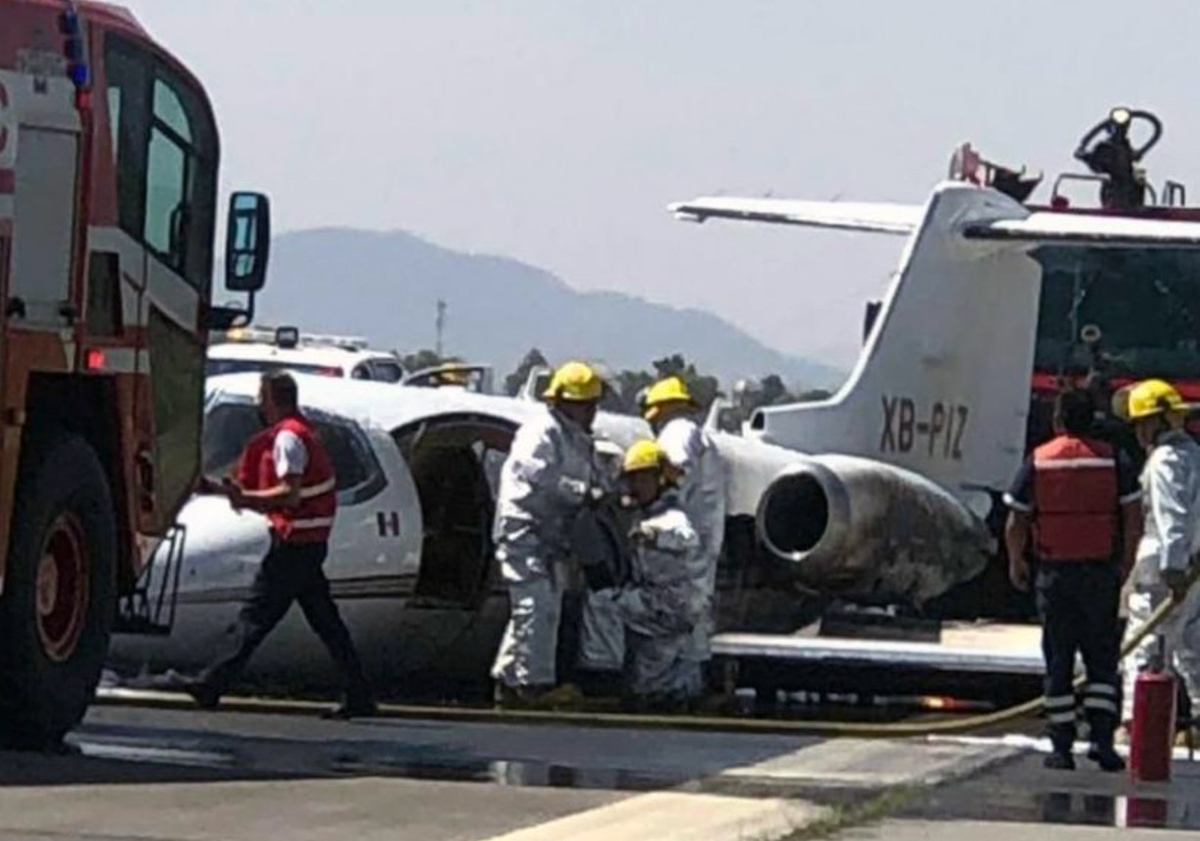
Following an uneventful flight from Cancún, the crew encountered technical problems with the undercarriage while on approach to Toluca-Licenciado Adolfo López Mateos. Decision was taken to complete a belly landing on runway 15/33. The airplane slid for few dozen metres before coming to rest, bursting into flames. All 9 occupants evacuated safely and the aircraft was damaged beyond repair.

Crash of a Piper PA-31-350 Navajo Chieftain off South Bimini: 1 killed

Date & Time: Apr 16, 2021 at 2142 LT
Operator:
Registration:
N827RD
Flight Phase:
Flight Type:
Survivors:
Yes
Schedule:
South Bimini – Miami-Opa Locka
MSN:
31-7652094
YOM:
1976
Country:
Crew on board:
1
Crew fatalities:
Pax on board:
1
Pax fatalities:
Other fatalities:
Total fatalities:
1
Captain / Total flying hours:
2085
Aircraft flight hours:
7102
Circumstances:
The airplane crashed moments after takeoff from the South Bimini Int’l Airport (MYBS), Bimini, Bahamas. The private flight departed MYBS with intended final destination of Opa Locka Airport (KOPF), Opa Locka, Florida, USA. The pilot sustained serious injuries and after being seen by medical personnel in South Bimini, was flown to Nassau, Bahamas for further medical attention. The passenger who occupied the right seat of the aircraft, succumbed to injuries he sustained as a result of the initial impact and subsequent crash sequence and subsequent submersion in the waters at the end of the runway environment. The pilot was a US certified commercial pilot with ratings for airplane land, single and multi-engine as well as an instrument airplane rating. The pilot’s medical certificate was valid at the time of the accident. The passenger (pilot’s son) also held a valid US certified private pilot – single engine land – airplane certificate. It is unknown what role (if any) the passenger (son) played during the takeoff to crash sequence. The weather conditions at the time of the accident was night (instrument meteorological conditions). A weak high pressure ridging was forecasted to continue to dominate the weather over the Bahamas throughout the night. However, no significant weather was anticipated.
Probable cause:
The AAIA has determined the probable cause of this accident to be loss of control inflight (LOC-I), resulting in uncontrolled flight into terrain (ocean). The cause of this loss of control could not be determined.
Final Report:

Crash of a Cessna 401 in Hermosillo: 6 killed

Date & Time: Mar 27, 2021 at 1207 LT
Type of aircraft:
Operator:
Registration:
XB-HSW
Flight Phase:
Flight Type:
Survivors:
Yes
Schedule:
Hermosillo - Tucson
MSN:
401-0234
YOM:
1969
Country:
Crew on board:
1
Crew fatalities:
Pax on board:
6
Pax fatalities:
Other fatalities:
Total fatalities:
6
Circumstances:
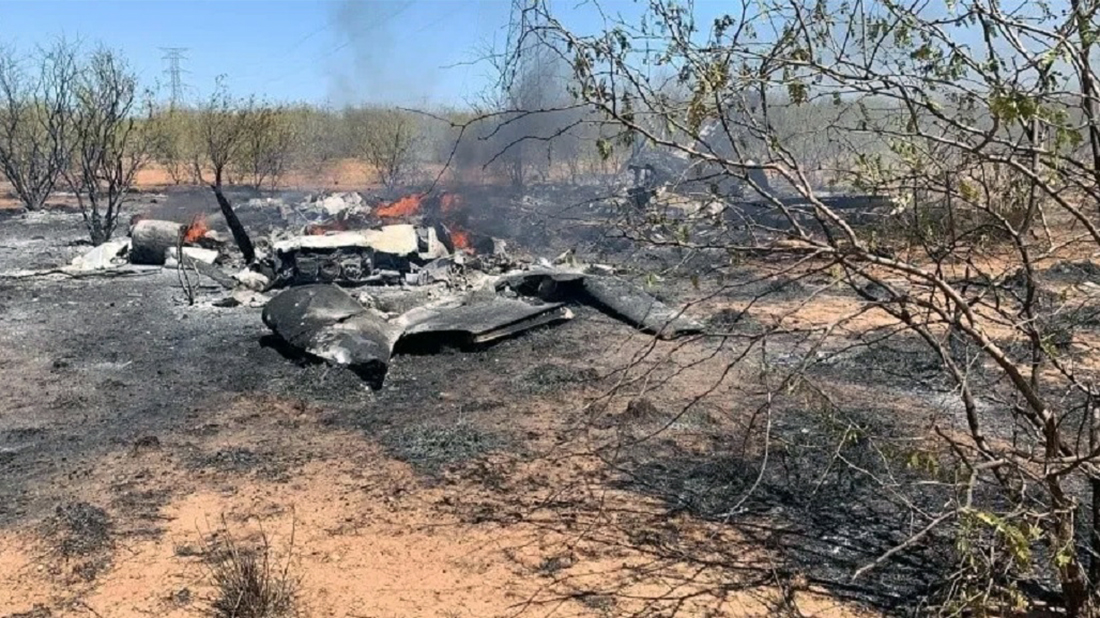
After departing runway 23 at Hermosillo-General Ignacio Pesqueira Garcia Airport, the twin engine aircraft entered a slight turn to the right but encountered difficulties to gain height. It struck power cables and crashed in a field located about 7 km west of the airport, bursting into flames. Three passengers were seriously injured while four other occupants including the pilot were killed. Few hours later, two of the three survivors died from their injuries. The undersecretary of Economic Development of Sonora Leonardo Ciscomani seems to be the only survivor.