Country
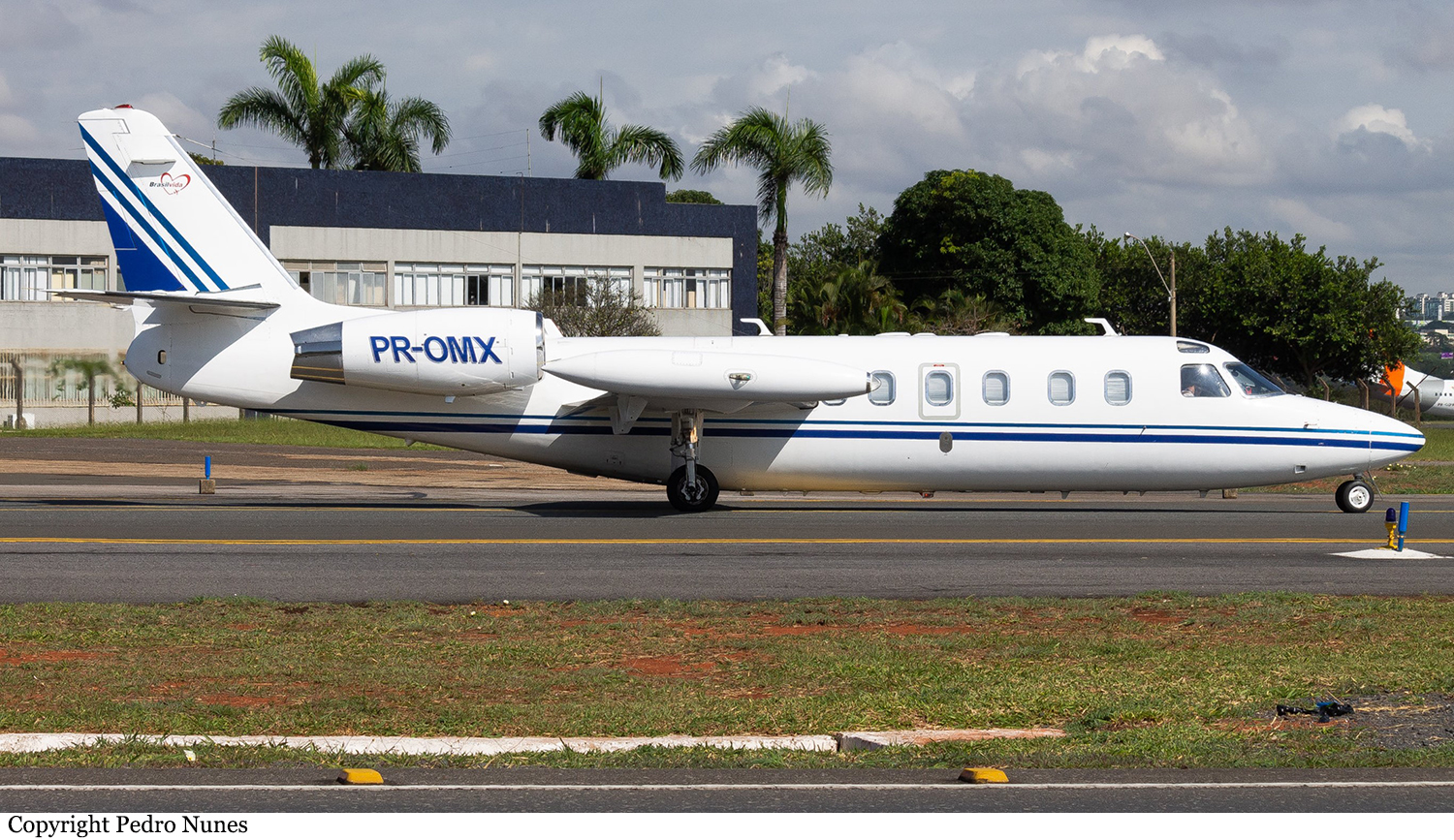
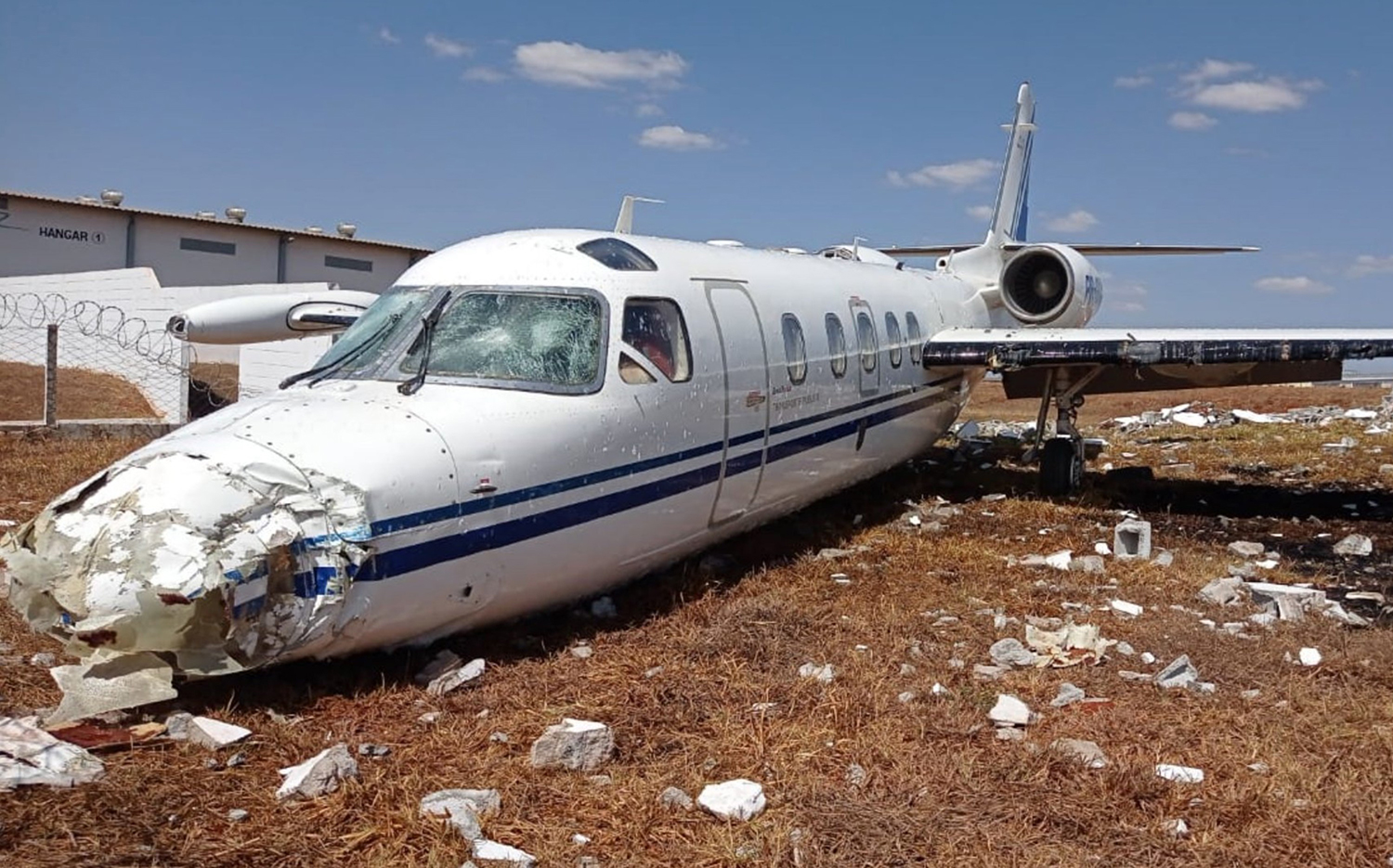
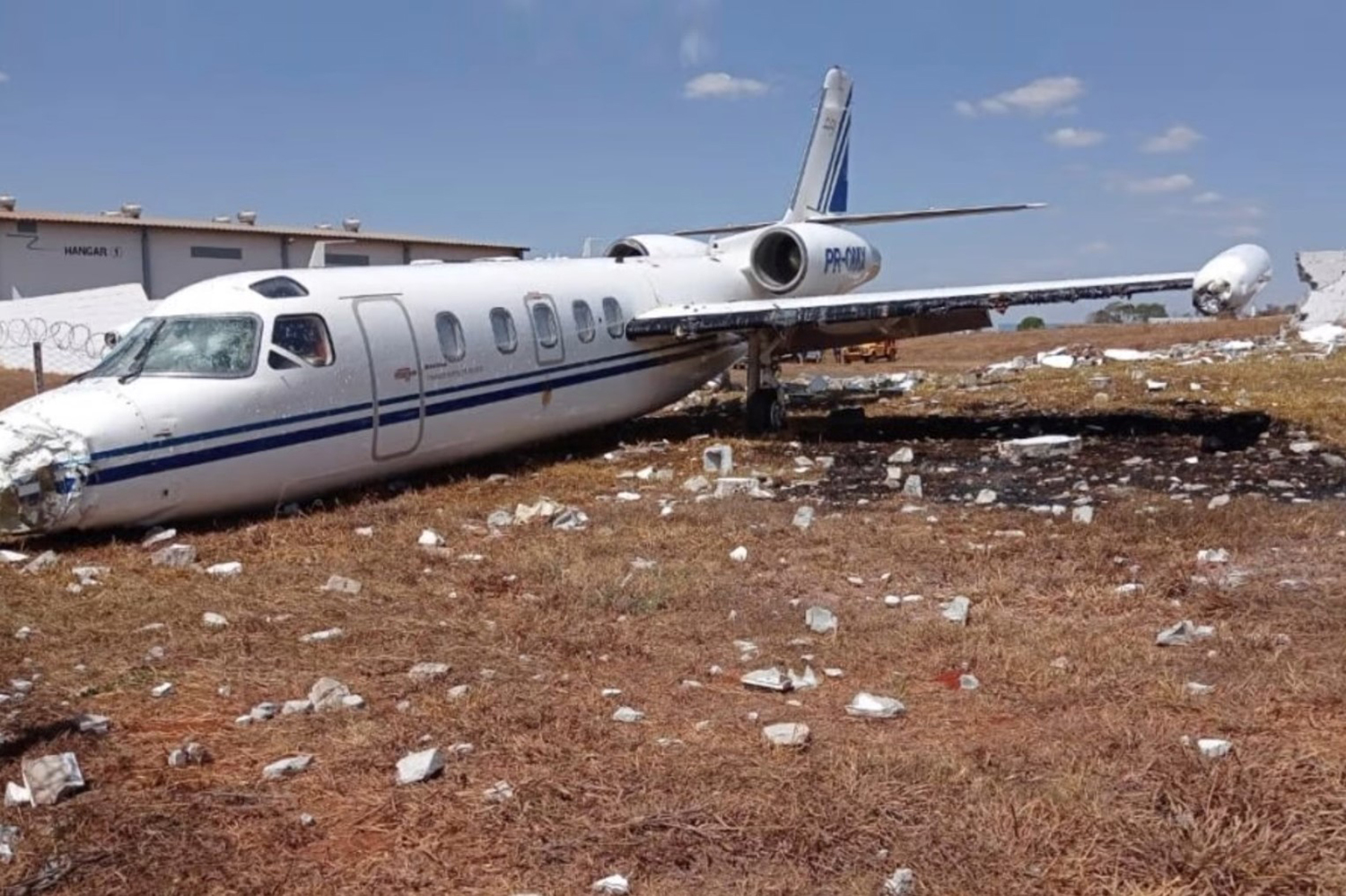
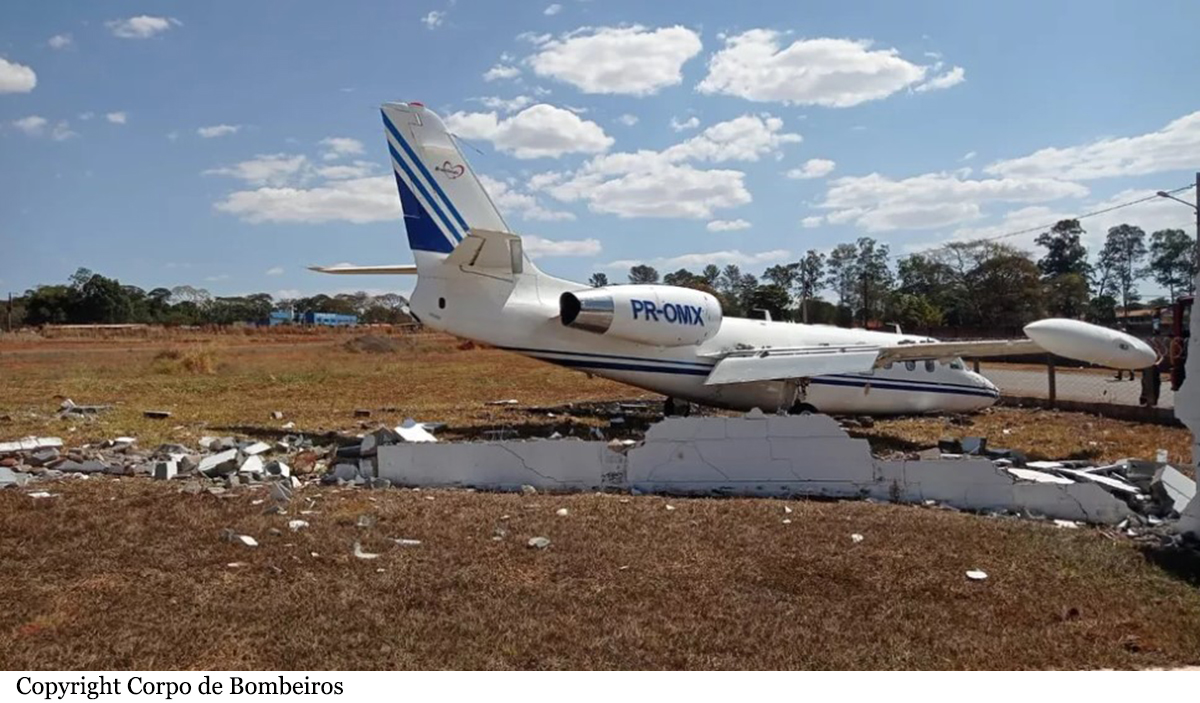
Crash of a IAI 1124 Westwind in Goiânia
Date & Time:
Aug 7, 2022 at 1050 LT
Operator:

Registration:
PR-OMX
Survivors:
Yes
Schedule:
Goiânia - Goiânia
MSN:
363
YOM:
1981
Crew on board:
3
Crew fatalities:
Pax on board:
0
Pax fatalities:
Other fatalities:
Total fatalities:
0
Circumstances:
The aircraft departed Goiânia-Nacional de Aviação Airport Runway 14 at 1012LT on a local test flight with three crew members on board. After reaching FL340, several tests were completed then the crew made a high speed descent before landing on runway 32. After touchdown and a course of about 700 metres, the airplane veered off runway to the right, collided with a concrete wall, lost its nose gear and came to rest near the perimeter fence. All three occupants evacuated safely.
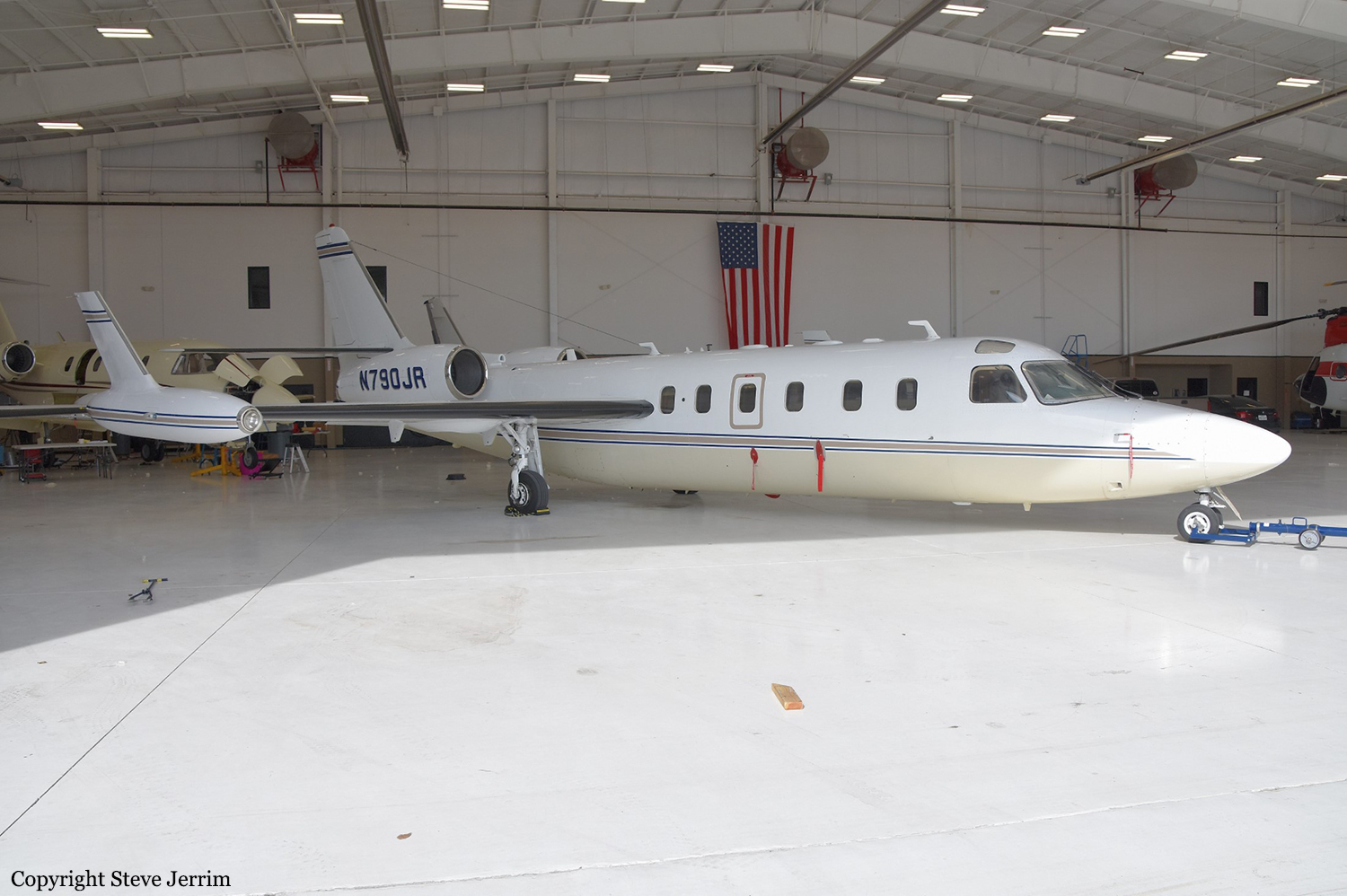
Crash of a IAI 1124A Westwind II in Treasure Cay: 2 killed
Date & Time:
Jul 5, 2021 at 1545 LT
Registration:
N790JR
Survivors:
No
Schedule:
Treasure Cay – Nassau
MSN:
424
YOM:
1984
Crew on board:
2
Crew fatalities:
Pax on board:
0
Pax fatalities:
Other fatalities:
Total fatalities:
2
Circumstances:
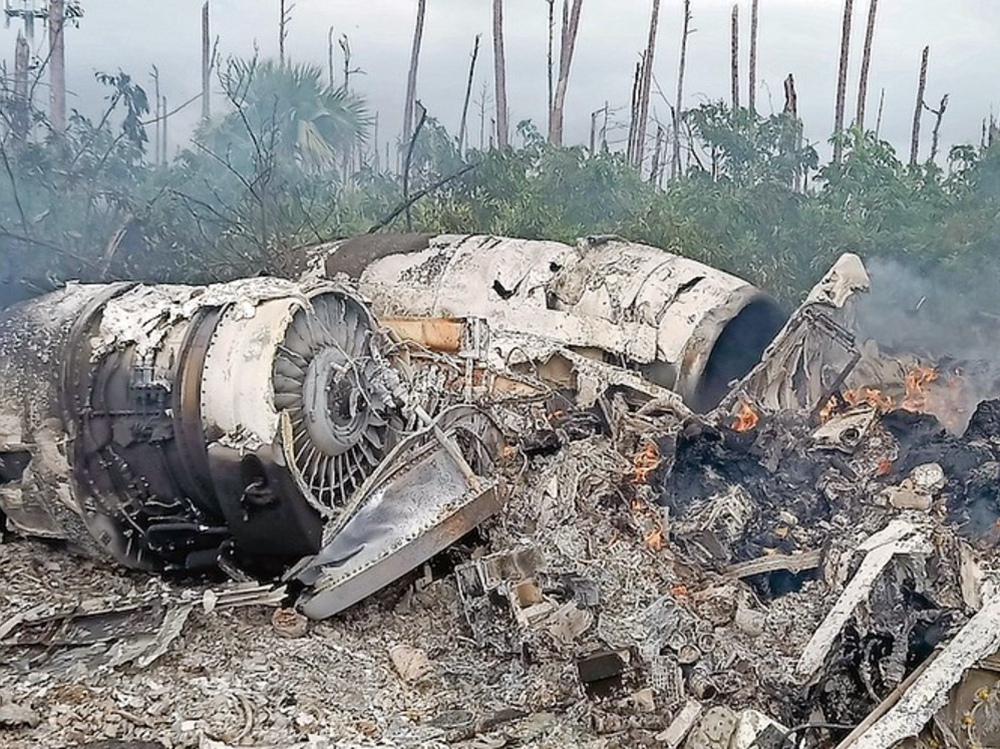
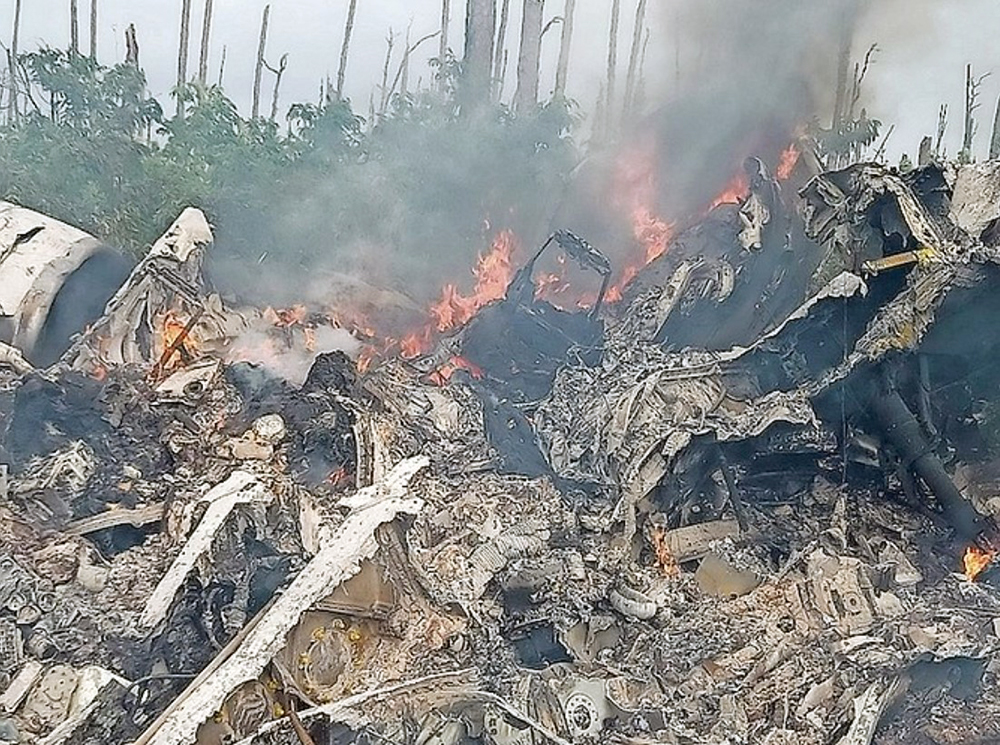
On the 5th July, 2021 at approximately 3:45PM, EDT (1945UTC), an Israeli Aircraft Industries, (IAI) Westwind 1124A aircraft, United States registration N790JR, crashed a short distance from the end of runway 32 at the Treasure Cay International Airport (MYAT), Treasure Cay, Abaco, Bahamas. The aircraft plowed through airport lighting equipment at the end of the runway, hitting and breaking several trees along its path. A trail of aviation fuel and pieces of the aircraft and avionics equipment from the flight deck, were left behind before the aircraft finally hit a small mound (hill), spinning, hitting several additional trees, breaking apart and bursting into flames. The aircraft came to rest at coordinates 26°45’21.50”N, 77°24’7.26”W, approximately 2,000 feet (.33 miles) from the end of runway 32. As this airport did not have a fire truck or crash and rescue personnel stationed on site, assistance with fire services were requested from the town. Two firetrucks from the township responded, however, due to the location of the crash, and no access road available, the trucks were unable to reach the crash site and assist in extinguishing the blaze. The fire continued unimpeded, dampened only by the intermittent downpour of rain, which did not aid in extinguishing the blaze, but rather, only limited the spread of the fire to surrounding bushes. The raging fire totally destroyed the aircraft and much of the control surfaces and components in the direct area of the blaze. On July 6, a team of investigators from the AAIA and CAA-B were dispatched to the scene. Upon arrival of the investigation team, surrounding brush and trees, as well as some parts and components of the aircraft were still burning. Initial assessments pointed to a possible failure of the aircraft to climb and perform as required. Runway 14/32 is 7,001 x 150 feet with an asphalt surface and based on the distance the aircraft traveled from the end of the runway to its final resting place, the signature marking on trees and airport lighting fixtures struck by the aircraft, in addition to the ground scars, along with pieces of the aircraft beyond the runway, up to the final resting place of the aircraft, it appears the aircraft was approximately 2 to 5 feet about the surface and not developing any lift or climb performance, while developing full power over the ground, striking trees and brush along its path. Investigations uncovered the private flight with a crew of two (2), proposed a flight time departure of 2:10PM EDT from the Treasure Cay International Airport (MYAT), with a planned destination of Nassau, Bahamas (MYNN) and an arrival time of 2:33PM EDT, according to flight plan retrieved from Flightaware.com. The flight plan did not specify whether the flight would be operated under Visual Flight Rules (VFR) or Instrument Flight Rules (IFR). According to witness statements taken at Treasure Cay, witnesses recalled two pilots entering the ramp after 3 pm. Witnesses also stated that one of the persons onboard advised customs that they will be departing for Marsh Harbor for fuel in the aircraft (N790JR).
Probable cause:
The AAIA has classified the accident as a controlled flight into terrain (CFIT) and determined the probable cause of the CFIT accident is due to the failure of the aircraft to climb (perform) as required.
Contributing factors which resulted in the failure of the aircraft to perform as required includes:
- Failure of the crew to configure the aircraft for the proper takeoff segment,
- Crew unfamiliarity with the aircraft systems.
Contributing factors which resulted in the failure of the aircraft to perform as required includes:
- Failure of the crew to configure the aircraft for the proper takeoff segment,
- Crew unfamiliarity with the aircraft systems.
Final Report:

Crash of an IAI 1124A Westwind II in Manila: 8 killed
Date & Time:
Mar 29, 2020 at 2000 LT
Operator:

Registration:
RP-C5880
Survivors:
No
Schedule:
Manila - Tokyo
MSN:
353
YOM:
1981
Crew on board:
2
Crew fatalities:
Pax on board:
6
Pax fatalities:
Other fatalities:
Total fatalities:
8
Circumstances:
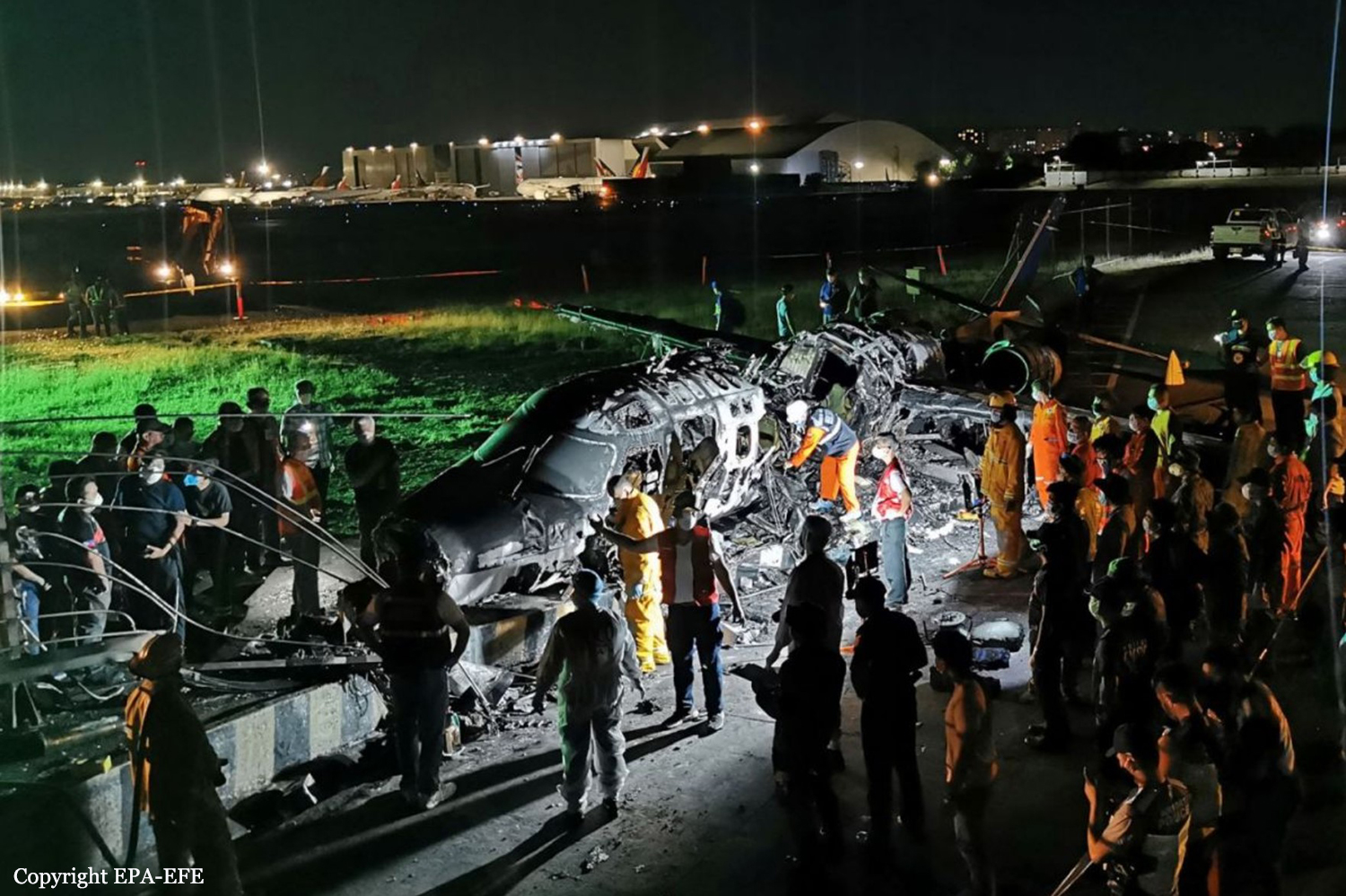
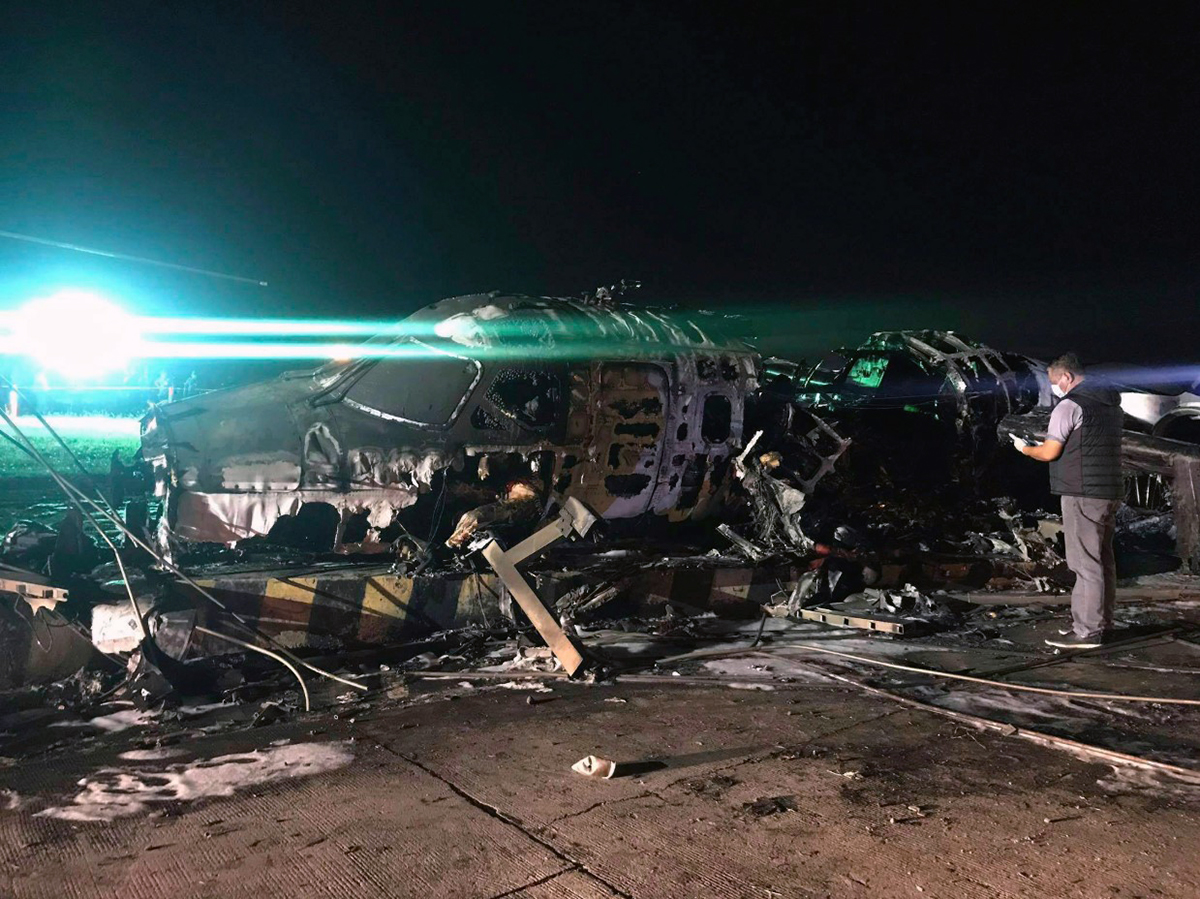
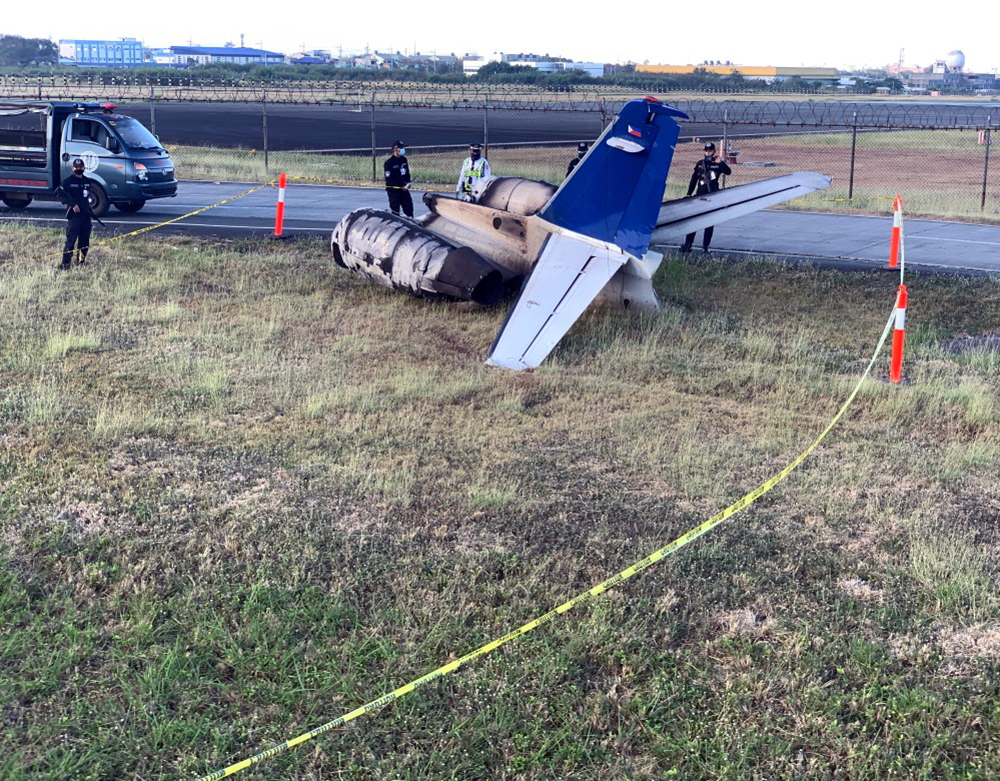
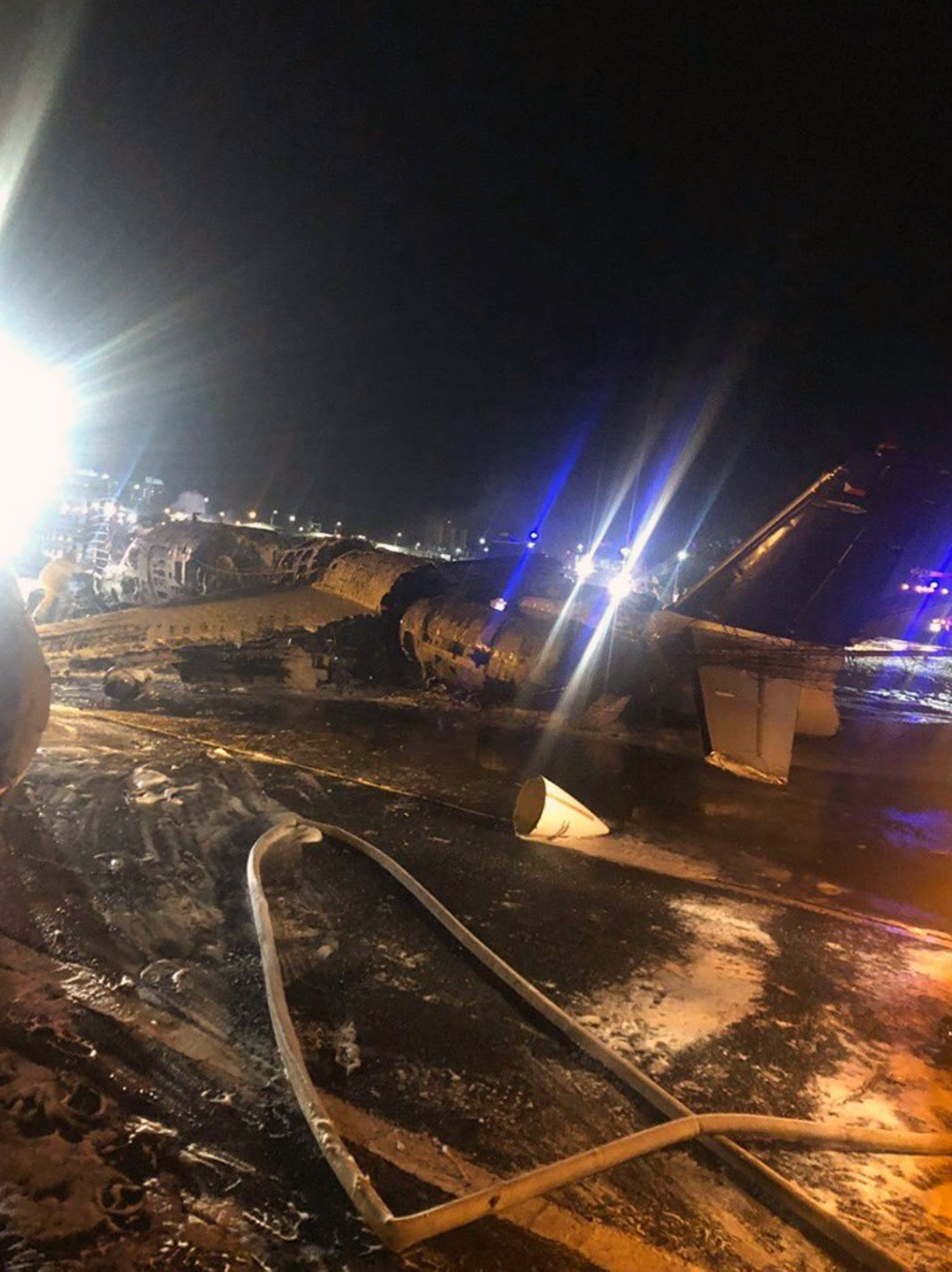
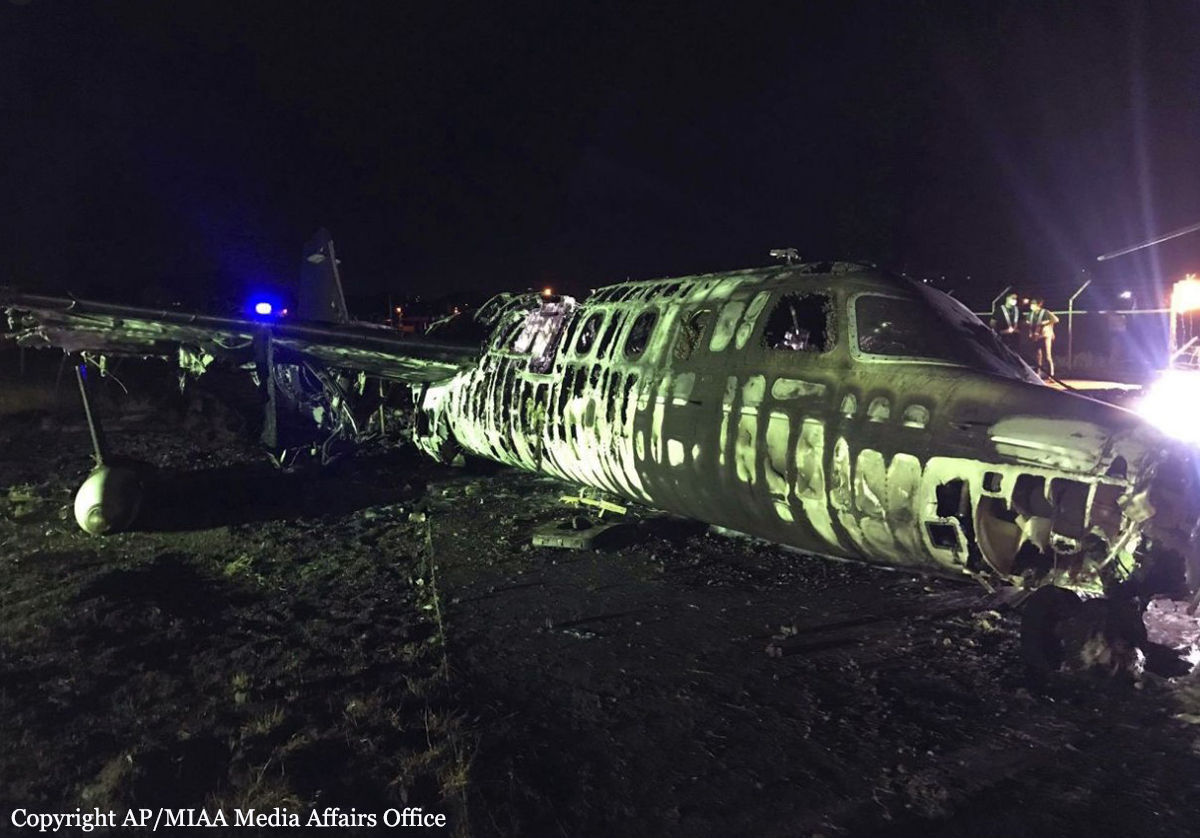
An IAI Westwind II 1124A type of aircraft with registry number RP-C5880, was destroyed following a runway excursion while taking-off at RWY 06, Ninoy Aquino International Airport (NAIA), Manila Philippines. All eight (8) occupants (six (6) Filipino, one (1) Canadian and one (1) American citizen are fatally injured. The aircraft is being operated by Lionair Inc. and was bound for Haneda, Japan on a medical evacuation flight. While the aircraft was on take-off roll before reaching taxiway R2, sparks were noted at the runway, it continued until the aircraft came to complete stop and engulfed by fire. Chunks of rubber and metal debris were present on the runway. Scrape marks coming from the right hand (RH) wheel hub were also visible. Tire marks followed by scrape marks on the runway coming from the LH tire and wheel hub were also seen after taxiway H1 intersection. Large portion of the remaining LH tire was recovered from the grassy portion near taxiway H1. After exiting from the asphalted portion of runway safety area, the aircraft initially run over two (2) runway edge lights then impacted into a concrete electric junction box and came to a complete stop at the runway secondary fence. The aircraft settled almost 172 meters away from the end of RWY 06, in an upright position at 14°30'53.50"N; 121°1'48.48"E and heading of 170 degrees. The flight was on Instrument Flight Rules (IFR) condition. A Notice to Airmen (NOTAM) of NAIA RWY 06/24 closure for aircraft operation was declared at 2000H and opened for operation at 0420H, March 30, 2020.
Probable cause:
The accident was the caused by the combination of the decision of the PF to abort the take-off after VR that resulted to runway excursion and incorrect pilot techniques or procedures in the high-speed rejected take-off.
The following contributing factors were identified:
- Operational pressures related to the delay of schedule due to late filing of the flight plan compelling the crew to rush and meet the schedule demand.
- The crew's complacency by skipping required briefing item in the before take-off checklist, in this case, the considerations in the event of a malfunction before/after V1.
The following contributing factors were identified:
- Operational pressures related to the delay of schedule due to late filing of the flight plan compelling the crew to rush and meet the schedule demand.
- The crew's complacency by skipping required briefing item in the before take-off checklist, in this case, the considerations in the event of a malfunction before/after V1.
Final Report:

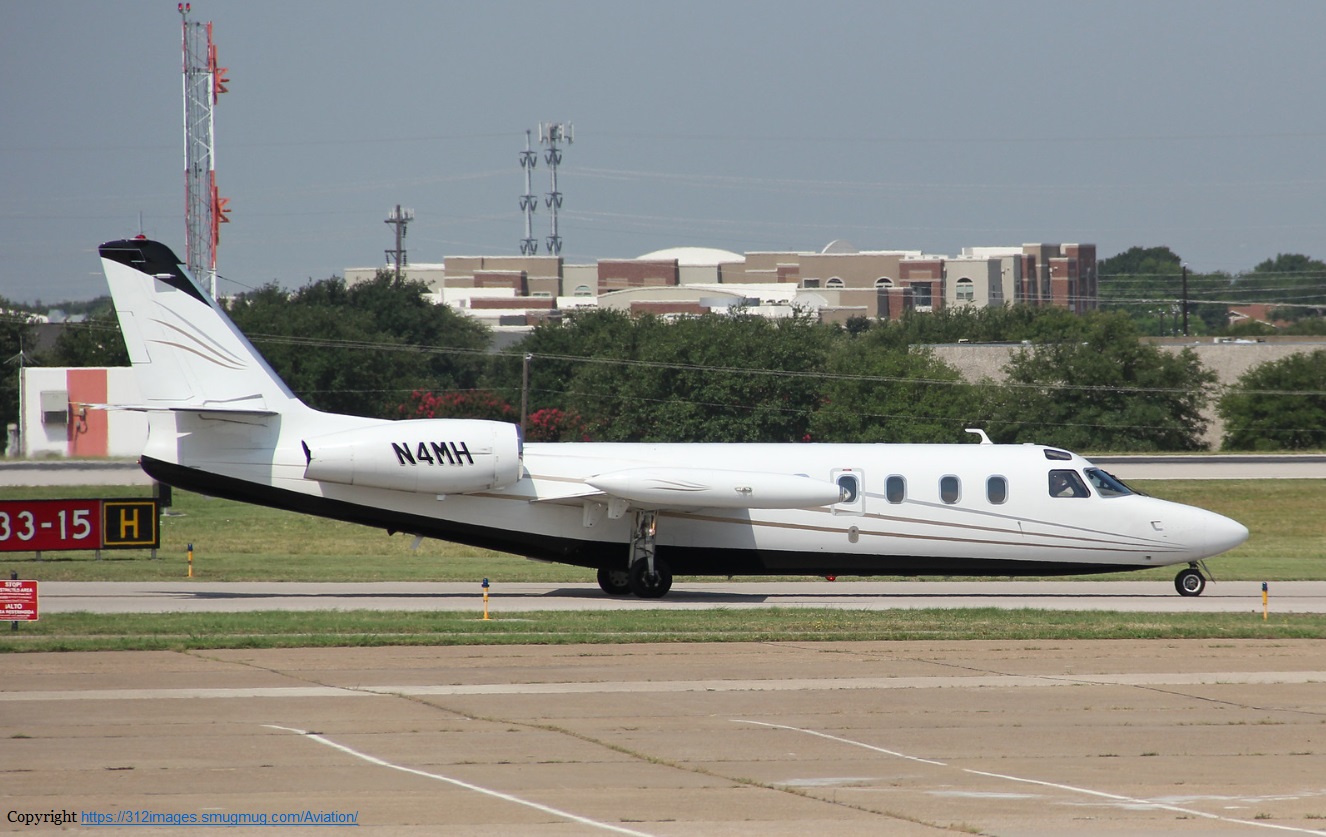
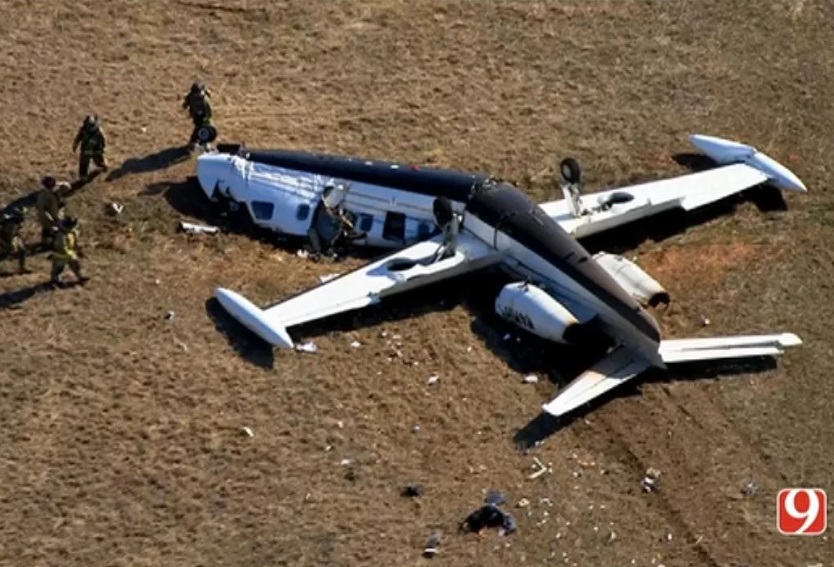
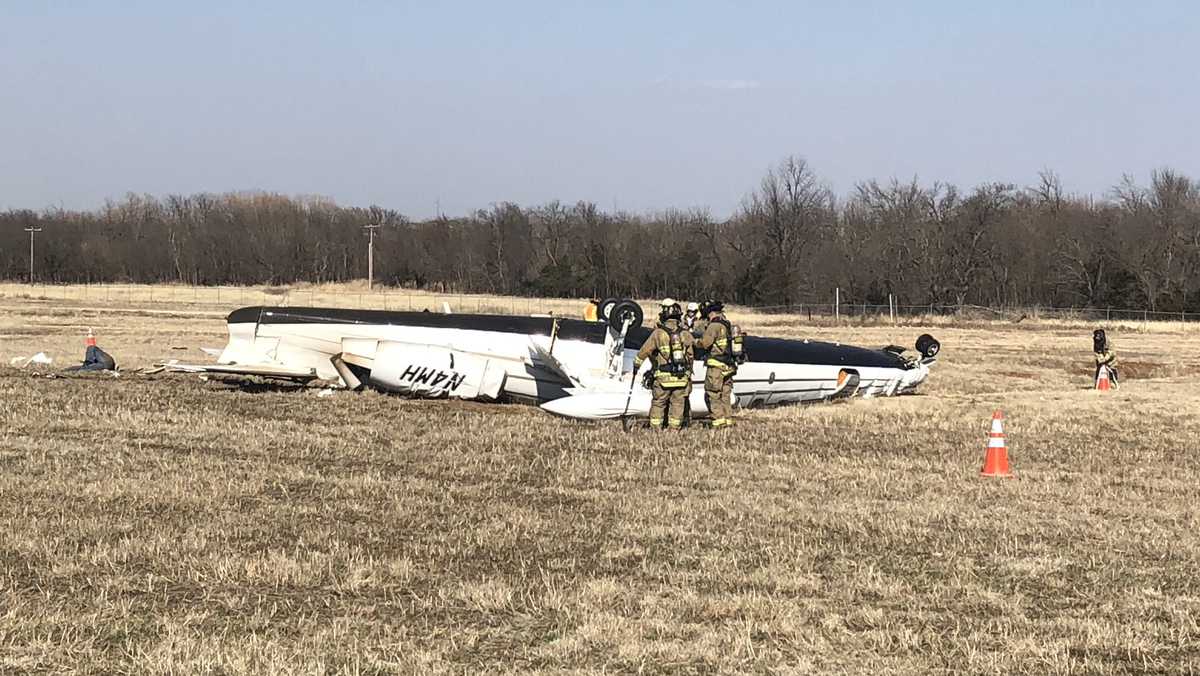
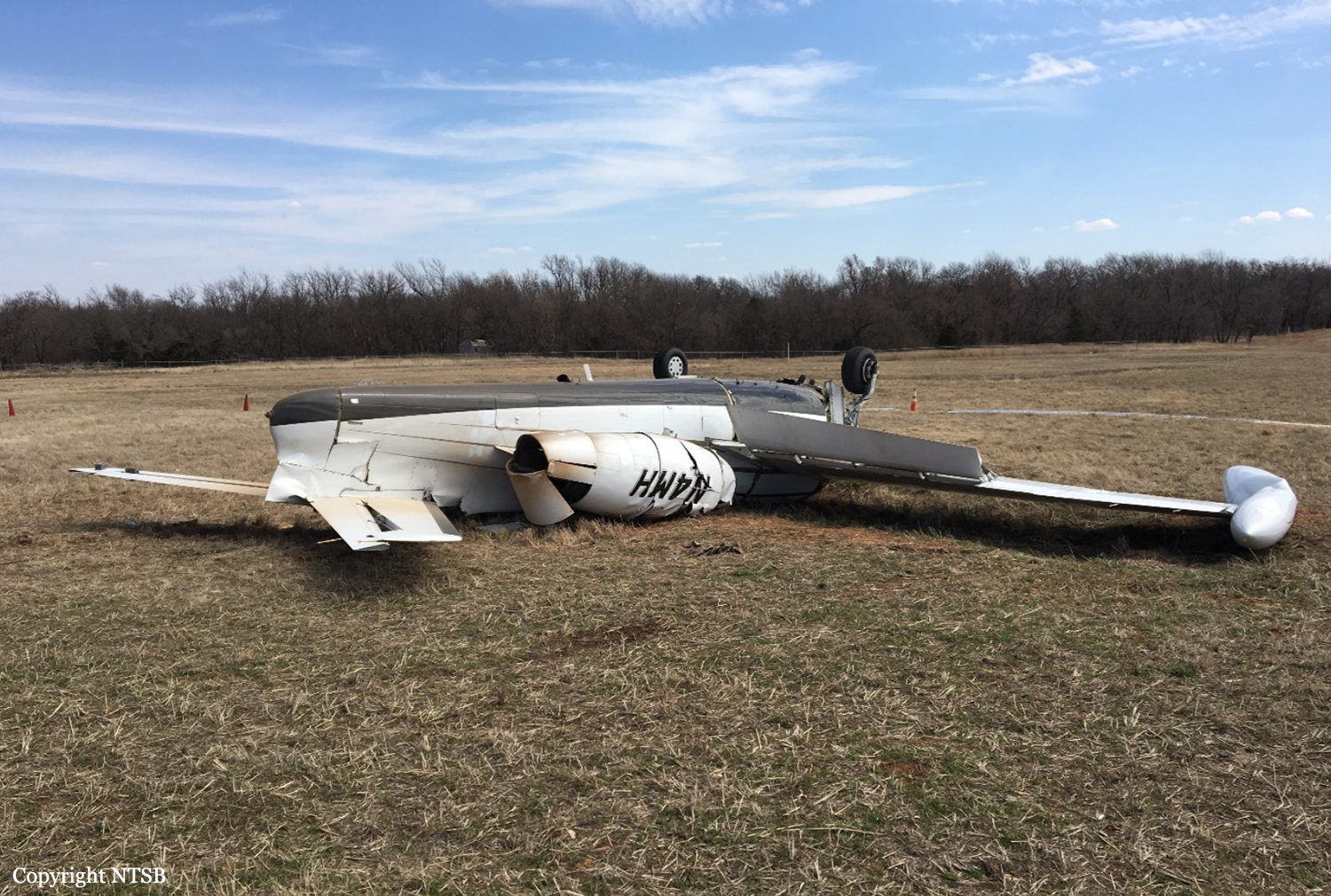
Crash of an IAI 1124 Westwind in Sundance: 2 killed
Date & Time:
Mar 18, 2019 at 1531 LT
Registration:
N4MH
Survivors:
No
Schedule:
Panama City - Sundance
MSN:
232
YOM:
1978
Crew on board:
2
Crew fatalities:
Pax on board:
0
Pax fatalities:
Other fatalities:
Total fatalities:
2
Aircraft flight hours:
11030
Circumstances:
The two commercial pilots were conducting a personal, cross-country flight. A video surveillance camera at the airport captured their airplane’s approach. Review of the video revealed that, as the airplane approached the approach end of the landing runway, it began to climb, rolled left, became inverted, and then impacted terrain. The left thrust reverser (T/R) was found open and unlatched at the accident site. An asymmetric deployment of the left T/R would have resulted in a left roll/yaw. The lack of an airworthy and operable cockpit voice recorder, which was required for the flight, precluded identifying which pilot was performing pilot flying duties, as well as other crew actions and background noises, that would have facilitated the investigation. Postaccident examination of the airplane revealed that it was not equipped, nor was required to be equipped, with a nose landing gear (NLG) ground contact switch intended to preclude inflight operation of the thrust reverser (T/R). The left T/R door was found unlatched and open, and the right T/R door was found closed and latched. Further, electrical testing of the T/R left and right stow microswitches within the cockpit throttle quadrant revealed that the left stow microswitch did not operate within design specifications. Disassembly of the left and right stow microswitches revealed evidence of arc wear due to aging. Based on this information, it is likely that the airplane’s lack of an NLG ground contact switch and the age-related failure of the stow microswitches resulted in an asymmetric T/R deployment while on approach and a subsequent loss of airplane control. Also, there were additional T/R system components that were found to unairworthy that would have affected the control of the T/R system. Operational testing of the T/R system could not be performed due to the damage the airplane incurred during the accident. Toxicology testing results of the pilot’s specimens indicated that the pilot had taken diazepam, which is considered impairing at certain levels. However, the detected amounts of both diazepam and its metabolite nordiazepam were at subtherapeutic levels, and given the long half-life of these compounds, it appears that the medication was taken several days before the accident; therefore, it is unlikely that the pilot was impaired at the time of the accident and thus that his use of diazepam was a not factor in the accident.
Probable cause:
The airplane’s unairworthy thrust reverser (T/R) system due to inadequate maintenance that resulted in an asymmetric T/R deployment during an approach to the airport and the subsequent loss of airplane control.
Final Report: