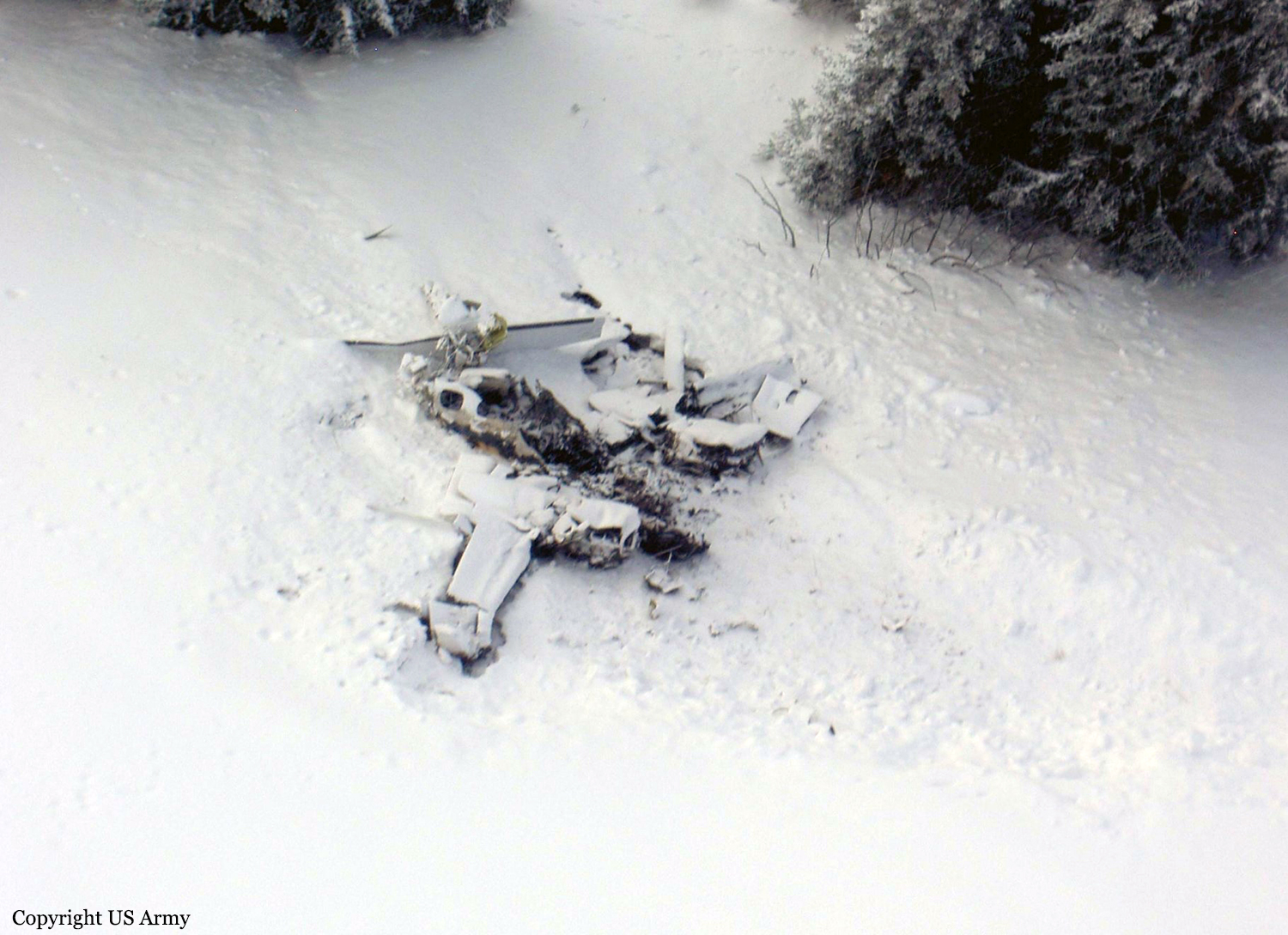
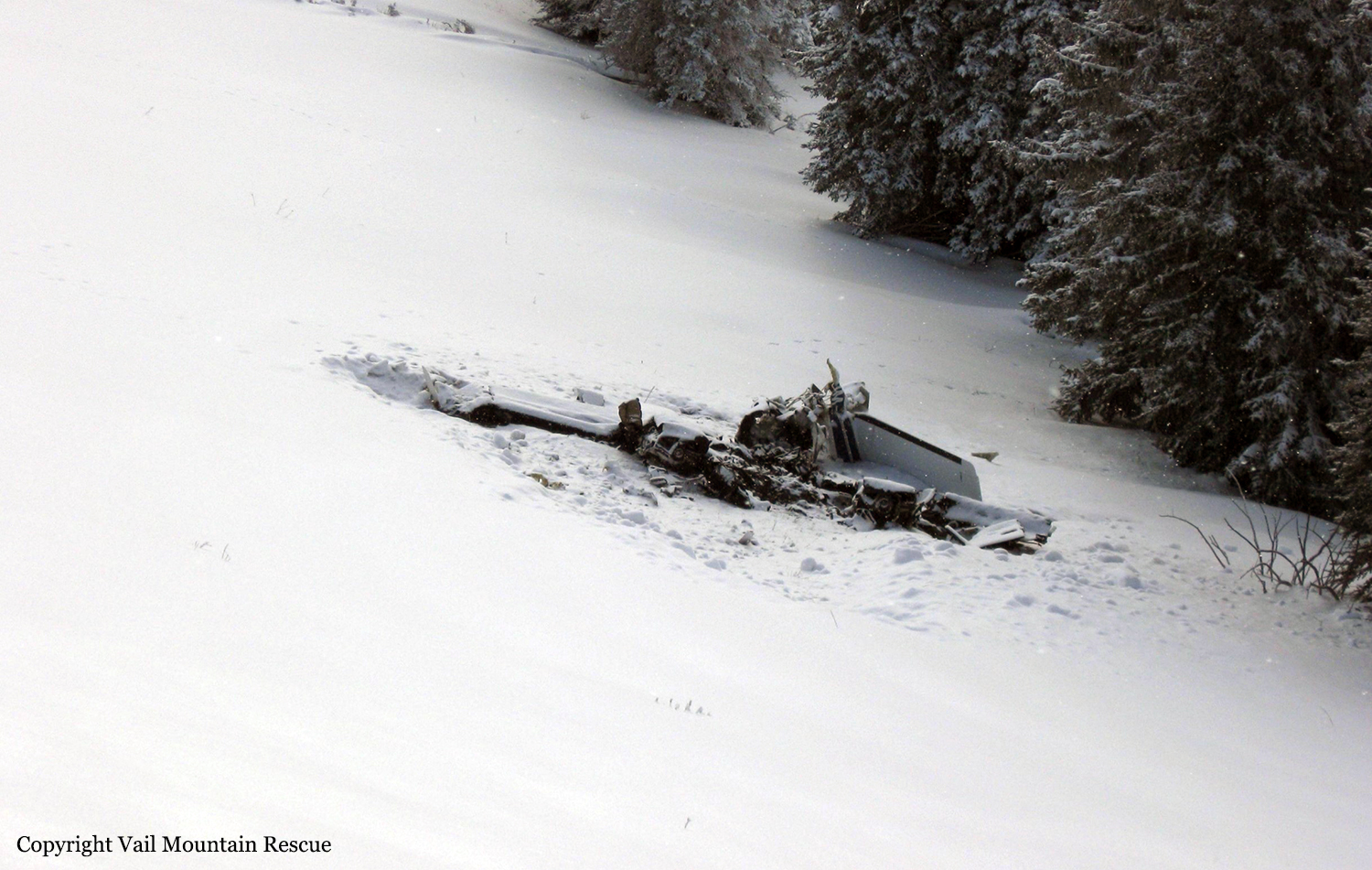
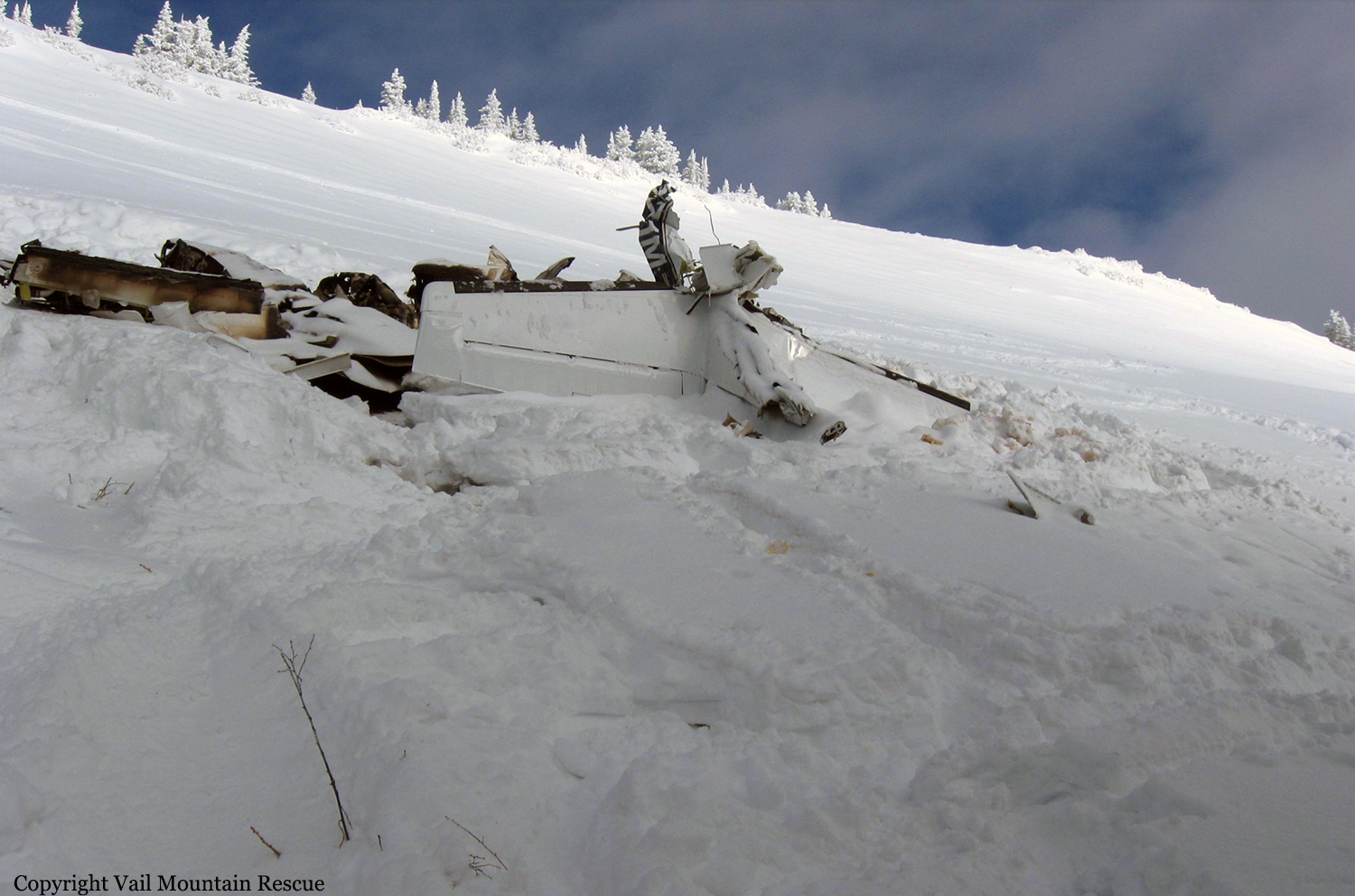
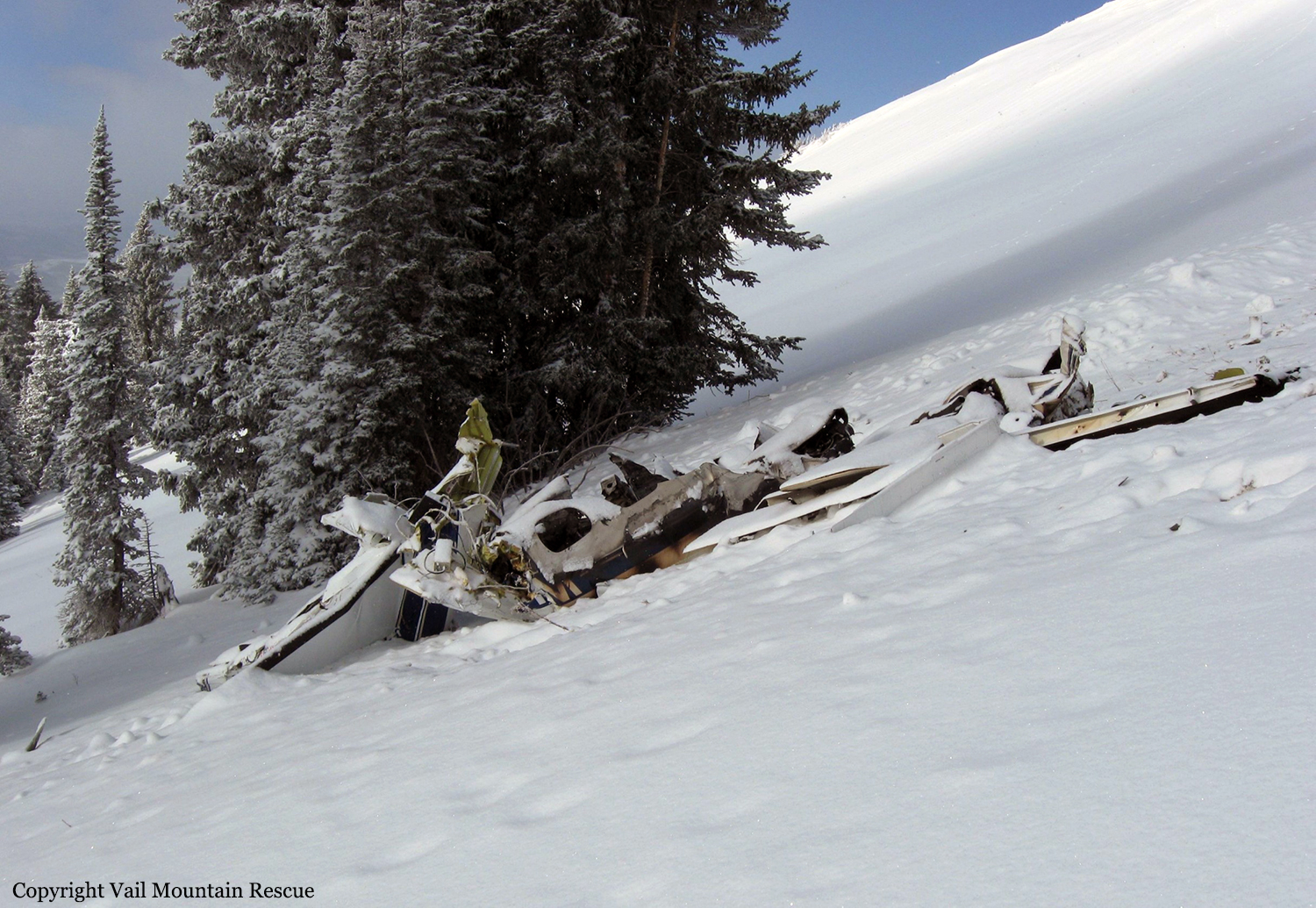
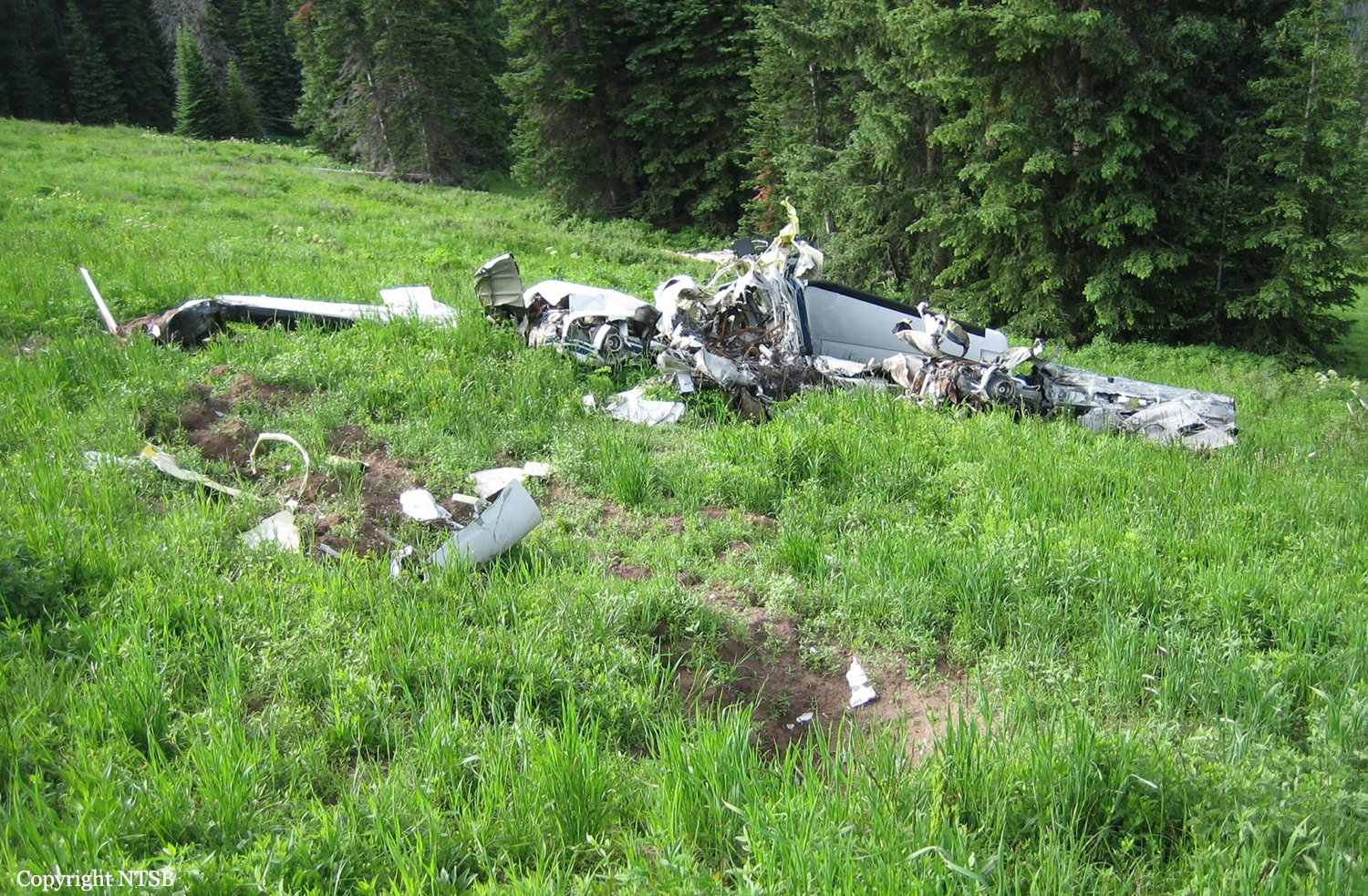
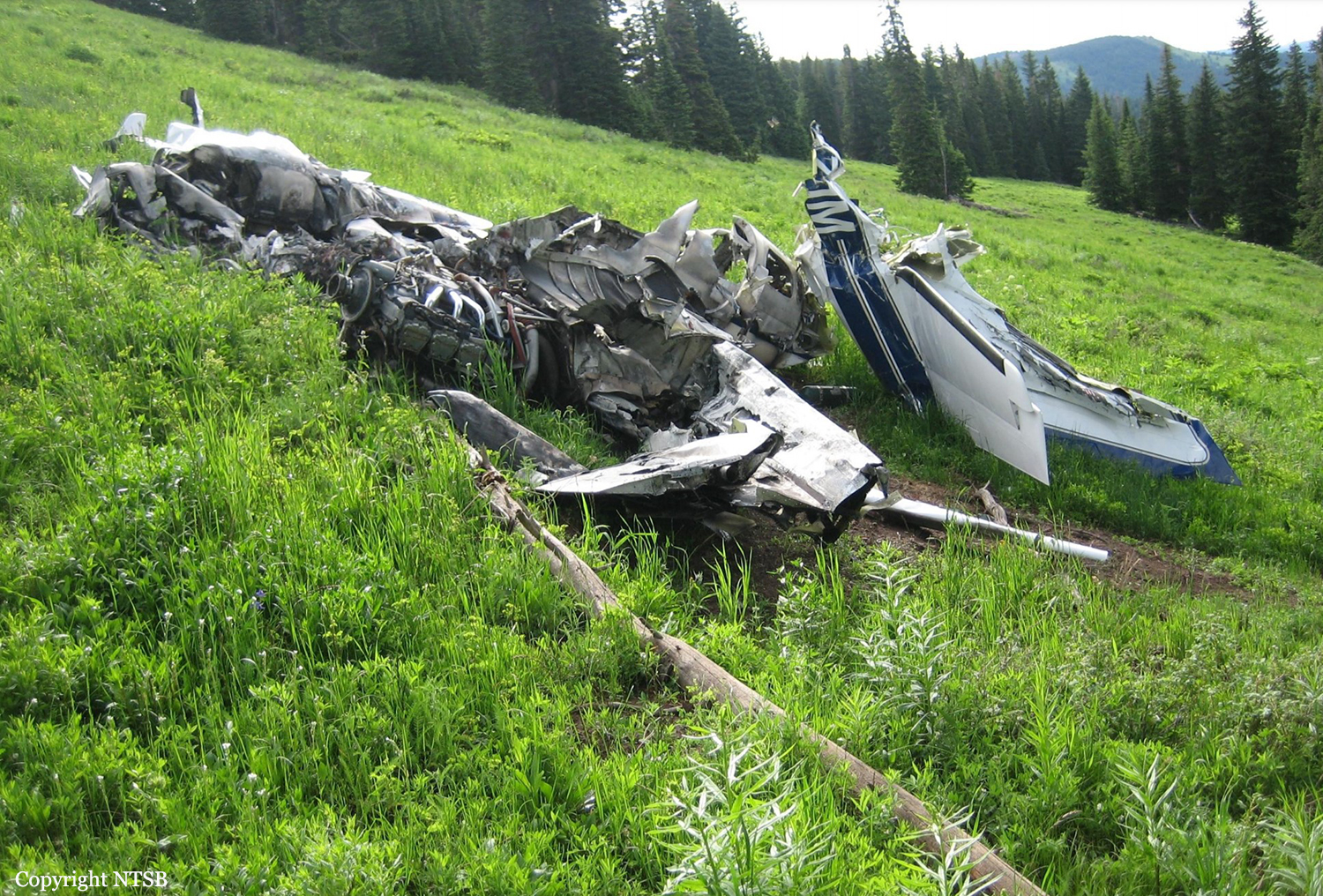
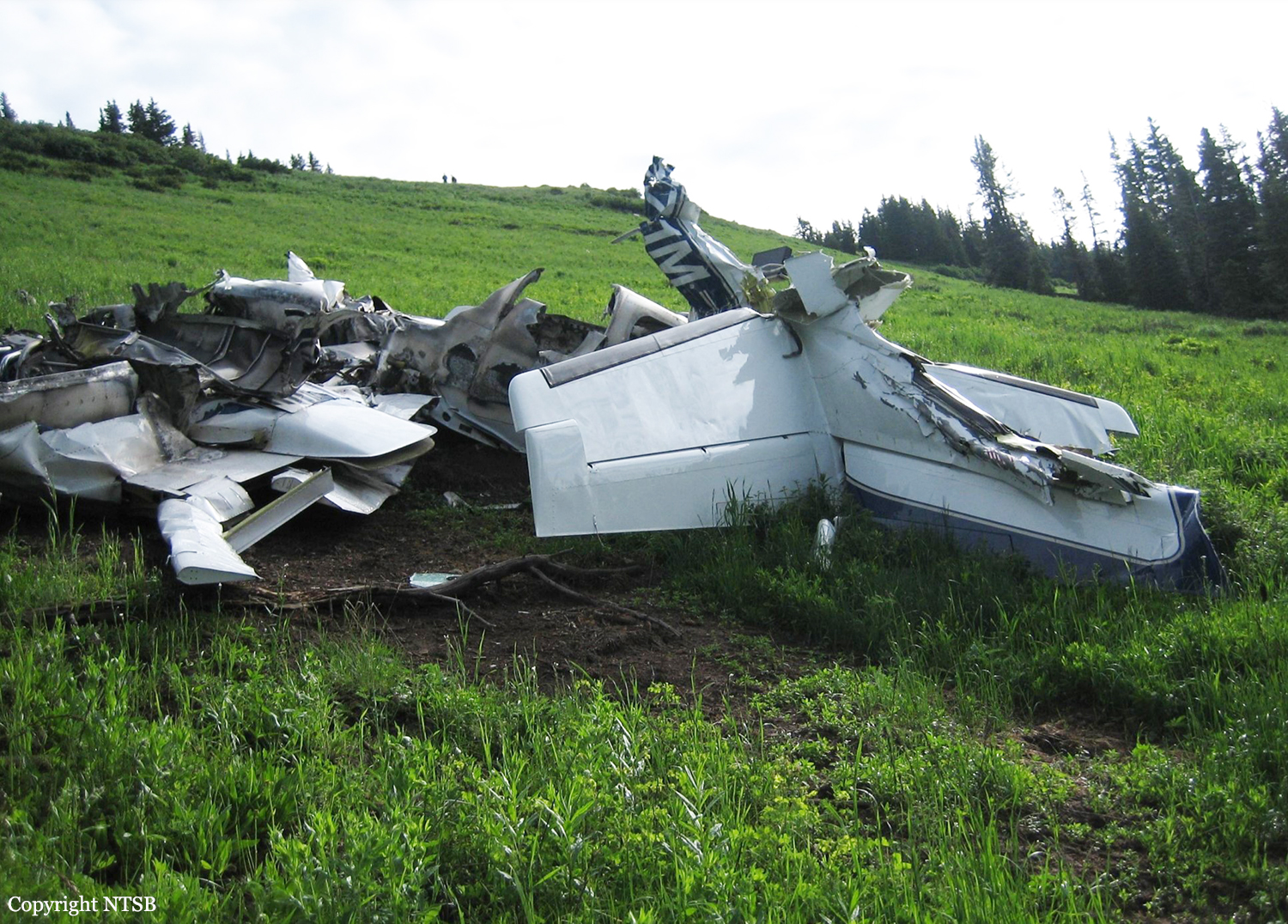
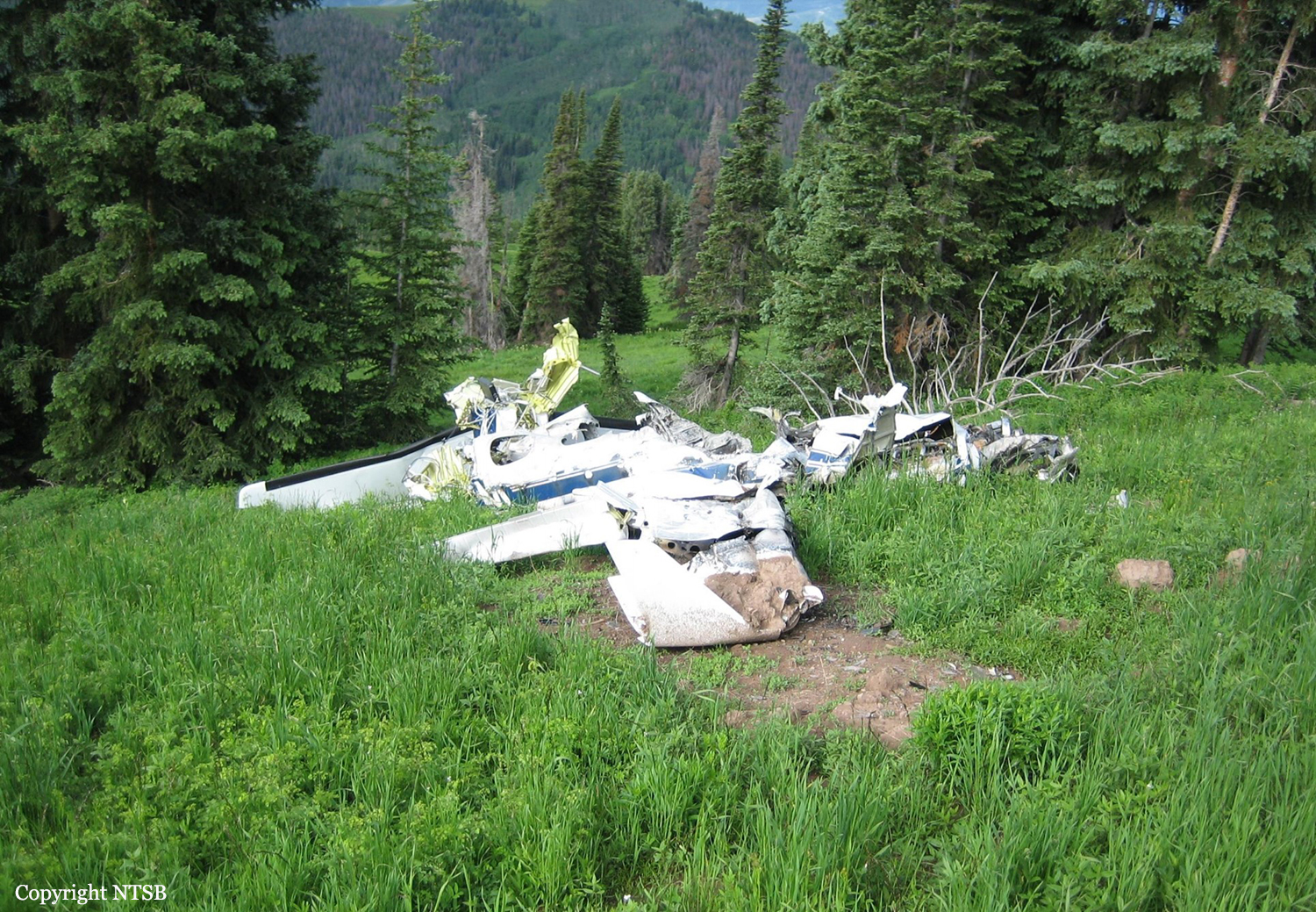
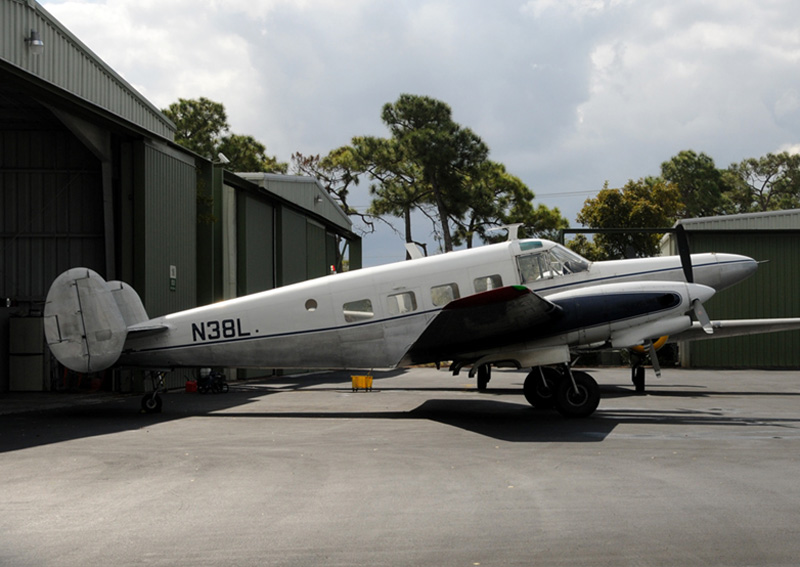
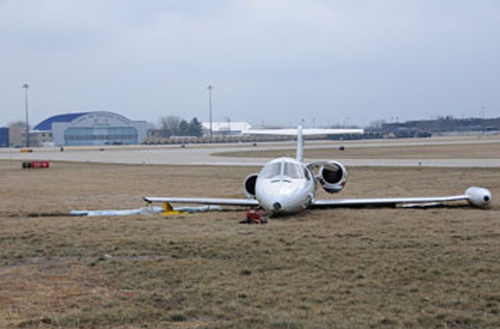
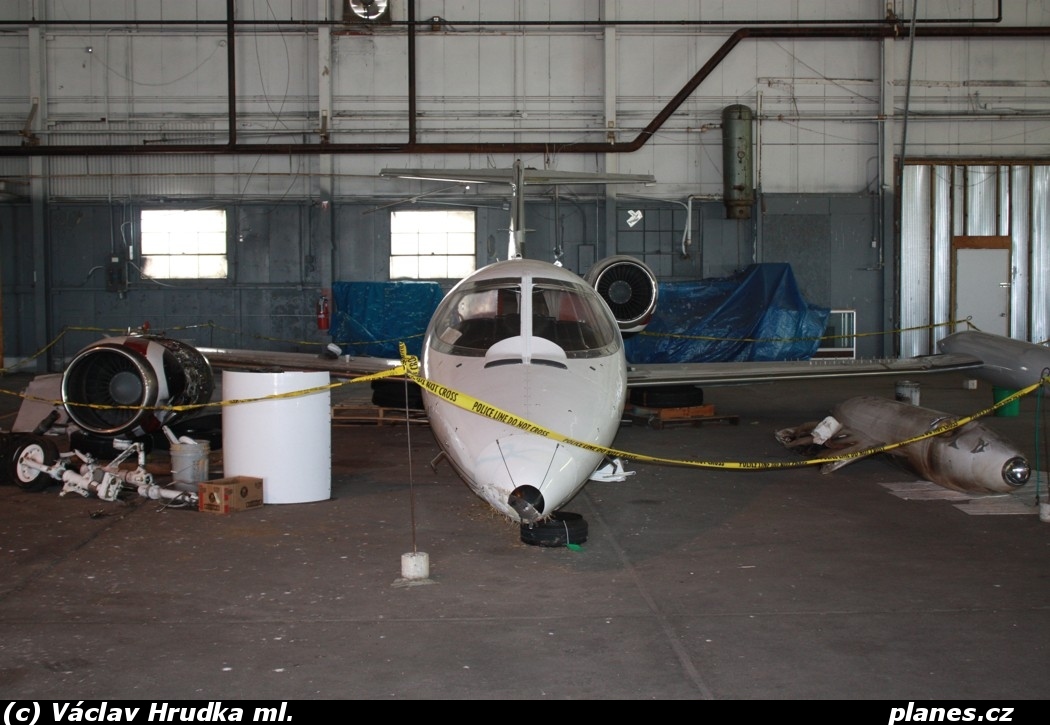
Crash of a Convair CV-340-71 in Charlotte Amalie

Date & Time: Jan 17, 2011 at 0756 LT
Type of aircraft:
Operator:
Registration:
N8277Q
Flight Type:
Survivors:
Yes
Schedule:
Charlotte Amalie - San Juan
MSN:
282
YOM:
1955
Crew on board:
2
Crew fatalities:
Pax on board:
0
Pax fatalities:
Other fatalities:
Total fatalities:
0
Captain / Total flying hours:
15130
Captain / Total hours on type:
6810.00
Copilot / Total flying hours:
9828
Copilot / Total hours on type:
237
Aircraft flight hours:
17279
Circumstances:
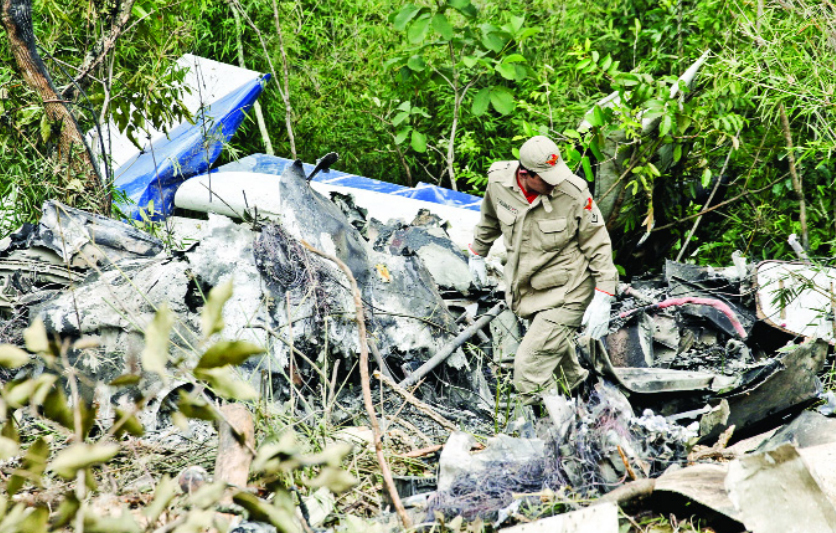
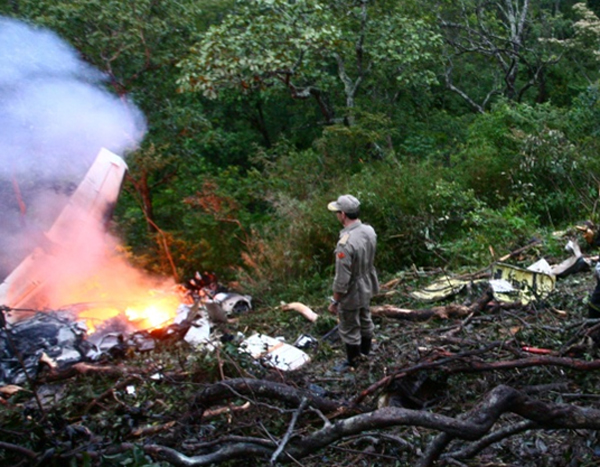
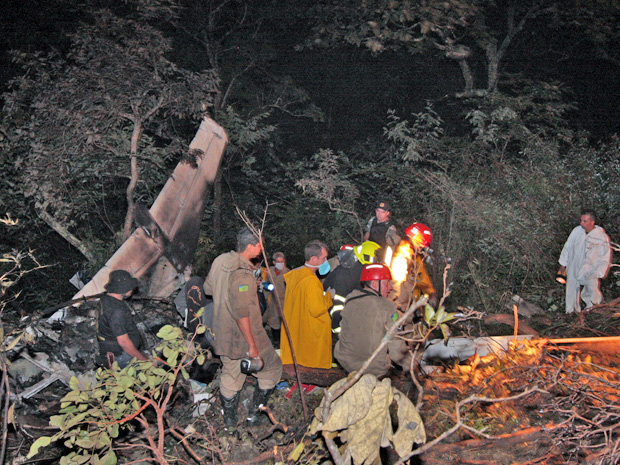
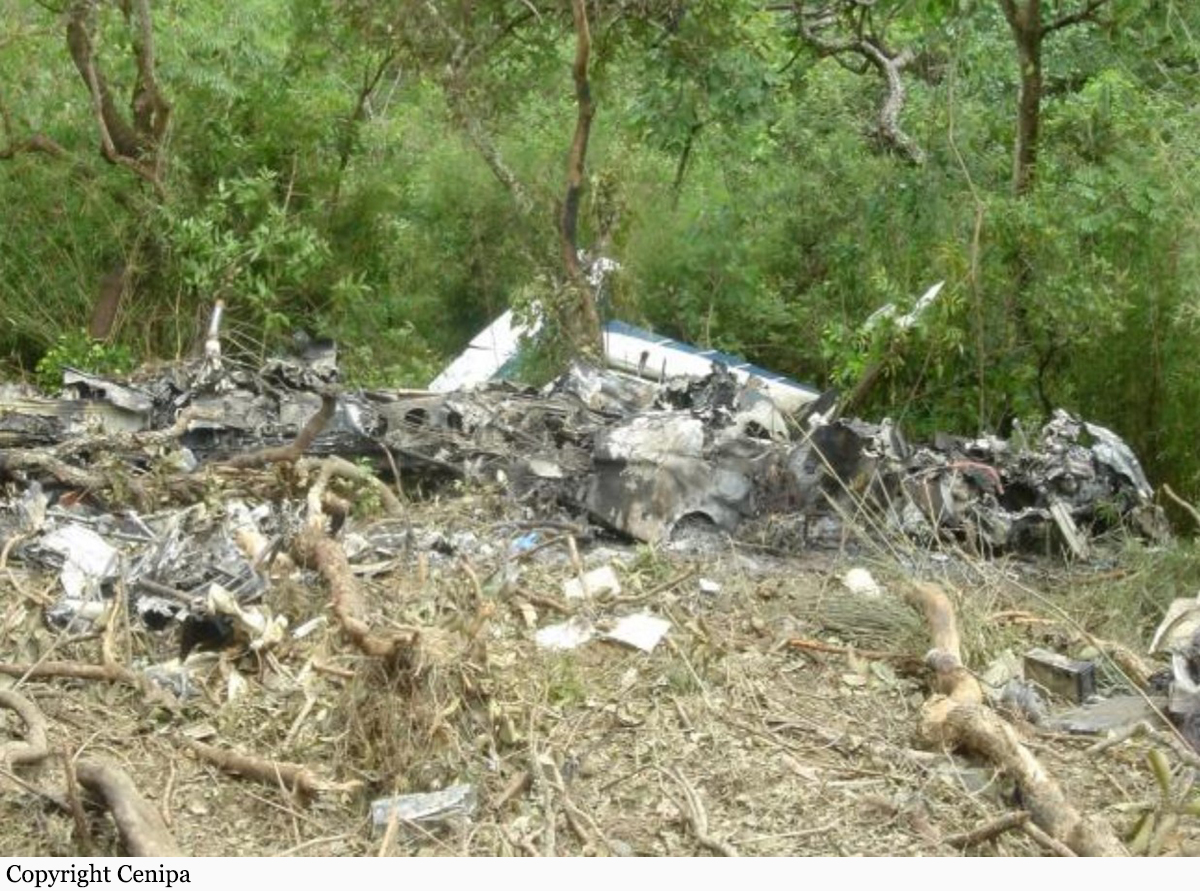
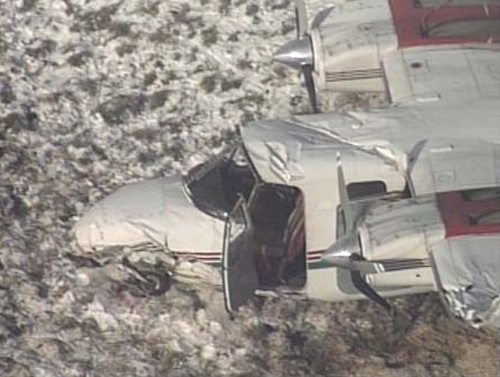
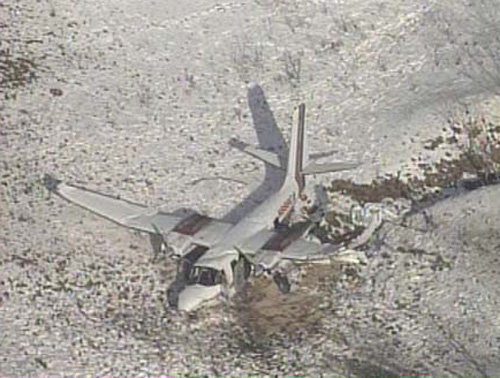
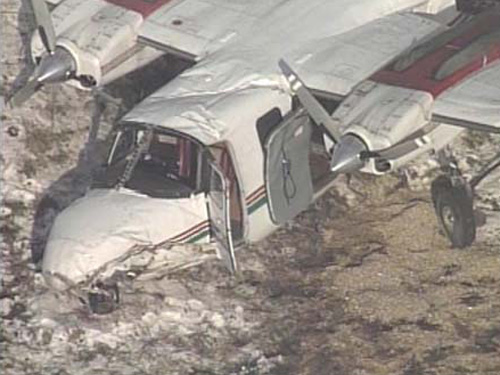
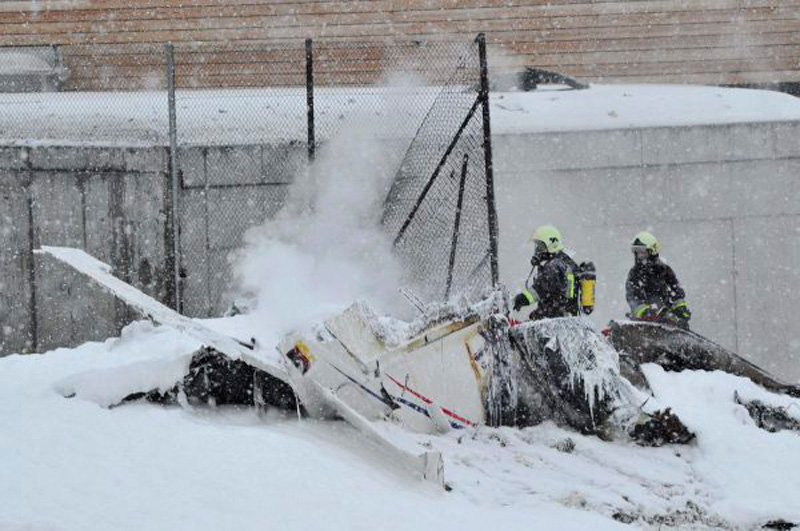
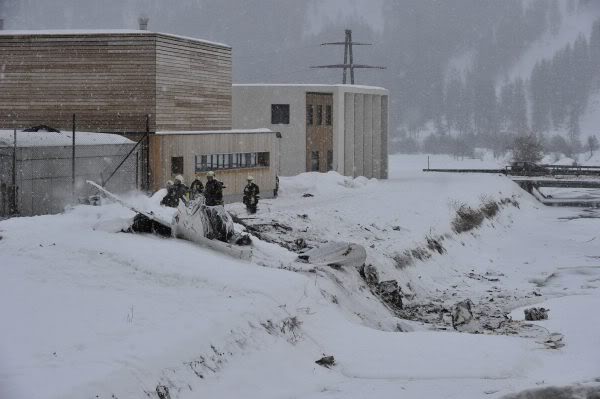
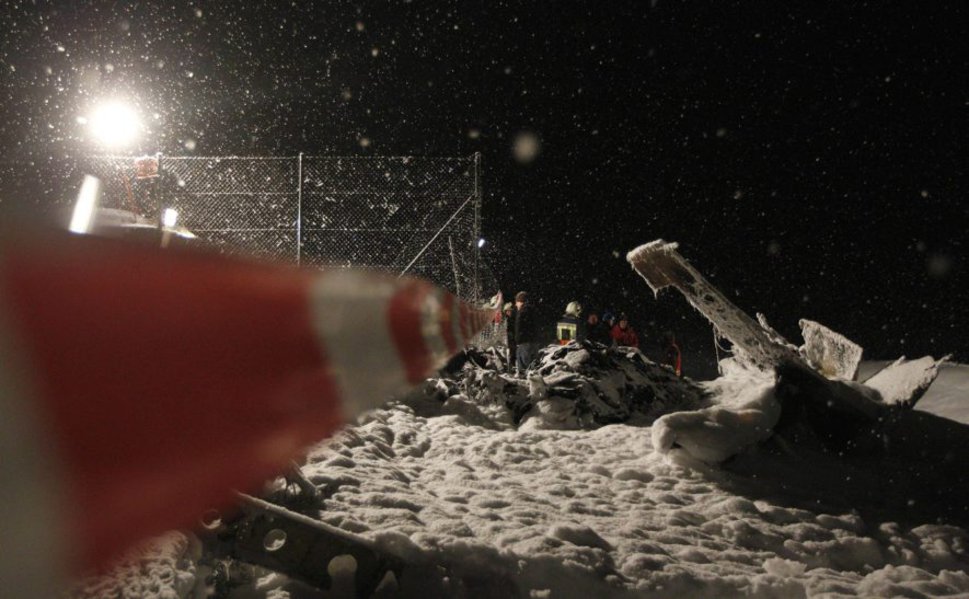
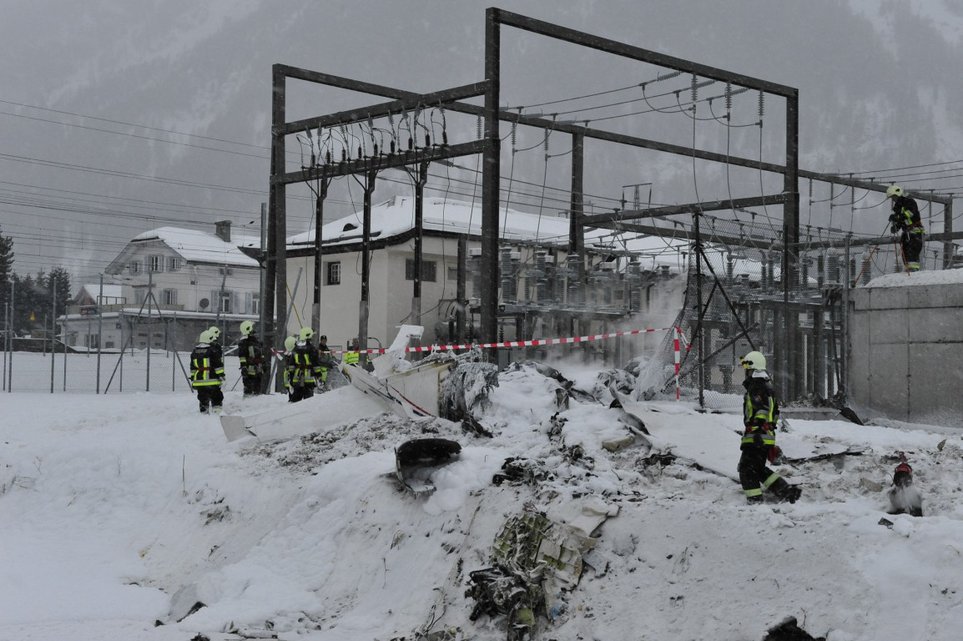
Before departing on the flight that preceded the accident flight, the flight crew performed an engine-run, including a magneto check, during which they noted backfiring from the left engine. The captain first attributed the issue to water contamination of the fuel but then attributed it to fouled spark plugs. An additional engine run resulted in no further backfiring, and the captain decided to depart on the cargo flight; no maintenance was requested or performed on the left engine before departure. When the airplane was near the destination airport, the left engine backfired once again. The flight continued to the destination airport where the airplane landed uneventfully and the cargo was off loaded; again, no maintenance was performed or requested for the left engine. For the accident flight, the first officer was the pilot flying and the captain was the pilot monitoring. During the takeoff, the local controller noted black smoke trailing the left engine and advised the flight crew; however, the captain attributed the smoke to normal operation for the airplane type and decided to continue the flight. Meanwhile, air traffic control communications for the flight were transferred to San Juan Combined En Route Approach Control (San Juan CERAP). The local controller who noted the black smoke continued to watch the airplane’s departure. When the airplane was about 1 mile west of the runway, the controller observed bright orange then red flames from behind the left engine and immediately informed the San Juan CERAP controller, who in turn immediately notified the flight crew. The captain assumed control of the airplane and directed the first officer to go to the cabin to visually inspect the left engine. The first officer returned to the cockpit and informed the captain that he observed fire, and they immediately executed the fire checklist and shut down the left engine. However, the fire continued because it was located in an area where fire suppression bottles could not reach. The pilots returned to the airport; fire rescue vehicles were pre-positioned along various portions of the runway. The airplane touched down on the runway centerline. Because the fire had damaged the left brake line, braking was asymmetrical, and the airplane departed the right side of the runway and came to rest adjacent to the airport perimeter fence.
Probable cause:
The National Transportation Safety Board determines the probable cause(s) of this accident to be:
The captain’s decision to continue the flight with the left engine backfiring, resulting in an engine fire shortly after takeoff. Contributing to the accident were the captain’s decision to continue the flight following a report of black smoke trailing the airplane and in-flight fire damage to the left wheel brake system, resulting in a loss of directional control during an emergency landing.
Final Report:

Crash of a Beechcraft B200 Super King Air in Goiânia: 6 killed

Date & Time: Jan 14, 2011 at 1810 LT
Registration:
PR-ART
Survivors:
No
Site:
Schedule:
Brasília – Goiânia
MSN:
BB-806
YOM:
1981
Location:
Country:
Crew on board:
1
Crew fatalities:
Pax on board:
5
Pax fatalities:
Other fatalities:
Total fatalities:
6
Captain / Total flying hours:
2500
Captain / Total hours on type:
550.00
Circumstances:
Following an uneventful flight from Brasília, the pilot started the descent to Goiânia-Santa Genoveva Airport in poor weather visibility with heavy rain falls and turbulences. On final approach, the twin engine aircraft descended below the glide until it impact the slope of Mt Santo Antônio located 10,7 km short of runway 32. The aircraft was destroyed by impact forces and a post crash fire and all six occupants were killed.
Probable cause:
The following findings were identified:
- Factors, such as obesity and sedentariness, associated with the high workload in the moments preceding the collision with the hill, may have contributed for the task demand to exceed the margins of safety, resulting in wrong decision-making by the pilot.
- Upon facing adverse meteorological conditions and being aware that aircraft which landed before him had reached better visibility in altitudes below 3,500 ft. on the final approach of the VOR procedure, the pilot may have increased his level of confidence in the situation, to the point of descending even further, without considering the risks involved.
- The weather conditions encountered in the final phase of the flight may have aggravated the level of tension in the aircraft cabin to the point of compromising the management of the situation by the pilot, who delegated responsibility for radiotelephony communication to a passenger.
- If one considers that the pilot may have decided to descend below the minimum safe altitude in order to achieve visual conditions, one may suppose that his decision, probably influenced by the experience of the preceding aircraft, was made without adequate evaluation of the risks involved, and without considering the option of flying IFR, in face of the local meteorological conditions. In addition, the pilot’s decision-making process may have been compromised by lack of information on Mount Santo Antonio in the approach chart.
- The primary radar images obtained by Anápolis Control (APP-AN) indicated the presence of thick nebulosity associated with heavy cloud build-ups on the final approach of the VOR procedure. Such meteorological conditions influenced the occurrence, which culminated in the collision of the aircraft with Mount Santo Antônio, independently of the hypotheses raised during the investigation.
- The final approach on the course 320º, instead of 325º, made the aircraft align with the hill with which it collided.
- Mount Santo Antonio, a control obstacle on the final approach in which the collision occurred, was not depicted in the runway 32 VOR procedure approach chart, in discordance with the prescriptions of the CIRTRAF 100-30, a fact that may have contributed to a possible decrease of the situational awareness.
Final Report:

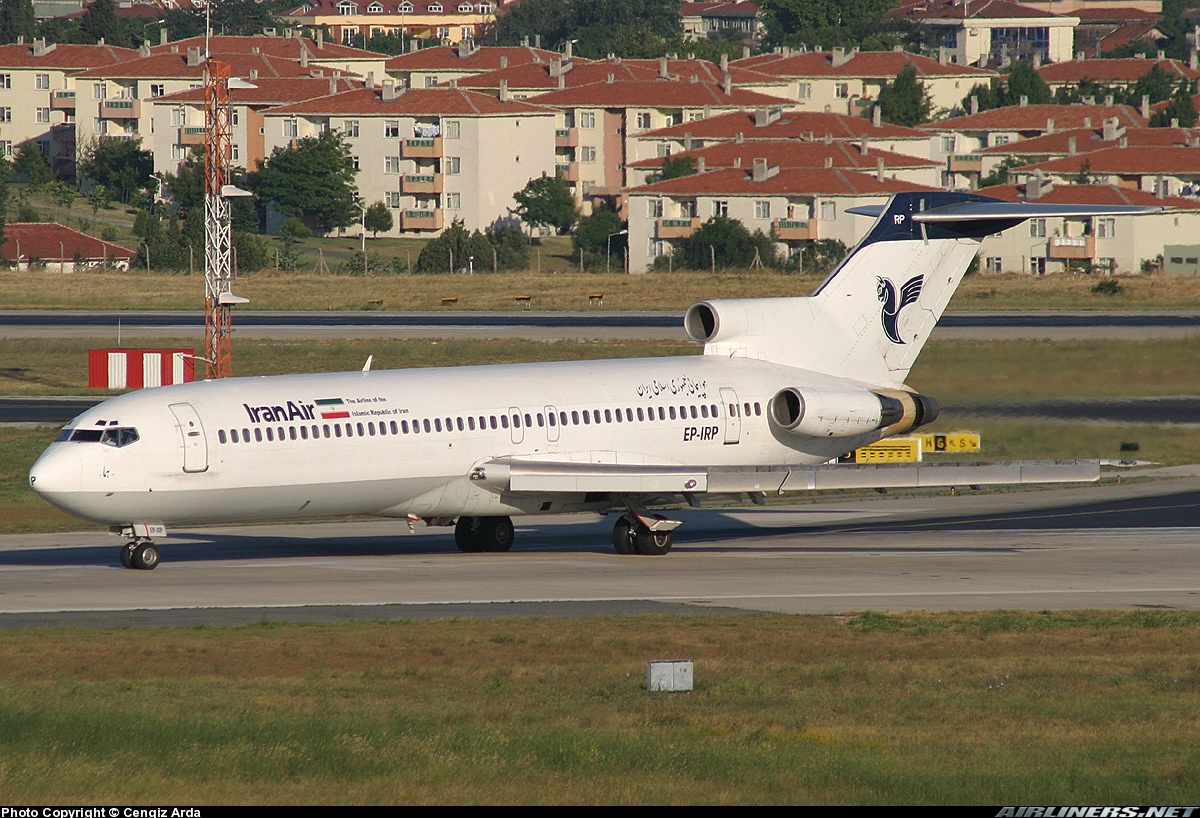
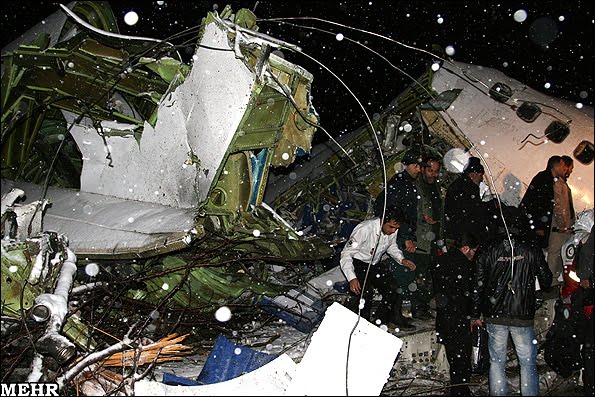
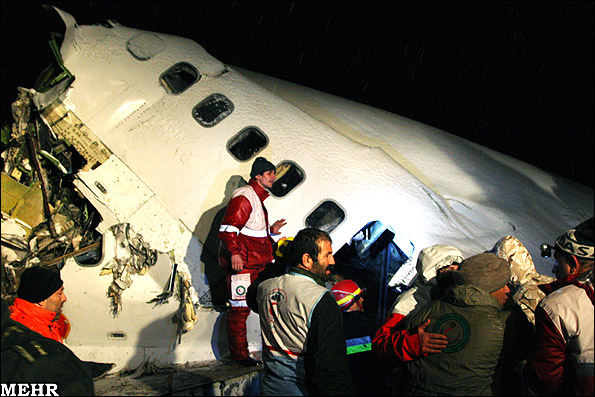
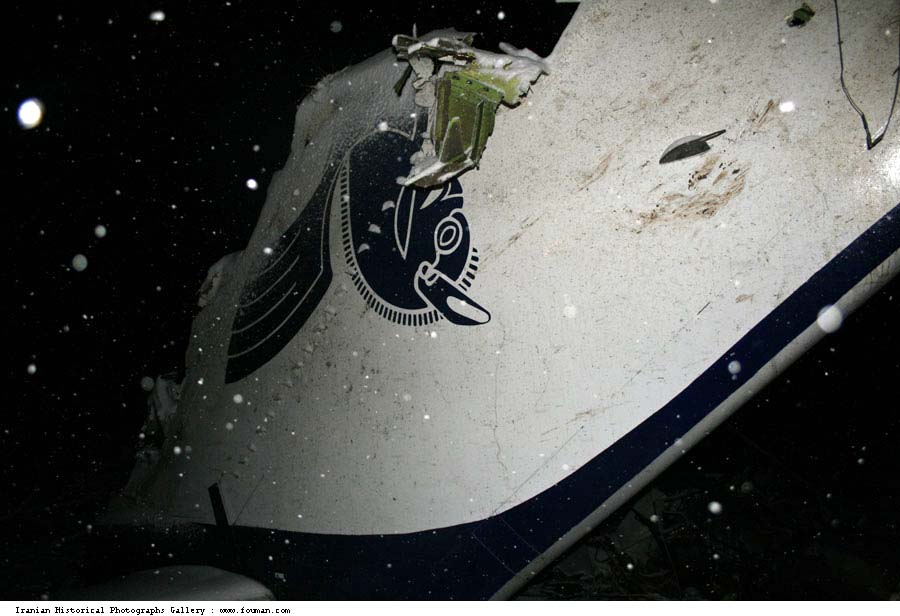
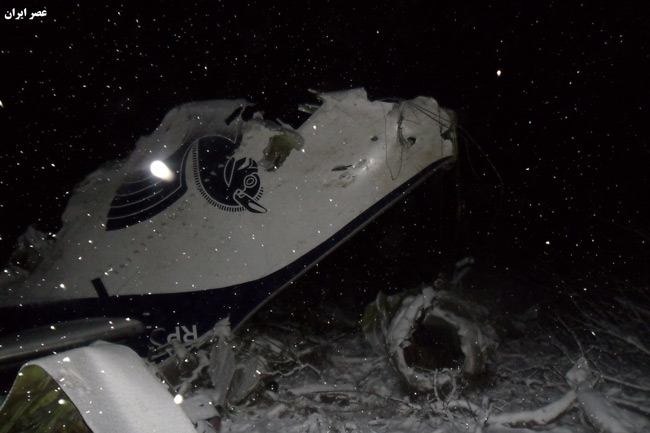
Crash of a Boeing 727-286 in Orūmīyeh: 78 killed

Date & Time: Jan 9, 2011 at 1945 LT
Type of aircraft:
Operator:
Registration:
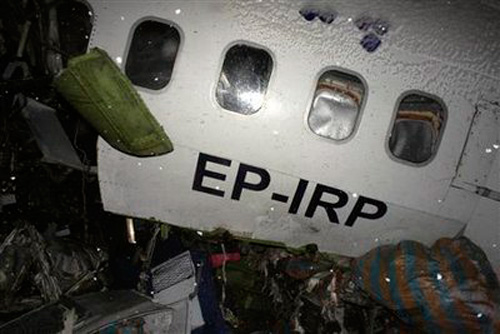
EP-IRP
Survivors:
Yes
Schedule:
Tehran - Orumiyeh
MSN:
20945/1048
YOM:
1974
Flight number:
IR277
Country:
Region:
Crew on board:
9
Crew fatalities:
Pax on board:
96
Pax fatalities:
Other fatalities:
Total fatalities:
78
Aircraft flight hours:
9019
Circumstances:
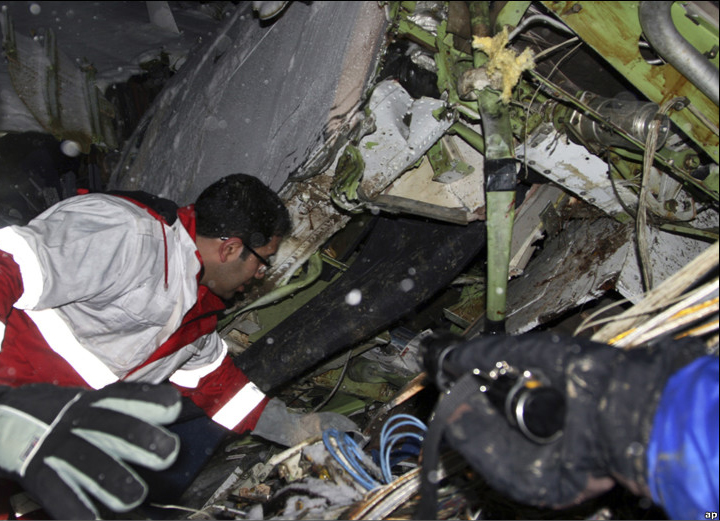
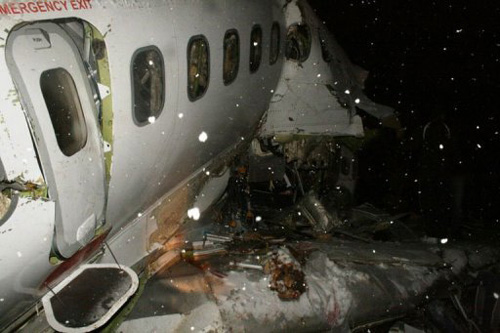
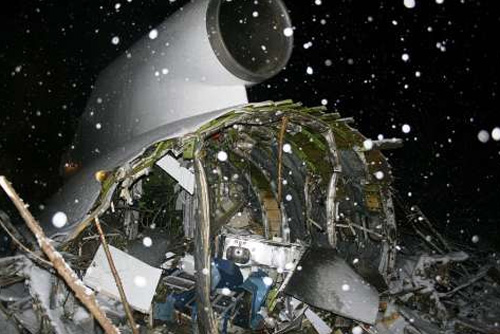
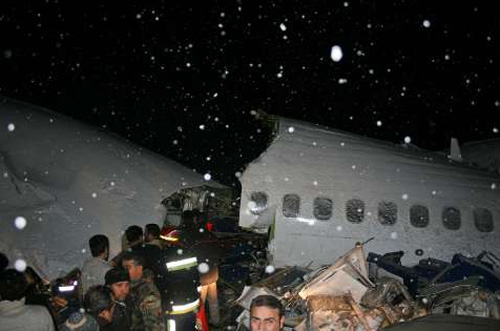
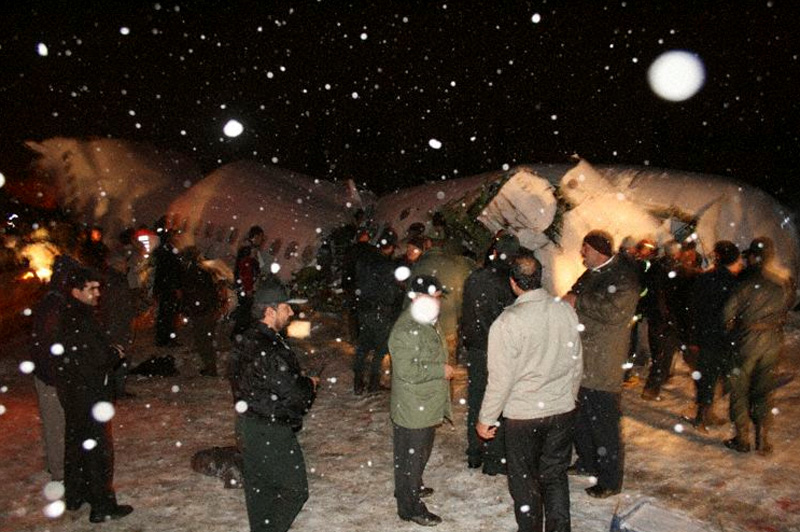
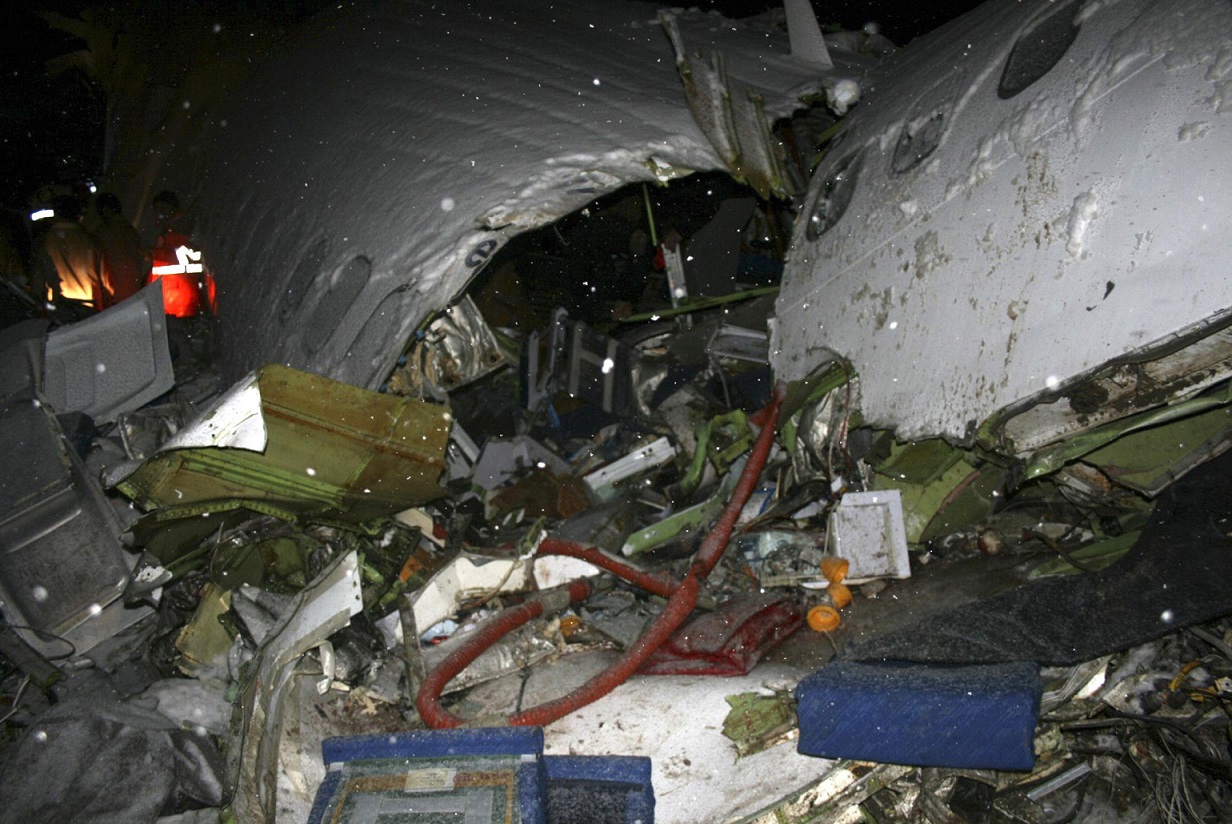
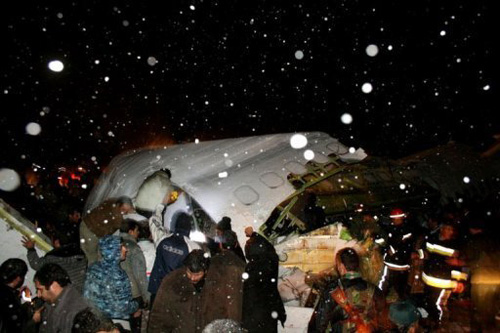
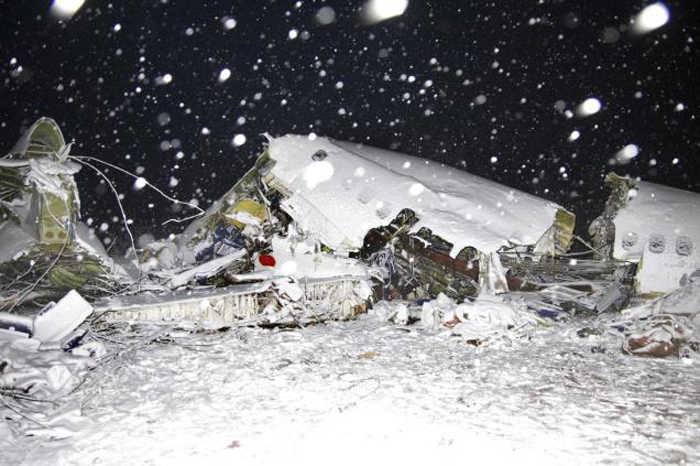
The aircraft departed Tehran-Mehrabad Airport at 1815LT with a delay of more than two hours due to poor weather conditions at destination. While descending to Orūmīyeh Airport by night, the crew encountered poor weather conditions with snow falls, visibility 800 metres and three ceilings at 1,500, 2,000 and 6,000 feet. After the crew was unable to intercept the ILS, the decision to initiate a go-around procedure was taken. Approaching the stall speed, the stick shaker activated and the aircraft probably encountered icing conditions. In a left bank angle estimated between 26 and 40°, the engine n°3 and 1 failed. At an altitude of 600 feet and at a speed of 96 knots, the flaps were retracted, causing the aircraft to stall and to impact the ground. The aircraft broke in three but there was no fire. 70 passengers and 8 crew members were killed while 27 other occupants were injured, some seriously.
Probable cause:
Bad weather conditions for the aircraft and inappropriate actions by cockpit crew to confront the situation is the main cause of the accident. The following contributing factors were identified:
- The old technology of aircraft systems,
- Absence of a suitable simulator for adverse weather conditions,
- Failure to correctly follow the operating manual by the flight crew,
- Inadequate cockpit resources management (CRM).

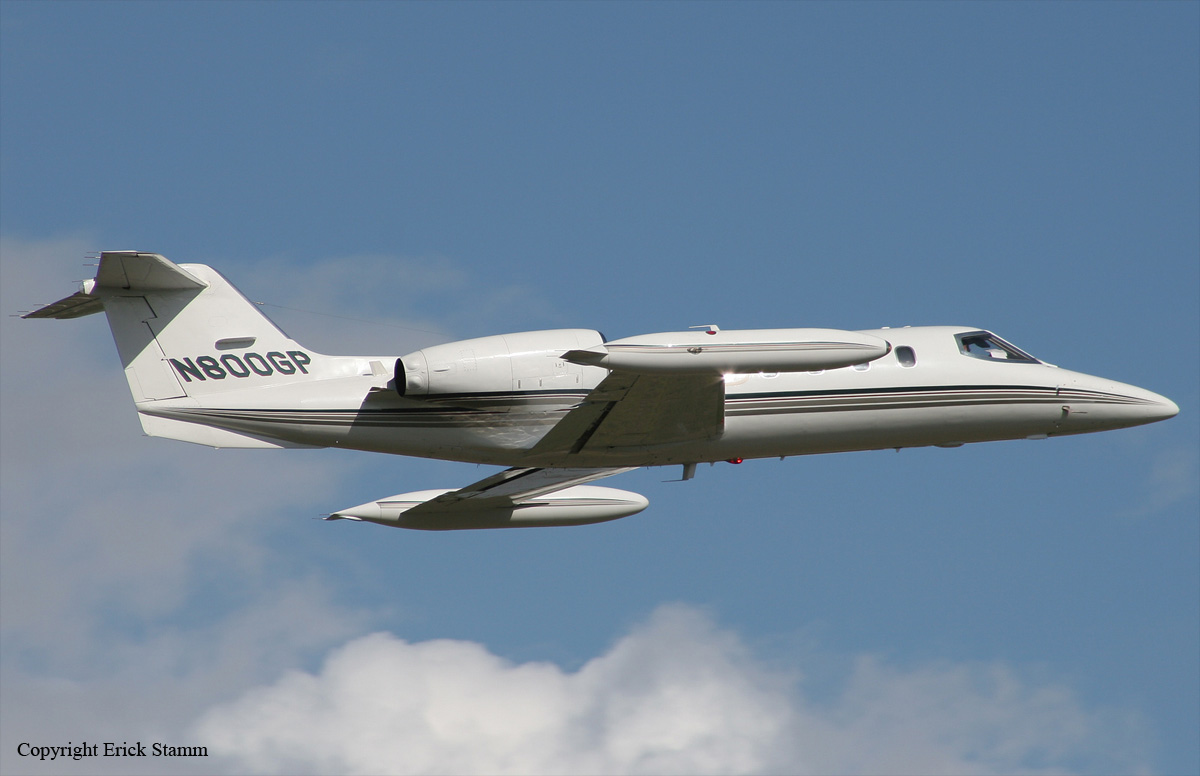
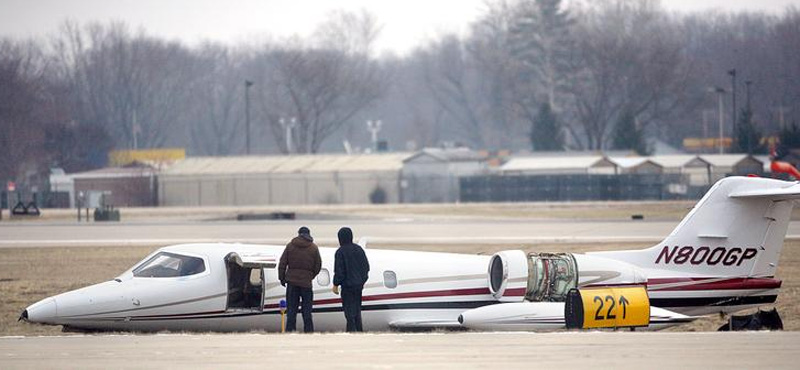
Crash of a Learjet 35A in Springfield

Date & Time: Jan 6, 2011 at 1100 LT
Type of aircraft:
Operator:
Registration:
N800GP
Survivors:
Yes
Schedule:
Chicago - Springfield
MSN:
35A-158
YOM:
1978
Flight number:
PWA800
Crew on board:
2
Crew fatalities:
Pax on board:
4
Pax fatalities:
Other fatalities:
Total fatalities:
0
Captain / Total flying hours:
5932
Captain / Total hours on type:
827.00
Aircraft flight hours:
16506
Circumstances:
The flight encountered light rime icing during an instrument approach to the destination airport. The copilot was the pilot flying at the time of the accident. He reported that the airframe anti-icing system was turned off upon intercepting the instrument approach glide slope, which was shortly before the airplane descended below the cloud layer. He recalled observing light frost on the outboard wing and tip tank during the approach. The stick shaker activated on short final, and the airplane impacted left of the runway centerline before it ultimately departed the right side of the runway pavement and crossed a slight rise before coming to rest in the grass. The cockpit voice recorder transcript indicated that the pilots were operating in icing conditions without the wing anti- ice system activated for about 4 1/2 minutes prior to activation of the stick shaker. A postaccident examination of the airplane did not reveal any anomalies consistent with a preimpact failure of the flight control system or a loss of anti-ice system functionality. A performance study determined that the airplane’s airspeed during the final 30 seconds of the flight was about 114 knots and that the angle of attack ultimately met the stick shaker threshold. The expected stall speed for the airplane was about 93 knots. The airplane flight manual stated that anti-ice systems should be turned on prior to operation in icing conditions during normal operations. The manual warned that even small accumulations of ice on the wing leading edge can cause an aerodynamic stall prior to activation of the stick shaker and/or stick pusher.
Probable cause:
The pilot’s decision to conduct an instrument approach in icing conditions without the anti-ice system activated, contrary to the airplane flight manual guidance, which resulted in an inadvertent aerodynamic stall due to an in-flight accumulation of airframe icing.
Final Report:
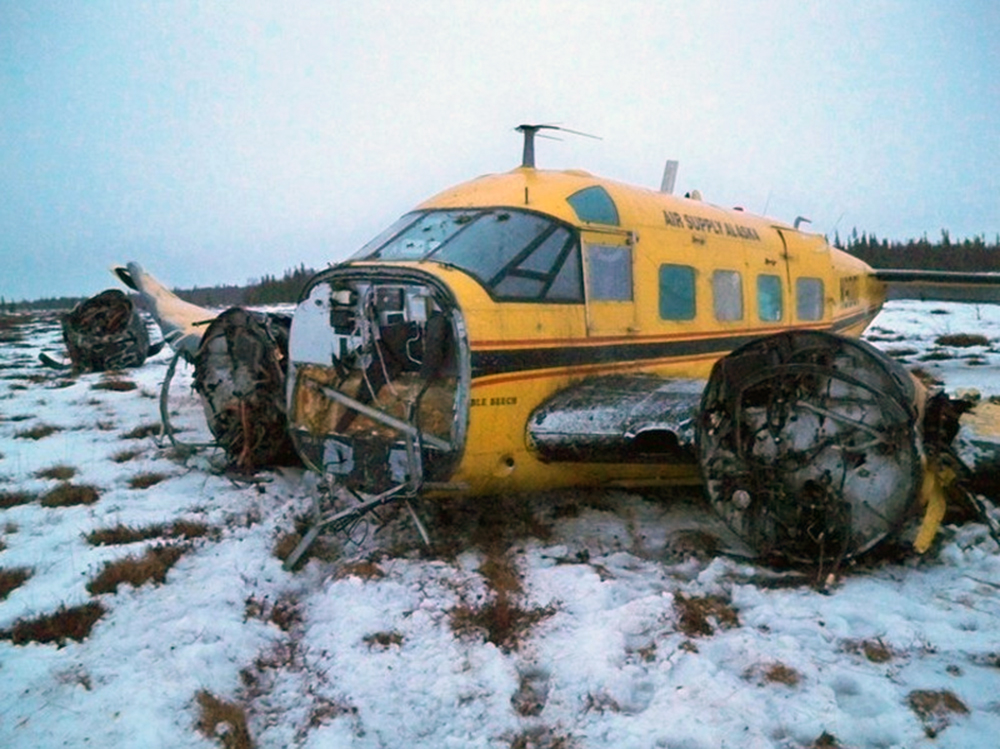
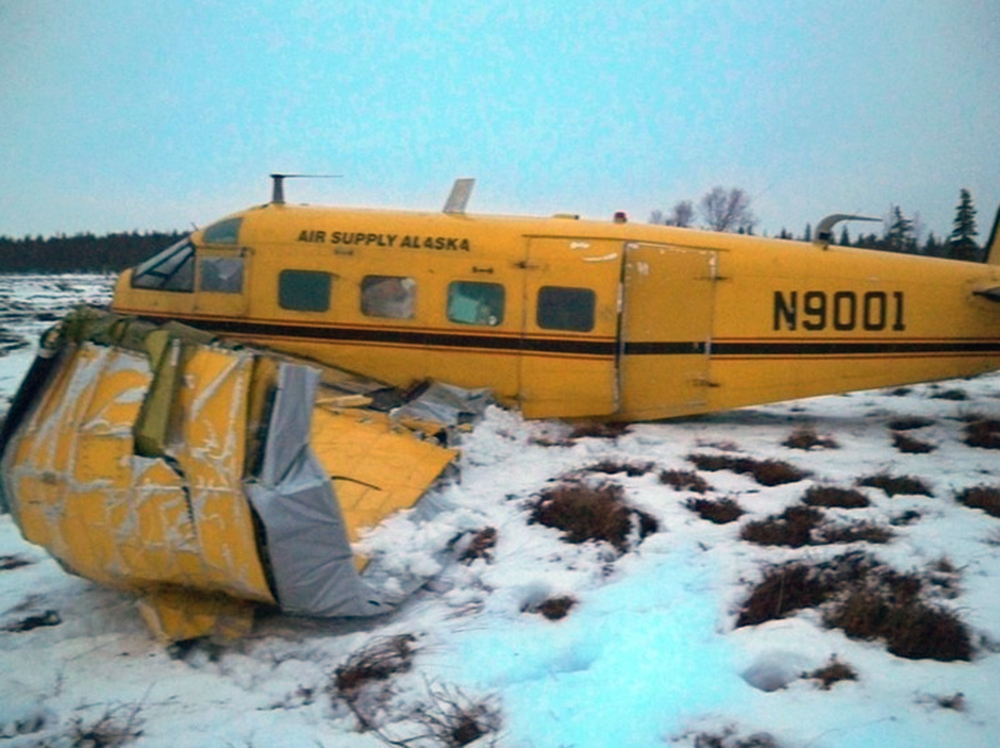
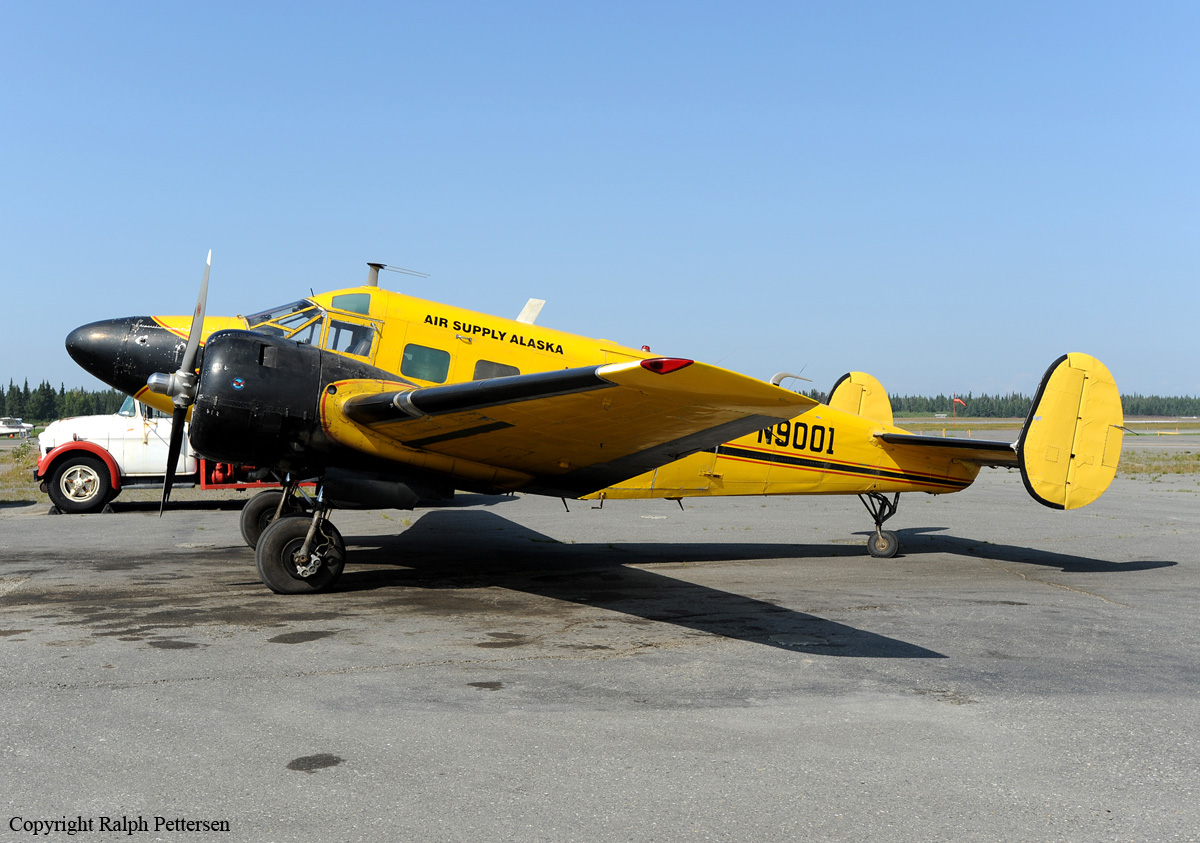
Crash of a Beechcraft E18S in New Stuyahok

Date & Time: Jan 3, 2011 at 1350 LT
Type of aircraft:
Operator:
Registration:
N9001
Flight Type:
Survivors:
Yes
Schedule:
Kenai - New Stuyahok
MSN:
BA-460
YOM:
1959
Crew on board:
1
Crew fatalities:
Pax on board:
0
Pax fatalities:
Other fatalities:
Total fatalities:
0
Captain / Total flying hours:
6539
Captain / Total hours on type:
464.00
Aircraft flight hours:
19571
Circumstances:
The pilot reported that the runway at the destination airport was ice-covered, and that upon touchdown the surface was slicker than he had anticipated. He aborted the landing by applying full power to take off. The airplane was unable to out-climb the rising terrain at the end of the runway, and it collided with terrain, sustaining substantial damage to the fuselage and both wings. The pilot indicated that there were no mechanical issues with the airplane that precluded its normal operation.
Probable cause:
The pilot's misjudgment of the runway surface condition, resulting in an aborted landing and collision with rising terrain during the ensuing takeoff attempt.
Final Report:
Crash of a Rockwell Aero Commander 500 in Columbus

Date & Time: Dec 27, 2010 at 2246 LT
Operator:
Registration:
N888CA
Flight Type:
Survivors:
Yes
Schedule:
Jeffersonville – Columbus
MSN:
500B-1318-127
YOM:
1963
Crew on board:
1
Crew fatalities:
Pax on board:
0
Pax fatalities:
Other fatalities:
Total fatalities:
0
Captain / Total flying hours:
5700
Captain / Total hours on type:
3525.00
Circumstances:
Prior to the flight, the pilot preflighted the airplane and recalled observing the fuel gauge indicating full; however, he did not visually check the fuel tanks. The airplane departed and the en route portion of the flight was uneventful. During the downwind leg of the circling approach, the engines began to surge and the pilot added full power and turned on the fuel boost pumps. While abeam the approach end of the runway on the downwind leg, the engines again started to surge and subsequently lost power. He executed a forced landing and the airplane impacted terrain short of the runway. A postaccident examination by Federal Aviation Administration inspectors revealed the fuselage was buckled in several areas, and the left wing was crushed and bent upward. The fuel tanks were intact and approximately one cup of fuel was drained from the single fuel sump. Fueling records indicated the airplane was fueled 3 days prior to the accident with 135 gallons of fuel or approximately 4 hours of operational time. Flight records indicated the airplane had flown approximately 4 hours since refueling when the engines lost power.
Probable cause:
The pilot’s improper fuel management which resulted in a loss of engine power due to fuel exhaustion.
Final Report:
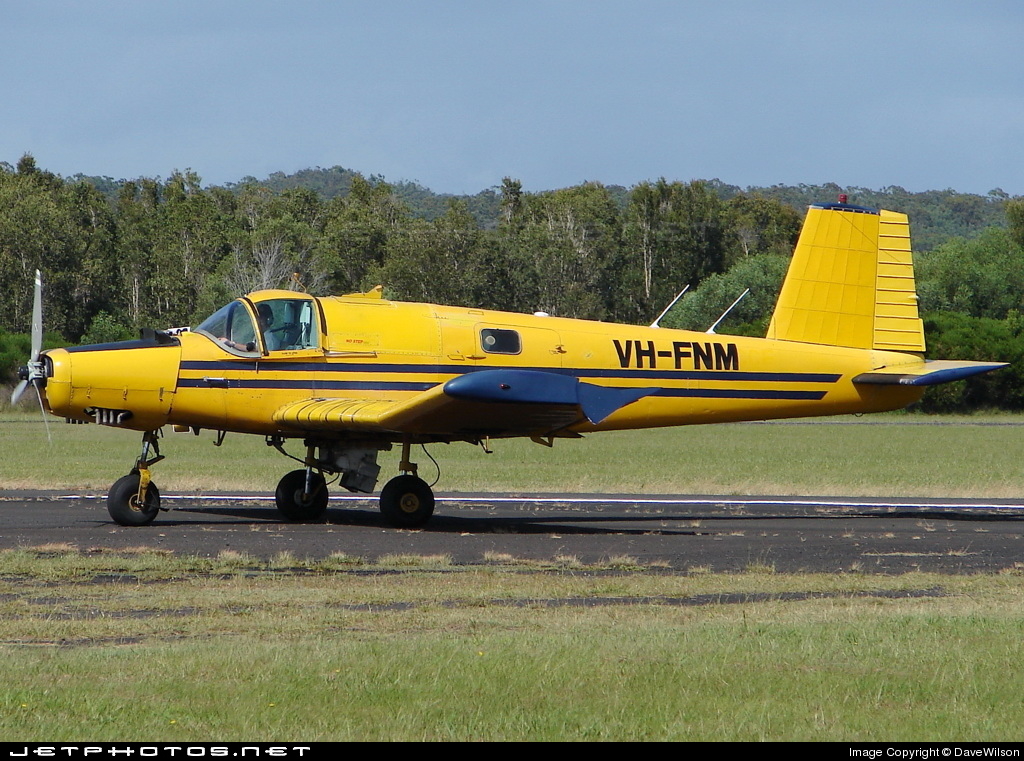
Crash of a Fletcher FU-24A-954 in Wynella Station: 1 killed

Date & Time: Dec 20, 2010 at 1700 LT
Type of aircraft:
Registration:
VH-FNM
Survivors:
No
Schedule:
Wynella Station - Wynella Station
MSN:
263
YOM:
1979
Country:
Region:
Crew on board:
1
Crew fatalities:
Pax on board:
0
Pax fatalities:
Other fatalities:
Total fatalities:
1
Captain / Total flying hours:
5815
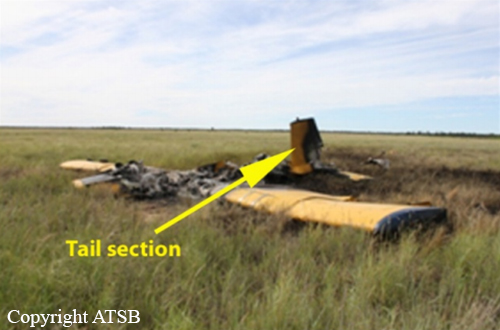
Circumstances:
On 20 December 2010, the owner/pilot of a Pacific Aerospace Corporation FU-24-954 Fletcher aircraft, registered VH-FNM, was conducting aerial spreading of urea fertilizer at Wynella Station; a property 40 km south-south-west of Dirranbandi, Queensland. At about 1650 Eastern Standard Time, the pilot was returning to the landing strip after the completion of an application run. The aircraft impacted the terrain, and the pilot was fatally injured.
Probable cause:
Examination of the accident site indicated that the aircraft’s engine was delivering power at the time of impact. Wreckage examination did not reveal evidence of any defect or mechanical failure that would have contributed to the event. Although the post-mortem report on the pilot noted that he had significant coronary atherosclerosis, there was insufficient information available to determine whether pilot incapacitation was involved in the accident. The investigation did not identify any organisational or systemic issues that might adversely affect the future safety of aviation
operations.
Final Report:
Crash of a Raytheon 390 Premier IA in Samedan: 2 killed

Date & Time: Dec 19, 2010 at 1502 LT
Type of aircraft:
Operator:
Registration:
D-IAYL
Flight Type:
Survivors:
No
Schedule:
Zagreb - Samedan
MSN:
RB-249
YOM:
2008
Flight number:
GQA631V
Country:
Region:
Crew on board:
2
Crew fatalities:
Pax on board:
0
Pax fatalities:
Other fatalities:
Total fatalities:
2
Captain / Total flying hours:
4306
Captain / Total hours on type:
244.00
Copilot / Total flying hours:
1071
Copilot / Total hours on type:
567
Aircraft flight hours:
1047
Aircraft flight cycles:
820
Circumstances:
After an uneventful flight, the IFR flight plan was cancelled at 13:53:09 UTC and the flight continued under visual flight rules. When the crew were requested at 13:54:01 UTC by the Zurich sector south air traffic controller (ATCO) to switch to the Samedan Information frequency, they wanted to remain on the frequency for a further two minutes. The aircraft was on a south-westerly heading, approx. 5 km south of Zernez, when the crew informed the ATCO at 13:57:12 UTC that they would now change frequency. After first contact with Samedan Information, when the crew reported that they were ten miles before the threshold of runway 21, the aircraft was in fact approximately eight miles north-east of the threshold of runway 21. When at 13:58:40 UTC the crew of a Piaggio 180 asked the flight information service officer (FISO) of Samedan Information about the weather as follows: "(…) and the condition for inbound still ok?", the crew of D-IAYL responded at 13:58:46 UTC, before the FISO was able to answer: "Yes, for the moment good condition (…)". D-IAYL was slightly north-east of Zuoz when the crew asked the FISO about the weather over the aerodrome. D-IAYL was over Madulein when at 13:59:46 UTC the FISO informed the crew that they could land at their own discretion. Immediately afterwards, the crew increased their rate of descent to over 2200 ft/min and maintained this until a final recorded radio altitude (RA) of just under 250 ft, which they reached over the threshold of runway 21. The crew then initiated a climb to an RA of approximately 600 ft, turned a little to the left and then flew parallel to the runway centre line. The landing gear was extended and the flaps were set to 20 degrees with a high probability. At the end of runway 21 the crew initiated a right turn onto the downwind leg, during which they reached a bank angle of 55 degrees; in the process their speed increased from 110 to 130 knots. Abeam the threshold of runway 21, the crew turned onto the final approach on runway 21. The bank angle in this turn reached up to 62 degrees, without the speed being noticeably increased. The aircraft then turned upside down and crashed almost vertically. Both pilots suffered fatal injuries on impact. A power line was severed, causing a power failure in the Upper Engadine valley. An explosion-type fire broke out. The aircraft was destroyed.
Probable cause:
The accident is attributable to the fact that the aircraft collided with the ground, because control of the aircraft was lost due to a stall.
- The following causal factors have been identified for the accident:
- The crew continued the approach under weather conditions that no longer permitted safe control of the aircraft
- The crew performed a risky manoeuvre close to ground instead of a consistent missed approach procedure
- The fact that the flight information service did not consistently communicate to the crew relevant weather information from another aircraft was a contributing factor to the genesis of the accident
As a systemic factor that contributed to the genesis of the accident, the following point was identified:
- The visibility and cloud bases determined on Samedan airport were not representative for an approach from Zernez, because they did not correspond to the actual conditions in the approach sector.
Final Report:

Crash of a Beechcraft B60 Duke in Edwards: 2 killed

Date & Time: Dec 15, 2010 at 1602 LT
Type of aircraft:
Registration:
N571M
Flight Type:
Survivors:
No
Site:
Schedule:
Pueblo - Eagle
MSN:
P-534
YOM:
1980
Crew on board:
1
Crew fatalities:
Pax on board:
1
Pax fatalities:
Other fatalities:
Total fatalities:
2
Captain / Total flying hours:
1300
Aircraft flight hours:
2456
Circumstances:
The air traffic controller had cleared the flight for the instrument approach and the pilot acknowledged the clearance. Radar data depicted the airplane turning toward the final approach course and then continuing the turn 180 degrees before disappearing from radar at 11,200 feet. The wreckage was located at an elevation of 10,725 feet. Examination of the terrain and ground scars indicated the airplane impacted terrain in a nose down, right turn. Impact forces and a postimpact fire resulted in substantial damage to the airplane. Examination of the airplane, engines, and de-icing systems revealed no mechanical anomalies. Weather at the time of the accident was depicted as overcast skies, reduced visibility, with snow showers in the area. An icing probability chart depicted a probability of moderate rime and mixed icing. Both AIRMETs and SIGMENTs advised of moderate icing between the freezing level and flight level 220 and occasional severe rime and mixed icing below 16,000 feet. During his weather briefing, the pilot stated that he was aware of the adverse weather conditions.
Probable cause:
Controlled flight into terrain, while on an instrument approach in instrument meteorological conditions, for undetermined reasons.
Final Report:
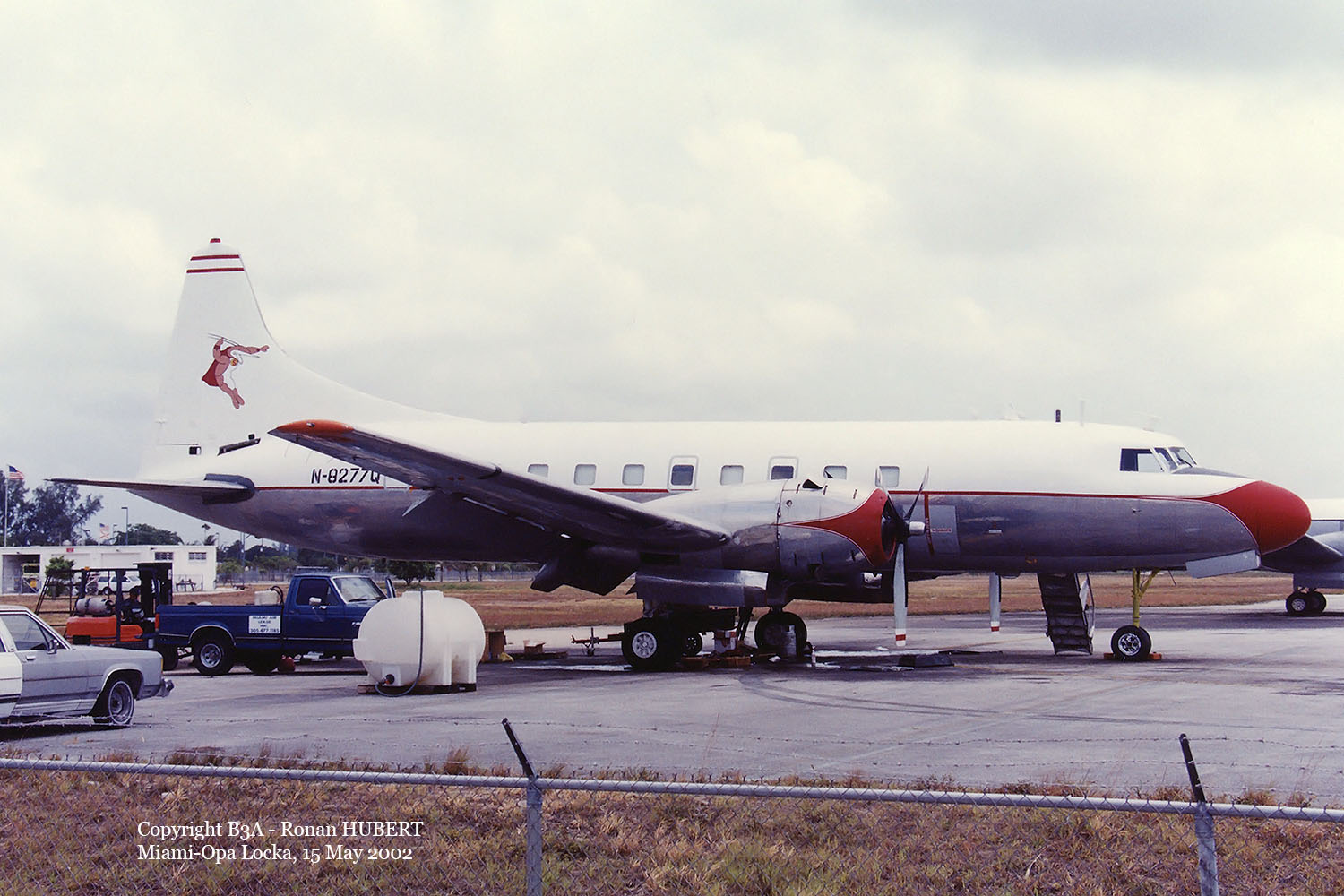
Crash of a Beechcraft C-45 Expeditor off Nassau: 2 killed

Date & Time: Dec 14, 2010 at 1510 LT
Type of aircraft:
Operator:
Registration:
N38L
Flight Type:
Survivors:
No
Schedule:
Fort Lauderdale – Nassau
MSN:
6323
YOM:
1944
Country:
Crew on board:
2
Crew fatalities:
Pax on board:
0
Pax fatalities:
Other fatalities:
Total fatalities:
2
Circumstances:
While approaching Nassau-Lynden Pindling Airport runway 27 in poor weather conditions (cold front), the twin engine aircraft crashed into the sea few km offshore. Some debris were found floating on water north of Nassau. Both pilots were killed.