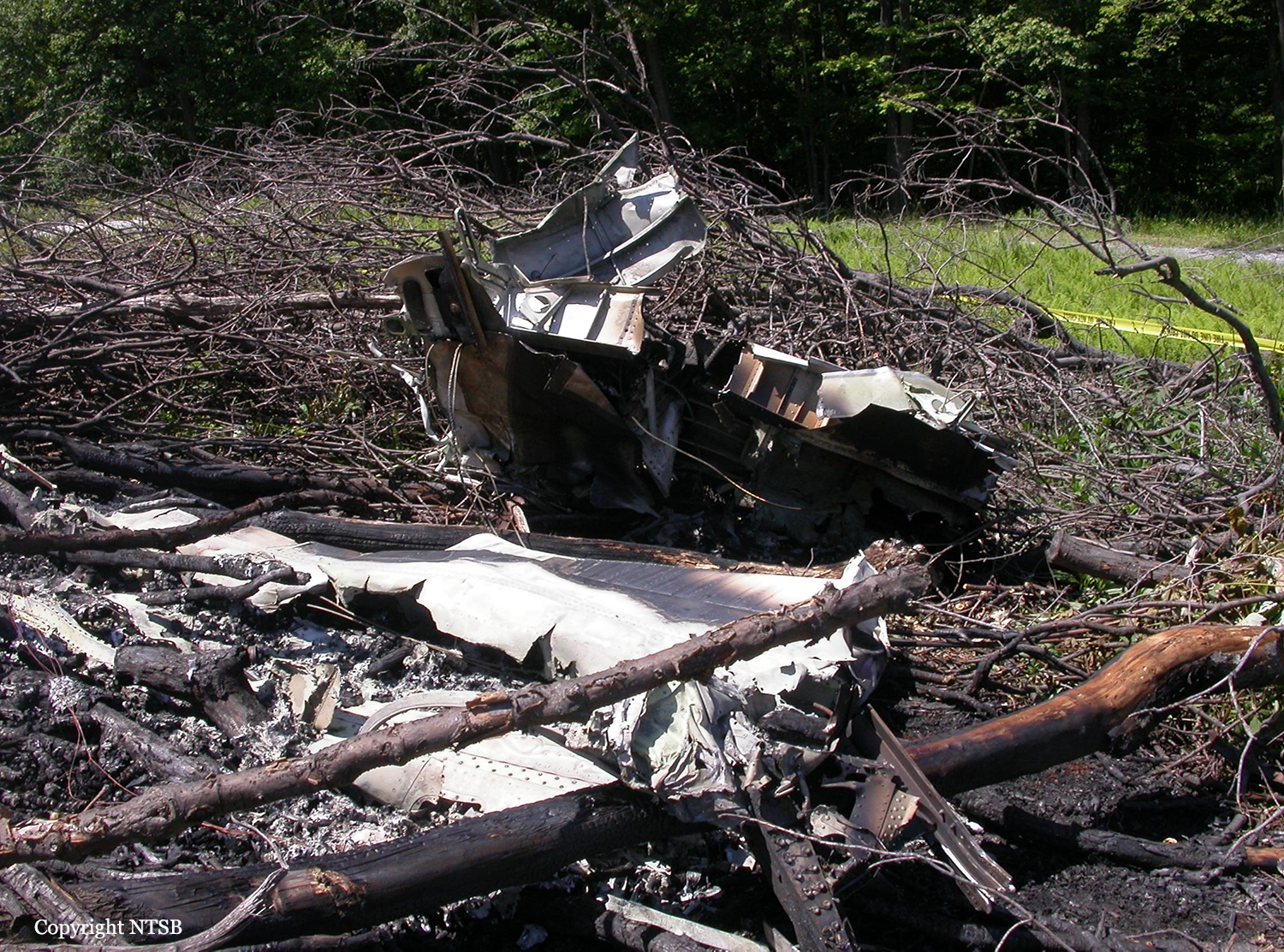
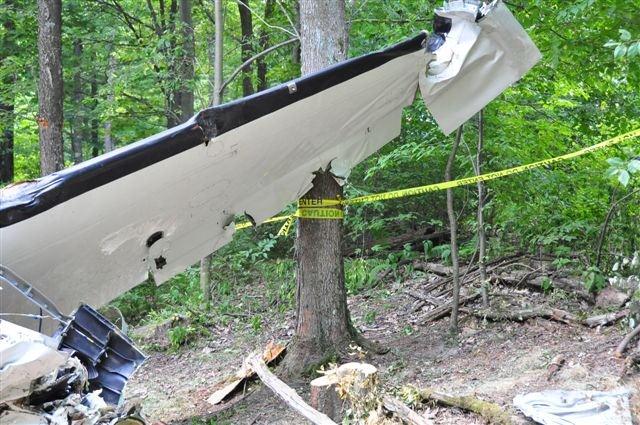
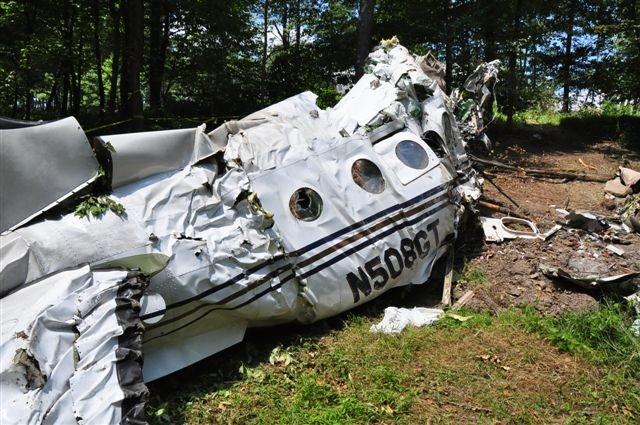
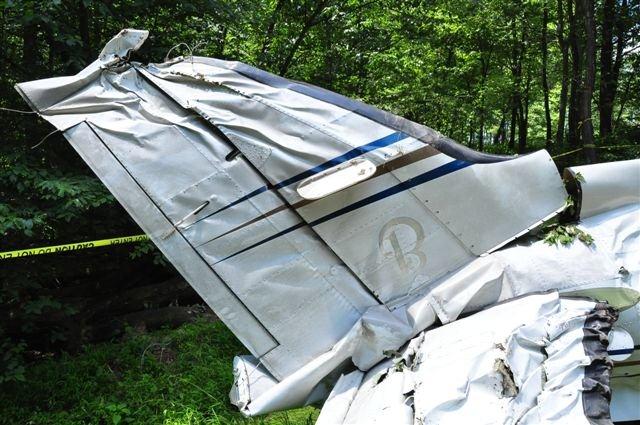
Crash of a Beechcraft C90GT King Air in Morgantown: 1 killed

Date & Time: Jun 22, 2012 at 1001 LT
Type of aircraft:
Registration:
N508GT
Flight Type:
Survivors:
No
Schedule:
Tidioute - Farmington - Morgantown
MSN:
LJ-1775
YOM:
2008
Crew on board:
1
Crew fatalities:
Pax on board:
0
Pax fatalities:
Other fatalities:
Total fatalities:
1
Captain / Total flying hours:
22000
Aircraft flight hours:
1439
Circumstances:
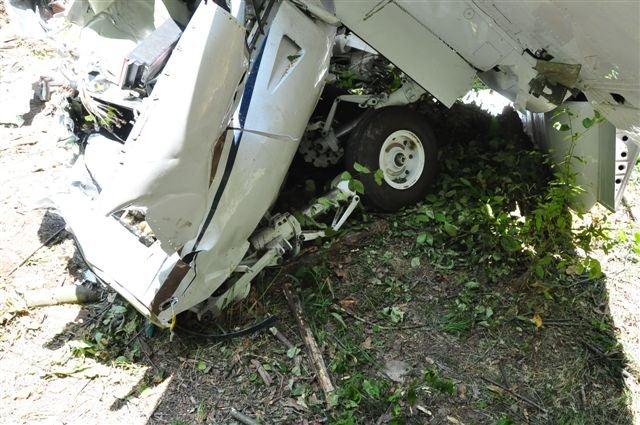
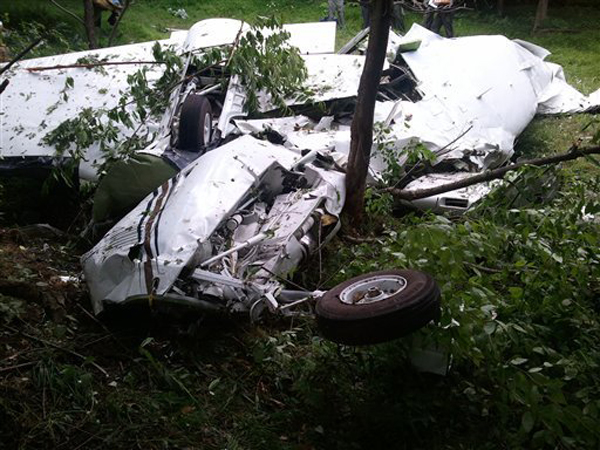
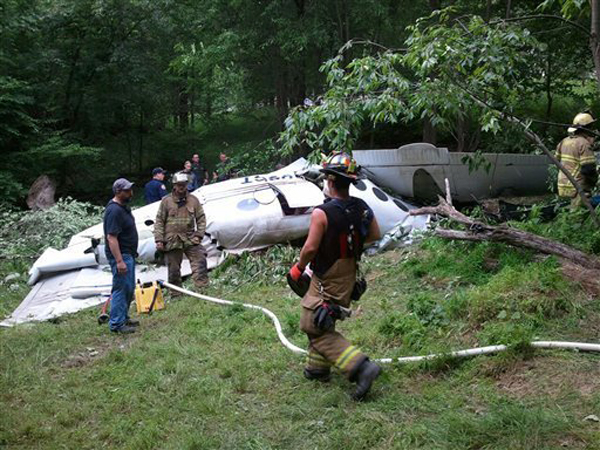
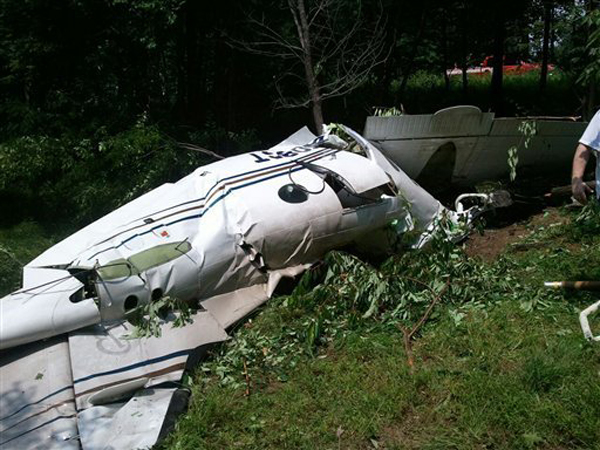
The airplane, operated by Oz Gas Aviation LLC, was substantially damaged when it struck a communications tower near Morgantown, West Virginia. The certificated airline transport pilot was fatally injured. No flight plan had been filed for the positioning flight from Nemacolin Airport (PA88), Farmington, Pennsylvania, to Morgantown Municipal Airport (MGW), Morgantown, West Virginia conducted under Title14 Code of Federal Regulations (CFR) Part 91. At 0924 on the morning of the accident, the airplane departed from Rigrtona Airport (13PA), Tidioute, Pennsylvania for PA88 with the pilot and three passengers onboard. The airplane landed on runway 23 at PA88 at 0944. The pilot then parked the airplane; shutdown both engines, and deplaned the three passengers. He advised them that he would be back on the following day to pick them up. After the passengers got on a shuttle bus for the Nemacolin Woodlands Resort, the pilot started the engines. He idled for approximately 2 minutes, and then back taxied on runway 23 for takeoff. At 0957, he departed from runway 23 for the approximately 19 nautical mile positioning flight to MGW, where he was going to refuel and spend the night. After departure from PA88, the airplane climbed to 3,100 feet above mean sea level (msl) on an approximately direct heading for MGW. The pilot then contacted Clarksburg Approach Control and was given a discrete code of 0130. When the airplane was approximately nine miles east of the Morgantown airport, the air traffic controller advised the pilot that he had "radar contact" with him. The airplane then descended to 3,000 feet, and approximately one minute later struck the communications tower on an approximate magnetic heading of 240 degrees. According to a witness who was cutting timber across the road from where the accident occurred; the weather was cloudy with lighting and thunder, and it had just started "sprinkling". He then heard a loud "bang", turned, and observed the airplane descending upside down, and then impact. About 20 minutes later it stopped "sprinkling". He advised that he could still see the top of the tower when it was "sprinkling".
Probable cause:
The pilot's inadequate preflight route planning and in-flight route and altitude selection, which resulted in an in-flight collision with a communications tower in possible instrument
meteorological conditions. Contributing to the accident were the pilot's improper use of the enhanced ground proximity warning system's terrain inhibit switch and the air traffic controller's failure to issue a safety alert regarding the proximity of the tower.
Final Report:

Crash of a Cessna 208B Grand Caravan in Barra do Vento

Date & Time: May 23, 2011 at 0750 LT
Type of aircraft:
Registration:
PT-OSG
Flight Phase:
Flight Type:
Survivors:
Yes
Schedule:
Barra do Vento – Boa Vista
MSN:
208B-0300
YOM:
1992
Country:
Crew on board:
1
Crew fatalities:
Pax on board:
0
Pax fatalities:
Other fatalities:
Total fatalities:
0
Captain / Total flying hours:
6200
Captain / Total hours on type:
4800.00
Circumstances:
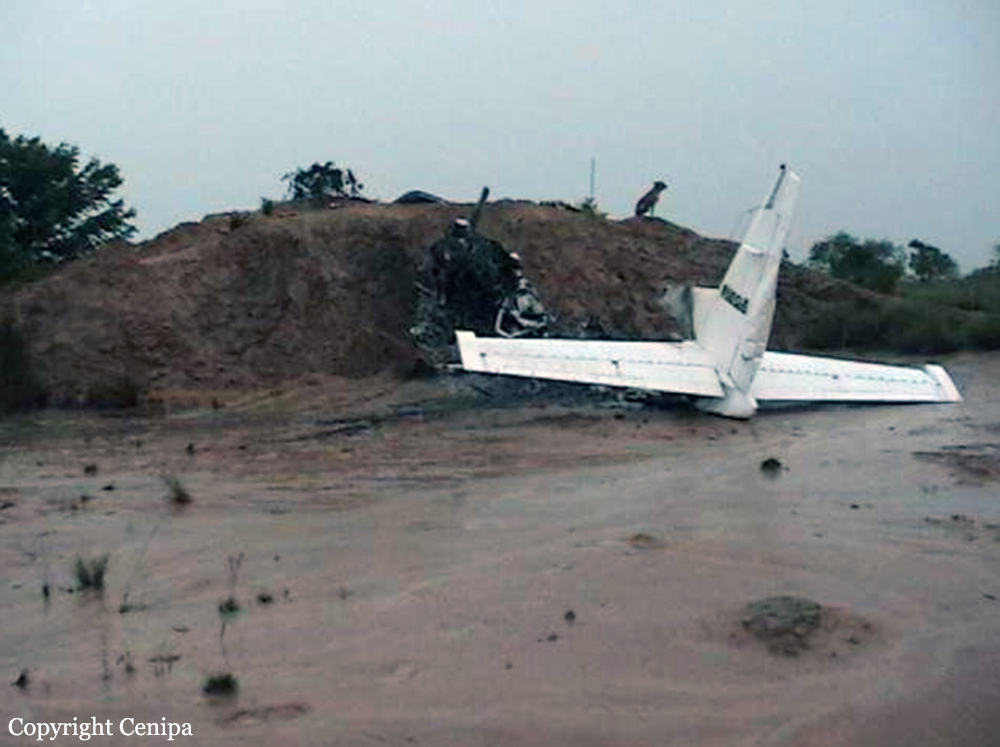
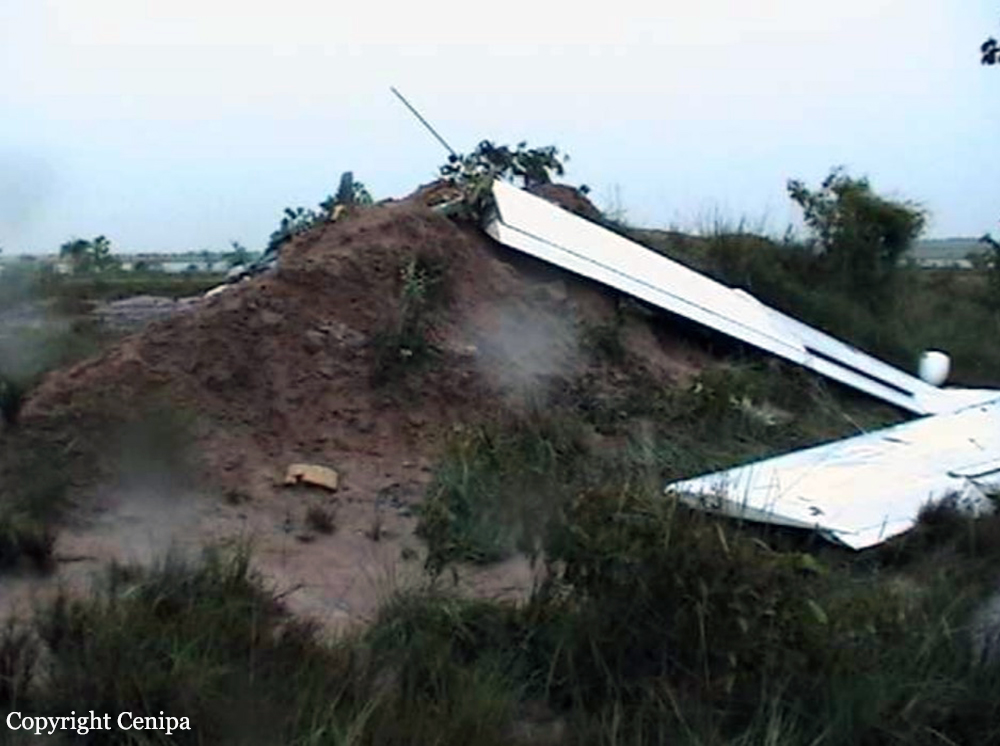
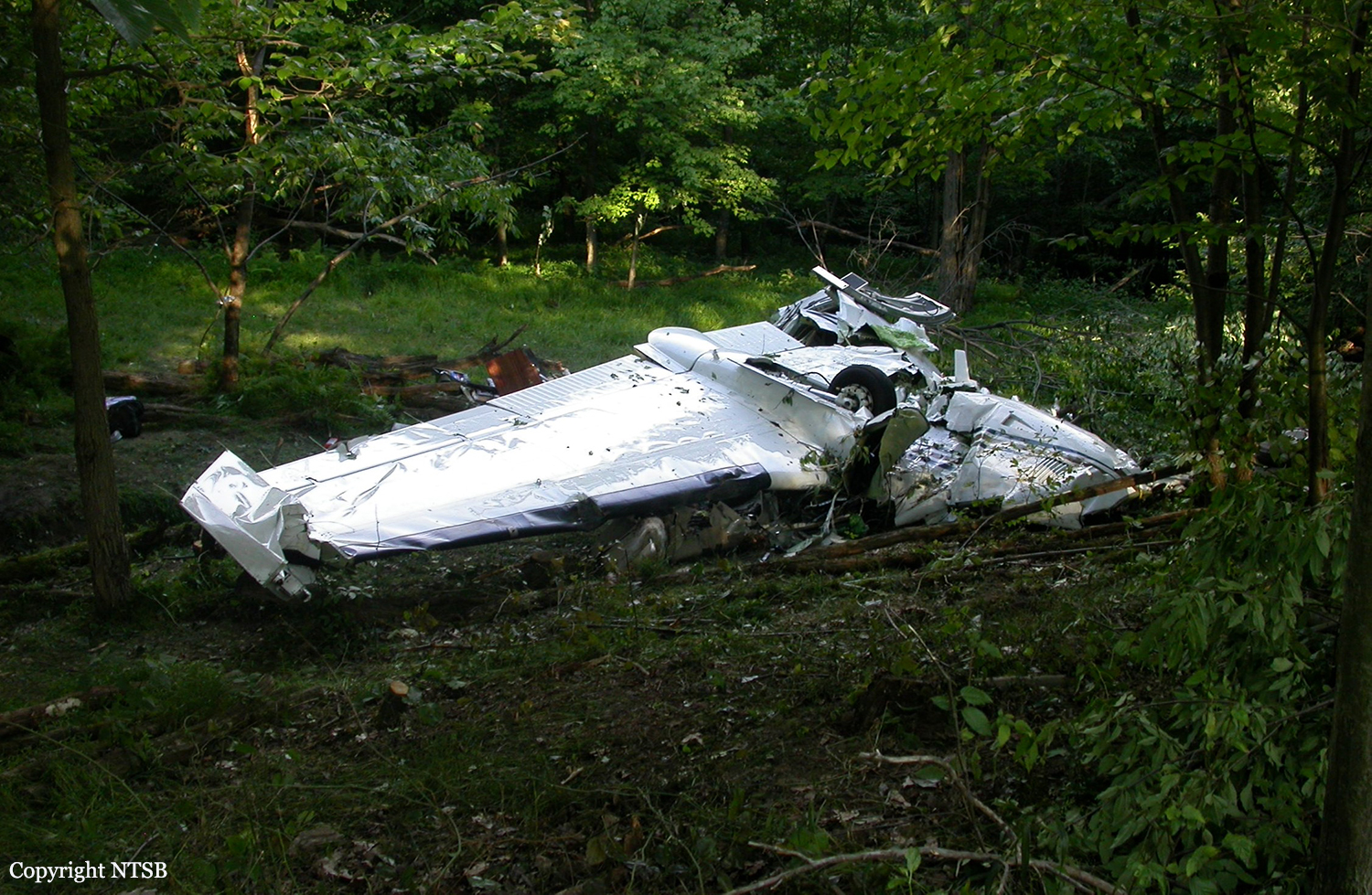
The pilot, sole on board, departed Barra do Vento Airport on a ferry flight to Boa Vista-Atlas Brasil-Cantanhede Airport, Roraima. Shortly after rotation, he noticed abnormal vibrations. At the same time, the 'door warning' light came ON on the instrument panel. He decided to land back but lost control of the airplane that veered off runway to the right and collided with an earth mound, bursting into flames. The aircraft was totally destroyed by a post crash fire and the pilot was seriously injured.
Probable cause:
It is possible that the pilot applied the flight controls inappropriately when the aircraft returned to the runway, making it impossible to maintain direction. After the 'door warning' light activated, the pilot made the decision to land when, according to the manufacturer, the situation did not require such immediate action but a continuation of the climb. It is possible that the pilot's training was not adequate or sufficient, because after the 'door warning' light came ON and the abnormal vibrations, the pilot carried out a procedure different from the one recommended by the manufacturer, and placed the plane in an irreversible condition.
Final Report:
Crash of a Cessna 421B Golden Eagle II in Castries

Date & Time: Apr 13, 2011 at 1140 LT
Operator:
Registration:
N511LC
Flight Type:
Survivors:
Yes
Schedule:
Bridgetown – Castries
MSN:
421B-0423
YOM:
1973
Country:
Crew on board:
1
Crew fatalities:
Pax on board:
0
Pax fatalities:
Other fatalities:
Total fatalities:
0
Circumstances:
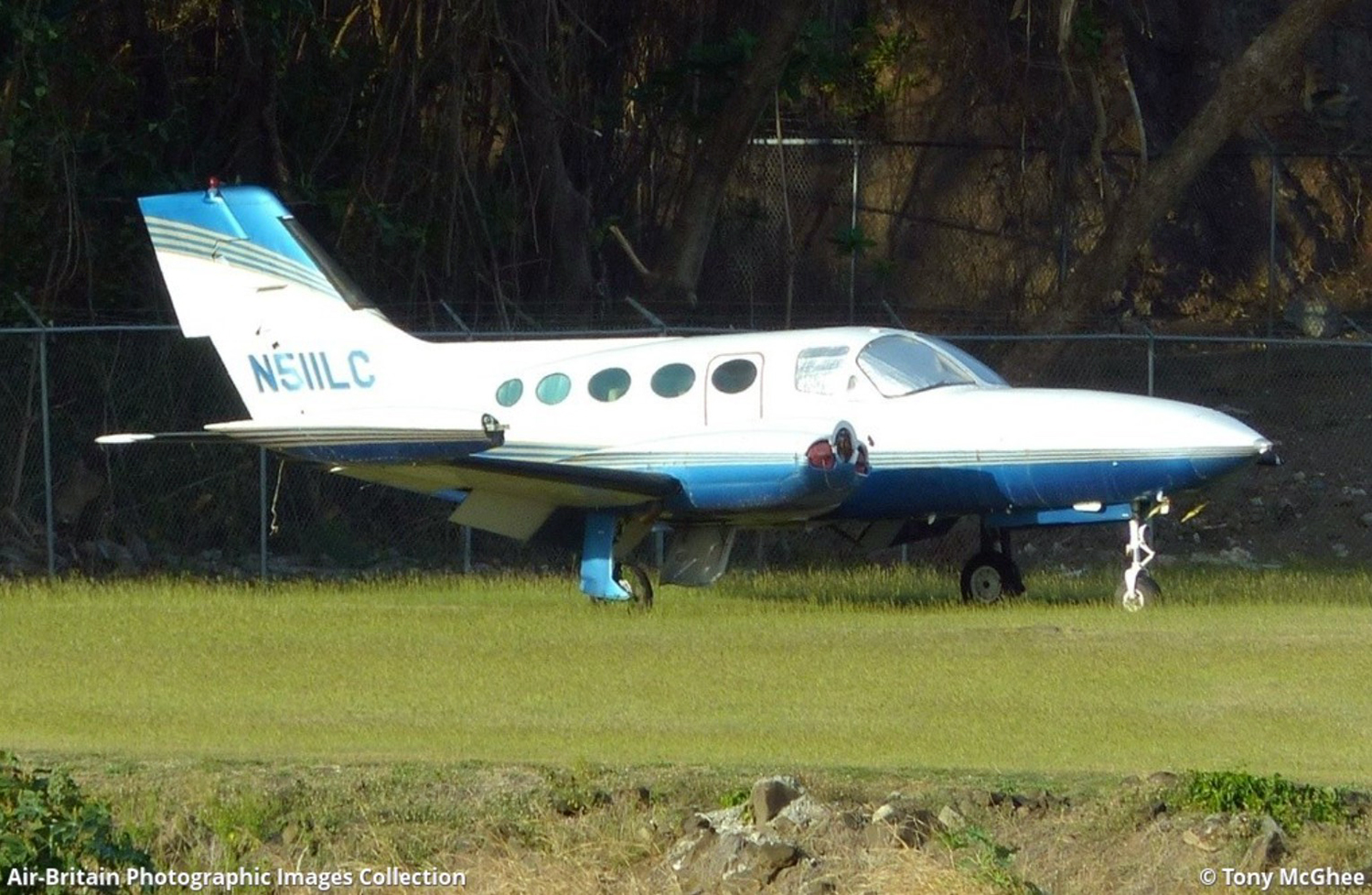
Following an uneventful flight from Bridgetown-Grantley Adams Airport, the pilot landed at Castries-George F. L. Charles (Vigie) Airport. Upon touchdown, the left main gear collapsed. The aircraft veered off runway and came to rest against a fence. The pilot was uninjured and the aircraft was damaged beyond repair.

Ground accident of a Boeing 737-2T5 at Hoedspruit AFB

Date & Time: Jan 10, 2011 at 2050 LT
Type of aircraft:
Operator:
Registration:
ZS-SGX
Flight Phase:
Flight Type:
Survivors:
Yes
Schedule:
Hoedspruit - Johannesburg
MSN:
22396/730
YOM:
1981
Country:
Region:
Crew on board:
3
Crew fatalities:
Pax on board:
0
Pax fatalities:
Other fatalities:
Total fatalities:
0
Captain / Total flying hours:
26512
Copilot / Total flying hours:
1300
Copilot / Total hours on type:
1100
Aircraft flight hours:
70094
Circumstances:
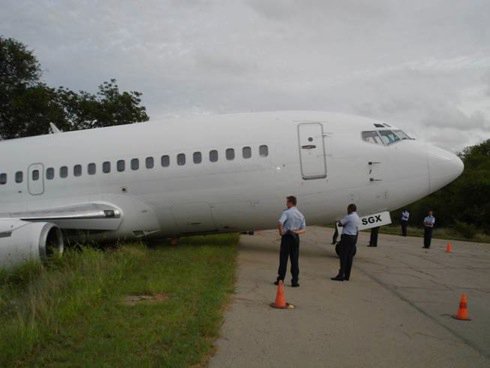
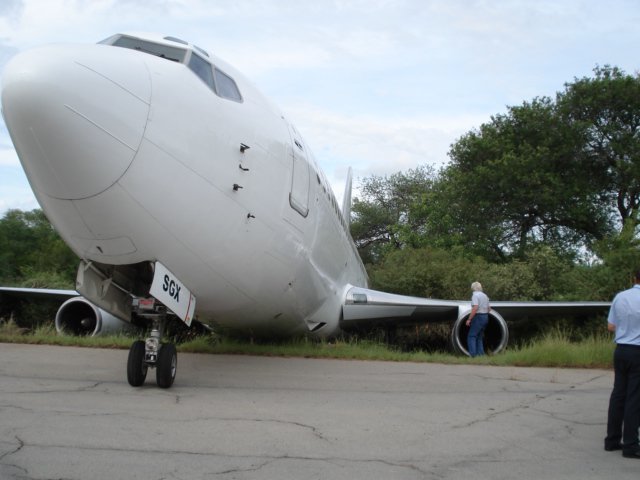
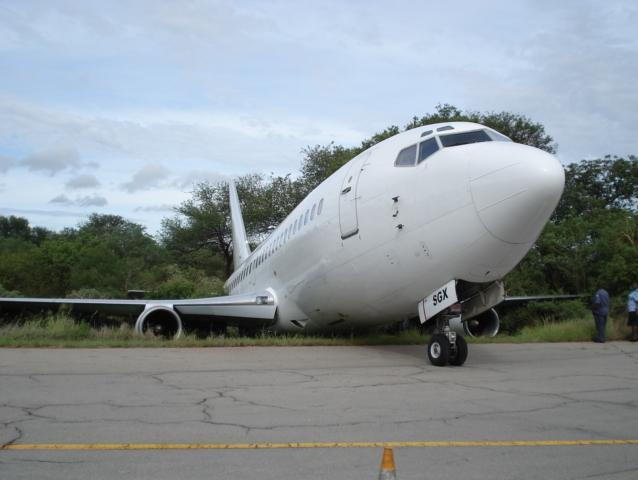
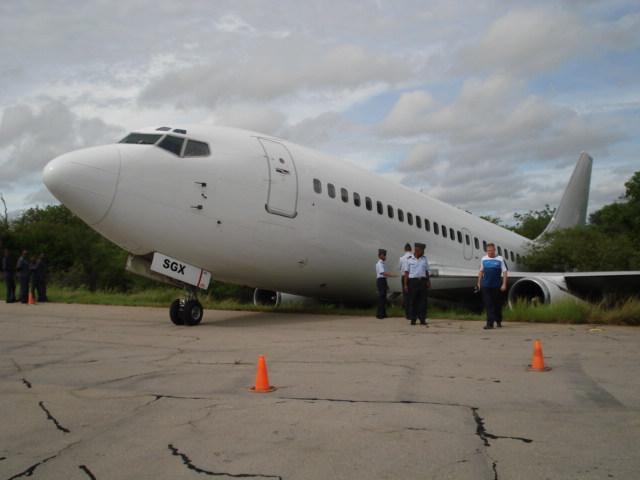
The aircraft was flown on a non-scheduled charter flight from O. R. Tambo International Airport to Hoedspruit military aerodrome, where it landed safely and all 97 passengers disembarked. The crew then prepared to return to O. R. Tambo International Airport with no passengers on board. Whilst taxiing to the cleared holding point for takeoff, the pilot switched off the landing lights to avoid blinding an approaching aircraft. As a result, he overshot the turning point in the darkness and found himself at the end of the taxiway with insufficient space to turn around. According to him, he decided to manoeuvre the aircraft out of the "dead end" by turning into the last taxiway, which led to military hangars, and then reversing the aircraft to carry out a 180° turn. This was to be done without external guidance. Whilst reversing the aircraft, the pilot failed to stop it in time, the main wheels rolled off the edge of the taxiway and the aircraft slipped down a steep embankment, coming to rest with the nose-wheel still on the taxiway. The aeroplane was substantially damaged, but no-one was injured.
Probable cause:
Inappropriate decision by the captain to reverse the aircraft at night without external guidance.
Final Report:
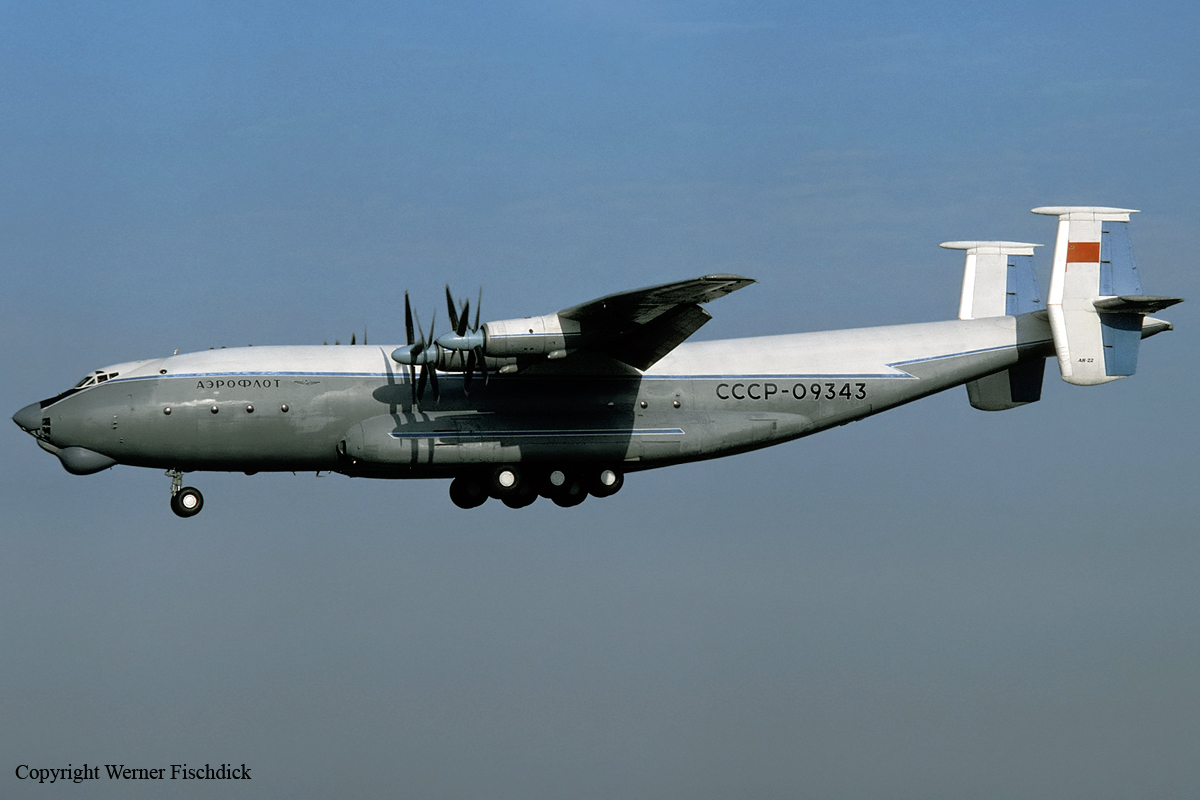
Crash of an Antonov AN-22A near Krasny Oktyabr: 12 killed

Date & Time: Dec 28, 2010 at 2130 LT
Type of aircraft:
Operator:
Registration:
RA-09343
Flight Phase:
Flight Type:
Survivors:
No
Schedule:
Voronezh - Tver
MSN:
043482272
YOM:
1974
Country:
Region:
Crew on board:
12
Crew fatalities:
Pax on board:
0
Pax fatalities:
Other fatalities:
Total fatalities:
12
Circumstances:
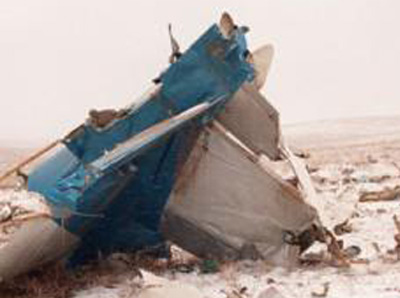
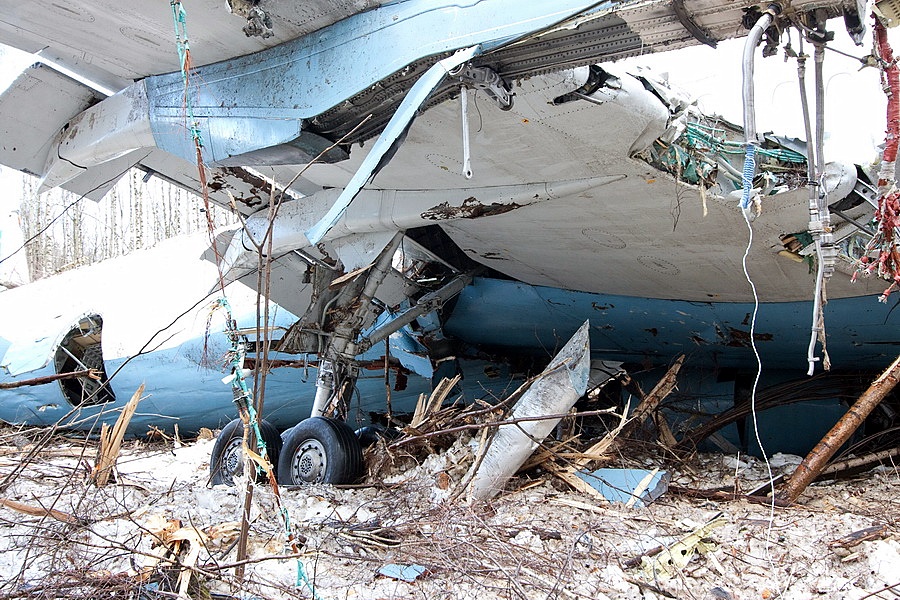
The crew was returning to his base at Tver-Migalovo after he delivered a MiG-31 to the Voronezh Military Aviation Engineering University. While in cruising flight, the four engine aircraft entered an uncontrolled descent and crashed in a snow covered prairie located near Krasny Oktyabr. The aircraft was totally destroyed and all 12 occupants were killed.

Crash of a Piper PA-61 Aerostar (Ted Smith 601) in Cleburne

Date & Time: Jul 22, 2010 at 1100 LT
Operator:
Registration:
N601AT
Flight Phase:
Flight Type:
Survivors:
Yes
Schedule:
Cleburne - Mena
MSN:
61-0332-095
YOM:
1976
Location:
Crew on board:
1
Crew fatalities:
Pax on board:
0
Pax fatalities:
Other fatalities:
Total fatalities:
0
Captain / Total flying hours:
28000
Captain / Total hours on type:
332.00
Circumstances:
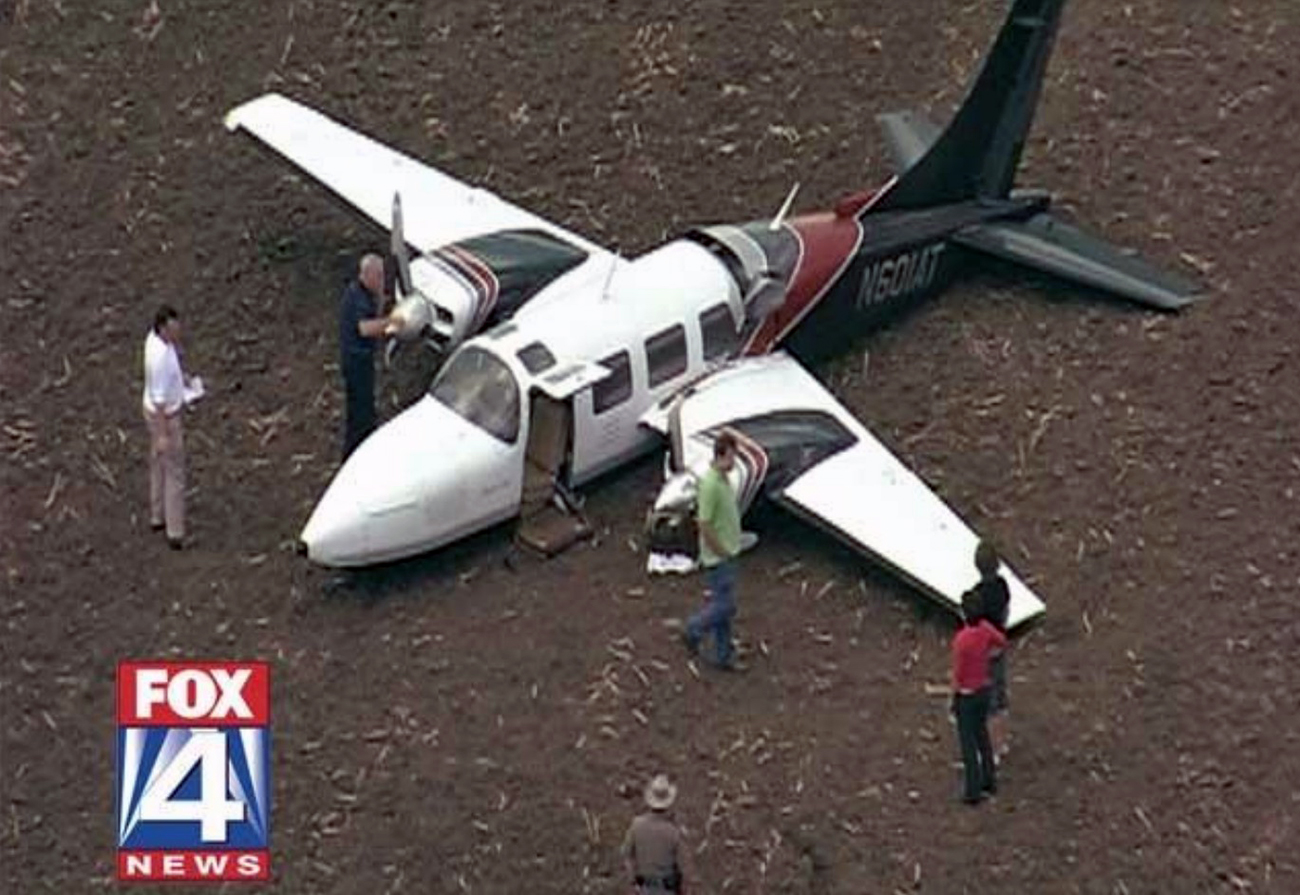
After takeoff, the right engine experienced a loss of power followed by the left engine losing power. The pilot maneuvered the airplane toward the nearest open field and the airplane impacted terrain during landing, resulting in a circumferential split in fuselage near the aft pressure bulkhead. The airplane was equipped with 4 fuel tanks: 2 located in each wing outboard of the engine nacelle (65-gallon capacity), 1 main fuselage tank (about 44-gallon capacity), and 1 auxiliary tank located in forward section of baggage compartment (45-gallon capacity). The airplane was capable of carrying 209.5 gallons usable fuel and the pilot stated that prior to departure he filled the main fuselage tank to capacity, added 20 gallons in the auxiliary tank and 25 gallons in each wing tank, which he equated to a total of 131 gallons on board. The fuselage contained two fuel filler necks, one for each fuselage tank (main and auxiliary). The auxiliary tank was clearly placarded with a red placard visibly standing out against a silver paint stripe; the main tank was not clearly placarded, with a red placard blending easily with red paint stripe. A salvage retriever recalled that during recovery the left wing contained 17 gallons of fuel, the right wing contained 57 gallons of fuel, the main fuselage tank contained 2.5 gallons of fuel, and the auxiliary fuselage tank contained 28 gallons of fuel. A postaccident examination of the airplane and engines revealed no anomalies that would have precluded normal operation. The main fuselage tank and auxiliary fuselage tank were not breached and the fuel sumps contained check valves which prevent the back-flow of fuel from one fuel tank to another. Based on the evidence it is likely that the pilot exhausted the airplane's fuel supply in the main fuselage tank, which resulted in the loss of power to both engines.
Probable cause:
A total loss of engine power due to fuel starvation as a result of the pilot’s improper fuel management. Contributing to the accident were the critical fuel placards that were difficult to see due to the airplane's paint scheme.
Final Report:

Crash of a Tupolev TU-204-100 in Moscow

Date & Time: Mar 22, 2010 at 0235 LT
Type of aircraft:
Operator:
Registration:
RA-64011
Flight Type:
Survivors:
Yes
Schedule:
Hurghada - Moscow
MSN:
14507413640
YOM:
1993
Flight number:
TUP1906
Country:
Region:
Crew on board:
8
Crew fatalities:
Pax on board:
0
Pax fatalities:
Other fatalities:
Total fatalities:
0
Captain / Total flying hours:
5388
Captain / Total hours on type:
1868.00
Copilot / Total flying hours:
1973
Copilot / Total hours on type:
979
Aircraft flight hours:
18335
Aircraft flight cycles:
4795
Circumstances:
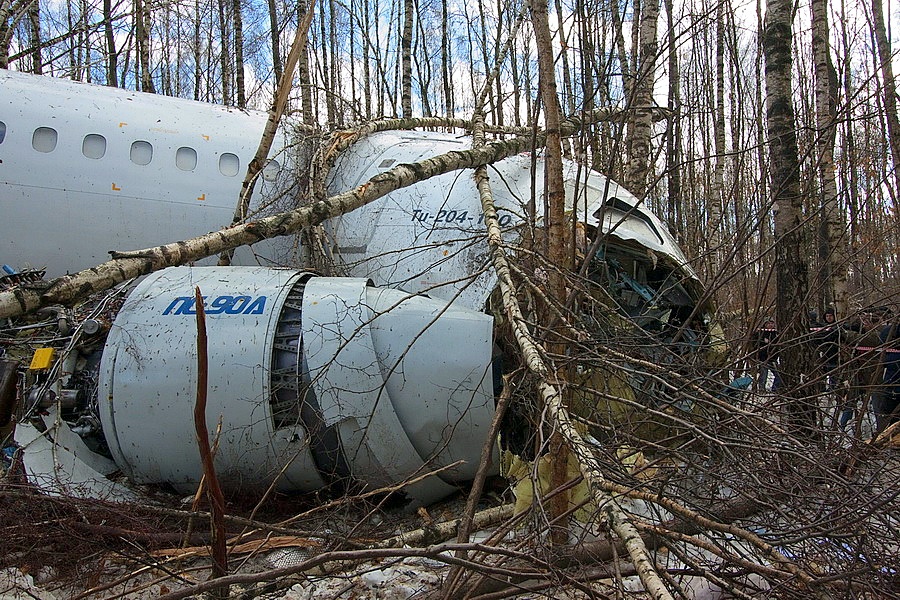
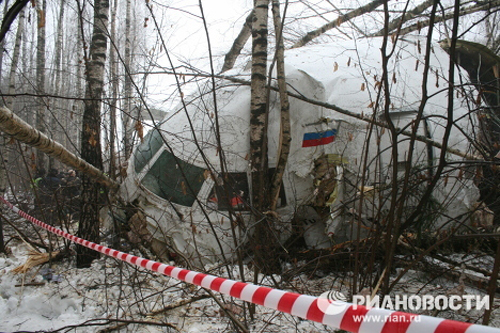
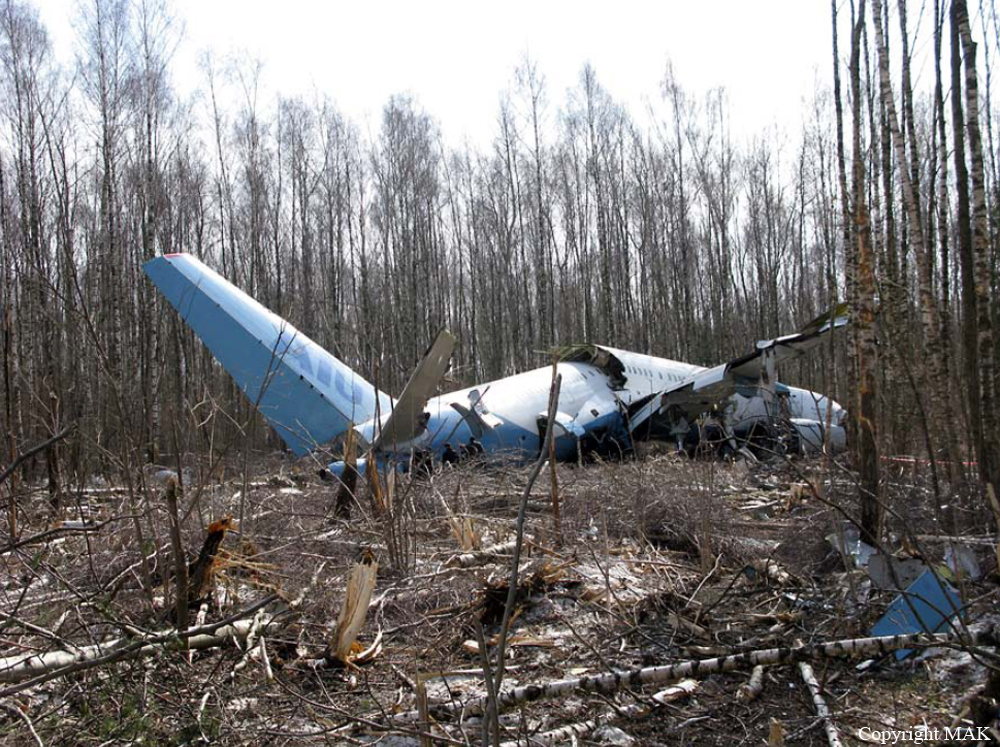
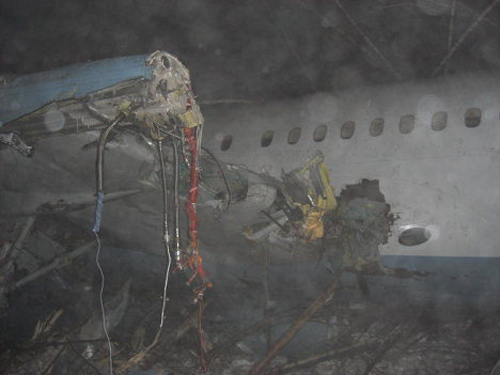
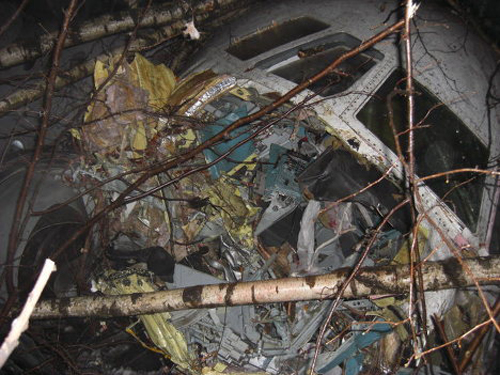
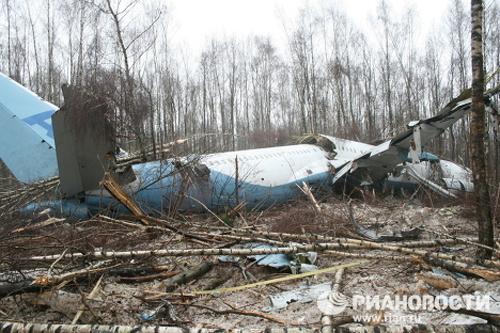
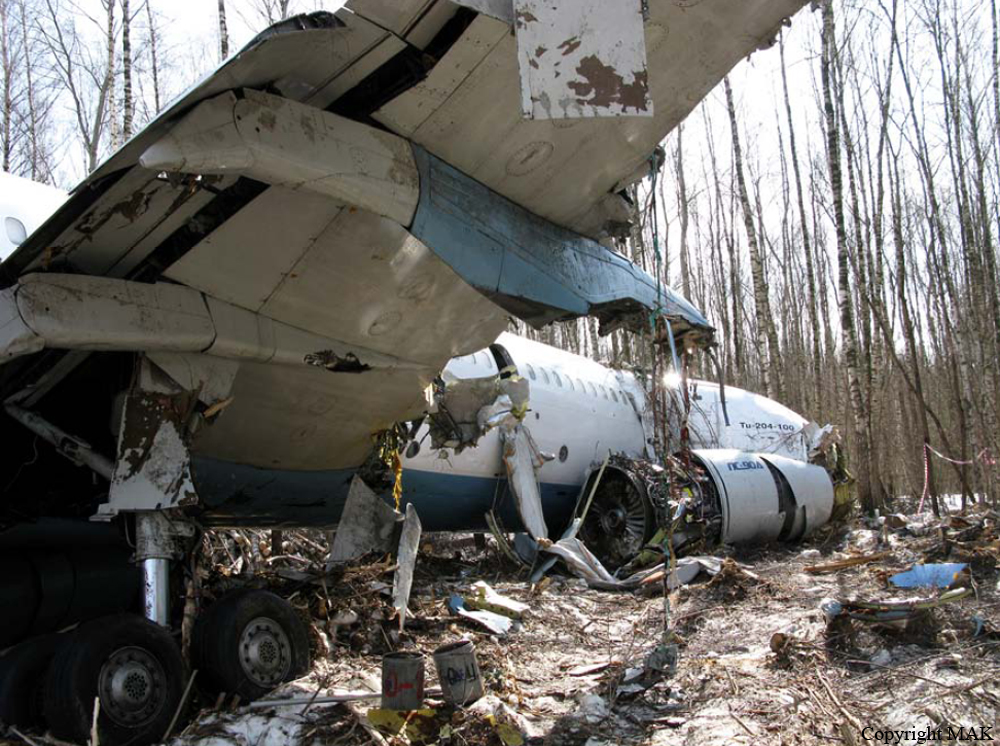
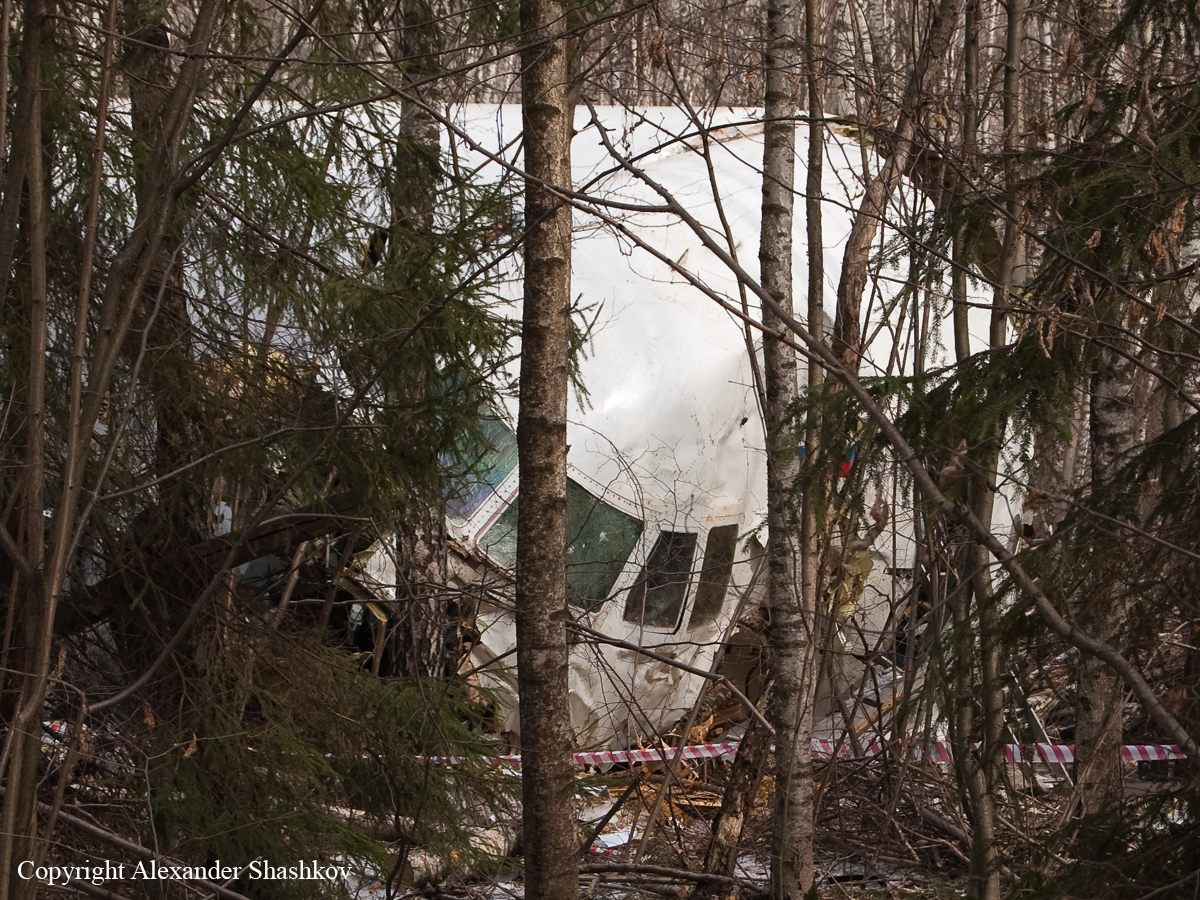
The aircraft was returning to Moscow on a ferry flight after passengers have been dropped off in Hurghada. On approach to Moscow-Domodedovo Airport, the visibility was low due to foggy conditions. Horizontal visibility on runway 14L threshold was 1,300 meters and vertical visibility was 200 feet. In flight, the flight computer failed and the crew continued the approach below minimums. Despite he was not able to establish a visual contact with the runway, the captain continued the approach and failed to initiate a go-around procedure. The aircraft descended below the glide, impacted trees and crashed in a dense wooded area located 1,450 metres short of runway. All eight occupants were injured, three seriously. The aircraft was destroyed.
Probable cause:
The crew performed an approach in below-minima weather conditions for an airplane with a defective flight computer. The crew failed to initiate a go-around procedure while unable to establish a visual contact with the runway.
Contributing factors were:
- Insufficient training of the crew to perform approaches at or near weather minimums,
- Lack of control over the activities of the crew, which led to poor resource management (CRM) of the captain,
- Failure of the flight control computer system, which led to an increase in the allowed weather minima of the aircraft,
- Failure of captain to divert to another airport,
- Failure of captain to decide about a missed approach when there was visual contact with the approach lights,
- Failure of the co-pilot to call for a missed approach,
- Unsatisfactory interaction in the crew, resulting in a descent below safe altitude.
Final Report:

Crash of a Fletcher FU-24-950 in Ketapang: 2 killed

Date & Time: Dec 31, 2009 at 0826 LT
Type of aircraft:
Operator:
Registration:
PK-PNX
Flight Phase:
Flight Type:
Survivors:
No
Site:
Schedule:
Ujung Tanjung - Jambi - Pangkal Pinang - Ketapang - Tangar
MSN:
187
YOM:
1970
Country:
Region:
Crew on board:
1
Crew fatalities:
Pax on board:
1
Pax fatalities:
Other fatalities:
Total fatalities:
2
Captain / Total flying hours:
2892
Captain / Total hours on type:
641.00
Circumstances:
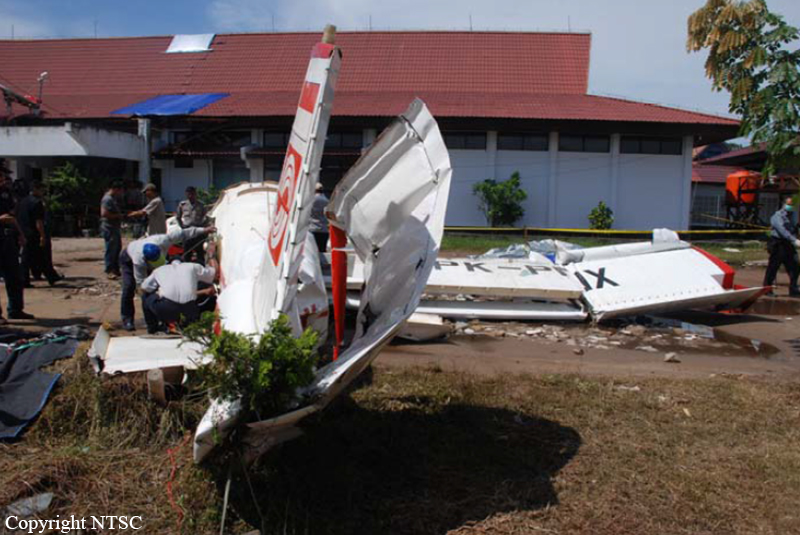
The aircraft was completing a ferry flight from Ujung Tanjung/Pekanbaru home base to Tangar airstrip, Center of Kalimantan, with reference flight approval number D09-038960 and Security Clearance number AU05-033328, person on board was one pilot and one engineer. On 29 December 2009, the aircraft departed from Ujung Tanjung, transit at Jambi and stop overnight at Pangkal Pinang Airport, Bangka with total flight time was 3 hours. On the next day 30 December 2009, the aircraft continuing flight from Pangkal Pinang to Rahadi Oesman Airport, Ketapang, West Kalimantan and overnight at Ketapang with total flight time is 1:40 hours. On the next day 31 December 2009, the aircraft plan to continued flight to Tangar Airstrip. The aircraft was airworthy prior departure and dispatched from Ketapang with the following sequence:
a. The pilot requested for start the engine at 01:17 UTC4 (08:17 Local Time);
b. At 01:24 the pilot requested for taxi, and the ATC gave clearance via taxiway “A”. The pilot requested intersection runway 17 and approved by ATC
c. The ATC requested for reported when ready for departure, and the pilot reported ready for departure, then the ATC gave the departure clearance.
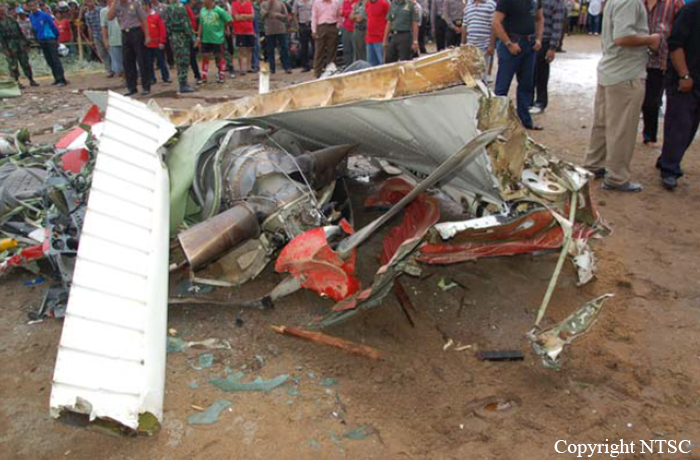
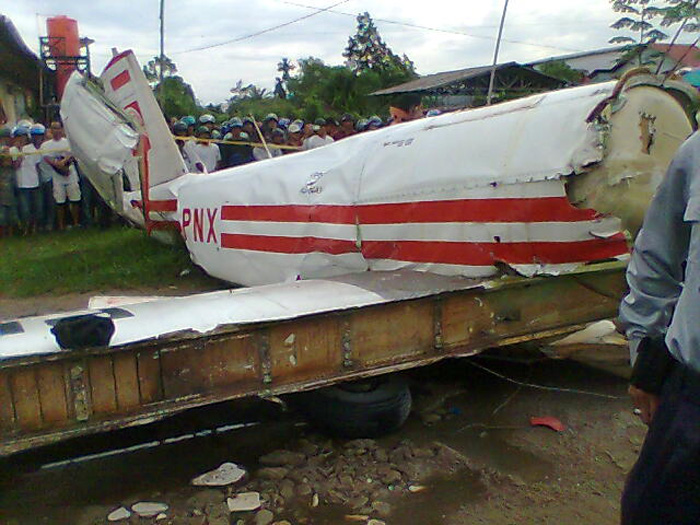
d. At 01:25, the aircraft was departed and crashed at 01:26 striking the roof of the hospital and broken down into pieces at the parking area in which have had approximate 1.5 Kilometer to the left side from the flight path centreline. The aircraft was substantially damage and the crew on board consist of one pilot in command and one aircraft maintenance engineer; both of them were fatally injured.
Probable cause:
The investigation concluded that the aircraft engine was not in power during impact with the hospital roof. There was a corroded fuel pump, that indicated of contaminated fuel.
Findings:
• The aircraft was airworthy prior departure.
• The pilot was fit for flight.
• The booster pump was found of an evident of surface corrosion on the spring, plate and van pump indicated that contaminated fuel.
• Referred to the Fletcher Flight Manual and Pilot Operating Handbook chapter 3.10. Fuel System Failure, the booster pump must have been operated prior to flight.
• The propeller blades were on fine pitch and no sign of rotating impact. The engine was not in powered when hit the ground.
• No evidence damage related to the engine prior to the occurrence.
Final Report:
Crash of a Dassault Falcon 20D in Matthew Town: 2 killed

Date & Time: Dec 17, 2009 at 1930 LT
Type of aircraft:
Operator:
Registration:
N28RK
Flight Type:
Survivors:
No
Schedule:
Oranjestad – La Isabela – Fort Lauderdale
MSN:
206
YOM:
1969
Country:
Crew on board:
2
Crew fatalities:
Pax on board:
0
Pax fatalities:
Other fatalities:
Total fatalities:
2
Captain / Total flying hours:
26525
Copilot / Total flying hours:
4800
Circumstances:
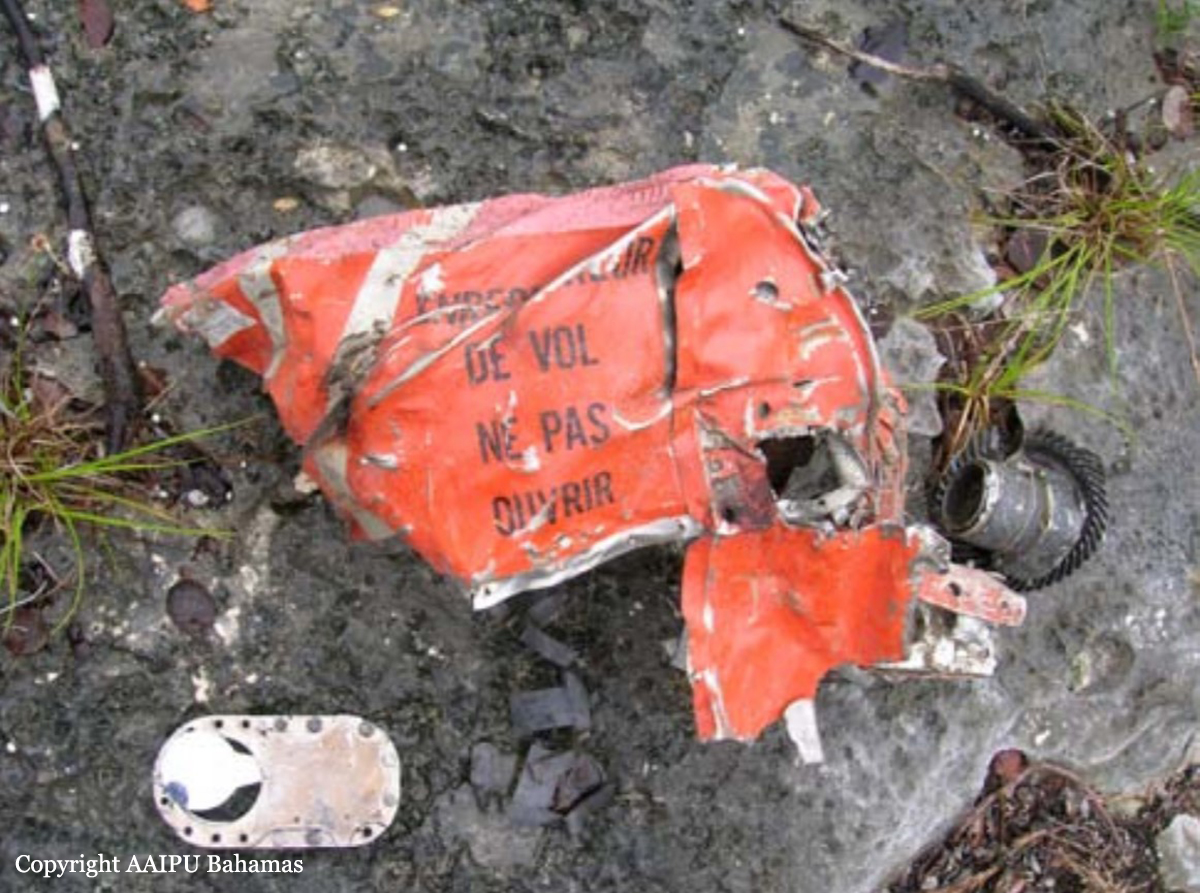
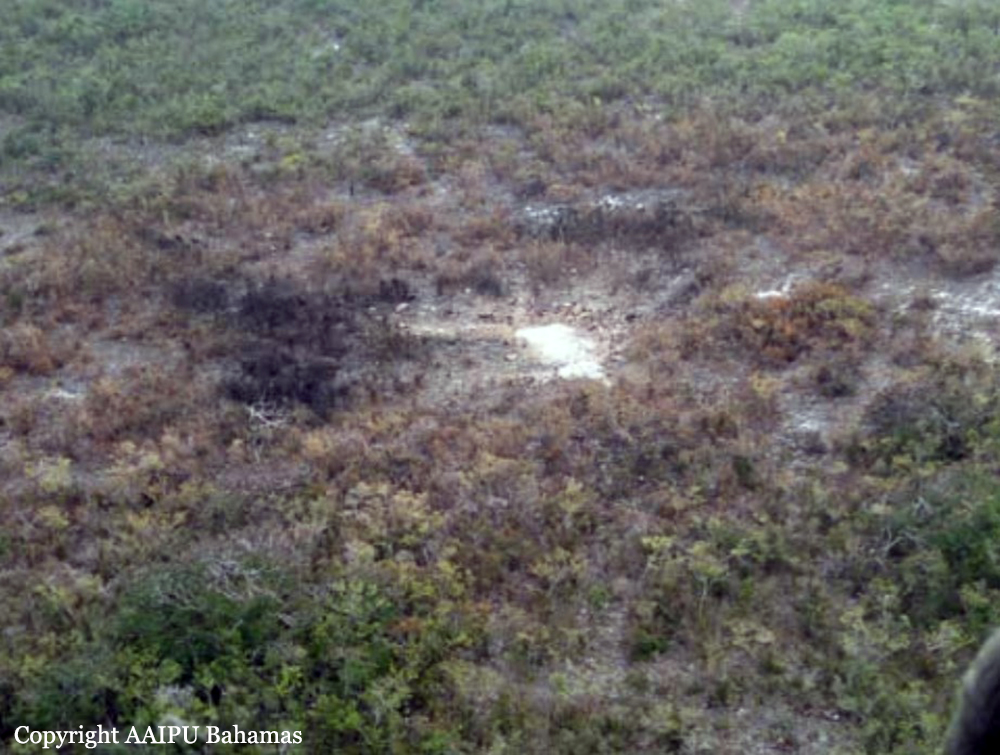
On December 17, 2009 at approximately 7:30 pm local (2330UTC), N28RK a Dassault Sud, Falcon Fan Jet, Mystere 20, Series D aircraft which departed Joaquin Balaguer Int’l Airport (MDJB) in the Dominican Republic, for Ft Lauderdale Executive Airport, (FXE) Ft Lauderdale, Florida, USA, crashed in a remote area of Matthew Town, Great Inagua, Bahamas. The accident occurred approximately 11.5 miles due east of Great Inagua International Airport at coordinates N 20˚ 58’ 30” latitude and W 073˚ 40’ 00.7” longitude. The aircraft made contact with the terrain on a heading of approximately 105 degrees magnetic. The accident occurred in area that was not accessible by land and the investigation team had to be airlifted by helicopter to the site. Witnesses on the island of Great Inagua reported hearing a loud bang that rattled doors and windows of their homes, but they did not report seeing the aircraft fall from the sky. The aircraft was under the command of Captain Harold Roy Mangels and First Office Freddy Castro. The aircraft reportedly departed Aruba, in the Netherland Antilles and made a fuel stop at Dr. Joaquin Balaguer Int’l Airport, Santo Domingo in the Dominican Republic. The final destination filed by the crew was Ft. Lauderdale Executive Airport, Ft Lauderdale Florida. The accident occurred approximately 6 mile off the filed flight path. ATC records and instructions were for the aircraft N28RK to maintain 28,000 ft (FL280). The aircraft transponder was reported as inoperative. It begun a rapid descent, with no report of an emergency declared or mayday call out. Investigation of the crash site indicates the airplane made contact with the terrain at a high rate of speed and approximately a 45 degree angle. The aircraft was destroyed on impact. The crew of a United States Coast Guard helicopter was on a training mission in the Great Inagua area at the time of the accident. They reported hearing a loud bang and noticed a huge explosion and fireball emanating from the ground in an area close to their location. The crew of the US Coast Guard helicopter reported that they did not see any in-flight fire prior to the fireball that they saw. The post impact fire engulfed approximately five (5) acres of trees and brush in the National Wildlife Refuge at Great Inagua. The coast guard helicopter crew stated that they discontinued their training mission and went to the site to investigate. Upon arrival at the site the crew reported that they lowered rescue personnel to the ground to investigate and search for survivors, but, due to the heat and extent of the fire on the ground, they had to discontinue the search. They reported the accident to authorities at Great Inagua. This information was further passed along to the National Transportation Safety Board who alerted the accident investigation unit of the Bahamas Civil Aviation Department. Night time conditions prevailed at the time of the accident. The crew of the aircraft received fatal injuries. A search of the area discovered no distinguishable human remains. Approximately less than 1% of what is believed to be possible human flesh / internal body parts were recovered. In addition clothing (piece of a pant with belt buckle fastened) was recovered, which possibly may have been worn by a member of the crew at the time of the accident. All recovered remains and clothing retrieved were gathered by officers of the Royal Bahamas Police Force that accompanied the investigation team and sent to the Forensic Science Laboratory at the Royal Bahamas Police Force, Nassau Bahamas for DNA analysis and possible identification. The aircraft broke into many pieces after contact with the terrain. Debris was spread over a large area of rough terrain. What remained of the aircraft post impact was either not found or possibly further destroyed by the post impact fire. The “four corners” of the airplane were confirmed in the area downstream of where the initial ground impact occurred. However, engine cowling parts were found prior to the point of initial ground impact. This may suggest an aircraft over-speed condition prior to ground impact. Less than 10% of the aircraft was recovered. An explosion occurred when N28RK made contact with the terrain. A post impact fire ensued. Approximately 5 acres of the national park was destroyed by the fire. Parts of the aircraft including personal effect, aircraft parts and furnishing, seat and seat cushions were also destroyed in the post impact fire.
Probable cause:
The probable cause of this accident has been determined as loss of control. Insufficient wreckage of the aircraft were recovered to make a conclusive determination as to the cause of the accident.
Final Report:

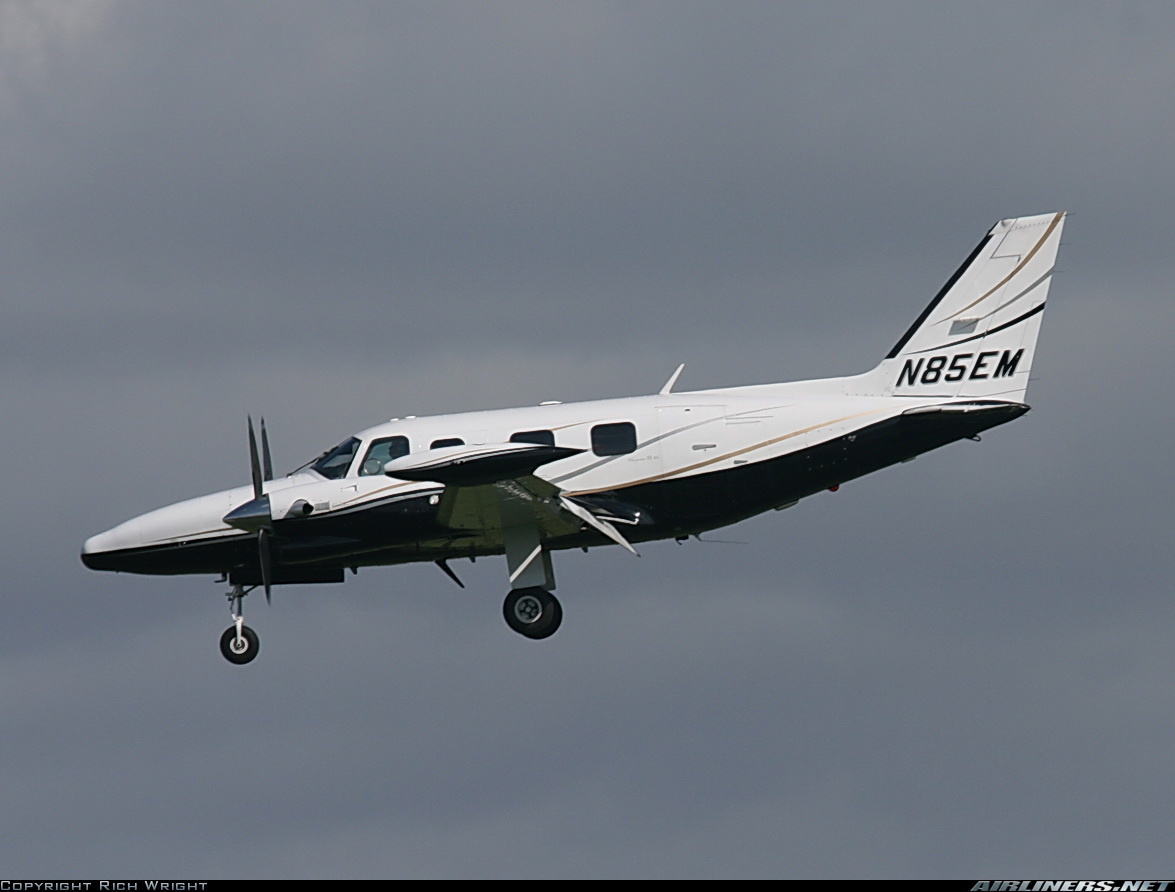
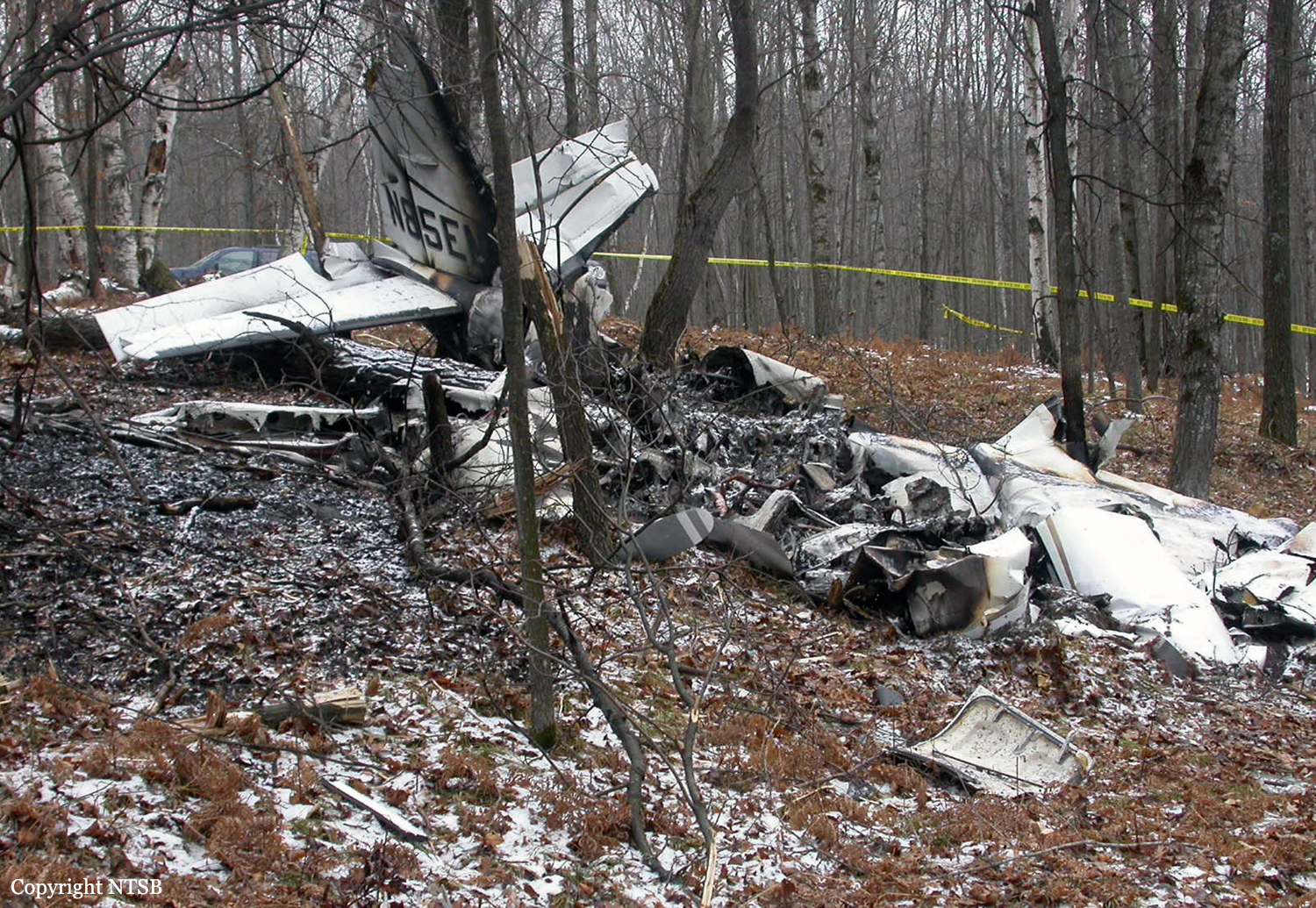
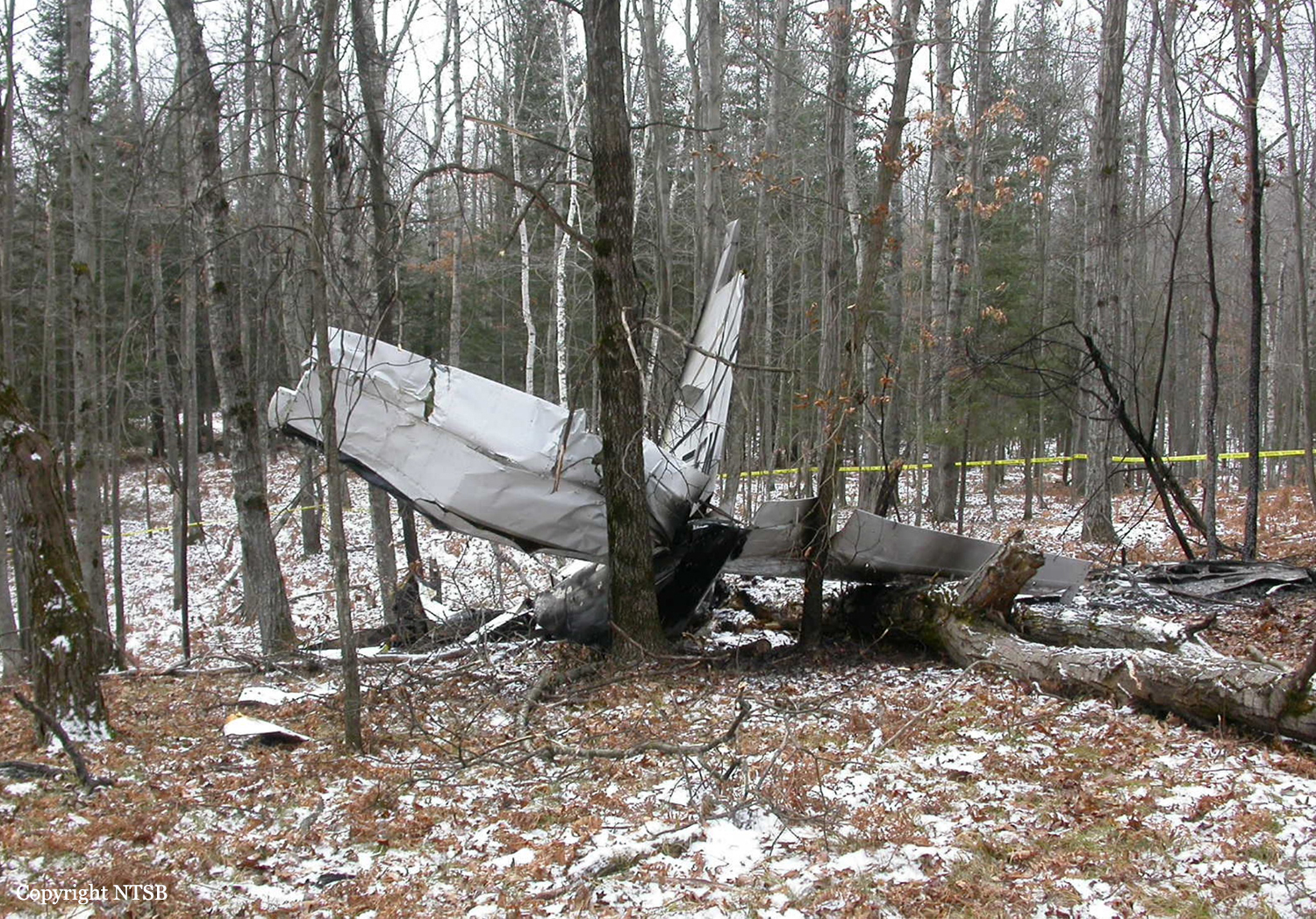
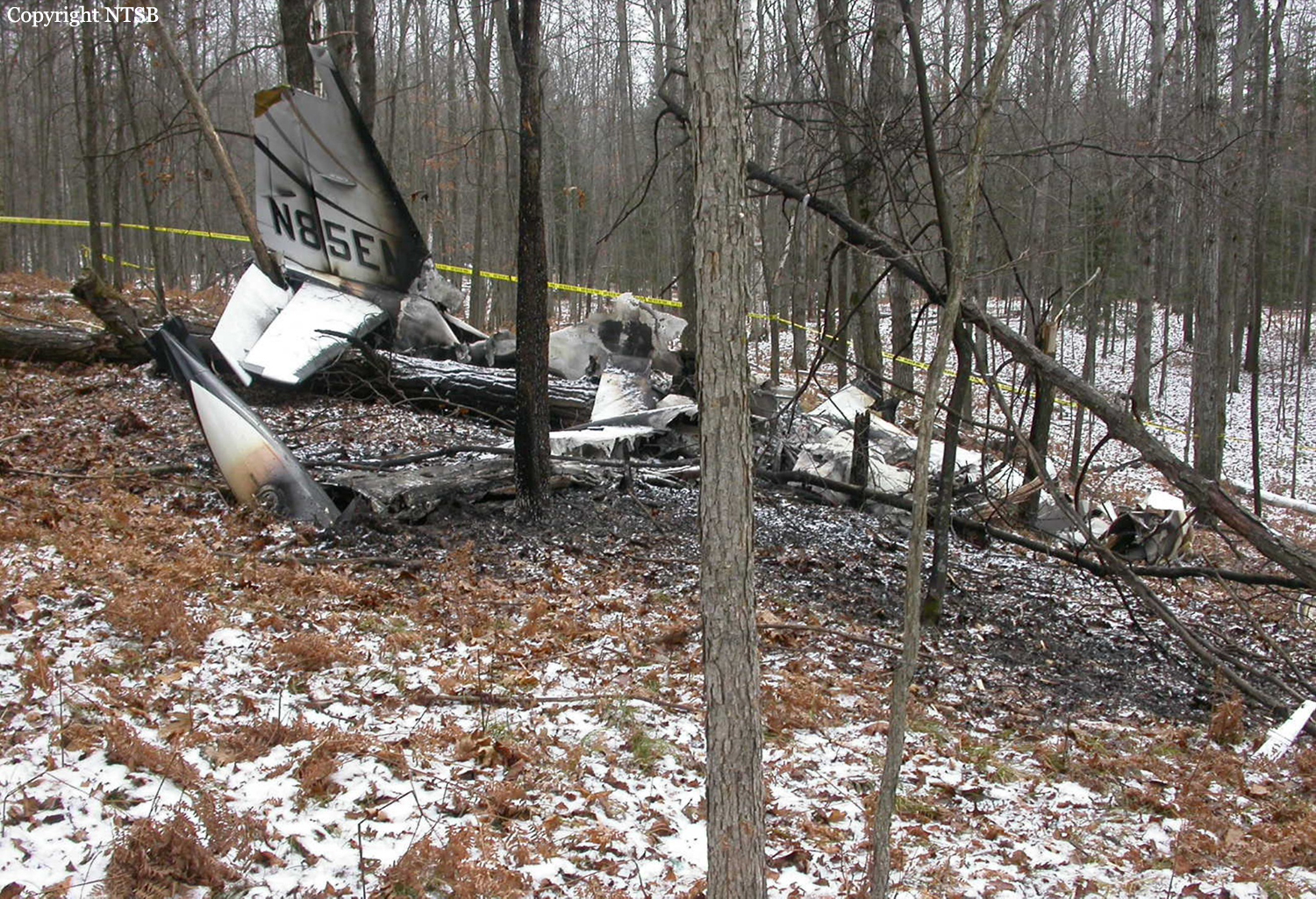
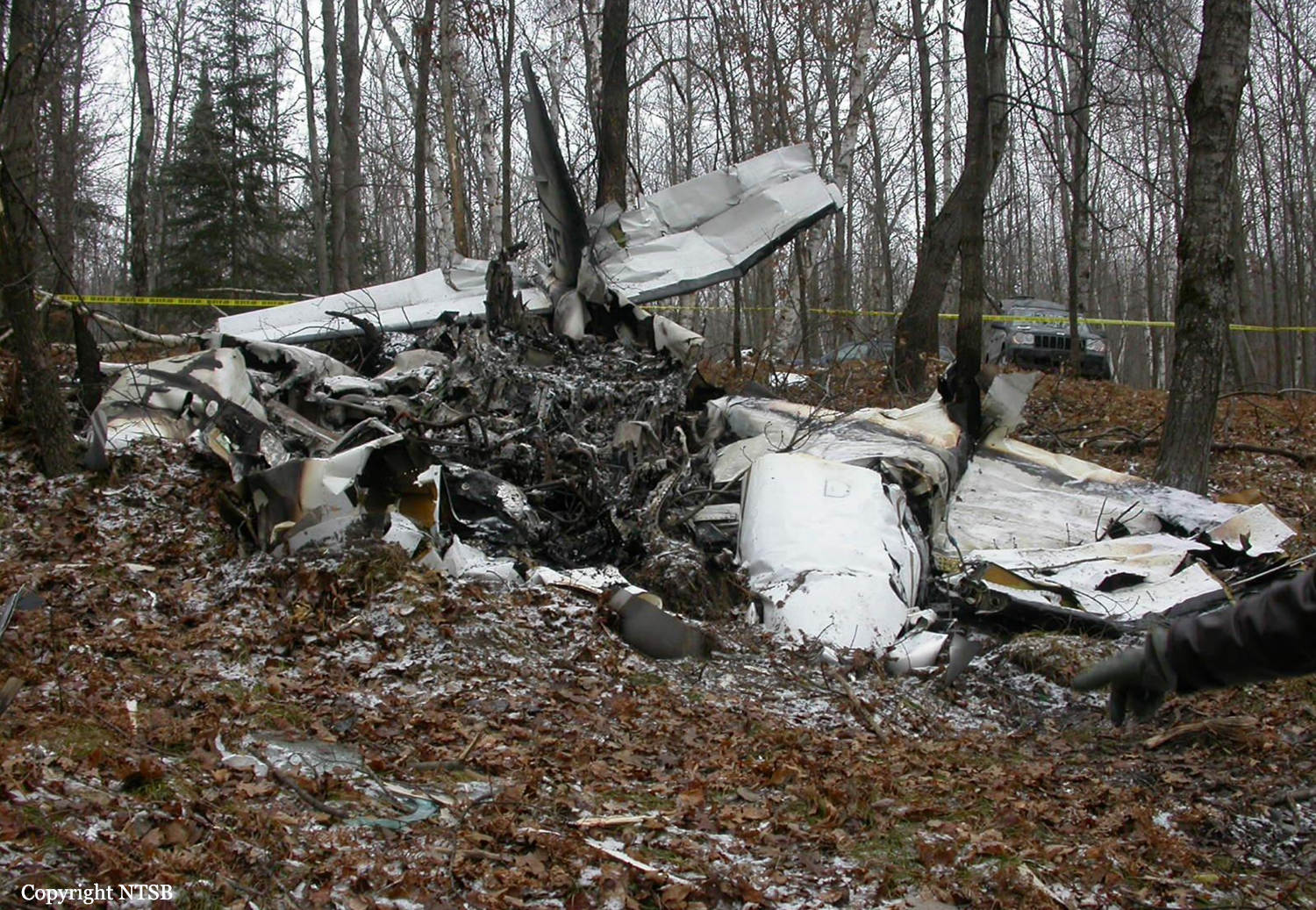
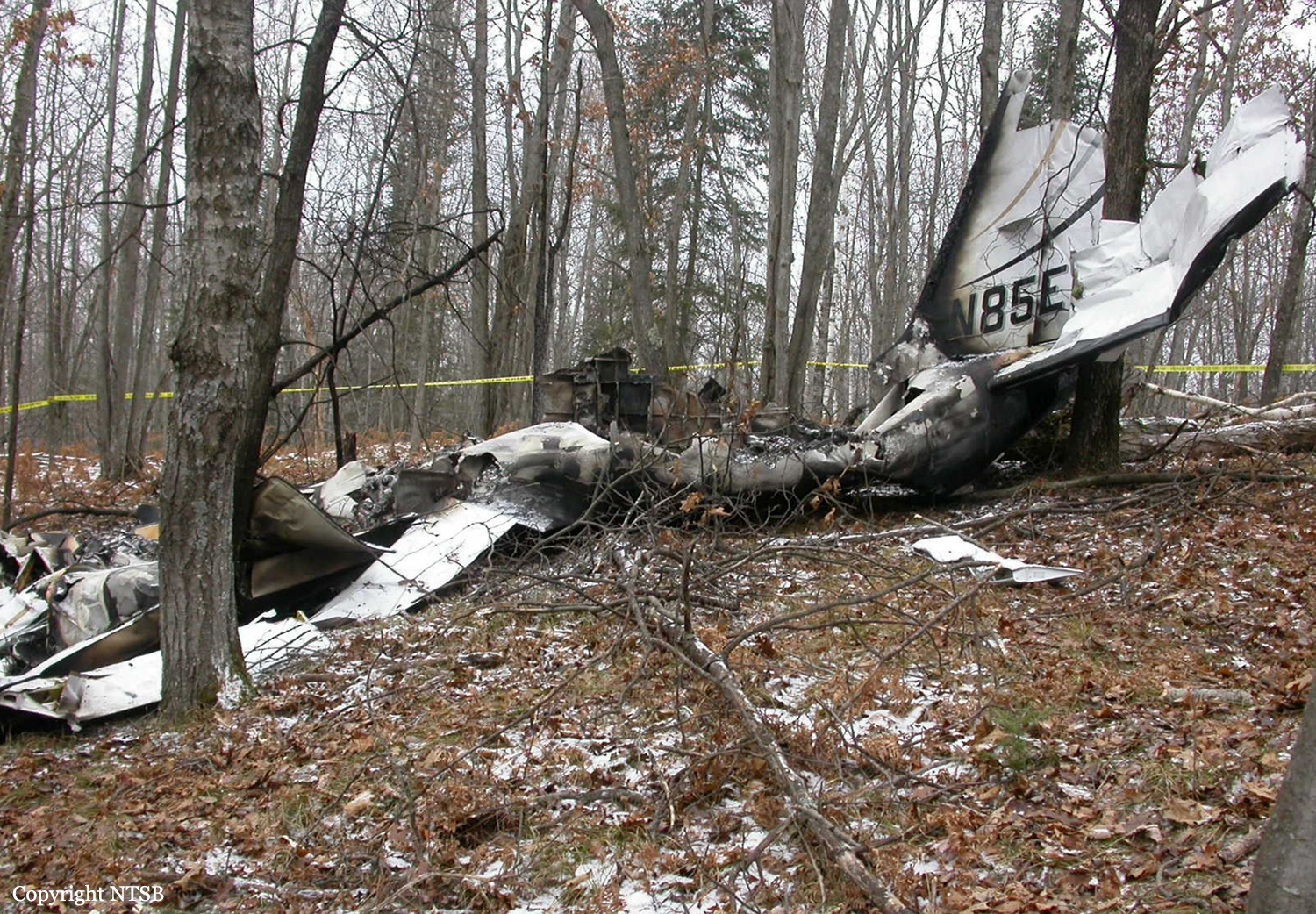
Crash of a Piper PA-31T Cheyenne II-XL in Harrison: 1 killed

Date & Time: Dec 4, 2009 at 1845 LT
Type of aircraft:

Registration:
N85EM
Flight Phase:
Flight Type:
Survivors:
No
Schedule:
Charlevoix - Tiffin
MSN:
31-8166055
YOM:
1981
Crew on board:
1
Crew fatalities:
Pax on board:
0
Pax fatalities:
Other fatalities:
Total fatalities:
1
Captain / Total flying hours:
13000
Aircraft flight hours:
9436
Circumstances:
Shortly after takeoff in the pressurized twin-engine airplane, the pilot was cleared to climb and maintain 16,000 feet. The pilot reported passing through instrument conditions with heavy snow and that he cleared the tops of the clouds at 7,000 feet. The pilot was then cleared to climb and maintain flight level (FL) 230. Radar data showed the airplane's altitude and course varied throughout the flight after having reached FL 230. Several times during the flight the air traffic controller questioned the pilot regarding his altitude and/or course. Each time the pilot responded that he was at the correct altitude and/or course. The radar data showed that after each of these conversations, the airplane would return to the assigned altitude and/or course. The controller then informed the pilot that, because radar showed the airplane’s altitude fluctuating between FL 224 and FL 237, he was going to have to descend out of positive controller airspace. The pilot acknowledged this transmission. The controller instructed the pilot to descend to 17,000 feet. The last transmission from the pilot was when he acknowledged the descent. Radar data showed that one minute later the airplane was at FL 234. During the last minute and 12 seconds of radar data, the airplane reversed its course and descended from FL 233 to FL 214, at which time radar data was lost. Witnesses reported hearing loud engine sounds and seeing the airplane in a spiraling descent until ground impact. Post accident inspection of the engines did not identify any anomalies that would have precluded normal operation. Most of the fuselage was consumed by fire; however, flight control continuity was established. Given the pilot’s experience and the flight’s altitude and course variations the investigation considered that the pilot may have suffered from hypoxia; however, due to the post impact fire the functionality of the airplane’s pressurization system could not be observed and no conclusive determination could be made that the pilot as impaired.
Probable cause:
A loss of aircraft control for undetermined reasons.
Final Report: