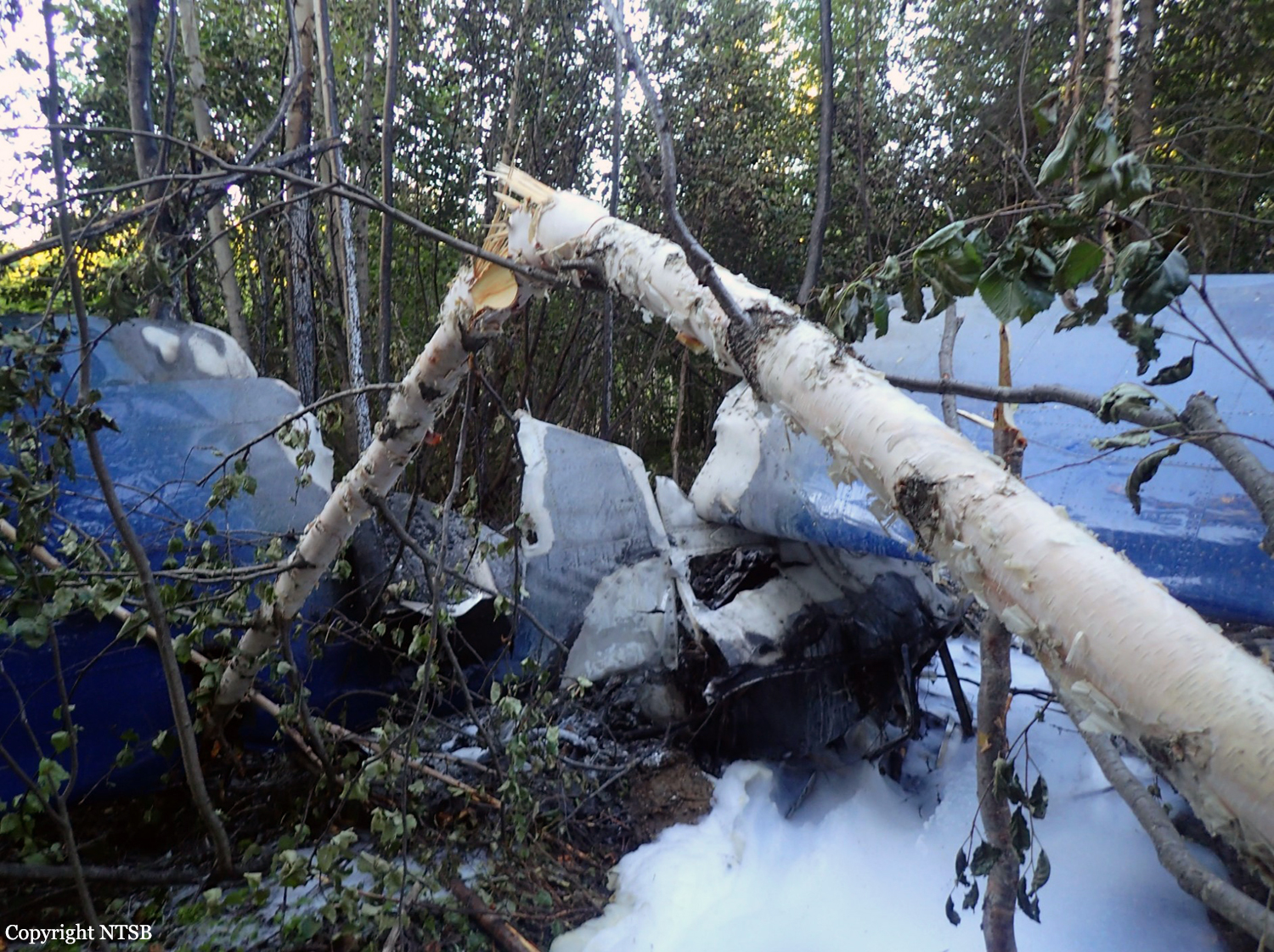
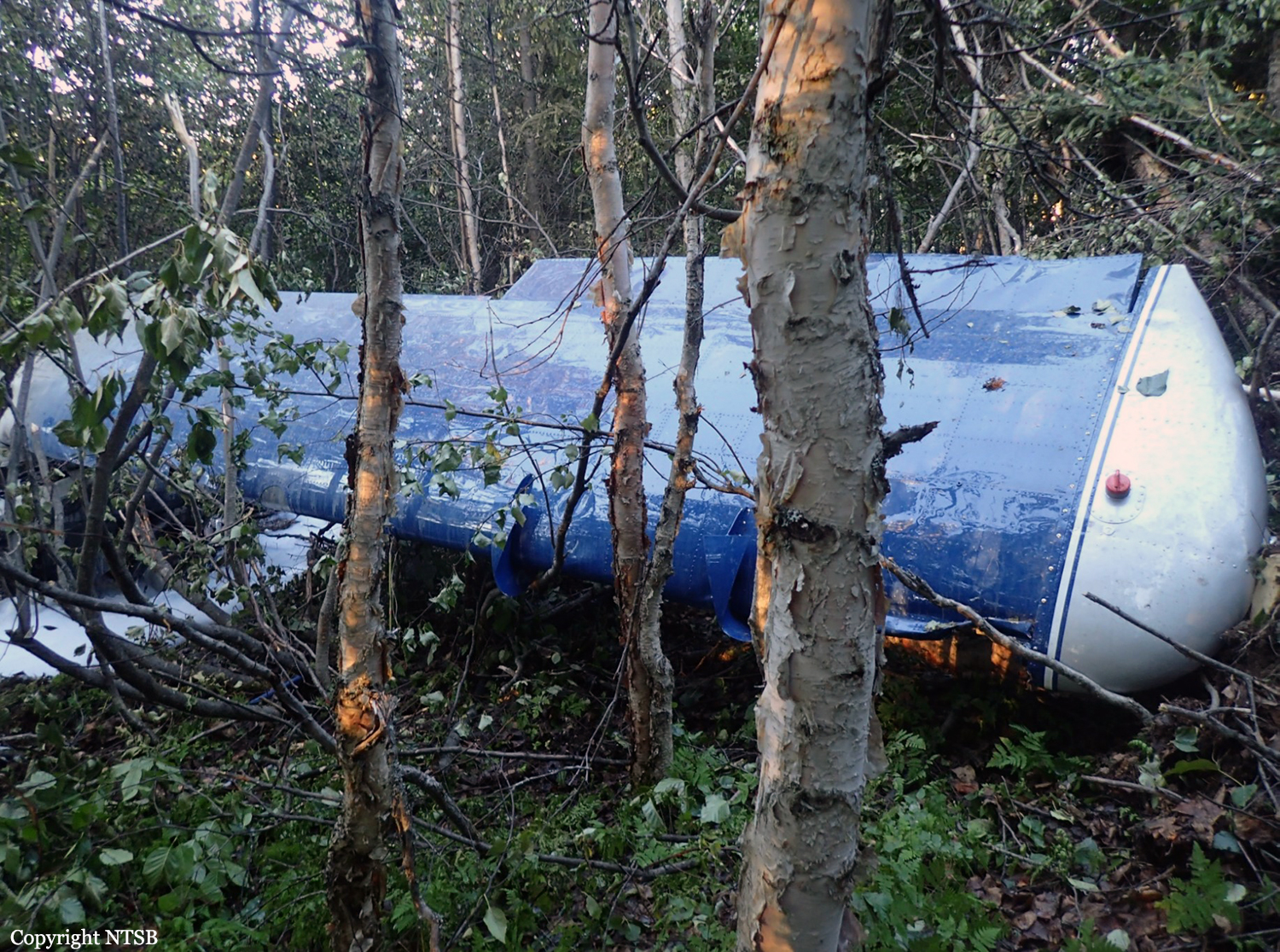
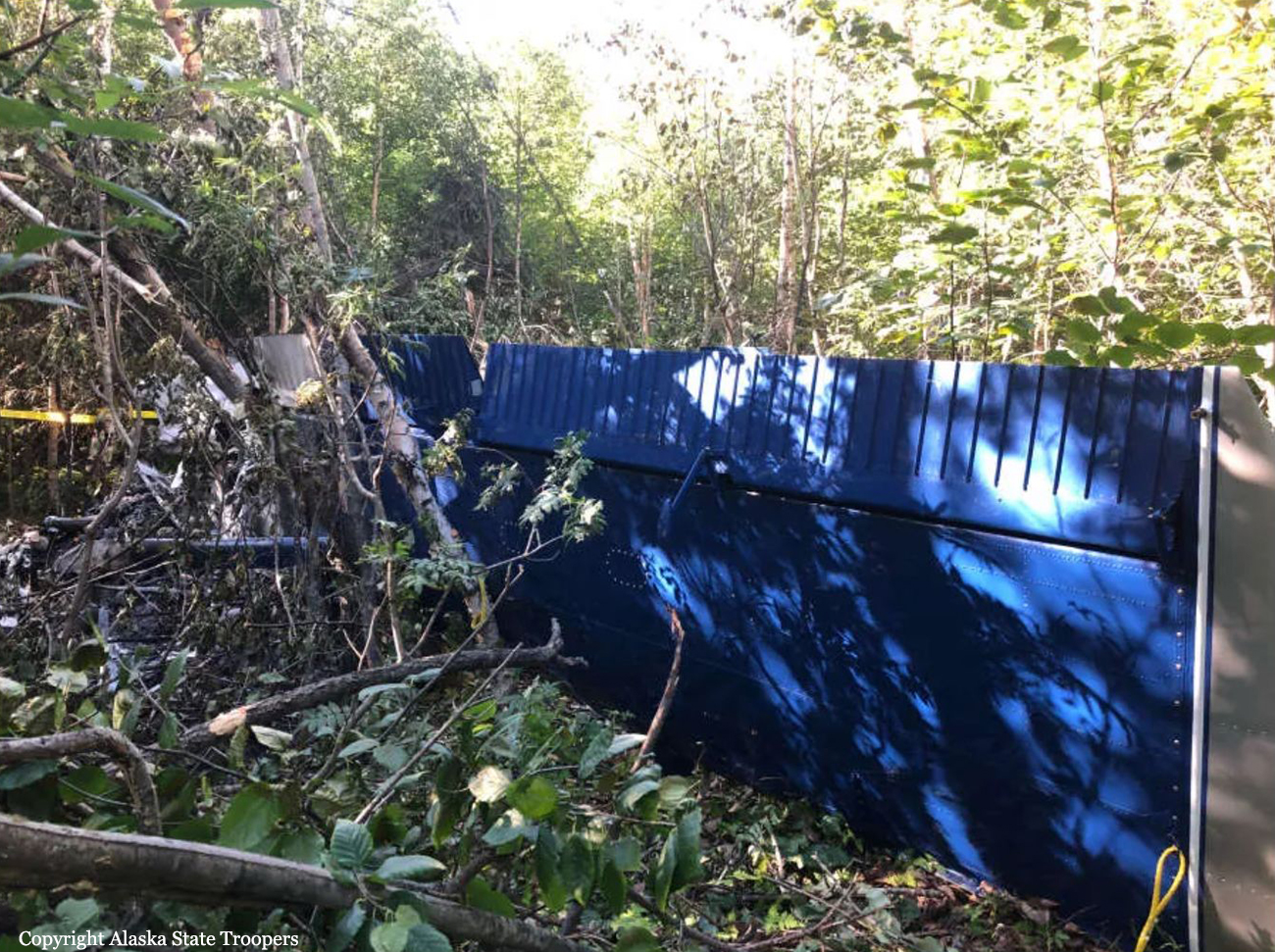
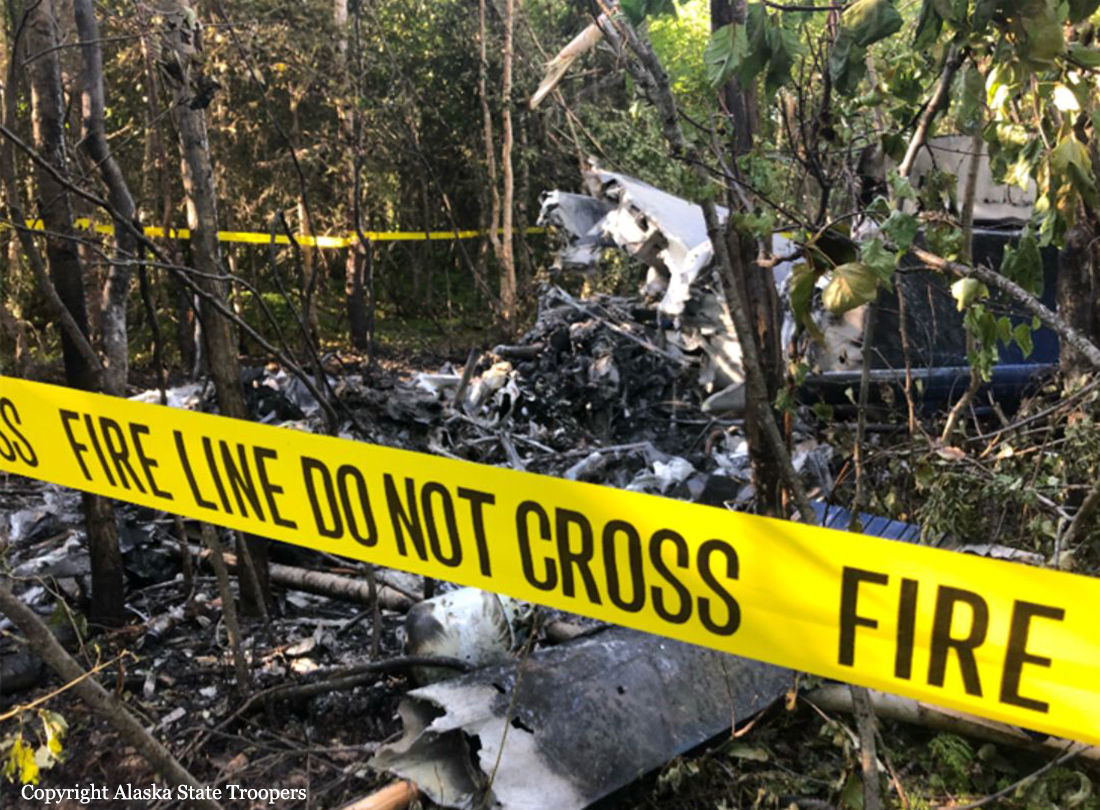
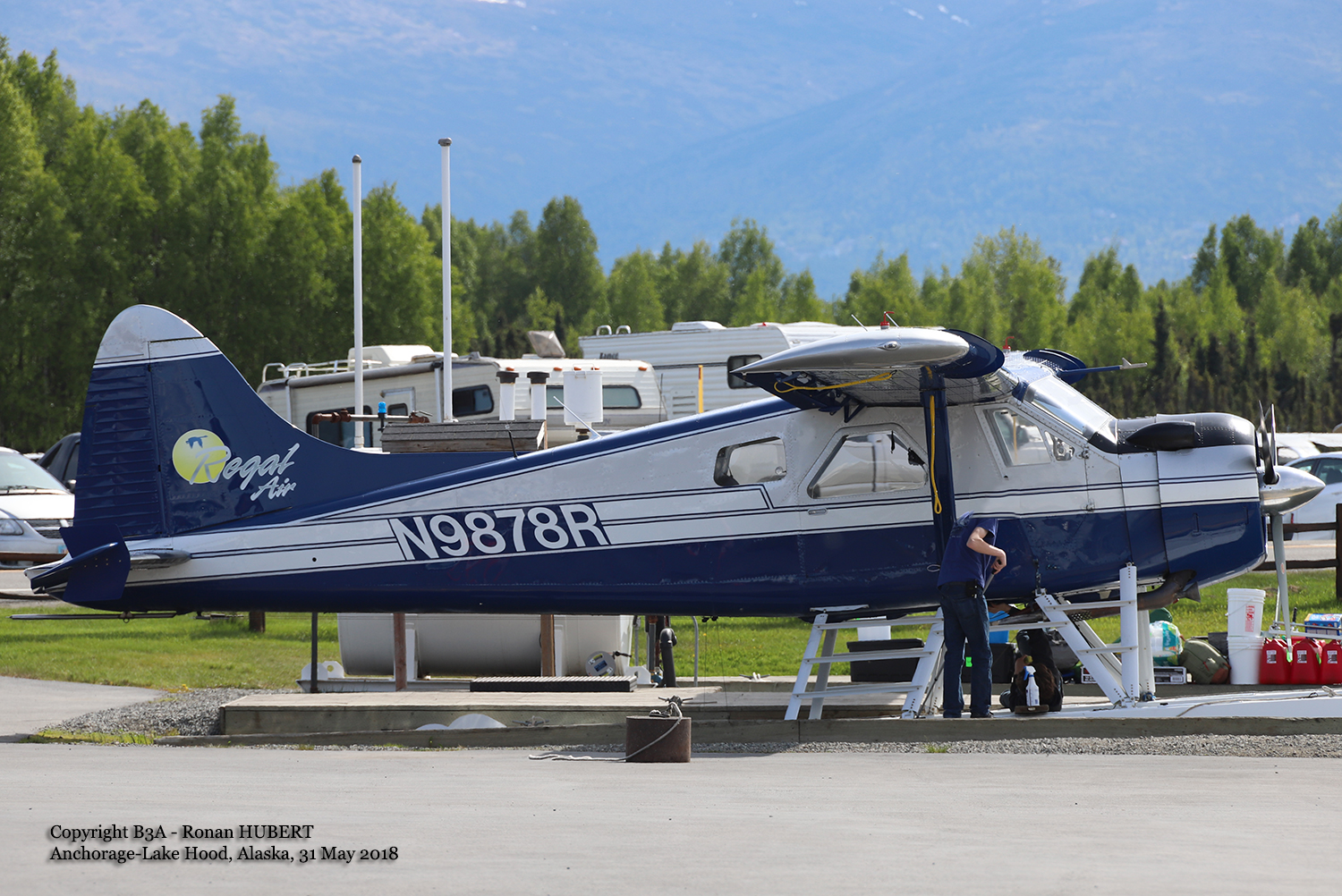
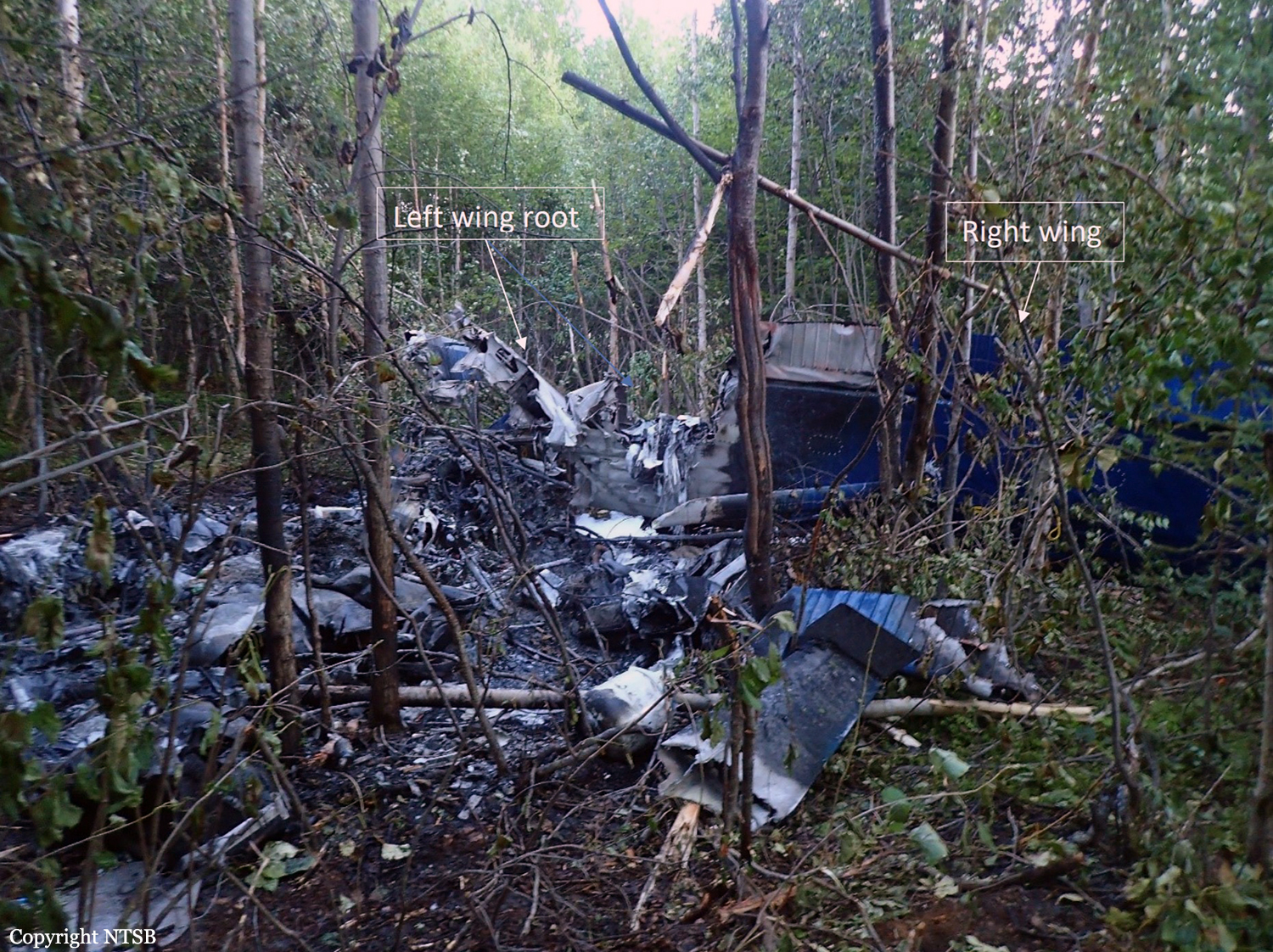
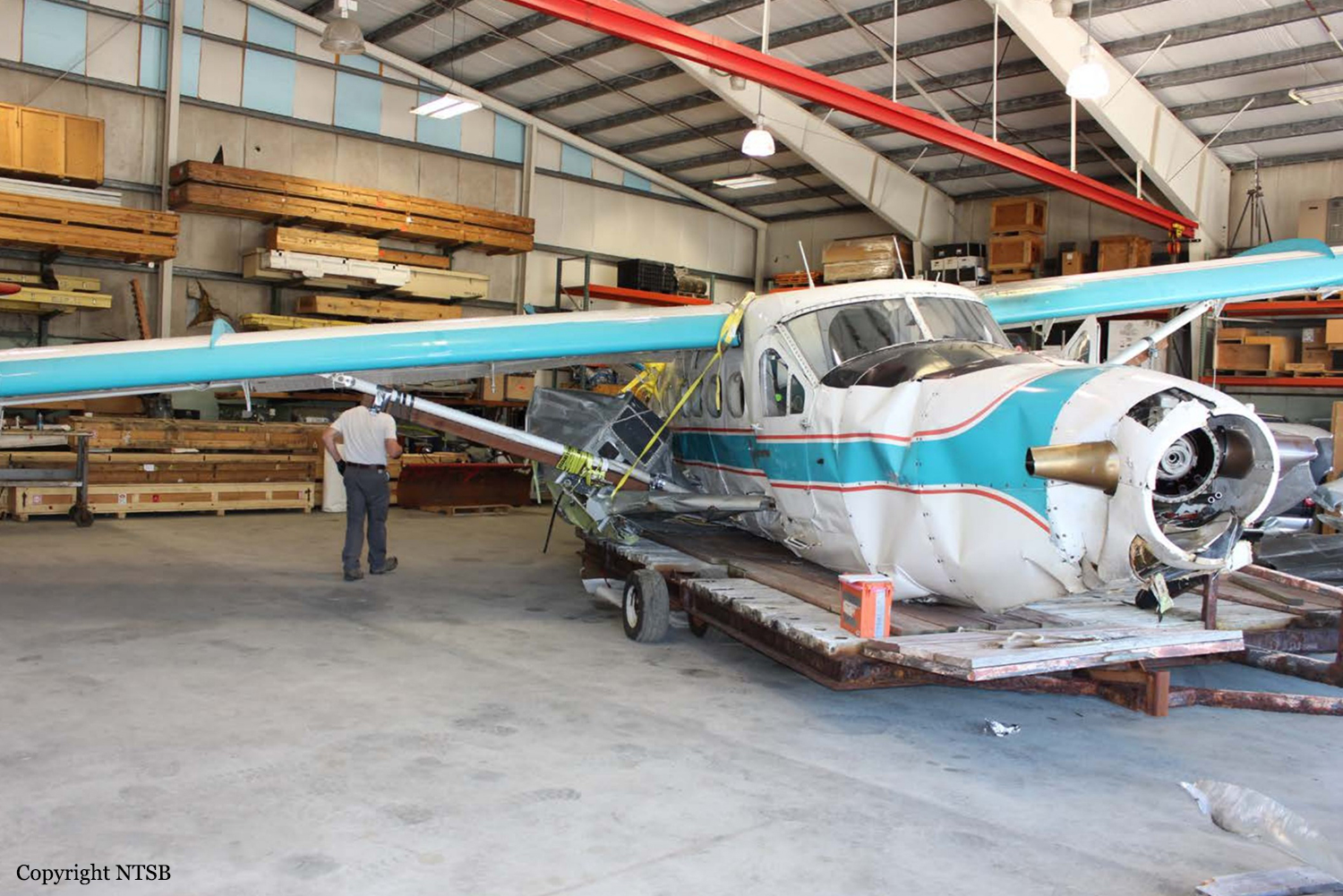
Crash of a De Havilland DHC-2 Beaver in Willow Lake: 1 killed

Date & Time: Jul 18, 2018 at 1900 LT
Type of aircraft:
Operator:
Registration:
N9878R
Flight Phase:
Survivors:
Yes
Schedule:
Willow Lake - FBI Lake
MSN:
1135
YOM:
1958
Crew on board:
1
Crew fatalities:
Pax on board:
2
Pax fatalities:
Other fatalities:
Total fatalities:
1
Captain / Total flying hours:
2685
Captain / Total hours on type:
345.00
Aircraft flight hours:
22605
Circumstances:
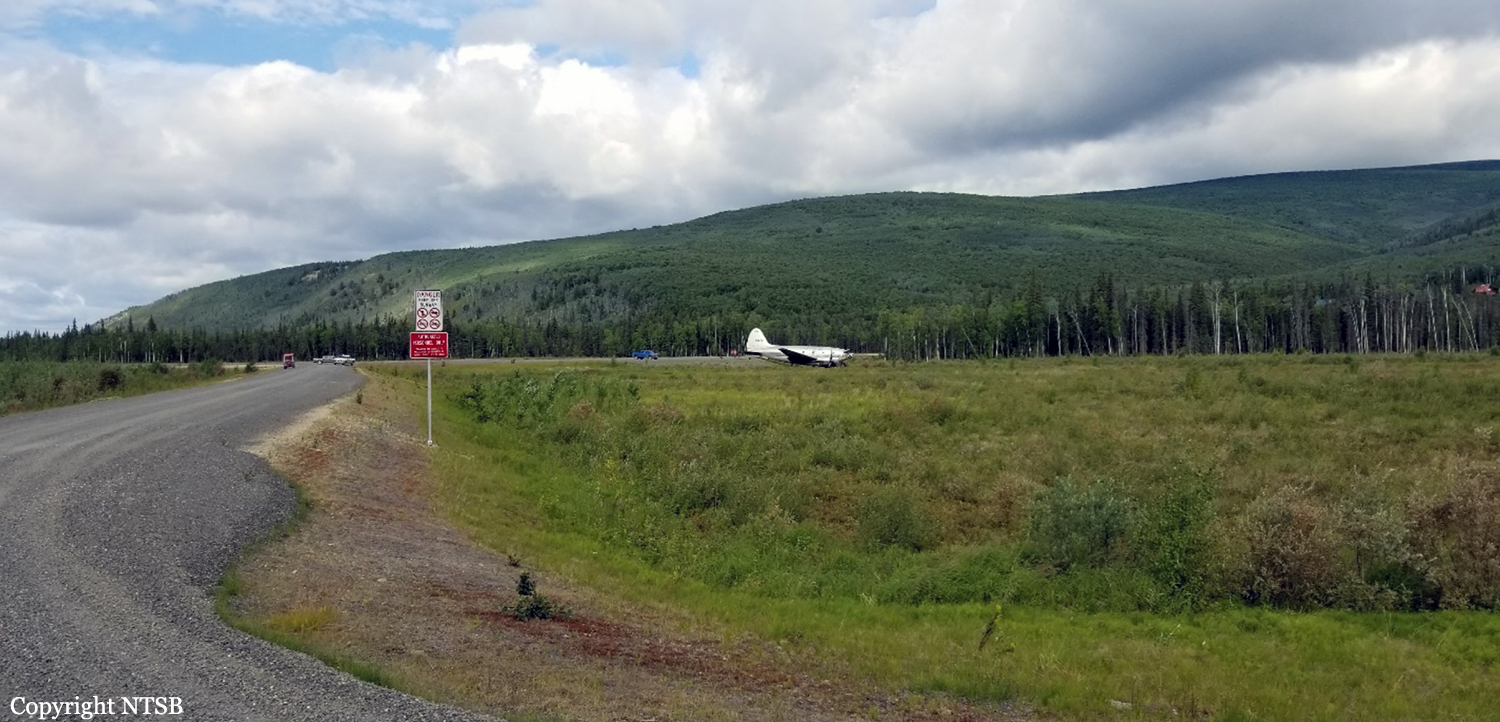
The pilot was conducting an on-demand air taxi flight in a float-equipped airplane from a seaplane base on a public lake to a remote lakeside home, with a passenger and her young son. The passenger brought cargo to transport as well, including an unexpected 800 lbs of mortar bags. Witnesses who labored to push the airplane out after loading reported that the airplane appeared very aft heavy and the pilot said he would offload "cement blocks" if he could not take off. A review of witness videos revealed that the pilot attempted one takeoff using only 3/4 of the available waterway, then step taxied around the lake and performed a step-taxi takeoff, again not using the full length of the lake. The airplane eventually lifted off, and barely climbed over trees on the south end of the lake, before descending and impacting terrain. A home surveillance video that captured the airplane seconds before the crash revealed that 3 seconds before ground impact, the estimated altitude of the airplane was 115 ft above ground level (agl) and the groundspeed was about 64 miles per hour (mph), which was low and much slower than normal climb speed (80 mph). As the airplane banked to the left to turn on course, it rolled through 90° likely experiencing an aerodynamic stall. Analysis of the engine rpm sound revealed that the engine was operating near maximum continuous power up until impact, and a postaccident examination of the airframe and engine revealed no evidence of mechanical malfunctions or failures that would have precluded normal operation. A calculation performed by investigators postaccident revealed the airplane's estimated gross weight at the time of the accident was 75 lbs over the approved maximum gross takeoff weight, and the airplane's estimated center of gravity was 1.76 inches aft of the rear limit. The pilot had been recently hired by the operator and he flew his first commercial flight in the same make and model, float-equipped airplane the week before the accident. He had accumulated 12.9 flight hours, and 13 sea landings/takeoffs in the accident model airplane since being hired as a part-time pilot. Although the airplane was able to takeoff, the aircraft's out-of-limit weight-and-balance condition increased its stall speed and degraded its climb performance, stability, and slow-flight characteristics. When the pilot turned the airplane left, the critical angle of attack was exceeded resulting in an aerodynamic stall at low altitude. If the pilot had performed a proper weight and balance calculation, he may have recognized the airplane was overweight and out of balance and should not have attempted the flight without making a load adjustment.
Probable cause:
The pilot's exceedance of the airplane's critical angle of attack during departure climb, which resulted in an aerodynamic stall. Contributing to the accident was the pilot's improper decision to load the airplane beyond its allowable gross weight and center of gravity limits, coupled with his lack of operational experience in the airplane make, model, and configuration.
Final Report:
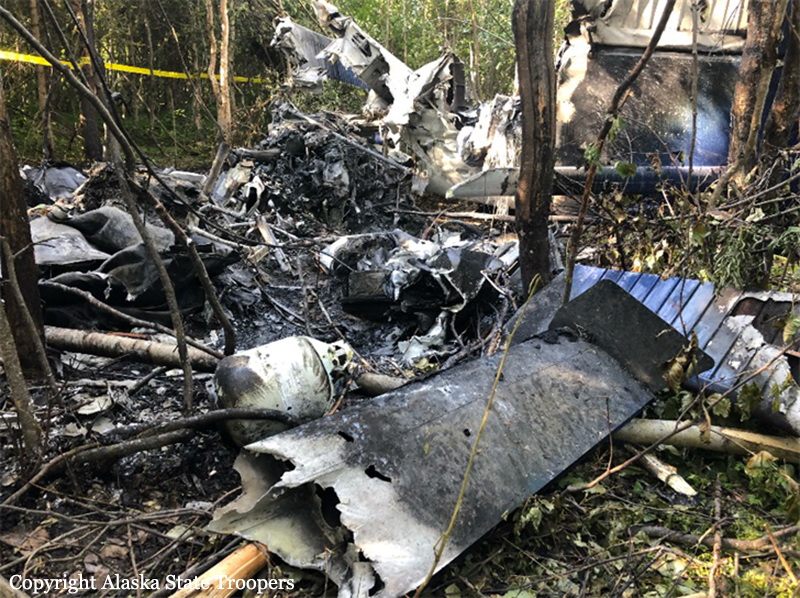
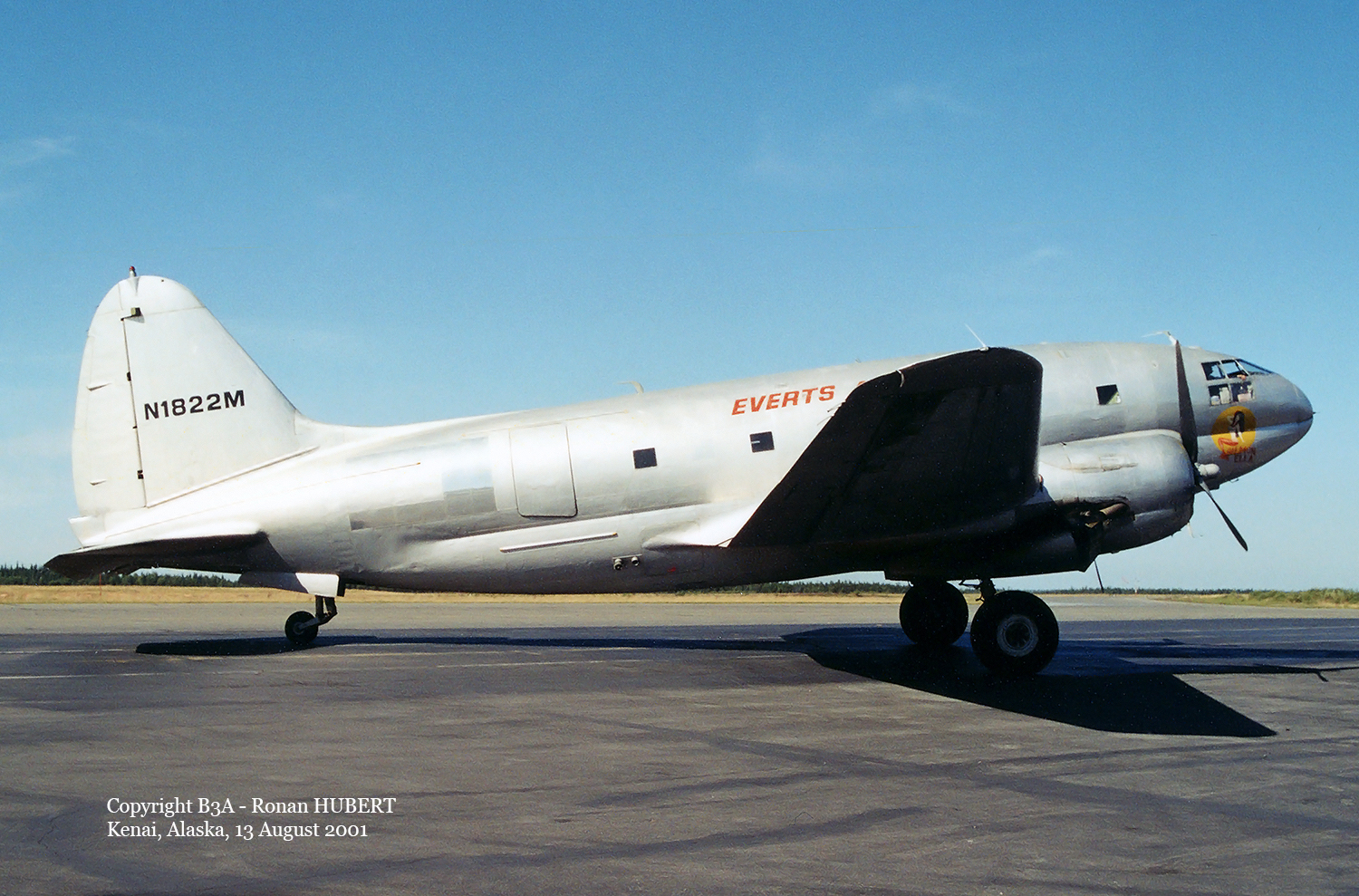
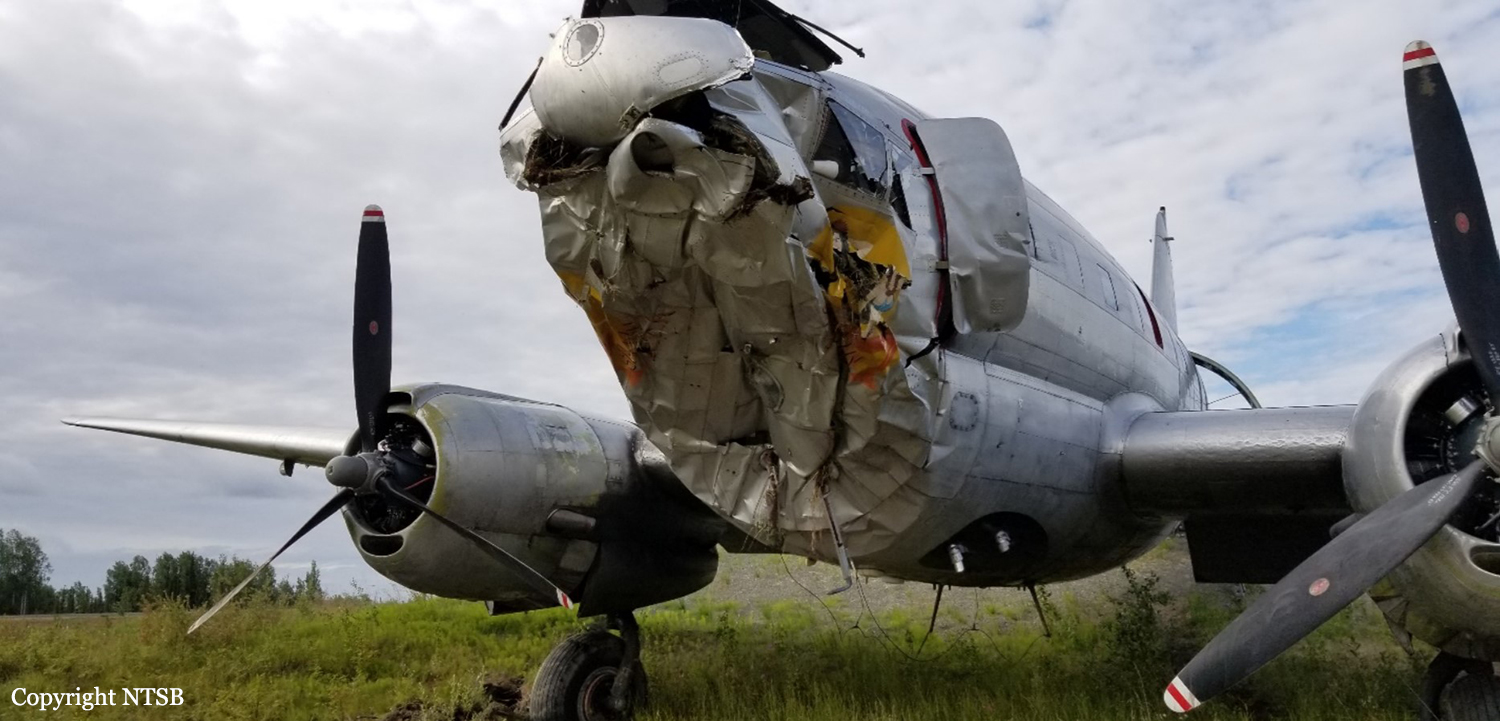
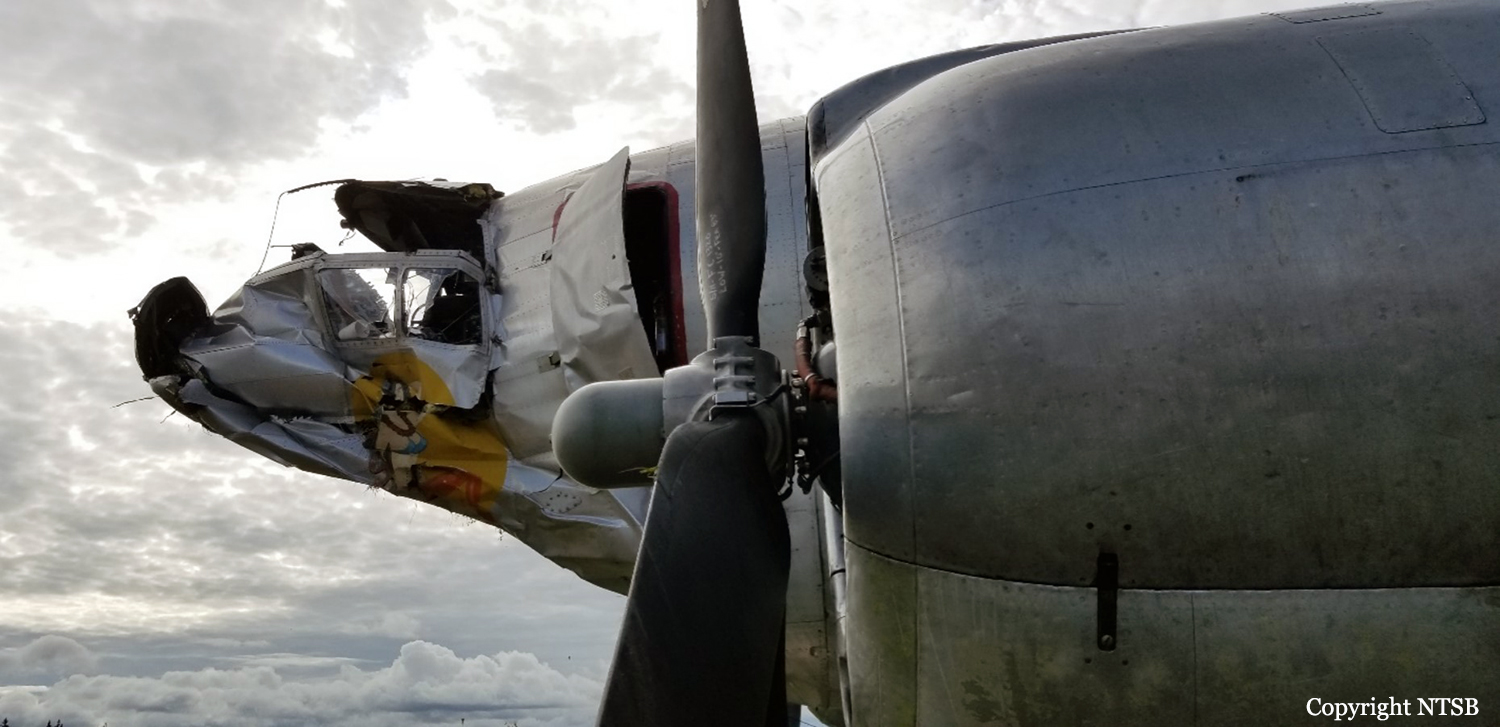
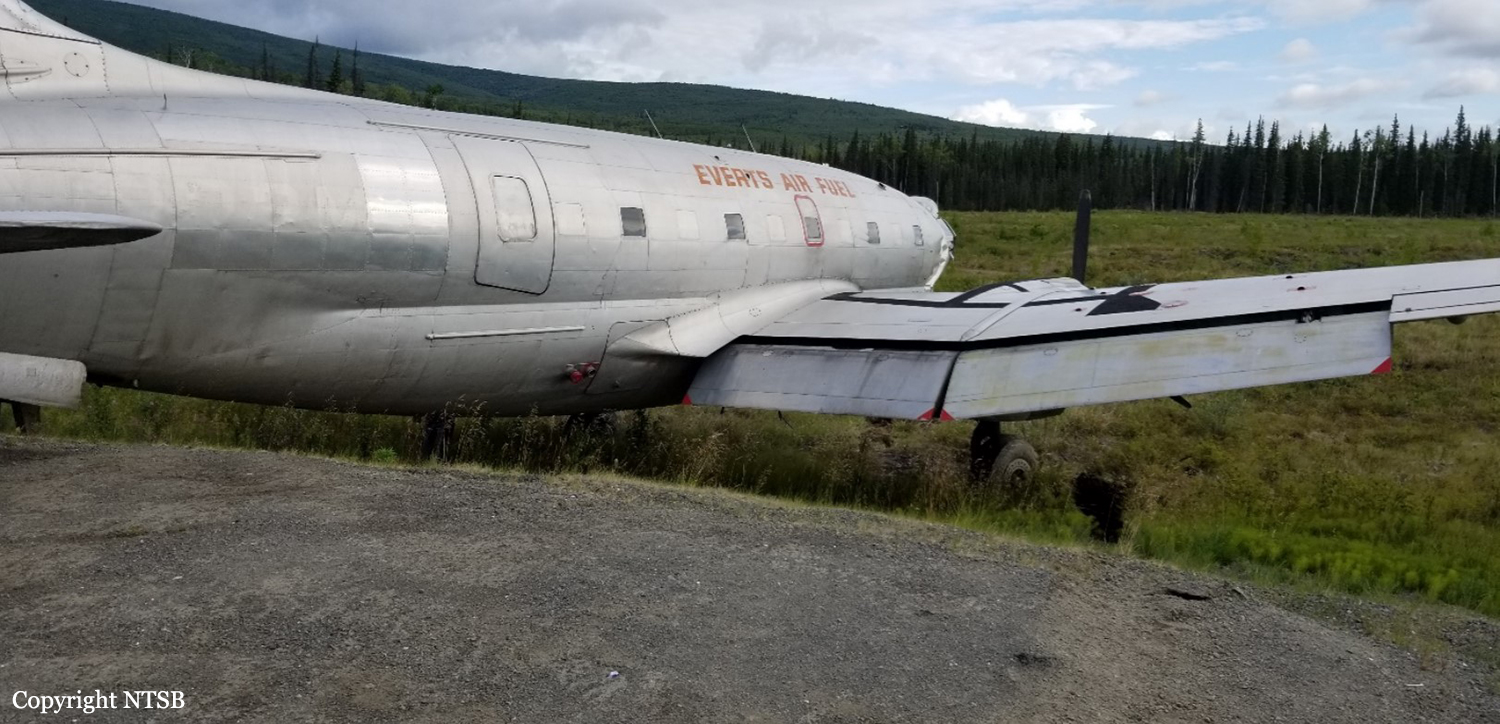
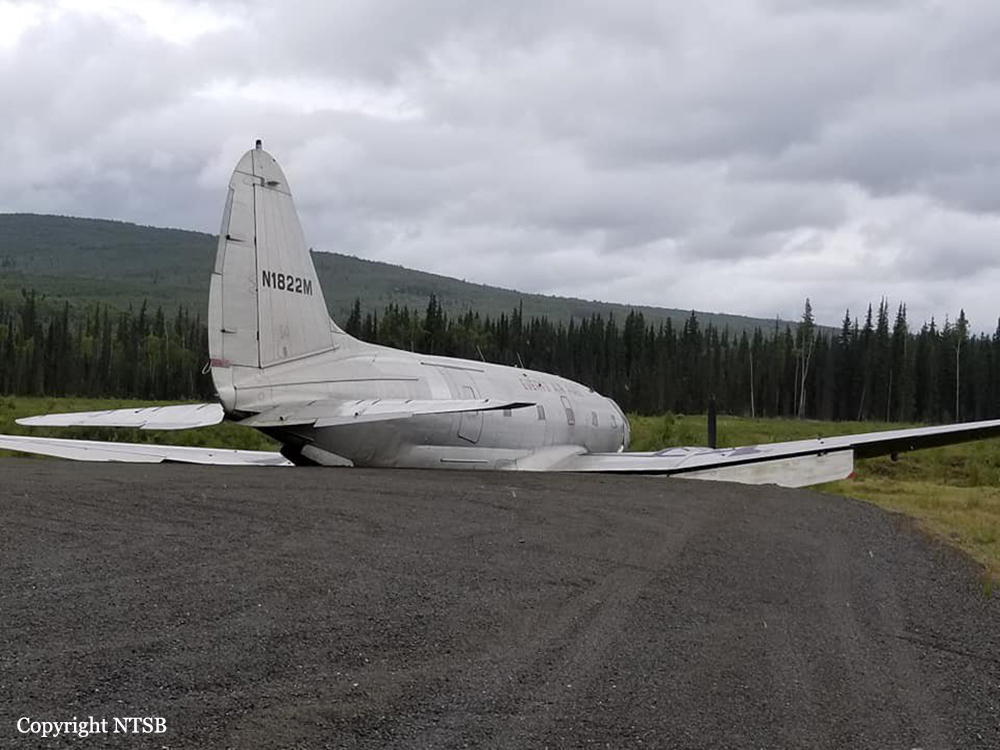
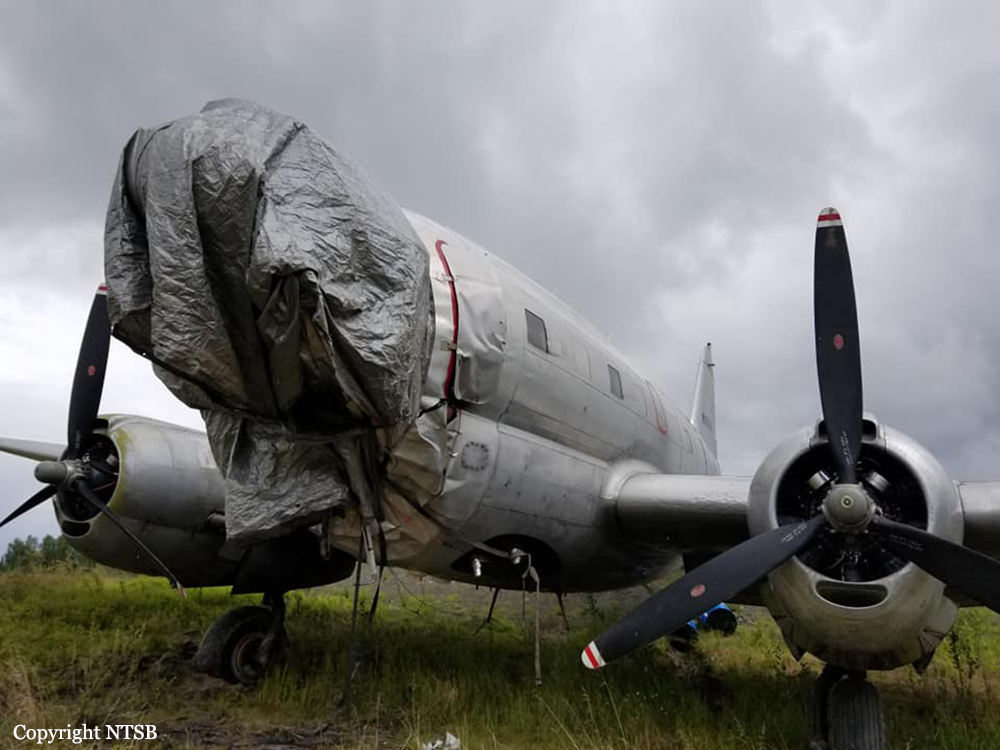
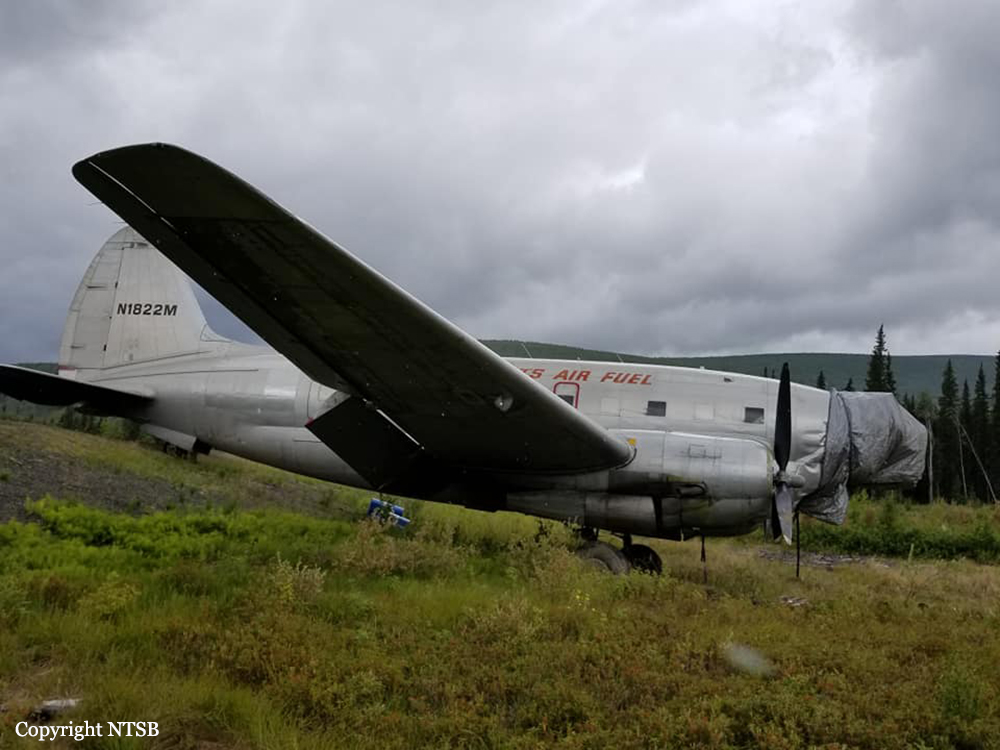
Crash of a Curtiss C-46F-1-CU Commando in Manley Hot Springs

Date & Time: Jul 16, 2018 at 0925 LT
Type of aircraft:
Operator:
Registration:
N1822M
Flight Type:
Survivors:
Yes
Schedule:
Fairbanks – Kenai
MSN:
22521
YOM:
1945
Crew on board:
2
Crew fatalities:
Pax on board:
0
Pax fatalities:
Other fatalities:
Total fatalities:
0
Captain / Total flying hours:
6500
Captain / Total hours on type:
3500.00
Copilot / Total flying hours:
300
Copilot / Total hours on type:
135
Aircraft flight hours:
37049
Circumstances:
The pilot reported that, following a precautionary shutdown of the No. 2 engine, he diverted to an alternate airport that was closer than the original destination. During the landing in tailwind conditions, the airplane touched down "a little fast." The pilot added that, as the brakes faded from continuous use, the airplane was unable to stop, and it overran the end of the runway, which resulted in substantial damage to the fuselage. The pilot reported that there were no mechanical malfunctions or failures with the airplane that would have precluded normal operation.
Probable cause:
The pilot's failure to attain the proper touchdown speed and his decision to land with a tailwind without ensuring that there was adequate runway length for the touchdown.
Final Report:

Crash of a De Havilland DHC-3T Otter near Hydaburg

Date & Time: Jul 10, 2018 at 0835 LT
Type of aircraft:
Operator:
Registration:
N3952B
Flight Phase:
Survivors:
Yes
Site:
Schedule:
Klawock – Ketchikan
MSN:
225
YOM:
1957
Location:
Crew on board:
1
Crew fatalities:
Pax on board:
10
Pax fatalities:
Other fatalities:
Total fatalities:
0
Captain / Total flying hours:
27400
Captain / Total hours on type:
306.00
Aircraft flight hours:
16918
Circumstances:
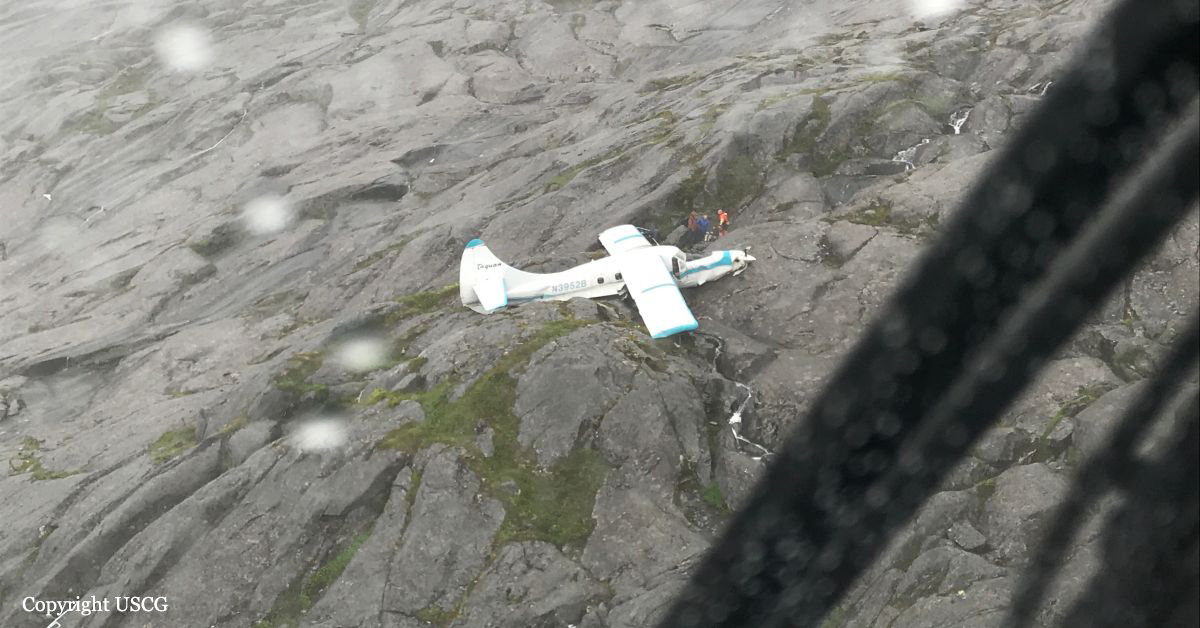
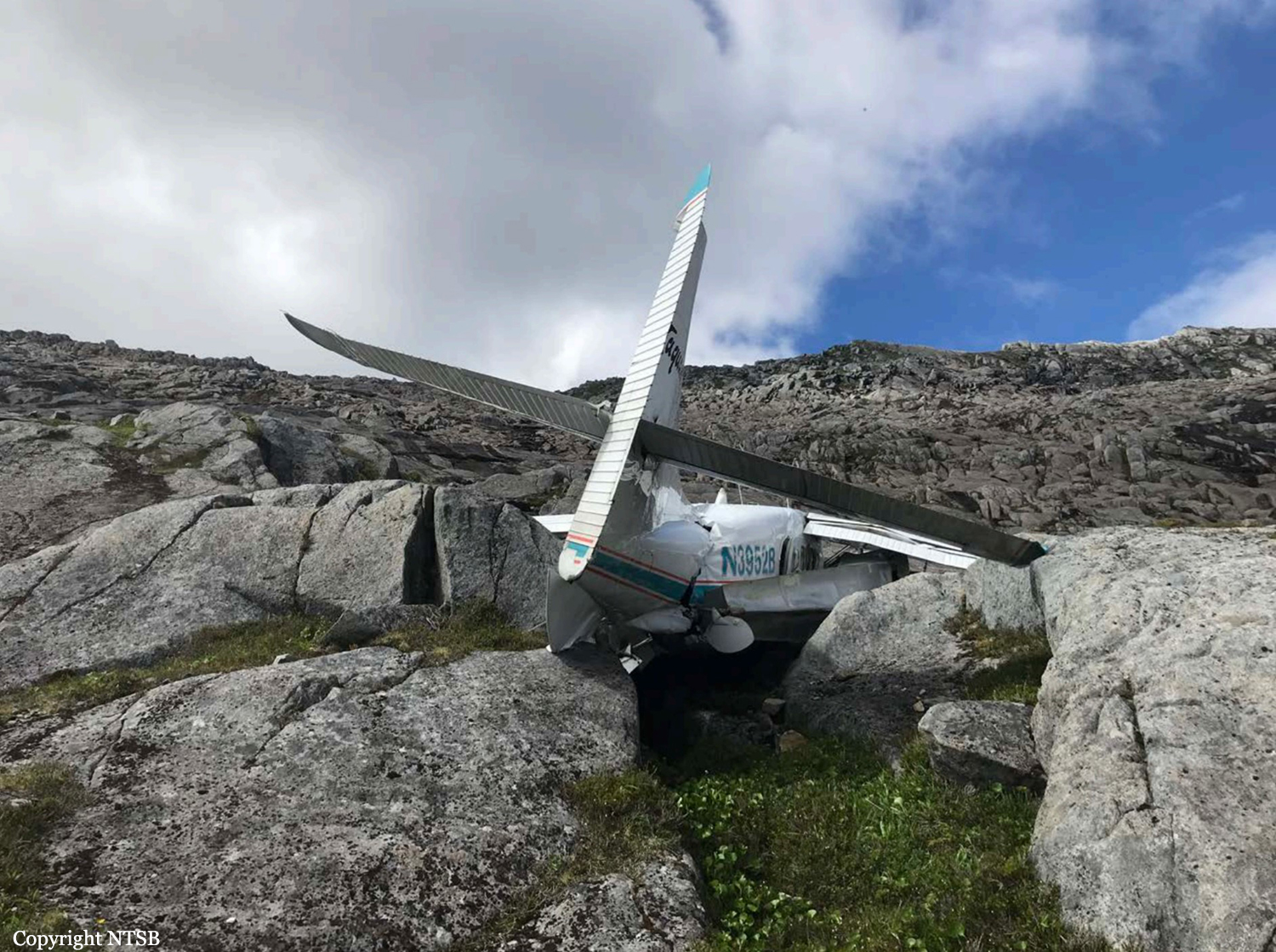
The airline transport pilot was conducting a commercial visual flight rules (VFR) flight transporting 10 passengers from a remote fishing lodge. According to the pilot, while in level cruise flight about 1,100 ft mean sea level (msl) and as the flight progressed into a mountain pass, visibility decreased rapidly. In an attempt to turn around and return to VFR conditions, the pilot initiated a climbing right turn. Before completing the 180° right turn, he saw what he believed to be a body of water and became momentarily disoriented, so he leveled the wings. Shortly thereafter, he realized that the airplane was approaching an area of snow-covered mountainous terrain, so he applied full power and initiated a steep climb; the airspeed decayed, and the airplane collided with an area of rocky, rising terrain, which resulted in substantial damage to the wings and fuselage. The pilot reported no mechanical malfunctions or anomalies that would have precluded normal operation, and the examination of the airframe and engine revealed no evidence of mechanical malfunctions or failures that would have precluded normal operation. The weather forecast at the accident time included scattered clouds at 2,500 ft msl, overcast clouds at 5,000 ft msl with cloud tops to 14,000 ft and clouds layered above that to flight level 250, and isolated broken clouds at 2,500 ft with light rain. AIRMET advisory SIERRA for "mountains obscured in clouds/precipitation" was valid at the time of the accident. Conditions were expected to deteriorate. Passenger interviews revealed that through the course of the flight, the airplane was operating in marginal visual meteorological conditions and occasional instrument meteorological conditions (IMC) with areas of precipitation, reduced visibility, obscuration, and, at times, little to no forward visibility. Thus, based on weather reports and forecasts, and the pilot's and passengers' statements, it is likely that the flight encountered IMC as it approached mountainous terrain and that the pilot then lost situational awareness. The airplane was equipped with a terrain awareness and warning system (TAWS); however, the alerts were inhibited at the time of the accident. Although the TAWS was required to be installed per Federal Aviation Administration (FAA) regulations, there is no requirement for it to be used. All company pilots interviewed stated that the TAWS inhibit switch remained in the inhibit position unless a controlled flight into terrain (CFIT) escape maneuver was being accomplished. However, the check airman who last administered the accident pilot's competency check stated that the TAWS inhibit switch was never moved, even during a CFIT escape maneuver. The unwritten company policy to leave the TAWS in the inhibit mode and the failure of the pilot to move the TAWS out of the inhibit mode when weather conditions began to deteriorate were inconsistent with the goal of providing the highest level of safety. However, if the pilot had been using TAWS, due to the fact that he was operating at a lower altitude and thus would have likely received numerous nuisance alerts, the investigation could not determine the extent to which TAWS would have impacted the pilot's actions. At the time of the accident, the director of operations (DO) for the company resided in another city and served as DO for another air carrier as well. He traveled to the company's main base of operation about once per month but was available via telephone. According to the chief pilot, he had assumed a large percentage of the DO's duties. The president of the company said that the chief pilot had taken over "officer of the deck" and "we're just basically using him [the DO] for his recordkeeping." The FAA was aware that the company's DO was also DO for another commuter operation. FAA Flight Standards District Office management and principal operations inspectors allowed him to continue to hold those positions, although it was contrary to the guidance provided in FAA Order 8900.1. The company's General Operations Manual (GOM) only listed the DO, the chief pilot, and the president by name as having the authority to exercise operational control. However, numerous company personnel stated that operational control could be and was routinely delegated to senior pilots. The GOM stated that the DO "routinely" delegated the duty of operational control to flight coordinators, but the flight coordinator on duty at the time of the accident stated that she did not have operational control. In addition, the investigation revealed numerous inadequate and missing operational control procedures and processes in company manuals and operations specifications. Based on the FAA's inappropriate approval of the DO, the insufficient company onsite management, the inadequate operational control procedures, and the exercise of operational control by unapproved persons likely resulted in a lack of oversight of flight operations, inattentive and distracted management personnel, and a loss of operational control within the air carrier. However, the investigation could not determine the extent to which any changes to operational control, company management, and FAA oversight would have influenced the pilot's decision to continue the VFR flight into IMC.
Probable cause:
The pilot's decision to continue the visual flight rules flight into instrument meteorological conditions, which resulted in controlled flight into terrain.
Final Report:

Crash of a Beechcraft C90A King Air in Mumbai: 4 killed

Date & Time: Jun 28, 2018 at 1310 LT
Type of aircraft:
Operator:
Registration:
VT-UPZ
Flight Type:
Survivors:
No
Site:
Schedule:
Juhu - Juhu
MSN:
LJ-1400
YOM:
1995
Country:
Region:
Crew on board:
2
Crew fatalities:
Pax on board:
2
Pax fatalities:
Other fatalities:
Total fatalities:
4
Captain / Total flying hours:
2237
Captain / Total hours on type:
100.00
Copilot / Total flying hours:
935
Copilot / Total hours on type:
156
Aircraft flight hours:
4529
Aircraft flight cycles:
4213
Circumstances:
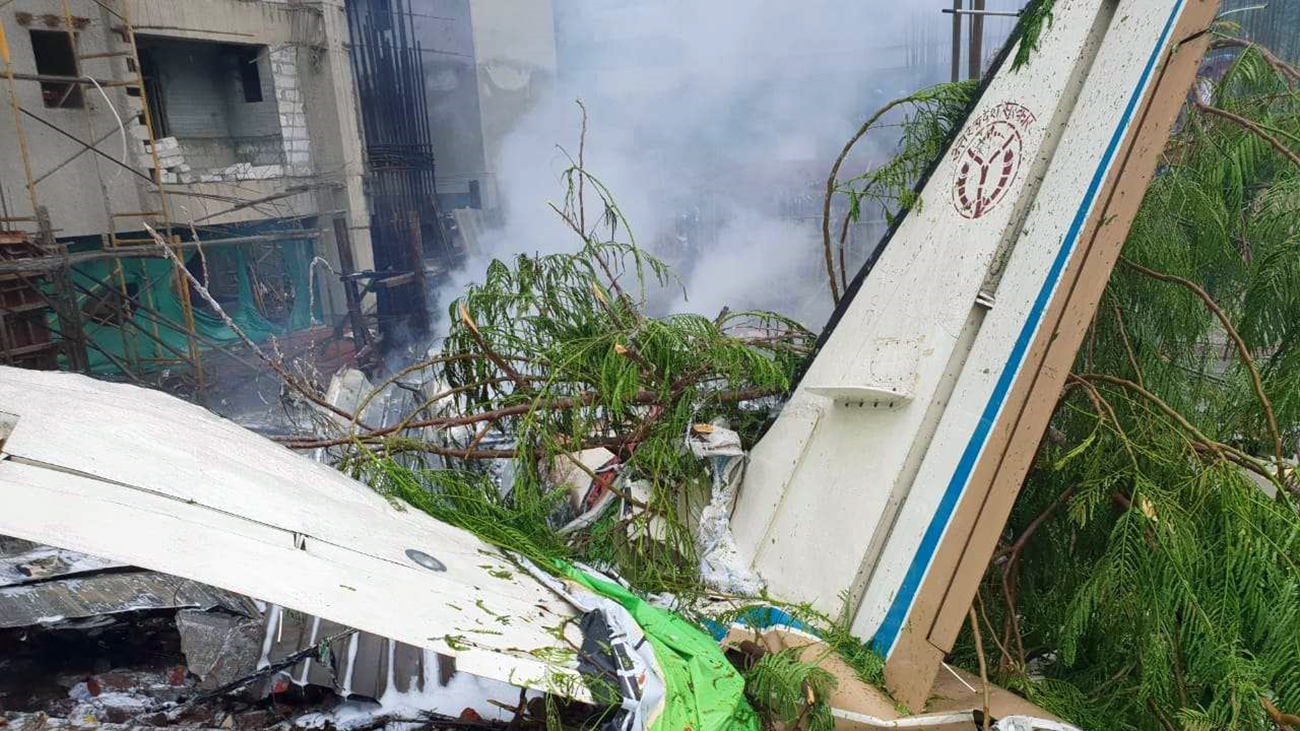
Following a technical maintenance, a test flight was scheduled with two engineers and two pilots. The twin engine airplane departed Mumbai-Juhu Airport and the crew completed several manoeuvre over the city before returning. On approach in heavy rain falls, the aircraft went out of control and crashed at the bottom of a building under construction located in the Ghatkopar West district, some 3 km east from Mumbai Intl Airport, bursting into flames. The aircraft was destroyed by impact forces and a post crash fire and all four occupants were killed. Three people on the ground were also injured.
Probable cause:
The probable cause of the accident was stall caused by lack of situational awareness due to spatial disorientation triggered by deteriorating weather, a transition from ILS (IMC) to visual flying (Partial VMC) and unexpected bank owing to differential engine power.
Final Report:

Crash of a Let L-410UVP near Souguéta: 4 killed

Date & Time: Jun 24, 2018 at 1041 LT
Type of aircraft:
Registration:
3X-AAK
Flight Phase:
Survivors:
No
Site:
Schedule:
Sal - Conakry – Lero
MSN:
80 05 24
YOM:
1980
Country:
Region:
Crew on board:
2
Crew fatalities:
Pax on board:
2
Pax fatalities:
Other fatalities:
Total fatalities:
4
Circumstances:
The twin engine airplane was carrying two technicians and two pilots bound for a mine field located near Lero, Kankan. It made an intermediate stop at Conakry on a flight from Sal, Cape Verde. En route, the crew encountered poor weather conditions with low clouds and fog when the airplane impacted the slope of a mountain. The airplane disintegrated on impact and all four occupants were killed.
Probable cause:
The following factors were identified:
- Environmental factors (reduced visibility and low cloud ceiling).
- Mountainous terrain.
- Contradiction in traffic coordination between Conakry Tower and Roberts FIR controllers.
- Crew obstinacy in dealing with bad weather at low altitude.
The following contributing factors were identified:
- Lack of knowledge of the prevailing weather en route due to the flight crew's failure to retrieve the weather file.
- Poor decision making by the captain with regard to the prevailing weather.
- Low level of visual flight in poor weather at low altitude.

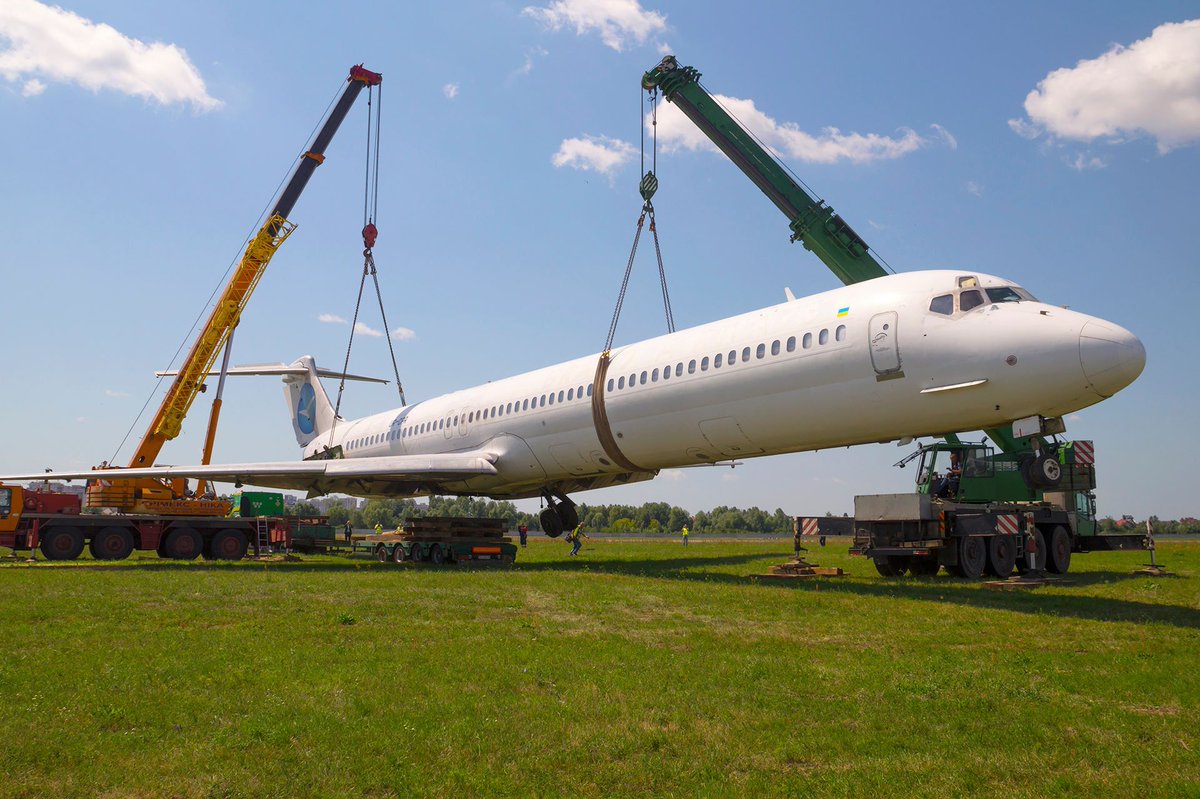
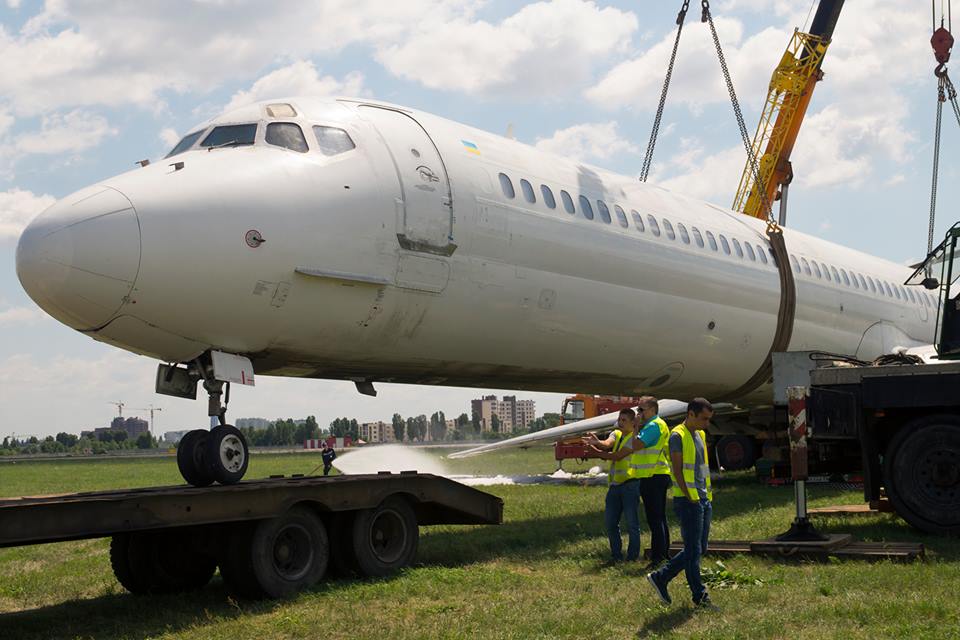
Crash of a McDonnell Douglas MD-83 in Kiev

Date & Time: Jun 14, 2018 at 2040 LT
Type of aircraft:
Operator:
Registration:
UR-CPR
Survivors:
Yes
Schedule:
Antalya - Kiev
MSN:
49946/1898
YOM:
1991
Flight number:
BAY4406
Country:
Region:
Crew on board:
7
Crew fatalities:
Pax on board:
160
Pax fatalities:
Other fatalities:
Total fatalities:
0
Captain / Total flying hours:
11548
Captain / Total hours on type:
5580.00
Copilot / Total flying hours:
12514
Copilot / Total hours on type:
3580
Aircraft flight hours:
43105
Aircraft flight cycles:
46810
Circumstances:
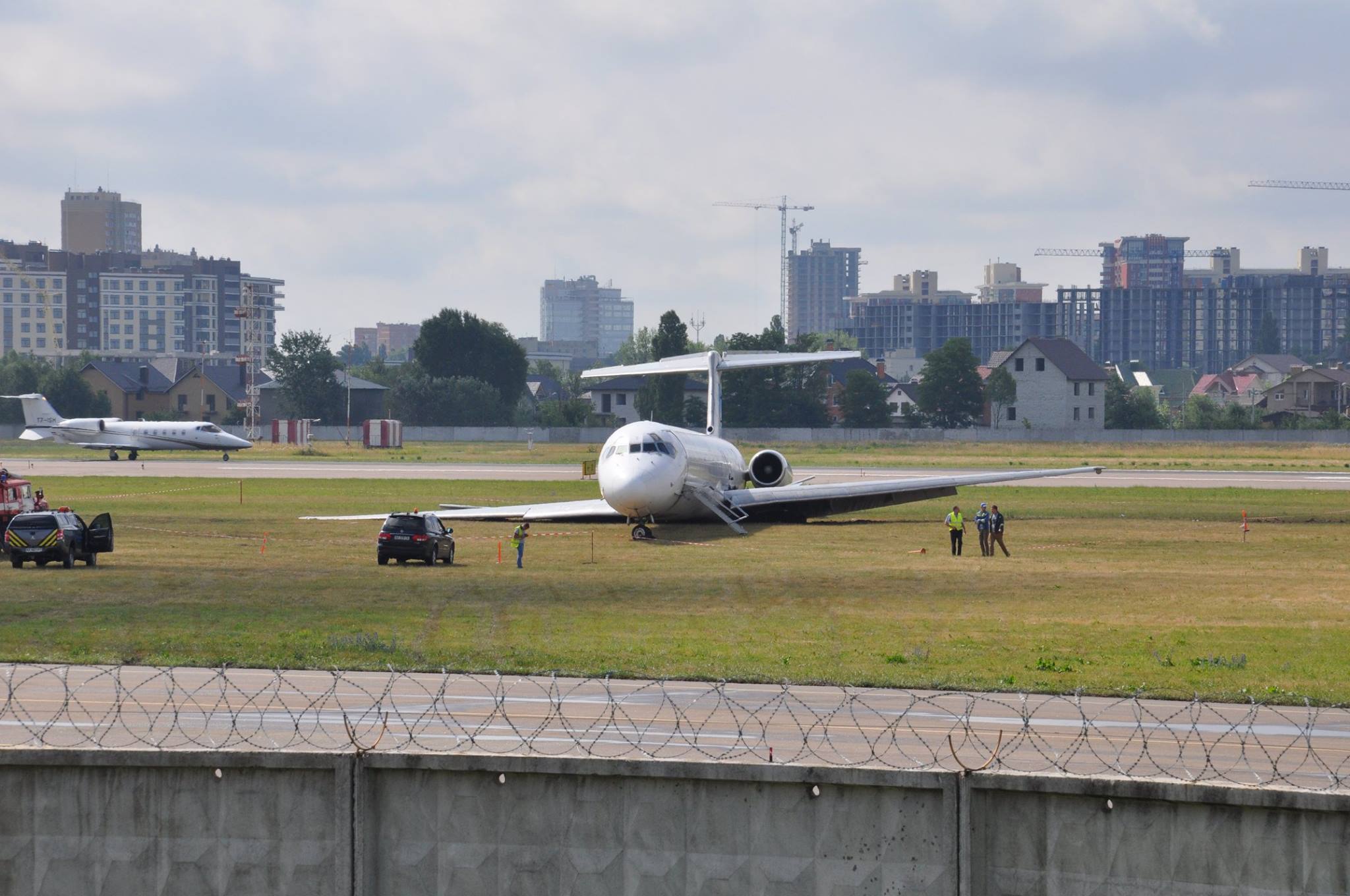
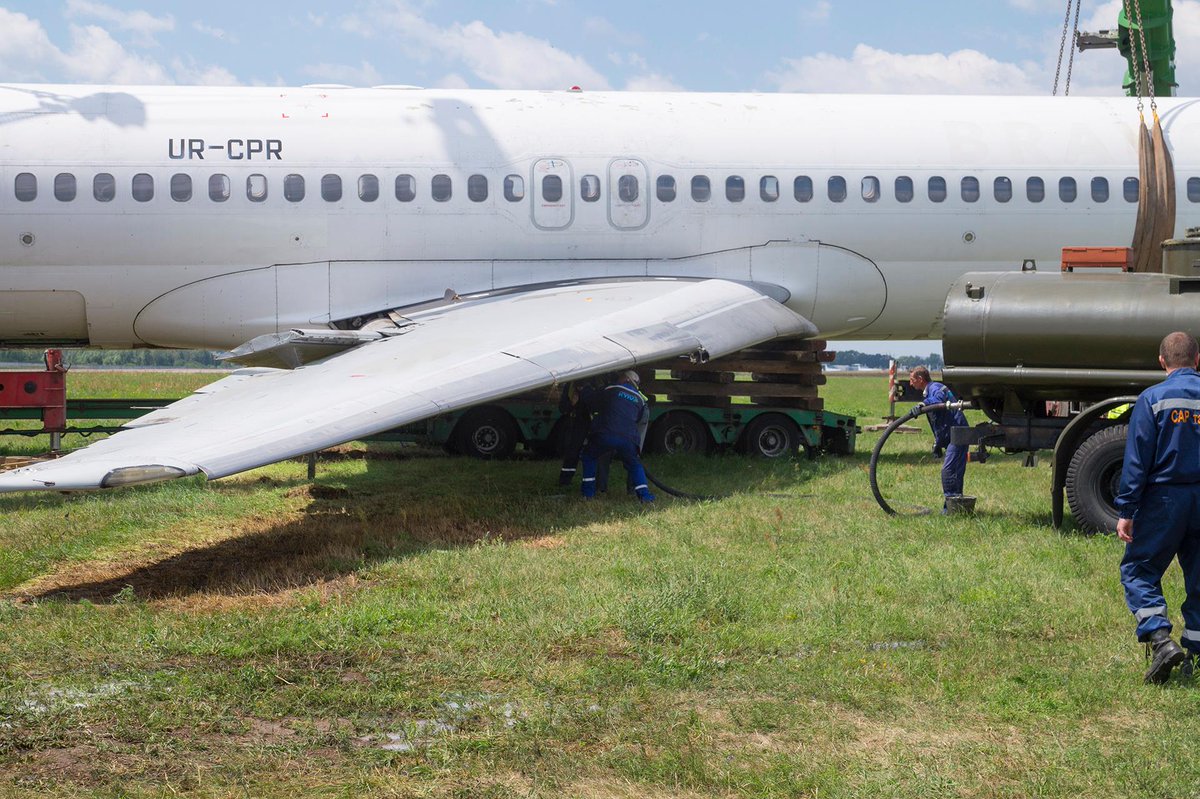
On June 14, 2018, according to the flight assignment, BAY 4406 charter flight en-route Antalya - Kyiv (Zhulyany) on MD-83 aircraft, state and registration number UR-CPR of Bravo Airways, was operated by PIC, co-pilot and five flight attendants. According to PIC’s Statement, the flight was delayed by 6 hours (departure time - 03:30 pm.) The Investigation Team did not establish the departure time from Antalya Airport. According to the PIC, the crew arrived at the airport at 02:00 pm. The takeoff time was 03:41 pm. The airline said the flight was delayed because of the aircraft non-arrival. Bravo Airways is the aircraft operator responsible for the flight and technical operation of the aircraft, maintaining its airworthiness and ensuring the flight safety. The Pilot Flying duties were performed by the PIC, and the Pilot Monitoring was the co-pilot. In accordance with the flight assignment, the PIC cross checked the copilot. According to his Statement, the flight preparation of the crew was carried out one and a half hours before the actual departure at Antalya Airport (PIC received aeronautical and meteorological information from a representative of Turkish Ground Services), after which, the PIC took a decision to perform the flight. Climb and level flight were performed in a normal mode. Landing approach was carried out to RW08 in the conditions of thunderstorm activity with ILS system. At 05:40 pm, at landing on the aerodrome of the Kyiv International Airport (Zhulyany) (hereinafter – Kyiv (Zhulyany) Aerodrome), during the landing run, at the distance of 1260 m from the entrance threshold, the aircraft suffered a runway excursion to the left of the air strip and stopped outside the cleared and graded area of the air strip at the distance of 123 m from the runway center line (according to the tire footprints at the occurrence site.) As a result of the accident, the aircraft has sustained substantial damage, in particular, to the structural elements. None of passengers or crew members received serious injuries.
Probable cause:
The cause of the accident, i.e. runway excursion of MD-83 UR-CPR aircraft operated by Bravo Airways, which took place on June 14, 2018 at the Kyiv (Zhulyany) Aerodrome at performance of flight BAY 4406 en-route Antalya-Kyiv (Zhulyany) – was the PIC’s decision to continue the landing at the Kyiv (Zhulyany) Aerodrome in the thunderstorm conditions with the following main factors:
- non-stabilized approach for landing, starting from the height of 1,000 feet;
- spoiler non-deployment by the crew;
- incorrect crew actions in application of the reverse thrust on a wet runway (EPR>1.3).
Contributing Factors:
- Air traffic control service in the classified airspace of Ukraine, which is required by the Order of the Ministry of Transport of Ukraine dated April 16, 2003, No. 293, was not provided to the crew in full;
- Wind variable in strength and direction;
- Probably, the crew’s failure to listen to the latest ATIS reports for the Kyiv (Zhulyany) Aerodrome;
- Bravo Airways Operator's Manual does not contain landing approach procedures;
- Low-quality pre-flight preparation, pre-landing preparation, checklist reading and completion at all flight stages.
Final Report:

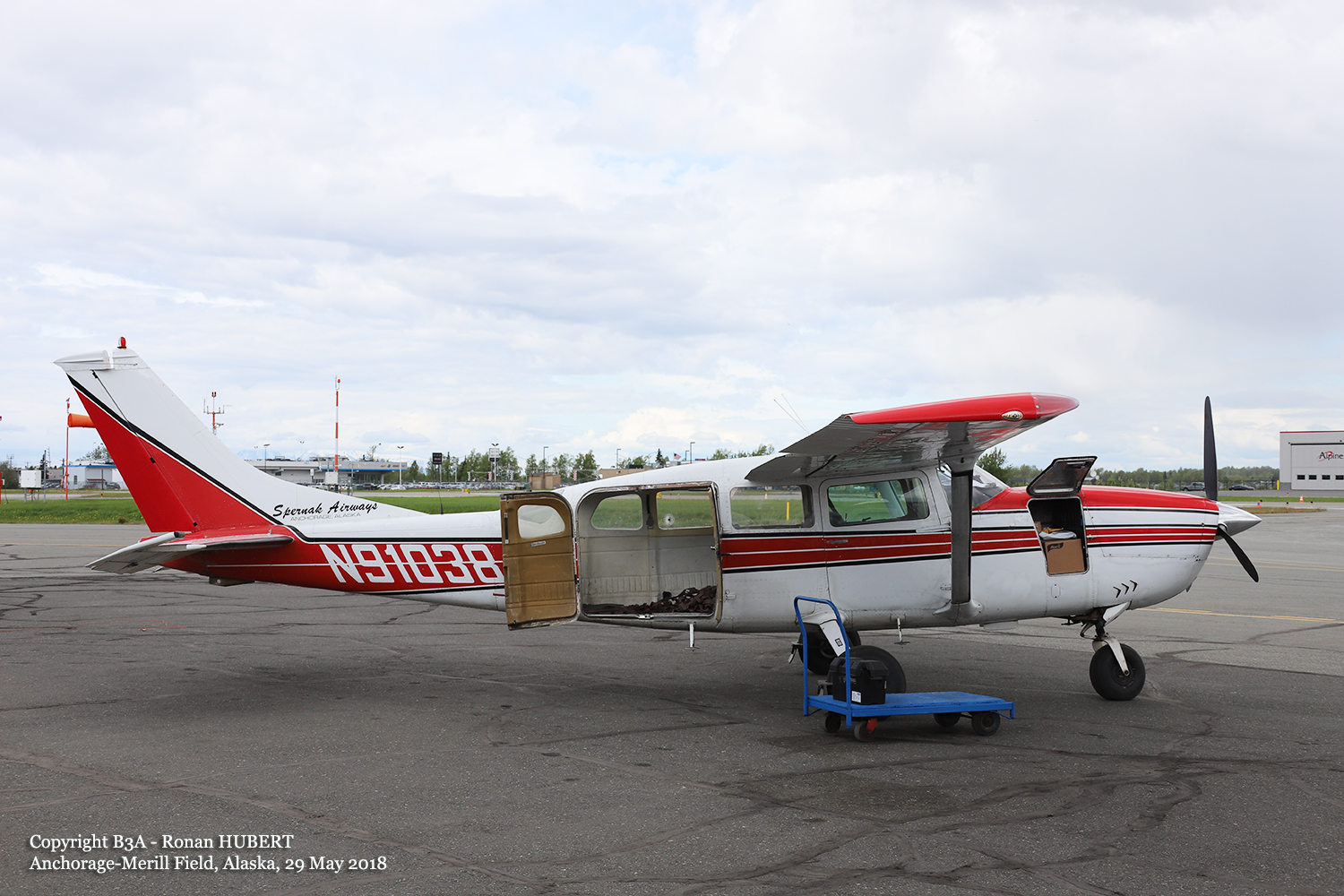
Crash of a Cessna 207 Skywagon in the Susitna River: 1 killed

Date & Time: Jun 13, 2018 at 1205 LT
Operator:
Registration:
N91038
Flight Phase:
Flight Type:
Survivors:
No
Schedule:
Anchorage - Tyonek
MSN:
207-0027
YOM:
1969
Crew on board:
1
Crew fatalities:
Pax on board:
0
Pax fatalities:
Other fatalities:
Total fatalities:
1
Captain / Total flying hours:
1442
Captain / Total hours on type:
514.00
Aircraft flight hours:
31711
Circumstances:
Two wheel-equipped, high-wing airplanes, a Cessna 207 and a Cessna 175, collided midair while in cruise flight in day visual meteorological conditions. Both airplanes were operating under visual flight rules, and neither airplane was in communication with an air traffic control facility. The Cessna 175 pilot stated that he was making position reports during cruise flight about 1,000ft above mean sea level when he established contact with the pilot of another airplane, which was passing in the opposite direction. As he watched that airplane pass well below him, he noticed the shadow of a second airplane converging with the shadow of his airplane from the opposite direction. He looked forward and saw the spinner of the converging airplane in his windscreen and immediately pulled aft on the control yoke; the airplanes subsequently collided. The Cessna 207 descended uncontrolled into the river. Although damaged, the Cessna 175 continued to fly, and the pilot proceeded to an airport and landed safely. An examination of both airplanes revealed impact signatures consistent with the two airplanes colliding nearly head-on. About 4 years before the accident, following a series of midair collisions in the Matanuska Susitna (MatSu) Valley (the area where the accident occurred), the FAA made significant changes to the common traffic advisory frequencies (CTAF) assigned north and west of Anchorage, Alaska. The FAA established geographic CTAF areas based, in part, on flight patterns, traffic flow, private and public airports, and off-airport landing sites. The CTAF for the area where the accident occurred was at a frequency changeover point with westbound Cook Inlet traffic communicating on 122.70 and eastbound traffic on 122.90 Mhz. The pilot of the Cessna 175, which was traveling on an eastbound heading at the time of the accident, reported that he had a primary active radio frequency of 122.90 Mhz, and a nonactive secondary frequency 135.25 Mhz in his transceiver at the time of the collision. The transceivers from the other airplane were not recovered, and it could not be determined whether the pilot of the Cessna 207 was monitoring the CTAF or making position reports.
Probable cause:
The failure of both pilots to see and avoid the other airplane while in level cruise flight, which resulted in a midair collision.
Final Report:
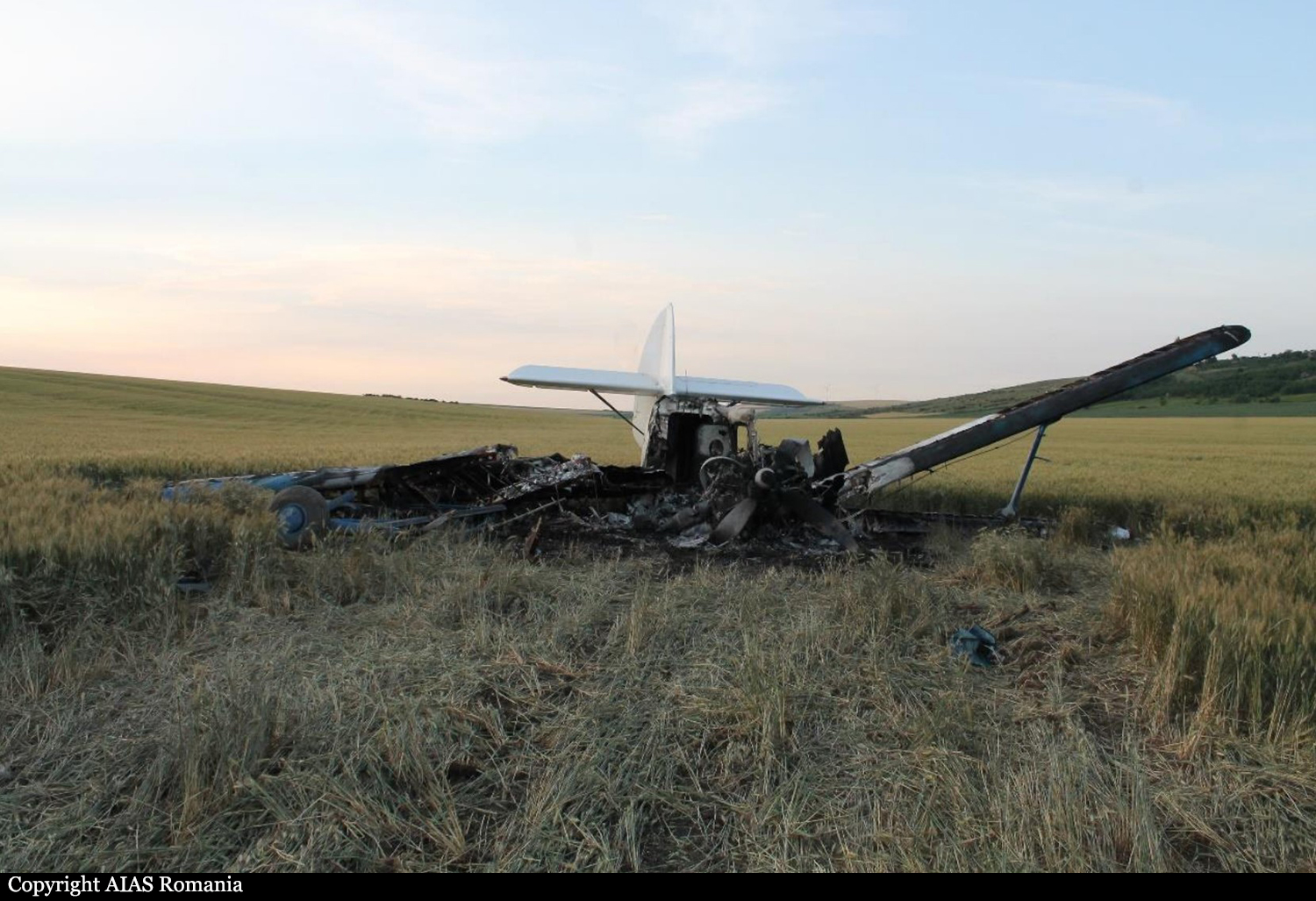
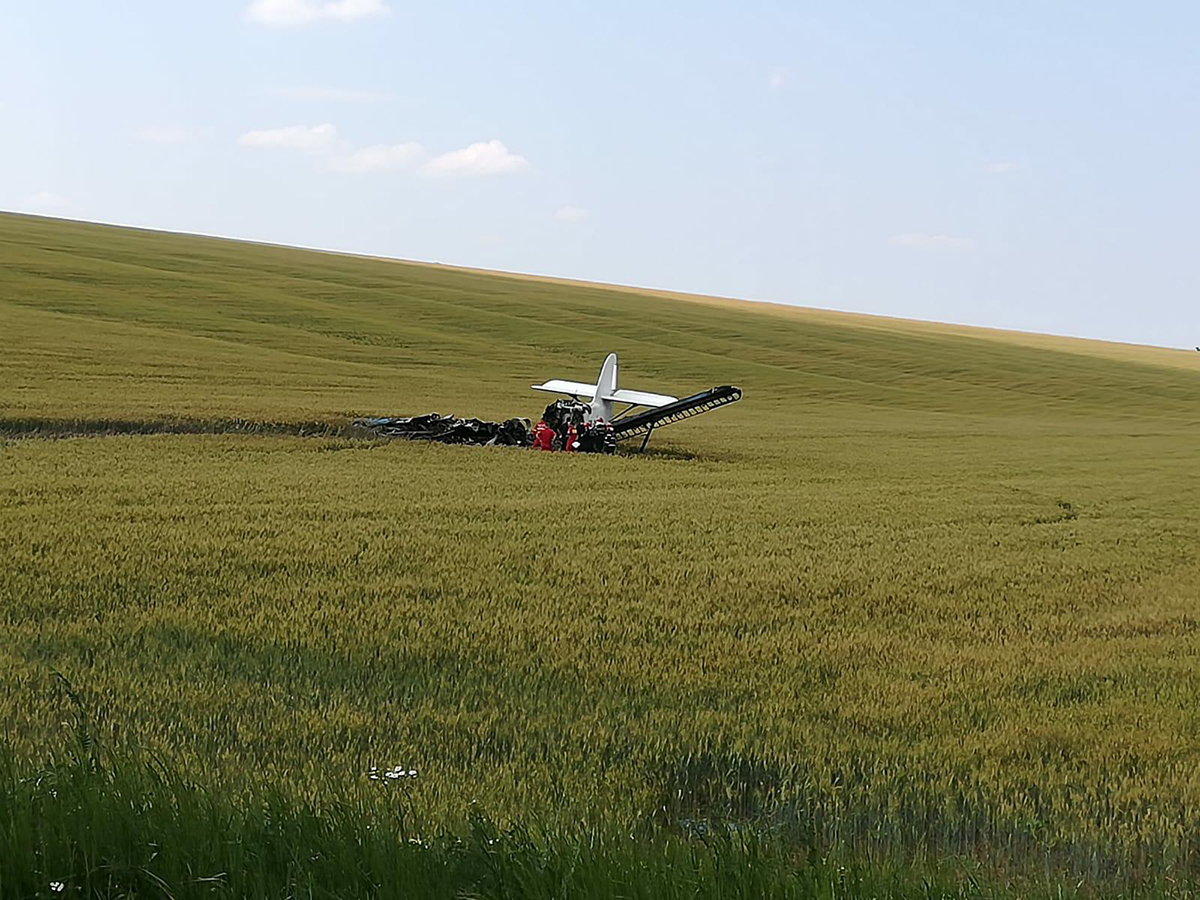
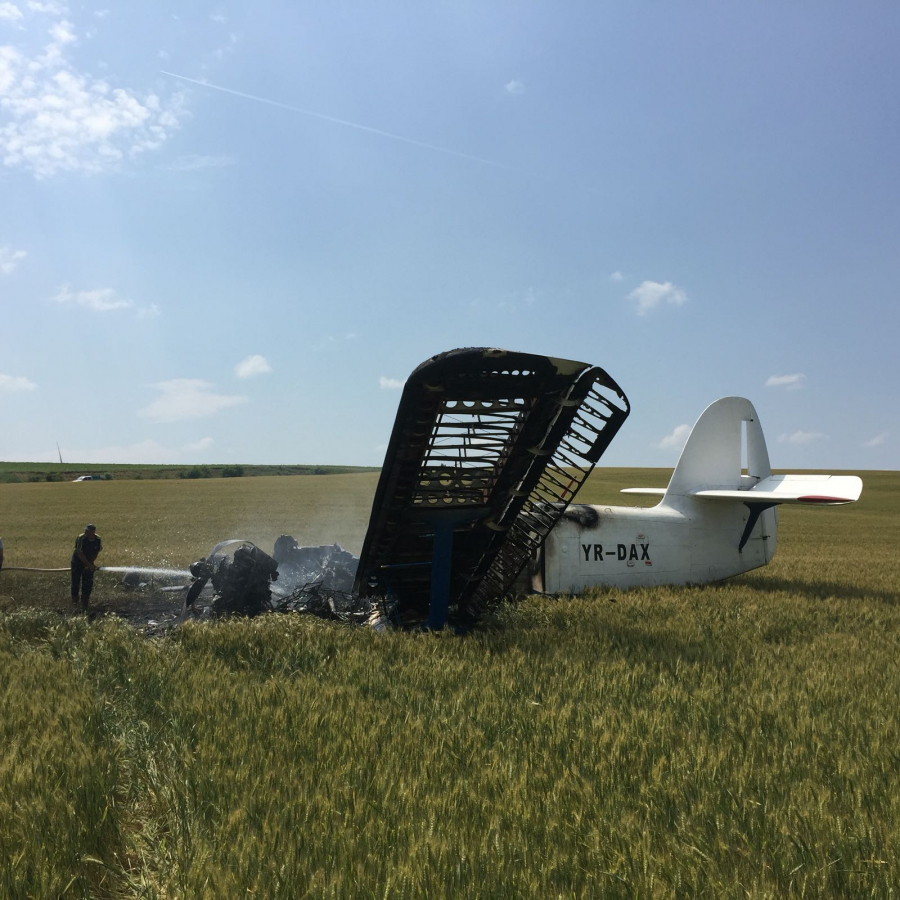
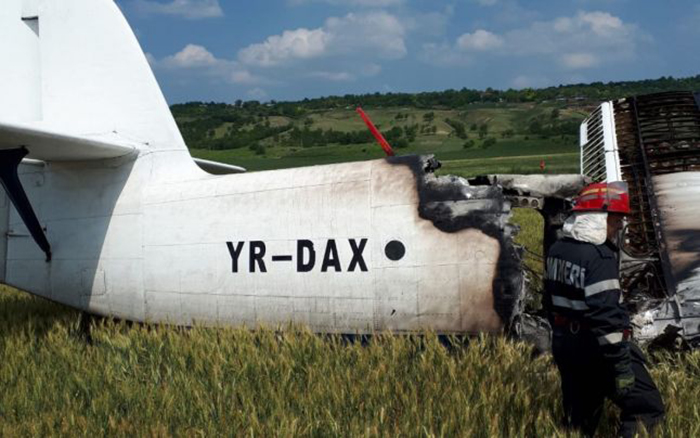
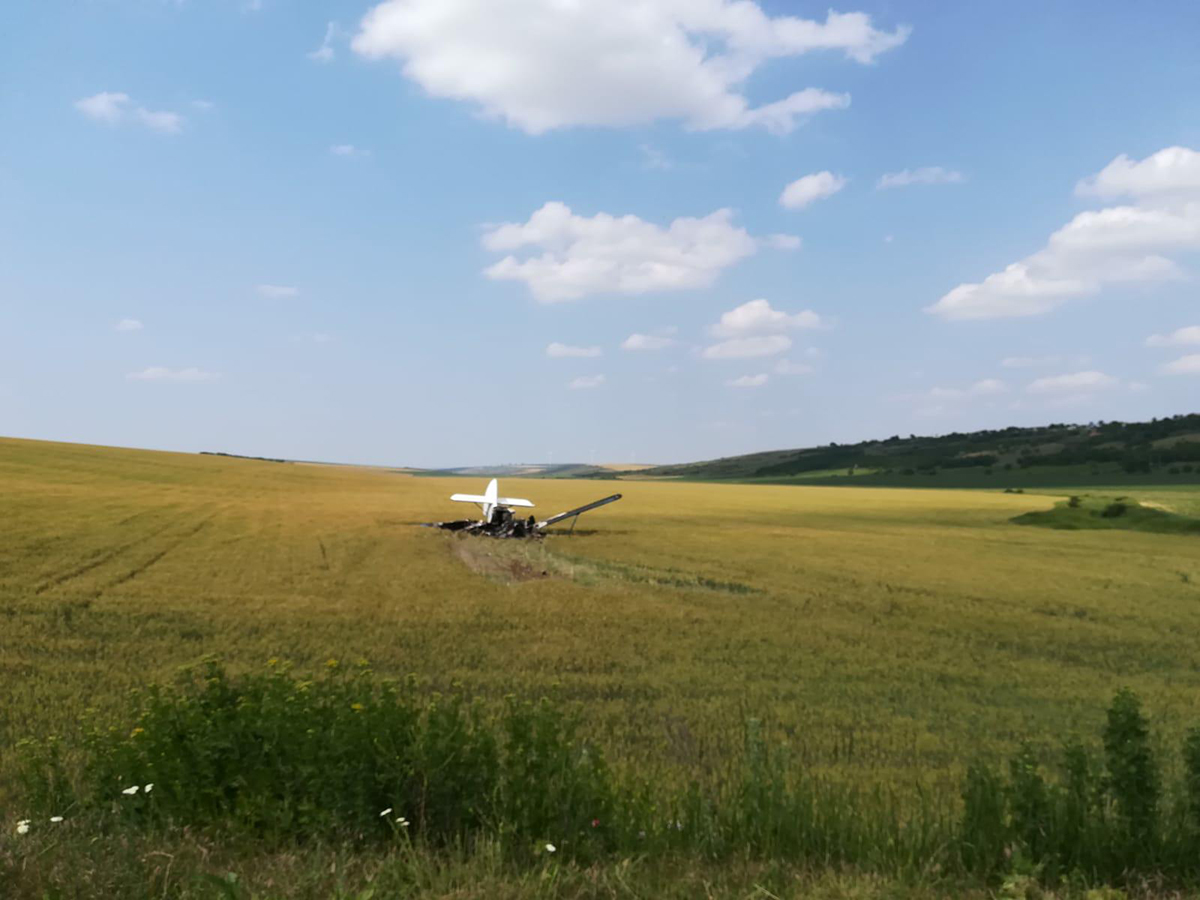
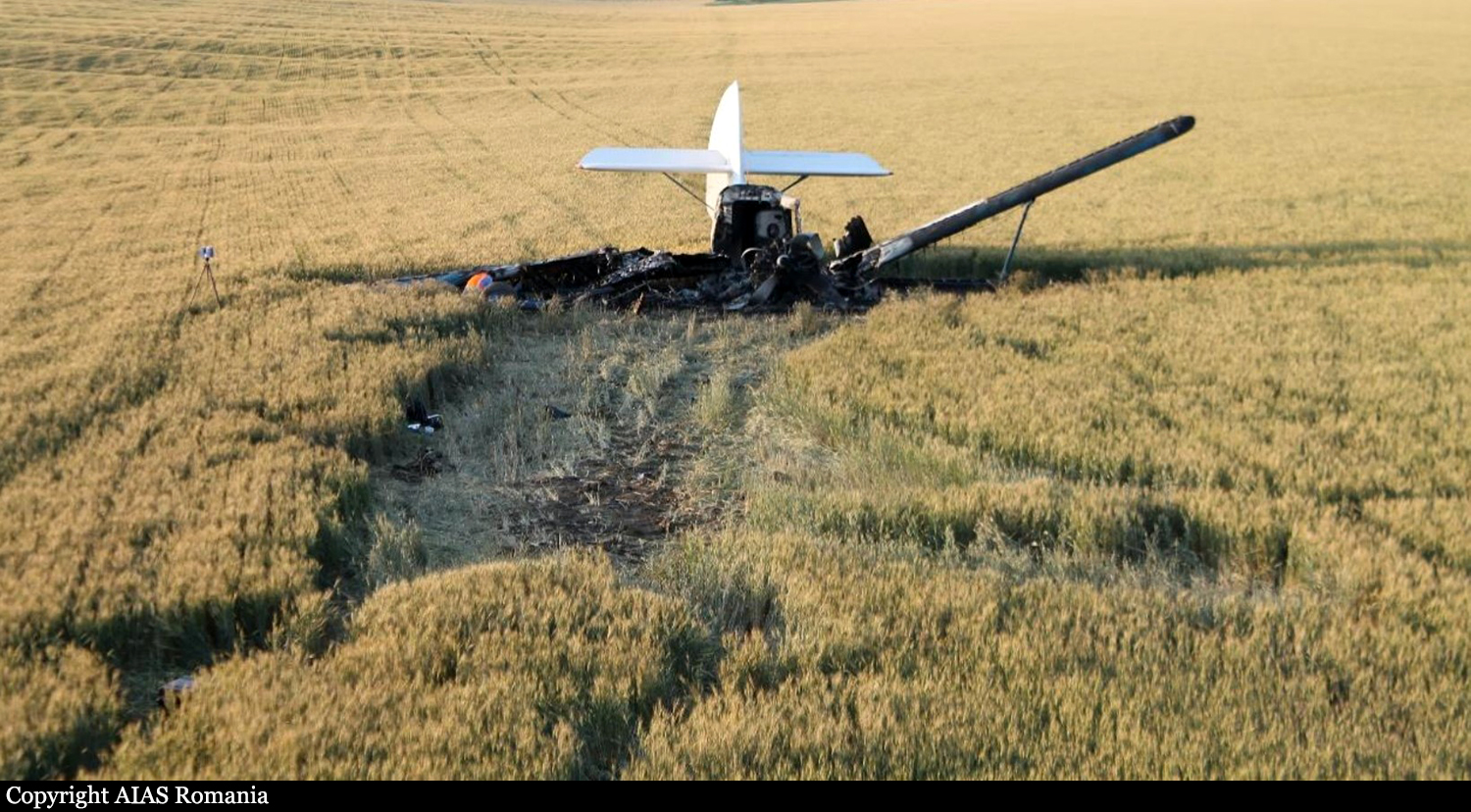
Crash of a PZL-Mielec AN-2R in Băleni

Date & Time: Jun 6, 2018 at 1410 LT
Type of aircraft:
Operator:
Registration:
YR-DAX
Flight Phase:
Survivors:
Yes
Schedule:
Băleni - Băleni
MSN:
1G216-16
YOM:
1990
Country:
Region:
Crew on board:
2
Crew fatalities:
Pax on board:
0
Pax fatalities:
Other fatalities:
Total fatalities:
0
Captain / Total hours on type:
3209.00
Copilot / Total hours on type:
8684
Circumstances:
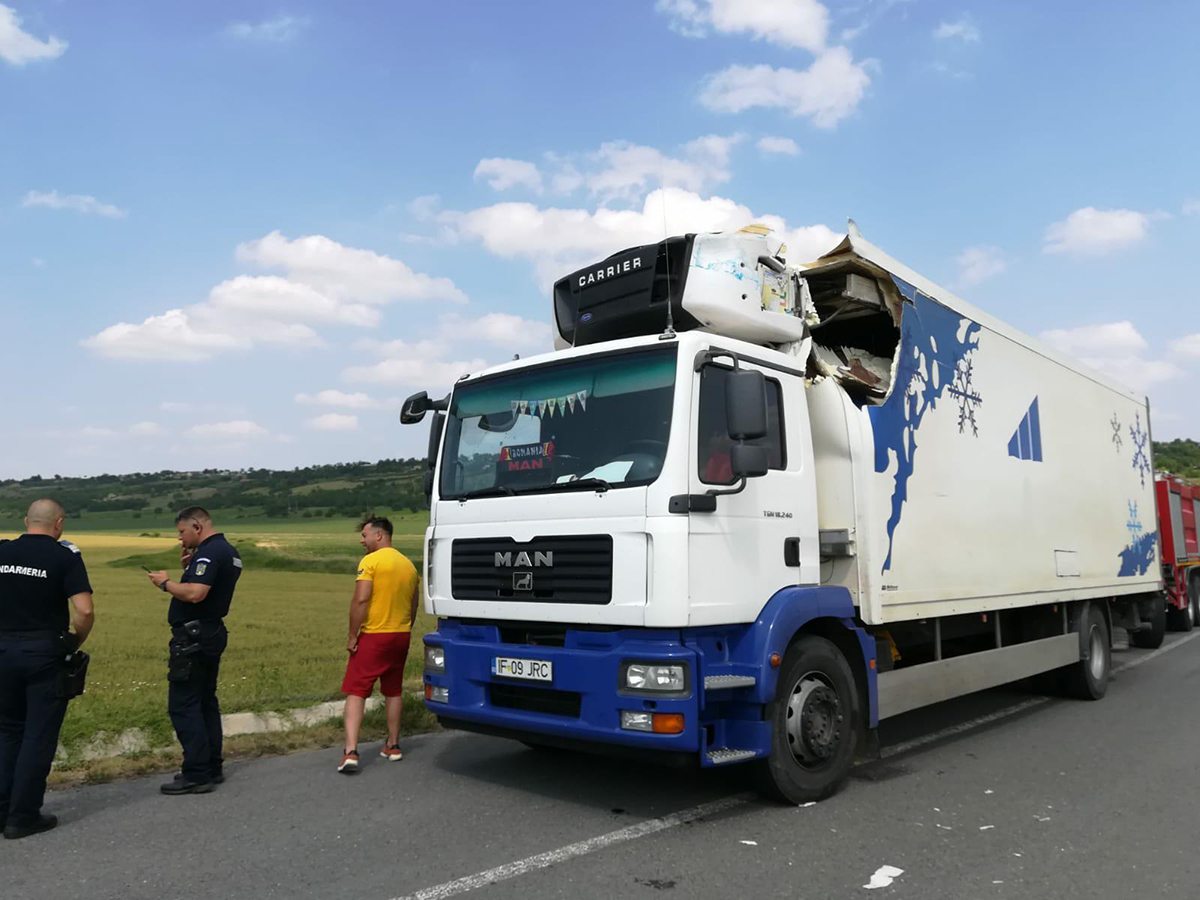
The crew was completing a crop spraying flight in Băleni and was spraying insecticides on fields. While passing from a field to an other, the crew failed to realize his altitude was insufficient when, passing over a road, the airplane struck the roof of a truck. Out of control, the airplane crash landed in a field and came to rest, bursting into flames. Both pilots were injured and the aircraft was destroyed by a post crash fire.
Probable cause:
The accident was the consequence of a loss of control following an in-flight collision with a truck. The crew failed to observe the potential traffic passing on the road while flying at a very low height of three metres above the ground, which was considered as a contributing factor.
Final Report:

Crash of a Cessna 525 CitationJet CJ2+ in Saint-Tropez

Date & Time: Jun 6, 2018 at 1310 LT
Operator:
Registration:
D-IULI
Flight Type:
Survivors:
Yes
Schedule:
Figari - Saint-Tropez
MSN:
525A-0514
YOM:
2013
Country:
Region:
Crew on board:
1
Crew fatalities:
Pax on board:
1
Pax fatalities:
Other fatalities:
Total fatalities:
0
Captain / Total flying hours:
2500
Captain / Total hours on type:
1234.00
Circumstances:
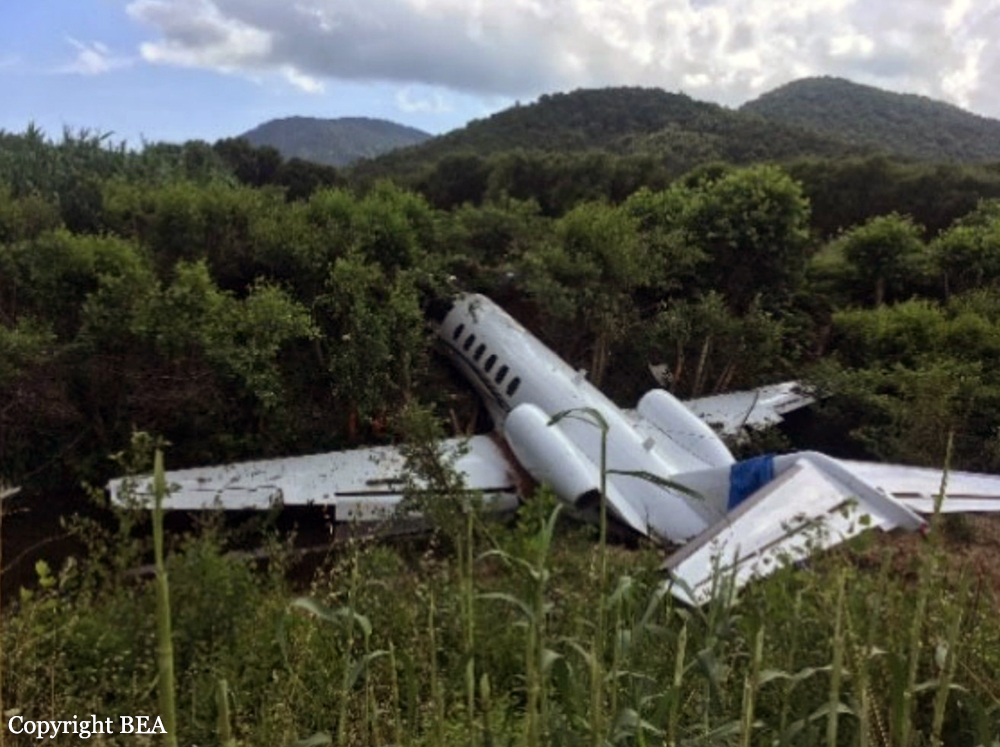
The aircraft departed Figari-Sud-Corse Airport on a positioning flight to Saint-Tropez-La Môle, carrying one passenger and one pilot. Weather conditions at destination were poor with ceiling at 1,800 feet and rain. The pilot contacted Nice Approach and was cleared to descend to 6,000 feet and to report over EM for an approach to La Môle Airport Runway 24. On final approach, the pilot was unable to establish a visual contact with the runway and initiated a go-around procedure. Few minutes later, he completed a second approach and landed the airplane 200 metres past the runway threshold at a speed of 136 knots. Spoilers were deployed but the airplane was unable to stop within the remaining distance. It veered slightly to the left, departed the end of the runway, crossed a river and came to rest against an embankment located about 100 metres past the runway end. The pilot escaped unhurt while the passenger was slighlty injured. The aircraft was damaged beyond repair.
Probable cause:
The landing distance of the airplane on a wet runway as defined in the Airplane Flight Manual (AFM) performance tables are not compatible with the length of runway available at La Môle Aaerodrome. When preparing the flight, the pilot used the flight record provided by the operator ProAir to determine landing performance. Landing distance on a wet runway presented in the file increased that on a dry runway by 15%. The 15% increase on a wet runway can only be used in conjunction with the increase of 60% imposed in commercial operation, otherwise it may be inappropriate. The value resulting from the calculation was, in this case, wrong and less than the value indicated in the aircraft flight manual. The pilot probably did not use the EFB application for the calculation of performance or the flight manual to verify this value. The pilot thus undertook the flight on the basis of erroneous performance values, without realizing that he could not land at this aerodrome if the runway was wet. In addition, during the final approach, the speed of the aircraft was greater than the speed approach reference and the approach slope was also greater than the nominal slope, which resulted in an increase in the landing distance. During the landing roll, the aircraft exited the runway longitudinally at a speed of 41 kt. The pilot failed to stop the aircraft until it does not violently collide with obstacles at the end of the track.
Contributing factors:
- The operator's use of the same operations manual for two different types of operations;
- The absence in the operations manual of a calculation method, coefficient and safety margin for the calculation of performance in non-commercial transport;
- Lack of knowledge by the pilot and the operator of the method of calculation of landing performance in non-commercial transport;
- The lack of indication in the operations manual that the landing performances at La Môle aerodrome are limiting in case of a wet or contaminated runway.
Final Report:

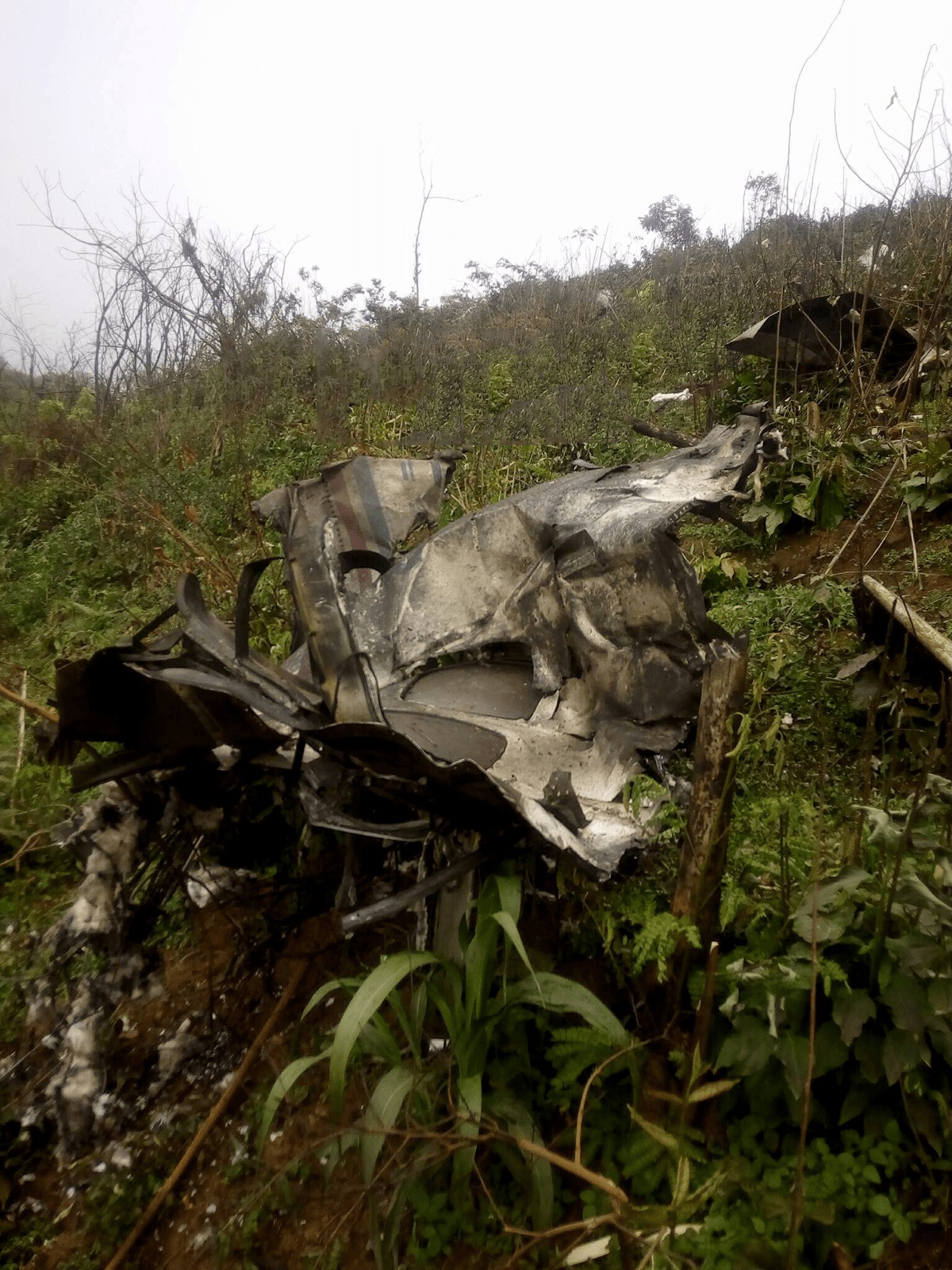
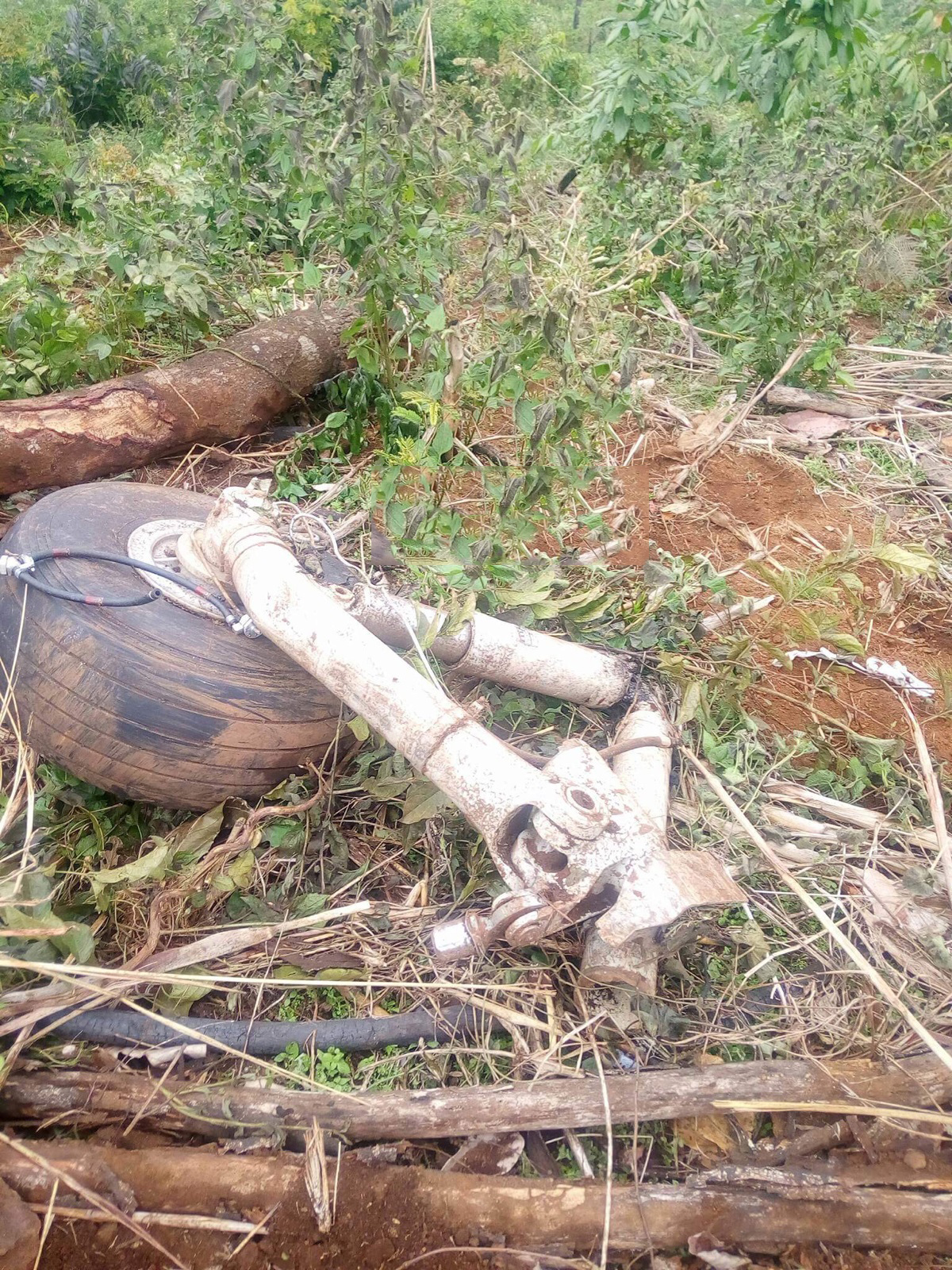
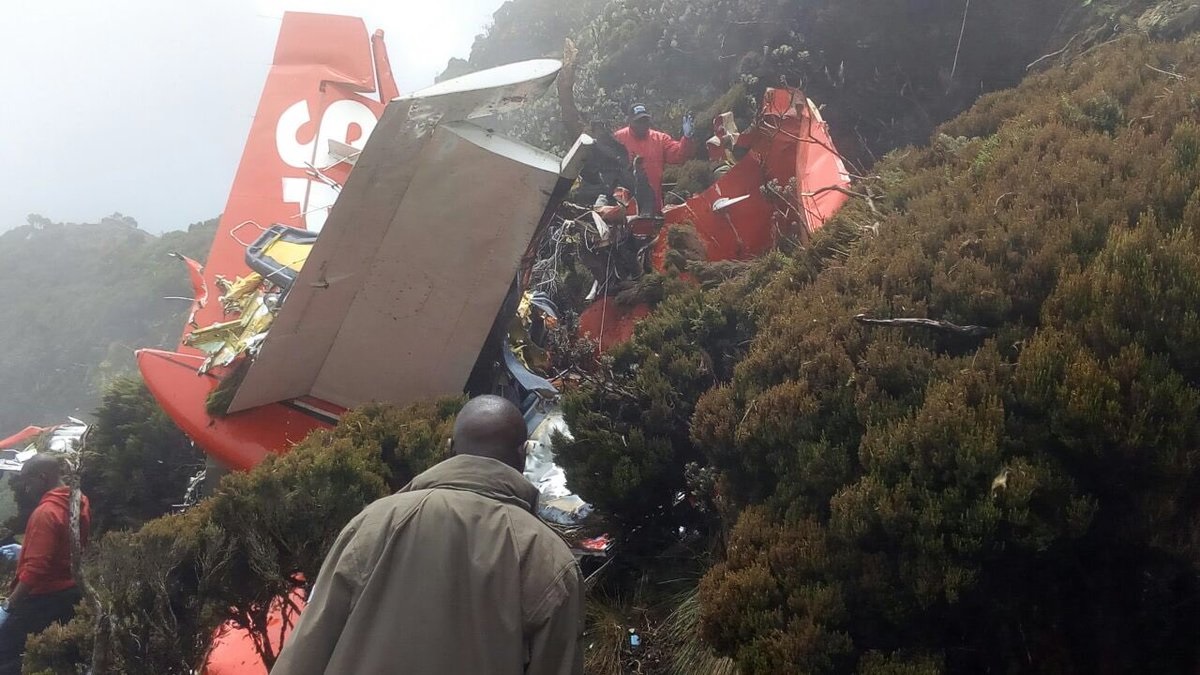
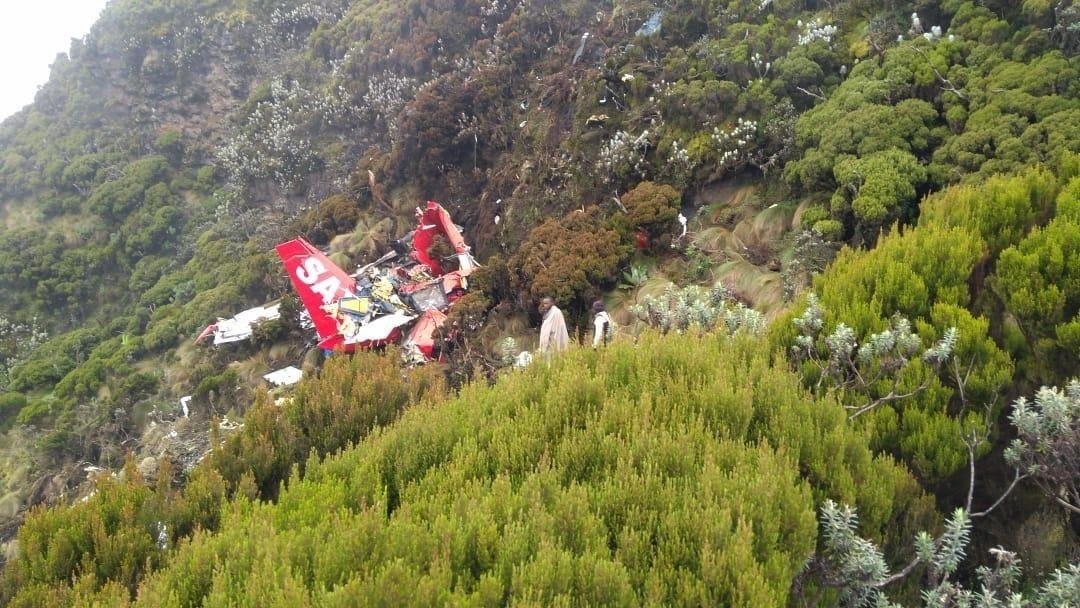
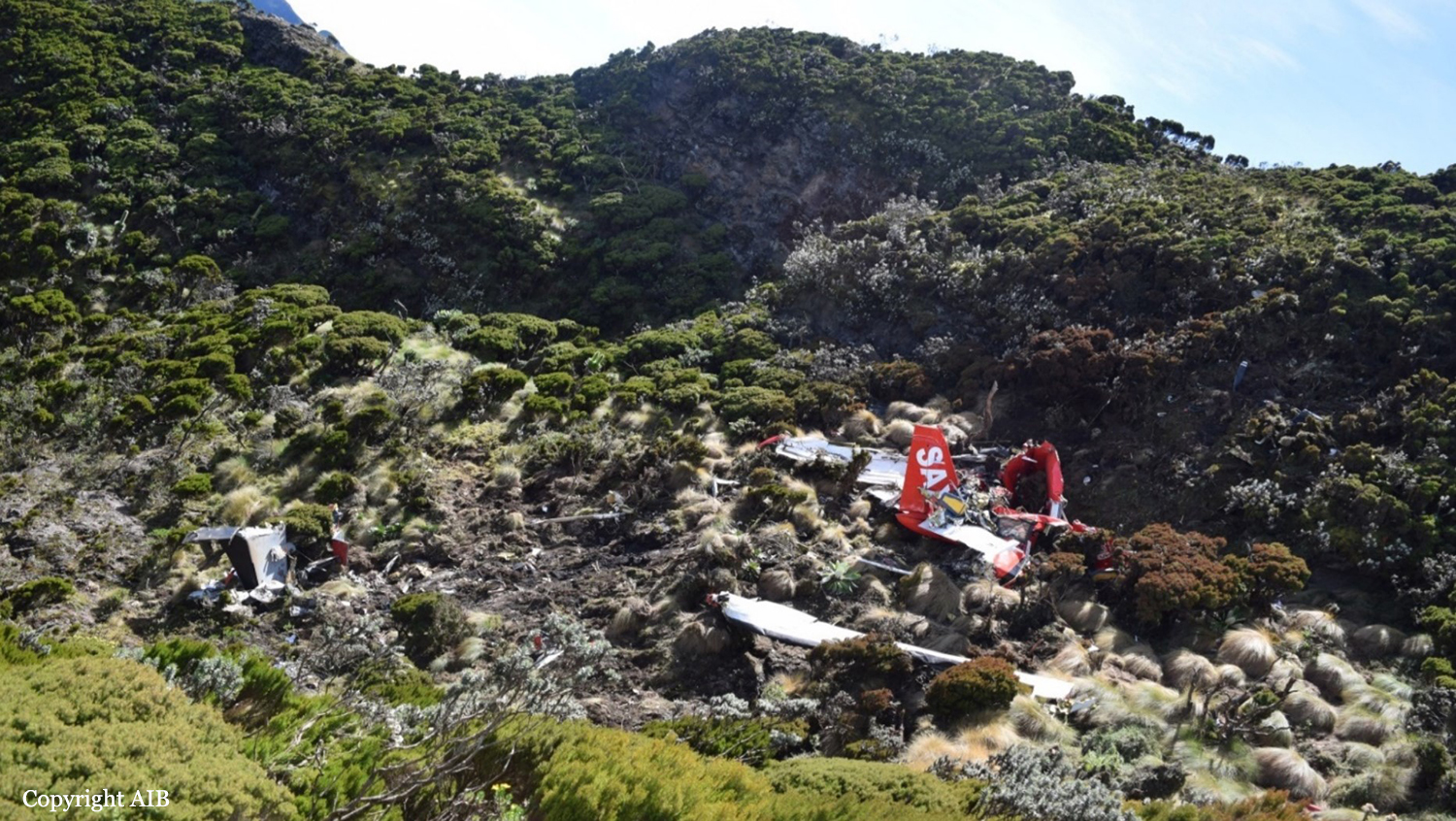
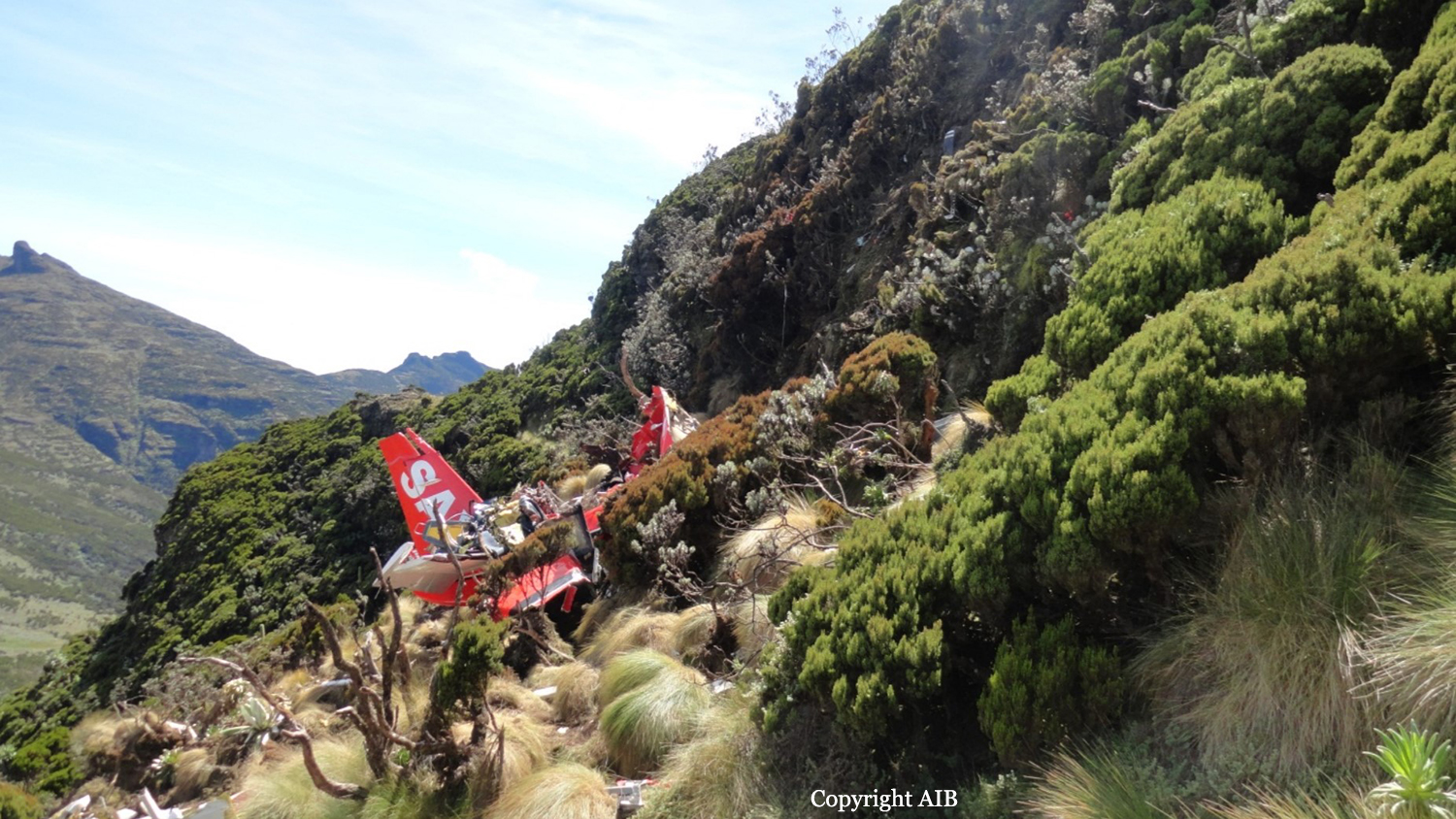
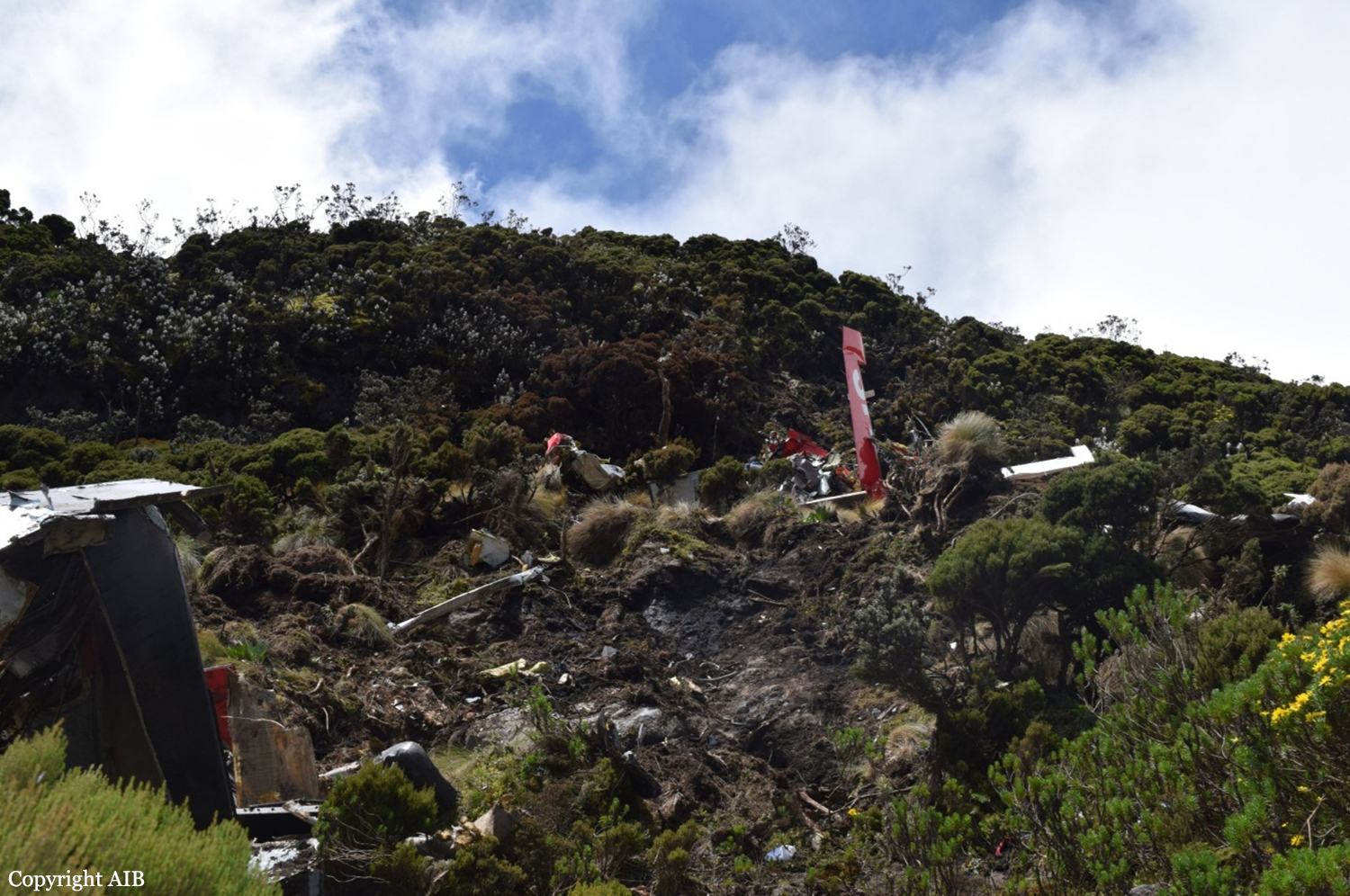
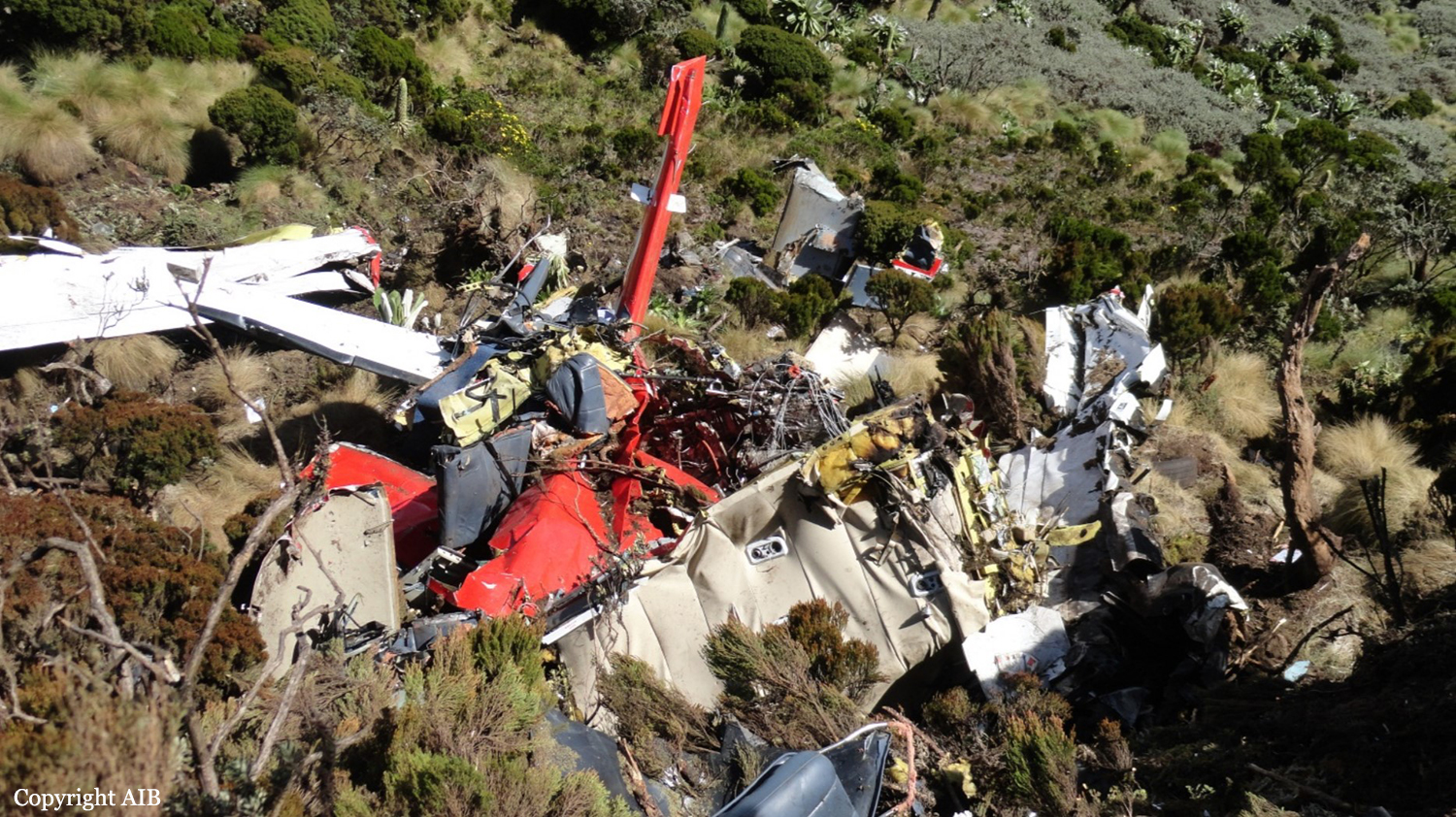
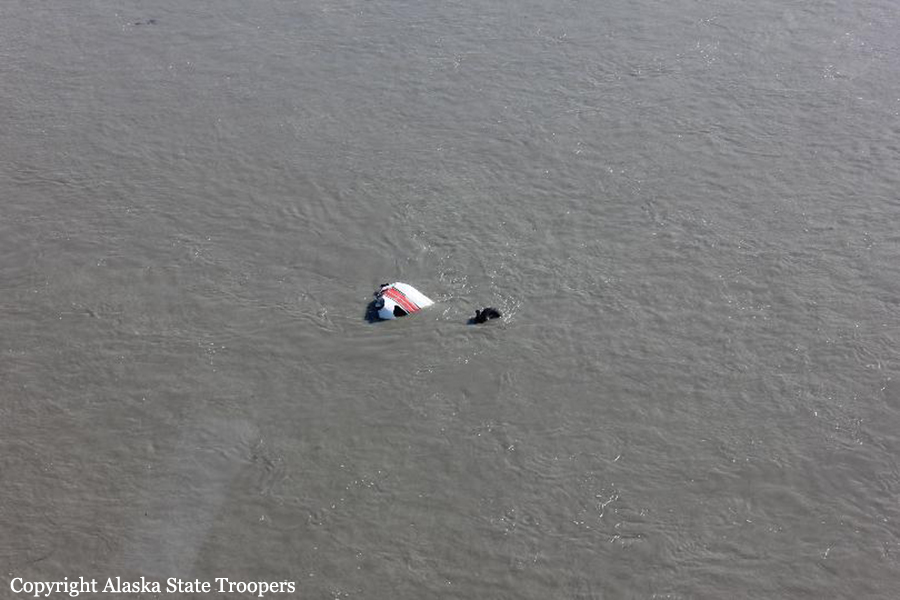
Crash of a Cessna 208B Grand Caravan in Mt Aberdare: 10 killed

Date & Time: Jun 5, 2018 at 1702 LT
Type of aircraft:
Operator:
Registration:
5Y-CAC
Flight Phase:
Survivors:
No
Site:
Schedule:
Kitale – Nairobi
MSN:
208B-0525
YOM:
1996
Flight number:
EXZ102
Country:
Region:
Crew on board:
2
Crew fatalities:
Pax on board:
8
Pax fatalities:
Other fatalities:
Total fatalities:
10
Captain / Total flying hours:
2352
Circumstances:
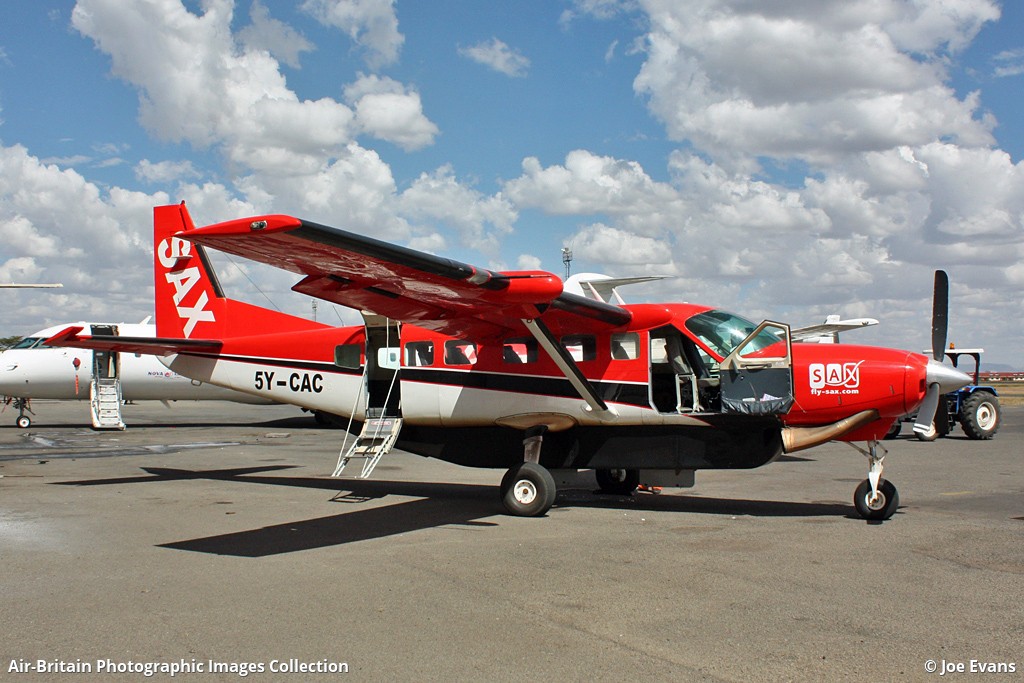
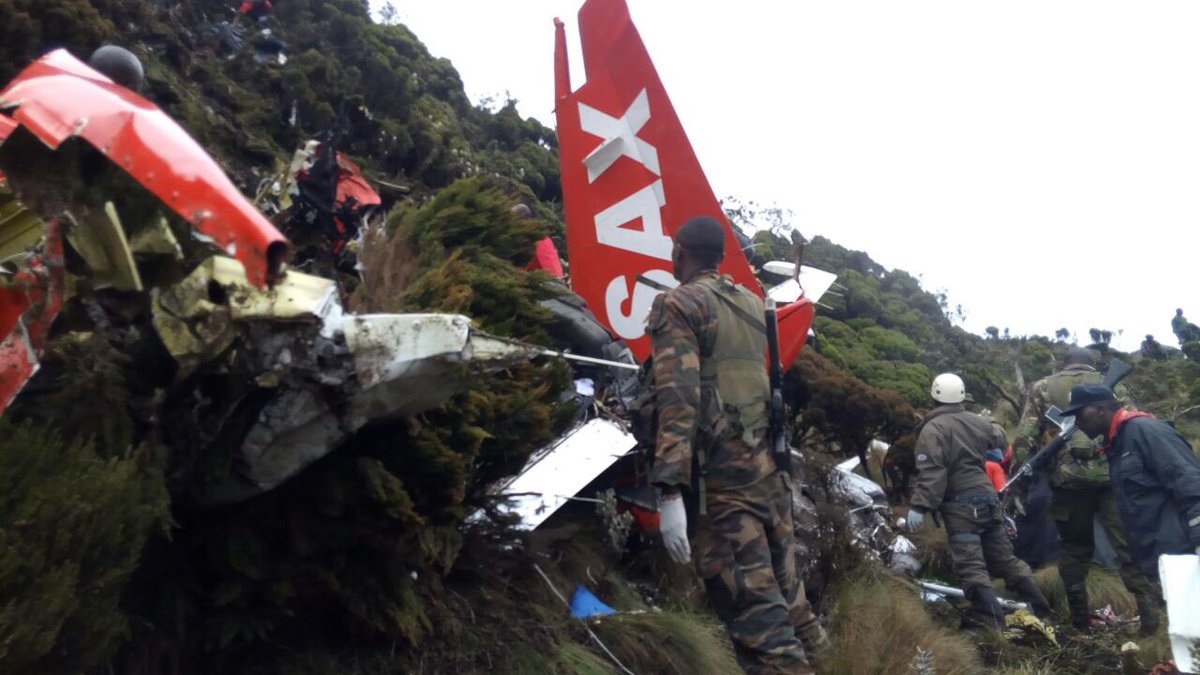
The aircraft took-off from Kitale Airstrip (HKKT) at 16.05 hours and set course to Jomo Kenyatta International Airport (HKJK) after climbing to FL 110 with ten onboard. Once established, there were slight peripheral variations in groundspeed and track. The aircraft Flight Level was sustained at 110 with some occasional deviations. Aircraft height above ground level (AGL) varied between 1,102 feet and 4,187 feet. One minute before its impact with the cliff, the aircraft was at 11,100 feet or 3,000 feet AGL, 159 knots ground speed, and tracking radial 338 NV. Immediately before radar signal was lost, the elevation of the highest ground level was 12,876 feet, the aircraft altitude was 11,200 feet, the ground speed was 156 knots, and track was radial 339 NV. Information retrieved from the Radar transcript recorded various parameters of the aircraft from 1605hrs up to 1702hrs, the time radar signal was lost. This information was consistent with information extracted from the on-board equipment the ST3400 and the aera GPS. The radar system transmits information including aircraft position in relation to NV VOR, Flight Level or altitude, ground speed, vertical speed and heading. Information retrieved from the GPS captured the last recorded time, date and location as 14:00:52, on 06/05/2018 and elevation 3,555.57 metres. The aircraft impacted the bamboo-covered terrain at an elevation of 3,645 metres at 0.36’56’’S 36 42’44’’ where the wreckage was sited. The aircraft was totally destroyed by impact forces and all 10 occupants were killed.
Probable cause:
The flight crew's inadequate flight planning and the decision to fly instrument flight rules (IFR) at an altitude below the published Minimum Sector Altitude in the Standard Instrument Arrival Chart under instrument meteorological conditions (IMC), and their failure to perform an immediate escape maneuver following TAWS alert, which resulted in controlled flight into terrain (CFIT).
Contributing Factors:
1. Contributing to the accident were the operator's inadequate crew resource management (CRM) training, inadequate procedures for operational control and flight release.
2. Also contributing to the accident was the Kenya Civil Aviation Authority's failure to hold the operator accountable for correcting known operational deficiencies and ensuring compliance with its operational control procedures.
3. There was no requirement for crew to be trained in CFIT avoidance ground training tailored to the company’s operations that need to address current CFIT-avoidance technologies.
4. Use of non-documented procedure and Clearance by the ATC to fly below the published minimum sector altitude.
5. Lack of situational awareness by the radar safety controller while monitoring flights within the radar service section.
Final Report: