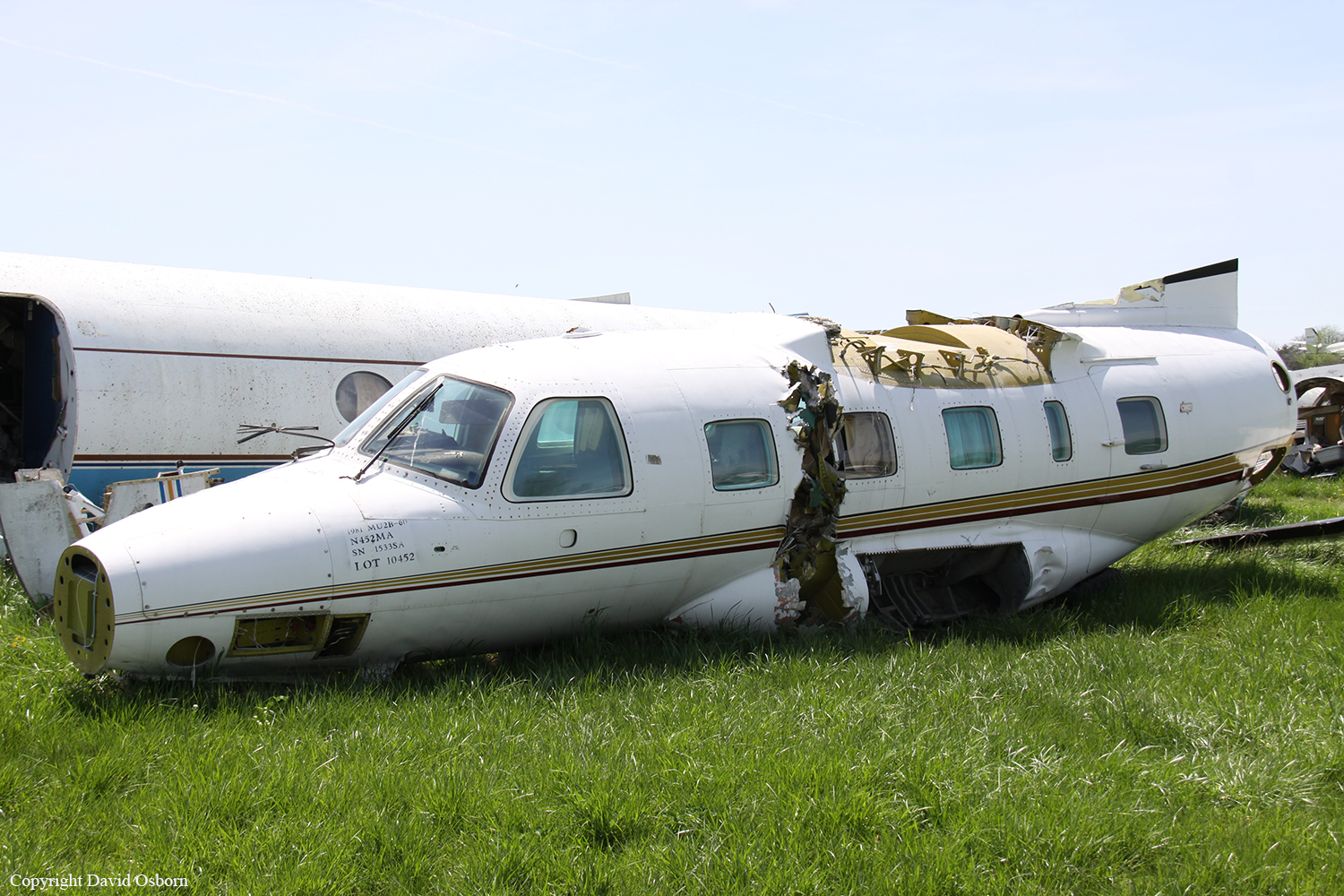
Crash of a Mitsubishi MU-2B-60 Marquise in Millington

Date & Time: Dec 9, 2008 at 1058 LT
Type of aircraft:
Registration:
N452MA
Flight Type:
Survivors:
Yes
Schedule:
Millington - Millington
MSN:
1533
YOM:
1981
Crew on board:
1
Crew fatalities:
Pax on board:
0
Pax fatalities:
Other fatalities:
Total fatalities:
0
Captain / Total flying hours:
5311
Captain / Total hours on type:
662.00
Aircraft flight hours:
6094
Circumstances:
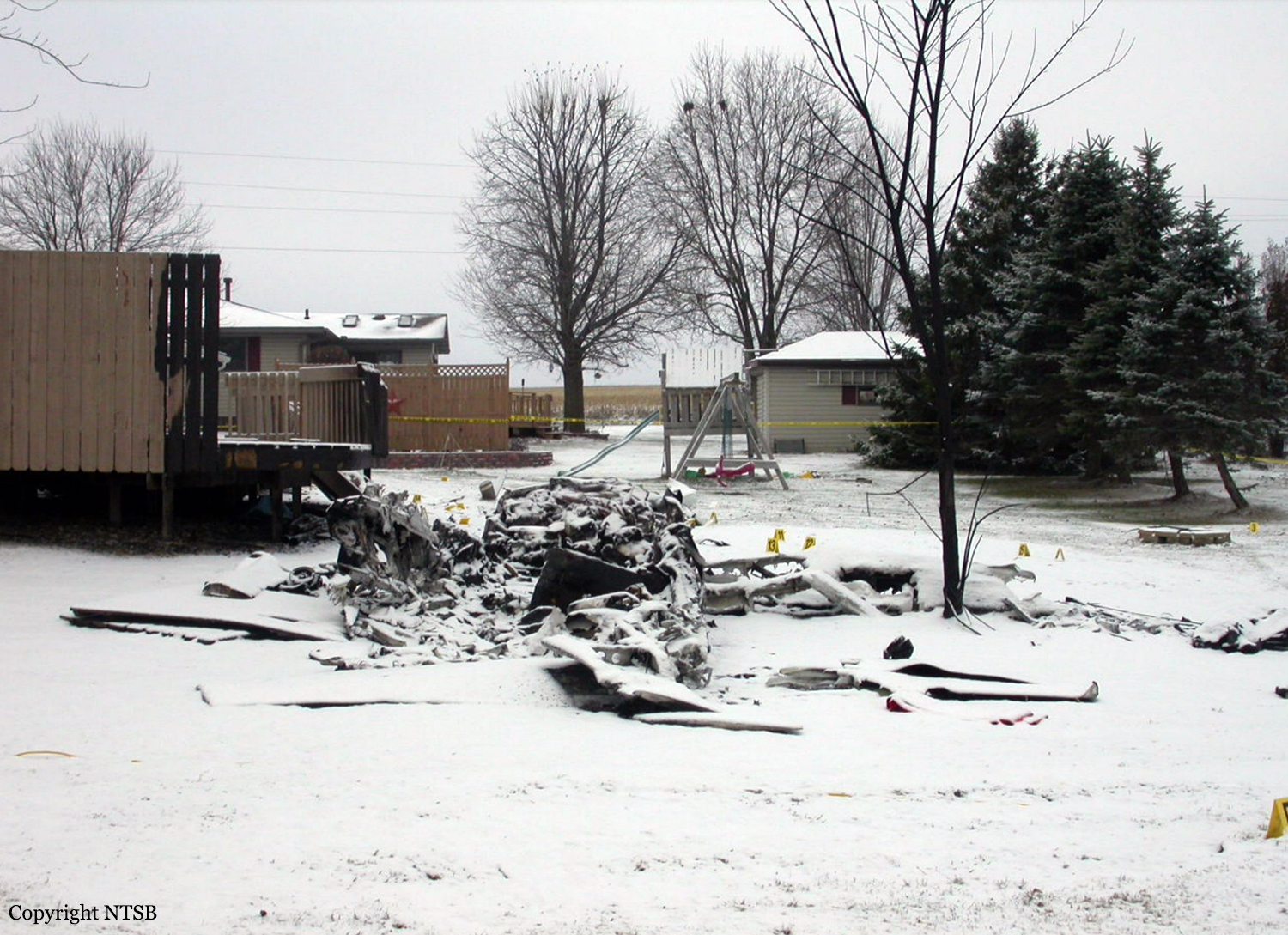
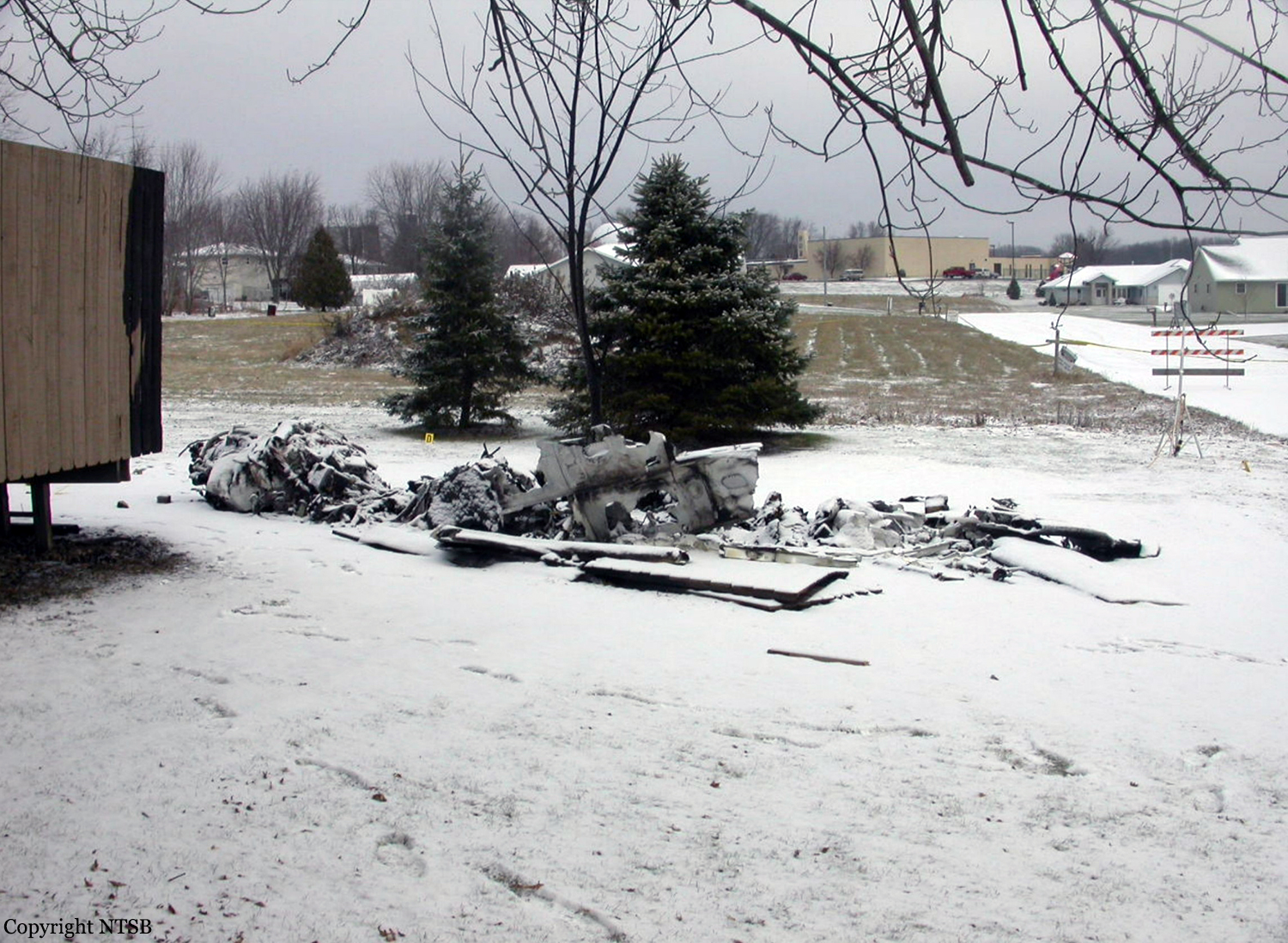
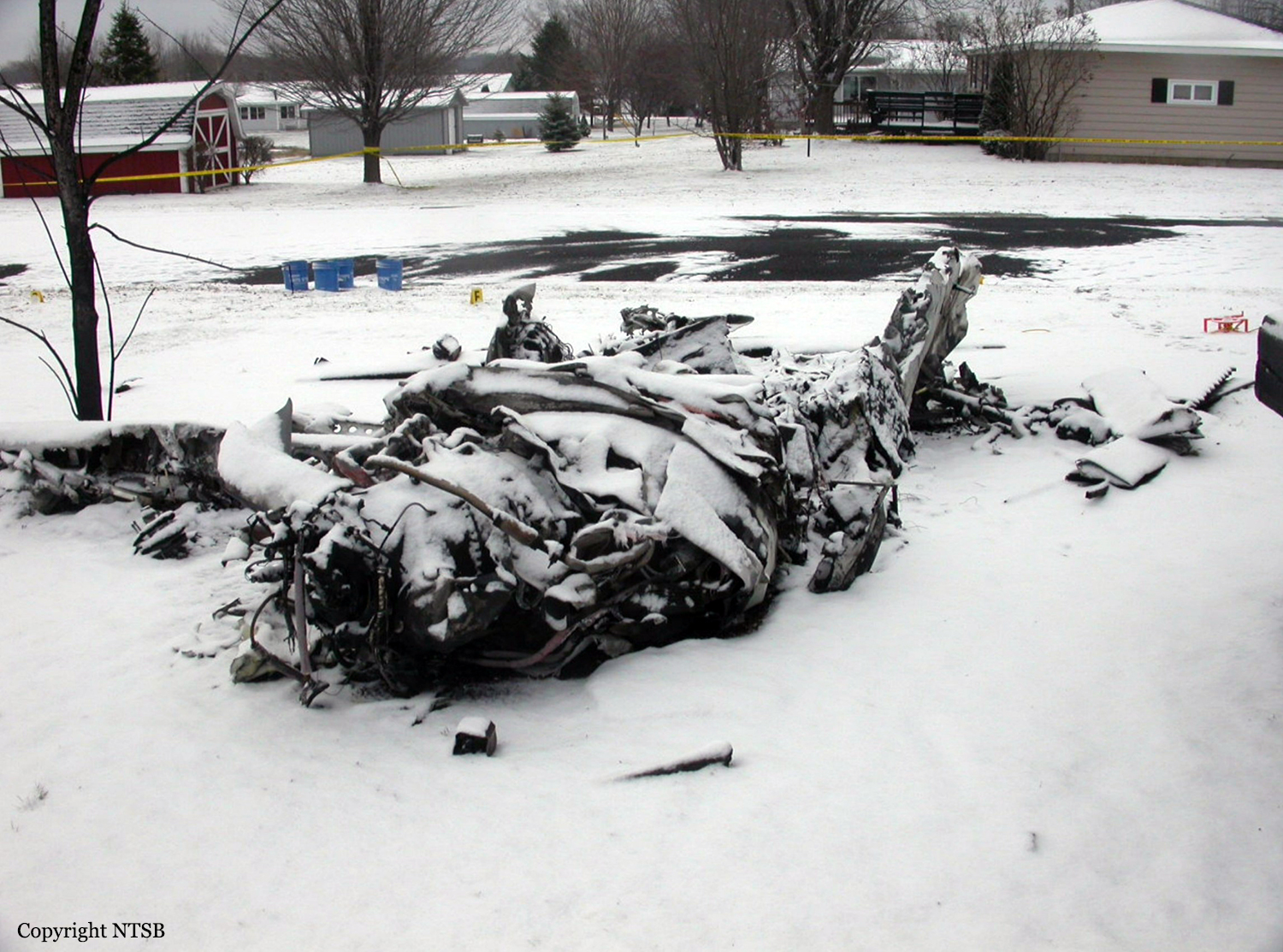
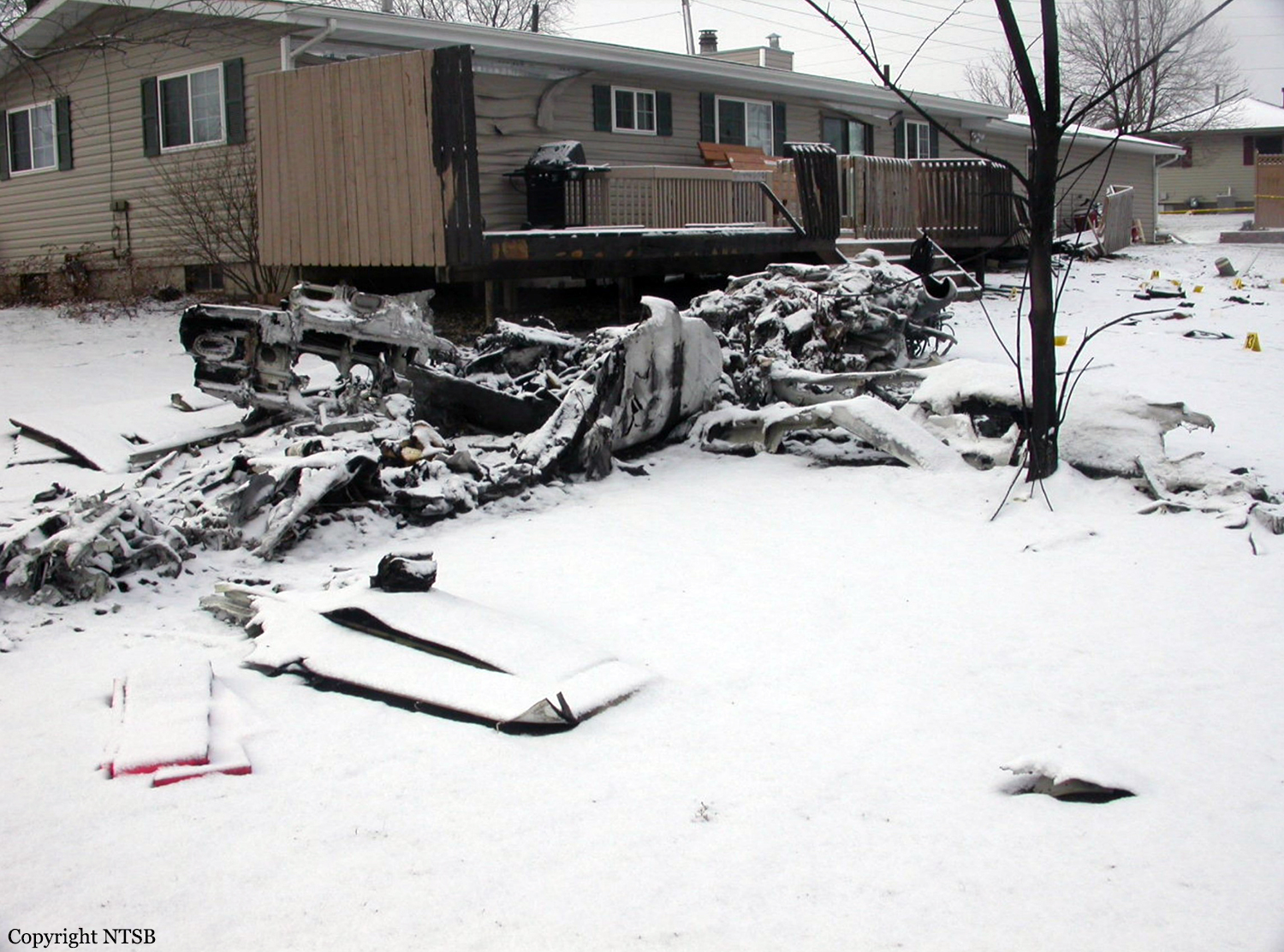
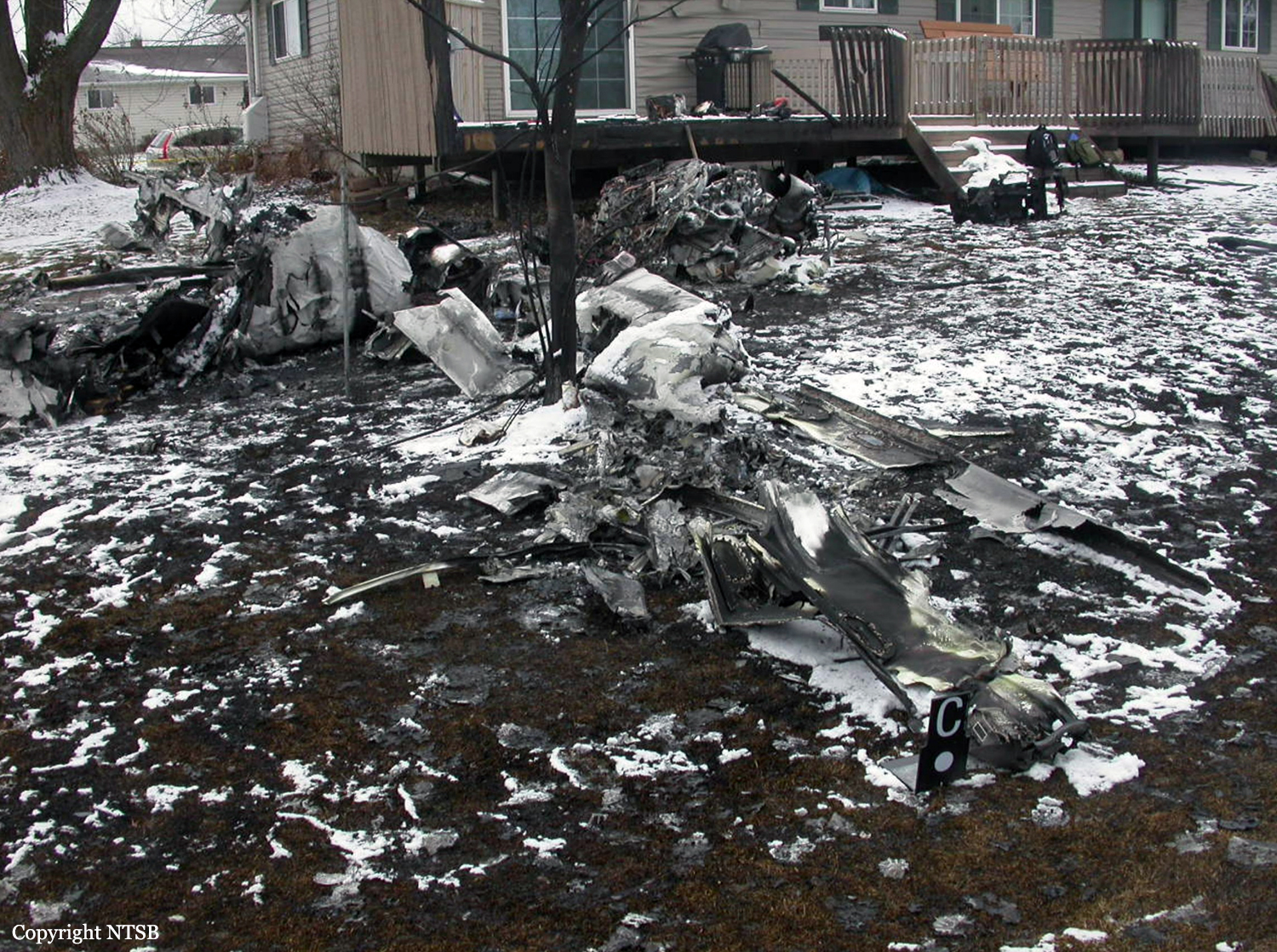
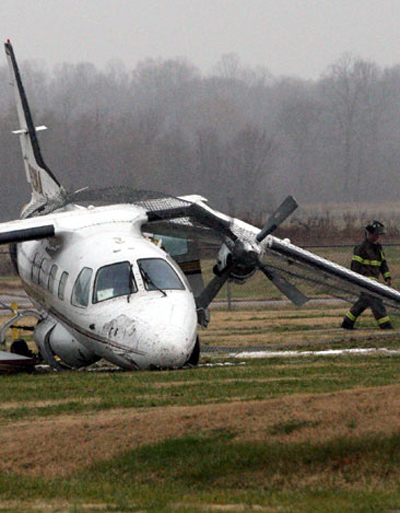
According to the pilot, after he took off for a nearby airport he raised the landing gear but did not raise the 20-degree flaps per the “after takeoff” checklist. Shortly thereafter, when the airplane was at an altitude of about 2,400 feet, and in "heavy rain," the pilot noticed that the right engine was losing power. He subsequently feathered the propeller as engine power reduced to 40 percent, but still did not raise the flaps. Weather, recorded shortly before the accident, included scattered clouds at 500 feet, and a broken cloud layer at 1,200 feet, and the pilot advised air traffic control (ATC) that he would fly an ILS (instrument landing system) approach if he could maintain altitude. After maneuvering, and advising ATC that he could not maintain altitude, the pilot descended the airplane to a right base leg where, about 1/4 nautical mile from the runway, it was approximately 300 feet above the terrain. The pilot completed the landing, with the airplane touching down about 6,200 feet down the 8,000-foot runway, heading about 20 degrees to the left. The airplane veered off the left side of the runway and subsequently went through an airport fence. The left engine was running at “high speed” when fire fighters responded to the scene. The right engine propeller was observed in the feathered position at the scene, and after subsequent examinations, the right engine was successfully run in a test cell with no noticeable loss of power. There was no determination as to why the right engine lost power in flight, although rain ingestion is a possibility. Airplane performance calculations indicated that with the landing gear up, a proper single-engine power setting and airspeed, and flaps raised, the airplane should have been able to climb about 650 feet per minute. Even with flaps at 20 degrees, it should have been able to climb at 350 feet per minute. In either case, unless the airplane was not properly configured, there was no reason why it should not have been able to maintain the altitudes needed to position it for a stabilized approach.
Probable cause:
The pilot’s improper configuration of the airplane following an engine shutdown, which resulted in a low-altitude, unstabilized approach. Contributing to the accident was a loss of engine power for undetermined reasons.
Final Report:

Crash of a Learjet 23 in Atlangatepec: 2 killed

Date & Time: Dec 7, 2008 at 1820 LT
Type of aircraft:
Operator:
Registration:
XC-LGD
Flight Type:
Survivors:
No
Schedule:
Puebla – Atlangatepec
MSN:
23-037
YOM:
1965
Country:
Crew on board:
2
Crew fatalities:
Pax on board:
0
Pax fatalities:
Other fatalities:
Total fatalities:
2
Circumstances:
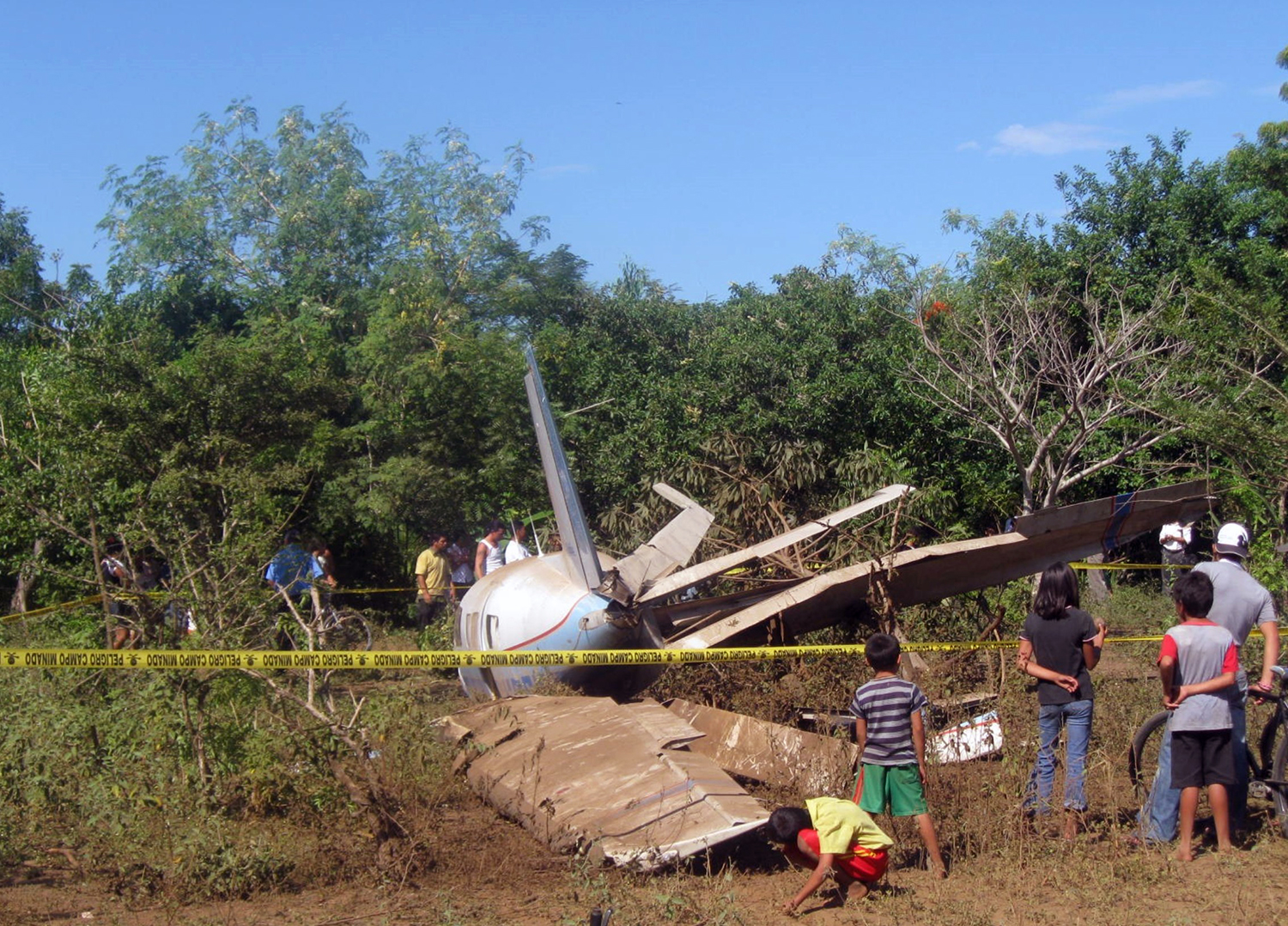
The crew departed Puebla-Hermanos Serdán-Huejotzingo Airport on a positioning flight to Atlangatepec. On approach to runway 01, the crew made a low pass over the runway then initiated a go-around procedure followed by a circuit in an attempt to land on runway 19. On final approach in limited visibility due to the night and low clouds, the aircraft impacted the water surface and crashed in the Atlanga lagoon. The aircraft sank by a depth of about 30 metres some 800 metres short of runway threshold. Both pilots were killed.
Probable cause:
Controlled flight into terrain after the crew descended too low on final approach.
The following contributing factors were identified:
- Limited visibility due to the night and low clouds,
- The approach was completed with a tailwind component,
- The approach was started about an hour after sunset,
- The copilote was inexperienced.

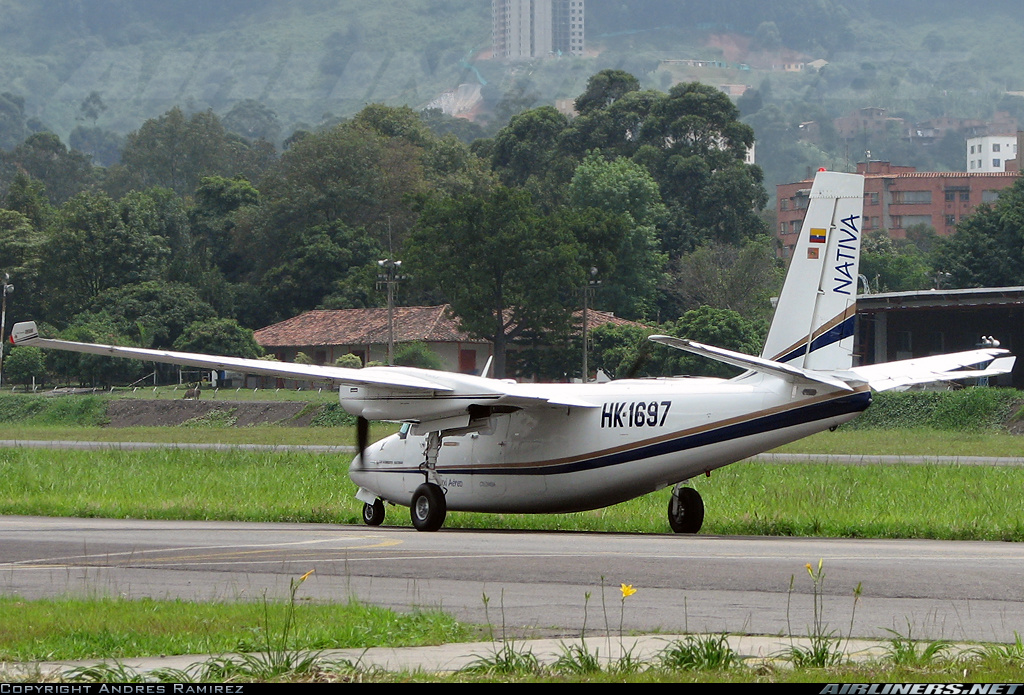
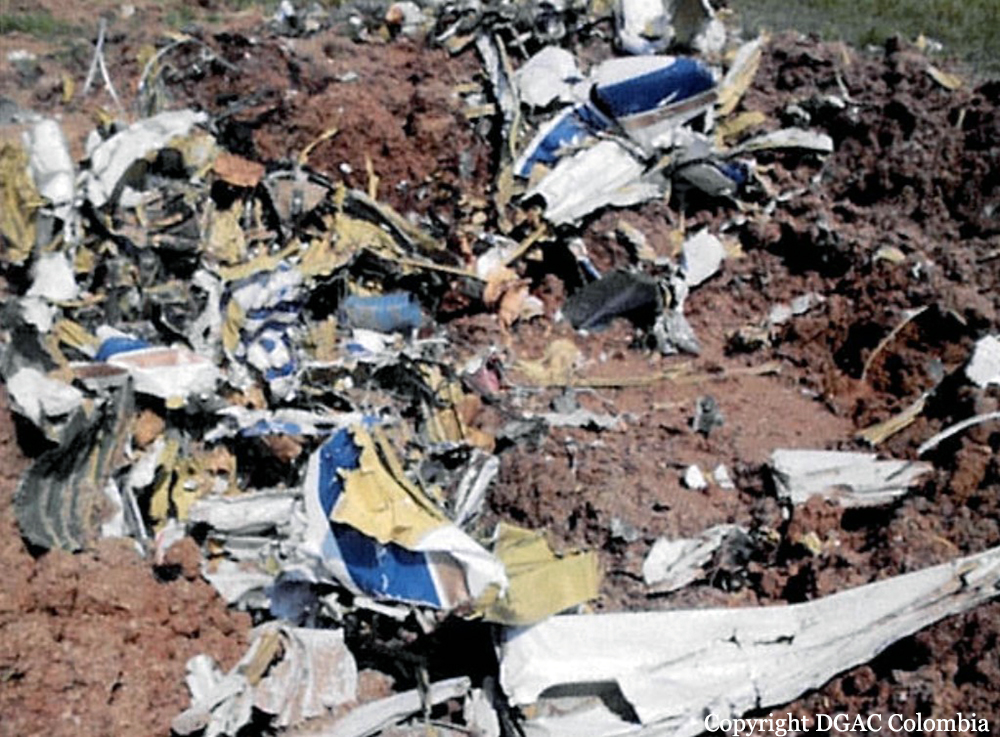
Crash of a Rockwell Shrike Commander 500S in Planeta Rica: 2 killed

Date & Time: Dec 3, 2008 at 1825 LT
Registration:
HK-1697
Flight Phase:
Flight Type:
Survivors:
No
Schedule:
Medellín – Montería
MSN:
500-3198
YOM:
1974
Country:
Crew on board:
2
Crew fatalities:
Pax on board:
0
Pax fatalities:
Other fatalities:
Total fatalities:
2
Captain / Total flying hours:
12153
Captain / Total hours on type:
2000.00
Copilot / Total hours on type:
18
Aircraft flight hours:
6179
Circumstances:
The twin engine aircraft departed Medellín-Enrique Olaya Herrera Airport at 1745LT on a cargo flight to Montería, carrying two pilots and a load of bovine embryos. The flight to Montería was completed at FL130 then the crew was cleared to start the descent to Montería-Los Garzones Airport. At an altitude of 7,500 feet on descent, the aircraft went out of control and crashed in an open field located in Verada Arroyo, near Planeta Rica. The aircraft disintegrated on impact and both pilots were killed.
Probable cause:
Loss of control in altitude for undetermined reasons.
Final Report:
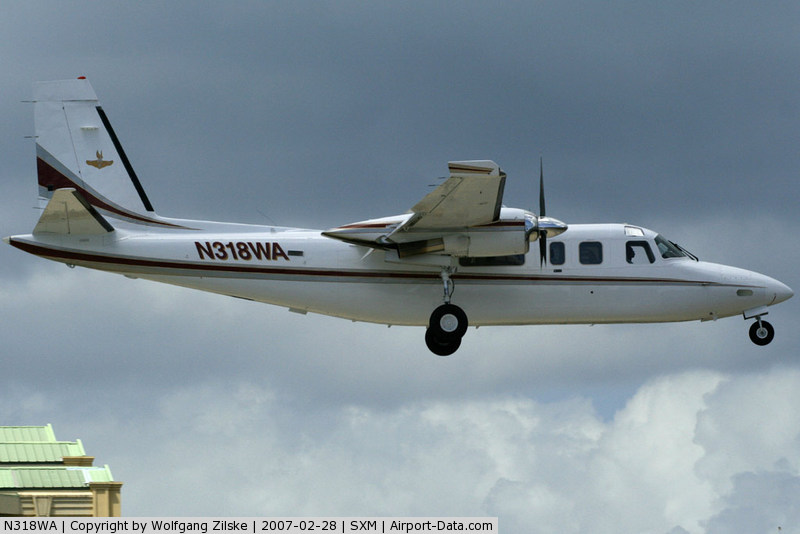
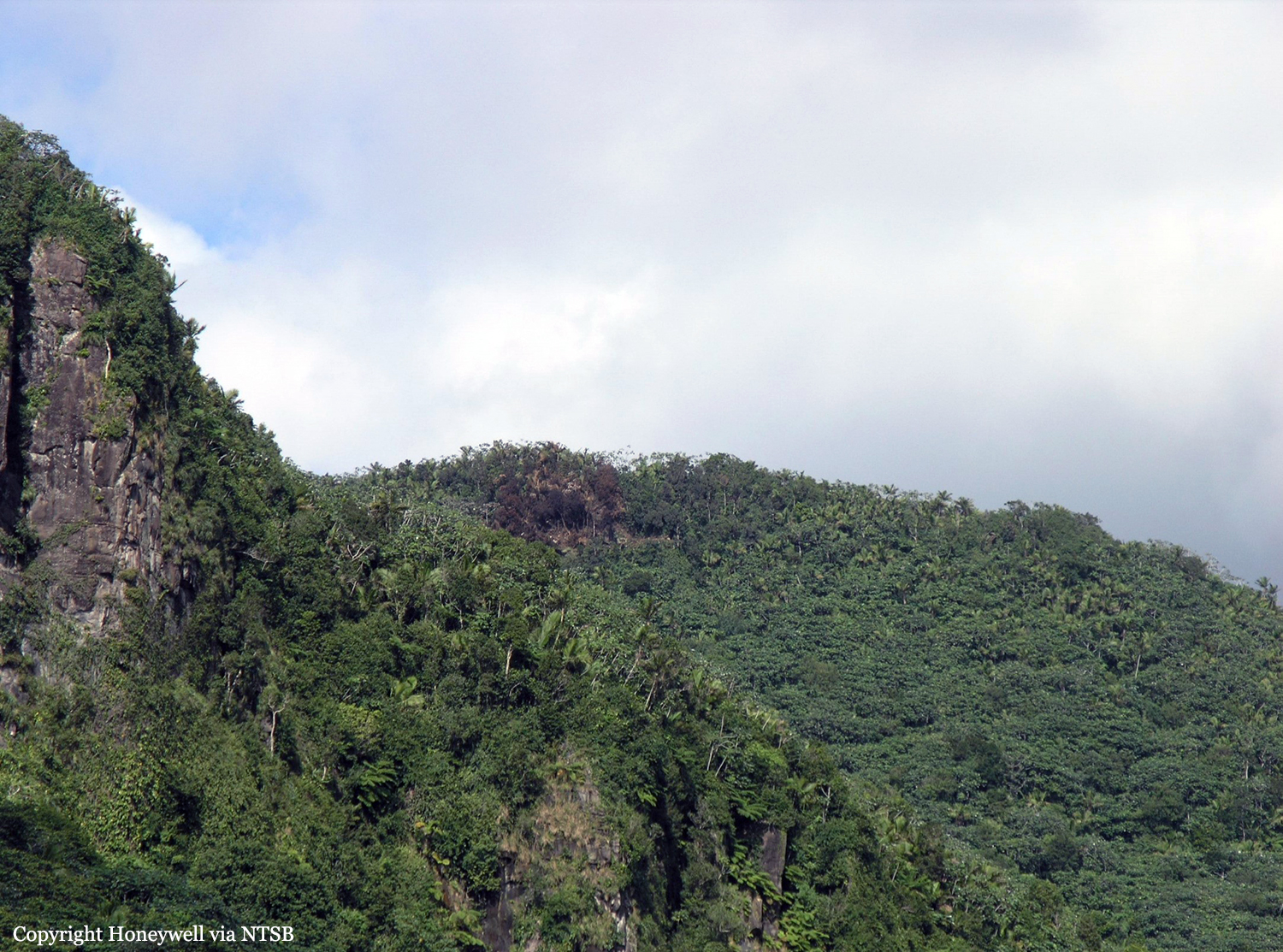
Crash of a Rockwell Grand Commander 690B in the El Yunque National Forest: 3 killed

Date & Time: Dec 3, 2008 at 1205 LT
Operator:
Registration:
N318WA
Flight Phase:
Survivors:
No
Site:
Schedule:
Tortola – San Juan
MSN:
690-11444
YOM:
1978
Country:
Crew on board:
1
Crew fatalities:
Pax on board:
2
Pax fatalities:
Other fatalities:
Total fatalities:
3
Captain / Total flying hours:
9600
Aircraft flight hours:
5286
Circumstances:
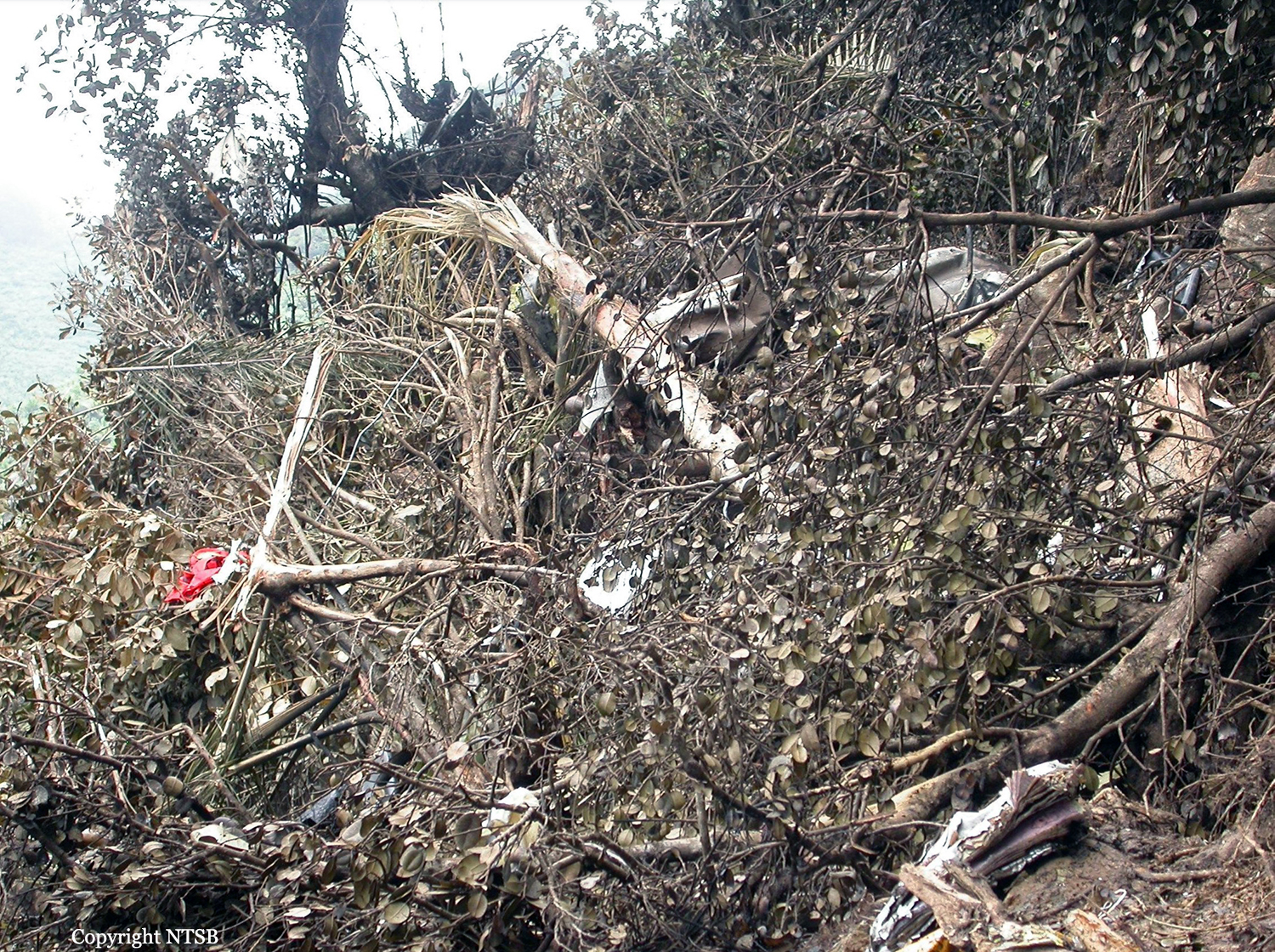
The charter flight departed for the destination, where the passengers would connect with another airline flight. The instrument-rated pilot may have felt pressured as the flight departed late. The accident airplane approached the destination airport from the east, descending at 250 knots ground speed from 8,800 feet above mean sea level (msl), on a 270 degree assigned heading, and was instructed to enter the right downwind for runway 10. The airplane's altitude readout was then observed by the approach controller to change to "XXX." The pilot was queried regarding his altitude and he advised that he was descending to 3,200 feet msl. The pilot was asked to confirm that he was in visual flight rules (VFR) conditions and was advised that the minimum vectoring altitude (MVA) for the area was 5,500 feet msl. The pilot responded that “We just ahh,” at which time the controller advised that she missed his transmission and asked him to repeat it. The pilot stated “Ahh roger, could we stay right just a little, we are in and out of some clouds right now.” The controller advised the pilot to “Maintain VFR” and again of the MVA. The controller then made multiple attempts to contact the pilot without result. The wreckage was discovered on the side of a mountain, where the airplane impacted after entering instrument meteorological conditions. Because aircraft operating in VFR flight are not required to comply with minimum instrument altitudes, aircraft receiving VFR radar services are not automatically afforded Minimum Safe Altitude Warning services except by pilot request. The controller's query to the pilot about his altitude and flight conditions was based on her observation of the loss of altitude reporting information. The pilot had not indicated any difficulty in maintaining VFR flight or terrain clearance up to that point. His comment that the aircraft was "in and out of some clouds" was her first indication that the pilot was not operating in visual conditions, and came within seconds of impact with the terrain. The controller was engaged in trying to correct the situation, and despite having been advised of the minimum vectoring altitude, the pilot continued to descend. The airplane was equipped with a terrain avoidance warning system but it could not be determined if it was functional. The pilot owned the charter operation. Documents discovered in the wreckage identified the pilot and airplane as operating for a different company since the pilot did not have the permissions necessary to operate in the United Kingdom Overseas Territories.
Probable cause:
The pilot's continued visual flight into instrument meteorological conditions, which resulted in an in-flight collision with terrain.
Final Report:

Crash of a Piper PA-46-310P Malibu in León

Date & Time: Dec 1, 2008 at 2000 LT
Operator:
Registration:
N9095K
Flight Type:
Survivors:
Yes
Schedule:
Mexico City – Cali
MSN:
46-08023
YOM:
1986
Country:
Crew on board:
1
Crew fatalities:
Pax on board:
5
Pax fatalities:
Other fatalities:
Total fatalities:
0
Circumstances:
The single engine aircraft was completing a flight from Mexico City to Cali, carrying five passengers and one pilot on behalf of the Cristina Adventista Congregation. While approaching León-Fanor Urroz Airport, the aircraft crashed by a wooded area. All six occupants were seriously injured and the aircraft was destroyed.

Crash of an Airbus A320-232 off Saint-Cyprien: 7 killed

Date & Time: Nov 27, 2008 at 1646 LT
Type of aircraft:
Operator:
Registration:
D-AXLA
Flight Type:
Survivors:
No
Schedule:
Perpignan - Frankfurt
MSN:
2500
YOM:
2005
Flight number:
GXL888T
Country:
Region:
Crew on board:
2
Crew fatalities:
Pax on board:
5
Pax fatalities:
Other fatalities:
Total fatalities:
7
Captain / Total flying hours:
12709
Captain / Total hours on type:
7038.00
Copilot / Total flying hours:
11660
Copilot / Total hours on type:
5529
Aircraft flight hours:
10124
Aircraft flight cycles:
3931
Circumstances:
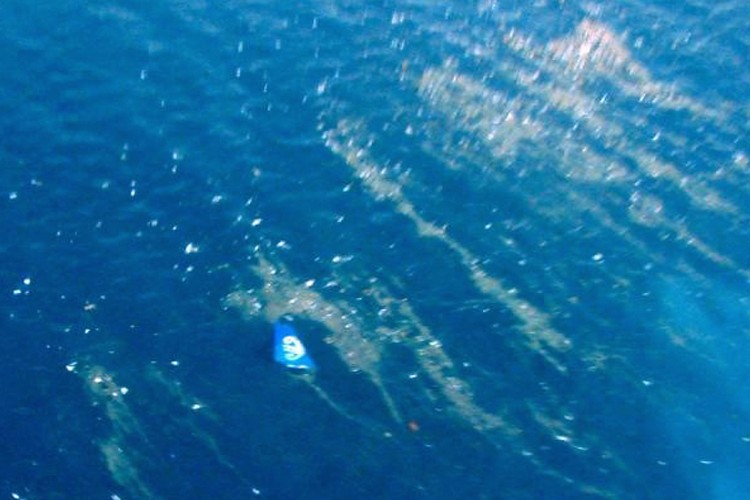
Flight GXL888T from Perpignan-Rivesaltes aerodrome was undertaken in the context of the end of a leasing agreement, before the return of D-AXLA to its owner. The program of planned checks could not be performed in general air traffic, so the flight was shortened. In level flight at FL320, angle of attack sensors 1 and 2 stopped moving and their positions did not change until the end of the flight. After about an hour of flight, the airplane returned to the departure aerodrome airspace and the crew was cleared to carry out an ILS procedure to runway 33, followed by a go around and a departure towards Frankfurt/Main (Germany). Shortly before overflying the initial approach fix, the crew carried out the check on the angle of attack protections in normal law. They lost control of the airplane, which crashed into the sea.
Probable cause:
The accident was caused by the loss of control of the airplane by the crew following the improvised demonstration of the functioning of the angle of attack protections, while the blockage of the angle of attack sensors made it impossible for these protections to trigger. The crew was not aware of the blockage of the angle of attack sensors. They did not take into account the speeds mentioned in the program of checks available to them and consequently did not stop the demonstration before the stall.
The following factors contributed to the accident:
• The decision to carry out the demonstration at a low height
• The crew’s management, during the thrust increase, of the strong increase in the longitudinal pitch, the crew not having identified the pitch-up stop position of the horizontal stabilizer nor acted on the trim wheel to correct it, nor reduced engine thrust
• The crew having to manage the conduct of the flight, follow the program of in-flight checks, adapted during the flight, and the preparation of the following stage, which greatly increased the workload and led the crew to improvise according to the constraints encountered
• The decision to use a flight program developed for crews trained for test flights, which led the crew to undertake checks without knowing their aim
• The absence of a regulatory framework in relation to non-revenue flights in the areas of air traffic management, of operations and of operational aspects
• The absence of consistency in the rinsing task in the airplane cleaning procedure, and in particular the absence of protection of the AOA sensors, during rinsing with water of the airplane three days before the flight. This led to the blockage of the AOA sensors through freezing of the water that was able to penetrate inside the sensor bodies.
The following factors also probably contributed to the accident:
• Inadequate coordination between an atypical team composed of three airline pilots in the cockpit
• The fatigue that may have reduced the crew’s awareness of the various items of information relating to the state of the systems.
Final Report:

Crash of a BAe 3112 Jetstream 31 in Fort Smith

Date & Time: Nov 27, 2008 at 1515 LT
Type of aircraft:
Operator:
Registration:
C-FNAY
Survivors:
Yes
Schedule:
Hay River - Fort Smith
MSN:
768
YOM:
1987
Flight number:
PLR734
Country:
Crew on board:
2
Crew fatalities:
Pax on board:
3
Pax fatalities:
Other fatalities:
Total fatalities:
0
Circumstances:
The Northwestern Air BAe Jetstream 31 was operating as PLR734 on an instrument flight rules (IFR) flight from Hay River to Fort Smith, Northwest Territories. After conducting an IFR approach to Runway 11, PLR734 executed a missed approach and flew a full procedure approach for Runway 29. At approximately 0.2 nautical miles from the threshold, the crew sighted the approach strobe lights and continued for a landing. Prior to touchdown, the aircraft entered an aerodynamic stall and landed hard on the runway at 1515 mountain standard time. The aircraft remained on the runway despite the left main landing gear collapsing. The two flight crew members and three passengers were uninjured and evacuated the aircraft through the left main cabin door. There was no post-impact fire.
Probable cause:
Findings as to Causes and Contributing Factors:
1. Though icing conditions were encountered, the airframe de-icing boots were not cycled nor was the Vref speed increased to offset the effects of aircraft icing.
2. An abrupt change in aircraft configuration, which included a reduction in power to flight idle and the addition of 35° flap, caused the aircraft’s speed to rapidly decrease.
3. The aircraft entered an aerodynamic stall due to the decreased performance caused by the icing. There was insufficient altitude to recover the aircraft prior to impact with the runway.
Finding as to Risk:
1. The company had not incorporated the British Aerospace Notice to Aircrew into its standard operating procedures (SOP) at the time of the occurrence. Therefore, crews were still required to make configuration changes late in the approach sequence, increasing the risk of an unstabilised approach.
Final Report:

Crash of a Beechcraft 200 Super King Air in Recife: 2 killed

Date & Time: Nov 23, 2008 at 1115 LT
Operator:
Registration:
PT-OSR
Survivors:
Yes
Site:
Schedule:
Teresina - Recife
MSN:
BB-784
YOM:
1981
Country:
Crew on board:
2
Crew fatalities:
Pax on board:
8
Pax fatalities:
Other fatalities:
Total fatalities:
2
Captain / Total flying hours:
10000
Circumstances:
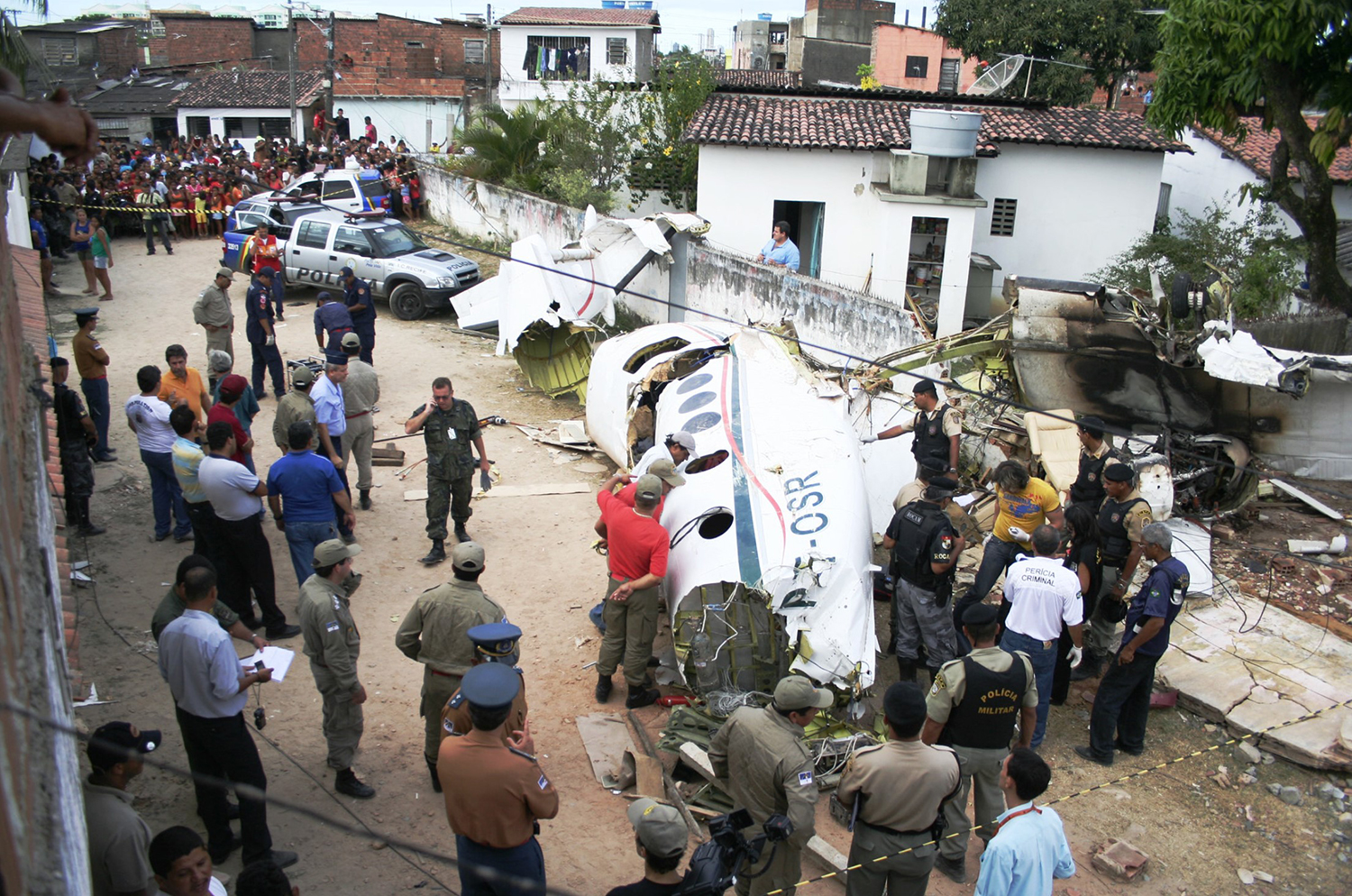
Following an uneventful flight from Teresina, the crew started the approach to Recife-Guararapes Airport runway 18. On final, both engines failed simultaneously. The aircraft stalled and crashed in a residential area located 5 km from the runway threshold. A passenger and a pilot were killed while eight others occupants were injured. There were no victims on the ground while the aircraft was destroyed.
Probable cause:
Double engine failure caused by a fuel exhaustion. The following contributing factors were identified:
- Poor flight planning,
- The crew failed to add sufficient fuel prior to departure from Teresina Airport,
- The fuel quantity was insufficient for the required distance,
- The crew failed to follow the published procedures,
- Overconfidence from the crew,
- Poor organisational culture on part of the operator,
- Lack of discipline and poor judgment on part of the crew,
- Lack of supervision.
Final Report:

Crash of a Piper PA-46-500TP Malibu Meridian in Marshfield: 3 killed

Date & Time: Nov 22, 2008 at 2309 LT
Operator:
Registration:
N67TE
Flight Type:
Survivors:
No
Schedule:
Green Bay – Marshfield
MSN:
46-97364
YOM:
2008
Crew on board:
1
Crew fatalities:
Pax on board:
2
Pax fatalities:
Other fatalities:
Total fatalities:
3
Captain / Total flying hours:
749
Captain / Total hours on type:
60.00
Aircraft flight hours:
153
Circumstances:
Witnesses reported that the airplane appeared to be making a normal approach for landing when it suddenly rolled to the left, descended, and impacted the terrain about one-half mile from the runway. On arrival at the scene, the witnesses saw the airplane fully engulfed in flames. The flight was operating in night visual meteorological conditions and the runway lights were illuminated at the time of the accident. The pilot communicated no problems or difficulties while in contact with air traffic control (ATC) during the accident flight. A postaccident examination of the airframe and engine did not reveal any anomalies associated with a pre-impact failure or malfunction. Radar track data and weather observations indicated that the pilot climbed through an overcast cloud layer without the required ATC clearance, en route to his intended destination. The pilot previously had been issued a private pilot certificate with single and multi-engine airplane ratings upon successful completion of the prescribed practical tests. He was subsequently issued a commercial pilot certificate, which included the addition of an instrument airplane rating, based on military flight experience. However, a review of military records and statements from his family indicated that the pilot had never served in the military. The pilot's medical history and toxicology testing showed he had a history of back pain and was taking medication for that condition that commonly causes impairment. However, the time proximity for the pilot having taken the medication prior to the accident flight and any possible impairment, could not be determined.
Probable cause:
The pilot's failure to maintain control of the airplane during final approach for landing in night, visual meteorological conditions for undetermined reasons.
Final Report:

Crash of a Grumman G-21A Goose on Thormanby Island: 7 killed

Date & Time: Nov 16, 2008 at 1032 LT
Type of aircraft:
Operator:
Registration:
C-FPCK
Flight Phase:
Survivors:
Yes
Site:
Schedule:
Vancouver - Powell River
MSN:
1187
YOM:
1942
Country:
Crew on board:
1
Crew fatalities:
Pax on board:
7
Pax fatalities:
Other fatalities:
Total fatalities:
7
Captain / Total flying hours:
12000
Captain / Total hours on type:
8000.00
Circumstances:
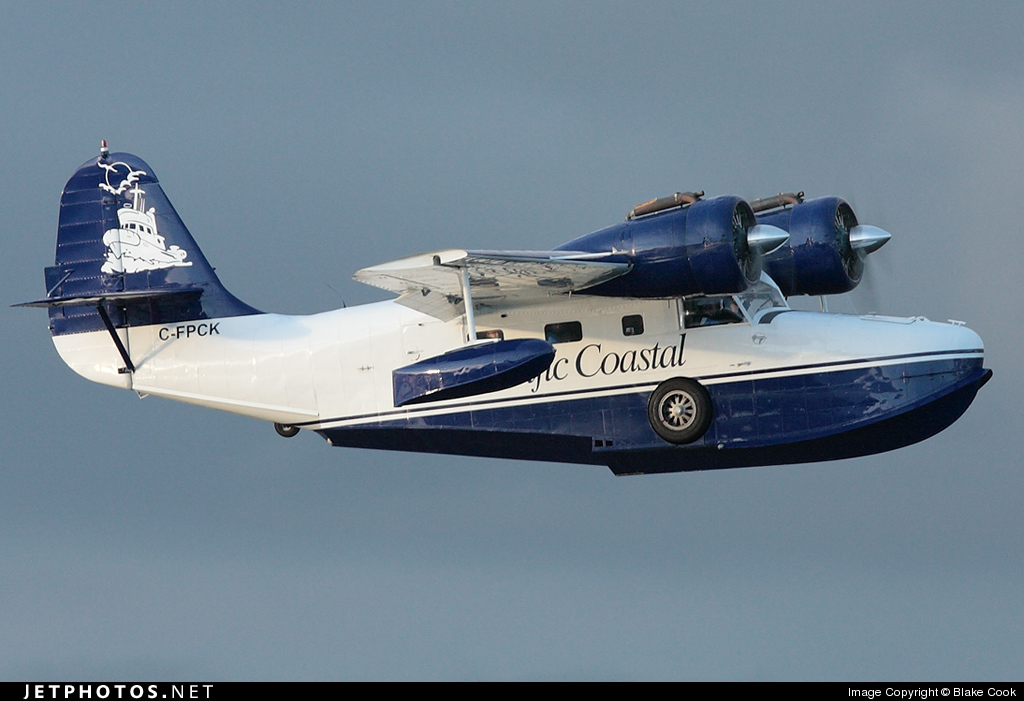
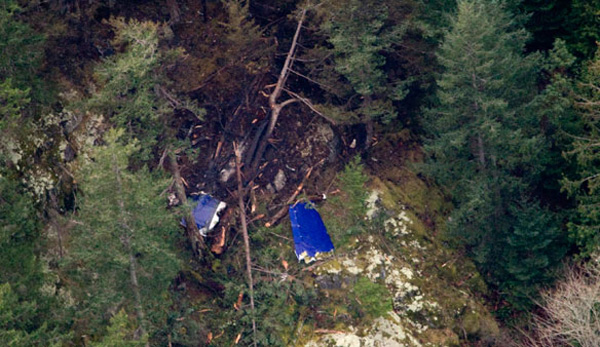
At about 1013 Pacific Standard Time, the amphibious Grumman G-21A (registration C-FPCK, serial number 1187), operated by Pacific Coastal Airlines, departed from the water aerodrome at the south terminal of the Vancouver International Airport, British Columbia, with one pilot and seven passengers for a flight to Powell River, British Columbia. Approximately 19 minutes later, the aircraft crashed in dense fog on South Thormanby Island, about halfway between Vancouver and Powell River. Local searchers located a seriously injured passenger on the eastern shoreline of the island at about 1400. The aircraft was located about 30 minutes later, on a peak near Spyglass Hill, British Columbia. The pilot and the six other passengers were fatally injured, and the aircraft was destroyed by impact and post-crash fire. The emergency locator transmitter was destroyed and did not transmit.
Probable cause:
Findings as to Causes and Contributing Factors
1. The pilot likely departed and continued flight in conditions that were below visual
flight rules (VFR) weather minima.
2. The pilot continued his VFR flight into instrument meteorological conditions (IMC),
and did not recognize his proximity to terrain until seconds before colliding with
Thormanby Island, British Columbia.
3. The indication of a marginal weather improvement at Powell River, British Columbia,
and incorrect information from Merry Island, British Columbia, may have
contributed to the pilot’s conclusion that weather along the route would be sufficient
for a low-level flight.
Findings as to Risk:
1. The reliance on a single VHF-AM radio for commercial operations, particularly in congested airspace, increases the risk that important information is not received.
2. Flights conducted at low altitude greatly decrease VHF radio reception range, making it difficult to obtain route-related information that could affect safety.
3. The lack of pilot decision making (PDM) training for VFR air taxi operators exposes pilots and passengers to increased risk when faced with adverse weather conditions.
4. Some operators and pilots intentionally skirt VFR weather minima, which increases risk to passengers and pilots travelling on air taxi aircraft in adverse weather conditions.
5. Customers who apply pressure to complete flights despite adverse weather can negatively influence pilot and operator decisions.
6. Incremental growth in Pacific Coastal’s support to Kiewit did not trigger further risk analysis by either company. As a result, pilots and passengers were exposed to increased risks that went undetected.
7. Transport Canada’s guidance on risk assessment does not address incremental growth for air operators. As a result, there is increased risk that operators will not conduct the appropriate risk analysis as their operation grows.
8. Previous discussions between Pacific Coastal and the pilot about his weather decision making were not documented under the company’s safety management system (SMS). If hazards are not documented, a formal risk analysis may not be prompted to define and mitigate the risk.
9. There were no company procedures or decision aids (that is, decision tree, second pilot input, dispatcher co-authority) in place to augment a pilot’s decision to depart.
10. Because the aircraft’s emergency locator transmitter (ELT) failed to operate after the crash, determining that a crash had occurred and locating the aircraft were delayed.
11. On a number of flights, pilots on the Vancouver–Toba Inlet route, British Columbia, departed over maximum gross weight due to incorrectly calculated weight and balances. Risks to pilots and passengers are increased when the aircraft is operating outside approved limits.
12. The over-reliance on global positioning system (GPS) in conditions of low visibility and ceilings presents a significant safety risk to pilots and passengers.
Other Finding:
1. The SPOT Satellite Messenger data transmitted before the crash helped to narrow the search area and reduce the search time to find the aircraft. The fact that the wrong data were consulted caused an initial delay in reporting the missing aircraft.
Final Report: