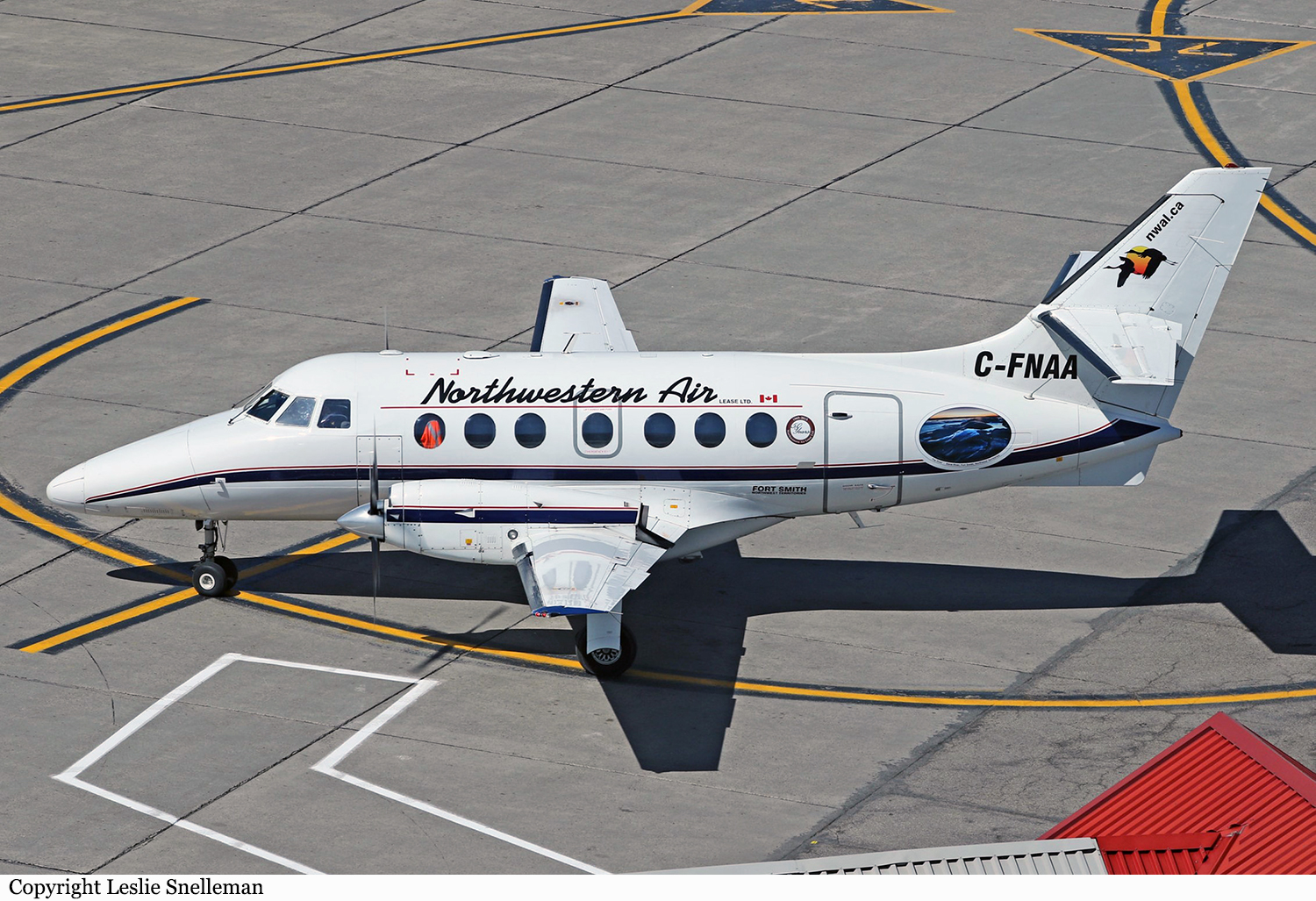
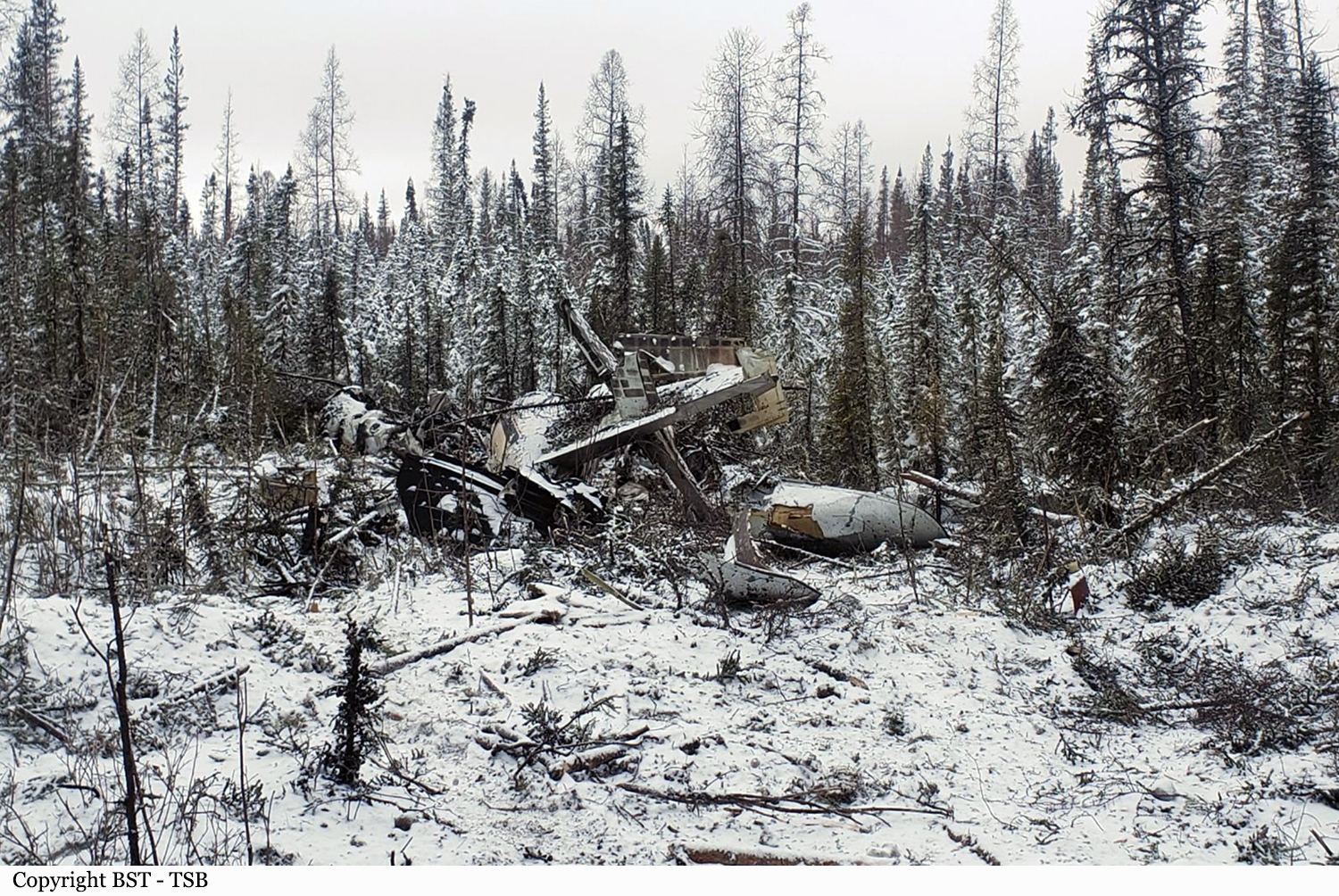
Crash of a BAe 3212 Jetstream 32 in Fort Smith: 6 killed

Date & Time: Jan 23, 2024 at 0642 LT
Type of aircraft:
Operator:
Registration:
C-FNAA
Flight Phase:
Survivors:
Yes
Schedule:
Fort Smith – Diavik
MSN:
929
YOM:
1991
Flight number:
PLR738
Country:
Crew on board:
2
Crew fatalities:
Pax on board:
5
Pax fatalities:
Other fatalities:
Total fatalities:
6
Captain / Total flying hours:
8277
Captain / Total hours on type:
627.00
Copilot / Total flying hours:
717
Copilot / Total hours on type:
467
Aircraft flight hours:
24405
Circumstances:
At 0641LT, during the hours of darkness, the takeoff run on Runway 30 commenced. Eight seconds after liftoff, at a height of approximately 100 feet above ground level (AGL), the copilot (FO) observed an abnormal landing gear indication and notified the captain. Two seconds later, the FO called for the captain to reduce the speed; the captain acknowledged, and two brief changes in propeller rpm occurred within six seconds. During the initial climb, the captain maintained a shallow climb angle and attitude, the aircraft’s speed increased to approximately 165 knots indicated airspeed (KIAS), and the aircraft reached a maximum height of approximately 140 feet AGL. At this point, the aircraft began a shallow descent. Six seconds later, the FO observed that the aircraft was losing altitude and called “Descending”. One second later, the terrain awareness and warning system (TAWS) began to produce an aural alert and, simultaneously, the aircraft impacted trees 0.5 nautical miles (NM) past the end of Runway 30. During this impact, the left-wing structure was compromised, resulting in a fireball. Approximately three seconds after the aircraft’s initial collision, the aircraft impacted additional trees and then terrain 0.6 NM from the end of Runway 30 and 0.1 NM left of the extended runway centreline. During the final portion of the accident sequence, one passenger was ejected from the aircraft (the seat and safety belt remained in the aircraft) and received minor injuries. All six other occupants were killed and the airplane was destroyed.
Probable cause:
These are the factors that were found to have caused or contributed to this occurrence:
- During departure, the captain intentionally kept a low pitch attitude and a high airspeed to remove possible snow accumulation on the aircraft. As a result, the aircraft’s departure profile was closer to the ground than it would be on a standard departure.
- When the captain and first officer attempted to raise the landing gear, the combination of an outside air temperature colder than approximately −20 °C and the air load on the landing gear from the increased speed resulted in one of the main landing gear units, likely the left unit, not fully retracting.
- Following the first officer’s call to reduce airspeed, the captain reduced engine power to reduce the aircraft’s speed and allow the main landing gear to fully retract. As a result of the decreased power, the aircraft entered an inadvertent descent at 140 feet above ground level.
- The captain and first officer were likely preoccupied with the abnormal main landing gear indication and the aircraft’s airspeed and did not notice the aircraft’s loss of altitude until immediately before impact. As a result, the aircraft impacted trees and terrain 10 seconds after the descent began.
Final Report:
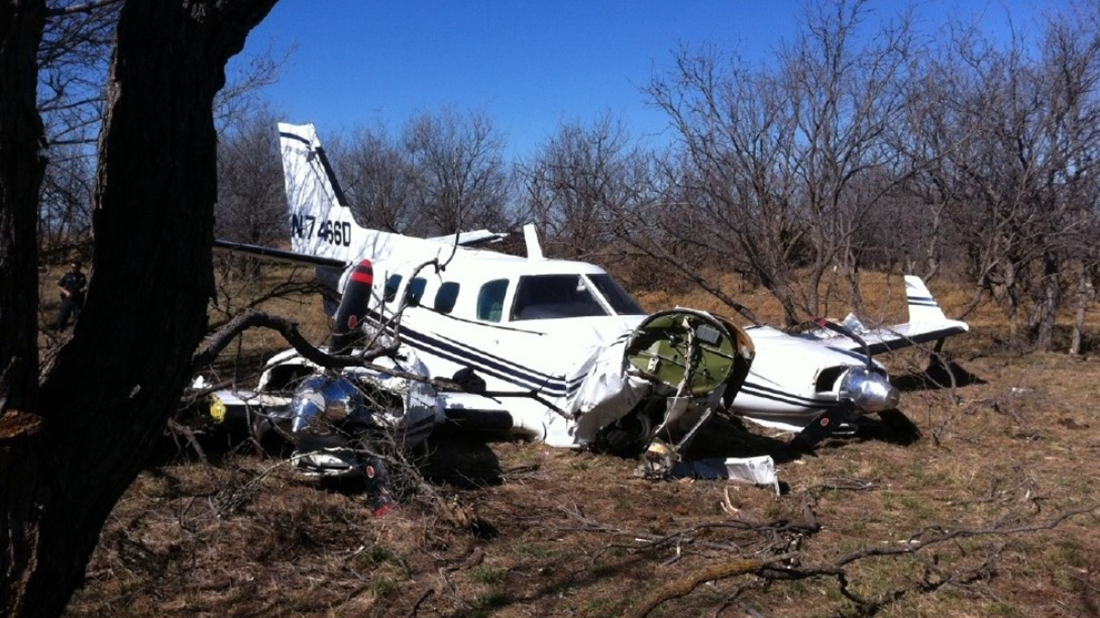
Crash of a Beechcraft A60 Duke in Abilene

Date & Time: Feb 24, 2013 at 1020 LT
Type of aircraft:
Registration:
N7466D
Survivors:
Yes
Schedule:
Fort Smith – Abilene
MSN:
P-139
YOM:
1970
Location:
Crew on board:
1
Crew fatalities:
Pax on board:
0
Pax fatalities:
Other fatalities:
Total fatalities:
0
Captain / Total flying hours:
7500
Captain / Total hours on type:
800.00
Aircraft flight hours:
3725
Circumstances:
The pilot reported that he had added fuel at the previous fuel stop and that he was using a fuel totalizer to determine the quantity of fuel onboard. After climbing to a cruise altitude of 14,000 feet above ground level, he discovered that the fuel mixture control was frozen and that he was unable to lean the mixture to a lower fuel flow setting. The pilot reported that because of the increased fuel consumption, he briefly considered an en route stop for additional fuel but decided to continue. During descent, the airplane experienced a complete loss of power in both engines, and the pilot made an emergency off-field, gear-up landing about 7 miles from the destination. The airplane impacted terrain and thick scrub trees, which resulted in substantial damage to both wings, both engine mounts, and the fuselage. A postaccident examination found that only a trace of fuel remained. The pilot also reported that there was no mechanical malfunction or failure and that his inadequate fuel management was partly because he had become overconfident in his abilities after 50 years of flying.
Probable cause:
The pilot’s improper fuel management, which resulted in a loss of engine power due to fuel exhaustion.
Final Report:

Crash of a BAe 3112 Jetstream 31 in Fort Smith

Date & Time: Nov 27, 2008 at 1515 LT
Type of aircraft:
Operator:
Registration:
C-FNAY
Survivors:
Yes
Schedule:
Hay River - Fort Smith
MSN:
768
YOM:
1987
Flight number:
PLR734
Country:
Crew on board:
2
Crew fatalities:
Pax on board:
3
Pax fatalities:
Other fatalities:
Total fatalities:
0
Circumstances:
The Northwestern Air BAe Jetstream 31 was operating as PLR734 on an instrument flight rules (IFR) flight from Hay River to Fort Smith, Northwest Territories. After conducting an IFR approach to Runway 11, PLR734 executed a missed approach and flew a full procedure approach for Runway 29. At approximately 0.2 nautical miles from the threshold, the crew sighted the approach strobe lights and continued for a landing. Prior to touchdown, the aircraft entered an aerodynamic stall and landed hard on the runway at 1515 mountain standard time. The aircraft remained on the runway despite the left main landing gear collapsing. The two flight crew members and three passengers were uninjured and evacuated the aircraft through the left main cabin door. There was no post-impact fire.
Probable cause:
Findings as to Causes and Contributing Factors:
1. Though icing conditions were encountered, the airframe de-icing boots were not cycled nor was the Vref speed increased to offset the effects of aircraft icing.
2. An abrupt change in aircraft configuration, which included a reduction in power to flight idle and the addition of 35° flap, caused the aircraft’s speed to rapidly decrease.
3. The aircraft entered an aerodynamic stall due to the decreased performance caused by the icing. There was insufficient altitude to recover the aircraft prior to impact with the runway.
Finding as to Risk:
1. The company had not incorporated the British Aerospace Notice to Aircrew into its standard operating procedures (SOP) at the time of the occurrence. Therefore, crews were still required to make configuration changes late in the approach sequence, increasing the risk of an unstabilised approach.
Final Report:

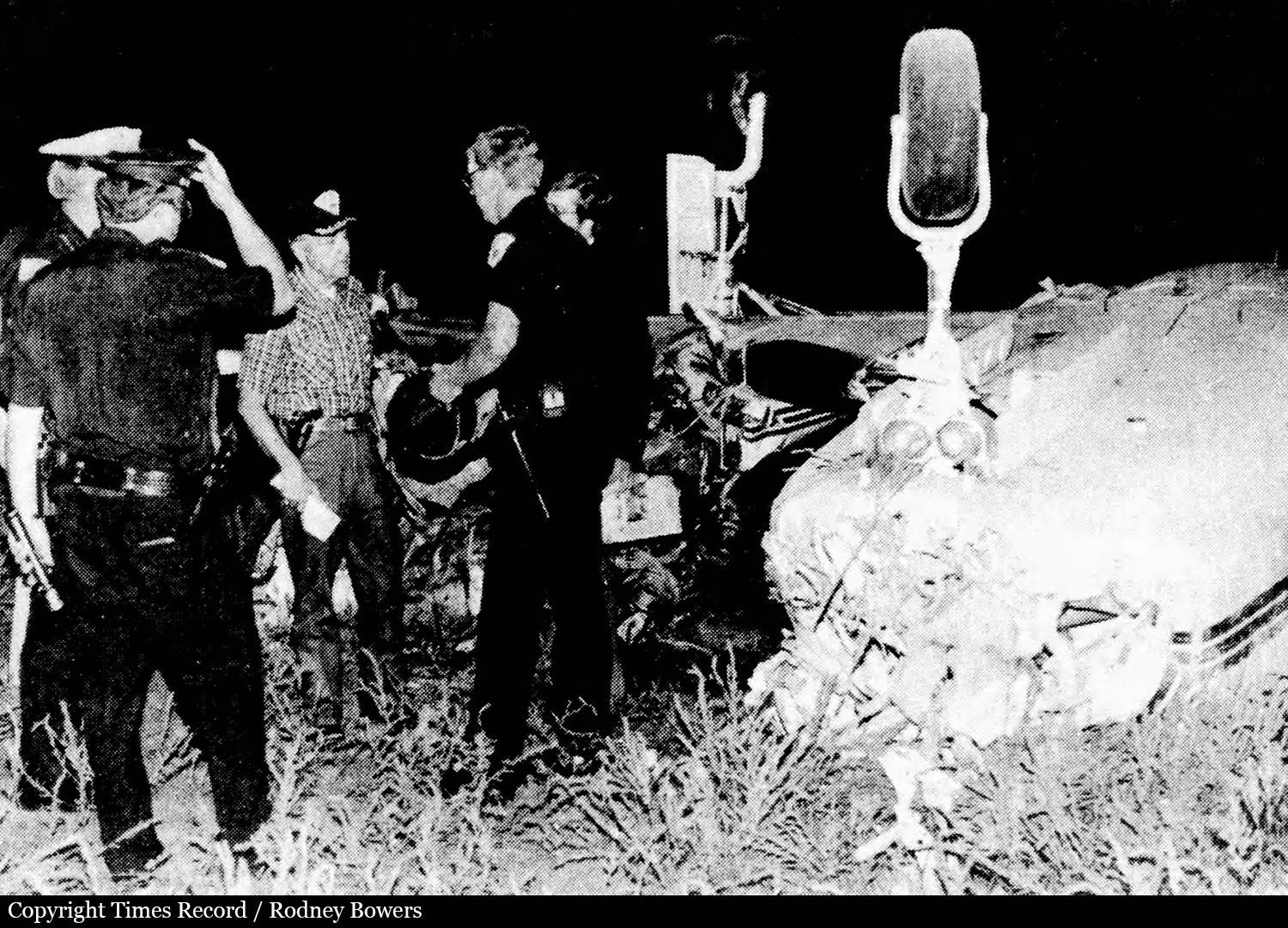
Crash of a Piper PA-31-350 Navajo Chieftain in Fort Smith

Date & Time: Sep 2, 1983 at 2101 LT
Registration:
N3594G
Survivors:
Yes
Schedule:
Laredo - Brinkley - Fort Smith
MSN:
31-8052089
YOM:
1980
Crew on board:
1
Crew fatalities:
Pax on board:
1
Pax fatalities:
Other fatalities:
Total fatalities:
0
Captain / Total flying hours:
6107
Captain / Total hours on type:
724.00
Aircraft flight hours:
1308
Circumstances:
The aircraft had departed Laredo, TX, on a flight to Fort Smith, AR, with an intermediate stop at Brinkley, AR. The fuel tanks were 'topped' at Laredo, but no fuel was added at Brinkley. During arrival at Fort Smith, the pilot declared an emergency for 'extremely low fuel.' He was cleared for a straight-in approach. Very shortly after that, both engines began running rough with both fuel boost pump lights illuminated. The pilot informed the tower that he would not be able to reach the airport. He selected a dark unpopulated area to land and extended the gear. When he turned on the landing lights, he realize he had selected a wooded area. The aircraft was destroyed after impacting trees. The pilot had begun the first of six flights at 0608 cdt and had gotten very little sleep the preceding night. Both occupants were seriously injured.
Probable cause:
Occurrence #1: loss of engine power(total) - nonmechanical
Phase of operation: approach - VFR pattern - final approach
Findings
1. (c) aircraft preflight - inadequate - pilot in command
2. (c) fluid, fuel - exhaustion
3. (c) fuel supply - inadequate - pilot in command
4. Aircraft performance,two or more engines - inoperative
----------
Occurrence #2: forced landing
Phase of operation: landing
----------
Occurrence #3: in flight collision with object
Phase of operation: landing - flare/touchdown
Findings
5. (f) light condition - dark night
6. (f) object - tree(s)
Final Report: