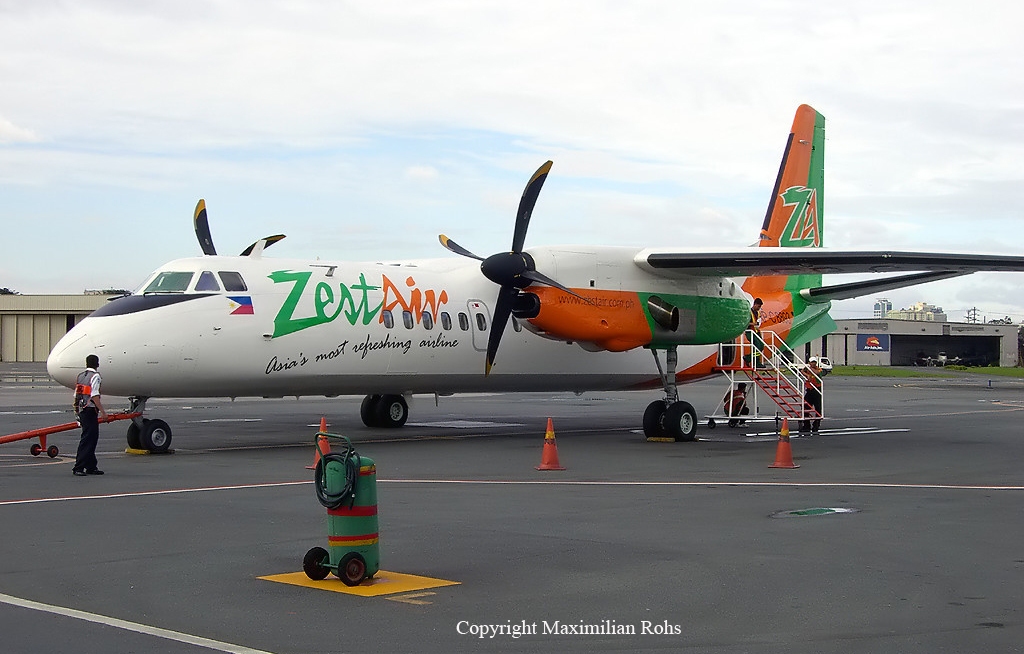
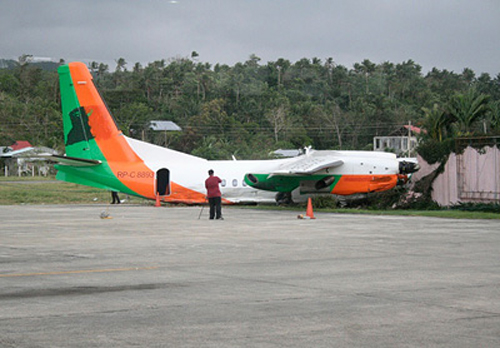
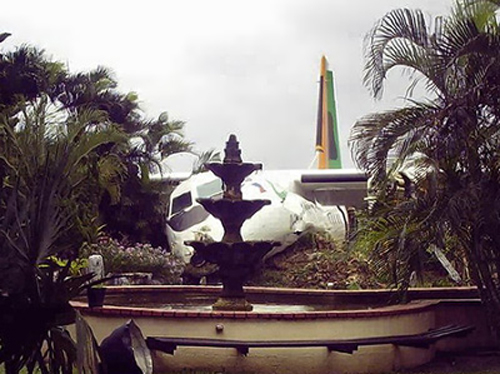
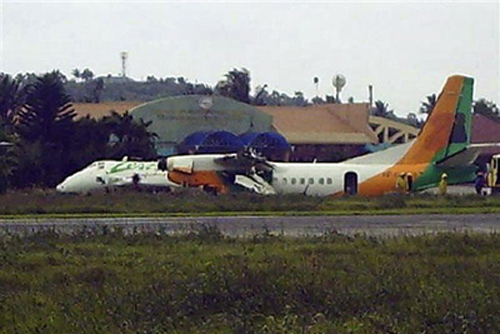
Crash of a Xian MA60 in Caticlan

Date & Time: Jan 11, 2009 at 0658 LT
Type of aircraft:
Operator:
Registration:
RP-C8893
Survivors:
Yes
Schedule:
Manila - Caticlan
MSN:
07 04
YOM:
2008
Flight number:
EZD865
Country:
Region:
Crew on board:
5
Crew fatalities:
Pax on board:
22
Pax fatalities:
Other fatalities:
Total fatalities:
0
Captain / Total flying hours:
2675
Captain / Total hours on type:
500.00
Circumstances:
On or about 0613LT 11 January 2009, flight 6K865 RP-C8893 departed NAIA (RPLL) for Caticlan Airport (RPVE) with 22 passengers and 5 crew members on board. The flight was uneventful until a go-around was initiated during the first approach, A second attempt to land was made which ended with the aircraft undershooting the runway. After the first touchdown the aircraft bounce and landed on the runway and veered to the left side of the runway due to the left landing gear failure upon the contact with the embankment before the road at the end of the runway. The aircraft settled down at the concrete wall of the ramp facing the passenger lounge of the Zest Air. Three (3) passengers suffered serious injuries, and 19 passengers with minor one, the crew member escape injuries except the Captain suffering slight injury. The aircraft was damaged beyond economical repair.
Probable cause:
- The captain’s low level of experience (2,675 hours) and less than 500 hours PIC.
- The critical runway conditions (950 M and gusty wind conditions No PAPI).
- The absence of crew coordination (monitoring and CRM).
Final Report:

Crash of a Learjet 45 in Telluride

Date & Time: Jan 3, 2009 at 1659 LT
Type of aircraft:
Operator:
Registration:
N279AJ
Flight Type:
Survivors:
Yes
Schedule:
Scottsdale - Telluride
MSN:
45-279
YOM:
2005
Crew on board:
2
Crew fatalities:
Pax on board:
0
Pax fatalities:
Other fatalities:
Total fatalities:
0
Captain / Total flying hours:
3520
Captain / Total hours on type:
831.00
Copilot / Total flying hours:
3520
Copilot / Total hours on type:
831
Aircraft flight hours:
2338
Circumstances:
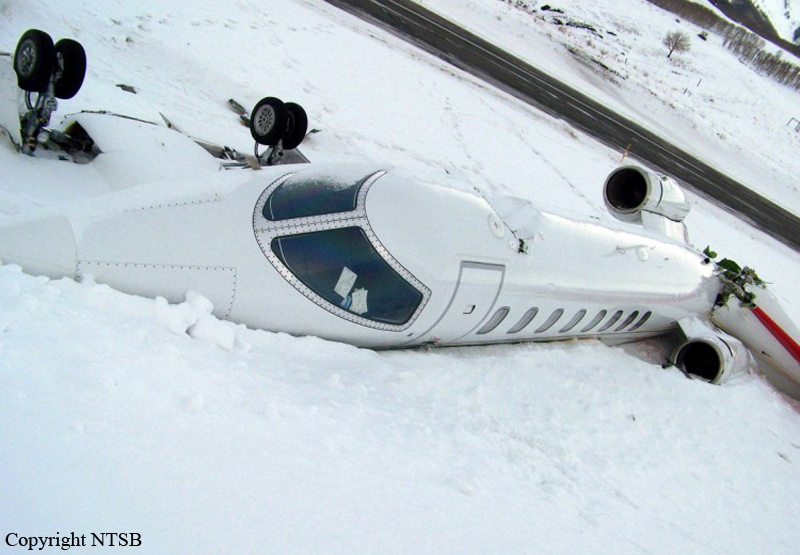
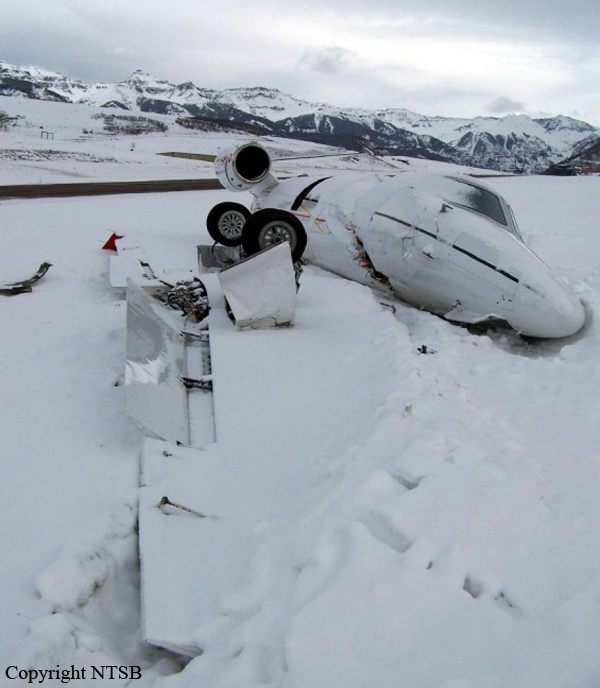
The airplane and two-person crew departed on a positioning flight. The pilot-in-command was not flying the airplane and sat in the right seat. The second-in-command was the pilot flying and sat in the left seat. The accident occurred on the second attempt to land at the destination airport on a snow-covered runway. While descending for the airport, the pilot not flying the airplane called the runway in sight. After assessing that they were too high the pilot not flying convinced the pilot flying to circle the airplane down to land on the runway. Circling at speeds greater than allowed by the approach categories, the crew performed a 360-degree turn to align themselves with the runway. The pilot flying did not have the runway in sight, and was verbally assisted by the pilot not flying. Both pilots stated that they were aligned with the center of the runway. During the flare to touchdown the pilot flying reported an unexpected gust of wind from the left requiring a correction. The airplane touched down about 20 feet off and to the right of the runway edge. Substantial damage was sustained to the airplane's wing and fuselage.
Probable cause:
The failure of both pilots to positively identify the runway prior to landing.
Final Report:

Crash of a Raytheon 390 Premier in Lewistown

Date & Time: Dec 23, 2008 at 1500 LT
Type of aircraft:
Registration:
N20NL
Flight Type:
Survivors:
Yes
Schedule:
Kansas City - Lewistown
MSN:
RB-106
YOM:
2004
Crew on board:
2
Crew fatalities:
Pax on board:
2
Pax fatalities:
Other fatalities:
Total fatalities:
0
Captain / Total flying hours:
13750
Captain / Total hours on type:
1927.00
Aircraft flight hours:
1927
Circumstances:
Prior to departure, the pilot was informed that it had been raining; the roads were wet, but no mention of ice at his destination. During the approach to the destination airport, the runway appeared "wet", and a normal approach and landing was attempted. The airplane touched down at 110 knots, the pilot "then deployed lift dump and [then applied the] brakes". Unable to get braking action, the pilot tried to slide the airplane "left and right" to get traction, but could not. The airplane departed the south end of the 4,370-foot-long runway, went over the edge of an embankment and stopped next to a levee. There were no reported pre-impact malfunctions with the airplane. The Manufacturer Approved Airplane Flight Manual Supplement for Airplanes Operating on Wet and contaminated Runways; General Information Section, states operations on runways contaminated with ice or wet ice are not recommended and no operational information is provided. Using the supplement, the anticipated landing distance on a wet runway was calculated to be about 3,400 feet, the anticipated landing distance on an uncontaminated runway was calculated to be approximately 2,800 feet, and the prescribed landing speed (Vref) was determined to be about 111 knots. A braking action (runway condition) report for the private airfield's runway did not exist, nor was one required.
Probable cause:
The pilot's loss of directional control during landing on an ice-contaminated runway.
Final Report:

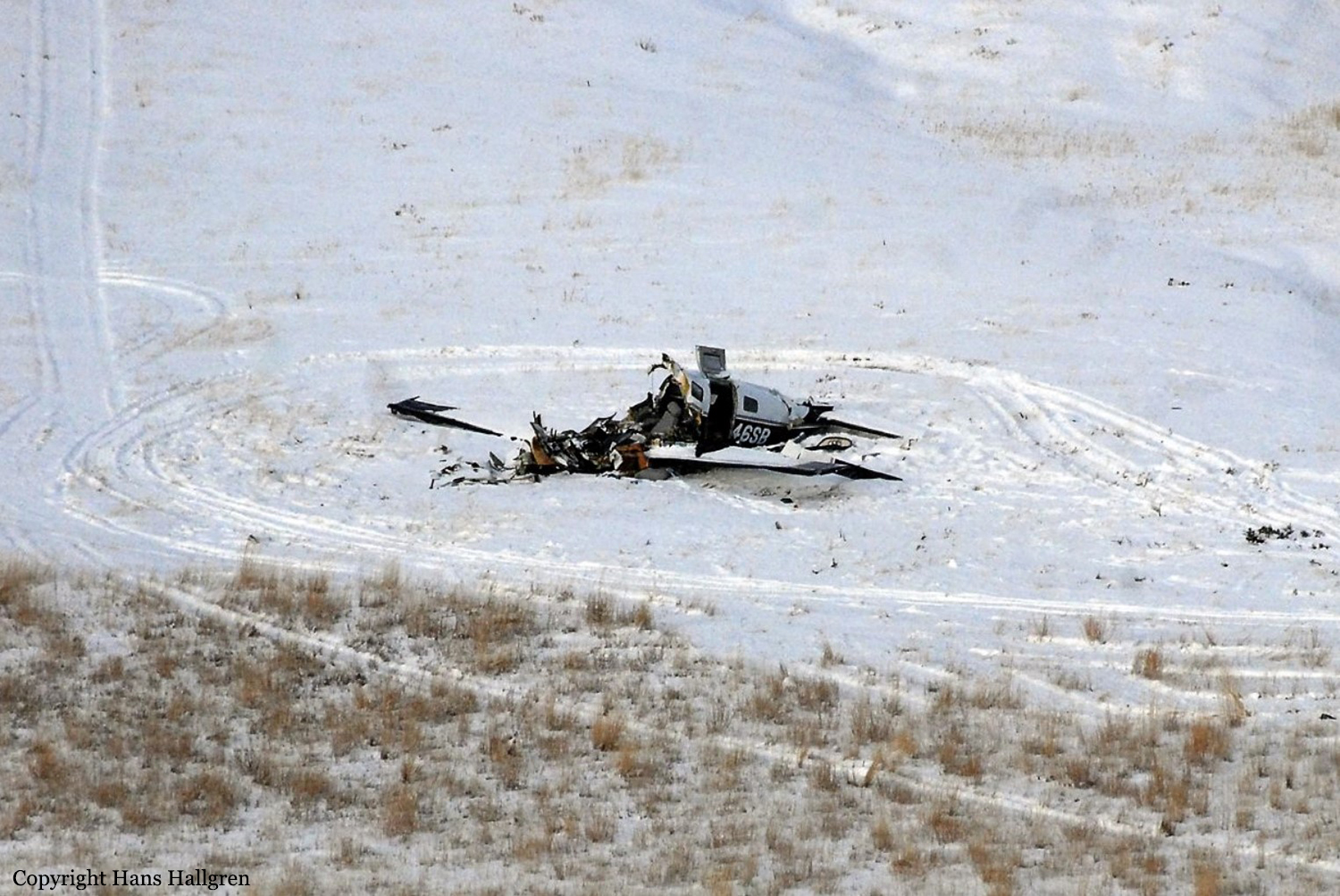
Crash of a Piper PA-46-310P Malibu in Hayden: 2 killed

Date & Time: Dec 22, 2008 at 1218 LT
Registration:
N46SB
Flight Type:
Survivors:
No
Schedule:
Hutchinson – Hayden
MSN:
46-8608039
YOM:
1986
Crew on board:
2
Crew fatalities:
Pax on board:
0
Pax fatalities:
Other fatalities:
Total fatalities:
2
Captain / Total flying hours:
1967
Captain / Total hours on type:
823.00
Copilot / Total flying hours:
2067
Copilot / Total hours on type:
798
Aircraft flight hours:
3302
Circumstances:
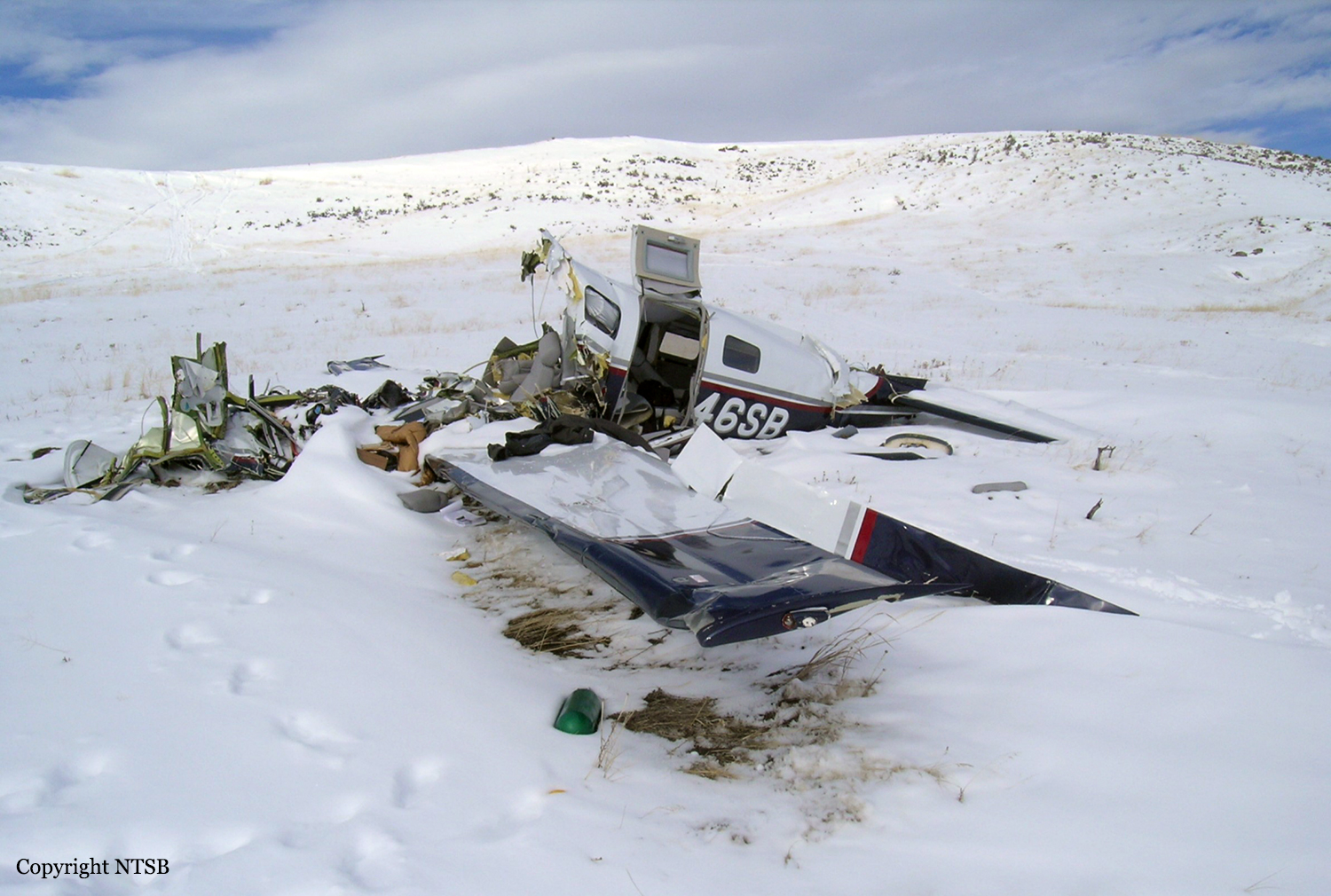
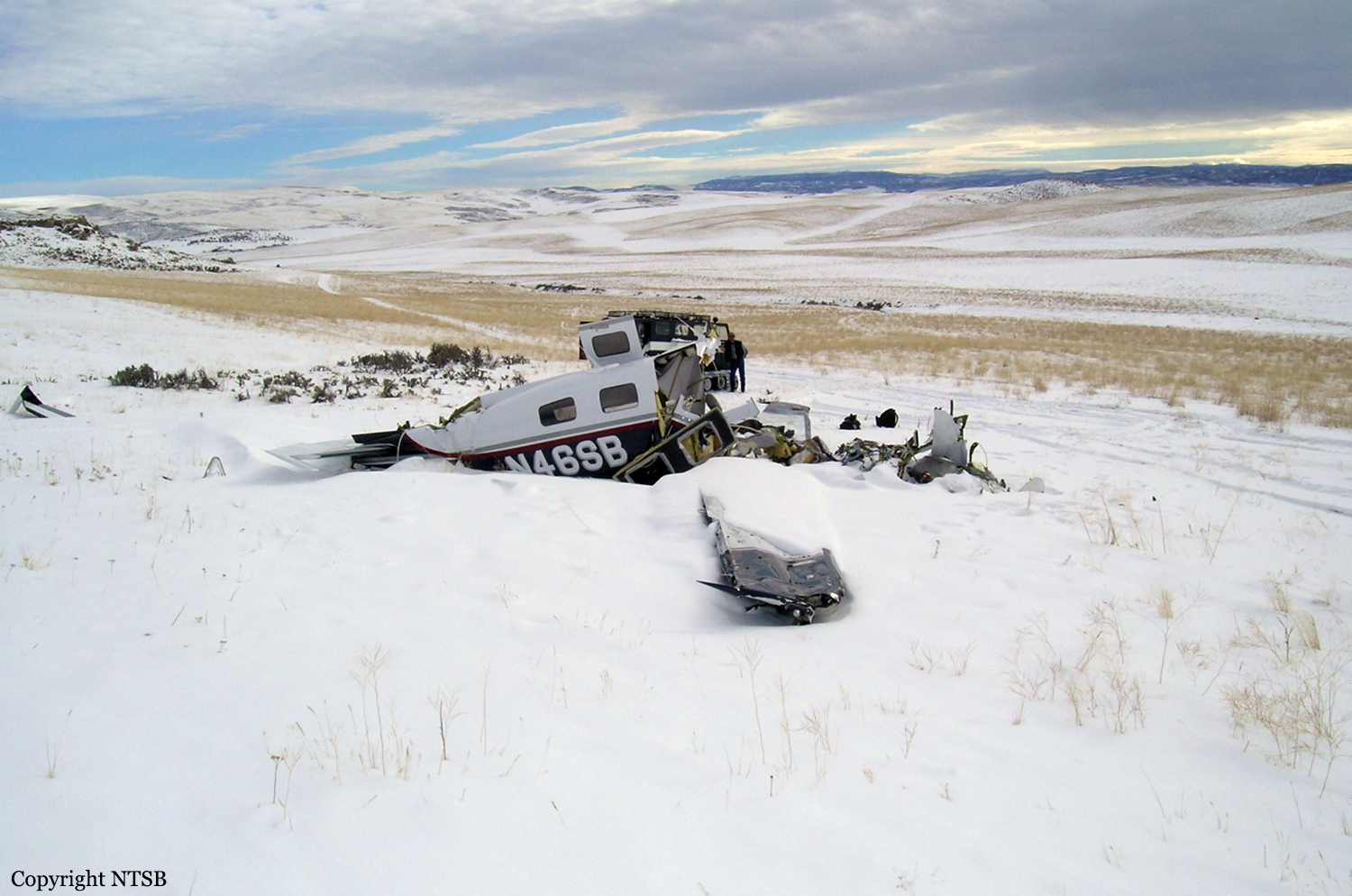
Radar data showed the airplane proceeding outbound for the procedure turn. The pilot reported that they were having trouble extending the landing gear and stated, " ... we’re trying to turn back in and do our gear here all at the same time." Shortly thereafter, the other pilot reported that they had extended the gear and had "three good, three green lights, so we’re hoping the gear is down." The pilot also said, "we are now turned inbound." She was told to contact Unicom. This was the last recorded radio transmission from the flight. The Unicom operator said that she heard the pilot say that they were "coming in." Radar data indicated the airplane crossed the localizer at almost a 90-degree angle and continued turning right until it started to intercept the localizer. The data then indicated that the airplane made a left turn away from the localizer that continued and terminated near the accident site. The turn was captured by six plots. The first plot showed the airplane had descended from 9,400 feet to 9,200 feet and its ground speed had increased from 85 knots to 152 knots. The second plot showed the altitude had increased to 9,700 feet and ground speed had decreased to 132 knots. The third plot showed the altitude had increased further to 10,200 feet and ground speed had dropped to 76 knots. The fourth plot showed the airplane had made almost a 180-degree turn and was at 8,900 feet and at a ground speed of 120 knots. The fifth plot showed the airplane was at 8,700 feet and 20 knots. The sixth and final plot showed the airplane at 8,400 feet and 38 knots. An examination of the airplane showed both wing flap jackscrews retracted and the landing gear actuators extended. The landing gear control switch was in the down position and the emergency gear extension knob was pulled out to full travel. Reduced visibility and clouds were in the vicinity of the airport at the time of the accident.
Probable cause:
The pilot's loss of situational awareness while maneuvering in adverse weather conditions, resulting in spatial disorientation.
Final Report:

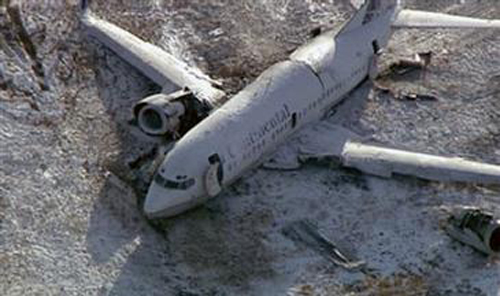
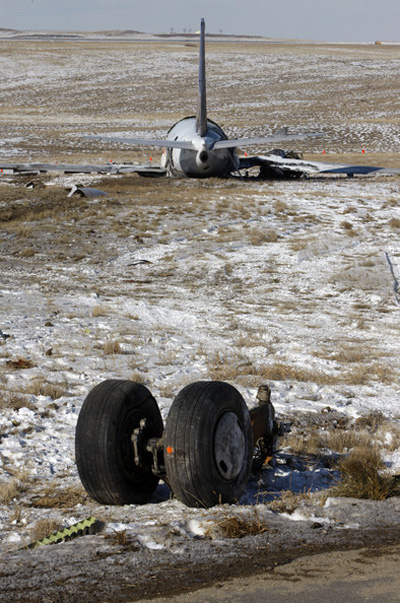
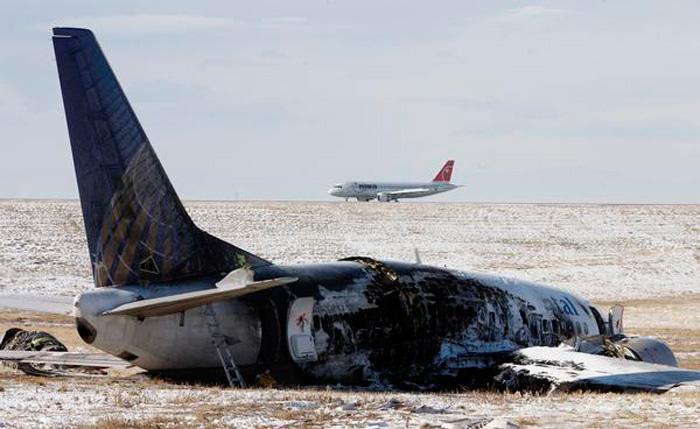
Crash of a Boeing 737-524 in Denver

Date & Time: Dec 20, 2008 at 1818 LT
Type of aircraft:
Operator:
Registration:
N18611
Flight Phase:
Survivors:
Yes
Schedule:
Denver - Houston
MSN:
27324/2621
YOM:
1994
Flight number:
CO1404
Crew on board:
5
Crew fatalities:
Pax on board:
110
Pax fatalities:
Other fatalities:
Total fatalities:
0
Captain / Total flying hours:
13100
Captain / Total hours on type:
6300.00
Copilot / Total flying hours:
8000
Copilot / Total hours on type:
1500
Aircraft flight hours:
40541
Aircraft flight cycles:
21511
Circumstances:
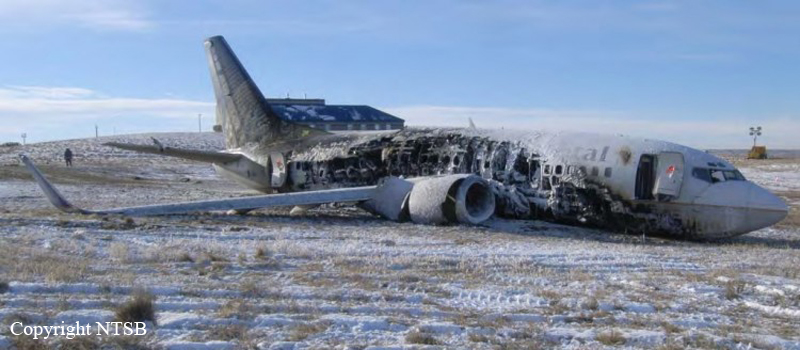
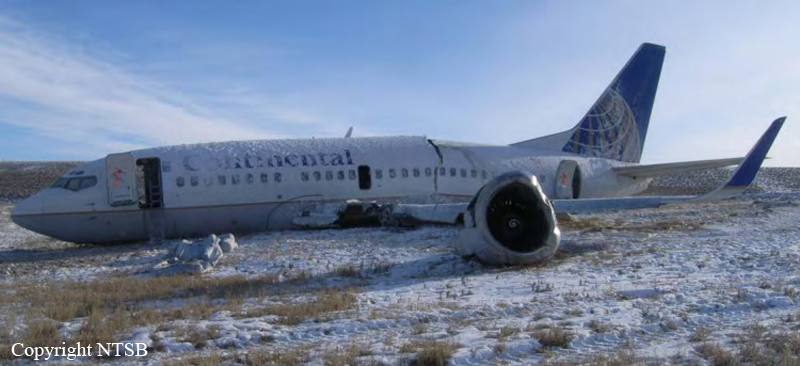
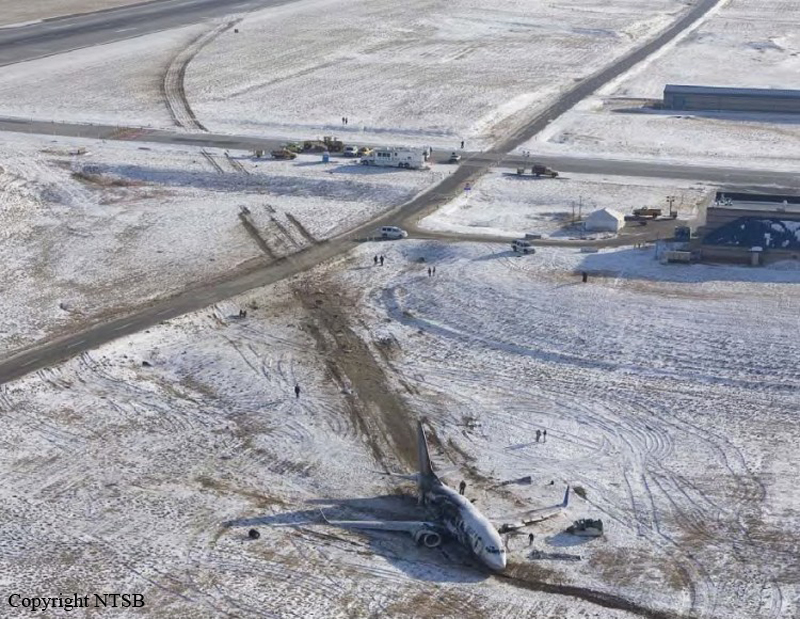
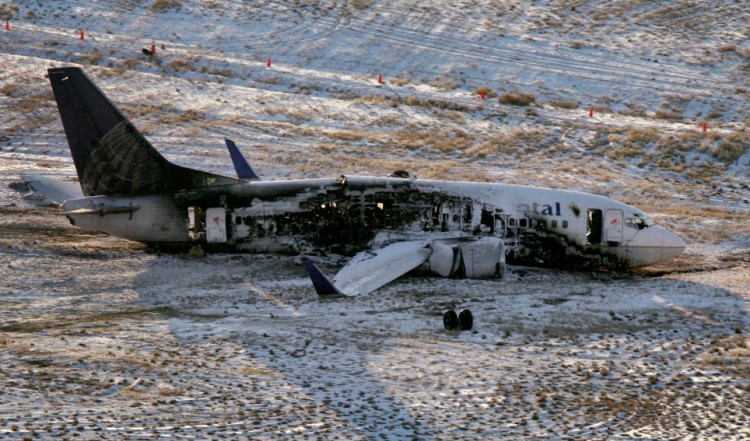
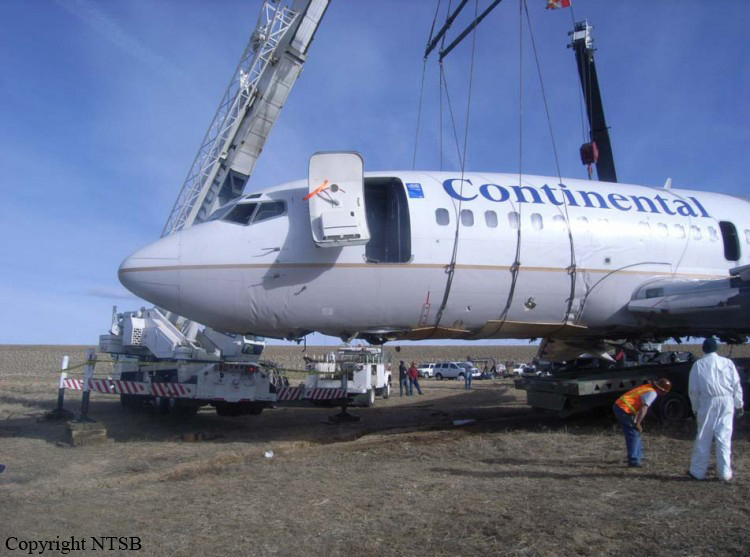
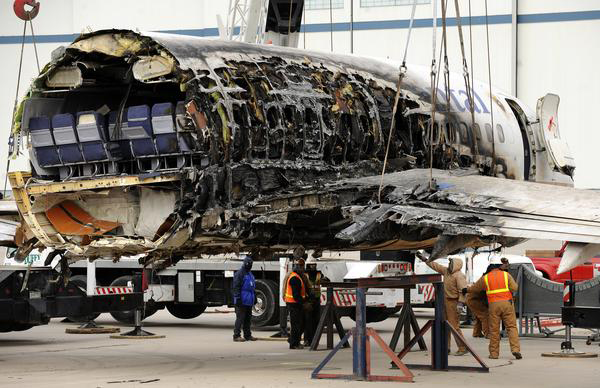
On December 20, 2008, about 1818 mountain standard time, Continental Airlines flight 1404, a Boeing 737-500, N18611, departed the left side of runway 34R during takeoff from Denver International Airport (DEN), Denver, Colorado. A postcrash fire ensued. The captain and 5 of the 110 passengers were seriously injured; the first officer, 2 cabin crewmembers, and 38 passengers received minor injuries; and 1 cabin crewmember and 67 passengers (3 of whom were lap-held children) were uninjured. The airplane was substantially damaged. The scheduled, domestic passenger flight, operated under the provisions of 14 Code of Federal Regulations Part 121, was departing DEN and was destined for George Bush Intercontinental Airport, Houston, Texas. At the time of the accident, visual meteorological conditions prevailed, with strong and gusty winds out of the west. The flight operated on an instrument flight rules flight plan.
Probable cause:
The captain’s cessation of right rudder input, which was needed to maintain directional control of the airplane, about 4 seconds before the excursion, when the airplane encountered a strong and gusty crosswind that exceeded the captain’s training and experience.
Contributing to the accident were the following factors:
1) an air traffic control system that did not require or facilitate the dissemination of key, available wind information to the air traffic controllers and pilots; and
2) inadequate crosswind training in the airline industry due to deficient simulator wind gust modeling.
Final Report:

Crash of a Britten-Norman BN-2A-20 Islander in Espiritu Santo: 2 killed

Date & Time: Dec 19, 2008 at 1110 LT
Type of aircraft:
Operator:
Registration:
YJ-RV2
Flight Phase:
Survivors:
Yes
Site:
Schedule:
Olpoi - Luganville
MSN:
172
YOM:
1970
Flight number:
AVN261
Country:
Region:
Crew on board:
1
Crew fatalities:
Pax on board:
9
Pax fatalities:
Other fatalities:
Total fatalities:
1
Captain / Total flying hours:
8395
Captain / Total hours on type:
1300.00
Aircraft flight hours:
15314
Aircraft flight cycles:
26340
Circumstances:
On Friday 19 December 2008, YJ-RV2, a Britten-Norman Islander aeroplane, was scheduled to fly a routine commercial passenger service for Air Vanuatu (Domestic) Limited (the operator). The service was to start from Bauerfield International Airport, Port Vila and was to include 5 flights or legs, taking the aircraft north via an intermediate landing at Norsup and onto Pekoa International Airport (also known as Santo Airport) near Luganville on Espiritu Santo. At Santo Airport the aircraft was to be refuelled and after a stopover of about 2 hours the service was to continue north to Gaua and Mota Lava before returning to Santo where it was planned to terminate. The pilot arrived at the operator’s base at about 0700 and started his before-flight duties. The flight departed Bauerfield on schedule at 0730 and progressed normally to Santo. The operator’s agent at Santo had early Friday morning called the company operations office in Port Vila and asked if a flight from Santo to Lajmoli and return could be added to the service. The regular Thursday flight had been cancelled and 9 passengers had been left stranded at Lajmoli. The operations staff approved the request and the agent advised he would confirm with the pilot of YJ-RV2 when he arrived at Santo. At Santo the pilot was met by the agent and agreed to the request for the additional flight to Lajmoli. No interruption to the original schedule was envisaged as the flight should have returned to Santo well before the planned 1230 departure north to Gaua. The aircraft was checked and 246 litres of fuel were added. The aircraft departed Santo for Lajmoli at 1016 with the pilot and 4 passengers onboard. At Lajmoli, the local agent, aware that YJ-RV2 was inbound, weighed the passengers and their bags in preparation for the return flight. At 1043 YJ-RV2 landed at Lajmoli and the agent off-loaded the passengers and baggage while the pilot waited by the aircraft. The agent later reported that he informed the pilot of the planned load of 9 passengers and baggage, and that the aircraft would likely be at about maximum allowable weight. The pilot was reported to have advised the agent that he was happy to continue and instructed him to load the aircraft. The pilot remained near the aircraft while the agent loaded first the baggage then the passengers. The pilot instructed one of the passengers to enter the aircraft through the forward door and sit in the front-right seat next to the pilot. The agent added the weight of the passengers and baggage to the load sheet for the flight, but he wasn’t aware of the fuel weight so omitted this from the sheet. The load sheet, which included a passenger manifest, was returned to the pilot, who signed it. A copy was retained by the agent and later handed to the investigation team. At 1055 the pilot started the engines and taxied the aircraft for grass runway 14. YJ-RV2 took off at 1058 and at 1100 the pilot called Santo air traffic services on the high frequency (HF) radio,reporting airborne and climbing to 7000 feet. He gave an estimated time of arrival at Santo of 130. Witnesses, both on the ground at Lajmoli and passengers on board, later commented that the aircraft took longer to get airborne than normal and was slower to climb. The pilot followed the coastline south and approaching the village of Wunavae turned left inland. Passengers later commented that the aircraft flew in a direct line towards the rising hilly ground and, based on their previous flying experiences, crossed several ridges at a lower-than-normal height. The passengers also commented that the pilot increased power on the engines as they flew in an easterly direction. The passengers later spoken to (7) reported no significant turbulence and while there was perhaps some light cloud about, they were able to see the terrain ahead. The passengers recalled becoming increasingly concerned about the low height of the aircraft as it flew directly at a right-angle towards the last ridgeline before crossing over into Big Bay. Some of the passengers described the pilot closing the throttles and shutting down the engines as they approached the ridgeline. At about the same time they heard a loud buzzing sound, later identified as the aircraft’s stall warning. Shortly afterwards, the aircraft struck the trees and bush and quickly came to a halt. No communication was heard from the pilot during this time, although he was observed throughout making movements typical of someone who was awake. Within a couple of minutes of impacting into the bush, the passengers started vacating the aircraft. Fuel was smelled about the aircraft and seen dripping from the wing. The passengers were unable to rouse the pilot and front-seat passenger, who were trapped in the now-deformed front of the aircraft. A second passenger, who had suffered a severe head wound and suspected broken leg, was slower to vacate the aircraft and remained semi-conscious near its right side. The remaining 7 passengers assembled at the rear of the aircraft, near the rear left baggage door. Thinking that the pilot and front-seat passenger were dead, and fearing the aircraft might catch fire, they agreed to start walking downhill towards the coast and Wunavae village. The eighth passenger, now aware that the main group had departed downhill, attempted to follow but was unable to catch up owing to his injuries. At about 1115, Santo air traffic services called the pilot of YJ-RV2 to coordinate his arrival with those of several other aircraft also approaching Santo. The controller received no response, so requested other aircraft to call YJ-RV2 on various radio frequencies. Again there was no response. At 1130 the controller declared the aircraft overdue and informed the authorities and the operator. The crews of a company ATR 42 and a DH6 Twin Otter on scheduled local flights were asked to conduct an initial search for YJ-RV2, focusing on the direct track from Lajmoli to Santo. A third private aircraft also assisted in the search. At about 1245 the crew of the ATR 42 located the wreckage of YJ-RV2 at about 4000 feet (1200 m) in the mountainous area west of Big Bay. The crew was unable to fly close enough to confirm if there were any survivors. At 1500, a light helicopter based in Port Vila departed for Santo and the accident site. Inclement weather prevented the helicopter reaching the site that evening and rescue operations were halted until the next day. Additional support was also requested from New Caledonia, and a French military Super Puma helicopter and medical team arrived in Santo on Saturday morning. At about 0700 on Saturday 20 December, the first rescue personnel reached YJ-RV2 and confirmed that the pilot was dead and the front-seat passenger critically injured. There was no sign of the remaining 8 passengers. The critically injured passenger was initially evacuated to Luganville Hospital and was subsequently taken to Australia for further treatment. He died of his injuries on 1 January 2009. During Saturday morning a group of searchers from Wunavae village started walking towards the accident site looking for survivors. About mid-afternoon, the group of 7 passengers was located by the crew of the Super Puma some 3 to 4 km west of the accident site and airlifted to Santo for treatment. The last passenger was located by the villagers the following day and after a third night in the bush was airlifted to hospital.
Probable cause:
Findings:
Findings are listed in order of development and not in order of priority.
- The pilot was appropriately licensed to fly the aeroplane, but his route and aerodrome qualification had been allowed to lapse. However, this lapse was unlikely to have contributed to the accident.
- There was no evidence that the pilot was not fit to conduct the flight, but he was observed by the local agent and passengers to be less communicative than usual, both before and during the flight.
- The aeroplane had been maintained in accordance with approved standards and there was no evidence of mechanical failure that could have contributed to the accident.
- The weather was suitable for the pilot to maintain appropriate terrain separation visually.
- The aeroplane was overloaded by at least 7%, which affected its climb performance and made it unlikely that it would be able to cross the final ridge without deviating from the path flown by the
pilot.
- The aeroplane did not have sufficient height margin to approach the lee of the ridge where downdraughts were foreseeable, and the pilot had not approached the ridge from a direction that
would have afforded him an escape route when he decided to abort the crossing.
- The poor configuration of the seat belts in the aeroplane increased the risk of injury to the occupants, and may have contributed to the death of one passenger.
- The chances of survival for those passengers who survived the impact were reduced by their decision to leave the accident site.
Final Report:

Crash of a Cessna 402B in Madison

Date & Time: Dec 16, 2008 at 2252 LT
Type of aircraft:
Operator:
Registration:
N4504B
Flight Type:
Survivors:
Yes
Schedule:
Appleton - Milwaukee
MSN:
402B-1370
YOM:
1978
Flight number:
FRG1531
Crew on board:
1
Crew fatalities:
Pax on board:
0
Pax fatalities:
Other fatalities:
Total fatalities:
0
Captain / Total flying hours:
2069
Captain / Total hours on type:
274.00
Aircraft flight hours:
12805
Circumstances:
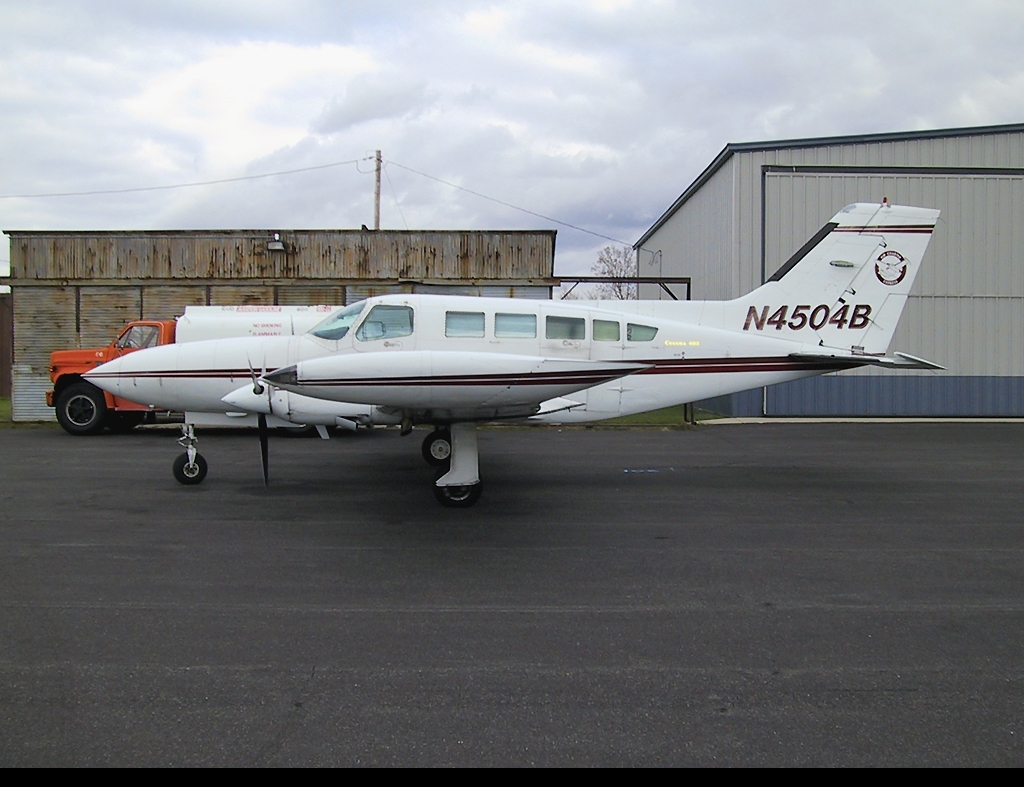
The on-demand cargo flight departed for the destination airport and was delayed en route due to repetitive destination airport closures. The closures were the result of snow-contaminated runways. The pilot then diverted to an alternate airport due to concerns about remaining fuel reserves. The airplane experienced a loss of engine power during an instrument approach at the alternate airport and impacted the ground about 200 yards short of the landing runway. A postaccident inspection of the airplane revealed no usable fuel on board.
Probable cause:
The pilot’s improper fuel management, which resulted in a loss of engine power during an instrument landing due to fuel exhaustion.
Final Report:

Crash of a Beechcraft C90B King Air in Rocksprings: 1 killed

Date & Time: Dec 14, 2008 at 1500 LT
Type of aircraft:
Operator:
Registration:
N43KM
Flight Phase:
Flight Type:
Survivors:
No
Schedule:
Hondo – Goodyear
MSN:
LJ-1345
YOM:
1993
Crew on board:
1
Crew fatalities:
Pax on board:
0
Pax fatalities:
Other fatalities:
Total fatalities:
1
Captain / Total flying hours:
3500
Captain / Total hours on type:
250.00
Aircraft flight hours:
3725
Circumstances:
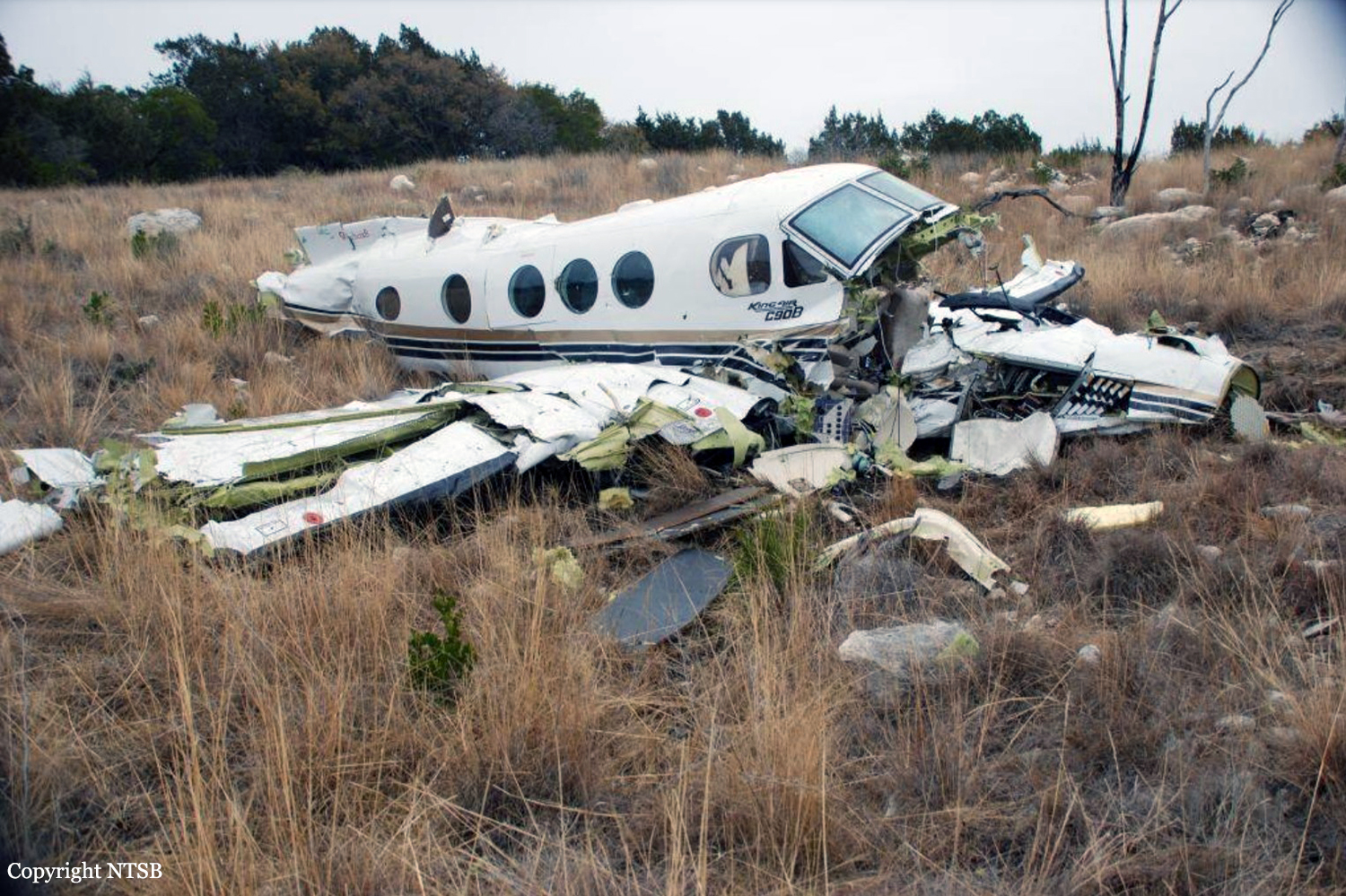
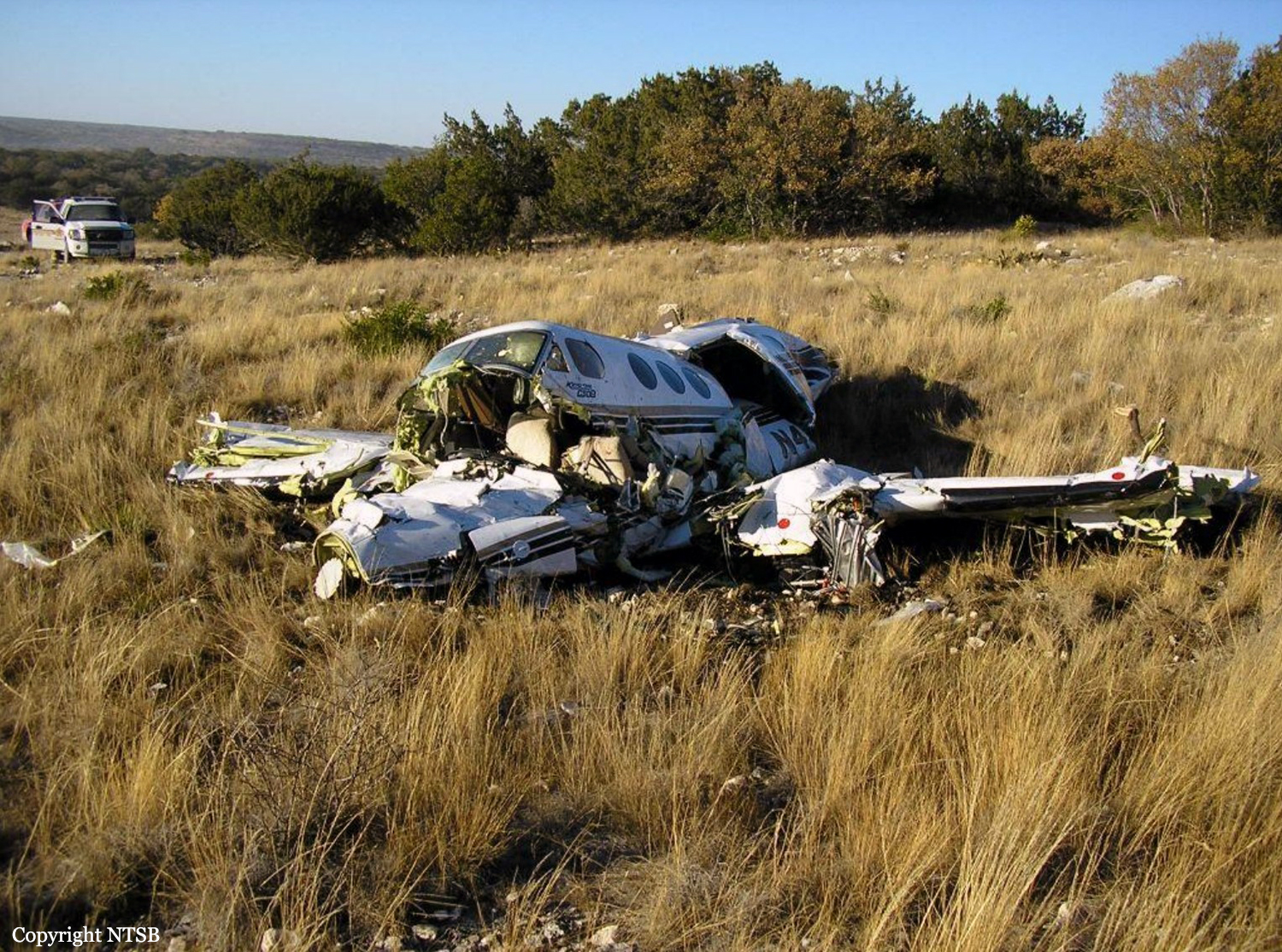
The pilot was cleared to 17,000 feet approximately 7 minutes after takeoff. After arriving at 17,000 feet, radar showed the airplane in a meandering flight path increasingly off course that continued through the end of the flight, even after several prompts from the controller. The pilot was cleared to flight level 240 (24,000 feet) after about 6 minutes at 17,000 feet, and about 2 minutes later, while passing through about 18,000 feet, he made his last radio transmission, acknowledging a corrected heading. About 6 minutes later, the airplane arrived at 24,000 feet and the pilot did not make any intelligible responses to controller inquiries for the remainder of the flight. At 1456, radar showed the airplane in a descent to 21,000 feet before beginning a rapid descent and continuing to impact. The airplane was substantially damaged by the impact forces and the pilot, who was the only occupant, was fatally injured. During the review of the air traffic control recordings, it was determined that none of the voice transmissions from N43KM sounded as if the pilot was speaking through an oxygen mask microphone. At the accident scene both bleed air switches were observed to be in the closed position and the airplane pressurization switch on the console was observed to be in the dump position. No other preimpact anomalies were observed that would have prevented the normal operation of the airplane.
Probable cause:
The pilot's failure to properly configure the pressurization controls, resulting in his impairment and subsequent incapacitation due to hypoxia.
Final Report:

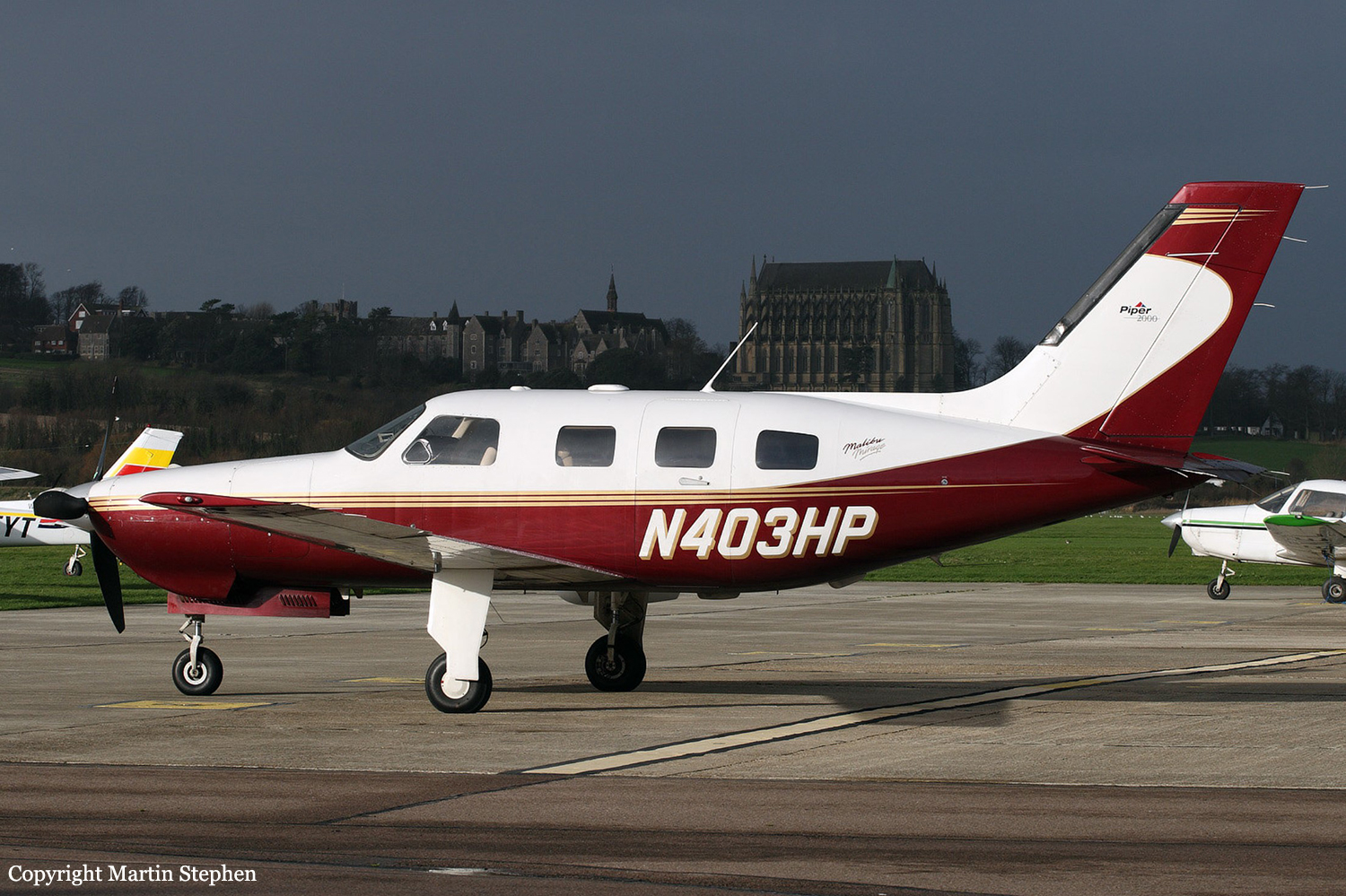
Crash of a Piper PA-46-350P Malibu Mirage in Bad Vöslau: 1 killed

Date & Time: Dec 14, 2008 at 1204 LT
Registration:
N403HP
Survivors:
No
Schedule:
Shoreham – Bad Vöslau
MSN:
46-36312
YOM:
2000
Country:
Region:
Crew on board:
1
Crew fatalities:
Pax on board:
0
Pax fatalities:
Other fatalities:
Total fatalities:
1
Circumstances:
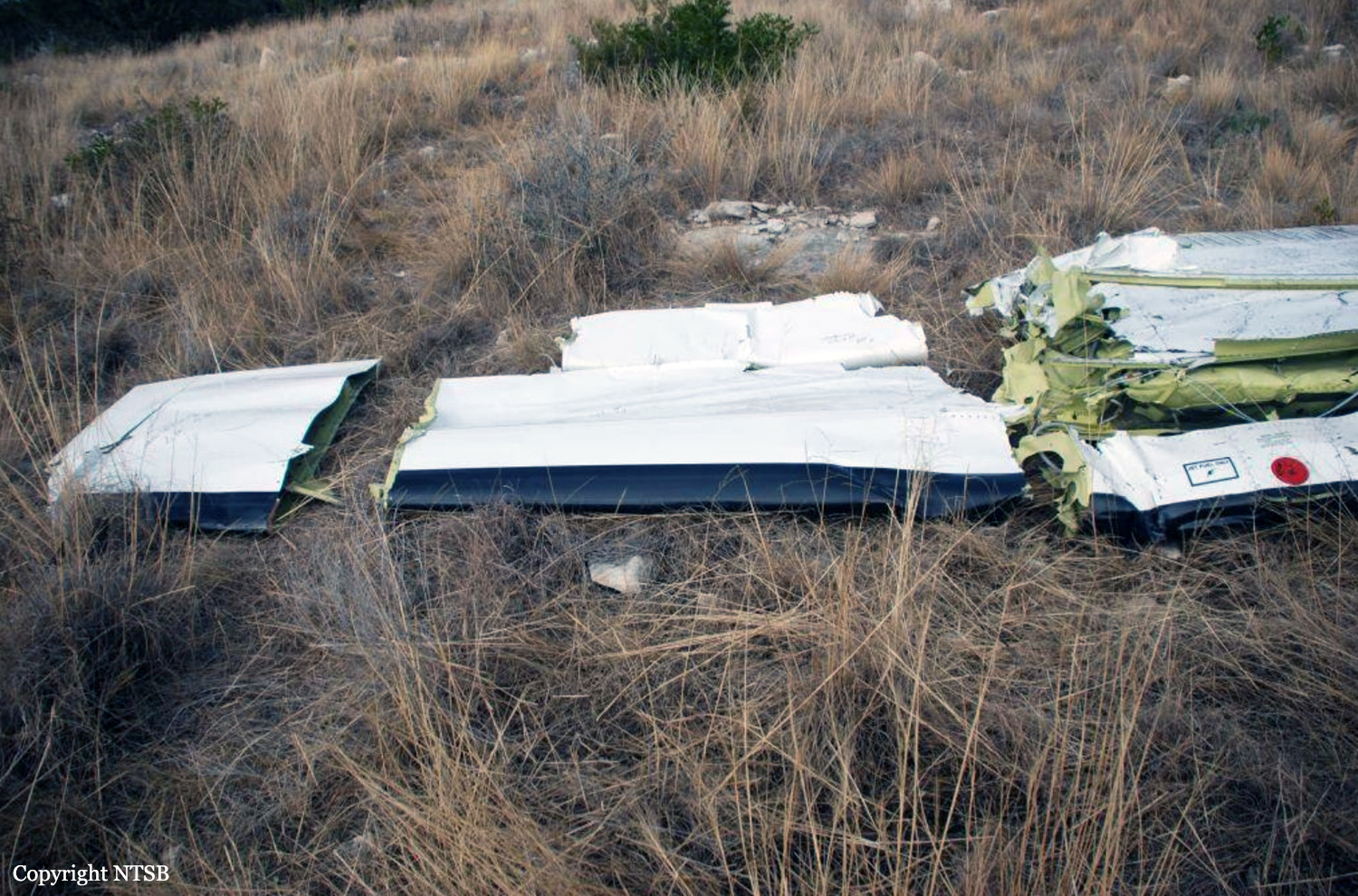
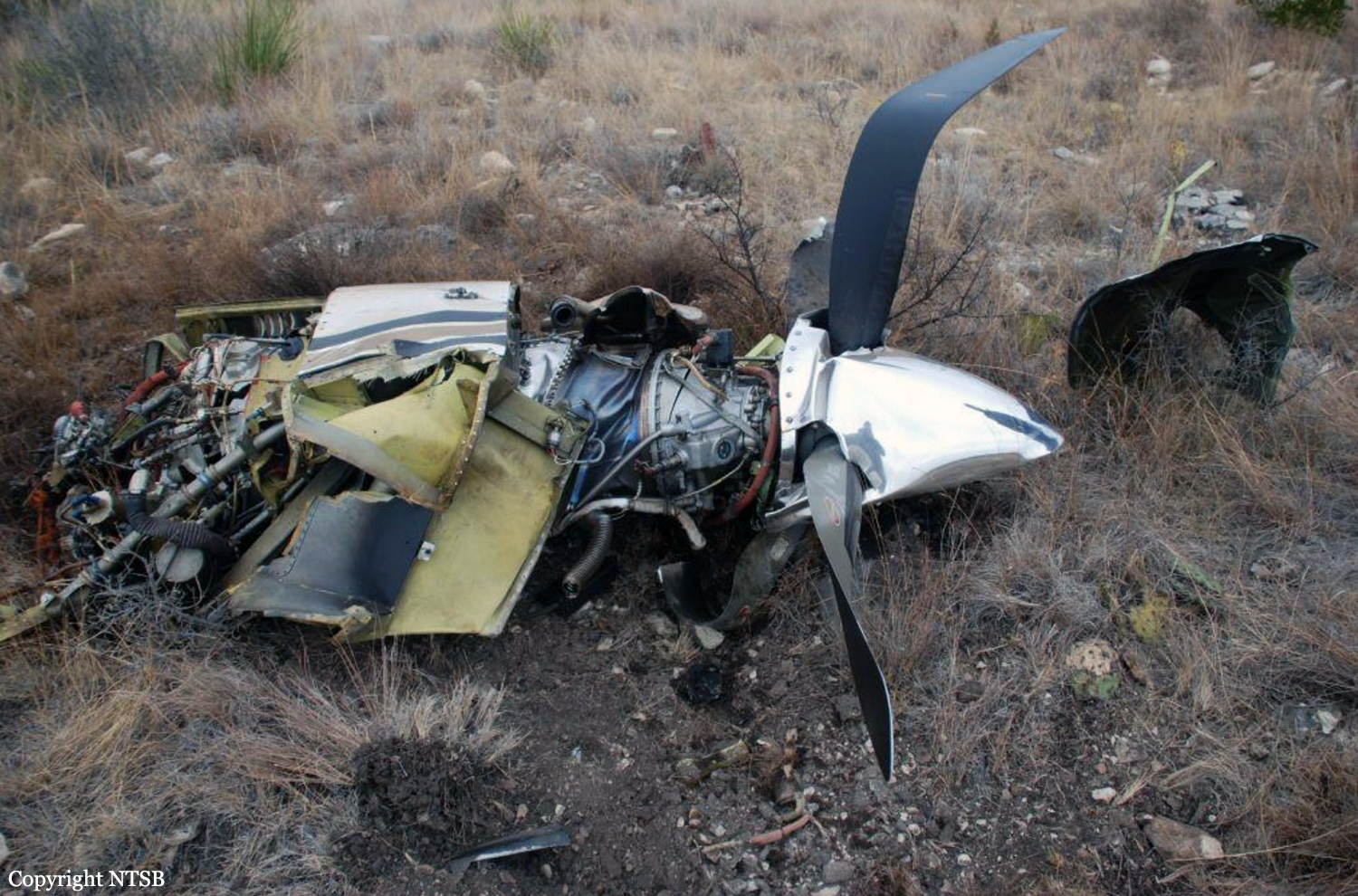
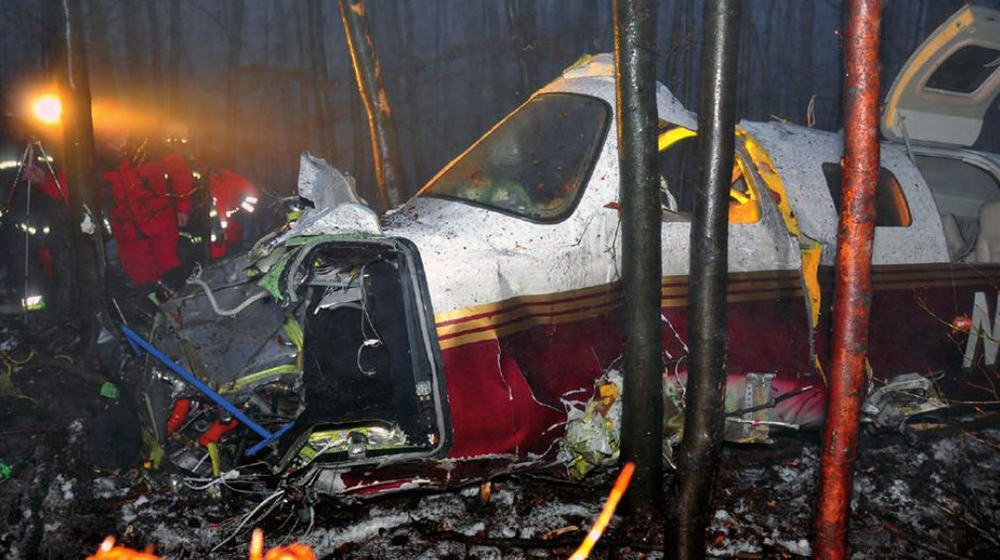
The pilot departed Shoreham on a flight to Hungary with an intermediate stop in Bad Vöslau near Vienna, to pick up a passenger before continuing to Hungary. On approach to Bad Vöslau Airport, the pilot encountered poor visibility due to fog when the aircraft impacted trees and crashed in a wooded area near the airfield. The pilot, sole onboard, was killed.

Crash of a Dornier DO228-202 in Cambridge Bay

Date & Time: Dec 13, 2008 at 0143 LT
Type of aircraft:
Operator:
Registration:
C-FYEV
Survivors:
Yes
Schedule:
Resolute Bay - Cambridge Bay
MSN:
8133
YOM:
1987
Country:
Crew on board:
2
Crew fatalities:
Pax on board:
12
Pax fatalities:
Other fatalities:
Total fatalities:
0
Captain / Total flying hours:
13400
Captain / Total hours on type:
802.00
Copilot / Total flying hours:
850
Copilot / Total hours on type:
470
Circumstances:
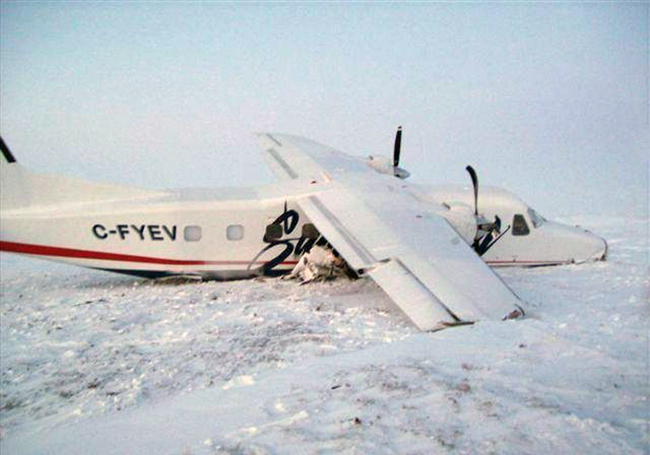
The Summit Air Charters Dornier 228-202 was on a charter flight from Resolute Bay to Cambridge Bay, Nunavut, under instrument flight rules. While on final approach to Runway 31 True, the aircraft collided with the ground approximately 1.5 nautical miles from the threshold at 0143 mountain standard time. Of the 2 pilots and 12 passengers on board, 2 persons received serious injuries. The aircraft was substantially damaged. The emergency locator transmitter activated, and the crew notified the Cambridge Bay Airport radio operator of the accident via the aircraft radio. Local ground search efforts found the aircraft within 30 minutes, and all occupants were removed from the site within two hours.
Probable cause:
Findings as to Causes and Contributing Factors:
1. An abbreviated visual approach was conducted at night in instrument meteorological conditions, which resulted in the flight crew’s inability to obtain sufficient visual reference to judge their height above the ground.
2. The flight crew did not monitor pressure altimeter readings or reference the minimum altitude requirements in relation to aircraft position on the approach, resulting in controlled flight into terrain.
3. The pilots had not received training and performance checks for the installed global positioning system (GPS) equipment, and were not fully competent in its use. The attempts at adjusting the settings likely distracted the pilots from maintaining the required track and ground clearance during the final approach.
Findings as to Risk:
1. The precision approach path indicator systems (PAPI) at Cambridge Bay had not been inspected in accordance with the Airport Safety Program Manual. Although calibration of the equipment did not have a bearing on this occurrence, there was an increased risk of aircraft misalignment from the proper glide path, especially during night and reduced visibility conditions.
2. The flight crew’s cross-check of barometric altimeter performance was not sufficient to detect which instrument was inaccurate. As a result, reference was made to a defective altimeter, which increased the risk of controlled flight into terrain.
3. Operators’ maintenance organizations normally do not have access to the troubleshooting information contained in Component Maintenance Instruction Manuals for the Intercontinental Dynamics Corporation altimeters. Therefore, aircraft could be dispatched with damaged instruments with the potential for developing a loss of calibration during flight.
4. The flight was conducted during a period in which the crew’s circadian rhythm cycle could result in cognitive and physical performance degradation unless recognized and managed.
Final Report: