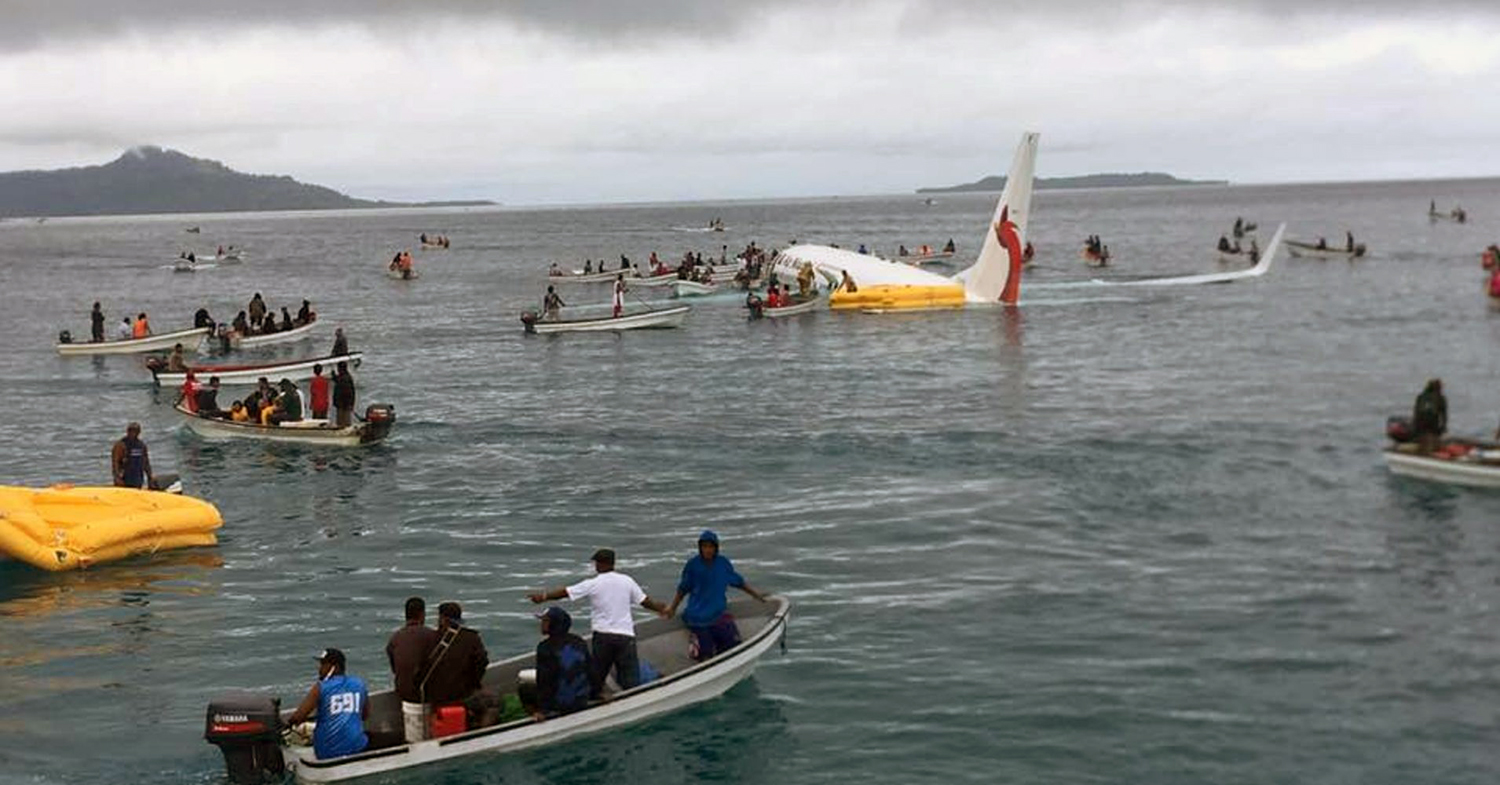
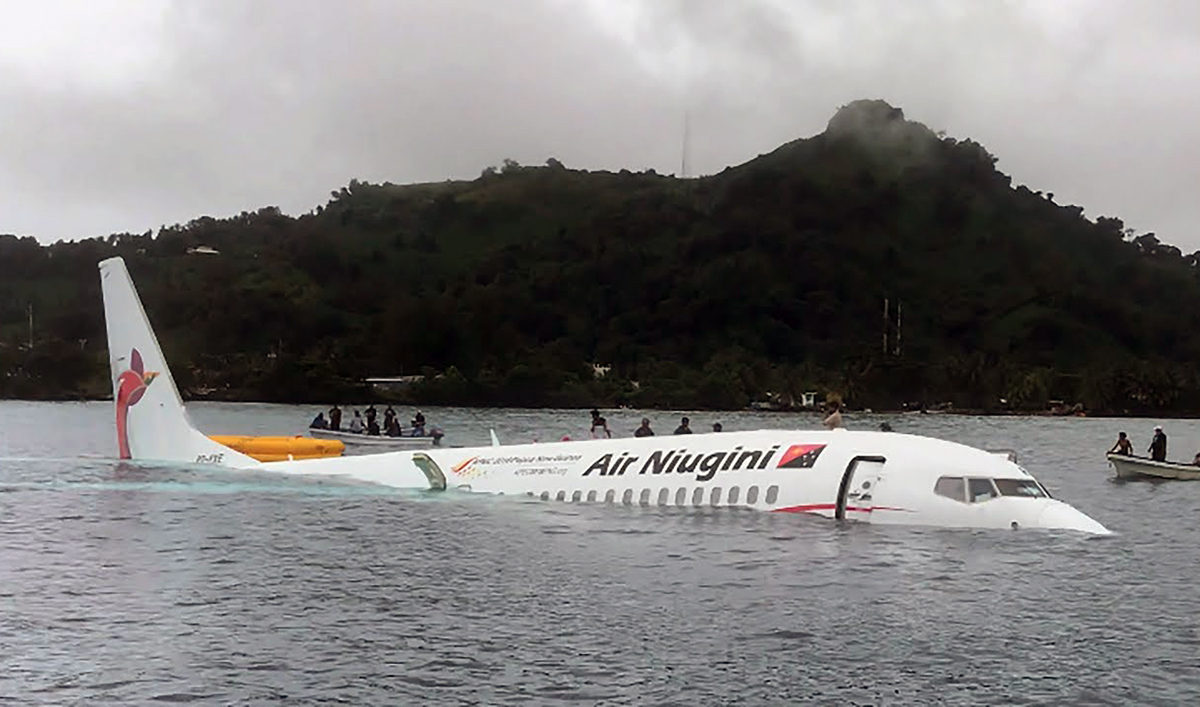
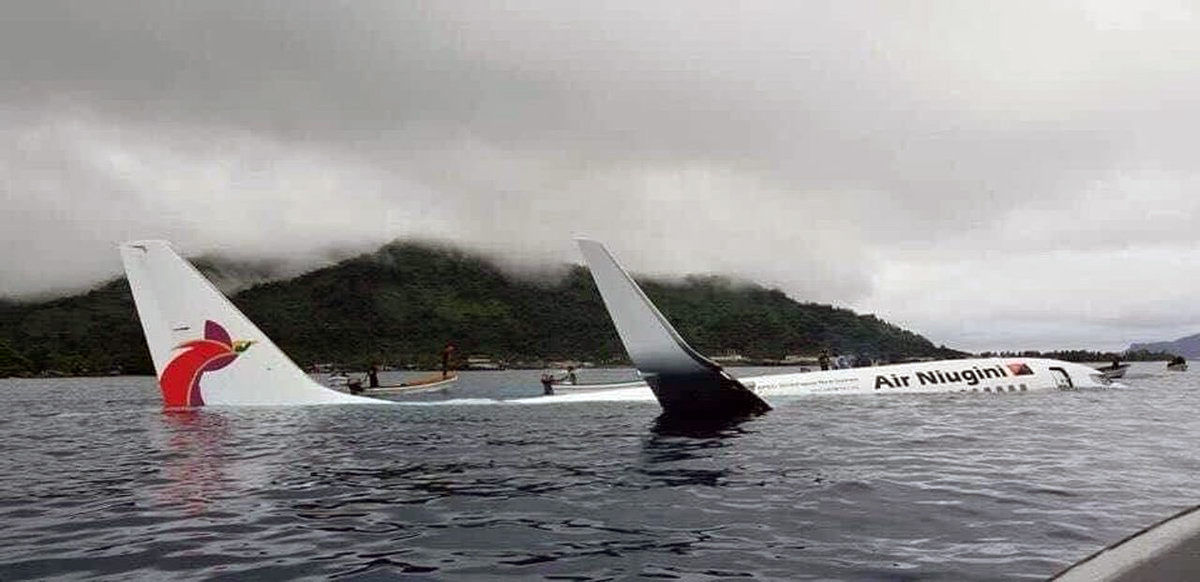
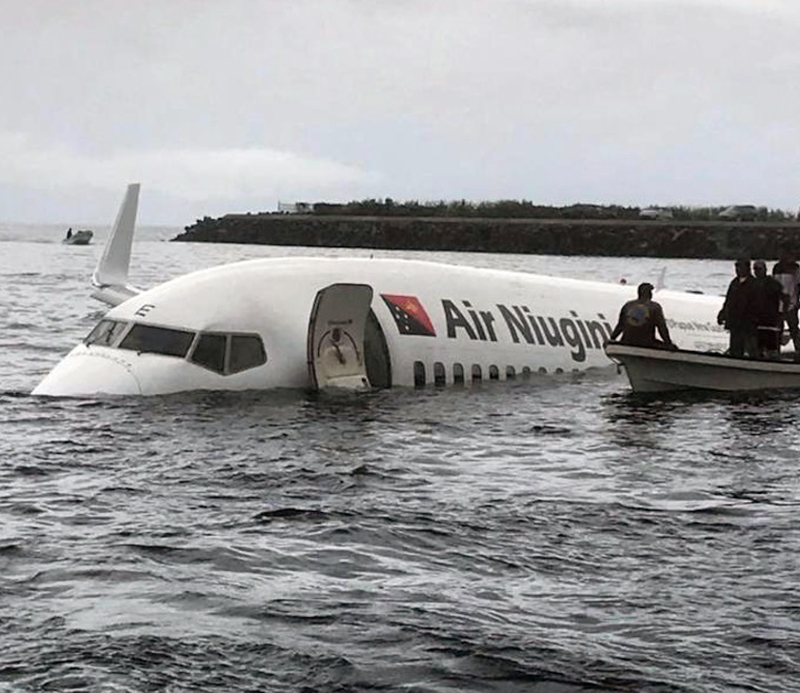
Crash of a Boeing 737-8BK off Weno Island: 1 killed

Date & Time: Sep 28, 2018 at 0924 LT
Type of aircraft:
Operator:
Registration:
P2-PXE
Survivors:
Yes
Schedule:
Kolonia – Chuuk – Port Moresby
MSN:
33024/1688
YOM:
2005
Flight number:
PX073
Region:
Crew on board:
12
Crew fatalities:
Pax on board:
35
Pax fatalities:
Other fatalities:
Total fatalities:
1
Captain / Total flying hours:
19780
Captain / Total hours on type:
2276.00
Copilot / Total flying hours:
4618
Copilot / Total hours on type:
368
Aircraft flight hours:
37160
Aircraft flight cycles:
14788
Circumstances:
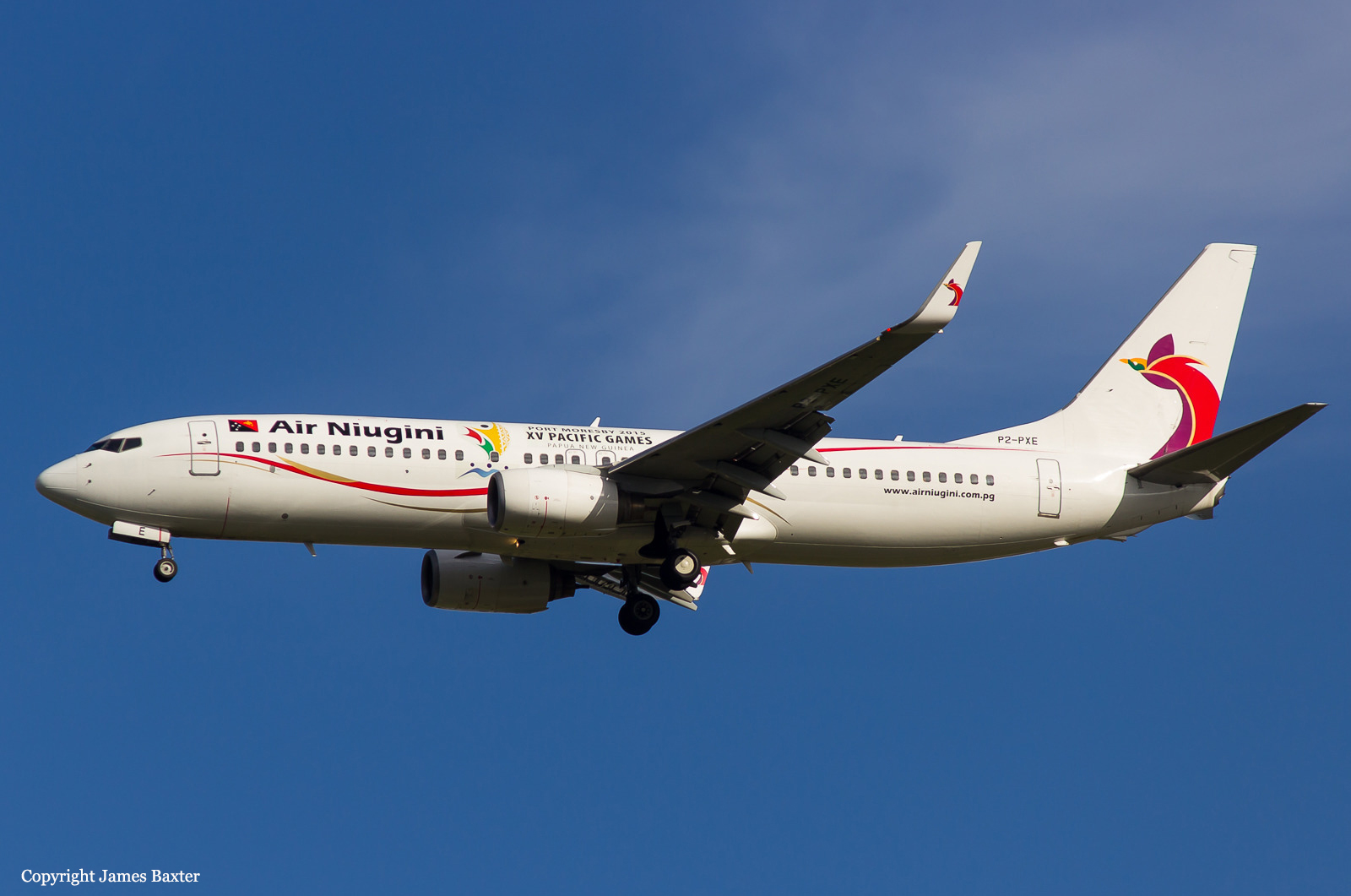
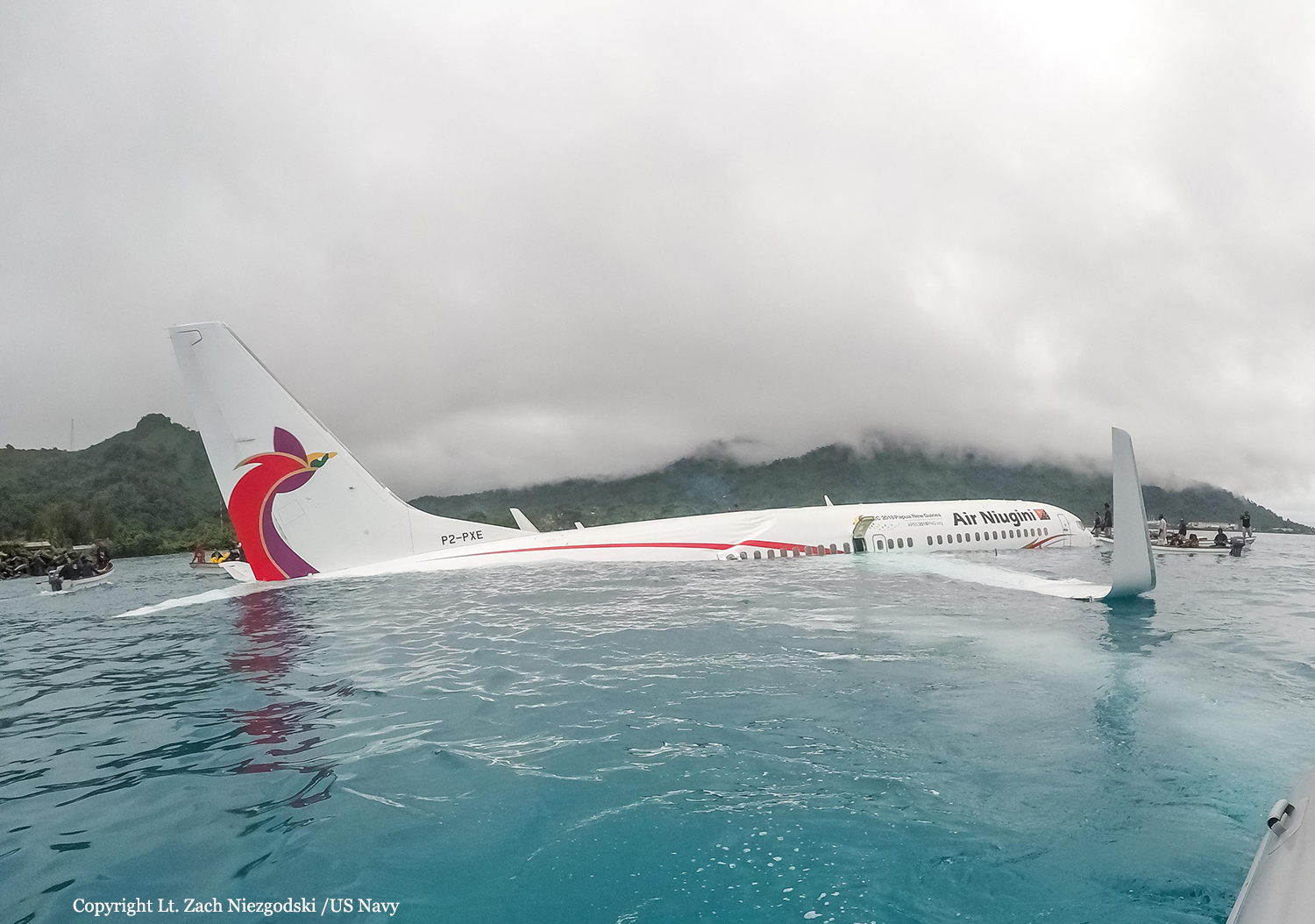
On 28 September 2018, at 23:24:19 UTC2 (09:24 local time), a Boeing 737-8BK aircraft, registered P2-PXE (PXE), operated by Air Niugini Limited, was on a scheduled passenger flight number PX073, from Pohnpei to Chuuk, in the Federated States of Micronesia (FSM) when, during its final approach, the aircraft impacted the water of the Chuuk Lagoon, about 1,500 ft (460 m) short of the runway 04 threshold. The aircraft deflected across the water several times before it settled in the water and turned clockwise through 210 deg and drifted 460 ft (140 m) south east of the runway 04 extended centreline, with the nose of the aircraft pointing about 265°. The pilot in command (PIC) was the pilot flying, and the copilot was the support/monitoring pilot. An Aircraft Maintenance Engineer occupied the cockpit jump seat. The engineer videoed the final approach on his iPhone, which predominantly showed the cockpit instruments. Local boaters rescued 28 passengers and two cabin crew from the left over-wing exits. Two cabin crew, the two pilots and the engineer were rescued by local boaters from the forward door 1L. One life raft was launched from the left aft over-wing exit by cabin crew CC5 with the assistance of a passenger. The US Navy divers rescued six passengers and four cabin crew and the Load Master from the right aft over-wing exit. All injured passengers were evacuated from the left over-wing exits. One passenger was fatally injured, and local divers located his body in the aircraft three days after the accident. The Government of the Federated States of Micronesia commenced the investigation and on 14th February 2019 delegated the whole of the investigation to the PNG Accident Investigation Commission. The investigation determined that the flight crew’s level of compliance with Air Niugini Standard Operating Procedures Manual (SOPM) was not at a standard that would promote safe aircraft operations. The PIC intended to conduct an RNAV GPS approach to runway 04 at Chuuk International Airport and briefed the copilot accordingly. The descent and approach were initially conducted in Visual Meteorological Conditions (VMC), but from 546 ft (600 ft)4 the aircraft was flown in Instrument Meteorological Conditions (IMC). The flight crew did not adhere to Air Niugini SOPM and the approach and pre-landing checklists. The RNAV (GPS) Rwy 04 Approach chart procedure was not adequately briefed. The RNAV approach specified a flight path descent angle guide of 3º. The aircraft was flown at a high rate of descent and a steep variable flight path angle averaging 4.5º during the approach, with lateral over-controlling; the approach was unstabilised. The Flight Data Recorder (FDR) recorded a total of 17 Enhanced Ground Proximity Warning System (EGPWS) alerts, specifically eight “Sink Rate” and nine “Glideslope”. The recorded information from the Cockpit Voice Recorder (CVR) showed that a total of 14 EGPWS aural alerts sounded after passing the Minimum Descent Altitude (MDA), between 307 ft (364 ft) and the impact point. A “100 ft” advisory was annunciated, in accordance with design standards, overriding one of the “Glideslope” aural alert. The other aural alerts were seven “Glideslope” and six “Sink Rate”. The investigation observed that the flight crew disregarded the alerts, and did not acknowledge the “minimums” and 100 ft alerts; a symptom of fixation and channelised attention. The crew were fixated on cues associated with the landing and control inputs due to the extension of 40° flap. Both pilots were not situationally aware and did not recognise the developing significant unsafe condition during the approach after passing the Missed Approach Point (MAP) when the aircraft entered a storm cell and heavy rain. The weather radar on the PIC’s Navigation Display showed a large red area indicating a storm cell immediately after the MAP, between the MAP and the runway. The copilot as the support/monitoring pilot was ineffective and was oblivious to the rapidly unfolding unsafe situation. He did not recognise the significant unsafe condition and therefore did not realise the need to challenge the PIC and take control of the aircraft, as required by the Air Niugini SOPM. The Air Niugini SOPM instructs a non-flying pilot to take control of the aircraft from the flying pilot, and restore a safe flight condition, when an unsafe condition continues to be uncorrected. The records showed that the copilot had been checked in the Simulator for EGPWS Alert (Terrain) however there was no evidence of simulator check sessions covering the vital actions and responses required to retrieve a perceived or real situation that might compromise the safe operation of the aircraft. Specifically sustained unstabilised approach below 1,000 ft amsl in IMC. The PIC did not conduct the missed approach at the MAP despite the criteria required for visually continuing the approach not being met, including visually acquiring the runway or the PAPI. The PIC did not conduct a go around after passing the MAP and subsequently the MDA although:
• The aircraft had entered IMC;
• the approach was unstable;
• the glideslope indicator on the Primary Flight Display (PFD) was showing a rapid glideslope deviation from a half-dot low to 2-dots high within 9 seconds after passing the MDA;
• the rate of descent high (more than 1,000 ft/min) and increasing;
• there were EGPWS Sink Rate and Glideslope aural alerts; and
• the EGPWS visual PULL UP warning message was displayed on the PFD.
The report highlights that deviations from recommended practice and SOPs are a potential hazard, particularly during the approach and landing phase of flight, and increase the risk of approach and landing accidents. It also highlights that crew coordination is less than effective if crew members do not work together as an integrated team. Support crew members have a duty and responsibility to ensure that the safety of a flight is not compromised by non-compliance with SOPs, standard phraseology and recommended practices. The investigation found that the Civil Aviation Safety Authority of PNG (CASA PNG) policy and procedures of accepting manuals rather than approving manuals, while in accordance with the Civil Aviation Rules requirements, placed a burden of responsibility on CASA PNG as the State Regulator to ensure accuracy and that safety standards are met. In accepting the Air Niugini manuals, CASA PNG did not meet the high standard of evidence-based assessment required for safety assurance, resulting in numerous deficiencies and errors in the Air Niugini Operational, Technical, and Safety manuals as noted in this report and the associated Safety Recommendations. The report includes a number of recommendations made by the AIC, with the intention of enhancing the safety of flight (See Part 4 of this report). It is important to note that none of the safety deficiencies brought to the attention of Air Niugini caused the accident. However, in accordance with Annex 13 Standards, identified safety deficiencies and concerns must be raised with the persons or organisations best placed to take safety action. Unless safety action is taken to address the identified safety deficiencies, death or injury might result in a future accident. The AIC notes that Air Niugini Limited took prompt action to address all safety deficiencies identified by the AIC in the 12 Safety Recommendations issued to Air Niugini, in an average time of 23 days. The quickest safety action being taken by Air Niugini was in 6 days. The AIC has closed all 12 Safety Recommendations issued to Air Niugini Limited. One safety concern prompting an AIC Safety Recommendation was issued to Honeywell Aerospace and the US FAA. The safety deficiency/concern that prompted this Safety Recommendation may have been a contributing factor in this accident. The PNG AIC is in continued discussion with the US NTSB, Honeywell, Boeing and US FAA. This recommendation is the subject of ongoing research and the AIC Recommendation will remain ACTIVE pending the results of that research.
Probable cause:
The flight crew did not comply with Air Niugini Standard Operating Procedures Manual (SOPM) and the approach and pre-landing checklists. The RNAV (GPS) Rwy 04 Approach chart procedure was not adequately briefed. The aircraft’s flight path became unstable with lateral over-controlling commencing shortly after autopilot disconnect at 625 ft (677 ft). From 546 ft (600 ft) the aircraft was flown in Instrument Meteorological Conditions (IMC) and the rate of descent significantly exceeded 1,000 feet/min in Instrument Meteorological Conditions (IMC) from 420 ft (477 ft). The flight crew heard, but disregarded, 13 EGPWS aural alerts (Glideslope and Sink Rate), and flew a 4.5º average flight path (glideslope). The pilots lost situational awareness and their attention was channelised or fixated on completing the landing. The PIC did not execute the missed approach at the MAP despite: PAPI showing 3 whites just before entering IMC; the unstabilised approach; the glideslope indicator on the PFD showing a rapid glideslope deviation from half-dot low to 2-dots high within 9 seconds after passing the MDA; the excessive rate of descent; the EGPWS aural alerts: and the EGPWS visual PULL UP warning on the PFD. The copilot (support/monitoring pilot) was ineffective and was oblivious to the rapidly unfolding unsafe situation. It is likely that a continuous “WHOOP WHOOP PULL UP”70 hard aural warning, simultaneously with the visual display of PULL UP on the PFD (desirably a flashing visual display PULL UP on the PFD), could have been effective in alerting the crew of the imminent danger, prompting a pull up and execution of a missed approach, that may have prevented the accident.
Final Report:
Crash of a Cessna 208B Supervan 900 in the Pacific Ocean: 1 killed

Date & Time: Sep 27, 2018 at 1528 LT
Type of aircraft:
Operator:
Registration:
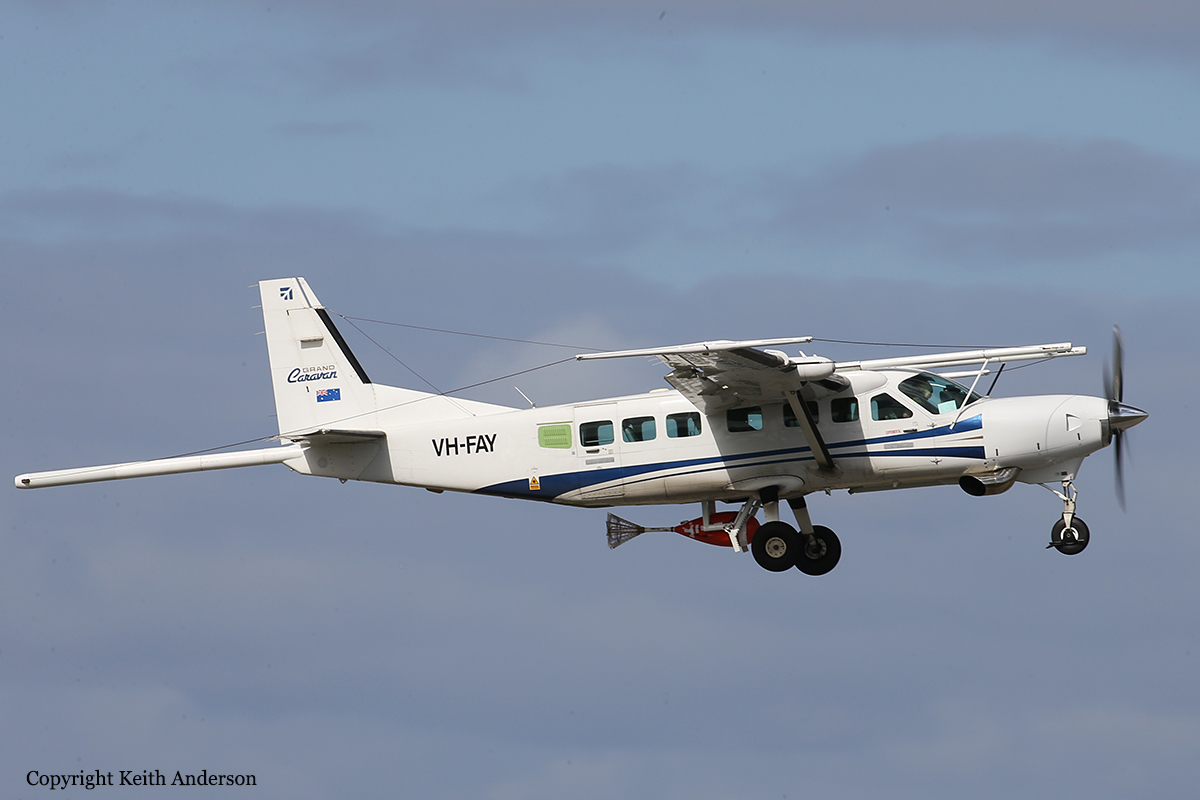
VH-FAY
Flight Phase:
Flight Type:
Survivors:
No
Schedule:
Saipan - Sapporo
MSN:
208B-0884
YOM:
2001
Country:
Region:
Crew on board:
1
Crew fatalities:
Pax on board:
0
Pax fatalities:
Other fatalities:
Total fatalities:
1
Captain / Total flying hours:
13600
Aircraft flight hours:
9291
Circumstances:
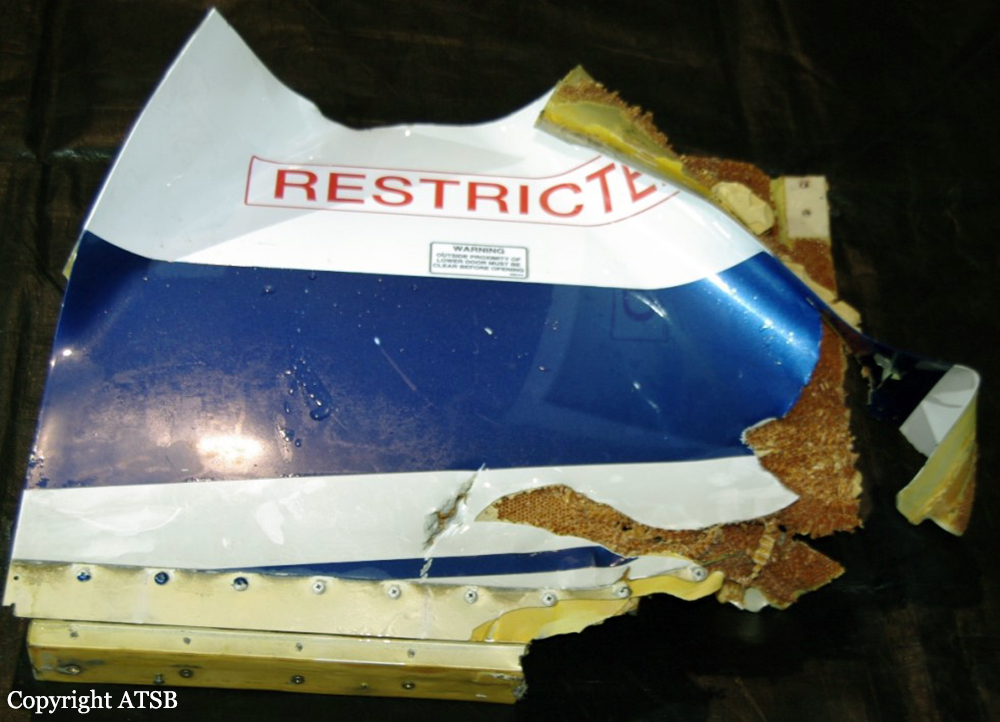
The pilot of a Cessna 208B aircraft, registered VH-FAY (FAY), was contracted to ferry the aircraft from Jandakot Airport, Western Australia (WA), to Greenwood, Mississippi in the United States (US). The pilot planned to fly via the ‘North Pacific Route’. At 0146 Coordinated Universal Time (UTC) on 15 September 2018, the aircraft took off from Jandakot Airport, WA, and landed in Alice Springs, Northern Territory at 0743. After landing, the pilot advised the aircraft operator that the aircraft had a standby alternator fault indication. In response, two company licenced aircraft maintenance engineers went to Alice Springs and changed the alternator control unit, which fixed the problem. Late the next morning, the aircraft departed Alice Springs for Weipa, Queensland, where the pilot refuelled the aircraft and stayed overnight. On the morning of 17 September, the pilot conducted a 1-hour flight to Horn Island, Queensland. About an hour later, the aircraft departed Horn Island with the planned destination of Guam, Micronesia. While en route, the pilot sent a message to the aircraft operator advising that he would not land in Guam, but would continue another 218 km (118 NM) to Saipan, Northern Mariana Islands. At 1003, the aircraft landed at Saipan International Airport. The next morning, the pilot refuelled the aircraft and detected damage to the propeller anti-ice boot. The aircraft was delayed for more than a week while a company engineer travelled to Saipan and replaced the anti-ice boot. At 2300 UTC on 26 September, the aircraft departed Saipan, bound for New Chitose Airport, Hokkaido, Japan. Once airborne, the pilot sent a message from his Garmin device, indicating that the weather was clear and that he had an expected flight time of 9.5 hours. About an hour after departure, the aircraft levelled out at flight level (FL) 220. Once in the cruise, the pilot sent a message that he was at 22,000 feet, had a tailwind and the weather was clear. This was followed by a message at 0010 that he was at FL 220, with a true airspeed of 167 kt and fuel flow of 288 lb/hr (163 L/hr). At 0121, while overhead reporting point TEGOD, the pilot contacted Tokyo Radio flight information service on HF radio. The pilot was next due to report when the aircraft reached reporting point SAGOP, which the pilot estimated would occur at 0244. GPS recorded track showed that the aircraft passed SAGOP at 0241, but the pilot did not contact Tokyo Radio as expected. At 0249, Tokyo Radio made several attempts to communicate with the pilot on two different HF frequencies, but did not receive a response. Tokyo Radio made further attempts to contact the pilot between 0249 and 0251, and at 0341, 0351 and 0405. About 4.5 hours after the pilot’s last communication, two Japan Air Self-Defense Force (JASDF) aircraft intercepted FAY. The pilot did not respond to the intercept in accordance with international intercept protocols, either by rocking the aircraft wings or turning, and the aircraft continued to track at FL 220 on its planned flight route. The JASDF pilots were unable to see into the cockpit to determine whether the pilot was in his seat or whether there was any indication that he was incapacitated. The JASDF pilots flew around FAY for about 30 minutes, until the aircraft descended into cloud. At 0626 UTC, the aircraft’s GPS tracker stopped reporting, with the last recorded position at FL 220, about 100 km off the Japanese coast and 589 km (318 NM) short of the destination airport. Radar data showed that the aircraft descended rapidly from this point and collided with water approximately 2 minutes later. The Japanese authorities launched a search and rescue mission and, within 2 hours, searchers found the aircraft’s rear passenger door. The search continued until the next day, when a typhoon passed through the area and the search was suspended for two days. After resuming, the search continued until 27 October with no further parts of the aircraft found. The pilot was not located.
Probable cause:
From the evidence available, the following findings are made with respect to the uncontrolled flight into water involving a Cessna Aircraft Company 208B, registered VH-FAY, that occurred 260 km north-east of Narita International Airport, Japan, on 27 September 2018. These findings should not be read as apportioning blame or liability to any particular organisation or individual.
Contributing factors:
• During the cruise between Saipan and New Chitose, the pilot very likely became incapacitated and could no longer operate the aircraft.
• The aircraft’s engine most likely stopped due to fuel starvation from pilot inaction, which resulted in the aircraft entering an uncontrolled descent into the ocean.
Other factors that increased risk:
• The pilot was operating alone in the unpressurised aircraft at 22,000 ft and probably not using the oxygen system appropriately, which increased the risk of experiencing hypoxia and being unable to recover.
Final Report:

Crash of an Ilyushin II-20M off Latakia: 15 killed

Date & Time: Sep 17, 2018 at 2207 LT
Type of aircraft:
Operator:
Registration:
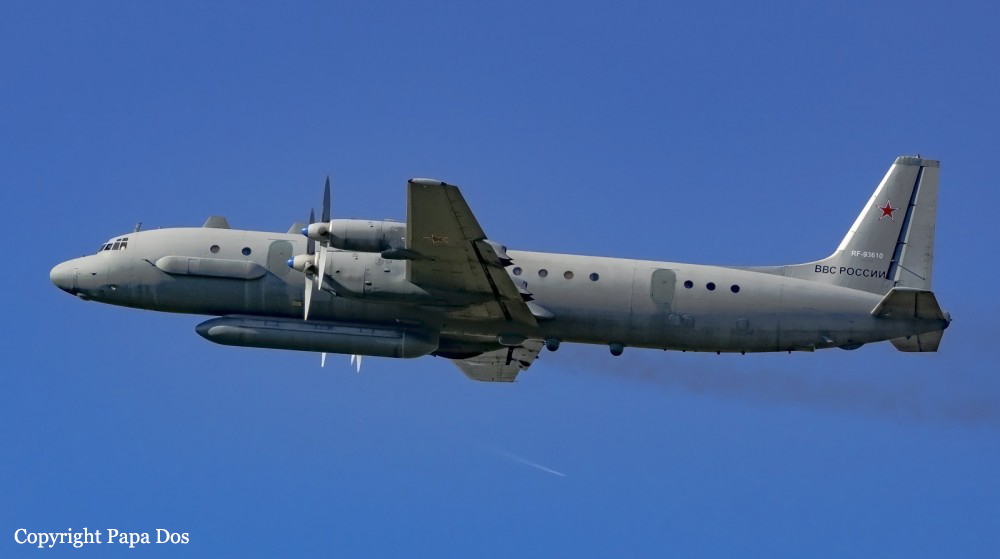
RF-93610
Flight Phase:
Survivors:
No
Schedule:
Hmeimim - Hmeimim
MSN:
173 0115 04
YOM:
1973
Country:
Region:
Crew on board:
15
Crew fatalities:
Pax on board:
0
Pax fatalities:
Other fatalities:
Total fatalities:
15
Circumstances:
The four engine aircraft departed Hmeimim AFB located southeast of Latakia at 2031LT on a maritime patrol and reconnaissance mission over the Mediterranean Sea. About an one hour and a half later, while returning to its base, the airplane was hit by a S-200 surface-to-air missile shot by the Syrian ground forces. At the time of the accident, four Israel F-16 fighters were involved in a ground attack onto several infrastructures located in the region of Latakia. Out of control, the airplane crashed into the Mediterranean Sea some 35 km west of Latakia. The following morning, Russian Authorities confirmed the loss of the aircraft that was inadvertently shot down by the Syrian Army forces and that all 15 crew members were killed.
Probable cause:
Shot down by a Syrian S-200 surface-to-air missile.

Crash of a Let L-410UVP off Yirol: 20 killed

Date & Time: Sep 9, 2018 at 0845 LT
Type of aircraft:
Operator:
Registration:
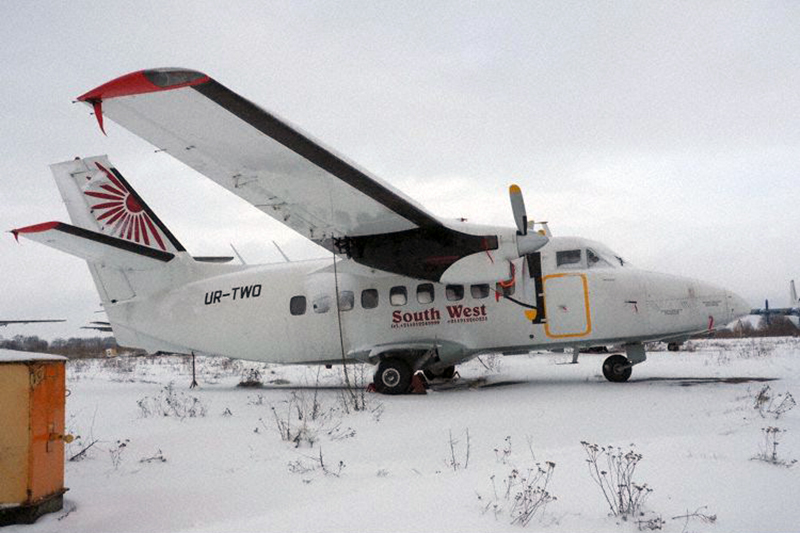
UR-TWO
Survivors:
Yes
Schedule:
Juba - Yirol
MSN:
84 13 28
YOM:
1984
Country:
Region:
Crew on board:
3
Crew fatalities:
Pax on board:
20
Pax fatalities:
Other fatalities:
Total fatalities:
20
Circumstances:
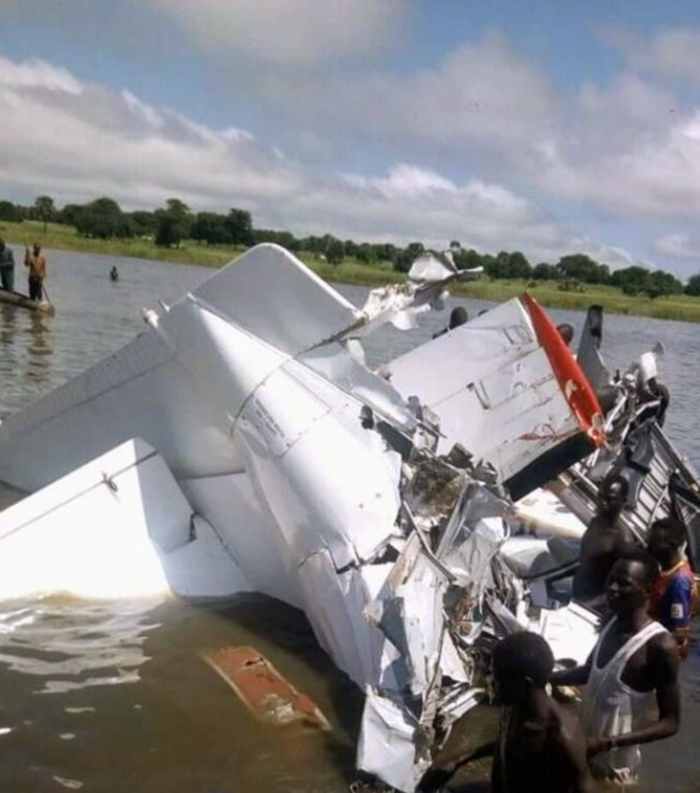
On approach to Yiral Airport in poor visibility due to fog, the twin engine aircraft descended too low, impacted the surface of the Yirol Lake and crashed about 2 km north of the airfield. The aircraft was destroyed upon impact and four occupants were rescued while 19 others were killed. A day later, one of the survivor died from his injuries. The three survivors are two children and a Italian doctor. The flight was completed on behalf of the Slaver Company based in Ukraine.
Probable cause:
The committee for the investigations of Slav air let410 aircraft registration UR-TWO has finally concluded that the cause of the accident at Yirol Eastern Lake State Republic of South Sudan was caused by a combination of the following factors:
1. Severely bad weather in the morning of the accident.( Not making a decision to return back to Juba or diverting to the nearest airportRumbek).
2. Pilot incompetency and error in setting the altimeter for Yirol airstrip before the crash. (Causing variations in altitude- flying at false altitude actually below the actual flight level).
3. Replacement of a faulty propeller in Pibor and not informing the safety department of the changes and not being given the release document for operations.
Final Report:

Crash of a Grumman G-64 in the Atlantic Ocean

Date & Time: Aug 25, 2018
Type of aircraft:
Operator:
Registration:
N1955G
Flight Phase:
Survivors:
Yes
Schedule:
Elizabeth City - Elizabeth City
MSN:
G-406
YOM:
1954
Country:
Region:
Crew on board:
5
Crew fatalities:
Pax on board:
0
Pax fatalities:
Other fatalities:
Total fatalities:
0
Circumstances:
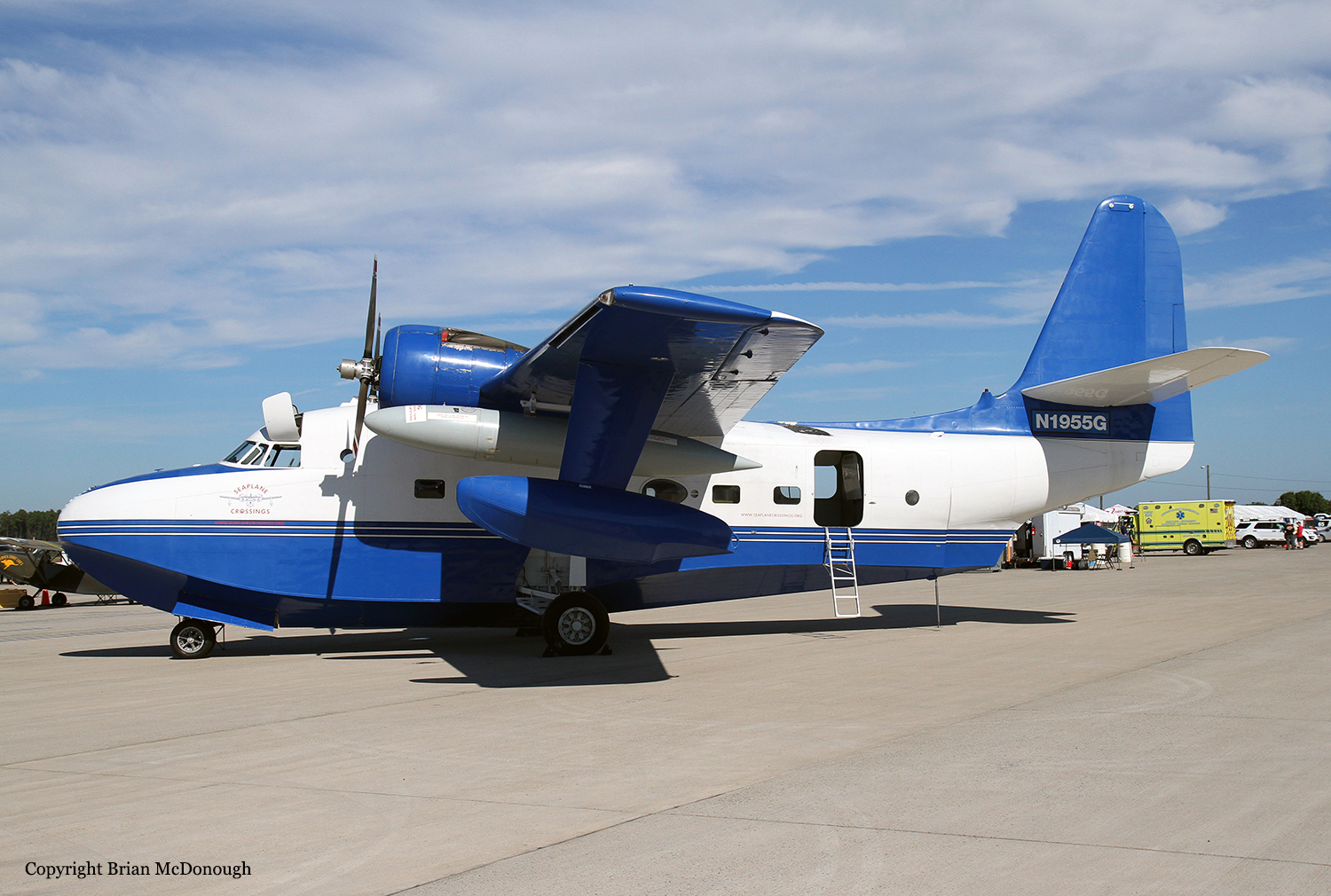
The crew departed Elizabeth City CGAS in North Carolina to deploy weather buoys in the Atlantic Ocean. Several landings were completed successfully. While taking off, the seaplane struck an unkknown object floating on water and came to rest some 680 km east off Cape Hatteras, North Carolina. All five crew members evacuated the cabin and were later recovered by the crew of a container vessel. The aircraft sank and was lost.
Probable cause:
Collision with an unknown floating object while taking off.

Crash of a Piper PA-31-310 Navajo B near Jardim do Ouro: 2 killed

Date & Time: Jun 27, 2018 at 1430 LT
Type of aircraft:
Registration:
PT-IIU
Flight Phase:
Flight Type:
Survivors:
Yes
Schedule:
Guarantã do Norte – Apuí
MSN:
31-852
YOM:
1972
Country:
Crew on board:
1
Crew fatalities:
Pax on board:
2
Pax fatalities:
Other fatalities:
Total fatalities:
2
Circumstances:
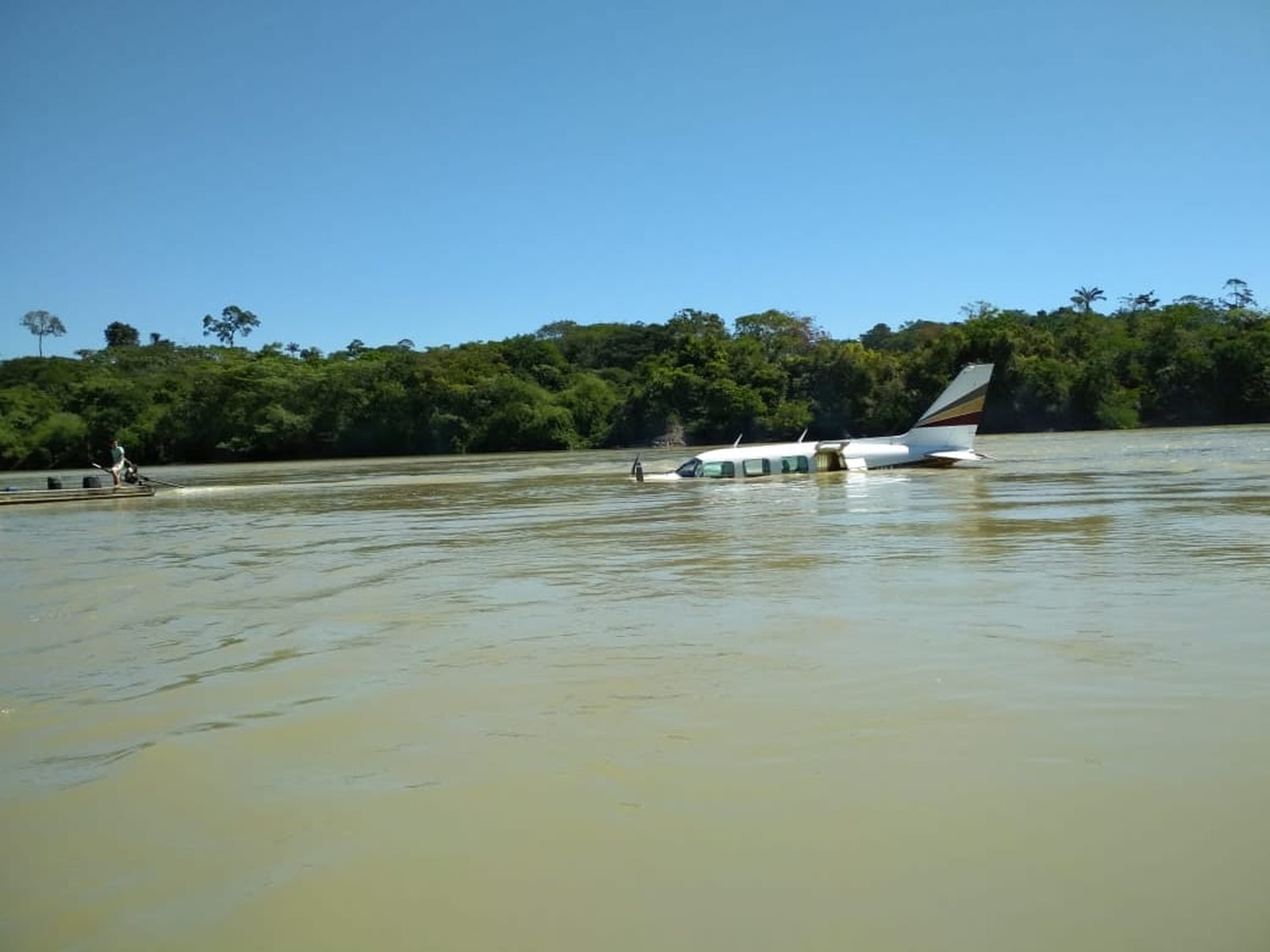
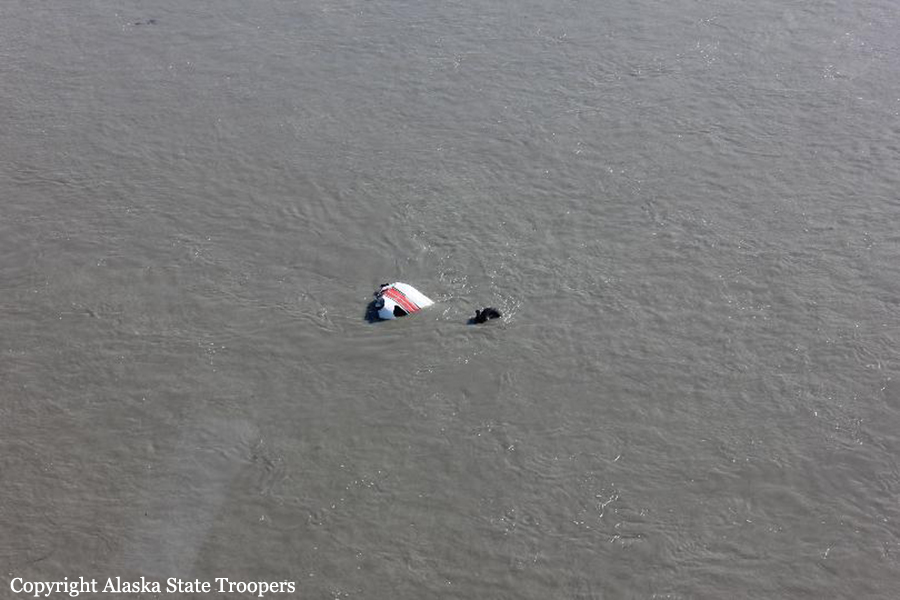
The twin engine airplane departed Guarantã do Norte on a flight to a remote area located on km 180 on the Transamazonica Road. En route, both passengers started to fight in the cabin and one of them was killed. The pilot was apparently able to kill the assassin and later decided to attempt an emergency landing. He ditched the airplane in the Rio Novo near Jardim do Ouro. The pilot was later arrested but no drugs, no weapons, no ammunition as well a both passengers bodies were not found. Apparently, the goal of the flight was illegal but Brazilian Authorities were unable to prove it.
Final Report:
Crash of a Cessna 207 Skywagon in the Susitna River: 1 killed

Date & Time: Jun 13, 2018 at 1205 LT
Operator:
Registration:
N91038
Flight Phase:
Flight Type:
Survivors:
No
Schedule:
Anchorage - Tyonek
MSN:
207-0027
YOM:
1969
Crew on board:
1
Crew fatalities:
Pax on board:
0
Pax fatalities:
Other fatalities:
Total fatalities:
1
Captain / Total flying hours:
1442
Captain / Total hours on type:
514.00
Aircraft flight hours:
31711
Circumstances:
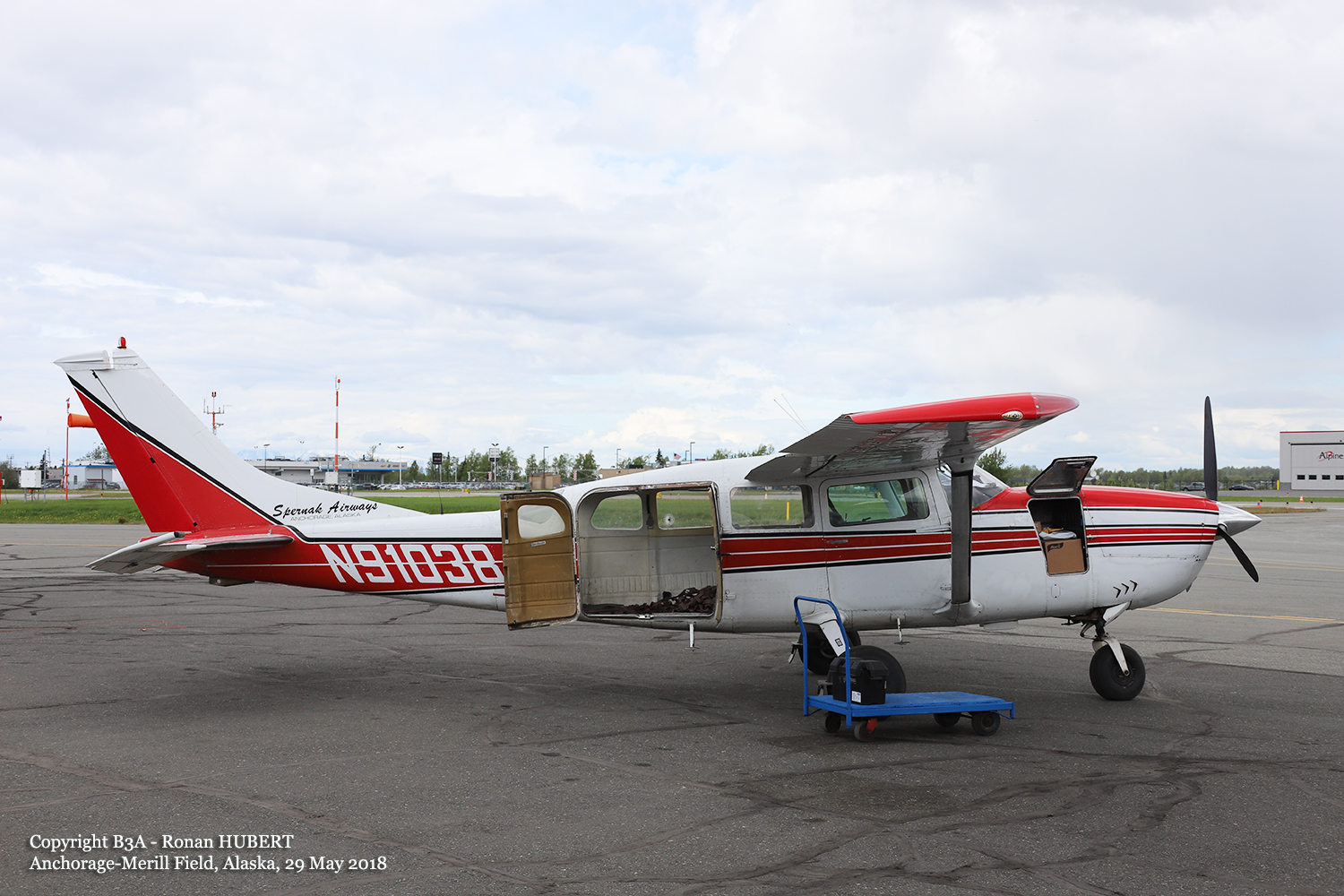
Two wheel-equipped, high-wing airplanes, a Cessna 207 and a Cessna 175, collided midair while in cruise flight in day visual meteorological conditions. Both airplanes were operating under visual flight rules, and neither airplane was in communication with an air traffic control facility. The Cessna 175 pilot stated that he was making position reports during cruise flight about 1,000ft above mean sea level when he established contact with the pilot of another airplane, which was passing in the opposite direction. As he watched that airplane pass well below him, he noticed the shadow of a second airplane converging with the shadow of his airplane from the opposite direction. He looked forward and saw the spinner of the converging airplane in his windscreen and immediately pulled aft on the control yoke; the airplanes subsequently collided. The Cessna 207 descended uncontrolled into the river. Although damaged, the Cessna 175 continued to fly, and the pilot proceeded to an airport and landed safely. An examination of both airplanes revealed impact signatures consistent with the two airplanes colliding nearly head-on. About 4 years before the accident, following a series of midair collisions in the Matanuska Susitna (MatSu) Valley (the area where the accident occurred), the FAA made significant changes to the common traffic advisory frequencies (CTAF) assigned north and west of Anchorage, Alaska. The FAA established geographic CTAF areas based, in part, on flight patterns, traffic flow, private and public airports, and off-airport landing sites. The CTAF for the area where the accident occurred was at a frequency changeover point with westbound Cook Inlet traffic communicating on 122.70 and eastbound traffic on 122.90 Mhz. The pilot of the Cessna 175, which was traveling on an eastbound heading at the time of the accident, reported that he had a primary active radio frequency of 122.90 Mhz, and a nonactive secondary frequency 135.25 Mhz in his transceiver at the time of the collision. The transceivers from the other airplane were not recovered, and it could not be determined whether the pilot of the Cessna 207 was monitoring the CTAF or making position reports.
Probable cause:
The failure of both pilots to see and avoid the other airplane while in level cruise flight, which resulted in a midair collision.
Final Report:

Crash of a Piper PA-31-350 Navajo Chieftain off Amagansett: 4 killed

Date & Time: Jun 2, 2018 at 1433 LT
Registration:
N41173
Flight Type:
Survivors:
No
Schedule:
Newport – East Hampton
MSN:
31-8452017
YOM:
1984
Crew on board:
1
Crew fatalities:
Pax on board:
3
Pax fatalities:
Other fatalities:
Total fatalities:
4
Captain / Total flying hours:
3000
Aircraft flight hours:
5776
Circumstances:
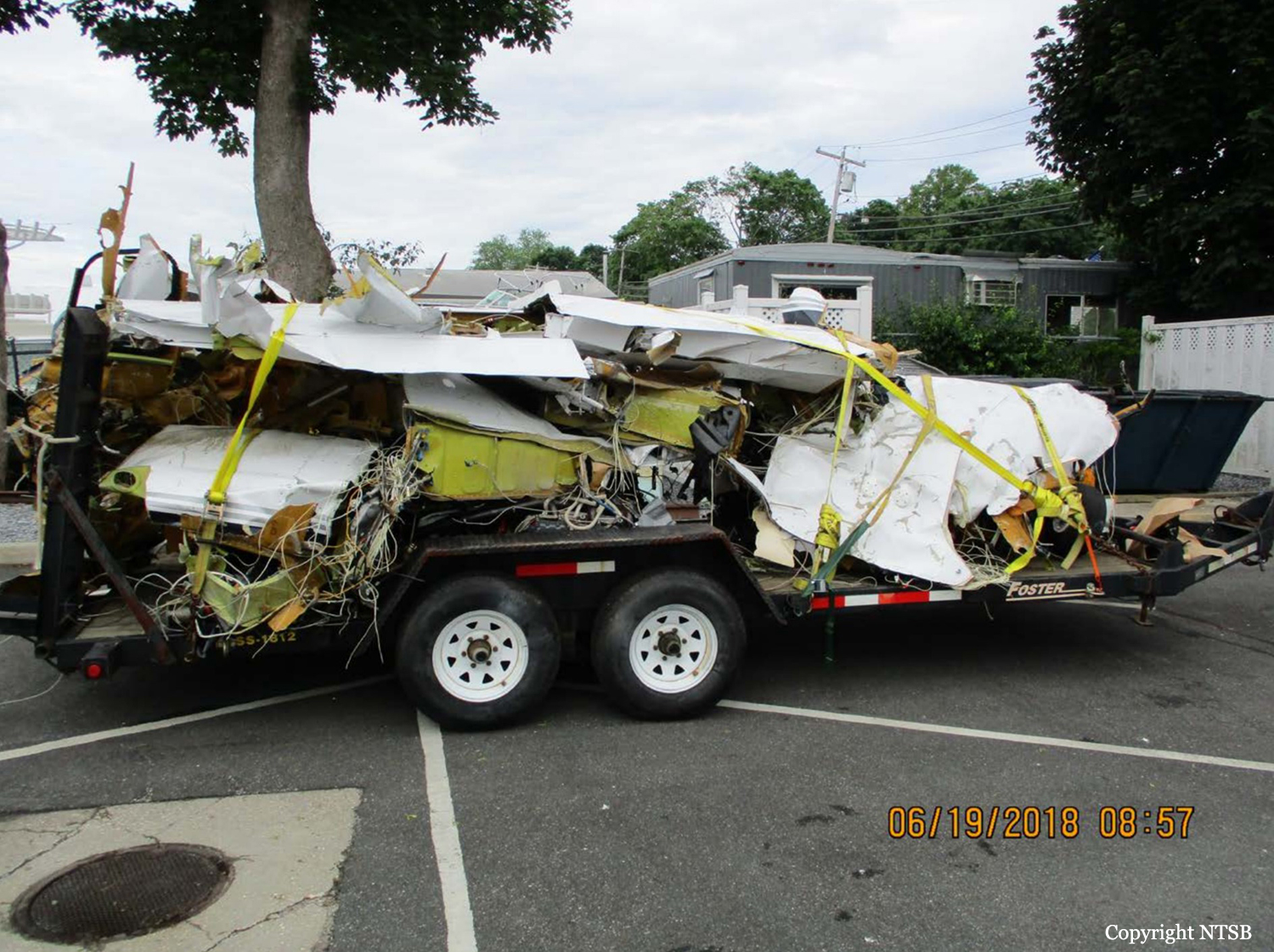
The commercial pilot of the multiengine airplane was the first of a flight of two airplanes to depart on the cross-country flight, most of which was over the Atlantic Ocean. The pilot of the second airplane stated that he and the accident pilot reviewed the weather for the route and the destination before departing; however, there was no record of the accident pilot receiving an official weather briefing and the information the pilots accessed before the flight could not be determined. The second pilot departed and contacted air traffic control, which advised him of thunderstorms near the destination; he subsequently altered his route of flight and landed uneventfully at the destination. The second pilot stated that he did not hear the accident pilot on the en route air traffic control frequency. Two inflight weather advisories were issued for the route and the area of the destination about 42 and 15 minutes before the accident flight departed, respectively, and warned of heavy to extreme precipitation associated with thunderstorms. It could not be determined whether the accident pilot received these advisories. Review of air traffic control communications and radar data revealed that, about 5 miles from the destination airport, the pilot of the accident airplane reported to the tower controller that he was flying at 700 ft and "coming in below" the thunderstorm. There were no further communications from the pilot. The airplane's last radar target indicated 532 ft about 2 miles south of the shoreline. The airplane was found in about 50 ft of water and was fragmented in several pieces. Postaccident examination revealed no preimpact anomalies with the airplane or engines that would have precluded normal operation. A local resident about 1/2 mile from the accident site took several photos of the approaching thunderstorm, which documented a shelf cloud and cumulus mammatus clouds along the leading edge of the storm, indicative of potential severe turbulence. Review of weather imagery and the airplane's flight path showed that the airplane entered the leading edge of "extreme" intensity echoes with tops near 48,000 ft. Imagery also depicted heavy to extreme intensity radar echoes over the accident site extending to the destination airport. It is likely that the pilot encountered gusting winds, turbulence, restricted visibility in heavy rain, and low cloud ceilings in the vicinity of the accident site and experienced an in-flight loss of control at low altitude. Such conditions are conducive to the development of spatial disorientation; however, the reason for the pilot's loss of control could not be determined based on the available information.
Probable cause:
The pilot's decision to fly under a thunderstorm and a subsequent encounter with turbulence and restricted visibility in heavy rain, which resulted in a loss of control.
Final Report:
Crash of a Quest Kodiak 100 off Georgetown: 2 killed

Date & Time: Feb 27, 2018 at 1925 LT
Type of aircraft:
Registration:
N969TB
Flight Type:
Survivors:
No
Schedule:
Welaka - Welaka
MSN:
100-0173
YOM:
2016
Crew on board:
1
Crew fatalities:
Pax on board:
1
Pax fatalities:
Other fatalities:
Total fatalities:
2
Captain / Total flying hours:
3400
Aircraft flight hours:
68
Circumstances:
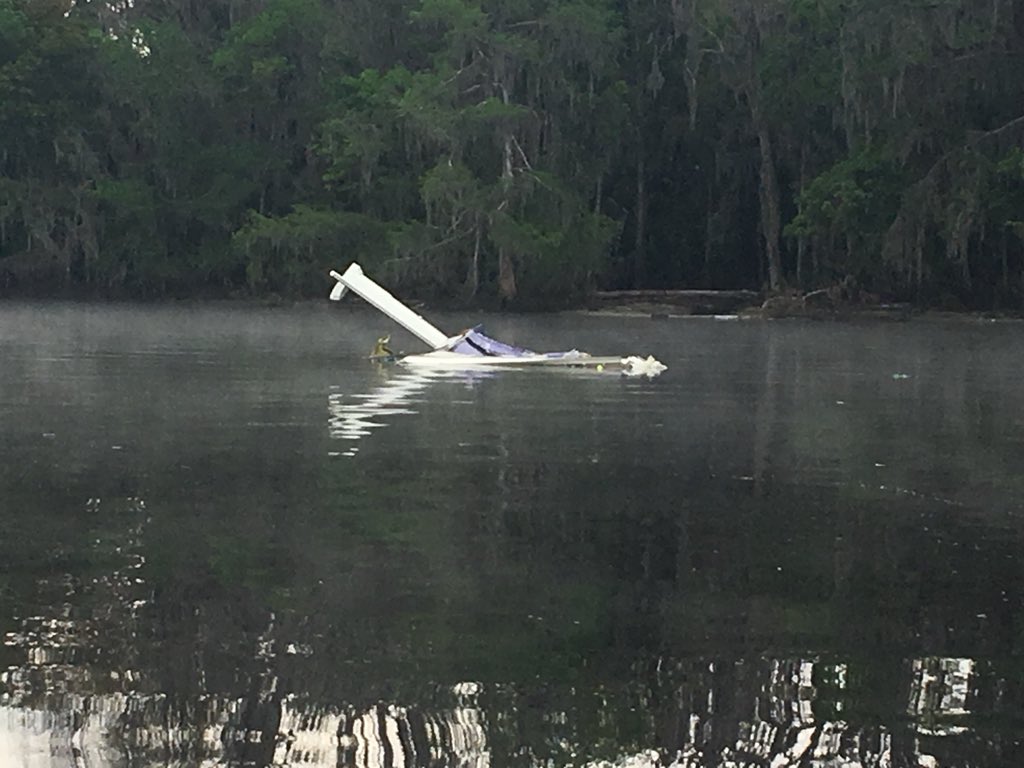
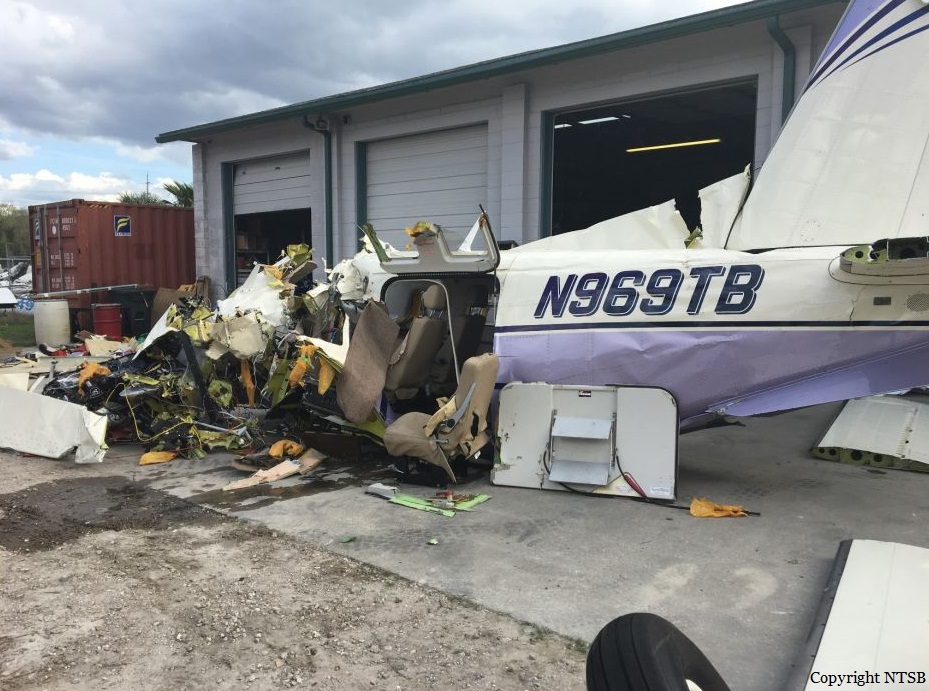
The private pilot and pilot-rated passenger were returning to the airport in night visual meteorological conditions with a cloud ceiling about 1,500 ft above ground level. Radar data indicated that the airplane overflew the airport and completed a 360° descending right turn and overflew the airport again before entering an approximate 180° left climbing turn toward and over an unlighted area within a denselywooded national forest. The airplane continued the left turn and entered a descent to impact in a river about 1 mile from the airport. All major components of the airplane were recovered from the river except the outboard section of the left wing and the left aileron. An examination of the airframe and engine revealed no mechanical malfunctions or failures that would have precluded normal operation. Because each of the two pilots onboard would have been capable of safely landing the airplane, it is unlikely that an acute event from either occupant's heart disease contributed to the accident. The night conditions, which included overcast clouds that would have obscured the nearly full moon, and the pilots' maneuvering for landing over an area devoid of cultural lighting provided conditions conducive to the development of spatial disorientation. It is likely that the pilots experienced a "black hole" illusion while maneuvering to align with the runway for landing, which resulted in an uncontrolled descent and impact with water.
Probable cause:
The pilots' spatial disorientation while maneuvering for landing in night conditions over unlighted terrain, which resulted in an uncontrolled descent and impact with water.
Final Report:
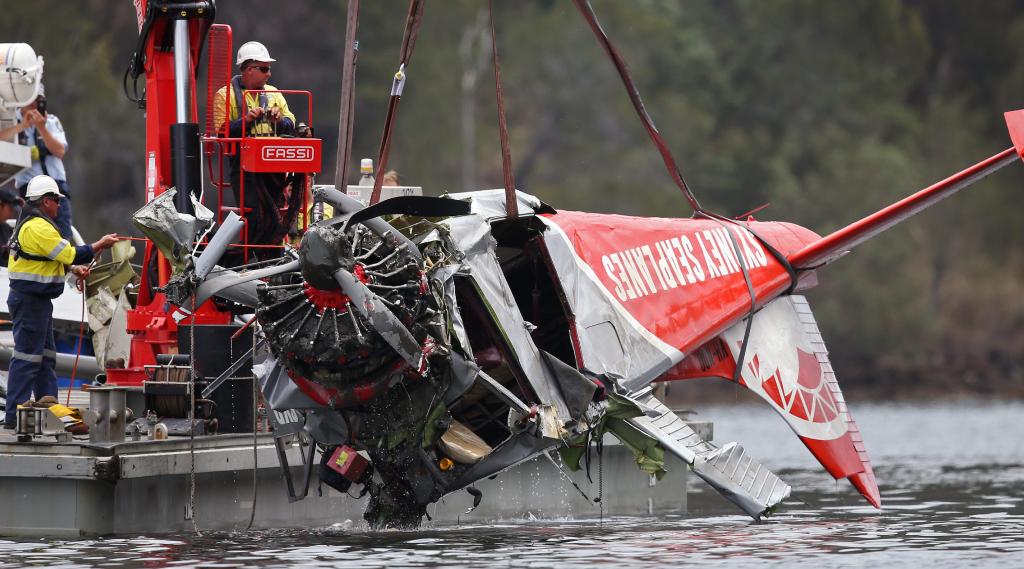
Crash of a De Havilland DHC-2 Beaver off Cottage Point: 6 killed

Date & Time: Dec 31, 2017 at 1515 LT
Type of aircraft:
Operator:
Registration:
VH-NOO
Flight Phase:
Survivors:
No
Schedule:
Cottage Point - Sydney
MSN:
1535
YOM:
1963
Country:
Region:
Crew on board:
1
Crew fatalities:
Pax on board:
5
Pax fatalities:
Other fatalities:
Total fatalities:
6
Captain / Total flying hours:
10762
Aircraft flight hours:
21872
Circumstances:
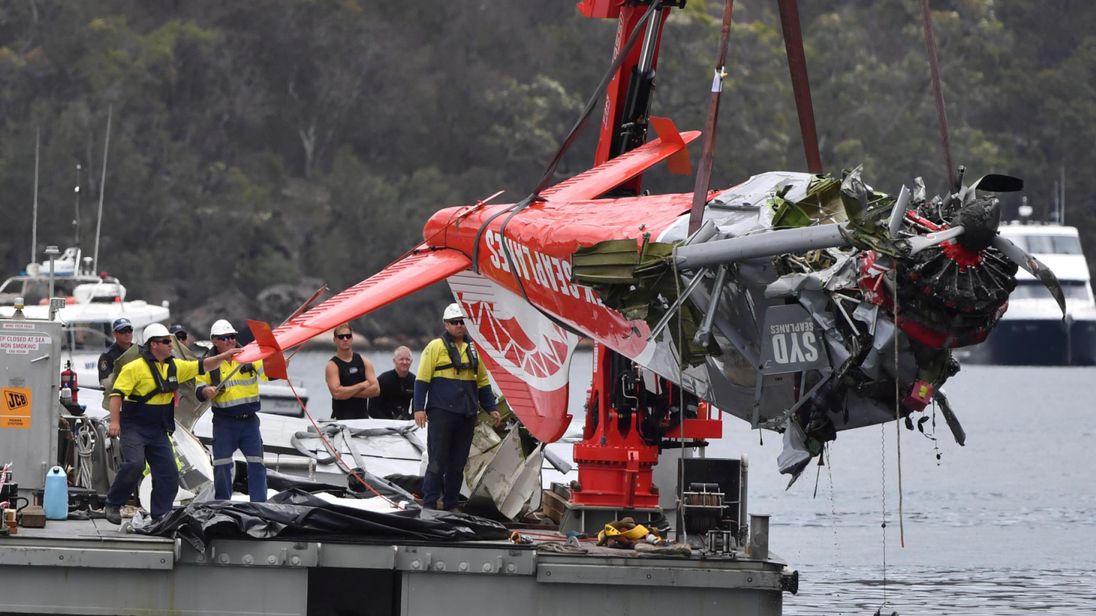
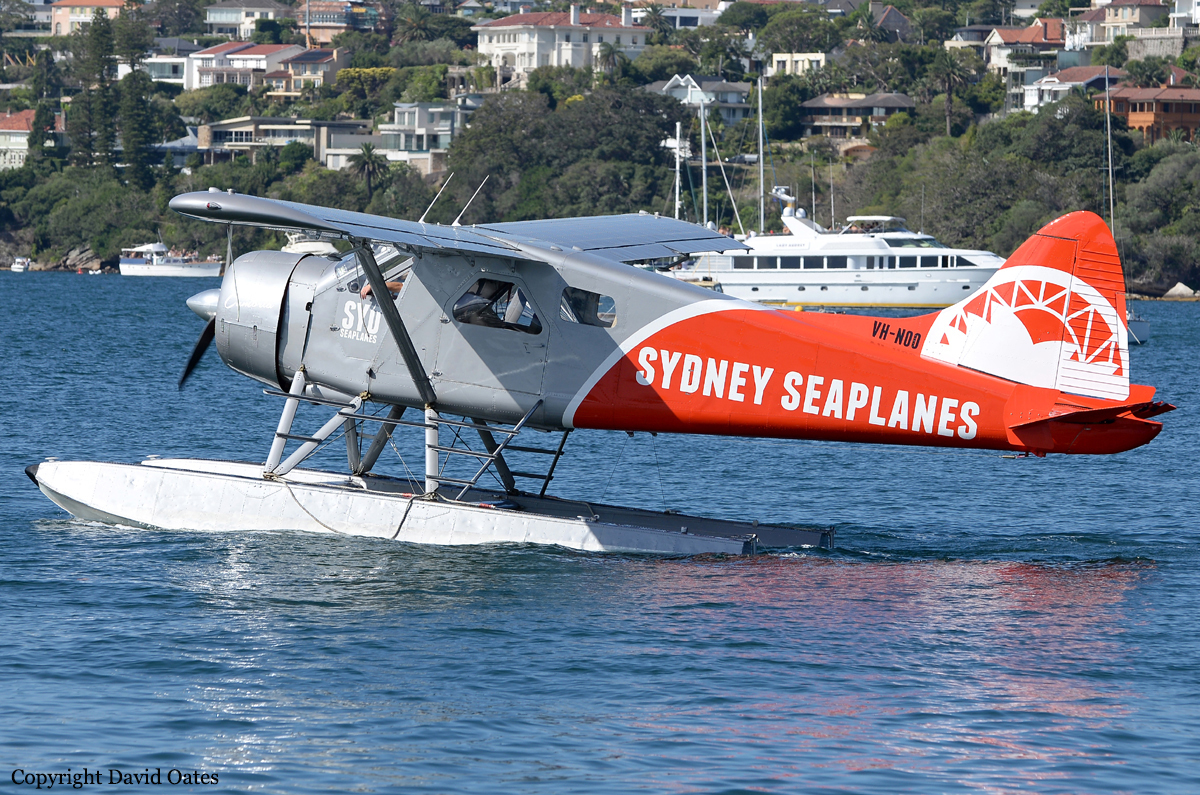
On 31 December 2017, at about 1045 Eastern Daylight-saving Time, five passengers arrived via water-taxi at the Sydney Seaplanes terminal, Rose Bay, New South Wales (NSW) for a charter fly-and-dine experience to a restaurant at Cottage Point on the Hawkesbury River. Cottage Point is about 26 km north of Sydney Harbour in the Ku-ring-gai Chase National Park, a 20 minute floatplane flight from Rose Bay. At about 1130, prior to boarding the aircraft, the passengers received a pre-flight safety briefing. At about 1135, the pilot and five passengers departed the Rose Bay terminal for the flight to Cottage Point via the northern beaches coastal route, in a de Havilland Canada DHC-2 Beaver floatplane, registered VH-NOO and operated by Sydney Seaplanes. The flight arrived at Cottage Point just before midday and the passengers disembarked. The pilot then conducted another four flights in VH-NOO between Cottage Point and Rose Bay. The pilot arrived at Cottage Point at about 1353. After securing the aircraft at the pontoon and disembarking passengers from that flight, the pilot walked to a kiosk at Cottage Point for a drink and food. At about 1415, the pilot received a phone call from the operator via the kiosk, asking the pilot to move the aircraft off the pontoon, which could only accommodate one aircraft at a time. This was to allow the pilot of the operator’s other DHC-2 aircraft (VH-AAM) to pick-up other restaurant passengers. The pilot of VH-NOO immediately returned to the aircraft and taxied away from the pontoon into Cowan Creek. The operator’s records indicated that VH-AAM arrived at the pontoon and shut down the engine at about 1419, and subsequently departed at about 1446. The pilot of VH-NOO returned to the pontoon after having taxied in Cowan Creek with the engine running for up to 27 minutes, while waiting for the other aircraft. During the taxi, closed-circuit television footage from a private residence at Cottage Point showed VH-NOO at 1444, with the pilot’s door ajar. After shutting down the aircraft, the pilot briefly went into the restaurant to see if the passengers were ready to leave, and then returned to the aircraft. The return flight to Rose Bay, scheduled to depart at 1500, provided sufficient time for the passengers to meet a previously booked water-taxi to transport them from Rose Bay to their hotel at 1545. At about 1457, the passengers commenced boarding the aircraft and at around 1504, the aircraft had commenced taxiing toward the designated take-off area in Cowan Creek. At about 1511, the aircraft took off towards the north-north-east in Cowan Creek, becoming airborne shortly before passing Cowan Point. The aircraft climbed straight ahead before commencing a right turn into Cowan Water. A witness, who was travelling east in a boat on the northern side of Cowan Water, photographed the aircraft passing over a location known as ‘Hole in the wall’. These photographs indicated that the aircraft was turning to the right with a bank angle of 15-20°. Witnesses observed the right turn continue above Little Shark Rock Point and Cowan Water. The last photograph taken by the passenger was when the aircraft was heading in a southerly direction towards Cowan Bay. At that time, the aircraft was estimated to be at an altitude of about 30 m (98 ft).Shortly after the turn in Cowan Water, several witnesses observed the aircraft heading directly towards and entering Jerusalem Bay flying level or slightly descending, below the height of the surrounding terrain. Witnesses also reported hearing the aircraft’s engine and stated that the sound was constant and appeared normal. About 1.1 km after entering Jerusalem Bay, near the entrance to Pinta Bay, multiple witnesses reported seeing the aircraft flying along the southern shoreline before it suddenly entered a steep right turn at low-level. Part-way through the turn, the aircraft’s nose suddenly dropped before the aircraft collided with the water, about 95 m from the northern shore and 1.2 km from the end of Jerusalem Bay. The aircraft came to rest inverted and with the cabin submerged. A number of people on watercraft who heard or observed the impact, responded to render assistance. Those people could not access the (underwater) aircraft cabin. The entire tail section and parts of both floats were initially above the waterline, but about 10 minutes later had completely submerged. The pilot and five passengers received fatal injuries.
Probable cause:
Contributing factors:
- The aircraft entered Jerusalem Bay, a known confined area, below terrain height with a level or slightly descending flight path. There was no known operational need for the aircraft to be
operating in the bay.
- While conducting a steep turn in Jerusalem Bay, it was likely that the aircraft aerodynamically stalled at an altitude too low to effect a recovery before colliding with the water.
- It was almost certain that there was elevated levels of carbon monoxide in the aircraft cabin, which resulted in the pilot and passengers having higher than normal levels of carboxyhaemoglobin in their blood.
- Several pre-existing cracks in the exhaust collector ring, very likely released exhaust gas into the engine/accessory bay, which then very likely entered the cabin through holes in the main
firewall where three bolts were missing.
- A 27 minute taxi before the passengers boarded, with the pilot’s door ajar likely exacerbated the pilot’s elevated carboxyhaemoglobin level.
- It was likely that the pilot's ability to safely operate the aircraft was significantly degraded by carbon monoxide exposure.
- Disposable chemical spot detectors, commonly used in general aviation, can be unreliable at detecting carbon monoxide in the aircraft cabin. Further, they do not draw a pilot's attention to a hazardous condition, instead they rely on the pilot noticing the changing colour of the sensor.
- There was no regulatory requirement from the Civil Aviation Safety Authority for piston-engine aircraft to carry a carbon monoxide detector with an active warning to alert pilots to the presence of elevated levels of carbon monoxide in the cabin. (Safety issue)

Other factors that increased risk:
- It was likely that the effectiveness of the disposable carbon monoxide chemical spot detector fitted to the aircraft was reduced due to sun bleaching.
- Although detectors were not required to be fitted to their aircraft, Sydney Seaplanes had no mechanism for monitoring the serviceability of the carbon monoxide detectors. (Safety issue)
- The in situ bolts used by the maintenance organisation to secure the magneto access panels on the main firewall were worn, and were a combination of modified AN3-3A bolts and non-specific bolts. This increased the risk of the bolts either not tightening securely on installation and/or coming loose during operations.
- The operator relied on volunteered passenger weights without allowances for variability, rather than actual passenger weights obtained just prior to a flight. This increased the risk of underestimating passenger weights and potentially overloading an aircraft.
- The standard passenger weights specified in Civil Aviation Advisory Publication (CAAP) 235-1(1) Standard passenger and baggage weights did not accurately reflect the average weights of the current Australian population. Further, the CAAP did not provide guidance on the use of volunteered passenger weights as an alternative to weights derived just prior to a flight.
- Australian civil aviation regulations did not mandate the fitment of flight recorders for passenger-carrying aircraft under 5,700 kg. Consequently, the determination of factors that influenced this accident, and other accidents, have been hampered by a lack of recorded data pertaining to the flight. This has likely resulted in the non-identification of safety issues, which continue to present a hazard to current and future passengercarrying operations. (Safety issue)
- Annex 6 to the Convention of International Civil Aviation did not mandate the fitment of flight recorders for passenger-carrying aircraft under 5,700 kg. Consequently, the determination of factors that influenced this accident, and numerous other accidents have been hampered by a lack of recorded data pertaining to the flight. This has likely resulted in important safety issues not being identified, which may remain a hazard to current and future passenger carrying operations. (Safety issue)

Other findings:
- It was very likely that the middle row right passenger did not have his seatbelt fastened at the time of impact, however, the reason for this could not be determined.
- The accident was not survivable due to the combination of the impact forces and the submersion of the aircraft.
- The pilot had no known pre-existing medical conditions that could explain the accident.
Final Report: