Crash of a Cessna 208B Grand Caravan in Great Slave Lake

Date & Time: Nov 20, 2014 at 0721 LT
Type of aircraft:
Operator:
Registration:
C-FKAY
Flight Phase:
Survivors:
Yes
Schedule:
Yellowknife – Fort Simpson
MSN:
208B-0470
YOM:
1995
Flight number:
8T223
Country:
Crew on board:
1
Crew fatalities:
Pax on board:
5
Pax fatalities:
Other fatalities:
Total fatalities:
0
Captain / Total flying hours:
3500
Captain / Total hours on type:
1800.00
Aircraft flight hours:
25637
Circumstances:
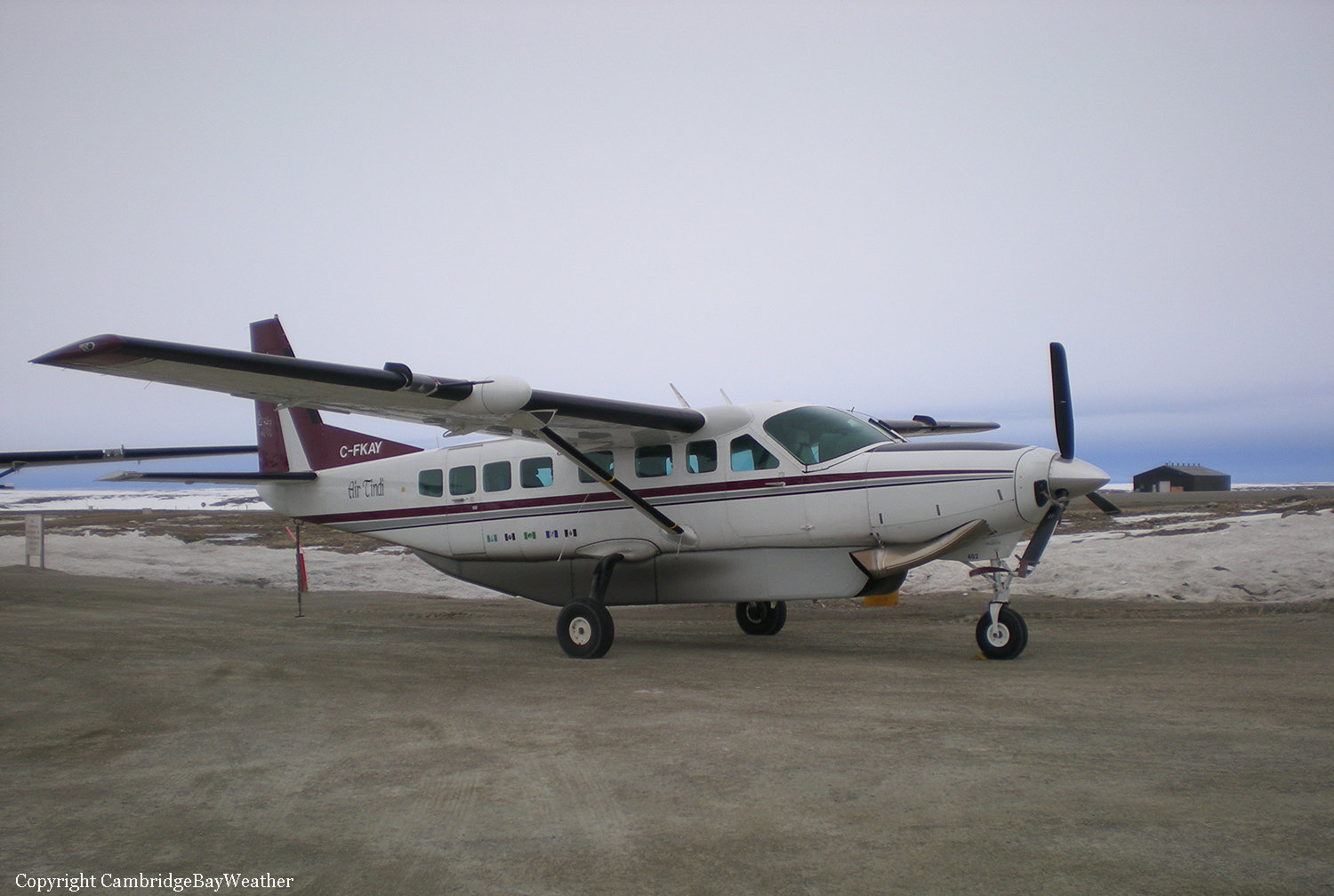
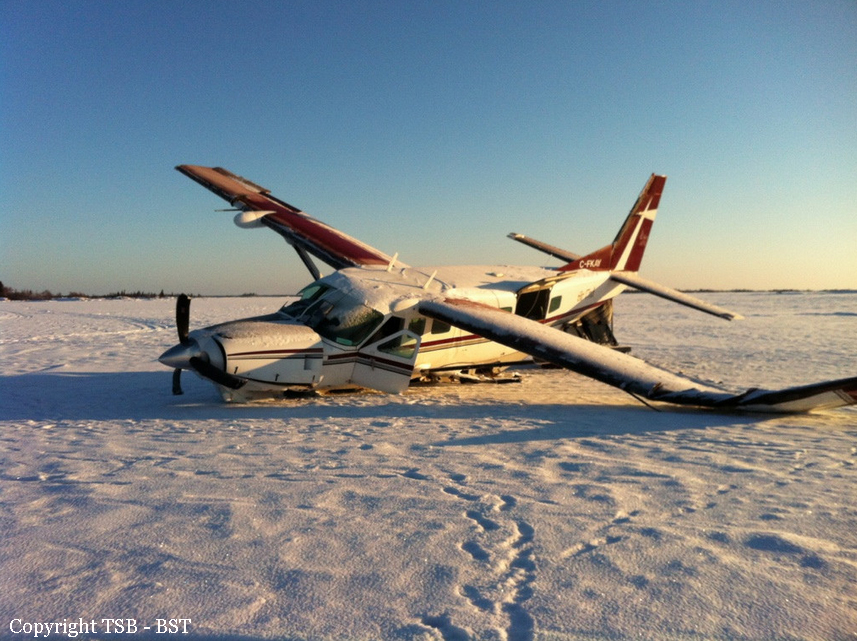
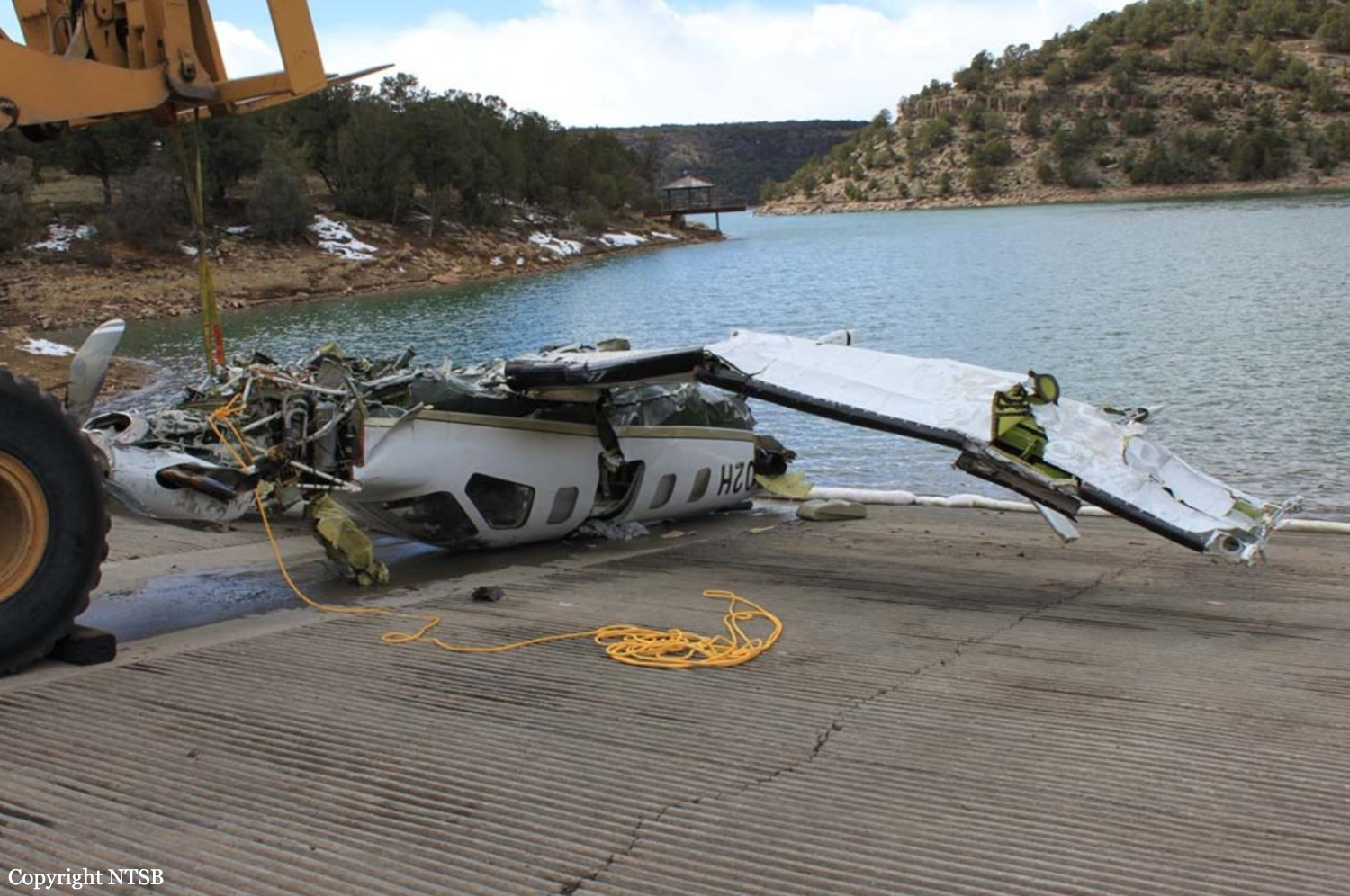
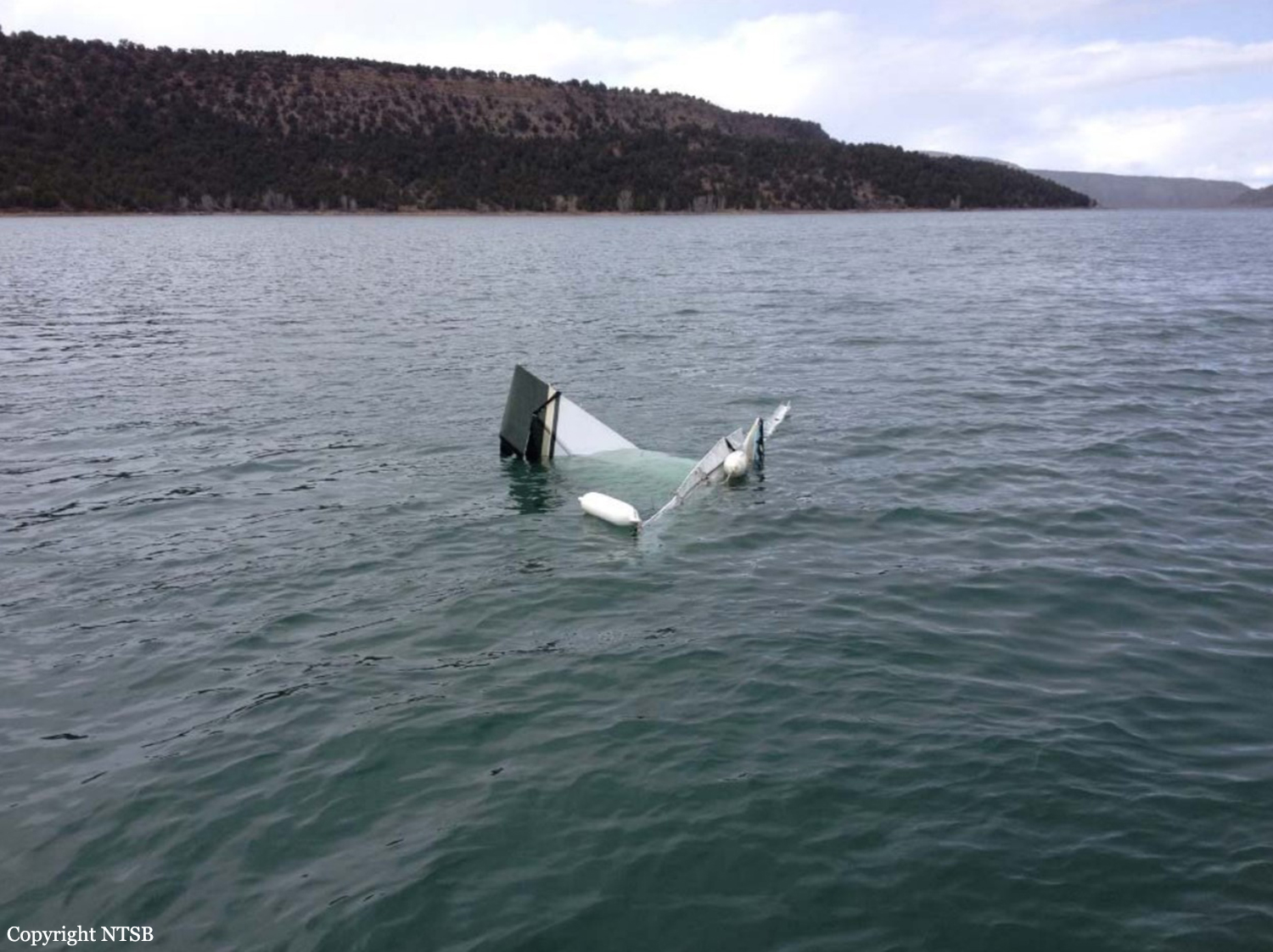
The Air Tindi Ltd. Cessna 208B Caravan departed Yellowknife Airport, Northwest Territories, on 20 November 2014 at 0642 Mountain Standard Time under instrument flight rules as Discovery Air flight DA223 to Fort Simpson, Northwest Territories. The flight had been rescheduled from the previous night because of freezing drizzle at Fort Simpson. During the climb to 8000 feet above sea level, DA223 encountered icing conditions that necessitated a return to Yellowknife. On the return to Yellowknife, DA223 was unable to maintain altitude. At 0721, flying in darkness approximately 18 nautical miles west of Yellowknife, it contacted the frozen surface of the North Arm of Great Slave Lake. The aircraft sustained substantial damage when it struck a rock outcropping, but there were no injuries to the pilot or to the 5 passengers. The pilot established communication with Air Tindi via satellite phone, and the pilot and passengers were recovered approximately 4 hours after the landing. The emergency locator transmitter did not activate during the landing, but was activated manually by the pilot.
Probable cause:
Findings as to causes and contributing factors:
1. Not using all enroute information led the pilot to underestimate the severity and duration of the icing conditions that would be encountered.
2. Inadequate awareness of aircraft limitations in icing conditions and incomplete weight-and-balance calculations led to the aircraft being dispatched in an overweight state for the forecast icing conditions. The aircraft centre of gravity was not within limits, and this led to a condition that increased stall speed and reduced aircraft climb performance.
3. The pilot’s expectation that the flight was being undertaken at altitudes where it should have been possible to avoid icing or to move quickly to an altitude without icing conditions led to his decision to continue operation of the aircraft in icing conditions that exceeded the aircraft’s performance capabilities.
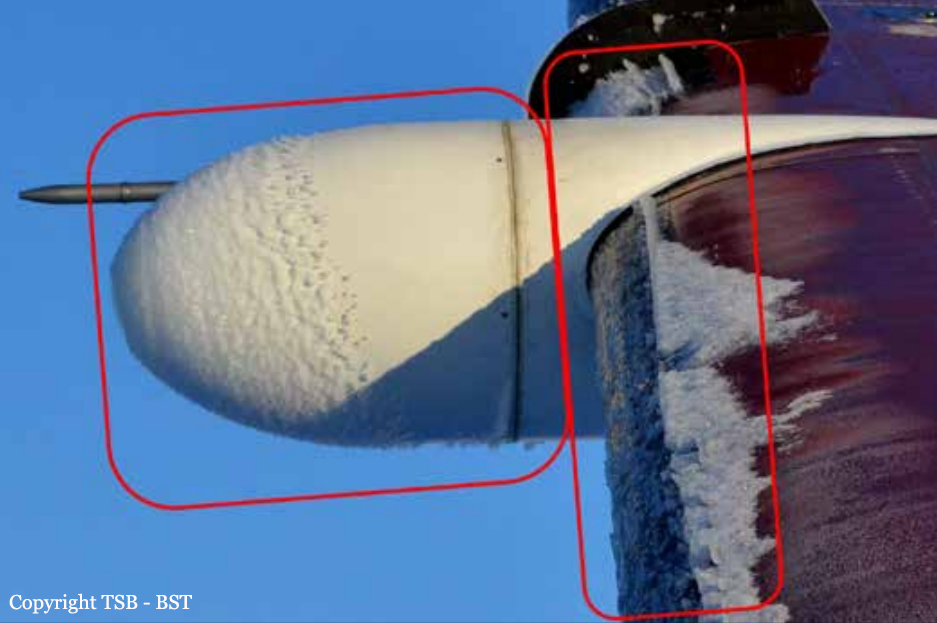
4. The severity of the icing conditions encountered and the duration of the exposure resulted in reductions in aerodynamic performance, making it impossible to prevent descent of the aircraft.
5. The inability to arrest descent of the aircraft resulted in the forced landing on the surface of Great Slave Lake and the collision with terrain.
6. The Type C pilot self-dispatch system employed by Air Tindi did not have quality assurance oversight or adequate support systems. This contributed to the aircraft being dispatched in conditions not suitable for safe flight.
Findings as to risk:
1. If passenger briefings on cabin door operations are ineffective, there is a risk of passenger egress in an accident being compromised, affecting survivability.
2. If survival equipment is stowed in a location that may be inaccessible following an accident, such as the belly pod, there is a risk of survival being compromised if search and rescue is delayed.
Other findings:
1. The aircraft was under control and in a level attitude when it contacted the ice. This minimized structural damage and increased survivability for the aircraft’s occupants.
2. The survival skills of the crew and passengers were indispensable in a situation in which access to the survival equipment on the aircraft was limited.
Final Report:

Crash of a Short 360-200 off Sint Maarten: 2 killed

Date & Time: Oct 29, 2014 at 1840 LT
Type of aircraft:
Operator:
Registration:
N380MQ
Flight Phase:
Flight Type:
Survivors:
No
Schedule:
Sint Maarten - San Juan
MSN:
3702
YOM:
1986
Flight number:
SKZ7101
Crew on board:
2
Crew fatalities:
Pax on board:
0
Pax fatalities:
Other fatalities:
Total fatalities:
2
Captain / Total flying hours:
5318
Captain / Total hours on type:
361.00
Copilot / Total flying hours:
1040
Copilot / Total hours on type:
510
Aircraft flight hours:
25061
Aircraft flight cycles:
32824
Circumstances:
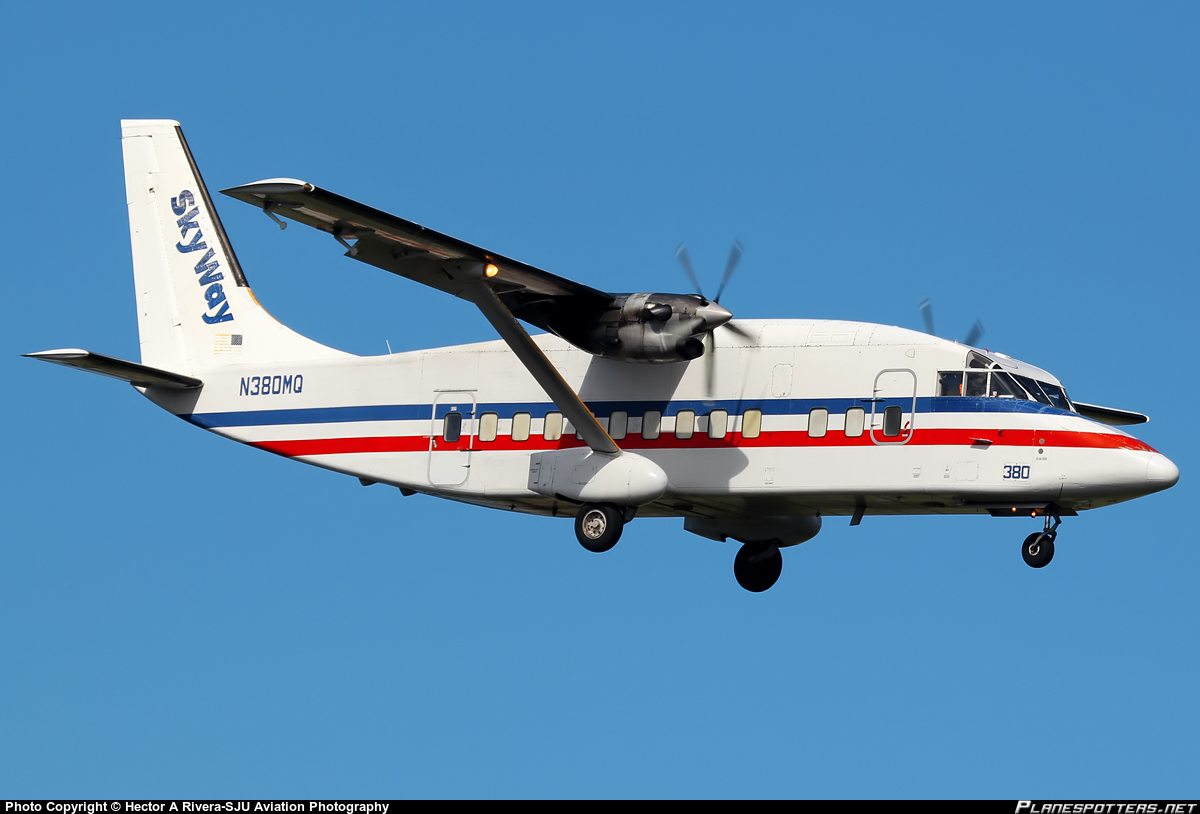
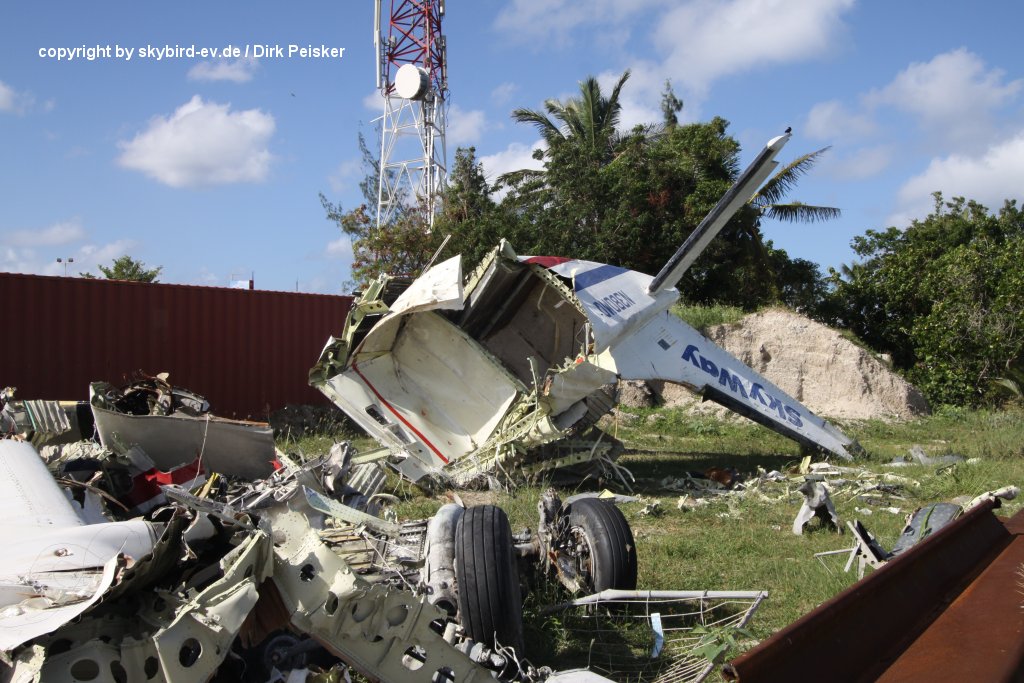
On October 29, 2014, at about 1840 Atlantic Standard Time, a Shorts SD3-60, United States registered N380MQ was destroyed when it crashed into the sea shortly after takeoff from Runway 28 at Princess Juliana International Airport, Sint Maarten, Dutch Antilles, Kingdom of the Netherlands. The two crewmembers on board sustained fatal injuries. The aircraft was operated by SkyWay Enterprises Inc. on a scheduled FedEx contract cargo flight to Luis Munoz Marin International Airport, San Juan, Puerto Rico. At 1839 local, Juliana Tower cleared the aircraft for takeoff Runway 28 - maintain heading 230 until passing 4000 feet. At 1840 local, Tower observed the aircraft descending visually and the radar target and data block disappeared. There were no distress calls. Night conditions and rain prevailed at the time of the accident. Coast Guard search crews discovered aircraft debris close to the shoreline about 1 ½ hours later. The Sint Maarten Civil Aviation Authority initiated an investigation in accordance with ICAO Annex 13. Local investigation authority personnel were joined by Accredited Representatives and advisors from the following states: the USA (NTSB/FAA), United Kingdom (AAIB and Shorts Brothers PLC), and Canada (TSB, TC, PWC). Organization of the investigation included the following groups: Operations, Accident Site and Wreckage, Powerplants, Aircraft Maintenance, Air Traffic Services, Meteorology, and GPS Study. The operator made available personnel for interviews but deferred to participate in the groups. Flight recorders were not installed nor required on this cargo configured aircraft. The original FDR and CVR were removed following conversion to cargo only operations. A handheld GPS recovered from submerged wreckage was successfully downloaded. Data revealed the aircraft past the departure runway threshold on takeoff and attained a maximum GPS recorded altitude of 433 feet at 119 knots groundspeed at 18:39:30. The two remaining data points were over the sea and recorded decreasing altitude and increasing airspeed. The wreckage was recovered from the sea and examined by technical experts. Assessment of the evidence concluded there were no airframe or engine malfunctions that would have affected the airworthiness of the aircraft. The experts concluded that the aircraft struck the sea while under normal engine operation. Operations and human performance investigators evaluated the evidence and analyzed extensive interviews. The investigation concluded that the aircraft departed from the expected flight path in an unusual attitude. The pilot flying most likely experienced a somatographic illusion as a result of a stressful takeoff and acceleration from flap retraction. The pilot’s reaction to pitch down while initiating a required heading change led to an extreme unusual attitude. Circumstances indicate the pilot monitoring did not perceive/respond/intervene to correct the flight path and recover from the unusual attitude. The aircraft exceeded the normal maneuvering parameters, the crew experienced a loss of control, and lacking adequate altitude for recovery, the aircraft crashed into the sea.
Probable cause:
The investigation believes the PF experienced a loss of control while initiating a turn to the required departure heading after take-off. Flap retraction and its associated acceleration combined to set in motion a somatogravic illusion for the PF. The PF’s reaction to pitch down while initiating a turn most likely led to an extreme unusual attitude and the subsequent crash. PM awareness to the imminent loss of control and any attempt to intervene could not be determined. Evidence show that Crew resource management (CRM) performance was insufficient to avoid the crash. Contributing factors to the loss of control were environmental conditions including departure from an unfamiliar runway with loss of visual references (black hole), night and rain with gusting winds.
Final Report:

Crash of a Cessna 208 Caravan I in the Laguna de Tres Palos

Date & Time: Oct 24, 2014 at 1600 LT
Type of aircraft:
Operator:
Registration:
XA-WET
Flight Phase:
Flight Type:
Survivors:
Yes
Schedule:
Laguna de Tres Palos - Acapulco
MSN:
208-0294
YOM:
1998
Country:
Crew on board:
2
Crew fatalities:
Pax on board:
0
Pax fatalities:
Other fatalities:
Total fatalities:
0
Captain / Total flying hours:
5240
Captain / Total hours on type:
201.00
Copilot / Total flying hours:
23837
Aircraft flight hours:
1760
Aircraft flight cycles:
1105
Circumstances:
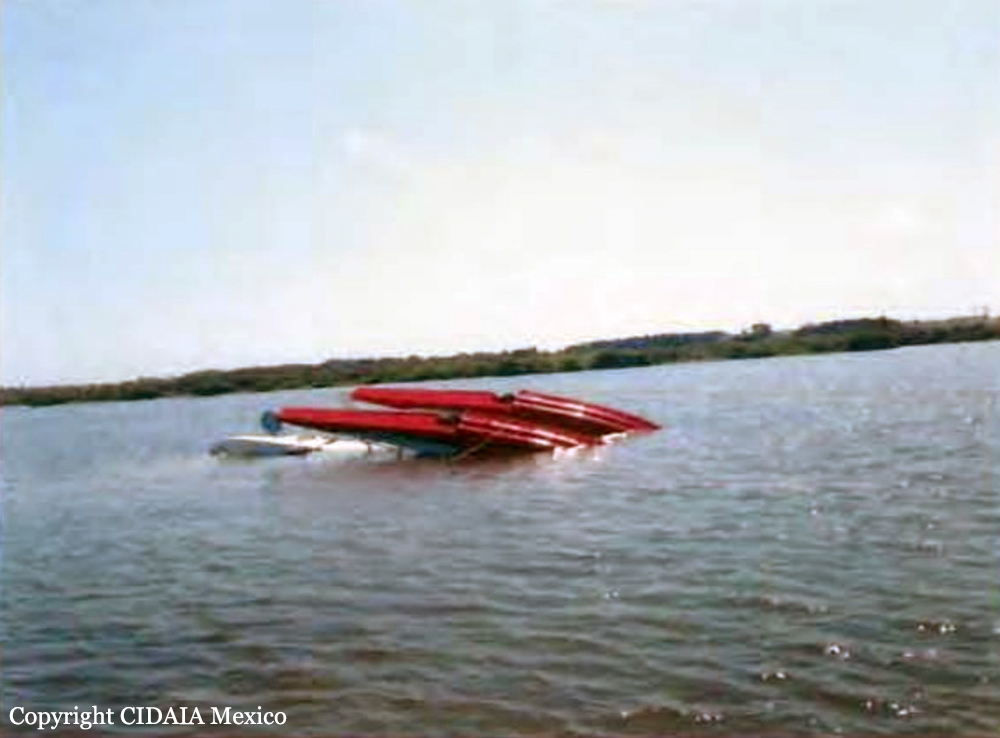
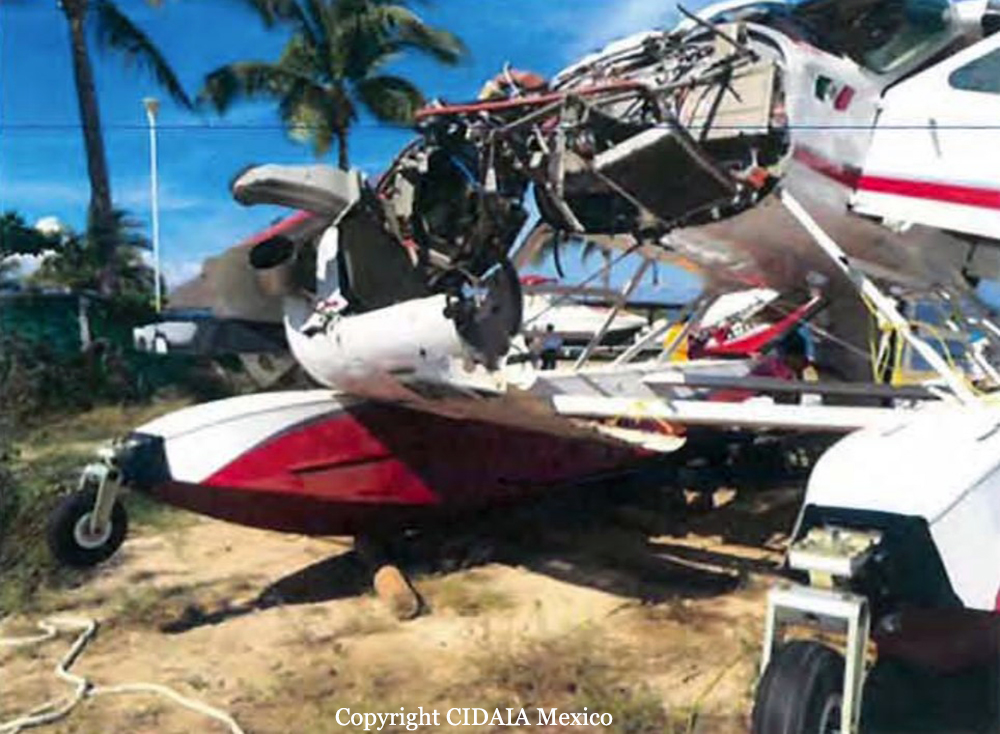
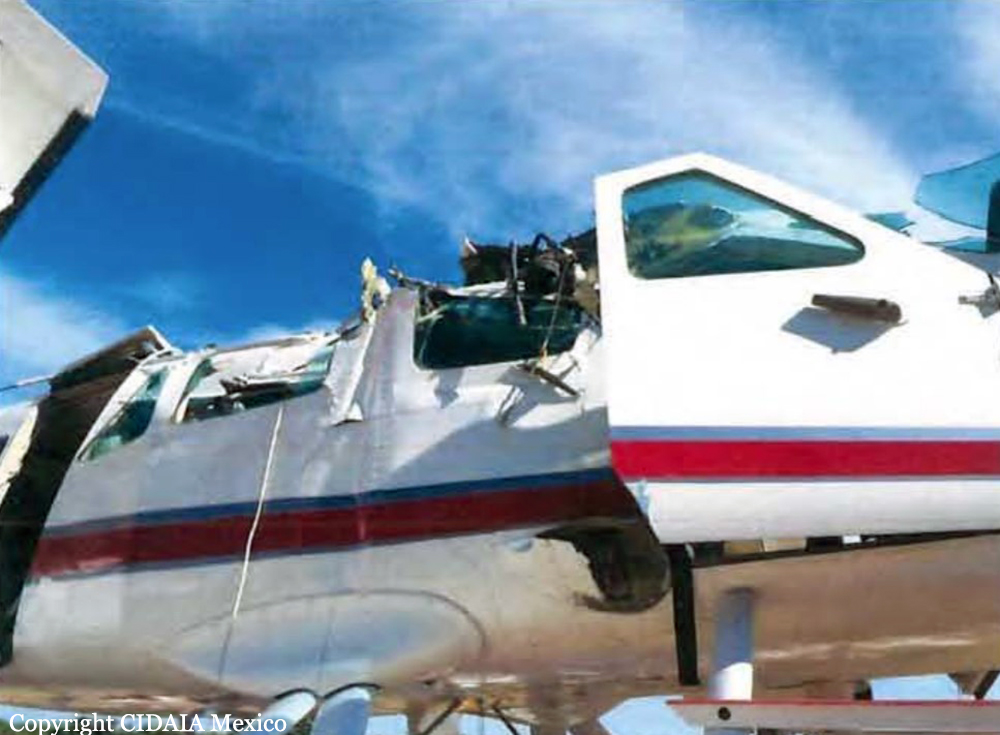
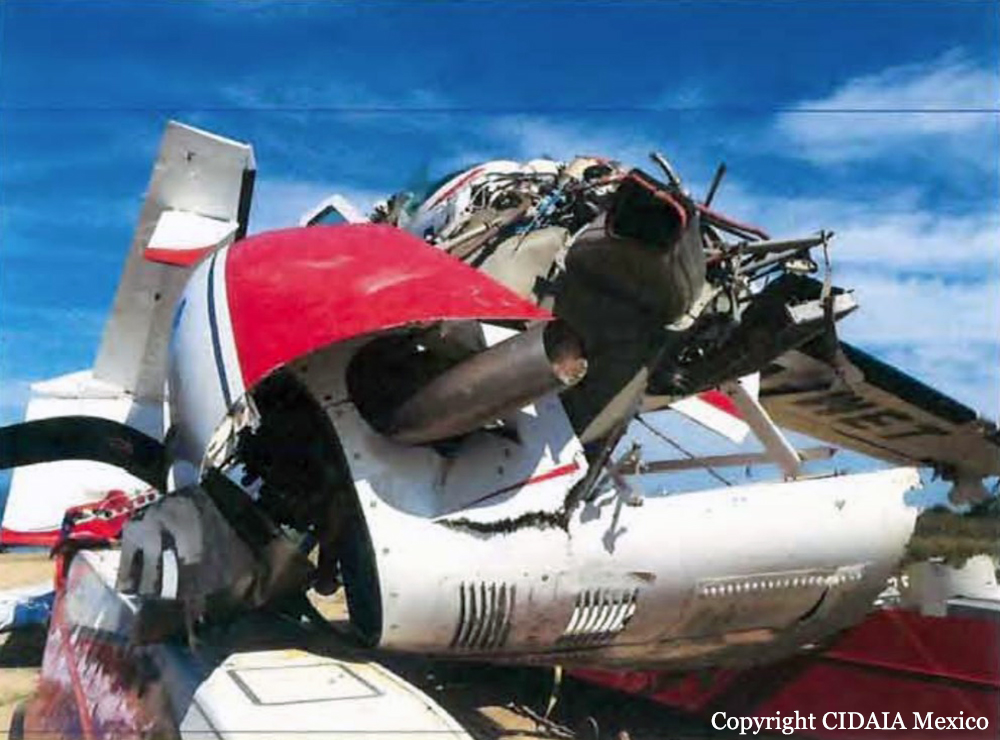
The crew departed Laguna de Tres Palos on a positioning flight to the Acapulco-General Juan N. Álvarez International Airport. During the takeoff procedure, the seaplane started to oscillate from left to right. At a speed of about 45 knots, the crew abandoned the takeoff procedure when the aircraft nosed down, plunged into water and came to rest, inverted and submerged. Both pilots evacuated safely while the aircraft was damaged beyond repair.
Probable cause:
Loss of control of the aircraft during a takeoff run from a watery surface due to cross winds.
Final Report:
Crash of a Rockwell 690C Jetprop 840 off Los Roques

Date & Time: Oct 10, 2014 at 1000 LT
Operator:
Registration:
YV1315
Flight Phase:
Flight Type:
Survivors:
Yes
Schedule:
Los Roques - Charallave
MSN:
690-11618
YOM:
1980
Country:
Crew on board:
2
Crew fatalities:
Pax on board:
5
Pax fatalities:
Other fatalities:
Total fatalities:
0
Circumstances:
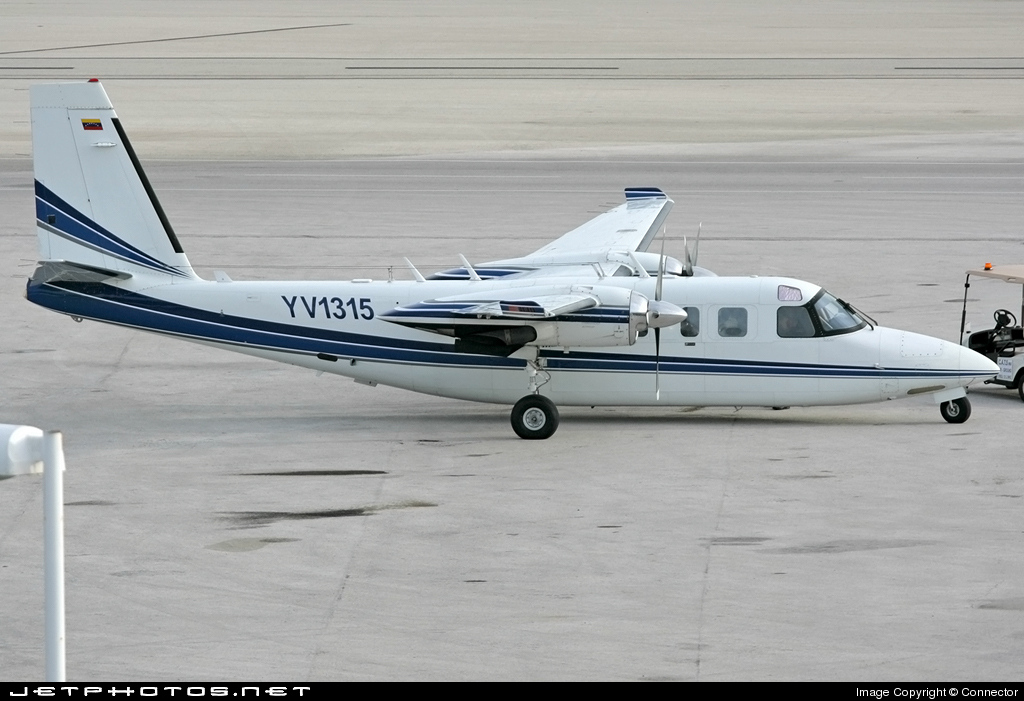
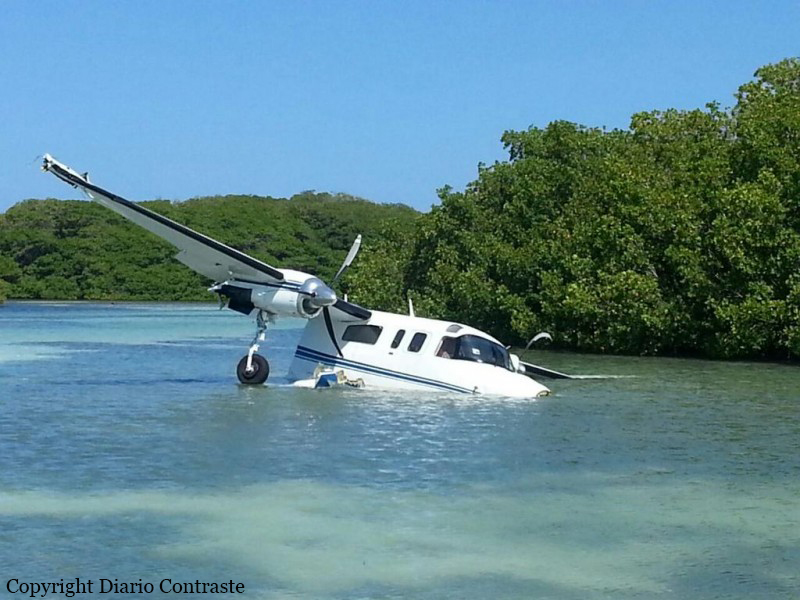
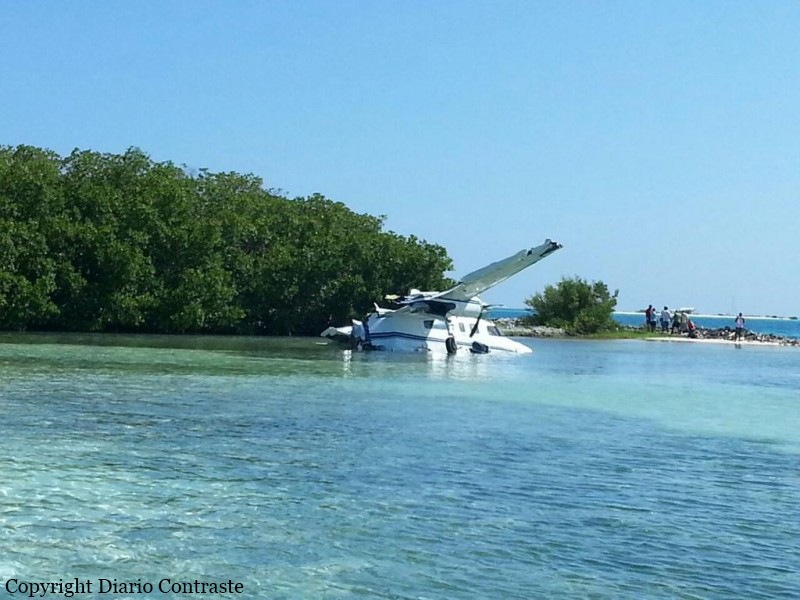
The twin engine aircraft was performing a private flight from the island of Los Roques to Charallave-Óscar Machado Zuloaga Airport. Shortly after take off, while in initial climb, the aircraft went out of control and crashed in a lagoon, few metres off shore. All seven occupants evacuated and were slightly injured while the aircraft broke in two in shallow water.

Crash of a Socata TBM-900 off Port Antonio: 2 killed

Date & Time: Sep 5, 2014 at 1410 LT
Type of aircraft:
Operator:
Registration:
N900KN
Flight Phase:
Flight Type:
Survivors:
No
Schedule:
Rochester - Naples
MSN:
1003
YOM:
2014
Country:
Crew on board:
1
Crew fatalities:
Pax on board:
1
Pax fatalities:
Other fatalities:
Total fatalities:
2
Captain / Total flying hours:
7100
Captain / Total hours on type:
4190.00
Aircraft flight hours:
97
Circumstances:
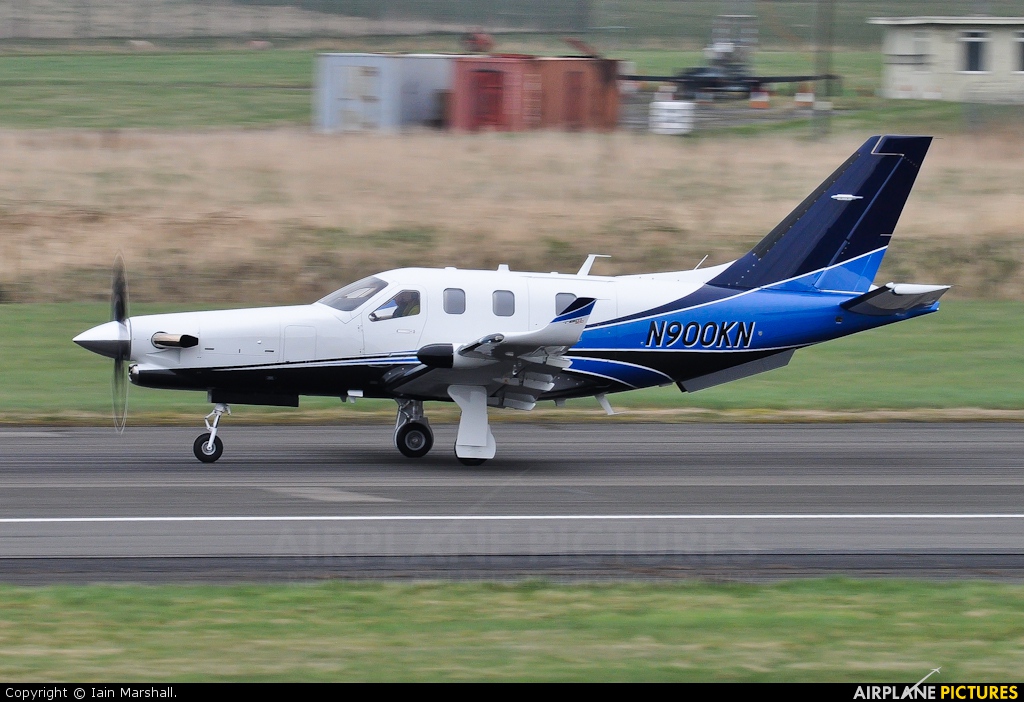
The commercial pilot and his wife departed New York in their turboprop airplane on a crosscountry flight to Florida. About 1 hour 40 minutes into the flight and while cruising at flight level (FL) 280, the pilot notified air traffic control (ATC) of an abnormal indication in the airplane and requested a descent to FL180. The responding controller instructed the pilot to descend to FL250 and turn left 30°, and the pilot acknowledged and complied with the instruction; he then again requested a lower altitude. Although the pilot declined emergency handling and did not specify the nature of the problem, the controller independently determined that the flight had encountered a pressurization issue and immediately coordinated with another ATC facility to clear nearby traffic. The controller then issued instructions to the pilot to descend to FL200 and change course; however, the pilot did not comply with the assignments despite acknowledging the instructions multiple times. The pilot's failure to comply with the controller's instructions, his long microphone pauses after concluding a statement over the radio, and his confusion were consistent with cognitive impairment due to hypoxia. Further, the pilot's transmissions to ATC indicated impairment within 2 minutes 30 seconds of reporting the abnormal indication, which is consistent with the Federal Aviation Administration's published time of useful consciousness/effective performance time ranges for the onset of hypoxia. Military airplanes were dispatched about 30 minutes after the pilot's final transmission to ATC to intercept and examine the airplane. The pilots of the military airplanes reported that the airplane appeared to be flying normally at FL250, that both occupants appeared to be asleep or unconscious, and that neither occupant was wearing an oxygen mask. Photographs taken from one of the military airplanes revealed that the airplane's emergency exit door was recessed into the fuselage frame, consistent with a depressurized cabin. The military airplanes escorted the airplane as it continued on a constant course and altitude until it approached Cuban airspace, at which point they discontinued their escort. Radar data indicated that the airplane continued on the same flight track until about 5 hours 48 minutes after takeoff, when it descended to impact in the Caribbean Sea north of Jamaica. The flight's duration was consistent with a departure with full fuel and normal cruise endurance. Some of the wreckage, including fuselage and engine components, was recovered from the ocean floor about 4 months after the accident. Data recovered from nonvolatile memory in the airplane's global air system controller (GASC) indicated that several fault codes associated with the cabin pressurization system were registered during the flight. These faults indicated that the overheat thermal switch (OTSW), which was associated with overheat protection, had activated, which resulted in a shutdown of the engine bleed air supply to the cabin pressurization system. Without a bleed air supply to maintain selected cabin pressure, the cabin altitude would have increased to the altitude of the outside environment over a period of about 4 minutes. The faults recorded by the GASC's nonvolatile memory and associated system alerts/warnings would have been displayed to the pilot, both as discrete system anomaly messages on the crew alerting system (CAS) and as master warning and/or master caution annunciations. A witness report indicated that the pilot was known to routinely monitor cabin altitude while flying in the airplane and in his previous pressurized airplanes. Based on his instrument scanning practices and the airplane's aural warning system, he likely would have observed any CAS message at or near its onset. Thus, the CAS messages and the associated alerts were likely the precipitating event for the pilot's call to ATC requesting a lower altitude. The pilot was likely not familiar with the physiological effects of hypoxia because he had not recently been in an altitude chamber for training, but he should have been familiar with the airplane's pressurization system emergency and oxygen mask donning procedures because he had recently attended a transition course for the accident airplane make and model that covered these procedures. However, the pressurization system training segment of the 5-day transition course comprised only about 90 minutes of about 36 total hours of training, and it is unknown if the pilot would have retained enough information to recognize the significance of the CAS messages as they appeared during the accident flight, much less recall the corresponding emergency procedures from memory. Coupled with the pilot's reported diligence in using checklists, this suggests that he would have attempted a physical review of the emergency procedures outlined in the Pilot's Operating Handbook (POH). A review of the 656-page POH for the airplane found that only one of the four emergency checklist procedures that corresponded to pressurization system-related CAS messages included a step to don an oxygen mask, and it was only a suggestion, not a mandatory step. The combined lack of emergency guidance to immediately don an oxygen mask and the rapid increase in the cabin altitude significantly increased the risk of hypoxia, a condition resistant to self-diagnosis, especially for a person who has not recently experienced its effects in a controlled environment such as an altitude chamber. Additionally, once the pilot reported the problem indication to ATC, he requested a descent to FL180 instead of 10,000 ft as prescribed by the POH. In a second transmission, he accepted FL250 and declined priority handling. These two separate errors were either early signs of cognitive dysfunction due to hypoxia or indications that the pilot did not interpret the CAS messages as a matter related to the pressurization system. Although the cabin bleed-down rate was 4 minutes, the pilot showed evidence of deteriorating cognitive abilities about 2 minutes 30 seconds after he initially reported the problem to ATC. Ultimately, the pilot had less than 4 minutes to detect the pressurization system failure CAS messages, report the problem to ATC, locate the proper procedures in a voluminous POH, and complete each procedure, all while suffering from an insidious and mentally impairing condition that decreased his cognitive performance over time. Following the accident, the airplane manufacturer revised the emergency procedures for newly manufactured airplanes to require flight crews to don their oxygen masks as the first checklist item in each of the relevant emergency checklists. Further, the manufacturer has stated that it plans to issue the same revisions for previous models in 2017. The airplane manufacturer previously documented numerous OTSW replacements that occurred between 2008 and after the date of the accident. Many of these units were removed after the GASC systems in their respective airplanes generated fault codes that showed an overheat of the bleed air system. Each of the OTSWs that were tested at the manufacturer's facility showed results that were consistent with normal operating units. Additionally, the OTSW from the accident airplane passed several of the manufacturer's functional tests despite the presence of internal corrosion from sea water. Further investigation determined that the pressurization system design forced the GASC to unnecessarily discontinue the flow of bleed air into the cabin if the bleed air temperature exceeded an initial threshold and did not subsequently fall below a secondary threshold within 30 seconds. According to the airplane manufacturer, the purpose of this design was to protect the structural integrity of the airplane, the system, and the passengers in case of overheat detection. As a result of this accident and the ensuing investigation, the manufacturer made changes to the programming of the GASC and to the airplane's wiring that are designed to reduce the potential for the GASC to shut off the flow of bleed air into the cabin and to maximize the bleed availability. Contrary to its normal position for flight, the cockpit oxygen switch was found in the "off" position, which prevents oxygen from flowing to the oxygen masks. A witness's description of the pilot's before starting engine procedure during a previous flight showed that he may not have precisely complied with the published procedure for turning on the oxygen switch and testing the oxygen masks. However, as the pilot reportedly was diligent in completing preflight inspections and checklists, the investigation could not determine why the cockpit oxygen switch was turned off. Further, because the oxygen masks were not observed on either occupant, the position of the oxygen switch would not have made a difference in this accident.
Probable cause:
The design of the cabin pressurization system, which made it prone to unnecessary shutdown, combined with a checklist design that prioritized troubleshooting over ensuring that the pilot was sufficiently protected from hypoxia. This resulted in a loss of cabin pressure that rendered the pilot and passenger unconscious during cruise flight and eventually led to an in-flight loss of power due to fuel exhaustion over the open ocean.
Final Report:
Crash of a Cessna 340A off Freeport: 4 killed

Date & Time: Aug 18, 2014 at 1002 LT
Type of aircraft:
Registration:
N340MM
Flight Type:
Survivors:
No
Schedule:
Ormond Beach - Freeport
MSN:
340A-0635
YOM:
1978
Country:
Crew on board:
1
Crew fatalities:
Pax on board:
3
Pax fatalities:
Other fatalities:
Total fatalities:
4
Aircraft flight hours:
5572
Circumstances:
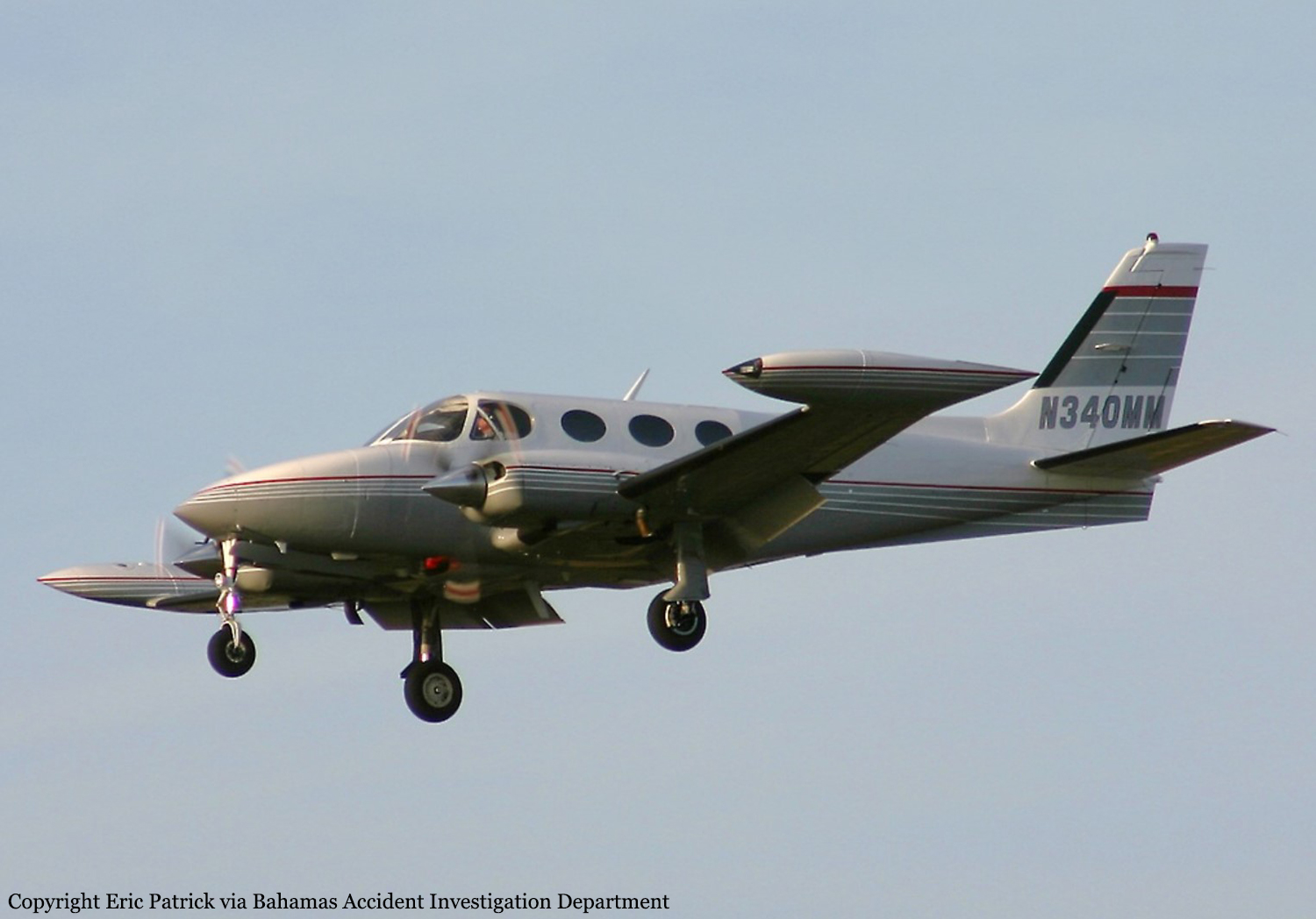
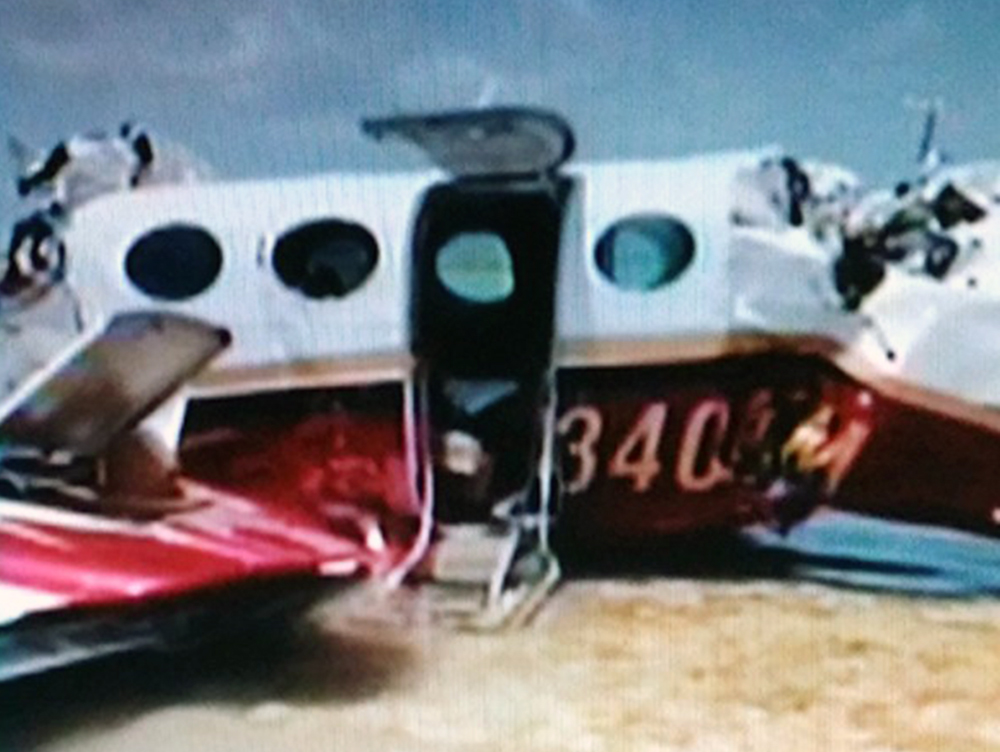
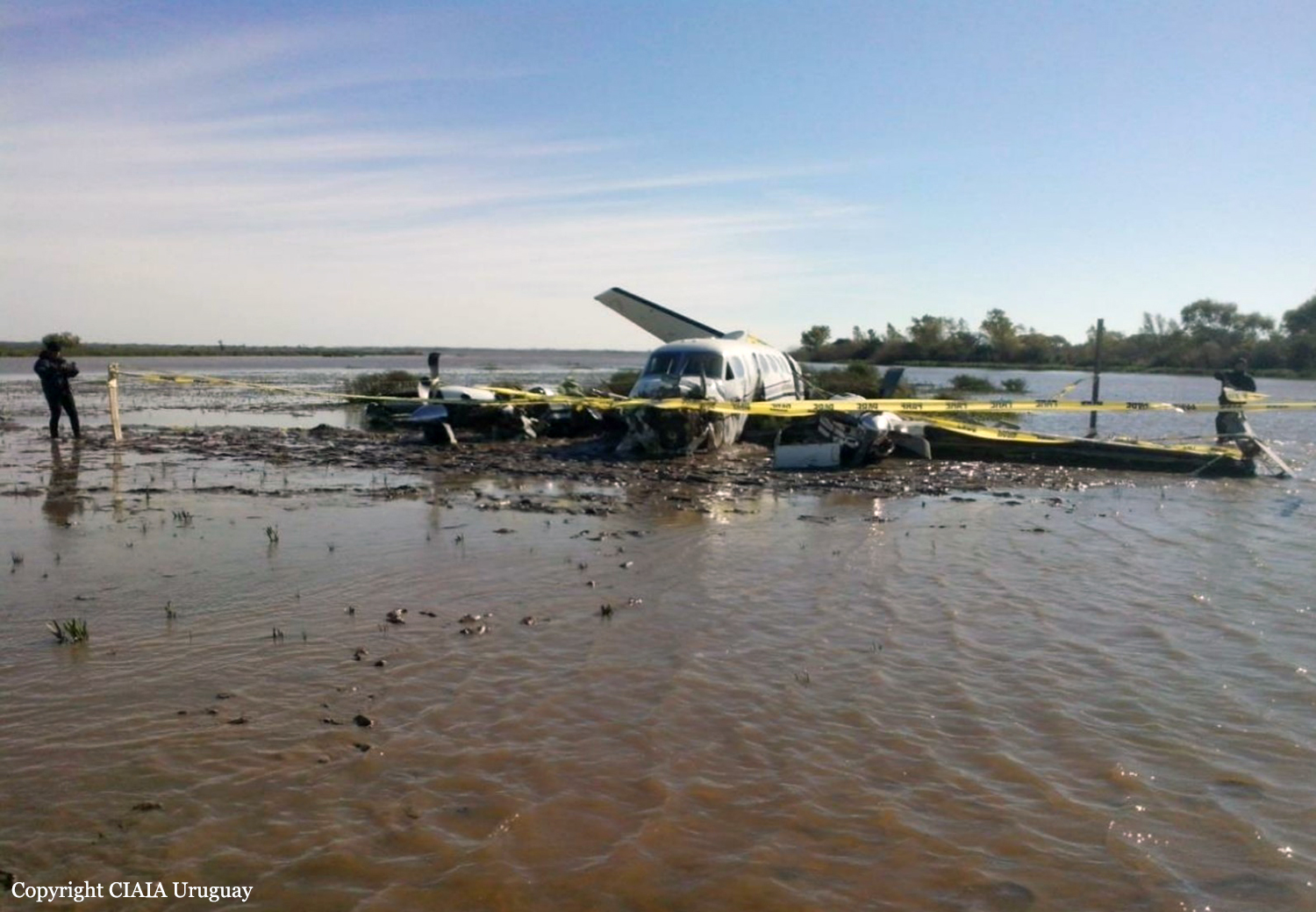
On 18 August, 2014 at 10:02am local time (1402Z) UTC a fixed wing, twin-engine, Cessna 3 4 0 A aircraft, United States registration N340MM, serial number 340A0635, crashed into waters while on a left base to runway 06 at Grand Bahama International Airport (MYGF) Freeport, Grand Bahama, Bahamas. The aircraft departed Ormond Beach Municipal Airport (KOMN) at 8:51am local time (1251Z) for Grand Bahama International Airport (MYGF) on an Instrument Flight Rules (IFR) flight plan with the pilot and three passengers aboard. Sometime after 9:00am (1300Z) an IFR inbound flight plan on N340MM was received by Freeport Approach Control from Miami Center. Upon initial contact with Freeport Approach Control the pilot was given weather advisory, re-cleared to Freeport VOR and told to maintain four thousand feet and report at JAKEL intersection. He was also advised to expect an RNAV runway six approach. After the pilot’s acknowledgement of the information he later acknowledged his position crossing JAKEL. Freeport Approach then instructed the aircraft to descend to two thousand feet and cleared him direct to JENIB intersection for the RNAV runway six (6) approach. After descending to two thousand feet the pilot indicated to Freeport Approach that he had the field in sight and was able to make a visual approach. Freeport Approach re-cleared the aircraft for a visual approach and instructed the pilot to contact Freeport Control Tower on frequency 118.5. At 9:57am (1357Z) N340MM established contact with Freeport Tower and was cleared for the visual approach to runway six; he was told to join the left base and report at five (5) DME. At 10:01am (1401Z) the pilot reported being out of fuel and his intention was to dead stick the aircraft into the airport from seven miles out at an altitude of one thousand five hundred feet. A minute later the pilot radioed ATC to indicate they “were going down and expected to be in the water about five miles north of the airport.” Freeport Tower tried to get confirmation of the last transmission but was unable to. Several more calls went out from Freeport Tower to N340MM but communication was never reestablished. Freeport Control Tower then made request of aircrafts departing and arriving to assist in locating the lost aircraft by over flying the vicinity of the last reported position to see if visual contact could be made. An inbound aircraft reported seeing an aircraft down five miles from the airport on the 300 degree radial of the ZFP VOR. Calls were made to all the relevant agencies and search and rescue initiated. The aircraft was located at GPS coordinates 26˚ 35.708’N and 078˚ 47. 431 W. The aircraft received substantial damage as a result of the impact and crash sequence. There were no survivors.
Probable cause:
The probable cause of this accident has been determined as a lack of situational awareness resulting in a stalled condition and loss of control while attempting to remedy a fuel exhaustion condition at a very low altitude.
Contributing factors:
- The pilot’s incorrect fuel calculations which resulted in fuel exhaustion to both engines.
- Stalled aircraft.
- Loss of situational awareness.
Final Report:

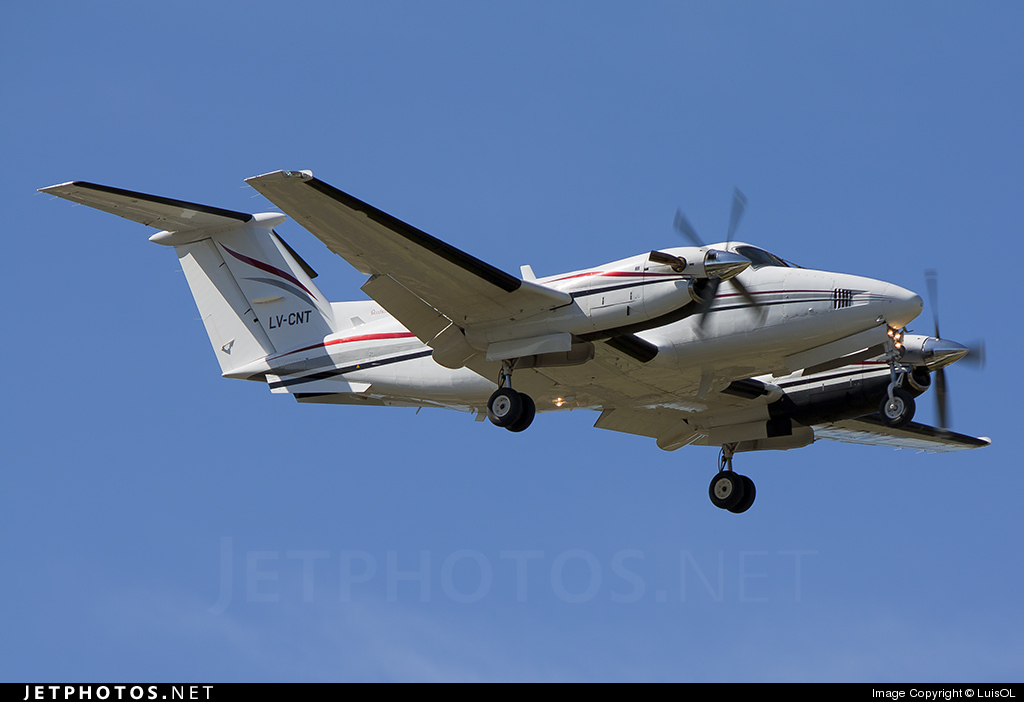
Crash of a Beechcraft B200 Super King Air near Carmelo: 5 killed

Date & Time: May 27, 2014 at 1240 LT
Operator:
Registration:
LV-CNT
Survivors:
Yes
Schedule:
San Fernando - Carmelo
MSN:
BB-1367
YOM:
1990
Location:
Country:
Crew on board:
1
Crew fatalities:
Pax on board:
8
Pax fatalities:
Other fatalities:
Total fatalities:
5
Captain / Total flying hours:
8039
Captain / Total hours on type:
478.00
Aircraft flight hours:
4616
Aircraft flight cycles:
4490
Circumstances:
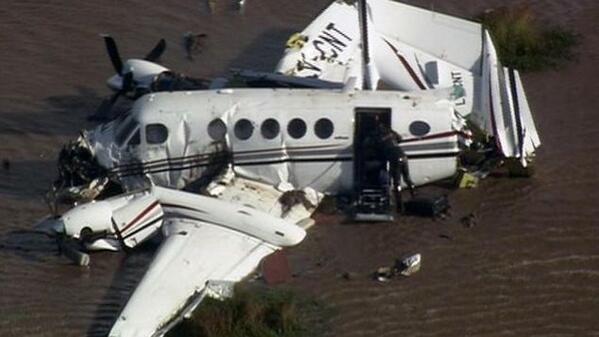
Owned by Grupo Kowzef (Federico Alejandro Bonomi), the twin engine aircraft departed San Fernando (Buenos Aires) at 1222LT on an executive flight to Carmelo, Uruguay. On approach to Carmelo-Zagarzazú Airport runway 35, the pilot encountered marginal weather conditions and initiated a go-around procedure. Few minutes later, he attempted a second approach under VFR mode. While completing a slight turn to the left in descent, the aircraft impacted the surface of the Río de la Plata and came to rest in shallow water some 10 km southwest of Carmelo Airport. The pilot and four passengers were killed and four other occupants were injured. The aircraft was destroyed.
Probable cause:
The accident was the consequence of a controlled flight into terrain after the pilot suffered a loss of situational awareness due to a poor evaluation of the flight conditions upon arrival. The following contributing factors were identified:
- The pilot failed to return to his departure airport or to divert to the alternate airport due to poor weather conditions at the destination airport,
- The pilot continued the approach under VFR mode in IMC conditions with visibility below minimums,
- Poor evaluation of the flight conditions at destination on part of the pilot due to the combination of psychological and physiological factors.
Final Report:

Crash of a Socata TBM-700 in the Ridgway Reservoir: 5 killed

Date & Time: Mar 22, 2014 at 1400 LT
Type of aircraft:
Operator:
Registration:
N702H
Flight Phase:
Flight Type:
Survivors:
No
Schedule:
Bartlesville – Montrose
MSN:
112
YOM:
1996
Crew on board:
1
Crew fatalities:
Pax on board:
4
Pax fatalities:
Other fatalities:
Total fatalities:
5
Captain / Total flying hours:
908
Captain / Total hours on type:
9.00
Aircraft flight hours:
4848
Circumstances:
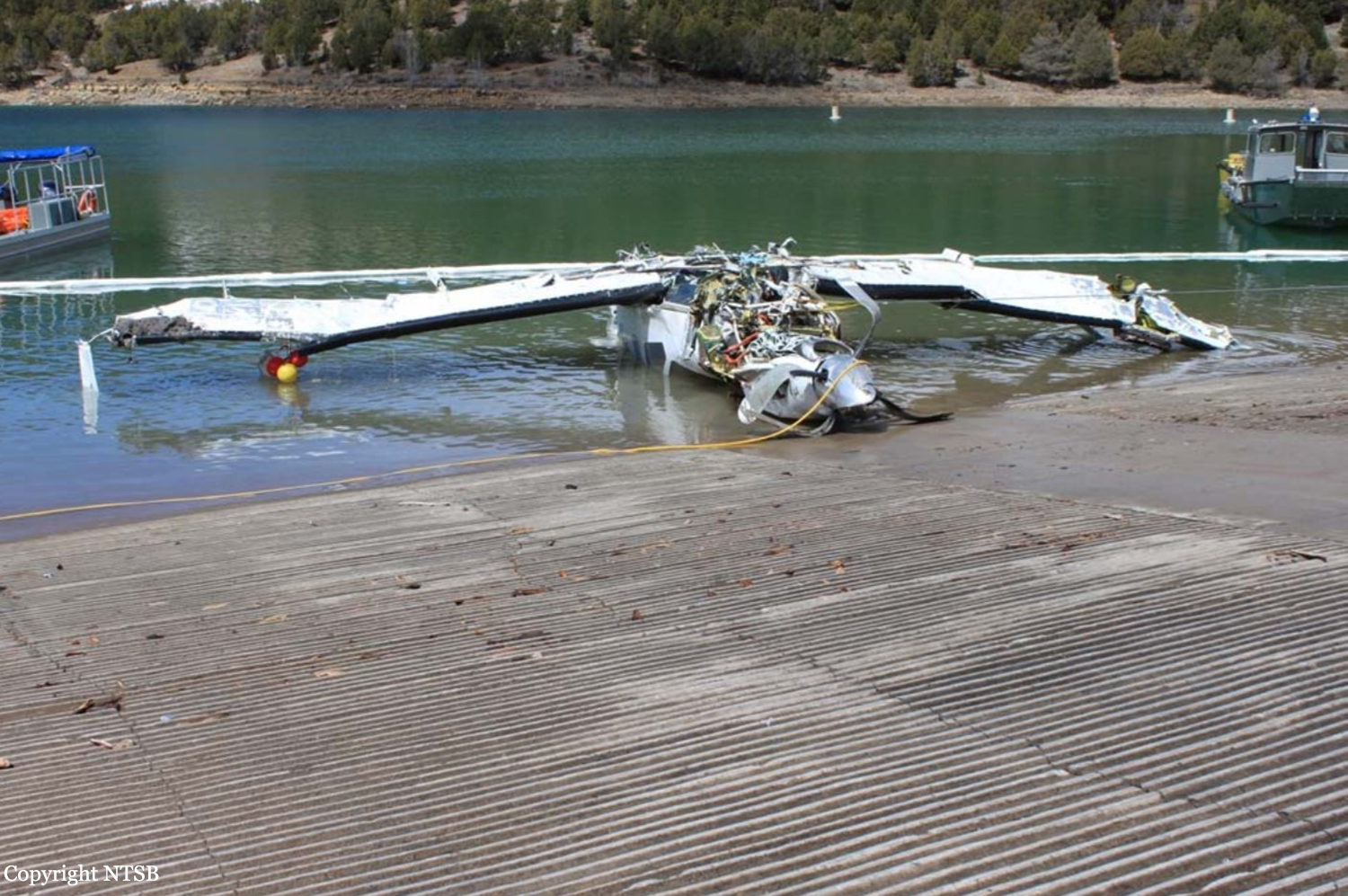
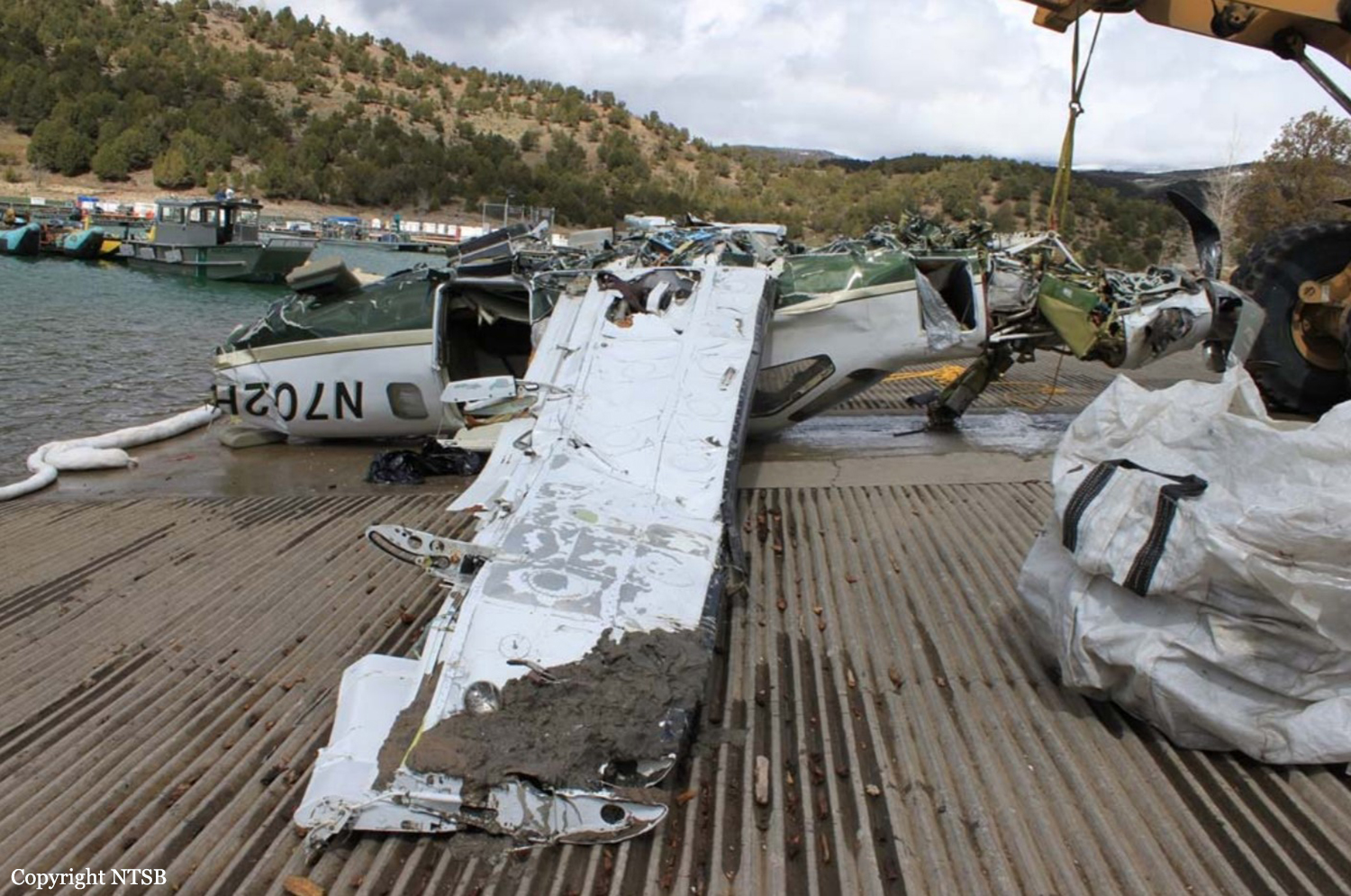
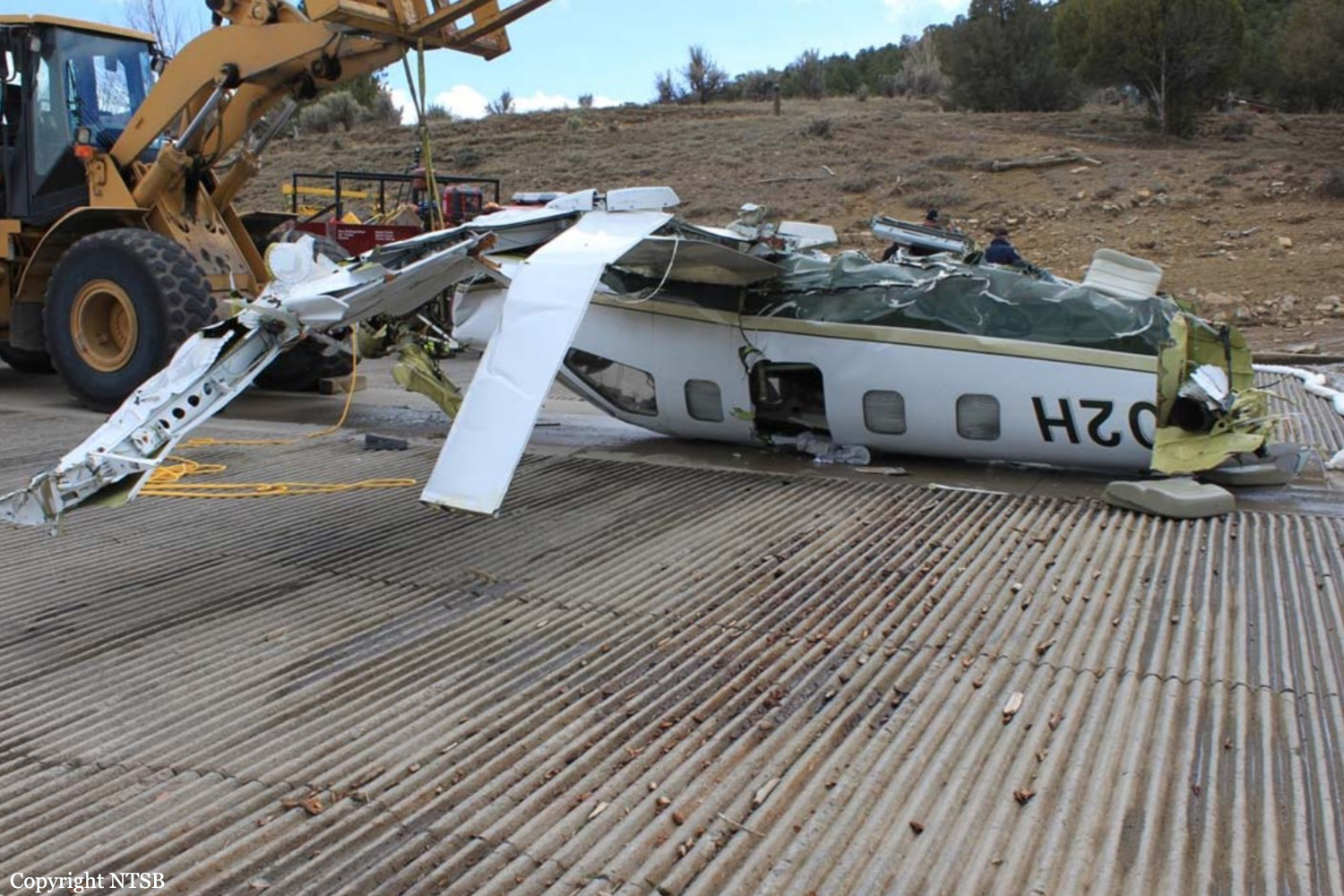
About 3 months before the accident, the pilot received about 9 hours of flight instruction, including completion of an instrument proficiency check, in the airplane. The accident flight was a personal cross-country flight operated under instrument flight rules (IFR). Radar track data depicted the flight proceeding on a west-southwest course at 15,800 ft mean sea level (msl) as it approached the destination airport. The flight was cleared by the air traffic controller for a GPS approach, passed the initial approach fix, and, shortly afterward, began a descent as permitted by the approach procedure. The track data indicated that the flight became established on the initial approach segment and remained above the designated minimum altitude of 12,000 ft msl. Average descent rates based on the available altitude data ranged from 500 feet per minute (fpm) to 1,000 fpm during this portion of the flight. At the intermediate navigation fix, the approach procedure required pilots to turn right and track a north-northwest course toward the airport. The track data indicated that the flight entered a right turn about 1 mile before reaching the intermediate fix. As the airplane entered the right turn, its average descent rate reached 4,000 fpm. The flight subsequently tracked northbound for nearly 1-1/2 miles. During this portion of the flight, the airplane initially descended at an average rate of 3,500 fpm then climbed at a rate of 1,800 fpm. The airplane subsequently entered a second right turn. The final three radar data points were each located within 505 ft laterally of each other and near the approximate accident site location. The average descent rate between the final two data points (altitudes of 10,100 ft msl and 8,700 ft msl) was 7,000 fpm. About the time that the final data point was recorded, the pilot informed the air traffic controller that the airplane was in a spin and that he was attempting to recover. No further communications were received from the pilot. The airplane subsequently impacted the surface of a reservoir at an elevation of about 6,780 ft and came to rest in 60 ft of water. A detailed postaccident examination of the airframe, engine and propeller assembly did not reveal any anomalies consistent with a preimpact failure or malfunction. The available meteorological data suggested that the airplane encountered clouds (tops about 16,000 ft msl or higher and bases about 10,000 ft msl) and was likely operating in IFR conditions during the final 15 minutes of the flight; however, no determination could be made regarding whether the clouds that the airplane descended through were solid or layered. In addition, the data suggested the possibility of both light icing and light turbulence between 12,000 ft msl and 16,000 ft msl along the flight path. Although the pilot appeared to be managing the flight appropriately during the initial descent, it could not be determined why he was unable to navigate to the approach fixes and maintain control of the airplane as he turned toward the airport and continued the descent.
Probable cause:
The pilot's loss of airplane control during an instrument approach procedure, which resulted in the airplane exceeding its critical angle of attack and entering an inadvertent aerodynamic stall and spin.
Final Report:
Crash of a Boeing 777-2H6ER in the Indian Ocean: 239 killed

Date & Time: Mar 8, 2014 at 0130 LT
Type of aircraft:
Operator:
Registration:
9M-MRO
Flight Phase:
Survivors:
No
Schedule:
Kuala Lumpur – Beijing
MSN:
28420/404
YOM:
2002
Flight number:
MH370
Country:
Region:
Crew on board:
12
Crew fatalities:
Pax on board:
227
Pax fatalities:
Other fatalities:
Total fatalities:
239
Captain / Total flying hours:
18423
Captain / Total hours on type:
8559.00
Copilot / Total flying hours:
2813
Copilot / Total hours on type:
39
Aircraft flight hours:
53471
Aircraft flight cycles:
7526
Circumstances:
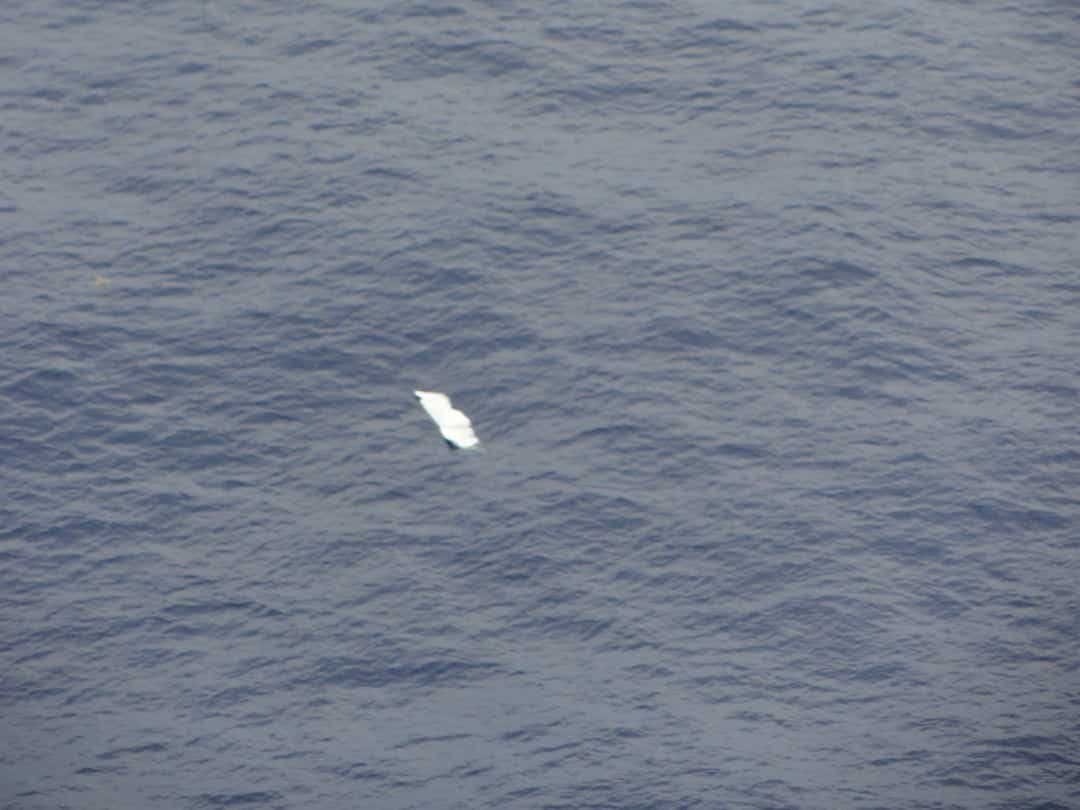
The Boeing 777-2H6ER took off from Kuala Lumpur Airport runway 32R at 0041LT bound for Beijing. Some 40 minutes later, while reaching FL350 over the Gulf of Thailand, radar contact was lost. At this time, the position of the aircraft was estimated 90 NM northeast of Kota Bharu, some 2 km from the IGARI waypoint. More than 4 days after the 'accident', no trace of the aircraft has been found. On the fifth day of operation, several countries were involved in the SAR operations, in the Gulf of Thailand, west of China Sea and on the Malacca Strait as well. All operations are performed in coordination with China, Thailand, Vietnam, Malaysia and Philippines. No distress call or any kind of message was sent by the crew. The last ACARS message was received at 0107LT and did not contain any error, failure or technical problems. At 0119LT was recorded the last radio transmission with the crew saying "All right, good night". At 0121LT, the transponder was switched off and the last radar contact was recorded at 0130LT. Several hypothesis are open and no trace of the aircraft nor the occupant have been found up to March 18, 2014. It is now understood the aircraft may flew several hours after it disappeared from radar screens, flying on an opposite direction from the prescribed flight plan, most probably to the south over the Indian Ocean. No such situation was ever noted by the B3A, so it is now capital to find both CVR & DFDR to explain the exact circumstances of this tragic event. Considering the actual situation, all scenarios are possible and all hypothesis are still open. On Mar 24, 2014, the Malaysian Prime Minister announced that according to new computations by the British AAIB based on new satellite data, there is no reasonable doubt that flight MH370 ended in the South Indian Ocean some 2,600 km west of Perth. Given the situation, the Malaysian Authorities believe that there is no chance to find any survivors among the 239 occupants.

***************************

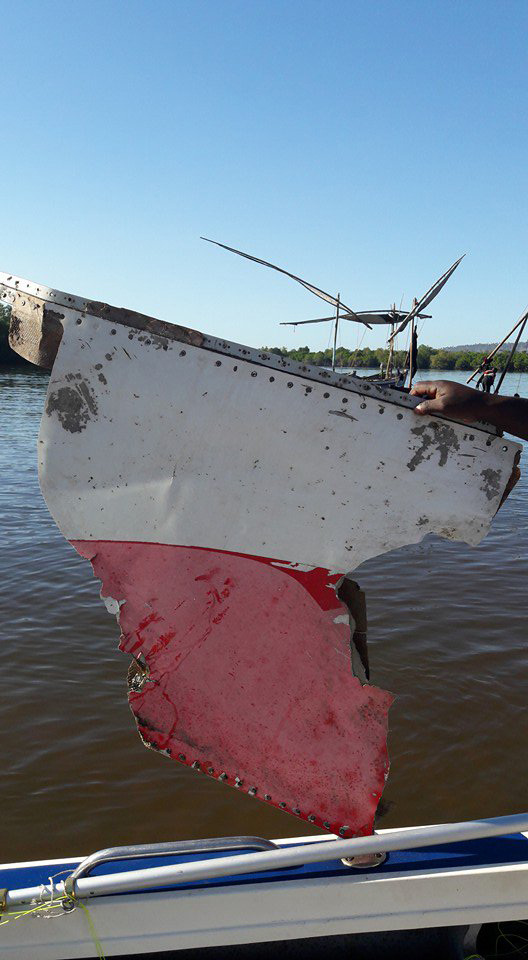
According to the testimony of 6 Swiss Citizens making a cruise between Perth and Singapore via Jakarta, the following evidences were spotted on March 12 while approaching the Sunda Strait:
1430LT - latitude 6° S, longitude 105° E, speed 17,7 knots:
life jacket, food trays, papers, pieces of polystyrene, wallets,
1500LT:
a huge white piece of 6 meters long to 2,5 meters wide with other debris,
1530LT:
two masts one meter long with small flags on top, red and blue,
2030LT - latitude 5° S, longitude 107° E, speed 20,2 knots.

This testimony was submitted by these 6 Swiss Citizens to the Chinese and Australian Authorities.

On April 21, 2016, it was confirmed that this testimony was recorded by the Swiss Police and transmitted to the Swiss Transportation Safety Investigation Board (STSB), the State authority of the Swiss Confederation which has a mandate to investigate accidents and dangerous incidents involving trains, aircraft, inland navigation ships, and seagoing vessels. The link to the STSB is http://www.sust.admin.ch/en/index.html.

***************************

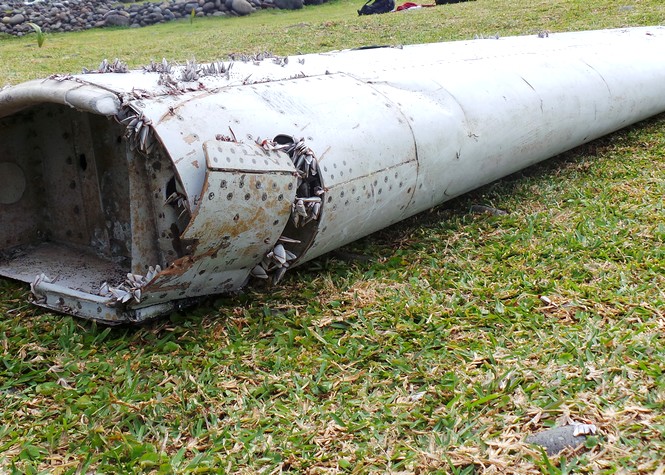
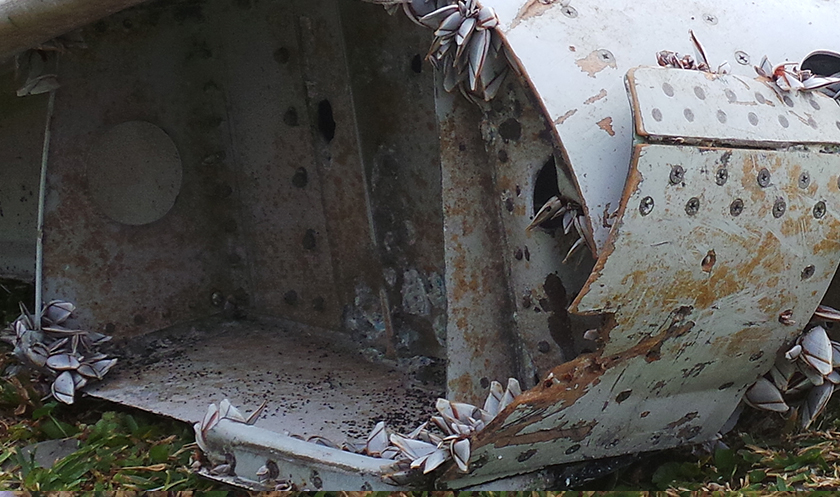
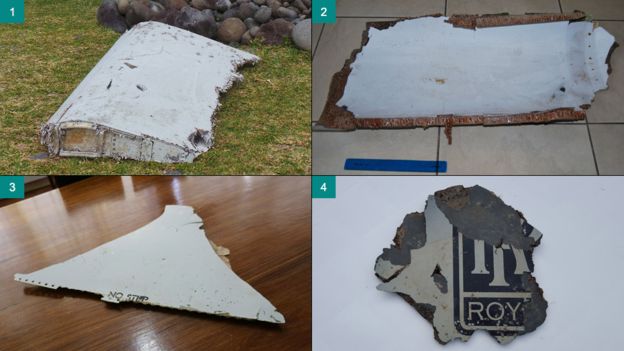
On July 29, 2015, a flaperon was found on a beach of the French Island of La Réunion, in the Indian Ocean. It was quickly confirmed by the French Authorities (BEA) that the debris was part of the Malaysian B777. Other debris have been found since, in Mozambique and South Africa.

On May 12, 2016, Australia's TSB reported that the part has been identified to be a "the decorative laminate as an interior panel from the main cabin. The location of a piano hinge on the part surface was consistent with a work-table support leg, utilised on the exterior of the MAB Door R1 (forward, right hand) closet panel". The ATSB reported that they were not able to identify any feature on the debris unique to MH-370, however, there is no record that such a laminate is being used by any other Boeing 777 customer.

***************************

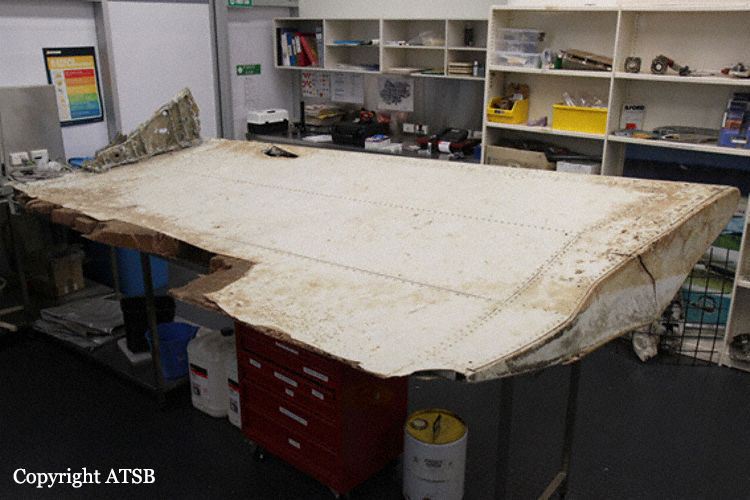
On September 15, 2016, the experts from the Australian Transportation Safety Bureau (ATSB) have completed their examination of the large piece of debris discovered on the island of Pemba, off the coast of Tanzania, on June 20, 2016. Based on thorough examination and analysis, ATSB with the concurrence of the MH370 Safety Investigation Team have identified the following:
- Several part numbers, along with physical appearance, dimensions, and construction confirmed the piece to be an inboard section of a Boeing 777 outboard flap.
- A date stamp associated with one of the part numbers indicated manufacture on January 23, 2002, which was consistent with the May 31, 2002 delivery date for MH370,
- In addition to the Boeing part number, all identification stamps had a second 'OL' number that were unique identifiers relating to part construction,
- The Italian part manufacturer has confirmed that all numbers located on the said part relates to the same serial number outboard flap that was shipped to Boeing as line number 404,
- The manufacturer also confirmed that aircraft line number 404 was delivered to Malaysian Airlines and registered as 9M-MRO (MH370)

As such, the experts have concluded that the debris, an outboard flap originated from the aircraft 9M-MRO, also known as flight MH370. Further examination of the debris will continue, in hopes that further evidence may be uncovered which may provide new insight into the circumstances surrounding flight MH370.
Probable cause:
Due to lack of evidences the exact cause of the accident could not be determined.
Final Report:

Crash of a Dassault Falcon 20E off Kish Island: 4 killed

Date & Time: Mar 3, 2014 at 1845 LT
Type of aircraft:
Operator:

Registration:
EP-FIC
Flight Type:
Survivors:
No
Schedule:
Kish Island - Kish Island
MSN:
334
YOM:
1975
Country:
Region:
Crew on board:
2
Crew fatalities:
Pax on board:
2
Pax fatalities:
Other fatalities:
Total fatalities:
4
Circumstances:
The Aircraft mission was Calibration flight. The flight was planned for departure from Mehrabad airport, Tehran to Kish Island airport. Eight persons were onboard of the aircraft (3 Pilots, 4 Ground technicians, a Security guard member). The flight was under operation of Iran Aseman Airline with valid Air Operation Certificate (AOC No; FS-102). The aircraft has taken off from RWY 29L from THR airport at 15:03 Local time and reached to cruise level FL270.The aircraft has landed on RWY 09 L Kish island airports at 16:44 local time. Four ground technicians have got off from the aircraft and refueling was done. At time 17:44 LMT , the aircraft has taken off RWY 27R and requested to join Right downwind up to 1000 ft. and 8 miles from the airport. After successful performing 7 complete flight (approach & climbing) for Navigation – Aids inspection purposes; at the 8th cycle, just at turning to the final stage of approach before runway threshold the aircraft crashed into the sea and was destroyed at time 18:45 local time. All four occupants were killed.
Probable cause:
Regarding aforementioned analyses it seems that the fatigues of pilots have caused incapability to adopt themselves with flight conditions and their interactions are due to spatial disorientation
(illusion). This type of error prevented pilots to avoid from crash in to the sea.
Contributing Factors:
- Malfunction of aircraft radio altimeter.
- Flight crew fatigue.
- Lack of enough supervision on flight calibration operations.
Final Report: