Crash of a Dassault Falcon 20E off Kish Island: 4 killed

Date & Time: Mar 3, 2014 at 1845 LT
Type of aircraft:
Operator:
Registration:
EP-FIC
Flight Type:
Survivors:
No
Schedule:
Kish Island - Kish Island
MSN:
334
YOM:
1975
Country:
Region:
Crew on board:
2
Crew fatalities:
Pax on board:
2
Pax fatalities:
Other fatalities:
Total fatalities:
4
Circumstances:
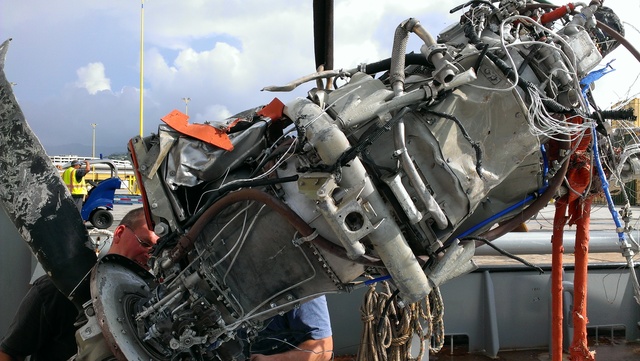
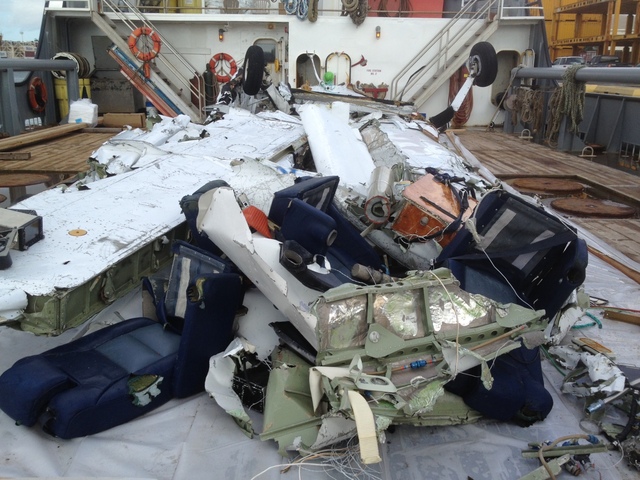
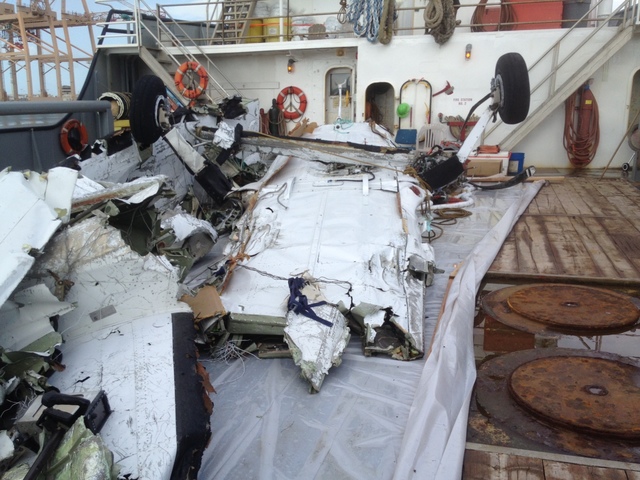
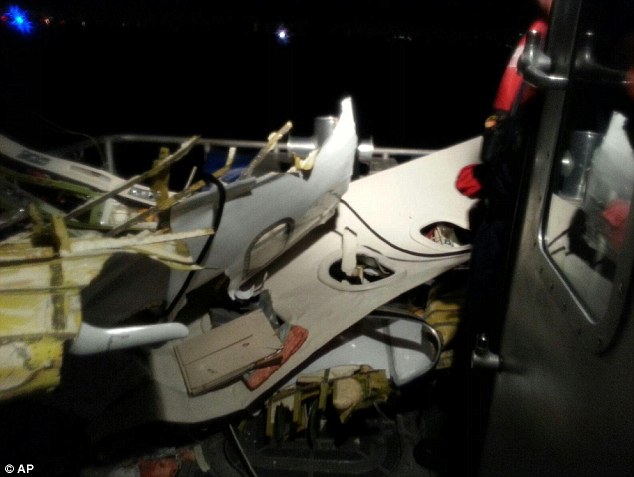
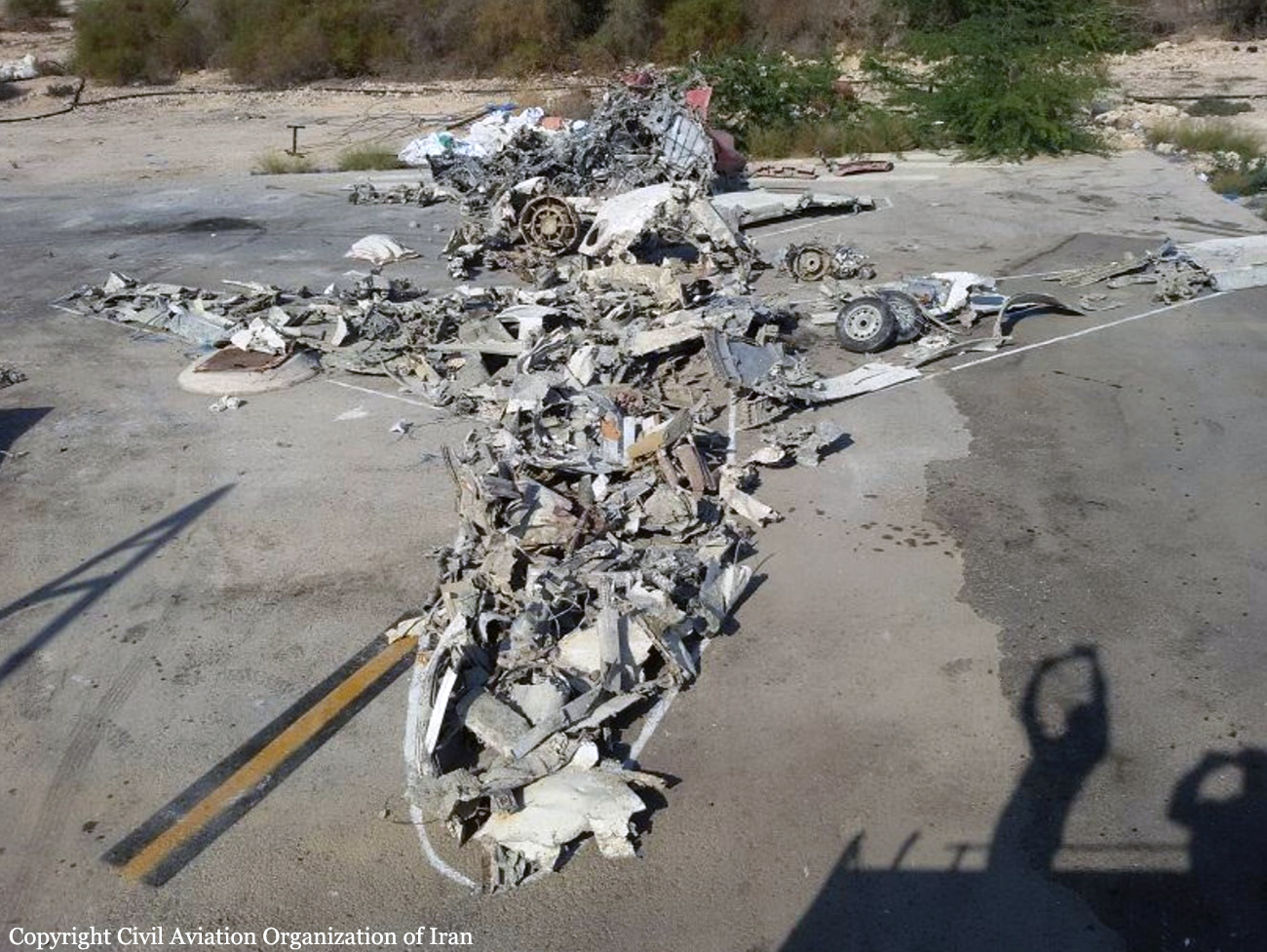
The Aircraft mission was Calibration flight. The flight was planned for departure from Mehrabad airport, Tehran to Kish Island airport. Eight persons were onboard of the aircraft (3 Pilots, 4 Ground technicians, a Security guard member). The flight was under operation of Iran Aseman Airline with valid Air Operation Certificate (AOC No; FS-102). The aircraft has taken off from RWY 29L from THR airport at 15:03 Local time and reached to cruise level FL270.The aircraft has landed on RWY 09 L Kish island airports at 16:44 local time. Four ground technicians have got off from the aircraft and refueling was done. At time 17:44 LMT , the aircraft has taken off RWY 27R and requested to join Right downwind up to 1000 ft. and 8 miles from the airport. After successful performing 7 complete flight (approach & climbing) for Navigation – Aids inspection purposes; at the 8th cycle, just at turning to the final stage of approach before runway threshold the aircraft crashed into the sea and was destroyed at time 18:45 local time. All four occupants were killed.
Probable cause:
Regarding aforementioned analyses it seems that the fatigues of pilots have caused incapability to adopt themselves with flight conditions and their interactions are due to spatial disorientation
(illusion). This type of error prevented pilots to avoid from crash in to the sea.
Contributing Factors:
- Malfunction of aircraft radio altimeter.
- Flight crew fatigue.
- Lack of enough supervision on flight calibration operations.
Final Report:

Crash of a Cessna 208B Grand Caravan off Kalaupapa: 1 killed

Date & Time: Dec 11, 2013 at 1522 LT
Type of aircraft:
Operator:
Registration:
N687MA
Flight Phase:
Survivors:
Yes
Schedule:
Kalaupapa - Honolulu
MSN:
208B-1002
YOM:
2002
Crew on board:
1
Crew fatalities:
Pax on board:
8
Pax fatalities:
Other fatalities:
Total fatalities:
1
Captain / Total flying hours:
16000
Captain / Total hours on type:
250.00
Aircraft flight hours:
4881
Circumstances:
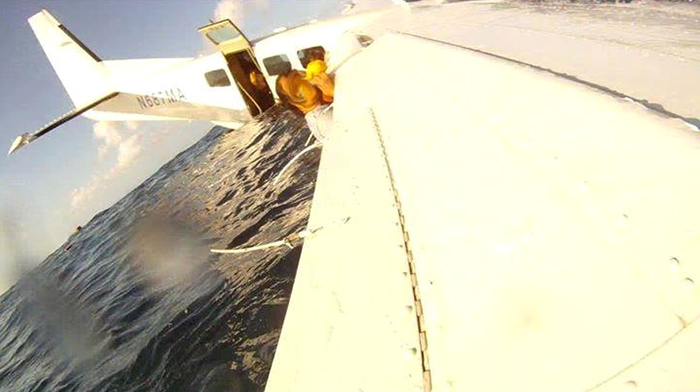
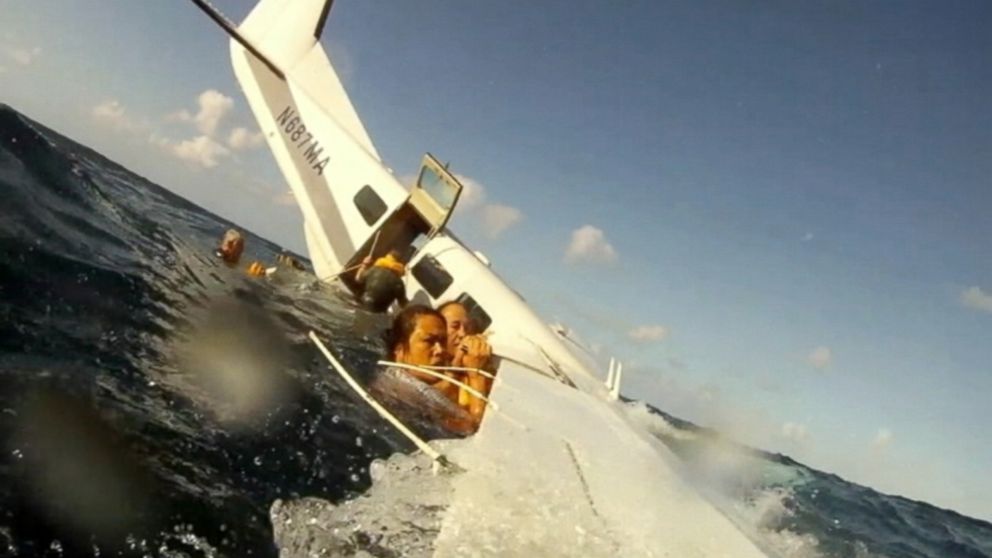
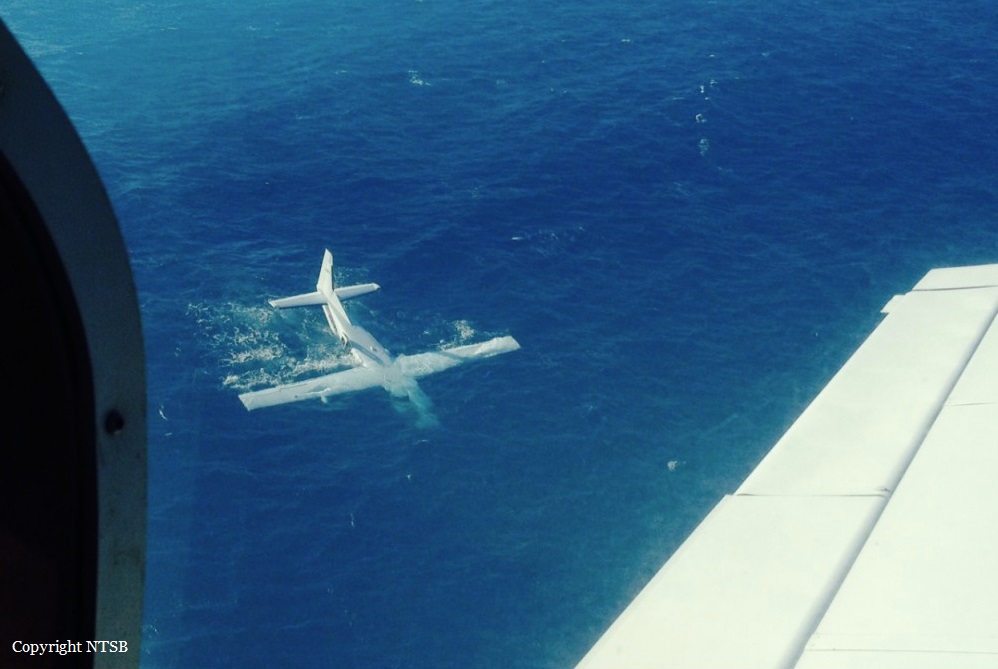
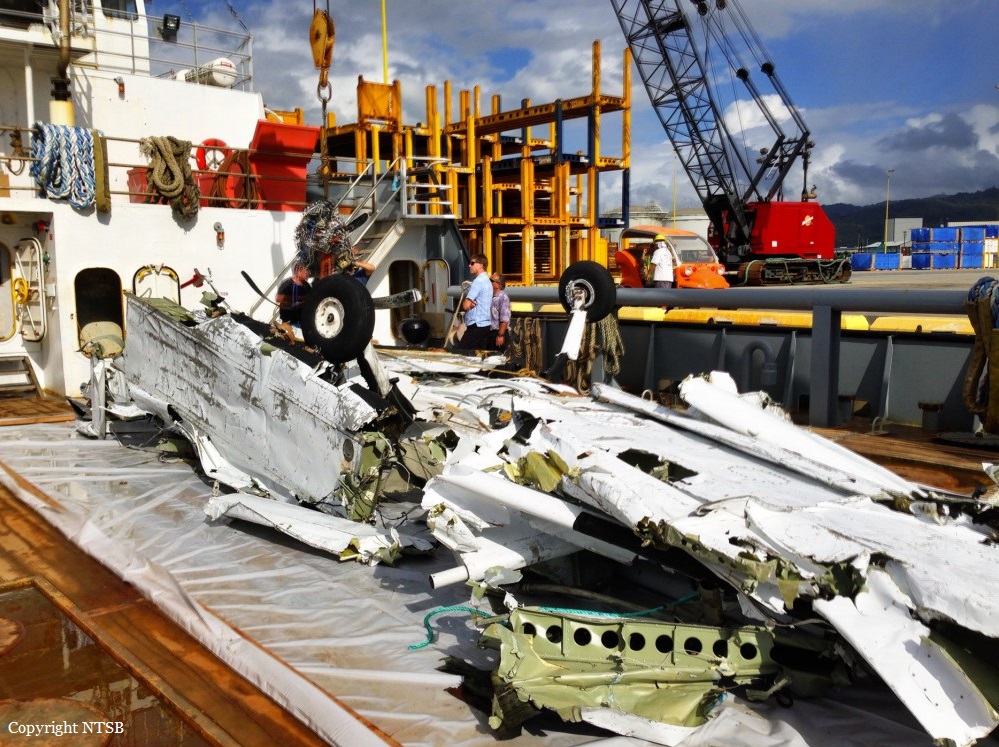
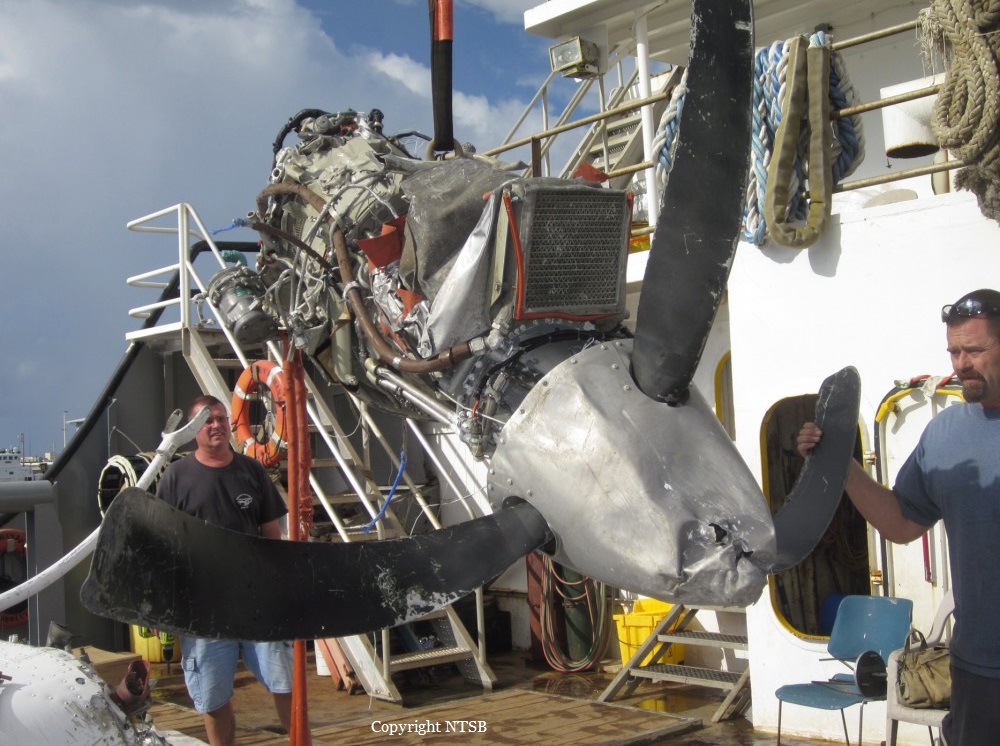
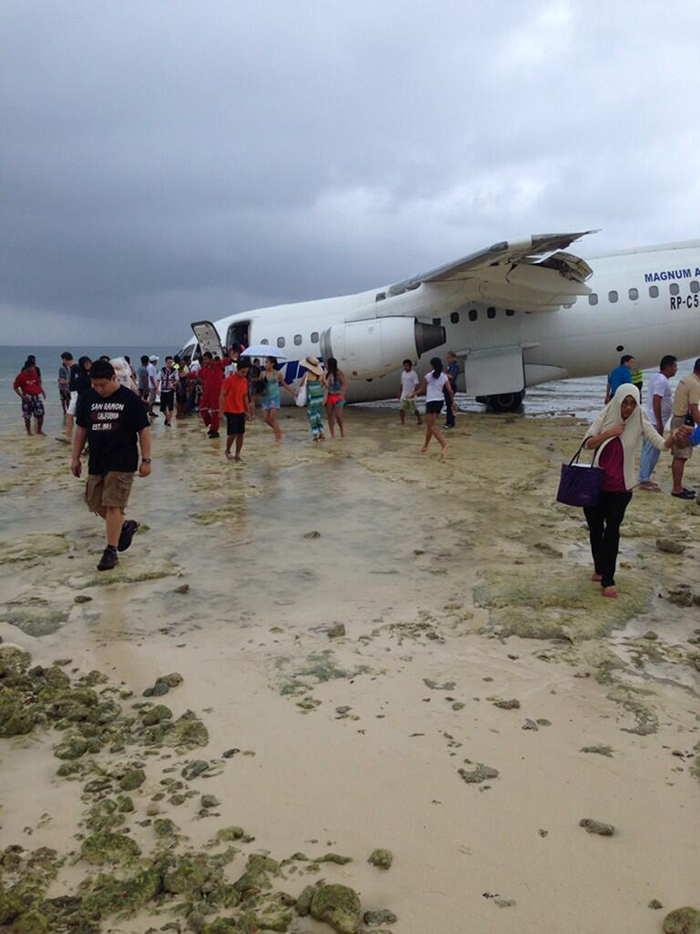
The airline transport pilot was conducting an air taxi commuter flight between two Hawaiian islands with eight passengers on board. Several passengers stated that the pilot did not provide a safety briefing before the flight. One passenger stated that the pilot asked how many of the passengers had flown over that morning and then said, “you know the procedures.” The pilot reported that, shortly after takeoff and passing through about 500 ft over the water, he heard a loud “bang,” followed by a total loss of engine power. The pilot attempted to return to the airport; however, he realized that the airplane would not be able to reach land, and he subsequently ditched the airplane in the ocean. All of the passengers and the pilot exited the airplane uneventfully. One passenger swam to shore, and rescue personnel recovered the pilot and the other seven passengers from the water about 80 minutes after the ditching. However, one of these passengers died before the rescue personnel arrived. Postaccident examination of the recovered engine revealed that multiple compressor turbine (CT) blades were fractured and exhibited thermal damage. In addition, the CT shroud exhibited evidence of high-energy impact marks consistent with the liberation of one or more of the CT blades. The thermal damage to the CT blades likely occurred secondary to the initial blade fractures and resulted from a rapid increase in fuel flow by the engine fuel control in response to the sudden loss of compressor speed due to the blade fractures. The extent of the secondary thermal damage to the CT blades precluded a determination of the cause of the initial fractures. Review of airframe and engine logbooks revealed that, about 1 1/2 years before the accident, the engine had reached its manufacturer-recommended time between overhaul (TBO) of 3,600 hours; however, the operator obtained a factory-authorized, 200-hour TBO increase. Subsequently, at an engine total time since new of 3,752.3 hours, the engine was placed under the Maintenance on Reliable Engines (MORE) Supplemental Type Certificate (STC) inspection program, which allowed an immediate increase in the manufacturer recommended TBO from 3,600 to 8,000 hours. The MORE STC inspection program documents stated that the MORE STC was meant to supplement, not replace, the engine manufacturer’s Instructions for Continued Airworthiness and its maintenance program. Although the MORE STC inspection program required more frequent borescope inspections of the hot section, periodic inspections of the compressor and exhaust duct areas, and periodic power plant adjustment/tests, it did not require a compressor blade metallurgical evaluation of two compressor turbine blades; however, this evaluation was contained in the engine maintenance manual and an engine manufacturer service bulletin (SB). The review of the airframe and engine maintenance logbooks revealed no evidence that a compressor turbine metallurgical evaluation of two blades had been conducted. The operator reported that the combined guidance documentation was confusing, and, as a result, the operator did not think that the compressor turbine blade evaluation was necessary. It is likely that, if the SB had been complied with or specifically required as part of the MORE STC inspection program, possible metal creep or abnormalities in the turbine compressor blades might have been discovered and the accident prevented. The passenger who died before the first responders arrived was found wearing a partially inflated infant life vest. The autopsy of the passenger did not reveal any significant traumatic injuries, and the autopsy report noted that her cause of death was “acute cardiac arrhythmia due to hyperventilation.” Another passenger reported that he also inadvertently used an infant life vest, which he said seemed “small or tight” but “worked fine.” If the pilot had provided a safety briefing, as required by Federal Aviation Administration regulations, to the passengers that included the ditching procedures and location and usage of floatation equipment, the passengers might have been able to find and use the correct size floatation device.
Probable cause:
The loss of engine power due to the fracture of multiple blades on the compressor turbine wheel, which resulted in a ditching. The reason for the blade failures could not be determined due to secondary thermal damage to the blades.
Final Report:
Crash of a Cessna 208B Grand Caravan in Kibeni: 3 killed

Date & Time: Nov 25, 2013 at 1340 LT
Type of aircraft:
Operator:
Registration:
P2-SAH
Survivors:
Yes
Schedule:
Kamusi – Purari – Vailala – Port Moresby
MSN:
208B-1263
YOM:
2007
Location:
Region:
Crew on board:
1
Crew fatalities:
Pax on board:
9
Pax fatalities:
Other fatalities:
Total fatalities:
3
Captain / Total flying hours:
2200
Captain / Total hours on type:
800.00
Circumstances:
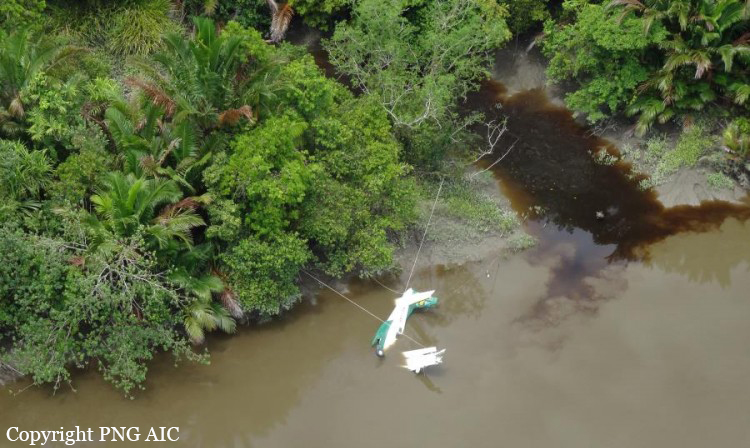
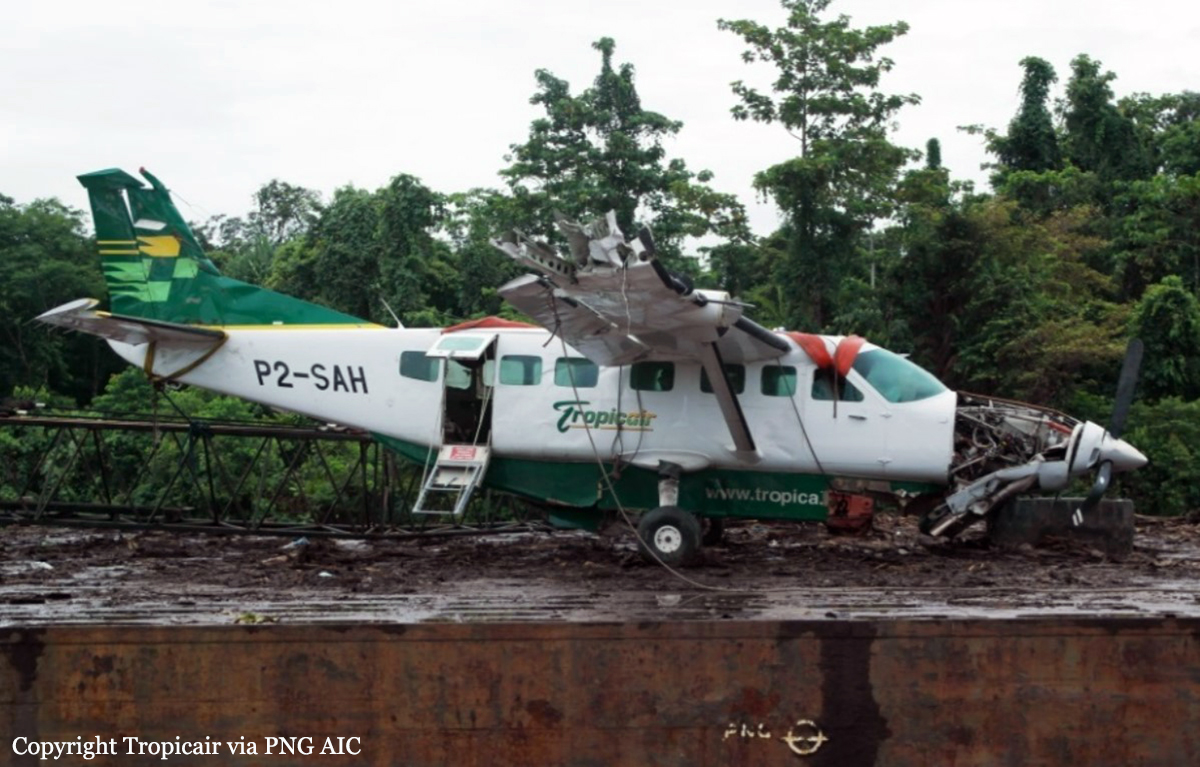
On 25 November 2013, a Cessna Aircraft Company C208B Grand Caravan, registered P2-SAH and operated by Tropicair, departed Kamusi, Western Province, for Purari River, Gulf Province, at 0312 UTC on a charter flight under the instrument flight rules (IFR). There were 10 persons on board; one pilot and nine passengers . Earlier in the day, the aircraft had departed Port Moresby for Kamusi from where it flew to Hivaro and back to Kamusi before the accident flight. SAH was due to continue from Purari River to Vailala and Port Moresby. The pilot reported that the takeoff and climb from Kamusi were normal and he levelled off at 9,000 ft and completed the top-of-climb checklist. Between Kamusi and Purari River the terrain is mostly flat and forest covered, with areas of swampland and slow-moving tidal rivers. Habitation is very sparse with occasional small villages along the rivers. The pilot recalled that the weather was generally good in the area with a cloud base of 3,000 ft and good visibility between build-ups. The pilot reported that approximately 2 minutes into the cruise there was a loud ‘pop’ sound followed by a complete loss of engine power. After configuring the aircraft for best glide speed at 95 kts, the pilot turned the aircraft right towards the coast and rivers to the south, and completed the Phase-1 memory recall items for engine failure in flight. He was assisted by the passenger in the right pilot seat who switched on the Emergency Locator Transmitter (ELT) and at 0332 broadcast MAYDAY due engine failure on the area frequency. Checking the database in the on-board Global Positioning System (GPS), the pilot found the airstrip at Kibeni on the eastern side of the Palbuna River. The pilot, assisted by the passenger next to him, tried unsuccessfully to restart the engine using the procedure in the aircraft’s Quick Reference Handbook (QRH). The passenger continued to give position reports and to communicate with other aircraft. At about 3,000 ft AMSL the pilot asked for radio silence on the area frequency so he could concentrate on the approach to Kibeni airstrip, flying a left hand circuit to land in a south westerly direction. He selected full flaps during the final stages of the approach, which arrested the aircraft’s rate of descent, but the higher than normal speed of the aircraft during the approach and landing flare caused it to float and touch down half way along the airstrip. The disused 430 metre long Kibeni airstrip was overgrown with grass and weeds. It was about 60 ft above the river and 120 ft above mean sea level, with trees and other vegetation on the slope down to the river. The aircraft bounced three times and, because the aircraft’s speed had not decayed sufficiently to stop in the available length, the pilot elected to pull back on the control column in order to clear the trees that were growing on the slope between the airstrip and the river. The aircraft became airborne, impacting the crown of a coconut palm (that was almost level with the airstrip) as it passed over the trees. The pilot banked the aircraft hard left in an attempt to land/ditch along the river and avoid trees on the opposite bank. He then pushed forward on the control column to avoid stalling the aircraft and levelled the wings before the aircraft impacted the water. The aircraft came to rest inverted with the cockpit and forward cabin submerged and immediately filled with water. After a short delay while he gained his bearings under water, the pilot was able to undo his harness and open the left cockpit door. He swam to the rear of the aircraft, opened the right rear cabin door, and helped the surviving passengers to safety on the river bank. He made several attempts to reach those still inside the aircraft. When he had determined there was nothing further he could do to reach them, he administered first aid to the survivors with materials from the aircraft’s first aid kit. After approximately 20 minutes, villagers arrived in a canoe and transported the pilot and surviving passengers to Kibeni village across the river. About 90 minutes after the accident, rescuers airlifted the survivors by helicopter to Kopi, located 44 km north east of Kibeni.
Probable cause:
The engine power loss was caused by the fracture of one CT blade in fatigue, which resulted in secondary damage to the remainder of the CT blades and downstream components. The fatigue originated from multiple origins on the pressure side of the blade trailing edge. The root cause for the fatigue initiation could not be determined with certainty. All other damages to the engine are considered secondary to the primary CT blades fracture.
Final Report:
Crash of a Learjet 35A off Fort Lauderdale: 4 killed

Date & Time: Nov 19, 2013 at 1956 LT
Type of aircraft:
Operator:
Registration:
XA-USD
Flight Phase:
Flight Type:
Survivors:
No
Schedule:
Fort Lauderdale - Cozumel
MSN:
35A-255
YOM:
1979
Crew on board:
2
Crew fatalities:
Pax on board:
2
Pax fatalities:
Other fatalities:
Total fatalities:
4
Captain / Total flying hours:
10091
Captain / Total hours on type:
1400.00
Copilot / Total flying hours:
1235
Copilot / Total hours on type:
175
Aircraft flight hours:
6842
Circumstances:
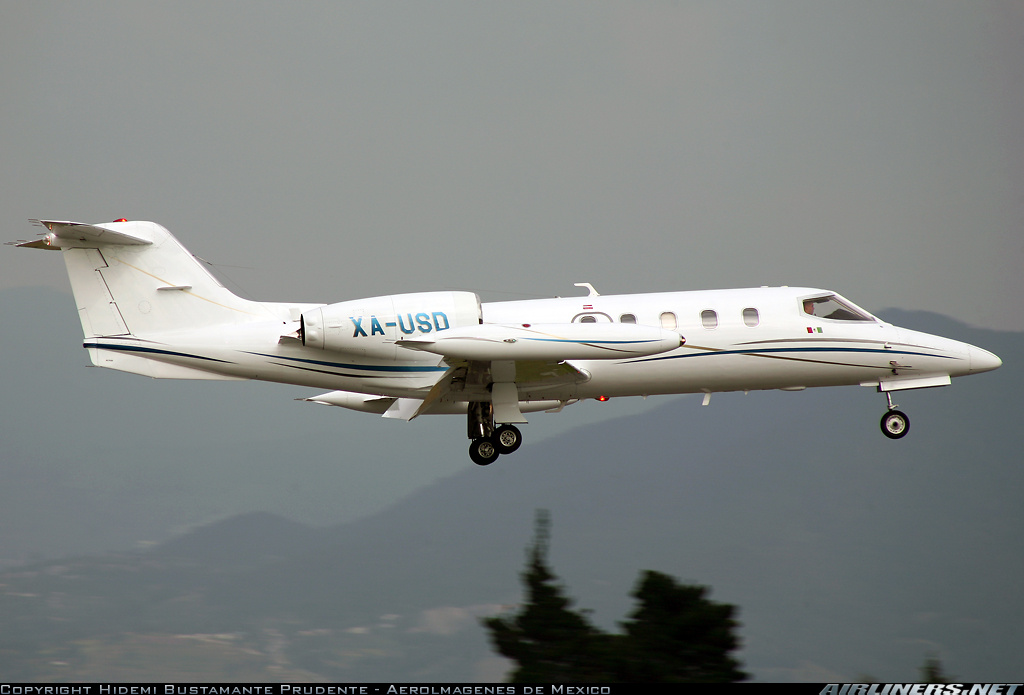
During takeoff to the east over the ocean, after the twin-engine jet climbed straight ahead to about 2,200 ft and 200 knots groundspeed, the copilot requested radar vectors back to the departure airport due to an "engine failure." The controller assigned an altitude and heading, and the copilot replied, "not possible," and requested a 180-degree turn back to the airport, which the controller acknowledged and approved. However, the airplane continued a gradual left turn to the north as it slowed and descended. The copilot subsequently declared a "mayday" and again requested vectors back to the departure airport. During the next 3 minutes, the copilot requested, received, and acknowledged multiple instructions from the controller to turn left to the southwest to return to the airport. However, the airplane continued its slow left turn and descent to the north. The airplane slowed to 140 knots and descended to 900 ft as it flew northbound, parallel to the shoreline, and away from the airport. Eventually, the airplane tracked in the direction of the airport, but it continued to descend and impacted the ocean about 1 mile offshore. According to conversations recorded on the airplane's cockpit voice recorder (CVR), no checklists were called for, offered, or used by either flight crewmember during normal operations (before or during engine start, taxi, and takeoff) or following the announced in-flight emergency. After the "engine failure" was declared to the air traffic controller, the pilot asked the copilot for unspecified "help" because he did not "know what's going on," and he could not identify the emergency or direct the copilot in any way with regard to managing or responding to the emergency. At no time did the copilot identify or verify a specific emergency or malfunction, and he did not provide any guidance or assistance to the pilot. Examination of the recovered wreckage revealed damage to the left engine's thrust reverser components, including separation of the lower blocker door, and the stretched filament of the left engine's thrust reverser "UNLOCK" status light, which indicated that the light bulb was illuminated at the time of the airplane's impact. Such evidence demonstrated that the left engine's thrust reverser became unlocked and deployed (at least partially and possibly fully) in flight. Impact damage precluded testing for electrical, pneumatic, and mechanical continuity of the thrust reverser system, and the reason the left thrust reverser deployed in flight could not be determined. No previous instances of the inflight deployment of a thrust reverser on this make and model airplane have been documented. The airplane's flight manual supplement for the thrust reverser system contained emergency procedures for responding to the inadvertent deployment of a thrust reverser during takeoff. For a deployment occurring above V1 (takeoff safety speed), the procedure included maintaining control of the airplane, placing the thrust reverser rocker switch in the "EMER STOW" position, performing an engine shutdown, and then performing a single-engine landing. Based on the wreckage evidence and data recovered from the left engine's digital electronic engine control (DEEC), the thrust reverser rocker switch was not placed in the "EMER STOW" position, and the left engine was not shut down. The DEEC data showed a reduction in N1 about 100 seconds after takeoff followed by a rise in N1 about 35 seconds later. The data were consistent with the thrust reverser deploying in flight (resulting in the reduction in N1) followed by the inflight separation of the lower blocker door (resulting in the rise in N1 as some direct exhaust flow was restored). Further, the DEEC data revealed full engine power application throughout the flight. Although neither flight crewmember recognized that the problem was an inflight deployment of the left thrust reverser, certification flight test data indicated that the airplane would have been controllable as it was configured on the accident flight. If the crew had applied the "engine failure" emergency procedure (the perceived problem that the copilot reported to the air traffic controller), the airplane would have been more easily controlled and could have been successfully landed. The airplane required two fully-qualified flight crewmembers; however, the copilot was not qualified to act as second-in-command on the airplane, and he provided no meaningful assistance to the pilot in handling the emergency. Further, although the pilot's records indicated considerable experience in similar model airplanes, the pilot's performance during the flight was highly deficient. Based on the CVR transcript, the pilot did not adhere to industry best practices involving the execution of checklists during normal operations, was unprepared to identify and handle the emergency, did not refer to the appropriate procedures checklists to properly configure and control the airplane once a problem was detected, and did not direct the copilot to the appropriate checklists.
Probable cause:
The pilot's failure to maintain control of the airplane following an inflight deployment of the left engine thrust reverser. Contributing to the accident was the flight crew's failure to perform the appropriate emergency procedures, the copilot's lack of qualification and capability to act as a required flight crewmember for the flight, and the inflight deployment of the left engine thrust reverser for reasons that could not be determined through postaccident investigation.
Final Report:
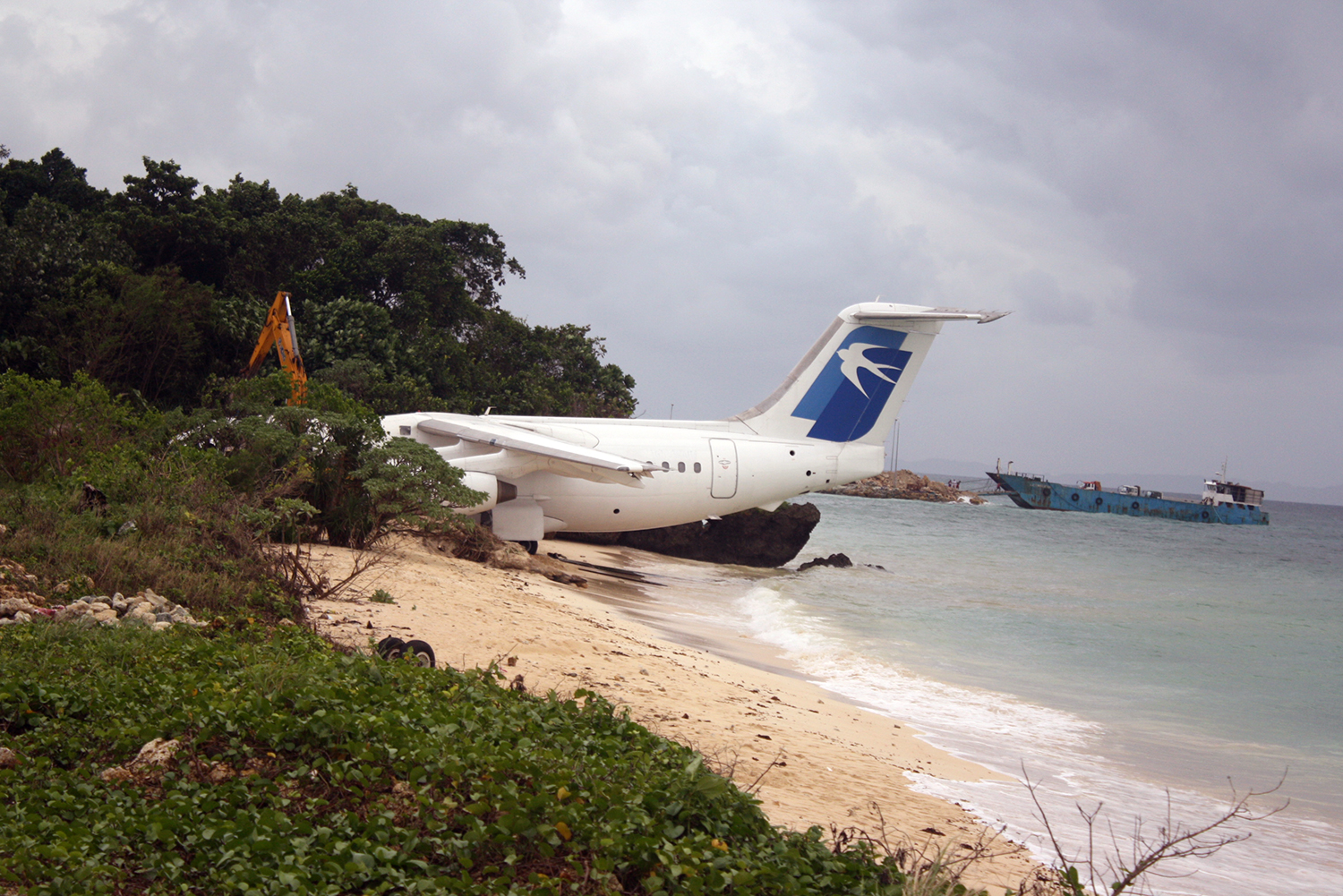
Crash of a BAe 146-200 in Balesin

Date & Time: Oct 19, 2013 at 1149 LT
Type of aircraft:
Operator:
Registration:
RP-C5525
Survivors:
Yes
Schedule:
Manila - Balesin
MSN:
E2031
YOM:
1985
Location:
Country:
Region:
Crew on board:
7
Crew fatalities:
Pax on board:
68
Pax fatalities:
Other fatalities:
Total fatalities:
0
Circumstances:
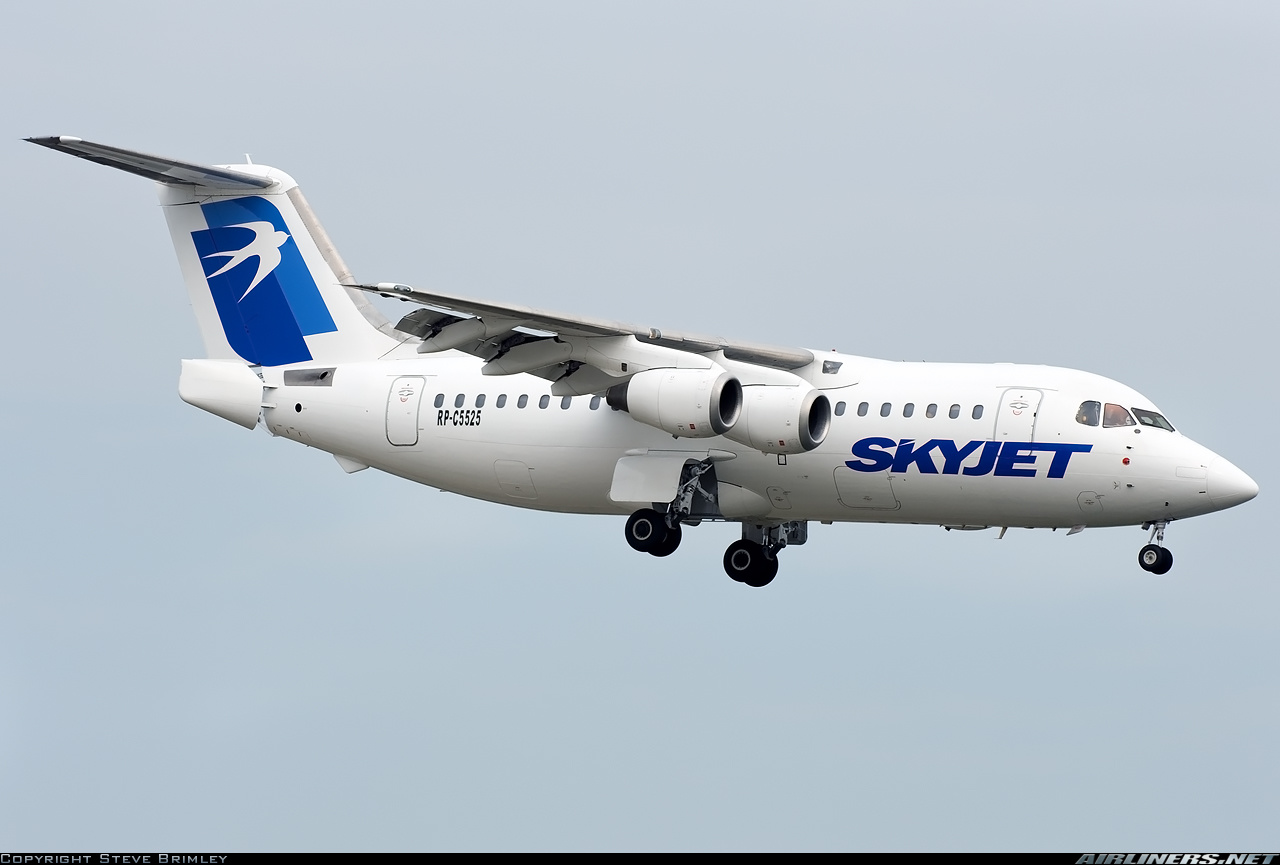
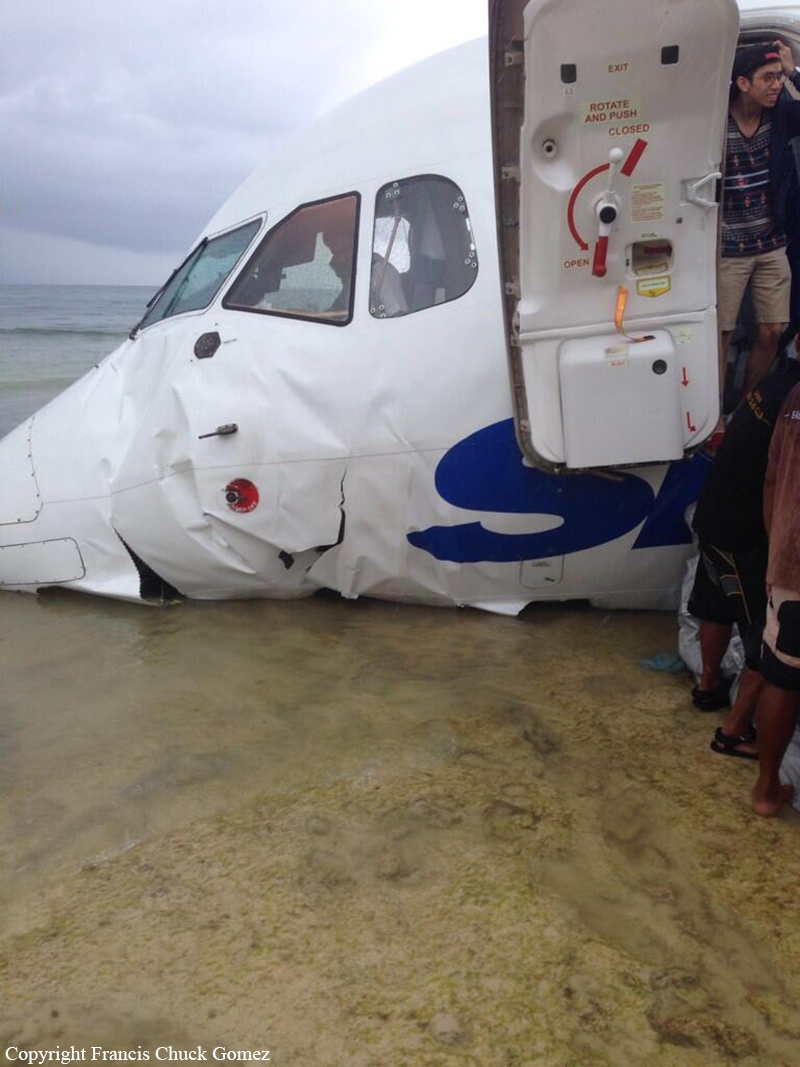
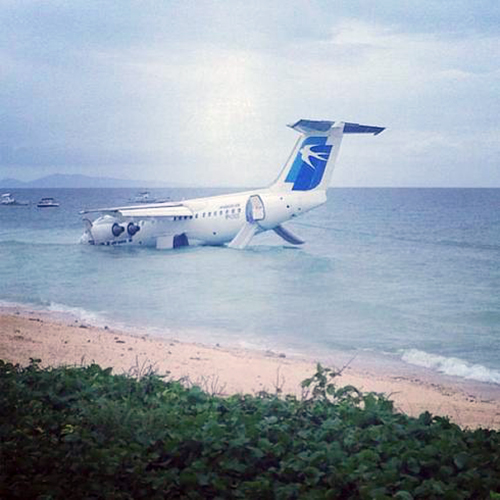
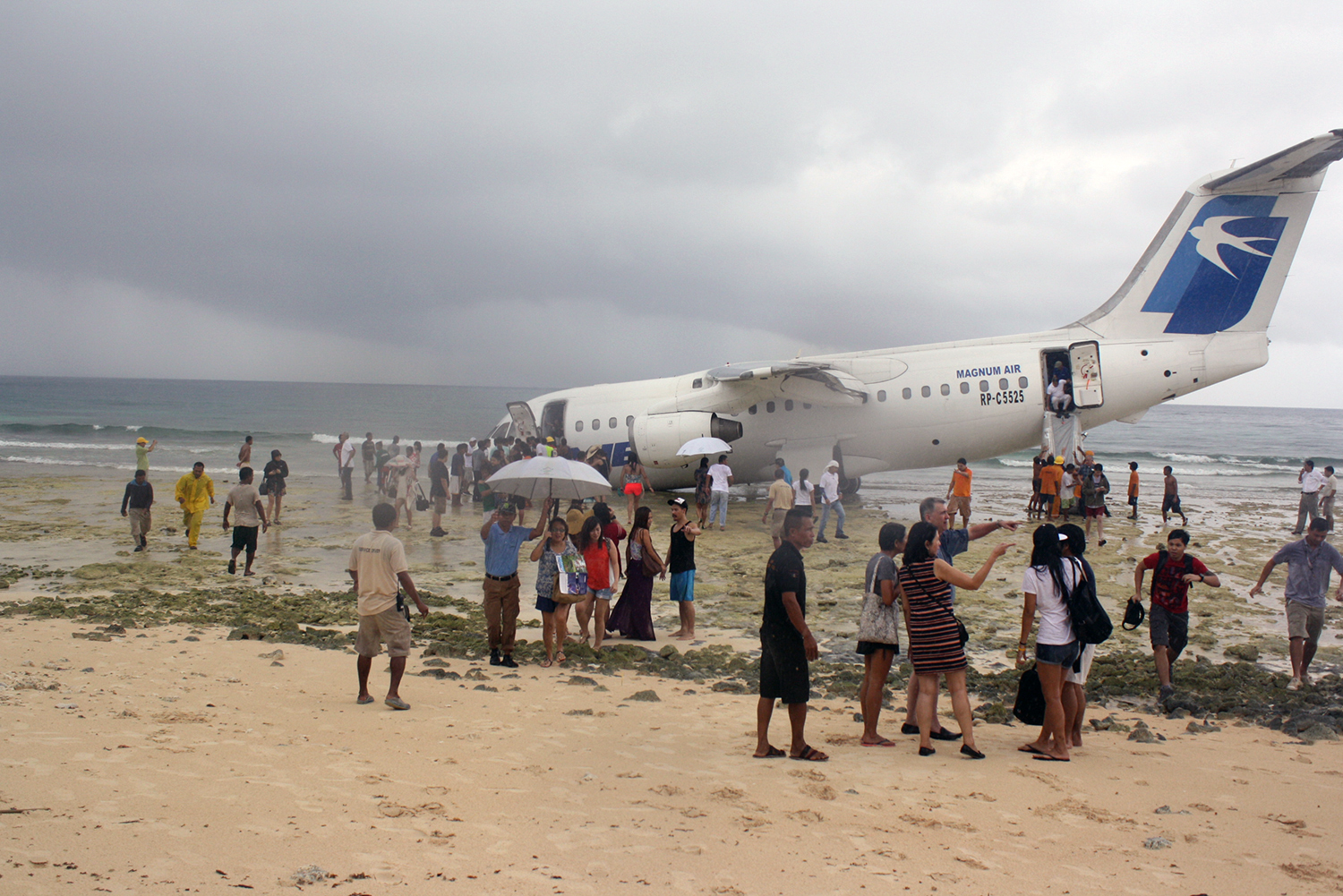
The aircraft was performing a charter flight from Manila to Balesin, carrying tourists en route to the Balesin Island Club. The approach and landing were completed in poor weather conditions with heavy rain falls. After landing, the four engine aircraft was unable to stop within the remaining distance. It overran, lost its nose gear and came to rest in the Lamon Bay, few dozen metres offshore. All 75 occupants escaped uninjured while the aircraft was damaged beyond repair.

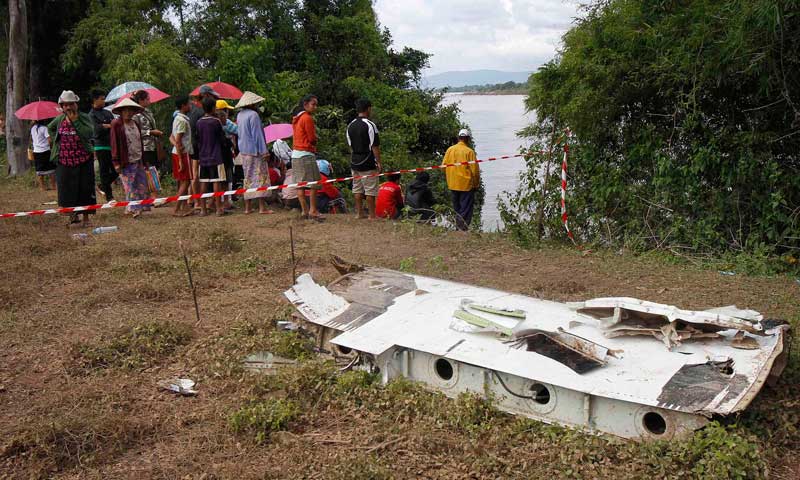
Crash of an ATR72-600 off Pakse: 49 killed

Date & Time: Oct 16, 2013 at 1555 LT
Type of aircraft:
Operator:
Registration:
RDPL-34233
Survivors:
No
Schedule:
Vientiane - Pakse
MSN:
1071
YOM:
2013
Flight number:
LAO301
Country:
Region:
Crew on board:
5
Crew fatalities:
Pax on board:
44
Pax fatalities:
Other fatalities:
Total fatalities:
49
Captain / Total flying hours:
5600
Captain / Total hours on type:
3200.00
Copilot / Total flying hours:
400
Aircraft flight hours:
758
Circumstances:
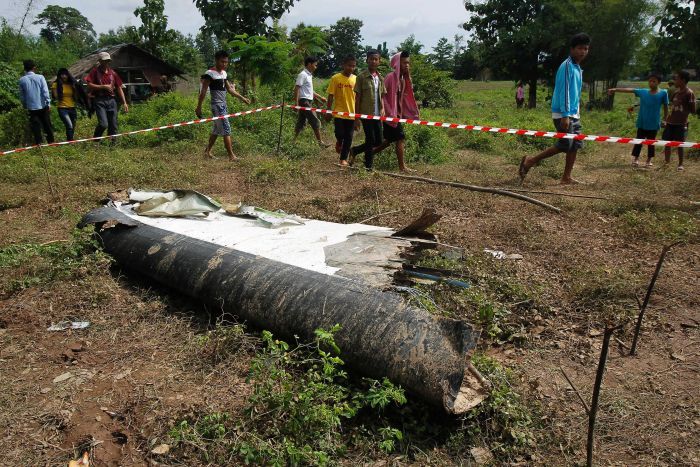
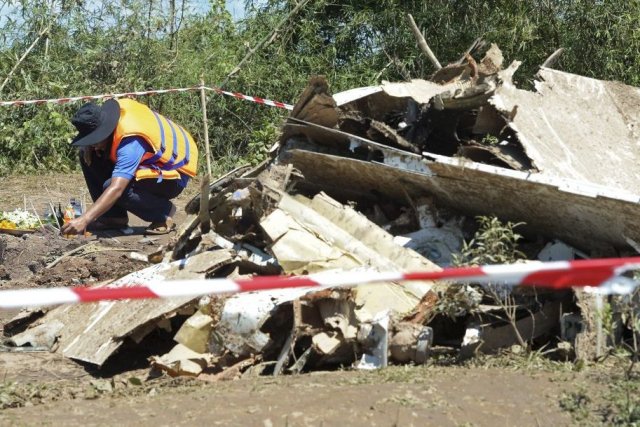
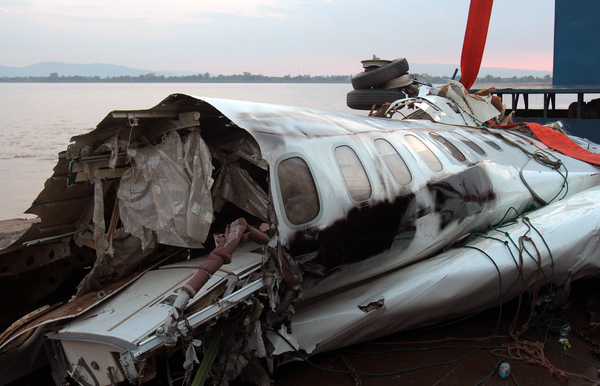
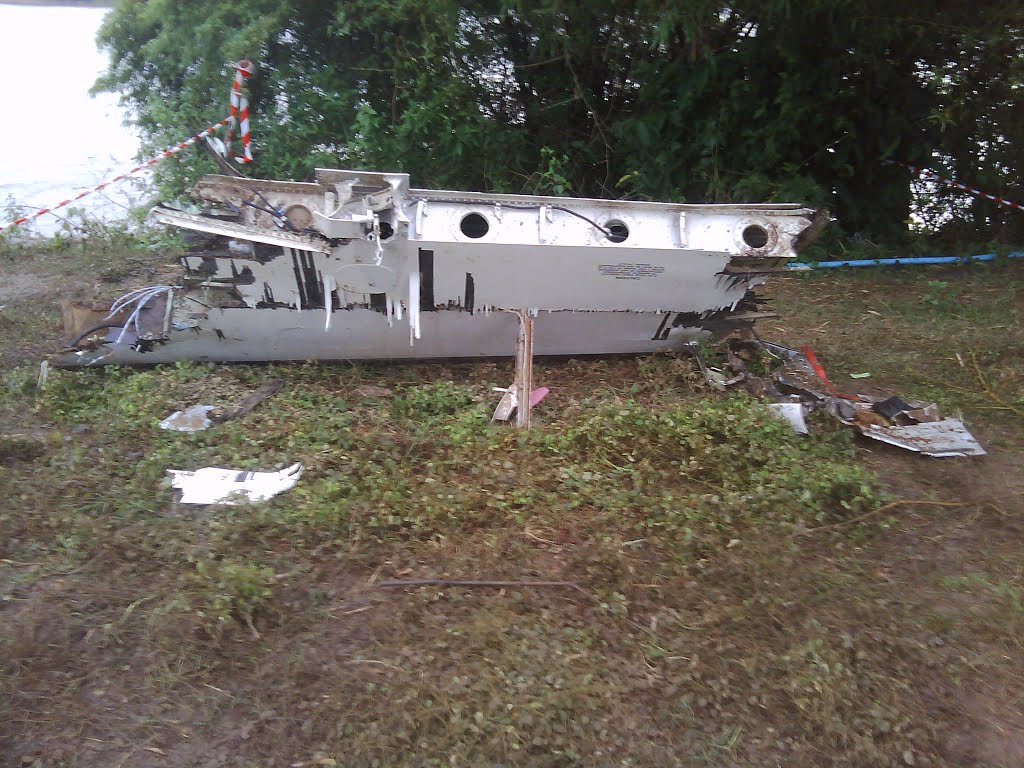
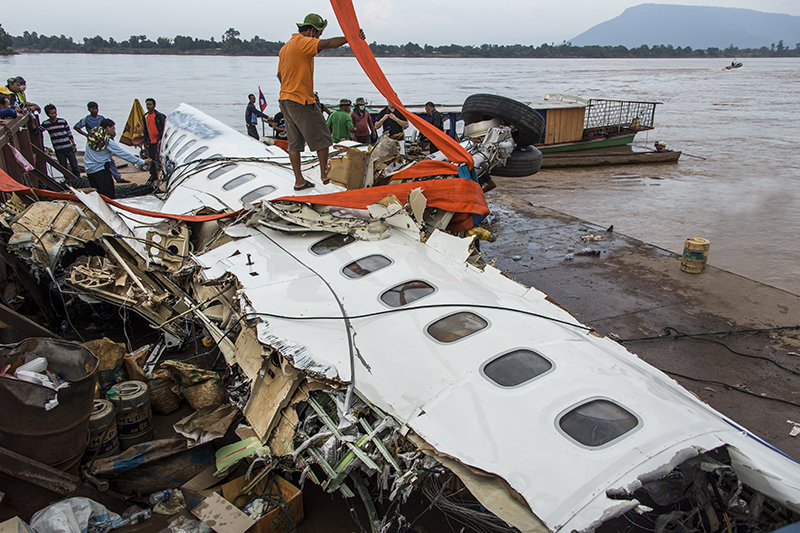
A first approach procedure to runway 15 was aborted by the crew due to insufficient visibility. On the circuit to complete a second approach in bad weather conditions, the ATR72-600 crashed some 8 km short of runway and was completely submerged in the Mekong River. None of the 49 occupants (44 pax and 5 crew) survived, among them 7 French citizens and 6 Australians. Aircraft left Vientiane at 1445LT and should arrive in Pakse one hour later. Aircraft was built and delivered to Lao Airlines in March this year. First crash involving an ATR72-600 series. Up to date, worst accident in Laos.
The Laotian Authorities released the following key sentences of analysis:
"Under IMC conditions, with no reference to the ground, the SOPs lead to conducting an instrument approach. In Pakse the VOR DME approach procedure is in force. There is no radar service. The flight crew has to fly to the initial approach fix or the intermediate fix at an altitude above 4600ft, then start the descent to 2300ft until final approach fix. Finally the flight crew descends to the minima (990ft), if visual references with the ground are available and sufficient the flight crew may continue until touchdown. If ground visual references are not available or not sufficient, the flight crew may level off up to the missed approach point and then must start the missed approach procedure. From the FOR data, the flight crew set 600 ft as the minima. This is contrary to the published minima of 990 ft. Even if the flight crew had used the incorrect height as published in the JEPPESEN Chart at that time the minima should have been set to 645 ft or above. The choice of minima lower than the published minima considerably reduces the safety margins. Following the chart would lead the flight crew to fly on a parallel path 345 ft lower than the desired indicated altitude. The recordings show that the flight crew initiated a right turn according to the lateral missed approach trajectory without succeeding in reaching the vertical trajectory. Specifically, the flight crew didn't follow the vertical profile of missed approach as the missed approach altitude was set at 600 ft and the aircraft system went into altitude capture mode. When the flight crew realized that the altitude was too close to the ground, the PF over-reacted, which led to a high pitch attitude of 33°. The aircraft was mostly flying in the clouds during the last part of flight."
Probable cause:
The probable cause of this accident were the sudden change of weather condition and the flight crew's failure to properly execute the published instrument approach, including the published missed approach procedure, which resulted in the aircraft impacting the terrain.
The following factors may have contributed to the accident:
- The flight crew's decision to continue the approach below the published minima
- The flight crew's selection of an altitude in the ALT SEL window below the minima, which led to misleading FD horizontal bar readings during the go-around
- Possible Somatogravic illusions suffered by the PF
- The automatic reappearance of the FD crossbars consistent with the operating logic of the aeroplane systems, but inappropriate for the go-around
- The inadequate monitoring of primary flight parameters during the go-around, which may have been worsened by the PM's attention all tunneling on the management of the aircraft flap configuration
- The flight crew's limited coordination that led to a mismatch of action plans between the PF and the PM during the final approach.
Final Report:
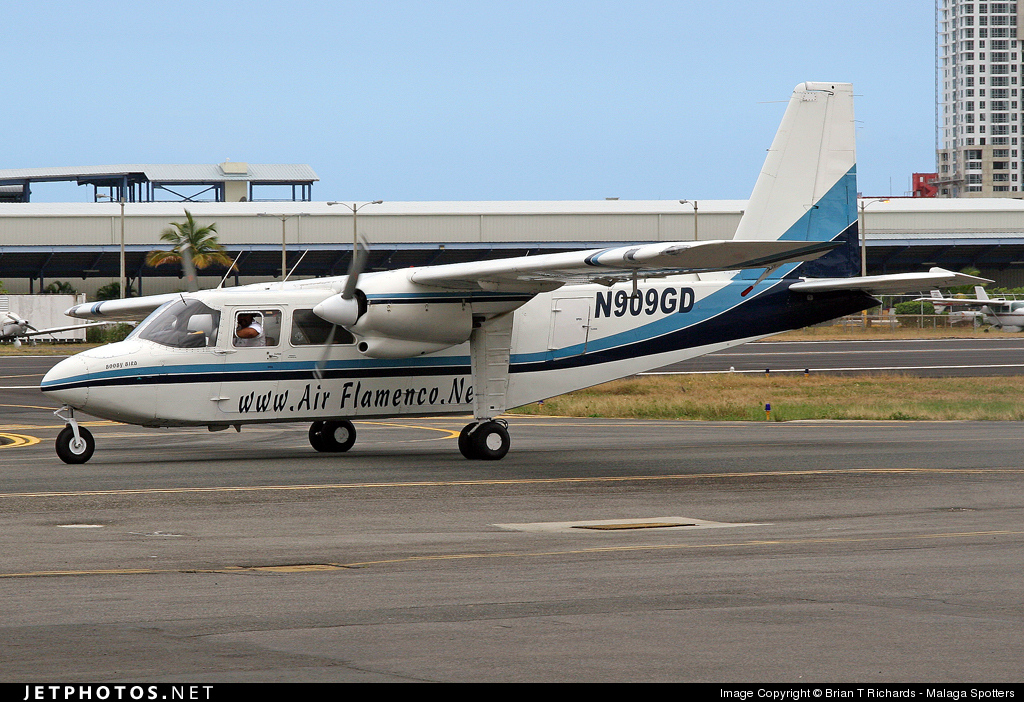
Crash of a Britten BN-2A-8 Norman Islander off Culebra: 1 killed

Date & Time: Oct 6, 2013 at 0603 LT
Type of aircraft:
Operator:
Registration:
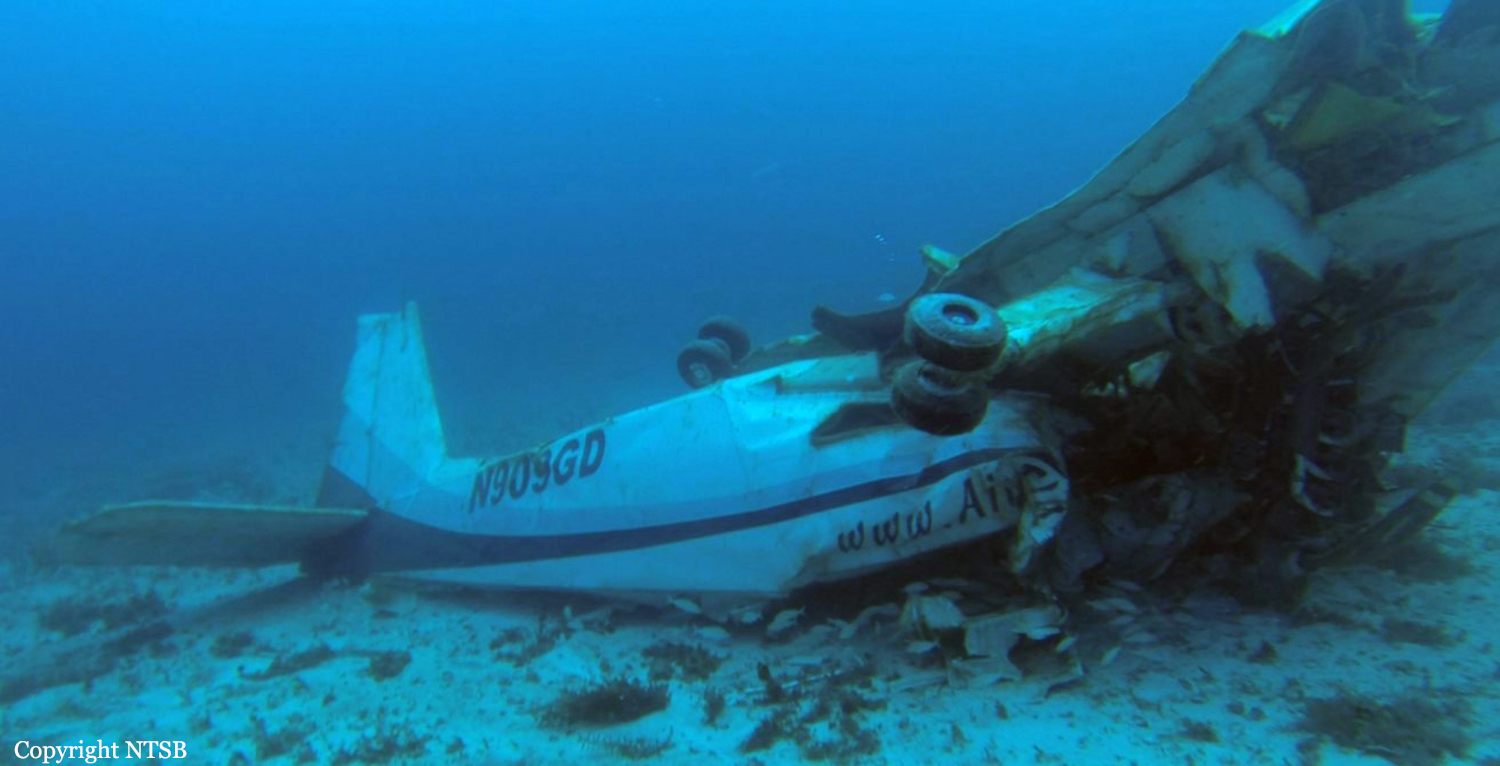
N909GD
Flight Type:
Survivors:
No
Schedule:
Vieques - Culebra
MSN:
239
YOM:
1971
Country:
Crew on board:
1
Crew fatalities:
Pax on board:
0
Pax fatalities:
Other fatalities:
Total fatalities:
1
Captain / Total flying hours:
1650
Captain / Total hours on type:
1100.00
Aircraft flight hours:
22575
Circumstances:
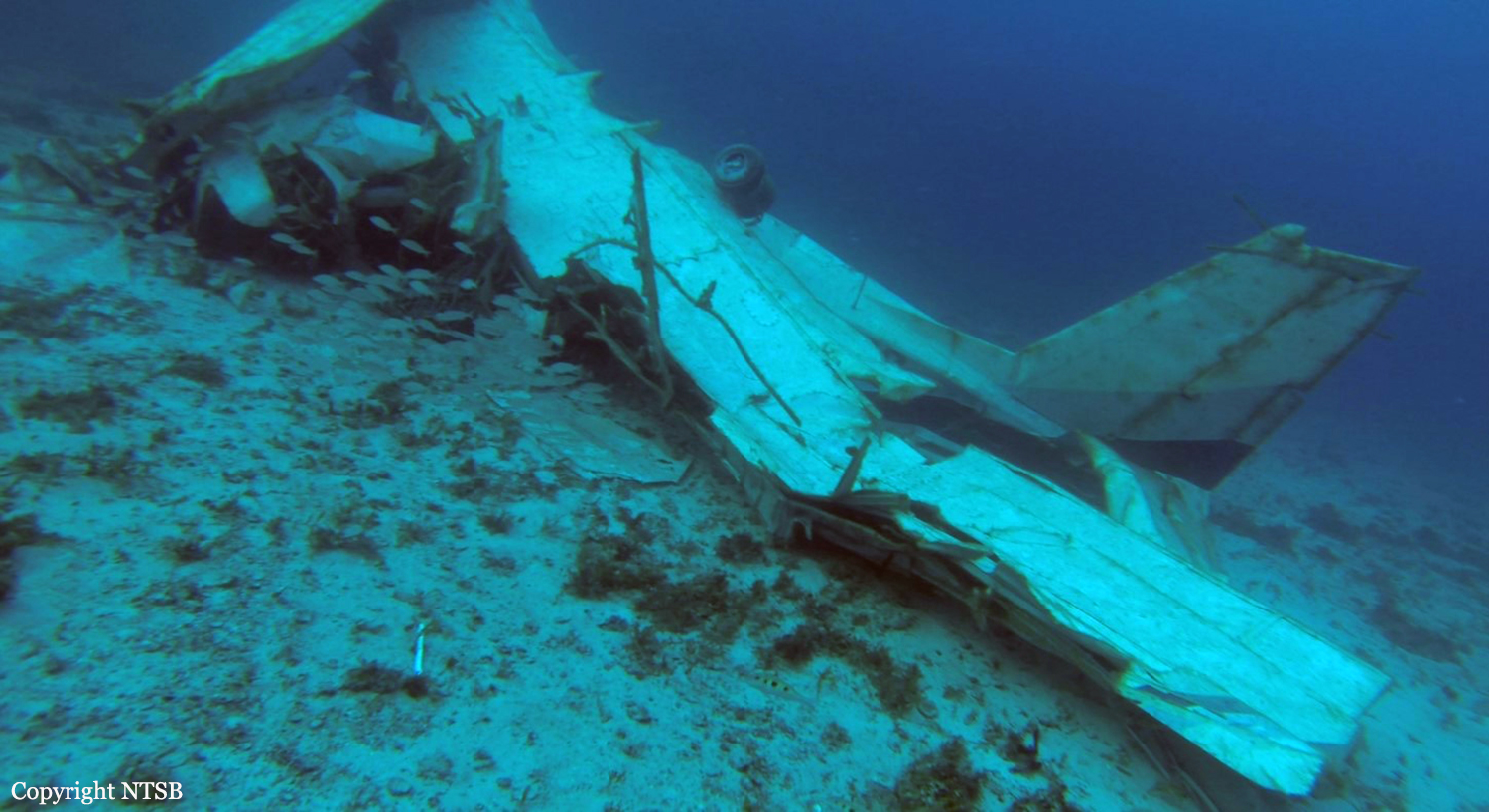
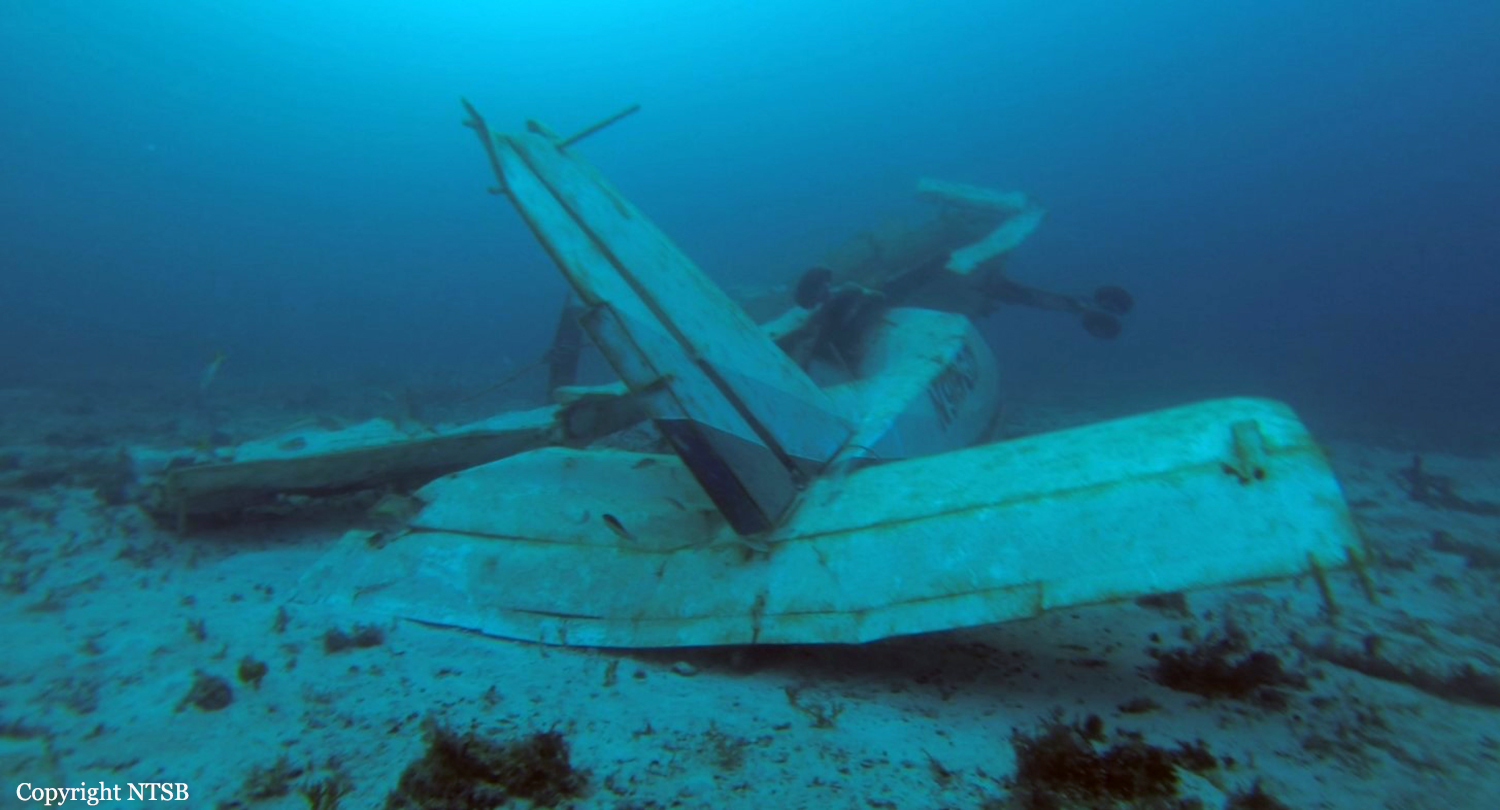
The commercial, instrument-rated pilot of the multiengine airplane was conducting a newspaper delivery flight in night visual meteorological conditions. After two uneventful legs, the pilot departed on the third leg without incident. Radar data indicated that, after takeoff, the airplane flew over open water at an altitude of about 100 to 200 ft toward the destination airport and then climbed to 2,400 ft. Shortly thereafter, the pilot performed a 360-degree left turn, followed by a 360-degree right turn while the airplane maintained an altitude of about 2,400 ft, before continuing toward the destination airport. Less than 2 minutes later, the airplane began a rapid descending left turn and then collided with water. The wreckage was subsequently located on the sea floor near the airplane's last radar target. Both wings, the cabin, cockpit, and nose section were destroyed by impact forces. The wreckage was not recovered, which precluded its examination for preimpact malfunctions. The airplane had been operated for about 25 hours since its most recent inspection, which was performed about 3 weeks before the accident. The pilot had accumulated about 1,650 hours of total flight experience, which included about 1,100 hours in the accident airplane make and model. Although the pilot conducted most of his flights during the day, he regularly operated flights in night conditions. The pilot's autopsy did not identify any findings of natural disease significant enough to have contributed to the accident. In addition, although toxicological testing detected ethanol in the pilot's cavity blood, it likely resulted from postmortem production.
Probable cause:
The pilot's failure to maintain airplane control for reasons that could not be determined because the wreckage was not recovered.
Final Report:

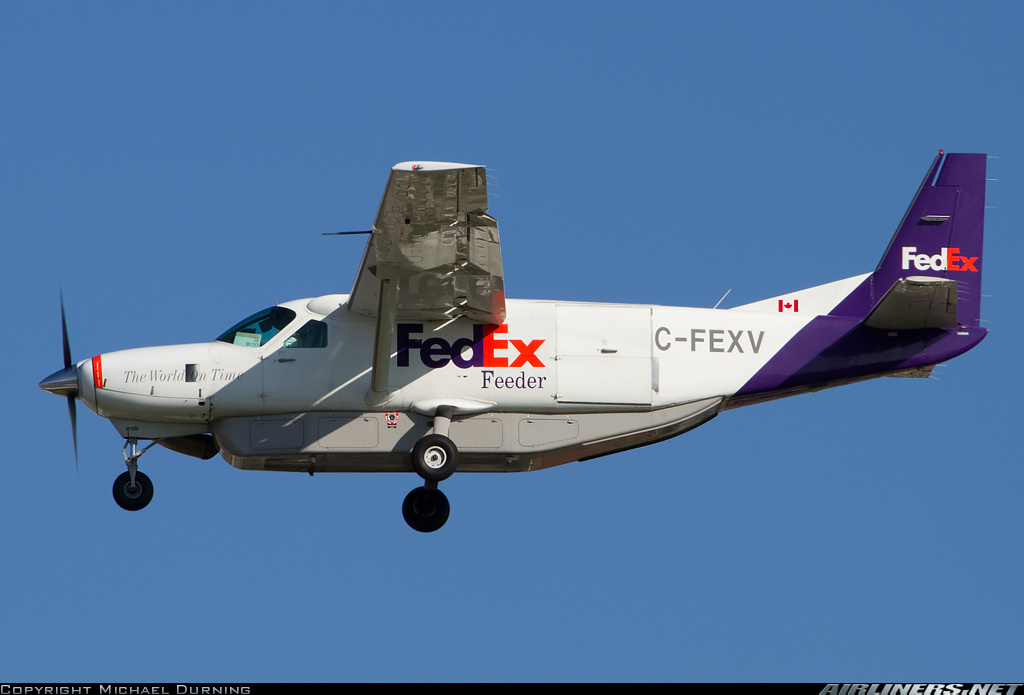
Crash of a Cessna 208B Grand Caravan in the Hudson Bay: 1 killed

Date & Time: Sep 25, 2013 at 1400 LT
Type of aircraft:
Operator:
Registration:
C-FEXV
Flight Phase:
Flight Type:
Survivors:
No
Schedule:
Sault Sainte Marie - Sault Sainte Marie
MSN:
208B-0482
YOM:
1995
Flight number:
MAL8988
Country:
Crew on board:
1
Crew fatalities:
Pax on board:
0
Pax fatalities:
Other fatalities:
Total fatalities:
1
Circumstances:
On behalf of Morningstar Air Express, the pilot departed Sault Sainte Marie Airport, south Ontario, in the morning, for a local training flight. For unknown reasons, the pilot did not maintain any radio contact with his base or ATC and continued to the north for about 1,200 km when the aircraft crashed in unknown circumstances in the Hudson Bay, some 500 km east of Churchill, Manitoba. The aircraft was destroyed and the pilot was killed.
Probable cause:
The exact cause of the accident remains unknown.

Crash of a Cessna T303 Crusader off Jersey: 2 killed

Date & Time: Sep 4, 2013 at 1013 LT
Type of aircraft:
Operator:
Registration:
N289CW
Flight Type:
Survivors:
No
Schedule:
Dinan - Jersey
MSN:
303-00032
YOM:
1981
Region:
Crew on board:
1
Crew fatalities:
Pax on board:
1
Pax fatalities:
Other fatalities:
Total fatalities:
2
Captain / Total flying hours:
524
Captain / Total hours on type:
319.00
Circumstances:
The aircraft was on a VFR flight from Dinan, France, to Jersey, Channel Islands and had joined the circuit on right base for Runway 09 at Jersey Airport. The aircraft turned onto the runway heading and was slightly left of the runway centreline. It commenced a descent and a left turn, with the descent continuing to 100 ft. The pilot made a short radio transmission during the turn and then the aircraft’s altitude increased rapidly to 600 ft before it descended and disappeared from the radar. The aircraft probably stalled in the final pull-up manoeuvre, leading to loss of control and impact with the sea, fatally injuring those on board, Carl Whiteley and his wife.
Probable cause:
The accident was probably as a result of the pilot’s attempt to recover to normal flight following a stall or significant loss of airspeed at a low height, after a rapid climb manoeuvre having become disoriented during the approach in fog.
Final Report:

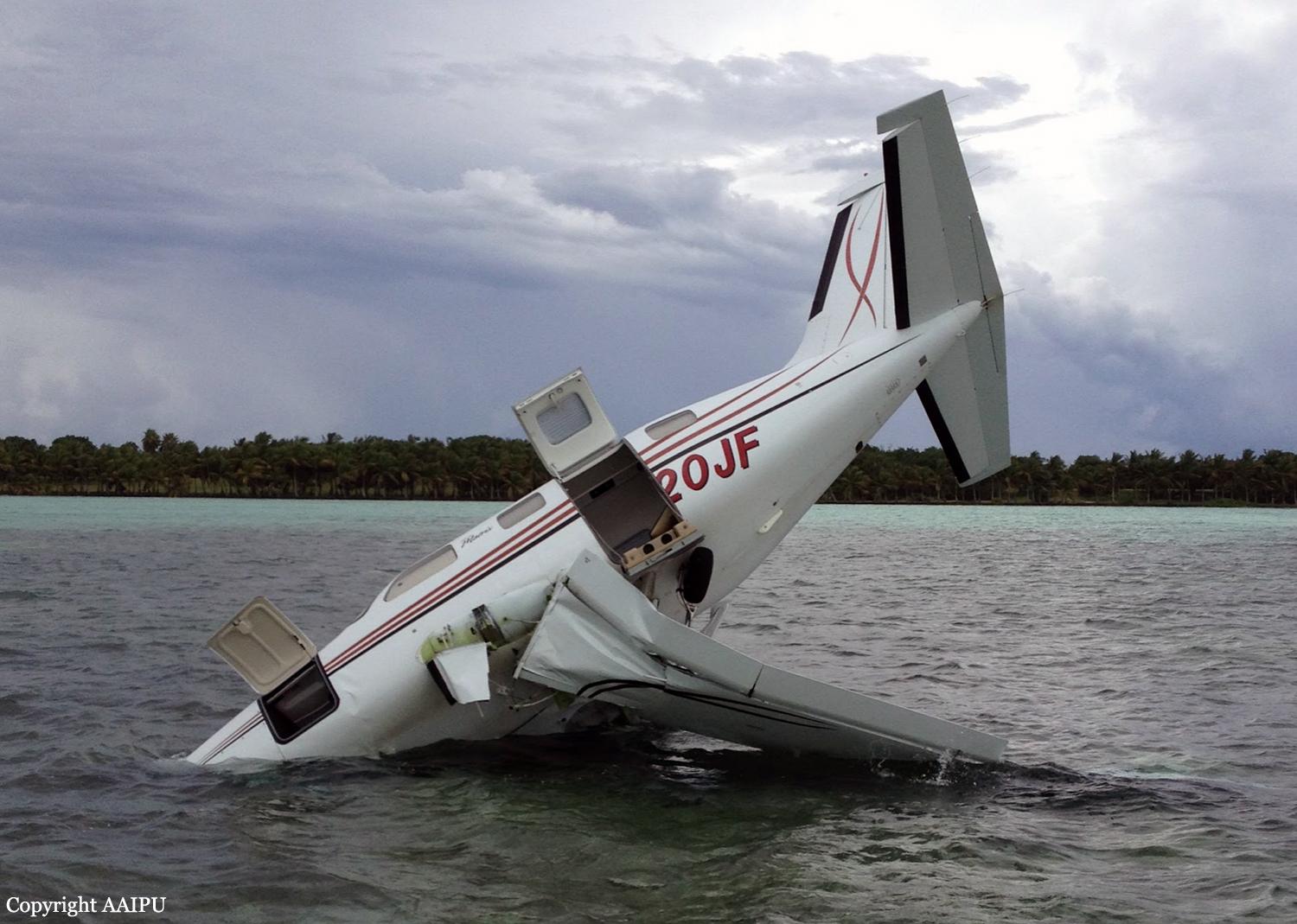
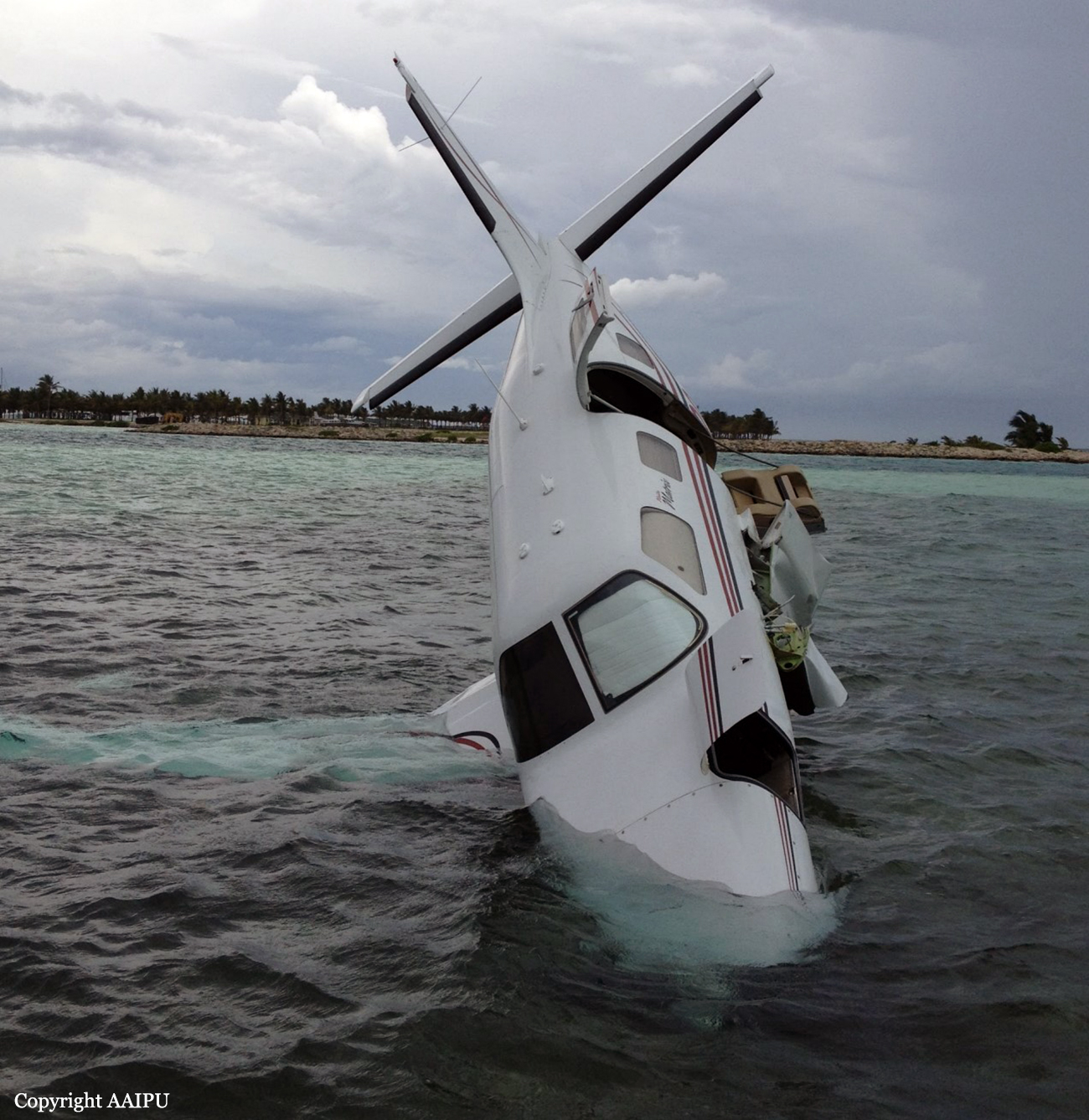
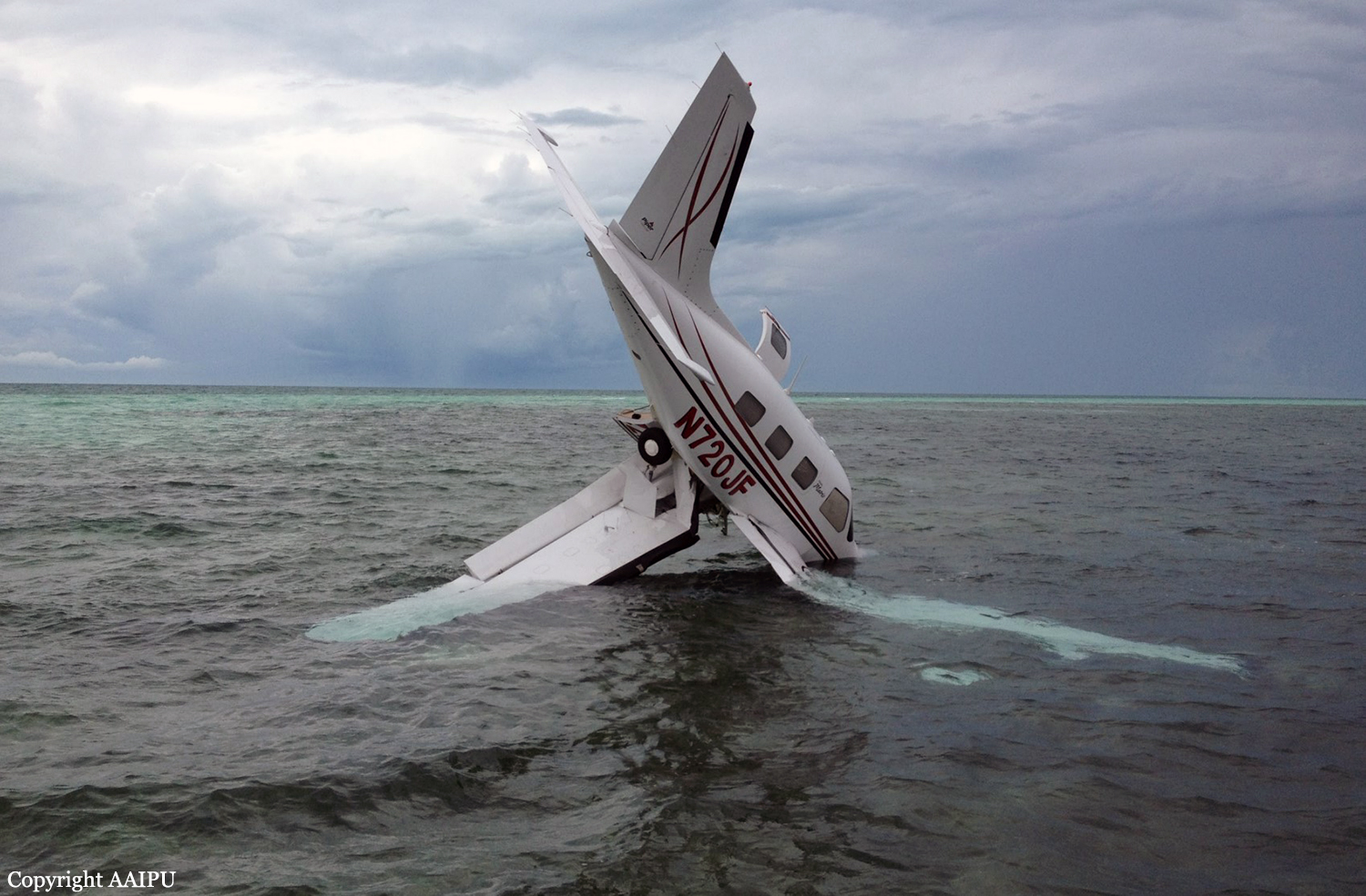
Crash of a Piper PA-46R-350T Matrix off Cat Cay

Date & Time: Aug 25, 2013 at 1406 LT
Registration:
N720JF
Flight Phase:
Flight Type:
Survivors:
Yes
Schedule:
Cat Cay - Kendall-Miami
MSN:
46-92004
YOM:
2008
Location:
Country:
Crew on board:
1
Crew fatalities:
Pax on board:
4
Pax fatalities:
Other fatalities:
Total fatalities:
0
Captain / Total flying hours:
12250
Captain / Total hours on type:
210.00
Aircraft flight hours:
1000
Circumstances:
According to the pilot, he applied full power, set the flaps at 10 degrees, released the brakes, and, after reaching 80 knots, he rotated the airplane. The pilot further reported that the engine subsequently lost total power when the airplane was about 150 ft above ground level. The airplane then impacted water in a nose-down, right-wing-low attitude about 300 ft from the end of the runway. The pilot reported that he thought that the runway was 1,900 ft long; however, it was only 1,300 ft long. Review of the takeoff ground roll distance charts contained in the Pilot’s Operating Handbook (POH) revealed that, with flap settings of 0 and 20 degrees, the ground roll would have been 1,700 and 1,150 ft, respectively. Takeoff ground roll distances were not provided for use of 10 degrees of flaps; however, the POH stated that 10 degrees of flaps could be used. Although the distance was not specified, it is likely that the airplane would have required more than 1,300 ft for takeoff with 10 degrees of flaps. Examination of the engine revealed saltwater corrosion throughout it; however, this was likely due to the airplane’s submersion in water after the accident. No other mechanical malfunctions or abnormalities were noted. Examination of data extracted from the multifunction display (MFD) and primary flight display (PFD) revealed that the engine parameters were performing in the normal operating range until the end of the recordings. The data also indicated that, 7 seconds before the end of the recordings, the airplane pitched up from 0 to about 17 degrees and then rolled 17 degrees left wing down while continuing to pitch up to 20 degrees. The airplane then rolled 77 degrees right wing down and pitched down about 50 degrees. The highest airspeed recorded by the MFD and PFD was about 70 knots, which occurred about 1 second before the end of the recordings. The POH stated that, depending on the landing gear position, flap setting, and bank angle, the stall speed for the airplane would be between 65 and 71 knots. Based on the evidence, it is likely that the engine did not lose power as reported by the pilot. As the airplane approached the end of the runway and the pilot realized that it was not long enough for his planned takeoff, he attempted to lift off at an insufficient airspeed and at too high of a pitch angle, which resulted in an aerodynamic stall at a low altitude. If the pilot had known the actual runway length, he might have used a flap setting of 20 degrees, which would have provided sufficient distance for the takeoff.
Probable cause:
The pilot’s attempt to rotate the airplane before obtaining sufficient airspeed and his improper pitch control during takeoff, which resulted in the airplane exceeding its critical angle-of-attack and subsequently experiencing an aerodynamic stall at a low altitude. Contributing to the accident was the pilot’s lack of awareness of the length of the runway, which led to his attempting to take off with the airplane improperly configured.
Final Report: