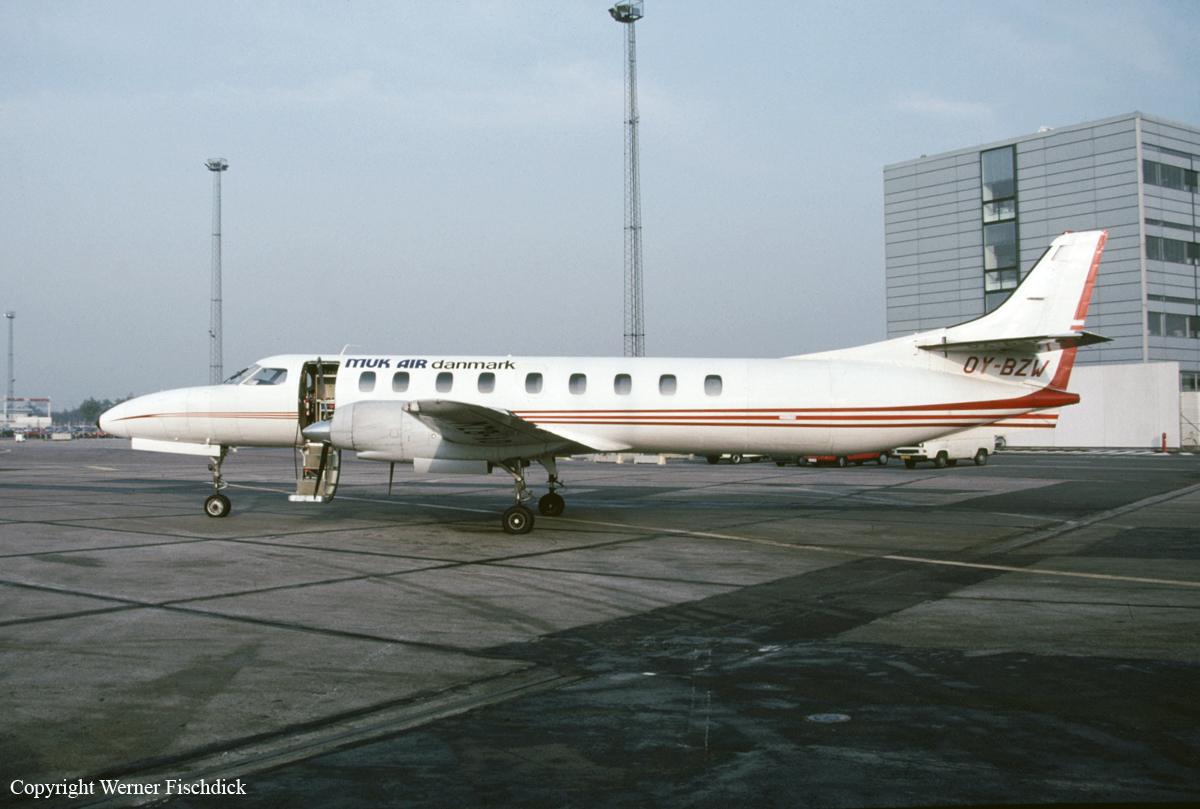
Crash of a Swearingen SA226TC Metro II in Copenhagen

Date & Time: Jan 16, 1991 at 0100 LT
Type of aircraft:
Operator:
Registration:
OY-BZW
Flight Type:
Survivors:
Yes
MSN:
TC-328
YOM:
1980
Country:
Region:
Crew on board:
2
Crew fatalities:
Pax on board:
0
Pax fatalities:
Other fatalities:
Total fatalities:
0
Circumstances:
While on a night approach to Copenhagen-Kastrup Airport runway 22L, the right engine failed. The crew was able to feather the right propeller but the nose gear failed to deploy. Manual recycling was ineffective and the crew continued the approach. The aircraft landed on its nose, rolled for few dozen meters and came to rest on the main runway. Both pilots escaped uninjured and the aircraft was damaged beyond repair.
Probable cause:
Failure of the right engine caused by the failure of the turbine assembly retention guide vane. This caused a reduction of the hydraulic pressure, preventing the nose gear to be lowered.

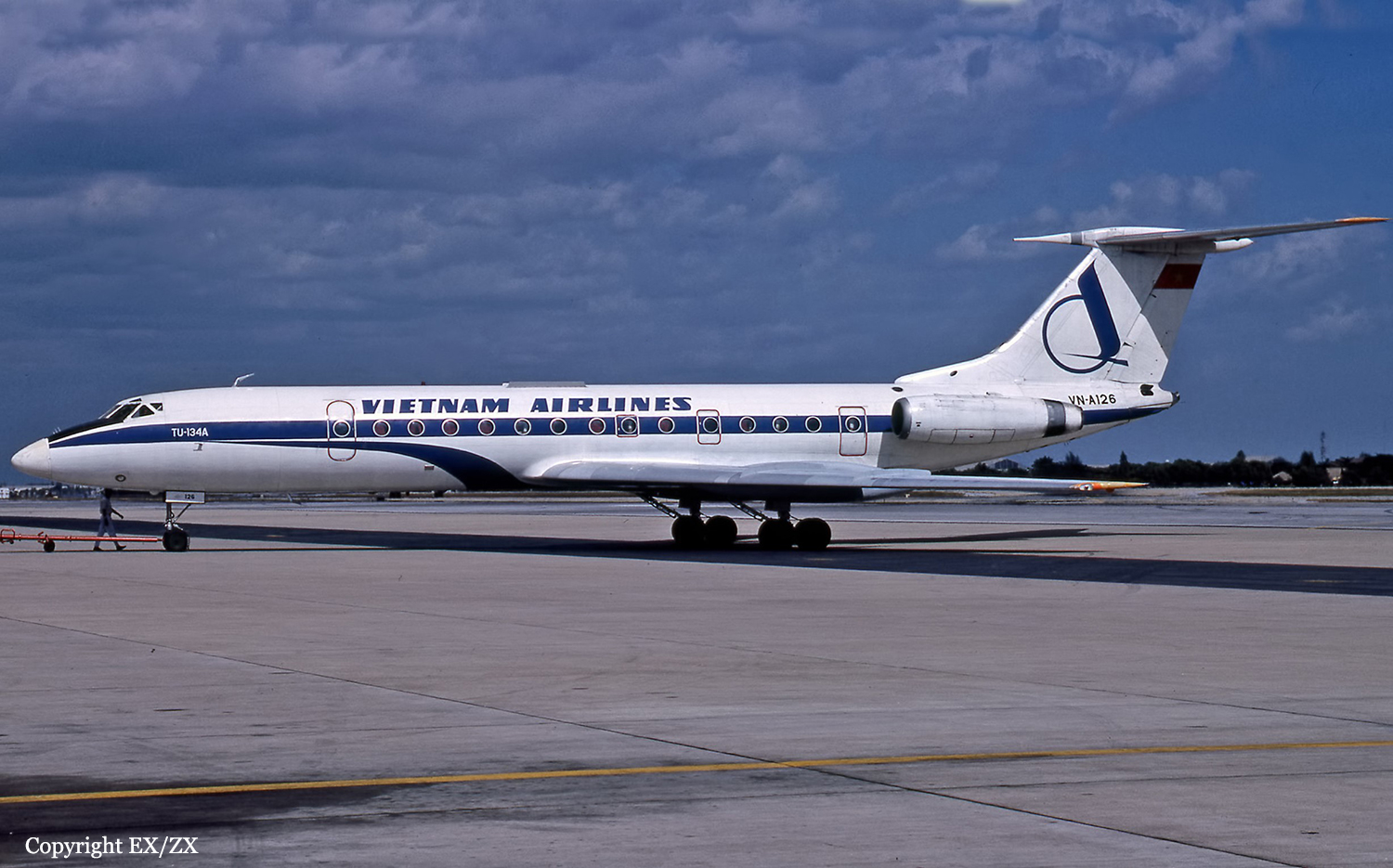
Crash of a Tupolev TU-134AK-1 in Ho Chi Minh-City

Date & Time: Jan 12, 1991
Type of aircraft:
Operator:
Registration:
VN-A126
Survivors:
Yes
Schedule:
Bangkok - Ho Chi Minh-City
MSN:
60435
YOM:
1978
Country:
Region:
Crew on board:
7
Crew fatalities:
Pax on board:
72
Pax fatalities:
Other fatalities:
Total fatalities:
0
Circumstances:
During the last segment on approach to Ho Chi Minh-Ville-Tan Son Nhat Airport, at a height of about 30 feet, the aircraft lost height, causing the left main gear to struck the ground short of runway threshold. The aircraft then landed hard and came to a halt on the main runway. All 79 occupants were evacuated, among them five passengers were injured.
Probable cause:
It is believed the aircraft lost height on short final due to an insufficient speed.
The following contributing factors were reported:
- Poor planned approach on part of the crew.
- Poor crew coordination.
- Lack of supervision and crew cross checks.

Crash of a Learjet 25C in Belo Horizonte: 5 killed

Date & Time: Jan 11, 1991 at 2040 LT
Type of aircraft:
Registration:
PT-KKV
Survivors:
No
Schedule:
Brasília – Belo Horizonte
MSN:
25-172
YOM:
1974
Country:
Crew on board:
2
Crew fatalities:
Pax on board:
3
Pax fatalities:
Other fatalities:
Total fatalities:
5
Circumstances:
On final approach to Belo Horizonte-Pampulha Airport, the crew encountered poor weather conditions with heavy rain falls. On short final, the aircraft entered an uncontrolled descent and crashed near a motorway located few hundred meters short of runway. The aircraft was destroyed and all five occupants were injured. Three minutes prior to the accident, the crew reported to ATC that all was ok on board.

Crash of a Beechcraft 200 Super King Air in Vichy

Date & Time: Jan 11, 1991 at 2030 LT
Registration:
N200MR
Flight Type:
Survivors:
Yes
Schedule:
Saint Louis - Vichy
MSN:
BB-219
YOM:
1977
Crew on board:
2
Crew fatalities:
Pax on board:
2
Pax fatalities:
Other fatalities:
Total fatalities:
0
Captain / Total flying hours:
7667
Captain / Total hours on type:
258.00
Aircraft flight hours:
1596
Circumstances:
While executing a VOR approach, on a dark, foggy night, depth perception and ground contact were lost when the landing lights were turned on short final. A hard landing resulted, before corrective action became effective, resulting in wing spar, engine mounting support and propeller damage. The runway, and entire airport was covered with about 3 inches of mirror smooth ice, causing considerable glare. All four occupants escaped uninjured.
Probable cause:
A restricted visual outlook and go-around was not performed by the pilot. Factors related to the accident were a dark night, fog and glare, ice covered runway and whiteout conditions.
Final Report:

Crash of a Beechcraft F90 King Air in Nacogdoches

Date & Time: Jan 11, 1991 at 1040 LT
Type of aircraft:
Operator:
Registration:
N311DS
Flight Phase:
Flight Type:
Survivors:
Yes
Schedule:
Nacogdoches - Addison
MSN:
LA-41
YOM:
1980
Crew on board:
1
Crew fatalities:
Pax on board:
0
Pax fatalities:
Other fatalities:
Total fatalities:
0
Captain / Total flying hours:
6689
Captain / Total hours on type:
56.00
Aircraft flight hours:
3262
Circumstances:
The pilot reported that shortly after lifting off, the airplane began decelerating slowly. He thought the throttles had retarded; however, all of the engine instruments indicated takeoff power. Realizing that he could not return to the airport, the pilot selected a forced landing area and aimed the airplane between two trees. Investigation revealed that both props were at or near feather pitch angles at impact and being driven under power. Both engines had been changed immediately prior to the flight and both ground idle stops had been adjusted after the engine change with the left engine being slaved to the right. The system operated off of a squat switch on the right gear. Misriging of the right engine would be reflected in the left and allow oil pressure to be vented from the domes, which in turn would allow the propeller cylinder springs to drive the props toward feather as the right strut extended during takeoff. The pilot, sole on board, was seriously injured.
Probable cause:
The loss of thrust due to the propeller's feathering on liftoff as a result of improper adjustments made during an engine change. A factor was the lack of suitable terrain to which the pilot could execute a forced landing.
Final Report:

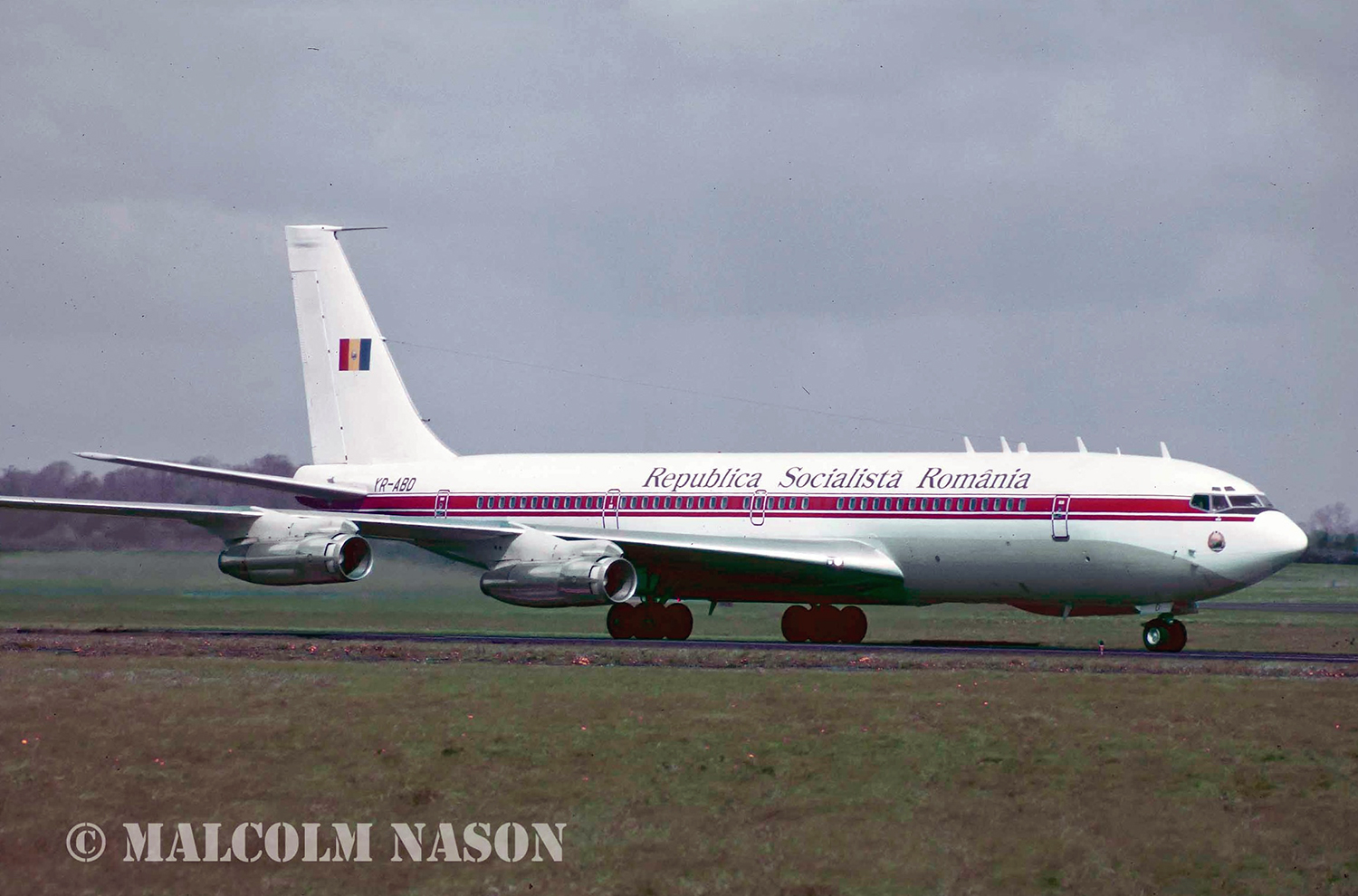
Crash of a Boeing 707-3K1C in Bucharest

Date & Time: Jan 10, 1991
Type of aircraft:
Operator:
Registration:
YR-ABD
Flight Type:
Survivors:
Yes
Schedule:
Bucharest - Bucharest
MSN:
21651
YOM:
1979
Country:
Region:
Crew on board:
5
Crew fatalities:
Pax on board:
8
Pax fatalities:
Other fatalities:
Total fatalities:
0
Circumstances:
The Romanian Presidential Airplane was engaged in a series of tests prior to an official flight to China within two days. The crew consisting of pilots and engineers completed several circuits in the region of Bucharest-Otopeni Airport and was preparing to land when the aircraft rolled to the left on short final, causing both left engines n°1 and 2 to struck the runway surface. Fuel line ruptured and fuel ignited. The crew initiated an emergency braking procedure, vacated the runway by a taxiway and stopped the aircraft that was bursting into flames. All 13 occupants escaped uninjured while the aircraft was damaged beyond repair.

Crash of a Cessna 421B Golden Eagle II in Muskogee: 6 killed

Date & Time: Jan 5, 1991 at 2043 LT
Registration:
N421H
Flight Phase:
Flight Type:
Survivors:
No
Schedule:
Muskogee - Albuquerque
MSN:
421B-0516
YOM:
1973
Crew on board:
1
Crew fatalities:
Pax on board:
5
Pax fatalities:
Other fatalities:
Total fatalities:
6
Captain / Total flying hours:
1820
Captain / Total hours on type:
684.00
Aircraft flight hours:
2580
Circumstances:
A pilot (whose instrument currency could not be determined) took off at night in IMC. Shortly after takeoff, the aircraft crashed about 1.5 mile from the departure end of the runway. There was evidence that it impacted in an 85° right bank, nose down attitude at high speed. No preimpact part failure was found during the investigation; however, during a pre-purchase inspection on 10/16/90, several discrepancies were noted. These included an inop flight director, an autopilot malfunction and a misrigged flight control system that allowed the control wheel to indicate a left turn when the aircraft was in level flight. There was no record of these being repaired. Records showed the pitot-static system was last tested on 3/24/88. The pilot was taking sine-aid and tylenol for a chronic sinus infection. Although tox checks indicated the presence of 50.7 ug/ml of pseudoephedrine and 36.4 ug/ml of acetaminophen in the pilot's urine, none was found in his blood. The sinus cond could have affected the pilot's balance and equilibrium. All six occupants were killed.
Probable cause:
The pilot's failure to maintain control of the aircraft, due to spatial disorientation. Factors related to the accident were: darkness, adverse weather conditions, and the pilot's physical impairment from the chronic sinus infection.
Final Report:

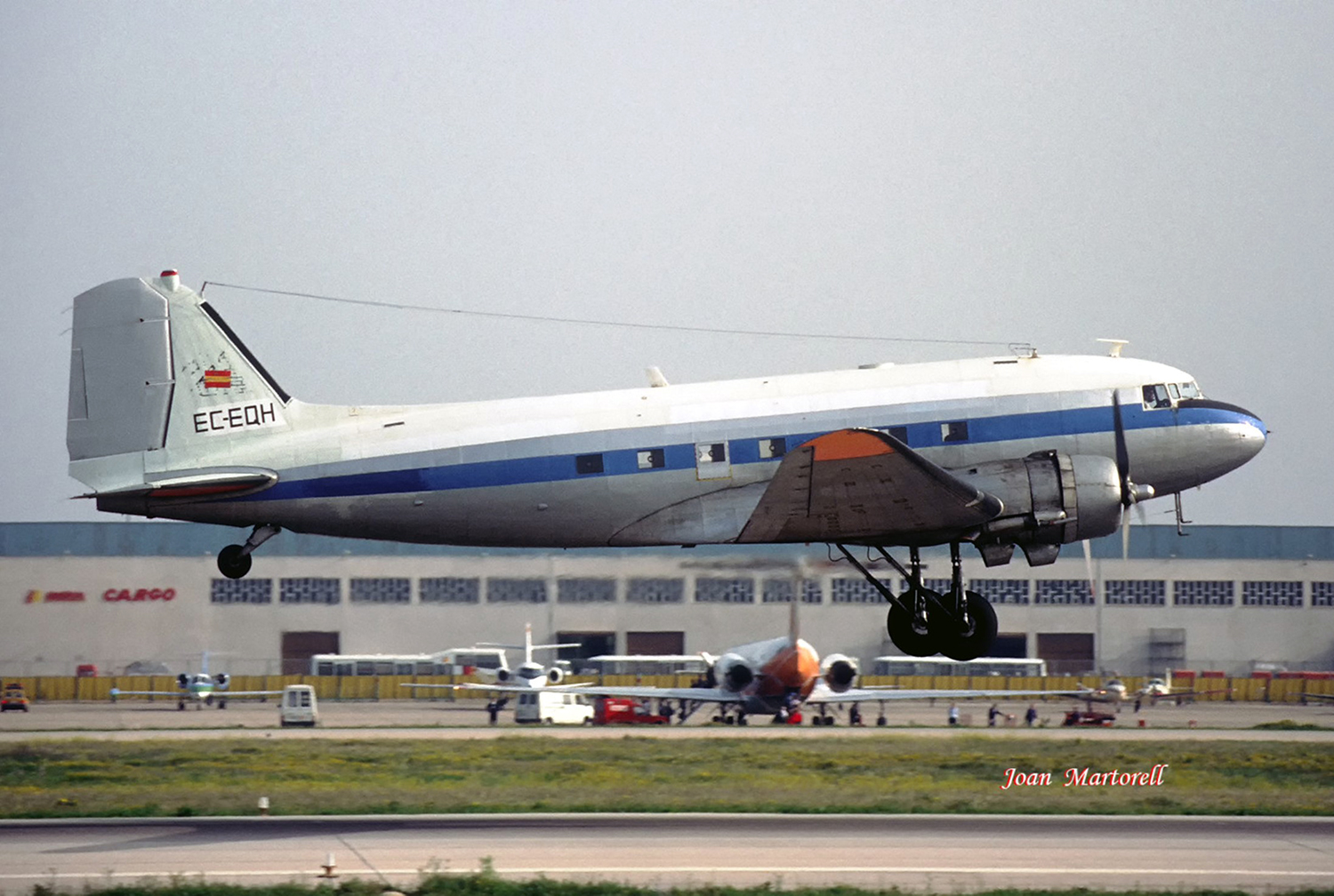
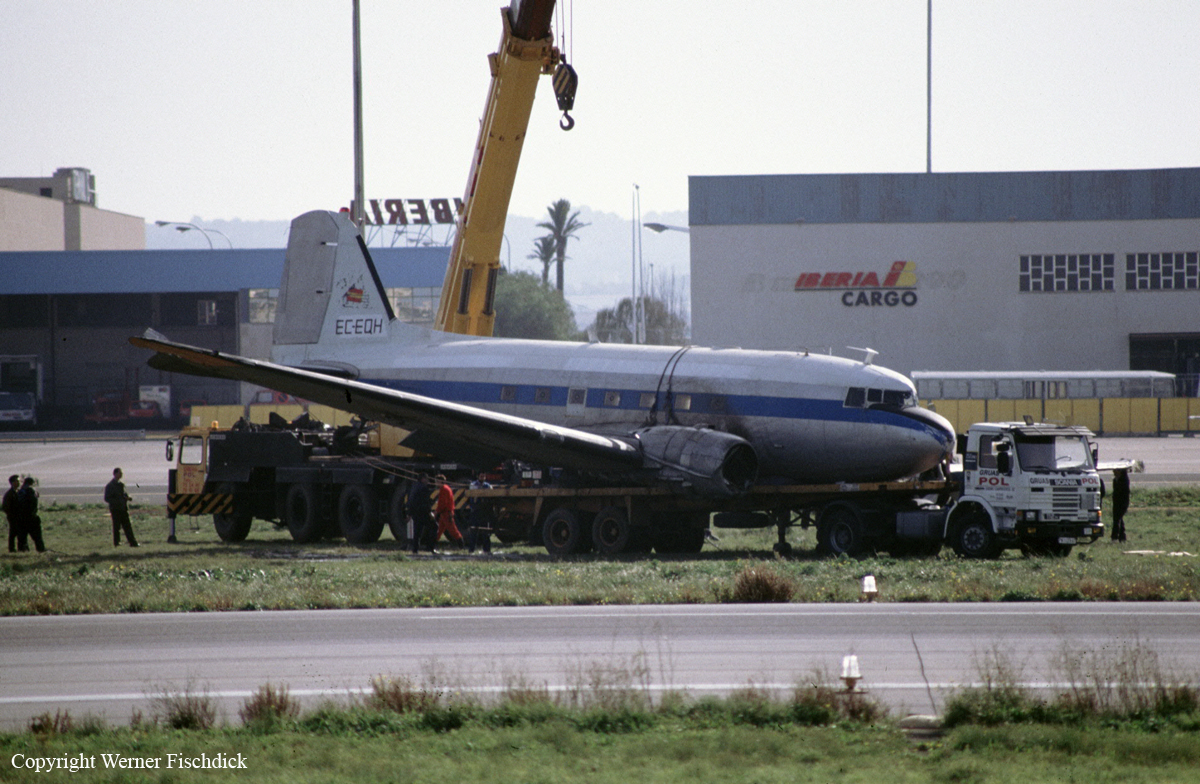
Crash of a Douglas DC-3R in Palma de Mallorca

Date & Time: Jan 4, 1991 at 0712 LT
Type of aircraft:
Operator:
Registration:
EC-EQH
Flight Phase:
Flight Type:
Survivors:
Yes
Schedule:
Palma de Majorque – Mahón
MSN:
16310/33058
YOM:
1945
Country:
Region:
Crew on board:
2
Crew fatalities:
Pax on board:
0
Pax fatalities:
Other fatalities:
Total fatalities:
0
Captain / Total flying hours:
5000
Circumstances:
During the takeoff roll at Palma Airport, the crew lost control of the aircraft that veered off runway to the left, lost its undercarriage and came to rest. Both pilots escaped uninjured and the aircraft was damages beyond repair.

Crash of a Cessna 401B in Marsh Harbour

Date & Time: Dec 26, 1990 at 1300 LT
Type of aircraft:
Registration:
N799NW
Survivors:
Yes
Schedule:
Sebastian – Marsh Harbour
MSN:
401B-0213
YOM:
1971
Country:
Crew on board:
1
Crew fatalities:
Pax on board:
4
Pax fatalities:
Other fatalities:
Total fatalities:
0
Circumstances:
Crashed in unknown circumstances on approach to Marsh Harbour Airport. All five occupants were injured and the aircraft was destroyed.

Crash of a Cessna 208 Caravan I in False Pass: 1 killed

Date & Time: Dec 21, 1990 at 1220 LT
Type of aircraft:
Operator:
Registration:
N9444F
Flight Type:
Survivors:
No
Schedule:
Cold Bay - False Pass
MSN:
208-0104
YOM:
1986
Crew on board:
1
Crew fatalities:
Pax on board:
0
Pax fatalities:
Other fatalities:
Total fatalities:
1
Captain / Total flying hours:
11000
Captain / Total hours on type:
323.00
Aircraft flight hours:
1787
Circumstances:
The flight departed Cold Bay for the approximately 15 minutes flight to False Pass. There are no weather reporting facilities at False Pass. Cold Bay weather was 4,500 feet overcast, light rain and fog; forecast called for frequent ceilings below 1,000 feet. Wreckage located between two mountains. False Pass weather estimated 400 feet overcast, 2-3 miles in rain and fog, winds 25-30 knots. Fishing boat captain in area estimated winds down the mountain at 60 mph or greater.
Probable cause:
The pilot's improper decision to continue flight into an area of mountainous terrain and adverse weather conditions. The terrain and weather were factors.
Final Report: